Tag: Civilisations

  • Between Western Universalism and Cultural Relativism

    Between Western Universalism and Cultural Relativism

    TPF Occassional Paper – 01/2025

    Between Western Eurocentric Universalism and Cultural Relativism: Mutual Recognition of the Civilisations of the Earth as precondition for the Survival of Mankind


    Andreas Herberg-Rothe

    In the 19th century, the Europeans conquered the whole world; in the 20th century, the defeated nations and civilizations had to live with the victorious West; in the 21st century, the civilizations of the earth must finally learn to live together.

    The Universal Declaration of Human Rights was codified by the United Nations in 1948. But the academic debate on the universality of the norms on which it is based is far from over. The question remains whether there are universal values other than those of the West. Western values alone are often implicitly regarded as universal. But whether this is scientifically justifiable is more than debatable. At the same time, few participants in the debate seriously doubt the need for universal human dignity.

    In the current debate, the binary positions of relativism and universalism are in a stalemate. A way out of this dichotomy would have to withstand the charge of ethnocentrism as well as particular relativism. Neither should dimensions of power and colonialism be ignored, nor should inhumane practices such as torture, humiliation and sexual violence be relativised by reference to another ‘culture’. If a universal approach is to be found, it should not be implicitly Westernised. This is a criticism of existing approaches, particularly in postcolonial theory.

    Historically, ethnocentrism, as a mere description of a state of affairs, has developed into a justification of ‘cultural superiority’ and, as a consequence, of oppression and exploitation.

    It is about the justifiability of universal norms on the one hand, and the inevitability of particular justifications of norms on the other. Historically, ethnocentrism, as a mere description of a state of affairs, has developed into a justification of ‘cultural superiority’ and, as a consequence, of oppression and exploitation. An initially unconscious preference for and belief in one’s own (cultural) perspective, the unquestioned truth and correctness of one’s own norms, values and patterns of behaviour, did not develop into ‘live and let live’. This form of ethnocentrism rejects the acceptance of cultural differences and represents an attitude that legitimises the destruction of the foreigner as a legitimate consequence of one’s own superiority. This, of course, refers mainly to the long-standing colonisation of supposedly ‘inferior’ peoples by European states and the associated cultural appropriation and cultural destruction or exploitation. These practices were morally legitimised on the basis of the conviction that one’s own way of life was superior to all other ways of life, not only militarily and politically, but also cognitively and morally. Ideologically, this argument is based on various elements, including the proselytising idea of the Christian message of salvation, the idea of the ‘progress’ of Western civilisation over other cultures and the idea of ‘racial doctrine’.

    In reaction to this unreflected, chauvinistic ethnocentrism, two main currents of contradiction developed: universalism and relativism. Universalism ‘assumes that it is possible to find standards of value that apply across cultural boundaries and are universally valid’, while the relativist position, in the absence of the possibility of an ‘extra-cultural’, objective judgement of a situation, all cultures, with everything that belongs to them, are ascribed the same value.

    Universalism

    The argumentative basis of Western universalism is the assumed fundamental equality of all human beings – both in their intellectual capacity (cognitive) and in their materiality (normative), which leads to a general insight into certain universal norms. The most obvious example of this is universal human rights, whose need for universality is clear from their very name.

    The cognitive premise of this kind of universalism goes back to the Enlightenment and the idea that all human beings have, in principle, the same cognitive capacities, even if they differ in individual cases. Only on this basis can the premise of normative universalism in the Enlightenment be realised. But this leads to various problems, paradoxes and points of criticism, because this conception is based on a particular understanding of rationality that is rooted in the thinking of Western modernity. For example, it excludes any kind of holism, although this conceptualisation is by no means irrational, but represents a different kind of rationality.

    The apparent paradox of the uniqueness of each culture lies in the claim to universality that all cultures are of equal value. We can therefore speak neither of a universalism that is purely independent of culture, nor of a norm that can be attributed to only one culture.

    One frequently pursued solution to the tension between universal norms, which nonetheless originate in only one culture, and different culturally determined norms has been to search for what is common to all cultures. This approach, which in itself goes further, was pursued above all in the project of the ‘global ethic’, which sought the common foundations of all religions. Western modern universalism had thus abandoned its claim to all-encompassing universality and limited itself to a kind of ‘core norms’. Instead of questioning specific cultural practices, the focus is on the fundamental premises of human coexistence. In my view, this project was doomed to failure after the initial euphoria, because the commonalities were based on an ever-increasing abstraction. This leads to two fundamental difficulties: the unresolved problem of drawing boundaries between different forms of norms, and the justification of particular norms on the basis of the universal assumption that all cultural norms are in principle equal. The apparent paradox of the uniqueness of each culture lies in the claim to universality that all cultures are of equal value. We can therefore speak neither of a universalism that is purely independent of culture, nor of a norm that can be attributed to only one culture.

    Strong normative relativism represents a ‘normative statement that all normative systems are fully justified in their diversity’ – a paradox since this is a statement with a claim to universal validity. In contrast, weak normative relativism is derived from the impossibility of universally valid normative statements, which merely means a ‘non-evaluability’ of normative systems  The demarcation between concrete social norms  is therefore very difficult

    Because of the difficulty of justifying strongly normative positions, ‘differentiated’ theories of relativism argue from a ‘weakened position’, albeit at the expense of unambiguity due to the lack of demarcation. Culture is then understood as ‘dynamic and hybrid’, while ‘normative overlaps’ are recognised without doubting the fundamental relativity of all norms.

    Paradoxical structure

    Relativism does not provide a ‘ground zero’ from which to make generally valid statements – this rules out the possibility of relativism being universally valid in itself, as well as the possibility of relativism being regarded as a ‘universal truth’.  Relativism cannot, therefore, justify itself out of itself, which it has in common with other theoretical currents in the age of postmodern critique (Herberg-Rothe 2025). Moreover, it does not necessarily apply universally, but can be limited in time or place: So the undecidability of normative conflicts might appear to be a particularly obvious contemporary phenomenon, without it being true for all times and places that normative conflicts are fundamentally undecidable. This concept of decidable and undecidable questions is based on the position of Heinz von Foerster’s radical constructivism. In his desperate attempt to leave behind all only apparent objectivity and the subjectivity of all norms, he resorts to a binary opposition between objectivity (in mathematics) and subjectivity.

    Due to the equivalence of all cultural standpoints and the lack of presupposed values, no well-founded criticism can take place, which makes relativism normatively arbitrary in relation to itself. Neither the persecution of minorities nor discrimination can be legitimately criticised if this is seen as a cultural particularity. The norm of ‘absolute tolerance of cultural differences’ is both empirically untenable and logically inconsistent, since here too there is a claim to universal validity. However, this point of criticism already presupposes the premise of universalism that there are conditions that are worthy of criticism despite their culture-specific justification.

    The observed norms and values appear to be specific responses to specific social problems but are in no way connected to the supposed ‘essence’ of a culture, as culture itself is perceived as hybrid, fluid and contradictory – instead of judging inhumane practices of one’s own culture, it is about understanding. In this context, the post-colonial reality should also be mentioned, in which there are no longer any cultures without interference.

    Relativism in its weakened form has moved away from normative statements. In the absence of a judgmental dimension, it no longer makes a statement about tolerance towards certain cultural practices. The observed norms and values appear to be specific responses to specific social problems but are in no way connected to the supposed ‘essence’ of a culture, as culture itself is perceived as hybrid, fluid and contradictory – instead of judging inhumane practices of one’s own culture, it is about understanding. In this context, the post-colonial reality should also be mentioned, in which there are no longer any cultures without interference.

    In order to be able to criticise on the basis of relativism in human practices despite all these objections, two possibilities need to be mentioned:  1. to establish ‘qualified norms’ without further justification in order to criticise on the basis of them, and 2. to practise a particular, culturally immanent criticism – of one’s own cultural norms on the basis of other norms of one’s own culture. For example, there are numerous culturalist justifications for gender equality, “general” human rights or democracy, which shows that a culturally immanent and particular critique of domination does not necessarily have to differ in content from a universalist critique (see for example Molla Sadra in Herberg-Rothe 2023). Both solutions are in no way ideal, because in the first attempt, we encounter a hidden enthnocentrism, and in the latter, the problem arises between contrasting norms within one culture.

    Covert Westernisation and reverse Ethnocentrism

    Relativism is also a theory of Western origin, which can be seen in the Western-influenced ‘idea of tolerance’ – but this point also applies mainly to a normatively strongly interpreted relativism.  Inverse ethnocentrism, on the other hand, means ‘labelling everything foreign as right’.

    What underlies both, universalism and relativism, is the struggle for knowledge: which norms can be taken for granted? Or, more philosophically, what can we know? Both positions have argumentative shortcomings that are not easily remedied.

    Knowledge is closely linked to power (the power to define, to enforce, to disseminate or to withhold knowledge) and thus to domination and often to violence. This connection is expressed in social tensions between the legitimation of domination and the subversion of existing conditions.

    The use of human rights to achieve social change raises the question of “whether this process is not itself, in terms of knowledge, a bureaucratic, almost classically ethnocentric process with an imperial claim to universality’ that spreads ‘Western culture’ and its models of action globally’.

    Transnational encounters since the colonial era have steadily increased due to globalisation and require reassessment. The use of human rights to achieve social change raises the question of “whether this process is not itself, in terms of knowledge, a bureaucratic, almost classically ethnocentric process with an imperial claim to universality’ that spreads ‘Western culture’ and its models of action globally’. At the same time, this process opens up a dialogue beyond culturally determined borders, which we must be aware in order to transcend them.

    How could this stalemate between ethno Universalism and cultural relativism be overcome, at least in perspective?

     A new approach to practical intercultural philosophy

    Intercultural philosophy can play an important role in this process of mutual recognition among the civilizations of the earth. Since Karl Jaspers, the godfather of intercultural philosophy, acknowledged the existence of four different civilizations (Holenstein 2004, Jaspers 1949), immense progress has been made in understanding the different approaches. Nevertheless, all civilizations have asked themselves the same question but have found different answers. Cross-cultural philosophy is thus possible because we as human beings ask the same questions (Mall 2014). For example, in terms of being born, living and dying, between immanence and transcendence, between the individual and the community, between our limited capacities and the desire for eternity, the relationship between us as animals and the ethics that constitute us as human beings – our ethical beliefs may be different, but all civilizations have an ethical foundation. In fact, I would argue that it is ethics that distinguishes us from animals, not our intellect (Eiedat 2013 about Islamic ethics). We may realize the full implications of this proposition when we relate it to the development of artificial intelligence.

    Detour via Clausewitz

    An alternative solution to the problem raised by Lyotard suggests another dialectic, as implicitly developed by Carl von Clausewitz based on his analysis of attack and defence. The approach of Clausewitz is insofar of paramount importance because it presupposes neither a primacy of identity in relation to difference, contrast, and conflict, nor to the reverse as in the conceptualizations of the post-structuralists (Herberg-Rothe 2007, Herberg-Rothe/Son 2018) or the adherents of a purified Western modernity in the concepts of Habermas and Giddens. In contrast to binary opposites, Clausewitz’s model of the “true logical opposition and its identity,” a structure-forming “field” (something like a magnetic field) allows us to think of manifold mediations as well as differences between opposites. If we formulate such an opposition in the framework of a two-valued logic (which formulates the opposition with the help of a negation or an adversarial opposition), there is a double contradiction on both sides of the opposition. From the assumption of the truth of one pole follows with necessity the truth of the other, although the other formulates the adversarial opposition of the first and vice versa. Hegel’s crucial concepts such as being and nothingness, coming into being and passing away, quantity and quality, beginning and ending, matter and idea are such higher forms of opposition which, when determined within the framework of a two-valued logic, lead to logical contradictions. Without taking into account the irrevocable opposites and their unity, a “pure thinking of difference” leads either to “hyper-binary” systems (such as the relation of system and lifeworld, of constructivism and realism) or to unconscious absolutizations of new mythical identities (such as Lyotard’s notion of plasma as well as Derrida’s chora).

    Clausewitz’s “true logical opposition” and its identity enables the thinking of a model in which the opposites remain irrevocable, but at the same time, in contrast to binary opposites

    1. both remain in principle equally determining; this model is therefore neither dualistic nor monistic, but cancels this opposition in itself and sets it anew at a new level.;
    2. structure a “field” of multiple unities and differences;
    3. enable a conceptualization, in which the opposites have a structure-forming effect, but do not exist as identities detached from one another,
    4. and in which there are irrevocable boundaries between opposites and differences, which at the same time, however, are historically socially distinct. The concrete drawing of boundaries is thus contingent, without the existence of a boundary as such being able to be abolished (Herberg-Rothe 2007, 2019 and Herberg-Rothe/Son 2018). Clearly, in the, albeit limited, model of a magnet neither the south nor north pole exists as identity, a (violent) separation between both even leads to a duplication of the model. At the same time, both poles are structures forming a magnetic field, without a priority for either side. And finally, Clausewitz’s model of the true logical opposition goes beyond the one of polarity, because it additionally allows us to think of manifold forms of transitions from one pole to the other (Herberg-Rothe 2007, Herberg-Rothe/Son 2018).

    This conception of an “other” dialectic is also the methodological precondition of thinking “between” Lyotard and Hegel (Herberg-Rothe 2005). It treatises above all categories such as mostly asymmetrical transitions and reversals as well as the “interspace” (Arendt) between opposites. With such an understanding of dialectics, it is possible to understand the apparent contradiction between the rejection of the highest meta-meta-language and the fact that the language used in this critique, theory, is itself this actually excluded “highest” level of language, not as a logical contradiction, but as a performative one. Such performative contradictions between what a proposition, statement, etc., says and what it is are at the heart of Hegel’s notion of dialectic. Of all things, Hegel’s criticized and rejected form of dialectic makes it possible to conceive of these contradictions not as “logical” ones, but as ones that ground, but also force, further development as distinct from mythical ways out. This form of dialectic, however, contains at the same time the demonstration of a principle of development without conclusion and thus puts Hegel’s “great logic” as “thoughts of God before the creation of the world” in its place (Hegel Preface to the Science of Logic, Wdl I, Werke 5). Nevertheless, these performative contradictions should also not be absolutized, they are just one aspect of a different dialectics.

       Although I advocate the development of an intercultural philosophy as part of transnational governance and mutual recognition among the civilizations of the earth, I would like to highlight the main problem, at least from my point of view. Aristotle already asked the crucial question of whether the whole is more than the sum of its parts. If I understand Islamic philosophy correctly, it starts from the assumption that the whole is indeed more than the sum of its parts – one could call this position a holistic approach (Baggini 2018). In contrast, Western thought is characterized by the approach of replacing the whole precisely by the sum of its parts. We might call this an atomistic approach – only the number of electrons, neutrons, distinguishes atoms etc. In terms of holism, I would argue that the task might be to distinguish the whole from mere hierarchies – in terms of the concept of harmony in Confucianism, I would argue that true harmony is associated with a balance of hierarchical and symmetrical social and international relations. Instead of the false assumption in Western approaches that we could transform all hierarchical relationships into symmetrical ones, we need to strike a balance between the two. Harmony does not mean absolute equality in the meaning of sameness but implies a lot of tension. Harmony can be characterized by unity with difference, and difference with unity, as already mentioned (Herberg-Rothe/Son 2018). I sometimes compare this perspective to a wave of water in a sea: if there are no waves, the sea dies; if the waves are tsunamis, they are destructive to society.

    I start from the following fivefold distinction of thinking, based on the fundamental contrasts of life (while Baggini 2018 and Jaspers 1949, for example, reduce different ways of thinking largely to the development of functional differentiation).

    1. Attraction and repulsion, closeness and distance, equality and freedom, love and hate,
    2. Beginning and ending (birth and death, finiteness – infinity),
    3. Happiness and suffering (in Greek and Indian philosophy
    4. Part-whole (individual-community, immanence-transcendence, holism-hierarchies).
    5. Knowledge (experience, positive sciences, extended sense impressions,

    and method – mathematics and logic) versus feeling/the concept of intuition, belief.

    The listed methodological approaches try to cope with unity and opposition. In my opinion, they are also necessary approaches and can be seen as differentiations within the idea of polarity.

    Differentiations in thinking

    1. Either – or systems, = Western modern thought, concentration on the method (since Descartes and Kant, Vienna Circle, Tarski), democracy, individualism, in Islam Ibn Sina and Ibn Khaldun, in Chinese thought the tradition of Han Fei and Li Se; Yan 2011, Zhang 2012).
    2. As well as – Daoism, early Confucianism, but also New Age approaches, Heißenberg’s uncertainty principle, and dialectics.
    3. Neither-Nor enables the construction of “being-in-between”; Plato’s metaxis plus Indian logic, the whole concept of diversity, difference thinking, de-constructivism, the post-structuralism, post-colonialism
    4. system thinking, structuralism – here I struggle with the distinction between holism (in the Islamic worldview) and pure hierarchies (in Islam Al Ghazali); inherent logic of systems (Luhmann) and functional differentiation; in Eastern philosophies, we find this approach mainly in highlighting spiritual approaches
    5. process thinking – in ethics this can be found e.g. in utilitarianism, stage theories (Piaget, Kohlberg; Hegel’s world history as the progress of freedom consciousness), Hegel’s becoming at the beginning of his “logic” as “surplus” of coming into being and passing away; cycle systems; enlightenment; Dharma religions, in China, Mohism.

    While there are probably already worked out methods for points 1, 4 and 5, I lack such for 2 and 3, which are always in danger of expressing arbitrariness. This becomes especially clear in the mysticism of the New Age movement.

    How can this fivefold distinction be derived from one model, which is not a totalizing approach (Mall 2014)? For this purpose I use  again the simplified model of polarity. This method is elaborated in my Clausewitz interpretation of his wondrous trinity and the dialectic of attack and defense (Herberg-Rothe 2007 and 2019).

    Differences in polarity as a unifying model.

    1. Either-Or systems: Each of the two poles is either a north or a south pole (= tertium non datur). We find those approaches in mathematics, logic, rationality and methods in general; such conceptualizations are also to be found in zero-sum games – what one side gains, the other loses (rationality, if then Systems, in Cina Lli Si and Han Fei);
    2. As well As (earlier Confucius, Daoism): the magnet as unity consists of the opposites of both poles and the magnet “is” both north pole and south pole. This is analyzed in detail in my Clausewitz interpretation on the basis of war as unity and irrevocable opposition of attack and defence. We find this thinking, especially in Chinese ideas of win-win solutions. Here, competition and conflict in one area do not exclude cooperation in another (Herberg-Rothe 2007, Chinese version 2020.)
    3. Neither North nor South pole exist as identities (Plato’s metaxis, Indian thought) – they are rather dynamic movements in between the opposites (see in detail again Clausewitz’s concept of attack and defense; this understanding is the methodological basis of diversity; Herberg-Rothe 2007; see the French theorists of post-structuralism).
    4. Structure (system theories, Islamic holism): North pole and south pole “construct” a magnetic field outside and inside the materiality of the magnet, a non-material structure.
    5. Process thinking: Here the simplified example of the magnet finds its end – but can be understood beyond the physical analogy easily as movement from the south pole to the north pole and “always further” (sine curve on an ascending x-axis). In this sense, Already Hegel had considered the discovery of polarity as of infinite importance but criticized it because in this model the idea of transition from one pole to the other was missing (Herberg-Rothe 2000 and 2007). Molla Sadra (1571-1636), the most important philosopher of the School of Isfahan, elaborated this progressive circular movement particularly clearly. Although he is mainly regarded as an existential philosopher who denies any essence, he actually postulated a kind of progressive circle as the decisive essence (for an overview see Yousefi 2016, for more details see Rizvi 2021).

    A unifying model – Virtuous Concentric Circles

    Starting from the premise that Western thinking is shaped by the billiard model of international relations and that of all other civilizations by concentric circles and cycles (Herberg-Rothe/Son 2018), the aim is to work out how extensively both models determine our thinking in the respective cultural sphere in order to develop a perspective that includes both sides. In doing so, I do not assume one-dimensional causes for violent action, nor do I assume pure diversity without any explanation of causes. Instead, I work in perspective with virtuous and vicious circles – in these circles, there are several causes, but they are not unconnected to each other but are integrated into a cycle. So far, this methodological approach has probably been applied mainly in the Sahel Syndrome. The methodological approach would involve trying to break vicious circles and transform them into virtuous circles – this is where I would locate the starting point of a new approach to intercultural philosophy.

    Ideally, a virtuous circular perspective would look like this:

    1. Understanding of discourses on how conflicts with cultural/religious differences are justified/articulated.
    2. Attribution of these differences to different concepts of civilization.
    3. Mutual recognition of the same issues in different ways of thinking.
    4. Self-knowledge not only as religion or culture, but as a civilization.
    5. the self-commitment to one’s own civilizational standards, norms (Jaspers 1949 and Katzenstein 2009) etc., which can also contribute to the management of intra-societal and international conflicts.

    At the infinite end of this process would be a kind of mutual recognition of the civilizations of the earth, accompanied by their self-commitment to their own civilizational norms. My colleague Peng Lu from Shanghai University has made the following suggestion: In the 19th century, the Europeans conquered the whole world; in the 20th century, the defeated nations and civilizations had to live with the victorious West; in the 21st century, the civilizations of the earth must finally learn to live together.  This is in my view the task of the century. Solving the problem of ethno-universalism and cultural relativism has nothing to do with wishful thinking, but is the precondition for the survival of humankind in the twenty-first century, unless we want to repeat the catastrophes of the twentieth century on a larger scale.

    References: 

    Baggini, Julian (2018), How the World Thinks. A global history of philosophy. Granta: London.

    Clausewitz, Carl von (2004) On War. Edited and translated by Michael Howard and Peter Paret. Princeton: Princeton University Press

    Fukuyama, Francis (2018), Against Identity Politics. The new tribalism and the crisis of democracy. In Foreign Affairs, Sept./Oct. Retrieved from: https://www.foreignaffairs.com/articles/americas/2 018-08-14/against-identity-politics; last accessed, Oct. 3, 2018, 10.21.

    Herberg-Rothe, Andreas (2003/2017), Der Krieg. 2nd ed., Campus: Frankfurt.

    Herberg-Rothe, Andreas and Son, Key-young (2018), Order wars and floating balance. How the rising powers are reshaping our worldview in the twenty-first century. Routledge: New York.

    Herberg-Rothe, Andreas (2023) Toleration and mutual recognition in hybrid Globalization. In: International Studies Journal, Tehran, Print version: September 2023; Volume 20, Issue 2 – Serial Number 78; pp 51-80.

    Also published Online: URL: https://www.isjq.ir/article_178740.html?lang=en; last access 4.11. 2023.

    Herberg-Rothe, Andreas (2024), Lyotard versus Hegel. The violent end of postmodernity. In: Philosophy and Sociology. Belgrade 2024/2025 (forthcoming)

    Jaspers, Karl (1949), Vom Ursprung und Ziel der Geschichte. Munich: Piper 1949 (numerous follow-up editions).

    Katzenstein, Peter J (2009). Civilizations in World Politics. Pluralist and pluralist perspectives. Routledge: New York

    Li, Chenyang (2022), “Chinese Philosophy as a World Philosophy”. In: Asian Studies, September 2022,  pp. 39-58.

    Yan, Xuetong. Ancient Chinese thought, modern Chinese power. Princeton: Princeton University Press, 2011.

    Zakaria, Fareed (2008), The Post-American World, New York/London: W. W. Norton, 2008.

    Zhang, Wei-Wei (2012), The China Wave: Rise of a Civilizing State. Hackensack: World Century Publishing Corporation.


    Feature Image Credit: www.ft.com
  • Lessons for today? Why did Europeans conquer the world while other civilisations did not?

    Lessons for today? Why did Europeans conquer the world while other civilisations did not?

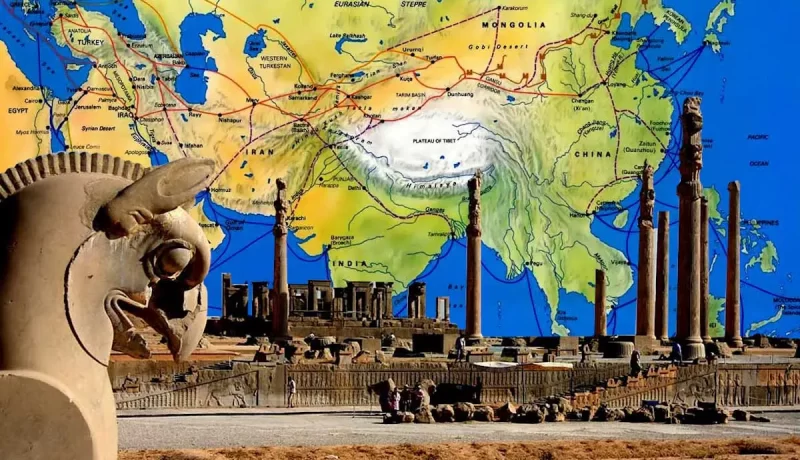
    There is no question that India, China, Egypt, and Persia, in particular, produced flourishing civilisations long before the Europeans. The axial period around which world history revolves, as constructed by Jaspers, between the 7th and 3rd centuries B.C., does not refer to Europeans but to the three great civilisations of China, India, and Persia.

    There is no question that India, China, Egypt, and Persia, in particular, produced flourishing civilisations long before the Europeans. The axial period around which world history revolves, as constructed by Jaspers, between the 7th and 3rd centuries B.C., does not refer to Europeans but to the three great civilisations of China, India, and Persia (see also Katzenstein). Nevertheless, Europeans conquered and colonised the world in the 18th and 19th centuries, not the other way around. There are essentially four explanatory approaches, which are not only mutually exclusive but also determine the self-image of large parts of the world to this day. Put simply, the twentieth century saw a political and, in large parts of the world, an economic decolonisation, but by no means a decolonisation of thought and self-understanding. Moreover, there is a danger that the Eurocentrism that needs to be overcome will only be replaced by ethnocentrism (as is currently the case in Russia and, to some extent, in Israel) or even a civilisational-cultural centrism that is no less problematic than Eurocentrism. China, in particular, is in danger of repeating the mistakes of the West.

    the twentieth century saw a political and, in large parts of the world, an economic decolonisation, but by no means a decolonisation of thought and self-understanding

    So, what are the four explanatory approaches mentioned above? There are two Eurocentric approaches: an Asia-centric approach and a globalist approach. The first Eurocentric approach explains the worldwide colonisation of Europeans in terms of an intellectual superiority that began either in the development of Greek thought or in the Middle Ages. However, since the European Middle Ages were extremely “dark,” there is no direct connection between Greek rationality and the supposed intellectual superiority of the Europeans. Rather, this connection was made possible only by the translations into Arabic of the most important Greek philosophers, such as Plato and Aristotle, and by further translations into Latin. From my point of view – and a little local patriotism is allowed here, as I live near Fulda – the rise of the Europeans began with a letter from Charlemagne to the monastery in Fulda, in which he praised the religious zeal of the monks, but harshly criticised their intellectual understanding of religion. This gave rise to the so-called Carolingian Renaissance of work, which for the first time saw physical and manual labour as equal value to spiritual development – although it is debatable whether this was the first time this happened. Still, the facts remain undisputed in this explanatory approach. As a result, inventions were made in ever-new waves, the sciences developed, and this ultimately led to spurts of individualisation, the struggle for freedom and human rights that characterised the entire 18th and 19th centuries in the European-American world. This intellectual advantage led to a military superiority that enabled the Europeans to colonise the world despite being vastly outnumbered. To this day, Euro-American civilisation considers itself superior to all others. As for violent colonisation, it is admitted that Europeans are “sorry” for it but that it has nothing to do with the essence of Euro-American civilisation, which is characterised by human rights, democracy, and freedom (see Kant, Hegel, Marx, Weber: for an overview see Stark).

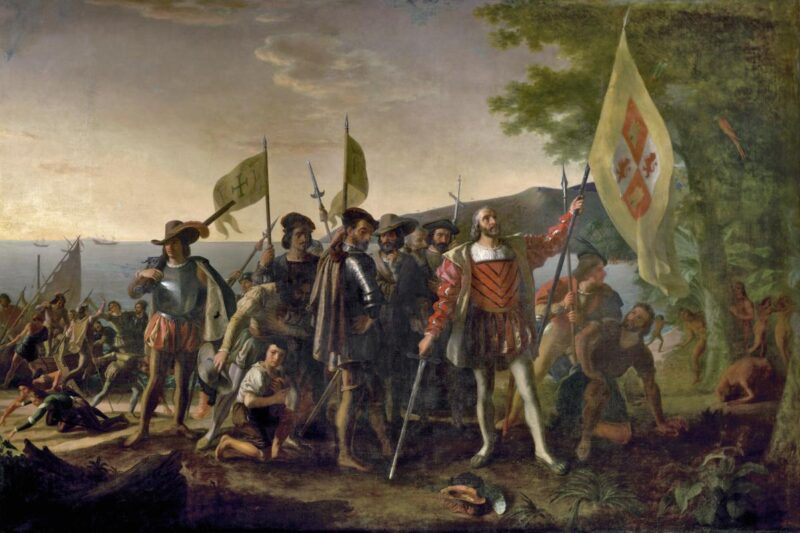
    The second Eurocentric position also assumes European superiority but places it not in the intellectual but in the purely military sphere. The consequence is that Europeans owe their relative prosperity, democracy, and human rights not to themselves but to the violent exploitation of the entire world. Here, too, there are two variants, referring to the Spanish-Portuguese conquests and the Orange army reform in Holland. Since the Muslim armies’ extensive conquest of the Mediterranean region, the Iberian Peninsula had been engaged in a defensive struggle for almost seven hundred years, which ended with their conquest. This created a caste of highly skilled warriors who sought a new vocation after defeating the Muslim armies, which they found in the conquest of Central and South America. The reform of the Orange army, in turn, made modern warfare possible. Based on both, the Europeans first plundered the gold and silver in both Americas.

    Still, they soon introduced enslaved Africans, as they were more likely to survive the plantation work on the Caribbean islands than the indigenous peoples, who were nearly wiped out. The gold and silver shipped to Europe and the products of slave labour created a demand in Europe that was not met by Spain and Portugal but by England and the Netherlands – the Industrial Revolution was thus triggered by a demand created by the exploitation of large parts of the world, precious metals and the “black gold” of slave labour. “Incidentally, the discovery of the sea route to China and India also caused the decline of the Muslim empires and civilisations, as they were no longer the link between Europe and South and East Asia but stood isolated. Political decolonisation was eventually replaced by mostly indirect rule, in which the respective elites were supported militarily and economically to continue exploiting the population.

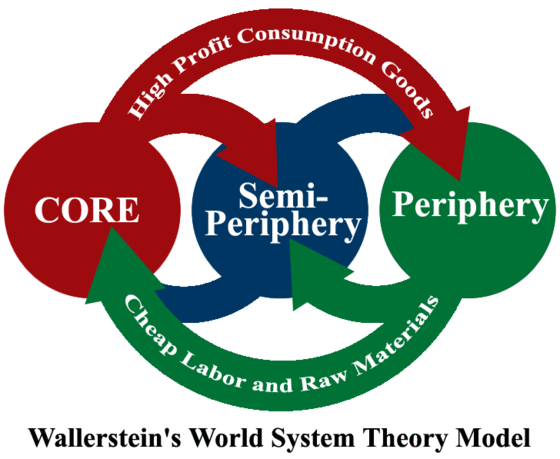
    In most cases, partial military intervention was sufficient for the industrialised states to maintain this system. In the world systems theory of Immanuel Wallerstein and Samir Amin, this practice was conceptualised by dividing the world into centres, semi-peripheries, and peripheries and defining it as a continuous influx of raw materials, goods, and people (brain drain) from the periphery to the mostly Western centres (Amin and Wallerstein).


    A third explanation, however, is Asia-centric. In this view, the dominance of the Europeans and the hegemony of the United States are nothing more than an accident of world history. In this view, East and South Asia have always been the centre of the world economy and intellectual and civilisational development. More precisely, on the shores of the North Pacific and the Indian Ocean (including the Arabian Sea), a power shift has been taking place for thousands of years between China, India, and the Arab-Persian powers. Coincidentally, the retreat of China from about 1500 created a power vacuum in this area, into which the Europeans were gradually able to move. However, they could not compete with these civilisations. The current rise of the great empires and civilisations that were destroyed by European colonisation and Euro-American hegemony is nothing more than a return to the centre of the world, to the countries on the shores of the North Pacific and both parts of the Indian Ocean. In this view, the Europeans and the great powers that emerged from them are in no way superior, but rather the barbarians who caused an unprecedented bloodbath in colonisation and two world wars, including the Holocaust. Now, the centre of the world is returning to where it has always been (Abu-Lughod)

    Another approach is the globalisation approach. It assumes that every five hundred years or so, there has been a shift from one global political centre to the next, i.e., hegemonic empires’ rise, peak, and decline. For the late Andre Gunder Frank, we need to review the last 5000 years, not just the previous 500). At times, individual civilisations succeeded in becoming such hegemonic empires twice. Examples include the Egyptian society, the Chinese Empire of the Han dynasty, the Roman Empire, the Sassanid Empire (Persia), the Muslim Empire until its destruction by the Mongols, and finally European colonisation from about 1500.

    we need a floating balance and mutual recognition of the world’s civilisations

    The crucial question for today is whether globalisation will override this succession of great powers and civilisations or whether there will be a renewed, now genuinely global, struggle for world domination. In my view, we need a floating balance and mutual recognition of the world’s civilisations (Herberg-Rotzhe/Son). The rising civilisations are again faced with whether they will merely repeat the past mistakes and the ethnocentrism of the Europeans under different auspices or contribute to an equal coexistence of the world’s civilisations. And conversely, will the Europeans and the settler colonies they founded also learn to regard other civilisations as equals? Both perspectives will determine the fate of the 21st century if we do not want to experience yet another “bloody century”!

    References:

    Abu-Lughod, Janet: Before European Hegemony: The World System A.D. 1250-1350. Reprint edition. Oxford University Press: Oxford. 1991.

    Amin, Samir: Accumulation on a World Scale: A Critique of the Theory of Underdevelopment. (2 Volumes). Monthly Review Press: New York. 1974.

    Frank, Andre Gunder, The World System: Five Hundred Years or Five Thousand? Routledge: New York. 1996.

    Herberg-Rothe, Andreas and Son, Key-young: Order wars and floating balance. How the rising powers are reshaping our worldview in the twenty-first century. Routledge: New York. 2018.

    Jaspers, Karl: The Origin and Goal of History. Routledge: New York 2021 (original in German 1949).

    Katzenstein, Peter J.” Civilizations in World Politics: Plural and Pluralist Perspectives. Routlöedge: New York 2009.

    Stark, Rodney: How the West Won: The Neglected Story of the Triumph of Modernity. ‎ ISI Books: NewYork. 2015.

    Wallerstein, Immanuel: World-Systems Analysis: An Introduction. Duke University Press: Durham. 2004.


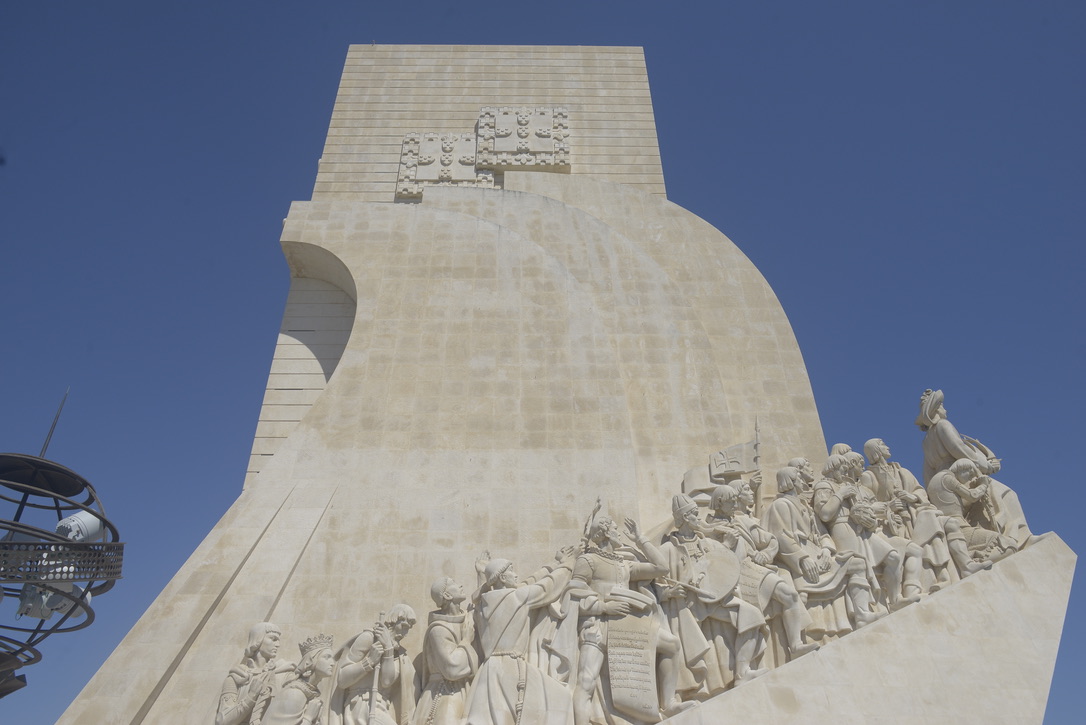
    Feature Photo Credit: Photo of ‘Monument of Discoveries’ in Lisbon. Photo by M Matheswaran. The Monument depicts Henry the Navigator followed by 33 pioneers, including Vasco-da-Gama whose exploration voyages were instrumental in establishing the Portuguese colonial empire, and thus begin the age of colonialism and imperialism.

    Image 1-Map: Asian empires and trade routes – the collector.com

    Image 2: Columbus reaching the Americas (actually the Caribbean) in 1492 – Wikimedia Commons

    Image 3: The story of the colonial looting of Africa – Photo of exhibit in African American Museum, Washington D.C. (Photo – M Matheswaran).

    Image 4: Robert Clive meeting Mir Jaffer in Battle of Plassey 1757 – the beginnings of the British Indian Empire – Wikimedia Commons.


  • From Global Democratisation to the Battle of World Powers? Contradictory Developments in the Present

    From Global Democratisation to the Battle of World Powers? Contradictory Developments in the Present

    Shortly after the democratic revolutions of 1989-1991, Francis Fukuyama wrote his highly influential essay on the end of history- that is, the end of violent history through global democratization.

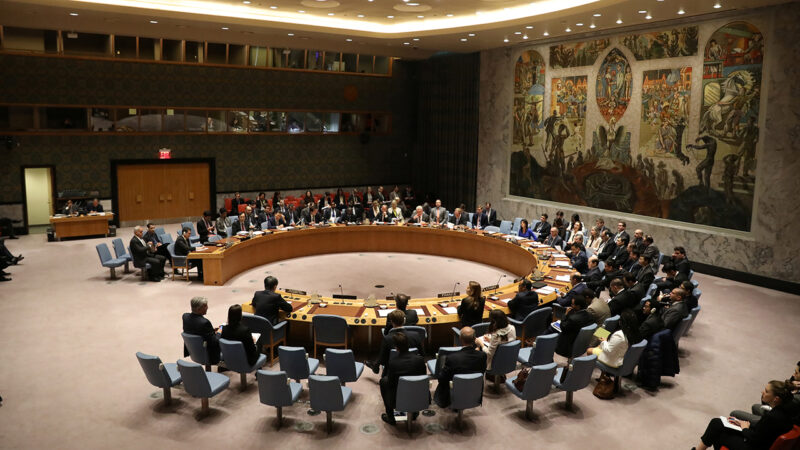
    Members of the United Nations Security Council sit during a meeting on Syria at the United Nations Headquarters in New York City, NY, U.S. April 5, 2017. REUTERS/Shannon Stapleton – RC141DE9DE00. Image credit: world101.cfr.org

    The world has changed so dramatically since the end of the Cold War that it is necessary to look back in order to understand today’s global political situation. In total, there are five different discourses that will be discussed here as representative of historical developments. They range from Fukuyama’s thesis of global democratization to various versions of coming anarchy and global (“new”) civil wars (Kaplan, Kagan, Kaldor, Münkler), Huntington’s clash of civilizations, the concept of global governance and the “rise of the others” (Zakaria, Zhang), a multipolar world of nation-states, and the re-nationalization of world politics. My central thesis is that all five discourses are present in contemporary political conflicts and that we cannot neglect any of them.

    But if you look at the history of democracy, you can almost discover a law of motion of democratic revolutions based on Hannah Arendt’s analysis of the French Revolution. It starts with a democratic revolt against a dictator or colonial rule. Then the revolutionaries become radicalized, civil war breaks out, a new, this time totalitarian ruler takes power, and only after his overthrow does democracy prevail.

    Shortly after the democratic revolutions of 1989-1991, Francis Fukuyama wrote his highly influential essay on the end of history- that is, the end of violent history through global democratization. And his thoughts were very timely. What better confirmation could there be when, in just a few years, the old dictatorships from Berlin to Vladivostok, which only called themselves communist but were not, but rather geriocracies, were swept away in a wave of democratisation. The Arab Spring seemed to confirm his thoughts, as here, too, long-standing dictatorships were overrun by democratic movements virtually overnight, as in Egypt and Tunisia. But even then, there were counter-movements that contradicted the assumed linear process of global democratization. Fukuyama, therefore, had to defend his original thesis and argue that, despite all the setbacks, democracy was still at the end of history. In a way, he was echoing Hannah Arendt’s theory of revolution. The reverses of democratization in Russia, many Arab countries, and the global civil wars have often been cited as cultural – Russia, China, and Middle Eastern Islam were still too culturally authoritarian to allow for genuine democratization. But if you look at the history of democracy, you can almost discover a law of motion of democratic revolutions based on Hannah Arendt’s analysis of the French Revolution. It starts with a democratic revolt against a dictator or colonial rule. Then the revolutionaries become radicalized, civil war breaks out, a new, this time totalitarian ruler takes power, and only after his overthrow does democracy prevail. The French overthrew their king and got the emperor, Napoleon; the Russians revolted against the czar and got Stalin; the Chinese fought against their emperor and got Mao Tse-tung; the Germans overthrew their emperor after their military defeat and got the leader Adolf Hitler. Resistance to colonial rule also often followed this law of democratic movement: the colonial rulers were driven out and replaced by new rulers.

    In the same year that the Soviet Union collapsed, the terrible civil wars in the former Yugoslavia began, the first Chechen war, followed by countless “markets of violence” and so-called new wars, which in a narrower sense were new civil wars and wars of state collapse. Mass rape became a weapon of war to demoralize the enemy, and an almost complete dissolution of the boundaries of violence took on a life of its own, seeming to make any rational resolution of conflicts impossible. Warlords, drug lords, terrorists, child soldiers, and “archaic” warriors who seemed to belong to the past dominated warfare worldwide. Against this backdrop, Western armies were transformed into intervention armies that were supposed to maintain a minimum of order on the borders of the U.S. “liberal empire” in order to prevent global anarchy (Robert Kaplan) or a “world civil war” (Enzensberger) – at least according to Western discourse. From the perspective of the countries affected by these wars of intervention, however, they were wars to maintain their immediate exploitation (especially in Africa), to keep corrupt regimes that collaborated with Western states alive (Arabian Peninsula), or to eliminate those that opposed the West (Iraq, Iran, Afghanistan). In the open spaces of violence and violent markets, high-value illegal goods were traded: Drugs, blood diamonds, human beings (women and child slaves), weapons and rare earths.

    Linked to these wars of intervention was the apparent cultural triumph of the West, which is associated with the term globalisation, but was, in fact, initially an Americanization, the so-called McDonaldization or Mac World. However, this cultural globalization of the American way of life, combined with U.S. wars of intervention, led to a backlash as many societies saw their cultural identity threatened. Taken together, these two factors triggered Samuel Huntington’s concept of the clash of civilizations.

    In their liberal hubris, his Western critics argued that there could be no clash of civilizations because only the West had produced a civilization – the others were religions or cultures, but not civilizations.

     His book has often been misunderstood as a guide to action for the coming war – but in fact, he had written the book to prevent that clash, and he argued for the U.S. to withdraw from small wars around the world because he saw the liberal identity of the U.S. at risk. Perhaps more importantly, he saw non-Western religions not just as cultures but as civilizations that had grown out of their respective religions. In their liberal hubris, his Western critics argued that there could be no clash of civilizations because only the West had produced a civilization – the others were religions or cultures, but not civilizations.

    While globalization initially had the effect of Americanization, in the medium term, it facilitated the “rise of the others” (Zakaria), the great empires and civilizations that had perished under European colonization and Euro-American hegemony. As a result of their initial economic success (Malaysia, Singapore, the Asian Tigers, China, India, the Pacific Rim countries), they no longer sought to imitate Western culture in order to be recognized as equals, but to develop their own identity, which they considered superior to the West. From the point of view of Western discourse, the “others” were, at best, immature children or barbarians – now the West suddenly sees itself in the role of other civilizations, seeing themselves as superior to the West. One expression of this changed self-image was Zahng Weiwei’s book China – The Civilizational State. We are now experiencing a paradoxical situation in which the West is consumed by fear of decline and the dissolution of its own sense of superiority, leading to the rise of right-wing populist and radical right-wing movements; large parts of the Asian world population are filled with hope for a better life, and the Islamic-Arab world is desperate in the face of unfulfilled promises, leading to the radicalization of young people in Islamist movements.

    The concept of global governance was invented at the beginning of the 21st century as a reaction to advancing globalization. The assumption, correct in itself, was that the absence of a democratic world state did not necessarily mean that there was no possibility of at least regulating global problems, subjecting them to rules, if not solving them. Global governance was based on the idea of cooperation between nation-states, non-governmental organizations, globally active institutions, the emerging global civil society, globally active corporations, and global players. However, the resurgence of big states has pushed global governance into the background, just like globalization itself. Some states want to reverse globalization, at least in the economic and political spheres. This applies at least to Western democracies, whose citizens often see themselves as the losers of globalization.

    The relative loss of importance of the Western states and the institutions they helped to create, such as the U.N., cannot be overlooked – the overstretched role of the U.S. as the world’s policeman is due, on the one hand, to its own lack of investment in development and education, and on the other to the rise of others.

    What we are currently experiencing is not simply a multipolar world of great powers, even if there are signs of a renaissance of great power politics. Instead, we are witnessing a contradictory process of the five discourses alluded to here: Democratization, failed states, the clash of civilizations, further globalization, and the renaissance of great power politics. The still existing, but also partly former, Global South is still dependent on cooperation, even if new forms of cooperation are emerging, such as the expansion of the BRICS, which compete politically but cooperate economically. The relative loss of importance of the Western states and the institutions they helped to create, such as the U.N., cannot be overlooked – the overstretched role of the U.S. as the world’s policeman is due, on the one hand, to its own lack of investment in development and education, and on the other to the rise of others. What remains unpredictable is whether the emerging states of the Global South and the former superpower Russia will make the same mistake as the West in its centuries-long quest for hegemony, namely, to see itself as superior to all others. Eurocentrism would be replaced by an equally problematic ethnocentrism, and a nationalist dynamic would be set in motion that would be difficult for states to control. Even if all current developments point to the contrary and we see a return of tribalism in the form of “us versus them – whoever the others are” discourses, the only option left is to revive intercultural dialogue if we do not want to experience “another bloody century” (Colin S. Gray).


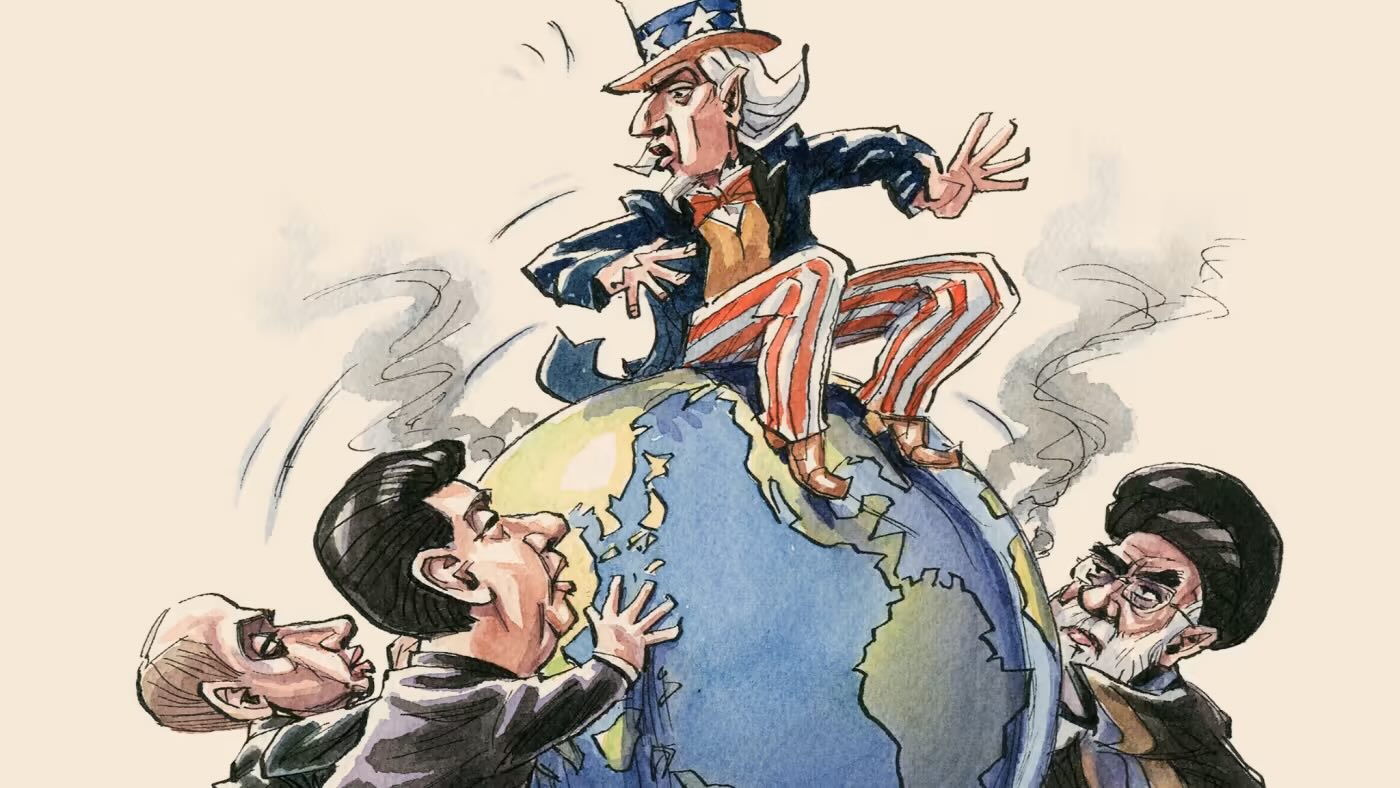
    Feature Image Credit: chinausfocus.com

  • Balancing Civilizations: Neither Clash, mere Multiplicity nor Conversion

    Balancing Civilizations: Neither Clash, mere Multiplicity nor Conversion

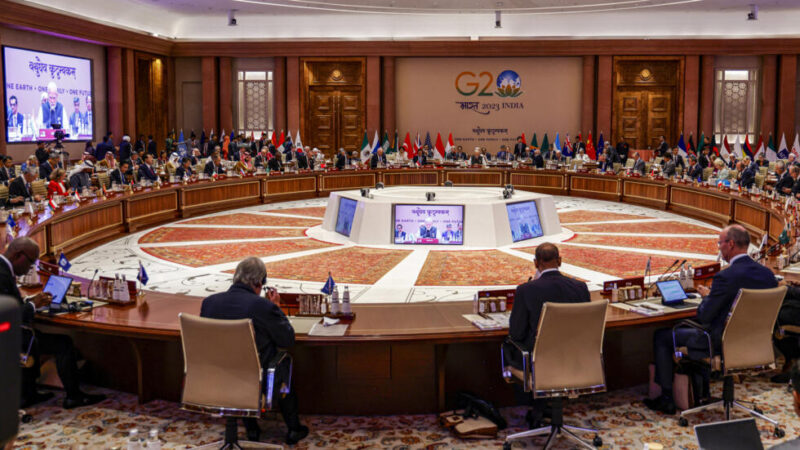
    The modern world is a product of intense competition and conflict that evolved from the European ‘system of states’ propensity and greed for the acquisition of territory and resources through colonialism and imperialism. The post-1945 world continues to suffer the ills of Western domination and exploitation as is evidenced by the innumerable number of wars, conflicts, and interventions….supposedly part of the imperial civilising missions. As the non-Western world rises the choices are either conflict or cooperation. The G20 Summit 2023 being held in New Delhi is an opportunity to recognise and chart a new path for the world. The authors, Andreas Herberg-Rothe and Key-young Son, emphasise the importance and need for cooperation and harmony amongst the civilisations of the world.

    G20 Summit 2023 in New Delhi is underway on September 9-10, 2023. 

    We propose the non-binary concepts of Clausewitzian floating equilibrium, Confucian harmony, and Arendtian politics of plurality as key ideas to avert and mitigate contemporary conflicts.

    In many of the world’s hot spots, both civil and governmental combatants have become embroiled in unending conflicts based on a binary position: “us against the rest.” After two hundred years of imperialism and Euro-American hegemony that have produced varying degrees of adaptation or rejection of Western modernity, it may be time for the world’s great civilizations to learn how to live harmoniously with one another. The world order of the twenty-first century will not be based entirely on modernist ideas and institutions such as nation-states, laissez-faire capitalism, individualism, science and technology, and progress. How then can we accommodate other civilizations and cultures?

    We propose mediation, recognition, harmony and floating balance as key principles for inter-civilizational and inter-cultural dialogue and conviviality, accompanied by the awareness that we are all descended from a small group of African ancestors. Mediation and recognition between friends and enemies will be the initial recipes for transforming hostility into partnership, while harmony and floating balance between and within opposites, such as individual versus community, freedom versus equality, will help sustain the momentum for forging constructive relationships.

    After the process of political decolonization in the twentieth century, we still need to decolonize our way of thinking. The values of the East and the West cannot survive in their absolute form in this globalized world.

    As former Israeli Prime Minister Yitzhak Rabin put it, “You don’t have to make peace with your friends; you have to make peace with your enemies. As a legacy of previous centuries, however, the binary thinking of “us against them” has paradoxically retained a strong presence in twenty-first-century international relations. If this thinking continues to be the decisive force, we could repeat the catastrophes of the twentieth century. After the process of political decolonization in the twentieth century, we still need to decolonize our way of thinking. The values of the East and the West cannot survive in their absolute form in this globalized world. It is our deepest conviction that the Western and like-minded states could only hold on to values such as freedom, equality, emancipation and human rights if they could be harmoniously balanced with the contributions of other civilizations and cultures.

    The concept of floating equilibrium, derived from our interpretation of the “wondrous trinity” of the Prussian military theorist Carl von Clausewitz, means not relativity, but relationality and proportionality. At the end of his life, Clausewitz drew the conclusion for the theory of violent conflict that every war is composed of the three opposing tendencies of primordial violence, which he compared to hatred and enmity as a blind natural force, to chance and probability, and to the subordination of war as a political instrument, which makes war subject to pure reason. With Clausewitz’s concept, it is clear that war involves two extreme opposites – primordial violence on the one hand and pure reason on the other. By adding the third tendency, chance and probability, wars become different in their composition.

    We use Clausewitz’s concept as a methodological starting point to find a floating balance between various contrasts and contradictions that are evident in the current phase of globalization, which Zygmunt Bauman calls “liquid modernity”. These contrasts include those between the individual and the community, equality and freedom, war and peace, and recognition and disrespect. We argue that Clausewitz’s wondrous trinity and “floating equilibrium” can be used as a way to interpret and mitigate today’s conflicts, although Clausewitz developed these notions to analyze the warfare of his time.

    Globalization has led to the “rise of the rest” or Amitav Acharya’s “multiplex world” of nation-states, NGOs, global institutions, global terrorism, and violent gangs of young people from the suburbs of Paris to the slums of Rio who are excluded from the benefits of globalization. This includes both of the following macro developments:

    On the one hand, globalization allows the former empires (China, Russia and India) and some developing countries with large populations (Brazil, Indonesia, South Africa) to regain their status as great powers. This development could lead to a global network of megacities competing on connectivity rather than borders, as in China’s efforts to reestablish the ancient trade routes of the Silk Road. On the other hand, it dissolves traditional identities and forms of governance to some extent as a result of social inequality, leading to fragmented societies and a re-ideologization of domestic conflicts, as already seen with the rise of the far right in the US, Europe and Russia, but also Salafism, exaggerated Hindu and Chinese nationalist movements.

    the terrible inequalities in this world, where 1% of the world’s population has as much as 99% of the “rest”, or 62 billionaires own as much as 3.5 billion people, are the result of unrestricted and unbalanced freedom. We need to reinvent a balance between freedom and equality so as not to legitimize the inversion of freedom in the name of freedom by the aristocracy of property owners.

    Failed states, the wave of migrants and refugees around the world, climate catastrophes, and growing inequalities are the result of the “liquid modernity” that accompanies the dissolution of individual, community, and state identities. Ideologies did not dissolve with the end of the twentieth century or the advent of globalization but rather shifted from modern, utopian ideologies such as socialism and democracy and their aberrations such as Nazism and Stalinism to postmodern ones. The rise of postmodern ideologies such as Salafism is the result of globalization and the West’s refusal to recognize other civilizations and cultures. Moreover, the terrible inequalities in this world, where 1% of the world’s population has as much as 99% of the “rest”, or 62 billionaires own as much as 3.5 billion people, are the result of unrestricted and unbalanced freedom. We need to reinvent a balance between freedom and equality so as not to legitimize the inversion of freedom in the name of freedom by the aristocracy of property owners.

    In short, we propose the non-binary concepts of Clausewitzian floating equilibrium, Confucian harmony, and Arendtian politics of plurality as key ideas to avert and mitigate contemporary conflicts. Both Confucian harmony and Hanna Arendt’s concept of plurality are based on the harmonious relationship between different actors, or the floating balance of equality and difference, given that all human beings are similar enough to understand each other, but each is an individual endowed with uniqueness.

    Due to the speed and scale of information processing and transmission, the contemporary world is turning much faster than the commonly known modern world. If modernity is a temporal and spatial playground for rationality, the contemporary world is rather a playground for the mixture of the Clausewitzian trinity: reason, emotion, and chance. This means that while we would like to use reason in making decisions, we are often swamped by emotion and ultimately forced to take chances, given the short time frame available for any reasonable calculation and the ever-changing, chameleon-like internal and external environments. As an analyst of war, Clausewitz had long studied this trinity, for war, as a microcosm of human realities, is where reason, emotion, and chance play their respective roles.

    In this everyday situation of war, Clausewitz’s revived ideas can offer his posterity many valuable insights. All in all, Clausewitz diverts our attention from the unbalanced diet of the modernists in favour of rationality and offers a healthy recipe for analyzing contemporary problems where reason, emotion, and chance intersect, often with an unexpected outcome.

    No matter how powerful a single state may be, it will remain a minority compared to the rest of the world. In this globalized world, there would be no room for any kind of exceptionalism, American or Chinese, but only a floating balance between the world’s great civilizations.

    It is a choice between repeating the same mistake of forcibly imposing our own values on the rest of the world, as we did in the twentieth century, or embarking on a new civilizational project of harmony and co-prosperity. No matter how powerful a single state may be, it will remain a minority compared to the rest of the world. In this globalized world, there would be no room for any kind of exceptionalism, American or Chinese, but only a floating balance between the world’s great civilizations. Such a floating balance is a kind of mediation between the opposites of Huntington’s clash of civilizations on the one hand and the generalization of the values of only one civilization on the other. A mere multiplicity of approaches would only lead to a variant of the clash of civilizations. The first step in this direction is to recognize that in a globalized world, great civilizations must learn from each other for their own benefit and interest. If the values of the Western world lead to such terrible and immoral inequalities, we need to rethink our value systems – and if the concept of hierarchy in the Eastern world leads to violations of a harmoniously balanced society, we need to rethink those value systems as well. Whereas in classical Confucianism harmony was based on strict hierarchical oppositions, in a globalized world we need a floating balance between hierarchical and symmetrical social relations, combining Clausewitz and Confucius.

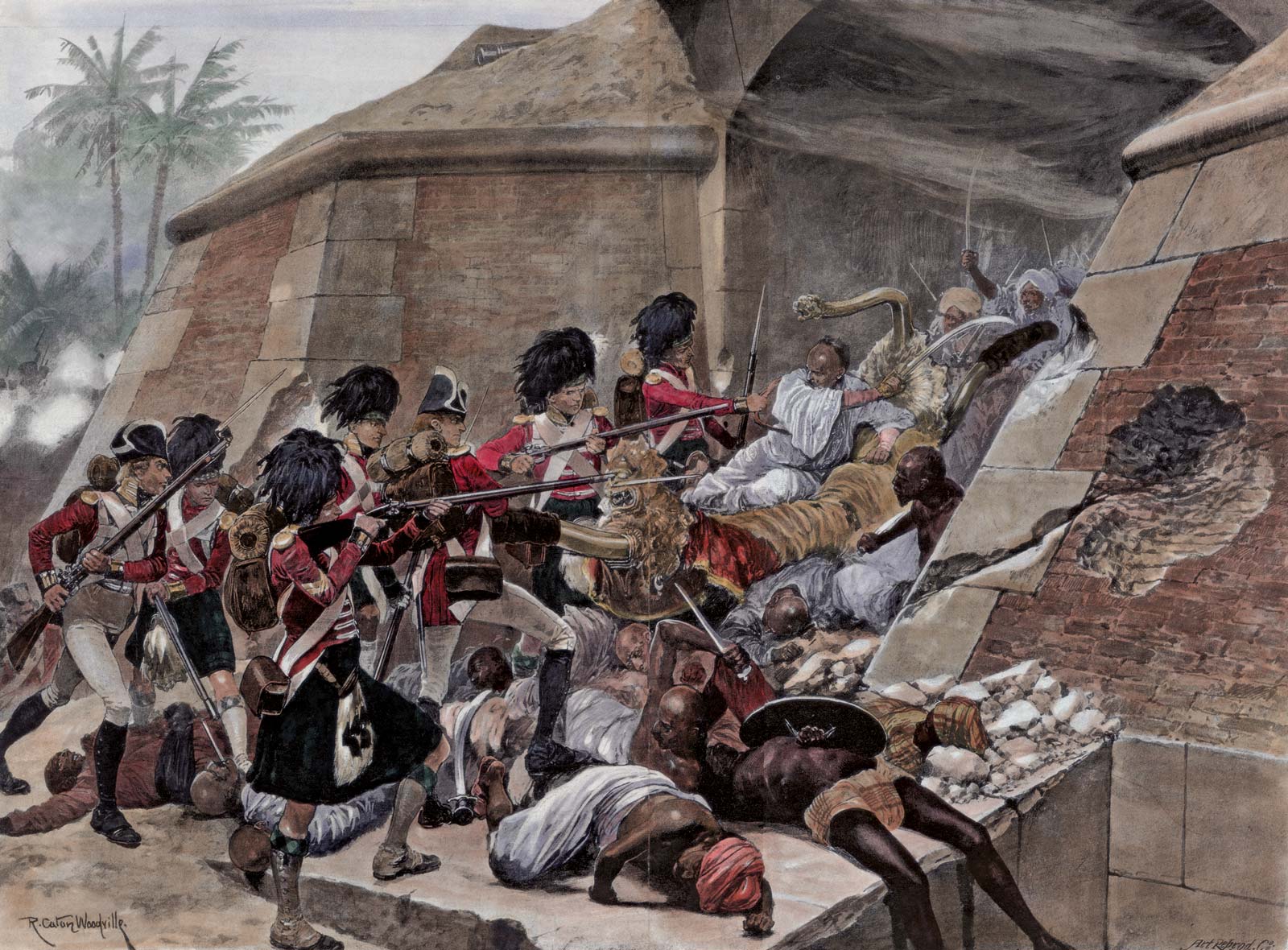
    Feature Image Credit: Storming of the Srirangapattinam Fort by the British. Fourth Anglo-Mysore War, 1799. Consolidation of colonialism and imperialism. www.mediastorehoise.com

  • Harmony – the soft power of the East-Asian civilizations

    Harmony – the soft power of the East-Asian civilizations

    To date, the Western understanding of freedom as liberation still seems to be the hegemonic discourse. But as we know from Thomas Hobbes excessive freedom is leading to civil wars – and the ideology of unlimited freedom in the market economy and over excessive consumption is burning the world in climate change.

    East Asia and South-East Asia are emerging as the world’s largest economic powerhouse and perhaps even as a technological superpower.  Nevertheless, a deeper understanding of the consequences of this process will remain elusive, unless we squarely look at the puzzles surrounding the norms and preferences of major East Asian states. In contrast to the Western neo-liberal model, which puts excessive emphasis on individual freedom leading in the Western countries to the dissolution of the social fabric of the societies, there is an authoritarian temptation to maintain social cohesion in light of the dramatic social transformation worldwide. But mere authoritarianism is not compatible with the progress of societies because it does lack the incentive to rise above your current situation. We all know we started to live in a new world different from what we used to. But it is still early to name or define this Chameleon-like world of incessant transformation. Western triumphalism, perhaps understandable after the end of the Cold War, was long gone. Perhaps, we are destined to live in limbo for the near future. In order to cope with this process, East Asia needs not only economic and technological progress but also the soft power of ideas. To date, the Western understanding of freedom as liberation still seems to be the hegemonic discourse. But as we know from Thomas Hobbes excessive freedom is leading to civil wars – and the ideology of unlimited freedom in the market economy and over excessive consumption is burning the world in climate change.

    Harmony in the Confucian tradition is also not a fixed status, but the task is to harmonize the contrasts and opposites.

    An alternative value system might be the Confucian and East Asian concepts of harmony.  Harmony is not sameness but implies tensions like those in a symphony. In music, we find a lot of contrasts for example in a symphony of Beethoven but at the same time, we enjoy the harmony of the whole composition. Already in the first very old appearances of the concept of harmony, it is related to the singing of birds and music in general. Harmony is therefore related to the balancing of contrasts. Harmony in the Confucian tradition is also not a fixed status, but the task is to harmonize the contrasts and opposites. And of course, a part of harmony is related to freedom, but unrestricted freedom is not the ultimate goal. The question, therefore, is how to limit unrestricted freedom without suppressing the people? The answer might be to harmonize and balance freedom with equality.

    The question, therefore, is how to limit unrestricted freedom without suppressing the people? The answer might be to harmonize and balance freedom with equality.

    As in a symphony, real harmony is achieved when we are able to balance the contrasts of life: between the whole and the part, being born and dying, the individual and the community, between freedom and equality. We could compare such a balance with a water wave. If there are no movements and waves at all, the sea is dying – if it is a Tsunami the waves are destructive for the individual and the community. Harmony is superseding the Western discourse of absolute freedom because in a harmonious society freedom is not abandoned but a part of the greater whole.  Neither the authoritarian rule nor excessive freedom should be the alternative for world order in the twenty-first century – what we desperately need in a burning world is a harmony or floating balance between and within our societies as well as us as individuals.


    Feature Image: The Idea of Harmony wsimag.com