Tag: Civilisation

  • The Atheist Who Invented Hindutva: The Mirror Turned Inward

    The Atheist Who Invented Hindutva: The Mirror Turned Inward

    Series Prologue: Part 3

    Series: India’s Strategic Choices and Civilisational Responsibilities

    The ideology that today presents itself as the authentic voice of Hindu civilisation was constructed by an atheist using conceptual tools borrowed from European ethnic nationalism — the very tradition most alien to India’s own pluralist philosophical inheritance.

    In the previous two posts in this prologue, I traced the material foundations and ideological engine of five centuries of Western domination. I argued that India’s civilisational traditions offer a fundamentally different foundation for the emerging world order: pluralist, ethically grounded, and rooted in the universal kinship expressed in Kanian Poongundranar’s “Yaadhum Oorey, Yaavarum Kelir” and the Thirukkural’s vision of Aram, Porul, and Inbam. But intellectual honesty requires that the mirror be turned inward. Because the logic of exceptionalism — the claim to a uniquely chosen identity that exempts a community from the ethical constraints applying to others — is not exclusively a Western pathology. It is a temptation that every civilisation faces when political power finds it useful. And India is not immune.

    The ideology known as Hindutva, which exercises dominant political influence in India today, must be examined with the same analytical rigour we have applied to Western and Zionist exceptionalism. Not because the comparison is comfortable — it is not — but because intellectual integrity demands it, and because India’s civilisational integrity depends on it. The examination is best conducted in three stages, because the ideology was not built in one.

    Stage One: The Founder Who Separated the Nation from the Faith

    The first and most important fact is one the movement rarely acknowledges: “Hindutva is not Hinduism.” Hindutva was founded by an atheist, and it was not, in its original formulation, a religious idea at all. Vinayak Damodar Savarkar, who coined the term in his 1923 pamphlet ‘Essentials of Hindutva’, was a self-declared atheist, rationalist, and materialist. He rejected scripture, ridiculed cow worship and ritual superstition, and championed European scientific temper over what he saw as the dead weight of religious tradition. He was explicit that Hindutva was not Hinduism. He defined a ‘Hindu’ not by religious belief but by three criteria: Pitribhumi, a common fatherland; Jati, a common race or descent; and Sanskriti, a common culture. A Hindu, in Savarkar’s definition, need not believe in any god at all. What mattered was that India was both his fatherland and his Holyland — a territorial and ethnic test, not a spiritual one.

    Savarkar defined a ‘Hindu’ not by religious belief but by three criteria: Pitribhumi, a common fatherland; Jati, a common race or descent; and Sanskriti, a common culture.
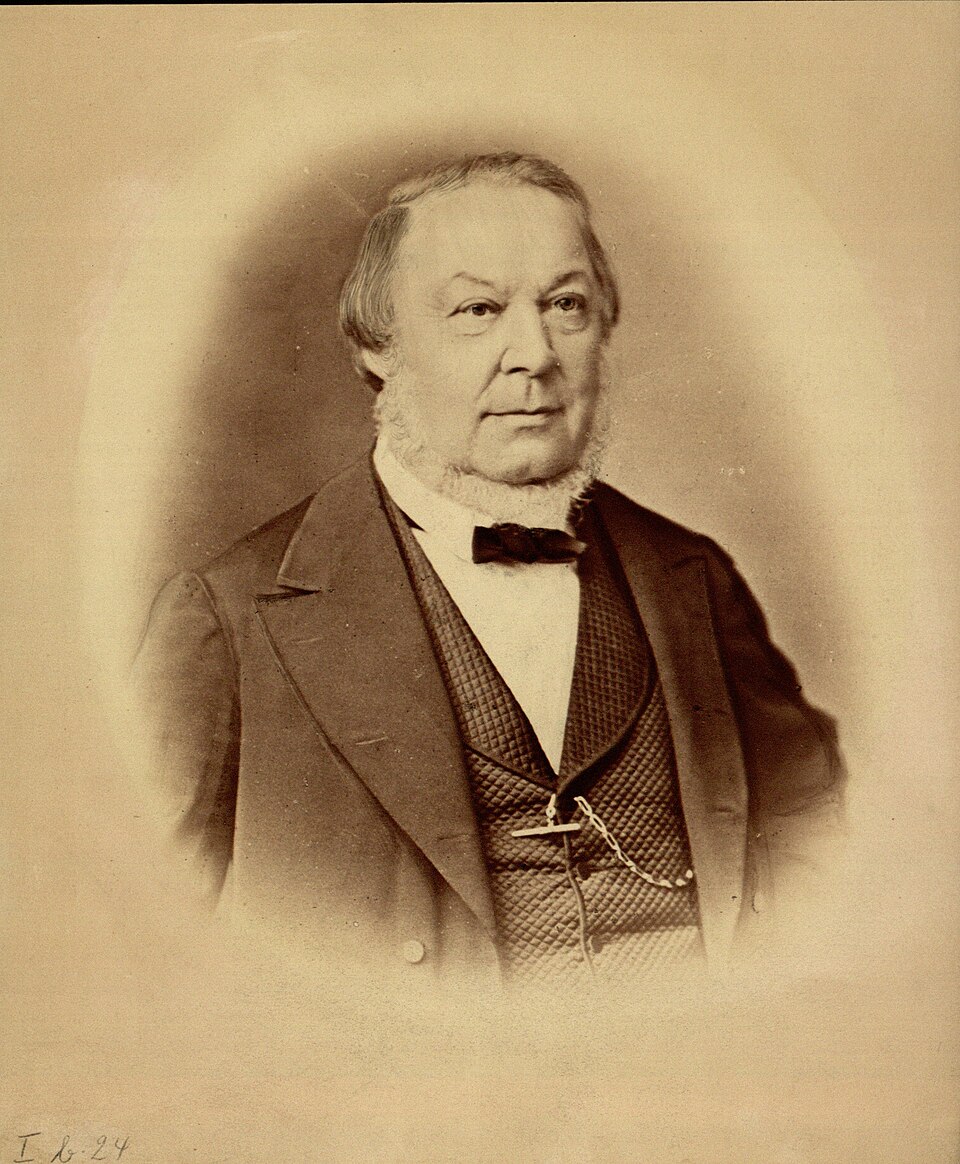
    Johan Caspar Bluntschli


    Where did this conception come from? Not from the Vedas, the Upanishads, or any Hindu philosophical source. It came from Europe. Savarkar’s framework of organic ethnic nationalism drew on the nineteenth-century European tradition of the nation as a racial-cultural organism — the tradition of the Swiss-born jurist Johann Kaspar Bluntschli, who worked within German Staatslehre and distinguished between a nation’s racially rooted ‘principal’ people and those he regarded as alien to it. It drew, too, on the ethnic nationalisms then ascendant across Europe, the same intellectual currents that were hardening elsewhere into far darker forms. This is the first irony, and it is foundational: the ideology that today presents itself as the authentic voice of Hindu civilisation was constructed by an atheist using conceptual tools borrowed from European ethnic nationalism — the very tradition most alien to India’s own pluralist philosophical inheritance.

    Stage Two: The Fusion of Ethnic Nationalism with Religious Sentiment

    If Savarkar’s Hindutva was a rationalist, secular-ethnic nationalism, how did it become the religiously charged mass movement we see today — mobilising temple, festival, deity, and devotional feeling for political ends? The answer is that this was a second and distinct stage, carried out by different men, for a different purpose: mass mobilisation.
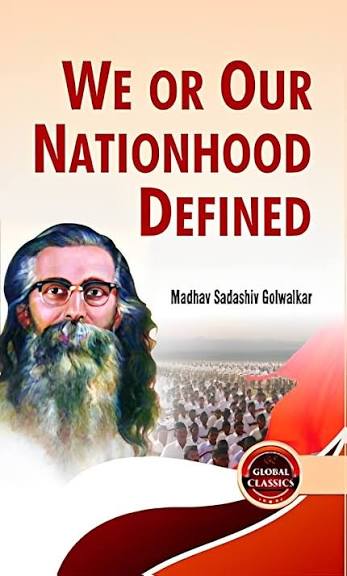
    M S Golwalkar

    M.S. Golwalkar, who led the Rashtriya Swayamsevak Sangh from 1940 to 1973, shifted the register decisively. Where Savarkar grounded the nation in race and territory and had little use for religion as such, Golwalkar infused the project with Hindu spiritual and metaphysical content — the sacredness of Bharat, the dharmic mission of the Hindu people, a civilisational destiny cast in religious language. Deendayal Upadhyaya’s doctrine of ‘Integral Humanism,’ adopted in 1965 and later made the official ideology of the Jana Sangh and then the Bharatiya Janata Party, further anchored the political project in a claimed Hindu spiritual essence. The reason for the shift is not difficult to understand. An abstract theory of ethnic nationalism, however rigorously constructed, cannot move a population. Religious sentiment — festival, symbol, deity, the deep and genuine devotional attachment of hundreds of millions of people — is among the most powerful mobilising forces in human affairs. The movement discovered what its rationalist founder had not prioritised: that to win a nation, you must reach its heart, and in India the heart is substantially religious.

    One need not impute cynical motive to any individual to observe the structural result. A political ideology founded on secular-ethnic lines was, over subsequent decades, fused with the religious devotion of the Hindu masses — and in that fusion, the crucial distinction Savarkar himself had insisted upon, between Hindutva the political-national identity and Hinduism the faith, was quietly erased. The movement that claims to defend Hindu dharma was built on a foundation laid by a man who had little personal use for dharma as religion at all.

    And Savarkar himself never crossed over. He remained an atheist and rationalist to the end of his life — campaigning against ritualism and caste orthodoxy through his Ratnagiri years, opening the Patit Pavan Mandir to all castes, arguing for care of the cow as a useful animal rather than worship of it as a sacred one. His relations with the RSS were notably cool; he scorned its abstention from politics, and Golwalkar’s mysticism belonged to a register the materialist Savarkar never adopted. His death in 1966 was a final statement: he ended his life by voluntarily renouncing food and medicine, justified in a rationalist essay, and his will forbade religious rites — no priests, no rituals, a motorised hearse in place of the traditional bier. The founder kept Hindutva and Hindu religiosity separate for eighty-three years, to the point of a ritual-free funeral. The fusion of the two was not his evolution. It was a second construction, built around him and after him — which is precisely why it can be unbuilt.

    The Zionism Parallel: A Precise Structural Homology

    This two-stage pattern is not unique to Hindutva. It follows, with striking precision, the trajectory of political Zionism — and the comparison is instructive rather than incidental. Theodor Herzl, the founder of political Zionism, was a secular, largely non-religious Viennese journalist. His 1896 work Der Judenstaat is a political and national argument, not a religious one; early political Zionism was in large part a secular nationalist movement, and many Orthodox religious authorities initially opposed it precisely because it presumed to force a national project onto what they regarded as a matter of faith and divine timing. Only later did the movement fuse itself with religious claim — the theological reading of the land, the mobilisation of scripture, and the memory of the Holocaust deployed as a unifying and legitimating force. The structure is identical to the Hindutva trajectory: a secular founder formulates an ethnic-national ideology; later leaders infuse it with religious sentiment and collective memory to achieve mass appeal and to place the project beyond ordinary political criticism.

    The Warning: Where this Trajectory Leads
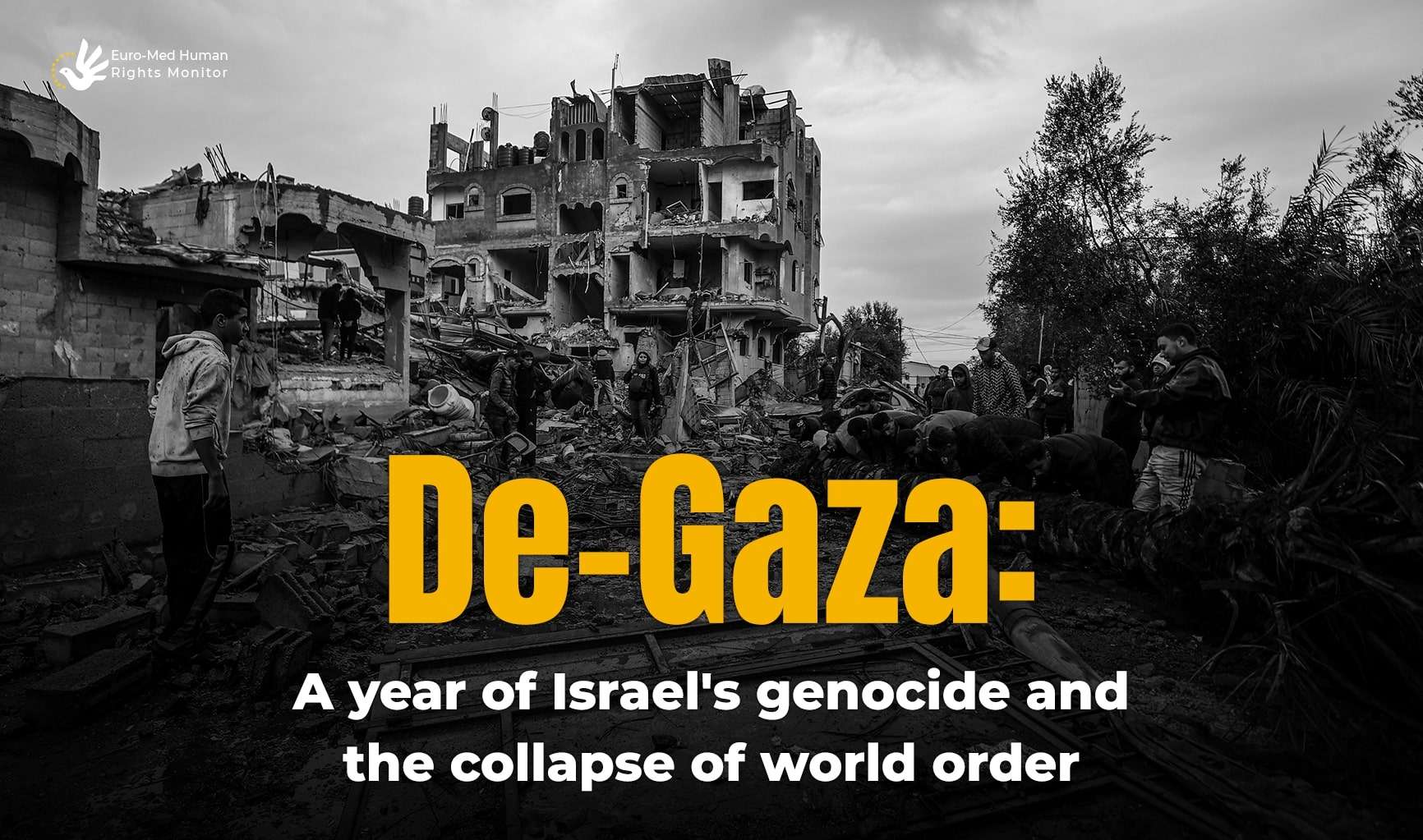
    Euro-Med Human Rights Monitor brought out this report after the first year of war in Gaza by Israel. It has now been on for more than three years and has engulfed the entire West Asia.

    And here the parallel carries a warning that thoughtful Indian people cannot afford to ignore. For if Hindutva’s path resembles Zionism’s in how the ideology is built, we must look honestly at where that path has led. The fusion of a secular-ethnic nationalism with religious claim did not strengthen the moral standing of the project it produced. It corrupted it. The state that emerged now stands, in the aftermath of Gaza, in a condition of profound moral and political isolation — its conduct condemned across much of the world, its claim to act in the name of an ancient faith increasingly repudiated by the faithful themselves. Many Jews who practise Judaism as a religion and a moral tradition have publicly dissociated themselves from the actions of the Israeli state, insisting on the very distinction this essay draws: that a faith is not the same as a political-national project conducted in its name, and that the project does not speak for the faith. Judaism, one of humanity’s great ethical traditions, has been ill-served by what has been done in its name.

    Many Jews who practise Judaism as a religion and a moral tradition have publicly dissociated themselves from the actions of the Israeli state, insisting on the very distinction this essay draws: that a faith is not the same as a political-national project conducted in its name, and that the project does not speak for the faith. Judaism, one of humanity’s great ethical traditions, has been ill-served by what has been done in its name.

    The warning for India is exact. Hindutva today shows every sign of being on a similar trajectory — the same fusion of ethnic nationalism with mobilised religious sentiment, the same erasure of the distinction between a faith and a political project, the same tendency to place that project beyond criticism by wrapping it in the sacred. If it continues down that path, it risks doing to Hinduism what political Zionism’s corruption has done to Judaism: isolating it, discrediting it, and betraying its deepest moral content — all in the name of defending it.

    Why This Matters: And What is at Stake

    This is why the distinction between Hinduism and Hindutva is not academic hair-splitting. It is the difference between a civilisation and an ideology that has captured its name. Hinduism is one of the oldest and most philosophically sophisticated traditions on earth. It has no single founding prophet, no single canonical scripture, no orthodoxy, and no mechanism for excommunicating heretics — because diversity of belief and inquiry is not a problem to be solved but the natural condition of a tradition too vast for any single formulation to contain. Its foundational statement, from the Rigveda, is Ekam Sat Vipra Bahudha Vadanti: truth is one, the wise call it by many names. It gave the world the Upanishads, the Jain Anekantavada — the many-sidedness of truth — the Buddha and Mahavira, the Bhakti and Sufi streams, the Tamil saint Vallalar’s image of the many religions as rivers merging into a single shoreless ocean. It is, arguably, the most spiritually plural and philosophically generous civilisational inheritance humanity possesses.

    Hinduism is one of the oldest and most philosophically sophisticated traditions on earth. It has no single founding prophet, no single canonical scripture, no orthodoxy, and no mechanism for excommunicating heretics — because diversity of belief and inquiry is not a problem to be solved but the natural condition of a tradition too vast for any single formulation to contain.

    Hinduism’s foundational statement, from the Rigveda, is Ekam Sat Vipra Bahudha Vadanti: truth is one, the wise call it by many names. It gave the world the Upanishads, the Jain Anekantavada — the many-sidedness of truth — the Buddha and Mahavira, the Bhakti and Sufi streams, the Tamil saint Vallalar’s image of the many religions as rivers merging into a single shoreless ocean. It is, arguably, the most spiritually plural and philosophically generous civilisational inheritance humanity possesses.

    A country with over 200 million Muslim citizens — the second-largest Muslim population in the world — cannot credibly champion the Global South, the voice of universal human dignity, or the reform of the world order, if its dominant political ideology frames those citizens as the internal Other. And an ideology founded by an atheist on borrowed European ethnic-nationalist theory, later dressed in religious sentiment for political mobilisation, cannot be the authentic voice of the tradition of Ekam Sat and Anekantavada. It is, in the most precise sense, that tradition’s negation.

    The strongest argument against Hindutva, therefore, is not secular liberalism, and not the critique of any political party. It is Hindu philosophy itself — the Upanishads, the Thirukkural, the Anekantavada, Vallalar’s Ocean, the Sangam world’s ‘Yaadhum Oorey, Yaavarum Kelir’. These traditions do not need political exceptionalism to survive; they are diminished by it.

    “Ekam Sat Vipra Bahudha Vadanti: truth is one; the wise call it by many names” – Rigveda

    Safeguarding India’s civilisational soul from the exceptionalism now deforming it from within is not an act of opposition to Hindu culture. It is its most authentic defence — and it is a task for every Indian who understands the depth of what is being risked.

    — This is the third and final part of the series prologue. The series proper begins with the next post.

    A companion essay, ‘The Constitution or the Manusmriti: India’s Civilisational Choice,’ extends this argument and is available at thepeninsula.org.in.

    Air Marshal M Matheswaran (Retd) is the Founder-President of The Peninsula Foundation (@TPF_Chennai), grounded in the conviction that India’s greatest strength is its civilisational pluralism — and that any ideology, domestic or foreign, that threatens that pluralism threatens India itself.

    Further Reading:

    On Savarkar, his atheism, and the formulation of Hindutva:

    Vinayak Damodar Savarkar, Essentials of Hindutva (1923); republished as Hindutva: Who Is a Hindu? (1928).

    Janaki Bakhle, Savarkar and the Making of Hindutva (Princeton University Press, 2024).

    The definitive intellectual biography; on Savarkar’s atheism, rationalism, and the territorial-ethnic (not religious) definition of the Hindu.

    Vikram Visana, ‘Savarkar before Hindutva: Sovereignty, Republicanism, and Populism in India, c. 1900–1920,’ Modern Intellectual History (Cambridge University Press, 2021).

    On Savarkar’s debt to European ethnic-nationalist thought, including Bluntschli.

    Johann Kaspar Bluntschli, The Theory of the State (1875; English trans. Clarendon Press, 1885).

    Bluntschli was Swiss-born (Zurich, 1808), working within the German tradition of Staatslehre.

    On the shift to religious mass mobilisation — Golwalkar and Upadhyaya:

    M.S. Golwalkar, We, or Our Nationhood Defined (1939) and Bunch of Thoughts (1966).

    Deendayal Upadhyaya, Integral Humanism (1965).

    Christophe Jaffrelot, The Hindu Nationalist Movement and Indian Politics, 1925 to the 1990s (Hurst, 1996).

    On the RSS’s development and the religious infusion of Savarkar’s originally secular-ethnic framework.

    Chetan Bhatt, Hindu Nationalism: Origins, Ideologies and Modern Myths (Berg, 2001).

    On political Zionism, its secular origins, and Jewish dissent:

    Theodor Herzl, Der Judenstaat (The Jewish State) (1896).

    Shlomo Sand, The Invention of the Jewish People (Verso, 2009).

    Yakov M. Rabkin, A Threat from Within: A Century of Jewish Opposition to Zionism (Fernwood/Zed Books, 2006).

    On the theological and secular Jewish opposition to political Zionism, from its origins to the present.

    On Hindu philosophical pluralism:

    Rigveda, 1.164.46: Ekam Sat Vipra Bahudha Vadanti.

    Ramalinga Adigalar (Vallalar), Thiru Arutpa, Sixth Thirumurai, Verse 3907.

    Thiruvalluvar, Thirukkural. Trans. P.S. Sundaram (Penguin, 1990).

    Amartya Sen, The Argumentative Indian (Penguin, 2005).

    Wendy Doniger, The Hindus: An Alternative History (Penguin, 2009).

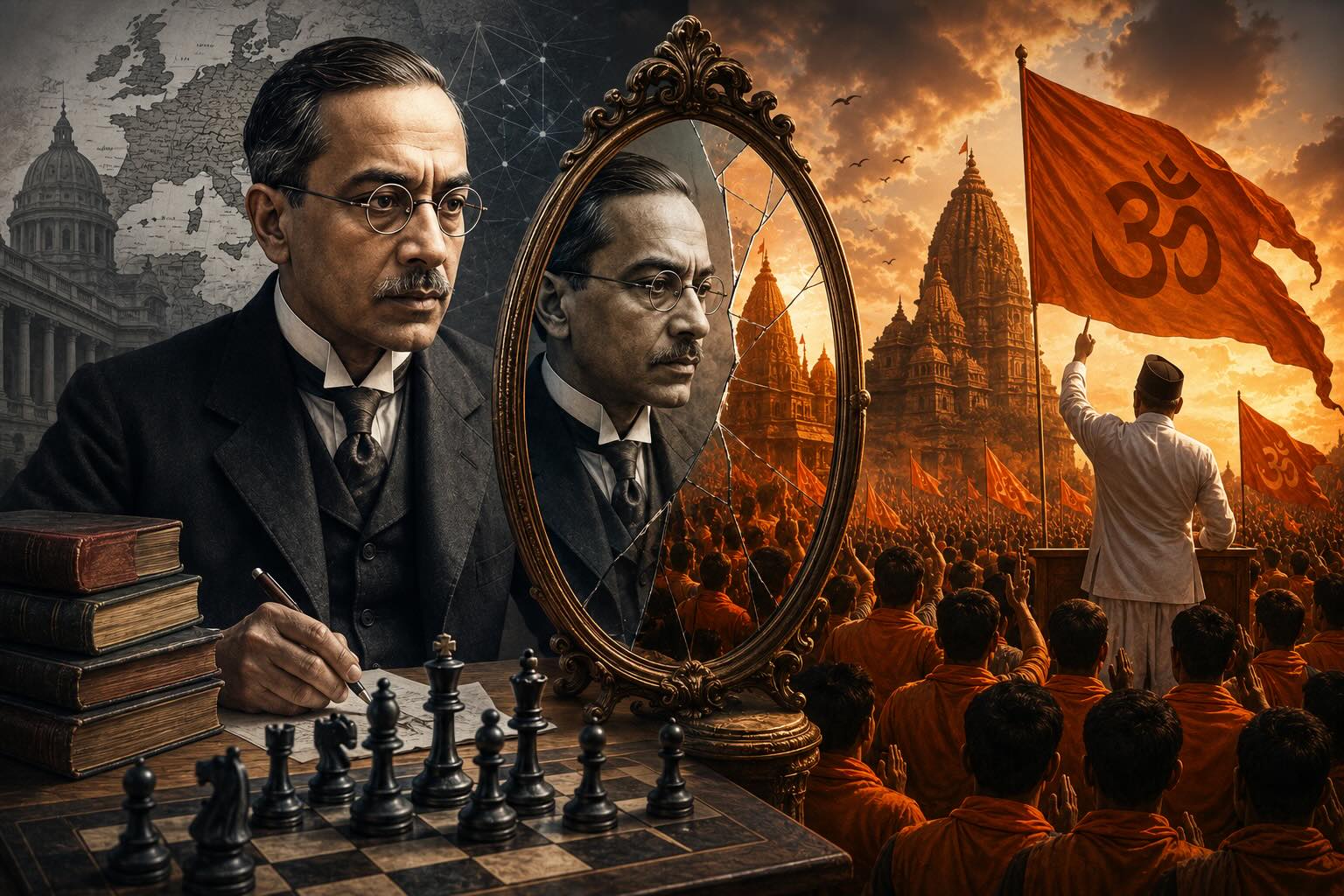
    Feature Image Credit: Savarkar and Hindutva – image made with AI assistance.
  • The Ideological Engine: Exceptionalism, Religion, and the Civilisational Alternative

    The Ideological Engine: Exceptionalism, Religion, and the Civilisational Alternative

    Series: India’s Strategic Choices, Civilisational Responsibilities, and the Contest for the Emerging World Order

    This is the second of a three-part prologue to a series on India’s strategic choices, civilisational responsibilities, and the contest for the emerging world order.

    Ideological Engine crafted with Religious Endorsement

    In my previous post, I traced the material foundations of the current world order — the knowledge borrowed from the Islamic world, the wealth extracted from the Americas, two-thirds of humanity colonised and enslaved. It was the extraction, the enslavement, and the colonial architecture that built Western dominance. But material power alone does not sustain five centuries of global domination. It requires an ideological engine — a moral framework that converts extraction into mission, conquest into duty, and atrocity into the necessary price of civilisation. That engine was exceptionalism. And it was powered by religion.

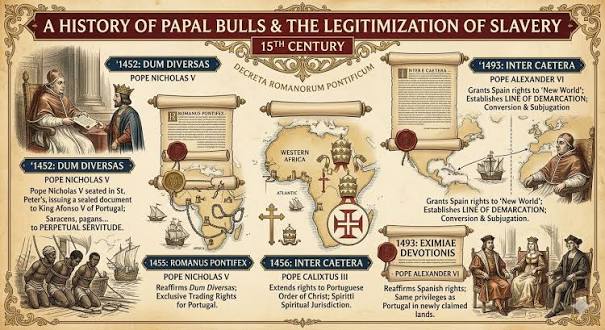
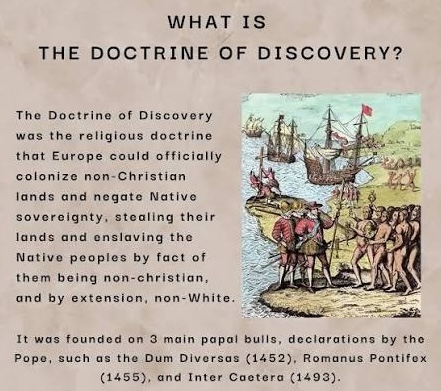
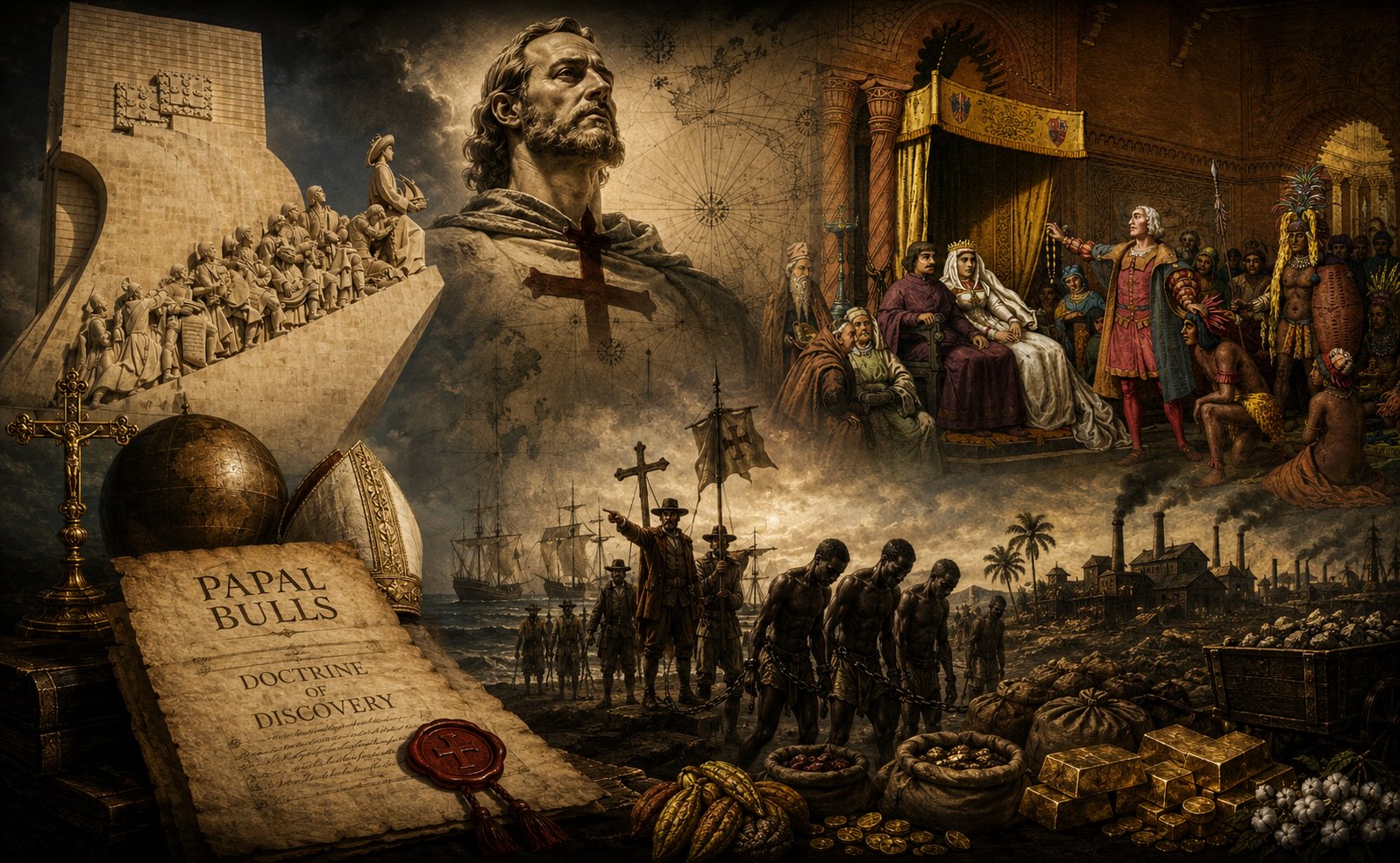
    The mechanism was constructed with precision. In 1452, Pope Nicholas V issued the papal bull Dum Diversas, authorising the King of Portugal to “capture, vanquish, and subdue the Saracens, pagans, and any other unbelievers and enemies of Christ” and “reduce their persons to perpetual servitude.” Three years later, Romanus Pontifex extended this authority to conquer the lands of infidels for “the salvation of all”. In 1493, following Columbus’s return from the Americas, Pope Alexander VI issued Inter Caetera — the foundational document of the Doctrine of Discovery — declaring that any land not under Christian rule could be seized, its peoples subjugated, and its resources claimed, in the service of Christianising the world.

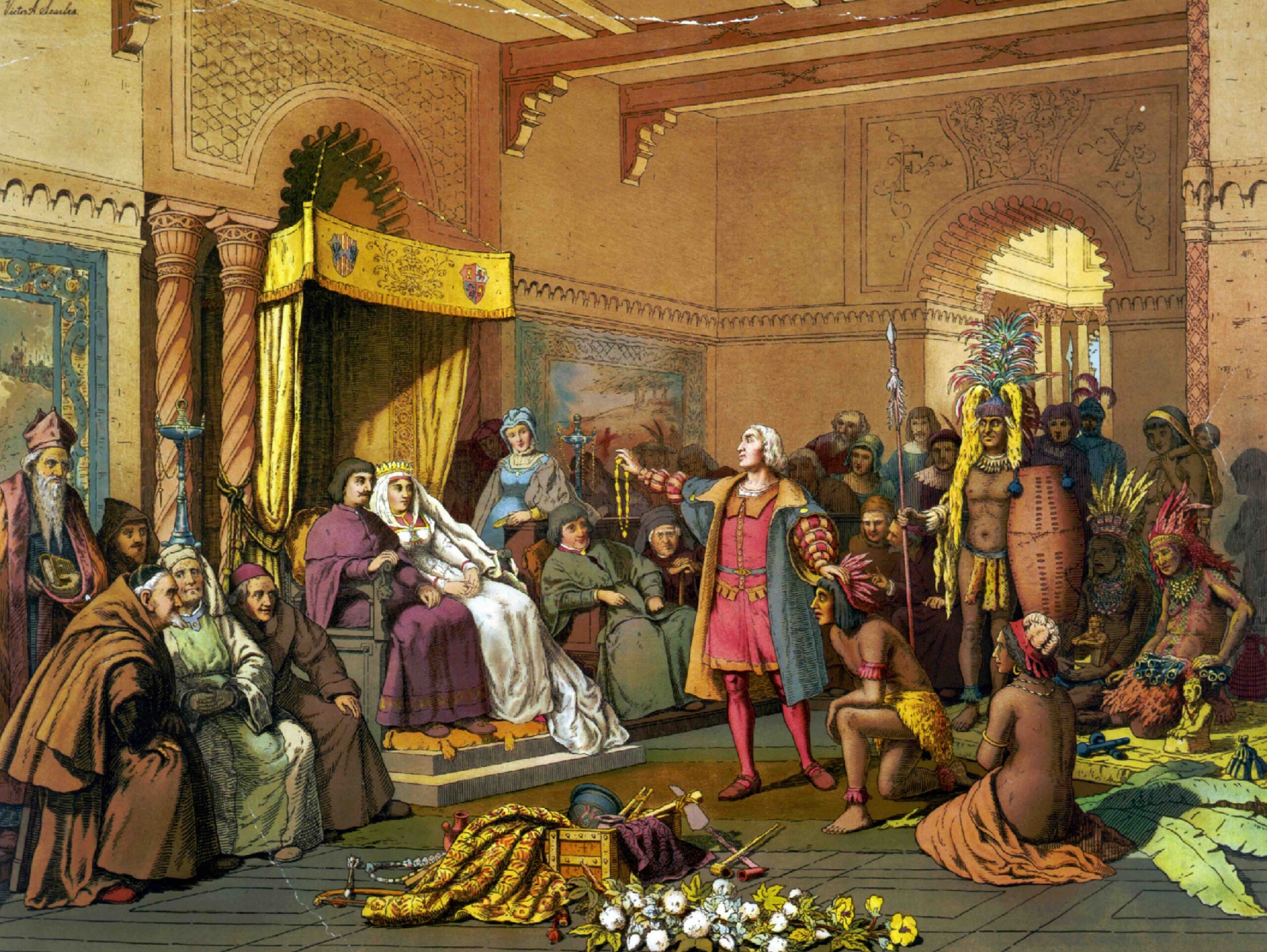
    Columbus at the court of Barcelona. Christopher Columbus standing before the King and Queen of Spain, presenting Indians and treasures from the New World, 1493. (Newscom TagID: whphotos146159.jpg) [Photo via Newscom]

    These were not peripheral theological documents. They were the legal and moral architecture of the colonial project, establishing in explicit terms sanctioned by the highest religious authority in the Western world that non-Christians were less than human, that killing them was not a sin, and that converting or enslaving them was a sacred duty. The Doctrine of Discovery was subsequently incorporated into the legal systems of the United States, Canada, Australia, and other settler-colonial states, where it shaped land law, property rights, and indigenous dispossession for centuries. The Vatican formally repudiated the Doctrine of Discovery only in 2023 — more than five centuries after the damage was done.

    And here is what makes that repudiation hollow: the doctrine did not stay in the fifteenth century. It became the operating law of the settler-colonial states, and it remains so.

    In 1823, the United States Supreme Court, in Johnson v. McIntosh, formally incorporated the Doctrine of Discovery into American law. Chief Justice John Marshall ruled that Indigenous peoples did not own their lands once those lands had been “discovered” by Christian colonists — that discovery itself conferred title on the discovering Christian nation, reducing the original inhabitants to mere occupants on their own soil. Marshall himself conceded the principle was “extravagant.” He made it law regardless. It has never been overturned. Two centuries later, it remains the foundation of all federal Indian law in the United States.

    Plenary power — plenitudo potestatis, the fullness of power — is the exact phrase by which the fifteenth-century popes claimed the authority to authorise conquest and enslavement in the first place.

    The living force of this doctrine was demonstrated in 2023 — the very year of the Vatican’s repudiation. In Haaland v. Brackeen, the US Supreme Court affirmed the modern form of the doctrine: the “plenary power” of the federal government over Native peoples. The term is not incidental. Plenary power — plenitudo potestatis, the fullness of power — is the exact phrase by which the fifteenth-century Popes claimed the authority to authorise conquest and enslavement in the first place. The Vatican renounced the doctrine in March 2023. Three months later, in June, the highest court of the United States reaffirmed its modern expression as settled law. One institution let go of the fiction. The other continued to build on it.

    Terra Nullius and the Concepts of Exceptionalism and Manifest Destiny

    The pattern is not confined to the Americas. In Australia, the entire continent was claimed under the doctrine of terra nullius — the legal fiction that the land belonged to no one, that sixty thousand years of continuous Aboriginal civilisation and hundreds of distinct nations simply did not count as habitation. The Australian Constitution, when it came into force in 1901, contained Section 127, which declared that “in reckoning the numbers of the people of the Commonwealth, aboriginal natives shall not be counted.” The original inhabitants of the continent were constitutionally excluded from the population of their own country. That exclusion was not removed until a referendum in 1967. The fiction of terra nullius itself was not overturned until the High Court’s Mabo judgment in 1992 — one hundred and ninety-two years after colonisation began.

    The Doctrine of Discovery is not a historical curiosity to be studied and regretted. It is the living legal architecture on which the settler-colonial states were built, and on which — as the events of 2023 demonstrate — they continue to stand. The exceptionalism that authorised conquest in 1452 was not repented and abandoned. It was secularised, constitutionalised, and preserved.

    This is the point that must be understood clearly. The Doctrine of Discovery is not a historical curiosity to be studied and regretted. It is the living legal architecture on which the settler-colonial states were built, and on which — as the events of 2023 demonstrate — they continue to stand. The exceptionalism that authorised conquest in 1452 was not repented and abandoned. It was secularised, constitutionalised, and preserved.

    This is not a distortion of Christianity. It is the documented institutional expression of a specific tradition within it: the doctrine that one’s own community occupies a uniquely chosen position in the divine order — that the Other is not merely different but lesser, and that this difference legitimates domination.

    The same logic operated, in different institutional forms, across other traditions. The conquering caliphates that used the concept of jihad to justify forced conversion were not the whole of Islamic tradition, which contains rich pluralist and humanistic streams. They were the weaponisation of religious exceptionalism by those who held political and military power. Political Zionism, in its most extreme contemporary expressions, follows the same pattern: the theological claim to exclusive divine right over territory and the dehumanisation of non-Jewish populations, ruthlessly visible from the Nakba in 1947-48 to the present conduct of the Gaza war, in full view of the world and with endorsement by the West. It follows the same pattern: religious exceptionalism converted into political licence for dispossession and violence.

    The pattern is not one religion. It is a specific logic — the claim to divine chosenness that exempts a community from the moral constraints that apply to others – that has been institutionalised, at different moments and in different traditions, wherever political power has found it useful.

    In Western civilisation, this logic found its most durable and consequential expression in American exceptionalism. In 1630, Puritan leader John Winthrop, preparing to establish the Massachusetts Bay Colony, called for the creation of a community that would be “as a City upon a Hill, the eyes of all people upon us.” This was not yet a global claim.  It was a theological self-conception: a chosen people, on a divinely appointed errand, under special divine scrutiny. But the seed was planted. Two centuries later, in 1845, John L. O’Sullivan gave it political form: “our manifest destiny to overspread the continent allotted by Providence for the free development of our yearly multiplying millions.” God-given expansion across a continent — regardless of the peoples already living on it — was reframed as destiny, not conquest.

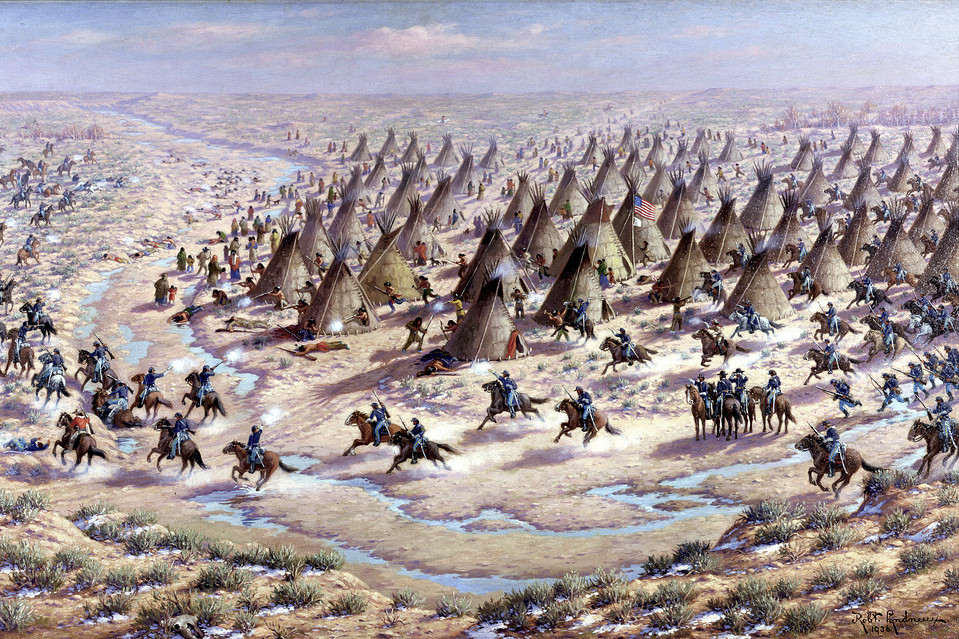
    The indigenous peoples of North America experienced what that destiny meant in practice. At Sand Creek in November 1864, a Colorado militia under Colonel John Chivington attacked a Cheyenne and Arapaho village whose chief, Black Kettle, was flying both an American flag and a white flag of truce. Roughly 150 people were killed, the majority of them women, children, and the elderly; the soldiers mutilated the dead and paraded body parts through the streets of Denver. Three separate investigations — two congressional, one military — condemned it as a massacre. Not one man was ever indicted. The campaigns that defined the conquest of the West — villages destroyed, food supplies burned, non-combatants killed as a matter of strategy — were not the excesses of rogue commanders. They were the method.

    And the men who carried them out were not disgraced but memorialised. George Armstrong Custer, who at dawn on the Washita River in 1868 attacked the village of that same Black Kettle, who had survived Sand Creek and was again seeking peace, killed him and his wife in the assault,  while his aggressive forces killed a large number of unarmed women and children. Custer was mythologised into a national hero, his death at the Little Bighorn recast as a noble sacrifice. This is exceptionalism completing its work: not merely committing the atrocity, but converting it, in the national memory, into valour. The conversion of conquest into heroism is not a distortion of the exceptionalist project. It is the project.

    It is worth pausing to see precisely how this engine is built, because it reveals something the comfortable version of history conceals. There are two broad models of colonialism, and they are not the same. Extractive colonialism — the Spanish in Peru, the British in India — needs the colonised population alive: to mine the silver, to work the plantations, to pay the taxes. It subjugates.

    But settler colonialism, of the kind practised in North America and Australia, does not primarily want the people. It wants the land. And a population that comes to stay on land already inhabited requires something darker than subjugation: it requires removal. The historian Patrick Wolfe named this the ‘logic of elimination’ — the observation that in the settler-colonial project, invasion is not an event but a structure, and the indigenous inhabitant is not a labour force to be exploited but an obstacle to be cleared. This is why the settler variant needed its ideological engine to run at maximum power. To subjugate a people, you need only believe they are lesser. To eliminate them, you must first erase them — conceptually, legally, theologically — before you erase them in fact. Terra nullius, the empty land; the savage without real title; the wilderness awaiting God’s chosen — these were not decorative rhetoric. They were the necessary vocabulary of replacement.

    A society that never hears the moral objection is merely benighted. A society that hears it clearly, debates it in its legislature, affirms it in its highest court — and proceeds anyway, in the name of Providence — has not failed to find its conscience. It has chosen to override it. That is what the ideological engine is for: not to fill a silence where conscience is absent, but to drown out a conscience that is present.

    And here is the fact that removes every excuse: the conscience was present. It was not that no one knew, or that no one objected. Roger Williams argued in the 1630s that the Crown had no right to grant land it did not own, that it had to be purchased from its actual inhabitants — and he was banished for saying so. The Quaker John Woolman condemned the dispossession on moral grounds a century before it reached the Mississippi. When the Indian Removal Act came before the United States Congress in 1830, it passed by 102 votes to 97 — a bitter, closely fought debate, not a silent consensus. When the Cherokee took their case to the Supreme Court, Chief Justice John Marshall ruled in Worcester v. Georgia that they possessed sovereign rights the state was bound to respect. President Andrew Jackson ignored the ruling and carried out the removal regardless; on the Trail of Tears that followed, thousands died. This is the point that must be held onto. A society that never hears the moral objection is merely benighted. A society that hears it clearly, debates it in its legislature, affirms it in its highest court — and proceeds anyway, in the name of Providence — has not failed to find its conscience. It has chosen to override it. That is what the ideological engine is for: not to fill a silence where conscience is absent, but to drown out a conscience that is present.

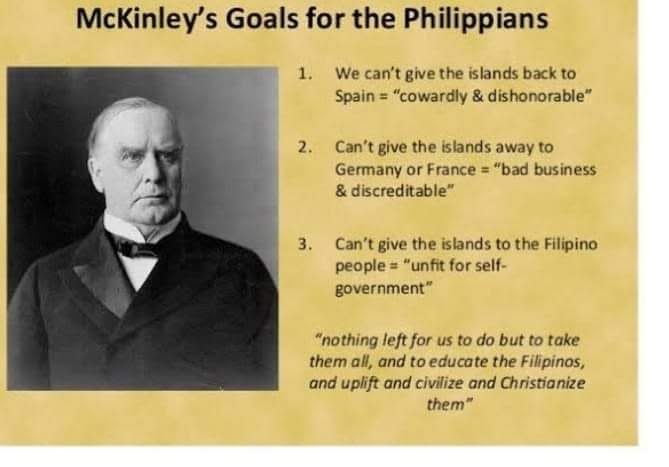
    The same logic was exported globally. In 1898, the United States entered the Spanish-American War, having suggested to Filipino independence fighters that it was their ally against Spanish colonial rule. When Spain was defeated, the Philippines was not given its independence. It was purchased for twenty million dollars and then colonised. The Philippine-American War resulted in the deaths of over 20,000 Filipino combatants and as many as 200,000 Filipino civilians through violence, famine, and disease. McKinley called his policy “Benevolent Assimilation.” The Philippines did not receive full independence until 1946 — forty-eight years after the liberation that was promised.

    This is the pattern that repeats from Vietnam to Iraq to Afghanistan to Iran: intervention justified as liberation, freedom invoked to mask extraction, and sovereignty violated in the name of the values that sovereignty was supposed to protect.

    The Civilisational Alternative 

    Now consider the contrast. India, China, and Persia are rooted in civilisational traditions that are fundamentally pluralist in their relationship to truth and the divine. Hinduism, Buddhism, Jainism, and Zoroastrianism do not claim exclusive possession of truth. They understand the search for ultimate reality as a path that admits multiple valid routes — that the divine is too vast and complex for any single tradition to comprehend fully. This epistemological humility produces a fundamentally different relationship to the Other: not as a lesser being to be converted or eliminated, but as a fellow traveller on a different path through the same reality — or, in the Tamil saint Vallalar’s image, rivers of many names flowing to a single shoreless ocean.

    A tradition whose foundational claim is Ekam Sat Vipra Bahudha Vadanti — truth is one, the wise call it by many names — or the Jain Anekantavada, the many-sidedness of truth, or the Tamil Yaadhum Oorey-Yaavarum Kelir, that every place is home and every person kin, is structurally resistant to exceptionalism, because its highest ideal explicitly denies the premise exceptionalism requires: that a single community owns the truth and stands chosen above the rest.

    The distinction I am drawing must be stated carefully, because it is easy to misread as a claim that one civilisation is virtuous and another is wicked. That is not the claim, and it would be false. The impulse to dress conquest in sacred language is close to universal — it appears wherever power seeks to launder its crimes, and no civilisation, India’s included, is innocent of it. Ashoka built his empire by the sword before he turned to the dharma. India’s own caste hierarchy was given cosmic sanction, as I have argued elsewhere in examining the Manusmriti. The human capacity to summon the transcendent in defence of the indefensible is not the property of any one people. What differs is not the impulse to justify but what each tradition installs as its highest principle — and therefore what any justification of atrocity must first overcome. A tradition whose foundational claim is Ekam Sat Vipra Bahudha Vadanti — truth is one, the wise call it by many names — or the Jain Anekantavada, the many-sidedness of truth, or the Tamil Yaadhum Oorey-Yaavarum Kelir, that every place is home and every person kin, is structurally resistant to exceptionalism, because its highest ideal explicitly denies the premise exceptionalism requires: that a single community owns the truth and stands chosen above the rest.

    One can still commit atrocity within such a tradition — humans always can — but one cannot easily make the tradition’s own highest principle bless it. A covenantal structure built on a chosen people, an exclusive truth, and a promised land contains that raw material at its theological core. It does not compel atrocity, and most who inherit it are decent people who read it toward mercy — the abolitionists and Roger Williams drew on it too. But the doctrine of chosenness is available to be weaponised in a way that Ekam Sat structurally is not. That is the civilisational difference that matters: not that one people is depraved and another pure, but that traditions differ in whether their deepest ideal resists the engine of exceptionalism or supplies its fuel.

    Scholarly analysis consistently describes India’s conduct as just war traditions with no ulterior motive of imperialism or fiscal interest. There is no comparable example in the modern history of any Western military power.

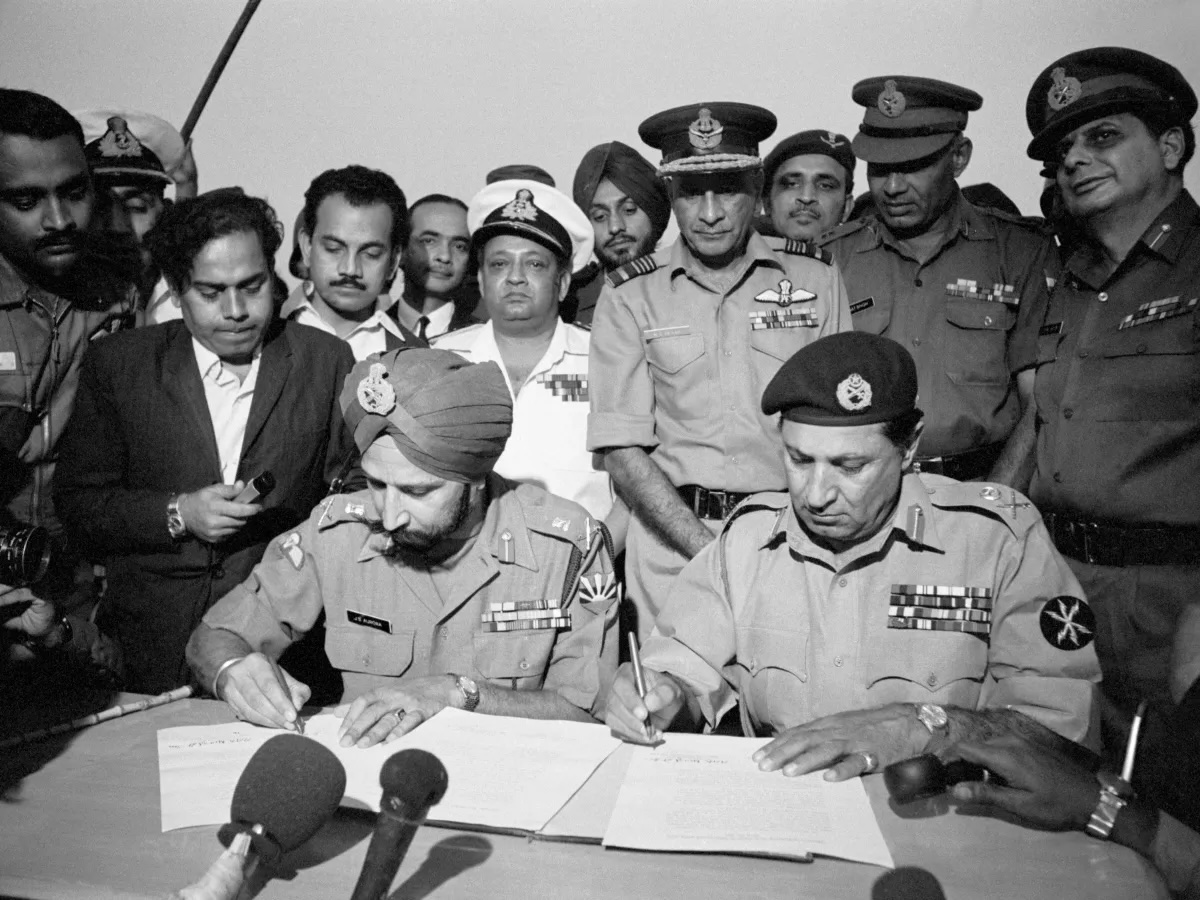
    This civilisational disposition is not merely philosophical. It expresses itself in conduct. In December 1971, India made the decision to intervene militarily in East Pakistan in response to one of the most egregious humanitarian catastrophes of the 20th century — the Bangladesh genocide. The intervention was swift and decisive. Indian military forces liberated Bangladesh in thirteen days of formal war. Pakistani forces surrendered on December 16, 1971. The Indian military then withdrew completely. No occupation. No extraction. No installation of a client government. No strategic bases retained. Full sovereignty was transferred immediately to the people of Bangladesh. India returned over 90,000 Pakistani prisoners of war through the Simla Agreement. Scholarly analysis consistently describes India’s conduct as just war traditions with no ulterior motive of imperialism or fiscal interest. There is no comparable example in the modern history of any Western military power.

    These are not coincidental differences. They are civilisational ones. The world is now in contest over what the emerging order will be built upon. The declining Western order was built on exceptionalism — the claim to divine chosenness that converts domination into duty, secularised into legal doctrine but never abandoned. The Asian civilisational alternative — pluralist, non-exclusivist, epistemologically humble — offers a different foundation. India’s 1971 conduct is the most precise proof available that this alternative is not merely philosophical. It has been demonstrated operationally.

    The question is whether India — in Gaza, in Iran, in the institutions of the emerging world order — is willing to act consistently with the civilisational tradition it inherits.

    — This is the second in the series prologue.

    Air Marshal M Matheswaran (Retd) is the Founder-President of The Peninsula Foundation (@TPF_Chennai), grounded in the conviction that power without ethics is tyranny — and that India’s civilisational traditions offer the world something Western exceptionalism cannot.


    Further Reading:

    On the Doctrine of Discovery and the Papal Bulls

    Pope Nicholas V, Dum Diversas, 18 June 1452. Full Latin text and English translation: Doctrine of Discovery Project, doctrineofdiscovery.org.

    Pope Nicholas V, Romanus Pontifex, 8 January 1455.

    Pope Alexander VI, Inter Caetera, 4 May 1493.

    Robert J. Miller, Jacinta Ruru, Larissa Behrendt, and Tracey Lindberg, Discovering Indigenous Lands: The Doctrine of Discovery in the English Colonies (Oxford University Press, 2010).

    Steven T. Newcomb, Pagans in the Promised Land: Decoding the Doctrine of Christian Discovery (Fulcrum, 2008).

    On the Vatican’s 2023 repudiation

    Dicastery for Culture and Education and Dicastery for Promoting Integral Human Development, ‘Joint Statement on the Doctrine of Discovery,’ Vatican, 30 March 2023.

    On the incorporation and persistence of the Doctrine of Discovery in US law

    Johnson v. McIntosh, 21 U.S. (8 Wheat.) 543 (1823).

    Haaland v. Brackeen, 599 U.S. 255 (2023).

    On the affirmation of ‘plenary power’ over Native peoples as the modern descendant of the Doctrine of Discovery, see the analysis by Peter d’Errico and the essays in the ‘200 Years of Johnson v. M’Intosh’ series, Canopy Forum, 2023.

    Robert J. Miller, ‘The Doctrine of Discovery in American Indian Law,’ Idaho Law Review, 42 (2005).

    Lindsay G. Robertson, Conquest by Law: How the Discovery of America Dispossessed Indigenous Peoples of Their Lands (Oxford University Press, 2005).

    On Australia, terra nullius, and constitutional exclusion

    Mabo v. Queensland (No. 2) (1992) 175 CLR 1.

    Section 127, Constitution of Australia (repealed by referendum, 1967).

    Henry Reynolds, The Law of the Land (Penguin, 1987).

    Bain Attwood, Rights for Aborigines (Allen & Unwin, 2003).

    On Section 127 and the 1967 referendum: National Museum of Australia, ‘Indigenous Referendum,’ and George Williams’ analysis of the ‘race power’ in Australia’s constitutional history.

    On American exceptionalism — Puritan origins and Manifest Destiny

    John Winthrop, ‘A Modell of Christian Charity’ (1630).

    John L. O’Sullivan, ‘Annexation,’ The United States Magazine and Democratic Review, 17(1), July–August 1845.

    Anders Stephanson, Manifest Destiny: American Expansion and the Empire of Right (Hill and Wang, 1995).

    Hilde Eliassen Restad, American Exceptionalism: An Idea That Made a Nation and Remade the World (Routledge, 2014).

    On the Sand Creek Massacre and the conquest of the Plains

    U.S. Congress, Joint Committee on the Conduct of the War, Massacre of the Cheyenne Indians (38th Congress, 2nd Session, 1865).

    The contemporary Congressional investigation that condemned the massacre; the primary documentary record.

    Ari Kelman, A Misplaced Massacre: Struggling over the Memory of Sand Creek (Harvard University Press, 2013).

    Dee Brown, Bury My Heart at Wounded Knee: An Indian History of the American West (Holt, Rinehart & Winston, 1970).

    On the Washita (1868), the killing of Black Kettle, and the pattern of village attacks; also on the mythologisation of George Armstrong Custer.

    Nathaniel Philbrick, The Last Stand: Custer, Sitting Bull, and the Battle of the Little Bighorn (Viking, 2010).

    On the Philippines, 1898–1946

    Stanley Karnow, In Our Image: America’s Empire in the Philippines (Random House, 1989).

    Paul A. Kramer, The Blood of Government: Race, Empire, the United States, and the Philippines (University of North Carolina Press, 2006).

    On India’s 1971 Bangladesh liberation

    Srinath Raghavan, 1971: A Global History of the Creation of Bangladesh (Harvard University Press, 2013).

    Gary J. Bass, The Blood Telegram: Nixon, Kissinger, and a Forgotten Genocide (Knopf, 2013).

    On Asian civilisational pluralism

    Amartya Sen, The Argumentative Indian: Writings on Indian History, Culture and Identity (Penguin, 2005).

    Wendy Doniger, The Hindus: An Alternative History (Penguin, 2009).

    Ramalinga Adigalar (Vallalar), Thiru Arutpa, Sixth Thirumurai, Verse 3907.

    The metaphor of the many religions as rivers merging into a single shoreless ocean. See thiruarutpa.org.


  • The World Order we Inherited — and Why it must Change

    The World Order we Inherited — and Why it must Change

    This is the first in a series on India’s strategic choices, civilisational responsibilities, and the contest for the emerging world order.

    The Material Foundations of Western Power


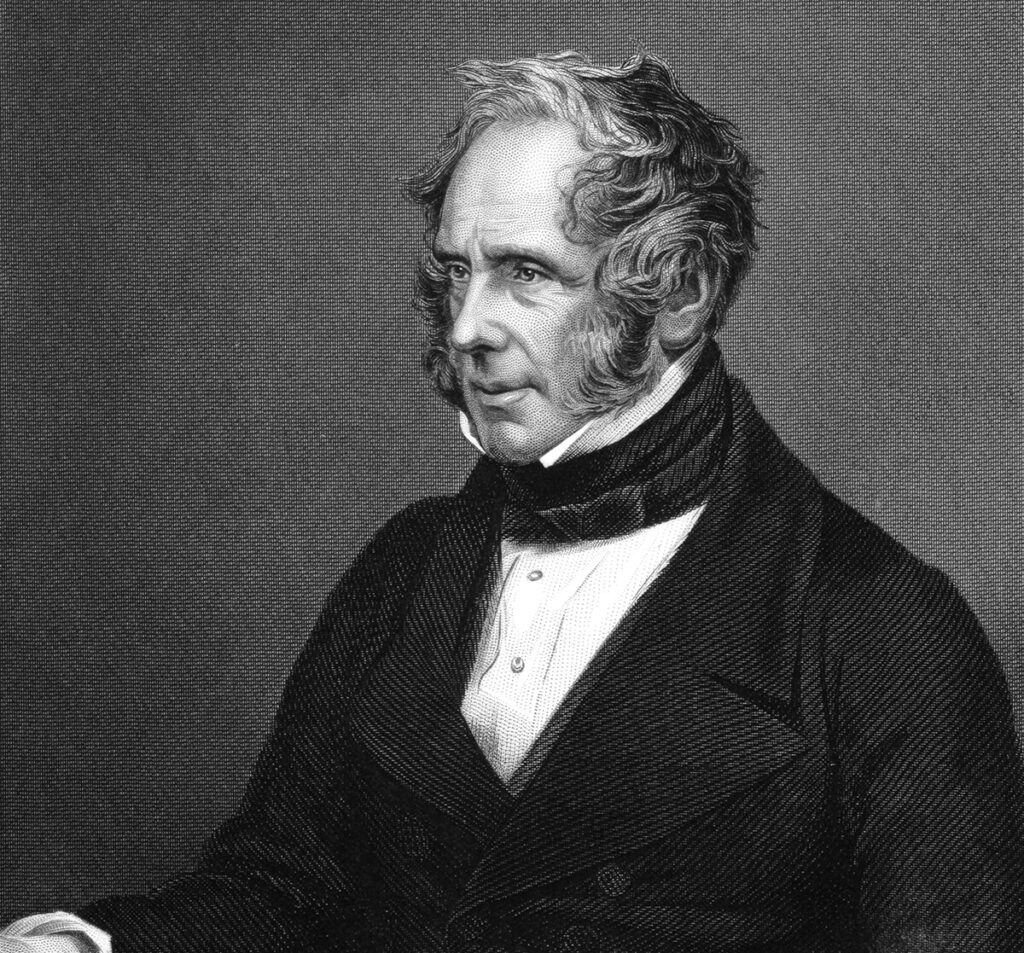
    The world of strategists is familiar with the quote of Lord Palmerston, Britain’s nineteenth-century Prime Minister. He famously declared: “There are no permanent friends or enemies, only permanent interests.”

    Lord Palmerston

    As a description of statecraft, this is not wrong. Every civilisation that has endured has pursued its interests — including the ones this series will spend considerable space defending. Kautilya’s Rajamandala is, at its core, a theory of interest-based alignment. The Cholas sailed across the Bay of Bengal to protect Tamil trading interests. No serious tradition of statecraft has ever pretended that interest does not matter, and none should.

    The question worth asking is not whether interests are permanent. It is whether anything else is.

    Palmerston’s formulation, taken as a complete theory of how a state should conduct itself — not as one true observation among several, but as the only thing that needs ever to be consulted — becomes something different. It becomes a licence. If interest is permanent and nothing else is, then ethical limits on how interest is pursued are, by definition, temporary: honoured when convenient, discarded when not. That is not realism. That is realism with the safety catch removed.

    This is the civilisational fork in the road, and four hundred years of history show which branch the dominant powers took — and still take.

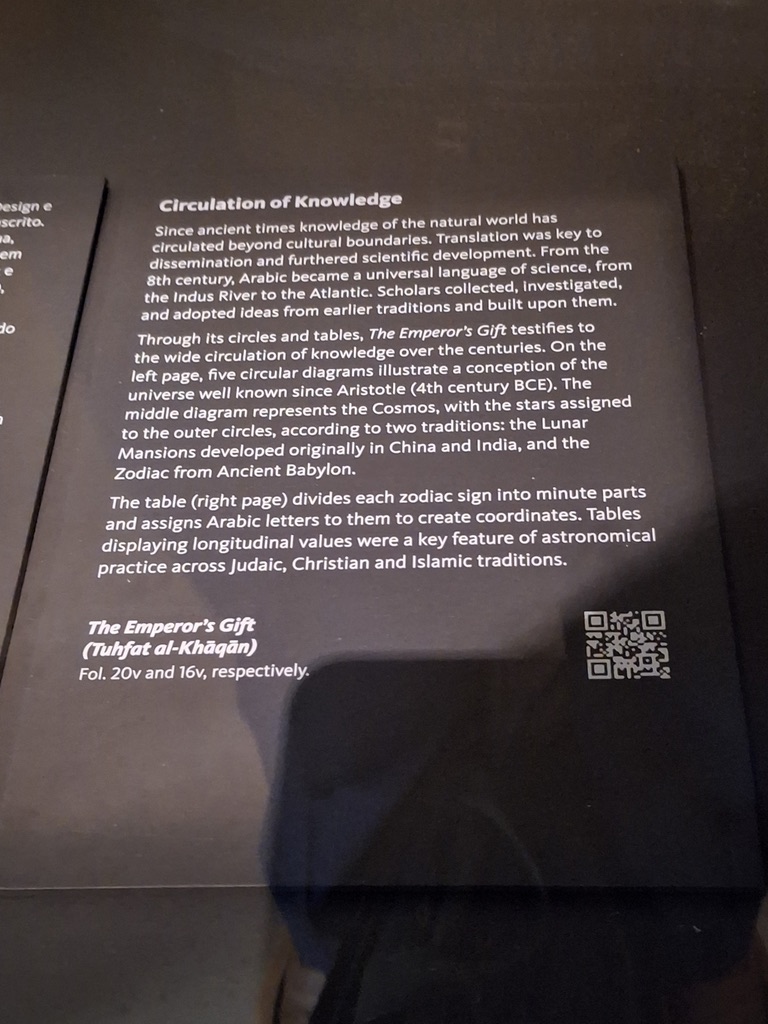
    The Islamic Golden Age — spanning roughly the 8th to the 14th century — was one of the greatest intellectual achievements in human history. Scholars at Baghdad’s House of Wisdom undertook a systematic, state-sponsored project of translation and synthesis: gathering the accumulated knowledge of Greece, Persia, India, and China, translating it into Arabic, and building upon it with original contributions in mathematics, astronomy, medicine, philosophy, optics, and chemistry. Avicenna’s Canon of Medicine became a foundational text in European universities. Averroes’ commentaries on Aristotle shaped medieval European philosophy.

    Exhibit in Gulbenkian Museum, Lisbon – Photo by Author

    Europe in the early medieval period was not the centre of the world. It was its periphery — impoverished, fragmented, and in the grip of what its own historians call the Dark Ages. While Europe’s literacy rates collapsed and theological conformity suppressed inquiry, something extraordinary was unfolding in Baghdad, Cordoba, and Cairo. The Islamic Golden Age — spanning roughly the 8th to the 14th century — was one of the greatest intellectual achievements in human history. Scholars at Baghdad’s House of Wisdom undertook a systematic, state-sponsored project of translation and synthesis: gathering the accumulated knowledge of Greece, Persia, India, and China, translating it into Arabic, and building upon it with original contributions in mathematics, astronomy, medicine, philosophy, optics, and chemistry. Avicenna’s Canon of Medicine became a foundational text in European universities. Averroes’ commentaries on Aristotle shaped medieval European philosophy. The numeral system through which all modern mathematics operates — including the zero — came to Europe through the Arabic transmission of Indian mathematics. This was not borrowing. It was the rescue and synthesis of civilisational knowledge — and without it, the European Renaissance would have had no foundation on which to build.

    The numeral system through which all modern mathematics operates — including the zero — came to Europe through the Arabic transmission of Indian mathematics. This was not borrowing. It was the rescue and synthesis of civilisational knowledge — and without it, the European Renaissance would have had no foundation on which to build.

    Europe’s intellectual reawakening in the 14th and 15th centuries drew directly on this Islamic transmission. The Renaissance, together with the gunpowder revolution and the state system formalised at the Peace of Westphalia in 1648, gave European civilisation (viewing it as a single civilisation may not be truly appropriate – disparate kingdoms, fused by the race for maritime trade dominance and military conquest – Italian, Spanish, Portuguese, Dutch, French, British, Russian, etc.) something it had never possessed before: military-technological superiority, organised state power, and the bureaucratic capacity to project both across the world.

    This wealth — extracted through conquest, forced indigenous labour, and the systematic destruction of existing civilisations — capitalised the European empires that would go on to colonise two-thirds of the world

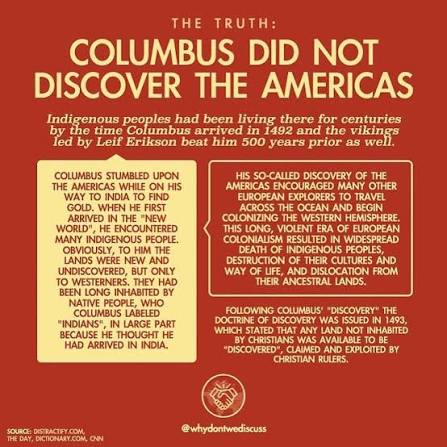
    Columbus – Truth vs Myth

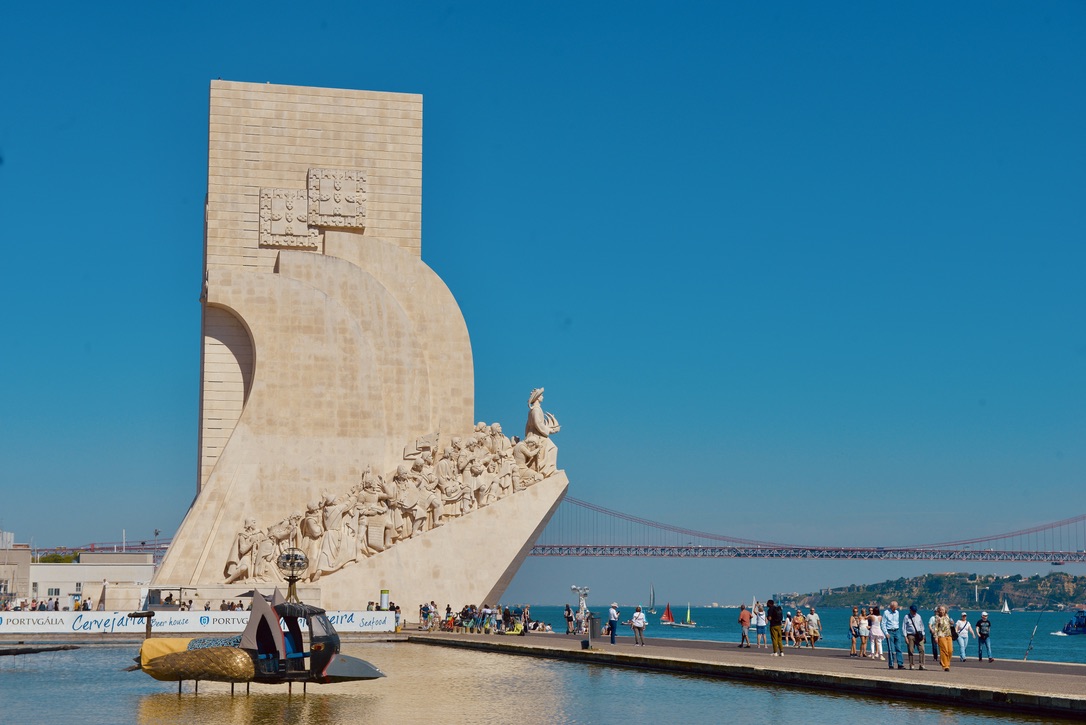
    The rise of the West that followed the maritime route discoveries of Columbus and Vasco da Gama needs to be understood correctly, devoid of the myths built around them. The West celebrates them, but the truth is they were plunderers who unleashed the genocidal expansion of the West. This truth is now being brought out by brilliant and unbiased historians such as Howard Zinn and Utsa Patnaik. Howard Zinn writes – ” what Columbus did to the Arawaks of the Bahamas, Cortés did to the Aztecs of Mexico, Pizarro to the Incas of Peru, and the English settlers of Virginia and Massachusetts to the Powhatans and the Pequots. They used the same tactics, and for the same reasons – the frenzy in the early capitalist states of Europe for gold, for slaves, for products of the soil, to pay for the bondholders and stockholders of the expeditions, to finance the monarchical bureaucracies rising in Western Europe, to spur the growth of the new money economy rising out of feudalism…These were the violent beginnings of an intricate system of technology, business, politics, and culture that would dominate the world for the next five centuries.”

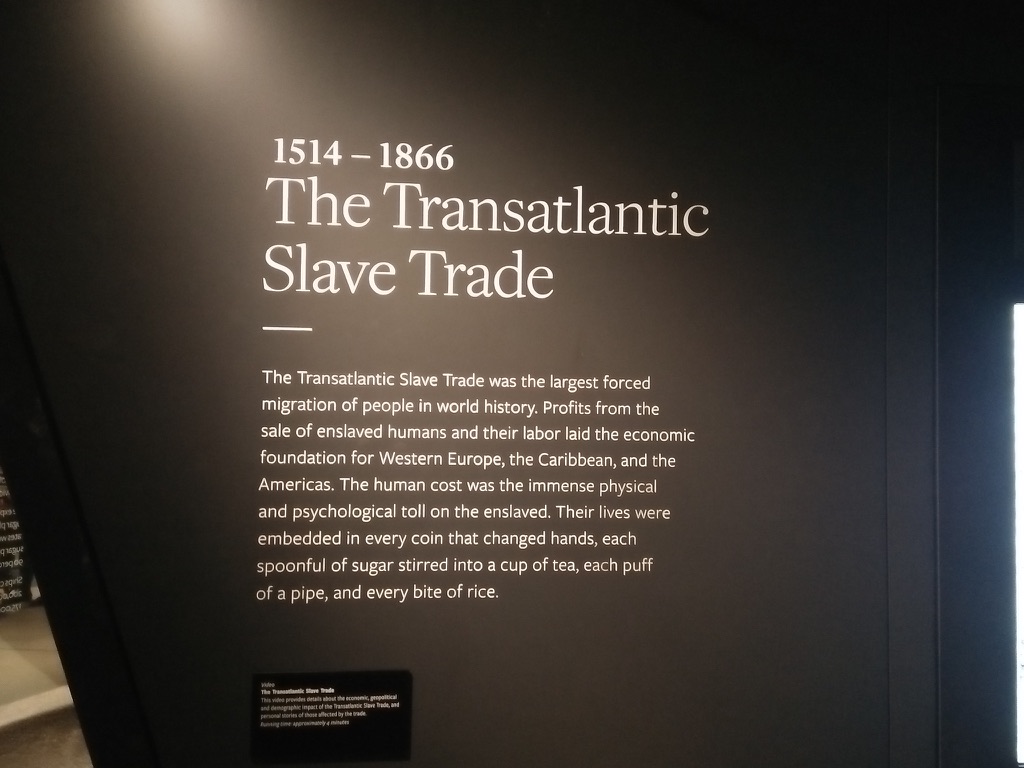
    What followed was not a story of civilisational achievement. It was a story of extraction on a scale without precedent in human history — extraction conducted on the understanding that, once interest was engaged, nothing else needed to be weighed. From the Americas alone, Spanish colonial mining operations extracted approximately 150,000 metric tonnes of silver between 1500 and 1800 — representing 80 to 90 per cent of global silver production over three centuries. By 1600, 25,000 tonnes of silver had crossed the Atlantic. This wealth — extracted through conquest, forced indigenous labour, and the systematic destruction of existing civilisations — capitalised the European empires that would go on to colonise two-thirds of the world. The Atlantic slave trade transported an estimated twelve to fifteen million Africans into forced labour over three centuries.

    The British were ruthless in pursuing their interests at the expense of the people and the geography of their colonial empire, particularly in India. The economy under the British Raj was not a system of governance or development – it was a system of systematic wealth extraction unprecedented in scale and duration. From 1765 (when Robert Clive obtained the Diwani Rights, that is, the right to collect taxes and revenue, from the Mughal emperor as a result of the Battle of Buxar) to 1947 – 182 years – Britain drained India’s wealth through every possible mechanism. The scale of this drain was staggering. Britain extracted the equivalent of about $45 trillion (in current dollar terms) from India during its colonial rule. This wasn’t accidental impoverishment or the natural result of economic evolution. This was deliberate policy, implemented systematically through revenue extraction, deindustrialisation, trade manipulation, and infrastructural control.


    500-year Commemoration of Vasco-da-Gama’s voyage to India -Lisbon – defining moments of colonialism. Photo by Author
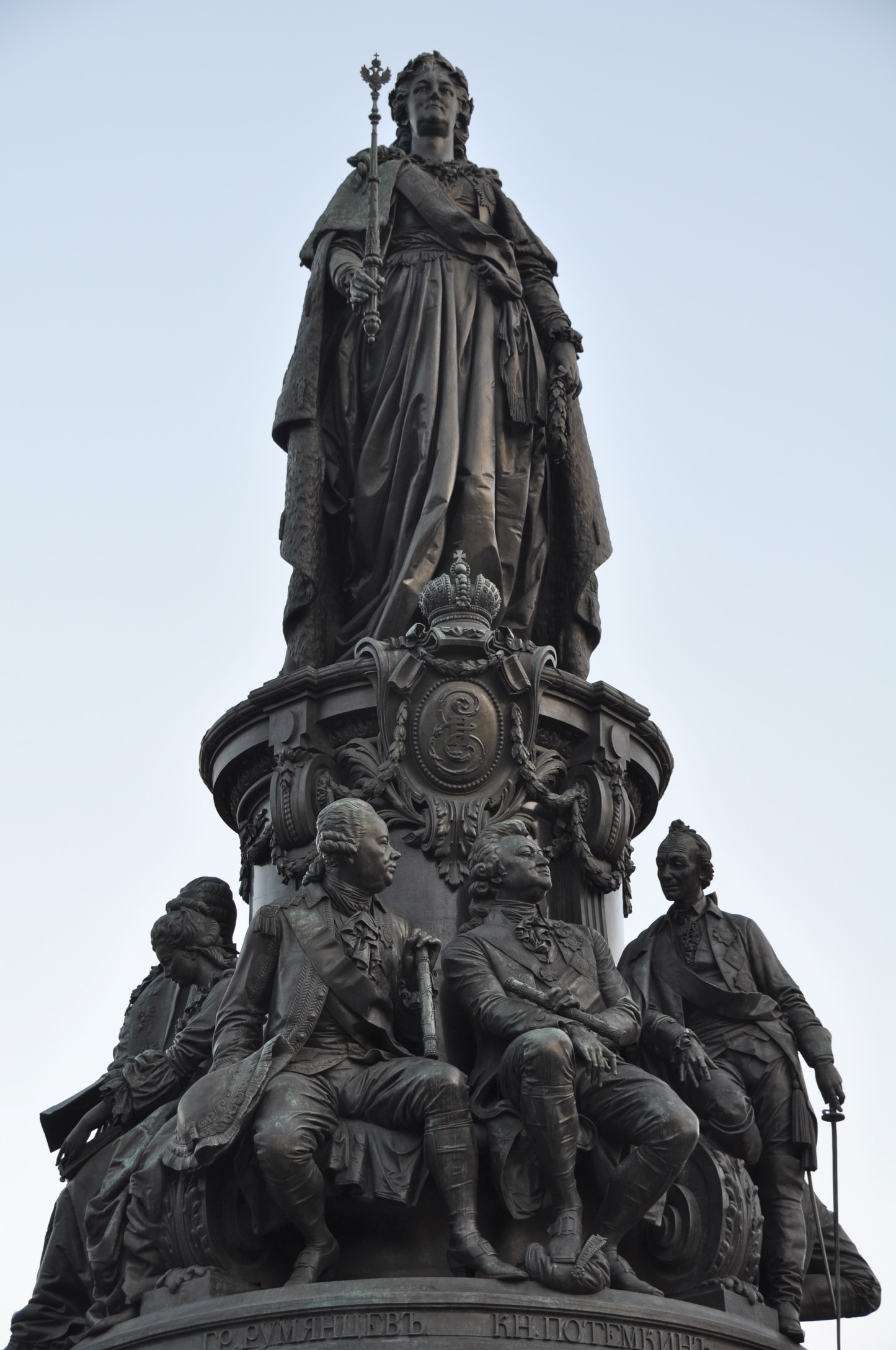
    The Russian empire was equally consumed by Western Europe’s passion for colonies. Catherine the Great, Russian Empress and originally a German princess, was a ruthless expansionist of the Russian Empire. However, Russia differed significantly from Western colonialism. Catherine the Great’s Statue in St. Petersburg. Photo by Author.

    None of this was an aberration from Western values. It was the expression of them. Palmerston’s formulation was not a description of how all states behave. It was a justification for a specific civilisational approach: that power exists to be exercised without ethical constraint, that the strong may do what they will, and that the legitimating language of civilisation, Christianity, and later human rights, are instruments of justification rather than a genuine limits on conduct.

    Slavery was the most crucial contributor to the West’s development. This was a critical element of the transatlantic world. exhibit in the African American Museum, Washington, D.C. Photo by Author.

    The Berlin Conference of 1884–85 is its most clinical illustration. Otto von Bismarck convened the European powers to divide Africa between them. Not a single African leader was present. A request by the Sultan of Zanzibar to attend was dismissed. The Congo basin — a territory larger than Western Europe, home to millions of people with ancient civilisations, cultures, and governance systems — was assigned as the personal property of Belgian King Leopold II, one of the vilest European monarchs in human history. In the years that followed, hundreds of thousands of Congolese were worked to death on rubber plantations. Those who failed their quotas had their hands amputated. Leopold accumulated one of the largest personal fortunes in history from the proceeds.

    This was not an exceptional act of cruelty. It was Palmerston’s formulation taken to its logical and undiluted conclusion.

    Whatever the merits claimed for each individually, taken together they represent the same formula: interest declared permanent, leading to the ruthless pursuit of national interests; ethical limits declared situational, that is, practically irrelevant.

    The pattern did not end with empire. It changed vocabulary. The wars launched and led by the United States since 2001 — in Afghanistan, Iraq, Libya, Syria and beyond — were conducted in the language of security, liberation, and the defence of human rights. By the most careful independent estimates, their costs have run into the hundreds of thousands of civilian lives, and their stated justifications have repeatedly diverged from their actual outcomes. Whatever the merits claimed for each individually, taken together they represent the same formula: interest declared permanent, leading to the ruthless pursuit of national interests; ethical limits declared situational, that is, practically irrelevant. The vocabulary had changed since 1884. The structure of the choice had not.

    The economic register tells the same story. The formal end of colonialism did not end the system. It adapted it. The International Monetary Fund and World Bank, established at Bretton Woods in 1944, became the institutional mechanisms through which the global south’s economic policies were directed from Washington. Structural adjustment programmes imposed fiscal austerity, market liberalisation, and debt dependency on nations that had barely emerged from colonial rule.

    Francophone West Africa became perhaps the most striking contemporary illustration of this persistence. Fourteen countries continued to use the CFA franc — a currency whose reserves were held in the French Treasury, whose exchange rate was set in Paris, and whose monetary sovereignty had never been genuinely transferred since formal independence. Long-term analysis tells the structural story: The Ivory Coast reached its peak in income per capita in 1978, in less than two decades after independence. It then stagnated over the next fifty years. Niger reached its highest level in 1965 — the year of independence. Seven decades of formal sovereignty. Not a single decade of genuine economic progress. France’s control was not only monetary. It was political and military. French intelligence maintained deep ties with governing elites. French military bases ensured that no elected government that moved too far from French interests would survive. The system corrupted the democratic process itself.

    When Thomas Sankara became President of Burkina Faso in 1983 and attempted to secure genuine sovereignty — nationalising land, refusing IMF debt, building schools and healthcare, and articulating a vision of African self-reliance — he was assassinated in 1987. French agents were present in the capital the following day. Blaise Compaoré, who replaced him, immediately reversed every policy of sovereignty and ruled for 27 years. When a popular uprising removed him in 2014, French troops exfiltrated him to the Ivory Coast. He was later convicted in absentia by a Burkinabe court and sentenced to life imprisonment for Sankara’s murder. The system did not merely extract wealth. It murdered the leaders who sought to end the extraction.

    “Anything that maintains us in slavery, we will break those bonds” – Captain Ibrahim Traore

    Then, between 2021 and 2023, something changed. A new generation of young, educated, patriotic military officers — shaped by Sankara’s tradition — moved. Mali, Burkina Faso, and Niger formed the Alliance of Sahel States, expelled French and American military forces, and announced their intention to abandon the CFA franc entirely. Burkina Faso’s Captain Ibrahim Traore declared: “Anything that maintains us in slavery, we will break those bonds.” These are not coups in the traditional sense. They are the consequence of a system that used democratic institutions as a mechanism of foreign control for seven decades. As I write this essay, Burkina Faso officially severed all diplomatic relations with France on June 26, 2026. The African nation’s Communications Minister announced the decision on national television, stating that the essential conditions for mutual respect, trust, and non-interference were absent. President Ibrahim Traore accused Paris of harbouring “neo-colonial ambitions,” backing terrorist groups, and acting against Burkinabe interests. African countries are rising against the strangulating control of the West and its neo-colonialism of the last seven decades.

    This is the order that India inhabits. This is the order India is being asked to join as a rising power. The contest for a new world order is not simply a geopolitical competition between states. It is a civilisational question —not the one Palmerston’s critics often imagine. The question is not whether a rising power will have permanent interests. Of course it will, and should. The question is whether it will articulate, with equal permanence and equal seriousness, the ethical limits within which those interests are pursued — limits that hold even when honouring them is costly.

    India has the history, the philosophy, and the standing to make that commitment. The question is whether it has the will.

    Further Reading:

    On Palmerston’s statement and interest-based statecraft

    Lord Palmerston, Speech to the House of Commons, 1 March 1848. Hansard, House of Commons Debates, vol. 97, cols. 66–123.

    Kautilya, Arthashastra, Books VI–VII (Mandala theory of interstate relations). Trans. R.P. Kangle, The Kautiliya Arthashastra, 3 vols. (University of Bombay, 1960–65).

    On the Islamic Golden Age and knowledge transmission to Europe

    George Saliba, Islamic Science and the Making of the European Renaissance (MIT Press, 2007).

    Jonathan Lyons, The House of Wisdom: How the Arabs Transformed Western Civilisation (Bloomsbury, 2009).

    Dimitri Gutas, Greek Thought, Arabic Culture: The Graeco-Arabic Translation Movement in Baghdad and Early ‘Abbasid Society (Routledge, 1998).

    Georges Ifrah, The Universal History of Numbers (Wiley, 2000). On the transmission of Hindu-Arabic numerals, including the zero.

    On colonial extraction — the Americas

    Dennis O. Flynn and Arturo Giráldez, ‘Cycles of Silver: Global Economic Unity through the Mid-18th Century,’ Journal of World History, 13(2), 2002.

    Source for the 150,000-tonne / 80–90% global silver production estimates, 1500–1800.

    Earl J. Hamilton, American Treasure and the Price Revolution in Spain, 1501–1650 (Harvard University Press, 1934).

    Foundational source for the c. 25,000-tonne figure by 1600.

    On the Atlantic slave trade

    David Eltis and David Richardson, Atlas of the Transatlantic Slave Trade (Yale University Press, 2010).

    The Slave Voyages Database, Emory University. slavevoyages.org.

    Basis for the 12–15 million estimate.

    On the Berlin Conference and the Congo Free State

    Adam Hochschild, King Leopold’s Ghost: A Story of Greed, Terror, and Heroism in Colonial Africa (Houghton Mifflin, 1998).

    S.E. Crowe, The Berlin West African Conference, 1884–1885 (Longmans, 1942).

    Matthew Craven, ‘Between Law and History: The Berlin Conference of 1884–1885 and the Logic of Free Trade,’ London Review of International Law, 3(1), 2015.

    On the Sultan of Zanzibar’s exclusion.

    On post-2001 conflicts and civilian costs

    Costs of War Project, Watson Institute for International and Public Affairs, Brown University. costsofwar.org.

    Cumulative estimates of direct and indirect deaths in post-9/11 wars (Afghanistan, Iraq, Pakistan, Syria, Yemen).

    Iraq Body Count project. iraqbodycount.org.

    Independent database of documented civilian deaths in Iraq since 2003.

    Gilbert Burnham et al., ‘Mortality after the 2003 invasion of Iraq: a cross-sectional cluster sample survey,’ The Lancet, 368(9545), 2006.

    One of several widely-cited epidemiological estimates; cited to indicate the range of credible estimates rather than to adjudicate between methodologies.

    On Bretton Woods, the IMF/World Bank, and structural adjustment

    Eric Helleiner, Forgotten Foundations of Bretton Woods: International Development and the Making of the Postwar Order (Cornell University Press, 2014).

    Ngaire Woods, The Globalizers: The IMF, the World Bank, and Their Borrowers (Cornell University Press, 2006).

    On the CFA franc and Francophone West Africa

    Fanny Pigeaud and Ndongo Samba Sylla, Africa’s Last Colonial Currency: The CFA Franc Story (Pluto Press, 2021).

    World Bank, World Development Indicators (databank.worldbank.org).

    Basis for the Ivory Coast (1978 peak) and Niger (1965 peak) GDP per capita figures.

    On Thomas Sankara and Blaise Compaoré

    Ernest Harsch, Thomas Sankara: An African Revolutionary (Ohio University Press, 2014).

    On the French intelligence presence following the 1987 coup: reporting by Jeune Afrique and Radio France Internationale (RFI), 1987.

    On Compaoré’s 2014 exfiltration: Reuters and Agence France-Presse, October 2014.

    On Compaoré’s conviction: ‘Burkina Faso: Blaise Compaoré sentenced to life in prison over Thomas Sankara’s assassination.’ Reuters, 6 April 2022.

    On the Alliance of Sahel States (2021–2024)

    Formation of the Alliance of Sahel States, September 2023, and withdrawal from ECOWAS, January 2024: Reuters, Al Jazeera, and AfricaNews coverage, 2023–2024.

    Captain Ibrahim Traoré, ‘Anything that maintains us in slavery, we will break those bonds.’ Public addresses, widely reported across pan-African and international media, 2023–2024.

    On the closure of the US drone facility at Agadez, Niger: ‘Niger orders US military to leave the country.’ BBC News, 17 March 2024.

    Air Marshal M Matheswaran (Retd) is the Founder-President of The Peninsula Foundation (@TPF_Chennai), an independent policy research think tank in Chennai, rooted in the conviction that governance must serve conscience and that the world order India helps shape must be grounded in ethics, not merely in interests.

  • Bridging Civilisations: Nalanda, India’s Connection with the East, and the Spirit of Vasudhaiva Kutumbakam

    Bridging Civilisations: Nalanda, India’s Connection with the East, and the Spirit of Vasudhaiva Kutumbakam

    By invoking ‘Om Shanti, Shanti Om’ and recalling his ‘Indian DNA,’ President Prabowo Subianto reminded the world of India’s timeless civilisational values. These gestures reflect centuries-old cultural and philosophical bonds between India and East Asia, rooted in peace, harmony, and shared heritage.

    When Indonesian President Prabowo Subianto recently concluded his speech at the 80th UN General Assembly with the Sanskrit mantra “Om Shanti, Shanti Om,” it was more than a ceremonial gesture. He called for global peace, justice, and equal opportunity, warning that “human folly, fuelled by fear, racism, hatred, oppression, and apartheid, threatens our common future.” The invocation of Sanskrit highlighted a message of harmony amid global uncertainties and reminded the world of India’s enduring civilisational values.

    Earlier, during his visit to India as the chief guest for the Republic Day celebrations, he remarked that he carried “Indian DNA” and pointed to the Sanskrit origins of many Indonesian names, underscoring centuries-old cultural and civilisational connections between India and Southeast Asia.

    A Forgotten Dimension of Indian History

    India’s historical interactions, however, have often been narrated through the prism of invasions from the Northwest. Colonial historiography deliberately emphasised repeated waves of conquest and plunder—ranging from the Aryan migrations, Persian invasions, Alexander the Great, the Indo-Greeks, Shakas, Kushans, and Hunas, to the Turkic invasions, the establishment of the Delhi Sultanate, the Mughal conquest under Babur, and Ahmad Shah Abdali’s incursions—painting India’s past as one of perpetual defeat and humiliation.

    This selective focus on invasions was deliberately designed to keep Indian confidence low, ensuring that generations grew up seeing themselves primarily as victims of history rather than inheritors of a rich and diverse civilisation. Meanwhile, India’s long-standing engagement with East Asia, including trade networks, cultural diffusion, and philosophical exchange, was largely sidelined in colonial and post-colonial narratives. Monumental structures such as Angkor Wat in Cambodia or Borobudur in Indonesia bear testimony to this enduring civilisational conversation, yet these were rarely taught as part of mainstream Indian history.

    Another challenge lies in the application of Western theoretical frameworks—such as realism, neorealism, and similar models—to understanding India’s global outlook. These frameworks often assume that every state behaves aggressively, seeking domination and power, and paint all nations with the same brush. China’s “Middle Kingdom” worldview or its quest to reverse its “century of humiliation” may fit this logic, but India’s history and philosophy reflect a markedly different trajectory. With the exception of the Chola naval expeditions, India has rarely sought to invade foreign lands.

    India’s worldview is often likened to a lotus, with its various petals—culture, philosophy, ethics, and diplomacy—contributing to harmony, coexistence, and the principle of “live and let live.” Central to this vision is the concept of Vasudhaiva Kutumbakam: the world is one family.

    This perspective underpins India’s approach to global engagement, blending ethical statecraft with strategic autonomy. Building on this philosophical foundation, India translates its vision into action through cultural diplomacy, multilateral engagement, and initiatives that promote global cooperation and inclusive development.

    During its G20 presidency in 2023, India played a pivotal role in reshaping the summit’s focus toward the challenges faced by the Global South, highlighting issues such as debt restructuring, food security, climate financing, and reforms in multilateral development banks. A landmark achievement was the inclusion of the African Union as a permanent member of the G20, reflecting India’s diplomatic leadership and commitment to amplifying the voices of developing countries.

    Alongside this, initiatives such as the International Solar Alliance (ISA), the Coalition for Disaster Resilient Infrastructure (CDRI), Project Mausam, the India-UN Development Partnership Fund, and India’s COVID-19 vaccine diplomacy underscore its dedication to global solidarity, humanitarian support, and sustainable development.

    India’s strategic thought is deeply informed by its philosophical heritage. The Arthashastra emphasises practical statecraft and realpolitik, while the Dharmashastra provides the ethical and moral framework guiding those actions.Classical thinkers like Chanakya (Kautilya) emphasised practical governance while aligning with the ethical principles of dharma, balancing power with moral responsibility. As he famously noted, “The duty of a ruler is for the welfare of his people,” highlighting that ethical considerations were central even in matters of statecraft. India’s strategic worldview thus seeks to harmonise national interests with global responsibilities, recognising that ethical governance and long-term security require attention not only to domestic welfare but also to the broader international order.

    Religious reformers and spiritual leaders—such as the Buddha, Mahavira, Ramanuja, and Madhva—championed ethics, nonviolence, and universal harmony. Modern visionaries such as Swami Vivekananda, Rabindranath Tagore, and Sri Aurobindo extended these ideas to the global stage, advocating moral leadership, cultural diplomacy, and internationalism. Later thinkers, such as Mahatma Gandhi, Vinoba Bhave, and Jiddu Krishnamurti, emphasised ethical governance, humanistic values, and personal transformation as the foundation for societal and global peace.

    This holistic approach—blending practical insights of Arthashastra with ethical guidance of Dharmashastra, informed by centuries of philosophical thought—distinguishes India’s worldview from Western, power-centric models.

    Despite these long-standing ties, independent India largely overlooked Southeast Asia for much of its early decades, focusing instead on its immediate security concerns and the dynamics of the Cold War. ASEAN countries leaned toward the United States, while India charted a non-aligned course. While Cold War pressures existed, India largely neglected this crucial region and its maritime dimension. Only in the 1990s, with the introduction of the Look East Policy, did New Delhi consciously reconnect with its eastern neighbourhood. By then, decades of neglect had to be addressed to restore historical relationships, a point noted by scholars who observe that India had “historically left Southeast Asia largely unattended, despite long-standing civilisational links.”

    Reviving the Civilisational Link

    One of the most potent symbols of India’s engagement with East Asia is Nalanda University. Established in the 5th century CE by Emperor Kumaragupta I, it was the world’s first great residential university, drawing scholars from China, Korea, Japan, Southeast Asia, and beyond. Nalanda offered an interdisciplinary curriculum spanning Buddhist scriptures, logic, grammar, medicine, astronomy, and philosophy, fostering holistic learning long before modern academic disciplines were compartmentalised. Over the centuries, it suffered repeated attacks, culminating in the 1193 CE assault by Bakhtiyar Khilji, which destroyed its nine-story library, Dharmagañja, along with countless manuscripts covering philosophy, medicine, astronomy, and other fields.

    Smoke from the burning texts lingered for months, erasing invaluable works across multiple disciplines and causing an irreparable loss to India’s and Asia’s intellectual heritage.

    During the inauguration of the new campus in Rajgir, Bihar, on June 19, 2024, Prime Minister Narendra Modi underscored Nalanda’s enduring civilisational legacy. He remarked that while “fire can destroy books, [it] cannot destroy knowledge,” affirming that “Nalanda is not just a name; it is an identity, an honour, a value, a mantra, a pride, and a saga.” Highlighting the significance of the revival, he noted that the new Nalanda “will demonstrate that nations built on strong human values know how to revive history and lay the foundation for a better future.”

    External Affairs Minister S. Jaishankar also emphasised Nalanda’s diplomatic and academic importance, noting during the 2024 campus inauguration that the university is actively fostering regional integration through initiatives like the “ASEAN-India University Network” and highlighting that its destruction “marked a downturn in our history”

    The modern revival of Nalanda University rekindles its historic spirit of cross-cultural exchange and global engagement. Its contemporary philosophy emphasises integrating traditional wisdom with modern academic disciplines, promoting an interdisciplinary approach that blends Buddhist Studies, Philosophy, Comparative Religion, Ecology, Environmental Studies, and Management Studies. Programs encourage students to engage with original texts, critical interpretations, and contemporary applications, reflecting a holistic understanding of knowledge.

    In September 2025, Nalanda University hosted the inaugural three-day East Asia Summit Conclave of Heads of Higher Education Institutions, bringing together over 35 academic leaders from India and ASEAN/EAS countries. The conclave included thematic deliberations, cultural programs, and the signing of MoUs with institutions such as Vietnam National University, the Indian Maritime University, and MAKAIS. A parallel workshop on Energy Efficiency and Lifestyle for Environment (LiFE) further highlighted India’s sustainability agenda. This landmark event reinforced Nalanda’s role as a hub for academic diplomacy, cross-cultural dialogue, and regional integration.

    Today, Nalanda’s student body includes participants from ASEAN countries, Africa, and beyond, embodying diversity, dialogue, and shared learning. The university is a living reflection of what India stands for: tolerance, pluralism, and coexistence. Unlike the distorted Western narratives that often portray India as illiberal or intolerant, Nalanda demonstrates that India’s civilisational ethos embraces diversity and intercultural engagement. Its holistic and inclusive approach reinforces India’s soft power and projects a message of peace, coexistence, and intellectual openness.

    Nalanda continues to uphold its interdisciplinary ethos, emphasising the interconnectedness of knowledge and fostering collaboration to address contemporary global challenges. In doing so, it revives historical connections with East Asia and exemplifies India’s vision of a world united through learning, dialogue, and mutual respect.

    When leaders like the Indonesian president invoke Sanskrit terms or highlight cultural kinship, it is a reminder that India’s story is far richer than the invasion-centric histories emphasised under colonial education. To decolonise our historical imagination, we must foreground India’s ancient engagement with the East, its traditions of non-aggression, and its civilisational ethos of peace and fraternity.

    India and its East Asian partners, particularly ASEAN countries, share centuries-old cultural, philosophical, and civilisational bonds that manifest in religion, art, architecture, literature, cuisine, trade, education, and people-to-people exchanges. These living streams of cultural ties continue to enrich both India and Southeast Asia, reflecting a legacy of adaptation, creativity, and mutual influence.

    As Michel Foucault argued, power and knowledge are inseparable—knowledge is both shaped by power and a tool through which power operates. History functions in this dynamic, shaping identity, self-perception, and the trajectory of nations. Institutions like Nalanda University, both in its ancient and modern forms, exemplify India’s civilisational vision: fostering interdisciplinary learning, cross-cultural dialogue, and a holistic understanding of knowledge, while promoting a mutual exchange of ideas and practices that enriches both India and its partners.

    Reclaiming India’s forgotten ties with the East and recognising the enduring legacy of centres like Nalanda is not only a matter of historical accuracy but also a foundation for building a future grounded in shared heritage, mutual respect, and the vision of Vasudhaiva Kutumbakam—the world as one family.

    By nurturing these connections through education, cultural exchange, and inclusive engagement, India and its partners can ensure that history, knowledge, and creativity continue to serve as instruments of peace, cooperation, and shared prosperity across the region.

    Feature Image Credit: Modern Nalanda University Campus at Night (photo by M Matheswaran)
    Indonesian President’s Address at UNGA photo credit: media.un.org
    Ancient Nalanda ruins, the Mahabodhi temple, Nalanda campus, and a spectrum of students – Photos Credit: M Matheswaran

  • Liquid globalization and inter-civilizational Dialogue

    Liquid globalization and inter-civilizational Dialogue

    The Western world is not only in relative decline, but also faces the inevitable ‘rise of the rest’ (Zakaria), as well as an increasing level of instability and unruliness in many parts of the world. Although there has already been a lot of research in post-colonial studies and intercultural communication, the binary code between the imaginary West and the multiplicity of non-Western approaches was yet to be resolved. Given the relative decline of the West, the dissolution of identities throughout the world, and the rise of the newly industrialized nations, there is an imminent urgency to address and overcome this binary code because it is not only situated in discourses but also manifested itself in all our living environment and within ourselves.

    This approach is based on the assumption that the West, as well as the non-Western world, have their shares of dark sides in history. When it comes to the Western world, we cannot deny brutal colonialism, the religious wars, the two world wars, Auschwitz, and the sheer luck of averted atomic world war, which would have destroyed all living being. On the other side, there is often an unbearable degree of intra-societal violence in the Non-Western World. – peoples in a lot of countries face a living hell. For them, hell is not an afterlife. They experience it already in their own life.

    As we are all living on one planet featuring more connectivity, we become more and more aware that there cannot be any more islands of prosperity, peace and well-being within a sea of violence, hatred, extreme poverty, and the dissolution of the fabric of societies. In some parts of the world, they experience something very close to the Hobbesian war of all against all, or Carl Schmitt’s never-ending civil wars between communities.

    In order to cope with these developments, a dialogue about the civilization foundations of our world society is needed. I explicitly use the concept of civilization in the footsteps of Karl Jaspers, Shmuel Eisenstadt and Peter J. Katzenstein, because civilizations are much more inclusive than religions. This is particularly clear with civilizations that descended from religions. In my view, the contrast is based on that of the Western billiard game model versus the model of concentric circles. Of course, we can easily differentiate these models. For example, when the balls in the billiard game attract each other, we are in the theoretical domain of idealism and cooperation; if they push off each other we are in the realm of competition, conflict and war. And, of course, if the balls cooperate, we are in the realm of all kinds of institutionalism. But the main concept in this model is the importance of rule and methods. The model of concentric circles on the other side can be distinguished by the relation of centre, semi-centre, semi-periphery and periphery (by slight modification of proximity and distance to the centre). In case that we have a transfer of goods, people, ideas, raw materials from the periphery to the centre we label this imperialism, the other way round, from the centre to the periphery I’m tempted to judge this as a form of civilization.

    Traditional forms of societies can be explained by overlapping circles of politics, societal relations, economy, economy and the environment:


    In such a traditional society there is a great correspondence and overlapping of the different spheres – identity is based on an ostensible core and seems to be related to culturally determined values that were handed over from generation to generation.

    A “modern” society (first modernity, Ulrich Beck) to the contrary can be characterized by the assumption that the different circles are much lesser overlapping, they are forming different spheres which have their laws and logics – we may label this a kind of functional differentiation (Niklas Luhmann) and it could either be characterized by the interaction and different functions of the organs of a body or the Olympic Rings.

    The spheres in which these rings are overlapping are the institutions in modern societies like the state, the political system, law and the judicial system, the church as an institution, labour unions and civil society.

    In liquid globalization and as a result of military interventions, civil wars, these rings of political, social, economic, and cultural and security spheres are separated from one another and could no longer be held together by a core identity.


    Within this model, there is a sphere that remains blank and could be characterized as a kind of emptiness. In such an understanding the social fabric is increasingly dissolved and especially the young generation is set free from all social norms. This concept is able to overcome the binary alternative which characterizes the discussion about the causes of terrorism, whether these actions are either related to an aggressive ideology or the social disintegration in societies and failed states, as in the ring of fire around Europe, mainly in the Arab-Islamic states, but also in Africa as a whole. It also explains why identity and recognition count so much in a lot of conflicts throughout the world.

    Based on this concept it becomes obvious that this emptiness can be filled with different content, for example with radical ideologies, private enrichments, drug, weapons and human trafficking, but also with the recourse to ethnic and even tribal identities, masculinity and patriarchy and finally violence itself which gives the excluded, superfluous (population growth) and uprooted young generation in these countries and regions the feeling not to be absolute powerless but all-powerful.

    The rise of the others in a globalized world is inevitable (Zakaria) – our task is to develop forms of recognition that centre on the civilizational foundations of Islam, Buddhism/Taoism, Confucianism, Christianity and Hinduism and African kinds of solidarity.

    The alternative to such a violent filling of the emptiness caused by liquid globalization is the mutual recognition of the civilizations of the earth. The rise of the others in a globalized world is inevitable (Zakaria) – our task is to develop forms of recognition that centre on the civilizational foundations of Islam, Buddhism/Taoism, Confucianism, Christianity and Hinduism and African kinds of solidarity. Only by recognizing their civilizational achievements, the uprooted, excluded and superfluous people of the world, which are the vast majority of mankind, can build an identity by their own in fluid globalization.

    Assuming that we all are already living in such spheres which are not overlapping, producing a kind of emptiness, the two different solutions might be to solve this problem by constructing a core as identity, which leads to thinking in categories of we against the rest of the far-right, whereas a different attempt would be to develop a discourse in which identity is constructed as a kind of floating (Clausewitz) and progressing (Hegel) balance or harmony (Confucius), understood as unity with difference and difference with unity.

  • Tamil Civilisation and the Lost Land of Lemuria/Kumari Kandam

    Tamil Civilisation and the Lost Land of Lemuria/Kumari Kandam

    Lemuria came to be identified as Kumari Kandam, the ancestral homeland of the Tamils, lost to the ravaging ocean in the distant past, due to what is called “Kadal Kol” in Tamil.

    The concept of the lost land of Lemuria hitherto a talking point in the west finds a new focus and interest in the study of the origins of Tamil Civilisation at the beginning of the 20th century. This was a direct result of the new consciousness of the ethnic and linguistic identity that emerged in Tamil speaking regions of South India. By the Tamil enthuse Lemuria came to be recast as the birthplace of the Tamil civilization. It came to be identified as Kumari Kandam, the ancestral homeland of the Tamils, lost to the ravaging ocean in the distant past, due to what is called “Kadal Kol” in Tamil.

    Tamil Nadu Government, during January 1981 at the Fifth International Conference of Tamil Studies held in Madurai, screened a documentary named “Kumari Kandam” both in Tamil and English. The documentary, produced with the financial support of the Tamil Nadu Government,  traced the roots of Tamil, its literature and culture, to the very beginning of time in Lemuria otherwise known as Kumari Kandam in Tamil. In this documentary, the Paleo history of the world is anchored around Tamil land and language. Thus Sclater’s[1] lost land of Lemuria was re-established in the timeless collective consciousness as a catastrophic loss of prelapsarian Tamil past. Even earlier to this, in 1879 Geological Survey of India brought out in the manual of GRGl, a discussion on the Mesozoic land bridge between Southern India and Africa. Dr.D.N. Wadia, a famed Professor of Geology, mentioned in 1990 “The evidence from which the above conclusion regarding an Indo-African land connection is drawn, is so strong and so many-sided that the differences of opinion that exist among geologists appertain to the main conclusion being accepted as one of the settled facts in the geography of this part of the world.[2]

    E.M. Forster in his famed novel ” A Passage to India “ (1984) begins his stunning stanza line “The Ganges, though flowing from the foot of Vishnu through, Siva’s hair, is not an ancient stream. Geology, looking further than religion, knows of a time when neither the river nor the Himalayas that nourished it existed, and an ocean flowed over the holy places of Hindustan. The mountains rose, their debris silted up the ocean, the gods took their seats on them and contrived the river, and the India we call immemorial came into being. But India is far older than anything in the world”.[3]

    In the ethnology chapter of the Manual, Maclean brought the findings of Ernest Haeckel about Lemuria as a primeval home of man. Maclean also draws a further conclusion from the German Biologist’s theory of the origin of various traces of mankind on the submerged Lemuria continent and reiterated that it was the primaeval home of the ancestors of India and Ceylon.

    Thus the fabled Kumari Kandam, which was based on Tamil Literary tradition, so far can receive immediate credibility through western studies. The foundation for this claim was laid by Charles D. Maclean Book “The Manual of the Administration of the Madras Presidency” published in 1835” Mr Maclean was an Officer of Indian Civil Services. In the ethnology chapter of the Manual, Maclean brought the findings of Ernest Haeckel about Lemuria as a primeval home of man. Maclean also draws a further conclusion from the German Biologist’s theory of the origin of various traces of mankind on the submerged Lemuria continent and reiterated that it was the primaeval home of the ancestors of India and Ceylon.[4] He suggested that Southern India was once the passage ground by which the ancient progenitors of northern and Mediterranean races proceeded to the parts of the globe which they now inhabit from Lemuria.[5]

    However, there is a distinct difference in perception of the Lemuria inhabitants from the point of view of Western Scholars and the Tamil enthuse. According to Western Scholars, the primitive inhabitants of Lemuria are barely human and do not represent the trace of civilization. However, the Tamil scholars hold Lemuria or Kumari Kantam as the birthplace of the Tamil Language and cradle of Tamil Civilisation. The antiquity of the Tamil language got a boost with the publication of Campbell’s Book “The competitive grammar of Dravidian Langauge”. J. Nellai swami Pillai wrote in the journal “The Light of Truth” or “Siddantha Deepika” that if you can believe in the tradition of there having been a vast continent south of Cape Comorin, all humanity and civilization flowed east and west and north, then there can be nothing strange in our regarding the Tamilians as the remnants of a pre-diluvian race. Even the existing works in Tamil speak of three separate floods which completely swamped the extreme southern shores and carried off with them all its literary treasures of ages.[6]

    Nella Swami Pillai gives a cautious conclusion that his theory stands on no serious historical or scientific evidence. The same was enthusiastically taken up fully by a well-known Tamil scholar Maraimalai Adigal.

    Though the name Lemuria came into the Tamil world only in 1903, it started gaining significance among the Tamil populous. Shri V.G.Suryanarayana Sastri started using the name Kumarinadu in his book “Tamilmoliyin varalaru. Thiru T.V.Kalyanasundaram the famous Congress Nationlist, and a noted Tamil scholar wrote emphatically that the Lemuria of “Western Scholars” like Ernst Haeckel and Scott Elliot was none other than the Kumarinadu of Tamil literature”.[7]

    The very name Kumari is suggestive of the pristine chastity and everlasting youth of the Tamil land. Later the legends linked the Devi Temple at Kanyakumari to Kumari Kantam or Kumar Nadu. The Kumari Kantam as mentioned in the old Tamil classics, has no reference to the Mesozoic continent of the Indian ocean. There is no reference to the old boundaries of Asiatic tablelands. The Tamil literature speaks of them as the original inhabitants of the great territory opened by two seas on the East and West, by Venkata hills and submerged rivers Pakruli and Kumari on the South.[8] Scholars like Somasundara Bharathi and others also invented hackers’ concept of Lemuria being the cradle of mankind, which implies that the ancient Tamil region is the birthplace of human beings and the Tamils were the first humans.

    Kumari Kantam was having a breadth of 700 kavatam south of Cape Cameron containing 49 principalities, 2 rivers called Pakruli and Kumari flowed there and it also had a hill called Kumari Koodu. The major cities in Kumari Kantam were Thenmadurai and Kapatapuram.

    The features of Kumari Kantam were referred to by Adiyarku Nallar, the commenter of Silapathikaram. Kumari Kantam was having a breadth of 700 kavatam south of Cape Cameron containing 49 principalities, 2 rivers called Pakruli and Kumari flowed there and it also had a hill called Kumari Koodu. The major cities in Kumari Kantam were Thenmadurai and Kapatapuram. This is also referred to in Tholkappia Orrai of Ilam Pooranar Nachinarkku Iniyan Perasiriyar.

    The Tamil Scholars, V.G. Suryanaryana Sastri and Abraham Pandithar lament the loss of works such as Mudunarai, Mudukurugu, etc, which had been swallowed by the ocean. These are derived from the fact that several poems in the Sangam anthology of later age refer to oceanic threat and consequent loss of lands and lives.

    The Tamil Scholar K.Anna Poorni delineates the extent of Kumari Kantam as she concludes in Tamilagham “ Today, the Tamilnadu that we inhabit consists of 12 districts within its limits. A few centuries ago. Cranach and a part of the Telugu land were part of Tamilnadu. Some thousands of years ago, the northern limit of Tamilnadu extended to the Vindhya mountain and the southern limit extended 700 Kavatam to the south of Cape Kumari which included regions such as Panainatu, mountains such as Kumari Kotu and Mani Malai, cities such as Muttur and Kapatapuram and rivers such as Pahruli. All these were seized by the ocean, so say scholars. That today’s the Indian Ocean was once upon a time a vast landmass and that that is where the man first appears has been stated by several scholars such as Ernst Haeckel and Scott Elliot in their books, History of Creation and Lost Lemuria. The landmass called Lemuria is what Tamilians call Kumarinadu. That which is remaining after this ancient landmass was seized by the ocean is the Tamil Motherland in which we reside today with pride.


    References

    [1] Philip Lutley Sclater was a zoologist and naturalist who studied extensively the presence of fauna and other species in different regions. He found that more than 30 species of Lemur monkeys inhabited Madagascar while they were hardly to be found in Africa but were seen in lesser number of species in India. Explaining the anomalies of the Mammal fauna of Madagascar, Sclater propounded that the Lemurs must have inhabited a lost continent in the Indian Ocean. Termed ‘Lemuria, this continent must have extended across the Indian Ocean and the Indian Peninsula to the further side of the Bay of Bengal and over the great islands of the Indian Archipelago. David Bressan, ‘A Geologists’ Dream: The lost continent of Lemuria’ in www.blogs.thescientificamerican.com

    [2] Wadia D.N. 1919, Geology of India for students, London: Macmillan – 1939, Geology of India, 2nd ed. London: Macmillan.

    [3] E.M.Forster, “A passage to India”: Harcourt Brace, New York 1984, pp 135-136.

    [4] Maclean Charles. D. “The Manual of the Administration of the Madras Presidency”, Vol.I, Asian Educational Publication, pp-33-43.

    [5] Ibid 111.

    [6] Nella Swami Pillai. J, “Ancient Tamil Civilisation in the light of truth” or Siddhanta Deepika. No. 5, pp 109-113.

    [7] T.V.Kalyanasundaram, “Indiyavum viduthalaiyum”, Charu Printing Press, Madras, P 106.

    [8] Sesha Iyengar K.G. Chera King of the Sangam Period, 1937, pp 658.