Tag: Citizenship

  • Citizenship Renouncers are the New Colonials. Call them ‘Desi’ Colonials

    Citizenship Renouncers are the New Colonials. Call them ‘Desi’ Colonials

    These are the ones who have enjoyed the best of everything in the country – highly subsidised education all through their schooling and college years, high-grade training in the top institutions, and might have gone abroad with State support and scholarships

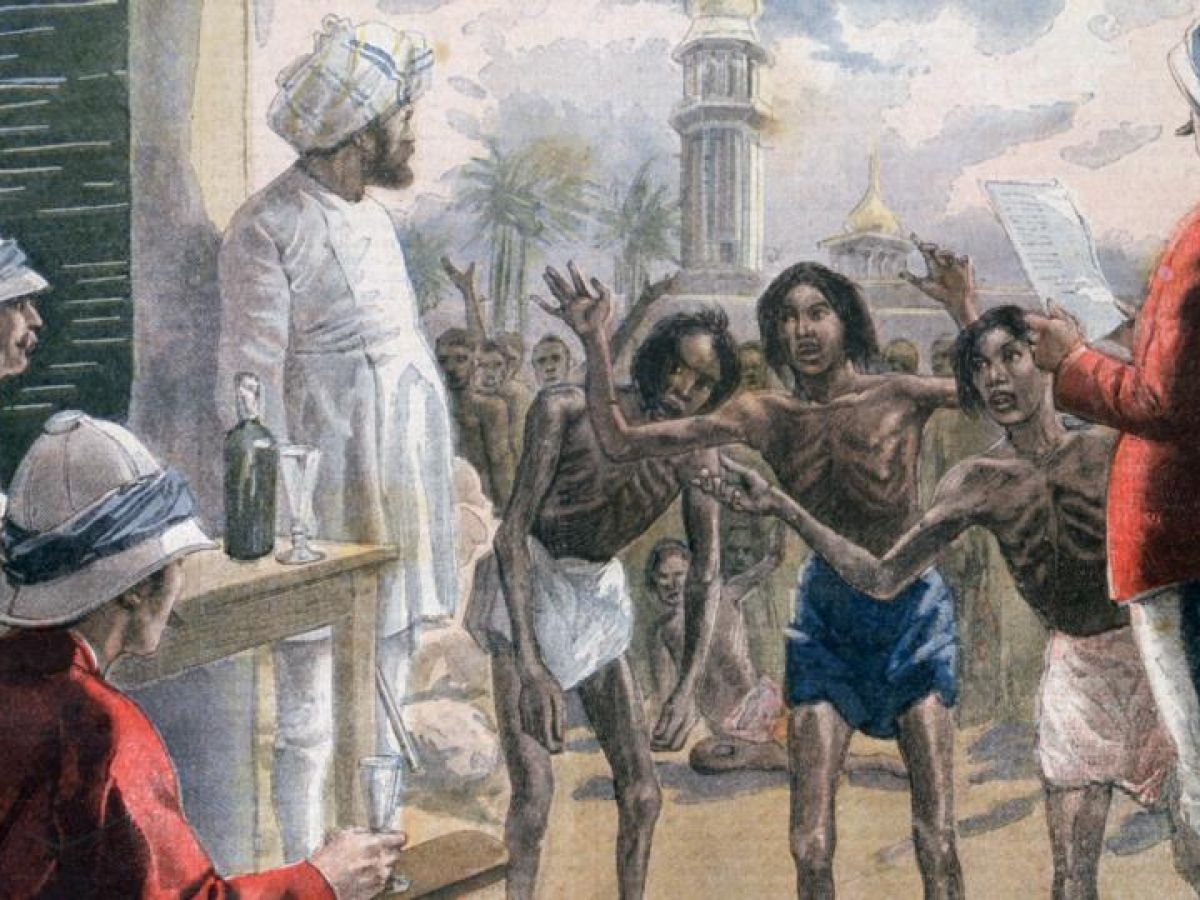
    Irrespective of what all colonialism does, or does not, the most devastating thing that happens to a colonised country is that its resources are depleted to the extent that it borders on plunder. India, indisputably, happens to be one of the classic cases of having bled to a high degree due to the avarice of the British. The kind of exploitation that occurred in India has been multi-dimensional and multi-hued, wherein the colonisers filled their coffers to please and enrich their royalty, king, queen and the crown.

    During colonialism, and even after the independence of the former colonies, a different kind of exploitative process was in place whereby chunks of humans from the colonies were ‘recruited’ at low wages for underclass jobs in the ammunition factories, textile mills, railways and road transport, in the mother country of the colonials, not to talk of the other forms of ‘recruitment’ as slaves and indenture labour for other colonies.

    [powerkit_button size=”lg” style=”info” block=”true” url=”https://www.moneycontrol.com/news/opinion/citizenship-renouncers-are-the-new-colonials-call-them-desi-colonials-10353731.html” target=”_blank” nofollow=”false”]
    Read More
    [/powerkit_button]

  • Colonial taxes built Britain. That must be taught in lessons on Empire

    Colonial taxes built Britain. That must be taught in lessons on Empire

    UK government ministers want the British Empire’s benefits taught in schools. Don’t let them ignore the death and destruction it inflicted says Professor Gurminder K Bhambra. Her observation is equally if not more important for India and other erstwhile colonies. Britain and other European colonial powers not only looted and decimated Indian economy over three centuries of colonial interaction but their ruthless exploitation led to much of the poverty that has afflicted the global south ever since. This fact of history must be taught extensively in Indian schools. There are many who propagate the fallacy that the British empire was beneficial but the truth that it was ruthlessly exploitative must be taught and researched in a big way. The wealth of the West was built on built on exploitation of Africa, Asia, and Latin America. The West continues to dominate the global economic system and it is inherently exploitative. History teaching and research, from policy and science perspectives, are in dire need for elimination of Western bias.


    Recent weeks have seen a variety of UK government ministers – fromOliver Dowden to Kemi Badenoch to, most recently, education secretary Nadhim Zahawi – both extol the benefits of British Empire and urge the teaching of those benefits. This follows on from the government’s response to the Commission on Race and Ethnic Disparities, which set out the need for a new model curriculum for history which would advise schools on how best to teach these issues. This is all part of the government’s Inclusive Britain strategy which calls on us to acknowledge the rich and complex history of ‘global Britain’.

    In the spirit of this call, I offer one account of the complex, entangled histories of colonial taxation and national welfare that continue to shape modern Britain. Few people know that colonial subjects from the Indian subcontinent paid taxation, including income tax, to the British government in Westminster. Or that that taxation was used to alleviate the conditions of poorer people within Britain at a time when the working class and middle class here were exempt from paying income tax.

    Taxation – and the ways in which it is returned to citizens through welfare – is one of the main ways in which the ‘imagined community’ of the nation comes into being. That is, the relationship between taxes and welfare is part of the process of constructing institutions and the idea of the nation. If we were to recognise that this ‘imagined community’ was built not only through national taxes, but also colonial ones, then how might that change our understanding of what it is to be British today?

    My grandfather, Mohan Singh, was born in 1913 in a small village in the Punjab, in what was then British India. He was four years old when his father, Gurdit Singh, died and 17 when his uncle, Harnam Singh, who had been supporting him, also passed away. My grandfather had planned on attending the Government College in Lahore, but – needing to support his mother and younger sister – he instead spent six months training as a boilermaker. He then got married to Pritam Kaur and travelled to Calcutta to work in a variety of factories, engineering works and rolling mills.

    In 1942, he travelled to the British colony of Kenya – bringing his family over later – and worked for 18 years at the East African Railways and Harbour Company. He spent the last two decades of his life in the UK, working at Chalvey Engineering in Slough as a sheet metal worker before retiring at the age of 65 in Southall, west London.

    Calls to ‘go home’ have been the refrain of right-wing opponents of immigration from at least the 1970s

    Mohan Singh criss-crossed three continents during his lifetime, but he never left the jurisdiction of the British Empire. In his application for registration as a citizen of the UK and Colonies – in the aftermath of the British Nationality Act of 1948 – he wrote: “I was born in British India.” He further noted that he lived and worked in India and Kenya, two countries that were colonies of Britain. It was these connections that confirmed his citizenship and gave him the right to travel to and live in Britain. He duly exercised those rights but, on arrival, he had them called into question by the local population, who were either unaware of them or indifferent.

    Calls to ‘go home’ have been the refrain of right-wing opponents of immigration from at least the 1970s – as well as having been plastered on the sides of vans as part of the UK government’s ‘hostile environment’policies of recent years. They are also implicit in an influential body of scholarly work oriented to questions of belonging and entitlement that argue for priority in public policy to be given to the ‘white working class.’ This is on the basis of them being ‘insiders’ who have contributed through their taxes to the wealth that is disbursed through welfare.

    Former colonial subjects, like my grandfather, are regarded as immigrant outsiders even when they come to the metropole carrying passports of British citizenship. They are not seen to have contributed to the wealth of Britain by paying taxes and they are regarded as unfairly gaining access to the national patrimony. As Geoff Dench, Kate Gavron and Michael Youngwrite in ‘The new East End’: “As newcomers, their families cannot have put much into the system, so they should not be expecting yet to take so much out.”

    Britain established direct rule over India after suppressing the 1857 Indian Mutiny (also known as the First War of Independence). In 1860, it implemented an income tax upon colonial subjects, in part to pay for the costs associated with those revolts. Initially, a 2% rate was imposed on those earning between 200 rupees and 500 rupees a year and a 4% rate on those earning above 500 rupees annually.
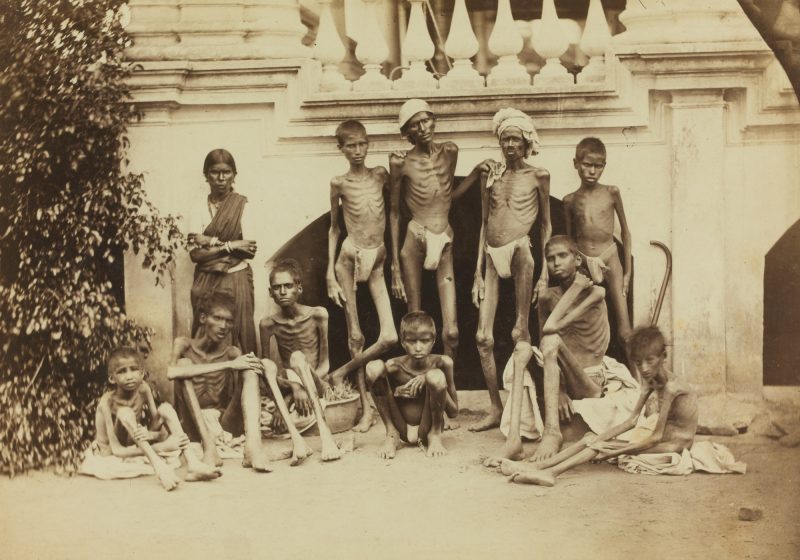
    Famine Genocide 1876-1879 in British Raj Madras, India. Credit: Wikimedia Commons

    The arrival of the British in India – first via the English East India Company and then through direct rule – had brought endemic famine across the subcontinent

    When my grandfather started work in the 1930s, the average wage for a skilled worker in British India was about 40 rupees a month. He was very unlikely to have paid income tax, however, as he would not have earned enough to meet the threshold, which by then was 2,000 rupees a year. Of the amount that was collected, around three-quarters went to the imperial treasury, with only one rupee in a hundred for local purposes. Local purposes included the building of canals and roads, but not the alleviation of poverty, not even in times of catastrophic famine.

    The arrival of the British in India – first via the English East India Company and then through direct rule – had brought endemic famine across the subcontinent. The 50 years after the implementation of the income tax saw one of the most intense such periods of famine, in which it is estimated over 14 million people died of starvation. This was in the context of grain being exported by rail from the famine regions (including to Britain) and colonial taxes continuing to be collected even in the worst-affected areas.

    In all cases, the demands of ‘sound finance’ trumped those of public health and the primary thing to be avoided was any idea that the poor in India should be maintained at public expense. Ensuring sufficient funds for the ensuing military campaign in Afghanistan – from the taxes paid by colonial subjects for local purposes – was of more importance than using those taxes to alleviate severe hunger and avert the deaths of millions.

    Here, we see quite clearly that the idea of the ‘imagined community’ created through taxation and its redistribution did not include colonial subjects. The taxes that Indians paid to the imperial treasury and to local provinces did not give them any entitlement to the redistribution of that income. Worse, any relief provided during famines was often dependent on undertaking hard labour in camps at a distance from a claimant’s locality.

    The most extreme instance was where the rations provided in return for heavy labour were scarcely above the level required for basic subsistence. The ‘Temple wage’ – named after the lieutenant-governor, Richard Temple, who brought it in – produced lethal results and, as Mike Davis notes in ‘Late Victorian Holocausts’, turned the work camps into extermination camps.

    The death and destruction brought about by the Empire were known at the time. In 1925, Harry Pollitt, the leader of the Boilermakers Union in the UK, stated that the British Empire was drenched in blood. This was in the context of debates at the Trades Union Congress in Scarborough, where a resolution was eventually adopted – by three million votes to 79,000 – against imperialism and in support of the right of self-determination of those who were colonised.

    Such sentiments, however, came up against more hard-nosed understandings concerning the utility of the Empire to those in Britain. As Labour foreign secretary Ernest Bevin proclaimed in Parliament in 1946, “I am not prepared to sacrifice the British Empire, because I know that if the British Empire fell … it would mean that the standard of life of our constituents would fall considerably.”

    Here, Bevin acknowledged that the life of all within Britain was enhanced as a consequence of Empire. However, Empire was overwhelmingly disastrous for the majority of people subject to it. Their standard of life fell considerably as a consequence of colonialism and the famines it produced and, in many, many cases, they lost their lives to it.

    One mode of survival was to move. This is why my grandfather moved from a village in the Punjab to train as a boilermaker in Lahore, before working in Calcutta, Nairobi and London. This is likely why his grandfather before him moved from famine-struck Orissa to Rajasthan to Punjab. These movements tend not to be seen to be part of the histories of Britain, global or otherwise, or of any consequence to understanding Britain or Britishness in the present.

    The forgetting of the Empire involves also the forgetting of the political community – colonial and postcolonial – that was constructed through taxation. Few in Britain today understand the extent to which national projects – from social welfare to cultural institutions such as country houses, museums, and galleries – have been enabled through the taxes paid by former colonial subjects. There is an urgent need for us to recognise our shared histories and account for them.

    One aspect of the ‘culture wars’ is the call to take the views of taxpayers into account when discussing ‘contested histories’. Samir Shah, the chair of London’s Museum of the Home, for example, argued that as heritage bodies are funded by taxpayers’ money, then the views of taxpayers – those he considers the silent majority – ought to be taken more explicitly into account. Given that both colonial subjects and their descendants paid taxes to the government in Westminster, then they/we also have a legitimate stake, in the government’s own terms, in how our shared history is represented. There is a benefit to the teaching of British Empire, but the reality is different from what these ministers suppose.


    This essay was published earlier in openDemocracy and is republished under Creative Commons Attribution – Non Commercial 4.0 International License.


    Feature Image Credit: The Irish Times
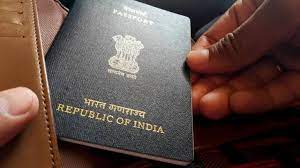


  • Indian citizenship concepts and definitions need a revisit

    Indian citizenship concepts and definitions need a revisit

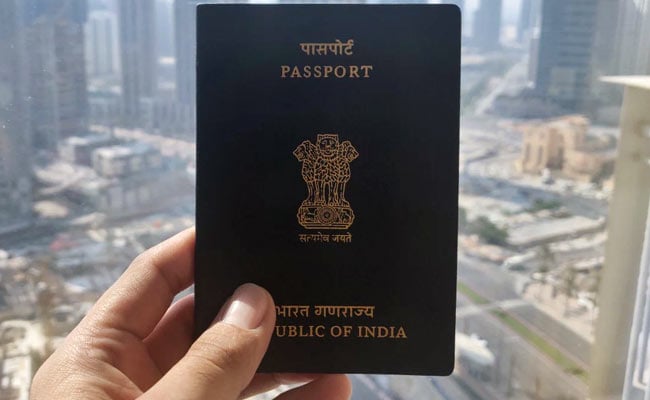
    More than 600,000 Indians gave up their citizenship during the last five years, Union Minister of State for Home Nityanand Rai informed the Lok Sabha. While 133,000 Indians gave up citizenship in 2017, it was 134,000 in 2018, 144,000 in 2019, 85,248 in 2020 and 111,000 in 2021 until 30 September. The dip during 2020 was, without any doubt, because of the pandemic. What entails in revoking citizenship is the surrender of the Indian passport as mandated by the Indian authorities since India does not allow dual citizenship unlike her co-subcontinental countries Pakistan and Bangladesh.

    While we do not have an idea about the reasons for the revocation of citizenship, the fact remains that these erstwhile Indian citizens, across the globe, have opted for citizenship of different countries (and that includes the passport of the country concerned) where they have been residents for varying periods. For all practical purposes, looked at from the lens of India’s Ministry of Foreign Affairs, these former Indian citizens are “foreigners”. It may not be out of place to point out here that Padma Bhushan awardee and former ambassador to the US, Abid Hussain, had famously remarked that Indians have their heart in India, but their money in Swiss banks.


    Read More

  • India’s Illegal Immigration and Citizenship Issues: Tussle between Politics and Policy

    India’s Illegal Immigration and Citizenship Issues: Tussle between Politics and Policy

    It is indeed difficult to comprehend this Government’s precipitous push for the Citizen Amendment Act (CAA), in the manner that it has, at a time when the economy is on the edge of a precipice and it has yet to satisfactorily resolve serious issues like Kashmir that it has on its plate. True, illegal immigration is of huge concern around the world, and even more so in our case as the issue has been further complicated by the deleterious effects of Partition. However much the young today may wish away the past, we are still bound by it. Regardless of whether one subscribes to the “Two Nation Theory” or not, Pakistan emerged as the homeland for Muslims of the Sub Continent while India came to be regarded as the home for those dispossessed because of their religious affiliations from those areas. 

    One tends to forget that the Preamble to the Constitution, when first adopted, described India as a “Sovereign Democratic Republic” in which “liberty of thought, expression, belief, faith and worship” were guaranteed. Socialism and secularism were only added to our preamble as an afterthought by the Congress Government of Mrs. Gandhi in 1976 through the 42nd Amendment, obviously to gain political advantage and protect her own minority vote bank. In a sense that has now come to haunt us as the BJP proceeds to curry benefit for its Hindutva plank, as the CAA clearly attempts to do, though ostensibly it is aimed at correcting an old wrong.   

    Religious minorities in both countries were given a semblance of relief with the signing of the Nehru-Liaquat Agreement of 1950 that required both countries to protect minorities. While Indian Muslims, among others, continued to enjoy the fruits of democracy in a secular republic, the same could not be said for Pakistan, and subsequently Bangladesh, after its formation. Minorities there continued to be discriminated and persecuted against on religious grounds, forcing lakhs of Hindus and Sikhs to flee across the border. The Government of India’s subsequent refusal to grant citizenship to the fleeing Hindus and Sikhs, as had been publicly promised by both Mahatma Gandhi and the Congress Government in 1947, left them stateless and in penury and was certainly a dark chapter in our history. 

    Subsequently, after 1971, the issue was further complicated as Bangladeshi Muslims too crossed over in an attempt to improve their own economic prospects. It is also an undisputable fact that much of this flow of illegal migrants was aided by Governments then in power in Assam and Bengal that were shortsighted enough to believe that this flood of  illegal immigrants would increase their vote banks and allow them to subvert elections. It is ironical that the very parties involved in this immoral and criminal act are today at the forefront of the Anti CAA protests. While the Nellie Massacre and the Assam Student Agitation brought a halt to this farce in Assam in the early Eighties, it has allegedly continued unabated in Bengal even to this day.

    Politicians, activists and media persons who today question the extent of illegal immigration, especially from Bangladesh, would do well to study the extremely balanced and insightful “Report on Illegal Migration into Assam Submitted to The President” by Lt Gen S K Sinha (Retd), then Governor of Assam, on 8 Nov 1998. As most readers would be aware while the extent of actual illegal immigration into Bengal and other states is not available, anecdotal evidence suggests that it has been extensive and has impacted the social fabric of these States. Indeed, most of those who question attempts to curb or quantify the extent of illegal immigration are being deliberately obtuse and intent on promoting a false narrative motivated more by their bias against the current Government and their need to hide their own involvement in promoting this flood of immigrants. 

    The Assam Accord signed by the Congress under Mr. Rajiv Gandhi in 1985 required a process to be initiated for the “detection and deletion of foreigners.” In this context under the aegis of the Supreme Court action was initiated in Assam to update the National Register of Citizens (NRC) that had been prepared in 1951 by recording particulars of all the persons enumerated during that Census. This update was to include the names of those persons (or their descendants) who appear in the NRC, 1951, or in any of the Electoral Rolls up to the midnight of 24th March, 1971, or in any one of the other admissible documents issued up to then, which would prove their presence in Assam or in any part of India on or before 24th March, 1971. As per Prateek Hajela, State Coordinator of the NRC Project, “A total of 3.1 Crore persons have been found eligible for inclusion in the final NRC list, leaving out 19.,06 Lakh persons including those who did not submit their claims.” They now have the right to file an appeal before Foreigners Tribunals.

    This implies that once the process of appeals is complete, those declared as illegal immigrants, as defined by the Citizenship Act of 1955, will have to be either imprisoned or deported under the Foreigners Act, 1946 or the Passport Act, 1920. However, this has placed the Central Government and the Assam Government on the horns of a dilemma because the vast majority of those who are presently ineligible for inclusion in the NRC are Hindus. Logically speaking, deporting these people would be a gross miscarriage of justice given that they fled their country of origin due to religious persecution. In anticipation of this problem the Government amended the latter two Acts in 2015, thereby exempting Hindus, Sikhs, Buddhists, Jains, Parsis and Christians from Afghanistan, Bangladesh and Pakistan, who had fled to  India before 31 Dec 2014 because of religious persecution, from being deported. A natural corollary to this action would have been to amend the Citizenship Act 1955 to grant citizenship to these groups in an earlier timeframe, rather than the eleven years that the Act otherwise requires. This is exactly what the Government has done with the CAA, 2019. That such an action will also help further its own political agenda is undeniable, but that is exactly how all politicians in power work.

    All of this goes against the interests of the Assamese who view the issue in purely ethnic terms. Their protests, therefore, are against inclusion of Bengalis as citizens regardless of their religious affiliations as they believe that they are being swamped numerically, culturally and linguistically. One fails to understand why the Central Government, which has the benefit of its own party in power in the State, was unable to anticipate the likely consequences of its actions. Obviously, either both the central and state leadership ignored or misunderstood the signs, but whatever be the case the Party has certainly harmed its own cause and faces an uphill battle in regaining popular support. In the context of the rest of the country however, the adverse reaction that this step has drawn is clearly political in nature, initiated by those who fear they will lose out at the hustings because of this.

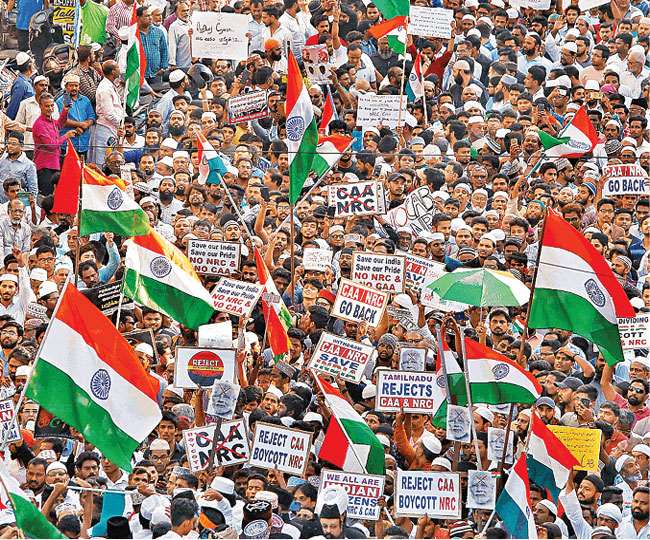
    The opposition narrative that has been propagated is along two thrust lines. Firstly, it appeals to the liberal secular mindset, which already sees this government as autocratic and fascist in nature, that the CAA is discriminatory, as it leaves out Muslims from those countries, thereby eroding our secular identity, and is therefore unconstitutional. Secondly, it creates a fear psychosis among the minority Muslim population by linking it to the NRC and suggesting that it will be used by this Government to harm their community. The Police by their highhanded behaviour and excessive use of force in dealing with the protests have only reinforced this narrative.

    While it is for the Courts to decide on its constitutionality, prima facie the argument seems to lack substance because the Act is only applicable to non- citizens who are not covered by the provisions of our Constitution and in effect corrects an earlier wrong. Moreover, if legislation is to be treated as unconstitutional purely on the basis that it is discriminatory in nature, then how does one justify existing laws on the subject and is it not time for the uniform civil code to replace all our other such Acts in place? Clearly, for those who ignore these arguments, Bertrand Russell’s belief that “Men are born ignorant not stupid. Education makes them stupid,” appears to have some relevance. 

    With regard to the fears that have brought many of our Muslim brethren to take to the streets, the issues involved appear to be more complex. There can be no two views that the updating of the NRC is a legitimate exercise that every State undertakes to protect its sovereignty. No State can let its ethnic, religious or linguistic profile be overturned by illegal immigration as that will adversely impact society. However, the NRC can also not be used by any government as a tool for harassment. This is unfortunately where this Government loses out because over a period of time its actions have come to be viewed with suspicion by the public at large and specifically by our minority population. There is a huge trust deficit and people tend to be extremely suspicious of its motives. Moreover, now that the Ram Temple issue has been more or less settled, there is the fleeting suspicion that this Government now intends to use NRC to further its Hindutva agenda.  That apart, there have also been numerous occasions on which this community has faced unprovoked attacks, with little being done to assuage their feelings, especially as perpetrators have rarely been brought to justice. It is also a telling comment on their treatment that violence during these ongoing protests has primarily been restricted to states that are run by the BJP. 

    This has allowed the opposition parties to cynically peddle a blatantly false narrative and spin it in a manner that gives it enough credence to coalesce not just minority groups in their favour, but also others who have been distrustful of the way this government functions, with little regard for transparency, dialogue or rule of law. In the meantime the Modi Government has now decided to change tack, put the NRC on the backburner and proceed forward with the updating of the National Population Register (NPR) that only records the list of people in the country, instead. However, this move is also unlikely to be taken kindly since for all intents and purposes, it is a precursor to the NRC and provides relevant data that it can use. 

    The way forward in resolving this contentious situation can hardly be the one that results in further confrontation or adds to the distrust quotient. Mr. Modi would be well advised to take a step back and invite political parties and civil society for a fresh dialogue on all touchy issues. In addition they must look at including appropriate provisions to the guidelines for conduct of NPR/NRC that statutorily ensure that minorities and the poor are not harassed during the process. In any case the Assam NRC process and its final results show that despite our best efforts, deportation of illegals is a very distant possibility. It may therefore be a far better alternative to adopt a more practical and less contentious approach. One such option could be that those identified as foreigners continue to be permitted to remain and work here, without probably being given the right to vote or acquire property. However, their children born here should automatically be made citizens as per existing laws.      

    The author, a military veteran, is Senior Visiting Fellow at The Peninsula Foundation, Chennai and a Consultant at ORF, New Delhi. Views expressed are the author’s own.