Tag: CCP

  • China has achieved escape velocity: it is now unstoppable

    China has achieved escape velocity: it is now unstoppable

    The 21st century is shaping up to be the Asian, Eurasian, and Chinese century.

    While the Hegemon spent at least $7 trillion – and counting – on unwinnable Forever Wars, China is spending $1 trillion in an array of Belt and Road Initiative (BRI) projects across the Global South: the emphasis is digital/transportation connectivity corridors. Geoeconomic imperatives intertwined with rising geopolitical influence.

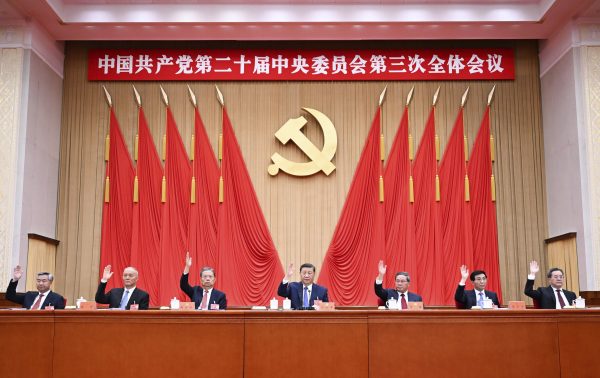
    The four-day, twice-a-decade plenum of the Communist Party of China that took place last week in Beijing, designing an economic road map all the way to 2029, was a stunning affair in more ways than one.

    Let’s start with continuity – and stability. There’s no question after the plenum that Xi Dada, or The Big Panda, will stay on the helm until 2029 – the end of the current five-year economic drive.

    And if Xi is healthy enough, he will stay until 2035: the fateful and uber-game-changing target year for China to exhibit a GDP per capita of $30,000, with massive worldwide reverberations.

    Here, we see the confluence between the progression of “socialism with Chinese characteristics” and the defining contours, if not of a Pax Sinica, at least of the non-Hegemon-centric, multi-nodal world (italics mine).

    The proverbial U.S. Think Tankland/Sinophobia axis has been hysterical on China not being able to sustain a 5% a year growth rate for the next few years – the target once again stressed at the plenum.

    The Chinese themselves have not bothered about the growth rate for a long time, since in 2018 they switched to a strategy of so-called qualitative development, that is, not at the expense of traditional industries, but on the basis of high technologies and the creation of new areas, such as the production of new energy sources and artificial intelligence.

    A Russian analysis by the Center for Geopolitical Forecasts makes a crucial point: “The Chinese themselves have not bothered about the growth rate for a long time, since in 2018 they switched to a strategy of so-called qualitative development, that is, not at the expense of traditional industries, but on the basis of high technologies and the creation of new areas, such as the production of new energy sources and artificial intelligence.”

    That’s the rationale behind Made in China 2025 – which is being implemented at breakneck speed: high-tech development leading the way towards a “high-level socialist market economy”, to be consolidated by 2025 and fully constructed by 2035.

    The next step will be to attain the status of “modernized socialist power” by 2049, at the 100th anniversary of the People’s Republic of China (PRC).

    The plenum proved once more that “socialism with Chinese characteristics” – or, for the recalcitrant, Chinese-modified capitalism – is “people-centric”. The supreme values are national interest and the people’s interests – attested by the fact that large private corporations remain under the strategic control of the CPC.

    It’s idle to try to find in the final communique at the end of the plenum any restrictions on private capital on the path to “universal prosperity”. The key point is that the role of capital should always be subordinated to the concept of “socialism with Chinese characteristics”.

    Watch the reform ship steadily sailing

    Everything is explained here in nearly didactic terms, chronicling the birth of the “Decision of the CPC Central Committee on further comprehensive deepening of reforms to promote Chinese modernization”.

    What is now already referred to colloquially all across China as “The Decision” spreads across 15 parts and 60 articles, divided into three main sections, proposing more than 300 important reforms.

    “The Decision”, in full, has not yet been published; only the road map of how Beijing planners got there. Of course, this is no mere policy paper; it’s a quintessentially CPC-style dissertation in which the details of economic and political measures are obscured by clouds of images and metaphors.

    Take a look, for instance, at this passage:

    “To ensure that the reform ship sails forward steadily, the ‘Decision’ proposes that further comprehensive deepening of reform must implement the “six principles”: adhere to the party’s overall leadership, adhere to the people-centred approach, adhere to the principle of maintaining the integrity and promoting innovation, adhere to system building as the main line, adhere to the comprehensive rule of law, and adhere to a systematic approach.”

    Most of the “Decision” – 6 parts in a total of 13 – is about economic reform. Will China pull it off? Of course, it will.

    Just look at the precedents. In 1979, the Little Helmsman Deng Xiaoping started to transform a nation of farmers and peasants into a well-oiled machine of efficient industrial workers. Along the way, GDP per capita was multiplied by no less than 30 times.

    Now, the ramifications of Made in China 2025 are turning a nation of factory workers into a nation of engineers. Of 10,5 million university graduates a year, a third are engineers.

    The emphasis on AI has led, among other examples, to the automobile industry being able to produce a $9,000 EV in complete automation and make a profit. China is already a global leader in EVs (BYD building plants in Brazil, Thailand, Turkey, Hungary), solar power, drones, telecom infrastructure (Huawei, ZTE), steel, shipbuilding – and soon, also semiconductors (thank you, Trump sanctions).

    While the Hegemon spent at least $7 trillion – and counting – on unwinnable Forever Wars, China is spending $1 trillion in an array of Belt and Road Initiative (BRI) projects across the Global South: the emphasis is digital/transportation connectivity corridors. Geoeconomic imperatives intertwined with rising geopolitical influence.

    Hegemon hysteria aside, the fact is the Chinese economy will grow by a whopping $1.7 trillion only in 2024. That is more than in all but the last three years – because of the Covid effect.

    And Beijing borrowed exactly zero yuan for this growth. The U.S. economy, by comparison, may grow by $300 billion in 2024, but Washington had to borrow $3.3 trillion for that to happen.

    Researcher Geoff Roberts has compiled a very useful list of what China is doing right.

    And when it comes to the nitty gritty, the numbers are staggering. Here are just a few, apart from GDP growth:

    • Foreign goods trade is up 6.1% to $2.9 trillion year-on-year.
    • The trade surplus is at $85 billion, up 12% compared to 2023.
    • ASEAN trade is up by 10.5% to $80 billion; China is the number one trade partner of individual ASEAN members.
    • China had a record crop of 150 million tons of cereal grains.
    • The courier sector handled 80 billion parcels, up 23% year-on-year.
    • SMIC is the world’s number two pure-play foundry after Taiwan’s TSMC.
    • China Telecom paid $265 million for 23% of QuantumCTek, the patenter of Micius, the world’s first quantum communications satellite.
    • Commercial aerospace launched 39% of China’s 26 rockets.
    • Invention patents rose 43% to 524,000. China is the first country with 4 million domestic invention patents in force.
    • Baidu’s 1,000 robotaxis in Wuhan will break even in Q4 and will be profitable next year.
    • China has 47% of the world’s top AI talent. It added no less than 2000 AI courses to school and college curricula since 2019.
    • On world-class institutions doubling as research leaders, 7 out of 10 are Chinese, including the top one: the Chinese Academy of Sciences, ahead of Harvard.

    Exceptionalist China “experts” believe their own fantasy that the U.S. allied with occupied Japan, Germany and South Korea would be able to match and surpass China’s pull with the Global Majority, because they have more resources and more capital.

    Nonsense. Even more nonsense is to believe that the Hegemon’s NATO “partners” – as in vassals – will follow the leader in creating cutting-edge technology.

    The high-speed train that matters has already left the station. The 21st century is shaping up to be the ‘Asian, Eurasian, and Chinese’ century.


    Feature Image Credit: The Diplomat

    The article is republished from the Strategic Culture Foundation.

  • Xi’s third term, the 20th Party Congress and Implications for India

    Xi’s third term, the 20th Party Congress and Implications for India

    The historic 20th National Congress of the Communist Party of China (CPC) concluded on October 23rd. The week-long extravagant event – beginning on October 16th – has brought new faces of the Chinese political elite to the forefront along with a few surprises. Xi’s report before the 20th National Party Congress (NPC) at the opening ceremony and his appointments to the highest posts in the country are very telling of what his third term could look like for the world. Most importantly, the implications for India cannot be clearer – politically, economically, diplomatically, and militarily. India will need to acquaint herself with these new appointments and developments and come up with a strategy to level the playing field.

    What the report says and implies

    Xi’s report to the 20th NPC was in stark contrast to the report delivered in 2017 to the 19th NPC. In 2017, Xi was triumphant of all that China had achieved and hoped to achieve in the future – particularly on the economic front and of its growing international influence. He was proud of China’s assertive foreign policy and soft power. That sentiment has not necessarily changed in the 20th NPC report. However, Xi’s report did strike a sombre tone, predicting a tough future for China – “…strategic opportunities, risks, and challenges are concurrent and uncertainties and unforeseen factors are rising. Various “black swan” and “grey rhino” events may occur at any time.” His speech and report come across as a rallying call meant to safeguard the primacy and authority of the CPC and their way of life against external interference.

    “China’s overall development objectives for the year 2035 are as follows: Significantly increase economic strength, scientific and technological capabilities, and composite national strength; substantially grow the per capita GDP to be on par with that of a mid-level developed country”.              – Xi Jinping in his address to the 20th Party Congress.

    The importance of “national security” (mentioned 81 times) and China’s external and regional challenges is given highest priority and significance. Other key phrases that find frequent mention in the report are “military”, “strategic/strategy” and “risks”. There is a concerted focus on military modernisation and ramping R&D. Simultaneously, Xi is also realistic of the economic challenges ahead of China – “…many bottlenecks hindering high-quality development, and China’s capacity for scientific and technological innovation is not yet strong enough. Many major issues need to be resolved in order to guard against financial risks and ensure that food, energy, and industrial and supply chains are secure and reliable.” Interestingly, China’s economy was not in the spotlight. There was a glaring omission of the development of and plans for the BRI; mentioned only twice in the entire report. Predictably, there was no change in China’s policy towards Taiwan except a veiled threat directed at the US for its interference in its neighbourhood. It appears that Xi’s plans for his third term are to focus on China’s security and strategic challenges through assertive diplomacy.

    Xi stacks the deck in his favour

    Xi Jinping’s appointment as General Party Secretary of the CPC for a third term was the least surprising outcome from the 20th NPC; owing to constitutional amendments made in his previous term i.e., the removal of the constraint of a term limit. He also retains his position as Chairman of the party’s Central Military Commission (CMC). His appointments to the state’s top bodies have broken with the CPC’s age norm of ‘7-up, 8-down’; officials eligible to serve another term at 67 years have been given the boot while people like Zhang Youxia (VC of the CMC), at 72 years, has been given another term when he should ideally have been retired.

    The reshuffling of the Politburo Standing Committee (PBSC) appears to have only one important criterion – loyalty to Xi Jinping. The move is also an indication of the concentration of power that now rests with Xi and his men. With the introduction of the “Two Establishes” and “Two Safeguards”, Xi elevated himself to be on par with Mao Zedong and above Deng Xiaoping, Hu Jintao and Jiang Zemin. Indeed, the inclusion of Xi Jinping’s Thoughts on Socialism with Chinese characteristics in the Party Constitution along with the “Two Establishes” and “Two Safeguards” has cemented Xi Jinping as the core of the CPC. His appointments to the PBSC reflect this. Premier Li Keqiang, widely believed to be a dissenter and protégé of former President Hu Jintao was dropped. Hu Chunhua, slated for a position in the PBSC and considered for the premiership was unable to secure a position in the 7-member powerful body and was even dropped from the Politburo. Other members to be removed were Wang Yang, Han Zheng and Li Zhangshu. Both Wang Yang and Han Zheng were closely linked to Li Keqiang and former President Jiang Zemin respectively. The new members of PBSC are Li Qiang, Cai Qi, Ding Xuexiang and Li Xi. Zhao Leji and ideology tsar Wang Huning were the only members to retain their seats; having closely aligned themselves with Xi Jinping in the period between the 19thNPC and 20th NPC. The composition of the 20th PBSC indicates Xi’s success in removing all factional opposition present within the Party. All the members who were left off the PBSC were a part of the Communist Youth League and rose within its ranks to become powerful men. Their removal, along with Hu Jintao being escorted out during the 20th National Congress is both a signal to Xi’s loyalists and opposition.

    Similarly, the selection of people into the 24-member Politburo and Central Committee are all Xi loyalists and will have a direct impact on China’s domestic and foreign policies going forward. Xi’s prioritisation of security and S&T is reflected in some of the new appointments to the Politburo – Chen Wenqing (an intelligence officer and former minister of the Ministry of State Security), engineers with specialisation in aerospace Ma Xingrui and Yuan Jiajin, Li Ganjie (nuclear engineering), Zhang Youxia (VC of the CMC), Hei Weidong (VC of the CMC and Commander of CMC’s Joint Command Center), Chen Jining (environmental sciences), and Yin Li (public health expert). Notably, both the PBSC and Politburo have no women participation.

    The backgrounds of the appointees to these bodies are also an indicator of the growing premium Xi is placing on technocrats. Beyond party and political loyalty, they are expected to fall in line with his policy agenda and thus, have backgrounds in aerospace, technology, finance, economics, engineering, and advanced manufacturing in sectors like semiconductors. 

    The backgrounds of the appointees to these bodies are also an indicator of the growing premium Xi is placing on technocrats. Beyond party and political loyalty, they are expected to fall in line with his policy agenda and thus, have backgrounds in aerospace, technology, finance, economics, engineering, and advanced manufacturing in sectors like semiconductors. The number of officials with backgrounds in S&T in the Central Committee is at par with Jiang Zemin’s first term in 1992. According to a study by the Brookings Institution, 81 seats in the 20th Central Committee – around 40% – are occupied by Chinese officials with technical expertise. The belief that technocrats generally lack political factions, prefer working in silos and are solution-oriented also works in Xi’s favour.


    A stronger and more loyal CMC

    The new CMC appointees stand out for several reasons. For one, Xi has broken with the established retired norms by placing Army veteran Zhang Youxia as VC of the CMC. Further, the placement of He Weidong as the second VC of the CMC is unusual since he has essentially jumped two grades without serving as either a member of the CMC or Central Committee of the CPC. Second, Xi appears to have rewarded those that he has personal and familial connections with.

    Zhang Youxia’s father, Zhang Zongxun was a founding member of the PLA and served with Xi’s father, Xi Zongxun in the 1940s. General Zhang’s decorated career, combat experience (Sino-Vietnamese war in the 1980s) and position as head of the Equipment Development Department of the CMC make him one of Xi’s most trusted allies in the PLA. On the other hand, General He Weidong’s catapult to second VC is significant given his operational experience with both the Western Theatre Command (WTC) and Eastern Theatre Command (ETC) ground forces. Reportedly, both Xi and He are also close friends owing to the time they both spent in Fujian province and Zhejiang province during Xi’s days working in the provincial government.

    The other new appointment with operational and combat experience is General Liu Zhenli. He takes over as Chief of the Joint Staff Committee of the CMC and was previously Chief of Staff and Commander of the PLA Army and Chief of Staff of the PAP. His experience in the Sino-Vietnam border skirmishes in the 1980s as well as his stint with the PAP makes him an important addition to the CMC.

    Finally, General Li Shangfu’s (potentially Minister of National Defense) elevation to the CMC is notable in that it signals a close linkage between the aerospace domain and the military. Li is a technocrat and is widely regarded as the man behind China’s manned and unmanned space program. His time as Deputy Commander of the PLA Strategic Support Force and his current appointment as Director of the Equipment Development Department reflects Xi’s aim of achieving the centenary goal of the PLA Army and modernising its military and national defence.

    The other two members to retain their position in the CMC are Admiral Miao Hua and General Zhang Shengmin. They both rose through the ranks in the Political Work Department as political commissars. Admiral Miao will continue to head the Political Work Department. He is also a close ally of Xi from when they both served in the Fujian province in the 1990s and 2002. No doubt his work as a political commissar in the PLA Navy makes him a strong candidate for a second term in the CMC. Similarly, General Zhang continues to head the Central Commission for Discipline Inspection as he serves in the PLA Rocket Force. His appointment is particularly significant given the fact that he replaced Du Jincai who was being investigated with then VC’s Guo Boxiong and Xu Caihou on corruption. Zhang Shengmin’s retainment signals, one, Xi’s trust in him and two, that his anti-corruption campaign is far from over.

    Other appointments such as Airforce General Xu Qilang and PLA Generals Wei Fenghe and Li Zuocheng to the State Commission indicate an overwhelming prioritisation of the WTC and ETC, meaning India and Taiwan – China’s two biggest security challenges. The appointment of several serving chiefs of the ground forces will have far-reaching implications for the LAC and India’s national security.

    The combination of technocrats and veterans in the CMC is a nod towards Xi’s vision for the Chinese military – “…continue integrated development of the military through mechanization, informatization, and the application of smart technologies and work faster to modernize military theory, organizational forms, personnel, and weaponry and equipment. We will enhance the military’s strategic capabilities for defending China’s sovereignty, security, and development interests…”.

    However, the success of these appointments remains to be seen given the relatively limited operational experience some of the members have.

     What do we make of China’s economy?

    The “common prosperity for all” is another major tenet at the heart of China’s domestic economic policy. Whilst outlining all the strides the CPC has made in the last five years to the 20th NPC, Xi is also aware of the economic challenges China faces – the effects of the Covid-19 pandemic, the rise of unilateralism and protectionism, a sluggish global economy and regional conflicts and disturbances. To combat these challenges, China is pursuing the “dual circulation” strategy and “high-quality development”. Notably, these two mechanisms have made their way to the Party Constitution. The dual circulation strategy is aimed at improving domestic demand, building secure and resilient supply chains, and reducing China’s dependency on foreign trade for its economic growth.

    China is pursuing the “dual circulation” strategy and “high-quality development”. Notably, these two mechanisms have made their way to the Party Constitution. The dual circulation strategy is aimed at improving domestic demand, building secure and resilient supply chains, and reducing China’s dependency on foreign trade for its economic growth.

    Along with a faster recovery of its industrial production equipment manufacturing and high-tech manufacturing, China’s GDP grew by 3.9% in the third quarter. However, this does not take away from the fact that, presently, China’s exports have diminished. The strict zero-covid policy that China continues to enforce is severely impacting its industries. The recent US Chips Act and export controls targeted at China are affecting foreign enterprises in the country as well as its tech industry.

    Further, the absence of market-reform oriented economists like Premier Le Keqiang, Vice Premier Liu He, head of the Central Bank Yi Gang, financial regulator Guo Shuqing and Finance Minister Liu Kun from the PBSC and Politburo will surely be felt. Li Qiang, the potential candidate for the Premiership does not have an economic background and it is likely that most of the heavy lifting will fall to He Lifeng (tapped for Vice Premier) in the Politburo. He is a supporter of Xi’s “self-reliance” policies and economic nationalism. He will have big shoes to fill as Liu He, the outgoing Vice Premier, had a powerful portfolio that included economic policy and the financial sector. The Harvard-trained economist was also Xi’s go-to man for trade negotiations with Washington.

    India’s continued economic growth is evidence contrary to what China dictates. Even as China seeks membership in the Comprehensive and Progressive Agreement for Trans-Pacific Partnership (CPTPP) and uses the Regional Comprehensive Economic Partnership (RCEP), there are signs of decoupling with the Chinese economy emerging. Already, the US-imposed export controls are impacting China’s production and manufacturing. While China proposes a more “secure” and inward-looking economic policy, achieving this goal will take a long time. This is an opportunity for India to exploit. India becoming the next manufacturing hub for the world will challenge China’s position in Asia and thus, presents an obstacle for the latter.

    China’s wolf-warrior diplomacy to continue

    With Yang Jiechi’s retirement, the position of head of China’s Central Foreign Affairs Commission is set to move to Wang Yi, another seasoned career diplomat. His appointment to the Politburo, at 69 years of age, is yet another display of Xi’s disregard for the Party age norms. But it also indicates that Xi looks to Wang’s expertise as China enters its most challenging period of international engagements. Wang has been the face of China’s foreign policy for quite some time and is another ‘wolf-warrior diplomat’. His appointment signals the continuity of the wolf-warrior diplomacy that China practices. With Wang Yi at the helm, it is expected that Qin Gang, the current ambassador to the US, will become the next Foreign Minister. The other potential appointee to the position is Liu Haixing who is a career diplomat specialising in European affairs and served multiple postings in China’s embassy in France. He is also the Deputy Director of the Office of the National Security Commission (NSC). Other diplomats on the roster are Liu Jianchao and Qi Yu. Liu Jianchao was recently made Director of the International Liaison Department of the Central Committee of the Chinese Communist Party (CCID) this June and it is unlikely to change so soon. He also previously served at the Office of the Foreign Affairs Commission (FAC). Qi Yu, serving as Party Secretary of the Foreign Ministry has no diplomatic experience.

    The choice between Liu Haixing and Qin Gang will also dictate the future direction of China’s foreign policy. The choice of diplomats to the Central Committee also indicates the importance Xi places on public relations. China’s need to sway public opinion, both domestically and internationally, is reflected in the choice of Liu Jianchao and Qin Gang. Both have ample experience serving as spokespersons for the Party and the PRC respectively. Further, Liu Jianchao’s and Liu Haixing’s elevation to the Central Committee also indicates the importance of serving in Party Commissions. Their time at the FAC and NSC, respectively, within the last five years has earned them a fast-tracked promotion to the Central Committee. The path to the top is even closer for Liu Haixing given the fact that his senior, Cai Qi who served in the NSC, now sits in the PBSC.

    The road ahead for India

    The appointments to the PBSC, Politburo and CMC are a reflection of China’s assertiveness on the international stage. The military appointees are of particular importance to India. The overwhelming emphasis on ground forces and service chiefs with experience in the WTC could mean more skirmishes along the LAC and a concerted focus towards engaging in hybrid warfare. The LAC is a priority security concern for India as well and the nationalistic fervour that Xi exemplified in his speech to the 20th NPC is no different from what Prime Minister Modi engages in. That said, India’s military forces must be prepared for an escalation along the LAC at any point in time.

    The Central Committee of 205 members, the majority of whom hold doctorates, includes 47 military leaders. This is reflective of China’s governance structure that is techno-military focused along with the necessary expertise in political, economic, and social domains.

    However, leaving aside the anti-Chinese rhetoric of the West, it is important for India to recognise the competence; educational qualifications, experience, and expertise; and the varied techno-military-politico composition of the Chinese leadership. CCP’s Central Committee consists of 205 full committee members from which are chosen the top leadership forming the Politburo of 24 members inclusive of the apex standing committee of seven members and the Central Military Commission of seven members. All 205 members are highly qualified in various disciplines such as economics, education, politics, philosophy, sciences, engineering, medicine, aerospace, nuclear, space, telecommunications, sociology, history, management, international relations, law, jurisprudence, geopolitics etc. The majority hold doctorates in their chosen fields. Xi Jinping holds a degree in Chemical Engineering and a doctorate in Marxian philosophy and Political Science. In addition, the leadership has a significant presence of military leadership, both serving and veterans that includes 27 Generals and 17 Lieutenant Generals out of the 205 members.

    China’s economic downturn and security-oriented economic policy that Xi has propounded is an opportunity for India to become the next manufacturing hub in Asia. However, India must remain cautious of what competition with China could look like for the neighbourhood.

    The changes to the diplomatic cadre in the 20th NPC do not take away from the fact that India’s standing and position are stronger and more sure-footed than it has ever been. Our diplomacy in the face of the ongoing Russia-Ukraine war showcases that. India’s strategic autonomy, respect for international law and norms and growing strategic partnerships with the Indo-Pacific countries are an advantage to her engagement with Beijing.

    Feature Image Credit: orcasia.org

  • The Modernisaton of the PLA during a Time of Crises and Plague

    The Modernisaton of the PLA during a Time of Crises and Plague

    Since the days of Sun-Tzu, China’s military leaders have always been aware that to defeat an enemy at the nation’s gates, you have to maintain a communal armed force: that is, a military force that is an integral part of ordinary peoples’ lives.   However, since the time of the Han dynasty, the military power of the Chinese people has always been intimately associated with the idea of living harmoniously within the realm of Heaven (t’iem). The people have also needed to be willing to accept the authority of the “Son of Heaven” (t’iem-tzu), which means ultimately a supreme personality that will guide the Chinese masses in times of peace and war. In the early twenty-first century, the concept of “Heaven” in the People’s Republic of China is the embodied in the Communist Party of China (CPC) and its current economic power and military influence is well beyond the shores of mainland China and even of east Asia; it can be felt, for example, in South America and in Africa.  Its polar star, Xi Jinping, has emerged as an undisputed, authoritative leader, just as Mao Zedong was – who pioneered China’s modern military theory.  What Xi has done is to take Mao’s theory of warfare and transformed it into a modern conception of a military machine that is both Chinese in concept and Westernized in its pragmatism, military readiness and its deployment.

    From my perspective as a military historian, I would state that the Communist Party of China with its Central Military Commission is a sophisticated parallel to the command and control of the People’s Liberation Army (PLA), which is under the operational control of the Central Military Commission of the CCP Central Committee—the Party’s CMC. The overall Chinese leadership have been aware since the Persian Gulf War of the prowess of the American armed forces against the Iraqi army. It understood then, during that momentous time in history, the urgent need to modernize the Chinese armed forces – much as the Stalin-era Soviet military and political leadership were both impressed with and fearful of the modernization of the emergent Nazi armed forces, which included the army, air force and navy echelons. It can be said unequivocally that Stalin saw the need to prepare for a major regional war with fascist Germany, just as the Chinese leadership is aware that eventually, it will have to wage war against the United States. Unless their American adversary implodes from within, leaving disparate fiefdoms across its landscape, or a new military leadership develops within the United States due to a sophisticated insurrection or military coup and a Second American Civil War ensues, there remains a danger of war between the two nation-states. An America with a fascist government and military hierarchy whose ultimate political desire is to destroy socialist China, despite the possibility of a thermo-nuclear war, is still a possibility.

    The Chinese leadership were undoubtedly grim in their early analysis of what awaited them: if they were not prepared to solidify their armed forces with the capability to withstand violent dissent within their borders as well as to fight a war beyond the Great Wall of China, then their demise or ruin was inevitable. The Chinese leadership, I am sure, has looked closely at the decisions made prior to World War II by Stalin and the Soviet political leadership.  Although eager to strike first against the armies of Hitler, Stalin found himself unable to undertake a “first strike” as Lenin had advocated, and tragedy ensued with the loss of 29 to 30 million Soviet military and civilian lives during the Great Patriotic War. The Chinese leadership is more than aware of what almost mortally wounded the USSR: namely the failure of the Soviet military leadership to prepare quickly enough by modernizing the armed forces in time and by creating a defensive border force that could have blunted more quickly the Nazi tanks and the thousands of German fascist troops that crossed the Minsk or Pripet Marshes through Poland and which tore through the heart of Soviet Russia. The Communist leadership of China know that if it is not ready to confront the United States, let alone its secondary adversary, India, then it is gambling with its very existence. Xi and his military council members are not gamblers when it comes to war; they are strategists who know that to keep Heaven you have to fight for it.

    In my analysis of the contemporary military prowess of the People’s Republic of China, I will address the issues not through a dogmatic application of military theory but instead by looking at recent essays or articles that have arrived at certain conclusions or made particular observations regarding the Chinese military infrastructure, while nevertheless understanding that even the observations in these journals or periodicals that I cite are not facts set in stone. I remember in my youth that Mao Zedong would quote authors, philosophers and poets in his military theory and allude to them in his poetry when writing about military periods in his own life, without losing the inner core of his final analysis of the art of war as it he perceived it during and after the Chinese Revolution.

    In terms of the substance of the Chinese army, it is undergoing a creative build-up, meaning that its military commanders are more focused on quality troops than on simple numbers of servicemen and servicewomen on the battlefield. An essay, written for the Council on Foreign Relations, titled “China’s Modernizing Military”, states:

    “The army is the largest service and was long considered the most important, but its prominence has waned as Beijing seeks to develop an integrated fighting force with first-rate naval and air capabilities. As the other services expanded, the army shrunk to around 975,000 troops, according to the International Institute for Strategic Studies (IISS). Reforms have focused on streamlining its top-heavy command structure; creating smaller, more agile units; and empowering lower-level commanders. The army is also upgrading its weapons. Its lightweight Type 15 tank, for example, came into service in 2018 and allows for engagement in high-altitude areas, such as Tibet.” [1]

    The author of the essay implies that the Chinese military command is more concerned with smaller infantry units and creating lighter tanks (bringing to mind the light French tanks that could outrun the heavier German tanks during the invasion of 1940, but which lacked their firepower). But such light tanks will not necessarily be a powerful weapon against the more powerful American, technologically advanced tanks.  These light tanks are not on par with the modern Russian T-14 Armata, which is “based on a modular combat platform, which can also serve as a basis for other armoured variants such as heavy infantry fighting vehicle (IFV) and armoured personnel carrier (APC)”.[2]  However, the PLA has a powerful heavy tank that is equal in fighting power to the T-72 or the American M1A2 SEP Abrams tank, in that “In comparison to older Chinese-made tanks, the MBT has improved capabilities in terms of protection, power and mobility. It has a crew of three. ZTZ 99 was made to compete with western tanks, while its technology is used to improvise the more economical ZTZ 96. Regiments in China’s Shenyang and Beijing military areas currently deploy the MBT Z”.[3]What is factual in terms of actual combat experience is that the T-72 has seen major combat just as the American Abrams tank has, while the Russian T-14 Armata and the Chinese ZTZ 96 have not been properly put to the test yet on the world’s battlefields. I, therefore, observe that the decisive factor will be the readiness of the PLA, with its modernized air force and navy giving support both in retreat and offensive attacks, depending on what the context requires at a given moment.

    Just over a year ago, the American Department of Defense was quoted by the Brookings Institute recalling its report of twenty years earlier:

    “DoD’s 2000 report assessed that the PLA was slowly and unevenly adapting to the trends in modern warfare. The PLA’s force structure and capabilities focused largely on waging large-scale land warfare along China’s borders. The PLA’s ground, air, and naval forces were sizable but mostly obsolete. Its conventional missiles were generally of short-range and modest accuracy. The PLA’s emergent cyber capabilities were rudimentary; its use of information technology was well behind the curve; and its nominal space capabilities were based on outdated technologies for the day.”[4]

    In this description of the capabilities of the PLA, there was almost a complete dismissal of the fighting ability of the Chinese infantrymen, which should have included an evaluation of its Marine Special Forces. The report had implied that the PLA was basically a mainland Chinese army whose mission was to defend or wage war along its borders and went on to belittle the PLA further by stating with a certain arrogance that:

    “Even if the PRC could produce or acquire modern weapons, the PLA lacked the joint organizations and training needed to field them effectively. The report assessed that the PLA’s organizational obstacles were severe enough that if left unaddressed they would “inhibit the PLA’s maturation into a world-class military force[5].”

    However, Brookings notes, the latest DoD report acknowledges that:

    “The PRC has marshalled the resources, technology, and political will over the past two decades to strengthen and modernize the PLA in nearly every respect[6].”

    Benjamin Brimelow likewise acknowledges the reforms and writes, with less bellicose language and more precision:

    “China’s 11 military regions were restructured into five, the ballistic-missile force became its own branch of the armed forces, and the PLA marine corps, which had been disbanded in 1957, was reestablished.

    “Xi also created the PLA’s Strategic Support Force to support the PLA’s cyber warfare, space warfare, and electronic warfare operations, and the Joint Staff Department, which acts as a commanding organ between all branches of the PLA and the Central Military Commission.

    “Xi has increased the PLA’s budget in an effort to create a world-class military by the year 2050. China is now the second-biggest spender on defence in the world, behind the US, and the largest in Asia.”[7]

    What the author implies in the above quote is that China’s Communist Party leadership and its military leadership is not standing by idly waiting to be destroyed by outside or indeed enemies from within. It is instead advancing – slowly but steadily – in creating an army, air force and navy that will equal and eventually exceed the present United States armed forces in their sophistication and in their deadliness.  While the American army, air force and navy comprise volunteers, the armed forces of the People’s Republic of China are conscripted and are doctrinally trained so that they have a serious commitment to the health and sovereignty of the Chinese motherland. The history of the Chinese Armed Forces is still imbued with the aspirations of the military virtues of the era of Mao although the principles have been changed in accordance with the context of the present period of world history. It would be naïve to think that Chinese troops have the same divisions, disunity and deep racism that exist in the modern United States Army, even though there are thousands of American military servicemen men and women who are sincerely dedicated to the preservation of the United States, despite dissent within the ranks as revealed by the attempted insurrection on January 6th. There were active and former military men and women involved in the violent acts at the Capitol, a clear signal of disunity within the American army as well, although the National Guard seemed committed to preventing the Trump regime from gaining the initiative in creating a populist fascist government.

    It is with caution that I make an observation about China’s navy, which although it has now assumed ascendancy as the world’s largest navy is not necessarily totally capable of defending mainland China or defeating its adversaries on the high seas. However, the American newspaper, The New York Times, has been calm in its assessment of Chinese naval power, explaining it in a balanced way:

    “A modernization program focused on naval and missile forces has shifted the balance of power in the Pacific in ways the United States and its allies are only beginning to digest. While China lags in projecting firepower on a global scale, it can now challenge American military supremacy in the places that matter most to it: the waters around Taiwan and in the disputed South China Sea. That means a growing section of the Pacific Ocean — where the United States has operated unchallenged since the naval battles of World War II — is once again contested territory, with Chinese warships and aircraft regularly bumping up against those of the United States and its allies.”[8]

    I would say that although the Chinese navy has carried out great improvements in the bolstering of its anti-missile ships and nuclear submarines, it still lags seriously behind the United States Navy in terms of quality naval ships, partly because it has yet to achieve strike capabilities comparable to the Seawolf and Virginia class submarines that the United States has not only in the Pacific region but in other far-off oceans and seas as well.  I would suggest that perhaps the strategic goal of the Chinese navy high command is to create large quantities of submarines so as to defeat a potential adversary with more advanced submarine technology. I am reminded in this instance of how Soviet tank designers were able to create and mass-produce T-34 tanks which moved faster on the battlefield and were able to withstand enemy shell hits because of their unique cup-turret design. Although the T-34 was not as sophisticated as the Panzerkampfwagen V or Panther and Tiger tanks created by the German military engineers during World War II, Soviet engineers – like modern China’s military engineers – were pragmatic in their weapon designs.  In any case, the two nations, the United States and the People’s Republic of China, may engage as naval powers in a battle of wills over the disputed islands in the Paracels, and a major naval battle there in the future will decide who not only controls the South China Sea but all the Pacific Ocean territories as well.

    I have attempted in this essay to cover the probabilities or capabilities of the People’s Republic of China’s emerging military strength, which I would more modestly call military maturity rather than “world-class”. It is her modern missile capabilities that I think will be the major deciding factor should a Third World War break out. The American journalist that I mentioned earlier in this essay, Brimelow, said this about Chinese missile capabilities:

    “The PLA Rocket Force (PLARF) has become one of the most intimidating missile forces in the world. China never signed the Intermediate-range Nuclear Forces Treaty (INF) and was never subject to its limits, so it has been free to invest heavily in ballistic missiles.”[9]

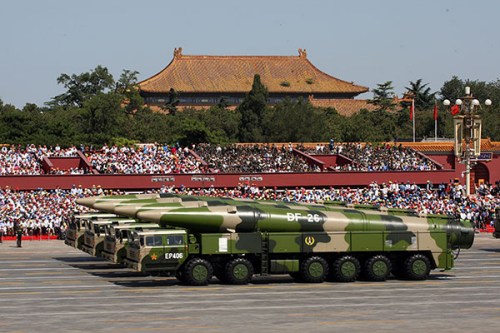
    It is the powerful and continual growth of high-velocity and long-range ballistic missiles within the Chinese arsenal, including the in-depth deployment of intercontinental missiles across mainland China, that the United States, as well as her allies, should actually fear because it is missile firepower with nuclear warheads that will be the deciding factor should a Third World War emerge on the world’s stage.

    The contest for military ascendancy or military parity is not simply a competition between the United States and China, as there are multiple other rivalries across the world’s continents. As China, Russia and other nation-states in the Middle East and South America continue to resist the United States’ hegemonic project for economic and military superiority, political and military tensions will increase between these two multi-polar major competing forces.  Also, because of various other international social factors, including the breakdown of cultural and economic structures that the pandemic in 2020 destroyed on a worldwide basis, there will be a desire to assert the hitherto hidden agenda for emerging nation-states’ independence rather than submitting to the status quo of the self-destructive imperialist powers.  A boldness will emerge in which these nation-states will no longer want to be second-best to Western Europe or to North America.

    Since the Long March, in which the nucleus of the People’s Liberation Army emerged under the guidance of Chairman, Mao Zedong and Zhou Enlai, the first Premier of the People’s Republic of China, there have been at times both steps forward and reversals in terms of the qualitative and quantitative achievements that China’s military strength represents. China showed its resilience and determination in fighting American military forces during the Korean War, revealing that its troops were not intimidated by American troops; during the Vietnam War, Chinese military advisers played a major role in strategy and tactics in helping General Giap and his field commanders to fight a sophisticated war of independence against the United States military armies, particularly at the Battle of Dien Bien Phu.  In 2014, a retired Vietnamese professor, Dao Nguyen Cat, was interviewed by the Xinhua news agency, and “on the occasion of the 60th anniversary of Vietnam’s victory in the Battle of Dien Bien Phu, Cat said that with the rare support of Chinese forces, the Vietnamese troops were able to successfully drive away the French colonial forces from the province of Dien Bien Phu, 300 km northwest of the capital Hanoi”.[10]  Professor Cat, who served as an official of Vietnam’s Central Propaganda Committee at Dien Bien Phu Campaign, Cat was quoted as saying: “Definitely without China’s support, we would have failed to defeat the French colonial masters… They not only gave training courses from the command posts but also went directly to the battlefield to talk with our soldiers. They supplied Vietnam not only weapons but also with food…”[11]  The military advisers and military supplies given by the leadership of the PLA at that time in history, regarding the Vietnam War, known by the Vietnamese people as The American War, reveal that Chinese leadership were moving forward in honing their military skills beyond their borders.

    The reversal of military progress came during the nineteen sixties and late seventies in the form of territorial disputes. First, in March 1969, there was a military clash between the Soviet Union and China: a seven-month undeclared military conflict that occurred near Zhenbao (Damansky) Island on the Ussuri (Wusuli) River, near Manchuria. The conflict between the two Communist nation-states would eventually result in a ceasefire, which led to a return to the status quo; however, a balanced history is yet to be written on how the two parties view each other as ideological threats, all this taking place during the period of the Culture Revolution.  Secondly, the Sino-Vietnamese War was a border war fought between China and Vietnam in early 1979. Rightly or wrongly, China created an offensive attack in response to Vietnam’s actions against the Khmer Rouge in 1978, ending the dominance of the Chinese-backed Khmer Rouge. What is regrettable but not surprising is that two socialist nation-states were unable through diplomacy to decide how to end their dispute regarding the Khmer Rouge’s various mistakes in its destruction of thousands of lives that could have contributed to the Communist cause in Southeast Asia.  However, China then began to gain influence, sending economic aid and military advisors to Africa, including Cuba and Venezuela – which reveals the wise and ancient observation by Sun Tzu who said “To win one hundred victories in one hundred battles is not the acme of skill. To subdue the enemy without fighting is the acme of skill.”  The Chinese Communist Party know how to achieve a military strategy without going to war.

    In May 2020 there was an actual hand-to-hand struggle between Chinese and Indian troops at locations along the Sino-Indian border, including near the disputed Pangong Lake in Ladakh and the Tibet Autonomous Region, and near the border between Sikkim and the Tibet Autonomous Region. During the last days of May 2020, Chinese forces objected to Indian road construction in the Galwan river valley, and there then ensued violent verbal exchanges between the two military camps, resulting in deaths and taking of prisoners on both sides. Although I will not attempt to describe in any detail how each side viewed the territorial dispute, I will say that the complexities between China and India, only reinforce why China is so protective of its borders and why India has chosen the United States as its major ally.  We have read similar accounts in ancient historical texts: Thucydides wrote about it in The War of The Peloponnesians And The Athenians, therefore we should not be surprised that in our own day, these small conflicts can lead to greater military build-up and to territorial jealousies which ensnare two parties or various parties into an eventual war that cannot be quelled, but which rather leads to disaster.

    In closing, I would like to quote the eminent Marxist historian, Domenico Losurdo, who wrote about the People’s Republic of China that “The foundations of the People’s Republic of China, following an epic national liberation struggle, certainly did not result in an immediate end to the situation of danger. To the end… the Korean War… challenged US hegemony in Asia, a memorable lesson…”[12].  This makes clear to me that the epic struggle of the modern Chinese people and the People’s Liberation Army has not yet reached its zenith in world history.


    References:


    [1]  https://www.cfr.org/backgrounder/chinas-modernizing-military

    [2] https://www.army-technology.com/projects/t-14-armata-main-battle-tank/

    [3] https://www.army-technology.com/projects/type99chinese-main/

    [4] https://www.brookings.edu/blog/order-from-chaos/2020/09/04/what-the-pentagons-new-report-on-china-means-for-u-s-strategy-including-on-taiwan/

    [5] Ibid.

    [6] Ibid.

    [7] https://www.businessinsider.com/chinese-military-is-improving-but-us-has-more-combat-experience-2020-7

    [8] https://www.nytimes.com/2018/08/29/world/asia/china-navy-aircraft-carrier-pacific.html

    [9]  https://www.businessinsider.com/chinese-military-is-improving-but-us-has-more-combat-experience-2020-7

    [10] http://www.china.org.cn/world/2014-05/07/content_32317279.htm

    [11]  Ibid.

    [12] Domenico Losurdo, War and Revolution, trans. By Gregory Elliott. New York & London: Verso Books,2015, 257.


    Image Credit: ecns.cn
  • Taiwan Elections 2020: Emphasising Taiwan’s Democracy, Nationalism and Sovereignty

    Taiwan Elections 2020: Emphasising Taiwan’s Democracy, Nationalism and Sovereignty

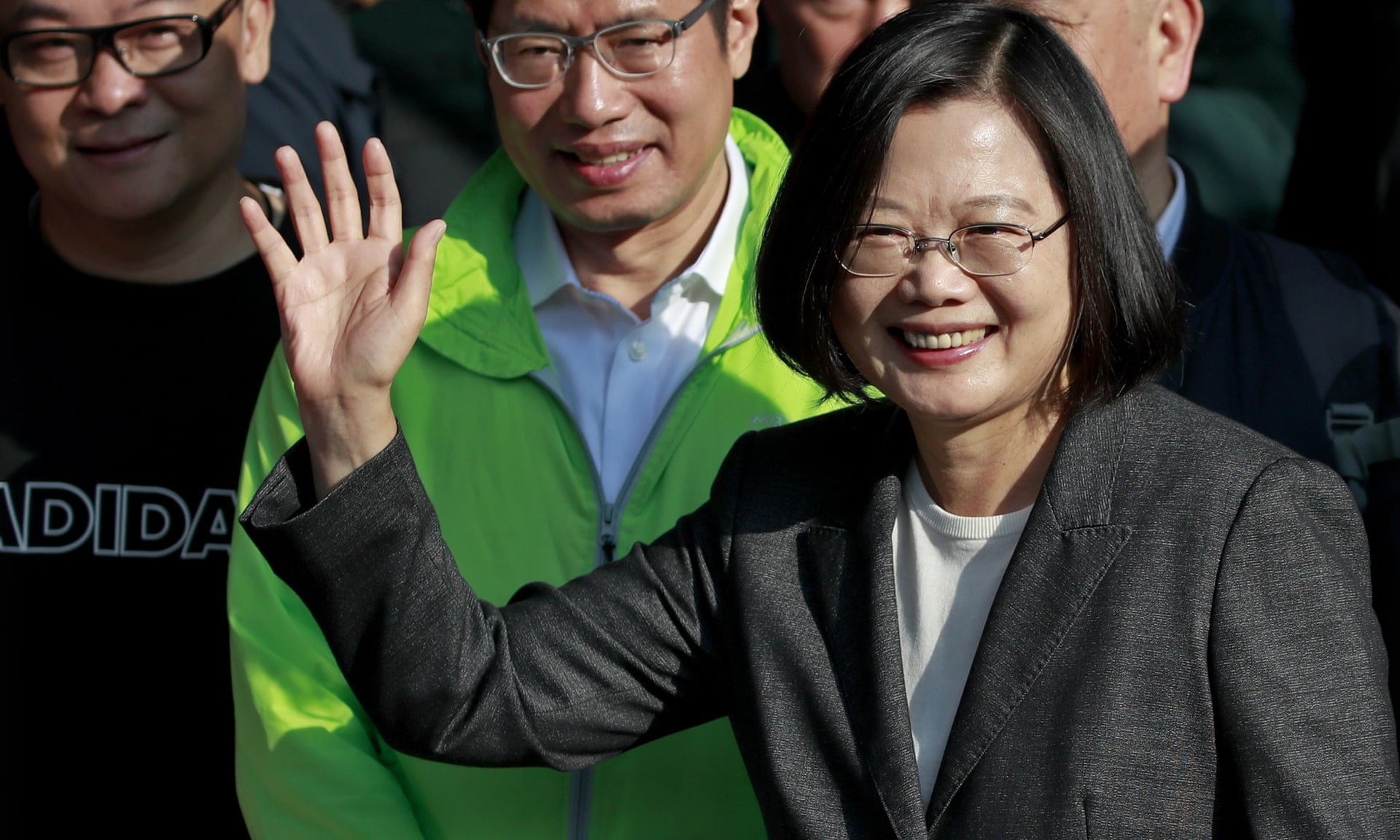
    Taiwan’s first female President, Tsai Ing-Wen of the pro-democratic DPP Party won a landslide victory for second term in the national elections held in January. China condemns Tsai’s victory by reiterating its “one country, two systems model.
    Election Results: Voice for Democracy and Sovereignty

    Taiwan’s president, Tsai Ing-wen won re-election on January 11rth  by a historic landslide, a decisive result widely seen as a rebuke to Beijing’s efforts to integrate Taiwan into the ‘one-China’ concept. The DPP (Democratic Progressive Party), rode on Tsai’s popularity and maintained control of the Legislative Yuan, the country’s parliament. DPP has consistently taken a very ‘Taiwan nationalistic’ approach and has been a strong opponent of Beijing’s ‘one-China policy’ and the so-called ‘1992-consensus’. This landslide victory and a second term gives Tsai the power to uphold Taiwan’s commitment to democracy. Taiwanese voted to reject China’s “one country, two systems model” while still maintaining support for Tsai’s stand on the “1992 consensus”, which would dictate the Cross-Strait ties based on “peace, parity, democracy and dialogue”.

    On winning the elections, President Tsai remarked – China must ‘face reality’ of Taiwan’s independence and called on China to ‘review’ it’s current policy toward the de facto nation that Beijing claims is part of its territory.

    China refuses to acknowledge the victory of pro-democratic forces and maintains that this development would not alter its “one-China” principle. China’s Foreign Ministry stated that “regardless of what happens in Taiwan, the basic facts won’t change: there is only one China in the world and Taiwan is part of China.”

    In the voting week, Xi Jinping ushered in a range of measures “to further promote economic and cultural exchanges and cooperation between the two sides of the Taiwan Strait”. Despite these positive announcements, he sent a Chinese aircraft carrier to sail through the Straits to intimidate, should Tsai’s victory initiate a declaration of independence.

    The Chinese army also conducted a naval and air force drill on 9-10 February in a threatening attempt to which Washington responded with the US Air Force sending two surveillance planes as an expression of solidarity with Taiwan.

    Election results and impact on KMT

    In the aftermath of the astounding defeat in January, the opposition KMT has been forced to re-examine its policies and priorities. The party elected Mr Johnny Chiang, a 48-year old lawyer, as its president in March first week. Chiang represents the younger generation who are more focused on separate Taiwan identity, reflecting DPP’s resonance across the young voters. KMT has some serious issues to resolve if it wants to remain relevant in Taiwan. It is constrained by its linkage to the inconvenient history of Taiwan and a support base that is seen as focused on benefitting from cross-Strait engagement, and in some cases, unique access to the CCP through party-to-party ties. The main internal issue is the party’s cross-Strait policy with China, whether 1992 consensus will endure as the foundation for official mechanisms. Chiang is seen as one who will most likely ‘discard’ the 1992 consensus arguing that the consensus has lost its utility and undergone ‘distortion’ when linked with the ‘one country, two systems’ model used in Hong Kong.

    Background: 1992 Consensus – discarded by rising Taiwanese identity?

    Taiwan was ruled for more than three decades by the nationalist army, the Kuomintang (KMT),which fled to the island in 1949 after being defeated by the Chinese Communist Party (CCP) and created a rival government, the Republic of China, better known as today’s Taiwan. It has since transformed into a multiparty democracy, under a government and political system, completely separate from China’s. KMT’s position stems from the legacy of the Chinese civil war with the CCP, which is a complicated history of KMT and CCP vying to represent ‘one China’ as the ‘Republic of China’ by KMT and the ‘People’s Republic of China’ by CCP. KMT, in view of this history, is seen as the most pro-mainland of Taiwan’s two major political parties. In contrast, the DPP has always maintained much tougher stance with Beijing. It has played a prominent role in democratisation of Taiwan and places greater emphasis on uniqueness of Taiwanese identity and a history of more than 100 years that is separate from that of China’s. From the late 1980s when democratisation of Taiwan began, more and more Taiwanese are embracing a Taiwanese consciousness and favouring independence even though maintaining status quo still remains the majority priority for the moment. Majority of the youth, and 60-70% of Taiwanese are fiercely conscious of their Taiwanese identity, and view Taiwan as an independent and sovereign nation-state. This also means that the idea and legacy of nationalist party’s ROC is  seen as impractical, in consonance with geopolitical realities.

    The 1992 Consensus, seen as having enabled the growth of Taipei-Beijing cooperation, revolves around the issue of ‘one-China’ interpretation – ‘that there is only one China and that Taipei and Beijing agree to disagree on which government is its legitimate representative’ has been the foundation of cross-Strait relations. It was curated by the KMT and the PRC wherein in principle they agree that there is “One China”. However, the contentious terminology “One China” can be interpreted by either side having accorded its own meaning. The CCP believes “one China” is the “People’s Republic of China,” while Taiwan believes “one China” should mean the ROC established in 1912 and hitherto exists.

    The KMT government in 2008-16, led by Ma Ying-jeou used the so-called 1992 Consensus to strengthen economic, trade and cultural relations between Taiwan and PRC. It led to rapid development of  economic links  and integration with PRC while political issues were kept away. Trade, indirect investment, and travel via Hong Kong grew steadily. By 2014, over 40% of Taiwan’s trade was with the mainland, and some 80% of its foreign direct investment (FDI) went to China; Taiwan businesses operated more than one hundred thousand businesses on the mainland. Taiwan-China two ay trade in 2019 was USD 244.35 billion. The trade balance has, consistently been in Taiwan’s favour.

    KMT’s strategy, under Ma’s leadership, focused on reviving Chinese nationalism and was aimed at anchoring Taiwan in the Chinese nation, bridging the gap with PRC, opposing Taiwan independence, favouring reconciliation and eventually unification between the two sides of the Straits. By 2012-13 this approach gave rise to suspicions amongst the Taiwanese about Ma’s rapprochement policy. Paradoxically it strengthened the predominance of Taiwanese identity, which is stronger amongst the youth. This resulted in KMT’s internal fractures in 2012-13, its loss in local elections of 2014, the turbulence of the Sunflower revolution of 2014, and its huge loss to DPP in the presidential elections of 2016.

    The ideological battle between the Democratic Progressive Party(DPP) and the Kuomintang (KMT) has persisted since 2016 (when Tsai became President) and the DPP refused to recognise the “1992 consensus”. In 2000, Tsai as the minister of Mainland Affairs Council (MAC) said, “The so-called ‘one China, differing interpretations’ is only a usage by our side to describe the process of the meeting. It is a way of description that the new government can accept, but it does not mean that we have accepted Beijing’s ‘one-China, two models principle.’

    Though DPP lost the local elections in 2018 to the pro-China Kuomintang party (KMT), and had no hopes of winning the presidential 2020 elections, Tsai has been trying to replace the Chinese identity with the Taiwanese identity by promising people that the Taiwanese sovereignty will be protected. By articulating “maintenance of status quo”, she indicates that she may not actually pursue outright independence in order to maintain a peaceful environment that helps growth and development; in effect allowing PRC to see it as a support for “One China” in principle and being open to cross-Strait dialogue. But she makes it clear to rest of the world – “we don’t have a need to declare ourselves an independent state. We are an independent country already and we call ourselves the Republic of China, Taiwan.”

    Diversifying Economic and Trade Strategies

    During her presidency in 2016, she had initiated “new south-bound policy (NSP)” to strengthen relations with selected countries in South and South-East Asia and gain entry into regional blocs. As the US unveiled its Indo-Pacific strategy of Free and Open Indo-Pacific (FOIP), Taiwan saw great benefits in dove-tailing it’s NSP strategy into the Indo-Pacific. The NSP has made notable gains in the first term, and Tsai’s re-election offers great opportunity to diversify the gains in the second term. The Chinese have been  aggressively countering this strategy by compelling nations to switch allegiance to China. This had resulted in Taiwan having only close to 16 diplomatic allies which include small nations like Belize and Naru. Despite this, major nations have come around the issue to strengthen ties with Taiwan through economic and cultural centres. Nevertheless, the ‘New South-bound Partnership’ strategy is a conscious effort by Taiwan to reduce its economic dependency on the mainland. Taiwan has aggressively pursued economic partnerships with countries like India, and has encouraged investments by Taiwanese companies. Its investments in South-East Asia has more than doubled in this period.

    China has also been accused of meddling with local Taiwanese elections in 2018, according to Wang William Liqiang, a self-identified Chinese spy presently seeking political asylum in Australia. As a counter-strategy and to prevent foreign influence in the country’s elections, Taiwan’s legislature passed the anti-infiltration act on 31 December 2019, which criminalises external meddling. According to MAC Chief Chen Ming-tong, “[the act] aims to counter infiltration”. He added that it acts “as a corrective measure to ensure normal cross-Strait exchanges and reduce politically-motivated infiltration and intervention by Beijing. The Act prevents hostile external powers from engaging, through local collaborators, in illegal lobbying and election campaigning, disrupting rallies and assemblies, and making political donations.”

    Rising anti-Chinese sentiment has gained momentum due to the recent protests in Hongkong. Young voters have been deeply influenced by this and are supporting Tsai. This is supplanted by the economic slowdown which affected Taiwan and has divided the Taiwanese voters—those who support the Economic Cooperation Framework Agreement (ECFA) with China and those who don’t.

    Taiwan had also altered its economic policy since the election of DPP in 2016, wherein industrial restructuring has resulted in a large businesses (heavy industries) moving to China in order to reduce the labour cost. This has led to an increase in trade and investment in China. However, the catch is that since both governments don’t recognise each other, the Taiwanese companies are exposed to high risk and no dispute settlement is prevalent currently nor is it guided by international norms. China continues to be Taiwan’s largest trading partner, accounting for nearly 30% of the island’s total trade. However, Taiwan’s investment into the mainland has been declining over the last five years, and so also mainland’s investment in Taiwan.

    The Future

    The ‘one-China policy’ is a zero-sum game between the PRC and the ROC. China has always reiterated that only by accepting China’s authoritarian rule can the Taiwanese people attain prosperity and peace. From the beginning of 2005, the “carrots and sticks” policy has been predominant in the Cross-Strait relations. Since China’s policy has backfired, she is capable of adopting coercive measures—economic crippling, isolation by cutting off diplomatic allies, direct invasion or meddling with internal politics. If Beijing decides to use force, it could spiral into a regional conflict inviting Taiwan’s allies and heavy economic repercussions.

    China’s isolation strategy with respect to Taiwan is a constant challenge, which influences majority of the Taiwanese to maintain status quo in current environment. Status quo can mean different things to different people. Chinese president Xi’s aggressive articulation in 2019 of ‘one-China policy’ with respect to Taiwan and the events in Hong Kong has triggered a massive nationalistic fervour in support of democracy and Taiwan identity amongst the younger population.

    China has repeatedly said that it will bring Taiwan under its authority by any means necessary, including force. Analysts believe Xi Jinping aims to achieve that by 2049, the deadline for the country to achieve its ‘great rejuvenation’. Beijing’s refusal of renouncing the possible use of force for unification is reflected in the continued military build-up on the Fujian coast. By 2014, PLA had over 1500 ballistic and cruise missiles targeting Taiwan, ten times more than in 2000, and more accurate and destructive than in 2000.

    Chinese state media have downplayed President Tsai’s election, but there is no doubt that China considers it as a major setback to its reunification efforts. The election has resulted in a cooling off period for cross-Strait relations, and the global ‘Corona Virus pandemic’ has only added to put this off any priority for some time.

    Only time will tell if Taiwan and China manage to engage in dialogue and come to a consensus regarding their irreconcilable differences. As democracy and  pro-democratic forces continue to strengthen and sustain Taiwanese identity and nationalism, Taiwan’s functioning as a sovereign independent state is stronger than ever, while Beijing’s strategy of geo-economic boxing-in Taiwan into accepting its ‘one-China’ policy looks less probable. On the other hand, giving legitimacy to Tsai’s government will be a tricky call for many countries as they have to walk a tight rope in order not to rupture relations with China. How different nations recognise and engage with the new Taiwanese government will definitely be a contributing factor in determining Taiwan’s future.