Tag: caste

  • Caste Census: India’s Affirmative Action Policy is Based on 90+ Years Old Data

    Caste Census: India’s Affirmative Action Policy is Based on 90+ Years Old Data

    “The data that we have for all castes as well as the Other Backward Classes is from the 1931 census. The population of the OBCs at that time was about 52 percent of the total population of India”.

    Congress president Mallikarjun Kharge is the latest to join the band of politicians and activists advocating caste census. However, the Bharatiya Janata Party-led central government has so far stonewalled all pleas and comes across as definitely averse to the idea. Before we delve into the ostensible reasons for the reluctance, a quick look at the genesis and history of the census in India.

    The census exercise was launched by the colonial government for various stated (and unstated) reasons in the realm of social engineering for their strategy of governance during the second half of the nineteenth century.

    Sociologist Michael Mann in his book South Asia’s Modern History avowed that the census exercise was more telling of the administrative needs of the British than of the social reality for the people of British India.

    [powerkit_button size=”lg” style=”info” block=”true” url=”]https://www.moneycontrol.com/news/opinion/caste-census-indias-affirmative-action-policy-is-based-on-90-years-old-data-10463611.html” target=”_blank” nofollow=”false”]
    Read More
    [/powerkit_button]

  • Indian Philosophy and religion: Abolishing the caste system as an attempt in Intercultural Philosophy

    Indian Philosophy and religion: Abolishing the caste system as an attempt in Intercultural Philosophy

    We start the year 2023 with an examination of philosophy and society and through it the social evil of caste. The origin of the caste system in Hindu society lies buried in many myths and misconceptions. Caste is often linked by many to the core of Hindu philosophy. This is a deeply flawed understanding. The caste system has been and continues to be a tool of power and economic exploitation by oppressing large segments of the population. It is largely an invention by the clergy to establish their power and domination through rituals and codes and by ascribing to them a forced religious sanctity. As it also becomes convenient to the rulers, caste and class are prevalent in all societies. Philosophy and true religion, as Andreas points out in this working paper,  have had nothing to do with caste or class.                                        – TPF Editorial Team


    Introduction

    Intercultural philosophy is absolutely necessary in order to cope with the current and new phase of hybrid globalization, which is dissolving all kinds of traditional identities. Whereas the current reaction to this process is the development of ideologies centred on the idea of “we against the rest”, whoever the “Rest” might be, we need to construct positive concepts of identity, which does not exclude but include the other. These can be based on the mutual recognition of the civilizations of the world and their philosophies. According to Karl Jaspers the godfather of intercultural philosophy, between the sixth and third century BC the development of great cities, and the development in agriculture and sciences led to a growth of the populace that forced humankind to develop new concepts of thinking. He labelled this epoch as the axial age of world history in which everything turned around. He even argued that in this time the particular human being or human thinking was born with which we still live today – my thesis is that all human religions, civilizations and philosophies share the same problems and questions but did find different solutions.

    A vivid example might be the relationship between happiness and suffering. In the philosophy of the Greek philosopher Aristotle, to achieve eudemonia or happiness in your earthly life was the greatest aim whereas in a popular understanding of Karma, life is characterized by suffering and the aim is to overcome suffering by transcending to Nirvana. You see, the problem is the same, but there are different solutions in various philosophies. Although Jaspers didn’t share the reduction of philosophy and civilization to the European or even German experience and included mainly the Chinese and Indian civilization, he nevertheless excluded the African continent and both Americas, Muslim civilization as well as the much older Egyptian civilization. So, although he enlarged our knowledge and understanding of civilizations his point of reference was still “Western modernity” and within it, the concept of functional differentiation played the major role.

    Another solution is embodied in the belief of the three monotheistic religions, that an omnipotent god is the unifying principle despite all human differentiations and even the differences between the living and the dead, love and hate, between war and peace, men and women, old and young, linear and non-linear understanding of time, beginning and ending, happiness and suffering.  In this belief system, we are inevitably confronted with unsurpassable contrasts, conflicts and contradictions – but an all-powerful and absolute good god is the one who is uniting all these contrasts.

    In principle in Chinese philosophy, we have the same problem – but instead of an all-powerful God, we as humans have the task to live in harmony with the cosmic harmony. So, I really think that we humans share the same philosophical problems – how to explain and overcome death, evil, suffering, and the separation from transcendence. Although Karl Jaspers could be seen as the founding father of intercultural philosophy, I think he put too much emphasis solely on the functional differentiation that an ever-growing populace could live together without violence. In my view, the questions of life and death are running deeper. I would not exclude functional differentiation as one of the driving forces of human development but at least we also need an understanding of human existence that is related to transgressing the contrasts of life.

    In this draft, I would like to give some impressions concerning this same problem based on my limited knowledge of Indian philosophy and religion and try to show that both are opposing the caste system as well as any kind of dogmatism. An Indian student asked me in the run-up to this draft how one could understand Indian philosophy if one had not internalized the idea of rebirth since you are a baby. From her point of view, the whole thinking on the Indian subcontinent is thus determined by the idea of rebirth – this problem will still occupy us in the question of whether the terrible caste system in India is compatible with the original intentions of the Indian religions, whether it can be derived from them or contradicts them. I will try to give a reason for the assumption that Indian philosophy is quite universal and at the same time open to different strands of philosophical thought, retaining its core.

    In its essence, it is about Karma, rebirth, and Moksha. An understanding of Atman and Brahman is essential. Atman is the soul, indestructible, and is part of Brahman (omnipresent God). When Atman continues to reform and refine itself through rebirths aspiring to become one with Brahman, that is Moksha. To attain Moksha is the purpose of each life. Moksha is being one with God…a state where there is no more rebirths. Of course, differences are there in interpreting Atman and Brahman, depending on the Advaita and Dwaita schools of philosophy. Ultimately both narrow down to the same point – Moksha. Karma is the real part. True Karma is about doing your work in life as duty and dispassionately. Understanding that every life form has a purpose, one should go about it dispassionately. Easier said than done. Understanding this is the crux. In an ideal life where one has a full understanding of Karma and performs accordingly, he/she will have no rebirth. Indian philosophy is careful to separate the religious and social practices of the common folks and the high religion.  Hence Caste and hierarchy are not part of the philosophical discourse, although many make the mistake of linking them. Caste, like in any other religion, is a clergy-driven issue for power and economic exploitation.

    Indian Philosophy (or, in Sanskrit, Darshanas), refers to any of several traditions of philosophical thought that originated in the Indian subcontinent, including Hindu philosophy, Buddhist philosophy, and Jain philosophy. It is considered by Indian thinkers to be a practical discipline, and its goal should always be to improve human life. In contrast to the major monotheistic religions, Hinduism does not draw a sharp distinction between God and creation (while there are pantheistic and panentheistic views in Christianity, Judaism, and Islam, these are minority positions). Many Hindus believe in a personal God and identify this God as immanent in creation. This view has ramifications for the science and religion debate, in that there is no sharp ontological distinction between creator and creature. Philosophical theology in Hinduism (and other Indic religions) is usually referred to as dharma, and religious traditions originating on the Indian subcontinent, including Hinduism, Jainism, Buddhism, and Sikhism, are referred to as dharmic religions. Philosophical schools within dharma are referred to as darśana.

    Religion and science

    One factor that unites dharmic religions is the importance of foundational texts, which were formulated during the Vedic period, between ca. 1600 and 700 BCE. These include the Véda (Vedas), which contain hymns and prescriptions for performing rituals, Brāhmaṇa, accompanying liturgical texts, and Upaniṣad, metaphysical treatises. The Véda appeals to a wide range of gods who personify and embody natural phenomena such as fire (Agni) and wind (Vāyu). More gods were added in the following centuries (e.g., Gaṇeśa and Sati-Parvati in the fourth century CE). Ancient Vedic rituals encouraged knowledge of diverse sciences, including astronomy, linguistics, and mathematics. Astronomical knowledge was required to determine the timing of rituals and the construction of sacrificial altars. Linguistics developed out of a need to formalize grammatical rules for classical Sanskrit, which was used in rituals. Large public offerings also required the construction of elaborate altars, which posed geometrical problems and thus led to advances in geometry.

    Classic Vedic texts also frequently used very large numbers, for instance, to denote the age of humanity and the Earth, which required a system to represent numbers parsimoniously, giving rise to a 10-base positional system and a symbolic representation for zero as a placeholder, which would later be imported in other mathematical traditions. In this way, ancient Indian dharma encouraged the emergence of the sciences.

    The relationship between science and religion on the Indian subcontinent is complex, in part because the dharmic religions and philosophical schools are so diverse.

    Around the sixth–fifth century BCE, the northern part of the Indian subcontinent experienced extensive urbanization. In this context, medicine became standardized (āyurveda). This period also gave rise to a wide range of philosophical schools, including Buddhism, Jainism, and Cārvāka. The latter defended a form of metaphysical naturalism, denying the existence of gods or karma. The relationship between science and religion on the Indian subcontinent is complex, in part because the dharmic religions and philosophical schools are so diverse. For example, Cārvāka proponents had a strong suspicion of inferential beliefs, and rejected Vedic revelation and supernaturalism in general, instead favouring direct observation as a source of knowledge. Such views were close to philosophical naturalism in modern science, but this school disappeared in the twelfth century. Nevertheless, already in classical Indian religions, there was a close relationship between religion and the sciences.

    Opposing dogmatism: the role of colonial rule

    The word “Hinduism” emerged in the nineteenth century, and some scholars have argued that the religion did so, too. They say that British colonials, taken aback by what they experienced as the pagan profusion of cults and gods, sought to compact a religious diversity into a single, subsuming entity. Being literate Christians, they looked for sacred texts that might underlay this imputed tradition, enlisting the assistance of the Sanskrit-reading Brahmins. A canon and an attendant ideology were extracted, and with it, Hinduism. Other scholars question this history, insisting that a self-conscious sense of Hindu identity preceded this era, defined in no small part by contrast to Islam.  A similar story could be told about other world religions. We shouldn’t expect to resolve this dispute, which involves the weightings we give to points of similarity and points of difference. And scholars on both sides of this divide acknowledge the vast pluralism that characterized, and still characterizes, the beliefs, rituals, and forms of worship among the South Asians who have come to identify as Hindu.

    Here I would like to mention some of the scriptures in Hinduism: The longest of these is the religious epic, the Mahabharata, which clocks in at some 180000 thousand words, which is ten times the size of the Iliad and the Odyssey of Homer combined. Then there’s the Ramayana, which recounts the heroic attempts of Prince Rama to rescue his wife from a demon king. It has as many verses as the Hebrew bible. The Vedas which are the oldest Sanskrit scriptures include hymns and other magical and liturgical; and the Rig-Veda, the oldest, consists of nearly 11 000 lines of hymns of praise to the gods.

    But the Rig Veda does not only contain hymns of praise of God but a philosophical exposition which can be compared with Hegel’s conceptualization of the beginning in his “Logic”, which is not just about logic in the narrow sense but about being and non-being:

    In the Rig Veda we find the following hymn:

    Nasadiya Sukta (10. 129)

    There was neither non-existence nor existence then;
    Neither the realm of space nor the sky which is beyond;
    What stirred? Where? In whose protection?

    There was neither death nor immortality then;
    No distinguishing sign of night nor of day;
    That One breathed, windless, by its own impulse;
    Other than that there was nothing beyond.

    Darkness there was at first, by darkness hidden;
    Without distinctive marks, this all was water;
    That which, becoming, by the void was covered;
    That One by force of heat came into being.

    Who really knows? Who will here proclaim it?
    Whence was it produced? Whence is this creation?
    Gods came afterwards, with the creation of this universe.
    Who then knows whence it has arisen?

    Whether God’s will created it, or whether He was mute;
    Perhaps it formed itself, or perhaps it did not;
    Only He who is its overseer in highest heaven knows,

    Only He knows, or perhaps He does not know.

    —Rigveda 10.129 (Abridged, Tr: Kramer / Christian)

    Nasadiya Sukta begins rather interestingly, with the statement – “Then, there was neither existence nor non-existence.” It ponders over the when, why and by whom of creation in a very sincere contemplative tone and provides no definite answers. Rather, it concludes that the gods too may not know, as they came after creation. And maybe the supervisor of creation in the highest heaven knows, or maybe even he does not know.

    The philosophical character of this hymn becomes obvious when stating that there was something or someone who created even the gods. This question might be similar to the one that created the big bang thirteen billion years ago. In my view, the Rigveda is the most elaborate Veda opposing any kind of dogmatism, any ideology. Instead, it gives reason for the assumption which is of paramount importance in an ever-changing world, that there is no absolute knowledge, there is an increasing sense of unsureness, and we can’t rely on fixed rules – but that we are responsible for our actions.

    Müller made the term central to his criticism of Western theological and religious exceptionalism (relative to Eastern religions) focusing on a cultural dogma which held “monotheism” to be both fundamentally well-defined and inherently superior to differing conceptions of God.

    The second problem is related to the question of whether this hymn should be interpreted as monotheistic, dualistic or polytheistic. Some scholars like Frederik Schelling have invented the term Henotheism (from, greek ἑνός θεοῦ (henos theou), meaning ‘of one god’) is the worship of a single god while not denying the existence or possible existence of other deities. Schelling coined the word, and Frederik Welcker (1784–1868) used it to depict primitive monotheism in ancient Greeks. Max Müller (1823–1900), a German philologist and orientalist, brought the term into wider usage in his scholarship on the Indian religions, particularly Hinduism whose scriptures mention and praise numerous deities as if they are one ultimate unitary divine essence.  Müller made the term central to his criticism of Western theological and religious exceptionalism (relative to Eastern religions) focusing on a cultural dogma which held “monotheism” to be both fundamentally well-defined and inherently superior to differing conceptions of God.

    Mueller in the end emphasizes that henotheism is not a primitive form of monotheism but a different conceptualization. We find a similar passage in the gospel of John in which it is stated:

    1In the beginning was the Word, and the Word was with God, and the Word was God. 2 He was with God in the beginning. 3 Through him all things were made; without him, nothing was made that has been made. 4 In him was life, and that life was the light of all mankind. 5 The light shines in the darkness, and the darkness has not overcome it.

    It is clearly written that in the beginning there was the word – not God. In the original Greek version of this gospel, the term logos is used, and Hegel made this passage the foundation of his whole philosophy. Closely related to the Rig Veda is the concept of Atman. Ātman (Atma, आत्मा, आत्मन्) is a Sanskrit word which means “essence, breath, soul” and which is for the first time discussed in the Rig-Veda.  Nevertheless, this concept is most cherished in the Upanishads, which are written precisely between the 8th to 5th centuries B.C., the period in which according to Jaspers the axial age began. Again, this concept is an attempt to reconcile the various differentiations which were necessary for the function of a society with an ever-increasing population.

    I want to highlight that Hinduism – in its Vedic and classic variants – did not support the caste system; but that it rigorously opposed it in practice and principle. Even after the emergence of the caste system, Hindu society still saw considerable occupational and social mobility. Moreover, Hinduism created legends to impress on the popular mind the invalidity of the caste system – a fact further reinforced by the constant efflorescence of reform movements throughout history. The caste system survived despite this because of factors that ranged from the socio-economic to the ecological sphere, which helped sustain and preserve the balance among communities in a non-modern world.

    It would be absolutely necessary to demolish the myth that the caste system is an intrinsic part of Hinduism as a religion as well as a philosophy.  Although, there is a historically explainable link between both but not one which I would label a necessary or logical connection. Of course, the proponents of the caste system tried to legitimize the caste system by using references from the ancient scriptures – but as we maintain we must not understand Hinduism just in relation to Dharma if we would understand it just as jati or birth-based social division.

    The myth of the caste system being an intrinsic part of Hinduism is a discourse in the meaning in which Foucault has used this concept as just exercising power.

    I’m not sure whether this interpretation represents the major understanding in India, but I think it might be essential in a globalized world to debunk this only seemingly close relation, which has just a historical dimension and would therefore be a vivid example just of a discursive practice. The myth of the caste system being an intrinsic part of Hinduism is a discourse in the meaning in which Foucault has used this concept as just exercising power.

    This discourse is believed by orthodox elements in Hinduism as well as propagated by elements outside of Hinduism who are trying to proselyte Hindus. I would like to treat this problem a little bit more extensively because it might be used for other religions and civilizations, too, in which suppression and dominance are seemingly legitimized by holy scriptures but by taking a closer look this relation is just a discourse of power.

     Nevertheless, there is a very old text of Hinduism in which the caste system is legitimized. It is called  Manusmṛiti (Sanskrit: मनुस्मृति), also spelt as Manusmruti, is an ancient legal text. It was one of the first Sanskrit texts to have been translated into English in 1794, by Sir William Jones, and was used to formulate the Hindu law by the British colonial government.

    Over fifty manuscripts of the Manusmriti are now known, but the earliest discovered, most translated and presumed authentic version since the 18th century has been the “Calcutta manuscript with Kulluka Bhatta commentary”.

    How did caste come about?

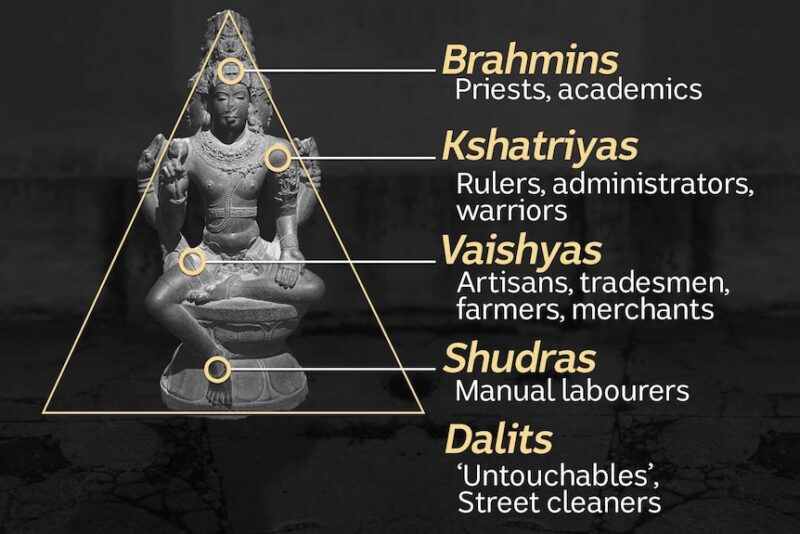
    Manusmriti, widely regarded to be the most important and authoritative book on Hindu law and dating back to at least 1,000 years before Christ was born, seems to “acknowledge and justify the caste system as the basis of order and regularity of society”. The caste system divides Hindus into four main categories – Brahmins, Kshatriyas, Vaishyas and the Shudras. Many believe that the groups originated from Brahma, the Hindu God of creation.

    At the top of the hierarchy were the Brahmins who were mainly teachers and intellectuals and are believed to have come from Brahma’s head. Then came the Kshatriyas, or the warriors and rulers, supposedly from his arms. The third slot went to the Vaishyas, or the traders, who were created from his thighs. At the bottom of the heap were the Shudras, who came from Brahma’s feet and did all the menial jobs. The main castes were further divided into about 3,000 castes and 25,000 sub-castes, each based on their specific occupation. Outside of this Hindu caste system were the achhoots – the Dalits or the untouchables.

    How does caste work?

    For centuries, caste has dictated almost every aspect of Hindu religious and social life, with each group occupying a specific place in this complex hierarchy. Rural communities have long been arranged on the basis of castes – the upper and lower castes almost always lived in segregated colonies, the water wells were not shared, Brahmins would not accept food or drink from the Shudras, and one could marry only within one’s caste. The system bestowed many privileges on the upper castes while sanctioning repression of the lower castes by privileged groups.

    New research shows that hard boundaries between the social groups were only set by British colonial rulers who made caste India’s defining social feature when they used censuses to simplify the system, primarily to create a single society with a common law that could be easily governed.

    Often criticized for being unjust and regressive, it remained virtually unchanged for centuries, trapping people into fixed social orders from which it was impossible to escape. Despite the obstacles, however, some Dalits and other low-caste Indians, such as BR Ambedkar who authored the Indian constitution, and KR Narayanan who became the nation’s first Dalit president, have risen to hold prestigious positions in the country. Historians, though, say that until the 18th Century, the formal distinctions of caste were of limited importance to Indians, social identities were much more flexible, and people could move easily from one caste to another. New research shows that hard boundaries between the social groups were only set by British colonial rulers who made caste India’s defining social feature when they used censuses to simplify the system, primarily to create a single society with a common law that could be easily governed.

    So, the caste system in its strict interpretation is an invention of British rules – of course, it existed already in some form around three thousand years ago. However, it is disputed whether in ancient times it was more of a kind of functional differentiation in the meaning of Karl Jaspers, whereas since colonial times it became a separation boundary between the various groups. I assume that the colonial rulers transformed an existing variety of functional differentiations of identities into strictly separated castes for reasons of securing their rule. As in other colonial rules like in Africa, the colonizers were puzzled by the plurality of social groups, their ability to change from one group to the other and transformed social groups based on functional differentiation into castes and classes to facilitate their own rule. Overcoming the caste system thus involves overcoming colonialism.

  • The Dark Side of Sindhi Nationalism in Pakistan

    The Dark Side of Sindhi Nationalism in Pakistan

    “If Sindhudesh is created, the feudal lords will kill us”1.

    These were the words of the late veteran Sindhi leader Rasool Baksh Palijo. As a Marxist, he had fully dedicated himself to the popular causes, fighting for the constitutional and legal rights of Bengalis, Balochs, Sindhis and minorities. His almost life-long antagonism to Sindhi Secessionism underlines the structural problems plaguing the province of Sindh, caste being at the centre of it. The problems have manifested themselves politically in numerous instances, beginning with the separation of Sindh from Bombay Province in 1936, and the Pakistan Movement itself. After the Partition, the Ashrafiya-Savarna alliance2 –which views the Sindhi society in terms of non-antagonistic Hindu-Muslim binary, while comfortably brushing casteism under the carpet– has been at the forefront of this. In fact, the alliance is a recent (re)construction, which happened as a result of the marginalisation of Ashraf Sindhis at the hands of Mohajir and Punjabi elites that began immediately after independence. Similarly, Sindh’s turn to Sufism, which mostly took place in the colonial era3, and was later adopted by Sindhi Secessionists as one of the most defining identities of the Sindhi nation, itself has its underpinnings in the caste system. It is then no surprise that a section of Sindhis –mostly of the lower castes– has opposed the idea of Sindhudesh.

    For the last few years, Indians have been at the receiving end of the BJP-sponsored narrative of Pakistan being on the brink of breaking up into four or five states, one of them being Sindhudesh. Indian Sindhis (like myself) are thrilled with such conceptions. Little is known about the sociological background of the Sindhi National Movement. A look into that might answer why the movement has not succeeded politically. In this article, I discuss the cases of two communities that have largely stayed out of the nationalist movement: the Haris and Dalits.

    Are Sindhis Casteless people?

    The vehement assertion, especially by the Sindhi diaspora, of Sindhis being casteless is remotely the truth. Sindhis, both Hindus and Muslims, practise the caste system as religiously as the rest of the Indian society.

    The vehement assertion, especially by the Sindhi diaspora, of Sindhis being casteless is remotely the truth. Sindhis, both Hindus and Muslims, practise the caste system as religiously as the rest of the Indian society. In Muslims, the Syeds –who claim to be descendants of Prophet Muhammad– occupy the top-most strata, followed by other Ashrafis belonging to Central Asian, Iranian and Arab descent, as well as the Balochs and Pathans communities. The Pirs or spiritual leaders, who have wielded considerable political power during the colonial period, also largely fall into the upper castes. They are followed by Waderas and Sammats who constitute the landowning class, that has traditionally wielded the socio-economic power in rural Sindh. Then there is the Hari community, composed of landless labourers. Among Hindus, there are, among others, the Brahmins, Rajputs, Amils – the civil servant caste, Bhaibands – the caste of businessmen, and Dalits. While most Amils and Bhaibands migrated to India after the partition, some Brahmins, Rajputs and Dalit pockets remain intact. Some districts –Tharparkar, Tando Allahyar and Mirpurkhas– have a huge population of Dalits.

    Around 59 upper castes –both Muslim and Hindu– and 22 feudal families make up the ruling class in rural Sindh.4 Since Pakistan has no custom of caste census, we do not know how much they are over-represented in its political institutions. However, an analysis by Ghulam Hussein in his paper Understanding Hegemony of Caste in Political Islam and Sufism in Sindh, Pakistan states that the Dalit community is highly underrepresented in Sindh Provincial Assembly –with only one out of nine reserved seats for minorities going to a Dalit; though the number is higher in local bodies. After the partition, as analysed by Hussein, the Syeds were the beneficiaries of the Hindu Migration to India as far as representation in the assemblies is concerned, since they occupied most of the seats vacated by Caste Hindus. The number of Scheduled Castes representatives, however, remained the same as that before the partition, despite them becoming the majority within the minority. Similarly, Pasmanda Muslims, that are unacknowledged by Pakistan to be existent, are also under-represented. Furthermore, more than a quarter of Sindh’s Members of Provincial Assembly (MPAs) in the 12th Assembly were professional landlords5.

    Casteism makes no appearance in Sindhi nationalist debates. One argument given by the Sindhi nationalists is that being a predominantly Islamic society, caste is non-existent among Sindhis.

    Casteism makes no appearance in Sindhi nationalist debates. One argument given by the Sindhi nationalists is that being a predominantly Islamic society, caste is non-existent among Sindhis. Instead, many ‘progressive’ Sindhi writers have displayed sympathy for the working classes instead of the lower castes. For Hindu communities, though they acknowledge the presence of caste, they quickly turn towards the benefits of reservation. Hussein writes, “In the Sindhi nationalist historical imaginary, casteism does not seem as problematic as sectarianism, religious bigotry and ethnolinguistic discord”6. In some instances, the Sindhi community as a whole is presented as Untouchables within Pakistan, thereby drawing a parallel between oppression of the Dalits and state oppression of Sindhi Secessionists/Nationalists7.

    The Rural Setting of Sindh: The oppression of the Hari Community

    Mohammed Ibrahim Joyo, another Marxist leader of Sindh during the colonial era, in his short book, Save Sind, Save the Continent (From Feudal Lords, Capitalists and their Communalisms), wrote about the exploitative nature of the rural setting dominated by Pirs, Waderas and Syeds. He, much like Palijo, identifies the local Syeds, Pirs, Hindu moneylenders, Zamindars etc., and not the Europeans, as the real enemies of the people of Sindh. For him, the Zamindars and Jagirdars, present themselves as “semi-gods to their peasant slaves”. Their only mission in life is to “vitiate the entire social fabric of life around”. “Periodically, they bestir themselves and make themselves available for snatching votes and forcing consent from the people, so that they could rule over them ‘democratically’”. For the Haris, he writes, ‘‘the only duty they know is to work like bullocks for their landlords and money-lenders, to touch the feet of their Zamindar-Masters and Pirs, and worship them literally as living gods, and lastly to instruct their children to do likewise’’8

    Ghulam Murtaza Syed (hereafter referred to as Syed), the Father of Sindhi Nationalism and a product of the ruling class in Sindh, attributes the setting to the administrative measures of the colonisers, which led to coming into “existence [of] a limited new hierarchy of fat landlords, absentee, indifferent, unenlightened and in some cases oppressive and tyrannical”9. “The great community of peasants became a crowd of ‘tenants at will’ without any permanent or substantial stake in its own occupation.” Syed, in his speeches and writings, is heavily critical of the established elite and seems to favour the upliftment of the conditions of the Haris. He places a ‘potentiality for evil’10 upon the Zamindars, who are involved in most of the crimes, some of which include kidnapping the women of the Haris.

    Despite the concern shown by Syed in his disquisitions, many Sindhi leaders remained suspicious and mistrustful of him. Though Palijo, Joyo and a few other leftist Sindhi leaders were once his companions, and despite them having some ideological affinities with him, they were largely opposed to his goals. They viewed Islam and the notion of Social Justice it emanates as a panacea of all social ills, as opposed to Syed who detested, at least after 1973, the role of religion in a modern state. They, nonetheless, remained on good personal terms with Syed. Their antipathy to Syed’s ideas stemmed, among others, from his personal conduct. Despite all the sympathetic speeches and writings, Syed continued to behave as an Ashrafiya, wearing white clothes to display his purity and detachment from worldly matters. The peasants who worked for the leader regularly touched his feet to ask for favours11.

    Hamida Khuhro, another associate of Syed to later part ways, describes it as ‘Syedism’, which, according to her, was his first and most constant ideology12. It is similar to the politics of patronage that characterises the entire subcontinent, but with some Sindhi blend of reverence of Syeds and Pirs. As per Oskar Vekaaik, author of Reforming Mysticism: Sindhi Separatist Intellectuals in Pakistan, Syed was brought up with the idea of Syed as a spiritual hero to the Hari working for him. “Rather than the people of flesh and blood working on his fields, however, he soon took the Hari as an abstract or imagined category including all landless Muslim peasants in Sindh. He saw the Haris as an exploited and backward people, who needed to be freed and uplifted. To him, this was the main task of the Syed”13.

    The province of Sindh is (in)famous for being one of the last strongholds of feudalism. During the British conquest of Sindh in 1843, the province had one of the most repressive feudal systems in the entire subcontinent. The British, having no coherent and consistent agrarian policy –they first introduced the ryotwari system only to abandon it later– didn’t endeavour to undo the socio-economic control of Waderas. These Waderas performed, and still do, many functions in rural Sindh, including quasi-judicial and tax collection. The system served the limited purpose of the British to collect taxes and transportation of raw materials. Charles Napier even regarded them as Sindh’s natural aristocracy. Thus, the dovetailed interests of Waderas and the British led the landlord class to flourish14. The power of Waderas grew so much during British rule that at the time of partition, around 80% of the province’s arable land was owned by them.15

    To be fair, the concerns of the Hari community did occupy, though didn’t dominate, some mainstream Sindhi political debates. Syed, as one of the proponents of their upliftment, has been a vocal critic of their oppression. Other leaders, such as Hyder Baksh Jatoi, M.A. Khuhro, etc. had built their careers on issues of Haris. However, the social background of Sindhi Nationalist leaders, and their daily actions that go against their words, have prevented the landless labourers from supporting their cause. This is corroborated by what Imdad Qazi, Secretary-General of the Communist Party of Pakistan, told Hussein in an interview, “Marxists, both Leninists and Maoists, parted ways with the nationalists in the 1970s. When the barrage-lands were allotted to peasants, Nationalists stood with Marxists, but when Marxists spoke about land reforms, Nationalists left us”16

    It is, thus, the rural setting of Sindh which makes leaders like Palijo suspicious of, and even antagonistic to, the intentions of Sindhi secessionists. The Syed-Pir-Wadera alliance which has continuously exploited the Haris for centuries has made them committed, though dissenting, citizens of Pakistan.

    Manifestation of Nationalism

    The predilection of Sindhi nationalists towards Ashrafiya-Savarna symbolism is conspicuous. For instance, in his book, and otherwise as well, Paigham-e-Latif, G.M. Syed not only declared Shah Abdul Latif Bhittai, a Syed, as the national poet of Sindh but went as far as to justify his own genealogical superiority by tracing his lineage to the late mediaeval poet17. Furthermore, in his book A Nation in Chains- Sindhudesh, he first propounded the idea of Raja Dahir, the Brahmin king during the invasion led by Muhammad bin Qasim in 711 AD, as a national hero (which was a response to the state-sponsored narrative of tracing the history of Pakistan to the invasion).18

    The issues were taken up by Sindhi nationalists who also represent the Ashrafiya-Savarna bias. Take for instance the issue of religious conversion of Sindhi Hindus. By confining their opposition to conversion under the bracket of religious freedom, they conveniently bypass their Dalit identity –since most of the converted people are Dalits– thereby serving Savarna Hindu causes. Another example is the incursion of Punjabis and Army personnel (Pakistan has a policy of allocating land to retired army men) which is, perhaps, most detested by Sindhi nationalists. Punjabis, who have been migrating and settling in Sindh for more than a century, and have developed agricultural practices that yield more than those employed by Sindhi feudal lords, are seen as a major threat to Ashrafiya domination. Thus, the issue of Punjabis settling in rural Upper Sindh becomes one of the most potent rallying points.

    Sufism is perhaps the most defining feature of Sindhi Nationalism. Nationalists project Sindh as a land of Sufi saints, with some figures, such as Lal Shahbaz Qalandar, being identified with the Sindhi nation itself. Sufism, however, is used as a soft power by the Syeds to perpetuate their domination.

    Sufism is perhaps the most defining feature of Sindhi Nationalism. Nationalists project Sindh as a land of Sufi saints, with some figures, such as Lal Shahbaz Qalandar, being identified with the Sindhi nation itself. Sufism, however, is used as a soft power by the Syeds to perpetuate their domination. The Pirs, most of whom are Syeds and local agents of Sufism, have traditionally had more power than the local Mulla. Their huge following has given them enormous influence over the lives of ordinary people. In fact, to be a be-Pir, or without a Pir, was traditionally seen as tantamount to being a non-believer. With such hegemonic power of Sufism of the local Pirs –described as Political Sufism– renders irrelevant caste one of the most important factors in micropolitics. Sufism, furthermore, augments the power of the Syeds, who already have huge amounts of land gifted to them by successive rulers, including the British.19

    Conclusion

    Since the death of G.M. Syed in 1995, the Sindhudesh Movement has been dying out. Since then, the movement has suffered blows from the Pakistani Army that, among others, led to the poisoning (most probably by ISI) of Bashir Ahmad Qureshi in 2012. Moreover, it stands divided, with numerous factions of Syed’s Jeay Sindh Mahaz propping up since the 1980s. However, the core support bank of the movement –the rural Syed, Pirs and Waderas remain, more or less, supportive of the movement. Though electorally, they desert the nationalists and vote for Bhutto’s People’s Party of Pakistan. The movement, however, still remains less popular amongst the Haris and Dalits. The latter has been deemed politically absent by the nationalists. The former, though appearing in nationalist discourses, have been disenchanted with their conduct, which contradicts their words. The writers and leaders of the movement have carefully projected their struggle narrowly against the actions of, what they deem as, Punjabi-dominated Pakistan. Their concerns regarding the injustices being done by the state far outweigh the concerns for the injustices they themselves have been unleashing upon their fellow Sindhis for centuries.

    References

    1. “Biggest problem is structural: Palijo” The Dawn, August 19, 2003

    https://www.dawn.com/news/135713/biggest-problem-is-structural-palijo

    2. The term is borrowed from Hussain, Ghulam. “Appropriation of Caste Spaces in Pakistan: The Theo-Politics of Short Stories in Sindhi Progressive Literature” Religions 10, no. 11: 627. 2019 https://doi.org/10.3390/rel10110627

    3. Boivin, Michel. The Sufi Paradigm and the Makings of a Vernacular Knowledge in Colonial India: The Case of Sindh (1851–1929). Palgrave Macmillan. 2020

    4. Hussain, Ghulam. “Understanding Hegemony of Caste in Political Islam and Sufism in Sindh, Pakistan”. Journal of Asian and African Studies Vol 1 Issue 30. 2019

    5. Kronstadt K. A. “Pakistan’s Sindh province”. Congressional Research Service. 2015. October 29 https://sgp.fas.org/crs/row/sindh.pdf

    6. Hussain, Ghulam.. “Appropriation of Caste Spaces in Pakistan: The Theo-Politics of Short Stories in Sindhi Progressive Literature” Religions 10, no. 11: 627. 2019 https://doi.org/10.3390/rel10110627

    7. Ibid.

    8. Joyo, Ibrahim M. Save Sind, Save the Continent (From Feudal Lords, Capitalists and their Communalisms). Karachi. 1946.

    9. Ibid

    10. Ibid.

    11. Verkaaik, Oskar. “Reforming Mysticism: Sindhi Separatist Intellectuals in Pakistan.” International Review of Social History, vol. 49, 2004, pp. 65–86. JSTOR, http://www.jstor.org/stable/26405524. Accessed 6 Jun. 2022.

    12. Ibid.

    13. Ibid

    14. “Sind and Its Pirs up to 1843.” Sufi Saints and State Power: The Pirs of Sind, 1843–1947, by Sarah F. D. Ansari, Cambridge University Press, Cambridge, 1992, pp. 9–35.

    15. Kronstadt K. A. “Pakistan’s Sindh province”. Congressional Research Service. Washington D.C. 2015. October 29. https://sgp.fas.org/crs/row/sindh.pdf

    16. Hussain, Ghulam. “Ethno-Nationality of Caste in Pakistan: Privileged Caste Morality in Sindhi Progressive Literature and Politics”. Critical Sociology. 2021. 48(1):127-149

    17. Ibid

    18. Syed, Ghulam M. A Nation in Chains- Sindhudesh. 1974.

    19. Ansari, Sarah F.D. Sufi Saints and State Power: The Pirs of Sind, 1843–1947, Cambridge University Press, Cambridge, 1992.
  • Distress Migration: A case study of KBK districts in Odisha

    Distress Migration: A case study of KBK districts in Odisha

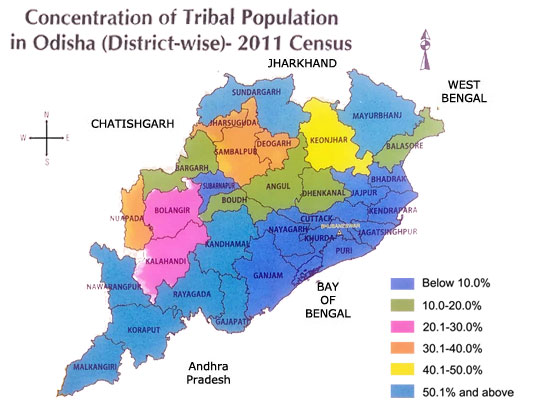
    The former districts of Koraput, Balangir and Kalahandi, also known as KBK districts, were reorganised into 8 districts of Koraput, Malkangiri, Nabarangpur, Rayagada, Balangir, Subarnapur, Kalahandi and Nuapada in 1992. These districts form the South-West part of Odisha comprising the great Deccan Plateau and the Eastern Ghats. These highland districts highly rich in mineral resources, flora and fauna remain as one of the most backward regions in Odisha

    Among the different forms of migration, distressed migrants remain the most impoverished and unrecognised. These migrants form the lowest strata of the society; disadvantaged by caste, poverty and structural inequalities. In Odisha, the underdeveloped region of KBK is one among the main sources of distressed migrants. They move to cities in search of employment and better wages, while in cities they are even more disadvantaged due to social, economic and linguistic barriers. Administrative and political apathy over their issues has only enhanced their distress.

    This paper attempts to address three questions:

    1. What are the characteristics of distressed migrants in KBK district, Odisha?
    2. What are the existing policies of the state to curb this form of migration?
    3. What form of government intervention is required to address this distress?

    The analysis is carried out through a review of published articles, government reports, e-books and newspaper reports.

    Defining distress migration

    Migration is a multifaceted concept driven by diverse factors. Migration can be internal or international, voluntary or involuntary, temporary or permanent. Depending on the pattern and choice of migration, each migratory trend could be characterised into different forms. Distress migration is one such form of migration.

    Involuntary migration is often associated with displacement out of conflict, environmental distress, climatic change etc. That is any sudden threat or event forces people to migrate. However, involuntary migration may also arise out of socio-economic factors such as poverty, food insecurity, lack of employment opportunities, unequal distribution of resources etc. This component of involuntary migration is addressed by the concept of distress migration (Avis, 2017).

    To understand distressed rural-urban migration in India, the broad definition used by Mander and Sahgal (2010) in their analysis of rural-urban migration in Delhi can be employed. They have discussed distress migration as:

    “Such movement from one’s usual place of residence which is undertaken in conditions where the individual and/or the family perceive that there are no options open to them to survive with dignity, except to migrate. Such distress is usually associated with extreme paucity of alternate economic options, and natural calamities such as floods and drought. But there may also be acute forms of social distress which also spur migration, such as fear of violence and discrimination which is embedded in patriarchy, caste discrimination, and ethnic and religious communal violence” ( Mander and Sahgal, 2010)

    In brief, the definition states that distress migration is caused by an array of issues. Environmental disasters, economic deprivation, gender or social oppression, lack of alternate employment opportunities and inability to survive with dignity are mentioned as the main drivers of distress migration (Avis, 2017).

    Thus, distress migration is a form of temporary migration driven by environmental and socio-economic factors and not based on an informed or voluntary choice.

    Profile of KBK districts

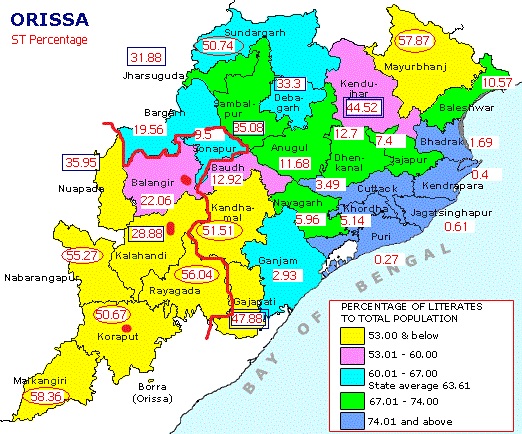
    The former districts of Koraput, Balangir and Kalahandi, also known as the KBK districts, were reorganised into 8 districts of Koraput, Malkangiri, Nabarangpur, Rayagada, Balangir, Subarnapur, Kalahandi and Nuapada in 1992. These districts form the South-West part of Odisha comprising the great Deccan Plateau and the Eastern Ghats. These highland districts highly rich in mineral resources, flora and fauna remain as one of the most backward regions in Odisha. The region is termed backward on account of rural backwardness, high poverty rates, low literacy rates, underdeveloped agriculture and poor development of infrastructure and transportation (Directorate of Economics and Statistics, 2021).

    The districts are home to primitive tribal communities such as Gonds, Koyas, Kotias etc. dependent on forest produce and subsistence agriculture for a living. KBK region registered a workforce participation rate of 48.06 % in the 2011 census. There was a significant occupation change noticed from the 2011 census.  The region witnessed a fall in cultivators from 33% in 2001 to 26.7% in 2011. However, the fall in cultivators was compensated with an increase in agricultural labourers from 44.24 % in 2001 to 48.87% in 2011. Employment in household industries also witnessed a downfall between the period of 2001 to 2011 (Sethy, 2020).

    The rise in agricultural labourers has a negative impact on the communities. As agriculture is underdeveloped owing to the arid nature of the region, crop failure, extreme calamities, low net irrigated area and falling government expenditure, these workers are pushed into abject poverty. In search of alternate employment options, these workers migrate to other areas of employment in rural or urban pockets. Such a form of seasonal migration during the lean period in agriculture is a predominant phenomenon in these districts. Their dependence on non-timber forest produce is hindered by the rapid deterioration and deforestation of forests for development projects and mining.

    Characteristics of distressed migrants in KBK region

    1. Who Are These Distressed Migrants?

    In the KBK region, distress migration has been a popular coping strategy during lean periods of agriculture. And this strategy is majorly adapted by disadvantaged and marginalised sections of the region. They are disadvantaged by caste, chronic poverty, landlessness, low levels of literacy and skills, increased dependence on forest and agriculture and debt-ridden (Meher, 2017; Mishra D.K., 2011; Tripathy, 2015, 2021).

    1. Why Do They Migrate

    Distressed migration in the region is induced by many interlinked factors. One such factor is that the region is highly under-developed in terms of social and economic infrastructure. Such under-development puts the communities at a disadvantage with low levels of literacy and skills. Their dependence on agriculture and forest produce for livelihood rises. However, agriculture is under-developed and forests are subjected to high levels of deforestation. With low levels of income, crop failure and non-availability of alternate employment opportunities, the communities are subjected to absolute levels of poverty, food and employment insecurities (Kujur, 2019).

    Landlessness is also identified as one significant push factor. As the region is highly dominated by tribal communities, they are more attached to and dependent on the forest cover. Globalisation and industrialisation resulted in deforestation and encroachment of farmlands for industrial and mining purposes. Eventually, a major proportion of land remains with a smaller group of wealthy people (Mishra D.K., 2011).   Relocation and involuntary displacement also result in the loss of their livelihood that is dependent on the local environment (Jaysawal & Saha, 2016).

    With falling income, people approach local moneylenders to meet their basic sustenance needs. With low incomes from agriculture and forest produce, families approach these informal creditors to meet emergency needs like marriage, birth and death rituals or medical treatment as well as to meet basic consumption needs with the expectation of cash flow from labour contractors during the lean season. Moneylenders exploit them by charging higher interest rates. Thus, the non-availability of formal credit facilities pushes them into a debt trap and further to adopt migration (KARMI, 2014; Mishra D.K., 2016).

    The region is also subject to extreme calamities and drought. Small and marginal farmers, poor in income and land, choose to migrate as they are unable to cope with the regular droughts and climate change. A study on historical analysis of the effect of climate on migration in Western Odisha mentions that the migratory trend saw a rise after the mega drought in 1965. Up until then, large-scale migration from the region was not a phenomenon (Panda, 2017).


    1. Channel of Migration

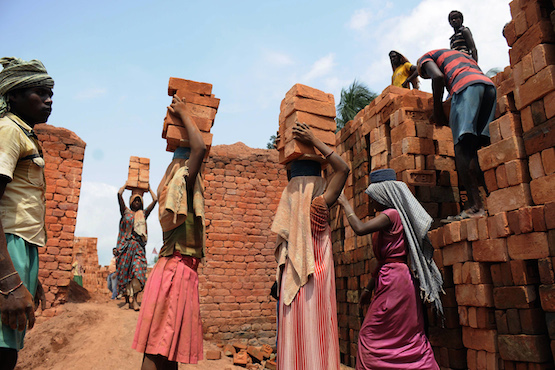
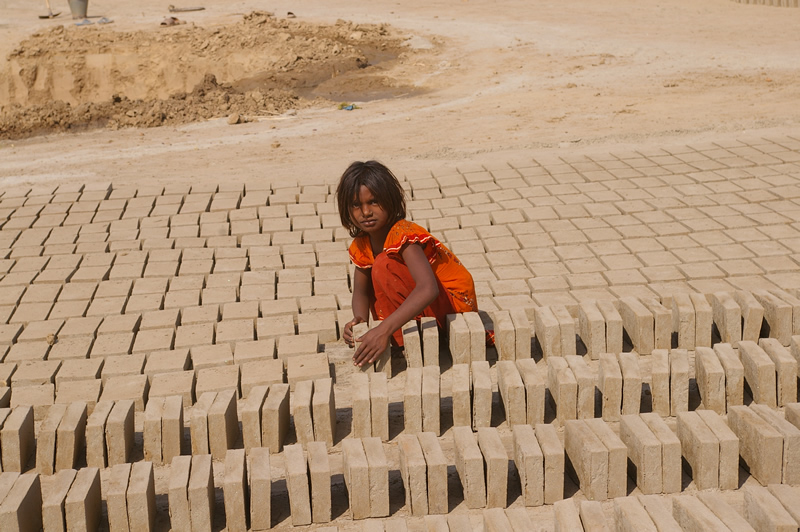
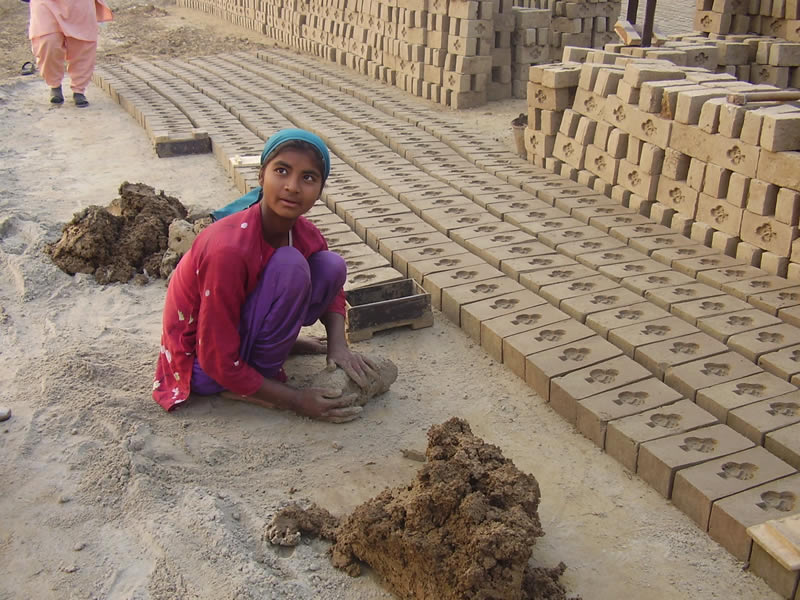
    Sardars provide an advance amount and in exchange, the debtor or any family member agrees to work for them for a stipulated period, usually six months. Hence, there exists a form of debt bondage. Large-scale family migration through this system is seen in the KBK region. The major stream of such bonded labour migration is witnessed towards brick kilns in Andhra Pradesh

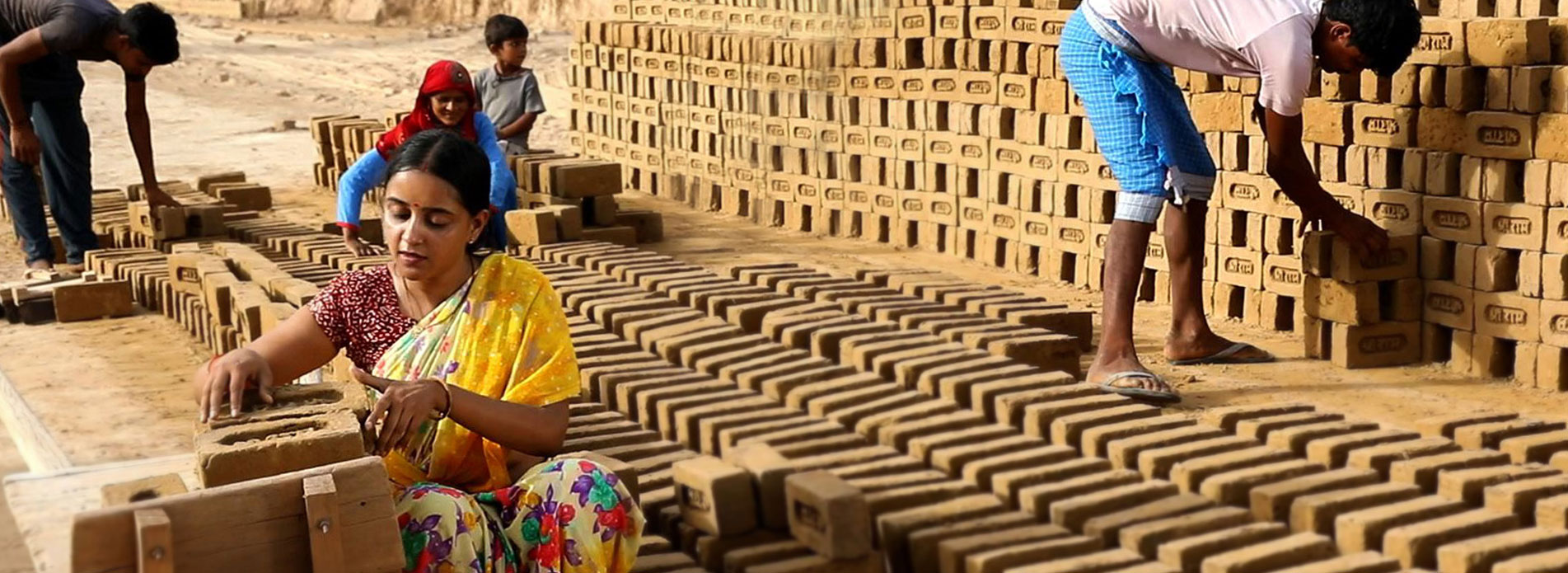
    In the region, seasonal migration occurs through the channels of agents, locally known as Sardars, on a contractual basis. This form of migration is known as Dadan labour migration. The poor migrant labourers are known as Dadan and they are recruited by Sardars, who are usually local people who are familiar with residents in the region (KARMI, 2014). During the period of Nukhai, they go around the villages and contact prospective labourers. These Sardars are the intermediary between the employer and the migrant labourer. Sardars provide an advance amount and in exchange, the debtor or any family member agrees to work for them for a stipulated period, usually six months. Hence, there exists a form of debt bondage. Large-scale family migration through this system is seen in the KBK region. The major stream of such bonded labour migration is witnessed towards brick kilns in Andhra Pradesh. They are also a major source of labour in the areas of construction, handlooms and other forms of informal sector work across South India (Daniels, 2014). The problems they face in the destination are manifold. They are subjected to poor working conditions, poor housing and sanitation facilities and limited access to education and health facilities. They are recognised as cheap labour with limited bargaining power owing to their social, cultural and linguistic exclusion in the destination state. Upon entering the contract their freedom to move and freedom to express is denied (Acharya, 2020).

    1. Pull Factors to Migrate

    The hope of availability of better job opportunities and wages is the main pull factor. However, upon the analysis of the nature of migration, push factors have a higher weightage in inducing such distress migration. Migration to brick kilns and other informal sectors from the KBK region can be termed as distress migration as in this case, distress is caused mainly by socioeconomic factors. It is not an informed or voluntary choice. Debt migration remains the only coping strategy that they could adopt.

    Government intervention to curb such distress

    1. Policies Addressing Debt-Bondage Migration:

    The first attempt of the state government to address Dadan migration or debt migration is the enactment of the Dadan Labour (Control and Regulation) Act (ORLA) in 1975. The act had provisions for the registration of labourers and agents, ensuring compliance of minimum wages and favourable working conditions and appointing inspection officers and dispute redressal committees (Daniels, 2014).  However, the act remained on paper and no evidence of enactment was published until it was repealed in 1979 upon the enactment of the Interstate Migrant Workmen (Regulation of Employment and Conditions of Service) Act, 1979 (Nanda, 2017).

    The ISMW act has been criticised to be inadequate and failing to regulate and facilitate safe migration. According to the act, only those interstate migrant workmen who are recruited by licensed agents come under the ambit of the act. However, most agents involved in Dadan migration are not licensed and hence, these workers cannot avail of any of the provisions of the act (Singh, 2020). Though registration of labour contractors is mandatory in the origin state, there is no information about the names of these contractors and hence, further monitoring of the migration process is avoided (NCABL, 2016). Lack of adequate enforcement, under-staffing and poor infrastructure are identified as the reasons for poor implementation of the act in the state (Daniels, 2014).

    A positive attempt against distress migration was the Memorandum of Undertaking (MoU) initiated between the labour department of Odisha and Andhra Pradesh to ensure labour welfare measures of migrant workers in Brick Kilns. After the MoU, the state of undivided Andhra Pradesh took up various progressive measures in education, health, housing and PDS for migrant workers in Brick Kilns. ILO necessitated the need for states to enter into inter-state MoUs to effectively address the bonded labour migration. However, no further MoU was signed with other states like Tamil Nadu, Chhattisgarh etc. which are also among the major host states for migrants from the region (NCABL, 2016).

    The Bonded Labour System (Abolition) Act enacted in 1976 governs the provisions for identification, rescue and rehabilitation of bonded labourers across the country. The act has its loopholes in implementation. There is no information on whether vigilance committees have been set up in every district or whether the surveys have been periodically conducted or to what extent the act has been functioning in the state (Post News Network, 2019). The centrally sponsored scheme for Rehabilitation of Bonded Labour also has its setbacks. There have been reported cases of delay and denial of financial aid by district officials ( Mishra .S., 2016). In 2016, with restructuring and revamping of the Rehabilitation scheme, rescued workers could only avail the full amount of financial aid with the prosecution of the accused employers. With no database on the employer, the rates of prosecution have been low and the rescued bonded labour do not receive their funds (NACBL, 2016)

    1.  Ensuring Accessibility of Health Facilities in Destination

    The Rashtriya Swasthya Bima Yojana or RSBY launched by the central government in 2008 provides health insurance to BPL families. The scheme incorporates provisions to split smart cards so those migrant workers could avail health insurance in destination states. After signing of the MoU between Andhra Pradesh and Odisha, the two states took steps to spreading awareness among the migrant workers about how to use the smart cards (Inter-State Migrant Workman Act (ISMW), Labour Directorate, n.d.)

    1. Ensuring Education of Migrant Workers Children

    The state of Odisha has established seasonal hostels to ensure the education of children of migrant workers.  The children are enrolled in seasonal hostels during October-June, that is until their parents return home (Odisha Primary Education Programme Authority, n.d.).  The state has ensured the education of migrant children at their destination state by sending Odiya textbooks and Odiya teachers to residential schools in Andhra Pradesh (Inter-State Migrant Workman Act (ISMW), Labour Directorate, n.d.).

    1. Alternate Employment Opportunities: MGNREGA

    Mahatma Gandhi National Rural Employment Guarantee Act (MGNREGA) was introduced in 2006 to provide guaranteed employment to rural poor with the objective of uplifting them from poverty and restricting distress migration.  A study analysing the performance of MGNREGA through secondary sources of data suggests that based on physical criteria of 100 Days of Wage Employment, Person-days generated, ST and Women person-days and financial performance in terms of total expenditure, total wages, average cost and average wage rate per day person, the performance of MGNREGA in KBK districts is better compared to Non- KBK districts.  But the region is lagging in rural employability criteria based on average days of employment provided per household and job cards issued (Sahoo et al., 2018).  Labour in the region is not interested to work under MGNREGA due to its dismal implementation in the state. Workers complain about the delay in receiving payments and instances of the creation of non-existent workers’ names among MGNREGA’s beneficiaries (KARMI, 2014).  Uncertain and low wages make these labourers favour migration to Brick Kilns in hope of better wages (Deep, 2018).

    1. Development Policies in KBK Region

    The KBK region has a high incidence of poverty owing to regional disparities in development and social exclusion based on caste. The main initiatives implemented by the state government for the upliftment of the KBK region are the Special Area Development Programme, Revised Long Term Action Plan (RLTAP), Biju KBK Plan, Backward Regions Grants Fund, Gopabandhu Gramin Yojana (GGY), Special Central Assistance (SCA) for tribal sub-plan (TSP) areas, Western Odisha Development Council (WODC) and Grants under Article 275(1) of the Constitution. Development projects to reduce poverty and regional disparities are obstructed by economic, social and institutional factors (Mishra, 2020).


    The state of Odisha has done positive interventions in the education of migrant children and health facilities of the migrant population. However, the distress migration is still prevalent owing to the social and economic exclusion and debt bondage situations in the region. Land grabbing in the name of development left the tribal communities poor and in distress. Structural inequalities induced by caste discrimination are enhanced with such landlessness.


    Policy Recommendations

    The state of Odisha has done positive interventions in the education of migrant children and health facilities of the migrant population. However, the distress migration is still prevalent owing to the social and economic exclusion and debt bondage situations in the region. Several initiatives and schemes have been enacted to address distress migration; however, their failure in reducing distress can be linked to dismal governance, poor implementation and misappropriation of schemes.

    The state must ensure migration to be safe and a viable coping strategy. From this study it is suggested the state of Odisha follow a multipronged approach to address the distress.

    Origin state (Odisha) interventions

    •         Short Term Interventions:
    1. The system of debt bondage should be completely abolished by the proper implementation of legislation. Different loopholes in implementation such as the delay in the release of funds, prosecution of accused and identification and registration of middlemen should be addressed. Apart from the financial aid, the state should intervene in providing a comprehensive livelihood plan for the rescued labourers. Abolishing the bonded labour system is essential to reduce distress and make migration safe.
    2. Informal sources of credit should be eliminated and formal credit and microfinance facilities should be made available. Such facilities would reduce the exploitation and prevent the creation of absurd debt. Formal credit provides opportunities for small and marginal farmers to indulge in productive investments. This enables them to cope with extreme climatic changes.
    3. Land grabbing in the name of development left the tribal communities poor and in distress. Structural inequalities induced by caste discrimination are enhanced with such landlessness. The provision of land ownership enables the communities to enjoy land-based benefits which further supports them to sustain their livelihood. Ownership of land also provides the indigenous community with a sense of social and economic significance.
    •         Long term interventions
    1. The state should engage in enhancing the skills of the people in the region. Vocational skill training and development schemes can be introduced. This could expand the opportunities available for employment and distribute labour across all the economic sectors.
    2. Rural development should be given higher priority. The state of Odisha has already initiated many schemes for the development of the KBK region. However, the state should study the economic and social factors that stagnate the process of development in the region. Chronic poverty, poor infrastructural and rural connectivity and dismal education and health facilities are some of the important areas that require attention.

    Host state intervention

    1.   The host state needs to create a database of migrants entering their state. A statistically significant database on migrants solves a huge array of issues faced by the migrant in the destination state. A comprehensive database helps in identifying and recognising migrants. It also allows for understanding the different characteristics of migrants and the sectors in which they are employed. This would be beneficial for monitoring and ensuring safe and favourable working conditions. A database also helps in ensuring the availability and accessibility of social security and entitlements in host states.


    1.   Migrant labour is as important to the destination state as it is to the origin state. Both origin and host state should cooperate towards making migration a viable livelihood strategy.

    Another important area where both the origin and host state should intervene together is creating awareness among workers about the existing provisions and rights available to them. Access to the same should be made easy.

    Conclusion

    The highly backward districts of the KBK region remain a major source of distressed migrants. Years of state initiative in reducing distress have had negligible impact. The area remains underdeveloped and migration is the only viable choice of employment. Migration can only be a viable coping strategy for seasonal migrants when the channel of migration is made legal and safe. The major drawback in any initiative attempted to resolve distress is the poor implementation. Administrative apathy, corruption and misappropriation of schemes have stagnated the progress of every initiative.


    References

    1. Acharya, A. K. (2020). Caste-based migration and exposure to abuse and exploitation: Dadan labour migration in India. Contemporary Social Science, 1-13.
    2. Avis, W. R. (2017). Scoping study on defining and measuring distress migration.
    3. Bhatta Mishra, R. (2020). Distress migration and employment in indigenous Odisha, India: Evidence from migrant-sending households. World Development136, 105047.
    4. Daniels, U. (2014). Analytical review of the market, state and civil society response to seasonal migration from Odisha. Studies, stories and a canvas seasonal labour migration and migrant workers from Odisha, 106-115.
    5. Deep, S. S. Seasonal Migration and Exclusion: Educational Experiences of children in Brick Kilns. Ideas, Peoples and Inclusive Education in India. National Coalition for Education, India. 2018.
    6. Directorate of Economics and Statistics (2021). Odisha Economic Survey 2020-21. Planning and Convergence Department. Government of Odisha. http://www.desOdisha.nic.in/pdf/Odisha%20Economic%20Survey%202020-21-1.pdf
    7. Giri, J. (2009). Migration in Koraput: “In Search of a Less Grim Set of Possibilities” A Study in Four Blocks of tribal-dominated Koraput District, Odisha. Society for Promoting Rural Education and Development, Odisha, 1.
    8. Inter-State Migrant Workman Act (ISMW) | Labour Directorate. (n.d.). Labour Directorate, Government of Odisha. Retrieved August 10, 2021, from https://labdirodisha.gov.in/?q=node/63%27%3B.
    9. Jaysawal, N., & Saha, S. (2018). Impact of displacement on livelihood: a case study of Odisha. Community Development Journal53(1), 136-154.j
    10. Jena, M. (2018, July 21). Distress migration: land ownership can put a break. The Pioneer. https://www.dailypioneer.com/2018/state-editions/distress-migration-land-ownership-can-put-a-break.html
    11. KARMI. (2014). Migration Study Report of Golamunda Block of Kalahandi District of Odisha. Pp.13. Kalahandi Organisation of AgKriculture and Rural Marketing Initiative (KARMI), Kalahandi Odisha.
    12. Kujur, R. (2019). Underdevelopment and patterns of labour migration: a reflection from Bolangir district, Odisha. research journal of social sciences10(1).
    13. Mahapatra, S. K., & Patra, C. (2020). Effect of migration on agricultural growth & development of KBK District of Odisha: A statistical assessment. Journal of Pharmacognosy and Phytochemistry, Sp9(2), 162-167.
    14. Mander, H., & Sahgal, G. (2010). Internal migration in India: distress and opportunities, a study of internal migrants to vulnerable occupations in Delhi.
    15. Meher, S. K. (2017). Distress seasonal migration in rural Odisha A case study of Nuapada District.
    16. Mishra, D. K. (2011, April). Behind dispossession: State, land grabbing and agrarian change in rural Odisha. In International conference on global land grabbing(Vol. 6, No. 8).
    17. Mishra, D. K. (2016). Seasonal migration from Odisha: a view from the field. Internal migration in contemporary India, 263-290.
    18. Mishra, S. (2016, January 13). Rescued migrant workers get raw deal from Govt. The Pioneer. https://www.dailypioneer.com/2016/state-editions/rescued-migrant-workers-get-raw-deal-from-govt.html
    19. Mishra, S. (2020). Regional Disparities in Odisha–A Study of the Undivided “Kbk” Districts. Research Journal of Humanities and Social Sciences11(4), 261-266.
    20. Nanda, S. K. (2017). Labour scenario in Odisha. Odisha Review73(10), 20-25.
    21. NCABL. (2016). Joint Stakeholders’ Report on Situation of Bonded Labour in India for Submission to United Nations Universal Periodic Review III. NATIONAL COALITION FOR ABOLITION OF BONDED LABOUR (NCABL), Bhubaneswar Odisha.
    22. Panda, A. (2017). Climate change, drought and vulnerability: A historical narrative approach to migration from Western Odisha, India. In Climate Change, Vulnerability and Migration(pp. 193-211). Routledge India.
    23. Post News Network. (2019, April 30). Elimination of bonded labour calls for cohesive action plan. Odisha News, Odisha Latest News, Odisha Daily – OdishaPOST. https://www.Odishapost.com/elimination-of-bonded-labour-calls-for-cohesive-action-plan/
    24. Sahoo, M., Pradhan, L., & Mishra, S. (2018). MGNREGA and Labour Employability-A Comparative Analysis of KBK and Non-KBK Regions of Odisha, India. Indian Journal of Economics and Development6(9), 1-8.
    25. Sethy, P. (2020). Changing Occupational Structure of Workers in KBK Districts of Odisha. Center for Development Economic6(06), 17-28.
    26. Singh, V. K. (2020, April 22). Opinion | The ‘nowhere people’ of COVID-19 need better legal safeguards. The Hindu. https://www.thehindu.com/news/national/other-states/the-nowhere-people-of-covid-19-need-better-legal-safeguards/article31400344.ece
    27. Tripathy, S. N. (2015). Evaluating the role of micro-finance in mitigating the problems of distress out-migrants: A study in KBK districts of Odisha. The Micro Finance Review, Journal of the Centre for Micro Finance Research.
    28. Tripathy, S. N. (2021). Distress Migration Among Ultra-poor Households in Western Odisha. Journal of Land and Rural Studies, 23210249211001975.


    Feature Image: Tata Trusts

  • Bonded Labour in India: Prevalent, Yet Overlooked

    Bonded Labour in India: Prevalent, Yet Overlooked

    In 1976, India stood out as the first country in South Asia to enact legislation prohibiting bonded labour. However, the system has not been uprooted owing to the different barriers posed by socio-cultural norms and administrative and legislative incompetency. The country’s most vulnerable and disadvantaged sections of society are at risk of being trapped into such a form of modern slavery. The prevalence of this system over the decades necessitates the need to understand the root causes of the emergence of such bonded labour situations and why it is still prevalent in the country.

    Bonded labour in India

    The Bonded Labour System Abolition Act (1976) defines a bonded labour system as a relationship evolved out of a debtor-creditor agreement. It is identified as a form of forced labour where the debtor comes into an agreement, oral or written, with the creditor and receives a loan amount in exchange for his labour or that of his family members. The obligation need not just be an economic consideration such as a loan or an advance amount received from the creditor. People also become bonded with social, customary, hereditary or caste obligations and often agree to enter service with no wages or for nominal wages. The labourer finds it difficult to settle the debt amount as the provided wages are too low even to meet their basic sustenance needs. Eventually, they end up in the same form of labour again and again. Thus their choice to join such a system is out of distress or coercion to some extent. They may also be restricted from switching to another job or to ask for the provision of minimum wages given the conditions of the contract and the lack of awareness of their rights.

    Indebtedness is identified as a major trigger for people to join as bonded labour, especially migrants from poor rural households. However, the need for money arises out of the existing disadvantages in society that these communities are subjected to. Caste, unequal distribution of resources, increased dependence on agriculture, low levels of education and food insecurity pushes them into such unfree labour choices.

    We can identify that this system was prevalent in the country from the pre-colonial era characterised by class hierarchies. Such class hierarchies and high caste exploitations are continuing to function even in this democratic era and consequently, has pushed certain groups of the society to be economically weaker; weak in terms of assets, income and bargaining power. Globalisation and industrialisation have only resulted in the further exclusion of such groups of labour from mainstream jobs.  Indebtedness is identified as a major trigger for people to join as bonded labour, especially migrants from poor rural households. However, the need for money arises out of the existing disadvantages in society that these communities are subjected to. Caste, unequal distribution of resources, increased dependence on agriculture, low levels of education and food insecurity pushes them into such unfree labour choices. Owing to these social and economic factors, marginalised communities in the lower strata of the society, especially the women and children, are trapped in such a system.

    Over the years, the system of bonded labour has existed and evolved under different names and forms across India. Bonded labour arising out of traditionally accustomed social relations is one of the oldest forms and is still prevalent in the country. For example, the system of “jajamani” wherein the workers receive food grains in exchange for working as barbers and washermen for the upper caste. Labourers in agriculture, seasonal inter and intrastate migrants and child labour in informal sectors of brick kiln, rice mills, quarries, domestic work etc. are the other areas where debt bondage is currently more persistent. There has been a considerable shift from traditional debt bondage relation to aneo-bondage labour system among migrant workers. The former was characterised by an element of patronage amongst the considerable amount of exploitation. However the latter is at a higher tone of exploitation and eliminates patronage relations. This has made employers deny the responsibility of employee’s welfare and the labourers have lost the minimum livelihood security which they had secured under the patronage system. The neo-bondage system is further manipulated by the role of intermediaries.

    Thus, with structural transformation in the economy, the system of bonded labour has evolved into a much worse form of exploitation in the country and specifically marginal and backward communities are the main victims of this system.

    Interventions to abolish bonded labour

    Upon identifying the prevalence and exploitation of bonded labour in the pre-independence era, constitutional provisions prohibiting forced labour were assigned under Article 23. Under the Directive Principle of State Policy, Article 42 and 43 ensured fair and humane working conditions and living wages to workers.

    Post-independence, legislation against bonded labour was enacted at a regional level.  Orissa, Rajasthan and Kerala were the first states to enact state legislation against bonded labour.  In 1954, India ratified the International labour organization (ILO) Convention on forced labour (C029). Despite the constitutional provisions, regional and international interventions in bonded labour, construction and implementation of a uniform law took time.

    In 1976, the Bonded Labour System (Abolition) Act was enacted to abolish any form of bonded labour system arising out of debt, customary or hierarchical obligations. In brief, the act has identified and defined bonded labour, provided for extinguishment of past or existing debt, established duties of district magistrate in implementing the provisions of the act, sanctioned the state governments to form a vigilance committee in each district to guide and ensure competent implementation of the act by the magistrate and stated the penal actions against those compelling people into bonded labour. The act was amended in 1985 to bring contract and migrant workers under its ambit.

    In 1978, a new centrally sponsored scheme for Rehabilitation of Bonded Labour was enacted to provide financial assistance to the state government for rehabilitating rescued bonded labourers, to conduct surveys, evaluation studies and awareness campaigns across districts. In 2016, the government restructured the scheme. The restructuring involved an increase in the provision of funds to bonded labour for rehabilitation and to states for conducting surveys. Under the restructured scheme, rescued bonded labour is only provided with the full amount of financial assistance after the conviction of the accused and a Bonded Labour Rehabilitation Fund corpus was to be created at every district.

    The interplay of caste-based exploitation and subsequent impoverishment in terms of resources and assets combined with underdeveloped rural areas devoid of standard education, health and employment opportunities push marginalised people into bonded labour.

    Why and how does the system still sustain?

    Many factors contributing to the prevalence of bonded labour continue to prevail despite after years of legislative action to abolish the same. The interplay of caste-based exploitation and subsequent impoverishment in terms of resources and assets combined with underdeveloped rural areas devoid of standard education, health and employment opportunities push marginalised people into bonded labour. Such an environment accompanied by the inept implementation of legislations and schemes further aids in sustaining bonded labour systems.

    BLS(A) act 1976 failed to be effectively implemented owing to apathy, corruption, lack of administrative and political will. The vigilance committees were often defunct and working for the employer. The act was criticised on the grounds that it stated only mediocre and minor punitive actions and the rates of prosecution were also low. Moreover, some states remain in denial of accepting the existence of bonded labour. This indifference results in the loss of comprehensive data on bonded labour hindering the further implementation of provisions of the act.

    The Central Sector Scheme for Rehabilitation of Bonded Labour also has its loopholes. After the restructuring of the scheme, financial aid is provided only after the accused is convicted and convictions are rare owing to poor implementation of the BLS(A) Act and the absence of a review of cases. Thus, in most cases the rescued labourers do not receive the full financial aid they are entitled to immediately after the rescue. Often, it takes years to receive the full amount or may not even receive any.

    The situation is even grave as the rescued labourers have asymmetric knowledge of the rights and entitlements they can avail themselves of. Even when they are fully aware, most of them lack the will to attain these entitlements due to the dismal behaviour of officials and delayed processes.

    Moving towards Abolishment

    First and foremost, recognition and acceptance of the prevalence of bonded labour should be ensured. Only then the bonded labourers could be identified, rescued and rehabilitated effectively. The collection of comprehensive data is essential for further implementation of the provisions of the legislation. Also apart from the vigilance committee, a new committee composed of the magistrate, members of the marginalised communities, NGO’s and other civil bodies working in the field would enable to get a more comprehensive view of the issues in the sector.

    From a long term perspective, there is a need to address the caste induced structural inequalities. One way through which this could be attained is through land redistribution.

    Mere financial aid is not sufficient for the rescued labourers to foster a livelihood plan. The Human rights law network suggests the same and recommends a comprehensive rehabilitation package providing for education and job security.

    From a long term perspective, there is a need to address the caste induced structural inequalities. One way through which this could be attained is through land redistribution. Apart from this, the government should also focus on skill development and training of rural poor, especially migrants caught up in bonded labour. Varied skills can enhance their employment opportunities and provide more freedom to move towards other areas of work.


    References

    1. B.L.S., A. (2020, June 30). Telangana: Two Years After Rescue From Bonded Labour, 12 Tribals Receive Compensation. The Wire. https://thewire.in/rights/telangana-bonded-labour-rescue-tribals-compensation
    2. Breman, J. (2010). Neo-bondage: A fieldwork-based account. International Labor and Working-Class History78(1), 48-62. https://www.jstor.org/stable/40931303
    3. Gabra, L. (2021, March 21). Will Bonded Labor in India Ever Come To An End? BORGEN. https://www.borgenmagazine.com/bonded-labor-in-india/
    4. Human Rights Law Network. (n.d.). Release and Rehabilitation of Bonded Labour — HRLN. Human Rights Law Network (HRLN). Retrieved August 15, 2021, from https://hrln.org/initiative/release-and-rehabilitation-of-bonded-labour
    5. Human Rights Watch. (n.d.). Small Change. Human Rights Watch (HRW). Retrieved August 6, 2021, from https://www.hrw.org/reports/2003/india/India0103-05.htm
    6. J, S. (2019, September 15). Rescue of bonded labourers up, convictions rare. Times of India Blog. https://timesofindia.indiatimes.com/blogs/tracking-indian-communities/rescue-of-bonded-labourers-up-convictions-rare/
    7. Khan, J. A. (2019, April 30). How effective are the Policies for Rehabilitations of Bonded Labour in India? CBGA India. https://www.cbgaindia.org/blog/effective-policies-rehabilitations-bonded-labour-india/
    8. Mantri, G., & Suresh, H. (2020, January 31). The News Minute | Delve. The News Minute. https://www.thenewsminute.com/article/it-s-2020-bonded-labour-still-reality-india-here-s-why-116977.
    9. Molfenter, C. (2013). Overcoming bonded labour and slavery in South Asia: the implementation of anti-slavery laws in India since its abolition until today. Südasien-Chronik-South Asia Chronicle3, 358-82. https://edoc.hu-berlin.de/bitstream/handle/18452/9122/358.pdf?sequence=1&isAllowed=y
    10. Murugesan, D (2018). HANDBOOK ON BONDED LABOUR. NATIONAL HUMAN RIGHTS COMMISSION (NHRC), New Delhi. https://nhrc.nic.in/sites/default/files/Hand_Book_Bonded_Labour_08022019.pdf
    11. NCABL. (2016). Joint Stakeholders’ Report on Situation of Bonded Labour in India for Submission to United Nations Universal Periodic Review III. NATIONAL COALITION FOR ABOLITION OF BONDED LABOUR (NCABL), Bhubaneswar Odisha. https://www.upr-info.org/sites/default/files/document/india/session_27_-_may_2017/js34_upr27_ind_e_main.pdf
    12. Prasad, K. K. (2015). Use of the Term’Bonded Labour’ is a Must in the Context of India. Anti-Trafficking Review, (5), 162.
    13. Sabhapathi, V. (2020, June 11). An Analysis of Bonded Labour System in India. Legal Bites – Law And Beyond. https://www.legalbites.in/bonded-labour-system-in-india/
    14. S, B. (2016, April 2). Caught in a vicious cycle of bonded labour. The Hindu. https://www.thehindu.com/news/national/karnataka/caught-in-a-vicious-cycle-of-bonded-labour/article7720754.ece
    15. Sethia, S. The Changing Nature of Bonded Labour in India.
    16. Srivastava, R. S. (2005). Bonded labour in India: Its incidence and pattern.https://www.ilo.org/wcmsp5/groups/public/—ed_norm/—declaration/documents/publication/wcms_081967.pdf 

    17. THE BONDED LABOUR SYSTEM (ABOLITION) ACT, 1976. (ACT NO. 19 OF 1976). (India). https://labour.gov.in/sites/default/files/TheBondedLabourSystem(Abolition)Act1976.pdf


    Image Credits: starfishasia.com