Tag: Capitalism

  • The catastrophe of modern capitalism: Inequality as an aim in Neo-Liberal-Ideology

    The catastrophe of modern capitalism: Inequality as an aim in Neo-Liberal-Ideology

    Neoliberalism is the dominant form of capitalism that began in the 1980s as a way to promote global trade and grow all economies. That was a false promise, whereas in essence it supported individuals amassing massive wealth in the name of market forces, at the expense of common man by ensuring states minimise their role and eliminate welfare economics. It ensured least-developed and developing economies remained resource providers to developed economies, exemplifying extraction and exploitation. Neoliberalism is a top down economic policy that does not benefit those who are impoverished. The inequality we see on a global scale is mind-numbing. In 2006, the world’s richest 497 people were worth 3.5 trillion US dollars representing 7% of the world’s GDP. That same year, the world’s lowest income countries that housed 2.4 billion people were worth just 1.4 trillion US dollars, which only represents 3.3% of the world’s GDP. The situation today is far worse as Andreas Herberg-Rothe explains in his critical analysis below. The world is in urgent need of freeing itself from the clutches of neoliberal capitalism. 


    ..neoliberalism contains a general tendency towards an extensive economisation of society. Thus, inequality transcends the economy and becomes the dominant trend in society, as in racism, radical extremism, and hate ideologies in general: Us against the rest, whoever the rest may be.


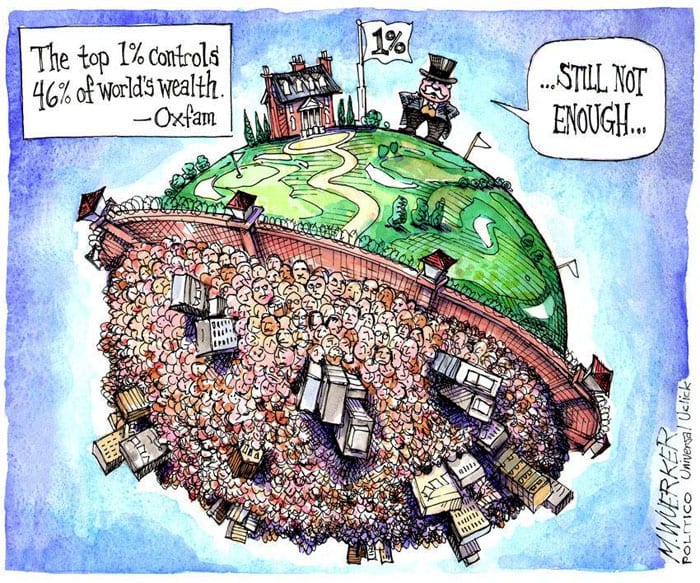
    Following on from the initial question about Hannah Arendt’s thesis that equality must be confined to the political sphere, we must ask how democracy and human rights can be preserved in the face of social inequality on an extraordinary scale. By the end of this century, 1% of the world’s population will own as much as the “rest” of the other 99%. And already today, only 6 people own more property than 3.6 billion. Let us take a closer look at some of the ideas of the currently dominant neo-liberalism, which sheds some light on the acceptance of these current obscene inequalities. For this ideology, social inequality is a means to greater wealth. However, since it sets no limits on social inequality, it can be used to legitimize even obscene inequalities. We argue that neoliberalism as an ideology is the result of the spread of a specific approach to economic thought that has its roots in the first half of the twentieth century, when Walter Lippmann’s seminal book “An Inquiry into the Principles of the Good Society” (1937), followed by Friedrich August von Hayek’s “The Road to Serfdom” (1944), gave rise to neoliberalism. During the Cold War period, neoliberals gained more and more ground in establishing a global system. With the support of Milton Friedman and his “Chicago Boys,” the first attempt to establish a pure neoliberal economic system took place in Chile under the military dictatorship of General Pinochet in the 1970s. In the last decade of the Cold War, neoliberal architects such as Margaret Thatcher and Ronald Reagan began to impose the new economic model. Since the end of the Cold War, the final development was that neoliberalism became THE hegemonic economic system, as capitalism was de jure allowed to spread unhindered worldwide, and neoliberalism continued on its way to becoming the dominant belief system.

    The critical message in this sense is the following: This process is not limited to an economic dimension – neoliberalism contains a general tendency towards an extensive economisation of society. Thus, inequality transcends the economy and becomes the dominant trend in society, as in racism, radical extremism, and hate ideologies in general: Us against the rest, whoever the rest may be.

    When we talk about global inequality in the era of neoliberalism, we are referring to two other major developments: To this day, inequality between the global North and South persists. While the total amount of poverty has decreased, as seen in the World Bank’s report (2016), there is still a considerable gap between those countries that benefit from the global economy and those that serve as cheap production or commodity areas. The second development takes place in countries that are more exposed to the neoliberal project. In this sense, societies are turning into fragmented communities where the “losers of neoliberalism” are threatened by long-term unemployment, a life of poverty, social and economic degeneration.

    After three decades of intense global neo-liberalism, the result has been a significant increase in social inequalities, polarization and fragmentation of societies (if not the entire world society), not to mention a global financial crisis in 2008 caused by escalating casino capitalism and the policies of a powerful global financial elite.

    We are witnessing a global and drastic discontent of peoples, fears and anger, feelings of marginalization, helplessness, insecurity and injustice. After three decades of intense global neo-liberalism, the result has been a significant increase in social inequalities, polarization and fragmentation of societies (if not the entire world society), not to mention a global financial crisis in 2008 caused by escalating casino capitalism and the policies of a powerful global financial elite. We witness a global and drastic dissatisfaction of the peoples, fears, and anger, the feelings of marginalization, helplessness, insecurity, and injustice. After three decades of intense worldwide Neo-Liberalism, the result significantly intensified social inequalities, polarization, and fragmentation of societies (if not the entire world society), not to mention a global financial crisis in 2008 caused by escalating casino capitalism and the policy of a powerful global finance elite.

    The central critique is that neoliberalism includes social inequality as part of its basic theory. Such capitalism emphasizes the strongest/fittest (parts of society) and uses inequality as a means to achieve more wealth.
    Remarkably and frighteningly, the situation outlined does not provoke the oppressed, marginalised, and disadvantaged populations to turn against their oppressors and their exploitation. These people tend to sympathize with ideological alternatives, either with more triumphant (right-wing) populist movements and parties or are attracted by radical/fundamentalist religious groups such as the Islamic State. The result is an increase in polarization and violence, and even more protracted wars and religious-ideological disputes. Europe is not exempt from the trend toward obscene social inequality. We also find a polarization between rich and poor, between those who have good starting conditions and those who have little chance of prosperity, between those who are included and those who feel excluded. The fact that Europe has so far largely avoided populist parties gaining administrative power (although we have already witnessed this process in France, Hungary and Poland) may be due to the remnants of the welfare state. In this respect, at least a minimum of financial security remains and limits the neoliberal trend. In the United States, on the other hand, a flawless populist could reach the highest office. The people, stuck in their misery, fear and insecurity, voted for a supposed alternative to the neoliberal establishment, but above all against other social outcasts whom they blamed for their misery. This brings us to the central critique of neoliberalism, a system that has caused fundamental social oddities, the impact of which as an ideology has been highlighted above. The central critique is that neo-liberalism includes social inequality as part of its basic theory. Such capitalism emphasizes the strongest/fittest (parts of society) and uses inequality as a means to achieve more wealth.

    In an interview with the German magazine Wirtschaftswoche, Hayek spoke bluntly about the neoliberal value system: He emphasizes that social inequality, in his view, is not at all unfortunate, but rather pleasant. He describes inequality as something simply necessary (Hayek, 1981). In addition, he defines the foundations of neo-liberalism as the “dethronement of politics” (1981). First, he points out the importance of protecting freedom at all costs (against state control and the political pressure that comes with it). The neoliberals see even a serious increase in inequality as a fundamental prerequisite for more economic growth and the progress of their project. One of the most renowned critics of neoliberalism in Germany, Christoph Butterwegge (2007), sees in this logic a perfidious reversal of the original intentions of Smith’s (reproduced in 2013) inquiry into the wealth of nations in the current precarious global situation. The real capitalism of our time – neoliberalism – sees inequality as a necessity for the functioning of the system. It emphasizes this statement: The more inequality, the better the system works. The hardworking, successful, and productive parts of society (or rather the economy) deserve their wealth, status, and visible advantage over the rest (the part of society that is seen as less strong or less ambitious). The deliberate production of inequality sets in motion a fatal cycle that leads to the current tense global situation and contributes to several intra-societal conflicts.

    The market alone is the regulating mechanism of development and decision-making processes within a society dominated by neo-liberalism, and as such is not politics at all. This brings us closer to the relationship between neoliberalism and democracy. The understanding of democracy in neoliberal theory is, so to speak, different. Principles such as equality or self-determination, which are prominent in the classical understanding of democracy, are rejected. Neo-liberalism strives for a capitalist system without any limits set by the welfare state and even the state as such, in order to shape, enforce and legitimize a society dominated only by the market economy. Meanwhile there are precarious tendencies recognizable, where others than the politically legitimized decision-makers dictate the actual political and social direction (e.g. the extraordinarily strong automobile lobby with VW, BMW and Mercedes in Germany or big global players in the financial sector like the investment company BlackRock). Neoliberalism only seemingly embraces democracy. The elementary democratic goals (protection of fundamental and civil rights and respect for human rights) can no longer be fully realized. Democracy cannot defend itself against neo-liberalism if political decision-makers do not resolutely oppose the neo-liberal zeal for expansion into all areas of society. The dramatic increase in inequality coincides with the failure of the state as an authority of social compensation and adjustment, as neoliberalism eliminates the state as an institution that mediates conflicts in society. To put it in a nutshell: Whereas in classical economic liberalism the state’s role is to protect and guarantee the functioning of the market economy, in neoliberalism the state must submit to the market system.

    Our discussion of neoliberalism here is not about this conceptualization and its history, which would require a separate article. Nevertheless, we want to emphasize that in neo-liberalism, social inequality is a means to achieve more wealth for the few. Therefore, we argue that there must be a flexible but specific limit to social inequality in order to achieve this goal, while excessive inequality is counterproductive.

    As noted above, moderate levels of inequality are not necessarily wrong per se. In a modern understanding, it also contributes to a just society in which merit, better qualifications, greater responsibility, etc. are rewarded. The principle of allowing differences, as used in the theory of the social market economy, is a remarkably positive one when such differentiation leads to the well-being of the majority of people in need. However, neo-liberalism adopts a differentiation that intensifies inequality to a very critical dimension. The current level of social inequality attacks our system of values, endangers essential democracy, and destroys the social fabric of societies. Even if we consider a “healthy” level of inequality to be a valuable instrument for a functioning market society, what has become the neoliberal reality has nothing to do with such an ideal. Neoliberalism implies an antisocial state of a system in which inequality is embedded in society as its driving mechanism. Consequently, we witness a division between rich and poor in times of feudalism. A certain degree of social equalization through the welfare state and a minimum of social security is no longer guaranteed. The typical prerequisites today are flexibility, performance, competitiveness, etc. – In general, we see the total domination of individualism within neo-liberalism, leading to the disintegration of society. In one part of the world, mainly in the Global South, we observe the decline of entire population groups. In contrast, in other parts of the world we see fragmented societies in hybrid globalization and increasing tendencies towards radical (religious) ideologies, violence and war.

    It must be acknowledged that neoliberalism was one of the causes of the rise of the newly industrialized nations, but the overemphasis on individual property also contributes to obscene inequality and thus to the decline of civilized norms.

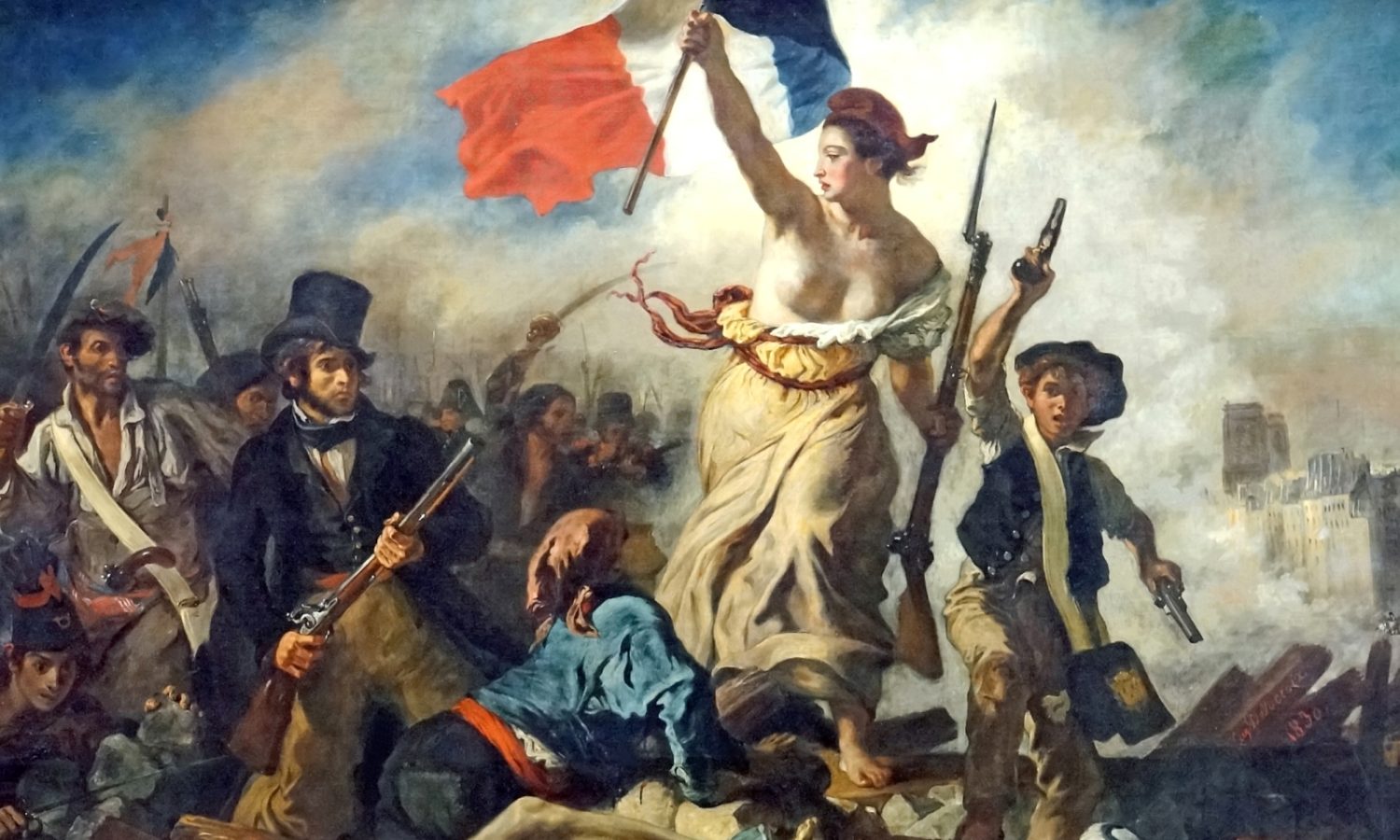
    The Polish-British sociologist Zygmunt Bauman summed up this problem by comparing it to the slogan of the French Revolution: “Liberté, Egalité, Fraternité”. According to the proponents of the time, each element could only be realized if all three remained firmly together and became like a body with different organs. The logic was as follows: “Liberté could produce Fraternité only in company with Egalité; cut off this medium/mediating postulate from the triad – and Liberté will most likely lead to inequality, and in fact to division and mutual enmity and strife, instead of unity and solidarity. Only the triad in its entirety is capable of ensuring a peaceful and prosperous society, well integrated and imbued with the spirit of cooperation. Equality is therefore necessary as a mediating element of this triad in Bauman’s approach. What he embraces is nothing less than a floating balance between freedom and equality. It must be acknowledged that neoliberalism was one of the causes of the rise of the newly industrialized nations, but the overemphasis on individual property also contributes to obscene inequality and thus to the decline of civilized norms. When real socialism passed into history in 1989 (and rightly so), the obscene global level of social inequality could be the beginning of the end (Bee Gees) of neo-liberalism, centered on the primacy of individual property, which is destroying the social fabric of societies as well as the prospects for democratic development. Individual property is a human right, but it must be balanced with the needs of communities, otherwise it would destroy them in the end.


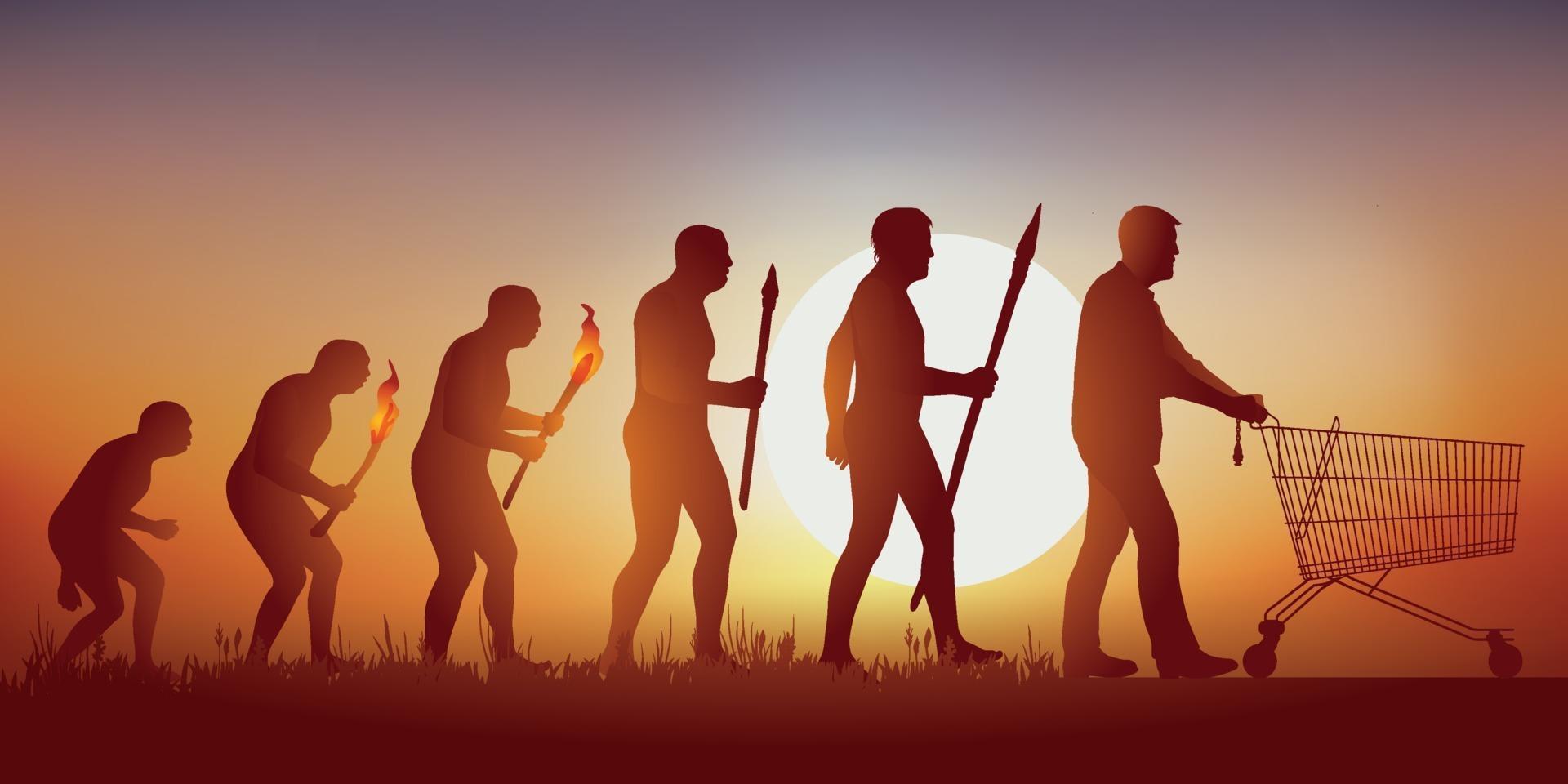
    Feature Image Credit: cultursmag.com

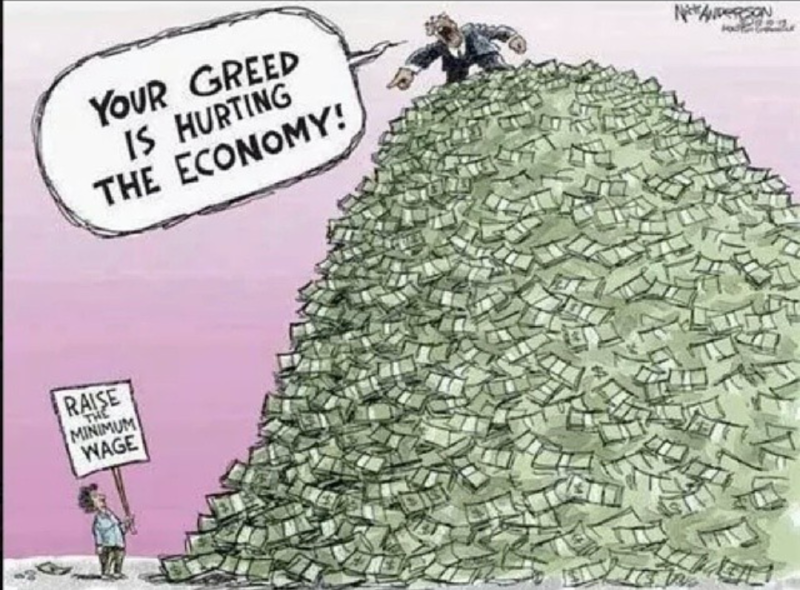
    Cartoon Image Credit: ‘Your greed is hurting the economy’ economicsocialogy.org
  • Untangling the “socialism” vs. “capitalism” Dichotomy

    Untangling the “socialism” vs. “capitalism” Dichotomy

    Few ideological dichotomies polarize opinions as readily and as completely as that between “socialism” and “capitalism.” Those who embrace socialism tend to blame capitalism for everything that’s wrong with our world today. Those who embrace capitalism harbor a seething contempt for socialists, but both camps base their views on ideology with only vague notions about the true nature of either system.

    The “socialists” think of capitalism as a rapacious system of exploitation that favors a few at the detriment of many. There is some truth in that. The “capitalists” think of socialism as a system that gives free stuff to the lazy and undeserving, choking society’s progress. There’s some truth in that too, but having lived in both systems and having experienced the ideological brainwash from both sides, I find neither side convincing.

    Spoiler alert: it’s not a left vs. right thing. It’s a top-down vs. bottom-up thing.

    So, you’re a communist!?

    Both system’s ideological foundations amount to marketing, the intellectual gloss on the cover of their respective sales brochures. But the gloss never captures the essence of either system – an omission that is so egregious that it is almost certainly deliberate. Clear understanding of the essence of this dichotomy is not encouraged and instead of exploring all the relevant issues, on both sides of the ideological divide people readily resort to derogatory labels which usually shut down the much needed open minded discussion.

    Last week I had the privilege of participating in a “Capitalist Exploits” conference in Dubai. The event was by invitation only and attended by about 70 participants, all successful entrepreneurs and investors from all over the world. Our various discussion panels covered a lot of ground including health, technology, investing, politics and geopolitics. For my humble contribution I had the honor of being called a communist. This was in jest and not with malice, but as they say, there’s some truth in every joke. I earned the distinction simply by questioning the ideological orthodoxy prevalent in the “capitalist” Western world.

    As someone who grew up in the Communist block and experienced the Marxist brainwash, being called a communist felt comical: I’d rejected the Marxist ideology already as a teenager, not because I had any deep understanding of the economic and socio-political issues we faced but because the system wasn’t delivering as advertised: it was clearly evolving in the opposite direction from the promised utopia.

    At the age of 17, I moved to the “capitalist” United States which appeared to be based on a much, much superior system to the one I knew. The U.S. economy was vibrant with entrepreneurship and innovation and the American people seemed significantly more prosperous than we were. But the more I learned about the “capitalist” system, the more I became convinced that the same seed of doom that made “socialism” unsustainable was also baked into the foundation of the “capitalist” system.

    For starters, in both systems we had the familiar old fiat currency with fractional reserve lending. This one element guarantees the collapse of both systems: over time it reliably corrodes the democratic framework of society, suffocates free market economy, kills entrepreneurship and innovation, and guarantees that government sector of the economy will gradually displace more and more private enterprise. It does this due to an economic effect called the deflationary gap.

    Deflationary gap

    The following few paragraphs may seem convoluted but please bear with me, we’re getting to the essence of the issue at hand. To understand the deflationary gap, let’s consider a closed economic system that produces a certain quantity of goods and services. By “closed” I mean that we’ll assume the system has no foreign trade.

    The total of all the price tags attached to the goods and services produced is the aggregate cost of the system’s output: it represents the amounts of money expended by the businesses on things like raw materials, wages, rents and interest plus the entrepreneurs’ profits. These sums are income to those who receive them and also comprise the system’s total purchasing power. On the whole, the aggregate costs, aggregate incomes and aggregate prices are all the same, because they represent the opposite sides of the same transactions.

    The prices at which the system’s output can be sold in the marketplace are determined by the total amount of money which is available for spending in a given period of time. For the system to be in equilibrium, aggregate prices should exactly absorb the system’s total purchasing power. But a problem arises because in the current monetary system, there are two factors that significantly reduce the system’s purchasing power: (1) savings and (2) debt repayments.

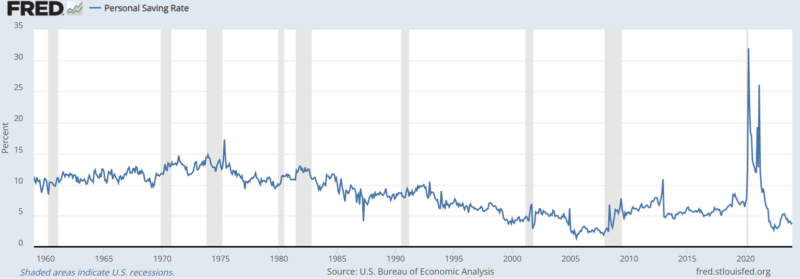
    Namely, people don’t always spend all of their income. Instead, they prefer to set aside a part of it as savings which has the effect of reducing the total purchasing power available in the system.

    This is a problem

    So, if there are any savings, the available purchasing power will be less than the aggregate asking prices. For the system to remain in balance the savings would have to reappear in the market in the form of investments, but if total investment is less than total savings, the purchasing power will still fall short of the amount needed for all of the output to be sold at asking prices. This shortfall of purchasing power in the system, the excess of savings over investment is the deflationary gap.

    The other systemic drain on purchasing power (hat tip to author Liam Allonefor pointing this out to me) are debt repayments: since (nearly) all currency enters into circulation as debt, paying down debts extinguishes the currency and the purchasing power with it.

    Without government intervention we get a depression

    The system can be balanced either by lowering the supply and prices of goods, by enhancing its total purchasing power, or a combination of both. Lowering prices and production of goods will stabilize the economic system at a low level of economic activity. Increasing the purchasing power in the system will stabilize it on a higher level of activity. Left to itself and without intervention, a modern economic system would fall into what we call a self-reinforcing deflationary depression: the deflationary gap would lead to falling prices and output, decline of income and rising unemployment. Furthermore, in recessions and depressions, the level of investment typically declines even more rapidly than savings. To avert this, government intervention is necessary.

    Without government intervention, the economy would stabilize when the level of savings declined to the level of investments which would be at a depression level of activity. This is an anathema in all modern economies, and governments invariably pursue the imperative of economic growth. To generate growth, they must inject new purchasing power into the system. This cannot be done through taxation since taxation doesn’t create new purchasing power: taxes only transfer money from those who earn it to the government.

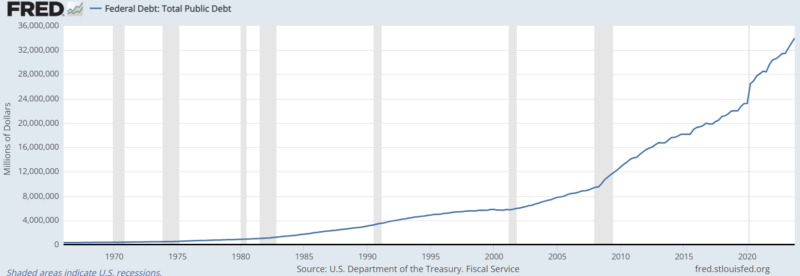
    This is why governments have no alternative but to continuously engage in deficit spending, adding debt in excess of their tax receipts. This is why virtually all governments in the world today run budget deficits and chronically grow public debt. In spite of all the incessant talk about balancing the budget, paying down debts or imposing debt ceilings, the debts only keep rising at rates that predictably accelerate over time. It doesn’t matter whether we call the system “socialist” or “capitalist,” they both necessitate an ever growing role of government in the economy.

    Today, in many of the “capitalist” nations, government spending accounts for almost half of the GDP and in some cases significantly more. In the UK, the mothership of capitalism, the government’s share of GDP is 44%. In France it’s over 58%.

    The great American debt ceiling Kabuki theater

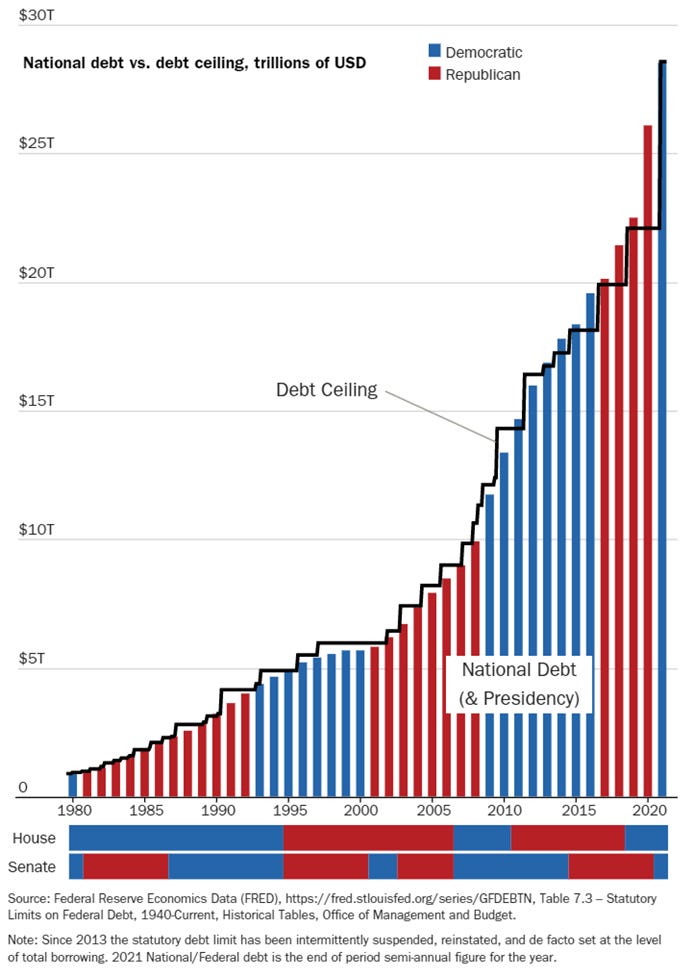
    In the United States, for over a century now we’ve been treated to periodic reruns of the “debt ceiling” Kabuki theatre. When public debt reaches the “debt ceiling,” free-spending socialists call for more government spending and a raising of the debt ceiling. The conservatives enjoy grandstanding about fiscal conservatism and balancing budgets, but regardless of which side controls the Presidency or the Congress, for over a century now the debt ceiling has been raised every time. The only exceptions have been periods when the ceiling was simply ignored and the public debt continued its accelerating upward trajectory:

    You get socialism, whether you like it or not!

    Averting a depression and achieving economic growth necessitates government intervention and guarantees an accelerating rise in deficit spending with the corresponding rise in public debt regardless of whether we are talking about a “capitalist” or a “socialist” economies. This should be obvious, as the evolution of public debt in the U.S. illustrates:


    There’s no point railing against “socialism” and dreaming about a small government, private capital utopia which doesn’t, and cannot exist so long as our economies are based on fiat currencies with fractional reserve lending. Even if we start with zero public debt, the pursuit of economic growth will lead to the same outcomes.

    With fullness of time, government sector will progressively crowd out private enterprise: it’s a mathematical certainty. As a result, we get socialism whether we like it or not. Even if a political leader declares himself to be an anarcho-capitalist and thinks he can create the capitalist utopia (like Argentina’s Javier Millei), the endgame will be the same.

    The passionate disciples of capitalist ideology will protest and invoke the theoretical works by economists like Ludwig Von Mises, Murray Rothbardor Friedrich Hayek but I would simply ask them to please name one real-world example of a successful free market capitalist economy where the government never ran budget deficits and piled up public debt. I can wait.

    For those who would defend the free market ideology and excuse its failing as a consequence of human corruption and weakness of the structures of society, I’d warn them that this was exactly how Marxists explained away the failures of communist utopia.

    Top-down or bottom-up?

    With that, we can address the false dichotomy between “socialist” and “capitalist” economies as they’re commonly discussed. Namely, in what we call “capitalist” economies, a larger proportion of government-injected purchasing power flows top-down. In what we call “socialist” economies, it flows bottom-up.

    Capitalist governments splurge their largesse on large private corporations in the form of subsidies and generous government contracts. Socialist governments splurge on social welfare programs like low-cost or free health care, education, generous unemployment benefits and pension plans, and programs that maintain full employment even where jobs couldn’t be justified by private enterprise.

    It’s what the “capitalists” hate. As a rule, individuals who strongly favor free market capitalism tend to be the successful, entrepreneurial types who value risk taking, hard work and creating wealth through private initiative. The idea that the state would splurge on the lazy and undeserving free-loaders is understandably revolting.

    However, the alternative in splurging on large corporations is far more dangerous. If purchasing power is distributed bottom up, the decisions about how to spend that purchasing power are up to the ordinary people. As such, they’ll tend to benefit ordinary businesses that produce consumer goods and services: bakers, apparel makers, restaurants, coffee shops, musicians, tour guides, bicycle repairmen, etc.

    By contrast, if the state spends top-down, it runs the moral hazard of determining the winners and losers in the supposedly free market competition. The winners will tend to be those corporations and groups that can “invest” the most in political lobbying efforts. As a result, we get the TBTF banking behemoths, big Ag, big Pharma, big Media, big Tech and a massively bloated military-industrial complex. Ultimately, this favors the emergence of corporatism, as Benito Mussolini characterized fascism. Today we prefer the sanitized term, “private-public partnership.” The adverse effect of all this is a society’s addiction to permanent wars and a penchant for empire-building.


    This article is published in Alex Krainer’s Substack.


  • Consumption as a Substitute Religion – A Critique of Capitalism

    Consumption as a Substitute Religion – A Critique of Capitalism

    Consumption is becoming the new substitute religion. This is certainly progress for former poor countries, but in the long run it dissolves the cohesion of society and is only apparently covered up by aggressive enemy declarations. The newly industrialised nations should take the dissolution of social cohesion in the West as a warning example.

    With the triumph of neo-liberalism, all forms of identity worldwide are becoming fluid, uncertain or even dissolved. It is true that it was right to leave behind the binary oppositions of Western modernity to “non-modern” societies, which were associated with static, entrenched forms of identity. But the orientation towards models of consumption does not lead to a real pluralisation, but reproduces ever new rigid identities and thinking in tribal opposites: “us against the others”, whoever the others are. The Chinese dream, New Russia, make America great again, the rise of right-wing populism in Europe and the USA, the division of Israeli society and the temporary triumph of the extreme religious right there are all reactions to the dissolution of identities through the transformation of citizens into consumers. Consumption is becoming the new substitute religion. This is certainly progress for former poor countries, but in the long run, it dissolves the cohesion of society and is only apparently covered up by aggressive enemy declarations. The newly industrialised nations should take the dissolution of social cohesion in the West as a warning example.

    If about 6 people have as much property as 3.6 billion “others or in the near future 1% of the world’s population as much as the “remaining” 99%, then this is an absolutely obscene inequality, which we only accept becauseö the ideology of consumption, capitalism and neo-liberalism has become the new world religion. As Walter Benjamin already pointed out, it serves the same basic need as the monotheistic religions. “Then said the Lord unto Moses, Thus shalt thou say unto the children of Israel, Ye have seen that I have spoken unto you from heaven. Ye shall set nothing by my side: silver gods and gold gods ye shall not have.” (Exodus 20:22). “And when the people saw that Moses came not down from the mount so long, they gathered themselves about Aaron, and said unto him, Arise, make us a god to go before us: for we know not what is befallen this man Moses. (…) And Aaron took the gold out of their hand and poured it into a clay mould, and made it a cast calf. Then they said: This is thy God, O Israel, which brought thee up out of the land of Egypt.” (Ex 32:1) We today may think ourselves exalted at the idea of worshipping a golden figure. But in reality, aren’t we merely replacing it with Wall Street or the Frankfurt Stock Exchange, or even globalisation, which is supposed to lead us to the promised land, i.e. prosperity and wealth? It is true that we do not entrust our wives’ and daughters’ earrings to the stock exchange, but often all our savings, individual fates as well as those of entire countries are determined by the price of coffee, bananas and other commodities. Gunter Henn, the architect of the VW Autostadt, one of the new temples, underlined the claim for the creation of meaning by companies: “Who else offers orientation, where does that leave us with our childlike religiosity? The churches are dead, the state is withdrawing, and the ideologues have lost their power. What remains are the companies.”

    This story of the Golden Calf, which was put in the place of God at the very moment when he had revealed his will to the people of Israel in the Ten Commandments, illustrates a fundamental problem of religion, of the religious. For religion is obviously based on a two-way relationship. On the one hand, there is a need for a god or gods to reveal themselves, to show themselves, and on the other hand, there is an ineradicable need, an insatiable human desire for the divine, for the religious. This deep-seated longing can have many different reasons. In the sociology of religion and philosophy, it is described in such a way that religion, the religious, has fundamental functions for individual people as well as human societies, for example, the endurance of the fear of one’s own death, the embedding in communities that outlast death, the giving of meaning to life, the transcending of one’s own boundaries in an ordered whole, the construction of something sacred, untouchable.  The problem that arises from this, however, is that this insatiable longing can obviously also refer to something other than the revealing God, precisely to a golden calf, but also to the God of reason, to one’s own nation or race, to the world-historical mission of the proletariat, or even to science and technology. Science and technology may relegate the religious to the very back seats – often with the sole effect of putting themselves in its place. Carl Schmitt, one of the most important as well as most controversial theorists of political theory, emphasised, for example, that at the beginning of the 20th-century religious belief in God was replaced by religious belief in technology and the omnipotence of man. With regard to National Socialism, this has been proven in many cases, as there was a deliberate and purposeful instrumentalisation of religious practices for party congresses and mass marches – incidentally an essential aspect of why this inhuman ideology could nevertheless be so successful.  “Führer, our daily bread give us today.”

    ‘As Walter Benjamin already noted, capitalism is a pure cult religion that has neither a dogma nor a theology’

    But let’s move on to the gods of the market, consumerism and cult marketing when brand companies and belonging to this community take on cultic, religious proportions. And let’s put it bluntly: This cult marketing appeals to religious feelings much more simply and directly than a reflected faith ever can, religious feelings that at best come to the fore in community experiences at church conventions. Their religious character is also not always overt, since there is an essential difference between consumption, cult marketing and the Christian understanding of religion. Substitute religions are usually polytheistic, but Christianity is monotheistic. For followers of monotheistic religions, polytheistic ones often do not appear as a religion at all, but as something that one shrugs off or is amazed at, but considers oneself to be superior to this preform of religion. Such a view fails to recognise that these polytheistic forms of religion nevertheless serve religious feelings, without which their success is difficult to explain. Moreover, as Walter Benjamin already noted, capitalism is a pure cult religion that has neither a dogma nor a theology – unless one also wants to understand the currently dominant neoclassicism as a substitute religion. A cult religion, in any case, is directly practically oriented, just like the archetypes of pagan religiosity, which practises its rite without God’s word, without revelation. Pagan is to be defined in such a way that the cult takes precedence over the doctrine, which only appears implicitly. Capitalism is a form of neo-paganism, Benjamin concludes.

    Just as religion tries to help life succeed by conveying a meaningful way of living, so advertising tries to do by suggesting to customers that they can only live fulfilled lives or belong to the in-group by buying, owning and using a certain product. It is striking that in many cases advertising no longer presents the real advantages of a product, but values such as friendship. Advertising instrumentalises religious motifs to turn people into customers and customers into brand believers. In doing so, it builds on the religious basis still dormant in the hidden human being, tries to appeal to this sacral subconscious and therefore creates new forms of cult marketing, through which modern man is supposed to find cosy, warm places for his longings. In the spiritual desert of modernity, marketing strategies fill the vacant position of religion with advertising in general and the positions previously held by God and the sacred with products in particular and everything connected with the use of such a product: instead of religious practice, consumption; instead of gods, idols of consumption; instead of churches, temples of consumption; instead of religious faith communities, those of consumption. In this context, belonging to the ingroup is considered constitutive in the choice of brand and ex-communication is threatened in an equally consistent manner if the wrong brand is chosen. The myth created around a brand gives its products a spiritual added value that is supposed to set them apart from the mass of competing products of the same quality.

    Consumerism was aggressively propagated as an alternative and implicitly as a substitute for religion vis-à-vis traditional religions by the media theorist Norbert Bolz in his Consumerist Manifesto. For him, consumerism is the immune system of world society against the virus of fanatical religions. Consumerism promises neither the goal nor the end of history, but “only the ever-new”.  Independent of the implicit and recurring criticism of monotheism, the question arises as to the price that must be paid for the production of the ever-new.

    Not only are quite normal products being elevated far beyond their utility value to cult brands, to a substitute for religion. In the new marketing, the customer is not only king, as it used to be called, but god-like. In largely saturated markets, it is mainly about creating ever-new desires. Customers are told that, compared to whatever they may already have, there are still many, many more possibilities, infinitely new possibilities. This amusement park has not yet been visited, that trip has not yet been taken, this hair shampoo could be cheaper or even better than that one, you can shop better in Frankfurt than in Kassel or vice versa or somewhere else. In the meantime, you can also fly to London in one day to go shopping, “how have you not yet been to Paris to go shopping?”

    The decisive factor is not whether one actually uses this or that offer, but that there are always even better, even fancier POTENTIAL possibilities that one has not yet realised…. “Anything goes” used to be a slogan of resistance against repressive social structures – today it is the symbol for the market of limitless possibilities. Due to this limitlessness of possibilities of consumption, a constant depressive feeling arises in MANY people that they have not yet exhausted any consumption possibilities – and if one were to devote one’s whole life to consumption, there would still be something that would have to be done without.

    This pressure of seemingly limitless possibilities to live like “God in France” is exacerbated for those whose financial possibilities are limited, such as in the case of unemployment, because here the tension between the real limited and the potentially infinite consumption possibilities is particularly great.

    From this tension follows a clinical picture that characterises modern capitalism, our market society, and depression as an awareness of what is potentially possible and what is actually possible. Depression threatens the individual who only resembles himself, just as sin pursues the soul turned towards God or guilt pursues the human being torn apart in conflict. It arises both when the awareness of potential possibilities far exceeds that of the real ones and in those cases where the consumer is called upon to constantly reinvent himself.

    This last problem can be illustrated by a cigarette advertisement that virtually signals the reversal of traditional advertising promises because it boldly states that this particular brand of cigarettes does not taste good to everyone – and that is portrayed as a good thing, according to the slogan. At the same time, of course, this advertising is aimed at the largest possible group of buyers, the more the better. This gives rise to the deliberate paradox that one is all the more an absolutely unique individual if one consumes exactly what everyone is buying.

    The individual here is not something self-evident, born or given by nature, but a laboriously constructed social role. As an individual, man makes himself the cult centre of a religion of uniqueness. That’s why Buddhism is often in vogue today – as a doctrine of self-redemption without a saviour god. And for those who find that too spiritual, self-excitement and self-challenge remain. You take drugs, get high on the body’s own endorphins – or best of all: on the drug “I”. But it would be a misunderstanding to believe that the cult of the ego is a step towards liberating the individual from the shackles of society. In the cult of the ego, the human being is less a sovereign individual than an unhappy prosthetic god. He surrounds himself with auxiliary constructions from the world of fashions, drugs and distractions.

    The emancipation of the sixties and seventies has often freed us from the dramas of guilt and obedience, but it has brought us new dramas of responsibility and action in an uncertain and conflicting world.

    In this invention of a seemingly unique individuality through the consumption of branded products, individuals are overburdened without limits – the customer is no longer king, but god-like in marketing strategies – we fulfil their most secret wishes, everything they desire, there are no limits to their desires. But people remain humans, they are not gods and often break down at this imposition of being equal only to themselves. Only God, who in the Old Testament logically demands that there should be no gods beside Him, is equal only to Himself. The emancipation of the sixties and seventies has often freed us from the dramas of guilt and obedience, but it has brought us new dramas of responsibility and action in an uncertain and conflicting world. Thus, through human self-empowerment and the marketing strategy of the individual responsible only to himself, depressive exhaustion accompanies neurotic anxiety not only on an individual level but could be also witnessed in Western societies as a whole. The alternative to rigid forms of identity and political systems is not consumerism, which only leads to new forms of such ideologies. What is needed is a floating balance of the individual and the community.

  • Xi is Not Mao

    Xi is Not Mao

    The ongoing conflicts and crises across the world, be it in Ukraine or in the South China Sea, reflect a serious flaw in the current international order and in the politics of relations amongst nations. The singular focus on the demonisation of leaders, aided by perception management through devious media control, reflects a significant danger to global safety and stability. The current hyper noise in US-China relations is driven by hyperbole about Xi and other leaders. It is time to take a step back and review the information holocaust.

    Rebecca E Karl’s perceptive article highlights the vagaries of flawed picture portrayals of China and Xi that can be very far from the truth. This article was published earlier in Dissent Magazine.

    – Editorial Team

    Mao and Xi’s historical projects couldn’t be more different, and it is high time to move beyond the bad history that conflates them.

    Commentary on China these days often presents lazy thinking that leads to some ridiculous historical statements. That President Xi Jinping is a would-be Mao Zedong or that China is facing a “new Cultural Revolution” are examples of this laziness. In a charitable light, such assertions stem from a broad misunderstanding of the logics of contemporary China and its role in the world today. In a less charitable light, they are driven by ideological fealty to some of the most outdated and frankly racist aspects of Cold War Western anti-communism. My premise in the following comments: China today is not Maoist, and Xi is not Mao redux. China today is also not communist in any genuine sense of that term, even though the Communist Party presides over the country with an increasingly iron grip.

    The difference between Mao and now could not be starker. Mao’s twentieth-century anti-capitalist and anti-feudal revolution in politics and culture sought to transform China’s domestic social relations by mobilizing masses of people against the systems of domination that constrained their everyday lives. He sought to demonstrate to the non-capitalist world the superiority of socialism as a mode of material and cultural production. Those experiments must be judged a failure on both counts. Xi’s twenty-first-century goal, by contrast, is to release economic forces from the burden of sustaining socialist relations in order to build China’s global wealth and power. To that end, he has pursued domestic stability and has repressed potentially insurgent political, social, and cultural impulses along with challenges from internal peripheries—all while enhancing the power and privileges of the Communist Party itself. To date, his efforts to redefine and defend capitalist logics in China seem to have found success.

    China today is not Maoist, and Xi is not Mao redux. China today is also not communist in any genuine sense of that term, even though the Communist Party presides over the country with an increasingly iron grip.

    Mao and Xi’s historical projects couldn’t be more different, and it is high time to move beyond the bad history that conflates them. We need to grapple with how the past several decades of social and political realignment, not just in China but around the world, are leading to a global future not yet foretold.

    The “new Cold War” rhetoric that permeates public discourse these days is dangerous, to be sure, yet it appeals to a version of the world that is long gone. Socialism has disappeared, and capitalism has prevailed. The fundamental antagonism between these two irreconcilable social and ideological systems—the antagonism that informed a struggle between two different cultural imaginings of the future—has not existed since at least the mid-1990s, when the post-1989 Chinese capitalist order came into full view and took material and ideological root in China and the world. (And, as anyone in Asia or Africa knows, the concept of the “cold” war was always of questionable utility in places that hosted a continuous series of hot wars.)

    Indeed, the huge dissension within the “West,” the United States included, about how to even specify these problems—or whether to specify them at all—gives the lie to the fiction of unified nation-states facing off across elemental ideological divides.

    We live in a capitalist world, but that doesn’t reduce the stakes of current conflicts. Will we blow each other up in militarized one-upmanship? Will we so pollute our environments that we destroy the natural world’s capacity to sustain life? Will we tear each other and ourselves apart in the attempt to come to human solutions to human-made problems? Will the speed of disease and pathology outstrip our ability to lock down and vaccinate, or will we look the other way as the necropolitical selection of those who live and die proceeds apace? These are apocalyptic stakes, but they do not break down analytically on fundamental lines of systemic antagonism. The definition of and solutions to these problems do not depend on such outmoded analytics as the “West” and the “rest,” or the United States and China. Indeed, the huge dissension within the “West,” the United States included, about how to even specify these problems—or whether to specify them at all—gives the lie to the fiction of unified nation-states facing off across elemental ideological divides.

    We need to confront the possibility that our leaders—whoever they may be, whether so-called democrats or so-called authoritarians, so-called liberals, leftists, or rightists—all are leading us into disaster.

    What we need to confront today is that our accustomed systems of analysis based in the imaginary unities of nation-states are exhausted. We need to confront the possibility that our leaders—whoever they may be, whether so-called democrats or so-called authoritarians, so-called liberals, leftists, or rightists—all are leading us into disaster. Those of us outside China must oppose attempts by our governments and ventriloquist media to create ever more unequal and violent capitalist relations that ratchet up tensions between peoples and nations. At the same time, we must try to support those within China who are opposing their own government’s and ventriloquist media’s commitments to suppressing the critical voices and anti-capitalist practices in their midst. The stakes are high, and now is the time to rise to the occasion of critical engagement rather than sink into facile historical analogies. What we face today are not conflicts between civilizations but conflicts over what kind of civilization we wish to inhabit moving forward. Neither the Chinese state nor Western ones have the kinds of answers that we need these days, but there are activist elements in all of our societies striving to find solutions. It is to such activists that we must look for hope.

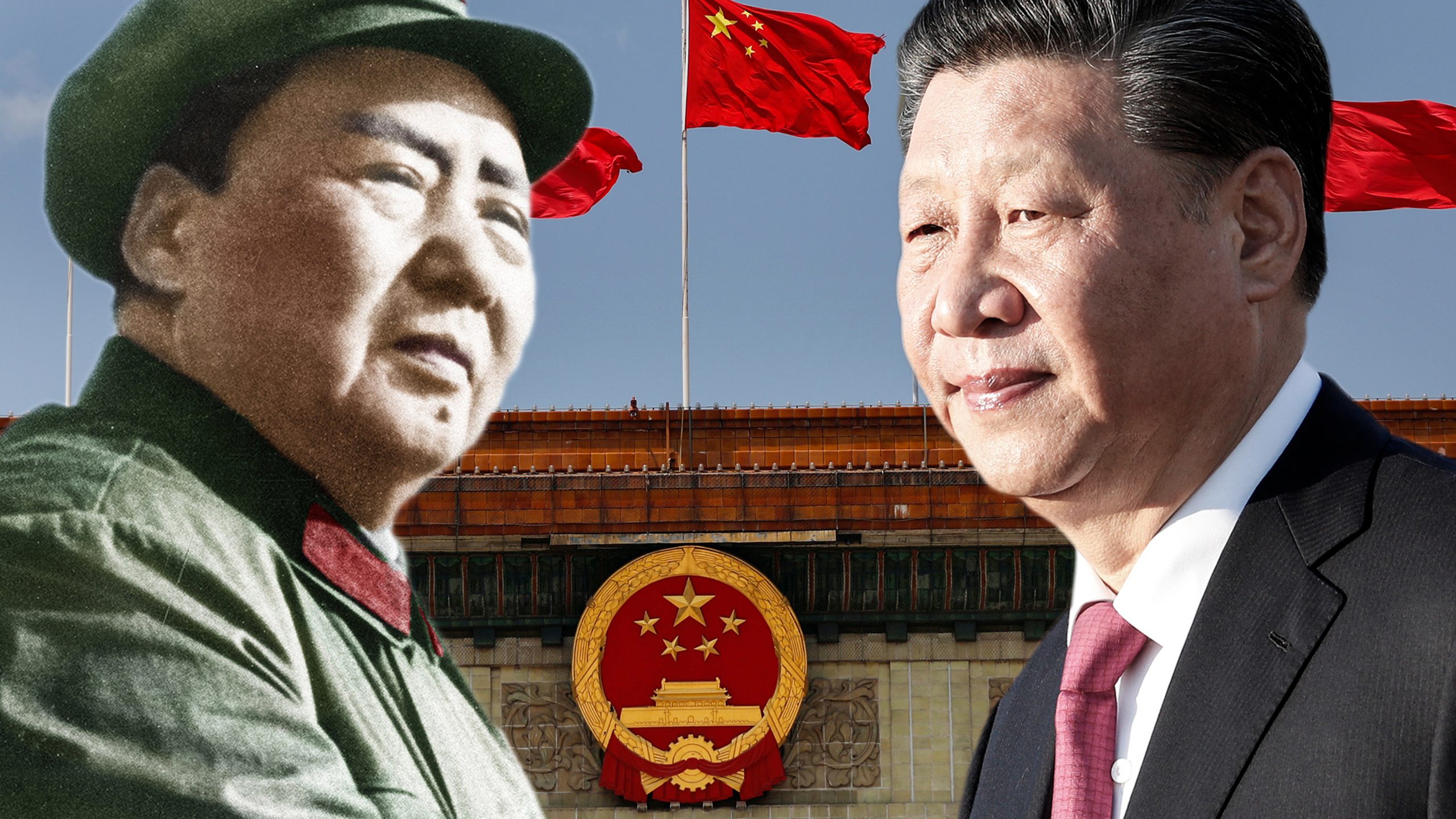
    Feature Image Credit: Nikkei Asia

  • Book Review: Contesting the Global Order – The Radical Political Economy of Perry Anderson and Immanuel Wallerstein

    Book Review: Contesting the Global Order – The Radical Political Economy of Perry Anderson and Immanuel Wallerstein

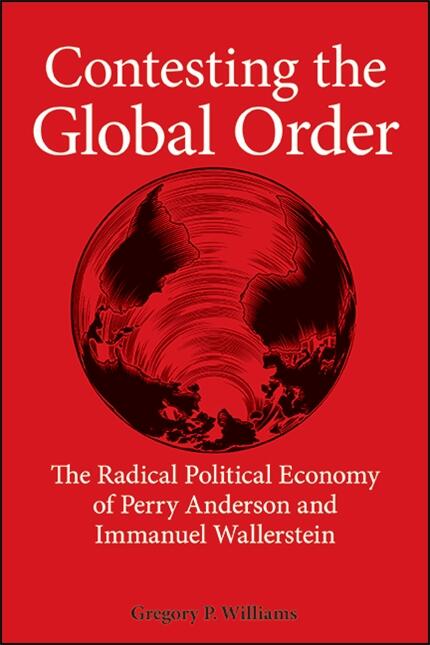
    Book Name: Contesting the Global Order – The Radical Political Economy of Perry Anderson and Immanuel Wallerstein

    Author: Gregory P Williams

    Publisher: SUNY Press, 2020

    Contesting the Global Order is a comparative intellectual biography of Immanuel Wallerstein and Perry Anderson, two leading and prolific intellectuals of the Left since the end of the Second World War. Williams opens the book by relating their ideas to two main explanations offered in the wake of the global crisis of 2008: the prevailing explanation and the unconventional explanation. The former, devised by mainstream economists and punditry, explains the crisis with reference to a number of recent factors. This implies that this was a crisis within capitalism and, as such, all that the system needed was a course correction, if perhaps a drastic one. The unconventional explanation, which the books’ protagonists subscribe to, holds that what happened in 2008 and after has been a crisis of capitalism. It is only the latest one among many in the history of this ever violently gyrating system, and it is most certainly not the last. Therefore, its explanation must be sought in long-term processes and at the macro-structural level.

    This opening move not only helps readers to relate the book’s subject material with contemporary debates on global capitalism and its crisis, but also associates Wallerstein and Anderson to the radical wing of the field of International Political Economy. Williams tells us that, as influential texts of Radical Political Economy, their works have repeatedly returned to three key issues: “totalities as an object of study; the origins and operations of capitalism; and the role of agency in determining behavior” (p.9). With these guiding themes of comparison at hand, Williams proceeds onto a chronological narrative analysis distributed over seven chapters and two ‘Intermissions,’ essentially one mini-chapter for each thinker that deals with a specific issue in their intellectual biography.

    Chapters 1 and 2 together provide an overview of Anderson’s and Wallerstein’s early years as scholars and the influences behind their ideas. In the first, Williams introduces their early intellectual formations against the backdrop of intellectual battles of interwar and postwar years. He defines these years as cosmopolitan beginnings for both. It appears that, for Williams, Anderson’s early intellectual journey and his involvement with the British New Left is more interesting than Wallerstein’s conventional academic career largely restricted to Columbia University, as the former receives almost twice as many pages dedicated to his story. The second chapter presents a very well-written account on the intellectual lineages of Wallerstein’s and Anderson’s theories. For the former, Williams shows the influence of Frantz Fanon, Fernand Braudel, and Karl Polanyi (and later Ilya Prigogine). In the case of Anderson, the key names listed are Edward Gibbon, Jean-Paul Sartre, Georg Lukács, and Lucio Colletti. An important point that we get from this chapter is that, while already established scholars in their thirties, Wallerstein and Anderson never ceased to learn from others throughout their careers.

    The momentous year of 1968 and the revolutionary energies it generated are at the center of Chapter 3. In Wallerstein’s experience, 1968 offered the development of an indigenous socialist tradition in the US and provoked him to theorize the connections between that and the decolonization movements. For Anderson, the flare for socialism was fired not at home, but across the channel. The scale of revolt in France amazed him and his New Left Review (NLR) colleagues; “the opportunity for socialism now seemed real” (p.62), even in an advanced capitalist society. It is with this energy and optimism that they turned to fashioning institutions that would help keep the revolutionary flame of 1968 going. If Wallerstein wanted universities as key institutions to encourage Third World movements, Anderson sought to turn the NLR into a vanguard organization for socialist politics. To achieve this, Williams notes in Chapter 4, they agreed on the premise that there was an urgent need to promote a “public and scholarly understanding of the historical processes that gave rise to the current historical order” (p.67). A sober sense of history was necessary for the building of a socialist future. To show how they did this, Williams takes the readers on a tour into the theoretical and historiographical building blocks of their magnum opuses published in 1974. If Chapter 3 is more about political agency, Chapter 4 delivers a sophisticated overview of the themes of totality and the origins of capitalism.

    In the following chapters, the question of agency, the future of capitalism and the prospects for socialism come back to the forefront, but this time in the context of vanishing revolutionary energies in the face of two momentous developments. The first is the rise of neoliberalism in the 1980s and the onslaught it brought on to organized labor and to Left-wing politics more generally. The second is the collapse of the East European communist regimes. While both acknowledged the scale of ‘the defeat,’ Wallerstein and Anderson held different sentiments towards it. For Wallerstein, being optimistic or pessimistic about the role of human agency undoing capitalism’s ills did not matter. He thought capitalism as a world-system was in crisis, hence what mattered was what human agency could do when it collapsed. Anderson, on the hand, holds a pessimistic view. Capitalism’s victory was comprehensive and the Left failed to match the simple and appealing political message of the Right. Yet, Williams shows that Anderson also believes that workers of the twentieth and twenty-first century have developed class consciousness through their accumulated experience in organization and strategy. In order to recapture the working-class votes from the Right, what the Left needs to do, Anderson and Wallerstein agree, is to develop “a compelling social narrative, an explanation for the present that took stock of the past” (p.175).

    Williams writes with clarity and economy, except perhaps in Chapter 5 where the analysis of Wallerstein’s world-systems theory could have been more concise. In certain points, Williams does not shy away from adding his input. For example, he casts doubt on the claim that Anderson’s third volume, successor to Passages and Lineages, never arrived because Robert Brenner (whose work Anderson has always held in high esteem) had dealt a decisive blow to the historical category of bourgeois revolutions (pp.113-114). There is also the occasional nugget produced by the meticulous archival work. We get to learn that in 1973 Robert Brenner requested a manuscript of the first volume of Wallerstein’s The Modern World-System and an exchange followed (p.170).

    Above all, its comparative investigation is what makes Contesting the Global Order a distinctive contribution to Radical Political Economy. Not only is this a relatively uncommon undertaking in the field, it is also a challenging one. Comparative intellectual biographies require their authors to master the intellectual trajectories and outputs of their subjects, and then make the critical decision of choosing the right axes of comparison. Even more crucially, the actual substance of comparison has to be parsimoniously presented in order to be effective. Williams does a great job on all these scores. He makes the reasonably specialized discussions on the origins of capitalism and the concept of totality accessible to his readers. The comparative analysis expertly documents and discusses the different life trajectories, the changing intellectual sensibilities and the evolving political visions of Anderson and Wallerstein. And he manages this feat while also highlighting the relevance of his subjects for the contemporary political scene.

    This Review is republished under the Creative Commons license.

    This was published earlier in E-INTERNATIONAL RELATIONS.

  • The end of the liberal world order is not the end of the world – we just need to fight for freedom AND equality

    The end of the liberal world order is not the end of the world – we just need to fight for freedom AND equality

    The turmoil concerning Brexit, the Rise of the „Rest” (the fast developing countries), dramatic social inequality, the exclusion of ever larger parts of the populace (the decline of the „Rest“, which is excluded from globalization), the rise of radical Salafism, all these developments have contributed to worldwide emotions, that the promises of globalization have been disappointed and been revealed as illusions. When Juergen Habermas, the noted German philosopher judged in 1991 concerning the democratic revolutions in the former states of the Warsaw treaty, that Western modernity would now transcend into the Orient not only with its technical achievements, but also with its emancipatory and democratic principles he was hardly more than the prisoner of the idealism concerning Western modernity. Although being fully aware of the negative impact of two world wars, colonization and its exorbitant violence, Auschwitz and the Cold War, and fighting for his whole life against a repetition of these developments he still believed to be able to rely on a cleaned, purified Western modernity, an approach which his companions, Anthony Giddens and Ulrich Beck, labeled second modernity. Again, in the years starting with the Arab Rebellion or the Arab Spring it seemed as if the conceptions of democracy, human rights and freedom were transcending from the Western world to the Orient, and its final victory seemed to be plausible – a purified Western modernity would triumph in the end – and Francis Fukuyama wrote his second masterpiece by arguing that at the end of history still stands democracy. But now we are already discussing post-democracy and Paraq Khanna is labeling the current phase as devolution – struggles for a local or at least regional identity.

    The liberal world order after 1991 was based on capitalism (centered on property as natural and human right), the assumption that worldwide free trade will finally lead to peace (economic globalization) and is accompanied by the orientation towards consumerism as a cultural norm. But consume does neither generate values nor identity. International organizations served the purpose of regulating conflicts between sovereign states and the military, political and economic hegemony of the United States secured this kind of liberal world order, or rather the United States payed the costs (this is the point Trump hangs up), both, out of their own interest or as being the trustee of the whole. This liberal world order now is tattered in fragments, not least because the US under Trump abandoned it willfully, whereas the Europeans are desperately trying to preserve it but don’t stand a chance, because they are relying on an idealized past which never existed in the developing and poor countries.

    Contrary to the assumptions of the pundits of glo-calization (Robertson and Bauman), the local showed to be not only an amendment of neoliberal globalization, but a counter-movement to the process of globalization (IS, Trump, „Buy American“, Brexit, Marine Le Pen, Duterte, Bolsonaro, Salafism, the European radical right, populistic movements). In his notes on Nationalism, George Orwell already wrote, that emotion does not always attach itself to a nation. It can attach itself to a church or a class, or it may work in a merely negative sense, against something or other – we can add against anybody, who does not belong to “us”. In short: We against the Rest. But the “Rest” is not far away anymore, as in neoliberal globalization the regions in Sub-Saharan and Saharan Africa, in southern India, in the MENA-states, but they are within the West (either as excluded sub-proletarians, the precariat, or as refugees). Although being a counter-reaction, the current waves of struggles for local identities and advantages are as a negation bound to neo-liberal globalization, the globalization of liberalism without equality, which we label tribal globalization.

    The advent of tribal globalization does not signify the end of globalization, but the end into the illusions into globalization, which nevertheless has its undisputed successes. But there is no way back to an idealized globalization before Trump, Salafism, or an idealized neo-liberal world-order, because these developments were exactly the result of which they are purporting to fight. The exclusion of the „superfluous“, the „Rest“, produced by neo-liberal globalization, the advent of precarious kinds of life and the liquidity of identity throughout the world must be understood as a double one: The “Rest” is excluded from the positive aspects of globalization and people who are belonging to the  Rest are the arbitrarily used enemy-image to construct a fixed „We“-identity („We against the Rest”). And this “Rest” comprises roughly two third of the world’s populace. As the neo-liberal globalization has led to such a social acceleration of the transformation of the whole world,  people, communities and polities of all kinds are trying to cope with this process by re-inventing age-old static identities, which are so old, that it is supposed that these will outdo even this transformation. Such seemingly fixed identities are: Race, ethnicity, religion, patriarchy, and – perhaps the oldest one, sex and gender (this can explain the terrible rise of violence against women); and of course, identity through the exercise of violence itself, which is reverting the feeling of being totally powerless into being almighty. Especially biological differences are re-actualized, because they seem to be not subject to change.

    These seemingly fixed identities are those of the pluperfect, the far distant past, which can be viewed as being free from the failures of the simple past, and mainly free from the failure of the immediate fathers – as already was typically for the German Nazis. Tribal identity is a perfect construction, because it is transporting the ideal of being absolutely united against everybody who is not belonging – and the question: Do I belong is the most important question in tribal globalization. Whereas tribes throughout the world are vanishing, tribal thinking in terms of „We against the Rest“ is flourishing. Such a modern tribe could be based on ethnicity, religion, sex, nation or whatsoever, it is not the content, which characterizes a modern tribe, but having a tribal identity (typically is Trump’s crony capitalism and with relation to the IS, not their ideology is so much counting, but belonging to a previously powerful tribe). With the emergence of tribal globalization, the very understanding of local order and world order is at stake; order wars are arising, when our order or that of others is dissolving (either only in our perception or in reality); our own order is challenged by another concept or and another order is transgressing into our own (the refugee crisis in Europe). The fast developing countries are not immune concerning the accelerated transformation of societies and identities and the task to cope with this development.  As the main problem of neo-liberal globalization is the dissolution of identities and the exclusion of ever growing parts of the populace, that of the emerging tribal globalization the re-invention of age-old fixed identities, which is leading to order wars, what might be a solution?

    Based on the concept of the floating (Clausewitz) and developing (Hegel) balance and harmony (Confucius), we strongly advocate the position, that the West as well as the East is only able to hold on their order and values, if these are discursively balanced and harmonized by the contribution of all great civilizations of the earth. Although the liberal world had its undisputed advantages like the rise of the newly industrialized nations, the current developments are already indicating its end. To put it to the core: freedom as the basis of the liberal world order is turning into oppression or civil wars without equality– just in the name of freedom. Whereas in the 20th century the colonized civilizations had to learn to live with the victorious West, in the twenty-first century the civilizations of the earth finally have to learn to live with one another. This task requires a floating balance (Clausewitz) between freedom and equality, a kind of harmony (Confucius: difference with unity and unity with difference) within societies and between states.

    Image Credit: WikiImages from Pixabay