Tag: Bureaucracy

  • Change in IAS (Cadre) Rules – Policy Brief

    Change in IAS (Cadre) Rules – Policy Brief

    [powerkit_button size=”lg” style=”info” block=”true” url=”https://admin.thepeninsula.org.in/wp-content/uploads/2022/02/Change-in-IAS-Cadre-Rules-1.pdf” target=”_blank” nofollow=”false”]
    Download – Change in IAS (Cadre) Rules
    [/powerkit_button]

    Executive Summary:

    The Centre’s proposal to amend the IAS Cadre Rules has sent shockwaves through the State governments and the bureaucratic community. Although the Centre already has the preponderance of power over the State government, it has always been the convention to depute All India Services (AIS) officers with the concurrence of the State government(s) and the Central government and the consent of the officer concerned. By providing overriding powers to the Central government, the proposal poses a fundamental risk to the federal structure of the Constitution. Not only should the proposal be recalled, but the annual intake of the IAS officers should be increased to address the issue of staff shortage, while recruiting suitable personnel from other Central Civil Services. The empanelment process also needs to be reformed to ensure transparency, objectivity and to uphold the principles of natural justice.

    The Centre’s proposal is a reflection of the long overdue need for the complete overhaul and reform of the Indian civil service system. These piecemeal amendments and a myriad of executive orders are not only unproductive to the civil service system but also counterproductive to the basic structure of the Constitution. A high-level committee should be established to undertake a holistic study to reform the Indian civil service system not only to bring in better performance and accountability but more importantly, to get rid of the colonial legacy once and for all.

    What is it?

    Deputation of IAS officers is governed under Rule 6 of The Indian Administrative Service (Cadre) Rules, 1954. Rule 6(1) mandates that the deputation of cadre officers to the Centre must be done with the concurrence of the concerned State government(s) and the Central government.

    The provision to Rule 6(1) states that in case of any disagreement, the Central government’s decision will prevail, and the State governments shall give effect to it.

    The proposal attempts to amend the Central Deputation rules by giving overriding powers to the Centre to transfer and post Cadre officers without the consent of the State government.

    Proposed Amendments (Singh, 2022)

    1. ‘Within a specified time’

    The proposal amends the proviso mandating the State governments to give effect to the final decision of the Central government within a specified time as decided by the Central government.

    2. ‘Officer shall stand relieved’

    In case, a State government delays a cadre officer’s deputation to the Centre and does not give effect to the Central government’s decision within a specified time, the concerned ‘officer shall stand relieved from the cadre from the date as may be specified by the Central government’.

    3. ‘Number of officers’

    Another change proposed is that the actual number of officers to be deputed to the Centre shall be decided by the Central government in consultation with the State government which is required to provide a list of eligible names.

    4. ‘Public interest’

    In a specific situation, if the need arises for the services of a cadre officer to be utilized by the Central government in the public interest, the State governments shall give effect to it within a specified time.

    The abovementioned amendments were sent to the State governments in a letter dated 12th January 2022 by the Department of Personnel and Training (DoPT) seeking comments until 25th January. The DoPT had earlier sent three similar letters (dated 20th,27th December and 6th January) which were strongly opposed by six States (including BJP ruled States) (Singh, 2022). As of now, more than 7 States have written to the DoPT opposing the proposed changes and other states such as Maharashtra, Kerala and Tamil Nadu have also raised their opposition. The CMs of Chhattisgarh and Rajasthan have also written to the PM opposing the proposed amendments to the cadre rules.

    Why is it a problem?

    The proposed amendments are essentially an attack on the federal structure of our Constitution since it derogates the State government’s power in posting and transferring its cadre officers without its consent. In spite of the rules giving preponderance of power to the Centre, it has always been the convention to depute officers to the Centre in concurrence with the State governments and the consent of the officer concerned (Dhingra, 2021).

    Mamata Banerjee, the CM of West Bengal wrote a strongly worded letter to the PM opposing this move and calling it a ‘unilateral decision’ which was ‘historically unprecedented and wholly unconstitutional’.

    The trigger for this move by the Centre is most likely the result of the tussle between the Centre and West Bengal over former IAS officer Mr. Alapan Bandhopadhyay. Given his experience in handling the Covid-19 crisis as the Chief Secretary of West Bengal, the State government had requested the Centre to extend his tenure and the latter acceded by extending his term for 3 months (24th May 2021). However, the Centre on 28th May 2021 did a complete 180° and issued an order to Mr. Bandhopadhyay informing him that he has been placed with the Government of India ‘with immediate effect’. Following this, the State government opposed the order and did not relieve him and the concerned officer also opted to retire from the services and is now appointed as the advisor to the CM. The Centre then issued a show-cause notice to Mr. Bandhopadhyay for his failure to report to the DoPT. There have been other similar tussles in the past between the Centre and Tamil Nadu government (2001) and West Bengal government (2020) (Agnihotri, 2021), but when the States refused to relieve the concerned IPS officers, the Centre upheld the convention of State government concurrence and did not insist on deputing them anyway.

    Shortage of officers in the Centre

    The DoPT cites the shortage of AIS officers in Union Ministries as the driving factor for these proposed amendments since the ‘States are not sponsoring an adequate number of officers for Central Deputation’. While this is true, it is pertinent to note that State governments also have been suffering from a shortage of officers, especially during the pandemic and have requested the DoPT multiple times to increase the cadre strength of IAS officers (West Bengal, Rajasthan, Bihar).

    Senior IPS officers advise that the problem of shortage of AIS officers has been perennial and does not warrant a knee-jerk reaction at the cost of violating the basic structure of our Constitution. The problem of shortage must be seen as secondary to upholding the federal structure especially since there are other ways to address this problem without seizing the State governments’ authority. While only AIS officers come under the common purview of both the Central and State governments, there are other Central Services with ample human resources over which the Central government has sole authority and the shortage can be filled by deputing these Central services officers.

    The Empanelment Process

    The empanelment process of AIS officers in India has been infested with executive arbitrariness and a lack of transparency. The procedure for empanelment is laid down in the Central Staffing Scheme which does not have any legislative sanction and is instead governed by a slew of Executive Orders (E.O), the primary dated 5th Jan 1996 (NO.36/77/94-EO(SM-I)). The flawed Annual Confidential Report system was replaced by the Annual Performance Appraisal Reports (APAR) system following a Supreme Court ruling to ensure more transparency.

    However, the additional layer of review with the 360° appraisal system or the Multi-Source Feedback system introduced by PM Modi in April 2015 allows the panel to override the recommendations of the APAR system.

    The 92nd Report of the Department-Related Parliamentary Standing Committee on Personnel, Public Grievances, Law and Justice in 2017
    reprimanded the 360° system for its opacity and lack of objectivity, thereby leaving the empanelment process ‘susceptible to manipulation’. Former Upper-level Secretaries have also been critical about the 360° system due to its

    ▪ Lack of transparency
    ▪ Absence of an appeal process
    ▪ Susceptible to bias and discrimination.
    (MS, 2018)

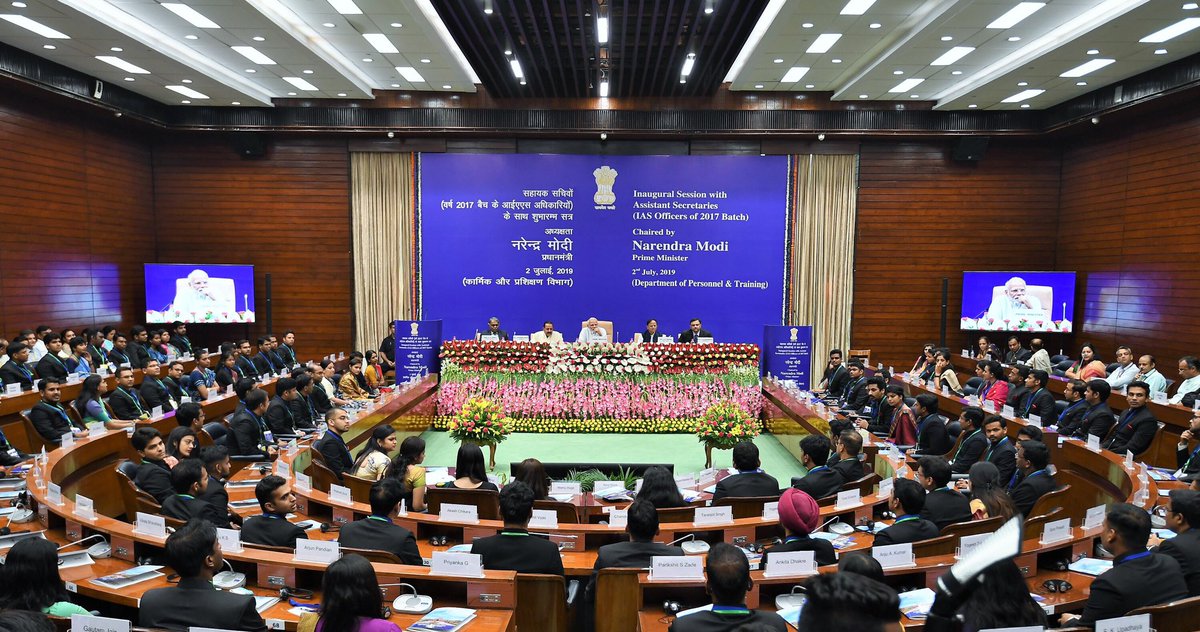
    The absence of legal backing for the empanelment procedure has led to the arbitrary exercise of power by the executive. Usually, officers start their career after training in State cadres and it would take up to 9 years for an officer to occupy Central government positions. But the present government has started a practice of appointing newly recruited officers, fresh from training, as Assistant Secretaries in the Union Ministries. Although this move was said to increase exposure for the new officers, it also may as easily be detrimental to their careers. This new pattern, initiated by the Modi govt, is characterised by a lack of transparency and establishing a core group of loyalist officers at the cost of building experience, knowledge, and performance. The loyalty of the officers of the civil services must be to the Constitution alone and not to any political party or even government of the day if it violates the constitutional provisions.

    Already, the AIS officers are in a bind where the State government and Central government are governed by opposing parties. The lack of fairness in the empanelment process has further discouraged and disheartened officers from Central Deputation. Although salaries and incentives remain the same, the State governments use transfers and postings as de facto punishment for AIS officers who do not follow suit with the State government’s decisions. Similarly, the Central government beguiles AIS officers with the temptation of post-retirement postings. The proposed amendments grant overreaching powers to the Central government which could be used to harass and corrupt an
    unwilling officer.

    Conclusion:

    In conclusion, the proposed amendments derogate the consent of State governments and the officer concerned. This not only gives rise to a lack of transparency and increased bias, but also has the potential to disintegrate the delicate federal structure that has been upheld since Independence. The Supreme Court has on many occasions emphasized that federalism is a part of the basic structure of our Constitution, and even a Constitutional amendment cannot do away with it. The Supreme Court has also affirmed cooperative federalism as a ‘cherished Constitutional goal’. Therefore, the Central government must look at other ways to overcome the issue of staff shortage, without granting itself overarching powers in direct violation of the Constitution.

    Recommendations:

    ▪ Recall the proposal amending the IAS (Cadre) Rules which will fundamentally damage India’s federal structure, thereby undermining national integrity and security.

    ▪ Shortage of officers can be addressed, in the short term, by recruiting suitable personnel from other Central Services such as IRS, Indian Defence Accounts service, Customs, etc. Alternatively, well-known professional experts in various fields can be inducted at senior positions, which will not only address the shortage but also the need for professional competence and experience in specialist departments as against the oft raised complaint of generalist nature of the IAS.

    ▪ Keeping in mind the demands of the Covid-19 pandemic, increase the annual intake of IAS officers to address the shortfall of 22 per cent in IAS posts.

    ▪ Increase Lateral recruitment for Central posts on a contract basis in the short term.

    ▪ The empanelment process, especially the 360° Appraisal system must be completely reformed to ensure equal opportunity and better transparency.

    ▪ The Centre’s proposal is a reflection of the long overdue need for the complete overhaul and reform of the Indian civil service system. These piecemeal amendments and a myriad of executive orders are not only unproductive to the civil service system but also counterproductive to the basic structure of the Constitution. A high-level committee should be established to undertake a holistic study to reform the Indian civil service system not only to bring in better performance and accountability but more importantly, to get rid of the colonial legacy once and for all.

    References:

    1. Agnihotri, S. (2021, June 4). Centre’s tussle with Bengal over chief secretary Reeks of uncooperative federalism. The Wire. Retrieved January 25, 2022, from https://thewire.in/politics/centres-tusslewith-bengal-over-chief-secretary-reeks-of-uncooperative-federalism

    2. Dev Dutt v. Union of India & Ors., (2008) 8 SCC 725

    3. Dhingra, S. (2021, June 7). Centre vs states, rules vs convention – who really controls IAS officers. ThePrint. Retrieved January 26, 2022, from https://theprint.in/india/governance/centre-vs-statesrules-vs-convention-who-really-controls-ias-officers/672013/

    4. Mishra, N. (2021, June 7). Explained: Chief secretary appointment controversy. TheLeaflet. Retrieved January 25, 2022, from https://www.theleaflet.in/explained-chief-secretary-appointmentcontroversy/

    5. MS, N. (2018, August 29). Why India’s civil servants are disaffected with the 360-degree empanelment process for top central government posts. The Caravan. Retrieved January 25, 2022, from https://caravanmagazine.in/government-policy/why-indias-civil-servants-disaffected-with-360-degree-empanelment

    6. Rajya Sabha, 92nd Report, Appraisal and Empanelment of Civil Servants under the Central Government, Department-Related Parliamentary Standing Committee on Personnel, Public Grievances, Law and Justice, August 2017, available at http://164.100.47.5/newcommittee/reports/EnglishCommittees/Committee%20on%20Personnel,%20PublicGrievances,%20Law%20and%20Justice/92.pdf

    7. Saxena, N. C. (2022, January 24). Who should control where IAS officers serve? The Wire. Retrieved January 25, 2022, from https://thewire.in/government/who-should-control-where-ias-officers-serve

    8. Singh, V. (2022, January 20). States weigh options on IAS cadre rule changes. The Hindu. Retrieved January 25, 2022, from https://www.thehindu.com/news/national/states-weigh-options-on-iascadre-rule-changes/article38293886.ece

    9. The Quint, Centre proposes new IAS Cadre Rules: What are they? why are they being opposed? (2022, January 21). Retrieved January 25, 2022, from https://www.thequint.com/news/india/ias-cadrerules-mamata-banerjee-narendra-modi-centre-states#read-more

    10. Yadav, S. (2022, January 22). Explained: IAS officers and central posting. The Indian Express. Retrieved January 25, 2022, from https://indianexpress.com/article/explained/ias-cadre-rules-amendmentswest-bengal-explained-7734310/

    Featured Image: Press Information Bureau (PIB)

    [powerkit_button size=”lg” style=”info” block=”true” url=”https://admin.thepeninsula.org.in/wp-content/uploads/2022/02/Change-in-IAS-Cadre-Rules-1.pdf” target=”_blank” nofollow=”false”]
    Download – Change in IAS (Cadre) Rules
    [/powerkit_button]
  • Civil-Military Relations: Differing Perspectives

    Civil-Military Relations: Differing Perspectives

    There are a number of theoretical constructs that have been propounded to explain Civil-Military Relations. However, these concepts, be it Huntington’s “Objective Civilian Control”, or Morris Janowitz views on “Subjective Control”, and there are others as well, basically interpret and differentiate the interplay between the degree of civilian dominance and military autonomy.

    Introduction

    At the present time, there is an ongoing controversy in the public domain with regard to our Higher Defence Management as the Services are unable to agree on how to proceed forward with the Government’s stated aim of establishing Theatre Commands. We are told that Raksha Mantri has asked the CDS to convene a meeting of the three services to thrash out the matter so that a consensus can be reached on how to proceed forward. This direction by the RM is a clear pointer to the distressing state of civil-military relations prevailing within our country.

    In any democracy civilian control over the military, which implies the control exercised by our elected representatives through the government, is the very foundation on which civil-military relations are based. Therefore, one would expect when the Services have divergent views, the politicians would step in and give concise directions on how the Services are to proceed. In roughly similar circumstances in the United States, for example, the US Congress broke the logjam through the Goldwater-Nichols Act in 1986. This brought about sweeping changes to the  Department of Defense by reworking the command structure of the United States Military. More recently, in China, on President Xi Jinping’s directions, transformational changes to the PLA’s organizational structure were undertaken. So, to clearly understand why our Ministry of Defence (MOD) is unable to push through such reforms, we perforce must examine its functioning and set up.

    In essence, however, Civil-Military Relations are a messy affair, not just here, but worldwide. The Goldwater Nichols Act, for example, took a year to be passed and nearly another four to five years to be implemented. There are a number of theoretical constructs that have been propounded to explain Civil-Military Relations. However, these concepts, be it Huntington’s “Objective Civilian Control”, or Morris Janowitz views on “Subjective Control”, and there are others as well, basically interpret and differentiate the interplay between the degree of civilian dominance and military autonomy.

    Leaving aside the theoretical aspects, the one thing on which there can be no disagreement is the fact that success or otherwise at tackling vital national security issues depends on, what Raj Shukla in his paper “Civil-Military Relations in India” (CLAWS, 2012), calls “the pattern of institutional interaction between the civil and military components of a nation’s polity.” Most importantly, in our context, this is essential not just because the military is responsible for protecting our national sovereignty and territorial integrity, and must, therefore, deliver the maximum bang for the buck, but more so, because defence spending, while at its’ lowest in the past seven years,  is still  13.73% of all government expenditure at Rs 4.78 Lakh Crores. Not an insubstantial amount in any way.

    In the opinion of Steven Wilkinson, author of  Army and Nation: The Military and Indian Democracy Since Independence, our military has been defanged and “coup proofed” by a series of measures put in place by the bureaucracy and its political masters.

    Historical Precedent

    It is important to remember the Spanish philosopher, George Santayana’s, words of wisdom that “those who cannot remember the past are condemned to repeat it”, we would also do well to recall the maxim that “there’s a reason why your windshield is bigger than your rear-view mirror. Where you’re headed is much more important than what you left behind”. Therefore, seventy plus years on, historical precedent means little, because we have had enough time to have absorbed lessons from the wars we have fought since and adapted our HDO accordingly. Suffice it to say that Prime Minister Nehru had an inherent dislike for the military and was apprehensive of what it could do, especially after seeing what was happening in our neighbourhood.

    In the opinion of Steven Wilkinson, author of  Army and Nation: The Military and Indian Democracy Since Independence, our military has been defanged and “coup proofed” by a series of measures put in place by the bureaucracy and its political masters. These include a steep decline in its precedence and perks, diversifying its ethnic composition and giving overriding powers to the civilian bureaucracy within the Ministry of Defence in every aspect of military functioning, including the selection of senior ranks.

    In addition, large paramilitary forces under the Union Home Ministry have also been formed to “ring-fence” the military and for use as countervailing forces against it, if required. Finally, the lure of post-retirement crumbs, such as an ambassadorship, governorship or membership of the Armed Forces Tribunal has ensured that the senior hierarchy remains quiet and continues to toe the Government line. All of this has weakened the military to a large extent making it a less attractive career, which is why it has been attempting to cope with large deficiencies over an extended period of time.

    The Kargil Conflict of 1999 caught us by surprise, and in its aftermath, there were calls for drastic changes to the existing system. It was obvious that the existing defence paradigm of the Indian state was obsolete while we were in the 21st century, our command and control structures were still in the 20th century. The Government established the Kargil Review Committee headed by K Subrahmanyam to go into the issue of reforms and its subsequent recommendations were handed over to a group of ministers for examination and implementation.

    Amongst the recommendations made, the three that were of most importance pertained to the necessity for integration of the services both with each other and with the MOD; the creation of a chief of defence staff (CDS); and joint operational commands. Like nothing else, the Kargil Conflict showed up the serious lack of synergy amongst the three Services of Armed Forces as well as a lack of coordination between the Armed Forces and Civil authorities. It must be pointed out that while some of the lesser recommendations were implemented, including facetiously attempting to fool the political establishment by renaming the Service Headquarters, it has only been after nearly two decades that any serious movement towards reforms has been undertaken with the appointment of the CDS and the Department of Military Affairs (DMA). It is still too early to comment on their efficacy.

    Characteristics of Civil-Military Relations in India

    It may come as a surprise to some that the Raksha Mantri and the civilian bureaucrats in the MOD, apart from handling the three Services and the Coast Guard, also deal with a number of civilian manned and run agencies such as DRDO, OFB and Veterans Welfare etc. The total number of civilians paid from defence estimates exceeds 500,000. To put it in perspective it is larger than the active strength of the Pakistan Armed Forces.

    Anit Mukherjee in a paper titled The Absent Dialogue (Seminar 599-2009)  suggests that there are three main characteristics that our Civil-Military Relations present, which explains to a large extent the ongoing interaction between the two. These are:

    • Strong administrative, procedural and bureaucratic controls over the armed forces. Where this differs from other democracies in this respect is the complete lack of expertise on defence matters among the civilian bureaucrats. As a result dialogue between both sides is constrained and, as is to be expected, they are more focused on the process than the outcome. This lack of knowledge also ensures that they are unable to “arbitrate between competing parochial interests”, and are also unwilling to take responsibility or be held accountable for controversial decisions.
    • While consulted, the military is excluded from the crucial decision-making forums, thereby denying them a role in the policy-making process. The CDS has only been granted the position of a member of the Defence Planning Committee (DPC) as well as in the Strategic Policy Group (SPG), both headed by the NSA, which is the “principal mechanism for inter-ministerial coordination and integration of relevant inputs in the formulation of national security policies.” Thus, the NSA de facto performs the duties of the CDS—a peculiar situation since the former completely lacks the requisite experience.
    • The military has been granted a great deal of autonomy concerning its own affairs. is allowed to do much of what it wants in what it considers its own sphere of activity: training and education, threat assessments, force structure, doctrine, innovations, appointments (up to a certain rank) and miscellaneous welfare activities. This makes for personality-driven interactions.
    • In addition to the above three characteristics as propounded by Anit Mukherjee, there is also the issue of disjointed and uncoordinated interaction between the MOD with the Ministry of Finance (MoF). For example, Amit Cowshish in his paper, Distortions in the Discourse on Modernization of Armed Forces, in the Journal of Defence Studies (Vol 8, No3, Jul-Sept 2014) writes that “in the run-up to the formulation of the 12th Defence Five-Year Plan (FYP) (2012–17), all the Services Headquarters confirmed to the MoD that the Op Directives were a good enough basis for formulating the plan. However, “the difference of opinion between the MoD and the Ministry of Finance (MoF) over the size of the 11th Defence FYP (2007–12) was one of the reasons why it could not be brought before the Cabinet Committee on Security (CCS)”.

    Impact on Functioning

    The impact on the functioning of our Higher Defence Management of all of this is that we live in a divided house in which the atmosphere reeks of distrust and hostility, the currency for interaction is power, and the aim of all stakeholders is to protect one’s own turf at all costs, at the very least. It is indeed unfortunate that the most important lesson we seemed to have picked up from the British and perfected, is the fine art of divide and rule.

    The second issue of import is the fact that over all these years we have not been able to formulate a comprehensive National Security Strategy document. This goes far beyond just the functioning of the MOD or Civil-Military interactions and can be blamed on our inability to adopt a ‘whole of government approach. Nonetheless, its absence has not only caused ambiguity in our strategic aims but also has had a debilitating effect on our military. As I have written elsewhere in my paper Rebooting the India Army: A Doctrinal Approach to Force Restructuring (ORF Issue Brief No439, Feb 2021) that “The NSS is also the foundation for a comprehensive military doctrine by the Armed Forces. This military doctrine acts as a formalised guideline that broadly visualises the nature of potential conflicts, the preparations required for them, and the methods to be adopted. In its formulation, it flows from the military-strategic goals enumerated, which dictate how the military must be organised, trained and equipped to carry out its assigned missions”.

    It implies, that instead of transforming our organizational architecture or processes to deal with future conflict scenarios we adopt the lowest common denominator that allows for compromise. 

    If perceptions, within the Services and at the MOD, vary about what our strategic aims are and how we plan to accomplish them, then substantive dialogue on the issue of integration and joint manship are extremely difficult. It implies, that instead of transforming our organizational architecture or processes to deal with future conflict scenarios we adopt the lowest common denominator that allows for compromise.  Basically, that allows us to adopt a bureaucratic bean-counting mode, to ensure harmony among all stakeholders, which translates to proportional representation in all aspects of functioning, entailing only superficial changes in the status quo. The Armed Forces Special Operations Division (AFSOD) is the perfect example of such an approach. Instead of consolidating all of our Special Operations Forces (SOF) resources, we have adopted a flawed approach, not unlike what the United States adopted.  after the disaster of Operation Eagle Claw in 1980, the abortive bid to free US diplomats held hostage by the Iranians. They formed the Joint Special Operations Agency which was flawed as it had neither operational nor command authority over any SOF. By providing minimal resources that have little operational impact, we have managed to pay lip service to jointness while each Service continues to control and employ its SOF assets as it chooses.

    Conclusion

    The only way forward for us is a change in mindsets and attitudes. We can no longer afford a system wherein, according to K. Subrahmanyam, “politicians enjoy power without any responsibility, bureaucrats wield power without any accountability, and the military assumes responsibility without any direction”. We need a more informed and enlightened polity that is aware of our security environment and is willing to demand answers from our political and security establishment as to how our tax Rupees are being spent on defence. There is no doubt that accountability is the key to a more secure future.

    It is time our political establishment got real, set aside bureaucratic infighting and apathy and took control as the Constitution requires them to do. This requires a better understanding of security issues along with political will, determination and a more assertive leadership that is focused on strengthening our institutions. Otherwise, as Anit Mukherjee so aptly asserts, “It might not make a pretty picture to say that we are weak because we choose to be weak, but sometimes it is necessary to look in the mirror”.

    Feature Image Credit: www.ipdutexas.org

    Article Image Credit: patimes.org


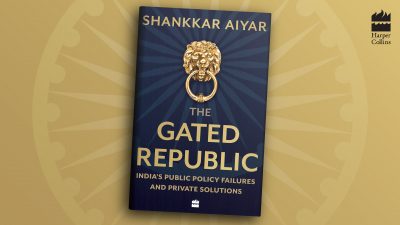
  • The Gated Republic: India’s Public Policy Failures and Private Solutions

    The Gated Republic: India’s Public Policy Failures and Private Solutions

    Book Review
     
    The Gated Republic: India’s Public Policy Failures and Private Solutions
    Author: Shankkar Aiyar
    Publisher:  Harper Collins India
    Date: 01 September 2020
     

    India has always been statist. All its political parties are Statist in one way or the other; from Jawaharlal Nehru to Narendra Modi, the State has been thought of as the most important player in economic and social affairs. However, even with all this undue importance, the Indian State has failed to deliver even basic goods to its citizens in more than seventy years since independence. Political journalist and author Shankkar Aiyar analyses these government failures and explores the private solutions offered for such problems in his new book The Gated Republic: India’s Public Policy Failures and Private Solutions.

    Without engaging in the debate on how small or big a government should be, the author asserts that providing basic amenities is a moral obligation of the State to its citizens. The basic amenities namely Water, Health, Education, Power and Security are the titles of the chapters where he analyses issues surrounding each one of them individually. The issues are well researched, and every argument is substantiated with facts, so much so that one might find the sheer number of facts overwhelming.

    Shankkar Aiyar, however, does not stop with just facts, he gives us anecdotal stories on how failed government policies affect real people. And disproportionately such affected people are poor. Aiyar argues that this is because ‘those who can find solutions- where they find them and when they can pay for them- have already migrated to private solutions. Two conclusions can be deduced from this analysis. One, the poor are left out without even basic amenities of life, thereby increasing inequality. And two, the people who can pay for private solutions are ‘paying for services they have already been taxed for’. Either way, the author argues that the government has let down its citizenry.

    The fact that there is a rationed hourly quota for water in Mawsynram, the region of the highest rainfall in India and that even after seventy-three years after independence, less than 50% of class V students can read class II level text is a testament to the magnitude of the failures of the government.

    The State is, however, not ignorant of these issues. ‘Every decade saw a new committee’ and Aiyar lists out all of them from various sectors, sometimes even from the British period. In public policy, it is said that what gets measured gets managed but even with so many committees, there have not been desirable improvements. The fact that there is a rationed hourly quota for water in Mawsynram, the region of the highest rainfall in India and that even after seventy-three years after independence, less than 50% of class V students can read class II level text is a testament to the magnitude of the failures of the government. It is not that the government is not doing anything, but this dire situation is the result of sloth-like bureaucracy and something Aiyar calls the ‘announcement approach’ of the politicians. Aiyar argues that successive governments have stopped themselves with lucrative announcements and rebranding of old schemes with new slogans instead of rectifying ill-thought-out policies. For example, he talks about the Accelerated Rural Water Supply Program (ARWSP) which was introduced in 1973. Through the years it has gone through different transitions from being included in the twenty point program during the emergency to Technology Mission on Drinking Water in 1986, Rajiv Gandhi National Drinking Water Mission in 1992, becoming a separate Department of Drinking Water under Ministry of Rural Development in 1999, morphing into the Department of Drinking Water and Sanitation in 2010 and finally becoming Drinking Water and Sanitation Ministry in 2011. Now the ministry is renamed as the Ministry of Jal Shakthi. Even after all these measures, clean piped water is still a distant dream to many Indians.

    In a democracy, incompetent policies and politicians should be punished in the polls but Aiyar argues that there is a ‘divorce of authority from accountability’. He does not dwell too deep into why such a gap between government failures and electoral politics exists because the question, although imminent to understand this state of affairs, is beyond the scope of the book. However, he points out at various places in the book where such a gap exists and how ‘normal’ it has come to be. For example, the use of tanker lorries by the governments to ferry and provide water to its citizens is a shift from the actual problem of the lack of capacity to provide piped water. And the fact that water tankers are a ‘normal’ in reality is a testament to how public policy failures are divorced from electoral politics.

    Although people have not kept the State accountable, they have come up with solutions to address government failures on their own. There is an opinion echoed by many others that in India that problems are solved not by the government but despite the government. Aiyar explores so many places where the above statement holds. We get to know about ‘Bisleri’, the first bottled water and how its name evolved, the story of Apollo group of hospitals, many budget private schools and teaching fellowships, the ubiquity of inverters, private security firms who grossly outnumber police force 83:17 and so on. Each private solution is the result of incompetent government services and inefficient public policies. Aiyar dives deep into how the solutions came to be and how it has helped normal people. Take, for example, the power sector. Even though India is the world’s third-largest electricity producer, not every household has electricity. And inverters, diesel and battery, have made a huge impact on households. So much so that, in 2011, the sixty-eighth National Sample Survey (NSS) report created a new entry for inverters in household consumption of goods and services. Aiyar discusses many other problems and their private solutions in the book.

    What is interesting is that people, even poor people, prefer private solutions though it is costlier. For example, the author points out that about ‘78% of rural and 81% of urban Indians’ preferred private hospitals. This shows a lack of faith in government services. These are the symptoms of decades of ill-thought-out public policies that do not address the root cause of the issue.

    What is even more interesting is that now, these private solutions are rebranded as government initiatives. The Adoption of water purifiers and dispensers in government offices and public places is an example of such rebranding. More recently, NEET coaching classes by government schools in Tamilnadu can also be boxed into that category. While both measures are desirable, they are only short-time fixes that address the symptoms of government failure. Through these measures, the author argues that the tragedy of the issue is lost, and the irony is ignored.

    the book paints a rather gloomy picture of the state of affairs where people are exiting from government services for private solutions. Although this ‘exodus’ is natural for rich people, abject government failures are pushing everyone into private solutions irrespective of affordability.

    To summarize, the book paints a rather gloomy picture of the state of affairs where people are exiting from government services for private solutions. Although this ‘exodus’ is natural for rich people, abject government failures are pushing everyone into private solutions irrespective of affordability. The book argues that people are assembling themselves into gated communities where these failures of government policies are taken care of by private solutions. The author has accomplished what he has set out to do- to show us in a platter, the sorry state of public policies and the many failures that it begot. It remains for the civil servants, politicians and the voting citizens on what their line of action will be.