
Tag: Book Review

  • Book Review: Maritime Security in the 21st Century: Drivers and Challenges

    Book Review: Maritime Security in the 21st Century: Drivers and Challenges


    • Publisher ‏ : ‎ Routledge; 1st edition (April 28, 2014)
    • Author: Christian Le Mière – is a senior fellow for naval forces and maritime security at the International Institute for Strategic Studies, London.
    • Language ‏ : ‎ English
    • Hardcover ‏ : ‎ 160 pages
    • ISBN-10 ‏ : ‎ 0415828007
    • ISBN-13 ‏ : ‎ 978-0415828000


    Maritime diplomacy means using maritime capabilities, strategies, and policies to achieve diplomatic objectives and foster international relations. It encompasses various activities maritime nations conduct to promote their interests, maintain security, and manage disputes in maritime domains. Maritime diplomacy has evolved significantly over time, driven by changes in geopolitical dynamics, technological advancements, economic interests, and environmental concerns. Maritime diplomacy adapts to emerging issues, such as cybersecurity and environmental concerns, while balancing economic, security, and diplomatic interests. Christian’s book redefined the concept of maritime diplomacy, presenting it as a multifaceted approach to achieving diplomatic objectives and fostering international relations. In his interpretation, maritime diplomacy encompasses maritime nations’ activities to promote their interests, ensure security, and manage disputes within maritime domains.

    As a senior fellow for naval forces and maritime security at the International Institute for Strategic Studies, London, Christian Le Mière brings extensive expertise and insight to the field of maritime security.

    “Maritime Diplomacy in the 21st Century,”[i] authored by Christian Le Mière, stands as a seminal work redefining the concept of maritime diplomacy in the contemporary era. Published in 2014, this book comprehensively explores maritime diplomacy’s significance, highlighting its relevance and utility amidst today’s complex geopolitical landscape. Le Mière’s analysis challenges conventional perceptions of maritime diplomacy, particularly debunking the notion of “gunboat diplomacy” as an outdated relic of the past. Instead, the book argues that coercive tactics persist in modern maritime affairs, profoundly shaping international relations.

    Le Mière’s emphasis on the distinction between “naval” and “maritime” diplomacy underscores a critical aspect of contemporary maritime affairs. Traditionally, the term “naval diplomacy” has been used to describe diplomatic activities conducted exclusively by naval forces. However, Le Mière expands this concept to include a broader range of actors and activities, recognizing the involvement of non-military agencies such as maritime constabulary forces and paramilitary agencies in maritime diplomacy.

    By incorporating these non-military entities into the framework of maritime diplomacy, Le Mière acknowledges the diverse spectrum of actors operating in maritime domains. Maritime constabulary forces, for example, are tasked with enforcing maritime laws and regulations, combating piracy, and conducting search and rescue operations. Paramilitary agencies, on the other hand, may be involved in maritime security operations or territorial defence activities.

    The involvement of these non-traditional actors highlights the complex interplay between various stakeholders in maritime diplomacy. Unlike traditional naval forces, maritime constabulary forces and paramilitary agencies often collaborate with civilian authorities, international organizations, and other non-state actors. Their participation in diplomatic endeavours at sea reflects the multifaceted nature of maritime diplomacy, which extends beyond military engagements to encompass a wide range of cooperative, persuasive, and coercive activities.

    The Book offers a rich exploration of the multifaceted nature of maritime diplomacy, drawing upon contemporary examples to illustrate its diverse spectrum of activities. One example highlighted in the book is Iran’s naval exercises, particularly the Velayat 90 exercises conducted in December 2011 and January 2012. These exercises showcased Iran’s naval capabilities, including anti-ship missiles and submarines, and were explicitly intended to signal Iran’s ability to exert control over the strategically vital Strait of Hormuz. Le Mière uses this example to underscore the continued relevance of coercive tactics in contemporary maritime affairs, emphasizing how such displays of naval power can have significant implications for global politics.

    Additionally, Le Mière examines US deployments in East Asia as another pertinent example of maritime diplomacy in action. Specifically, he discusses the participation of the USS Abraham Lincoln in naval exercises in the East Sea (Sea of Japan) and the Yellow Sea in response to provocations from North Korea. These deployments, accompanied by allied vessels from countries like Britain and France, signal Washington’s resolve and commitment to its regional allies while deterring further aggression from North Korea. Through these examples, Le Mière highlights the dynamic nature of maritime diplomacy, which encompasses a wide range of activities to achieve diplomatic objectives and maintain security in maritime domains.

    The book explores the theoretical underpinnings of maritime diplomacy, drawing upon insights from legal theorists like Wolfgang G. Friedmann. Le Mière argues that maritime diplomacy serves as a tool for signalling intentions, deterring conflicts, and promoting state interests but cautions that its failure can lead to unintended escalation.

    Chapters delve into the drivers and dynamics of maritime diplomacy, including its role as an indicator of global power shifts and a predictive tool for conflict prevention. Le Mière also explores the application of game theory to analyse maritime diplomatic incidents, providing insights into decision-making processes and strategies for managing potential escalations.

    It offers a multifaceted perspective on the evolving dynamics of maritime affairs and diplomatic engagements, making it a valuable resource across various domains. For scholars and researchers, the book provides a comprehensive analysis of maritime diplomacy, tracing its historical roots, examining contemporary manifestations, and proposing new theoretical frameworks. By delving into case studies and empirical data, scholars can gain insights into the complexities of maritime interactions and contribute to advancing knowledge in this field. Conversely, policymakers can leverage the book’s insights to formulate more informed maritime strategies, navigate geopolitical challenges, and promote international cooperation. With a nuanced understanding of the spectrum of maritime diplomacy, policymakers can effectively utilize naval deployments, diplomatic initiatives, and conflict resolution mechanisms to safeguard national interests and foster regional stability. The book offers practical guidance and real-world examples for practitioners engaged in maritime security and diplomacy, helping them navigate complex maritime disputes, leverage maritime assets for diplomatic purposes, and manage tensions in maritime regions.

    Moreover, students studying international relations, maritime security, or diplomacy can benefit from the book’s comprehensive coverage. It can be used as a textbook or reference material to deepen their understanding of maritime affairs and global politics. Ultimately, “Maritime Diplomacy in the 21st Century” is an indispensable resource, informing policy debates, guiding practical decision-making, inspiring further research, and educating future leaders in maritime diplomacy’s complex and dynamic realm.


    References:

    [i] Maritime Diplomacy in the 21st Century, n.d.


    Feature Image Credit: indiafoundation.in
     

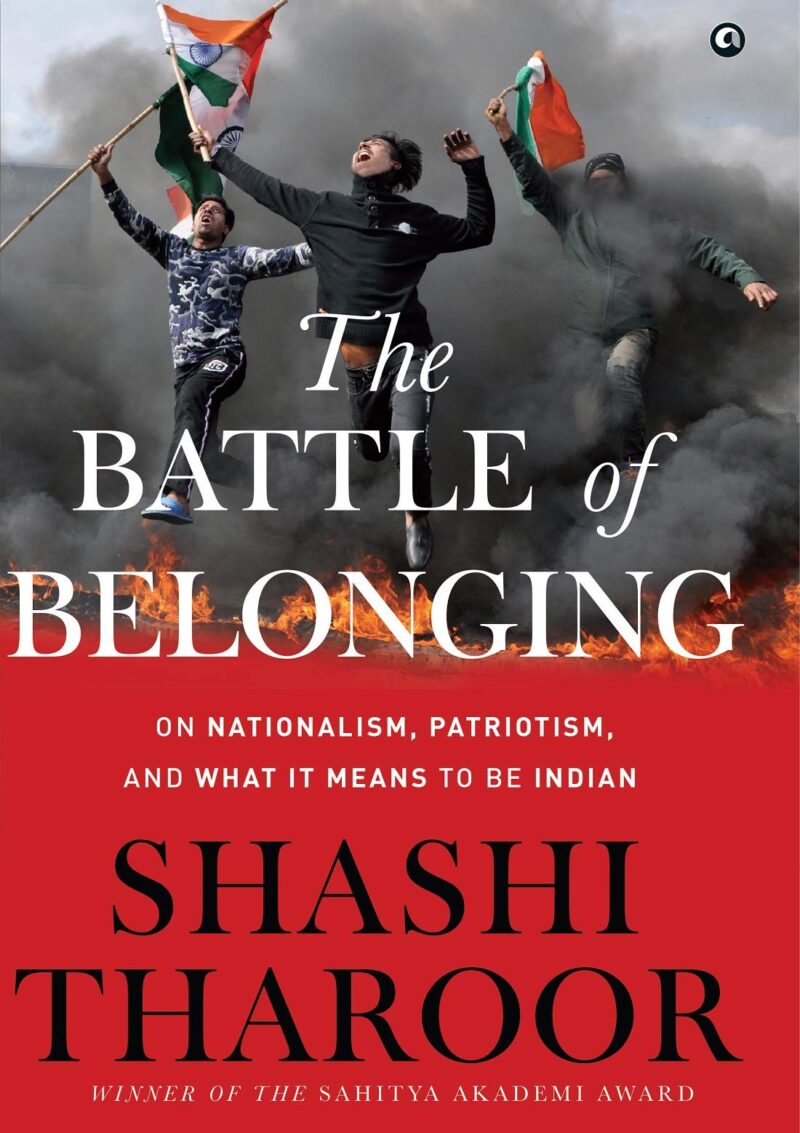
  • An Identity Crisis: Book Review of “The Battle of Belonging”

    An Identity Crisis: Book Review of “The Battle of Belonging”

    Book Name: The Battle Of Belonging: On Nationalism, Patriotism, And What It Means To Be Indian

    Author: Shashi Tharoor

    Publisher: Aleph Book Company

    Year of Publication: October 2020

    Pages: 462


    The cataclysm of Right-wing extremism has seized global politics. From the United States to Britain and New Zealand, the agenda appears dominant. Among them, in the present context, India is no exception. From cow vigilantism to scathing attacks on minority groups, the question of what it means to be an Indian is contested and debated as never before. Dr Shashi Tharoor, Member of Parliament for the Tiruvananthapuram constituency, in his latest book, ‘The Battle of Belonging’ attempts to redefine what exactly it meant to be an Indian and addresses the present identity crisis in India. Dr Tharoor writes about the subtle mechanism which provides more space for civic nationalism in India in the present times.

    From multiple angles, The Battle of Belonging comes out as a sequel to his previous books, ‘Why I am a Hindu’ and ‘The Paradoxical Prime Minister’. In this book, Tharoor addresses the concept of nationalism and patriotism. According to him, the concept of nationalism in India is flawed unlike the concept of nationalism enshrined in the Indian constitution. Through this book, the author asks the readers to dive into the Indian constitution and understand its rationale. He raises key questions such as, ‘has India’s nationalism really been reshaped?’ and stresses the pitfalls that India would face in the future as the plague of extremism spreads. He also envisions a space for civic nationalism, as envisioned by Mahatma Gandhi, Jawaharlal Nehru, B R Ambedkar, and Rabindranath Tagore. The book is divided into six volumes and each section narrates the evolution of nationalism till the current phase.

    According to Tharoor, civic nationalism is cemented on the principles of liberal democracy and equality for all. However, ethnic nationalism or ethnocentric nations erode these principles and peddles a path for Majoritarianism.

    In the first phase, Tharoor unravels the evolution of the concept of ‘Nationalism’ and distinguishes it from the concept of ‘Patriotism’. To furnish a literary overview of the concept, the author espouses the visions of Kautilya, Thomas Hobbes, Ernest Hemmingway, Jawaharlal Nehru, Mahatma Gandhi, and Rabindranath Tagore. He also takes insights from his former diplomatic career. In this very section, Tharoor offers different typologies of nationalism. Among them ‘ethnic nationalism’ and ‘civic nationalism’ dominates the discourse. According to him, civic nationalism is cemented on the principles of liberal democracy and equality for all. However, ethnic nationalism or ethnocentric nations erode these principles and peddles a path for Majoritarianism. Throughout the book, he lashes out at the ruling Bhartiya Janata Party (BJP) for breaking the fabric of civic nationalism.

    The second section of the book is vast and extensively researched. In this section, the author gleans several facts on the concepts of unity in diversity. The book also extensively discusses the difference between Hinduism and Hindutva, where the Rashtriya Swayamsevak Sangh (RSS) is fabricating a new ethos of Hindu Dominance. The book also advances in a way all Indians are a minority in one way or other from a vantage point of view. The author raises the question of an individual’s right to choose his identity regardless of his caste, gender, or whatsoever criteria. 

    The third section explores the Hindutva version of India, investigating how right-wing fringe groups attempt to fabricate a dawn of Hindutva society, where minorities are pushed aside. Here in part, the author delves into the philosophies of Savarkar, Golwankar, and Deen Dayal Upadhaya and how they opposed the Indian constitution. B R Ambedkar envisioned a society that opened space for all. On the other hand, the aforesaid champions envisioned a ‘Hindu Rashtra’, that was contrary to the ideas of Gandhi, Nehru, Ambedkar, and Tagore. In this section, Tharoor speaks on one of his controversial comments, ‘Hindu Pakistan’. He expresses his prolonged anxiety about the possibility of India turning into an autocratic nation like Pakistan. Even though the concept is far-fetched, the ruling party’s majority in the lower house provides no guarantee in this matter.

    India has a prolonged history of accommodating persecuted minorities, whether it be Jews, Parsis and Bangladeshis, and offering them a platform to instil their roots in India and be a part of the nation.

    The fourth section of the book talks about recent events such as the abrogation of Article 370 in Jammu and Kashmir, the Citizenship Amendment Act (CAA), the issue of the National Register of Citizens (NRC), the act of imposing Hindi on the non-Hindi speaking states and the case of the Ayodhya Ram temple. Tharoor condemns the act of imposing Hindi onto the shoulders of non-Hindi speaking states. He also questions the flag bearers of Hindi on whether they will dare to take up the challenge of learning another language other than Hindi.

    The CAA and the NRC shook the nation, creating a wave of panic among citizens. The author claims that the freedom struggle of India was to secure a nation that accommodated all, regardless of their identity. India has a prolonged history of accommodating persecuted minorities, whether it be Jews, Parsis and Bangladeshis, and offering them a platform to instil their roots in India and be a part of the nation. It is also an evident reality that the documentation system is a flawed mechanism and that the poor and uneducated who are not aware of this mechanism are the ones who will suffer in the process of NRC. Tharoor claims that these acts of the ruling party are against the concept of liberal constitutionalism.

    He later discusses the much-debated Kashmir issue. This piece clearly indicates just how well-versed Tharoor is in the Constitution of India. Tharoor strongly condemns the act of abrogating Article 370 without consulting the cabinet members and the manner it was passed in the parliament. The author sees it as a clear violation of democracy. Subsequently, the author discusses the Ayodhya dispute. He sees the verdict as dubious, where the demolition of the mosque is condemned as ‘criminal vandalism’ and on the other side, the land is awarded to the ones who perpetuated the act. He also sees this act as remoulding India against the backdrop of Hindutva ideology.

    India is a nation that accommodates all sorts of diversity, and it is a sheer act of intolerance, where a majoritarian idea is imposed over a minority group.

    In the sixth section, the author addresses the ‘Anxiety of Nationhood’, where Indian nationalism is undergoing fundamental changes. Shashi Tharoor, in the first part of this section, narrates the stark contrast between the idea of Hinduism by Mahatma Gandhi and the current Hindutva ideology. Gandhi was a champion of inclusive nationalism.  He even went to the extent of declaring himself as an amalgamation of all religions. His views are very relevant in today’s climate of intolerance. Tharoor, then takes up the contest between the concepts of Bharat and India. The author strongly condemns fringe groups asserting their ideology. India is a nation that accommodates all sorts of diversity, and it is a sheer act of intolerance, where a majoritarian idea is imposed over a minority group. He also claims that the crux of Indian thought is liberal and tolerant in nature which accepts all faiths as its own.

    The author raises a key question on whether the constitution will be able to tame the Hindutva monologue in the present circumstances. Going further, Tharoor narrates how the right-wing groups condemned the constitution for being anglophone in context and their belief that the constitution does not resonate with the Hindu culture of India. Tharoor also raises his apprehension regarding a Hindutva infused constitution on the pile of a majoritarian ideologue. In the Conclusion, the author also explores how the internet has wrapped India into its network. It is indeed true that social media aids Indians to socialise and raise various issues with the public. However, on the flip side, the author also points out and condemns the social media groups that play an active role in spreading fake news and in inciting violence.

    In the final part, Tharoor speaks on how the soul of India can be reclaimed. Here, the author dwells on the ethos of Indian Nationalism that is built on the foundation of diversity and pluralism, and how it is now being tampered with, and how it can be retrieved. Tharoor raises the clarion call against ethno-religious nationalism, which would distort the future of India’s democracy. He also asserts that it is the responsibility of Indians to reclaim India’s diversity and plurality. He foresees an India that respects all regions with patriotism stemming from unity.

    Shashi Tharoor’s ‘Battle of Belonging’ would definitely interest those who love to analyse facts and information thoroughly. It is indeed a thoroughly researched book, and his arguments are supported by a vast amount of facts. The most interesting aspect of this book is the way Tharoor has sewed his thoughts with impeccable and strong language. To summarise, the book takes the reader through the soul and heart of India.

  • Politics and Technology

    Politics and Technology

    Book Name: Politics and Technology

    Author: John Street

    Publisher: The Guilford Press

    Year of Publication: September 1992

    Pages: 224

    The eighties and the early nineties of the twentieth century witnessed seismic shifts like the globalisation of technology (viz. FAX machines) coupled with tumultuous political events like the Tiananmen protests, the Kuwait war etc. This highlighted the increasing significance of politics and technology, providing the backdrop for John Street’s work in the early nineties. However, Street departs from similar works by illustrating not merely how technology and politics are important but rather the diverse ways in which both are intricately enmeshed with each other.

    The relationship between technology and politics constitutes the major theme underlying this work. While the exponents of autonomous technology believe in a notion of technological rationality, technological determinists argue that technology influences the division of labour, which ultimately shapes state functions. On the other end of the spectrum, political determinists argue that politics is prior to technology, contending that the state functions as a customer, regulator and underwriter of technology. However, he is careful not to wade into simplistic conclusions, arguing that there are wide differences in the way states perform these functions, depending on their respective political structures. He uses a diverse range of examples from the UK and the US to Russia across a range of technological sectors from nuclear to medical.

    A second but interrelated theme in this book is the interrelationship between politics and science. This is illustrated using various aspects of science like the scientific method, the concerns, language and ideology of science, the interests of scientists etc. For instance, the feminist critique of science argues that science, in an ideological sense, is masculinist, marginalising the experiences of women. This interrelationship is linked to the larger normative question he seeks to address – how to ensure democratic control of technology. In order to answer this, he addresses the dual themes of the political implications of technology as well as the factors that confront us while making choices based on technology. He is not short of nuance here as well, arguing in detail how technology can result in myriad political manifestations in the respective spheres of dependence, choices, inequalities, experiences, side effects etc. The second theme of the choice of technology is conditional on institutional, evaluative and informational factors.

    Setting the backdrop for the question of democratic use of technology, he examines the two prevalent contrasting political approaches to technology. Devoting a detailed section to green politics, he underlines how this brand of politics is antithetical to technology to such an extent that it has to be either renounced or radically reformed. The opposing strand of the technical fix seeks to ensure the subservience of technology to politics.

    The theoretical contribution he makes to the technology-politics literature is an ‘eclectic’ third approach whereby he argues for an understanding of technological and political change in constant flux. Rather than providing definitive answers, he argues for a different approach, where he encourages the reader to question the very dichotomy between politics and technology. Using a powerful example of how supposedly technical notions like accuracy are political, he argues how technology in itself is shaped by politics. Similarly, in the context of mass communication in democracy, he argues that the democratisation of technology depends on the outcome, design and content of technology.

    What makes ‘Politics and Technology’ remarkable is the sheer breadth of his analysis. This extends not only to the myriad illustrations of technology to substantiate his arguments but also to the nuances related to the technology-politics interface. The illustrations are wide-ranging and colourful, encompassing technology from mere hedges (to block protests) to the various formal dimensions of technology like medical, biotechnology, information technology, nuclear technology etc. His treatment of politics is no different – embracing a wide range of both philosophical positions from Bell to Heidegger as well as ideological standpoints from feminism to Marxism.

    Those probing for definitive answers are likely to be disappointed. He addresses questions of politics and technology like a seasoned academic, exhausting the whole breadth of interactions between both while resisting simplistic conclusions. For instance, he resists the simplistic proclivity to link non-democratic regimes (e,g, Russia) to attitudes of secrecy on nuclear spillover, by highlighting contradictory attitudes of democratic regimes like the UK. He further grapples with notions like democracy, technology etc. which we take for granted, examining, unravelling and distilling nuanced, crystal-clear definitions in the process. This is evidenced by his detailed description of technology as having not merely material and intellectual dimensions, but a social aspect as well.

    However, barring exceptions like Tiananmen and the Bhopal tragedy, the illustrations used are overwhelmingly skewed towards the Global North. Further, through a critical lens, one could argue that the endeavour to explain the politics of science while exhaustive and enriching in itself, doesn’t offer much in his emancipatory democratic project.

    However, none of these glitches is significant enough to derail his larger project. In a society embarking on the Industrial Revolution 4.0 and the looming possibilities of “an AI war”, the fundamental normative project to democratise technology remains more relevant than ever. Even from a philosophical standpoint, his project remains relevant. The post-humanist strand of thought, which seeks to fuse the human-technology assemblage to conceptualise cyborgs and its relationship vis-à-vis the social-political realm, is based on very similar assumptions of dissolving the divide between the human and technology. Thus, it is safe to argue that ‘Politics and Technology’ remains one of the most relevant and exhaustive ‘gateway’ works for students probing the myriad and complex interconnections between politics, science and technology.

    About the Author:

    JOHN STREET is a professor of politics in the School of Politics, Philosophy, Language and Communication Studies. He is the author or co-author of seven books and some 80 articles. The third edition of his Media, Politics and Democracy was published in 2021. He is currently the Principal Investigator on an AHRC project: ‘Our Subversive Voice? The history and politics of the English protest song. The other members of the research team are Alan Finlayson (UEA), Oskar Cox Jensen (UEA), Angela McShane (Warwick University) and Matthew Worley (Reading University).

    He supervises PhD students working on a range of topics, including the politics of music, new forms of political communication, and participatory democracy. He is a member of the Political Studies Association, the Subcultures Network, the International Association for the Study of Popular Music, and MeCCSA. He is a Fellow of the Academy of Social Sciences and a Fellow of the Higher Education Academy. He was until recently an Honorary Professorial Fellow at the University of Melbourne.

  • America’s Two Cold Wars: Hegemony to Decline?

    America’s Two Cold Wars: Hegemony to Decline?

    Book Name: America’s Two Cold Wars: Hegemony to Decline?

    Author: Alfredo Toro Hardy

    Publisher: Palgrave Macmillan

    Year of Publication: March, 2022

    Pages: 305 


    The war in Ukraine has necessitated a recalibration of US foreign policy as tensions intensify between America, its allies and Russia. The US’s ‘pivot to Asia’ policy has taken a hit in the face of Russia’s aggression in Ukraine. As global attention, once again, shifts to the former Cold War superpower, China appears to be reaping all the benefits in the ensuing power vacuum.

    Alfredo Toro Hardy’s America’s Two Cold Wars: From Hegemony to Decline? is a timely addition, both in terms of what is unfolding presently and the literature that is emerging on the shortfalls of American foreign policy in its dealings with Russia and China. The former Venezuelan diplomat joins the intensifying debate on the emerging reality of a Cold War between the US and China and the broader debate surrounding America’s decline from being a global hegemonic power and its implications for the country’s international engagement with the rest of the world.

    The book offers a comprehensive diagnosis of American foreign policy by way of a comparative analysis of the US’s Cold War with the Soviet Union with the emerging one with China from the American perspective and seeks to answer two questions: one, how different a strategic competitor is China to the erstwhile Soviet Union and two, how different is the US of today compared to its former self when it confronted and won the Cold War with the Soviets.

    Hardy identifies five fundamental issues afflicting US foreign policy in its engagement with China – ideology (or lack thereof), squandered alliances, foreign policy-related inconsistencies, the country’s economic downturn and the containment strategy trap. The author’s key argument recurs throughout the book – that the US is confronting China in the emerging Cold War on a “wrong configuration of factors” (p. 168) and needs to “responsibly explore and analyse the options on the table” (p. 171).

    In acknowledgement of the deficiencies facing America’s foreign policy regarding China, the author sets the context and provides readers with a succinct account of the collapse of the Soviet Union, the emergence of the period of US hegemony and the rise of China in the first two chapters. Hardy rightly emphasises that America is threatened by China’s ascendence – citing research done by the Pew Research Center that showed that 73 per cent of Americans viewed China negatively. In the author’s words, “Washington is aggrievedly and forcefully reacting against what it perceives as an existential contention” (p. 7).

    Hardy also outlines the Chinese perspective and correctly concludes that Beijing is driven by its experience under imperialist powers during the ‘century of humiliation’ and economic mismanagement under Mao Zedong. Indeed, this coupled with the Tiananmen Massacre in 1989, controversy over Chinese dissident Fang Lizhi between 1989-1990, the Taiwan strait crisis in 1996, the bombing of the Chinese embassy in Belgrade (p. 23) by American forces and more recently, the independence movements in Hong Kong are insightful examples in understanding why the Party and now, Xi Jinping, are in pursuit of relentless centralisation of power and authority. Despite China’s adroitness in foreign affairs under Xi Jinping, the country’s great power ambitions are driven by domestic considerations and how the international community perceives these ambitions. The US’s belief in China’s disregard for a rules-based order is what the latter takes offence with – believing the former to be constraining it from taking its “rightful place in the world” (p.7). China eschews the American mindset of reverting to the Cold War mentality and instead argues for a more inclusive world where both states are mindful of their responsibilities.

    The author offers a penetrating account of US-China relations – moving from cautious partners with mutual strategic interests to strategic competitors. A pragmatic agreement was drawn up that was mindful of the other’s national interests – the US would recognize the Communist government in China and give it legitimacy and in exchange, China would not seek to limit or challenge the “US’s power projection in Asia” (p.22). China’s gains from this arrangement were enormous and translated into divestment from Mao’s model of productivity and economic self-sufficiency, a foothold in Western markets and a WTO membership. However, 2008 marked the inflexion point in their relations. The diplomat’s insightful analysis of the changing currents in China’s foreign policy and engagement with the US – the global financial crisis and China’s ability in tiding over it, the success of the Beijing Olympics, the US’s failures in the Middle East and disregard for its allies, China’s military build-up, the South China Sea and Xi Jinping’s leadership – is unparalleled and serves as an excellent prelude to why he thinks the two countries are in an “unavoidable collision course” (p. 35). China’s desire to forge a new status quo and challenge the US’s rules and the US’s and China’s “perceived sense of mission and superiority” based on their history and national myths as they look into the future, makes the prospect of a major conflict with spill over effects plausible. Here Hardy goes a step further and claims, based on the plausibility of a war between the two, that they are already in the midst of a Cold War (p. 36). In announcing its ambitions to the world, China may have lost the advantage of its hitherto low profile strategy and believes that American hegemony is on the decline.

    To be sure, the author’s analysis of the five deficiencies in American foreign policy forms the most important section of the book. His commentary on America’s notion of its exceptionalism and “crusader foreign policy” (p. 42) is particularly relevant when we look at its response to the war in Ukraine – the US’s network of financial institutions and media conglomerates have been “able to impose international patterns of credibility or ostracism depending on the acceptance or not of the prevailing liberal ideology” (p. 18).

    Alexis de Tocqueville’s Democracy in America described American democracy as a form of Christianity and there is more than a grain of truth to this when they believe they were ordained by God to undertake the responsibility of exporting democracy to the rest of the world, not unlike the colonial powers; as Hardy keenly points out – “the United States never stopped being what its puritan colonists wanted it to become” (p. 42). The ideological calculus worked in America’s favour during the Cold War with the Soviet Union. In confronting China, a country uninterested in exporting communism, in relentless pursuit of efficiency and economic development, the US falls considerably short. This section is a succinct account of the erosion of democracy domestically, the political establishment, poor performance in development indicators (specifically, education and infrastructure) and the labour market. As Hardy puts it – “efficiency is the catchword” (p. 53) and the name of the game in the Cold War between America and China.

    In building alliances to counter China, US foreign policy has a long road ahead as it recovers from the wars in the Middle East, the Trump presidency, its recent misstep in leaving Afghanistan to the Taliban and now, its conflict escalations with Russia. America’s inconsistencies in maintaining its alliances have put them on the back foot in confronting China and only served to better the latter’s position in the international community through cooperative multilateralism (p. 82). The author concludes that the worst-case scenario for the US would be a Russia-China alignment. Indeed, in the fourth iteration of the India-US 2+2 dialogue, the Russia-Ukraine war was the elephant in the room as joint statements from the US and India reflected a sentiment of ‘agree to disagree’. These joint remarks were widely acknowledged to be ‘tame’ in comparison to the statements several White House officials made of India’s position on the matter, most notably that of President Biden’s comment of India being “somewhat shaky” on the Quad and that of Deputy NSA Daleep Singh who warned of “consequences” should India continue to increase its imports from Russia.

    The author is critical of the growing divide between the Democrats and Republicans in the foreign policy establishment – referring to them as “inhabiting different foreign policy planets” (p. 105). Even the consensus on the containment strategy for China is shaky as Progressive Democrats call for restraint. China, on the other hand, is a different story. According to Hardy, China has its eggs in order – a sound national objective, well-rounded foreign policy, cooperative multilateral mechanisms and localised geopolitical ambitions for the moment. China exhibits unwavering focus as it marches towards what it believes is its destiny – to become a world power by 2049. The only downside that the author warns of in China’s strategy is Xi’s presence at the helm. The longer Xi stays at the top, the more the country’s policies will mould around his personality. In the event of his absence “China may find itself in big trouble” (p. 109).

    In comparing the Soviet Union and China’s economies, here too the US falls short. During the first Cold War, America had both economic and military advantages and possessed a technological edge that was unmatched. Today, the US might go toe to toe with China and still not emerge victorious. According to Hardy, China will surpass the US’s GDP in absolute terms and has already achieved the same in Purchasing Power Parity (PPP). It is very likely that China’s military expenditure will far exceed the US’s down the line. It has militarily caught up to the US through asymmetric “armament development” (p. 121) and other strategies. Its advantage also lies in the fact that its military deployment is closer to home compared to the US’s strategy of maintaining a standing presence around the world. However, the analysis in this section falls short of elaborating upon America’s weaponization of its financial power. A major factor in the US being a superpower has been the dollar hegemony it has enjoyed since the 1970s. This aspect is intrinsic to understanding US foreign policy, especially when global FOREX reserves in dollars have declined to 59 per cent from 72 per cent in the last two decades. Analysts argue that this reflects the decline of the dollar’s dominance in the face of other currencies. Indeed, China, Russia, India and Brazil are working to reduce their dependency on the dollar and shield themselves from Washington’s vagaries.

    Washington is playing catch-up with Beijing; inheriting the Cold War mentality and deploying used strategies against a competitor that almost evenly matches the US in all aspects. From Hardy’s commentary on the containment strategy that the US pursued against the Soviets, it is immediately evident that the same cannot be replicated in its confrontation with China. While appreciative of the consistency that the Obama, Trump and Biden administrations have shown in dealing with China, the author claims the lack of an overarching strategy and general cohesiveness will not deter China’s ambitions. Considerations of “economic preponderance and geopolitical feasibility” (p. 146) appear to be missing in devising a strategy to counter China. But the author astutely points to the viability of containing China in a region that is of significant geostrategic importance and has historically been its sphere of influence and rightly questions the US’s capability to respond when China has “firm control of the operational theatre” (p. 148) in the region.

    Hardy’s sections that delve into the US’s economy, while useful in the context of its military expenditure, do not adequately explain the sheer influence and entitlement that the country enjoys in international organizations like the IMF, World Bank, OECD, WHO etc. and its impacts in its engagement with China. Similarly, the US has historically turned to sanctions as punitive measures against their enemies – indicative of confidence borne out of the dollar hegemony. Insights into how effective sanctions are and why and how the US weaponizes this power would more forcefully drive home the well-rounded strategy that America has pursued as a hegemon. The Ukraine war is just one example in a long line wherein the US has exercised its power and unilaterally imposed severe sanctions on Russia – encouraging even its allies and partners to take the same measures against Russia. Increasingly, it is becoming evident that the US’s unilateral sanctions are having a negative impact on its credibility as a responsible superpower. Nevertheless, the book offers the general reader a comprehensive assessment of the US in the world order presently and more specifically, a comparison of its foreign policy strategies with the erstwhile Soviet Union and China.

    Overall, America’s Two Cold Wars: From Hegemony to Decline? is a thorough exposition of US foreign policy and draws from experts like Kishore Mahbubani, Mathew Kroenig, Francis Fukuyama, Henry Kissinger and John Mearsheimer and, unlike most literature on the topic, Hardy does not assume a fatalistic narrative that supports the US’s decline of power. Simply put, with the first Cold War, America had all the right configuration of factors in place. This seems to have changed in the second; if the US is facing China on the wrong configuration of factors (p. 168), then the results are only a product of successive administrations lacking coherency in putting together a sound strategy. The author, in a reflection of his experience and expertise, incisively concludes that the US must pursue alternatives to a Cold War with China for three important reasons: first, sharing global governance responsibilities would aid in building US credibility as a responsible superpower as well provide cooperative solutions to global problems like climate change; second, US strategy towards China needs to be a choice between adopting a China-centred policy or alliance centred policy geared towards building multilateral cooperation (p. 169) and third, the interconnectedness of the global economic system will ensure that everyone pays the price for an expensive war between the US and China. The US’s only recourse is to focus on building back its credibility, alliances and partnerships. At the same time, it must be realistic and reflect a deeper understanding of China’s national interests and strategic objectives. These two intentions must work in tandem if the US hopes to successfully counter China.

    About the Author:

    ALFREDO TORO HARDY is a Venezuelan retired diplomat, scholar and author. He has a PhD in International Relations from the Geneva School of Diplomacy and International Affairs, two master’s degrees in international law and international economics from the University of Pennsylvania and the Central University of Venezuela, a post-graduate diploma in diplomatic studies by the Ecole Nationale D’Administration (ENA) and a Bachelor of Law degree by the Central University of Venezuela. Before resigning from the Venezuelan Foreign Service in protest of events taking place in his country, he was one of its most senior career diplomats. As such, he served as Ambassador to the United States, the United Kingdom, Spain, Brazil, Singapore, Chile and Ireland.


    Hardy directed the Diplomatic Academy of the Venezuelan Ministry of Foreign Affairs, as well as other Venezuelan academic institutions in the field of international affairs. He is an Honorary Research Fellow of the Geneva School of Diplomacy and International Relations and has been a Visiting Professor at the universities of Princeton and Brasilia and an online Professor at the University of Barcelona. He has also been a Fulbright Scholar, a two-time Rockefeller Foundation Bellagio Center Resident Scholar and an academic advisor on diplomatic studies at the University of Westminster. He has authored twenty-one books and co-authored fifteen more on international affairs and history while publishing thirty peer-reviewed papers on the same subjects.

  • Book Review: The Entrepreneurial State: Debunking Public vs. Private Sector Myths

    Book Review: The Entrepreneurial State: Debunking Public vs. Private Sector Myths


    Book Name: The Entrepreneurial State: Debunking Public vs. Private Sector Myths
    Author: Mariana Mazzucato
    Publisher: Anthem Press (10 June 2013)
    Page Count: 266
    Price: INR 2,020.00


    Written against the backdrop of the recovery period of the financial crisis of 2008, Mariano Mazzucato’s ‘The Entrepreneurial State’, came at a critical point, arguing against the widely accepted belief of the self-correcting nature of the markets, and the austere state measures of limited intervention, which in the case of the financial crisis, referred to injecting large sums of capital in banks to rescue them from collapsing. The book is an expanded version of a 2011 report which laid down policy proposals for the UK government post the crisis.

    Divided into ten chapters, the book focuses on the need for the institutionalization of innovation and lays down two main arguments. First, state investment is a necessary pre-condition for any long-term innovation, and growth, and requires a steady flow of funds. Arguing that governments must move beyond spending solely on infrastructural development, Professor Mazzucato extensively explains how the state and the industry are interwoven together, and cannot be looked at, in isolation. She draws her examples from a wide spectrum of industries in the United States, covering the pharmaceutical companies, to big tech companies, while also linking the state and industry to public schools, and foreign and defence policies of the United States.

    Second, the book argues that the companies funded by the state should return a part of their profit to the state for investment in other innovative technologies. Here, it is important to note that while the book has been targeted by neo-liberals for suggesting socialization through increased state intervention in the market, the author, however, does not question the right of private companies to accumulate profits, and asks only a proportion of it to be redistributed to the state for further investment.

    A major part of the book is devoted to addressing the illusion that entrepreneurship and innovation come from the private sector alone. Debunking this myth, Professor Mazzucato cites extensive evidence of impatient venture capitalists who have historically depended upon the government support for expensive and ambiguous investment risk, and of companies that have historically preferred to repurchase their shares to increase their stock prices instead of investing in research. She highlights the role of the Defense Advanced Research Project Agency (DARPA) in the US which was set up to provide the country with technological superiority. Arguing that the agency played a critical role in funding computer and internet technology, she illustrates how its contribution to the success of companies in the Silicon Valley, is often overlooked by institutions seeking to get away from the long arm of the state’.

    The author draws inspiration from Keynes’ advocacy of increased government expenditures, and Karl Polanyi’s research on central organization and state’s policies of controlled interventionism, where he argued that it was the state-imposed conditions that made a conducive environment for markets to come into existence. She also draws some of her important arguments from Schumpeter’s idea of entrepreneurial innovation and experimentation which paves the way for innovation by constantly destroying the old ones. Throughout her book, Mazzucato argues for a symbiosis of Keynesian fiscal spending, and Schumpeter’s investments in innovation.

    The book challenges the widely promoted concept of a free market based on limited state intervention, by the United States. Claiming that the US has itself invested heavily into its research and industrial sector, the author looks into the role played by programs and agencies like DARPA, Small Business Innovation Research (required large companies to designate a proportion of their funding to small for-profit firms), the Orphan Drug Act (provides tax incentives, subsidies, and intellectual and marketing rights to small firms dedicated to developing products for the treatment of rare diseases) and the National Nanotechnology Initiative. Further, after comparing the data of several countries, the author argues that states like Portugal and Italy are lagging not because of high state presence, but rather due to lack of state investment in research and development.

    The author builds up her argument upon the foundation that the state lacks confidence in its abilities to fund innovation. She argues that an increasing number of research and financial institutions have wrongfully come to regard the state as the ‘enemy of the enterprise’, which should be kept away from meddling in the market to ensure efficiency. Although she does briefly mention that the citizens are often unaware of how their taxes foster innovation, her analysis does not delve into the reason behind the state’s lack of confidence in itself, making it difficult for the reader to grasp the reason behind the state’s as well as the society’s lack of trust in a public-funded healthcare system, despite most new radical drugs have been coming out of public labs.

    Writing on the importance of green technology, Mazzucato holds that any ‘green revolution’ would depend upon an active risk-taking state. While comparing the green economic policies of China, Brazil, the US, and Europe, she elucidates how the state investment banks in China and Brazil act as a major source of funding for clean and solar technology. On the other hand, Europe’s approach to clean technology funding has been weakened by its attempt to present ‘green’ investments as a trade-off for growth, consequently resulting in a lack of support.

    Towards the latter part of her book, Professor Mazzucato presents her hypothesis of the risk-taking state, where both the state, and the market are interwoven to generate growth, and innovation. Her proposal is supported by numerous examples of state-sponsored innovative technology which emerged in the last century, implying that the state may have always been entrepreneurial. However, she argues that countries like India have performed worse than others because of their over-expenditure on several small firms, which have low productivity and output. The focus of state investment, thus, should be placed not on its quantity, but rather on its distribution amongst different sectors of the economy.

    Mazzucato claims that since the traditional tax system cannot provide the state with funds to invest in the innovation system because of tax avoidance and evasion, she suggests a three-step framework to support state-funded innovation. First, the state should extract royalties from the application of a technology that was funded by the state itself, which should be put into a ‘national innovation fund’ for future investment. Second, the state should put conditions on the loans it offers, a part of which should be returned to the state when the company starts to earn profits. And finally, she argues for the establishment of a State Investment Bank, like those in China and Brazil.

    The relevance of her hypothesis increases significantly as one witness the market value of Apple moving past the mark of $3 trillion, and surpassing the GDP of countries like the UK, Italy, Brazil, and Russia.[i] The author debunks the overestimated role of the big private companies like Apple and Google being at the forefront of generating innovative technologies by themselves alone. In doing so, she argues that Apple has received state funds from various channels, including direct investments in their early stage of development under the government programs like the Small Business Innovation Research; through access to technologies that emerged primarily because of state funding; and through the tax policies which benefit the company. Most of the elements used by the Apple, including high-speed internet, SIRI, touch-screen displays have been a result of risky investments by the state.

    Scholars[ii] have argued that the book does not consider the ‘productivity paradox’, which reflects low productivity in times of emerging innovative technologies, as during the IT revolution of the 1970s in the United States. However, it is important to note, that Mazzucato argues against the endogenous growth theory, where the output is taken as a function of capital, and labour, with technology assumed as an exogenous variable. She targets the theory for assuming certainty in growth after investment in technology, and research and development. Taking inspiration from Schumpeter, she asserts that investment in technology and innovation involves high uncertainty, and the growth, thus, cannot be measured using a linear model like the endogenous theory, which does not take into account the social factors responsible for growth (education, design, training, etc.).

    One of the limitations of the book is its lack of analysis on the underlying structural inequality and the impact of technological change on income disparities. Instead of delving further into controversies of value creation, the author cites an example of the wage-disparity between Apple’s broader employee base and its top executives and observes that the process of innovation can go ahead simultaneously with inequality. In the case of Apple, the products of which are considered as global commodities, a major part of the workforce come from countries providing cheap labour. These offshore jobs mostly take place in the low-wage manufacturing industries, and the resulting profit margins are counted as ‘value added’ generated within the United States[iii]. While Mazzucato argues for redistribution of profit between Apple and the US government, her analysis ignores the role played by the globalized workforce in generating the said profits.

    Lastly, the case for a risk-taking entrepreneurial state has been made solely based on politically stable, high-income countries of the West. The author does not address whether high-scale state investments would be viable in situations where governments’ primary focus is placed on maintaining domestic stability and security, as in the case of Afghanistan, Somalia, or Yemen. Thus, one cannot be fully convinced about whether the prescribed model would fit well into the low-income countries of the South, many of which continue to witness high levels of instability, corruption, and violence.

    Overall, in using over three hundred different sources, Professor Mazzucato’s book provides the reader with an extensive critical insight into the working of the state, and the industry. By addressing the various myths associated with industries in each of her chapters, the author makes the reader question the fundamentals of the free-market system and makes one interrogate the existence of such a system. The book also attempts at breaking the cultural hegemony of the United States, by challenging their mainstream narrative of high-scale privatization and limited government presence. By covering a vast ground of industries, the book pushes the reader to delve into further research to investigate the role of the state in funding other technologies and innovations.


    [i] Bursztynsky, J. (2020, August 19). Apple becomesfirst U.S. company to reach a $2 trillion market cap. Retrieved August 20, 2020, from https://www.cnbc.com/2020/08/19/apple-reaches-2-trillion-market-cap.html  and Smith, Zachary Snowdon. (2022, Jan 03). Apple becomes 1st company worth $ 3 trillion – Greater than the GDP OF UK. Retrieved March 08, 2022, from https://www.forbes.com/sites/zacharysmith/2022/01/03/apple-becomes-1st-company-worth-3-trillion-greater-than-the-gdp-of-the-uk/?sh=6142c7b25603

    [ii] Pradella, L. (2016). The Entrepreneurial State by Mariana Mazzucato: A critical engagement. Competition & Change, 21(1), 61-69. doi:10.1177/1024529416678084

    [iii] Greg Linden, Jason Dedrick, and Kenneth L. Kraemer, Innovation and Job Creation in a Global Economy: The Case of Apple’s iPod, Personal Computing Industry Center, UC Irvine, January 2009, http://pcic.merage.uci.edu, 2.


    Feature Image Credit: Mariana Mazzucato Quartz

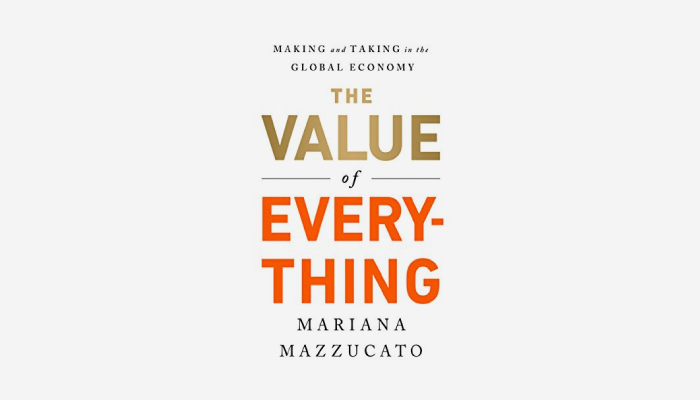
  • Value Of Everything: Making And Taking In The Global Economy

    Value Of Everything: Making And Taking In The Global Economy

    Title : Value of Everything: Making and Taking in the Global Economy

    Winner of the 2018 Leontief prize for advancing the frontiers of economic thought ─ “Value of Everything: Making and Taking in the Global Economy” by Mariana Mazzucato is an extremely important addition to the contemporary debates in development economics. Fundamental ideas presented in the book are very relevant in the current pandemic environment as it gives us an opportunity to reframe approach to policy making. Limitations in the state’s capacity to handle a crisis of this scale might be true but the larger objective to ensure an economic and social value based ecosystem is the main idea that emerges from this book.
    The core focus of the book is on the ‘understanding of value’, as Mariana states – “much of what is passing for value creation is just value extraction in disguise”. By examining what is value the book leads us to understanding who creates value.
    Initial chapters set out to explain the core interpretation of ‘value’ adopting a historical framework by discussing influential economists. Beginning with Mercantilists in an inchoate system that was not linked with any theories to explain the creation of wealth, they believed trade creates wealth and hence, ‘value’ lies within trade. A group of 18th century French economists developed a formal economic theory ‘physiocracy’ that prioritized agriculture and land to be the ultimate source of value. There was a clear production boundary that was developed during the time of physiocrats with agriculture being productive and household, government, service, industry packed together as unproductive. Countering the Mercantilists, Adam Smith theories became prominent to understand the idea of value where wealth creation lies in an optimal economic policy encouraging surplus revenue to be reinvested in production for the nation to become richer. The author points to the theories put forth by Smith to be ambiguous yet made progress in building the concept of wealth creation. David Ricardo– a British political economist extensively wrote about rent and assumed land to be a fixed factor. As opposed to Physiocrats, Ricardo’s theory on value was beyond the production boundary and placed emphasis on financing the surplus into productive spending. The author briefly evaluates the classical theories including Marx’s labour value theory and the recent development of Marginalists under the neoclassical economics. It is worth contesting the idea of value in the marginalist approach where the price is equated to value and individual utility is studied over collective public utility . Although the theories in principle might not be relevant today but the evolution of value in the history of economic thought is a prerequisite to identify the flaws in our structure.
    A key focal point that grabs attention of the reader is the ambiguity present in determining the value of products and services. Reluctance to debate the idea of value with the current system has caused trouble in various sectors and the book reflects Mazzucato’s effort to place value in the centre-stage. She begins to make her case by lucidly explaining the fundamental shortcomings in finance deregulation. In the context of the 2008 financial crisis, much of the blame is on the finance market with excessive mortgaging strategy. Although finance is not a categorical reason for the crisis, the real estate bubble was artificially inflated by the short term objectives of finance companies and clearly proved to be unsuccessful. There are two relevant points that the author notes that will hold relevance across the waves of industrialization. First, economic value added by a finance sector largely remains disproportionate to the value added by other sectors. As a resource facilitator, she asserts, banking corporations are required to invest in productive business that adds further economic value in the society. Mere exchange of financial instruments does not guarantee increased output or welfare in an economy. It has taken a crisis for us to understand the need for steering the discussion on ‘Value Creation’. Second, financial markets bolstering private businesses model prioritizes immediate gains with limited attention paid to the long-run sustainability of the business.
    The book is a scathing indictment of the current global financial system. In the authors view the finance entrepreneurs are overrated, and contrary to popular perception they are not ‘value creaters’ but are ruthless ‘value extractors’ and parasitic. Professor Mazzucato finds the shareholder driven model to be problematic for business innovation and proposes a wider concept of stakeholder based operations. An unequivocal argument is presented to question ‘value extraction’ in the 21 century economy- in public choice theory it would mean rent seeking, a concept of increasing existing share of one’s wealth without creating more wealth. Although the author did not specifically mention the Asian countries, in Indian context, value extraction is much difficult to identify given the informality in credit market, labour market and commodities. But the unsustainable mode of executing business is evident in a corporate company that is motivated to spend on company image than Research and Development. Most importantly, the government bears the cost to repair the system with social tension and inequality that follows the failure of excess financialization. The author’s discussion on development and welfare throughout the chapters encourages readers to view the economy beyond numbers and growth rate– a propensity stemming from modern heterodox economics school of thought
    Mariana Mazucatto, founder of the Institute for Innovation and Public Purpose, draws attention to value extraction prevailing in the innovation economy. She illustrates three sources of innovation; cumulative innovation, uncertain innovation and collective innovation. She clearly articulates the engaging role of the public sector in facilitating innovation. Where most experts talk about innovation as an exclusive achievement of the private sector– Mariana challenges that notion and argues the risks of the innovation are borne by the public but the rewards are monopolized by the private business. It is impossible to deny the role of public sector in the process of innovation but it seems the author tends to credit the government more. All innovation need not create value- an extensive literature is presented to understand the way patents can be used to gain economically yet not create value. Highlighting the case of pharmaceuticals, she argues that most of the drug companies are monopolies that use the patent strategy and the rigid demand to inflate the prices for enormous profit although the production cost is a small percentage of the price. This process explains the high priced medicines in the USA and rekindles the fundamental flaw in pricing of a drug. An extreme private model with little clarity and transparency on value of the service has collapsed the healthcare system in the US, which is starkly evident in the current COVID-19 pandemic. To extend this idea, American healthcare contributes more to the Gross Domestic Product compared to the Japanese, yet citizens of the latter have higher life expectancy than of the former. The illusion of GDP contribution is more apparent when the system fails to serve the purpose it was designed for, like in the case of healthcare. Innovations in any industry can turn out to be unproductive; dismissing any single command approach from the government– the chapter ends by propounding a contract between public and private to adopt innovation as a means to achieve public value.
    In contemporary discourse, the author is concerned about the narrow definition of public sector as simply a saviour or a disturbance to private operations. A powerful narrative set to describe government to be inefficient and just an institution fixing market failure will deter the collective process of value creation. The recent economic stimulus announced by India is founded on the logic that public debt is bad, slashing interest rates would enhance business and privatization would lead to better economic growth. As Mazucatto argues, during an economic crisis public sector must seize the opportunity to invest in value creation simply because interest rates are neither market phenomena nor make firms sensitive to the change. The underrated value of the Keynesian ‘Multiplier Effect’ of public investment and considering the return on public investment to be zero are flaws in defining the role of government in contributing to growth of the economy.
    Prevailing public choice theorists’ fear of government failure over and above the threat posed by market failure runs the risk of ignoring the value created by the state. The author makes a compelling case to view government as an investor rather than spender and as a risk taker rather than a facilitator. She highlights the importance of the state’s part in the collective value creation process by disputing the marginalists definition of individual value in obtaining market value. Knitting back to the initial problem stated regarding price equal to value– identifying profit and rent becomes confusing thereby encouraging private players to extract or destroy value. The mainstream metrics used to assess the value also discourages actual value creators like the government to imitate the private sector. The government as a facilitator also faces the risk of lobbying from the private individuals and companies that hamper the process of development. The last chapter – ‘Economics of Hope’– summarizes the main ideas presented throughout the book and emphasises that the ultimate goal of the economy is to serve the people and ensure welfare along with sustainable and equitable development. The real challenge still lies in estimating the precise amount of government intervention in the process of value creation. Value of everything remains a convincing genesis of the debate on the central idea of value that could possibly be a dynamic tool to achieve the goals of an economic system.
    As Mariana Mazucato argues in this penetrating and passionate book, if we are to reform capitalism to radically transforman increasingly sick system rather than continue feeding it we urgently need to rethink where wealth comes from; who is creating it, who is extracting it, and who is destroying it. Answers to these questions are key if we want to replace the current parasitic system with atype of capitalism that is more sustainable, more symbiotic, that works for all.