Tag: BJP

  • ‘Pawar Play’ in Maharashtra

    ‘Pawar Play’ in Maharashtra

    Henry Luis Mencken (1880-1956), well known American journalist and essayist, once wrote “As democracy is perfected, the office of president represents, more and more closely, the inner soul of the people. On some great and glorious day the plain folks of the land will reach their heart’s desire at last and the White House will be adorned by a downright moron.” As we sit back and watch as the Impeachment drama plays out in the United States, one cannot help but marvel at Mr. Mencken prescience. The election of Donald Trump does seem to suggest that the American public has indeed found its inner soul, but as to whether it has really perfected democracy in the process remains questionable.

                Especially, more so, if it was to compare itself to what passes for democracy here. In short order they would then realize the vast distance they have yet to cover to reach true perfection. As a matter of fact, they would do well to follow the ongoing “Pawar Play” in Maharashtra, which incidentally is only the latest manifestation of what perfection in a democracy looks like, and has all the ingredients of a true Bollywood potboiler in the making. That is the only way in which realization would dawn on them that Mencken’s deductions were slightly awry. Invariably in perfect democracies it is not the political leaders who are morons, but the people who voted them to power. That is the fundamental reality we have been confronting ever since Independence, regardless of the political ideologies of the people and parties we vote into power.

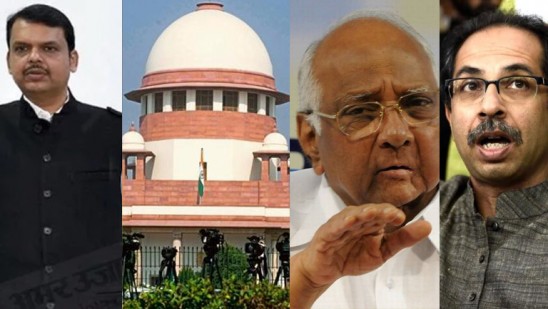
                Whatever the host of legal eagles fighting the case in our Supreme Court may say to justify their arguments, and regardless of the conclusions the Hon’ble Court may arrive at, the simple truth of the matter is that for all sides concerned, Maharashtra is too important to lose. To start with the inability to form the government in Maharashtra would not just be a simple loss of face, but utter humiliation for the BJP, and more importantly, for its mentors from Nagpur, located in the heart of the State. If they cannot control their own fiefdom, what control will they exercise tomorrow over the rest of the country, more so given that elections are due in states like Bihar and Jharkhand in the coming months?

                Similarly for the Shiv Sena after having openly cast aside the cloak of morality and gambled everything, including the kitchen sink, in its blatant attempt to go one up and grab the Chief Ministership for Balasaheb’s scion, a loss would spell utter disaster and lead to questions of survivability of the dynasty. For the NCP, and especially the Pawars, being on the winning side is the only hope for redemption for past transgressions. As events have played out, it is now obvious that Pawar the younger was carried away by the brashness of youth and the fact that leadership of the Party would remain just a mirage due to circumstances of birth as long as Pawar the elder had any say in the matter. Finally, for the Congress that continues to be on the ventilator this was an unexpected bonus, a fleeting opportunity to start again.

         While each of these stakeholders has its own particular motivations for their actions, however, the most important aspect  incentive for all in this battle royal for the stewardship of the State is the simple fact that not only is Maharashtra a large state, governing which is undoubtedly prestigious, but also an extremely rich one. It doesn’t exactly require a leap of faith to suggest that whosoever controls the money controls the votes. After all, is that not the very reason that controversy dogs the issue of electoral bonds that were introduced not too long back?

                Leave aside mundane issues of malfeasance, personal greed, overarching ambition and rank opportunism, what is indeed truly astounding to see is the utter lack of constitutional propriety and ethical conduct on the part of those charged with its very protection. For them to let petty loyalties and servility take precedence over self- respect and principled conduct is not just a reflection on how unworthy they are to hold such positions of eminence, but also a shameful blot on our social mores that encourages such people to claw their way up despite lacking an iota of integrity or moral fibre. One cannot but feel embarrassment for the President, a former advocate, who unquestioningly accepts the recommendations of a Prime Minister without the requisite cabinet approval, justified by the use of a most inappropriate rule to cover the lapse. That such a rule can be invoked at the dead of night to swear- in a government at dawn, in the futile hope that it would provide stability, after weeks of confusion, is indeed laughable, if it were not so tragic.

                The Supreme Court’s directions to the newly sworn-in Chief Minister, Devendra Fadnavis, to prove his majority on the floor of the House within two days, set the cat among the pigeons as it left only limited scope for horse trading. It forced him to resign prior to the House being called into session as by that time it was abundantly clear that Mr. Ajit Pawar was in no position to provide the necessary support of the NCP legislators required to gain a majority, as he had promised. It is only now becoming increasingly clear that the ‘Ajit Pawar move’ was in all likelihood, a move conceived by his uncle and leader of the NCP, Mr. Sharad Pawar, to kill two birds with one stone; firstly lure the BJP into withdrawing President’s Rule in the State, which it may otherwise not have done in a hurry, and to force the Congress to reduce its demands in exchange for joining the anti BJP Coalition, Maharashtra Vikas Agadi, under the leadership of Mr. Uddhav Thackeray as Chief Minister.

                Events in Maharashtra only accentuate the utter lack of morality on display on the part of all concerned. If we were to look at the winners and losers that have emerged after this power play, clearly the BJP finds itself stranded by the wayside and has much to introspect, but it is not the only loser, The Shiv Sena may have won itself a reprieve and fulfilled Thackeray’s ambition of being Chief Minister, it has come at a cost, as it appears to have caused grevious damage to its ideological foundations. There is always the possibility that Uddhav may have realized that with the Ayodhya Temple issue having been resolved to a large extent, hard Hindutva is unlikely to be a crowd puller in the coming days and an ideological shift was necessary if the Shiv Sena is to flourish. The Congress continues to be seen as disorganized, lacking leadership, confused and opportunistic, a perception that is unlikely to change until the Gandhi’s are leached out of its organizational structure. Only the NCP appears to have emerged as clear winners, especially Mr. Sharad Pawar, as he will undoubtedly wield the remote control on this coalition government. Off course, all of these shenanigans only reinforce the fact that it has been the people of Maharashtra, who have lost out the most, and were, in Mencken’s words, “moronic” enough to vote these ingrates into power.

    The writer is a military veteran and consultant with the Observer Research Foundation and a Senior Visiting Fellow with The Peninsula Foundation, Chennai. The views expressed are the author’s own.
  • The Politics of Balakot

    The Politics of Balakot

    Deepak Sinha                                                                                                        March 29, 2019/Op-Ed

    There is something about old proverbs. Take, for example, an old adage by Abraham Lincoln: “You can fool all the people some of the time, and some of the people all the time, but you cannot fool all the people all the time”. Certainly, this maxim is spot-on with regards to the Pulwama tragedy and its repercussions. Despite Pakistan’s best efforts to steer the narrative to its advantage, the truth that is emerging — though in dribs and drabs — paints a very different picture from what it would have wanted us to believe.

    For example, take a look at perceptions in Pakistan about the suicide attack itself. Not only most of us, but also much of the world, especially analysts focussing on this region, had little hesitation in accepting the involvement of Pakistan-based terrorist group, Jaish-e-Mohammed (JeM), in the suicide bombing attack, especially since the JeM itself publicly claimed responsibility. Yet, let alone the Pakistani establishment, not even one respected journalist or analyst over there uttered a word of condemnation against the JeM for this heinous act. Instead, they insisted that the attack was motivated by the brutal treatment meted out to Kashmiri locals by the Indian security forces.

    This is contrary to what has widely been reported about Pakistani Senator Mushahid Hussain Sayed, a senior politician and former Cabinet minister, who quite categorically stated that “what happened in Pulwama in February, in my view, was Pakistan’s finest hour after the nuclear tests of 1998.” Moreover, while Pakistan’s Foreign Minister acknowledged JeM chief Masood Azhar’s presence in Pakistan, the Director-General of Inter-Services Public Relations (ISPR) blandly contradicted him a day later, unequivocally stating that the JeM does not exist in Pakistan as it is a “proscribed terrorist organisation”.

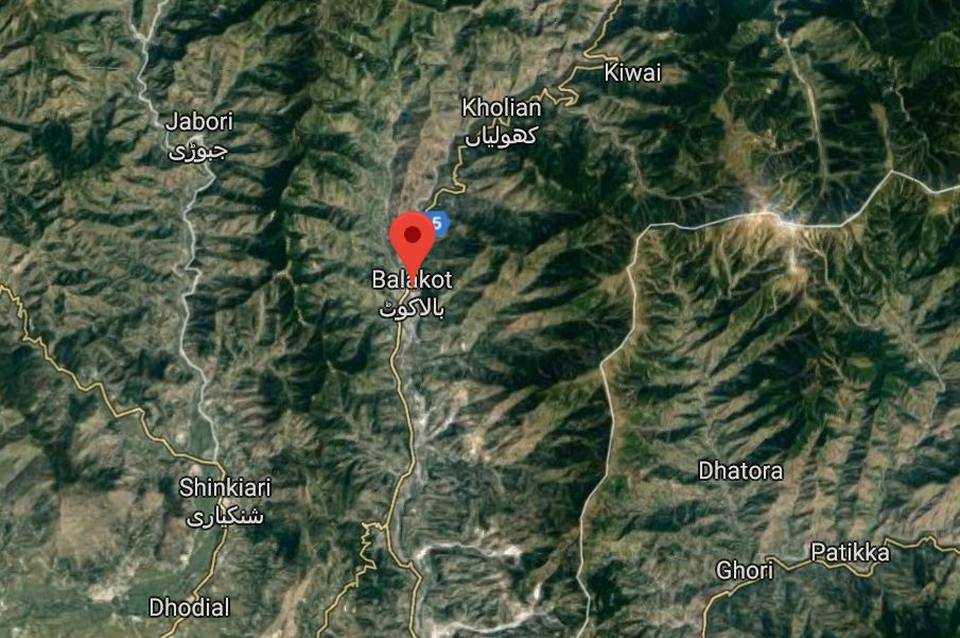
    Similarly, with regard to the Indian response, the ISPR spokesperson was the first one to admit that the Indian Air Force (IAF) had crossed the Line of Control (LoC) and carried out a strike in the vicinity of Balakot. He, however, attempted to mislead and obfuscate the issue by hinting that this attack was in the vicinity of the village, in close proximity to the LoC in Pakistan-occupied Kashmir (PoK), and not the town by that name in Khyber Pakhtunkhwa, deep inside Pakistan, where it actually struck. While the IAF claimed to have hit the terrorist training camp, the spokesman insisted that no damage or casualty was inflicted to the “seminary” located over there. However, the cordoning of the area by the Pakistani Army and its refusal till date to allow any access raises questions and suggests an attempt to cover up.

    Finally, there was the confusion about two Indian fighter aircraft having been shot down with both pilots taken prisoners. It, however, turned out that the IAF’s claim at that time of having lost one MIG-21, piloted by Wing Commander Abhinandan after he had downed a Pakistani F-16, was correct. Bizarrely, not only has Pakistan continued to deny the loss of its own aircraft, it even insists that the F-16s in its possession were not involved in operations in this sector. This despite the IAF having produced evidence.

    Clearly, obfuscation and deceit are embedded in the DNA of Pakistan, especially in the manner it deals with India and the international community. We have been experiencing this since decades. Remember, Pakistan denied any connection to the so-called “raiders”, who nearly captured Srinagar in 1948 or to the “militants”, who occupied the Kargil heights in 1999, only to recant and accept its involvement subsequently. It isn’t as if it reserved such treatment for India alone as Iran and Afghanistan have also found to their cost. Therefore, in the present instance, to have expected Pakistan to behave any differently was sheer fantasy, especially given that the military uses proxy war to retain its pre-eminent role within the country and the region.

    The sad truth is that its very foundation was built on the British construct — that it was religious antagonism and not its requirement for a pliable state that would help protect its interests in the region — which resulted in the horrors of partition. The formation of Bangladesh put paid to the two-nation theory and secret Cabinet documents in the UK, subsequently declassified, showed up the deceitful lengths the British had gone to in furthering their own interests.

    Leaving aside Pakistan’s desperate attempts to change perceptions what should be of immense concern to all right-thinking people, here is the horrendous manner in which this issue is being used by politicians and the media to gain attention for their selfish agenda even if it is at the cost of the nation’s interest. Neither free speech nor the looming elections justify such crass behaviour, especially since it is impacting the credibility and apolitical nature of our armed forces.

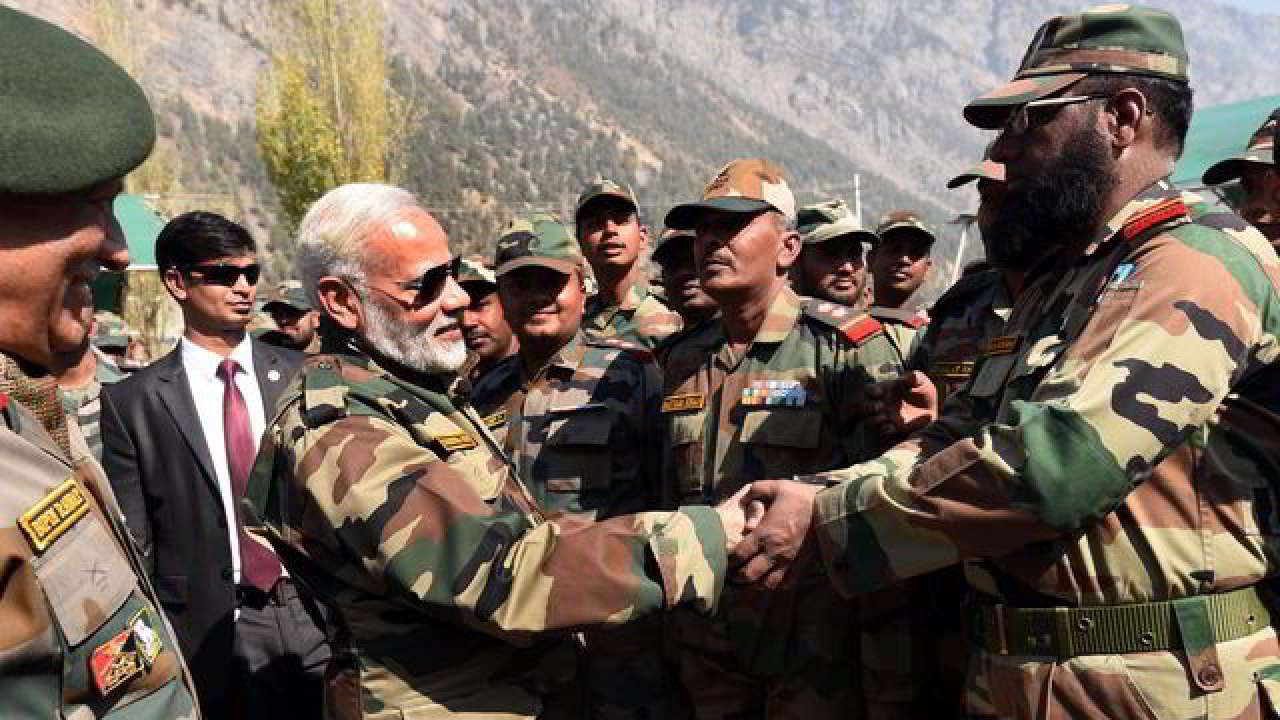
    While Prime Minister Narendra Modi deserves credit for his bold decision to aggressively respond in the manner that he did, it is no excuse for the Bharatiya Janata Party (BJP) to use the strike to tom-tom its nationalistic credentials, going so far as to shamefully depict Wing Commander Abhinandan in posters used for election rallies. Prime Minister Modi may well scream ‘Jai Jawan, Jai Kisan’ from the rooftops but it has not in any way stopped his Government from refusing to grant One Rank One Pension (OROP) to military veterans or opposing the grant of Non Functional Upgrade (NFU) in the Supreme Court using all manner of lies. That the NFU is already authorised to the Civil Services and the Central Armed Police Forces, thereby changing long-standing civil-military parity, has been deliberately ignored. Their efforts to humiliate and lower the prestige and standing of the armed forces continues unhindered.

    It isn’t as if other political parties, including the Congress, have behaved any less hypocritically. On the one hand, they have “officially” supported and praised the action of the IAF, while at the same time senior leaders of these very parties have questioned the efficacy of the attack, despite the Air Chief having clearly stated that the targets selected were destroyed as they had planned. It appears that they believe that the only manner in which the steadfastness and strength of character ‘Modi’ displayed on this occasion can be negated is by deliberately destroying the credibility of our military’s achievements. While we may be uncertain of who will succeed at the hustings, there is absolutely no doubt that our armed forces have lost out yet again.

    Brigadier Deepak Sinha (retd), an Army veteran, is a Visiting Senior Fellow at the TPF and is also a Consultant at ORF, New Delhi.

    This article was published earlier on March 19th, 2019, on The Pioneer.

    Image Credit: Google Maps

  • Avoiding the Ideology trap: Learning from History

    Avoiding the Ideology trap: Learning from History

    Deepak Sinha                                                                                       November 23, 2018: Commentary

    Alexandre Dumas once wrote that “all generalizations are dangerous, even this one.” While there is much wisdom in his words, there are also circumstances when sweeping generalizations are not only unavoidable, but also simply reflect the truth. The widespread prevalence of social media and 24 x 7 news channels have empowered individuals by ensuring that not only is information, analysis and opinion available at the click of a button but also that his or her voice is heard, sometimes with telling effect, as the ongoing ‘#MeToo’ movement has shown, both in India and abroad. While empowerment of the individual is a positive development for our democracy, it has also upended governance structures, as it allows unelected individuals and groups to stall progress or any attempt to change the status quo.

    Moreover, unprincipled and unaccountable elements have used such channels to spread vicious lies and propaganda that allows them to organize and indulge in bullying, intimidation and even violence to achieve their own nefarious ends. Political parties too have seen this as a useful tool to dominate the public narrative and occupy mind space. A perfect example is what we were witness to in Gujarat recently where large number of innocent labourers from Bihar and Uttar Pradesh were threatened with violence and hounded out, ostensibly by a local politician, because of an alleged heinous criminal act on the part of one unidentified individual.

    While what we saw in Gujarat was at the extreme end of the spectrum, and was clearly criminal in nature, a more insidious and harmful impact of social media is the constant attempt to question and vilify decision makers and leaders, without necessarily being fully aware of all the facts. Such criticism, apart from creating fissures and uncertainty within an organization, also tends to severely constrain leaders from taking initiatives that fall within their ambit and are necessary if progress is to be made.

    Interestingly, one group who appear to be the torch bearers at the forefront of this “criticism tsunami”, if one can call it that, are military veterans. There are those among them who are extremely critical of the manner in which this government has treated the Armed Forces, with some justification one may add, and are appalled by the seeming subservience of the top brass. There are also those, in fairly substantial numbers, who tend to be extremely conservative in their outlook and view all issues through the prism of nationalism and, for all intents and purposes, are allied to the present governments’ ultra- nationalistic plank. Indeed, there are many among them who have taken the plunge into politics and are members of the BJP, with one former Chief reportedly having even joined the RSS. When you add to this the fact that our adversaries spare no effort at feeding misinformation aimed at polarizing the military community and civil society, there is little doubt that the military finds itself a veritable minefield of clashing ideologies and attitudes through which it has to tread exceedingly cautiously.

    To be fair, much of the criticism against the Forces has been brought on by patently silly attempts of those at the helm to grab headlines and credit to inveigle themselves into the good books of the governing dispension, probably in the hope of post- retirement sinecures. This is not something new, though what differentiates it from earlier times is this governments’ ill-concealed and voracious appetite to take advantage of these officers to politicize much of what the military does in the hope of deriving advantage against its political opponents. Sadly, it has also got into the habit of appropriating military infrastructure for use by the public to win votes, without bothering about the impact of such a step on the military. For example, while military veterans are barred from using military hospitals except in some circumstances, and are therefore covered by the Ex Servicemen Health Scheme, the Government has recently permitted all those covered by CGHS to utilize facilities at Service Hospitals. With an additional 50 Crores personnel to be catered for where will all serving personnel and their dependents go?

    The recent celebration of “Parakram Parv”, a three day commemoration of the cross-border punitive strikes in retaliation to the terror attack against the Uri military camp in which 17 soldiers were killed and scores injured, is another recent example. Without downplaying the significance of the cross-border strikes, probably a far more appropriate manner of honouring the forces, if the Prime Minister indeed genuinely appreciates their contribution, would have been for him to have taken the initiative to get back home the fifty four soldiers still held as Prisoners of War by Pakistan since the 1971 Indo-Pak War. Their continued incarceration, with no attempts by successive governments or civil society for their release, is a matter of national shame that reflects poorly on each and every one of us.

    This brings us to the elephant in the room that must be seen for what it is. It is well known fact that our military’s exemplary record of remaining apolitical is what differentiates it from all other militaries in the region. Individual ideologies and beliefs just have no place in the military’s firmament and politicians of all persuasions have been kept at arms- length, though one must also admit that most political parties have reciprocated similarly and kept their distance from the military as well. Unfortunately, the unsubtle attempt by the current dispensation to foist its ideology amongst the military rank and file, attempting to use “deep selection” among the higher ranks and indirectly through the veteran community that is enamoured of its ultra – nationalistic agenda, and all that it implies, appears to be showing nascent signs of putting down roots. This is an extremely dangerous trend that needs to be dealt with ruthlessly if we are to maintain our military’s neutrality and inclusive character. It seems the time has now come for including a provision within the Service Rules for an appropriate “cooling off” period before any soldier can join either a political party or involve himself in politics. This is particularly so for those leaving in the higher ranks.

    The unedifying manner in which this government has dealt with the Armed Forces over the past four years, whether it be in its dealings with veterans or its refusal to adhere to long standing norms, customs and traditions, has led to increasing antipathy among the rank and file that is clearly reflected in some of their actions that have embarrassed the senior hierarchy and the MOD and shown them in poor light. Seven hundred personnel individually petitioning the Supreme Court on their apprehensions of being victimized while deployed in operations, serving officers publicly criticizing policy directions issued by Army Headquarters on social media and the non-implementation of policy directions issued by the MOD, as has happened in nearly all military cantonments with regard to providing open access to the public, are examples that should be cause for worry. All of this has adversely affected morale, which can also be gauged from the most telling example of an officer having reportedly applied for premature retirement on grounds that his conditions of service have been violated by the down- gradation of the military. That his application was rejected is no cause for optimism.

    The situation is hardly likely to improve given the reported fact that the government is once again attempting, surreptitiously and without appropriate consultation with the military leadership, to look for a method by which it can prevent the Cantonment Boards from taking back bungalows from their present owners on expiry of the 99 year lease period, as required vide the Cantonment Act 2006. One reported solution being considered is to replace the ex officio appointment of the Local Military Authority as President of the Cantonment Board by an elected representative to supposedly further its “democratization” A move that would be violative of the Cantonment Board Act, not that such statutory provisions have stopped it before, especially keeping in mind that some extremely influential people have obtained ownership of these leased bungalows.

    Finally, it should be a matter of great concern that amongst a host of other issues, the Service Chiefs have also quietly acquiesced to the appointment of Mr. Doval, the National Security Advisor, as the de-facto Commander-in-Chief, despite lacking both the constitutional authority and the credentials to hold such an appointment. The irony cannot be missed given that the Services themselves seem reluctant to accept the appointment of a Chief of Defence Staff fearing loss of power.

    By conceding their authority the Chiefs have placed the Services in a very tenuous position which can impact their professional standing and functioning in the future. They would do well to study the case of the German Armed Forces, the Reichswehr, formed post the First World War, as an apolitical and professional force. However it rapidly deteriorated after it was ideologically suborned and converted into the Wehrmacht, the unified armed forces of Nazi Germany. This happened largely in part due to the acquiescence of the High Command to orders that were wholly unconstitutional and undemocratic and partly due to the fierce loyalty of some to Nazi ideology. Our hierarchy must not let themselves be lulled into a state of complacency but hold firm on retaining customs and traditions that have allowed our military to occupy the preeminent position that it does in the hearts and minds of our citizens.

    This article was published earlier in Times of India.

    Brigadier Deepak Sinha is a Visiting Senior Fellow at TPF. The views expressed are his own.