Tag: BJP

  • “And Now to some serious Governance”

    “And Now to some serious Governance”

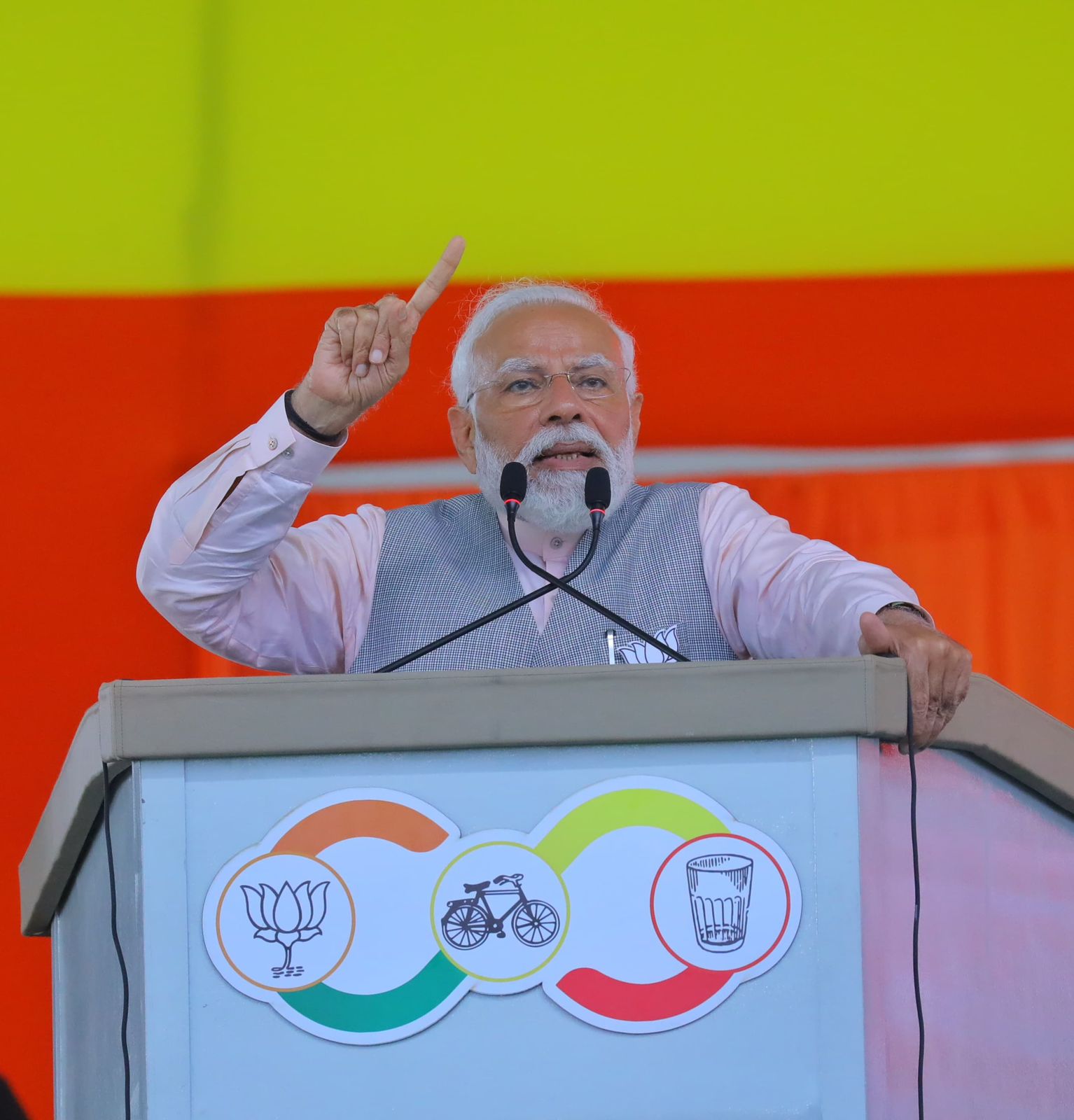
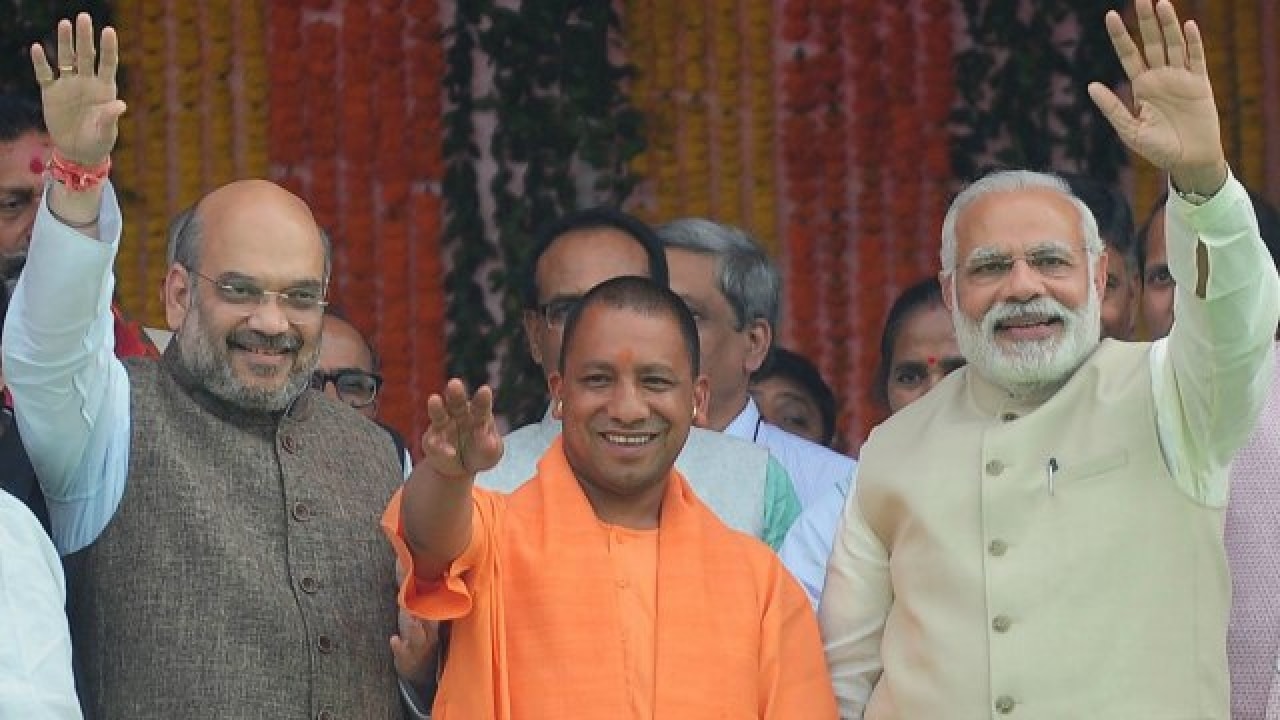
    A time comes for each leader and government to rise above pettiness, discarding ill will and hatred towards all. For the BJP, now uniquely in its third term, this is the time to show the nation that it is a party with a difference. For the opposition equally, this is the time to cooperate with the government on critical issues impacting the country.  


    Since my retirement from active service, I have avoided politics and political writings like the plague, but the avoidable happenings of the past few months have caused me, like am sanguine would have to millions of our countrymen, pain and a sense of despair.

    India has conducted over 18   general elections to its Parliament since 1952 with a lot of fury and vibrancy, but the Lok Sabha 2024 general elections were indeed an example of abysmally low-level politics transcending our better senses.

            How the world’s largest democracy indulged in its Lok Sabha 2024 elections was hardly complimenting to it considering the unquestionable fact that among the emerging nations in the world, call it from the Global South, the conduct of our elections showed some among those participating in poor light. Between competing political parties, enlightened debates and mutual civility were sadly lacking.   India has conducted over 18   general elections to its Parliament since 1952 with a lot of fury and vibrancy, but the Lok Sabha 2024 general elections were indeed an example of abysmally low-level politics transcending our better senses. India, which carries a fair amount of moral authority and is considered an example of a true and vibrant democracy, cannot let its hallowed image be sullied attributable to the selfish electoral games of some of its political leaders. The party in power at the Centre, the principal Opposition party and all those regional parties at the helm in the states have to display adequate maturity and a modicum of propriety and civility towards each other and not politicize each and every aspect of governance or national issues impacting India. The opposition, as it shows the mirror to the government on critical issues of governance, must not criticise each and every act of the government as a matter of routine.
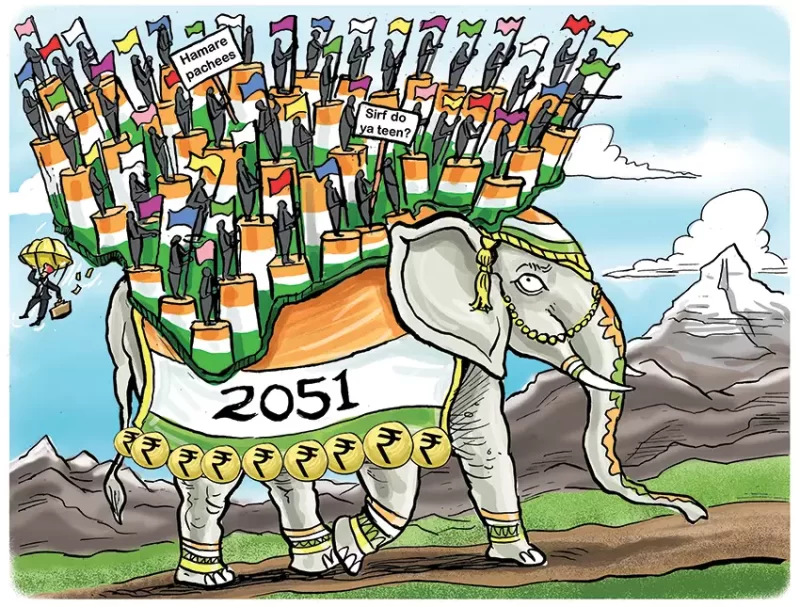
             With the outcome of the general elections now done and dusted and the previous BJP government back in power, albeit with a clear reduction in its seats tally from 303 down to 240, it must get down to the exacting business of good governance from the Centre. That the same government, with its experience of the last ten continuous years in power, fielding more or less the same faces in the Cabinet in critical ministries and importantly serviced by the same bureaucrats should have, relatively speaking, not such an arduous task in governance. However, the thrust for fair, equitable, and sensitive handling of all critical matters across the nation has to come from the top political leadership. All our states must never feel discrimination by the Centre, especially in financial allocations urgently required for developmental works and disaster management. Additionally, the new government must take stern measures to keep rising inflation and unnecessary governmental expenditure under check before the economy takes a severe nose-dive.

             The Modi government, with the continuous experience of the last ten years, will have more than a good idea of the systemic improvements required and about areas needing additional financial resources and effort. It is unnecessary to worry too much about criticisms from the opposition but to carry on regardless in developmental works, without fear or favour, and with impartiality towards all the states in the true spirit of federalism. A time comes for each leader and government to rise above pettiness, discarding ill will and hatred towards all. For the BJP, now uniquely in its third term, this is the time to show the nation that it is a party with a difference. For the opposition equally, this is the time to cooperate with the government on critical issues impacting the country.

             New Delhi’s hands will be full of the nation’s diverse and formidable challenges, requiring attention and effectiveness. On the foreign policy front, India will have to walk the tightrope of maintaining strategic autonomy and sustaining its good relations with both the US and Russia. However, as it determinedly confronts an overly assertive China, India needs to use its economic clout and sophisticated diplomacy to get its South Asian neighbourhood closer to it and each other, avoiding the debt trap diplomacy and financial machinations of China.

    The number of terror-related incidents in J&K has gone up substantially in the last three months, and Pakistan will have to be kinetically chastened.

          India must, at the appropriate level, convey to China that their confrontationist attitude towards us will be harmful to the Chinese, too and may propel India to rethink its existing Tibet policy. Nevertheless, India must maintain the utmost vigil along the 3485 km Line of Actual Control/ IB, which it shares with  China. Meanwhile, Pakistan once again needs to be cautioned against stepping up terror activities in J&K  or elsewhere in the Indian hinterland. India is in full knowledge of Pakistan’s many fault lines. Still, it has refrained from exploiting these, and Pakistan must also cooperate in ensuring a peaceful and prosperous South Asian neighbourhood independent of China’s wily stratagems. The number of terror-related incidents in J&K has gone up substantially in the last three months, and Pakistan will have to be kinetically chastened.

    Meanwhile, India’s preparations to successfully improve its security capabilities to confront a two-front war must go ahead with realism and an unfailing determination. Measures to augment capital expenditure for major defence acquisitions must be identified. Transformative defence reforms like the introduction of integrated theatre commands will need the attention of the Centre. In addition, India must take all steps to restore peace in our restive NE states.

             The Modi government has come in for some criticism abroad on its human rights record and dealings with its Muslim population. This unjust criticism must be dealt with judiciously and with maturity. India’s overall inclusiveness and celebration of its diversity are unique examples for the entire world, especially the nations of the Global South. We must never deviate or be even seen to shift from this noble orientation.

    Reduction of the yawning gap between the countless ultra-rich and those millions in abject poverty is essential as we boast of becoming the 5th largest economy in the world. The many human indices where we are faltering also need to be addressed.

             As economic strength is the pillar that propels and sustains progress, the Modi government must take measures to improve our economic health. Reduction of the yawning gap between the countless ultra-rich and those millions in abject poverty is essential as we boast of becoming the 5th largest economy in the world. The many human indices where we are faltering also need to be addressed.

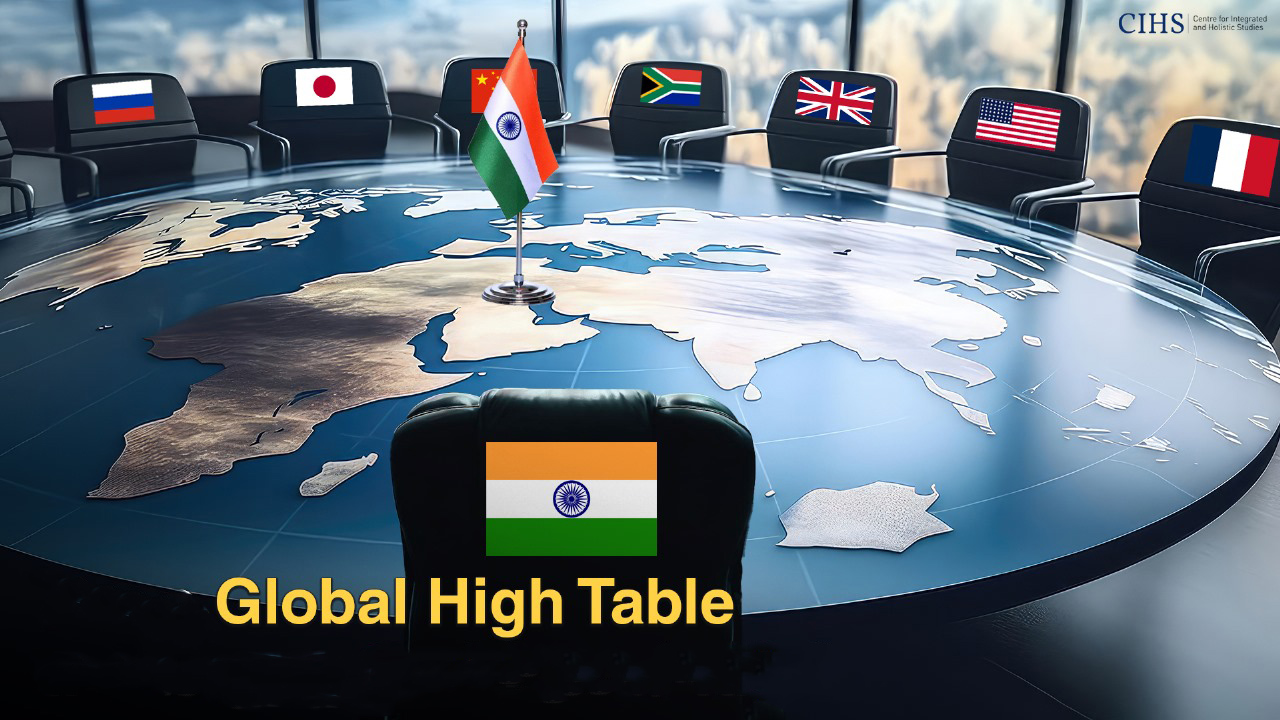
             By all yardsticks, India is deservingly on the cusp of acquiring a seat on the global high table. Let us not squander away this golden opportunity by internal squabbling but instead work together in addressing crucial issues that affect our nation; we must seize this opportunity.

    Feature Image Credit:  vskbharat.com    

    Cartoon Credit: Times of India
  • An Individual’s Guarantee As Party Manifesto Weakens Democracy, Feeds Instability, Uncertainty

    An Individual’s Guarantee As Party Manifesto Weakens Democracy, Feeds Instability, Uncertainty

    The last decade points to the individualisation of decision making in India leading to huge problems. As can be expected, these go unmentioned in the manifesto – after all the manifesto is supposed to create a feel good factor in the nation. The end result of ‘Modi’s guarantee’ could be contrary to the promises.

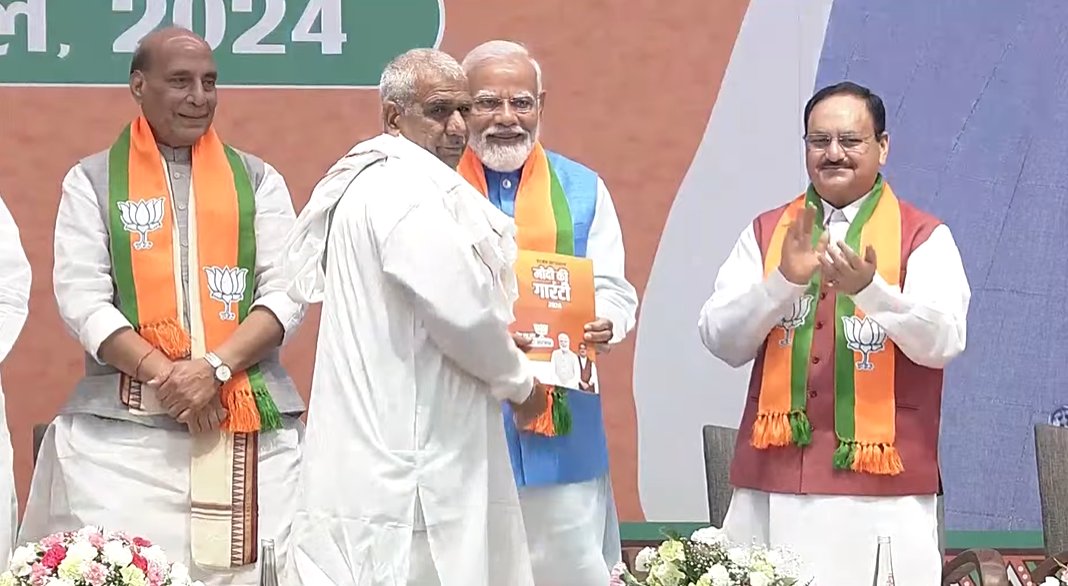
    The Bharatiya Janata Party’s (BJP’s) manifesto titled “Modi ki Guarantee 2024” promises much. It implies a guarantee that soon all will be well because of Narendra Modi. It reflects a) the state of affairs in the BJP and b) its reading of people’s mood.

    It implies that people have more faith in Modi than in the party. Does this reflect the failure of the party? Like in a presidential form of election, vote is sought in the name of a leader, Modi.

    The contrast with the Congress manifesto, titled, `Nyay Patra’, promising justice to all, is stark. The BJP manifesto too promises justice. But, one depends on faith in an individual’s guarantee while the other seeks to deliver through strengthening society’s institutional setting. The instrumentality proposed by the two political parties is diametrically opposite.


    Read More

  • Elections 2024: Modi up a steep & slippery Slope

    Elections 2024: Modi up a steep & slippery Slope


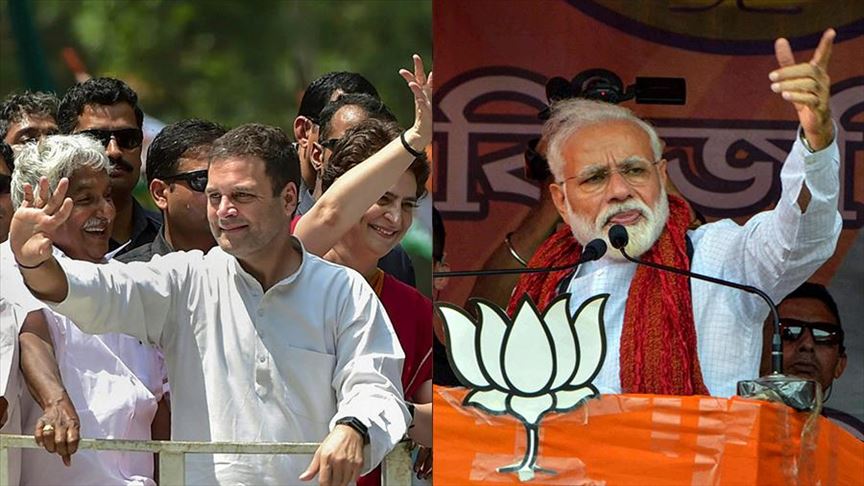
    Be it a democracy or a dictatorship, governments are almost always changed by throwing out the incumbent. The former is called a democratic transition and the latter is inevitably a revolution. Even if it is, as usually is the case, more of the same. India’s electoral process that begins on April 19 will be concluded on June 4 when the results are announced. Most psephologists, commentators, astrologers and bazar gossips are sanguine that Prime Minister Narendra Modi will be easily re-elected to a third successive term. I do not agree with that sanguinity.I think Mr Modi has a hard hill to climb and the slope may be too steep and slippery for him. Look at the objective reality. In 2019, the BJP won 303 seats or almost 56 per cent of the Lok Sabha with 37.4 per cent of the popular vote. This skew is how it usually is in a first-past-the-post system. Even a minority mandate translates into an overwhelming outcome. But the problem with the BJP mandate is that it is concentrated in a minority of states. The saffron mandate is restricted almost entirely to the large Hindi-speaking states (202/235), as well as Maharashtra (41/48) and Karnataka (25/28). It got 268 out of its 303 in just this concentration. Winning these states is not the issue for the BJP. Repeating this performance is.


    Read More

  • Uniform Civil Code | What Kind of Uniformity, Whose Code?

    Uniform Civil Code | What Kind of Uniformity, Whose Code?

    Should India’s linguistic diversity too be given a short shrift, as has been happening for years in promoting Hindi in preference to 21 other scheduled languages?

    Though we do not have, as pointed out in this Deccan Herald opinion article, a draft Bill or a white paper on the Uniform Civil Code (UCC), there is a raging debate, as well as fear in many quarters, as to the intention of the ruling Bharatiya Janata Party (BJP) as expressed in the pronouncements of Prime Minister Narendra Modi concerning the UCC.

    Quite forthrightly, Nobel Laureate Amartya Sen used decidedly strong words when he said, “I saw in the papers today that there should not be any further delay in implementation of Uniform Civil Code. Where did such a stupid thing come from? We have been without UCC for thousands of years and can also be without it in future”. Further, he asserted, “Hindu Rastra cannot be the only way in which the country can progress and one should look at these questions with a broader outlook. Certainly, there is an attempt to use… misuse the Hindu religion”.

    [powerkit_button size=”lg” style=”info” block=”true” url=”https://www.deccanherald.com/opinion/uniform-civil-code-what-kind-of-uniformity-whose-code-1238537.html” target=”_blank” nofollow=”false”]
    Read More
    [/powerkit_button]


  • India’s Self-Inflicted Economic Catastrophe

    India’s Self-Inflicted Economic Catastrophe

    Noted economist Jayati Ghosh reviews India’s economic recovery from the impact of the pandemic. She asserts that the major economic problems of unemployment, poverty, and inadequate healthcare are due to poor strategies and policies implemented by the government. In her analysis, COVID-19’s devastating impact on India has been compounded by the BJP government’s disastrous decision to impose nationwide lockdowns without providing any support to workers. Instead, the BJP used the pandemic to consolidate its power and suppress dissent. Even with existing socio-political constraints, she says India can do much better as there is scope for different economic strategies.

    This article was published earlier in Project Syndicate. The views expressed are the author’s own.

                                                                                                                                                                          -TPF Editorial Team

    Nearly 80% of the estimated 70 million people around the world who fell into extreme poverty at the onset of COVID-19 in 2020 were from India, a recent World Bank report has revealed. But even this shocking figure could be an underestimate, as the lack of official data makes it difficult to assess the pandemic’s human costs.

    What accounts for this alarming rise in Indian poverty? COVID-19 was undoubtedly India’s worst health calamity in at least a century. But the pandemic’s economic and social consequences go beyond the direct effects on health and mortality. As I argue in my recent book, The Making of a Catastrophe: The Disastrous Economic Fallout of the COVID-19 Pandemic in India, very significant policy failures – owing to government action and inaction – were responsible for widespread and significant damage to Indian livelihoods and for the country’s decline in terms of many basic indicators of economic well-being.

    But the devastating impact of the pandemic on India has been compounded by economic policies that reflected the country’s deeply-embedded inequalities.

    This judgment may seem excessively harsh. After all, India’s government did not cause the pandemic, and many other countries experienced economic setbacks after they failed to control the virus. But the devastating impact of the pandemic on India has been compounded by economic policies that reflected the country’s deeply-embedded inequalities.

    To be sure, the pandemic did not create India’s many economic vulnerabilities. But it did highlight India’s many societal fissures and fault lines. And while the country already suffered from glaring inequalities of income, wealth, and opportunities long before COVID-19, the government’s pandemic response has taken them to unimaginable extremes.

    Even as Indian workers faced poverty, hunger, and ever-greater material insecurity due to the pandemic, money and resources continued to flow from the poor and the middle class to the country’s largest corporations and wealthiest individuals. The intersecting inequalities of caste, gender, religion, and migration status have become increasingly marked and oppressive. The result has been a major setback to social and economic progress.

    At the beginning of the pandemic, the central government imposed a prolonged nationwide lockdown with little notice. It then adopted containment strategies that were clearly unsuited to the Indian context, with immediately devastating effects on employment and livelihoods.

    The grim state of affairs reflects the priorities of the ruling Bharatiya Janata Party (BJP) response. At the beginning of the pandemic, the central government imposed a prolonged nationwide lockdown with little notice. It then adopted containment strategies that were clearly unsuited to the Indian context, with immediately devastating effects on employment and livelihoods.

    Instead of using the breathing space provided by the lockdown to bolster local health systems, the central government left state authorities to manage as best they could with minimal and inadequate resources. And when the resulting economic disaster threatened to spiral out of control, the government eased restrictions to “unlock” the economy even as the number of cases mounted, thereby putting more people at risk.

    At a time when governments worldwide were significantly increasing public spending to fight the pandemic and mitigate its economic impact, the Indian government preferred to control expenditures (after adjusting for inflation) as its revenues declined.

    But at the heart of India’s self-inflicted economic catastrophe is the government’s decision to provide very little compensation or social protection, even as COVID-19 lockdowns deprived hundreds of millions of their livelihoods for several months. At a time when governments worldwide were significantly increasing public spending to fight the pandemic and mitigate its economic impact, the Indian government preferred to control expenditures (after adjusting for inflation) as its revenues declined.

    But in a country where median wages are too low to provide more than the most basic subsistence, losing even a week’s income could lead millions to the brink of starvation. Given that more than 90% of all workers in India are informal – without any legal or social protection – and that around half of those are self-employed, the effect was immediate and devastating.

    The government’s decision not to increase spending aggravated the shock of the lockdown, generating a humanitarian crisis that disproportionately affected women and marginalized groups, including millions of migrant workers who were forced to return home under harrowing conditions.

    But the effects of the official response to the pandemic are only one side of the story. COVID-19 safety measures have been a natural fit for the country’s still-pervasive caste system, which has long relied on forms of social distancing to enforce the socioeconomic order and protect those at the top. It also further entrenched India’s persistent patriarchy.

    Instead of taking appropriate countermeasures, like providing greater support to the population, the BJP used the pandemic to consolidate its power and suppress dissent. This, in turn, limited the central government’s ability to generate the widespread social consensus and public trust needed to contain the virus.

    Even within India’s deep-seated social and political constraints, there is scope for a different economic strategy that would enable a just, sustainable, and more equitable recovery.

    None of this was inevitable. Even within India’s deep-seated social and political constraints, there is scope for a different economic strategy that would enable a just, sustainable, and more equitable recovery. To ensure that most Indians, not just the stock market or large companies, benefit from growth, India’s voters must reject the BJP’s policies, which threaten to impoverish them further.

    Feature Image Credit: textilevaluechain.in

  • Fight Against Corruption Vs Saving Democracy: Which Is Critical?

    Fight Against Corruption Vs Saving Democracy: Which Is Critical?

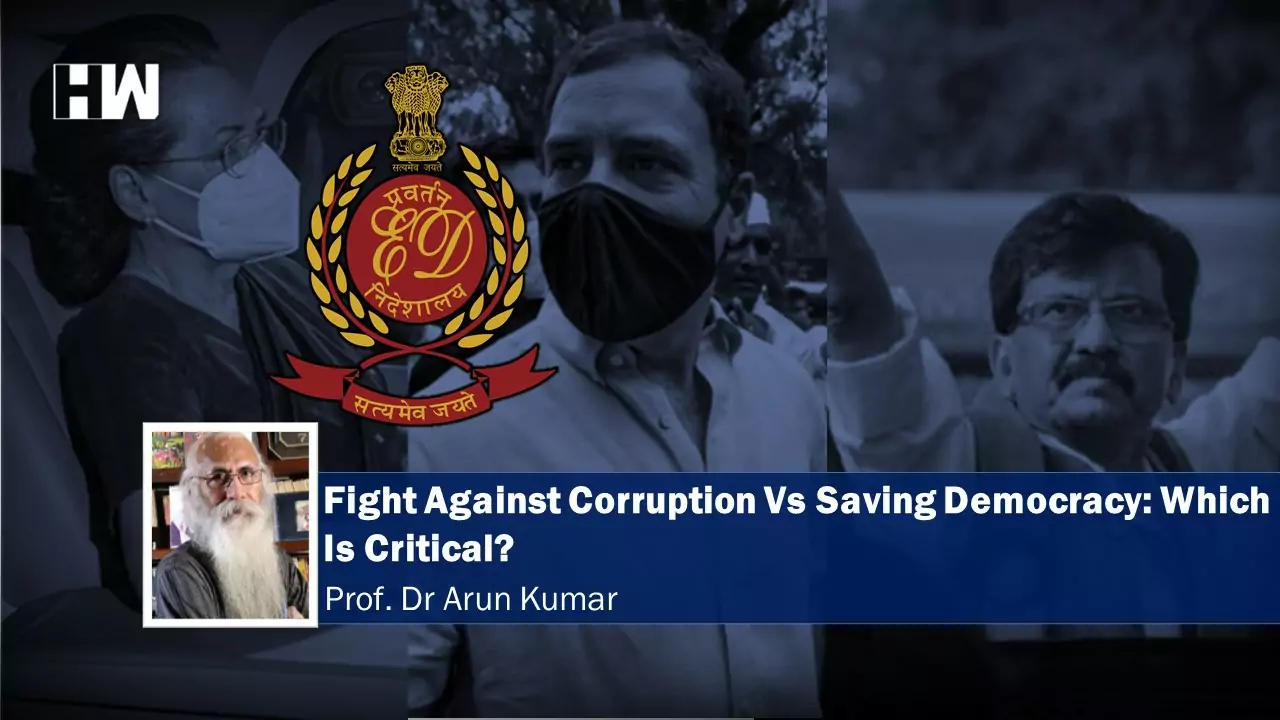
    The ruling party justifies the actions of ED, CBI and Income Tax department by arguing that these are independent agencies. They dismiss the harassment of the opposition leaders and others by calling it a fight against corruption.

    The Supreme Court verdict on the Prevention of Money Laundering Act (PMLA) has sanctified its draconian provisions. The opposition which is facing the brunt of these provisions has criticized the judgment while the ruling dispensation is highly pleased. A seal of approval has been put on the recent actions of the Enforcement Directorate (ED). The provisions of PMLA are such that there is little escape. So, opponents have been arrested/harassed or silenced or have switched sides to join the ruling party which then has toppled governments in the opposition-ruled states. Considering the misuse already visible, the judges could have weighed in on the laws and protected the fundamental rights of the citizens guaranteed by the Constitution.

    The ruling party justifies the actions of ED, CBI and Income Tax department by arguing that these are independent agencies. They dismiss the harassment of the opposition leaders and others by calling it a fight against corruption. No one can deny that wrongdoing has to be punished and corruption impacts the common person adversely. So, reducing corruption is arguably a pro-people policy.

    [powerkit_button size=”lg” style=”info” block=”true” url=”https://hwnews.in/news/opinion/fight-against-corruption-vs-saving-democracy-which-is-critical-ed/” target=”_blank” nofollow=”false”]
    Read More!
    [/powerkit_button]

  • Giveaways & Elections: Short-termism to the Fore

    Giveaways & Elections: Short-termism to the Fore

    BJP and AAP are the two winners in the just concluded crucial Assembly elections. The scale of victory of these two parties surprised most analysts. In UP after three decades, a ruling party won, overcoming severe anti-incumbency. There are accusations of the rigging of the EVMs but this can’t be proved when VVPAT slips are not being fully counted. Even if they were to be counted, fraud could have been committed in other ways and this could become an endless exercise. AAP, a new kid on the block, won on the promise of change from the terribly corrupt politics of the moribund established parties.

    Delivery is Important

    So, the ruling BJP won because it said that it had brought about a change in the lives of the common people while AAP won on the promise of bringing about change in their lives. What is this change that was so attractive to the people?

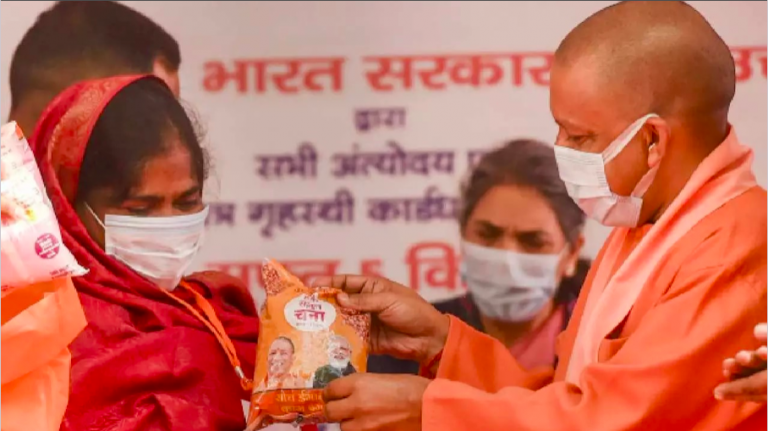
    BJP faced anti-incumbency due to high inflation, youth unemployment, farmers’ discontent, COVID mismanagement, etc. But its cadres went door to door to point to the Rs. 6000 is given to farmers, free grains, etc. to households, money for toilets and houses, etc. The beneficiaries from these schemes are called `Labhartis’ by the pundits. The opposition also promised various things if they came to power but obviously, a bird in hand is better than two in the bush. Also, the credibility of the opposition parties in UP is low since they delivered little when they were in power earlier. Finally, public memory is short. Many of the schemes that are listed as achievements by the present government were initiated by the earlier regimes.

    [powerkit_button size=”lg” style=”info” block=”true” url=”https://thepublicindia.com/2022/03/14/giveaways-elections-short-termism-to-the-fore/” target=”_blank” nofollow=”false”]
    Read More
    [/powerkit_button]

  • Changing Socio-Economic Situation of UP over the past Decade

    Changing Socio-Economic Situation of UP over the past Decade

    Elections have been announced and UP will be crucial. Parties have been campaigning for them for at least the last 6. The media has been awash with advertisements portraying a rosy picture of UP. They needed this unprecedented blitzkrieg to overcome the negativity due to the poor of the COVID second wave. Anyway, the and the government try to present a positive image of their work. Other state governments followed the UP, to the delight of media which is garnering much revenue.

    What is the reality on the ground in UP? Farmers, workers and have been protesting. Why this protest if the situation is as rosy as is projecting? Where does lie? Citizens need to know, to make up their minds about who to vote for. Since there has been growth. Even when it is small but positive, will be visible in socio-economic parameters, like, education, longevity, etc. There will be more roads, bridges, agricultural production, and so on.

    So, it is no brainer that the last 5 years would show progress compared to the immediately preceding 5 years and the ones before that, etc.. The meaningful comparison has to be based on changes in the ratios and growth rates between the earlier period and the present one. That tells us whether matters will improve faster or stagnate. Also, comparisons with all India figures would yield a picture of where UP stands compared to other states.

    If the present regimes 5 years are compared to the 5 years earlier this would be unfair since the last two years have been unusual – hit by the pandemic and the lockdown. The economy as a whole experienced a downturn and so did UP. A meaningful comparison would be between the pre-pandemic three years and the 5 years before them.

    Growth has Decreased

    A difficulty arises regarding measuring the growth of the economy since the Indian economy’s data is suspect, especially after demonetization. A disjuncture has been created between the organized and unorganized sectors while the data is largely from the former. So, the latter goes largely unrepresented and this causes a large error in the growth rates.

    Ignoring this aspect for the moment, let us analyse the official data, assuming it to be correct. It shows that out of the 20 major states, UP’s position remains at 19 in the last 10 years. In effect, there is no relative improvement in UP’s situation at the all India level.

    This is because the official growth rate was 11.8% in 2016-17 and has fallen to 6.3% in 2018-19 before the pandemic. The decline is also visible in the real income per person. Between 2012-13 and 2016-17, it increased by 27.63%. If we take the average over three years it increased by 16.6%. Leaving out the pandemic year of 2020-21, it rose by 9.23% (including the pandemic year it was 0.43%, that is it hardly grew). Including inflation also the per-person income growth slowed down. It was 25% during 2017–21 as compared to an increase of 65% during 2012–17.

    Slower Structural Transformation

    UP’s income (GSDP) was Rs.19 lakh crore out of GDP of Rs.190 lakh crore in 2019-20 – 10% of the country’s income. But its population share is estimated at 17%. The situation has not changed in the last 5 years and that is why the per-person income capita income rank or UP remains at 19th out of the 20 major states.

    One of the factors underlying the slow growth of UP is that it has structurally not transformed as much as has happened for the country as a whole. In UP, the share of agriculture is 24% while that of services is 50%. The all-India figures are 19.7% and 54.3% respectively. So, UP’s structural transformation is lagging behind that of all of India. Since agriculture cannot grow as fast as the services sector, the state’s growth rate is bound to be less than that for the nation. This feature is also the reason for weak employment generation in UP because agriculture cannot absorb more workers, in fact, it is characterized by mechanization and disguised unemployment.

    UP employed 57.13 lakh under MGNREGS, in May 2020 which was the highest in India. This points to high rural unemployment in UP. The large scale migration of workers from other states to UP in 2020 is an indication of the weak employment generation in UP which forced many to look for work elsewhere. No wonder the state faced the biggest impact of Coronavirus in India both in terms of employment and health aspects.

    Unfortunately, data invisibilizes the unorganized sector and hence the poor. The country has suffered policy induced crisis due to demonetisation, implementation of GST, NBFC crisis and the pandemic induced lockdown. This has deeply impacted the unorganized sectors of the economy and they have suffered massive losses during 2016-17 to 2020-21. The total loss for the unorganized sector in UP is estimated at 10% of the national loss during this period and amounts to Rs. 7.1 lakh crore. That is an average loss per annum of Rs. 1.78 lakh crore. This loss is far more than what the social welfare schemes of the government give. In any case, the schemes are mired in corruption and inefficiency and do not reach everyone uniformly. So, the poor are the net losers in spite of the government schemes.

    Government’s Efforts Slowing

    Are the government schemes expanding? How much are they able to help UP develop and catch up with the other states of India?

    No doubt, the absolute budgetary expenditures rise with inflation and growth. So, on most items more is spent than in earlier years. But to know whether these expenditures will help improve the situation or not, one has to compare the expenditures as a ratio of the state’s income (GSDP). On this score, the Budget data shows:

    a) Development expenditure peaked in 2015-16 at 16.66% and declined to 13.28% in 2019-20. This signifies that development is decelerating.

    b) Non-Development expenditure rose from 6.81% in 2015-16 to 8.49% in 2018-19 and was at 7.12% in 2019-20. This reflects the expenditure on grandiose show schemes of the state government which resulted in a decline in developmental expenditures mentioned above.

    c) No wonder expenditure on Education, etc. peaked in 2016-17 at 4.21% and fell to 3.07% in 2018-19 and was at 3.3% in 2019-20. The target should have been 6% of GSDP on public education. Instead of moving towards that goal, there is retrogression.

    d) Similarly, health expenditure peaked in 2016-17 at 0.84% and fell to 0.79% in 2019-20. It should have been raised to at least 3% of GSDP and instead, it fell. The impact of this was visible during the pandemic with poor health facilities in large parts of the hinterland and unnecessary deaths.

    e) Budgetary Capital outlay peaked in 2015-16 at 5.66% and fell to 3.55% in 2019-20. This slows down infrastructure development and adversely impacts private investment.

    In brief, as the economy expands, there will be development in a state – more hospitals, schools, colleges and so on. Further, development may be skewed and leave the poor behind as is the case in recent times. The real picture becomes clear when one looks at the ratios and compares them with other states. In these respects, UP has lagged behind both its past performance and other states. The virtual campaigning required due to the spread of Omicron would marginalize the less tech-savvy parties and give BJP an advantage in painting a glorious image of itself, in spite of its recent indifferent performance.

    This article was published earlier in hwnews.in

    Feature Image Credit: www.dnaindia.com

  • Urdu, Hindu Attire, Abrahamisation | It’s much ado about nothing

    Urdu, Hindu Attire, Abrahamisation | It’s much ado about nothing

    Urdu in India seems to have suffered because of a mistaken identity, and has had a decline from the time Pakistan declared Urdu as her national language

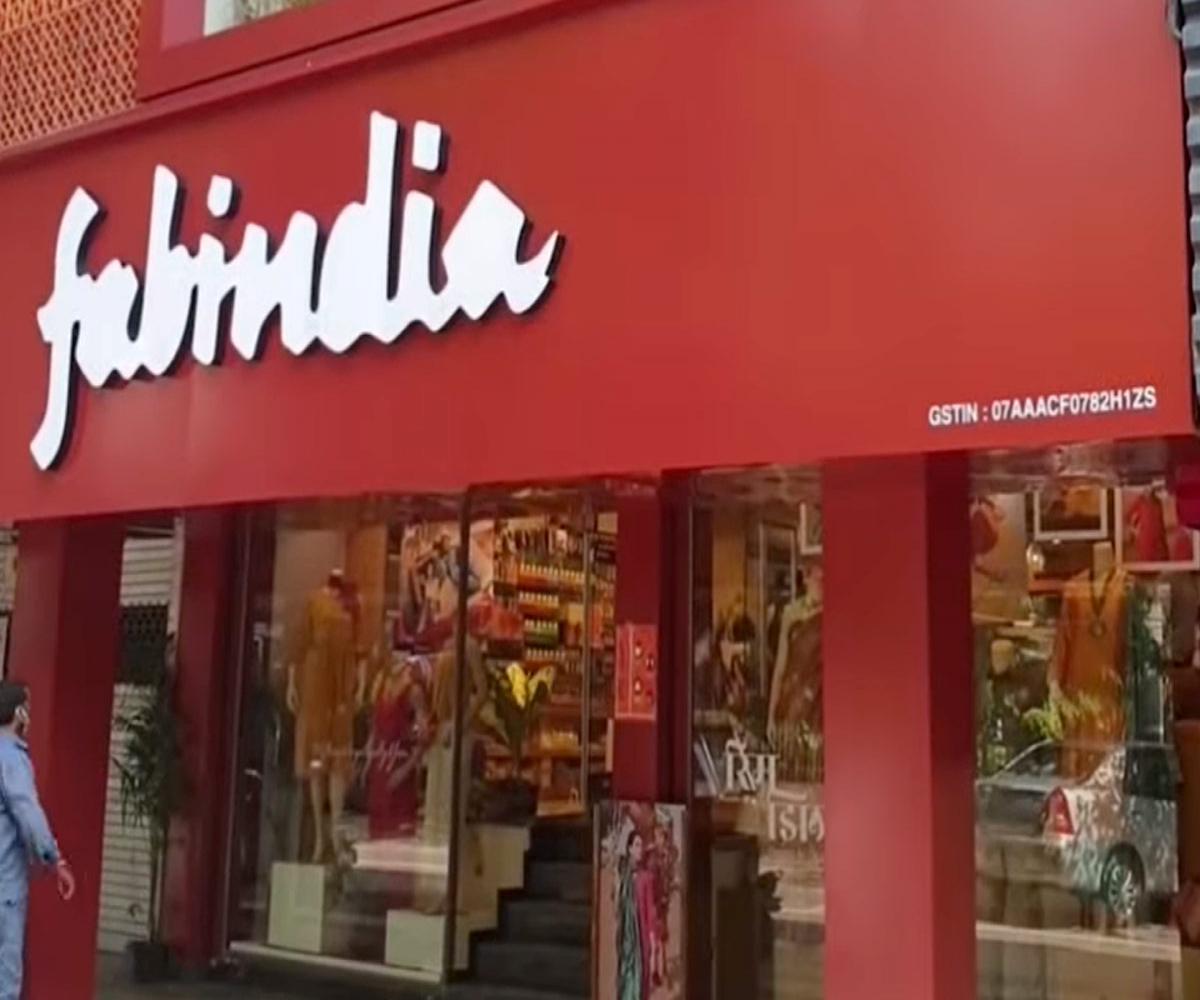
    Reacting to the Fabindia’s ‘Jashn-e-Riwaaz’ advertisement, on October 18 Bharatiya Janata Party (BJP) leader Tejasvi Surya, who is also president of the Bharatiya Janata Yuva Morcha, and a member of the Lok Sabha from Bengaluru, called it a ‘deliberate attempt of abrahamisation of Hindu festivals, depicting models without traditional Hindu attires….’. For those who are unfamiliar with the term ‘Abrahamisation’, a simple explanation, as conceived by some in the Right wing, is: ‘the process by which tenets of Hinduism are modified to have features of monotheistic religions (Judaism, Christianity and Islam)’.

    In what way does the advertisement amount to abrahamisation? Surya says the models are without traditional ‘Hindu attires’. This is not true by any stretch of imagination, as none — none — can have or provide a single monolithic picture of what constitutes ‘Hindu attire’. This argument in itself is both ambivalent, and supercilious. We shall get back to the attire squabble in a bit.

    What to Surya’s mind is more abhorrent, and prompts him to utilise the moniker ‘abrahamisation’ could be the phrase ‘Jashn-e-Riwaaz’, which undoubtedly is a Urdu phrase. Unfortunately, anything that is even remotely connected with Urdu raises the hackles of the Right wing in India. The entire rub as regards the advertisement has to do with this Urdu phrase, as by extension, anything that relates to Urdu gets identified with Muslims.

    It is that what appears to prompt Surya to mark out the advertisement as an attempt at ‘abrahamisation’. If this is the case, the attire has been used as a camouflage to attack the Urdu rendering in the advertisement. Let us dwell deeper on this association of Urdu with Muslims, and analyse to what extent, if any, is such an association (or nexus, depending on how one sees it) valid?

    Urdu Speakers

    The Muslim population of India is about 14 percent, and the proportion of those who speak Urdu as their mother tongue/first language is just about 4 percent. Interestingly, all of these 4 percent Urdu speakers are not necessarily Muslims. So, an overwhelmingly large proportion of Muslims do not have Urdu as their mother tongue/first language.

    Muslims are found all over India, from Kashmir to Kanyakumari and from Arunachal Pradesh in the extreme east to Gujarat in the west. Invariably, all of them speak the local/state languages. So where do Muslims speak Urdu? In a relatively small zone in the central-north areas. Also, small numbers of ‘migrants’ in other states, including the Deccani version, in some pockets in Andhra Pradesh, Karnataka and Telangana.

    Urdu Literature And Journalism

    The very first Urdu newspaper, Jam-i-Jahan-Numa, was published in Calcutta by Harihar Dutta as early as 1822. The weekly Kohinoor was started by Munshi Harsukh Rai in 1850. In 1858, Manbir Kabiruddin started the Urdu Guide. Munshi Nawal Kishore started the first Urdu newspaper, Oudh Akhbar, from Lucknow, also in 1858.

    In 1913 Ganesh Shankar founded Pratap, a famous revolutionary weekly in Kanpur which became a daily in 1920. Now it is published from Delhi. In 1923 Lala Kushal Chand, an Arya Samaji, started the Milap, an Urdu daily, from Lahore. After Independence it was shifted to Delhi, and is still in circulation as the largest Urdu newspaper in India.

    Urdu literature has been overwhelmingly patronised by non-Muslim writers and poets. Some of them are: Krishan Chander, Munshi Premchand, Rajinder Singh Bedi, Raghupati Sahay (Firaq Gorakhpuri), Gulzar (Sampooran Singh Kalra), Khushwant Singh, and so on.

    Clearly, some of the best patrons of Urdu have been non-Muslims. Given all these, where does the Urdu-equals-Muslim equation come from?

    Urdu literature has been overwhelmingly patronised by non-Muslim writers and poets. Some of them are: Krishan Chander, Munshi Premchand, Rajinder Singh Bedi, Raghupati Sahay (Firaq Gorakhpuri), Gulzar (Sampooran Singh Kalra), Khushwant Singh, and so on.


    The Pakistan Angle

    That equation came into prominence in 1947. After Pakistan came into being, surprisingly Urdu became her national language, though overall an overwhelming majority spoke Bangla. In the western wing the autochthones of Pakistan, namely the five main ethnic groups — Punjabis, Pathans, Sariakis, Balochis and Sindhis — all spoke a different language, and had very little to do with Urdu.

    It was just small sections in urban areas, and those who went over as Mohajirs (migrants) from India at Partition, who had Urdu as their mother tongue. It must not be forgotten that the 1971 secession of the eastern wing of Pakistan and the genesis of Bangladesh had a lot to do with the politico-linguistic neglect of Bangla.

    Urdu in India seems to have suffered, and has had a decline from the time Pakistan declared Urdu as her national language. No need to go into the political details of that here, except to point out that Punjabi which had till then adopted the Perseo-Arabic script that Urdu uses, gradually shifted to Gurmukhi script subsequent to Partition.

    The attribution of Urdu as an Islamic/Muslim language, and the generalisation to define a homogenous ‘Hindu attire’ are both problematic, as at its core both are built on false assumptions.

    The Attire Conundrum

    Now to the ‘Hindu attire’ ingredient of Surya’s assertion. The models featured in the advertisement do not by any sort of contention wear anything that could be thought of as non-Hindu, or anything offensive, or for that matter anything to suggest that these are ‘abrahamic’. Where do we look for those traditional ‘Hindu attires’?

    We do not have any comprehensive studies as to what women wore during ancient times in different parts of India, and if there was any unanimity or monolithic depiction as regards their attire. Besides, all over the country there have always been a range of dress patterns, and these did, and still do, cut across the various ethnic, religious and caste groups. To take up just a single example, the dress worn by Kathak dancers is common not just to dancers from various religious groups but also to the different genders. Among many other factors climatic conditions and local availability of fabric — and not religion — often determines attire.

    The attribution of Urdu as an Islamic/Muslim language, and the generalisation to define a homogenous ‘Hindu attire’ are both problematic, as at its core both are built on false assumptions. On a related note, the stigmatisation of Urdu by those who are unaware of its rich past can be seen when English is categorised as a ‘foreign language’.

    This article was earlier published in –  money control

    Image Credit: The News Minute

  • How Representative is the Representative Democracy in India?

    How Representative is the Representative Democracy in India?

    India’s transition from an erstwhile British colony to an independent, sovereign state meant, for her people, a change in their status from being mere subjects to citizens bestowed with adult suffrage. The ultimate authority, therefore, now rests with the citizens. India’s large and complex population made it impossible for this authority to be discharged directly and therefore, the citizens elect their ‘representatives.’ This act of electing their representatives is called ‘elections’ and the set of rules that determine how the elections are conducted and the results ascertained is called the ‘electoral system.’ The electoral system adopted by the Constituent Assembly, through the debates on the constitution for the adoption of the parliamentary democracy, is a variant of the majoritarian system known as the ‘First Past The Post System.’ The fundamental principle underlying the system is that for the candidate, to cement his/her electoral victory, does not need a majority of the votes polled, but only a plurality of votes would suffice. The basis for the decision of the Constituent Assembly members to opt for the FPTP system lies in its simplicity and its promise of producing a stable government. Dr. B.R. Ambedkar when speaking in the assembly said, “Now, I have not the least doubt in my mind that whatever else the future government provides for, whether it relieves the people from the wants from which they are suffering now or not, our future government must do one thing, namely, it must maintain a stable government and maintain law and order. I am therefore very hesitant in accepting any system of election which would damage the stability of the government.”

    Legislative bodies aren’t merely law-making authorities, they are mini societies in themselves that reflect and react to the issues plaguing the citizenry at large. Labelling legislative bodies as mini societies emphasizes the fact that the composition of the representatives reflects the diversity of social groups and shades of opinion present within the country. The divisions and prejudices that exist in the Indian subcontinent based on caste, class, and religion were a primary point of reference for the members of the constituent assembly when debating over whether the various provisions of the constitution would be functional in the country. In this sense, the decision to choose the FPTP system over other electoral formulas signifies an attempt to alleviate the fears of the members of a further divided subcontinent. Yet, as we enter the 75th year of our freedom with entrenched unresolved issues, it brings us back to the question that the constituent members struggled with: how efficient and representative is the present electoral formula?

    Loksabha Elections – 2019

    Regional representation

     A post-election analysis by IndiaVotes showed that the two major alliances – National Democratic Alliance and United Progressive Alliance won 45.2% and 27.5% of votes respectively and the rest was shared among parties including All India Trinamool Congress, Yuvajana Sramika Rythu Congress Party, Biju Janata Dal, Bahujan Samaj Party, Telangana Rashtra Samithi and so on. With 45.2% votes, the NDA led by the BJP satisfied the requirements laid down by the FPTP allowing it to take charge of the government formation. However, what the vote percentage implies is that the current regime isn’t exactly a popular choice given more than fifty percent of the voters chose to vote against them. In their paper ‘Minoritarian Rule: How India’s Electoral System Created The Illusion of a BJP Landslide’, Macdonald and Moussavi call India a “minoritarian” democracy wherein ‘ a plurality of voters selects the majority of representatives in Parliament.’

    Furthermore, the success was concentrated within the states of central and western India which includes- Gujarat, Uttar Pradesh, Rajasthan, Madhya Pradesh, Bihar, Chhattisgarh, Maharashtra, and Jharkhand. These are also few of the states with the highest number of Lok Sabha seats- Gujarat (26), Uttar Pradesh (80), Rajasthan (25), Madhya Pradesh (29), Bihar (40), Chhattisgarh (11), Maharashtra (48) and Jharkhand (14). Given how diverse the country is culturally and linguistically, how do we compensate for the lack of the same in the union government?

    Minority representation

     The total minority representation in the 2019 Lok Sabha stands at 9.2%, including Muslims, Christians, Sikhs, and other religious minorities. This means over 90% of the MP’s are Hindus in a country where the minorities make up 19.3% of the total population (Census 2011).

    Kazi Syed Karimuddin when speaking against the efficacy of the FPTP system in the constituent assembly had feared the dilution of minority representation and had said, “Therefore my submission is that the present system as it stands does not guarantee a majority rule as people commonly suppose and does not guarantee a representation to minorities, not necessarily religious, even the political minorities.”  To this Dr. B.R.Ambedkar felt that while the country may not be ready for a complex electoral formula but to ensure minority representation he suggested reserved constituencies for the minorities as an alternative and in this regard, he said, “If any particular minority represented in this House said that it did not want any reservation, then it would be open to the House to remove the name of that particular minority from the provisions of article 292. If any particular minority preferred that although it did not get a cent percent deal, namely, did not get a separate electorate, but that what it has got in the form of reservation of seats is better than having nothing, then I think it would be just and proper that the minority should be permitted to retain what the Constituent Assembly has already given to it.”

    The Constituent Assembly finally decided on reserved constituencies for the communities of Scheduled Castes and Scheduled Tribes only.

    Reserved constituency

     The constitution has reserved 131 out of 543 seats for Scheduled Castes and Scheduled Tribes (84 for SC’s and 47 for ST’s). In the present Lok Sabha out of the 543 MP’s, 138 come from SC/ST communities implying that only 7 MP’s from SC/ST communities have been elected in unreserved constituencies. The situation would have been grimmer had their representation not been secured through reserved constituencies.

    The major loophole in the practice of securing representation through reserved constituencies with the use of FPTP is that it is the Non-SC/ST communities that majorly get to decide who the representative for the SC/ST communities would be. Given SC/ST populations are spread across regions rather than being concentrated in a few, it is then the dominant communities with their muscle and money power that decide on where the votes go. This keeps outspoken and assertive leaders from marginalized communities outside legislative bodies and in a way excludes these communities and their issues from mainstream political discourse. Hence, Macdonald and Moussavi observe, “District boundaries are therefore fundamentally important. Their shape determines the population size and ideological composition of the electorate facing each party.”

    Mainstream political discourse

     With FPTP’s ‘winners take all’ formula, it so happens that political parties restrict their discourse and activities to the interests of the dominant communities as they become the deciding factor in the contestants getting the plurality of votes. Douglas Amy in her paper ‘Proportional Representation: Empowering Minorities or Promoting Balkanization’ says, “The claim that winner-take-all elections are inherently more capable of bridging political divides does not bear up under scrutiny. For example, the requirement that winning candidates appeal to the majority of voters has done little to discourage factionalism. Indeed, it has merely encouraged candidates to attack minority groups to win over the majority.”

    This has not only further marginalized the already marginalized but also hinders the Socio-Economic and Political progress of the country as spaces for discussing “actual” issues shrink and real development can’t be equated to the progress and well-being of a minute population.

    Effect on voters

    Wastage of votes, a definite consequence of the FPTP system as it often discourages voters from turning up to vote. Furthermore, voters indulge in ‘tactical voting’ wherein instead of voting for a candidate/party who aligns with their values and ideals, they end up voting for one of the major parties or the lesser of the two evils whom they think have more chances of winning. In a way, the voter is making no real impact in the making of the government (Singh & Sharma, 2019).

    Conclusion

    The Law Commission, in their reports in the year 1999 and then again in the year 2015, had recommended that the government look into alternative electoral methods and examine how well they’d work out for the country. However, this has remained a recommendation only on paper with governments taking no active interest in the same. Carles Boix in his paper ‘Setting the Rules of the Game: The Choice of Electoral Systems in Advanced Democracies’ (1999) states that “as long as the electoral arena remains the same, and favours the ruling parties, the electoral system is not changed. If there is a change in electoral dynamics due to the coming of new voters or alterations in voter’s preference, then the ruling party reshapes the electoral setup to suit their choices.” Hence, we still do not see electoral reforms being a part of the mainstream political discourse. However, to make our political system more inclusive, diverse, and efficient, it is about time we give electoral reforms a serious thought.


    References

    Amy, D. J. (1995). Proportional Representation: Empowering Minorities or Promoting Balkanization? The Good Society, 5(2).

    Boix, C. (2000). Setting the Rules of the Game: The Choice of Electoral Systems in Advanced Democracies. SSRN Electronic Journal. Published. https://doi.org/10.2139/ssrn.159213

    Macdonald, G., & Moussavi, B. (2015). Minoritarian Rule: How India’s Electoral System Created The Illusion of a BJP Landslide. Economic and Political Weekly. Published.

    https://www.constitutionofindia.net/constitution_assembly_debates/volume/7/1949-01-04?paragraph_number=186%2C185%2C12%2C176%2C33%2C189%2C170%2C11%2C7%2C5%2C215%2C196%2C195%2C180%2C179%2C177%2C172%2C122%2C102%2C99%2C98%2C97%2C58%2C57%2C54%2C34%2C6%2C4

    https://www.indiavotes.com/alliance/partyWise/17

    https://scroll.in/latest/924583/elections-2019-bjp-alone-got-more-than-half-the-votes-in-13-states-and-union-territories

    https://en.wikipedia.org/wiki/List_of_constituencies_of_the_Lok_Sabha

    https://www.hindustantimes.com/lok-sabha-elections/from-faith-to-gender-and-profession-to-caste-a-profile-of-the-17th-lok-sabha/story-Mnp5M4pRX3aUji1UFFVy2N.html

    https://www.minorityaffairs.gov.in/sites/default/files/MsDP%20%28FAQs%29.pdf

    https://www.indiaspend.com/governance/reservation-scheduled-castes-tribes-representation-social-justice-755256

    https://theprint.in/opinion/17th-lok-sabha-looks-set-to-confirm-ambedkars-fears-no-vocal-dalits-in-parliament/232383/


    Image Credit: www.aa.com.tr