Tag: Balakot

  • The Politics of Balakot

    The Politics of Balakot

    Deepak Sinha                                                                                                        March 29, 2019/Op-Ed

    There is something about old proverbs. Take, for example, an old adage by Abraham Lincoln: “You can fool all the people some of the time, and some of the people all the time, but you cannot fool all the people all the time”. Certainly, this maxim is spot-on with regards to the Pulwama tragedy and its repercussions. Despite Pakistan’s best efforts to steer the narrative to its advantage, the truth that is emerging — though in dribs and drabs — paints a very different picture from what it would have wanted us to believe.

    For example, take a look at perceptions in Pakistan about the suicide attack itself. Not only most of us, but also much of the world, especially analysts focussing on this region, had little hesitation in accepting the involvement of Pakistan-based terrorist group, Jaish-e-Mohammed (JeM), in the suicide bombing attack, especially since the JeM itself publicly claimed responsibility. Yet, let alone the Pakistani establishment, not even one respected journalist or analyst over there uttered a word of condemnation against the JeM for this heinous act. Instead, they insisted that the attack was motivated by the brutal treatment meted out to Kashmiri locals by the Indian security forces.

    This is contrary to what has widely been reported about Pakistani Senator Mushahid Hussain Sayed, a senior politician and former Cabinet minister, who quite categorically stated that “what happened in Pulwama in February, in my view, was Pakistan’s finest hour after the nuclear tests of 1998.” Moreover, while Pakistan’s Foreign Minister acknowledged JeM chief Masood Azhar’s presence in Pakistan, the Director-General of Inter-Services Public Relations (ISPR) blandly contradicted him a day later, unequivocally stating that the JeM does not exist in Pakistan as it is a “proscribed terrorist organisation”.

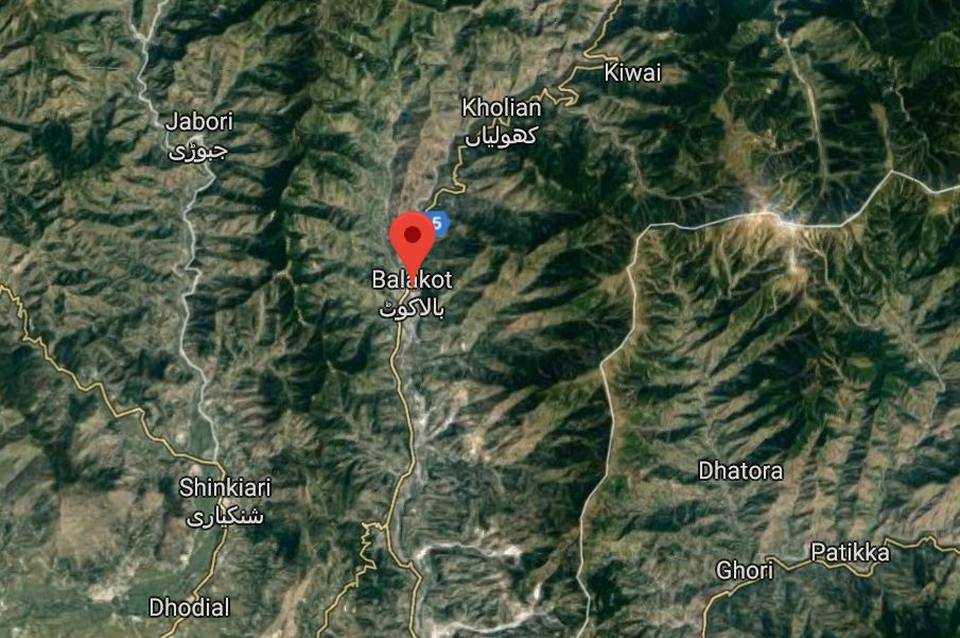
    Similarly, with regard to the Indian response, the ISPR spokesperson was the first one to admit that the Indian Air Force (IAF) had crossed the Line of Control (LoC) and carried out a strike in the vicinity of Balakot. He, however, attempted to mislead and obfuscate the issue by hinting that this attack was in the vicinity of the village, in close proximity to the LoC in Pakistan-occupied Kashmir (PoK), and not the town by that name in Khyber Pakhtunkhwa, deep inside Pakistan, where it actually struck. While the IAF claimed to have hit the terrorist training camp, the spokesman insisted that no damage or casualty was inflicted to the “seminary” located over there. However, the cordoning of the area by the Pakistani Army and its refusal till date to allow any access raises questions and suggests an attempt to cover up.

    Finally, there was the confusion about two Indian fighter aircraft having been shot down with both pilots taken prisoners. It, however, turned out that the IAF’s claim at that time of having lost one MIG-21, piloted by Wing Commander Abhinandan after he had downed a Pakistani F-16, was correct. Bizarrely, not only has Pakistan continued to deny the loss of its own aircraft, it even insists that the F-16s in its possession were not involved in operations in this sector. This despite the IAF having produced evidence.

    Clearly, obfuscation and deceit are embedded in the DNA of Pakistan, especially in the manner it deals with India and the international community. We have been experiencing this since decades. Remember, Pakistan denied any connection to the so-called “raiders”, who nearly captured Srinagar in 1948 or to the “militants”, who occupied the Kargil heights in 1999, only to recant and accept its involvement subsequently. It isn’t as if it reserved such treatment for India alone as Iran and Afghanistan have also found to their cost. Therefore, in the present instance, to have expected Pakistan to behave any differently was sheer fantasy, especially given that the military uses proxy war to retain its pre-eminent role within the country and the region.

    The sad truth is that its very foundation was built on the British construct — that it was religious antagonism and not its requirement for a pliable state that would help protect its interests in the region — which resulted in the horrors of partition. The formation of Bangladesh put paid to the two-nation theory and secret Cabinet documents in the UK, subsequently declassified, showed up the deceitful lengths the British had gone to in furthering their own interests.

    Leaving aside Pakistan’s desperate attempts to change perceptions what should be of immense concern to all right-thinking people, here is the horrendous manner in which this issue is being used by politicians and the media to gain attention for their selfish agenda even if it is at the cost of the nation’s interest. Neither free speech nor the looming elections justify such crass behaviour, especially since it is impacting the credibility and apolitical nature of our armed forces.

    While Prime Minister Narendra Modi deserves credit for his bold decision to aggressively respond in the manner that he did, it is no excuse for the Bharatiya Janata Party (BJP) to use the strike to tom-tom its nationalistic credentials, going so far as to shamefully depict Wing Commander Abhinandan in posters used for election rallies. Prime Minister Modi may well scream ‘Jai Jawan, Jai Kisan’ from the rooftops but it has not in any way stopped his Government from refusing to grant One Rank One Pension (OROP) to military veterans or opposing the grant of Non Functional Upgrade (NFU) in the Supreme Court using all manner of lies. That the NFU is already authorised to the Civil Services and the Central Armed Police Forces, thereby changing long-standing civil-military parity, has been deliberately ignored. Their efforts to humiliate and lower the prestige and standing of the armed forces continues unhindered.

    It isn’t as if other political parties, including the Congress, have behaved any less hypocritically. On the one hand, they have “officially” supported and praised the action of the IAF, while at the same time senior leaders of these very parties have questioned the efficacy of the attack, despite the Air Chief having clearly stated that the targets selected were destroyed as they had planned. It appears that they believe that the only manner in which the steadfastness and strength of character ‘Modi’ displayed on this occasion can be negated is by deliberately destroying the credibility of our military’s achievements. While we may be uncertain of who will succeed at the hustings, there is absolutely no doubt that our armed forces have lost out yet again.

    Brigadier Deepak Sinha (retd), an Army veteran, is a Visiting Senior Fellow at the TPF and is also a Consultant at ORF, New Delhi.

    This article was published earlier on March 19th, 2019, on The Pioneer.

    Image Credit: Google Maps
  • Advantage India, after Balakot air strike

    Advantage India, after Balakot air strike

    G Parthasarathy                                                                                     March 8, 2019/Op-Ed

    After the precision air strikes by the Indian Air Force on the small town of Balakot in Pakistan’s Khyber Pakhtunkhwa Province, public attention in India is now focused on bringing the leaders of the Jaish-e- Mohammed, including Jaish Supremo Maulana Masood Azhar to justice.

    Ironically, Azhar would not have been such a threat today if we did not cravenly release him after being blackmailed, during the Kandahar hijacking of IC 814. Those then released, included terrorists like Omar Syed Sheikh, who funded the 9/11 hijackers in the US and murdered American journalist Daniel Pearl.

    Recurring pattern

    The mass killing of Indians in terrorist strikes organised by the ISI has been a continuing feature of Pakistani policies, since the Mumbai bomb blasts on March 12, 1993. People seem to forget that 253 people were killed and 713 injured in the terrorist strikes in Mumbai in 1993. These killings were organised by the then ISI Chief Lt. General Javed Nasir, who incidentally enjoyed the patronage of Nawaz Sharif for years.

    The mastermind of the 1993 bomb blasts, Dawood Ibrahim, lives under heavy security protection, in the elite locality of Clifton in Karachi. There is conclusive evidence that the attack on India’s Parliament in December 13, 2001 was organised by Maulana Masood Azhar’s Jaish-e-Mohammed.

    A former ISI Chief Lt. General Javed Akhtar admitted this, in March 2004, in Pakistan’s Parliament. In the Kargil conflict in 1999, 527 Indian soldiers had been killed and 453 wounded, which was ostensibly designed to disrupt India’s supply lines to its forces in Siachen.

    When the Jaish-e-Mohammed, thereafter, briefly receded into the background, the ISI backed Lashkar-e-Taiba mounted yet another terrorist attack on November 26, 2008 on Mumbai, when 139 Indians died and 256 were injured. This received huge international attention, as the casualties included citizens of countries like US, UK, France, Germany and Israel.

    Yet, within a few months, we were back to a “Composite Dialogue” with Pakistan, after the Sharm el Sheikh Summit, where the focus of attention was not the 26/11 terrorist strike on Mumbai, but unfounded Pakistani allegations of Indian involvement in the freedom struggle in Baluchistan! Sadly, this was a manifestation of Indian diplomacy, at its worst.

    The Balakot Air Strikes by IAF Mirage 2000 aircraft was marked by the use of precision guided Israeli Spice 2000 bombs, which function with deadly accuracy. There is now conclusive evidence that the target was a Jaish-e-Mohammed Madrassa, which was badly damaged.

    Hundreds of Jaish Jihadis, preparing for “martyrdom” in Jammu and Kashmir, were motivated and trained in Balakot, for “Jihad” in Kashmir. The training was embellished with promises of an after life in a heavenly abode. Our government would, however, have been better advised, if unverified claims of hundreds of casualties were not prematurely made, or publicised.

    What will, however, please our Russian friends, is the fact that an upgraded frontline American F-16 equipped with highly sophisticated AAM-RAM missiles, was shot down by a 1970s-1980s vintage, Russian Mig 21 BIS of the IAF. This incident again exposed the notorious inefficiency of our Defence Ministry, which has delayed a proposal for modernisation of the IAF’s fighter fleet for over two decades.

    Successive Defence Ministers must accept constitutional responsibility for the cavalier manner the entire issue of modernisation of our fighter fleet has been handled. More importantly, the decision-making organisational structure in our Defence Ministry, dominated by a generalist bureaucracy, needs to be drastically restructured and reformed.

    Pakistan should be made to realise that India’s air strike in Balakot marks only the beginnings of a new approach, which India will now undertake.

    Upgrade covert actions

    Firstly, it is time for decision-makers in New Delhi to realise that our covert actions capabilities on foreign soil need to be upgraded. I had occasion to recently read a book by journalist Sandeep Unnithan, due for release shortly, on how Prime Minister Indira Gandhi personally supervised covert actions in Bangladesh in 1971, which virtually destroyed maritime communications facilities there, even before the conflict started in December 1971.

    The Israelis spent years developing capabilities to seek out the perpetrators of the Second World War “Holocaust,” across the world. Their Iranian rivals have developed similar capabilities, which one saw recently, when Iran responded to a terrorist attack from Pakistani soil, which killed 29 Iranian Revolutionary Guards, near the border between Pakistani Baluchistan and the Sunni majority Iranian Province of Sistan-Baluchistan, where the port of Chabahar is located.

    In an almost immediate Iranian counter-strike, across the border, over eight Pakistani soldiers were killed and a large number injured.

    The time for developing capabilities for counter-strikes is now ripe. The global political, diplomatic and economic scenario in India and Pakistan has changed drastically, over the past two decades.

    Pakistan remains, in international perspectives, an economically bankrupt and politically dysfunctional country, which is ostensibly democratic, but run by a military elite, which is given to promoting religious extremism across its neighbourhood. Its actions, like hosting Osama bin Laden secretly for over a decade, promoting Taliban extremism in Afghanistan and using internationally discredited terrorist groups for Jihad abroad, have irreparably sullied its international image and reliability.

    Islamabad is addicted to seeking doles from rich Arab neighbours, China and international financial institutions like the IMF, Asian Development Bank and the World Bank. Pakistan is constantly dependent on these countries and international institutions, for its economic survival.

    In contrast, India is seen today as a country with the fastest growing economy in the world, which is increasingly attractive for foreign investment. India is at peace and enjoys excellent relations with all countries (except Pakistan) in its Indian Ocean neighbourhood.

    It has multiple free trade and comprehensive economic cooperation agreements within SAARC and with members of Bimstec and Asean. There are, likewise, Comprehensive Economic Cooperation Agreements with South Korea and Japan.

    Across its western maritime frontiers, India is the only country, which enjoys excellent relations at the same time, with the oil rich Arab Gulf States, Iran and Israel. Prime Minister Narendra Modi has publicly expressed India’s thanks for American understanding and support in recent days.

    These developments now need, in course of time, to be augmented by moves to engage people in Pakistan, making it clear that India wishes them well.

    They have to be made to realise that their present miseries are the result of actions by a power hungry and rogue army, which is undermining democracy and leading the country to economic disaster and international isolation.

    Ambassador G Parthasarathy IFS (Retd) is a former High Commissioner in Pakistan, and is a Trustee of ‘The Peninsula Foundation’. Views expressed are author’s own.

    This article was published earlier in ‘The Hindu-Businessline‘. 

    Image Credit