The ongoing conflicts and crises across the world, be it in Ukraine or in the South China Sea, reflect a serious flaw in the current international order and in the politics of relations amongst nations. The singular focus on the demonisation of leaders, aided by perception management through devious media control, reflects a significant danger to global safety and stability. The current hyper noise in US-China relations is driven by hyperbole about Xi and other leaders. It is time to take a step back and review the information holocaust.
Rebecca E Karl’s perceptive article highlights the vagaries of flawed picture portrayals of China and Xi that can be very far from the truth. This article was published earlier in Dissent Magazine.
– Editorial Team
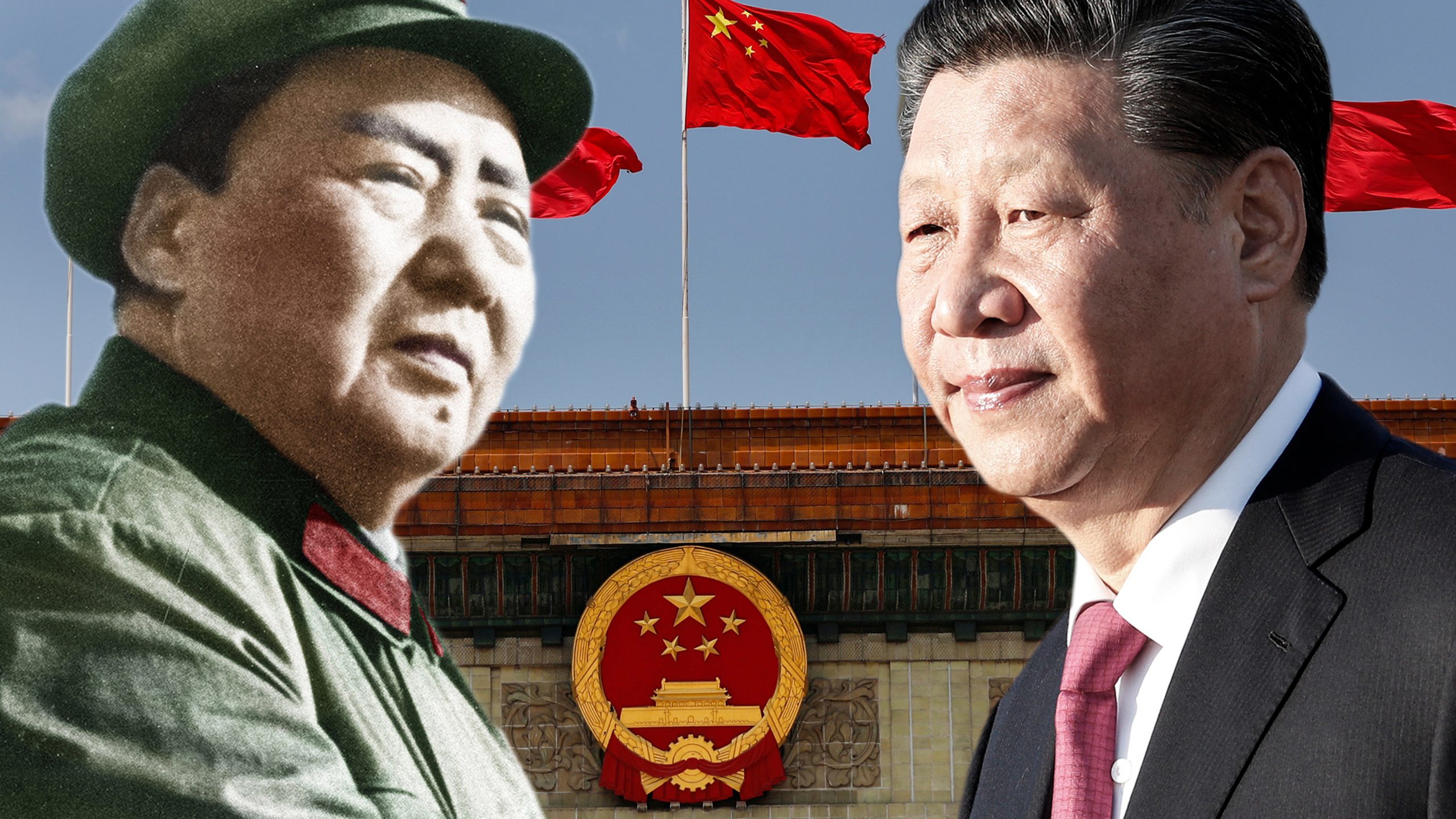
Mao and Xi’s historical projects couldn’t be more different, and it is high time to move beyond the bad history that conflates them.
Commentary on China these days often presents lazy thinking that leads to some ridiculous historical statements. That President Xi Jinping is a would-be Mao Zedong or that China is facing a “new Cultural Revolution” are examples of this laziness. In a charitable light, such assertions stem from a broad misunderstanding of the logics of contemporary China and its role in the world today. In a less charitable light, they are driven by ideological fealty to some of the most outdated and frankly racist aspects of Cold War Western anti-communism. My premise in the following comments: China today is not Maoist, and Xi is not Mao redux. China today is also not communist in any genuine sense of that term, even though the Communist Party presides over the country with an increasingly iron grip.
The difference between Mao and now could not be starker. Mao’s twentieth-century anti-capitalist and anti-feudal revolution in politics and culture sought to transform China’s domestic social relations by mobilizing masses of people against the systems of domination that constrained their everyday lives. He sought to demonstrate to the non-capitalist world the superiority of socialism as a mode of material and cultural production. Those experiments must be judged a failure on both counts. Xi’s twenty-first-century goal, by contrast, is to release economic forces from the burden of sustaining socialist relations in order to build China’s global wealth and power. To that end, he has pursued domestic stability and has repressed potentially insurgent political, social, and cultural impulses along with challenges from internal peripheries—all while enhancing the power and privileges of the Communist Party itself. To date, his efforts to redefine and defend capitalist logics in China seem to have found success.
China today is not Maoist, and Xi is not Mao redux. China today is also not communist in any genuine sense of that term, even though the Communist Party presides over the country with an increasingly iron grip.
Mao and Xi’s historical projects couldn’t be more different, and it is high time to move beyond the bad history that conflates them. We need to grapple with how the past several decades of social and political realignment, not just in China but around the world, are leading to a global future not yet foretold.
The “new Cold War” rhetoric that permeates public discourse these days is dangerous, to be sure, yet it appeals to a version of the world that is long gone. Socialism has disappeared, and capitalism has prevailed. The fundamental antagonism between these two irreconcilable social and ideological systems—the antagonism that informed a struggle between two different cultural imaginings of the future—has not existed since at least the mid-1990s, when the post-1989 Chinese capitalist order came into full view and took material and ideological root in China and the world. (And, as anyone in Asia or Africa knows, the concept of the “cold” war was always of questionable utility in places that hosted a continuous series of hot wars.)
Indeed, the huge dissension within the “West,” the United States included, about how to even specify these problems—or whether to specify them at all—gives the lie to the fiction of unified nation-states facing off across elemental ideological divides.
We live in a capitalist world, but that doesn’t reduce the stakes of current conflicts. Will we blow each other up in militarized one-upmanship? Will we so pollute our environments that we destroy the natural world’s capacity to sustain life? Will we tear each other and ourselves apart in the attempt to come to human solutions to human-made problems? Will the speed of disease and pathology outstrip our ability to lock down and vaccinate, or will we look the other way as the necropolitical selection of those who live and die proceeds apace? These are apocalyptic stakes, but they do not break down analytically on fundamental lines of systemic antagonism. The definition of and solutions to these problems do not depend on such outmoded analytics as the “West” and the “rest,” or the United States and China. Indeed, the huge dissension within the “West,” the United States included, about how to even specify these problems—or whether to specify them at all—gives the lie to the fiction of unified nation-states facing off across elemental ideological divides.
We need to confront the possibility that our leaders—whoever they may be, whether so-called democrats or so-called authoritarians, so-called liberals, leftists, or rightists—all are leading us into disaster.
What we need to confront today is that our accustomed systems of analysis based in the imaginary unities of nation-states are exhausted. We need to confront the possibility that our leaders—whoever they may be, whether so-called democrats or so-called authoritarians, so-called liberals, leftists, or rightists—all are leading us into disaster. Those of us outside China must oppose attempts by our governments and ventriloquist media to create ever more unequal and violent capitalist relations that ratchet up tensions between peoples and nations. At the same time, we must try to support those within China who are opposing their own government’s and ventriloquist media’s commitments to suppressing the critical voices and anti-capitalist practices in their midst. The stakes are high, and now is the time to rise to the occasion of critical engagement rather than sink into facile historical analogies. What we face today are not conflicts between civilizations but conflicts over what kind of civilization we wish to inhabit moving forward. Neither the Chinese state nor Western ones have the kinds of answers that we need these days, but there are activist elements in all of our societies striving to find solutions. It is to such activists that we must look for hope.
Feature Image Credit: Nikkei Asia