Tag: Arunachal Pradesh

  • Time to be firm tackling Dragon on LAC Standoff & Human Rights

    Time to be firm tackling Dragon on LAC Standoff & Human Rights

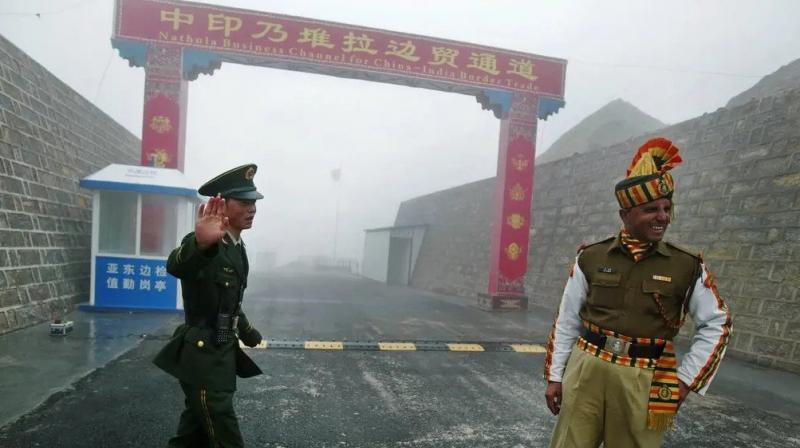
    Both nations, according to reports, now have between 50,000 to 60,000 troops deployed along the LAC in Ladakh.

    The last couple of years, in particular, have seen the world torn apart by both the Covid-19 catastrophe and the emergence of a new Cold War. Nations have been pursuing their own selfish agendas on the global stage unmindful of the uncalled-for destruction of weaker societies with misery and turmoil being inflicted on the hapless. After Russia’s invasion of Ukraine eight months ago, a conflict which threatens to escalate into a nuclear dimension, the world is yet to see any signs of a resolution. India, which is located in easily one of the world’s most geopolitically stressed regions, has its own share of diverse challenges, threatening its security and well-being, largely attributable to the hegemonistic and an overly assertive China.

    [powerkit_button size=”lg” style=”info” block=”true” url=”https://www.asianage.com/opinion/columnists/111022/kamal-davar-time-to-be-firm-tackling-dragon-on-lac-standoff-human-rights.html” target=”_blank” nofollow=”false”]
    Read more
    [/powerkit_button]

  • China’s New Land Border Law

    China’s New Land Border Law

    On October 23, 2021, the Standing Committee of the National People’s Congress, the highest legislative body of the People’s Republic of China passed the Land Boundary Law along adding to its new Maritime Law as well as China Coast Guard Law passed earlier in 2021, which shows China’s intention in pursuing an aggressive policy on its territorial claims. The land boundary law came into effect on January 1, 2022. The law is likely motivated partially by the possible implications over developments in Afghanistan that could potentially have a destabilising effect in Xinjiang, growing violence in Myanmar-China border but more by the India-China geopolitical tussle.  The timing of the law is clearly related to the escalating border tensions with India and in the South China Sea. India and China have been engaged in border stand-off since May 2020.[i] Closer scrutiny of this law, consisting of 62 articles in seven chapters, indicates that China is stepping up its aggressive tone when it comes to border disputes, demonstrated by its rhetoric that China will “resolutely defend territorial sovereignty and land border security.”[ii] It states that the main aim of the law is to “standardise and strengthen the security and stability of land borders” and “safeguard national sovereignty, security and territorial integrity.”[iii] In other words, Beijing will take all measures to safeguard its interests within its specified borders by any means be it military or economic. The law effectively uses a civil-military fusion strategy emphasising improvement of public services and infrastructure along the borders as also incorporating the local population in territorial defence. The law prohibits any party from engaging in any border activities which would “endanger national security or affect China’s friendly relations with neighbouring countries”.[iv]

    Zhang Yesui, a spokesperson for the National People’s Congress stated that the law became necessary to safeguard China’s interests at the border and to regulate national borders, border defence management, and international cooperation in border affairs.[v] This law has serious implications for all 14 countries sharing borders with China. By incorporating the sovereignty claim over disputed territories China has effectively legitimised the use of force along its 22,4577 kilometres of borders as of January 01, 2022. Even though China has guaranteed that these laws aren’t meant to dislodge any international laws and treaties, it is evident that China is adopting aggressive policies to attain its goals.
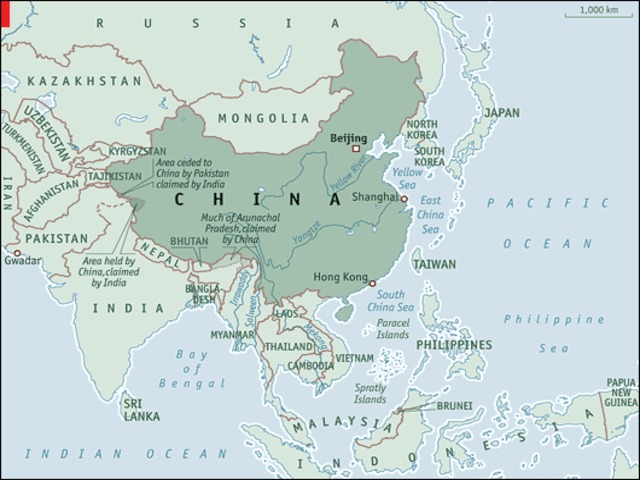
    The new law has serious implications for India. Firstly, since the 1962 war, the Line of Actual Control (LAC) is the de facto border between India and China, and both countries have different interpretations of the LAC over at least 13 different locations.[vi] Article 4 of the law states China’s sovereignty and territorial integrity as sacred and inviolable and applies this dictum to the disputed territories.[vii] Thus this law makes the earlier agreement of Peace and Tranquillity along the disputed Sino-India border almost irrelevant.  Secondly, the law forbids any form of construction of facilities “near” China’s border. This is elucidated in Article 10 deals with border defence construction including its river waters management under the term flood control. These issues are deliberately kept vague, and they could interfere with any form of construction on the border. This could again become contentious as both the countries are engaged in an “infrastructure arms race” on their sides of the border. Thirdly, the new law has made a special mention of the role of civilians concerning the development of villages and towns in the borderlands. The law reflects China’s intention to increase civilian settlements bordering India, Nepal, and Bhutan.[viii] This move goes in tandem with China’s agenda of “developing the border regions, enriching the local people” introduced in 1999 and is seen as a strategy to legitimise its territorial claims.[ix]

    The law has a problematic stance with international law, as Beijing is circumventing these by enacting domestic laws to give it legal backing for its unlawful actions. It shows that international law is ineffective against powerful states. The new law goes against the ethos of the Vienna Convention on Law of Treaties of 1969 (VCLT), which is an instrument that regulates the treaties between states. It establishes internationally recognised norms of behaviour by states in crisis or conflict situations. It is important to note that under the general principles of international law, unilateral declarations do tend to have a legal character of their own as explained under the Law of Treaties. It is imperative that such unilateral declarations must not affect the rights of other states and must go through two different stages to be considered legally acceptable. Firstly, there should be a unilateral statement by an actor and secondly, the said statement must either be accepted by the party/parties concerned or must go unchallenged. In this case, several parties have issues with China’s new land border law.[x]

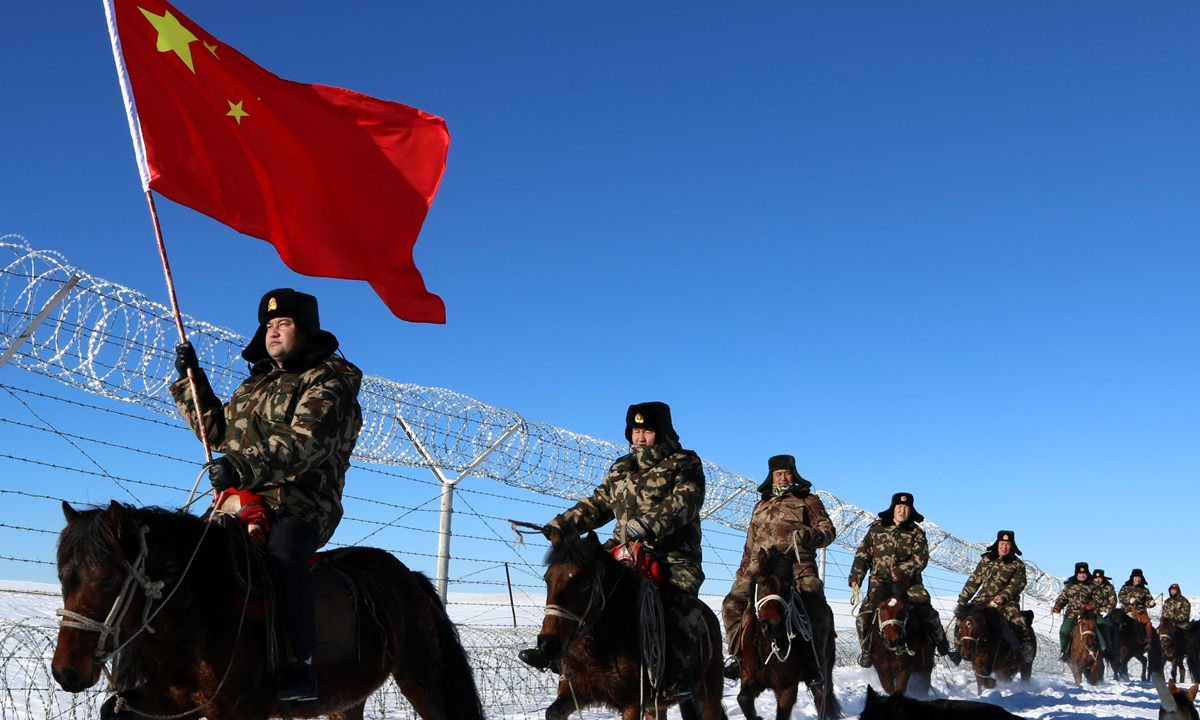
     As Beijing’s ‘Land border law’ came into effect on January 1st, the PLA released a propaganda video showing the Chinese flag and soldiers in the Galwan valley, with a banner reading ‘never yield an inch of land’. Earlier China released a statement renaming 15 places in India’s border state of Arunachal Pradesh. Chinese maps have consistently shown the entire state of Arunachal Pradesh, Barahoti plains in Uttarakhand, and areas up to the 1959 claim line in Ladakh as its territory.[xi] China will use the new law to claim these areas as its sovereign territory thus deeming it non-negotiable. It is playing realpolitik to increase pressure on India by escalating the friction points.[xii] The current situation at the India-China border has the potential to spiral out of control, as both sides are deploying heavy armaments and forces on the border, and in essence, the new law makes the border dispute a ticking time-bomb with far-reaching consequences for the world.

    Reference

    [i] Philip, Snehesh Alex. “Chinese Troops Challenge India at Multiple Locations in Eastern Ladakh, Standoff Continues.” ThePrint, 24 May 2020, https://theprint.in/defence/chinese-troops-challenge-india-at-multiple-locations-in-eastern-ladakh-standoff-continues/428304/.

    [ii] Wei, Changhao. “NPCSC Adopts New Laws on Family Education and Land Borders, Amends Audit Law & Authorizes New Regulatory and Military Reforms.” NPC Observer, 18 Nov. 2021,https://npcobserver.com/2021/10/26/npcsc-adopts-new-laws-on-family-education-and-land-borders-amends-audit-law-authorizes-new-regulatory-and-military-reforms/.

    [iii]  Panag , Lt Gen H S. “China’s Land Border Law Is More Sinister than It Lets on. India Needs a Course Correction.” ThePrint, 11 Nov. 2021, https://theprint.in/opinion/chinas-land-border-law-is-more-sinister-than-it-lets-on-india-needs-a-course-correction/764463/.

    [iv] 13th National People’s Congress. “Land Border Law of the People’s Republic of China.” The National People’s Congress of the People’s Republic of China, 23 Oct. 2021, http://www.npc.gov.cn/npc/c30834/202110/5a3d27747cc542f8bcde9030a83218e2.shtml.

    [v] Huang, Kristin. “What ‘New Challenges’ Does China’s New Border Defence Law Aim to Tackle?” South China Morning Post, 31 Oct. 2021, https://www.scmp.com/news/china/diplomacy/article/3154139/what-new-challenges-does-chinas-new-border-defence-law-aim.

    [vi] Fravel, Taylor M. “Analysis | Why Are China and India Skirmishing at Their Border? Here’s 4 Things to Know.” The Washington Post, WP Company, 2 June 2020, https://www.washingtonpost.com/politics/2020/06/02/why-are-china-india-skirmishing-their-border-heres-4-things-know/.

    [vii] Kalita, Jayanta. “China’s New Border Law Could Further Complicate Boundary Disputes”, The Irrawaddy, November 22, 2021.  https://www.irrawaddy.com/opinion/guest-column/chinas-new-border-law-could-further-complicate-boundary-disputes.html

    [viii] Pasricha, Anjana. “Chinese Border Villages in Disputed Territory Put India on Alert.” VOA, 2 Apr. 2021, https://www.voanews.com/a/east-asia-pacific_voa-news-china_chinese-border-villages-disputed-territory-put-india-alert/6204062.html.

    [ix] Jianqiang, Yang. “Deputy Director of the National Ethnic Affairs Commission, Answered Questions from the Chinese Government Website on the ‘Eleventh Five-Year Plan’ for the Action to Promote Frontiers and Enrich the People.” Central Government Portal, 18 June 2007, http://www.gov.cn/zwhd/2007-06/18/content_652065.htm.

    [x] Pandey, Utkarsh. “The India-China Border Question: An Analysis of International Law and State Practices.” ORF, 23 Dec. 2020, https://www.orfonline.org/research/the-india-china-border-question/.

    [xi] “China’s new border laws implemented under Galwan video: All you need to know about the legislation and why is it a concern for India.” Firstpost, January 03, 2022.  https://www.firstpost.com/india/chinas-new-border-laws-implemented-amid-galwan-video-all-you-need-to-know-about-the-legislation-and-why-is-it-a-concern-for-india-10253481.html

    [xii] Siddiqui, Huma. “China continues its belligerence, renamed 15 places in Arunachal: India should expect more such actions, say experts”, Financial Express, December 31, 2021. https://www.financialexpress.com/defence/china-continues-its-belligerence-renamed-15-places-in-arunachal-india-should-expect-more-such-actions-say-experts/2395218/


    Feature Image Credi: Global Times

    Map Credit: jagranjosh.com
  • India, China, and Arunachal Pradesh

    India, China, and Arunachal Pradesh

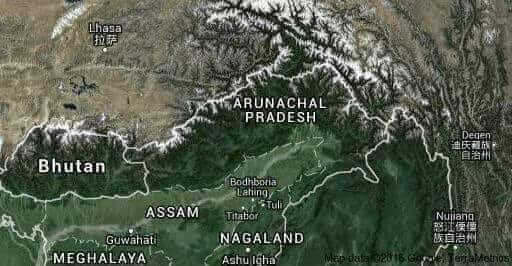
    The satellite picture below brilliantly depicts the geographical separation of Arunachal Pradesh (called Lower Tibet by the Chinese) and Tibet. The McMahon Line more or less runs along the crest line of the Himalayas.

    The Chinese have never been quite explicit on how much of Arunachal they seek.  I once saw an official map displayed in a travel agents office in Lhasa that showed only the Tawang tract as Chinese territory. In other maps they have their border running along the foothills, which means all of Arunachal.

    The Chinese have based their specific claim on the territory on the premise that Tawang was administered from Lhasa, and the contiguous areas owed allegiance to the Dalai Lama, the spiritual and temporal ruler of Tibet. Then the Chinese must also consider this. Sikkim till into the 19th century a vassal of Tibet and Darjeeling was forcibly taken from it by the British! By extending this logic could they realistically stake a claim for Sikkim and Darjeeling? Of course not. It would be preposterous. History has moved on. The times have changed. For the 21st century to be stable 20th century borders must be stable, whatever be our yearnings.

    At the crux of this issue is the larger question of the national identities of the two nations and when and how they evolved. The Imperial India of the Mughals spanned from Afghanistan to Bengal but did not go very much below the Godavari in the South. The Imperial India of the British incorporated all of today’s India, Pakistan and Bangladesh, but had no Afghanistan, not for want of trying. It was the British who for the first time brought Assam into India in 1826 when they defeated Burma and formalized the annexation with the treaty of Yandabo.

    It was only in 1886 that the British first forayed out of the Brahmaputra valley when they sent out a punitive expedition into the Lohit valley in pursuit of marauding tribesmen who began raiding the new tea gardens. Apparently the area was neither under Chinese or Tibetan control for there were no protests either from the Dalai Lama or the Chinese Amban in Lhasa. Soon the British stayed put.

    Tibet remained in self imposed isolation and the race to be first into Lhasa became the greatest challenge for explorers and adventurers in the second half of the 19th century. Not the least among these were the spies of the Survey of India, the legendary pundits. The most renowned of these was the Sarat Chandra Das whose books on Tibet are still avidly read today. As the adventurers, often military officers masquerading as explorers began visiting Tibet the British in India began worrying. Reports that the most well-known of Czarist Russia’s military explorers, Col. Grombchevsky was sighted in Tibet had Lord Curzon, the Governor General of India most worried.

    In 1903 Curzon decided to send a military expedition into Tibet led by Grombchevsky’s old antagonist, Col. Francis Younghusband. A brigade strong mixed force of Gurkhas and Tommies went over the Nathu La into the Chumbi valley and advanced unhindered till Shigatse. A Tibetan military force met them there but offered what can only be described as passive resistance. Not a shot was fired back as the British Indian troops rained bullets on them. It was a forerunner to Jallianwalla Bagh. From Shigatse Younghusband made a leisurely march into Lhasa. The British got the Tibetans to agree to end their isolation and having extracted trade concessions withdrew in 1904, the way they came.

    In 1907 Britain and Russia formally agreed that it was in their interests to leave Tibet “in that state of isolation from which, till recently, she has shown no intention to depart.” It may be of interest to the reader to know that the Great Game nevertheless continued. In 1907 Col. Mannerheim then of the Russian Army, later Field Marshal Mannerheim and first President of Finland, led a horseback expedition from Kyrgyzstan to Harbin on China’s northeast to identify a route for the cavalry.

    The next important year was 1913 when the Tibetans declared independence after the collapse of the Qing dynasty and the establishment of a Republic in China under Sun Yat Sen. They attacked and drove the Chinese garrisons in Tibet into India over the Nathu La. Also in 1913 the British convened the Simla Conference to demarcate the India-Tibet border. The British proposed the 1914 McMahon Line, as we know it. The Tibetans accepted it. The Chinese Amban however initialed the agreement under protest. But his protest seemed mostly about the British negotiating directly with Tibet as a sovereign state and not over the McMahon Line as such.

    Things moved on then. In 1935 at the insistence of Sir Olaf Caroe ICS, then Deputy Secretary in the Foreign Department, the McMahon Line was notified. In 1944 JP Mills ICS established British Indian administration in NEFA, but excluding Tawang which continued to be administered by the Lhasa appointed head lama at Tawang despite the fact that it lay well below the McMahon Line. This was largely because Henry Twynam, the Governor of Assam lost his nerve and did not want to provoke the Tibetans. In 1947 the Dalai Lama (the same gentleman who is now in Dharamshala) sent the newly independent India a note laying claim to some districts in NEFA/Arunachal.

    On October 7, 1950 the Chinese attacked the Tibetans at seven places on their frontier and made known their intention of reasserting control over all of Tibet. As if in response on February 16, 1951 Major Relangnao ‘Bob’ Khating IFAS raised the India tricolor in Tawang and took over the administration of the tract. The point of this narration is to bring home the fact that India’s claim over Arunachal Pradesh doesn’t rest on any great historical tradition or cultural affinity. We are there because the British went there. But then the Chinese have no basis whatsoever to stake a claim, besides a few dreamy cartographic enlargements of the notion of China among some of the hangers-on in the Qing emperor’s court. The important thing now is that we have been there for over a hundred years and that settles the issue.

    Arunachal Pradesh has a very interesting population mix. Only less than 10% of its population is Tibetan. Indo-Mongoloid tribes account for 68% of the population. The rest are migrants from Nagaland and Assam. As far as religious affinities go Hindus are the biggest group with 37%, followed by 36% animists, 13% Buddhists. Recent census figures suggest a spurt in Christianity, possibly induced by pocketbook proselytizing. In all there are 21 major tribal groups and over 100 ethnically distinct sub-groupings, speaking over 50 distinct languages and dialects. The population of about a million is spread out over 17 towns and 3649 villages. With the exception of a few villages of Monpas who live north of the McMahon Line, it is an ethnically compact and contiguous area.

    In fact in future boundary negotiations India could make a case for inclusion of the few Monpa villages left behind north of the McMahon Line? Many knowledgeable observers suggest that the area south of the Huangpo/Brahmaputra from the Pemako gorge till it enters the Subansiri division of Arunachal would be a logical boundary as the raging and hence un-fordable and unbridgeable river ensures hardly any Chinese administrative presence in the area.

    It is true that historically India never had a direct border with Tibet till the British took Kumaon and Garhwal from Nepal in 1846 and extended its domain over Arunachal in 1886. On the other hand the formidable Himalayas were always culturally a part of India and formed a natural barrier against ingress from the north, whether Tibetan or Chinese. But times have moved and technology and mankind’s great engineering powers now make it possible for even the most hostile terrain to be subjugated. The Himalayas are no longer the barrier they once were. As China and India emerge as the world’s great economies and powers can India possibly allow China a strategic trans-Himalayan space just a few miles from the plains?

    The view from the Chinese side about what exactly constitutes China is no less confused. Apparently like the British, the Manchu’s who ruled China from the 17th to the early 20th century had a policy of staking claim to the lands that lay ahead of their frontiers in order to provide themselves with military buffers. In a recent article in the China Review magazine, Professor Ge Jianxiong, Director of the Institute of Chinese Historical Geography at Fudan University in Shanghai writes: “to claim that Tibet has always been a part of China since the Tang dynasty; the fact that the Qinghai-Tibetan plateau subsequently became a part of the Chinese dynasties does not substantiate such a claim.” Ge also notes that prior to 1912 when the Republic of China was established the idea of China was not clearly conceptualized. Even during the late Qing period (Manchu) the term China would on occasion refer to the Qing state including all the territory that fell within the boundaries of the Qing Empire. At other times it would be taken to refer to only the eighteen interior provinces excluding Manchuria, Inner Mongolia, Tibet and Sinkiang.

    Professor Ge further adds that the notions of “Greater China” were based entirely on the “one-sided views of Qing court records that were written for the courts self-aggrandizement.” Ge criticizes those who feel that the more they exaggerate the territory of historical China the more “patriotic” they are. In this context I would like to recall a recent conversation I had with the then Chinese Ambassador to India, Sun Yuxi. Ambassador Sun said that while he was soundly castigated in India for his unintended comment, he gained a major constituency in China. The mandarins in the Beijing would do well to take heed to Ge Jianxiong’s advice: “If China really wishes to rise peacefully and be on solid footing in the future, we must understand the sum of our history and learn from our experiences.” The same holds true for the babus in South Block and ‘the having writ move on’ media pundits. If we don’t then we know who will be laughing!


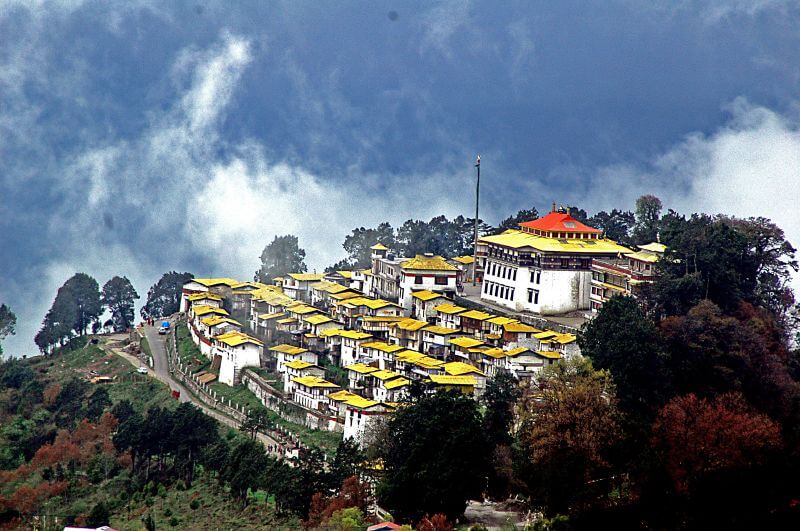
    Image Credit: Tawang Monastery