Tag: Article 370

  • Five Years without an Elected Administration: Human Rights in Jammu and Kashmir

    Five Years without an Elected Administration: Human Rights in Jammu and Kashmir

    [powerkit_button size=”lg” style=”info” block=”true” url=”https://admin.thepeninsula.org.in/wp-content/uploads/2023/08/FHRJK-2023-Report-August-2-2023-Final-Edit-1.pdf” target=”_blank” nofollow=”false”]
    Download
    [/powerkit_button]
    The Forum for Human Rights in Jammu and Kashmir comprises an informal group of concerned citizens who believe that, in the prevailing situation in the former state, an independent initiative is required so that continuing human rights violations do not go unnoticed.

    This is the fourth annual report issued by the Forum, which has also issued two midterm and/or thematic reports). It has largely been compiled from government sources, media accounts (carried in well-established and reputed newspapers or television), NGO fact-finding reports, interviews, and information garnered through legal petitions. The various sources listed have been fact-checked against each other to ensure the information is as accurate as possible, and only that information has been carried that appears to be well-founded. Where there is any doubt regarding a piece of information, queries have been footnoted.

    Executive Summary

    In an additional counter-affidavit filed before the Supreme Court in July 2023 against petitions challenging the constitutionality of the Presidential Orders of August 5, 2019 (reading down Article 370 of the Indian Constitution), as well as the Jammu and Kashmir Reorganisation Act of August 9, 2019, the union Ministry of Home Affairs claimed that that the changes wrought by the two actions had ‘brought unprecedented development, progress, security and stability to the region.’

    The facts, however, suggest otherwise. In its three annual and two thematic reports, the Forum has documented over three dozen economic, political and social rights that have been violated between August 2019 and July 2022, including economic losses of over Rs. 50,000 crores at a conservative estimate, vitiation of land and domicile rights, marginalisation and even purges of local personnel in the civil and police services, questionable arrests under draconian legislation, communication bans, media intimidation, and routinised curbs on the freedom of expression and movement. Equally glaring, the right to representation has been denied for five years, as of June 2023.

    This report on the state of human rights in Jammu and Kashmir between August 2022- July 2023 finds that while there has been improvement on some parameters, human rights violations continue on most. Its findings are as follows:

    1. Civilian insecurity persists. Targeted attacks on Pandits and migrant workers – both Hindu and Muslim – continue. While the number of lives lost due to armed attacks and counter-insurgency operations was lower than in the previous year, the number of police personnel who died, including Central Reserve Police Forces (CRPF), continues to be unacceptably high. 71 CRPF troops were killed in the four years between 2019-2022, twice as many as in the previous four years, 2014-2018, when 35 died. By comparison, in the four years between 2012-2015, which can be categorised as an uneasy interregnum between the post-peace process years and the rise of conflict in the BJP-PDP coalition, 27 CRPF troops were killed.

    2. A high volume of small arms. In 2023, it was found that Jammu and Kashmir had the largest number of licensed gun holders amongst union territories and the highest per capita amongst states as well as union territories, at 500,105 in June 2023, or four per hundred people.

    3. Resurgence of militancy in Jammu. After decades of peace, the bordering areas of Poonch and Rajouri districts in Jammu division are re-emerging as a locus for militancy with cross-border support from Pakistani-held territories of the former state. The 2022 delimitation of fresh legislative constituencies, adding Poonch and Rajouri to Kashmir’s Anantnag, may have added to the alienation that these Muslim-majority areas face with the sharpening of communal divides in Jammu. Increasing weaponisation through Jammu’s village defence guards, a problematic policy that the Forum highlighted in its 2022 report, has added further insecurity in the region. As has the 2023 Jammu and Kashmir Scheduled Tribes (Amendment) bill, which has pitted Paharis against Gujjars and other listed scheduled tribes of the region.

    4. Continuing civil rights abuses. There has been no improvement in gross violations of the freedom of expression and movement, especially the rights of the media to a safe working environment. Arrests under draconian legislation such as the Unlawful Activities (Prevention) Act (UAPA) and the Public Safety Act (PSA) continue, despite judicial attempts to limit their application. Along with Delhi, Jammu and Kashmir has the highest rate of undertrials as a proportion of its prisons population, at 91 percent, considerably higher than the national average of 76 percent.

    5. Custodial deaths and overcrowded prisons. The Jammu and Kashmir courts have flagged overcrowding and negligence as causes of custodial deaths. The region’s prisons can house a total of 3,629 inmates, but they lodged 5,300 as of June 2023.

    6. Denial of political rights. Two issues of political rights dominate this year’s report. The demand for an assembly election in Jammu and Kashmir; and the demand for a legislative assembly in Ladakh, along with rights under the sixth schedule of the constitution of India.

    Elections. It has been nine years since the last legislative election in Jammu and Kashmir. The union administration accepted the delimitation commission’s report a year ago and it is eight months since fresh electoral rolls were prepared. All the preparations for an election have thus been completed, but the election commission has yet to announce dates for it. Despite their valid criticisms of the delimitation commission’s report, Jammu and Kashmir’s political parties have demanded that the election be held this year (2023). Fresh reservations to woo new constituencies through four bills scheduled to be introduced in the monsoon session of parliament will, if enacted, entrench caste-based voter mobilisation. One of them was debated on July 26.

    Ladakh Kargil and Leh, the two districts of Ladakh, have united around the demand for an elected administration with substantive powers over economic and social development such as those provided under the Sixth Schedule of the Indian constitution, or, alternatively and it seems preferably, the grant of statehood. The union administration has repeatedly promised to discuss the inclusion of Ladakhis in the sixth schedule, but little has resulted. Given Ladakh’s geo-strategic location, bordering both Pakistan and China, the union administration might prefer to govern the union territory directly. However, direct administration has resulted in alienating Ladakh’s elected councillors as well as its people, both of which impact negatively on Indian democracy as well as national security.

    7. A record year of tourism in 2022 boosted the economy, but it still lagged behind the national average on per capita income and rates of growth. The multidimensional poverty index for 2023 showed an impressive reduction in the proportion of its population living in poverty from an estimated figure of 12.56 percent in 2015-2016 to 4.8 percent between 2019-2021, but it ranked sixth out of eight union territories on the sustainable development goals (SDG), with Ladakh at seventh. Its forest cover decreased from 39.66 percent to 39.15 between 2020- 2021.

    8. Unemployment and drug abuse. At 23.1 percent in March 2023, unemployment was almost three times the national average of 7.8 percent. According to the union ministry of health, Jammu and Kashmir are among the top two states and union territories for drug abuse, with an estimated 900,000 habitual drug users, roughly 1 in 130.

    9. Data scarcity. There is a paucity of readily available figures for the former state. Though the 2023 budget presentation for parliament forecast a NSDP growth rate of 14.9 percent for Jammu and Kashmir in 2022-2023, the economic survey of 2023 said that figures for its per capita NSDP were not available from 2019 to date, as did the 2022 Reserve Bank of India statistics on states.

    Air Vice Marshal Kapil Kak (Retd) is a Distinguished Fellow and a member of the Governing Council of The Peninsula Foundation (TPF). He is a member of the Forum for Human Rights in Jammu and Kashmir.

    Disclaimer: The views represented herein are those of the Forum and do not necessarily reflect the views of The Peninsula Foundation, its staff, or its trustees.

    [powerkit_button size=”lg” style=”info” block=”true” url=”https://admin.thepeninsula.org.in/wp-content/uploads/2023/08/FHRJK-2023-Report-August-2-2023-Final-Edit-1.pdf” target=”_blank” nofollow=”false”]
    Download
    [/powerkit_button]
  • Three Years as a Union Territory: Human Rights in J&K

    Three Years as a Union Territory: Human Rights in J&K

    [powerkit_button size=”lg” style=”info” block=”true” url=”https://admin.thepeninsula.org.in/wp-content/uploads/2022/08/Our-Annual-Report-Human-Rights-JK-2022_compressed-1.pdf” target=”_blank” nofollow=”false”]
    Download
    [/powerkit_button]
    The Forum for Human Rights in Jammu and Kashmir comprises an informal group of concerned citizens who believe that, in the prevailing situation in the former state of Jammu and Kashmir, an independent initiative is required so that continuing human rights violation do not go unnoticed.

    The aim of the Forum is to highlight, report and seek action. It will primarily focus on human rights protected by the constitutions of India and Jammu and Kashmir, as well as those identified in international treaties/instruments which India has ratified. It will research evident violations, and may take suo moto notice of any violation, irrespective of whether or not a formal complaint is received.

    The Forum for Human Rights in Jammu and Kashmir will receive information/materials on human rights violation to its email hrforumjk@gmail.com and through other means, and it may report/forward complaints to relevant authorities with recommendations for action. Please note that this is not an anticipatory body.

    This is the fourth report issued by the Forum. It has largely been compiled local first-hand accounts, governments sources, media accounts (carried in well-established and reputed newspaper or television), and NGO fact-finding reports. The various sources listed above have been fact-checked against each other to ensure the information is as accurate as possible, and only that information has been carried that appears to be well-founded.

    The members of the Forum for Human Rights in Jammu and Kashmir take allegations of inaccuracy, bias, or any other criticism founded in fact, very seriously. Criticism of this nature will be considered and responded in real-time.

    Air Vice Marshal Kapil Kak (Retd) is a Distinguished Fellow and a member of the Governing Council of The Peninsula Foundation (TPF). He is a member of the Forum for Human Rights in Jammu and Kashmir.

    Disclaimer: The views represented herein are those of the Forum and not necessarily reflect the views of The Peninsula Foundation, its staff, or its trustees.

    [powerkit_button size=”lg” style=”info” block=”true” url=”https://admin.thepeninsula.org.in/wp-content/uploads/2022/08/Our-Annual-Report-Human-Rights-JK-2022_compressed-1.pdf” target=”_blank” nofollow=”false”]
    Download
    [/powerkit_button]

  • Life In Post-370 Kashmir: Battling The Pandemic Amid Communications Blockade

    Life In Post-370 Kashmir: Battling The Pandemic Amid Communications Blockade

    When British sovereignty over India lapsed in 1947, Kashmir, the Muslim majority state under the rule of Hindu ruler Maharaja Hari Singh chose to remain independent. However, that independence was short lived as Pakistani raiders invaded Kashmir and Hari Singh turned to India for assistance. India promised to help on the condition that Hari Singh signed the Instrument of Accession, according to which defence, communication and external affairs of the state will be handed over to the Indian administration. Since then Kashmir had enjoyed special status under Article 370 of the Indian Constitution. Under article 370, Kashmir had its own state flag, constitution and autonomy over the internal administration of the state. With Article 370 along with Article 35A, the residents of Jammu and Kashmir lived under a separate set of laws, including those related to citizenship, ownership of property and fundamental rights, as compared to residents of other Indian states.Kashmir has been in the midst of unrest and turmoil for decades, as Pakistan inspired religious fundamentalism led to the growth of terrorism and insurgency. Constant communication and internet ban, and curfew have been part of everyday life for the people of Kashmir. Kashmir accounts for about 60% of the communication and internet ban that happens in India. Internet in the valley was cut off for four months in 2016 following the uprising after the killing of Burhan Wani.
    On 5th August 2019, the BJP-led Indian government, headed by Prime Minister Narendra Modi stripped Kashmir of its special status by revoking Article 370. Home Minister Amit Shah introduced the Jammu and Kashmir Re- organization Bill in the Parliament and was passed with a majority. The ‘Jammu and Kashmir Re-organisation Bill‘ divided the erstwhile Jammu and Kashmir into two Union Territories – Jammu & Kashmir and Ladakh.

    Over the last five decades and more, Article 370 has been hollowed out by various governments that were in power in the erstwhile state.

    Analysis and contention that Article 370, in its present form has been diluted over the years and that it existed just in name is indeed true. Over the last five decades and more, Article 370 has been hollowed out by various governments that were in power in the erstwhile state. Despite this, Article 370 guaranteed the people of Kashmir certain benefits such as exclusive land rights and job reservation among others. With the scrapping of Article 370, people of the valley fear that it will usher in a change in the demographics of the erstwhile state. As J&K loses it special status, people will lose their exclusive land rights, various reservations and other benefits that they enjoyed. There is also a fear among the people that with the scrapping, settler colonization will take place in the valley like it happened in Palestine.Following the announcement, the valley was placed under a lockdown including communication and internet ban. Several political leaders including former chief minister Omar Abdullah and Mehbooba Mufti were placed under house arrest. Opinions of the leaders of the valley were not taken into consideration before the Indian government decided to scrap article 370. Kashmir politics, over the years, has been dominated by narrow selfish interests of political parties and political families, which has led to significant loss of confidence of the people. Continued terrorism and religious fundamentalism has vitiated the atmosphere over decades. In such an environment it is difficult to ascertain peoples’ perception of the government’s action, as self-proclaimed leaders may not reflect the ground situation. The central government, armed with extensive intelligence inputs and analysis, feels that the region’s 1.25 crore people long for economic development, better quality of life, and better opportunities in education and employment. However, imposition of a complete lockdown of the valley for nearly six months may have been counterproductive. The situation became more complicated as the Covid-19 pandemic hit the valley.

    Statistics, however, tell a different story – Jammu and Kashmir did better than several other Indian states including Gujarat, the “model state”, in terms of human development index, infant mortality rate, life expectancy etc.

    Home Minister Amit Shah claimed that Article 370 led to isolation of J&K from the rest of India and was the root cause of armed militancy, poor economic growth, and poverty in the valley. Statistics, however, tell a different story – Jammu and Kashmir did better than several other Indian states including Gujarat, the “model state”, in terms of human development index, infant mortality rate, life expectancy etc. Regarding the statement that Article 370 facilitated militancy in the valley, there has been no evidence to prove the same. However, militants care little about Article 370. There has been no decline in militant activities even after the abrogation of Article 370. Militant attacks and counter-insurgency operations continue at high intensity.The aftermath of the decision saw communication and internet being suspended or curtailed effectively for 9 months. The justification given by the government was to stop the spread of false information and prevent terrorist activities in the valley. This communication blockade was the longest in the history of a democratic country and it cut off Kashmir from the rest of the world. Adverse impact on education has been huge due to the lockdown. As educational institutions remain closed for nearly 8 months, education in the valley has taken a back seat. Even when situation in the valley seemed to return to normalcy, parents were unwilling to send their children to school. As the world was hit with the Covid-19 pandemic, schools and universities across the country and the world have resorted to online classes but that is not the case in Kashmir. It is a challenge for students to use online classes on the 2G network that is currently allowed in the valley. It is practically impossible to load and download the study materials in a 2G network. Even this network, primitive by today’s standards, is often unstable and unreliable.
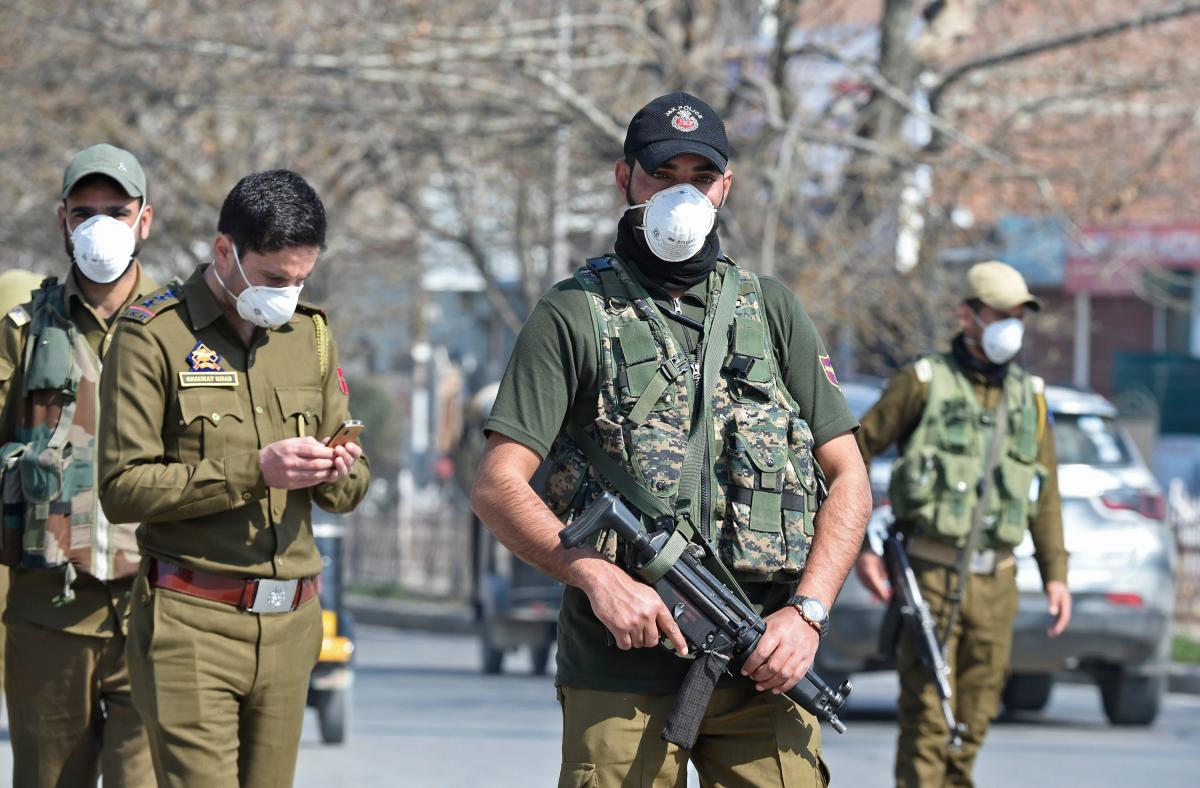
    In March 2020,exactly after 213 days, internet service i.e. only 2G service, was restored in the valley but it was snapped again on May 6 after security forces closed in on Hizbul Mujahedeen Commander Riyaz Naikoo. The frequent communication blockade is of serious concern at a time when the world is fighting the Covid pandemic. Militant activities continue to disrupt peace and security, as is seen by the latest snapping of internet amid CASO (cordon and search operations) launched by J&K police in Srinagar district. India shuts down internet more than any other democracy in the world.

    It is of utmost importance that the Centre restore high speed internet service in the valley so that people can receive information on Covid-19 in local language and help prevent the spread of the virus.

    The valley was declared a red zone as the number of covid cases in the union territory crossed 6424 and recorded 90 deaths. Disruption of communications has made the battle against Covid-19 difficult as it causes delays in taking the necessary steps to fight the pandemic. Even before the internet was snapped on May 6, doctors across the valley faced difficulty in downloading the guidelines issued by WHO. With limited access to internet, healthcare workers across the valley find it difficult to access regular updates, research and announcements regarding the pandemic and accurate tracking of transmission within the region. People support groups are helping each other in this time of crisis. Apart from Covid related restrictions issued via newspapers, radio and SMS, there is no access to campaigns designed for social media. With the lack of reliable information, there is a high possibility for misinformation. It is of utmost importance that the Centre restore high speed internet service in the valley so that people can receive information on Covid-19 in local language and help prevent the spread of the virus.Terrorist and insurgent outfits are revamping their tactics to exploit the pandemic situation and widen the pre-existing schisms. Infiltrations have increased as recent spurt in terrorist encounters indicate. The Covid-19 pandemic has added to the difficult situation in which the people of Kashmir are stuck in. The future of Kashmir looms in darkness due to the pandemic and several other challenges that most states have never and most likely will never experience. Kashmir was shut down through a state imposed lockdown in August 2020. As it was emerging from the lockdown towards normalcy, the pandemic brought about a lockdown that now has the peoples’ consent for the first time. This has turned out to be the world’s longest lockdown. However, the pandemic has provided the government an opportunity to get closer to the people by providing rehabilitation assistance, food supplies, and facilitating educational improvisations amid communications breakdown. Amid the pandemic crisis, the state becomes an test case for democracies across the world for the battle between control for ‘development’ and control of ‘liberty’.Image Credit: Deccan Herald