Tag: Al-Qaeda

  • Intelligence: The Crux of Targetted Assassinations

    Intelligence: The Crux of Targetted Assassinations

    The USA has followed targetted assassination strategy since WW II days. It has cooped its allies such as Israel, Australia, and the UK. Targetted killings in the Middle East has been led by Israel with active intelligence support by the USA. With modern ISR capabilities, targets can be monitored or looked for on 24/7 basis for all 365 days of the year. A world that is integrated by common communications protocols and digital standards for ease of normal business becomes vulnerable to intelligence agencies by the same process of commonality. 
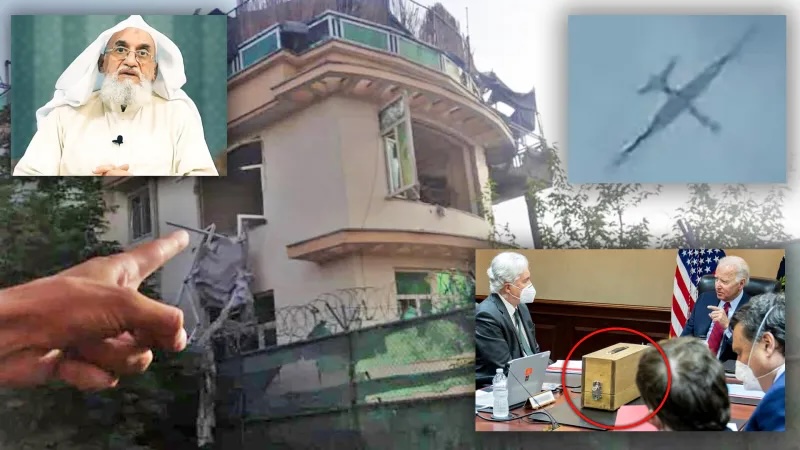
     

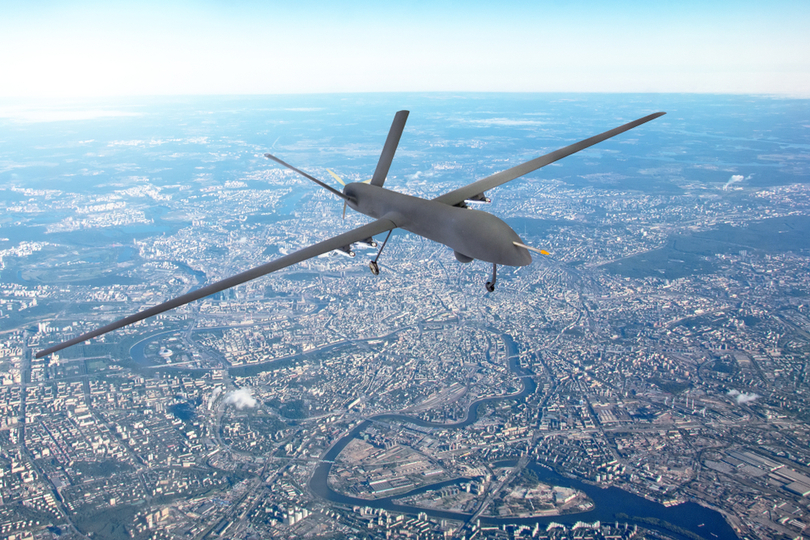
    On July 31, 2022, Osama bin Laden’s successor as the global head of Al Qaeda, Ayman al-Zawahiri, stepped out onto the balcony of his Taliban safe house in Kabul’s tony Wazir Akbar Khan area to catch a breath of fresh air and a bit of sunshine. About 40,000 feet above an American Predator B (aka Reaper MQ-9) drone, loitering to get a glimpse of him, caught him in its camera, and after its operators in Nevada, USA confirmed it with facial identification technology, ordered it to fire its single Hellfire R9X missile. The Hellfire is a small 100 lbs and five feet long air-to-ground missile (AGM) that races down a reflected laser beam with unerring accuracy. It costs about $ 150,000. The R9X, which was developed at the express request of Barack Obama, who wanted to minimise collateral damage due to an explosive charge, is a kinetic weapon that unsheathes multiple blades from its fuselage as it approaches the target at almost 900 mph like a whirling swordsman. Al-Zawahiri didn’t stand a chance.

    The USA and some other countries have bevvies of space satellites orbiting at preselected trajectories to watch over areas of interest. These satellites not only listen to targets but also track them and identify faces and vehicles by their plates. Osama bin Laden never looked up while on his morning walk at his Abbottabad residence but he was recognised by his height and the length of his shadow at the time of the day and by his gait. Al-Zawahari was either careless or underestimated America’s appetite for his head. He still had a $ 25 million reward, appetising enough for any informants.

    The number of active mobile phones worldwide exceeded 15 billion, which means that many people have more than a couple. Of these 7.2 billion are smartphones connecting people with huge reservoirs of information and content. India has 1.28 billion and China has 1.9 billion phones. The USA follows with 327 million and a dysfunctional country like Pakistan has 125 million. Even in countries with little semblance of a government or a state, like Somalia and Afghanistan or Mali or Libya, there are functioning mobile phone networks.

    As of June 30, 2021, there were about 4.86 billion internet users worldwide. Of these 44.8% were in Asia, 21.5% in Europe and 11.4% in all of North America. India was one of the last countries operating a telegraph service and as of end 2021, even that is in the past. Literally, it’s all up in the air now.

    But since data exchanged on cellular and internet networks fly through the ether and not as pulses racing through copper wires, they are easier to net by electronic interception. But these nets catch them in huge numbers. This is where the supercomputers come in. The messages that are netted every moment are run through sieves of sophisticated and complex computer programs that can simultaneously decode, detect and unravel, and by further analyzing the incoming and outgoing patterns of calls and data transfers for the sending and receiving terminals or phones, can with a fair probability of accuracy tell the agency seeking information about what is going on and who is up to what?

    The problem is that since this information also goes through mobile phone networks and Internet Service Providers (ISP), and the data actually gets decoded from electronic blips into voice and digital data, the private players too can gain access to such information.

    A few years ago we had the case of the infamous Amar Singh CDs, which titillated so many with their graphic content and low-brow conversations featuring the likes of Anil Ambani, Jayaprada, Bipasha Basu and some others. Then we had the episode of the Radia tapes where we were privy to the machinations of Tata’s corporate lobbyist in the national capital fixing policy, positioning ministers and string-pulling media stars. But more useful than this, a mobile phone, by nature of its technology, is also a personalised GPS indicator. It tells them where that phone is at any instant it is on. The Al Qaeda terrorist and US citizen Anwar el-Awlaki was blasted by a Hellfire missile fired from a CIA Predator drone flying over Yemen with the coordinates provided by Awlaki’s mobile phone.

    Since a mobile phone is usually with you it tells the network ( and other interested parties) where you are or were, and even where you are headed. If you are on a certain street since it reveals where exactly you are and the direction of your movement, it can tell you where the next pizza place is or where and what is on sale. This is also a breach of privacy, but often useful to you. But if you are up to no good, then a switched-on mobile phone is a certain giveaway.

    That’s what gave away Osama bin Laden in the end. A momentary indiscretion by a trusted courier and bodyguard and a name gleaned from a long-ago water-boarding session was all it took. To know what happened next see “Zero Dark Thirty” by Katherine Bigelow (now on Netflix and YouTube).

    The NSA is all hi-tech. NSA collects intelligence from four geostationary satellites. These satellites track and monitor millions of conversations and the NSA’s banks of high-speed supercomputers process all these messages for certain phrases and patterns of conversations to decide if the persons at either end were worthy of further interest.

    The NSA’s eavesdropping mission includes radio broadcasting, both from various organisations and individuals, the internet, telephone calls, and other intercepted forms of communication. Its secure communications mission includes military, diplomatic, and all other sensitive, confidential or secret government communications. The NSA is all hi-tech. NSA collects intelligence from four geostationary satellites. These satellites track and monitor millions of conversations and the NSA’s banks of high-speed supercomputers process all these messages for certain phrases and patterns of conversations to decide if the persons at either end were worthy of further interest. Link this information with the data from the CIA’s spinning satellites watching the movements of groups, individuals and vehicles, and you have a broad picture of what the people are doing.

    According to the Washington Post, “every day, collections systems at the National Security Agency intercept and store 1.7 billion e-mails, phone calls and other types of communications.” The NSA and CIA together comprise the greatest intelligence-gathering effort in the world. The overall U.S. intelligence budget is now declared to be $62.8 billion.


    Feature Image Credit: E-International Relations

    Article Image Credit: www.twz.com
     

  • The US retreat from Afghanistan: Looking back on an ill-conceived peace deal and a hasty withdrawal

    The US retreat from Afghanistan: Looking back on an ill-conceived peace deal and a hasty withdrawal

    Under an agreement signed on February 29, 2020, between Qatar, The US and the Taliban, the US agreed to withdraw all its troops within 14 months of signing the accord. In return, the Taliban pledged to prevent any terrorist group from operating in Afghanistan against the US and its allies. The pact also envisaged a prisoner swap, the start of intra-Afghan dialogue and sanction removals against the Taliban. But, as we have seen, the peace deal accelerated the collapse of the Afghan state on which the US spent trillions of dollars.

    Trump also permitted the US chief negotiator Zalmay Khalilzad to place the withdrawal of US forces on the negotiating table with the Taliban, throwing away their biggest bargaining chip. The Taliban themselves seemed surprised that the US put the withdrawal of US troops on the negotiating table.

    The US started the peace talks with four specific goals. An end to violence by declaring a ceasefire, an Intra-Afghan political settlement, Taliban renunciation of Al-Qaeda and long-term presence of intelligence assets and special operation forces in Afghanistan for counterterrorism operations, and a timeline for US troops withdrawal[1]. However, with the presidential elections approaching in 2020, Trump was being increasingly restless and wanted a quicker exit. So, to accelerate talks, the long-standing demand for the presence of special operation forces in a counterterrorism mission along with inter-Afghan led peace talks were jettisoned. Trump also permitted the US chief negotiator Zalmay Khalilzad to place the withdrawal of US forces on the negotiating table with the Taliban, throwing away their biggest bargaining chip. The Taliban themselves seemed surprised that the US put the withdrawal of US troops on the negotiating table.

    The US committed itself to a set of measurable commitments, while the Taliban did not. The idea was to create an environment of good faith. However, the Taliban never reciprocated the ‘good faith’ shown by the US, except to ensure safe passage for the retreating US troops. Once the deal was struck, violence increased in the country.

    The Taliban never agreed to a ceasefire or a political settlement. While the intra-afghan dialogue was a part of the deal struck between the Taliban and the US, there was a lack of progress, with the Afghan government and the Taliban blaming each other for the impasse. Violence escalated by almost 50% after the start of the intra-afghan dialogue.

    The peace deal also included a prisoner swap agreement where the Taliban would release up to 1000 prisoners and the Afghan government release up to 5000 prisoners. The Afghan government asked the Taliban prisoners for a written guarantee that they would not return to the battlefield. However, thousands immediately rejoined the insurgency. The Taliban commander, Maulawi Talib, who led a Taliban assault on the capital of Helmand, Lashkargah, was one among the 5000 prisoners released. There was an uptick in violence after the prisoner swap was completed. Afghan officials said the agreement went through only because of pressure from Washington.

    The Taliban proved reluctant to break ties with Al-Qaeda, too, according to a UNSC report. Under the peace deal, the Taliban agreed not to allow al-Qaeda or any other extremist group to operate in areas under their control. However, the Taliban needs allies and Al-Qaeda is one reliable ally. Further, the Haqqani network, an integral part of the Taliban, is known to harbour close links with Al-Qaeda. While stopping a future terrorist attack emanating from Afghanistan will be in the Taliban’s interests, it is unlikely they will break relations with Al-Qaeda after years of close collaboration.

    It was clear from the beginning that the viability of the agreement depended on the US willingness to call off the withdrawal in the future if the Taliban renegade on their promises. But that decision fell to president Biden, who has always made it clear that Afghanistan is a lost cause.

    When Biden came to power, the situation in Afghanistan was deteriorating. The choice he had, according to Biden himself, was to either expand US presence or follow through with the agreement. The dilemma was a result of poor policies pursued during the trump era. The US has been bogged down in Afghanistan for 20 years, and the resolve of president Biden to not escalate meant that the US followed through with the agreement. The peace talks became a cover for complete US disengagement.

    The US withdrawal accelerated the collapse of the Afghan state. The uncertainty of the Doha talks demoralized the Afghan military, who saw it as a deal between the Taliban and the US that guaranteed Taliban victory.

    With the collapse of morale, everything that was rotting started collapsing as well.  Around 30000 troops existed on paper, but the numbers were inflated due to a phenomenon called ‘ghost’ soldiers – soldiers on the official payroll but who never showed up for fighting. There were reports that the soldier was not paid and there were not enough supplies.

    Jack Watling, a research fellow for land warfare and military sciences at the Royal United Services Institute in London, said that the Afghan military collapse was not a reflection of military capability, but a reflection of a collapse in the will to fight.

    In truth, ever since the surge in troops authorized by the Obama administration right after coming to power, what every successive US President wanted was an orderly withdrawal from Afghanistan. The most baffling thing is that the US resorted to negotiation when its leverage was the weakest. Perhaps, in hindsight, greater efforts could have been made during the time of President Obama to find a peaceful solution to the conflict.

    In the end, it was more of a retreat than a withdrawal. The US made concrete measurable commitments while the Taliban made promises, which they can now afford to renegade on.

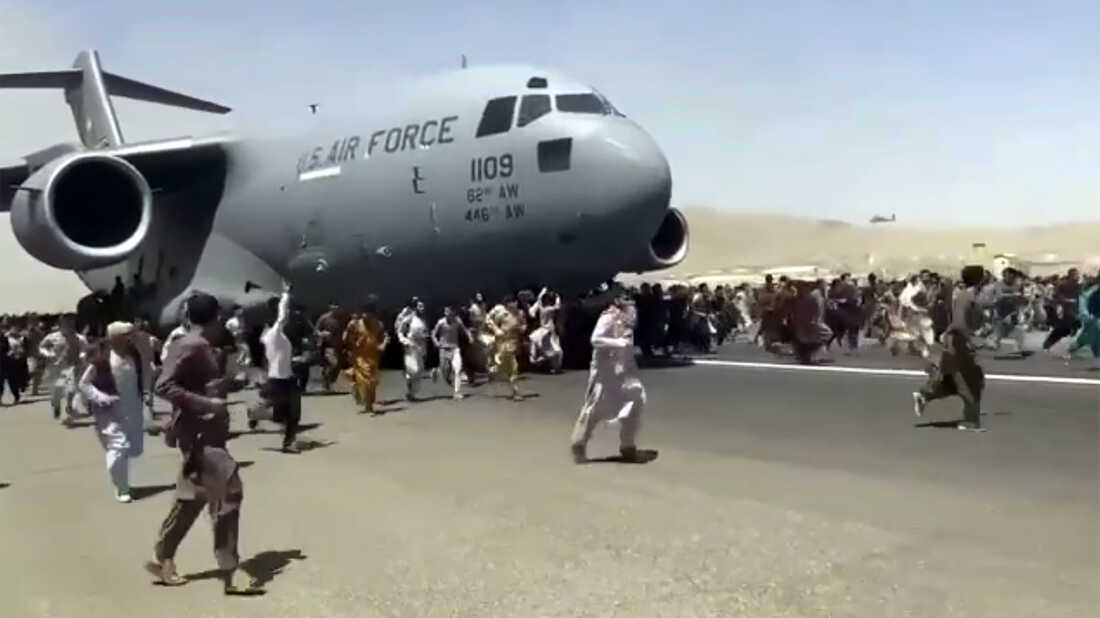
    The scenes in Kabul airport was anything but orderly. More than 2000 marines had to be brought in to secure the Kabul airport as the Taliban rolled into Kabul for the first time since 2001. “The past 17 days have seen our troops execute the largest airlift in U.S. history, evacuating over 120,000 U.S. citizens, citizens of our allies, and Afghan allies of the United States,” the US president said in the statement. An attack by the Islamic State in Khorasan Province (ISKP) on Kabul airport killed 13 U.S. service members and 170 Afghans.

    In the end, it was more of a retreat than a withdrawal. The US made concrete measurable commitments while the Taliban made promises, which they can now afford to renegade on.


    [1] Pg. 667, carter


    Feature Image Credit: www.npr.org