
Tag: air pollution

  • COVID-19: Anti Coronavirus Measures and their Environmental and Social Impact

    COVID-19: Anti Coronavirus Measures and their Environmental and Social Impact

    In the bleak reality of the corona virus outbreak, all human activity slowing down or being halted, has brought about one positive change – for the environment. Fuel consumption going down, factories shut, and fewer vehicles on the road has resulted in carbon emissions reducing, leading to less pollution both in the air, on land and in water.

    Air pollution

    To measure the Air Quality Index (AQI), System of Air Quality and Weather Forecasting and Research (SAFAR), under the Ministry of Earth Sciences, Government of India, has 6 categories for air quality. Ranging from 51- 100 is known as “satisfactory” or “very good”, from 101-200 is “moderate”, from 201-300 is “poor” 300-400 is seen as “very poor” and lastly, between 401-500 fall under the “hazardous.” In New Delhi, known as the world’s most polluted capital city, governmental lockdown orders have resulted in the Air Quality Index dropping to a level considered “satisfactory.” Images of clear blue skies in the capital have been released showing the absence of smog. Other major pollution emitting cities such as Mumbai is at the moderate level, and Pune is at a satisfactory level. It is no doubt that the reduction in the number of vehicles on the road has resulted in better AQI during the virus outbreak.

    Furthermore, European Space Agency (ESA) satellite images show that nitrogen dioxide (NO2) levels over China due to industries, power plants and vehicles have plunged drastically between January and February 2020. It is hoped that observations such as these will encourage a quicker shift to clean energy sources for the betterment of society.

    Water pollution

    Venice, Italy, connected solely by canals and also a popular tourist destination, saw its canals virtually empty once lockdowns were announced. The deprivation of tourists cut back much of the pollution and as a result, the polluted canal waters were seen to be clearer. Other activities requiring travel over water, including trade and leisure activities on ships being reduced also works in favour of the environment. The planet is definitely benefitting from the measures against the pandemic.

    Fuel consumption and price

    Fuel consumption has dropped notably worldwide, as industries and factories have either cut back or suspended their activity; many people are no longer commuting, but working from home. These factors are also leading to a significant drop in fuel prices. Indian demand dropped 10-11% in the first two weeks of March alone. According to the International Energy Agency (IEA), there has been a 90,000 barrel per day drop from 2019, in the global oil demand. In restricting the movement of people, both within cities and across national and international borders, the drop in demand has hit the tourism industry hard.

    The tourism industry

    Though business is affected, it is definitely a time for nature to rejuvenate and replenish in this time of lockdown. One of the major players of the tourism industry, the airline industry could take a hit up to $113 billion according to the International Air Travel Association. With travel cuts, cancellation of flights and lower demand in many countries, this has been an eye-opener in the amount of pollution caused by these activities. Deserted streets, at popular tourist locations such as Venice, New York City, Paris leave an eerie impression, but on the positive side shows the implementation of lockdowns and cooperation of people in going back home.

    Outcomes

    The all India three week lockdown will definitely see a reduction in pollution and improvement in quality of air, though cooperation of the people remains a worry. The outbreak of the virus has shone light on the much needed assessment required on the grave damage human activities have done to ecosystems, and consider the need to protect the future of those ecosystems. As the majority of the international system moves activity to the digital platform, nature is rejuvenated in the absence of humans. But more importantly, it is hoped that businesses will strategize on systemic changes, such as providing work from home options as this means less people commuting, less traffic, and less pollution.

    If COVID-19 is teaching us one thing, it is how interconnected and interdependent all systems are. Human ignorance and irresponsibility is only fueling the spread of the virus. Though the unpredictability of the pandemic has caught us off guard, it serves as a good wakeup call to make much needed change in various levels of individual choice, organizational and business strategy and governmental action. Pandemic response has taken priority in governmental agenda globally over tackling climate change issues, strategies being used in pandemic response have unintended favourable outcomes for the environment, simultaneously.

    Social Impact

    Little is mentioned about the social behaviour implications of the virus spread. One major positive outcome could be the health and hygiene habits that have been announced in keeping healthy in times of pandemic crisis. Awareness has brought to the forefront the importance of a simple action such as washing hands. The World Health Organization has a set of guidelines that would help in the fight against the outbreak. Social activity changes, such as remaining indoors, not being able to go out for a meal, movie or meet with friends has left many discussions on the ramifications on mental health. While this is a very real issue, it is vital to the health and wellbeing of everyone that containing the spread of the virus is the primary need of the hour.

    Views expressed are author’s own. 
  • Winds of Climate Change Blow across South Asia

    Winds of Climate Change Blow across South Asia

    The India-Pakistan enmity is possibly the world’s most intractable and obdurate, with a mutual misreading of history made extremely volatile with the brandishing of nuclear weapons. Despite having two giant militaries at each others’ throats, the more immediate existential challenges that India and Pakistan face are related to how climate change and misuse of common natural resources have combined to confront both together. It is not the militaries which will determine our fates, but the degree of cooperation the two nations can summon. Our problems are common and perhaps India and Pakistan will find the good sense to act together?

    Looking at the climate change challenges Pakistan and India face together, collective action — as unlikely as it seems — may just be what is needed to secure the lives and livelihoods of future generations.

    According to climate researchers at Germanwatch, Pakistan ranks eighth on the Global Climate Risk Index, with over 145 catastrophic events — heat waves, droughts and floods — reported in the past 20 years. On the other hand, India ranks among the top 20 vulnerable countries in terms of climate risk. Pakistan is home to around 47 per cent of the Indus Basin, and India to around 39 per cent. The Indus Waters Treaty has been in effect since 1960. The recent political bickering aside, the Indus Waters Treaty has managed to survive the test of time, yet fails to comprehensively address climate change. Then again, at the time it was enacted, many of the stark realities we know today were not understood.

    According to the Pakistan Council of Research in Water Resources, Pakistan officially crossed the water scarcity line in 2005. The United Nations Development Programme and the Pakistan Council of Research in Water Resources have issued warnings about the upcoming scarcity of groundwater in just six years.

    According to some estimates, Pakistan is the fourth-largest user of its groundwater and over 70 per cent of drinking requirements and 50 per cent of irrigation needs are met through groundwater extraction. Due to excessive pumping, it is estimated that water tables could fall by as much as 20 per cent by 2025.

    South Asia is drained by the Indus, Ganga and Brahmaputra river basins, which collectively form the Indo-Gangetic Basin (IGB) and include some of the highest-yielding aquifers of the world. The aquifers associated with these river basins cross the international borders of the contiguous South Asian countries, forming numerous trans-boundary aquifers, including the Indus basin aquifers (between India and Pakistan), Ganga and Brahmaputra basin aquifers (between Bangladesh and India), the aquifers of the tributaries to the Ganga (between Nepal and India), the aquifers of the tributaries to the Brahmaputra (between Bhutan and India, and between India and Bangladesh).

    At the beginning of every hydrologic year, 4,000 billion cubic meters (bcm) water enters the South Asian hydrological systems, of which almost half is lost by poorly understood and un-quantified processes (such as overland flow, surface discharge through rivers to the oceans, submarine groundwater discharge and evaporation). The annual groundwater withdrawals in the region are estimated to exceed 340 bcm, and represent the most voluminous use of groundwater in the world. South Asia faces an acute shortage of drinking water and other usable waters in many areas, as it is seeing a rapid rise in water demand and change in societal water use pattern because of accelerated urbanisation and changes in lifestyle. In many urban and rural areas of the region, surface waters have been historically used as receptacles of sewage and industrial waste, rendering them unfit for domestic use, prompting a switch to groundwater and rainwater sources to meet drinking and agricultural water needs. At present, about 60–80 per cen
    t of the domestic water supplies across South Asia are met by groundwater.

    Irrigation accounts for 85 per cent of groundwater withdrawals and is considered to be the main contributor to groundwater depletion with the maximum possible groundwater footprint seen in the Gangetic aquifers.

    Among the main contributors to water stress in India and Pakistan are poor water resource management and poor water service delivery, including irrigation and drainage services. Moreover, the lack of reliable water data, subsequent analysis and consequent poor planning and allocation is leading to environmentally unviable methods of water withdrawal, causing an alarming reduction in groundwater.

    In both countries, water stress is attributed first and foremost to the massive population growth. Another cause is the lack of sufficient urban water treatment facilities, which prevent the usability of river water for drinking and irrigation.

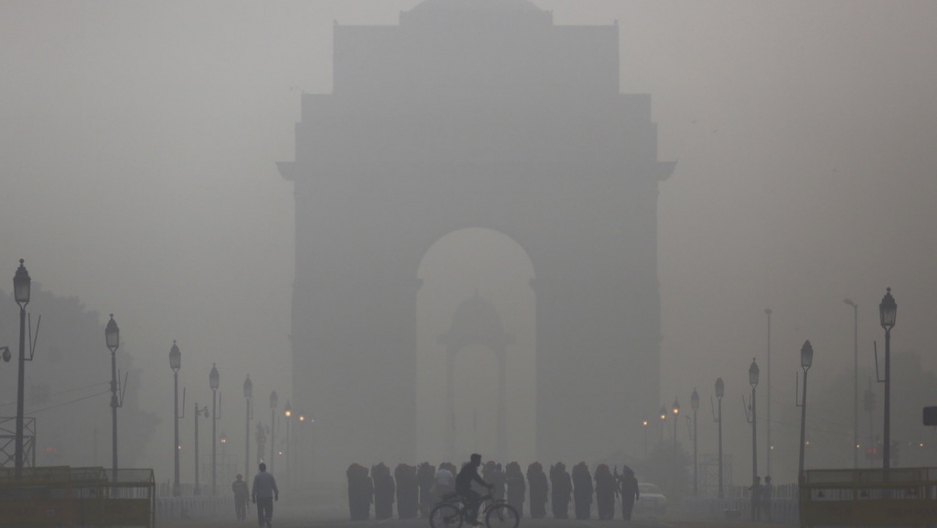
    Air pollution contributes substantially to premature mortality and disease burden globally, with a greater impact in low-income and middle-income countries than in high-income countries. The northern plains of South Asia has one of the highest exposure levels to air pollution globally.

    The major components of air pollution are ambient particulate matter pollution, household air pollution, and to a smaller extent ozone in the troposphere, the lowest layer of atmosphere. The major sources of ambient particulate matter pollution are coal burning for thermal power production, industry emissions, construction activity and brick kilns, transport vehicles, road dust, residential and commercial biomass burning, waste burning, agricultural stubble burning, and diesel generators.

    In India and Pakistan, farm residues are burnt after harvesting in October to November, which affects the air quality of the region. In Pakistan, most of the rice cultivation takes place in Punjab, and the same is true for India’s Punjab due to suitable climatic conditions for the crop. In both countries, stubble burning is the key cause of smog. According to India’s new and renewable energy sources ministry, India’s Punjab contributes 44-51 million tonnes of residue annually. According to the estimates, paddy areas burnt every year in Indian Punjab and Haryana are 12.68 million hectares and 2.08 million hectares respectively. According to a study, farmers burn 30-90 per cent of residue, which contributes to the smog formation, not just in the immediate region, but the entire Indo-Gangetic plain. With air pollution levels lurking in the “extremely poor” band for almost half the year, the northern regions of South Asia may not be able to host healthy populations for very long.

    The number of deaths attributable to ambient particulate matter pollution in India in 2017 was 0·67 million and the number attributable to household air pollution was 0·48 million. The number of deaths due to ambient particulate matter pollution in Pakistan in 2017 was 60,000.

    Climate change over 3,000 years ago destroyed the Indus Valley Civilisation and it went into oblivion, leaving behind traces of what befell the people here before. The next few decades are extremely critical. Can we summon some good sense to survive or go the way of the Meluhans? The verses of Allama Iqbal, albeit in another context, still hold true: Watan ki fiqr kar nadaan museebat aane wali hai/ Teri barbadiyon ke mashware hain aasmanon mein…/ Na samjhoge tou mit jaoge Hindustan walon/ Tumari daastan tak bhi na hoge daastanon mein. (Think of the homeland, O ignorant one! Hard times are coming./Conspiracies for your destruction are afoot in the heavens./You will be finished if you do not care to understand, O ye people of India!/Even the mention of your being will disappear from the world’s chronicles).

    The author is a prolific commentator on economic, security, and China issues. He is a Trustee/Governing Council member of TPF.

    This article was published earlier in Deccan Chronicle.

    Image source: www.pri.org