Tag: Agriculture

  • Rural Agriculture and the new wave of Migrant Workers to Rural Space

    Rural Agriculture and the new wave of Migrant Workers to Rural Space

    Abstract

    Home, belongingness, and identity bring comfort to human existence, but local communities are challenged and become highly volatile by the sudden influx of people from different regions in search of livelihood and survival. Some migrate in their quest to find new opportunities in education, employment, and better living conditions from their home state, but some are displaced due to loss of livelihood, low employment, and lack of safety. This article analyses internal migration toward Tamil Nadu. The migrant population in Tamil Nadu accounts for 18.85 lakh according to the 2011 census, whereas other state migrants account for only 6.2% (Radhakrishnan & Vasanth, 2019). Most migration in the past has been towards the cities for chances of better livelihood and stable jobs. However, migrant workers travelling towards rural areas have been increasingly found working as agricultural labourers. S. Irudaya Rajan, a professor at the Centre for Developmental studies in his work, points out the importance of migrants to this economy as there is a constant outflow of the young population, with reservation wages in this region being high (Radhakrishnan & Vasanth, 2019). A report by the Federation of Tamil Nadu Agricultural Association suggests that over 8,67,582 farmers have stopped agricultural practices, and the market has been taken over by private players who require agricultural labourers (Sreemathi, 2019). This demand can attract migrant workers to rural areas. This article examines the migration pattern in Tamil Nadu to understand the inflow and outflow population, the reasons behind the outflow of farmers from the system and the new wave of migrant workers to rural Tamil Nadu.    

    Introduction

    Millions of people move every year hoping for a better livelihood and future, but the reality may be bitter for some. Nine million people have been migrating annually between states as per the Railway’s data from 2011 to 2016. Around 30% of the Indian population represents the varied level of the migrant population (Migration, 2022). Various factors have contributed to migration. The pull factors which attract people towards the destination include better living conditions, better employment, quality education, absence of violence and high wage rates. The push factors, on the other hand, include the lack of welfare activity, discrimination towards a community, lack of employment and lower wage rates. In both instances, economic ambition occupies the centre space. Thus, it is crucial to form a developmental economy for the residing population and the migrating one. The pull factors usually replace the push factors when the socio-economic condition in the country facilitates good life. People have been moving towards cities, hoping to find better employment and livelihood in the globalised world, making cities the hub for development. In Tamil Nadu, the movement toward the city area was triggered by early industrialisation in the 1980s, when manufacturing capacity accounted for around 26% of its GDP, higher than the national average of 15% (Mahambare & Dhanaraj, 2021). The 1990s liberalisation policy created mobility and development by expanding the economic horizons to telecom, software and banking (Migration to Chennai, 2010). This socio-economic mobility has greatly impacted the state’s rural economy and continues to be one of the few contributors to migration from agriculture. In recent times, farmers are selling out their lands and changing their occupations or working as agricultural labourers. The agricultural sector requires a considerable labour population. This demand for labour forces along with the lockdown during the Covid pandemic has fuelled a new wave of migrant workers in rural areas in south India. However, it is essential to study the causes of the movement of the traditional population from the industry, which helps understand the patterns that need to be avoided.

    Migration out of Agriculture

    Agriculture has long been a community practice in Tamil societies, but the migration of farmers continues to challenge the status quo. A report by the Federation of Tamil Nadu Agricultural Association mentions that over 8,67,582 farmers have stopped agricultural practices (Sreemathi, 2019). Lower wage rates, discrimination, heavy workload, lack of welfare and crop failure are the main reasons for displacement. Since the agricultural sector is seasonal, the wages are decided by workdays, seasons, and piece/ quantity rate, which leads to an unsteady wage rate based on the season, with fewer or no jobs in some seasons. People, thus, prefer to work non-farm jobs for a steady income throughout the year. Some have been living as labourers for generations on the farm since only a handful of the population possess larger farmlands. A study by Sato Keiko (2011) traces this class difference, farmland size, and the employment status of migrants from a rural village in Madurai. He points out that the village’s upper-class children with larger farms migrated to the city and acquired white-collar jobs. The middle class and the marginal groups, on the other hand, usually landed in blue-collar jobs.  Interestingly, he notes that the aspiration to educate and climb the socio-economic ladder has recently been high among the latter (Keiko, 2011). This aspiration leads them to migrate to cities and take up factory jobs, which are comparatively better than being engaged as farm labourers. Educational aspiration attempts to shake the traditional class structure and disparity that exists with it. 

    Additionally, only 27.1% adolescent population and 24.18% of the youth population were involved as agricultural labourers in 2014 (Sivakumar, 2014). Another reason for the migration is crop failure induced by unpredictable heavy rainfall and drought. Farmers who cannot profit or make ends meet when the crop collapses, end up falling into debt.  

    More than 85% of people working in the state under MGNREGA are women, higher than the national average of 56% and 28% of the Dalit population (Ramakrishnan, 2017)

    The Mahatma Gandhi Rural Employment Guarantee Act (MGNREGA) Scheme has been argued to be one of the major reasons behind the declining numbers of farm labourers When the scheme started, it provided the rural population with a higher income of Rs. 100 compared to farm jobs which offered Rs. 40 a day (In Tamil Nadu labourers, 2010). MGNREGA acts as a precursor for the high wage rate in agriculture as it competes with the scheme to attract more people for work. In 2020, the wage rate for agriculture labourers had increased to Rs. 392, and the notified MGNREGA stood at Rs. 273, which was lower than the farm wage (Aditi, 2021). However, along with steady wages and less workload, MGNREGA has continued to be a source of economic empowerment for women. It enables pathways to formal financial institutions and personal saving habits – “I would be working like a bonded labourer again under any big landowning agriculturist, if there was no Mahatma Gandhi National Rural Employment Guarantee Scheme (MGNREGS)” (Ramakrishnan, 2017). These interviews collected by Ramakrishnan, senior journalist for The Hindu, shed light on the women’s attitude and discontent toward farm jobs. More than 85% of people working in the state under MGNREGA are women, higher than the national average of 56% and 28% of the Dalit population (Ramakrishnan, 2017). These marginal groups are frequently abused and sexually harassed by employers and landowners. In this regard, MGNREGA has provided them with a space to work with dignity. However, some experts like Vijayanand, former Secretary of the Union Minister of Panchayat Raj, opposed the arguments favouring MGNREGA arguing that the scheme did not provide jobs throughout the year and phased out the jobs in accordance with the lean season (Radhakrishnan, 2017). 

    Involvement of Migrants in Agriculture

    Tamil Nadu is a growing economy which renders a stay to 18.85 lakhs migrants, of which 6.2 % are from other states. The origin states of these migrant workers are Bihar, West Bengal, Odisha, Jharkhand, Chattishgarh and states of Northeast India. Some tribal communities migrated from areas with rich mineral resources like the Santal areas of West Bengal, MP and a few other areas in Jharkhand and Chattisgarh because of the prevalent mining practice and dam building. Also, tribal people were displaced because of the settlement of non-tribals in the region and deforestation. In some areas, low human development indicators have led to their displacement. Apart from these push factors, Tamil Nadu has a lot to offer in terms of its higher wage rates, better living conditions and political, religious and social freedom (Sami, Crossin, Jayapathy, Martin, et al., 2016). Once they migrate to Tamil Nadu through contractors, migrants are channelled to Chennai, Coimbatore, Tiruvallur, Tiruppur, Kancheepuram and Chengalpattu to work in manufacturing factories and construction sites. These migrants fill the state’s requirement for 3D jobs, as Dr Irudaya Rajan from the Tiruvananthapuram Centre for Developmental Studies mentioned (Radhakrishnan & Vasanth, 2019). These jobs are mostly dirty, demeaning and dangerous. Since the wage expectation of the state youth is high, the desperation to take up these jobs is low and job positions are thus occupied by migrant workers (Vasanth & Radhakrishnan, 2019).

    The Periodic Labour Force Survey (PLFS) data from 2018 to 2020 shows a sharp increase in employment in agriculture from 42.5 % in 2018 -19 to 45.6% in 2019-20 (CMIE, 2021)

    In the pre-Covid job market, population movement was constantly moving from rural villages to urban spaces in search of white and blue-collar jobs. However, Covid has shifted the employment market. The Periodic Labour Force Survey (PLFS) data from 2018 to 2020 shows a sharp increase in employment in agriculture from 42.5 % in 2018 -19 to 45.6% in 2019-20 (CMIE, 2021). Most people who changed jobs were formerly employed in construction and manufacturing. While the existing population migrates to cities in search of skilled labour, migrant workers find the farm jobs more appealing. Tamil Nadu provides an average salary of Rs. 392 per day for farm workers, which is higher than the national average of Rs. 348. Most states from which the migrants are displaced have far fewer wage rates; for instance, Jharkhand offered Rs. 258 in 2020 while the wage rate was Rs. 234 in Chhattisgarh (Directorate of Economics and Statistics, 2021). While their movement is unexpected, these migrant populations can contribute to the agricultural sector and rural development, but that cannot be done without good government policies. The GDP contribution of agriculture reduced from 55.3% in the 1950s to 21.8% in the 2000s (Gothoskar, 2021). Most government budgets have little concern for the agricultural economy. Thus, it is essential to implement policies for the existing agrarian population and the migrants. Also, there has been increasing distress caused by the growing movement of the migrants to farmland which continues to be heavily unorganised. Dr Irudaya Rajan, in his interviews, warns that this unexpected surplus labour availability in rural areas cannot accommodate everyone in the existing jobs, which may result in increased poverty and starvation (Nirupama, 2020).

    Furthermore, it backfires on the urban economy once industries open up completely and face a shortage of labour (Viswanathan, 2020). To know the current situation of migrant workers, state-level data collection is needed. Tamil Nadu collected the migrant database only once in 2015, following the fall of the Moulivakkam multistorey building. While Thangam Thennarasu, the Tamil Nadu Minister of Industries, mentioned collecting data on migrant workers in a press release, the agriculture sector was not mentioned (Kumar, 2021). Data collection is vital in formulating policies to accommodate the migrant workers in rural economies and avoid unexpected problems. 

    Measures to be taken

    Since the Agricultural sector offers seasonal employment, other sources of organised employment or schemes to assure livelihood during times of distress should be in place. While farming requires work like ploughing and harvesting, which is to be done all year-round, the revenue can be earned only in a particular season. If affected by climate calamities and crop failure, people are most likely to end up in debt. Hence, it is essential to employ migrants during the off-season and distress times in sustainable jobs. Most agricultural products are exported as raw materials or semi-processed to other countries, and therefore, the MSMEs in the rural areas can be focused on enhancing the exporting sector of agriculture.

    MOUS between states: The Tamil Nadu government has fewer memorandums of understanding (MOUs) on migrants, with focus mainly placed on Sri Lankan refugees. Thus, signing MOUs with the source state can improve the conditions of migrants and help governments to maintain a database of migrants (Sreelakshmi,2021). The databases can help in formulating policies.

    Welfare policies – Rashtriya Swasthya Bima Yojana (RSBY), a central-run health insurance scheme for people working in the unorganised sector and for those below the poverty line, has to be implemented appropriately, and the records should be maintained. Quality schooling for children of migrants working in rural spaces should be provided. Some states have offered regional language subject notebooks and learning kits through MOUs. Tamil Nadu should recruit staff in the favoured language. Further, skill enhancement training for the migrants should be provided.

    Conclusion

    Agriculture and rural development go hand in hand since 70% of rural households depend upon agriculture for their livelihood. Still, there is an increased pattern of traditional farmers moving out of the business and choosing other industries or being employed as agricultural labourers. This shift, accompanied by the Covid lockdown, has triggered an increased flow of migrant population back to farms as agricultural labourers. Unlike industries, the agricultural sector is unorganised and seasonal, making it highly vulnerable. Thus, it becomes essential to build a safety net for the traditional population and the migrants. These migrants, without proper policies and data entries, can be stranded; lacking identity, rights and political representation. Further, this sudden labour surplus cannot be accommodated immediately, creating a labour shortage in urban areas.  It is, thus, important to record migrant workers who return, the sector they are involved in, their security nets and most importantly, their availability in rural agriculture.

    Reference

    Aditi R. (2021, May 16). MGNREGA workers in Tamil Nadu allege underpayment and wage disparity. The times of India. Retrieved from https://timesofindia.indiatimes.com/city/chennai/mgnrega-workers-in-tamil-nadu-allege-underpayment-and-wage-disparity/articleshow/82673961.cms

    Dhanaraj Sowmya & Mahambare Vidya (2021, March 31). Tamil Nadu left Punjab, Bengal far behind. Here’s what it needs to do now. The Print. Retrieved from https://theprint.in/opinion/tamil-nadu-left-punjab-bengal-far-behind-heres-what-it-needs-to-do-now/631213/

    Directorate of Economics and Statistics. (2021). Agricultural wages India: 2019 – 20. Ministry of Agriculture & Farmers welfare. 

    Gothaskar Sujata. (2021, May 12). To Fully Understand the Migrant Worker Crisis, We Need a Larger Perspective. The Wire. Retrieved from https://thewire.in/rights/migrant-worker-crisis-larger-perspective-farm-land-industry

    In Tamil Nadu labourers choosing NREGA over farms. (2010, Nov 29). NDTV. Retrieved from https://www.ndtv.com/india-news/in-tamil-nadu-labourers-choosing-nrega-over-farms-440546

    Keiko Sato. (2011). Employment structure and Rural-Urban Migration in a Tamil Nadu Village: Focusing on difference by economic class. Southeast Asia Studies. Vol.49. Pg.22-51.

    Kumar Vijay. (2021, July 26). Tamil Nadu to create a databank of migrant workers. The Hindu. Retrieved from https://www.thehindu.com/news/national/tamil-nadu/databank-of-migrant-workers-soon-says-tamil-nadu-industries-minister/article35530808.ece

    Migration to Chennai follows industrial growth, but quality. (2010, April 13). The Times of India. Retrieved from https://timesofindia.indiatimes.com/city/chennai/migration-to-chennai-follows-industrial-growth-but-quality-of-life/articleshow/5798687.cms

    Radhakrishnan V & Vasanth B. A. (2019, September 08). Migrants in Tamil Nadu: case of much ado about nothing? The Hindu. Retrieved from https://www.thehindu.com/news/national/tamil-nadu/migrants-in-tamil-nadu-case-of-much-ado-about-nothing/article29364682.ece

    Ramakrishnan T. (2017, February 05). Job scheme, a mixed bag for rural labourers. The Hindu. Retrieved from https://www.thehindu.com/news/national/tamil-nadu/Job-scheme-a-mixed-bag-for-rural-labourers/article17197043.ece

    Sami Bernard. Crossin Sebastian, Jayapathy, Martin. P. O. (2016). A survey on Interstate migrants in Tamil Nadu. LISSTAR & Indian Social Institute. 

    Sivakumar B. (2014, November 02). Most of Tamil Nadu’s adolescents, youth live in rural areas, shows census. The times of India. Retrieved from https://timesofindia.indiatimes.com/city/chennai/most-of-tamil-nadus-adolescents-youth-live-in-rural-areas-shows-census/articleshow/45008956.cms

    Sreelakshmi Anjana. (2021, November 07). Distress Migration: A case study KBK districts in Odisha. The Peninsula Foundation. Retrieved from https://admin.thepeninsula.org.in/2021/11/07/distress-migration-a-case-study-of-kbk-districts-in-odisha/

    Sreemathi M. (2021, November 23). Migrants now enter agri fields in Nellai. The New Indian Express. Retrieved from https://www.newindianexpress.com/states/tamil-nadu/2021/nov/23/migrants-now-enter-agri-fields-in-nellai-2386930.html

    Viswanathan Nirupama. (2020, May 20). We have not factored in Tamil Nadu’s migrant workers in our realm of things: Expert. The new Indian Express. Retrieved from https://www.newindianexpress.com/states/tamil-nadu/2020/may/20/we-have-not-factored-in-tamil-nadus-migrant-workers-in-our-realm-of-things-expert-2145578.html

    Vyas Mahesh. (2021, August 09). Migration from factories to farms. Centre for Monitoring Indian Economy. Retrieved from https://www.cmie.com/kommon/bin/sr.php?kall=warticle&dt=20210809122441&msec=850

    Feature Image Credits: The News Minute
  • Valuing Folk Crop Varieties for Agroecology and Food Security

    Valuing Folk Crop Varieties for Agroecology and Food Security

    India’s Ministry of Environment, Forest and Climate Change (MoEFCC) has recently, through an office memorandum, excluded the new generation genetically modified (GM) plants – also known as genetically edited (GE) plants – from the ambit of India’s biosafety rules. The use of GMO plant seeds like Monsanto’s Bt Cotton gave promising results initially but over a longer period it has resulted in many problems leading to large number of marginal farmer suicides. Based on this bitter experience the Government of India has brought in place very stringent bio-safety rules. However, with new biotech breakthroughs like Genome Editing techniques, there is a huge pressure from corporate giants like Monsanto, Bayer etc to open up agricultural markets in major countries like India and the global south. There is a fear that American capitalism driven biotech companies may destroy indigenous bio-diversities that could result in food insecurity in the long run. India adopted ‘Green Revolution’ in a big way to increase its food production. It lead to the use of High Yield Variety seeds and mono-cultural farming in a big way. Half a century later, there is a need to review the after effects of the ‘Green Revolution’ as the country is plagued by over use of fertilisers, pesticides, water scarcity, increasing salinity, and battling loss of nutrition in farmlands due to the loss of traditional crop diversity. India was home to a vast gene pool of 110000 varieties of native rice before the Green revolution, of which less than 600 are surviving today. The use of GMO crops will lead to further destruction of Indian food diversity. Genome editing, a newer technology, should be examined carefully from a policy perspective. The European Union treats all GMO and GE as one and therefore it has a single stringent policy. Dr Debal Deb has done a pioneering work in saving many of the indigenous rice varieties and campaigns against the industrial agriculture. His is a larger and vital perspective of Agricultural ecology. The Peninsula Foundation revisits his article of 2009 to drive home the importance of preserving and enhancing India’s bio-diversity and agricultural ecology as pressures from capitalist biotech predators loom large for commercial interests.

    – TPF Editorial Team

    On May 25, 2009, Hurricane Aila hit the deltaic islands of the Sunderban of West Bengal. The estuarine water surged and destroyed the villages. Farmer’s homes were engulfed by the swollen rivers, their properties vanished with the waves, and their means of livelihood disappeared, as illustrated by the empty farm fields, suddenly turned salty. In addition, most of the ponds and bore wells became salinized.

    Since Aila’s devastation, there has been a frantic search for the salt-tolerant rice seeds created by the ancestors of the current Sunderban farmers. With agricultural modernization, these heirloom crop varieties had slipped through the farmers’ hands.

    But now, after decades of complacency, farmers and agriculture experts alike have been jolted into realizing that on the saline Sunderban soil, modern high-yield varieties are no match for the “primitive,” traditional rice varieties. But the seeds of those diverse salt-tolerant varieties are unavailable now; just one or two varieties are still surviving on the marginal farms of a few poor farmers, who now feel the luckiest. The government rice gene banks have documents to show that they have all these varieties preserved, but they cannot dole out any viable seeds to farmers in need. That is the tragedy of the centralized ex situ gene banks, which eventually serve as morgues for seeds, killed by decades of disuse.

    The only rice seed bank in eastern India that conserves salt-tolerant rice varieties in situ is Vrihi, which has distributed four varieties of salt-tolerant rice in small quantities to a dozen farmers in Sunderban. The success of these folk rice varieties on salinized farms demonstrates how folk crop genetic diversity can ensure local food security. These folk rice varieties also promote sustainable agriculture by obviating the need for all external inputs of agrochemicals.

    Folk Rice Varieties, the Best Bet

    Not only the salinization of soil in coastal farmlands but also the too-late arrival of the monsoon this year has caused seedlings of modern rice varieties to wither on all un-irrigated farms and spelled doom for marginal farmers’ food security throughout the subcontinent. Despite all the brouhaha about the much-hyped Green Revolution, South Asia’s crop production still depends heavily on the monsoon rains and too much, too late, too early, or too scanty rain causes widespread failure of modern crop varieties. Around 60 per cent of India’s agriculture is unirrigated and totally dependent on rain.

    In 2002, the monsoon failure in July resulted in a seasonal rainfall deficit of 19 percent and caused a profound loss of agricultural production with a drop of over 3 percent in India’s GDP (Challinor et al. 2006). This year’s shortfall of the monsoon rain is likely to cause production to fall 10 to 15 million tons short of the 100 million tons of total production forecast for India at the beginning of the season (Chameides 2009). This projected shortfall also represents about 3 percent of the expected global rice harvest of 430 million tons.

    In the face of such climatic vagaries, modern agricultural science strives to incorporate genes for adaptation — genes that were carefully selected by many generations of indigenous farmer-breeders centuries ago. Thousands of locally-adapted rice varieties (also called “landraces”) were created by farmer selection to withstand fluctuations in rainfall and temperature and to resist various pests and pathogens. Most of these varieties, however, have been replaced by a few modern varieties, to the detriment of food security.

    Until the advent of the Green Revolution in the 1960s, India was believed to have been home to about 110,000 rice varieties (Richharia and Govindasamy 1990), most of which have gone extinct from farm fields. Perhaps a few thousand varieties are still surviving on marginal farms, where no modern cultivar can grow. In the eastern state of West Bengal, about 5600 rice varieties were cultivated, of which 3500 varieties of rice were shipped to the International Rice Research Institute (IRRI) of the Philippines during the period from 1975 to 1983 (Deb 2005). After an extensive search over the past fourteen years for extant rice varieties in West Bengal and a few neighboring states, I was able to rescue only 610 rice landraces from marginal farms. All others–about 5000–have disappeared from farm fields. The 610 extant rice varieties are grown every year on my conservation farm, Basudha. Every year, these seeds are distributed to willing farmers from the Vrihi seed bank free of charge.

    Vrihi (meaning “rice seed” in Sanskrit) is the largest non-governmental seed repository of traditional rice varieties in eastern India. These varieties can withstand a much wider range of fluctuations in temperature and soil nutrient levels as well as water stress than any of the modern rice varieties. This year’s monsoon delay has not seriously affected the survivorship and performance of the 610 rice varieties on the experimental farm, nor did the overabundant rainfall a few years earlier.

    Circumstances of Loss

    If traditional landraces are so useful, how could the farmers afford to lose them? The dynamics are complex but understandable. When government agencies and seed companies began promoting “miracle seeds,” many farmers were lured and abandoned their heirloom varieties. Farmers saw the initial superior yields of the high input–responsive varieties under optimal conditions and copied their “successful” neighbors. Soon, an increasing number of farmers adopted the modern, “Green Revolution” (GR) seeds, and farmers not participating in the GR were dubbed backward, anti-modern, and imprudent. Seed companies, state agriculture departments, the World Bank, universities, and national and international development NGOs (non-governmental organizations) urged farmers to abandon their traditional seeds and farming practices–both the hardware and software of agriculture. After a few years of disuse, traditional seed stocks became unviable and were thereby lost. Thus, when farmers began to experience failure of the modern varieties in marginal environmental conditions, they had no other seeds to fall back on. Their only option was, and still is, to progressively increase water and agrochemical inputs to the land. In the process, the escalating cost of modern agriculture eventually bound the farmers in an ever-tightening snare of debt. After about a century of agronomists’ faith in technology to ensure food security, farming has become a risky enterprise, with ever greater debt for farmers. Over 150,000 farmers are reported to have committed suicide between 1995 and 2004 in India (Government of India 2007), and the number grew by an annual average of 10,000 until 2007 (Posani 2009).

    The government gave ample subsidies for irrigation and fertilizers to convert marginal farms into more productive farms and boosted rice production in the first decade that GR seeds were used. Soon after, however, yield curves began to decline. After 40 years of GR, the productivity of rice is declining at an alarming rate (Pingali 1994). IRRI’s own study revealed yield decreases after cultivation of the “miracle rice variety” IR8 over a 10-year period (Flinn et al 1982). Today, just to keep the land productive, rice farmers in South Asia apply over 11 times more synthetic nitrogen fertilizers and 12.8 times more phosphate fertilizers per hectare than they did in the late 1960s (FAI 2008). Cereal yield has plummeted back to the pre-GR levels, yet many farmers cannot recall that they had previously obtained more rice per unit of input than what they are currently getting. Most farmers have forgotten the average yields of the traditional varieties and tend to believe that all traditional varieties were low-yielding. They think that the modern “high-yielding” varieties must yield more because they are so named.

    In contrast, demonstration of the agronomic performance of the 610 traditional rice varieties on Basudha farm over the past 14 years has convinced farmers that many traditional varieties can out-yield any modern cultivar. Moreover, the savings in terms of water and agrochemical inputs and the records of yield stability against the vagaries of the monsoon have convinced them of the economic advantages of ecological agriculture over chemical agriculture. Gradually, an increasing number of farmers have been receiving traditional seeds from the Vrihi seed bank and exchanging them with other farmers. As of this year, more than 680 farmers have received seeds from Vrihi and are cultivating them on their farms. None of them have reverted to chemical farming or to GR varieties.

    Extraordinary Heirlooms

    Every year, farmer-researchers meticulously document the morphological and agronomic characteristics of each of the rice varieties being conserved on our research farm, Basudha. With the help of simple equipment–graph paper, rulers, measuring tape, and a bamboo microscope (Basu 2007)–the researchers document 30 descriptors of rice, including leaf length and width; plant height at maturity; leaf and internode color; flag leaf angle; color and size of awns; color, shape and size of rice seeds and decorticated grains; panicle density; seed weight; dates of flowering and maturity; presence or absence of aroma; and diverse cultural uses.

    Vrihi’s seed bank collection includes numerous unique landraces, such as those with novel pigmentation patterns and wing-like appendages on the rice hull. Perhaps the most remarkable are Jugal, the double-grain rice, and Sateen, the triple-grain rice. These characteristics have been published and copyrighted (Deb 2005) under Vrihi’s name to protect the intellectual property rights of indigenous farmers.

    A few rice varieties have unique therapeutic properties. Kabiraj-sal is believed to provide sufficient nutrition to people who cannot digest a typical protein diet. Our studies suggest that this rice contains a high amount of labile starch, a fraction of which yields important amino acids (the building blocks of proteins). The pink starch of Kelas and Bhut moori is an essential nutrient for tribal women during and after pregnancy, because the tribal people believe it heals their anemia. Preliminary studies indicate a high content of iron and folic acid in the grains of these rice varieties. Local food cultures hold Dudh-sar and Parmai-sal in high esteem because they are “good for children’s brains.” While rigorous experimental studies are required to verify such folk beliefs, the prevalent institutional mindset is to discard folk knowledge as superstitious, even before testing it– until, that is, the same properties are patented by a multinational corporation.

    Traditional farmers grow some rice varieties for their specific adaptations to the local environmental and soil conditions. Thus, Rangi, Kaya, Kelas, and Noichi are grown on rainfed dryland farms, where no irrigation facility exists. Late or scanty rainfall does not affect the yield stability of these varieties. In flood-prone districts, remarkable culm elongation is seen in Sada Jabra, Lakshmi-dighal, Banya-sal, Jal kamini, and Kumrogorh varieties, which tend to grow taller with the level of water inundating the field. The deepest water that Lakshmi-dighal can tolerate was recorded to be six meters. Getu, Matla, and Talmugur can withstand up to 30 ppt (parts per thousand) of salinity, while Harma nona is moderately saline tolerant. No modern rice variety can survive in these marginal environmental conditions. Traditional crop varieties are often recorded to have out-yielded modern varieties in marginal environmental conditions (Cleveland et al. 2000).

    Farmer-selected crop varieties are not only adapted to local soil and climatic conditions but are also fine-tuned to diverse local ecological conditions and cultural preferences. Numerous local rice landraces show marked resistance to insect pests and pathogens. Kalo nunia, Kartik-sal, and Tulsi manjari are blast-resistant. Bishnubhog and Rani kajal are known to be resistant to bacterial blight (Singh 1989). Gour-Nitai, Jashua, and Shatia seem to resist caseworm (Nymphula depunctalis) attack; stem borer (Tryporyza spp.) attack on Khudi khasa, Loha gorah, Malabati, Sada Dhepa, and Sindur mukhi varieties is seldom observed.

    Farmers’ agronomic practices, adapting to the complexity of the farm food web interactions, have also resulted in selection of certain rice varieties with distinctive characteristics, such as long awn and erect flag leaf. Peasant farmers in dry lateritic areas of West Bengal and Jharkhand show a preference for long and strong awns, which deter grazing from cattle and goats (Deb 2005). Landraces with long and erect flag leaves are preferred in many areas, because they ensure protection of grains from birds.

    Different rice varieties are grown for their distinctive aroma, color, and tastes. Some of these varieties are preferred for making crisped rice, some for puffed rice, and others for fragrant rice sweets to be prepared for special ceremonies. Blind to this diversity of local food cultures and farm ecological complexity, the agronomic modernization agenda has entailed drastic truncation of crop genetic diversity as well as homogenization of food cultures on all continents.

    Sustainable Agriculture and Crop Genetic Diversity

    Crop genetic diversity, which our ancestors enormously expanded over millennia (Doebley 2006), is our best bet for sustainable food production against stochastic changes in local climate, soil chemistry, and biotic influences. Reintroducing the traditional varietal mixtures in rice farms is a key to sustainable agriculture. A wide genetic base provides “built-in insurance” (Harlan 1992) against crop pests, pathogens, and climatic vagaries.

    Traditional crop landraces are an important component of sustainable agriculture because their long-term yield stability is superior to most modern varieties. An ample body of evidence exists to indicate that whenever there is a shortage of irrigation water or of fertilizers–due to drought, social problems, or a disruption of the supply network– “modern crops typically show a reduction in yield that is greater and covers wider areas, compared with folk varieties” (Cleveland et al. 1994). Under optimal farming conditions, some folk varieties may have lower mean yields than high-yield varieties but exhibit considerably higher mean yields in the marginal environments to which they are specifically adapted.

    All these differences are amply demonstrated on Basudha farm in a remote corner of West Bengal, India. This farm is the only farm in South Asia where over 600 rice landraces are grown every year for producing seeds. These rice varieties are grown with no agrochemicals and scant irrigation. On the same farm, over 20 other crops, including oil seeds, vegetables, and pulses, are also grown each year. To a modern, “scientifically trained” farmer as well as a professional agronomist, it’s unbelievable that over the past eight years, none of the 610 varieties at Basudha needed any pesticides–including bio-pesticides–to control rice pests and pathogens. The benefit of using varietal mixtures to control diseases and pests has been amply documented in the scientific literature (Winterer et al. 1994; Wolfe 2000; Leung et al. 2003). The secret lies in folk ecological wisdom: biological diversity enhances ecosystem persistence and resilience. Modern ecological research (Folke et al. 2004; Tilman et al. 2006; Allesina and Pascual 2008) supports this wisdom.

    If the hardware of sustainable agriculture is crop diversity, the software consists of biodiversity-enhancing farming techniques. The farming technique is the “program” of cultivation and can successfully “run” on appropriate hardware of crop genetic and species diversity. In the absence of the appropriate hardware however, the software of ecological agriculture cannot give good results, simply because the techniques evolved in an empirical base of on-farm biodiversity. Multiple cropping, the use of varietal mixtures, the creation of diverse habitat patches, and the fostering of populations of natural enemies of pests are the most certain means of enhancing agroecosystem complexity. More species and genetic diversity mean greater complexity, which in turn creates greater resilience–that is, the system’s ability to return to its original species composition and structure following environmental perturbations such as pest and disease outbreaks or drought, etc.

    Ecological Functions of On-Farm Biodiversity

    Food security and sustainability at the production level are a consequence of the agroecosystem’s resilience, which can only be maintained by using diversity on both species and crop genetic levels. Varietal mixtures are a proven method of reducing diseases and pests. Growing companion crops like pigeonpea, chickpea, rozelle, yams, Ipomea fistulosa, and hedge bushes provide alternative hosts for many herbivore insects, thereby reducing pest pressure on rice. They also provide important nutrients for the soil, while the leaves of associate crops like pigeonpea (Cajanus cajan) can suppress growth of certain grasses like Cyperus rotundus.

    Pest insects and mollusks can be effectively controlled, even eliminated, by inviting carnivorous birds and reptiles (unless they have been eliminated from the area by pesticides and industrial toxins). Erecting bamboo “T’s” or placing dead tree branches on the farm encourages a range of carnivorous birds, including the drongo, bee eaters, owls, and nightjars, to perch on them. Leaving small empty patches or puddles of water on the land creates diverse ecosystems and thus enhances biodiversity. The hoopoe, the cattle egret, the myna, and the crow pheasant love to browse for insects in these open spaces.

    Measures to retain soil moisture to prevent nutrients from leaching out are also of crucial importance. The moisturizing effect of mulching triggers certain key genes that synergistically operate to delay crop senescence and reduce disease susceptibility (Kumar et al. 2004). The combined use of green mulch and cover crops nurtures key soil ecosystem components–microbes, earthworms, ants, ground beetles, millipedes, centipedes, pseudoscorpions, glow worms, and thrips — which all contribute to soil nutrient cycling.

    Agricultural sustainability consists of long-term productivity, not short-term increase of yield. Ecological agriculture, which seeks to understand and apply ecological principles to farm ecosystems, is the future of modern agriculture. To correct the mistakes committed in the course of industrial agriculture over the past 50 years, it is imperative that the empirical agricultural knowledge of past centuries and the gigantic achievements of ancient farmer-scientists are examined and employed to reestablish connections to the components of the agroecosystem. The problems of agricultural production that arise from the disintegration of agorecosystem complexity can only be solved by restoring this complexity, not by simplifying it with technological fixes.

    Further Reading and Resources: in situ conservation and agroecology

    References

    Allesina S and Pascual M (2008). Network structure, predator-prey modules, and stability in large food webs. Theoretical Ecology 1(1):55-64.

    Basu, P (2007). Microscopes made from bamboo bring biology into focus. Nature Medicine 13(10): 1128. http://www.nature.com/nm/journal/v13/n10/pdf/nm1007-1128a.pdf.

    Challinor A, Slingo J, Turner A and Wheeler T (2006). Indian Monsoon: Contribution to the Stern Review. University of Reading. www.hm-treasury.gov.uk/d/Challinor_et_al.pdf.

    Chameides B (2009). Monsoon fails, India suffers. The Green Grok. Nicholas School of the Environment at Duke University. www.nicholas.duke.edu/thegreengrok/monsoon_india.

    Cleveland DA, Soleri D and Smith SE (1994). Do folk crop varieties have a role in sustainable agriculture? BioScience 44(11): 740–751.

    Cleveland DA, Soleri D and Smith SE (2000). A biological framework for understanding farmers’ plant breeding. Economic Botany 54(3): 377–394.

    Deb D (2005). Seeds of Tradition, Seeds of Future: Folk Rice Varieties from east India. Research Foundation for Science Technology & Ecology. New Delhi.

    Doebley J (2006). Unfallen grains: how ancient farmers turned weeds into crops. Science 312(5778): 1318–1319.

    FAI (2008). Fertiliser Statistics, Year 2007-2008. Fertilizer Association of India. New Delhi. http://www.faidelhi.org/

    Flinn JC, De Dutta SK and Labadan E (1982). An analysis of long term rice yields in a wetland soil. Field Crops Research 7(3): 201–216.

    Folke C, Carpenter S, Walker B, Scheffer M, Elmqvist T, Gunderson L and Holling CS (2004). Regime shifts, resilience and biodiversity in ecosystem management. Annual Review of Ecology, Evolution and Systematics 35: 557–581.

    Government of India (2007). Report of the Expert Group on Agricultural Indebtedness. Ministry of Agriculture. New Delhi. http://www.igidr.ac.in/pdf/publication/PP-059.pdf

    Harlan JR (1992) Crops and Man (2nd edition). , p. 148. American Society of Agronomy, Inc and Crop Science Society of America, Inc., Madison, WI.

    Kumar V, Mills DJ, Anderson JD and Mattoo AK (2004). An alternative agriculture system is defined by a distinct expression profile of select gene transcripts and proteins. PNAS 101(29): 10535–10540

    Leung H, Zhu Y, Revilla-Molina I, Fan JX, Chen H, Pangga I, Vera Cruz C and Mew TW (2003). Using genetic diversity to achieve sustainable rice disease management. Plant Disease 87(10): 1156–1169.

    Pingali PI (1994). Technological prospects for reversing the declining trend in Asia’s rice productivity. In: Agricultural Technology: Policy Issues for the International Community (Anderson JR, ed), pp. 384–401. CAB International.

    Posani B (2009). Crisis in the Countryside: Farmer suicides and the political economy of agrarian distress in India. DSI Working Paper No. 09-95. Development Studies Institute, London School of Economics and Political Science. London. http://www.lse.ac.uk/collections/DESTIN/pdf/WP95.pdf

    Richharia RH and Govindasamy S (1990). Rices of India. Academy of Development Science. Karjat.

    Note: The only reliable data are given in Richharia and Govindasamy (1990), who estimated that about 200,000 varieties existed in India until the advent of the Green Revolution. Assuming many of these folk varieties were synonymous, an estimated 110,000 varieties were in cultivation. Such astounding figures win credibility from the fact that Dr. Richharia collected 22,000 folk varieties (currently in custody of Raipur University) from Chhattisgarh alone – one of the 28 States of India. The IRRI gene bank preserves 86,330 accessions from India [FAO (2003) Genetic diversity in rice. In: Sustainable rice production for food security. International Rice Commission/ FAO. Rome. (web publication) URL: http://www.fao.org/docrep/006/y4751e/y4751e0b.htm#TopOfPage ]

    Singh RN (1989). Reaction of indigenous rice germplasm to bacterial blight. National Academy of Science Letters 12: 231-232.

    Tilman D, Reich PB and Knops JMH (2006). Biodiversity and ecosystem stability in a decade-long grassland experiment. Nature 441: 629-632.

    Winterer J, Klepetka B, Banks J and Kareiva P (1994). Strategies for minimizing the vulnerability of rice to pest epidemics. In: Rice Pest Science and Management. (Teng PS, Heong KL and Moody K, eds.), pp. 53–70. International Rice Research Institute, Manila.

    Wolfe MS (2000). Crop strength through diversity. Nature 406: 681–682.

    This article was published earlier in Independent Science News and is republished under the Creative Commons Attribution 3.0 License.

    Feature Image Credit: www.thebetterindia.com

  • Bonded Labour in India: Prevalent, Yet Overlooked

    Bonded Labour in India: Prevalent, Yet Overlooked

    In 1976, India stood out as the first country in South Asia to enact legislation prohibiting bonded labour. However, the system has not been uprooted owing to the different barriers posed by socio-cultural norms and administrative and legislative incompetency. The country’s most vulnerable and disadvantaged sections of society are at risk of being trapped into such a form of modern slavery. The prevalence of this system over the decades necessitates the need to understand the root causes of the emergence of such bonded labour situations and why it is still prevalent in the country.

    Bonded labour in India

    The Bonded Labour System Abolition Act (1976) defines a bonded labour system as a relationship evolved out of a debtor-creditor agreement. It is identified as a form of forced labour where the debtor comes into an agreement, oral or written, with the creditor and receives a loan amount in exchange for his labour or that of his family members. The obligation need not just be an economic consideration such as a loan or an advance amount received from the creditor. People also become bonded with social, customary, hereditary or caste obligations and often agree to enter service with no wages or for nominal wages. The labourer finds it difficult to settle the debt amount as the provided wages are too low even to meet their basic sustenance needs. Eventually, they end up in the same form of labour again and again. Thus their choice to join such a system is out of distress or coercion to some extent. They may also be restricted from switching to another job or to ask for the provision of minimum wages given the conditions of the contract and the lack of awareness of their rights.

    Indebtedness is identified as a major trigger for people to join as bonded labour, especially migrants from poor rural households. However, the need for money arises out of the existing disadvantages in society that these communities are subjected to. Caste, unequal distribution of resources, increased dependence on agriculture, low levels of education and food insecurity pushes them into such unfree labour choices.

    We can identify that this system was prevalent in the country from the pre-colonial era characterised by class hierarchies. Such class hierarchies and high caste exploitations are continuing to function even in this democratic era and consequently, has pushed certain groups of the society to be economically weaker; weak in terms of assets, income and bargaining power. Globalisation and industrialisation have only resulted in the further exclusion of such groups of labour from mainstream jobs.  Indebtedness is identified as a major trigger for people to join as bonded labour, especially migrants from poor rural households. However, the need for money arises out of the existing disadvantages in society that these communities are subjected to. Caste, unequal distribution of resources, increased dependence on agriculture, low levels of education and food insecurity pushes them into such unfree labour choices. Owing to these social and economic factors, marginalised communities in the lower strata of the society, especially the women and children, are trapped in such a system.

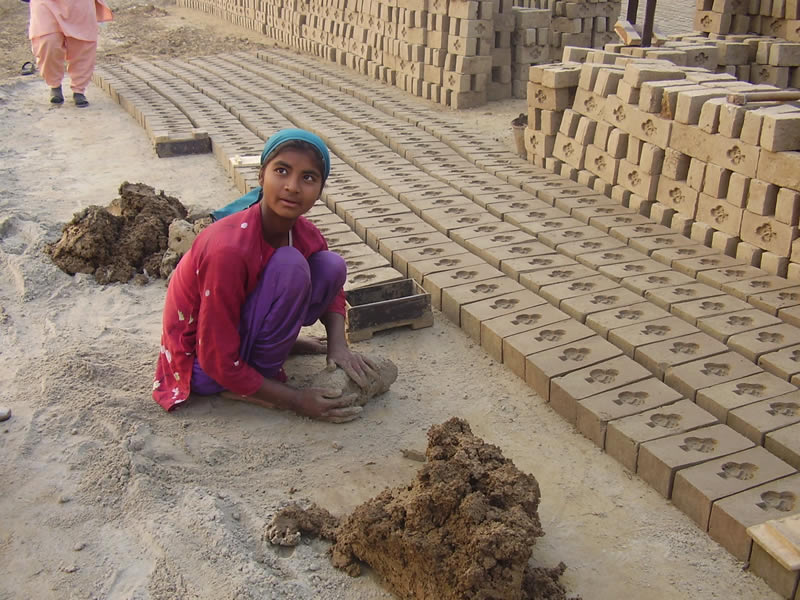
    Over the years, the system of bonded labour has existed and evolved under different names and forms across India. Bonded labour arising out of traditionally accustomed social relations is one of the oldest forms and is still prevalent in the country. For example, the system of “jajamani” wherein the workers receive food grains in exchange for working as barbers and washermen for the upper caste. Labourers in agriculture, seasonal inter and intrastate migrants and child labour in informal sectors of brick kiln, rice mills, quarries, domestic work etc. are the other areas where debt bondage is currently more persistent. There has been a considerable shift from traditional debt bondage relation to aneo-bondage labour system among migrant workers. The former was characterised by an element of patronage amongst the considerable amount of exploitation. However the latter is at a higher tone of exploitation and eliminates patronage relations. This has made employers deny the responsibility of employee’s welfare and the labourers have lost the minimum livelihood security which they had secured under the patronage system. The neo-bondage system is further manipulated by the role of intermediaries.

    Thus, with structural transformation in the economy, the system of bonded labour has evolved into a much worse form of exploitation in the country and specifically marginal and backward communities are the main victims of this system.

    Interventions to abolish bonded labour

    Upon identifying the prevalence and exploitation of bonded labour in the pre-independence era, constitutional provisions prohibiting forced labour were assigned under Article 23. Under the Directive Principle of State Policy, Article 42 and 43 ensured fair and humane working conditions and living wages to workers.

    Post-independence, legislation against bonded labour was enacted at a regional level.  Orissa, Rajasthan and Kerala were the first states to enact state legislation against bonded labour.  In 1954, India ratified the International labour organization (ILO) Convention on forced labour (C029). Despite the constitutional provisions, regional and international interventions in bonded labour, construction and implementation of a uniform law took time.

    In 1976, the Bonded Labour System (Abolition) Act was enacted to abolish any form of bonded labour system arising out of debt, customary or hierarchical obligations. In brief, the act has identified and defined bonded labour, provided for extinguishment of past or existing debt, established duties of district magistrate in implementing the provisions of the act, sanctioned the state governments to form a vigilance committee in each district to guide and ensure competent implementation of the act by the magistrate and stated the penal actions against those compelling people into bonded labour. The act was amended in 1985 to bring contract and migrant workers under its ambit.

    In 1978, a new centrally sponsored scheme for Rehabilitation of Bonded Labour was enacted to provide financial assistance to the state government for rehabilitating rescued bonded labourers, to conduct surveys, evaluation studies and awareness campaigns across districts. In 2016, the government restructured the scheme. The restructuring involved an increase in the provision of funds to bonded labour for rehabilitation and to states for conducting surveys. Under the restructured scheme, rescued bonded labour is only provided with the full amount of financial assistance after the conviction of the accused and a Bonded Labour Rehabilitation Fund corpus was to be created at every district.

    The interplay of caste-based exploitation and subsequent impoverishment in terms of resources and assets combined with underdeveloped rural areas devoid of standard education, health and employment opportunities push marginalised people into bonded labour.

    Why and how does the system still sustain?

    Many factors contributing to the prevalence of bonded labour continue to prevail despite after years of legislative action to abolish the same. The interplay of caste-based exploitation and subsequent impoverishment in terms of resources and assets combined with underdeveloped rural areas devoid of standard education, health and employment opportunities push marginalised people into bonded labour. Such an environment accompanied by the inept implementation of legislations and schemes further aids in sustaining bonded labour systems.

    BLS(A) act 1976 failed to be effectively implemented owing to apathy, corruption, lack of administrative and political will. The vigilance committees were often defunct and working for the employer. The act was criticised on the grounds that it stated only mediocre and minor punitive actions and the rates of prosecution were also low. Moreover, some states remain in denial of accepting the existence of bonded labour. This indifference results in the loss of comprehensive data on bonded labour hindering the further implementation of provisions of the act.

    The Central Sector Scheme for Rehabilitation of Bonded Labour also has its loopholes. After the restructuring of the scheme, financial aid is provided only after the accused is convicted and convictions are rare owing to poor implementation of the BLS(A) Act and the absence of a review of cases. Thus, in most cases the rescued labourers do not receive the full financial aid they are entitled to immediately after the rescue. Often, it takes years to receive the full amount or may not even receive any.

    The situation is even grave as the rescued labourers have asymmetric knowledge of the rights and entitlements they can avail themselves of. Even when they are fully aware, most of them lack the will to attain these entitlements due to the dismal behaviour of officials and delayed processes.

    Moving towards Abolishment

    First and foremost, recognition and acceptance of the prevalence of bonded labour should be ensured. Only then the bonded labourers could be identified, rescued and rehabilitated effectively. The collection of comprehensive data is essential for further implementation of the provisions of the legislation. Also apart from the vigilance committee, a new committee composed of the magistrate, members of the marginalised communities, NGO’s and other civil bodies working in the field would enable to get a more comprehensive view of the issues in the sector.

    From a long term perspective, there is a need to address the caste induced structural inequalities. One way through which this could be attained is through land redistribution.

    Mere financial aid is not sufficient for the rescued labourers to foster a livelihood plan. The Human rights law network suggests the same and recommends a comprehensive rehabilitation package providing for education and job security.

    From a long term perspective, there is a need to address the caste induced structural inequalities. One way through which this could be attained is through land redistribution. Apart from this, the government should also focus on skill development and training of rural poor, especially migrants caught up in bonded labour. Varied skills can enhance their employment opportunities and provide more freedom to move towards other areas of work.


    References

    1. B.L.S., A. (2020, June 30). Telangana: Two Years After Rescue From Bonded Labour, 12 Tribals Receive Compensation. The Wire. https://thewire.in/rights/telangana-bonded-labour-rescue-tribals-compensation
    2. Breman, J. (2010). Neo-bondage: A fieldwork-based account. International Labor and Working-Class History78(1), 48-62. https://www.jstor.org/stable/40931303
    3. Gabra, L. (2021, March 21). Will Bonded Labor in India Ever Come To An End? BORGEN. https://www.borgenmagazine.com/bonded-labor-in-india/
    4. Human Rights Law Network. (n.d.). Release and Rehabilitation of Bonded Labour — HRLN. Human Rights Law Network (HRLN). Retrieved August 15, 2021, from https://hrln.org/initiative/release-and-rehabilitation-of-bonded-labour
    5. Human Rights Watch. (n.d.). Small Change. Human Rights Watch (HRW). Retrieved August 6, 2021, from https://www.hrw.org/reports/2003/india/India0103-05.htm
    6. J, S. (2019, September 15). Rescue of bonded labourers up, convictions rare. Times of India Blog. https://timesofindia.indiatimes.com/blogs/tracking-indian-communities/rescue-of-bonded-labourers-up-convictions-rare/
    7. Khan, J. A. (2019, April 30). How effective are the Policies for Rehabilitations of Bonded Labour in India? CBGA India. https://www.cbgaindia.org/blog/effective-policies-rehabilitations-bonded-labour-india/
    8. Mantri, G., & Suresh, H. (2020, January 31). The News Minute | Delve. The News Minute. https://www.thenewsminute.com/article/it-s-2020-bonded-labour-still-reality-india-here-s-why-116977.
    9. Molfenter, C. (2013). Overcoming bonded labour and slavery in South Asia: the implementation of anti-slavery laws in India since its abolition until today. Südasien-Chronik-South Asia Chronicle3, 358-82. https://edoc.hu-berlin.de/bitstream/handle/18452/9122/358.pdf?sequence=1&isAllowed=y
    10. Murugesan, D (2018). HANDBOOK ON BONDED LABOUR. NATIONAL HUMAN RIGHTS COMMISSION (NHRC), New Delhi. https://nhrc.nic.in/sites/default/files/Hand_Book_Bonded_Labour_08022019.pdf
    11. NCABL. (2016). Joint Stakeholders’ Report on Situation of Bonded Labour in India for Submission to United Nations Universal Periodic Review III. NATIONAL COALITION FOR ABOLITION OF BONDED LABOUR (NCABL), Bhubaneswar Odisha. https://www.upr-info.org/sites/default/files/document/india/session_27_-_may_2017/js34_upr27_ind_e_main.pdf
    12. Prasad, K. K. (2015). Use of the Term’Bonded Labour’ is a Must in the Context of India. Anti-Trafficking Review, (5), 162.
    13. Sabhapathi, V. (2020, June 11). An Analysis of Bonded Labour System in India. Legal Bites – Law And Beyond. https://www.legalbites.in/bonded-labour-system-in-india/
    14. S, B. (2016, April 2). Caught in a vicious cycle of bonded labour. The Hindu. https://www.thehindu.com/news/national/karnataka/caught-in-a-vicious-cycle-of-bonded-labour/article7720754.ece
    15. Sethia, S. The Changing Nature of Bonded Labour in India.
    16. Srivastava, R. S. (2005). Bonded labour in India: Its incidence and pattern.https://www.ilo.org/wcmsp5/groups/public/—ed_norm/—declaration/documents/publication/wcms_081967.pdf 

    17. THE BONDED LABOUR SYSTEM (ABOLITION) ACT, 1976. (ACT NO. 19 OF 1976). (India). https://labour.gov.in/sites/default/files/TheBondedLabourSystem(Abolition)Act1976.pdf


    Image Credits: starfishasia.com

  • Living Next to China: India’s Economic Challenge

    Living Next to China: India’s Economic Challenge

    Abstract

    Hampered by declining economic growth, India needs to take bold and practical economic measures to overcome the adverse impact of the coronavirus pandemic, compounded by past economic blunders such as the demonetisation and the haphazard implementation of the GST regime. Mohan Guruswamy analyses that the seeds of the current economic slide were sown by the UPA II regime by its populist measures that were wasteful, unproductive, and reduced capital expenditure. Non action by the NDA governments on these issues has made it worse. He argues that India must not shy away from recourse to deficit financing to overcome the current unprecedented challenges faced by the economy on account of the Covid-19 disruption. India needs to increase its stimulus package from a mere 0.3% of the GDP to at least 10% to boost economic revival and growth. India’s reserves of $490 billion ($530 billion as of recent figures) is available to be tapped for economic revival. The measures must focus on addressing the severe impact on weaker sections of the society such as the poor, lower middle-class, and the farmers.

    The Covid2019 shock hit all world economies and has caused a serious contraction in all of them. Ironically, in the advanced economies like the USA, UK, Japan, and others, it exposed their intrinsic strengths with highly evolved social security systems by and large being able to absorb the labor displacement and the ability to quickly put together a fiscal fight back plan. Even China has been able to quickly recover its pole position as the worlds leading exporter and industrial production center. In India, Covid2019 exposed our co-morbidities, and has further opened the traditional faultlines, with the large unorganized labor cohort bearing the brunt of the costs. At last count the CMIE estimates over 130 million daily wagers in the urban centers being rendered jobless and homeless.[i] India’s economy which has been in distress for most of the last decade in now seriously stricken.

    When India’s economic history is written in some future date, and when a serious examination is done of when India lost its way to its ‘tryst with destiny’, the decade of 2010-20 will be highlighted.

    When India’s economic history is written in some future date, and when a serious examination is done of when India lost its way to its ‘tryst with destiny’, the decade of 2010-20 will be highlighted. The facts speak for themselves. India’s real GDP growth was at its peak in March 2010 when it scaled 13.3%.  The nominal GDP at that point was over 16.1%. The nominal GDP in September 2019 was at 6.3%, it’s lowest in the decade. Since then the downward trend is evident and we are now scraping the bottom at about a real GDP growth rate of 4.5%, this too with the push of an arguably inflationary methodology. Our previous CEA, Arvind Subramaniam, estimated that India’s GDP growth is overestimated by at least 2.5%. BJP MP and economist Subramaniam Swamy was even more pessimistic. He estimated it to be 1.5%.

    The decline in the promise is amply evident by the change in the make up of the economy during this decade.  In 2010 Agriculture contributed 17.5% of GDP, while Industry contributed 30.2% and Services 45.4%.  In 2019 that has become 15.6%, 26.5% and 48.5% respectively.  The share of industry has been sliding.  This is the typical profile of a post-industrial economy.  The irony of India becoming post-industrial without having industrialized must not be missed.

    Decline in Capital Investment

    The most significant cause for the decline of growth is the decline in capital investment.  It was 39.8% of GDP in 2010 and is now a good 10% lower.  Clearly without an increase of capital investment, one cannot hope for more industrialization and hence higher growth.  What we have seen in this decade is the huge increase in Services, which now mostly means increase in Public Administration and informal services like pakora sellers.

    In 2010 it seemed we were well on track.  But now we are struggling to get past $3 trillion, and the $5 trillion rendezvous that Modi promised by 2024 will have to wait longer.

    At the turn of the century, as China’s GDP began its great leap forward (from about $1.2 trillion in 2010 to $14.2 trillion in 2019), was also a heady moment for India whose GDP of $470 billion began a break from the sub 5% level of most of the 1990’s to the rates we became familiar with in the recent past (to hit a peak stride of 10.7% in 2010). At that point in time, if growth rates kept creeping up, we could have conceivably gone past $30 trillion by 2050. But for that the growth rate should consistently be above 7%. It seemed so feasible then.  In 2010 it seemed we were well on track.  But now we are struggling to get past $3 trillion, and the $5 trillion rendezvous that Modi promised by 2024 will have to wait longer.

    To be fair to Modi and the NDA, the decline began early in the second term of the UPA when capital expenditure growth had begun tapering off.  Dr. Manmohan Singh is too canny an economist to have missed that.  But UPA II also coincided with the increasing assertion of populist tendencies encouraged by the Congress President and her extra-Constitutional National Advisory Council. The decline in the share of capital expenditure was accompanied by a huge expansion in subsidies, most of them unmerited.  Instead of an increase in expenditure on education and healthcare, we saw a huge expansion in subsidies to the middle and upper classes like on LPG and motor fuels. Even fertilizer subsidies, which mainly flow to middle and large farmers with irrigated farmlands, saw a great upward leap.  Clearly the money for this came from the reduction in capital expenditure.  Modi’s fault in the years since 2014 is that he did nothing to reverse the trend, and only inflicted more hardship by his foolish demonetization and ill-conceived GST rollout.

    The realities are indeed stark.  The savings/GDP ratio has been in a declining trend since 2011 and Modi has been unable to reverse it.  Consequently, the tax/GDP ratio and the investment/GDP ratio have also been declining.  The rate of economic growth has been suspect and all objective indicators point to it being padded up. The drivers of economic growth such as capital expenditure is dismal.  Projects funded by banks have declined by over half since 2014 to less than Rs.600 billion in 2018-19.  Projects funded by the market have dropped to rock bottom.  Subsequently the manufacturing/GDP ratio is now at 15%.  Corporate profits/GDP ratio is now at a 15-year-old low at about 2.7%.  You cannot have adequate job creation if these are dipping.  Declining rural labor wage indices testify to this.

    Between October 2007 and October 2013 rural wages in the agricultural and non-agricultural sectors grew at 17% and 15%, respectively.  Since November 2014, however, agricultural and non-agricultural sector wages grew at only 5.6% and 6.5%, respectively. In 2019 average rural wage growth has further fallen to 3.1%.[ii]

    Bharat and India Divide

    It is very clear now that the urban lane has been moving well in India.  Indeed, so well that an Oxfam study revealed that that as much as 73% of the growth during the last five years accrued to just 1% of the population.[iii] This does not mean it is just the tycoons of Bombay and Delhi who are cornering the gains.  Government now employs close to 25 million persons, and these have now become a high-income enclave.  The number of persons in the private and organized sector is about another ten million. In all this high-income enclave numbers not more than 175-200 million (using the thumb rule of five per family).  Much of the consumption we tend to laud is restricted to just these.

    The simple fact that the share of Agriculture is now about 15.6% of GDP and falling, while still being the source of sustenance for almost 60% of the population reveals the stark reality.  A vast section of India is being left behind even as India races to become a major global economy.

    Agriculture is still the mainstay of employment.  Way back in 1880 the Indian Famine Commission “had observed that India had too many people cultivating too little land”.  This about encapsulates the current situation also.  While as a percentage the farmers and farmworkers have reduced as a part of the work force, in absolute terms they have almost tripled since 1947.  This has led to a permanent depression in comparative wages but has also led to a decline in per farmer production due to fragmentation of holdings.  The average farm size is now less than an acre and it keeps further fragmenting every generation.[iv] The beggaring of the farming community is inevitable.  The only solution to this is the massive re-direction of the workforce into less skilled vocations such as construction.

    The simple fact that the share of Agriculture is now about 15.6% of GDP and falling, while still being the source of sustenance for almost 60% of the population reveals the stark reality.  A vast section of India is being left behind even as India races to become a major global economy.

    As the decade ends, the Bharat and India divide have never been more vivid.  Our social scientists are still unable to fix a handle to this because the class, cultural and ethnic divides still eludes a neat theoretical construct.  Yet there can be little disagreement that there are two broad parts to this gigantic country and one part is being left behind.  The distance between the two only increased from 2010 to 2020.  This is indeed the lost decade.  Recovering from this will take long and will be painful.  If we take too long, we might have used up a good bit of the ‘demographic dividend’ and the demographic window of opportunity.  The ageing of India will be upon us by 2050[v].

    Covid-19 Impact – Increasing Economic Disparities 

    In the recent months the onslaught of the Covid2019 induced lockdown has been quite relentless.  From 2004-2014 India’s GDP grew at an average of 7.8%.  At its peak it went past 10% in 2010-11 Then it started slowing down.  The new government was unable to return to the old growth rates because it did not care to learn from the experiences of the previous regime, which began to spend more on giveaways, misguidedly thinking it was welfare economics, and took the accelerator off capital expenditure.  Even though capital expenditure is driven in India by government spending, this government spending is very different from subsidies and giveaways.  Subsidies generally tend to be misdirected with the already well-off garnering most of it.  Minimum Support Prices (MSP) are a huge annual subsidy[vi]and 90% of it accrues to the states of Punjab, Haryana, and the coastal region of Andhra Pradesh.  Fertilizer subsidies tend to accumulate to the advantage of large and medium farmers or to about a quarter of all land holdings.  Ditto for free power.  The only welfare expenditure to benefit farmers is investment in irrigation, rural infrastructure, and social welfare like education and health.  Unfortunately, this has been on the decline.  This has exacerbated disparities, both local and regional.  With capital expenditures declining, job creation suffered and the inevitable slowdown of GDP growth happened.  As we started diving, the government inflicted the so-called Demonetization adding to our woes.  Just as things began to look up, the Covid2019 pandemic overtook us.

    Now the only dispute on national income is how much will be the contraction.  The Finance Ministry hopes there won’t be any. The IMF has officially said it will be 4.5%.  The rating agencies predict a contraction of 6.8%, while many more are suggesting something closer to 10%.  How do we deal with is now?  The government of India has tended to be “conservative” in its outlook and has made no serious suggestion on economic stimulus.  What it calls a stimulus is actually not a stimulus. The problem is more philosophical.

    The divide between the Keynesians and the Chicago school is as intense and often antagonistic as the Sunni-Shia, Catholic-Protestant or Thenkalai-Vadakalai Iyengar divides.

    Keynesian economics is a theory that says the government should increase demand to boost growth. Keynesians believe consumer demand is the primary driving force in an economy.  As a result, the theory supports expansionary fiscal policy.  The Chicago School is a neoclassical economic school of thought that originated at the University of Chicago in the 1930s.  The main tenets of the Chicago School are that free markets best allocate resources in an economy and that minimal or zero government intervention is best for economic prosperity.  They abhor fiscal deficits.

    Inadequate Stimulus Package 

    The instruments used to beat countries like India into submission are ratings agencies such as Moody’s, which just downgraded India.  We shouldn’t lose too much sleep over it.  India is a hardly a borrower abroad and is more of a lender holding $490 billion as reserves.

    The only reason why the actual stimulus package is only Rs.63K crs is the obsession with fiscal deficits by Chicago economists such as Raghuram Rajan and his former student the hapless Krishnamurthy Subramaniam, the present CEA. They are true disciples of the Washington Consensus to judge countries like India by the fiscal deficit size.  The instruments used to beat countries like India into submission are ratings agencies such as Moody’s, which just downgraded India.  We shouldn’t lose too much sleep over it.  India is a hardly a borrower abroad and is more of a lender holding $490 billion as reserves.

    That is why the CEA when asked about a big stimulus said: “There are no free lunches!” That’s exactly what Milton Friedman said. But they quite happily ignore the biggest deficit financed economy in the world is the USA.  Raghuram Rajan told Rahul Gandhi on his videoconference that a stimulus of Rs.65K crores would suffice in the present situation[vii]. The Nobel Laureate Abhijit Bhattacharya and former CEA Arvind Subramaniam suggest a stimulus package like the USA or Japan[viii].  The USA has just announced a stimulus of over $3.5 trillion or over 15% of GDP.  Modi’s stimulus is a mere 0.3% of GDP.

    What is ‘Fiscal Deficit?’ A fiscal deficit occurs when a government’s total expenditures exceed the revenue that it generates, excluding money from borrowings.  Deficit differs from debt, which is an accumulation of yearly deficits.

    Many serious economists regard fiscal deficits as a positive economic event.  For instance, the great John Maynard Keynes believed that deficits help countries climb out of economic recession.  On the other hand, fiscal conservatives feel that governments should avoid deficits in favor of balanced budgets.

    India’s debt/GDP ratio is by contrast a modest 62% and yet it intends to pump in a mere 0.3% of GDP as stimulus.

    The fastest growing economies in the world, and now its biggest – USA, China, Japan and most of Western Europe – have the highest debt/GDP ratios.  Japan’s debt/GDP is over 253% before the latest stimulus of 20% of GDP.  China’s debt is now over 180% of its GDP.  The USAs debt/GDP is close to 105% yet it is raising $3 trillion as debt to get it out of the Covid2019 quagmire.  India’s debt/GDP ratio is by contrast a modest 62% and yet it intends to pump in a mere 0.3% of GDP as stimulus.

    Pump priming the economy by borrowing per se is not bad.  It is not putting the debt to good use that is bad.  Nations prosper when they use debt for worthwhile capital expenditure with assured returns and social cost benefits.  But we in India have borrowed to give it away as subsidies and to hide the high cost of government.  To give an analogy, if a family has to make a choice of borrowing money to fund the children’s education or to support the man’s drinking habit, the rational choice is obvious. The children’s education will have a long-term payback, while the booze gives instant gratification. But unfortunately, our governments have always been making the wrong choices.

    If borrowed money is used productively and creates growth and prosperity, it must be welcomed.  What we want to hear from the government is not about fiscal deficit targets, but economic growth, value addition, employment, and investment targets.  Our governments have hopelessly been missing all these targets.

    Modi’s Options – Need for Bold Decisions

    So, what can Modi do now to get us out of this quagmire?  If the regime abhors a stimulus financed by deficit financing there are other options that can be exercised.  But he is hamstrung with a weak economic management team with novices as the two key players, the Finance Minister and RBI governor.

    India has over $490 billion nesting abroad earning ridiculously low interest.  Even if a tenth of this is monetized for injection into the national economy, it will mean more than Rs.3.5 lakh crores.  At last count the RBI had about Rs.9.6 lakh crores as reserves.  This is money to be used in a financial emergency.  We are now in an emergency like we have never encountered or foresaw before. Even a third of this or about Rs.3.2 lakh crores is about five times the present plan.

    There is money in the trees, and all it needs is a good shake up to pick the fruits. The pain of the lockdown must not be borne by the poor alone.  The government can easily target 5% of GDP or about Rs.10L crores for the recovery fund as an immediately achievable goal.

    There are other sources of funds also, but tapping these will entail political courage and sacrifices. Our cumulative government wages and pension bill amounts to about 11.4% of GDP.  After exempting the military and paramilitary, which is mostly under active deployment, we can target 1% of GDP by just by cancelling annual leave and LTC, and rolling back a few DA increases.

    The government can also sequester a fixed percentage from bank deposits, say 5% of deposits between Rs.10-100 lakhs and 15-20% from bigger deposits for tax-free interest-bearing bonds in exchange.  The ten big private companies alone have cash reserves of over Rs.10 lakh crores[ix].

    There is money in the trees, and all it needs is a good shake up to pick the fruits. The pain of the lockdown must not be borne by the poor alone.  The government can easily target 5% of GDP or about Rs.10L crores for the recovery fund as an immediately achievable goal.

    This money can be used to immediately begin a Universal Basic Income scheme, by transferring a sum of Rs.5000 pm into the Jan Dhan accounts for the duration of the financial emergency; fund GST concessions to move the auto and engineering sectors in particular; begin emergency rural reconstruction projects to generate millions of new jobs and get our core infrastructure sectors like steel, cement and transportation moving again.

    Getting money to move India again is not a huge problem.  What comes in between are the philosophical blinkers.  Call it Chicago economics or the Gujarati mindset.

    Notes

    [i] https://www.businesstoday.in/sectors/jobs/india-unemployment-rate-hits-26-amid-lockdown-14-crore-lose-employment-cmie/story/401707.html

    [ii] https://www.financialexpress.com/economy/farm-wages-growth-fell-to-a-four-quarter-low-in-q3-fy-20/1789235/

    [iii] https://economictimes.indiatimes.com/news/economy/indicators/wealth-of-indias-richest-1-more-than-4-times-of-total-for-70-poorest-oxfam/articleshow/73416122.cms?from=mdr#:~:text=Wealth%20of%20India’s%20richest%201%25%20more%20than%204%2Dtimes%20of,total%20for%2070%25%20poorest%3A%20Oxfam&text=The%20Oxfam%20report%20further%20said,particularly%20poor%20women%20and%20girls.

    [iv] https://www.prsindia.org/policy/discussion-papers/state-agriculture-india

    140 million hectares of land is used as agricultural area, as of 2012-13.  Over the years, this area has been fragmented into smaller pieces of land.  As seen in Table 3, the number of marginal land holdings (less than one hectare) increased from 36 million in 1971 to 93 million in 2011.  Marginal and small land holdings face several issues, such as problems with using mechanization and irrigation techniques.

    [v] https://economictimes.indiatimes.com/news/politics-and-nation/demographic-time-bomb-young-india-ageing-much-faster-than-expected/articleshow/65382889.cms

    [vi] https://www.thehindubusinessline.com/opinion/all-you-wanted-to-know-about-minimum-support-price/article7342789.ece

    [vii] https://www.hindustantimes.com/india-news/in-video-conversation-with-rahul-rajan-suggests-65k-crore-aid-for-poor/story-CtrtvW6HErR16L9m1t9wHP.html

    [viii] https://economictimes.indiatimes.com/news/economy/policy/rahul-gandhi-in-conversation-with-abhijit-banerjee-india-needs-a-bigger-stimulus-package-like-us-japan-to-revive-economy/videoshow/75549770.cms

    [ix] https://www.screener.in/screens/2551/Cash-Rich-Companies/


    Image credit: Adobe Stock

  • India’s Farming Progress Lies In Adoption Of Smart Agriculture

    India’s Farming Progress Lies In Adoption Of Smart Agriculture

    From being a country that was a food importer till the early 1970s, India’s green revolution transformed the country into becoming self-sufficient in food production and a significant exporter of agricultural products. However, Indian agriculture, hampered by marginal farm holdings suffered from poor technology and lack of modernisation, resulting in production that is far below its potential. With a population of 1.24 billion, Indian agriculture is already challenged.
    The Railway versus Irrigation controversy during the early years of the 20th century was evidence that the British undervalued the significance of improving irrigation in an agrarian economy such as India. R C Dutt, in his famous book ‘The Economic History of India in the Victorian Age’, shows the disparity in funds allocated for railways and that for irrigation purposes. The glaring disparity is believed to be one of the reasons for the 1890 famines. Akin to the pre-independence time, the Economic Survey 2019-20 shows static growth in agriculture from 2014 to the present day. The growth rate in agriculture was a negative 0.2% in 2014-15. Inadequate fund allocation, illiteracy of the farmers, deficient safety nets, lack of microcredit organizations and low incentive for the farmers to adopt climate-smart and efficient technology are some of the reasons for prolonged sluggishness in Indian agriculture. India’s prosperous neighbour, China, however, has managed accelerated growth in both agricultural and industrial sectors. The reason is the proactive nature of the Chinese and the ability to make the most out of little. Since the 1990s China has left India far behind in the field of revamping farming techniques. A leader of innovation, China has turned its weaknesses into strength- rooftop agriculture to compensate for the lack of adequate farming land, AI sensing smart robots to store data and supplement human labour, automated water management schemes that led to rice becoming one of Chinas staple food grains. China has surpassed India in rice production, despite India having more available freshwater for crop production. This indicates the need for India to improve its learning curve as far as international agricultural policies are concerned.
    China has surpassed India in rice production, despite India having more available freshwater for crop production.

    Smart Techniques and Precision Farming

    In this vein, the identification of the techniques of smart farming that can give a boost to the decaying agricultural sector of India is critical. Using smarter techniques like Precision farming, efficient water management techniques and Artificial intelligence are sure-shot methods to increase productivity per acre of land. Precision Agriculture avoids the improper and excess application of pesticides and fertilizers and enables the farmer to use land according to its quality and nature. This leads to a reduction in cost, increase in output and climate-friendly agriculture. ‘Big data’ in Precision farming provides the farmer with data regarding soil quality, raw material requirements and weather changes, which can be stored for a later date. This is a massive game-changer for a sector which substantially depends on weather conditions and faces the brunt of climate change. China has been using automated ‘driverless’ tractors, mowers, AI drones to spray pesticides, and smart robotic sensors to analyse environmental conditions. This increases the speed of farming at an exceptional rate. Precision Farming is a potential salvager at a time when the water tables in India are diminishing at a rapid rate due to unprecedented demand by the agricultural and industrial sectors. Smart farming can potentially break the nexus between outmoded agriculture, climate change and hunger. The longer we delay the implementation of such techniques, the closer we move towards an impasse, which even modernisation might not be able to fix.
    ‘Big data’ in Precision farming provides the farmer with data regarding soil quality, raw material requirements and weather changes, which can be stored for a later date. This is a massive game-changer for a sector which substantially depends on weather conditions and faces the brunt of climate change.

    Predicament of Marginal Holdings

    The Indian predicament can be traced back to decades of neglect towards the agricultural sector. Even with plans like ‘doubling farmer’s income by 2022’, most states except Punjab, Haryana and Karnataka have not even envisaged a plan for smart farming. A plethora of structural barriers impedes the coveted modernization required by our agricultural sector. The average size of landholding by an Indian rural household is a marginal 1.1 hectare. This restricts the use of modern equipment like large tractors and robot sensors as a smart substitute for manual labour. The digital illiteracy of the farmers also presents a hurdle owing to the absence of local experts to impart training and information to the farmers. The connectivity and problem of unstable internet is also a cause of roadblock. Government policies historically have adopted a ‘one-size-fits-all’ approach, thus excluding approximately 86% of small and marginal farmers. For schemes like PM-Fasal Bima Yojana, the small farmers have to pay balance of the premium for crop insurance, which is almost impossible for a debt-strapped farmer. The newly extended PM-KISAN scheme requires farmers in a digitally primitive nation to check their balance by registering themselves on a web-portal page. With basic crop insurance schemes not living up to the expectation, we naturally question the efficacy of schemes to promote smart agriculture. The evaluation of the NMMI scheme for Micro Irrigation recorded that the benefit from the scheme did not reach almost half of the intended beneficiaries, even after they applied for it. The PMKSY scheme simply reached a meagre 1/10th of the farming population targeted.
    A plethora of structural barriers impedes the coveted modernization required by our agricultural sector. The average size of landholding by an Indian rural household is a marginal 1.1 hectare.

    Policy Focus for Smart Agriculture

    A dedicated approach to developing smart agriculture with mass disbursements of benefits, education and economic incentives to our farmers will eventually translate into long-run economies of scale for the agricultural community at large. The US government extensively aids research and development in agricultural technology, along with training given to farmers to understand the new technology. The British government, besides allocating 20 million dollars for sustainable agriculture, also incentivizes private aggrotech firms to invest in smart technology. South Korean government has already created 4,300 jobs in the smart agricultural sector through timely action and aid. India, although lagging in several fields, is endowed with cheap rural labour, the second largest arable land area after the US, a leader in global trade in raw agricultural products and a massive potential growth trajectory in agriculture. Extension services and R&D are at a nascent stage in India and only within reach of large farmers. To expand the scale of the programme it is necessary to ease the transition of small and marginal farmers into the ambit of smart farming. Institutional setups, adequate support and building a steady architecture to execute smart farming should be focus areas for the Indian government in the face of dwindling food production.

    References:

    https://www.smart-akis.com/index.php/network/what-is-smart-farming/
    https://www.smartindianagriculture.com/https://www.changemakers.com/discussions/entries/smart-agriculture-helping-structure-new-industry-chinahttps://www.basf.com/cn/en/media/BASF-Information/Food-nutrition/future-farming.htmlhttps://www.youtube.com/watch?v=PdIr6pP-Rec&list=PLTeiJVqL7DL6yhlOMh4lPv_BCQ5KKMgBd&index=2&t=0shttps://www.downtoearth.org.in/coverage/natural-disasters/climate-smart-agriculture-54437https://www.futurefarming.com/Smart-farmers/Articles/2018/5/South-Korea-creates-4300-jobs-in-smart-farm-industry-283765E/https://krishijagran.com/agriculture-world/amazing-how-smart-farming-techniques-by-south-korea-can-future-proof-agriculture/Image Credit: Adobe Stock

  • India’s Agriculture: The Failure of the Success

    India’s Agriculture: The Failure of the Success

    It was around the mid-1960s when the Paddock brothers, Paul and William, the ‘prophets of doom’, predicted that in another decade, recurring famines and an acute shortage of food grains would push India towards disaster. Stanford University Professor Paul R. Ehrlich in his 1968 best selling book The Population Bomb warned of the mass starvation of humans in the 1970s and 1980s in countries like India due to over population.

    Their prophecies were based on a rising shortage of food because of droughts, which forced India to import 10 million tonnes of grain in 1965-66 and a similar amount a year before. Little did they know that thanks to quick adoption of a new technology by Indian farmers, the country would more than double its annual wheat production from 11.28 million tonnes in 1962-63 to more than twice that within ten years to 24.99 million tonnes. It was 71.26 million tonnes in 2007. Similarly rice production also grew spectacularly from 34.48 million tonnes to almost 90 million tonnes in 2007.

    Total food grains production in India reached an all-time high of 251.12 million tonnes (MT) in FY15. Rice and wheat production in the country stood at 102.54 MT and 90.78 MT, respectively. India is among the 15 leading exporters of agricultural products in the world. The value of which was Rs.1.31 lakh crores in FY15.

    India is among the 15 leading exporters of agricultural products in the world. The value of which was Rs.1.31 lakh crores in FY15.

    Despite its falling share of GDP, agriculture plays a vital role in India’s economy. Over 58 per cent of the rural households depend on agriculture as their principal means of livelihood. Census 2011 says there are 118.9 million cultivators across the country or 24.6 per cent of the total workforce of over 481 million. In addition there are 144 million persons employed as agricultural laborers. If we add the number of cultivators and agricultural laborers, it would be around 263 million or 22 percent of the population. As per estimates by the Central Statistics Office (CSO), the share of agriculture and allied sectors (including agriculture, livestock, forestry and fishery) was 16.1 per cent of the Gross Value Added (GVA) during 2014–15 at 2011–12 prices. This about sums up what ails our Agriculture- its contribution to the GDP is fast dwindling, now about 13.7 per cent, and it still sustains almost 60 per cent of the population.

    If we add the number of cultivators and agricultural laborers, it would be around 263 million or 22 percent of the population. As per estimates by the Central Statistics Office (CSO), the share of agriculture and allied sectors (including agriculture, livestock, forestry and fishery) was 16.1 per cent of the Gross Value Added (GVA) during 2014–15 at 2011–12 prices.

    With 157.35 million hectares, India holds the world’s second largest agricultural land area. India has about 20 agro-climatic regions, and all 15 major climates in the world exist here. Consequently it is a large producer of a wide variety of foods. India is the world’s largest producer of spices, pulses, milk, tea, cashew and jute; and the second largest producer of wheat, rice, fruits and vegetables, sugarcane, cotton and oilseeds. Further, India is 2nd in global production of fruits and vegetables, and is the largest producer of mango and banana. It also has the highest productivity of grapes in the world. Agricultural export constitutes 10 per cent of the country’s exports and is the fourth-largest exported principal commodity.
    According to the Agriculture Census, only 58.1 million hectares of land was actually irrigated in India. Of this 38 percent was from surface water and 62 per cent was from groundwater. India has the world’s largest groundwater well equipped irrigation system.

    There is a flipside to this great Indian agriculture story.The Indian subcontinent boasts nearly half the world’s hungry people. Half of all children under five years of age in South Asia are malnourished, which is more than even sub-Saharan Africa.

    More than 65 per cent of the farmland consists of marginal and small farms less than one hectare in size. Moreover, because of population growth, the average farm size has been decreasing. The average size of operational holdings has almost halved since 1970 to 1.05 ha. Approximately 92 million households or 490 million people are dependent on marginal or small farm holdings as per the 2001 census. This translates into 60 per cent of rural population or 42 per cent of total population.

    Approximately 92 million households or 490 million people are dependent on marginal or small farm holdings as per the 2001 census.

    About 70 per cent of India lives in rural areas and all-weather roads do not connect about 40 per cent of rural habitations. Lack of proper transport facility and inadequate post harvesting methods, food processing and transportation of foodstuffs has meant an annual wastage of Rs. 50,000 crores, out of an out of about Rs.370, 000 crores.

    There is a pronounced bias in the government’s procurement policy, with Punjab, Haryana, coastal AP and western UP accounting for the bulk (83.51 per cent) of the procurement. The food subsidy bill has increased from Rs. 24500 crores in 1990-91 to Rs. 1.75 lakh crores in 2001-02 to Rs. 2.31 lakh crores in 2016. Instead of being the buyer of last resort FCI has become the preferred buyer for the farmers. The government policy has resulted in mountains of food-grains coinciding with starvation deaths. A few regions of concentrated rural prosperity.

    The total subsidy provided to agricultural consumers by way of fertilizers and free power has quadrupled from Rs. 73000 crores in 1992-93, to Rs. 3.04 lakh crores now. While the subsidy was launched to reach the lower rung farmers, it has mostly benefited the well-off farmers. Free power has also meant a huge pressure on depleting groundwater resources.
    These huge subsidies come at a cost. Thus, public investment in agriculture, in real terms, had witnessed a steady decline from the Sixth Five-Year Plan onwards. With the exception of the Tenth Plan, public investment has consistently declined in real terms (at 1999-2000 prices) from Rs.64, 012 crores during the Sixth Plan (1980-85) to Rs 52,107 crores during the Seventh Plan (1985-90), Rs 45,565 crores during the Eighth Plan (1992-97) and about Rs 42,226 crores during Ninth Plan (1997-2002).

    With the exception of the Tenth Plan, public investment has consistently declined in real terms (at 1999-2000 prices) from Rs.64, 012 crores during the Sixth Plan (1980-85) to Rs 52,107 crores during the Seventh Plan (1985-90), Rs 45,565 crores during the Eighth Plan (1992-97) and about Rs 42,226 crores during Ninth Plan (1997-2002).

    Share of agriculture in total Gross Capital Formation (GCF) at 93-94 prices has halved from 15.44 per cent to 7.0 per cent in 2000-01. In 2001-02 almost half of the amount allocated to irrigation was actually spent on power generation. While it makes more economic sense to focus on minor irrigation schemes, major and medium irrigation projects have accounted for more than three fourth of the planned funds
    By 2050, India’s population is expected to reach 1.7 billion, which will then be equivalent to nearly that of China and the US combined. A fundamental question then is can India feed 1.7 billion people properly? In the four decades starting 1965-66, wheat production in Punjab and Haryana has risen nine-fold, while rice production increased by more than 30 times. These two states and parts of Andhra Pradesh and Uttar Pradesh now not only produce enough to feed the country but to leave a significant surplus for export.

    Since food production is no longer the issue, putting economic power into the hands of the vast rural poor becomes the issue. The first focus should be on separating them from their smallholdings by offering more gainful vocations.

    Farm outputs in India in recent years have been setting new records. It has gone up from 208 MT in 2005-06 to an estimated 251 MT in 2014-15. Even accounting for population growth during this period, the country would need probably around 225 to 230 MT to feed its people. There is one huge paradox implicit in this. Record food production is depressing prices. No wonder farmers with marketable surpluses are restive.

    India is producing enough food to feed its people, now and in the foreseeable future. Since food production is no longer the issue, putting economic power into the hands of the vast rural poor becomes the issue. The first focus should be on separating them from their smallholdings by offering more gainful vocations. With the level of skills prevailing, only the construction sector can immediately absorb the tens of millions that will be released. Government must step up its expenditures for infrastructure and habitations to create a demand for labor. The land released can be consolidated into larger holdings by easy credit to facilitate accumulation of smaller holdings to create more productive farms.

    Finally the entire government machinery geared to controlling food prices to satisfy the urban population should be dismantled. If a farmer has to buy a motorcycle or even a tractor he pays globally comparative prices, why should he make food available to the modern and industrial sector at the worlds lowest prices?
    Why should Bharat have to feed India at its cost?

    Image: Kanyakumari farm lands during onset of monsoon.