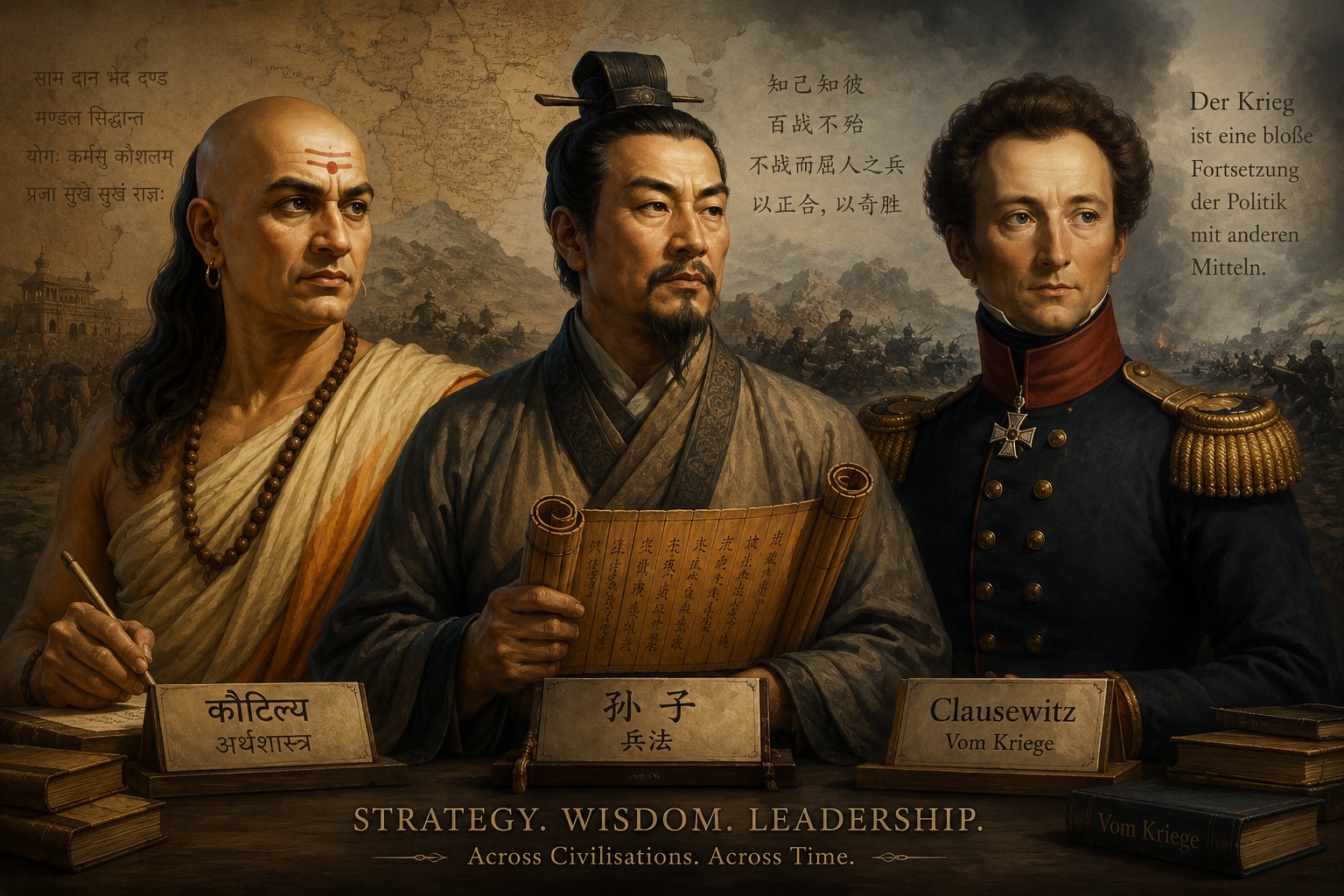
TPF’s Distinguished Adjunct Scholar, Andreas Herberg-Rothe analyses not only the interconnectedness between Kautilya, Sun Tzu, and Clausewitz but develops a syntheised understanding that highlights Kautilya’s larger statecraft, realism, and the ethical underpinning exemplified later by one of India’s and the world’s greatest emperors – ‘Asoka the Great’.
Abstract
It is right to insist that any serious Indian debate on strategy must return to Kautilya. Kautilya is not merely one strategic thinker among others whom India happened to produce early, but the most complete account we possess of the state as a system — of war as one instrument within a standing order of economy, administration, intelligence, and alliance. Where I part company with the tendency to treat Kautilya as sufficient is this. A grammar of statecraft is not the whole of strategy. Sun Tzu and Clausewitz are not rivals to be defeated or predecessors to be surpassed; each addresses precisely what the other two leave dark. Clausewitz corrects Sun Tzu’s confidence that war can be won in the enemy’s mind before the first blow; Sun Tzu and Kautilya together correct Clausewitz’s fixation on the symmetrical clash of mass armies; Kautilya anchors both in the institutional foundation on which any campaign, and any peace, must stand. I therefore argue for two theses that operate along different axes. Horizontally, the three thinkers form a complementary system in which each compensates for the others’ blind spots. Vertically, within the Indian tradition itself, Kautilya’s realism already carries the seed of its own moral limit: the Rajarishi, the self-mastered king, is the hinge on which Ashoka’s later turn to Dharmavijaya could swing. Power without an ordering purpose is self-destructive, and a moral purpose without power is defenceless. That is why I begin with Kautilya — but do not end there. In the end, I attempt to apply my brief discussion of Kautilya, Clausewitz, and Sun Tzu to India’s situation.
Why Begin with Kautilya
In the Western reception, there is a habit of turning to Kautilya only as an exotic confirmation of something already believed — “the Indian Machiavelli”, as though the Arthashastra were a footnote to The Prince. I want to begin with Kautilya for three analytical reasons.
First, the order of explanation. Sun Tzu tells us how to prevail in a campaign; Clausewitz tells us what happens when force is actually used; Kautilya tells us what must exist before either question can be asked — a treasury, an administration, an intelligence apparatus, a body of allies, a food supply. His Saptanga, or the seven limbs of the state, is not a list of assets but a theory of what a polity is. If we are looking for the ground on which the other two operate, it is here. To begin with Kautilya is to begin with the state, and only then to ask how it fights.
Second, the Indian frame of the conversation is examined. This is a dialogue conducted in and about India, and it would be a small intellectual dishonesty to use Clausewitz as the measure against which the Arthashastra is graded. The more interesting movement runs the other way: to take Kautilya as the primary text and ask what the European and Chinese traditions add to it and where they expose its limits. This is the posture I adopt throughout.
Third, the moral question is already present in Kautilya. The reason I do not treat Kautilya as a pure realist to be balanced, from the outside, by Ashokan ethics is that the balance is internal to his own text. He opens the Arthashastra not with tactics but with the education and self-conquest of the ruler. Begin anywhere else, and one misses the seed. Begin with Kautilya, and the path to Ashoka is already visible in the first book.
Kautilya’s State: War as One Instrument Among Many
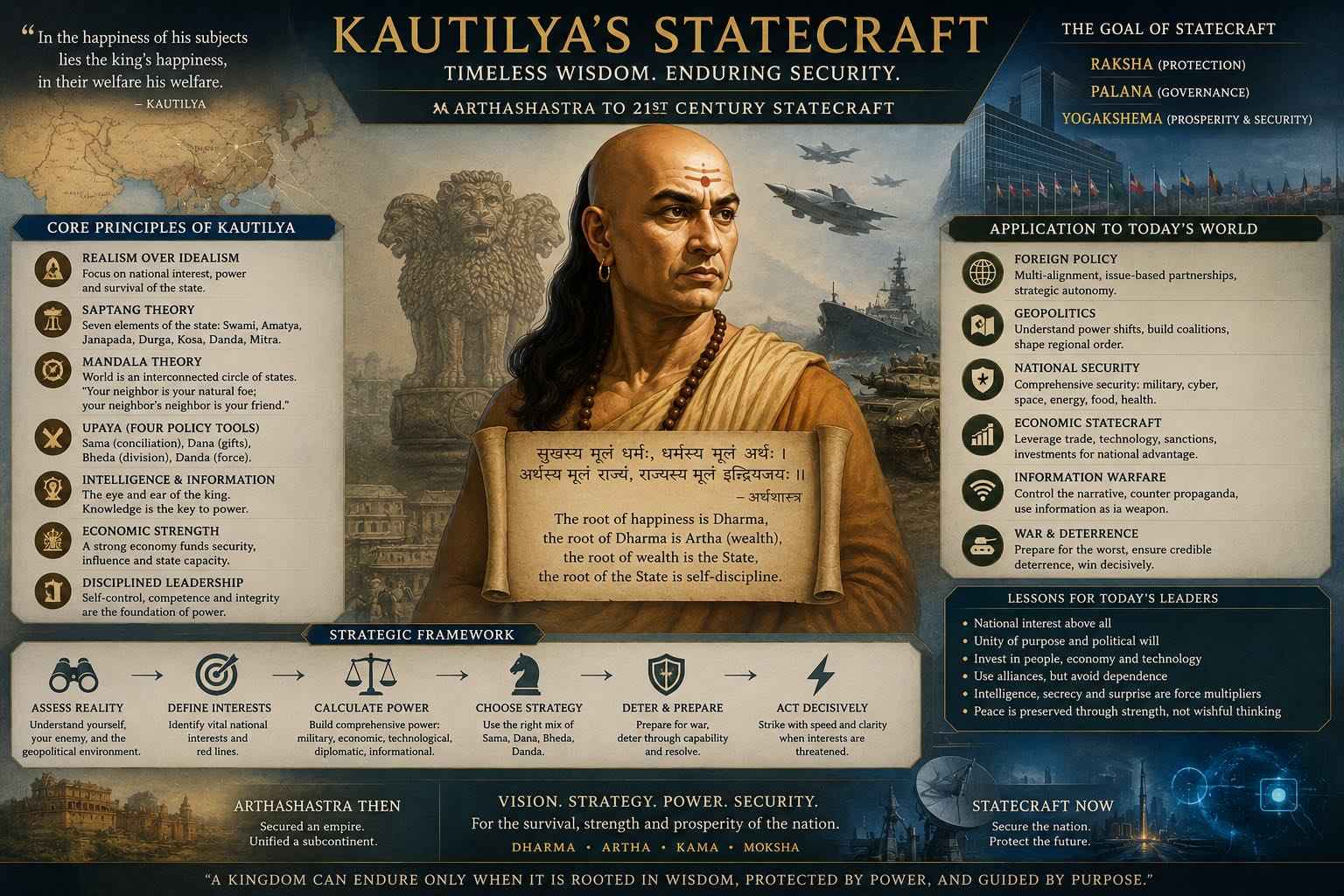
Kautilya’s account of foreign policy and security in the Arthashastra is a pragmatic synthesis of realpolitik and administration. It treats the relentless pursuit of the state’s interest, the management of alliances, and comprehensive security as a single problem, refusing to separate the external from the internal: domestic stability and external deterrence are the same pillar seen from two sides. Five elements carry most of this weight.
The Mandala: geography as the map of friendship and enmity
Kautilya reads a state’s environment as a circle of states, the Mandala, in which relations are dictated less by sentiment than by position: the immediate neighbour is a presumptive rival; the state beyond the rival is a natural ally — the ancient form of “the enemy of my enemy is my friend”. The Vijigishu, the would-be conqueror or the home state, must work this circle continuously through diplomacy, espionage, and alliance to maintain a regional balance. What matters for my argument is that the balance is structural and permanent, not the product of a single campaign.
The six measures (Sadgunya): policy as a spectrum, not a switch
Toward other states, Kautilya prescribes not a choice between peace and war but a graded set of six measures, selected by the balance of power of the moment:
- Sandhi — peace: treaties made when the opponent is stronger, to buy time and rebuild.
- Vigraha — hostility: open conflict when victory is likely, or provocation demands it.
- Asana — neutrality: remaining still when neither attack nor submission is advantageous.
- Yana — the expedition: active mobilisation and the march.
- Samsraya — shelter: seeking the protection of a stronger power under immediate threat.
- Dvaidhibhava — the double policy: peace with one power while preparing for war against another.
The point is the continuity of the scale. War is not a rupture of politics but one register of it — a formulation to which I will return, because it is also, in a different key, the core of Clausewitz.
The four expedients (Upaya): force as the last of four, not the first
Before using force, Kautilya insists that peaceful avenues be exhausted. He orders them:
- Sama — conciliation: negotiation and treaty.
- Dana — gift: economic inducement or concession.
- Bheda — dissension: the covert splitting of an adversary’s alliances from within.
- Danda — punishment: the last resort of military or economic coercion when other means have failed.
It is easy to read Bheda and Danda as evidence of unlimited cynicism. I think that is a misreading, and the reason is the placement: coercion is fourth, not first, and it is the servant of an order it does not itself define.
Comprehensive security: the Saptanga and the ecology of the state
Kautilya’s Saptanga, the seven limbs — sovereign, ministers, population, fortified towns, treasury, army, and allies — treats security as an interconnected ecology rather than a military department. He counts as threats not only invading armies but also famine, disease, and economic collapse; a powerful army, he warns, is worth nothing if the treasury is empty or the population is in revolt. This is what modern strategists relabel as “comprehensive security,” and it is the element of Kautilya that the twentieth century’s narrower schools most conspicuously lack.
Intelligence as a permanent organ of the state
A standing, state-run intelligence network is not an accessory to Kautilya’s system but one of its organs. Its agents gather foreign intelligence, gauge public mood, detect internal dissent, and assess the capabilities of allies and adversaries alike. For Kautilya, security is dual and requires continuous vigilance — outward against the rival and inward against decay — and the two are never separated.
Three Thinkers, Three Grammars
Set beside Kautilya, Sun Tzu, and Clausewitz look less like competitors than like specialists in different parts of a single problem. All three are realists — none mistakes war for a moral pageant — but they are not, for that reason, immoralists. They simply enter the subject through different doors.
- Kautilya — comprehensive statecraft. War is one instrument within a standing political, economic, and intelligence order.
- Sun Tzu — the psychological and the subversive. The ideal is to win without fighting by breaking the opponent’s will and cohesion.
- Clausewitz — the philosophy of war itself: its violence, its friction, its stubborn refusal to be dictated to by the opponent; “war is the continuation of politics by other means.”
Reduced to a sentence each: Sun Tzu teaches how to defeat the opponent’s mind; Clausewitz how to survive the violent clash; Kautilya how to run a state so secure that its rivals are undone before they know the contest has begun. Stated that way, the three are obviously incomplete on their own, which underpins my next argument.
The Complementary System: How Each Compensates the Other
The three should be read neither as competing dogmas nor as ingredients to be blended into a single syncretic paste. They form a dynamic system in which each addresses, quite precisely, the blind spots of the others. This is the horizontal axis of my argument, and it is where I most respectfully qualify the claim that Kautilya suffices.
Kautilya compensates Clausewitz: the foundation and the aftermath
Clausewitz’s genius lies in exposing war as a duel of reciprocal interaction — Wechselwirkung — and in locating its decision in the destruction of the enemy’s centre of gravity. However, his lens narrows to the clash. He tells us that war is an instrument of policy and says remarkably little about how a state builds the economic, social, and institutional resilience to endure a long conflict, still less about how to construct a durable peace after it. Kautilya fills exactly this void. The Saptanga presents military power as the product of a whole ecology — treasury, justice, alliance — rather than a free-standing lever. For him, war is a temporary phase within a permanent condition of statecraft, and military action is subordinated to a protective, welfare-oriented purpose (Yogakshema). Kautilya thus anchors Clausewitz’s volatile escalation on a foundation that can survive it.
Clausewitz compensates Sun Tzu: the shock of reality against the illusion of control
Sun Tzu’s fascination with deception, intelligence, and manoeuvre culminates in the ideal of subduing the enemy without fighting. The hidden danger is the assumption beneath it: that conflict can be run like a rational game of chess or wei-qi, in which a clever enough commander reads and moves every piece. This structurally underestimates what Clausewitz called the remarkable trinity: the primordial violence and passion of the people, the play of chance and friction in the hands of the commander, and the rational calculation of the government. Clausewitz is the reality check on Sun Tzu’s optimism. The adversary is an independent will whose hostility, courage, and counteraction (Gegenhandeln) can shatter the most elegant deception the moment violence is unleashed. While Sun Tzu assumes that the theatre can be read, Clausewitz insists on the non-linearity of force once it is in motion.
Sun Tzu and Kautilya compensate Clausewitz: beyond the symmetrical clash
Clausewitz’s model grows from a European tradition of symmetrical clashes between mass armies; his dialectic of attack and defence is at its sharpest in the open shock of forces. He attends far less to the asymmetric, the irregular, the purely psychological — to forms of conflict that bypass the battlefield altogether. Here, Sun Tzu and Kautilya jointly enlarge the field. Sun Tzu shows how informational asymmetry and psychological paralysis can collapse an enemy before a blow lands; Kautilya details Guda Yuddha, the clandestine war of subversion, diplomatic friction, and internal destabilisation, dismantling an opponent’s cohesion from within. The most decisive victories, on this combined view, often occur long before a Clausewitzian duel can take shape.
The Vulnerability of Deception: A Critique of Sun Tzu
The result is a balanced matrix rather than a hierarchy: Kautilya secures the institutional foundation; Sun Tzu reduces material costs through psychological agility; Clausewitz provides the analytical honesty to confront violence when it arises. Remove any one, and the account bleeds at the seam the other two were covering.
Perhaps the most important aspect of Sun Tzu’s strategy is deceiving the enemy. However, this approach has a fundamental problem. In order to deceive the enemy, we must make our deception so realistic that we risk deceiving ourselves.
A personal anecdote illustrates this point. During the era of “real existing socialism”, it was customary for the population to march in large crowds past the Politburo building in East Berlin. One participant explained it to me this way: “When these ‘crowds’ marched past the podium, they turned off, walked behind the stage, and then reappeared at the front.” He added that, initially, this had been a pleasant Sunday stroll with the family, but later, people had to run at a brisk pace because there were so few participants. Everyone knew the truth, yet everyone participated in the charade.
However, a deeper structural problem was that although the Politburo members were technically aware of the operational deception, they gradually came to believe that their performance was genuinely being mistaken for reality by the outside world and by their own apparatus. In terms of Sun Tzu’s principle of deception, it becomes profoundly self-destructive if the political and military leadership believes their own deception is effective—and by doing so, they ultimately deceive themselves. They mistook the simulation for the baseline of power.
The Clausewitzian Corrective
This is precisely where the matrix requires Clausewitz’s analytical honesty to stabilise the structure. Sun Tzu’s deception operates in the realm of appearance, yet it remains a dangerous epiphenomenon. If a state relies too heavily on psychological manipulation, its strategic calculus becomes hollow. Clausewitz provides the necessary antidote to this self-induced “fog of war.” By anchoring strategy in the immutable, violent friction of reality and in the strict relationship between political purpose and material means, Clausewitz forces the strategist to look beyond the theatre.
In the contemporary context of India’s rivalry with China, this critique is vital. While China employs Sun Tzu-inspired psychological and informational warfare to project an aura of absolute dominance, India must avoid competitive simulation. Kautilya could guarantee that India’s domestic and institutional foundations remain structurally sound. Clausewitz ensures that India retains the unvarnished analytical clarity to evaluate China’s actual material capabilities—rather than Beijing’s self-deceiving theatre—while preparing for the physical reality of conflict if deterrence fails.
The Vertical Axis: From Danda to Dharma, from Kautilya to Ashoka
The complementarity above is horizontal — three grammars of how a state contends. There is a second axis, vertical and internal to the Indian tradition, concerning the purpose of the instruments of power. It is here that I locate my disagreement with any reading of Kautilya as merely amoral, and here that the Kautilya–Ashoka relationship, so often drawn as mere opposition, is better drawn as a sequence. Machiavelli is the useful analogy: the sharp realism of The Prince serves, in the Discorsi, the longer survival and freedom of the republic. Kautilya’s pragmatism is likewise anchored in a wider order — Dharma, the moral and cosmic law. His ideal of the self-mastered king, the Rajarshi, is not the opposite of Ashoka’s later Dharmavijaya, victory through righteousness. It is its seed.
Self-mastery (Indriya-jaya) as a hard security requirement
Kautilya opens not with the army but with a discussion of the ruler’s character. The Rajarshi must achieve Indriya-jaya, the conquest of his own senses and passions — lust, anger, greed, arrogance, and vanity. This is not soft counsel. For Kautilya, a ruler’s ethical integrity is a national security requirement: a leader enslaved by his passions will corrupt the state and drag it to ruin. Read this forward, and Ashoka’s remorse after Kalinga, his turn away from conquest, is the historical fulfilment of Indriya-jaya — the king conquering his own imperial ambition in the service of a higher duty.
Collective welfare (Yogakshema) as the purpose of the state
One of Kautilya’s most cited lines states this point without ambiguity:
“In the happiness of his subjects lies the king’s happiness; in their welfare, his welfare. What pleases himself he shall not consider as good, but whatever pleases his subjects he shall consider as good.”
This is not the charter of a predatory elite. The state exists for Yogakshema — the security, livelihood, and welfare of its people — and coercion (Danda) is legitimate only because it holds back Matsya-nyaya, the law of the fish, in which the strong devour the weak. Ashoka adopted this protective philosophy in its entirety and expanded its radius. When he declared that “all men are my children”, he was extending Kautilya’s duty of care from a particular political community to all living beings.
From power to righteousness: inversion, not demolition
In Kautilya’s universe, coercion is the material instrument that upholds the moral law: without institutional power, justice cannot survive in an imperfect world, so power is subordinated to order. Ashoka’s achievement was not to dismantle the efficient Mauryan apparatus he inherited — an apparatus shaped through and through by Kautilyan principles — but to invert its priority. Recognising that conquest through raw Danda leaves generational trauma in its wake, he used the resilient vessel of the Kautilyan state to carry the universal ethic of the Dhamma. The machine was Kautilya’s; the purpose poured into it was Ashoka’s. That is why I hold that power without an ordering purpose is self-destructive, and a moral purpose without the machinery of power is defenceless — the two are complementary in exactly the same way that Kautilya and Ashoka are.
Conclusion: A Framework for the Present Dialogue
Ashoka’s ethical turn was not an ahistorical break; it was the flowering of a seed already present in Kautilya’s insistence on the king’s self-conquest and on welfare as the state’s purpose. This is the vertical lesson. The horizontal lesson is that no single tradition — not even one as complete as Kautilya’s — holds the whole of strategy: Clausewitz keeps us honest about violence, Sun Tzu about the mind, and Kautilya about the state that must outlast both. Put together, the two axes give a usable framework for the contemporary Indian debate: a strategy that is Kautilyan in its comprehensiveness, Sun Tzuan in its economy of force, Clausewitzian in its clear sight of what force actually is — and Ashokan in its sense of what all of it is finally for.

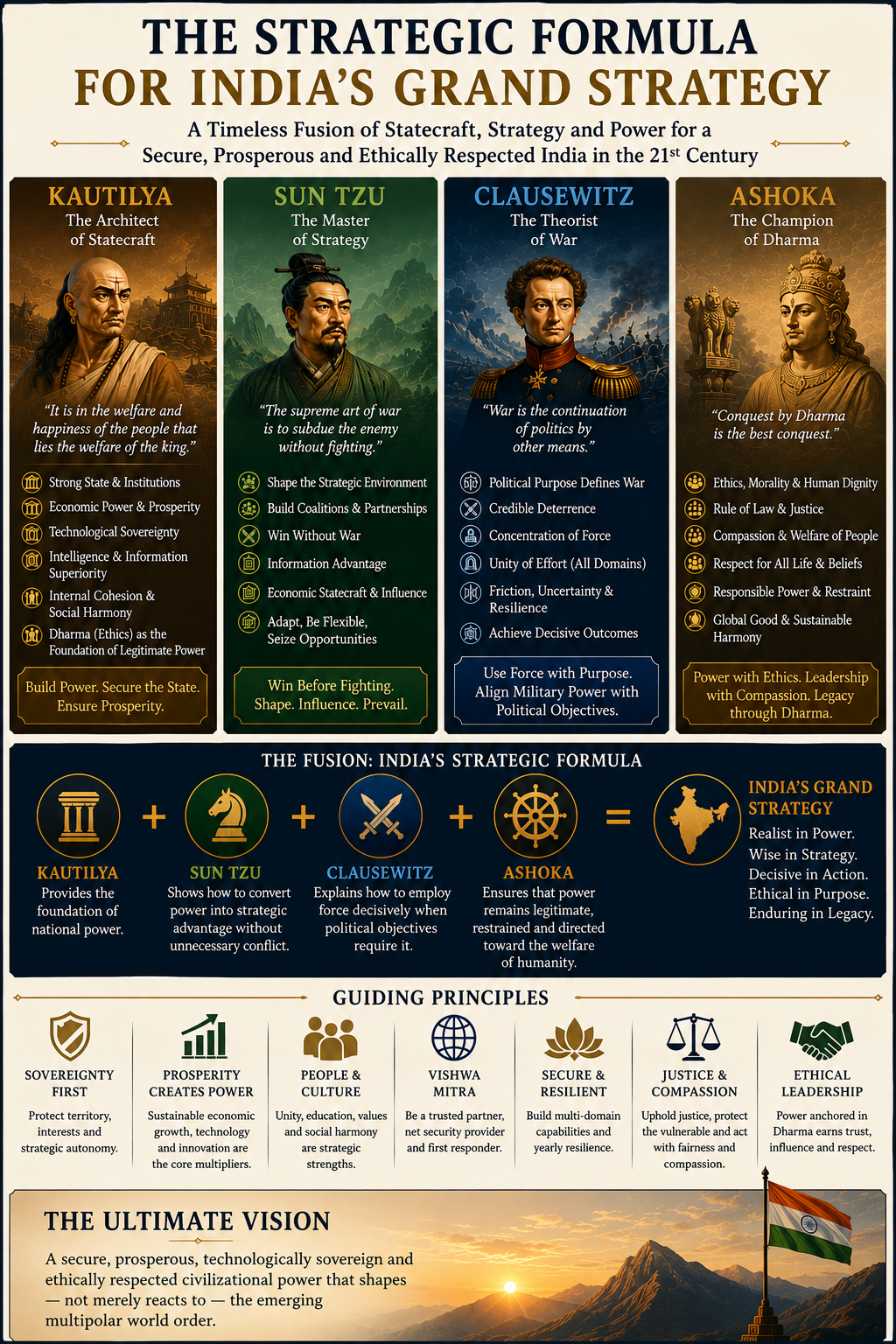
My claim is only this: begin with Kautilya, by all means — but do not stop with him, and do not forget the Rajarshi who stands, self-mastered, at the very front of his book.
Possible Strategic Implications for India’s Security Architecture
- Maritime Space and “Hinterindia” (Southeast Asia): Expanding the Mandala
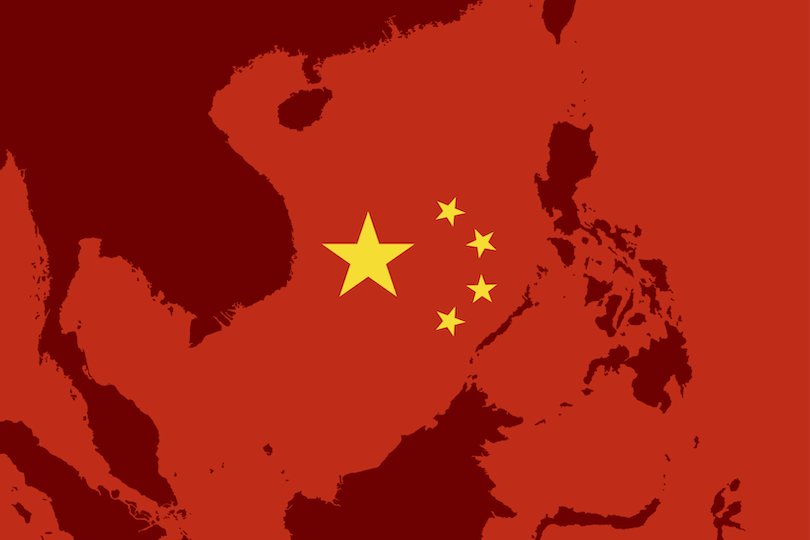
- The Clausewitzian/Kautilyan Baseline: Clausewitz’s Centre of Gravity (Schwerpunkt) in the Strait of Malacca cannot be controlled by India through mere operational posturing; it requires physical mass, sustained naval projection and logistical depth. This aligns with Kautilya’s insistence on Dravyaprakriti (the material resource base) and Durga/Kosha (fortifications and financial reserves) as the mandatory prerequisites for external power projection. Through the lens of India’s Act East Policy, “Hinterindia” (Southeast Asia/ASEAN states) constitutes the outer ring of Kautilya’s Mandala theory—the “neighbours of the neighbour” who share India’s existential concerns regarding Chinese expansionism.
- The Sun Tzu Leverage & The Critique of Deception: Sun Tzu’s hierarchy of success dictates that we must “prevent the junction of the enemy’s forces.” China attempts to counter this by creating a simulated narrative of inevitable regional hegemony, seeking to deceive Southeast Asian nations into bandwagoning with it.
- The Strategic Balance: India must counter China’s psychological narrative not with empty rhetoric but by offering a robust institutional and material alternative for Southeast Asia (e.g., defence exports such as BrahMos missile transfers and shared maritime domain awareness). By anchoring Kautilya’s Mandala in tangible material foundations, India may create a structural counterweight to “Hinterindia.” This turns Sun Tzu’s “victory without battle” into a tangible reality: China’s strategy to dominate the Strait of Malacca is thwarted because the littoral states of Southeast Asia are firmly integrated into a resilient, material balancing system led by New Delhi.
- The Two-Front Reality: Prakashayuddha (West) vs. Tushnimyuddha (East and Cyber)
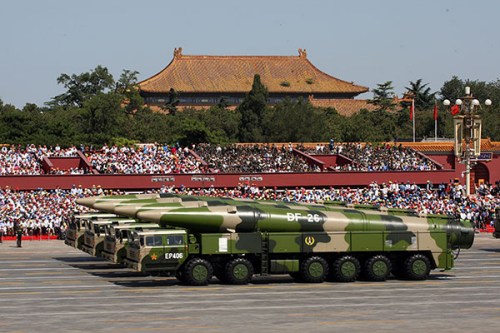
- The Clausewitzian/Kautilyan Baseline: India faces two fundamentally different forms of warfare that demand distinct structural foundations. On the Western Front (Pakistan), India confronts Prakashayuddha—open, visible, conventional warfare. This theatre is dominated by Clausewitz’s trinitarian element of “primordial violence, hatred, and enmity.” It is a highly emotionalised, zero-sum clash, with the danger of rapid escalation to absolute war ever-present. Conversely, in the Eastern and Maritime domains (China), the conflict takes the form of Tushnimyuddha—the silent, concealed grey-zone warfare. This involves cyber subversion, maritime encirclement, and informational pressure, aimed at eroding India’s power from within before a single shot is fired.
- The Sun Tzu Leverage and Critique of Deception: Pakistan has historically used asymmetric deception (proxy networks and nuclear brinkmanship) to mask its internal systemic decline. Applying the critique of self-deception, Pakistani leadership became victims of their own theatre—believing their deceptive proxies could paralyse India, while in reality this strategy hollowed out Pakistan’s economic and institutional foundations (Saptanga). In the East, China utilises highly sophisticated, automated deception (AI-driven cyber operations and the “Three Warfares” narrative) to project an aura of absolute dominance over the Indo-Pacific.
The Strategic Balance:
- In the realm of Prakashayuddha (the West): India needs the unvarnished analytical honesty of Clausewitz to confront raw violence without allowing the conflict’s emotionality to dictate its grand strategy. India must economise on this front through unyielding, visible conventional deterrence, ensuring that Pakistan’s self-deceiving provocations do not drain India’s core resources.
- In the realm of Tushnimyuddha (East/Cyber): India cannot counter China’s silent warfare with empty psychological manoeuvres. True resilience in Tushnimyuddha requires solid domestic, institutional, and societal foundations. In the cyber domain, this means building domestic technological sovereignty and public trust to make society immune to external fractures. By standing firmly on its own domestic ground (Saptanga), India can ensure that its political purpose (Clausewitz) remains independent.
- The China-USA Dilemma: Strategic Autonomy in a Multi-Polar Mandala
- The Clausewitzian/Kautilyan Baseline: Clausewitz strictly warns that the political purpose must always remain the “original measure” of war. If India relies on the USA to balance China, it risks subordinating its political objectives to Washington’s global design and fracturing its strategic autonomy. Kautilya resolves this dilemma through the Saptanga theory, in which the state’s internal pillars (Swami-Amatya-Janapada) must be structurally robust enough to resist external co-optation.
- The Sun Tzu Leverage: Sun Tzu warns against protracted external dependencies and conflicts that drain the state’s core resources: “There is no instance of a country having benefited from prolonged warfare.”
- The Strategic Balance: To preserve strategic autonomy between China and the US, India’s deterrence cannot be borrowed or faked—it must spring from its own Comprehensive National Power. Kautilya’s Shadgunya framework permits temporary, transactional alignments (Samsraya), strictly as a breathing space to build internal material strength. Combined with Clausewitz’s insistence on the primacy of the independent political purpose, India should use its relationship with the US not as a strategic crutch but as an institutional catalyst to accelerate its domestic economic, technological, and military foundations. Deterrence against China is thus achieved not by proxy diplomacy but by the undeniable structural weight of a self-reliant Indian state.
- Strategic Autonomy and Internal Emancipation: Beyond the Prussian and Meiji Trap
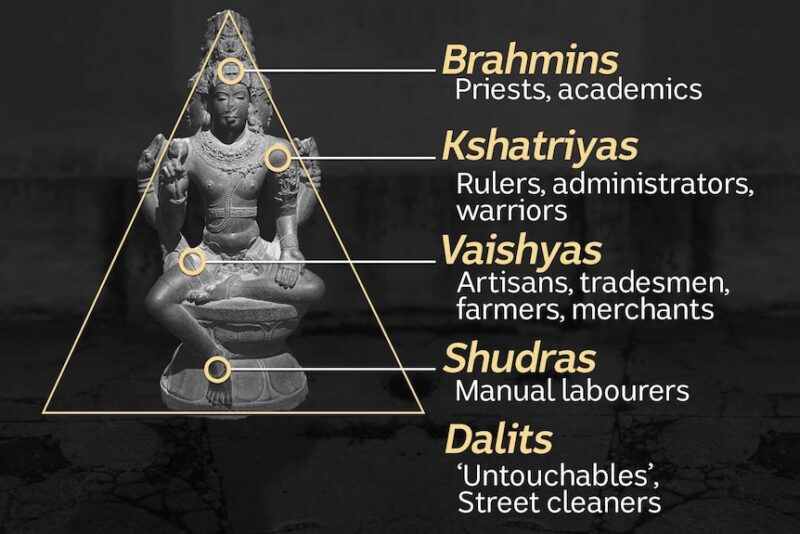
- The Structural Challenge: True structural deterrence against an external adversary such as China cannot coexist with deep systemic fragmentation at home. India’s historical vulnerabilities—the persistence of the caste system, the marginalisation of Dalits, and pervasive poverty—constitute severe internal fractures (Vyasanas) in Kautilyan terms. Kautilya’s warnings against internal rebellion (Abhyantara-Kopa) explicitly state that internal fractures are far more dangerous than external invasion. A state that systematically excludes or impoverishes a vast segment of its population violates the core principle of Yogakshema (the material and moral welfare of the people).
- The Historical Matrix: Historically, states facing existential external pressure have often resorted to a “revolution from above” to modernise their societies, as seen in 19th-century Prussia and Meiji Japan. However, both historical trajectories fell into the trap of hyper-militarism by subordinating the entire social fabric to the military apparatus, ultimately leading to catastrophic conflicts.
- The Kautilyan Alternative: Kautilya’s Saptanga framework offers a safeguard against militaristic traps. Unlike the Prussian or Japanese models, which elevated the military (Danda) to an absolute end in itself, Kautilya strictly subordinates military force to civil governance (Amatya), as Clausewitz does, and to the material welfare of the population (Yogakshema).
- The Strategic Balance: For contemporary India, overcoming internal problems is not a secondary moral goal but a primary strategic imperative. A just, inclusive, and cohesive society is India’s ultimate defence infrastructure. By operationalising national self-preservation and defensive modernisation as vehicles for internal emancipation—expanding technical education, institutional trust, and industrial opportunities for the most marginalised echelons of society—India can dismantle archaic barriers through the pragmatic necessity of its national survival. Securing the external realm is achieved by immunising the domestic foundation.
- Epilogue: The Civilizational Horizon and Intercultural Recognition
- The Demographic Gravity of the Northern Belt: Looking beyond the immediate operational timeline towards 2050, India’s long-term geopolitical architecture cannot be detached from global demographic shifts. While the Russian Federation faces a massive population surge along its southern “Islamic belt,” from New Delhi’s geographic perspective, this same space constitutes an expansive northern and western Islamic belt. A purely militaristic and exclusionary response to this demographic reality is unsustainable. Instead, this development demands a shift from religious fragmentation to a broader civilisational paradigm. While religions, by their doctrinal nature, tend toward theological exclusion, civilisations have historically possessed the capacity for pluralistic inclusion and cross-cultural balance.
- The Balance of Kautilya and Ashoka: To articulate a genuinely Indian contribution to the global order without falling into the ideological trap of contemporary Hindu nationalism (Hindutva), India’s strategic culture must synthesise its two foundational, dialectical pillars: Kautilya and Ashoka. Kautilya provides the unyielding institutional, economic, and structural baseline (Saptanga) necessary to preserve state survival and sovereignty. Yet this material power remains hollow—and prone to internal fracturing—without Ashoka’s ethical and universalist horizon. Ashoka’s edicts did not establish a homogeneous religious empire but rather a civilisational space anchored in Dhamma (righteousness, social ethics, and mutual tolerance), which actively accommodated diverse belief systems and ethnicities.
Selected works by the author:
Herberg-Rothe, Andreas, Clausewitz’s puzzle. The political theory of war. OUP: Oxford 2007. (published in Chinese in 2020).
- Lessons from World War I for the rise of Asia. Ibidem Publishers: Stuttgart 2015. Edited by Andreas Herberg-Rothe.
- (Together with Key-young Son, Seoul), Order wars and floating balance. How the rising powers are reshaping our worldview in the twenty-first century. Routledge: Abington/Oxfordshire; 2018, paperback, 2019.
- Toleration and mutual recognition in hybrid Globalization. In: International Studies Journal, Tehran, Print version: September 2023; Volume 20, Issue 2 – Serial Number 78; pp 51-80; online: https://www.isjq.ir/article_178740_en.html?lang=en&lang=en
- Clausewitz and Sun Tzu. Militaire Spectator, 13. 9. 2023; online URL: https://militairespectator.nl/artikelen/clausewitz-and-sun-tzu; last access: 26.10. 2023.
- Lyotard versus Hegel: The Violent End of Postmodernity, Filozofija i društvo/ doi: 10.2298/FID240225009H Philosophy and Society. Belgrade, Serbia, 36(1), 2025, pp. 277–296.
- (together with Key-young Son), The Bipolar Trap: The Real Danger in the Trump-Xi Era. In: The Diplomat, Tokyo, 6.6.2026; URL: https://thediplomat.com/2026/06/the-bipolar-trap-the-real-danger-in-the-trump-xi-era/; accessed: 6.6.2026; 9.24 pm; German time.
References to Kautilya:
- Encyclopaedia Britannica Online; Entry: “Artha-shastra” com.
The entry defines the Arthaśāstra not merely as a military manual, but as a comprehensive treatise on statecraft that integrates legal codes, economic management, and administrative systems into a unified standing order. It explicitly demonstrates how external warfare and foreign policy are treated as internal instruments of a highly organised, centralised state apparatus, which relies extensively on domestic stability, economic oversight, and sophisticated intelligence networks
- Encyclopaedia.com
This text emphasises the rigorous institutional and structural foundations of Kautilya’s polity, outlining how military campaigns are subordinate to and dependent upon a robust domestic administration. It details Kautilya’s intricate systems of taxation, social welfare, and resource regulation, illustrating that a state’s capacity for external war or lasting peace must firmly stand on its internal institutional infrastructure.”
- Routledge Encyclopaedia of Philosophy, s.v. “Kauṭilya (fl. c.321–c.296 BC)”https://www.rep.routledge.com/articles/biographical/kautilya-fl-c-321-c-296-bc/v-1
The article challenges the reductionist view of Kautilya as a purely amoral realist, highlighting that the Arthaśāstra is fundamentally concerned with securing the welfare and prosperity of its citizens under a just government. This underscores that the king is not an absolute despot but merely one of seven interdependent institutes of the state (Saptanga), tasked with safeguarding the good of the people in a dharma-sanctioned manner. This structural insistence on the sovereign’s self-discipline directly anchors the moral limits of power, providing the conceptual bridge to the tradition’s later ethical evolution.”
A note on further sources about Clausewitz, Kautilya, and Sun Tzu:
For readers who wish to check the argument against the texts rather than against summaries of them, the standard points of entry are as follows:
- Kautilya, The Arthashastra, ed. and trans. L. N. Rangarajan (Penguin, 1992); and R. P. Kangle, The Kautiliya Arthasastra, 3 vols. (Motilal Banarsidass) — the Saptanga, the Sadgunya, and the Upaya are set out in Books 6–7, the education and self-mastery of the ruler in Book 1.
- Sun Tzu, The Art of War, trans. Samuel B. Griffith (Oxford, 1963) or Roger Ames (1993) — “to subdue the enemy without fighting” and “all warfare is based on deception” appear in chapters 3 and 1, respectively.
- Carl von Clausewitz, On War, ed. and trans. Michael Howard and Peter Paret (Princeton, 1976) — the definition of war as the continuation of policy, the remarkable trinity, and friction are in Book 1; see also A. Herberg-Rothe, Clausewitz’s Puzzle (Oxford, 2007).
- On Ashoka, the Rock and Pillar Edicts in Romila Thapar, Asoka and the Decline of the Mauryas (Oxford, rev. ed.) — “all men are my children” is from the Separate Rock Edict at Dhauli/Jaugada.
Feature Image and other Images: Made with AI assistance