Category: United Nations

  • Seabed: “to mine or not to mine”

    Seabed: “to mine or not to mine”

    Seabed mining offers new vistas for business partnerships and joint ventures among different industries in the offshore mining supply chains.

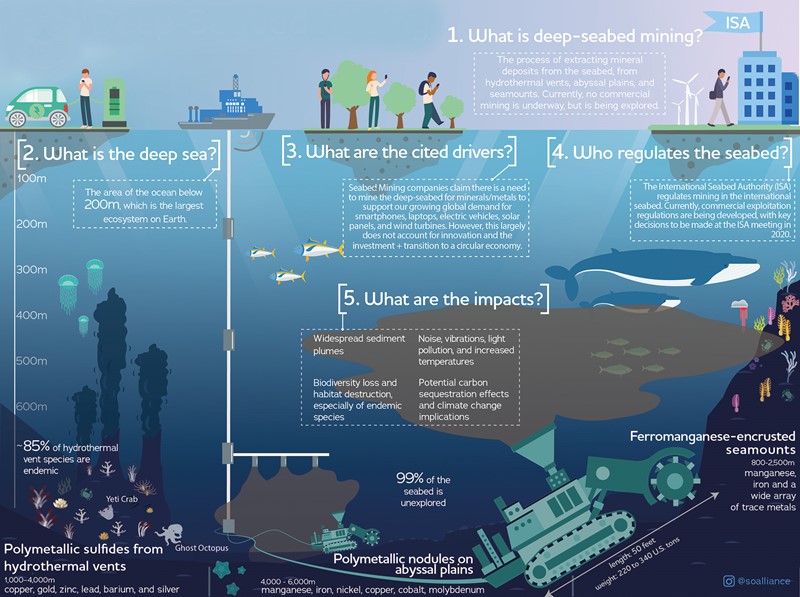
    The month-long debate “to mine or not to mine” has ended inconclusively at the 28th session of the International Seabed Authority (ISA) Assembly from 28 June to 28 July 2023 in Kingston, Jamaica amid calls for a “ban /suspension/precautionary pause” on any extractive activities.

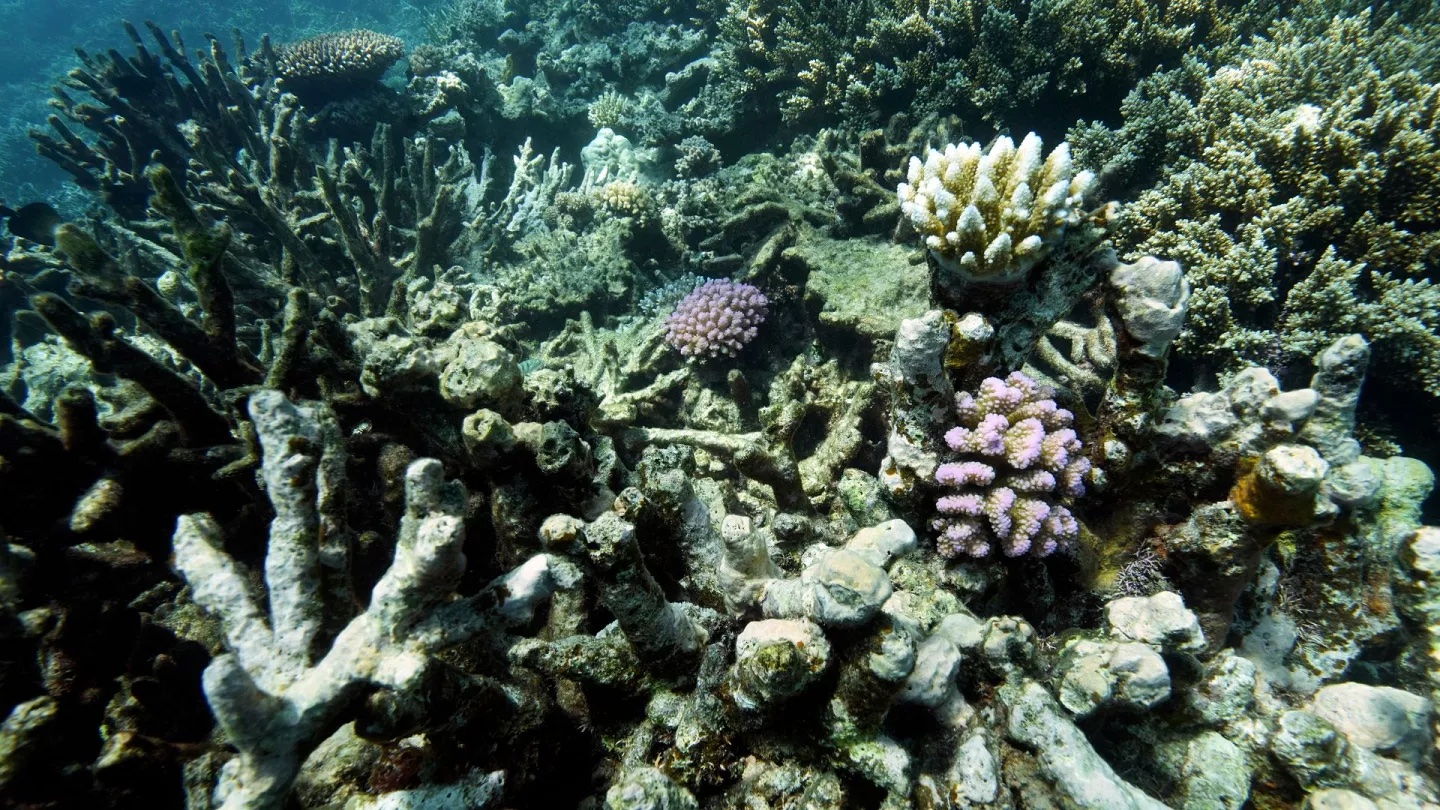
    Figure Credit: eandt.theiet.org

    The ‘naysayers’ vehemently argued for the protection of the oceans given that these large bodies of water are already experiencing multiple and diverse nature and human-induced challenges such as climate change, unsustainable fishing, marine pollution etc. Furthermore, any attempt to mine the seabed will have far-reaching adverse impacts on marine life and result in biodiversity loss keeping in mind that human knowledge about the deep sea ecosystems is very little.

    Those in favour of seabed mining attempted to convince that energy transition is critical for sustainable development and for that a sustained supply of nickel, manganese, cobalt, and copper, is inescapable. These metals/minerals would have to be sourced from the seabed. For the time being, the representatives of the ISA Member States and other stakeholders have returned home to mull over the issue of seabed mining.

    The sudden hyper-activity at the ISA is a result of the June 2021 submission by Nauru, a Pacific island nation which submitted an application for approval from the ISA to commence extraction activities relying on the “two-year rule,” under which the “Council shall complete the adoption of the relevant rules, regulations, and procedures (RRPs) within two years from the submission”. The two-year deadline expired on 9 July 2023, but the ISA Council, a 36-member body executive arm responsible for approving contracts with private corporations and government entities, among other things, announced that it would “continue the negotiations on the draft exploitation regulations”.

    Meanwhile, at home, the Government of India is all set to exploit oceanic resources. Earlier this month, the Indian Parliament (Rajya Sabha and Lok Sabha) passed the Offshore Areas Mineral (Development and Regulation) Amendment Bill 2023 which enables extraction activities in offshore areas for mineral resources.

    It is true that offshore resource development has been a much-neglected area other than the oil and gas sectors. This is notwithstanding the seminal contributions made by the Geological Survey of India (GSI) which has been leading offshore scientific research and survey activities since the early sixties. The Marine and Coastal Survey Division (MCSD) of the GSI conducts numerous related activities including seabed mapping and exploration within the Indian EEZ and is supported by three ocean-going vessels.

    According to the GSI, as of January 2023, nearly 95 % of India’s EEZ of 2.159 million square kilometres has been surveyed. Since 2022, the GSI has been carrying our seabed mapping in international waters and has covered over 70,000 square kilometres till December 2023 for “generation of baseline data along with the search for possible mineral occurrences in the Ninety East Ridge near the Equator, Indian Ocean and the Laxmi Basin (Block-I, II and III), Arabian Sea by deploying its vessels”.

    The Indian EEZ is endowed with 1,53,996 million tonnes of live mud particularly off Gujarat and Maharashtra coasts, and 745 million tonnes of construction-grade sand has been found along the Kerala coast. The Bay of Bengal coast (Odisha, Andhra Pradesh and Tamil Nadu) and the Arabian Sea coast (Maharashtra and Kerala) are rich in heavy mineral and Polymetallic Ferro-Manganese nodules are available in the Andaman Sea and waters off Lakshadweep islands.

    Polymetallic nodules (Copper, Cobalt, Nickel, Manganese, Rare earth, etc.) are particularly important to support India’s mission to promote the use of clean energy. In November 2022, during the G20 summit in Indonesia Prime Minister Narendra Modi told the participating countries that by 2030, half of India’s electricity will be “generated from renewable sources,”

    The Offshore Areas Mineral (Development and Regulation) Amendment Bill 2023, among many issues, has introduced a number of initiatives including the “auction” of offshore mineral exploration sites and mining rights to companies, including from the private sector, thus creating a level playing field for business competition. The Bill provides for two types of operating rights through auction to the private sector (a) production lease and (b) composite license. It merits mention that the provision for “renewal of production leases has been scrapped with a 50-year lease period to remove uncertainty for operators” which will “give confidence to investors by bringing in transparency and fair play,”

    Seabed mining offers new vistas for business partnerships and joint ventures among different industries in the offshore mining supply chains. For instance, lifting of the extracted ore and carrying it to storage sites ashore is an opportunity for the maritime transportation sector. Similarly, environmental impact assessment, and restoration techniques when needed is a unique industry. Likewise, Industry 4.0 technology developers have opportunities to support Marine Spatial Planning (MSP), bio-remediation, bio-prospecting, and a variety of other seabed mining sectors.

    This article was published earlier in kalingainternational.com

    Feature Image Credit: euronews.com

  • The Atomic Executioner’s Lament

    The Atomic Executioner’s Lament

    While the world focuses on the trials and travails of the scientists who invented the atomic bomb, little attention is paid to the hard positions taken by the nuclear executioners, the men called upon to drop these bombs in time of war.


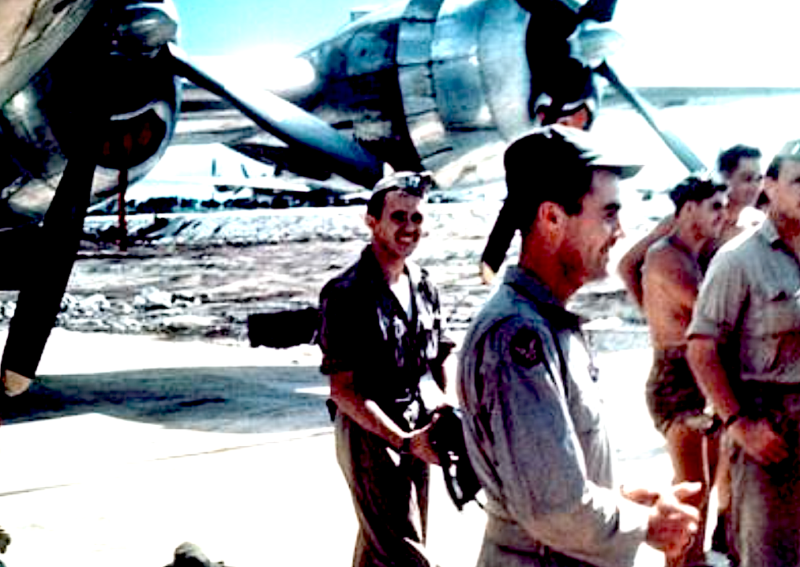
    Crew of the Enola Gay, returning from their atomic bombing mission over Hiroshima, Japan. At center is navigator Capt. Theodore Van Kirk; to the right, in foreground, is flight commander Col. Paul Tibbetts. (Wikimedia Commons, Public domain)


    There is an interesting scene in Chris Nolan’s film Oppenheimer, one which could easily get lost in the complexity of telling the story of the man considered to be the father of the American atomic bomb, J. Robert Oppenheimer.

    The Trinity test of the first nuclear device has been successfully completed, and Oppenheimer is watching as two men in military uniform are packing up one of Oppenheimer’s “gadgets” for shipment out of Los Alamos to an undisclosed destination.

    Oppenheimer talks to them about the optimum height for the detonation of the weapon above ground, but is cut off by one of the soldiers, who, smiling, declares “We’ve got it from here.”

    Such men existed, although the scene in the movie — and the dialogue — was almost certainly the product of a scriptwriter’s imagination. The U.S. military went to great lengths to keep the method of delivery of the atomic bomb a secret, not to be shared with either Oppenheimer or his scientists.

    Formed on March 6, 1945, the 1st Ordnance Squadron, Special (Aviation) was part of the 509th Composite Group, commanded by then-Lieutenant Colonel Paul Tibbets. Prior to being organized into the 1st Ordnance Squadron, the men of the unit were assigned to a U.S. Army ordnance squadron stationed a Wendover, Utah, where Tibbets and the rest of the 509th Composite Group were based.

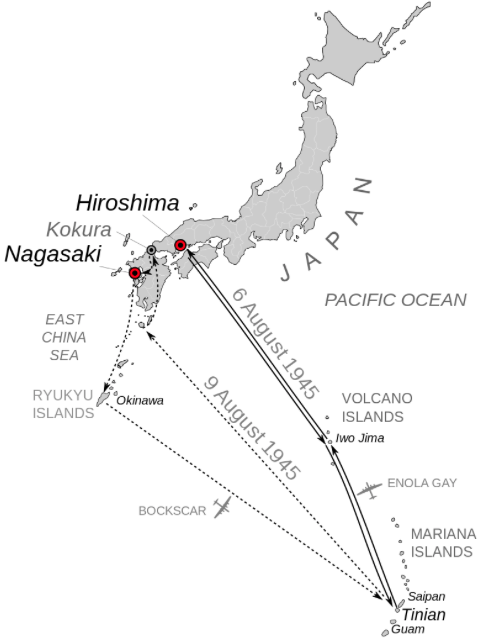
    Mission map for the bombings of Hiroshima and Nagasaki, Aug. 6 and Aug. 9, 1945. Scale is not consistent due to the curvature of the Earth. Angles and locations are approximate. Kokura was included as the original target for Aug. 9 but weather obscured visibility; Nagasaki was chosen instead. (Mr.98, Wikimedia Commons, Public domain)
    While Oppenheimer and his scientists designed the nuclear device, the mechanism of delivery — the bomb itself — was designed by specialists assigned to the 509th. It was the job of the men of the 1st Ordnance Squadron to build these bombs from scratch.

    The bomb dropped on Hiroshima by Paul Tibbets, flying a B-29 named the Enola Gay, was assembled on the Pacific Island of Tinian by the 1st Ordnance Squadron.

    Concerned about the possibility of the B-29 crashing on takeoff, thereby triggering the explosive charge that would send the uranium slug into the uranium core (the so-called gun device), the decision was made that the final assembly of the bomb would be done only after the Enola Gay took off.

    One of the 1st Ordnance Squadron technicians placed the uranium slug into the bomb at 7,000 feet over the Pacific Ocean.

    The bomb worked as designed, killing more than 80,000 Japanese in an instant; hundreds of thousands more died afterwards from the radiation released by the weapon.

    For the pilot and crew of the Enola Gay, there was no remorse over killing so many people. “I knew we did the right thing because when I knew we’d be doing that I thought, yes, we’re going to kill a lot of people, but by God we’re going to save a lot of lives,’ Tibbets recounted to Studs Terkel in 2002. He added:

    “We won’t have to invade [Japan]. You’re gonna kill innocent people at the same time, but we’ve never fought a damn war anywhere in the world where they didn’t kill innocent people,” Tibbets told Terkel. “If the newspapers would just cut out the shit: ‘You’ve killed so many civilians.’ That’s their tough luck for being there.

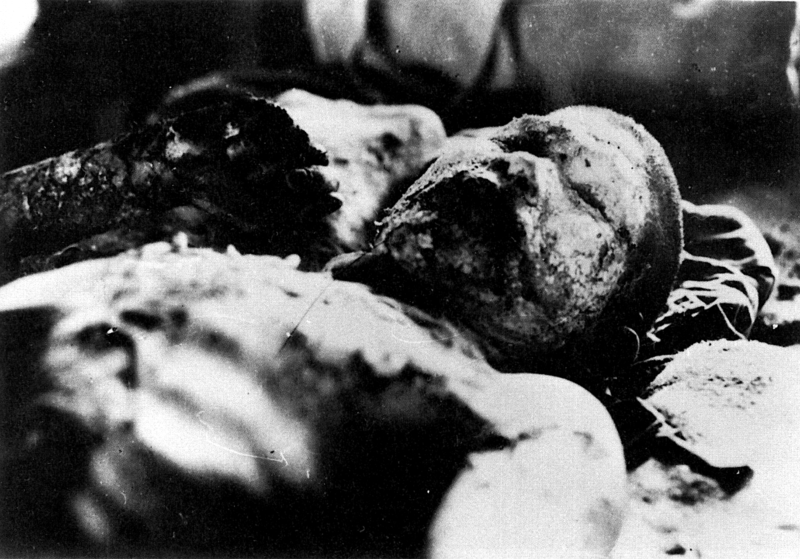
    An atomic bomb victim with burns, Ninoshima Quarantine Office, Aug. 7, 1945. (Onuka Masami, Wikimedia Commons, Public domain)

    Major Charles Sweeney, the pilot of Bockscar, the B-29 that dropped the second American atomic bomb on the city of Nagasaki on Aug. 9, 1945, held similar convictions about his role in killing 35,000 Japanese instantly.

    “I saw these beautiful young men who were being slaughtered by an evil, evil military force,” Sweeney recounted in 1995. “There’s no question in my mind that President Truman made the right decision.” However, Sweeney noted, “As the man who commanded the last atomic mission, I pray that I retain that singular distinction.”

    History records the remorse felt by Oppenheimer and his Soviet counterpart, Andrei Sakharov, and the punishment they both suffered at the hands of their respective governments. They suffered from designer’s remorse, a regret — stated after the fact — that what they had built should not be used, but somehow locked away from the world, as if the Pandora’s Box of nuclear weaponization had never been opened.

    Having designed their respective weapons, however, both Oppenheimer and Sakharov lost control of their creations, turning them over to military establishments which did not participate in the intellectual and moral machinations of bringing such a weapon into existence, but rather the cold, hard reality of using these weapons to achieve a purpose and goal which, as had been the case for Tibbets and Sweeney, seemed justified.

    Ignoring the Executioner

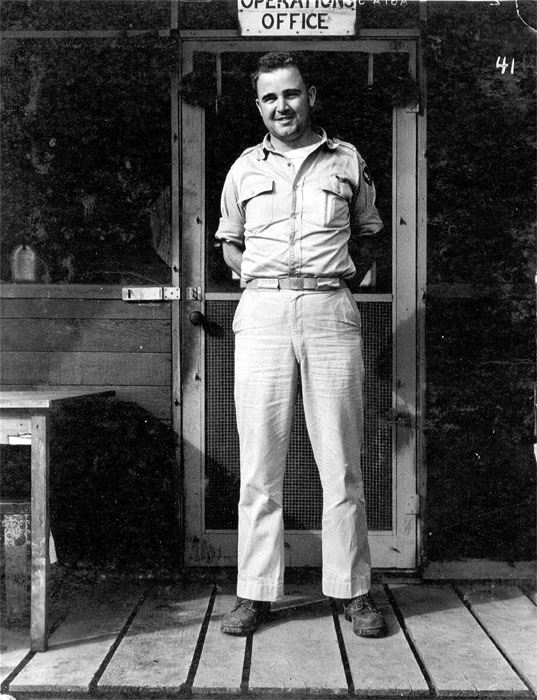
    Brigadier General Charles W. Sweeney, pilot of the aircraft that dropped the atomic bomb on Nagasaki. (Public domain, Wikimedia Commons)
    This is the executioners’ lament, a contradiction of emotions where the perceived need for justice outweighs the costs associated.

    While the world focuses on the trials and travails of Oppenheimer and Sakharov, they remain silent about the hard positions taken by the nuclear executioners, the men called upon to drop these bombs in time of war.  There have only been two such men, and they remained resolute in their judgement that it was the right thing to do.

    The executioner’s lament is overlooked by most people involved in supporting nuclear disarmament. This is a mistake, because the executioner, as was pointed out to Oppenheimer by the men of the 1stOrdnance Squadron, is in control.

    They possess the weapons, and they are the ones who will be called upon to deliver the weapons. Their loyalty and dedication to the task are constantly tested in order to ensure that, when the time comes to execute orders, they will do so without question.

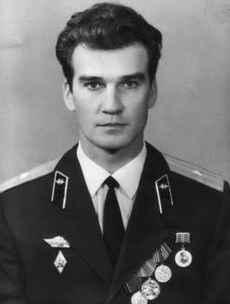
    Image of a younger Petrov from a family album.
    (Stanislav Petrov’s Personal Library, Wikimedia Commons, CC0)


    Those opposed to nuclear weapons often point to the example of Stanislav Petrov, a former lieutenant colonel of the Soviet Air Defense Forces who, in 1983, twice made a decision to delay reporting the suspected launch of U.S. missiles towards the Soviet Union, believing (rightly) that the launch detection was a result of malfunctioning equipment.

    But the fact is that Petrov was an outlier who himself admitted that had another officer been on duty that fateful day, they would have reported the American missile launches per protocol.

    Those who will execute the orders to use nuclear weapons in any future nuclear conflict will, in fact, execute those orders. They are trained, like Tibbets and Sweeney, to believe in the righteousness of their cause.

    Dmitry Medvedev, the former Russian prime minister and president who currently serves as the deputy chairman of the Russian National Security Council, has publicly warned the Western supporters of Ukraine that Russia would “have to” use nuclear weapons if Ukrainian forces were to succeed in their goal of recapturing the former territories of Ukraine that have been claimed by Russia in the aftermath of referenda held in September 2022.

    “Imagine,” Medvedev said, “if the offensive, which is backed by NATO, was a success and they tore off a part of our land, then we would be forced to use a nuclear weapon according to the rules of a decree from the president of Russia. There would simply be no other option.”

    Some in the West view Medvedev’s statement to be an empty threat; U.S. President Joe Biden said last month that there is no real prospect of Russian President Vladimir Putin ordering the use of nuclear weapons against either Ukraine or the West.

    “Not only the West, but China and the rest of the world have said: ‘don’t go there,’ ” Biden said following the NATO Summit in Vilnius.

    Ignoring Russian Doctrine

    But Biden, like other doubters, emphasizes substance over process, denying the role played by the executioner in implementing justice defined on their terms, not that of those being subjected to execution.

    Russia has a nuclear doctrine that mandates that nuclear weapons are to be used “when the very existence of the state is put under threat.” According to Medvedev, “there would simply be no other option,” ironically noting that “our enemies should pray” for a Russian victory, as the only way to make sure “that a global nuclear fire is not ignited.”

    The Russians who would execute the orders to launch nuclear weapons against the West would be operating with the same moral clarity as had Paul Tibbets and Charles Sweeney some 88 years ago. The executioner’s lament holds that they will be saddened by their decision but convinced that they had no other choice.

    Proving them wrong will be impossible because, unlike the war with Japan, where the survivors were given the luxury of reflection and accountability, there will be no survivors in any future nuclear conflict.

    The onus, therefore, is on the average citizen to get involved in processes that separate the tools of our collective demise — nuclear weapons — from those who will be called upon to use them.

    Meaningful nuclear disarmament is the only hope humankind has for its continued survival.

    The time to begin pushing for this is now, and there is no better place to start than on Aug. 6, 2023 — the 78th anniversary of the bombing of Hiroshima, when like-minded persons will gather outside the United Nations to begin a dialogue about disarmament that will hopefully resonate enough to have an impact of the 2024 elections.


    This article was published earlier in consortiumnews.com

    The views expressed are the author’s own.

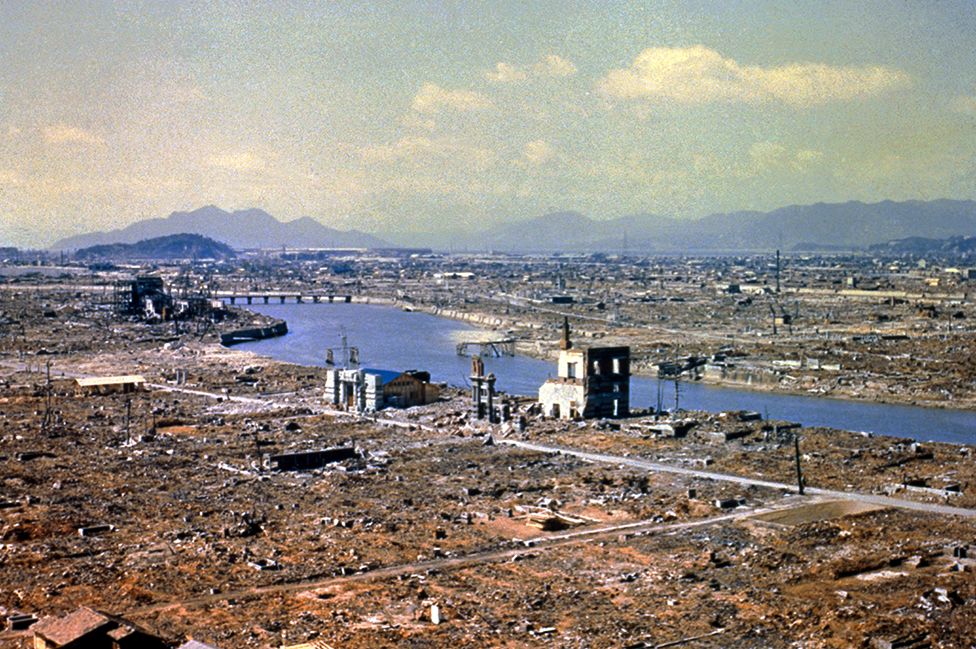
    Feature Image: The devastated city of Hiroshima after the atomic bomb blast – bbc.com

  • The “loss and damage” agenda at COP27

    The “loss and damage” agenda at COP27

    The dialogues on Climate Change Action have failed to produce effective measures. At the heart of the problem is the refusal of the developed countries to accept the reality that they were the beneficiaries of the industrial revolution, colonialism, and imperialism and have contributed the maximum to the current problems humanity faces on account of climate change. Hence, two-thirds of the world’s assertion that developed nations bear the costs of implementing corrective measures is very valid and logical.

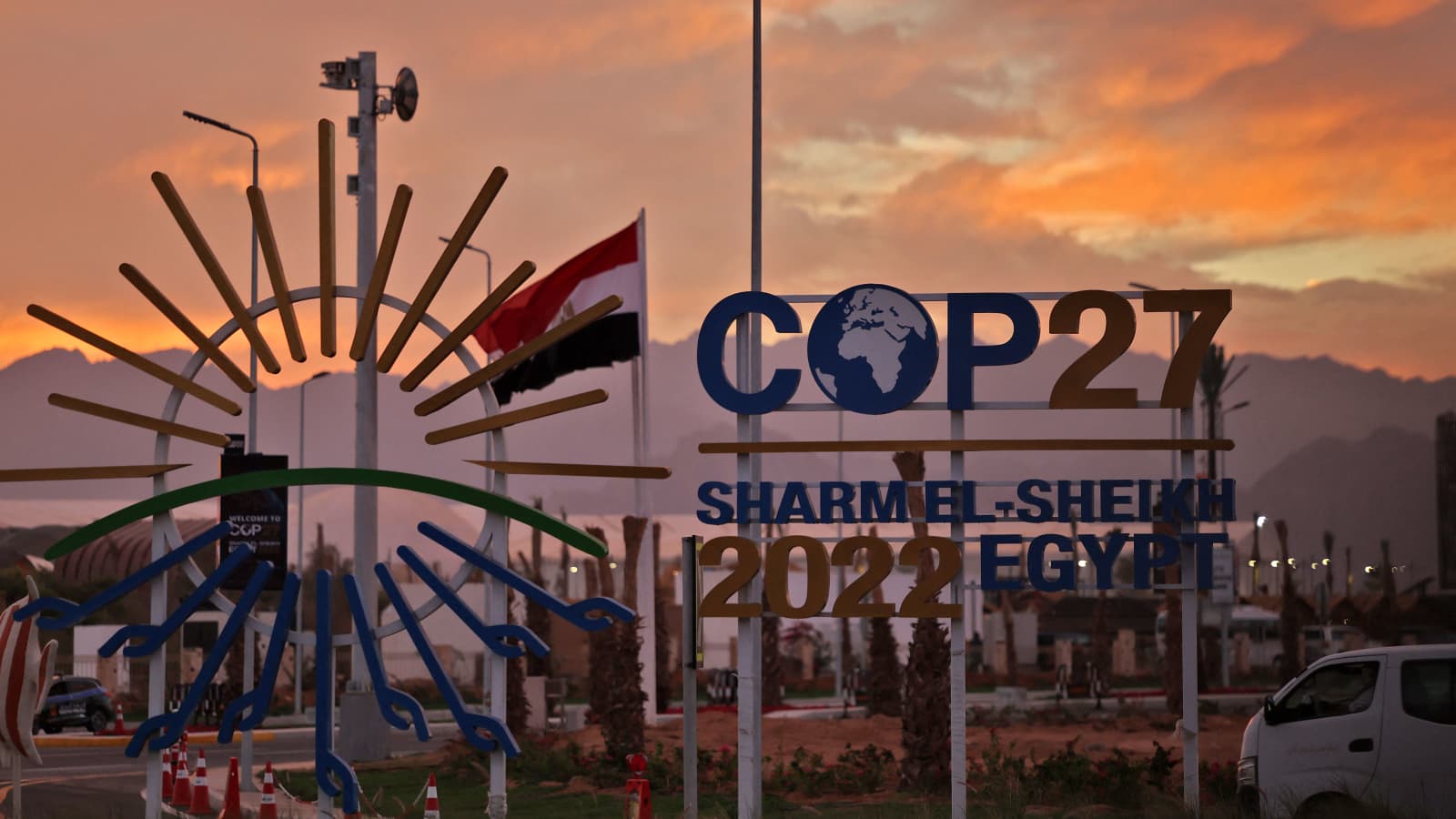
    The 27th Conference of Parties (COP) of the United Nations Framework Convention on Climate Change (UNFCCC) was hosted by the Government of the Arab Republic of Egypt from 06 November to 18 November (extended to 20 November). This conference comes at a time when the world witnessed massive heatwaves, flooding in Pakistan, wildfires across Spain and California, and droughts in East Africa. The mission of the conference is to take collective action to combat climate change under the Paris agreement and the convention. After a decade of climate talks, the question is, “are countries ready to take collective action against climate change”?

    Developed Nations’ Responsibility and Accountability

    Financial compensation remains a huge contestation point between developed and developing countries. Developing countries or the Global South face the adverse effects of climate change and demand compensation for the historical damage caused by colonialism and resource extraction that aided in the development of the Global North. This includes countries in the EU and the United States. Developed countries bear the most responsibility for emissions leading to global temperature rise — between 1751 and 2017, the United States, the EU and the UK were responsible for 47% of cumulative carbon dioxide emissions compared to just 6% from the entire African and South American continents. At COP15 in Copenhagen in 2009, Global North nations agreed to pledge $100 billion (€101 billion) annually by 2020 to help developing countries adapt to the impacts of climate change, for example, by providing farmers with drought-resistant crops or paying for better flood defences. But according to the Organization for Economic Cooperation and Development (OECD), which tracks funding, in 2020 wealthy countries pledged just over $83 billion.

    Developed countries bear the most responsibility for emissions leading to global temperature rise — between 1751 and 2017, the United States, the EU and the UK were responsible for 47% of cumulative carbon dioxide emissions compared to just 6% from the entire African and South American continents.

    Such compensation for loss and damage has been a focal point in all climate summits since 1991. In terms of institutional developments, the COP19 conference in 2013 established the Warsaw Mechanism for Loss and Damage, which is supposed to enhance global understanding of climate risk, promote transnational dialogue and cooperation, and strengthen “action and support”. At COP25, the Santiago Network on Loss and Damage (SNLD) was set up to provide research and technical assistance on the issue of loss and damage from human-induced climate change. The meeting did not discuss the working process of the network and hence it was taken up in COP26, where no elaborate changes were made. Although in COP26, the Glasgow facility to finance solutions for loss and damage was brought by G77 countries, developed countries such as the US and the EU bloc did not go beyond agreeing to a three-year dialogue.

    Developed countries constantly focus on holding dialogues rather than coming up with solutions for climate risk mitigation.

    The US’s stance on financing vulnerable countries to find solutions against climate change is constantly shifting. The trend indicates that the US wants to focus on curbing global warming rather than dwell on past losses and damages that have already occurred. The Global North is reluctant to acknowledge the mere definition of loss and damage, as an acknowledgement will make them liable for 30 years’ worth of climate change impact.  Developed countries constantly focus on holding dialogues rather than coming up with solutions for climate risk mitigation. In a statement prior to COP27, U.S. climate envoy John Kerry expressed concern about how the shifting focus on loss and damage “could delay our ability to do the most important thing of all, which is [to] achieve mitigation sufficient to reduce the level of adaptation.”

    USA’s leads Evasive Tactics

    The Bonn Summit held in June 2022 which set a precedent for the COP27 agenda ended in disagreement as the US and EU refused to accept funding for loss and damage as an agenda. Although, during the conclusion of COP27, the countries were successful in agreeing to establish a fund for loss and damage. Governments also agreed to establish a ‘transitional committee’ to make recommendations on how to operationalize both the new funding arrangements and the fund at COP28 next year. The first meeting of the transitional committee is expected to take place before the end of March 2023.

    Parties also agreed on the institutional arrangements to operationalize the Santiago Network for Loss and Damage, to mobilise technical assistance to developing countries that are particularly vulnerable to the adverse effects of climate change. Governments agreed to move forward on the Global Goal on Adaptation, which will conclude at COP28 and inform the first Global Stocktake, improving resilience amongst the most vulnerable. New pledges, totalling more than USD 230 million, were made to the Adaptation Fund at COP27. These pledges will help many more vulnerable communities adapt to climate change through concrete adaptation solutions.

    Despite a groundbreaking agreement, the most common question asked by the public is “are the climate summits any good?”

    The question arises due to the absence of effective leadership to monitor or condemn nations over the destruction of the environment. The summits have created a sense of accountability for all nations, irrespective of the stage of vulnerability. While vulnerable states bear a higher cost due to climate change, all states collectively pledge to reduce carbon emissions and achieve net-zero emissions by 2050. While a monitoring mechanism is absent, non-governmental organisations (NGOs) and civil societies actively advocate for climate change mitigation measures and also criticise both state and non-state actors for their lack of initiatives against the cost. Incidentally, COP27 partnered with Coca-Cola for sponsorship and many activists slammed the move as Coca-Cola is one of the top five polluters in 2022, producing around 120 billion throwaway plastic bottles a year.

    Apart from that, many other funding networks and initiatives have been introduced to support vulnerable countries against climate change. Under Germany’s G7 presidency, the G7 along with the vulnerable 20 countries or V20  launched the Global Shield against Climate Risks during COP27. The Shield gathers activities in the field of climate risk finance and preparedness together under one roof. Under the Shield, solutions to provide protection will be devised that can be implemented swiftly if climate-related damages occur. At COP27, Chancellor Olaf Scholz announced Germany’s contribution of 170 million euros to the Shield. Of this, 84 million euros are earmarked for the central financing structure of the Shield, the other funds for complementary instruments of climate risk financing, which will be implemented towards concrete safeguarding measures over the next few years.

    On 20 September, Denmark became the first developed country in the world to provide financial compensation to developing countries for ‘loss and damage’ caused by climate change. The country pledged approximately EUR 13 million (100 million Danish krone) to civil society organisations based in developing nations working on climate change-related loss and damage. Germany and Denmark are so far the only financial supporters of the initiative launched at COP27.

    What can India do?

    India has launched Mission LiFE, an initiative to bring a lifestyle change that reduces the burden on the environment. During the event, the MoEFCC – UNDP Compendium ‘Prayaas Se Prabhaav Tak – From Mindless Consumption to Mindful Utilisation’ was launched. It focuses on reduced consumption, circular economy, Vasudhaiva Kutumbakam, and sustainable resource management. India has also signed the Mangrove Alliance for Climate (MAC), determined to protect mangroves and create a carbon sink of 3 billion CO2 by expanding the forest cover.

    India has maintained a stance where it has neither advocated for nor against financial compensation for loss and damage. However, it has always called on developed countries to provide finance for developing technology or sharing technical know-how to reduce climate risk. Such an approach can help other countries to push for financial aid to develop technology instead of using their own resources.

    Further, India holds a unique position among developing countries as an emerging economy. With its diplomatic prowess under the Modi government, India can play an ideal role in negotiating with developed countries. India has maintained a stance where it has neither advocated for nor against financial compensation for loss and damage. However, it has always called on developed countries to provide finance for developing technology or sharing technical know-how to reduce climate risk. Such an approach can help other countries to push for financial aid to develop technology instead of using their own resources. India is also focused on phasing out the use of fossil fuels and not just the use of coal, which is another consistent move that adds to the country’s credentials. With the weaponization of energy by Russia since the onset of the Ukraine war, India’s call for action has garnered intensive support from both developed and developing nations. With the support of the Global South, India can assume a leadership role in establishing south-south cooperation with respect to climate risk mitigation and shift to renewable energy such as solar power.

    Conclusion

    Climate funds are important for designing and implementing solutions as developing and vulnerable countries find it difficult to diversify resources from developmental activities. The question largely remains whether the COP27 countries will adhere to the agreement concluded at the summit. There is no conclusive evidence on when the fund will be set up and the liability if countries fail to contribute to the fund. Eventually, it comes down to the countries- both state and non-state actors to effectively reduce fossil fuel consumption and reduce wastage, as many countries still focus on exploiting African gas reserves to meet their energy requirements. Ambitious goals with no actual results are a trend that is expected to continue till the next summit, and with such a trend the world has a long way to go to curb the temperature at 1.5 degree Celsius at pre-industrial levels.

    Feature Image Credit: www.cnbc.com

    Article Image: aljazeera.com 

  • Beyond Unipolarity and the Euro–American Horizons of IR Thought: Reflections on the Emergent World Order

    Beyond Unipolarity and the Euro–American Horizons of IR Thought: Reflections on the Emergent World Order

    Abstract

    Amidst the continuing conflict in Ukraine, Russian President Vladimir Putin made a notable pronouncement of the end of the US-led unipolar world and the rise of multipolar world order. Against this backdrop of the debate on polarity, my research paper seeks to address the following questions. To what extent have global institutions, mainstream IRT (International Relations Theory) and academia as well as policies reflected if not reinforced Euro-American norms and interests? Does this purported shift to multipolarity require a shift in institutional and theoretical practices reflecting the broad concerns of the Global South? Using global and regional case studies like India (especially in regard to the representation within academia and the glass ceiling affecting institutional practices like Young Professionals Programme), I draw from critical and post-colonial theoretical IR frameworks to argue for a comprehensive reform of the prevalent global institutional and theoretical structures. 

    Introduction

    The Euro-American hegemony runs very deep, pervading a range of institutions, norms, global practices, knowledge and even academic teaching practices.

    The month of February this year witnessed one of the most defining moments of the post-Cold war era. Marking a major escalation of the simmering conflict that began with the insurgency in Eastern Ukraine in 2014, Russia invaded Ukraine resulting in thousands of casualties and millions of refugees.[1] This conflict inevitably has given rise to a wide range of debates in the global arena, including global governance, institutions, conflict and security. In this regard, one of the most interesting debates that have seen a resurgence is the question of the future of the world order. 

    The notion of a shift to multipolar world order has emerged as a prominent theme in the wake of this crisis. This is best exemplified by Vladimir Putin in his address to the St Petersburg International Economic Forum Plenary session, “a multipolar system of international relations is now being formed. It is an irreversible process; it is happening before our eyes and is objective in nature.” It is indeed widely recognised that the brief period of unipolarity, dominated by the US, following the end of the Cold War, has given way to the era of multipolar world order, characterised by ‘new powerful and increasingly assertive centres.’ [2] However, even as this shift to multipolarity seems almost deterministic, there persist legitimate questions on the conduciveness of the current world order to the emergence of these multiple power-centres. 

    Against this backdrop, my work shall be organised as follows. I commence with a discussion on the shift towards multipolarity, providing the conceptual capital of notions like power and polarity. This shall be followed by my argument that the current global order, exemplified in its norms, institutions, and intellectual resources, fall severely short of the expectations required of the multipolar world order. To illustrate this point, I draw from the case study of India, in particular. I conclude by providing some prescriptions necessary for the transition to multipolarity to be meaningful. Towards this pursuit, I draw from critical post-colonial theoretical frameworks, employing secondary literature review as the overarching method.

    Shifts towards multipolarity

    Before proceeding to the premise of the shift towards multipolarity, a few conceptual clarifications are in order. Polarity in this context is understood as the modes of distribution of power in the international system. Typically, it is classified as unipolar (e.g. US hegemony in the post-Cold-War era), bipolar (e.g. Russia-US dominance during the Cold War era) and multipolar (e.g. Europe during the pre-World War era). [3] While there are myriad debates on what constitutes power in the global landscape, I draw from the useful typology provided most famously by Joseph Nye – hard, soft, and smart power. Hard power is often described as the typical carrot and stick approach, involving coercion and is often measured in terms of “population size, territory, geography, natural resources, military force, and economic strength.” On the other hand, soft power is described as the ability to influence state preference using intangible attributes like “attractive personality, culture, political values, institutions, and policies” resulting in the perception of legitimacy or moral authority. Smart power is often understood as the instrumental deployment of a combination of both to secure political ends.[4] 

    The end of the Cold War era, prematurely lauded as the end of history by a scholar, resulted in a brief unipolar moment of US hegemony. As Putin puts it, the US was the predominant power with a limited group of allies which resulted in “all business practices and international relations … interpreted solely in the interests of this power.”[2]  However, a range of factors in the twenty-first century led to a crisis in American leadership. The interventionist atrocities carried out in the wake of the September 11 attacks as well as the crisis of global capitalism during the financial crisis of 2008 led to a crisis in American leadership.[5] This period also saw the emergence of new powers like the BRICS nations, who posed a serious challenge to the notion of unipolarity.[3] 

    As Amitav Acharya and Burry Buzan argue, this diffusion of power has resulted in the ‘rise of the rest’ characterised by the absence of a single superpower. Instead, a number of great and regional powers have emerged with their respective institutions and models of growth. Such a world order is also shaped by a greater role accorded to non-state actors including global organisations, corporations, and social movements as well as non-state actors.[6] Thus, the current global landscape is often termed as multipolar, multi-civilizational and multiplex offering myriad opportunities and benefits for states.[7] The crisis in Ukraine has only bolstered this multipolar moment even further. Consider India as a case in point. The likes of the U.S. (and even China) have competed for India’s affection and India’s seemingly pro-Russia stance has not prevented Delhi’s deeper engagement with her counterparts in the West. These initiatives can only enhance India’s great power status, resulting in potentially a higher degree of multipolarity.[8]

    Thus, even as there is an increasing scholarly and policy-based consensus on the shift towards multipolarity, there remain important reservations on whether the current global arena is equipped to deal with the seismic shifts posed by the emergent world order. In other words, does this purported shift to multipolarity require a shift in institutional and theoretical practices reflecting the broad concerns of the Global South? In the next section, I answer in the affirmative, arguing that the dominant norms, institutions, and intellectual resources are broadly skewed towards the preservation of Euro-American hegemony. 

    The maintenance of Euro-American hegemony: norms, institutions, and academia

    The exercise of U.S. hegemonic power involved the projection of a set of norms and their embrace by elites in other nations.

    Drawing from Persaud, I argue that dominant powers forge an “academic/foreign policy/security ‘complex’ dedicated to the maintenance of a hegemonic world order.” [9] Such a complex is constituted by an intricate network of norms, institutions and theoretical/ intellectual practices which seek to uphold the status quo. In this section, I examine each of these aspects in detail.

    Consider norms, in the first instance. Norms can be defined broadly as the “collective expectations for the proper behaviour of actors.”[10] When certain norms which serve certain interests are considered as general interests, it results in hegemony. The dominant powers socialise and hegemonise other countries into an ideological worldview that best serves their interests. In other words, actors have to orient themselves according to a ‘logic of appropriateness’ framed by these intersubjective notions. In the post World War era, the Roosevelt-led US administration projected a series of norms and principles guided by liberal multilateralism, to shape the post-war international order. Such a form of ‘institutional materiality’ posited a clear separation between the political and the economic realm. The embrace of these norms outside the US occurred through various modes of socialisation including external inducement (e.g. Britain and France), direct intervention and internal reconstruction (e.g. Germany and Japan) as well as military and economic dominance.[11] 

    The exercise of U.S. hegemonic power involved the projection of a set of norms and their embrace by elites in other nations. Socialisation did occur since U.S. leaders were largely successful in inducing other nations to buy into this normative order. But the processes through which socialisation occurred varied from nation to nation. In Britain and France, shifts in norms were accomplished primarily by external inducement; in Germany and Japan, they resulted from direct intervention and internal reconstruction. In all cases, the spread of norms of liberal multilateralism was heavily tied to U.S. military and economic dominance. [11]

    Such norms are often manipulated (and flouted) to their advantage. For example, consider the liberal norm of conditional sovereignty, linked to human rights, spearheaded by the likes of the US and many countries in Western Europe. Assuming the primacy of the individual over the state, it has legitimised intervention on ‘humanitarian’ grounds. However, the execution of these norms has been far more uniform as best exemplified in their differential application in the wake of the atrocities in Kosovo and Rwanda. An intra-state conflict resulting in a humanitarian crisis in Kosovo precipitated a successful multilateral intervention. However, the same decisiveness was starkly absent with regard to a similar (if not greater) conflict in Rwanda which resulted in almost 800,000 casualties and more than two million refugees. Multiple studies have traced the rationale of intervention to the “strategic interests in Europe’s future and the NATO alliance.” Rwanda on the other hand was considered peripheral to the national interests of either Western Europe or the US.[12] This substantiates the argument that the norm of ‘humanitarian intervention’ is often tied more to brutal national interests rather than the protection of human rights.

    A range of global norms, ranging from economic norms, dealing with the management of finance, to those dealing with water governance has been shown to be skewed towards the interests of great powers rather than participative in nature.

    Consider another instance. The Liberal International Order (LIO) asserts the concept of ‘conditional sovereignty’ where sovereign nation-states are bound to look after their entire populations. A failure to that end invites interference and comments from other nation-states and external agencies. This norm has been pushed forward and spearheaded by first-world countries like the US and Western Europe, much to their advantage. Contrary to this, the neo-Westphalian order is a proponent of the ‘classical sovereignty’ model where nation-states are sovereign within their own territory to administer in any manner they want, obviously with a necessary reverence to human rights, but others are not authorized to interfere in the same. China and other authoritarian regimes have been advocating for the same. So, while the LIO talks about the equality of every individual, the neo-Westphalian order focuses more on the equality of all nation-states.[13] Similarly, a range of global norms, ranging from economic norms, dealing with the management of finance, to those dealing with water governance has been shown to be skewed towards the interests of great powers rather than participative in nature. 

    Similarly, Cox and Gill have argued how global governance through institutions play a critical role in maintaining hegemony.[14] The multilateral institutions which the US had created both in the political and economic realm have played a critical role in the sustenance of Euro-American (and especially the U.S.) dominance. In other words, even as the international world order shifts to a multipolar one, it has not exactly been accompanied by multilateralism.[15] While multilateralism puts forward the interests of multiple states, most so-called multilateral institutions reflect and reinforce prevailing power configurations. 

    Consider the United Nations, for instance. It cannot be a mere coincidence that the UN has been ineffectual against most of the contemporary global challenges like climate change, the pandemic etc. when it has not been responsive to the reality of the increasing number of power centres in the multipolar world order.[16] The most glaring evidence is the UNSC. Despite an increasing number of voices on the rise of Asia, Africa, and Latin America, the P5 includes only one representative from Asia (which is China) and no members from either Africa or Latin America. In addition, while there has been more than a threefold rise in UN membership, the number of non-permanent seats has only risen from 11 to 15. Even at the administrative levels, the lack of non-western representation is indeed a concern. Besides the absence of a UNSC permanent seat, it is also disheartening to see that it has been years since the Young Professionals Program has been held for the likes of India.

    These same institutions are often undermined by the likes of the US, under the facade of NATO. Consider the harrowing intervention in Libya. The NATO intervention on supposedly ‘humanitarian’ grounds in 2011 led to the death of Muamar Gaddafi, violating the legal structures of the UN charter in the process and resulting in a proxy war. The result has been a prolonged state of near-anarchy characterised by arbitrary detentions, executions, mass killings and kidnappings. [17]

    The WTO is plagued with similar issues. While it ostensibly reflects the ‘global’ norm of neoliberal free trade, it is “structured and ordered to promote monopolistic competition rather than genuine free trade. These institutional roadblocks include the exclusion of developing countries from several informal decision-making sessions, lack of transparency, coercive decision-making in meetings involving developing countries, astronomical costs involved in Dispute settlement Understanding and so on. The result is that the Western countries have an overwhelming advantage against their counterparts from the Global South. [18]

    Lastly, as highlighted earlier, the international policy making apparatus cannot be divorced from the intellectual resources churned by IR academia. Zvobgo, in an insightful piece, has argued how the big three of IR theory – realism, liberalism and constructivism – are built on Eurocentric, raced and racist foundations.[19] The role of imperial policymakers in shaping contemporary IR knowledge has been well acknowledged. Kwaku Danso and Kwesi Aninghave argued about the prevalence of methodological whiteness, which projects White experience as a universal experience.[20] It is no coincidence that the principles of the Westphalian treaty are not significantly different from those underlying the current UN charter. Acharya has argued that racism was integral to the emergence of the US-led world order exemplified in the scant focus on colonialism in UNDHR as well as the “privileging of sovereign equality’ over ‘racial equality.’[21] 

    These forms of methodological whiteness have had devastating impacts across the world. The projection and the forceful projection of the Weberian state as the fundamental unit of security and conflict management has resulted in disastrous policy-level consequences in Africa which have always been characterised by a range of hybrid political systems beyond the nation-state.[20] Similarly, much of the problematic policies carried out today based on the binaries of ‘developed’ v/s ‘developing’ nations have direct continuities with the legacy of empire and race reflected in dichotomies like ‘civilised v/s uncivilised’. 

    There also exists historical amnesia of racism in academia, whether in terms of representation or teaching practices. For example, in the US, only 8% of the faculty identify themselves as Black or Latino. Similarly, the configurations of colonialism and racism in building the modern world order are either glossed over or overlooked in most academia.[19] Indian academia is a case in point. As Behera argues, despite the strong tradition of Indian independent IR thought as well as the long history of colonialism, Indian IR has imbibed a definite set of givens including  “the infallibility of the Indian state modelled after the Westphalian nation-state as well as a thorough internalization of the philosophy of political realism and positivism.[22] Rohan Mukherjee, for instance, has highlighted an unpublished survey of IR faculty within India wherein the majority self-identified as either liberal or realist.[23]

    Thus, the Euro-American hegemony runs very deep, pervading a range of institutions, norms, global practices, knowledge and even academic teaching practices. In the next section, I conclude by outlining certain prescriptions for a future world order which responds to and is far more conducive to the inevitable multipolar shifts. 

    Conclusion

    India has umpteen intellectual resources from Gita and the Sangam literature to stellar modern political philosophers like Gandhi, Tagore and so on, which need to be strategically combined with contemporary IR notions and questions of security, justice and so on.

    This paper first established the backdrop of the shift towards multipolarity within the world order by outlining the myriad modes of power through which the ‘Rest’ has caught up with the ‘West.’ In the succeeding section, I demonstrated how a range of norms, institutions and intellectual practices had been historically constructed to maintain Euro-American hegemony as well as promote the interests of the West. In such a world order, certain parochial interests have masqueraded themselves as common or global interests. In the concluding section, I outline certain prescriptions which have become necessary for a more equitable, multi-civilisational world order. 

    Institutions like the UN require urgent and seismic reforms reflecting the interests of emerging power centres. The number of seats within the Permanent and non-permanent seats must be expanded to include more nation-states from Asia, Africa and Latin America. A revitalisation of the UNGA is highly overdue and requires a focussed and timely debate on the problems of the highest priority at any given time through rationalization of its agenda. [24] Similarly, the proposed WTO reforms, which seeks to move away from multilateralism to impose plurilateralism, should be opposed at all costs. [25]

    As Zvobjo puts it eloquently, how IR is taught perpetuates the inequalities which are detailed above. Besides the dominant IR triumvirate, there needs to be an increased focus on critical perspectives as well as increased engagement with the uncomfortable questions of race, empire, colour, and caste.[19] This should be complemented by more diversity in terms of representation within academia. In India specifically, there needs to be increased efforts to construct Indian or South Asian IR notions. India has umpteen intellectual resources from Gita and the Sangam literature to stellar modern political philosophers like Gandhi, Tagore and so on, which need to be strategically combined with contemporary IR notions and questions of security, justice and so on. However, as Mallavarapu reminds us, care needs to be taken to ensure they can address existing inequities in the world order without succumbing or falling prey to jingoism or nativism.[26]

    References

    [1] Alex Leeds Matthews, Matt Stiles, Tom Nagorski, and Justin Rood, ‘The Ukraine War in data’, Grid, August 4, 2022

    https://www.grid.news/story/global/2022/08/04/the-ukraine-war-in-data-12-million-people-driven-from-their-homes/

    [2] Address to participants of 10th St Petersburg International Legal Forum, President of Russia, June 30, 2022

    http://en.kremlin.ru/events/president/news/68785

    [3]Andrea Edoardo Varisco, ’Towards a Multi-Polar International System: Which Prospects for Global Peace?’, E-International Relations, June 3, 2013.

    https://www.e-ir.info/2013/06/03/towards-a-multi-polar-international-system-which-prospects-for-global-peace/

    [4]Aigerim Raimzhanova, ‘Power in IR: hard, soft and smart’, Institute for Cultural Diplomacy and the University of Bucharest, December 2015

    http://www.culturaldiplomacy.org/academy/content/pdf/participant-papers/2015-12_annual/Power-In-Ir-By-Raimzhanova,-A.pdf

    [5]Ashraf, N. (2020). Revisiting international relations legacy on hegemony: The decline of American hegemony from comparative perspectives. Review of Economics and Political Science

    [6] Kukreja, Veena. “India in the Emergent Multipolar World Order: Dynamics and Strategic Challenges.” India Quarterly 76, no. 1 (2020): 8-23.

    [7] Ashok Kumar Beheria, ‘Ask an Expert’, IDSA, April 1, 2020. 

    https://idsa.in/askanexpert/world-moving-towards-multipolarity-akbehuria

    [8]Derek Grossman, ‘Modi’s Multipolar Moment Has Arrived’, RAND blog, June 6, 2022

    https://www.rand.org/blog/2022/06/modis-multipolar-moment-has-arrived.html

    [9]Persaud, Randolph B. “Ideology, socialization and hegemony in Disciplinary International Relations.” International Affairs 98, no. 1 (2022): 105-123.

    [10]Shannon, Vaughn P. “International Norms and Foreign Policy.” Oxford Research Encyclopedia of Politics (2017).

    [11]Ikenberry, G. John, and Charles A. Kupchan. “Socialization and hegemonic power.” International organization 44, no. 3 (1990): 283-315.

    [12] Tracy Kuperus, ‘Kosovo And Rwanda: Selective Interventionism?’, Centre for Public Justice

    https://www.cpjustice.org/public/page/content/kosovo_and_rwanda

    [13] Falit Sijariya, ‘Democratizing Norms: Jaishankar’s Comments and the Challenge to US Hegemony’, April 22, 2022

    https://thegeopolitics.com/democratizing-norms-jaishankars-comments-and-the-challenge-to-us-hegemony/

    [14] Overbeek, Henk. “Global governance, class, hegemony.” Contending Perspectives on Global Governance: Coherence and Contestation 39 (2005).

    [15] Tourangbam, Monish. “The UN and the Future of Multilateralism in a Multipolar World.” Indian Foreign Affairs Journal 14, no. 4 (2019): 301-308.

    [16] The UN Turns Seventy-Five. Here’s How to Make it Relevant Again, Council on Foreign Relations, Sep 14, 2020.

    https://www.cfr.org/councilofcouncils/global-memos/un-turns-seventy-five-heres-how-make-it-relevant-again

    [17] Ademola Abbas, ‘Assessing NATO’s involvement in Libya’, United Nations University, 27 October 2011

    https://unu.edu/publications/articles/assessing-nato-s-involvement-in-libya.html

    Lansana Gberi, ‘Forgotten war: a crisis deepens in Libya but where are the cameras?’, Africa Renewal, December 2017 – March 2018

    https://www.un.org/africarenewal/magazine/december-2017-march-2018/forgotten-war-crisis-deepens-libya-where-are-cameras

    [18] Ed Yates, ‘The WTO Has Failed as a Multilateral Agency in Promoting International Trade’,E-International Relations, April 29, 2014

    https://www.e-ir.info/2014/04/29/the-wto-has-failed-as-a-multilateral-agency-in-promoting-international-trade/

    [19] Kelebogile Zvobgo, ‘Why Race Matters in International Relations’, Foreign Policy, June 19, 2020

    https://foreignpolicy.com/2020/06/19/why-race-matters-international-relations-ir/

    [20]Danso, Kwaku, and Kwesi Aning. “African experiences and alternativity in International Relations theorizing about security.” International Affairs 98, no. 1 (2022): 67-83.

    [21]Acharya, Amitav. “Can Asia lead? Power ambitions and global governance in the twenty-first century.” International affairs 87, no. 4 (2011): 851-869.

    [22]Behera, Navnita Chadha. “Re-imagining IR in India.” In Non-Western international relations theory, pp. 102-126. Routledge, 2009.

    [23]Rohan Mukherjee https://mobile.twitter.com/rohan_mukh/with_replies

    [24]United Nations Reform: Priority Issues for Japan, Ministry of Foreign Affairs Japan, January 2006

    https://www.mofa.go.jp/policy/un/reform/priority.html

    [25]Abhijit Das, ‘Reform the WTO: do not deform it’, the Hindu Business Line, December 1, 2021

    https://www.thehindubusinessline.com/opinion/reform-the-wto-do-not-deform-it/article37792701.ece

    [26]Shahi, Deepshikha, and Gennaro Ascione. “Rethinking the absence of post-Western International Relations theory in India:‘Advaitic monism’as an alternative epistemological resource.” European Journal of International Relations 22, no. 2 (2016): 313-334.

    Feature Image Credits: Foreign Affairs

  • TPF Analysis Series on Russia – Ukraine Conflict #2

    TPF Analysis Series on Russia – Ukraine Conflict #2

    [powerkit_button size="lg" style="info" block="true" url="https://admin.thepeninsula.org.in/2022/03/29/tpf-analysis-series-on-russia-ukraine-conflict/" target="_blank" nofollow="false"]
    The First Paper of the Series – TPF Analysis Series on Russia – Ukraine Conflict #1
    [/powerkit_button]

    What’s in Ukraine for Russia? 

    In a press conference marking his first year in office, President Biden, on the question of Russia invading Ukraine, remarked that such an event would, “be the most consequential thing that’s happened in the world, in terms of war and peace, since World War Two”. [1] It has now been two months since Russia officially launched its “special military operation” in Ukraine, which the US and its allies consider an unjustified invasion of a sovereign state. The conflict in the Eurasian continent has drawn global attention to Europe and US-Russia tensions have ratcheted to levels that were prevalent during the Cold War. The conflict has also raised pertinent questions on understanding what exactly are Russian stakes in Ukraine and the latter’s role in the evolving security architecture of Europe. The second paper in this series will delve into these questions.

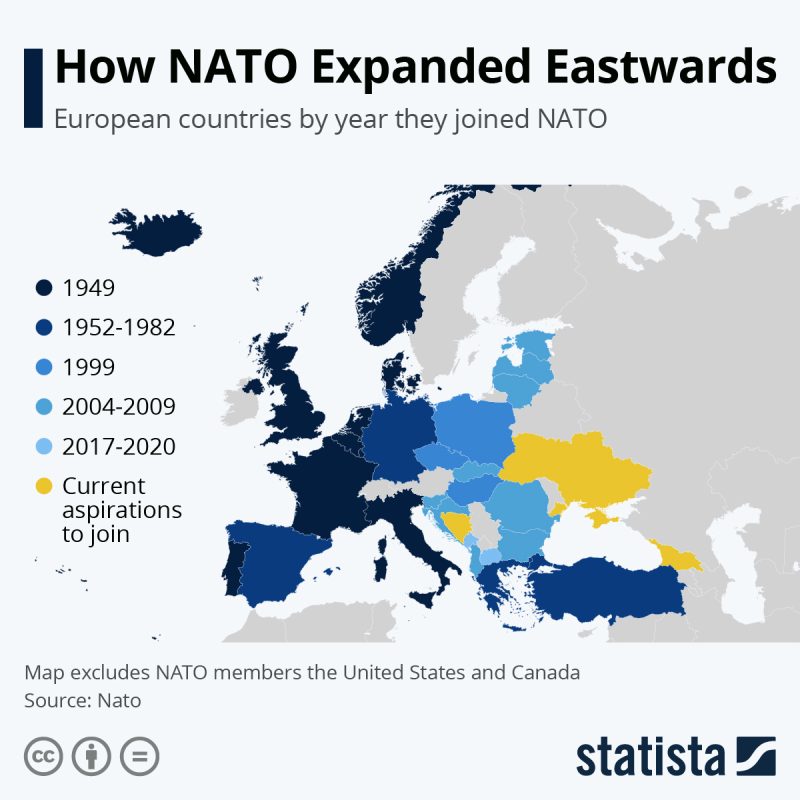
    The current Russian position stems from the experience that Russia, and Putin, gained while dealing with the West on a host of issues, not least of which was NATO expansion.

    The Ties that Bind

    An examination of post-Soviet history reveals that Russian preoccupation with security threats from NATO is not embedded in Russian geopolitics; instead, it has been reported that, early on, Russia was even agreeable to joining the military alliance. The current Russian position stems from the experience that Russia, and Putin, gained while dealing with the West on a host of issues, not least of which was NATO expansion. A line of argument sympathetic to Russia is President Putin’s contention that terms dictated to Russia during the post-Cold War settlements were unfair. The claim is a reference to Secretary of State James Baker’s statement on the expansion of NATO, “not an inch of NATO’s present military jurisdiction will spread in an eastern direction”, in 1990 in a candid conversation with Mikhael Gorbachev on the matter of reunification of Germany. [2] It could be argued that it is this commitment and subsequent violation through expansions of NATO is one of the main causes of the current conflict. 

    At the root of the problem was Russia’s security concerns – regarding both traditional and hybrid security – that ultimately led to the centralisation of power after a democratic stint under Yeltsin. Accordingly, Putin had put it in late 1999, “A strong state for Russia is not an anomaly, or something that should be combated, but, on the contrary, the source and guarantor of order, the initiator and the main driving force of any changes”. [3]

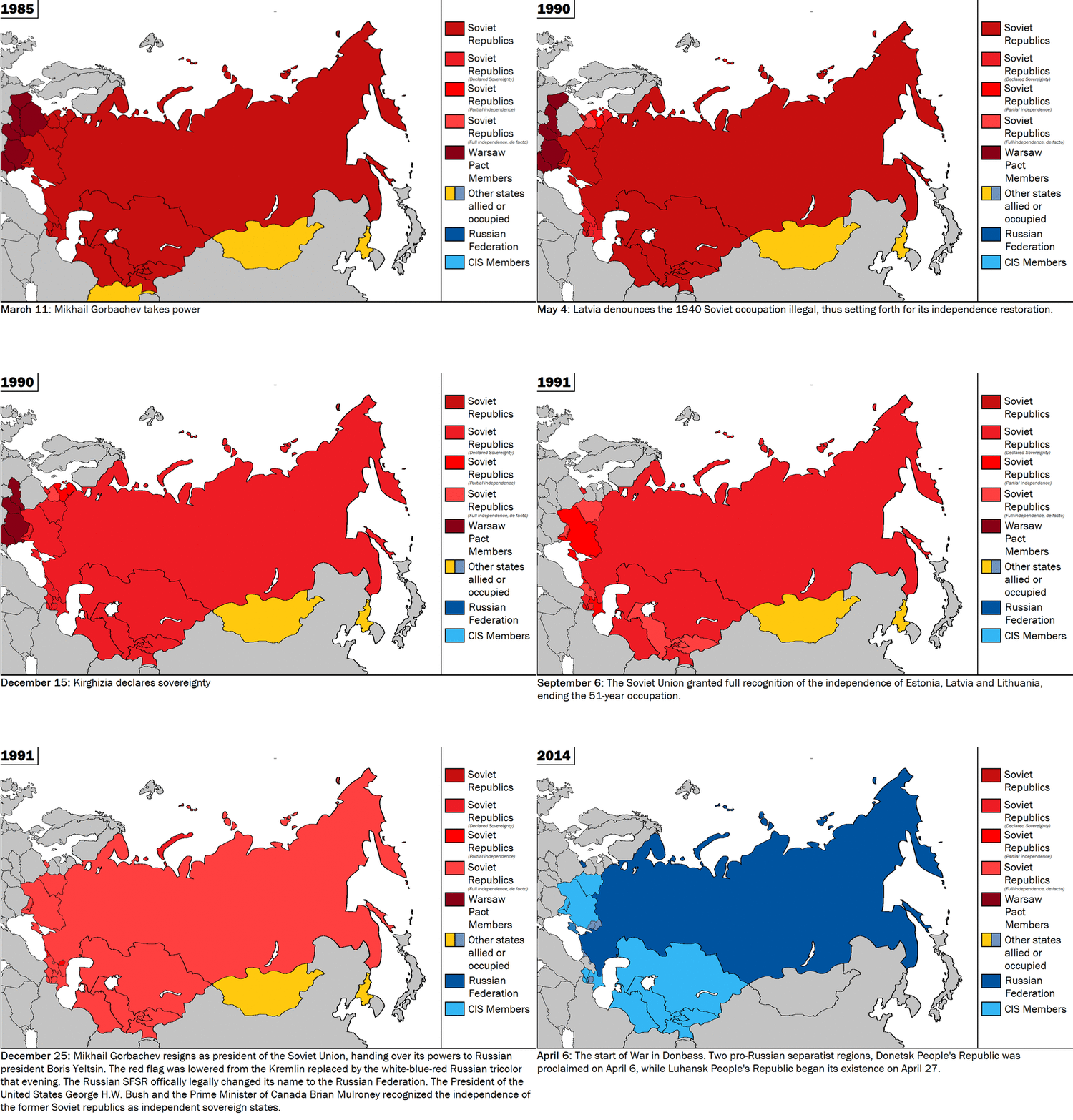
    Historically being a land power, Russia has viewed Ukraine as a strategically critical region in its security matrix. However, as the central control of Moscow weakened in the former USSR, the nationalist aspirations of the Ukrainian people began to materialise and Ukraine played a crucial role, along with the Russian Federation and Belarus, in dissolving the former Soviet Union. The two countries found themselves on opposite sides on extremely fundamental issues, such as security, economic partnership, post-Soviet order, and, not least, sovereignty. In Belovezh, in early December of 1991, when Russian President Boris Yeltsin, Ukrainian President Leonid Kravchuk and Belarusian leader Stanislav Shushkevich met to dissolve the USSR, major disagreements regarding the transitional phase and future of the republics erupted. Yeltsin expressed his desire for some sort of central control of the republics, whereas Kravchuk was vehemently opposed to any arrangement that might compromise his country’s sovereignty. Later, at the foundational ceremony of the Commonwealth of Independent States (CIS), he stressed a common military, the most potent rejection of which came from Kravchuk. [4]

    Source: Wikimedia Commons

    The elephant in the room, however, was the status of Sevastopol, which housed the headquarters of the Black Sea Fleet. Yeltsin was quoted saying that “The Black Sea Fleet was, is and will be Russia’s. No one, not even Kravchuk will take it away from Russia”. [5] Though the issue was soon temporarily resolved –with the two countries dividing the fleet equally amongst themselves, it continued to dominate and sour their relationship. Russia, as the successor state of the USSR, wanted the base and the entire fleet in its navy. Yeltsin even offered gas at concessional rates to Ukraine if it handed over the city and nuclear weapons to Russia. The issue remained unresolved until the 1997 Friendship Treaty under which Ukraine granted Moscow the entire fleet and leased Sevastopol to Russia until 2017 (later extended).

    Ukraine, under Kravchuk and, later, Leonid Kuchma, struggled to tread a tightrope between Russia and the European Union. On one hand, it was economically knit with former Soviet Republics, and on the other, it was actively looking to get economic benefits from the EU. However, soon a slide towards the west was conspicuous. In 1994, it preferred a Partnership and Cooperation Agreement with the EU over CIS Customs Union, which was a Russian initiative. Later, in 1996, it declined to join a new group consisting of former Soviet Republics ‘On Deepening Integration’, scuttling the initiative, since its purpose was to bring Ukraine back into the Russian fold. [6] By 1998, the Kuchma government had formulated a ‘Strategy of Integration into the European Union’. [7]

    Nuclear weapons were another point of contention between the two. Ukraine was extremely reluctant to give up its arsenal, citing security threats from Russia. Kravchuk received a verbal ‘security guarantee’ from the US which forced Russia to “respect the independence, sovereignty, and territorial integrity of each nation” [8] in exchange for surrendering Ukraine’s nuclear weapons. 

    Notwithstanding the disputes, there was a great deal of cooperation between the two, especially after Kuchma’s re-election in 1999. Kuchma’s hook-up with authoritarianism distanced Kyiv from Brussels and brought it closer to Moscow. Ukraine agreed to join Russian initiatives of the Eurasian Economic Community as an observer and Common Economic Space as a full member. At home as well, his support in the eastern parts of the country, where ethnic Russians dwelled, increased dramatically, as evident in the 2002 Parliamentary Elections. [9] However, the bonhomie was soon disrupted by a single event.

    The Orange Revolution was Russia’s 9/11. [10] It dramatically altered Russian thinking on democracy and its ties with the West. It raised the prospect in Russia that Ukraine might be lost completely. It further made them believe the colour revolutions in former Soviet republics were CIA toolkits for regime change. More importantly, it made the Russians apprehensive of a similar revolution within their borders. As a result, the distrust between Russia and the West, and Russia and Ukraine grew considerably. As a nationalist, Victor Yushchenko formulated policies that directly hurt Russian interests. The two countries fought ‘Gas Wars’ in 2006 and 2009, which made both the EU and Russia uncomfortable with Ukraine as a gas transit country. Furthermore, Yushchenko bestowed the title of ‘Hero of Ukraine’ upon Stepan Bandera, a Nazi collaborator and perpetrator of the Holocaust, a decision that surely did not go well with Moscow.

    Geoeconomics: Ukraine as a Gas Transit Country

    The current war is the worst in Europe since the Second World War. Still, Ukraine continues to transit Russian gas through its land, Russia continues to pay for it, and Western Europe continues to receive the crucial resource. The war has shattered all the big bets on Russian dependence on Ukraine for delivering gas to Western Europe and has renewed the discourse on reducing European energy dependence on Russia. Since the EU imports 40% of its gas from Russia, almost a quarter of which flows through Ukraine, Kyiv has had leverage in dealing with Russians in the past. It has been able to extract favourable terms by either stopping or diverting gas for its own domestic use at a time of heightened tensions between Ukraine and Russia. As a result, the EU was directly drawn into the conflict between them, infructuating Moscow’s pressure tactics for a long.

    Moscow has made numerous attempts in the past to bypass Ukraine by constructing alternate pipelines. Nord Stream, the most popular of them, was conceived in 1997, as an attempt to decrease the leverage of the transit states. The pipeline was described as the “Molotov-Ribbentrop Pipeline” by Polish Defence Minister Radoslaw Sirkosi for the geoeconomic influence it gave to Russia. [11] Another project – the South Stream – was aimed at providing gas to the Balkans, and through it to Austria and Italy. The pipeline was conceived in the aftermath of the Orange Revolution and its construction was motivated by geoeconomics, rather than economic viability. It would have led to Russia bypassing Ukraine in delivering gas to the Balkans and Central Europe, thus seizing its significant leverage, and relegating it to vulnerable positions in which Moscow could have eliminated the gas subsidies Ukraine was being provided. [12]As a result of economic unviability, the project was abandoned in 2014.

    To a certain extent, the European Union has been complicit in making matters worse for Russia. For instance, during the 2009 ‘Gas War’ – that began due to Ukraine’s non-payment of gas debt to Russia – instead of holding Ukraine accountable, the EU countries blamed Russia for the gas crisis in Europe and asked Russia to resume gas supply to Ukraine. Later, realising the importance of Ukraine as a transit country, it reached an agreement with Kyiv that “recognized the importance of the further expansion and modernization of Ukraine’s gas transit system as an indispensable pillar of the common European energy infrastructure, and the fact that Ukraine is a strategic partner for the EU gas sector”. The agreement excluded Russia as a party, which saw it as undermining the collaboration between itself and Ukraine, and injuring its influence on the country. [13] The Russian grievance becomes even more palpable when we view the significant gas subsidies it has provided to Ukraine for more than two decades. 

    Similarly, the EU countries viewed Nord Stream 2 from a geostrategic and geo-economic perspective. In December last year, German Economic Affairs Minister Robert Habeck warned Russia of halting Nord Stream 2 if it attacks Ukraine. German Chancellor Olaf Scholz was quoted saying that he would do ‘anything’ to ensure that Ukraine remains a transit country for Russian gas. [14] In fact, the pipeline – that is set to double the capacity of gas delivered to the EU – has faced opposition from almost all Western European countries, the US, the EU as well as Ukraine, which has described it as ‘A dangerous Geopolitical Weapon’. [15] The pipeline had raised concerns amongst Ukrainians of losing a restraining factor on Moscow’s behaviour. [16] However, with the pipeline still inoperable, the Kremlin has already made the restraining factor ineffective.

    The Security Objective

    The Russian Federation is a country which spreads from the European Continent to Asia. In this giant nation, the hospitable region where people live is mainly on the European side, which also comprises main cities like St. Petersburg, Volgograd and the Capital City Moscow. Throughout history, Russia has seen invasions by Napoleon as well as Hitler, and the main area through which these invasions and wars happened was through Ukrainian land which gave them direct access to Russia – due to the lack of any geographical barriers. It was certainly a contributing factor towards the initial success of these invasions. Today, we might understand these events as Russia’s sense of vulnerability and insecurity if history is any indicator. 

    The Russian Federation also follows a similar approach to ensuring its security, survival and territorial integrity. Russia’s interest in Ukraine is as much geopolitical as cultural. Since Russians and Ukrainians were intrinsically linked through their culture and language, Ukraine quickly came to be seen as Russian land, with Ukrainians being recognized as ‘Little Russians’ (Kubicek, 2008), as compared to the “Great Russians”. They were consequently denied the formation of a distinct Ukrainian identity. Putin gave substance to this sentiment as, according to a US diplomatic cable leak, he had “implicitly challenged the territorial integrity of Ukraine, suggesting that Ukraine was an artificial creation sewn together from the territory of Poland, the Czech Republic, Romania, and especially Russia in the aftermath of the Second World War” during a Russia-NATO Council meeting. [17]

    Crimea and much of eastern Ukraine are ethnically Russian and desire closer ties with Russia. But moving further west, the people become increasingly cosmopolitan and it is mostly this population that seeks greater linkage with the Western European countries and membership into the EU and NATO. This in addition to the Euro Maidan protests is what Putin has used to justify the annexation of Crimea in 2014. The other security consideration was the threat it faced from the likelihood of NATO establishing a base in Crimea given its own presence in Sevastopol in the Black Sea. 

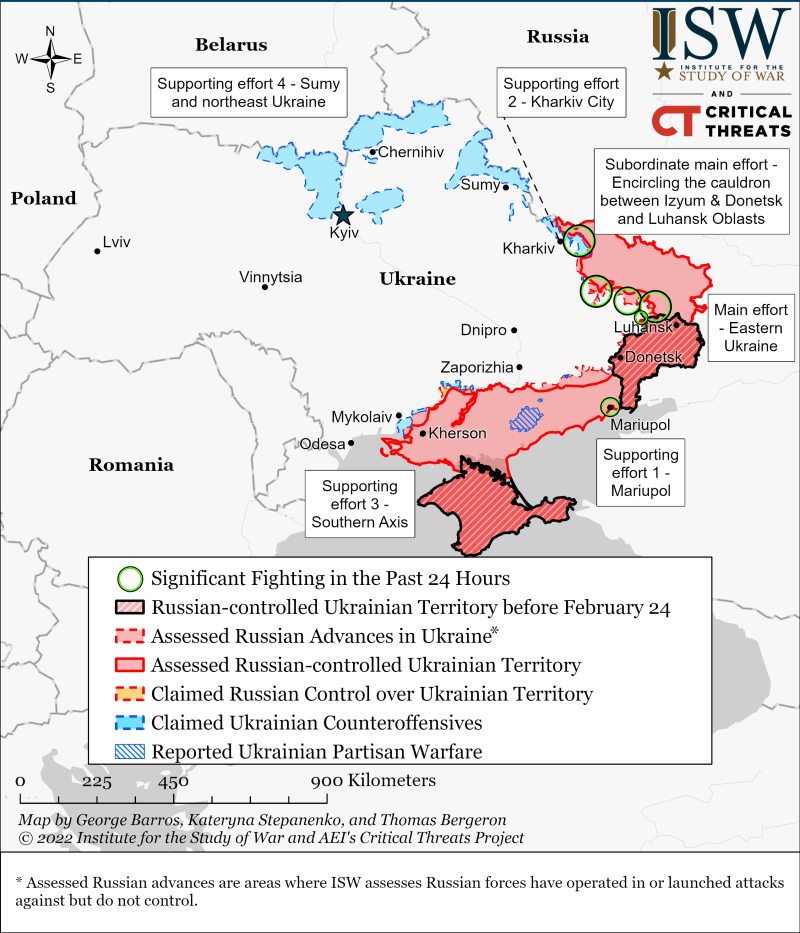
    In the current scenario, the second phase of Russian Military operation in the East and South has shown us the larger vulnerabilities Moscow has which are being countered through control of certain points in the region. By liberating the Donbass region in the east, Russia plans to create a buffer zone between itself and the west to stop future aggression and keep enemies at bay. But the extension of this buffer zone all the way to Odessa is indicative of other strategic considerations. Mariupol in the south of Ukraine is one of the many extended strategic points Russia now controls leading us to ask just why Mariupol is a game-changer in this conflict?

    The port city of Mariupol is a small area geographically, but it provides the land bridge for the Russian forces in the Crimean Peninsula to join the Military operation in the Donbas region. Moreover, it gives Russia a land bridge to Crimea from the Russian Mainland. According to General Sir Richard Barrons, former Commander of UK Joint Forces Command, Mariupol is crucial to Russia’s offensive movement, – “When the Russians feel they have successfully concluded that battle, they will have completed a land bridge from Russia to Crimea and they will see this a major strategic success.” [18]

    Source: ISW (Assessment on 09 May, 2022)

    If the port city of Mariupol is important for the creation of a land corridor, then the Sea of Azov which is adjacent to it is even more important due to its strategic position. [19] The three geopolitical reasons why this sea is important are as follows:

    1. The Sea of Azov is a major point for the economic and military well-being of Ukraine. Proximity to the frontlines of the Donbass region where the fighting between Ukrainian forces and Pro-Russian separatists is taking place makes the control of this sea vital to the Russian military as it helps weaken Ukrainian defence in the region via control of the Kerch Strait.
    2. Controlling the Sea of Azov is strategically important for Russia, to maintain its control in the Crimean Peninsula, which allows Moscow to resupply its forces through the Strait of Kerch.
    3. Finally, it also involves Eurasian politics into why Russia needs to control this region and here the discussion of the Volga-Don canal which links the Caspian Sea with the Sea of Azov comes to the fore. Russia has always used this canal to move warships between the Caspian Sea to the Black Sea and project its power in both regions. Moreover, Russia sees this connection as a significant strategic advantage in any future crisis.

    If Mariupol and the Sea of Azov are considered the most important strategically valuable features by Russia, there also exists the crucial points of Kherson and Odessa which will give Russia complete dominance of the Ukrainian coast line, thus giving larger access and control in the Black Sea region that has the potential to be militarised in the future in conflicts with the West. Moreover, it gives Russia a land corridor to Transnistria which is a Pro-Russian separatist area in Moldova and an opening into the Romanian border through Odessa, thus balancing the build-up of NATO forces in the region. 

    Conclusion

    The Ukrainian crisis is as much the West’s doing as Russia’s and an ear sympathetic to the Russian narrative might even say that the West took advantage of Russia when it was vulnerable immediately following the collapse of the Soviet Union in negotiations regarding the German state reunification and NATO enlargement.

    The bottom line is that, presently, Putin views NATO as an existential security threat to the Russian state and sees the US and its allies’ support of Ukraine as a challenge. Ukraine’s membership in the EU and NATO is a non-starter for Russia and pitting a Ukraine, that has a symbiotic relationship with Russia at all levels, against a slightly diminished but still formidable great power will have consequences for the security architecture and geopolitics of the region.  The Ukrainian crisis is as much the West’s doing as Russia’s and an ear sympathetic to the Russian narrative might even say that the West took advantage of Russia when it was vulnerable immediately following the collapse of the Soviet Union in negotiations regarding the German state reunification and NATO enlargement. On some level, NATO countries recognize the fact that Ukraine and Georgia can never be allowed membership into the North Atlantic alliance because the alternative of wilfully ignoring Russia’s security and national interests is just a recipe for disaster and might just launch the region into the single biggest armed conflict since World War 2. 

    References:

    [1] The White House. (2022, January 20). Remarks by president Biden in the press conference. https://www.whitehouse.gov/briefing-room/speeches-remarks/2022/01/19/remarks-by-president-biden-in-press-conference-6/

    [2] Savranskaya, S., Blanton, T. S., & Zubok, V. (2010). Masterpieces of history: The peaceful end of the Cold War in Europe, 1989. Central European University Press.

    [3] Putin, Vladimir. “Rossiya na Rubezhe Tysyacheletii,” Nesavisimaya Gazeta, December 30, 1999, quoted in D’Anieri, Paul (2019). Ukraine and Russia: From Civilized Divorce to Uncivil War. Cambridge University Press.

    [4] Ibid

    [5] Rettie, J. and James Meek, “Battle for Soviet Navy,” The Guardian, January 10, 1992

    [6] Ibid, no. iii

    [7] Solchanyk, R., Ukraine and Russia: The Post-Soviet Transition. Rowman and Littlefield Publishers. 2000.

    [8] Goldgeier, J. and Michael McFaul. “Power and Purpose: U.S. Policy Toward Russia after the Cold War”, Brookings Institution Press, 2003

    [9] Ibid, no. iii

    [10]  The comment was made by Gleb Pavlovskii, a Russian Political Scientist. quoted in Ben Judah (2013), Fragile Empire: How Russia Fell In and Out of Love with Vladimir Putin. New Haven, CT: Yale University Press, p. 85.

    [11] Ibid, no. iii

    [12] Wigell, M. and  A. Vihma, Geopolitics versus geoeconomics: the case of Russia’s geostrategy and its effects on the EU. International Affairs, 92: 605-627. May 6, 2016

    [13] Ibid, no. iii

    [14] Harper, J. (2021, December 23). Nord stream 2: Who wins, who loses? Deutsche Welle. https://www.dw.com/en/nord-stream-2-who-wins-who-loses/a-60223801

    [15] Ukraine: Nord stream 2 a ‘dangerous geopolitical weapon’. (2021, August 22). DW.COM. https://www.dw.com/en/ukraine-nord-stream-2-a-dangerous-geopolitical-weapon/a-58950076

    [16] Pifer, S. “Nord Stream 2: Background, Objectives and Possible Outcomes”, Brookings, April 2021 https://www.brookings.edu/research/nord-stream-2-background-objections-and-possible-outcomes/

    [17] WikiLeaks. (2008, August 14). UKRAINE, MAP, AND THE GEORGIA-RUSSIA CONFLICT, Canonical ID:08USNATO290_ahttps://wikileaks.org/plusd/cables/08USNATO290_a.html

    [18] Gardner, F. (2022, March 21). Mariupol: Why Mariupol is so important to Russia’s plan. BBC News. https://www.bbc.com/news/world-europe-60825226

    [19] Blank, S. (2018, November 6). Why is the Sea of Azov so important? Atlantic Council. https://www.atlanticcouncil.org/blogs/ukrainealert/why-is-the-sea-of-azov-so-important/

    Featured Image Credits: Financial Times

    [powerkit_button size="lg" style="info" block="true" url="https://admin.thepeninsula.org.in/2022/03/29/tpf-analysis-series-on-russia-ukraine-conflict/" target="_blank" nofollow="false"]
    TPF Analysis Series on Russia – Ukraine Conflict #1
    [/powerkit_button]

  • Divided World: The UN Condemnation of Russia is endorsed by Countries run by the richest, oldest, Whitest people on Earth but only 41% of the World’s population

    Divided World: The UN Condemnation of Russia is endorsed by Countries run by the richest, oldest, Whitest people on Earth but only 41% of the World’s population

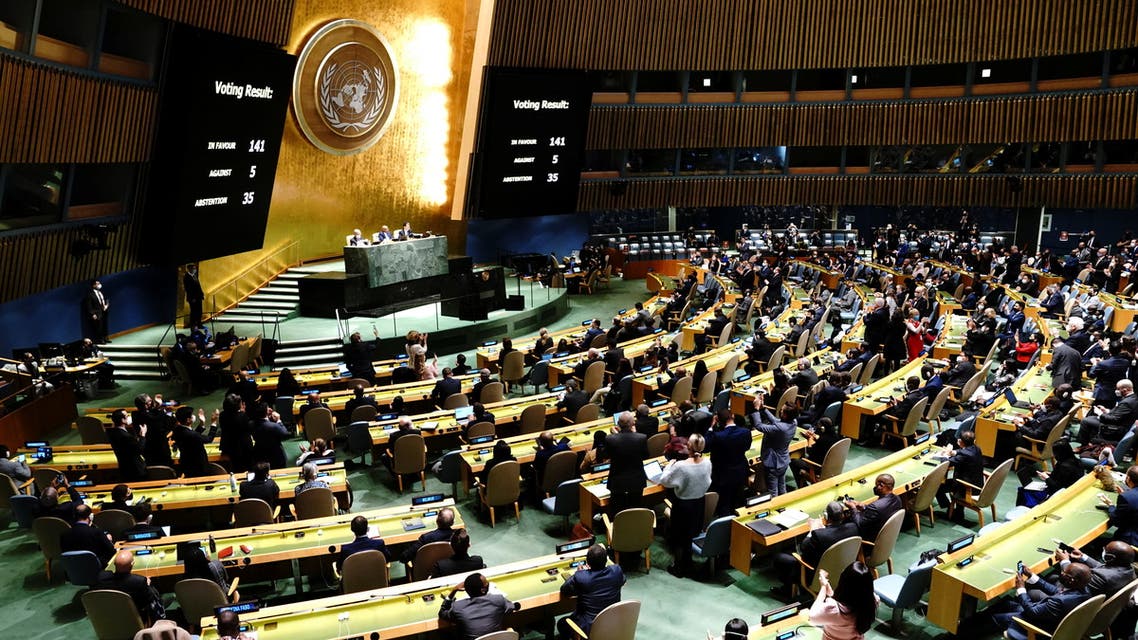
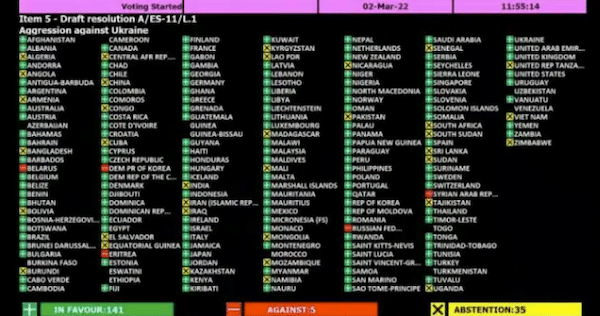
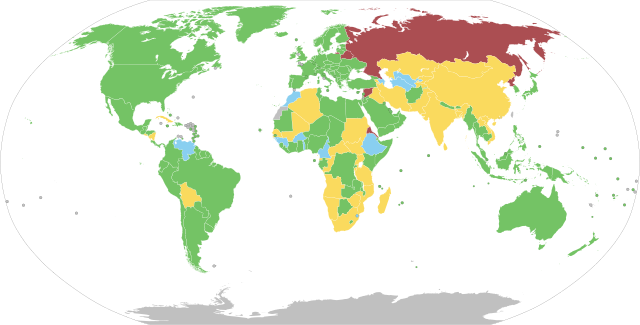
    On March 2 of this year the UN General Assembly met in an Emergency Session to pass a non-binding resolution condemning Russia’s February 24 intervention in Ukraine.1 141 countries voted for the resolution, 5 voted against, 35 abstained, and 12 did not vote. (Reported: Guardian, Al Jazeera, iNews)

    although the war is nominally a conflict between two developed and ethnically white nations, Russia and Ukraine, this UN vote suggests the war may be viewed by much of the world as a fight over the global political and economic system that institutionalizes the imperial hierarchy, the distribution of nations between rich and poor, and global white supremacy


    In the absence of any reliable opinion poll of the world’s 7.9 billion people, this vote may indicate that the majority of humanity sympathizes with Russia in Ukraine. The statistics presented below show that only 41% of the world’s people live in countries that joined the U.S. in voting for the UN resolution.

    This lopsided vote is even more striking if you consider the demographics. Populations represented by governments that did not vote for the resolution are much more likely to include the world’s poorest nations, nations with younger populations, “nations of color,” nations of the Global South, and nations in the periphery of the world economic system.

    To put it another way, although the war is nominally a conflict between two developed and ethnically white nations, Russia and Ukraine, this UN vote suggests the war may be viewed by much of the world as a fight over the global political and economic system that institutionalizes the imperial hierarchy, the distribution of nations between rich and poor, and global white supremacy.


    The UN vote by population

    41% or 34% amounts to a resounding, humiliating defeat for the U.S. on this non-binding UN resolution. Instead it is reported in the west as a U.S. victory and an “overwhelming” worldwide condemnation of Russia.

    Of the world’s 7,934,000,000 people, 59% live in countries that did not support the resolution and only 41% live in countries that did.2 But that last figure drops to 34% outside of the immediate belligerents and their allies: Ukraine, U.S., and NATO countries, and on the other side, Russia, Armenia, Belarus, Kazakhstan, Kyrgystan, and Tajikistan (all the countries of the Collective Security Treaty Organization).

    41% or 34% amounts to a resounding, humiliating defeat for the U.S. on this non-binding UN resolution. Instead it is reported in the west as a U.S. victory and an “overwhelming” worldwide condemnation of Russia.

    The UN vote and GDP per capita

    All the countries in the top third of the GDP per capita (nominal) rankings, including Japan and all the countries of Western Europe and North America, voted for the resolution, Venezuela being the only country in the top third that did not.

    Of the countries that did not vote for the resolution, most are ranked the poorest in the world, and almost none came above the approximate midpoint rank of 98. The exceptions were: Venezuela (58), Russia (68), Equatorial Guinea (73), Kazakhstan (75), China (76) Cuba (82), Turkmenistan (92), South Africa (95), Belarus (97).3

    The UN vote and the core/periphery divide

    Another way to show the wealth divide in the UN vote is by distinguishing core and peripheralcountries. In world-systems theory the surplus value of labor flows disproportionately to the core countries: “The countries of the world can be divided into two major world regions: the ‘core’ and the ‘periphery.’ The core includes major world powers and the countries that contain much of the wealth of the planet. The periphery has those countries that are not reaping the benefits of global wealth and globalization.” (Colin Stief, ThoughtCo.com, 1/21/20)

    The countries usually considered in the core are: Australia, Austria, Belgium, Canada, Denmark, Finland, France, Germany, Greece, Iceland, Ireland, Italy, Japan, Luxembourg, Netherlands, New Zealand, Norway, Portugal, Singapore, Spain, Sweden, Switzerland, United Kingdom, United States.

    The difference here is stark. Every single core country voted for the resolution and every country that did not is either in the periphery or in some cases, like Russia or China, in the semi-periphery.


    The UN vote and median age

    All the countries ranked in the top third of median age rankings, from Monaco (51.1 years) to Iceland (36.5 years), voted for the resolution, with the following exceptions: China (37.4), Russia (39.6), Belarus (40), Cuba (41.5).

    Of the twenty entries with the lowest median ages (15.4 to 18.9), only half voted for the resolution.

    The UN vote and “countries of color”

    Of the 7,934,000,000 people in the world, 1,136,160,000 live in what are usually recognized as “white countries” (consistently or not) with about 14% of the world’s population. Yet “white countries,” by population, represent about 30% of the total vote in favor of the resolution. This “white vote” accounts for every one of the core countries (except Singapore and Japan). Compare: 97% of the population in the countries that did not vote for the resolution live in “countries of color.” Only Russia, Belarus and Armenia (which did not vote for the resolution) have dominant populations classed as “white.”

    Therefore “white countries” are overrepresented in the group that voted for the resolution (30% vs. 14%), and underrepresented in the group that did not (3% vs. 14%).

    Before the intervention

    What follows is a brief sketch of events leading to the February 24 Russian intervention that prompted the UN resolution. It is a history seldom mentioned in the mainstream media, though it is easily found in selected alternative and now-suppressed media. It is presented here as a possible, partial explanation of why the UN resolution had so little support measured by population.

    U.S./NATO has directed aggression toward Russia for decades, advancing NATO forces ever closer to Russia’s western border, ringing Russia with military bases, placing nuclear weapons at ever closer range, and breaching and discarding treaties meant to lessen the likelihood of nuclear war. The U.S. even let it be known, through its planning documents and policy statements, that it considered Ukraine a battlefield on which Ukrainian and Russian lives might be sacrificed in order to destabilize, decapitate and eventually dismember Russia just as it did Yugoslavia. Russia has long pointed out the existential security threat it sees in Ukrainian territory, and it has made persistent, peaceful, yet fruitless efforts over decades to resolve the problem (See Monthly Review’s excellent editors’ note).

    Recent history includes the 2014 U.S.-orchestrated coup in Ukraine, followed by a war of the central government against those in the eastern regions of Donetsk and Lugansk resisting the coup government and its policies. Those policies include a ban on the Russian language, the native tongue of the region and a significant part of the country (ironically, including President Zelensky).

    By the end of 2021 the war had taken 14,000 lives, four-fifths of them members of the resistance or civilian Russian speakers targeted by the government. Through years of negotiations Russia tried and failed to keep the Donetsk and Lugansk regions inside a united Ukraine. After signing the Minsk agreements that would do just that, Ukraine, under tight U.S. control, refused to comply even with step one: to talk with the rebellion’s representatives.

    As to why the intervention happend now, Vyacheslav Tetekin, Central Committee member of Russia’s largest opposition party, the Communist Party of the Russian Federation, explains:

    Starting from December, 2021 Russia had been receiving information about NATO’s plans to deploy troops and missile bases in Ukraine. Simultaneously an onslaught on the Donetsk (DPR) and Lugansk People’s Republics (LPR) was being prepared. About a week before the start of Russia’s operation the plan was uncovered of an offensive that envisaged strikes by long-range artillery, multiple rocket launchers, combat aircraft, to be followed by an invasion of Ukrainian troops and Nazi battalions. It was planned to cut off Donbas from the border with Russia, encircle and besiege Donetsk, Lugansk and other cities and then carry out a sweeping “security cleanup” with imprisonment and killing of thousands of defenders of Donbas and their supporters. The plan was developed in cooperation with NATO. The invasion was scheduled to begin in early March. Russia’s action pre-empted Kiev and NATO, which enabled it to seize strategic initiative and effectively save thousands of lives in the two republics.

    All this may have informed the world’s overwhelming rejection of the U.S.-backed UN resolution condemning Russia, which western media perversely considers a U.S. victory simply because the resolution passed. Never mind that it passed in a voting system where Liechtenstein’s vote carries the same weight as China’s.

    The Global South also knows from bitter experience that unlike the West, neither Russia nor its close partner China habitually engage in bombings, invasions, destabilization campaigns, color revolutions, coups and assassinations against the countries and governments of the Global South. On the contrary, both countries have assisted the development and military defense of such countries, as in Syria, Venezuela, Nicaragua, Cuba, Iran and elsewhere.

    Conclusion

    Just as the imperial core of North America, Europe and Japan does not represent the world in their population numbers, demographics, wealth, or power, neither does the imperial core speak for the world on crucial issues of war, peace, justice, and international law. Indeed the Global South has already spoken to the Global North so many times, in so many ways, with patience, persistence and eloquence, to little avail. Since we in the North have not been able to hear the words, perhaps we can listen to the cry of the numbers.


    Notes:

    1. The resolution “Deplores in the strongest terms the aggression by the Russian Federation against Ukraine in violation of Article 2 (4) of the Charter.” (Article 2 (4) reads: “All Members shall refrain in their international relations from the threat or use of force against the territorial integrity or political independence of any state, or in any other manner inconsistent with the Purposes of the United Nations.”) The resolution also “[d]eplores the 21 February 2022 decision by the Russian Federation related to the status of certain areas of the Donetsk and Luhansk regions of Ukraine as a violation of the territorial integrity and sovereignty of Ukraine and inconsistent with the principles of the Charter.” Beyond Russia, the resolution “[d]eplores the involvement of Belarus in this unlawful use of force against Ukraine, and calls upon it to abide by its international obligations.”
    2. The population of countries voting for the UN resolution is 3,289,310,000. The population of countries voting against the resolution, abstaining, or not voting is 4,644,694,000 (Against: 202,209,000; abstaining: 4,140,546,000; not voting: 301,939,000).
    3. Here are the countries that did not vote for the resolution, with their GDP per capita rankings (the higher the GDP the higher the rank). 5 countries voted against the resolution: Russia 68, Belarus 97, North Korea 154, Eritrea 178, Syria 147. 35 countries abstained: Algeria 119, Angola 128, Armenia 115, Bangladesh 155, Bolivia 126, Burundi 197, Central African Republic 193, China 76, Congo 143, Cuba 82, El Salvador 121, Equatorial Guinea 73, India 150, Iran 105, Iraq 103, Kazakhstan 75, Kyrgyzstan 166, Laos 140, Madagascar 190, Mali 174, Mongolia 118, Mozambique 192, Namibia 102, Nicaragua 148, Pakistan 162, Senegal 160, South Africa 95, South Sudan 168, Sri Lanka 120, Sudan 171, Tajikistan 177, Tanzania 169, Uganda 187, Vietnam 138, Zimbabwe 144. 12 countries did not vote: Azerbaijan 110, Burkina Faso 184, Cameroon 158, Eswatini 117, Ethiopia 170, Guinea 175, Guinea-Bissau 179, Morocco 130, Togo 185, Turkmenistan 92, Uzbekistan 159, Venezuela 58.


    This article was published earlier in MRonline and is republished under the Creative Commons License 4.0.

    Feature Image Credit: Alarabianews.

    Map and Table: Wikipedia

  • TPF Analysis Series on Russia – Ukraine Conflict #1

    TPF Analysis Series on Russia – Ukraine Conflict #1

    The Peninsula Foundation is releasing a series of analysis papers on the Ukraine-Russia conflict to help the public have a better understanding of the geo-political and security dimensions underlying the conflict. The first paper of the series will introduce you to an overview of the historical, political and humanitarian aspects of the ongoing conflict which is snowballing to be a major conflict and a turning point in Europe’s history since World War II.

    Russia – Ukraine History

    Russia and Ukraine have had a long interwoven history, since as early as the 18th century. One of the most contested territories, Crimea, was first annexed by the Russian empire in 1783 back when it was controlled by the Crimean Khanate. The territory then became a part of the erstwhile Soviet Union in 1921, to be later controlled by Nazi Germany for a brief period in 1942. Following the end of World War II, the autonomous status of Crimea was dissolved as it now became a province of the USSR, but was later handed over to Ukraine as a goodwill gesture by Nikita Khrushchev in 1954 to mark the 300th anniversary of Ukraine’s reunification with the USSR.

    Crimea: White Russian refugees gathering at a Crimean port during the Russian Civil War.

    Image: Library of Congress, Washington, D.C.

    With the dissolution of the Soviet Union in 1991, many had expected Boris Yelsten to take up the issue and bring back Crimea to Russia, but instead, the Crimean parliament proclaimed the independence of its territory in May 1992, a proclamation only to be annulled by Ukraine. Over twenty years later, a similar referendum, with most of the Crimean population voting to join Russia – a referendum declared illegal by Ukrainian and European governments alike. What followed next was a dramatic escalation with the deployment of the Russian Black Sea Fleet.

    Some have argued that NATO’s expansion towards the East is the primary cause of the war, since the organisation was formed primarily to counter the Soviet Union during the Cold War. While it must be acknowledged that such expansion was to be viewed by Russian officials as a provocation even back in the 1990s, the arguments, however, also take away the agency of states in Eastern Europe with most of them ‘demanding’ to join NATO, eager to reap the benefits of the West’s economic system. Over the years, several small states, including Georgia, Ukraine, Uzbekistan, Azerbaijan and Moldova, have seen their relationship with the West as a tool to bring regional stability, and increase their bargaining power against Russia.

    Events leading up to the war

    2021 was a year of security challenges that shook the world amid an ever-mutating Covid-19 pandemic. In October 2021, Russia started moving its troops and military equipment closer to the Ukraine border rekindling concerns of a potential invasion. By mid-December 2021, Russia’s Foreign Minister, Sergey Lavrov released a set of security guarantees and assurances to be met by the U.S. and NATO in exchange for non-intervention in Ukraine. Putin also threatened unspecified ‘military technical’ measures if the West fails to accede to his demands. Putin’s major demands were; (i) Ban on Ukraine entering NATO, (ii) No further expansion of NATO in the Eastern European region, (iii) Withdrawal of any troops or weapons deployed in countries which entered NATO after 1997 (Poland, Estonia, Lithuania, Latvia, and the Balkan countries), (iv) No NATO drills to be conducted in Ukraine, Georgia and Central Asia without prior agreement with Russia. Although NATO was formed to counter the USSR during the Cold War,  it continued its expansion into Eastern Europe territories even long after the dissolution of the USSR. Putin was threatened by the continuous NATO expansionism, the security implications and the loss of the Russian sphere of influence in Eastern Europe.

    The U.S. and NATO immediately rejected these main demands warning if Russia invades Ukraine, there will be serious retaliation and Russia will be met with a ‘massive forceful package’ of economic sanctions. Ukraine’s Foreign Minister Kuleba had said that although they were expecting and already experiencing aggressive Russian cyber-attacks and destabilisation of the Ukrainian economy, the number of Russian troops on the border was ‘insufficient’ and the build-up was missing some key military indicators to execute an imminent ‘full-scale invasion’ of Ukraine. Many experts and theorists also opined that despite Putin’s bold demands and his game of brinkmanship, the reality of war was in question.

    On 21st February, in a televised address Putin said that ‘Ukraine is an integral part of Russia’s history’ and declared the regions of Donetsk and Luhansk as independent Republic States and sent Russian troops into those regions for ‘peacekeeping’.

    The beginning of February showed some positive signs of diplomacy or at the least maintenance of the status quo between Ukraine and Russia despite the West’s declining Putin’s demands. However, it was only calm before the storm. On 21st February, in a televised address Putin said that ‘Ukraine is an integral part of Russia’s history’ and declared the regions of Donetsk and Luhansk as independent Republic States and sent Russian troops into those regions for ‘peacekeeping’. As a response to this, the US and other NATO members imposed economic sanctions on Russian parliament members, banks and other assets and Germany decisively halted the Nord Stream 2 gas pipeline project.

    ‘Special Military Operation’

    On 24th February, Putin announced a ’special military operation’ and Russian forces launched missile and artillery attacks on major Ukrainian cities including Kyiv. Ukrainian Foreign Minister affirmed that Russia has launched a ‘full-scale invasion of Ukraine’, following which Ukraine shut down its entire airspace as a response to the Russian operation in Donbas. The West imposed further sanctions on Russia including but not limited to, removing select Russian banks from the SWIFT system, freezing the assets of the Russian Central Bank and curbing products exported to Russia.

    Zaporizhzhia is a vital asset in fulfilling Ukraine’s energy requirements with six nuclear reactors with a capacity of generating 950MW per reactor. Capturing Zaporizhzhia nuclear power plant would have been a major plan of the invading forces given its strategic nature.

    Nearly four weeks since the Russian Federation launched a ‘special military operation’, the situation on the ground in Ukraine continues to remain dire. The United Nations Human Rights Monitoring Mission in Ukraine (HRMMU) has been responsible for documenting civilian casualties in Ukraine since 2014. In the span of three weeks, Ukraine’s infrastructure and cultural heritage have suffered irreparable damage or been completely destroyed. The ceaseless shelling by Russian forces of cities and hospitals have exacerbated the human toll.

    According to a press briefing released by the Office of the High Commissioner for Human Rights (OHCHR), civilian casualties as of 26 March 2022 stand at 2,909 – 1,119 people killed and 1,790 injured.

    The OHCHR assesses that actual figures might be higher than what is currently being reported as they wait for figures to be corroborated. Most of the civilian casualties are reportedly caused by explosive weapons with a wide impact area. This includes shelling from heavy artillery and multiple-launch rocket systems and missile and air strikes.

    In a rather unexpected move, on 4th March, 2022 the Russian forces attacked and captured the Zaporizhzhia nuclear power plant, located in Energodar, Ukraine. Zaporizhzhia is a vital asset in fulfilling Ukraine’s energy requirements with six nuclear reactors with a capacity of generating 950MW per reactor. Capturing Zaporizhzhia nuclear power plant would have been a major plan of the invading forces given its strategic nature.

    The Russian attack on the nuclear plant raised alarm bells among nations and nuclear watchdogs. Intense shelling on the complex caused a fire in one of the training buildings. Reports have noted the damage to multiple locations within the complex. The Ukrainian government was quick to act and called it an “act of terror”. Contrary to Ukrainian claims, the Russian Ministry of Defence spokesperson Maj. Gen. Igor Konashenkov claimed that the entire event was a sabotage act by the Ukrainian forces. With Chernobyl captured very early in the invasion, the attack on Zaporizhzhia nuclear power plant raises questions about the safety and security of nuclear infrastructures during times of crisis.

    On March 9, 2022, a hospital in Mariupol that also housed a maternity ward came under attack. It was reported that at least 4 people were killed in the bombing, including a pregnant woman. Presently, Mariupol is seeing some of the fiercest attacks, since the port city is a strategic target for Russia. It is estimated that some 300,000 people are trapped with supplies running low. The Russian Federation’s offer of safe passage out of Mariupol for the Ukrainian people has been summarily rejected by Ukraine’s Deputy Prime Minister Iryna Vereshchuk who was quoted saying, “There can be no question of any surrender, laying down of arms”.

    Other areas to have been hit include Kyiv, Kharkiv, Borodyanka, Ochakiv, Sumy, Mykolaiv, Odessa etc. On March 1, the Central Freedom Square in Kharkiv was bombed that leaving both the administrative building and surrounding structures destroyed. On 14 March the Ukrainian health minister Viktor Liashko reported that nearly 100 hospitals had been damaged. As of 17 March, the World Health Organisation (WHO) has verified 44 instances of attacks on healthcare facilities in Ukraine. 

    West’s Sanctions

    The global media coverage of the invasion can be best described as a cacophony of partisanship. The western media has been charged with accusations of brushing off Russian security concerns and, of course, brazen racism. It has followed its own orientalist approach to present the crisis as a result of Russian imperialism.

    The West has swiftly responded by imposing sanctions; a course of action meant to deter and halt Russia’s actions in Ukraine. Germany’s Chancellor Olaf Scholz announced halting final approval for the Nord Stream 2 gas pipeline following Russia’s recognition of two breakaway regions of Eastern Ukraine – Luhansk and Donetsk.

    On 8 March, President Biden, with bipartisan support, announced that the US would be banning imports of Russian oil, gas and energy. The UK also announced that it would phase out Russian oil imports by the end of 2022 on the same day. Both the US and the UK are working with their European counterparts to reduce dependency on Russian hydrocarbon imports. The European Commission responded to Russia’s aggression in Ukraine by stating that the EU countries would work to become independent of Russian energy imports “well before 2030”. Other economic deterrents imposed have been the ban on exports of luxury goods like vehicles, fashion and art to Russia by the UK and EU. The UK has also imposed a 35% tax on imports from Russia, including vodka. Russian oligarchs’ assets in the US, UK and the EU have been targeted. Sanctions have also been imposed on former Russian leaders, ministers and current members of the Russian Parliament.

    Russian flights and private jets have been banned from the US, UK, EU and Canadian airspaces. The G7 countries have also stripped Russia of its “most favoured nation” status; a move that will impact Russia’s trade. Assets of most Russian banks have been frozen and some of them have been removed from the international financial system SWIFT. Other countries to have imposed sanctions on Russia include Japan, Taiwan, New Zealand, Australia and Switzerland. Australia moved to ban exports of alumina and aluminium ore, including bauxite to Russia. Russia relies on Australia for 20% of its alumina requirements – aluminium being a major export for Russia. Several energy, automobile, tech, financial, food and fashion companies have also halted operations in Russia – Exxon, Shell, Apple, Alphabet, Goldman Sachs, JP Morgan, Ferrari, Harley-Davidson, Nike, McDonald’s etc.

    Globally, the impact of the Russia-Ukraine war has been felt in oil markets as prices continue to surge to well over $100 per barrel. Russia’s response to being hit with global sanctions has been to ban the exports of over 200 products, including telecoms, electrical equipment, agricultural, medical goods etc. However, this list does not include energy and raw material resources. It has also banned and blocked interest payments to foreign investors and dividends to overseas shareholders and also banned the sale of Russian stocks and bonds held by foreign investors. It has also passed a decree suspending the IP rights of ‘unfriendly countries’.

    On 15 March, President Zelensky said that it must be accepted that Ukraine will not become a member of NATO, possibly appeasing one of Putin’s major security concerns. Additionally, on 15 March, Moscow announced its decision to withdraw from the Council of Europe after 26 years of membership, hours ahead of a formal decision taken by the Council to expel Russia over its aggression in Ukraine. The move also means that Russia will no longer be a signatory to the European Convention on Human Rights, depriving its citizens of the right to appeal to the European Court of Human Rights. A statement from the Russian foreign ministry cited that the EU and NATO had “destroyed” the Council of Europe and turned the organisation into an “anti-Russia policy tool”.

    Russia also made the decision to sanction President Biden, Prime Minister Trudeau and several top US officials. The list includes Secretary of State Anthony Blinken, Defence Secretary Lloyd Austin, National Security Advisor Jake Sullivan, CIA Director William Burns, WH Press Secretary Jen Psaki and former Secretary of State and Democratic Presidential candidate Hilary Clinton.

    The global media coverage of the invasion can be best described as a cacophony of partisanship. The western media has been charged with accusations of brushing off Russian security concerns and, of course, brazen racism. It has followed its own orientalist approach to present the crisis as a result of Russian imperialism. Popular Russian media channels such as RT and Sputnik have been banned by YouTube across Europe, essentially leading to the West dominating the information warfare, controlling the narrative and presenting a one-sided perspective to the world.  The Russian Federal Service for Supervision of Communications, Information Technology and Mass Media, commonly known as the Roskomnadzor, released a statement informing media and other information sources that any publication regarding the ‘special military operation’ must only use the information received from Russian officials. Several independent Russian media outlets like Ekho Moskvy, InoSMI, Mediazona, New Times, Dozhd, Svobodnaya Pressa, Krym, Realii, Novaya Gazeta, Journalist, Lenizdat etc. were sent notifications by the Roskomnadzor on allegations of reporting false information regarding the actions of the Russian Army, shelling in Ukrainian cities and referring to the military operation as ‘war’, ‘invasion’ and ‘attack’. Nonetheless, some media houses have stood up to the pressure to report more appropriately.

    The war in Ukraine could also leave lasting environmental damage, being a highly industrialised state. The threat of radiation resulting from an attack on any one of Ukraine’s nuclear plants could have devastating consequences. Carcinogenic dust from bombed buildings, groundwater contaminations from spilled chemicals and attacks on industrial facilities will have a lasting impact on the health of the people in the country.

    UN Response

    As Russian troops continue to shell Ukrainian cities, the various United Nations bodies have called for emergency meetings, albeit with no successful outcome to halt the war. In February 2022, a Security Council meeting calling for a resolution to condemn the Russian military operations and demanding an end to Russian attacks had similarly failed with the resolution having been vetoed by Russia.

    Although Putin’s end may not justify his means, one needs to look at this crisis holistically and historically. Putin may have been the one to declare war, but the triggering and contributing events and actions by NATO and the US should also be taken into consideration while analysing this conflict.

    However, the United Nations has been swift with its humanitarian response, an effort visible with its coordinated appeals calling for the allocation of an estimated USD 1.7 billion to help the Ukrainians. Dividing the allocation of funds into two categories – one for people within Ukraine, and the other for its comprehensive response towards refugees coming from Ukraine, the United Nations’ relief efforts have seen one of the most generous responses to its funding appeal. Further, as fighting continues amidst multiple rounds of talks between Russia and Ukraine, UN Agencies, including UNICEF, continue to supply humanitarian aid, including medical supplies to the country. As part of its cash-response strategy, the UN agencies have additionally planned to implement its program of cash-for-rent assistance, where they seek to provide the affected population with the resources to find themselves an accommodation, in order to avoid large-scale displacement.

    Although Putin’s end may not justify his means, one needs to look at this crisis holistically and historically. Putin may have been the one to declare war, but the triggering and contributing events and actions by NATO and the US should also be taken into consideration while analysing this conflict. It seems to be that Putin has not entered into an all-out war yet, as his objectives and weaponry employed are limited. In the forthcoming series of analyses, The Peninsula Foundation delves into each of the facets of the conflict mentioned in this paper.

    Featured Image Credits: The Times

    NATO Expansion Image Credits: Statista

    Russian General Image Credits: Moscow Times

    UNSC Image Credits: Harvard Law Today

  • The Rich World’s Climate Hypocrisy

    The Rich World’s Climate Hypocrisy

    Many people around the world already consider the United Nations Climate Change Conference (COP26) in Glasgow a disappointment. That is a massive understatement. Global leaders – especially in the developed world – still fail to grasp the gravity of the climate challenge. Although they acknowledge its severity and urgency in their speeches, they mostly pursue short-term national interests and make conveniently distant “” emissions pledges without clear and immediate commitments to act.

    Many of the statements by developed-country leaders at the COP26 summit in Glasgow are at odds with their actual climate policies, and with what they say in other settings. Their short-sighted strategy ultimately benefits no one – including the powerful corporate interests whose immediate financial interests it serves

    For example, could the real US government please stand up and declare itself? In his recent address in Glasgow, President Joe Biden said that “as we see current volatility in energy prices, rather than cast it as a reason to back off our clean energy goals, we must view it as a call to action.” Indeed, “high energy prices only reinforce the urgent need to diversify sources, double down on clean energy deployment, and adapt promising new clean-energy technologies.”

    But just three days later, the Biden administration claimed that OPEC+ is endangering the global economic recovery by not increasing oil production. It even warned that the United States is prepared to use “all tools” necessary to reduce fuel prices.

    This is one of the most blatant recent examples of climate hypocrisy by a developed-country leader, but it is by no means the only one. And the duplicity extends to the proceedings at COP26 itself, where developing-country negotiators are apparently finding that advanced economies’ positions in closed-door meetings are quite different from their public stances.

    Rich countries, which are responsible for the dominant share of global carbon-dioxide emissions to date, are dithering on longstanding commitments to provide climate finance to developing countries. They are also resisting a proposed operational definition that would prevent them from fudging what counts as climate finance. And they are still treating adaptation to climate change as a separate stream and refusing to provide finance to avert, minimize, and address the loss and damage associated with climate change in the worst-affected countries.

    The declared COP26 promises also reveal the developed world’s double standards. A group of 20 countries, including the US, pledged to end public financing for “unabated” fossil-fuel projects, including those powered by coal, by the end of 2022. But the prohibition applies only to international projects, not domestic ones. Significantly, the US and several other signatories refused to join the 23 countries that separately committed to stop new coal-power projects within their borders and phase out existing coal infrastructure.

    But even if the pledges in Glasgow had been more solid, rich-country governments, in particular, face a major credibility problem. They have previously made too many empty climate promises, undermining the interests of developing countries that have contributed little to climate change. Advanced economies have made emissions-reduction commitments that they have not kept, and reneged on their assurances to developing countries regarding not only climate finance but also technology transfer.

    The climate finance commitment is now 12 years old. At COP15 in Copenhagen, advanced economies promised to provide $100 billion per year to the developing world, and the 2015 Paris climate agreement made it clear that all developing countries would be eligible for such financing. This amount is trivial relative to developing countries’ need, which is in the trillions of dollars, and also when compared to the vast sums that rich countries have spent on fiscal and monetary support for their economies during the COVID-19 pandemic.

    But the developed world has not fulfilled even this relatively modest pledge. In 2019, total climate finance channeled to developing countries was less than $80 billion; the average amount each year since 2013 was only $67 billion. And this figure massively overstated the actual flows from developed-country governments, because bilateral public climate finance (which should have been provided to the developing world under the Paris accord) averaged less than $27 billion per year. The remainder came from multilateral institutions – including development banks – and private finance, which rich-country governments sought to take credit for mobilizing. Compared to this paltry sum, global fossil-fuel subsidies amounted to an estimated $555 billion per year from 2017 to 2019.

    Likewise, the rich world’s promises of green technology transfer have become mere lip service. Developed-country governments allowed domestic companies to cling to intellectual-property rights that block the spread of critical knowledge for climate mitigation and adaptation. When countries like China and India have sought to encourage their own renewable-energy industries, the US, in particular, has filed complaints with the World Trade Organization.

    This short-sighted strategy ultimately benefits no one, including the firms whose immediate financial interests it serves, because it accelerates the planet’s destruction and the revenge of nature on what now appears to be terminally stupid humanity. The student and activist marches in Glasgow against this myopic approach are important but are nowhere near enough to force governments to change course.

    The problem is that powerful corporate interests are clearly intertwined with political leadership. People around the world, and especially in the Global North, must become much more vociferous in insisting on meaningful climate action and a real change in economic strategy that resonates beyond national borders. Only that can end the rich world’s green hypocrisy and save us all.

    This article was published earlier in project-syndicate.org