Category: TPF Occasional Paper

  • India and Myanmar: Two Years after the Coup

    India and Myanmar: Two Years after the Coup

    [powerkit_button size=”lg” style=”info” block=”true” url=”https://admin.thepeninsula.org.in/wp-content/uploads/2023/05/India-and-Myanmar-Two-years-after-the-Coup-1.pdf” target=”_blank” nofollow=”false”]
    Download
    [/powerkit_button]

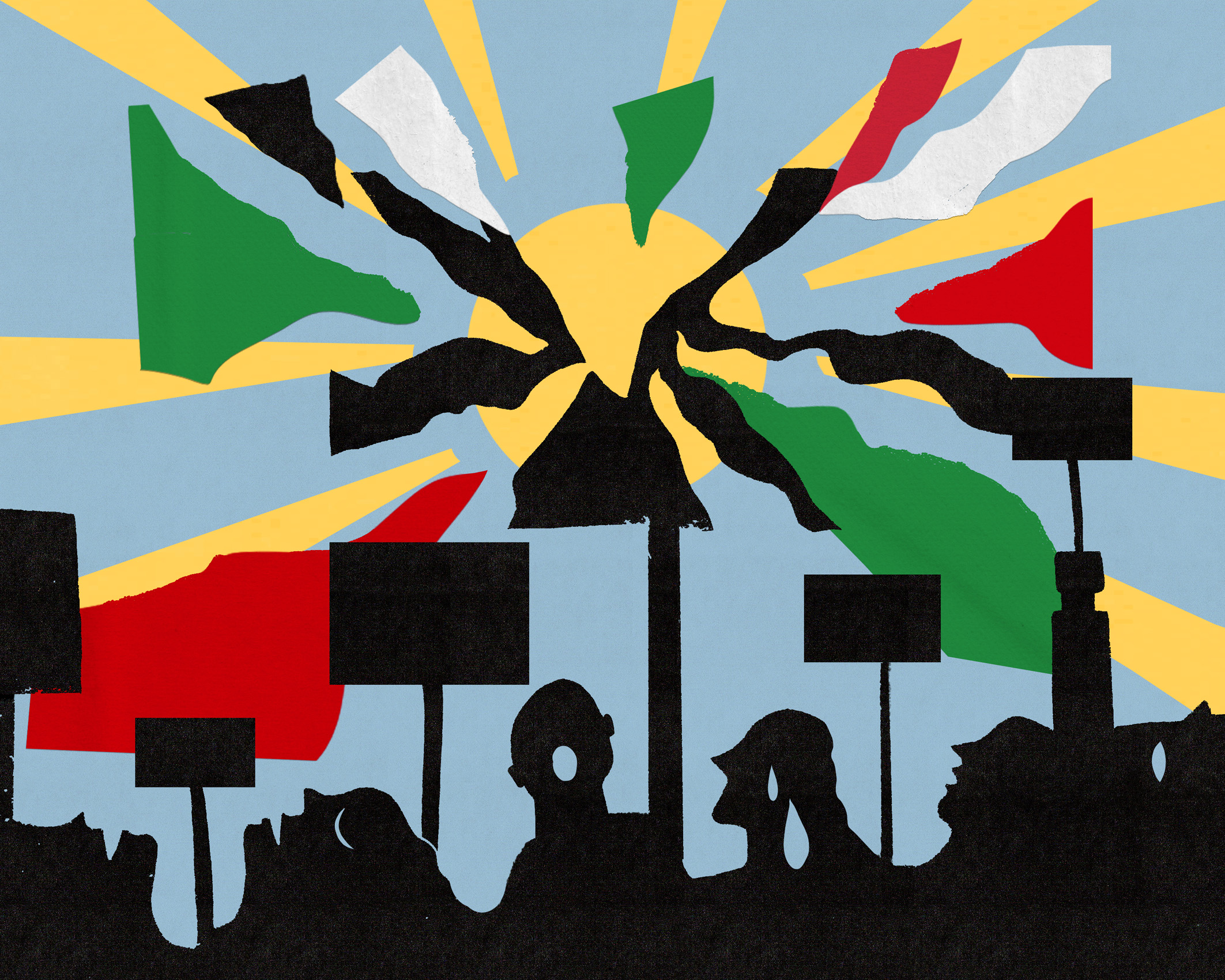
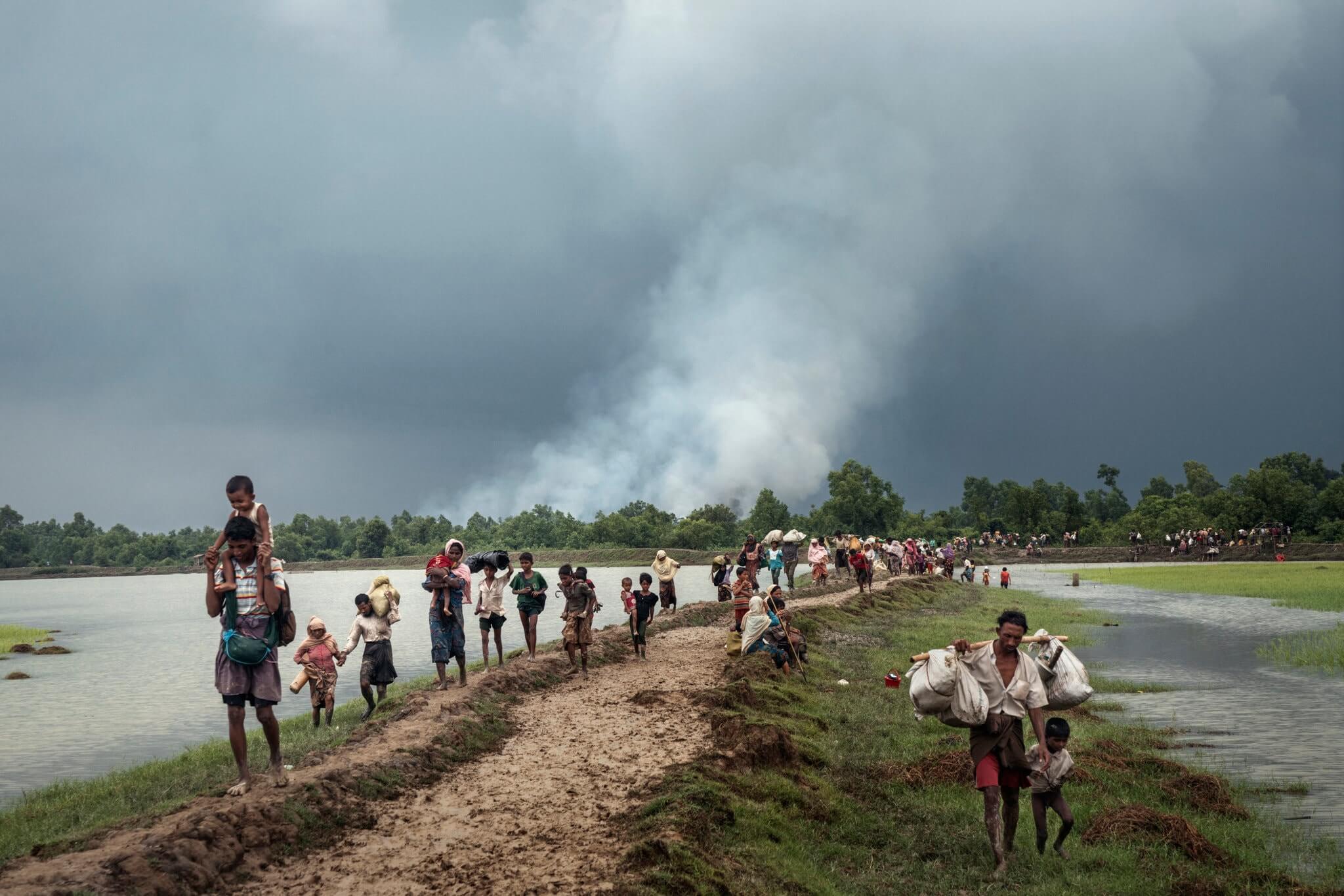
    Relegated to the sidelines with the ongoing Ukraine war and other crises like Taiwan, Myanmar has resurfaced in world headlines. In a recent dispatch, Associated Press (AP) reported that on 11 April 2023 ‘a fighter jet dropped bombs directly onto a crowd of people who were gathering at 8 am for the opening of a local office of the country’s opposition movement outside Pazigyi village in Sagaing region’s Kanbalu township….’ 1 . Subsequent information indicates that the number of dead including women and children is over 170. If so, this is the deadliest aerial attack carried out by the Myanmar military on its own people in the bloody aftermath of the military coup two years ago.

    With various Ethnic Armed Organisations (EAOs) and Peoples’ Defence Forces (PDFs) battling the Tatmadaw, martial law has been declared in 47 townships in Myanmar, cutting across states and regions. 2 More than 154,000 people have been displaced in the first two months of 2023, with total numbers of Internally Displaced People (IDPs) since the military takeover now at 1.3 million. Heavy fighting rages in Kachin State, the South East and North West of the country, 3 and overall 3000 civilian deaths since February 2021 are estimated 4 . Targeted assassination of military appointed government officials continues, the latest victim being the deputy director-general of the Union Election Commission who was shot dead on 22 April this year 5 . In 2022, up to 30,000 civilian infrastructures, including schools are reported to have been destroyed during military operations 6 . This situation has compelled the Tatmadaw to again postpone elections earlier scheduled for August 2023. The state of emergency has been extended.

    Important Developments Post February 2021

    The above statistics provide a telling perspective of the current violence in Myanmar. Yet there are other noteworthy developments in the country post the February 2021 coup. First of these is the increasing relevance of the opposition National Unity Government (NUG) around which civilian support appears to have coalesced.

    [powerkit_button size=”lg” style=”info” block=”true” url=”https://admin.thepeninsula.org.in/wp-content/uploads/2023/05/India-and-Myanmar-Two-years-after-the-Coup-1.pdf” target=”_blank” nofollow=”false”]
    Read More
    [/powerkit_button]

    Featured Image Credits: CNBC Indonesia

  • Technology, Politics and China’s Quest for Energy Dominance

    Technology, Politics and China’s Quest for Energy Dominance

    [powerkit_button size=”lg” style=”info” block=”false” url=”https://admin.thepeninsula.org.in/wp-content/uploads/2022/05/Technology-Politics-and-Chinas-Quest-for-Renewable-Energy-Dominance-3.pdf” target=”_blank” nofollow=”false”]
    Download
    [/powerkit_button]

    Abstract:

    This paper will empirically investigate the role of technology in international politics through a case study of China’s development of renewable energy infrastructure (solar PV and wind energy) and its impact on international politics. This paper looks at how technology helps shape a state’s identity using renewable energy technology as an explanatory variable. The paper employs Grygiel’s Model of Geopolitics to analyse the case study; geopolitics because much of China’s development in the renewable sector has been a function of its geography and abundance of natural resources.

    Introduction:

    China has experienced decades of near double-digit economic growth and since the 2000s, has witnessed a growing population and rapid industrialization that has correspondingly driven demand for energy. Its expeditious implementation of economic reforms has elevated it to the status of a global power capable of challenging the US-established status quo. Stability is increasingly being viewed as a function of China’s behaviour vis-à-vis its strategic rivals, primarily the US, and to a lesser extent Japan, India, Russia and the littoral states of Southeast Asia. But more importantly, it has been China’s near fanatic fervour to rise as a technologically superior state, as the US emerged post the World Wars, that has generated interest. The modernization of its military, near the meteoric rise of installed capacities for renewable sources of energy and technological revolution, underscores the importance and role technological advancement plays in a state’s development. Technology and international politics have a near symbiotic relationship and the former has the potential to fundamentally alter the way states exercise their sovereignty in pursuit of their national interests.

    [powerkit_button size=”lg” style=”info” block=”true” url=”https://admin.thepeninsula.org.in/wp-content/uploads/2022/05/Technology-Politics-and-Chinas-Quest-for-Renewable-Energy-Dominance-3.pdf” target=”_blank” nofollow=”false”]
    Read the Full Paper
    [/powerkit_button]

  • Authoritarian Persistence in West Asia and North Africa

    Authoritarian Persistence in West Asia and North Africa

    [powerkit_button size=”lg” style=”info” block=”false” url=”https://admin.thepeninsula.org.in/wp-content/uploads/2022/04/Rupal-Anand_Authoritarian-Persistence-in-West-Asia-and-North-Africa_compressed-1.pdf” target=”_blank” nofollow=”false”]
    Download
    [/powerkit_button]

    Abstract:

    The robustness of coercive apparatus in West Asia and North Africa has been a result of a culmination of factors over the years. The paper looks at three such arguments – those based on cultural and religious exceptionalism which look at Islam’s inhospitality towards democratization. Here, the author contends that such arguments overlook the fact that Islam is not monolithic, and varies too widely by context and time to remain a static, uniformed religious obstacle to democratic transition. Second, the paper looks at the framework of the rentier theory where the argument has been supported by looking at three primary features of the framework – first, the lack of taxation and the subsequent absence of democratic obligation; second, the presence of heavy security apparatus; and lastly, the lack of any credible political opposition. Finally, the paper looks at the institutional and political systems in the region where the presence of strong patron-client networks and the loyalty of the elite groups towards the regime present a considerable obstacle to the realization of democratic reforms.

    Introduction:

    The robustness of coercive apparatus in West Asia and North Africa has been a result of restrictive political participation and the lack of representative institutions. Two primary features that have come to characterize the authoritarian regimes of the region are the nature of states’ rent economy and the rampant patrimonialism and the associated patron-client networks.

    Over the years, single-party regimes in the region have been seen as more capable of containing elite fragmentation and surviving challenges caused by the economic crisis and political difficulties. Patronage-based economic liberalization in various countries, including Egypt, Syria, and Tunisia have further provided the resources necessary for authoritarian incumbents to create new bases for support. The states have witnessed the emergence of electoral and political party laws, particularly designed to undermine democracy, accompanied by limited press freedom and widespread electoral fraud. In Egypt and Iraq, democratic instincts were thwarted in the post-colonial period by the refusal of the states’ elite class to address the societies’ social needs, leading to declining standards of living and the subsequent violent protests.

    [powerkit_button size=”lg” style=”info” block=”true” url=”https://admin.thepeninsula.org.in/wp-content/uploads/2022/04/Rupal-Anand_Authoritarian-Persistence-in-West-Asia-and-North-Africa_compressed-1.pdf” target=”_blank” nofollow=”false”]
    Read the Full Paper
    [/powerkit_button]

  • Entrepot Development and Diversification: A comparative case study of Singapore and Dubai

    Entrepot Development and Diversification: A comparative case study of Singapore and Dubai

    [powerkit_button size=”lg” style=”info” block=”false” url=”https://admin.thepeninsula.org.in/wp-content/uploads/2022/03/Entrepot-Development-and-Diversification_Adithya-Subramoni-converted_compressed-1.pdf” target=”_blank” nofollow=”false”]
    Download
    [/powerkit_button]

    Introduction

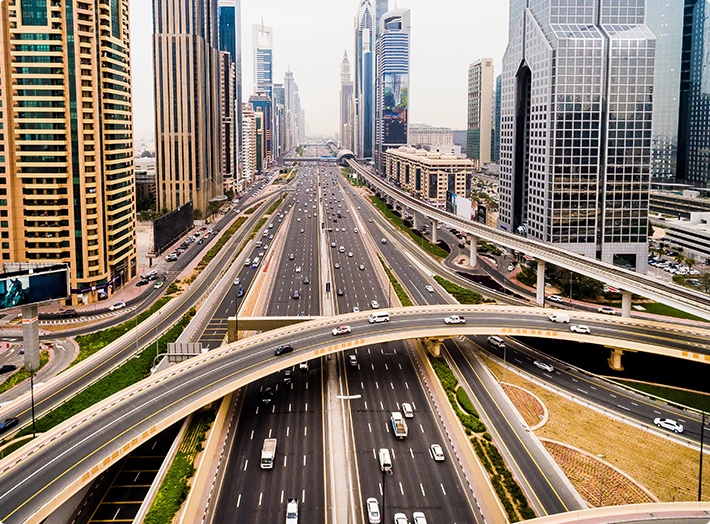
    Dubai is a small city-state in the United Arab Emirates (henceforth UAE), which is renowned internationally for being a logistics hub. With hydrocarbon revenues accounting for less than 1% of its GDP, it is the most diversified sheikhdom in the region. Dubai’s development model is considered ideal and is being followed by other Gulf countries in the region. Dubai’s development approach was inspired by the Singaporean development model. Singapore developed by welcoming foreign firms to set up shop for export-oriented manufacturing and thus used its entrepot status to its advantage. The emirate followed a similar approach to development because it was historically an entrepot and housed merchants but not entrepreneurs. Thus, it followed the Singaporean model by opening its borders to foreign firms and sought to diversify its economy by building on its entrepot characteristics. However, the outcome of this approach has been different vis-à-vis Dubai and Singapore in terms of sectoral diversification which is interesting. This paper conducts a qualitative study that reviews literature about their development policies and follows the most similar systems design to explain the outcome in sectoral diversification based on the differences in inputs of their development policies. The study finds that domestic wage policies and initiatives to encourage technologically advanced firms to relocate were key factors that encouraged a service-oriented diversification of Dubai’s economy.

    While the author appreciates that Singapore developed without the support from hydrocarbon revenues that Dubai was privileged with, this study questions why Dubai, an emirate blessed with the resources and capability to direct its development narrative, witnessed a different outcome in its diversification experience. This research provides insight into two cases of late development which is not often discussed by late development theorists. This study has the potential to further encourage economic historians and development practitioners in this region’s context to think about how development approaches are affected by factors like history, geographic location, and political conditions. The paper uses primary data sources such as government publications and newspaper reports, and secondary sources such as scholarly work for this study. Following this, the methodology of the study is addressed, after key factors of Singapore’s development are highlighted, then literature regarding Dubai’s development is reviewed, and then the discussion is presented followed by the conclusion.

    [powerkit_button size=”lg” style=”info” block=”true” url=”https://admin.thepeninsula.org.in/wp-content/uploads/2022/03/Entrepot-Development-and-Diversification_Adithya-Subramoni-converted_compressed-1.pdf” target=”_blank” nofollow=”false”]
    Read the Full Paper
    [/powerkit_button]

  • Dealing with China in 2021 and Beyond

    Dealing with China in 2021 and Beyond

                                                                                                                         TPF Occasional Paper
                                                                                                                                                                            February 2021

    The Current Situation

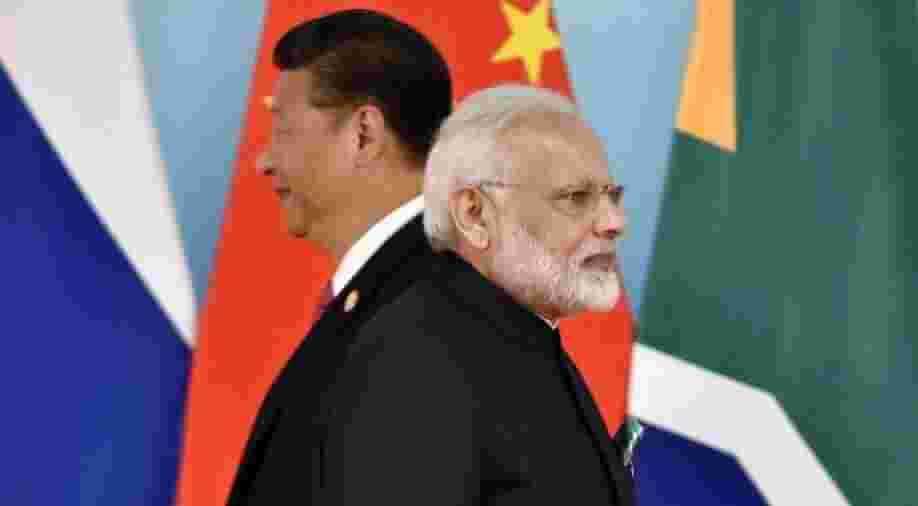
    As Eastern Ladakh grapples with a severe winter in the aftermath of a violent and tension-filled 2020, much analysis concerning happenings on the India-Tibet border during the previous year has become available internationally and within India. Despite variance in individual perspectives and prognoses, the one issue starkly highlighted is that 2020 marks a turning point in the India-China relationship, which, shorn of diplomatese, has taken a clear adversarial turn.

    Enough debate has taken place over the rationale and timing behind the Chinese action. It suffices to say that given the expansionist mindset of the Xi regime and its aspiration for primacy in Asia and across the world, it was a matter of time before China again employed leverages against India. In 2020 it was calibrated military pressure in an area largely uncontested after 1962, combined with other elements of hard power – heightened activity amongst India’s neighbours and in the Indian Ocean plus visibly enhanced collusivity with Pakistan This, despite platitudes to the contrary aired by certain China watchers inside India, who continued to articulate that existing confidence-building mechanisms (CBMs) would ensure peace on the border and good relations overall. Multiple incidents on the border over the last few years culminating in the loss of 20 Indian lives at Galwan have dispelled such notions.

    Currently, in terms of militarization, the LAC in Eastern Ladakh can vie with the Line of Control (LOC) on the Western border.

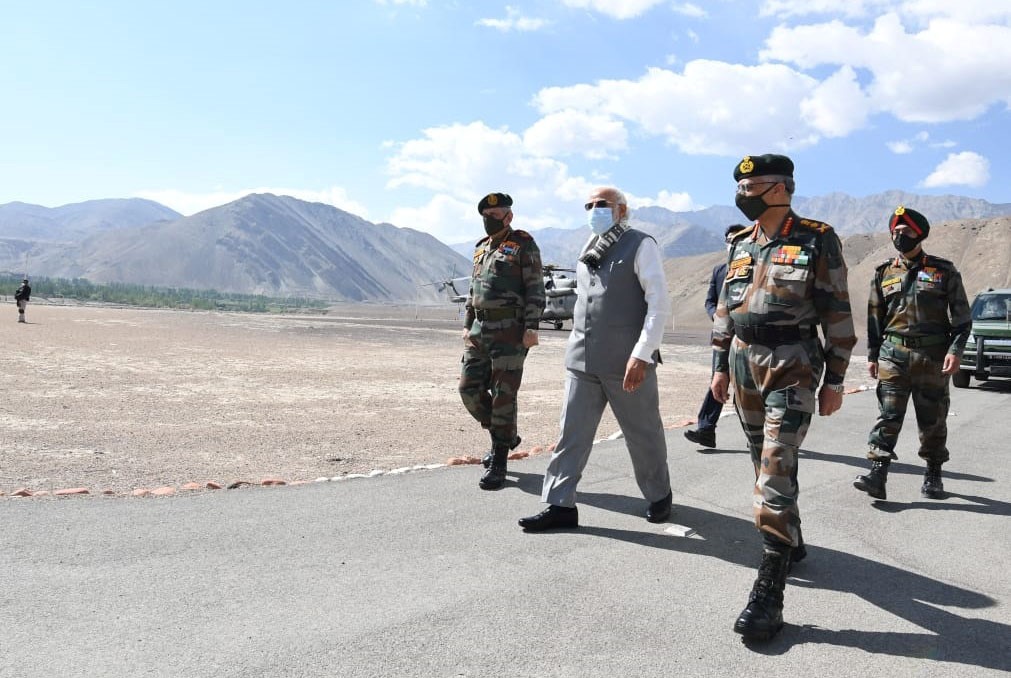
    As an immediate consequence, the Line of Actual Control (LAC) in the arena of conflict in East Ladakh is seeing the heaviest concentration of troops in history, supplemented by fighter jets, utility and attack helicopters, the latest artillery acquisitions, armoured formations, road building teams and an inventory of drones, backed by matching logistics. Currently, in terms of militarization, the LAC in Eastern Ladakh can vie with the Line of Control (LOC) on the Western border.

    Within the country, the perception of China as the principal foe has crystallised. At no other time since 1962 has China come in for such intense scrutiny. Indian public discourse is focused on China, towards interpreting its policies and implications for India and the world – all against the backdrop of international geopolitics churned further by the Covid pandemic.

    China and the World in 2021

    In 2017, President Xi Jinping had given a foretaste of things to come when spelling out his vision during the 19th Party Congress – that China has entered a “new era” where it should take the “centre stage in the world’[1]. In an insightful essay, Jake Sullivan (now National Security Adviser in the Biden administration) and Hal Brands have observed that ‘China has two distinct paths towards achieving this aim’ [2]. The first focuses on building regional primacy as a springboard to global power’ while the second ‘focuses less on building a position of unassailable strength in the Western Pacific than on outflanking the U.S. alliance system and force presence in that region by developing China’s economic, diplomatic, and political influence on a global scale’. In the same piece, the authors sombrely conclude that the US ‘could still lose the competition with China even if it manages to preserve a strong military position in the Western Pacific….softer tools of competition—from providing alternative sources of 5G technology and infrastructure investment to showing competent leadership in tackling global problems—will be just as important as harder tools in dealing with the Chinese challenge…’ [3] These observations are prescient.

    China and the Pandemic. A look at China’s conduct in this context and those of other nations over the last 12 months is instructive. The first aspect is its reaction to worldwide opprobrium for initially mishandling the Corona crisis – reprehensible wolf warrior diplomacy, crude attempts to divert the narrative about the origin of the Virus, unsuccessful mask diplomacy[4] and successfully delaying a WHO sponsored independent investigation into the matter for a full year without any guarantee of transparency. Secondly, it has exploited the covid crisis to strengthen its hold on the South China Sea commencing from March 2020 itself. Some examples are the renaming of 80 islands and geographical features in the Paracel and Spratly islands, commissioning research stations on Fiery Cross Reef and continued encroachment on fishing rights of Indonesia and Vietnam[5], in addition to a host of aggressive actions too numerous to mention, including ramming of vessels. Retaliatory actions from the US have continued, with the Trump administration in its final days sanctioning Chinese firms, officials, and even families for violation of international standards regarding freedom of navigation in January 2021[6]. The outgoing administration delivered the last blow on 19 January, by announcing that the US has determined that China has committed “genocide and crimes against humanity” in its repression of Uighur Muslims in its Xinjiang region[7]. As regards Taiwan, the Australian Strategic Policy Institute had recently forecast that China Taiwan relations will be heading for a crisis in a few weeks’ time,[8] (as borne out by serious muscle-flexing currently underway). If so, it would put the American system of alliances in the region since 1945 squarely to the test.

    Pushback in the Indo Pacific. With China constantly pushing the envelope in its adjoining seas, the Quadrilateral Dialogue, whose existence over the last decade was marked only by a meeting of mid-level officials in Manila in November 2017, has acquired impetus. Initially dismissed as ‘sea foam’ by China, the individual interpretations of roles by each constituent have moved towards congruence, with Australia openly voicing disenchantment with China. Though an alliance is not on the cards, it can be concluded that increased interoperability between militaries of India, Australia, Japan and the US is both as an outcome and driver of this Dialogue, deriving from respective Indo Pacific strategies of member nations. Further expansion of its membership and tie-ups with other regional groupings is the practical route towards an egalitarian, long-lasting and open partnership for providing stability in this contested region. Japan’s expression of interest in joining the Five Eyes intelligence-sharing network of the US, UK, Canada, Australia and New Zealand[9], is a step in this direction. European nations like Germany, the Netherlands and France have recently declared their Indo Pacific strategies. France has provided the clearest articulation, with the French Ambassador in Delhi spelling out the prevailing sentiment in Europe about China, as ‘ a partner, a competitor and a systemic rival’[10], while further stating that  “when China breaks rules, we have to be very robust and very clear”[11] . A blunt message befitting an Indo Pacific power, reflecting the sentiments of many who are yet to take a position.

    BRI will see major reprioritisation – though its flagship program, the China Pakistan Economic Corridor (CPEC) is unlikely to suffer despite disagreements on certain issues between the two countries.

    Slowing of a Behemoth. China’s other driver the Belt and Road Initiative (BRI), has considerably slowed in 2020. Lee YingHui, a researcher with Nanyang Technological Institute Singapore wrote last September  ‘..in June this year, the Chinese Foreign Ministry announced that about 20 per cent of the projects under its ambitious Belt and Road Initiative (BRI) had been affected by the COVID-19 pandemic. At the same press briefing, Wang Xiaolong, director-general at the Foreign Ministry’s International Economic Affairs Department, also revealed that a survey by the ministry estimated that some 30 to 40 per cent of projects had been somewhat affected, while approximately 40 per cent of projects were deemed to have seen little adverse impact[12]. Given the parlous condition of economies of client states post Covid-19 with many including Pakistan requesting a renegotiation of loans[13], BRI will see major reprioritisation – though its flagship program, the China Pakistan Economic Corridor (CPEC) is unlikely to suffer despite disagreements on certain issues between the two countries.

    Resilient Economy. China’s economy has rebounded fastest in the world, growing at 6.5 % in the final three months of 2020[14]. Despite the rate of annual growth being lowest in 40 years[15], its prominence in global supply chains has ensured some successes, such as the Comprehensive Agreement on Investment with the EU in December 2020. The deal, which awaits ratification by the European Parliament is more a diplomatic than an economic win for China, being perceived as detrimental to President Biden’s efforts to rejuvenate the Trans-Atlantic Alliance. China has notched up another win with the signing of the Regional Comprehensive Economic Partnership (RCEP), where it along with 14 Asian countries from ASEAN and others (including Quad members like Australia and Japan)  have agreed on an ‘ integrated market’. Given India’s position on the RCEP, how this agreement pans out and implications for its members will be watched with interest.

    America in the New Year. The Biden Administration’s initial actions reaffirm the bipartisan consensus achieved last year on dealing with China. Comments of  Secretary of State Anthony Blinken that  ‘China presents the “most significant challenge” to the US while India has been a “bipartisan success story” and the new US government may further deepen ties with New Delhi,’[16] were indicative, as were those of Gen Lloyd Austin the Secretary of Defence during his confirmatory hearing[17].  President Biden’s first foreign policy speech on 04 February that ‘America is Back’ have provided further clarity. Earlier, Blinken and Austin had dialled Indian counterparts NSA Doval and Defence minister Rajnath Singh to discuss terrorism, maritime security, cybersecurity and peace and stability in the Indo Pacific.[18]Economically, American interest in joining or providing alternatives to the Comprehensive and Progressive Agreement for Trans-Pacific Partnership (CPTPP, with an 11 nation membership, born out of President Trump’s withdrawal from its previous format, the TPP), will be another determinant in matters of trade with China. Harsh national security challenges will test the new administration’s resolve, as has already happened in the South China Sea over Taiwan where at the time of writing, the USS Theodore Roosevelt is conducting Freedom of Navigation operations[19]. Similar tests will occur over North Korea and Tibet, where the Senate’s passage of the Tibet Policy and Support Act 2020 mandates that decisions regarding the Dalai Lama’s succession be taken exclusively by the Tibetan people and the incumbent. Overall, a sense of how the world including the US will deal with China in 2021 is well captured by Commodore Lalit Kapur of the Delhi Policy Group when he states that ‘ …China has become too unreliable to trust, too powerful and aggressive to ignore and too prosperous, influential and connected to easily decouple from………[20] Going back to the views essayed by Sullivan and Brands, it appears that China is following both paths to achieve its objective, ie Great Power status.

    India and China

    The Early Years  India’s attempt, soon after independence to develop a relationship with China, its ‘civilisational neighbour’ was overshadowed by the new threat to its security as the PLA invaded Tibet in 1950 – effectively removing the buffer between the two large neighbours. Dalai Lama’s flight to India in March 1959, the border clash at Hot Springs in Ladakh six months later and the subsequent 1962 war shattered our illusions of fraternity.  Documents published recently pertaining to the period from 1947 to the War and beyond[21], reveal differences in perception within the Indian government in the run-up to 1962 despite the availability of sufficient facts. This combined with Chinese duplicity and disinformation, Indian domestic and international compulsions resulted in disjointed decision making, leading to the disastrous decision to implement the ‘Forward Policy’ with an unprepared military. A brief period of security cooperation with the US ensued including the signing of a Mutual Defence Agreement.[22] However, the US-China rapprochement of the early 70s and India’s professed non-alignment ensured its diminished status in the great power calculus.

    Reaching Out to China. India’s outreach to China commenced with Prime Minister Rajiv Gandhi’s visit to Beijing in 1988 in the aftermath of the Chinese intrusion at Somdorung Chu in 1986 in Arunachal Pradesh, resulting in a full-fledged standoff which lasted till mid-1987. The consequent push towards normalisation of relations resulted in the September 1993 Agreement on the Maintenance of Peace and Tranquillity along the Line of Actual Control in the India-China Border Areas,  the November 1996 Agreement on Confidence Building Measures in the Military Field along the Line of Actual Control in the India-China Border Areas, followed thereafter by the Declaration on Principles for Relations and Comprehensive Cooperation between India and China, of June 2003 and finally the Agreement between the Government of the Republic of India and the Government of the People’s Republic of China on the Political Parameters and Guiding Principles for the Settlement of the India-China Boundary Question of April 2005, signed during the visit of Chinese premier Wen Jiabao, which also saw the India China relationship elevated to a ‘Strategic and Cooperative Partnership for Peace and Prosperity’.

    Despite partially successful attempts to broad base the engagement, territorial sovereignty continued to dominate the India China agenda, as can be observed by the number of agreements signed on border management – with minimal outcomes. It appears now that what can only be construed as diffidence in dealing with China on the border (and other issues) arose not because of misplaced optimism over such agreements, but for several other reasons. Some were structural weaknesses, such as lack of development of the border areas and poor logistics. Others arose because of want of a full-throated consensus on how strong a line to take with a  visibly stronger neighbour  – aggravated by growing economic disparity and the limitations imposed by self-professed non-alignment, especially so in the absence of a powerful ally like the Soviet Union, which had disintegrated by 1991. Also, American support could not be taken for granted, as was the case in the 60s.  Overall, the approach was one of caution. This, coupled with lack of long term border management specialists induced wishful myopia on the matter, which was dispelled periodically by border skirmishes or other impasses, before returning to ‘business as usual’.  

    The extent of Engagement Today. To objectively analyse the relationship, it is important to comprehend the extent of the India China engagement on matters other than security. In the context of trade and industry, a perusal of the website of the Indian embassy in Beijing provides some answers. There is a list of 24 agreements/ MoUs /protocols between the two countries on Science and Technology alone, covering fields as diverse as aeronautics, space technology, health and medicine, meteorology, agricultural sciences, renewable energy, ocean development, water resources, genomics, geology, and others. The Embassy brings out India’s concerns regarding trade including impediments to market access, noting that trade imbalances have been steadily rising, to reach $58.4 billion in 2018, reducing marginally to $56.95 in 2019, a first since 2005. The poor penetration of Indian banks in China, India’s second-largest shareholding (8%) in the Asian Infrastructure Investment Bank (AIIB), and being the largest borrower from the New Investment Bank or NIB, a BRICS bank of which all members have equal shareholding provide an understanding of linkages between the countries in the banking sector[23]. Other areas of cooperation are in petroleum and railways.

    Economic Fallout Post April 2020. After the Galwan incident, India has taken strong measures on the economic front against China, from banning over 250 software applications to a partial ban on various categories of white goods,and the imposition of anti-dumping duties on many others. The Consolidated FDI Policy of the Department for Promotion of Industry and Internal Trade dated 15 October 2020, mandates Government scrutiny of every Chinese investment proposal before approval. However, the paradox in the India China relationship is well illustrated by trade figures for the first half of the Financial Year 20-21, where China surpassed the USA to become India’s largest trading partner. India reduced imports from China but exports to China grew by a robust 26.2 per cent at $10.16 billion[24]. Also, conditionalities for borrowing from the AIIB and NIB have resulted in India having to permit Chinese firms to bid for works connected with projects funded by these institutions. Consequently in January this year, the contract for construction of a 5.6 km long underground stretch of the Rapid Rail Transit System in the National Capital Region has been awarded to a Chinese company, Shanghai Tunnel Engineering Company Limited.[25] As noted earlier, decoupling is not easy. Incentives for companies to relocate to India have been announced, with some investment flowing in from Google and Facebook, and plans for Samsung to relocate a factory to NOIDA[26]. Finally, India’s exclusion from the RCEP will also have to be factored in when negotiating a long term trade policy with China.

    However, the paradox in the India China relationship is well illustrated by trade figures for the first half of the Financial Year 20-21, where China surpassed the USA to become India’s largest trading partner.

    Soft Power and Academia. Indian soft power in China remains subservient to harsh security concerns despite oft-quoted historical antecedents. Some elements like Indian cinema continue to be extremely popular. Student exchange programs have taken shape, especially under the aegis of Confucius Institutes which have secured a toehold in some Indian campuses. Following the trend worldwide, their programs are also under scrutiny[27].  The few Indian students in China (less than 25000)[28] have been hit hard by the coronavirus. Overall, given the current state of engagement, employing soft power as an effective tool has limited potential. Exchange of scholars from policy and security think tanks has been a good way of imbibing a sense of the other, resulting in greater awareness. While the trust deficit and reasons for the same have always been highlighted by the Indian side, it has been the general experience that China has been less forthcoming in its responses.

    Building Blocks for a China Policy

    In the middle term, unless there is a concerted and verifiable effort by China, trade with that country will be overshadowed by security issues  (the huge trade imbalance also becoming one of these !). The Indian economy has commenced its post-Covid recovery in the new year. The budget for FY 21-22, trade policies of others like the EU and the US, will impact economic policy, as will national security concerns.

    Immediate security priorities vis a vis China are a mix of the geopolitical and purely military. These can broadly be outlined – safeguarding Indian interests in the Indian Ocean region and the littorals, holding the line in the high Himalayas and ensuring sanctity over Indian skies. The first being both a geopolitical and security matter would leverage all elements of statecraft including the military. The balance two are a direct outcome of India’s military power. These, intertwined with India’s multilateral approach towards cooperation in world fora would form the basis of dealing with China.

    Countries in the neighbourhood other than Pakistan when in distress, look first towards India for relief – natural calamities, food shortages[29], and now the corona vaccine, where Indian generosity remains unsurpassed worldwide. India does not indulge in cheque book diplomacy, nor entice weaker neighbours into debt traps.

    Managing the Neighbourhood. In South Asia, India is primus inter pares due to size, geographical location, resources, capability and potential. Its soft power, economic reach ( while not comparable to China’s) and associated linkages with other countries are huge, at times even considered overwhelming. Countries in the neighbourhood other than Pakistan when in distress, look first towards India for relief – natural calamities, food shortages[29], and now the corona vaccine, where Indian generosity remains unsurpassed worldwide. India does not indulge in cheque book diplomacy, nor entice weaker neighbours into debt traps. Despite ethnic linkages and security concerns resulting sometimes in what is perceived by others as ‘interventionist politics’, India’s respect for its neighbours’ sovereignty is absolute. This is in contrast to China, whose recent interventions in Nepal have led to rallies in front of the Chinese embassy[30]. Its pressure on the NLD government in Myanmar over BRI projects had again not been viewed favourably in that country,[31] though the trajectory that the China-Myanmar relationship now follows remains to be seen, with China attempting to support Myanmar’s military in international fora after the coup[32]. Within South Asia, strengthening delivery mechanisms, sticking to timelines in infrastructure projects, improving connectivity and resolving the myriad issues between neighbours without attempting a zero-sum game with China is the way forward for India, which should play by its considerable strengths. Simultaneously, it must look at growing challenges such as management of Brahmaputra waters and climate change, and leverage these concerns with affected neighbours.

    Strengthening Military Capability. A more direct challenge lies more in the military field,  and in measures necessary to overcome these.  The justifiable rise in military expenditure during the current year would continue or even accelerate. The armed forces are inching towards a mutually agreed road map before implementing large scale organisational reforms. Conceptual clarity on integrated warfighting across the spectrum in multiple domains (including the informational ) is a sine qua non, more so when cyberspace and space domains are concerned. This mandates breaking up silos between the military and other specialist government agencies for optimisation and seamless cooperation. Also, while classical notions of victory have mutated, swift savage border wars as witnessed in Nagorno Karabakh remain live possibilities for India, with open collusion now established between China and Pakistan. As always, the study of the inventory, military capability of the adversary and his likely pattern of operations will yield valuable lessons. The armed forces have to prepare multiple options, to deal with a range of threats from full scale two front wars down to the hybrid, including responses to terrorist acts while ensuring sovereignty across the seas. Network-centric warfare will take centre stage, with information operations being vital for overall success, possibly even defining what constitutes victory.

    Progress has been achieved in these directions. As an example, the first Indian weaponised drone swarm made its debut on Army Day 2021, and visuals of a ‘wingman drone’ underdevelopment have been shown during the Aero India 2021 at Bangalore. The military would be planning for operationalisation, induction, deployment, staffing and human resource aspects of this weapon platform with the nominated service. An estimate of the time required to resolve these issues as also for full-scale production of such systems and larger variants will dictate procurement decisions with respect to other land and air platforms providing similar standoff kinetic effects, and surveillance capability. A concurrent requirement to develop sufficient capability to counter such systems would doubtless be under scrutiny. In this regard, the outcome of the PLA merging its cyber and electronic warfare functions for multiple reasons merits attention.[33] While the Navy’s requirements to dominate the Indian Ocean are well appreciated, a consensus on its future role and the need (or otherwise) for a third aircraft carrier would decide the nature, type and numbers of future naval platforms – unmanned underwater vehicles, submarines, shore/ carrier-based aircraft and others.  With decisions over the Tejas LCA induction finalised, induction of a state of the art platforms from the USA and France over the last few years and hope for the acquisition of new generation indigenous air defence systems[34] on the anvil, the IAF is set to gradually regain its edge. Overall, India’s military has to leverage the latest technology and develop the capability to fight in multiple domains, which its hard-earned experience in third-generation warfighting would complement. With restructuring planned concurrently, each decision will have to be fully informed and thought through – more so when mini faceoffs as has happened at Naku La in Sikkim this month continue to occur.

    A Way Forward

    Traditional Chinese thinking has simultaneously been dismissive and wary of India. In his seminal publication at the turn of the century, Stephen Cohen noted that ‘…from Beijing’s perspective India is a second rank but sometimes threatening state. It poses little threat to China by itself and it can be easily countered but Beijing must be wary of any dramatic increase in Indian power or an alliance between New Delhi and some hostile major state..’[35]  As brought out in this paper, outlines of a grounded long term China policy based on previous experiences and new realities are visible. Rooted primarily in the security dimension followed thereafter by the economic, its success will be predicated on peace and tranquillity on the border, without entering into the trap of competition in either of the two domains. As pointed out by the Minister for External Affairs in his talk to the 13th All India Conference for China Studies this month [36] the India-China relationship has to be based on ‘mutuality…  mutual respect, mutual sensitivity and mutual interests ..’. The EAM further noted that ‘expectations…. that life can carry on undisturbed despite the situation at the border, that is simply not realistic. There are discussions underway through various mechanisms on disengagement at the border areas. But if ties are to steady and progress, policies must take into account the learnings of the last three decades’[37].

    Rooted primarily in the security dimension followed thereafter by the economic, its success will be predicated on peace and tranquillity on the border, without entering into the trap of competition in either of the two domains.

    In the same talk, the EAM has laid down eight broad and eminently practical propositions as guidelines for future India-China relations. Most prominent of these is that peace and tranquillity on the border are a must if relations in other spheres are to develop. Also, the need to accept that a multipolar world can have a multipolar Asia as its subset. He stressed that reciprocity is the bedrock of a relationship, and sensitivities to each other’s aspirations, interests and priorities must be respected. Concurrently, management of divergences and differences between two civilizational states should be considered over the long term.

    A China policy crafted on these principles would ensure that India’s concerns vis a vis its neighbour is addressed, within the larger National goal of all-round growth and development of India and its citizens in the 21st Century.


    Notes:

    [1] ‘Xi JinPing Heralds New Era of Chinese Power’ Dipanjan Ray Chaudhury, Economic Times 18 October 2017

    [2] ‘China Has Two Paths To Global Domination’ Jake Sullivan,  Hal Brands, Foreign Policy, 22 May 2020

    [3] ibid

    [4] ‘China’s Mask Diplomacy is Faltering.But the US isn’t Doing any better’ Charlie Campbell Time Magazine 03 April 2020

    [5] ‘China’s Renewed Aggression in the South China Sea’ Gateway House Infographic 22 April 2020

    [6] ‘US imposes new sanction on Beijing over South China Sea’  Mint 15 January 2021

    [7] In parting shot, Trump administration declares China’s repression of Uighurs ‘genocide’ Humeyra Pamuk, Reuters 19 January 2021

    [8] ‘Pacific Panic: China-Taiwan relations to reach breaking point in ‘next few weeks’ skynews.com.au 18 January 2021

    [9] ‘Japan wants de facto ‘Six Eyes’ intelligence status: defence chief’ Daishi Abe and Rieko Miki Nikkei Asia 14 August 2020

    [10] ‘Emmanuel Bonne’s interview to the Times of India’ 10 January 2021  Website of the French Embassy in New Delhi

    [11] ‘When China breaks rules, we have to be very robust and clear: French diplomat’ Dinakar Peri, The Hindu 08 January 2021

    [12] ‘COVID-19: The Nail in the Coffin of China’s Belt and Road Initiative?’ Lee YingHui, The Diplomat 28 September 2020

    [13] ibid

    [14] ‘Covid-19: China’s economy picks up, bucking global trend’ BBC.com  18 January 2021

    [15] ibid

    [16] ‘New US govt may look to further deepen ties with India: Blinken’ Elizabeth Roche, The Mint 21 Jan 2021

    [17] ‘What Biden’s Defence Secretary Said About Future Relations With India, Pakistan’ Lalit K Jha, The Wire 20 January 2021

    [18] ‘US NSA speaks to Doval, Def Secretary dials Rajnath’ Krishn Kaushik and Shubhajit Roy Indian Express 27 January 2021

    [19] ‘As China Taiwan tension rises, US warships sail into region’ The Indian Express 25 January 2021

    [20] ‘India and Australia: Partners for Indo Pacific Security and Stability’  Lalit Kapur, Delhi Policy Group Policy Brief Vol. V, Issue 42 December 15, 2020

    [21] ‘India China Relations 1947-2000 A Documentary Study’ (Vol 1 to 5)  Avtar Singh Bhasin   Geetika Publishers New Delhi 2018

    [22] ‘The Tibet Factor in India China Relations’  Rajiv Sikri  Journal of International Affairs , SPRING/SUMMER 2011, Vol. 64, No. 2, pp 60

    [23] Website of the Embassy of India at Beijing   www.eoibeijing.gov.in

    [24] ‘What an irony! Mainland China beats US to be India’s biggest trade partner in H1FY21’  Sumanth Banerji        Business Today 04 December 2020

    [25] ‘Chinese company bags vital contract for first rapid rail project’  Sandeep Dikshit   The Tribune   03 January 2021

    [26] ‘Samsung to invest Rs 4,825 cr to shift China mobile display factory to India’ Danish Khan  Economic Times 11 December 2020

    [27]  ‘The Hindu Explains | What are Confucius Institutes, and why are they under the scanner in India?’

    Ananth Krishnan The Hindu August 09 2020

    [28] ‘23,000 Indian students stare at long wait to return to Chinese campuses’  Sutirtho Patranobis  Hindustan Times  08  September 2020

    [29] ‘Offering non-commercial, humanitarian food assistance to its neighbours: India at WTO’ Press Trust of India 19 December 2020

    [30] ‘Torch rally held in Kathmandu to protest against Chinese interference’ ANI News  30 December 2020

    [31] ‘Chinese Foreign Minister Wang Yi visits Myanmar with aim to speed up BRI projects’  Dipanjan Roy Chaudhury  Economic Times  09 January 2021

    [32] ‘China blocks UNSC condemnation of Myanmar coup’ India Today Web Desk 03 February 2021

    [33] ‘Electronic and Cyber Warfare: A Comparative Analysis of the PLA and the Indian Army’ Kartik Bommankanti ORF Occasional Paper July 2019

    [34] ‘India successfully test fires new generation Akash NG missile’ Ch Sushil Rao  Times of India  25 January 2021

    [35] ‘ India  Emerging Power’  Stephen Philip Cohen   Brookings Institution Press 2001   pp 259

    [36] Keynote Address by External Affairs Minister at the 13th All India Conference of China Studies January 28, 2021

    [37] ibid


    Image Credit: Wion  and Trak.in

  • Creation of Statelessness in India: an Analysis of the Crisis and the way Forward

    Creation of Statelessness in India: an Analysis of the Crisis and the way Forward

    Introduction

    Over the last few decades, migration has become a global norm. Although a substantial part of the global population migrates for economic and personal reasons, it is undeniable that migration as a phenomenon is exacerbated by factors such as armed conflicts, ethnic or politico-social tensions, climate change and others. The effect that migration has on global economic, social and political transformations is widely recognized.[1] Naturally, in contrast to migration policies, all States have specific laws to regulate the acquisition of nationality by birth, descent and/or naturalization. While most of us realise the significance of the concept of nationality, we tend to overlook the fact that inclusion by nationality often brings the phenomenon of statelessness with it. In this context, the latest developments in the Indian laws regulating nationality raise several social and legal conundrums. However, the lack of any legal framework on statelessness or India’s abstinence from signing the 1954 Convention relating to the Status of Stateless Persons or the 1961 Convention on the Reduction of Statelessness is a clear indication of India’s unpreparedness to deal with the potential long-term consequences of its new laws.

    Deprivation of Citizenship and Statelessness in the Contemporary Era

    The concepts of nationality and citizenship have attracted great attention for raising several contemporary politico-legal and social issues. Citizenship confers an identity on an individual within a particular state. Consequently, a citizen is able to derive rights and is assigned obligations by virtue of this identity.[2] Political Philosopher, Hannah Arendt, terms this as “the right to have rights”.[3] Citizenship is what entitles a citizen to the full membership of rights, a democratic voice and territorial residence. While we understand the significance of being a citizen of a country, we often fail to ponder upon the consequences of losing it. Immanuel Kant argues that citizenship by naturalisation is a sovereign privilege and the obverse side of such privilege is the loss of citizenship or “denationalisation”.[4] Arendt has also identified the twin phenomena of “political evil” and “statelessness”.[5]

    This condition of statelessness is not only a harmful condition which makes the person vulnerable to violation of human rights, but it also works in delegitimising a person in the socio-legal order of a State.

    An introspect into the right to have the right to a nationality goes on to throw light on the issue of statelessness. Although history has proven the existence of both de facto and de jure statelessness, this chapter is only concerned with de jure statelessness, specifically within the Indian context. The Convention Relating to the Status of Stateless Persons defines a “stateless person” as ‘a person who is not considered as a national by any State under the operation of its law’.[6] This condition of statelessness is not only a harmful condition which makes the person vulnerable to violation of human rights, but it also works in delegitimising a person in the socio-legal order of a State.[7] The number of stateless persons globally in the year 2018 was 3.9 million.[8] This number is still regarded as a conservative under-estimation owing to the fact that most of the affected population reside precariously within the society and most countries do not calculate comprehensive statistics of stateless persons within their territory. UNHCR estimates at least a global figure of 10 million stateless persons globally.[9]

    Statelessness hinders the day-to-day life of a person by depriving them of access to the most rudimentary rights like education, employment or health care to name a few.  It may be attributed to multiple causes inter-alia discrimination, denationalization, lack of documentation, climate change, forced migration, conflict of laws, boundary disputes, state succession and administrative practices.[10] Discrimination based on ethnicity, race, religion or language has been a constant cause of statelessness globally. Currently, at least 20 countries uphold laws which can deny or deprive a person of their nationality in a discriminatory manner.[11] Statelessness tends to exaggerate impact of discrimination and exclusion that minority groups might already be facing. It widens the gap between communities thus deepening their exclusion.[12]  The phenomenon of statelessness has been the more prominent in South and South East Asian countries. The Hill Tamil repatriates in India from Sri Lanka and the Burmese refugees in Cambodia are examples of Asian Stateless populations who are vulnerable to human rights abuses. The 1954 Convention relating to the Status of Stateless Persons and the 1961 Convention on the Reduction of Statelessness are the two most important conventions addressing this issue. The former has 94 parties and 23 signatories, and the latter has 75 parties and only 5 signatories. Albeit international legal norms on the issue of statelessness have restrained the States’ denationalisation power, it has however not erased the use of discrimination as a tool for denationalization.[13] This has been particularly relevant in the case of naturalization of nationals from Muslim-majority countries.[14]  It can be argued that India’s Citizenship Amendment Act has also joined this bandwagon.

    Interplay of the NRC and Citizenship Amendment Act, 2019

    The Citizenship Amendment Act which was passed by the Indian Parliament on 11th December 2019 has caused a lot of uproar and outbreak of protests all over the country. This Act has attracted wide international condemnation[15] for being discriminatory[16], arbitrary and unconstitutional.[17] Before we go on to scrutinise the role of Citizenship Amendment Act in statelessness creation, an analysis of the National Register of Citizens (NRC) is warranted. The NRC process has been the source of several issues regarding migration, citizenship and polarisation of political support in the state of Assam. It has culled out a distinct space in mobilising the political discourse in Assam specifically during the 2014 and 2019 parliamentary elections.[18]

    The NRC is a register containing names of Indian Citizens. This register was prepared for the very first time in the year 1951 based on the data collected during census. This process was done subsequent to various groups[19] causing agitation in Assam over the non-regulation of immigrant inflow into the region. This resulted in resorting to laws like the Foreigners Act, 1946 and Foreigners (Tribunal) Order, 1939. The contrast in India’s approach to disregard the aforementioned laws to accommodate people escaping violence in West Pakistan[20] is to be noted here.  The NRC process in Assam determines illegal migrants based on their inability to prove the nexus between their documented ancestral legacy to the Indian State. The NRC process defined such illegal immigrants irrespective of their religious affinity. The cut-off date used to determine a person’s ability to prove ancestral legacy was set to March 24, 1971 which is in line with Bangladesh’s war of liberation.

    Despite the criticisms and drawbacks, the NRC process is  in fact a much needed exercise in the State of Assam. Owing to its shared border with Bangladesh, Assam has been the gateway for refugees, economic and illegal migrants who come to India.

    As Assam has been a hub for labour migration right from the colonial era, the ethnic Assamese have been insecure about the potential demographic shifts in favour of the ethnic Bengali migrants, for a long time.[21] This concern was exacerbated by the mass influx of Bengali migrants after the birth of Bangladesh. This mass migration which aggravated the already anti-immigrant sentiment culminated in a student-led movement in the 1970s and 1980s.[22] A series of protests broke out in the Assam to pressure the government to identify and expel illegal immigrants. In the year 1985, the Union government and the AASU signed the Assam Accord by which the government assured the establishment of a mechanism to identify “foreigners who came to Assam on or after March 25, 1971” and subsequently take practical steps to expel them.[23] Consequent to a Public Interest Litigation[24] filed in 2009. In the year 2014, the Supreme Court assumed the role of monitoring the process of updating the NRC to identify Indian citizens residing in Assam in accordance with the Citizenship Act of 1955. The very first draft of the process was published in December 2017 and 1.9 million people were left out of the register from a population of 3.29 million people in Assam.[25] In August 31, 2019, the final list was published which left out 4 million residents from the NRC.[26] Neither drafts of the NRC specifically mention the religion or community of the non-included applicants, although certain commentators[27] and media outlets[28] have alleged  that five out of nine Muslim-majority districts of Assam had the maximum number of rejections of applicants.[29] Out of the 4 million applications which were excluded from the final list, 0.24 applicants have been put on ‘hold’. These people belong to categories: D (doubtful) voters, descendants of D-voters, people whose cases are pending at Foreigners Tribunals and descendants of these persons.[30] The NRC process has for long attracted mixed reviews. Scholars have suggested that the process has been an arbitrary one that is aimed more at exclusion[31] than inclusion.[32] It has also been regarded as an expensive process, the brunt of which is borne substantially by the people of India.[33] Despite the criticisms and drawbacks, the NRC process is  in fact a much needed exercise in the State of Assam. Owing to its shared border with Bangladesh, Assam has been the gateway for refugees, economic and illegal migrants who come to India. This not only led to the cultural identity crises of Assamese people but it also significantly influenced the political operations in the State.[34] It is also important to note that, owing to the absence of a concrete refugee law in place and due to the general population’s lack of awareness about refugees in India, the distinction between refugees, illegal migrants and economic migrants often get muddled. This is reflected in the anti-migration narrative that brews in the State. Although we maintain that the NRC process is not necessarily a communal exercise, it does have seem to have such repercussions when read together with the Citizenship Amendment Act which was passed by the Indian Parliament last year.

    The Preamble of the Indian Constitution recognises the India as a secular state. This has also been reiterated in landmark Supreme Court decisions, whereby the principle of secularism has been recognised as one of the basic structures of the Constitution.Therefore, the fact that the Citizenship Amendment Act discriminates migrants based on their religion, makes is fundamentally unconstitutional.

    According to the Indian citizenship Act of 1955, an “illegal migrant” is a foreigner who enters India without a valid passport or such other prescribed travel documentation.[35] The Citizenship Amendment Act, amends this definition. The Citizenship Amendment Act, 2019 is not just discriminatory, but it also goes against the basic principles of the Constitution of India. This Act provides that ‘any person belonging to Hindu, Sikh, Buddhist, Jain, Parsi or Christian community for Afghanistan, Bangladesh or Pakistan’, who entered into India on or before December 31, 2014 who have been exempted by the central government by the Passport Act, 1920 or the Foreigners Act 1946, shall not be treated as an illegal migrant.[36] Further, the Act has reduced the aggregate period of residence to qualify for naturalization from 11 years to 5 years for the aforementioned communities.[37] This Act has attracted worldwide criticism from various human rights groups and international organizations. The alleged raison d’etre for the Act is two fold – the alleged religious persecution of minorities in the three Muslim-majority countries mentioned before and rectifying the misdeeds of partition.[38] However, on a careful scrutiny, both these reasons fail to stand the test of rationale and reasonableness. Firstly, it has to be noted that prima facie the Act violates Art.14 of the Indian Constitution by specifically enacting a law that discriminates based on a person’s religion. Documented evidence of persecution of the Islamic minority sects such as the Shias[39] [40], Baloch[41] and Ahmadis[42] [43] in Pakistan, Bangladesh and Afghanistan is existent. Therefore, the contention that people belonging to Islamic sects would not have faced persecution in Muslim-majority countries is misconceived and simply wrong. Unlike Israel[44], India does not have a ‘Law of Return’. The Preamble of the Indian Constitution recognises the India as a secular state. This has also been reiterated in landmark Supreme Court decisions, whereby the principle of secularism has been recognised as one of the basic structures of the Constitution.[45] Therefore, the fact that the Citizenship Amendment Act discriminates migrants based on their religion, makes is fundamentally unconstitutional.

    Further, the Act seems to operate vis-à-vis three Muslim-majority countries. However, India hosts a large number of refugees and migrants from other neighbouring countries also, particularly Myanmar, Nepal, China and Sri Lanka.[46]There has been no clarification rendered as to the rationale behind including only Pakistan, Afghanistan and Bangladesh. Finally, unlike the cut-off date mentioned in the Assam Accord, the date of December 31, 2014 lacks rationale and therefore comes across as arbitrary. While the NRC process is already criticised for being exclusionary, the effect of NRC combined with the operation of provisions of the Citizenship Amendment Act seems to benefit the non-Muslim communities mentioned in the Act while disadvantaging the Muslim migrants whose names did not figure in the list. This essentially pushes the latter into a predicament of statelessness. It has to be noted here that this legislation is not merely discriminatory, but also wildly inconsistent with India’s obligations under International law.

    India’s Approach to Statelessness in the Past

    The outcome of NRC-CAA is not the first time India had to deal with the issue of statelessness. India has taken steps to mitigate the risks and consequences of statelessness in the past. The situation of enclave dwellers being a key example. Chittmahal or enclaves are pieces of land that belonged to East Pakistan (now Bangladesh), yet remained in India, and vice versa. After the India-Pakistan partition in 1947 and the boundary limitations thenceforth, the enclave dwellers were essentially cut-off from access to their country of nationality as they were surrounded by foreign land, eventually pushing them into a state of de facto statelessness. Therefore, crossing borders for daily engagements became an illegal activity.[47] The hostility that ensued from the Partition reflected in the control of these enclaves. In the year 1952, both countries tightened visa policies, making their borders rigid. This trapped the enclave dwellers in a state of virtual lockdown.[48]Despite the sovereignty shift in 1971, with the creation of the independent nation state of Bangladesh, the plight of enclave dwellers remained unaddressed. On the other hand, the Bangladeshi enclave dwellers in India also lived under the constant fear of being arrested under the Foreigners Act of 1946.[49] The very first headcount in enclaves was conducted by state authorities only in the year 2011.[50] After decades of failed negotiations between India and Bangladesh, a Land-Boundary Agreement  was finally implemented on 31 July 2015 at the Indo-Bangladesh border.[51] Despite this being a significant step towards progress, several scholars[52] have noted the continuity of the plight of erstwhile enclave-dwellers even after the Land-Boundary Agreement.[53] Since census had never been conducted in these area, the issue of identity crisis is quite prominent. Enclave dwellers are reported to own false voter ID cards and educational documents to “avoid becoming an illegal migrant”.[54] At this point, it is important to note the potential effects of an NRC process being implemented in the State of West Bengal (as promised by the ruling government) and its implications for enclave-dwellers. The identity crisis already existing within the enclaves, the errors in their identity cards, the threat of being suspected as a foreigner has been exacerbated by the looming NRC-CAA process.[55]

    Another group of people that was forced to face the plight of statelessness due to the post-colonial repercussions, are the Hill Tamils from Sri Lanka. The Shrimavo-Shastri Pact of 1964 and the subsequent Shrimavo- Gandhi Pact 1974 were significant steps taken towards addressing the problems of the Hill Tamils.[56] However, there are a group of Hill Tamils who are stateless or at a risk of becoming stateless in India. The change in legislation in Sri Lanka, their displacement to India and their lack of birth registration and documentation has continued to add to their plight.[57] Despite qualifying for citizenship by naturalization under Sec.5 of the Citizenship Act, the fact that the Amendment Act has overlooked the plight of Hill Tamils is disappointing.[58]

    In 1964, owing to the construction of the Kaptai hydroelectric project over the river Karnaphuli,  the Chakmas and Hajongs were displaced and forced to migrate to India from the Chittagong Hill Tracts of East Pakistan (now Bangladesh).[59] Although the Indian government encouraged them to settle in the Area of North East Frontier Agency (now Arunachal Pradesh), they have not been granted citizenship. With neither States claiming them as nationals, these indigenous people have essentially been pushed into a state of de jure statelessness. In the case of Committee for Citizenship Rights of the Chakmas of Arunachal Pradesh (CCRCAP) v The State of Arunachal Pradesh, the apex court upheld the rights of the Chakmas to be protected by the State of Arunachal Pradesh under Art. 21 of the Indian Constitution and also said that they “have a right to be granted citizenship subject to the procedure being followed”.[60]Now, the Citizenship Amendment Act would help in materialising the right to be granted citizenship of the Chakmas as upheld by the Supreme Court.

    Just the fact that the CAA offers comfort and chaos respectively depending on the religious inclinations of the stateless populations in India, is a major red flag.

    India has undeniably taken various steps towards protection of refugee populations and mitigating the risks of statelessness under several circumstances. In the year 1995, India also became a member of the UNHCR Executive Committee and has been playing an important part in reformulating international legal instruments concerning refugees and stateless persons. However, despite assuming such a pivotal position in the Executive Committee, the fact that India lacks a framework regulating the treatment meted out to refugees and stateless persons, thereby resulting in the absolute reliance of socio-politically motivated ad-hoc governmental policies, is worth criticising. Just the fact that the CAA offers comfort and chaos respectively depending on the religious inclinations of the stateless populations in India, is a major red flag.

    International and National Legal Framework on Statelessness in India

    The definition and standard of treatment for a Stateless person is enumerated in the 1954 Convention relating to the Status of Stateless Persons.[61] This convention is the most comprehensive codification of the rights of stateless persons yet. It seeks to ensure the fundamental human rights of a person and freedom from discrimination against stateless persons. Although the Convention does not entitle a stateless person to acquire the nationality of a specific state, it does require state parties to take steps towards facilitating their naturalization and integration.[62] On the other hand, the 1961 Convention on Reduction of Statelessness provides a directive to States for the prevention and reduction of statelessness.[63] However, as India is a party to neither conventions, as in the case of refugees, we are left to resort to other international human rights instruments that India has signed and ratified.

    The Universal Declaration of Human Rights, although a non-binding instrument, has been recognised for contributing to customary international human rights. Art. 15 of the UDHR provides that ‘everyone has the right to a nationality’[64] and that ‘no one shall be arbitrarily deprived of his nationality’.[65] Although the principles enshrined under the UDHR are not legally binding, it is pertinent to note that the CAA directly contravenes the right to nationality mentioned above. Further, the International Covenant on Civil and Political Rights, 1966 mandates the parties to the convention to ensure that the rights recognized in the Covenant be upheld without any discrimination of any kind in terms of race, colour, sex, language, political or other opinion, national or social origin, property, birth or other status.[66] The Convention also guarantees the right of every child to acquire a nationality.[67]The Convention provides that State parties must ensure the protection of the rights of stateless people, without discrimination including under the law.[68] Despite having acceded to the Convention on April 10, 1979, by virtue of enacting the Citizenship Amendment Act and the operational effects of the NRC process combined with the Act is in clear violation of India’s obligations under the ICCPR.

    Art. 12(4) of the ICCPR can be used particularly in favour of India’s obligations to protect stateless persons. Art. 12(4) states that, ‘No one shall be arbitrarily deprived of the right to enter his own country’. The phrase ‘no one’ under this provision allows scope for inclusion of nationals and aliens within its ambit. Therefore, we ought to analyse the phrase ‘own country’ in order to determine the beneficiaries of this provision. The General Comments of the Human Rights Committee remain the most authoritative interpretation of the ICCPR that is available to State Parties. With regard to Art. 12(4) of the Covenant, the General Comment reiterates that the phrase ‘own country’ does not refer to the concept of nationality alone. It also includes individuals who by virtue of their special ties or claims in relation to a given country, cannot be considered an alien.[69]The General Comment specifically mentions that this interpretation is to be applied in case where nationals of a country are stripped of their nationality in violation of international law.[70] It also states that the interpretation of Art. 12(4) might be read to include with its scope, ‘stateless persons arbitrarily deprived of the right to acquire the nationality of the country of such residence’.[71] In order to understand the concept of special ties and claims as mentioned in the General Comment on Art. 12(4), we may also refer to the concept of ‘genuine and effective link’ as dealt by the International Court of Justice in the Nottebohm Case.[72] The ICJ upheld that although different factors are taken into consideration in every case, the elements of “habitual residence of the individual concerned”, “the centre of his interests” i.e. “his family ties, his participation in public life, attachment shown by him for a given country and inculcated in his children, etc.”[73] are significant in determining a “genuine and effective link” between the individual and the State in question. In India, the people who are facing or at a risk of facing the plight of statelessness are long term residents in India who may be both religiously and ethnically similar to Indian communities and therefore maintain a socio-cultural relationship with India.[74] Under such circumstances, the individuals in question evidently qualify for protection from arbitrary deprivation of the right to enter their own country (India), under Art. Art. 12(4) of the ICCPR.

    Further, by denying citizenship or nationality to people based on religion, India risks effectively excluding stateless persons from the loop of human rights itself. This also goes on to violate India’s commitments under the International Covenant on Economic, Social and Cultural Rights, 1966. Besides Section 3 of the Indian Citizenship Act[75] which deprives a child Indian citizenship by birth in case of either of his parents being an illegal immigrant, the NRC process has also rendered several children Stateless. This violates India’s obligations under the United Nations Convention on the Rights of a Child (CRC), to which India has acceded. Article 7 of the Convention mandates state parties to provide nationality to the children immediately after birth.[76]Thus, the Indian citizenship policy runs contrary to a number of international legal obligations of India. Article 51(c) of the Indian Constitution mandates the government to foster respect for international law and treaty obligations.

    Despite the very evident gap in India’s legal framework on statelessness, Indian Courts have not dealt with the issue in detail. Nevertheless, the Courts have taken innovative approaches to avoid the occurrence of statelessness by applying principles of equity and justice.[77] In the case of Namgyal Dolkar vs. Government of India[78], in 2011, the Delhi High Court upheld, as per Sec.3 of the Citizenship Act that people born in India cannot be denied citizenship and the right to nationality based on their description in the identity certificate. In the case of Sheikh Abdul Aziz vs. NCT of Delhi[79], a ‘foreigner’ in India was detained in Kashmir for entering the country illegally. He was later shifted to the Tihar Central Jail to await deportation proceedings. The deportation proceedings were not executed for several years. In the year 2014, on the basis of the Delhi High Court’s direction to identify the nationality of the Individual, the state identified him to be stateless. Consequently, the State declared that the petitioner could approach the passport office to acquire identification papers and thereby apply for a long-term visa later on.[80] While this case indicates the role of Indian judiciary in identifying and providing relief to stateless persons, it also serves as an illustration of the attitude of the State towards stateless persons. This can be alluded to the fact that a concrete legal framework or mechanism to deal with stateless persons and the data and awareness on stateless persons is practically non-existent. The impact of such lacuna is also evident in the NRC-CAA process in Assam.

    Plight of Stateless People in Assam

    Although the Indian Ministry of External Affairs has communicated that the people excluded from the final draft of NRC would not be put in detention centres until their case is decided by the Foreigners Tribunal[81], the future of people whose cases are rejected by the Tribunal has been left mysteriously evaded. The Detention centres in Assam were originally intended for short-term detention of undocumented immigrants. In the case of Harsh Mander vs. Union of India[82], the Supreme Court of India dealt with important legal questions on the condition of detention centres and indefinite detention of ‘foreigners’. The government of Assam presented a plan to secure the monitored release foreigners who had been in detention centres more than five years on paying a hefty deposit and signing a bond. Ironically, this case which was filed to draw the attention of the apex court to the inhumane conditions in detention centres in Assam, turned into exhortation[83] to the government to work proactively on deporting individuals.[84] Although India does not have any legislation to protect stateless people from being deported to regularise their status or grant them citizenship, it does have legislation in place to deport illegal migrants. The Illegal Migrants (Determination by Tribunal) Act 1983, which gave the migrants a right to appeal and placed the burden of proof on the government was declared ultra vires by the Supreme Court of India in 2005 and is no longer valid.[85] In the Harsh Mander case, the Supreme Court directed “the Union of India to enter into necessary discussions with the Government of Bangladesh to streamline the procedure of deportation”[86]. Deportation, however, is not a unilateral exercise. Such processes usually follow negotiations and bilateral agreements for the readmission of nations of relevant country.[87] There has been no documented of India entering into diplomatic talks with Bangladesh regarding the issue of statelessness. Also, as recently as October 2017, it has been reported that the Bangladesh Information Minister, Hasanull Haq Inu denied any unauthorised migration from Bangladesh to Assam in the past 30 years.[88] According to the data produced before the Parliament, over 117,000 people have been declared foreigners by the Foreigners Tribunal in Assam up to March 31, 2019, of whom only four have been deported until now. Across the six detention centres in Goalpara, Kokrajhar, Silchar, Dibrugarh, Jorhat and Tezpur in Assam, 1005 people reportedly remain jailed according to the data produced before the Assam Legislative Assembly on July 29, 2019.[89] As detention camps are located within the jail premises, persons marked as illegal immigrants are locked up along with those jailed for criminal offences or who are undertrial. The country’s largest detention camp in the Goalpara district of western Assam, in addition to 10 proposed camps in the state.[90] In the case of P. Ulaganathan vs. The Government of India[91], the Madras High Court deciding on a case concerning the plight of Sri Lankan Hill Tamils in India who have been held in detention camps for about 35 years, upheld that, “keeping them under surveillance and severely restricted conditions and in a state of statelessness for such a long period certainly offends their rights under Article 21 of the Constitution of India”.[92] In the absence of any bilateral agreement dealing with deportation of the stateless persons who are allegedly Bangladeshi nationals, the detention of illegal immigrants seems short-sighted and ill-planned. Additionally, the lack of adequate documentation also makes it unlikely for the individuals to be deported to neighbouring countries in the near future. In addition to the apex court’s ratio in the P. Ulaganathan case on long periods of detention of stateless people, such an indefinite period of detention also violates India’s obligations under the ICCPR to uphold right to life,[93]right to dignity in detention[94] and the right against arbitrary deprivation of the right to enter his own country.[95]In their Guidelines on the Applicable Criteria and Standards relating to the Detention of Asylum-Seekers and Alternatives to Detention, the UN High Commissioner on Refugees emphasize the importance of setting a definite period of detention. The Guideline states that, without a cap on the period of detention, it can become prolonged and indefinite, especially for stateless asylum-seekers.[96] In the absence of any legal regulation of detention of the people who are rendered stateless in India, the UNHCR guidelines on detention might serve as a good starting point. Although the guidelines explicitly state that they only apply to asylum seekers and stateless persons who are seeking asylum, it also states that the standards enshrined therein may apply mutatis mutandis to others as well.[97]

    Conclusion: The Way Forward

    Customary international law has placed certain limitations on a state’s power of conferment of citizenship. Article 1 of the Hague Convention 1930, states that “it is for each state to determine under its own law who are its nationals. This law shall be recognised by other states in so far as it is consistent with international conventions, International custom, and the principles of law generally recognised with regard to nationality”.[98] As explained above, this is not the case with regard to the NRC-CAA process in India. Firstly, in order to deal with the problem of statelessness in India, it is absolutely necessary to identify and acknowledge the gravity of it. The data on the number of stateless persons in India is practically non-existent. It is important for the government to undertake efforts to facilitate data collection on stateless persons in India. This would not only help in mapping the extent of the problem, but it would also facilitate legal professionals, researchers, humanitarian works and practitioners to reach out and offer help where necessary.

    Also, the presence of half-information and non-existence on specific data on the number of stateless persons and government policies vis-à-vis their treatment has allowed room for over-reliance on media sources and resulting confusion and frenzy. It might be important for the government to establish information hubs accessible to the common public to demystify data on statelessness and the rights that stateless persons are entitled to in India.  A database of legal professionals, human rights activists and government representatives should be available in all such places. This would go a long way in reducing unlawful and illegal detention. It would also force the government into exercising transparency in their detention policies.

    the combined effect of NRC and the Citizenship Amendment Act seems to be exclusionary and discriminatory. The Act is violative of the Indian constitutional principles and India’s international legal obligations.

    The absolute lack of a national and international legal framework on statelessness operating in India is a major drawback. While the rights enshrined under the international bill of human rights and other human rights instruments that India is a party to may be referred, it is not sufficient to fill the lacuna. This absence of a concrete legal framework may leave room for adverse predicaments such as arbitrary detention, human rights abuses, trafficking and forced displacement. Especially considering the number of people who have been disenfranchised by the latest draft of the NRC, the need for a law promising the basic human rights of the people who are rendered stateless is dire. India has also abstained from ratifying the First Optional Protocol to the ICCPR 1976 and has thereby denied its people the access to the Individual Complaints Mechanism of the UNHRC. The International Court of Justice which is also vested with the power to address ICCPR violations, cannot investigate into the issue of India’s discriminatory and exclusionary Citizenship law as it is a sovereign act of the State.[99] Without the same being disputed by one or more States, the ICJ cannot exercise its power in this case.[100]

    Finally, as explained above, the combined effect of NRC and the Citizenship Amendment Act seems to be exclusionary and discriminatory. The Act is violative of the Indian constitutional principles and India’s international legal obligations. While reviewing the purpose and objective of the Citizenship Amendment Act is important, it is also important for the government to undertake negotiations with the Bangladesh government on the plight of the people who would soon be stateless. The indefinite detention of “foreigners” without a long-term plan in place, would result in grave human rights violations and would also be an expensive affair for India.

    Image Credit: opiniojuris.org 


    Notes

    [1] See generally IOM, WORLD MIGRATION REPORT 2020 (IOM, Geneva, 2019), available at https://publications.iom.int/system/files/pdf/wmr_2020.pdf , [accessed on 15 Feb 2020].

    [2] See generally Emmanuel Kalechi Iwuagwu, The Concept of Citizenship: Its Application and Denial in the Contemporary Nigerian Society, INTERNATIONAL JOURNAL OF RESEARCH IN ARTS AND SOCIAL SCIENCES, Vol. 8 No. 1.

    [3] Seyla Benhabib, THE RIGHTS OF OTHERS – ALIENS, RESIDENTS AND CITIZENS, (Cambridge University Press, Cambridge, 2004) P. 49-52

    [4] Ibid at P. 49

    [5] Ibid at P. 49, 50

    [6] Art. 1, Convention relating to the Status of Stateless Persons, 1954.

    [7] David Owen, On the Right to Have Nationality Rights: Statelessness, Citizenship and Human Rights, NETHERLANDS INTERNATIONAL LAW REVIEW 2018, (65),  P. 301.

    [8] Supra note 1, P. 47.

    [9] Lily Chen et al, UNHCR Statistical Reporting on Statelessness, UNHCR STATISTICS TECHNICAL SERIES 2019, available at https://www.unhcr.org/5d9e182e7.pdf, [accessed on 17 Feb 2020].

    [10] See generally Nafees Ahmad, The Right to Nationality and the Reduction of Statelessness- The Responses of the International Migration Law Framework, GRONINGEN JOURNAL OF INTERNATIONAL LAW, Vol. 5 No. 1.

    [11] UNHCR, “This is our Home”- Stateless Minorities and their search for citizenship, UNHCR STATELESSNESS REPORT 2017, available athttps://www.unhcr.org/ibelong/wp-content/uploads/UNHCR_EN2_2017IBELONG_Report_ePub.pdf, P. 1, [accessed on 17 Feb 2020].

    [12] Ibid

    [13] Mathew J. Gibney, Denationalization and Discrimination, JOURNAL OF ETHNIC AND MIGRATION STUDIES 2019, available at https://doi:10.1080/1369183X.2018.1561065 [accessed on 17 Feb 2020].

    [14] Antje Ellermann, Discrimination in Migration and Citizenship, JOURNAL OF ETHNIC AND MIGRATION STUDIES 2019, available at https://www.tandfonline.com/doi/pdf/10.1080/1369183X.2018.1561053?needAccess=true, P. 7, [accessed on 17 Feb 2020].

    [15] Human Rights Watch, India: Citizenship Bill Discriminates Against Muslims, (11 Dec, 2019),  available at https://www.hrw.org/news/2019/12/11/india-citizenship-bill-discriminates-against-muslims, [accessed on 18 Feb 2020].

    [16]OHCHR, Press briefing on India, (13 Dec, 2019), available at https://www.ohchr.org/EN/NewsEvents/Pages/DisplayNews.aspx?NewsID=25425&LangID=E, [accessed on 18 Feb 2020].

    [17] USCIRF, USCIRF Raises Serious Concerns and Eyes Sanctions Recommendations for Citizenship Amendment Bill in India, Which Passed Lower House Today, (09 Dec, 2019), available at https://www.uscirf.gov/news-room/press-releases-statements/uscirf-raises-serious-concerns-and-eyes-sanctions, [accessed on 18 Feb 2020].

    [18] Manogya Loiwal, India Today, Assam NRC and BJP’s challenge: The votebank politics of NRC,  (31 Aug, 2019), available at https://www.indiatoday.in/india/story/assam-nrc-bjp-challenge-votebank-politics-1593711-2019-08-31, [accessed on 18 Feb 2020].

    [19]All Assam Students Union (AASU) and All Assam Gan Sangram Parishad (AAGSP) were the major groups involved in this movement.

    [20] Sanjay Barbora, National Register of Citizens: Politics and Problems in Assam, E-JOURNAL OF THE INDIAN SOCIOLOGICAL SOCIETY 2019, (3)2, available at  http://app.insoso.org/ISS_journal/Repository/Article_NRC.pdf, P. 14, [accessed on 19 Feb 2020].

    [21]Harrison Akins, The Religious Freedom Implications of the National Register of Citizens in India, USCIRF ISSUE BRIEF:INDIA 2019, available at https://www.uscirf.gov/sites/default/files/2019%20India%20Issue%20Brief%20- %20Religious%20Freedom%20Implications.pdf, P.1, [accessed on 19 Feb 2020].

    [22] Ibid at P.2.

    [23] Assam Accord, Clause 5.8, available at https://assamaccord.assam.gov.in/portlets/assam-accord-and-its-clauses, [accessed on 19 Feb 2020].

    [24] Assam Public Works v Union of India and Ors. [Writ Petition (Civil) No. 274 of 2009]

    [25] Alok Prasanna Kumar, National Register of Citizens and the Supreme Court, LAW & SOCIETY 2018, (53)29, available at https://www.academia.edu/37909102/National_Register_of_Citizens_and_the_Supreme_Court, P. 11, [accessed on 19 Feb 2020].

    [26]Tora Agarwala, The Indian Express, Assam Citizenship List: Names missing in NRC final draft, 40 ;akh ask what next,  (30 Jul 2018), available at https://indianexpress.com/article/north-east-india/assam/assam-citizenship-list-names-missing-in-nrc-final-draft-40-lakh-ask-what-next-5283663/, [accessed on 20 Feb 2020].

    [27] Amit Ranjan, Assam’s National Register of Citizenship: Background, Process and Impact of the Final Draft, ISAS WORKING PAPER 2018, No. 306, available at https://www.isas.nus.edu.sg/wp-content/uploads/2018/09/ISAS-Working-Papers-No.-306-Assams-National-Register-of-Citizenship.pdf, P.2, [accessed on 20 Feb 2020].

    [28] Sangeeta Barooah Pisharoty, The Wire, Both the BJP and the Trinamool Congress are Stirring the Communal Pot in Assam, (05 Aug 2018), available at https://thewire.in/politics/bjp-tmc-nrc-assam-communalism

    [29] Supra note 27, [accessed on 20 Feb 2020].

    [30]Abhishek Saha, The Indian Express, Assam NRC List: No person will be referred to Foreiners’ Tribunal or sent to detention centre based on final draft, (30 Jul 2018),  https://indianexpress.com/article/north-eastindia/assam/assam-nrc-list-final-draft-foreigners-tribunal-detention-centre-5282652/, [accessed on 20 Feb 2020].

    [31] Ditilekha Sharma, Determination of Citizenship through Lineage in the Assam NRC is Inherently Exclusionary, ECONOMIC AND POLITICAL WEEKLY, Apr 2019, available at https://www.epw.in/node/154137/pdf, [accessed on 20 Feb 2020].

    [32] Angshuman Choudhury, National Register of Citizens (NRC): A Synonym for Deep Anxiety, THE CITIZEN , 2019, available at https://www.academia.edu/40257016/National_Register_of_Citizens_NRC_A_Synonym_for_Deep_Anxiety, P. 3, [accessed on 20 Feb 2020].

    [33] Anusaleh Shariff, ‘National Register of Indian Citizens’ (NRIC) – Does the Assam Experience help Mainland States?, ECONOMIC AND POLITICAL WEEKLY, 2019, available at  https://www.researchgate.net/publication/337366837_’National_Register_of_Indian_Citizens’_NRIC_-_Does_the_Assam_Experience_help_Mainland_States, P. 18, [accessed on 20 Feb 2020].

    [34] Supra note 27 at P. 8-11.

    [35] The Citizenship Act 1955, No.57 of 1955, Sec. 2(1) (b).

    [36] The Citizenship (Amendment) Act, No. 47 of 2019, Sec. 2.

    [37] The Citizenship (Amendment) Act, No. 47 of 2019, Sec. 6.

    [38] Narendar Nagarwal, Global Implications of India’s Citizenship Amendment Act 2019, (Jan 2020), available at https://www.researchgate.net/publication/338673204_Global_Implications_of_India’s_Citizenship_Amendment_Act_2019, P. 3, [accessed on 2 Mar 2020].

    [39] Human Rights Watch, “We are the Walking Dead” – Killings of Shia Hazara in Balochistan, Pakistan, Jun 2014, available athttps://www.hrw.org/sites/default/files/reports/pakistan0614_ForUplaod.pdf, [accessed on 2 Mar 2020].

    [40] Anon, The State of Minorities in Afghanistan, SOUTH ASIA STATE OF MINORITIES REPORT 2018, available at http://www.misaal.ngo/wp-content/uploads/2019/02/afghanistan.pdf, P. 282, [accessed on 2 Mar 2020].

    [41] Human Rights Watch, “We can Torture, Kill, or Keep Your for Years” – Enforced Disappearances by Pakistam Security Forces in Balochistan, Jul 2011, available at https://www.hrw.org/sites/default/files/reports/pakistan0711WebInside.pdf, [accessed on 2 Mar 2020].

    [42]UK: Home Office, Country of Origin Information Report, Aug 2019, available at  https://www.refworld.org/cgi-bin/texis/vtx/rwmain?page=search&docid=5209feb94&skip=0&query=Ahmediyas%20&coi=PAK, P. 142, [accessed on 2 Mar 2020].

    [43] Human Rights Watch, History of the Ahmadiyya Community, n.d., available at https://www.hrw.org/reports/2005/bangladesh0605/3.htm, [accessed on 2 Mar 2020].

    [44] The Law of Return, 1950 in Israel established Israel as Jewish State based on the Zionist Philosophy which is also reflected in their citizenship policies.

    [45] Keshavananda Bharati v State of Kerela, AIR 1973 SC 1461

    [46] Supra note 38.

    [47] Deboleena Sengupta, What Makes A Citizen: Everyday Life in India-Bangladesh Enclaves, ECONOMIC AND POLITICAL WEEKLY (53), 15 Sep 2018, available at https://www.epw.in/engage/article/chhit-spaces-a-look-at-life-and-citizenship-in-india-bangladesh-enclaves [accessed on 17 Mar 2020].

    [48] Prachi Lohia, Forum Asia, Erstwhile enclaves in India: A post-LBA Analysis, 10 Dec 2019, available at https://www.forum-asia.org/uploads/wp/2019/12/Enclave-Report-Final-2.pdf, P. 7, [accessed on 17 Mar 2020].

    [49] Ibid

    [50] Ibid

    [51] For the current state of erstwhile enclave-dwellers in India, see supra note 48 and also Prasun Chaudhari, The TelegraphThe same old story in Chittmahal, (12 May 2019), available at https://www.telegraphindia.com/india/the-same-old-story-in-chhitmahal/cid/1690343 [accessed on 17 Mar 2020].

    [52] Supra note 48.

    [53] Sreeparna Banerjee et al., The 2015 India-Bangladesh Land Boundary Agreement: Identifying Constraints and Exploring Possibilities in Cooh Behar, ORF OCCASIONAL PAPER, Jul 2017, P.5, available at https://www.orfonline.org/wp-content/uploads/2017/07/ORF_OccasionalPaper_117_LandBoundary.pdf  [accessed on 17 Mar 2020].

    [54] Ibid.

    [55] Supra note 48, P. 45.

    [56] V. Suryanarayanan, Challenge of Statelessness- The Indian Response, IIC Occasional Publication  (88), , (n.d.), available at http://www.iicdelhi.nic.in/writereaddata/Publications/636694277561224320_Occasional%20Publication%2088.pdf, P. 3, [accessed on 17 Mar 2020].

    [57] See UNHCR, Submission by the United Nations High Commissioner for Refugees: UPR 27th Sessions, Aug 2016, available at https://www.refworld.org/cgi-bin/texis/vtx/rwmain?page=search&docid=5a12b5420&skip=0&query=stateless&coi=IND, P. 2, [accessed on 17 Mar 2020].

    [58] Supra note 56, P. 16.

    [59] Mahanirban Calcutta Research Group, Executive Summary of the Report on ‘The State of Being Stateless: A Case Study of the Chakmas of Arunachal Pradesh, (n.d.), available at http://www.mcrg.ac.in/Statelessness.pdf [accessed on 17 Mar 2020].

    [60] Committee for Citizenship Rights of the Chakmas of Arunachal Pradesh (CCRCAP) v The State of Arunachal Pradesh, [WRIT PETITION (CIVIL) NO.510 OF 2007]

    [61] Convention relating to the Status of Stateless Persons 1954, Art. 1, 7.

    [62] Convention relating to the Status of Stateless Persons 1954, Art. 32.

    [63]  See generally Convention on Reduction of Statelessness 1961.

    [64] The Universal Declaration of Human Rights, 1945, Art. 15(1).

    [65] The Universal Declaration of Human Rights, 1945, Art. 15(2).

    [66] International Covenant on Civil and Political Rights 1966, Art. 2.

    [67] International Covenant on Civil and Political Rights 1966, Art. 24

    [68] International Covenant on Civil and Political Rights 1966, Art. 26

    [69] CCPR General Comment No. 27: Article 12(Freedom of Movement), (Nov 2, 1999), ¶ 20 available at https://www.refworld.org/pdfid/45139c394.pdf

    [70] Ibid

    [71] Supra note 69.

    [72] Liechtenstein v. Guatemala (Nottebohm Case) 1955

    [73] Ibid, Second Phase, Judgment, I.C.J. reports 1955, Rep 4.

    [74] Unnati Ghia, Suddenly Stateless: International law Implications of India’s New Citizenship Law, OPINIO JURIS, Feb 5, 2020, available at http://opiniojuris.org/2020/02/05/suddenly-stateless-international-law-implications-of-indias-new-citizenship-law/ [accessed on 16 Mar 2020].

    [75] The Citizenship Act, 1955, Act  No.  57  of  1955,  Sec. 3.

    [76] Convention  on  the  Rights  of  the  Child 1989, Art. 7.

    [77] Sitharamam Kakarala, India and the Challenge of Statelessness – A Review of the Legal Framework relating to Nationality, 2012, available at  http://nludelhi.ac.in/download/publication/2015/India%20and%20the%20Challenges%20of%20Statelessness.pdf, P. 61, [accessed on 5 Mar 2020].

    [78] Namgyal Dolkar vs. Government of India, [Writ Petition (Civil) 12179/2009]

    [79] Sheikh Abdul Aziz v. NCT of Delhi, [Writ Petition (Criminal) 1426/2013]

    [80] Aneesha Mathur, The Indian Express, ‘Stateless man’ to get visa, ID to stay in India, (29 May 2014), available at https://indianexpress.com/article/cities/delhi/stateless-man-to-get-visa-id-to-stay-in-india/, [accessed on 5 Mar 2020].

    [81]Indian Ministry of External Affairs, Statement by MEA on National Register of Citizens in Assam, (02 Sep 2019), available at https://www.mea.gov.in/Speeches-Statements.htm?dtl/31782/Statement+by+MEA+on+National+Register+of+Citizens+in+Assam, [accessed on 5 Mar 2020].

    [82] Harsh Mander v Union of India, [Writ Petition (Civil) No.1045/2018].

    [83] Colin Gonsalves, Human Rights Law Network, Stateless and Marginalised in Assam, (18 Sep 2019), available at https://hrln.org/reporting_publications/nrc-violates-constitutional-morality-principles-of-international-law/, [accessed on 6 Mar 2020].

    [84] Supra note 82.

    [85] Sarbananda Sonawal v. Union of India, [Writ Petition (civil) 131 of 2000]

    [86] Supra note 82.

    [87] See generally, the Shrimavo-Shastri Accord, 1964 (1992).

    [88]Sanjib Baruah, The Indian Express, Stateless in Assam, (19 Jan 2018), available at https://epaper.indianexpress.com/c/25513604, [accessed on 10 Mar 2020].

    [89]The Economic Times, 1.17 lakh people declared as foreigners by tribunals in Assam,  (16 Jul 2019), available at https://economictimes.indiatimes.com/news/politics-and-nation/1-17-lakh-people-declared-as-foreigners-by-tribunals-in-assam/articleshow/70244101.cms?from=mdr, [accessed on 10 Mar 2020].

    [90] Nazimuddin Siddique, Inside Assam’s Detention Camps: How the Current Citizenship Crisis Disenfranchises Indians, ECONOMIC AND POLITICAL WEEKLY (55)7, Feb 2020, available at  https://www.epw.in/engage/article/inside-assams-detention-camps-how-current, [accessed on 10 Mar 2020].

    [91] P.Ulaganathan vs The Government Of India, [Writ Petition (MD)No.5253 of 2009]

    [92] Ibid

    [93] International Covenant on Civil and Political Rights 1966, Art. 6.

    [94] International Covenant on Civil and Political Rights 1966, Art. 10.

    [95] International Covenant on Civil and Political Rights 1966, Art. 12(4)

    [96] UNHCR, Detention Guidelines – Guidelines on the Applicable Criteria and Standards relating to the Detention of Asylum-Seekers and Alternatives to Detention 2012, available at https://www.unhcr.org/publications/legal/505b10ee9/unhcr-detention-guidelines.html, P. 26, [accessed on 17 Mar 2020].

    [97] Ibid, P. 8.

    [98] Nafees Ahmad, The Right to Nationality and the Reduction of Statelessness – The Responses of the International Migration Law Framework, GRONINGEN JOURNAL OF INTERNATIONAL LAW (5)1, Sep 2017, available at https://www.researchgate.net/publication/320244117_The_Right_to_Nationality_and_the_Reduction_of_Statelessness_-_The_Responses_of_the_International_Migration_Law_Framework, P. 3, [accessed on 16 Mar 2020].

    [99] Supra note 74.

    [100] International Court of Justice, Frequently Asked Questions, available at https://www.icj-cij.org/en/frequently-asked-questions , [accessed on 16 Mar 2020].
  • India-China Border Stand-Off

    India-China Border Stand-Off

    On the 5th and 6th May 2020, Chinese incursions were reported at a very large frontage along the Line of Actual Control (LAC); starting from Naku La in north Sikkim, in Finger area of Pangong Tso, in Galwan Valley, Hot springs and Gogra heights located north-east of Galwan Valley. These incursions were a little different from all previous border standoffs. This time the Chinese incursion has been at multiple places and also, they had come prepared with weapons, vehicles and tents. They had come in large numbers with an intent to dig in.
    The issue came to light when scuffles were reported by the media on 10 May that some Chinese had intruded into the Muguthang Valley at Naku La and asked Indians to vacate the area as they claimed that it was their land. A scuffle ensued . According to PTI, the incident involved 150 soldiers. During the incident, the two sides threw stones at each other.

    Download Full Paper

  • Daulet Beg Oldi: Operating from the World’s Highest Airfield

    Daulet Beg Oldi: Operating from the World’s Highest Airfield

    [vc_row][vc_column][vc_column_text css=”.vc_custom_1594635921306{margin-bottom: 0px !important;}”]

    Daulet Beg Oldi (DBO) is a historic campsite in Ladakh on an ancient trade route connecting Ladakh to the Tarim Basin. It is named after Sultan Said Khan (Daulet Beg), who died here on his return journey after the invasion of Ladakh and Kashmir. DBO is strategically significant as it is close to the Siachen Glacier, the Karakoram Pass, and China’s Xinjiang-Karakoram highway. The Chip Chap river flows just to the south of DBO from east to west. It has an airstrip at an altitude of 5064 meters (16,614 ft), the world’s highest airstrip. India activated DBO as a military base and Advanced Landing Ground (ALG) following the border dispute with the PRC in the late 1950s. The IAF activated DBO airfield in 1962 and it became a crucial ALG since then. DBO continued to be in use till 1966. The airfield was damaged following an earthquake in 1966, which put a stop to its further use. The IAF maintains many of the forward posts and villages in the himalayan regions through airdrops using a string of ALGs. Following increased belligerence from China, DBO was reactivated in 2008. The completion of the Darbuk-Shyok-DBO road added immense logistical strength to the Indian military in the region. Since 2013, China has intensified its probing incursions in this region. The recent clash in the Galwan valley is a high point of increasing tensions along the borders.

    Operations from the DBO have been a huge challenge, given its high altitude, mountainous terrain, and loose soil conditions. Group Captain A G Bewoor VM (Retd), an air force veteran with immense transport flying experience, describes the challenges overcome by the IAF in activating the DBO through first landings spaced out by 46 years.

    Download Full Paper

    The Law of Armed Conflict and its continuing relevance to the South Asian Region[/vc_column_text][/vc_column][/vc_row]

  • Multilateralism in the Indian Ocean Region

    Multilateralism in the Indian Ocean Region

    A number of multilateral initiatives have emerged in the last two decades in the Indian Ocean Region. The composition has been varied, comprising of inside powers, some comprise of a combination of inside and outside powers, given the geographical construct of the region. Their efficiency has been varied. As such, trends indicate that the older, post-world war II multilateral institutions are gradually losing relevance. Newer coalitions appear to hold promise, some to deal with the foregoing challenges and other to facilitate economic aspirations. Dr Sunod Jacob makes an assessment of multilateralism contributing to an inclusive rule based order in the IOR.

    This article is being published as a chapter in the book titled – “Foreign Policy Perspectives for Sri Lanka 2021”.
    Image Credit: Photo by Kyle Glenn on Unsplash.

    Download Full Paper

    The Law of Armed Conflict and its continuing relevance to the South Asian Region

  • The Law of Armed Conflict and its continuing relevance to the South Asian Region

    The Law of Armed Conflict and its continuing relevance to the South Asian Region

    The South Asian region has had its share of recent historical experiences with large scale violations as well as allegations of large scale violations of international humanitarian law (IHL).2 This applies as much to instances of international and non-international armed conflict as it does to the situations created by new threats to peace and security such as terrorism. Memories of some of these unfortunate events have not faded over the years. For the sake of convenience, the paper is divided into two parts. The first part elaborates specific examples of IHL related issues in South Asia and also deals with some of the major thematic issues in the context of the region. The second part highlights the challenges to IHL application and implementation in this region. The conclusion summarizes the main strands in IHL’s relevance to the South Asian context. The most interesting aspect of our enquiry that stares us in the face is the fact that IHL related issues apply to almost all South Asian countries. The degree of intensity may differ but the fact remains that acts that attract universally applicable IHL provisions are found aplenty in the region.

    Image Credit: New York Times

    Download Full Paper

    The Law of Armed Conflict and its continuing relevance to the South Asian Region