Category: TPF Discussion

  • TPF Discussion # 03 : Maritime Security In Indo-Pacific Region

    TPF Discussion # 03 : Maritime Security In Indo-Pacific Region

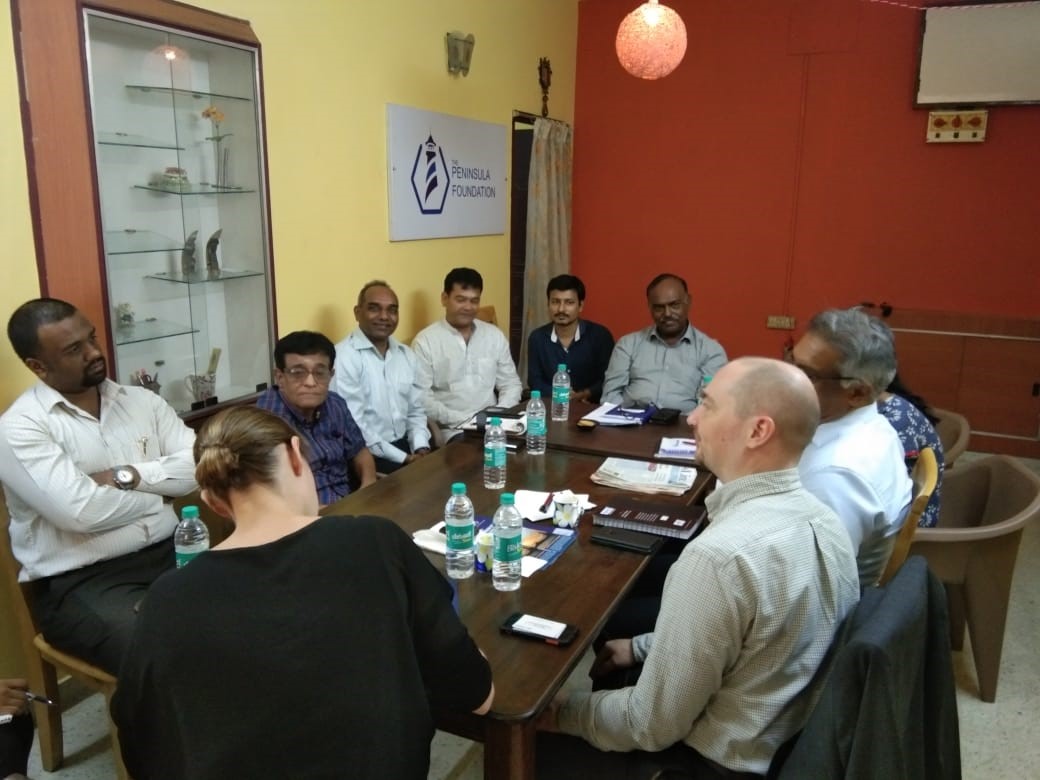
    A formal interactive session on Maritime Security was organized in The Peninsula Foundation (TPF), Chennai on September 11, 2019 in collaboration with the United States Consulate, Chennai. The Consulate facilitated the visit of Mr Geoffrey Wessels, Officer for Trade and Connectivity, US Embassy, New Delhi. He was accompanied by Ms Sara Greengrass, Economic Officer, US Consulate, Chennai and Mr George Mathew, Economic Specialist, US Consulate, Chennai. The meeting was aimed to gather perspectives on security challenges faced in the Indo-Pacific region.
    Various recent geopolitical developments relating to maritime security, especially in the Indian Ocean Region, were discussed. Development of India’s relations with ASEAN countries and New Delhi’s need to ensure safety in the sea were explored. There was consensus on the concerns against China’s consistent rise in the Asia Pacific and its practice of debt-trap strategy, as in Sri Lanka, while implementing its ambitious One Belt – One Road project across Asia, and the need for India’s maritime security to be prioritized. Ms Sara stressed on environment security in the Indian Ocean due to overfishing and initiatives of USA to minimize maritime non-conventional threats to India. Primarily, the discussion aimed at finding a common ground between India and the US to deal with China. Representatives of TPF elaborated about their perspectives on Beijing and commented on possible collaboration between India and the USA. The session was informative and fruitful; we thank the US consulate for the arrangement and encourage such interactions in the future.

    [sc name=”donte”]
  • TPF Discussion # 02: Plutonium for Energy? Explaining the Global Decline of MOX

    TPF Discussion # 02: Plutonium for Energy? Explaining the Global Decline of MOX

    Special Guest : Dr Alan J Kuperman LBJ School of Public Affairs, University of Texas, Austin

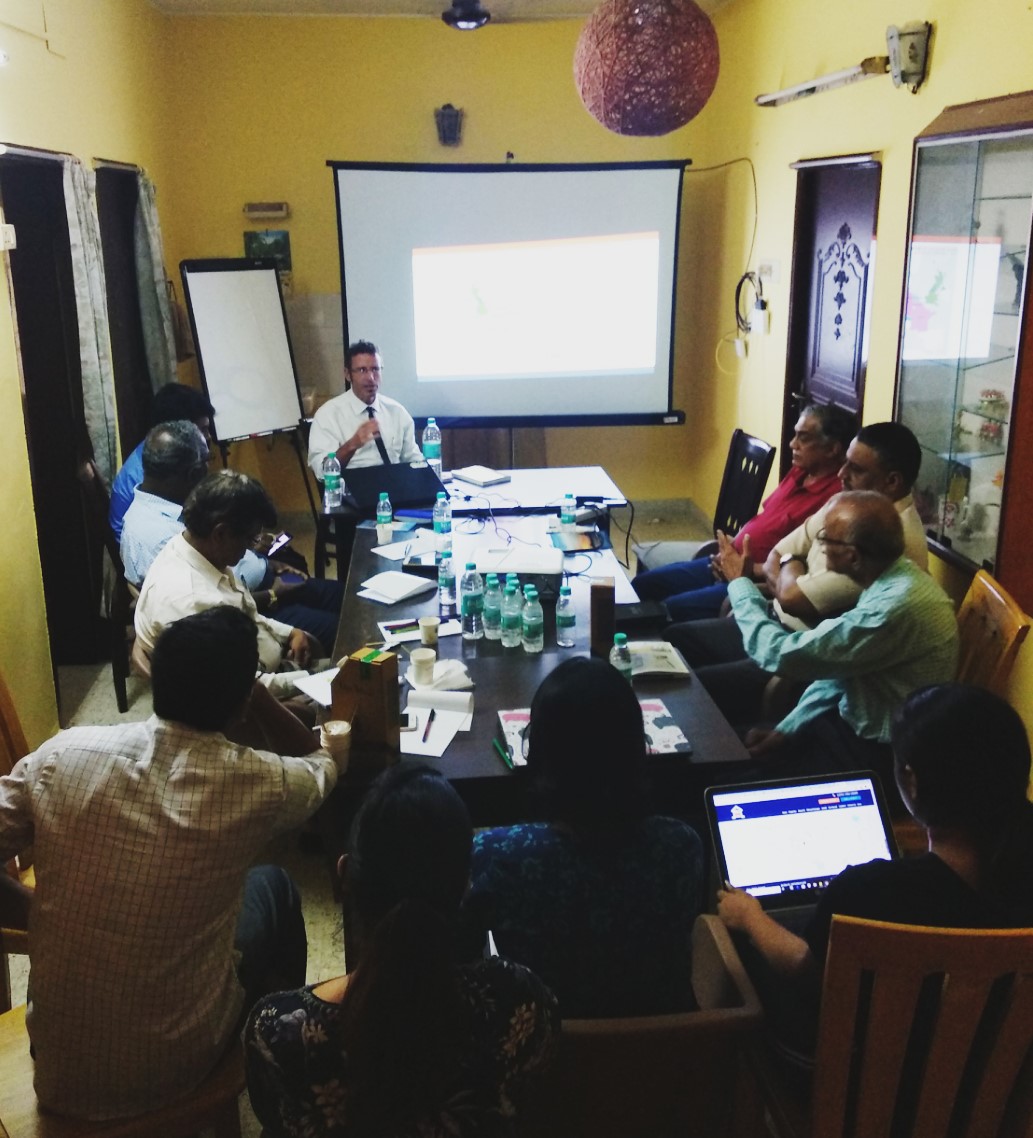
    Dr.Alan J. Kuperman, chair of the Graduate Studies Committee of the LBJ School’s Global Policy Studies program, University of Texas visited The Peninsula Foundation on 5th of August. He was accompanied by Dr D Subachandran, Professor & Dean, NIAS Bangalore who also facilitated the visit. The discussion centred around global nuclear issues with respect to non-proliferation and nuclear safety in the context of plutonium-based nuclear energy development practices. Dr Alan Kuperman’s presentation was based on the results of    a significant research program conducted by him under the NPPP (Nuclear Proliferation Prevention Project). The outcome of the project is his edited volume ‘Plutonium for Energy? Explaining the Global Decline of MOX’. His views drew extensively from his book. The interactive session commenced with Dr Kuperman presenting the stages of plutonium, recycling effects and further elaboration on  “Plutonium for Energy”  as it is the first-ever comparative research project on “mixed oxide” (MOX) fuel – containing both plutonium and uranium – used in light-water nuclear power reactors.  The project explores the manufacture and use of such MOX fuel in the seven main countries that have done so: Belgium, France, Germany, Japan, the Netherlands, Switzerland, and the United Kingdom.

    Plutonium as the fuel for nuclear energy evolved from the perceived advantages of its closed fuel cycle that would have done away with or reduced the complexities and hazards of having to address long period storage of increasing amounts SNF (Spent Nuclear Fuel) from Uranium-based nuclear (thermal) reactors. According to the study this is a misconception, and he projected that Plutonium is a controversial fuel for three major reasons: Plutonium from reprocessing can be used to make nuclear weapons; it is carcinogenic and so a huge health hazard; and is a very costly process that makes it uneconomical. The main focus of this line of argument was non-proliferation, and the need to make countries move away from plutonium cycle so as to eliminate nuclear weapons possibility, including the possibility of terrorist angle. Participants raised questions about countries like India, which can exploit its vast reserves of Thorium through closed fuel cycle for energy while also addressing their security concerns. The countries selected in the study do not represent a viable model for countries like India and China. Pakistan is already focused extensively on plutonium cycle. Hence, it was pointed out, decision on this issue would be complex for India. One of the primary objectives of the study is also to inform ongoing decision-making in East Asia – including China, Japan, and South Korea – about whether to recycle plutonium for energy.

    [sc name=”donte”]

  • TPF Discussion # 01: Status of Primary Education : A Case study of Tamilnadu

    Special Guest: Dr Vasanthi Vasudev

    The Peninsula Foundation organised a round table discussion on Education policy and the status of primary education in Tamil Nadu. TPF invited Dr Vasanthi Vasudev, a leading educationist in Chennai, to chair the discussions. The discussions were initiated by TPF as a prelude to formulating a research project for analysis of primary education in India in terms of right to education for children, children enrolment, school education policy effectiveness, learning outcomes, drop-out rates, teaching methodologies, school infrastructure, motivational aspects, noon-meal schemes, financial issues, family environmental impacts etc. The plan is to undertake Tamil Nadu as a case study. Dr Vasanthi elaborated on importance of local language as the medium of instruction and methodologies that should enable identification of aptitudes and focus on child’s strengths. School environmental issues and social practices and rigid mentalities, particularly in rural regions, were bound to have mostly adverse impact on child’s education. She highlighted the insidious entry of caste recognitions in school and gave the examples relating to ineffectiveness of noon-meal schemes in schools. Of course, administrative apathy added to the problems. The discussion provided valuable inputs to the development of the project proposal.

    [sc name=”donte”]