Category: South-East Asia

  • Infrastructure development is high priority for Vietnam-Lao PDR relations

    Infrastructure development is high priority for Vietnam-Lao PDR relations

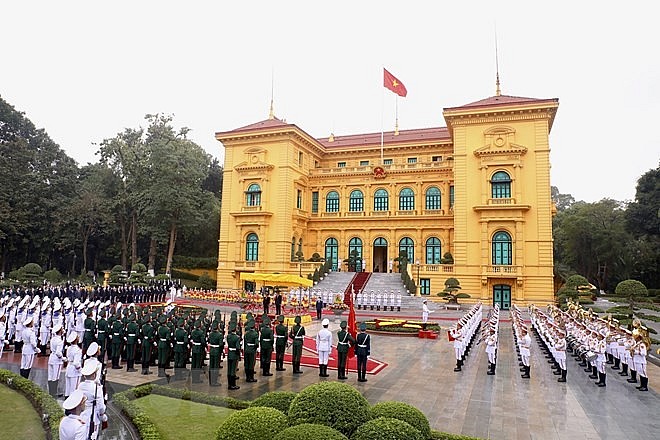
    The year 2022 is singularly important for Vietnam-Lao PDR relations. It marks the 60th anniversary of the bilateral diplomatic relations, and 45 years of the Vietnam-Laos Treaty of Amity and Cooperation. Both sides have accorded high priority to the current year, and Prime Minister Pham Minh Chinh extended the invitation to Lao Prime Minister Phankham Viphavanh to visit to commemorate the above events.  Accordingly, Prime Minister Viphavanh is in Vietnam and is leading a high-level delegation.

    Prime Minister Pham Minh Chinh, according to reports, will also co-chair the 44th meeting of the Vietnam-Laos Inter-Governmental Committee and launch the Vietnam-Laos Solidarity and Friendship Year 2022. This would help to “get a better understanding of each other’s socio-economic situation, development orientations and external policies” particularly during the ongoing COVID-19 pandemic.

    The visit is also intended to boost Vietnam-Laos cooperation strategy for the 2021-2030 period and the five-year cooperation plan for the 2021-2025 period that are now into the second year and involve bilateral engagements in multiple domains such as politics, diplomacy, security-defence, economy, science-technology, culture, and education-training.

    COVID-19 would be high on the agenda of both leaders given that the pandemic is impacting their countries. They are in the midst of the fourth wave with 8,236 and 354,075 active cases (as of 05 Jan 2022) respectively.

    In December 2021, the Lao government announced opening up of the country for trade and tourism in three phases: First phase – January 1, 2022; Second phase – April 1, 2022; and the Third phase July 1, 2022. In the first phase, 17 countries, including Vietnam and many neighbouring ASEAN countries, besides some European countries, China, the US, Australia and Canada would be welcomed. The Lao economy is impacted by COVID-19 and was projected to grow at 3 per cent, a figure lower than 4 per cent as approved by the Laotian National Assembly. This attributed to the pandemic and prolonged lockdowns that disrupted economic activities and companies, retail and wholesale shops had to shut down.

    Leaders in Vientiane recognize the importance of regional development particularly in the Cambodia-Laos-Vietnam Development Triangle Area (CLV-DTA)

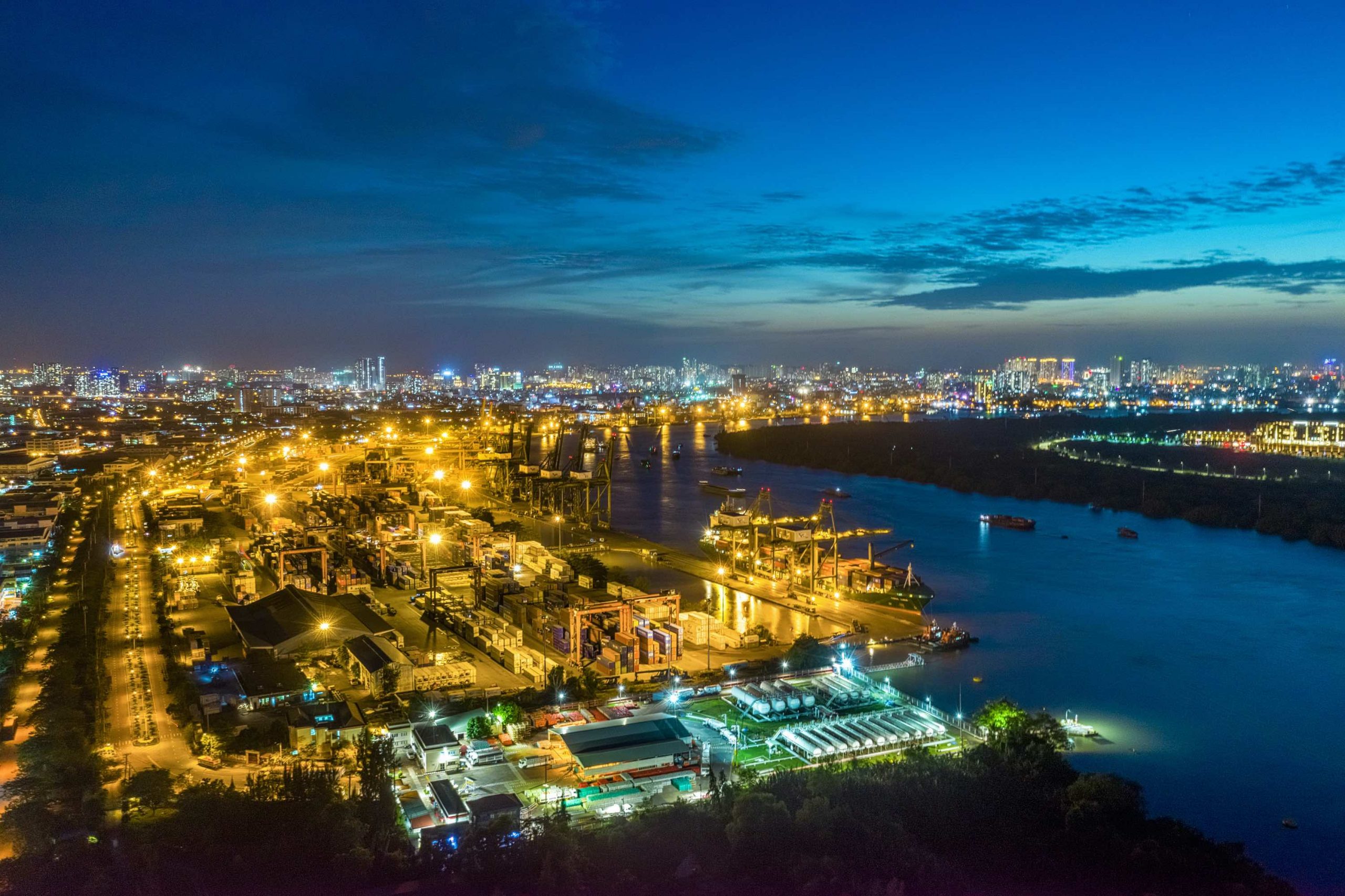
    Vietnam and Lao PDR are also engaged in major connectivity projects. Lao is a landlocked country and ports in Vietnam provide the country access to the sea to engage in international seaborne commerce.

    Last year, during President Nguyen Xuan Phuc visit to Laos, 14 agreements spanning a wide range of issues were signed. The leaders agreed to fast-track joint projects including Vung Ang No.1, 2, 3 port projects, the Hanoi-Vientiane Expressway, Vientiane-Vung Ang Railway, Lao-Vietnam Friendship Park in Vientiane, Nongkhang Airport and hospitals in Lao Houaphan and Xiangkhouang Provinces.

    One of their flagship joint projects is the 1,450 kilometres long East-West Economic Corridor (EWEC). It is a road-building project and is supported by the Asia Development Bank (ADB). Its western leg includes Thailand, and in the east, it terminates at the Vietnamese port of Da Nang which is a major gateway to the Pacific.

    Similarly, the 555 kilometres railway link (452 kilometres in Laos and 103 kilometres in Ha Tinh central province in Vietnam) between Vientiane and the Vietnamese deep-water port of Vung Ang is important. It gives Laos yet another access to the sea. Importantly, it is being jointly developed and Laos would hold a 60% stake in the project, and Vietnam with 40%.

    China is also engaged in connectivity projects in Laos. In December 2021, after six years of construction, the Laos-China Railway project was finally operationalized. It is a complex project and includes 61 kilometres of bridges and 198 kilometres of tunnels and reduce travel time between Vientiane to the Chinese border from 15 hours by road to four hours. It will be operated by the Laos-China Railway Co., a joint venture between China Railway group and two other Chinese government-owned companies with a 70% stake and a Laotian state company with 30%.

    Vietnam offers Laos an alternative to Chinese infrastructure investments and it ranks third among investors in Lao with total investments of US$ 5.16 billion in 209 projects. There are fears that the Chinese funded projects do not generate economic benefits for Laos, instead these only benefit China.

    There are geopolitical dynamics at play in the CLV-DTA that are targeted against China, and Cambodia and Laos acknowledge Vietnam’s leadership

    Vietnam cannot match up with the Chinese investments in Laos, but leaders in Vientiane recognize the importance of regional development particularly in the Cambodia-Laos-Vietnam Development Triangle Area (CLV-DTA). Vietnam for example has invested nearly US$ 4 billion in Cambodia and as noted above over US$ 5 billion in Laos. It is fair to assume that there are geopolitical dynamics at play in the CLV-DTA that are targeted against China, and Cambodia and Laos acknowledge Vietnam’s leadership.

    Images Credit: Vietnam times

  • History – Thailand’s Golden Buddha

    History – Thailand’s Golden Buddha

    In the month of May 2007 I was invited to speak at the Mahidol University of Bangkok during the SSEASR Conference. I gave a talk on Yogachara Buddhism there. During this occasion, I had the opportunity to visit various Buddhist temples at Bangkok. They include the magnificent ones like Emerald Buddha, Golden Buddha, Buddha in his Maha nirvana time etc. It is very interesting to note that in the Sanctum Sanctorum of all Buddha temples, while the right side wall is covered with pictures depicting instances in Buddha’s life, the left side has paintings exclusively from Ramayana. For a Thai devotee, Hinduism is as important as Mahayana Buddhism.

    During the visit of one of the temple, I learnt this great truth about ignorance obscuring Reality.

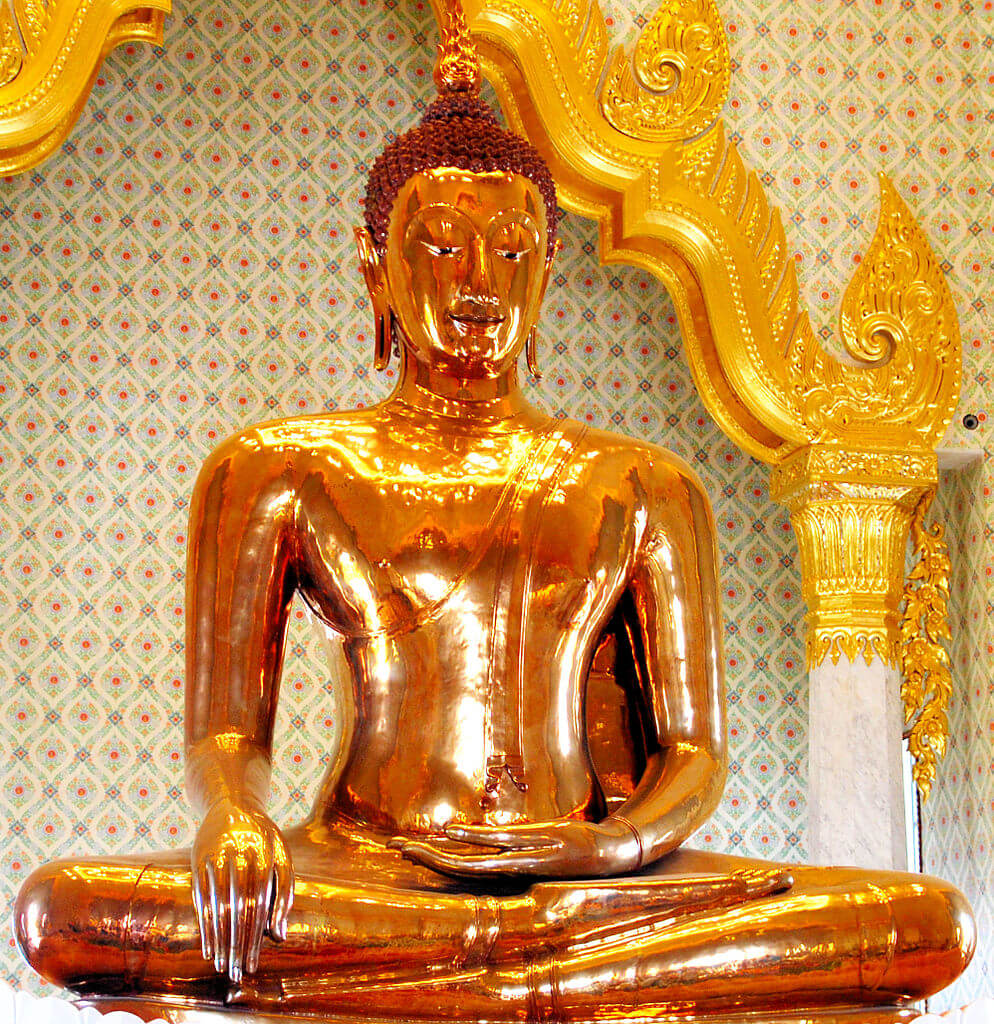
    One of these famous temples has a Buddha icon nearly 17 feet tall, which is known till the beginning of 20th century as “Terracotta Buddha temple” . The temple was established in the 13th century with its huge icon of Buddha, for several centuries it was worshipped by the devotees as “Terracotta Buddha”. One day the authorities decided to shift the Terracotta Buddha image to a place several kilometers away, probably to do some repairs to the temple. They put the Terracotta Buddha on a truck and were moving it. When they were half way through, a heavy downpour started. The rain was so heavy that the clay image of Buddha started dissolving. They tried to protect the image with tarpaulins and umbrellas, but to no effect. There was a very heavy wind which blew away the tarpaulins and umbrellas. Due to the heavy rain, the Buddha icon in clay was dissolving fast. The devotees were grief-stricken. They were wondering whether it would have been wiser to have left the temple un-repaired rather than allowing the centuries old terracotta Buddha icon to get dissolved in the heavy downpour.


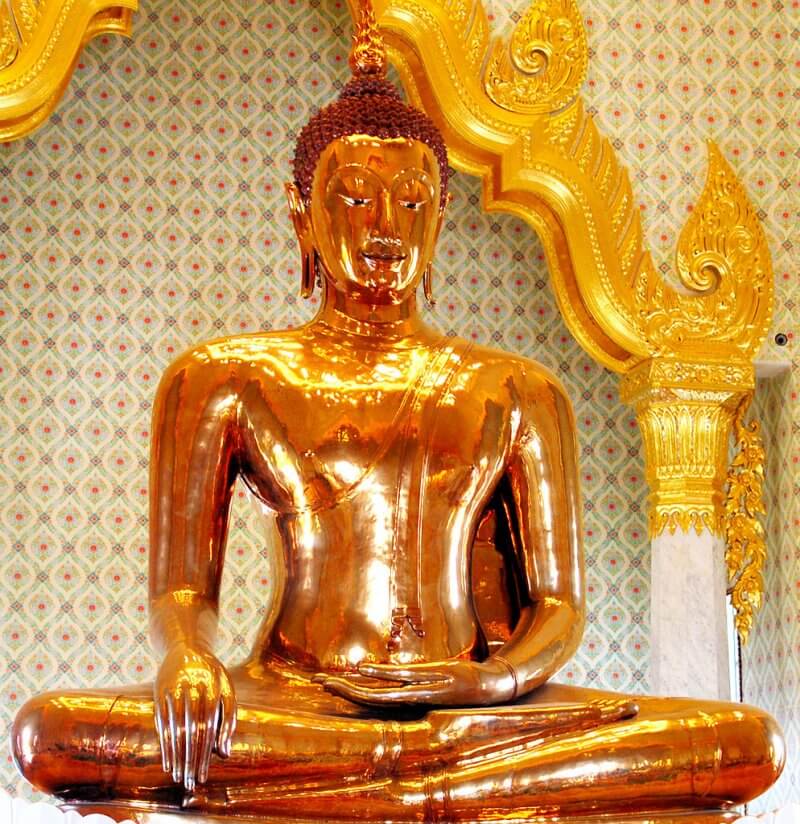
    Presto! A wonderful thing was happening. As the clay was dissolving, from within the clay was emerging a golden Buddha idol! as the idol there was of clay. After a short while all the clay, which was covering the idol got completely dissolved. The people were witnessing the presence of a resplendent “Golden Buddha” appearing before them in all its grandeur.

    What really happened? It was really a golden Buddha at the time of its installation in the 13th century. After some time Thailand was experiencing foreign invasions. Fearing that the invaders would take away the golden image, which was 5.5 tons of solid gold, the devotees covered the image with clay. Thinking that it was only a Terracotta Buddha, the invaders left it untouched. That generation knowing that it was a golden Buddha inside the clay, worshipped Buddha in that form. As many years passed by, the subsequent generations were not aware of this fact. They truly believed in what they saw externally and worshipped it as a Terracotta Buddha only. Thus their minds were conditioned by externalities. Once the clay dissolved what is truly inside came out with all its effulgence. It is today worshipped as the golden Buddha in Bangkok.

    It is happening to all of us everyday, we assume ourselves to be only a body-mind-intellect complex and nothing beyond it. We are conditioned by our awareness of our body, our thinking process and our analysis of the phenomena. These are only externalities within each one of us. It is only a clay that surrounds the wonderful Immanence within us. Within each one of us is the golden Buddha, the great immanent Lord who is also transcendent, he is the great Shiva, who is constantly performing his cosmic dance. In our hearts we not aware of it as our minds are conditioned by what we see, do and think. It is like the Thais seeing only the clay image and concluding it as only terracotta Buddha. As the rain dissolved the clay, the golden icon which is the true-one inside is revealed. Likewise when the spiritual sadhaha and devotion dissolves our mental conditioning, the Lord within ourselves is also revealed. This is the lesson we learn from the Golden Buddha temple.

    The same idea is beautifully explained in Thirumoolar’s Thirumantiram. A sculptor has carved out a beautiful elephant from a block of wood. When you see it as an elephant, you do not see the underlying reality of the wood. When you will be able to see the substratum, the underlying reality of the wood, with which all the objects of carving are made, you do not see the carved elephant; you see the substratum of the wood. Likewise, the ignorance enveloping our minds obscure the ultimate reality within us, when we are graded by the body-mind-intellect complex. When the revelation comes to us through god’s grace and gurus’ teachings coupled with our devotion to Him, the conditioning disappears. The phenomena abide in the ultimate. We experience the Divinity within us.

    Even in the area of management, the story of Golden Buddha has a great relevance. A competent Manager, with a penetrating mind, should be able to see what is the reality hidden in the numerous external information. The external covering only obscures the truth, which you will be able to get through. Once you see the substratum, the ultimate truth is revealed.


    Image Credit: Wikimedia Commons

  • Vietnam: Economic Prospects in Post Second Wave Covid-19

    Vietnam: Economic Prospects in Post Second Wave Covid-19

    The global community is into the ninth month of the COVID-19 pandemic and international efforts to develop a vaccine are at advanced stages.  Meanwhile in Russia over 250 Moscow residents received a dose of Sputnik V[i] and the Chinese Center for Disease Control and Prevention (CDC) has announced that the vaccine will be ready by November this year.[ii]Similarly, many American, British, European, and Indian companies are developing the vaccine which is at different levels of trials.  While the above progress is very encouraging, the global COVID-19 infections continue to rise and as on 13 October, according to the World Health Organisation (WHO), the total confirmed cases of COVID-19 were 37,601,848 people including 1,077,799 deaths.[iii] The top four countries with the highest infections were the US, India, Brazil and Russia.

    Vietnam’s COVID response since 23 January 2020, when the first case was detected, has been noteworthy. It successfully contained the spread of the virus by instituting local quarantine measures in early stages, declaring a state of emergency in February, and banning flights to and from China. For the next two months, Vietnam maintained strict COVID related measures including national lockdown and it was only in late April that some restrictions were removed in localities if they had contained the virus; but non-essential public services remained suspended. The opening up continued slowly with the resumption of flights to select destinations and cross-border travel restrictions were lifted. Meanwhile, Vietnam registered to buy a Russian Covid-19 vaccine as also developing vaccine on its own.

    In August, the second largest COVID-19 outbreak (after Danang) was reported in Quang Nam Province. The ‘second wave’ has now been successfully controlled.

    However, in July, Danang, a tourist hotspot, reported several new cases and a massive evacuation of nearly 80,000 tourists was undertaken. In August, the second largest COVID-19 outbreak (after Danang) was reported in Quang Nam Province. The ‘second wave’ has now been successfully controlled. As of 15 September, in Vietnam (total population 95,540,000) there were 1063 cases; 35 deaths; 261,004 tests had been conducted, and 11cases per million was recorded.[iv]

    Vietnam’s economic outlook in the ‘post-COVID Second Wave’ is a mixed bag of opportunities and challenges. There are at least four issues which merit attention. First, the Vietnamese economy, like any other global economies, suffered due to the pandemic. The 2020 first-half growth was about 1.8% compared with 7% in 2019 (year-on-year), but the Vietnamese economy has shown enormous resilience when compared with major global economies who have recorded negative growth. This is due to the proficient handling of the pandemic and the country is now on a quick and steady recovery path. The HSBC has revised Vietnam’s 2020 growth forecast from 1.6% to 3.0%.[v]

    It is also important to mention that the Vietnamese government has offered attractive incentives to multinational investors to help them “move up the value chain” and build supply chains in the country.

    Second, there are clear signs that Vietnam continues to be an attractive destination for foreign investments. This trend is not only due to global conglomerates moving out of China and seeking new destinations with attractive options for setting up of their businesses, but Vietnamese handing of the pandemic has provided them enormous business confidence in the country. According to the Ministry of Planning and Investment, total foreign investment in the first half was worth US$18.47 billion.[vi] Japanese (Panasonic), South Korean (LG Electronics), US (Foxconn; Apple) and the European (Heineken) companies moved to Vietnam. It is also important to mention that the Vietnamese government has offered attractive incentives to multinational investors to help them “move up the value chain” and build supply chains in the country.

    Third, is about renewable energy. Vietnam’s current energy generation mix is skewed towards coal (18,516 MW) and hydrocarbons (8,978 MW). Notwithstanding the COVID-19, the country’s average electricity consumption per day during the first few months of 2020 was 615 million KWh, an increase of 7.5 per cent compared with 2019.[vii] It is estimated that “Vietnam’s energy demand will increase by over 10 per cent by the end of 2020, followed by an eight per cent growth per year in 2021 to 2030.” The “government wants to reduce its greenhouse gas emissions by eight per cent by 2030” for which investments in renewable sources of energy such as solar and wind would have to be made,

    Fourth, is about immersion in Industry 4.0 technologies. There are now clear trends of widespread digital transformation across the globe and is impacting every aspect of the industry from commercial operations, technology management, use in fintech to support banking and financial services, new business models through analytics, and human resource management.  These technologies can potentially boost productivity and improve Vietnam’s GDP. For that innovative national policies for growth are needed. Also, the human resource would require ‘up-skilling, reskilling and retooling’ to embrace these technologies.  The industry leaders too have to recognize the importance of educating themselves and using new technologies as also adopting innovative models for their operations.

    Vietnam should build upon its successes of handling the COVID-19 pandemic and ‘build back better’ by offering long-term stimulus for investments and accord high priority to zero-carbon technologies to spur inclusive and resilient growth.

    Finally, Vietnam should build upon its successes of handling the COVID-19 pandemic and ‘build back better’ by offering long-term stimulus for investments and accord high priority to zero-carbon technologies to spur inclusive and resilient growth. It must adopt strategies for investments in technologies, products and services as also create new jobs tailored for Industry 4.0.


    Notes

    [i] “Russia Covid-19 vaccine: Over 250 people in Moscow get inoculated, says report”, https://www.livemint.com/news/world/russia-covid-19-vaccine-over-250-people-in-moscow-get-inoculated-says-report-11600085464168.html  (accessed 16 September 2020).
    [ii] “China coronavirus vaccine may be ready for public in November: Official”, https://www.hindustantimes.com/world-news/china-coronavirus-vaccine-may-be-ready-for-public-in-november-official/story-1DzVCBrdOwleJXxuw0wvyI.html  (accessed 16 September 2020).
    [iii] “WHO Coronavirus Disease (COVID-19) Dashboard”, https://covid19.who.int/?gclid=CjwKCAjwzIH7BRAbEiwAoDxxTlG5T6XZYiHVHBesW5cmAa9DKUytaVgH01haDH10TpmFA3OP-2s_phoCk9sQAvD_BwE  (accessed 16 September 2020).
    [iv] “Southeast Asia Covid-19 Tracker”, https://www.csis.org/programs/southeast-asia-program/southeast-asia-covid-19-tracker-0#National%20Responses  (accessed 16 September 2020).
    [v] “Vietnam’s positive growth in Q2 defies market expectations: HSBC”, http://hanoitimes.vn/vietnam-positive-growth-in-q2-defies-market-expectations-hsbc-313035.html  (accessed 16 September 2020).
    [vi] “Vietnam expects imminent new wave of foreign investment”, https://www.nationthailand.com/news/30392781?utm_source=homepage&utm_medium=internal_referral  (accessed 15 September 2020).
    [vii] “Assessing Vietnam’s Economic Prospects for Foreign Investors After COVID-19”, https://www.vietnam-briefing.com/news/assessing-vietnams-economic-prospects-foreign-investors-after-covid-19.html/  (accessed 15 September 2020).

    Image: Ho chi-min City

  • US-China Tensions Could Spill Into Lancang-Mekong River Basin

    US-China Tensions Could Spill Into Lancang-Mekong River Basin

     The Lancang-Mekong River is the 12th longest river and runs through six countries i.e. China (upper riparian), Myanmar, Thailand, Laos, Cambodia and Vietnam (the lower riparian)and finally discharges into South China.

    A recent US government-funded study has noted that in 2019 China held back large amounts of water upstream in dams on the Mekong River which caused a  severe drought in the downstream countries,[1] prompting a US ambassador in the region accusing China of “hoarding” water and “harming the livelihoods of millions of people in downstream countries”.[2] Likewise, another report by Stimson Centre, a Washington-based think tank, has corroborated the above and pointed that in 2019 “upstream dams at Nuozhadu and Xiaowan had restricted around 20 billion cubic meters of water between July and November” and that current “satellite images show those dams are once again poised to restrict a similar amount of water from July 2020 through the end of this year … Portions of the Mekong mainstream are once again dropping to historically low levels,”[3]

    China has dismissed the reports and the Global Times in an article cited a report by the Tsinghua University and clarified that the “river dams in China [instead] helped alleviate drought along Lancang-Mekong”; furthermore, in November 2019, the Mekong River Commission (MRC) had concluded that “the drought was caused by insufficient rainfall during the wet season with a delayed arrival and earlier departure of the monsoon rain and an El Niño event that led to abnormally high temperatures and high evapotranspiration”.[4]

    At the heart of this problem is that China has built as many as 11 dams on the 4,800 kilometres long Lancang-Mekong River that originates in the Tibetan Plateau.

    At the heart of this problem is that China has built as many as 11 dams on the 4,800 kilometres long Lancang-Mekong River that originates in the Tibetan Plateau.  The Lancang-Mekong River is the 12th longest river and runs through six countries i.e. China (upper riparian), Myanmar, Thailand, Laos, Cambodia and Vietnam (the lower riparian)and finally discharges into South China.

    China has been reluctant to share hydrological data particularly during the dry seasons and releases water during rainy seasons causing flooding in lower riparian countries. This is despite the 2002 MoU under which China had agreed to provide daily river flow and rainfall data from two monitoring stations in Yunnan Province during the wet season, and the periodic MRC Heads of Government meeting over a Summit which is held every four years.

    Earlier this year, the Chinese State Councilor and Foreign Minister Wang Yi had assured that his country would “give positive consideration to share the full-year hydrological information with Mekong countries and enhance cooperation under the Lancang-Mekong Cooperation (LMC) framework to ensure reasonable and sustainable use of water resources”.[5]

    Perhaps a recent statement by the MRC may temporarily obviate suspicions over China not sharing hydrological information on the Lancang-Mekong River which notes that it welcomes China’s sharing of data “ throughout the year” as also for the “ establishment of an information-sharing platform for water resources cooperation led by China and Myanmar”.[6] Also, during the 3rd Mekong-Lancang Cooperation (MLC) Leaders’ Meeting, the Global Center for Mekong Studies (GCMS) has been tasked to study the potential benefits from “aligning and synergizing the MLC and the New International Land-Sea Trade Corridor with a vast market”.[7]

    It has been observed that although the 1995 Agreement on the Cooperation for the Sustainable Development of the Mekong River Basin is legally binding, it “does not have a compliance mechanism such as punitive measures on the party that violates the spirit and principles of the Agreement.

    In 1995, the upper and lower riparian countries had adopted Agreement on the Cooperation for the Sustainable Development of the Mekong River Basin which lays out “principles and norms of regional cooperation in managing the river basin”. A formal dialogue process under the MRC was instituted to address issues relating to Mekong River and the Member States agreed to “promote common procedures and practices throughout the region for data collection, storage and analysis to support data sharing and integration of existing data management systems based on the voluntary participation of countries and institutions.”[8] In 2001, they adopted the “Procedures for Data and Information Exchange and Sharing,” or PDIES to enable the Member States to share data ‘to provide real-time water level information and more accurate flood forecasting.

    It has been observed that although the 1995 Agreement on the Cooperation for the Sustainable Development of the Mekong River Basin is legally binding, it “does not have a compliance mechanism such as punitive measures on the party that violates the spirit and principles of the Agreement. The conflict resolution mechanism is also not clearly stipulated”.[9] This is one of the many reasons for discord among the Parties which needs to be addressed by the MRC whose mandate includes dispute resolution.

    Be that as it may, the lower Mekong countries have set up the Mekong Water Data Initiative, and at the 10th Ministerial Meeting of the Lower Mekong Initiative (LMI) in 2017 to ‘create a robust, integrated, and transparent platform for collecting, sharing, and managing data on the Mekong River system.’[10]

    there are fears that the Lancang-Mekong River issue is slowly shaping into a major ASEAN-China bilateral issue similar to the contestation in the South China Sea.

    At another level, there are fears that the Lancang-Mekong River issue is slowly shaping into a major ASEAN-China bilateral issue similar to the contestation in the South China Sea; and the current situation is being described as “becoming a geopolitical issue, much like the South China Sea, between the United States and China,”[11] Perhaps the biggest worry is that the Lancang-Mekong River should not attract contestation between the US and China which surely is going to make the region more turbulent. It would thus be prudent that ASEAN and China work on a Code of Conduct to manage the river affairs or add more robustness in the existing dialogue mechanism over the Lancang-Mekong River.

     
    End Notes
    [1] “China could have choked off the Mekong and aggravated a drought, threatening the lifeline of millions in Asia”, https://www.cnbc.com/2020/04/28/china-choked-off-the-mekong-which-worsened-southeast-asia-drought-study.html  (accessed 12 September 2020).
    [2] “Water wars: Mekong River another front in U.S.-China rivalry”, https://www.japantimes.co.jp/news/2020/07/25/asia-pacific/mekong-river-us-china/  (accessed 12 September 2020).
    [3] “The next US-China battleground: Chinese dams on the Mekong River?”,https://www.scmp.com/week-asia/politics/article/3095581/next-us-china-battleground-chinese-dams-mekong-river  (accessed 12 September 2020).
    [4] “River dams in China helped alleviate drought along Lancang-Mekong, research finds”, https://www.globaltimes.cn/content/1194654.shtml  (accessed 10 September 2020).
    [5] “River dams in China helped alleviate drought along Lancang-Mekong, research finds”, https://www.globaltimes.cn/content/1194654.shtml  (accessed 10 September 2020).
    [6] “Lancang-Mekong cooperation provide stronger impetus for regional development and prosperity”, http://www.lmcchina.org/eng/hzdt_1/t1812281.htm  (accessed 12 September 2020)
    [7] “Full text of Co-chairs’ Statement on Cooperation of Synergizing the MLC and the New International Land-Sea Trade Corridor of the Third MLC Leaders’ Meeting”, http://www.lmcchina.org/eng/zyxw_5/t1808947.htm  (accessed 12 September 2020).
    [8] “Joint Statement To Strengthen Water Data Management and Information Sharing in The Lower Mekong”,
    https://www.lowermekong.org/news/joint-statement-strengthen-water-data-management-and-information-sharing-lower-mekong (accessed 14 April 219)
    [9] “Code of Conduct for the Mekong”,https://vannarithchheang.com/2018/04/04/code-of-conduct-for-the-mekong/  (accessed 12 September 2020).
    [10] “Mekong River Commission keen to improve data sharing and management in the Lower Mekong Basin”, https://mrcmekong.org/news-and-events/news/mrc-keen-data-management-in-mekong-basin/  (accessed 12 September 2020.
    [11] “Water wars: Mekong River another front in U.S.-China rivalry”, https://www.japantimes.co.jp/news/2020/07/25/asia-pacific/mekong-river-us-china/  (accessed 12 September 2020).
     
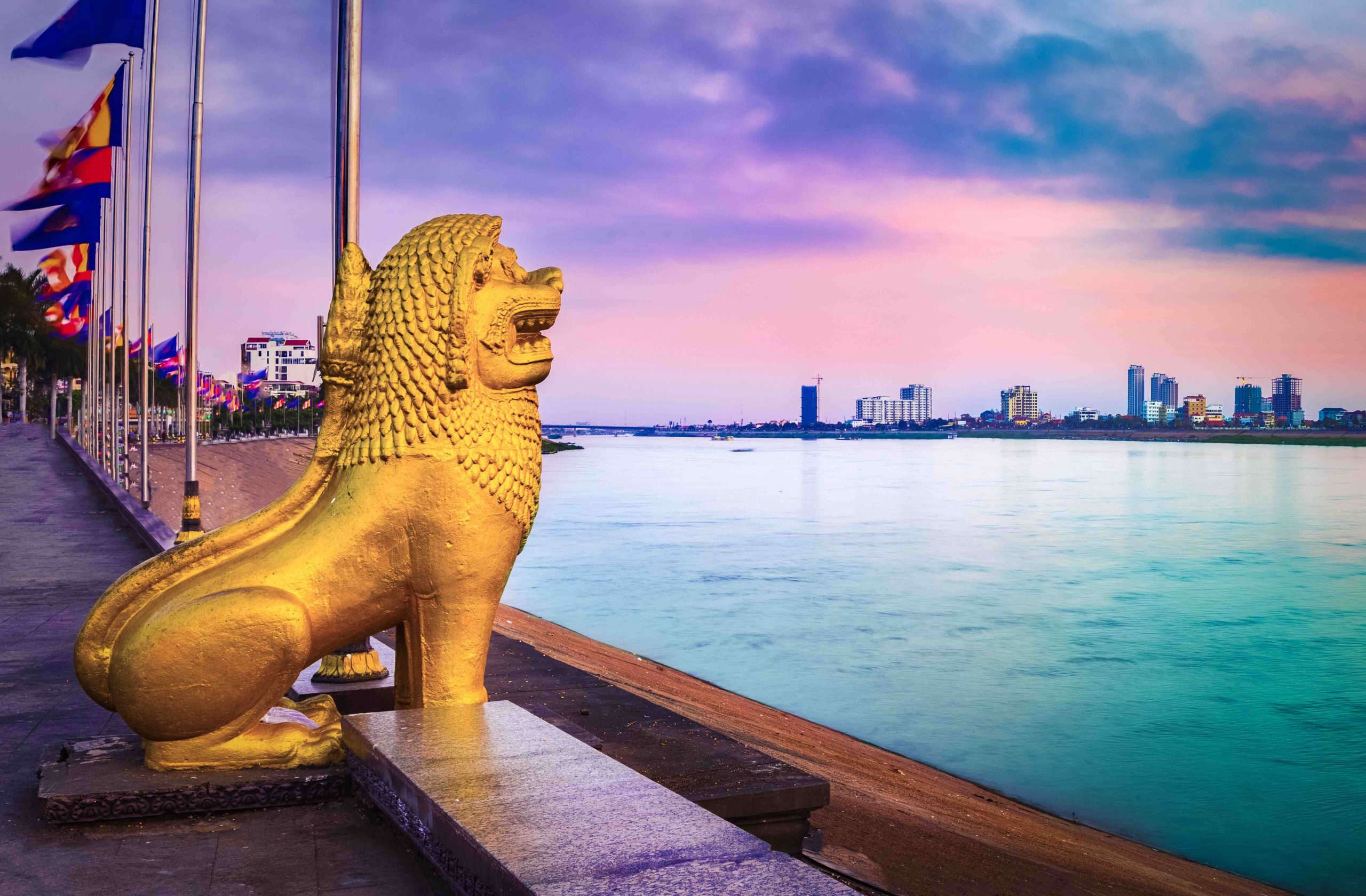
    Image: Mekong Riverside, Phnom Penh-Cambodia

  • Vietnam: Bright Economic Outlook post-COVID

    Vietnam: Bright Economic Outlook post-COVID

    COVID-19 is truly a ‘Black Swan’ event and its impact is being felt across the globe. There is widespread worry about the future of economic growth in the post-pandemic period and the World Bank has observed that the pandemic caused the deepest global recession since Second World War. [i] There are at least three reasons which triggered and added to the current crisis. First, it has involved the US and China in a trade war since July 2018, when US President Donald Trump imposed wide-ranging tariffs on China for its alleged unfair trade practices. In August 2019, Trump ordered U.S. companies to “immediately start looking for an alternative to China, including bringing your companies home and making your products in the USA.”[ii] China responded in a similar manner with counter tariffs on US goods. Since then numerous negotiations between them have been held, the last in June 2020 at Hawaii, did not yield any breakthrough. This revengeful tariff war has now blown into a full-fledged trade war and President Trump aggravated with the renewed threat of a “complete decoupling from China.”

    There is widespread worry about the future of economic growth in the post-pandemic period and the World Bank has observed that the pandemic caused the deepest global recession since Second World War.

    Second, amid the trade war, the Corona-19 pandemic made matters worse for the two protagonists. The US accused China of withholding information about the Wuhan virus which was detected in December 2019 and Beijing did not make public the information till January 2020 after which it spread across the globe from Europe to the US. The pandemic has caused massive disruptions in supply chains and some countries have decided to shift businesses out of China. For instance, Prime Minister Shinzo Abe government announced US $2.2 billion stimulus package to help companies shift production out of China back to Japan or elsewhere.[iii]

    Third, the new security law in Hong Kong has triggered an exodus by several companies to move out of China. The Law “targets acts of secession, subversion, terrorism and collusion with foreign forces, with life in prison for those committing the most serious offences”[iv] has scared common people. Many technology companies, startups, entrepreneurs are now confronted with uncertainty and are exploring alternative destinations.[v]

    many companies are being forced to shut down their operation in China and rethink-reevaluate-reinvest in new destinations to remain buoyant for the time being and slowly make their networks more resilient across sectors for the future.

    Furthermore, the pandemic exposed the weaknesses and susceptibilities of many organizations, business houses and industries particularly those that are intimately connected and dependent on China to fulfil their need for raw materials or finished products. Consequently, many companies are being forced to shut down their operation in China and rethink-reevaluate-reinvest in new destinations to remain buoyant for the time being, and slowly make their networks more resilient across sectors for the future. According to a leading business research and advisory company, “tariffs imposed by the U.S. and Chinese governments during the past years have increased supply chain costs by up to 10% for over 40% of organizations” and “popular alternative locations are Vietnam, India, and Mexico.” [vi]

    Vietnam and Thailand have a very good scorecard in their fight against COVID-19 and are rearing to attract investments and kick start the economy.

    Even before COVID-19 pandemic crisis, in 2019, five Asian countries i.e. Malaysia, India, Thailand, Indonesia and Vietnam (MITI-V) or “Mighty Five” had been identified as “up-and-coming players” with high potential for being world’s next manufacturing hubs.[vii] Among these, Vietnam and Thailand have a very good scorecard in their fight against COVID-19 and are rearing to attract investments and kick start the economy.

    According to the World Economic Forum, Vietnam’s economic rise is marked by trade liberalization, domestic reforms through deregulation, lowering the cost of doing business and investments made in human resource development.[viii] During the first six months of the current year, FDI commitments was at over US$15 billion which is a positive outlook for the country. In fact, Vietnam has attracted FDI from 136 countries and territories with nearly 32,000 projects with a combined value of US$378 billion. Among these Japan is the second largest investor with over US$60 billion. Last month, Vietnam’s Ministry of Planning and Investment, Embassy of Japanese at Hanoi, Japan External Trade Organization (JETRO), and Japan Bank for International Cooperation (JBIC) held a virtual conference to explore FDI investments “especially in the context of Japanese government providing a US$2.3 billion aid package for Japanese firms to diversify their supply chains”.[ix]

    Vietnam has many common export products from China such as broadcasting equipment, and could emerge as the “top exporter of broadcasting equipment to developed countries” but is constrained by “smaller GDP and workforce”; but its   progresses in infrastructure could potentially make it a more appealing option.[x]

    Vietnam has attracted FDI from 136 countries and territories with nearly 32,000 projects with a combined value of US$378 billion. Among these Japan is the second largest investor with over US$60 billion.

    Besides, there are other contenders such as Thailand and India to attract FDI and these two countries offer attractive FDI policies and manufacturing infrastructure. In mid-2019, as many as 200 American companies were planning to move their manufacturing base from China and were looking at India.[xi] Similar trends have been reported from South Korea [xii] and Japan [xiii] who could migrate to “production-conducive economies like India, Vietnam and Thailand”.[xiv]

    According to one estimate, FDI “across the globe may decline by 40% this year due to the Covid-19 crisis”[xv], but by all counts and accounts, Vietnam is a resounding success story.  It is a stable economy, possesses necessary infrastructure and facilities, and above all it enjoys “multilateral and bilateral agreements with foreign countries”[xvi], which makes it a popular destination in the post-COVID economic revival outlook.

    Notes

    [i] “Global Economic Prospects”, https://www.worldbank.org/en/publication/global-economic-prospects (accessed 16 July 2020).
    [ii] “Trump says he’s ordering American companies to immediately start looking for an alternative to China”, https://www.cnbc.com/2019/08/23/trump-says-hes-ordering-american-companies-to-immediately-start-looking-for-an-alternative-to-china.html (accessed 30 July 2020).
    [iii] “Coronavirus Impact: Japan to offer $2.2 billion to firms shifting production out of China”, https://www.businesstoday.in/current/world/coronavirus-impact-japan-to-offer-22-billion-to-firms-shifting-production-out-of-china/story/400721.html (accessed 30 July 2020).
    [iv] “Hongkongers contemplate a second exodus”, https://www.scmp.com/week-asia/politics/article/3093517/home-and-away-after-national-security-law-hongkongers (accessed 30 July 2020).
    [v] “Tech Firms Begin to Abandon Hong Kong over Security Law”, https://webcache.googleusercontent.com/search?q=cache:tmQW3Yjx5vcJ:https://www.bloomberg.com/news/articles/2020-07-20/tech-firms-begin-to-abandon-hong-kong-because-of-security-law+&cd=13&hl=en&ct=clnk&gl=in (accessed 30 July 2020).
    [vi] “Gartner Survey Reveals 33% of Supply Chain Leaders Moved Business Out of China or Plan to by 2023”, https://www.gartner.com/en/newsroom/press-releases/2020-06-24-gartner-survey-reveals-33-percent-of-supply-chain-leaders-moved-business-out-of-china-or-plan-to-by-2023 (accessed 30 July 2020).
    [vii] “5 China Sourcing Alternatives In Asia”, https://www.intouch-quality.com/blog/5-alternatives-to-sourcing-from-china (accessed 30 July 2020).
    [viii] “Vietnam races ahead of China in economic growth: opportunities and challenges for Vietnam in the post-COVID- 19 period”, https://timesofindia.indiatimes.com/blogs/ChanakyaCode/vietnam-races-ahead-of-china-in-economic-growth-opportunities-and-challenges-for-vietnam-in-the-post-covid-19-period/ (accessed 30 July 2020).
    [ix] Ibid.
    [x] “COVID-19: Developing countries and shrouded opportunities”, https://www.orfonline.org/expert-speak/covid-19-developing-countries-and-shrouded-opportunities/ (accessed 30 July 2020).
    [xi] “About 200 US firms aim to move manufacturing base from China to India post-general election: USISPF”, https://www.businesstoday.in/current/economy-politics/about-200-us-firms-aim-to-move-manufacturing-base-from-china-to-india-post-general-election-usispf/story/341011.html ( 30 July 2020).
    [xii] “Korean companies keen to move out of China to India”, http://timesofindia.indiatimes.com/articleshow/75130387.cms?utm_source=contentofinterest&utm_medium=text&utm_campaign=cppst (30 July 2020).
    [xiii] “Global firms look to shift from China to India”, https://www.livemint.com/industry/manufacturing/global-firms-look-to-shift-from-china-to-india-11587494725838.html  (30 July 2020).
    [xiv] “India isn’t ready yet for foreign companies that want to quit China”, https://theprint.in/opinion/india-isnt-ready-yet-for-foreign-companies-that-want-to-quit-china/415040/ (accessed 30 July 2020).
    [xv] “1,000 Japanese firms looking for investment opportunities in Vietnam”, http://hanoitimes.vn/1000-japaneses-firms-looking-for-investment-opportunities-in-vietnam-313133.html (accessed 30 July 2020).
    [xvi] “Vietnam races ahead of China in economic growth: opportunities and challenges for Vietnam in the post-COVID- 19 period”, https://timesofindia.indiatimes.com/blogs/ChanakyaCode/vietnam-races-ahead-of-china-in-economic-growth-opportunities-and-challenges-for-vietnam-in-the-post-covid-19-period/ (accessed 30 July 2020).


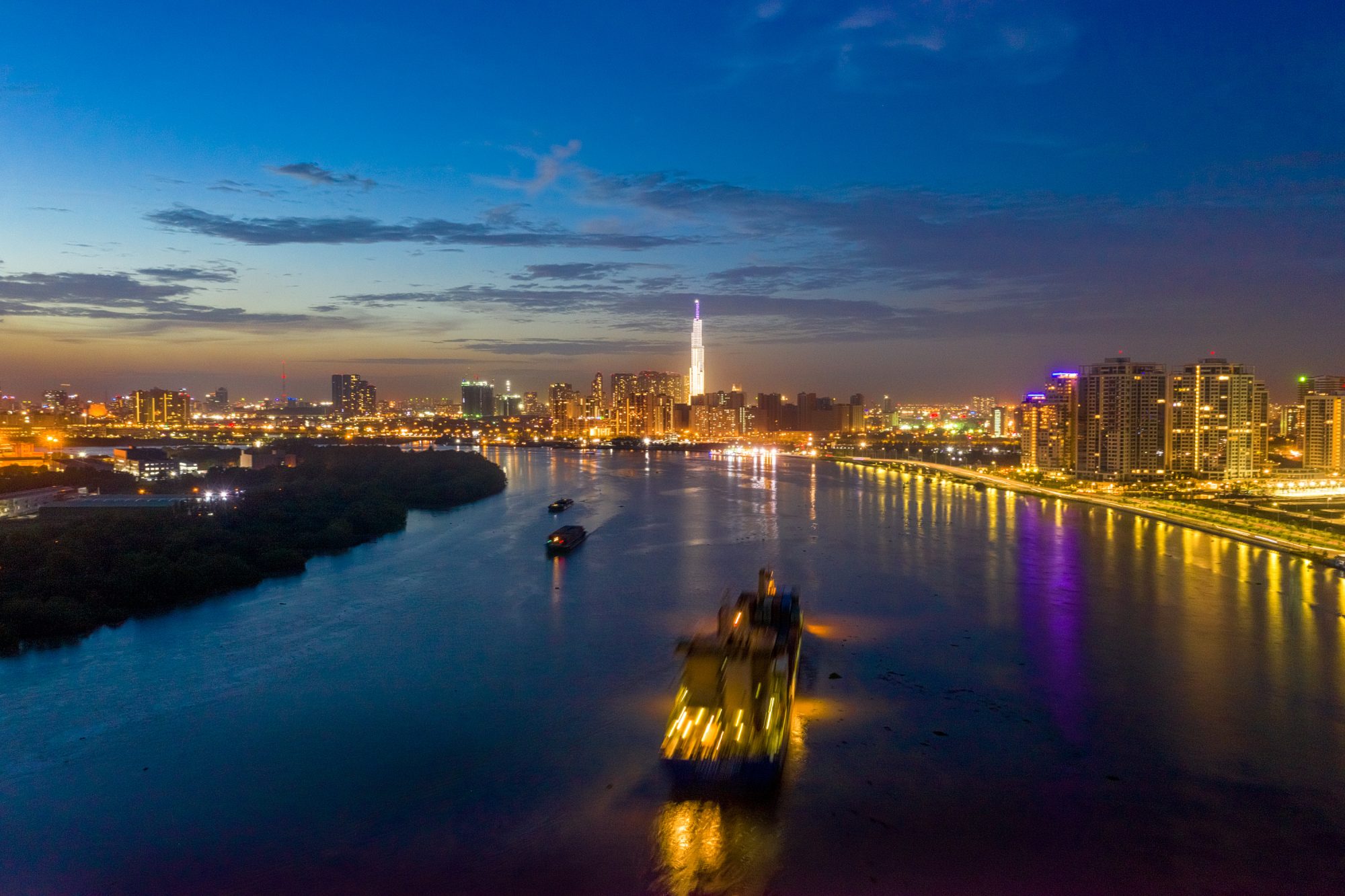
    Image: Ho Chi Minh city and Saigon River – Credit: Adobe Stock

  • Taiwan Elections 2020: Emphasising Taiwan’s Democracy, Nationalism and Sovereignty

    Taiwan Elections 2020: Emphasising Taiwan’s Democracy, Nationalism and Sovereignty

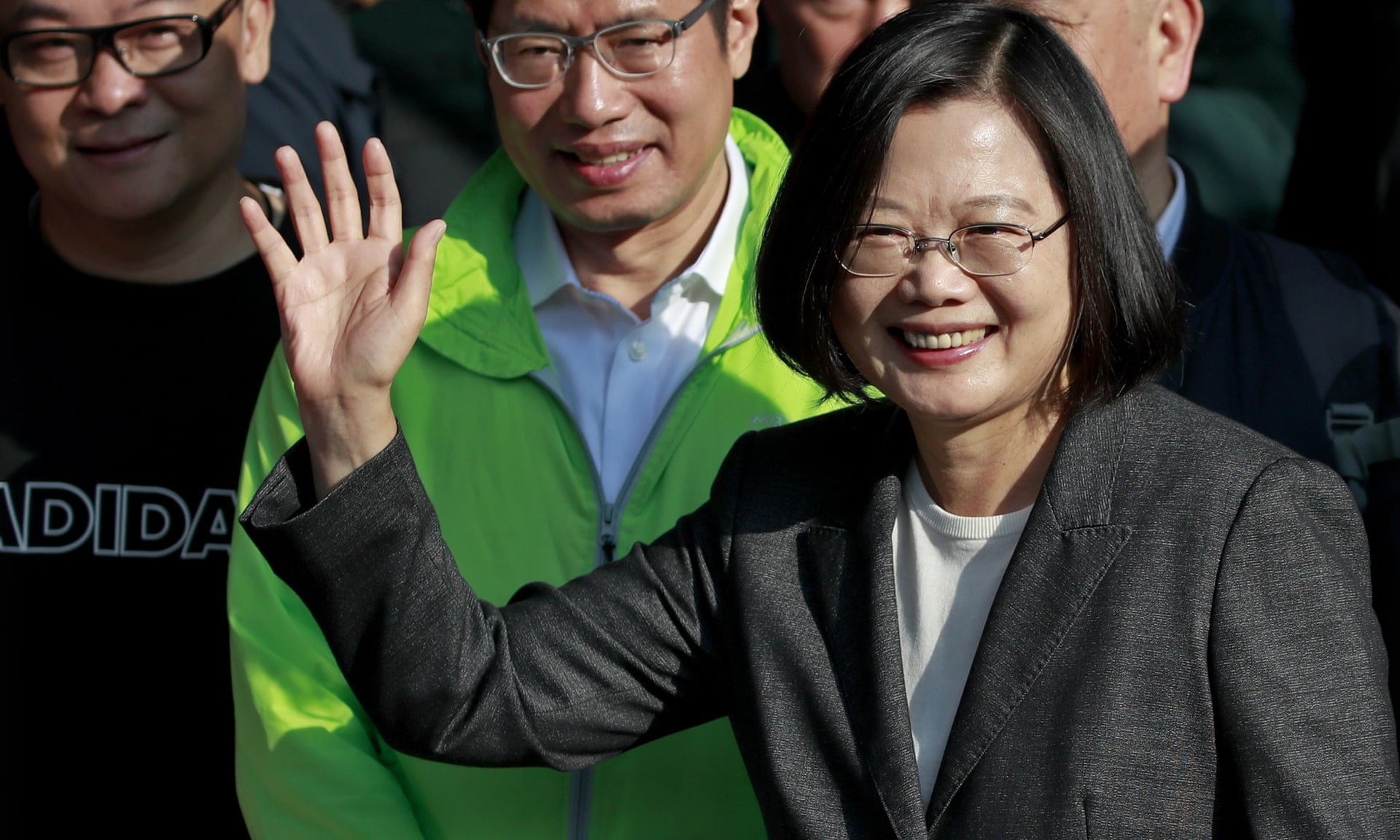
    Taiwan’s first female President, Tsai Ing-Wen of the pro-democratic DPP Party won a landslide victory for second term in the national elections held in January. China condemns Tsai’s victory by reiterating its “one country, two systems model.
    Election Results: Voice for Democracy and Sovereignty

    Taiwan’s president, Tsai Ing-wen won re-election on January 11rth  by a historic landslide, a decisive result widely seen as a rebuke to Beijing’s efforts to integrate Taiwan into the ‘one-China’ concept. The DPP (Democratic Progressive Party), rode on Tsai’s popularity and maintained control of the Legislative Yuan, the country’s parliament. DPP has consistently taken a very ‘Taiwan nationalistic’ approach and has been a strong opponent of Beijing’s ‘one-China policy’ and the so-called ‘1992-consensus’. This landslide victory and a second term gives Tsai the power to uphold Taiwan’s commitment to democracy. Taiwanese voted to reject China’s “one country, two systems model” while still maintaining support for Tsai’s stand on the “1992 consensus”, which would dictate the Cross-Strait ties based on “peace, parity, democracy and dialogue”.

    On winning the elections, President Tsai remarked – China must ‘face reality’ of Taiwan’s independence and called on China to ‘review’ it’s current policy toward the de facto nation that Beijing claims is part of its territory.

    China refuses to acknowledge the victory of pro-democratic forces and maintains that this development would not alter its “one-China” principle. China’s Foreign Ministry stated that “regardless of what happens in Taiwan, the basic facts won’t change: there is only one China in the world and Taiwan is part of China.”

    In the voting week, Xi Jinping ushered in a range of measures “to further promote economic and cultural exchanges and cooperation between the two sides of the Taiwan Strait”. Despite these positive announcements, he sent a Chinese aircraft carrier to sail through the Straits to intimidate, should Tsai’s victory initiate a declaration of independence.

    The Chinese army also conducted a naval and air force drill on 9-10 February in a threatening attempt to which Washington responded with the US Air Force sending two surveillance planes as an expression of solidarity with Taiwan.

    Election results and impact on KMT

    In the aftermath of the astounding defeat in January, the opposition KMT has been forced to re-examine its policies and priorities. The party elected Mr Johnny Chiang, a 48-year old lawyer, as its president in March first week. Chiang represents the younger generation who are more focused on separate Taiwan identity, reflecting DPP’s resonance across the young voters. KMT has some serious issues to resolve if it wants to remain relevant in Taiwan. It is constrained by its linkage to the inconvenient history of Taiwan and a support base that is seen as focused on benefitting from cross-Strait engagement, and in some cases, unique access to the CCP through party-to-party ties. The main internal issue is the party’s cross-Strait policy with China, whether 1992 consensus will endure as the foundation for official mechanisms. Chiang is seen as one who will most likely ‘discard’ the 1992 consensus arguing that the consensus has lost its utility and undergone ‘distortion’ when linked with the ‘one country, two systems’ model used in Hong Kong.

    Background: 1992 Consensus – discarded by rising Taiwanese identity?

    Taiwan was ruled for more than three decades by the nationalist army, the Kuomintang (KMT),which fled to the island in 1949 after being defeated by the Chinese Communist Party (CCP) and created a rival government, the Republic of China, better known as today’s Taiwan. It has since transformed into a multiparty democracy, under a government and political system, completely separate from China’s. KMT’s position stems from the legacy of the Chinese civil war with the CCP, which is a complicated history of KMT and CCP vying to represent ‘one China’ as the ‘Republic of China’ by KMT and the ‘People’s Republic of China’ by CCP. KMT, in view of this history, is seen as the most pro-mainland of Taiwan’s two major political parties. In contrast, the DPP has always maintained much tougher stance with Beijing. It has played a prominent role in democratisation of Taiwan and places greater emphasis on uniqueness of Taiwanese identity and a history of more than 100 years that is separate from that of China’s. From the late 1980s when democratisation of Taiwan began, more and more Taiwanese are embracing a Taiwanese consciousness and favouring independence even though maintaining status quo still remains the majority priority for the moment. Majority of the youth, and 60-70% of Taiwanese are fiercely conscious of their Taiwanese identity, and view Taiwan as an independent and sovereign nation-state. This also means that the idea and legacy of nationalist party’s ROC is  seen as impractical, in consonance with geopolitical realities.

    The 1992 Consensus, seen as having enabled the growth of Taipei-Beijing cooperation, revolves around the issue of ‘one-China’ interpretation – ‘that there is only one China and that Taipei and Beijing agree to disagree on which government is its legitimate representative’ has been the foundation of cross-Strait relations. It was curated by the KMT and the PRC wherein in principle they agree that there is “One China”. However, the contentious terminology “One China” can be interpreted by either side having accorded its own meaning. The CCP believes “one China” is the “People’s Republic of China,” while Taiwan believes “one China” should mean the ROC established in 1912 and hitherto exists.

    The KMT government in 2008-16, led by Ma Ying-jeou used the so-called 1992 Consensus to strengthen economic, trade and cultural relations between Taiwan and PRC. It led to rapid development of  economic links  and integration with PRC while political issues were kept away. Trade, indirect investment, and travel via Hong Kong grew steadily. By 2014, over 40% of Taiwan’s trade was with the mainland, and some 80% of its foreign direct investment (FDI) went to China; Taiwan businesses operated more than one hundred thousand businesses on the mainland. Taiwan-China two ay trade in 2019 was USD 244.35 billion. The trade balance has, consistently been in Taiwan’s favour.

    KMT’s strategy, under Ma’s leadership, focused on reviving Chinese nationalism and was aimed at anchoring Taiwan in the Chinese nation, bridging the gap with PRC, opposing Taiwan independence, favouring reconciliation and eventually unification between the two sides of the Straits. By 2012-13 this approach gave rise to suspicions amongst the Taiwanese about Ma’s rapprochement policy. Paradoxically it strengthened the predominance of Taiwanese identity, which is stronger amongst the youth. This resulted in KMT’s internal fractures in 2012-13, its loss in local elections of 2014, the turbulence of the Sunflower revolution of 2014, and its huge loss to DPP in the presidential elections of 2016.

    The ideological battle between the Democratic Progressive Party(DPP) and the Kuomintang (KMT) has persisted since 2016 (when Tsai became President) and the DPP refused to recognise the “1992 consensus”. In 2000, Tsai as the minister of Mainland Affairs Council (MAC) said, “The so-called ‘one China, differing interpretations’ is only a usage by our side to describe the process of the meeting. It is a way of description that the new government can accept, but it does not mean that we have accepted Beijing’s ‘one-China, two models principle.’

    Though DPP lost the local elections in 2018 to the pro-China Kuomintang party (KMT), and had no hopes of winning the presidential 2020 elections, Tsai has been trying to replace the Chinese identity with the Taiwanese identity by promising people that the Taiwanese sovereignty will be protected. By articulating “maintenance of status quo”, she indicates that she may not actually pursue outright independence in order to maintain a peaceful environment that helps growth and development; in effect allowing PRC to see it as a support for “One China” in principle and being open to cross-Strait dialogue. But she makes it clear to rest of the world – “we don’t have a need to declare ourselves an independent state. We are an independent country already and we call ourselves the Republic of China, Taiwan.”

    Diversifying Economic and Trade Strategies

    During her presidency in 2016, she had initiated “new south-bound policy (NSP)” to strengthen relations with selected countries in South and South-East Asia and gain entry into regional blocs. As the US unveiled its Indo-Pacific strategy of Free and Open Indo-Pacific (FOIP), Taiwan saw great benefits in dove-tailing it’s NSP strategy into the Indo-Pacific. The NSP has made notable gains in the first term, and Tsai’s re-election offers great opportunity to diversify the gains in the second term. The Chinese have been  aggressively countering this strategy by compelling nations to switch allegiance to China. This had resulted in Taiwan having only close to 16 diplomatic allies which include small nations like Belize and Naru. Despite this, major nations have come around the issue to strengthen ties with Taiwan through economic and cultural centres. Nevertheless, the ‘New South-bound Partnership’ strategy is a conscious effort by Taiwan to reduce its economic dependency on the mainland. Taiwan has aggressively pursued economic partnerships with countries like India, and has encouraged investments by Taiwanese companies. Its investments in South-East Asia has more than doubled in this period.

    China has also been accused of meddling with local Taiwanese elections in 2018, according to Wang William Liqiang, a self-identified Chinese spy presently seeking political asylum in Australia. As a counter-strategy and to prevent foreign influence in the country’s elections, Taiwan’s legislature passed the anti-infiltration act on 31 December 2019, which criminalises external meddling. According to MAC Chief Chen Ming-tong, “[the act] aims to counter infiltration”. He added that it acts “as a corrective measure to ensure normal cross-Strait exchanges and reduce politically-motivated infiltration and intervention by Beijing. The Act prevents hostile external powers from engaging, through local collaborators, in illegal lobbying and election campaigning, disrupting rallies and assemblies, and making political donations.”

    Rising anti-Chinese sentiment has gained momentum due to the recent protests in Hongkong. Young voters have been deeply influenced by this and are supporting Tsai. This is supplanted by the economic slowdown which affected Taiwan and has divided the Taiwanese voters—those who support the Economic Cooperation Framework Agreement (ECFA) with China and those who don’t.

    Taiwan had also altered its economic policy since the election of DPP in 2016, wherein industrial restructuring has resulted in a large businesses (heavy industries) moving to China in order to reduce the labour cost. This has led to an increase in trade and investment in China. However, the catch is that since both governments don’t recognise each other, the Taiwanese companies are exposed to high risk and no dispute settlement is prevalent currently nor is it guided by international norms. China continues to be Taiwan’s largest trading partner, accounting for nearly 30% of the island’s total trade. However, Taiwan’s investment into the mainland has been declining over the last five years, and so also mainland’s investment in Taiwan.

    The Future

    The ‘one-China policy’ is a zero-sum game between the PRC and the ROC. China has always reiterated that only by accepting China’s authoritarian rule can the Taiwanese people attain prosperity and peace. From the beginning of 2005, the “carrots and sticks” policy has been predominant in the Cross-Strait relations. Since China’s policy has backfired, she is capable of adopting coercive measures—economic crippling, isolation by cutting off diplomatic allies, direct invasion or meddling with internal politics. If Beijing decides to use force, it could spiral into a regional conflict inviting Taiwan’s allies and heavy economic repercussions.

    China’s isolation strategy with respect to Taiwan is a constant challenge, which influences majority of the Taiwanese to maintain status quo in current environment. Status quo can mean different things to different people. Chinese president Xi’s aggressive articulation in 2019 of ‘one-China policy’ with respect to Taiwan and the events in Hong Kong has triggered a massive nationalistic fervour in support of democracy and Taiwan identity amongst the younger population.

    China has repeatedly said that it will bring Taiwan under its authority by any means necessary, including force. Analysts believe Xi Jinping aims to achieve that by 2049, the deadline for the country to achieve its ‘great rejuvenation’. Beijing’s refusal of renouncing the possible use of force for unification is reflected in the continued military build-up on the Fujian coast. By 2014, PLA had over 1500 ballistic and cruise missiles targeting Taiwan, ten times more than in 2000, and more accurate and destructive than in 2000.

    Chinese state media have downplayed President Tsai’s election, but there is no doubt that China considers it as a major setback to its reunification efforts. The election has resulted in a cooling off period for cross-Strait relations, and the global ‘Corona Virus pandemic’ has only added to put this off any priority for some time.

    Only time will tell if Taiwan and China manage to engage in dialogue and come to a consensus regarding their irreconcilable differences. As democracy and  pro-democratic forces continue to strengthen and sustain Taiwanese identity and nationalism, Taiwan’s functioning as a sovereign independent state is stronger than ever, while Beijing’s strategy of geo-economic boxing-in Taiwan into accepting its ‘one-China’ policy looks less probable. On the other hand, giving legitimacy to Tsai’s government will be a tricky call for many countries as they have to walk a tight rope in order not to rupture relations with China. How different nations recognise and engage with the new Taiwanese government will definitely be a contributing factor in determining Taiwan’s future.