Category: Research

  • Distress Migration: A case study of KBK districts in Odisha

    Distress Migration: A case study of KBK districts in Odisha

    The former districts of Koraput, Balangir and Kalahandi, also known as KBK districts, were reorganised into 8 districts of Koraput, Malkangiri, Nabarangpur, Rayagada, Balangir, Subarnapur, Kalahandi and Nuapada in 1992. These districts form the South-West part of Odisha comprising the great Deccan Plateau and the Eastern Ghats. These highland districts highly rich in mineral resources, flora and fauna remain as one of the most backward regions in Odisha

    Among the different forms of migration, distressed migrants remain the most impoverished and unrecognised. These migrants form the lowest strata of the society; disadvantaged by caste, poverty and structural inequalities. In Odisha, the underdeveloped region of KBK is one among the main sources of distressed migrants. They move to cities in search of employment and better wages, while in cities they are even more disadvantaged due to social, economic and linguistic barriers. Administrative and political apathy over their issues has only enhanced their distress.

    This paper attempts to address three questions:

    1. What are the characteristics of distressed migrants in KBK district, Odisha?
    2. What are the existing policies of the state to curb this form of migration?
    3. What form of government intervention is required to address this distress?

    The analysis is carried out through a review of published articles, government reports, e-books and newspaper reports.

    Defining distress migration

    Migration is a multifaceted concept driven by diverse factors. Migration can be internal or international, voluntary or involuntary, temporary or permanent. Depending on the pattern and choice of migration, each migratory trend could be characterised into different forms. Distress migration is one such form of migration.

    Involuntary migration is often associated with displacement out of conflict, environmental distress, climatic change etc. That is any sudden threat or event forces people to migrate. However, involuntary migration may also arise out of socio-economic factors such as poverty, food insecurity, lack of employment opportunities, unequal distribution of resources etc. This component of involuntary migration is addressed by the concept of distress migration (Avis, 2017).

    To understand distressed rural-urban migration in India, the broad definition used by Mander and Sahgal (2010) in their analysis of rural-urban migration in Delhi can be employed. They have discussed distress migration as:

    “Such movement from one’s usual place of residence which is undertaken in conditions where the individual and/or the family perceive that there are no options open to them to survive with dignity, except to migrate. Such distress is usually associated with extreme paucity of alternate economic options, and natural calamities such as floods and drought. But there may also be acute forms of social distress which also spur migration, such as fear of violence and discrimination which is embedded in patriarchy, caste discrimination, and ethnic and religious communal violence” ( Mander and Sahgal, 2010)

    In brief, the definition states that distress migration is caused by an array of issues. Environmental disasters, economic deprivation, gender or social oppression, lack of alternate employment opportunities and inability to survive with dignity are mentioned as the main drivers of distress migration (Avis, 2017).

    Thus, distress migration is a form of temporary migration driven by environmental and socio-economic factors and not based on an informed or voluntary choice.

    Profile of KBK districts

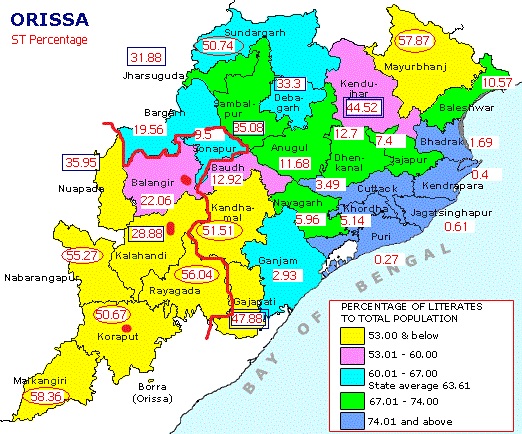
    The former districts of Koraput, Balangir and Kalahandi, also known as the KBK districts, were reorganised into 8 districts of Koraput, Malkangiri, Nabarangpur, Rayagada, Balangir, Subarnapur, Kalahandi and Nuapada in 1992. These districts form the South-West part of Odisha comprising the great Deccan Plateau and the Eastern Ghats. These highland districts highly rich in mineral resources, flora and fauna remain as one of the most backward regions in Odisha. The region is termed backward on account of rural backwardness, high poverty rates, low literacy rates, underdeveloped agriculture and poor development of infrastructure and transportation (Directorate of Economics and Statistics, 2021).
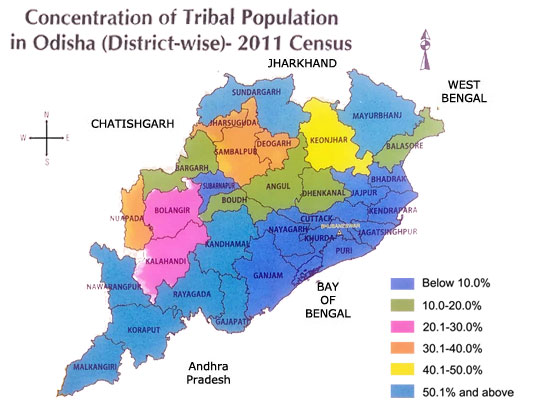
    The districts are home to primitive tribal communities such as Gonds, Koyas, Kotias etc. dependent on forest produce and subsistence agriculture for a living. KBK region registered a workforce participation rate of 48.06 % in the 2011 census. There was a significant occupation change noticed from the 2011 census.  The region witnessed a fall in cultivators from 33% in 2001 to 26.7% in 2011. However, the fall in cultivators was compensated with an increase in agricultural labourers from 44.24 % in 2001 to 48.87% in 2011. Employment in household industries also witnessed a downfall between the period of 2001 to 2011 (Sethy, 2020).

    The rise in agricultural labourers has a negative impact on the communities. As agriculture is underdeveloped owing to the arid nature of the region, crop failure, extreme calamities, low net irrigated area and falling government expenditure, these workers are pushed into abject poverty. In search of alternate employment options, these workers migrate to other areas of employment in rural or urban pockets. Such a form of seasonal migration during the lean period in agriculture is a predominant phenomenon in these districts. Their dependence on non-timber forest produce is hindered by the rapid deterioration and deforestation of forests for development projects and mining.

    Characteristics of distressed migrants in KBK region

    1. Who Are These Distressed Migrants?

    In the KBK region, distress migration has been a popular coping strategy during lean periods of agriculture. And this strategy is majorly adapted by disadvantaged and marginalised sections of the region. They are disadvantaged by caste, chronic poverty, landlessness, low levels of literacy and skills, increased dependence on forest and agriculture and debt-ridden (Meher, 2017; Mishra D.K., 2011; Tripathy, 2015, 2021).

    1. Why Do They Migrate

    Distressed migration in the region is induced by many interlinked factors. One such factor is that the region is highly under-developed in terms of social and economic infrastructure. Such under-development puts the communities at a disadvantage with low levels of literacy and skills. Their dependence on agriculture and forest produce for livelihood rises. However, agriculture is under-developed and forests are subjected to high levels of deforestation. With low levels of income, crop failure and non-availability of alternate employment opportunities, the communities are subjected to absolute levels of poverty, food and employment insecurities (Kujur, 2019).
    Landlessness is also identified as one significant push factor. As the region is highly dominated by tribal communities, they are more attached to and dependent on the forest cover. Globalisation and industrialisation resulted in deforestation and encroachment of farmlands for industrial and mining purposes. Eventually, a major proportion of land remains with a smaller group of wealthy people (Mishra D.K., 2011).   Relocation and involuntary displacement also result in the loss of their livelihood that is dependent on the local environment (Jaysawal & Saha, 2016).

    With falling income, people approach local moneylenders to meet their basic sustenance needs. With low incomes from agriculture and forest produce, families approach these informal creditors to meet emergency needs like marriage, birth and death rituals or medical treatment as well as to meet basic consumption needs with the expectation of cash flow from labour contractors during the lean season. Moneylenders exploit them by charging higher interest rates. Thus, the non-availability of formal credit facilities pushes them into a debt trap and further to adopt migration (KARMI, 2014; Mishra D.K., 2016).

    The region is also subject to extreme calamities and drought. Small and marginal farmers, poor in income and land, choose to migrate as they are unable to cope with the regular droughts and climate change. A study on historical analysis of the effect of climate on migration in Western Odisha mentions that the migratory trend saw a rise after the mega drought in 1965. Up until then, large-scale migration from the region was not a phenomenon (Panda, 2017).


    1. Channel of Migration

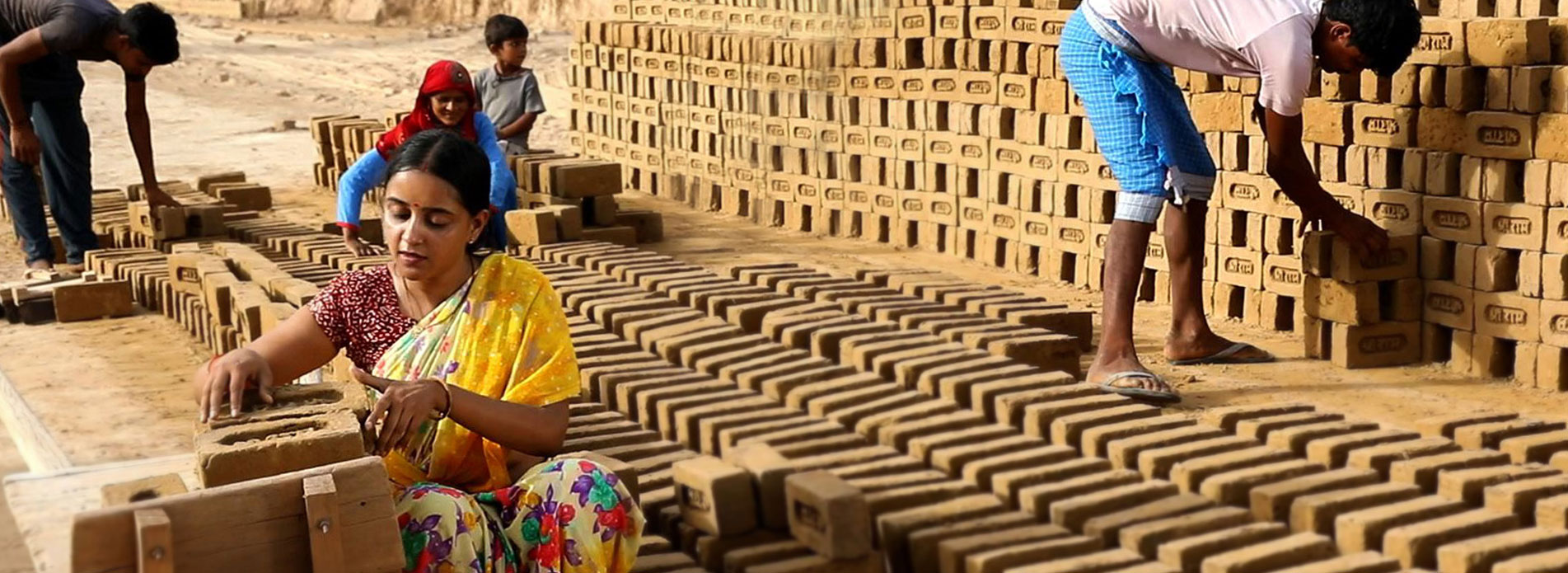
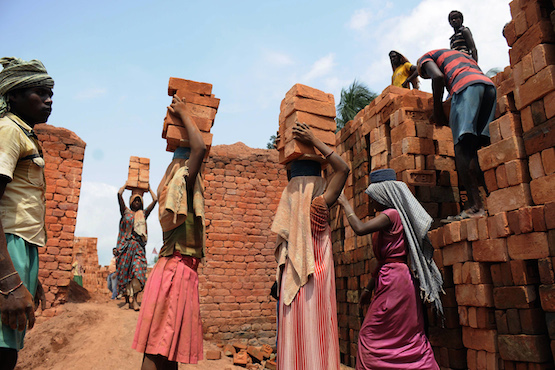
    Sardars provide an advance amount and in exchange, the debtor or any family member agrees to work for them for a stipulated period, usually six months. Hence, there exists a form of debt bondage. Large-scale family migration through this system is seen in the KBK region. The major stream of such bonded labour migration is witnessed towards brick kilns in Andhra Pradesh

    In the region, seasonal migration occurs through the channels of agents, locally known as Sardars, on a contractual basis. This form of migration is known as Dadan labour migration. The poor migrant labourers are known as Dadan and they are recruited by Sardars, who are usually local people who are familiar with residents in the region (KARMI, 2014). During the period of Nukhai, they go around the villages and contact prospective labourers. These Sardars are the intermediary between the employer and the migrant labourer. Sardars provide an advance amount and in exchange, the debtor or any family member agrees to work for them for a stipulated period, usually six months. Hence, there exists a form of debt bondage. Large-scale family migration through this system is seen in the KBK region. The major stream of such bonded labour migration is witnessed towards brick kilns in Andhra Pradesh. They are also a major source of labour in the areas of construction, handlooms and other forms of informal sector work across South India (Daniels, 2014). The problems they face in the destination are manifold. They are subjected to poor working conditions, poor housing and sanitation facilities and limited access to education and health facilities. They are recognised as cheap labour with limited bargaining power owing to their social, cultural and linguistic exclusion in the destination state. Upon entering the contract their freedom to move and freedom to express is denied (Acharya, 2020).

    1. Pull Factors to Migrate

    The hope of availability of better job opportunities and wages is the main pull factor. However, upon the analysis of the nature of migration, push factors have a higher weightage in inducing such distress migration. Migration to brick kilns and other informal sectors from the KBK region can be termed as distress migration as in this case, distress is caused mainly by socioeconomic factors. It is not an informed or voluntary choice. Debt migration remains the only coping strategy that they could adopt.

    Government intervention to curb such distress

    1. Policies Addressing Debt-Bondage Migration:

    The first attempt of the state government to address Dadan migration or debt migration is the enactment of the Dadan Labour (Control and Regulation) Act (ORLA) in 1975. The act had provisions for the registration of labourers and agents, ensuring compliance of minimum wages and favourable working conditions and appointing inspection officers and dispute redressal committees (Daniels, 2014).  However, the act remained on paper and no evidence of enactment was published until it was repealed in 1979 upon the enactment of the Interstate Migrant Workmen (Regulation of Employment and Conditions of Service) Act, 1979 (Nanda, 2017).

    The ISMW act has been criticised to be inadequate and failing to regulate and facilitate safe migration. According to the act, only those interstate migrant workmen who are recruited by licensed agents come under the ambit of the act. However, most agents involved in Dadan migration are not licensed and hence, these workers cannot avail of any of the provisions of the act (Singh, 2020). Though registration of labour contractors is mandatory in the origin state, there is no information about the names of these contractors and hence, further monitoring of the migration process is avoided (NCABL, 2016). Lack of adequate enforcement, under-staffing and poor infrastructure are identified as the reasons for poor implementation of the act in the state (Daniels, 2014).

    A positive attempt against distress migration was the Memorandum of Undertaking (MoU) initiated between the labour department of Odisha and Andhra Pradesh to ensure labour welfare measures of migrant workers in Brick Kilns. After the MoU, the state of undivided Andhra Pradesh took up various progressive measures in education, health, housing and PDS for migrant workers in Brick Kilns. ILO necessitated the need for states to enter into inter-state MoUs to effectively address the bonded labour migration. However, no further MoU was signed with other states like Tamil Nadu, Chhattisgarh etc. which are also among the major host states for migrants from the region (NCABL, 2016).

    The Bonded Labour System (Abolition) Act enacted in 1976 governs the provisions for identification, rescue and rehabilitation of bonded labourers across the country. The act has its loopholes in implementation. There is no information on whether vigilance committees have been set up in every district or whether the surveys have been periodically conducted or to what extent the act has been functioning in the state (Post News Network, 2019). The centrally sponsored scheme for Rehabilitation of Bonded Labour also has its setbacks. There have been reported cases of delay and denial of financial aid by district officials ( Mishra .S., 2016). In 2016, with restructuring and revamping of the Rehabilitation scheme, rescued workers could only avail the full amount of financial aid with the prosecution of the accused employers. With no database on the employer, the rates of prosecution have been low and the rescued bonded labour do not receive their funds (NACBL, 2016)

    1.  Ensuring Accessibility of Health Facilities in Destination

    The Rashtriya Swasthya Bima Yojana or RSBY launched by the central government in 2008 provides health insurance to BPL families. The scheme incorporates provisions to split smart cards so those migrant workers could avail health insurance in destination states. After signing of the MoU between Andhra Pradesh and Odisha, the two states took steps to spreading awareness among the migrant workers about how to use the smart cards (Inter-State Migrant Workman Act (ISMW), Labour Directorate, n.d.)

    1. Ensuring Education of Migrant Workers Children

    The state of Odisha has established seasonal hostels to ensure the education of children of migrant workers.  The children are enrolled in seasonal hostels during October-June, that is until their parents return home (Odisha Primary Education Programme Authority, n.d.).  The state has ensured the education of migrant children at their destination state by sending Odiya textbooks and Odiya teachers to residential schools in Andhra Pradesh (Inter-State Migrant Workman Act (ISMW), Labour Directorate, n.d.).

    1. Alternate Employment Opportunities: MGNREGA

    Mahatma Gandhi National Rural Employment Guarantee Act (MGNREGA) was introduced in 2006 to provide guaranteed employment to rural poor with the objective of uplifting them from poverty and restricting distress migration.  A study analysing the performance of MGNREGA through secondary sources of data suggests that based on physical criteria of 100 Days of Wage Employment, Person-days generated, ST and Women person-days and financial performance in terms of total expenditure, total wages, average cost and average wage rate per day person, the performance of MGNREGA in KBK districts is better compared to Non- KBK districts.  But the region is lagging in rural employability criteria based on average days of employment provided per household and job cards issued (Sahoo et al., 2018).  Labour in the region is not interested to work under MGNREGA due to its dismal implementation in the state. Workers complain about the delay in receiving payments and instances of the creation of non-existent workers’ names among MGNREGA’s beneficiaries (KARMI, 2014).  Uncertain and low wages make these labourers favour migration to Brick Kilns in hope of better wages (Deep, 2018).

    1. Development Policies in KBK Region

    The KBK region has a high incidence of poverty owing to regional disparities in development and social exclusion based on caste. The main initiatives implemented by the state government for the upliftment of the KBK region are the Special Area Development Programme, Revised Long Term Action Plan (RLTAP), Biju KBK Plan, Backward Regions Grants Fund, Gopabandhu Gramin Yojana (GGY), Special Central Assistance (SCA) for tribal sub-plan (TSP) areas, Western Odisha Development Council (WODC) and Grants under Article 275(1) of the Constitution. Development projects to reduce poverty and regional disparities are obstructed by economic, social and institutional factors (Mishra, 2020).
     

    The state of Odisha has done positive interventions in the education of migrant children and health facilities of the migrant population. However, the distress migration is still prevalent owing to the social and economic exclusion and debt bondage situations in the region. Land grabbing in the name of development left the tribal communities poor and in distress. Structural inequalities induced by caste discrimination are enhanced with such landlessness.


    Policy Recommendations

    The state of Odisha has done positive interventions in the education of migrant children and health facilities of the migrant population. However, the distress migration is still prevalent owing to the social and economic exclusion and debt bondage situations in the region. Several initiatives and schemes have been enacted to address distress migration; however, their failure in reducing distress can be linked to dismal governance, poor implementation and misappropriation of schemes.

    The state must ensure migration to be safe and a viable coping strategy. From this study it is suggested the state of Odisha follow a multipronged approach to address the distress.

    Origin state (Odisha) interventions

    •         Short Term Interventions:
    1. The system of debt bondage should be completely abolished by the proper implementation of legislation. Different loopholes in implementation such as the delay in the release of funds, prosecution of accused and identification and registration of middlemen should be addressed. Apart from the financial aid, the state should intervene in providing a comprehensive livelihood plan for the rescued labourers. Abolishing the bonded labour system is essential to reduce distress and make migration safe.
    2. Informal sources of credit should be eliminated and formal credit and microfinance facilities should be made available. Such facilities would reduce the exploitation and prevent the creation of absurd debt. Formal credit provides opportunities for small and marginal farmers to indulge in productive investments. This enables them to cope with extreme climatic changes.
    3. Land grabbing in the name of development left the tribal communities poor and in distress. Structural inequalities induced by caste discrimination are enhanced with such landlessness. The provision of land ownership enables the communities to enjoy land-based benefits which further supports them to sustain their livelihood. Ownership of land also provides the indigenous community with a sense of social and economic significance.
    •         Long term interventions
    1. The state should engage in enhancing the skills of the people in the region. Vocational skill training and development schemes can be introduced. This could expand the opportunities available for employment and distribute labour across all the economic sectors.
    2. Rural development should be given higher priority. The state of Odisha has already initiated many schemes for the development of the KBK region. However, the state should study the economic and social factors that stagnate the process of development in the region. Chronic poverty, poor infrastructural and rural connectivity and dismal education and health facilities are some of the important areas that require attention.

    Host state intervention

    1.   The host state needs to create a database of migrants entering their state. A statistically significant database on migrants solves a huge array of issues faced by the migrant in the destination state. A comprehensive database helps in identifying and recognising migrants. It also allows for understanding the different characteristics of migrants and the sectors in which they are employed. This would be beneficial for monitoring and ensuring safe and favourable working conditions. A database also helps in ensuring the availability and accessibility of social security and entitlements in host states.


    1.   Migrant labour is as important to the destination state as it is to the origin state. Both origin and host state should cooperate towards making migration a viable livelihood strategy.

    Another important area where both the origin and host state should intervene together is creating awareness among workers about the existing provisions and rights available to them. Access to the same should be made easy.

    Conclusion

    The highly backward districts of the KBK region remain a major source of distressed migrants. Years of state initiative in reducing distress have had negligible impact. The area remains underdeveloped and migration is the only viable choice of employment. Migration can only be a viable coping strategy for seasonal migrants when the channel of migration is made legal and safe. The major drawback in any initiative attempted to resolve distress is the poor implementation. Administrative apathy, corruption and misappropriation of schemes have stagnated the progress of every initiative.


    References

    1. Acharya, A. K. (2020). Caste-based migration and exposure to abuse and exploitation: Dadan labour migration in India. Contemporary Social Science, 1-13.
    2. Avis, W. R. (2017). Scoping study on defining and measuring distress migration.
    3. Bhatta Mishra, R. (2020). Distress migration and employment in indigenous Odisha, India: Evidence from migrant-sending households. World Development136, 105047.
    4. Daniels, U. (2014). Analytical review of the market, state and civil society response to seasonal migration from Odisha. Studies, stories and a canvas seasonal labour migration and migrant workers from Odisha, 106-115.
    5. Deep, S. S. Seasonal Migration and Exclusion: Educational Experiences of children in Brick Kilns. Ideas, Peoples and Inclusive Education in India. National Coalition for Education, India. 2018.
    6. Directorate of Economics and Statistics (2021). Odisha Economic Survey 2020-21. Planning and Convergence Department. Government of Odisha. http://www.desOdisha.nic.in/pdf/Odisha%20Economic%20Survey%202020-21-1.pdf
    7. Giri, J. (2009). Migration in Koraput: “In Search of a Less Grim Set of Possibilities” A Study in Four Blocks of tribal-dominated Koraput District, Odisha. Society for Promoting Rural Education and Development, Odisha, 1.
    8. Inter-State Migrant Workman Act (ISMW) | Labour Directorate. (n.d.). Labour Directorate, Government of Odisha. Retrieved August 10, 2021, from https://labdirodisha.gov.in/?q=node/63%27%3B.
    9. Jaysawal, N., & Saha, S. (2018). Impact of displacement on livelihood: a case study of Odisha. Community Development Journal53(1), 136-154.j
    10. Jena, M. (2018, July 21). Distress migration: land ownership can put a break. The Pioneer. https://www.dailypioneer.com/2018/state-editions/distress-migration-land-ownership-can-put-a-break.html
    11. KARMI. (2014). Migration Study Report of Golamunda Block of Kalahandi District of Odisha. Pp.13. Kalahandi Organisation of AgKriculture and Rural Marketing Initiative (KARMI), Kalahandi Odisha.
    12. Kujur, R. (2019). Underdevelopment and patterns of labour migration: a reflection from Bolangir district, Odisha. research journal of social sciences10(1).
    13. Mahapatra, S. K., & Patra, C. (2020). Effect of migration on agricultural growth & development of KBK District of Odisha: A statistical assessment. Journal of Pharmacognosy and Phytochemistry, Sp9(2), 162-167.
    14. Mander, H., & Sahgal, G. (2010). Internal migration in India: distress and opportunities, a study of internal migrants to vulnerable occupations in Delhi.
    15. Meher, S. K. (2017). Distress seasonal migration in rural Odisha A case study of Nuapada District.
    16. Mishra, D. K. (2011, April). Behind dispossession: State, land grabbing and agrarian change in rural Odisha. In International conference on global land grabbing(Vol. 6, No. 8).
    17. Mishra, D. K. (2016). Seasonal migration from Odisha: a view from the field. Internal migration in contemporary India, 263-290.
    18. Mishra, S. (2016, January 13). Rescued migrant workers get raw deal from Govt. The Pioneer. https://www.dailypioneer.com/2016/state-editions/rescued-migrant-workers-get-raw-deal-from-govt.html
    19. Mishra, S. (2020). Regional Disparities in Odisha–A Study of the Undivided “Kbk” Districts. Research Journal of Humanities and Social Sciences11(4), 261-266.
    20. Nanda, S. K. (2017). Labour scenario in Odisha. Odisha Review73(10), 20-25.
    21. NCABL. (2016). Joint Stakeholders’ Report on Situation of Bonded Labour in India for Submission to United Nations Universal Periodic Review III. NATIONAL COALITION FOR ABOLITION OF BONDED LABOUR (NCABL), Bhubaneswar Odisha.
    22. Panda, A. (2017). Climate change, drought and vulnerability: A historical narrative approach to migration from Western Odisha, India. In Climate Change, Vulnerability and Migration(pp. 193-211). Routledge India.
    23. Post News Network. (2019, April 30). Elimination of bonded labour calls for cohesive action plan. Odisha News, Odisha Latest News, Odisha Daily – OdishaPOST. https://www.Odishapost.com/elimination-of-bonded-labour-calls-for-cohesive-action-plan/
    24. Sahoo, M., Pradhan, L., & Mishra, S. (2018). MGNREGA and Labour Employability-A Comparative Analysis of KBK and Non-KBK Regions of Odisha, India. Indian Journal of Economics and Development6(9), 1-8.
    25. Sethy, P. (2020). Changing Occupational Structure of Workers in KBK Districts of Odisha. Center for Development Economic6(06), 17-28.
    26. Singh, V. K. (2020, April 22). Opinion | The ‘nowhere people’ of COVID-19 need better legal safeguards. The Hindu. https://www.thehindu.com/news/national/other-states/the-nowhere-people-of-covid-19-need-better-legal-safeguards/article31400344.ece
    27. Tripathy, S. N. (2015). Evaluating the role of micro-finance in mitigating the problems of distress out-migrants: A study in KBK districts of Odisha. The Micro Finance Review, Journal of the Centre for Micro Finance Research.
    28. Tripathy, S. N. (2021). Distress Migration Among Ultra-poor Households in Western Odisha. Journal of Land and Rural Studies, 23210249211001975.


    Feature Image: Tata Trusts
  • Climate Change: A Review of the Rural Electrification Policies and Barriers to adopting Renewable Energy in Rural India

    Climate Change: A Review of the Rural Electrification Policies and Barriers to adopting Renewable Energy in Rural India

    Energy is crucial for a country’s growth and sustainable development. But over one-third of the world’s population, mostly consisting of people in rural areas of developing countries, do not have access to clean, affordable energy.

    The climate crisis is a battle that countries have been fighting for decades now. The policies and strategies developed by different countries have helped in small ways in achieving their energy and climate goals. One strategy among all countries is the development and improvement in the use of renewables. Various studies, across different fields, have shown us the need for countries to shift to this alternative set of energy sources that will sustain life in the long run. The use of renewable energy in both urban and rural areas should be monitored and developed to achieve the sustainable development goals that countries have vowed to achieve.

    Energy is crucial for a country’s growth and sustainable development. But over one-third of the world’s population, mostly consisting of people in rural areas of developing countries, do not have access to clean, affordable energy. This is an important factor contributing to the low standards of living in rural areas of developing countries.

    In India, more than two-thirds of the population live in rural areas whose primary source of income is agricultural activities. But a large proportion of the rural population does not have consistent access to energy. To this population, new alternative sources of energy remain unaffordable and inaccessible due to poverty and lack of adequate infrastructure, respectively. Hence, we find that the rural populations continue to use traditional sources of energy such as coal, fuelwood, agricultural waste, animal dung, etc. Not only do these cause pollution and quick erosion of natural resources, but they impact negatively on people’s health. The need for transitioning to the use of renewable energy, especially in the country’s rural areas is of prime importance. But, to achieve this, the government must bring out policies that will guide this transition. Moreover, it is important that the government positively supports companies – both private and public – that generate the required technology and research that transforms the available renewable energy sources into energy that the public can consume.

    Rural Electrification in India

    The Electricity Act of 2003 enabled the building of electricity infrastructure across the rural and remote regions of the country and thus, easy access to electricity for most of the people. The Indian Government launched the Rajiv Gandhi Grameen Vidyutikaran Yojana (RGGVY) in 2005, to extend electricity to all unelectrified villages. The programme focused largely on developing electrification infrastructure across villages in India and providing free connections to all rural households living below the poverty line. Further, state governments received a 90% grant from the central government which aided in extending electrification infrastructure to over one lakh villages during the period 2005–2013. Moreover, the central government worked towards increasing implementation efficiencies by engaging central PSUs in some states.

    In 2015, the NDA Government launched the Deen Dayal Upadhyaya Gram Jyoti Yojana (DDUGJY) under which, the villages that remained un-electrified under the RGGVY, were electrified. The scheme has also been significant in supporting distribution networks in rural areas, largely concerning metering distribution transformers, feeders, and consumers in rural areas (Gill, Gupta, and Palit 2019).

    The central government further introduced standalone mini-grids programs, under the DDUGJY in 2016. Guided by the National mini-grid policy, State governments also contributed through various mini-grid policies to promote decentralised renewable energy solutions. Further, the Unnat Jyothi Affordable LEDs for All was introduced to encourage the efficient use of energy and under this scheme, LED bulbs were distributed to all households with a metered connection at subsidised rates. The Ujwal DISCOM Assurance Yojana was also introduced under the DDUGJY to allow a financial turnaround and operational improvement of Discoms. According to the UDAY scheme, discoms were expected to improve operational efficiency and bring AT&C losses down to 15%.

    While the schemes were successfully implemented then, the rate of rural household electrification was still slow. Evaluations of the schemes found various limitations, such as high upfront connection costs, poor quality of supply, poor maintenance services, to name a few. Additionally, some states had also started initiating their electricity-access programmes to accelerate the electrification process, such as the West Bengal Rural Electrification Programme, the Har Ghar Bijli scheme in Bihar, the Bijuli Bati mobile-based app to enable last-mile connectivity and household connections in Odisha (Gill, Gupta, and Palit 2019). To address this issue, the central government then launched the Pradhan Mantri Sahaj Bijli Har Ghar Yojana (PM Saubhagya) in September 2017, with the ambitious target of providing electricity connections to all un-electrified rural households by March 2019. Under this scheme, the government has electrified all of 597,464 census villages in the country (Bhaskar 2019).

     Barriers to adopting Renewable Energy in Rural Areas

    This section focuses on the issues that restrict the efficient adaptation of renewable energy in rural areas. As the government continues to promote renewable energy in rural communities, it should keep in mind these following limitations and develop mechanisms to overcome them as and when they arise. While employing renewables to supply electricity, the problem of grid integration arises. Most electricity grids and the technology used, are designed and placed around fossil fuels. However, when they transition now to more non-conventional forms of energy such as wind and solar, the designs and placements of power generation systems have to change rapidly. Thus, heavy emphasis should be placed on improving the research and infrastructure required to make this transition as smooth as possible. That is, the government should research the most optimal locations for wind turbines and solar panels, as not all lands in rural areas can be employed for this purpose. Otherwise, it may negatively impact the quality of agricultural lands. Upon conducting the required research, the infrastructure to connect all areas to the electricity grids must be developed and well-financed by the government to satisfy the energy demands of the rural population. For instance, in Germany, while the wind power potential is in the northern regions, major demand for it is in the southern region. Thus, the country’s energy transition process emphasizes upgrading the electricity grid infrastructure that would make it possible for power to flow from north to south (UNCTAD 2019). Further, the planning should also focus on balancing the energy mix in the power grid. The transition to renewables will not be a quick one, which implies that for the short term the power grid will be a mix of different sources of energy. Thus, the plans should design the grids in such a way that the proportion of each energy source balances one another so that there is no leakage or wastage in the system, especially given the fact that energy storage technology is still underdeveloped in the country.

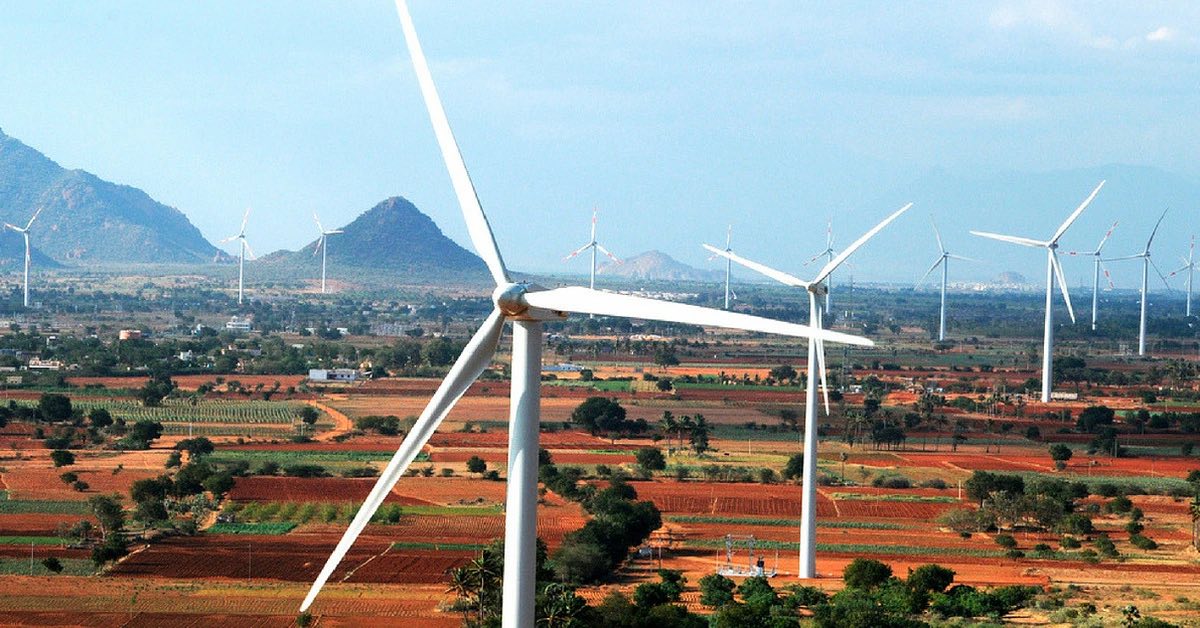
    For many years now, there has been an emphasis on the potential of decentralised electricity comprising off-grid or mini-grid systems to help with rural electrification. The government introduced a national mini-grid policy in 2016 to promote decentralised renewable energy. With the increase in the use of solar energy, solar-powered mini-grid systems were found to be more economical and accessible to rural households (Comello et al. 2016). These systems could substantially improve the people’s standard of living and eliminate the use of harmful fuels such as kerosene oil for simple household appliances such as lamps and cooking stoves. However, an IEA report found evidence that this potential is limited, and would not be beneficial for large, productive, income-generating activities. Thus, mini-grids are often considered a temporary solution, until grid connectivity is achieved (IEA 2017).

    Whether a grid system or an off-grid system is implemented, high connection charges will automatically limit the rural population’s ability to connect to the grid.

    A major challenge that the government must keep in mind is affordability. Whether a grid system or an off-grid system is implemented, high connection charges will automatically limit the rural population’s ability to connect to the grid. On the one hand, better access to electricity will increase productivity and lead to the growth and development in the region but on the other hand, most of the rural communities live below the poverty line and will not be able to afford the connection, even if they have access to it. While decentralised energy sounds economical and sounds like an obvious solution, it is also limited in capacity.

    Another factor that the government must keep in mind for the adaptation of renewable energy in rural areas is the situation of state and private distribution companies (discoms) in India that play a pivotal role in the rural electrification process. While the government set the goals and adopted a strategy to electrify all rural households under the Saubhagya scheme, it was the discoms’ responsibility to implement these strategies and achieve the goals. A TERI report found that the discoms had difficulty carrying out the electrification process because the strategy adopted by the government had not considered the difference in demographics in the rural areas (Gill, Gupta, and Palit 2019). That is, each area differs in population size, density, and topography and the discoms found it hard to implement a similar strategy to all places alike. Moreover, the financial status of many state-run discoms has been stressed over the past year due to increasing losses and lack of adequate support from the respective State governments. Over the past year, dues to power generators have increased to Rs 1.27 trillion (Economic Times 2021). The annual 2021 budget’s outlay of over Rs 3 trillion, to be spent over five years, to improve the viability of state-run discoms, is a step in the right direction. The TERI report also found that discoms face institutional burdens in the electrification process (Gill, Gupta, and Palit 2019). The companies are most often strapped for time and must deal with huge amounts of paperwork. Simultaneously, they have to be physically present to install the necessary infrastructure and manage the labour employed in different states. In the end, it remains to be seen how the discoms will manage to monitor and review the electricity infrastructure in the rural areas, especially given the huge amounts of debt that they are trapped in.

    The government must also work towards increasing and incentivising private sector participation. While the private companies were interested in taking up tenders for the production of electricity through renewable energy sources in the past, the recent withdrawal of benefits such as accelerated depreciation has been a cause for concern. Companies like Suzlon Energy Ltd. face lower returns on their investment, thus deterring them from investing in future projects. Removal of benefits also discourages smaller companies that are looking to invest in this sector as it increases not only the cost but uncertainty about the government’s policies. Companies will refrain from investing if they do not anticipate a high return in the future. For grid connection systems to be successful and efficient in the long term, the government must ensure a strong governance structure, and a stable and enabling policy environment that constantly encourages fresh private sector participation. Concerning the rural electrification process, the government must encourage private sector participation because it would complement the public sector companies thus sharing the burden of production, installations, and technology as well as the process of maintenance and regular checks once the grid connection is complete.

    A shift to renewable energy in rural areas will no doubt have a positive impact on the health and well-being of the population. It will also improve the standard of living and in most cases, the productivity of the people. But the change has to be a gradual process. Even if renewable energy and electricity are affordable and accessible to the people, alternative cooking fuels and technology will take time to be accepted in practice as they may not have the same performance quality as traditional stoves and appliances that the people are used to. To overcome this hurdle, the government must ensure that the policies formed will guide the adjustment to renewables for many years to come. Moreover, the government must spread knowledge and awareness about the benefits of shifting to appliances that are sourced through renewable sources of energy. Besides, some rural households collect firewood for not just individual consumption but also to sell it (IEA 2017). This is a source of income for these households hence, the government should tread carefully when they implement programs that seek to reduce the collection and use of firewood. For years now, the government has promoted and subsidised the use of LPG within rural communities, as an alternative for other harmful sources of energy. While it has helped improve people’s health to some extent, it would be beneficial for the government to gradually nudge the decrease in the use of LPG and increase the use of renewable alternatives. Apart from the definite benefits to the environment, such a change would serve to reduce the rural-urban energy gap in India.

    The shift to renewable energy sources holds huge amounts of risks and uncertainty. But, despite this, there is a need to make long-term, accurate forecasts of energy demand and develop drafts of policies beforehand that would guide the process of supplying energy to satisfy the demand. Energy supply projects necessitate this because they have long gestation and implementation periods. With the climate crisis advancing rapidly, it would serve the government well to be prepared.

    International Collaboration

     International cooperation can play a crucial role in expanding the distribution of renewables. It can help countries benefit from shared infrastructure, technology, and lessons. The challenge thus lies in designing policies that will facilitate this technology and infrastructure transfer, especially in countries where the renewable energy sector is emerging. International organizations such as the Commission on Science and Technology for Development can play an important role in supporting such collaborations. Policies should also facilitate mechanisms that will help improve the current capabilities in developing countries.

    For instance, the Indo-German Energy Programme – Access to Energy in Rural Areas was signed to create a favourable environment for rural renewable energy enterprises so that they can provide easily accessible energy services to the rural population.

    The bilateral collaboration brought in local and international professional expertise to support private sector development, to identify and improve viable sources of finance, and to help design government schemes to achieve sustainable energy security and provide clean cooking energy solutions to the rural population. The GIZ – the German Corporation for International Cooperation – worked closely with India’s Ministry of New and Renewable Energy (MNRE) to successfully implement the program. The program succeeded in training more than 10,000 professionals to qualify as energy auditors. It has also helped increase private sector investment and develop a calculation to determine the CO2 emissions for the Indian electricity supply grid.

    Way Forward

     Research and innovation are essential to improve renewable options for producing clean cooking fuel. There is also a need for location-based research to produce appropriate workable technologies. Long-term policies and outcomes are important to consider. So, conducting significant research will not only help understand the present conditions but will also help policymakers make informed decisions in the future. It is also important to educate and communicate to the rural population about the relative advantages of using modern energy sources over traditional sources. For instance, consumers may be unaware of the health impacts of using traditional sources of energy for cooking. Moreover, they may distrust conventional alternatives due to their unfamiliarity with them. Thus, the responsibility falls on the government to properly inform them of the need for the shift to renewables and curb the spread of misinformation.

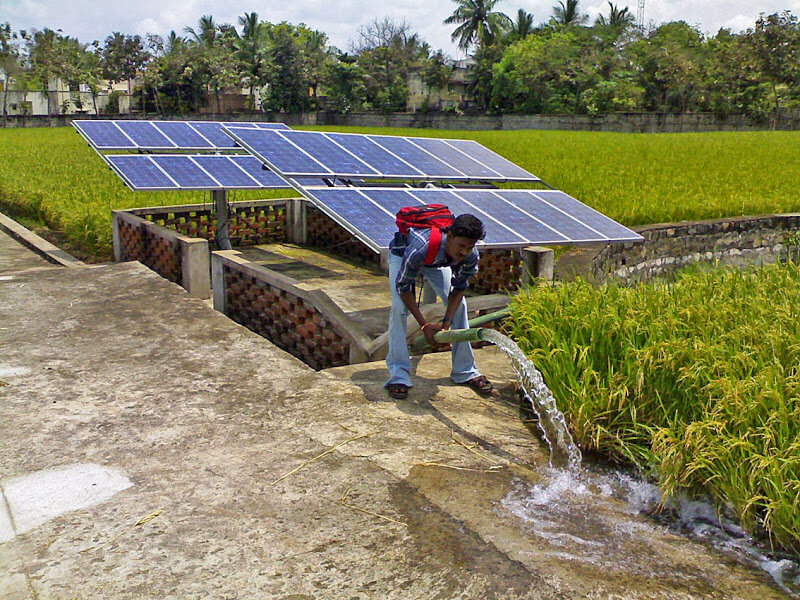
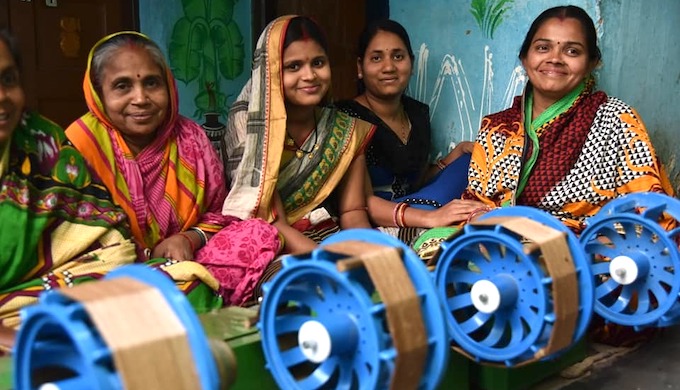
    Further, alternative solutions will only succeed if they are established in cooperation with the local users. “The women in rural areas play an important role when it comes to energy transition” (IEA 2017). Several initiatives such as the Global Alliance for Clean Cookstoves, SEforALL, and ECOWAS address the joint issues of gender empowerment, energy poverty, health, and climate (IEA 2017). Training and capacity building are key to the shift to renewable sources of power. And in rural energy applications, this can be improved by taking into account the gender issues that plague society. There is a high possibility that rural engineers, once trained, might migrate to urban areas in search of more lucrative work. In response to this, the Barefoot College International Solar Training Programme takes a different approach to capacity-building in rural areas and trains the grandmothers in villages who are more certain to stay and help develop the community.

    a shift to clean energy in rural areas that houses the section of the population that lives below the poverty line will be more successful if it is seen as a strategy to broaden community development.

    Thus, a shift to clean energy in rural areas that houses the section of the population that lives below the poverty line will be more successful if it is seen as a strategy to broaden community development. This includes higher employment, better infrastructure, roads, and telecommunications.  This process requires careful design of policies and the establishment of a supportive environment that includes not just innovative business models but also maintenance systems that will sustain the development in the long run.

    Conclusion

     To summarize, rural electrification and the transition to renewable energy in rural areas have been a part of the government’s agenda for many years now, irrespective of the ruling party at the centre. Necessary policies have been introduced to guide the process. While it is great that the government recently achieved universal electrification, it remains to be seen whether the quality of power provided to these villages meets the needs of the population. Further, in this process, state-owned discoms have taken a serious financial hit and it is a tough road to recovery from here. Adding on, the COVID pandemic has slowed down the development and recovery of these discoms. The government should first increase budget outlays in the following years and create a system to monitor the use of these finances. Second, it could turn to privatisation. Privatising discoms on a larger scale would reduce the financial and risk burden on the government and ensure efficient functioning of the companies. Additionally, it is important that while policies are being designed, the deciding parties have a complete understanding of the socio-economic situation of the communities within which they will make changes. To do this, experts who have studied the layout of these rural areas extensively should be involved in the process, along with leaders from the respective districts who are bound to be more aware of the situation and the problems in their areas. More importantly, the government should keep the process of the transition to alternative energy sources transparent and keep an open line of communication with the rural population to earn their trust before they make significant changes. Finally, India is one of the largest consumers of different renewable sources of energy. While it is important to make changes to the policies in this sector, it is also imperative that the government tries to maintain stability in policies that support the companies which help satisfy the growing energy demand in the country.


    References

    1. Bhaskar, Utpal. 2019. “All villages electrified, but last-mile supply a challenge.” mint, December 29, 2019. https://www.livemint.com/industry/energy/all-villages-electrified-but-last-mile-supply-a-challenge-11577642738875.html.
    2. Comello, Stephen D., Stefan J. Reichelstein, Anshuman Sahoo, and Tobias S. Schmidt. 2016. “Enabling Mini-grid Development in Rural India.” Stanford University. https://law.stanford.edu/wp-content/uploads/2016/04/IndiaMinigrid_Working_Paper2.pdf
    3. Economic Times. 2021. “Discom debt at Rs 6 trillion; negative outlook on power distribution: ICRA.” The Economic Times. https://economictimes.indiatimes.com/industry/energy/power/discom-debt-at-rs-6-trillion-negative-outlook-on-power-distribution-icra/articleshow/81431574.cms?from=mdr.
    4. Gill, Bigsna, Astha Gupta, and Debajit Palit. 2019. “Rural Electrification: Impact on Distribution Companies in India.” The Energy and Resources Institute. https://www.teriin.org/sites/default/files/2019-02/DUF%20Report.pdf.
    5. IEA. 2017. “Energy Access Outlook: From Poverty to Prosperity.” International Energy Agency. https://www.iea.org/reports/energy-access-outlook-2017.
    6. UNCTAD. 2019. “The Role of Science, Technology and Innovation in Promoting Renewable Energy by 2030.” United Nations Conference on Trade and Development. https://unctad.org/system/files/official-document/dtlstict2019d2_en.pdf.

    Feature Image: The Better India 

    Image 1: www.alliancemagazine.org

    Image 2: indiaclimatedialogue.net

  • Wage theft plagues India’s  migrant workers

    Wage theft plagues India’s migrant workers

    Though the South Asian country has relied heavily on remittances from its international migrant workers, the government has been remiss in ensuring their protection and welfare. As labor violations spike amid the COVID-19 pandemic, these workers are left to fend for themselves.

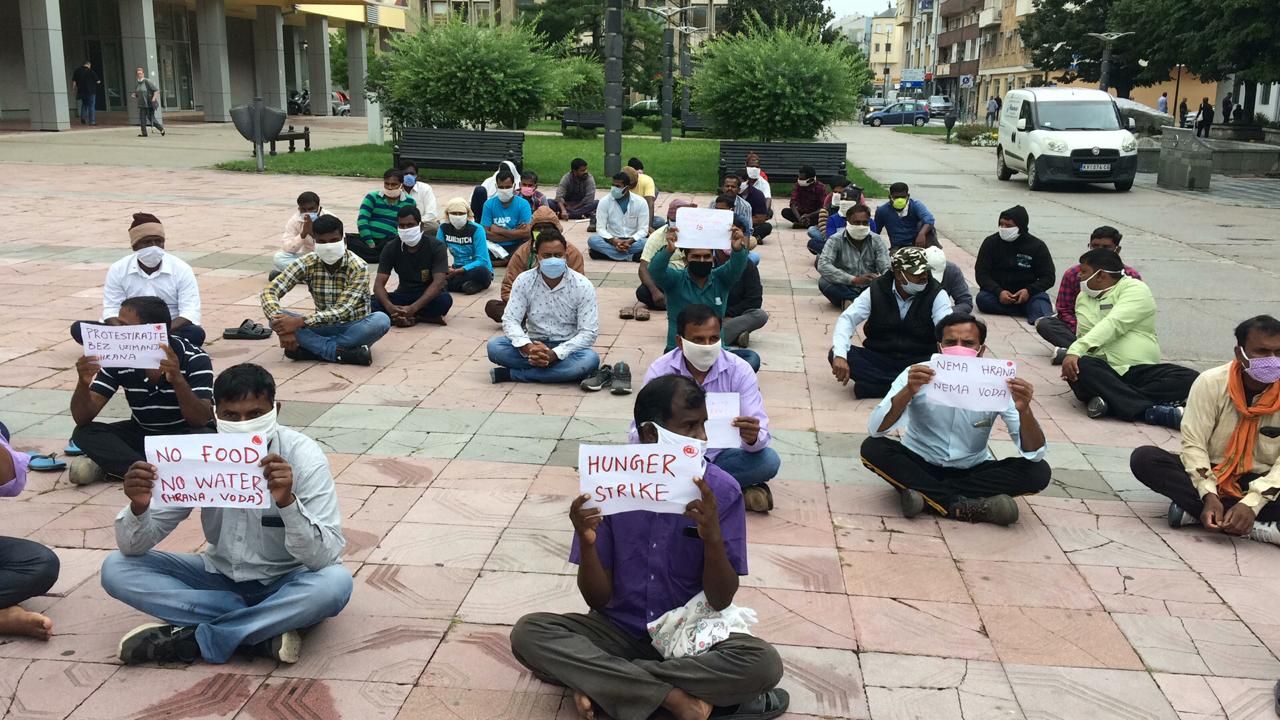
    In August 2020, a group of around forty Indian construction workers staged a hunger strike in Kraljevo, Serbia, demanding to be paid. In addition to not receiving months’ worth of wages from their employer, they had been working 10-12 hours a day without proper food or access to healthcare and were living in cramped, unhygienic quarters during the COVID-19 pandemic.

    The migrant workers from across India first arrived in Serbia in mid-2019. According to the Building and Wood Workers’ International (BWI), a global union federation, around 150 Indians were employed across the Balkan country for the construction of the Corridor 11 project. In a Zoom interview, two of the workers recounted how their troubles with getting paid had begun soon after arrival. When their situation didn’t improve, the first group was repatriated to India in January and February 2020. The rest, including those protesting in Kraljevo, were repatriated by September 2020.

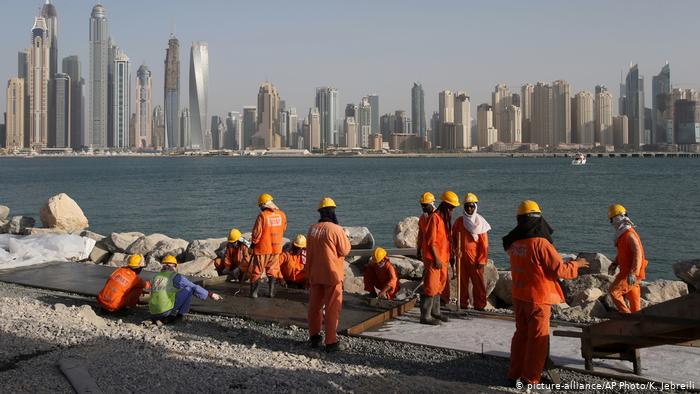
    Much of the Indian government’s efforts have been focused on Gulf countries, where, based on data from the International Labour Organization (ILO), around 9 million Indians live and work. However, the BWI warns that Europe is fast becoming a hub for the exploitation and trafficking of third-country nationals. In Serbia, other reports of exploitation of migrant groups from China and Turkey have recently come to light.

    When he heard about the stranded Indian workers, Ramachandra Khuntia, chair of the BWI Indian Affiliates Council and a former Member of Parliament (MP) contacted the Indian Ministry of External Affairs (MEA) and the Indian embassy in Belgrade multiple times.

    the BWI warns that Europe is fast becoming a hub for the exploitation and trafficking of third-country nationals.

    What followed was a cross-border initiative involving labor unions, the Indian government, and Serbian anti-trafficking organization ASTRA. “We were finally able to bring the workers back home. But ‘til today, they have yet to receive their wages from the employer,” says Khuntia.

    “The payment of arrear wages is usually dealt with by the labor department in the host country, but the matter can be pursued through the Indian embassy,” explains Khuntia, adding that despite assurances from the Indian government and the Indian embassy in Serbia, the payments seem nowhere in sight.

    Indian construction workers stage a hunger strike in Kraljevo, Serbia, in August 2020. Amid the COVID-19 pandemic, wage theft has soared across the world, and often, the victims are migrant workers from India, who receive patchy support from their own government and have to rely on unions or non-profits for help. (Photo credit: BWI/Boobalan D) 

    Job loss and other ordeals

    Wage theft — the illegal practice of denying workers the money that they are rightfully owed — has dramatically increased during the COVID-19 pandemic. In addition to the non- or incomplete payment of wages, employees have to deal with job loss, non-payment of termination benefits, poor working conditions, and hurried repatriation without the chance to register their grievances.

    Migrant workers’ troubles begin in their country of origin, not abroad. “It is a new form of slavery that begins before they even leave the country in the form of recruiting fees. Recruiting agents and others involved are selling dreams to migrant workers.”

    Ponkumar Ponnuswamy, president of TKTMS, a construction workers’ union in Tamil Nadu that was directly involved in the process of repatriating the stranded workers, says that each of the workers is owed anywhere between the equivalent of US$1,300 and US$2,600 by the aforementioned company, depending on how long they were in Serbia. For the workers who were put through this trying ordeal, their unpaid wages represent a substantial amount of money that would have otherwise gone towards debt repayments, medical treatments, and basic subsistence.

    “I think it is a huge loss not only at the individual level but also at the country level,” says S. Irudaya Rajan, an expert on Indian migration and member of the Kerala government’s COVID-19 expert committee. Migrant workers constitute an integral part of the global economy, with their remittances adding up to over three times the amount of international aid and foreign direct investment combined. India, the world’s largest source of international migrants, received US$82 billion in remittances in 2019 according to World Bank data, a sum that has helped keep millions out of poverty.

    “COVID-19 has become a great opportunity for exploitation,” says Rajan, who is currently heading a study on counter-migration from the Gulf to assess wage theft.

    But according to him, migrant workers’ troubles begin in their country of origin, not abroad. “It is a new form of slavery that begins before they even leave the country in the form of recruiting fees,” he says. “Recruiting agents and others involved are selling dreams to migrant workers.”

    The Indian government requires recruiting agents to register themselves with the Protector General of Emigrants. Despite this, many illegal agents continue operating across the country. (Photo credit: Yamuna Matheswaran)

    Is the Indian government doing enough?

    In theory, the Indian government offers various resources for those who emigrate for work: registration portals, insurance schemes, awareness programs, and helplines. They also provide a list of registered recruiting agents (RAs) across the country.

    But the reality of emigration is far more complex, even confusing. For instance, it would be safe to assume that only a fraction of the RAs operating in India is registered with the MEA. A 2018 investigation by the Migrant Forum in Asia (MFA), with the support of ILO, found that in the state of Punjab alone the number of unregistered agents ran into several thousands, despite the 2014 Punjab Travel Professionals Regulation Act requiring mandatory registration of all consultants, agents, and advisors involved in sending people abroad.

    These unscrupulous agents make emigrants more vulnerable to exploitation by charging illegal fees and pushing unfair contracts. Some workers arrive in a foreign country only to learn that the job they were recruited for doesn’t exist, says Rajan. Others end up without appropriate visas or permits and are never registered in the system.

    The MEA limits the service fees RAs can charge their clients, which caps at INR 20,000 (around US$270). But Rajeev Sharma, Regional Policy Officer at BWI’s South Asia office, says that many of the workers have paid far more depending on the state they hailed from.

    “Workers from Punjab, for instance, paid up to INR 100,000 (US$1,365) to 150,000 (US$2,048) to the agent,” he says. “We don’t know how they managed to fund their journey, they may have run into debt – so it’s not just the salary, so many other issues are involved.” When asked about this practice, one of the agencies involved – an unregistered ‘Shakti Tread Test Centre’ run by Muktinath Yadav in Deoria, Uttar Pradesh – gave no response.

    “Covid-19 has become a great opportunity for exploitation” – Dr. S Irudaya Rajan, an expert on Indian Migration

    Indian missions abroad are tasked with ensuring the welfare of overseas Indian nationals. The migrant workers and union members state, however, that the Indian embassy in Serbia failed to even register their grievances properly. The Embassy of India in Belgrade did not respond to requests for comment. In response to an inquiry about grievance redressal mechanisms for repatriated migrant workers, the MEA’s Protector General of Emigrants instead pointed to the Pravasi Bharatiya Sahayata Kendra, a general helpline.

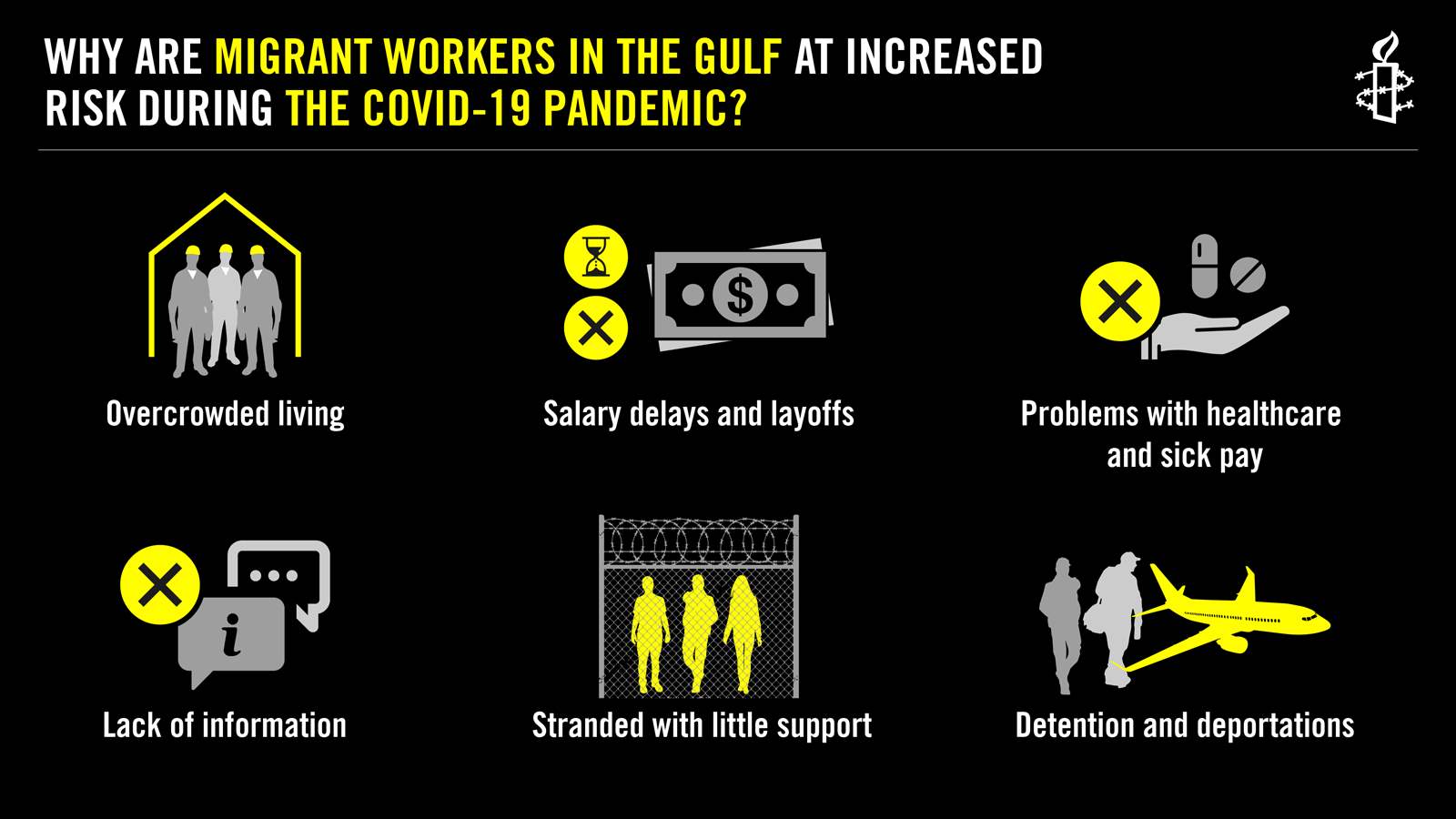
    Amnesty International raised concerns about the state of migrant workers under Covid-19 in the Gulf.
    Image Credit: amnesty.org

    “Grievance portals address a lot of topics, including pre-departure issues. However, there needs to be a specific focus on wage theft, particularly during COVID-19,” says Rajan. He stresses the importance of collective bargaining by various governments at the South Asia level, as well as proper grievance registration by Indian embassies in order to pursue the necessary legal steps.

    Recognizing the lack of global mechanisms to address wage theft, Congress MP Shashi Tharoor stated during a panel discussion last year that an escrow fund could be set up, with employers depositing six months’ worth of wages in order to protect workers against non-payment.

    Need for awareness building

    In the case of the Indian migrant workers in Serbia, it was labor unions that initially came to their rescue, following through until they had arrived safely back to their respective homes. When asked if there is enough awareness among migrants themselves about their rights and the resources available to them, Rajan says: “Absolutely not, and I think that is where we are failing.”

    “Migration has three cycles,” he explains. “The first — pre-migration cycle — happens in our country,” and steps to protect migrant workers need to start here. Rajan believes that the government should make pre-departure orientation programs, including skills training, mandatory. “Most workers don’t even know the currency of the host country. They know, in rupees, how much they expect to make and in how much time.”

    Khuntia, of the BWI Indian Affiliates Council, highlights the utter importance of signing bilateral agreements with host countries regarding wages, healthcare, and social security so that those emigrating can feel secure. “And if anything were to happen, by virtue of this bilateral agreement, the Indian government can negotiate with the host country and provide relief to the workers,” he concludes.

    “If everybody were cheated, there would be no migration,” says Rajan. But it’s important to share not only success stories but also those of struggles, he continues, to raise awareness among prospective migrants. It’s not about “how many people we send” but about how well-informed our migrant workers are when they are deployed abroad, he says.

    This article was first published on Asia Democracy Chronicles.

    Feature Image: dw.com

  • The Democratic Warrior – Countering Unrestricted Violence with Clausewitz

    The Democratic Warrior – Countering Unrestricted Violence with Clausewitz

    This research paper was originally published in the “African Journal of Terrorism and Insurgency Research (AJoTIR)”, Volume 2, Number 1, April 2021. Pp. 89-106.


    Abstract

    We often find the application of indistinctive, brutal and extraordinary violence by all fighters and soldiers in terrorist, insurgency, and counter-insurgency acts in Africa. This article argues that we need a code of honour for those bearing arms to limit these unrestricted acts of violence, a code of honour that combines military duties with the demands of civil society in the model democratic warrior. The changes to the global system that followed the end of the Cold War are widely regarded as requiring a different kind of soldier for democratic societies. A number of writers have proposed that the new model should be that of the “warrior,” a concept that highlights the psychological and social distinctiveness of those who bear arms. Such men and (rarely) women are often conceived as operating according to a distinctive code of honour that sets them apart from civil society, usually in a positive way. But we know that the concept of honour may also lead to a terrible escalation. So, the task is to reconnect the concepts—warrior and honour—to civil society to de-escalate the ongoing brutal violence in civil wars. There is no honour in killing innocent people. On the contrary, it is perhaps the most egregious act against one’s honour and dignity to torture, violate, or kill the innocent. The concept of the democratic warrior seeks to reinstate honour and dignity to those bearing arms.Keywords: democracy, warrior, civil society, civil war, honour, dignity, terrorism, Clausewitz, wondrous trinity, containing violence.

    Introduction

    At first glance, the concept of the democratic warrior appears contradictory. Indeed, it combines seemingly conflicting value systems in a single concept. Like a magnet or Clausewitz’s favoured model of the unity of polar opposition between attack and defence, a methodology can be formulated to explain how this type of conflicted unity is not necessarily a logical opposition and can be a dynamic interrelationship on a continuum. At one end of the continuum is democratic equality and non-violent conflict resolution, while at the other end is the threat of (and sometimes) violently enforced limitation of war and violence; at one end is a civilized society, while at the other is a subsystem of society whose identity is defined by martial honour.

    The decisive bond that can link the two poles of this dynamic relationship, without eliminating their opposition, is the classical republican virtues, which can lay claim to relative validity in both spheres. Since Plato, the classical virtues have been prudence (wisdom), justice, fortitude, and temperance. Without a specific ethos aimed at the political functioning of the polity, a state can sustain itself only under the conditions of a dictatorship. If republican virtue, which is oriented toward the polity, cannot be directly reconciled with liberal democracy and its focus on the individual, it can take on a completely new significance as a bond linking a democratic society to democratic warriors. For Machiavelli, republican virtue already guarantees both external and internal freedom. In this respect, the necessary though not yet adequate condition of the democratic warrior is to also be a republican soldier. Add to this the limitation of war and violence in a global society to make democratic societies possible. A renewal of the republican virtue is the link between a liberal-democratic society and a warrior ethos.

    The “warrior” is by definition someone who chooses to bear arms and is proficient in their use. In this sense, whatever the distinctive characteristics of the warrior ethos, its institutionalization reflects the same preferences for professionalism, expertise, and individualism that are characteristic of modern society as a whole. Contemporary conditions, it is argued, no longer call for armed masses, but for experts whose willingness to serve in uniform will allow others the freedom not to serve.

    It must be admitted, however, that the concept of the warrior does not call forth associations with modernity, but rather of the “archaic combatant” (Röhl 2005), whose ethos, skills, and experiences set him apart from normal society and in opposition to its basic values, of which the most cherished is, of course, peace. The fact the warrior freely chooses his profession may be consistent with democratic values, but the existence of a “warrior class” uniquely skilled in the use of force, whose values are not those of society as a whole, is scarcely consistent with democratic interests. It is also true that those who serve in today’s democratic armies are called upon to do a great deal more than fight. Although phrases like “armed social worker” undervalue and denigrate the martial qualities that remain foundational to military life, it is true that only a small percentage of men and women in uniform actually fight, and that their duties entail a wide range of activities in which violence plays no part. To those who wish to uphold the warrior spirit, the diverse requirements of modern military missions are liable to hold scant appeal, which may undermine the sense of purpose and identity that drew them to the profession in the first place.

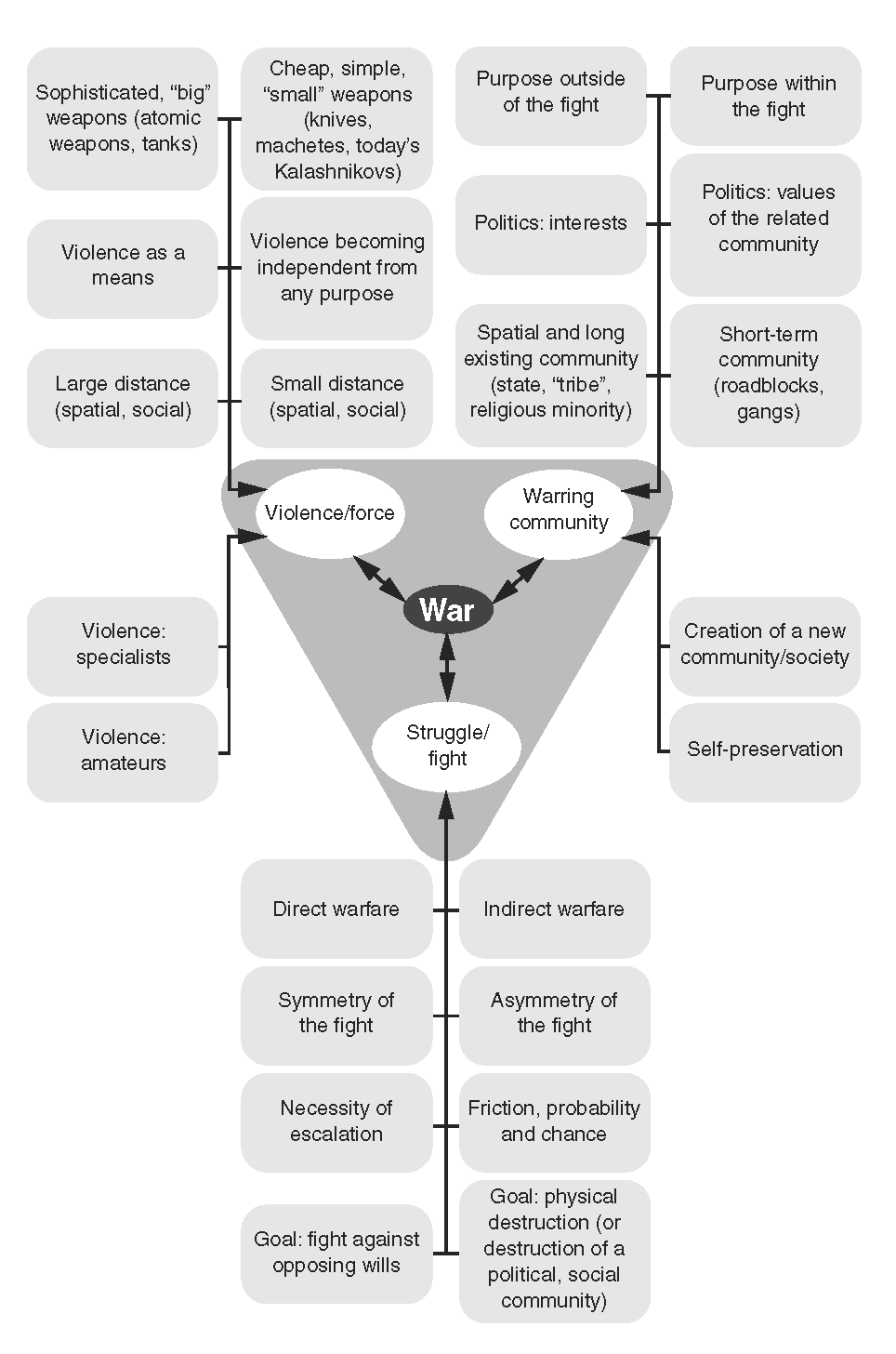
    The discussion that follows seeks to build a bridge between the distinctive ethos of the warrior and the moral and political requirements of democratic societies, using the concept of the “democratic warrior.” It seeks to do justice to the self-image of those who bear arms (a morally distinctive task) while connecting it to the various goals and practices of democratic societies, and the diverse uses to which they put their armed forces. We may begin by noting that a warrior, even in the most traditional terms, is not merely a combatant—a fighter—but has always performed and embodied a range of social, military, and political roles. Our starting point for considering what those roles must be is Clausewitz’s concept of the trinity, a metaphor intended to encompass all types of war, which, by extension, can provide a lens through which the ideal range of characteristics required of the democratic warrior can be envisioned. War itself, as Clausewitz avers, is compounded of primordial passions, an irreducible element of chance, and what he called an element of “subordination” to reason, by which its instrumental character is revealed. When Clausewitz set forth his trinity, he posited that the chief concern of the warrior must be the mastery of chance through intelligence and creativity; and so it remains. Yet there is no reason to suppose that such mastery means that war’s social and political requirements should be ignored. On the contrary, unless they too are mastered, the warriors sent forth by democratic societies cannot represent the values and interests of the communities that depend on them, and of which they remain apart (Herberg-Rothe 2007).

    Soldiers and Warriors

    In both German and English, the word “soldier” (soldat) originally referred to a paid man-at-arms. The term became common in early modern Europe and distinguished those who were paid to fight— primarily in the service of the increasingly powerful territorial states that were then coming to dominate the continent—from members of militias, criminal gangs, volunteer constabulary and local self-defence forces, and other forms of vernacular military organizations. The rise of the soldier was linked to the rise of the state. This connection distinguished him from the “mercenary,” who also fought for pay, but as a private entrepreneur, what we would today call a “contractor.” Standing armies comprised of soldiers were different from and militarily superior to, the feudal hosts of the past, whose fighters served out of customary social obligation and generally possessed neither the discipline nor the martial proficiency that the soldier embodied. Clausewitz highlights these developments briefly in the last book of On War, and portrays them as an advance in political organization and military efficiency (Clausewitz 1984, 587-91).

    The absolute monarchies that made the paid soldier the standard of military excellence in early modern Europe were generally indifferent to the social and political identities of those they paid to fight, though not always. Frederick the Great, for instance, lamented his reliance on foreign troops and believed that his own subjects made better soldiers. “With such troops,” he wrote, “one might defeat the entire world, were not victories as fatal to them as to their enemies” (quoted in Moran 2003, 49). It was, however, only with the French Revolution that a firm expectation was established that a soldier bore arms not merely for pay, but out of personal loyalty to the state, an identity that was in turn supposed to improve his performance on the battlefield. This connection, needless to say, was largely mythical. Most of the men who fought in the armies of the Revolution, and all major European wars since then, are conscripts who would not have chosen to bear arms on behalf of the state if the law had not compelled them to do so. Nevertheless, submission to conscription was itself regarded as an expression of the ideal of citizenship, a concept that, like honour, depends upon the internalization and subjective acceptance by individuals of norms arising within the larger society.

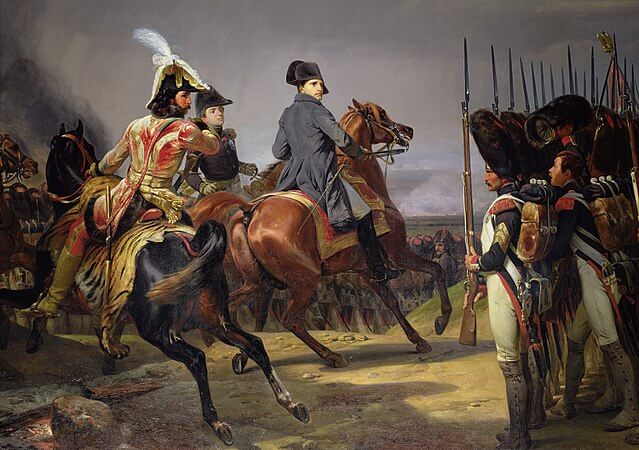
    The French Republic never referred to its soldiers as conscripts, always as volunteers. The success of its armies and those of Napoleon, although transient, insured that “defence of the Fatherland [became] the foundation myth of modern armies”(Sikora 2002). The myth of voluntary sacrifice by the “citizen-soldier” to defend the community proved central to the legitimization of conscript armies, even in societies where democratic values were slow to emerge. In the middle of the nineteenth century, as Frederick Engels observed, conscription was Prussia’s only democratic institution (Frevert 1997, 21).

    It had been introduced in reaction to Prussia’s defeat by Napoleon, whose triumph was owed to the fact that the resources of the entire French nation were at his disposal. The aim of the Prussian military reforms was to accomplish a similar mobilization of social energy for war, but without inciting the revolutionary transformation of society that had made such mobilization possible in France. Prussia was no sovereign nation of citizens, and while the reform of its armed forces helped it to regain its position among the leading states of Europe, their political effect was limited.

    Many of those who promoted reform, including Clausewitz, hoped conscription would contribute to the democratization of Prussia’s armed forces, and, indirectly, of society as a whole. But the moral influence could as easily run the other way, and, as Friedrich Meinecke observed, measures designed to bind army and society together had the effect, in Prussia, of militarizing society instead. Even the Great War did not fully succeed in stripping war of its moral glamour. The supposedly heroic massacre of German troops attacking the British at Langemarck (1914), for instance, remained a staple of right-wing mythology until the end of the Third Reich, by which “our grief for the bold dead is so splendidly surpassed by the pride in how well they knew how to fight and die (Hüppauf, 1993, 56). Alongside this kind of blood-drenched nostalgia, the industrialized warfare exemplified by battles like Verdun (1916) also asserted themselves. Under these circumstances, fighting and dying well acquired some of the aspects of industrialized labour, in which a soldier’s duty expresses itself, not through the mastery of chance as Clausewitz proposed, but through submission to what Ernst Jüngercalled “the storm of steel.”

    It was only after World War II that German soldiers became authentically democratic citizens in uniform. According to Wilfried von Bredow, the creation of the Bundeswehr in 1956 was “one of the Federal Republic of Germany’s most innovative and creative political reforms, fully comparable in its significance to the conception of the social market economy” (Bredow 2000). Its evolution as an integral part of German society has embodied a calculated break with the German past, one that has become even more apparent since the demise of the Soviet Union has shifted the mission of the German army away from national defence and toward expeditionary operations calculated to help maintain regional and global order. As the conscript armies of the past have given way to the professional and volunteer armies of the present, in Germany and elsewhere, the model of the democratic “citizen in uniform” has once again been required to adapt to new conditions.

    It is perhaps slightly paradoxical that as wars have become smaller and more marginal in relation to society as a whole, the ideal of the warrior as an apolitical professional fighter has regained some of its old prominences. Such individuals are thought to embody values different than those of society as a whole, to the point where their loyalties, like their special capabilities in battle, are thought to spring solely from their organization and mutual affiliation. John Keegan, a proponent of the new warrior, explains the rejection of the values of civil society in terms of the psychological impact of violence on those who experience and employ it. War, Keegan argues, reaches into the most secret depths of the human heart, where the ego eliminates rational goals, where pride reigns, where emotions have the upper hand, and instinct rules. One of Keegan’s models of the warrior is the Roman centurion. These officers were soldiers through and through. They entertained no expectation of rising to the governing class, their ambitions were entirely limited to those of success within what could be perceived, for the first time in history, as an esteemed and self-sufficient profession. The values of the Romans professional soldier have not diminished with the passage of time: pride in a distinctly masculine way of life, the good opinion of comrades, satisfaction in the tokens of professional success, and the expectation of an honourable discharge and retirement remain the benchmarks of the warrior’s life (Keegan 1995, 389-391).

    The enthusiasm of Keegan and others for the revival of the warrior ethos is the belief that “honour” can play an important role in limiting violence, far more effective than the proliferation of legal norms that lack the binding psychological validity required to stay the hand of those who actually take life and risk their own. Warriors use force within a customary framework of mutual respect for one another. This is part of what has always been meant by “conventional warfare”, a form of fighting that necessarily includes a dissociation from combatants considered to be illegitimate. How and whether these kinds of customary restraints can be successfully reasserted under contemporary conditions is one of the central problems with which the concept of the democratic warrior must contend. In opposition to Keegan, I think, that the warriors’ code of honour must be related back to civil society, although this is a task which requires bridging a gap and remains a kind of hybrid.

    Old and New Wars

    To judge what kind of “weapon carrier” will be needed in the twenty-first century, we must begin by looking at developments since the end of the East-West conflict. It has proven, broadly speaking, to be a period of rapid social, political, and economic development whose outstanding characteristics are marked by the decline or disappearance of familiar frameworks and inherited values. Thus, one speaks of denationalization, de-politicization, de-militarization, de-civilization, de-territorialization, and delimitation.

    Unsurprisingly, these changes are also supposed to be marked by “new” wars, characterized by the decline of statehood, the rise of privatized violence, the development of civil war economies, and the reappearance of types of combatants thought to be long gone— mercenaries, child soldiers, warlords, and so on. The new types of combatants are in turn associated with rising incidences of suicide bombing, massacre, and other forms of atavistic and irrational violence(Kaldor 1999, Münkler 2004).

    Political and academic discourses have produced a range of new concepts designed to capture these conditions, including privatized war, asymmetrical warfare, small wars, wild wars, low-intensity conflict, post-national wars; wars of globalization on the one hand, and of “global fragmentation” on the other. It is apparent, however, that each of these terms describes only one segment of a complex reality. To some extent, a new type of war is being discovered with each new war. At the same time, these different terms share a common assumption that war now consists mainly of conflicts involving non-state actors on at least one side, and, by extension, that the motivation and goals of such belligerents are likely to prove unfathomable in political terms. The result for some is an approaching anarchy (Kaplan 1994), whose remedy is a revived liberal interventionism, the only principle that seems able to guarantee a modicum of global order (Münkler 2007).

    It is possible, however, that the contemporary diffusion of conflict beyond the confines of the state system is no more than a transitional phase, with particular strong links to those parts of the world—Africa and Central Asia above all—where the challenges of post-imperial social and political adaptation are still especially pronounced. Neither does the fact that the parties to war are non-state actors necessarily mean that such wars lack a political or ideological basis. Such wars may not represent a clash between order and anarchy but between competing conceptions of order (Münkler 2004). While a revived interventionism may indeed be a suitable antidote to anarchy, it is unlikely to do more than aggravate indigenous conflicts over the politics of order – and as it seems at present, it is contributing to the escalation of violence throughout the world. Now, as in the past, violence is not simply a source of disorder. It is also a means of shaping order and providing the basis for community formation.

    It is possible to wonder, in other words, how new the “new wars” actually are. Widespread atavistic and vernacular violence were already prominent features of the Chinese civil war, the Russian civil war, the Armenian genocide, and many other episodes of “old wars”. Those who favour the concept note a number of formal changes that resulted from the disappearance of Soviet-American rivalry, above all a decline in external assistance. The proxy wars of the past have become the civil wars of the present, conducted by parties that must rely on their own efforts to obtain the necessary resources, including illegal trafficking in diamonds, drugs, and women; brutal exploitation of the population; extreme violence as a way of attracting humanitarian assistance that can then be plundered; and the violent acquisition of particularly valuable resources (robber capitalism). These changes may well amplify the social consequences of violence, but do not necessarily deprive it of its instrumental and political character (Schlichte 2006).

    The point of departure for the study by Isabelle Duyvesteyn, for example, is a very broad definition of politics based on Robert Dahl: “any persistent pattern of human relationship that involves, to a significant extent, power, rule or authority” (Duyvesteyn 2005, 9). Duyvesteyn refers especially to the fact that in the fast-developing states she has studied, the differences between economics and politics are not as clear cut as Westerners expect. Struggles that seem to be about the acquisition of resources can be motivated by power politics to obtain a separate constituency. Because the position of power in these conflicts is often determined by the reputation of the leader, what may appear to be personal issues can also be incorporated into a power-political context. Her hypothesis is not that economically, religiously, ethnically, or tribally defined conflicts are masks for politics, but rather that these conflicts remain embedded in a political framework that is understandable to the participants.

    It is also apparent today’s civil wars do not always trend irrevocably toward social and political fragmentation, becoming increasingly privatized until they reach the smallest possible communities, which are held together by only violence itself. The defeat of the Soviets in Afghanistan, for instance, gave rise to a civil war between warlords and individual tribes that appeared to be tending in this direction for a time, only to acquire a new and recognizably ideological shape once the Taliban seized power. This new tendency was confirmed by the Talibans’ willingness to give shelter to al-Qaeda, a global and trans-national organization of almost unlimited ambition, whose attacks upon the United States have in turn embroiled Afghanistan in a conflict about the world order pitting the West against militant Islam. At present, we witness in “Sahelistan” a similar development, but this is not confined to a single state, but to the whole region.

    At a minimum, it seems clear that the new wars, to the extent that they are new, are not all new in the same way. In some, violence does indeed appear to gravitate downwards towards privatized war; in others, however, the movement is upwards, towards supra-state wars of world order. Although these trends are linked in practice, analytically they are distinct. States do still wage wars, but for the most part, they are now doing so not in pursuit of their own particular interests but for reasons related to world order. This is what accounts for the new interest in an American empire and hegemony (Walzer 2003). Nor is America the only state capable of seeking and exercising global influence.

    Russia, China, India and Europe (whose superficial fragmentation masks its concerted economic, regulatory and power-political influence) are all capable of challenging American influence in particular spheres of activity; and one day they may do so in all spheres (Zakaria 2009). In any event, the use of force by strong states in pursuit of world order, whether cooperatively or competitively, is likely to remain the dominant strategic reality for some time to come; a fact that should not be obscured by the simultaneous proliferation of privatized violence on the periphery of the world system.

    Clausewitz’s Trinity as a Coordinate System

    The argument about the newness of new wars is also an argument about the continuing salience of Clausewitz’s understanding of war as, in his words, a “wondrous trinity,” by which primordial violence and the exigencies of combat may finally be subjugated to reason and politics. It is apparent, however, that while the proportions of these three elements may vary, a good deal nowadays, perhaps more so than in some periods in the past, they do not escape the theoretical framework that Clausewitz established. At the same time, his trinity points us towards the essential characteristics of the “democratic warrior,” whose success requires that he masters the multiple sources of tensions that Clausewitz detected in the nature of war itself.

    Clausewitz’s trinity present war as embodying three elements in constant tension with each other: primordial violence, the fuel on which war feeds; the fight between two or more opponents, by which violence is given military effective form; and the community, whose interests, as represented by policy, give war its purpose, and whose existence provides the soldier with his essential identity: as one who fights for something larger than himself. The shifting proportions among these elements that modern war continues to display would not have surprised Clausewitz. On the contrary, he knew that all three would always be present in every war and that a “theory that ignores any one of them . . . would conflict with reality to such an extent that for this reason alone it would be totally useless” (Clausewitz, On War, 1984, 89; see Herberg-Rothe 2007). Each requires exploration if the characteristics of the democratic warrior are to be understood.

    Violence and force

    The most crucial polarity in Clausewitz’s trinity is between the instrumentality of war and the autonomy of violence. Clausewitz noted the tendency of violence to become absolute, and therefore an end in itself, a tendency that was restrained both by the instrumental rationality of policy and, less obviously perhaps, by the skill of the combatants. Clausewitz also notes the paradoxical influences that can attend the use of force at a distance. If combatants are separated from each other in space and time, it may promote relative rationality in the use of force; or it may not, since it introduces the disinhibiting influence of impersonal killing, in which the humanity of the opponent is no longer perceived. Fighting “face-to-face” demands personal aggressiveness and even hatred, which can lead to increasing ferocity in the use of force. At the same time, however, it may make it easier to perceive the opponent as human. A similarly paradoxical logic may arise from the use of expensive weapons versus simple ones. Expensive weapons systems and the highly trained combatants required to use them can lead to a certain limitation of war because these cannot be so easily risked (as was the case, he argued, in the wars of the 18th century). In contrast, wars waged by relatively unskilled combatants employing cheap and simple weapons may be more likely to escalate – as is evident from many of the civil wars in Africa, particularly with child soldiers.

    The Fight

    The most basic reason that the violence of war is prone to escalate is that combatants share a common interest in not being destroyed. In most other respects, however, their interaction is asymmetrical, most profoundly so, as Clausewitz says, in the contrasting aims and methods of attack and defence, which he avers are two very different things. The shape of combat is also influenced by whether war is directed against the opposing will (in effect, a war to change the adversary’s mind)or if it aims at his “destruction.” Clausewitz specifies that by the destruction of the opposing armed forces, he simply means reducing them to such a condition that they can no longer continue the fight. Nevertheless, Clausewitz long favoredNapoleon’s approach to warfare, which emphasized direct attack against the main forces of the enemy. Other forms of fighting are also possible, however, whose aim is to exhaust the enemy’s patience or resources indirectly, rather than confront and defeat his armed forces in the field. The real war, in Clausewitz’s days and in ours, is generally a combination of direct and indirect methods, whose proportions will vary with the interests at stake and the resources available.

    Warring Communities

    When referring to warring communities, we must first differentiate between relatively new communities and those of long-standing. This is because in newly constructed communities, recourse to fighting is liable to play a greater relative role in its relations with adversaries; whereas, in the case of long-standing communities, additional factors come into play. Clausewitz argues that the length of time a group of communities has existed significantly reduces the tendency for escalation because their long-standing interactions will include elements other than war, and each party envision the other’s continued existence once peace is made, a consideration that may moderate the use of force.

    War’s character will also vary depending on whether it aims to preserve the existence of a community or, as in revolutionary crises, to form a new one; whether war is waged in the pursuit of interests, or to maintain and spread the values, norms, and ideals of the particular community (see Herberg-Rothe 2007). Closely related to this contrast, although not exactly congruent with it, is the question of whether the purpose of war lies outside itself or, especially in warring cultures, whether the violence of the fight has independent cultural significance. The social composition of each society and the formal composition of its armed forces (regular armies, conscripts, mercenaries, militias, etc), play an important role here. Summarizing these fundamental differences yields the coordinate system of war and violence shown in the diagram.


    Every war is accordingly defined in terms of its three essential dimensions: violence, combat, and the affiliation of the combatants with a community on whose behalf the combatants act. Historically, these three tendencies within the “wondrous trinity” display almost infinite combinations and multiple, cross-cutting tensions since every war is waged differently. Thus, every war has symmetrical and asymmetrical tendencies, for instance, even when it may appear that only one of these tendencies comes to the fore (Herberg-Rothe 2007).

    The tension between the coordinates of Clausewitz’s trinity may also be heightened by different forms of military organization. Those that feature strict hierarchies of command are perhaps most conducive to the transmission of political guidance to operating forces; whereas what is today called network-centric warfare is characterized by loose and diffuse organizational structures, in which the community’s political will and mandate can no longer be so readily imposed on combatants directly engaged with the enemy. As in the warfare of partisans, networked military organizations place a high value on the political understanding of the individual soldier. It is because of the relative independence of soldiers in network-centric warfare that this type of warfare does not require an “archaic combatant,” but a democratic warrior who has fully internalized the norms of the community for which he fights.

    The Democratic Warrior in the Twenty-first Century

    Even in Clausewitz’s day, war was not the only instrument of policy that state’s possessed, though it was undoubtedly the most central. Today, its centrality is less obvious, even as the complexity of its connections to other forms of state power has increased (Thiele 2009). Combining the different perspectives afforded by foreign, economic, developmental, judicial, domestic, and defence policy permits a global approach to conflict resolution while making the considerations surrounding the use of force more complicated than ever. States now pursue their security through many avenues at once, and all the agencies involved must consciously coordinate, connect, and systematically integrate their goals, processes, structures, and capabilities.

    Given the continuing expansion of the concept of security in recent years, a democratic army needs a specific task and function since its essential purpose—the use of force—can not be dispensed with. There have been those who thought it might be. When the East-West conflict ended, Francis Fukuyama announced the “end of history,” meaning an end to the practice of war and violence (Fukuyama 1992). The triumphant advance of democracy and free markets seemed unstoppable, to the point where it appeared as if the twenty-first century would be an age defined by economics and thus, to a large extent, by peace. These expectations have now been decisively overturned by ongoing massacres and genocide in Africa; by the return of war in Europe (as happened in the former Yugoslavia); by the September 11, 2001 attacks on the United States and, the subsequent wars in Afghanistan and Iraq; the war between Georgia and Russia over South Ossetia in 2008, the civil war in Syria and Iraq and finally the prospect of war to suppress Iran’s nuclear program (itself a profoundly dangerous and destabilizing step, should it become reality).

    In a complete reversal of Fukuyama’s thesis, a struggle against a new brand of Islamic totalitarianism appears to have begun, in which violence has become “unbounded”—because terrorist attacks are potentially ever-present because no end to them is in sight and there is no reason to assume there is any limit to the scale of violence terrorists might employ, including the use of nuclear weapons should they come to possess them. These processes of growing disinhibition must be countered by a new containment policy that limits the expansion of war and violence in the world.

    Two basic assumptions underlie this conception. The first is that the escalation of violence in world society is so multifaceted and differentiated that a single counter-strategy will not suffice. Rather, an overarching perspective is required to decide which measures are suitable in individual cases—without being able to exclude the possibility of terrible errors and miscalculations. The second assumption is that in today’s global society—as has been the case throughout history—many contrary processes are at work. Thus, regard for only one counter-strategy can have paradoxical, unanticipated consequences.

    This can be clarified using the example of democratization. If a general effort at worldwide democratization was the only counter-strategy against the disinhibition of violence and war, the results would almost certainly be counterproductive, not least because the spreading of democracy might itself be a violent process. A one-sided demand for democratic reform without regard for local conditions might, in individual cases, contribute to the creation of anti-democratic movements. The historical experience bears this out. After the First World War, nearly all of the defeated states underwent an initial process of democratization under the tutelage and supervision of the victors. Yet, almost all ended in authoritarian or even totalitarian regimes.

    Thus, the concept of the democratic warrior is not based on imposing democracy by force, but on limiting war and violence to enable the organic development of democratic self-determination. A differentiated counter-strategy of curbing war and violence in the world, with a view to fostering good governance (as a first step toward democratic governance), is the common element shared by humanitarian intervention and the development of a culture of civil conflict management. To this must be added measures to limit the causes of war and violence, such as poverty, oppression, and ignorance. Last but not least, this new form of containment requires effective restraint not just in the proliferation of weapons of mass destruction, but also of small arms, which continue to kill far more people than any other kind of arms.

    The containment of violence does not mean there will be entirely non-violent societies, much less a non-violent world society, in the foreseeable future. All else aside, the goal of completely eliminating violent conflict would ignore the fact that historically speaking, conflicts and their resolution have often furthered human development toward free and democratic ideals—as per the American struggle for independence and the French Revolution. The primary task of politics in the twenty-first century is therefore to radically limit violence and war so that non-violent structures and the mechanisms of the “social world” can have an impact. In this context, democratic warriors have a unique role to play; not as those who impose democracy by force, but as those who make diverse forms of culturally authentic self-determination possible, by curbing and containing war and violence.

    Conclusion

    It must be repeated, the concept of the democratic warrior appears to be contradictory. Indeed, it combines contradictory value systems in a single concept. Nevertheless, to adopt the metaphor favoured by Clausewitz (Herberg-Rothe 2007), the elements of tension in the democratic warrior’s identity can be conceived as the poles of a magnet, whose mutual opposition is not an illusion but is nevertheless a means to a larger, unitary end. It is what creates the magnet: the north pole of a magnet cannot exist alone. At one end of the continuum of the democratic warrior’s identity lies the values of democratic equality and non-violent conflict resolution; at the other, the realization that force itself may sometimes be necessary to limit war. At one end, is a civilized society, and at the other a subsystem of that same society, whose identity is defined by traditional concepts of honour and martial valour.

    As observed at the beginning of this essay, the bonds that link the two poles of this relationship, without eliminating their opposition, are the classical republican virtues, which lay claim to validity in both spheres. It was Plato who defined the classical virtues as intelligence, justice, fortitude, and temperance, which is also are characteristics in the Confucian tradition (Piper 1998 concerning Plato). Without them, a state can sustain itself only under dictatorship. With them, both external and internal freedoms are possible (Llanque 2008). They are the keys to the democratic warrior’s identity, providing the crucial link between the values of liberal-democratic society and those other values—courage, loyalty, self-sacrifice—that have always set the warrior apart.


    References

    Bredow, Wilfried von (2000), Demokratie und Streitkräfte (Wiesbaden: VS publishers, 2000).

    Clausewitz, Carl von (1984), On War. Ed. by Peter Paret and Michael Howard (Oxford: OUP).

    Duyvesteyn, Isabelle (2005), Clausewitz and African War (London: Routledge).

    Frevert, Ute (1997), Die kasernierte Nation (Munich: C. H. Beck, 2001).

    Frevert, Ute(ed.), (1997), Militär und Gesellschaft im 19. und 20. Jahrhundert

    (Stuttgart: Klett–Cotta).

    Fukuyama Francis (1992), The End of History and the Last Man (New York: Free Press).

    Herberg-Rothe, Andreas (2007), Clausewitz’s puzzle (Oxford: OUP). Herberg-Rothe, Andreas (2017), Der Krieg. 2.Edition. (Frankfurt:

    Campus).

    Herberg-Rothe, Andreas and Son, Key-young (2019), Order wars and floating balance. How the rising powers are reshaping our world view in the twenty-first century (New York: Routledge).

    Hüppauf, Bernd (1993), “Schlachtenmythen und die Konstruktion des ‘Neuen Menschen’,” in Keiner fühlt sich hier mehr als Mensch . . . : Erlebnis und Wirkung des ersten Weltkrieges, ed. Gerhard Hirschfeld, et al. (Essen: Klartext, 1993).

    Llanque, Marcus (2008) Politische Ideengeschichte. Ein Gewebe politischer Diskurse (Munich: Oldenbourg.

    Kaldor, Mary (1999), New and Old Wars: Organized Violence in a Global Era

    (Stanford: Stanford University Press).

    Kaplan, Robert (1994), “The Coming Anarchy.”In: Atlantic Monthly no.

    273, 44–76.

    Keegan, John (1995), Kultur des Krieges (Berlin: Rowohlt).

    Kuemmel, Gerhard (2005), Streitkräfte im Einsatz: Zur Soziologie militärischer Interventionen (Baden-Baden: Nomos).

    Moran, Daniel (2003), “Arms and the Concert: The Nation in Arms and the Dilemmas of German Liberalism,” in The People in Arms: Military Myth and National Mobilization since the French Revolution, ed. Daniel Moran and Arthur Waldron(Cambridge: Cambridge University Press).

    Münkler, Herfried (2004), The New Wars (New York: Policy). Münkler, Herfried (2007), Empires (Cambridge:Polity Press).

    Pieper, Josef (1998), Das Viergespann—Klugheit, Gerechtigkeit, Tapferkeit, Maß (Munich: Kösel).

    Röhl, Wolfgang (2005), “Soldat sein mit Leib und Seele. Der Kämpfer als existenzielles Leitbild einer Berufsarmee in EinJob wie jeder andere. Zum Selbst- und Berufsverständnis von Soldaten, ed. Sabine Collmer and Gerhard Kümmel (Baden-Baden:Nomos, 2005) 9–21.

    Schlichte, Klaus (2006), “Staatsbildung oder Staatszerfall. Zum Formwandel kriegerischer Gewalt in der Weltgesellschaft,In: ”Politische Vierteljahresschrift 47, no. 4.

    Sikora, Michael (2003), “Der Söldner,” in Grenzverletzer. Figuren politischer Subversion, ed. Eva Horn, Stefan Kaufmann, and Ulrich Bröckling (Berlin: Kulturverlag Kadmos, 2002).

    Thiele, Ralph (2009), “Trendforschung in der Bundeswehr”. In: Zeitschrift für Sicherheits- und Außenpolitik 2, 1–11.

    Walzer, Michael (2003), “Is there an American Empire?” In: Dissent Magazine 1 (2003), URL; http://www.dissentmagazine.org/menutest/archives/2003/fa03/walzer.htm  last accessed 16. 4. 2020.

    Zakaria, Faared (2009), The Post-American World (New York: W. W. Norton).


  • Online Justice and the Pandemic: Impact on Procedure

    Online Justice and the Pandemic: Impact on Procedure


    Abstract

    The move towards digitization of the judiciary and the adoption of video-conferencing preceded the pandemic. However, the pandemic has necessitated their mainstream adoption. While Indian courts have been prompt in issuing their SOPs, these have been inadequate due to their non-implementation and the inability of traditional legal tools to address unprecedented procedural issues, emerging from the mainstreaming of video conferencing.

    Firstly, there are due process concerns, centred around inadequate hosting platforms, sub-standard organizational practices, inefficient ancillary processes, and non-inclusive technical requirements. Secondly, there is a lack of accountability and transparency because of derogation from the rule of open court, without any effective alternative measures. Thirdly, there are privacy concerns as regards unauthorized participation, the secrecy of data exchanged, and commercial exploitation of data.

    Adopting a design-based approach not only addresses areas conventional legal tools can’t, but also improves efficiency and automates compliance. To this end, several technological and organizational design changes are suggested that can be made to effectively address emerging procedural issues.

    Keywords: online justice, virtual courts, pandemic, design-based approach, digitization, standard operating procedure.


    Introduction

    The unprecedented COVID-19 pandemic has necessitated social distancing to be the norm. To this end, courts, across the world, have started resolving disputes through virtual conferencing. While limited physical hearings with rigorous rules have commenced,[i] our courts have limited infrastructural capacity to house adequate daily hearings. Additionally, the surge in COVID-19 cases and the wait for a vaccine mean that virtual conferencing is nevertheless here to stay. The pandemic has decreased the average disposal rates of high courts by 50% and subordinate courts by 70%,[ii] with pendency in the Supreme Court increasing by 3,287 cases.[iii]

    Therefore, at this point, it is opportune to realize that the revolutionary potential of virtual courts can help improve judicial efficiency. Apart from facilitating remote access to justice, virtual courts are cost-effective and time-effective, reduce carbon footprint and the employment of dilatory tactics by parties.[iv] These benefits are particularly important given that annually one billion people require basic access to justice, but close to 30 per cent of them do not even take action.[v] Moving forward, this access to justice problem has to be solved through Information & Communications Technology (“ICT”), which will render courts to function as a ‘service’ and not a ‘place’.[vi] In cognizance of this, India launched the e-Court Mission Mode Project (“MMP”), to implement ICT in the Indian judiciary in 3 phases over 5 years.[vii]

    However, this increasing change in the medium of our court processes will inevitably impact civil procedure in unprecedented ways. A survey found that 44.7% of participants experienced technical difficulty during the hearing, with a majority feeling that remote hearings were overall worse than physical hearings and less effective in terms of facilitating participation.[viii] The skill and digital divide will further compound power imbalances among parties, and thus their access to justice.[ix]

    In light of this, it is important to understand the adequacy of the current response plans from the Court and governments. Therefore, in this paper, I will enumerate the legal and policy developments in India on virtual courts, both pre and post COVID-19. Subsequently, I will critically analyse these developments to elucidate implementational failures, and three procedural concerns: impact on due process, accountability and transparency, and privacy. Recognizing the inadequacy of legal tools in addressing these concerns, ultimately, I will utilize a technological and organizational design-based approach to propose solutions.

    Tracing Legal and Policy Developments on Virtual Courts

    India’s attempts to digitize the judiciary and associated processes predate the pandemic. However, the scale of impact has certainly increased since virtual conferencing has now become the dominant norm. Therefore, in this section, I will analyse how law and policy on virtual courts have evolved. However, before we proceed, it must be noted that virtual courts are broader than just virtual conferencing. Other than virtual conferencing, related processes of digitisation and automation, like e-filing and e-listing, need to be implemented alongside.

    Pre-Pandemic:                      In February 2007, the government approved the Supreme Court E-Committee’s (“E-Committee”) strategic action plan to implement ICT in the Indian judiciary in 3 phases over 5 years.[x] It was co-opted as a ‘Mission Mode Project’ of the National e-Governance Plan,[xi] with the objective of re-engineering processes to enhance judicial productivity, and make the system more affordable, accessible, cost-effective, transparent and accountable. To this end, it launched 4 services: automation of case management, online provision of judicial/administrative services, information gateways between courts and government, and creation of judicial data grids.[xii]

    Virtual courts, and associated processes, have found recognition and regulation in jurisprudence too. In State of Maharashtra v Dr Praful Desai, the Supreme Court allowed video conferencing for the recording of evidence.[xiii] It even observed that technological developments have enabled the possibility of virtual courts. This position has found, subsequently, substantial affirmation.[xiv] Courts have allowed video conferencing on conditions of health[xv] and geographical proximity.[xvi] However, under the revised position, parties cannot resolve matrimonial conflict through video conferencing.[xvii]

    To safeguard these proceedings, courts have issued numerous guidelines. These include authenticating the identity of the witness and examiner, administration of the oath, acquainting non-party witnesses with the case, recording demeanour of witnesses on-screen, notarization of witness testimony/statement, and bearing of costs.[xviii] When video-conferencing is global, the foreign party must record evidence in the presence of an Indian embassy officer member.[xix]

    Post-Pandemic:         To comply with social distancing guidelines, the Supreme Court passed an order, under Article 142 of the Constitution, to suspend the physical hearing.[xx] However, recognizing the importance of access to justice, it identified the duty of courts to use ICT like video-conferencing for dispensation of justice, in urgent matters. Accordingly, it issued directions: empowering itself and all high courts to adopt measures for the functioning of video-conferencing, instructing district courts to follow their respective high courts, for providing videoconference facilities and an amicus curia to the deprived, prohibiting recording of hearing without the mutual consent of parties, and requiring prompt reporting of technical glitches during the video call.

    Pursuant to this, the apex court issued its standard operating procedure (“SOP”) mentioning the instructions for joining/conduct during virtual hearings and the technical requirements as well as the procedure for listing, mentioning, and e-filing.[xxi] Parties can choose between getting virtual links or availing the facility in the Court’s premises. However, only two appearance links and one viewing link is provided to parties. While the hearings are hosted on the “Vidyo” platform available either as a desktop application or on Android or iOS app store, parties are advised against using mobile phones for connectivity reasons. Communication between the registry and participants happens through private WhatsApp groups, with links being shared 30 minutes prior. Parties are forbidden from sharing these links, engaging in indecorous conduct, and recording the hearings. Furthermore, they are expected to ‘mute’ themselves, except when making submissions or responding to questions from the bench, and must ‘raise hand’ to indicate an intention to speak. The Court has also mandated the use of e-filing even if parties file physically at the registry and reduced the cost of filing by half, thus promoting digitization.[xxii]

    Currently, virtual hearings are inaccessible to the public, but limited journalists can attend the Court’s physical video-conferencing room, to report on cases. The Court has now started hearing non-urgent matters too.[xxiii] The E-Committee has also resolved to institutionalize technology even after the pandemic ends.[xxiv]

    While high courts can employ their own rules, 11 of them have adopted the model rules developed by the E-Committee.[xxv] Even those with unique rules broadly convey the same instructions,[xxvi] with the only difference being the hosting platform. The most popular is Vidyo, followed by Zoom, Jitsi, and Cisco Webex.[xxvii] However, pursuant to the Union Ministry of Home Affairs’ advisory declaring Zoom as unsafe, most high courts discontinued using it.[xxviii] Remarkably, the Delhi High Court issued comprehensive legislative rules covering not just the aforementioned matters, but also the procedure for service of summons, examination of persons, sharing of documents, and access to legal aid. It statutorily establishes a “remote point coordinator”, entrusted with ensuring seamless functioning and ingenuity of the hearing.[xxix]

    However, other than Chandigarh District Court and a few others, district courts have failed to organize virtual hearings, given their infrastructure limitations.[xxx] Most tribunals are following the procedure established by the apex court.[xxxi]

    Critically Analyzing Indian Developments on Virtual Courts

    The Mission Mode Project

    The implementation of Phase-II of the MMP has been sluggish, with only 3477 courtrooms having video-conferencing, and 14443 more courtrooms requiring this facility.[xxxii] 2992 sites are yet to still get WAN connectivity.[xxxiii] Only states like Delhi, Karnataka and Madhya Pradesh have started the digitisation of both disposed and pending case records in the high courts and district courts.[xxxiv] E-filing is currently available only in four high courts,[xxxv] and in the NGT, NCLAT, and ITAT.[xxxvi] Even in these courts, only 50-600 cases were instituted through e-filings, as against the 1.9 lakh cases instituted through regular filings.[xxxvii] Despite listing being digital, the process involves significant human input, rather than the use of algorithms.[xxxviii] The implementation of this project will further stagnate because courts have been instructed to utilize their unused funds from Phase-II for meeting immediate needs.[xxxix]

    The failure in technology up-gradation is also at the litigant and advocate’s end. The internet penetration in India is only 40%.[xl] 30% of the population lacks basic literacy, and nearly 90% lack digital literacy.[xli] At least 50% of advocates, mostly at the district and lower levels, do not own relevant devices and lack the requisite skills for virtual proceedings.[xlii] Thus, there is a clear digital, connectivity, and skill divide.

    Evaluating SOPs- Emerging Legal Issue

    • Due Process

    The paradigm shift consequent to virtual hearings has raised numerous unprecedented due process concerns. The smoothness of accessing and using virtual court facilities, along with available facilities, has an inextricable impact on one’s right to properly present their case.

    Technical Issues with the Platform:                       The most popular platform, Vidyo has received an extremely negative response. Reportedly, the platform frequently crashes,[xliii] and participants struggle to log in or are automatically logged out during court proceedings due to bandwidth issues with the platform. There were also difficulties in re-joining the hearing, once logged out.[xliv]

    The screen sharing feature on Vidyo is ineffective, and thus advocates are precluded from even presenting documents before the bench.[xlv] There is also no means for the attorney and client to engage in private discussion during the hearings.[xlvi] The Control Room is tasked with managing the entire process flow. In several cases, advocates have complained of not being unmuted, despite raising their hands, or their chat messages going unread, thus affecting their opportunity to present arguments. This is especially the case in matters involving a large number of parties.[xlvii]

    This adverse impact is compounded since there is no clarity on who to contact for technical issues.[xlviii] The authorities provided in the SOP are extremely unresponsive. Moreover, links for hearings are shared last minute, with communications on WhatsApp being inefficiently followed.[xlix]

    The Court has been ignorant of these technical inefficiencies, passing adverse orders against at least 19 advocates who were unable to attend/connect due to technical issues.[l]

    Issues with Associated Digital Process:      The processes of e-listing and e-filing are not user-friendly and unnecessarily verbose.[li] Under the current e-listing mechanism, there is uncertainty over acknowledgement of their filings, because the diary numbers are not immediately generated. Even the procedure for curing defects is inefficient, voluminous, and confusing. There is also a delay in the listing of matters, despite pleas of urgency in petitions.[lii] Support from the Registry in this regard is inadequate. There is also a need for improving coordination between sections of the Registry, with procedures being more consistent and transparent.[liii]

    Furthermore, court records are not fully digitized, and when so, they cannot be remotely accessed in a centralized server.[liv]

    Technical Requirements as Impediments:             The minimum technical requirements determine who can even access the platform, and therefore, determine who even has the opportunity to present their case, to begin with. Presently, the SOP of all Indian courts require a minimum of 2 MBPS broadband connection or 4G connections, and the onus is on the participant to ensure seamless connectivity. Given that 20% of the internet users in India are still dependent on 2G and 3G,[lv] this directly leads to their exclusion. Even digitally advanced nations like Singapore have stipulated 3G as the minimum requirement.[lvi] Moreover, even the 4G connections in India are relatively slow, with no service provider crossing the 70% LTE threshold.[lvii]

    Even in data-intensive platforms like Skype, the minimum download speed requirement for a high-quality video call is only 400 KBPS, with group calls of up to 3 people supported at 512 KBPs, and 5 people at 2 MBPS.[lviii]

    Additionally, all video-conferencing platforms have only been made available as desktop apps, or on Android or iOS app stores. The over 55 million users with KaiOS, operating mostly on Jio Phones,[lix] are denied access to videoconferencing, despite their phones supporting video calls.

    (Dis)Comfort with Virtual Testimony and Demeanour Assessment:      The process of testimony, along with cross-examination, are in themselves strenuous for witnesses. The unfamiliar nature of virtual conferences can cause severe anxiety among witnesses while appearing, especially if they’re children, foreigners, or persons with disabilities.[lx]

    During video conferencing, courts are allowed to assess the credibility of parties through their demeanour.[lxi] This is problematic because in a virtual setting it is extremely difficult for the judge to accurately understand the body language and emotions of the witness.[lxii] Studies find that one’s social and economic background has a heavy correlation with one’s perception, which plays out in the form of subtle choices like lighting and camera angles.[lxiii] Given these inaccurate and disproportionate adverse impacts, demeanour assessment during virtual hearings must be disallowed.

    • Transparency and Accountability

    The Supreme Court has repeatedly recognized the importance of the rule of ‘open court’ in preserving and promoting accountability and transparency, and thus guaranteeing a fair trial.[lxiv] Presently, virtual hearings are not recorded, except for witness testimony in some cases,[lxv] even by the court. While theoretically limited journalists are allowed to attend these hearing, this is severely inadequate because this facility is accessible only to reporters who can make it to the Supreme Court’s video-conferencing chamber. Moreover, no such facility has been provided in most high courts. Therefore, there is no effective means of ensuring even a shadow of public pressure, which would bind the judge’s actions. This is contrary to jurisdictions like the UK, Australia, and Singapore where public participation has been allowed through live links or even live streaming.[lxvi]

    Virtual conferencing presents an opportunity to eliminate the practical physical, informational, and temporal barriers to open courts. If hearings are online and broadcasted, then a large number of people can access them. For instance, over 3,500 people viewed a YouTube live stream of oral arguments taking place in the Kansas Supreme Court over Zoom. The digital landscape can even house much more people than the court logistically can.[lxvii]

    However, we must be mindful that live streaming for virtual hearings is distinct from the cameras in the courtroom context.[lxviii] In the latter, even if live streaming is not allowed, the public and media can anyway access the trial. However, if there is no public access to virtual hearings, which entirely supplant in-person proceedings, only then participants to the proceedings have knowledge of events.

    Livestreaming virtual proceedings do raise some legitimate privacy concerns because there is a loss of ‘practical obscurity’. This concept recognizes that there is a privacy interest in the information that is not secret but is otherwise difficult to obtain.[lxix] Public online hearings could make access to personal data easier because the process of transferring information from physical documents to a digital format will not have to be done.

    • Privacy;

    There are serious concerns regarding video-conferencing platforms, which are apps owned by foreign companies. The terms of use of these apps mandate cross-border transfer, and the business model of most of these companies involves selling their consumer’s data.[lxx] Therefore, there is the risk of commercial exploitation of data, either for general profiling of the individual or blackmailing them.[lxxi] This is indicated by the Globe24h.com incident, wherein a Romanian man downloaded judgements in bulk and indexed them so they would be optimized on Google results. Then, he charged people for removing embarrassing personal information from this website.

    The biggest privacy challenges stem from authentication of the participants to the video conference and security of the data exchanged over the platform.[lxxii] Furthermore, the weak data security features of Vidyo and Zoom render them susceptible to unauthorized third-party access.[lxxiii] Inadequate training among Control Room members has also resulted in them engaging in risky practices, like using non-updated versions of the software, thus compromising privacy.[lxxiv]Such weaknesses may allow parties to illicitly obtain information to the detriment of their opponents, which they wouldn’t have gotten under civil discovery.

    There is a petition before the Supreme Court that argues that transfer of such judicial and government data prima facie impacts national security, and violates laws such as the Public Records Act, 1993, and the Official Secrets Act, 1923.[lxxv]

    Utilizing a Design-based Approach

    The courts have so far used conventional legal tools to address the concerns of due process, accountability, and data security. There are inherent limitations to these tools, in that the scope of control is merely through prescriptions, which may not necessarily be followed.[lxxvi] The shift to video-conferencing leads to the emergence of unprecedented issues, which the law itself cannot redress.[lxxvii] On the other hand, using design as a policy tool not only expands the scope of control over the participants but ensures mandatory compliance due to technological automation.[lxxviii] Moreover, as an interdisciplinary and innovative approach, design-based approaches allow anticipation of risks and baking of countermeasures into the systems and operations, throughout the entire lifecycle of the product/service.[lxxix] Notably, this approach extends to only technological operation, but to organizational practices too.[lxxx]

    Therefore, in this section, I will propose design-based changes that need to be implemented to address the aforementioned challenges to civil justice.

    ·      Due Process

    The Platform:                        To address the aforementioned technical issues, there is a need for designing certain features onto the video-conferencing platform. Alike UK, USA, Australia, and Singapore, there must be designated and accessible icons for a private waiting room and a private pop-up chatbox.[lxxxi] During such private communication, the court proceedings must be paused, and no ex-parte discussion must occur. A more nuanced and effective screen sharing option must be introduced, wherein on clicking a designated button, the documents are first shared with the judge(s). Once approved, then this must be shared with other parties. Once any button has been clicked,[lxxxii] there should be a real-time notification that pops up in the centre of the court staff and/or judge’s screens. When participants are kept in the waiting room before the commencement of the hearing, real-time updates should be provided via the chat option. This is similar to the practice in Singapore, where constant updates are provided during the pre-hearing stage.[lxxxiii]

    Given the extent of concerns from Vidyo, courts must move towards adopting a different platform altogether. In the medium-term, they can use Cisco Webex,[lxxxiv] or Microsoft teams given that most of these features exist herein. However, if the court intends to mainstream video-conferencing, it must indigenously develop its platform that consolidates best practices. Thankfully, the Supreme Court has started moving in this direction by inviting tenders for “a comprehensive plan for video conference hearings including hardware and support”.[lxxxv]

    Organisational Practice;                      The video-conferencing screen must contain a help button, which opens a pop-up window that shows a user guide with relevant features available to a participant at their access level. If a participant finds this inadequate, there must be a support button, which allows them to connect to a helpline number. Most importantly, there should be designated officers assigned to each court who uninterruptedly serve as single points of contact.[lxxxvi]Before the platform is re-designed, the coordinators/members of the Control Room must be trained to be more proactive and responsive to the process flow. Anyhow, given peculiar circumstances, courts must largely refrain from passing adverse orders against litigants/advocates claiming to miss hearing due to technical issues.

    Associated Digital Processes:                       Unlike the current system which relies on the physical generation and sharing of links, courts can publish the links for different virtual courts along with the cause list or send automated e-mails to advocates in advance. This will improve efficiency, and reduce anxiety for advocates.[lxxxvii]

    As for e-filing, the Delhi High Court’s model should be adopted nationally.[lxxxviii] The only substantial information that required manual entry is the details of the parties. Thereafter, the entire case file can be uploaded as a single PDF. Even the diary numbers are immediately generated. For curing of defects, advocates are only be required to submit the entire final PDF file, as against separately uploading each page on which defect is secured.

    Technical Requirements;     The video-conferencing platforms must also be available for KaiOS users. Additionally, the bandwidth requirement can be lowered to 512 KBPS or 1 MBPS. To provide access to litigants with lower speeds, the court can always reduce the number of participants on an ad-hoc basis, when required. Even in the worst case, to ensure wider inclusivity, courts can adopt the practice that one bench of the Delhi High Court did. Parties can be asked to submit a 15-minute-long video clip of their arguments within a week of the order. Thereafter, within a week, they must be asked to submit an additional brief note along with a 10-minute-long video clip in rebuttal.[lxxxix]

    ·      Transparency and Accountability

    All virtual hearings should be recorded and stored using cryptography by the courts for a limited period. Additionally, voice-to-text transmission tools can be used for text records of hearings. To preserve privacy, automated redaction software can be used, which automatically redacts sensitive data fields. This is similar to the approach of certain courts like Florida, Pennsylvania, and Michigan.[xc]

    While live streaming promotes greater accountability, there are privacy concerns, as outlined earlier. These concerns can be balanced using the following three-fold approach: (1) Where the case does not involve sensitive information or witnesses, then these can be live-streamed;[xci] (2) When this cannot be done, limited broadcasting can be followed in two ways. While live-streaming is permitted, subsequent dissemination of the hearing, especially by media, is prohibited.[xcii] While public broadcasting may be forbidden, a screen at the courthouse can be provided where these proceedings are broadcasted for people at the court to view;[xciii] and (3) Providing a separate viewing room were advocates, journalists, and CSOs can observe and report on court proceedings, without participating in them.

    Lastly, to promote public awareness the digital portals of court websites must be regularly updated with weekly operational summaries of the working of the court and relevant policy updates, like in the UK.[xciv]

    ·      Privacy

    Technological Design;          The platform must generate unique meeting IDs, which expire after a limited time. The entry to the hearing must be verified using two-factor authentication. This entails OTP verification in addition to entering the unique ID and password of the meeting. The host must have the option of “locking” the meeting once all participants have joined, to ensure unauthorized entry does not subsequently take place.[xcv] All communication on the platform must be end-to-end encrypted using SSL/TLS, which will obfuscate the message and prevent third parties from accessing personal data. Even the entire video session must be encrypted. The servers storing the data must be secure to prevent any end-point vulnerabilities. To this end, advanced threat protection features can be used to protect against sophisticated malware or hacking attempts.[xcvi] Developing an indigenous government-backed platform will also mitigate concerns of data commercialization.

    Organisational Design:        Human errors still contribute to data leaks, despite advanced security designs.[xcvii] Thus, a safe user policy needs to be developed. Participants must be instructed to not connect through unsecured WiFi, or use weak password codes. The video-conferencing software must be routinely updated to ensure only the latest version is used. The coordinators/members of the Control Room must be trained on the necessary steps and contingency plans they must adopt to secure privacy.

    Conclusion

    The move towards digitization of the judiciary and the adoption of video-conferencing preceded the pandemic. However, the pandemic has necessitated their mainstream adoption. Indian courts have been prompt in issuing their SOPs, but these have been inadequate due to non-implementation and the inability of traditional legal tools to address unprecedented procedural issues, emerging from the mainstreaming of video conferencing.

    Firstly, there are due process concerns, centred around inadequate hosting platforms, sub-standard organizational practices, inefficient ancillary processes, and non-inclusive technical requirements. Secondly, there is a lack of accountability and transparency because of derogation from the rule of open court, without any effective alternative measures. Thirdly, there are privacy concerns as regards unauthorized participation, the secrecy of data exchanged, and commercial exploitation of data.

    Adopting a design-based approach not only addresses areas conventional legal tools can’t, but also improves efficiency and automates compliance. To this end, several technological and organizational design changes, as suggested, can be made to effectively address emerging procedural issues.


    End Notes:

    [i] PTI, ‘Supreme Court to begin physical hearing of cases in limited manner, releases SOP’ (The Print, 31 August 2020` <https://theprint.in/judiciary/supreme-court-to-begin-physical-hearing-of-cases-in-limited-manner-releases-sop/492699/> accessed 14 January 2021.

    [ii] Sruthisagar Yamunan, ‘Covid impact: Cases disposed of by High Courts drop by half, district courts by 70%’ (Scroll, 4 September 2020) <https://scroll.in/article/971860/covid-impact-cases-disposed-by-high-courts-drop-by-half-district-courts-by-70> accessed 14 January 2021.

    [iii] ‘Court Data: Quantifying the Effect of COVID-19’ (Supreme Court Observer, 29 April 2020) <https://www.scobserver.in/court-by-numbers?court_by_number_id=quantifying-the-effect-of-covid-19> accessed 14 January 2021; Given that the National Judicial Data Grid does not provide statistics on pendency for the Supreme Court, calculating impact on pendency due to COVID-19 is tricky. One metric that can be used is number of judgements delivered, which was 88 in March 2020, the same as March 2018, i.e., when the swine flu outbreak paralyzed the court. While this doesn’t accurately account for situational peculiarities, it provides an indication that the court has managed to fair well, by its own past metric. This discussion is notwithstanding the general impact the pandemic will have on case institution and disposal in the apex court.

    [iv] Nikitha, ‘Impact of Video Conferencing on Court Proceedings with Respect to Litigants and Lawyers’ (BnB Legal, 14 August 2020) <https://bnblegal.com/article/impact-of-video-conferencing-on-court-proceedings-with-respect-to-litigants-and-lawyers/> accessed 14 January 2021.

    [v] Richard Susskind, Online Courts and the Future of Justice (OUP 2019) 27.

    [vi] Anuradha Mukherjee, Amita Katragadda, Ayushi Singhal, & Shubhankar Jain, ‘From the Gavel to the Click: COVID 19 poised to be the inflection point for Online Courts in India’ <https://corporate.cyrilamarchandblogs.com/2020/04/gavel-to-click-covid-19-online-courts-in-india/> accessed 14 January 2021.

    [vii] Ibid; ‘Indian Courts and e-Governance initiative’ (Vikaspedia) <https://vikaspedia.in/e-governance/online-legal-services/how-do-i-do> accessed 14 January 2021.

    [viii] Dr Natalie Byrom, Sarah Beardon, & Dr Abby Kendrick, ‘The impact of COVID-19 measures on the civil justice system’ (2020) Civil Justice Council, 9 <https://www.judiciary.uk/wp-content/uploads/2020/06/CJC-Rapid-Review-Final-Report-f.pdf> accessed 14 January 2021.

    [ix] ‘Standing Committee Report Summary’ (PRS Legislative Research, September 2020) <https://www.prsindia.org/report-summaries/functioning-virtual-courts> accessed 14 January 2021.

    [x] Shalini Seetharam & Sumathi Chandrashekaran, ‘E-Courts in India: From Policy Formulation to Implementation’ (2016) Vidhi Center for Legal Policy, 6-8 <https://vidhilegalpolicy.in/wp-content/uploads/2019/05/eCourtsinIndia_Vidhi.pdf> accessed 14 January 2021; Vikaspedia (n 7).

    [xi] Seetharam (n 10) 8-9.

    [xii] Phase-II of the project already contemplates video-conferencing and recording facility for courts and jails. So far, as many as 3,388 court complexes and 16,755 court rooms across India have been computerised, with video-conferencing equipment available in 3,240 court complexes and 1,272 jails, see: Mukherjee (n 6).

    [xiii] (2003) 4 SCC 601.

    [xiv] Twentieth Century Fox Film v NRI Film Production Associates AIR (2003) Kar 148; Amitabh Bagchi v Ena Bhagchi AIR (2005) Cal 11; Sujay Mitra v State of West Bengal (2015) SCC Online Cal 1191.

    [xv] Alcatel India Limited v Koshika Telecom Ltd (2004) SCC Online Del 705.

    [xvi] Bodala Murali Krishna v Smt Badola Prathim AIR (2007) AP 43; Dr. Kunal Saha v Dr. Sukumar Mukhurjee (2006) SCC Online NCDRC 35.

    [xvii] Santini v Vijaya Venketesh (2018) 1 SCC 62.

    [xviii] Bagchi (n 14).

    [xix] Desai (n 13).

    [xx] Suo Motu Writ Petition (Civil) No. 5/2020; Jai Brunner & Balu Nair, ‘Switching to Video’ (Supreme Court Observer, 6 April 2020) <https://www.scobserver.in/the-desk/switching-to-video> accessed 14 January 2021.

    [xxi] ‘Standard Operating Procedure for Ld. Advocate/Party-in-person for e-Filing, Mentioning, Listing and Video Conferencing Hearing’ (Supreme Court of India, 4 July 2020) <http://scobserver-production.s3.amazonaws.com/uploads/ckeditor/attachments/477/SOP_04072020.pdf> accessed 14 January 2021.

    [xxii] SCO Editorial Team, ‘COVID Coverage: Court’s Functioning’ (Supreme Court Observer, 28 July 2020) <https://www.scobserver.in/the-desk/covid-coverage-court-s-functioning> accessed 14 January 2021.

    [xxiii] Ibid.

    [xxiv] ‘Use of technology must be institutionalised even after Lockdown: Justice Chandrachud in video conference with HC judges manning E-committees’ (Bar and Bench, 4 April 2020) <https://www.barandbench.com/news/use-of-technology-must-be-institutionalised-even-after-lockdown-justice-chandrachud-in-video-conference-with-hc-judges-manning-e-committees> accessed 14 January 2021.

    [xxv] Debayan Roy, ‘Supreme Court allows High Courts to frame own rules for virtual hearings, says media access “should only be for output and not input”’ (Bar and Bench, 26 October 2020) <https://www.barandbench.com/news/litigation/supreme-court-allows-high-courts-to-frame-own-rules-for-virtual-hearings> accessed 14 January 2021.

    [xxvi] The main changes involve differing instructions for differing e-filing and e-listing. Others are minor additions in instructions relating to conduct during the hearing, and differing steps, for differing platforms, for joining a video-conference using the virtual link.

    [xxvii] Amulya Ashwathappa, Arunav Kaul, Chockalingam Muthian, et al, ‘Video Conferencing in Indian Courts: A Pathway to the Justice Platform’ (2020) Daksh Whitepaper Series on Next Generation Justice Platform Paper 4, 62-67 <https://dakshindia.org/wp-content/uploads/2020/06/Paper-4-_Video-Conferencing-in-Indian-Courts.pdf> accessed 14 January 2021.

    [xxviii] ‘Impact of COVID19 on functioning of the Indian Judiciary – Weekly Update on Virtual Courts’ (Khaitan & Co, 4 May 2020) <https://www.khaitanco.com/thought-leaderships/Impact-of-COVID19-on-functioning-of-the-Indian-Judiciary-Weekly-Update-on-Virtual-Courts-1242020_2042020> accessed 14 January 2021.

    [xxix] Notification No. 325/Rules/DHC dated 1 June 2020.

    [xxx] Gautam Kagalwala, ‘Just Virtually’ (India Business Law Journal, 19 August 2020) <https://law.asia/video-conferencing-lockdown/> accessed 14 January 2021.

    [xxxi] PTI, ‘NCLAT issues standard operating procedure for virtual hearings from June 1’ (Financial Express, 30 May 2020) <https://www.financialexpress.com/industry/nclat-issues-standard-operating-procedure-for-virtual-hearings-from-june-1/1976249/> accessed 14 January 2021; For ITAT and NGT, see: Nikitha (n 4).

    [xxxii] Department Related Parliamentary Standing Committee on Personnel, Public Grievances, Law and Justice, Functioning of Virtual Courts(Rajya Sabha 2020, 103) 15.

    [xxxiii] Ibid.

    [xxxiv] Amulya Ashwathappa, ‘The Parliamentary Standing Committee On Virtual Courts In India’ (Daksh, 16 September 2020) <https://dakshindia.org/the-parliamentary-standing-committee-on-virtual-courts-in-india/> accessed 14 January 2021.

    [xxxv] These are the High Courts in Delhi, Bombay, Punjab and Haryana, and Madhya Pradesh.

    [xxxvi] Ashwathappa (n 27) 17.

    [xxxvii] Deepika Kinhal, Ameen Jauhar, Tarika Jain, et al, ‘Virtual Courts in India’ (2020) Vidhi Center for Legal Policy Strategy Paper, 20 <https://vidhilegalpolicy.in/wp-content/uploads/2020/05/20200501__Strategy-Paper-for-Virtual-Courts-in-India_Vidhi-1.pdf> accessed 14 January 2021.

    [xxxviii] Ashwathappa (n 27) 18.

    [xxxix] Bar and Bench (n 24).

    [xl] Digbijay Mishra & Madhav Chanchani, ‘For the first time, India has more rural net users than urban’ (The Times of India, 6 May 2020) <https://timesofindia.indiatimes.com/business/india-business/for-the-first-time-india-has-more-rural-net-users-than-urban/articleshow/75566025.cms> accessed 14 January 2021.

    [xli] Ashwathappa (n 27) 20.

    [xlii] Murali Krishnan & Smriti Kak Ramachandran, ‘House panel backs e-courts’ (Hindustan Times, 12 September 2020) <https://www.hindustantimes.com/india-news/house-panel-backs-e-courts/story-F5GNGVNcYT3dTHHdx4uMHJ.html> accessed 14 January 2021.

    [xliii] Dipak Mondal, ‘Coronavirus lockdown: Fear of data security over video-conference apps Indian courts use’ (Business Today, 7 May 2020) <https://www.businesstoday.in/current/economy-politics/coronavirus-lockdown-fear-of-data-security-over-video-conference-apps-indian-courts-use/story/403154.html> accessed 14 January 2021.

    [xliv] Murali Krishnan, ‘Supreme Court should migrate from Vidyo app: Survey’ (Hindustan Times, 23 September 2020) <https://www.hindustantimes.com/india-news/supreme-court-should-migrate-from-vidyo-app-survey/story-S5mMZD3K29bYTfoUvZUi2J.html> accessed 14 January 2021.

    [xlv] Bhabna Das, D. Abhinav Rao, Harsh Parashar, et al, ‘Survey Report on the Virtual Systems Adopted by the Hon’ble Supreme Court’ (29 August 2020) <https://images.assettype.com/barandbench/2020-09/05eb71ca-d07f-4ef1-9e6c-9d49ae0f64eb/Survey_Report_on_Virtual_Courts_System_adopted_by_SC.pdf> accessed 14 January 2021.

    [xlvi] Krishnan (n 44).

    [xlvii] Das (n 45).

    [xlviii] Krishnan (n 44).

    [xlix] Das (n 45).

    [l] Ibid

    [li] Ibid

    [lii] Krishnan (n 44).

    [liii] Das (n 45).

    [liv] Kagalwala (n 30).

    [lv] Sandhya Keelrey, ‘Internet access across India in 2019, by type of mobile network’ (Statista, 16 October 2020) <https://www.statista.com/statistics/1115260/india-internet-connection-by-type-of-network-mobile/> accessed 14 January 2021.

    [lvi] Neeraj Arora, ‘Serving Justice in COVID-19 Pandemic, only option is Virtual Court: an Indian Prospective’ (2020) Cyber Research and Innovation Society, 34 <https://cyberpandit.org/wp-content/uploads/2020/04/Virtual-Court-Room_HandBook.pdf> accessed 14 January 2021.

    [lvii] ‘State of Mobile Networks: India’ (Open Signal, April 2018) <https://www.opensignal.com/reports/2018/04/india/state-of-the-mobile-network> accessed 14 January 2021.

    [lviii] ‘How much bandwidth does Skype need?’ (Skype) <https://support.skype.com/en/faq/FA1417/how-much-bandwidth-does-skype-need> accessed 14 January 2021.

    [lix] Simon Sharwood, ‘India’s contact-tracing app unleashes KaiOS on feature phones’ (The Register, 17 May 2020) <https://www.theregister.com/2020/05/17/contact_tracing_on_feature_phones/#:~:text=Aarogya%20Setu%20App%20is%20now,join%20the%20fight%20against%20COVID19.&text=Jio%20currently%20offers%20two%20phones,Blackberry-like%20%2440%20model%202> accessed 14 January 2021.

    [lx] Arunav Kaul, ‘Examining The Use Of Video Conferencing In Indian Courts’ (Daksh, 30 April 2020) <https://dakshindia.org/examining-the-use-of-video-conferencing-in-indian-courts/> accessed 14 January 2021.

    [lxi] Paragraph 8.6, Notification No. 325/Rules/DHC dated 1 June 2020.

    [lxii] Nikitha (n 4).

    [lxiii] Meredith Rossner & David Tait, ‘Courts are moving to video during coronavirus, but research shows it’s hard to get a fair trial remotely’ (The Conversation, 8 April 2020) <https://theconversation.com/courts-are-moving-to-video-during-coronavirus-but-research-shows-its-hard-to-get-a-fair-trial-remotely-134386> accessed 14 January 2021.

    [lxiv] Naresh Shridhar v State of Maharashtra (1966) 3 SCR 744 [The primary dispute arose out of a civil defamation case filed against the petitioner, who was a journalist, by the Thackerys. The petitioner challenged the lower courts decision on the ground of its in-camera nature. The Court affirmed the importance of open courts in ensuring objective and fair administration of justice as well as preservation and growth of our democracy. Subsequently, it examined the cases where exceptions can be made, such as in rape trials or matrimonial disputes.]; Swapnil Tripathi v Supreme Court of India (2018) 10 SCC 639 [The petitioners, as public-spirited persons, petitioned the Court to direct that cases of national and constitutional importance must be live streamed in a manner accessible to the public. The Court recognized the importance of open justice in ensuring accountability, transparency, and freedom of speech. As an extension of this principle, it noted that live streaming should be allowed. It then amended its own rules, and provided detailed guidelines on live streaming.]

    [lxv] Paragraph 8.9, Notification No. 325/Rules/DHC dated 1 June 2020.

    [lxvi] Mukherjee (n 6).

    [lxvii] Amy Salyzyn, ‘“Trial by Zoom”: What Virtual Hearings Might Mean for Open Courts, Participant Privacy and the Integrity of Court Proceedings’ (Slaw, 17 April 2020) <http://www.slaw.ca/2020/04/17/trial-by-zoom-what-virtual-hearings-might-mean-for-open-courts-participant-privacy-and-the-integrity-of-court-proceedings/> accessed 14 January 2021; While the Supreme Court has expressed support for limited livestreaming matters of constitutional/national importance in Swapnil Tripathi v Supreme Court of India (n 63), nothing has ever come of this, see: Parliamentary Standing Committee Report (n 32) 7-10.

    [lxviii] Salyzyn (n 67).

    [lxix] Jane Bailey & Jacquelyn Burkell, ‘Revisiting the Open Court Principle in an Era of Online Publication: Questioning Presumptive Public Access to Parties’ and Witnesses’ Personal Information’ (2017) 48(1) Ottawa LR 147, 167-178.

    [lxx] Arora (n 56) 44.

    [lxxi] Graeme Hamilton, ‘How a now-defunct Romanian website exposed tension between privacy and openness in Canadian courts’ (National Post, 6 April 2017) <https://nationalpost.com/news/canada/how-a-now-defunct-romanian-website-exposed-tension-between-privacy-and-openness-in-canadian-courts> accessed 14 January 2021.

    [lxxii] Arora (n 56) 23.

    [lxxiii] Arora (n 56) 23-24.

    [lxxiv] Ibid.

    [lxxv] Mondal (n 43).

    [lxxvi] Woodrow Hartzog, Privacy’s Blueprint: The Battle to Control Design of New Technologies (HUP 2018) 7-11.

    [lxxvii] Ibid.

    [lxxviii] Ibid.

    [lxxix] Ann Cavoukian, ‘Privacy by Design: The 7 Foundational Principles, Implementation and Mapping of Fair Information Practices’ (Information and Privacy Commissioner, 2011) <https://iapp.org/media/pdf/resource_center/pbd_implement_7found_principles.pdf> accessed 14 January 2021.

    [lxxx] Ibid.

    [lxxxi] Ashwathappa (n 27) 28.

    [lxxxii] This could include the ‘raise hand’ or ‘screen share’ or ‘text in chat box or ‘request to move to private breakout room’.

    [lxxxiii] Arora (n 56) 34-36.

    [lxxxiv] In a survey, this emerged as the most popular choice among advocates of the Supreme Court.

    [lxxxv] Krishnan (n 44).

    [lxxxvi] Das (n 45).

    [lxxxvii] Ibid.

    [lxxxviii] Practice Direction for Electronic Filing in the High Court of Delhi, accessible at http://delhihighcourt.nic.in/writereaddata/upload/Notification/NotificationFile_LC0S0PP0.PDF.

    [lxxxix] Ashish Prasad & Rohit Sharma, ‘Delhi HC’s VC Hearing Rules – Taking the Virtual Courts System Forward’ (Law Street India, 5 June 2020) <http://www.lawstreetindia.com/experts/column?sid=398> accessed 14 January 2021.

    [xc] Ashwathappa (n 27) 46.

    [xci] Colette Allen, ‘Open justice and remote court hearings under the UK’s Coronavirus Act’ (International Bar Association 2020).

    [xcii] This is similar to the position taken up by the Canadian Supreme Court in Canadian Broadcasting Corporation v Attorney General of Canada[2011] 1 SCR 19 [In this case, Stephen Dufour was charged with aiding suicide, and at his trial a video, containing a statement by him, was admitted as evidence. Journalists were permitted to view the film. But the Canadian Broadcasting Corporation petitioned the Court requesting that it should be allowed to broadcast this video. It denied this request but held that this is not a blanket rule. In granting this request, factors such as “the serenity of the hearing, trial fairness, and the fair administration of justice” should be considered. Most importantly, it noted that there is a difference in having to testify in open court and having said testimony telecasted into the houses of Canadians.].

    [xciii] This is similar to what the New York City Court has done, see: Jamiles Lartey, ‘The Judge Will See You On Zoom, But The Public Is Mostly Left Out’ (The Marshall Project, 13 April 2020) <https://www.themarshallproject.org/2020/04/13/the-judge-will-see-you-on-zoom-but-the-public-is-mostly-left-out> accessed 14 January 2021.

    [xciv] Jeff Galway & Dr. Urs Hoffmann-Nowotny, ‘Impact of COVID-19 on Court Operations & Litigation Practice’ (International Bar Association Litigation Committee 2020) 33.

    [xcv] Arora (n 56) 23-24.

    [xcvi] Nate Lord, ‘What is Advanced Threat Protection (ATP)?’ (Digital Guardian, 17 July 2020) <https://digitalguardian.com/blog/what-advanced-threat-protection-atp> accessed 14 January 2021.

    [xcvii] Arora (n 56) 31-33.

  • Retrofit Winglets for Wind Turbines

    Retrofit Winglets for Wind Turbines

    Retrofit Winglets for Wind Turbines

    Vijay Matheswaran1 and L Scott Miller2
    Wichita State University, Wichita, KS 67260
    Patrick J Moriarty3
    National Renewable Energy Laboratory, Golden, CO 80401

    The benefits of using winglets on wind turbines has been well documented. However, adding winglets to wind turbine blades leads to significant increases in blade root bending moments, requiring expensive structural reinforcement with cost and weight drawbacks. A unique design philosophy for retrofitting winglets on existing wind turbines is presented. These retrofit winglets offer an increase in power produced without the need for structural reinforcement. Predicted performance and cost benefits are illustrated via a study using the NREL 5MW reference wind turbine. The addition of winglets resulted in a 2.45% increase in Coefficient of Power (Cp) and 1.69% increase in Annual Energy Production (AEP).

    Nomenclature

    Cp = coefficient of power

    V¥ = freestream velocity

    𝑟i = blade section radius

    𝜃t = blade section twist

    𝐼$ = Initial Cost per year

    𝑀$ = Annual Operating Expense

    Et = Annual Energy Output

    I. Introduction

    The idea of winglets on wind turbines is one that has been periodically explored in the past few decades. The earliest studies incorporating blade tip devices on wind turbines were done by Gyatt and Lissamann1. Drawing from advanced tip shapes that were being applied to fixed wing aircraft to reduce drag, the authors tested four tip designs on a 25kW Carter Wind Turbine in San Gorgonio Pass, California. Further studies were carried out in subsequent decades. Van Bussel2 developed a simple momentum theory for blade winglet configurations. Imamura et al.3 analyzed the effects on winglets on wind turbines using a free-wake vortex lattice method. Guanna and Johansen4 developed a free wake lifting line model to compute the effects of winglets, comparing it with CFD results obtained using EllipSys3D. Johansen and Sorenson5 did further studies on increasing power coefficient with the use of winglets, showing that adding winglets definitely changes the downwash distribution, leading to an increase in the power produced by a wind turbine.

    While the benefit of adding winglets has been well documented, there are drawbacks to adopting the traditional method of doing so. The addition of large, heavy winglets to maximize aerodynamic benefit leads to significant increases in root bending moments. Imamura et al.6 analyzed the effects of winglets on wind turbine blades using a free-wake vortex lattice method. Their study showed that a winglet at an 80°cant angle and height of 10% of the rotor radius resulted in a 10% increase in the blade root flapwise bending moment. This situation may require blade structural reinforcement, making winglets an expensive and often infeasible proposition. In order to address this, a novel design philosophy has been developed, allowing the use of retrofit winglets that offer an increase in power produced, but without the need to structurally reinforce the blade. This paper outlines the design philosophy, tools

    used and results from initial simulations.

    II. Design Philosophy for Retrofit Winglets

    The key differentiator between this study and prio winglet studies is the design philosophy: designing a lightweight winglet at minimum cost that, while providing an improvement in the turbine’s Coefficient of Power (Cp), does not require blade structural reinforcement. Such a winglet does not seek to maximize Cp, but rather minimize blade bending moments with an acceptable increase in Cp. This is accomplished by balancing the centrifugal force and aerodynamic normal force generated by the winglet. Balancing forces minimizes increases in blade root bending moment, negating the need for an exceptionally strong winglet and allowing it to be light, and requiring noreinforcement of the main blade. Savings in weight are strongly related to cost, so a lighter winglet implies a cheaper, more cost effective one. Accordingly, the best winglet is not one that offers the maximum increase in Cp, but rather offers an increase in Cp while ensuring forces are balanced within a threshold. Figure 1 presents a freebody diagram of the retrofit winglet. A qualitative plot highlighting the design philosophy and the optimal design space is presented in Figure 2. To be able to guage the effects of winglets developed using the mentioned design philosophy, it was decided to use the NREL 5MW wind turbine7 as a reference turbine, and implement a vortex lattice method and cost function to evaluate aerodynamic efficacy and feasibility. The NREL 5MW reference wind turbine is a conceptual three-bladed upwind turbine that was primarily designed to support concept studies. It is heavily based on the Repower 5MW wind turbine; however, in cases where detailed information is not available, data from publicly available conceptual studies is used.

    1 PhD Candidate, Department of Aerospace Engineering, AIAA Student Member

    2Professor and Chair, Department of Aerospace Engineering, AIAA Associate Fellow

    3Team Lead, Wind Plant Aerodynamics, AIAA Member


    Click here for access to the Paper

  • Clausewitz or Sun Tzu: Re-Claiming the primacy of policy

    Clausewitz or Sun Tzu: Re-Claiming the primacy of policy

    World War I teaches the lesson that a limited conflict can escalate into a nightmare of millions of deaths and unspeakable suffering for which no rational explanation could be found. Military aims and strategies gained priority over meaningful political goals. Although the generals of the German Empire believed that they were relying on Clausewitz’s theory, they actually perverted it. Tactics replaced strategy, strategy replaced politics, politics replaced policy, and policy was militarized.

    The same occurred in the interval between the first and second wars in Iraq (1991 and 2003), which have seen a remarkable shift from Clausewitz to Sun Tzu in the discourse about contemporary warfare. Clausewitz enjoyed an undreamed-of renaissance in the USA after the Vietnam War and seemed to have attained the status of master thinker. On War enabled many theorists to recognise the causes of America’s traumatic defeat in Southeast Asia, as well as the conditions for gaining victory in the future. More recently, however, he has very nearly been outlawed. The reason for this change can be found in two separate developments. First of all, there has been an unleashing of war and violence in the ongoing civil wars and massacres, especially in sub-Saharan Africa, in the secessionist wars in the former Yugoslavia, in Syria and Yemen and in the persistence of inter-communal violence along the fringes of Europe’s former empires. These developments seemed to indicate a departure from interstate wars, for which Clausewitz’s theory appeared to be designed, and the advent of a new era of civil wars, non-state wars, and social anarchy. Sun Tzu’s The Art of War seemed to offer a better understanding of these kinds of war, because he lived in an era of never ending civil wars.

    The second reason for the change from Clausewitz to Sun Tzu is connected with the ‘Revolution in military affairs’ (RMA). The concepts of Strategic Information Warfare (SIW) and 4th generation warfare have made wide use of Sun Tzu’s thought to explain and illustrate their position. The ‘real father’ of ‘shock and awe’ in the Iraq war of 2003 was Sun Tzu, argued one commentator. Some pundits even claimed triumphantly that Sun Tzu had defeated Clausewitz in this war, because the US army seemed to have conducted the campaign in accordance with principles of Sun Tzu, whereas the Russian advisers of the Iraqi army had relied on Clausewitz and the Russian defence against Napoleon’s army in his Russian campaign of 1812. The triumphant attitude has long been abandoned, since it is now apparent that there is much to be done before a comprehensive approach of the Iraq War will be possible. Yet it seems fair enough to say that, if Sun Tzu’s principles are seen to have been of some importance for the conduct of the war, he must also share responsibility for the problems that have arisen afterwards.

    Sun Tzu’s The Art of War, as well as the theoreticians of Strategic Information Warfare, network centric warfare and 4th generation warfare, lack the political dimension with respect to the situation after the war. They concentrate too much on purely military success and undervalue the process of transforming military success into true victory.

    And this is exactly the problem. Sun Tzu’s The Art of War, as well as the theoreticians of Strategic Information Warfare, network centric warfare and 4th generation warfare, lack the political dimension with respect to the situation after the war. They concentrate too much on purely military success and undervalue the process of transforming military success into true victory. The three core elements of Sun Tzu’s strategy could not easily be applied in our times: a general attitude to deception of the enemy runs the risk of deceiving one’s own population, which would be problematic for any democracy. An indirect strategy in general would weaken deterrence against an adversary who could act quickly and with determination. Concentration on influencing the will and mind of the enemy may merely enable him to avoid fighting at a disadvantageous time and place, and make it possible for him to choose a better opportunity as long as he is in possession of the necessary means – weapons and armed forces.

    One can win battles and even campaigns with Sun Tzu, but it is difficult to win a war by following his principles. The reason for this is that Sun Tzu was never interested in shaping the political conditions, because he lived in an era of seemingly never-ending civil wars. The only imperative for him was to survive while paying the lowest possible price and avoiding fighting, because even a successful battle against one foe might leave one weaker when the moment came to fight the next one. As always in history, if one wishes to highlight the differences to Clausewitz, the similarities between the two approaches are neglected. For example, the approach in Sun Tzu’s chapter about ‘Moving swiftly to overcome Resistance’ would be quite similar to one endorsed by Clausewitz and was practised by Napoleon.

    But the main problem is that Sun Tzu is neglecting the strategic perspective of shaping the political-social conditions after the war and their impact ‘by calculation’ on the conduct of war. As mentioned before, this was not a serious matter for Sun Tzu and his contemporaries, but it is one of the most important aspects of warfare of our own times.
    Finally, one has to take into account the fact that Sun Tzu’s strategy is presumably successful against adversaries with a very weak order of the armed forces or the related community, such as warlord-systems and dictatorships, which were the usual adversaries in his times. His book is full of cases in which relatively simple actions against the order of the adversary’s army or its community lead to disorder on the side of the adversary, to the point where these are dissolved or lose their will to fight entirely. Such an approach can obviously be successful against adversaries with weak armed forces and a tenuous social base, but they are likely to prove problematic against more firmly situated adversaries.

    Clausewitz: a new Interpretation

    Nearly all previous interpretations have drawn attention to the importance of Napoleon’s successful campaigns for Clausewitz’s thinking. In contrast, I wish to argue that not only Napoleon’s successes but also the limitations of his strategy, as revealed in Russia and in his final defeat at Waterloo, enabled Clausewitz to develop a general theory of war. Clausewitz’s main problem in his lifelong preoccupation with the analysis of war was that the same principles and strategies that were the decisive foundation of Napoleon’s initial successes proved inadequate in the special situation of the Russian campaign and eventually contributed to his final defeat at Waterloo. Although Clausewitz was an admirer of Napoleon for most of his life, in his final years he recognised the theoretical significance that arose from the different historical outcomes that followed from the application of a consistent, but nevertheless single military strategy. He finally tried desperately to find a resolution that could reconcile the extremes symbolised by Napoleon’s success at Jena and Auerstedt, the limitations of the primacy of force revealed by the Russian campaign, and Napoleon’s final defeat at Waterloo.

    Therefore there can be found four fundamental contrasts between the early and later Clausewitz that need to be emphasised, because they remain central to contemporary debates about his work:

    a.   The primacy of military force versus the primacy of politics.
    b.   Existential warfare, or rather warfare related to one’s own identity, which engaged
    Clausewitz most strongly in his early years, as against the instrumental view of war that
    prevails in his later work.
    c.   The pursuit of military success through unlimited violence embodying ‘the principle
    of destruction’, versus the primacy of limited war and the limitation of violence in war,
    which loom increasingly large in Clausewitz’s later years.
    d.   The primacy of defence as the stronger form of war, versus the promise of decisive
    results that was embodied in the seizure of offensive initiative.

    Clausewitz’s final approach is condensed in his Trinity, which comes at the end of the first chapter of book I. The Trinity, with all its problems by its own, is the real legacy of Clausewitz and the real beginning of his theory, as he emphasised himself: ‘At any rate, the (…) concept of war [the Trinity, AH-R] which we have formulated casts a first ray of light on the basic structure of theory and enables us to make an initial differentiation and identification of its major components.’
    Clausewitz describes the trinity as follows: ‘War is more than a true chameleon that slightly adapts its characteristics to the given case. As a total phenomenon its dominant tendencies always make war a paradoxical Trinity – composed of primordial violence, hatred, and enmity, which are to be regarded as a blind natural force; of the play of chance and probability within which the creative spirit is free to roam; and of its element of subordination, as an instrument of policy, which makes it subject to pure reason.’

    The first chapter of On War, and the Trinity as Clausewitz’s result for theory at its end, are an attempt to summarise these quite different war experiences, and to analyse and describe a general theory of war on the basis of Napoleon’s successes, the limitations of his strategy, and his final defeat.

    Although Summers referred to Clausewitz’s concept of the Trinity in his very influential book about the war in Vietnam, he falsified Clausewitz’s idea fundamentally. 

    Clausewitz’s Trinity is quite different from so-called ‘trinitarian war’. This concept is not derived from Clausewitz himself but from the work of Harry G. Summers Jr. Although Summers referred to Clausewitz’s concept of the Trinity in his very influential book about the war in Vietnam, he falsified Clausewitz’s idea fundamentally. Clausewitz explains in his paragraph about the Trinity that the first of its three tendencies mainly concerns the people, the second mainly concerns the commander and his army, and the third mainly concerns the government. On the basis of this ‘mehr’ (mainly), we cannot conclude that ‘trinitarian war’ with its three components of people, army, and government is Clausewitz’s categorical conceptualisation of how the three underlying elements of his Trinity may be embodied.

    Since Summers put forward this conception it has been repeated frequently, most influentially by Martin van Creveld. On the contrary, it must be concluded that these three components of ‘trinitarian war’ are only examples of the use of the more fundamental Trinity for Clausewitz. These examples of its use can be applied meaningfully to some historical and political situations, as Summers demonstrated for the case of the war in Vietnam with the unbridgeable gap between the people, the army and the government of the USA. Notwithstanding the possibility of applying these examples of use, there can be no doubt that Clausewitz defined the Trinity differently and in a much broader, less contingent and more conceptual sense.

    Looking more closely at his formula, we can see that he describes war as a continuation of politics, but with other means than those that belong to politics itself.

    Clausewitz’s concept of the Trinity is explicitly differentiated from his famous formula of war, described as a continuation of policy by other means. Although Clausewitz seems at first glance to repeat his formula in the Trinity, this is here only one of three tendencies which all have to be considered if one does not want to contradict reality immediately, as Clausewitz emphasised. Looking more closely at his formula, we can see that he describes war as a continuation of politics, but with other means than those that belong to politics itself. These two parts of his statement constitute two extremes: war described either as a continuation of politics, or as something that mainly belongs to the military sphere. Clausewitz emphasises that policy uses other, non-political means. This creates an implicit tension, between war’s status as a continuation of policy, and the distinctive nature of its ‘other’ means.

    In the present discourse on the new forms of war Clausewitz stands representatively for the “old form” of war. One of the most common criticisms is that Clausewitz’s theory only applies to state-to-state wars. Antulio Echevarria, to the contrary, stated that “Clausewitz’s theory of war will remain valid as long as warlords, drug barons, international terrorists, racial or religious communities will wage war.” In order to harmonize this position with Clausewitz’s very few statements concerning state policy, his concept of politics must be stretched a long way. In this interpretation, it must mean something like the political-social constitution of a community. This interpretation is based on an often-neglected chapter in On War, in which Clausewitz deals with the warfare of the “semi barbarous Tartars, the republics of antiquity, the feudal lords and trading cities of the Middle Ages, 18th Century kings and the rulers and peoples of the 19th Century.” All these communities conducted war “in their own particular way, using different methods and pursuing different aims”. Despite this variability, Clausewitz stresses that war is also in these cases a continuation of their policy by other means.

    However, this makes it impossible to express the difference between the policy of states and the values, intentions and aims of the various communities waging war. Therefore, it would make sense to supplement the primacy of politics as a general category by the affiliation of the belligerents to a warring community. If these communities are states, one can speak of politics in the modern sense; if they are racial, religious or other communities, the value systems and goals of these communities (i.e. their “culture”) are the more important factors. Based upon this proposal, we could replace Clausewitz’s meaning of state with the notion of it being that of the intentions, aims or values of the “warring community,” thus remaining much more faithful to his understanding of what a state embodies. Otherwise, we would implicitly express a modern understanding of Clausewitz’s concept of state.

    Whereas Sun Tzu was generalising strategic principles for use against weak adversaries, which may lead to success in particular circumstances, Clausewitz developed a wide-ranging political theory of war by reflecting on the success, the limitations, and the failure of Napoleon’s way of waging war. 

    Taken into account this small change in understanding what Clausewitz was endorsing when speaking of “state policy” his trinity is the starting point for a general theory of war and violent conflict. Whereas Sun Tzu was generalising strategic principles for use against weak adversaries, which may lead to success in particular circumstances, Clausewitz developed a wide-ranging political theory of war by reflecting on the success, the limitations, and the failure of Napoleon’s way of waging war. Although he might have reflected merely a single strategy, he was able by taking into account its successes, limits, and failure to develop a general theory of war, which transcended a purely and historically limited military strategy.

    Clausewitz formulates also a crucial reminder. He stressed that, in his Russian campaign, Napoleon Bonaparte—who Clausewitz sarcastically called the “God of War”—won each individual battle of the war. At the end of this war, he was nevertheless the defeated one and had to return to Paris like a beggar, without his destroyed army. Altogether, in almost twenty years of war, Napoleon lost only three large battles—and nevertheless lost everything, since he provoked by the primacy of military success more resistance than his still very large army, the largest which the world at that time had seen, could fight. Despite his military genius, Napoleon was missing a fundamental characteristic: He was not a great statesman. Both qualities collected would have been necessary, in order to arrange from military strength a durable order of peace.


    Feature Image Credit: Battle of Jena – Wikimedia Commons

    Sun Tzu Image: Sun Tzu – The Art of War

    Clausewitz Image: historynewsnetwork.org

  • Dealing with China in 2021 and Beyond

    Dealing with China in 2021 and Beyond

                                                                                                                         TPF Occasional Paper
                                                                                                                                                                            February 2021

    The Current Situation

    As Eastern Ladakh grapples with a severe winter in the aftermath of a violent and tension-filled 2020, much analysis concerning happenings on the India-Tibet border during the previous year has become available internationally and within India. Despite variance in individual perspectives and prognoses, the one issue starkly highlighted is that 2020 marks a turning point in the India-China relationship, which, shorn of diplomatese, has taken a clear adversarial turn.

    Enough debate has taken place over the rationale and timing behind the Chinese action. It suffices to say that given the expansionist mindset of the Xi regime and its aspiration for primacy in Asia and across the world, it was a matter of time before China again employed leverages against India. In 2020 it was calibrated military pressure in an area largely uncontested after 1962, combined with other elements of hard power – heightened activity amongst India’s neighbours and in the Indian Ocean plus visibly enhanced collusivity with Pakistan This, despite platitudes to the contrary aired by certain China watchers inside India, who continued to articulate that existing confidence-building mechanisms (CBMs) would ensure peace on the border and good relations overall. Multiple incidents on the border over the last few years culminating in the loss of 20 Indian lives at Galwan have dispelled such notions.

    Currently, in terms of militarization, the LAC in Eastern Ladakh can vie with the Line of Control (LOC) on the Western border.

    As an immediate consequence, the Line of Actual Control (LAC) in the arena of conflict in East Ladakh is seeing the heaviest concentration of troops in history, supplemented by fighter jets, utility and attack helicopters, the latest artillery acquisitions, armoured formations, road building teams and an inventory of drones, backed by matching logistics. Currently, in terms of militarization, the LAC in Eastern Ladakh can vie with the Line of Control (LOC) on the Western border.

    Within the country, the perception of China as the principal foe has crystallised. At no other time since 1962 has China come in for such intense scrutiny. Indian public discourse is focused on China, towards interpreting its policies and implications for India and the world – all against the backdrop of international geopolitics churned further by the Covid pandemic.

    China and the World in 2021

    In 2017, President Xi Jinping had given a foretaste of things to come when spelling out his vision during the 19th Party Congress – that China has entered a “new era” where it should take the “centre stage in the world’[1]. In an insightful essay, Jake Sullivan (now National Security Adviser in the Biden administration) and Hal Brands have observed that ‘China has two distinct paths towards achieving this aim’ [2]. The first focuses on building regional primacy as a springboard to global power’ while the second ‘focuses less on building a position of unassailable strength in the Western Pacific than on outflanking the U.S. alliance system and force presence in that region by developing China’s economic, diplomatic, and political influence on a global scale’. In the same piece, the authors sombrely conclude that the US ‘could still lose the competition with China even if it manages to preserve a strong military position in the Western Pacific….softer tools of competition—from providing alternative sources of 5G technology and infrastructure investment to showing competent leadership in tackling global problems—will be just as important as harder tools in dealing with the Chinese challenge…’ [3] These observations are prescient.

    China and the Pandemic. A look at China’s conduct in this context and those of other nations over the last 12 months is instructive. The first aspect is its reaction to worldwide opprobrium for initially mishandling the Corona crisis – reprehensible wolf warrior diplomacy, crude attempts to divert the narrative about the origin of the Virus, unsuccessful mask diplomacy[4] and successfully delaying a WHO sponsored independent investigation into the matter for a full year without any guarantee of transparency. Secondly, it has exploited the covid crisis to strengthen its hold on the South China Sea commencing from March 2020 itself. Some examples are the renaming of 80 islands and geographical features in the Paracel and Spratly islands, commissioning research stations on Fiery Cross Reef and continued encroachment on fishing rights of Indonesia and Vietnam[5], in addition to a host of aggressive actions too numerous to mention, including ramming of vessels. Retaliatory actions from the US have continued, with the Trump administration in its final days sanctioning Chinese firms, officials, and even families for violation of international standards regarding freedom of navigation in January 2021[6]. The outgoing administration delivered the last blow on 19 January, by announcing that the US has determined that China has committed “genocide and crimes against humanity” in its repression of Uighur Muslims in its Xinjiang region[7]. As regards Taiwan, the Australian Strategic Policy Institute had recently forecast that China Taiwan relations will be heading for a crisis in a few weeks’ time,[8] (as borne out by serious muscle-flexing currently underway). If so, it would put the American system of alliances in the region since 1945 squarely to the test.

    Pushback in the Indo Pacific. With China constantly pushing the envelope in its adjoining seas, the Quadrilateral Dialogue, whose existence over the last decade was marked only by a meeting of mid-level officials in Manila in November 2017, has acquired impetus. Initially dismissed as ‘sea foam’ by China, the individual interpretations of roles by each constituent have moved towards congruence, with Australia openly voicing disenchantment with China. Though an alliance is not on the cards, it can be concluded that increased interoperability between militaries of India, Australia, Japan and the US is both as an outcome and driver of this Dialogue, deriving from respective Indo Pacific strategies of member nations. Further expansion of its membership and tie-ups with other regional groupings is the practical route towards an egalitarian, long-lasting and open partnership for providing stability in this contested region. Japan’s expression of interest in joining the Five Eyes intelligence-sharing network of the US, UK, Canada, Australia and New Zealand[9], is a step in this direction. European nations like Germany, the Netherlands and France have recently declared their Indo Pacific strategies. France has provided the clearest articulation, with the French Ambassador in Delhi spelling out the prevailing sentiment in Europe about China, as ‘ a partner, a competitor and a systemic rival’[10], while further stating that  “when China breaks rules, we have to be very robust and very clear”[11] . A blunt message befitting an Indo Pacific power, reflecting the sentiments of many who are yet to take a position.

    BRI will see major reprioritisation – though its flagship program, the China Pakistan Economic Corridor (CPEC) is unlikely to suffer despite disagreements on certain issues between the two countries.

    Slowing of a Behemoth. China’s other driver the Belt and Road Initiative (BRI), has considerably slowed in 2020. Lee YingHui, a researcher with Nanyang Technological Institute Singapore wrote last September  ‘..in June this year, the Chinese Foreign Ministry announced that about 20 per cent of the projects under its ambitious Belt and Road Initiative (BRI) had been affected by the COVID-19 pandemic. At the same press briefing, Wang Xiaolong, director-general at the Foreign Ministry’s International Economic Affairs Department, also revealed that a survey by the ministry estimated that some 30 to 40 per cent of projects had been somewhat affected, while approximately 40 per cent of projects were deemed to have seen little adverse impact[12]. Given the parlous condition of economies of client states post Covid-19 with many including Pakistan requesting a renegotiation of loans[13], BRI will see major reprioritisation – though its flagship program, the China Pakistan Economic Corridor (CPEC) is unlikely to suffer despite disagreements on certain issues between the two countries.

    Resilient Economy. China’s economy has rebounded fastest in the world, growing at 6.5 % in the final three months of 2020[14]. Despite the rate of annual growth being lowest in 40 years[15], its prominence in global supply chains has ensured some successes, such as the Comprehensive Agreement on Investment with the EU in December 2020. The deal, which awaits ratification by the European Parliament is more a diplomatic than an economic win for China, being perceived as detrimental to President Biden’s efforts to rejuvenate the Trans-Atlantic Alliance. China has notched up another win with the signing of the Regional Comprehensive Economic Partnership (RCEP), where it along with 14 Asian countries from ASEAN and others (including Quad members like Australia and Japan)  have agreed on an ‘ integrated market’. Given India’s position on the RCEP, how this agreement pans out and implications for its members will be watched with interest.

    America in the New Year. The Biden Administration’s initial actions reaffirm the bipartisan consensus achieved last year on dealing with China. Comments of  Secretary of State Anthony Blinken that  ‘China presents the “most significant challenge” to the US while India has been a “bipartisan success story” and the new US government may further deepen ties with New Delhi,’[16] were indicative, as were those of Gen Lloyd Austin the Secretary of Defence during his confirmatory hearing[17].  President Biden’s first foreign policy speech on 04 February that ‘America is Back’ have provided further clarity. Earlier, Blinken and Austin had dialled Indian counterparts NSA Doval and Defence minister Rajnath Singh to discuss terrorism, maritime security, cybersecurity and peace and stability in the Indo Pacific.[18]Economically, American interest in joining or providing alternatives to the Comprehensive and Progressive Agreement for Trans-Pacific Partnership (CPTPP, with an 11 nation membership, born out of President Trump’s withdrawal from its previous format, the TPP), will be another determinant in matters of trade with China. Harsh national security challenges will test the new administration’s resolve, as has already happened in the South China Sea over Taiwan where at the time of writing, the USS Theodore Roosevelt is conducting Freedom of Navigation operations[19]. Similar tests will occur over North Korea and Tibet, where the Senate’s passage of the Tibet Policy and Support Act 2020 mandates that decisions regarding the Dalai Lama’s succession be taken exclusively by the Tibetan people and the incumbent. Overall, a sense of how the world including the US will deal with China in 2021 is well captured by Commodore Lalit Kapur of the Delhi Policy Group when he states that ‘ …China has become too unreliable to trust, too powerful and aggressive to ignore and too prosperous, influential and connected to easily decouple from………[20] Going back to the views essayed by Sullivan and Brands, it appears that China is following both paths to achieve its objective, ie Great Power status.

    India and China

    The Early Years  India’s attempt, soon after independence to develop a relationship with China, its ‘civilisational neighbour’ was overshadowed by the new threat to its security as the PLA invaded Tibet in 1950 – effectively removing the buffer between the two large neighbours. Dalai Lama’s flight to India in March 1959, the border clash at Hot Springs in Ladakh six months later and the subsequent 1962 war shattered our illusions of fraternity.  Documents published recently pertaining to the period from 1947 to the War and beyond[21], reveal differences in perception within the Indian government in the run-up to 1962 despite the availability of sufficient facts. This combined with Chinese duplicity and disinformation, Indian domestic and international compulsions resulted in disjointed decision making, leading to the disastrous decision to implement the ‘Forward Policy’ with an unprepared military. A brief period of security cooperation with the US ensued including the signing of a Mutual Defence Agreement.[22] However, the US-China rapprochement of the early 70s and India’s professed non-alignment ensured its diminished status in the great power calculus.

    Reaching Out to China. India’s outreach to China commenced with Prime Minister Rajiv Gandhi’s visit to Beijing in 1988 in the aftermath of the Chinese intrusion at Somdorung Chu in 1986 in Arunachal Pradesh, resulting in a full-fledged standoff which lasted till mid-1987. The consequent push towards normalisation of relations resulted in the September 1993 Agreement on the Maintenance of Peace and Tranquillity along the Line of Actual Control in the India-China Border Areas,  the November 1996 Agreement on Confidence Building Measures in the Military Field along the Line of Actual Control in the India-China Border Areas, followed thereafter by the Declaration on Principles for Relations and Comprehensive Cooperation between India and China, of June 2003 and finally the Agreement between the Government of the Republic of India and the Government of the People’s Republic of China on the Political Parameters and Guiding Principles for the Settlement of the India-China Boundary Question of April 2005, signed during the visit of Chinese premier Wen Jiabao, which also saw the India China relationship elevated to a ‘Strategic and Cooperative Partnership for Peace and Prosperity’.

    Despite partially successful attempts to broad base the engagement, territorial sovereignty continued to dominate the India China agenda, as can be observed by the number of agreements signed on border management – with minimal outcomes. It appears now that what can only be construed as diffidence in dealing with China on the border (and other issues) arose not because of misplaced optimism over such agreements, but for several other reasons. Some were structural weaknesses, such as lack of development of the border areas and poor logistics. Others arose because of want of a full-throated consensus on how strong a line to take with a  visibly stronger neighbour  – aggravated by growing economic disparity and the limitations imposed by self-professed non-alignment, especially so in the absence of a powerful ally like the Soviet Union, which had disintegrated by 1991. Also, American support could not be taken for granted, as was the case in the 60s.  Overall, the approach was one of caution. This, coupled with lack of long term border management specialists induced wishful myopia on the matter, which was dispelled periodically by border skirmishes or other impasses, before returning to ‘business as usual’.  

    The extent of Engagement Today. To objectively analyse the relationship, it is important to comprehend the extent of the India China engagement on matters other than security. In the context of trade and industry, a perusal of the website of the Indian embassy in Beijing provides some answers. There is a list of 24 agreements/ MoUs /protocols between the two countries on Science and Technology alone, covering fields as diverse as aeronautics, space technology, health and medicine, meteorology, agricultural sciences, renewable energy, ocean development, water resources, genomics, geology, and others. The Embassy brings out India’s concerns regarding trade including impediments to market access, noting that trade imbalances have been steadily rising, to reach $58.4 billion in 2018, reducing marginally to $56.95 in 2019, a first since 2005. The poor penetration of Indian banks in China, India’s second-largest shareholding (8%) in the Asian Infrastructure Investment Bank (AIIB), and being the largest borrower from the New Investment Bank or NIB, a BRICS bank of which all members have equal shareholding provide an understanding of linkages between the countries in the banking sector[23]. Other areas of cooperation are in petroleum and railways.

    Economic Fallout Post April 2020. After the Galwan incident, India has taken strong measures on the economic front against China, from banning over 250 software applications to a partial ban on various categories of white goods,and the imposition of anti-dumping duties on many others. The Consolidated FDI Policy of the Department for Promotion of Industry and Internal Trade dated 15 October 2020, mandates Government scrutiny of every Chinese investment proposal before approval. However, the paradox in the India China relationship is well illustrated by trade figures for the first half of the Financial Year 20-21, where China surpassed the USA to become India’s largest trading partner. India reduced imports from China but exports to China grew by a robust 26.2 per cent at $10.16 billion[24]. Also, conditionalities for borrowing from the AIIB and NIB have resulted in India having to permit Chinese firms to bid for works connected with projects funded by these institutions. Consequently in January this year, the contract for construction of a 5.6 km long underground stretch of the Rapid Rail Transit System in the National Capital Region has been awarded to a Chinese company, Shanghai Tunnel Engineering Company Limited.[25] As noted earlier, decoupling is not easy. Incentives for companies to relocate to India have been announced, with some investment flowing in from Google and Facebook, and plans for Samsung to relocate a factory to NOIDA[26]. Finally, India’s exclusion from the RCEP will also have to be factored in when negotiating a long term trade policy with China.

    However, the paradox in the India China relationship is well illustrated by trade figures for the first half of the Financial Year 20-21, where China surpassed the USA to become India’s largest trading partner.

    Soft Power and Academia. Indian soft power in China remains subservient to harsh security concerns despite oft-quoted historical antecedents. Some elements like Indian cinema continue to be extremely popular. Student exchange programs have taken shape, especially under the aegis of Confucius Institutes which have secured a toehold in some Indian campuses. Following the trend worldwide, their programs are also under scrutiny[27].  The few Indian students in China (less than 25000)[28] have been hit hard by the coronavirus. Overall, given the current state of engagement, employing soft power as an effective tool has limited potential. Exchange of scholars from policy and security think tanks has been a good way of imbibing a sense of the other, resulting in greater awareness. While the trust deficit and reasons for the same have always been highlighted by the Indian side, it has been the general experience that China has been less forthcoming in its responses.

    Building Blocks for a China Policy

    In the middle term, unless there is a concerted and verifiable effort by China, trade with that country will be overshadowed by security issues  (the huge trade imbalance also becoming one of these !). The Indian economy has commenced its post-Covid recovery in the new year. The budget for FY 21-22, trade policies of others like the EU and the US, will impact economic policy, as will national security concerns.

    Immediate security priorities vis a vis China are a mix of the geopolitical and purely military. These can broadly be outlined – safeguarding Indian interests in the Indian Ocean region and the littorals, holding the line in the high Himalayas and ensuring sanctity over Indian skies. The first being both a geopolitical and security matter would leverage all elements of statecraft including the military. The balance two are a direct outcome of India’s military power. These, intertwined with India’s multilateral approach towards cooperation in world fora would form the basis of dealing with China.

    Countries in the neighbourhood other than Pakistan when in distress, look first towards India for relief – natural calamities, food shortages[29], and now the corona vaccine, where Indian generosity remains unsurpassed worldwide. India does not indulge in cheque book diplomacy, nor entice weaker neighbours into debt traps.

    Managing the Neighbourhood. In South Asia, India is primus inter pares due to size, geographical location, resources, capability and potential. Its soft power, economic reach ( while not comparable to China’s) and associated linkages with other countries are huge, at times even considered overwhelming. Countries in the neighbourhood other than Pakistan when in distress, look first towards India for relief – natural calamities, food shortages[29], and now the corona vaccine, where Indian generosity remains unsurpassed worldwide. India does not indulge in cheque book diplomacy, nor entice weaker neighbours into debt traps. Despite ethnic linkages and security concerns resulting sometimes in what is perceived by others as ‘interventionist politics’, India’s respect for its neighbours’ sovereignty is absolute. This is in contrast to China, whose recent interventions in Nepal have led to rallies in front of the Chinese embassy[30]. Its pressure on the NLD government in Myanmar over BRI projects had again not been viewed favourably in that country,[31] though the trajectory that the China-Myanmar relationship now follows remains to be seen, with China attempting to support Myanmar’s military in international fora after the coup[32]. Within South Asia, strengthening delivery mechanisms, sticking to timelines in infrastructure projects, improving connectivity and resolving the myriad issues between neighbours without attempting a zero-sum game with China is the way forward for India, which should play by its considerable strengths. Simultaneously, it must look at growing challenges such as management of Brahmaputra waters and climate change, and leverage these concerns with affected neighbours.

    Strengthening Military Capability. A more direct challenge lies more in the military field,  and in measures necessary to overcome these.  The justifiable rise in military expenditure during the current year would continue or even accelerate. The armed forces are inching towards a mutually agreed road map before implementing large scale organisational reforms. Conceptual clarity on integrated warfighting across the spectrum in multiple domains (including the informational ) is a sine qua non, more so when cyberspace and space domains are concerned. This mandates breaking up silos between the military and other specialist government agencies for optimisation and seamless cooperation. Also, while classical notions of victory have mutated, swift savage border wars as witnessed in Nagorno Karabakh remain live possibilities for India, with open collusion now established between China and Pakistan. As always, the study of the inventory, military capability of the adversary and his likely pattern of operations will yield valuable lessons. The armed forces have to prepare multiple options, to deal with a range of threats from full scale two front wars down to the hybrid, including responses to terrorist acts while ensuring sovereignty across the seas. Network-centric warfare will take centre stage, with information operations being vital for overall success, possibly even defining what constitutes victory.

    Progress has been achieved in these directions. As an example, the first Indian weaponised drone swarm made its debut on Army Day 2021, and visuals of a ‘wingman drone’ underdevelopment have been shown during the Aero India 2021 at Bangalore. The military would be planning for operationalisation, induction, deployment, staffing and human resource aspects of this weapon platform with the nominated service. An estimate of the time required to resolve these issues as also for full-scale production of such systems and larger variants will dictate procurement decisions with respect to other land and air platforms providing similar standoff kinetic effects, and surveillance capability. A concurrent requirement to develop sufficient capability to counter such systems would doubtless be under scrutiny. In this regard, the outcome of the PLA merging its cyber and electronic warfare functions for multiple reasons merits attention.[33] While the Navy’s requirements to dominate the Indian Ocean are well appreciated, a consensus on its future role and the need (or otherwise) for a third aircraft carrier would decide the nature, type and numbers of future naval platforms – unmanned underwater vehicles, submarines, shore/ carrier-based aircraft and others.  With decisions over the Tejas LCA induction finalised, induction of a state of the art platforms from the USA and France over the last few years and hope for the acquisition of new generation indigenous air defence systems[34] on the anvil, the IAF is set to gradually regain its edge. Overall, India’s military has to leverage the latest technology and develop the capability to fight in multiple domains, which its hard-earned experience in third-generation warfighting would complement. With restructuring planned concurrently, each decision will have to be fully informed and thought through – more so when mini faceoffs as has happened at Naku La in Sikkim this month continue to occur.

    A Way Forward

    Traditional Chinese thinking has simultaneously been dismissive and wary of India. In his seminal publication at the turn of the century, Stephen Cohen noted that ‘…from Beijing’s perspective India is a second rank but sometimes threatening state. It poses little threat to China by itself and it can be easily countered but Beijing must be wary of any dramatic increase in Indian power or an alliance between New Delhi and some hostile major state..’[35]  As brought out in this paper, outlines of a grounded long term China policy based on previous experiences and new realities are visible. Rooted primarily in the security dimension followed thereafter by the economic, its success will be predicated on peace and tranquillity on the border, without entering into the trap of competition in either of the two domains. As pointed out by the Minister for External Affairs in his talk to the 13th All India Conference for China Studies this month [36] the India-China relationship has to be based on ‘mutuality…  mutual respect, mutual sensitivity and mutual interests ..’. The EAM further noted that ‘expectations…. that life can carry on undisturbed despite the situation at the border, that is simply not realistic. There are discussions underway through various mechanisms on disengagement at the border areas. But if ties are to steady and progress, policies must take into account the learnings of the last three decades’[37].

    Rooted primarily in the security dimension followed thereafter by the economic, its success will be predicated on peace and tranquillity on the border, without entering into the trap of competition in either of the two domains.

    In the same talk, the EAM has laid down eight broad and eminently practical propositions as guidelines for future India-China relations. Most prominent of these is that peace and tranquillity on the border are a must if relations in other spheres are to develop. Also, the need to accept that a multipolar world can have a multipolar Asia as its subset. He stressed that reciprocity is the bedrock of a relationship, and sensitivities to each other’s aspirations, interests and priorities must be respected. Concurrently, management of divergences and differences between two civilizational states should be considered over the long term.

    A China policy crafted on these principles would ensure that India’s concerns vis a vis its neighbour is addressed, within the larger National goal of all-round growth and development of India and its citizens in the 21st Century.


    Notes:

    [1] ‘Xi JinPing Heralds New Era of Chinese Power’ Dipanjan Ray Chaudhury, Economic Times 18 October 2017

    [2] ‘China Has Two Paths To Global Domination’ Jake Sullivan,  Hal Brands, Foreign Policy, 22 May 2020

    [3] ibid

    [4] ‘China’s Mask Diplomacy is Faltering.But the US isn’t Doing any better’ Charlie Campbell Time Magazine 03 April 2020

    [5] ‘China’s Renewed Aggression in the South China Sea’ Gateway House Infographic 22 April 2020

    [6] ‘US imposes new sanction on Beijing over South China Sea’  Mint 15 January 2021

    [7] In parting shot, Trump administration declares China’s repression of Uighurs ‘genocide’ Humeyra Pamuk, Reuters 19 January 2021

    [8] ‘Pacific Panic: China-Taiwan relations to reach breaking point in ‘next few weeks’ skynews.com.au 18 January 2021

    [9] ‘Japan wants de facto ‘Six Eyes’ intelligence status: defence chief’ Daishi Abe and Rieko Miki Nikkei Asia 14 August 2020

    [10] ‘Emmanuel Bonne’s interview to the Times of India’ 10 January 2021  Website of the French Embassy in New Delhi

    [11] ‘When China breaks rules, we have to be very robust and clear: French diplomat’ Dinakar Peri, The Hindu 08 January 2021

    [12] ‘COVID-19: The Nail in the Coffin of China’s Belt and Road Initiative?’ Lee YingHui, The Diplomat 28 September 2020

    [13] ibid

    [14] ‘Covid-19: China’s economy picks up, bucking global trend’ BBC.com  18 January 2021

    [15] ibid

    [16] ‘New US govt may look to further deepen ties with India: Blinken’ Elizabeth Roche, The Mint 21 Jan 2021

    [17] ‘What Biden’s Defence Secretary Said About Future Relations With India, Pakistan’ Lalit K Jha, The Wire 20 January 2021

    [18] ‘US NSA speaks to Doval, Def Secretary dials Rajnath’ Krishn Kaushik and Shubhajit Roy Indian Express 27 January 2021

    [19] ‘As China Taiwan tension rises, US warships sail into region’ The Indian Express 25 January 2021

    [20] ‘India and Australia: Partners for Indo Pacific Security and Stability’  Lalit Kapur, Delhi Policy Group Policy Brief Vol. V, Issue 42 December 15, 2020

    [21] ‘India China Relations 1947-2000 A Documentary Study’ (Vol 1 to 5)  Avtar Singh Bhasin   Geetika Publishers New Delhi 2018

    [22] ‘The Tibet Factor in India China Relations’  Rajiv Sikri  Journal of International Affairs , SPRING/SUMMER 2011, Vol. 64, No. 2, pp 60

    [23] Website of the Embassy of India at Beijing   www.eoibeijing.gov.in

    [24] ‘What an irony! Mainland China beats US to be India’s biggest trade partner in H1FY21’  Sumanth Banerji        Business Today 04 December 2020

    [25] ‘Chinese company bags vital contract for first rapid rail project’  Sandeep Dikshit   The Tribune   03 January 2021

    [26] ‘Samsung to invest Rs 4,825 cr to shift China mobile display factory to India’ Danish Khan  Economic Times 11 December 2020

    [27]  ‘The Hindu Explains | What are Confucius Institutes, and why are they under the scanner in India?’

    Ananth Krishnan The Hindu August 09 2020

    [28] ‘23,000 Indian students stare at long wait to return to Chinese campuses’  Sutirtho Patranobis  Hindustan Times  08  September 2020

    [29] ‘Offering non-commercial, humanitarian food assistance to its neighbours: India at WTO’ Press Trust of India 19 December 2020

    [30] ‘Torch rally held in Kathmandu to protest against Chinese interference’ ANI News  30 December 2020

    [31] ‘Chinese Foreign Minister Wang Yi visits Myanmar with aim to speed up BRI projects’  Dipanjan Roy Chaudhury  Economic Times  09 January 2021

    [32] ‘China blocks UNSC condemnation of Myanmar coup’ India Today Web Desk 03 February 2021

    [33] ‘Electronic and Cyber Warfare: A Comparative Analysis of the PLA and the Indian Army’ Kartik Bommankanti ORF Occasional Paper July 2019

    [34] ‘India successfully test fires new generation Akash NG missile’ Ch Sushil Rao  Times of India  25 January 2021

    [35] ‘ India  Emerging Power’  Stephen Philip Cohen   Brookings Institution Press 2001   pp 259

    [36] Keynote Address by External Affairs Minister at the 13th All India Conference of China Studies January 28, 2021

    [37] ibid


    Image Credit: Wion  and Trak.in

  • Side-lining of Palestine Issue:  Threat to Palestinian Rights and Self-determination

    Side-lining of Palestine Issue: Threat to Palestinian Rights and Self-determination

    Over the years, the international concern for the resolution of the Palestinian conflict has been diminishing. Israel has consistently dodged the core issue of returning Palestinian lands (West Bank) they occupied in 1967. Instead, it has continued to create new settlements in the occupied territories. Israel, obviously, has no intention of returning to pre-1967 boundaries; this was clear when the current Prime Minister of Israel, Benjamin Netanyahu, announced his plan to annex the West Bank in May 2020.

    Image Credit: The New Arab

    He deferred its implementation as the normalisation of relations with the United Arab Emirates (UAE) gathered momentum. However, Netanyahu indicated that Israel will “never give up our rights to our land.” (Al Jazeera 2020). The situation and the perception created now is such that not annexing the West Bank would appear to be a concession from Israel.

    As the Arab countries are taking a realistic view in placing their national interests first, Palestine is no longer a priority issue for them.

    This paper looks at how the Palestinian issue is gradually side-lined over the last few decades by the international community. There are four factors that have contributed to this development. First is the increase in conflicts in the Arab world, which has led to fragmentation and disunity in their approach to the resolution of the conflict. As the Arab countries are taking a realistic view in placing their national interests first, Palestine is no longer a priority issue for them. Second is the realisation of the fact that Oslo deal was unfair to start with and how under the guise of negotiations Israel continued to expand settlements and limit any prospect of sovereignty for the Palestinians. The Palestinian authorities hung on to the Oslo deal even though it was flawed, leading to decades of standstill in negotiations. Third, with the rise of the militant groups around the time of 9/11, the Palestinian cause has lost significant sympathies, and Israel’s violent response is seemingly more reasonable in the views of the international community. Fourth, the United States has supported Israel consistently in many issues, keeping Israel on the safe side in international and regional politics, shielding it from any proactive criticism.

    A look at the brief history of the conflict is necessary to explore the four factors mentioned above.

    Brief History of the Conflict

    Palestine was part of the Ottoman Empire until its defeat and collapse World War I. The area became a British protectorate as the result of the armistice of 1919. It coincided with the persecution of the  Jews due to the rise of anti-Semitism across Europe. The 1917 Balfour Declaration by the British government promised the Jews a national home in Palestine. This decision failed to factor the rights of the Palestinians who have lived there for millenniums. Jews began migrating to Palestine in huge numbers despite vehement protestations from the Palestinians leading to the now perennial Israel-Palestinian dispute. As Britain vacated the region post-1945, it abdicated its moral responsibility and left the resolution of the dispute to the United Nations (UN). The withdrawal of the colonial powers and the ensuing chaos in the regions vacated by them is a recurring pattern in decolonization history. The UN tried to divide Palestine into two states; Israel and Palestine, with Jerusalem as a joint capital and an international zone. Neighbouring Arab countries saw this as a residual form of colonialism and went to war in 1948. The war resulted in the catastrophic displacement of thousands of Palestinians. This catastrophe is remembered as Nakba, a day with a lot of historical sentiment across the Arab World (Chomsky and Pappé 2015). Israel won but did not control Gaza or the West Bank. Israel occupied these areas in the six-day war in June 1967. The occupation of the West Bank continues till today, whereas Gaza is now under Hamas. Coupled with all this, there are massive human rights violations against the Palestinians. This includes humiliating Palestinians at checkpoints, arresting without trial, arresting Palestinian children etc. (Chomsky, and Pappé 2015). Moreover, when Palestinians file reports about being harassed by Israeli citizens, it does not get any attention as the conviction rate is only 3% (Oxfam 2019).

    One of the prime demands of the Palestinian struggle is a return to the borders of 1967; so that Palestine can exercise full sovereignty over Gaza and the West Bank. However, Gaza has been economically cut off because Hamas controls it, and there is a huge blockade against it making life in Gaza difficult and miserable. Hamas also attacks Israel, and this has always led the Israel Defence Forces (IDF) into retaliating. Whereas on the West Bank, there are thousands of settlements by Israel, virtually pushing Palestinians out. This settlement strategy is seen as a deliberate move to counter the demographic threat from the larger number of Palestinians inside Israel (Chomsky and Pappé 2015). The obsession with demographic re-engineering has been fundamental to Israel, and it does not intend to change its policy. It also couples this with closing Palestinian places, reducing the Palestinian economic structures present in East Jerusalem (Arafeh et al. 2017) etc. There are currently 8 million Israeli citizens of which 1.2 million are Palestinians (“Palestinian Citizens Of Israel” 2020). They are treated as second-class citizens and many of them are engaged in menial labour

    The fractures in Arab Unity  

    All the West Asian and North African countries were initially pro-Palestine during the cold-war and decolonization era. This could be associated with the Pan-Arab notion present during that period. Many Arab countries had recently secured independence, and the Palestinian injustice was still fresh in their memory. However, losing consistently in these wars was also a demotivator and blow to them; fiscally and otherwise. In the last few decades, several countries have established ties with Israel; Egypt in 1979, Jordan in 1994. This is also the time Pan-Arab spirit declined, and increased conflicts began to emerge amongst many West Asian and North African countries.

    These political conflicts include; countries taking sides in the Iran-Iraq war, funding proxy wars, taking sides on the invasion of Iraq, etc. Furthermore, security threats have been perceived to be heightened in many West Asian and North African countries due to the rise of religious radicalization and the rise of terrorist groups. Arab league relations have also been strained for various reasons, including the Syrian Civil War and over its membership (Reuters 2020).

    More importantly, Saudi Arabia and Iran have their cold war. The United States has exaggerated the Iranian threat, and both Saudi Arabia and Iran covertly fund proxy civil wars across West Asia, be it Yemen or Syria.

    Israel has emerged as a technological and military power in the region. Netanyahu says, “we believe in peace out of strength and we believe in alliances born out of Israel’s value as a technological, financial, defence, and intelligence powerhouse” (The Times of Israel 2020).  Many Arab countries may, therefore, find value in Israel’s technological capabilities. Parallelly, economic conditions in many Arab countries are worsening. Under these circumstances, with deep distrust amongst many Arab states and incentive for countries to be friendly with Israel, normalization of relations with Israel is taking place.

    Arab countries are putting their national interest first, and if the Palestinian issue is seen as an obstruction they have no qualms about relegating it to a side-issue.

    However, a majority of the Arab and Gulf countries still do not officially recognize Israel. This is where the significance of the UAE-Israel and Bahrain-Israel deal comes in. The United States uses these factions within West Asia and North Africa to pursue its agenda with Jared Kushner pushing for normalization. The United Arab Emirates and Bahrain announced decisions to normalize relations with Israel on 12th August and 12th September 2020, respectively. Many of the West Asian countries, Saudi Arabia, in particular, are close allies of the United States. As the USA nudges these countries with incentives,  Palestinian sovereignty or a fair peace treaty no longer seems to be a precondition to establishing ties with Israel. Arab countries are putting their national interest first, and if the Palestinian issue is seen as an obstruction they have no qualms about relegating it to a side-issue.

    Support for Palestine still exists, but it comes in fragments from different countries. It is important to remember that there is no coalition; no pressure; no one group that consistently fights for it.

    Long Term Effects of a Flawed Deal

    One will always remember the picture of the handshake between Yasser Arafat and Yitzhak Rabin facilitated by Bill Clinton while signing the Oslo Accords at Camp David. The Oslo Accords were an extremely publicized affair, and many proclaimed that peace to the decades-old conflict had been reached, but this was far from the truth.

    When the accord was signed in 1993, the Palestine Liberation Organization (PLO) was already weak. Additionally, there was also a general reduction of support for the PLO among Palestinians, as seen by the eruption of the first intifada, which was initially spontaneous (Hassan 2011).

    Image Credit: Aljazeera

    The Oslo accords had several terms and clauses, but it mainly called for the recognition between Israel and the PLO. The accord also stipulated that Israel would end its occupation in Gaza and certain parts of the West Bank (Oxfam 2019). There would be an interim self-governance strategy and, eventually, a shift of power in Gaza and West Bank to the Palestinian Authority (Hassan 2011). An interim period was given so that both sides would have time to “gain trust” with one another.

    The accord showed an ambiguity regarding when Israel would withdraw from Gaza. It did not recognize Israel’s occupation, and neither did it speak of the Palestinian refugees.

    However, there were many flaws with the deal from the beginning. The accord showed an ambiguity regarding when Israel would withdraw from Gaza. It did not recognize Israel’s occupation, and neither did it speak of the Palestinian refugees (Hassan 2011). There was no stringent enforcement of the deal and having no third party accountability also rendered Palestinians vulnerable, as is evident. Furthermore, the Oslo accords did not condemn or mention the human rights violations against the Palestinians (Oxfam 2019).  The flawed nature of the deal began to show signs of rupture from the early days as accounts speak of how, as early as 1994, after the accords were signed, the IDF still had control over most of the West Bank and made no plans to move and were hovering around the edge of Ramallah (Tolan 2018). The fundamental issue here was that the Oslo Accord was signed by two unequal partners with Israel displaying dominant power.

    Therefore, while the buzz around the accords was still on, in reality, Israel continued policing Palestinians and establishing settlements in the West Bank area.

    No matter the initial motive, the Oslo accord, in 2020, can be analyzed as a distraction and cover-up by Israel while they continued their settlements. There is evidence supporting this as today there are 600,000 settlers in West Bank compared to 115,600 in 1993 (Oxfam 2019).

    Another significant issue is that Mahmoud Abbas and the Palestinian Authority (PA) have no framework other than the failed and biased Oslo accords. Owing to the proclamation that this accord would end the conflict, the PA became stuck in this framework. The way forward, as said by researcher Victor Kattan is that “The PA must produce a concrete vision of the state it wants to establish” (Arafeh et al.2017).  This lack of vision by the leaders is one of the reasons for the stagnation in the negotiations. Till today, Abbas and PA threaten to quit the accords and routinely proclaim that the Oslo deal is no longer valid. However, this should have come decades ago, during the second intifada in the year 2000, which illustrated that the Oslo accords were unfavourable towards the Palestinians. It shows the PA’s failure as a representative body, and their approval rate by the Palestinian public has reduced drastically.

    There have been talks to solve the dispute after Oslo deal, for instance, the Taba Summit. However, none have gained the clout or effort that the Oslo deal garnered.

    Militancy

    Ever since the attack of 9/11, the conversation surrounding militancy has increased. Invasion of Afghanistan and Iraq by the United States, a world power, ensured that the world knew the stance of the West on militancy.

    Militancy and violent retaliation by the Palestinians armed groups have been major issues, and the world witnessed the Munich massacre of the Israeli Olympic team in 1972. Furthermore, there have been Palestinian militant factions, which is where organizations such as Hamas come in. The first intifada led to Hamas’ formation and the second intifada helped Hamas gain clout (Uslu and Karatas 2020). Hamas has been deemed a terrorist organization by the United States, the European Union, because of its fundamentalist ideology and use of violence. This also led to the Palestinian struggle to lose sympathies of the international community due to its wariness of militant groups. Hamas takes a more “hard-line” approach towards Israel and is infamous for its rocket attacks against Israel from Gaza and suicide bombings (Uslu and Karatas 2020).  Israel and Hamas are also very wary of negotiating with each other. So far, the only talks between the two groups have been to swap prisoners.

    Many have criticized Hamas for the use of violence, however, Israel and other states cannot condemn the violence being deployed by Hamas, while Israel itself consistently shows violent behaviour towards the Palestinians. Hamas gained clout after the intifadas showed the deplorable conditions of the Palestinians in the occupied territories and Gaza. Termination of aid to Gaza on account of peoples’ support to Hamas has created more problems in terms of economy and livelihood. In the end, it is Palestinian people who suffer the most.

    Pro-Israel Policies of the United States  

    The United States is a close ally of Israel; technologically, financially, and otherwise. Israel, too, provides intelligence and acts as the “eye” of the United States from the West Asian region. The US-Israel relationship was instrumental in limiting the erstwhile Soviet Union’s influence in West Asia during the cold war (Beauchamp 2018). Much of the aid the United States gives to Israel is military aid, and as an important defence ally, Israel receives state-of-the-art weapon systems and intelligence sharing (Congressional Research Service 2019). The US has played a critical role in Israel’s emergence as a technology power and a major arms exporter.

    The United States has used its veto in the security council several times to protect Israel, including when the UN looked at taking action to prevent  Israel’s invasion of Lebanon and to stop the construction of walls inside the West Bank (Zunes 2012).

    The Israel caucus and lobby in the United States is powerful and many pro-Israeli outfits/individuals are major funding sources for Congressional elections (Cook 2018). The American Israel Public Affairs Committee (AIPAC) has financially backed people in the congress, which has influenced the decisions made by many lawmakers. For instance, billionaire, Sheldon Adelson, funded 82 million dollars to Republican’s election and is known for his pro-Israel sentiments. He even pushed for the USA embassy to be moved to Jerusalem from Tel-Aviv and has also proven to be unconcerned about giving Palestinians voting rights in Israel (McGreal 2018).

    The Donald Trump administration has taken the support for Israel one step further. Trump supports Israel in controversial issues that many shy away from addressing due to the politics in West Asia and Palestine’s historical symbolization. Trump came up with a peace deal for Israel and Palestine which was criticized severely and rejected by Palestine as the negotiations did not involve them (Holmes et al. 2020). The fact that Trump did not involve Palestinians in the negotiation shows how one-sided and utterly dismissive he is of the Palestinian authorities and people. The refusal of the right to return for Palestinian refugees, keeping Jerusalem as an undivided capital of Israel, recognizing Israeli settlements are among many reasons why the deal is flawed. The United States also brokered two peace deals in West Asia, the UAE-Israel peace deal first, followed by the Bahrain-Israel deal. It has also has been pushing other Arab countries to normalize relations with Israel (Barrington and Williams 2020).

    The Trump administration also shifted the United States embassy to a contested and occupied Jerusalem in 2018. All the more, this ultimately recognized and legitimised Israel’s occupation of the West Bank. After Trump’s announcement to shift the embassy, Israel’s housing minister declared that Israel was developing 14,000 “new settlement units” in Jerusalem (Arafeh et al. 2017). Mohamoud Abbas also asserted that the United States could not be a reliable mediator after shifting capital to Jerusalem. However, the United States has continued to meddle and create a one-sided mediated plan (Arafeh et al. 2017).

    Trump has also continued to cut out aid for Palestine, which has severe repercussions for Gaza’s already poorly funded city. In 2018, after Palestinians Authorities blamed Trump for being partial, he cut 200 million dollars in economic aid and cut funding to the United Nations Relief Work Agency (UNRWA), the primary network in helping Palestinian refugees (Holmes 2020).

    During the US presidential elections, Netanyahu appealed to evangelical supporters in the United States. In a virtual conference, he said that Trump might give him the green-light to annex certain parts of the West Bank that have religious significance in the Bible (Ravid 2020). The President-Elect Joe Biden has clearly highlighted that he would review these decisions, recognise Palestinians’ right to self-determination and adopt a more balanced approach.

    It is evident that the Trump administration has played a significant role in side-lining the Palestinian issue.

    Looking Ahead

    The Palestine problem has stretched far too long, with many “negotiations” that have failed to address the historical injustice done to the Palestinians. Amidst all this, clashes continue between protestors in Gaza and Israeli forces. While there are mass casualties and acts of aggression on both sides, there is no denial of how poorly Israel has treated Palestinians over the decades. Furthermore, most issues regarding Palestine have been put on the back-burner, however, the Arab League stepped up to condemn the unfair Trump Peace Deal, which is the bare minimum it could have done.

    There needs to be more initiative from the side of the PA to have a more concrete plan for the future of Palestinian sovereignty. The PA is also dominated by older elites, but with changing aspirations of the Palestinians, there need to be more women and younger people in the body.

    Additionally, for Palestinian sovereignty to be achieved, there has to be a major restructuring of the PA. It is clear that PA has been stripped of its power over the years and afflicted with corruption, has not improved the Palestinians’ situation. There needs to be more initiative from the side of the PA to have a more concrete plan for the future of Palestinian sovereignty. The PA is also dominated by older elites, but with changing aspirations of the Palestinians, there need to be more women and younger people in the body.

    There is some importance given to Palestine in the United Nations such as making Palestine as a presiding chair for the G77 or the United Nations Security Council Resolution 2334, which says that “altering the demographic composition, character, and status of the Palestinian Territory occupied since 1967, including East Jerusalem… (is) in violation of international humanitarian law” (SC Res 2334 2016). However, voting pro-Palestinian at some UN resolutions, having Palestinian authorities come over, and reiterating a “two-state solution” is no longer enough. Furthermore, different countries use this issue as a political tool to show their “sentiments.” Instead, there needs to be more proactive international collaboration to fight for Palestinian rights consistently. The Palestinian issue is a fundamental human rights issue and should be urgently addressed before the already minimal fragments of Palestine disappear under Israel.

    References

    “Palestinian Citizens Of Israel”. Institute For Middle East Understanding, 2020, https://imeu.org/topic/category/palestinian-citizens-of-israel. Accessed 25 Sept 2020.
    Al Jazeera. “Netanyahu Says West Bank Annexation Plans Still ‘On The Table’”. 2020,   https://www.aljazeera.com/news/2020/08/13/netanyahu-says-west-bank-annexation-plans-still-on-the-table/. Accessed 12 Sept 2020.
    Arafeh, Nur et al. “Trump, Jerusalem, And The Future Of Palestine – Al-Shabaka”. Al-Shabaka, 2017, https://al-shabaka.org/roundtables/trump-jerusalem-future-palestine/. Accessed 6 Sept 2020.
    Arroyo, Carmen. “Palestinian Children, The True Victims Of The Conflict”. The Wire, 2020, https://thewire.in/world/palestinian-children-true-victims-conflict-israel. Accessed 5 Sept 2020.
    Barrington, Lisa, and Dan Williams. “After UAE-Israel Breakthrough, Kushner Pushes Other Arabs To Go Next”. Reuters, 2020, https://www.reuters.com/article/us-israel-gulf-usa/after-uae-israel-breakthrough-kushner-pushes-other-arabs-to-go-next-idUSKBN25S5QC. Accessed 20 Sept 2020.
    Beauchamp, Zack. “Why Are The US And Israel So Friendly?”. Vox, 2018, https://www.vox.com/2018/11/20/18080080/israel-palestine-us-alliance. Accessed 16 Sept 2020.
    Chomsky, Noam, and Ilan Pappé. On Palestine. Haymarket Books, 2015.
    Congressional Research Service. U.S. Foreign Aid To Israel. Congressional Research Service, Washington D.C, 2019.
    Cook, Jonathan. “Under Trump, The Israel Lobby Is A Hydra With Many Heads”. Middle East Eye, 2018, https://www.middleeasteye.net/opinion/under-trump-israel-lobby-hydra-many-heads. Accessed 7 Sept 2020.
    Hassan, Shamir. “Oslo Accords: The Genesis and Consequences for Palestine.” Social Scientist, vol. 39, no. 7/8, 2011, pp. 65–72. JSTOR, www.jstor.org/stable/41289422. Accessed 30 Sept. 2020.
    Holmes, Oliver et al. “Trump Unveils Middle East Peace Plan With No Palestinian Support”. The Guardian, 2020, https://www.theguardian.com/world/2020/jan/28/donald-trump-middle-east-peace-plan-israel-netanyahu-palestinians. Accessed 1 Sept 2020.
    Holmes, Oliver. “US To Give Palestinians $5M In Coronavirus Aid – 1% Of What Trump Cut”. The Guardian, 2020, https://www.theguardian.com/world/2020/apr/17/us-aid-palestinians-coronavirus-trump-cut. Accessed 22 Sept 2020.
    McGreal, Chris. “Sheldon Adelson: The Casino Mogul Driving Trump’s Middle East Policy”. The Guardian, 2018, https://www.theguardian.com/us-news/2018/jun/08/sheldon-adelson-trump-middle-east-policy. Accessed 17 Sept 2020.
    Oxfam. From Failed To Fair Learning From The Oslo Accords To Foster A New Rights-Based Approach To Peace For Palestinians And Israelis. Oxfam, Oxford, 2019, pp. 3-24, https://oxfamilibrary.openrepository.com/bitstream/handle/10546/620904/bp-failed-to-fair-oslo-accords-011119-en.pdf. Accessed 6 Sept 2020.
    Ravid, Barak. “Netanyahu Presses Trump By Lobbying U.S. Evangelicals To Back Annexation”. Axios, 2020, Accessed 29 Sept 2020.
    Reuters. “No Consensus Yet For Syria Return: Arab League Chief”. 2020, https://in.reuters.com/article/us-mideast-crisis-syria-arabs/no-consensus-yet-for-syria-return-arab-league-chief-idUSKCN1Q014R. Accessed 15 Sept 2020.
    SC Res 2234, UNSC, UN Doc S/RES/2334 (23 December 2016) < https://www.un.org/webcast/pdfs/SRES2334-2016.pdf> accessed 15 September 2020
    The Times of Israel. “PM Said Seeking To Formalize Relations With Saudi Arabia Before Next Election”. 2020, https://www.timesofisrael.com/pm-said-seeking-to-formalize-relations-with-saudi-arabi-before-next-election/. Accessed 24 Sept 2020.
    Tolan, Sandy. “Was Oslo Doomed From The Start?”. The Nation, 2018, https://www.thenation.com/article/archive/was-oslo-doomed-from-the-start/. Accessed 17 Sept 2020.
    Uslu, Nasuh, and Ibrahim Karataş. “Evaluating Hamas’ Struggle in Palestine.” Insight Turkey, vol. 22, no. 1, 2020, pp. 109–124. JSTOR, www.jstor.org/stable/26921171. Accessed 30 Sept. 2020.
    Zunes, Stephen. “Putting The UN Veto In Perspective”. Huffpost, 2012, https://www.huffpost.com/entry/syria-russia-un-veto_b_1267495?guccounter=1. Accessed 21 Sept 2020.
  • BeiDou: China’s Space Flight to Global Dominance

    BeiDou: China’s Space Flight to Global Dominance

    Technological independence and Economic prowess define a ‘Great power’ in today’s Information Age. In an era of rapid technological advancements, China has emerged as an economic and technology juggernaut, rising in stature as a global superpower. Ever since the beginning of Deng Xiaoping’s modernisation strategy, China has invested heavily in its science and technology sector aiming to reduce its dependency on foreign technology. After nearly three decades of the relentless pursuit of technological competence, China has now established itself as a dominant force in innovation and technology. One such milestone because of its relentless pursuit is the establishment of its indigenous Global Navigation Satellite System (GNSS), The BeiDou Navigation Satellite System (BDS). BeiDou marks China’s entry into an elite club of GNSS systems, becoming one of only four global navigation systems worldwide. It cements China’s place as a prominent Space Power and as a potential suitor among countries for future space co-operation. BeiDou will directly rival the Global Positioning System (GPS) of the U.S. and its cheap costs with greater accuracy could bring an end to the monopoly of GPS in the global navigation systems arena.

    Military Objectives

    ‘National security’ is the primary reason for the development of the BDS navigation system. China’s ambition to build an indigenous satellite navigation system stemmed from the “embarrassment” it suffered during the Taiwan strait missile crisis in 1996[1]. It is believed that two of the warning missiles fired by the PLA, close to Taiwan’s Keelung military base, failed to hit the designated target due to the sudden disruption of the GPS. Missiles launched rely on Position Navigation and Timing (PNT) data, provided by a constellation of satellites, to navigate accurately to their designated target. With the BeiDou Navigation System (BDS) online, the Chinese military possesses a military and strategic autonomy and no longer requires to be dependent solely on the GPS for tracking and navigation. BeiDou aims to offer the Chinese PLA with precision-guided missile delivery systems, robust communication systems, enhanced cyber and drone warfare capabilities. Thus, integrating BeiDou into military systems and equipment will enable China to effectively bypass any constraints on GPS imposed by the U.S.[2].

    The BDS navigation system offers signals at a higher bandwidth, thus providing better accuracy than the GPS. Its global position accuracy is under 10 cm in the Asia-Pacific compared to the GPS’s 30cm [3]. BeiDou’s higher accuracy and affordable prices may encourage many countries to consider it as a viable alternative to GPS service provided by the U.S. Many militaries today fear manipulation of the navigation signals by the U.S. in times of conflict, as they are solely reliant on GPS for precision guidance and navigation. The BDS is compatible with GPS, GLONASS & GALILEO navigation systems, thus offering militaries with a fool-proof alternative. This dynamism will be a key strategic asset to any country during conflict situations[4]. One such example of countries moving away from GPS is Pakistan, which is all set to incorporate BeiDou into its civil and military domain as part of its defence and strategic cooperation with China. It gives Pakistan access to precise geospatial data for application in surveying and mapping, construction and scientific studies[5]. With Pakistan on a defence equipment buying spree from China, its military would gradually be fully integrated with the BDS navigation system soon, moving away from its reliance on GPS. This shows China’s pursuit of establishing its indigenous navigation system in the Asian region, putting an end to the GPS hegemony.

    Space Silk Road

    The BeiDou navigation satellite system is of critical importance to China’s Belt and Road Initiative (BRI). The BDS navigation system will ensure accurate navigation capabilities that will complement the Land and Maritime Silk routes, which are a part of the larger Belt and Road Initiative of China. The Space Silk road aims to establish an array of space capabilities including a fully operational space station, ground infrastructure, launch services, satellites, aerospace industries and BDS related industries[6]. It offers a wider dimension to China’s ambitions for BRI and could promote greater growth and development of its space infrastructure and technology. It also promotes civil-military dual-use technologies and provides a platform for enhancing China’s indigenisation in communication, satellite navigation, aerospace and artificial intelligence[7]. It aims to provide the international community with credible alternative infrastructure and promote further cooperation in space-innovation and space-technology. China’s Space Silk Road legitimises its stake as a credible leader in space and a growing superpower in the international system.

    Over 30 countries including Pakistan, Saudi Arabia, Myanmar, Thailand, Laos and Indonesia have already signed agreements with China to integrate the BDS navigational system in the domestic sectors like transportation, communication, etc. They have also allowed the construction of ground stations, which would improve the accuracy and range of the BDS navigation system. The Space Silk road aims to tap into the lucrative satellite navigation industry, its system and components market enabling China to wield greater influence in third countries and their economy[8]. The BDS navigation satellite system is the centrepiece of the Space Silk Road under China’s Belt and Road Initiative and is of massive strategic and geopolitical importance in China’s ambition to establish itself as a global superpower.

    Economic Implications of BeiDou

    It is clear as day that any country that possesses an economic might wields greater influence in the world’s geopolitics. The U.S. has been the dominant force in the world economy until the turn of the 21st century, but not anymore. China’s meteoric rise to economic supremacy is deeply rooted in its aim to knock the U.S. right off their perch and take its place as a global leader in technology innovation and manufacturing. It aims to be the focal point of global manufacturing and offer nations credible and high-tech equipment and exercise a greater foothold in the global markets. ‘Made in China 2025’ espouses this ambition of China to cement its place as a global manufacturing leader in strategic industries like information technology, communication systems, a global navigation system, aerospace, railways, agricultural machinery etc. which are critical to the economic competitiveness and growth in the 21st century[9].

    A major cornerstone of the ‘Made in China 2025’ and the ‘13th 5-year plan’ is to fast-track the commercial applications of the BeiDou navigation satellite system. The Global Navigation Satellite System (GNSS) industry is estimated to be worth US$82.4 billion and is forecast to grow at an average rate of 7% p.a. through 2023 with over 3.6 billion GNSS devices currently in use worldwide. China aims to gain control of this lucrative market, which would give it economic superiority against the U.S. in the GNSS downstream industry and also aims to break the monopoly that the GPS enjoys in the satellite navigation industry. As of 2012, the U.S. led the GNSS downstream industry with a share of 31% followed by Japan 26%, the E.U. 25.8% and China with 7% share. China aims to capture 60% of the domestic GNSS downstream industry and 80% of important applications, becoming globally competitive by 2020. It envisions to build an industrial chain comprising all parts of the GNSS downstream industry ranging from chips, modules, antennae, receivers etc, all compatible with the BDS navigation system. China expects Beidou to have a global market penetration of 60% and attain worldwide coverage by 2020[10].

     In sheer numbers, it projects the GNSS market to grow by US$81.5 billion and have a compounded annual growth rate of 6.6%. Estimated at US$155.1 billion in 2027, the GNSS global market is expected to reach US$228.7 billion by 2027 growing at a CAGR of almost 6% between 2020-2027. The U.S. GNSS market is estimated to be worth US$42 billion in 2020 while China, being the world’s second-largest economy is likely to reach a GNSS market size worth US$47.8 billion in 2027 with a CAGR of 8.6%, effectively getting even with or overtaking the U.S. in the global GNSS market[11]. In a study carried out by a North Carolina based research organization RTI International, sponsored by the U.S. government’s National Institutes of Standards and Technology, between 1984-2017 GPS has generated economic benefits to the tune of US$1.4 trillion. The largest contributing sectors were the telecommunications industry with US$685.9 billion, telematics with US$325 billion and location-based services on smartphones with US$215 billion. It is estimated that losing GPS service business would have a US$1 billion per day impact on the economy[12].

    In a recent report published in the White Paper on the Development of China’s Satellite Navigation and Location Services Industry (2020), released by the GNSS and LBS Association of China, China’s satellite navigation and location-based services industry achieved an output of US$48.58 billion in 2019. The industry’s core sector associates with the development and implementing satellite navigation technology including chips, devices, algorithms, software, navigation data, terminal equipment and infrastructure. The BDS navigation system alone has contributed a whopping 80% of output value generated from these sectors[13]. The sheer scope and economic opportunity in the GNSS sector substantiate China’s dogged persistence to gain control of this industry. As the global navigation satellite systems move towards interoperability soon, BeiDou could lead the race to offer high-tech navigation systems and equipment compatible with GPS, GLONASS, GALILEO to the international community. Implementing the BDS navigation system has bolstered China’s standing in the international community as an economic powerhouse and stands as a testament to the country’s resilience and steadfast vision to become a global superpower and a leader in space.

    BeiDou’s Geopolitical Implications and the Future of Space

    The BeiDou Navigation Satellite System is an important strategic asset for China, in its ambitions to achieve global supremacy and establish itself as a leader in Space. China looks to use BeiDou’s scope and potential to achieve its larger geopolitical and strategic goals in the military and economic domain. On the economic front, this would negatively affect U.S. companies operating in the Chinese markets, as China has taken steps to reward its domestic sector to promote BeiDou and expand its GNSS industry. Effectively, U.S. suppliers would be driven out of the market by the local Chinese suppliers whose equipment would be on par or even better than equipment bought from the West. It would enable China to create a global industrial chain of satellite navigation and telecommunication equipment, which are of the highest quality and at affordable prices, wooing third countries and providing a credible alternative to the Western equipment. This serves well to two of China’s prominent strategic objectives of establishing itself as a leading global economy and driving the U.S. out of the Asian markets.

    Considering heightened U.S. presence in the highly contested South China Sea and China’s lingering territorial disputes with neighbouring countries, BeiDou’s initial deployment in South East Asia offers China strategic advantage and Area Access/Area Denial capabilities. Incorporating the BDS navigation system, possessing greater accuracy than GPS, in both ballistic and cruise missile systems offers China with precision-guided weapons capability, thus acting as an effective deterrent and strategic threat to the U.S. in the region. Greater precision and accuracy implies greater reconnaissance capabilities, digital espionage and enhanced tracking capabilities, thus countries like the U.S. feel BeiDou poses a critical security threat to their national security[14] With the BeiDou navigation satellite system going online, all roads lead to China realizing its dream of an Asia devoid of the West and attaining military autonomy over the U.S., especially in South East Asia.

    The BDS satellite navigation system is the third dimension of China’s strategic Belt and Road Initiative, aiming to achieve global coverage from all fronts. It is an effective foreign policy tool that China can utilise to garner international support and cooperation. With over 130 countries on board China’s BRI project, BeiDou would be a critical asset to attract more countries aboard its ambitious project. Achieving global coverage through BRI, supported by BeiDou, would increase China’s standing in the international community and mark another step towards the end of U.S. dominance in the global geopolitical arena.

    The global ambitions of China with its BeiDou navigation system bring with it a sense of caution and uncertainty in the geopolitical arena. Behind the veil of China’s good Samaritan measures, lie the desires of a power-hungry dragon. The BDS navigation system and its subsequent GNSS downstream industrial chain offer countries lucrative opportunities, but at what cost? Recent patterns would show clearly China’s cut-throat diplomacy with its BRI project. Deceived by vast sums of money in the BRI project, countries who were aboard the project were pushed into a debt-trap by the Chinese, ceding control over their markets and economy to China. BeiDou could be just another tool China could use to seize control of the third country’s markets and strong-arm them to bend to their will and desire.

    In the geopolitical arena of Space, China’s emergence as a space power would no longer give the U.S. leverage that it had been enjoying in the international institutions on discussions and matters on Space technology and governance. BeiDou could be China’s ticket to space superiority. It could give China the upper hand in GNSS discussions and the ability to wield greater influence in Space innovation and technology. History has taught us frequently that once a nation or group of nations achieve technology superiority in any sector, they monopolize it to safeguard their strategic interests and consolidate their position of power. A good example would be the discriminatory Non-Proliferation Treaty which, under the pretext of bringing order in the domain of Nuclear Technology, has only achieved to limit the capabilities and ambitions of aspiring nuclear states driving a wedge between haves and have-nots. The signatory parties themselves show no compliance with the guidelines of the Treaty. Today, there are nine countries having space launch capabilities. China’s place at the top in countries having space capabilities is fast becoming a reality, and its role in the politics of Space presents an interesting conundrum. China’s pattern of unilateral acts of aggression and its zero-sum approach could sow the seeds for its hegemony in Space. BeiDou could be the most important piece for China in the jigsaw of Space, setting the precedent for an interesting future in the geopolitics of Space, possibly tilting the fine margins of power in favour of the Dragon that is poised to take its decisive flight.


    References

    [1] Chan, Minnie. “‘Unforgettable Humiliation’ Led to Development of GPS Equivalent.” South China Morning Post [Hong Kong], 13 Sept. 2009, www.scmp.com/article/698161/unforgettable-humiliation-led-development-gps-equivalent

    [2] Sloane, Heath. “Precision Politics: China’s Answer to GPS Comes Online.” The Diplomat, 7 Apr. 2020, https://thediplomat.com/2020/04/precision-politics-chinas-answer-to-gps-comes-online/

     [3] Woo, Ryan, and Liangping Gao. “China Set to Complete Beidou Network Rivalling GPS in Global Navigation.” Reuters [Beijing], 12 June 2020, www.reuters.com/article/us-space-exploration-china-satellite-idUSKBN23J0I9

    [4] Xiaoci, Deng. “China Completes BDS Navigation System, Reduces Reliance on GPS.” Global Times, 23 June 2020, www.globaltimes.cn/content/1192482.shtml.

    [5] “Pakistan Military to Use Chinese Navigation System BeiDou to Improve Interoperability.” The Economic Times, 21 Aug. 2020, https://economictimes.indiatimes.com/news/defence/pakistan-military-to-use-chinese-navigation-system-beidou-to-improve-interoperability/articleshow/77675471.cms?from=mdr

     [6]  Ibold, Sebastian. “China’s Space Silk Road.” Belt and Road Initiative, 12 Apr. 2018, www.beltroad-initiative.com/space-silk-road.

    [7] Aluf, Dale. “China’s Space Silk Road Reaches Mars and beyond.” Asia Times, 31 July 2020, https://asiatimes.com/2020/07/chinas-space-silk-road-reaches-mars-and-beyond/

    [8] China Briefing. Dezan Shira & Associates, www.china-briefing.com/news/made-in-china-2025-explained. Accessed 4 Nov. 2020.

    [9] United States Chamber of Commerce. “Made in China 2025: Global Ambitions Built on Local Ambitions”. Washington D.C.: 16 March 2017, https://www.uschamber.com/report/made-china-2025-global-ambitions-built-local-protections-0

     [10]  Wilson, Jordan. “China’s Alternative to GPS and its implications for the United States”, U.S. – China Economic and Security Review Commission. 5 January 2017. https://www.uscc.gov/research/chinas-alternative-gps-and-its-implications-united-states

    [11] “Global Global Navigation Satellite System (GNSS) industry.” ReportLinker, July2020, www.reportlinker.com/p05443565/Global-Global-Navigation-Satellite-System-GNSS-Industry.html?utm_source=PRN.

    [12] RTI International, “Economic Benefits of the Global Positioning System”. North Carolina. 31 May 2019. https://www.rti.org/publication/economic-benefits-global-positioning-system-gps

    [13] Global Times. “China’s Satellite Navigation Industry Turned up $49 Billion in 2019.” Global Times, 23 Sept. 2019, www.globaltimes.cn/content/1188659.shtml.

    [14]https://www.uscc.gov/sites/default/files/Research/Staff%20Report_China’s%20Alternative%20to%20GPS%20and%20Implications%20for%20the%20United%20States.pdf