Category: Research Paper

  • Artificial Intelligence in the Battle against Coronavirus (COVID-19): A Survey and Future Research Directions

    Artificial Intelligence in the Battle against Coronavirus (COVID-19): A Survey and Future Research Directions

    Artificial intelligence (AI) has been applied widely in our daily lives in a variety of ways with numerous success stories. AI has also contributed to dealing with the coronavirus disease (COVID-19) pandemic, which is currently happening around the globe. This paper presents a survey of AI methods being used in various applications in the fight against the deadly COVID-19 outbreak and outlines the crucial roles of AI research in this unprecedented battle. We touch on a number of areas where AI plays as an essential component, from medical image processing, data analytics, text mining and natural language processing, the Internet of Things, to computational biology and medicine. A summary of COVID-19 related data sources that are available for research purposes is also presented. Research directions on exploring the potentials of AI and enhancing its capabilities and power in the battle are thoroughly discussed. It is envisaged that this study will provide AI researchers and the wider community an overview of the current status of AI applications and motivate researchers in harnessing AI potentials in the fight against COVID-19.

    Download Full Research Paper

  • US-China Trade Wars on IPR and what it means for India

    US-China Trade Wars on IPR and what it means for India

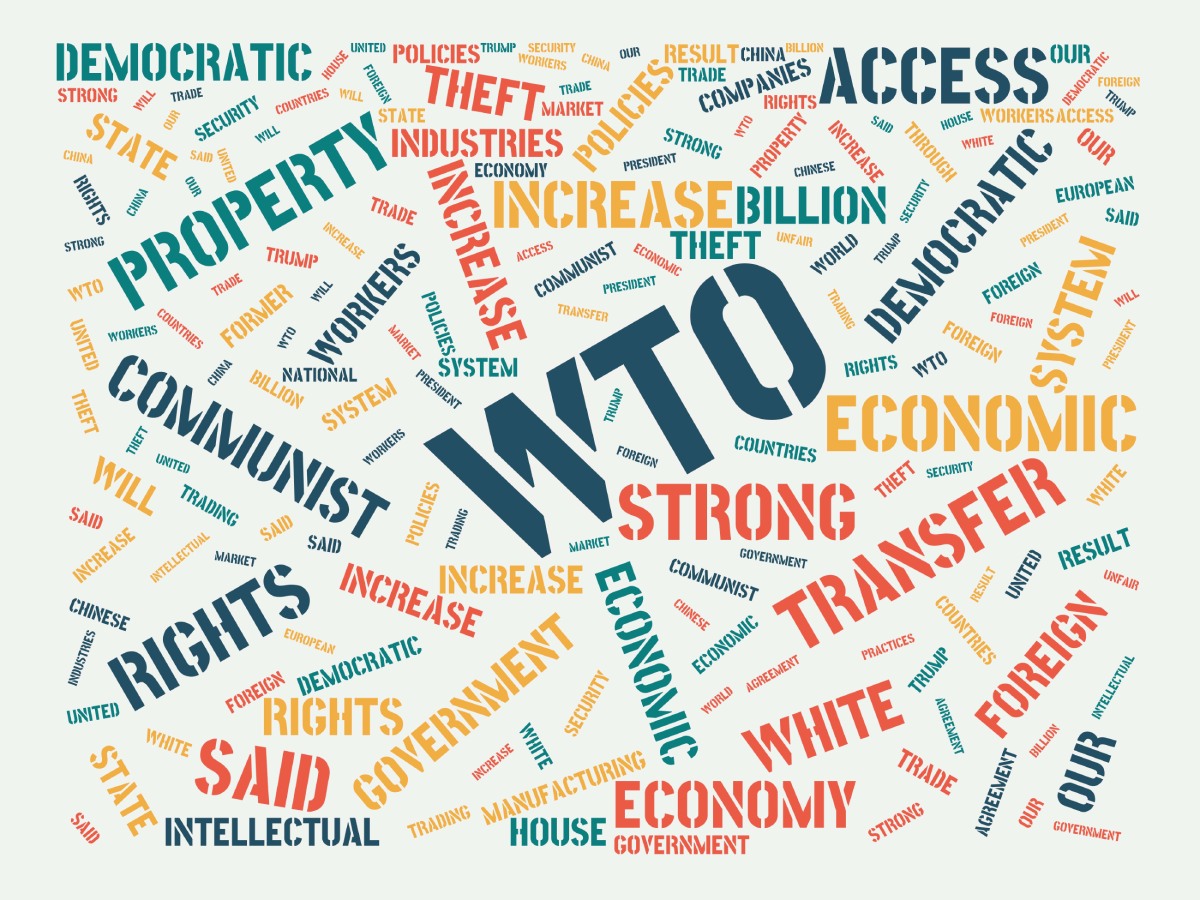
    Each incumbent in the White House since the entry of PR China into the WTO in 2001 has agonized over the protections provided by the Communist state to intellectual property rights. As China’s capacities increased and as Chinese enterprises continued to operate in an unrestrained fashion, the US Government along with other European countries raised the pressure on Beijing to change its behaviour. They refused to accept at face value Chinese protestations that these actions were compliant with WTO provisions. US responses covered the entire range of domestic law actions, bilateral pacts and approaching the WTO. A study of these actions, with the benefit of hindsight, shows it was lacking in both scope and determination. US President Donald Trump’s efforts which sparked the trade war has been the most dramatic and effective till date. Both US and China agree that their IPR differences are fundamental in nature and will be addressed in its entirety in the second phase. In this regard, the cat and mouse legal games being witnessed in the case of Huawei and its 5G ambitions  deservec scrutiny. Simultaneously the Trump Administration has doubled down on the WTO and reduced its dispute settlement body into a pale shadow of its original self. India is also a target of US actions on the IPR front, albeit of a lesser degree compared to PR China. WTO case law is instructive and there are lessons to be learned even outside of the US-China trade dispupte framework. In terms of the impact of the US-China IPR differences on India, three broad dimensions can be identified. The first one pertains to the WTO regime and other regional trade arrangements. Second, India needs to brace for further action at the WIPO and on the larger question of what US withdrawal from multilateral bodies means for the rest of the international community. Thirdly, Indian Government and companies need to try and leverage the opportunities that maybe created by China’s reforms in the IPR  fieldincluding the Pilot Free Trade Zone at Shanghai.

    Download Full Research Paper

    This paper is also published in AALCO journal.

  • Addressing Geo-environmental Security Challenges in the Indian Ocean Region: Setting a Regional Agenda

    Addressing Geo-environmental Security Challenges in the Indian Ocean Region: Setting a Regional Agenda

    Executive Summary

    • The Indian Ocean region (IOR) is an epicentre for a range of natural hazards. These are increasingly being amplified by a range of climate change-related environmental security threats, many of which have potential strategic consequences.
    • This Insight explores some of the key geoenvironmental challenges faced by the region. It then uses three case studies to explore the complex interactions between environmental and conventional security threats. ◊ The UAE will head the Indian Ocean Rim Association (IORA) from October 2019 to 2021. This Insight will explore ways in which the UAE can play an important regional leadership role by establishing a regional agenda to address geo-environmental challenges.

    Potential initiatives could include:

    • Establishing an Indian Ocean Environmental Security Forum: The UAE could take the lead in sponsoring the establishment of an Indian Ocean Environmental Security Forum that brings together military and civilian agencies and nongovernmental organisation across the region. The objective of the forum would be to create shared understandings on environmental security threats and help establish habits of dialogue in mitigating these threats.
    • Enhanced regional coast guard cooperation: The UAE could join with like-minded partners to create arrangements for dialogue, cooperation and training among Indian Ocean coastguards. This could include ongoing arrangements for professional development of senior coast guard practitioners in the region.
    • Disaster Risk Reduction: The UAE could join with other key states to develop framework disaster management arrangements among key Indian Ocean states with significant capabilities in this area. Such an arrangement could focus on developing pre-existing coordination mechanisms for responding to disasters among the most capable states.
    • Research on fish stocks: The UAE could promote environmental risk assessments by IORA and other relevant agencies of all species of fish in the Indian Ocean, including studies on the potential impact of climate change on these fish stocks.

    Download Full Research Paper