Category: Research Paper

  • Social automation and APT attributions in National Cybersecurity

    Social automation and APT attributions in National Cybersecurity

    Advanced Persistent Threats (APTs) are a prime concern in the formulation and implementation of national cybersecurity policies. These threats often also involve complex social engineering tactics which are undergoing a quantitative and qualitative revolution with burgeoning AI capabilities. However, the attribution of these APT activities can be mired with technical and political considerations. We analysed 142 APT groups’ attributions along with their use of social interaction vectors to ascertain the nature of the risk environment and the operational threat landscape of AI and social automation. We discover that close to 80% of APT activities could be chalked up to merely 20% of key nation-state threat actors competing with each other. We further discuss the implications of this political threat distribution for national cybersecurity environments.

    Keywords: cybersecurity, AI Policy, advanced persistent threats, automation, social engineering


    Read full paper here

  • Effect of Neo-Liberal Globalisation on Women in Garment Industries: A Third World  Perspective

    Effect of Neo-Liberal Globalisation on Women in Garment Industries: A Third World Perspective

    Abstract

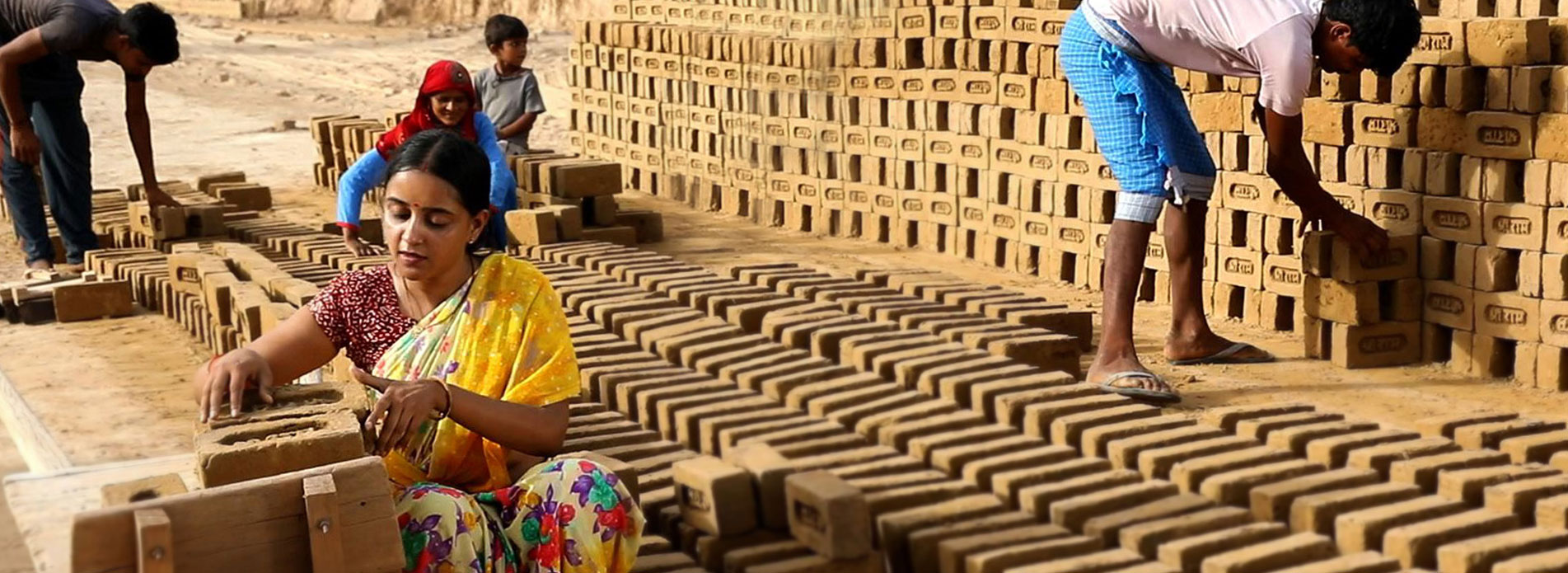
    Globalisation is a phenomenon that has brought about an effective change in the nature of the economy of the world nations. An inevitable result of this has been industrialisation, from heavy industries like iron and steel to software industries that house recent developments like artificial intelligence. Garment Industries have been a part of this industrial surge and have significantly contributed to the country’s economic growth, involving significant exports. At the heart of this unprecedented growth, an often unsaid and silenced issue remains the labour and lives of millions of women. Women, especially in the so-called third-world countries like Bangladesh,  Cambodia, and India, constitute more than 50% of the labour force in the garment sector. However,  the gender inequality that persists within these industries exists in the form of a lack of safety standards, wage disparity, stringent maternity benefits and improper compensation packages. World organisations like the International Labour Organisation (ILO) have developed projects to ensure decent working conditions. Still, the resultant effect has been scant due to the lack of gendered understanding of the issues. This research aims to illuminate the consequences of organisational patriarchy in comprehending the issues faced by women in the garment sector and subsequent policy framing. The study is based on the assumption that the inclusion of women andan opportunity to voice their concerns is absent. Therefore, there is a need for a gendered lens in framing policies, their implementation and further monitoring. Thus, this understanding will not only enhance the awareness of the working conditions of women in the garment industry but also be an eye-opener concerning the effect of global policies on the female labour force.

    Keywords: Female labour, Globalisation, Gender inequality


    Introduction

    The second five-year plan (1956-1961) in India had rapid industrialisation as one of its focuses and followed the Mahalanobis model of production of capital goods. This saw capitalism take the

    reins of development, which later consolidated with globalisation and took the world economy by storm, making possible the impossible, i.e., connecting the global markets. The transnational phenomenon led to the import of frontier technologies, which are highly capital-intensive (Indira  Hirway, 2012). The consequent effect was an improvement in technology and an increase in productivity accompanied by a decrease in employment intensity. This reduction affected the often underrepresented and discriminated group – women. Women’s growth was curtailed by ensuring that patriarchy was perpetuated in the organisational setup as well. The women in the lower strata of the industrial workforce faced the wrath of wage disparity, and the women in the higher echelons had a glass ceiling that prevented them from occupying managerial positions. They also had to endure the double burden of work and household chores, affecting the female labour force participation rate. Garment industries in developing countries like India, Pakistan and Bangladesh have witnessed large-scale employment of women as formal and informal labour to fulfil the needs of international buyers. In this paper, based on secondary research, I would like to traverse the historical aspects that led to globalisation, subsequent policies and the consequential effect it had on women, primarily focusing on export garment industries, which house the highest percentage of employed women.

    Industrialisation and women 

    The post-independence era in India, from 1947 onwards, witnessed industrial growth. The employment of labour also saw a shift from traditional agriculture. “Gender was the primary axis along  which industrial labour and the labour force were constituted.” Very few women worked in factories, and the support and protection they received were also poor compared to men. The policies that catered to labour protection, like the Factories Act (1948),  The Minimum Wages Act (1948) and The Employees’ State Insurance Act (1948) that paraded gender neutrality were gender blind. The ensuing period of globalisation, which questioned the conservative market nature, also brought about changes in the perception of women’s labour. With the world markets creating an arena for exports, the need for developing countries like India to keep up with the race became necessary, and the viable solution was to employ women from the lower strata of the society, mostly Dalits, in the name of empowering them. They were bait in the corporate hawk culture. The governments also failed to visualise the consequences of liberal markets and the capitalists donning the crown.

    As a part of the capitalist world, women were subject to both economic and emotional labour, which affected the female labour force participation rate, and the percentage of women in the informal sector became higher than women in the formal sector. However, there have been a lot of studies on the women employed in the informal sector, and there have also been time-use surveys conducted in this regard. Women’s labour in the formal sector has been consistently neglected due to the common belief that they enjoy the protection of an organised system. This may hold true to some extent, but in the case of garment or textile industries, which are a focus here, women are also the most penalised according to the reports by the International Labour  Organisation (ILO).

    Ministry of Labour and Employment, India – Statistics on Women Labour

    According to the information provided by the Office of Registrar General & Census Commissioner of India in the 2011 Census, the total number of female workers in India is 149.8 million, of which  121.8 and 28.0 million are from rural and urban areas, respectively. Out of the total 149.8 million female workers, 35.9 million females work as cultivators and another 61.5 million as agricultural labourers. Of the remaining female workers, 8.5 million remain in households, and 43.7 million are classified as other workers.


    As per Census 2011, the work participation rate for women is 25.51 per cent compared to 25.63  per cent in 2001. The female labour participation rate decreased marginally in 2011 but has seen an improvement from 22.27 per cent in 1991 and 19.67 per cent in 1981. The work participation rate for women in rural areas is 30.02 per cent compared to 15.44 per cent in urban areas.

    As far as the organised sector is concerned, in March 2011, women workers constituted 20.5 per cent of total employment in the organised sector in the country, which is higher by 0.1 per cent compared to the preceding year. As per the last Employment Review by the Directorate General of  Employment & Training (DGE&T), on 31st March 2011, about 59.54 lakh women workers were employed in the organised sector (public and private). Nearly 32.14 lakh women were employed in the community, social, and personal service sectors.

    Feminist Analysis of Existing Laws

    The labour laws in India have thoroughly focused on the idea of promoting growth along with social justice in tandem with the efforts of labour unions. However, despite the state and the unions’ consistent efforts, the laws’ ability to improve women’s living and working conditions was negligible, as described in the landmark report published in 1971, “Towards Equality”. It was an eye-opener to the dire circumstances in which women were surviving with patriarchy clawing its way into not just the domestic sphere but the workplace as well. While acts like the Maternity Benefit Act of 1961 offer relief to women on some levels,  there is a lack of legal awareness among women workers. This is a contributing factor to their being taken advantage of by employers. An analysis of the allocation of Variable Dearness  Allowance of Minimum Wages with effect from October 2022 has no separate mention of women’s labour. The general labour classification in this regard has been Unskilled, Skilled/Clerical, Semi Skilled and Highly skilled are the most probable categories in which women fall under unskilled due to a plethora of reasons. Despite the assumption that the New Labour Code is a relief to women labour across the country, measures must be taken to understand its effective implementation in both the public and private sector organisations.

    Women in Garment Industries

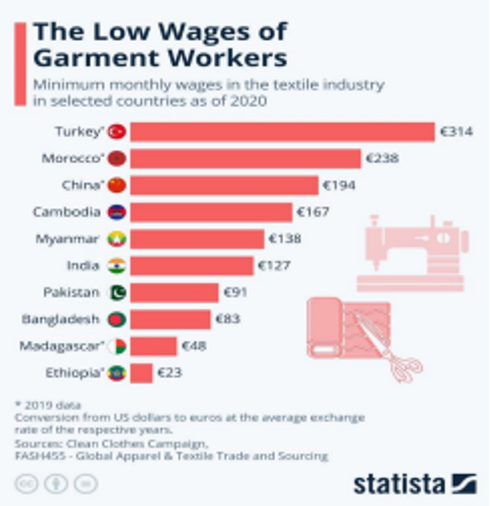
    The garment industries in South Asian nations like India and Bangladesh have been significant contributors to their economies and increased the employment ratio of women in the labour force. “India’s ready-made garment industry contributes around 16 per cent to total export earnings and is the largest foreign exchange earner in the country” (WTO,2019). Post-1980 saw unprecedented growth of the export industry, and the growth chart statistics show that from $2  million in 1960-61 to $696 million in 1980-81, it then increased sharply to $2,236 million in 1990- 91 and to $4,765 million in 1999-2000. The vast wage disparity was the driving force behind the globalisation of the garment industry. Studies have shown that the hourly wage of Indian

    labour is a meagre Rs.8 per hour, whereas a British worker performing the same work received around Rs.420. Thus, the capitalist tendency of the upper class and lower class is synonymous with the imperialist notion of civilised and barbaric groups pushing for cheap labour and higher production of goods.

    The onus of cheap labour fell on women, mainly from the marginalised communities who were desperate for jobs that promised a stable source of income. The Indian state also firmly believed that this was a way to empower women and ensure financial freedom. However, the challenges were masked by the rosy nature of the benefits put forth by the employers. The actual reasons for the employment of women, which were different from the portrayed norms, were: i) the common notion that women in the developing regions were meek beings who would barely retort against any kind of discomfort and would succumb to the system, ii) women will not question the wage disparity for they are fed the patriarchal notion of the superiority of men iii) the stable source of income will not let them rise in protest despite the atrocities meted out to them.

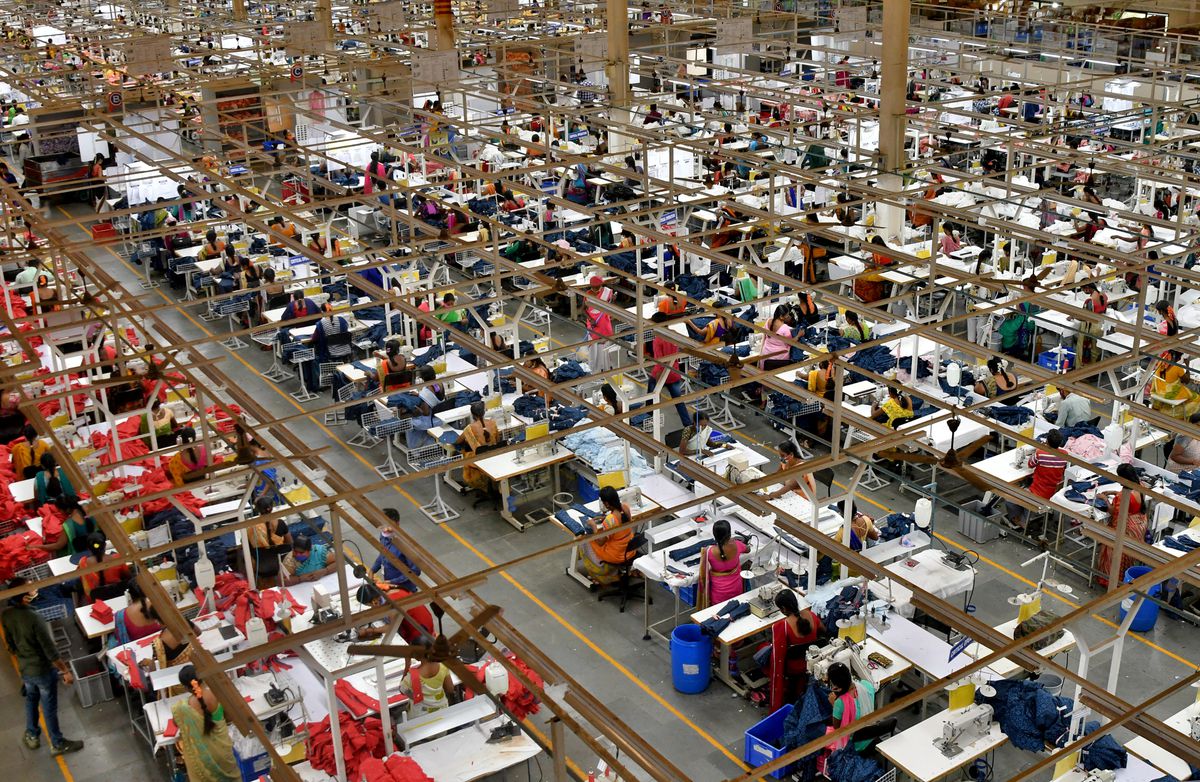
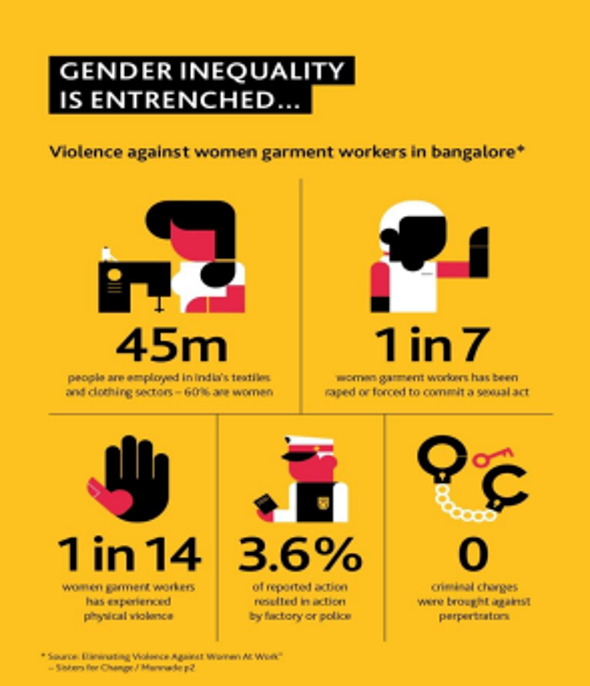
    Here, I would like to discuss a study conducted in Bangalore, Karnataka, which houses more than  800 garment industries and has the largest workforce of women. The exploitative nature of the employment of women in the garment industry is well documented and needs no elaboration. Briefly, the large majority of women, whether working as skilled tailors or as unskilled helpers, do not get even the legally stipulated minimum wage. Workers are frequently required to work overtime, but since this is set against production targets, they are not paid for overtime work. Insecurity of work is one of the most widely reported problems, as employers frequently terminate a woman’s service just before the completion of five years to avoid payment of gratuity. Harsh production targets, sexual and verbal abuse, lack of maternity and other leave, lack of accident insurance, and absence of toilet and creche facilities are some of the commonly stated and widely known features of female employment in garment manufacture. This misery underpins the production of high fashion garments sold in chic stores in the first world and worn by middle and upper-class women who pay for a single dress at a price that exceeds several times the monthly income of a woman who produces it.

    Challenges to women in the garment labour force due to Globalisation

    The post-1991 era in India saw a massive difference in the treatment of women as the labour force in industries, especially the textile sector. Female workers typically migrate from rural areas to work in the garment industry to meet their financial needs. Women labour in the garment industry mostly come from households below the poverty line. Therefore, the proposition for the ’empowerment of women’ through employment in these capitalist industries was thought to pave the road for the emancipation of this vulnerable group. However, with the fast fashion industry booming and the convergence of interests among global consumers, there was and still exists a constant need to satiate consumer behaviour consistently. The mass production of goods became inevitable. This had adverse effects in that it created a hostile working  environment, and reports suggest that it took a toll on the physical and mental health of women:

    i) Impact on physical well-being: The study “Sewing shirts with injured fingers and tears: exploring the experience of female garment workers’ health problems in Bangladesh” found that physical health problems included headaches, eye pain, musculoskeletal pains and fatigue. It further revealed that garment work is also so physically demanding that women cannot work for more than ten years. These findings are consistent with other research, which found that the highest proportion of female workers quit factory work before they reach 40. The workers reported that getting sick and injured was an everyday phenomenon. The doctors thought that women in factories could not work for more than ten years owing to the stressful conditions. This study also described that since the manufacturing units have men as supervisors, it becomes difficult for women to voice their concerns, particularly those related to their menstrual health. Further, this gendered division of labour extends to their home life, where their husbands expect them to fulfil their domestic obligations despite long, physically demanding hours at work.

    ii) Impact on mental well-being: The article “Mental Health Status of Female Workers in Private Apparel Manufacturing Industry in Bangalore City, Karnataka, India” steers the discussion in the direction of the importance of mental health awareness and the need for a safe work environment for women in garment factories. Mental health problems, including depression, have become a global health priority, and socially disadvantaged people are more vulnerable to suffering from mental health problems. There is evidence that scarcity of human resources, limited access to, and cost of mental health services are critical issues in most low- and middle-income countries. Separation from their children is an important issue for them. Most had left their children in their home villages, citing lack of time to care for them due to their long work hours and difficulties in paying for their children’s living costs in the city. They work from morning to night and during weekends, with nobody at home to look after their children. They get to leave only a few times a  year, and the distance to their villages can be up to 10 hours of travel time. As such, they have no option but to leave their children in their village to live with their grandparents. However, avoiding long working hours is impossible, as they need money to provide for their impoverished families.

    To improve the health and well-being of female garment workers, steps should be taken to develop health interventions to meet the needs of this important group of workers who contribute significantly to the country’s economic development.

    Way Forward

    Although women are at a disadvantage, the involvement of women in decision-making becomes indispensable. A developmental perspective based on male priorities and the male concept of the role of women in a patriarchal society such as ours cannot alleviate the lot of women already inhibited by traditional gender-role expectations. Stakeholder theory advocates that firms bear responsibility for the implications of their actions, and based on this, women come under the category of normative stakeholders to whom the industry has a moral obligation: an obligation of stakeholder fairness. Also, stress has to be placed on including women in the policy-making process, thereby increasing accountability of the framed policies. Illiteracy is a global problem and one of the reasons for the deterioration in the status of women and the feminisation of poverty. Ignorance of their rights- political, social, and economic- leads to the exploitation of women and their inability to converge to form a pressure group. The interface between the grassroots women and the activists must be used to build awareness and sensitise people, both men and women. Involving men who are sensitive to women’s issues is a healthy practice. It would benefit the cause of women if their struggle is seen as a fight for human rights,  which it is, and not merely as a gender-based movement.


    References

    • Ahmed, F. (2004). The rise of the Bangladesh garment industry: globalisation, women workers, and voice. NWSA Journal, 16(2), 34–45. https://doi.org/10.2979/nws.2004.16.2.34
    • Unni, J., Bali, N., & Vyas, J. H. (1999). Subcontracted women workers in the global economy: the case of the garment industry in India. http://www.sewaresearch.org/pdf/researches/subcontracted.pdf
    • Saha, T. K., Dasgupta, A., Butt, A., & Chattopadhyay, O. (2010). Health status of workers engaged in the small-scale garment industry: How healthy are they? Indian Journal of Community Medicine, 35(1), 179. https://doi.org/10.4103/0970-0218.62584
    • Baud, I., & De Bruijne, G. (1993). Gender, small-scale industry, and development policy. https://doi.org/10.3362/9781780442280
    • Oonk, G., Overeem, P., Peepercamp, M., & Theuws, M. (2012). Maid in India: Young Dalit women continue to suffer exploitative conditions in India’s garment industry. Social Science Research Network. https://doi.org/10.2139/ssrn.2119816
    • Carr, M. (2001). GLOBALISATION AND THE INFORMAL ECONOMY: HOW GLOBAL TRADE AND INVESTMENT IMPACT ON THE WORKING POOR. RePEc: Research Papers in Economics. http://info.worldbank.org/etools/docs/library/76309/dc2002/proceedings/pdfpaper/module6mcmc.pdf
    • Hale, A., & Shaw, L. M. (2001). Women workers and the promise of ethical trade in the globalised garment industry: a serious beginning? Antipode, 33(3), 510–530 https://doi.org/10.1111/1467-8330.00196
    • Mezzadri, A. (2014). Indian Garment clusters and CSR norms: incompatible agendas at the bottom of the garment commodity chain. Oxford Development Studies, 42(2), 238–258. https://doi.org/10.1080/13600818.2014.885939
    • Sharma, L., & Srivastava, M. (2020). A scale to measure organisational stress among women workers in the garment industry. European Journal of Training and Development, 46(9), 820–846. https://doi.org/10.1108/ejtd-04-2019-0060
    • Kabeer, N., & Mahmud, S. (2003). Globalisation, gender, and poverty: Bangladeshi women workers in export and local markets. Journal of International Development, 16(1), 93–109 https://doi.org/10.1002/jid.1065
    • ANNUAL REPORT 2022-23. (n.d.). In Ministry of Labour and Employment. Ministry of Labour and Employment, Government of India.


    Feature Image Credit: www.changealliance.in

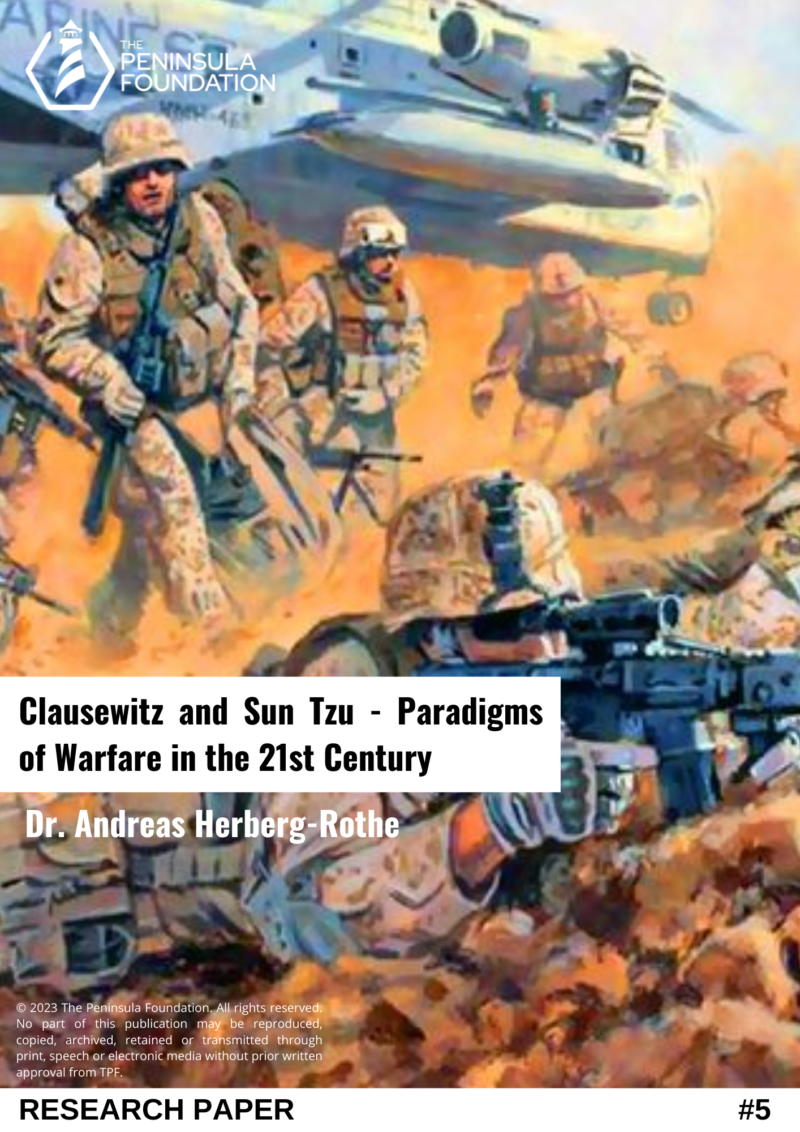
  • Clausewitz and Sun Tzu – Paradigms of Warfare in the 21st Century

    Clausewitz and Sun Tzu – Paradigms of Warfare in the 21st Century

    [powerkit_button size=”lg” style=”info” block=”true” url=”https://admin.thepeninsula.org.in/wp-content/uploads/2023/04/Clausewitz-and-Sun-Tzu-1.pdf” target=”_blank” nofollow=”false”]
    Download
    [/powerkit_button]

    “No principle in the world is always right, and no thing is always wrong. What was used yesterday may be rejected today, what is rejected now may be used later on. This use or disuse has no fixed right or wrong. To avail yourself of opportunities at just the right time, responding to events without being set in your ways is in the domain of wisdom. If your wisdom is insufficient (…) you’lle come to an impasse wherever you go.”

    –  Taostic Text

    Every war has its own strategy and also its own theorist. In fact, there are only two great theorists of war and warfare, the Prussian “philosopher of war” Carl von Clausewitz, and the ancient Chinese theorist of the “art of war”, Sun Tzu. Nevertheless, there is no single strategy that applies equally to all cases, i.e., not even Clausewitz’s or Sun Tzu’s. Often an explanation for success or failure is sought in the strategies used only in retrospect. For example, Harry G. Summers (Summers 1982) attributed the defeat of the United States in the Vietnam War to the failure to take into account the unity of people, army, and government, Clausewitz’s “wondrous trinity.” In contrast, after the successful campaign against Iraq in 1991, the then Chief of Staff of the U.S. Army, Colin Powell, appeared before the press with Clausewitz’s Book of War and signaled, see, we learned from the mistakes of the Vietnam War and won the Iraq War with Clausewitz (Herberg-Rothe 2007). Similarly, after World War I, there was a discourse that amounted to if the German generals had read Clausewitz correctly, the war would not have been lost. This position referred to the victory of the German forces in the Franco-Prussian War of 1870-71 and the assessment of the then Chief of General Staff, Helmut von Moltke, that he was able to fight this war successfully by studying Clausewitz’s “On War.” Since then, Clausewitz’s book has been searched for reasons for victory or defeat (Herberg-Rothe 2007).

    If Clausewitz’s status seemed unchallenged after the Iraq war in 1991, it was gradually questioned and often replaced by Sun Tzu. Two reasons played a role here – on the one hand, the new forms of non-state violence and, on the other, the new technological possibilities, the revolution in military affais (RMA), which is far from being completed. In particular, robotic and hybrid warfare, as well as the incorporation of artificial intelligence, that of space, and the development of quantum computers. The trigger of the change from Clausewitz to Sun Tzu was a seemingly new form of war, the so-called “New Wars”, which in the strict sense were not new at all, but are civil wars or those of non-state groups. In the view of the epoch-making theorist of the “New Wars”, Mary Kaldor (Kaldor 2000, much more differentiated Münkler 2002), interstate war was replaced by non-state wars, which were characterized by special cruelty of the belligerents. These weapon bearers, seemingly a return to the past, were symbolized by child soldiers, warlords, drug barons, archaic fighters, terrorists, and common criminals who were stylized as freedom fighters (Herberg-Rothe 2017).

    Since Sun Tzu lived in a time of perpetual civil wars in China, his “art of war” seemed more applicable to intrastate war, (McNeilley 2001) while Clausewitz’s conception was attributed to interstate war. In combating these new weapons carriers and the “markets of violence,” civil war economies, or “spaces open to violence” associated with them, Napoleon’s guiding principle was applied: “Only partisans help against partisans” (Herberg-Rothe 2017). Accordingly, conceptions of warfare were developed by John Keegan and Martin van Creveld, for example, that amounted to an archaic warrior with state-of-the-art technologies (Keegan 1995, van Creveld 1991). On the military level, the transformation of parts of the Western armed forces as well as the Bundeswehr from a defensive army to an intervention army took place. In contrast to the United States, the Bundeswehr placed greater emphasis on pacifying civil society in these civil war economies, and ideally the soldier became a social worker in uniform (Bredow 2006).

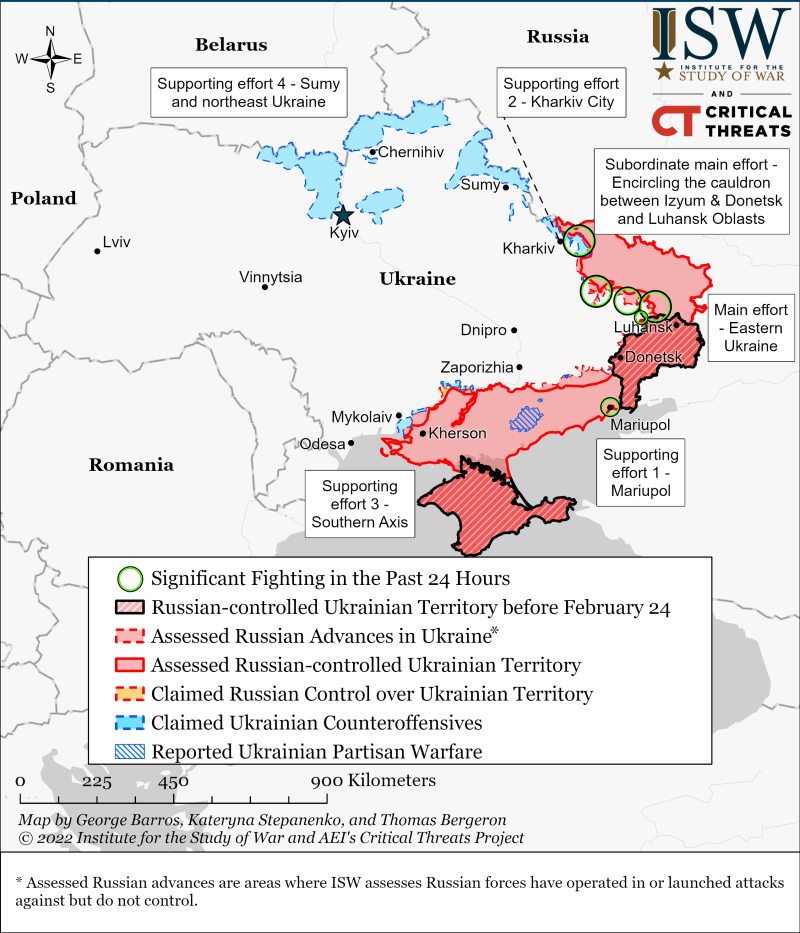
    The battle was fought by highly professional special forces in complex conflict areas. The initial success of the U.S. Army in Afghanistan can be attributed to the use of such special forces, which, as a result of modern communications capabilities, were able to engage superior U.S. airpower at any time. Because interstate warfare has returned to the forefront with the Ukraine war, Clausewitz may regain relevance in the coming years – unless the controversial concepts of hybrid warfare, John Boyd’s OODA loop, or NATO’s comprehensive approach gain further influence. At their core, these are based on non-state warfare by states, thus enabling a renaissance of Sun Tzu.

    However, the paradigm shift from Clausewitz to Sun Tzu became even clearer during the Second Iraq war in 2003. From the perspective of one commentator, this campaign was won in just a few weeks because the U.S. army was guided by Sun Tzu’s principles, while Saddam Hussein’s Russian advisors adhered to Clausewitz and Moscow’s defense against Napoleon (Macan 2003/Peters 2003). Before the fall of Afghanistan, former U.S. Secretary of Defense James Mattis brought up the Clausewitz/Sun Tzu distinction anew. “The Army was always big on Clausewitz, the Prussian; the Navy on Alfred Thayer Mahan, the American; and the Air Force on Giulio Douhet, the Italian. But the Marine Corps has always been more Eastern-oriented. I am much more comfortable with Sun-Tzu and his approach to warfare.” (Mattis 2008).

    Without fully following this distinction, it gives us hints that we cannot find absolutely valid approaches in Clausewitz’s and Sun Tzu’s conceptions, but differentiations in warfare. If we simplify the difference between the two, Clausewitz’s approach is more comparable to wrestling (Clausewitz 1991, 191), while Sun Tzu’s is comparable to jiu-jitsu. The difference between the two becomes even clearer when comparing Clausewitz’s conception to a boxing match. The goal is to render the opponent incapable of fighting (Clausewitz 1991, 191) by striking his body, as Clausewitz himself points out, thereby forcing him to make any peace. In contrast, Sun Tzu’s goal is to unbalance his opponent so that even a light blow will force him to the ground because he will be brought down by his own efforts. Of course, all two aspects play a major role in both Clausewitz and Sun Tzu, but Clausewitz’s strategy relates more to the body, the material means available to the war opponents, Sun Tzu’s strategy more to the mind, the will to fight. Both strategies have also often been conceptualized as the antithesis of direct and indirect strategy – in direct strategy, two more or less similar opponents fight on a delineated battlefield with roughly equal weapons and “measure their strength” – in indirect strategy, on the other hand, attempts are made, for example, to disrupt the enemy’s supply of food and weapons or to break the will of the opposing population to continue supporting the war. Examples of this in World War II would be the tank battles for symmetric and the bombing of German cities and the atomic bombing of Hiroshima and Nagasaki as an example of asymmetric warfare. Non-state warfare is also asymmetrically structured in nearly all cases, as it is primarily directed against the enemy civilian population (Wassermann 2015). Perhaps asymmetric warfare was most evident in the Yom Kippur War between Israel and the Egyptian army. The latter had indeed surprised Israel and managed to overrun Israeli positions along the Suez Canal. However, instead of giving the Egyptian army a tank battle in the Sinai, a relatively small group of tanks set back across the Suez Canal and in the back of the Egyptian army, cutting it off from the water supply, forcing the Egyptian army to surrender within a few days (Herberg-Rothe 2017).

    This distinction between Clausewitz and Sun Tzu can be contradicted insofar as Clausewitz begins with a “definition” of war in which the will plays a major role and which states that war is an act of violence to force the opponent to fulfill our will (Clausewitz 1991, 191). But how is the opponent forced to do this in Clausewitz’s conception? A few pages further on it says by destroying the opponent’s forces. By this concept of annihilation, however, he does not understand physical destruction in the narrower sense, but to put the armed forces of the opponent in such a state that they can no longer continue the fight (Clausewitz 1991 215).

    Sun Tzu

    Sun Tzu’s approach relates more directly to the enemy’s thinking. “The greatest achievement is to break the enemy’s resistance without a fight” (Sunzi 1988, 35). Accordingly, Basil Liddell Hart later formulated, “Paralyzing the enemy’s nervous system is a more economical form of operation than blows to the enemy’s body.” (Liddel Hart, 281). Sun Tzu’s methodical thinking aims at a dispassionate assessment of the strategic situation and thus at achieving inner distance from events as a form of objectivity. This approach is rooted in Taoism, and in it the presentation of paradoxes is elevated to a method. Although the “Art of War” contains a number of seemingly unambiguous doctrines and rules of thumb, they cannot be combined into a consistent body of thought.

    In this way, Sun Tsu confronts his readers (who are also his students) with thinking tasks that must be solved. Often these tasks take the form of the paradoxical. This becomes quite obvious in the following central paradox: “To fight and win in all your battles is not the greatest achievement. The greatest achievement is to break the enemy’s resistance without a fight.”(Sun Tzu). In clear contradiction to the rest of the book, which deals with warfare, Sun Tsu here formulates the ideal of victory without a battle and thus comes very close to the ideal of hybrid warfare, in which possible battle is only one of several options.

    Obviously, he wants to urge his readers to carefully consider whether a war should be waged and, if so, under what conditions. It is consistent with this that Sun Tsu repeatedly reflects on the economy of war, on its economic and social costs, and at the same time refers to the less expensive means of warfare: cunning, deception, forgery, and spies. Victory without combat is thus the paradox with which Sun Tsu seeks to minimize the costs of an unavoidable conflict, limit senseless violence and destruction, and point to the unintended effects.

    The form of the paradox is used several times in the book, for example when Sun Tsu recommends performing deceptive maneuvers whenever possible; this contradicts his statement that information about the opponent can be obtained accurately and used effectively – at least when the opponent is also skilled in deceptive maneuvers or is also able to see through the deceptions of his opponent. This contradiction stands out particularly glaringly when one considers that Sun Tsu repeatedly emphasizes the importance of knowledge, for example when he says: “If you know the enemy and yourself, there is no doubt about your victory; if you know heaven and earth, then your victory will be complete” (Sunzi 1988, 211). In a situation in which one must assume that the other person also strives to know as much as possible, this sentence can only be understood as a normative demand, as an ideal: Knowledge becomes power when it represents a knowledge advantage, as Michel Foucault has emphasized in more recent times: For him, knowledge is power. Cunning, deception, and the flow of information, even when they are not absolutely necessary, are, however, in danger of becoming ends in themselves, because they alone guarantee an advantage in knowledge. Information, then, is the gold and oil of the 21st century.

    The presentation of paradoxes is not an inadequacy for Sun Tsu, but the procedure by which he instructs his readers/students. In contrast to the theoretical designs of many Western schools, Sun Tsu relies here on non-directive learning: the paradox demands active participation from the reader, mirrors to him his structure of thinking, and makes him question the suitability of his own point of view in thinking through the position of the opponent. Sun Tsu thereby forces his recipients to constantly examine the current situation and to frequently reflect. By repetitively thinking through paradoxical contradictions, the actor gains the inner distance and detachment from the conflict that are necessary for an impersonal, objectifying view of events. By being confronted with paradoxes, the reader learns to simultaneously adopt very different points of view, to play through the given variants, to form an understanding for the contradictions of real situations, and at the same time to make decisions as rationally as possible. In this way, the text encourages people not to rely on the doctrines it formulates as positive knowledge about conflict strategies, but to practice repeated and ever new thinking through as a method. Sun Tzu’s approach is thus characterized by highlighting paradoxes of warfare by designing strategies of action through reflection aimed at influencing the thinking of the opponent.

    Elective Affinities with Mao Tse-tung

    The conception of the “people’s war” by the Chinese revolutionary Mao Tse-Tung is a further development of that of Sun Tzu and the dialectical thinking of Marx and Engels. At the same time, in these paradoxes, he tries to provide an assessment and analysis of the situation that is as objective-scientific as possible, linking it to subjective experience: “Therefore, the objects of study and cognition include both the enemy’s situation and our own situation, these two sides must be considered as objects of investigation, while only our brain (thought) is the investigating object” (Mao 1970, 26).

    The comprehensive analyses that Mao prefaces each of his treatises have two purposes: On the one hand, they serve as sober, objective investigations before and during the clashes, which are intended to ensure rational predictions of what will happen and are based on reliable information and the most precise planning. On the other hand, Mao uses them to achieve the highest level of persuasion and to mobilize his followers through politicization. Not for nothing are terms like “explain,” “persuade,” “discuss,” and “convince” constantly repeated in his writings, since the people’s war he propagates requires unconditional loyalty and high morale.

    Mao repeatedly demonstrates thinking in interdependent opposites, which can be understood as a military adaptation of the Chinese concept of Yin and Yang. His precise analyses demonstrate dialectical reversals; thus he can show that in strength is hidden weakness and in weakness is hidden strength. According to this thinking, in every disadvantage an advantage can be found, and in every disadvantage an advantage. An example of this is his explanation of the dispersion of forces: while conventional strategies proclaim the concentration of forces (as does Clausewitz, Clausewitz 1991, 468), Mao relies on dispersion. This approach confuses the opponent and creates the illusion of the omnipresence of his opponent.

    Mao understands confrontations as reciprocal interactions and, from this perspective, is able to weigh the relationship between concentration and dispersion differently: “Performing a mock maneuver in the East, but undertaking the attack in the West” (Mao 1970, 372) means to bind the attention of the opponent, but at the same time to become active where the opponent least expects it. Mao’s method of dialectically seeking out weakness in strength and strength in weakness leads him to the flexibility that is indispensable for confronting a stronger opponent.

    Finally, it is the ruthless analysis of one’s own mistakes that bring Mao to his guiding principles; from a series of sensitive defeats, he concluded, “The aim of war consists in nothing other than ‘self-preservation and the destruction of the enemy’ (to destroy the enemy means to disarm him or ‘deprive him of his power of resistance,’ but not to physically destroy him to the last man)” (Mao 1970, 349). On this point, Mao Tse Tung is in complete agreement with Clausewitz. Mao also clarifies this core proposition by defining the concept of self-preservation dialectically – namely, as an amalgamation of opposites: “Sacrifice and self-preservation are opposites that condition each other. For such sacrifices are not only necessary in order to preserve one’s own forces-a partial and temporary failure to preserve oneself (the sacrifice or payment of the price) is indispensable if the whole is to be preserved for the long run” (Mao 1970, 175).

    Sun Tzu problems

    Sun Tzu’s “The Art of War” as well as the theorists of network-centric warfare and 4th and 5th generation warfare focus on military success but miss the political dimension with regard to the post-war situation. They underestimate the process of transforming military success into real victory (Macan 2003, Peters 2003, Echevarria 2005). The three core elements of Sun Tzu’s strategy could not be easily applied in our time: Deceiving the opponent in general risks deceiving one’s own population as well, which would be problematic for any democracy. An indirect strategy in general would weaken deterrence against an adversary who can act quickly and decisively. Focusing on influencing the will and mind of the adversary may enable him to avoid a fight and merely resume it at a later time under more favorable conditions.

    Sun Tzu is probably more likely to win battles and even campaigns than Clausewitz, but it is difficult to win a war by following his principles. The reason is that Sun Tzu was never interested in shaping the political conditions after the war, because he lived in a time of seemingly never-ending civil wars. The only imperative for him was to survive while paying the lowest possible price and avoiding fighting, because even a successful battle against one enemy could leave you weaker when the moment came to fight the next. As always in history, when people want to emphasize the differences with Clausewitz, the similarities between the two approaches are neglected. For example, the approach in Sun Tzu’s chapter on “Swift Action to Overcome Resistance” would be quite similar to the approach advocated by Clausewitz and practiced by Napoleon. The main problem, however, is that Sun Tzu neglects the strategic perspective of shaping postwar political-social relations and their impact “by calculation” (Clausewitz 1991, 196) on the conduct of the war. As mentioned earlier, this was not a serious issue for Sun Tzu and his contemporaries, but it is one of the most important aspects of warfare in our time (Echevarria 2005¸ Lonsdale 2004).

    Finally, one must take into account that Sun Tzu’s strategy is likely to be successful against opponents with a very weak order of forces or associated community, such as warlord systems and dictatorships, which were common opponents in his time. His book is full of cases where relatively simple actions against the order of the opposing army or its community lead to disorder on the part of the opponent until they are disbanded or lose their will to fight altogether. Such an approach can obviously be successful with opponents who have weak armed forces and a weak social base but is likely to prove problematic with more entrenched opponents.

    Here, the Ukraine war could be a cautionary example. Apparently, the Russian military leadership and the political circle around Putin were convinced that this war, like the intervention in Crimea, would end quickly, because neither the resistance of the Ukrainian population nor its army was expected, nor the will of the Western states to support Ukraine militarily. To put it pointedly, one could say that in the second Iraq war, Sun Tzu triumphed over Clausewitz, but in the Ukraine war Clausewitz triumphed over Sun Tzu. This also shows that while wars in an era of hybrid globalization (Herberg-Rothe 2020) necessarily also take on a hybrid character, it is much more difficult to successfully practice hybrid warfare-such a conflation of opposites is strategically at odds with those writings of Clausewitz in which he generalizes the principles of Napoleonic warfare, though not with his determination of defense. The Ukraine war can even be seen as evidence of the greater strength of defense as postulated by Clausewitz (Herberg-Rothe 2007).

    And Clausewitz?

    At first glance, Clausewitz’s position is not compatible with that of Sun Tzu. In his world-famous formula of the continuation of war by other means (Clausewitz 1991, 210), Clausewitz takes a hierarchical position, with politics determining the superior end. Immediately before this formula, however, he writes that politics will pervade the entire warlike act, but only insofar as the nature of the forces exploding within it permits (Clausewitz 1991, ibid.). By this statement, he relativizes the heading of the 24th chapter, which contains the world-famous formula. In addition, all headings of the first chapter, with the exception of the result for the theory, the final conclusion of the first chapter, were written in the handwriting of Marie von Clausewitz, while only the actual text was written by Clausewitz (Herberg-Rothe 2023, on the discovery of the manuscript by Paul Donker).

    The tension only implicit in the formula becomes even clearer in the “wondrous trinity,” Clausewitz’s “result for the theory” of war. Here he writes that war is not only a true chameleon, because it changes its nature somewhat in each concrete case, but a wondrous trinity. This is composed of the original violence of war, hatred, and enmity, which can be seen as a blind natural instinct, the game of probabilities and chance, and war as an instrument of politics, whereby war falls prey to mere reason. Violence, hatred, and enmity like a blind natural instinct on the one side, and mere understanding on the other, this is the decisive contrast in Clausewitz’s wondrous trinity. For Clausewitz, all three tendencies of the wondrous trinity are inherent in every war; their different composition is what makes wars different (Clausewitz 1991, 213, Herberg-Rothe 2009).

    While Clausewitz formulates a clear hierarchy between the end, aim, and means of war in the initial definition and the world-famous formula, the wondrous trinity is characterized by a principled equivalence of the three tendencies of war’s violence, the inherent struggle and its instrumentality. At its core, Clausewitz’s wondrous trinity is a hybrid determination of war, which is why the term “paradoxical trinity” is more often used in English versions. In his determination of the three interactions to the extreme, made at the beginning of the book, Clausewitz emphasizes the problematic nature of the escalation of violence in the war due to its becoming independent, because the use of force develops its own dynamics (Clausewitz 1991, 192-193, Herberg-Rothe 2007 and 2017). The three interactions have often been misunderstood as mere guides to action, but they are more likely to be considered as escalation dynamics in any war. This is particularly evident in escalation sovereignty in war – the side gains an advantage that can outbid the use of force. However, this outbidding of the adversary (Herberg-Rothe 2001) brings with it the problem of violence taking on a life of its own. This creates a dilemma, which Clausewitz expresses in the wondrous trinity.

    This dilemma between the danger of violence becoming independent and its rational application gives rise to the problem formulated at the outset, namely that there cannot be a single strategy applicable to all cases, but that a balance of opposites is required (Herberg-Rothe 2014). In it, the primacy of politics is emphasized, but at the same time, this primacy is constructed as only one of three opposites of equal rank. Thus, Clausewitz’s conception of the wondrous trinity is also to be understood as a paradox, a dilemma, and a hybrid.

    As already observed in ethics, there are different ways to deal with such dilemmas (Herberg-Rothe 2011). One is to make a hierarchy between opposites. Here, particular mention should be made of the conception of trinitarian war, which was wrongly attributed to Clausewitz by Harry Summers and Martin van Creveld and was one of the causes of Clausewitz being considered obsolete by Mary Kaldor regarding the “New Wars.” For in the conception of trinitarian war, the balance of three equal tendencies emphasized by Clausewitz is explicitly transformed into a hierarchy of government, army, and people/population. Even if it should be noted that this interpretation was favored by a faulty translation in which Clausewitz’s notion of “mere reason” was transformed into the phrase “belongs to reason alone” (Clausewitz 1984), the problem is systematically conditioned. For one possible way of dealing with action dilemmas is such a hierarchization or what Niklas Luhmann called “functional differentiation”. We find a corresponding functional differentiation in all modern armies – Clausewitz himself had developed such a differentiation in his conception of the “Small War”, which was not understood as an opposition to the “Great War”, but as its supporting element. In contrast, Clausewitz developed the contrast to the “Great War” between states in the “People’s War” (Herberg-Rothe 2007).

    A second way of dealing with dilemmas of action is to draw a line up to which one principle applies and above which the other applies – that is, different principles would apply to state warfare than to “people’s war,” guerrilla warfare, the war against terrorists, warlords, wars of intervention in general. This was, for example, the proposal of Martin van Creveld and Robert Kaplan, who argued that in war against non-state groups, the laws of the jungle must apply, not those of “civilized” state war (van Creveld 1998, Kaplan 2002). In contrast, there are also approaches that derive the uniformity of war from the ends, aims, means relation, arguing that every war, whether state war or people’s war, has these three elements and that wars differ only in which ends are to be realized by which opponents with which means (I assume that this is the position of the Clausewitz-orthodoxy). It must be conceded that Clausewitz is probably inferior to Sun Tzu in practical terms with regard to the “art of warfare” – because in parts of his work, he gave the word to a one-sided absolutization of Napoleon’s warfare – while only in the book on defense did he develop a more differentiated strategy (Herberg-Rothe 2007, Herberg-Rothe 2014). Perhaps one could say that Sun Tzu is more relevant to tactics, whereas Clausewitz has the upper hand in strategy (Herberg-Rothe 2014).

    Summary

    If we return to the beginning, Clausewitz is the (practical) philosopher of war (Herberg-Rothe 2022), while Sun Tzu focuses on the “art of warfare”. As is evident in the hybrid war of the present, due to technological developments and the process I have labeled hybrid globalization (Herberg-Rothe 2020), every war can be characterized as a hybrid. However, as is currently evident in the Ukraine War, the designation of war as a hybrid is different from successful hybrid warfare. This is because hybrid warfare necessarily combines irreconcilable opposites. This mediation of opposites (Herberg-Rothe 2005) requires political prudence as well as the skill of the art of war. The ideal-typical opposition of both is correct in itself, if we provide these opposites with a “more” in each case, not an exclusive “or”.

    Clausewitz’s conception is “more” related to

    “politics, one’s own material possibilities and those of the opponent, a direct strategy, and that of the late Clausewitz on a relative symmetry of the combatants and the determination of war as an instrument. This can be illustrated with a boxing match in which certain blows are allowed or forbidden (conventions of war), the battlefield and the time of fighting remain delimited (declaration of war, conclusion of peace)”.

    Sun Tzu’s conception, on the other hand, refers to more

    “directly on the military opponent, his thinking and “nervous system” (Liddel-Heart), an indirect strategy (because a direct strategy in his time would have resulted in a weakening of one’s own position even if successful), and a relative asymmetry of forms of combat”.

    Despite this ideal-typical construction, every war is characterized by a combination of these opposites. Consequently, the question is neither about an “either-or” nor a pure “both-and,” but involves the question of which strategy is the appropriate one in a concrete situation. To some extent, we must also distinguish in Clausewitz’s conception of politics between a purely hierarchical understanding and a holistic construction. Put simply, the former conception is addressed in the relationship between political and military leadership; in the latter, any violent action by communities is per se a political one (Echevarria 2005, Herberg-Rothe 2009). From a purely hierarchical perspective, it poses no problem to emphasize the primacy of politics in a de-bounded, globalized world with Clausewitz. If, on the other hand, in a holistic perspective all warlike actions are direct expressions of politics, the insoluble problem arises of how limited warfare could be possible in a de-bounded world.

    This raises the question of which of the two, Clausewitz or Sun Tzu, will be referred to more in the strategic debates of the future. In my view, this depends on the role that information technologies, quantum computers, artificial intelligence, drones, and the development of autonomous robotic systems will play in the future – in simple terms, the role that thought and the “soul” will play in comparison to material realities in a globalized world. The Ukraine war arguably shows an overestimation of the influence of thought and soul (identity) on a community like Ukraine, but with respect to autocratic states like Russia and China, possibly an underestimation, at least temporarily, of the possibilities of manipulating the population through the new technologies. Regardless of the outcome of the war, the argument about Clausewitz and/or Sun Tzu will continue as an endless story – but this should not proceed as a mere repetition of dogmatic arguments, but rather answer the question of which of the two is the better approach can be taken in which concrete situation.

    Bibliography

    Bredow, Wilfried von (2006), Kämpfer und Sozialarbeiter – Soldatische Selbstbilder im Spannungsfeld herkömmlicher und neuer Einsatzmissionen. In: Gareis, S.B., Klein, P. (eds) Handbuch Militär und Sozialwissenschaft. VS Verlag für Sozialwissenschaften: Wiesbaden.

    Clausewitz, Carl von (199119), Vom Kriege. Dümmler: Bonn.

    Clausewitz, Carl von (1984), On War. OUP: Oxford.

    Creveld, Martin van (1991), The transformation of war. The Free Press: New York.

    Echevarria, Antulio II (2005), Fourth-generation warfare and other myths. Carlisle.

    Herberg-Rothe, Andreas (2001), Das Rätsel Clausewitz. Fink: München

    Herberg-Rothe, Andreas (2007), Clausewitz’s puzzle. OUP: Oxford

    Herberg-Rothe, Andreas (2009), Clausewitz’s “Wondrous Trinity” as a Coordinate System of War and Violent Conflict. In: International

    Journal of Violence and Conflict (IJVC) 3 (2), 2009, pp.62-77.

    Herberg-Rothe, Andreas (2011), Ausnahmen bestätigen die Moral. In: Frankfurter Rundschau vom 16. Juni 2011, 31.

    Herberg-Rothe, Andreas (2014), Clausewitz’s concept of strategy – Balancing purpose, aims and means. In: Journal of Strategic Studies. 2014; volume 37, 6-7, 2014, pp. 903-925. Also published online (17.4.2014): http://www.tandfonline.com/doi/full/10.1080/01402390.2013.853175

    Herberg-Rothe, Andreas (2015), Theory and Practice: The inevitable dialectics. Thinking with and beyond Clausewitz’s concept of theory. In: Militaire Spectator. Jaargang 184, Den Haag, Nr. 4, 2015, pp. 160-172.

    Herberg-Rothe, Andreas (2020), The dissolution of identities in liquid globalization and the emergence of violent uprisings. In: African Journal of Terrorism and Insurgency Research – Volume 1 Number 1, April 2020, pp. 11-32.

    Herberg-Rothe, Andreas (2022), Clausewitz as a practical philosopher. Special issue of the Philosophical Journal of Conflict and Violence. Guest editor: Andreas Herberg-Rothe. Trivent: Budapest, 2022. Also published online: https://trivent-publishing.eu/home/140-philosophical-journal-of-conflict-and-violence-pjcv-clausewitz-as-a-practical-philosopher.html

    Kaldor, Mary (2000), Neue und alte Kriege. Organisierte Gewalt im Zeitalter der Globalisierung. Suhrkamp: Frankfurt.

    Kaplan, Robert D. (2002), Warrior Politics. Vintage books: New York 2002

    Keegan, John (1995), Die Kultur des Krieges. Rowohlt: Berlin

    Liddell Hart, Basil Henry (1955), Strategie. Aus dem Englischen übertragen von Horst Jordan, Wiesbaden: Rheinische Verlags-Anstalt.

    Lonsdale, David (2004), The nature of war in the information age. Frank Cass: London

    Macan Marker, Marwaan (2003), Sun Tzu: The real father of shock and Awe, Asia Times, 2, April 2003

    Mao Tsetung (1970), Sechs Militärische Schriften, Peking: Verlag für fremdsprachige Literatur

    Mattis, James (2008), quoted in https://foreignpolicy.com/2015/06/08/quote-of-the-day-gen-mattis-reading-list-and-why-he-looks-more-to-the-east/); last access: 15.1.2023.

    McNeilly, Mark (2001), Sun Tzu and the Art of Modern Warfare. Oxford: Oxford University Press

    Münkler, Herfried (2002), Die neuen Kriege. Rowohlt: Reinbek bei Hamburg.

    Peters, Ralph, A New Age of War, New York Post, 10. April 2003.

    Summers, Harry G. Jr. (1982), On Strategy: A critical analysis of the Vietnam War. Novato.

    Sun Tzu (2008), The Art of War. Spirituality for Conflict. Woodstock.

    Sunzi (1988), Die Kunst des Kriegs, hrsg. und mit einem Vorwort von James Clavell, München 1988.

    Wassermann, Felix (2015), Asymmetrische Kriege. Eine politiktheoretische Untersuchung zur Kriegführung im 21. Jahrhundert: Campus: Frankfurt.

    Featured Image Credits: U.S Army

    [powerkit_button size=”lg” style=”info” block=”true” url=”https://admin.thepeninsula.org.in/wp-content/uploads/2023/04/Clausewitz-and-Sun-Tzu-1.pdf” target=”_blank” nofollow=”false”]
    Download
    [/powerkit_button]
  • Ghosts in the Machine: The Past, Present, and Future of India’s Cyber Security

    Ghosts in the Machine: The Past, Present, and Future of India’s Cyber Security

    [powerkit_button size=”lg” style=”info” block=”false” url=”https://admin.thepeninsula.org.in/wp-content/uploads/2022/10/Research-Paper-TPF-1.pdf” target=”_blank” nofollow=”false”]
    Download
    [/powerkit_button]
    Introduction

    When the National Cybersecurity Policy was released in 2013, the response from experts was rather underwhelming [1], [2]. A reaction to a string of unpalatable incidents, from Snowden’s revelations [3] and massive compromise of India’s civilian and military infrastructure [4] to the growing international pressure on Indian IT companies to fix their frequent data breaches [5], the 2013 policy was a macro example of weak structures finding refuge in a haphazard post-incident response. The next iteration of the policy is in formulation under the National Cybersecurity Coordinator. However, before we embark upon solving our cyber-physical domain’s future threat environment, it is perhaps wise to look back upon the perilous path that has brought us here.  

    Early History of Electronic Communications in India

    The institutional “cybersecurity thinking” of post-independence Indian government structures can be traced to 1839 when the East India Company’s then Governor-General of India, Lord Dalhousie, had asked a telegraph system to be built in Kolkata, the then capital of the British Raj. By 1851, the British had deployed the first trans-India telegraph line, and by 1854, the first Telegraph Act had been passed. Similar to the 2008 amendment to the IT Act which allowed the government to intercept, monitor and decrypt any information on any computer, the 1860 amendment to the Telegraph Act too granted the British to take over any leased telegraph lines to access any of the telegraphs transmitted. After all, the new wired communication technology of the day had become an unforeseen flashpoint during the 1857 rebellion.

    Post-independence, under the socialist fervour of Nehruvian politics, the government further nationalised all foreign telecommunications companies and continued the British policy of total control over telecommunications under its own civil service structure, which too came pre-packaged from the British.

    Historians note that the telegraph operators working for the British quickly became targets of intrigues and lethal violence during the mutiny [6], somewhat akin to today’s Sysadmins being a top social engineering priority for cyber threat actors [7]. One of the sepoy mutineers of 1857, while on his way to the hangman’s halter, famously cried out at a telegraph line calling it the cursed string that had strangled the Indians [8]. On the other side of affairs, after having successfully suppressed the mutiny, Robert Montgomery famously remarked that the telegraph had just saved India [9]. Within the telegraph system, the problems of information security popped up fairly quickly after its introduction in India. Scholars note that commercial intelligence was frequently peddled in underground Indian markets by government telegraph clerks [10], in what can perhaps be described as one of the first “data breaches” that bureaucrats in India had to deal with. 

    British had formulated different rules for telecommunications in India and England. While they did not have the total monopoly and access rights over all transmissions in Britain, for the purpose of maintaining political control, in India they did [11]. Post-independence, under the socialist fervour of Nehruvian politics, the government further nationalised all foreign telecommunications companies and continued the British policy of total control over telecommunications under its own civil service structure, which too came pre-packaged from the British.

    The Computer and “The System”

    Major reforms are often preceded by major failures. The government imported its first computer in 1955 but did not show any interest in any policy regarding these new machines. That only changed in 1963, when the government under the pressure to reform after a shameful military defeat and the loss of significant territory to China, instituted a Committee on Electronics under Homi Jehangir Bhabha to assess the strategic utilities that computers might provide to the military [12].  

    In 1965, as punitive sanctions for the war with Pakistan, the US cut off India’s supply of all electronics, including computers. This forced the government to set up the Electronics Committee of India which worked alongside the Electronics Corporation of India (ECIL), mandated to build indigenous design and electronic manufacturing capabilities. But their approach was considered highly restrictive and discretionary, which instead of facilitating, further constrained the development of computers, related electronics, and correspondingly useful policies in India [13]. Moreover, no one was even writing commercial software in India, while at the same the demand for export-quality software was rising. The situation was such that ECIL had to publish full-page advertisements for the development of export-quality software [12]. Consequently, in the early 1970s, Mumbai-based Tata Consultancy Services managed to become the first company to export software from India. As the 1970s progressed and India moved into the 1980s, it gradually became clearer to more and more people in the government that their socialist policies were not working [14]. 

    In 1984, the same year when the word ‘Cyberspace’ appeared in a sci-fi novel called Neuromancer, a policy shift towards computing and communications technologies was seen in the newly formed government under Rajiv Gandhi [12]. The new computer policy, shaped largely by N. Sheshagiri who was the Director General of the National Informatics Centre, significantly simplified procedures for private actors and was released within twenty days of the prime minister taking the oath. Owing to this liberalisation, the software industry in India took off and in 1988, 38 leading software companies in India came together to establish the National Association of Software and Service Companies (NASSCOM) with the intent to shape the government’s cyber policy agendas. As we are mostly concerned about cybersecurity, it should be noted that in 1990, it was NASSCOM that carried out probably the first IT security-related public awareness campaign in India which called for reducing software piracy and increasing the lawful use of IT [5].   

    Unfortunately, India’s 1990s were mired by coalition governments and a lack of coherent policy focus. In 1998, when Atal Bihari Vajpayee became the Prime Minister, the cyber policy took the most defining turn with the development of the National IT Policy. The IT Act, thus released in 2000 and amended further in 2008, became the first document explicitly dealing with cybercrime. Interestingly, the spokesman and a key member of the task force behind the national IT policy was Dewang Mehta, the then president of NASSCOM. Nevertheless, while computer network operations had become regular in international affairs [15], there was still no cyber policy framework or doctrine to deal with the risks from sophisticated (and state-backed) APT actors that were residing outside the jurisdiction of Indian authorities. There still is not.  

    In 2008, NASSCOM established the Data Security Council of India (DSCI), which along with its parent body took it upon itself to run cybersecurity awareness campaigns for law enforcement and other public sector organisations in India. However, the “awareness campaign” centric model of cybersecurity strategy does not really work against APT actors, as became apparent soon when researchers at the University of Toronto discovered the most massive infiltration of India’s civilian and military computers by APT actors [4]. In 2013, the Snowden revelations about unrestrained US spying on India also ruffled domestic feathers for lack of any defensive measures or policies [3]. Coupled with these surprise(?) and unpalatable revelations, there was also the increasing and recurring international pressure on Indian IT to put an end to the rising cases of data theft where sensitive data of their overseas customers was regularly found in online underground markets [16].  

    Therefore, with the government facing growing domestic and international pressure to revamp its approach towards cybersecurity, MeitY released India’s first National Cybersecurity Policy in 2013 [17]. Ministry of Home Affairs (MHA) also released detailed guidelines “in the wake of persistent threats” [18]. However, the government admitted to not having the required expertise in the matter, and thus the preparation of the MHA document was outsourced to DSCI. Notwithstanding that, MHA’s document was largely an extension of the Manual on Departmental Security Instructions released in 1994 which had addressed the security of paper-based information. Consequently, the MHA document produced less of a national policy and more of a set of instructions to departments about sanitising their computer networks and resources, including a section on instructions to personnel over social media usage. 

    The 2013 National Cybersecurity Policy proposed certain goals and “5-year objectives” toward building national resilience in cyberspace. At the end of a long list of aims, the 2013 policy suggested adopting a “prioritised approach” for implementation which will be operationalised in the future by a detailed guide and plan of action at national, sectoral, state, ministry, department, and enterprise levels. However, as of this writing the promised implementation details, or any teeth, are still missing from the National Cybersecurity Policy. As continued APT activities [19] show, the measures towards creating situation awareness have also not permeated beyond the technical/collection layer.

    In 2014, the National Cyber Coordination Centre (NCCC) was established, with the primary aim of building situational awareness of cyber threats in India. Given the underwhelming response to the 2013 policy [1], [2], the National Cybersecurity Policy was surmised to be updated in 2020, but as of this writing, the update is still being formulated by the National Cybersecurity Coordinator who heads the NCCC. The present policy gap makes it an opportune subject to discuss certain fundamental issues with cyber situation awareness and the future of cyber defences in the context of the trends in APT activities. 

    Much to Catch Up

    Recently, the Government of India’s Kavach (an employee authentication app for anyone using a ‘gov.in’ or ‘nic.in’ emails-id) was besieged by APT36 [20]. APT36 is a Pak-affiliated actor and what one might call a tier-3 APT i.e., what they lack in technical sophistication, they try to make up for that with passion and perseverance. What makes it interesting is that the malicious activity went on for over a year, before a third-party threat observer flagged it. Post-pandemic, APT activities have not just increased but also shown an inclination towards integrating online disinformation into the malware capabilities [21]. APT actors (and bots), who have increasingly gotten better at hiding in plain sight over social networks, have now a variety of AI techniques to integrate into their command and control – we’ve seen the use of GANs to mimic traffic of popular social media sites for hiding command and control traffic [22], an IoT botnet that had a machine-learning component which the attacker could switch on/off depending upon people’s responses in online social networks [21], as well as malware that can “autonomously” locate its command and control node over public communication platforms without having any hard-coded information about the attacker [23]. 

    Post-pandemic, APT activities have not just increased but also shown an inclination towards integrating online disinformation into the malware capabilities.

    This is an offence-persistent environment. In this “space”, there always exists an information asymmetry where the defender generally knows less about the attacker than the opposite being true. Wargaming results have shown that unlike conventional conflicts, where an attack induces the fear of death and destruction, a cyber-attack generally induces anxiety [24], and consequently, people dealing with cyber attacks act to offset those anxieties and not their primal fears. Thus, in response to cyber-attacks, their policies reflect risk aversion, not courage, physical or moral. It need not be the case if policymakers recognise this and integrate it into their decision-making heuristics. Unfortunately, the National Cybersecurity Policy released in 2013 stands out to be a fairly risk-averse and a placeholder document. Among many other, key issues are: 

    • The policy makes zero references to automation and AI capabilities. This would have been understandable in other domains, like poultry perhaps, but is not even comprehensible in present-day cybersecurity.   
    • The policy makes zero references to hardware attacks. Consequently, developing any capability for assessing insecurity at hardware/firmware levels, which is a difficult job, is also overlooked at the national level itself. 
    • There are several organisations within the state, civilian and military, that have stakes and roles of varying degrees in a robust National Cybersecurity Policy. However, the policy makes zero attempts at recognising and addressing these specific roles and responsibilities, or any areas of overlap therein.
    • The policy does not approach cyber activity as an overarching operational construct that permeates all domains, but rather as activity in a specific domain called “cyberspace”. Consequently, it lacks the doctrinal thinking that would integrate cyber capabilities with the use of force. A good example of this is outer space, where cyber capabilities are emerging as a potent destabiliser [25] and cybersecurity constitutes the operational foundation of space security, again completely missing from the National Cybersecurity Policy.   
    • The policy is also light on subjects critical to cybersecurity implementation, such as the approach towards internet governance, platform regulation, national encryption regime, and the governance of underlying technologies. 

    A Note on the Human Dimension of Cybersecurity

    There exist two very broad types of malicious behaviour online, one that is rapid and superficial, and another that are deep and persistent. The present approaches to building situation awareness in cyberspace are geared towards the former, leading to spatiotemporally “localised and prioritised” assessments [26], matters pertaining to the immediate law and order situations and not stealthy year-long campaigns. Thus, while situation awareness itself is a psychological construct dealing with decision-making, in cybersecurity operations it overwhelmingly has turned into software-based visualisation of the incoming situational data. This is a growing gap that must also be addressed by the National Cybersecurity Policy. 

    The use of computational tools and techniques to automate and optimise the social interactions of a software agent presents itself as a significant force multiplier for cyber threat actors.

    In technology-mediated environments, people have to share the actual situation awareness with the technology artifacts [27]. Complete dependence on technology for cyber situation awareness has proven to be problematic, for example in the case of Stuxnet, where the operators at the targeted plant saw on their computer screens that the centrifuges were running normally, and simply believed that to be true. The 2016 US election interference only became clearer at the institutional level after several months of active social messaging and doxing operations had already been underway [28], and the story of Telebots’ attack on Ukrainian electricity grids is even more telling – a powerplant employee whose computer was being remotely manipulated, sat making a video of this activity, asking his colleague if it could be their own organisation’s IT staff “doing their thing” [29].

    This lack of emphasis on human factors has been a key gap in cybersecurity, which APTs never fail to exploit. Further, such actors rely upon considerable social engineering in initial access phases, a process which is also getting automated faster than policymakers can play catchup to [30]. The use of computational tools and techniques to automate and optimise the social interactions of a software agent presents itself as a significant force multiplier for cyber threat actors. Therefore, it is also paramount to develop precise policy guidelines that implement the specific institutional structures, processes, and technological affordances required to mitigate the risks of malicious social automation on the unsuspecting population, as well as on government institutions.  

    Concluding Remarks

    There is a running joke that India’s strategic planning is overseen by accountants and reading through the document of National Cybersecurity Policy 2013, that does not seem surprising. We have had a troubling policy history when it comes to electronics and communications and are still in the process of shedding our colonial burden. A poorly framed National Cybersecurity Policy will only take us away from self-reliance in cyberspace and towards an alliance with principal offenders themselves. Notwithstanding, an information-abundant organisation like NCCC has undoubtedly to make some choices about where and what to concentrate its attentional resources upon, however, the present National Cybersecurity Policy appears neither to be a component of any broader national security strategy nor effective or comprehensive enough for practical implementation in responding to the emerging threat environment. 

    References

    [1] N. Alawadhi, “Cyber security policy must be practical: Experts,” The Economic Times, Oct. 22, 2014. Accessed: Sep. 14, 2022. [Online]. Available: https://economictimes.indiatimes.com/tech/internet/cyber-security-policy-must-be-practical-experts/articleshow/44904596.cms

    [2] A. Saksena, “India Scrambles on Cyber Security,” The Diplomat, Jun. 18, 2014. https://thediplomat.com/2014/06/india-scrambles-on-cyber-security/ (accessed Sep. 18, 2022).

    [3] C. R. Mohan, “Snowden Effect,” Carnegie India, 2013. https://carnegieindia.org/2013/06/19/snowden-effect-pub-52148 (accessed Sep. 18, 2022).

    [4] R. Dharmakumar and S. Prasad, “Hackers’ Haven,” Forbes India, Sep. 19, 2011. https://www.forbesindia.com/printcontent/28462 (accessed Sep. 18, 2022).

    [5] D. Karthik and R. S. Upadhyayula, “NASSCOM: Is it time to retrospect and reinvent,” Indian Inst. Manag. Ahmedabad, 2014.

    [6] H. C. Fanshawe, Delhi past and present. J. Murray, 1902.

    [7] C. Simms, “Is Social Engineering the Easy Way in?,” Itnow, vol. 58, no. 2, pp. 24–25, 2016.

    [8] J. Lienhard, “No. 1380: Indian telegraph,” Engines Our Ingen., 1998.

    [9] A. Vatsa, “When telegraph saved the empire – Indian Express,” Nov. 18, 2012. http://archive.indianexpress.com/news/when-telegraph-saved-the-empire/1032618/0 (accessed Sep. 17, 2022).

    [10] L. Hoskins, BRITISH ROUTES TO INDIA. ROUTLEDGE, 2020.

    [11] D. R. Headrick, The invisible weapon: Telecommunications and international politics, 1851-1945. Oxford University Press on Demand, 1991.

    [12] B. Parthasarathy, “Globalizing information technology: The domestic policy context for India’s software production and exports,” Iterations Interdiscip. J. Softw. Hist., vol. 3, pp. 1–38, 2004.

    [13] I. J. Ahluwalia, “Industrial Growth in India: Stagnation Since the Mid-Sixties,” J. Asian Stud., vol. 48, pp. 413–414, 1989.

    [14] R. Subramanian, “Historical Consciousness of Cyber Security in India,” IEEE Ann. Hist. Comput., vol. 42, no. 4, pp. 71–93, 2020.

    [15] C. Wiener, “Penetrate, Exploit, Disrupt, Destroy: The Rise of Computer Network Operations as a Major Military Innovation,” PhD Thesis, 2016.

    [16] N. Kshetri, “Cybersecurity in India: Regulations, governance, institutional capacity and market mechanisms,” Asian Res. Policy, vol. 8, no. 1, pp. 64–76, 2017.

    [17] MeitY, “National Cybersecurity Policy.” Government of India, 2013.

    [18] MHA, “NATIONAL INFORMATION SECURITY POLICY AND GUIDELINES.” Government of India, 2014.

    [19] S. Patil, “Cyber Attacks, Pakistan emerges as China’s proxy against India,” Obs. Res. Found., 2022.

    [20] A. Malhotra, V. Svajcer, and J. Thattil, “Operation ‘Armor Piercer:’ Targeted attacks in the Indian subcontinent using commercial RATs,” Sep. 23, 2021. http://blog.talosintelligence.com/2021/09/operation-armor-piercer.html (accessed Sep. 02, 2022).

    [21] NISOS, “Fronton: A Botnet for Creation, Command, and Control of Coordinated Inauthentic Behavior.” May 2022.

    [22] M. Rigaki, “Arming Malware with GANs,” presented at the Stratosphere IPS, Apr. 2018. Accessed: Oct. 19, 2021. [Online]. Available: https://www.stratosphereips.org/publications/2018/5/5/arming-malware-with-gans

    [23] Z. Wang et al., “DeepC2: AI-Powered Covert Command and Control on OSNs,” in Information and Communications Security, vol. 13407, C. Alcaraz, L. Chen, S. Li, and P. Samarati, Eds. Cham: Springer International Publishing, 2022, pp. 394–414. doi: 10.1007/978-3-031-15777-6_22.

    [24] J. Schneider, “Cyber and crisis escalation: insights from wargaming,” 2017.

    [25] J. Pavur, “Securing new space: on satellite cyber-security,” PhD Thesis, University of Oxford, 2021.

    [26] U. Franke and J. Brynielsson, “Cyber situational awareness – A systematic review of the literature,” Comput. Secur., vol. 46, pp. 18–31, Oct. 2014, doi: 10.1016/j.cose.2014.06.008.

    [27] N. A. Stanton, P. M. Salmon, G. H. Walker, E. Salas, and P. A. Hancock, “State-of-science: situation awareness in individuals, teams and systems,” Ergonomics, vol. 60, no. 4, pp. 449–466, Apr. 2017, doi: 10.1080/00140139.2017.1278796.

    [28] “Open Hearing On The Intelligence Community’s Assessment on Russian Activities and Intentions in the 2016 U.S. Elections.” Jan. 10, 2017. Accessed: Dec. 22, 2021. [Online]. Available: https://www.intelligence.senate.gov/hearings/open-hearing-intelligence-communitys-assessment-russian-activities-and-intentions-2016-us#

    [29] R. Lipovsky, “Tactics, Techniques, and Procedures of the World’s Most Dangerous Attackers,” presented at the Microsoft BlueHat 2020, 2020. [Online]. Available: https://www.youtube.com/watch?v=9LAFV6XDctY

    [30] D. Ariu, E. Frumento, and G. Fumera, “Social engineering 2.0: A foundational work,” in Proceedings of the Computing Frontiers Conference, 2017, pp. 319–325.

    [powerkit_button size=”lg” style=”info” block=”true” url=”https://admin.thepeninsula.org.in/wp-content/uploads/2022/10/Research-Paper-TPF-1.pdf” target=”_blank” nofollow=”false”]
    Download
    [/powerkit_button]
  • Killing in War – Between Striving for Power and Self-Preservation

    Killing in War – Between Striving for Power and Self-Preservation

    [powerkit_button size=”lg” style=”info” block=”false” url=”https://admin.thepeninsula.org.in/wp-content/uploads/2022/10/TPF-Research-Paper-Killing-in-War-1.pdf” target=”_blank” nofollow=”false”]
    Download
    [/powerkit_button]
    Introduction:

    How does it come about that humans kill each other en masse in wars? Within the animal kingdom, they seem to have a special position in this respect. Many animal species have a killing taboo within the species, but at the same time, there is a displacement competition, which is often decided by fights. This displacement of conspecifics corresponds to the formation of communities as well as processes of belonging to or exclusion from them. If the displaced conspecifics do not succeed in forming or joining their own communities, they usually perish, for example, because they are denied access to food sources. The displacement of conspecifics serves their own survival and the formation of a group that enables this survival directly or in the transmission of the biological heritage.

    Living and surviving in the community, exclusion and displacement of conspecifics not belonging to the community – this can be considered as a basic pattern of conflicts within a species. In the animal kingdom, such conflicts are usually ritualized rank fights in which the killing of the opponent is usually avoided. However, this cannot hide the fact that killing also takes place here – for example, when the inferior is forced into a territory where he has no chance of survival (Eibl-Eibesfeldt, 1984). While in the animal kingdom the right of the physically stronger is almost unrestricted, there is a special feature in humans. Because of their intelligence, they are able to recognize that displacement from the community means immediate death and makes biological reproduction impossible (Orywal et al., 1995).

    Recognition of the connection between displacement from the community (or displacement of one’s own by competing communities) and personal death or restriction of reproductive opportunity is the decisive reason for the skipping of the killing taboo within the human species.

    Recognition of the connection between displacement from the community (or displacement of one’s own by competing communities) and personal death or restriction of reproductive opportunity is – according to my central hypothesis – the decisive reason for the skipping of the killing taboo within the human species. In addition, there is in the human being the ability, also developed by his mind, that the weakest or a group of weaker can kill the strongest. This happens with the help of tools, above all weapons, but also by “cunning and trickery”, i.e. by the use of intelligence. At the same time, this basic constellation also gives rise to the possible realization that a fight to the death can lead to the downfall of one’s own community. At a certain point in the conflict, it may therefore be more advisable to abandon the struggle and secure one’s own survival through other efforts – e.g., through improved food production, development of new technical processes, etc. (this is the core idea of Hegel’s struggle for recognition; Herberg-Rothe, 2007).

    Defensive also appears in cases where the militant preservation of one’s identity is not a reaction to an attack from outside but means an attempt to prevent the internal disintegration of one’s community. When a community is threatened by internal tensions, war may serve to stabilize it by fighting an external enemy. Paradigmatic for this is the well-known dictum of Kaiser Wilhelm II at the beginning of World War I that he no longer knew any parties, he only knew Germans.

    Likewise, wars are waged in order to establish a community with its own identity in the first place. Here, the war is supposed to constitute the political greatness through whose anticipated existence it legitimizes itself. This motif emerges most clearly in the national-revolutionary liberation movements, whose strategy is to establish in the struggle the nation for which the war is waged. The talk of the purifying power of war (Ernst Jünger) or the purifying function of violence (Frantz Fanon) acquires its political content here. In the struggle, the community is to be “forged together” (Münkler calls this the existential dimension of war; Münkler, 1992).

    This keeps people in its clutches by no means exclusively because war is essentially determined by feelings (van Creveld, 1998 and Ehrenreich, 1997), but because it subjectively or objectively serves the material as well as ideal self-preservation of communities internally and externally. It is true that feelings play an essential, if not often even decisive role within wars – but the respective decision to go to war is in the rarest cases dominated by feelings alone.  With this determination, however, only one side is mentioned. Defence and self-preservation appear as the real core of war only insofar as it is determined by the aspect of fighting. If, on the other hand, we take more account of its “original violence”, the first moment of Clausewitz’s “whimsical trinity”, and the membership of the combatants in a comprehensive community, war remains equally determined by the aspect of the violent “wanting to have more” (Plato) of material or ideal goods as by the preservation (or creation) of one’s own identity in the struggle, in the displacement competition of communities.

    Let us recapitulate why this cut-throat competition is violent. In a non-violent competition between communities, one of them can be defeated. In order to preserve its physical or symbolic existence, the side that subjectively or objectively sees itself as the loser resorts to violent means. This is the fear of the physical or symbolic death of one’s own community, which can be maintained solely by struggle and, in the last resort, by war. Contrary to the assumption of Thomas Hobbes, the founder of modern political theory, according to my hypothesis, the fear of one’s own death does not lead to the abandonment of the struggle for life and death, but rather to its unleashing.

    While Hobbes’s assumption may be largely plausible with respect to single individuals, although it underestimates the momentum of self-definition through violence (Sofsky, 1996), it is fundamentally wrong with respect to communities. Here, many individuals put their lives on the line precisely because they thereby enable the “survival of the community” and thus their own symbolic or biological survival. The same mechanism of displacement competition, however, can also lead to the insight that the preservation and strengthening of one’s own community can be promoted much better by cooperative behaviour than by a violent conflict.

    If we apply this hypothesis to the interstate sphere, all those approaches fail that derive causes of war only from a single essence, for example from violent struggle (Hondrich, 2002), from the apparently aggressive nature of man or from the struggle for survival (sociobiological theories). The same is true, conversely, for attempts at explanation that see human beings as basically peaceable and seek the causes of wars solely in structures that have taken on an independent existence, such as the state, “capitalism,” the arms industry, dictatorships, or the lack of democratic participation.

    Rather, violence and war are a possibility of self-preservation inherent in human action and, at the same time, of self-delimitation (“wanting more” of material as well as ideal things) of communities. Since this possibility can never be completely excluded, the decisive task of political action is the limitation of violence and war in world society.

    Abolishing proximity and creating distance

    In his study on killing, former Colonel Dave Grossman describes his experiences with U.S. Army training programs that teach soldiers how to kill. He sees the decisive approach in switching off the soldiers’ thinking and automating their actions. Using historical examples, Grossman tries to prove that in a battle only 15-25% of soldiers actually have the willingness to kill others. Grossman concludes that there is an anthropological inhibition to kill others “eye to eye” (Grossman, 1995).  But 15-25 of those involved in war who kill, rape, maim are, in this perspective, either mentally ill to an even lesser degree or subject to a process of violence taking on a life of its own.  Violence is perhaps the drug that is most quickly addictive and considered “normal” by its practitioners.

    According to Grossman, there is an inhibition to killing due to the perceived anthropological sameness and the resulting proximity to the respective opponent, it is precisely this proximity that leads to explosive excesses of violence in mixed settlement areas.

    While, according to Grossman, there is an inhibition to killing due to the perceived anthropological sameness and the resulting proximity to the respective opponent, it is precisely this proximity that leads to explosive excesses of violence in mixed settlement areas. The conclusions drawn from this are extremely contradictory. While in cases of great (spatial or interpersonal) distance the killing inhibition is eliminated by the fact that the opponent is no longer perceived in his sameness as a human being, the use of force in complex and confusing civil war situations can contribute to the creation of distance between people. Last, however, distance can also lead to the limitation of violence. Proximity and distance thus structure the occurrence of violence in very different ways.

    Eliminating proximity between opponents to reduce the inhibition to kill can be done in very different ways. Systematically, three methods can be distinguished that have also played a major role historically: first, the creation of spatial distance, second, social distance, and third, the integration of the combatants into tightly knit communities in which it is no longer the individual who acts, but the group. Belonging to a group and its courses of action are then stronger than the individual’s inhibition to kill.

    One instrument for creating social distance is the degradation of the opponent by denying him his humanity. The demonization of the opponent is the prerequisite for his destruction.

    The creation of spatial distance between combatants is above all a characteristic of modern warfare and the development of distance weapons. The extent of interpersonal distance appears to be directly proportional to the range of the weapons. In the case of bows and arrows, the distance is still relatively small, as it was in the early development of rifles. Only in connection with another distancing principle, the integration into firmly established formations, did these weapons attain their historical significance. The situation is already different with weapons that have an effect at a greater distance, such as artillery in the Napoleonic Wars and World War I or the modern use of aircraft and rocket-propelled grenades. Bomber pilots can no longer see their opponent and perceive him as a human being. They drop their bombs on illuminated squares or leave target acquisition to the sensors of their weapons systems. In the most modern form of spatial distance, the enemy no longer appears as a human being at all, but only as a number and a diagram on computer screens.

    One instrument for creating social distance is the degradation of the opponent by denying him his humanity. The demonization of the opponent is the prerequisite for his destruction. Thus, in the metaphoric of the Nazi regime, political opponents mutated into vermin and rats. In the political propaganda between the world wars, the ideological opponent was also assigned animal characteristics (“Russian bear”). The stigmatization of the opponent as a “machine being” also belongs to this category. In all these cases, the humanity of the opponent is negated, on the one hand, in order to strengthen the sense of belonging to one’s own community by spreading fear and terror, and on the other hand, in order to lift anthropological inhibitions against killing.

    The Nazi concentration camps played a special role in the creation of social distance. In them, two mechanisms of action were applied: on the one hand, the organized and purposeful dehumanization of people, who were degraded to mere numbers by systematic terror. Their individuality was erased by pain and hunger to such an extent that in the end, they were only walking skeletons, “Muselmanen” (Sofsky, 1993, 229 ff.). On the other hand, a sophisticated form of “division of labour” was developed, especially in the pure extermination camps.

    Inhibition to kill was also lowered in groups whose coherence and inner structure had a stronger effect than individuality. The importance of group cohesion was particularly evident in World War I. For many men, the war was the only place “where men could love passionately” (Stephan, 1998, 34 f.) What is meant, however, is not primarily homosexual love (although it always played a major role in men’s alliances), but the intoxicating, emotional bond with the community (ibid.). These men did not fight out of fear of their superiors or of punishment, but primarily out of comradely feelings: Just as they could rely on their comrades, the comrades should be able to rely on them. Possibly, this bond to the group through stress and practiced movements is more important and obvious than abstract ideals or interests for which the individual goes into battle. The decisive factor then is the community on a small scale, which must be defended.

    The fear of one’s own death, the fear of being killed by another person, can only be countered in hopeless situations by killing the other person. The fear of one’s own death or the death of a member of the group leads directly to wanting to kill the cause of this fear of oneself. Fear of death and killing are directly related. The subjective impression arises, as if only the opponent brings one to kill oneself. In this case, the opponent seems to be responsible for the painful overcoming of one’s own inhibition to kill. This creates a boundless rage against him, because it is he through whose behaviour one’s own killing inhibition has been lifted. In the direct fight (“eye to eye”) for life and death, the fear of one’s own death becomes the furore of immoderate violence.

    This “automatic killing” out of fear of one’s own death is described most vividly in Erich Maria Remarque’s novel Nothing New in the West. It says: “I think nothing, I make no decision – I thrust furiously and feel only how the body twitches and then softens and slumps.” And further: “If we were not automata at this moment, we would remain lying, exhausted, will-less. But we have pulled forward again, will-less and yet madly furious, wanting to kill, for that there are our mortal enemies now, their guns and shells aimed at us. We are numb dead men who can still run and kill by a dangerous spell” (Remarque, 1998).

    If one assumes an anthropologically conditioned inhibition of killing in humans, one can furthermore interpret the mutilation of the opponent as a reaction to the fact that precisely despite the prohibition of killing “the other” was killed. The mutilation mitigates the guilt of killing a conspecific by the fact that this conspecific is no longer identifiable as a human being. In the act of killing a conspecific, its mutilation restores the distance between the opponents.

    Whether the “lust” for killing described by Remarque is the result of a drive remains to be seen. It is more likely that the feelings felt in the existential situation of struggle are an expression of triumph over death because one’s own fear of death had to be held down in order to be able to act (Sofsky, 2002). If one assumes an anthropologically conditioned inhibition of killing in humans, one can furthermore interpret the mutilation of the opponent as a reaction to the fact that precisely despite the prohibition of killing “the other” was killed. The mutilation mitigates the guilt of killing a conspecific by the fact that this conspecific is no longer identifiable as a human being. In the act of killing a conspecific, its mutilation restores the distance between the opponents. Especially in the desecration of the dead, as often occurs in massacres, the motive of one’s own “apology” is revealed in the attempt to rob the opponent of even the last vestige of humanity.

    Killing and proximity

    In the case of groups and communities that are closely connected spatially and through neighbourhood relations, emerging socio-economic, religious-cultural, ethnic or political conflicts that are no longer negotiable can turn into extreme mutual anger.

    So far, the creation of spatial and social distance has been discussed as a prerequisite for the individual as well as mass killing. In contrast, in situations characterized by great proximity, killing is often a means of re-establishing distance. It is a well-known fact that most murders committed by private individuals occur in the immediate social environment of the perpetrators. It is also no coincidence that the cruellest ethnic persecutions and exterminations take place between neighbouring or closely related population groups, as the example of Serbs, Croats and Bosniaks teach us. Sigmund Freud, the founder of psychoanalysis, spoke of the “narcissism of small differences” (Freud, 2001): The closer individuals and groups of people are to each other, the more disappointed expectations of love and happiness, unfulfilled claims, and hurt feelings of self-esteem play a decisive role in the mutual relationship. One cannot be as disappointed and hurt by “strangers,” by those who are not the same as by those who are closest to one (Mentzos, 2002).

    Particularly in the case of groups and communities that are closely connected spatially and through neighbourhood relations, emerging socio-economic, religious-cultural, ethnic or political conflicts that are no longer negotiable can turn into extreme mutual anger. Because of manifold mutual dependencies, it may be necessary for such conflict situations to reassure oneself of one’s own identity by distancing oneself from the other group. One’s own self or that of the group finally experiences its own power and independence in a violent struggle, in which, precisely because of the dangerous proximity to other people or to the other group, not least one’s own elementary recognition is at stake (Altmeyer, 2002).

    Victims

    For Martin van Creveld, war does not begin when groups of people kill and murder others. Rather, a war begins at the point when the former risk being killed themselves. For van Creveld, those who kill for “base motives” are not belligerents, but butchers, murderers, and assassins (van Creveld 1998, 234-238). Despite all commonalities, the opinions of the theorists of the “New Wars” diverge widely at this point. While some emphasize the independence of violence, the excesses and irregularity of warfare, and pursue a culturally pessimistic approach (especially Sofsky), others primarily stress the aspect of the victim. War is understood here as an almost “sacred act” in defense of the existence of communities (van Creveld, 1998) and civilization (Keegan), characterized essentially by the soldierly willingness to sacrifice for the community (Ehrenreich, 1997 and Stephan, 1998). By considering only one side of the pair of opposites of victims and perpetrators, these theories transfigure war into a pure act of sacrifice, ultimately the most selfless of human activities (van Creveld, 1998).

    The blurring of the contrast between victims and perpetrators in war is summarized by Thomas Kühne in the concept of the victim myth. In modern military life, this myth takes on the task of making an active killing in war socially acceptable, and of dissolving the contradiction between killing and being killed in a sacred aura.

    The question, however, is who is a victim and who is a perpetrator in combat in wars. And when and where do the lines between the two blur? There is a long tradition of the myth of sacrifice, in which even the most barbaric destruction of the other was passed off as self-sacrifice for a higher cause. Heinrich Himmler, for example, spent some effort convincing his subordinates that the extermination of Jews in the gas chambers was in fact a heroic act. A distinguishing criterion obviously lies in whether one’s violent act is directed against the defenseless or against persons who have an opportunity for self-defense or escape. The blurring of the contrast between victims and perpetrators in war is summarized by Thomas Kühne in the concept of the victim myth. In modern military life, this myth takes on the task of making an active killing in war socially acceptable, and of dissolving the contradiction between killing and being killed in a sacred aura. The myth of sacrifice created a symbolic order in the moral and emotional conflict between the experience of death and killing, between feelings of omnipotence and powerlessness (Kühne, 1999 and 2001).

    We will not abolish war in the 21st century, but we must limit it for reasons of self-preservation.

    If we summarize, violence in war is possible because the other is no longer seen as equal, but a spatial or social distance makes it possible in the first place. Through our intelligence, even the physically weakest can defeat a stronger one and does not have to succumb to cut-throat competition. In part, violence also creates social distance in the first place, an aspect we find especially in civil wars. I am unsure whether violence has tended to increase or decrease in wars. Steven Pincker argued that, regardless of media portrayals, violence has decreased to a significant degree worldwide (Pinker, 2013) – to what extent the Ukraine war heralds a contrary trend is impossible to predict. What is likely, however, is that the wars of the future will revolve around ideas of order, around the resurgence of empires and civilizations that have been submerged in colonization and European-American hegemony and that are pushing onto the world stage (Herberg-Rothe & Son, 2018). Whether the possibility of overcoming violence or intensifying it follows from this will remain contested. A positive example could be the end of the Cold War, in which the countless overkill capabilities themselves overcame the antagonistic opposition between capitalism and communism, because the threat of the planet’s self-destruction made people realize not to fight a war with nuclear weapons. The other possibility remains that a new thirty-year war for recognition and order is looming. To be sure, war is not the “father of all things,” as Heraclitus opined. But its horrible destructiveness is nevertheless integrated with the dialectic of self-preservation – on the one hand through the increase of power and material, on the other hand, the preservation of an own physical or symbolic identity.  This dialectical development can also contribute to the self-preservation of humankind, as it succeeded in the nuclear arms race of the Cold War, albeit with great luck in some cases. War as a means of self-preservation is abolished in the nuclear age. Even at the micro level, unleashing violence would endanger humanity’s self-preservation. We will not abolish war in the 21st century, but we must limit it for reasons of self-preservation.

    References

    Altmeyer, Martin (2000), Narzissmus und Objekt, Göttingen.

    Ehrenreich, Barbara (1997), Blutrituale. Ursprung und Geschichte der Lust am Krieg, München.

    Creveld, Martin van (1998), Die Zukunft des Krieges, München.

    Eibl-Eibesfeldt, Irenäus (1984), Krieg und Frieden aus der Sicht der Verhaltensforschung, München.

    Gray, Chris Habbles (1997), Postmodern War, London.

    Grossman, Dave (1995), On Killing. The Psychological Costs of Learning to Kill in War and Society, Boston.

    Herberg-Rothe, Andreas (2007), Clausewitz’s puzzle. Oxford.

    Herberg-Rothe, Andreas (2017), Der Krieg. 2. Aufl. Frankfurt.

    Herberg-Rothe, Andreas and Son, Key-young (2018), Order wars and floating balance. How the rising powers are reshaping our worldview in the twenty-first century. New York.

    Hondrich, Klaus (2002), Wieder Krieg, Frankfurt.

    Kühne, Thomas (1999), Der Soldat. In: Frevert, Ute/Haupt, Heinz-Gerhard (Hrsg.), Der

    Mensch des 20. Jahrhunderts, Frankfurt New York, 344-372.

    Kühne, Thomas (2001), Lust und Leiden an der kriegerischen Gewalt.

    Traditionen und Aneignungen des Opfermythos, ungedruckter Vortragstext zur Jahrestagung des Arbeitskreises Historische Friedensforschung “Vom massenhaften gegenseitigen Töten – oder: Wie die Erforschung des Krieges zum Kern kommt”, Ev. Akademie Loccum, 2.-4. Nov. 2001.

    Mentzos, Stavros (2002), Der Krieg und seine psychosozialen Kosten, Göttingen.

    Münkler, Herfried (1992), Gewalt und Ordnung, Frankfurt.

    Orywal, Erwin u.a. (Hrsg.), (1995),, Krieg und Kampf. Die Gewalt in unseren Köpfen, Berlin.

    Pinker, Steven (2013), Gewalt. Eine neue Geschichte der Menschheit. Frankfurt

    Remarque, Erich Maria (1998), Im Westen nichts Neues, Köln.

    Sofsky, Wolfgang (2002), Zeiten des Schreckens, Frankfurt.

    Sofsky, Wolfgang (1993), Die Ordnung des Terrors, Frankfurt.

    Sofsky, Wolfgang (1996), Traktat über die Gewalt, 2. Aufl., Frankfurt.

    Stephan, Cora (1998), Das Handwerk des Krieges, Berlin.

    [powerkit_button size=”lg” style=”info” block=”true” url=”https://admin.thepeninsula.org.in/wp-content/uploads/2022/10/TPF-Research-Paper-Killing-in-War-1.pdf” target=”_blank” nofollow=”false”]
    Download
    [/powerkit_button]
  • TPF Analysis Series on Russia – Ukraine Conflict #2

    TPF Analysis Series on Russia – Ukraine Conflict #2

    [powerkit_button size="lg" style="info" block="true" url="https://admin.thepeninsula.org.in/2022/03/29/tpf-analysis-series-on-russia-ukraine-conflict/" target="_blank" nofollow="false"]
    The First Paper of the Series – TPF Analysis Series on Russia – Ukraine Conflict #1
    [/powerkit_button]

    What’s in Ukraine for Russia? 

    In a press conference marking his first year in office, President Biden, on the question of Russia invading Ukraine, remarked that such an event would, “be the most consequential thing that’s happened in the world, in terms of war and peace, since World War Two”. [1] It has now been two months since Russia officially launched its “special military operation” in Ukraine, which the US and its allies consider an unjustified invasion of a sovereign state. The conflict in the Eurasian continent has drawn global attention to Europe and US-Russia tensions have ratcheted to levels that were prevalent during the Cold War. The conflict has also raised pertinent questions on understanding what exactly are Russian stakes in Ukraine and the latter’s role in the evolving security architecture of Europe. The second paper in this series will delve into these questions.

    The current Russian position stems from the experience that Russia, and Putin, gained while dealing with the West on a host of issues, not least of which was NATO expansion.

    The Ties that Bind

    An examination of post-Soviet history reveals that Russian preoccupation with security threats from NATO is not embedded in Russian geopolitics; instead, it has been reported that, early on, Russia was even agreeable to joining the military alliance. The current Russian position stems from the experience that Russia, and Putin, gained while dealing with the West on a host of issues, not least of which was NATO expansion. A line of argument sympathetic to Russia is President Putin’s contention that terms dictated to Russia during the post-Cold War settlements were unfair. The claim is a reference to Secretary of State James Baker’s statement on the expansion of NATO, “not an inch of NATO’s present military jurisdiction will spread in an eastern direction”, in 1990 in a candid conversation with Mikhael Gorbachev on the matter of reunification of Germany. [2] It could be argued that it is this commitment and subsequent violation through expansions of NATO is one of the main causes of the current conflict. 

    At the root of the problem was Russia’s security concerns – regarding both traditional and hybrid security – that ultimately led to the centralisation of power after a democratic stint under Yeltsin. Accordingly, Putin had put it in late 1999, “A strong state for Russia is not an anomaly, or something that should be combated, but, on the contrary, the source and guarantor of order, the initiator and the main driving force of any changes”. [3]

    Historically being a land power, Russia has viewed Ukraine as a strategically critical region in its security matrix. However, as the central control of Moscow weakened in the former USSR, the nationalist aspirations of the Ukrainian people began to materialise and Ukraine played a crucial role, along with the Russian Federation and Belarus, in dissolving the former Soviet Union. The two countries found themselves on opposite sides on extremely fundamental issues, such as security, economic partnership, post-Soviet order, and, not least, sovereignty. In Belovezh, in early December of 1991, when Russian President Boris Yeltsin, Ukrainian President Leonid Kravchuk and Belarusian leader Stanislav Shushkevich met to dissolve the USSR, major disagreements regarding the transitional phase and future of the republics erupted. Yeltsin expressed his desire for some sort of central control of the republics, whereas Kravchuk was vehemently opposed to any arrangement that might compromise his country’s sovereignty. Later, at the foundational ceremony of the Commonwealth of Independent States (CIS), he stressed a common military, the most potent rejection of which came from Kravchuk. [4]

    Source: Wikimedia Commons

    The elephant in the room, however, was the status of Sevastopol, which housed the headquarters of the Black Sea Fleet. Yeltsin was quoted saying that “The Black Sea Fleet was, is and will be Russia’s. No one, not even Kravchuk will take it away from Russia”. [5] Though the issue was soon temporarily resolved –with the two countries dividing the fleet equally amongst themselves, it continued to dominate and sour their relationship. Russia, as the successor state of the USSR, wanted the base and the entire fleet in its navy. Yeltsin even offered gas at concessional rates to Ukraine if it handed over the city and nuclear weapons to Russia. The issue remained unresolved until the 1997 Friendship Treaty under which Ukraine granted Moscow the entire fleet and leased Sevastopol to Russia until 2017 (later extended).

    Ukraine, under Kravchuk and, later, Leonid Kuchma, struggled to tread a tightrope between Russia and the European Union. On one hand, it was economically knit with former Soviet Republics, and on the other, it was actively looking to get economic benefits from the EU. However, soon a slide towards the west was conspicuous. In 1994, it preferred a Partnership and Cooperation Agreement with the EU over CIS Customs Union, which was a Russian initiative. Later, in 1996, it declined to join a new group consisting of former Soviet Republics ‘On Deepening Integration’, scuttling the initiative, since its purpose was to bring Ukraine back into the Russian fold. [6] By 1998, the Kuchma government had formulated a ‘Strategy of Integration into the European Union’. [7]

    Nuclear weapons were another point of contention between the two. Ukraine was extremely reluctant to give up its arsenal, citing security threats from Russia. Kravchuk received a verbal ‘security guarantee’ from the US which forced Russia to “respect the independence, sovereignty, and territorial integrity of each nation” [8] in exchange for surrendering Ukraine’s nuclear weapons. 

    Notwithstanding the disputes, there was a great deal of cooperation between the two, especially after Kuchma’s re-election in 1999. Kuchma’s hook-up with authoritarianism distanced Kyiv from Brussels and brought it closer to Moscow. Ukraine agreed to join Russian initiatives of the Eurasian Economic Community as an observer and Common Economic Space as a full member. At home as well, his support in the eastern parts of the country, where ethnic Russians dwelled, increased dramatically, as evident in the 2002 Parliamentary Elections. [9] However, the bonhomie was soon disrupted by a single event.

    The Orange Revolution was Russia’s 9/11. [10] It dramatically altered Russian thinking on democracy and its ties with the West. It raised the prospect in Russia that Ukraine might be lost completely. It further made them believe the colour revolutions in former Soviet republics were CIA toolkits for regime change. More importantly, it made the Russians apprehensive of a similar revolution within their borders. As a result, the distrust between Russia and the West, and Russia and Ukraine grew considerably. As a nationalist, Victor Yushchenko formulated policies that directly hurt Russian interests. The two countries fought ‘Gas Wars’ in 2006 and 2009, which made both the EU and Russia uncomfortable with Ukraine as a gas transit country. Furthermore, Yushchenko bestowed the title of ‘Hero of Ukraine’ upon Stepan Bandera, a Nazi collaborator and perpetrator of the Holocaust, a decision that surely did not go well with Moscow.

    Geoeconomics: Ukraine as a Gas Transit Country

    The current war is the worst in Europe since the Second World War. Still, Ukraine continues to transit Russian gas through its land, Russia continues to pay for it, and Western Europe continues to receive the crucial resource. The war has shattered all the big bets on Russian dependence on Ukraine for delivering gas to Western Europe and has renewed the discourse on reducing European energy dependence on Russia. Since the EU imports 40% of its gas from Russia, almost a quarter of which flows through Ukraine, Kyiv has had leverage in dealing with Russians in the past. It has been able to extract favourable terms by either stopping or diverting gas for its own domestic use at a time of heightened tensions between Ukraine and Russia. As a result, the EU was directly drawn into the conflict between them, infructuating Moscow’s pressure tactics for a long.

    Moscow has made numerous attempts in the past to bypass Ukraine by constructing alternate pipelines. Nord Stream, the most popular of them, was conceived in 1997, as an attempt to decrease the leverage of the transit states. The pipeline was described as the “Molotov-Ribbentrop Pipeline” by Polish Defence Minister Radoslaw Sirkosi for the geoeconomic influence it gave to Russia. [11] Another project – the South Stream – was aimed at providing gas to the Balkans, and through it to Austria and Italy. The pipeline was conceived in the aftermath of the Orange Revolution and its construction was motivated by geoeconomics, rather than economic viability. It would have led to Russia bypassing Ukraine in delivering gas to the Balkans and Central Europe, thus seizing its significant leverage, and relegating it to vulnerable positions in which Moscow could have eliminated the gas subsidies Ukraine was being provided. [12]As a result of economic unviability, the project was abandoned in 2014.

    To a certain extent, the European Union has been complicit in making matters worse for Russia. For instance, during the 2009 ‘Gas War’ – that began due to Ukraine’s non-payment of gas debt to Russia – instead of holding Ukraine accountable, the EU countries blamed Russia for the gas crisis in Europe and asked Russia to resume gas supply to Ukraine. Later, realising the importance of Ukraine as a transit country, it reached an agreement with Kyiv that “recognized the importance of the further expansion and modernization of Ukraine’s gas transit system as an indispensable pillar of the common European energy infrastructure, and the fact that Ukraine is a strategic partner for the EU gas sector”. The agreement excluded Russia as a party, which saw it as undermining the collaboration between itself and Ukraine, and injuring its influence on the country. [13] The Russian grievance becomes even more palpable when we view the significant gas subsidies it has provided to Ukraine for more than two decades. 

    Similarly, the EU countries viewed Nord Stream 2 from a geostrategic and geo-economic perspective. In December last year, German Economic Affairs Minister Robert Habeck warned Russia of halting Nord Stream 2 if it attacks Ukraine. German Chancellor Olaf Scholz was quoted saying that he would do ‘anything’ to ensure that Ukraine remains a transit country for Russian gas. [14] In fact, the pipeline – that is set to double the capacity of gas delivered to the EU – has faced opposition from almost all Western European countries, the US, the EU as well as Ukraine, which has described it as ‘A dangerous Geopolitical Weapon’. [15] The pipeline had raised concerns amongst Ukrainians of losing a restraining factor on Moscow’s behaviour. [16] However, with the pipeline still inoperable, the Kremlin has already made the restraining factor ineffective.

    The Security Objective

    The Russian Federation is a country which spreads from the European Continent to Asia. In this giant nation, the hospitable region where people live is mainly on the European side, which also comprises main cities like St. Petersburg, Volgograd and the Capital City Moscow. Throughout history, Russia has seen invasions by Napoleon as well as Hitler, and the main area through which these invasions and wars happened was through Ukrainian land which gave them direct access to Russia – due to the lack of any geographical barriers. It was certainly a contributing factor towards the initial success of these invasions. Today, we might understand these events as Russia’s sense of vulnerability and insecurity if history is any indicator. 

    The Russian Federation also follows a similar approach to ensuring its security, survival and territorial integrity. Russia’s interest in Ukraine is as much geopolitical as cultural. Since Russians and Ukrainians were intrinsically linked through their culture and language, Ukraine quickly came to be seen as Russian land, with Ukrainians being recognized as ‘Little Russians’ (Kubicek, 2008), as compared to the “Great Russians”. They were consequently denied the formation of a distinct Ukrainian identity. Putin gave substance to this sentiment as, according to a US diplomatic cable leak, he had “implicitly challenged the territorial integrity of Ukraine, suggesting that Ukraine was an artificial creation sewn together from the territory of Poland, the Czech Republic, Romania, and especially Russia in the aftermath of the Second World War” during a Russia-NATO Council meeting. [17]

    Crimea and much of eastern Ukraine are ethnically Russian and desire closer ties with Russia. But moving further west, the people become increasingly cosmopolitan and it is mostly this population that seeks greater linkage with the Western European countries and membership into the EU and NATO. This in addition to the Euro Maidan protests is what Putin has used to justify the annexation of Crimea in 2014. The other security consideration was the threat it faced from the likelihood of NATO establishing a base in Crimea given its own presence in Sevastopol in the Black Sea. 

    In the current scenario, the second phase of Russian Military operation in the East and South has shown us the larger vulnerabilities Moscow has which are being countered through control of certain points in the region. By liberating the Donbass region in the east, Russia plans to create a buffer zone between itself and the west to stop future aggression and keep enemies at bay. But the extension of this buffer zone all the way to Odessa is indicative of other strategic considerations. Mariupol in the south of Ukraine is one of the many extended strategic points Russia now controls leading us to ask just why Mariupol is a game-changer in this conflict?

    The port city of Mariupol is a small area geographically, but it provides the land bridge for the Russian forces in the Crimean Peninsula to join the Military operation in the Donbas region. Moreover, it gives Russia a land bridge to Crimea from the Russian Mainland. According to General Sir Richard Barrons, former Commander of UK Joint Forces Command, Mariupol is crucial to Russia’s offensive movement, – “When the Russians feel they have successfully concluded that battle, they will have completed a land bridge from Russia to Crimea and they will see this a major strategic success.” [18]

    Source: ISW (Assessment on 09 May, 2022)

    If the port city of Mariupol is important for the creation of a land corridor, then the Sea of Azov which is adjacent to it is even more important due to its strategic position. [19] The three geopolitical reasons why this sea is important are as follows:

    1. The Sea of Azov is a major point for the economic and military well-being of Ukraine. Proximity to the frontlines of the Donbass region where the fighting between Ukrainian forces and Pro-Russian separatists is taking place makes the control of this sea vital to the Russian military as it helps weaken Ukrainian defence in the region via control of the Kerch Strait.
    2. Controlling the Sea of Azov is strategically important for Russia, to maintain its control in the Crimean Peninsula, which allows Moscow to resupply its forces through the Strait of Kerch.
    3. Finally, it also involves Eurasian politics into why Russia needs to control this region and here the discussion of the Volga-Don canal which links the Caspian Sea with the Sea of Azov comes to the fore. Russia has always used this canal to move warships between the Caspian Sea to the Black Sea and project its power in both regions. Moreover, Russia sees this connection as a significant strategic advantage in any future crisis.

    If Mariupol and the Sea of Azov are considered the most important strategically valuable features by Russia, there also exists the crucial points of Kherson and Odessa which will give Russia complete dominance of the Ukrainian coast line, thus giving larger access and control in the Black Sea region that has the potential to be militarised in the future in conflicts with the West. Moreover, it gives Russia a land corridor to Transnistria which is a Pro-Russian separatist area in Moldova and an opening into the Romanian border through Odessa, thus balancing the build-up of NATO forces in the region. 

    Conclusion

    The Ukrainian crisis is as much the West’s doing as Russia’s and an ear sympathetic to the Russian narrative might even say that the West took advantage of Russia when it was vulnerable immediately following the collapse of the Soviet Union in negotiations regarding the German state reunification and NATO enlargement.

    The bottom line is that, presently, Putin views NATO as an existential security threat to the Russian state and sees the US and its allies’ support of Ukraine as a challenge. Ukraine’s membership in the EU and NATO is a non-starter for Russia and pitting a Ukraine, that has a symbiotic relationship with Russia at all levels, against a slightly diminished but still formidable great power will have consequences for the security architecture and geopolitics of the region.  The Ukrainian crisis is as much the West’s doing as Russia’s and an ear sympathetic to the Russian narrative might even say that the West took advantage of Russia when it was vulnerable immediately following the collapse of the Soviet Union in negotiations regarding the German state reunification and NATO enlargement. On some level, NATO countries recognize the fact that Ukraine and Georgia can never be allowed membership into the North Atlantic alliance because the alternative of wilfully ignoring Russia’s security and national interests is just a recipe for disaster and might just launch the region into the single biggest armed conflict since World War 2. 

    References:

    [1] The White House. (2022, January 20). Remarks by president Biden in the press conference. https://www.whitehouse.gov/briefing-room/speeches-remarks/2022/01/19/remarks-by-president-biden-in-press-conference-6/

    [2] Savranskaya, S., Blanton, T. S., & Zubok, V. (2010). Masterpieces of history: The peaceful end of the Cold War in Europe, 1989. Central European University Press.

    [3] Putin, Vladimir. “Rossiya na Rubezhe Tysyacheletii,” Nesavisimaya Gazeta, December 30, 1999, quoted in D’Anieri, Paul (2019). Ukraine and Russia: From Civilized Divorce to Uncivil War. Cambridge University Press.

    [4] Ibid

    [5] Rettie, J. and James Meek, “Battle for Soviet Navy,” The Guardian, January 10, 1992

    [6] Ibid, no. iii

    [7] Solchanyk, R., Ukraine and Russia: The Post-Soviet Transition. Rowman and Littlefield Publishers. 2000.

    [8] Goldgeier, J. and Michael McFaul. “Power and Purpose: U.S. Policy Toward Russia after the Cold War”, Brookings Institution Press, 2003

    [9] Ibid, no. iii

    [10]  The comment was made by Gleb Pavlovskii, a Russian Political Scientist. quoted in Ben Judah (2013), Fragile Empire: How Russia Fell In and Out of Love with Vladimir Putin. New Haven, CT: Yale University Press, p. 85.

    [11] Ibid, no. iii

    [12] Wigell, M. and  A. Vihma, Geopolitics versus geoeconomics: the case of Russia’s geostrategy and its effects on the EU. International Affairs, 92: 605-627. May 6, 2016

    [13] Ibid, no. iii

    [14] Harper, J. (2021, December 23). Nord stream 2: Who wins, who loses? Deutsche Welle. https://www.dw.com/en/nord-stream-2-who-wins-who-loses/a-60223801

    [15] Ukraine: Nord stream 2 a ‘dangerous geopolitical weapon’. (2021, August 22). DW.COM. https://www.dw.com/en/ukraine-nord-stream-2-a-dangerous-geopolitical-weapon/a-58950076

    [16] Pifer, S. “Nord Stream 2: Background, Objectives and Possible Outcomes”, Brookings, April 2021 https://www.brookings.edu/research/nord-stream-2-background-objections-and-possible-outcomes/

    [17] WikiLeaks. (2008, August 14). UKRAINE, MAP, AND THE GEORGIA-RUSSIA CONFLICT, Canonical ID:08USNATO290_ahttps://wikileaks.org/plusd/cables/08USNATO290_a.html

    [18] Gardner, F. (2022, March 21). Mariupol: Why Mariupol is so important to Russia’s plan. BBC News. https://www.bbc.com/news/world-europe-60825226

    [19] Blank, S. (2018, November 6). Why is the Sea of Azov so important? Atlantic Council. https://www.atlanticcouncil.org/blogs/ukrainealert/why-is-the-sea-of-azov-so-important/

    Featured Image Credits: Financial Times

    [powerkit_button size="lg" style="info" block="true" url="https://admin.thepeninsula.org.in/2022/03/29/tpf-analysis-series-on-russia-ukraine-conflict/" target="_blank" nofollow="false"]
    TPF Analysis Series on Russia – Ukraine Conflict #1
    [/powerkit_button]

  • Small States, Sovereign Wealth Funds and Subtle Power: A study of Qatar  and the United Arab Emirates

    Small States, Sovereign Wealth Funds and Subtle Power: A study of Qatar and the United Arab Emirates

    [powerkit_button size=”lg” style=”info” block=”false” url=”https://admin.thepeninsula.org.in/wp-content/uploads/2022/03/Adithya-Swf-Research-Paper_compressed.pdf” target=”_blank” nofollow=”false”]
    Download
    [/powerkit_button]
    Abstract

    This paper argues that Sovereign Wealth Funds can be an important foreign policy tool for small states. The author analyzes select investments of the Sovereign Wealth Funds of Qatar, Abu Dhabi and Dubai in the theoretical framework of subtle power. Subtle power is a means of exerting influence behind the scenes. This paper categorically analyzes sovereign wealth fund investments to understand how they contribute to the three sources of subtle power; physical and military protection, branding efforts, and diplomacy. The author does not dispute that these Sovereign Wealth Funds have financial motives, but adds nuance to the literature by arguing that they also hold political motivations. The paper finds that the structural difference in the governance model of Qatar and the UAE has resulted in a variation in the foreign policy roles of their Sovereign Wealth Funds. In the UAE’s case, Abu Dhabi’s Sovereign Wealth Fund takes the lead in matters related to physical security and diplomacy, whereas Dubai’s Sovereign Wealth Fund focuses on national branding efforts. Meanwhile, for Qatar, QIA acts as the primary instrument exuding subtle power across all three categories.

    [powerkit_button size=”lg” style=”info” block=”true” url=”https://admin.thepeninsula.org.in/wp-content/uploads/2022/03/Adithya-Swf-Research-Paper_compressed.pdf” target=”_blank” nofollow=”false”]
    Read the Full Paper
    [/powerkit_button]
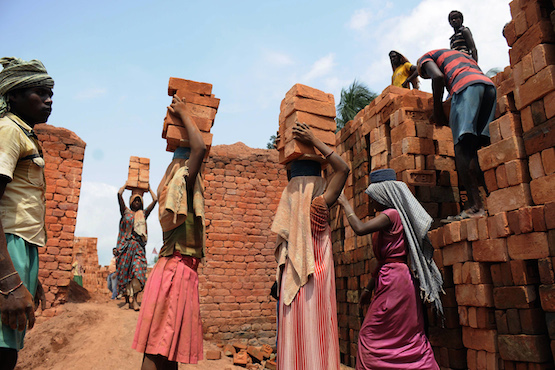
  • Liquid Globalization and Intercultural Practical Philosophy

    Liquid Globalization and Intercultural Practical Philosophy

    This essay is based on a lecture given by the author at the German Jordanian University in Amman on the 18th of November 2021.

    Abstract

    We are witnessing the birth pains of a new global order. The previous order based on the hegemony of the Western states is in tatters and the newly industrialized nations are no longer seeking to imitate Western modernity but to rely on their own civilizational achievements. They are trying to combine a kind of modernity with an identity of their own. Nevertheless, opposing the declining West is not enough to initiate a global order, which is surpassing the previous one. The most successful challengers of Western modernity are relying on authoritarian or even totalitarian (IS, Taliban) conceptions of identity. But the alternative to the (neo-)liberal world order should not be an illiberal order. In order to design such an alternative, we need to conduct a discourse of the civilizational foundations of our different approaches by further developing intercultural philosophy. Intercultural philosophy has had already its height after the demise of the USSR but remained mainly a theoretical enterprise; it is of paramount importance in the conflicts about the new world order.   Assuming that we are witnessing a new phase of globalization, which can be characterized by the simultaneous processes of the rise (Zakaria) as well as the demise of the other (Herberg-Rothe), intercultural philosophy is becoming a practical philosophy designated to mitigate conflicts about interests.

    Intercultural Philosophy as a Practical Approach

    The Western model of society is viewed to be in crisis and for many people, nations and civilizations it is no longer an attractive role model.

    Intercultural philosophy has had already its height after the end of the Cold War but was mainly a theoretical enterprise. Assuming that we are witnessing a new phase of globalization, which can be characterized by the simultaneous processes of the rise (Zakaria, 2008) as well as the demise of the other (Herberg-Rothe and Foerstle, 2020), intercultural philosophy is becoming a practical philosophy designated to mitigate conflicts about interests and culture to cope with this process. The current phase of globalization, which in the footsteps of Zygmunt Bauman could be labelled hybrid globalization (Bauman, 2000), is accompanied by emotions (Moisi, 2010) like insecurity, uncertainty and dissolution of identities. Hybrid globalization is characterized by the ongoing process of globalization and local resistance against it. The Western model of society is viewed to be in crisis and for many people, nations and civilizations it is no longer an attractive role model. But all nations and civilizations need to find a balance between their civilizational traditions and coping with hybrid globalization. Mutual recognition of the civilizational foundations of the Western and Non-Western world may be a possible means to cope with this process. I’m assuming that the alternative to Western modernity and the global order which is based on it should not be illiberalism or even authoritarian rule but a new balance of the normative foundations of all civilizations (Katzenstein, 2009).

    What we need, therefore, is to initiate a virtuous circle as follows:

    1. Research on the subject of how conflicts are articulated in terms of culture and religion.
    2. Relating these concepts to different understandings of civilization.
    3. Mutual recognition of the civilizational foundations of Islam and Western thinking.
    4. Self-recognition is not only as religion or culture but as a civilization.
    5. Self-binding to civilizational norms in order to be recognized as equally valued civilization.

    Based on our interpretation of Clausewitz (Herberg-Rothe, 2007) we think that mutual recognition among the great civilizations of the earth is the prerequisite of settling disputes over diverging interests. 

    What we need, therefore, is the initiative of a discourse of mutual recognition of the great civilizations on earth and even a discourse, where the diverse understandings of central concepts like order, self-determination, emancipation, identity, dignity and so forth differ. At the same time, a closer look at the civilizations’ common grounds is essential, to eventually provide a basis for a meaningful dialogue. We think that we must find a balance between the Western model of the billiard game and the Eastern model of the concentric circles (Qin, 2016 and Yan, 2011).

    Additionally, most countries of the Non-Western world are no longer seeing the Western world as a role model they must follow but are seeking to find their own identity as a balance of their traditions and civilizational achievements – be it the Chinese dream of Xi Jinping, Hindu nationalism in India, and the revival of Confucianism in East Asia.

    We assume that there is a close linkage of struggles for recognition, the question of identity and increasing radicalization (Herberg-Rothe and Foerstle, 2020). The fundamental problem existed in the assumption that the uprooted, redundant, and excluded members of society would come to terms with their destiny on an individual level. We assume that these excluded are forming violent groups, in which they find a kind of stable identity through recognition by exercising violence. Only by recognizing the contributions of the civilizations of the world to the heritage of mankind, it is possible to enable a stable identity contrary to violent actions (Herberg-Rothe and Son, 2018). Additionally, most countries of the Non-Western world are no longer seeing the Western world as a role model they must follow but are seeking to find their own identity as a balance of their traditions and civilizational achievements – be it the Chinese dream of Xi Jinping, Hindu nationalism in India, and the revival of Confucianism in East Asia. Especially in China, the concept of harmony in Confucianism serves the purpose of balancing the other two C’s, communism and capitalism (Herberg-Rothe and Son, 2018).

    The denial of recognition versus mutual recognition

    The denial of recognition and the struggle for recognition play an ever-increasing role in intra-state conflicts in a globalized world as well as the international sphere, which is characterized by the “Rise of the Other” (Zakaria, 2008). We live in an increasingly globalized world, in which we assume that difficulties concerning recognition (between individuals, groups, ethnos, religious communities, nations or even civilizations) are a major source for radicalization. If mutual recognition is non-existent or cannot be built, conflicting interests are much more likely to escalate. There is a broad consensus (in the field of socialization research and increasingly also within social sciences in general) that the urge for recognition is the important factor for forming and stabilizing identity (personal, group, national, and civilizational) (Daase, 2015)

    Samuel P. Huntington was widely criticized for his assumption that we are facing a clash of civilizations (Huntington, 1996). What the liberal critics of Huntington were highlighting was that there should not be a clash of civilizations, but even more important that there could not be a clash of civilizations because in their view there was only one civilization, the Western one. The others were in their view religions or cultures, but no civilizations, because they did not undergo the process of secularization, which is in the Western discourse a dogma (Katzenstein, 2009).

    So, my first proposition for the mutual recognition of the civilizations of the earth is that most are based on religion, not in opposition to or separation from their related religions. For example, the Han dynasty created Confucianism as a civilization three centuries after Confucius, similarly Buddhist culture and civilization was constructed and expanded on a worldwide scale by Emperor Ashoka in India, nearly three centuries after Buddha. 

    Through the achievement of mutual recognition, the rapidly growing radicalization tendencies are supposed to be reduced and in the long run, peaceful coexistence is more likely. However, recognition requires awareness for differences and communalities (ontological perspective) or is otherwise produced within a process (epistemological approach). The outlook is thus the development of a third way in between universalization of only one culture or civilization (in the form of “We against the Rest”; Herberg-Rothe and Son, 2018), be it eurocentrism or any other kind of ethnocentrism and cultural relativism to stimulate peaceful cooperation and to limit the dramatic tendencies of radicalization throughout the world (Herberg-Rothe and Foerstle, 2020).

    Given the absence or non-maturity of Chinese, Russian, African, Islamic, or Indian IRTs, the mainstream IRT originated almost exclusively from the Anglo-Saxon world, for example, realism, neo-realism, neo-conservatism, liberal institutionalism, and theories of democratic peace (although in connection to Kant).

    In the wake of globalization, many pundits articulated whether the theoretical concepts developed from the era of nation-states (Beck, 1992) are still tenable for the portrayal of twenty-first century international relations. Furthermore, many concepts regarded as central in the IRT came to be perceived as a mere form of American political science (Acharya, 2000 and 2014). Given the absence or non-maturity of Chinese, Russian, African, Islamic, or Indian IRTs, the mainstream IRT originated almost exclusively from the Anglo-Saxon world, for example, realism, neo-realism, neo-conservatism, liberal institutionalism, and theories of democratic peace (although in connection to Kant). The reason is that in most Non-Western countries’ societies, cultures and civilizations are more important than the state, whereas in the Western understanding the state is the most important institution.

    My second proposition for the mutual recognition of the civilizations of the earth is, therefore, to be aware that in the Western world the state has the dominant role – international relations are relations between states – whereas in the Non-Western world the state is a variable of society, culture. In the process of globalization this separation between the Western World and all other civilizations is dissolving (Herberg-Rothe and Son,  2018)

    The problem of identity in a globalized world

    One’s identity is shaped through a difficult and open-ended interplay and mutual interdependency of personal performance and societal consideration. Recognition is thus the result of an exchange, during which the failure of a human being is feasible. No given script through societal framing is existent anymore, whereby risk and insecurity increase significantly. It is not necessarily the need for recognition that is “new” and for this reason just generated through modernity, rather the conditions are new in this context. An unsatisfactory identity-building leads to rage and an imminent loss of identity leads to fear – both hold enormously destructive potentials. The paradox of all rebellious attempts to create an identity is thereby that a conspicuous or provocative behaviour of young persons is often, citing Erik Erikson, just a “request for brotherly recognition” (Herberg-Rothe and Son, 2018). Although I share the critique of identity politics put forward by Francis Fukuyama in general, in which identity is related to a fixed core, my consequence is to conceptualize identity as a balance of conflicting tendencies within individuals, societies and communities (Herberg-Rothe, 2007; Herberg-Rothe and Son, 2018 and  Fukuyama, 2018)

    Through the social change in rendering globalization, the individual, as well as collectives, face increasing societal pressure. Zygmunt Bauman speaks of the transition from a “solid” into a “fluid” modernity (Bauman, 2000). Former stable identities (determined through solid social and spatial borders which offer, despite quite critical aspects of these borders, still a secured room for identity shaping) become insecure, if not destructed (Beck, 1992). The outcome of this is a high demand on individuals as well as collectives to cope with the obstacles of identity building in constant active work. The continually transforming social, cultural and political spaces and contexts hinder this process additionally. If the obstacles appear to be insuperable or if no realistic options for action exist, societies with a multiplicity of fragmented identities develop. 

    To sum up, the big identity question has such importance because radicalization drifts are an increasing phenomenon in heterogeneous societies.

    To sum up, the big identity question has such importance because radicalization drifts are an increasing phenomenon in heterogeneous societies. Globalization represents profound structural changes that are accompanied by momentous crises (Moisi, 2010). Anyway, existing social inequalities become more and more intensified and find expression in intra-societal tensions. Adjustment processes appear almost impossible, as the promises based on modernity are broadly seen as unrealistic or not reasonable. According to this, an alternative to cope with the rapidly changing transformation must be discovered (Herberg-Rothe and Son, 2018)

    The developments and assumptions regarding identity, recognition and radicalization serve as the basis for our research project. To enable unstable individuals or collectives to recover their identity, it is necessary, by focusing on the macro level, to foster mutual recognition between the world’s civilizations. Dialogue and with it an associated discourse of mutual recognition is supposed to contribute as a crucial component of avoidance of radicalization. The aim is to establish dialogues and to find practical approaches for inter-civilizational agreement. Under the overall scheme of mutual recognition versus radicalization, it is, for now, the purpose to elaborate differences and similarities of the world’s civilizations. The focus lies on the understanding of societal and international relations in order to initiate a dialogue in which the denial of recognition does not transform conflicts about interests into struggles for recognition, which are again the main source for radicalization processes (Herberg-Rothe and Foerstle, 2020).

    One can view this kind of balancing and harmonizing as a form of limited plurality or as articulated by Hannah Arendt, unity of multiplicity and multiplicity within unity.

    According to this, the focus lies on mutual understanding and recognition as powerful tools to prevent vanished and unstable identities in the globalized world, to see the last resort in radical thinking and acting. Yet the question arises, how much plurality and variety in thinking and acting is really desirable, respectively rated as positive in principle. It is therefore also an important element of our research, to find a way in between the fundamental contrast, on the one side of the universalism of values of just one civilization and cultural relativism on the other. Amitav Acharya’s concept of “universal pluralism” is in this respect ground-breaking, but still insufficient in our eyes (Acharya 2000 and 2014). We advocate the development of a process, in which the concepts of Clausewitz’s “floating balance” (Clausewitz, 1976), Confucian’s “harmony”, and Hegel’s “mutual recognition” are examined closely (Herberg-Rothe and Son, 2018). One can view this kind of balancing and harmonizing as a form of limited plurality or as articulated by Hannah Arendt, unity of multiplicity and multiplicity within unity. In this way, we aim to devise ways to effectively cope with or govern differences and contrasts facing the international society of the twenty-first century. All in all, we seek to adopt a harmonious mutual recognition of Western and East Asian thoughts and devise a better set of theories and methodologies to analyse the contemporary world.  It is our deepest conviction that the Western and like-minded states could only hold on to such values as freedom, equality, emancipation, and human rights if these could be harmoniously balanced with the contributions of other civilizations (Zhang, 2012) and cultures.

    Intercultural philosophy as a foundational approach for mutual recognition

    Intercultural philosophy can play an important role in this process of the mutual recognition of the civilizations of the earth. Since Karl Jaspers, the godfather of intercultural philosophy acknowledged the existence of four different civilizations, immense progress has been made concerning understanding of the different approaches (Katzenstein, 2009). Nevertheless, I strongly believe that all civilizations have posed the same question but did find different answers. So, intercultural philosophy is in my view possible beyond the acknowledgement of a mere multiplicity of philosophies, because we as humans are posing the same questions. For example, concerning being born, living and dying, between immanence and transcendence, between the individual and community, between our limited abilities and the desire for eternity, the relation of us as being to some degree animals and ethics which constitutes us as humans – our ethical convictions may be different, but all civilizations have an ethical foundation. I would even argue that it is ethics, which distinguishes us from animals, not our intellect. We might get aware of the full realization of this proposition when relating it to the development of artificial intelligence.

    Although I’m advocating the development of intercultural philosophy as a part of transnational governance and the mutual recognition of the civilizations of the earth, I would like to highlight the main problem, at least in my view.

    Aristotle already posed the decisive question, whether the whole is more than the sum of its parts? If I understand with my very limited knowledge of Islamic philosophy rightly it is based on the assumption that the whole is more than the sum of its parts – we might label this position a holistic approach. On the contrary Western thinking is characterized by the approach of exchanging the whole exactly through the sum of its parts. We might label this an atomistic approach – atoms are just differentiated by the number of electrons, neutrons and so on. Concerning holism, I would argue that the task might be how to distinguish the whole from mere hierarchies – concerning the concept of harmony in Confucianism I would argue that true harmony is related to a balance of hierarchical and symmetrical societal and international relations. Instead of the false assumption in Western approaches that we could transform all hierarchical relations into symmetrical ones, I think that we need to construct a balance between both (Herberg-Rothe and Foerstle, 2020). If I’m not misguided there is also a concept in Islam that might be comparable to that of balance and harmony. Harmony is not sameness but implies a lot of tensions: to be clear: harmony can be characterized by “unity with difference and difference with unity” (Herberg-Rothe and Son, 2018). I compare this perspective sometimes with a water wave in a sea: If there are no waves at all, the sea is dying, if the waves are Tsunamis, they are destructive for society.

    My colleague Peng Lu from Fujian university made the following proposition: In the 19th century, the Europeans conquered the whole world, in the twentieth century the defeated nations and civilizations needed to live with the victorious West, in the twenty-first century the civilizations of the earth finally need to learn to live with one another.  This is the task of the century.

    References: 

    Acharya, Amitav. The End of American World Order. Cambridge: Polity Press, 2014.

    Acharya, Amitav, The Quest for Identity: International Relations of Southeast Asia. Oxford: Oxford University Press, 2000.

    Bauman, Zygmunt, Liquid Modernity. Cambridge: Polity Press, 2000.

    Beck, Ulrich, Risk Society. Towards a New Modernity. Thousand Oaks: Sage publications, 1992.

    Clausewitz, Carl von, On War. Edited and translated by Michael Howard and Peter Paret. Princeton: Princeton University Press. 1976

    Daase, Christopher et. al. (eds.), Recognition in International Relations. Rethinking a Political Concept in a Global Context. New York: Palgrave, 2015.

    Fukuyama, Francis (2018), Against Identity Politics. The New Tribalism and the Crisis of Democracy. In: Foreign Affairs, Sept./Oct. Retrieved from: https://www.foreignaffairs.com/articles/americas/2018-08-14/against-identity-politics-tribalism-francis-fukuyama; last access, 3.10.2018, 10.21.

    Herberg-Rothe, Andreas, Clausewitz‘s puzzle. The political theory of war. OUP: Oxford 2007.

    Herberg-Rothe, Andreas und Son, Key-young, Order wars and floating balance. How the rising powers are reshaping our world view in the twenty-first century. Routledge: New York 2018.

    Herberg-Rothe, Andreas und Foerstle, Miriam, The dissolution of identities in liquid globalization and the emergence of violent uprisings. In: African Journal of Terrorism and Insurgency Research – Volume 1 Number 1, April 2020 b, pp. 11-32.

    Huntington, Samuel. The clash of civilizations and the remaking of world order. New York: Simon & Schuster, 1996.

    Katzenstein, Peter J, Civilizations in world politics. Plural and pluralistic perspectives. Routledge: New York 2009.

    Moisi, Dominique, The Geopolitics of Emotion: How Cultures of Fear, Humiliation, and Hope are Reshaping the World, New York: Doubleday, 2010.

    Qin, Yaqing. “A Relational Theory of World Politics.” International Studies Review 18 (2016): 33-47.

    Yan, Xuetong. Ancient Chinese Thought, Modern Chinese Power. Princeton: Princeton University Press, 2011.

    Zakaria, Fareed, The Post-American World, New York/London: W. W. Norton, 2008.

    Zhang, Wei-Wei, The China Wave: Rise of A Civilizational State. Hackensack: World Century Publishing Corporation, 2012.

    Feature Image Credit: Harvard Business Review

  • Democracy in Retreat: India’s declining Parliamentary Practices and Debates

    Democracy in Retreat: India’s declining Parliamentary Practices and Debates

    Abstract

    The Indian Political climate is always one of enormous diversity and vibrancy. In recent times it has tended to become politically charged with extreme ideologies. In 2014, the Bhartiya Janata Party (BJP) came to power with a landmark majority, which it sustained in the following 2019 general elections. In the time that the Bhartiya Janata Party has been in power, there have been popular protests and reports that give rise to apprehensions that the democratic practices of India are in serious decline.  This paper analyses whether the government led by the BJP is functioning more as a majoritarian entity that disregards democratic norms. In doing so it aims to answer the primary question of whether there is erosion in adherence to constitutional mechanisms in policymaking and carries out a review of the educational realm with regards to allegations of bypassing democratic and constitutional norms. The research is based on primary and secondary sources and mixed methodology: collation and analysis are based on already existing data with a mixed focus on quantitative and qualitative aspects. For the former, numerical data has been gathered from official government sites while the latter is drawn from pre-existing literature, published research papers and journal articles. The paper concludes by affirming the thesis and supports the argument that anti-democratic trends are indeed present in the Indian Governmental apparatus.


    Introduction

    Bhartiya Janata Party (BJP) came to power gaining a spectacular single-party majority in the general elections of 2014, the first in nearly three decades (Jaffrelot, 2019). This success was replicated in the Lok Sabha elections of 2019 which marked two full consecutive terms of the BJP regime for the first time. This is also the first time in nearly three decades that a single-party majority government is in power since 2014.

    India is, for long, seen as the World’s largest Democracy. Although this is a well-known tag bestowed to India, with the vast diversity of thought, ideologies and practices adopted by different governments there have been times in Indian political history where the actions of governments do not align with the overarching democratic values at large.

    A relevant instance of the same is the 1975 declaration of Emergency under Prime Minister Indira Gandhi. Dubbed as one of the darkest times of Indian democracy, this period witnessed civil liberties being harrowingly curbed and journalistic freedom and opposition faced a draconian crackdown. Gyan Prakash, a historian and a scholar, reflects upon this event under Congress rule in a way that has significance when analysing the political happenings of contemporary times.  The essence of his work is that the Emergency was brought on by a larger reason than an individual’s quest for power (Prakash, 2019); he asserts that Indian democracy’s strained relationship with popular politics is to blame. There is then merit in assessing how Indian Democracy may be vulnerable to subversion and the extent to which structural issues in the democratic framework are being exploited currently by the BJP, the party in power.

    The decline in adhering to Democratic norms under the BJP Rule

    In the recent past, three international reports have suggested that the democratic nature of the Indian nation-state is on a decline.
    Freedom House, a non-profit think tank located in the United States, downgraded India from a free democracy to a “somewhat free democracy” in its annual report on worldwide political rights and liberties. The V-Dem Institute, based in Sweden, in its most recent study on democracy, claimed that India has devolved into an “electoral autocracy. Additionally, India fell two spots to 53rd place in The Economist Intelligence Unit’s recent Democracy Index (Biswas, 2021).

    These reports, however, are of international origins and subject to an ethnocentric view of what constitutes democracy and democratic practices. Although they are worth mentioning, their evaluation cannot be fully accepted at face value.

    The sentiments of this report however do find echoes on the national front. A recent event wherein the ruling government was criticised internally for showcasing a lack of democratic conduct was with regards to the new National Education Policy.

    National Education Policy 2020 was unveiled on July 30, 2020. In 2017, the Ministry of Human Resource Development (MHRD) formed a committee chaired by Dr K. Kasturirangan (former chairman of ISRO) to review the existing education policy and submit a new proposal (Ministry of Human Resource Development, Government of India, 2020). The committee circulated a draught NEP for public comment in the year 2019, the edited version of the same is expected to replace the decades-old 1986 Policy on Education.

    Some key features of the NEP 2020 include restructuring and reform of school curriculum, changes to curriculum content, the aim to achieve foundational literacy, and ensure that the children who enrol in schools are retained in the system and finish their schooling rather than dropping out and more (Ministry of Human Resource Development, Government of India, 2020) .

    The reforms and restructuring that the NEP suggests have the potential to elevate India to the status of a desirable educational hub. It offers a welcome and refreshing change from the rote learning patterns and administrative limitations that have so far dominated the educational realm.

    The policy thus cannot be denied credit where it is due. There are, however, some strong critiques levelled against the NEP by scholars, educators, opposition and students alike. The nature of these critiques signals the idea that some anti-democratic elements underlie the policy and its construction.

    The first of these criticisms is against the centralisation of education while the second criticism concerns itself with the lack of commitment to a secular curriculum. The Constitution had mandated education as a state subject, which was later amended to make it a concurrent subject thus bringing in a stronger role for the Union government. This amendment is seen as a blow to the federal structure of the country. The NEP is fully dominated by the Centre thus making the states mere bystanders.

    Opposition ruled states have questioned the need for the NEP to take effect during the Covid 19 pandemic and levelled a range of accusations. The Delhi Education Minister stated that the NEP lacks mention of the government-run school system and that he believes the policy will pave the way to privatize education, which is a concern as it will create a situation where not all can have access to high-quality education. The Chhattisgarh chief minister commented along similar lines alleging that the fine print of the NEP displayed no space for state concerns nor any tangible improvement in educational quality.  In Rajasthan, a three-member committee was formed to analyse and evaluate the NEP, working off their findings Rajasthan’s Education minister expressed concern regarding the funding of the policy and raised the question of lack of clarity regarding the 6% GDP being attributed to the educational realm (Sharma, 2020).

    The contention regarding NEP also stems from the fact that Education is on the concurrent list. The Sarkaria commission, set up in 1983 by the central government stated that to pass a law on a concurrent list subject, the union government should ensure that the states have been adequately brought into the folds of discussion and weight is given to their opinions during consultation. The NEP 2020 is, however, not a law and is a policy, therefore it does not fully fit into the ambit of this suggestion.  It is perhaps the content of the policy that has created furore from the states regarding not being adequately consulted (Menon, 2020).

    The educational sector is one where the states have had tremendous sway and many practicalities fall within the state jurisdiction, additionally, 75-80 per cent of the expenditure is accounted for by the state (Jha, 2019).

    The NEP in contrast to previous national policies was approved by the Union Cabinet and did not go through the parliament. Thus, the level to which states accept it and subsequently the larger question of how well Indian federalism is operating comes under scrutiny.

    Prior to the 42nd Amendment in 1976- Education remained on the state list. Through an amendment made in 1976 to Schedule VII of the constitution, education was shifted to the concurrent list upon the recommendation of the Swaran Singh Committee. This move was regarded as an avenue to empower the centre with centralised policymaking advantages.

    Some experts find parallels between the dark Era of Democracy, the period of emergency under Indira Gandhi, and the current government under the BJP. The 1976 provisions under Prime Minister Indira Gandhi saw the transfer of five state subjects to the concurrent list, including the education sector. This has been identified as the foundation on which NEP stands and thereby has been interpreted as having a basis that does not align with constitutional democratic values (Raveendhren, 2020).

    The relationship between the States and the Union government concerning all educational policies from the eve of independence until the NEP 2020 has undergone noticeable changes. NEP 1968 gave a primary role to the state while the union government committed to assisting states (Menon, 2020). On the other hand NEP 1986, in the aftermath of the Emergency and on the recommendation of the Sarkaria committee, put forth a vision for partnership between the union and the states. NEP 2020, mentions neither of these, assumed to have taken the approval of the states for granted.

    The second major critique of NEP that implies an anti-democratic approach brings to the forefront the proposed curricula for moral values. The Indian Nation state adopted a form of secularism that rested on the strategy of non-interference. This form of secularism espouses that the state and religion are not completely and wholly separated. Instead, it proposes an equidistance of the state from all religions and accordance of equal respect to them without favour or priority being given to one over another.

    One of the ways in which the ideal of Indian secularism is affirmed is through the education system. According to article 28 of the Indian constitution Governmental educational institutes in India do not permit the dissemination of religious instruction, however, they do not prohibit religious text or books from being used in the classroom (Gowda C. , 2019). This is most often noticeable in the literature curriculum where devotional poetry is present. Tulsidas, Kabir to Malik Muhammad Jayasi to even John Henry Newman are all often included and studied. The inclusion of various religious poets and works from a variety of religions reflects the attempt made by the Indian educational system to embody the constitutional ideal of secularism. It is of course debatable and subject to change the extent to which each school adheres to upholding this secular and diverse teaching, although there is a commitment to the ideal, nonetheless.

    The second critique against NEP can be understood against this background. In a section termed inspiring lessons from the literature and people of India, stories of Panchatantra, Jataka, Hitopadesha etc are mentioned. Critics assert that these stories come from an unequivocal Hindu background and a secular curriculum should ideally have included Aesop’s Stories and Arabian Nights as an equal part of Indian folklore.

    They emphasize the importance of this measure to ensure that all students, no matter their faith feel represented and included in the classroom and the moral imagination of pupils are shaped to respect diversity and tolerance.

    Education: Policy Changes in Academia

    The NEP controversy hints at some concerns in the larger system of education. The BJP government which has been in power since 2014 has enacted several policies, laws and acts, and much like all governments has garnered appreciation and criticism alike. It is the content of the critical claims that warrant discussion, for much of the disapproval claims that democratic and secular ideals of the Indian nation are being cast aside.

    A recent contention arose due to the decision of CBSE to reduce the curriculum to alleviate student pressure on the line forum. The Central Board of Secondary Education announced a 30 per cent reduction in the curriculum. One of the concerns is that under this provision, chapters on federalism, secularism, democratic rights need not be taught in class 12 (Sanghera, 2020). Class 10 political science syllabus also saw the removal of chapters such as “popular struggles and movements” and “democracy and diversity”.

    These omissions have invited considerable disapproval from scholars and experts across fields. The former director of the National Council of Education Research and Training commented that the cuts have rendered some remaining topics “incomprehensible”. Educators on the ground state discontent with the removal of topics for they believe it to promote self-reflection and criticality (Sanghera, 2020).

    The rewriting of textbooks has persisted at state levels before the 2014 elections and is not a novel phenomenon. In BJP ruled states it can be noted that a counter idea of history is underway in educational texts. In this exercise, some ideologically conservative Hindu organisations have been accorded more space and appreciation for their contributions, however, the educational attention accorded to ideals of secularism and so forth has been minimized.

    In Gujrat for instance as far back as 2000, there was a move that made it compulsory for teachers to attend Sanskrit training camps in preparation for when the subject would be made mandatory.

    The focus on the educational sphere and the changes that occur in it are of significance because the policies of the state in such realms are not divorced from the Indian climate and foster a culture of tolerance at large.

    In recent times, experts have raised some concerns regarding the qualifications of those in high governmental positions. The Prime Minister of the country stated his belief regarding the roots of cosmetic surgery and reproductive advancements of modern times as having already existed in ancient India (Rahman, 2014). Drawing upon the Sanskrit epic of Mahabharata, he spoke of genetic science as an explanation for the birth of Karna and cosmetic surgery as an explanation for the physique of Ganesha- an elephant-headed Hindu God. The Minister of Science and technology in 2018 stated at the 105th edition of the Indian Science Congress, that Stephen Hawking went on record to assert that the Vedas, a body of Indian scripture, had a theory that superseded Einstein’s famous E=mc2 theory of relativity (Koshy, 2018).

    In contrast, the first National Democratic Alliance headed by Atal Bihari Vajpayee demonstrated an affinity for learning and scientific rigour. M.M. Joshi, the Human Resource Development Minister for instance had completed a doctorate in physics. George Fernandes, Yashwant Sinha and Lk Advani are among some other examples of cabinet ministers who were profoundly involved with academia on public policy and history. Some members of the government such as Jaswant Singh and Arun Shourie also authored some works (Guha, 2019).

    Since it is noticeable that some policies of the ruling government have garnered critique, perhaps the logical next step is to evaluate the process of policymaking as it has shaped up in the last 7 years.

    Institutional norms and parliamentary procedures in India, especially for legislation making are designed to ensure space for debate, discussion and dissent. This operates as a system where all decisions are subjected to scrutiny by the people’s representatives. To that end, adherence to parliamentary procedure is an indicator of a government’s treatment of and respect for democracy. To carry out any analysis of this sort in an objective manner, one must first ascertain what exactly constitutes an ideal parliamentary procedure.

    Parliamentary Procedure on Legislation Making: How Does A Bill Become An Act?

    Acts usually start as bills which simply put, is the draft of a legislative proposal. This bill may be introduced by public members or private members and requires passing in the Lok Sabha and Rajya Sabha as well as the president’s assent to become a law.

    There are (Lok Sabha Secretariate, 2014) three stages through which a bill is passed in the parliament: these are known as the first, second and third reading respectively.

    For the First Reading, the speaker puts forth the request for leave of the house, which if granted is used to introduce the bill. Following this stage is the second reading which entails general discussion. It is during this stage that the House may choose to refer the bill to a parliamentary committee for further input or even circulate it to gauge public opinion. During the second reading, parliamentary procedure states that a clause-by-clause reading must proceed, and it is during this time amendments are moved. The second reading concludes with the adoption of ‘Enacting Formula’ and ‘Long Title of the Bill’. The next stage is the third and the last reading. At this Juncture, debates for and against the bill take place. For an ordinary bill, only a simple majority of the members present, and voting suffices, however for a constitutional amendment bill, in keeping with article 368 of the constitution, a majority of the house’s total members and at least 2/3rd members present, and voting is deemed necessary. Once this process is complete, the bill is sent to the other house of the parliament and goes through the same stages after which is referred to the president for his assent.

    Analysis of Parliamentary Procedure under the BJP Government

    With the great furore over the recent Monsoon session of the parliament, opposition leaders and journalists have expressed dissatisfaction with the government’s treatment of parliamentary procedure.

    The monsoon session of the parliament is one example where a couple of mechanisms that have increasingly been used as of late signify a subversion of the democratic process (Brien, Autocratic Government doesn’t want Parliament to Function, 2021).

    The first of these is the misuse of Article 123 also known as the Ordinance Route. Article 123 of the constitution permits the president to enact a temporary law in the event of urgent and unavoidable circumstances.

    During the first 30 years of our parliamentary democracy, for every 10 bills in the parliament, one ordinance was issued. In the following 30 years, this number went to 2 ordinances per every 10 bills. In the BJP Government’s first term from 2014-2019, this number went up to 3.5 ordinances per every ten bills. For perspective, while 61 ordinances were issued under the UPA government spanning ten years the BJP-led NDA government issued 76 ordinances in a time frame of 7 years spanning from May 2014 to April 2021. It is also useful to note that ten of these ordinances were issued right before the 2019 Lok Sabha elections (Gowda M. R., 2021).

    As many as 11 ordinances have been passed since March 24th, 2020, which is when the lockdown was imposed. Five of these relate to covid 19, two to the health sector, every other ordinance such as the Banking Regulation Amendment and the Agriculture bills do not have anything to do with the coronavirus pandemic (Brien, The ordinance raj of the Bharatiya Janata Party, 2020).

    Another practice that raises serious concern relates to the issue of repromulagation. However, it is important to note that the recourse to ordinance route and repromulgation is not an exclusively BJP action. Before the year 1986, no central government was known to have issued a repromulagation and this method came into view during the Narasimha Rao government in 1992. This was the landmark time frame that one can trace the trends of repromulagation as originating from.

    As far as the ordinances are concerned, they are an emergency provision, however, many governments have used them with an almost immoral frequency (Dam, 2015). According to PRS Legislative Research’s reports, average ordinances issued could be placed at around 7.1 per year in the 1950’s while in the 1990s there was a marked increase to an average of 19.6 per year. The 2010s witnessed a dip in the trend with an average number of ordinances being 7.9 per year (Madhvan, The Ordinance route is bad, repromulgation is worse, 2021). This number has unfortunately risen again in recent years with an average number of ordinances numbering 16 in 2019 and 15 in 2020.

    The issue of repromulagation of ordinances was brought up in the Supreme Court and was deemed as an unconstitutional practice in January of 2017 by a bench of seven judges. This judgement decisively stated that repromulagation of ordinances was an unconstitutional practice that sought to subvert the constitutionally prescribed legislative processes (Madhvan, The Ordinance route is bad, repromulgation is worse, 2021).

    States have also used ordinances to pass legislation. A non-BJP ruled state Kerala, for example, published 81 regulations in 2020, whereas Karnataka issued 24, and Maharashtra issued 21. Kerala has also re-promulgated ordinances: between January 2020 and February 2021, one ordinance to establish a Kerala University of Digital Sciences, Innovation, and Technology was repromulgated five times (Madhvan, The Ordinance route is bad, repromulgation is worse, 2021).

    Although previous administrations and other states have utilized ordinances to undermine the constitutional process, the problem is decidedly amplified under the present rule with regards to the number of ordinances produced per given period.

    This sort of rise in ordinances being issued points to a trend of avoiding in-depth critical evaluation and discussion on proposals by rushing them into becoming acts.

    One of the most controversial ordinances in the recent past pertains to the three farm laws which now stand repealed after year-long demonstrations and protests at the Singhur border by farmers. The reason for not introducing these proposals in the parliament and instead enacting ordinances is unclear for there seems to be no urgent link to the covid 19 pandemic. Additionally, the farm bills not being subjected to any discussions nor being referred to parliamentary committees for any further report making has led to removing any possibility for amendment. These laws provide a useful avenue to assess why the bill was not passed through a proper parliamentary process and instead rushed through the ordinance. This assumes critical relevance since agriculture is essentially a state subject, and the States were not consulted on the farm laws.

    The ordinance culture has also extended to BJP run states, for instance, Uttar Pradesh, Madhya Pradesh, and Gujarat adopted ordinances weakening labour laws without consulting workers’ unions or civil rights organisations during the lockdown. Moreover, this was followed up on 15th March 2020, when colonial-era legislation was enacted as an Ordinance. This was the Uttar Pradesh Recovery of Damages to Public and Private Property ordinance which would heavily fine any damage to property, public or private during a protest.

    Under the BJP-led NDA rule, there has been slim or no involvement of parliamentary committees. Parliamentary committees are key in assessing a proposal with necessary scrutiny and expertise.  These committees provide a place for members to interact with subject experts and government officials while they are studying a bill (Kanwar, 2019).

    60 per cent of proposals were referred to Standing or Select Committees during the United Progressive Alliance’s first term. During the UPA-II administration, this rose to 71 per cent. Modi’s first term from 2014-19 had a 27 per cent reference rate, while his second term so far has only a 12 per cent rate (Gowda M. R., 2021). Not only is there a blatant and marked disregard for referring bills to parliamentary committees, but the administration has also actively worked to hinder committee work. A meeting of the Parliamentary Standing Committee on Information Technology on July 28, 2021, had to be cancelled owing to a lack of quorum when 15 BJP members refused to sign the attendance register. It is speculated this was to avoid the discussion on the Pegasus scandal.

    Monsoon Session of Parliament 2021 and other Statistics

    Adherence to the parliamentary procedure can be gauged through a wide avenue of categories including but not limited to hours lost to disruptions, adjournments, the productivity of each session, time spent on deliberation and so on.

    A record number of 12 bills were passed by the parliament in the first 10 days of the monsoon session. All these bills were passed by a voice vote which is widely viewed as a largely inaccurate mechanism to assess supporters of a particular proposal. None of these 12 bills nor the overall 14 bills was referred to standing committees for in-depth analysis.  According to TMC leader (Brien, 2021), Derek O’Brien in the monsoon session bills were rushed through and 12 bills were passed at an average time of under 7 minutes per bill (Brien, Indian Express, 2021). In the same vein, BSP MP Danish Ali commented that the Essential Defence Services Bill was passed in less than 10 minutes (Nair, 2021).

    Since 2014, the 2021 monsoon session of the parliament ranks the third highest in terms of time lost to forced adjournments and interruptions. In this session, the number of sitting hours was, unfortunately, lower than the number of hours lost to disruptions which came to be around 74.46 hours.

    The lack of debates on bills has become a major controversy. With a per bill time of fewer than 10 minutes, 14 new bills were passed in the monsoon session, a worrying number that indicates no involvement of the parliamentary committees, and no sustained debates, a feature essential to provide checks to freehand power (Radhakrishnan, 2021).

    The time accorded to bill discussion is another avenue to assess the functioning of parliamentary procedure. In 2019, the average time spent on bill discussion stood at 213 minutes. At present, it stands at 85 minutes. Furthermore, in the 16thand 17th Lok Sabha, which subsumes the two terms of the Bhartiya Janata Party, 27% and 12% bills respectively were referred to parliamentary committees. In contrast during the 14th Lok Sabha (17 May 2004 – 18 May 2009) 60% of the bills were referred to parliamentary committees, and 71% of the bills were referred to the parliamentary committees for discussion in the 15th Lok Sabha (2009-14).

    With regards to the passing of bills, around 18% of the bills were introduced and passed in the same session in the 15thLok Sabha. In the 16th Lok Sabha (2014-2019) this number jumped to 33 per cent while in the 17th one it increased drastically to 70%, indicating the lack of debate.


    Conclusion

    This paper has attempted to evaluate primarily the basic question of whether constitutional methods have been followed in policymaking under the Bhartiya Janata Party’s tenure. In doing so it has analysed the educational realm beginning from the recent criticisms against the NEP. These critiques highlighted that a centralised decision-making structure that is detrimental to federal values is visible alongside a lack of focus on secular education. Additionally, statements from top officials, policies of CBSE, and those responsible for the change in curriculum hint that policies of late seem to have an aim of fostering educational sensibilities that further an ideological agenda of the ruling party. The paper also attempted to broaden its lens to assess the larger process of policymaking and legislation. Herein it was determined that there is an incongruity between the parliamentary procedures of recent years and the constitutional norms. This includes the statistics that highlight a growing recourse to ordinances, the curtailing of question hour, minimal involvement of parliamentary committees and the excessive use of voice vote. The state of affairs in India at the moment stands to suggest that parliamentary procedures do not adhere to constitutional norms, and thus there is a reason for apprehension as this trend could give way to majoritarian politics and set precedent for unethical conduct in the political realm at large.


    Works Cited:

    Biswas, S. (2021, March 16). Electoral autocracy’: The downgrading of India’s democracy. Retrieved November 15, 2021, from https://www.bbc.com/news/world-asia-india-56393944

    Brien, D. O. (2020, September 11). The ordinance raj of the Bharatiya Janata Party. Retrieved October 29, 2021, from https://www.hindustantimes.com/analysis/the-ordinance-raj-of-the-bharatiya-janata-party/story-NlVvn0pm6updxwYlj0gSvJ.html

    Brien, D. O. (2021, August 7). Autocratic Government doesn’t want Parliament to Function. (NDTV, Interviewer)

    Brien, D. O. (2021, August 5). Indian Express. Retrieved October 31, 2021, from https://indianexpress.com/article/india/parliament-monsoon-session-bills-passed-derek-obrien-7440026/

    Dam, S. (2015, June 3). Repromulgation Game. Retrieved October 30, 2021, from https://www.thehindu.com/opinion/columns/legal-eye-column-repromulgation/article7275518.ece

    Gowda, C. (2019, June 26). Missing secularism in National Education Policy. Retrieved November 7, 2021, from https://www.livemint.com/education/news/missing-secularism-in-new-education-policy-1561564775831.html

    Gowda, M. R. (2021, August 16). The 2021 Monsoon Session Is Proof of Modi Govt’s Disregard for Parliament. Retrieved October 31, 2021, from https://thewire.in/government/the-2021-monsoon-session-is-proof-of-the-modi-govts-disregard-for-parliament

    Guha, R. (2019, April 28). Modi Government’s surgical strike against science and scholarship. Retrieved November 10, 2021, from https://thewire.in/education/the-modi-governments-surgical-strike-against-science-and-scholarship

    Jaffrelot, C. G. (2019). BJP in Power: Indian Democracy and Religious Nationalism. Washington DC: Carnegie Endowment for International Peace.

    Jha, J. a. (2019, September 10). India’s education budget cannot fund proposed education policy. Retrieved November 1, 2021, from https://www.indiaspend.com/indias-education-budget-cannot-fund-proposed-new-education-policy/

    Kanwar, S. (2019, September 19). Importance of Parliamentary committees. Retrieved November 1, 2021, from https://prsindia.org/theprsblog/importance-parliamentary-committees

    Koshy, J. (2018, March 16). Stephen Hawking said Vedas had a ‘theory’ superior to Einstein’s thesis, says Harsh Vardan. Retrieved November 10, 2021, from https://www.thehindu.com/news/national/stephen-hawking-said-vedic-theory-superior-to-einsteins-science-minister-claims/article23272193.ece

    Lok Sabha Secretariate, N. D. (2014, May). How a bill becomes an act. Retrieved October 28, 2021, from Parliament of India – Lok Sabha: http://164.100.47.194/our%20parliament/How%20a%20bill%20become%20an%20act.pdf

    Madhvan, M. (2021). Ordinance route is bad repromulgation is worse. PRS Legislative research. Retrieved October 27, 2021, from https://prsindia.org/articles-by-prs-team/the-ordinance-route-is-bad-repromulgation-worse

    Madhvan, M. (2021, April 19). The Ordinance route is bad, repromulgation is worse. Retrieved October 27, 2021, from https://prsindia.org/articles-by-prs-team/the-ordinance-route-is-bad-repromulgation-worse

    Menon, S. (2020, August 11). Imposing NEP on the states. Retrieved October 30, 2021, from https://www.tribuneindia.com/news/comment/imposing-nep-on-states-124964

    Ministry of Human Resource Development, Government of India. (2020). National Education Policy 2020. New Delhi: MHRD, Government of India.

    Nair, S. K. (2021, August 3). The Hindu. Retrieved November 3, 2021, from https://www.thehindu.com/news/national/opposition-cries-foul-as-12-bills-were-passed-in-10-days-of-monsoon-session/article35707105.ece

    Prakash, G. (2019). Emergency Chronicles. Princeton University Press.

    Radhakrishnan, V. S. (2021, August 17). 2021 Monsoon session: LS passed 14 Bills after discussing each less than 10 minutes. Retrieved October 30, 2021, from The Hindu: https://www.thehindu.com/data/data-2021-monsoon-session-ls-passed-14-bills-after-discussing-each-less-than-10-minutes/article35955980.ece

    Rahman, M. (2014, October 28). Indian prime minister claims genetic science existed in ancient times. Retrieved November 15, 2021, from https://www.theguardian.com/world/2014/oct/28/indian-prime-minister-genetic-science-existed-ancient-times

    Raveendhren, R. S. (2020, August 19). New education policy and erosion of state powers. Retrieved November 1, 2021, from https://timesofindia.indiatimes.com/city/chennai/new-education-policy-and-erosion-of-states-powers/articleshow/77624663.cms

    Sanghera, T. (2020, August 6). Modi’s textbook manipulations. Foreign Policy. https://foreignpolicy.com/2020/08/06/textbooks-modi-remove-chapters-democracy-secularism-citizenship/

    Sharma, N. (2020, August 18). New Education Policy an attempt to centralise education: Opposition-ruled states. Retrieved October 21, 2021, from https://economictimes.indiatimes.com/news/politics-and-nation/new-education-policy-an-attempt-to-centralise-education-opposition-ruled-states/articleshow/77604704.cms


  • Distress Migration: A case study of KBK districts in Odisha

    Distress Migration: A case study of KBK districts in Odisha

    The former districts of Koraput, Balangir and Kalahandi, also known as KBK districts, were reorganised into 8 districts of Koraput, Malkangiri, Nabarangpur, Rayagada, Balangir, Subarnapur, Kalahandi and Nuapada in 1992. These districts form the South-West part of Odisha comprising the great Deccan Plateau and the Eastern Ghats. These highland districts highly rich in mineral resources, flora and fauna remain as one of the most backward regions in Odisha

    Among the different forms of migration, distressed migrants remain the most impoverished and unrecognised. These migrants form the lowest strata of the society; disadvantaged by caste, poverty and structural inequalities. In Odisha, the underdeveloped region of KBK is one among the main sources of distressed migrants. They move to cities in search of employment and better wages, while in cities they are even more disadvantaged due to social, economic and linguistic barriers. Administrative and political apathy over their issues has only enhanced their distress.

    This paper attempts to address three questions:

    1. What are the characteristics of distressed migrants in KBK district, Odisha?
    2. What are the existing policies of the state to curb this form of migration?
    3. What form of government intervention is required to address this distress?

    The analysis is carried out through a review of published articles, government reports, e-books and newspaper reports.

    Defining distress migration

    Migration is a multifaceted concept driven by diverse factors. Migration can be internal or international, voluntary or involuntary, temporary or permanent. Depending on the pattern and choice of migration, each migratory trend could be characterised into different forms. Distress migration is one such form of migration.

    Involuntary migration is often associated with displacement out of conflict, environmental distress, climatic change etc. That is any sudden threat or event forces people to migrate. However, involuntary migration may also arise out of socio-economic factors such as poverty, food insecurity, lack of employment opportunities, unequal distribution of resources etc. This component of involuntary migration is addressed by the concept of distress migration (Avis, 2017).

    To understand distressed rural-urban migration in India, the broad definition used by Mander and Sahgal (2010) in their analysis of rural-urban migration in Delhi can be employed. They have discussed distress migration as:

    “Such movement from one’s usual place of residence which is undertaken in conditions where the individual and/or the family perceive that there are no options open to them to survive with dignity, except to migrate. Such distress is usually associated with extreme paucity of alternate economic options, and natural calamities such as floods and drought. But there may also be acute forms of social distress which also spur migration, such as fear of violence and discrimination which is embedded in patriarchy, caste discrimination, and ethnic and religious communal violence” ( Mander and Sahgal, 2010)

    In brief, the definition states that distress migration is caused by an array of issues. Environmental disasters, economic deprivation, gender or social oppression, lack of alternate employment opportunities and inability to survive with dignity are mentioned as the main drivers of distress migration (Avis, 2017).

    Thus, distress migration is a form of temporary migration driven by environmental and socio-economic factors and not based on an informed or voluntary choice.

    Profile of KBK districts

    The former districts of Koraput, Balangir and Kalahandi, also known as the KBK districts, were reorganised into 8 districts of Koraput, Malkangiri, Nabarangpur, Rayagada, Balangir, Subarnapur, Kalahandi and Nuapada in 1992. These districts form the South-West part of Odisha comprising the great Deccan Plateau and the Eastern Ghats. These highland districts highly rich in mineral resources, flora and fauna remain as one of the most backward regions in Odisha. The region is termed backward on account of rural backwardness, high poverty rates, low literacy rates, underdeveloped agriculture and poor development of infrastructure and transportation (Directorate of Economics and Statistics, 2021).

    The districts are home to primitive tribal communities such as Gonds, Koyas, Kotias etc. dependent on forest produce and subsistence agriculture for a living. KBK region registered a workforce participation rate of 48.06 % in the 2011 census. There was a significant occupation change noticed from the 2011 census.  The region witnessed a fall in cultivators from 33% in 2001 to 26.7% in 2011. However, the fall in cultivators was compensated with an increase in agricultural labourers from 44.24 % in 2001 to 48.87% in 2011. Employment in household industries also witnessed a downfall between the period of 2001 to 2011 (Sethy, 2020).

    The rise in agricultural labourers has a negative impact on the communities. As agriculture is underdeveloped owing to the arid nature of the region, crop failure, extreme calamities, low net irrigated area and falling government expenditure, these workers are pushed into abject poverty. In search of alternate employment options, these workers migrate to other areas of employment in rural or urban pockets. Such a form of seasonal migration during the lean period in agriculture is a predominant phenomenon in these districts. Their dependence on non-timber forest produce is hindered by the rapid deterioration and deforestation of forests for development projects and mining.

    Characteristics of distressed migrants in KBK region

    1. Who Are These Distressed Migrants?

    In the KBK region, distress migration has been a popular coping strategy during lean periods of agriculture. And this strategy is majorly adapted by disadvantaged and marginalised sections of the region. They are disadvantaged by caste, chronic poverty, landlessness, low levels of literacy and skills, increased dependence on forest and agriculture and debt-ridden (Meher, 2017; Mishra D.K., 2011; Tripathy, 2015, 2021).

    1. Why Do They Migrate

    Distressed migration in the region is induced by many interlinked factors. One such factor is that the region is highly under-developed in terms of social and economic infrastructure. Such under-development puts the communities at a disadvantage with low levels of literacy and skills. Their dependence on agriculture and forest produce for livelihood rises. However, agriculture is under-developed and forests are subjected to high levels of deforestation. With low levels of income, crop failure and non-availability of alternate employment opportunities, the communities are subjected to absolute levels of poverty, food and employment insecurities (Kujur, 2019).

    Landlessness is also identified as one significant push factor. As the region is highly dominated by tribal communities, they are more attached to and dependent on the forest cover. Globalisation and industrialisation resulted in deforestation and encroachment of farmlands for industrial and mining purposes. Eventually, a major proportion of land remains with a smaller group of wealthy people (Mishra D.K., 2011).   Relocation and involuntary displacement also result in the loss of their livelihood that is dependent on the local environment (Jaysawal & Saha, 2016).

    With falling income, people approach local moneylenders to meet their basic sustenance needs. With low incomes from agriculture and forest produce, families approach these informal creditors to meet emergency needs like marriage, birth and death rituals or medical treatment as well as to meet basic consumption needs with the expectation of cash flow from labour contractors during the lean season. Moneylenders exploit them by charging higher interest rates. Thus, the non-availability of formal credit facilities pushes them into a debt trap and further to adopt migration (KARMI, 2014; Mishra D.K., 2016).

    The region is also subject to extreme calamities and drought. Small and marginal farmers, poor in income and land, choose to migrate as they are unable to cope with the regular droughts and climate change. A study on historical analysis of the effect of climate on migration in Western Odisha mentions that the migratory trend saw a rise after the mega drought in 1965. Up until then, large-scale migration from the region was not a phenomenon (Panda, 2017).


    1. Channel of Migration

    Sardars provide an advance amount and in exchange, the debtor or any family member agrees to work for them for a stipulated period, usually six months. Hence, there exists a form of debt bondage. Large-scale family migration through this system is seen in the KBK region. The major stream of such bonded labour migration is witnessed towards brick kilns in Andhra Pradesh

    In the region, seasonal migration occurs through the channels of agents, locally known as Sardars, on a contractual basis. This form of migration is known as Dadan labour migration. The poor migrant labourers are known as Dadan and they are recruited by Sardars, who are usually local people who are familiar with residents in the region (KARMI, 2014). During the period of Nukhai, they go around the villages and contact prospective labourers. These Sardars are the intermediary between the employer and the migrant labourer. Sardars provide an advance amount and in exchange, the debtor or any family member agrees to work for them for a stipulated period, usually six months. Hence, there exists a form of debt bondage. Large-scale family migration through this system is seen in the KBK region. The major stream of such bonded labour migration is witnessed towards brick kilns in Andhra Pradesh. They are also a major source of labour in the areas of construction, handlooms and other forms of informal sector work across South India (Daniels, 2014). The problems they face in the destination are manifold. They are subjected to poor working conditions, poor housing and sanitation facilities and limited access to education and health facilities. They are recognised as cheap labour with limited bargaining power owing to their social, cultural and linguistic exclusion in the destination state. Upon entering the contract their freedom to move and freedom to express is denied (Acharya, 2020).

    1. Pull Factors to Migrate

    The hope of availability of better job opportunities and wages is the main pull factor. However, upon the analysis of the nature of migration, push factors have a higher weightage in inducing such distress migration. Migration to brick kilns and other informal sectors from the KBK region can be termed as distress migration as in this case, distress is caused mainly by socioeconomic factors. It is not an informed or voluntary choice. Debt migration remains the only coping strategy that they could adopt.

    Government intervention to curb such distress

    1. Policies Addressing Debt-Bondage Migration:

    The first attempt of the state government to address Dadan migration or debt migration is the enactment of the Dadan Labour (Control and Regulation) Act (ORLA) in 1975. The act had provisions for the registration of labourers and agents, ensuring compliance of minimum wages and favourable working conditions and appointing inspection officers and dispute redressal committees (Daniels, 2014).  However, the act remained on paper and no evidence of enactment was published until it was repealed in 1979 upon the enactment of the Interstate Migrant Workmen (Regulation of Employment and Conditions of Service) Act, 1979 (Nanda, 2017).

    The ISMW act has been criticised to be inadequate and failing to regulate and facilitate safe migration. According to the act, only those interstate migrant workmen who are recruited by licensed agents come under the ambit of the act. However, most agents involved in Dadan migration are not licensed and hence, these workers cannot avail of any of the provisions of the act (Singh, 2020). Though registration of labour contractors is mandatory in the origin state, there is no information about the names of these contractors and hence, further monitoring of the migration process is avoided (NCABL, 2016). Lack of adequate enforcement, under-staffing and poor infrastructure are identified as the reasons for poor implementation of the act in the state (Daniels, 2014).

    A positive attempt against distress migration was the Memorandum of Undertaking (MoU) initiated between the labour department of Odisha and Andhra Pradesh to ensure labour welfare measures of migrant workers in Brick Kilns. After the MoU, the state of undivided Andhra Pradesh took up various progressive measures in education, health, housing and PDS for migrant workers in Brick Kilns. ILO necessitated the need for states to enter into inter-state MoUs to effectively address the bonded labour migration. However, no further MoU was signed with other states like Tamil Nadu, Chhattisgarh etc. which are also among the major host states for migrants from the region (NCABL, 2016).

    The Bonded Labour System (Abolition) Act enacted in 1976 governs the provisions for identification, rescue and rehabilitation of bonded labourers across the country. The act has its loopholes in implementation. There is no information on whether vigilance committees have been set up in every district or whether the surveys have been periodically conducted or to what extent the act has been functioning in the state (Post News Network, 2019). The centrally sponsored scheme for Rehabilitation of Bonded Labour also has its setbacks. There have been reported cases of delay and denial of financial aid by district officials ( Mishra .S., 2016). In 2016, with restructuring and revamping of the Rehabilitation scheme, rescued workers could only avail the full amount of financial aid with the prosecution of the accused employers. With no database on the employer, the rates of prosecution have been low and the rescued bonded labour do not receive their funds (NACBL, 2016)

    1.  Ensuring Accessibility of Health Facilities in Destination

    The Rashtriya Swasthya Bima Yojana or RSBY launched by the central government in 2008 provides health insurance to BPL families. The scheme incorporates provisions to split smart cards so those migrant workers could avail health insurance in destination states. After signing of the MoU between Andhra Pradesh and Odisha, the two states took steps to spreading awareness among the migrant workers about how to use the smart cards (Inter-State Migrant Workman Act (ISMW), Labour Directorate, n.d.)

    1. Ensuring Education of Migrant Workers Children

    The state of Odisha has established seasonal hostels to ensure the education of children of migrant workers.  The children are enrolled in seasonal hostels during October-June, that is until their parents return home (Odisha Primary Education Programme Authority, n.d.).  The state has ensured the education of migrant children at their destination state by sending Odiya textbooks and Odiya teachers to residential schools in Andhra Pradesh (Inter-State Migrant Workman Act (ISMW), Labour Directorate, n.d.).

    1. Alternate Employment Opportunities: MGNREGA

    Mahatma Gandhi National Rural Employment Guarantee Act (MGNREGA) was introduced in 2006 to provide guaranteed employment to rural poor with the objective of uplifting them from poverty and restricting distress migration.  A study analysing the performance of MGNREGA through secondary sources of data suggests that based on physical criteria of 100 Days of Wage Employment, Person-days generated, ST and Women person-days and financial performance in terms of total expenditure, total wages, average cost and average wage rate per day person, the performance of MGNREGA in KBK districts is better compared to Non- KBK districts.  But the region is lagging in rural employability criteria based on average days of employment provided per household and job cards issued (Sahoo et al., 2018).  Labour in the region is not interested to work under MGNREGA due to its dismal implementation in the state. Workers complain about the delay in receiving payments and instances of the creation of non-existent workers’ names among MGNREGA’s beneficiaries (KARMI, 2014).  Uncertain and low wages make these labourers favour migration to Brick Kilns in hope of better wages (Deep, 2018).

    1. Development Policies in KBK Region

    The KBK region has a high incidence of poverty owing to regional disparities in development and social exclusion based on caste. The main initiatives implemented by the state government for the upliftment of the KBK region are the Special Area Development Programme, Revised Long Term Action Plan (RLTAP), Biju KBK Plan, Backward Regions Grants Fund, Gopabandhu Gramin Yojana (GGY), Special Central Assistance (SCA) for tribal sub-plan (TSP) areas, Western Odisha Development Council (WODC) and Grants under Article 275(1) of the Constitution. Development projects to reduce poverty and regional disparities are obstructed by economic, social and institutional factors (Mishra, 2020).


    The state of Odisha has done positive interventions in the education of migrant children and health facilities of the migrant population. However, the distress migration is still prevalent owing to the social and economic exclusion and debt bondage situations in the region. Land grabbing in the name of development left the tribal communities poor and in distress. Structural inequalities induced by caste discrimination are enhanced with such landlessness.


    Policy Recommendations

    The state of Odisha has done positive interventions in the education of migrant children and health facilities of the migrant population. However, the distress migration is still prevalent owing to the social and economic exclusion and debt bondage situations in the region. Several initiatives and schemes have been enacted to address distress migration; however, their failure in reducing distress can be linked to dismal governance, poor implementation and misappropriation of schemes.

    The state must ensure migration to be safe and a viable coping strategy. From this study it is suggested the state of Odisha follow a multipronged approach to address the distress.

    Origin state (Odisha) interventions

    •         Short Term Interventions:
    1. The system of debt bondage should be completely abolished by the proper implementation of legislation. Different loopholes in implementation such as the delay in the release of funds, prosecution of accused and identification and registration of middlemen should be addressed. Apart from the financial aid, the state should intervene in providing a comprehensive livelihood plan for the rescued labourers. Abolishing the bonded labour system is essential to reduce distress and make migration safe.
    2. Informal sources of credit should be eliminated and formal credit and microfinance facilities should be made available. Such facilities would reduce the exploitation and prevent the creation of absurd debt. Formal credit provides opportunities for small and marginal farmers to indulge in productive investments. This enables them to cope with extreme climatic changes.
    3. Land grabbing in the name of development left the tribal communities poor and in distress. Structural inequalities induced by caste discrimination are enhanced with such landlessness. The provision of land ownership enables the communities to enjoy land-based benefits which further supports them to sustain their livelihood. Ownership of land also provides the indigenous community with a sense of social and economic significance.
    •         Long term interventions
    1. The state should engage in enhancing the skills of the people in the region. Vocational skill training and development schemes can be introduced. This could expand the opportunities available for employment and distribute labour across all the economic sectors.
    2. Rural development should be given higher priority. The state of Odisha has already initiated many schemes for the development of the KBK region. However, the state should study the economic and social factors that stagnate the process of development in the region. Chronic poverty, poor infrastructural and rural connectivity and dismal education and health facilities are some of the important areas that require attention.

    Host state intervention

    1.   The host state needs to create a database of migrants entering their state. A statistically significant database on migrants solves a huge array of issues faced by the migrant in the destination state. A comprehensive database helps in identifying and recognising migrants. It also allows for understanding the different characteristics of migrants and the sectors in which they are employed. This would be beneficial for monitoring and ensuring safe and favourable working conditions. A database also helps in ensuring the availability and accessibility of social security and entitlements in host states.


    1.   Migrant labour is as important to the destination state as it is to the origin state. Both origin and host state should cooperate towards making migration a viable livelihood strategy.

    Another important area where both the origin and host state should intervene together is creating awareness among workers about the existing provisions and rights available to them. Access to the same should be made easy.

    Conclusion

    The highly backward districts of the KBK region remain a major source of distressed migrants. Years of state initiative in reducing distress have had negligible impact. The area remains underdeveloped and migration is the only viable choice of employment. Migration can only be a viable coping strategy for seasonal migrants when the channel of migration is made legal and safe. The major drawback in any initiative attempted to resolve distress is the poor implementation. Administrative apathy, corruption and misappropriation of schemes have stagnated the progress of every initiative.


    References

    1. Acharya, A. K. (2020). Caste-based migration and exposure to abuse and exploitation: Dadan labour migration in India. Contemporary Social Science, 1-13.
    2. Avis, W. R. (2017). Scoping study on defining and measuring distress migration.
    3. Bhatta Mishra, R. (2020). Distress migration and employment in indigenous Odisha, India: Evidence from migrant-sending households. World Development136, 105047.
    4. Daniels, U. (2014). Analytical review of the market, state and civil society response to seasonal migration from Odisha. Studies, stories and a canvas seasonal labour migration and migrant workers from Odisha, 106-115.
    5. Deep, S. S. Seasonal Migration and Exclusion: Educational Experiences of children in Brick Kilns. Ideas, Peoples and Inclusive Education in India. National Coalition for Education, India. 2018.
    6. Directorate of Economics and Statistics (2021). Odisha Economic Survey 2020-21. Planning and Convergence Department. Government of Odisha. http://www.desOdisha.nic.in/pdf/Odisha%20Economic%20Survey%202020-21-1.pdf
    7. Giri, J. (2009). Migration in Koraput: “In Search of a Less Grim Set of Possibilities” A Study in Four Blocks of tribal-dominated Koraput District, Odisha. Society for Promoting Rural Education and Development, Odisha, 1.
    8. Inter-State Migrant Workman Act (ISMW) | Labour Directorate. (n.d.). Labour Directorate, Government of Odisha. Retrieved August 10, 2021, from https://labdirodisha.gov.in/?q=node/63%27%3B.
    9. Jaysawal, N., & Saha, S. (2018). Impact of displacement on livelihood: a case study of Odisha. Community Development Journal53(1), 136-154.j
    10. Jena, M. (2018, July 21). Distress migration: land ownership can put a break. The Pioneer. https://www.dailypioneer.com/2018/state-editions/distress-migration-land-ownership-can-put-a-break.html
    11. KARMI. (2014). Migration Study Report of Golamunda Block of Kalahandi District of Odisha. Pp.13. Kalahandi Organisation of AgKriculture and Rural Marketing Initiative (KARMI), Kalahandi Odisha.
    12. Kujur, R. (2019). Underdevelopment and patterns of labour migration: a reflection from Bolangir district, Odisha. research journal of social sciences10(1).
    13. Mahapatra, S. K., & Patra, C. (2020). Effect of migration on agricultural growth & development of KBK District of Odisha: A statistical assessment. Journal of Pharmacognosy and Phytochemistry, Sp9(2), 162-167.
    14. Mander, H., & Sahgal, G. (2010). Internal migration in India: distress and opportunities, a study of internal migrants to vulnerable occupations in Delhi.
    15. Meher, S. K. (2017). Distress seasonal migration in rural Odisha A case study of Nuapada District.
    16. Mishra, D. K. (2011, April). Behind dispossession: State, land grabbing and agrarian change in rural Odisha. In International conference on global land grabbing(Vol. 6, No. 8).
    17. Mishra, D. K. (2016). Seasonal migration from Odisha: a view from the field. Internal migration in contemporary India, 263-290.
    18. Mishra, S. (2016, January 13). Rescued migrant workers get raw deal from Govt. The Pioneer. https://www.dailypioneer.com/2016/state-editions/rescued-migrant-workers-get-raw-deal-from-govt.html
    19. Mishra, S. (2020). Regional Disparities in Odisha–A Study of the Undivided “Kbk” Districts. Research Journal of Humanities and Social Sciences11(4), 261-266.
    20. Nanda, S. K. (2017). Labour scenario in Odisha. Odisha Review73(10), 20-25.
    21. NCABL. (2016). Joint Stakeholders’ Report on Situation of Bonded Labour in India for Submission to United Nations Universal Periodic Review III. NATIONAL COALITION FOR ABOLITION OF BONDED LABOUR (NCABL), Bhubaneswar Odisha.
    22. Panda, A. (2017). Climate change, drought and vulnerability: A historical narrative approach to migration from Western Odisha, India. In Climate Change, Vulnerability and Migration(pp. 193-211). Routledge India.
    23. Post News Network. (2019, April 30). Elimination of bonded labour calls for cohesive action plan. Odisha News, Odisha Latest News, Odisha Daily – OdishaPOST. https://www.Odishapost.com/elimination-of-bonded-labour-calls-for-cohesive-action-plan/
    24. Sahoo, M., Pradhan, L., & Mishra, S. (2018). MGNREGA and Labour Employability-A Comparative Analysis of KBK and Non-KBK Regions of Odisha, India. Indian Journal of Economics and Development6(9), 1-8.
    25. Sethy, P. (2020). Changing Occupational Structure of Workers in KBK Districts of Odisha. Center for Development Economic6(06), 17-28.
    26. Singh, V. K. (2020, April 22). Opinion | The ‘nowhere people’ of COVID-19 need better legal safeguards. The Hindu. https://www.thehindu.com/news/national/other-states/the-nowhere-people-of-covid-19-need-better-legal-safeguards/article31400344.ece
    27. Tripathy, S. N. (2015). Evaluating the role of micro-finance in mitigating the problems of distress out-migrants: A study in KBK districts of Odisha. The Micro Finance Review, Journal of the Centre for Micro Finance Research.
    28. Tripathy, S. N. (2021). Distress Migration Among Ultra-poor Households in Western Odisha. Journal of Land and Rural Studies, 23210249211001975.


    Feature Image: Tata Trusts