Category: Research Essay

  • Mankind as a wholeness – we must comprehend ourselves as a unity in order to survive

    Mankind as a wholeness – we must comprehend ourselves as a unity in order to survive

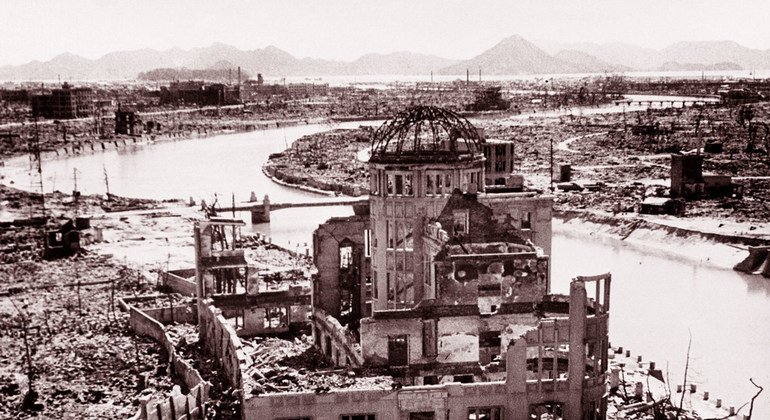
    One might think that mankind has not changed for millennia – we are still antiquated, as Günther Anders had pointed out after his visit to Hiroshima shortly after the atomic bombing. Basically, Anders argued that technical-industrial possibilities have rushed far ahead of comprehension and our moral responsibility – as evidenced in the use of nuclear power, the possibility of self-destruction of humanity during the nuclear arms race (especially in 1983), which was partly prevented only by chance, genetic engineering, and medical possibilities at the beginning and end of life. Add to this climate change and obscene inequality throughout the world.


    Looking at the current explosions of violence on the macro level (Ukraine, Syria, new arms race between the great powers) as well as on the micro level (for example in Central America the Maras) one might think that mankind has not changed for millennia – we are still antiquated, as Günther Anders had pointed out after his visit to Hiroshima shortly after the atomic bombing. Basically, Anders argued that technical-industrial possibilities have rushed far ahead of comprehension and our moral responsibility – as evidenced in the use of nuclear power, the possibility of self-destruction of humanity during the nuclear arms race (especially in 1983), which was partly prevented only by chance, genetic engineering, and medical possibilities at the beginning and end of life. Add to this climate change and obscene inequality throughout the world, we must ask ourselves who we are as humans? How can we explain to our children and grandchildren what we have done for them – or more importantly, not done? Statistically, however, we are living in the most peaceful age in human history to date. The present dominance of the violence topic, of fears and despair as world-politically effective emotions can therefore be a question of the increased and partly medially staged perception – or nevertheless a real setback.  But also, here it could be true that mainly our terms and conceptions are put to the test. For such setbacks primarily question the idea of the linearity of progress, not necessarily progress itself. If we assume the models of a linear ascending progress as in the Enlightenment or in Kant or an equally linear pure history of decay, we cannot integrate contrary developments into our world view – and every contrary development calls the whole model into question. In contrast, models of history based on a cycle (Greek Stoa, Hinduism) are able to capture the constant in change but can only imperfectly explain progress at the societal level. The historical model of a Machiavelli, on the other hand, includes change, but change is always repeated and can best be compared to a sine curve.

    The argument about models of history is by no means abstract, as it appears at first sight. The Marxists as well as Leninists and finally the Stalinists have pursued radical politics with the linear model of progress, just as the idea of the thousand-year Reich had influence on the politics of the National Socialists. Are there alternative models beyond pure decay, equally linear progress, or the assumption that humans do not change after all, or lag behind their technological capabilities in moral and spiritual terms?

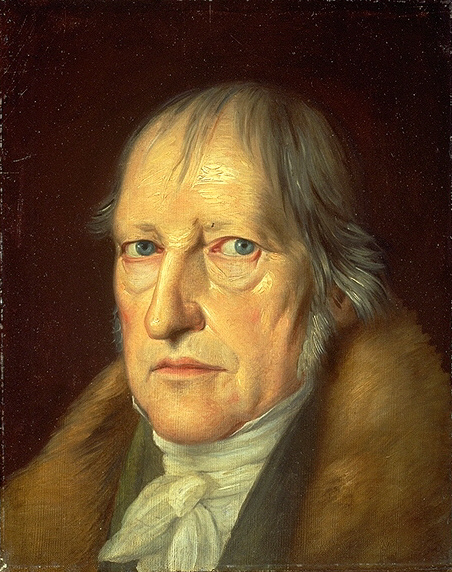
    Models for Understanding History – G W F Hegel

    These positions are not unfounded – however, their absolutization is wrong. As in various psychological (Piaget and Kohlberg) and sociological (Auguste Comte) approaches, the German philosopher Georg W.F. Hegel starts from a stage model in which he develops a progress of world history in the consciousness of freedom. Despite his own Eurocentrism, stage models are in principle capable of countering a pure binary opposition of affirmation or negation of progress in human history. They also do not imply an absolutely inevitable development, as can be seen from the fact that Kohlberg, for example, does not assume that all people reach the highest level, but emphasizes, like all stage theorists, that one cannot skip any of the stages. But Hegel was just not in the tradition of the Enlightenment and Kant, who assumed a linear model of progress, but developed a dialectical sequence of stages, which in my interpretation could best be compared to a sine curve (as in Machiavelli) but erected on an ascending x-axis. In such a model, we can think of the Enlightenment’s idea of progress (in the ascending x-axis) as well as cyclical developments (Machiavelli) of rise and fall, progress, and regress in world history together.

    In this model developed by the author, there is progress, but it is not linear, but itself cyclical. We know such cycles from the business cycle theories in the wake of Kondratieff’s research or also from hegemonic cycles. In contrast to these theoretical approaches, the model of history advocated here is related to a (more or less) slightly ascending x-axis and is derived from Hegel’s conception of becoming at the beginning of his monumental work on the “Science of Logic”, since coming into being and passing away are not completely cancelled out, but a “surplus” arises which goes beyond the infinite coming into being and passing away.  Such a model is on the one hand closed (with respect to the high and low points on the Y-axis), at the same time open on the X-axis and develops “between” its high and low points.

    Hegel’s stage model has itself been a great historical advance; at the same time, we need to go beyond Hegel to overcome his tendency of constructing a systematic closure (which was then taken as an absolute by Marx in a perfect society of communism) in favour of an approach that is at once closed and open. Despite his Eurocentric reductions, Hegel develops a systematic development of the idea of freedom. In his sequence of stages, human history begins with the development of states in which at first only one was free – the ruler, mostly in the figure of the priest-king, who symbolizes the laws of the gods and rule. Still with Plato we find the construction of the philosopher, who must be at the same time king and vice versa. This all-surpassing freedom of the priest-kings is clearly found for Hegel in the pyramids of Egypt. Hegel calls this phase the infancy of history. Greek antiquity, and here especially the city of Athens, is for him the adolescence of world history – the first individualities are formed. The aesthetics of the Greek statues symbolize for him this phase, in which man understands himself as free, when he professes his free polis. In a certain sense, this phase can be understood as that of the aristocracy, because Athens symbolizes the beginning of democracy, but of the approximately 200,000 inhabitants, only about 30,000 were free – slaves, women and metics (“strangers”) were excluded from freedom.

    The focus is no longer on the individual, but on the supra-individual law. Even today, the study of law begins with Roman law (e.g., in dubio pro reo or nulla poene sine lege). Of course, not only Hegel’s choice of words is problematic (e.g., that of “oriental despotism” as the beginning of world history), but also the identification of the fourth stage with the “Germanic period” as the “goal of world history.”

    For Hegel, the manhood of world history is that of the Roman Empire. Here, not the individual but the state has become the supreme purpose and Roman law is developed. The focus is no longer on the individual, but on the supra-individual law. Even today, the study of law begins with Roman law (e.g., in dubio pro reo or nulla poene sine lege). Of course, not only Hegel’s choice of words is problematic (e.g., that of “oriental despotism” as the beginning of world history), but also the identification of the fourth stage with the “Germanic period” as the “goal of world history.” Nevertheless, his characterization is noteworthy. In this stage the state is ordered according to reasonable principles, the individual is completely free because he lives in a reasonable society whose laws he recognizes and to which he can refer. Community and individual are reconciled, the ups and downs of world history (as illustrated in the sine curve) seem to have come to their end and now the real history of mankind begins, a happy time.

    Of course, we know that this was not so, as Hegel assumed – the violent conquest of the world in colonial times, two world wars, Auschwitz, and Hiroshima, the almost self-destruction of mankind in the cold war, all this was still to come. But is Hegel thereby refuting? Or can and perhaps must we continue Hegel?

    Differences to Hegel

     In contrast to Hegel’s conception of world history as a progress in the consciousness of freedom, I argue that this development is a progress in the consciousness and practices of humanity to be a wholenessness. Hereby, I no longer foreground Kant’s four questions concerning the individual human being or even an “I”, but rather transform them into who is humanity, what should we do as humanity, what can we know and hope as humanity? The concept of humanity contains the single individual, but this goes beyond the generalization of the individual as in Kant’s categorical imperative. Also, here the old sentence of Aristotle is valid that the whole is more than the sum of the parts – and so I would like to add, mankind as a wholeness is more than the accumulation of at present over 7.8 billion people. At the same time, humanity is realized in individual human beings; there is no humanity without individual human beings.

    According to the “Out of Africa thesis,” the genus Homo originated in Africa and spread from there to all continents. One of these groups, immodestly calling itself homo sapiens, has not only outlasted all other human species, but has populated even the most distant tip of this earth, moreover, is making its way to other planets of our solar system. Arnold Gehlen’s determination of man (as also already Aristotle) as imperfect, forces mankind to develop more and more. During this time of spreading over the whole planet, however, the individual groups lost contact with each other, because this lasted for millennia and the distances became too great for the time to bridge in shorter periods of time – they became estranged from each other and lived in isolated cultural islands (for example in China, India, in Africa south of the Sahara, the two Americas or also in the more European part of Eurasia as well as in West Asia). With the increasing spread of these initially isolated cultural islands, they came back into contact with each other – which turned out to be peaceful or sometimes warlike. Huntington’s thesis that these contacts were mainly violent underestimates the mutual cultural influences and learning processes. Globalization since European colonization brought humanity into ever closer contact with each other and made it possible for the first time to think of humanity as a wholeness.

     Of course, the setbacks and low blows must not be forgotten – the wars between the great empires, the almost perpetual state of war at the edges of these empires, colonialism, Islamic and Atlantic slavery, racism, two world wars and Auschwitz as a sign of history – but in the end they confirmed the dictum of Goethe and, derived from this, systematized by Hegel as the cunning of history. This is a part of that force which always wills evil and yet creates good. This does not mean to relativize the suffering of countless people. But perhaps we must differentiate and not already take the ideals of the Enlightenment at face value. For this was not only compatible with racism, colonialism, and slavery, two world wars and the Cold War – according to Zygmunt Bauman, these were even direct consequences of a one-sided Enlightenment.

    There is currently a worldwide biologisation of the social in the form of ethnicities, gender antagonisms, nationalism and tribalism (Make America great again by Donald Trump, the Chinese Dream by President Xi Jinping, New Russia by Vladimir Putin, Salafism, right-wing nationalist movements in Europe).

    If, on the other hand, we assume that the impulse of the realization of human rights could actually only fully develop after World War II and the Holocaust, and included all people, not just one’s own ethnic, cultural, or religious group, we are only at the beginning of the realization of human rights. Again, while it is true that there are setbacks at present – in the form of a discourse of “We against the Rest,” the current replacement of global governance by a renationalisation of world politics, the return of tribal thinking to cope with the demands of globalization, this is not the whole picture. It is also true that globalized liquid modernity (Bauman) is leading to the dissolution of all traditional identities including patriarchy as well as consumerism and many states and nations are updating ancient identities because they trust them to outdo even this accelerated transformation, There is currently a worldwide biologisation of the social in the form of ethnicities, gender antagonisms, nationalism and tribalism (Make America great again by Donald Trump, the Chinese Dream by President Xi Jinping, New Russia by Vladimir Putin, Salafism, right-wing nationalist movements in Europe). Nevertheless, while we are simultaneously witnessing the (often violent) dissolution of the old world, we are also experiencing the birth pangs of a new world. After the West defeated the rest of the world in the 19th century, colonised or submerged peoples and civilizations in the 20th century had to learn to live with the victorious West. In the 21st century, the world’s civilizations must finally learn to live with each other.

    In the 1990s, Samuel P. Huntington put forward the much-publicised thesis that the cold war between the ideologically opposed superpowers would be replaced by a similar contest between the world’s civilizations and their respective core states (Russia, India, China, the United States). On the surface, Huntington received more criticism than approval. A closer reading of his approach reveals that he had not drawn up an instruction manual for the “clash of civilizations,” but had formulated a warning to avoid it. The liberal critics, however, emphasized in particular that not only should there not be a clash of civilizations, but also that there could not be, because there was only one civilization in the world, the Western one. The other civilizations mentioned by Huntington are determined by different religions and cultures, but they would not be civilizations. In contrast, the “clash of civilizations” involves a conflict, but the implicit recognition that civilizations other than the Western one exists at all.

    In the 21st century, the world’s civilizations must finally learn to live with each other.

    This recognition of a limited plurality of civilizations makes possible for the first time the thinking, experiencing, and acting of humanity as a wholenessness. In such a wholenessness, opposites, conflicts and even wars are conceivable – from a sociological perspective, conflicts are not opposed to a socialization of humanity (sociology of conflict in the wake of Tönnies and Simmel), even if these bring much suffering with them.  All high religions that emerged between the 7th century B.C. (Judaism, Confucianism, Buddhism, Hinduism, Christianity) and the 7th century A.D. (Islam) formulate an overcoming and renunciation of infinite suffering. This ethicization of transcendence (Jaspers) or also of immanence (Confucianism) contains in its core a perspective of the abolition of suffering, which can be overcome either in transcendence or, with appropriate conduct of life, already in immanence. Suffering, war, and violence are thus no longer accepted as “natural”, but an attempt is made to leave them behind. Although in Hinduism the cycle (symbolized in the wheel) is emphasized – but the goal of life in the different rebirths consists in overcoming this cycle. Therefore, a core message of Hinduism is the statement that the end is good – but if it is not good, it is not the end. While in the “nature religions” like also the Egyptian mythology, before the emergence of these high religions the transcendence was only a mirror of the earthly life, this is explained now to be absolute good – connected with the perspective to orientate the own life at this construction.

    in Hinduism the cycle (symbolized in the wheel) is emphasized – but the goal of life in the different rebirths consists in overcoming this cycle. Therefore, a core message of Hinduism is the statement that the end is good – but if it is not good, it is not the end.

    Here it should not be concealed that this ethicization of the transcendent as well as of immanence can be and has been used to legitimize violence – in direct inversion to Goethe and Hegel we have to acknowledge that the absolutization of the good has also contributed to the legitimization of war and violence in the form: “this is a part of that force which always wants the good and yet creates evil” (Herberg-Rothe). In contrast to positions that attribute the positive sides of religions only to these themselves, the negative ones exclusively to the respective social, political, cultural, and historical circumstances, I assume that the absolutization of the respective ideas contains a tendency to violence. After the western modernity had written the generalization of the presupposed individual on the flags, a new balance of the individual and the communality is to be constructed for a dialogue of the civilizations, which contains at the same time their further development.

    Mankind understood in this way does not include a pure juxtaposition in the sense of a diversity of the civilizations of the world, as this is laid out – despite all remarkable insights – in the conception of a multiplex world or a Global International Relations Theory (Global IRT), both by Amitav Acharya, which is connected only by communication. The conceptions of diversity also do not go beyond mere multiplicity. All these conceptions in the wake of the French post-structuralisms have their strength in the critique as well as overcoming of totalitarian and authoritarian social relations or system constraints and discourses of power. However, since their own approach excludes borders per se, they cannot include any border of their respective approach. Diversity is wonderful and colourful – also the questioning and de-construction of the “normal” following Foucault has been an essential progress, just as tolerance is a moral value to be demanded always. The question, however, is where the limits of tolerance are – we should be far less tolerant of human rights violations, even if the understanding of human rights remains contested in different “cultures.”

    Conclusion

    From Thomas Hobbes we have learned that unlimited freedom leads to war of all against all, civil war.  Freedom must therefore be limited in order to enable people to live together peacefully. But how can freedom be meaningfully limited without oppressing people? Kant’s solution, that my freedom ends where the freedom of the other begins, is a nice metaphor, but far from adequate when two or more parties lay claim to the same good in the broadest sense.  The idea that it is not an oppression of freedom if it is limited only by the freedom of the other is a pure illusion. Even if in the wars and civil wars of the present, the refugee movements and in the worldwide slums, a human life seems to count for little, it must be maintained that all human beings have the same human rights, they are equally endowed with dignity and conscience. Freedom thus finds its limits not primarily in the freedom of others, but, since it is not an abstract freedom, rather one of human beings – thus in their fundamental equality as human beings and thus human rights. Following Hannah Arendt, one can say that freedom does not consist in arbitrariness, but in the right to be different from others. The path of humanity is shown here as self-preservation based in our equality and self-transgression in the freedom to differ from other humans. Such an understanding of the equality of us all as humans seem to contradict all current developments and appears as a kind of wishful thinking. But it is perhaps not just an idea of a better future, but the question how mankind could see itself as a wholeness in order to survive.


    References:

    Acharya, Amitav and Barry Buzan (ed.). Non-Western International Relations Theory: Perspectives on and beyond Asia. New York: Routledge, 2010.

    Anders, Gunther; Christopher John Muller. Prometheanism: technology, digital culture, and human obsolescence. London: Rowman & Littlefield International Ltd., 2016.

    Arendt, Hannah; Danielle Allen and Margaret Canovan. The Human Condition. Chicago: The University of Chicago Press, 2018.

    Arendt, Hannah and Anne Applebaum. The Origins of Totalitarianism. Harcourt: Brace & co, 1951.

    Bauman, Zygment. Modernity and the Holocaust. New York: Cornell University Press, 2000.

    Bauman, Zygment. Born Liquid. Polity Press, 2018.

    Comte, Auguste and Harriet Martineau. The Positive Philosophy of Auguste Comte: Freely translated and condensed by Harriet Martineau. New York: C. Blanchard, 1858.

    Gehlen, Arnold. Man, his Nature and Place in the World. New York: Columbia University Press, 1988.

    Hobbes, Thomas. Leviathan. London: Andrew Crooke, 1651.

    Huntington, Samuel P. The Clash of Civilizations and the Remaking of World Order. New York: Simon & Schuster, 1996.

    Kant, Immanuel; J M D Meiklejohn. Critique of Pure Reason: Tr. from German of Immanuel Kant. London: Bell, 1881.

    Machiavelli, Niccolo. Discourses. S. I.: Open Road Media, 2020. Internet.

    Magen, Nathan H. The Kondratieff Waves. New York: Praeger, 987.

    Marx, Karl and Friedrich Engels; David McLellen. Communist Manifesto. Oxford University Press, 1992.

    Shuman James B., and David Rosenau. The Kondratieff Wave by James B. Shuman and David Rosenau.New York: World Pub, 1972.

    Tonnies, Ferdinand; edited by Jose Harris. Ferdinand Tonnies: Community and Society. Cambridge; Cambridge University Press, 2001.


    Feature Image Credit: NDTV

  • The Military Situation in Ukraine

    The Military Situation in Ukraine

    Understanding the war in Ukraine is a challenge as all the available information is mired in Western Propaganda. However, there are sane voices of scholars like John Mearsheimer and a small group of excellent professionals and military veterans who provide extremely accurate analysis to ensure we get the true picture of this geopolitical contest between Russia and the US and NATO. Jacques Baud is a former Colonel of the General Staff, intelligence expert in NATO, and ex-member of the Swiss intelligence, and specialist on Eastern countries.

    In this excellent analysis, Jacques Baud brings out how the US and NATO have created conditions for the war and are using Ukraine as the sacrificial pawn in their proxy war against Russia. Jacques Baud demolishes the West’s propaganda about Russia’s invasion of Ukraine on Feb 24th and traces the start of the war to Feb 16th by the US and NATO.  Contrary to the American propaganda, he sees Putin as the master strategist. The end of this conflict will usher in a new multi-polar world order, in which the West may cease to be the rule maker.

    TPF is immensely happy to republish this article through the gracious courtesy of Centre Francaise de Recherche sure le Renseignement

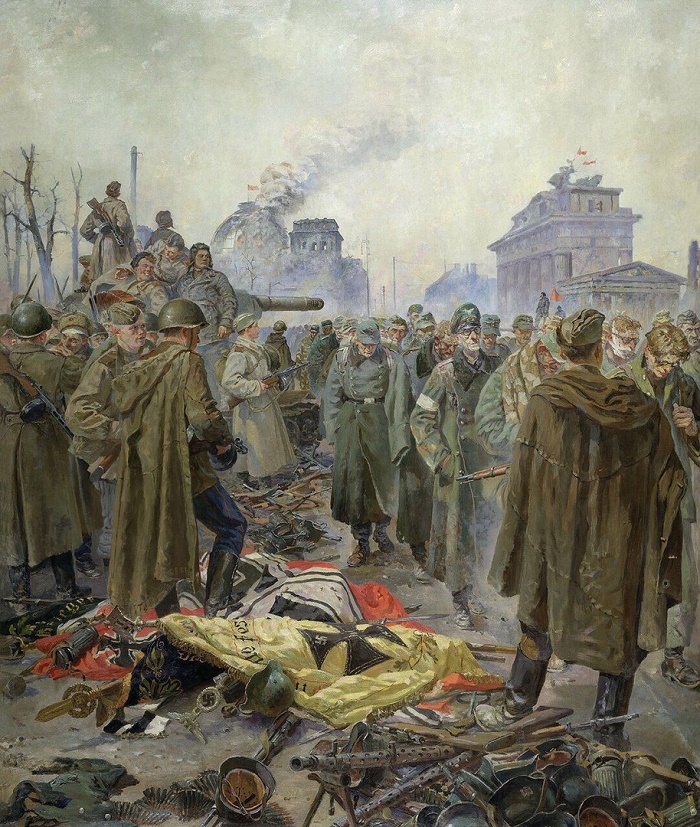
    Capitulation – 1946 painting by Soviet Artist Pyotr Aleksandrovich Krivonogov, a veteran of The Great Patriotic War


    PART ONE: ON THE ROAD TO WAR

    For years, from Mali to Afghanistan, I worked for peace and risked my life for it. It is therefore not a question of justifying the war, but of understanding what led us to it. I note that the “experts” who take turns on the television sets analyze the situation based on dubious information, most often hypotheses turned into facts, and therefore we no longer manage to understand what is happening. That’s how you create panic.

    The problem is not so much who is right in this conflict, but how our leaders make their decisions.

    Let’s try to examine the roots of the conflict. It starts with those who for the past eight years have been talking to us about “separatists” or “independence” from the Donbas. It’s wrong. The referendums conducted by the two self-proclaimed republics of Donetsk and Luhansk in May 2014 were not ”  independence ” (независимость) referendums, as some unscrupulous journalists claimed, but ”  self-determination  ” or ”  autonomy (самостоятельность). The term “pro-Russian” suggests that Russia was a party to the conflict, which was not the case, and the term “Russian speakers” would have been more honest. Moreover, these referendums were conducted against the advice of Vladimir Putin.

    In fact, these republics did not seek to separate from Ukraine, but to have a statute of autonomy guaranteeing them the use of the Russian language as an official language. Because the first legislative act of the new government resulting from the overthrow of President Yanukovych, was the abolition, on February 23, 2014, of the Kivalov-Kolesnichenko law of 2012 which made Russian an official language. A bit as if putschists decided that French and Italian would no longer be official languages ​​in Switzerland.

    This decision causes a storm in the Russian-speaking population. This resulted in fierce repression against the Russian-speaking regions (Odesa, Dnepropetrovsk, Kharkov, Lugansk and Donetsk) which began in February 2014 and led to a militarization of the situation and a few massacres (in Odesa and Mariupol, for the most important). At the end of summer 2014, only the self-proclaimed republics of Donetsk and Lugansk remained.

    At this stage, too rigid and stuck in a doctrinaire approach to the operational art, the Ukrainian staff suffered the enemy without succeeding in imposing themselves. Examination of the course of the fighting in 2014-2016 in the Donbas shows that the Ukrainian general staff systematically and mechanically applied the same operational plans. However, the war waged by the autonomists was then very close to what we observed in the Sahel: very mobile operations carried out with light means. With a more flexible and less doctrinaire approach, the rebels were able to exploit the inertia of the Ukrainian forces to “trap” them repeatedly.

    In 2014, I am at NATO, responsible for the fight against the proliferation of small arms, and we are trying to detect Russian arms deliveries to the rebels in order to see if Moscow is involved. The information that we receive then comes practically all from the Polish intelligence services and does not “match” with the information from the OSCE: in spite of rather crude allegations, we do not observe any delivery of arms and materials Russian military.

    The rebels are armed thanks to the defections of Russian-speaking Ukrainian units which cross over to the rebel side. As the Ukrainian failures progressed, the entire tank, artillery or anti-aircraft battalions swelled the ranks of the autonomists. This is what drives the Ukrainians to commit to the Minsk Accords.

    But, just after signing the Minsk 1 Accords, Ukrainian President Petro Poroshenko launched a vast anti-terrorist operation (ATO/Антитерористична операція) against Donbas. Bis repetita placent: poorly advised by NATO officers, the Ukrainians suffered a crushing defeat at Debaltsevo which forced them to commit to the Minsk 2 Agreements…

    It is essential to recall here that the Minsk 1 (September 2014) and Minsk 2 (February 2015) Agreements provided for neither the separation nor the independence of the Republics, but their autonomy within the framework of Ukraine. Those who have read the Accords (they are very, very, very few) will find that it is written in full that the status of the republics was to be negotiated between Kyiv and the representatives of the republics, for an internal solution in Ukraine.

    This is why since 2014, Russia has systematically demanded their application while refusing to be a party to the negotiations, because it was an internal matter for Ukraine. On the other side, the Westerners – led by France – have systematically tried to replace the Minsk Accords with the “Normandy format”, which put Russians and Ukrainians face to face. However, let us remember, there were never any Russian troops in the Donbas before February 23-24, 2022. Moreover, OSCE observers have never observed the slightest trace of Russian units operating in the Donbas. Thus, the US intelligence map published by the Washington Post on December 3, 2021, does not show Russian troops in Donbas.

    In October 2015, Vasyl Hrytsak, director of the Ukrainian Security Service (SBU), confessed that only 56 Russian fighters had been observed in the Donbas. It was even comparable to that of the Swiss going to fight in Bosnia during the weekends, in the 1990s, or the French who are going to fight in Ukraine today.

    The Ukrainian army was then in a deplorable state. In October 2018, after four years of war, Ukraine’s chief military prosecutor Anatoly Matios said that Ukraine had lost 2,700 men in the Donbas: 891 from disease, 318 from traffic accidents, 177 from other accidents, 175 from poisoning (alcohol, drugs), 172 from careless handling of weapons, 101 from breaches of safety rules, 228 from murder and 615 from suicide.

    In fact, the army is undermined by the corruption of its cadres and no longer enjoys the support of the population. According to a UK Home Office report, when reservists were called up in March-April 2014, 70% did not show up for the first session, 80% for the second, 90% for the third and 95% for the fourth. In October/November 2017, 70% of callers did not show up during the “  Autumn 2017  ” callback campaign. This does not include suicides and desertions(often for the benefit of the autonomists) which reach up to 30% of the workforce in the ATO zone. Young Ukrainians refuse to go and fight in the Donbas and prefer emigration, which also explains, at least partially, the country’s demographic deficit.

    The Ukrainian Ministry of Defense then turned to NATO to help it make its armed forces more “attractive”. Having already worked on similar projects within the framework of the United Nations, I was asked by NATO to participate in a program intended to restore the image of the Ukrainian armed forces. But it’s a long process and the Ukrainians want to go quickly.

    Thus, to compensate for the lack of soldiers, the Ukrainian government resorted to paramilitary militias. They are essentially made up of foreign mercenaries, often far-right activists. As of 2020, they constitute around 40% of Ukraine’s forces and number around 102,000 men according to Reuters. They are armed, financed and trained by the United States, Great Britain, Canada and France. There are more than 19 nationalities – including Swiss.

    Western countries have therefore clearly created and supported Ukrainian far-right militias. In October 2021, the Jerusalem Post sounded the alarm by denouncing the Centuria project. These militias have been operating in the Donbas since 2014, with Western support. Even if we can discuss the term “Nazi”, the fact remains that these militias are violent, convey a nauseating ideology and are virulently anti-Semitic. Their anti-Semitism is more cultural than political, which is why the adjective “Nazi” is not really appropriate. Their hatred of the Jew comes from the great famines of the years 1920-1930 in Ukraine, resulting from the confiscation of crops by Stalin in order to finance the modernization of the Red Army. However, this genocide – known in Ukraine as the Holodomor – was perpetrated by the NKVD (predecessor of the KGB) whose upper echelons of leadership were mainly made up of Jews. That is why, today, Ukrainian extremists are asking Israel to apologize for the crimes of communism, as the Jerusalem Post reports. We are therefore a long way from a “  rewriting of history  ” by Vladimir Putin.

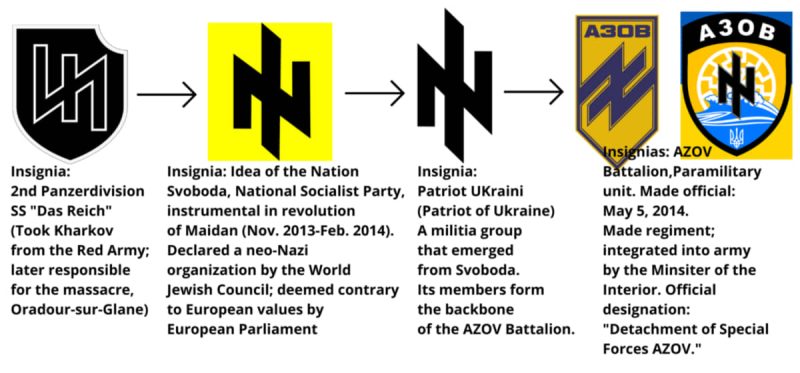
    These militias, stemming from the far-right groups that led the Euromaidan revolution in 2014, are made up of fanatical and brutal individuals. The best known of these is the Azov regiment, whose emblem is reminiscent of that of the 2nd SS Das Reich Panzer Division, which is the object of real veneration in Ukraine, for having liberated Kharkov from the Soviets in 1943, before perpetrating the massacre of Oradour-sur-Glane in 1944, in France.

    Among the famous figures of the Azov regiment was the opponent Roman Protassevich, arrested in 2021 by the Belarusian authorities following the case of RyanAir flight FR4978. On May 23, 2021, there is talk of the deliberate hijacking of an airliner by a MiG-29 – with Putin’s agreement, of course – to arrest Protassevich, although the information then available does not confirm this scenario in any way.

    But it must then be shown that President Lukashenko is a thug and Protassevich a “journalist” in love with democracy. However, a rather edifying investigation produced by an American NGO in 2020, highlighted Protassevich’s far-right militant activities. Western conspiracy then sets in motion and unscrupulous media “groom” his biography. Finally, in January 2022, the ICAO report is published and shows that despite some procedural errors, Belarus acted in accordance with the rules in force and that the MiG-29 took off 15 minutes after the RyanAir pilot decided to land in Minsk. So no Belarus plot and even less with Putin. Ah!… One more detail: Protassevich,cruelly tortured by Belarusian police, is now free. Those who would like to correspond with him can go to his Twitter account.

    The labelling of “Nazi” or “neo-Nazi” given to Ukrainian paramilitaries is considered Russian propaganda. Perhaps; but that is not the opinion of The Times of Israel, the Simon Wiesenthal Center or the Counterterrorism Center at West Point Academy. But this remains debatable, because, in 2014, Newsweek magazine seemed to associate them with… the Islamic State. A choice!

    So the West supports and continues to arm militias that have been guilty of numerous crimes against civilian populations since 2014: rape, torture and massacres. But while the Swiss government has been very quick to impose sanctions against Russia, it has not adopted any against Ukraine, which has been slaughtering its own population since 2014. In fact, those who defend the rights of the men in Ukraine have long condemned the actions of these groups, but have not been followed by our governments. Because, in reality, we are not trying to help Ukraine, but to fight Russia.

    The integration of these paramilitary forces into the National Guard was not at all accompanied by a “denazification”, as some claim. Among the many examples, that of the insignia of the Azov Regiment is edifying:
     

    In 2022, very schematically, the Ukrainian armed forces fighting the Russian offensive are structured as:

    – Army, subordinate to the Ministry of Defence: it is articulated in 3 army corps and composed of manoeuvre formations (tanks, heavy artillery, missiles, etc.).

    – National Guard, which depends on the Ministry of the Interior and is articulated in 5 territorial commands.

    The National Guard is therefore a territorial defence force that is not part of the Ukrainian army. It includes paramilitary militias, called ”  volunteer battalions” (добровольчі батальйоні), also known by the evocative name of ”  retaliatory battalions  “, composed of infantry. Mainly trained for urban combat, they now ensure the defence of cities such as Kharkov, Mariupol, Odesa, Kyiv, etc.

    PART II: THE WAR

    The former head of the Warsaw Pact forces in the Swiss strategic intelligence service, I observe with sadness – but not astonishment – ​​that our services are no longer in a position to understand the military situation in Ukraine. The self-proclaimed “experts” who parade across our screens wirelessly relay the same information modulated by the assertion that Russia – and Vladimir Putin – is irrational. Let’s take a step back.

    • THE OUTBREAK OF WAR

    Since November 2021, the Americans have constantly brandished the threat of a Russian invasion against Ukraine. However, the Ukrainians do not seem to agree. Why?

    We have to go back to March 24, 2021. On that day, Volodymyr Zelensky issued a decree for the reconquest of Crimea and began to deploy his forces towards the south of the country. Simultaneously, several NATO exercises were conducted between the Black Sea and the Baltic Sea, accompanied by a significant increase in reconnaissance flights along the Russian border. Russia then conducts a few exercises to test the operational readiness of its troops and show that it is following the evolution of the situation.

    Things calm down until October-November with the end of the ZAPAD 21 exercises, whose troop movements are interpreted as a reinforcement for an offensive against Ukraine. However, even the Ukrainian authorities refute the idea of ​​Russian preparations for a war and Oleksiy Reznikov, Ukrainian Minister of Defense declares that there has been no change on its border since the spring.

    In violation of the Minsk Accords, Ukraine is conducting aerial operations in Donbas using drones, including at least one strike against a fuel depot in Donetsk in October 2021. The American press points this out, but not the Europeans and no one condemns these violations.

    In February 2022, events rush. On February 7, during his visit to Moscow, Emmanuel Macron reaffirms to Vladimir Putin his attachment to the Minsk Accords, a commitment he will repeat after his interview with Volodymyr Zelensky the next day. But on February 11, in Berlin, after 9 hours of work, the meeting of the political advisers of the leaders of the ”  Normandy format  “ ends, without a concrete result: the Ukrainians still and always refuse to apply the Accordsof Minsk, apparently under pressure from the United States. Vladimir Putin then notes that Macron has made empty promises to him and that the West is not ready to enforce the Accords, as they have been doing for eight years.

    Ukrainian preparations in the contact zone continue. The Russian Parliament is alarmed and on February 15 asks Vladimir Putin to recognize the independence of the Republics, which he refuses.

    On February 17, President Joe Biden announces that Russia will attack Ukraine in the coming days. How does he know? Mystery… But since the 16th, the artillery shelling of the populations of Donbas has increased dramatically, as shown by the daily reports of OSCE observers. Naturally, neither the media, nor the European Union, nor NATO, nor any Western government reacts and intervenes. We will say later that this is Russian disinformation. In fact, it seems that the European Union and some countries purposely glossed over the massacre of the people of Donbas, knowing that it would provoke Russian intervention.

    At the same time, there are reports of acts of sabotage in the Donbas. On January 18, Donbas fighters intercept saboteurs equipped with Western equipment and speaking Polish seeking to create chemical incidents in Gorlivka. They could be CIA mercenaries, led or “advised” by Americans and made up of Ukrainian or European fighters, to carry out sabotage actions in the Donbas Republics.
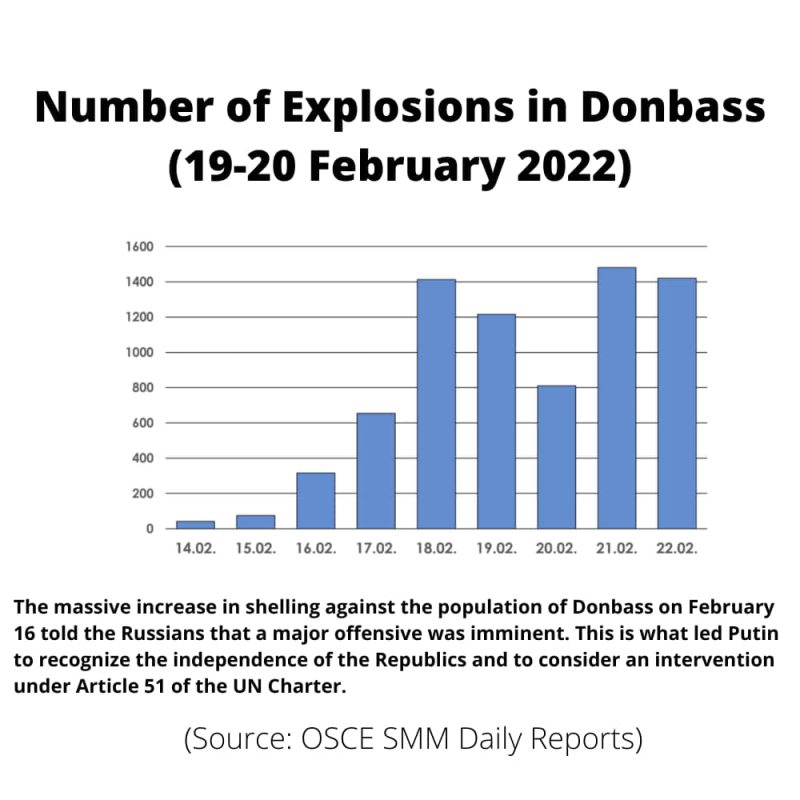
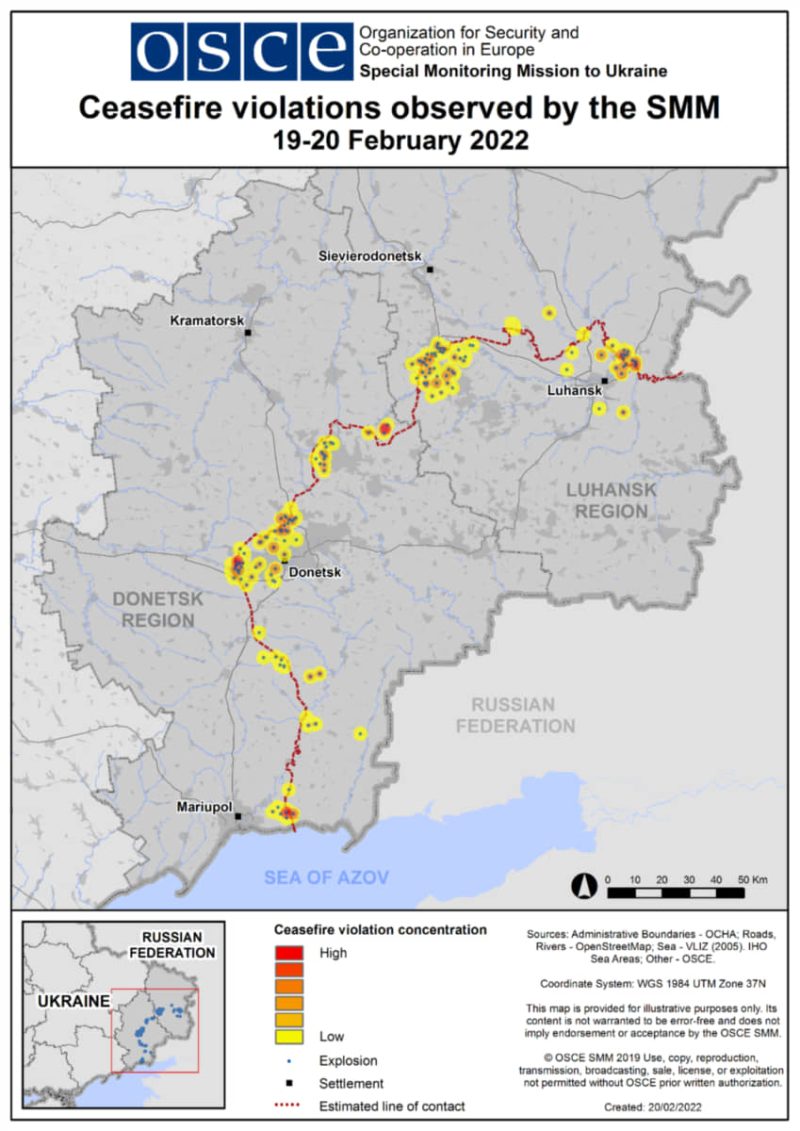
    In fact, as early as February 16, Joe Biden knows that the Ukrainians have begun to shell the civilian populations of Donbas, putting Vladimir Putin in front of a difficult choice: to help Donbas militarily and create an international problem or to sit idly by and watch the Russian speakers. from the Donbas being run over.

    If he decides to intervene, Vladimir Putin can invoke the international obligation of “  Responsibility To Protect  ” (R2P). But he knows that whatever its nature or scale, the intervention will trigger a shower of sanctions. Therefore, whether its intervention is limited to the Donbas or whether it goes further to put pressure on the West for the status of Ukraine, the price to be paid will be the same. This is what he explains in his speech on February 21.

    That day, he acceded to the request of the Duma and recognized the independence of the two Republics of Donbas and, in the process, he signed treaties of friendship and assistance with them.

    The Ukrainian artillery bombardments on the populations of Donbas continued and, on February 23, the two Republics requested military aid from Russia. On the 24th, Vladimir Putin invokes Article 51 of the United Nations Charter which provides for mutual military assistance within the framework of a defensive alliance.

    In order to make the Russian intervention totally illegal in the eyes of the public, we deliberately obscure the fact that the war actually started on February 16th. The Ukrainian army was preparing to attack the Donbas as early as 2021, as certain Russian and European intelligence services were well aware… The lawyers will judge.

    In his speech on February 24, Vladimir Putin stated the two objectives of his operation: to “demilitarize” and “denazify” Ukraine. It is therefore not a question of seizing Ukraine, nor even, in all likelihood, of occupying it and certainly not of destroying it.

    From there, our visibility on the progress of the operation is limited: the Russians have excellent security of operations (OPSEC) and the detail of their planning is not known. But fairly quickly, the course of operations makes it possible to understand how the strategic objectives were translated into the operational plan.

    – Demilitarization:

    . ground destruction of Ukrainian aviation, air defence systems and reconnaissance assets;

    . neutralization of command and intelligence structures (C3I), as well as the main logistics routes in the depth of the territory;

    . encirclement of the bulk of the Ukrainian army massed in the southeast of the country.

    – Denazification:

    . destruction or neutralization of volunteer battalions operating in the cities of Odesa, Kharkov and Mariupol, as well as in various facilities on the territory.

    • THE “DEMILITARIZATION”

    The Russian offensive proceeds in a very “classic” manner. At first – as the Israelis had done in 1967 – with the destruction on the ground of the air forces in the very first hours. Then, we witness a simultaneous progression on several axes according to the principle of “flowing water”: we advance wherever resistance is weak and we leave the cities (very voracious in troops) for later. To the north, the Chernobyl plant is occupied immediately to prevent acts of sabotage. The images of Ukrainian and Russian soldiers jointly guarding the plant are naturally not shown…

    The idea that Russia is trying to take over Kyiv, the capital, to eliminate Zelensky, typically comes from the West: this is what they did in Afghanistan, Iraq, Libya and what they wanted to do in Syria with the help of the Islamic State. But Vladimir Putin never intended to take down or overthrow Zelensky. On the contrary, Russia seeks to keep him in power by pushing him to negotiate by encircling Kyiv. He had refused to do so far to apply the Minsk Accords, but now the Russians want to obtain Ukraine’s neutrality.

    Many Western commentators marvelled that the Russians continued to seek a negotiated solution while conducting military operations. The explanation is in the Russian strategic conception, since Soviet times. For Westerners, war begins when politics ceases. However, the Russian approach follows a Clausewitzian inspiration: war is the continuity of politics and one can pass fluidly from one to the other, even during combat. This creates pressure on the opponent and pushes him to negotiate.

    From an operational point of view, the Russian offensive was an example of its kind: in six days, the Russians seized a territory as vast as the United Kingdom, with a speed of advance greater than what the Wehrmacht made in 1940.

    The bulk of the Ukrainian army was deployed in the south of the country for a major operation against Donbas. This is why the Russian forces were able to encircle it from the beginning of March in the “cauldron” between Slavyansk, Kramatorsk and Severodonetsk, by a thrust coming from the east via Kharkov and another coming from the south from the Crimea. The troops of the Republics of Donetsk (DPR) and Lugansk (RPL) complete the action of the Russian forces with a push from the East.

    At this stage, the Russian forces are slowly tightening the noose, but are no longer under time pressure. Their objective of demilitarization is practically achieved and the residual Ukrainian forces no longer have an operational and strategic command structure.

    The “slowdown” that our “experts” attribute to poor logistics is only the consequence of having achieved the objectives set. Russia does not seem to want to engage in an occupation of the whole Ukrainian territory. In fact, it seems rather that Russia is trying to limit its advance to the country’s linguistic border.

    Our media speak of indiscriminate bombardments against civilian populations, particularly in Kharkov, and Dantesque images are broadcast on a loop. However, Gonzalo Lira, a Latin American who lives there, presents us with a calm city on March 10, and on March 11. Admittedly, it’s a big city and you can’t see everything, but that seems to indicate that we are not in the total war that we are being served continuously on our screens.

    As for the Republics of Donbas, they have “liberated” their own territories and are fighting in the city of Mariupol.

    • “DENAZIFICATION”

    In cities like Kharkov, Mariupol and Odesa, defence is provided by paramilitary militias. They know that the objective of “denazification” is aimed primarily at them.

    For an attacker in an urbanized area, civilians are a problem. This is why Russia seeks to create humanitarian corridors to empty the cities of civilians and leave only the militias in order to fight them more easily.

    Conversely, these militias seek to keep civilians in the cities in order to dissuade the Russian army from coming to fight there. This is why they are reluctant to implement these corridors and do everything so that Russian efforts are in vain: they can thus use the civilian population as “human shields”. Videos showing civilians trying to leave Mariupol and being beaten up by fighters from the Azov regiment are naturally carefully censored here.

    On Facebook, the Azov group was considered in the same category as the Islamic State and subject to the platform’s ”  dangerous individuals and organizations policy  “. It was therefore forbidden to glorify him, and the “posts” that were favourable to him were systematically banned. But on February 24, Facebook changed its policy and allowed posts favourable to the militia. In the same spirit, in March, the platform authorizes, in the former Eastern European countries, calls for the murder of Russian soldiers and leaders. So much for the values ​​that inspire our leaders, as we will see.

    Our media propagate a romantic image of popular resistance. It is this image that has led the European Union to finance the distribution of arms to the civilian population. It is a criminal act. In my role as chief of doctrine for peacekeeping operations at the UN, I worked on the issue of the protection of civilians. We then saw that violence against civilians took place in very specific contexts. Especially when weapons abound and there are no command structures.

    Now, these command structures are the essence of armies: their function is to channel the use of force according to an objective. By arming citizens in a haphazard fashion as is currently the case, the EU turns them into combatants, with the attendant consequences: potential targets. Moreover, without command, without operational goals, the distribution of arms inevitably leads to settling of scores, banditry and actions that are more deadly than effective. War becomes a matter of emotions. Force becomes violence. This is what happened in Tawarga (Libya) from August 11 to 13, 2011, where 30,000 black Africans were massacred with weapons parachuted (illegally) by France. Moreover, the British Royal Institute for Strategic Studies(RUSI) sees no added value in these arms deliveries.

    Moreover, by delivering arms to a country at war, one exposes oneself to being considered as a belligerent. The Russian strikes on March 13, 2022, against the Mykolaiv airbase follow Russian warnings that weapons transports would be treated as hostile targets.

    The EU repeats the disastrous experience of the Third Reich in the last hours of the Battle of Berlin. War should be left to the military and when one side has lost, it should be admitted. And if there is to be resistance, it must imperatively be led and structured. However, we are doing exactly the opposite: we are pushing citizens to go and fight and at the same time, Facebook is allowing calls for the murder of Russian soldiers and leaders. So much for the values ​​that inspire us.

    In some intelligence services, this irresponsible decision is seen as a way of using the Ukrainian population as cannon fodder to fight Vladimir Putin’s Russia. This kind of murderous decision had to be left to the colleagues of Ursula von der Leyen’s grandfather. It would have been wiser to engage in negotiations and thus obtain guarantees for the civilian populations than to add fuel to the fire. It’s easy to be combative with other people’s blood…

    • MARIUPOL MATERNITY

    It is important to understand beforehand that it is not the Ukrainian army that ensures the defence of Mariupol, but the Azov militia, composed of foreign mercenaries.

    In its summary of the situation on March 7, 2022, the Russian UN mission in New York states that ”  Residents report that the Ukrainian armed forces have expelled the personnel of the Natal Hospital No. 1 from the city of Mariupol and have installed a shooting station inside the establishment. »

    On March 8, the independent Russian media Lenta.ru published the testimony of civilians from Mariupol who said that the maternity hospital was taken over by the militias of the Azov regiment, and chased out the civilian occupants, threatening them with their weapons. They thus confirm the statements of the Russian ambassador a few hours earlier.

    The Mariupol hospital occupies a dominant position, perfectly adequate for installing anti-tank weapons and for observation. On March 9, Russian forces hit the building. According to CNN, there are 17 injured, but the footage shows no casualties on the premises and there is no evidence that the reported casualties are related to this strike. We talk about children, but in reality, we see nothing. It may be true, but it may be false… Which does not prevent EU leaders from seeing it as a war crime … Which allows Zelensky, just afterwards, to claim a no-fly zone over Ukraine…

    In reality, we don’t know exactly what happened. But the sequence of events tends to confirm that the Russian forces struck a position of the Azov regiment and that the maternity ward was then free of all civilians.

    The problem is that the paramilitary militias that ensure the defence of cities are encouraged by the international community not to respect the customs of war. It seems that the Ukrainians have re-enacted the scenario of the maternity hospital in Kuwait City in 1990, which had been completely staged by the firm Hill & Knowlton for the amount of 10.7 million dollars in order to convince the United Nations Security Council to intervene in Iraq for Operation Desert Shield/Storm.

    Western politicians have also accepted strikes against civilians in Donbas for eight years, without adopting any sanctions against the Ukrainian government. We have long since entered into a dynamic where Western politicians have agreed to sacrifice international law to their objective of weakening Russia .

    PART THREE: CONCLUSIONS

     As a former intelligence professional, the first thing that strikes me is the total absence of Western intelligence services in representing the situation for a year. In Switzerland, the services have been criticized for not having provided a correct picture of the situation. In fact, it seems that all over the Western world, the services have been overwhelmed by the politicians. The problem is that it is the politicians who decide: the best intelligence service in the world is useless if the decision-maker does not listen to it. This is what happened during this crisis.

    That said, while some intelligence services had a very precise and rational image of the situation, others clearly had the same image as that propagated by our media. In this crisis, the services of the countries of the “new Europe” played an important role. The problem is that, by experience, I found that they were extremely bad on the analytical level: doctrinaire, they do not have the intellectual and political independence necessary to appreciate a situation with a military “quality”. It is better to have them as enemies than as friends.

    Then, it seems that in some European countries, politicians have deliberately ignored their services to respond ideologically to the situation. This is why this crisis has been irrational from the start. It will be observed that all the documents that have been presented to the public during this crisis have been presented by politicians on the basis of commercial sources…

    Some Western politicians obviously wanted there to be a conflict. In the United States, the attack scenarios presented by Anthony Blinken to the Security Council were only the fruit of the imagination of a Tiger Team working for him  : he did exactly like Donald Rumsfeld in 2002, who thus “bypassed” the CIA and other intelligence services that were far less assertive about Iraqi chemical weapons.

    The dramatic developments we are witnessing today have causes we knew about, but refused to see:

    – on the strategic level, the expansion of NATO (which we have not dealt with here);

    – on the political level, the Western refusal to implement the Minsk Agreements;

    – and on the operational level, the continuous and repeated attacks on the civilian populations of Donbass for years and the dramatic increase at the end of February 2022.

    In other words, we can naturally deplore and condemn the Russian attack. But WE (that is to say: the United States, France and the European Union in the lead) have created the conditions for a conflict to break out. We show compassion for the Ukrainian people and the two million refugees . It’s good. But if we had had a modicum of compassion for the same number of refugees from the Ukrainian populations of Donbass massacred by their own government and who have been accumulating in Russia for eight years, none of this would probably have happened.
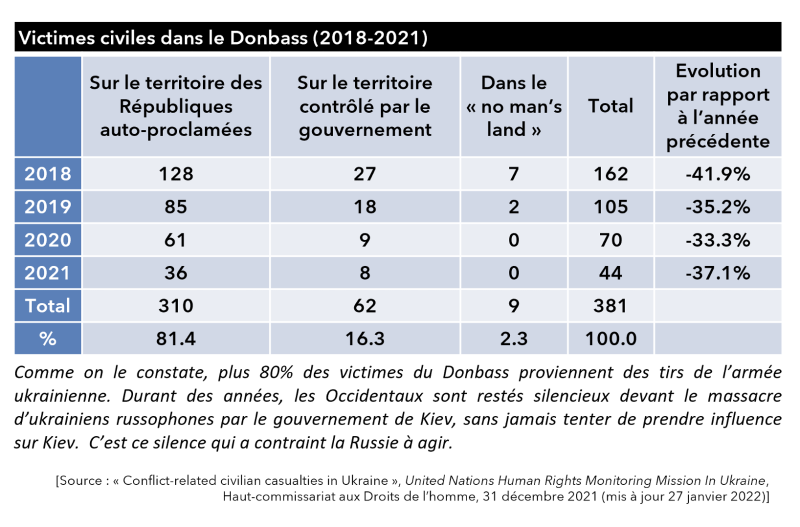
     

    Whether the term “genocide” applies to the abuses suffered by the populations of Donbass is an open question. This term is generally reserved for larger cases (Holocaust, etc.), however, the definition given by the Genocide Convention is probably broad enough to apply. Lawyers will appreciate.

    Clearly, this conflict has led us into hysteria. Sanctions seem to have become the preferred tool of our foreign policies. If we had insisted that Ukraine respect the Minsk Accords, which we negotiated and endorsed, none of this would have happened. The condemnation of Vladimir Putin is also ours. There is no point in whining after the fact, we had to act before. However, neither Emmanuel Macron (as guarantor and as a member of the UN Security Council), nor Olaf Scholz, nor Volodymyr Zelensky have respected their commitments. Ultimately, the real defeat is that of those who have no voice.

    The European Union was unable to promote the implementation of the Minsk agreements, on the contrary, it did not react when Ukraine bombarded its own population in the Donbass. Had she done so, Vladimir Putin would not have needed to react. Absent from the diplomatic phase, the EU distinguished itself by fueling the conflict. On February 27, the Ukrainian government agrees to start negotiations with Russia. But a few hours later, the European Union voted a budget of 450 million euros to supply arms to Ukraine, adding fuel to the fire. From there, the Ukrainians feel that they will not need to come to an agreement. The resistance of the Azov militias in Mariupol will even causea raise of 500 million euros for weapons .

    In Ukraine, with the blessing of Western countries, those who are in favor of a negotiation are eliminated. This is the case of Denis Kireyev, one of the Ukrainian negotiators, assassinated on March 5 by the Ukrainian secret service (SBU) because he is too favorable to Russia and is considered a traitor. The same fate is reserved for Dmitry Demyanenko, former deputy head of the main directorate of the SBU for Kiev and its region, assassinated on March 10 , because too favorable to an agreement with Russia: he is killed by the Mirotvorets militia (”  Peacemaker  “). This militia is associated with the Mirotvorets website which lists the ”  enemies of Ukraine”, with their personal data, address and telephone numbers, so that they can be harassed or even eliminated  ; a punishable practice in many countries, but not in Ukraine . The UN and some European countries have demanded its closure… refused by the Rada.

    Eventually, the price will be high, but Vladimir Putin will likely achieve the goals he set for himself. Its ties with Beijing have solidified. China emerges as a mediator of the conflict, while Switzerland enters the list of enemies of Russia. The Americans must ask Venezuela and Iran for oil to get out of the energy impasse in which they have gotten themselves: Juan Guaido leaves the scene definitively and the United States must pitifully reverse the sanctions imposed on their enemies.

    Western ministers who seek to collapse the Russian economy and make the Russian people suffer , even calling for the assassination of Putin, show (even if they partially reversed the form of their remarks, but not on bottom!) that our leaders are no better than those we hate. Because, sanctioning Russian athletes from the Para-Olympic Games or Russian artists has absolutely nothing to do with a fight against Putin.

    So, therefore, we recognize that Russia is a democracy since we consider that the Russian people are responsible for the war. If not, then why are we trying to punish an entire population for the fault of one? Remember that collective punishment is prohibited by the Geneva Conventions…

    The lesson to be drawn from this conflict is our sense of variable geometry humanity. If we were so attached to peace and to Ukraine, why didn’t we encourage her more to respect the agreements that she had signed and that the members of the Security Council had approved?

    Media integrity is measured by their willingness to work under the terms of the Munich Charter. They had succeeded in propagating hatred of the Chinese during the Covid crisis and their polarized message leads to the same effects against the Russians . Journalism is stripping itself more and more of professionalism to become militant…

    As Goethe said: “  The greater the light, the darker the shadow  ”. The more the sanctions against Russia are excessive, the more the cases where we have done nothing highlight our racism and our servility. Why has no Western politician reacted to the strikes against the civilian populations of Donbass for eight years?

    After all, what makes the conflict in Ukraine more blameworthy than the war in Iraq, Afghanistan or Libya? What sanctions have we adopted against those who have deliberately lied before the international community to wage unjust, unjustified, unjustifiable and murderous wars? Did we try to “make suffer” the American people who had lied to us (because it is a democracy!) before the war in Iraq? Have we even adopted a single sanction against the countries, companies or politicians who are fueling the conflict in Yemen, considered the ”  worst humanitarian disaster in the world  “? Have we sanctioned the countries of the European Union who practice the most abject torture on their territory for the benefit of the United States?

    To ask the question is to answer it… and the answer is not glorious.


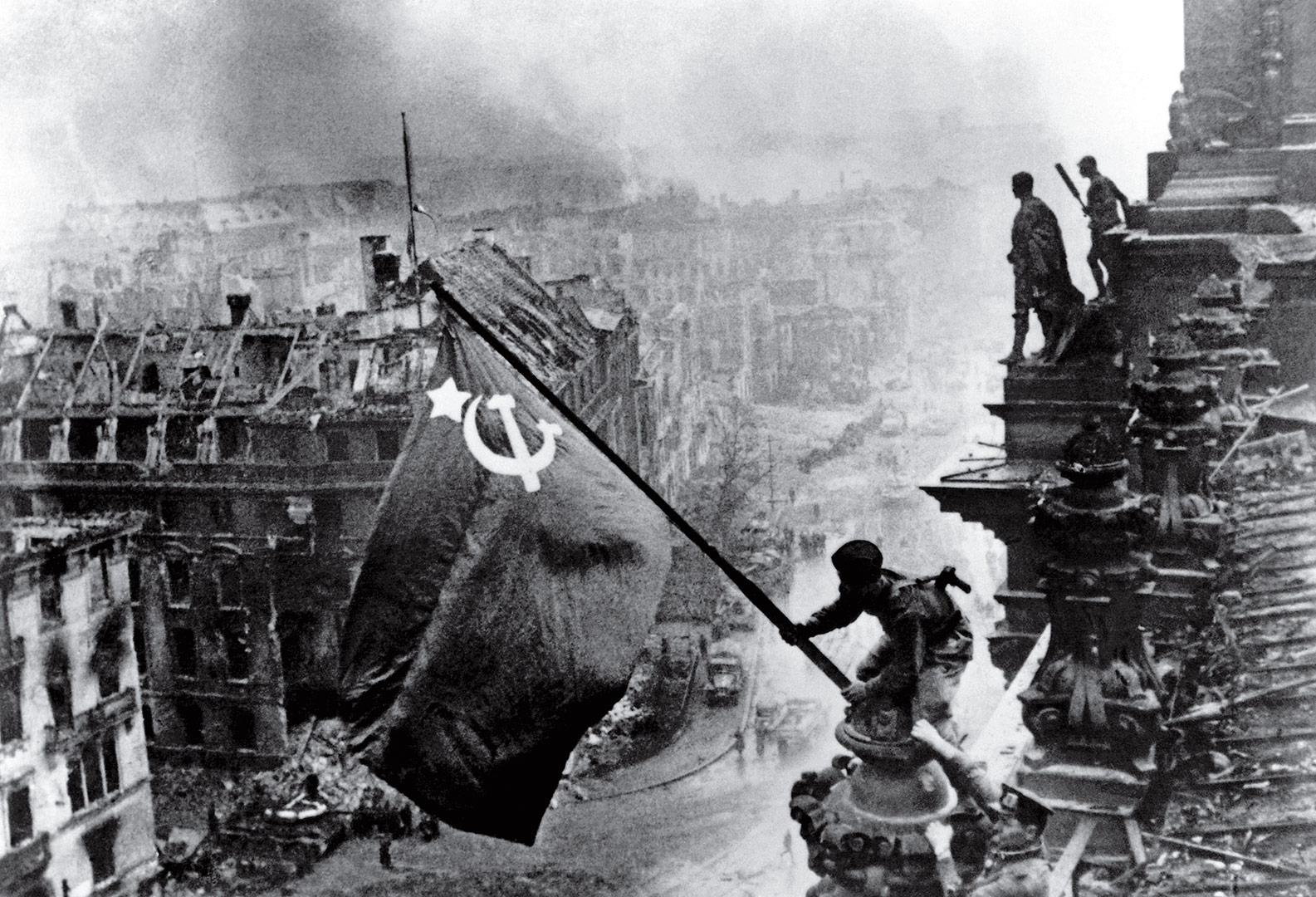
    Feature Image Credit: Raising the Flag over Reichstag – iconic photo in 1945 by Yevegny Khaldei – kosmofoto.com 
     

  • Colonial taxes built Britain. That must be taught in lessons on Empire

    Colonial taxes built Britain. That must be taught in lessons on Empire

    UK government ministers want the British Empire’s benefits taught in schools. Don’t let them ignore the death and destruction it inflicted says Professor Gurminder K Bhambra. Her observation is equally if not more important for India and other erstwhile colonies. Britain and other European colonial powers not only looted and decimated Indian economy over three centuries of colonial interaction but their ruthless exploitation led to much of the poverty that has afflicted the global south ever since. This fact of history must be taught extensively in Indian schools. There are many who propagate the fallacy that the British empire was beneficial but the truth that it was ruthlessly exploitative must be taught and researched in a big way. The wealth of the West was built on built on exploitation of Africa, Asia, and Latin America. The West continues to dominate the global economic system and it is inherently exploitative. History teaching and research, from policy and science perspectives, are in dire need for elimination of Western bias.


    Recent weeks have seen a variety of UK government ministers – fromOliver Dowden to Kemi Badenoch to, most recently, education secretary Nadhim Zahawi – both extol the benefits of British Empire and urge the teaching of those benefits. This follows on from the government’s response to the Commission on Race and Ethnic Disparities, which set out the need for a new model curriculum for history which would advise schools on how best to teach these issues. This is all part of the government’s Inclusive Britain strategy which calls on us to acknowledge the rich and complex history of ‘global Britain’.

    In the spirit of this call, I offer one account of the complex, entangled histories of colonial taxation and national welfare that continue to shape modern Britain. Few people know that colonial subjects from the Indian subcontinent paid taxation, including income tax, to the British government in Westminster. Or that that taxation was used to alleviate the conditions of poorer people within Britain at a time when the working class and middle class here were exempt from paying income tax.

    Taxation – and the ways in which it is returned to citizens through welfare – is one of the main ways in which the ‘imagined community’ of the nation comes into being. That is, the relationship between taxes and welfare is part of the process of constructing institutions and the idea of the nation. If we were to recognise that this ‘imagined community’ was built not only through national taxes, but also colonial ones, then how might that change our understanding of what it is to be British today?

    My grandfather, Mohan Singh, was born in 1913 in a small village in the Punjab, in what was then British India. He was four years old when his father, Gurdit Singh, died and 17 when his uncle, Harnam Singh, who had been supporting him, also passed away. My grandfather had planned on attending the Government College in Lahore, but – needing to support his mother and younger sister – he instead spent six months training as a boilermaker. He then got married to Pritam Kaur and travelled to Calcutta to work in a variety of factories, engineering works and rolling mills.

    In 1942, he travelled to the British colony of Kenya – bringing his family over later – and worked for 18 years at the East African Railways and Harbour Company. He spent the last two decades of his life in the UK, working at Chalvey Engineering in Slough as a sheet metal worker before retiring at the age of 65 in Southall, west London.

    Calls to ‘go home’ have been the refrain of right-wing opponents of immigration from at least the 1970s

    Mohan Singh criss-crossed three continents during his lifetime, but he never left the jurisdiction of the British Empire. In his application for registration as a citizen of the UK and Colonies – in the aftermath of the British Nationality Act of 1948 – he wrote: “I was born in British India.” He further noted that he lived and worked in India and Kenya, two countries that were colonies of Britain. It was these connections that confirmed his citizenship and gave him the right to travel to and live in Britain. He duly exercised those rights but, on arrival, he had them called into question by the local population, who were either unaware of them or indifferent.

    Calls to ‘go home’ have been the refrain of right-wing opponents of immigration from at least the 1970s – as well as having been plastered on the sides of vans as part of the UK government’s ‘hostile environment’policies of recent years. They are also implicit in an influential body of scholarly work oriented to questions of belonging and entitlement that argue for priority in public policy to be given to the ‘white working class.’ This is on the basis of them being ‘insiders’ who have contributed through their taxes to the wealth that is disbursed through welfare.

    Former colonial subjects, like my grandfather, are regarded as immigrant outsiders even when they come to the metropole carrying passports of British citizenship. They are not seen to have contributed to the wealth of Britain by paying taxes and they are regarded as unfairly gaining access to the national patrimony. As Geoff Dench, Kate Gavron and Michael Youngwrite in ‘The new East End’: “As newcomers, their families cannot have put much into the system, so they should not be expecting yet to take so much out.”

    Britain established direct rule over India after suppressing the 1857 Indian Mutiny (also known as the First War of Independence). In 1860, it implemented an income tax upon colonial subjects, in part to pay for the costs associated with those revolts. Initially, a 2% rate was imposed on those earning between 200 rupees and 500 rupees a year and a 4% rate on those earning above 500 rupees annually.

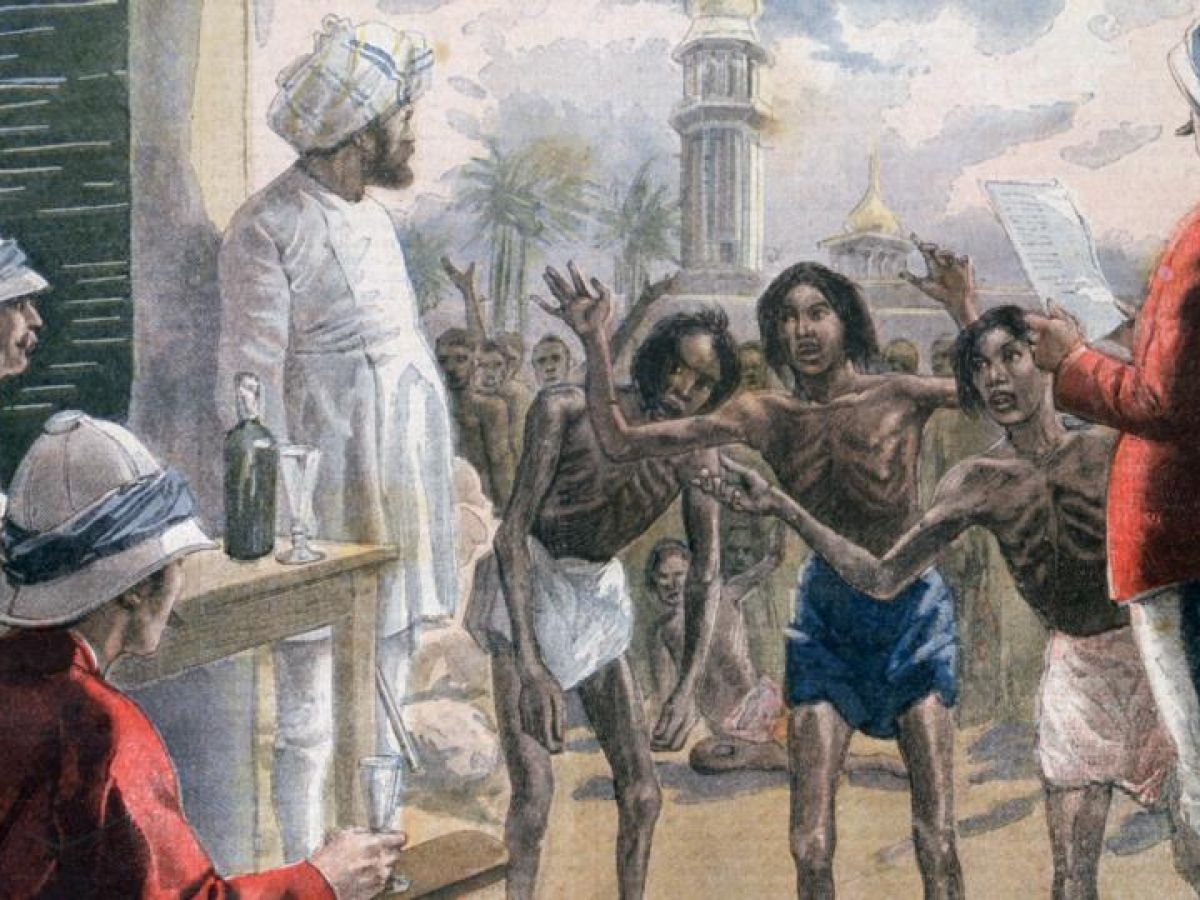
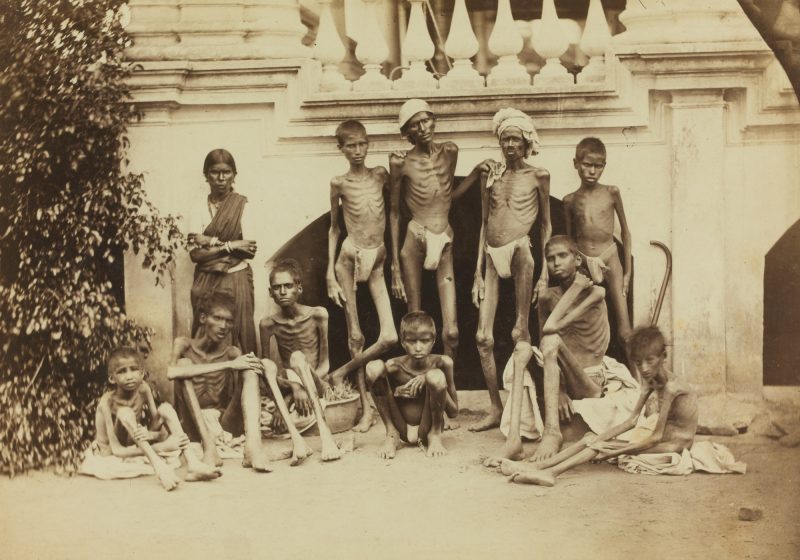
    Famine Genocide 1876-1879 in British Raj Madras, India. Credit: Wikimedia Commons

    The arrival of the British in India – first via the English East India Company and then through direct rule – had brought endemic famine across the subcontinent

    When my grandfather started work in the 1930s, the average wage for a skilled worker in British India was about 40 rupees a month. He was very unlikely to have paid income tax, however, as he would not have earned enough to meet the threshold, which by then was 2,000 rupees a year. Of the amount that was collected, around three-quarters went to the imperial treasury, with only one rupee in a hundred for local purposes. Local purposes included the building of canals and roads, but not the alleviation of poverty, not even in times of catastrophic famine.

    The arrival of the British in India – first via the English East India Company and then through direct rule – had brought endemic famine across the subcontinent. The 50 years after the implementation of the income tax saw one of the most intense such periods of famine, in which it is estimated over 14 million people died of starvation. This was in the context of grain being exported by rail from the famine regions (including to Britain) and colonial taxes continuing to be collected even in the worst-affected areas.

    In all cases, the demands of ‘sound finance’ trumped those of public health and the primary thing to be avoided was any idea that the poor in India should be maintained at public expense. Ensuring sufficient funds for the ensuing military campaign in Afghanistan – from the taxes paid by colonial subjects for local purposes – was of more importance than using those taxes to alleviate severe hunger and avert the deaths of millions.

    Here, we see quite clearly that the idea of the ‘imagined community’ created through taxation and its redistribution did not include colonial subjects. The taxes that Indians paid to the imperial treasury and to local provinces did not give them any entitlement to the redistribution of that income. Worse, any relief provided during famines was often dependent on undertaking hard labour in camps at a distance from a claimant’s locality.

    The most extreme instance was where the rations provided in return for heavy labour were scarcely above the level required for basic subsistence. The ‘Temple wage’ – named after the lieutenant-governor, Richard Temple, who brought it in – produced lethal results and, as Mike Davis notes in ‘Late Victorian Holocausts’, turned the work camps into extermination camps.

    The death and destruction brought about by the Empire were known at the time. In 1925, Harry Pollitt, the leader of the Boilermakers Union in the UK, stated that the British Empire was drenched in blood. This was in the context of debates at the Trades Union Congress in Scarborough, where a resolution was eventually adopted – by three million votes to 79,000 – against imperialism and in support of the right of self-determination of those who were colonised.

    Such sentiments, however, came up against more hard-nosed understandings concerning the utility of the Empire to those in Britain. As Labour foreign secretary Ernest Bevin proclaimed in Parliament in 1946, “I am not prepared to sacrifice the British Empire, because I know that if the British Empire fell … it would mean that the standard of life of our constituents would fall considerably.”

    Here, Bevin acknowledged that the life of all within Britain was enhanced as a consequence of Empire. However, Empire was overwhelmingly disastrous for the majority of people subject to it. Their standard of life fell considerably as a consequence of colonialism and the famines it produced and, in many, many cases, they lost their lives to it.

    One mode of survival was to move. This is why my grandfather moved from a village in the Punjab to train as a boilermaker in Lahore, before working in Calcutta, Nairobi and London. This is likely why his grandfather before him moved from famine-struck Orissa to Rajasthan to Punjab. These movements tend not to be seen to be part of the histories of Britain, global or otherwise, or of any consequence to understanding Britain or Britishness in the present.

    The forgetting of the Empire involves also the forgetting of the political community – colonial and postcolonial – that was constructed through taxation. Few in Britain today understand the extent to which national projects – from social welfare to cultural institutions such as country houses, museums, and galleries – have been enabled through the taxes paid by former colonial subjects. There is an urgent need for us to recognise our shared histories and account for them.

    One aspect of the ‘culture wars’ is the call to take the views of taxpayers into account when discussing ‘contested histories’. Samir Shah, the chair of London’s Museum of the Home, for example, argued that as heritage bodies are funded by taxpayers’ money, then the views of taxpayers – those he considers the silent majority – ought to be taken more explicitly into account. Given that both colonial subjects and their descendants paid taxes to the government in Westminster, then they/we also have a legitimate stake, in the government’s own terms, in how our shared history is represented. There is a benefit to the teaching of British Empire, but the reality is different from what these ministers suppose.


    This essay was published earlier in openDemocracy and is republished under Creative Commons Attribution – Non Commercial 4.0 International License.


    Feature Image Credit: The Irish Times


  • From Cold War to Hot Peace

    From Cold War to Hot Peace

    In a world shaped by the iron logic of markets and national interests, Vladimir Putin’s atavistic war of conquest has mystified the “deep” strategists of realpolitik. Their mistake was to forget that under global capitalism, cultural, ethnic, and religious conflicts are the only forms of political struggle left.

    With the Russian invasion of Ukraine, we are entering a new phase of warfare and global politics. Aside from a heightened risk of nuclear catastrophe, we are already in a perfect storm of mutually reinforcing global crises – the pandemic, climate change, biodiversity loss, and food and water shortages. The situation exhibits a basic madness: at a time when humanity’s very survival is jeopardized by ecological (and other) factors, and when addressing those threats should be prioritized over everything else, our primary concern has suddenly shifted – again – to a new political crisis. Just when global cooperation is needed more than ever, the “clash of civilizations” returns with a vengeance.

    Why does this happen? As is often the case, a little Hegel can go a long way toward answering such questions. In the Phenomenology of Spirit, Hegel famously describes the dialectic of master and servant, two “self-consciousnesses” locked in a life-or-death struggle. If each is ready to risk his own life to win, and if both persist in this, there is no winner: one dies, and the survivor no longer has anyone to recognize his own existence. The implication is that all of history and culture rest on a foundational compromise: in the eye-to-eye confrontation, one side (the future servant) “averts its eyes,” unwilling to go to the end.

    But Hegel would hasten to note that there can be no final or lasting compromise between states. Relationships between sovereign nation-states are permanently under the shadow of potential war, with each epoch of peace being nothing more than a temporary armistice. Each state disciplines and educates its own members and guarantees civic peace among them, and this process produces an ethic that ultimately demands acts of heroism – a readiness to sacrifice one’s life for one’s country. The wild, barbarian relations between states thus serve as the foundation of the ethical life within states.

    North Korea represents the clearest example of this logic, but there are also signs that China is moving in the same direction. According to friends in China (who must remain unnamed), many authors in Chinese military journals now complain that the Chinese army hasn’t had a real war to test its fighting ability. While the United States is permanently testing its army in places like Iraq, China hasn’t done so since its failed intervention in Vietnam in 1979.

    At the same time, Chinese official media have begun to hint more openly that since the prospect of Taiwan’s peaceful integration into China is dwindling, a military “liberation” of the island will be needed. As ideological preparation for this, the Chinese propaganda machine has increasingly urged nationalist patriotism and suspicion toward everything foreign, with frequent accusations that the US is eager to go to war for Taiwan. Last fall, Chinese authorities advised the public to stock up on enough supplies to survive for two months “just in case.” It was a strange warning that many perceived as an announcement of imminent war.

    This tendency runs directly against the urgent need to civilize our civilizations and establish a new mode of relating to our environs. We need universal solidarity and cooperation among all human communities, but this objective is made far more difficult by the rise of sectarian religious and ethnic “heroic” violence and a readiness to sacrifice oneself (and the world) for one’s specific cause. In 2017, the French philosopher Alain Badiou noted that the contours of a future war are already discernible. He foresaw:

    “…the United States and their Western-Japanese group on the one side, China and Russia on the other side, atomic arms everywhere. We cannot but recall Lenin’s statement: ‘Either revolution will prevent the war or the war will trigger revolution.’ This is how we can define the maximal ambition of the political work to come: for the first time in history, the first hypothesis – revolution will prevent the war – should realize itself, and not the second one – a war will trigger revolution. It is effectively the second hypothesis which materialized itself in Russia in the context of the First World War, and in China in the context of the second. But at what price! And with what long-term consequences!”

    The Limits of Realpolitik

    Civilizing our civilizations will require radical social change – a revolution, in fact. But we cannot afford to hope that a new war will trigger it. The far more likely outcome is the end of civilization as we know it, with the survivors (if there are any) organized in small authoritarian groups. We should harbor no illusions: in some basic sense, World War III has already begun, though for now it is still being fought mostly through proxies.

    Abstract calls for peace are not enough. “Peace” is not a term that allows us to draw the key political distinction that we need. Occupiers always sincerely want peace in the territory they hold. Nazi Germany wanted peace in occupied France, Israel wants peace in the occupied West Bank, and Russian President Vladimir Putin wants peace in Ukraine. That is why, as the philosopher Étienne Balibar once put it, “pacifism is not an option.” The only way to prevent another Great War is by avoiding the kind of “peace” that requires constant local wars for its maintenance.

    Whom can we rely on under these conditions? Should we place our confidence in artists and thinkers, or in pragmatic practitioners of realpolitik? The problem with artists and thinkers is that they, too, can lay the foundation for war. Recall William Butler Yeats’s apt verse: “I have spread my dreams under your feet, / Tread softly because you tread on my dreams.” We should apply these lines to poets themselves. When they spread their dreams under our feet, they should spread them carefully because actual people will read them and act upon them. Recall that the same Yeats continuously flirted with Fascism, going so far as to voice his approval of Germany’s anti-Semitic Nuremberg Laws in August 1938.

    Plato’s reputation suffers because of his claim that poets should be thrown out of the city. Yet this is rather sensible advice, judging from the experience of recent decades, when the pretext for ethnic cleansing has been prepared by poets and “thinkers” like Putin’s house ideologue, Aleksandr Dugin. There is no longer ethnic cleansing without poetry, because we live in an era that is supposedly post-ideological. Since great secular causes no longer have the force to mobilize people for mass violence, a larger sacred motive is needed. Religion or ethnic belonging serve this role perfectly (pathological atheists who commit mass murder for pleasure are rare exceptions).

    Realpolitik is no better guide. It has become a mere alibi for ideology, which often evokes some hidden dimension behind the veil of appearances in order to obscure the crime that is being committed openly. This double mystification is often announced by describing a situation as “complex.” An obvious fact – say, an instance of brutal military aggression – is relativized by evoking a “much more complex background.” The act of aggression is really an act of defense.

    This is exactly what is happening today. Russia obviously attacked Ukraine, and is obviously targeting civilians and displacing millions. And yet commentators and pundits are eagerly searching for “complexity” behind it.

    There is complexity, of course. But that does not change the basic fact that Russia did it. Our mistake was that we did not interpret Putin’s threats literally enough; we thought he was just playing a game of strategic manipulation and brinkmanship. One is reminded of the famous joke that Sigmund Freud quotes:

    “Two Jews met in a railway carriage at a station in Galicia. ‘Where are you going?’ asked one. ‘To Cracow,’ was the answer. ‘What a liar you are!’ broke out the other. ‘If you say you’re going to Cracow, you want me to believe you’re going to Lemberg. But I know that in fact you’re going to Cracow. So why are you lying to me?’”

    When Putin announced a military intervention, we didn’t take him literally when he said he wanted to pacify and “denazify” Ukraine. Instead, the reproach from disappointed “deep” strategists amounts to: “Why did you tell me you are going to occupy Lviv when you really want to occupy Lviv?”

    This double mystification exposes the end of realpolitik. As a rule, realpolitik is opposed to the naivety of binding diplomacy and foreign policy to (one’s version of) moral or political principles. Yet in the current situation, it is realpolitik that is naive. It is naive to suppose that the other side, the enemy, is also aiming at a limited pragmatic deal.

    Force and Freedom

    During the Cold War, the rules of superpower behavior were clearly delineated by the doctrine of mutual assured destruction (MAD). Each superpower could be sure that if it decided to launch a nuclear attack, the other side would respond with full destructive force. As a result, neither side started a war with the other.

    By contrast, when North Korea’s Kim Jong-un talks about dealing a devastating blow to the US, one cannot but wonder where he sees his own position. He talks as if he is unaware that his country, himself included, would be destroyed. It is as if he is playing an altogether different game called NUTS (Nuclear Utilization Target Selection), whereby the enemy’s nuclear capabilities can be surgically destroyed before it can counterstrike.

    Over the past few decades, even the US has oscillated between MAD and NUTS. Though it acts as if it continues to trust the MAD logic in its relations with Russia and China, it has occasionally been tempted to pursue a NUTS strategy vis-à-vis Iran and North Korea. With his hints about possibly launching a tactical nuclear strike, Putin follows the same reasoning. The very fact that two directly contradictory strategies are mobilized simultaneously by the same superpower attests to the fantasy character of it all.

    Unfortunately for the rest of us, MADness is passé. Superpowers are increasingly testing each other, experimenting with the use of proxies as they try to impose their own version of global rules. On March 5, Putin called the sanctions imposed on Russia the “equivalent of a declaration of war.” But he has repeatedly stated since then that economic exchange with the West should continue, emphasizing that Russia is keeping its financial commitments and continuing to deliver hydrocarbons to Western Europe.

    In other words, Putin is trying to impose a new model of international relations. Rather than cold war, there should be hot peace: a state of permanent hybrid war in which military interventions are declared under the guise of peacekeeping and humanitarian missions.

    Hence, on February 15, the Russian Duma (parliament) issued a declaration expressing “its unequivocal and consolidated support for the adequate humanitarian measures aimed at providing support to residents of certain areas of the Donetsk and Lugansk regions of Ukraine who have expressed a desire to speak and write in Russian language, who want freedom of religion to be respected, and who do not support the actions of the Ukrainian authorities violating their rights and freedoms.”

    How often in the past have we heard similar arguments for US-led interventions in Latin America or the Middle East and North Africa? While Russia shells cities and bombs maternity wards in Ukraine, international commerce should continue. Outside of Ukraine, normal life should go on. That is what it means to have a permanent global peace sustained by never-ending peacekeeping interventions in isolated parts of the world.

    Can anyone be free in such a predicament? Following Hegel, we should make a distinction between abstract and concrete freedom, which correspond to our notions of freedom and liberty. Abstract freedom is the ability to do what one wants independently of social rules and customs; concrete freedom is the freedom that is conferred and sustained by rules and customs. I can walk freely along a busy street only when I can be reasonably sure that others on the street will behave in a civilized way toward me – that drivers will obey traffic rules, and that other pedestrians will not rob me.

    But there are moments of crisis when abstract freedom must intervene. In December 1944, Jean-Paul Sartre wrote: “Never were we freer than under the German occupation. We had lost all our rights, and first of all our right to speak. They insulted us to our faces. … And that is why the Resistance was a true democracy; for the soldier, as for his superior, the same danger, the same loneliness, the same responsibility, the same absolute freedom within the discipline.”

    Sartre was describing freedom, not liberty. Liberty is what was established when post-war normality returned. In Ukraine today, those who are battling the Russian invasion are free and they are fighting for liberty. But this raises the question of how long the distinction can last. What happens if millions more people decide that they must freely violate the rules in order to protect their liberty? Is this not what drove a Trumpian mob to invade the US Capitol on January 6, 2021?

    The Not-so-Great Game

    We still lack a proper word for today’s world. For her part, the philosopher Catherine Malabou believes we are witnessing the beginning of capitalism’s “anarchist turn”: “How else are we to describe such phenomena as decentralized currencies, the end of the state’s monopoly, the obsolescence of the mediating role played by banks, and the decentralization of exchanges and transactions?”

    Those phenomena may sound appealing, but with the gradual disappearance of the state’s monopoly, state-imposed limits to ruthless exploitation and domination will also disappear. While anarcho-capitalism aims at transparency, it also “simultaneously authorizes the large-scale but opaque use of data, the dark web, and the fabrication of information.”

    To prevent this descent into chaos, Malabou observes, policies increasingly follow a path of “Fascist evolution…with the excessive security and military build-up that goes along with it. Such phenomena do not contradict a drive towards anarchism. Rather, they indicate precisely the disappearance of the state, which, once its social function has been removed, expresses the obsolescence of its force through the use of violence. Ultra-nationalism thus signals the death agony of national authority.”

    Viewed in these terms, the situation in Ukraine is not one nation-state attacking another nation-state. Rather, Ukraine is being attacked as an entity whose very ethnic identity is denied by the aggressor. The invasion is justified in the terms of geopolitical spheres of influence (which often extend well beyond ethnic spheres, as in the case of Syria). Russia refuses to use the word “war” for its “special military operation” not just to downplay the brutality of its intervention but above all to make clear that war in the old sense of an armed conflict between nation-states does not apply.

    The Kremlin wants us to believe that it is merely securing “peace” in what it considers its geopolitical sphere of influence. Indeed, it is also already intervening through its proxies in Bosnia and Kosovo. On March 17, the Russian ambassador to Bosnia, Igor Kalabukhov, explained that, “If [Bosnia] decides to be a member of any alliance [such as NATO], that is an internal matter. Our response is a different matter. Ukraine’s example shows what we expect. Should there be any threat, we will respond.”

    Moreover, Russian Foreign Minister Sergei Lavrov has gone so far as to suggest that the only comprehensive solution would be to demilitarize all of Europe, with Russia with its army maintaining peace through occasional humanitarian interventions. Similar ideas abound in the Russian press. As the political commentator Dmitry Evstafiev explains in a recent interview with a Croatian publication: “A new Russia is born which lets you know clearly that it doesn’t perceive you, Europe, as a partner. Russia has three partners: USA, China, and India. You are for us a trophy which shall be divided between us and Americans. You didn’t yet get this, although we are coming close to this.”

    Dugin, Putin’s court philosopher, grounds the Kremlin’s stance in a weird version of historicist relativism. In 2016, he said:

    “Post-modernity shows that every so-called truth is a matter of believing. So we believe in what we do, we believe in what we say. And that is the only way to define the truth. So we have our special Russian truth that you need to accept…. If the United States does not want to start a war, you should recognize that United States is not any more a unique master. And [with] the situation in Syria and Ukraine, Russia says, ‘No you are not any more the boss.’ That is the question of who rules the world. Only war could decide really.”

    This raises an obvious question: What about the people of Syria and Ukraine? Can they not also choose their truth and belief, or are they just a playground – or battlefield – of the big “bosses”? The Kremlin would say they don’t count in the big division of power. Within the four spheres of influence, there are only peacekeeping interventions. War proper happens only when the four big bosses cannot agree on the borders of their spheres – as in the case of China’s claims to Taiwan and the South China Sea.

    A New Non-Alignment

    But if we can be mobilized only by the threat of war, not by the threat to our environment, the liberty we will get if our side wins may not be worth having. We are faced with an impossible choice: if we make compromises to maintain peace, we are feeding Russian expansionism, which only a “demilitarization” of all of Europe will satisfy. But if we endorse full confrontation, we run the high risk of precipitating a new world war. The only real solution is to change the lens through which we perceive the situation.

    While the global liberal-capitalist order is obviously approaching a crisis at many levels, the war in Ukraine is being falsely and dangerously simplified. Global problems like climate change play no role in the hackneyed narrative of a clash between barbaric-totalitarian countries and the civilized, free West. And yet the new wars and great-power conflicts are also reactions to such problems. If the issue is survival on a planet in trouble, one should secure a stronger position than others. Far from being the moment of clarifying truth, and when the basic antagonism is laid bare, the current crisis is a moment of deep deception.

    While we should stand firmly behind Ukraine, we must avoid the fascination with war that has clearly seized the imaginations of those who are pushing for an open confrontation with Russia. Something like a new non-aligned movement is needed, not in the sense that countries should be neutral in the ongoing war, but in the sense that we should question the entire notion of the “clash of civilizations.”

    According to Samuel Huntington, who coined the term, the stage for a clash of civilizations was set at the Cold War’s end, when the “iron curtain of ideology” was replaced by the “velvet curtain of culture.” At first blush, this dark vision may appear to be the very opposite of the end-of-history thesis advanced by Francis Fukuyama in response to the collapse of communism in Europe. What could be more different from Fukuyama’s pseudo-Hegelian idea that the best possible social order humanity could devise had at last been revealed to be capitalist liberal democracy?

    We can now see that the two visions are fully compatible: the “clash of civilizations” is the politics that comes at the “end of history.” Ethnic and religious conflicts are the form of struggle that fits with global capitalism. In an age of “post-politics” – when politics proper is gradually replaced by expert social administration – the only remaining legitimate sources of conflict are cultural (ethnic, religious). The rise of “irrational” violence follows from the depoliticization of our societies.

    Within this limited horizon, it is true that the only alternative to war is a peaceful coexistence of civilizations (of different “truths,” as Dugin put it, or, to use a more popular term today, of different “ways of life”). The implication is that forced marriages, homophobia, or the rape of women who dare to go out in public alone are tolerable if they happen in another country, so long as that country is fully integrated into the global market.

    The new non-alignment must broaden the horizon by recognizing that our struggle should be global – and by counseling against Russophobia at all costs. We should offer our support to those within Russia who are protesting the invasion. They are not some abstract coterie of internationalists; they are the true Russian patriots – the people who truly love their country and have become deeply ashamed of it since February 24. There is no more morally repulsive and politically dangerous saying than, “My country, right or wrong.” Unfortunately, the first casualty of the Ukraine war has been universality.

    This essay was published earlier in Project Syndicate.

  • The Scylla and Charybdis of Duty Discharge: Military Dilemma with undemocratic Leaders

    The Scylla and Charybdis of Duty Discharge: Military Dilemma with undemocratic Leaders

    A week after the attack on the U.S. Capitol, the joint chiefs of staff issued a memorandum to the joint force condemning the assault on Congress and the constitutional process. They re-affirmed Joe Biden’s electoral victory and re-iterated their commitment to protecting and defending the constitution against all enemies, foreign and domestic. This re-iteration came on the heels of another. In the summer of 2020, senior military leaders in the United States were alarmed at the Trump administration’s use of military force to deter civilian protestors gathering in American cities to voice their discontent about racial discrimination and police brutality towards minority communities. Retired officers and seniors in the Defense Department warned against the politicization of the military and cautioned civilian leaders against using the military to achieve partisan goals. The Concerned Members of the Gray Line — a coalition of over 1,000 West Point alumni from six decades of graduating classes who had collectively served across ten presidential administrations — wrote a letter to West Point’s class of 2020 cautioning the graduates that while “the principle of civilian control is central to the military profession … it does not imply blind obedience.”

    These are just two examples of unprecedented steps taken by active and former senior military professionals in the tumultuous civil-military relations that characterized the Trump administration. Another example of an unprecedented action came to light recently in the form of revelations from Bob Woodward and Robert Costa’s forthcoming book, Peril, which suggest that the chairman of the Joint Chiefs of Staff, Gen. Mark Milley, took “good faith precaution” to secure America’s nuclear weapons from what he believed to be a worryingly likely scenario of the president “going rogue” and initiating a military strike against China. In the weeks leading up to the inauguration, Milley feared that the outgoing president would either try to use the military to “prevent the peaceful transfer of power” or that he would unleash nuclear war to maintain power. To avert nuclear Armageddon, he inserted himself into the nuclear chain of command — an authority that he does not have by law and doctrine — and reaffirmed with other senior military officials the elaborate procedures that need to be followed in the event of an executive order to launch nuclear weapons. In so doing, Milley positioned himself as a bulwark to thwart a potentially calamitous chain of events set in motion by an increasingly erratic and bellicose leader. His actions have invited an array of responses, ranging from those who support himand defend his conduct to those who demand his resignation and implore that he be court-martialled for treason. In his testimony to the Senate Armed Forces Committee, Milley defended his loyalty to the nation and asserted that he acted well within his statutory role of being in the “chain of communication” as the president’s primary military adviser

    Milley’s conduct, while deserving of public awareness and scrutiny, needs to be understood in the context of the unprecedented dilemma that he faced. What can military leaders do when the norm of military subordination to civilian control clashes with their adherence to the constitution and the rule of law? Milley was a military professional confronting a civilian executive with a penchant for undermining democracy — obeying this leader would risk jeopardizing his oath to defend the constitution and the rule of law, while disobeying would threaten the norm of civilian supremacy and the military’s democratic accountability.

    In recent years, democratic backsliding has affected nascent and mature democracies alike. To preserve and extend their authority, leaders in the United States, Poland, Hungary, the Philippines, Brazil, Nicaragua, Turkey, and India have used and/or threatened to use the military to advance partisan goalslike enforcing controversial immigration policies, detaining journalists, repressing protests, arresting civil society activists, overturning election results or preventing elections from being held at all, and detaining opposition leaders. Understanding military behavior in other countries threatened by democratic erosion can help to contextualize the situation that Milley confronted and the actions that he undertook.

    Democracy and Civil-Military Relations

    The principal dilemma of all civil-military relations, as explained by civil-military relations scholar Peter Feaver, entails the cultivation of a military strong enough to do what civilian leaders ask yet subordinate enough to do so only when asked. Civilian control over a professional subordinate military is a quintessential element of democratic regimes. Non-democracies, on the other hand, are characterized by politically influential militaries that have either overthrown civilian leaders and usurped power through coups or have acted as powerful allies for civilian autocrats like in Syria and North Korea. Comparative politics scholar Dan Slater demonstrates how in many postcolonial regimes, militaries are powerful and effective brokers in ensuring authoritarian durability. As such, curbing the military’s politically aggressive tendencies involves bolstering civilian oversight mechanisms. For example, by punishing disobedient officers, monitoring the appropriate implementation of civilian orders, controlling their purse strings, and ensuring their accountability through public hearings, civilians could keep a check on the military.

    Whereas politically aggressive militaries used to be the dominant cause of democratic decline in the Cold War period, the decades after the Cold War became characterized by executive aggrandizement. This involves a gradual rollback by elected leaders of citizens’ power and rights. Societies with high levels of inequality, when saddled with political institutions that are unable to deliver opportunities for economic advancement, are particularly prone to being captured by demagogues. These “assassins of democracy” like Donald Trump, Recep Tayyip Erdoğan, Jair Bolsonaro, Narendra Modi, Viktor Orban, Daniel Ortega, and Rodrigo Duterte, among others, use the very institutions of democracy to kill it.

    In this context, the military’s actions are critical to further enhancing or eroding democracy. In dealing with undemocratic leaders, democratic militaries face an unenviable dilemma brought on by their tradition of subordination to civilian control. If they follow orders from an undemocratic leader, they become complicit in democratic erosion. If they disobey, they risk disrupting military cohesion. Populist leaders who are prone to using the military to further their partisan agendas end up affecting the military’s internal cohesion by creating supporters and detractors of their actions within the military. These fissures between supporters and opponents will inevitably paralyze decision-making, threaten the military’s operational effectiveness, and ultimately jeopardize national security.

    This was the dilemma confronted by the Indian military in the 1970s. Like the American military, the Indian armed forces are a professional subordinate institution, beholden to the precept of civilian control and obedience to the constitution and rule of law. And like their American counterparts, the Indian military have played a critical role in protecting India’s fragile postcolonial democracy through the vicissitudes of India’s chaotic politics.

    “India is Indira. Indira is India” 

    On June 25, 1975, the Indian president, Fakhruddin Ali Ahmed, declared a state of internal emergency upon the advice of Prime Minister Indira Gandhi, citing a right-wing conspiracy that aimed at preventing the democratically elected government from functioning. Prior to the announcement of the emergency, India was in the throes of nationwide protests, with agitators clamoring for Gandhi’s resignation after her conviction for electoral malpractice by the Allahabad High Court, which unseated her and nullified her candidature and 1972 electoral victory. The emergency declaration had an immediate effect — 900 arrests were made within 24 hours, 300 of whom were political prisoners including Gandhi’s leading opponent, J. P. Narayan. During the 18-month emergency, Gandhi disempowered state governments, censored the press, banned public meetings, and postponed the national election, tarnishing India’s democratic credentials.

    The opposition implored the Indian army to dethrone Gandhi. Gandhi asked the army to support the implementation of the emergency. They did neither. In a massive rally organized on June 25 in the nation’s capital — New Delhi — Narayan appealed to “the police and armed forces not to obey the illegal and immoral orders of her [Gandhi’s] government” [emphasis added]. This was Gandhi’s last straw, leading to her swift and stealthy imposition of an emergency, as she acutely feared military intransigence and being overthrown in a coup. In a telling incident from 1969, Gandhi candidly asked former field marshal Sam Manekshaw if he planned to oust her. The military, however, refused to heed Narayan’s appeals and did not overthrow her. As explained by Aqil Shah, “the Indian military’s actions were shaped by institutional standards of appropriate behavior which made the notion of a constitutionally prescribed civilian supremacy inviolable and legitimate.” Not only did the military’s organizational beliefs and culture reinforce the norm of civilian supremacy, they also imbibed a learned behavior from their neighbor about the futility of political meddling. In Shah’s interviews with Indian Army officers: “many were typically surprised, and in some cases offended, by any comparison with other ‘political’ armies, including Pakistan. They found it profoundly difficult to countenance actions that constituted subversion of civil supremacy.”

    The army also remained uninvolved in the emergency’s implementation. Gandhi asked the then Indian army chief, Gen. T. N. Raina, for troops to aid civilian authorities in the implementation of her directives. According to retired Maj. Gen. Afsir Karim, who was serving in the army headquarters at the time and was involved in daily official dealings with the army chief’s office, Raina resisted Gandhi’s request and communicated to the military rank and file that “[they] are not a part of the emergency and [should] keep away from politics.” This refusal, however, contravenes their constitutionally prescribed function of obeying civilian authority. How did the army not become complicit in Gandhi’s authoritarian takeover when refusal to obey her meant the subversion of civilian control?

    In this dilemma, the Indian army feared a disruption to their organizational integrity and internal cohesion. Gen. G.G. Bewoor, another former chief of army staff, opined that the army “must protect itself against political influences that could shatter its professional cohesion and erode its capacity to defend the state against external aggression or internal conflict.” [emphasis added] To maintain cohesion and ensure that his troops remained unsullied by politicization, Raina circumvented the issue of obedience versus disobedience by relying on his operational training and professional experience as a trained soldier. When approached by the civilian Ministry of Defence, he instructed the army headquarters to follow the Union War Book, a voluminous classified document that contains detailed instructions for every government department on how to function in the event of war. Invoking the Union War Book implied a deployment for war. This was along the lines of the military’s well-established repertoire of action — the large-scale use of force as dictated by the army’s conventional offensive doctrine that has shaped their crisis behavior and strategy in all security crises since India’s independence. A mobilization on this scale meant the relocation of troops away from India’s restive western and eastern border regions to the national capital and other parts of the country as desired by civilian policymakers. However, the Defence Ministry rejected the army’s proposal, viewing it as “unnecessary for the purposes of an internal Emergency.”

    Raina confronted an elected leader who centralized authority, suspended judicial hearings on constitutional provisions, and undermined democracy. This example is illustrative of how democratic militaries can navigate the dilemma posed by subordination in the context of democratic erosion. The Indian army rejected the opposition’s attempts to co-opt them by reinforcing the norm of civilian supremacy. Simultaneously, they circumvented being used as a pawn in Gandhi’s authoritarian machinations by re-affirming their cardinal function — maintaining national security.

    On Jan. 7, 2021, Milley faced a similarly exceptional conundrum. In his attempt to not let the military be used in a partisan manner by the president and to avert a potential military confrontation with China, he exercised his professional judgment in a manner similar to Raina. Like its Indian counterpart, the U.S. military is organizationally and normatively well-versed in maintaining civilian supremacy, ensuring that coups are never countenanced as a way of expressing disapproval with civilian leaders.

    However, fearing further instability and threats to national security, Milley’s outreach to his Chinese counterpart and his insertion into the nuclear chain of command both leveraged his traditional training and professional experience in averting conventional wars. As argued by Tom Nichols, “Milley, invoking his personal relationship with his Chinese counterpart, told Li that he would hear about any military action from Milley himself. This is what reassurance and transparency looks like in a crisis.” Milley’s knowledge of and personal relationship with Gen. Li Zuocheng can be thought of as a critical wartime resource — both would also have come in handy in the event of an actual military operation. His backchannel reassurances to his Chinese counterpart helped to thwart a nuclear confrontation. In so doing, he stayed true to his higher calling of defending the nation, even when that seemed to undermine civilian supremacy.

    Exceptional circumstances beget exceptional responses. While military officers have a general duty to obey civilian control, they also take an oath to protect the constitution. When compared to other states that have experienced violent civil-military interactions, the United States has benefitted from a relatively stable relationship between its civilian leaders and its military. Obedience to civilian control implies obedience to constitutional and lawful orders. However, the former president delighted in upending norms in politics and civil-military relations, creating situations where obedience to civilian control clashed with protecting the rule of law. In this unprecedented situation, Milley relied on his best understanding of protecting the state — one that was honed through decades of professional experience and service. Shortly before his inauguration, Biden told the general, “we know what you went through. We know what you did.” The president’s confidence in his chief military adviser is a testament to Milley’s professional conduct in upholding American democracy.


    This article was published earlier in War on the Rocks.

    Feature Image Credit: theemergingindia.com 


  • Dagshai And Kasauli – The Afghanistan Connection

    Dagshai And Kasauli – The Afghanistan Connection

    With Afghanistan, the Taliban, and the for-ever conflict grabbing the headlines across the world over the last few months, it is well to recognise that the histories of India and Afghanistan are intertwined from time immemorial. Anand Sethi digs into the 19th and 20th-century history to bring out some fascinating connections between Dagshai in Himachal Pradesh and Afghanistan – Team TPF

    The Automatic Teller Machine (ATM) in Dagshai Cantonment is quite unique. Set up some 14 years ago at the instance of a dynamic Commanding Officer of the then Gorkha Rifles Battalion stationed in Dagshai, the ATM is housed in a smallish, stand-alone, colonial-era stone-built sloped roof hutment which most likely served as an extension of the kitchen facilities for a cluster of similarly constructed nearby barracks. It is quite unique. It communicates with the infrastructure by means of a huge, floor-mounted, satellite dish antenna. Given the nearly non – existent banking facilities, this ATM has served as our ‘go-to’ facility to withdraw cash for our personal expenses during the exasperating COVID times!

    On normal working times and days, with the troops busy with their official duties, there is usually only a rare person ahead of one at the ATM. Social distancing is the least of the problems here. However, on this particular day a few months back there were two persons ahead of me to use the ATM. This prompted a little ‘walkabout’ to while away the time and to maintain social distancing. While returning I noticed that there was some inscription or lettering on a whitish background near the top of the hutment but quite obscured due to the collection of grime, mud, rainwater stains that had accumulated over many years. Upon completing the ATM transaction I managed to clamber up and did a vigorous cleaning of the inscription.  What emerged was the signage: ’40 A GHAZNI LINES’. This was quite incredible! There has never been any mention of Dagshai having had a ‘Ghazni Lines’. Certainly not in any maps or documents painstakingly collected over the years by me for our ‘Dagshai Jail Museum’. Evidently, some Regiment(s) had gone from Dagshai to fight in the battles at Ghazni during the Afghan wars (or stationed in Dagshai afterward), received their ‘Battle Honours’ there.

    Research conducted indicates that no formations linked with Dagshai were involved in the Battle of Ghazni (‘Ghuznee’) in September 1842. However, two Regiments with clear Dagshai connections were very much in the ‘Battle Order’ during the First Battle of Ghazni in July 1839 (Gen. Sir John Keane versus Hyder Khan). Both received the Ghazni Battle Honours. One was the 1st Bengal Fusiliers who had been stationed in Dagshai during the tumultuous period of 1856 – 57. They of course had the dubious distinction of having as one of their Officers the ‘infamous’ (Brevet) Major William Hodson (whose portrait hangs amongst the ‘infamous Dagshaiites’ in our Jail Museum), the one who in 1857 apprehended Bahadur Shah Zafar and killed the royal princes. However, it is somewhat doubtful that the 1st Bengal Fusiliers had the Ghazni Lines in Dagshai named after their Battle Honours. The unit was away from Dagshai for a large part of their stay doing duties in and around Delhi during the 1857 ‘troubles’.

    The most likely formation to have the Ghazni Lines in Dagshai named after them would thus be the 2ndRegiment of Foot (Queen’s Royal West Surrey – the Queen, in this case, being Queen Catherine of Braganza, wife of King Charles II), presently operating as the Princess of Wales Royal Regiment.  This was the second senior-most line Regiment (after the Royal Scots) in the regular British Army. (The 1stBengal Fusiliers, on the other hand, was a formation of the East India Company’s Army, during their Dagshai stay). They were first garrisoned in Dagshai in 1870 -71. They not only took part in the 1839 battle at Ghazni but also got Battle Honours at the Battle of Khelat later that year. The Regimental History of the 2nd Regiment of Foot carries this interesting piece – “The formidable Ghazni fortress protected by thick 60 feet high walls prevented a major problem especially due to the lack of heavy artillery. The capture of Ghazni fortress was made possible only because Mohan Lal, a Kashmiri interpreter, spy, and assistant to the Political Officer Captain Sir Alexander Burnes, managed to discover that one of the gates to the fortress was somehow left poorly defended”. An interesting trivia about the 2nd Regiment of Foot – they were the only British Regiment where the Officers were allowed to remain seated while drinking the Loyal Toast to the Monarch. Apparently, this was so because the Regiment had been attached to the Royal Navy for a period of time and adopted the Navy’s tradition of sitting!

    The case for the 2nd Regiment of Foot for having set up Dagshai’s Ghazni Lines gets strengthened by the fact that they returned to Dagshai for the period 1895 – 96.  The Regiment went back to fight in Afghanistan in 1897, this time in Tirah (now in Khyber Pakhtunkhwa, Pakistan) before being garrisoned in Peshawar in 1902. They returned to Dagshai in 1916 for a short third spell in the garrison.

    Arguably, the Regiment with Dagshai as well as old Afghanistan links would be the Gordon Highlanders (earlier the 92nd Regiment of Foot). First stationed in Dagshai in 1860, the Regiment acquired as their Regimental Tune (still is the Regimental Tune and my mobile phone caller tune), the now-classic Pipes and Drums composition “Dagshai Hills” in 9/8 format march by the famous John Wallace. The Gordons fought in the Second Afghan War (1878 – 80) and saw action at Charasaib, Sherpur, and Kandahar where they took part in a winning battle after marching 320 miles from Kabul in just 23 days.

    The greatest battle achievement of the Gordons, however, was at Dargai (near Tirah and now part of Pakistan’s Kabul Pakhtunkhwa). In 1897 the heights at Dargai were held by a strong contingent of Afridi tribesmen. As part of the Tirah campaign, at the time the 21 valiant soldiers of the 36th Battalion (Now 4th Sikhs) of the Sikh Regiment were putting up their heroic stand at Saragarhi, the Gordons were tasked to capture the Dargai height at all costs. On October 20th, 1897 the Gordon Highlanders, with their flanks protected by the Gurkhas and Sikhs, attacked the Afridi-held hilltop redoubt. Despite numerous attempts, the Gordon’s were unable to take the height and had suffered numerous casualties. The Commanding Officer called out to his Pipers, led by Sergeant Piper George Findlater to keep playing ‘Dagshai Hills’ until the hill was taken. Findlater, despite being shot all over his body and bleeding profusely kept on playing the Regimental Tune until Dargai Hill was captured.

    For his extraordinary valour, Piper Findlater was awarded the Victoria Cross which he received in person from Queen Victoria. A huge painting to commemorate this famous battle hangs in the Officers Mess room of the Gordon Highlanders in Aberdeen, Scotland.  A large replica is available to view in our Dagshai Jail Museum along with other exhibits related to the Gordon Highlanders. The Pipe Bands of every formation that gets posted to Dagshai learns to play ‘Dagshai Hills’ and is played at the beginning of the Army Band display at the annual ‘Dagshai Concert’.

    Several of the formations garrisoned in Kasauli (then ‘Kussowlie’) also took part in the various Afghan Wars. Most notable amongst these were the Somerset Light Infantry (action at Jalalabad), 9th Regiment of Foot – Norfolks (action at Kabul), 66th Regiment – King’s Royal Rifles (action at Maiwand), and the 8thKing’s Regiment of Foot (action in the Kurram Valley). However, Kasauli’s Afghanistan connection is predominantly that of the famous Warburton family.

    During the First Afghan War in 1839 when the Bengal and Bombay Divisions of the East India Company (‘John Company’) Army along with some formations of regular British Army troops in India, in support of the ousted Shah Shuja, attacked Afghanistan in an attempt to retake Afghanistan from the ‘usurper’ Amir Dost Mohammed Khan’s forces and their allied tribal warriors.

    Amongst the ‘John Company’ troops was a 27-year-old Lt. Robert Warburton of the 6th Battalion, Bengal Foot Artillery. During the war, Lt. Robert Warburton found himself imprisoned in an Afghan lockup near the famous Buddhist site of Bamyan. A young lady named Shah Jahan Begum Durrani, a niece of Shah Shujah as well as that of Amir Dost Mohammed Khan was married (apparently against her wishes) to Sardar Faiz Talab Khan, a senior advisor to Dost Mohammed, and had a son (named Jahandad Khan) born from him in August 1840. Dost Mohammed and Faiz Talab Khan fled Kabul late in 1839 as the British troops advanced. Dost Muhammad was later to be exiled to Mussoorie.

    What ensued seems like scenes from a potboiler Hindi movie. Apparently, Shah Jahan Begum had met Lt. Robert Warburton in Kabul before she was married off. Clearly, as it turned out, Shah Jahan Begum had already become fond of Robert and this may have been the reason that she was hastily married off against her wishes. With her husband, Sardar Faiz Talib Khan having left along with Amir Dost Mohammed, Shah Jahan Begum managed to get hold of a few of her Durrani tribesmen and went hastily to Bamyan.

    At Bamyan, she and her Durrani followers somehow managed to free Robert Warburton from custody and hastily fled, escorted by the Durrani tribesmen. Somewhere during this daring escape, in November of 1840, Lt. Robert Warburton and Shah Jahan Begum got officially married. A son (also named Robert Warburton) was born to them in July 1842 whilst they were still holed up in Ghilzai (aka ‘Khilji’) fort. By early 1843 the four of them, Lt. Warburton, Shah Jahan Begum, Jahandad Khan, and little Robert Warburton) somehow managed to sneak into Peshawar. On arrival in Peshawar Lt. Robert Warburton officially adopted young Jahandad Khan and had him renamed John Paul Warburton.

    In 1864 John Paul Warburton joined the Punjab Police. Over the next few years, he had a spectacular career as a highly efficient Police Officer busting many criminal gangs and putting into jail scores of offenders. For his efforts, John Paul Warburton (aka Jahandad Khan) became popularly known all across Punjab as ‘Button Saheb – Controller of Devils”. From 1864 through 1900 when he retired, ‘Button Saheb’ had successful postings at Karnal, Delhi, Ludhiana, etc. In a rare eulogy, the famous Rudyard Kipling wrote – “He is supposed to have the gift of invisibility and executive control over many devils.” Needless to say, Kipling’s character Strickling (“Plain Tales From The Hills”) is based on Button Saheb. The then government in appreciation of his services gifted John Paul Warburton a large piece of land in Gujranwala District. This town with its own mainline railway station still exists in Pakistan as ‘Warburton’.

    From 1900 through 1909 Button Saheb served as the Special Advisor to the Patiala State Police with the rank of Inspector General. On his finally quitting service in 1909 John Paul Warburton along with his family came to live in Kasauli after having acquired ‘Gilbert House’ (presently the residence of the Brigade Commander and the former home of the historic figure  Maj. General Walter Raleigh Gilbert. In 1919 Button Saheb tragically died in the driveway of ‘Gilbert House’ after he fell off his favourite horse which had been ‘disturbed’ by his grandchildren and friends playing nearby.

    John Paul Warburton and his wife Mary Meakins had seven children. His youngest son’s (Robert Paul) granddaughter, Pamela Warburton (aka Durrani Warburton) was the last of the family to occupy ‘Gilbert House’. Old-time residents of Kasauli still talk about the regal style that Durrani Warburton lived in and especially about her going around Kasauli in an ornate Rickshaw pulled by fully liveried bearers.

    Durrani or Dani Warburton occupied ‘Gilbert House’ in Kasauli until 1943. She never married but was reputed to be a spectacular tennis player having been Punjab Singles Champion five times. Durrani Warburton did yeoman community service through the years of World War II and for her efforts was awarded the title of ‘Kaiser –i- Hind’.

    The senior Robert Warburton died in Peshawar on Nov. 10th, 1863. Button Saheb’s half-brother, Col. Sir Robert Warburton Jr, KCIE, also joined the Royal Artillery. Later he went on to found the ‘Khyber Rifles’ and died in April 1899 in Kensington, London.

    Needless to say, there have been other individuals and families that have Dagshai / Kasauli – Afghanistan connections. Most notably of course being Rudyard Kipling and the three redoubtable Lawrence brothers. But let this wait for another piece someday.

  • Climate Change: A Review of the Rural Electrification Policies and Barriers to adopting Renewable Energy in Rural India

    Climate Change: A Review of the Rural Electrification Policies and Barriers to adopting Renewable Energy in Rural India

    Energy is crucial for a country’s growth and sustainable development. But over one-third of the world’s population, mostly consisting of people in rural areas of developing countries, do not have access to clean, affordable energy.

    The climate crisis is a battle that countries have been fighting for decades now. The policies and strategies developed by different countries have helped in small ways in achieving their energy and climate goals. One strategy among all countries is the development and improvement in the use of renewables. Various studies, across different fields, have shown us the need for countries to shift to this alternative set of energy sources that will sustain life in the long run. The use of renewable energy in both urban and rural areas should be monitored and developed to achieve the sustainable development goals that countries have vowed to achieve.

    Energy is crucial for a country’s growth and sustainable development. But over one-third of the world’s population, mostly consisting of people in rural areas of developing countries, do not have access to clean, affordable energy. This is an important factor contributing to the low standards of living in rural areas of developing countries.

    In India, more than two-thirds of the population live in rural areas whose primary source of income is agricultural activities. But a large proportion of the rural population does not have consistent access to energy. To this population, new alternative sources of energy remain unaffordable and inaccessible due to poverty and lack of adequate infrastructure, respectively. Hence, we find that the rural populations continue to use traditional sources of energy such as coal, fuelwood, agricultural waste, animal dung, etc. Not only do these cause pollution and quick erosion of natural resources, but they impact negatively on people’s health. The need for transitioning to the use of renewable energy, especially in the country’s rural areas is of prime importance. But, to achieve this, the government must bring out policies that will guide this transition. Moreover, it is important that the government positively supports companies – both private and public – that generate the required technology and research that transforms the available renewable energy sources into energy that the public can consume.

    Rural Electrification in India

    The Electricity Act of 2003 enabled the building of electricity infrastructure across the rural and remote regions of the country and thus, easy access to electricity for most of the people. The Indian Government launched the Rajiv Gandhi Grameen Vidyutikaran Yojana (RGGVY) in 2005, to extend electricity to all unelectrified villages. The programme focused largely on developing electrification infrastructure across villages in India and providing free connections to all rural households living below the poverty line. Further, state governments received a 90% grant from the central government which aided in extending electrification infrastructure to over one lakh villages during the period 2005–2013. Moreover, the central government worked towards increasing implementation efficiencies by engaging central PSUs in some states.

    In 2015, the NDA Government launched the Deen Dayal Upadhyaya Gram Jyoti Yojana (DDUGJY) under which, the villages that remained un-electrified under the RGGVY, were electrified. The scheme has also been significant in supporting distribution networks in rural areas, largely concerning metering distribution transformers, feeders, and consumers in rural areas (Gill, Gupta, and Palit 2019).

    The central government further introduced standalone mini-grids programs, under the DDUGJY in 2016. Guided by the National mini-grid policy, State governments also contributed through various mini-grid policies to promote decentralised renewable energy solutions. Further, the Unnat Jyothi Affordable LEDs for All was introduced to encourage the efficient use of energy and under this scheme, LED bulbs were distributed to all households with a metered connection at subsidised rates. The Ujwal DISCOM Assurance Yojana was also introduced under the DDUGJY to allow a financial turnaround and operational improvement of Discoms. According to the UDAY scheme, discoms were expected to improve operational efficiency and bring AT&C losses down to 15%.

    While the schemes were successfully implemented then, the rate of rural household electrification was still slow. Evaluations of the schemes found various limitations, such as high upfront connection costs, poor quality of supply, poor maintenance services, to name a few. Additionally, some states had also started initiating their electricity-access programmes to accelerate the electrification process, such as the West Bengal Rural Electrification Programme, the Har Ghar Bijli scheme in Bihar, the Bijuli Bati mobile-based app to enable last-mile connectivity and household connections in Odisha (Gill, Gupta, and Palit 2019). To address this issue, the central government then launched the Pradhan Mantri Sahaj Bijli Har Ghar Yojana (PM Saubhagya) in September 2017, with the ambitious target of providing electricity connections to all un-electrified rural households by March 2019. Under this scheme, the government has electrified all of 597,464 census villages in the country (Bhaskar 2019).

     Barriers to adopting Renewable Energy in Rural Areas

    This section focuses on the issues that restrict the efficient adaptation of renewable energy in rural areas. As the government continues to promote renewable energy in rural communities, it should keep in mind these following limitations and develop mechanisms to overcome them as and when they arise. While employing renewables to supply electricity, the problem of grid integration arises. Most electricity grids and the technology used, are designed and placed around fossil fuels. However, when they transition now to more non-conventional forms of energy such as wind and solar, the designs and placements of power generation systems have to change rapidly. Thus, heavy emphasis should be placed on improving the research and infrastructure required to make this transition as smooth as possible. That is, the government should research the most optimal locations for wind turbines and solar panels, as not all lands in rural areas can be employed for this purpose. Otherwise, it may negatively impact the quality of agricultural lands. Upon conducting the required research, the infrastructure to connect all areas to the electricity grids must be developed and well-financed by the government to satisfy the energy demands of the rural population. For instance, in Germany, while the wind power potential is in the northern regions, major demand for it is in the southern region. Thus, the country’s energy transition process emphasizes upgrading the electricity grid infrastructure that would make it possible for power to flow from north to south (UNCTAD 2019). Further, the planning should also focus on balancing the energy mix in the power grid. The transition to renewables will not be a quick one, which implies that for the short term the power grid will be a mix of different sources of energy. Thus, the plans should design the grids in such a way that the proportion of each energy source balances one another so that there is no leakage or wastage in the system, especially given the fact that energy storage technology is still underdeveloped in the country.

    For many years now, there has been an emphasis on the potential of decentralised electricity comprising off-grid or mini-grid systems to help with rural electrification. The government introduced a national mini-grid policy in 2016 to promote decentralised renewable energy. With the increase in the use of solar energy, solar-powered mini-grid systems were found to be more economical and accessible to rural households (Comello et al. 2016). These systems could substantially improve the people’s standard of living and eliminate the use of harmful fuels such as kerosene oil for simple household appliances such as lamps and cooking stoves. However, an IEA report found evidence that this potential is limited, and would not be beneficial for large, productive, income-generating activities. Thus, mini-grids are often considered a temporary solution, until grid connectivity is achieved (IEA 2017).

    Whether a grid system or an off-grid system is implemented, high connection charges will automatically limit the rural population’s ability to connect to the grid.

    A major challenge that the government must keep in mind is affordability. Whether a grid system or an off-grid system is implemented, high connection charges will automatically limit the rural population’s ability to connect to the grid. On the one hand, better access to electricity will increase productivity and lead to the growth and development in the region but on the other hand, most of the rural communities live below the poverty line and will not be able to afford the connection, even if they have access to it. While decentralised energy sounds economical and sounds like an obvious solution, it is also limited in capacity.

    Another factor that the government must keep in mind for the adaptation of renewable energy in rural areas is the situation of state and private distribution companies (discoms) in India that play a pivotal role in the rural electrification process. While the government set the goals and adopted a strategy to electrify all rural households under the Saubhagya scheme, it was the discoms’ responsibility to implement these strategies and achieve the goals. A TERI report found that the discoms had difficulty carrying out the electrification process because the strategy adopted by the government had not considered the difference in demographics in the rural areas (Gill, Gupta, and Palit 2019). That is, each area differs in population size, density, and topography and the discoms found it hard to implement a similar strategy to all places alike. Moreover, the financial status of many state-run discoms has been stressed over the past year due to increasing losses and lack of adequate support from the respective State governments. Over the past year, dues to power generators have increased to Rs 1.27 trillion (Economic Times 2021). The annual 2021 budget’s outlay of over Rs 3 trillion, to be spent over five years, to improve the viability of state-run discoms, is a step in the right direction. The TERI report also found that discoms face institutional burdens in the electrification process (Gill, Gupta, and Palit 2019). The companies are most often strapped for time and must deal with huge amounts of paperwork. Simultaneously, they have to be physically present to install the necessary infrastructure and manage the labour employed in different states. In the end, it remains to be seen how the discoms will manage to monitor and review the electricity infrastructure in the rural areas, especially given the huge amounts of debt that they are trapped in.

    The government must also work towards increasing and incentivising private sector participation. While the private companies were interested in taking up tenders for the production of electricity through renewable energy sources in the past, the recent withdrawal of benefits such as accelerated depreciation has been a cause for concern. Companies like Suzlon Energy Ltd. face lower returns on their investment, thus deterring them from investing in future projects. Removal of benefits also discourages smaller companies that are looking to invest in this sector as it increases not only the cost but uncertainty about the government’s policies. Companies will refrain from investing if they do not anticipate a high return in the future. For grid connection systems to be successful and efficient in the long term, the government must ensure a strong governance structure, and a stable and enabling policy environment that constantly encourages fresh private sector participation. Concerning the rural electrification process, the government must encourage private sector participation because it would complement the public sector companies thus sharing the burden of production, installations, and technology as well as the process of maintenance and regular checks once the grid connection is complete.

    A shift to renewable energy in rural areas will no doubt have a positive impact on the health and well-being of the population. It will also improve the standard of living and in most cases, the productivity of the people. But the change has to be a gradual process. Even if renewable energy and electricity are affordable and accessible to the people, alternative cooking fuels and technology will take time to be accepted in practice as they may not have the same performance quality as traditional stoves and appliances that the people are used to. To overcome this hurdle, the government must ensure that the policies formed will guide the adjustment to renewables for many years to come. Moreover, the government must spread knowledge and awareness about the benefits of shifting to appliances that are sourced through renewable sources of energy. Besides, some rural households collect firewood for not just individual consumption but also to sell it (IEA 2017). This is a source of income for these households hence, the government should tread carefully when they implement programs that seek to reduce the collection and use of firewood. For years now, the government has promoted and subsidised the use of LPG within rural communities, as an alternative for other harmful sources of energy. While it has helped improve people’s health to some extent, it would be beneficial for the government to gradually nudge the decrease in the use of LPG and increase the use of renewable alternatives. Apart from the definite benefits to the environment, such a change would serve to reduce the rural-urban energy gap in India.

    The shift to renewable energy sources holds huge amounts of risks and uncertainty. But, despite this, there is a need to make long-term, accurate forecasts of energy demand and develop drafts of policies beforehand that would guide the process of supplying energy to satisfy the demand. Energy supply projects necessitate this because they have long gestation and implementation periods. With the climate crisis advancing rapidly, it would serve the government well to be prepared.

    International Collaboration

     International cooperation can play a crucial role in expanding the distribution of renewables. It can help countries benefit from shared infrastructure, technology, and lessons. The challenge thus lies in designing policies that will facilitate this technology and infrastructure transfer, especially in countries where the renewable energy sector is emerging. International organizations such as the Commission on Science and Technology for Development can play an important role in supporting such collaborations. Policies should also facilitate mechanisms that will help improve the current capabilities in developing countries.

    For instance, the Indo-German Energy Programme – Access to Energy in Rural Areas was signed to create a favourable environment for rural renewable energy enterprises so that they can provide easily accessible energy services to the rural population.

    The bilateral collaboration brought in local and international professional expertise to support private sector development, to identify and improve viable sources of finance, and to help design government schemes to achieve sustainable energy security and provide clean cooking energy solutions to the rural population. The GIZ – the German Corporation for International Cooperation – worked closely with India’s Ministry of New and Renewable Energy (MNRE) to successfully implement the program. The program succeeded in training more than 10,000 professionals to qualify as energy auditors. It has also helped increase private sector investment and develop a calculation to determine the CO2 emissions for the Indian electricity supply grid.

    Way Forward

     Research and innovation are essential to improve renewable options for producing clean cooking fuel. There is also a need for location-based research to produce appropriate workable technologies. Long-term policies and outcomes are important to consider. So, conducting significant research will not only help understand the present conditions but will also help policymakers make informed decisions in the future. It is also important to educate and communicate to the rural population about the relative advantages of using modern energy sources over traditional sources. For instance, consumers may be unaware of the health impacts of using traditional sources of energy for cooking. Moreover, they may distrust conventional alternatives due to their unfamiliarity with them. Thus, the responsibility falls on the government to properly inform them of the need for the shift to renewables and curb the spread of misinformation.

    Further, alternative solutions will only succeed if they are established in cooperation with the local users. “The women in rural areas play an important role when it comes to energy transition” (IEA 2017). Several initiatives such as the Global Alliance for Clean Cookstoves, SEforALL, and ECOWAS address the joint issues of gender empowerment, energy poverty, health, and climate (IEA 2017). Training and capacity building are key to the shift to renewable sources of power. And in rural energy applications, this can be improved by taking into account the gender issues that plague society. There is a high possibility that rural engineers, once trained, might migrate to urban areas in search of more lucrative work. In response to this, the Barefoot College International Solar Training Programme takes a different approach to capacity-building in rural areas and trains the grandmothers in villages who are more certain to stay and help develop the community.

    a shift to clean energy in rural areas that houses the section of the population that lives below the poverty line will be more successful if it is seen as a strategy to broaden community development.

    Thus, a shift to clean energy in rural areas that houses the section of the population that lives below the poverty line will be more successful if it is seen as a strategy to broaden community development. This includes higher employment, better infrastructure, roads, and telecommunications.  This process requires careful design of policies and the establishment of a supportive environment that includes not just innovative business models but also maintenance systems that will sustain the development in the long run.

    Conclusion

     To summarize, rural electrification and the transition to renewable energy in rural areas have been a part of the government’s agenda for many years now, irrespective of the ruling party at the centre. Necessary policies have been introduced to guide the process. While it is great that the government recently achieved universal electrification, it remains to be seen whether the quality of power provided to these villages meets the needs of the population. Further, in this process, state-owned discoms have taken a serious financial hit and it is a tough road to recovery from here. Adding on, the COVID pandemic has slowed down the development and recovery of these discoms. The government should first increase budget outlays in the following years and create a system to monitor the use of these finances. Second, it could turn to privatisation. Privatising discoms on a larger scale would reduce the financial and risk burden on the government and ensure efficient functioning of the companies. Additionally, it is important that while policies are being designed, the deciding parties have a complete understanding of the socio-economic situation of the communities within which they will make changes. To do this, experts who have studied the layout of these rural areas extensively should be involved in the process, along with leaders from the respective districts who are bound to be more aware of the situation and the problems in their areas. More importantly, the government should keep the process of the transition to alternative energy sources transparent and keep an open line of communication with the rural population to earn their trust before they make significant changes. Finally, India is one of the largest consumers of different renewable sources of energy. While it is important to make changes to the policies in this sector, it is also imperative that the government tries to maintain stability in policies that support the companies which help satisfy the growing energy demand in the country.


    References

    1. Bhaskar, Utpal. 2019. “All villages electrified, but last-mile supply a challenge.” mint, December 29, 2019. https://www.livemint.com/industry/energy/all-villages-electrified-but-last-mile-supply-a-challenge-11577642738875.html.
    2. Comello, Stephen D., Stefan J. Reichelstein, Anshuman Sahoo, and Tobias S. Schmidt. 2016. “Enabling Mini-grid Development in Rural India.” Stanford University. https://law.stanford.edu/wp-content/uploads/2016/04/IndiaMinigrid_Working_Paper2.pdf
    3. Economic Times. 2021. “Discom debt at Rs 6 trillion; negative outlook on power distribution: ICRA.” The Economic Times. https://economictimes.indiatimes.com/industry/energy/power/discom-debt-at-rs-6-trillion-negative-outlook-on-power-distribution-icra/articleshow/81431574.cms?from=mdr.
    4. Gill, Bigsna, Astha Gupta, and Debajit Palit. 2019. “Rural Electrification: Impact on Distribution Companies in India.” The Energy and Resources Institute. https://www.teriin.org/sites/default/files/2019-02/DUF%20Report.pdf.
    5. IEA. 2017. “Energy Access Outlook: From Poverty to Prosperity.” International Energy Agency. https://www.iea.org/reports/energy-access-outlook-2017.
    6. UNCTAD. 2019. “The Role of Science, Technology and Innovation in Promoting Renewable Energy by 2030.” United Nations Conference on Trade and Development. https://unctad.org/system/files/official-document/dtlstict2019d2_en.pdf.

    Feature Image: The Better India 

    Image 1: www.alliancemagazine.org

    Image 2: indiaclimatedialogue.net

  • Wage theft plagues India’s  migrant workers

    Wage theft plagues India’s migrant workers

    Though the South Asian country has relied heavily on remittances from its international migrant workers, the government has been remiss in ensuring their protection and welfare. As labor violations spike amid the COVID-19 pandemic, these workers are left to fend for themselves.

    In August 2020, a group of around forty Indian construction workers staged a hunger strike in Kraljevo, Serbia, demanding to be paid. In addition to not receiving months’ worth of wages from their employer, they had been working 10-12 hours a day without proper food or access to healthcare and were living in cramped, unhygienic quarters during the COVID-19 pandemic.

    The migrant workers from across India first arrived in Serbia in mid-2019. According to the Building and Wood Workers’ International (BWI), a global union federation, around 150 Indians were employed across the Balkan country for the construction of the Corridor 11 project. In a Zoom interview, two of the workers recounted how their troubles with getting paid had begun soon after arrival. When their situation didn’t improve, the first group was repatriated to India in January and February 2020. The rest, including those protesting in Kraljevo, were repatriated by September 2020.

    Much of the Indian government’s efforts have been focused on Gulf countries, where, based on data from the International Labour Organization (ILO), around 9 million Indians live and work. However, the BWI warns that Europe is fast becoming a hub for the exploitation and trafficking of third-country nationals. In Serbia, other reports of exploitation of migrant groups from China and Turkey have recently come to light.

    When he heard about the stranded Indian workers, Ramachandra Khuntia, chair of the BWI Indian Affiliates Council and a former Member of Parliament (MP) contacted the Indian Ministry of External Affairs (MEA) and the Indian embassy in Belgrade multiple times.

    the BWI warns that Europe is fast becoming a hub for the exploitation and trafficking of third-country nationals.

    What followed was a cross-border initiative involving labor unions, the Indian government, and Serbian anti-trafficking organization ASTRA. “We were finally able to bring the workers back home. But ‘til today, they have yet to receive their wages from the employer,” says Khuntia.

    “The payment of arrear wages is usually dealt with by the labor department in the host country, but the matter can be pursued through the Indian embassy,” explains Khuntia, adding that despite assurances from the Indian government and the Indian embassy in Serbia, the payments seem nowhere in sight.

    Indian construction workers stage a hunger strike in Kraljevo, Serbia, in August 2020. Amid the COVID-19 pandemic, wage theft has soared across the world, and often, the victims are migrant workers from India, who receive patchy support from their own government and have to rely on unions or non-profits for help. (Photo credit: BWI/Boobalan D) 

    Job loss and other ordeals

    Wage theft — the illegal practice of denying workers the money that they are rightfully owed — has dramatically increased during the COVID-19 pandemic. In addition to the non- or incomplete payment of wages, employees have to deal with job loss, non-payment of termination benefits, poor working conditions, and hurried repatriation without the chance to register their grievances.

    Migrant workers’ troubles begin in their country of origin, not abroad. “It is a new form of slavery that begins before they even leave the country in the form of recruiting fees. Recruiting agents and others involved are selling dreams to migrant workers.”

    Ponkumar Ponnuswamy, president of TKTMS, a construction workers’ union in Tamil Nadu that was directly involved in the process of repatriating the stranded workers, says that each of the workers is owed anywhere between the equivalent of US$1,300 and US$2,600 by the aforementioned company, depending on how long they were in Serbia. For the workers who were put through this trying ordeal, their unpaid wages represent a substantial amount of money that would have otherwise gone towards debt repayments, medical treatments, and basic subsistence.

    “I think it is a huge loss not only at the individual level but also at the country level,” says S. Irudaya Rajan, an expert on Indian migration and member of the Kerala government’s COVID-19 expert committee. Migrant workers constitute an integral part of the global economy, with their remittances adding up to over three times the amount of international aid and foreign direct investment combined. India, the world’s largest source of international migrants, received US$82 billion in remittances in 2019 according to World Bank data, a sum that has helped keep millions out of poverty.

    “COVID-19 has become a great opportunity for exploitation,” says Rajan, who is currently heading a study on counter-migration from the Gulf to assess wage theft.

    But according to him, migrant workers’ troubles begin in their country of origin, not abroad. “It is a new form of slavery that begins before they even leave the country in the form of recruiting fees,” he says. “Recruiting agents and others involved are selling dreams to migrant workers.”

    The Indian government requires recruiting agents to register themselves with the Protector General of Emigrants. Despite this, many illegal agents continue operating across the country. (Photo credit: Yamuna Matheswaran)

    Is the Indian government doing enough?

    In theory, the Indian government offers various resources for those who emigrate for work: registration portals, insurance schemes, awareness programs, and helplines. They also provide a list of registered recruiting agents (RAs) across the country.

    But the reality of emigration is far more complex, even confusing. For instance, it would be safe to assume that only a fraction of the RAs operating in India is registered with the MEA. A 2018 investigation by the Migrant Forum in Asia (MFA), with the support of ILO, found that in the state of Punjab alone the number of unregistered agents ran into several thousands, despite the 2014 Punjab Travel Professionals Regulation Act requiring mandatory registration of all consultants, agents, and advisors involved in sending people abroad.

    These unscrupulous agents make emigrants more vulnerable to exploitation by charging illegal fees and pushing unfair contracts. Some workers arrive in a foreign country only to learn that the job they were recruited for doesn’t exist, says Rajan. Others end up without appropriate visas or permits and are never registered in the system.

    The MEA limits the service fees RAs can charge their clients, which caps at INR 20,000 (around US$270). But Rajeev Sharma, Regional Policy Officer at BWI’s South Asia office, says that many of the workers have paid far more depending on the state they hailed from.

    “Workers from Punjab, for instance, paid up to INR 100,000 (US$1,365) to 150,000 (US$2,048) to the agent,” he says. “We don’t know how they managed to fund their journey, they may have run into debt – so it’s not just the salary, so many other issues are involved.” When asked about this practice, one of the agencies involved – an unregistered ‘Shakti Tread Test Centre’ run by Muktinath Yadav in Deoria, Uttar Pradesh – gave no response.

    “Covid-19 has become a great opportunity for exploitation” – Dr. S Irudaya Rajan, an expert on Indian Migration

    Indian missions abroad are tasked with ensuring the welfare of overseas Indian nationals. The migrant workers and union members state, however, that the Indian embassy in Serbia failed to even register their grievances properly. The Embassy of India in Belgrade did not respond to requests for comment. In response to an inquiry about grievance redressal mechanisms for repatriated migrant workers, the MEA’s Protector General of Emigrants instead pointed to the Pravasi Bharatiya Sahayata Kendra, a general helpline.

    Amnesty International raised concerns about the state of migrant workers under Covid-19 in the Gulf.
    Image Credit: amnesty.org

    “Grievance portals address a lot of topics, including pre-departure issues. However, there needs to be a specific focus on wage theft, particularly during COVID-19,” says Rajan. He stresses the importance of collective bargaining by various governments at the South Asia level, as well as proper grievance registration by Indian embassies in order to pursue the necessary legal steps.

    Recognizing the lack of global mechanisms to address wage theft, Congress MP Shashi Tharoor stated during a panel discussion last year that an escrow fund could be set up, with employers depositing six months’ worth of wages in order to protect workers against non-payment.

    Need for awareness building

    In the case of the Indian migrant workers in Serbia, it was labor unions that initially came to their rescue, following through until they had arrived safely back to their respective homes. When asked if there is enough awareness among migrants themselves about their rights and the resources available to them, Rajan says: “Absolutely not, and I think that is where we are failing.”

    “Migration has three cycles,” he explains. “The first — pre-migration cycle — happens in our country,” and steps to protect migrant workers need to start here. Rajan believes that the government should make pre-departure orientation programs, including skills training, mandatory. “Most workers don’t even know the currency of the host country. They know, in rupees, how much they expect to make and in how much time.”

    Khuntia, of the BWI Indian Affiliates Council, highlights the utter importance of signing bilateral agreements with host countries regarding wages, healthcare, and social security so that those emigrating can feel secure. “And if anything were to happen, by virtue of this bilateral agreement, the Indian government can negotiate with the host country and provide relief to the workers,” he concludes.

    “If everybody were cheated, there would be no migration,” says Rajan. But it’s important to share not only success stories but also those of struggles, he continues, to raise awareness among prospective migrants. It’s not about “how many people we send” but about how well-informed our migrant workers are when they are deployed abroad, he says.

    This article was first published on Asia Democracy Chronicles.

    Feature Image: dw.com

  • Clausewitz or Sun Tzu: Re-Claiming the primacy of policy

    Clausewitz or Sun Tzu: Re-Claiming the primacy of policy

    World War I teaches the lesson that a limited conflict can escalate into a nightmare of millions of deaths and unspeakable suffering for which no rational explanation could be found. Military aims and strategies gained priority over meaningful political goals. Although the generals of the German Empire believed that they were relying on Clausewitz’s theory, they actually perverted it. Tactics replaced strategy, strategy replaced politics, politics replaced policy, and policy was militarized.

    The same occurred in the interval between the first and second wars in Iraq (1991 and 2003), which have seen a remarkable shift from Clausewitz to Sun Tzu in the discourse about contemporary warfare. Clausewitz enjoyed an undreamed-of renaissance in the USA after the Vietnam War and seemed to have attained the status of master thinker. On War enabled many theorists to recognise the causes of America’s traumatic defeat in Southeast Asia, as well as the conditions for gaining victory in the future. More recently, however, he has very nearly been outlawed. The reason for this change can be found in two separate developments. First of all, there has been an unleashing of war and violence in the ongoing civil wars and massacres, especially in sub-Saharan Africa, in the secessionist wars in the former Yugoslavia, in Syria and Yemen and in the persistence of inter-communal violence along the fringes of Europe’s former empires. These developments seemed to indicate a departure from interstate wars, for which Clausewitz’s theory appeared to be designed, and the advent of a new era of civil wars, non-state wars, and social anarchy. Sun Tzu’s The Art of War seemed to offer a better understanding of these kinds of war, because he lived in an era of never ending civil wars.

    The second reason for the change from Clausewitz to Sun Tzu is connected with the ‘Revolution in military affairs’ (RMA). The concepts of Strategic Information Warfare (SIW) and 4th generation warfare have made wide use of Sun Tzu’s thought to explain and illustrate their position. The ‘real father’ of ‘shock and awe’ in the Iraq war of 2003 was Sun Tzu, argued one commentator. Some pundits even claimed triumphantly that Sun Tzu had defeated Clausewitz in this war, because the US army seemed to have conducted the campaign in accordance with principles of Sun Tzu, whereas the Russian advisers of the Iraqi army had relied on Clausewitz and the Russian defence against Napoleon’s army in his Russian campaign of 1812. The triumphant attitude has long been abandoned, since it is now apparent that there is much to be done before a comprehensive approach of the Iraq War will be possible. Yet it seems fair enough to say that, if Sun Tzu’s principles are seen to have been of some importance for the conduct of the war, he must also share responsibility for the problems that have arisen afterwards.

    Sun Tzu’s The Art of War, as well as the theoreticians of Strategic Information Warfare, network centric warfare and 4th generation warfare, lack the political dimension with respect to the situation after the war. They concentrate too much on purely military success and undervalue the process of transforming military success into true victory.

    And this is exactly the problem. Sun Tzu’s The Art of War, as well as the theoreticians of Strategic Information Warfare, network centric warfare and 4th generation warfare, lack the political dimension with respect to the situation after the war. They concentrate too much on purely military success and undervalue the process of transforming military success into true victory. The three core elements of Sun Tzu’s strategy could not easily be applied in our times: a general attitude to deception of the enemy runs the risk of deceiving one’s own population, which would be problematic for any democracy. An indirect strategy in general would weaken deterrence against an adversary who could act quickly and with determination. Concentration on influencing the will and mind of the enemy may merely enable him to avoid fighting at a disadvantageous time and place, and make it possible for him to choose a better opportunity as long as he is in possession of the necessary means – weapons and armed forces.

    One can win battles and even campaigns with Sun Tzu, but it is difficult to win a war by following his principles. The reason for this is that Sun Tzu was never interested in shaping the political conditions, because he lived in an era of seemingly never-ending civil wars. The only imperative for him was to survive while paying the lowest possible price and avoiding fighting, because even a successful battle against one foe might leave one weaker when the moment came to fight the next one. As always in history, if one wishes to highlight the differences to Clausewitz, the similarities between the two approaches are neglected. For example, the approach in Sun Tzu’s chapter about ‘Moving swiftly to overcome Resistance’ would be quite similar to one endorsed by Clausewitz and was practised by Napoleon.

    But the main problem is that Sun Tzu is neglecting the strategic perspective of shaping the political-social conditions after the war and their impact ‘by calculation’ on the conduct of war. As mentioned before, this was not a serious matter for Sun Tzu and his contemporaries, but it is one of the most important aspects of warfare of our own times.
    Finally, one has to take into account the fact that Sun Tzu’s strategy is presumably successful against adversaries with a very weak order of the armed forces or the related community, such as warlord-systems and dictatorships, which were the usual adversaries in his times. His book is full of cases in which relatively simple actions against the order of the adversary’s army or its community lead to disorder on the side of the adversary, to the point where these are dissolved or lose their will to fight entirely. Such an approach can obviously be successful against adversaries with weak armed forces and a tenuous social base, but they are likely to prove problematic against more firmly situated adversaries.

    Clausewitz: a new Interpretation

    Nearly all previous interpretations have drawn attention to the importance of Napoleon’s successful campaigns for Clausewitz’s thinking. In contrast, I wish to argue that not only Napoleon’s successes but also the limitations of his strategy, as revealed in Russia and in his final defeat at Waterloo, enabled Clausewitz to develop a general theory of war. Clausewitz’s main problem in his lifelong preoccupation with the analysis of war was that the same principles and strategies that were the decisive foundation of Napoleon’s initial successes proved inadequate in the special situation of the Russian campaign and eventually contributed to his final defeat at Waterloo. Although Clausewitz was an admirer of Napoleon for most of his life, in his final years he recognised the theoretical significance that arose from the different historical outcomes that followed from the application of a consistent, but nevertheless single military strategy. He finally tried desperately to find a resolution that could reconcile the extremes symbolised by Napoleon’s success at Jena and Auerstedt, the limitations of the primacy of force revealed by the Russian campaign, and Napoleon’s final defeat at Waterloo.

    Therefore there can be found four fundamental contrasts between the early and later Clausewitz that need to be emphasised, because they remain central to contemporary debates about his work:

    a.   The primacy of military force versus the primacy of politics.
    b.   Existential warfare, or rather warfare related to one’s own identity, which engaged
    Clausewitz most strongly in his early years, as against the instrumental view of war that
    prevails in his later work.
    c.   The pursuit of military success through unlimited violence embodying ‘the principle
    of destruction’, versus the primacy of limited war and the limitation of violence in war,
    which loom increasingly large in Clausewitz’s later years.
    d.   The primacy of defence as the stronger form of war, versus the promise of decisive
    results that was embodied in the seizure of offensive initiative.

    Clausewitz’s final approach is condensed in his Trinity, which comes at the end of the first chapter of book I. The Trinity, with all its problems by its own, is the real legacy of Clausewitz and the real beginning of his theory, as he emphasised himself: ‘At any rate, the (…) concept of war [the Trinity, AH-R] which we have formulated casts a first ray of light on the basic structure of theory and enables us to make an initial differentiation and identification of its major components.’
    Clausewitz describes the trinity as follows: ‘War is more than a true chameleon that slightly adapts its characteristics to the given case. As a total phenomenon its dominant tendencies always make war a paradoxical Trinity – composed of primordial violence, hatred, and enmity, which are to be regarded as a blind natural force; of the play of chance and probability within which the creative spirit is free to roam; and of its element of subordination, as an instrument of policy, which makes it subject to pure reason.’

    The first chapter of On War, and the Trinity as Clausewitz’s result for theory at its end, are an attempt to summarise these quite different war experiences, and to analyse and describe a general theory of war on the basis of Napoleon’s successes, the limitations of his strategy, and his final defeat.

    Although Summers referred to Clausewitz’s concept of the Trinity in his very influential book about the war in Vietnam, he falsified Clausewitz’s idea fundamentally. 

    Clausewitz’s Trinity is quite different from so-called ‘trinitarian war’. This concept is not derived from Clausewitz himself but from the work of Harry G. Summers Jr. Although Summers referred to Clausewitz’s concept of the Trinity in his very influential book about the war in Vietnam, he falsified Clausewitz’s idea fundamentally. Clausewitz explains in his paragraph about the Trinity that the first of its three tendencies mainly concerns the people, the second mainly concerns the commander and his army, and the third mainly concerns the government. On the basis of this ‘mehr’ (mainly), we cannot conclude that ‘trinitarian war’ with its three components of people, army, and government is Clausewitz’s categorical conceptualisation of how the three underlying elements of his Trinity may be embodied.

    Since Summers put forward this conception it has been repeated frequently, most influentially by Martin van Creveld. On the contrary, it must be concluded that these three components of ‘trinitarian war’ are only examples of the use of the more fundamental Trinity for Clausewitz. These examples of its use can be applied meaningfully to some historical and political situations, as Summers demonstrated for the case of the war in Vietnam with the unbridgeable gap between the people, the army and the government of the USA. Notwithstanding the possibility of applying these examples of use, there can be no doubt that Clausewitz defined the Trinity differently and in a much broader, less contingent and more conceptual sense.

    Looking more closely at his formula, we can see that he describes war as a continuation of politics, but with other means than those that belong to politics itself.

    Clausewitz’s concept of the Trinity is explicitly differentiated from his famous formula of war, described as a continuation of policy by other means. Although Clausewitz seems at first glance to repeat his formula in the Trinity, this is here only one of three tendencies which all have to be considered if one does not want to contradict reality immediately, as Clausewitz emphasised. Looking more closely at his formula, we can see that he describes war as a continuation of politics, but with other means than those that belong to politics itself. These two parts of his statement constitute two extremes: war described either as a continuation of politics, or as something that mainly belongs to the military sphere. Clausewitz emphasises that policy uses other, non-political means. This creates an implicit tension, between war’s status as a continuation of policy, and the distinctive nature of its ‘other’ means.

    In the present discourse on the new forms of war Clausewitz stands representatively for the “old form” of war. One of the most common criticisms is that Clausewitz’s theory only applies to state-to-state wars. Antulio Echevarria, to the contrary, stated that “Clausewitz’s theory of war will remain valid as long as warlords, drug barons, international terrorists, racial or religious communities will wage war.” In order to harmonize this position with Clausewitz’s very few statements concerning state policy, his concept of politics must be stretched a long way. In this interpretation, it must mean something like the political-social constitution of a community. This interpretation is based on an often-neglected chapter in On War, in which Clausewitz deals with the warfare of the “semi barbarous Tartars, the republics of antiquity, the feudal lords and trading cities of the Middle Ages, 18th Century kings and the rulers and peoples of the 19th Century.” All these communities conducted war “in their own particular way, using different methods and pursuing different aims”. Despite this variability, Clausewitz stresses that war is also in these cases a continuation of their policy by other means.

    However, this makes it impossible to express the difference between the policy of states and the values, intentions and aims of the various communities waging war. Therefore, it would make sense to supplement the primacy of politics as a general category by the affiliation of the belligerents to a warring community. If these communities are states, one can speak of politics in the modern sense; if they are racial, religious or other communities, the value systems and goals of these communities (i.e. their “culture”) are the more important factors. Based upon this proposal, we could replace Clausewitz’s meaning of state with the notion of it being that of the intentions, aims or values of the “warring community,” thus remaining much more faithful to his understanding of what a state embodies. Otherwise, we would implicitly express a modern understanding of Clausewitz’s concept of state.

    Whereas Sun Tzu was generalising strategic principles for use against weak adversaries, which may lead to success in particular circumstances, Clausewitz developed a wide-ranging political theory of war by reflecting on the success, the limitations, and the failure of Napoleon’s way of waging war. 

    Taken into account this small change in understanding what Clausewitz was endorsing when speaking of “state policy” his trinity is the starting point for a general theory of war and violent conflict. Whereas Sun Tzu was generalising strategic principles for use against weak adversaries, which may lead to success in particular circumstances, Clausewitz developed a wide-ranging political theory of war by reflecting on the success, the limitations, and the failure of Napoleon’s way of waging war. Although he might have reflected merely a single strategy, he was able by taking into account its successes, limits, and failure to develop a general theory of war, which transcended a purely and historically limited military strategy.

    Clausewitz formulates also a crucial reminder. He stressed that, in his Russian campaign, Napoleon Bonaparte—who Clausewitz sarcastically called the “God of War”—won each individual battle of the war. At the end of this war, he was nevertheless the defeated one and had to return to Paris like a beggar, without his destroyed army. Altogether, in almost twenty years of war, Napoleon lost only three large battles—and nevertheless lost everything, since he provoked by the primacy of military success more resistance than his still very large army, the largest which the world at that time had seen, could fight. Despite his military genius, Napoleon was missing a fundamental characteristic: He was not a great statesman. Both qualities collected would have been necessary, in order to arrange from military strength a durable order of peace.


    Feature Image Credit: Battle of Jena – Wikimedia Commons

    Sun Tzu Image: Sun Tzu – The Art of War

    Clausewitz Image: historynewsnetwork.org