Category: Research

  • Recalibrating India’s Act East Policy: New Realities in Myanmar and Bangladesh

    Recalibrating India’s Act East Policy: New Realities in Myanmar and Bangladesh

    On 23 September 2024, Reuters published a news item quoting unnamed sources that said that India had ‘ invited political and military opponents of Myanmar’s ruling junta to attend a seminar in New Delhi. Even as the lack of corroboration of such a report puts it in the realm of conjecture, it is worthwhile mulling over the motivations or otherwise for such a seminal event to be even contemplated, especially in the light of implications for India’s Act East Policy.


    TPF Occasional Paper: 10/2024

    Recalibrating India’s Act East Policy: New Realities in Myanmar and Bangladesh

    Maj Gen Alok Deb (Retd)
    On 23 September 2024, Reuters published a news item quoting unnamed sources that said that India had ‘ invited political and military opponents of Myanmar’s ruling junta to attend a seminar in New Delhi’[i]. The item went on to specify that the shadow National Unity Government (NUG) and ethnic minority rebels from the states of Chin, Rakhine and Kachin bordering India had been invited to a seminar in mid-November, to be hosted by the Delhi-based Indian Council of World Affairs (ICWA), a foreign policy think tank funded by the Government of India. The piece was also carried by some major Indian newspapers with its origin attributed to Reuters. At the time of writing, there has been no acknowledgement or rebuttal of this report by any government agency. Neither has the ICWA posted this on its website as a forthcoming event. Even as the lack of corroboration of such a report puts it in the realm of conjecture, it is worthwhile mulling over the motivations or otherwise for such a seminal event to be even contemplated, especially in the light of implications for India’s Act East Policy.

    A Summary of India’s Act East Policy

    India’s ‘Act East’ policy of 2014 is an initiative that takes off from its earlier ‘Look East’ policy. ‘Act East’ envisages initiatives at multiple levels with the nations of ASEAN and the wider Indo-Pacific region. These initiatives are to be taken forward through a process of continuous engagement at bilateral, regional and multilateral levels, thereby providing enhanced connectivity in its broadest sense, including political, economic, cultural and people-to-people relations.[ii]

    To successfully implement the ‘Act East’ policy, the Indian government is working to make the North East its strategic gateway to ASEAN. Accordingly, it has increased the allocation for the region’s development by more than four times over the last 10 years.[iii]  The North East is also poised to benefit from initiatives from countries like Japan which earlier this year had proposed developing an industrial hub in Bangladesh with supply chains to the North East, Nepal and Bhutan.[iv]

    As the North East becomes India’s gateway to ASEAN,  the centrality of Myanmar to our Act East becomes apparent. It is the key link in the road connectivity between India’s North East and other ASEAN nations whereby the free flow of inland goods, services and other initiatives to and from these nations to India can be ensured. The success or otherwise of Act East is thus directly affected by the security environment in Myanmar. Instability here will negatively impact our North Eastern states sharing borders with that country. The internal situation in Myanmar therefore becomes an area of prime concern for India, warranting close attention.

    For similar reasons, another neighbour, Bangladesh, is equally important for the success of India’s Act East Policy. India’s North East has benefitted from good ties with Bangladesh, both security-wise and economically. Militancy in the North East has reduced over the last decade and a half. With Bangladesh agreeing to provide access to its ports in the Bay of Bengal for the movement of Indian goods, the North Eastern states have a shorter route to the sea. Additionally, states bordering Bangladesh such as Assam and Meghalaya have developed trade links with that country for mutual benefit. The  BBIN (Bangladesh Bhutan India Nepal) Motor Vehicle Agreement for the Regulation of Passenger, Personal and Cargo Vehicular Traffic was signed in 2015 to ‘ promote safe, economically efficient and environmentally sound road transport in the sub-region andfurther help each country in creating an institutional mechanism for regional integration’  is another mechanism for implementing our Act East and Neighbourhood First policies[v]. The role of Bangladesh here is pivotal.

    State of the Civil War in Myanmar

    Fighting in Myanmar is now in its fourth year. The military junta continues to suffer reverses on the battlefield. Large portions of Rakhine State and certain portions of Chin State are now under the control of the Arakan Army (AA). International Crisis Group has recently averred that ‘..in just a few months, the Arakan Army has created the largest area in Myanmar under the control of a non-state armed group – in terms of both size and population – and is now on the verge of securing almost all of Rakhine[vi].

    In Shan state to the North, the Three Brotherhood Alliance (TBA) of three Ethnic Armed Organisations (EAOs) had by December 2023, captured over 20,000 square kilometres of territory, including key border crossings and trade routes between China and Myanmar in Operation 1027[vii].  On 07 March 2024, the Kachin Independence Army (KIA) launched Operation 0307 and successfully captured certain military posts across  Kachin State close to the Chinese border. This forced the Tatmadaw (Myanmar military) to redeploy, further thinning out forces[viii]. Fighting also continues in other states and regions across the country, notably Sagaing and Kayah.

    Associated Press deduces that ‘.. the announcement of the measure on state television amounts to a major, though tacit, admission that the army is struggling to contain the nationwide armed resistance against its rule..’.The Junta has since conscripted Rohingya youth and deployed them against the Rakhines. 

    Notwithstanding these losses, there is no let-up in the Tatmadaw’s efforts to combat the rebels. The Junta has resorted to conscription to stem rising attrition, activating an old law in this regard. Associated Press deduces that ‘.. the announcement of the measure on state television amounts to a major, though tacit, admission that the army is struggling to contain the nationwide armed resistance against its rule..[ix] To further contextualise, the same article stated the rebel National Unity Government’s (NUG) claim that more than 14,000 troops have defected from the military since the 2021 seizure of power. The Junta has since conscripted Rohingya youth and deployed them against the Rakhines. The Chins fear that they too will be acted upon similarly.[x]

    To overcome the asymmetry of force especially in artillery and airpower, the rebels have acquired large numbers of drones. These are being used to bomb military positions, contributing significantly towards the successes of the CNA’s operations[xi].  To summarise, Myanmar’s civil war continues to see-saw with no signs of ebbing. The Junta continues to make periodic peace overtures to the NUG with conditionalities that the latter is unwilling to accept[xii]. With the multiplicity of actors and issues involved, there are no clear indications of how and when the conflict will be resolved.

    Impact of the  Myanmar Conflict on India’s North-East

    The impact of Myanmar’s internal situation on India’s border states has progressively worsened. Initially, after the Junta takeover, it was Mizoram which bore the brunt. The state government citing common ethnicity and humanitarian concerns accepted the influx of Chins from Myanmar as a moral responsibility and initiated rehabilitation measures. These refugees along with earlier refugees from Bangladesh recently joined Kukis from Manipur, number around 44000 and continue to remain in refugee camps.[xiii] The Central government has had to reconcile its policy of preventing infiltration across borders with the societal realities of Mizoram. A positive outcome of this approach is that there has been no violence in Mizoram.

    In Manipur, by September 2024, the 18-month-long ethnic conflict had resulted in over 225 deaths and some 60,000 people displaced.[xiv] The administration has been derided by both sides, more so with recent warnings about impending threats to law and order[xv] followed by retractions[xvi]. People of either community have been uprooted from their homes and moved to safe areas separated by buffer zones guarded by security forces.  So great is the mutual suspicion that on the clamour of the Meiteis to replace the Assam Rifles, two battalions of this central force have been withdrawn and replaced by the Central Reserve Police Force (CRPF), against the wishes of the Kukis[xvii].

    Voices for an independent ‘Kukiland’ for the Kuki Zo peoples are being raised,[xviii] which are variously interpreted as a demand for greater autonomy within Manipur or for a separate union territory. The current happenings also dredge up the old ghost of ‘Zale’n-gam’ or Kuki nation, comprising the Chin Kuki Zomi peoples (including Mizos) residing across India, Bangladesh and Myanmar. Zale’n- gam has few takers and appears restricted to a YouTube channel[xix]. Today both sides fight each other with a variety of weapons including improvised rockets and drones. Hostage-taking is the latest tactic that has been adopted.[xx]

    Tension between the Nagas of Manipur and other communities is discernible with some reports of violence against the former.[xxi] As of now Nagas have kept out of the Kuki-Meitei dispute; also, other than the insurgent National Socialist Council of Nagaland ( Isak Muviah) faction (NSCN-IM) that is observing a ceasefire with the Centre, no other party has demanded integration of all Naga inhabited areas in India ( Arunachal Pradesh, Assam, Manipur) and Myanmar – the idea of  Greater Nagalim.

    At the state level, the responses of Mizoram and Manipur to the Myanmar crisis vary. This can be best seen in their reactions to the Centre’s recent notification to fence the entire 1643 Km Myanmar border and its earlier decision to end the Free Movement Regime that permits movement on both sides of the border for up to a distance of 16 km.[xxii]  While the Mizoram government and tribes living in both states oppose the decisions, the Manipur government clamours for its implementation. Currently, only around 30 Km of the border has been fenced.

    Since the Tatmadaw now has limited control over its border areas, it has become imperative for India to commence a structured dialogue with other warring parties in Myanmar’s border regions. This, with a view to restoring the situation in Manipur (and on the border) through mutually acceptable solutions at least for the short to medium term, is necessary. Only then can a modicum of security on the border be guaranteed. This involves navigating a maze of ethnic, religious, historical and societal issues with great sensitivity. The importance of such a dialogue cannot be overemphasised, more so because of recent developments in Bangladesh.

    The Impact of Bangladesh’s ‘Second Liberation’
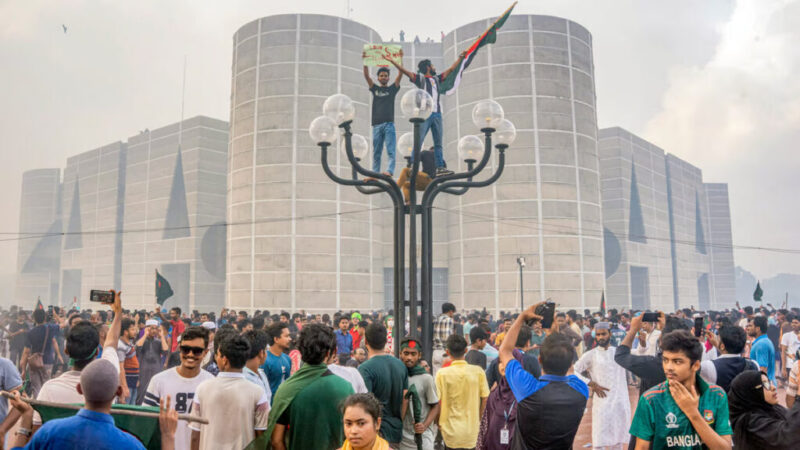
    The events of 5 August 2024  that witnessed the overthrow of Sheikh Hasina’s government have proved to be yet another watershed in India-Bangladesh relations. India has invested more in the India-Bangladesh relationship than with any other neighbour in South Asia. A glance at the website of our Ministry of External Affairs[xxiii], where details of various agreements and summaries from the last Prime Ministerial meeting in Delhi in June 2024 are provided, will suffice to show just how strong and all-encompassing this relationship has become.

    Persons or organisations associated with the previous regime have either fled the country or been placed under arrest and assets confiscated. A few have been killed by mobs. Bank accounts of others have been frozen. Jamaat e Islami which collaborated with the Pakistan Army in 1971 has been resurrected. Extremists with proven murder charges against them have been freed from prison, as have political prisoners.
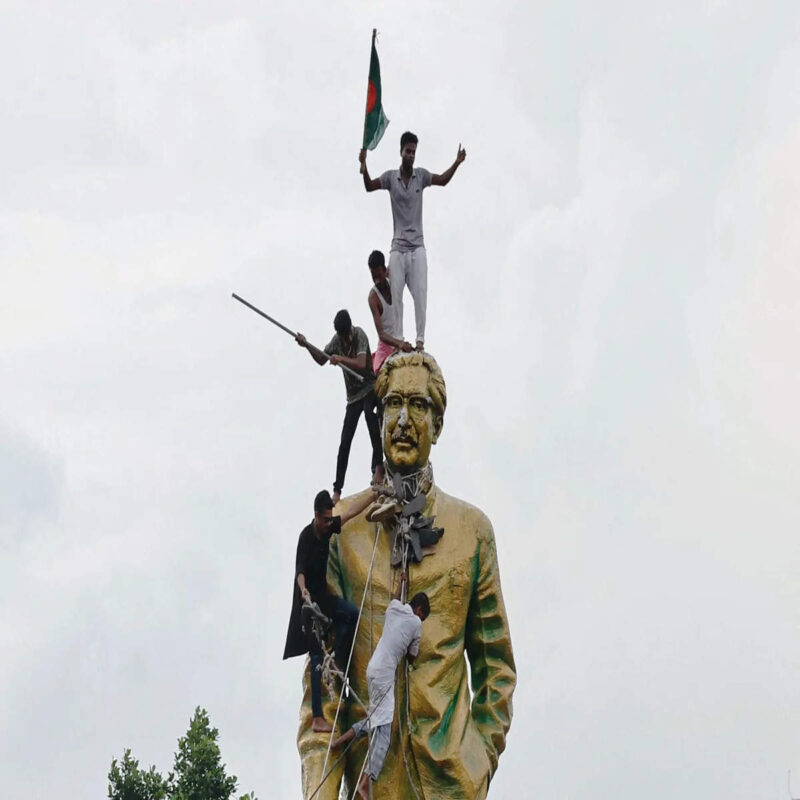
    At the time of writing, it is two months since the interim government headed by Chief Advisor Mohammed Yunus assumed charge.  The country continues to make efforts to reestablish the rule of law. All wings of the armed forces have been given magisterial powers[xxiv]. The functioning of the judiciary, higher civil services, local administration, police, security agencies, banking, economy, and higher education, is under review. Persons or organisations associated with the previous regime have either fled the country or been placed under arrest and assets confiscated. A few have been killed by mobs. Bank accounts of others have been frozen.[xxv] The Jamaat e Islami which collaborated with the Pakistan Army in 1971 has been resurrected. Extremists with proven murder charges against them have been freed from prison, as have political prisoners. Commissions have been set up to suggest reforms in the constitution, electoral system, police, judiciary, public administration and in tackling corruption.  Elections do not seem to be on the horizon yet. The advisers ( as the ministers are currently known) are new faces, not well known in India.

    While this paper does not attempt to be a study of India-Bangladesh relations, the polarised politics in that country coupled with a perception that the misdeeds of Sheikh Hasina’s government were conducted with impunity because of Indian backing, is sure to impact India’s portrayal here.

    With the removal of Sheikh Hasina, the India-Bangladesh relationship is undergoing a major reset. Statements of certain public figures and sentiments of a section of the population in that country suggest that a different perspective on the evolution of Bangladesh as a nation from 1971 onwards is emerging. While this paper does not attempt to be a study of India-Bangladesh relations, the polarised politics in that country coupled with a perception that the misdeeds of Sheikh Hasina’s government were conducted with impunity because of Indian backing, is sure to impact India’s portrayal here. This will make it an arduous task for both countries to go back to the trusted, cooperative and mutually beneficial relationship that existed. As mentioned, the list of achievements for both countries is far too numerous –  settlement of land and oceanic borders,  road, rail and riverine connectivity (including use of ports), economy and business ( both government and private), education including educational scholarships, technology, disaster management, border management, maritime security, military to military cooperation, improved people to people contacts, culture and health. As per records, of the 16 lakh visas issued by India for Bangladesh nationals in 2023, 4.5 lakhs were for medical treatment alone[xxvi]. Economies are so embedded that everyday necessities like onions are exported regularly to Bangladesh ( approximately 6 to 7 lakh tonnes annually).

    Even as the new regime provides assurances on the security of minorities and acknowledges India as an important neighbour, the enthusiasm with which it has interacted with official interlocutors from a host of nations worldwide especially China, Pakistan and the US is noteworthy and indicates where its newfound priorities might lie.

    A parallel reality, however, is that negative perceptions about India have historically found space in sections of Bangladesh’s polity. These have received a huge fillip after the change of regime with even settled agreements prone to misunderstanding. A recent example pertains to a tripartite agreement dating back to the Hasina period whereby electricity is to be imported from Nepal via India to Bangladesh. The agreement was signed in Kathmandu in the first week of  October 2024. Newspaper reports from Bangladesh indicate that there is palpable resentment over the condition that Indian transmission systems inside Indian territory be utilised for this purpose since it increases costs per unit of electricity in Bangladesh.[xxvii] Another issue currently bedevilling relations is the state of minorities in Bangladesh who have faced attacks on their homes, businesses and religious places with some loss of life, since the protests in July. India’s concerns in this regard have been conveyed at the highest level. Even as the new regime provides assurances on the security of minorities and acknowledges India as an important neighbour, the enthusiasm with which it has interacted with official interlocutors from a host of nations worldwide especially China, Pakistan and the US is noteworthy and indicates where its newfound priorities might lie.

    Larger Implications for India

    Bangladesh and Myanmar are pivotal for India’s Act East policy from the security, economic and connectivity angles. The issues pertaining to Myanmar and Manipur have been brought out earlier. A common concern affecting both nations and  India is the Rohingya crisis. Despite international pressure and requests from Bangladesh for China to intercede with Myanmar on its behalf, there has been no positive response from Myanmar. Bangladesh, which currently hosts close to one million refugees,[xxviii] has publicly expressed its inability to accommodate any more Rohingyas and asked for a speedy ‘third country settlement’ [xxix]. A detailed report of the International Crisis Group (ICG) in October 2023[xxx]provides details of activities of militant organisations like the Rohingya Solidarity Organisation (RSO) and Arakan Rohingya Salvation Army (ARSA) which are involved in drug running from Myanmar along with Bangladeshi syndicates for sale of the product in that country. Their participation in violent crime and other illegal activity has become a pressing concern within Bangladesh. Rohingyas have infiltrated into India as well, and have been identified as far North as Jammu. The security implications of such migration for both Bangladesh and India are apparent. The insensitivity of the Myanmar Junta on this account is heightening security risks for India and Bangladesh and merits diplomatic intervention.

    With the situation in Bangladesh evolving by the day, it is prudent for India to take a strategic pause as it weighs its options for pursuing its Act East policy. While giving the new regime in Bangladesh its due, India has to consider the impact of resurgent forces aided by inimical powers that aim to derail the India-Bangladesh relationship beyond repair. Even as both countries attempt to reestablish strong ties, the old adage preached by educated Bangladeshis in the context of support to Sheikh Hasina’s regime that ‘India should not put all its eggs in one basket’ resonates. While Myanmar geographically cannot provide the singular advantages that Bangladesh can, it is time for India to press for securing Myanmar’s cooperation to complete pending projects in that country, such as the Kaladan Multi-Modal Port Project (KMMPP) via Sittwe and Paletwa, that provides an alternate route to our North East, as well as the Trans Asian Highway (TAH) that provides connectivity with the rest of ASEAN, amongst others.

    To summarise, two possible reasons for inviting rebel Myanmar groups to Delhi could be: first, the relative viability of either Bangladesh or Myanmar to help implement the Act East policy in light of the emerging situation in Bangladesh and the state of the civil war in Myanmar. The second, ensuring security on the India-Myanmar border, to prevent aggravating the situation in India’s border states.


    Notes:

    [i] ‘Exclusive: India extends unprecedented invite to Myanmar’s anti-junta forces, sources say’ Wa Lone and Devjyot Ghoshal Reuters September 23, 2024

    [ii] ‘Govt aims to make Northeast gateway of ‘Act East Policy’: President Murmu’ Press Trust of India 27 June 2024.

    [iii] Ibid.

    [iv] ‘Japan to tie landlocked Northeast India with Bangladesh’  Saleem Samad  The Daily Messenger 05 March 2024.

    [v] Press Information Bureau Government of India Ministry of Shipping note dated  10 June 2015

    ‘Bangladesh, Bhutan, India and Nepal (BBIN) Motor Vehicle Agreement for the Regulation of Passenger, Personal and Cargo Vehicular Traffic amongst BBIN’

    [vi]   ‘Breaking Away: The Battle for Myanmar’s Rakhine State Asia Report N°339 | 27 August 2024’ International Crisis Group (Executive Summary).

    [vii]   ‘As Myanmar’s Junta Loses Control in the North, China’s Influence Grows’  Jason Tower, United States Institute for Peace, August 1, 2024.

    [viii] Ibid.

    [ix]   ‘Facing setbacks against resistance forces, Myanmar’s military government activates conscription law ‘ Associated Press, February 12, 2024.

    [x] ‘India’s ‘Forgotten Partition’ and the Myanmar Refugee Crisis’  Swapnarka Arnan The Diplomat  11 May 2024.

    [xi] ‘We killed many … drones are our air force’: Myanmar’s rebels take on the junta from above. Aakash Hassan and Hannah Ellis-Petersen  The Observer 20 January 2024.

    [xii] ‘Armed Groups Snub Myanmar Junta ‘Peace’ Offer’  The Irrawaddy 28 September 2024

    [xiii] ‘Centre provides 1,379 MT rice to Mizoram for Manipur, Myanmar, B’desh refugees’ Morung Express 25 September 2024.

    [xiv] ‘Ethnic violence in India’s Manipur escalates, six killed’  Tora Agarwala Reuters  September 7, 2024

    [xv] ‘900 Kuki militants infiltrated Manipur from Myanmar, says Security Advisor’ India Today NE September 20 2024.

    [xvi] ‘Input on infiltration by 900 Kuki militants could not be substantiated on the ground, says Manipur security advisor’ Vijaita Singh The Hindu 26 September 2024.

    [xvii] ‘Kukis call removal of Assam Rifles from 2 Manipur areas ‘biased, appeasement’, Meiteis call it ‘victory’  Ananya Bhardwaj  The Print 04 August 2024.

    [xviii]‘ Manipur: Kuki-Zo organizations hold rallies, demand separate ‘Kukiland’ for peace  by Northeast News

    August 31, 2024.

    [xix] YouTube channel titled ‘Zalengam Media’.

    [xx] ‘Kuki militants seek release of ‘secessionist’ in Manipur’ Prawesh Lama and Thomas Ngangom Hindustan Times Sep 30, 2024.

    [xxi] ‘Keep us out of your war, Manipur Naga body warns two warring communities’  The Hindu Bureau 06 February 2024

    [xxii] ‘Government sanctions ₹31,000 crore to fence Myanmar border’   The Hindu

    Published – September 18, 2024

    [xxiii] Ministry of External Affairs, Government of India website mea.gov.in.

    [xxiv] ‘Navy, the air force also granted magistracy powers’  The Daily Star September 30 2024

    [xxv] ‘Bank accounts of Joy Putul Bobby frozen’ Dhaka Tribune 30 Sep 2024.

    [xxvi] ‘Indian High Commission in Dhaka, facing protests & threats, returns 20,000 visa applicants’ passports ‘ Ananya Bhardwaj  The Print   29 September 2024.

    [xxvii] ‘Bangladesh delegation in Nepal to sign the contract to import 40 MW electricity’ Dhaka Tribune 30 September 2024.

    [xxviii] Operational Data Portal of the United Nations High Commissioner for Refugees, for Bangladesh.

    [xxix] ‘Bangladesh calls for faster resettlement process for Rohingya’ Ruma Paul  Reuters  September 8, 2024

    [xxx] ‘Rohingya Refugees in Bangladesh: Limiting the Damage of a Protracted Crisis’ International Crisis Group Autumn Update 04 October 20223.


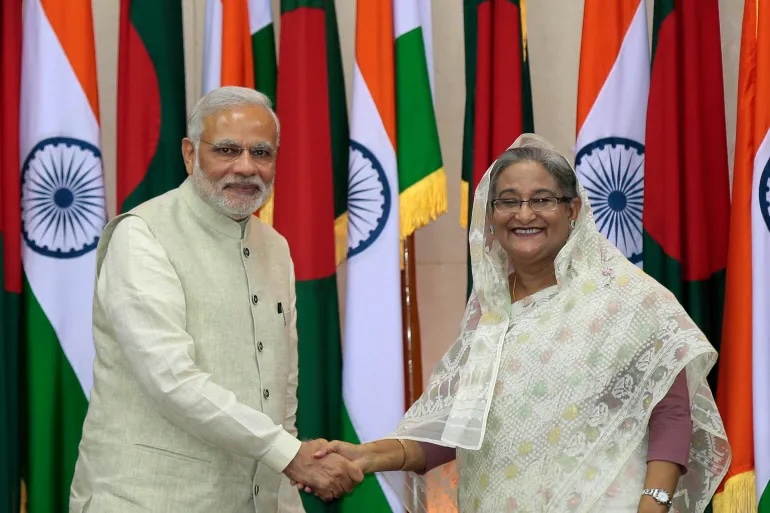
    Feature Image Credit: What does Sheikh Hasina’s resignation mean for India-Bangladesh relations? – aljazeera.com 

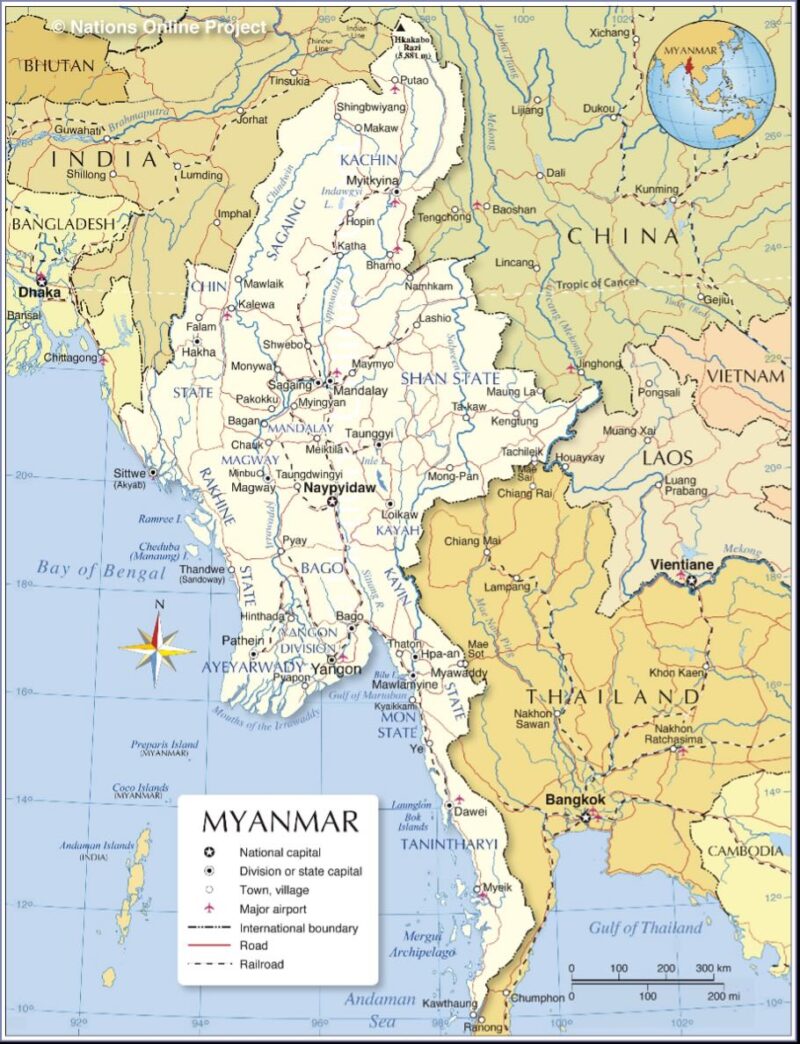
    Map Credit: National Online Project

    Bangladesh Parliament Image: The Shattered Identity of a Nation: From Liberation to Chaos – borderlens.com

    Sheikh Mujibur Rahman’s Statue: Bangabandhu to Toppled Statue: Mujibur Rahman’s contested legacy post Bangladesh upheaval – Economic Times
     

  • Strategies: hierarchy or balancing Purpose, Aims and Means?

    Strategies: hierarchy or balancing Purpose, Aims and Means?

    At the beginning of his famous first chapter, Clausewitz defines war as mentioned above within a hierarchy of purpose, aims, and means. His renowned formula is related to this definition. At the end of the same chapter, nevertheless, he introduces the consequences for the theory of war from this initial reasoning about the nature of war and states: “Our task, therefore, is to develop a theory that maintains a balance between these three tendencies, like an object suspended between three magnets”


    Strategy Bridge
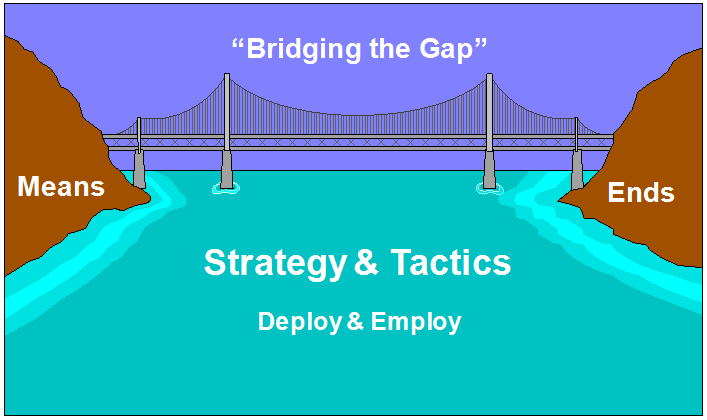
    “The Strategy Bridge concept leads to battle-centric warfare and the primacy of tactics over strategy.”

    At the outset, I would like to emphasise that in war and in violent action, justifiable ends do not legitimate all means. But I won’t solely treat the means applied by Hamas on October 7th, nor that of the Israel defence forces afterwards. Nevertheless, if someone argued that the ends justify all means, this would have to be applied to both sides. I want to highlight more principal arguments concerning the ‘end-aims-means’ relationship by contrasting a mere hierarchical approach, which is, in my view, leading to a reversal of ends and means, and a floating balance of them. The task of coming to a proper appreciation of Clausewitz’s thoughts on strategy is actually to combine a hierarchical structure with that of a floating balance. This article examines the relation of purpose, aims and means in Clausewitz’s theory and highlights that this relation is methodologically comparable to the floating balance of Clausewitz’s trinity. Modern strategic thinking is characterised by the end, way (aim), means relationship and the concept of the ‘way’ as the shortest possible connection between ends and means  (consider, for instance, Colin Gray’s concept of a strategy bridge[1]). This notion stems from a very early text of Clausewitz: ‘As a result each war is raised as an independent whole, whose entity lies in the last purpose whose diversity lies in the available means, and whose art therein exists, to connect both through a range of secondary and associated actions in the shortest way.’

    Nevertheless, here we can detect the fundamental difference in many of Clausewitz’s interpretations, which understand strategy as the shortest way of connecting purpose and means (battle and combat). Within this quote, Clausewitz speaks of war as an independent whole, a notion which he later rejects fervently.   A central distinction is the concept to which the means attaches: the Taoist tradition and Sun Tzu hold that the means connects directly to the political purpose of the war; in contrast, for Clausewitz, the means attaches to an intermediary aim within a war, which must be sequentially achieved prior to the fulfilment of the war’s political purpose. The distinctive feature of the Taoist tradition is that strategy as a “way” effectively becomes tactics, in the sense that there exists no “strategic” aim, in the meaning of an intermediate military “strategic” war aim inserted between the political purpose of the war and tactical combat.

    Battle-centric Warfare: Winning battles and losing the War

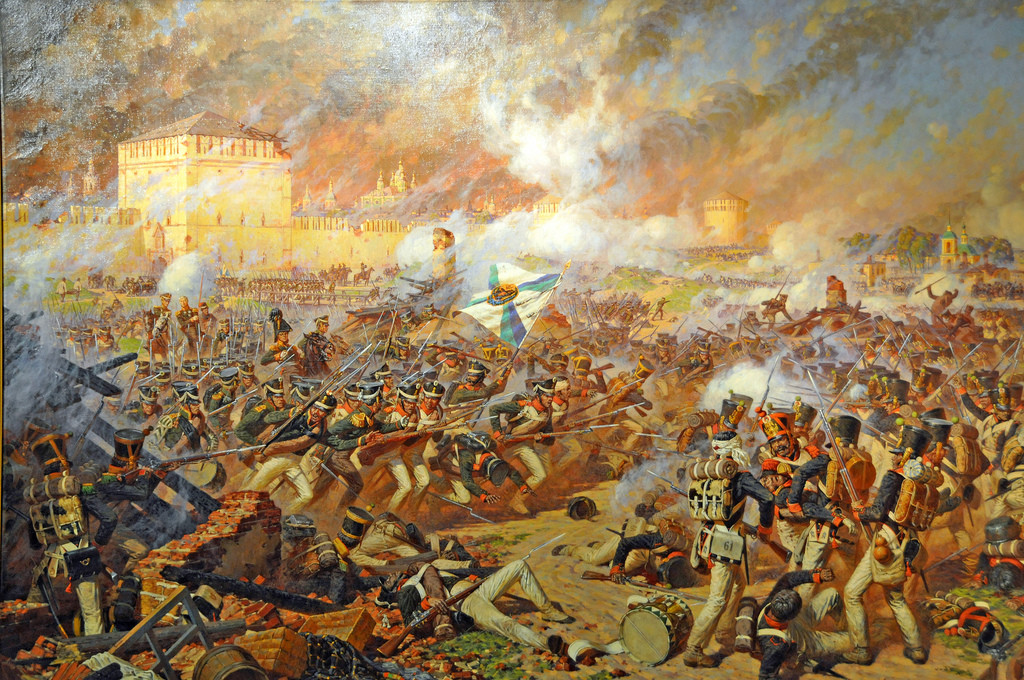
    If strategy is nothing else than the direct way of linking the political purpose with the means, understood as combat, this understanding results in a ‘battle-centric’ concept of warfare that privileges tactical outcomes. One might attribute the loss of the Vietnam War, as well as the defeat of the US in Afghanistan and Iraq, to this misunderstanding about battle. In the early 1980s, Colonel Harry G. Summers Jr wrote a most influential work about the faults made in the Vietnam War. He observed that the US Army won every battle in Vietnam but finally lost the war. Summers recounts an exchange between himself and a former North Vietnamese Army officer some years after the war. It went something like this: Summers: ‘You never defeated us in the field.’ NVA Officer: ‘That is true. It is also irrelevant.’ [2]Winning battles does not necessarily lead to winning the war, and not only in this case. The same point can be made about Napoleon’s campaign in Russia. Napoleon won all the battles against the Russian army but lost the campaign. It was precisely this observation that led Clausewitz to denounce battle-centric warfare.

    ‘War is thus an act of force to compel our enemy to do our will,’ Clausewitz wrote at the beginning of his famous first chapter of On War (75).[3] ‘Force … is thus the means of war; to impose our will on the enemy is its purpose’, he continued. ‘To secure that purpose, we must make the enemy defenceless, which, in theory, is the true aim of warfare. That aim takes the place of the purpose, discarding it as something not actually part of war’ (75). This seemingly simple sentence reveals the core problem: what does it mean that the aim ‘takes the place’ (in German: vertritt) of the purpose? Are they identical or different? To put it bluntly, At the beginning of his famous first chapter, Clausewitz defines war as mentioned above within a hierarchy of purpose, aims, and means. His renowned formula is related to this definition. At the end of the same chapter, nevertheless, he introduces the consequences for the theory of war from this initial reasoning about the nature of war and states: “Our task, therefore, is to develop a theory that maintains a balance between these three tendencies, like an object suspended between three magnets” (89).[4] In relation to the concept of strategy, we must combine a hierarchical understanding of the purpose-aims-means-rationality with that of a floating balance of all three.

    Presenting any of these elements as an absolute would be artificially to delimit the analysis of war, as the components are interdependent. Clausewitz’s solution is the ‘trinity’, in which he defined war by different, even opposing, tendencies, each with its own rules. Nevertheless, since war is ‘put together’ in this concept of three tendencies, it is necessary to consider how these tendencies interact and conflict simultaneously rather than one being absolute. Clearly, if we go to war, there is a purpose for that war, and different purposes for war are possible. Each of these possible purposes is connected with different achievable military aims, and finally, each aim can be achieved by various means. The question, therefore, is whether all three are incorporated into a hierarchy or whether their relationship must be understood as a floating balance among them.

    Purpose, Aims, and Means in War

    Clausewitz explains this dynamic relationship of purpose, aims and means in war in Chapter Two of Book One. At the beginning of Book One, Chapter Two, Clausewitz writes that ‘if for a start we inquire into the [aim] of any particular war, which must guide military action if the political purpose is to be properly served, we find that the [aim] of any war can vary just as much as its political purpose and its actual circumstances’ (90). The consequence of this proposition is that not every aim and means serves a given purpose. The problem of the relationship between purpose and aims is that each element of the purpose-aims-means construct has a rationality of its own, which Clausewitz emphasises in his proposition that war has its own grammar, although not its own logic. He writes, for example, ‘we can now see that in war many roads lead to success, and that they do not all involve the opponent’s outright defeat.’ Clausewitz then summarises that there exists a wide range of possible ways (94) to reach the aim of war and that it would be a mistake to think of these shortcuts as rare exceptions (94). For example, Clausewitz wrote: ‘It is possible to increase the likelihood of success without defeating the enemy’s forces. I refer to operations that have direct political repercussions, that are designed in the first place to disrupt the opposing alliance’ (emphasis in the original) (92).[5]Another prominent example, Clausewitz emphasised, was the warfare of Frederick the Great. He would never have been able to defeat Austria in the Seven Years’ War if his aim had been the outright defeat of Austria. Clausewitz concludes if he had tried to fight in this manner, ‘he would unfailingly have been destroyed himself.’ (94). After explaining other strategies besides the destruction of the enemy armed forces, he concludes that all we need to do for the moment is to admit the general possibility of their existence, the likelihood of deviating from the basic concept of war under the pressure of particular circumstances (99). But the main conclusion is that in war, many roads may lead to success – but the reverse is true, too, not all means are neither guaranteeing success nor are legitimate.[6]

    But the main conclusion is that in war, many roads may lead to success – but the reverse is true, too, not all means are neither guaranteeing success nor are legitimate.

    Why is that so?   Although Clausewitz finishes Chapter 2 of Book I with the notion that the ‘wish to annihilate the enemy’s forces is the first-born son of war’ (99), he emphasises that at a later stage and by degrees’ we shall see what other kinds of strategies can achieve in war’ (99). Nevertheless, he gives us two clues in this chapter. First, that war is not an independent whole but – an extension of the political sphere: that war has its own grammar but not its own logic.[7] Second, in my interpretation of Clausewitz, the difference between attack and defence represents a distinction between self-preservation and gaining advantages in warfare. Already in Chapter Two, he articulates the ‘distinction that dominates the whole of war: the difference between attack and defence. We shall not pursue the matter now, but let us just say this: that from the negative purpose [comes?] all the advantages, all the more effective forms, of fighting, and that in it is expressed the dynamic relationship between the magnitude and the likelihood of success’ (94).

    My thesis is that Clausewitz is trying to combine the Aristotelian difference between poieses and praxis in his writings – an instrumental view of war for political purposes with the performance of the conduct of war, not just with the execution of the political will. Whereas for the early Clausewitz, the ‘purpose’ is a moment within the war, he later opposes this position, emphasising that this purpose is located outside of the actual warfare. With this differentiation of purposes in war and the purpose of war, Clausewitz covers a fundamental difference between various forms of action, which was initially developed by Aristotle and remains even today. The practical philosophy of Aristotle is based on the basic distinction of techne, as based on poiesis and phronesis, and praxis, based on performance and practical knowledge. Techne is technical, instrumental knowledge.

    In contrast, phronesis or praxis of action can be characterised as performance in warfare. If we compare different purposes for going to war with each other, we are close to what Max Weber called the “value rationality” of purposes. Although Max Weber sometimes seems to overemphasise the difference between the rationality of purposes and military aims, his differentiation is useful to shed light on Clausewitz’s theory. Value rationality is primarily about the relationship of different purposes to one another, which can be classified into a hierarchy of purposes. The subordination of warfare to the shaping of international order, as Clausewitz puts it, is ‘value-rational’ as defined by Max Weber. By contrast, “action rationality” is a principle of action exclusively oriented to achieving a particular military aim through the most effective means and rational consideration of possible consequences and side effects.

                Clausewitz initially makes a two-fold distinction between the purpose-aims-means relationship: first, as a value rationality, in which we find a hierarchical relationship starting from the purpose at the top, with aims and means subordinated respectively; second, as a process rationality, in which the military aim as the object of practical action is the output of the purpose-aim-means relationship.

    He made this distinction at times only implicitly based on the different connotations of the concept of purpose. In part, Clausewitz differentiates between the purpose of war and the purpose in war. He used the same terms throughout, providing various contents from which this distinction could be deduced. Henceforth we need to have a further look at his use of terms and concepts.

    Beginning with his earliest writings, Clausewitz asserted that war has a purpose. In his Strategie (Strategy), written in 1804, he wrote that the ‘purpose of the war’ can be: ‘Either to destroy the enemy completely, to remove their sovereignty, or to prescribe the conditions for peace.’ The destruction of the enemy forces is the ‘more present purpose’ of war. If the purpose of war, however, is the destruction of the enemy forces, is it a purpose that is realised within warfare?[8]  The problem is that the destruction of the enemy moves from being a means to an aim in and of itself. In contrast to such an understanding of the purpose-aims-means rationality, for Clausewitz, the military aim within the war is an intermediary dimension between purpose and means. In his later writings, Clausewitz replaces the term’ purpose in war’ through the terms’ aims’ and ‘goals in warfare’ [(he uses the same German term Ziel for both aim and goal).

    The late Clausewitz emphasises that the purpose of war lies outside the boundaries of the art of warfare. He argues that one must always consider peace as the achievement of the purpose and the end of the business of war. (215) ‘Even more generally, the consideration of the use of force, which was necessary for warfare, affects the resolution for peace. As the war is not an act of blind passion but is required for the political purpose to prevail, this value must determine the size of our own sacrifices. Once the amount of force and thus the extent of the applied force is being so large that the value of the political purpose was no longer held in balance, the violence must be abandoned, and peace be the result.’ (217)

    Additionally, one has to take into account the counter-actions of the opponent. Clausewitz emphasises this difference in his chapter about the theory of war, Book Two: ‘The essential difference is that war is not an exercise of the will directed at inanimate matter, as in the case with the mechanical arts, or at matter which is animate but yielding, as in the case with the human mind and emotions in the fine art. In war, the will is directed at an animate object that reacts’. (149). Hence, Clausewitz’s final achievement is not a strategy that could be applied to all kinds of war but a reflection on the art of warfare, the performance of warfare within a political purpose.

    If, as it seems to Clausewitz, the purpose of war lies outside of warfare and war is determined only as means for this purpose, then a technical, instrumental understanding of the war is thereby intended. But this is not the whole of Clausewitz. He also emphasises praxis, performance and practical knowledge. If the purpose lies within warfare, this does not contain a complete identity of the goal of martial action with its execution. In this case too, the purpose is not war for war’s sake. My conclusion is that Clausewitz is really trying to combine the Aristotelian difference between poieses and praxis in his writings – an instrumental view of war for political purposes with the performance of the conduct of war, not just with the execution of the political will.

    Further dimensions of the concept of Purpose in Clausewitz

    According to Herfried Münkler, Clausewitz makes a distinction between an existential and instrumental view of war. If purpose exists at the top of a hierarchy in the purpose-aims-means relationship, there is an assumption that war is instrumental, in the sense that there is a choice between different purposes, thus identifying the purpose in terms of Max Weber’s value rationality. However, if war is “existential”, in that the only purpose is the survival of the state, the hierarchy of the relationship is reversed, as the means by which the enemy is defeated gains primacy, which accords with a process of rationality. Clausewitz summarised the difference between both concepts of purpose: ‘Where there is a choice of purpose, one may consider and note the means, and where only one purpose may be, the available means are the right ones.’[9]

    A pure process of rationality can lead to the fact that the military aim and means of warfare become the purpose in themselves. It is for characterising war in this manner, as an instrument facing inwards on itself, rather than outwards to a wider political purpose, that the early Clausewitz can be criticised. He adopted the Napoleonic model from Jena, trying to seize its successes systematically and, without considering the social background of France, to generalise it as an abstraction. In his critique of Clausewitz, Keegan wrote that the military develops war cultures, which correspond with their social environment. If, however, war is seen as purely instrumental and the connection to this environment is cut, then the danger of blurring the military boundaries threatens potentially endless violence. In this view, the roots of Clausewitz’s image of war refer back to the origins of the modern age, which was characterised by the full possession of civil rights, the general right to vote and compulsory military service, all of which completed the portrait of the citizen soldier and the ‘battle scenes’ of the people’s army.

    The question for today is whether the revolution in military affairs as well as fourth and fifth-generation warfare (5th generation warfare is partisan warfare applied by states or state-like entities like Hamas) are tempting to a primacy of the means and aims over meaningful purposes, a primacy of tactics over strategy and the ‘art of war’, which is in Clausewitz’s view even surpassing strategy.

    The French model was, in fact, adapted for the Prussian circumstances: a revolutionary people’s army in the service of the raison d’ état – but without ‘republic’ (meaning a democratically constituted system of government). In this form, Clausewitz’s theory was proved and began to be used later for multiple purposes. It started its triumphant advance through the general staff throughout the war ministries of the world. In Keegan’s view, the result of this process was the general armament of Europe in the 19th century and its excessive increase in the 20th century.[10] Keegan left unmentioned that Clausewitz’s theory of war had yet to be bisected to fulfil this function, especially by the German general staff in the First World War. Nevertheless, his criticism revealed a fundamental problem of modern war: the separation of potential options for warfare from socially meaningful purposes. In World War I, tactics replaced strategy.

    Although the understanding of the strategy of the early Clausewitz was, in fact, one of an aim or goal independent from the political realm within warfare, the definition of purpose of the later Clausewitz is based on the political purpose outside of warfare. There are still passages in the final version of On War in which Clausewitz does not differentiate clearly between purpose and aims. The question for today is whether the revolution in military affairs as well as fourth and fifth-generation warfare (5th generation warfare is partisan warfare applied by states or state-like entities like Hamas) are tempting to a primacy of the means and aims over meaningful purposes, a primacy of tactics over strategy and the ‘art of war’, which is in Clausewitz’s view even surpassing strategy.


    Notes:

    [1]   The relevant discussions may be found in the following books: Echevarria, A. 2007. Clausewitz and Contemporary War. Oxford: Oxford University Press; Gray, C. 1999. Modern Strategy. Oxford: Oxford University Press; Herberg-Rothe, A. 2007. Clausewitz’s Puzzle: The Political Theory of War. Oxford: Oxford University Press; Keegan, J. 1994. A History of Warfare. London and New York: Vintage; Simpson, E. 2012. War from the Ground Up: Twenty-First Century Combat as Politics. London: Hurst; Strachan, H. 2007. Clausewitz’s OnWar. Atlantic Monthly Press, New York; von Ghyczy, T., Bassford, C. and von Oetinger, B. Clausewitz on strategy. Inspiration and insight from a master strategist. Hoboken: Wiley; Heuser, B., 2010, The Evolution of Strategy: Thinking War from Antiquity to the Present. Cambridge: Cambridge University Press; Heuser, Beatrice 2010, The Strategy Makers: Thoughts on War and Society from Machiavelli to Clausewitz. Praeger Security International:

    [2]   For details, see Herberg-Rothe, Andreas, Clausewitz’s puzzle. Oxford University Press: Oxford 2007. Clausewitz, Carl von; 1990.  Schriften, Aufsätze, Studien, Briefe, vol. 2, ed. W. Hahlweg. Göttingen: Vandenhoeck&Ruprecht.; Clausewitz, Carl von, 1992. Historical and Political Writings, ed. P. Paret and D. Moran, 1992. Princeton, NJ: Princeton University Press; Clausewitz, Carl von,  Politische Schriften [Political Literature], ed. H. Rothfels. Munich: Drei Masken Verlag.  1922.

    [3]   The numbers in brackets are references to Clausewitz, Carl von, On War. Translated and edited by Peter Paret and Michael Howard. Princeton: Princeton University Press 1984. As translation is a highly tricky process, I have tried to make some translations of my own only in some cases, especially in trying to distinguish the German terms „Zweck“ and „Ziel“. These terms have been translated as purpose, object, objective, ends, and as aims, goals and sometimes even ways by Howard and Paret. My main intention in this article is to distinguish between purpose and aims. It might be that the great variety of the translations has contributed to the underestimation of the difference between the purpose of the war and the goal within the war. Although they are closely connected with each other, I follow Clausewitz’s assertion that the same purpose could be reached by pursuing different goals.

    [4]   With this notion, we can explain the difference between Clausewitz’s real concept of the trinity and trinitarian warfare, which is not directly a concept of Clausewitz, but an argument made by Harry Summers, Martin van Creveld and Mary Kaldor. In trinitarian warfare, the three tendencies of war are understood as a hierarchy, whereas  Clausewitz describes his understanding of their relationship as a floating balance In my view, each war is differently composed of the three aspects of applying force, the struggle or fight of the armed forces and the fighting community the fighting forces belong to; based on this interpretation I define war as the violent struggle of communities; see Herberg-Rothe, Clausewitz’s puzzle.

    [5]   This reference seems to strengthen the difference made by Emile Simpson between the use of armed force within a military domain that seeks to establish military conditions for a political solution on one side and the use of armed force that directly seeks political as opposed to specifically military outcomes; Simpson, War from the ground up, p. 1.

    [6]   The confusion about the difference between Zweck (purpose) of and Ziel (aims) in warfare concerning Clausewitz might be additionally caused by his own insufficient differentiation in this chapter.

    [7]   For Clausewitz’s concept of Policy and politics, see Herberg-Rothe, Clausewitz’s puzzle, chapter 6.

    [8]           Clausewitz, Carl von, Strategie aus dem Jahre 1804 mit Zusätzen von 1808 und 1809 (Strategy from the Year 1804 with Additions from 1808 and 1809). In EB, Verstreute Kleine Schriften (Small Scattered Writings), pp. 3-61, here pp. 20-21.

    [9]   Clausewitz, Carl von, Historisch-politische Aufzeichnungen von 1809 (Historical-Political Records of 1809). In: Clausewitz, Carl von, Politische Schriften (Political Literature), p. 76.

    [10]         . Keegan, Kultur des Krieges (The Culture of War), in particular, p. 543; Naumann, Friedrich, An den Ufern des Oxos (On the banks of the Oxos). John Keegan corrects Carl von Clausewitz. In: Frankfurter Rundschau from 17.6.98, p. ZB 4.


    Feature Photo Credit: Dennis Jarvis – War on the Rocks

  • The Philippines’ History Curriculum: Origins and Repercussions

    The Philippines’ History Curriculum: Origins and Repercussions

    Background

    The Philippines, a twice-colonized archipelago that achieved its complete independence in 1946, is a member of the ASEAN and an essential player in the geopolitics of the Southeast Asia region. Its status is owed mainly to its rapidly growing economy, of which the services industry is the most significant contributor, comprising 61% of its Gross Domestic Product (GDP) (Bajpai, 2022). Services refer to various products – for example, business outsourcing, tourism, and the export of skilled workers, healthcare workers, and labourers in other industries. In recent years, a growing demand for qualified professionals has grown as the economy has grown, thus necessitating more robust educational systems (Bajpai, 2022). Although the Philippines has a high literacy rate, hovering at around 97%, the efficacy of its educational system is often called into question (“Literacy Rate and Educational Attainment”, 2020). Administration oversight, infrastructural deficiencies, and pervasive corruption in the government that seeps into the entities responsible for educational reform are significant issues that legitimize these doubts (Palatino, 2023). However, reforming the current flaws in the system requires an understanding of the basic underlying structure of the country’s educational system as it is today. This fundamental understanding can help clarify specific political trends in the status quo and highlight the importance of proper historical education in developing a nation. Despite its ubiquity in nearly every curriculum, the study of history as a crucial part of the education system is often not prioritized, leading to an underdeveloped understanding of the society’s culture and previous struggles with colonial exploitation. Though it is present in the Philippines’ education today, it continues to change because of its historically dynamic demographic and political atmosphere.
    Origins of the Education System 

    To begin with, the educational system, and especially the modes of linguistic and history education in the country, have been heavily influenced by the major powers that occupied it – namely, the Spanish Empire and the United States. The impact of these periods of colonization can be seen most significantly in the historical education and consciousness of the general population, as well as the propagation of the English language. The Philippines possesses a great deal of linguistic diversity, especially among indigenous groups – an estimated 170 distinct languages in the country today (Postan, 2020). However, even in pre-colonial times – typically considered by historians to be the years before 1521 – the most common language in the country was Old Tagalog, and other indigenous languages are still spoken today (Stevens, 1999). Records suggest that the Spanish did not forcefully erase indigenous languages spoken in the country. However, they did conduct business and educational institutions in Spanish, leading to the language being used almost exclusively amongst the upper classes – the colonizers, business people in the country, and other influential figures in the empire. Though there were attempts to conduct education in Castilian Spanish, priests and friars responsible for teaching the locals preferred to do so in local languages as it was a more effective form of proselytization. This cemented the reputation of Spanish as a language for the elite, as the language was almost exclusively limited to those chosen to attend prestigious institutions or government missions that operated entirely in Spanish (Gonzales, 2017). In terms of popularising education to expose a broader audience to Christianity, the Spanish also established a compulsory elementary education system. However, restrictions existed based on social class and gender (Musa & Ziatdinov, 2012). Because of this, although the influence of Spanish on local languages can be seen through the borrowing of certain words, indigenous and regional languages were not supplanted to a large extent, though their scripts were Latinised in some instances to make matters more convenient for the Spanish (Gonzales, 2017). However, the introduction of Catholicism to a large segment of the population and a more organized educational system are aspects of Spanish rule that remain in Philippine society today, as do the negative ramifications of the social stratification that was a significant element of its occupation (Herrera, 2015).

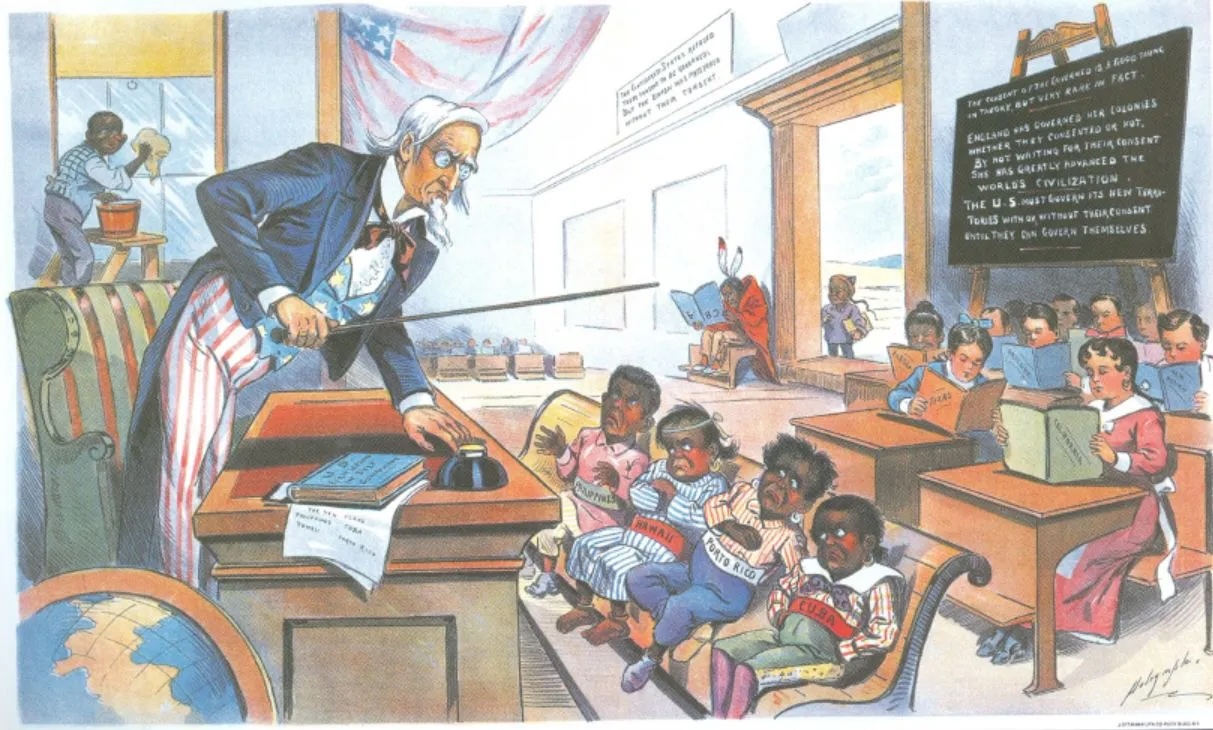
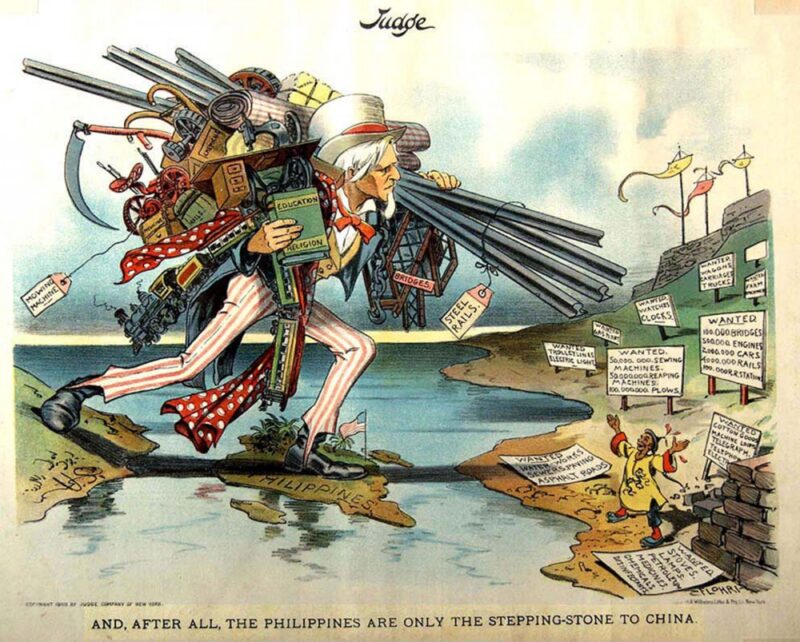
    Uncle Sam, loaded with implements of modern civilization, uses the Philippines as a stepping-stone to get across the Pacific to China (represented by a small man with open arms), who excitedly awaits Sam’s arrival. With the expansionist policy gaining greater traction, the possibility for more imperialistic missions (including to conflict-ridden China) seemed strong. The cartoon might be arguing that such endeavours are worthwhile, bringing education, technological, and other civilizing tools to a desperate people. On the other hand, it could be read as sarcastically commenting on America’s new propensity to “step” on others. “AND, AFTER ALL, THE PHILIPPINES ARE ONLY THE STEPPING-STONE TO CHINA,” in Judge Magazine, 1900 or 1902. Wikimedia.
    In contrast, the American occupation following Spain’s defeat in the Spanish-American War in 1898 significantly changed the country’s linguistic patterns and revolutionized the education system. Upon arriving in the country, the Americans decided to create a public school system in the country, where every student could study for free. However, the medium of instruction was in English, given that they brought teachers from the United States (Casambre, 1982). This differed from the Spanish system in that social class and gender did not influence students’ access to education to the same extent. Furthermore, the Americans brought their own material to the country due to a lack of school textbooks. As the number of schools in the country and the pedagogical influence of American teachers increased, the perception of the Americans’ role as colonizers ultimately changed. Education became a tool to exert cultural influence, leading to the propagation of American ideals like capitalism, in addition to subverting separatist tendencies that were cropping up in the country as one colonizer was replaced by another. It also led to the suppression of knowledge concerning the US’ exploitation of the nation.  Ultimately, the colonizers’ influence on the linguistic and educational landscape of the nation manifests itself in the general population’s understanding of their country’s history.

    The Current History Curriculum

    The social studies curriculum in the Philippines, called Araling Panlipunan (AP), is an interdisciplinary course that combines topics of economics and governance with history, primarily post-colonial history (“K to 12 Gabay Pangkurikulum”, 2016). The topic of World War II takes up nearly 50% of the course, while other aspects of indigenous and pre-colonial history are included to a limited extent (Candelaria, 2021). This act of prioritization is a colonial holdover. Although the Philippines indubitably played a crucial role in the Pacific Theatre during WW II, its massive presence in the AP course signals the nation’s continued alliance with the US and reinforces a mentality amongst the general public that favours it. This bias occurs as a singular American perspective is promoted by the course, wherein the actions of other countries against the Philippines are highlighted. At the same time, the exploitation of the Philippines by the Spanish and Americans is not as widely discussed. For example, although the atrocities committed by the Japanese during World War II are taught extensively as part of the curriculum, the American actions during the Philippine-American War (1899-1902), during which the Americans burned and pillaged entire villages, are not emphasized (Clem, 2016). Furthermore, it leads to the sidelining of historical events that have created the political situation in the country today, such as the issue of the current president being related to the former dictator, Ferdinand Marcos.

    As the course is conducted chronologically, discussions of topics such as the Marcos Regime are left up to teachers’ discretion due to the subject’s controversial nature, given that the dictator’s son is the current president (Santos, 2022). This means that as much or as little time can be spent on it is as decided. Because of the American influence, even citizens who are taught about the atrocities that occurred during the dictatorship are not informed of the support provided to the Marcos dictatorship by the US government. During his presidency, which lasted from 1965 to 1986, the Philippines received significant economic aid from the US government in exchange for the continuation of its military presence in the country, which proved helpful to the US during the Vietnam War as it was able to utilize its bases in Subic Bay and Clark air base(Hawes, 1986). As a result of the necessity of these bases, a 1979 amendment to the 1947 Military Bases Agreement was signed, which increased the US’ fiscal contributions to security assistance. To further support this military objective, the Carter and Reagan administrations showed their diplomatic support to Marcos by visiting the Philippines and inviting him to Washington.

    Additionally, when Marcos was ousted from power in 1986 by the People Power Revolution, he spent his exile in ‘Hawaii’, in the US (Southerl, 1986). Therefore, while the US is credited for introducing democratic principles to the country through its program for expanding education while occupying the archipelago, it also played a significant role in supporting a despotic government that is not as widely acknowledged. Because of this, the Filipino perception of and relationship with the US has been heavily influenced by a lack of awareness amongst the general public about its involvement in a massively corrupt administration.

    Significant Developments 

    Despite the importance of a robust historical education in improving the public’s awareness of their own culture and geopolitical relationships, history as a subject has been transformed into a political tool in the Philippines, twisted when it can be useful and neglected when it does not support an agenda. Various bills passed in the House of Representatives (the lower house of parliament in the Philippines, below the Senate), as well as decisions taken by the Department of Education, have diminished the significance of history in the overall school curriculum and reinforced an American perspective in the historical content that continues to be taught. Department of Education Order 20, signed in 2014, removed Philippines History as a separate subject in high school (Ignacio, 2019). The argument for this decision was that Philippines History would be integrated within the broader AP social studies curriculum under different units, such as the Southeast Asian political landscape. However, educators opposing the abolition of Philippine History as a separate subject state that due to fewer contact hours being allocated for AP in total compared to English, maths, and science, it is unlikely that Philippine history can be discussed in adequate depth, considering the other social science topics mandated by the AP curriculum. In addition, House Bill 9850, which was passed in 2021, requires that no less than 50% of the subject of Philippine history centres around World War II (Candelaria, 2021). The bill’s primary concerns mention that it prioritizes the war over other formative conflicts in the nation’s history, such as the Philippine Revolution against Spain or the Philippine-American War. Furthermore, it requires modifying or reducing discussions surrounding other vital events in the Philippines, such as agrarian reforms and more recent developments like the conflict in Mindanao.

    Both of these policies face significant opposition. For example, a Change.org petition demanding the return of the subject of Philippine history in high schools has garnered tens of thousands of signatures. At the same time, numerous historical experts and teachers have spoken against HB 9850 (Ignacio, 2018). Despite this resistance from academics and teaching professionals, it is unlikely that history will be prioritized unless the general public also learns to inform itself. Around 73% of the total population (approximately 85.16 million people) have access to the internet, of which over 90% are on social media (Kemp, 2023). Because of the large working population in the country, social media companies like Facebook have set up offices there. Programs that offered data-free usage in 2013 have made the Philippines a huge market for Facebook, and many Filipinos trust the news they find on the website more than some mainstream media sources (Quitzon, 2021). Even though internet access is relatively widespread, signifying that information is readily available to the average Filipino, social media, especially Facebook, often functions as a fertile breeding ground for misinformation.

    Repercussions of the History Curriculum

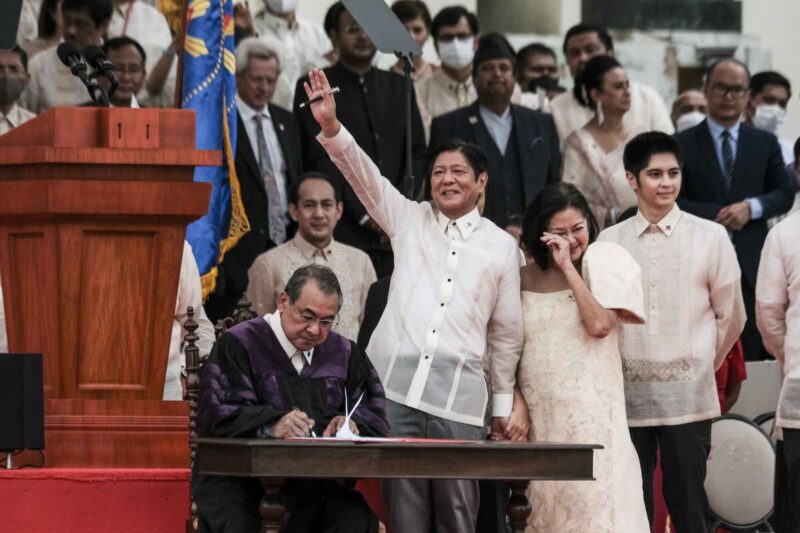
    In recent years, misinformation has become an important political tool to propagate ignorance and manipulate historical and current events to promote specific agendas. The most relevant example was the mass historical revisionism campaign leading to the 2022 general elections (Quitzon, 2021). Given that Bongbong Marcos, Ferdinand Marcos’ son, was running for president alongside vice presidential candidate Sara Duterte (former president Rodrigo Duterte’s daughter), the campaign focused on changing the public perception of both families and their period of rule. Preceding the elections, social media trolls and supporters of the campaign spread videos, doctored images, and fake news that minimized the atrocities and scale of theft that occurred throughout the Marcos regime and the Duterte administration, instead highlighting and exaggerating the perceived benefits they brought to the country. The prioritization of these political agendas is reflected in the history curriculum, as it does not sufficiently cover critical areas of Philippine history that have directly led to the political situation of today and the pre-colonial era that is an inseparable part of Filipino culture.

    Recommended Policy Measures 

    However, another by-product of this absence of consciousness is that the general public is desensitized to poor governance and neocolonialism as their education systems and news sources constantly feed them biased and inaccurate information about the history of their own country and its relationship to others. When dictators are portrayed as good rulers and previous colonizers are portrayed as historical allies, it results in a population that unknowingly votes against its interests as they are unaware of the past events that have shaped the current political atmosphere and the various deficiencies in the system. Considering that these political campaigns rely on the general public not having a solid understanding of historical events, especially those about the martial law era, it is unlikely that politicians will take meaningful steps to improve historical education in the country since they benefit from citizens lacking awareness. As such, the onus must, unfortunately, be placed on the general public to educate themselves on good citizenship and exercise their right to vote at the grassroots level responsibly so that future local politicians and members of parliament may at least be able to encourage the study of history in the government. Additionally, teaching students how to use the internet to conduct reliable research is imperative to reduce misinformation so they can counter the misinformation they find online.

    Conclusion

    In conclusion, the Philippine education system has been shaped by the periods of colonization the country has experienced. This has led to a history curriculum favouring the American perspective and thus disadvantages crucial elements of local history. The consequences of the lack of awareness this has caused in the general public are manifold: it has made them more susceptible to misinformation and historical revisionism. It has worked to the advantage of politicians who take advantage of it. Nevertheless, the Philippines can still reverse this trend by utilizing its high literacy rates and social media presence to promote reliable historical education. They can also push for better historical education policies through petitions and appeals to local government agencies and Senate committees related to education – such as the National Commission for Culture and the Arts (NCCA), the Committee on Basic Education and Culture, and the Committee on Education, Arts and Culture – amongst others (Ignacio, 2018). Overall, there are many deficiencies in the current history education system in the Philippines, but they still coexist with the potential for change. Citizens have the power to advocate and must continue using it to usher forth a more well-informed society and nation.


    References

    Bajpai, Prableen. “Emerging Markets: Analyzing the Philippines’s GDP.” Investopedia, 12 July 2023, www.investopedia.com/articles/investing/091815/emerging-markets-analyzing-philippines-gdp.asp#:~:text=The%20country.

    Casambre, Napoleon. The Impact of American Education in the Philippines. Educational Perspectives, scholarspace.manoa.hawaii.edu/server/api/core/bitstreams/f3bbc11f-f582-4b73-8b84-76cfd27a6f77/content#:~:text=Under%20the%20Americans%2C%20English%20was.

    Clem, Andrew. “The Filipino Genocide.” Series II, vol. 21, 2016, p. 6, scholarcommons.scu.edu/cgi/viewcontent.cgi?article=1138&context=historical-perspectives.

    Constantino, Renato. “The Miseducation of the Filipino.” Journal of Contemporary Asia, vol. 1, no. 1, 1970, eaop.ucsd.edu/198/group-identity/THE%20MISEDUCATION%20OF%20THE%20FILIPINO.pdf.

    Department of Education. K To12 Gabay Pangkurikulum. 2016, www.deped.gov.ph/wp-content/uploads/2019/01/AP-CG.pdf.

    “Education Mass Media | Philippine Statistics Authority | Republic of the Philippines.” Psa.gov.ph, 28 Dec. 2019, psa.gov.ph/statistics/education-mass-media.

    Gonzales, Wilkinson Daniel Wong. “Language Contact in the Philippines.” Language Ecology, vol. 1, no. 2, Dec. 2017, pp. 185–212, https://doi.org/10.1075/le.1.2.04gon.

    Hawes, Gary. “United States Support for the Marcos Administration and the Pressures That Made for Change.” Contemporary Southeast Asia, vol. 8, no. 1, 1986, pp. 18–36, www.jstor.org/stable/25797880.

    Herrera, Dana. “The Philippines: An Overview of the Colonial Era.” Association for Asian Studies, vol. 20, no. 1, 2015, www.asianstudies.org/publications/eaa/archives/the-philippines-an-overview-of-the-colonial-era/.

    Ignacio, Jamaico D. “[OPINION] The Slow Death of Philippine History in High School.” RAPPLER, 26 Oct. 2019, www.rappler.com/voices/ispeak/243058-opinion-slow-death-philippine-history-high-school/.

    —. “We Seek the Return of ‘Philippine History’ in Junior High School and Senior High School.” Change.org, 19 July 2018, www.change.org/p/we-seek-the-return-of-philippine-history-in-junior-high-school-and-senior-high-school.

    John Lee Candelaria. “[OPINION] The Dangers of a World War II-Centered Philippine History Subject.” RAPPLER, 20 Sept. 2021, www.rappler.com/voices/imho/opinion-dangers-world-war-2-centered-philippine-history-subject/.

    Kemp, Simon. “Digital 2023: The Philippines.” DataReportal – Global Digital Insights, 9 Feb. 2023, datareportal.com/reports/digital-2023-philippines#:~:text=Internet%20use%20in%20the%20Philippines.

    Musa, Sajid, and Rushan Ziatdinov. “Features and Historical Aspects of the Philippines Educational System.” European Journal of Contemporary Education, vol. 2, no. 2, Dec. 2012, pp. 155–76, https://doi.org/10.13187/ejced.2012.2.155.

    Quitzon, Japhet. “Social Media Misinformation and the 2022 Philippine Elections.” Center for Strategic & International Studies, 22 Nov. 2021, www.csis.org/blogs/new-perspectives-asia/social-media-misinformation-and-2022-philippine-elections.

    Santos, Franz Jan. “How Philippine Education Contributed to the Return of the Marcoses.” Thediplomat.com, 23 May 2022, thediplomat.com/2022/05/how-philippine-education-contributed-to-the-return-of-the-marcoses/.

    Southerl, Daniel. “A Fatigued Marcos Arrives in Hawaii.” Washington Post, 27 Feb. 1986, www.washingtonpost.com/archive/politics/1986/02/27/a-fatigued-marcos-arrives-in-hawaii/af0d6170-6f42-41cc-aee8-782d4c9626b9/.

    Stevens, J. Nicole. “The History of the Filipino Languages.” Linguistics.byu.edu, 30 June 1999, linguistics.byu.edu/classes/Ling450ch/reports/filipino.html.

    Stout, Aaron P. The Purpose and Practice of History Education: Can a Humanist Approach to Teaching History Facilitate Citizenship Education? 2019, core.ac.uk/download/pdf/275887751.pdf.

    Feature Image Credit: actforum-online.medium.com Filipino Education and the Legacies of American Colonial Rule – Picture from ‘Puck’ Magazine

  • Trump followed four years later by Trump: Would America’s trustiness and system of alliances survive?

    Trump followed four years later by Trump: Would America’s trustiness and system of alliances survive?

    Ambassador Alfredo Toro Hardy examines, in this excellently analysed paper, the self-created problems that have contributed to America’s declining influence in the world. As he rightly points out, America helped construct the post-1945 world order by facilitating global recovery through alliances, and mutual support and interweaving the exercise of its power with international institutions and legal instruments. The rise of neoconservatism following the end of the Cold War, particularly during the Bush years from 2000 to 2008, led to American exceptionalism, unipolar ambitions, and the failure of American foreign policy.  Obama’s Presidency was, as Zbigniew Brezinski said, a second chance for restoring American leadership but those gains were nullified in Donald Trump’s 2016-20 presidency leading to the loss of trust in American Leadership. In a final analysis that may be questionable for some, Ambassador Alfredo sees Biden’s administration returning to the path of liberal internationalism and recovering much of the lost trust of the world.  His fear is that it may all be lost if Trump returns in 2024.                               – Team TPF


    TPF Occasional Paper   9/2023    

    Trump followed four years later by Trump: Would America’s trustiness and system of alliances survive?


    According to Daniel W. Drezner: “Despite four criminal indictments, Donald Trump is the runaway frontrunner to win the GOP nomination for president. Assuming he does, current polling shows a neck-and-neck race between Trump and Biden in the general election. It would be reckless for other leaders to dismiss the possibility of a second Trump term beginning on January 20, 2025. Indeed, the person who knows this best is Biden himself. In his first joint address to Congress, Biden said that in a conversation with world leaders, he has ‘made it known that America is back’, and their responses have tended to be a variation of “but for how long?”. [1]

    A bit of historical context

    In order to duly understand the implications of a Trump return to the White House, a historical perspective is needed. Without context, it is difficult to comprehend the meaning of the “but for how long?” that worries so many around the world. Let’s, thus, go back in time.

    Under its liberal internationalist grand vision, Washington positioned itself at the top of a potent hegemonic system. One, allowing that its leadership could be sustained by the consensual acquiescence of others. Indeed, through a network of institutions, treaties, mechanisms and initiatives, whose creation it promoted after World War II, the United States was able to interweave the exercise of its power with international institutions and legal instruments. Its alliances were a fundamental part of that system. On the other side of the Iron Curtain, though, the Soviet Union established its own system of alliances and common institutions.

                In the 1970s, however, America’s leadership came into question. Two reasons were responsible for it. Firstly, the Vietnam War. The excesses committed therein and America’s impotence to prevail militarily generated great discomfort among several of its allies. Secondly, the crisis of the Bretton Woods system. As a global reserve currency issuer, the stability of the U.S. currency was fundamental. In a persistent way, though, Washington had to run current account deficits to fulfil the supply of dollars at a fixed parity with gold. This impacted the desirability of the dollar, which in turn threatened its position as a reserve currency issuer. When a run for America’s gold reserves showed a lack of trust in the dollar, President Nixon decided in 1971 to unhook the value of the dollar from gold altogether.

                Notwithstanding these two events, America’s leadership upon its alliance system would remain intact, as there was no one else to face the Soviet threat. However, when around two decades later the Soviet Union imploded, America’s standing at the top would become global for the same reason: There was no one else there. Significantly, the United States’ supremacy was to be accepted as legitimate by the whole international community because, again, it was able to interweave the exercise of its power with international institutions and legal instruments.

    Inexplicable under the light of common sense

                In 2001, however, George W. Bush’s team came into government bringing with them an awkward notion about the United States’ might. Instead of understanding that the hegemonic system in place served their country’s interests perfectly well, the Bush team believed that such a system had to be rearranged in tandem with America’s new position as the sole superpower. As a consequence, they began to turn upside down a complex structure that had taken decades to build.

    The Bush administration’s world frame became, indeed, a curious one. It believed in unconditional followers and not in allies’ worthy of respect; it believed in ad hoc coalitions and “with us or against us” propositions where multilateral institutions and norms had little value; it believed in the punishment of dissidence and not in the encouragement of cooperation; it believed in preventive action prevailing over international law.

    In proclaiming the futility of cooperative multilateralism, which in their perspective just constrained the freedom of action of America’s might, they asserted the prerogatives of a sole superpower. The Bush administration’s world frame became, indeed, a curious one. It believed in unconditional followers and not in allies’ worthy of respect; it believed in ad hoc coalitions and “with us or against us” propositions where multilateral institutions and norms had little value; it believed in the punishment of dissidence and not in the encouragement of cooperation; it believed in preventive action prevailing over international law. Well-known “neoconservatives” such as Charles Krauthammer, Robert Kagan, and John Bolton, proclaimed America’s supremacy and derided countries not willing to follow its unilateralism.

                But who were these neoconservatives? They were the intellectual architects of Bush’s foreign policy, who saw themselves as the natural inheritors of the foreign policy establishment of Truman’s time. The one that had forged the fundamental guidelines of America’s foreign policy during the Cold War, in what was labelled as the “creation”. In their view, with the United States having won the Cold War, a new creation was needed. Their beliefs could be summed up as diplomacy if possible, force if necessary; U.N. if possible, ad hoc coalitions, unilateral action, and preemptive strikes if necessary. America, indeed, should not be constrained by accepted rules, multilateral institutions, or international law. At the same time, the U.S.’ postulates of freedom and democracy, expressions of its exceptionalism, entailed the right to propitiate regime change whenever necessary, in order to preserve America’s security and the world order.

    Bogged down in Iraq and Afghanistan, while deriding and humiliating so many around the world, America’s neoconservatives undressed the emperor. By taking off his clothes, they made his frailties visible for everyone to watch.

    Inexplicable, under the light of common sense, the Bush team disassociated power from the international structures and norms that facilitated and legitimized its exercise. As a consequence, America moved from being the most successful hegemonic power ever to becoming a second-rate imperial power that proved incapable of prevailing in two peripheral wars. Bogged down in Iraq and Afghanistan, while deriding and humiliating so many around the world, America’s neoconservatives undressed the emperor. By taking off his clothes, they made his frailties visible for everyone to watch.

                At the beginning of 2005, while reporting a Pew Research Center poll, The Economist stated that the prevailing anti-American sentiment around the world was greater and deeper than at any other moment in history. The BBC World Service and Global Poll Research Partners, meanwhile, conducted another global poll in which they asked, “How do you perceive the influence of the U.S. in the world?”. The populations of some of America’s traditional allies gave an adverse answer in the following percentages: Canada 60%; Mexico 57%; Germany 54%; Australia 52%; Brazil 51%; United Kingdom 50%. With such a negative perception among Washington’s closest allies, America’s credibility was in tatters.[2]

             Is the liberal international order ending? what is next? dailysabah.com

     While Bush’s presidency was reaching its end, Zbigniew Brzezinski wrote a pivotal book that asserted that the United States had lost much of its international standing. This felt, according to the book, particularly disturbing. Indeed, as a result of the combined impact of modern technology and global political awakening, that speeded up political history, what in the past took centuries to materialize now just took decades, whereas what before had taken decades, now could materialize in a single year. The primacy of any world power was thus faced with immense pressures of change, adaptation and fall. Brzezinski believed, however, that although America had deeply eroded its international standing, a second chance was still possible. This is because no other power could rival Washington’s role. However, recuperating the lost trust and legitimacy would be an arduous job, requiring years of sustained effort and true ability. The opportunity of this second chance should not be missed, he insisted, as there wouldn’t be a third one. [3]

    A second chance

                Barak Obama did certainly his best to recover the space that had been lost during the preceding eight years. That is, the U.S.’s leading role within a liberal internationalist structure. However, times had changed since his predecessor’s inauguration. In the first place, a massive financial crisis that had begun in America welcomed Obama, when he arrived at the White House. This had increased the international doubts about the trustiness of the country. In the second place, China’s economy and international position had taken a huge leap ahead during the previous eight years. Brzezinski’s notion that no other power could rival the United States was rapidly evolving. As a result, Obama was left facing a truly daunting challenge.

                To rebuild Washington’s standing in the international scene, Obama’s administration embarked on a dual course of action. He followed, on the one hand, cooperative multilateralism and collective action. On the other hand, he prioritized the U.S.’ presence where it was most in need, avoiding unnecessary distractions as much as possible. Within the first of these aims, Obama seemed to have adhered to Richard Hass’ notion that power alone was simple potentiality, with the role of a successful foreign policy being that of transforming potentiality into real influence. Good evidence of this approach was provided through Washington’s role in the Paris Agreement on Climate Change, in the Joint Comprehensive Plan of Action in relation to Iran, in the NATO summits, in the newly created G20, and in the summits of the Americas, among many other instances. By not becoming too overbearing, and by respecting other countries’ points of view, the Obama Administration played a leading influence within the context of collective action. Although theoretically being one among many, the United States always played the leading role.[4]

    Within this context, Obama’s administration followed a coalition-building strategy. The Trans-Pacific Partnership represented the economic approach to the pivot and aimed at building an association covering forty per cent of the global economy. There, the United States would be the first among equals. As for the security approach to the pivot, the U.S. Navy repositioned its forces within the Pacific and the Atlantic oceans.

                To prioritize America’s presence where it was most needed, Obama turned the attention to China and the Asia-Pacific. While America was focusing on the Middle East, China enjoyed a period of strategic opportunity. His administration’s “pivot to Asia” emerged as a result. This policy had the dual objective of building economic prosperity and security, within that region. Its intention was countering, through facts, the notion that America was losing its staying power in the Pacific. Within this context, Obama’s administration followed a coalition-building strategy. The Trans-Pacific Partnership represented the economic approach to the pivot and aimed at building an association covering forty per cent of the global economy. There, the United States would be the first among equals. As for the security approach to the pivot, the U.S. Navy repositioned its forces within the Pacific and the Atlantic oceans. From a roughly fifty-fifty correlation between the two oceans, sixty per cent of its fleet was moved to the Pacific. Meanwhile, the U.S. increased joint exercises and training with several countries of the region, while stationing 2,500 marines in Darwin, Australia. As a result of the pivot, many of China’s neighbours began to feel that there was a real alternative to this country’s overbearing assertiveness.[5]

                Barak Obama was on a good track to consolidating the second chance that Brzezinski had alluded to. His foreign policy helped much in regaining international credibility and standing for his country, and the Bush years began to be seen as just a bump on the road of America’s foreign policy. Unfortunately, Donald Trump was the next President. And Trump coming just eight years after Bush, was more than what America’s allies could swallow.

    Dog-eat-dog foreign policy

                The Bush and Trump foreign policies could not be put on an equal footing, though. The abrasive arrogance of Bush’s neoconservatives, however distasteful, embodied a school of thought in matters of foreign policy. One, characterized by a merger between exalted visions of America’s exceptionalism and Wilsonianism. Francis Fukuyama defined it as Wilsionanism minus international institutions, whereas John Mearsheimer labelled it as Wilsionanism with teeth. Although overplaying conventional notions to the extreme, Bush’s foreign policy remained on track with a longstanding tradition. Much to the contrary, Trump’s foreign policy, according to Fareed Zakaria, was based on a more basic premise– The world was largely an uninteresting place, except for the fact that most countries just wanted to screw the United States. Trump believed that by stripping the global system of its ordering arrangements, a “dog eat dog” environment would emerge. One, in which his country would come up as the top dog. His foreign policy, thus, was but a reflection of gut feelings, sheer ignorance and prejudices.[6]

                Trump derided multilateral cooperation and preferred a bilateral approach to foreign relations. One, in which America could exert its full power in a direct way, instead of letting it dilute by including others in the decision-making process. Within this context, the U.S.’ market leverage had to be used to its full extent, to corner others into complying with Washington’s positions. At the same time, he equated economy and national security and, as a consequence, was prone to “weaponize” economic policies. Moreover, he premised on the use of the American dollar as a bullying tool to be used to his country’s political advantage. Not only China but some of America’s main allies as well, were targeted within this approach. Dusting off Section 323 of the 1962 Trade Expansion Act, which allowed tariffs on national security grounds, Trump imposed penalizations in every direction. Some of the USA’s closest allies were badly affected as a result.

                Given Trump’s contempt for cooperative multilateralism, but also aiming at erasing Obama’s legacy, an obsessive issue with him, he withdrew the U.S. from the Trans-Pacific Partnership, from the Paris Agreement on Climate Change, and from the Joint Comprehensive Plan of Action in relation to Iran. He also withdrew his country from other multilateral institutions, such as the United Nations’ Human Rights Commission and, in the middle of the Covid 19 pandemic, from the World Health Organization. Trump threatened to cut funding to the U.N., waged a largely victorious campaign to sideline the International Criminal Court, and brought the World Trade Organization to a virtual standstill. Even more, he did not just walk away from the Joint Comprehensive Plan of Action, in relation to Iran, but threatened its other signatories to impose sanctions on them if, on the basis of the agreement, they continued to trade with Iran.

    Trump followed a transactional approach to foreign policy in which principles and allies mattered little, and where trade and money were prioritized over security considerations.

                Trump followed a transactional approach to foreign policy in which principles and allies mattered little, and where trade and money were prioritized over security considerations. In 2019, he asked Japan to increase fourfold its annual contribution for the privilege of hosting 50,000 American troops in its territory, while requesting South Korea to pay 400 percent more for hosting American soldiers. This, amid China’s increasing assertiveness and North Korea’s continuous threats. In his relations with New Delhi, a fundamental U.S. ally within any containment strategy to China, he subordinated geostrategic considerations to trade. On the premise that India was limiting American manufacturers from access to its market, Trump threatened this proud nation with a trade war.[7]

                Irritated because certain NATO member countries were not spending enough on their defence, Trump labelled some of Washington’s closest partners within the organization as “delinquents”. He also threatened to reduce the U.S.’ participation in NATO, calling it “obsolete”, while referring to Germany as a “captive of Russia”. At the same time, Trump abruptly cancelled a meeting with the Danish Prime Minister, because she was unwilling to discuss the sale of Greenland to the United States. This, notwithstanding the fact that this was something expressively forbidden by the 1975 Helsinki Final Act, represents the cornerstone of European stability. The European Union, in his view, was not a fundamental ally, but a competitor and an economic foe. Deliberately, Trump antagonized European governments, including that of London at the time, by cheering Brexit. Meanwhile, he imposed tariffs on steel and aluminium on many of its closest partners and humiliated Canada and Mexico by imposing upon them a tough renegotiation of NAFTA. One, whose ensuing accord did not bring significant changes. Moreover, he fractured the G7, a group integrated by Washington’s closest allies, leaving the United States standing alone on one side with the rest standing on the other.

    In June 2018, Donald Tusk, President of the European Council, expressed his bewilderment at seeing that the rules-based international order was being challenged precisely by its main architect and guarantor– the United States. Financial Times columnist Martin Wolf summoned up all of this, by expressing that under Trump the U.S. had become a rogue superpower.

                Unsurprisingly, thus, America’s closest allies reached the conclusion that they could no longer trust it. Several examples attested to this. In November 2017, Canberra’s White Paper on the security of Asia expressed uncertainty about America’s commitment to that continent. In April 2018, the United Kingdom, Germany and France issued an official statement expressing that they would forcefully defend their interests against the U.S.’ protectionism. On May 10, 2018, Angela Merkel stated in Aquisgran that the time in which Europe could trust America was over. On May 31, 2018, Justin Trudeau aired Canada’s affront at being considered a threat to the United States. In June 2018, Donald Tusk, President of the European Council, expressed his bewilderment at seeing that the rules-based international order was being challenged precisely by its main architect and guarantor– the United States. In November 2019, in an interview given to The Economist, Emmanuel Macron stated that the European countries could no longer rely on the United States, which had turned its back on them. Financial Times columnist Martin Wolf summoned up all of this, by expressing that under Trump the U.S. had become a rogue superpower.[8]

    The return of liberal internationalism

    Politically and geopolitically Biden rapidly went back to the old premises of liberal internationalism. Cooperative multilateralism and collective action were put back in place, and alliances became, once again, a fundamental part of America’s foreign policy. 

               As mentioned, George W. Bush followed a few years later by Donald Trump was more than what America’s allies could handle. Fortunately for that country, and for its allies, Trump failed to be re-elected in 2020, and Joe Biden came to power. True, the latter’s so-called foreign policy for the middle classes kept in place some of Trump’s international trade policies. However, politically and geopolitically he rapidly went back to the old premises of liberal internationalism. Cooperative multilateralism and collective action were put back in place, and alliances became, once again, a fundamental part of America’s foreign policy.  Moreover, Biden forcefully addressed some of his country’s main economic deficiencies, which had become an important source of vulnerability in its rivalry with China. In sum, Biden strengthened the United States’ economy, its alliances, and its international standing.

                Notwithstanding the fact that Biden had to fight inch by inch with a seemingly unconquerable opposition, while continuously negotiating with two reluctant senators from his own party, he was able to pass a group of transformational laws. Among them, are the Infrastructure Investment and Job Act, the CHIPS and Science Act and the Inflation Reduction Act. Together, these legislations allow for a government investment of a trillion dollars in the modernization of the country’s economy and its re-industrialization, including the consolidation of its technological leadership, the updating of its infrastructures and the reconversion of its energy matrix towards clean energy. Private investments derived from such laws would be gigantic, with the sole CHIPS Act having produced investment pledges of more than 100 billion dollars. This projects, vis-à-vis China’s competition, an image of strength and strategic purpose. Moreover, before foes and friends, these accomplishments prove that the U.S. can overcome its legislative gridlocks, in order to modernize its economy and its competitive standing.

                Meanwhile, Washington’s alliances have significantly strengthened. In Europe, Russia’s invasion of Ukraine and Washington’s firm reaction to it had important consequences. While the former showed to its European allies that America’s leadership was still indispensable, the latter made clear that the U.S. had the determination and the capacity to exercise such leadership. Washington has indeed led in response to the invasion, in the articulation of the alliances and the revitalization of NATO, in sanctions on Russia, and in the organization of the help provided to Ukraine. It has also been Kyiv’s main source of support in military equipment and intelligence, deciding at each step of the road what kind of armament should be supplied to the Ukrainian forces. In short, before European allies that had doubted Washington’s commitments to its continent, and of the viability of NATO itself, America proved to be the indispensable superpower.

                Meanwhile, American alliances in the Indo-Pacific have also been strengthened and expanded, with multiple initiatives emerging as a result. As the invasion of Ukraine made evident the return of geopolitics by the big door, increasing the fears of China’s threat to regional order, Washington has become for many the essential partner. America’s security umbrella has proved to be for them a fundamental tool in containing China’s increasing arrogance and disregard for international law and jurisprudence. Among the security mechanisms or initiatives created or reinforced under its stewardship are an energized Quad; the emergence of AUKUS; NATO’s approach to the Indo-Pacific region; the tripartite Camp David’s security agreement between Japan, South Korea and the U.S.; a revamped defence treaty with The Philippines; an increased military cooperation with Australia; and Hanoi’s growing strategic alignment with Washington. On the economic side, we find the Indo-Pacific Economic Framework for Prosperity and the freshly emerged Partnership for Global Infrastructure and Investment & India-Middle East-Europe Economic Corridor.

    Enough would be enough

                Although the Global South has proved to be particularly reluctant to fall back under the security leadership of the superpowers, Washington has undoubtedly become the indispensable partner for many in Europe and the Indo-Pacific. Thanks to Biden, the United States has repositioned itself on the cusp of a potent alliance system, regaining credibility and vitality. What would happen, thus, if he is defeated in the 2024 elections and Trump regains the White House? In 2007, Brzezinski believed, as mentioned, that although America had deeply eroded its international standing, a second chance was still possible. Actually, with Biden (and thanks in no small part to the Russian invasion and China’s pugnacity), the U.S. got an unexpected third chance. But definitively, enough would be enough. Moreover, during Trump’s first term in office, a professional civil service and an institutional contention wall (boosted by the so-called “adults in the room”), may have been able to keep at bay Trump’s worst excesses. According to The Economist, though, that wouldn’t be the case during a second term, where thousands of career public servants would be fired and substituted by MAGA followers. The deconstruction of the so-called “deep State” would be the aim to be attained, which would translate into getting rid of anyone who knows how to get the job done within the Federal Government. Hence, for America’s allies, Trump’s nightmarish first period would pale in relation to a second one. Trump followed four years later by Trump, no doubt about it, would shatter America’s trustiness, credibility, international standing, and its system of alliances. [9]

    Notes:

    [1] “Bracing for Trump 2.0”, Foreign Affairs, September 5, 2023

    [2] The Economist, 19th February, 2005; Walt, Stephen M, Taming American Power, New York: W.W. Norton and Company, 2005, p.72.

    [3] Second Chance, New York: Basic Books, 2007, p. 191, 192, 206.

    [4] Hass, Richard, “America and the Great Abdication”, The Atlantic, December 28, 2017.

    [5] Campbell, Kurt, The Pivot, New York: Twelve, 2016, pp. 11-28.

    [6] Steltzer, Irwin, Neoconservatism, London: Atlantic Books, 2004, pp. 3-28; Fukuyama, Francis, “After the Neoconservatives”, London: Profile Books, 2006, p. 41; Zakaria, Farid, “The Self-Destruction of American Power”, Foreign Affairs, July-August 2019.

    [7] World Politics Review, “Trump works overtime to shake down alliances in Asia and appease North Korea”, October 14, 2019.

    [8] White, Hugh, “Canberra voices fears”, The Strait Time, 25 November, 2017; Breuninger, Kevin, “Canada announces retaliatory tariffs”, CNBC, May 31, 2018; The Economist, “Emmanuel Macron warns Europe”, November 7th, 2019; Kishore Mahbubani, Has China Won? New York: Public Affairs, 2020, p. 56; Cooley, Alexander and Nexon, Daniel, Exit from Hegemony , Oxford: Oxford University Press, 2020, p. 70.

    [9]  The Economist, “Preparing the way: The alarming plans for Trump’s second term”, July 15th, 2023.


    Feature Image Credit: livemint.com

    Cartoon Credit: seltzercreativegroup.com

  • Clausewitz and Sun Tzu – Paradigms of Warfare in the 21st Century

    Clausewitz and Sun Tzu – Paradigms of Warfare in the 21st Century

    [powerkit_button size=”lg” style=”info” block=”true” url=”https://admin.thepeninsula.org.in/wp-content/uploads/2023/04/Clausewitz-and-Sun-Tzu-1.pdf” target=”_blank” nofollow=”false”]
    Download
    [/powerkit_button]

    “No principle in the world is always right, and no thing is always wrong. What was used yesterday may be rejected today, what is rejected now may be used later on. This use or disuse has no fixed right or wrong. To avail yourself of opportunities at just the right time, responding to events without being set in your ways is in the domain of wisdom. If your wisdom is insufficient (…) you’lle come to an impasse wherever you go.”

    –  Taostic Text

    Every war has its own strategy and also its own theorist. In fact, there are only two great theorists of war and warfare, the Prussian “philosopher of war” Carl von Clausewitz, and the ancient Chinese theorist of the “art of war”, Sun Tzu. Nevertheless, there is no single strategy that applies equally to all cases, i.e., not even Clausewitz’s or Sun Tzu’s. Often an explanation for success or failure is sought in the strategies used only in retrospect. For example, Harry G. Summers (Summers 1982) attributed the defeat of the United States in the Vietnam War to the failure to take into account the unity of people, army, and government, Clausewitz’s “wondrous trinity.” In contrast, after the successful campaign against Iraq in 1991, the then Chief of Staff of the U.S. Army, Colin Powell, appeared before the press with Clausewitz’s Book of War and signaled, see, we learned from the mistakes of the Vietnam War and won the Iraq War with Clausewitz (Herberg-Rothe 2007). Similarly, after World War I, there was a discourse that amounted to if the German generals had read Clausewitz correctly, the war would not have been lost. This position referred to the victory of the German forces in the Franco-Prussian War of 1870-71 and the assessment of the then Chief of General Staff, Helmut von Moltke, that he was able to fight this war successfully by studying Clausewitz’s “On War.” Since then, Clausewitz’s book has been searched for reasons for victory or defeat (Herberg-Rothe 2007).

    If Clausewitz’s status seemed unchallenged after the Iraq war in 1991, it was gradually questioned and often replaced by Sun Tzu. Two reasons played a role here – on the one hand, the new forms of non-state violence and, on the other, the new technological possibilities, the revolution in military affais (RMA), which is far from being completed. In particular, robotic and hybrid warfare, as well as the incorporation of artificial intelligence, that of space, and the development of quantum computers. The trigger of the change from Clausewitz to Sun Tzu was a seemingly new form of war, the so-called “New Wars”, which in the strict sense were not new at all, but are civil wars or those of non-state groups. In the view of the epoch-making theorist of the “New Wars”, Mary Kaldor (Kaldor 2000, much more differentiated Münkler 2002), interstate war was replaced by non-state wars, which were characterized by special cruelty of the belligerents. These weapon bearers, seemingly a return to the past, were symbolized by child soldiers, warlords, drug barons, archaic fighters, terrorists, and common criminals who were stylized as freedom fighters (Herberg-Rothe 2017).

    Since Sun Tzu lived in a time of perpetual civil wars in China, his “art of war” seemed more applicable to intrastate war, (McNeilley 2001) while Clausewitz’s conception was attributed to interstate war. In combating these new weapons carriers and the “markets of violence,” civil war economies, or “spaces open to violence” associated with them, Napoleon’s guiding principle was applied: “Only partisans help against partisans” (Herberg-Rothe 2017). Accordingly, conceptions of warfare were developed by John Keegan and Martin van Creveld, for example, that amounted to an archaic warrior with state-of-the-art technologies (Keegan 1995, van Creveld 1991). On the military level, the transformation of parts of the Western armed forces as well as the Bundeswehr from a defensive army to an intervention army took place. In contrast to the United States, the Bundeswehr placed greater emphasis on pacifying civil society in these civil war economies, and ideally the soldier became a social worker in uniform (Bredow 2006).

    The battle was fought by highly professional special forces in complex conflict areas. The initial success of the U.S. Army in Afghanistan can be attributed to the use of such special forces, which, as a result of modern communications capabilities, were able to engage superior U.S. airpower at any time. Because interstate warfare has returned to the forefront with the Ukraine war, Clausewitz may regain relevance in the coming years – unless the controversial concepts of hybrid warfare, John Boyd’s OODA loop, or NATO’s comprehensive approach gain further influence. At their core, these are based on non-state warfare by states, thus enabling a renaissance of Sun Tzu.

    However, the paradigm shift from Clausewitz to Sun Tzu became even clearer during the Second Iraq war in 2003. From the perspective of one commentator, this campaign was won in just a few weeks because the U.S. army was guided by Sun Tzu’s principles, while Saddam Hussein’s Russian advisors adhered to Clausewitz and Moscow’s defense against Napoleon (Macan 2003/Peters 2003). Before the fall of Afghanistan, former U.S. Secretary of Defense James Mattis brought up the Clausewitz/Sun Tzu distinction anew. “The Army was always big on Clausewitz, the Prussian; the Navy on Alfred Thayer Mahan, the American; and the Air Force on Giulio Douhet, the Italian. But the Marine Corps has always been more Eastern-oriented. I am much more comfortable with Sun-Tzu and his approach to warfare.” (Mattis 2008).

    Without fully following this distinction, it gives us hints that we cannot find absolutely valid approaches in Clausewitz’s and Sun Tzu’s conceptions, but differentiations in warfare. If we simplify the difference between the two, Clausewitz’s approach is more comparable to wrestling (Clausewitz 1991, 191), while Sun Tzu’s is comparable to jiu-jitsu. The difference between the two becomes even clearer when comparing Clausewitz’s conception to a boxing match. The goal is to render the opponent incapable of fighting (Clausewitz 1991, 191) by striking his body, as Clausewitz himself points out, thereby forcing him to make any peace. In contrast, Sun Tzu’s goal is to unbalance his opponent so that even a light blow will force him to the ground because he will be brought down by his own efforts. Of course, all two aspects play a major role in both Clausewitz and Sun Tzu, but Clausewitz’s strategy relates more to the body, the material means available to the war opponents, Sun Tzu’s strategy more to the mind, the will to fight. Both strategies have also often been conceptualized as the antithesis of direct and indirect strategy – in direct strategy, two more or less similar opponents fight on a delineated battlefield with roughly equal weapons and “measure their strength” – in indirect strategy, on the other hand, attempts are made, for example, to disrupt the enemy’s supply of food and weapons or to break the will of the opposing population to continue supporting the war. Examples of this in World War II would be the tank battles for symmetric and the bombing of German cities and the atomic bombing of Hiroshima and Nagasaki as an example of asymmetric warfare. Non-state warfare is also asymmetrically structured in nearly all cases, as it is primarily directed against the enemy civilian population (Wassermann 2015). Perhaps asymmetric warfare was most evident in the Yom Kippur War between Israel and the Egyptian army. The latter had indeed surprised Israel and managed to overrun Israeli positions along the Suez Canal. However, instead of giving the Egyptian army a tank battle in the Sinai, a relatively small group of tanks set back across the Suez Canal and in the back of the Egyptian army, cutting it off from the water supply, forcing the Egyptian army to surrender within a few days (Herberg-Rothe 2017).

    This distinction between Clausewitz and Sun Tzu can be contradicted insofar as Clausewitz begins with a “definition” of war in which the will plays a major role and which states that war is an act of violence to force the opponent to fulfill our will (Clausewitz 1991, 191). But how is the opponent forced to do this in Clausewitz’s conception? A few pages further on it says by destroying the opponent’s forces. By this concept of annihilation, however, he does not understand physical destruction in the narrower sense, but to put the armed forces of the opponent in such a state that they can no longer continue the fight (Clausewitz 1991 215).

    Sun Tzu

    Sun Tzu’s approach relates more directly to the enemy’s thinking. “The greatest achievement is to break the enemy’s resistance without a fight” (Sunzi 1988, 35). Accordingly, Basil Liddell Hart later formulated, “Paralyzing the enemy’s nervous system is a more economical form of operation than blows to the enemy’s body.” (Liddel Hart, 281). Sun Tzu’s methodical thinking aims at a dispassionate assessment of the strategic situation and thus at achieving inner distance from events as a form of objectivity. This approach is rooted in Taoism, and in it the presentation of paradoxes is elevated to a method. Although the “Art of War” contains a number of seemingly unambiguous doctrines and rules of thumb, they cannot be combined into a consistent body of thought.

    In this way, Sun Tsu confronts his readers (who are also his students) with thinking tasks that must be solved. Often these tasks take the form of the paradoxical. This becomes quite obvious in the following central paradox: “To fight and win in all your battles is not the greatest achievement. The greatest achievement is to break the enemy’s resistance without a fight.”(Sun Tzu). In clear contradiction to the rest of the book, which deals with warfare, Sun Tsu here formulates the ideal of victory without a battle and thus comes very close to the ideal of hybrid warfare, in which possible battle is only one of several options.

    Obviously, he wants to urge his readers to carefully consider whether a war should be waged and, if so, under what conditions. It is consistent with this that Sun Tsu repeatedly reflects on the economy of war, on its economic and social costs, and at the same time refers to the less expensive means of warfare: cunning, deception, forgery, and spies. Victory without combat is thus the paradox with which Sun Tsu seeks to minimize the costs of an unavoidable conflict, limit senseless violence and destruction, and point to the unintended effects.

    The form of the paradox is used several times in the book, for example when Sun Tsu recommends performing deceptive maneuvers whenever possible; this contradicts his statement that information about the opponent can be obtained accurately and used effectively – at least when the opponent is also skilled in deceptive maneuvers or is also able to see through the deceptions of his opponent. This contradiction stands out particularly glaringly when one considers that Sun Tsu repeatedly emphasizes the importance of knowledge, for example when he says: “If you know the enemy and yourself, there is no doubt about your victory; if you know heaven and earth, then your victory will be complete” (Sunzi 1988, 211). In a situation in which one must assume that the other person also strives to know as much as possible, this sentence can only be understood as a normative demand, as an ideal: Knowledge becomes power when it represents a knowledge advantage, as Michel Foucault has emphasized in more recent times: For him, knowledge is power. Cunning, deception, and the flow of information, even when they are not absolutely necessary, are, however, in danger of becoming ends in themselves, because they alone guarantee an advantage in knowledge. Information, then, is the gold and oil of the 21st century.

    The presentation of paradoxes is not an inadequacy for Sun Tsu, but the procedure by which he instructs his readers/students. In contrast to the theoretical designs of many Western schools, Sun Tsu relies here on non-directive learning: the paradox demands active participation from the reader, mirrors to him his structure of thinking, and makes him question the suitability of his own point of view in thinking through the position of the opponent. Sun Tsu thereby forces his recipients to constantly examine the current situation and to frequently reflect. By repetitively thinking through paradoxical contradictions, the actor gains the inner distance and detachment from the conflict that are necessary for an impersonal, objectifying view of events. By being confronted with paradoxes, the reader learns to simultaneously adopt very different points of view, to play through the given variants, to form an understanding for the contradictions of real situations, and at the same time to make decisions as rationally as possible. In this way, the text encourages people not to rely on the doctrines it formulates as positive knowledge about conflict strategies, but to practice repeated and ever new thinking through as a method. Sun Tzu’s approach is thus characterized by highlighting paradoxes of warfare by designing strategies of action through reflection aimed at influencing the thinking of the opponent.

    Elective Affinities with Mao Tse-tung

    The conception of the “people’s war” by the Chinese revolutionary Mao Tse-Tung is a further development of that of Sun Tzu and the dialectical thinking of Marx and Engels. At the same time, in these paradoxes, he tries to provide an assessment and analysis of the situation that is as objective-scientific as possible, linking it to subjective experience: “Therefore, the objects of study and cognition include both the enemy’s situation and our own situation, these two sides must be considered as objects of investigation, while only our brain (thought) is the investigating object” (Mao 1970, 26).

    The comprehensive analyses that Mao prefaces each of his treatises have two purposes: On the one hand, they serve as sober, objective investigations before and during the clashes, which are intended to ensure rational predictions of what will happen and are based on reliable information and the most precise planning. On the other hand, Mao uses them to achieve the highest level of persuasion and to mobilize his followers through politicization. Not for nothing are terms like “explain,” “persuade,” “discuss,” and “convince” constantly repeated in his writings, since the people’s war he propagates requires unconditional loyalty and high morale.

    Mao repeatedly demonstrates thinking in interdependent opposites, which can be understood as a military adaptation of the Chinese concept of Yin and Yang. His precise analyses demonstrate dialectical reversals; thus he can show that in strength is hidden weakness and in weakness is hidden strength. According to this thinking, in every disadvantage an advantage can be found, and in every disadvantage an advantage. An example of this is his explanation of the dispersion of forces: while conventional strategies proclaim the concentration of forces (as does Clausewitz, Clausewitz 1991, 468), Mao relies on dispersion. This approach confuses the opponent and creates the illusion of the omnipresence of his opponent.

    Mao understands confrontations as reciprocal interactions and, from this perspective, is able to weigh the relationship between concentration and dispersion differently: “Performing a mock maneuver in the East, but undertaking the attack in the West” (Mao 1970, 372) means to bind the attention of the opponent, but at the same time to become active where the opponent least expects it. Mao’s method of dialectically seeking out weakness in strength and strength in weakness leads him to the flexibility that is indispensable for confronting a stronger opponent.

    Finally, it is the ruthless analysis of one’s own mistakes that bring Mao to his guiding principles; from a series of sensitive defeats, he concluded, “The aim of war consists in nothing other than ‘self-preservation and the destruction of the enemy’ (to destroy the enemy means to disarm him or ‘deprive him of his power of resistance,’ but not to physically destroy him to the last man)” (Mao 1970, 349). On this point, Mao Tse Tung is in complete agreement with Clausewitz. Mao also clarifies this core proposition by defining the concept of self-preservation dialectically – namely, as an amalgamation of opposites: “Sacrifice and self-preservation are opposites that condition each other. For such sacrifices are not only necessary in order to preserve one’s own forces-a partial and temporary failure to preserve oneself (the sacrifice or payment of the price) is indispensable if the whole is to be preserved for the long run” (Mao 1970, 175).

    Sun Tzu problems

    Sun Tzu’s “The Art of War” as well as the theorists of network-centric warfare and 4th and 5th generation warfare focus on military success but miss the political dimension with regard to the post-war situation. They underestimate the process of transforming military success into real victory (Macan 2003, Peters 2003, Echevarria 2005). The three core elements of Sun Tzu’s strategy could not be easily applied in our time: Deceiving the opponent in general risks deceiving one’s own population as well, which would be problematic for any democracy. An indirect strategy in general would weaken deterrence against an adversary who can act quickly and decisively. Focusing on influencing the will and mind of the adversary may enable him to avoid a fight and merely resume it at a later time under more favorable conditions.

    Sun Tzu is probably more likely to win battles and even campaigns than Clausewitz, but it is difficult to win a war by following his principles. The reason is that Sun Tzu was never interested in shaping the political conditions after the war, because he lived in a time of seemingly never-ending civil wars. The only imperative for him was to survive while paying the lowest possible price and avoiding fighting, because even a successful battle against one enemy could leave you weaker when the moment came to fight the next. As always in history, when people want to emphasize the differences with Clausewitz, the similarities between the two approaches are neglected. For example, the approach in Sun Tzu’s chapter on “Swift Action to Overcome Resistance” would be quite similar to the approach advocated by Clausewitz and practiced by Napoleon. The main problem, however, is that Sun Tzu neglects the strategic perspective of shaping postwar political-social relations and their impact “by calculation” (Clausewitz 1991, 196) on the conduct of the war. As mentioned earlier, this was not a serious issue for Sun Tzu and his contemporaries, but it is one of the most important aspects of warfare in our time (Echevarria 2005¸ Lonsdale 2004).

    Finally, one must take into account that Sun Tzu’s strategy is likely to be successful against opponents with a very weak order of forces or associated community, such as warlord systems and dictatorships, which were common opponents in his time. His book is full of cases where relatively simple actions against the order of the opposing army or its community lead to disorder on the part of the opponent until they are disbanded or lose their will to fight altogether. Such an approach can obviously be successful with opponents who have weak armed forces and a weak social base but is likely to prove problematic with more entrenched opponents.

    Here, the Ukraine war could be a cautionary example. Apparently, the Russian military leadership and the political circle around Putin were convinced that this war, like the intervention in Crimea, would end quickly, because neither the resistance of the Ukrainian population nor its army was expected, nor the will of the Western states to support Ukraine militarily. To put it pointedly, one could say that in the second Iraq war, Sun Tzu triumphed over Clausewitz, but in the Ukraine war Clausewitz triumphed over Sun Tzu. This also shows that while wars in an era of hybrid globalization (Herberg-Rothe 2020) necessarily also take on a hybrid character, it is much more difficult to successfully practice hybrid warfare-such a conflation of opposites is strategically at odds with those writings of Clausewitz in which he generalizes the principles of Napoleonic warfare, though not with his determination of defense. The Ukraine war can even be seen as evidence of the greater strength of defense as postulated by Clausewitz (Herberg-Rothe 2007).

    And Clausewitz?

    At first glance, Clausewitz’s position is not compatible with that of Sun Tzu. In his world-famous formula of the continuation of war by other means (Clausewitz 1991, 210), Clausewitz takes a hierarchical position, with politics determining the superior end. Immediately before this formula, however, he writes that politics will pervade the entire warlike act, but only insofar as the nature of the forces exploding within it permits (Clausewitz 1991, ibid.). By this statement, he relativizes the heading of the 24th chapter, which contains the world-famous formula. In addition, all headings of the first chapter, with the exception of the result for the theory, the final conclusion of the first chapter, were written in the handwriting of Marie von Clausewitz, while only the actual text was written by Clausewitz (Herberg-Rothe 2023, on the discovery of the manuscript by Paul Donker).

    The tension only implicit in the formula becomes even clearer in the “wondrous trinity,” Clausewitz’s “result for the theory” of war. Here he writes that war is not only a true chameleon, because it changes its nature somewhat in each concrete case, but a wondrous trinity. This is composed of the original violence of war, hatred, and enmity, which can be seen as a blind natural instinct, the game of probabilities and chance, and war as an instrument of politics, whereby war falls prey to mere reason. Violence, hatred, and enmity like a blind natural instinct on the one side, and mere understanding on the other, this is the decisive contrast in Clausewitz’s wondrous trinity. For Clausewitz, all three tendencies of the wondrous trinity are inherent in every war; their different composition is what makes wars different (Clausewitz 1991, 213, Herberg-Rothe 2009).

    While Clausewitz formulates a clear hierarchy between the end, aim, and means of war in the initial definition and the world-famous formula, the wondrous trinity is characterized by a principled equivalence of the three tendencies of war’s violence, the inherent struggle and its instrumentality. At its core, Clausewitz’s wondrous trinity is a hybrid determination of war, which is why the term “paradoxical trinity” is more often used in English versions. In his determination of the three interactions to the extreme, made at the beginning of the book, Clausewitz emphasizes the problematic nature of the escalation of violence in the war due to its becoming independent, because the use of force develops its own dynamics (Clausewitz 1991, 192-193, Herberg-Rothe 2007 and 2017). The three interactions have often been misunderstood as mere guides to action, but they are more likely to be considered as escalation dynamics in any war. This is particularly evident in escalation sovereignty in war – the side gains an advantage that can outbid the use of force. However, this outbidding of the adversary (Herberg-Rothe 2001) brings with it the problem of violence taking on a life of its own. This creates a dilemma, which Clausewitz expresses in the wondrous trinity.

    This dilemma between the danger of violence becoming independent and its rational application gives rise to the problem formulated at the outset, namely that there cannot be a single strategy applicable to all cases, but that a balance of opposites is required (Herberg-Rothe 2014). In it, the primacy of politics is emphasized, but at the same time, this primacy is constructed as only one of three opposites of equal rank. Thus, Clausewitz’s conception of the wondrous trinity is also to be understood as a paradox, a dilemma, and a hybrid.

    As already observed in ethics, there are different ways to deal with such dilemmas (Herberg-Rothe 2011). One is to make a hierarchy between opposites. Here, particular mention should be made of the conception of trinitarian war, which was wrongly attributed to Clausewitz by Harry Summers and Martin van Creveld and was one of the causes of Clausewitz being considered obsolete by Mary Kaldor regarding the “New Wars.” For in the conception of trinitarian war, the balance of three equal tendencies emphasized by Clausewitz is explicitly transformed into a hierarchy of government, army, and people/population. Even if it should be noted that this interpretation was favored by a faulty translation in which Clausewitz’s notion of “mere reason” was transformed into the phrase “belongs to reason alone” (Clausewitz 1984), the problem is systematically conditioned. For one possible way of dealing with action dilemmas is such a hierarchization or what Niklas Luhmann called “functional differentiation”. We find a corresponding functional differentiation in all modern armies – Clausewitz himself had developed such a differentiation in his conception of the “Small War”, which was not understood as an opposition to the “Great War”, but as its supporting element. In contrast, Clausewitz developed the contrast to the “Great War” between states in the “People’s War” (Herberg-Rothe 2007).

    A second way of dealing with dilemmas of action is to draw a line up to which one principle applies and above which the other applies – that is, different principles would apply to state warfare than to “people’s war,” guerrilla warfare, the war against terrorists, warlords, wars of intervention in general. This was, for example, the proposal of Martin van Creveld and Robert Kaplan, who argued that in war against non-state groups, the laws of the jungle must apply, not those of “civilized” state war (van Creveld 1998, Kaplan 2002). In contrast, there are also approaches that derive the uniformity of war from the ends, aims, means relation, arguing that every war, whether state war or people’s war, has these three elements and that wars differ only in which ends are to be realized by which opponents with which means (I assume that this is the position of the Clausewitz-orthodoxy). It must be conceded that Clausewitz is probably inferior to Sun Tzu in practical terms with regard to the “art of warfare” – because in parts of his work, he gave the word to a one-sided absolutization of Napoleon’s warfare – while only in the book on defense did he develop a more differentiated strategy (Herberg-Rothe 2007, Herberg-Rothe 2014). Perhaps one could say that Sun Tzu is more relevant to tactics, whereas Clausewitz has the upper hand in strategy (Herberg-Rothe 2014).

    Summary

    If we return to the beginning, Clausewitz is the (practical) philosopher of war (Herberg-Rothe 2022), while Sun Tzu focuses on the “art of warfare”. As is evident in the hybrid war of the present, due to technological developments and the process I have labeled hybrid globalization (Herberg-Rothe 2020), every war can be characterized as a hybrid. However, as is currently evident in the Ukraine War, the designation of war as a hybrid is different from successful hybrid warfare. This is because hybrid warfare necessarily combines irreconcilable opposites. This mediation of opposites (Herberg-Rothe 2005) requires political prudence as well as the skill of the art of war. The ideal-typical opposition of both is correct in itself, if we provide these opposites with a “more” in each case, not an exclusive “or”.

    Clausewitz’s conception is “more” related to

    “politics, one’s own material possibilities and those of the opponent, a direct strategy, and that of the late Clausewitz on a relative symmetry of the combatants and the determination of war as an instrument. This can be illustrated with a boxing match in which certain blows are allowed or forbidden (conventions of war), the battlefield and the time of fighting remain delimited (declaration of war, conclusion of peace)”.

    Sun Tzu’s conception, on the other hand, refers to more

    “directly on the military opponent, his thinking and “nervous system” (Liddel-Heart), an indirect strategy (because a direct strategy in his time would have resulted in a weakening of one’s own position even if successful), and a relative asymmetry of forms of combat”.

    Despite this ideal-typical construction, every war is characterized by a combination of these opposites. Consequently, the question is neither about an “either-or” nor a pure “both-and,” but involves the question of which strategy is the appropriate one in a concrete situation. To some extent, we must also distinguish in Clausewitz’s conception of politics between a purely hierarchical understanding and a holistic construction. Put simply, the former conception is addressed in the relationship between political and military leadership; in the latter, any violent action by communities is per se a political one (Echevarria 2005, Herberg-Rothe 2009). From a purely hierarchical perspective, it poses no problem to emphasize the primacy of politics in a de-bounded, globalized world with Clausewitz. If, on the other hand, in a holistic perspective all warlike actions are direct expressions of politics, the insoluble problem arises of how limited warfare could be possible in a de-bounded world.

    This raises the question of which of the two, Clausewitz or Sun Tzu, will be referred to more in the strategic debates of the future. In my view, this depends on the role that information technologies, quantum computers, artificial intelligence, drones, and the development of autonomous robotic systems will play in the future – in simple terms, the role that thought and the “soul” will play in comparison to material realities in a globalized world. The Ukraine war arguably shows an overestimation of the influence of thought and soul (identity) on a community like Ukraine, but with respect to autocratic states like Russia and China, possibly an underestimation, at least temporarily, of the possibilities of manipulating the population through the new technologies. Regardless of the outcome of the war, the argument about Clausewitz and/or Sun Tzu will continue as an endless story – but this should not proceed as a mere repetition of dogmatic arguments, but rather answer the question of which of the two is the better approach can be taken in which concrete situation.

    Bibliography

    Bredow, Wilfried von (2006), Kämpfer und Sozialarbeiter – Soldatische Selbstbilder im Spannungsfeld herkömmlicher und neuer Einsatzmissionen. In: Gareis, S.B., Klein, P. (eds) Handbuch Militär und Sozialwissenschaft. VS Verlag für Sozialwissenschaften: Wiesbaden.

    Clausewitz, Carl von (199119), Vom Kriege. Dümmler: Bonn.

    Clausewitz, Carl von (1984), On War. OUP: Oxford.

    Creveld, Martin van (1991), The transformation of war. The Free Press: New York.

    Echevarria, Antulio II (2005), Fourth-generation warfare and other myths. Carlisle.

    Herberg-Rothe, Andreas (2001), Das Rätsel Clausewitz. Fink: München

    Herberg-Rothe, Andreas (2007), Clausewitz’s puzzle. OUP: Oxford

    Herberg-Rothe, Andreas (2009), Clausewitz’s “Wondrous Trinity” as a Coordinate System of War and Violent Conflict. In: International

    Journal of Violence and Conflict (IJVC) 3 (2), 2009, pp.62-77.

    Herberg-Rothe, Andreas (2011), Ausnahmen bestätigen die Moral. In: Frankfurter Rundschau vom 16. Juni 2011, 31.

    Herberg-Rothe, Andreas (2014), Clausewitz’s concept of strategy – Balancing purpose, aims and means. In: Journal of Strategic Studies. 2014; volume 37, 6-7, 2014, pp. 903-925. Also published online (17.4.2014): http://www.tandfonline.com/doi/full/10.1080/01402390.2013.853175

    Herberg-Rothe, Andreas (2015), Theory and Practice: The inevitable dialectics. Thinking with and beyond Clausewitz’s concept of theory. In: Militaire Spectator. Jaargang 184, Den Haag, Nr. 4, 2015, pp. 160-172.

    Herberg-Rothe, Andreas (2020), The dissolution of identities in liquid globalization and the emergence of violent uprisings. In: African Journal of Terrorism and Insurgency Research – Volume 1 Number 1, April 2020, pp. 11-32.

    Herberg-Rothe, Andreas (2022), Clausewitz as a practical philosopher. Special issue of the Philosophical Journal of Conflict and Violence. Guest editor: Andreas Herberg-Rothe. Trivent: Budapest, 2022. Also published online: https://trivent-publishing.eu/home/140-philosophical-journal-of-conflict-and-violence-pjcv-clausewitz-as-a-practical-philosopher.html

    Kaldor, Mary (2000), Neue und alte Kriege. Organisierte Gewalt im Zeitalter der Globalisierung. Suhrkamp: Frankfurt.

    Kaplan, Robert D. (2002), Warrior Politics. Vintage books: New York 2002

    Keegan, John (1995), Die Kultur des Krieges. Rowohlt: Berlin

    Liddell Hart, Basil Henry (1955), Strategie. Aus dem Englischen übertragen von Horst Jordan, Wiesbaden: Rheinische Verlags-Anstalt.

    Lonsdale, David (2004), The nature of war in the information age. Frank Cass: London

    Macan Marker, Marwaan (2003), Sun Tzu: The real father of shock and Awe, Asia Times, 2, April 2003

    Mao Tsetung (1970), Sechs Militärische Schriften, Peking: Verlag für fremdsprachige Literatur

    Mattis, James (2008), quoted in https://foreignpolicy.com/2015/06/08/quote-of-the-day-gen-mattis-reading-list-and-why-he-looks-more-to-the-east/); last access: 15.1.2023.

    McNeilly, Mark (2001), Sun Tzu and the Art of Modern Warfare. Oxford: Oxford University Press

    Münkler, Herfried (2002), Die neuen Kriege. Rowohlt: Reinbek bei Hamburg.

    Peters, Ralph, A New Age of War, New York Post, 10. April 2003.

    Summers, Harry G. Jr. (1982), On Strategy: A critical analysis of the Vietnam War. Novato.

    Sun Tzu (2008), The Art of War. Spirituality for Conflict. Woodstock.

    Sunzi (1988), Die Kunst des Kriegs, hrsg. und mit einem Vorwort von James Clavell, München 1988.

    Wassermann, Felix (2015), Asymmetrische Kriege. Eine politiktheoretische Untersuchung zur Kriegführung im 21. Jahrhundert: Campus: Frankfurt.

    Featured Image Credits: U.S Army

    [powerkit_button size=”lg” style=”info” block=”true” url=”https://admin.thepeninsula.org.in/wp-content/uploads/2023/04/Clausewitz-and-Sun-Tzu-1.pdf” target=”_blank” nofollow=”false”]
    Download
    [/powerkit_button]

  • Indian Philosophy and religion: Abolishing the caste system as an attempt in Intercultural Philosophy

    Indian Philosophy and religion: Abolishing the caste system as an attempt in Intercultural Philosophy

    We start the year 2023 with an examination of philosophy and society and through it the social evil of caste. The origin of the caste system in Hindu society lies buried in many myths and misconceptions. Caste is often linked by many to the core of Hindu philosophy. This is a deeply flawed understanding. The caste system has been and continues to be a tool of power and economic exploitation by oppressing large segments of the population. It is largely an invention by the clergy to establish their power and domination through rituals and codes and by ascribing to them a forced religious sanctity. As it also becomes convenient to the rulers, caste and class are prevalent in all societies. Philosophy and true religion, as Andreas points out in this working paper,  have had nothing to do with caste or class.                                        – TPF Editorial Team


    Introduction

    Intercultural philosophy is absolutely necessary in order to cope with the current and new phase of hybrid globalization, which is dissolving all kinds of traditional identities. Whereas the current reaction to this process is the development of ideologies centred on the idea of “we against the rest”, whoever the “Rest” might be, we need to construct positive concepts of identity, which does not exclude but include the other. These can be based on the mutual recognition of the civilizations of the world and their philosophies. According to Karl Jaspers the godfather of intercultural philosophy, between the sixth and third century BC the development of great cities, and the development in agriculture and sciences led to a growth of the populace that forced humankind to develop new concepts of thinking. He labelled this epoch as the axial age of world history in which everything turned around. He even argued that in this time the particular human being or human thinking was born with which we still live today – my thesis is that all human religions, civilizations and philosophies share the same problems and questions but did find different solutions.

    A vivid example might be the relationship between happiness and suffering. In the philosophy of the Greek philosopher Aristotle, to achieve eudemonia or happiness in your earthly life was the greatest aim whereas in a popular understanding of Karma, life is characterized by suffering and the aim is to overcome suffering by transcending to Nirvana. You see, the problem is the same, but there are different solutions in various philosophies. Although Jaspers didn’t share the reduction of philosophy and civilization to the European or even German experience and included mainly the Chinese and Indian civilization, he nevertheless excluded the African continent and both Americas, Muslim civilization as well as the much older Egyptian civilization. So, although he enlarged our knowledge and understanding of civilizations his point of reference was still “Western modernity” and within it, the concept of functional differentiation played the major role.

    Another solution is embodied in the belief of the three monotheistic religions, that an omnipotent god is the unifying principle despite all human differentiations and even the differences between the living and the dead, love and hate, between war and peace, men and women, old and young, linear and non-linear understanding of time, beginning and ending, happiness and suffering.  In this belief system, we are inevitably confronted with unsurpassable contrasts, conflicts and contradictions – but an all-powerful and absolute good god is the one who is uniting all these contrasts.

    In principle in Chinese philosophy, we have the same problem – but instead of an all-powerful God, we as humans have the task to live in harmony with the cosmic harmony. So, I really think that we humans share the same philosophical problems – how to explain and overcome death, evil, suffering, and the separation from transcendence. Although Karl Jaspers could be seen as the founding father of intercultural philosophy, I think he put too much emphasis solely on the functional differentiation that an ever-growing populace could live together without violence. In my view, the questions of life and death are running deeper. I would not exclude functional differentiation as one of the driving forces of human development but at least we also need an understanding of human existence that is related to transgressing the contrasts of life.

    In this draft, I would like to give some impressions concerning this same problem based on my limited knowledge of Indian philosophy and religion and try to show that both are opposing the caste system as well as any kind of dogmatism. An Indian student asked me in the run-up to this draft how one could understand Indian philosophy if one had not internalized the idea of rebirth since you are a baby. From her point of view, the whole thinking on the Indian subcontinent is thus determined by the idea of rebirth – this problem will still occupy us in the question of whether the terrible caste system in India is compatible with the original intentions of the Indian religions, whether it can be derived from them or contradicts them. I will try to give a reason for the assumption that Indian philosophy is quite universal and at the same time open to different strands of philosophical thought, retaining its core.

    In its essence, it is about Karma, rebirth, and Moksha. An understanding of Atman and Brahman is essential. Atman is the soul, indestructible, and is part of Brahman (omnipresent God). When Atman continues to reform and refine itself through rebirths aspiring to become one with Brahman, that is Moksha. To attain Moksha is the purpose of each life. Moksha is being one with God…a state where there is no more rebirths. Of course, differences are there in interpreting Atman and Brahman, depending on the Advaita and Dwaita schools of philosophy. Ultimately both narrow down to the same point – Moksha. Karma is the real part. True Karma is about doing your work in life as duty and dispassionately. Understanding that every life form has a purpose, one should go about it dispassionately. Easier said than done. Understanding this is the crux. In an ideal life where one has a full understanding of Karma and performs accordingly, he/she will have no rebirth. Indian philosophy is careful to separate the religious and social practices of the common folks and the high religion.  Hence Caste and hierarchy are not part of the philosophical discourse, although many make the mistake of linking them. Caste, like in any other religion, is a clergy-driven issue for power and economic exploitation.

    Indian Philosophy (or, in Sanskrit, Darshanas), refers to any of several traditions of philosophical thought that originated in the Indian subcontinent, including Hindu philosophy, Buddhist philosophy, and Jain philosophy. It is considered by Indian thinkers to be a practical discipline, and its goal should always be to improve human life. In contrast to the major monotheistic religions, Hinduism does not draw a sharp distinction between God and creation (while there are pantheistic and panentheistic views in Christianity, Judaism, and Islam, these are minority positions). Many Hindus believe in a personal God and identify this God as immanent in creation. This view has ramifications for the science and religion debate, in that there is no sharp ontological distinction between creator and creature. Philosophical theology in Hinduism (and other Indic religions) is usually referred to as dharma, and religious traditions originating on the Indian subcontinent, including Hinduism, Jainism, Buddhism, and Sikhism, are referred to as dharmic religions. Philosophical schools within dharma are referred to as darśana.

    Religion and science

    One factor that unites dharmic religions is the importance of foundational texts, which were formulated during the Vedic period, between ca. 1600 and 700 BCE. These include the Véda (Vedas), which contain hymns and prescriptions for performing rituals, Brāhmaṇa, accompanying liturgical texts, and Upaniṣad, metaphysical treatises. The Véda appeals to a wide range of gods who personify and embody natural phenomena such as fire (Agni) and wind (Vāyu). More gods were added in the following centuries (e.g., Gaṇeśa and Sati-Parvati in the fourth century CE). Ancient Vedic rituals encouraged knowledge of diverse sciences, including astronomy, linguistics, and mathematics. Astronomical knowledge was required to determine the timing of rituals and the construction of sacrificial altars. Linguistics developed out of a need to formalize grammatical rules for classical Sanskrit, which was used in rituals. Large public offerings also required the construction of elaborate altars, which posed geometrical problems and thus led to advances in geometry.

    Classic Vedic texts also frequently used very large numbers, for instance, to denote the age of humanity and the Earth, which required a system to represent numbers parsimoniously, giving rise to a 10-base positional system and a symbolic representation for zero as a placeholder, which would later be imported in other mathematical traditions. In this way, ancient Indian dharma encouraged the emergence of the sciences.

    The relationship between science and religion on the Indian subcontinent is complex, in part because the dharmic religions and philosophical schools are so diverse.

    Around the sixth–fifth century BCE, the northern part of the Indian subcontinent experienced extensive urbanization. In this context, medicine became standardized (āyurveda). This period also gave rise to a wide range of philosophical schools, including Buddhism, Jainism, and Cārvāka. The latter defended a form of metaphysical naturalism, denying the existence of gods or karma. The relationship between science and religion on the Indian subcontinent is complex, in part because the dharmic religions and philosophical schools are so diverse. For example, Cārvāka proponents had a strong suspicion of inferential beliefs, and rejected Vedic revelation and supernaturalism in general, instead favouring direct observation as a source of knowledge. Such views were close to philosophical naturalism in modern science, but this school disappeared in the twelfth century. Nevertheless, already in classical Indian religions, there was a close relationship between religion and the sciences.

    Opposing dogmatism: the role of colonial rule

    The word “Hinduism” emerged in the nineteenth century, and some scholars have argued that the religion did so, too. They say that British colonials, taken aback by what they experienced as the pagan profusion of cults and gods, sought to compact a religious diversity into a single, subsuming entity. Being literate Christians, they looked for sacred texts that might underlay this imputed tradition, enlisting the assistance of the Sanskrit-reading Brahmins. A canon and an attendant ideology were extracted, and with it, Hinduism. Other scholars question this history, insisting that a self-conscious sense of Hindu identity preceded this era, defined in no small part by contrast to Islam.  A similar story could be told about other world religions. We shouldn’t expect to resolve this dispute, which involves the weightings we give to points of similarity and points of difference. And scholars on both sides of this divide acknowledge the vast pluralism that characterized, and still characterizes, the beliefs, rituals, and forms of worship among the South Asians who have come to identify as Hindu.

    Here I would like to mention some of the scriptures in Hinduism: The longest of these is the religious epic, the Mahabharata, which clocks in at some 180000 thousand words, which is ten times the size of the Iliad and the Odyssey of Homer combined. Then there’s the Ramayana, which recounts the heroic attempts of Prince Rama to rescue his wife from a demon king. It has as many verses as the Hebrew bible. The Vedas which are the oldest Sanskrit scriptures include hymns and other magical and liturgical; and the Rig-Veda, the oldest, consists of nearly 11 000 lines of hymns of praise to the gods.

    But the Rig Veda does not only contain hymns of praise of God but a philosophical exposition which can be compared with Hegel’s conceptualization of the beginning in his “Logic”, which is not just about logic in the narrow sense but about being and non-being:

    In the Rig Veda we find the following hymn:

    Nasadiya Sukta (10. 129)

    There was neither non-existence nor existence then;
    Neither the realm of space nor the sky which is beyond;
    What stirred? Where? In whose protection?

    There was neither death nor immortality then;
    No distinguishing sign of night nor of day;
    That One breathed, windless, by its own impulse;
    Other than that there was nothing beyond.

    Darkness there was at first, by darkness hidden;
    Without distinctive marks, this all was water;
    That which, becoming, by the void was covered;
    That One by force of heat came into being.

    Who really knows? Who will here proclaim it?
    Whence was it produced? Whence is this creation?
    Gods came afterwards, with the creation of this universe.
    Who then knows whence it has arisen?

    Whether God’s will created it, or whether He was mute;
    Perhaps it formed itself, or perhaps it did not;
    Only He who is its overseer in highest heaven knows,

    Only He knows, or perhaps He does not know.

    —Rigveda 10.129 (Abridged, Tr: Kramer / Christian)

    Nasadiya Sukta begins rather interestingly, with the statement – “Then, there was neither existence nor non-existence.” It ponders over the when, why and by whom of creation in a very sincere contemplative tone and provides no definite answers. Rather, it concludes that the gods too may not know, as they came after creation. And maybe the supervisor of creation in the highest heaven knows, or maybe even he does not know.

    The philosophical character of this hymn becomes obvious when stating that there was something or someone who created even the gods. This question might be similar to the one that created the big bang thirteen billion years ago. In my view, the Rigveda is the most elaborate Veda opposing any kind of dogmatism, any ideology. Instead, it gives reason for the assumption which is of paramount importance in an ever-changing world, that there is no absolute knowledge, there is an increasing sense of unsureness, and we can’t rely on fixed rules – but that we are responsible for our actions.

    Müller made the term central to his criticism of Western theological and religious exceptionalism (relative to Eastern religions) focusing on a cultural dogma which held “monotheism” to be both fundamentally well-defined and inherently superior to differing conceptions of God.

    The second problem is related to the question of whether this hymn should be interpreted as monotheistic, dualistic or polytheistic. Some scholars like Frederik Schelling have invented the term Henotheism (from, greek ἑνός θεοῦ (henos theou), meaning ‘of one god’) is the worship of a single god while not denying the existence or possible existence of other deities. Schelling coined the word, and Frederik Welcker (1784–1868) used it to depict primitive monotheism in ancient Greeks. Max Müller (1823–1900), a German philologist and orientalist, brought the term into wider usage in his scholarship on the Indian religions, particularly Hinduism whose scriptures mention and praise numerous deities as if they are one ultimate unitary divine essence.  Müller made the term central to his criticism of Western theological and religious exceptionalism (relative to Eastern religions) focusing on a cultural dogma which held “monotheism” to be both fundamentally well-defined and inherently superior to differing conceptions of God.

    Mueller in the end emphasizes that henotheism is not a primitive form of monotheism but a different conceptualization. We find a similar passage in the gospel of John in which it is stated:

    1In the beginning was the Word, and the Word was with God, and the Word was God. 2 He was with God in the beginning. 3 Through him all things were made; without him, nothing was made that has been made. 4 In him was life, and that life was the light of all mankind. 5 The light shines in the darkness, and the darkness has not overcome it.

    It is clearly written that in the beginning there was the word – not God. In the original Greek version of this gospel, the term logos is used, and Hegel made this passage the foundation of his whole philosophy. Closely related to the Rig Veda is the concept of Atman. Ātman (Atma, आत्मा, आत्मन्) is a Sanskrit word which means “essence, breath, soul” and which is for the first time discussed in the Rig-Veda.  Nevertheless, this concept is most cherished in the Upanishads, which are written precisely between the 8th to 5th centuries B.C., the period in which according to Jaspers the axial age began. Again, this concept is an attempt to reconcile the various differentiations which were necessary for the function of a society with an ever-increasing population.

    I want to highlight that Hinduism – in its Vedic and classic variants – did not support the caste system; but that it rigorously opposed it in practice and principle. Even after the emergence of the caste system, Hindu society still saw considerable occupational and social mobility. Moreover, Hinduism created legends to impress on the popular mind the invalidity of the caste system – a fact further reinforced by the constant efflorescence of reform movements throughout history. The caste system survived despite this because of factors that ranged from the socio-economic to the ecological sphere, which helped sustain and preserve the balance among communities in a non-modern world.

    It would be absolutely necessary to demolish the myth that the caste system is an intrinsic part of Hinduism as a religion as well as a philosophy.  Although, there is a historically explainable link between both but not one which I would label a necessary or logical connection. Of course, the proponents of the caste system tried to legitimize the caste system by using references from the ancient scriptures – but as we maintain we must not understand Hinduism just in relation to Dharma if we would understand it just as jati or birth-based social division.

    The myth of the caste system being an intrinsic part of Hinduism is a discourse in the meaning in which Foucault has used this concept as just exercising power.

    I’m not sure whether this interpretation represents the major understanding in India, but I think it might be essential in a globalized world to debunk this only seemingly close relation, which has just a historical dimension and would therefore be a vivid example just of a discursive practice. The myth of the caste system being an intrinsic part of Hinduism is a discourse in the meaning in which Foucault has used this concept as just exercising power.

    This discourse is believed by orthodox elements in Hinduism as well as propagated by elements outside of Hinduism who are trying to proselyte Hindus. I would like to treat this problem a little bit more extensively because it might be used for other religions and civilizations, too, in which suppression and dominance are seemingly legitimized by holy scriptures but by taking a closer look this relation is just a discourse of power.

     Nevertheless, there is a very old text of Hinduism in which the caste system is legitimized. It is called  Manusmṛiti (Sanskrit: मनुस्मृति), also spelt as Manusmruti, is an ancient legal text. It was one of the first Sanskrit texts to have been translated into English in 1794, by Sir William Jones, and was used to formulate the Hindu law by the British colonial government.

    Over fifty manuscripts of the Manusmriti are now known, but the earliest discovered, most translated and presumed authentic version since the 18th century has been the “Calcutta manuscript with Kulluka Bhatta commentary”.

    How did caste come about?

    Manusmriti, widely regarded to be the most important and authoritative book on Hindu law and dating back to at least 1,000 years before Christ was born, seems to “acknowledge and justify the caste system as the basis of order and regularity of society”. The caste system divides Hindus into four main categories – Brahmins, Kshatriyas, Vaishyas and the Shudras. Many believe that the groups originated from Brahma, the Hindu God of creation.

    At the top of the hierarchy were the Brahmins who were mainly teachers and intellectuals and are believed to have come from Brahma’s head. Then came the Kshatriyas, or the warriors and rulers, supposedly from his arms. The third slot went to the Vaishyas, or the traders, who were created from his thighs. At the bottom of the heap were the Shudras, who came from Brahma’s feet and did all the menial jobs. The main castes were further divided into about 3,000 castes and 25,000 sub-castes, each based on their specific occupation. Outside of this Hindu caste system were the achhoots – the Dalits or the untouchables.

    How does caste work?

    For centuries, caste has dictated almost every aspect of Hindu religious and social life, with each group occupying a specific place in this complex hierarchy. Rural communities have long been arranged on the basis of castes – the upper and lower castes almost always lived in segregated colonies, the water wells were not shared, Brahmins would not accept food or drink from the Shudras, and one could marry only within one’s caste. The system bestowed many privileges on the upper castes while sanctioning repression of the lower castes by privileged groups.

    New research shows that hard boundaries between the social groups were only set by British colonial rulers who made caste India’s defining social feature when they used censuses to simplify the system, primarily to create a single society with a common law that could be easily governed.

    Often criticized for being unjust and regressive, it remained virtually unchanged for centuries, trapping people into fixed social orders from which it was impossible to escape. Despite the obstacles, however, some Dalits and other low-caste Indians, such as BR Ambedkar who authored the Indian constitution, and KR Narayanan who became the nation’s first Dalit president, have risen to hold prestigious positions in the country. Historians, though, say that until the 18th Century, the formal distinctions of caste were of limited importance to Indians, social identities were much more flexible, and people could move easily from one caste to another. New research shows that hard boundaries between the social groups were only set by British colonial rulers who made caste India’s defining social feature when they used censuses to simplify the system, primarily to create a single society with a common law that could be easily governed.

    So, the caste system in its strict interpretation is an invention of British rules – of course, it existed already in some form around three thousand years ago. However, it is disputed whether in ancient times it was more of a kind of functional differentiation in the meaning of Karl Jaspers, whereas since colonial times it became a separation boundary between the various groups. I assume that the colonial rulers transformed an existing variety of functional differentiations of identities into strictly separated castes for reasons of securing their rule. As in other colonial rules like in Africa, the colonizers were puzzled by the plurality of social groups, their ability to change from one group to the other and transformed social groups based on functional differentiation into castes and classes to facilitate their own rule. Overcoming the caste system thus involves overcoming colonialism.

  • Ghosts in the Machine: The Past, Present, and Future of India’s Cyber Security

    Ghosts in the Machine: The Past, Present, and Future of India’s Cyber Security

    [powerkit_button size=”lg” style=”info” block=”false” url=”https://admin.thepeninsula.org.in/wp-content/uploads/2022/10/Research-Paper-TPF-1.pdf” target=”_blank” nofollow=”false”]
    Download
    [/powerkit_button]

    Introduction

    When the National Cybersecurity Policy was released in 2013, the response from experts was rather underwhelming [1], [2]. A reaction to a string of unpalatable incidents, from Snowden’s revelations [3] and massive compromise of India’s civilian and military infrastructure [4] to the growing international pressure on Indian IT companies to fix their frequent data breaches [5], the 2013 policy was a macro example of weak structures finding refuge in a haphazard post-incident response. The next iteration of the policy is in formulation under the National Cybersecurity Coordinator. However, before we embark upon solving our cyber-physical domain’s future threat environment, it is perhaps wise to look back upon the perilous path that has brought us here.  

    Early History of Electronic Communications in India

    The institutional “cybersecurity thinking” of post-independence Indian government structures can be traced to 1839 when the East India Company’s then Governor-General of India, Lord Dalhousie, had asked a telegraph system to be built in Kolkata, the then capital of the British Raj. By 1851, the British had deployed the first trans-India telegraph line, and by 1854, the first Telegraph Act had been passed. Similar to the 2008 amendment to the IT Act which allowed the government to intercept, monitor and decrypt any information on any computer, the 1860 amendment to the Telegraph Act too granted the British to take over any leased telegraph lines to access any of the telegraphs transmitted. After all, the new wired communication technology of the day had become an unforeseen flashpoint during the 1857 rebellion.

    Post-independence, under the socialist fervour of Nehruvian politics, the government further nationalised all foreign telecommunications companies and continued the British policy of total control over telecommunications under its own civil service structure, which too came pre-packaged from the British.

    Historians note that the telegraph operators working for the British quickly became targets of intrigues and lethal violence during the mutiny [6], somewhat akin to today’s Sysadmins being a top social engineering priority for cyber threat actors [7]. One of the sepoy mutineers of 1857, while on his way to the hangman’s halter, famously cried out at a telegraph line calling it the cursed string that had strangled the Indians [8]. On the other side of affairs, after having successfully suppressed the mutiny, Robert Montgomery famously remarked that the telegraph had just saved India [9]. Within the telegraph system, the problems of information security popped up fairly quickly after its introduction in India. Scholars note that commercial intelligence was frequently peddled in underground Indian markets by government telegraph clerks [10], in what can perhaps be described as one of the first “data breaches” that bureaucrats in India had to deal with. 

    British had formulated different rules for telecommunications in India and England. While they did not have the total monopoly and access rights over all transmissions in Britain, for the purpose of maintaining political control, in India they did [11]. Post-independence, under the socialist fervour of Nehruvian politics, the government further nationalised all foreign telecommunications companies and continued the British policy of total control over telecommunications under its own civil service structure, which too came pre-packaged from the British.

    The Computer and “The System”

    Major reforms are often preceded by major failures. The government imported its first computer in 1955 but did not show any interest in any policy regarding these new machines. That only changed in 1963, when the government under the pressure to reform after a shameful military defeat and the loss of significant territory to China, instituted a Committee on Electronics under Homi Jehangir Bhabha to assess the strategic utilities that computers might provide to the military [12].  

    In 1965, as punitive sanctions for the war with Pakistan, the US cut off India’s supply of all electronics, including computers. This forced the government to set up the Electronics Committee of India which worked alongside the Electronics Corporation of India (ECIL), mandated to build indigenous design and electronic manufacturing capabilities. But their approach was considered highly restrictive and discretionary, which instead of facilitating, further constrained the development of computers, related electronics, and correspondingly useful policies in India [13]. Moreover, no one was even writing commercial software in India, while at the same the demand for export-quality software was rising. The situation was such that ECIL had to publish full-page advertisements for the development of export-quality software [12]. Consequently, in the early 1970s, Mumbai-based Tata Consultancy Services managed to become the first company to export software from India. As the 1970s progressed and India moved into the 1980s, it gradually became clearer to more and more people in the government that their socialist policies were not working [14]. 

    In 1984, the same year when the word ‘Cyberspace’ appeared in a sci-fi novel called Neuromancer, a policy shift towards computing and communications technologies was seen in the newly formed government under Rajiv Gandhi [12]. The new computer policy, shaped largely by N. Sheshagiri who was the Director General of the National Informatics Centre, significantly simplified procedures for private actors and was released within twenty days of the prime minister taking the oath. Owing to this liberalisation, the software industry in India took off and in 1988, 38 leading software companies in India came together to establish the National Association of Software and Service Companies (NASSCOM) with the intent to shape the government’s cyber policy agendas. As we are mostly concerned about cybersecurity, it should be noted that in 1990, it was NASSCOM that carried out probably the first IT security-related public awareness campaign in India which called for reducing software piracy and increasing the lawful use of IT [5].   

    Unfortunately, India’s 1990s were mired by coalition governments and a lack of coherent policy focus. In 1998, when Atal Bihari Vajpayee became the Prime Minister, the cyber policy took the most defining turn with the development of the National IT Policy. The IT Act, thus released in 2000 and amended further in 2008, became the first document explicitly dealing with cybercrime. Interestingly, the spokesman and a key member of the task force behind the national IT policy was Dewang Mehta, the then president of NASSCOM. Nevertheless, while computer network operations had become regular in international affairs [15], there was still no cyber policy framework or doctrine to deal with the risks from sophisticated (and state-backed) APT actors that were residing outside the jurisdiction of Indian authorities. There still is not.  

    In 2008, NASSCOM established the Data Security Council of India (DSCI), which along with its parent body took it upon itself to run cybersecurity awareness campaigns for law enforcement and other public sector organisations in India. However, the “awareness campaign” centric model of cybersecurity strategy does not really work against APT actors, as became apparent soon when researchers at the University of Toronto discovered the most massive infiltration of India’s civilian and military computers by APT actors [4]. In 2013, the Snowden revelations about unrestrained US spying on India also ruffled domestic feathers for lack of any defensive measures or policies [3]. Coupled with these surprise(?) and unpalatable revelations, there was also the increasing and recurring international pressure on Indian IT to put an end to the rising cases of data theft where sensitive data of their overseas customers was regularly found in online underground markets [16].  

    Therefore, with the government facing growing domestic and international pressure to revamp its approach towards cybersecurity, MeitY released India’s first National Cybersecurity Policy in 2013 [17]. Ministry of Home Affairs (MHA) also released detailed guidelines “in the wake of persistent threats” [18]. However, the government admitted to not having the required expertise in the matter, and thus the preparation of the MHA document was outsourced to DSCI. Notwithstanding that, MHA’s document was largely an extension of the Manual on Departmental Security Instructions released in 1994 which had addressed the security of paper-based information. Consequently, the MHA document produced less of a national policy and more of a set of instructions to departments about sanitising their computer networks and resources, including a section on instructions to personnel over social media usage. 

    The 2013 National Cybersecurity Policy proposed certain goals and “5-year objectives” toward building national resilience in cyberspace. At the end of a long list of aims, the 2013 policy suggested adopting a “prioritised approach” for implementation which will be operationalised in the future by a detailed guide and plan of action at national, sectoral, state, ministry, department, and enterprise levels. However, as of this writing the promised implementation details, or any teeth, are still missing from the National Cybersecurity Policy. As continued APT activities [19] show, the measures towards creating situation awareness have also not permeated beyond the technical/collection layer.

    In 2014, the National Cyber Coordination Centre (NCCC) was established, with the primary aim of building situational awareness of cyber threats in India. Given the underwhelming response to the 2013 policy [1], [2], the National Cybersecurity Policy was surmised to be updated in 2020, but as of this writing, the update is still being formulated by the National Cybersecurity Coordinator who heads the NCCC. The present policy gap makes it an opportune subject to discuss certain fundamental issues with cyber situation awareness and the future of cyber defences in the context of the trends in APT activities. 

    Much to Catch Up

    Recently, the Government of India’s Kavach (an employee authentication app for anyone using a ‘gov.in’ or ‘nic.in’ emails-id) was besieged by APT36 [20]. APT36 is a Pak-affiliated actor and what one might call a tier-3 APT i.e., what they lack in technical sophistication, they try to make up for that with passion and perseverance. What makes it interesting is that the malicious activity went on for over a year, before a third-party threat observer flagged it. Post-pandemic, APT activities have not just increased but also shown an inclination towards integrating online disinformation into the malware capabilities [21]. APT actors (and bots), who have increasingly gotten better at hiding in plain sight over social networks, have now a variety of AI techniques to integrate into their command and control – we’ve seen the use of GANs to mimic traffic of popular social media sites for hiding command and control traffic [22], an IoT botnet that had a machine-learning component which the attacker could switch on/off depending upon people’s responses in online social networks [21], as well as malware that can “autonomously” locate its command and control node over public communication platforms without having any hard-coded information about the attacker [23]. 

    Post-pandemic, APT activities have not just increased but also shown an inclination towards integrating online disinformation into the malware capabilities.

    This is an offence-persistent environment. In this “space”, there always exists an information asymmetry where the defender generally knows less about the attacker than the opposite being true. Wargaming results have shown that unlike conventional conflicts, where an attack induces the fear of death and destruction, a cyber-attack generally induces anxiety [24], and consequently, people dealing with cyber attacks act to offset those anxieties and not their primal fears. Thus, in response to cyber-attacks, their policies reflect risk aversion, not courage, physical or moral. It need not be the case if policymakers recognise this and integrate it into their decision-making heuristics. Unfortunately, the National Cybersecurity Policy released in 2013 stands out to be a fairly risk-averse and a placeholder document. Among many other, key issues are: 

    • The policy makes zero references to automation and AI capabilities. This would have been understandable in other domains, like poultry perhaps, but is not even comprehensible in present-day cybersecurity.   
    • The policy makes zero references to hardware attacks. Consequently, developing any capability for assessing insecurity at hardware/firmware levels, which is a difficult job, is also overlooked at the national level itself. 
    • There are several organisations within the state, civilian and military, that have stakes and roles of varying degrees in a robust National Cybersecurity Policy. However, the policy makes zero attempts at recognising and addressing these specific roles and responsibilities, or any areas of overlap therein.
    • The policy does not approach cyber activity as an overarching operational construct that permeates all domains, but rather as activity in a specific domain called “cyberspace”. Consequently, it lacks the doctrinal thinking that would integrate cyber capabilities with the use of force. A good example of this is outer space, where cyber capabilities are emerging as a potent destabiliser [25] and cybersecurity constitutes the operational foundation of space security, again completely missing from the National Cybersecurity Policy.   
    • The policy is also light on subjects critical to cybersecurity implementation, such as the approach towards internet governance, platform regulation, national encryption regime, and the governance of underlying technologies. 

    A Note on the Human Dimension of Cybersecurity

    There exist two very broad types of malicious behaviour online, one that is rapid and superficial, and another that are deep and persistent. The present approaches to building situation awareness in cyberspace are geared towards the former, leading to spatiotemporally “localised and prioritised” assessments [26], matters pertaining to the immediate law and order situations and not stealthy year-long campaigns. Thus, while situation awareness itself is a psychological construct dealing with decision-making, in cybersecurity operations it overwhelmingly has turned into software-based visualisation of the incoming situational data. This is a growing gap that must also be addressed by the National Cybersecurity Policy. 

    The use of computational tools and techniques to automate and optimise the social interactions of a software agent presents itself as a significant force multiplier for cyber threat actors.

    In technology-mediated environments, people have to share the actual situation awareness with the technology artifacts [27]. Complete dependence on technology for cyber situation awareness has proven to be problematic, for example in the case of Stuxnet, where the operators at the targeted plant saw on their computer screens that the centrifuges were running normally, and simply believed that to be true. The 2016 US election interference only became clearer at the institutional level after several months of active social messaging and doxing operations had already been underway [28], and the story of Telebots’ attack on Ukrainian electricity grids is even more telling – a powerplant employee whose computer was being remotely manipulated, sat making a video of this activity, asking his colleague if it could be their own organisation’s IT staff “doing their thing” [29].

    This lack of emphasis on human factors has been a key gap in cybersecurity, which APTs never fail to exploit. Further, such actors rely upon considerable social engineering in initial access phases, a process which is also getting automated faster than policymakers can play catchup to [30]. The use of computational tools and techniques to automate and optimise the social interactions of a software agent presents itself as a significant force multiplier for cyber threat actors. Therefore, it is also paramount to develop precise policy guidelines that implement the specific institutional structures, processes, and technological affordances required to mitigate the risks of malicious social automation on the unsuspecting population, as well as on government institutions.  

    Concluding Remarks

    There is a running joke that India’s strategic planning is overseen by accountants and reading through the document of National Cybersecurity Policy 2013, that does not seem surprising. We have had a troubling policy history when it comes to electronics and communications and are still in the process of shedding our colonial burden. A poorly framed National Cybersecurity Policy will only take us away from self-reliance in cyberspace and towards an alliance with principal offenders themselves. Notwithstanding, an information-abundant organisation like NCCC has undoubtedly to make some choices about where and what to concentrate its attentional resources upon, however, the present National Cybersecurity Policy appears neither to be a component of any broader national security strategy nor effective or comprehensive enough for practical implementation in responding to the emerging threat environment. 

    References

    [1] N. Alawadhi, “Cyber security policy must be practical: Experts,” The Economic Times, Oct. 22, 2014. Accessed: Sep. 14, 2022. [Online]. Available: https://economictimes.indiatimes.com/tech/internet/cyber-security-policy-must-be-practical-experts/articleshow/44904596.cms

    [2] A. Saksena, “India Scrambles on Cyber Security,” The Diplomat, Jun. 18, 2014. https://thediplomat.com/2014/06/india-scrambles-on-cyber-security/ (accessed Sep. 18, 2022).

    [3] C. R. Mohan, “Snowden Effect,” Carnegie India, 2013. https://carnegieindia.org/2013/06/19/snowden-effect-pub-52148 (accessed Sep. 18, 2022).

    [4] R. Dharmakumar and S. Prasad, “Hackers’ Haven,” Forbes India, Sep. 19, 2011. https://www.forbesindia.com/printcontent/28462 (accessed Sep. 18, 2022).

    [5] D. Karthik and R. S. Upadhyayula, “NASSCOM: Is it time to retrospect and reinvent,” Indian Inst. Manag. Ahmedabad, 2014.

    [6] H. C. Fanshawe, Delhi past and present. J. Murray, 1902.

    [7] C. Simms, “Is Social Engineering the Easy Way in?,” Itnow, vol. 58, no. 2, pp. 24–25, 2016.

    [8] J. Lienhard, “No. 1380: Indian telegraph,” Engines Our Ingen., 1998.

    [9] A. Vatsa, “When telegraph saved the empire – Indian Express,” Nov. 18, 2012. http://archive.indianexpress.com/news/when-telegraph-saved-the-empire/1032618/0 (accessed Sep. 17, 2022).

    [10] L. Hoskins, BRITISH ROUTES TO INDIA. ROUTLEDGE, 2020.

    [11] D. R. Headrick, The invisible weapon: Telecommunications and international politics, 1851-1945. Oxford University Press on Demand, 1991.

    [12] B. Parthasarathy, “Globalizing information technology: The domestic policy context for India’s software production and exports,” Iterations Interdiscip. J. Softw. Hist., vol. 3, pp. 1–38, 2004.

    [13] I. J. Ahluwalia, “Industrial Growth in India: Stagnation Since the Mid-Sixties,” J. Asian Stud., vol. 48, pp. 413–414, 1989.

    [14] R. Subramanian, “Historical Consciousness of Cyber Security in India,” IEEE Ann. Hist. Comput., vol. 42, no. 4, pp. 71–93, 2020.

    [15] C. Wiener, “Penetrate, Exploit, Disrupt, Destroy: The Rise of Computer Network Operations as a Major Military Innovation,” PhD Thesis, 2016.

    [16] N. Kshetri, “Cybersecurity in India: Regulations, governance, institutional capacity and market mechanisms,” Asian Res. Policy, vol. 8, no. 1, pp. 64–76, 2017.

    [17] MeitY, “National Cybersecurity Policy.” Government of India, 2013.

    [18] MHA, “NATIONAL INFORMATION SECURITY POLICY AND GUIDELINES.” Government of India, 2014.

    [19] S. Patil, “Cyber Attacks, Pakistan emerges as China’s proxy against India,” Obs. Res. Found., 2022.

    [20] A. Malhotra, V. Svajcer, and J. Thattil, “Operation ‘Armor Piercer:’ Targeted attacks in the Indian subcontinent using commercial RATs,” Sep. 23, 2021. http://blog.talosintelligence.com/2021/09/operation-armor-piercer.html (accessed Sep. 02, 2022).

    [21] NISOS, “Fronton: A Botnet for Creation, Command, and Control of Coordinated Inauthentic Behavior.” May 2022.

    [22] M. Rigaki, “Arming Malware with GANs,” presented at the Stratosphere IPS, Apr. 2018. Accessed: Oct. 19, 2021. [Online]. Available: https://www.stratosphereips.org/publications/2018/5/5/arming-malware-with-gans

    [23] Z. Wang et al., “DeepC2: AI-Powered Covert Command and Control on OSNs,” in Information and Communications Security, vol. 13407, C. Alcaraz, L. Chen, S. Li, and P. Samarati, Eds. Cham: Springer International Publishing, 2022, pp. 394–414. doi: 10.1007/978-3-031-15777-6_22.

    [24] J. Schneider, “Cyber and crisis escalation: insights from wargaming,” 2017.

    [25] J. Pavur, “Securing new space: on satellite cyber-security,” PhD Thesis, University of Oxford, 2021.

    [26] U. Franke and J. Brynielsson, “Cyber situational awareness – A systematic review of the literature,” Comput. Secur., vol. 46, pp. 18–31, Oct. 2014, doi: 10.1016/j.cose.2014.06.008.

    [27] N. A. Stanton, P. M. Salmon, G. H. Walker, E. Salas, and P. A. Hancock, “State-of-science: situation awareness in individuals, teams and systems,” Ergonomics, vol. 60, no. 4, pp. 449–466, Apr. 2017, doi: 10.1080/00140139.2017.1278796.

    [28] “Open Hearing On The Intelligence Community’s Assessment on Russian Activities and Intentions in the 2016 U.S. Elections.” Jan. 10, 2017. Accessed: Dec. 22, 2021. [Online]. Available: https://www.intelligence.senate.gov/hearings/open-hearing-intelligence-communitys-assessment-russian-activities-and-intentions-2016-us#

    [29] R. Lipovsky, “Tactics, Techniques, and Procedures of the World’s Most Dangerous Attackers,” presented at the Microsoft BlueHat 2020, 2020. [Online]. Available: https://www.youtube.com/watch?v=9LAFV6XDctY

    [30] D. Ariu, E. Frumento, and G. Fumera, “Social engineering 2.0: A foundational work,” in Proceedings of the Computing Frontiers Conference, 2017, pp. 319–325.

    [powerkit_button size=”lg” style=”info” block=”true” url=”https://admin.thepeninsula.org.in/wp-content/uploads/2022/10/Research-Paper-TPF-1.pdf” target=”_blank” nofollow=”false”]
    Download
    [/powerkit_button]

  • Killing in War – Between Striving for Power and Self-Preservation

    Killing in War – Between Striving for Power and Self-Preservation

    [powerkit_button size=”lg” style=”info” block=”false” url=”https://admin.thepeninsula.org.in/wp-content/uploads/2022/10/TPF-Research-Paper-Killing-in-War-1.pdf” target=”_blank” nofollow=”false”]
    Download
    [/powerkit_button]

    Introduction:

    How does it come about that humans kill each other en masse in wars? Within the animal kingdom, they seem to have a special position in this respect. Many animal species have a killing taboo within the species, but at the same time, there is a displacement competition, which is often decided by fights. This displacement of conspecifics corresponds to the formation of communities as well as processes of belonging to or exclusion from them. If the displaced conspecifics do not succeed in forming or joining their own communities, they usually perish, for example, because they are denied access to food sources. The displacement of conspecifics serves their own survival and the formation of a group that enables this survival directly or in the transmission of the biological heritage.

    Living and surviving in the community, exclusion and displacement of conspecifics not belonging to the community – this can be considered as a basic pattern of conflicts within a species. In the animal kingdom, such conflicts are usually ritualized rank fights in which the killing of the opponent is usually avoided. However, this cannot hide the fact that killing also takes place here – for example, when the inferior is forced into a territory where he has no chance of survival (Eibl-Eibesfeldt, 1984). While in the animal kingdom the right of the physically stronger is almost unrestricted, there is a special feature in humans. Because of their intelligence, they are able to recognize that displacement from the community means immediate death and makes biological reproduction impossible (Orywal et al., 1995).

    Recognition of the connection between displacement from the community (or displacement of one’s own by competing communities) and personal death or restriction of reproductive opportunity is the decisive reason for the skipping of the killing taboo within the human species.

    Recognition of the connection between displacement from the community (or displacement of one’s own by competing communities) and personal death or restriction of reproductive opportunity is – according to my central hypothesis – the decisive reason for the skipping of the killing taboo within the human species. In addition, there is in the human being the ability, also developed by his mind, that the weakest or a group of weaker can kill the strongest. This happens with the help of tools, above all weapons, but also by “cunning and trickery”, i.e. by the use of intelligence. At the same time, this basic constellation also gives rise to the possible realization that a fight to the death can lead to the downfall of one’s own community. At a certain point in the conflict, it may therefore be more advisable to abandon the struggle and secure one’s own survival through other efforts – e.g., through improved food production, development of new technical processes, etc. (this is the core idea of Hegel’s struggle for recognition; Herberg-Rothe, 2007).

    Defensive also appears in cases where the militant preservation of one’s identity is not a reaction to an attack from outside but means an attempt to prevent the internal disintegration of one’s community. When a community is threatened by internal tensions, war may serve to stabilize it by fighting an external enemy. Paradigmatic for this is the well-known dictum of Kaiser Wilhelm II at the beginning of World War I that he no longer knew any parties, he only knew Germans.

    Likewise, wars are waged in order to establish a community with its own identity in the first place. Here, the war is supposed to constitute the political greatness through whose anticipated existence it legitimizes itself. This motif emerges most clearly in the national-revolutionary liberation movements, whose strategy is to establish in the struggle the nation for which the war is waged. The talk of the purifying power of war (Ernst Jünger) or the purifying function of violence (Frantz Fanon) acquires its political content here. In the struggle, the community is to be “forged together” (Münkler calls this the existential dimension of war; Münkler, 1992).

    This keeps people in its clutches by no means exclusively because war is essentially determined by feelings (van Creveld, 1998 and Ehrenreich, 1997), but because it subjectively or objectively serves the material as well as ideal self-preservation of communities internally and externally. It is true that feelings play an essential, if not often even decisive role within wars – but the respective decision to go to war is in the rarest cases dominated by feelings alone.  With this determination, however, only one side is mentioned. Defence and self-preservation appear as the real core of war only insofar as it is determined by the aspect of fighting. If, on the other hand, we take more account of its “original violence”, the first moment of Clausewitz’s “whimsical trinity”, and the membership of the combatants in a comprehensive community, war remains equally determined by the aspect of the violent “wanting to have more” (Plato) of material or ideal goods as by the preservation (or creation) of one’s own identity in the struggle, in the displacement competition of communities.

    Let us recapitulate why this cut-throat competition is violent. In a non-violent competition between communities, one of them can be defeated. In order to preserve its physical or symbolic existence, the side that subjectively or objectively sees itself as the loser resorts to violent means. This is the fear of the physical or symbolic death of one’s own community, which can be maintained solely by struggle and, in the last resort, by war. Contrary to the assumption of Thomas Hobbes, the founder of modern political theory, according to my hypothesis, the fear of one’s own death does not lead to the abandonment of the struggle for life and death, but rather to its unleashing.

    While Hobbes’s assumption may be largely plausible with respect to single individuals, although it underestimates the momentum of self-definition through violence (Sofsky, 1996), it is fundamentally wrong with respect to communities. Here, many individuals put their lives on the line precisely because they thereby enable the “survival of the community” and thus their own symbolic or biological survival. The same mechanism of displacement competition, however, can also lead to the insight that the preservation and strengthening of one’s own community can be promoted much better by cooperative behaviour than by a violent conflict.

    If we apply this hypothesis to the interstate sphere, all those approaches fail that derive causes of war only from a single essence, for example from violent struggle (Hondrich, 2002), from the apparently aggressive nature of man or from the struggle for survival (sociobiological theories). The same is true, conversely, for attempts at explanation that see human beings as basically peaceable and seek the causes of wars solely in structures that have taken on an independent existence, such as the state, “capitalism,” the arms industry, dictatorships, or the lack of democratic participation.

    Rather, violence and war are a possibility of self-preservation inherent in human action and, at the same time, of self-delimitation (“wanting more” of material as well as ideal things) of communities. Since this possibility can never be completely excluded, the decisive task of political action is the limitation of violence and war in world society.

    Abolishing proximity and creating distance

    In his study on killing, former Colonel Dave Grossman describes his experiences with U.S. Army training programs that teach soldiers how to kill. He sees the decisive approach in switching off the soldiers’ thinking and automating their actions. Using historical examples, Grossman tries to prove that in a battle only 15-25% of soldiers actually have the willingness to kill others. Grossman concludes that there is an anthropological inhibition to kill others “eye to eye” (Grossman, 1995).  But 15-25 of those involved in war who kill, rape, maim are, in this perspective, either mentally ill to an even lesser degree or subject to a process of violence taking on a life of its own.  Violence is perhaps the drug that is most quickly addictive and considered “normal” by its practitioners.

    According to Grossman, there is an inhibition to killing due to the perceived anthropological sameness and the resulting proximity to the respective opponent, it is precisely this proximity that leads to explosive excesses of violence in mixed settlement areas.

    While, according to Grossman, there is an inhibition to killing due to the perceived anthropological sameness and the resulting proximity to the respective opponent, it is precisely this proximity that leads to explosive excesses of violence in mixed settlement areas. The conclusions drawn from this are extremely contradictory. While in cases of great (spatial or interpersonal) distance the killing inhibition is eliminated by the fact that the opponent is no longer perceived in his sameness as a human being, the use of force in complex and confusing civil war situations can contribute to the creation of distance between people. Last, however, distance can also lead to the limitation of violence. Proximity and distance thus structure the occurrence of violence in very different ways.

    Eliminating proximity between opponents to reduce the inhibition to kill can be done in very different ways. Systematically, three methods can be distinguished that have also played a major role historically: first, the creation of spatial distance, second, social distance, and third, the integration of the combatants into tightly knit communities in which it is no longer the individual who acts, but the group. Belonging to a group and its courses of action are then stronger than the individual’s inhibition to kill.

    One instrument for creating social distance is the degradation of the opponent by denying him his humanity. The demonization of the opponent is the prerequisite for his destruction.

    The creation of spatial distance between combatants is above all a characteristic of modern warfare and the development of distance weapons. The extent of interpersonal distance appears to be directly proportional to the range of the weapons. In the case of bows and arrows, the distance is still relatively small, as it was in the early development of rifles. Only in connection with another distancing principle, the integration into firmly established formations, did these weapons attain their historical significance. The situation is already different with weapons that have an effect at a greater distance, such as artillery in the Napoleonic Wars and World War I or the modern use of aircraft and rocket-propelled grenades. Bomber pilots can no longer see their opponent and perceive him as a human being. They drop their bombs on illuminated squares or leave target acquisition to the sensors of their weapons systems. In the most modern form of spatial distance, the enemy no longer appears as a human being at all, but only as a number and a diagram on computer screens.

    One instrument for creating social distance is the degradation of the opponent by denying him his humanity. The demonization of the opponent is the prerequisite for his destruction. Thus, in the metaphoric of the Nazi regime, political opponents mutated into vermin and rats. In the political propaganda between the world wars, the ideological opponent was also assigned animal characteristics (“Russian bear”). The stigmatization of the opponent as a “machine being” also belongs to this category. In all these cases, the humanity of the opponent is negated, on the one hand, in order to strengthen the sense of belonging to one’s own community by spreading fear and terror, and on the other hand, in order to lift anthropological inhibitions against killing.

    The Nazi concentration camps played a special role in the creation of social distance. In them, two mechanisms of action were applied: on the one hand, the organized and purposeful dehumanization of people, who were degraded to mere numbers by systematic terror. Their individuality was erased by pain and hunger to such an extent that in the end, they were only walking skeletons, “Muselmanen” (Sofsky, 1993, 229 ff.). On the other hand, a sophisticated form of “division of labour” was developed, especially in the pure extermination camps.

    Inhibition to kill was also lowered in groups whose coherence and inner structure had a stronger effect than individuality. The importance of group cohesion was particularly evident in World War I. For many men, the war was the only place “where men could love passionately” (Stephan, 1998, 34 f.) What is meant, however, is not primarily homosexual love (although it always played a major role in men’s alliances), but the intoxicating, emotional bond with the community (ibid.). These men did not fight out of fear of their superiors or of punishment, but primarily out of comradely feelings: Just as they could rely on their comrades, the comrades should be able to rely on them. Possibly, this bond to the group through stress and practiced movements is more important and obvious than abstract ideals or interests for which the individual goes into battle. The decisive factor then is the community on a small scale, which must be defended.

    The fear of one’s own death, the fear of being killed by another person, can only be countered in hopeless situations by killing the other person. The fear of one’s own death or the death of a member of the group leads directly to wanting to kill the cause of this fear of oneself. Fear of death and killing are directly related. The subjective impression arises, as if only the opponent brings one to kill oneself. In this case, the opponent seems to be responsible for the painful overcoming of one’s own inhibition to kill. This creates a boundless rage against him, because it is he through whose behaviour one’s own killing inhibition has been lifted. In the direct fight (“eye to eye”) for life and death, the fear of one’s own death becomes the furore of immoderate violence.

    This “automatic killing” out of fear of one’s own death is described most vividly in Erich Maria Remarque’s novel Nothing New in the West. It says: “I think nothing, I make no decision – I thrust furiously and feel only how the body twitches and then softens and slumps.” And further: “If we were not automata at this moment, we would remain lying, exhausted, will-less. But we have pulled forward again, will-less and yet madly furious, wanting to kill, for that there are our mortal enemies now, their guns and shells aimed at us. We are numb dead men who can still run and kill by a dangerous spell” (Remarque, 1998).

    If one assumes an anthropologically conditioned inhibition of killing in humans, one can furthermore interpret the mutilation of the opponent as a reaction to the fact that precisely despite the prohibition of killing “the other” was killed. The mutilation mitigates the guilt of killing a conspecific by the fact that this conspecific is no longer identifiable as a human being. In the act of killing a conspecific, its mutilation restores the distance between the opponents.

    Whether the “lust” for killing described by Remarque is the result of a drive remains to be seen. It is more likely that the feelings felt in the existential situation of struggle are an expression of triumph over death because one’s own fear of death had to be held down in order to be able to act (Sofsky, 2002). If one assumes an anthropologically conditioned inhibition of killing in humans, one can furthermore interpret the mutilation of the opponent as a reaction to the fact that precisely despite the prohibition of killing “the other” was killed. The mutilation mitigates the guilt of killing a conspecific by the fact that this conspecific is no longer identifiable as a human being. In the act of killing a conspecific, its mutilation restores the distance between the opponents. Especially in the desecration of the dead, as often occurs in massacres, the motive of one’s own “apology” is revealed in the attempt to rob the opponent of even the last vestige of humanity.

    Killing and proximity

    In the case of groups and communities that are closely connected spatially and through neighbourhood relations, emerging socio-economic, religious-cultural, ethnic or political conflicts that are no longer negotiable can turn into extreme mutual anger.

    So far, the creation of spatial and social distance has been discussed as a prerequisite for the individual as well as mass killing. In contrast, in situations characterized by great proximity, killing is often a means of re-establishing distance. It is a well-known fact that most murders committed by private individuals occur in the immediate social environment of the perpetrators. It is also no coincidence that the cruellest ethnic persecutions and exterminations take place between neighbouring or closely related population groups, as the example of Serbs, Croats and Bosniaks teach us. Sigmund Freud, the founder of psychoanalysis, spoke of the “narcissism of small differences” (Freud, 2001): The closer individuals and groups of people are to each other, the more disappointed expectations of love and happiness, unfulfilled claims, and hurt feelings of self-esteem play a decisive role in the mutual relationship. One cannot be as disappointed and hurt by “strangers,” by those who are not the same as by those who are closest to one (Mentzos, 2002).

    Particularly in the case of groups and communities that are closely connected spatially and through neighbourhood relations, emerging socio-economic, religious-cultural, ethnic or political conflicts that are no longer negotiable can turn into extreme mutual anger. Because of manifold mutual dependencies, it may be necessary for such conflict situations to reassure oneself of one’s own identity by distancing oneself from the other group. One’s own self or that of the group finally experiences its own power and independence in a violent struggle, in which, precisely because of the dangerous proximity to other people or to the other group, not least one’s own elementary recognition is at stake (Altmeyer, 2002).

    Victims

    For Martin van Creveld, war does not begin when groups of people kill and murder others. Rather, a war begins at the point when the former risk being killed themselves. For van Creveld, those who kill for “base motives” are not belligerents, but butchers, murderers, and assassins (van Creveld 1998, 234-238). Despite all commonalities, the opinions of the theorists of the “New Wars” diverge widely at this point. While some emphasize the independence of violence, the excesses and irregularity of warfare, and pursue a culturally pessimistic approach (especially Sofsky), others primarily stress the aspect of the victim. War is understood here as an almost “sacred act” in defense of the existence of communities (van Creveld, 1998) and civilization (Keegan), characterized essentially by the soldierly willingness to sacrifice for the community (Ehrenreich, 1997 and Stephan, 1998). By considering only one side of the pair of opposites of victims and perpetrators, these theories transfigure war into a pure act of sacrifice, ultimately the most selfless of human activities (van Creveld, 1998).

    The blurring of the contrast between victims and perpetrators in war is summarized by Thomas Kühne in the concept of the victim myth. In modern military life, this myth takes on the task of making an active killing in war socially acceptable, and of dissolving the contradiction between killing and being killed in a sacred aura.

    The question, however, is who is a victim and who is a perpetrator in combat in wars. And when and where do the lines between the two blur? There is a long tradition of the myth of sacrifice, in which even the most barbaric destruction of the other was passed off as self-sacrifice for a higher cause. Heinrich Himmler, for example, spent some effort convincing his subordinates that the extermination of Jews in the gas chambers was in fact a heroic act. A distinguishing criterion obviously lies in whether one’s violent act is directed against the defenseless or against persons who have an opportunity for self-defense or escape. The blurring of the contrast between victims and perpetrators in war is summarized by Thomas Kühne in the concept of the victim myth. In modern military life, this myth takes on the task of making an active killing in war socially acceptable, and of dissolving the contradiction between killing and being killed in a sacred aura. The myth of sacrifice created a symbolic order in the moral and emotional conflict between the experience of death and killing, between feelings of omnipotence and powerlessness (Kühne, 1999 and 2001).

    We will not abolish war in the 21st century, but we must limit it for reasons of self-preservation.

    If we summarize, violence in war is possible because the other is no longer seen as equal, but a spatial or social distance makes it possible in the first place. Through our intelligence, even the physically weakest can defeat a stronger one and does not have to succumb to cut-throat competition. In part, violence also creates social distance in the first place, an aspect we find especially in civil wars. I am unsure whether violence has tended to increase or decrease in wars. Steven Pincker argued that, regardless of media portrayals, violence has decreased to a significant degree worldwide (Pinker, 2013) – to what extent the Ukraine war heralds a contrary trend is impossible to predict. What is likely, however, is that the wars of the future will revolve around ideas of order, around the resurgence of empires and civilizations that have been submerged in colonization and European-American hegemony and that are pushing onto the world stage (Herberg-Rothe & Son, 2018). Whether the possibility of overcoming violence or intensifying it follows from this will remain contested. A positive example could be the end of the Cold War, in which the countless overkill capabilities themselves overcame the antagonistic opposition between capitalism and communism, because the threat of the planet’s self-destruction made people realize not to fight a war with nuclear weapons. The other possibility remains that a new thirty-year war for recognition and order is looming. To be sure, war is not the “father of all things,” as Heraclitus opined. But its horrible destructiveness is nevertheless integrated with the dialectic of self-preservation – on the one hand through the increase of power and material, on the other hand, the preservation of an own physical or symbolic identity.  This dialectical development can also contribute to the self-preservation of humankind, as it succeeded in the nuclear arms race of the Cold War, albeit with great luck in some cases. War as a means of self-preservation is abolished in the nuclear age. Even at the micro level, unleashing violence would endanger humanity’s self-preservation. We will not abolish war in the 21st century, but we must limit it for reasons of self-preservation.

    References

    Altmeyer, Martin (2000), Narzissmus und Objekt, Göttingen.

    Ehrenreich, Barbara (1997), Blutrituale. Ursprung und Geschichte der Lust am Krieg, München.

    Creveld, Martin van (1998), Die Zukunft des Krieges, München.

    Eibl-Eibesfeldt, Irenäus (1984), Krieg und Frieden aus der Sicht der Verhaltensforschung, München.

    Gray, Chris Habbles (1997), Postmodern War, London.

    Grossman, Dave (1995), On Killing. The Psychological Costs of Learning to Kill in War and Society, Boston.

    Herberg-Rothe, Andreas (2007), Clausewitz’s puzzle. Oxford.

    Herberg-Rothe, Andreas (2017), Der Krieg. 2. Aufl. Frankfurt.

    Herberg-Rothe, Andreas and Son, Key-young (2018), Order wars and floating balance. How the rising powers are reshaping our worldview in the twenty-first century. New York.

    Hondrich, Klaus (2002), Wieder Krieg, Frankfurt.

    Kühne, Thomas (1999), Der Soldat. In: Frevert, Ute/Haupt, Heinz-Gerhard (Hrsg.), Der

    Mensch des 20. Jahrhunderts, Frankfurt New York, 344-372.

    Kühne, Thomas (2001), Lust und Leiden an der kriegerischen Gewalt.

    Traditionen und Aneignungen des Opfermythos, ungedruckter Vortragstext zur Jahrestagung des Arbeitskreises Historische Friedensforschung “Vom massenhaften gegenseitigen Töten – oder: Wie die Erforschung des Krieges zum Kern kommt”, Ev. Akademie Loccum, 2.-4. Nov. 2001.

    Mentzos, Stavros (2002), Der Krieg und seine psychosozialen Kosten, Göttingen.

    Münkler, Herfried (1992), Gewalt und Ordnung, Frankfurt.

    Orywal, Erwin u.a. (Hrsg.), (1995),, Krieg und Kampf. Die Gewalt in unseren Köpfen, Berlin.

    Pinker, Steven (2013), Gewalt. Eine neue Geschichte der Menschheit. Frankfurt

    Remarque, Erich Maria (1998), Im Westen nichts Neues, Köln.

    Sofsky, Wolfgang (2002), Zeiten des Schreckens, Frankfurt.

    Sofsky, Wolfgang (1993), Die Ordnung des Terrors, Frankfurt.

    Sofsky, Wolfgang (1996), Traktat über die Gewalt, 2. Aufl., Frankfurt.

    Stephan, Cora (1998), Das Handwerk des Krieges, Berlin.

    [powerkit_button size=”lg” style=”info” block=”true” url=”https://admin.thepeninsula.org.in/wp-content/uploads/2022/10/TPF-Research-Paper-Killing-in-War-1.pdf” target=”_blank” nofollow=”false”]
    Download
    [/powerkit_button]

  • Hegemonic Regionalism (Indo-Pacific concept): As opposed to locally based Regional Cooperation (ASEAN and Bay of Bengal)

    Hegemonic Regionalism (Indo-Pacific concept): As opposed to locally based Regional Cooperation (ASEAN and Bay of Bengal)

    The late embracing of the Indo-Pacific concept by the United States further supports the position that it is being employed as a strategic instrument to counter a rising power and a potential challenger to its global quasi-hegemonic power position.

    Based on a consideration of capabilities, the United States is currently the only country that can be described as a potential global hegemon. Certainly, there are a number of other countries that have the potential, based on their capabilities, of being candidates to become regional hegemons. Notably, China is among them, but Japan, India, and Brazil are also potential candidates, though their individual capacities vary widely and one could argue, based on capacities, that China takes the lead among them. With the implication that China becomes the main target of the de facto global hegemon, the other potential contenders must be kept in sight, as well. While most recent academic and non-academic discussions about global power transfer are focusing on rising countries, on potential challengers to the existing global hegemon, China in particular, a focus on how the existing quasi-global hegemon, the United States, is reacting to challenges to its dominance, to preserve its leading position and influence, seems almost completely missing. This lack of emphasis constitutes a rather critical issue, because when we focus on global or regional power competition, what should be of interest to analysts is not only the behaviour and strategy of a rising county, i.e., a potential challenger to an existing hegemon, but also to analyse the response of the existing hegemon, as well. After all, when it comes to issues of global and regional stability, the actions of both the existing hegemon and the potential challenger must be taken into account.

    There is no doubt that an existing hegemon does not just ‘sit back’ and watch when its influence is challenged by a new contender for power. Even a declining hegemon will try to challenge a rising power contender, consequently, the potential for instability within the international system arises not only from a rising power but also from the actions of the country which possesses a quasi-hegemonic position, trying to defend its power position. In one of his earlier and most influential works, Mearsheimer (2001) points out that great powers always aim to maximise their share of power and are in constant competition with other power contenders, with the aim of maximising their own power. Therefore, the rise of a new competitor occurs in a dynamic context between the established and the rising hegemon. Ikenberry (2014) points out that, as the overwhelmingly global power once concentrated within the United States dispersed with the arrival of new power challengers in different parts of the world, new struggles over global rules and institutions are emerging. At the very least, as emphasised by Mearsheimer (2013), great powers do not trust one another, as they worry about other countries’ capabilities and intentions.

    Not without reason, Mearsheimer (2013) argues that the United States did not and does not tolerate peer competitors, adding that the United States has demonstrated this clearly during the twentieth century.

    For these reasons, we cannot expect that a hegemon will stay inactive when watching the rise of potential challengers. An established great power, holding an almost global hegemonic position as the United States does, has the capacity to respond to the challenges arising from power contenders, and there are clear indications, past and present, that it will act to preserve its dominant power position, even within an international system that has become more multilateral in comparison with the Cold War period. Not without reason, Mearsheimer (2013) argues that the United States did not and does not tolerate peer competitors, adding that the United States has demonstrated this clearly during the twentieth century. One just has to remember that in the late 1980s, when Japan was close to economically overtaking the United States. at the global level, various United States administrations actively worked against it, refusing Japan more decision-making rights within international organisations like the World Bank and the International Monetary Fund, even though Japan had become a major donor to both organisations. Obviously, the previous Japanese challenge to the United States’ dominance was only economic. Neither will the United States allow other challengers to succeed in undermining its dominant position, even in distant regional settings. Mearsheimer (2001) reminds us that the dominant power will act at the regional level to ensure that no challenge to its own global position will take place, since the crucial task is to block potential peer competitors, even within distant regional settings.

    When evaluating the influence of a hegemon it is worth remembering that this goes beyond a focus on military capabilities, even though such capabilities are essential, and include the hegemon’s ability to disguise its ambitions and interests by pretending that it provides global public goods, which in reality satisfy primarily its own interests. More importantly, as pointed out by Griffiths, O’Callaghan and Roach (2002), all hegemonic states enjoy ‘structural power’, which permits the hegemon to occupy a central position within its own system, as well as shape other states’ preferences. As emphasised by Kupchan (2014), a hegemon also strives to generate a normative and ideological dominance, in support of its power dominance. Indeed, Gilpin, in his seminal influential work on war and change, emphasises that a major power aims to create social structures to serve its hegemonic interests, consequently supporting its domineering position with rules, institutions, and organisational principles, supporting, indeed screening and protecting, its power position with normative dominance (Gilpin 1981).

    one can also reasonably assume that when a hegemonic country introduces a new geopolitical or regional concept of space, such as the Indo-Pacific framework, will be of foremost importance to its own strategy of dominance. Indeed, the Indo-Pacific framework signals the re-mapping of geopolitical space, with little, if any, historical relevance.

    By considering these arguments describing the behaviour of a typical hegemonic power, it is rather consistent to assume that a country, such as the United States, which holds a nearly global like hegemonic position, will use its position and capabilities to support its own power position in different regional settings so as to ward off any potential competitor. For this reason, one can also reasonably assume that when a hegemonic country introduces a new geopolitical or regional concept of space, such as the Indo-Pacific framework, will be of foremost importance to its own strategy of dominance. Indeed, the Indo-Pacific framework signals the re-mapping of geopolitical space, with little, if any, historical relevance. From a historical perspective, the Indian and Pacific Oceans have been perceived as separate maritime spaces. What marries them into one geopolitical space is an invented geopolitical strategy facilitating the strategic power interests of the existing hegemon. What is more, a hegemon or hegemon-like state will not introduce or favour a new geopolitical concept if it goes against its own strategic interests.

    Indeed, from a United States perspective, the Indo-Pacific strategy not only re-strengthens, at least from a hegemonic perspective, its role within the older geopolitical concept of Asia-Pacific, but now extends this influence, from a conceptual perspective, to include the Indian Ocean, as well. One can further argue that the adoption of the Indo-Pacific approach by the United States comes at a time when we can observe considerable changes in the power configuration within East Asia (which encompasses Northeast and Southeast Asia) and to a lesser extent within South Asia. Certain changes in the regional power configuration, namely the rise of China – not only as an economic but increasingly as a military and especially as a maritime power – generate considerable challenges from the perspective of hegemonic power competition. While the strategic challenge that China, as a rising power, generates to the United States quasi hegemonic position is so far limited to a regional challenge, instead of a global challenge, still, based on hegemony theory, the existing hegemon cannot allow such a challenge to take place.

    The late embracing of the Indo-Pacific concept by the United States further supports the position that it is being employed as a strategic instrument to counter a rising power and a potential challenger to its global quasi-hegemonic power position. We may remember that the origin of the Indo-Pacific concept is associated with the previous Japanese Prime Minister Shinzo Abe and his ‘Free and Open Indo-Pacific’ concept. Shinzo Abe mentioned it as early as 2007 when addressing the Indian parliament and began frequently restating it from 2016 onwards. This was part of his intention that Japan should take a more active role in East Asia and beyond. As such, the Indo-Pacific concept was born out of the political-strategic considerations of a regional actor within East Asia. Only later, around 2018, did the United States become considerably interested in the concept, at a time when the potential challenges from rising countries increased – not only from China; one may also consider India’s rise in this context. In 2018, the United States administration even changed the name of its Pacific Command to United States Indo-Pacific Command to highlight its changing geopolitical perspective and to address the increasing regional challenges it faced from a rising China. Not without reason was the replacement of the previous Asia-Pacific concept with the Indo-Pacific concept aimed at integrating India, another rising power in Asia, more firmly with the hegemonic interests of the United States. In academic terms, one could argue that this may represent a strategy of accommodation, in which an existing hegemon accommodates a rising power by offering political and strategic space for that country. It is a strategy the United States followed previously with China until China started to become a too fundamental strategic challenge to the United States hierarchic position. One may wonder if this may also happen to India, once India becomes too powerful to be contained within a United States hegemonic project. However, for the time being, India seems to feel quite comfortable within the geopolitical space it has been offered by the existing quasi-global hegemon. As revealed by Paul T.V (2016) the strategy of accommodation is not only quite a challenging undertaking – as the hegemon has to offer political status, leadership responsibilities, and even a sphere of influence to a rising country – but in the long run the implications are that this will weaken, if not undermine, the hegemon’s own position, thus indicating the limitation of such a strategy. After all, a hegemon is rather unwilling to give up its dominant position voluntarily, though a strategy of accommodation may buy some time and allow it to employ a strategy of divide-and-rule by offering support to a potential weaker power contender when addressing the challenges of a more powerful contender. There can be no less doubt that the ongoing border conflicts between India and China and the emerging regional power competition between them facilitate India’s readiness to become increasingly enveloped in a stronger relationship with the United States which, by the way, contradicts India’s previous entrenched national strategy of non-alignment in global power politics. Consequently, drafting India into its power orbit enhances the United States’ strategic influence in regions where it is not even a resident power, like East, Southeast, or South Asia.

    There can be no less doubt that the ongoing border conflicts between India and China and the emerging regional power competition between them facilitate India’s readiness to become increasingly enveloped in a stronger relationship with the United States which, by the way, contradicts India’s previous entrenched national strategy of non-alignment in global power politics.

    Therefore, a hegemonic state will try to manipulate even distant regional settings in its favour, to arrest the rise of potential challengers to its dominant position, even by facilitating the introduction of a new geopolitical concept, like the Indo-Pacific, which ignores local perceptions of regional cooperation dynamics, the Bay of Bengal approach or ASEAN. While there are some claims that the Indo-Pacific approach does not represent a challenge to ASEAN, a position that is widely disputed, the more specific issue is that the Indo-Pacific approach does not contribute or offer support to those local-based regional cooperation processes from a conceptual perspective. Therefore, while one has to recognise that more recent regional cooperation processes within the Bay of Bengal are less dynamic for the time being, it does not mean that such a regional cooperation process is altogether missing. As stated by Amrith (2013), Asian economic connections led to renewed interest in the Bay of Bengal as a focus for regional cooperation. Indeed, BIMSTEC[1] which was established in 1997, does provide focus on regional cooperation.

    BIMSTEC creates political space for economic cooperation by addressing common challenges like underdevelopment. Consequently, offering a strategic vision for national development to its member countries, a focus fundamentally different from the geopolitical outlook of the Indo-Pacific regional hegemonic project, with its focus on military and especially maritime power distribution. Another crucial difference is that, while the Indo-Pacific strategy is a rather recent invention, regional recognition of the Bay of Bengal as a particular and unique geographic location for regional cooperation, particularly as a centre for trade and cultural migration, goes back centuries, if not millennia. As such, the Bay of Bengal commands a rich history as a historically recognised cultural and trade-inspired region. Yet, with geopolitical concepts based on hegemonic interests, such home-grown sources of regional cooperation are not recognised or supported only if they would fit the interests of the hegemon. It is evident that the Indo-Pacific concept, from a conceptual perspective, also ignores the ASEAN regional cooperation process. As such, the Indo-Pacific approach represents an artificial strategic overlay, not linked with local beads regional cooperation dynamics, even when a regional cooperation process is very well established, as is the case with ASEAN. With regard to the Indo-Pacific concept, ASEAN’s statement on the Indo-Pacific (ASEAN Outlook on the Indo-Pacific 2019) clearly indicates that the perception of the Indo-Pacific area is a contiguous geographic space is misleading and not appropriate, even though the two geopolitical spaces are geographically connected. Indeed, while the Bay of Bengal and the ASEAN regional cooperation favour regional cooperation characterised by horizontal relationships, facilitating the cooperation of countries within the region to address common challenges, the Indo-Pacific approach represent a vertical power arrangement, where a dominant power is projecting its influence onto the regional level.

    However, it should not come as too much of a surprise that a hegemon’s regional strategy, which primarily focuses on supporting its own power interests, has little to say about regional cooperation processes initiated by the people living in that region. Indeed, a global acting hegemon has only a limited interest in the empowerment of independent regional cooperation projects, since they could signal the creation of a more independent political sphere. As Mearsheimer (2013) asserts, based on its superior standing and its need to defend this position, a hegemon has always an inclination to interfere in and re-order the political outlook of even distant regions. We may take into consideration what Mearsheimer (2013) made earlier, that the United States will ensure that it will dominate the commanding heights in Asia. For all these reasons, the Indo-Pacific approach should be recognised as the newest geopolitical strategy supporting the United States’ hegemonic position in Asia.

    Bibliography

    Mearsheimer, John J (2001) The Tragedy of Great Power Politics (2001), W.W Norton & Company: New York

    Mearsheimer, John J (2013) Structural Realism. In: Dunne T, Kurki M., Smith S (eds) International Relations Theories Discipline and Diversity, 3rd ed., Oxford University Press: Oxford. pp. 77-93

    Ikenberry, G. J. (2014) Introduction: power, order, and change in world politics. In: Ikenberry, G. J. (ed.) Power, order, and change in world politics. Cambridge, Cambridge University Press, pp.1-16.

    Griffiths, M, O’Callaghan T, Roach S T (2002) International Relations: The Key Concepts 2nd; Martin Griffiths, Routledge

    Kupchan, C. A. (2014) Unpacking hegemony: the social foundations of hierarchical order. In: Ikenberry, G. J. (ed.) Power, order, and change in world politics. Cambridge, University Press Cambridge, pp. 19-60.

    Gilpin, R. (2010) War and Change in World Politics, Cambridge University Press: Cambridge.

    Paul T.V. (2016) The accommodation of rising powers in world politics. In: Paul, T. V. (ed.) Accommodating rising powers past, present, and future. Cambridge, Cambridge University Press, pp. 3 32.

    Amrith, S. S. (2013) Crossing the Bay of Bengal: The furies of nature and the fortunes of migrants By Sunil S. Amrith Cambridge, MA: Harvard University Press.

    ASEAN Outlook on the Indo-Pacific 2019, available at: https://asean.org/asean-outlook-on-the-indo-pacific/

    Notes

    [1] BIMSTEC has seven members: Thailand, Myanmar, Bangladesh, India, Bhutan, Nepal, and Sri Lanka.

    Feature Image credit: War on the Rocks

  • The Dark Side of Sindhi Nationalism in Pakistan

    The Dark Side of Sindhi Nationalism in Pakistan

    “If Sindhudesh is created, the feudal lords will kill us”1.

    These were the words of the late veteran Sindhi leader Rasool Baksh Palijo. As a Marxist, he had fully dedicated himself to the popular causes, fighting for the constitutional and legal rights of Bengalis, Balochs, Sindhis and minorities. His almost life-long antagonism to Sindhi Secessionism underlines the structural problems plaguing the province of Sindh, caste being at the centre of it. The problems have manifested themselves politically in numerous instances, beginning with the separation of Sindh from Bombay Province in 1936, and the Pakistan Movement itself. After the Partition, the Ashrafiya-Savarna alliance2 –which views the Sindhi society in terms of non-antagonistic Hindu-Muslim binary, while comfortably brushing casteism under the carpet– has been at the forefront of this. In fact, the alliance is a recent (re)construction, which happened as a result of the marginalisation of Ashraf Sindhis at the hands of Mohajir and Punjabi elites that began immediately after independence. Similarly, Sindh’s turn to Sufism, which mostly took place in the colonial era3, and was later adopted by Sindhi Secessionists as one of the most defining identities of the Sindhi nation, itself has its underpinnings in the caste system. It is then no surprise that a section of Sindhis –mostly of the lower castes– has opposed the idea of Sindhudesh.

    For the last few years, Indians have been at the receiving end of the BJP-sponsored narrative of Pakistan being on the brink of breaking up into four or five states, one of them being Sindhudesh. Indian Sindhis (like myself) are thrilled with such conceptions. Little is known about the sociological background of the Sindhi National Movement. A look into that might answer why the movement has not succeeded politically. In this article, I discuss the cases of two communities that have largely stayed out of the nationalist movement: the Haris and Dalits.

    Are Sindhis Casteless people?

    The vehement assertion, especially by the Sindhi diaspora, of Sindhis being casteless is remotely the truth. Sindhis, both Hindus and Muslims, practise the caste system as religiously as the rest of the Indian society.

    The vehement assertion, especially by the Sindhi diaspora, of Sindhis being casteless is remotely the truth. Sindhis, both Hindus and Muslims, practise the caste system as religiously as the rest of the Indian society. In Muslims, the Syeds –who claim to be descendants of Prophet Muhammad– occupy the top-most strata, followed by other Ashrafis belonging to Central Asian, Iranian and Arab descent, as well as the Balochs and Pathans communities. The Pirs or spiritual leaders, who have wielded considerable political power during the colonial period, also largely fall into the upper castes. They are followed by Waderas and Sammats who constitute the landowning class, that has traditionally wielded the socio-economic power in rural Sindh. Then there is the Hari community, composed of landless labourers. Among Hindus, there are, among others, the Brahmins, Rajputs, Amils – the civil servant caste, Bhaibands – the caste of businessmen, and Dalits. While most Amils and Bhaibands migrated to India after the partition, some Brahmins, Rajputs and Dalit pockets remain intact. Some districts –Tharparkar, Tando Allahyar and Mirpurkhas– have a huge population of Dalits.

    Around 59 upper castes –both Muslim and Hindu– and 22 feudal families make up the ruling class in rural Sindh.4 Since Pakistan has no custom of caste census, we do not know how much they are over-represented in its political institutions. However, an analysis by Ghulam Hussein in his paper Understanding Hegemony of Caste in Political Islam and Sufism in Sindh, Pakistan states that the Dalit community is highly underrepresented in Sindh Provincial Assembly –with only one out of nine reserved seats for minorities going to a Dalit; though the number is higher in local bodies. After the partition, as analysed by Hussein, the Syeds were the beneficiaries of the Hindu Migration to India as far as representation in the assemblies is concerned, since they occupied most of the seats vacated by Caste Hindus. The number of Scheduled Castes representatives, however, remained the same as that before the partition, despite them becoming the majority within the minority. Similarly, Pasmanda Muslims, that are unacknowledged by Pakistan to be existent, are also under-represented. Furthermore, more than a quarter of Sindh’s Members of Provincial Assembly (MPAs) in the 12th Assembly were professional landlords5.

    Casteism makes no appearance in Sindhi nationalist debates. One argument given by the Sindhi nationalists is that being a predominantly Islamic society, caste is non-existent among Sindhis.

    Casteism makes no appearance in Sindhi nationalist debates. One argument given by the Sindhi nationalists is that being a predominantly Islamic society, caste is non-existent among Sindhis. Instead, many ‘progressive’ Sindhi writers have displayed sympathy for the working classes instead of the lower castes. For Hindu communities, though they acknowledge the presence of caste, they quickly turn towards the benefits of reservation. Hussein writes, “In the Sindhi nationalist historical imaginary, casteism does not seem as problematic as sectarianism, religious bigotry and ethnolinguistic discord”6. In some instances, the Sindhi community as a whole is presented as Untouchables within Pakistan, thereby drawing a parallel between oppression of the Dalits and state oppression of Sindhi Secessionists/Nationalists7.

    The Rural Setting of Sindh: The oppression of the Hari Community

    Mohammed Ibrahim Joyo, another Marxist leader of Sindh during the colonial era, in his short book, Save Sind, Save the Continent (From Feudal Lords, Capitalists and their Communalisms), wrote about the exploitative nature of the rural setting dominated by Pirs, Waderas and Syeds. He, much like Palijo, identifies the local Syeds, Pirs, Hindu moneylenders, Zamindars etc., and not the Europeans, as the real enemies of the people of Sindh. For him, the Zamindars and Jagirdars, present themselves as “semi-gods to their peasant slaves”. Their only mission in life is to “vitiate the entire social fabric of life around”. “Periodically, they bestir themselves and make themselves available for snatching votes and forcing consent from the people, so that they could rule over them ‘democratically’”. For the Haris, he writes, ‘‘the only duty they know is to work like bullocks for their landlords and money-lenders, to touch the feet of their Zamindar-Masters and Pirs, and worship them literally as living gods, and lastly to instruct their children to do likewise’’8

    Ghulam Murtaza Syed (hereafter referred to as Syed), the Father of Sindhi Nationalism and a product of the ruling class in Sindh, attributes the setting to the administrative measures of the colonisers, which led to coming into “existence [of] a limited new hierarchy of fat landlords, absentee, indifferent, unenlightened and in some cases oppressive and tyrannical”9. “The great community of peasants became a crowd of ‘tenants at will’ without any permanent or substantial stake in its own occupation.” Syed, in his speeches and writings, is heavily critical of the established elite and seems to favour the upliftment of the conditions of the Haris. He places a ‘potentiality for evil’10 upon the Zamindars, who are involved in most of the crimes, some of which include kidnapping the women of the Haris.

    Despite the concern shown by Syed in his disquisitions, many Sindhi leaders remained suspicious and mistrustful of him. Though Palijo, Joyo and a few other leftist Sindhi leaders were once his companions, and despite them having some ideological affinities with him, they were largely opposed to his goals. They viewed Islam and the notion of Social Justice it emanates as a panacea of all social ills, as opposed to Syed who detested, at least after 1973, the role of religion in a modern state. They, nonetheless, remained on good personal terms with Syed. Their antipathy to Syed’s ideas stemmed, among others, from his personal conduct. Despite all the sympathetic speeches and writings, Syed continued to behave as an Ashrafiya, wearing white clothes to display his purity and detachment from worldly matters. The peasants who worked for the leader regularly touched his feet to ask for favours11.

    Hamida Khuhro, another associate of Syed to later part ways, describes it as ‘Syedism’, which, according to her, was his first and most constant ideology12. It is similar to the politics of patronage that characterises the entire subcontinent, but with some Sindhi blend of reverence of Syeds and Pirs. As per Oskar Vekaaik, author of Reforming Mysticism: Sindhi Separatist Intellectuals in Pakistan, Syed was brought up with the idea of Syed as a spiritual hero to the Hari working for him. “Rather than the people of flesh and blood working on his fields, however, he soon took the Hari as an abstract or imagined category including all landless Muslim peasants in Sindh. He saw the Haris as an exploited and backward people, who needed to be freed and uplifted. To him, this was the main task of the Syed”13.

    The province of Sindh is (in)famous for being one of the last strongholds of feudalism. During the British conquest of Sindh in 1843, the province had one of the most repressive feudal systems in the entire subcontinent. The British, having no coherent and consistent agrarian policy –they first introduced the ryotwari system only to abandon it later– didn’t endeavour to undo the socio-economic control of Waderas. These Waderas performed, and still do, many functions in rural Sindh, including quasi-judicial and tax collection. The system served the limited purpose of the British to collect taxes and transportation of raw materials. Charles Napier even regarded them as Sindh’s natural aristocracy. Thus, the dovetailed interests of Waderas and the British led the landlord class to flourish14. The power of Waderas grew so much during British rule that at the time of partition, around 80% of the province’s arable land was owned by them.15

    To be fair, the concerns of the Hari community did occupy, though didn’t dominate, some mainstream Sindhi political debates. Syed, as one of the proponents of their upliftment, has been a vocal critic of their oppression. Other leaders, such as Hyder Baksh Jatoi, M.A. Khuhro, etc. had built their careers on issues of Haris. However, the social background of Sindhi Nationalist leaders, and their daily actions that go against their words, have prevented the landless labourers from supporting their cause. This is corroborated by what Imdad Qazi, Secretary-General of the Communist Party of Pakistan, told Hussein in an interview, “Marxists, both Leninists and Maoists, parted ways with the nationalists in the 1970s. When the barrage-lands were allotted to peasants, Nationalists stood with Marxists, but when Marxists spoke about land reforms, Nationalists left us”16

    It is, thus, the rural setting of Sindh which makes leaders like Palijo suspicious of, and even antagonistic to, the intentions of Sindhi secessionists. The Syed-Pir-Wadera alliance which has continuously exploited the Haris for centuries has made them committed, though dissenting, citizens of Pakistan.

    Manifestation of Nationalism

    The predilection of Sindhi nationalists towards Ashrafiya-Savarna symbolism is conspicuous. For instance, in his book, and otherwise as well, Paigham-e-Latif, G.M. Syed not only declared Shah Abdul Latif Bhittai, a Syed, as the national poet of Sindh but went as far as to justify his own genealogical superiority by tracing his lineage to the late mediaeval poet17. Furthermore, in his book A Nation in Chains- Sindhudesh, he first propounded the idea of Raja Dahir, the Brahmin king during the invasion led by Muhammad bin Qasim in 711 AD, as a national hero (which was a response to the state-sponsored narrative of tracing the history of Pakistan to the invasion).18

    The issues were taken up by Sindhi nationalists who also represent the Ashrafiya-Savarna bias. Take for instance the issue of religious conversion of Sindhi Hindus. By confining their opposition to conversion under the bracket of religious freedom, they conveniently bypass their Dalit identity –since most of the converted people are Dalits– thereby serving Savarna Hindu causes. Another example is the incursion of Punjabis and Army personnel (Pakistan has a policy of allocating land to retired army men) which is, perhaps, most detested by Sindhi nationalists. Punjabis, who have been migrating and settling in Sindh for more than a century, and have developed agricultural practices that yield more than those employed by Sindhi feudal lords, are seen as a major threat to Ashrafiya domination. Thus, the issue of Punjabis settling in rural Upper Sindh becomes one of the most potent rallying points.

    Sufism is perhaps the most defining feature of Sindhi Nationalism. Nationalists project Sindh as a land of Sufi saints, with some figures, such as Lal Shahbaz Qalandar, being identified with the Sindhi nation itself. Sufism, however, is used as a soft power by the Syeds to perpetuate their domination.

    Sufism is perhaps the most defining feature of Sindhi Nationalism. Nationalists project Sindh as a land of Sufi saints, with some figures, such as Lal Shahbaz Qalandar, being identified with the Sindhi nation itself. Sufism, however, is used as a soft power by the Syeds to perpetuate their domination. The Pirs, most of whom are Syeds and local agents of Sufism, have traditionally had more power than the local Mulla. Their huge following has given them enormous influence over the lives of ordinary people. In fact, to be a be-Pir, or without a Pir, was traditionally seen as tantamount to being a non-believer. With such hegemonic power of Sufism of the local Pirs –described as Political Sufism– renders irrelevant caste one of the most important factors in micropolitics. Sufism, furthermore, augments the power of the Syeds, who already have huge amounts of land gifted to them by successive rulers, including the British.19

    Conclusion

    Since the death of G.M. Syed in 1995, the Sindhudesh Movement has been dying out. Since then, the movement has suffered blows from the Pakistani Army that, among others, led to the poisoning (most probably by ISI) of Bashir Ahmad Qureshi in 2012. Moreover, it stands divided, with numerous factions of Syed’s Jeay Sindh Mahaz propping up since the 1980s. However, the core support bank of the movement –the rural Syed, Pirs and Waderas remain, more or less, supportive of the movement. Though electorally, they desert the nationalists and vote for Bhutto’s People’s Party of Pakistan. The movement, however, still remains less popular amongst the Haris and Dalits. The latter has been deemed politically absent by the nationalists. The former, though appearing in nationalist discourses, have been disenchanted with their conduct, which contradicts their words. The writers and leaders of the movement have carefully projected their struggle narrowly against the actions of, what they deem as, Punjabi-dominated Pakistan. Their concerns regarding the injustices being done by the state far outweigh the concerns for the injustices they themselves have been unleashing upon their fellow Sindhis for centuries.

    References

    1. “Biggest problem is structural: Palijo” The Dawn, August 19, 2003

    https://www.dawn.com/news/135713/biggest-problem-is-structural-palijo

    2. The term is borrowed from Hussain, Ghulam. “Appropriation of Caste Spaces in Pakistan: The Theo-Politics of Short Stories in Sindhi Progressive Literature” Religions 10, no. 11: 627. 2019 https://doi.org/10.3390/rel10110627

    3. Boivin, Michel. The Sufi Paradigm and the Makings of a Vernacular Knowledge in Colonial India: The Case of Sindh (1851–1929). Palgrave Macmillan. 2020

    4. Hussain, Ghulam. “Understanding Hegemony of Caste in Political Islam and Sufism in Sindh, Pakistan”. Journal of Asian and African Studies Vol 1 Issue 30. 2019

    5. Kronstadt K. A. “Pakistan’s Sindh province”. Congressional Research Service. 2015. October 29 https://sgp.fas.org/crs/row/sindh.pdf

    6. Hussain, Ghulam.. “Appropriation of Caste Spaces in Pakistan: The Theo-Politics of Short Stories in Sindhi Progressive Literature” Religions 10, no. 11: 627. 2019 https://doi.org/10.3390/rel10110627

    7. Ibid.

    8. Joyo, Ibrahim M. Save Sind, Save the Continent (From Feudal Lords, Capitalists and their Communalisms). Karachi. 1946.

    9. Ibid

    10. Ibid.

    11. Verkaaik, Oskar. “Reforming Mysticism: Sindhi Separatist Intellectuals in Pakistan.” International Review of Social History, vol. 49, 2004, pp. 65–86. JSTOR, http://www.jstor.org/stable/26405524. Accessed 6 Jun. 2022.

    12. Ibid.

    13. Ibid

    14. “Sind and Its Pirs up to 1843.” Sufi Saints and State Power: The Pirs of Sind, 1843–1947, by Sarah F. D. Ansari, Cambridge University Press, Cambridge, 1992, pp. 9–35.

    15. Kronstadt K. A. “Pakistan’s Sindh province”. Congressional Research Service. Washington D.C. 2015. October 29. https://sgp.fas.org/crs/row/sindh.pdf

    16. Hussain, Ghulam. “Ethno-Nationality of Caste in Pakistan: Privileged Caste Morality in Sindhi Progressive Literature and Politics”. Critical Sociology. 2021. 48(1):127-149

    17. Ibid

    18. Syed, Ghulam M. A Nation in Chains- Sindhudesh. 1974.

    19. Ansari, Sarah F.D. Sufi Saints and State Power: The Pirs of Sind, 1843–1947, Cambridge University Press, Cambridge, 1992.