Category: Racism and Society

  • The Cultural Revolution from the Right: From the Democratic Concept of the People to its Ethnic-religious Understanding

    The Cultural Revolution from the Right: From the Democratic Concept of the People to its Ethnic-religious Understanding

    Despite all the real political problems we face, it is essential for the twenty-first century to defend the equality of all people, regardless of biological differences such as gender or ethnicity. It is not our biology that defines us as human beings, but our morality.
    According to Dominique Moisi, the Western states are consumed with fear of decline, the Islamic-Arab world is full of despair at unfulfilled promises, and East and Southeast Asia are full of hope for a better life. These global political sentiments are largely responsible for the escalation of conflicts, the disintegration of social cohesion and the spread of violence. 
    More than 50 years ago, a cultural revolution from the left shook the whole world. In the USA, there were demonstrations against the Vietnam War, and the hippie movement gathered hundreds of thousands in search of a new lifestyle and attitude to life. Flower, power, love was the motto of the legendary Woodstock. In Germany, young people turned against old traditions and the concealment of their parents’ and grandparents’ guilt under fascism. But here, too, the double face of the youth movement became apparent: when they celebrated the North Vietnamese leader Ho Chi Minh in their demonstrations, they were in no way aware of the political practice in North Vietnam. This process was even more dramatic during the Chinese Cultural Revolution when the youth were mobilised to ultimately legitimise the claim to power of the “Great Leader” Mao-TseTong. The lesson of that period was that a cultural revolution must precede political change. For some time now, a cultural revolution from the right has been following this pattern. It is characterised on the one hand by social developments in polarised societies, and on the other by a targeted and strategic discourse on the part of the new right. Without underestimating the importance of personalities such as former and newly elected President Trump, as well as Erdogan in Turkey and Putin in Russia (and many others) for this development, they have only been able to achieve such success because they have tapped into the “zeitgeist”. According to Dominique Moisi, the Western states are consumed with fear of decline, the Islamic-Arab world is full of despair at unfulfilled promises, and East and Southeast Asia are full of hope for a better life. These global political sentiments are largely responsible for the escalation of conflicts, the disintegration of social cohesion and the spread of violence.
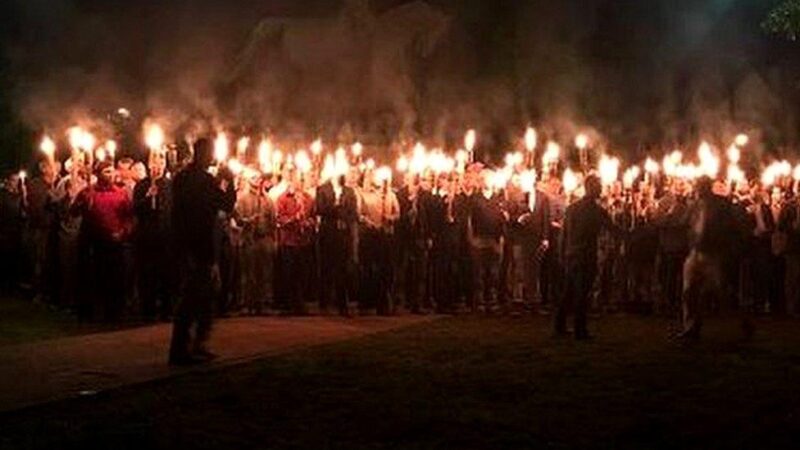
    In the Western world, instead of recognising the equality of other civilisations, nations and states, the “others” were blamed for the loss of the “white man’s” superiority. The ideology of the white man’s burden to educate the uneducated and indigenous peoples of the world, developed at the beginning of the last century, was revived after the fall of the Soviet Union, but could no longer be sustained with the rise of the others and the newly industrialised nations. However, a dilemma arose – if the success of the others was attributed to them, they would be strengthened and the whites would be even less able to maintain their own sense of superiority. So people looked for internal others to blame for their own decline. This is at the heart of the cultural revolution from the right. It is explained by the fear of no longer being able to maintain the supposed superiority of the “white man” if, for example, a country like Indonesia (i.e. no longer just Japan and China) overtakes Germany’s gross domestic product around 2030. Meanwhile, the US, Germany and many other European countries are not only no longer relatively superior, but parts of the US, for example, are at levels that used to be ascribed only to developing countries. And scapegoats are easy to find and, above all, interchangeable – sometimes it can be emancipated women, migrants, the “elites”, the Chinese, Africans, African-Americans, or anyone who is different. Trump’s statement that migrants are taking “black jobs” from US Americans reveals the core of this ideology: the MAGA movement is the best illustration of this development. Despite Trump’s irrationality and narrow-mindedness, “Make America Great Again” can only take hold if many people fear decline or have already experienced it. Like the masterminds of the cultural revolution on the right, they are trying to conquer the more rural regions first.
    The reference to ethnic pluralism is also one of the defining characteristics of the New Right. The right of all cultures and ethnic groups to exist is unconditionally recognised, but only as long as people remain among themselves or on the territory intended for them. Trump’s idea of expelling millions of Latinos after winning the election corresponds perfectly with the German right’s idea of enforcing re-migration. In Germany, Carl Schmitt and Martin Heidegger, Ernst Jünger and Oswald Spengler, and even Nietzsche, are relativised in order to legitimise the cultural revolution of the right. Antonio Gramsci, actually a progressive Marxist, whose concept of achieving cultural hegemony in the “pre-political space” is pursued by the Right as “metapolitics”, gains central importance.
    At its core, however, the new right is about undermining human equality – in its view, we are only equal to our own nation or religion and gender. This exclusionary equality only with one’s own kind is at the heart of the right’s cultural revolution, whose ideal model is itself based on hierarchical notions, a graded dignity. Such attempts to undo the gains of the struggle for equality in a counter-revolution can be found all over the world – whether in nationalism, ethnocentrism, misogyny, cultural relativism (“they just have a different culture”) or thinly veiled racism.
    The only thing “new” about this right-wing movement is that it uses different terms. The New Right concentrates on the “battle for the heads”, leaving the battles for the streets and, in some cases, the parliaments to other groups of the extreme right. The storming of the Capitol and the German Bundestag were such actions of the extreme right. It must be admitted that the whole world is in turmoil. At its core, however, the new right is about undermining human equality – in its view, we are only equal to our own nation or religion and gender. This exclusionary equality only with one’s own kind is at the heart of the right’s cultural revolution, whose ideal model is itself based on hierarchical notions, a graded dignity. Such attempts to undo the gains of the struggle for equality in a counter-revolution can be found all over the world – whether in nationalism, ethnocentrism, misogyny, cultural relativism (“they just have a different culture”) or thinly veiled racism. It is also marked by the revival of toxic masculinity (Raewen Connel) through the MAGA movement and in particular Trump’s enthusiasm for the wrestling mentality and martial arts. Opinions can be divided on these as sports, but they have no place in politics and point to an absolutely exaggerated and violent masculinity that Trump embodies. These political discourses are used to win elections in the West. In one sentence, the New Right shifts the concept of the democratic people to the ethno-religious people.
    When the few people of Pegida (Patriotic Europeans to defend the Abendland) in Germany shout into the camera: “We are the people”, they are turning the slogan of the democratic revolution of 1989 into an ethno-nationalist revolution. From the mid-nineteenth century to the mid-twentieth century, we have witnessed this transformation from the democratic to the ethnic concept of the people. Despite all the real political problems we face, it is essential for the twenty-first century to defend the equality of all people, regardless of biological differences such as gender or ethnicity. It is not our biology that defines us as human beings, but our morality.
    Feature Image Credit: Equality Trust
    from ‘The Link Between Inequality and the Far-Right’ – https://equalitytrust.org.uk
    The far-right has always been part of politics. The current global wave of far-right populist political movements began in the late 1970s, grew in the 1990s, and accelerated dramatically in the late 2000s. It has mirrored a sharp increase in inequality across developed economies, the globalisation of neoliberal economics, and the creation of an international super-rich. 
  • Lessons for today? Why did Europeans conquer the world while other civilisations did not?

    Lessons for today? Why did Europeans conquer the world while other civilisations did not?

    There is no question that India, China, Egypt, and Persia, in particular, produced flourishing civilisations long before the Europeans. The axial period around which world history revolves, as constructed by Jaspers, between the 7th and 3rd centuries B.C., does not refer to Europeans but to the three great civilisations of China, India, and Persia.

    There is no question that India, China, Egypt, and Persia, in particular, produced flourishing civilisations long before the Europeans. The axial period around which world history revolves, as constructed by Jaspers, between the 7th and 3rd centuries B.C., does not refer to Europeans but to the three great civilisations of China, India, and Persia (see also Katzenstein). Nevertheless, Europeans conquered and colonised the world in the 18th and 19th centuries, not the other way around. There are essentially four explanatory approaches, which are not only mutually exclusive but also determine the self-image of large parts of the world to this day. Put simply, the twentieth century saw a political and, in large parts of the world, an economic decolonisation, but by no means a decolonisation of thought and self-understanding. Moreover, there is a danger that the Eurocentrism that needs to be overcome will only be replaced by ethnocentrism (as is currently the case in Russia and, to some extent, in Israel) or even a civilisational-cultural centrism that is no less problematic than Eurocentrism. China, in particular, is in danger of repeating the mistakes of the West.

    the twentieth century saw a political and, in large parts of the world, an economic decolonisation, but by no means a decolonisation of thought and self-understanding

    So, what are the four explanatory approaches mentioned above? There are two Eurocentric approaches: an Asia-centric approach and a globalist approach. The first Eurocentric approach explains the worldwide colonisation of Europeans in terms of an intellectual superiority that began either in the development of Greek thought or in the Middle Ages. However, since the European Middle Ages were extremely “dark,” there is no direct connection between Greek rationality and the supposed intellectual superiority of the Europeans. Rather, this connection was made possible only by the translations into Arabic of the most important Greek philosophers, such as Plato and Aristotle, and by further translations into Latin. From my point of view – and a little local patriotism is allowed here, as I live near Fulda – the rise of the Europeans began with a letter from Charlemagne to the monastery in Fulda, in which he praised the religious zeal of the monks, but harshly criticised their intellectual understanding of religion. This gave rise to the so-called Carolingian Renaissance of work, which for the first time saw physical and manual labour as equal value to spiritual development – although it is debatable whether this was the first time this happened. Still, the facts remain undisputed in this explanatory approach. As a result, inventions were made in ever-new waves, the sciences developed, and this ultimately led to spurts of individualisation, the struggle for freedom and human rights that characterised the entire 18th and 19th centuries in the European-American world. This intellectual advantage led to a military superiority that enabled the Europeans to colonise the world despite being vastly outnumbered. To this day, Euro-American civilisation considers itself superior to all others. As for violent colonisation, it is admitted that Europeans are “sorry” for it but that it has nothing to do with the essence of Euro-American civilisation, which is characterised by human rights, democracy, and freedom (see Kant, Hegel, Marx, Weber: for an overview see Stark).

    The second Eurocentric position also assumes European superiority but places it not in the intellectual but in the purely military sphere. The consequence is that Europeans owe their relative prosperity, democracy, and human rights not to themselves but to the violent exploitation of the entire world. Here, too, there are two variants, referring to the Spanish-Portuguese conquests and the Orange army reform in Holland. Since the Muslim armies’ extensive conquest of the Mediterranean region, the Iberian Peninsula had been engaged in a defensive struggle for almost seven hundred years, which ended with their conquest. This created a caste of highly skilled warriors who sought a new vocation after defeating the Muslim armies, which they found in the conquest of Central and South America. The reform of the Orange army, in turn, made modern warfare possible. Based on both, the Europeans first plundered the gold and silver in both Americas.

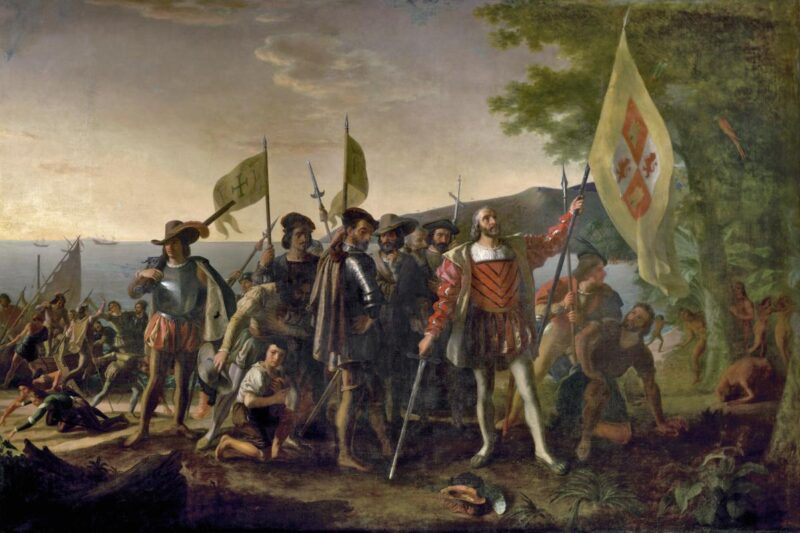
    Still, they soon introduced enslaved Africans, as they were more likely to survive the plantation work on the Caribbean islands than the indigenous peoples, who were nearly wiped out. The gold and silver shipped to Europe and the products of slave labour created a demand in Europe that was not met by Spain and Portugal but by England and the Netherlands – the Industrial Revolution was thus triggered by a demand created by the exploitation of large parts of the world, precious metals and the “black gold” of slave labour. “Incidentally, the discovery of the sea route to China and India also caused the decline of the Muslim empires and civilisations, as they were no longer the link between Europe and South and East Asia but stood isolated. Political decolonisation was eventually replaced by mostly indirect rule, in which the respective elites were supported militarily and economically to continue exploiting the population.

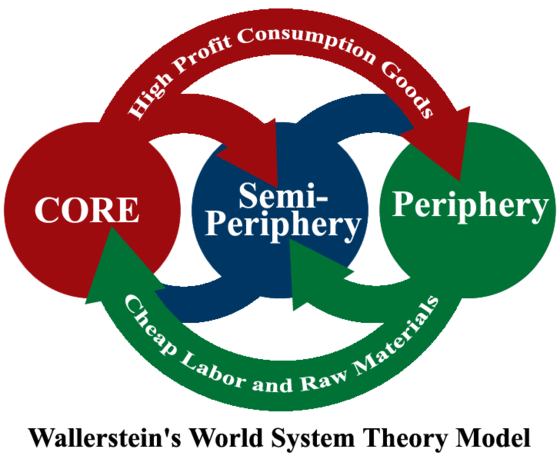
    In most cases, partial military intervention was sufficient for the industrialised states to maintain this system. In the world systems theory of Immanuel Wallerstein and Samir Amin, this practice was conceptualised by dividing the world into centres, semi-peripheries, and peripheries and defining it as a continuous influx of raw materials, goods, and people (brain drain) from the periphery to the mostly Western centres (Amin and Wallerstein).


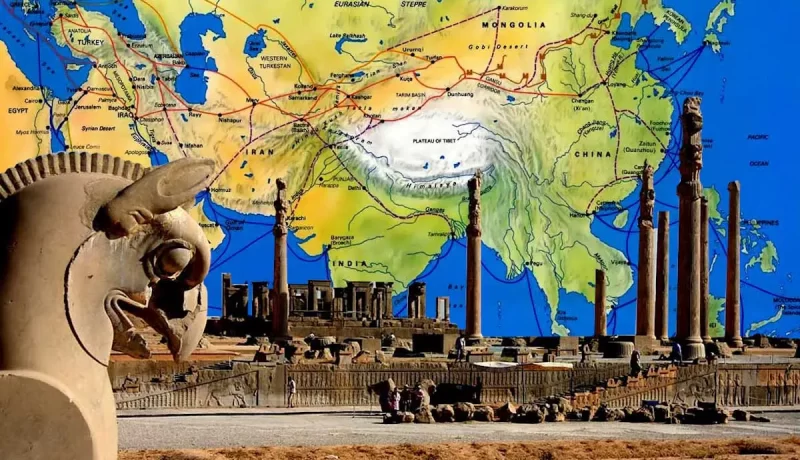
    A third explanation, however, is Asia-centric. In this view, the dominance of the Europeans and the hegemony of the United States are nothing more than an accident of world history. In this view, East and South Asia have always been the centre of the world economy and intellectual and civilisational development. More precisely, on the shores of the North Pacific and the Indian Ocean (including the Arabian Sea), a power shift has been taking place for thousands of years between China, India, and the Arab-Persian powers. Coincidentally, the retreat of China from about 1500 created a power vacuum in this area, into which the Europeans were gradually able to move. However, they could not compete with these civilisations. The current rise of the great empires and civilisations that were destroyed by European colonisation and Euro-American hegemony is nothing more than a return to the centre of the world, to the countries on the shores of the North Pacific and both parts of the Indian Ocean. In this view, the Europeans and the great powers that emerged from them are in no way superior, but rather the barbarians who caused an unprecedented bloodbath in colonisation and two world wars, including the Holocaust. Now, the centre of the world is returning to where it has always been (Abu-Lughod)

    Another approach is the globalisation approach. It assumes that every five hundred years or so, there has been a shift from one global political centre to the next, i.e., hegemonic empires’ rise, peak, and decline. For the late Andre Gunder Frank, we need to review the last 5000 years, not just the previous 500). At times, individual civilisations succeeded in becoming such hegemonic empires twice. Examples include the Egyptian society, the Chinese Empire of the Han dynasty, the Roman Empire, the Sassanid Empire (Persia), the Muslim Empire until its destruction by the Mongols, and finally European colonisation from about 1500.

    we need a floating balance and mutual recognition of the world’s civilisations

    The crucial question for today is whether globalisation will override this succession of great powers and civilisations or whether there will be a renewed, now genuinely global, struggle for world domination. In my view, we need a floating balance and mutual recognition of the world’s civilisations (Herberg-Rotzhe/Son). The rising civilisations are again faced with whether they will merely repeat the past mistakes and the ethnocentrism of the Europeans under different auspices or contribute to an equal coexistence of the world’s civilisations. And conversely, will the Europeans and the settler colonies they founded also learn to regard other civilisations as equals? Both perspectives will determine the fate of the 21st century if we do not want to experience yet another “bloody century”!

    References:

    Abu-Lughod, Janet: Before European Hegemony: The World System A.D. 1250-1350. Reprint edition. Oxford University Press: Oxford. 1991.

    Amin, Samir: Accumulation on a World Scale: A Critique of the Theory of Underdevelopment. (2 Volumes). Monthly Review Press: New York. 1974.

    Frank, Andre Gunder, The World System: Five Hundred Years or Five Thousand? Routledge: New York. 1996.

    Herberg-Rothe, Andreas and Son, Key-young: Order wars and floating balance. How the rising powers are reshaping our worldview in the twenty-first century. Routledge: New York. 2018.

    Jaspers, Karl: The Origin and Goal of History. Routledge: New York 2021 (original in German 1949).

    Katzenstein, Peter J.” Civilizations in World Politics: Plural and Pluralist Perspectives. Routlöedge: New York 2009.

    Stark, Rodney: How the West Won: The Neglected Story of the Triumph of Modernity. ‎ ISI Books: NewYork. 2015.

    Wallerstein, Immanuel: World-Systems Analysis: An Introduction. Duke University Press: Durham. 2004.


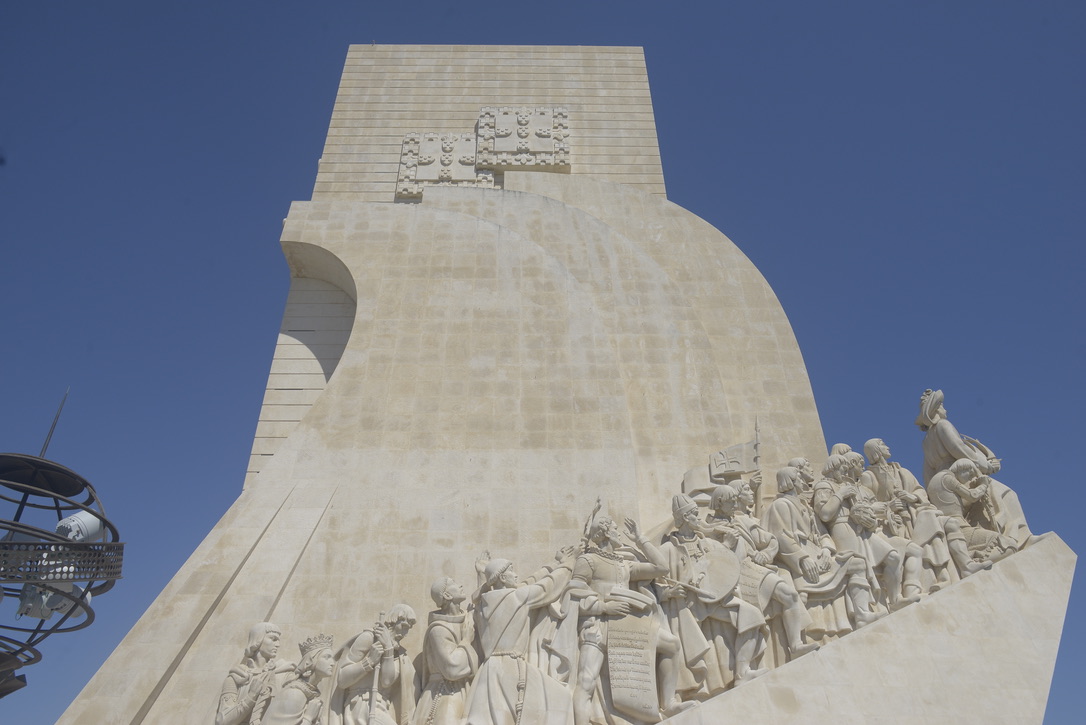
    Feature Photo Credit: Photo of ‘Monument of Discoveries’ in Lisbon. Photo by M Matheswaran. The Monument depicts Henry the Navigator followed by 33 pioneers, including Vasco-da-Gama whose exploration voyages were instrumental in establishing the Portuguese colonial empire, and thus begin the age of colonialism and imperialism.

    Image 1-Map: Asian empires and trade routes – the collector.com

    Image 2: Columbus reaching the Americas (actually the Caribbean) in 1492 – Wikimedia Commons

    Image 3: The story of the colonial looting of Africa – Photo of exhibit in African American Museum, Washington D.C. (Photo – M Matheswaran).

    Image 4: Robert Clive meeting Mir Jaffer in Battle of Plassey 1757 – the beginnings of the British Indian Empire – Wikimedia Commons.


  • Perpetrators and Victims: Ways Out of Violence?

    Perpetrators and Victims: Ways Out of Violence?

    Franz Fanon had sharpened the problem in such a way that the colonised would only really liberate themselves through violence and the killing of the colonialists because only in this way could they free themselves from the humiliation they had suffered.

    the real evil is humiliation – and many civilisations and peoples of the world have not only been exploited in colonisation but, perhaps more importantly, humiliated.

    violent action changes one’s own soul.


    I would like to emphasise from the outset that many readers of these lines will, of course, think that this is the writing of a Western-influenced intellectual, especially a German, who is marked by the guilt of the Germans for Auschwitz. Indeed, I am. Nevertheless, I want to address several issues beyond the current conflicts.

    An explanation of the causes of violence can very quickly turn into an understanding, and this into a legitimation of violent action. Although the boundary between these three concepts is fluid, it does not follow that identifying the causes of violent experiences legitimises all forms of one’s violent actions. Thus, while one can legitimise the violent resistance of the Palestinians and the establishment of their Palestinian state, one cannot legitimise all forms of one’s use of violence. The Queen of Jordan is indeed absolutely right when she accuses the West of double standards in the application of morality – but the need for moral recognition of the opponent as a human person is in no way invalidated by the Western double standard. In my view, there is no difference in principle whether Palestinian or Israeli children suffer. But the suffering of children on one side does not justify the suffering of children on the other side. At the moment, we are also in an information war in which precisely this is being conveyed – my own experience of violence as a victim legitimises the use of violence by myself. In his anticolonialism impulse, Franz Fanon had sharpened the problem in such a way that the colonised would only really liberate themselves through violence and the killing of the colonialists because only in this way could they free themselves from the humiliation they had suffered. This assumption, however, turned out to be highly counterproductive because violent action changes one’s own soul. While I fully agree with Jacques Vergés that the real evil is humiliation – and many civilisations and peoples of the world have not only been exploited in colonisation but, perhaps more importantly, humiliated. Here the distinction between a biological human being and a legal-moral person took on its nation-destroying dynamic and became a double standard – moral-legal qualities were granted only to Europeans, all others were degraded to half-monkeys, uneducated primitive peoples, or sub-humans (the Jews to the Nazis). This degradation did not kill the body, but like all rape, it killed the soul.

    Perhaps we need to get away from reducing every form of violence to its purpose – violent actions can also become independent. You can’t use violence the way you use cutlery and plates at dinner – after you wash up, everything looks the same, but people have gotten used to violence taking on a life of its own. The surviving fighters from the civil wars in the former Yugoslavia, Chechnya, Syria, and Iraq form a group of some 40,000 mercenaries who fight each other in ever-changing constellations. The 2012 “Tuareg” rebellion in Mali was also supported by such independent fighters, who returned from Palestine and helped themselves to the weapons stockpiles of the collapsed Ghaddafi regime. Chechen fighters, in turn, were a central part of the IS leadership; today, they are fighting on both sides in Ukraine. A tragic consequence of these developments is the inversion of the perpetrator-victim relationship. Many victims of violence have such fragmented souls that they use violence themselves to prevent themselves from ever being victims again, even at the cost of becoming perpetrators. Ideologies and political goals then become an indiscriminate source of legitimation for one’s violent actions, which ultimately only serve the purpose of no longer being a victim.

    Discourses of history: Throughout the Islamic sphere of influence, as in all colonised countries, there is a pronounced discourse of victimhood – the problem is that while the people concerned were indeed victims to the extent that the Western world still finds difficult or impossible to admit, a discourse of victimhood leads to legitimising even one’s own most horrific forms of violence by saying that one was a victim. Stalinism and Nazism, as well as the ideologies of al-Qaeda, Daesh/IS, the Taliban, and Hamas in Gaza, derive their legitimacy from this discourse of victimhood. At a training course in Yad Vashem, the Israeli Holocaust memorial, this victim discourse, the reversal of the victim-perpetrator relationship, was very vividly presented – not by me, but by the Israeli leaders of the training course. The symbol for this is the desert fortress Massada, where the last Jewish defenders committed suicide in order not to be humiliated as slaves by the Romans.

    But the consequence was the motto: Never again, Massada!

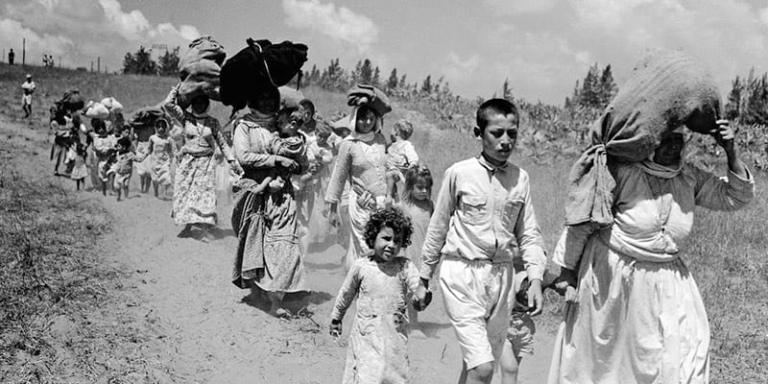
    And the Holocaust, anti-Semitism and Islamic Jew-hatred are not a distant past for Israelis but part of the present discourse – just as for many Palestinians, the Nakba is an ongoing part of the present. In Arabic, the Nakba refers to the flight and expulsion of some 700,000 Arab Palestinians from the former British Mandate of Palestine. It took place between the 1947 UN partition plan for Palestine and the 1949 armistice following the Palestine War, waged by six Arab states against the state of Israel, which was founded on May 14, 1948. In the historical narrative of Palestinians, other Arabs, and anti-Zionists, the Nakba is usually described as a pre-planned ethnic cleansing by the Israeli military; in the historical narrative of Israel, it is generally described as a voluntary flight in response to Arab calls. In my lecture at the World Peace Museum in Kyoto, Japan, I also wanted to talk about the crimes of the Japanese Empire in the 20th century. The colleague who invited me responded, at first incomprehensibly to me, that this could not be made a topic: He meant that you Germans were lucky, you had your Hitler. To my incomprehension, he explained that the Germans could blame the Holocaust entirely on Hitler and his few comrades, which, according to recent research, is not valid. But if he had to talk about the crimes of the Japanese army, he would speak of his father, but really about himself. He found himself unable to distance himself even minimally from his father. Although the greater sense of family in many non-Western societies can be a useful corrective to Western over-individualisation, the danger lies in the repetition of age-old conflicts. To my surprise, even the famous peace researcher Johann Galtung had postulated at a conference in Basel that 3 million deaths in the “Killing Fields” of the Red Khmer were compared to 3000 years of oppression. The undisputed experience of oppression led him to relativise a crime against humanity.

    The problem, however, is that for every terrorist killed, General Abi Zaid, the former commander of U.S. forces in Iraq, estimates that five new ones grow. After the violent excesses of Hamas members, it is “understandable” that the relatives of the victims want to kill them, but this will most likely only multiply the number of violent and militant supporters.

      Even with regard to the Holocaust, Hannah Arendt had distinguished between the unforgivable act and the perpetrator, whom one must be able to forgive. But “forgiveness” depends on the admission of guilt. And this admission is made virtually impossible by the victim discourse. In addition, it is difficult to come to terms with one’s own violent actions. Many of these people will never be able to return to civilian society – this could be observed, for example, in the case of US soldiers who, decades after the Vietnam War, still had to “play” the war over and over again in the Nevada desert, because the violence they had committed had filled their identity entirely. There is a drug that is more quickly and deeply addictive than even heroin – and that is violence. Violence eats the soul. And even if Arendt distinguishes between the perpetrator and the act, what to do with perpetrators who cannot distance themselves from the act is problematic. In a study of the recruitment of IS supporters in Iraq, it was found that the main recruitment base for IS was the prisons there. Even in Western prisons, petty criminals often turn out to be serious criminals. Sometimes, you have to admit that the only way to deal with people who are entirely violent is to kill them – like the IS supporters who abused Yazidi women as sex slaves. To this day, it is difficult to understand why the neighbouring states did not put an end to the violent excesses of IS earlier since it would have had no chance against a functioning modern army. The problem, however, is that for every terrorist killed, General Abi Zaid, the former commander of U.S. forces in Iraq, estimates that five new ones grow. After the violent excesses of Hamas members, it is “understandable” that the relatives of the victims want to kill them, but this will most likely only multiply the number of violent and militant supporters.

     Both Hamas and the religious extremists in Israel and the settlers in the West Bank are obviously trying to turn a political dispute into a religiously underpinned clash of civilisations, or, as Samuel P. Huntington better calls it, a clash of civilisations. Hamas is not only a liberation movement, as it is often ascribed in defence of its actions, but at least a religious movement oriented toward an eschatological struggle – just like the religious extremists in Israel. Both rely on the construction of identity that Huntington also advocates: we know who we are when we know who we are against. Although there is a renaissance of religion around the world, and it is often very violent, this does not mean that religions per se are violent. But religious belief necessarily excludes other beliefs. It is different from the civilisations associated with them. While religions exclude others, civilisations are much more likely to include others. This difference also explains why the followers of the great monotheistic religions, while claiming to be peace-loving, have been responsible for unparalleled excesses of violence throughout their history. The Islamic wars of conquest, the Crusades, the Ottoman conquests, the Thirty Years’ War, Islamic and Atlantic slavery, and, finally, worldwide colonisation leave a single trail of blood. And this, of all things, from two world religions that considered themselves peace-loving. The traditional explanation is no longer valid: these excesses of violence had nothing to do with religion but only with socio-historical conditions, which themselves were oriented towards eternal peace. This is certainly true for these civilisations (even if the concept of civilisation has been distorted by European colonisation), but not for the religions (which is why the Global Ethic project has failed so spectacularly, contrary to its own claims because it has not gone beyond a minimal consensus).

    Huntington’s liberal critics had argued not only that there should not be a clash of civilisations but also that there could not be one – because, in their eyes, there was only one civilisation, the Western one. The others are religions or cultures, but not civilisations. It is time to abandon this liberal and Western conceit, and the replacement of Eurocentrism with ethnocentrism or religious centrism is not an adequate response to the problems of exploding violence.

     At first glance, a dialogue of the world’s civilisations seems unrealistic in the face of worldwide explosions of violence. On the contrary, it is necessary to prevent political disputes from becoming a clash of civilisations. Huntington’s liberal critics had argued not only that there should not be a clash of civilisations but also that there could not be one – because, in their eyes, there was only one civilisation, the Western one. The others are religions or cultures, but not civilisations. It is time to abandon this liberal and Western conceit, and the replacement of Eurocentrism with ethnocentrism or religious centrism is not an adequate response to the problems of exploding violence. Instead, the appropriate response to the increasing number of wars and excesses of violence worldwide must be to separate the hardliners discursively, politically, and militarily from the population, not to drive the population into the hands of the hardliners. In the latter case, we would only be threatened with a new “bloody century” like the first half of the 20th century. A dialogue among the world’s civilisations is necessary, if perhaps only modest, step to avoid this. For in the mutual recognition of the world’s civilisations, both sides will be bound by their own civilisational principles.

    Feature Image: Nakba of 1948 – Palestinians being forced out by Israelis – arabcenterdc.org

  • Hamas Attack – What really happened on 7th October? – Sifting truth from propaganda

    Hamas Attack – What really happened on 7th October? – Sifting truth from propaganda

    As Gaza is under a catostrophic military assault by Israeli forces it is important to analyse the trigger for the Israeli assault – the Hamas attack of October 7th. Evidence is now emerging that up to half the Israelis killed were combatants; that Israeli forces were responsible for some of their own civilian deaths; and that Tel Aviv disseminated false ‘Hamas atrocities’ stories to justify its devastating air assault on Palestinian civilians in Gaza. This article, a persuasive analysis, was published earlier in The Cradle.

    Two weeks after the Hamas breakout assault on Israel on 7 October, a clearer picture of what happened – who died, and who killed – is now beginning to emerge.

    Instead of the wholescale massacre of civilians claimed by Israel, incomplete figures published by the Hebrew newspaper Haaretz show that almost half the Israelis killed that day were in fact combatants – soldiers or police.

    In the interim, two weeks of blanket western media reporting that Hamas allegedly killed around 1,400 Israeli civilians during its 7 October military attack has served to inflame emotions and create the climate for Israel’s unconstrained destruction of the Gaza Strip and its civilian population.

    Accounts of the Israeli death toll have been filtered and shaped to suggest that a wholesale civilian massacre occurred that day, with babies, children, and women the main targets of a terror attack.

    Now, detailed statistics on the casualties released by the Israeli daily Haaretz paint a starkly different picture. As of 23 October, the news outlet has released information on 683 Israelis killed during the Hamas-led offensive, including their names and locations of their deaths on 7 October.

    Of these, 331 casualties – or 48.4 percent – have been confirmed to be soldiers and police officers, many of them female. Another 13 are described as rescue service members, and the remaining 339 are ostensibly considered to be civilians.

    While this list is not comprehensive and only accounts for roughly half of Israel’s stated death toll, almost half of those killed in the melee are clearly identified as Israeli combatants.

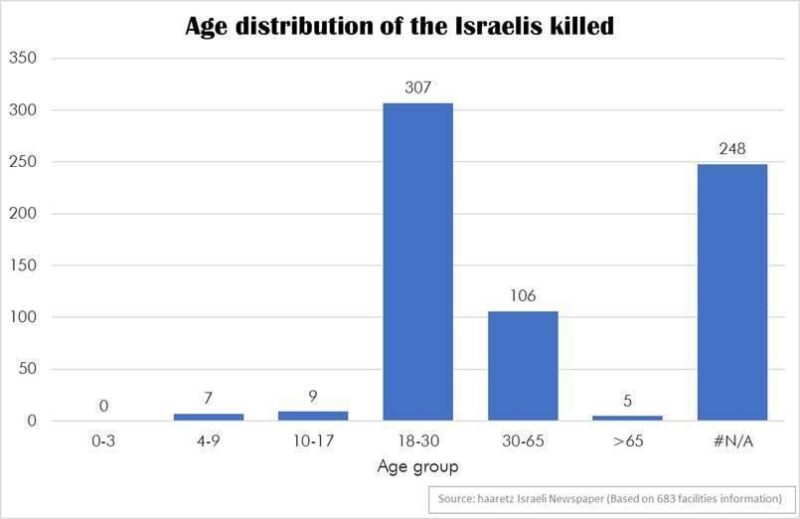
    There are also so far no recorded deaths of children under the age of three, which throws into question the Israeli narrative that babies were targeted by Palestinian resistance fighters. Of the 683 total casualties reported thus far, seven were between the ages of 4 and 7, and nine between the ages of 10 and 17. The remaining 667 casualties appear to be adults.


    Age Distribution of the Israelis killed during Hamas’ October 7 operation (as of 23 October)
    The numbers and proportion of Palestinian civilians and children among those killed by Israeli bombardment over the past two weeks – over 5,791 killed, including 2,360 children and 1,292 women, and more than 18,000 injured – are far higher than any of these Israeli figures from the events of 7 October.

    Revisiting the scene

    The daring Hamas-led military operation, codenamed Al-Aqsa Flood, unfolded with a dramatic dawn raid at approximately 6:30 AM (Palestine time) on 7 October. This was accompanied by a cacophony of sirens breaking the silence of occupied Jerusalem, signaling the start of what became an extraordinary event in the occupation state’s 75-year history.

    As per the spokesperson of Hamas’ armed wing, the Al-Qassam Brigades, around 1,500 Palestinian fighters crossed the formidable Gaza-Israel separation barrier.

    However, this breakout was not limited to Hamas forces alone; numerous armed fighters belonging to other factions such as Palestinian Islamic Jihad (PIJ) later breached the armistice line, along with some Palestinians unaffiliated with any organized militia.

    As it became apparent this was no ordinary resistance operation, hundreds of videos quickly flooded social media, most of which have been viewed by The Cradle, depicting dead Israeli troops and settlers, fierce gunfire battles between various parties, and Israelis being taken captive into Gaza.

    These videos were either taken on the phones of Israelis, or were released by Palestinian fighters filming their own operation. It wasn’t until hours later that more gruesome and downright dubious allegations began to surface.

    Unsubstantiated allegations of ‘Hamas atrocities’

    Aviva Klompas, a former speechwriter for the Israeli mission to the UN, was the first Israeli of note to spread the claim that there were reports of “Israeli girls being raped and their bodies dragged through the street.

    She posted this on X at 9:18 PM (Palestine time), on 7 October, although an op-ed Klompa published with Newsweek at 12:28 AM (Palestine time), on 8 October, made no mention of any sexual violence.

    Klompas is also the co-founder of Boundless Israel, a “think-action tank” that works “to revitalize Israel education and take bold collective action to combat Jew-hatred.” An “unapologetically Zionist” charitable group that works to promote Israeli narratives on social media.

    The one case touted as proof of rape was that of a young German-Israeli woman named Shani Louk, who was filmed face down in the back of a pickup truck and was widely assumed dead.

    It was unclear whether the fighters filmed with Louk in the Gaza-bound vehicle were members of Hamas, as they do not sport the uniforms or insignia of the Al-Qassam troops identifiable in other Hamas videos – some even wore casual civilian clothing and sandals.

    Later, her mother claimed to have evidence that her daughter was still alive, but had suffered a severe head wound. This rings true with information released by Hamas that indicated Louk was being treated for her injuries at an unspecified Gaza hospital.

    Complicating matters further, on the day these rape allegations arose, Israelis would not have had access to this information. Their armed forces had not yet entered many, if not most, of the areas liberated by the resistance and were still engaged in armed clashes with them on multiple fronts.

    Nevertheless, these rape claims took on a life of their own, with even US President Joe Biden alleging, during a speech days later, that Israeli women were “raped, assaulted, paraded as trophies” by Hamas fighters. It is important to note that The Forward’s article on 11 October reported that the Israeli military acknowledged they had no evidence of such allegations at that point.

    When the army later made its own allegations of decapitations, foot amputations, and rape, Reuters pointed out that “the military personnel overseeing the identification process didn’t present any forensic evidence in the form of pictures or medical records.” To date, there is no credible evidence of these atrocities that has been presented.

    Other outrageous allegations, such as the story of Hamas “beheading 40 babies‘ made headlines and the front pages of countless western news outlets. Even Biden claimed to have seen “confirmed photos of terrorists beheading babies.” The claims trace back to Israeli reserve settler and soldier David Ben Zion, who has previously incited violent riots against Palestinians and called for the West Bank town of Huwara to be wiped out. No evidence was ever produced to support these claims and the White House itself confirmed later that Joe Biden had never seen such photos.

    The Hamas plan

    There is little to no credible evidence that Palestinian fighters had a plan to – or deliberately sought to – kill or harm unarmed Israeli civilians on 7 October. From the available footage, we witness them engaging primarily with armed Israeli forces, accounting for the deaths of hundreds of occupation soldiers. As Qassam Brigades’ Spokesman Abu Obeida made clear on 12 October:

    Al-Aqsa Flood operation aimed to destroy the Gaza Division (an Israeli army unit on Gaza’s borders) which was attacked at 15 points, followed by attacking 10 further military intervention points. We attacked the Zikim site and several other settlements outside the Gaza Division headquarters.

    Abu Obeida and other resistance officials claims that the other key objective of their operation was to take Israeli prisoners that they could exchange for the approximately 5,300 Palestinian prisoners held in Israeli detention centers, many of whom are women and children.

    Hamas Deputy Head of the Political Bureau of Saleh Al-Arouri, in an interview after the operation, stressed: “We have a large and qualitative number and senior officers. All we can say now is that the freedom of our prisoners is at the doorstep.”

    Both sides play this game: Since the start of its military assault on Gaza, Israel has rounded up and imprisoned more than 1,200 Palestinians in the occupied West Bank. To date there have been 38 prisoner exchange deals between the resistance factions and Tel Aviv – deals that Israelis often resist to the very last minute.

    While these kinds of testimonies trickle out, reports are emerging that Israeli authorities have dialed up the mistreatment, torture, and even killing of Palestinian prisoners in their custody – a violation of the Geneva Conventions, which ironically, a non-state actor like Hamas appears to have followed to the letter.

    In relation to the events of 7 October, there are certainly some videos depicting possibly unarmed Israelis, killed in their vehicles or at entrances to facilities, so that Palestinian troops could gain access.

    There are also videos which show the fighters engaging in shootouts with armed Israeli forces, where there were unarmed Israelis taking cover in between, in addition to videos of fighters shooting toward houses and throwing grenades into fortified areas. Eyewitness testimony also suggests grenades were thrown into bomb shelters, though by whom is unclear.

    Even at the Israeli “peace rave”, which has been cited as the single deadliest attack committed by Palestinian fighters during their operation, videos emerged that appeared to show Israeli forces opening fire through a crowd of unarmed civilians, toward targets they believed to be Hamas members. ABC News also reported that an Israeli tank had headed to the site of the festival.

    An Israeli massacre in Kibbutz Be’eri?

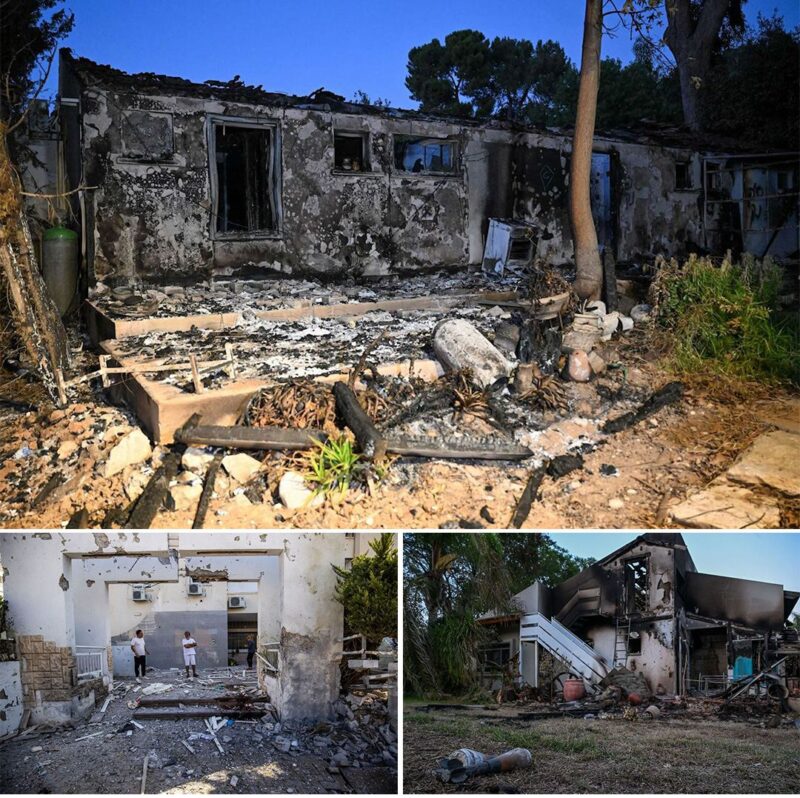
    In its report on the events at Be’eri Kibbutz, ABC News photographed artillery pieces resembling Israeli munitions outside a bombed-out home. The reporter, David Muir, mentioned that Hamas fighters, covered in plastic bags, were found in the aftermath.

    Additionally, videos of the scene show homes that appear to have been struck by munitions that Hamas fighters did not possess. Muir reported that about 14 people were held hostage in a building by Palestinian fighters.

    A Hebrew-language Haaretz article published on 20 October, which only appears in English in a must-read Mondoweiss article, paints a very different story of what went down in Be’eri that day. A Kibbutz resident who had been away from his home – whose partner was killed in the melee – reveals stunning new details:

    His voice trembles when his partner, who was besieged in her home shelter at the time, comes to mind. According to him, only on Monday night (9 October) and only after the commanders in the field made difficult decisions — including shelling houses with all their occupants inside in order to eliminate the terrorists along with the hostages — did the IDF complete the takeover of the kibbutz. The price was terrible: at least 112 Be’eri people were killed. Others were kidnapped. Yesterday, 11 days after the massacre, the bodies of a mother and her son were discovered in one of the destroyed houses. It is believed that more bodies are still lying in the rubble.”

    Photo evidence of the destruction in Be’eri corroborates his account. Only the heavy munitions of the Israeli army could have destroyed residential homes in this manner.
    Aftermath or Be’eri Kibbutz after the fire power of the two sides cease

    Hamas behaviors: Evidence vs allegations

    Yasmin Porat, a survivor from Kibbutz Be’eri, said in an interview for an Israeli radio-show, hosted by state-broadcaster Kan, that Israeli forces “eliminated everyone, including the hostages,” going on to state that “there was very, very heavy crossfire” and even noted tank shelling.

    Porat had attended the Nova rave and testified to the humane treatment throughout different interviews she conducted with Israeli media. She explained that when she was held prisoner, the Hamas fighters “guarded us”, telling her in Hebrew to “Look at me well, we’re not going to kill you. We want to take you to Gaza. We are not going to kill you. So be calm, you’re not going to die.” She also added the following:

    They give us something to drink here and there. When they see we are nervous they calm us down. It was very frightening but no one treated us violently. Luckily nothing happened to me like what I heard in the media.

    Increasingly, and to the horror of some Israeli officials and news outlets, Israeli eyewitnesses and survivors of the bloodshed are testifying that they were treated well by Palestinian fighters. On 24 October, Israeli state broadcaster Kan bemoaned the fact that prisoner Yocheved Lifshitz, released by Hamas the day before, was allowed to make statements live on air.

    As she was handed over to Red Cross intermediaries, the elderly Israeli female captive was caught on camera turning back to squeeze the hand of her Hamas captor in her last goodbyes. Lifshitz’s live broadcast, in which she spoke about her two-week ordeal, “humanized” her Hamas captors even further as she recounted her daily life with the fighters:

    “They were very friendly toward us. They took care of us. We were given medicine and were treated. One of the men with us was badly injured in a motorbike accident. Their (Hamas) paramedics looked after his wounds, he was given medicine and antibiotics. The people were friendly. They kept the place very clean. They were very concerned about us.

    More questions than answers

    It is essential to recognize that in many reports by western journalists on the ground, the majority of information regarding the actions of Hamas fighters comes from the Israeli army – an active participant in the conflict.

    Emerging evidence now indicates that there is a high probability, especially due to the scale of the infrastructural damage, that Israeli military forces could have deliberately killed captives, fired on incorrect targets, or mistaken Israelis for Palestinians in their firefights. If the only source of information for a serious claim made is the Israeli army, then it has to be taken into account that they have reason to conceal cases of friendly fire.

    Israeli friendly fire was rampant, even in the days that followed, from an army with very little actual combat experience. In the city of Ashkelon (Askalan) on 8 October, Israeli soldiers shot dead and shouted insults at the body of a man they believed to have been a Hamas fighter, yet later realized they had executed a fellow Israeli. This is just one of three such examples of friendly fire in one day, resulting in the killing of Israelis by their own troops.

    Amid the fog of war, parties to the conflict have different perspectives on what occurred during the initial raid and its aftermath. It’s not disputed that Palestinian armed groups inflicted significant losses on the Israeli military, but there will be plenty of ongoing debate regarding everything else in the weeks and months to come.

    An independent, impartial, international investigation is urgently needed, one that has access to information from all sides involved in the conflict. Neither the Israelis nor the Americans will agree to this, which itself suggests that Tel Aviv has much to conceal.

    In the meantime, Palestinian civilians in Gaza endure ongoing, indiscriminate attacks with the most sophisticated heavy weapons in existence, living under the persistent threat of forced and potentially irreversible displacement. This Israeli air blitz was made possible only by the flood of unsubstantiated ‘Hamas atrocities’ stories that media began to circulate on and after 7 October.


    The views expressed in this article do not necessarily reflect those of TPF.

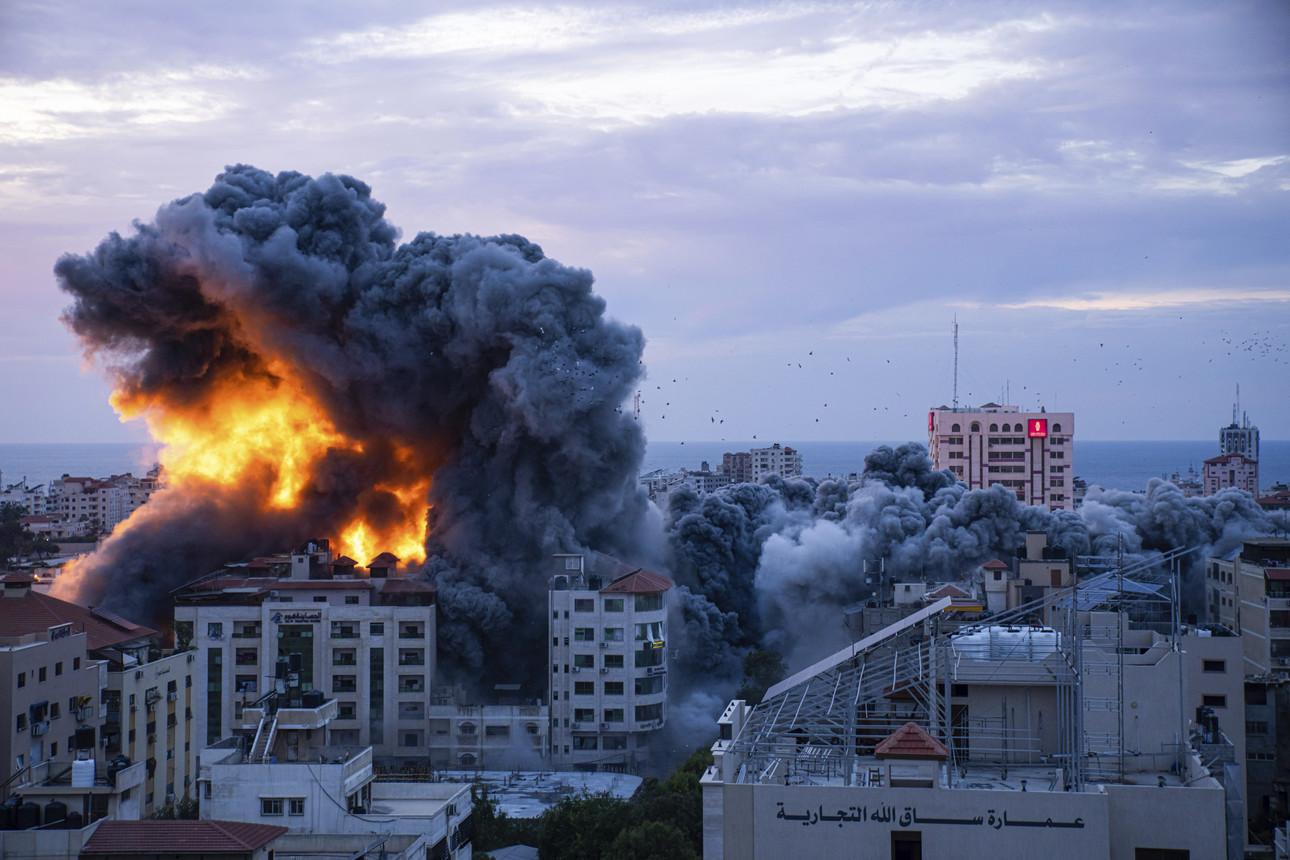
    Feature Image: Gaza under attack – Politico