Category: Research & Publications

  • Beyond Unipolarity and the Euro–American Horizons of IR Thought: Reflections on the Emergent World Order

    Beyond Unipolarity and the Euro–American Horizons of IR Thought: Reflections on the Emergent World Order

    Abstract

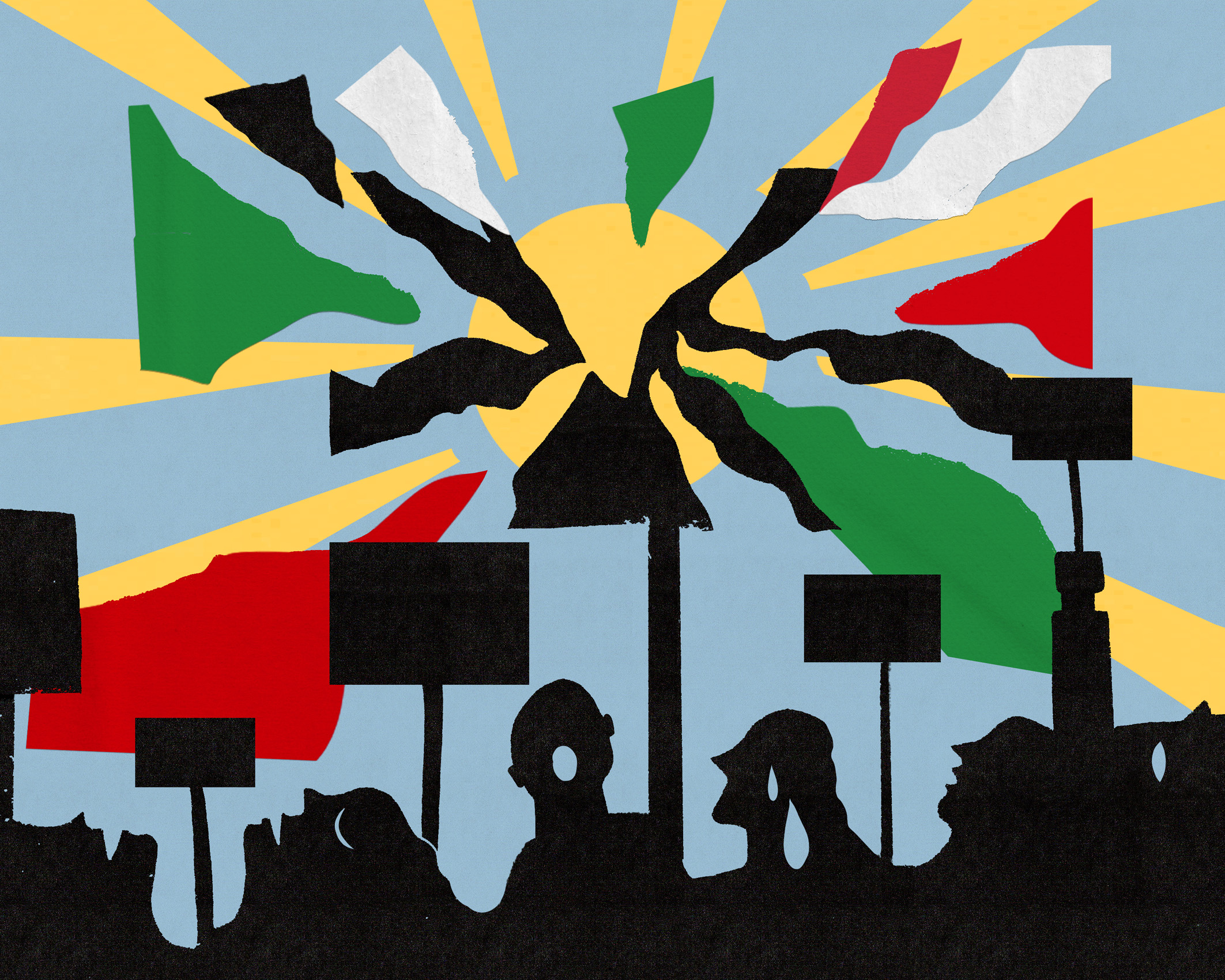
    Amidst the continuing conflict in Ukraine, Russian President Vladimir Putin made a notable pronouncement of the end of the US-led unipolar world and the rise of multipolar world order. Against this backdrop of the debate on polarity, my research paper seeks to address the following questions. To what extent have global institutions, mainstream IRT (International Relations Theory) and academia as well as policies reflected if not reinforced Euro-American norms and interests? Does this purported shift to multipolarity require a shift in institutional and theoretical practices reflecting the broad concerns of the Global South? Using global and regional case studies like India (especially in regard to the representation within academia and the glass ceiling affecting institutional practices like Young Professionals Programme), I draw from critical and post-colonial theoretical IR frameworks to argue for a comprehensive reform of the prevalent global institutional and theoretical structures. 

    Introduction

    The Euro-American hegemony runs very deep, pervading a range of institutions, norms, global practices, knowledge and even academic teaching practices.

    The month of February this year witnessed one of the most defining moments of the post-Cold war era. Marking a major escalation of the simmering conflict that began with the insurgency in Eastern Ukraine in 2014, Russia invaded Ukraine resulting in thousands of casualties and millions of refugees.[1] This conflict inevitably has given rise to a wide range of debates in the global arena, including global governance, institutions, conflict and security. In this regard, one of the most interesting debates that have seen a resurgence is the question of the future of the world order. 

    The notion of a shift to multipolar world order has emerged as a prominent theme in the wake of this crisis. This is best exemplified by Vladimir Putin in his address to the St Petersburg International Economic Forum Plenary session, “a multipolar system of international relations is now being formed. It is an irreversible process; it is happening before our eyes and is objective in nature.” It is indeed widely recognised that the brief period of unipolarity, dominated by the US, following the end of the Cold War, has given way to the era of multipolar world order, characterised by ‘new powerful and increasingly assertive centres.’ [2] However, even as this shift to multipolarity seems almost deterministic, there persist legitimate questions on the conduciveness of the current world order to the emergence of these multiple power-centres. 

    Against this backdrop, my work shall be organised as follows. I commence with a discussion on the shift towards multipolarity, providing the conceptual capital of notions like power and polarity. This shall be followed by my argument that the current global order, exemplified in its norms, institutions, and intellectual resources, fall severely short of the expectations required of the multipolar world order. To illustrate this point, I draw from the case study of India, in particular. I conclude by providing some prescriptions necessary for the transition to multipolarity to be meaningful. Towards this pursuit, I draw from critical post-colonial theoretical frameworks, employing secondary literature review as the overarching method.

    Shifts towards multipolarity

    Before proceeding to the premise of the shift towards multipolarity, a few conceptual clarifications are in order. Polarity in this context is understood as the modes of distribution of power in the international system. Typically, it is classified as unipolar (e.g. US hegemony in the post-Cold-War era), bipolar (e.g. Russia-US dominance during the Cold War era) and multipolar (e.g. Europe during the pre-World War era). [3] While there are myriad debates on what constitutes power in the global landscape, I draw from the useful typology provided most famously by Joseph Nye – hard, soft, and smart power. Hard power is often described as the typical carrot and stick approach, involving coercion and is often measured in terms of “population size, territory, geography, natural resources, military force, and economic strength.” On the other hand, soft power is described as the ability to influence state preference using intangible attributes like “attractive personality, culture, political values, institutions, and policies” resulting in the perception of legitimacy or moral authority. Smart power is often understood as the instrumental deployment of a combination of both to secure political ends.[4] 

    The end of the Cold War era, prematurely lauded as the end of history by a scholar, resulted in a brief unipolar moment of US hegemony. As Putin puts it, the US was the predominant power with a limited group of allies which resulted in “all business practices and international relations … interpreted solely in the interests of this power.”[2]  However, a range of factors in the twenty-first century led to a crisis in American leadership. The interventionist atrocities carried out in the wake of the September 11 attacks as well as the crisis of global capitalism during the financial crisis of 2008 led to a crisis in American leadership.[5] This period also saw the emergence of new powers like the BRICS nations, who posed a serious challenge to the notion of unipolarity.[3] 

    As Amitav Acharya and Burry Buzan argue, this diffusion of power has resulted in the ‘rise of the rest’ characterised by the absence of a single superpower. Instead, a number of great and regional powers have emerged with their respective institutions and models of growth. Such a world order is also shaped by a greater role accorded to non-state actors including global organisations, corporations, and social movements as well as non-state actors.[6] Thus, the current global landscape is often termed as multipolar, multi-civilizational and multiplex offering myriad opportunities and benefits for states.[7] The crisis in Ukraine has only bolstered this multipolar moment even further. Consider India as a case in point. The likes of the U.S. (and even China) have competed for India’s affection and India’s seemingly pro-Russia stance has not prevented Delhi’s deeper engagement with her counterparts in the West. These initiatives can only enhance India’s great power status, resulting in potentially a higher degree of multipolarity.[8]

    Thus, even as there is an increasing scholarly and policy-based consensus on the shift towards multipolarity, there remain important reservations on whether the current global arena is equipped to deal with the seismic shifts posed by the emergent world order. In other words, does this purported shift to multipolarity require a shift in institutional and theoretical practices reflecting the broad concerns of the Global South? In the next section, I answer in the affirmative, arguing that the dominant norms, institutions, and intellectual resources are broadly skewed towards the preservation of Euro-American hegemony. 

    The maintenance of Euro-American hegemony: norms, institutions, and academia

    The exercise of U.S. hegemonic power involved the projection of a set of norms and their embrace by elites in other nations.

    Drawing from Persaud, I argue that dominant powers forge an “academic/foreign policy/security ‘complex’ dedicated to the maintenance of a hegemonic world order.” [9] Such a complex is constituted by an intricate network of norms, institutions and theoretical/ intellectual practices which seek to uphold the status quo. In this section, I examine each of these aspects in detail.

    Consider norms, in the first instance. Norms can be defined broadly as the “collective expectations for the proper behaviour of actors.”[10] When certain norms which serve certain interests are considered as general interests, it results in hegemony. The dominant powers socialise and hegemonise other countries into an ideological worldview that best serves their interests. In other words, actors have to orient themselves according to a ‘logic of appropriateness’ framed by these intersubjective notions. In the post World War era, the Roosevelt-led US administration projected a series of norms and principles guided by liberal multilateralism, to shape the post-war international order. Such a form of ‘institutional materiality’ posited a clear separation between the political and the economic realm. The embrace of these norms outside the US occurred through various modes of socialisation including external inducement (e.g. Britain and France), direct intervention and internal reconstruction (e.g. Germany and Japan) as well as military and economic dominance.[11] 

    The exercise of U.S. hegemonic power involved the projection of a set of norms and their embrace by elites in other nations. Socialisation did occur since U.S. leaders were largely successful in inducing other nations to buy into this normative order. But the processes through which socialisation occurred varied from nation to nation. In Britain and France, shifts in norms were accomplished primarily by external inducement; in Germany and Japan, they resulted from direct intervention and internal reconstruction. In all cases, the spread of norms of liberal multilateralism was heavily tied to U.S. military and economic dominance. [11]

    Such norms are often manipulated (and flouted) to their advantage. For example, consider the liberal norm of conditional sovereignty, linked to human rights, spearheaded by the likes of the US and many countries in Western Europe. Assuming the primacy of the individual over the state, it has legitimised intervention on ‘humanitarian’ grounds. However, the execution of these norms has been far more uniform as best exemplified in their differential application in the wake of the atrocities in Kosovo and Rwanda. An intra-state conflict resulting in a humanitarian crisis in Kosovo precipitated a successful multilateral intervention. However, the same decisiveness was starkly absent with regard to a similar (if not greater) conflict in Rwanda which resulted in almost 800,000 casualties and more than two million refugees. Multiple studies have traced the rationale of intervention to the “strategic interests in Europe’s future and the NATO alliance.” Rwanda on the other hand was considered peripheral to the national interests of either Western Europe or the US.[12] This substantiates the argument that the norm of ‘humanitarian intervention’ is often tied more to brutal national interests rather than the protection of human rights.

    A range of global norms, ranging from economic norms, dealing with the management of finance, to those dealing with water governance has been shown to be skewed towards the interests of great powers rather than participative in nature.

    Consider another instance. The Liberal International Order (LIO) asserts the concept of ‘conditional sovereignty’ where sovereign nation-states are bound to look after their entire populations. A failure to that end invites interference and comments from other nation-states and external agencies. This norm has been pushed forward and spearheaded by first-world countries like the US and Western Europe, much to their advantage. Contrary to this, the neo-Westphalian order is a proponent of the ‘classical sovereignty’ model where nation-states are sovereign within their own territory to administer in any manner they want, obviously with a necessary reverence to human rights, but others are not authorized to interfere in the same. China and other authoritarian regimes have been advocating for the same. So, while the LIO talks about the equality of every individual, the neo-Westphalian order focuses more on the equality of all nation-states.[13] Similarly, a range of global norms, ranging from economic norms, dealing with the management of finance, to those dealing with water governance has been shown to be skewed towards the interests of great powers rather than participative in nature. 

    Similarly, Cox and Gill have argued how global governance through institutions play a critical role in maintaining hegemony.[14] The multilateral institutions which the US had created both in the political and economic realm have played a critical role in the sustenance of Euro-American (and especially the U.S.) dominance. In other words, even as the international world order shifts to a multipolar one, it has not exactly been accompanied by multilateralism.[15] While multilateralism puts forward the interests of multiple states, most so-called multilateral institutions reflect and reinforce prevailing power configurations. 

    Consider the United Nations, for instance. It cannot be a mere coincidence that the UN has been ineffectual against most of the contemporary global challenges like climate change, the pandemic etc. when it has not been responsive to the reality of the increasing number of power centres in the multipolar world order.[16] The most glaring evidence is the UNSC. Despite an increasing number of voices on the rise of Asia, Africa, and Latin America, the P5 includes only one representative from Asia (which is China) and no members from either Africa or Latin America. In addition, while there has been more than a threefold rise in UN membership, the number of non-permanent seats has only risen from 11 to 15. Even at the administrative levels, the lack of non-western representation is indeed a concern. Besides the absence of a UNSC permanent seat, it is also disheartening to see that it has been years since the Young Professionals Program has been held for the likes of India.

    These same institutions are often undermined by the likes of the US, under the facade of NATO. Consider the harrowing intervention in Libya. The NATO intervention on supposedly ‘humanitarian’ grounds in 2011 led to the death of Muamar Gaddafi, violating the legal structures of the UN charter in the process and resulting in a proxy war. The result has been a prolonged state of near-anarchy characterised by arbitrary detentions, executions, mass killings and kidnappings. [17]

    The WTO is plagued with similar issues. While it ostensibly reflects the ‘global’ norm of neoliberal free trade, it is “structured and ordered to promote monopolistic competition rather than genuine free trade. These institutional roadblocks include the exclusion of developing countries from several informal decision-making sessions, lack of transparency, coercive decision-making in meetings involving developing countries, astronomical costs involved in Dispute settlement Understanding and so on. The result is that the Western countries have an overwhelming advantage against their counterparts from the Global South. [18]

    Lastly, as highlighted earlier, the international policy making apparatus cannot be divorced from the intellectual resources churned by IR academia. Zvobgo, in an insightful piece, has argued how the big three of IR theory – realism, liberalism and constructivism – are built on Eurocentric, raced and racist foundations.[19] The role of imperial policymakers in shaping contemporary IR knowledge has been well acknowledged. Kwaku Danso and Kwesi Aninghave argued about the prevalence of methodological whiteness, which projects White experience as a universal experience.[20] It is no coincidence that the principles of the Westphalian treaty are not significantly different from those underlying the current UN charter. Acharya has argued that racism was integral to the emergence of the US-led world order exemplified in the scant focus on colonialism in UNDHR as well as the “privileging of sovereign equality’ over ‘racial equality.’[21] 

    These forms of methodological whiteness have had devastating impacts across the world. The projection and the forceful projection of the Weberian state as the fundamental unit of security and conflict management has resulted in disastrous policy-level consequences in Africa which have always been characterised by a range of hybrid political systems beyond the nation-state.[20] Similarly, much of the problematic policies carried out today based on the binaries of ‘developed’ v/s ‘developing’ nations have direct continuities with the legacy of empire and race reflected in dichotomies like ‘civilised v/s uncivilised’. 

    There also exists historical amnesia of racism in academia, whether in terms of representation or teaching practices. For example, in the US, only 8% of the faculty identify themselves as Black or Latino. Similarly, the configurations of colonialism and racism in building the modern world order are either glossed over or overlooked in most academia.[19] Indian academia is a case in point. As Behera argues, despite the strong tradition of Indian independent IR thought as well as the long history of colonialism, Indian IR has imbibed a definite set of givens including  “the infallibility of the Indian state modelled after the Westphalian nation-state as well as a thorough internalization of the philosophy of political realism and positivism.[22] Rohan Mukherjee, for instance, has highlighted an unpublished survey of IR faculty within India wherein the majority self-identified as either liberal or realist.[23]

    Thus, the Euro-American hegemony runs very deep, pervading a range of institutions, norms, global practices, knowledge and even academic teaching practices. In the next section, I conclude by outlining certain prescriptions for a future world order which responds to and is far more conducive to the inevitable multipolar shifts. 

    Conclusion

    India has umpteen intellectual resources from Gita and the Sangam literature to stellar modern political philosophers like Gandhi, Tagore and so on, which need to be strategically combined with contemporary IR notions and questions of security, justice and so on.

    This paper first established the backdrop of the shift towards multipolarity within the world order by outlining the myriad modes of power through which the ‘Rest’ has caught up with the ‘West.’ In the succeeding section, I demonstrated how a range of norms, institutions and intellectual practices had been historically constructed to maintain Euro-American hegemony as well as promote the interests of the West. In such a world order, certain parochial interests have masqueraded themselves as common or global interests. In the concluding section, I outline certain prescriptions which have become necessary for a more equitable, multi-civilisational world order. 

    Institutions like the UN require urgent and seismic reforms reflecting the interests of emerging power centres. The number of seats within the Permanent and non-permanent seats must be expanded to include more nation-states from Asia, Africa and Latin America. A revitalisation of the UNGA is highly overdue and requires a focussed and timely debate on the problems of the highest priority at any given time through rationalization of its agenda. [24] Similarly, the proposed WTO reforms, which seeks to move away from multilateralism to impose plurilateralism, should be opposed at all costs. [25]

    As Zvobjo puts it eloquently, how IR is taught perpetuates the inequalities which are detailed above. Besides the dominant IR triumvirate, there needs to be an increased focus on critical perspectives as well as increased engagement with the uncomfortable questions of race, empire, colour, and caste.[19] This should be complemented by more diversity in terms of representation within academia. In India specifically, there needs to be increased efforts to construct Indian or South Asian IR notions. India has umpteen intellectual resources from Gita and the Sangam literature to stellar modern political philosophers like Gandhi, Tagore and so on, which need to be strategically combined with contemporary IR notions and questions of security, justice and so on. However, as Mallavarapu reminds us, care needs to be taken to ensure they can address existing inequities in the world order without succumbing or falling prey to jingoism or nativism.[26]

    References

    [1] Alex Leeds Matthews, Matt Stiles, Tom Nagorski, and Justin Rood, ‘The Ukraine War in data’, Grid, August 4, 2022

    https://www.grid.news/story/global/2022/08/04/the-ukraine-war-in-data-12-million-people-driven-from-their-homes/

    [2] Address to participants of 10th St Petersburg International Legal Forum, President of Russia, June 30, 2022

    http://en.kremlin.ru/events/president/news/68785

    [3]Andrea Edoardo Varisco, ’Towards a Multi-Polar International System: Which Prospects for Global Peace?’, E-International Relations, June 3, 2013.

    https://www.e-ir.info/2013/06/03/towards-a-multi-polar-international-system-which-prospects-for-global-peace/

    [4]Aigerim Raimzhanova, ‘Power in IR: hard, soft and smart’, Institute for Cultural Diplomacy and the University of Bucharest, December 2015

    http://www.culturaldiplomacy.org/academy/content/pdf/participant-papers/2015-12_annual/Power-In-Ir-By-Raimzhanova,-A.pdf

    [5]Ashraf, N. (2020). Revisiting international relations legacy on hegemony: The decline of American hegemony from comparative perspectives. Review of Economics and Political Science

    [6] Kukreja, Veena. “India in the Emergent Multipolar World Order: Dynamics and Strategic Challenges.” India Quarterly 76, no. 1 (2020): 8-23.

    [7] Ashok Kumar Beheria, ‘Ask an Expert’, IDSA, April 1, 2020. 

    https://idsa.in/askanexpert/world-moving-towards-multipolarity-akbehuria

    [8]Derek Grossman, ‘Modi’s Multipolar Moment Has Arrived’, RAND blog, June 6, 2022

    https://www.rand.org/blog/2022/06/modis-multipolar-moment-has-arrived.html

    [9]Persaud, Randolph B. “Ideology, socialization and hegemony in Disciplinary International Relations.” International Affairs 98, no. 1 (2022): 105-123.

    [10]Shannon, Vaughn P. “International Norms and Foreign Policy.” Oxford Research Encyclopedia of Politics (2017).

    [11]Ikenberry, G. John, and Charles A. Kupchan. “Socialization and hegemonic power.” International organization 44, no. 3 (1990): 283-315.

    [12] Tracy Kuperus, ‘Kosovo And Rwanda: Selective Interventionism?’, Centre for Public Justice

    https://www.cpjustice.org/public/page/content/kosovo_and_rwanda

    [13] Falit Sijariya, ‘Democratizing Norms: Jaishankar’s Comments and the Challenge to US Hegemony’, April 22, 2022

    https://thegeopolitics.com/democratizing-norms-jaishankars-comments-and-the-challenge-to-us-hegemony/

    [14] Overbeek, Henk. “Global governance, class, hegemony.” Contending Perspectives on Global Governance: Coherence and Contestation 39 (2005).

    [15] Tourangbam, Monish. “The UN and the Future of Multilateralism in a Multipolar World.” Indian Foreign Affairs Journal 14, no. 4 (2019): 301-308.

    [16] The UN Turns Seventy-Five. Here’s How to Make it Relevant Again, Council on Foreign Relations, Sep 14, 2020.

    https://www.cfr.org/councilofcouncils/global-memos/un-turns-seventy-five-heres-how-make-it-relevant-again

    [17] Ademola Abbas, ‘Assessing NATO’s involvement in Libya’, United Nations University, 27 October 2011

    https://unu.edu/publications/articles/assessing-nato-s-involvement-in-libya.html

    Lansana Gberi, ‘Forgotten war: a crisis deepens in Libya but where are the cameras?’, Africa Renewal, December 2017 – March 2018

    https://www.un.org/africarenewal/magazine/december-2017-march-2018/forgotten-war-crisis-deepens-libya-where-are-cameras

    [18] Ed Yates, ‘The WTO Has Failed as a Multilateral Agency in Promoting International Trade’,E-International Relations, April 29, 2014

    https://www.e-ir.info/2014/04/29/the-wto-has-failed-as-a-multilateral-agency-in-promoting-international-trade/

    [19] Kelebogile Zvobgo, ‘Why Race Matters in International Relations’, Foreign Policy, June 19, 2020

    https://foreignpolicy.com/2020/06/19/why-race-matters-international-relations-ir/

    [20]Danso, Kwaku, and Kwesi Aning. “African experiences and alternativity in International Relations theorizing about security.” International Affairs 98, no. 1 (2022): 67-83.

    [21]Acharya, Amitav. “Can Asia lead? Power ambitions and global governance in the twenty-first century.” International affairs 87, no. 4 (2011): 851-869.

    [22]Behera, Navnita Chadha. “Re-imagining IR in India.” In Non-Western international relations theory, pp. 102-126. Routledge, 2009.

    [23]Rohan Mukherjee https://mobile.twitter.com/rohan_mukh/with_replies

    [24]United Nations Reform: Priority Issues for Japan, Ministry of Foreign Affairs Japan, January 2006

    https://www.mofa.go.jp/policy/un/reform/priority.html

    [25]Abhijit Das, ‘Reform the WTO: do not deform it’, the Hindu Business Line, December 1, 2021

    https://www.thehindubusinessline.com/opinion/reform-the-wto-do-not-deform-it/article37792701.ece

    [26]Shahi, Deepshikha, and Gennaro Ascione. “Rethinking the absence of post-Western International Relations theory in India:‘Advaitic monism’as an alternative epistemological resource.” European Journal of International Relations 22, no. 2 (2016): 313-334.

    Feature Image Credits: Foreign Affairs
  • The Tamils Are The Original Inhabitants Of Sri Lanka

    The Tamils Are The Original Inhabitants Of Sri Lanka

    Many of history writing across the world is heavily influenced by nationalist narratives, religion, mythologies, and dominant accounts. However, it is now possible to re-establish past histories with the assistance of modern science through the use of anthropology, genetics, linguistics, etc. Sri Lanka’s history is intimately tied to that of the subcontinent, more particularly the Peninsula and Tamilnadu. Justice C M Wigneswaran provides a very incisive analysis of the island nation’s origins.

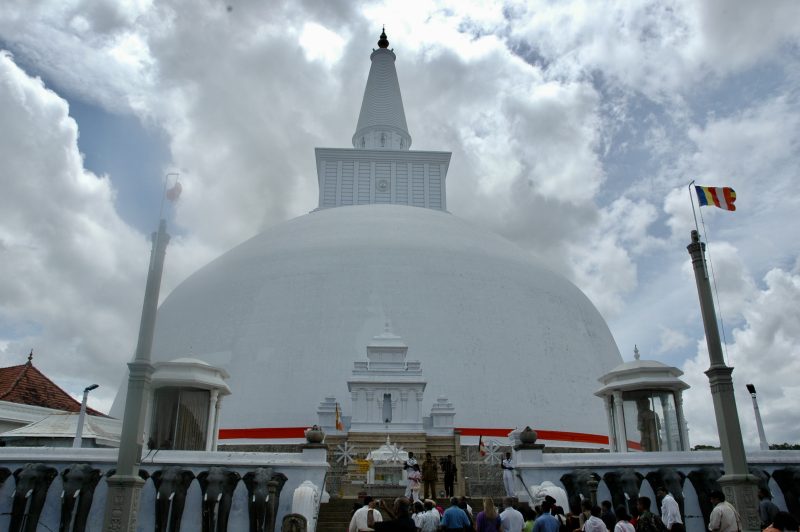
    Ruwanwalisay Temple at Anuradhapura – Image Credit: M Matheswaran

    Someone asked me; We read in the press your response to a question recently. You seem to be making sweeping statements about the Sinhalese. As far as we know the Sinhalese were the original inhabitants of this Island and the Tamils came in the 10th Century AD after the Chola Conquest. What proof have you about what you say?

    My response was; Professor Wijeyanayake from London like many other Sinhala Scholars wrote in the Sunday Observer of 17th November 1996 as follows- “The Origin of the Sinhala Race is in Lanka. There is no scientific evidence of Indians originating in India who spoke Sinhala”. Sinhalese are those who speak the Sinhala Language. Of course these days there are Sinhalese who have forgotten their mother language and have embraced other languages like English and French in their countries of emigration. But in early times the Sinhalese would have been those who spoke the Sinhala Language mainly. Without the Sinhala Language, there could have been no Sinhalese.

    When did the Sinhala Language come into being?

    The earliest Sinhala work was Siyabaslakara around 848 CE (9th Century AD). The next was Dhampiya-atuva Gatapadayo which came out around 918 CE (10th Century AD). Pali words are used both in a modified and pure form quite heavily in this latter work. The first Sinhala grammar Sidath Sangaraya belongs to the 13th Century AD. The inscriptions before the 7th Century AD do not mention Sinhala as a language and ethnicity of the people. The term “Sihala” (Lion in Pali) occurs for the first time in the Dipawansa (5th Century AD). Only once is the term coming up to say the Island was known as Sihala on account of the presence of Lions.

    In the Mahawansa the term Sihala appears twice. But there is no reference to the people called Sinhalese nor the Language called Sinhala. R.A.L.H. Gunawardana in his book “The People of the Lion: The Sinhala Identity and ideology in History and Historiography” (Sri Lanka Journal of the Humanities Vol V:1-2 (1979)) claims that before the 12th Century AD the Sinhala identity did not cover a whole people in Sri Lanka but only a small ruling class. This meant even by the 12th Century AD Sinhala had not become a full-fledged people’s language yet. What you have been fed to believe as per your question is pseudo-history created before the 1970s.

    After the 1970s even Sinhala historians have begun to doubt the story of Sri Lanka’s history starting with the coming of Vijaya from North India. Now our history books do not start with the coming of Vijaya as before. They start with the Stone Age civilization which was long prior to (the fictitious) Vijaya landing in Sri Lanka. Our history books now accept that permanent settlements, agriculture, use of skills, use of iron, urbanisation etc took place in this Island before the coming of (the fictitious) Vijaya. It is interesting to note that none of the books on the ancient history of any of the States in North India refers to the emigration of a person called Vijaya with 700 followers from their shores at any time in their ancient history. So now we start history from dates anterior to the coming of (the fictitious) Vijaya. Historically it is more plausible to believe that Mahawamsa written in Pali was a fiction written for the glorification of Buddhism. In fact, the author mentions so at the end of every stanza.

    But so far our Sinhala historians have not officially identified who these people who lived in this country before the coming of (the fictitious) Vijaya were. This is because any attempt, to tell the truth, will be beneficial to the Tamils and the pseudo-history of the Sinhalese hitherto purveyed would get exposed! I am told there was pressure recently to prevent the author of “Demala Baudhayo” bringing out a reprint of his book.

    The importance of the 1970s and the post-1970s period lies in the fact that scientific archaeological research began to take place here from then on. Not only that, our local researchers were helped by erudite foreign archaeologists from France, Germany, Britain and USA together with UNESCO experts. The pseudo-Sinhala Buddhist historians found it difficult to make progress due to this.

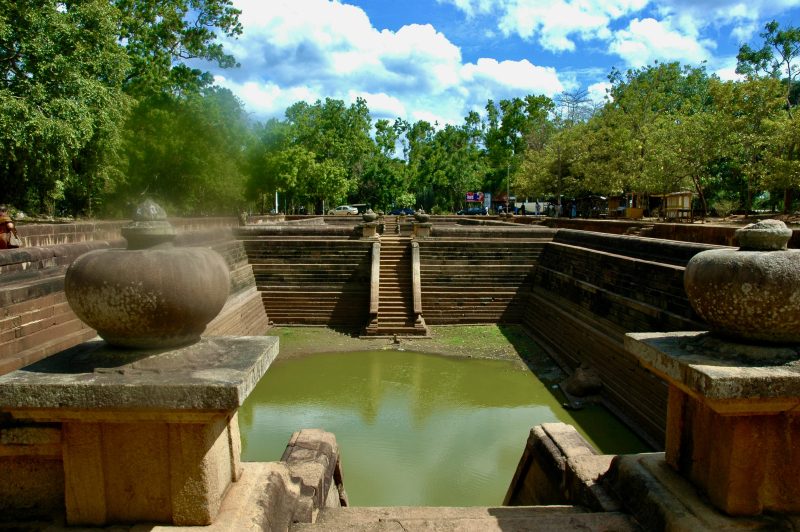
    A view of the Twin tanks: Archaelogical site at Anuradhapura – Photo Credit: M Matheswaran

    There is now archaeological evidence that pre-historic Stone Age people lived on this Island from over 125000 years ago according to excavations made in Iranaimadu in Kilinochchi District and in certain areas in Southern Sri Lanka. Dr Siran Deraniyagala brought these matters out, through his researches.

    The Stone Age could be generally divided into three periods 1. Paleolithic (Old Stone Age) (Before 10000 BC) 2. Mesolithic (Middle Stone Age) (Between 10000 BC and 8000 BC) 3. Neolithic (New Stone Age) (from 8000 BC to 3000BC). (Greek – lithos – Stone). But in certain regions, the Mesolithic period may have started even before 10000 BC.

    There is evidence that from 30000 years ago the Mesolithic people lived in our Hill Country as well as the Low Lands. About 75 evidences have been unearthed. Also, there is evidence to show that majority of these Mesolithic people lived mainly in the Northern and Eastern parts of Sri Lanka. They led a nomadic life. Their advancement in civilization is perceivable from the findings in caves, hills and on level ground.

    Thus the idea that the early inhabitants of Sri Lanka came from North India is now not accepted. It is agreed that long before the time of Mahawamsa, Sri Lanka enjoyed a culture similar to South India and those ancients were the progenitors of the present Sinhalese and Tamils.

    They attribute close similarities in lifestyle between these people and those who lived in the South of present Tamil Nadu. These are confirmed by experts in the fields of archaeology, humanities, philology and history. About 200 words found in the Tamil Language spoken by these people were taken into the Sinhala language later.

    It has been authoritatively said that the stone implements used by our Mesolithic people were the same as those used in Thirunelveli District in South India. According to Professor Indrapala, this civilization spread from South India to North Sri Lanka and thereafter spread to other parts of Sri Lanka.

    Around 3000 years ago early Iron Age was introduced to this Island. There too we see very close similarities between what was found in Southern Tamil Nadu and Sri Lanka. Vimala Begley who conducted researches in Kantharodai in the 1970s concluded that those who inhabited the Jaffna Peninsula in ancient times had very close relationship with the Southern part of present Tamil Nadu.

    Their cultural affinity in Sri Lanka extended from Kantharodai up to Puttalam. Pomparipu in the Puttalam District especially had very close resemblance to what is found in Kantharodai. Professor Sudarshan Seneviratne too has confirmed this finding. Professor Indrapala too confirms that the culture of the Stone Age people in Sri Lanka came within the ambit of the South Indian cultural ambience of that time.

    Thus the idea that the early inhabitants of Sri Lanka came from North India is now not accepted. It is agreed that long before the time of Mahawamsa, Sri Lanka enjoyed a culture similar to South India and those ancients were the progenitors of the present Sinhalese and Tamils. Professor Senaka Bandaranayake has said that these ancients had no ethnic differences but only cultural differences. These differences he says could have existed even before the time of the visit of the so-called Vijaya to the Island. If we examine the culture and life habits of the ancient Stone Age people they had a habit of inscribing their name or the names of those who shaped the clay pots and utensils, on them. This habit is seen to have existed both in South India and Sri Lanka during that period. This habit is not visible in any other part of India. These writings on clay pots have been unearthed in Tamil Nadu and in Anuradhapura. Anuradhapura pots belong to a period over 2750 years ago. The writings on pots have been identified as Tamil letters in the Tamil Language. Writing started in North India only about 2300 years ago. But both in Tamil Nadu and Sri Lanka these writings have been found to exist much earlier. Now historians believe that the art of writing went from the South to North India.

    Recent Keeladi excavations in Madurai, South India has shown evidence of a civilization anterior to all others in India. Thus, before the introduction of Buddhism to Sri Lanka, the fact that the progenitors of the present Sinhalese and the Tamils lived here, has been accepted scientifically. The recent DNA tests confirmed this.

    When we examine the writings in Sinhala, Professor Fernando, Professor Saddha Mangala Karunaratne and Professor Ariya Abeysinghe have said that before the North Indian Prakrit was introduced with Buddhism into Sri Lanka, the Script similar to the South Indian Script was available in Sri Lanka. We could gather from their researches that Tamil Script and Tamil Language and Dravidian words were in use in Sri Lanka before Sinhala Language came into use. That is why I boldly said the language of our ancients was Tamil and the original indigenous population of Sri Lanka were Tamil.

    Buddhism spread in this Island from the 3rd Century BC onwards. Over 1500 identified inscriptions confirm this. These inscriptions have Brahmi script from North India plus Tamil Script inscribed on them. There was no Sinhala script nor Sinhala language nor Sinhalese people then. Thus it is clear that the Tamil Language was in use in Sri Lanka prior to the introduction of Buddhism and before the introduction of the North Indian Brahmi Script.

    Even though Professor Paranavithana tried to identify the North Indian Prakrit as an old Sinhala Script and tried to show wherever Prakrit was in use the Sinhalese lived there, this statement of the Professor is now not accepted because with the spread of Buddhism, the Prakrit script too spread all over South and South East Asia and was in use for over 700 years as the script of inscriptions. Prakrit was not old Sinhala. If it was, the Sinhala language should have been spoken in other South East Asian countries too.

    But in Tamil Nadu the language of the Buddhist inscriptions was Tamil. If we examine the 1500 Brahmi inscriptions in Sri Lanka even though Northern Brahmi was generally used, in addition, many Tamil words were also used. Specially the names of individual Tamils were referred to in Tamil. Relationships among individuals were referred to in the Tamil Language. Place names have been written in Tamil. Even titles of Tamil rulers were written in Tamil. This shows the existence of the Tamil language in Sri Lanka before the introduction of Buddhism and hence Tamils were the original inhabitants of this Island at the time Buddhism was introduced.

    If we examine the evolution of the Sinhala language we have a parallel in the evolution of Malayalam. The present Kerala was part of Tamil-speaking regions in Tamil Nadu. They were ruled by Chera Kings. The transformation of Tamil to Malayalam took place due to the heavy influence of Sanskrit from the 10th  Century AD on the Tamil language. Tamil plus Sanskrit brought in Malayalam. Hence I referred to a new language in the offing in Chennai today. Tamil plus English might produce Tamilish in 25 to 50 years.

    Similarly, the introduction of the Pali language in Sri Lanka as the language of Buddhism when it mixed with the local Tamil language it developed into a new language called Sinhalese around the 6th or 7thCentury AD.

    The evidence for this could be found in Sigiriya. Sigiriya inscriptions of 5th Century AD portray early Sinhalese not yet developed into a proper language. Thus there is no evidence that the Sinhala language existed before the 7th Century AD. The Sinhala Script has developed due to the mixing of Brahmi letters with the Pallava period grantha letters.

    The Sinhala literature like Rajavaliya and Poojavaliya belongs to the 13th Century AD.

    Your question contains a reference to the Tamils coming here only during the Chola conquest in 10thCentury. There had been Tamils living on this Island from a long, long time ago. May be from the time of the Lemurian Continent which is now under the Indian Ocean. The earliest Tamil Sangam period and the Second Sangam period (Muthal Sangam and Idai Sangam) have been referred to in the last Sangam period (Kadai Sangam) literature and the literary works of the earlier Sangam Periods are referred to in the Kadai Sangam literature. Tamil is one of the earliest languages of this World if not the earliest. There have been Pandya, Pallava, and Chola conquests of Sri Lanka from ancient times. Thus there have been waves of Tamil intrusions. But the original Tamils of Sri Lanka have been occupying this Country from over 3000 years ago. The present tendency to refer to Buddhism as that of the Sinhalese and Hinduism as that of the Tamils is erroneous. When religions are introduced into a Country they are not introduced to be followed only by particular races. When Buddhism was introduced into this Island there were no Sinhalese. Thus the Tamil King Devanampiya Theesan got converted to Buddhism.

    There is considerable evidence to show the existence of Tamil Buddhists in Pali literature and Brahmic inscriptions. Tamil Kings were given the titles Buddha thasan and Buddhadevan when they supported Buddhism and Buddhist causes.

    Up to 15 th or 16 th  Century there were Tamil Buddhists according to Pali literature. The inscriptions of Nainatheevu in North Sri Lanka refer to Tamil Buddhists. Professor Sunil Ariyaratne in his “Demala Baudhayo” refers to Tamil Buddhists.

    In recent times Sinhalese portraying themselves as Buddhists and Tamils as Hindus have brought about polarization says Professor Pushparatnam. This could have been avoided he says.

    When I was living in the old Anuradhapura Town in the 1940s there were Tamils who owned lots of lands around Nuwara Wewa who were more or less Demala Baudhayos. Even I used to go to Ruwanwelisaya and Mahabodhi to worship with my parents (both Hindus). We joined the Buddhists who came from nearby villages to do “Pongal” during Poson. Buddhist philosophy influenced me considerably. Together with Dr Adikaram and others, we were votaries of Philosopher J. Krishnamurthi whose teachings were close to Buddhist philosophy. Of course, later, Hindu Saints were able to point out the limitations of the Buddhist philosophy to me.

    Professor Pushparatnam has said even the Mahawansa is a useful reference Book to prove the existence of Tamils at the time of the arrival of Vijaya.

    Mahawansa refers to 700 Tamil Brides from Madurai together with 1000 Tamil families employed in 18 professions being brought down to Sri Lanka on Vijaya’s request. That means more Tamil families came into the Country from Madurai than the 701 who came from elsewhere! This is according to the Mahawansa!

    Even the so-called statement of Dushta Gamini that the Tamils are on one side and the sea on the other side refers to the existence of a large amount of Tamils in the country at that time says Professor Pushparatnam. Ellalan was a Tamil King thus how could anyone say Tamils for the first time arrived at the time of the Chola conquest in the 10th century AD?

    Finally a word about Homeland of the Tamils. Before the Bakthi Cult was born in Tamil Nadu there is evidence of Tamils living outside the North and East as well. Pali Literature and certain inscriptions refer to the presence and influence of Tamils in Anuradhapura.

    Before Independence, the influence of Tamils in Anuradhapura was considerable in the Old Town. The new Town was constructed, one is forced to deduce, to reduce and negate the Tamil influence in Anuradhapura.

    Mahawansa refers to 32 Petty Tamil Kings Dutugemunu had to overcome before reaching Ellalan’s Capital. Coins of that period have been unearthed which point to Tamil presence from South to North. There are Tamil letters in those Coins. Names of Tamil Petty Kings are found in some of them. After the Bakthi Cult prospered in the North and East many Tamils living in other parts of Sri Lanka preferred to go to the North and East since the famous Hindu Temples lay there. This was a time when Jainism and Buddhism were beginning to go out of vogue due to the re-emergence of Saivaism consequent to the Bakthi Cult. The Thevarams of Nayanmars in South India referred to Thiruketheeswaram and Thirukoneswaram in Sri Lanka.

    Especially there is reference to Trincomalee being a full-fledged Saivite Tamil City. When the Cholas were ruling from Polonnaruwa their commercial outlet was Trincomalee. The North and East were distinct areas of Tamil habitation during the Chola Rule. The Jaffna Kingdom was consequent and subsequent to the Chola Rule. From the 13th Century to the 17th Century the Jaffna Kingdom existed. Puttalam came under the rule of the Jaffna King. Udapu is still a Tamil Village.

    When the Dutch during their rule brought out Coins they referred to the North and East separately and had them minted in Tamil. Thus the North and East were the homelands of the Tamils.

    To conclude – the Tamils were the Original inhabitants of this Island and there have been several waves of Tamil conquest but they only added to the Original indigenous Tamils who continued to live here from pre-historic times. Chola conquest was only one such intrusion from South India. Sinhala Language and Sinhala Race are very recent chronologically though the Sinhalese and the Tamils have had common progenitors from ancient times.

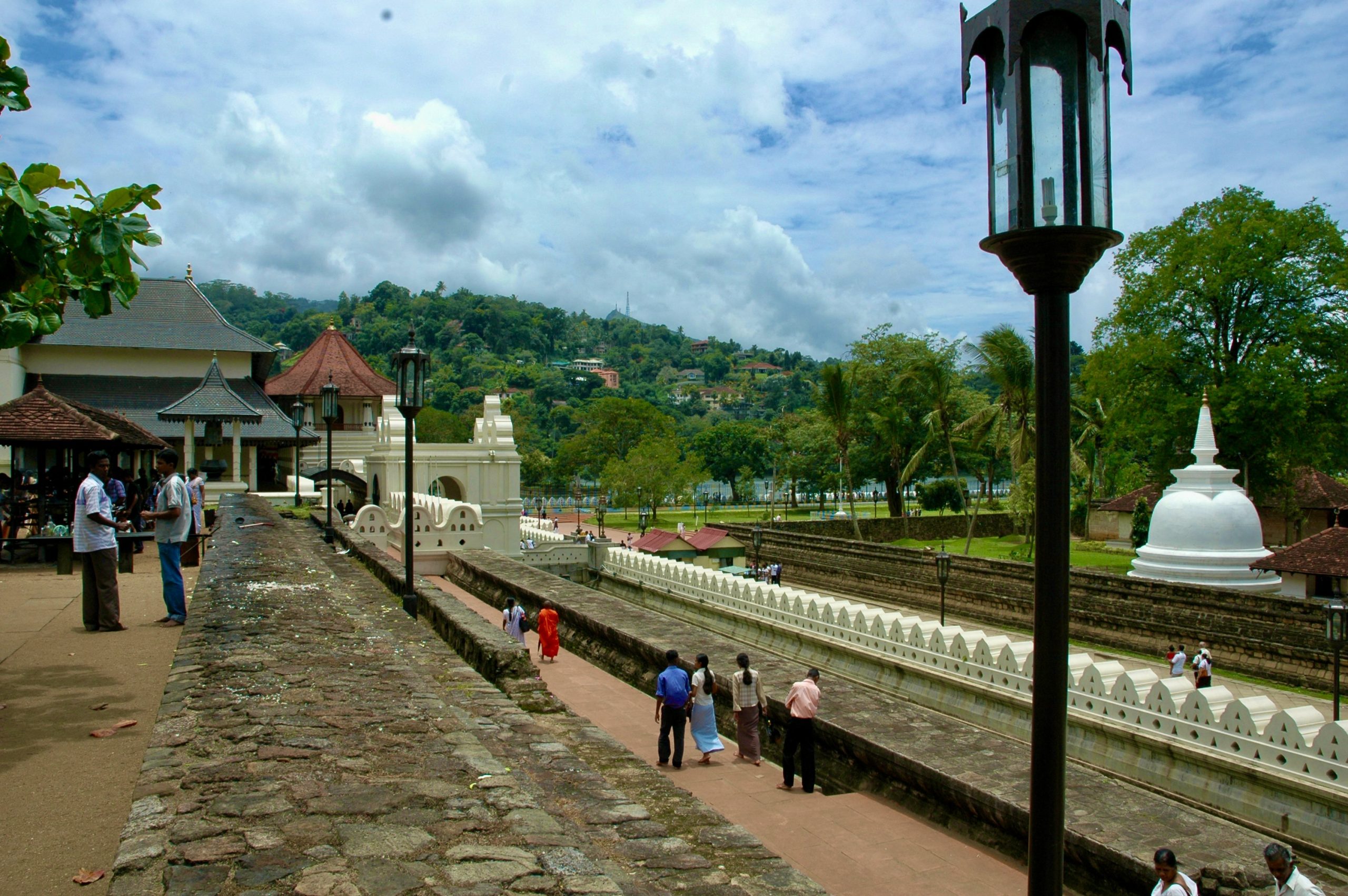
    Feature Image: Kandy Temple Precincts – Photo Credit: M Matheswaran

    This article was published earlier in Colombo Telegraph.

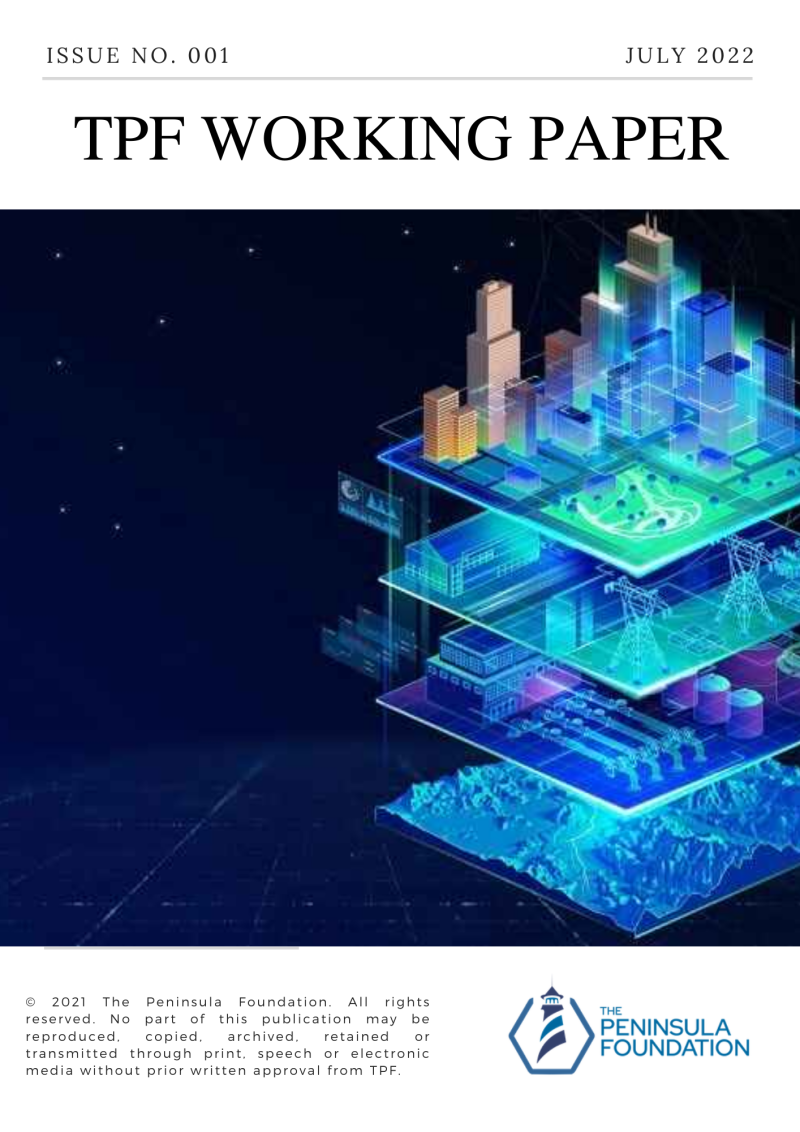
  • On Metaverse & Geospatial Digital Twinning: Techno-Strategic Opportunities for India

    On Metaverse & Geospatial Digital Twinning: Techno-Strategic Opportunities for India

    [powerkit_button size=”lg” style=”info” block=”true” url=”https://admin.thepeninsula.org.in/wp-content/uploads/2022/07/TPF_Working-Paper_MetaGDT-1.pdf” target=”_blank” nofollow=”false”]
    Download
    [/powerkit_button]

    Abstract:

    With the advent of satellite imagery and smartphone sensors, cartographic expertise has reached everyone’s pocket and we’re witnessing a software-isation of maps that will underlie a symbiotic relationship between our physical spaces and virtual environments. This extended reality comes with enormous economic, military, and technological potential. While there exist a range of technical, social and ethical issues still to be worked out – time and tide wait for no one is a metaphor well applied to the Metaverse and its development. This article briefly introduces the technological landscape, and then moves over to a discussion of Geospatial Digital Twinning and its techno-strategic utility and implications. We suggest that India should, continue on the existing dichotomy of Open Series and Defence Series Maps, initiate Geospatial Digital Twins of specific areas of interest as a pilot for the development, testing, and integration of national metaverse standards and rules. Further, a working group in collaboration with a body like NASSCOM needs to be formed to develop the architecture and norms that facilitate Indian economic and strategic interests through the Metaverse and other extended reality solutions.

    Introduction

    Cartographers argue that maps are value-laden images, which do not just represent a geographical reality but also become an essential tool for political discourse and military planning. Not surprisingly then, early scholars had termed cartography as a science of the princes. In fact, the history of maps is deeply intertwined with the emergence of the Westphalian nation-state itself, with the states being the primary sponsors of any cartographic activity in and around their territories[1].
    Earlier the outcome of such activities even constituted secret knowledge, for example, it was the British Military Intelligence HQ in Shimla which ran and coordinated many of the cartographic activities for the British in the subcontinent[2]. Thus, given our post-independence love for Victorian institutions, until 2021 even Google Maps had remained an illegal service in India[3].

    One of the key stressors which brought this long-awaited change in policy was the increased availability of relatively low-cost but high-resolution satellite imagery in open online markets. But this remote sensing is only one of the developments impacting modern mapmaking. A host of varied but converging technologies particularly Artificial Intelligence, advanced sensors, Virtual and Augmented Reality, and the increasing bandwidth for data transmission – are enabling a new kind of map. This new kind of map will not just be a model of reality, but rather a live and immersive simulation of reality. We can call it a Geospatial Digital Twin (GDT) – and it will be a 4D artefact, i.e. given its predictive component and temporal data assimilation, a user could also explore the hologram/VR through time and evaluate possible what-if scenarios.

    [powerkit_button size=”lg” style=”info” block=”true” url=”https://admin.thepeninsula.org.in/wp-content/uploads/2022/07/TPF_Working-Paper_MetaGDT-1.pdf” target=”_blank” nofollow=”false”]
    Read the Full Paper
    [/powerkit_button]

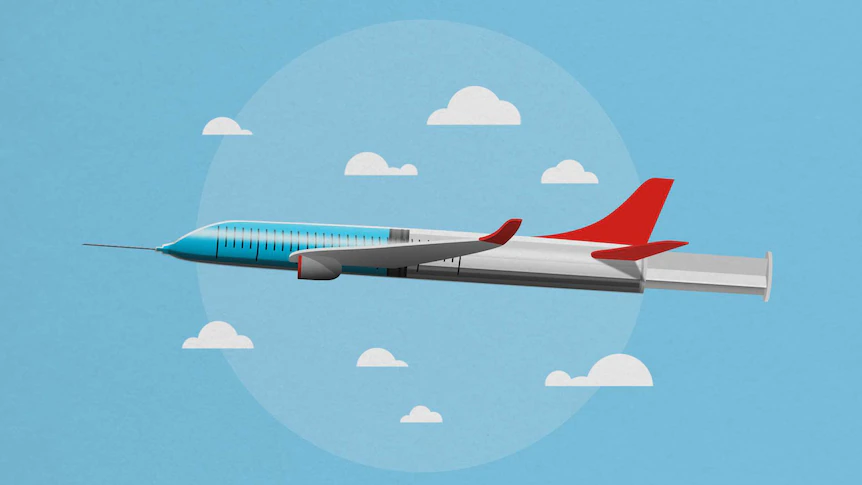
  • “Aapada mein Avasar”: Examining India’s Engagement with the International Community Amidst the Pandemic

    “Aapada mein Avasar”: Examining India’s Engagement with the International Community Amidst the Pandemic

    [powerkit_button size=”lg” style=”info” block=”true” url=”https://admin.thepeninsula.org.in/wp-content/uploads/2022/05/TPF-Issue-Brief-Aapada-mein-Avasar-1_compressed-2.pdf” target=”_blank” nofollow=”false”]
    Download PDF
    [/powerkit_button]

    Abstract

    Health security has often been considered an issue of “low politics”. However, in the past two years, the global economy has suffered the most since the Great Depression and global supply chains have been hampered. The developed countries were caught off-guard at par with the rest of the world with global resource inequities at display. As the developed world resorted to “medicine nationalism” and “vaccine nationalism,” their credibility as “global leaders” was sharply questioned. Amidst this, the allegations of the pandemic’s origins generated reactions from an emergent China which stopped concealing its geopolitical ambitions and adopted an unapologetically aggressive posture. Moreover, the credibility of a prominent international organization, the World Health Organization, in terms of its inability in notifying and managing the pandemic was heavily criticised. Each of these occurrences having emerged from a global health crisis has unexpectedly altered the prioritization of matters in the international order, and thereby international diplomacy.

    With the developing and least developed countries deprived of critical medical supplies due to hoarding by developed countries – India’s active engagement in medical diplomacy in the initial phase garnered international appreciation. While it cannot be looked at in a transactional sense, it visibly helped India push for its geopolitical interests in the middle of a global crisis – finding the adequate avasar (possibilities) in the ongoing aapada (crisis). Although flaws on the domestic front existed during the first wave, their impact on India’s medical diplomacy was limited. However, a domestic crisis during the second wave turned out to be an eye-opener and prominently impacted foreign policy initiatives. Considering the lessons so learnt and applied in managing the third wave, this paper examines the tremendous domestic potential of India, while also looking at its historical legacy. In doing so, it emphasises the relevance of domestic affairs as a determinant of successful medical diplomacy outreach – thereby impacting the larger foreign policy objectives.

    Introduction

    While health security has often been relegated as a low-priority issue in the geopolitical landscape, the last two years have unprecedentedly changed everything. A majority of developed nations have appeared helpless in managing the human catastrophe thereby resorting to vaccine and medicine protectionism. To put this on record, over six million people worldwide have lost their lives (COVID Live – Coronavirus Statistics, 2022) during these two years – with the maximum number of lives lost in the United States of America. The global economy has suffered the most since the Great Depression as a fallout of extended total lockdowns that hampered global supply chains. Moreover, an unexpected, unrealised over-dependency of global supply chains on a single country’s economy – China – caught the international community unprepared. Gradually, newer possibilities and threats have emerged through a changing character of the global economy, society, as well as politics and warfare – each of these shifting to the virtual domain.

    [powerkit_button size=”lg” style=”info” block=”true” url=”https://admin.thepeninsula.org.in/wp-content/uploads/2022/05/TPF-Issue-Brief-Aapada-mein-Avasar-1_compressed-2.pdf” target=”_blank” nofollow=”false”]
    Read More
    [/powerkit_button]

    Feature Image Credits: ABC

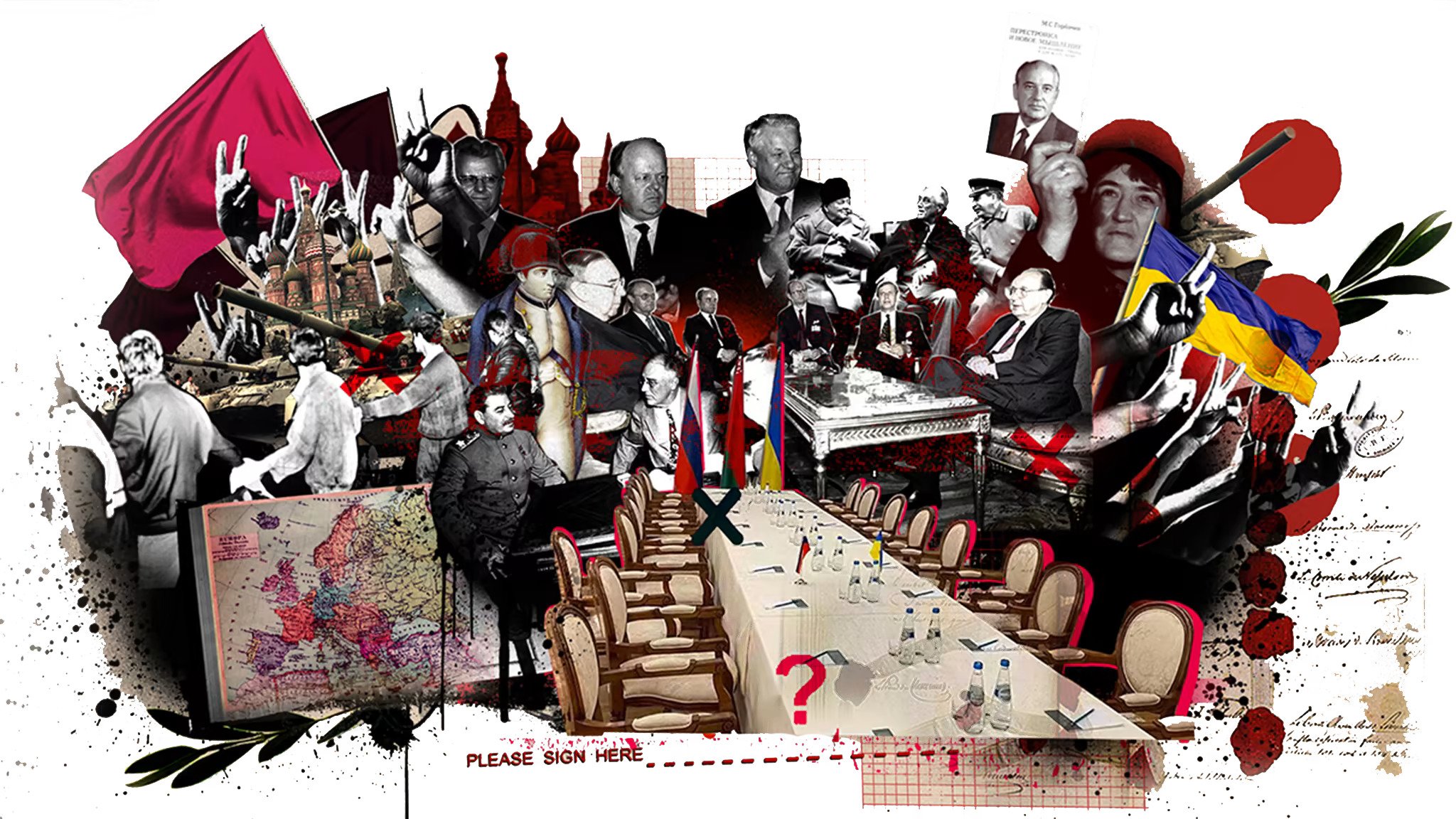
  • TPF Analysis Series on Russia – Ukraine Conflict #2

    TPF Analysis Series on Russia – Ukraine Conflict #2

    [powerkit_button size="lg" style="info" block="true" url="https://admin.thepeninsula.org.in/2022/03/29/tpf-analysis-series-on-russia-ukraine-conflict/" target="_blank" nofollow="false"]
    The First Paper of the Series – TPF Analysis Series on Russia – Ukraine Conflict #1
    [/powerkit_button]

    What’s in Ukraine for Russia? 

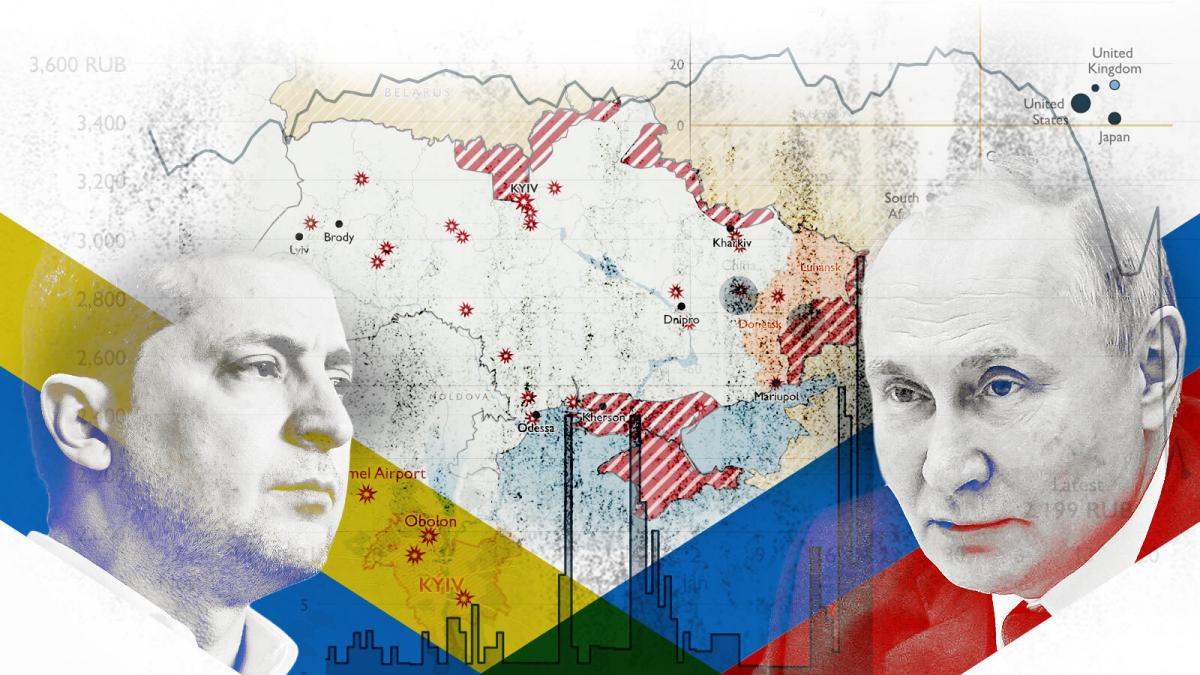
    In a press conference marking his first year in office, President Biden, on the question of Russia invading Ukraine, remarked that such an event would, “be the most consequential thing that’s happened in the world, in terms of war and peace, since World War Two”. [1] It has now been two months since Russia officially launched its “special military operation” in Ukraine, which the US and its allies consider an unjustified invasion of a sovereign state. The conflict in the Eurasian continent has drawn global attention to Europe and US-Russia tensions have ratcheted to levels that were prevalent during the Cold War. The conflict has also raised pertinent questions on understanding what exactly are Russian stakes in Ukraine and the latter’s role in the evolving security architecture of Europe. The second paper in this series will delve into these questions.

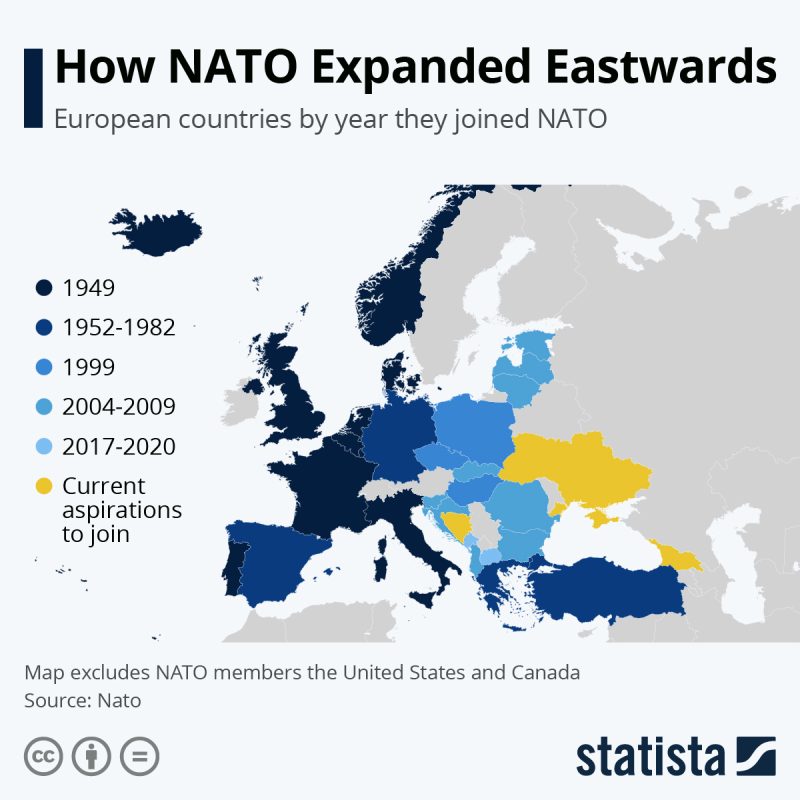
    The current Russian position stems from the experience that Russia, and Putin, gained while dealing with the West on a host of issues, not least of which was NATO expansion.

    The Ties that Bind

    An examination of post-Soviet history reveals that Russian preoccupation with security threats from NATO is not embedded in Russian geopolitics; instead, it has been reported that, early on, Russia was even agreeable to joining the military alliance. The current Russian position stems from the experience that Russia, and Putin, gained while dealing with the West on a host of issues, not least of which was NATO expansion. A line of argument sympathetic to Russia is President Putin’s contention that terms dictated to Russia during the post-Cold War settlements were unfair. The claim is a reference to Secretary of State James Baker’s statement on the expansion of NATO, “not an inch of NATO’s present military jurisdiction will spread in an eastern direction”, in 1990 in a candid conversation with Mikhael Gorbachev on the matter of reunification of Germany. [2] It could be argued that it is this commitment and subsequent violation through expansions of NATO is one of the main causes of the current conflict. 

    At the root of the problem was Russia’s security concerns – regarding both traditional and hybrid security – that ultimately led to the centralisation of power after a democratic stint under Yeltsin. Accordingly, Putin had put it in late 1999, “A strong state for Russia is not an anomaly, or something that should be combated, but, on the contrary, the source and guarantor of order, the initiator and the main driving force of any changes”. [3]

    Historically being a land power, Russia has viewed Ukraine as a strategically critical region in its security matrix. However, as the central control of Moscow weakened in the former USSR, the nationalist aspirations of the Ukrainian people began to materialise and Ukraine played a crucial role, along with the Russian Federation and Belarus, in dissolving the former Soviet Union. The two countries found themselves on opposite sides on extremely fundamental issues, such as security, economic partnership, post-Soviet order, and, not least, sovereignty. In Belovezh, in early December of 1991, when Russian President Boris Yeltsin, Ukrainian President Leonid Kravchuk and Belarusian leader Stanislav Shushkevich met to dissolve the USSR, major disagreements regarding the transitional phase and future of the republics erupted. Yeltsin expressed his desire for some sort of central control of the republics, whereas Kravchuk was vehemently opposed to any arrangement that might compromise his country’s sovereignty. Later, at the foundational ceremony of the Commonwealth of Independent States (CIS), he stressed a common military, the most potent rejection of which came from Kravchuk. [4]

    Source: Wikimedia Commons

    The elephant in the room, however, was the status of Sevastopol, which housed the headquarters of the Black Sea Fleet. Yeltsin was quoted saying that “The Black Sea Fleet was, is and will be Russia’s. No one, not even Kravchuk will take it away from Russia”. [5] Though the issue was soon temporarily resolved –with the two countries dividing the fleet equally amongst themselves, it continued to dominate and sour their relationship. Russia, as the successor state of the USSR, wanted the base and the entire fleet in its navy. Yeltsin even offered gas at concessional rates to Ukraine if it handed over the city and nuclear weapons to Russia. The issue remained unresolved until the 1997 Friendship Treaty under which Ukraine granted Moscow the entire fleet and leased Sevastopol to Russia until 2017 (later extended).

    Ukraine, under Kravchuk and, later, Leonid Kuchma, struggled to tread a tightrope between Russia and the European Union. On one hand, it was economically knit with former Soviet Republics, and on the other, it was actively looking to get economic benefits from the EU. However, soon a slide towards the west was conspicuous. In 1994, it preferred a Partnership and Cooperation Agreement with the EU over CIS Customs Union, which was a Russian initiative. Later, in 1996, it declined to join a new group consisting of former Soviet Republics ‘On Deepening Integration’, scuttling the initiative, since its purpose was to bring Ukraine back into the Russian fold. [6] By 1998, the Kuchma government had formulated a ‘Strategy of Integration into the European Union’. [7]

    Nuclear weapons were another point of contention between the two. Ukraine was extremely reluctant to give up its arsenal, citing security threats from Russia. Kravchuk received a verbal ‘security guarantee’ from the US which forced Russia to “respect the independence, sovereignty, and territorial integrity of each nation” [8] in exchange for surrendering Ukraine’s nuclear weapons. 

    Notwithstanding the disputes, there was a great deal of cooperation between the two, especially after Kuchma’s re-election in 1999. Kuchma’s hook-up with authoritarianism distanced Kyiv from Brussels and brought it closer to Moscow. Ukraine agreed to join Russian initiatives of the Eurasian Economic Community as an observer and Common Economic Space as a full member. At home as well, his support in the eastern parts of the country, where ethnic Russians dwelled, increased dramatically, as evident in the 2002 Parliamentary Elections. [9] However, the bonhomie was soon disrupted by a single event.

    The Orange Revolution was Russia’s 9/11. [10] It dramatically altered Russian thinking on democracy and its ties with the West. It raised the prospect in Russia that Ukraine might be lost completely. It further made them believe the colour revolutions in former Soviet republics were CIA toolkits for regime change. More importantly, it made the Russians apprehensive of a similar revolution within their borders. As a result, the distrust between Russia and the West, and Russia and Ukraine grew considerably. As a nationalist, Victor Yushchenko formulated policies that directly hurt Russian interests. The two countries fought ‘Gas Wars’ in 2006 and 2009, which made both the EU and Russia uncomfortable with Ukraine as a gas transit country. Furthermore, Yushchenko bestowed the title of ‘Hero of Ukraine’ upon Stepan Bandera, a Nazi collaborator and perpetrator of the Holocaust, a decision that surely did not go well with Moscow.

    Geoeconomics: Ukraine as a Gas Transit Country

    The current war is the worst in Europe since the Second World War. Still, Ukraine continues to transit Russian gas through its land, Russia continues to pay for it, and Western Europe continues to receive the crucial resource. The war has shattered all the big bets on Russian dependence on Ukraine for delivering gas to Western Europe and has renewed the discourse on reducing European energy dependence on Russia. Since the EU imports 40% of its gas from Russia, almost a quarter of which flows through Ukraine, Kyiv has had leverage in dealing with Russians in the past. It has been able to extract favourable terms by either stopping or diverting gas for its own domestic use at a time of heightened tensions between Ukraine and Russia. As a result, the EU was directly drawn into the conflict between them, infructuating Moscow’s pressure tactics for a long.

    Moscow has made numerous attempts in the past to bypass Ukraine by constructing alternate pipelines. Nord Stream, the most popular of them, was conceived in 1997, as an attempt to decrease the leverage of the transit states. The pipeline was described as the “Molotov-Ribbentrop Pipeline” by Polish Defence Minister Radoslaw Sirkosi for the geoeconomic influence it gave to Russia. [11] Another project – the South Stream – was aimed at providing gas to the Balkans, and through it to Austria and Italy. The pipeline was conceived in the aftermath of the Orange Revolution and its construction was motivated by geoeconomics, rather than economic viability. It would have led to Russia bypassing Ukraine in delivering gas to the Balkans and Central Europe, thus seizing its significant leverage, and relegating it to vulnerable positions in which Moscow could have eliminated the gas subsidies Ukraine was being provided. [12]As a result of economic unviability, the project was abandoned in 2014.

    To a certain extent, the European Union has been complicit in making matters worse for Russia. For instance, during the 2009 ‘Gas War’ – that began due to Ukraine’s non-payment of gas debt to Russia – instead of holding Ukraine accountable, the EU countries blamed Russia for the gas crisis in Europe and asked Russia to resume gas supply to Ukraine. Later, realising the importance of Ukraine as a transit country, it reached an agreement with Kyiv that “recognized the importance of the further expansion and modernization of Ukraine’s gas transit system as an indispensable pillar of the common European energy infrastructure, and the fact that Ukraine is a strategic partner for the EU gas sector”. The agreement excluded Russia as a party, which saw it as undermining the collaboration between itself and Ukraine, and injuring its influence on the country. [13] The Russian grievance becomes even more palpable when we view the significant gas subsidies it has provided to Ukraine for more than two decades. 

    Similarly, the EU countries viewed Nord Stream 2 from a geostrategic and geo-economic perspective. In December last year, German Economic Affairs Minister Robert Habeck warned Russia of halting Nord Stream 2 if it attacks Ukraine. German Chancellor Olaf Scholz was quoted saying that he would do ‘anything’ to ensure that Ukraine remains a transit country for Russian gas. [14] In fact, the pipeline – that is set to double the capacity of gas delivered to the EU – has faced opposition from almost all Western European countries, the US, the EU as well as Ukraine, which has described it as ‘A dangerous Geopolitical Weapon’. [15] The pipeline had raised concerns amongst Ukrainians of losing a restraining factor on Moscow’s behaviour. [16] However, with the pipeline still inoperable, the Kremlin has already made the restraining factor ineffective.

    The Security Objective

    The Russian Federation is a country which spreads from the European Continent to Asia. In this giant nation, the hospitable region where people live is mainly on the European side, which also comprises main cities like St. Petersburg, Volgograd and the Capital City Moscow. Throughout history, Russia has seen invasions by Napoleon as well as Hitler, and the main area through which these invasions and wars happened was through Ukrainian land which gave them direct access to Russia – due to the lack of any geographical barriers. It was certainly a contributing factor towards the initial success of these invasions. Today, we might understand these events as Russia’s sense of vulnerability and insecurity if history is any indicator. 

    The Russian Federation also follows a similar approach to ensuring its security, survival and territorial integrity. Russia’s interest in Ukraine is as much geopolitical as cultural. Since Russians and Ukrainians were intrinsically linked through their culture and language, Ukraine quickly came to be seen as Russian land, with Ukrainians being recognized as ‘Little Russians’ (Kubicek, 2008), as compared to the “Great Russians”. They were consequently denied the formation of a distinct Ukrainian identity. Putin gave substance to this sentiment as, according to a US diplomatic cable leak, he had “implicitly challenged the territorial integrity of Ukraine, suggesting that Ukraine was an artificial creation sewn together from the territory of Poland, the Czech Republic, Romania, and especially Russia in the aftermath of the Second World War” during a Russia-NATO Council meeting. [17]

    Crimea and much of eastern Ukraine are ethnically Russian and desire closer ties with Russia. But moving further west, the people become increasingly cosmopolitan and it is mostly this population that seeks greater linkage with the Western European countries and membership into the EU and NATO. This in addition to the Euro Maidan protests is what Putin has used to justify the annexation of Crimea in 2014. The other security consideration was the threat it faced from the likelihood of NATO establishing a base in Crimea given its own presence in Sevastopol in the Black Sea. 

    In the current scenario, the second phase of Russian Military operation in the East and South has shown us the larger vulnerabilities Moscow has which are being countered through control of certain points in the region. By liberating the Donbass region in the east, Russia plans to create a buffer zone between itself and the west to stop future aggression and keep enemies at bay. But the extension of this buffer zone all the way to Odessa is indicative of other strategic considerations. Mariupol in the south of Ukraine is one of the many extended strategic points Russia now controls leading us to ask just why Mariupol is a game-changer in this conflict?

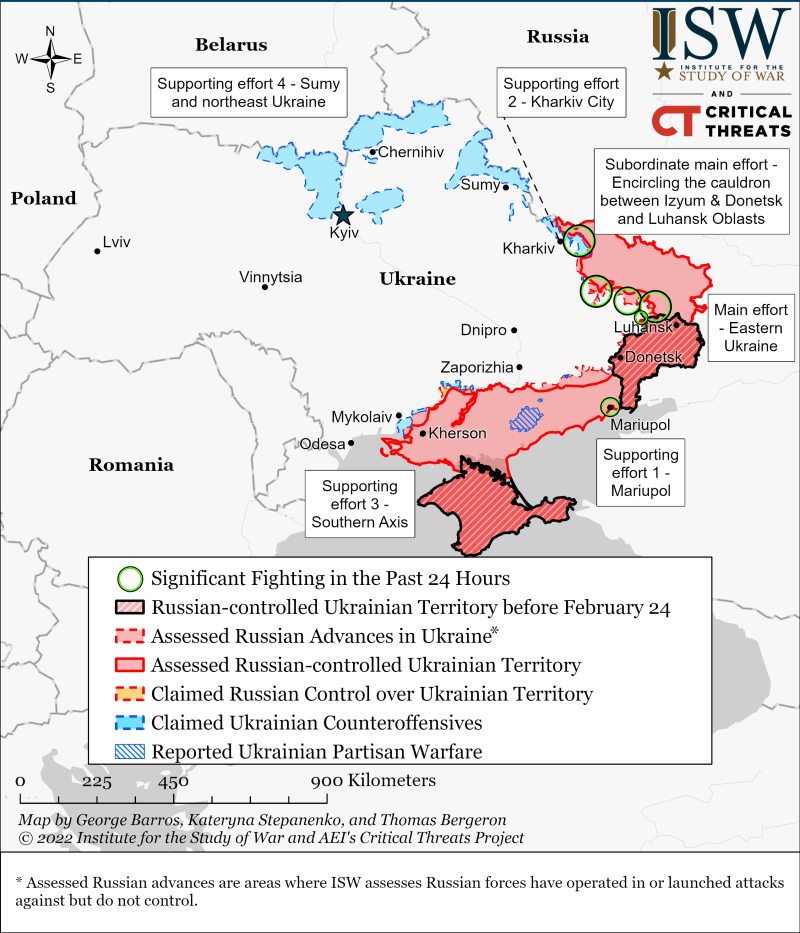
    The port city of Mariupol is a small area geographically, but it provides the land bridge for the Russian forces in the Crimean Peninsula to join the Military operation in the Donbas region. Moreover, it gives Russia a land bridge to Crimea from the Russian Mainland. According to General Sir Richard Barrons, former Commander of UK Joint Forces Command, Mariupol is crucial to Russia’s offensive movement, – “When the Russians feel they have successfully concluded that battle, they will have completed a land bridge from Russia to Crimea and they will see this a major strategic success.” [18]

    Source: ISW (Assessment on 09 May, 2022)

    If the port city of Mariupol is important for the creation of a land corridor, then the Sea of Azov which is adjacent to it is even more important due to its strategic position. [19] The three geopolitical reasons why this sea is important are as follows:

    1. The Sea of Azov is a major point for the economic and military well-being of Ukraine. Proximity to the frontlines of the Donbass region where the fighting between Ukrainian forces and Pro-Russian separatists is taking place makes the control of this sea vital to the Russian military as it helps weaken Ukrainian defence in the region via control of the Kerch Strait.
    2. Controlling the Sea of Azov is strategically important for Russia, to maintain its control in the Crimean Peninsula, which allows Moscow to resupply its forces through the Strait of Kerch.
    3. Finally, it also involves Eurasian politics into why Russia needs to control this region and here the discussion of the Volga-Don canal which links the Caspian Sea with the Sea of Azov comes to the fore. Russia has always used this canal to move warships between the Caspian Sea to the Black Sea and project its power in both regions. Moreover, Russia sees this connection as a significant strategic advantage in any future crisis.

    If Mariupol and the Sea of Azov are considered the most important strategically valuable features by Russia, there also exists the crucial points of Kherson and Odessa which will give Russia complete dominance of the Ukrainian coast line, thus giving larger access and control in the Black Sea region that has the potential to be militarised in the future in conflicts with the West. Moreover, it gives Russia a land corridor to Transnistria which is a Pro-Russian separatist area in Moldova and an opening into the Romanian border through Odessa, thus balancing the build-up of NATO forces in the region. 

    Conclusion

    The Ukrainian crisis is as much the West’s doing as Russia’s and an ear sympathetic to the Russian narrative might even say that the West took advantage of Russia when it was vulnerable immediately following the collapse of the Soviet Union in negotiations regarding the German state reunification and NATO enlargement.

    The bottom line is that, presently, Putin views NATO as an existential security threat to the Russian state and sees the US and its allies’ support of Ukraine as a challenge. Ukraine’s membership in the EU and NATO is a non-starter for Russia and pitting a Ukraine, that has a symbiotic relationship with Russia at all levels, against a slightly diminished but still formidable great power will have consequences for the security architecture and geopolitics of the region.  The Ukrainian crisis is as much the West’s doing as Russia’s and an ear sympathetic to the Russian narrative might even say that the West took advantage of Russia when it was vulnerable immediately following the collapse of the Soviet Union in negotiations regarding the German state reunification and NATO enlargement. On some level, NATO countries recognize the fact that Ukraine and Georgia can never be allowed membership into the North Atlantic alliance because the alternative of wilfully ignoring Russia’s security and national interests is just a recipe for disaster and might just launch the region into the single biggest armed conflict since World War 2. 

    References:

    [1] The White House. (2022, January 20). Remarks by president Biden in the press conference. https://www.whitehouse.gov/briefing-room/speeches-remarks/2022/01/19/remarks-by-president-biden-in-press-conference-6/

    [2] Savranskaya, S., Blanton, T. S., & Zubok, V. (2010). Masterpieces of history: The peaceful end of the Cold War in Europe, 1989. Central European University Press.

    [3] Putin, Vladimir. “Rossiya na Rubezhe Tysyacheletii,” Nesavisimaya Gazeta, December 30, 1999, quoted in D’Anieri, Paul (2019). Ukraine and Russia: From Civilized Divorce to Uncivil War. Cambridge University Press.

    [4] Ibid

    [5] Rettie, J. and James Meek, “Battle for Soviet Navy,” The Guardian, January 10, 1992

    [6] Ibid, no. iii

    [7] Solchanyk, R., Ukraine and Russia: The Post-Soviet Transition. Rowman and Littlefield Publishers. 2000.

    [8] Goldgeier, J. and Michael McFaul. “Power and Purpose: U.S. Policy Toward Russia after the Cold War”, Brookings Institution Press, 2003

    [9] Ibid, no. iii

    [10]  The comment was made by Gleb Pavlovskii, a Russian Political Scientist. quoted in Ben Judah (2013), Fragile Empire: How Russia Fell In and Out of Love with Vladimir Putin. New Haven, CT: Yale University Press, p. 85.

    [11] Ibid, no. iii

    [12] Wigell, M. and  A. Vihma, Geopolitics versus geoeconomics: the case of Russia’s geostrategy and its effects on the EU. International Affairs, 92: 605-627. May 6, 2016

    [13] Ibid, no. iii

    [14] Harper, J. (2021, December 23). Nord stream 2: Who wins, who loses? Deutsche Welle. https://www.dw.com/en/nord-stream-2-who-wins-who-loses/a-60223801

    [15] Ukraine: Nord stream 2 a ‘dangerous geopolitical weapon’. (2021, August 22). DW.COM. https://www.dw.com/en/ukraine-nord-stream-2-a-dangerous-geopolitical-weapon/a-58950076

    [16] Pifer, S. “Nord Stream 2: Background, Objectives and Possible Outcomes”, Brookings, April 2021 https://www.brookings.edu/research/nord-stream-2-background-objections-and-possible-outcomes/

    [17] WikiLeaks. (2008, August 14). UKRAINE, MAP, AND THE GEORGIA-RUSSIA CONFLICT, Canonical ID:08USNATO290_ahttps://wikileaks.org/plusd/cables/08USNATO290_a.html

    [18] Gardner, F. (2022, March 21). Mariupol: Why Mariupol is so important to Russia’s plan. BBC News. https://www.bbc.com/news/world-europe-60825226

    [19] Blank, S. (2018, November 6). Why is the Sea of Azov so important? Atlantic Council. https://www.atlanticcouncil.org/blogs/ukrainealert/why-is-the-sea-of-azov-so-important/

    Featured Image Credits: Financial Times

    [powerkit_button size="lg" style="info" block="true" url="https://admin.thepeninsula.org.in/2022/03/29/tpf-analysis-series-on-russia-ukraine-conflict/" target="_blank" nofollow="false"]
    TPF Analysis Series on Russia – Ukraine Conflict #1
    [/powerkit_button]

  • Technology, Politics and China’s Quest for Energy Dominance

    Technology, Politics and China’s Quest for Energy Dominance

    [powerkit_button size=”lg” style=”info” block=”false” url=”https://admin.thepeninsula.org.in/wp-content/uploads/2022/05/Technology-Politics-and-Chinas-Quest-for-Renewable-Energy-Dominance-3.pdf” target=”_blank” nofollow=”false”]
    Download
    [/powerkit_button]

    Abstract:

    This paper will empirically investigate the role of technology in international politics through a case study of China’s development of renewable energy infrastructure (solar PV and wind energy) and its impact on international politics. This paper looks at how technology helps shape a state’s identity using renewable energy technology as an explanatory variable. The paper employs Grygiel’s Model of Geopolitics to analyse the case study; geopolitics because much of China’s development in the renewable sector has been a function of its geography and abundance of natural resources.

    Introduction:

    China has experienced decades of near double-digit economic growth and since the 2000s, has witnessed a growing population and rapid industrialization that has correspondingly driven demand for energy. Its expeditious implementation of economic reforms has elevated it to the status of a global power capable of challenging the US-established status quo. Stability is increasingly being viewed as a function of China’s behaviour vis-à-vis its strategic rivals, primarily the US, and to a lesser extent Japan, India, Russia and the littoral states of Southeast Asia. But more importantly, it has been China’s near fanatic fervour to rise as a technologically superior state, as the US emerged post the World Wars, that has generated interest. The modernization of its military, near the meteoric rise of installed capacities for renewable sources of energy and technological revolution, underscores the importance and role technological advancement plays in a state’s development. Technology and international politics have a near symbiotic relationship and the former has the potential to fundamentally alter the way states exercise their sovereignty in pursuit of their national interests.

    [powerkit_button size=”lg” style=”info” block=”true” url=”https://admin.thepeninsula.org.in/wp-content/uploads/2022/05/Technology-Politics-and-Chinas-Quest-for-Renewable-Energy-Dominance-3.pdf” target=”_blank” nofollow=”false”]
    Read the Full Paper
    [/powerkit_button]

  • National Education Policy, 2020 – Policy Brief

    National Education Policy, 2020 – Policy Brief

    [powerkit_button size=”lg” style=”info” block=”true” url=”https://admin.thepeninsula.org.in/wp-content/uploads/2022/04/Policy-Brief-NEP-2020.docx-1_compressed-1.pdf” target=”_blank” nofollow=”false”]
    Download – Policy Brief on National Education Policy, 2020
    [/powerkit_button]

    Executive Summary:

    In line with the New Education Policy (NEP) 2020 mandate, the UGC released the draft National Higher Educational Qualifications Framework (NHEQF) in February 2022. Its release has reignited the controversy over the policy that was criticized and even rejected by many state governments. The inclusion of Education in the concurrent list gives overriding powers to the centre. However, the sweeping changes the NEP is set to bring have raised concerns that the states would turn into mere implementing agencies while all the decisions regarding education will be taken by the centre. At the root of the controversy lies the federal structure of India which would be jeopardized by the implementation of the policy. Hence, significant and appropriate amendments to the draft are required to address the grievances of the states.

    What is NEP (2020)?

    The NEP, released in July of 2020 by the Union Government, seeks to overhaul the entire education system of the country by replacing the thirty four-year-old National Policy on Education (1986). In the domain of pre-University education, the new policy aims to transform the curricula structure from 10+2 to 5+3+3+4, mandates the Three Language Formula (TLF), reduces the syllabus to make board exams “easier” and gives thrust to vocational training and skill development. In the realm of higher education, it envisions a single regulator- the Higher Education Council India (HECI)- for Higher Education Institutes (HEIs) by merging UGC, AICTE and other regulatory bodies. The HECI is further divided into four verticals, namely the National Higher Education Regulatory Council (NHERC), National Accreditation Council (NAC), Higher Education Grants Council (HEGI) and General Education Council (GEC). 

    The policy introduces four-year undergraduate programmes with multiple exit options, along with proposing a national Academic Bank of Credit and a national entrance exam for all universities. It further allows higher education to be taught in regional languages. Additionally, it proposes the National Testing Agency (NTA) conduct a “high quality” common entrance test and a common specialized subject exam in sciences, humanities, language, arts, and vocational subjects, at least twice a year. It blurs the distinction between research-oriented and employment-oriented education, emphasizing a multidisciplinary approach to education. Additionally, it proposes facilitation to top global universities to set up campuses in India and to top Indian Universities to establish campuses abroad.

    The policy also touches upon the issue of Adult Education. It proposes strong and innovative government initiatives to achieve 100% adult literacy, educate about critical life skills (including financial literacy, digital literacy, commercial skills, health care and awareness etc.), impart vocational skills and provide basic education to adults. It also ensures providing the necessary infrastructure for adults to facilitate its implementation.  

    Why is it a problem? 

    Since its release, the policy has been opposed by a few states. Though other states have voiced their reservations, none have been as vocal and vehement as Tamil Nadu. 

    • The foremost reason pertains to the Three Language Formula. The policy states that out of the three languages that ought to be taught at the pre-University level, two must be Indian. This leaves the students from the southern states to learn Hindi, along with English and the regional language in their curriculum. The formula was brought forward in 1968 by the then Indira Gandhi government as recommended by Kothari Commission. All states adopted the policy except Tamil Nadu, which continued its two language policy.

    The Three Language Formula finds its explicit mention in Section 4.13 of the Draft policy. In order to promote multilingualism, the draft states that, “The three-language formula will continue to be implemented”. Moreover, a student is given the option to change one of the three languages only once- in Grade 6 or 7. Though the formula has been in continuance since the 1970s, an exclusive emphasis upon it raises eyebrows. The draft further falls short of assuring the states unwilling to implement the formula of any compulsion by the centre, instead offering “greater flexibility” in its implementation. 

    Learning Hindi has always been a controversial issue in Tamil Nadu. The state has seen numerous instances of violence and public protests against the imposition of Hindi. The state has also actively promoted Tamil learning in schools. In 2006, the state enacted Tamil Nadu Tamil Learning Act, making it compulsory for every school operating in the state to teach Tamil. The state government is also opposed to the establishment of Navodaya Schools by the centre in the state.

    • The draft also places an unprecedented emphasis on learning Sanskrit. Section 4.16 stresses the need for learning Sanskrit since most of the Indian other languages attribute “their origins and sources of vocabularies” to it. Section 4.17 emphasizes the importance of classical literature possessed by the language. It thus offers its teaching “at all levels of school and higher education”. Moreover, it promotes the teaching of the language through its classical literature in mathematics, philosophy, grammar, music, politics, medicine, architecture, metallurgy, drama, poetry etc.

    Laying such a huge emphasis upon an archaic language in schools and even HEIs at “all levels” would leave a student burdened with an unnecessary curriculum. Offering courses in Sanskrit to college students, for instance, in non-Hindi speaking states would decrease their grades. Worse still, in Central Universities- mostly dominated by Hindi speakers, such courses will make naked and even exacerbate the language barrier the non-Hindi speaking students face. Further, the postulate that most of the major Indian languages owe their “origins” to Sanskrit is not even remotely true. Additionally, the literature in Sanskrit can be discriminatory against varna, caste or group, especially in social sciences. 

    • However, the major concern relates to the federal structure of India. The policy proposes the establishment of the all-powerful HECI and its verticals. The NHERC, one of its verticals, reserves the power to regulate every facet of HEIs, including financial probity, good governance, and the full online and offline public self-disclosure of all finances, audits, procedures, infrastructure, faculty/staff, courses, and educational outcomes[Section 18.3]. It further envisions a “graded accreditation” system to be given by the NAC, that will “specify phased benchmarks for all HEIs to achieve set levels of quality, self-governance, and autonomy…to attain the highest level of accreditation over the next 15 years” [Section 18.4]. The GECI, another of its verticals, will frame “expected learning outcomes for higher education programmes” and mandate the identification of “specific skills that students must acquire during their academic programmes” [Section 18.6].

    Owing to its vague language, the draft lacks clarity on the extent of jurisdiction of HECI and its verticals. It reserves the power to regulate the faculty/staff, courses, educational outcomes etc., thus infringing upon the state’s rights on reservations and education. Moreover, the students are required to acquire “specific skills” and “learning outcomes” framed by the central government, making it difficult for them to cater to the needs of their respective states. Further, the vocabulary used, such as “good governance”, leaves room for significant manipulation in the future.

    • The policy veritably promotes the centralization of education at every level. For instance, it envisages a nation-wide “high-quality” common aptitude test for admission into the universities, as well as “specialized common subject exams in the sciences, humanities, languages, arts, and vocational subjects” [Section 4.42], which it assumes will reduce the burden on students. Moreover, an all-India test is to be conducted by NTA for admission into pre-service teacher preparation programmes of Teacher Education Institutions (TEIs) [Section 15.7], which it envisions to convert into multidisciplinary institutions [Section 15.4]. Moreover, it places an undue emphasis on centralized vocational training in all schools and HEIs which would be overseen by the National Committee for the Integration of Vocational Education (NCIVE) [Section 16.8]. In the field of academic research, the policy envisions the establishment of the National Research Foundation to provide funding for research [Section 17.9]. Further, it proposes to establish the National Research Foundation (NRF) which is meant to provide funding for research to the institutions, and “undertake major initiatives to seed and grow research at the state universities and other public institutions”[Section 17.9], centralizing disbursement of research-oriented funding. It is further empowered to ensure that the Research Scholars are “constantly made aware of the most urgent national research issues” to allow breakthroughs to be optimally brought into policy [Section 17.11(c)].

    Tamil Nadu’s objection to a country-wide entrance test is premised upon the recommendations of the M. Anandakrishnan committee. Constituted in 2006, it recommended the abolition of the Common Entrance Test (CET) in the state from the academic year 2007-08 (Srinivasan, 2016), due to the unaffordability of the high fees of coaching for the rural and underprivileged students. Furthermore, the NRF is empowered to fund the research on urgent “national” issues, thus again leaving the door ajar for manipulation of their jurisdiction, and depriving state-funded institutions of funding for research on regional issues.

    • The policy seizes the administrative autonomy from both public and private HEIs. It mandates every such institution to establish a Board of Governors (BoG) which would be empowered to govern the institution[Section 19.2], including the selection of leaders of the institution [Section 19.4]. Further, the policy subjugates the BoG to guidelines formulated by NHERC[Section 19.3]. Additionally, it makes it compulsory for every institution to formulate its own Institutional Development Plan [Section 19.5] to strategize its roadmap.

    In subjugating the administrative system of the colleges to a central body, the central government ignores the urban-rural divide and caste-based discrimination entrenched in them. Moreover, drafting the same guidelines for urban, rural, minority etc. institutions would, along with waning their autonomy, undermine the purpose they are meant to serve. 

    • The policy provides multiple exit and entry options to the students pursuing higher education[Section 11.9], along with the creation of an Academic Bank of Credits to digitally store credits earned by the student and different designs of Master’s programmes [Section 11.10].  

    The central government does not contemplate the unintended consequences of the above proposition, especially for the backward communities and female students. It leaves the students of the said groups with multiple exit options but few entry options. Multiple choices of exit will compel such students facing monetary or familial issues to quit their education in the middle. Further, it burdens a teenage student with critical life-changing decisions.  Moreover, the proposed system disallows a student to carry backlogs into the next year, bringing about the apprehension of exacerbation of the dropout rate, which currently stands at 12.6%.

    • Both the draft NHEQF and the draft policy suggest, in multiple instances, that all colleges either become multidisciplinary or merge with existing universities. However, both the documents do not provide any provision regarding how the same will be executed without any monetary assistance. This has raised concerns about many state government colleges becoming defunct due to a lack of finances to become multidisciplinary, thus depriving a large number of students of educational opportunities. 
    • The policy makes no mention of the Reservation System in educational institutions, both in admission and faculty recruitment, making it non-inclusive to all sections of the society. Further, it does not mention the drop-out rates among the backward communities, let alone ways to tackle them. The NEP policy-makers veritably fail to view education as a tool to uplift the poor and backward classes while formulating it.
    • The proposal also lacks a grievance redressal mechanism, either for the states or the institutions regarding any facet of the policy. The institutions and state governments are left with no choice but to follow the guidelines of the would-be central institutions. Institutions failing to comply with the guidelines are feared to become defunct. Moreover, the power of ‘light but tight’ regulation bestowed upon the central bodies also leaves the door ajar for manipulation of their jurisdiction. 

    Tamil Nadu’s response to NEP

    Since early on, Tamil Nadu’s policies have emphasized education as a modus operandi to uplift the backward castes. As early as 1919, certain legislations were in place to encourage and mandate local education authorities to establish schools at places that were accessible to everyone, thus broadening the social base of its educated bracket. The reasons for the Tamil Nadu government opposing NEP are manifold. 

    Tamil Nadu Chief Minister MK Stalin has explicitly stated that the policy will not be implemented in the state. He has called it a policy “for elites” and, if implemented, education “will be confined and limited to a few sections”. The state government has even set up a committee to formulate its own State Education Policy in a bid to replace the NEP. Furthermore, the state plans to implement only some ‘good aspects’ of the central policy (Sathyanarayana, 2021). It claims that the policy negates the efforts of more than a hundred years of social justice aspirations that were carefully envisaged in Tamil Nadu. State Education Minister K. Ponmudi noted that mandating entrance exams for getting admissions to arts and science colleges would affect the students from rural areas.

    Similar concerns were raised by L. Jawahar Nesan, head of the All India Save Education Committee, while complaining that the proposed Academic Bank of Credits (ABC) could result in “students dropping out of higher educational institutions before completing their course”. “The proposed system aims at furthering vocational education and creation of a workforce pool”, he added (“Academics call for the withdrawal of draft”, 2022). The State Platform for Common School System- Tamil Nadu (SPCSS-TN) termed the framework “a crude form of diarchy”(Sathyanarayana, 2022). Regarding the mandatory entrance test akin to NEET, PB Prince Gajendra Babu, General Secretary of the body, said that the students don’t have sufficient time and their family circumstances do not permit them to undergo separate coaching for entrance exams(ibid). In September last year, the Coimbatore-based Aram Seiya Virumbu Trust filed a writ petition in Madras High Court challenging the constitutionality of Section 57 of the 42nd Amendment that brought education in the concurrent list as a response to the policy, whose implementation, the trust alleged, will lead to “autonomy of the states in education be completely taken away thereby striking at the very root of the federal structure”(Imranullah S., 2021).

    The issue of centralization of education has always been a hot potato in the state. Back in 2006, M. Karunanidhi’s government constituted a committee under the chairmanship of M. Anandakrishnan to recommend measures for the abolition of the Common Entrance Test (CET) in the state from the academic year 2007-08. On the recommendations of the committee, the state government terminated its practice of conducting CET for admission into technical and medical courses, making it easier for underprivileged students to pursue the said graduate courses (Rajasekaran, 2021). Other policy decisions taken by the state for similar causes include the 50% ‘in-service’ super speciality seats quota in government medical colleges which was recently upheld by the Supreme Court. Prior to NEET, the quota had provided opportunities to the lower strata of society to enter the colleges which in turn helped the state government in providing an uninterrupted supply of doctors in primary health centres (P.M., 2019). 

    Other States’ Response

    Among other states, West Bengal has most emphatically opposed the implementation of the policy. Within a month of its release, Partha Chatterjee, the state Education Minister, announced the government’s unwillingness to implement the policy in the state “any time soon”, due to its undermining of the federal structure and non-inclusion of Bengali in the list of classical languages(“No NEP 2020 in West Bengal”, 2020). He also said that no one in the state government was consulted for its formulation. Kerala has also protested against the policy in the report of the six-member committee, chaired by Professor Prabhat Patnaik. 

    Delhi Education Minister Manish Sisodia accused the central government of encouraging the privatisation of education and reducing its responsibility as a government to provide quality education to all, while questioning the need to make board exams easier. Chhattisgarh CM Bhupesh Baghel termed it as centralization of education which goes against the federal structure of the country(Sharma, 2020). Rajasthan Education Minister Govind Datasra also criticized the draft for lack of clarity.

    Conclusion

    The policy possesses strong tendencies of centralization of education, contravening federalism as a basic structure of our constitution. It establishes bodies that are empowered to determine policies and curriculum for all educational institutions, including state institutions, with little or no role of the states in formulating them, turning them into mere implementing bodies. Moreover, it imposes teaching of Hindi and Sanskrit in all schools across the country with no consent of the states. The policy violates numerous Supreme Court rulings that have upheld federalism as a basic structure of the constitution. The central government must make significant changes to the draft policy to make it more reflective, just and fair to India’s diversity.

    Recommendations

    • The draft policy is an onslaught on federalism as a basic structure of our constitution. The concerned authorities, while acknowledging the competence of the states in educational planning and execution, and its role as a determinant of their development, must re-draft the policy to omit the provisions that dilute the federal structure.
    • The Three Language Formula must be waived off for the states unwilling to pursue it. Additionally, the students of the states that choose to implement the formula must be given the option to change any of the languages in secondary schooling.
    • In view of the large endemic socio-economic disparity in India, the states must be allowed to formulate their own processes of enrolling the students into higher education. Imposing a central exam on constituents of the backward community might disrupt the smooth process in which they have been uplifted from their backwardness in the last few decades.
    • The proposed provision of multiple exit options in higher education must be reformulated so as to prevent dropouts in the middle of the courses. The policy must also consider instating multiple options to clear backlogs to further reduce the number of dropouts.
    • The colleges must be given more autonomy in deciding their curriculum. To turn a vast number of government colleges into multidisciplinary ones might be expensive for the state governments, which could possibly result in these colleges being permanently closed.
    • The attempts to centralize education must be clamped down to address the grievances of various states. Moreover, the necessary central bodies proposed in the draft must be given adequate representation by all the states.
    • The policy must explicitly uphold the reservation system in educational institutions regarding admissions and jobs.
    • The draft lacks clarity on the extent of jurisdiction of the proposed central bodies. Hence, the government must elaborate on the roles of these institutions
    • The undue emphasis on vocational education must be dialled down. Instead, emphasis must be placed upon academic education and critical thinking.  

    References

    1. “Academics call for withdrawal of draft National Higher Education Qualification Framework”,(2022, March 9) The Hindu. https://www.thehindu.com/news/national/tamil-nadu/academics-call-for-withdrawal-of-draft-national-higher-education-qualification-framework/article65207193.ece
    2. Imranullah S., Mohamed. (2021, September 14) “Case in Madras HC challenges constitutional amendment shifting education from state list to concurrent list” The Hindu. https://www.thehindu.com/news/national/tamil-nadu/case-in-madras-hc-challenges-constitutional-amendment-shifting-education-from-state-list-to-concurrent-list/article36448046.ece
    3. “No NEP 2020 in West Bengal, it undermines role of states: Education minister”(2020, September 7) Livemint. https://www.livemint.com/politics/news/no-nep-2020-in-west-bengal-it-undermines-role-of-states-state-education-minister-11599477761391.html
    4. P.M., Yazhini.(2019, June 8) “Common Entrance Exams Like NEET Ignore India’s Gender and Social Realities”. The Wire. https://thewire.in/education/neet-tamil-nadu-caste-gender
    5. Rajasekaran, Ilangovan.(2021, May 29) “M. Anandakrishnan, an educationist who democratised technical education in Tamil Nadu, passes away”. Frontline. https://frontline.thehindu.com/dispatches/m-anandakrishnan-educationist-who-democratised-technical-education-in-tamil-nadu-passes-away/article34677215.ece
    6. Sathyanarayana, R.(2021, December 30) “Tamil Nadu to accept ‘good aspects’ of National Education Policy”. DT Next. https://www.dtnext.in/News/TopNews/2021/12/30135026/1336439/Tamil-Nadu-to-accept-good-aspects-of-National-Education-.vpf
    7. Sathyanarayana, R.(2022, February 22) “Experts flay draft higher education framework”. DT Next. https://www.dtnext.in/News/TopNews/2022/02/22022833/1354869/Experts-flay-draft-higher-education-framework.vpf
    8.  Sharma, Nidhi. (2020, August 18) “New Education Policy an attempt to centralise education: Opposition-ruled states” The Economic Times. https://economictimes.indiatimes.com/news/politics-and-nation/new-education-policy-an-attempt-to-centralise-education-opposition-ruled-states/articleshow/77604704.cms?from=mdr
    9. Srinivasan, R.(2016). Reservation in Educational Institutions: Who Gains from Abolishing the Common Entrance Test (CET) in Tamil Nadu. The Hindu Centre. https://www.thehinducentre.com/incoming/article23697651.ece/BINARY/Policy%20Watch%20No_3.pdf

    Featured Image: Deloitte

    [powerkit_button size=”lg” style=”info” block=”true” url=”https://admin.thepeninsula.org.in/wp-content/uploads/2022/04/Policy-Brief-NEP-2020.docx-1_compressed-1.pdf” target=”_blank” nofollow=”false”]
    Download – Policy Brief on National Education Policy, 2020
    [/powerkit_button]

  • Authoritarian Persistence in West Asia and North Africa

    Authoritarian Persistence in West Asia and North Africa

    [powerkit_button size=”lg” style=”info” block=”false” url=”https://admin.thepeninsula.org.in/wp-content/uploads/2022/04/Rupal-Anand_Authoritarian-Persistence-in-West-Asia-and-North-Africa_compressed-1.pdf” target=”_blank” nofollow=”false”]
    Download
    [/powerkit_button]

    Abstract:

    The robustness of coercive apparatus in West Asia and North Africa has been a result of a culmination of factors over the years. The paper looks at three such arguments – those based on cultural and religious exceptionalism which look at Islam’s inhospitality towards democratization. Here, the author contends that such arguments overlook the fact that Islam is not monolithic, and varies too widely by context and time to remain a static, uniformed religious obstacle to democratic transition. Second, the paper looks at the framework of the rentier theory where the argument has been supported by looking at three primary features of the framework – first, the lack of taxation and the subsequent absence of democratic obligation; second, the presence of heavy security apparatus; and lastly, the lack of any credible political opposition. Finally, the paper looks at the institutional and political systems in the region where the presence of strong patron-client networks and the loyalty of the elite groups towards the regime present a considerable obstacle to the realization of democratic reforms.

    Introduction:

    The robustness of coercive apparatus in West Asia and North Africa has been a result of restrictive political participation and the lack of representative institutions. Two primary features that have come to characterize the authoritarian regimes of the region are the nature of states’ rent economy and the rampant patrimonialism and the associated patron-client networks.

    Over the years, single-party regimes in the region have been seen as more capable of containing elite fragmentation and surviving challenges caused by the economic crisis and political difficulties. Patronage-based economic liberalization in various countries, including Egypt, Syria, and Tunisia have further provided the resources necessary for authoritarian incumbents to create new bases for support. The states have witnessed the emergence of electoral and political party laws, particularly designed to undermine democracy, accompanied by limited press freedom and widespread electoral fraud. In Egypt and Iraq, democratic instincts were thwarted in the post-colonial period by the refusal of the states’ elite class to address the societies’ social needs, leading to declining standards of living and the subsequent violent protests.

    [powerkit_button size=”lg” style=”info” block=”true” url=”https://admin.thepeninsula.org.in/wp-content/uploads/2022/04/Rupal-Anand_Authoritarian-Persistence-in-West-Asia-and-North-Africa_compressed-1.pdf” target=”_blank” nofollow=”false”]
    Read the Full Paper
    [/powerkit_button]

  • TPF Analysis Series on Russia – Ukraine Conflict #1

    TPF Analysis Series on Russia – Ukraine Conflict #1

    The Peninsula Foundation is releasing a series of analysis papers on the Ukraine-Russia conflict to help the public have a better understanding of the geo-political and security dimensions underlying the conflict. The first paper of the series will introduce you to an overview of the historical, political and humanitarian aspects of the ongoing conflict which is snowballing to be a major conflict and a turning point in Europe’s history since World War II.

    Russia – Ukraine History

    Russia and Ukraine have had a long interwoven history, since as early as the 18th century. One of the most contested territories, Crimea, was first annexed by the Russian empire in 1783 back when it was controlled by the Crimean Khanate. The territory then became a part of the erstwhile Soviet Union in 1921, to be later controlled by Nazi Germany for a brief period in 1942. Following the end of World War II, the autonomous status of Crimea was dissolved as it now became a province of the USSR, but was later handed over to Ukraine as a goodwill gesture by Nikita Khrushchev in 1954 to mark the 300th anniversary of Ukraine’s reunification with the USSR.

    Crimea: White Russian refugees gathering at a Crimean port during the Russian Civil War.

    Image: Library of Congress, Washington, D.C.

    With the dissolution of the Soviet Union in 1991, many had expected Boris Yelsten to take up the issue and bring back Crimea to Russia, but instead, the Crimean parliament proclaimed the independence of its territory in May 1992, a proclamation only to be annulled by Ukraine. Over twenty years later, a similar referendum, with most of the Crimean population voting to join Russia – a referendum declared illegal by Ukrainian and European governments alike. What followed next was a dramatic escalation with the deployment of the Russian Black Sea Fleet.

    Some have argued that NATO’s expansion towards the East is the primary cause of the war, since the organisation was formed primarily to counter the Soviet Union during the Cold War. While it must be acknowledged that such expansion was to be viewed by Russian officials as a provocation even back in the 1990s, the arguments, however, also take away the agency of states in Eastern Europe with most of them ‘demanding’ to join NATO, eager to reap the benefits of the West’s economic system. Over the years, several small states, including Georgia, Ukraine, Uzbekistan, Azerbaijan and Moldova, have seen their relationship with the West as a tool to bring regional stability, and increase their bargaining power against Russia.

    Events leading up to the war

    2021 was a year of security challenges that shook the world amid an ever-mutating Covid-19 pandemic. In October 2021, Russia started moving its troops and military equipment closer to the Ukraine border rekindling concerns of a potential invasion. By mid-December 2021, Russia’s Foreign Minister, Sergey Lavrov released a set of security guarantees and assurances to be met by the U.S. and NATO in exchange for non-intervention in Ukraine. Putin also threatened unspecified ‘military technical’ measures if the West fails to accede to his demands. Putin’s major demands were; (i) Ban on Ukraine entering NATO, (ii) No further expansion of NATO in the Eastern European region, (iii) Withdrawal of any troops or weapons deployed in countries which entered NATO after 1997 (Poland, Estonia, Lithuania, Latvia, and the Balkan countries), (iv) No NATO drills to be conducted in Ukraine, Georgia and Central Asia without prior agreement with Russia. Although NATO was formed to counter the USSR during the Cold War,  it continued its expansion into Eastern Europe territories even long after the dissolution of the USSR. Putin was threatened by the continuous NATO expansionism, the security implications and the loss of the Russian sphere of influence in Eastern Europe.

    The U.S. and NATO immediately rejected these main demands warning if Russia invades Ukraine, there will be serious retaliation and Russia will be met with a ‘massive forceful package’ of economic sanctions. Ukraine’s Foreign Minister Kuleba had said that although they were expecting and already experiencing aggressive Russian cyber-attacks and destabilisation of the Ukrainian economy, the number of Russian troops on the border was ‘insufficient’ and the build-up was missing some key military indicators to execute an imminent ‘full-scale invasion’ of Ukraine. Many experts and theorists also opined that despite Putin’s bold demands and his game of brinkmanship, the reality of war was in question.

    On 21st February, in a televised address Putin said that ‘Ukraine is an integral part of Russia’s history’ and declared the regions of Donetsk and Luhansk as independent Republic States and sent Russian troops into those regions for ‘peacekeeping’.

    The beginning of February showed some positive signs of diplomacy or at the least maintenance of the status quo between Ukraine and Russia despite the West’s declining Putin’s demands. However, it was only calm before the storm. On 21st February, in a televised address Putin said that ‘Ukraine is an integral part of Russia’s history’ and declared the regions of Donetsk and Luhansk as independent Republic States and sent Russian troops into those regions for ‘peacekeeping’. As a response to this, the US and other NATO members imposed economic sanctions on Russian parliament members, banks and other assets and Germany decisively halted the Nord Stream 2 gas pipeline project.

    ‘Special Military Operation’

    On 24th February, Putin announced a ’special military operation’ and Russian forces launched missile and artillery attacks on major Ukrainian cities including Kyiv. Ukrainian Foreign Minister affirmed that Russia has launched a ‘full-scale invasion of Ukraine’, following which Ukraine shut down its entire airspace as a response to the Russian operation in Donbas. The West imposed further sanctions on Russia including but not limited to, removing select Russian banks from the SWIFT system, freezing the assets of the Russian Central Bank and curbing products exported to Russia.

    Zaporizhzhia is a vital asset in fulfilling Ukraine’s energy requirements with six nuclear reactors with a capacity of generating 950MW per reactor. Capturing Zaporizhzhia nuclear power plant would have been a major plan of the invading forces given its strategic nature.

    Nearly four weeks since the Russian Federation launched a ‘special military operation’, the situation on the ground in Ukraine continues to remain dire. The United Nations Human Rights Monitoring Mission in Ukraine (HRMMU) has been responsible for documenting civilian casualties in Ukraine since 2014. In the span of three weeks, Ukraine’s infrastructure and cultural heritage have suffered irreparable damage or been completely destroyed. The ceaseless shelling by Russian forces of cities and hospitals have exacerbated the human toll.

    According to a press briefing released by the Office of the High Commissioner for Human Rights (OHCHR), civilian casualties as of 26 March 2022 stand at 2,909 – 1,119 people killed and 1,790 injured.

    The OHCHR assesses that actual figures might be higher than what is currently being reported as they wait for figures to be corroborated. Most of the civilian casualties are reportedly caused by explosive weapons with a wide impact area. This includes shelling from heavy artillery and multiple-launch rocket systems and missile and air strikes.

    In a rather unexpected move, on 4th March, 2022 the Russian forces attacked and captured the Zaporizhzhia nuclear power plant, located in Energodar, Ukraine. Zaporizhzhia is a vital asset in fulfilling Ukraine’s energy requirements with six nuclear reactors with a capacity of generating 950MW per reactor. Capturing Zaporizhzhia nuclear power plant would have been a major plan of the invading forces given its strategic nature.

    The Russian attack on the nuclear plant raised alarm bells among nations and nuclear watchdogs. Intense shelling on the complex caused a fire in one of the training buildings. Reports have noted the damage to multiple locations within the complex. The Ukrainian government was quick to act and called it an “act of terror”. Contrary to Ukrainian claims, the Russian Ministry of Defence spokesperson Maj. Gen. Igor Konashenkov claimed that the entire event was a sabotage act by the Ukrainian forces. With Chernobyl captured very early in the invasion, the attack on Zaporizhzhia nuclear power plant raises questions about the safety and security of nuclear infrastructures during times of crisis.

    On March 9, 2022, a hospital in Mariupol that also housed a maternity ward came under attack. It was reported that at least 4 people were killed in the bombing, including a pregnant woman. Presently, Mariupol is seeing some of the fiercest attacks, since the port city is a strategic target for Russia. It is estimated that some 300,000 people are trapped with supplies running low. The Russian Federation’s offer of safe passage out of Mariupol for the Ukrainian people has been summarily rejected by Ukraine’s Deputy Prime Minister Iryna Vereshchuk who was quoted saying, “There can be no question of any surrender, laying down of arms”.

    Other areas to have been hit include Kyiv, Kharkiv, Borodyanka, Ochakiv, Sumy, Mykolaiv, Odessa etc. On March 1, the Central Freedom Square in Kharkiv was bombed that leaving both the administrative building and surrounding structures destroyed. On 14 March the Ukrainian health minister Viktor Liashko reported that nearly 100 hospitals had been damaged. As of 17 March, the World Health Organisation (WHO) has verified 44 instances of attacks on healthcare facilities in Ukraine. 

    West’s Sanctions

    The global media coverage of the invasion can be best described as a cacophony of partisanship. The western media has been charged with accusations of brushing off Russian security concerns and, of course, brazen racism. It has followed its own orientalist approach to present the crisis as a result of Russian imperialism.

    The West has swiftly responded by imposing sanctions; a course of action meant to deter and halt Russia’s actions in Ukraine. Germany’s Chancellor Olaf Scholz announced halting final approval for the Nord Stream 2 gas pipeline following Russia’s recognition of two breakaway regions of Eastern Ukraine – Luhansk and Donetsk.

    On 8 March, President Biden, with bipartisan support, announced that the US would be banning imports of Russian oil, gas and energy. The UK also announced that it would phase out Russian oil imports by the end of 2022 on the same day. Both the US and the UK are working with their European counterparts to reduce dependency on Russian hydrocarbon imports. The European Commission responded to Russia’s aggression in Ukraine by stating that the EU countries would work to become independent of Russian energy imports “well before 2030”. Other economic deterrents imposed have been the ban on exports of luxury goods like vehicles, fashion and art to Russia by the UK and EU. The UK has also imposed a 35% tax on imports from Russia, including vodka. Russian oligarchs’ assets in the US, UK and the EU have been targeted. Sanctions have also been imposed on former Russian leaders, ministers and current members of the Russian Parliament.

    Russian flights and private jets have been banned from the US, UK, EU and Canadian airspaces. The G7 countries have also stripped Russia of its “most favoured nation” status; a move that will impact Russia’s trade. Assets of most Russian banks have been frozen and some of them have been removed from the international financial system SWIFT. Other countries to have imposed sanctions on Russia include Japan, Taiwan, New Zealand, Australia and Switzerland. Australia moved to ban exports of alumina and aluminium ore, including bauxite to Russia. Russia relies on Australia for 20% of its alumina requirements – aluminium being a major export for Russia. Several energy, automobile, tech, financial, food and fashion companies have also halted operations in Russia – Exxon, Shell, Apple, Alphabet, Goldman Sachs, JP Morgan, Ferrari, Harley-Davidson, Nike, McDonald’s etc.

    Globally, the impact of the Russia-Ukraine war has been felt in oil markets as prices continue to surge to well over $100 per barrel. Russia’s response to being hit with global sanctions has been to ban the exports of over 200 products, including telecoms, electrical equipment, agricultural, medical goods etc. However, this list does not include energy and raw material resources. It has also banned and blocked interest payments to foreign investors and dividends to overseas shareholders and also banned the sale of Russian stocks and bonds held by foreign investors. It has also passed a decree suspending the IP rights of ‘unfriendly countries’.

    On 15 March, President Zelensky said that it must be accepted that Ukraine will not become a member of NATO, possibly appeasing one of Putin’s major security concerns. Additionally, on 15 March, Moscow announced its decision to withdraw from the Council of Europe after 26 years of membership, hours ahead of a formal decision taken by the Council to expel Russia over its aggression in Ukraine. The move also means that Russia will no longer be a signatory to the European Convention on Human Rights, depriving its citizens of the right to appeal to the European Court of Human Rights. A statement from the Russian foreign ministry cited that the EU and NATO had “destroyed” the Council of Europe and turned the organisation into an “anti-Russia policy tool”.

    Russia also made the decision to sanction President Biden, Prime Minister Trudeau and several top US officials. The list includes Secretary of State Anthony Blinken, Defence Secretary Lloyd Austin, National Security Advisor Jake Sullivan, CIA Director William Burns, WH Press Secretary Jen Psaki and former Secretary of State and Democratic Presidential candidate Hilary Clinton.

    The global media coverage of the invasion can be best described as a cacophony of partisanship. The western media has been charged with accusations of brushing off Russian security concerns and, of course, brazen racism. It has followed its own orientalist approach to present the crisis as a result of Russian imperialism. Popular Russian media channels such as RT and Sputnik have been banned by YouTube across Europe, essentially leading to the West dominating the information warfare, controlling the narrative and presenting a one-sided perspective to the world.  The Russian Federal Service for Supervision of Communications, Information Technology and Mass Media, commonly known as the Roskomnadzor, released a statement informing media and other information sources that any publication regarding the ‘special military operation’ must only use the information received from Russian officials. Several independent Russian media outlets like Ekho Moskvy, InoSMI, Mediazona, New Times, Dozhd, Svobodnaya Pressa, Krym, Realii, Novaya Gazeta, Journalist, Lenizdat etc. were sent notifications by the Roskomnadzor on allegations of reporting false information regarding the actions of the Russian Army, shelling in Ukrainian cities and referring to the military operation as ‘war’, ‘invasion’ and ‘attack’. Nonetheless, some media houses have stood up to the pressure to report more appropriately.

    The war in Ukraine could also leave lasting environmental damage, being a highly industrialised state. The threat of radiation resulting from an attack on any one of Ukraine’s nuclear plants could have devastating consequences. Carcinogenic dust from bombed buildings, groundwater contaminations from spilled chemicals and attacks on industrial facilities will have a lasting impact on the health of the people in the country.

    UN Response

    As Russian troops continue to shell Ukrainian cities, the various United Nations bodies have called for emergency meetings, albeit with no successful outcome to halt the war. In February 2022, a Security Council meeting calling for a resolution to condemn the Russian military operations and demanding an end to Russian attacks had similarly failed with the resolution having been vetoed by Russia.

    Although Putin’s end may not justify his means, one needs to look at this crisis holistically and historically. Putin may have been the one to declare war, but the triggering and contributing events and actions by NATO and the US should also be taken into consideration while analysing this conflict.

    However, the United Nations has been swift with its humanitarian response, an effort visible with its coordinated appeals calling for the allocation of an estimated USD 1.7 billion to help the Ukrainians. Dividing the allocation of funds into two categories – one for people within Ukraine, and the other for its comprehensive response towards refugees coming from Ukraine, the United Nations’ relief efforts have seen one of the most generous responses to its funding appeal. Further, as fighting continues amidst multiple rounds of talks between Russia and Ukraine, UN Agencies, including UNICEF, continue to supply humanitarian aid, including medical supplies to the country. As part of its cash-response strategy, the UN agencies have additionally planned to implement its program of cash-for-rent assistance, where they seek to provide the affected population with the resources to find themselves an accommodation, in order to avoid large-scale displacement.

    Although Putin’s end may not justify his means, one needs to look at this crisis holistically and historically. Putin may have been the one to declare war, but the triggering and contributing events and actions by NATO and the US should also be taken into consideration while analysing this conflict. It seems to be that Putin has not entered into an all-out war yet, as his objectives and weaponry employed are limited. In the forthcoming series of analyses, The Peninsula Foundation delves into each of the facets of the conflict mentioned in this paper.

    Featured Image Credits: The Times

    NATO Expansion Image Credits: Statista

    Russian General Image Credits: Moscow Times

    UNSC Image Credits: Harvard Law Today

  • Entrepot Development and Diversification: A comparative case study of Singapore and Dubai

    Entrepot Development and Diversification: A comparative case study of Singapore and Dubai

    [powerkit_button size=”lg” style=”info” block=”false” url=”https://admin.thepeninsula.org.in/wp-content/uploads/2022/03/Entrepot-Development-and-Diversification_Adithya-Subramoni-converted_compressed-1.pdf” target=”_blank” nofollow=”false”]
    Download
    [/powerkit_button]

    Introduction

    Dubai is a small city-state in the United Arab Emirates (henceforth UAE), which is renowned internationally for being a logistics hub. With hydrocarbon revenues accounting for less than 1% of its GDP, it is the most diversified sheikhdom in the region. Dubai’s development model is considered ideal and is being followed by other Gulf countries in the region. Dubai’s development approach was inspired by the Singaporean development model. Singapore developed by welcoming foreign firms to set up shop for export-oriented manufacturing and thus used its entrepot status to its advantage. The emirate followed a similar approach to development because it was historically an entrepot and housed merchants but not entrepreneurs. Thus, it followed the Singaporean model by opening its borders to foreign firms and sought to diversify its economy by building on its entrepot characteristics. However, the outcome of this approach has been different vis-à-vis Dubai and Singapore in terms of sectoral diversification which is interesting. This paper conducts a qualitative study that reviews literature about their development policies and follows the most similar systems design to explain the outcome in sectoral diversification based on the differences in inputs of their development policies. The study finds that domestic wage policies and initiatives to encourage technologically advanced firms to relocate were key factors that encouraged a service-oriented diversification of Dubai’s economy.

    While the author appreciates that Singapore developed without the support from hydrocarbon revenues that Dubai was privileged with, this study questions why Dubai, an emirate blessed with the resources and capability to direct its development narrative, witnessed a different outcome in its diversification experience. This research provides insight into two cases of late development which is not often discussed by late development theorists. This study has the potential to further encourage economic historians and development practitioners in this region’s context to think about how development approaches are affected by factors like history, geographic location, and political conditions. The paper uses primary data sources such as government publications and newspaper reports, and secondary sources such as scholarly work for this study. Following this, the methodology of the study is addressed, after key factors of Singapore’s development are highlighted, then literature regarding Dubai’s development is reviewed, and then the discussion is presented followed by the conclusion.

    [powerkit_button size=”lg” style=”info” block=”true” url=”https://admin.thepeninsula.org.in/wp-content/uploads/2022/03/Entrepot-Development-and-Diversification_Adithya-Subramoni-converted_compressed-1.pdf” target=”_blank” nofollow=”false”]
    Read the Full Paper
    [/powerkit_button]