Category: Population Demographics & Migration

  • Social and Economic Aspects of Caste Survey in Bihar

    Social and Economic Aspects of Caste Survey in Bihar

    The need for caste census today is because after independence we adopted the top-down development model. It was thought that the development benefits would flow from the upper strata to the lower ones. But this hope has been belied with the well-off capturing most of the benefits, leaving little for the marginalized sections who are lagging behind in development.
    ————-

    The release of the figures of the caste survey in Bihar has immediately led to the heating up of politics in the entire country. There is a demand for conducting a caste survey in many states, including Uttar Pradesh, Madhya Pradesh, Rajasthan and Maharashtra. In Karnataka, the demand is to make public the data of the caste survey conducted in 2015.

    Poverty and Population Increase

    According to the Bihar survey report, the largest population in the state belongs to the extremely backward class (EBC), constituting about 36 per cent of the total population. While the Report clarifies the situation in Bihar, it does not tell us the situation in the entire country. That would require a national survey. Therefore, now the pressure will increase on the Central Government to conduct and make public the data at the national level. That is the only way the caste composition of the total population can be known. This is required to make policies which can enable equitable shares in employment and education for different sections of the population.

    The increase in the proportion of extremely backward classes in the total population of Bihar should have been expected because of the prevailing poverty among them. Those who are poor have more children due to several reasons, like lack of education and awareness. Most importantly, for their social security in old age. The poor do not have savings; hence children constitute their old-age social security. They have more children to ensure at least one child survives till their old age. Also, more children mean more earning hands in the family. As people become more prosperous, people produce fewer children. The economic condition of the middle class and the well-off are relatively better, so they have fewer children, and their population grows less.

    The question arises: what is the likely consequence? Upper caste people are worried that since extremely backward castes constitute a higher proportion of the population, their demand for reservation will increase.

    Growing Unemployment a Crucial Factor

    I believe that if we had given more importance in employment and education to the extremely backward castes from the beginning, today’s situation would not have arisen. Reservation makes no difference if jobs are available in sufficient numbers. Reservation becomes critical when employment generation is weak. When there is a lack of adequate employment, a dispute arises over reservations as to who will get how much employment. At present, due to large unemployment among the educated youth and few available government jobs, the demand for reservations has increased.

    The problem has been growing because, after independence, we have adopted the top-down and trickle-down policy. The result has been that the upper sections of society have cornered most of the benefits while the marginalized sections have received very little benefits. Disparities have grown, and so have expectations, thereby raising the level of conflict in society. The use of more advanced technology in every sector has displaced labour and contributed to increasing unemployment. The Agriculture sector, which has the most employment (46%) in our country, has seen increased use of tractors, harvester combines, threshers, potato digging machines, etc., thereby reducing the need for employment and displacing workers. This is also true of manufacturing and services, like banking.

    Impact of Government Policies

    The government is also fueling this change by promoting the growth of the capital-intensive organized sector at the expense of the unorganized sector (which employs 94% of the workers). For example, the government reduced the tax rates on the corporate sector and rolled out the PLA scheme while cutting allocations to the National Rural Employment Guarantee Scheme. Allocations to education and health sectors have also been kept low and cut, even though both these sectors generate more employment. Due to these policies, most of the investments are being made in big projects, like railway freight corridors, where human labour is being replaced by big machines.

    The result is rising inequality, frustration, alienation and sharpening social conflict. Therefore, the parties pursuing social justice politics for the lower classes and the people themselves have been demanding greater reservation for the backward castes according to their proportion in the population. With Bihar’s caste survey becoming public, the demand for conducting such surveys in other states and nationally will become more vociferous. The demand will also arise that the maximum limit of reservation, which is fixed at 50 per cent by the Supreme Court, should be increased. But reservations will be only for a few million jobs while the need is for work for tens of millions. So, the real issue is the generation of enough employment and good education for the children of the poor.

    Political Implications

    Opponents of caste surveys argue that castes with a lower proportion in the population will start competing to increase their population by bypassing family planning policies. But I don’t accept this. Around the world, as family prosperity increases and education levels rise, people have fewer children. The well-off families with less share in the population are already sending their children abroad for education and employment, which may accelerate.

    Bihar’s caste survey data is bound to impact national politics. All political parties would like to use it in their own way, and Mandal-Kamandal politics will intensify in the country. But, the situation for BJP has changed compared to the 1990s since in the last few elections, it has wooed the votes of backward castes. The issue of reservation and demand for an increase in the maximum prescribed reservation limit will intensify. The ruling party will be reluctant, but in view of the electoral arithmetic, it will also not oppose it vociferously. It will hope that the Supreme Court will not agree to increase the limit. Further, it will try to divert the public attention towards issues like Sanatan dharma, terrorism and threats from China-Pakistan.
    The lesson is that when socially correct policies are not implemented in a timely manner, social strife and alienation spread, and the nation is forced to implement sub-optimal policies.

    This is a translation of the article in Hindi published earlier in Amar Ujala.

  • Migrant or native, we are all out of Africa

    Migrant or native, we are all out of Africa

    No human group can make a concerted claim as regards nativism and try to make an ‘other’ an immigrant, foreigner or outsider

    Why, and how, does Mizoram get involved in the ongoing ethnic (and religious) strife that has been on for over three months in Manipur? The Kukis and Zomis in Manipur are ethnically related to the Mizos, the dominant community in Mizoram. The Mizos, in turn, are ethnically related to the Chins in Myanmar and the Kuki-Chins in Bangladesh.

    Together they all belong to the greater Zo community, speak a similar language, have common ancestry and parallels as regards their cultures and traditions. These latter groups are predominantly Christian and hence have a strong bond with the Mizos in Mizoram, a ‘Christian state’, like Nagaland. The Chief Minister of Mizoram, Zoramthanga, is a Mizo.

    In Manipur, the Meiteis, a Hindu community, are the majority and overwhelmingly numerically dominant. But it is interesting that the Meiteis are found in small numbers in Mizoram too, and many have started fleeing from the state. A similar fleeing of the Kukis from Manipur to Mizoram has happened. Also, there are the Naga groups in different pockets of Manipur. The neighbouring state of Nagaland has 17 officially recognised Naga groups.

    It is exasperating, and quite disquieting, to note the presence of ethnic groups that are dominant in one state, being minorities in a neighbouring state. Such existence has given rise to very foreboding situations and added to the already prevailing ethnic conflicts in India’s North-East.

    It is not just that the Indian states in the region share common borders. There are international borders too in the area, as Bangladesh and Myanmar adjoin the Indian states. Different communities/tribes/groups of people have lived in the regions that are the focus of our discussion for aeons. Such inter-state and international habitations of ethnic groups across states/countries are come across elsewhere in the world too.

    One of the most interesting and classic instances of a single ethnic group, who regard themselves as a single nation, and inhabit more than one country, is that of the Bedouin (found in Syria, Algeria, Morocco, Libya, Egypt, Israel, and so on). Such situations come about because free-ranging groups of people, or partially or fully settled groups of people, got divided into different states or countries because of the coming in of boundaries and division of territories.

    What would have been the scenario if these borders between states and countries had not come up? We would undoubtedly have diverse groups living in enclaves, either quite separated or adjoining each other either as small groups or larger ones, but sans the borders dividing them; the question of majority/minority or dominance/subservience would not, probably, have had the same kind of meaning or effect as has happened due to the drawing of borders between states and countries.

    Borders that formed between enclaves of diverse inhabitants and made groups of people dominant and/or majority groups have resulted in hegemony, where the traditions, customs, practices, and mores of that group have gained significance. These traditions and customs prevail extensively when compared to the practices of the smaller groups in that same area. Invariably, the dominant group makes claims to being the ‘original inhabitants’ and the ‘natives’ of the state/country concerned.

    Quite often co-habitants develop similar institutions and social and cultural practices despite the differences and diversity between them, and this is quite apparent in multicultural societies. Amitav Ghosh argues that “it is … the vitality of the place itself that creates commonalities between the people who dwell in it, no matter what their origin” (The Nutmeg’s Curse, page 221). But sadly, it is the differences that often come to the fore, and similarities remain latent.

    Here, it is pertinent for us to dwell on the facets of claims that groups make as regards being the autochthons and natives of a given state/country. By extension, the non-dominant groups are labelled ‘immigrants’, ‘foreigners’, and ‘outsiders’. Prior to ‘Out of Africa’, and the spread of Homo sapiens to the different parts of the world, somewhere between 80,000 and 50,000 years ago, there were no fully evolved human beings in any part of the world. Subsequent to a group of them leaving Africa, different parts of the Earth got populated gradually.

    All the physiognomic and phenotypical differences that we find among humans today, including skin colour, hair texture, and colour of the eyes came about as a result of where people settled.

    To put it tersely, no human group can make a concerted claim as regards nativism and try to make an ‘other’ an immigrant, foreigner or outsider. Ghosh endorses this when he says “Except for one small part of Africa, nowhere on Earth can people be said to be truly native, in the sense of having come into being on that soil” (The Nutmeg’s Curse, page 221).


    This article was published earlier in Deccan Herald.

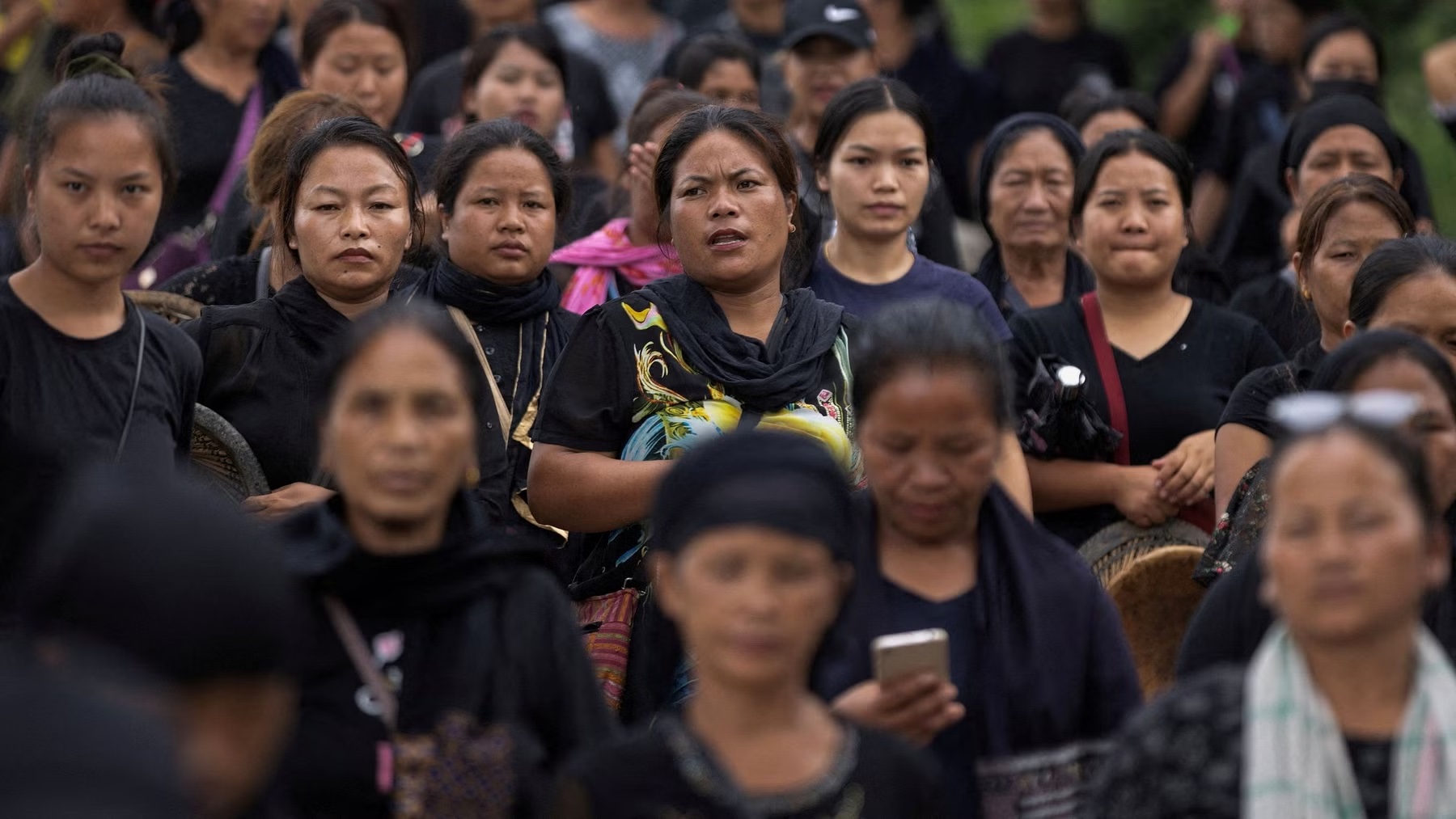
    Feature Image:Kuki women leave after attending a protest against the alleged sexual assault of two tribal women, in Churachandpur district in Manipur. Credit: Retuers Photo


  • From Civil Wars to Gang Wars

    From Civil Wars to Gang Wars

    Depending on the context, these uprooted and redundant young people can become terrorists, child soldiers, members of youth gangs that dominate the suburbs from Paris to Rio, drug cartels, mafia gangs, or human traffickers.

    With the end of the Cold War in 1991, interstate war seemed to have said goodbye. But even then, there was no end of history, as Francis Fukuyama had assumed. Instead, interstate war was largely replaced by wars of intervention in weak states and civil wars. At the latest since the war in Ukraine, however, interstate war is back on the agenda and a new arms race has begun – the wars of the present have been nationalized. What is often overlooked, however, is that civil wars have not completely ceased to exist but have been replaced by gang wars. This will be analyzed here using the example of South American gangs, but it applies equally to large parts of Africa, Iraq, or Southeast Asia.

    A Brief Review

    In order to analyze this, a brief review is necessary. After the fall of the USSR, a return to the Middle Ages was diagnosed in security policy, and a return to pre-modern weapon carriers such as child soldiers, warlords, and private security companies. After the attacks of September 11, the fight against a new totalitarianism, this time Islamist, seemed imminent, and the “war on terror” was proclaimed. Meanwhile, China and Russia have re-emerged as serious rivals to the U.S., at least militarily, and a new arms race is on the horizon. The U.S. has been weakened by its lost wars in Afghanistan and Iraq, which even the much-vaunted and overestimated military-technological revolution could not stop.

    While in the 19th century the Western states conquered the whole world, in the 20th century the defeated empires and civilizations had to learn to live with the victorious West, and now the resurgent empires and the West have to learn to live with each other.

    Are there long-term trends in this rapid succession of different experiences and analyses of violent events? Two immediately come to mind: the “rise of the others,” as the influential US columnist Fareed Zakaria has called it, that is, the resurgence of the great empires and civilizations submerged by European colonization and US hegemony. These are primarily China and India, but also Russia and the littoral states of the North Pacific. In short, world affairs are shifting from the North Atlantic to the North Pacific. Whereas the entire 20th century was dominated by the North Atlantic littoral states (with the exception of Japan), in the 21st century there are at least two such centers: the North Atlantic littoral states and the North Pacific littoral states.  Here, the United States has the unbeatable geostrategic advantage of being located on both oceans. These former great empires and civilizations have almost one goal: to no longer be considered underdeveloped or backward by the states of the West, but as equals. While in the 19th century the Western states conquered the whole world, in the 20th century the defeated empires and civilizations had to learn to live with the victorious West, and now the resurgent empires and the West have to learn to live with each other.

    more and more people are becoming aware that Western modernity has a Janus face.   What is the hallmark of Western modernity: human rights, democracy and the emancipation of women, or colonialism, racism, two world wars?

    While until well into the 20th century many assumptions were that the values of Western modernity would spread throughout the world, more and more people are becoming aware that Western modernity has a Janus face.   What is the hallmark of Western modernity: human rights, democracy and the emancipation of women, or colonialism, racism, two world wars? And even Auschwitz was not carried out by “barbarians” but by the Germans, of all people, who are often associated abroad with Goethe, Schiller, Bach, Beethoven, and Mozart.  The opposing interpretations either argue that this is regrettable but has nothing to do with the nature of the West. And conversely, critics of the West argue just as one-sidedly that Western values are just empty words, and that the reality of Western politics is characterized by colonialism and racism. And Donald Trump’s current polemic against female Democratic Party politicians with immigrant backgrounds is racist, colonialist, and hostile to women. And the fact that there has been no outcry from the liberal West against this polemic may even indicate a concealed complicity because we Europeans also come to terms with racist and colonialist stereotypes. Donald Trump’s racism can be summed up in the simple formula: Make America white again. People of a different skin color or origin are only tolerated as long as they fit into the new hierarchy.

    Racist polemics like those of the new right in Europe, of White Power in the U.S., or even of Bolsonaro’s movement in Brazil can really only be understood against a backdrop of fundamental insecurity and grievance. The West feels deeply offended that the “others” who were always seen as less developed no longer want to copy it, and full of fear that they could even overtake the West. Fear rules the politics of the West, fear of the end of its feeling of superiority and of the fact that nothing could then be left if one no longer feels superior to the others.  Freely according to the motto: I am nothing, I can do nothing, but I am German – and this shows its ugly grimace in hate speech and violent outbursts. But we are not alone in this respect. For alongside the resurgence of the Others, which is significant in terms of world politics, civil wars around the world are turning into gang wars – the political community is disintegrating into ever new gangs. This has not been adequately perceived in the West until today because we have not been able to describe this process adequately with our conceptual system. In Western thought, the paradigm of Thomas Hobbes from the 17th century is still valid. It states that in a theoretically constructed state of nature, which always occurs when there is no longer a functioning state, the “state of nature” of the “war of all against all” occurs. In this conception, everyone is absolutely free and has a right to everything he can take, provided he has the power to do so. This life, however, according to Hobbes, is full of violence and fear eats the soul. To overcome this self-destructive “state of nature,” all individuals transfer all violence to a single sovereign, who in return provides them with protection and security. In this simple construction the modern state was born, secured by the state monopoly of violence. Here, only the state has a right to legitimately exercise violence, and non-state violence is criminalized.

    Gang Wars

    What is not included in this construction are gangs – groups of mostly young men left over from the civil wars since the end of the Cold War, uprooted in the refugee movements, or who have lost their identity in the dramatic transformation process we trivialize as globalization. Depending on the context, these uprooted and redundant young people can become terrorists, child soldiers, members of youth gangs that dominate the suburbs from Paris to Rio, drug cartels, mafia gangs, or human traffickers. The context varies, but the cause is the same everywhere: these young people feel marginalized, superfluous, and uprooted. Approaches that have analyzed related global violence have almost always emphasized individual violence or violent enrichment. Of course, there are civil war economies, markets of violence, and state collapse, including “new wars” (Kaldor and Münkler) characterized by the privatization and economization of violence and asymmetric warfare against the weakest in societies. In such markets of violence, people are traded first and foremost, and about 79% of them are women and children, but also weapons, drugs, rare earths, and the well-known blood diamonds as a synonym for precious stones. In many countries, however, violent gangs play at least as large a role.

    A characteristic feature of these gangs is that they are not exclusively concerned with private enrichment through violence, but paradoxically give their members a sense of identity and even home through their violence. This paradox is not provided for in our conceptual system for understanding violence.  Islamist terrorism can in no way be attributed to the pursuit of material interests. It is true that the Islamic State also used oil and that the Taliban dominate the opium trade in the Golden Crescent between Iran, Afghanistan and Pakistan. This only proves that there is a link between political and economic struggles, not that the struggles for recognition and identity in these organizations are economically determined. This means that there is still a link between violence and the market, perhaps it has just become more “invisible”, more visible at the micro level. Macro-violence, on the other hand, is increasingly characterized by struggles for identity and recognition.

    If we say there is a transition to a global war of all against all, I think there is a global transition to gang wars. These may or may not be youth gangs. Drug cartels and mafia organizations can also be based on gang structures. Of course, economic interests play an important role here, but I doubt that cohesion is guaranteed by economic interests alone. One example is the Japanese Yakuza. What are gangs?  A gang is a group that originally formed spontaneously and socializes and integrates its members through fighting and conflict. Typical behaviors include meeting in person, hanging out and occupying public space, traveling in a group, and having a high propensity for conflict – such as rocker groups.

    Many children, adolescents, and young adults in Central and South America are active members of youth gangs called “maras” or “pandillas”.

    The result of this behavior is the development of a distinct tradition, an unreflective internal structure, an esprit de corps, paradoxically solidarity and morality within the group, and a sense of belonging to a unified territory.  The leader must constantly maintain a threatening gesture against his own and also constantly rekindle the waning enthusiasm of his followers; in other words, respect for him must be constantly maintained. Many children, adolescents, and young adults in Central and South America are active members of youth gangs called “maras” or “pandillas”.

    After the end of the civil wars in Nicaragua in 1990, El Salvador in 1992, and Guatemala in 1996, there was a forced migration of illegal immigrants from the U.S. to their home countries, including the deportation of Central American-born members of street gangs formed in the U.S. to their parents’ home countries.  These young people had fled poverty and civil war, formed criminal gangs (maras) primarily on the West Coast of the U.S., and were now forced to return to their home countries, which they may never have seen. Back in Latin America, the mareros regrouped and received a large influx of both young people looking for direction and demobilized security forces and guerrillas (there were about 40,000 of them at the time).

    The most important aspects of a Latin American gang member’s life are honor, drugs, and violence. This is what a pandillero’s entire daily life revolves around, and in most cases, it also determines the when, how, and why of his death. In the gangs, there is a certain code of honor that states that gang solidarity and reputation are more important than anything else.  In a sense, the honor of the gang becomes the transcendence of the members, as the collective as such is religiously exalted and the individual counts for less and less. The individual is obligated to kill unconditionally for the honor of the group or die himself. There is also a paradoxical construction in another point: on the one hand, there is an absolute hierarchy, on the other hand, there is a feeling of being a gang: “We rule the barrio so that no one tells us what to do. If someone does, we silence them. You submit because we are many. We young people rule.  The response of the pandillero in a world where he is nothing is to attack, to dominate the barrio, to submit because he is submitted, to define a territory because he lives in uprootedness, to join an institution that gives identity because he lacks it. The pandillero strives to dominate in an environment that excludes him.

    Whoever belongs to a pandilla must not only master the exercise of violence, but must also be able to accept the suffering of violence. The initiation rituals for men and women are different: men must allow themselves to be beaten by existing members of the gang for a certain period of time, which varies from gang to gang, while women must allow themselves to be raped by any member of the gang. The unimaginable extent of violence in Central American youth gangs is an indication that gangs cannot be attributed to interests alone, for although these interests may be predominant in the exercise of violence, they are unlikely to play a role in voluntary submission to the group, self-sacrifice for it, and endurance of violence. Rather, the recognition by group members of having endured violence is the central aspect of one’s identity and loyalty to the gang. This is the too often overlooked connection between the wars of states and parastatal organizations (IS, Hamas, Hezbollah, Iran’s Revolutionary Guards) and the violence that takes place on a mass but individual level (Hobbes, war of all against all). They cannot be attributed to either level, but are the intermediate realm, the hybrid between the two.

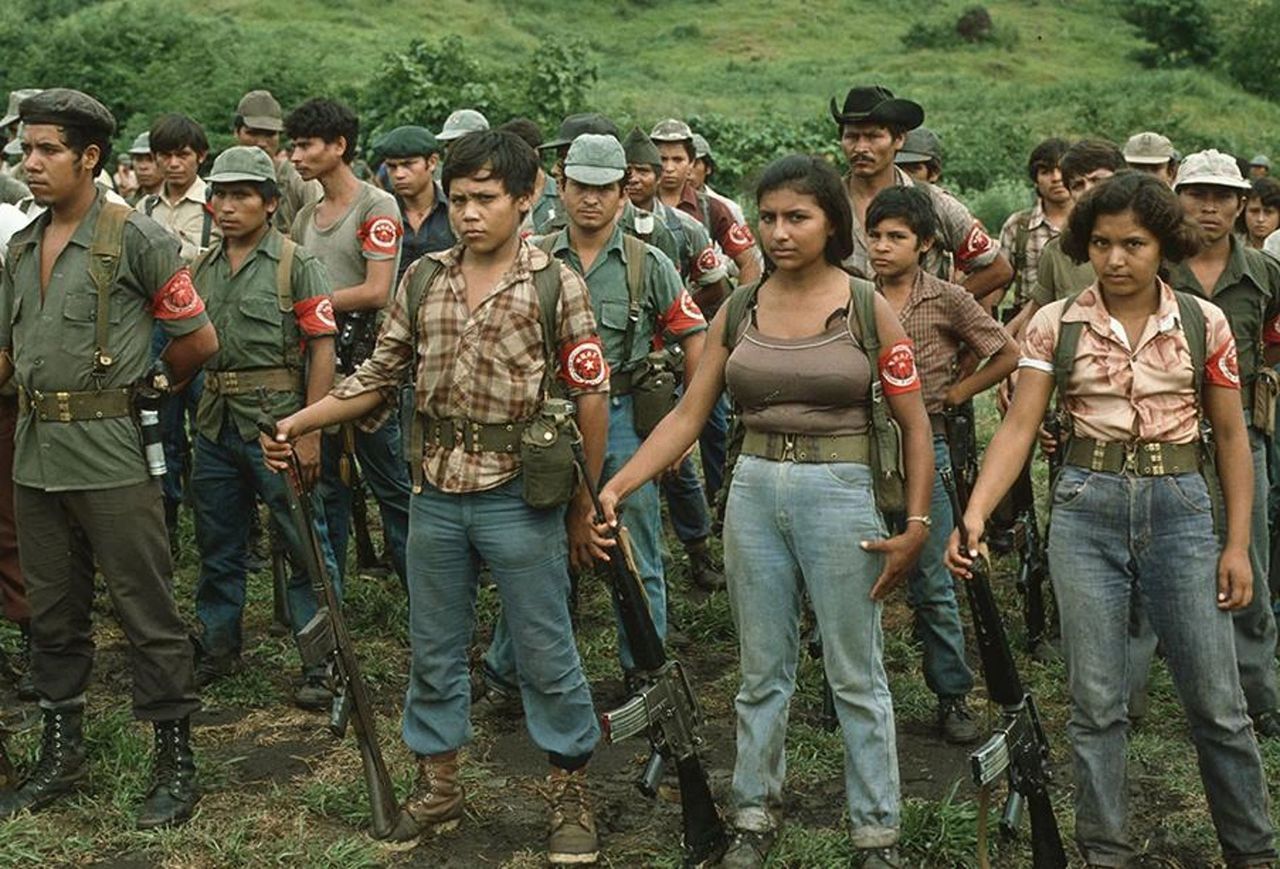
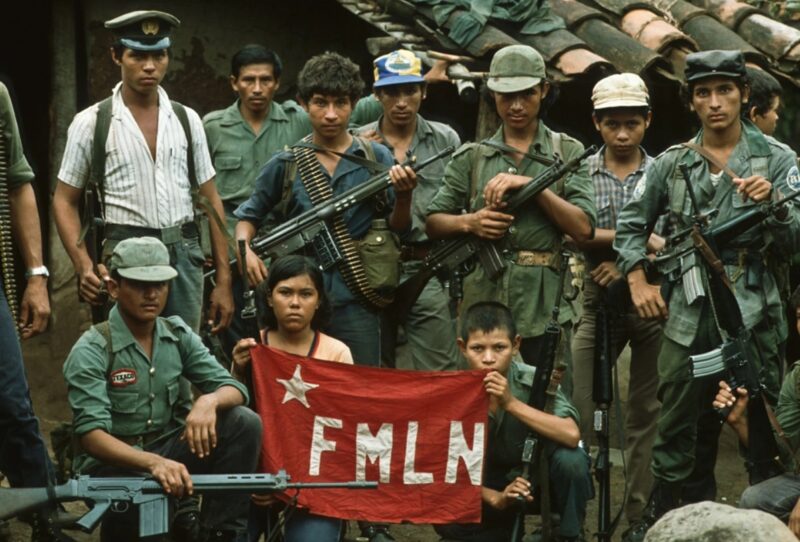
    Feature Image: Salvadoran left wing revolutionary group Farabundo Marti National Liberation Front

  • China’s People Crisis

    China’s People Crisis

    For the first time in sixty years, China’s population has fallen. The population in 2022 – 1.4118 billion – fell by 850,000 from 2021. Its national birth rate has fallen to 6.77 births per thousand people.
    Deaths have also outnumbered births for the first time last year in China. It logged its highest death rate since 1976 – 7.37 deaths per 1,000 people, up from 7.18 the previous year.
    China has now hit an impenetrable economic wall. The People’s Republic has a people crisis – it has now stopped growing and is getting old. The reason is paradoxical. China’s one-child policy worked exceedingly well for it in the past. By preventing almost 400 million births since 1979, it gave the Chinese greater prosperity. It is estimated that between 1980 and 2010, the effect of a favourable population age structure accounted for between 15% and 25% of per capita GDP growth.
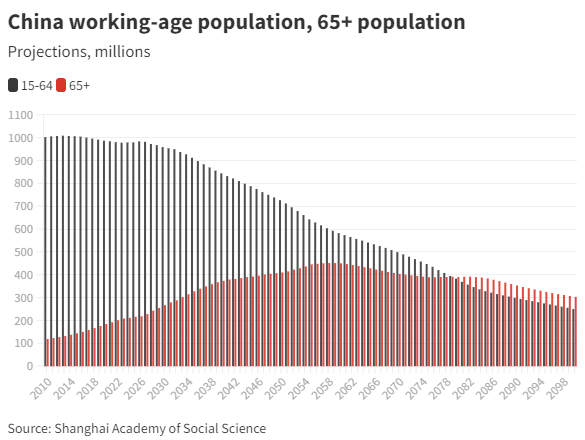
    That bonus with the demographic dividend has now ended. China’s population was expected to stabilise in 2030 at 1.391 billion, moving at a slow crawl from 1.330 billion in 2010. But it has hit that spot seven years ahead. In 2050, China is projected to decline to 1.203 billion.
    The flattening population and its somewhat unfavourable demographic profile have been causing concern in China for some years now. In 2013, the Communist Party of China’s Central Committee allowed couples to have a second child if one parent was an only child. But Chinese families have gotten used to one child existence. The demographic wall is not going to be crossed, and China’s workforce is not growing anymore.
    Whereas China added as many as 90 million individuals to its workforce from 2005 to 2015, in the decade from 2015, it will, at present trends, add only 5 million. In 2010, there were 116 million people aged 20 to 24. By 2020, the number will fall by 20% to 94 million. The size of the young population aged 20-24 will only be 67 million by 2030, less than 60% of the figure in 2010.
    One immediate consequence of this slowdown is that by 2030 the cohort aged above 60 years will increase from the present 180 million to 360 million. The other immediate economic consequence is that its savings rate will decline precipitously.
    As a nation climbs the economic ladder, people inevitably live longer. But old age is also more expensive. For instance, in the US, the old actually consume more than the rest due to medical expenses. Either they support themselves or their families have to support them. Apart from low consumption in the first few years of life, consumption is reasonably constant over the life cycle. But while income is earned and output produced, in the working life between 20 and 65 years, it is not so before and after. This ratio of working-age and non-working-age cohorts is called the dependency ratio.
    As Indian, African and (surprise, surprise) American dependency ratios turn increasingly favourable in the coming decades, China’s will go downhill and it will join Europe and Japan as the world’s aged societies.
    In comparison, in 2021, the United States recorded 11.06 births per 1,000 people, and in the United Kingdom, 10.08 births. The birth rate for the same year in India, which is poised to overtake China as the world’s most populous country, was 16.42.
    China’s total fertility rate – the average number of children born to each woman – is among the lowest in the world, at only 1.4. In contrast, the developed world average is 1.7. China’s replacement rate – the rate at which the number of births and deaths are balanced – is 2.1, as against India’s 2.5. At purchasing power parity, China’s per capita income is just a fifth or less of other large economies. At the same time, China’s fertility level is far below that of the US, UK or France (all around 2.0), and is on par with those of Russia, Japan, Germany and Italy – all countries with sharply declining populations. This is a big reason why Germany so readily accepted to take about a million refugees from Syria and Libya.
    Over the next 20 years, China’s ratio of workers to retirees will drop precipitously from roughly 5:1 today to just 2:1. Such a big change implies that the tax burden for each working-age person must rise by more than 150%. This assumes that the government will maintain its current level of tax revenue. In addition, mounting expenditure on pensions and healthcare will put China in a difficult position. If the government demands that taxpayers pay more, the public will demand better scrutiny of how their dollars are collected and spent. This could very well open the floodgates of challenges to the Communist Party.
    Can China succeed to get out of the low growth rate cycle? The conditions now are against it. The cost of rearing a child in China has increased hugely. The state may require more children, but most families will find the costs unaffordable. This is mainly because China is now a predominantly middle-class nation.
    How will this policy reversal pan out for China? Demographers give three scenarios. The highest outcome will mean 1.43 billion in 2050, while the more plausible outcome will be between 1.35- 1.37 billion. Either way, it is not going to alter the future much for China. It will become old before it becomes rich.
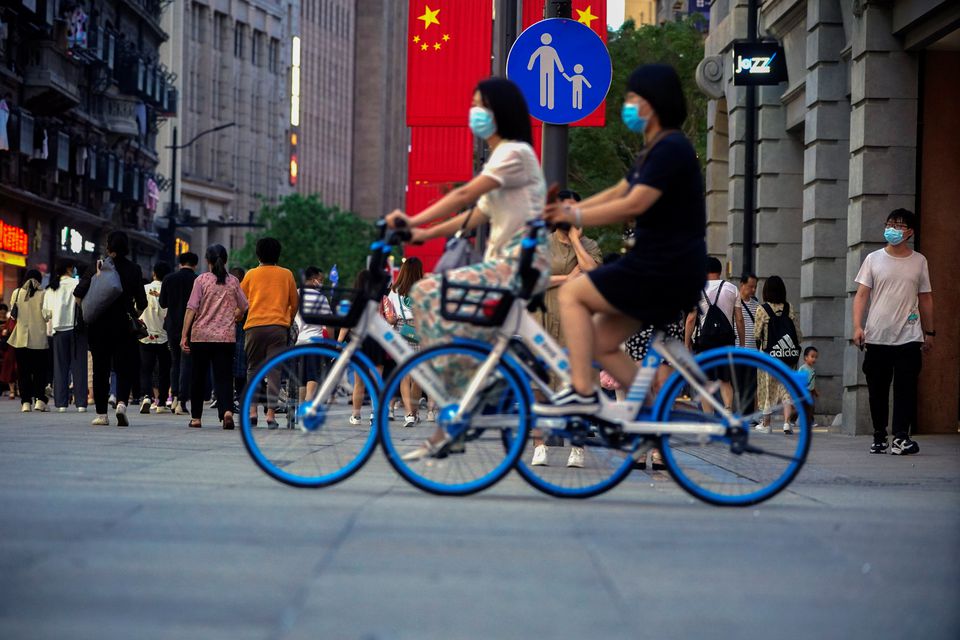
    Feature Image Credit: Reuters
    Graph Credit: World Economic Forum
  • Russia: The Migration Dimension of the War in Ukraine

    Russia: The Migration Dimension of the War in Ukraine

    Abstract

    The Russian invasion of Ukraine on February 24, 2022 has drastically changed both the internal situation in the Russian Federation (RF) and the country’s relationship with the international community. The impact of these developments is multidimensional and has a significant human dimension, including the formation of new migration flows marked by high shares of young people, males, and members of various elite groups. The elite migrant flow generally includes four major categories of migrants: academic personnel, highly skilled workers (including representatives of professional, business, creative, and athletic elites), students, and so-called investment migrants.

    Economic Impact

    Shrinking economic output1 and the withdrawal of numerous transnational companies from the RF have threatened the jobs and livelihoods of a large segment of the Russian population, hurting first and foremost its elite segments. Indeed, the introduction of new sanctions cut the long-term international ties established in the economic, political, academic, artistic, and athletic spheres, to name just a few, impacting the lives of millions of people, chief among them the representatives of various professional, business, academic, cultural, and athletic elites.

    This negative impact has been aggravated by both the transborder transfers of transnational corporations’ offices and the flight of numerous Russian businesses, as well as individual enterpreneurs, to locations outside the RF. These movements, mostly economically and professionally motivated, have been supplemented by the emigration of people opposing the war as a matter of principle.

    Second Wave Exceeds First

    The second wave of emigration, significantly larger than the first, formed as a direct consequence of the declaration by Russian President Vladimir Putin on September 21 of a 300,000-strong “partial” mobilization and the subsequent announcement by RF Defense Minister Sergei Shoigu that up to 25 million Russian citizens might be eligible for mobilization orders—an announcement that de facto involved in the war the majority of the RF’s population (between the potential reservists and their family members). These developments and the subsequent mishandling of the mobilization process, marked by disorganization and numerous widely reported instances of corruption and abuse, acted as additional push factors of migration, which took on an increasingly politicized character.

    Thus, the migration flow in 2022 has essentially consisted of two—separate and consecutive—subflows. These are far from the only large-scale population movements in post-Soviet Russian history: they follow the “brain drain” of the 1990s and the smaller in scale but consistent population movements of the first two decades of the current century. Yet there are huge differences between the current developments and previous trends.

    Historical Perspective

    Russia saw its position in the global migration chain change drastically after the dissolution of the USSR in 1991. In its aftermath, the RF quickly became an active participant in the globalization process, following the general trend among those states that were previously the centers of multinational empires: the United Kingdom, France, Spain, Portugal, the Netherlands, Belgium, and especially the territorially contiguous empires (Germany, Austria, and Turkey) have received, since their empires’ collapse, considerable migrant flows of two major types. The first wave was the permanent—and mostly politically motivated—return migration of the representatives of the former “imperial” nation to their ethnic homelands (the Britons, French, Spaniards, Turks, etc.). They were soon followed by migrants from developing countries—primarily the former colonies of the metropole. These were people who spoke its language, knew its culture, and could rely on the support there of their long-established ethnic diasporas.

    As a result, Russia—previously one of the most isolated countries in the world—quickly became, after 1991, the center of a vast Eurasian migration system that was one of the four largest in the world (alongside those in North America; Western Europe; and the Middle East, centered on the Persian Gulf). By 2010, more than 12 million RF residents (about 8.5% of its population) had been born outside the country. In 2015, Russia ranked third in the world—after India and Mexico—in terms of its number of emigrants: 10.5 million.2 While most of these migrants moved within the post-Soviet space, in 1991–2005 alone, more than 1.3 million Russian citizens obtained permits for permanent emigration to the West.3 Overall, the number of those who were born in Russia but currently live in countries outside the former USSR is estimated at approximately 3,000,000.4

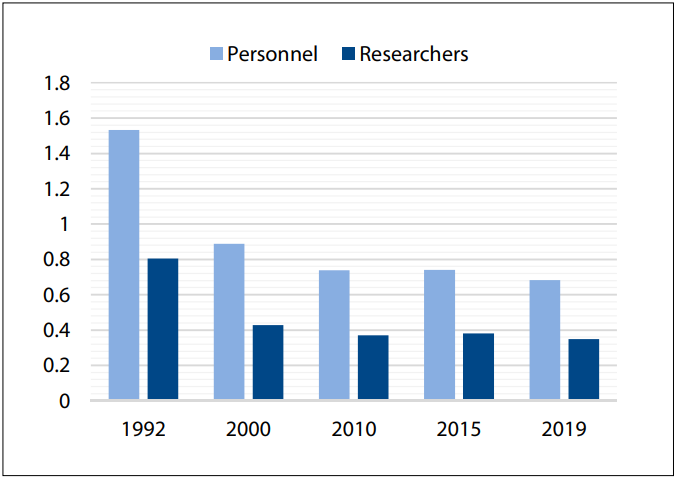
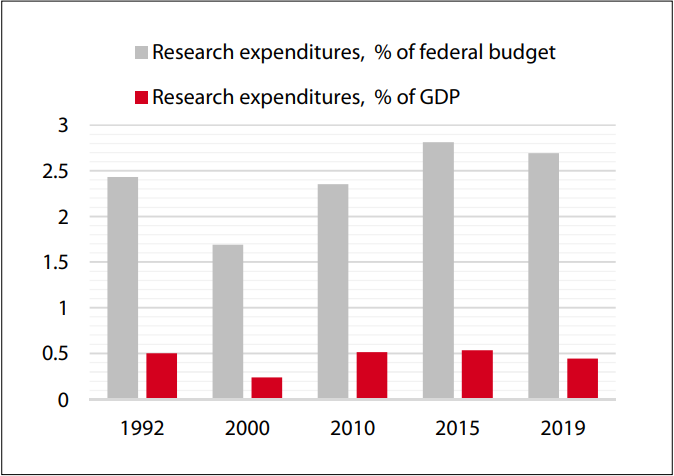
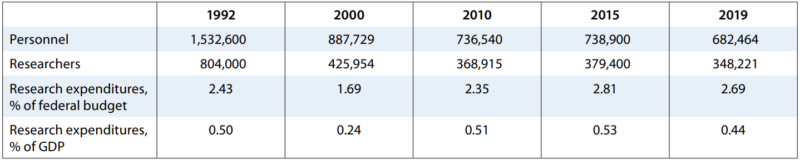
    This flow was generated by both the “pull” and “push” factors of migration. In the case of emigration outside the post-Soviet region, an important role was played by the liberalization of the migration regime and the emergence of opportunities to work and study abroad; higher living standards; prospects for professional growth; and the genearally welcoming atmosphere for Russian scholars, students, and professionals at that time. “Push” factors included the economic and political instability in Russia, specifically the rapid degradation of Russian state-run industry and of the academic sphere. Research expenditure as a share of Russian GDP was 0.50% in 1992 and 0.24% in 2000 (representing 2.43% and 1.69% of the federal budget, respectively). During this period (1992–2000), the number of those employed by the academic institutions fell from 1,532,000 to 887,729 (a 42% drop), while the number of researchers declined from 804,000 to 425,954 (a 47% drop).5

    With the economic and political stabilization of the early Putin years, budgetary expenditures increased, peaking in 2015 at 2.81% of the federal budget (0.53% of GDP).

    These processes led to the formation of significant elite Russian diasporas in the major receiving countries. Already by 2010–11, more than 660,000 university educated Russians were living abroad, putting the RF into the category of states with large elite diasporas (300,000 to 1,000,000 migrants with a university degree)—along with such countries as Mexico, South Korea, Vietnam, Iran, Taiwan, Morocco, and Colombia.6 Of particular importance was the massive emigration of Russian scholars and educators: I previously estimated the size of this elite diaspora at about 300,000–350,000 in 2012, including, as of 2015, approximately 56,000 students studying abroad. The academic flow was heavily dominated by basic and technical sciences experts, while specialists in social sciences and the humanities accounted for just 6.1% of the total in 2002–03.7 The flow was also skewed geographically toward the two highly developed Global North regions of North America and Western Europe, which respectively accounted for 30.4% and 42.4% of the intellectual migration flow. The largest receiving countries were the United States (28.7%) and Germany (19%); these two states also held first and second place, respectively, among receiving countries in practically all academic subfields.8

    With the economic and political stabilization of the early Putin years, budgetary expenditures increased, peaking in 2015 at 2.81% of the federal budget (0.53% of GDP). This served to slow down the academic personnel decline and the elite outflow: between 2000 and 2019, the number of those employed in the academic sphere declined from 887,729 to 682,464 (or by 23.1%), while the number of researchers fell from 425,954 to 348,221 (or by 18.2%9 —see Figures 1a and 1b below and Table 1 on p. 11). While the number of Russian students studying abroad remained relatively stable at 50,000–60,000, the RF during that period rebuilt its position as one of the leading hubs for international students—ranking sixth in the world behind the US, the UK, Australia, France, and Germany.10 Their numbers grew steadily, from 153,800 in 2010/2011 to 298,000 in the 2019/2020 academic year.11

    Figure 1a: Russian R&D Dynamics, 1992–2019: Personnel (mln.)

    Figure 1b: Russian R&D Dynamics, 1992–2019: Expenditures

    Source: Federal’naia sluzhba gosudarstvennoi statistiki, “Rossiia v Tsifrakh—2020,” 2021, https://gks.ru/bgd/regl/b20_11/Main.htm; Federal’naia sluzhba gosudarstvennoi statistiki, Rossiiskii Statisticheskii ezhegodnik 2009 (Moscow, 2009), 543, 553; Federal’naia sluzhba gosudarstvennoi statistiki, Rossiiskii Statisticheskii ezhegodnik 2020 (Moscow, 2020), 495–6, https://rosstat.gov.ru/storage/mediabank/Ejegodnik_2020.pdf; Gosudarstvennyi komitet Rossiiskoi Federatsii po statistike, Rossiiskii Statisticheskii ezhegodnik 2003 (Moscow, 2003), 531.

    Russia, while losing its elite migrants to the more developed countries of the Global North, was at least partially substituting for their loss with immigration from less developed states, primarily those in the post-Soviet space.

    Overall, it could be concluded that Russia transformed in the early 2000s from the country in deep economic and social crisis—and source of massive elite outflows— that it had been in the 1990s into a state with a moderate level of development that played multiple roles in the world migration chain: both sending and receiving migrants as well as acting as a migrant transit country. Russia, while losing its elite migrants to the more developed countries of the Global North, was at least partially substituting for their loss with immigration from less developed states, primarily those in the post-Soviet space. The impact of the “pull” factors of migration increased, while that of the “push” factors decreased, at least in relative terms.

    After the Invasion

    This multiplicity of roles was for the most part retained by the RF after the first invasion of Ukraine in 2014 (even under the conditions of the expanding sanctions
    regime) and during the general decline of migration activity worldwide as a result of COVID-19 restrictions. Yet the events of 2022 have drastically changed the migration environment, returning it to a crisis level, with the “push” factors of migration (such as the deteriorating political situation, sharp disagreements with governmental policies among certain segments of society, the unwillingness of many to serve in the RF military, the fear of losing jobs and sources of income, etc.) coming to the forefront.

    When it comes to the contrast between current migration flows and previous post-Soviet flows, the following points should be noted:

    • The 2022 migration waves are defined primarily by “push” factors, which have frequently forced people to leave even in the absence of adequate preparation
      (previous experience of work or study abroad, personal or professional networks) or clear prospects in destination countries.
    • Migration in 2022 is frequently directed toward smaller and economically weaker countries than in the 1990s, including those in Eastern Europe, the post-Soviet space (Central Asia, the Caucasus), and the Persian Gulf, as well as Turkey and Mongolia. This may lead to the reversal of the trends that have dominated (especially elite) migration patterns in Central Eurasia for the last three decades. This reversal, which has important symbolic value, may create significant long-term labor-market and demographic problems for the RF.
    • In contrast to previous migration waves, the current ones are marked by their hectic, spontaneous character and the heavy presence in the flow of young people working in the IT and business sectors, who are relatively flexible and could either seek jobs or create private-sector businesses. At the same time, there is also a significant share of people, especially within the academic bloc, who hold Humanities and Social Sciences degrees and have very limited prospects of finding jobs that correspond to their qualifications. Thus, even under the current crisis conditions, substantial return migration can be expected.
    • In 2022, movement is further complicated by the heritage of the COVID-19 pandemic and the new limitations resulting from the 2022 sanctions— these are related to the blocking of RF-issued credit cards, the break-up of direct transportation links with most European countries, complications with getting visas, and frequently prohibitive airfare rates. An additional complication is presented by the recent proposals, in a number of Western countries, to arrest RF citizens or confiscate their property.
    • A particular feature of the 2022 flows has been their “explosive,” emergency character, marked by very high intensity in the initial weeks and a relatively
      quick decline thereafter.

    There also exist visible differences between the flow that followed the developments of February 2022 and the flow that followed the events of September 2022. In particular,

    • A noticeable discrepancy exists in terms of their scale and gender structure. The first flow was on the order of 100,000–150,000 people and was relatively balanced in gender terms, frequently including whole families with children. The second, which followed Putin’s mobilization announcement, has been heavily dominated by young males. This in itself poses significant problems for Russia’s demographic and economic future.
    • The first flow was directed, first and foremost, toward all the countries neighboring Russia. The current one, meanwhile, is taking place under the conditions of
      changing public attitudes and governmental policies toward RF citizens, even those who oppose Putin’s actions. This dynamic could lead to general change in the direction of migration flows.
    • The flow of the first half of 2022 was marked by heavy presence of foreign citizens and people with dual citizenship or other legal status, who moved to the countries where they held such status. The participants in the current flow, who are primarily RF citizens, face additional legal problems in receiving countries by comparison.
    • The original flow included large numbers of people who worked in the RF offices of transnational companies that relocated, along with their personnel, to other countries. These people had some social guarantees, had experience of work for a TNC, and could rely on their companies’ support. People emigrating in the newest waves lack these opportunities.
    • The large-scale arrival of migrants in countries with relatively weak infrastructure and limited economic capacity (the states of the Baltic, the Transcaucasus, and Central Asia) has put significant pressure on these states’ economies and labor markets. Successive waves of migrants will therefore increasingly  encounter competition, economic hardship, and negative public attitudes.

    While there exist huge discrepancies in the estimates of migration flows made by various entities—both governmental agencies and non-governmental organization —in Russia as well as the receiving states, it is clear that the most recent flow has been much larger than the one in the first half of 2022. The most frequently cited figure is on the order of 700,000 people.12 How-ever, a major problem is that most estimates rely on the statistical data of the national border guard services, which report the number of border crossings in a particular period of time without accounting for repeat crossings, return migration, movement to the third countries, “shuttle” activities, irregular migration, etc.13 Because of these limitations, it is likely that the overall number of migrants in the “second wave” is currently in the range of 350,000–450,000. Thus, the overall number of migrants who have left the RF in the two urgent and chaotic waves of 2022 can be estimated at about 500,000. Even this figure represents a substantial potential loss for a country—particularly one like Russia that was already experiencing population decline.14 It is a special concern considering the skewed gender, age, and qualification structure of those currently leaving the RF.

    Table 1: Russian R&D Dynamics, 1992–2019

    Source: Federal’naia sluzhba gosudarstvennoi statistiki, “Rossiia v Tsifrakh—2020,” 2021, https://gks.ru/bgd/regl/b20_11/Main.htm; Federal’naia sluzhba gosudarstvennoi statistiki, Rossiiskii Statisticheskii ezhegodnik 2009 (Moscow, 2009), 543, 553; Federal’naia sluzhba gosudarstvennoi statistiki, Rossiiskii Statisticheskii ezhegodnik 2020 (Moscow, 2020), 495–6, https://rosstat.gov.ru/storage/mediabank/Ejegodnik_2020.pdf; Gosudarstvennyi komitet Rossiiskoi Federatsii po statistike, Rossiiskii Statisticheskii ezhegodnik 2003 (Moscow, 2003), 531.

    While these factors represent some very important arguments for putting an immediate end to the military action, it is clear that demographic, labor market, and socio-economic considerations are of minor significance for Vladimir Putin. More than that, following Alexander Lukashenka’s example in Belarus following the protests there in 2020, the RF leadership could perceive the current migration outflows as politically useful, ridding it of opponents to the war and regime and further weakening the country’s civil society. Thus, the disastrous 2022 policies might continue, aggravating both the domestic socio-economic situation and the RF’s position in the world.

    References:

    1. In particular, Russia’s industrial output in September 2022 was 9% of that in September 2021 (Federal’naia Sluzhba Gosudarstvennoi Statistiki, “Operativnye Pokazateli,” 2022, https://rosstat.gov.ru/).
    2. United Nations Department of Economic and Social Affairs, Population Division, Trends in International Migration Stock: The 2015 Revi- sion (New York: United Nations, 2015).
    3. Anatolii Vishnevskii, , Naseleniie Rossii 2003-2004: Odinnadtsatyi-dvenadtsatyi ezhegodnyi demograficheskii doklad (Moscow: Nauka, 2006), 325.
    4. “‘Meduza’ ob emigratsii iz Rossii,” Demoscope 945–6 (17–30 May 2022), http://www.demoscope.ru/weekly/2022/0945/gazeta01.php.
    5. Federal’naia sluzhba gosudarstvennoi statistiki, “Rossiia v Tsifrakh—2020,” 2021, https://gks.ru/bgd/regl/b20_11/Main.htm; Gosudarst- vennyi komitet Rossiiskoi Federatsii po statistike, Rossiiskii Statisticheskii ezhegodnik 2003 (Moscow, 2003),
    6. This group is second to that of countries with extra-large diasporas (more than 1,000,000 people). As of 2015, that group included India (2,080,000), China (1,655,000), the Philippines, the UK, and See Irina Dezhina, Evgeny Kuznetsov, and Andrei Korobkov, Raz- vitie Sotrudnichestva s Russkoiazychnoi Diasporoi: Opyt, Problemy, Perspektivy (Moscow, 2015), http://russiancouncil.ru/upload/Report- Scidiaspora-23-Rus.pdf, 18.
    7. V. Korobkov and Zh. A. Zaionchkovskaya, “Russian Brain Drain: Myths and Reality,” Communist and Post-Communist Studies 45, no. 3-4 (September-December 2012): 332.
    8. , 335–6. See also Andrei Korobkov, “Russian Academic Diaspora: Its Scale, Dynamics, Structural Characteristics, and Ties to the RF,” in Migration from the Newly Independent States: 25 Years After the Collapse of the USSR, ed. Mikhail Denisenko, Salvatore Strozza, and Matthew Light (New York: Springer, 2020), 299–322.
    9. Federal’naia sluzhba gosudarstvennoi statistiki, “Rossiia v Tsifrakh—2020;” Federal’naia sluzhba gosudarstvennoi statistiki, Rossiiskii Stat- isticheskii ezhegodnik 2020 (Moscow, 2020), 495–6, https://rosstat.gov.ru/storage/mediabank/Ejegodnik_2020.pdf.
    10. “Mezhdunarodnye studenty,” Unipage, 2019, https://unipage.net/ru/student_statistics.
    11. Federal’naia sluzhba gosudarstvennoi statistiki, “Rossiia v Tsifrakh—2020;” Federal’naia sluzhba gosudarstvennoi statistiki, Rossiiskii Stat- isticheskii ezhegodnik 2020, 206, https://rosstat.gov.ru/storage/mediabank/Ejegodnik_2020.pdf.
    12. See, for instance, “Forbes: posle ob”iavleniia mobilizatsii Rossiiu pokinuli primerno 700 chelovek,” Kommersant, October 4, 2022, https://www.kommersant.ru/doc/5594533.
    13. For example, the Interior Ministry of Kazakhstan reported at the beginning of October that in the wake of the mobilization announcement by Vladimir Putin on September 21, 2022, more than 200,000 people had crossed the country’s border with Russia, of whom just seven had been deported back to the At the same time, this report noted that 147,000 of them had already left Kazakhstan within a period of less than two weeks. See Mikhail Rodionov, “V Kazakhstan s 21 sentiabria v”ekhali bolee 200 tysiach rossiian. Deportirovali semerykh,” Gazeta. ru, October 4 2022, https://www.gazeta.ru/politics/2022/10/04/15571807.shtml.
    14. In 2019, the fertility rate in Russia was 1.504. See Federal’naia sluzhba gosudarstvennoi statistiki, “Rossiia v Tsifrakh—2020;” Federal’naia sluzhba gosudarstvennoi statistiki, Rossiiskii Statisticheskii ezhegodnik 2020, 103.

    This article was originally published at the Center for Security Studies (CSS)

    Featured Image Credits: Politico

  • Declining Number of Tibetan Refugees in India

    Declining Number of Tibetan Refugees in India

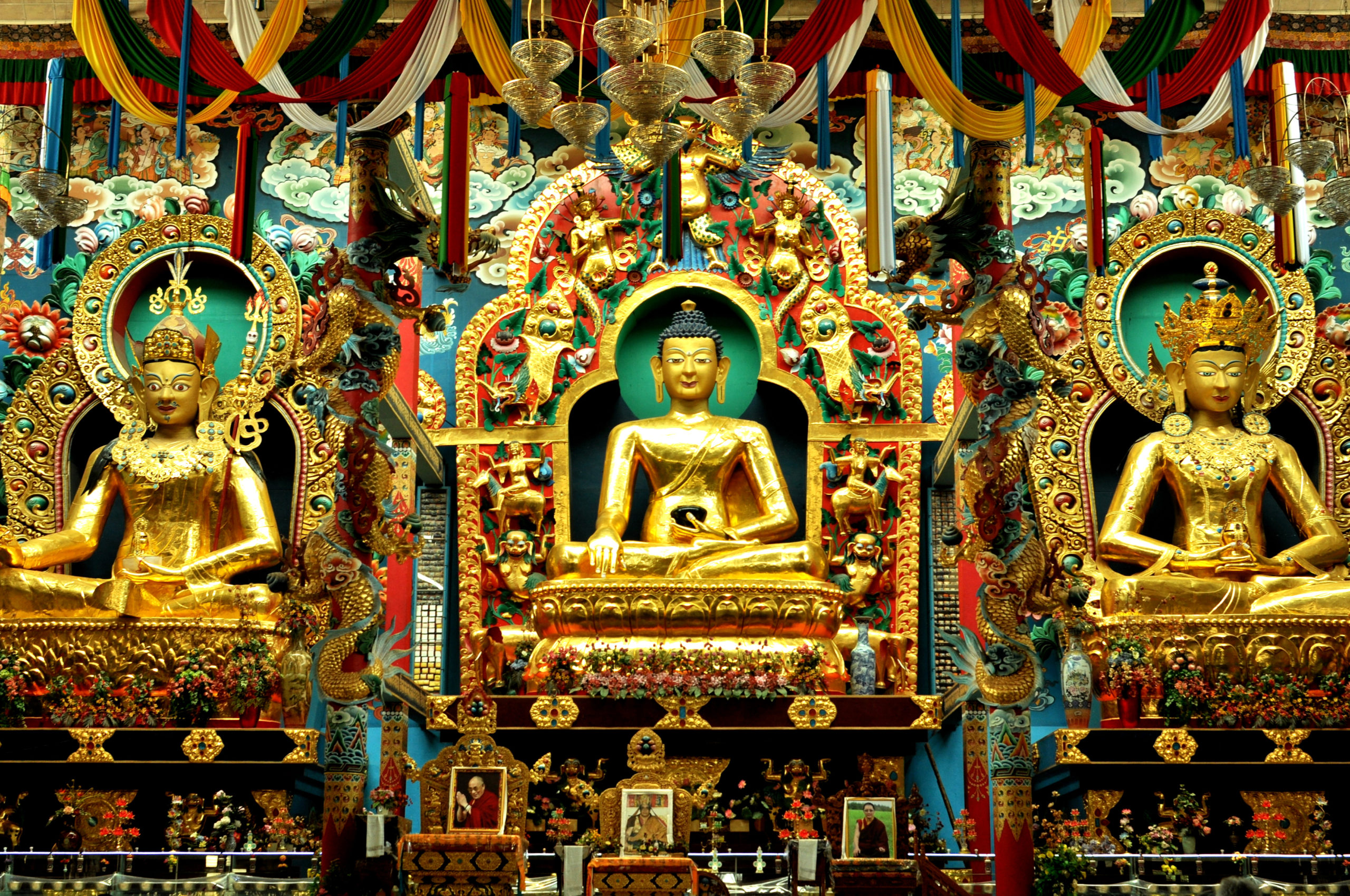
    His Holiness the Dalai Lama, and his followers, were welcomed by then Prime Minister Jawaharlal Nehru with open arms whose government helped them settle in India as they fled Tibet, following the Chinese invasion

    Introduction

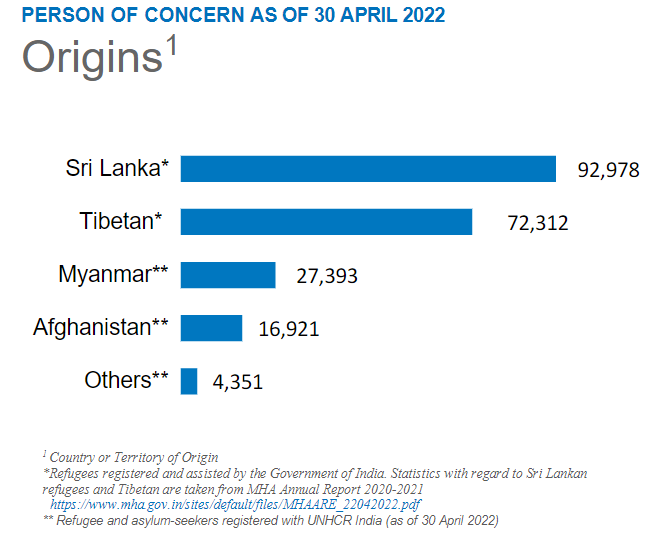
    India is the largest democracy in the world, with a multi-party system, and a diverse set of cultures. It has a long tradition of hosting a large number of refugees. India has been particularly supportive of Tibetan refugees, right from the start of the Nehruvian era in the early 1950s. The number of Tibetan refugees living in India is estimated at well over 150,000 at any given time. However, a recent survey conducted by the United Nations High Commissioner for Refugees (UNHCR) in India, in association with the Ministry of Home Affairs (MHA), showed that only 72,312 Tibetans remain in the country.

    In India, Tibetans are considered to be one of the most privileged refugees unlike other refugees in the country. His Holiness the Dalai Lama, and his followers, were welcomed by then Prime Minister Jawaharlal Nehru with open arms whose government helped them settle in India as they fled Tibet, following the Chinese invasion. That period saw a large influx of Tibetans towards India as they sought asylum. The Tibetan refugees have been allotted settlements where they continue to live under the management of the MHA and the Tibetan government-in-exile, or the Central Tibetan Administration (CTA). These facilities have contributed to a sense of community-living and have enabled them to keep their culture alive till today. Tibetan refugees in India have enjoyed freedom, which was impossible in their own land under the Chinese Communist Party (CCP) rule. However, after residing in India for almost seven decades now, recent data estimates a large decline in the number of Tibetan refugees. Therefore, this study examines the theoretical concerns and empirical findings of refugee problems in general as well as distinctive features of the Tibetan refugee experience in India.

    The status of Tibetans in India is determined under the Passports Act 1967, Foreigner’s Act of 1946, and the Registration of Foreigners Act of 1939 which refer to Tibetans as simply “foreigners”. These provisions cover everyone apart from Indian citizens thus, restricting refugees’ mobility, property, and employment rights. Recognizing this, the Government of India sanctioned the Tibetan refugees with the 2014 Tibetan Rehabilitation Policy (TRP) which caters to the issues faced by them and promises a better life for Tibetans in India. An array of provisions under this policy include land leases, employment, trade opportunities such as setting up markets for handicrafts and handlooms, housing, etc. to all Tibetans in possession of the RC (Registration Certificate). Further, certain policies applicable to Indian citizens are extended to Tibetan refugees as well. For instance, the Constitution of India grants the right to equality (Article 14) and the right to life and liberty (Article 21), and India is obliged to provide asylum as outlined in Article 14 of the Universal Declaration of Human Rights (UDHR). Despite these facilities and the cordial relationship that has been built over 70 years between the Tibetans and Indians, the question raised by many, including Indian authorities is – why is the number of Tibetans migrating out of India increasing?

    With increased awareness about Tibetan refugees and their problems, many countries have opened their borders to Tibetans by introducing numerous favourable policies

    The various push and pull factors- motivation for migration

    The Tibetan Exit continues to grow with about 3000 refugees migrating out of India every year. The support and admiration of His Holiness the Dalai Lama gained worldwide has been partly due to the exhibition of the rich culture and traditions of Buddhism. With India being the birthplace of the religion, Tibetans in India caught the limelight in the global arena, leading many researchers to study their migration patterns to India. Attention is now being placed on Tibetans exiting India despite years of strong cultural and social bonding. General migratory trends of humans can be analyzed using eminent scholar Everett Lee’s comprehensive theory of migration of 1966. The term ‘migration’ is defined broadly as a permanent or semi-permanent change of residence. Many factors tend to hold people within the area or attract people towards it, and there are others that repel them from staying. This theory could also be applied to the Tibetan migratory trends by looking at the “Push and Pull” factors proposed by Lee. The ‘push theory’ here encompasses the aspects that encourage the Tibetans to emigrate outside India, and the pull theory is associated with the country of destination that attracts the Tibetans to emigrate. Ernest George Ravenstein, in his “Laws of Migration”, argues that ‘migrants generally proceed long distances by preference to one of the great centers of commerce and industry and that ‘the diversity of people defines the volume of migration’. Ravenstein’s laws provide a theoretical framework for this study, as Tibetans tend to migrate out of India with a special preference to Europe, the USA, Canada, and Australia. With increased awareness about Tibetan refugees and their problems, many countries have opened their borders to Tibetans by introducing numerous favourable policies. For instance, with the Immigration Act of 1990, the Tibetan community in New York grew exponentially. The US Congress authorised 1000 special visas for Tibetans under the Tibetan Provisions of the U.S. Immigration Act of 1990, leading to the rampant growth of Tibetan migrants in the US. The first 10 to 12 Tibetan immigrants arrived in the U.S. in the 1960s, and then hundreds in the 1970s. Today, New York alone consists of roughly 5,000 to 6,000 Tibetan immigrants.

    Former Canadian Prime Minister Stephen Harper agreed to resettle 1,000 Tibetans from Arunachal Pradesh in 2007 (CTA 2013) encouraging substantial migration. The fundamental intention of migration is to improve one’s well-being from the current state.

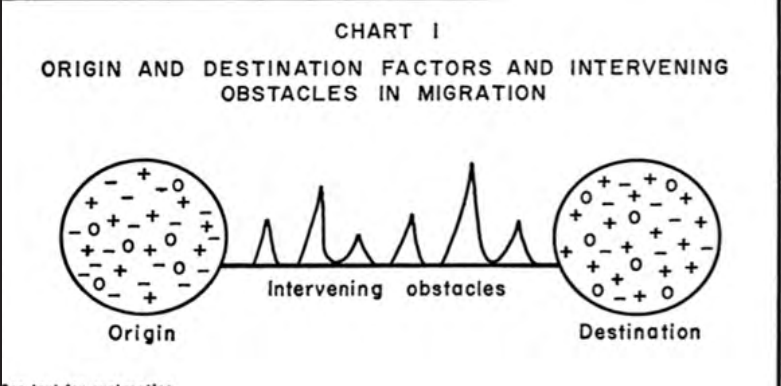
    The motivation for migration can be analysed by correlating origin and destination places with push and pull aspects. Push factors in the place of origin generally include lack of opportunities, religious or political persecution, genocide, hazardous environmental conditions, etc. The pull factors at the destination, on the other hand, are environment responsive to the push variables. The flow of migrants between the two points is hindered by intervening obstacles or intervening opportunities, which can also affect the motivations of individuals while migrating.

    Fig. 2 Lee’s (1966) push-pull theory in graphic form

    Fig.2 shows there are two points in the flow of migration – a place of origin and a destination, with positive and negative signs indicating the variables of pull and push factors with intervening obstacles between them. Both the origin and destination have pluses and minuses which means each place has its push and pull aspects. Every migrant is influenced by the positives of staying and the negatives of leaving a particular place. The factors to which people are essentially indifferent are denoted as zeroes. The logic of the push-pull theory is that if the pluses (pulls) at the destination outweigh the pluses of staying at the origin, as shown above, then migration is likely to occur.

    The three main pull factors or the aspects that pull Tibetans out of India are – economic opportunities, better policies for Tibetan refugees outside India, and world attention.

    Better opportunities and more earning capacity are the primary reasons for the migration of Tibetan refugees out of India. They claim that there are better options, job security, better facilities, and more accessible resources. All this put together expands their level of awareness. People outside treat them as equals which makes the living situation a lot easier, whereas in India, except for a handful who are well educated, Tibetans are mostly given very low-paid jobs such as servants, waiters, cleaners, etc.

    Second, concerning open policies in other countries, it can be argued that the migratory trend of Tibetans started in 1963 when Switzerland allowed 1,000 Tibetan refugees who were then the country’s first non-European refugees. Their population is now around 4,000. Further, in 1971, under the Tibetan Refugee Program (TRP), the original 240 Tibetans arrived in Canada, which now is a community of 5,000.

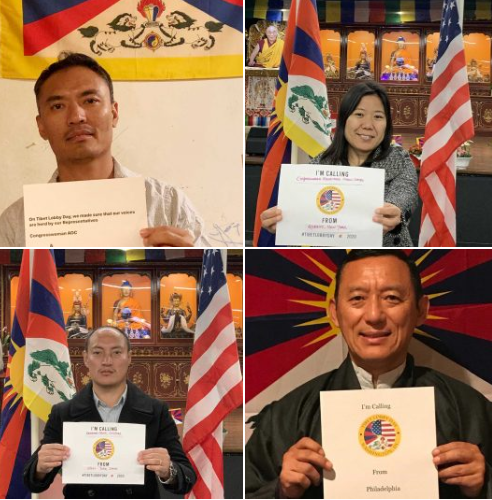
    Third, the migrants and His Holiness the Dalai Lama’s transnational travels have helped to promote Tibetan culture and give the West exposure to the richness and traditions of Tibetan Buddhism. Tibetans also migrate to spread awareness. Sonam Wang due, a young Tibetan activist from India who was the President of the Tibetan Youth Congress in Dharamshala, says that he moved to the U.S. to protest more effectively and freely. An important day known as the Tibetan Lobby Day is conducted annually in the U.S, where hundreds of Tibetans along with their supporters assemble to urge their respective governments and parliamentarians to continue their support for Tibet and the Tibetan people.

    Fig. 3 Tibetan Lobby Day in the U.S

    On the other hand, some factors tend to push people away from their origin country. Push factors from India are mainly restrictions and social reasons. There are many Tibetan schools and colleges in the subcontinent with a large number of Tibetan students. According to the Planning Commission’s data on Tibetan Demography 2010, there is growing unemployment among Tibetan youth, with levels as high as 79.4 percent. When students return to their settlements after graduation, only 5 percent of them get absorbed in employment in the Tibetan community, as jobs here are scarce with mediocre salaries. Finding a job in the Indian community is further restricted by the authorization issue which holds that they are not Indian citizens. Many of them join the Indian Army, work in call centers, or become nurses as these are a few employment opportunities in which they can earn reasonably to support their families. Those without RC are restricted while applying for business documents and procuring licenses, and the youths who have acquired education and skills are pushed out of India as they search for better job opportunities. The younger generation of Tibetans in India realizes the discrimination they face and are motivated to migrate elsewhere for a better life. Although there is Article 19 of the Indian Constitution for freedom of speech and expression and the right to assemble peacefully, when it comes to Tibetans’ protesting, they are restricted in every possible way. Tibetans must secure a legal permit before any protest outside Tibetan settlements. This varies from one region to another, for instance, Tibetans in Dharamshala can protest peacefully as that is their officially recognized place by the Central government. In spite of having authorized Tibetan settlement areas in Chandigarh, Delhi, Arunachal Pradesh, Karnataka, etc., protests conducted in these states are not tolerated and require permits because the decision-making power is solely vested in each of the State governments.

    According to Mr. Sonam Dagpo, a spokesperson for the CTA, the main reason for the decline of refugees in India is because “Tibetans are recognized as ‘foreigners’, not refugees”. The Indian government does not recognize Tibetans as refugees primarily because India is not a party to the 1951 Refugee Convention. This Convention relates to the status of refugees and is built on Article 14 of the Universal Declaration of Human Rights, which recognizes the right of people seeking asylum in other countries because of persecution in their own countries. Another important reason is the lack of awareness among Tibetan refugees that they are the stakeholders to benefit from the TRP. However, implementation of the policy is left to the discretion of the respective States, which makes it problematic. Many Tibetans use India as a transit spot. They enter India primarily to meet His Holiness the Dalai Lama and study here, after which in pursuit of a better life and the West’s influence, they tend to resettle abroad. Nepal in recent times, generously funded by the Chinese, started strictly patrolling the borders with India and are sending back Tibetans to their homeland. Therefore, this is also one of the reasons why Tibetans entering India have decreased drastically.

    The introduction of the Rehabilitation Policy (TRP) in India has decreased the burden on Tibetans. However, efforts are to be made to widen the level of awareness about the policy among the stakeholders and States

    Conclusion

    Egon F. Kunz (1981) theorized about refugee movements and formulated two categories of refugee migrants namely – ‘Anticipatory’ and ‘Acute’. Anticipatory migrants are people who flee in an orderly manner after a lot of preparation and having prior knowledge about the destination, the latter category of migrants is those who flee erratically due to threats by political or military entities and from persecution in their place of origin. Tibetans migrating out of India are largely Anticipatory refugee migrants well aware and seeking betterment. The introduction of the Rehabilitation Policy (TRP) in India has decreased the burden on Tibetans. However, efforts are to be made to widen the level of awareness about the policy among the stakeholders and States.

    Tibetans are mostly living and visiting India from abroad by and large because of His Holiness the Dalai Lama. Considering his advancing age and the number of Tibetans migrating out of India on the rise, will there be a time when Tibetans will give away the hold of solidarity by living in large communities in India? This is the burning question that lies ahead in the future of India-Tibet relations.

    Feature Image Credits: Karnataka Tourism

    Fig. 1 Source: https://reporting.unhcr.org/document/2681

    Fig 2 Source: Dolma, T. (2019). Why are Tibetans Migrating Out of India? The Tibet Journal, 44(1), 27–52. https://www.jstor.org/stable/26921466

    Fig 3 Source: https://tibetlobbyday.us/testimonials/2020-photographs/

  • Distress Migration: A case study of KBK districts in Odisha

    Distress Migration: A case study of KBK districts in Odisha

    The former districts of Koraput, Balangir and Kalahandi, also known as KBK districts, were reorganised into 8 districts of Koraput, Malkangiri, Nabarangpur, Rayagada, Balangir, Subarnapur, Kalahandi and Nuapada in 1992. These districts form the South-West part of Odisha comprising the great Deccan Plateau and the Eastern Ghats. These highland districts highly rich in mineral resources, flora and fauna remain as one of the most backward regions in Odisha

    Among the different forms of migration, distressed migrants remain the most impoverished and unrecognised. These migrants form the lowest strata of the society; disadvantaged by caste, poverty and structural inequalities. In Odisha, the underdeveloped region of KBK is one among the main sources of distressed migrants. They move to cities in search of employment and better wages, while in cities they are even more disadvantaged due to social, economic and linguistic barriers. Administrative and political apathy over their issues has only enhanced their distress.

    This paper attempts to address three questions:

    1. What are the characteristics of distressed migrants in KBK district, Odisha?
    2. What are the existing policies of the state to curb this form of migration?
    3. What form of government intervention is required to address this distress?

    The analysis is carried out through a review of published articles, government reports, e-books and newspaper reports.

    Defining distress migration

    Migration is a multifaceted concept driven by diverse factors. Migration can be internal or international, voluntary or involuntary, temporary or permanent. Depending on the pattern and choice of migration, each migratory trend could be characterised into different forms. Distress migration is one such form of migration.

    Involuntary migration is often associated with displacement out of conflict, environmental distress, climatic change etc. That is any sudden threat or event forces people to migrate. However, involuntary migration may also arise out of socio-economic factors such as poverty, food insecurity, lack of employment opportunities, unequal distribution of resources etc. This component of involuntary migration is addressed by the concept of distress migration (Avis, 2017).

    To understand distressed rural-urban migration in India, the broad definition used by Mander and Sahgal (2010) in their analysis of rural-urban migration in Delhi can be employed. They have discussed distress migration as:

    “Such movement from one’s usual place of residence which is undertaken in conditions where the individual and/or the family perceive that there are no options open to them to survive with dignity, except to migrate. Such distress is usually associated with extreme paucity of alternate economic options, and natural calamities such as floods and drought. But there may also be acute forms of social distress which also spur migration, such as fear of violence and discrimination which is embedded in patriarchy, caste discrimination, and ethnic and religious communal violence” ( Mander and Sahgal, 2010)

    In brief, the definition states that distress migration is caused by an array of issues. Environmental disasters, economic deprivation, gender or social oppression, lack of alternate employment opportunities and inability to survive with dignity are mentioned as the main drivers of distress migration (Avis, 2017).

    Thus, distress migration is a form of temporary migration driven by environmental and socio-economic factors and not based on an informed or voluntary choice.

    Profile of KBK districts

    The former districts of Koraput, Balangir and Kalahandi, also known as the KBK districts, were reorganised into 8 districts of Koraput, Malkangiri, Nabarangpur, Rayagada, Balangir, Subarnapur, Kalahandi and Nuapada in 1992. These districts form the South-West part of Odisha comprising the great Deccan Plateau and the Eastern Ghats. These highland districts highly rich in mineral resources, flora and fauna remain as one of the most backward regions in Odisha. The region is termed backward on account of rural backwardness, high poverty rates, low literacy rates, underdeveloped agriculture and poor development of infrastructure and transportation (Directorate of Economics and Statistics, 2021).
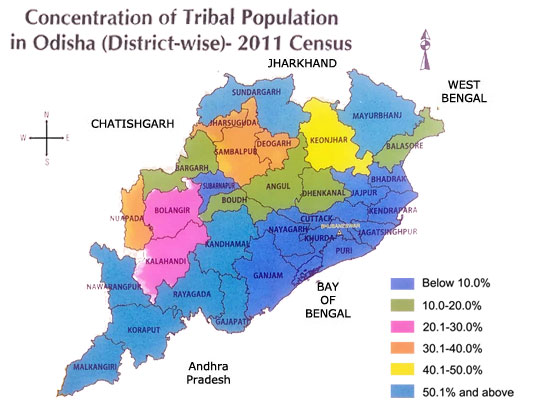
    The districts are home to primitive tribal communities such as Gonds, Koyas, Kotias etc. dependent on forest produce and subsistence agriculture for a living. KBK region registered a workforce participation rate of 48.06 % in the 2011 census. There was a significant occupation change noticed from the 2011 census.  The region witnessed a fall in cultivators from 33% in 2001 to 26.7% in 2011. However, the fall in cultivators was compensated with an increase in agricultural labourers from 44.24 % in 2001 to 48.87% in 2011. Employment in household industries also witnessed a downfall between the period of 2001 to 2011 (Sethy, 2020).

    The rise in agricultural labourers has a negative impact on the communities. As agriculture is underdeveloped owing to the arid nature of the region, crop failure, extreme calamities, low net irrigated area and falling government expenditure, these workers are pushed into abject poverty. In search of alternate employment options, these workers migrate to other areas of employment in rural or urban pockets. Such a form of seasonal migration during the lean period in agriculture is a predominant phenomenon in these districts. Their dependence on non-timber forest produce is hindered by the rapid deterioration and deforestation of forests for development projects and mining.

    Characteristics of distressed migrants in KBK region

    1. Who Are These Distressed Migrants?

    In the KBK region, distress migration has been a popular coping strategy during lean periods of agriculture. And this strategy is majorly adapted by disadvantaged and marginalised sections of the region. They are disadvantaged by caste, chronic poverty, landlessness, low levels of literacy and skills, increased dependence on forest and agriculture and debt-ridden (Meher, 2017; Mishra D.K., 2011; Tripathy, 2015, 2021).

    1. Why Do They Migrate

    Distressed migration in the region is induced by many interlinked factors. One such factor is that the region is highly under-developed in terms of social and economic infrastructure. Such under-development puts the communities at a disadvantage with low levels of literacy and skills. Their dependence on agriculture and forest produce for livelihood rises. However, agriculture is under-developed and forests are subjected to high levels of deforestation. With low levels of income, crop failure and non-availability of alternate employment opportunities, the communities are subjected to absolute levels of poverty, food and employment insecurities (Kujur, 2019).
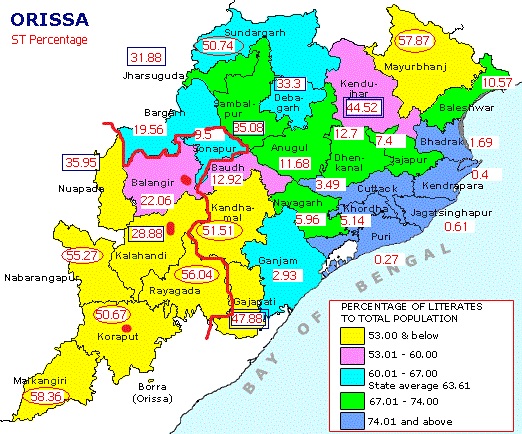
    Landlessness is also identified as one significant push factor. As the region is highly dominated by tribal communities, they are more attached to and dependent on the forest cover. Globalisation and industrialisation resulted in deforestation and encroachment of farmlands for industrial and mining purposes. Eventually, a major proportion of land remains with a smaller group of wealthy people (Mishra D.K., 2011).   Relocation and involuntary displacement also result in the loss of their livelihood that is dependent on the local environment (Jaysawal & Saha, 2016).

    With falling income, people approach local moneylenders to meet their basic sustenance needs. With low incomes from agriculture and forest produce, families approach these informal creditors to meet emergency needs like marriage, birth and death rituals or medical treatment as well as to meet basic consumption needs with the expectation of cash flow from labour contractors during the lean season. Moneylenders exploit them by charging higher interest rates. Thus, the non-availability of formal credit facilities pushes them into a debt trap and further to adopt migration (KARMI, 2014; Mishra D.K., 2016).

    The region is also subject to extreme calamities and drought. Small and marginal farmers, poor in income and land, choose to migrate as they are unable to cope with the regular droughts and climate change. A study on historical analysis of the effect of climate on migration in Western Odisha mentions that the migratory trend saw a rise after the mega drought in 1965. Up until then, large-scale migration from the region was not a phenomenon (Panda, 2017).


    1. Channel of Migration

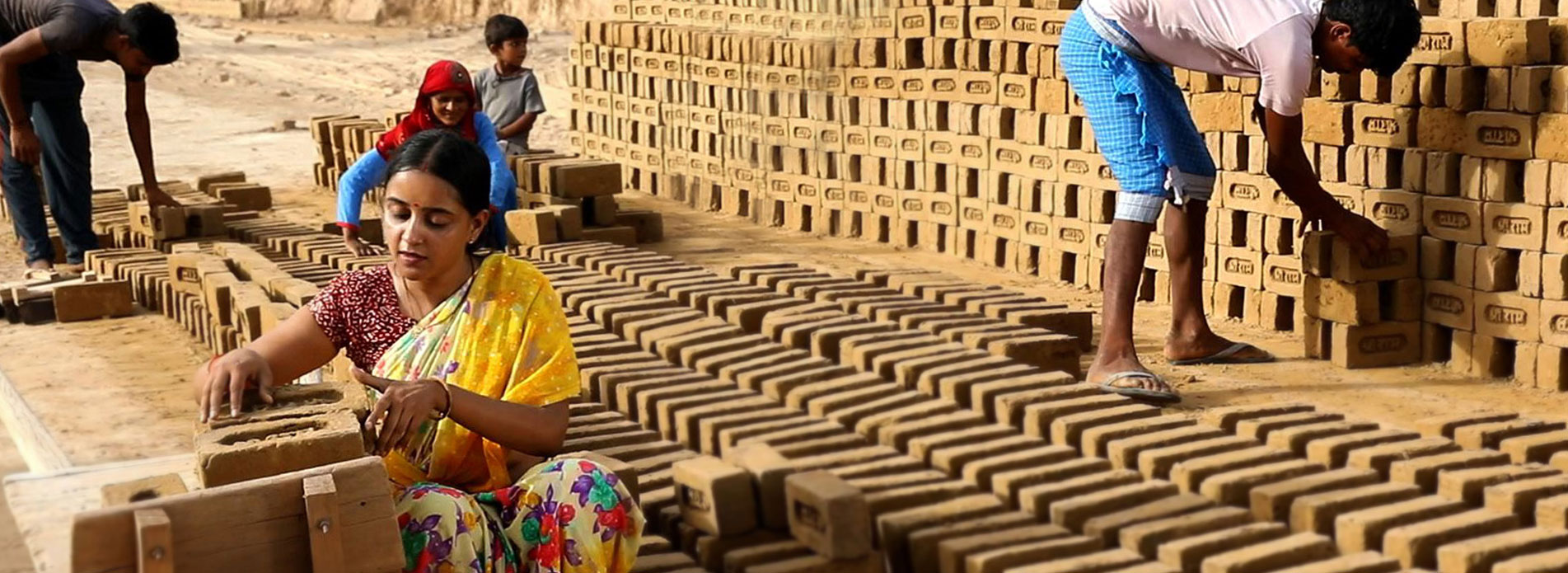
    Sardars provide an advance amount and in exchange, the debtor or any family member agrees to work for them for a stipulated period, usually six months. Hence, there exists a form of debt bondage. Large-scale family migration through this system is seen in the KBK region. The major stream of such bonded labour migration is witnessed towards brick kilns in Andhra Pradesh

    In the region, seasonal migration occurs through the channels of agents, locally known as Sardars, on a contractual basis. This form of migration is known as Dadan labour migration. The poor migrant labourers are known as Dadan and they are recruited by Sardars, who are usually local people who are familiar with residents in the region (KARMI, 2014). During the period of Nukhai, they go around the villages and contact prospective labourers. These Sardars are the intermediary between the employer and the migrant labourer. Sardars provide an advance amount and in exchange, the debtor or any family member agrees to work for them for a stipulated period, usually six months. Hence, there exists a form of debt bondage. Large-scale family migration through this system is seen in the KBK region. The major stream of such bonded labour migration is witnessed towards brick kilns in Andhra Pradesh. They are also a major source of labour in the areas of construction, handlooms and other forms of informal sector work across South India (Daniels, 2014). The problems they face in the destination are manifold. They are subjected to poor working conditions, poor housing and sanitation facilities and limited access to education and health facilities. They are recognised as cheap labour with limited bargaining power owing to their social, cultural and linguistic exclusion in the destination state. Upon entering the contract their freedom to move and freedom to express is denied (Acharya, 2020).

    1. Pull Factors to Migrate

    The hope of availability of better job opportunities and wages is the main pull factor. However, upon the analysis of the nature of migration, push factors have a higher weightage in inducing such distress migration. Migration to brick kilns and other informal sectors from the KBK region can be termed as distress migration as in this case, distress is caused mainly by socioeconomic factors. It is not an informed or voluntary choice. Debt migration remains the only coping strategy that they could adopt.

    Government intervention to curb such distress

    1. Policies Addressing Debt-Bondage Migration:

    The first attempt of the state government to address Dadan migration or debt migration is the enactment of the Dadan Labour (Control and Regulation) Act (ORLA) in 1975. The act had provisions for the registration of labourers and agents, ensuring compliance of minimum wages and favourable working conditions and appointing inspection officers and dispute redressal committees (Daniels, 2014).  However, the act remained on paper and no evidence of enactment was published until it was repealed in 1979 upon the enactment of the Interstate Migrant Workmen (Regulation of Employment and Conditions of Service) Act, 1979 (Nanda, 2017).

    The ISMW act has been criticised to be inadequate and failing to regulate and facilitate safe migration. According to the act, only those interstate migrant workmen who are recruited by licensed agents come under the ambit of the act. However, most agents involved in Dadan migration are not licensed and hence, these workers cannot avail of any of the provisions of the act (Singh, 2020). Though registration of labour contractors is mandatory in the origin state, there is no information about the names of these contractors and hence, further monitoring of the migration process is avoided (NCABL, 2016). Lack of adequate enforcement, under-staffing and poor infrastructure are identified as the reasons for poor implementation of the act in the state (Daniels, 2014).

    A positive attempt against distress migration was the Memorandum of Undertaking (MoU) initiated between the labour department of Odisha and Andhra Pradesh to ensure labour welfare measures of migrant workers in Brick Kilns. After the MoU, the state of undivided Andhra Pradesh took up various progressive measures in education, health, housing and PDS for migrant workers in Brick Kilns. ILO necessitated the need for states to enter into inter-state MoUs to effectively address the bonded labour migration. However, no further MoU was signed with other states like Tamil Nadu, Chhattisgarh etc. which are also among the major host states for migrants from the region (NCABL, 2016).

    The Bonded Labour System (Abolition) Act enacted in 1976 governs the provisions for identification, rescue and rehabilitation of bonded labourers across the country. The act has its loopholes in implementation. There is no information on whether vigilance committees have been set up in every district or whether the surveys have been periodically conducted or to what extent the act has been functioning in the state (Post News Network, 2019). The centrally sponsored scheme for Rehabilitation of Bonded Labour also has its setbacks. There have been reported cases of delay and denial of financial aid by district officials ( Mishra .S., 2016). In 2016, with restructuring and revamping of the Rehabilitation scheme, rescued workers could only avail the full amount of financial aid with the prosecution of the accused employers. With no database on the employer, the rates of prosecution have been low and the rescued bonded labour do not receive their funds (NACBL, 2016)

    1.  Ensuring Accessibility of Health Facilities in Destination

    The Rashtriya Swasthya Bima Yojana or RSBY launched by the central government in 2008 provides health insurance to BPL families. The scheme incorporates provisions to split smart cards so those migrant workers could avail health insurance in destination states. After signing of the MoU between Andhra Pradesh and Odisha, the two states took steps to spreading awareness among the migrant workers about how to use the smart cards (Inter-State Migrant Workman Act (ISMW), Labour Directorate, n.d.)

    1. Ensuring Education of Migrant Workers Children

    The state of Odisha has established seasonal hostels to ensure the education of children of migrant workers.  The children are enrolled in seasonal hostels during October-June, that is until their parents return home (Odisha Primary Education Programme Authority, n.d.).  The state has ensured the education of migrant children at their destination state by sending Odiya textbooks and Odiya teachers to residential schools in Andhra Pradesh (Inter-State Migrant Workman Act (ISMW), Labour Directorate, n.d.).

    1. Alternate Employment Opportunities: MGNREGA

    Mahatma Gandhi National Rural Employment Guarantee Act (MGNREGA) was introduced in 2006 to provide guaranteed employment to rural poor with the objective of uplifting them from poverty and restricting distress migration.  A study analysing the performance of MGNREGA through secondary sources of data suggests that based on physical criteria of 100 Days of Wage Employment, Person-days generated, ST and Women person-days and financial performance in terms of total expenditure, total wages, average cost and average wage rate per day person, the performance of MGNREGA in KBK districts is better compared to Non- KBK districts.  But the region is lagging in rural employability criteria based on average days of employment provided per household and job cards issued (Sahoo et al., 2018).  Labour in the region is not interested to work under MGNREGA due to its dismal implementation in the state. Workers complain about the delay in receiving payments and instances of the creation of non-existent workers’ names among MGNREGA’s beneficiaries (KARMI, 2014).  Uncertain and low wages make these labourers favour migration to Brick Kilns in hope of better wages (Deep, 2018).

    1. Development Policies in KBK Region

    The KBK region has a high incidence of poverty owing to regional disparities in development and social exclusion based on caste. The main initiatives implemented by the state government for the upliftment of the KBK region are the Special Area Development Programme, Revised Long Term Action Plan (RLTAP), Biju KBK Plan, Backward Regions Grants Fund, Gopabandhu Gramin Yojana (GGY), Special Central Assistance (SCA) for tribal sub-plan (TSP) areas, Western Odisha Development Council (WODC) and Grants under Article 275(1) of the Constitution. Development projects to reduce poverty and regional disparities are obstructed by economic, social and institutional factors (Mishra, 2020).
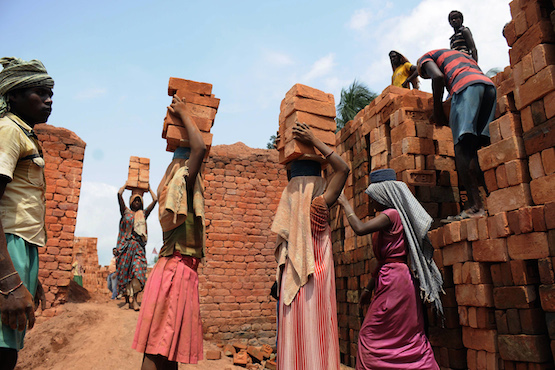
     

    The state of Odisha has done positive interventions in the education of migrant children and health facilities of the migrant population. However, the distress migration is still prevalent owing to the social and economic exclusion and debt bondage situations in the region. Land grabbing in the name of development left the tribal communities poor and in distress. Structural inequalities induced by caste discrimination are enhanced with such landlessness.


    Policy Recommendations

    The state of Odisha has done positive interventions in the education of migrant children and health facilities of the migrant population. However, the distress migration is still prevalent owing to the social and economic exclusion and debt bondage situations in the region. Several initiatives and schemes have been enacted to address distress migration; however, their failure in reducing distress can be linked to dismal governance, poor implementation and misappropriation of schemes.

    The state must ensure migration to be safe and a viable coping strategy. From this study it is suggested the state of Odisha follow a multipronged approach to address the distress.

    Origin state (Odisha) interventions

    •         Short Term Interventions:
    1. The system of debt bondage should be completely abolished by the proper implementation of legislation. Different loopholes in implementation such as the delay in the release of funds, prosecution of accused and identification and registration of middlemen should be addressed. Apart from the financial aid, the state should intervene in providing a comprehensive livelihood plan for the rescued labourers. Abolishing the bonded labour system is essential to reduce distress and make migration safe.
    2. Informal sources of credit should be eliminated and formal credit and microfinance facilities should be made available. Such facilities would reduce the exploitation and prevent the creation of absurd debt. Formal credit provides opportunities for small and marginal farmers to indulge in productive investments. This enables them to cope with extreme climatic changes.
    3. Land grabbing in the name of development left the tribal communities poor and in distress. Structural inequalities induced by caste discrimination are enhanced with such landlessness. The provision of land ownership enables the communities to enjoy land-based benefits which further supports them to sustain their livelihood. Ownership of land also provides the indigenous community with a sense of social and economic significance.
    •         Long term interventions
    1. The state should engage in enhancing the skills of the people in the region. Vocational skill training and development schemes can be introduced. This could expand the opportunities available for employment and distribute labour across all the economic sectors.
    2. Rural development should be given higher priority. The state of Odisha has already initiated many schemes for the development of the KBK region. However, the state should study the economic and social factors that stagnate the process of development in the region. Chronic poverty, poor infrastructural and rural connectivity and dismal education and health facilities are some of the important areas that require attention.

    Host state intervention

    1.   The host state needs to create a database of migrants entering their state. A statistically significant database on migrants solves a huge array of issues faced by the migrant in the destination state. A comprehensive database helps in identifying and recognising migrants. It also allows for understanding the different characteristics of migrants and the sectors in which they are employed. This would be beneficial for monitoring and ensuring safe and favourable working conditions. A database also helps in ensuring the availability and accessibility of social security and entitlements in host states.


    1.   Migrant labour is as important to the destination state as it is to the origin state. Both origin and host state should cooperate towards making migration a viable livelihood strategy.

    Another important area where both the origin and host state should intervene together is creating awareness among workers about the existing provisions and rights available to them. Access to the same should be made easy.

    Conclusion

    The highly backward districts of the KBK region remain a major source of distressed migrants. Years of state initiative in reducing distress have had negligible impact. The area remains underdeveloped and migration is the only viable choice of employment. Migration can only be a viable coping strategy for seasonal migrants when the channel of migration is made legal and safe. The major drawback in any initiative attempted to resolve distress is the poor implementation. Administrative apathy, corruption and misappropriation of schemes have stagnated the progress of every initiative.


    References

    1. Acharya, A. K. (2020). Caste-based migration and exposure to abuse and exploitation: Dadan labour migration in India. Contemporary Social Science, 1-13.
    2. Avis, W. R. (2017). Scoping study on defining and measuring distress migration.
    3. Bhatta Mishra, R. (2020). Distress migration and employment in indigenous Odisha, India: Evidence from migrant-sending households. World Development136, 105047.
    4. Daniels, U. (2014). Analytical review of the market, state and civil society response to seasonal migration from Odisha. Studies, stories and a canvas seasonal labour migration and migrant workers from Odisha, 106-115.
    5. Deep, S. S. Seasonal Migration and Exclusion: Educational Experiences of children in Brick Kilns. Ideas, Peoples and Inclusive Education in India. National Coalition for Education, India. 2018.
    6. Directorate of Economics and Statistics (2021). Odisha Economic Survey 2020-21. Planning and Convergence Department. Government of Odisha. http://www.desOdisha.nic.in/pdf/Odisha%20Economic%20Survey%202020-21-1.pdf
    7. Giri, J. (2009). Migration in Koraput: “In Search of a Less Grim Set of Possibilities” A Study in Four Blocks of tribal-dominated Koraput District, Odisha. Society for Promoting Rural Education and Development, Odisha, 1.
    8. Inter-State Migrant Workman Act (ISMW) | Labour Directorate. (n.d.). Labour Directorate, Government of Odisha. Retrieved August 10, 2021, from https://labdirodisha.gov.in/?q=node/63%27%3B.
    9. Jaysawal, N., & Saha, S. (2018). Impact of displacement on livelihood: a case study of Odisha. Community Development Journal53(1), 136-154.j
    10. Jena, M. (2018, July 21). Distress migration: land ownership can put a break. The Pioneer. https://www.dailypioneer.com/2018/state-editions/distress-migration-land-ownership-can-put-a-break.html
    11. KARMI. (2014). Migration Study Report of Golamunda Block of Kalahandi District of Odisha. Pp.13. Kalahandi Organisation of AgKriculture and Rural Marketing Initiative (KARMI), Kalahandi Odisha.
    12. Kujur, R. (2019). Underdevelopment and patterns of labour migration: a reflection from Bolangir district, Odisha. research journal of social sciences10(1).
    13. Mahapatra, S. K., & Patra, C. (2020). Effect of migration on agricultural growth & development of KBK District of Odisha: A statistical assessment. Journal of Pharmacognosy and Phytochemistry, Sp9(2), 162-167.
    14. Mander, H., & Sahgal, G. (2010). Internal migration in India: distress and opportunities, a study of internal migrants to vulnerable occupations in Delhi.
    15. Meher, S. K. (2017). Distress seasonal migration in rural Odisha A case study of Nuapada District.
    16. Mishra, D. K. (2011, April). Behind dispossession: State, land grabbing and agrarian change in rural Odisha. In International conference on global land grabbing(Vol. 6, No. 8).
    17. Mishra, D. K. (2016). Seasonal migration from Odisha: a view from the field. Internal migration in contemporary India, 263-290.
    18. Mishra, S. (2016, January 13). Rescued migrant workers get raw deal from Govt. The Pioneer. https://www.dailypioneer.com/2016/state-editions/rescued-migrant-workers-get-raw-deal-from-govt.html
    19. Mishra, S. (2020). Regional Disparities in Odisha–A Study of the Undivided “Kbk” Districts. Research Journal of Humanities and Social Sciences11(4), 261-266.
    20. Nanda, S. K. (2017). Labour scenario in Odisha. Odisha Review73(10), 20-25.
    21. NCABL. (2016). Joint Stakeholders’ Report on Situation of Bonded Labour in India for Submission to United Nations Universal Periodic Review III. NATIONAL COALITION FOR ABOLITION OF BONDED LABOUR (NCABL), Bhubaneswar Odisha.
    22. Panda, A. (2017). Climate change, drought and vulnerability: A historical narrative approach to migration from Western Odisha, India. In Climate Change, Vulnerability and Migration(pp. 193-211). Routledge India.
    23. Post News Network. (2019, April 30). Elimination of bonded labour calls for cohesive action plan. Odisha News, Odisha Latest News, Odisha Daily – OdishaPOST. https://www.Odishapost.com/elimination-of-bonded-labour-calls-for-cohesive-action-plan/
    24. Sahoo, M., Pradhan, L., & Mishra, S. (2018). MGNREGA and Labour Employability-A Comparative Analysis of KBK and Non-KBK Regions of Odisha, India. Indian Journal of Economics and Development6(9), 1-8.
    25. Sethy, P. (2020). Changing Occupational Structure of Workers in KBK Districts of Odisha. Center for Development Economic6(06), 17-28.
    26. Singh, V. K. (2020, April 22). Opinion | The ‘nowhere people’ of COVID-19 need better legal safeguards. The Hindu. https://www.thehindu.com/news/national/other-states/the-nowhere-people-of-covid-19-need-better-legal-safeguards/article31400344.ece
    27. Tripathy, S. N. (2015). Evaluating the role of micro-finance in mitigating the problems of distress out-migrants: A study in KBK districts of Odisha. The Micro Finance Review, Journal of the Centre for Micro Finance Research.
    28. Tripathy, S. N. (2021). Distress Migration Among Ultra-poor Households in Western Odisha. Journal of Land and Rural Studies, 23210249211001975.


    Feature Image: Tata Trusts
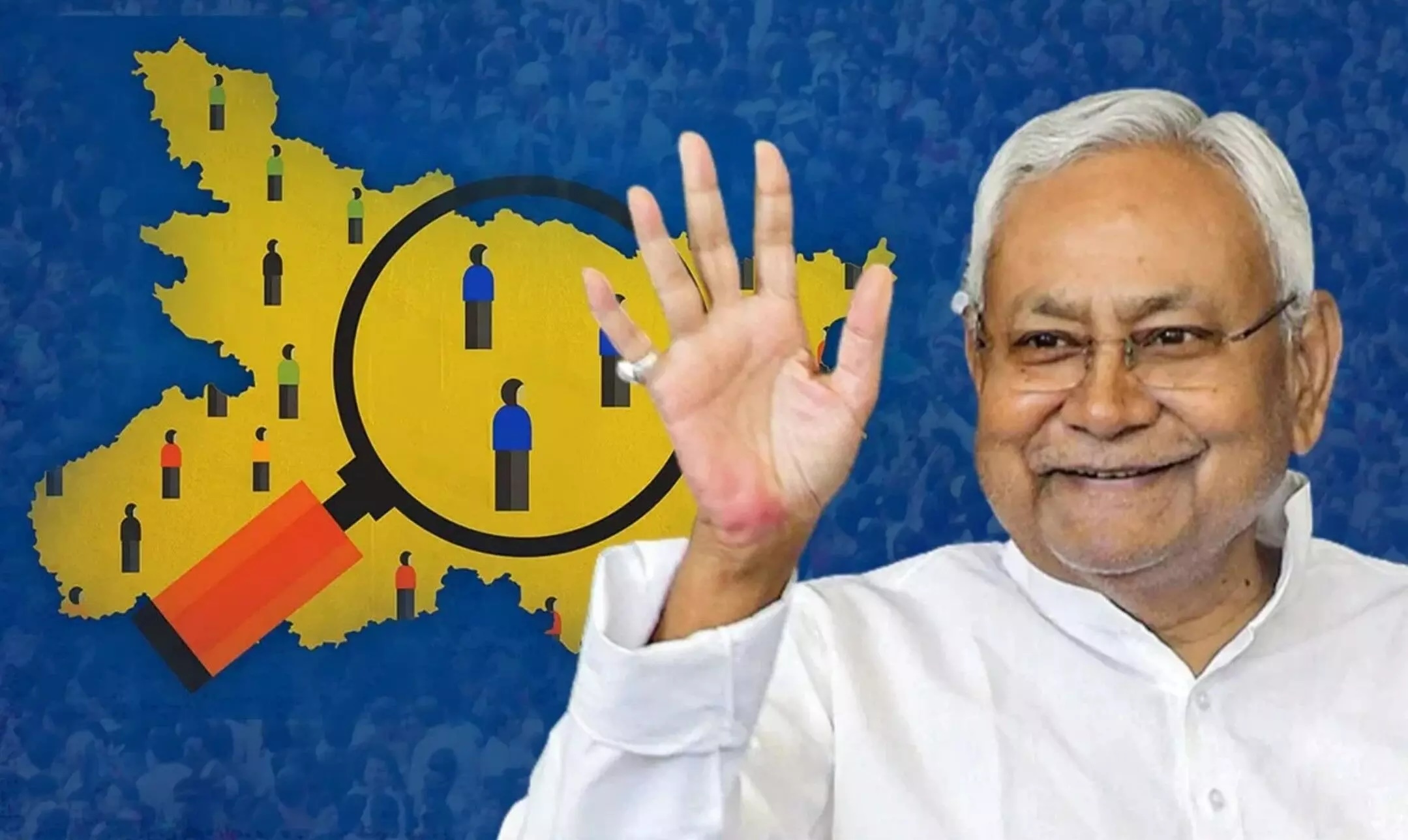
  • International Migration in Pandemic Times: Disrupted Links, Remittances and Migrantophobia

    International Migration in Pandemic Times: Disrupted Links, Remittances and Migrantophobia

    The COVID-19 pandemic has severely limited international migration due to border closures and has forced millions of people to return home. According to expert estimates, the pandemic reduced the number of international migrants by the middle of 2020 by about 2 million people: to 281 million people instead of the expected 283 million people.

    In 2020, immigration to the countries of the Organisation for Economic Cooperation and Development (OECD) was half what it had been in 2019; in Canada the number of immigrants decreased by 45%, and in Australia – by 70%.

    To compensate the negative impact on its economy, Canada launched a recruitment programme to bring in 400,000 immigrants in 2021, 2022 and 2023. The number of migrants who came to Saudi Arabia decreased by 90%.

    The pandemic partly realised a hypothetical situation long idealised among migrantophobes: “how much better it would be if the migrants went back where they came from.” Although some, rather than all migrants returned to their homelands, the host countries were able to really feel what it was like to do without them.

    COVID-19 has greatly affected territorial mobility both between countries and regions, and within specifi c states. As a result, migration fl ows and remittances declined, accompanied by a rise in migrantophobia and xenophobia in the main destination countries. These crises overlapped with the fact that migration has been a major political issue in North America and Europe over the past years.


    Click here for the Valdai Discussion Club Report

  • Exploitation Across Borders Indian migrant workers fight for their right to get paid in Serbia

    Exploitation Across Borders Indian migrant workers fight for their right to get paid in Serbia

    Indian migrant workers have been targeted to work at mega construction projects in EU-candidate state Serbia. A group of workers is not willing to give up fighting for their salary, despite the legal loopholes that a company registered in America has used to contract them for work in Serbia

    When Boobalan Dhanapal, 41, arrived in Serbia in July 2019, he was eager to work and send money back home. He was joined by fellow construction workers from Chennai, a coastal city in the southern Indian state of Tamil Nadu. Boobalan, who has a degree in civil engineering, was recruited to work as a construction foreman for a monthly salary of Є 440 (approx. 38,500 Indian rupees), inclusive of food and housing. At the time, it sounded like a good deal.

    In 2019, over 150 men from various Indian states began working for GP Nikolić, a Serbian construction company, on a number of infrastructure projects across the Balkan country.


    Read More

  • Marginalised among the invisible: The case of female migrant domestic workers

    Marginalised among the invisible: The case of female migrant domestic workers

    The Pandemic, lockdown, and the chain of events that followed made the country wake up to the state of the most unfortunate group of the labour force; the migrant workers. They have always remained invisible to the development agenda of the government and only the catastrophe of a pandemic could shed light on their woes. Among this invisible workforce, there remains yet another marginalised group of female migrants.

    In India, female migration was initially considered insignificant by equating their movement merely as associational or followers of men.  However, this has certainly changed in the last decade. Marriage was seen as the central motive behind female migration, though lately more women are seen to enter the labour market post-migration as their labour demand rose in sectors of so-called “female occupations” of domestic work, care-work and certain informal labour requirements in sectors such as in construction, garment work, food services and as coolies and vendors.  As family migration from rural to urban abodes saw a rise in the country, both male and female migrants were required to join the labour force to meet their mere subsistence needs. Lack of employment, low income and other economic reasons pushed females, especially from rural areas, to migrate to urban zones of the country (Singh et al., 2015). While in urban areas, the migrants especially females and children are exposed to extreme vulnerabilities with regard to their dismal conditions of work in the informal sector, urban policies are deeply flawed in omitting migrant welfare and the sheer denial of their civil rights and entitlements.

    Precarious domestic work and female migrants

    Domestic work is often regarded as an invisible and insignificant addition to the social and economic values of a country. The work is increasingly feminised with over 80% of the world’s domestic work occupied by women (International Labour Organisation [ILO], 2013a). And this mirrors the traditional notions of domestic work being a woman’s task. These tasks include traditional housework such as cleaning, cooking, washing clothes or utensils etc. or care-work such as a child or elderly care. Female migrants with low skills, low levels of education and migrating from rural abodes in search of employment form a predominant part of the labour pool. With no recognition and regulation of work, the female domestic workers are subject to unequal power dynamics at the workplace, making their lives precarious in terms of wages, security and wellbeing.

    In India, domestic work employment among females saw an upsurge, especially in urban areas. This surge is mainly accounted for by the increasing need for care work given the changing demography, lack of work opportunities in other sectors and the gender constructions moulded by the society (Chandrashekar & Ghosh, 2012). According to the National Sample Survey (NSSO-2011-2012, 68th round), 39 lakh (3.9 million) people are occupied in domestic work, among which 26 lakh (2.6 million) are females. Micro-level surveys suggest a predominant concentration of female migrants in domestic work, especially in urban areas (Mazumdar et al., 2013).  There are two forms of workers: live-in workers, who are accommodated in the household and live-out workers, who return to their respective houses after work and may be involved in work with multiple households. As there is no relevant national data on migrant workers involved in the sector, micro-level surveys or sector-based studies are the only sources in understanding the conditions of these migrants in domestic work. Studies have stated that migrants with low vocational qualifications and often seen as unregulated and undocumented cheap labour, work under low wages for long hours and in dismal working conditions affecting their health and safety. Live-in domestic workers are more prone to the dangers of sexual and physical abuse. Live-out domestic workers migrating to a new city, struggle with the inaccessibility of social security schemes and entitlements. Exploitation by private placement agencies in terms of wages and work conditions is another area among their hassles.

    The domestic work arena, already an unregulated and unorganised sector, puts female migrants with low bargaining power on a higher vulnerability scale. The task of identifying domestic work hinders the formulation of a sound regulatory mechanism to confront such vulnerabilities.

    Barriers to effective Regulation

    Regulating domestic work is impeded by cultural and structural barriers. The traditional notion and disregard of domestic work by women in households is extended to the understanding of paid domestic work as unproductive and hence, making it undervalued. The structural barriers relate to the unusual workplace in private spheres, which makes it difficult in enforcing labour laws and any form of scrutiny against the privacy norms of a household. The informality of work and its complexities aggravates the barriers in regulation. The employment relationship is uncertain as it is without any legal titles of employee and employer, making the relation very personalised and often not under any form of contract or agreement. Even if labour laws are made inclusive of domestic work, implementation and assurance of compliance of these laws in households are challenged until the household is recognised as a ‘workplace’ and the person hiring as an ‘employer’ in the legal framework (Chen, 2011).

    Even though these barriers existed, the International Labour Organisation (ILO) convention 2011 attempted in ensuring decent work to domestic workers and this is recognised as the most important landmark in identifying domestic work under a legal framework. ILO defines domestic work as “work performed in or for a household or households” and domestic worker as “any person engaged in a domestic work within an employment relationship”. The convention specified a comprehensive labour standard for domestic workers in areas of their wages, hours of work, occupational safety and health and social security. The convention addressed and standardized the various concerns in the sector regarding child labour, migrant workers, trafficking, live-in domestic labourers and private recruitment agencies (C189 – Domestic Workers Convention, 2011). Even after the completion of 10 years of the convention and 32 ILO member countries enforcing the landmark treaty, India is yet to ratify the convention.

    As domestic work remains undefined in the country, no significant statistical standard in estimating domestic workers exist. In the ILO policy brief on “Global and regional estimates of domestic workers” (ILO, 2013b), ambiguous nature of data on domestic workers were noticeable from the widely distributed figures, ranging from 2.5 million estimates from a household survey, 4.5 million workers estimated from official statistics (NSSO 2004-05) to an exaggerated figure of 90 million in news media. This difference in estimation is related to the difference in the identification of domestic work among different establishments (Mahanta & Gupta, 2015). With no clarity in identifying domestic workers inclusive of its peculiarities, these figures could be heavily underestimated too. Being a female migrant in the sector aggravates the problem of estimation as National statistics narrows down female migration patterns merely as associational. And thus failing to understand the true motives behind female migration and the subsequent scale of occupations they reside in (Indu et al, 2012).  Macro data narrows down domestic female labour into regular workers based on their duration in employment and disregarding the conditions of low wages and other insecurities, while the temporary and casual nature of work goes unrecognised (Neetha & Indrani, 2020). The informality of work is another area that India has failed to regulate. Labour laws for industrial labour often disregard informal workers. This is evident in the isolation of migrant workers, especially female migrants in domestic work (Poddar & Koshy, 2019).

     Lacunae in the legal framework

    Domestic work and most feminised occupations, in general, in unorganised sectors, are isolated from the legal framework given their unique characterisation of workplace and employment relationships and not to mention the challenges in recognising their work given the cultural and structural barriers. For female migrants in domestic work or any other informal activity, the situation is similar.

    There were certain positive steps in attempting to recognise the domestic workforce in the country. First of such attempts were their inclusion in the Unorganised Workers Social Security Act 2008 which gave hope, but failed to be implemented across different states (Agrawal & Agarwal,2018). Subsequently, the government also set up a task force to recommend a framework for policymaking and after 10 years, in 2019, we see a draft on National policy on domestic work formulated by the government covering their recognition, access to civil rights and social security schemes, skill development, regulating private placement agencies and a grievance redressal system (“National Policy for Domestic Workers”, 2019). Upon the recommendations of the task force, the domestic workers were to be included under the National Health insurance scheme – Rashtriya Bhima Yojana (RSBY). But the limited awareness of the scheme, its functioning and benefits, coupled with corruption reduced the domestic worker’s accessibility of the same (Mahanta & Gupta, 2015). The suggestion of the task force to include domestic worker rights in existing legislations, pertaining to industrial or organised labourers, was widely criticised because it does not adapt to the peculiarities of the feminised domestic work (Poddar & Koshy, 2019). Ensuring minimum wages to the domestic worker through the Minimum Wages Act 1948 with a task-based approach, while ignoring the aspect of personalised nature of employment completely, puts the live-in workers whose tasks are not quantifiable, out of the ambit of the act’s provisions. Similarly, the inclusion of domestic workers in the Sexual Harassment of Women at Workplace Act (2013), Employees’ State Insurance Act (1948) and Unorganized Workers’ Social Security Act 2008 is considered inadequate. Even though such inclusion is appreciated, these legislations fail to cater to the rights of a domestic worker if they are based on organised sector labour standards and without understanding the complexities of the domestic work (Poddar & Koshy, 2019).

    Private placement agencies, one of the main recruitment channels of domestic work, remain unregulated. This has led to the rise in exploitation in terms of payment and working conditions. The Delhi government drafted a Delhi Private Placement Agencies (Regulation) Bill in 2012 which was widely rejected by the domestic workers’ unions and groups. The proposed bill was criticised to be ineffective as it does not include the registration of the employers and lacks clarity in the process of inspection of these agencies (Chigateri et al., 2016). A study on one of the frequently travelled migrant routes, which is from Jharkhand to Delhi, reveals that migrants were subjected to conditions of exploitation and forced labour under such placement agencies. Conditions of forced labour are witnessed mainly among live-in domestic workers, who have to work under the agent for the stipulated period. The Inter-State Migrant Workmen’s (Regulation of Employment and Conditions of Service) Act 1978 fails to address this issue as placement agencies relating to domestic work do not come under the ambit of the act. The act considers only those labour contractors who are registered at the origin state. Placement agencies involved in domestic work function through several sub-agents and mostly are unregistered (ILO, 2015)

    There were some positive responses from state governments. The state of Tamil Nadu set up the Tamil Nadu domestic workers welfare board.  Similarly, Maharashtra set up a domestic worker welfare board under Maharashtra Act (Agrawal & Agarwal, 2018) in 2008 while Kerala adopted a domestic worker bill in 2009. States like Kerala, Karnataka, Andhra Pradesh, Maharashtra, Tamil Nadu, Bihar and Rajasthan have set the minimum wage rate (Madhav, 2010). Neetha and Palriwala (2011) analysed the state legal framework on domestic workers and pointed out the same inadequacies noted over and over again, that is of not recognising the intricacies of domestic work, workplace, its several sub-categories, unregulated placement agencies and its unique employment relation. With no data on domestic workers and at the same time their numbers continuing to increase, these loose legislations and provisions go unnoticed by the workers.

    In 2019, with the view to improving compliance and bringing about uniformity of laws, 29 labour laws were consolidated into 4 labour codes: a) code on wages, b) code on industrial relation c) code on social security and d) code on occupational health and working conditions (“Overview of Labour Law Reforms”, n.d.). While the notion was to make the labour laws more transparent and such consolidation was expected to increase the coverage of different workers under the law, these codes remain ambiguous when it comes to certain sectors of informal work. Neetha and Indrani (2020) analyse these codes through a gender lens focusing on domestic and migrant workers. Code on wages does not incorporate private households as an entity hiring employees and thus domestic workers who struggled to attain minimum wages under the previous Minimum wages act (1948) have no mention, leaving them ambiguous. Code on industrial relations dealing with collective bargaining and industrial disputes, do not mention freedom of association in unorganised sectors and curbs the right to strike which has serious implications of registration of domestic workers under trade unions and their right to collective bargaining. Code on social security (CSS) has consolidated the unorganised workers’ social security act 2008, which was the first attempt towards the recognition of domestic workers and the new code puts the functioning of such acts and provisions for the unorganised sector under the discretion of the government, leaving out legislative scrutiny. Hence, there is uncertainty of the efficient functioning of these acts under CSS. Under the code, maternity benefits were applied only to the registered establishment of work. And domestic workers with no recognition of the workplace become ineligible for the same. Code on occupational health and working conditions is also seen to have not recognised the need for laws based on different sectors of work. It has again failed to include private households as a workplace, leaving the conditions of domestic work unregulated. Another failure relates to ignoring the Sexual Harassment of Women at Workplace Act (Prevention, Prohibition and Redressal) 2013, which further leaves out the scrutiny of abuse or exploitation of domestic workers. The fact of being migrants among domestic workers isolates them even further from these labour codes.

    The lacunae in existing legislation in recognising domestic work and migrant labour continues to be beset in ambiguities with the new labour reforms.

    Present scenario: Covid-19 adding to the vulnerabilities

    The onset of the Covid-19 and the resultant lockdowns have led to massive disruptions of normal life resulting in the shocks of sudden unemployment, financial strain and increased burden for workers in the unorganised sector. The migrant workers bore the highest brunt. In such a scenario, female migrants in an unregulated and isolated sphere of work such as domestic workers have been subject to severe distress. The lockdown and reduced mobility left the workers unemployed and without income. Live-in migrants faced increased workload but no change in wages. Even with the slow revival of the economy, they are under threat of being infected or being carriers, given their precarious work and living conditions. Sudden dismissals and financial strain have forced many to the situation of borrowing money for subsistence and eventually ending up in debt. Workers struggle to meet the basic needs of health, food, education of the family with lower income and savings (Sumalatha et al., 2021). With dismal employment relations and working conditions, coupled with the exclusion from the legal framework and social protection, Covid-19 has expanded the existing inequalities.

    Government intervention:  The need of the hour

    Government intervention both in ensuring basic rights and providing for the welfare of the domestic workers have been negligible. The cultural and structural barriers are not the only challenges in regulating domestic work. There is a lack of political will in acknowledging domestic workers and their woes. As they remain scattered and invisible, the domestic workers are not seen as potential vote banks and hence remain without any political influence. The sector which is comprised largely of female migrants is devoid of any political voice and agency in their origin or host states since there are barriers in pursuing their voting rights given the nature of their migration. Their interactions with civic authorities and politicians in the host state are marginal and hence, their issues do not come to the fore (Bureau, 2018). There is a lack of awareness among the migrant workers on their voting rights. They are largely unaware as to who should be approached in the host state to resolve their problems. Even a migrant worker, well aware of his/her political rights and agencies, refrain from pursuing any form of interaction as they have either lost faith in the system or are disillusioned by the long time and effort spent pursuing the cases with no results to show. This highlights the need for effective political inclusion of migrant workers and the generation of political and electoral awareness among them (Bureau, 2018).

    Further, identification and protection are the two essentials in creating an inclusive environment for female migrants in domestic work. The feminized nature of domestic work in the country, concentrated predominantly among poor and marginalised migrant workers, need to be recognised as dignified “work” and households they work in as “workplace”. Only separate comprehensive legislation on domestic work can incorporate the varied complexities of the sector, rather than a mere extension of organised sector legislations. Such separate legislation would provide the domestic worker with an identity that can ensure them their rights and entitlements (Sharma & Kunduri, 2015). The legislation should address the working conditions, violations and exploitations, provisions for mobilisation, illegal channels of private placement agencies and establishing basic civil rights from a gender perspective to incorporate the differential experience of females in the sector. Efficient implementation and scrutiny of the same require statistically significant data, the absence of which is another flaw in the system.

    Domestic worker’s inaccessibility of social protection is the result of the lack of recognition. Migrant workers in the sector without any identity proof or formal registration are excluded from social protection schemes. Agrawal and Agarwal (2018) suggest setting up an independent welfare board in every district responsible for registering, ensuring availability of social security benefits, conducting dispute resolution, dissemination of information and providing skill development and training for domestic workers. The provision of financial incentives can help in coping with sudden unemployment situations during any form of crisis such as the pandemic. Allowing for the organisation of domestic workers into unions and cooperatives can also be beneficial in attaining social and legal protection. Domestic worker groups such as SEWA and National Domestic Workers Movement (NDWM) in the country have been attending to the woes of the domestic workers by providing a platform for collective bargaining and assertion of rights.

    The introduction of the draft on National Policy on Domestic workers can be seen as a positive development, however, the policy still remains in consideration. Vulnerabilities of the domestic workers, exacerbated by the pandemic, highlight the urgent necessity for the ratification of the ILO convention on domestic workers. There is an urgent requirement in increasing the government’s sensitivity towards domestic workers and their precarious existence.

    References

    1. Agrawal, U., & Agarwal, S. (2018). Social Security for Domestic Workers in India. Socio-Legal Rev.14, 30
    2. Bureau, A. (2018). Political Inclusion of Seasonal Migrant Workers in India: Perceptions, Realities and Challenges.
    3. C189 – Domestic Workers Convention, 2011 (No. 189). (n.d.). Retrieved July 15, 2021, from https://www.ilo.org/dyn/normlex/en/f?p=NORMLEXPUB:12100:0::NO::P12100_ILO_CODE:C189
    4. Chandrasekhar, C. P., & Ghosh, J. (2012, November 12). Changing patterns of domestic work. @businessline. https://www.thehindubusinessline.com/opinion/columns/c-p chandrasekhar/changing-patterns-of-domestic-work/article22985402.ece
    5. Chen, M. A. (2011). Recognizing domestic workers, regulating domestic work: Conceptual, measurement, and regulatory challenges. Canadian Journal of Women and the Law23(1), 167-184.
    6. Chigateri, S., Zaidi, M., & Ghosh, A. (2016). Work Like Any Other, Work Like No Other103. Retrieved July 18, 2021, from http://www.unrisd.org/indiareport-chapter4
    7. Chigateri, S. (2021). Labour Law Reforms and Women’s Work in India: Assessing the New Labour Codes From a Gender Lens. Institute of Social Studies Trust.
    8. Indu, A., Indrani, M., & Neetha, N. (2012). Gender and migration: Negotiating rights, a women’s movement perspective. Delhi: Centre for Women’s Development Studies.
    9. International Labour Organisation (ILO). (2013a). Who are domestic workers? Ilo.Org. https://www.ilo.org/global/docs/WCMS_209773/lang–en/index.htm
    10. International Labour Organisation (ILO). (2013b). Global and Regional Estimates on Domestic Workers.
    11. International Labour Organisation (ILO), (2015). Indispensable yet unprotected: Working conditions of Indian domestic workers at home and abroad. Retrieved July 19, 2021, from https://www.ilo.org/wcmsp5/groups/public/—ed_norm/—declaration/documents/publication/wcms_378058.pdf
    12. Klemm, B., Däubler, W., Beimin, W., Lai, A., Min, H., & Sinha, S. (2011). Protection for Domestic Workers: Challenges and Prospects. Briefing Paper Special Issue, May, Friedrich Ebert Stiftung.
    13. Madhav, R. (2010). Legal Recognition of Domestic Work. Labour File, 8, 41.
    14. Mahanta, U., & Gupta, I. (2015). Road ahead for domestic workers in India: legal and policy challenges.
    15. Mazumdar, I., Neetha, N., & Agnihotri, I. (2013). Migration and gender in India. Economic and Political Weekly, 54-64.
    16. National policy for domestic workers. (2019, February 13). Retrieved July 18, 2021, from https://pib.gov.in/Pressreleaseshare.aspx?PRID=1564261
    17. Neetha, N. (2004). Making of female breadwinners: Migration and social networking of women domestics in Delhi. Economic and Political Weekly, 1681-1688.
    18. Neetha, N., & Palriwala, R. (2011). The absence of state law: Domestic workers in India. Canadian Journal of Women and the Law23(1), 97-120.
    19. Neetha N., & Indrani, M. (2020, June 01). Crossroads and Boundaries : Labour Migration, Trafficking and Gender. Retrieved July 19, 2021, from https://www.epw.in/journal/2020/20/review-womens-studies/crossroads-and-boundaries.html
    20. Overview of Labour Law Reforms (n.d.) Retrieved from https://prsindia.org/billtrack/overview-of-labour-law-reforms#_edn2
    21. Poddar, M., & Koshy, A. (2019). Legislating for Domestic’Care’Workers in India-An Alternative Understanding. NUJS L. Rev.12, 67
    22. Shanthi, K. (2006). Female labour migration in India: Insights from NSSO data(Vol. 4, p. 2006). Chennai: Madras School of Economics.
    23. Sharma, S., & Kunduri, E. (2015). Of Law, Language, and Labour: Situating the Need for Legislation in Domestic Work. Economic and Political Weekly50(28).
    24. Singh, N., Keshri, K., & Bhagat, R. B. (2015). Gender dimensions of migration in urban India. In India Migration Report 2015(pp. 200-214). Routledge India.
    25. Srivastava, P., & Shukla, P. (2021). Crisis behind closed doors domestic workers’ struggles during the pandemic and beyond. Economic and Political Weekly, 17-21.
    26. Sumalatha, B. S., Bhat, L. D., & Chitra, K. P. (2021). Impact of Covid-19 on Informal Sector: A Study of Women Domestic Workers in India. The Indian Economic Journal, 00194662211023845.


    Image Credit: ucanews.com