Category: PDC Event

  • PDC 6: Concept and relevance of Nationalism in the 21st century

    PDC 6: Concept and relevance of Nationalism in the 21st century

    PDC Past Event :  25th Jan 2020

    The concept of nationalism and its influence in shaping the modern world system is undeniable. According to Anderson, humans consider themselves as part of imagined communities based on some common features and derive collective responsibility to that idea. This feeling over time results in identifying a language, shared heritage, and so on to develop uniqueness and distinctness of their community from others. Across history, there are various instances of multiple nations existing under a common kingdom like the Roman Empire, Austria-Hungary, etc. However, post the thirty year war and the Treaty of Westphalia, modern nation states evolved and nationalism became a primary force in shaping these entities. This found its final expression in John Locke’s philosophy that rejected the divine rights of the king and stressed that all persons are endowed with natural rights, and rulers failing to protect them should be removed, with force if necessary. These rising concepts drove the masses towards liberty, equality and fraternity resulting in the French revolution and the American war of independence. The race between powerful states and the spread of colonialism ensured that a national identity could be forged only with a population within a defined territory, ruled by a legitimate government. This Western notion of modern nation states was applied to all regions of the world, altering the natural course of evolution of the nationalism process in these regions. From Africa to Asia, territorial claims and the forging multiple nations to form nation states resulted in various challenges that still remain. For instance, Iraq was formed based on its oil reserves and not in its civilizational bonds. It brought forged the Shia, Sunni and Kurd communities with differing histories and no common bond into a single nation state, resulting in a fragile state with implications even felt today.

    Interestingly, globalisation and its standardising imperatives have stimulated nationalism rather than dissolving its validity. It is argued that self- determination in the 21st century, especially when the global culture is increasingly unified, intensifies due to revival of nationalism. As communication and movement is eased, often the unique identity is weakened. These disruptors to national identities are seen as threats, which is used by politicians and world leaders to strengthen the existing uniqueness of their states. However, these nationalistic drives disregard the diversity that exists in each nation state, creating domestic challenges, particularly for minorities. Electoral politics further divides the people by creating a nation of us vs them, often painting others as potential threats. This has manifested into modern challenges of immigration, terrorism and so on. The rise of hypernationalism in modern day politics can be traced along these lines. By imposing a common national identity, it affects the subnational sentiments of the people since nationalism is more local than national. Singapore, for instance, thrives by creating an equal space for the various sections of its people. While nationalism is a requirement for the functioning of any nation, hypernationalism is a threat to its very existence.

  • PDC – 5: Artificial intelligence and disruptive technologies

    PDC – 5: Artificial intelligence and disruptive technologies

    Technology is growing exponentially signalling the ‘Fourth Industrial Revolution’ of technological breakthroughs, such as Robotic Process Automation, Artificial Intelligence, Blockchain, and the Internet of Things. The advent of Fourth Industrial Revolution will disrupt almost every industry, every emerging and developed country in areas of employment and governance. The change has already started from an individual level, ranging up to societal and national level and one can only predict as to what depths these disruptive technologies are going to revolutionise the future. Come join us in our brainstorming discussion as to how people in India should adapt on a personal and professional level to embrace this uncertain, but exciting future.

    The discussion led by S K Sivakumar, enterprise architect was well received by the participants. Currently stepping into to fourth wave of industrialization it is crucial for any country to comprehend the technology aspect from various dimensions. AI technology is embedded in most of our consumer products and is shaping the future of our manufacturing & service sector. A concise explanation on usage of AI technology and the working back end technology was shared. An interesting insight on application of such technology at micro level was presented by the speaker. With such developments in the technology, it is an opportune time to evaluate the technological capabilities of India and direct policy decision to reach out potential growth in research on disruptive technology. While there is a threat of AI taking over manual jobs, it is most unlikely to happen anytime in near future. A more adaptive approach to growing technology has to be employed to facilitate research and development in the field. A follow up session on the same topic is to be organized to explore the international relation angle in the technology power race.


    PDC Past Event : 20 Dec 2019


  • PDC 4 : Keezhadi archaeological findings project new light on Indian History

    PDC 4 : Keezhadi archaeological findings project new light on Indian History

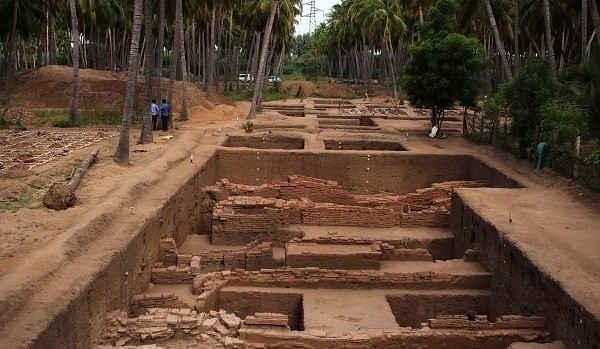
    Carbon dating of unearthed artefacts found at Keezhadi point to the Sangam Age being 300 years earlier than previously believed, challenging current understanding of history. Structural remains found in the Vaigai plains show the handy skills of the people and high standards of living in the Sangam era. Also spurring the language debate, engravings of Tamil-Brahmi existing at an earlier age point to older origins of the Tamil language. These evidences point to the importance of expanding archaeological research in order to understand the history of Peninsular India. Join us as we dig deeper into history!

    Dr S Vasanthi, Former director of the archaeological department, Government of Tamil Nadu led the discussion on common artefacts and items found in Keezhadi excavation. The recent discovery in keezhadi is similar to the other excavation that was undertaken in different parts of Tamil Nadu. The discussion commenced by highlighting the significance of scientific approach in studying history and civilization. Research methodology employed in studying any civilization has to be sound and unbiased as possible. The artefacts and items explain the life style and civilization but the governance structure, political situation is largely obtained from the literature and manuscripts. An enlightening session about other archaeological excavation in India at different time periods revealing similar cultural aspects of civilization encouraged participants to advance their understanding of the subject.

    PDC Past Event :   07 Dec 2019

    pdc-4-1

  • PDC 3: Sustainable Living Practices: Individuals Role in Tackling Climate Change

    PDC 3: Sustainable Living Practices: Individuals Role in Tackling Climate Change

    A semi formal session on recording the ideas of Chennai youth on various sustainable living practices that an individual could undertake. The session began with defining a need for an individual to take part in the process of creating an ecosystem keeping the environment in mind. Firstly, the consumerism thriving on profits was challenged and sustainability as a concept had to take the front seat. To achieve this individuals have to write off the status element attached to adopting a pattern as a consumer. In making awareness among public, there is a lack of relatable factor to any outcome of climate change. State has a much larger role to play in rewarding a sustainable practice and penalizing a business or act that would damage the environment. Mainstreaming of eco friendly products and discouraging corporate that pollute the environment, state has to bridge the science and public in the area of climate change. As individuals, it is important to question state’s inability to maintain an environmental standard.

    Past Event: 30 Nov 2019

  • PDC 2: Rising Unemployment and Economic Woes: Is India Missing its Demographic Dividend?

    PDC 2: Rising Unemployment and Economic Woes: Is India Missing its Demographic Dividend?

    Peninsula Discussion Club – Past Event

    PDC 2: Rising Unemployment and Economic Woes: Is India missing Demographic Dividend?

    Date: 02 November 2019

    Speaker: Professor Jothi Sivagnanam PhD, HOD, Dept of Economics, University of Madras

    India has stepped into its demographic dividend and the bulging youth population can possibly be a gift or curse for development. Recent concern over rising unemployment in India has been discussed from various dimensions. ‘Jobless Growth’ in India is evoking debates among economists and policymakers on how to capitalize on the human capital resource. The second discussion of TPF was an attempt to comprehend the looming crisis and identify factors that cause unemployment. Speaker of session, Professor Jothi Sivagnanam highlighted that demonetisation and the poor implementation of GST as the two major blunders that have disrupted the economy to a great extent. This is now causing high rates of unemployment. Poor quality in higher education and reluctance of state to correct the skill mismatch was discussed in detail. India’s growth as a global economic power, and its ability to dominate global markets can only be achieved if it focuses on development of high quality skills in its huge young population. The state has to prioritize developing skills at international standards in order to compete with established players. Participants pointed out the problems of archaic and rigid labour laws that stymie productivity and efficiency. It was pointed out that export oriented policies are vital to generate employment and high skills. In the realm of the fourth industrial revolution, the debate has to move past growth versus development due to the interdependence various sectors of the economy. The professor and one of the participants brought out the importance of balancing industrialization with education and social engineering. For example, Gujarat portrays a pro-business growth model, however, failed to succeed in its welfare policies, and hence, has serious inequalities and social problems. On the other hand Kerala, being socialistic in nature focused on development and failed to create a conducive zone for business development. With states having different characteristics and history, problem of unemployment cannot be treated as a universal problem. There is a substantial increase in the educated unemployment and vulnerability in informal sector. States need to address this by designing better quality education to meet the industry standards and regulate the labour laws. Given this backdrop, other specific issues were discussed during the meet.

    We welcome comments and further discussions on this blog page. Comments will be moderated in order to ensure discussions remain professional and ethical.

    PDC Past Event : 02 Nov 2019