Category: Pakistan

  • The Pakistan Paradox: Courted by Rivals, Valued Only Against India

    The Pakistan Paradox: Courted by Rivals, Valued Only Against India

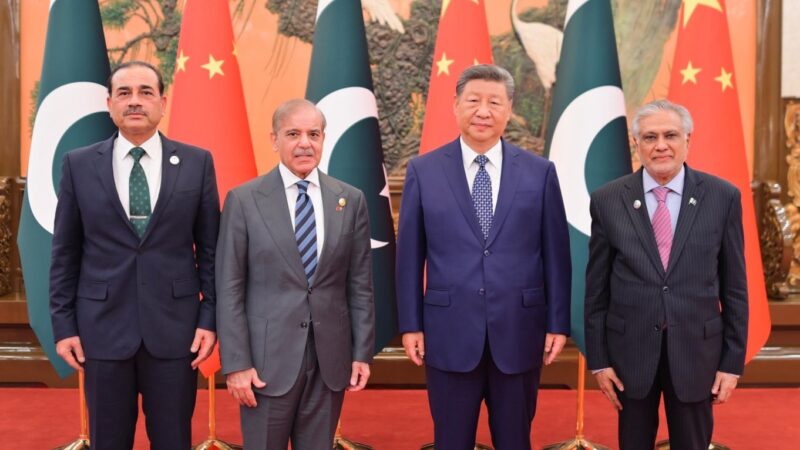
    Pakistan’s presence at China’s Victory Day parade exposed a more profound truth: its value lies not in strategic brilliance but in being a pawn for both Washington and Beijing. Far from balancing, Islamabad survives as a tool in the great power game against India.

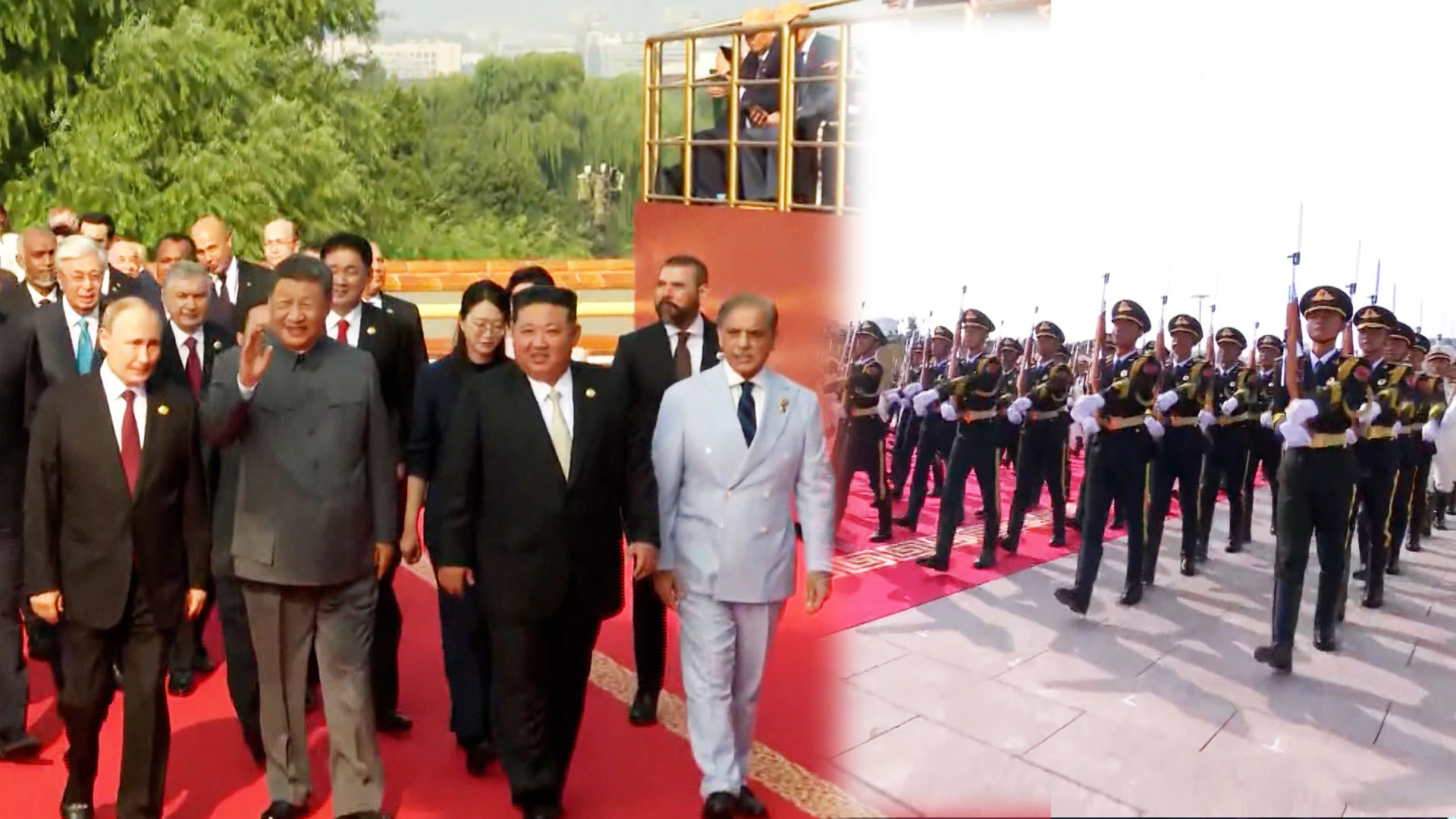
    China’s recent Victory Day parade on September 3, 2025, was more than a ceremonial display; it was a calculated act of strategic signalling to the West. By showcasing its formidable military hardware and hosting close allies such as Russia’s Vladimir Putin and North Korea’s Kim Jong-un, Beijing sought to project its emergence as a great power, much as it did during the 2008 Olympics. By bringing these leaders together, China signalled not only unity but also the contours of an emerging alternative world order that challenges Western dominance.

    The parade sent “chill waves” across Western capitals, with even Donald Trump admitting that he closely followed the event. On social media, he sardonically addressed China: “Please give my warmest regards to Vladimir Putin and Kim Jong Un, as you conspire against the United States of America.” On September 5, 2025, he further voiced his frustration, declaring that the U.S. had “lost India and Russia to deepest, darkest China,” a remark that reflected Washington’s growing unease over Beijing’s expanding influence.

    India, notably absent from China’s Victory Day parade on September 3, 2025, made its own strategic moves. Prime Minister Narendra Modi visited Japan on August 29–30, ahead of the Shanghai Cooperation Organisation (SCO) summit in Tianjin on August 31–September 1. By going to Tokyo first and then to Tianjin, Modi signalled to the West that India continues to prioritise its commitments in the Indo-Pacific, while also reminding Beijing that New Delhi remains open to engagement. During the SCO summit, Modi’s remark that India’s engagement with China “should not be seen through third-country lenses” was intended to reassure the West of India’s balancing strategy.

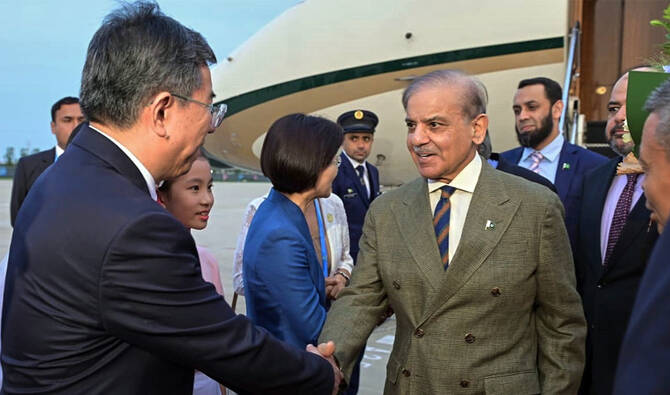
    Yet, amid this choreography of great powers, one country’s presence at the Victory Day parade raised eyebrows: Pakistan. Prime Minister Shehbaz Sharif stood alongside leaders who openly challenge the Western-led order—figures the West often labels as part of an “axis of evil”—despite Pakistan being nominally allied with the United States. What was even more surprising was the silence of Washington and its partners. Had it been India’s leader at the parade, the Western outcry would have been deafening. But when Pakistan did it, no questions were asked. Why this extraordinary tolerance?

    The explanation lies not in Pakistan’s own strategic brilliance. Unlike India, Pakistan lacks genuine strategic agency or independent decision-making capacity. It has long been dependent on external patrons and remains heavily constrained by domestic crises. The narrative advanced by some strategic experts that Islamabad is engaged in a masterful balancing act between Washington and Beijing is misleading. Instead, both the U.S. and China tolerate Pakistan’s duplicity because of its enduring strategic utility against India.

    Washington knows Pakistan’s record all too well. During the War on Terror, Islamabad received over $33 billion in U.S. aid while simultaneously providing sanctuary to Taliban leaders. U.S. officials, including President Trump, repeatedly acknowledged this duplicity. In a tweet on January 1, 2018, Trump stated: ‘The United States has foolishly given Pakistan more than 33 billion dollars in aid over the last 15 years, and they have given us nothing but lies & deceit, thinking of our leaders as fools. They give safe haven to the terrorists we hunt in Afghanistan, with little help. No more!”

    Similarly, Congressman Ted Poe, Chairman of the House Subcommittee on Terrorism, introduced a bill in 2016 calling for Pakistan to be declared a “state sponsor of terrorism,” stating that Pakistan was “not only an untrustworthy ally but has also aided and abetted the enemies of the United States”. Counterterrorism cooperation is, therefore, not the real reason Washington continues to indulge Pakistan. Nor are West Asia’s dynamics or connectivity goals the central factor, though they play a role.

    The real reason is India. Pakistan serves as a pressure valve for Washington to use whenever New Delhi strays from American strategic priorities. Similarly, for Beijing, Pakistan is an indispensable grey-zone tool against India — a reliable proxy that complicates India’s security calculus without requiring direct Chinese involvement. This explains why China continues to describe its relationship with Pakistan as ‘higher than the Himalayas, deeper than the oceans, sweeter than honey, and stronger than steel,’ even though Beijing is fully aware that the “honey” and other lofty adjectives in this partnership are largely rhetorical, given Pakistan’s military establishment has historically maintained close ties with the Pentagon and U.S. defense agencies.

    Recent developments illustrate this pattern. Despite Islamabad striking a minerals deal in Balochistan with the U.S.—an area where China has invested heavily through the China-Pakistan Economic Corridor (CPEC) and even frequently loses its workers to terrorist attacks—Beijing has not retaliated.

    China has invested nearly $60 billion in CPEC projects, including Gwadar Port and associated infrastructure, yet continues to tolerate Pakistan’s parallel engagement with the U.S. Even though just days ago, China exited funding for certain sections of CPEC, such as the Karachi–Rohri stretch of the Main Line-1 railway, the broader corridor remains intact and firmly under Beijing’s control.

    Similarly, Washington has been remarkably quiet about the expansion of CPEC and its recent announcement to extend it into Afghanistan, despite this development directly strengthening Chinese influence in South and Central Asia, which contradicts U.S. national security strategies, including the Indo-Pacific strategy designed to counterbalance China. Imagine if India were to engage China in a similar manner; the Western backlash would be immediate and fierce.

    The silence over Pakistan reveals the underlying logic: both Washington and Beijing find it useful to maintain Islamabad as a strategic lever against India. For China, Pakistan provides military intelligence, operational support, and a constant security distraction for New Delhi, keeping India tied down on its western front. For the U.S., Pakistan is less a partner in counterterrorism than a tool to remind India of the costs of drifting too far from American preferences.

    Thus, Pakistan’s position is not the result of deft balancing or sophisticated statecraft. It is tolerated, even courted, by two rival great powers because of its instrumental value in their respective strategies against India. Far from being an Independent balancer, Pakistan remains a dependent actor whose importance derives almost entirely from the leverage it provides to others.

    For India, the lesson is clear. The tolerance extended to Pakistan by both Washington and Beijing is not about Islamabad’s capabilities or credibility — both powers know well its history of duplicity. Instead, it reflects the centrality of India in global strategy and the willingness of other powers to use Pakistan as a pawn in their broader geopolitical contest. Recognising this reality is essential for shaping New Delhi’s responses, ensuring that India continues to strengthen its autonomy and strategic weight in the Indo-Pacific and beyond.

    Feature Image Credit: India Today

    Pictures in Text: www.arabnews.com, www.nationalheraldindia.com, www.deccanherald.com

  • Indus Water Treaty: A Model for International Water Governance

    Indus Water Treaty: A Model for International Water Governance

    Introduction

    Water is the basis of biological sustenance, without which no civilisation can sustain. Access to clean and safely managed water is therefore a human right, not a privilege.

    According to the United Nations Development Programme (UNDP) —

    One in four people still lives without safely managed water services or clean drinking water. Approximately 4 billion people live with severe water scarcity for at least one month of the year, and about half a billion people face water scarcity year-round.

    The water crisis is not an isolated issue but a global challenge. It calls for effective governance not just within the local governments and authorities of a country but transnationally as well.

    International Water Governance refers to this process of decision-making, formulation, and implementation of policies pertaining to the use, management, and distribution of transboundary water resources.

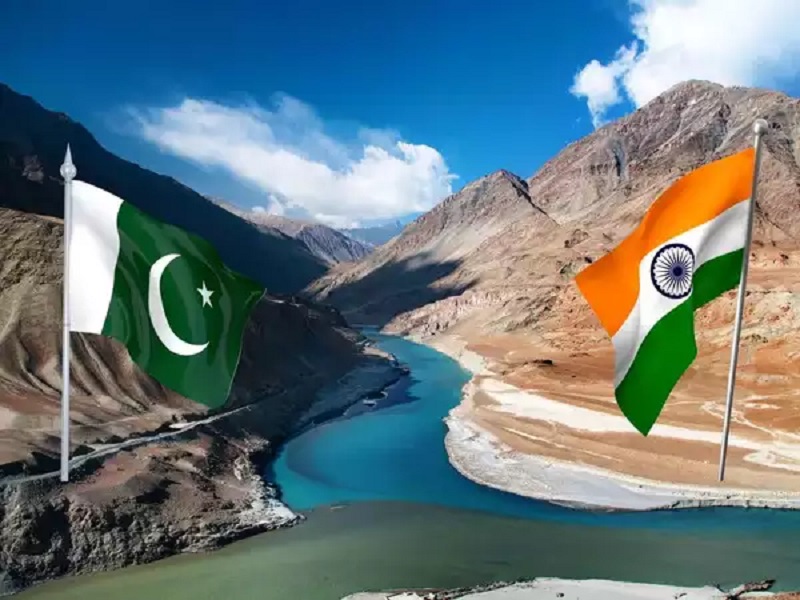
    Peace and cooperation on matters of conflict over water are hard to reach and much harder to maintain. Treaties, multilateral agreements and conventions often govern transboundary waters; one such example of a successful bilateral water-distribution treaty is the Indus Water Treaty (the IWT) of 1960 between India and Pakistan over the regulation and use of the Indus River Basin and its tributaries.

    Indus Water Treaty

    The Indus Water Treaty was signed in 1960 in Karachi between India and Pakistan as facilitated by the World Bank (erstwhile International Bank for Reconstruction and Development or IBRD). It demarcates the sharing and usage of the Indus River and its major tributaries, categorised into “eastern” and “western” rivers for Indian and Pakistani use, respectively.

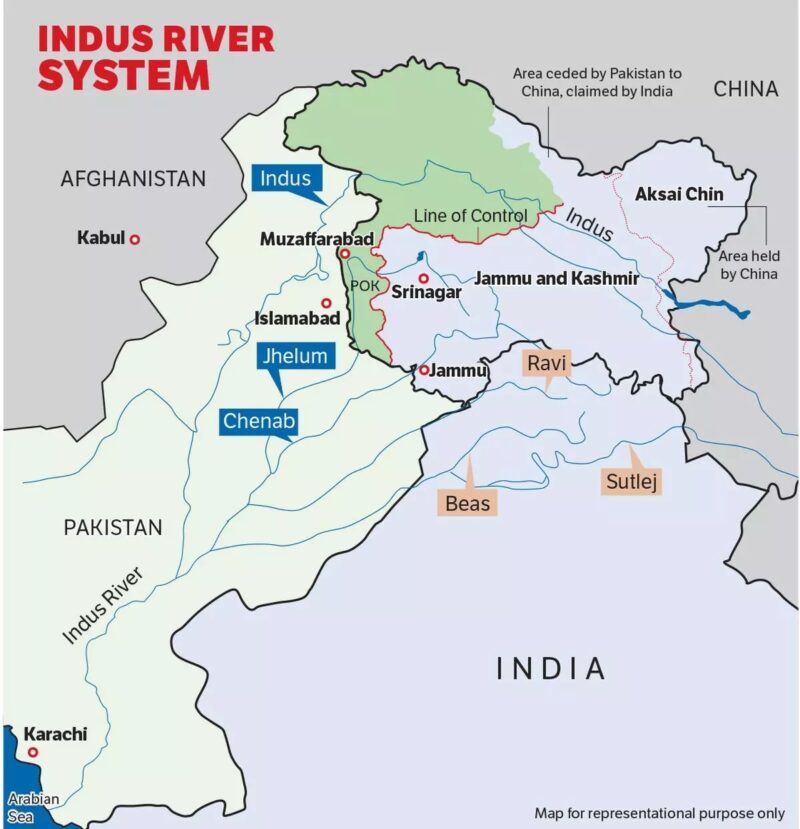
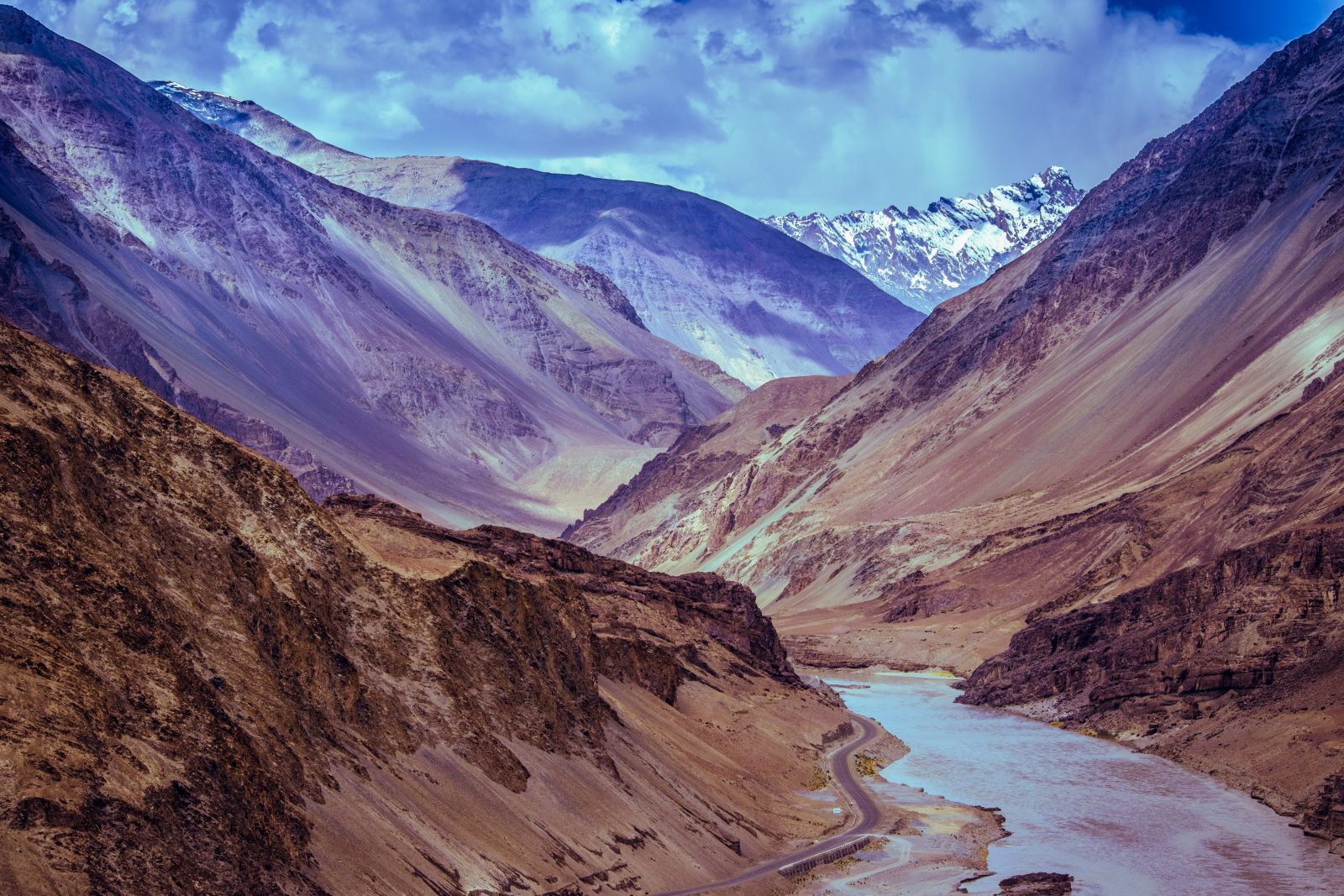
    The Indus River flows mainly from Tibet and the Himalayan regions of India’s Himachal Pradesh and Jammu and Kashmir and across Pakistan’s Punjab and Sindh before emptying into the Arabian Sea through Karachi.

    Of the six major tributaries of the Indus River— the Beas, Ravi and Sutlej are the “eastern rivers” and the Indus, Chenab and Jhelum are the “western rivers”. The former is for India’s exclusive use after Pakistan’s permitted water use, and the latter is for Pakistan’s exclusive use after the criteria of India’s permitted use are met.

    As a result, the split was made in the ratio of about 20:80 of the total water flow from the Indus system in favour of Pakistan. Pakistan has unrestricted access to the waters of the western rivers for agricultural, domestic, and industrial purposes.

    India too is permitted to use a limited amount of water from these rivers, apart from the eastern rivers, for specified purposes, such as irrigation and power generation. It also lays down detailed regulations for India in building projects over the western rivers.

    Historical context and Security concerns

    As the partition of British India took place on religious lines instead of geographic factors, the division of the historically integrated water system in a manner satisfactory to both countries was a challenging feat. Although most of the river naturally flows through the regions of Pakistan, it primarily originates from India before it enters the former. Hence, Pakistan is the downstream nation of the Indus River. This places Pakistan in a vulnerable position, exposed to the risks of India causing artificial droughts or flooding of its arable lands, which may be used as leverage to control water and food security in times of hostilities.

    According to Pakistan, it was entitled to all the waters of the Indus and its tributaries due to its historical right before or until the partition, also highlighting the threat of severe water scarcity without the continuous flow of the rivers. Whereas India insisted that the waters be equitably distributed on a new post-partition basis by proposing for the first time the separate rationing of the western and eastern rivers between the two nations. Ergo, paving the way for arguably one of the most successful, long-standing bilateral agreements struck between any two agnostic states.

    Provisions and Objectives of IWT

    In 1952, with the World Bank as the mediator, a Working Party consisting of Indian, Pakistani, and World Bank engineers was formed to draw up a cooperative plan for the use, allocation and distribution of the disputed waters. After almost eight long years of negotiations, the Indus Water Treaty was finally ratified in 1960.

    The main provisions of the IWT are as follows:

    • Water distribution:

    India and Pakistan received approximately 30% and 70% of the total waters of the Indus rivers located in India. India’s eastern rivers have a mean annual flow of 40b/m3 while the western of Pakistan have an MAF of 100b/m3.

    • Regulation of water use:

    Use of waters of the eastern and western rivers are explicitly demarcated between India and Pakistan while limited usage of the other country’s rivers is also permitted for specific purposes that are of non-consumptive nature, like hydropower generation, fishing, etc.

    • Water rights:

    According to IWT, although the liberty to use unutilized water of the other country exists, the right over the water is not forfeited over time, even in case of repeated underutilization.

    • Conflict resolution:

    A Permanent Indus Commission (PIC) comprising commissioners from both India and Pakistan is provided for by the Treaty. The PIC serves as a forum for the exchange of hydrological data, information, and views on the implementation of the treaty and the resolution of disputes.

    Aftermath

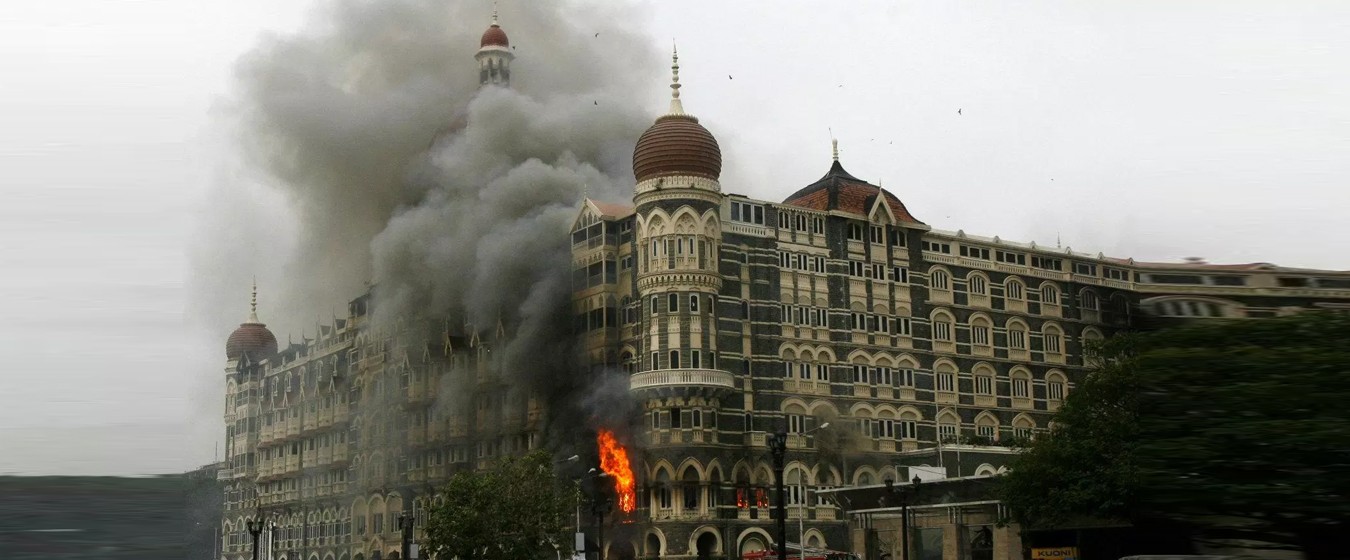
    The treaty has survived several border skirmishes, terror attacks including the 26/11, and even two full-fledged wars in 1965 and 1971. The terms of water sharing as agreed upon have been adhered to despite such hostilities.

    After the 2016 Uri Attack on an Indian Army base in Jammu and Kashmir and the 2019 Pulwama Attack, threats of revoking the Treaty have been made by India but never materialised, as the Treaty continues to remain intact. However, according to the IWT, the bombing or destroying of dams, barrages, power stations, etc. located in the Indian part of the Indus basin by Pakistan violates the Treaty which can lead to its abrogation.

    Despite Pakistan’s repeated violation of the Treaty by using groundwater of Ravi and Sutlej areas of India for various uses before they cross into its area, and by constructing river training works to reduce river flooding in Pakistan and enhance flooding in India’s Great Rann of Kutch area; no concerns have been raised by the latter hereto.

    With the Treaty in place, several projects have been undertaken on the allotted rivers, India has constructed the Bhakra-Nangal and Salal dams for hydroelectric power generation. Pakistan constructed the Tarbela and Mangla Dams for water storage, irrigation, and hydropower generation.

    Shahpur Kandi and Ratle Projects:

    The Shahpur Kandi project of India over the Ujh river has been objected to by Pakistan for diverting waters of Ujh, a tributary of Ravi, an eastern river exclusive for India’s use. The dam was officially completed in February 2024.

    India’s ongoing Ratle Hydroelectric Project on the Chenab also made headlines, for Pakistan’s objection to its construction in the Indian area after its funding was finally approved in 2021. The dam would have an 850 MW generative capacity, for which a limited reserve of water is required to be reserved. This alarmed Pakistan as it claimed it would pose a risk of possible weaponization of water supply by India in wartime situations. Disagreement over the summoning of a Neutral Expert or a Court of Arbitration as authorised by the Treaty for dispute resolution was settled in 2016 by the World Bank’s decision to let both motions proceed simultaneously. Later, India was allowed to construct the dam by the World Bank despite objections by Pakistan. The project is scheduled to commence operations in 2026.

    A Blueprint for Transboundary Water Cooperation

    The success of the IWT sets an example of how countries can overcome their political differences and contribute to an efficient system of shared resource governance. It successfully helped the Indian subcontinent evade a potential war between the two nuclear-armed states over the river basin, a model for other regions struggling with water scarcity and competition to follow.

    Climate change coupled with the construction of dams and barrages for water storage and regulation carries heavy ecological repercussions like the disruption of river ecosystems, aquatic habitats, and biodiversity of the concerned region. Consequently, endangering the livelihood of the nearby occupants, even forcing them to relocate.  Hence, such a cooperative regulatory mechanism must be in place to facilitate constructive dialogue towards incorporating environmental considerations into water management strategies to tackle and mitigate any negative repercussions.

    The Indus Water Treaty has demonstrated its efficacy as a significant diplomatic agreement between the two neighbouring states, consistently withstanding various challenges over time. The treaty primarily emphasises the importance of cooperation and diplomacy in resolving transboundary water disputes while also establishing a foundation and providing scope for potential future collaboration in numerous domains of shared governance.

    Proposals for its abrogation have been deemed impractical for both parties, as the treaty has endured for six decades. Nevertheless, there is a recognised need to re-examine, renegotiate, revise, and amend the long-standing Treaty to better address contemporary issues, including new ecological and climate change concerns, as well as evolving terms of negotiation.


    References:

    ET Online, (2024, February 26). India completely stops Ravi River water flow to Pakistan. Historical context and significance. The Economic Times. https://economictimes.indiatimes.com/news/india/india-completely-stops-ravi-river-water-flow-to-pakistan-historical-context-and-significance/articleshow/107980936.cms

    Gupta, M.S. (2024, February 25). Shahpurkandi dam complete after 3 decades, will help check unutilised Ravi water flowing to Pakistan. The Print. https://theprint.in/india/governance/shahpurkandi-dam-complete-after-3-decades-will-help-check-unutilised-ravi-water-flowing-to-pakistan/1978380/

    Gupta, S [The Print]. (2023, January 31). Understanding the Indus Waters Treaty & why India is pushing Pakistan for changes [Video]. YouTube. https://youtu.be/pVp93u2IgSg

    MEA Media Centre, (1960, September 19). Bilateral/Multilateral Documents: Indus Waters Treaty. Ministry of External Affairs, Government of India (MEA, GOI). https://www.mea.gov.in/bilateral-documents.htm?dtl/6439/Indus

    Samantha, P.D. (2023, January 31). The Indus Question: India, Pakistan and rivers of concern. The Economic Times. https://economictimes.indiatimes.com/news/india/analysis-india-pakistan-looking-to-exploit-resources-for-more-electricity/articleshow/97462196.cms

    Times Now Digital, (2018, November 7). Pak ‘diplomatic sabotage’ busted: India to go ahead with Ratle hydroelectric project, govt to send team to J&K. Times Now. https://web.archive.org/web/20190225224015/https://www.timesnownews.com/india/article/pakistan-india-ratle-hydroelectric-project-indus-water-treaty-agreement-chenab-shahpur-kandi-dam-project-ujh-multipurpose-project-jammu-and-kashmir/310636

  • “And Now to some serious Governance”

    “And Now to some serious Governance”

    A time comes for each leader and government to rise above pettiness, discarding ill will and hatred towards all. For the BJP, now uniquely in its third term, this is the time to show the nation that it is a party with a difference. For the opposition equally, this is the time to cooperate with the government on critical issues impacting the country.  


    Since my retirement from active service, I have avoided politics and political writings like the plague, but the avoidable happenings of the past few months have caused me, like am sanguine would have to millions of our countrymen, pain and a sense of despair.

    India has conducted over 18   general elections to its Parliament since 1952 with a lot of fury and vibrancy, but the Lok Sabha 2024 general elections were indeed an example of abysmally low-level politics transcending our better senses.

            How the world’s largest democracy indulged in its Lok Sabha 2024 elections was hardly complimenting to it considering the unquestionable fact that among the emerging nations in the world, call it from the Global South, the conduct of our elections showed some among those participating in poor light. Between competing political parties, enlightened debates and mutual civility were sadly lacking.   India has conducted over 18   general elections to its Parliament since 1952 with a lot of fury and vibrancy, but the Lok Sabha 2024 general elections were indeed an example of abysmally low-level politics transcending our better senses. India, which carries a fair amount of moral authority and is considered an example of a true and vibrant democracy, cannot let its hallowed image be sullied attributable to the selfish electoral games of some of its political leaders. The party in power at the Centre, the principal Opposition party and all those regional parties at the helm in the states have to display adequate maturity and a modicum of propriety and civility towards each other and not politicize each and every aspect of governance or national issues impacting India. The opposition, as it shows the mirror to the government on critical issues of governance, must not criticise each and every act of the government as a matter of routine.

             With the outcome of the general elections now done and dusted and the previous BJP government back in power, albeit with a clear reduction in its seats tally from 303 down to 240, it must get down to the exacting business of good governance from the Centre. That the same government, with its experience of the last ten continuous years in power, fielding more or less the same faces in the Cabinet in critical ministries and importantly serviced by the same bureaucrats should have, relatively speaking, not such an arduous task in governance. However, the thrust for fair, equitable, and sensitive handling of all critical matters across the nation has to come from the top political leadership. All our states must never feel discrimination by the Centre, especially in financial allocations urgently required for developmental works and disaster management. Additionally, the new government must take stern measures to keep rising inflation and unnecessary governmental expenditure under check before the economy takes a severe nose-dive.

             The Modi government, with the continuous experience of the last ten years, will have more than a good idea of the systemic improvements required and about areas needing additional financial resources and effort. It is unnecessary to worry too much about criticisms from the opposition but to carry on regardless in developmental works, without fear or favour, and with impartiality towards all the states in the true spirit of federalism. A time comes for each leader and government to rise above pettiness, discarding ill will and hatred towards all. For the BJP, now uniquely in its third term, this is the time to show the nation that it is a party with a difference. For the opposition equally, this is the time to cooperate with the government on critical issues impacting the country.

             New Delhi’s hands will be full of the nation’s diverse and formidable challenges, requiring attention and effectiveness. On the foreign policy front, India will have to walk the tightrope of maintaining strategic autonomy and sustaining its good relations with both the US and Russia. However, as it determinedly confronts an overly assertive China, India needs to use its economic clout and sophisticated diplomacy to get its South Asian neighbourhood closer to it and each other, avoiding the debt trap diplomacy and financial machinations of China.

    The number of terror-related incidents in J&K has gone up substantially in the last three months, and Pakistan will have to be kinetically chastened.

          India must, at the appropriate level, convey to China that their confrontationist attitude towards us will be harmful to the Chinese, too and may propel India to rethink its existing Tibet policy. Nevertheless, India must maintain the utmost vigil along the 3485 km Line of Actual Control/ IB, which it shares with  China. Meanwhile, Pakistan once again needs to be cautioned against stepping up terror activities in J&K  or elsewhere in the Indian hinterland. India is in full knowledge of Pakistan’s many fault lines. Still, it has refrained from exploiting these, and Pakistan must also cooperate in ensuring a peaceful and prosperous South Asian neighbourhood independent of China’s wily stratagems. The number of terror-related incidents in J&K has gone up substantially in the last three months, and Pakistan will have to be kinetically chastened.

    Meanwhile, India’s preparations to successfully improve its security capabilities to confront a two-front war must go ahead with realism and an unfailing determination. Measures to augment capital expenditure for major defence acquisitions must be identified. Transformative defence reforms like the introduction of integrated theatre commands will need the attention of the Centre. In addition, India must take all steps to restore peace in our restive NE states.

             The Modi government has come in for some criticism abroad on its human rights record and dealings with its Muslim population. This unjust criticism must be dealt with judiciously and with maturity. India’s overall inclusiveness and celebration of its diversity are unique examples for the entire world, especially the nations of the Global South. We must never deviate or be even seen to shift from this noble orientation.

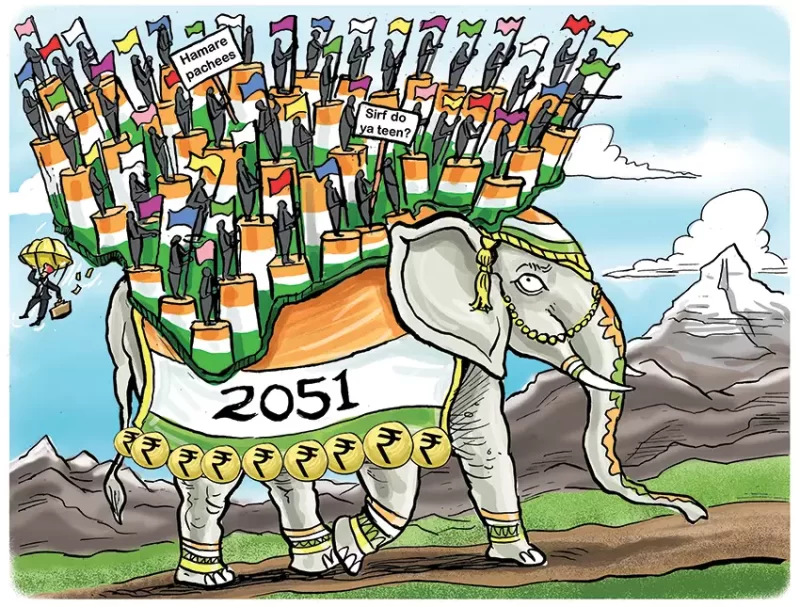
    Reduction of the yawning gap between the countless ultra-rich and those millions in abject poverty is essential as we boast of becoming the 5th largest economy in the world. The many human indices where we are faltering also need to be addressed.

             As economic strength is the pillar that propels and sustains progress, the Modi government must take measures to improve our economic health. Reduction of the yawning gap between the countless ultra-rich and those millions in abject poverty is essential as we boast of becoming the 5th largest economy in the world. The many human indices where we are faltering also need to be addressed.

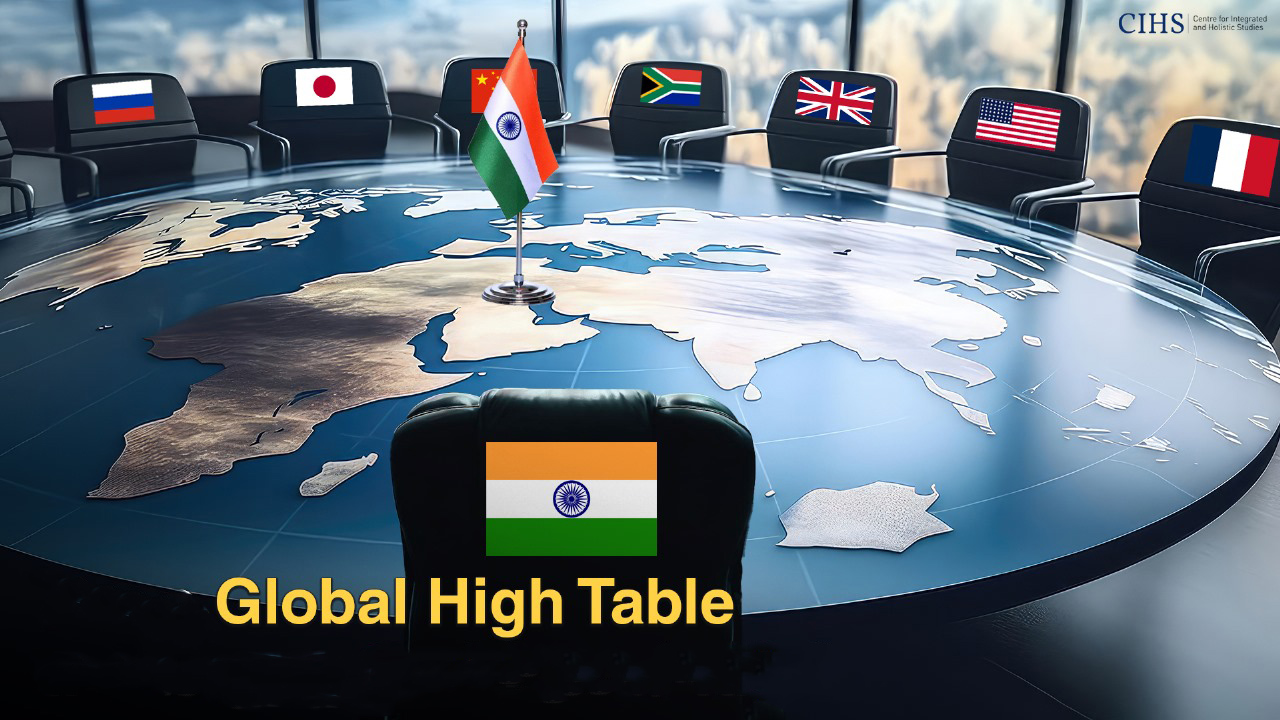
             By all yardsticks, India is deservingly on the cusp of acquiring a seat on the global high table. Let us not squander away this golden opportunity by internal squabbling but instead work together in addressing crucial issues that affect our nation; we must seize this opportunity.

    Feature Image Credit:  vskbharat.com    

    Cartoon Credit: Times of India

  • The South Asia Nuclear Zero

    The South Asia Nuclear Zero

    The nuclear tests, of May 1998, by India and Pakistan, marked an epochal juncture for South Asia. The Doomsday Clock maintained by the Bulletin of the Atomic Scientists, jumped from 11:43 to 11:51, or just “9 minutes to midnight.”

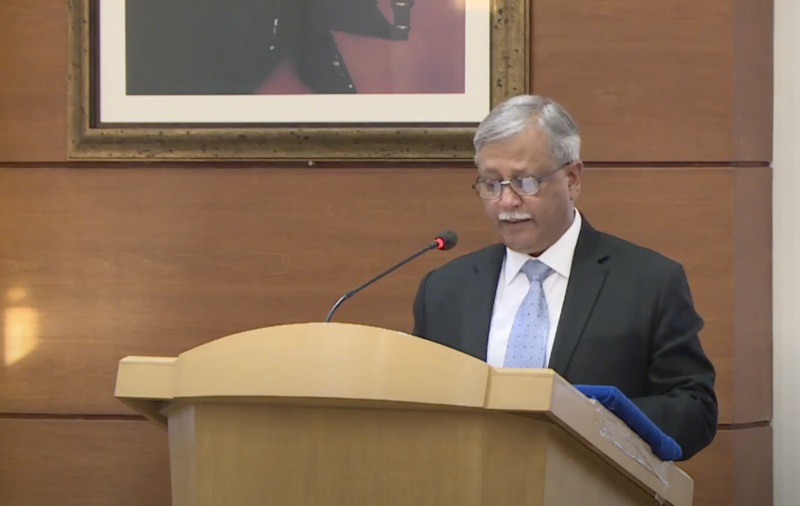
    While, in India, the “Shakti” tests, do find celebratory mention, Pakistan observes the Chagai series of nuclear tests, as a national day, termed “Yom-e-Taqbir.” On the 25th anniversary of this event, Lt Gen Khalid Kidwai (Retd), currently, advisor, to Pakistan’s National Command Authority (NCA), delivered an address at the Arms Control and Disarmament Centre of the Institute of Strategic Studies, Islamabad.

    Kidwai, who served, for 14 years, as the Director-General of Pakistan’s Strategic Plans Division (SPD), was at the heart of Pakistan’s NCA, and oversaw the operationalisation of its nuclear deterrent. Although his talk was for public consumption, given the historic absence of an Indo-Pak nuclear dialogue, some of Kidwai’s statements – if taken at face value – contain worrisome undertones, which need analysis.

    After mentioning the rationale for Pakistan embarking on nuclear weaponization (“humiliation of the 1971 War followed by India’s nuclear test of May 1974”) Kidwai proceeded to enlighten the audience about the implications of Pakistan’s new policy of Full Spectrum Deterrence (FSD) and how it kept, “India’s aggressive designs, including the Indian military’s Cold Start Doctrine, in check.”

    While retaining the fig leaf of Credible Minimum Deterrence (CMD), Kidwai went on to mention the “horizontal dimension” of Pakistan’s nuclear inventory, held by the individual Strategic Force Commands of the Army, Navy and Air Force. The “vertical dimension,” of the Pak deterrent, he said, encapsulated “adequate range coverage from zero meters to 2750 km, as well as nuclear weapons of destructive yields at three tiers: strategic, operational and tactical.”

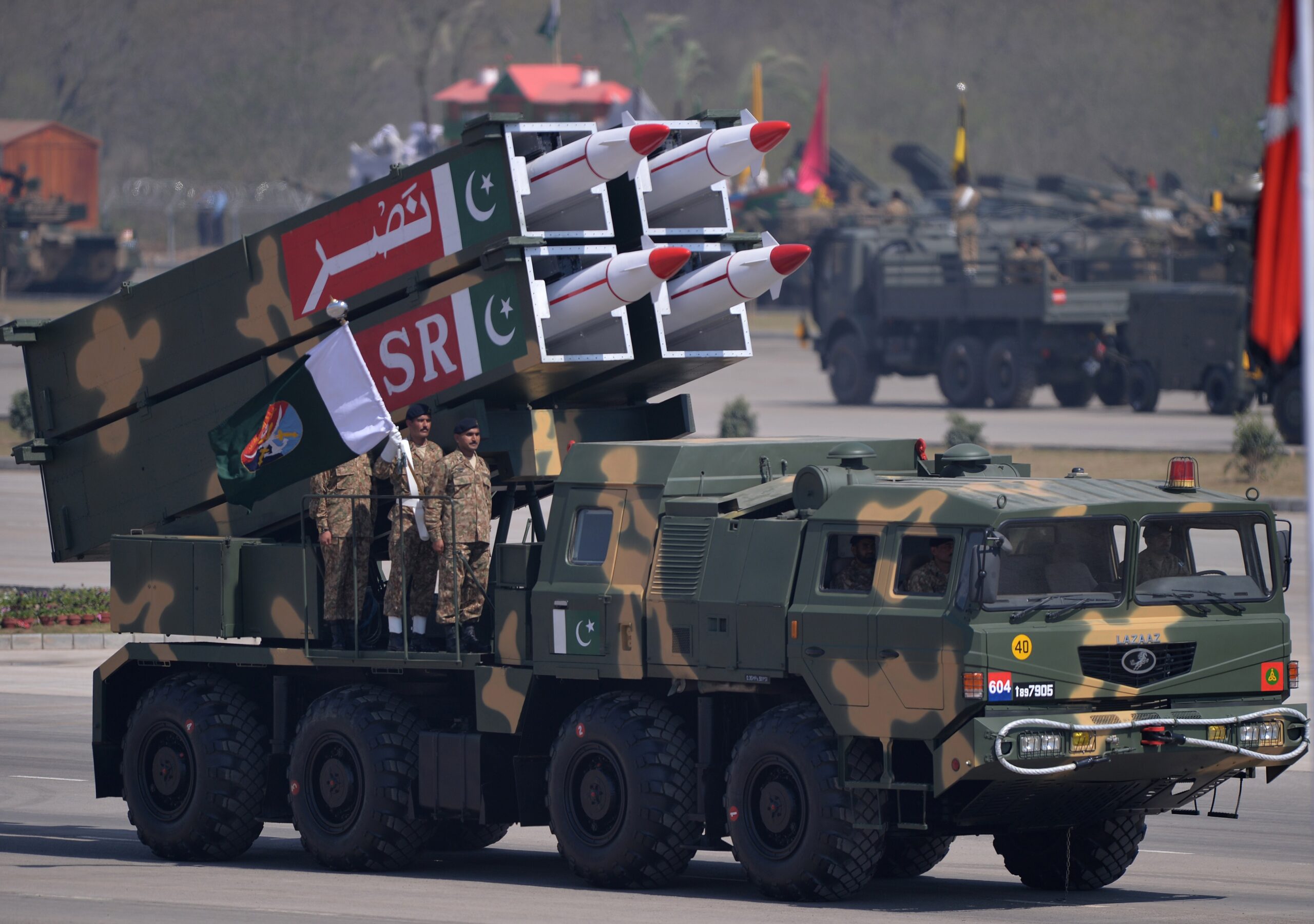
    While the missile range of 2750 km, corresponds, roughly, to the distance from a launch-point in south-east Sindh, to the Andaman Islands, and indicates the “India-specificity” of the Shaheen III missile, it is the mention of “zero metres” that is intriguing. Pakistan already has the 60 km range, “Nasr” missile, projected as a response to India’s Cold Start doctrine. Therefore, unless used as a colloquialism, Kidwai’s mention of “zero metres” range could only imply a pursuit of ultra short-range, tactical nuclear weapons (TNW), like artillery shells, land mines, and short-range missiles, armed with small warheads, of yields between 0.1 to 1 kiloton (equivalent of 100 to 1000 tons of TNT).

    By shifting from CMD to FSD, with the threat of nuclear first use, to defend against an Indian conventional military thrust, Pakistan is aping the, discredited, US-NATO Cold War concept of Flexible Response. Fearing their inability to withstand a massive Warsaw Pact armoured offensive, this 1967 doctrine saw the US and NATO allies deploy a large number of TNW to units in the field.

    However, the dangers of escalation arising from the use of TNW were soon highlighted, by US Secretary Defence, Robert McNamara’s, public confession: “It is not clear how theater nuclear war could actually be exe­cuted without incurring a very serious risk of escalating to general nuclear war.” This marked a turning point in US-NATO nuclear strategy.

    Kidwai’s speech contains three statements of note. Firstly, he attempts to dilute India’s declared policy of “massive retaliation” (MR), in response to a nuclear strike, by claiming that Pakistan possesses an entire range of survivable nuclear warheads of desired yield, in adequate numbers, to respond to India’s MR. He adds, “Pakistan’s counter-massive retaliation can therefore be as severe (as India’s) if not more.”

    Far more significant is Kidwai’s declaration that, since Pakistan’s missiles can threaten the full extent of the Indian landmass and island territories, “…there is no place for India’s strategic weapons to hide” (emphasis added).

    Secondly, in an attempt to downplay India’s (inchoate) ballistic missile defence (BMD), he declares that in a “target-rich India”, Pakistan is at liberty to expand the envelope and choose from counter-value, counterforce and battlefield targets, “notwithstanding the indigenous Indian BMD or the Russian S-400” (air-defence systems).

    Far more significant is Kidwai’s declaration that, since Pakistan’s missiles can threaten the full extent of the Indian landmass and island territories, “…there is no place for India’s strategic weapons to hide” (emphasis added). The assumption, so far, was that, given its limitations in terms of missile accuracy, real-time surveillance and targeting information, Pakistan would follow a “counter-value” or “counter-city” targeting strategy. The specific targeting of India’s nuclear arsenal, especially, if undertaken by conventional (non-nuclear) missiles, would add a new dimension to the India-Pakistan nuclear conundrum.

    Delivered in the midst of Pakistan’s acute financial crisis, as well as the ongoing political turmoil and civil-military tensions, one may be tempted to dismiss Lt Gen Kidwai’s recent discourse. However, as the longest-serving, former head of the SPD and architect of Pakistan’s nuclear deterrent, his views are widely heard and deserve our attention.

    Having voluntarily pledged “no first use” (NFU), India’s 2003 Nuclear Doctrine, espoused a “credible minimum deterrent” and promised “massive retaliation,” in response to a nuclear first strike. Since then, our two adversaries, China and Pakistan, have expanded and upgraded their nuclear arsenals, presumably, with corresponding updating of doctrines. India’s strategic enclave has, however, not only maintained a stoic silence and doctrinal status quo but also defended the latter.

    BJP’s 2014 Election Manifesto, had undertaken to “revise and update” India’s nuclear doctrine and to “make it relevant to current times,” but this promise has not been kept. Thus, India, currently, faces a moral dilemma as well as a question of “proportionality”: will the loss of a few tanks or soldiers to a Pakistani nuclear artillery salvo, on its own soil, prompt India to destroy a Pakistani city of a few million souls? Since India, too, has developed a family of tactical missiles, capable of counterforce strikes, does it indicate a shift away from CMD and NFU, calling for a response from our adversaries?

    These are just some of the manifold reasons why there is a most urgent need for the initiation of a sustained nuclear dialogue between India and Pakistan, insulated from the vagaries of politics. Such an interaction, by reducing mutual suspicion and enhancing transparency, might slow down the nuclear arms race and mindless build-up of arsenals.

    This article was published earlier in Indian Express.

  • The Dark Side of Sindhi Nationalism in Pakistan

    The Dark Side of Sindhi Nationalism in Pakistan

    “If Sindhudesh is created, the feudal lords will kill us”1.

    These were the words of the late veteran Sindhi leader Rasool Baksh Palijo. As a Marxist, he had fully dedicated himself to the popular causes, fighting for the constitutional and legal rights of Bengalis, Balochs, Sindhis and minorities. His almost life-long antagonism to Sindhi Secessionism underlines the structural problems plaguing the province of Sindh, caste being at the centre of it. The problems have manifested themselves politically in numerous instances, beginning with the separation of Sindh from Bombay Province in 1936, and the Pakistan Movement itself. After the Partition, the Ashrafiya-Savarna alliance2 –which views the Sindhi society in terms of non-antagonistic Hindu-Muslim binary, while comfortably brushing casteism under the carpet– has been at the forefront of this. In fact, the alliance is a recent (re)construction, which happened as a result of the marginalisation of Ashraf Sindhis at the hands of Mohajir and Punjabi elites that began immediately after independence. Similarly, Sindh’s turn to Sufism, which mostly took place in the colonial era3, and was later adopted by Sindhi Secessionists as one of the most defining identities of the Sindhi nation, itself has its underpinnings in the caste system. It is then no surprise that a section of Sindhis –mostly of the lower castes– has opposed the idea of Sindhudesh.

    For the last few years, Indians have been at the receiving end of the BJP-sponsored narrative of Pakistan being on the brink of breaking up into four or five states, one of them being Sindhudesh. Indian Sindhis (like myself) are thrilled with such conceptions. Little is known about the sociological background of the Sindhi National Movement. A look into that might answer why the movement has not succeeded politically. In this article, I discuss the cases of two communities that have largely stayed out of the nationalist movement: the Haris and Dalits.

    Are Sindhis Casteless people?

    The vehement assertion, especially by the Sindhi diaspora, of Sindhis being casteless is remotely the truth. Sindhis, both Hindus and Muslims, practise the caste system as religiously as the rest of the Indian society.

    The vehement assertion, especially by the Sindhi diaspora, of Sindhis being casteless is remotely the truth. Sindhis, both Hindus and Muslims, practise the caste system as religiously as the rest of the Indian society. In Muslims, the Syeds –who claim to be descendants of Prophet Muhammad– occupy the top-most strata, followed by other Ashrafis belonging to Central Asian, Iranian and Arab descent, as well as the Balochs and Pathans communities. The Pirs or spiritual leaders, who have wielded considerable political power during the colonial period, also largely fall into the upper castes. They are followed by Waderas and Sammats who constitute the landowning class, that has traditionally wielded the socio-economic power in rural Sindh. Then there is the Hari community, composed of landless labourers. Among Hindus, there are, among others, the Brahmins, Rajputs, Amils – the civil servant caste, Bhaibands – the caste of businessmen, and Dalits. While most Amils and Bhaibands migrated to India after the partition, some Brahmins, Rajputs and Dalit pockets remain intact. Some districts –Tharparkar, Tando Allahyar and Mirpurkhas– have a huge population of Dalits.

    Around 59 upper castes –both Muslim and Hindu– and 22 feudal families make up the ruling class in rural Sindh.4 Since Pakistan has no custom of caste census, we do not know how much they are over-represented in its political institutions. However, an analysis by Ghulam Hussein in his paper Understanding Hegemony of Caste in Political Islam and Sufism in Sindh, Pakistan states that the Dalit community is highly underrepresented in Sindh Provincial Assembly –with only one out of nine reserved seats for minorities going to a Dalit; though the number is higher in local bodies. After the partition, as analysed by Hussein, the Syeds were the beneficiaries of the Hindu Migration to India as far as representation in the assemblies is concerned, since they occupied most of the seats vacated by Caste Hindus. The number of Scheduled Castes representatives, however, remained the same as that before the partition, despite them becoming the majority within the minority. Similarly, Pasmanda Muslims, that are unacknowledged by Pakistan to be existent, are also under-represented. Furthermore, more than a quarter of Sindh’s Members of Provincial Assembly (MPAs) in the 12th Assembly were professional landlords5.

    Casteism makes no appearance in Sindhi nationalist debates. One argument given by the Sindhi nationalists is that being a predominantly Islamic society, caste is non-existent among Sindhis.

    Casteism makes no appearance in Sindhi nationalist debates. One argument given by the Sindhi nationalists is that being a predominantly Islamic society, caste is non-existent among Sindhis. Instead, many ‘progressive’ Sindhi writers have displayed sympathy for the working classes instead of the lower castes. For Hindu communities, though they acknowledge the presence of caste, they quickly turn towards the benefits of reservation. Hussein writes, “In the Sindhi nationalist historical imaginary, casteism does not seem as problematic as sectarianism, religious bigotry and ethnolinguistic discord”6. In some instances, the Sindhi community as a whole is presented as Untouchables within Pakistan, thereby drawing a parallel between oppression of the Dalits and state oppression of Sindhi Secessionists/Nationalists7.

    The Rural Setting of Sindh: The oppression of the Hari Community

    Mohammed Ibrahim Joyo, another Marxist leader of Sindh during the colonial era, in his short book, Save Sind, Save the Continent (From Feudal Lords, Capitalists and their Communalisms), wrote about the exploitative nature of the rural setting dominated by Pirs, Waderas and Syeds. He, much like Palijo, identifies the local Syeds, Pirs, Hindu moneylenders, Zamindars etc., and not the Europeans, as the real enemies of the people of Sindh. For him, the Zamindars and Jagirdars, present themselves as “semi-gods to their peasant slaves”. Their only mission in life is to “vitiate the entire social fabric of life around”. “Periodically, they bestir themselves and make themselves available for snatching votes and forcing consent from the people, so that they could rule over them ‘democratically’”. For the Haris, he writes, ‘‘the only duty they know is to work like bullocks for their landlords and money-lenders, to touch the feet of their Zamindar-Masters and Pirs, and worship them literally as living gods, and lastly to instruct their children to do likewise’’8

    Ghulam Murtaza Syed (hereafter referred to as Syed), the Father of Sindhi Nationalism and a product of the ruling class in Sindh, attributes the setting to the administrative measures of the colonisers, which led to coming into “existence [of] a limited new hierarchy of fat landlords, absentee, indifferent, unenlightened and in some cases oppressive and tyrannical”9. “The great community of peasants became a crowd of ‘tenants at will’ without any permanent or substantial stake in its own occupation.” Syed, in his speeches and writings, is heavily critical of the established elite and seems to favour the upliftment of the conditions of the Haris. He places a ‘potentiality for evil’10 upon the Zamindars, who are involved in most of the crimes, some of which include kidnapping the women of the Haris.

    Despite the concern shown by Syed in his disquisitions, many Sindhi leaders remained suspicious and mistrustful of him. Though Palijo, Joyo and a few other leftist Sindhi leaders were once his companions, and despite them having some ideological affinities with him, they were largely opposed to his goals. They viewed Islam and the notion of Social Justice it emanates as a panacea of all social ills, as opposed to Syed who detested, at least after 1973, the role of religion in a modern state. They, nonetheless, remained on good personal terms with Syed. Their antipathy to Syed’s ideas stemmed, among others, from his personal conduct. Despite all the sympathetic speeches and writings, Syed continued to behave as an Ashrafiya, wearing white clothes to display his purity and detachment from worldly matters. The peasants who worked for the leader regularly touched his feet to ask for favours11.

    Hamida Khuhro, another associate of Syed to later part ways, describes it as ‘Syedism’, which, according to her, was his first and most constant ideology12. It is similar to the politics of patronage that characterises the entire subcontinent, but with some Sindhi blend of reverence of Syeds and Pirs. As per Oskar Vekaaik, author of Reforming Mysticism: Sindhi Separatist Intellectuals in Pakistan, Syed was brought up with the idea of Syed as a spiritual hero to the Hari working for him. “Rather than the people of flesh and blood working on his fields, however, he soon took the Hari as an abstract or imagined category including all landless Muslim peasants in Sindh. He saw the Haris as an exploited and backward people, who needed to be freed and uplifted. To him, this was the main task of the Syed”13.

    The province of Sindh is (in)famous for being one of the last strongholds of feudalism. During the British conquest of Sindh in 1843, the province had one of the most repressive feudal systems in the entire subcontinent. The British, having no coherent and consistent agrarian policy –they first introduced the ryotwari system only to abandon it later– didn’t endeavour to undo the socio-economic control of Waderas. These Waderas performed, and still do, many functions in rural Sindh, including quasi-judicial and tax collection. The system served the limited purpose of the British to collect taxes and transportation of raw materials. Charles Napier even regarded them as Sindh’s natural aristocracy. Thus, the dovetailed interests of Waderas and the British led the landlord class to flourish14. The power of Waderas grew so much during British rule that at the time of partition, around 80% of the province’s arable land was owned by them.15

    To be fair, the concerns of the Hari community did occupy, though didn’t dominate, some mainstream Sindhi political debates. Syed, as one of the proponents of their upliftment, has been a vocal critic of their oppression. Other leaders, such as Hyder Baksh Jatoi, M.A. Khuhro, etc. had built their careers on issues of Haris. However, the social background of Sindhi Nationalist leaders, and their daily actions that go against their words, have prevented the landless labourers from supporting their cause. This is corroborated by what Imdad Qazi, Secretary-General of the Communist Party of Pakistan, told Hussein in an interview, “Marxists, both Leninists and Maoists, parted ways with the nationalists in the 1970s. When the barrage-lands were allotted to peasants, Nationalists stood with Marxists, but when Marxists spoke about land reforms, Nationalists left us”16

    It is, thus, the rural setting of Sindh which makes leaders like Palijo suspicious of, and even antagonistic to, the intentions of Sindhi secessionists. The Syed-Pir-Wadera alliance which has continuously exploited the Haris for centuries has made them committed, though dissenting, citizens of Pakistan.

    Manifestation of Nationalism

    The predilection of Sindhi nationalists towards Ashrafiya-Savarna symbolism is conspicuous. For instance, in his book, and otherwise as well, Paigham-e-Latif, G.M. Syed not only declared Shah Abdul Latif Bhittai, a Syed, as the national poet of Sindh but went as far as to justify his own genealogical superiority by tracing his lineage to the late mediaeval poet17. Furthermore, in his book A Nation in Chains- Sindhudesh, he first propounded the idea of Raja Dahir, the Brahmin king during the invasion led by Muhammad bin Qasim in 711 AD, as a national hero (which was a response to the state-sponsored narrative of tracing the history of Pakistan to the invasion).18

    The issues were taken up by Sindhi nationalists who also represent the Ashrafiya-Savarna bias. Take for instance the issue of religious conversion of Sindhi Hindus. By confining their opposition to conversion under the bracket of religious freedom, they conveniently bypass their Dalit identity –since most of the converted people are Dalits– thereby serving Savarna Hindu causes. Another example is the incursion of Punjabis and Army personnel (Pakistan has a policy of allocating land to retired army men) which is, perhaps, most detested by Sindhi nationalists. Punjabis, who have been migrating and settling in Sindh for more than a century, and have developed agricultural practices that yield more than those employed by Sindhi feudal lords, are seen as a major threat to Ashrafiya domination. Thus, the issue of Punjabis settling in rural Upper Sindh becomes one of the most potent rallying points.

    Sufism is perhaps the most defining feature of Sindhi Nationalism. Nationalists project Sindh as a land of Sufi saints, with some figures, such as Lal Shahbaz Qalandar, being identified with the Sindhi nation itself. Sufism, however, is used as a soft power by the Syeds to perpetuate their domination.

    Sufism is perhaps the most defining feature of Sindhi Nationalism. Nationalists project Sindh as a land of Sufi saints, with some figures, such as Lal Shahbaz Qalandar, being identified with the Sindhi nation itself. Sufism, however, is used as a soft power by the Syeds to perpetuate their domination. The Pirs, most of whom are Syeds and local agents of Sufism, have traditionally had more power than the local Mulla. Their huge following has given them enormous influence over the lives of ordinary people. In fact, to be a be-Pir, or without a Pir, was traditionally seen as tantamount to being a non-believer. With such hegemonic power of Sufism of the local Pirs –described as Political Sufism– renders irrelevant caste one of the most important factors in micropolitics. Sufism, furthermore, augments the power of the Syeds, who already have huge amounts of land gifted to them by successive rulers, including the British.19

    Conclusion

    Since the death of G.M. Syed in 1995, the Sindhudesh Movement has been dying out. Since then, the movement has suffered blows from the Pakistani Army that, among others, led to the poisoning (most probably by ISI) of Bashir Ahmad Qureshi in 2012. Moreover, it stands divided, with numerous factions of Syed’s Jeay Sindh Mahaz propping up since the 1980s. However, the core support bank of the movement –the rural Syed, Pirs and Waderas remain, more or less, supportive of the movement. Though electorally, they desert the nationalists and vote for Bhutto’s People’s Party of Pakistan. The movement, however, still remains less popular amongst the Haris and Dalits. The latter has been deemed politically absent by the nationalists. The former, though appearing in nationalist discourses, have been disenchanted with their conduct, which contradicts their words. The writers and leaders of the movement have carefully projected their struggle narrowly against the actions of, what they deem as, Punjabi-dominated Pakistan. Their concerns regarding the injustices being done by the state far outweigh the concerns for the injustices they themselves have been unleashing upon their fellow Sindhis for centuries.

    References

    1. “Biggest problem is structural: Palijo” The Dawn, August 19, 2003

    https://www.dawn.com/news/135713/biggest-problem-is-structural-palijo

    2. The term is borrowed from Hussain, Ghulam. “Appropriation of Caste Spaces in Pakistan: The Theo-Politics of Short Stories in Sindhi Progressive Literature” Religions 10, no. 11: 627. 2019 https://doi.org/10.3390/rel10110627

    3. Boivin, Michel. The Sufi Paradigm and the Makings of a Vernacular Knowledge in Colonial India: The Case of Sindh (1851–1929). Palgrave Macmillan. 2020

    4. Hussain, Ghulam. “Understanding Hegemony of Caste in Political Islam and Sufism in Sindh, Pakistan”. Journal of Asian and African Studies Vol 1 Issue 30. 2019

    5. Kronstadt K. A. “Pakistan’s Sindh province”. Congressional Research Service. 2015. October 29 https://sgp.fas.org/crs/row/sindh.pdf

    6. Hussain, Ghulam.. “Appropriation of Caste Spaces in Pakistan: The Theo-Politics of Short Stories in Sindhi Progressive Literature” Religions 10, no. 11: 627. 2019 https://doi.org/10.3390/rel10110627

    7. Ibid.

    8. Joyo, Ibrahim M. Save Sind, Save the Continent (From Feudal Lords, Capitalists and their Communalisms). Karachi. 1946.

    9. Ibid

    10. Ibid.

    11. Verkaaik, Oskar. “Reforming Mysticism: Sindhi Separatist Intellectuals in Pakistan.” International Review of Social History, vol. 49, 2004, pp. 65–86. JSTOR, http://www.jstor.org/stable/26405524. Accessed 6 Jun. 2022.

    12. Ibid.

    13. Ibid

    14. “Sind and Its Pirs up to 1843.” Sufi Saints and State Power: The Pirs of Sind, 1843–1947, by Sarah F. D. Ansari, Cambridge University Press, Cambridge, 1992, pp. 9–35.

    15. Kronstadt K. A. “Pakistan’s Sindh province”. Congressional Research Service. Washington D.C. 2015. October 29. https://sgp.fas.org/crs/row/sindh.pdf

    16. Hussain, Ghulam. “Ethno-Nationality of Caste in Pakistan: Privileged Caste Morality in Sindhi Progressive Literature and Politics”. Critical Sociology. 2021. 48(1):127-149

    17. Ibid

    18. Syed, Ghulam M. A Nation in Chains- Sindhudesh. 1974.

    19. Ansari, Sarah F.D. Sufi Saints and State Power: The Pirs of Sind, 1843–1947, Cambridge University Press, Cambridge, 1992.
  • The Fall of Kabul and dealing with the Taliban 2.0

    The Fall of Kabul and dealing with the Taliban 2.0

    The debacle of the democratic apparatus in Afghanistan was inevitable. After pumping billions in aid and significant bloodshed, the US government ended its longest war in defeat, the war in Afghanistan under the euphemism of ‘Global War on Terror’. Right after occupying the White House, the Biden administration has followed the path of its predecessors and commanded the complete withdrawal of troops from Afghanistan. The 2020 – Doha peace agreement between the US government and the Taliban brought a scant number of outcomes. Even during the presence of international forces in Afghanistan, the Taliban leaders disrespected the peace agreement and violated significant features of the agreement – that is a ceasefire. Following the agreement, over 5000 prisoners belonging to the separatist groups- were released by the Afghan government, under pressure from the US. Quite naturally, these prisoners were back with their militant outfits, thus strengthening the Taliban’s fighting capability.

    As of now, India has not taken any part in the peace negotiations with the Taliban. One of the major reasons is in the past the Indian government has never recognised the Taliban as a legitimate actor and vouched for a peace negotiation that should be Afghan-led, Afghan controlled and Afghan-owned. Currently, there are speculations about the likely power structure and composition of the government in Afghanistan, but it is quite clear the Taliban will govern the country by Sharia law. At this time of fast transition, the countries in South Asia are seeking to gain diplomatic leverage in the situation.

    India has a huge stake in Afghanistan’s reconstruction. In 2016 Indian Prime Minister and Afghan President Ashraf Ghani inaugurated the Salma dam project in Afghanistan. This 200 million dollar project is part of the larger developmental approach of the Indian government to Afghanistan. But recently, the equipment of the Salma dam was captured by the Taliban. In this scenario, it is unlikely that the Dam project will receive further Indian logistical support in future. Similarly, uncertainty beleaguers the Chabahar Project. India was one of the largest bilateral donors to Afghanistan during the war on terror. It ranges from infrastructure building to the promotion of democracy and small development projects. Almost $3 billion has been invested in and on Afghanistan in capacity building, education, infrastructure and security counts. This developmental commitment has made India the most dependable country and strategic partner for Afghanistan so far. However, now that the Taliban is in full control, the Indian government needs to find a diplomatic solution on how to go ahead with the various projects and commitments in Afghanistan.

    Except for Panjshir province, the entire country is under Taliban control. The president, head of the state, has left the country. Led by interim President Amrullah Saleh and Ahamad Masoud, the Resistance Force from Panjshir Valley is fiercely fighting against the Taliban. Under such circumstances, the conservative approach of the Indian government, as it has begun to talk to the Taliban, could ruin the decades’ long reputation and developmental efforts in Afghanistan. India has legitimate concerns in Afghanistan and should protect its interests carefully. The absence of the US forces and elected Afghan government makes the task very difficult for the government of India. In the past, the Indian government cooperated with the elected Afghan government based on their shared interests and values of democracy, freedom, rule of law and respect for human rights. But the past approach may not work anymore under the Taliban leadership. In the past, the Ministry of External Affairs stated that it is in touch with ‘various stakeholders’ in Afghanistan and other regional countries. Indian officials believe that a ‘double’ peace’ i.e. one within Afghanistan and around the country is necessary for the region. To ensure safety for the Indians living in Afghanistan, the government has already evacuated all Indians employed by the Indian embassy. India has also started emergency E-visa facilities for Afghan citizens. With regard to the diplomatic relationship with the Taliban, the government is following a ‘wait and watch policy with its extended neighbour. The Taliban leadership has announced that they would like to have good relations with the Indian government and access to the Indian market through Pakistan. The Taliban also wants these two countries to resolve their issues as its interests are linked to the two countries. The government of India is yet to respond. The Afghan media personnel, translators, performance artists, civilians are being hunted down by the Taliban soldiers. In this scenario, India will carefully assess the situation and the reliability of the Taliban to make its further move.

    While India is still on the horns of a dilemma over the direct dialogue with the Taliban, India’s arch-rival Pakistan is busy re-establishing its hold and is trying to isolate India diplomatically from the region. Pakistan was one of the first countries to recognise the Taliban as a legitimate actor in the 90s. Last year, the government of Pakistan welcomed an Afghan Taliban delegation led by Mullah Abdul Ghani Baradar. In the meeting, Pakistan showed their support for peace and blamed India as a spoiler of peace in the war-torn country. But reports suggest otherwise. According to the US Defense Intelligence Agency, Pakistan harbours Taliban leaders along with other insurgent groups such as the Haqqani network, Jaish-e-Mohammed and Laskar-e-Taiba. Such groups have the potential to disrupt the security and stability in South Asia. The report also says that the strategic objective of the Pakistan government is to counter the Indian influence in Afghanistan. In a recent interview, Pakistan foreign affairs minister Shah Mahmood Qureshi said that the violence in Afghanistan led to a refugee exodus to Pakistan but they cannot take more refugees. Last year, the High Council for National Reconciliation leader Abdullah Abdullah said that Pakistan holds the key role in the Afghan peace process and India should keep their profile low in the Afghan situation.

    As the Taliban emerges in its second avatar while reframing its extremist Islamic ideology, China is poised to become the critical player in the region.  Under a slew of conditions negotiated with the Taliban, China will enhance its role through rapid investments and enabling Afghanistan to integrate into its Belt and Road Initiative. An unstable, dry and war-torn Afghanistan doesn’t offer any attractive economic proposition at the moment. As the economic challenges loom on the Taliban government, it can’t simply sustain on drugs. The Taliban have to rely on China, Pakistan and some Central Asian republics to rebuild its economy. Afghanistan’s unexploited mineral wealth, worth a trillion or more, is a great opportunity for the Taliban to leverage economic gains by engaging China, Iran, Russia, and Turkey. An alliance of China, Pakistan, Iran or Turkey may lead to the marginalisation of India’s role and effectiveness in Afghanistan.

    Whether India will recognize the Taliban is not clear yet but India can’t simply meditate either. Under India’s presidency, the UN Security Council passed Resolution 2593 on Afghanistan. Chairing a session India’s Foreign Secretary Harsh V Shringla has clarified that India won’t tolerate if Afghan territory turns into a sanctuary of terrorists and threat for the neighbouring states. Apart from human rights, Shringla emphasized Women’s participation in society.

    India along with its all partners should advocate for strict observation of the Taliban led governance. Having invested over $3 billion over the last two decades in the reconstruction of Afghanistan, India’s considerable contribution cannot be ignored. The recent meeting between India’s envoy Deepak Mittal and the Taliban’s foreign minister-designate Stanekzai at the Taliban’s request signals a possibility for a changed approach and environment from that of the Taliban 1.0. India’s immediate priority should be the safe evacuation of the Indian origin people and stranded Afghans.


    Image Credit: www.dawn.com