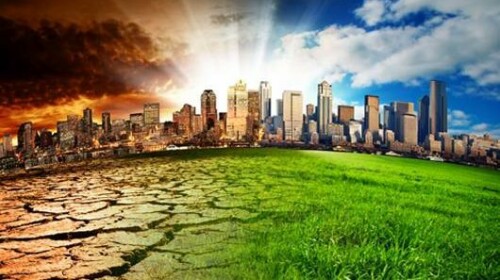
Category: Ocean Resources, Blue Economy and Climate change

  • Sustainability and Climate Change: Part of the Environment Complex Challenge

    Sustainability and Climate Change: Part of the Environment Complex Challenge

    Sustainability can be addressed through an independent inquiry into the fundamental issues at hand; at the same time, its interconnection with climate change cannot be ignored. What is more, both sustainability and climate change are part of a wider, existential challenge humanity faces, which I prefer to describe as the Environment Complex Challenge, encompassing biodiversity loss, environmental degradation, and air, water, and soil pollution. While I would prefer to use the fitting term Anthropocene – as the concept offers a comprehensive description of human impact on Earth and is clearly a primary concern in any debate on sustainability and climate change – it is too closely associated with the failed attempt to name a geological epoch in Earth’s history.[1] Though I was never much of a supporter of that undertaking, I always appreciated the comprehensiveness of its focus. Indeed, in the words of Delanty and Mota (2017), the Anthropocene approach highlights the co-existence of natural and social worlds and the deep intertwining of human and other planetary life. After all, sustainability is about the enduring relationship among society, the economy, and the environment, including how society organises its impact on resources and the critical issue of how to organise economic development and growth.

    With regard to sustainability, it is worth recalling its basic definition as stated in the Brundtland Report: meeting the development needs of the present without compromising the ability of future generations to meet their own needs (Our Common Future, 1987). The core argument is that we should be mindful of resource use and not consume more of existing resources than can be replaced, so that future generations will have the same opportunity for development. It is also worth recognising that reducing resource use will help mitigate climate change. While the definition in the Brundtland Report represents a general call for conscious behaviour, several more specific ‘calls to action’ can be identified. One with overriding importance is the increasing global water scarcity, a global challenge but with region-specific impacts. A recent United Nations report (Global Water Bankruptcy, 2026) highlights the seriousness of the water shortage that humanity is facing, assessing that humanity is living beyond water sustainability, as most water-related resources (rivers, lakes, aquifers, wetlands, and glaciers) are beyond full recovery; consequently, water-related risks have become systemic. It added that billions of people face water insecurity, and almost three-quarters of the global population live in countries classified as ‘water insecure’. Another serious topic is food security, and, equally worrying, food waste. A recent UN report states that in 2022, 1.05 billion tonnes, close to one-fifth of the available food, was wasted (UNEP Food Waste Index Report, 2024). With it, a considerable amount of resources is lost in growing and transporting the food in the first place, thereby having a strong negative impact on resource sustainability and on the dynamics of climate change. Land use offers another important focus, not least in connection with biodiversity loss.

    When we consider these aspects, the inherent interlinkage between sustainability (the misuse and overuse of resources) and the dynamics of climate change needs to be acknowledged. Yet sustainability is also closely aligned with the broader human environmental imprint, which, in turn, links it to core aspects of the Anthropocene discourse (setting aside the earlier call to describe a geological epoch). As such, resource extraction and resource (mis)use are critical aspects that link sustainability to the Anthropocene concept. Such a perception is also supported by a critical discussion within the Anthropocene movements: when exactly humanity started to generate a fundamental and recognisable impact on the earth. Ruddiman et al. (2015) focus far back in human history on the beginning of the agricultural era, while Delanty and Mota (2017) identify the 18th-century Industrial Revolution as the beginning of the Anthropocene. While the selection of each date can be well supported by different perceptions and interpretations, one could still argue that, from the perspective of resource use, the Industrial Revolution may be the more impactful and lasting event. After all, it can also be interpreted as the starting point of capitalism and as a never-ending demand for resources, pursued through a continuous economic growth strategy at all costs. Indeed, it is capitalism, with its relentless push for relentless economic growth and resource overuse, which undermines any long-term sustainable prospect for humanity. This unyielding pressure for continued economic growth also underlies the dynamics of climate change and thus fundamentally contributes to what I describe as the Environmental Complex Challenge.

    Returning to the Brundtland definition of sustainability, the primary demand is that humanity, indeed, every individual, must reconsider their use of resources to reduce the individual’s and, in extension, humanity’s environmental impact as much as possible. One may argue this is not only with a view towards future generations, but also with a view to the present. After all, reducing resource overuse will reduce air, water, and soil pollution, contributing to a healthy environment and a healthy life for everyone. It will also be an integral part of mitigating the climate change dynamic and, thus, climate change-related risks. However, one can argue that the list of public-professional references to sustainability exists longer than the list of references to the climate change dynamic, with a line of connected concepts and programs identifiable from the Brundtland Report (1987) to the Rio Declaration and its Agenda 21 (1992) to the Sustainable Development Goals (Agenda 2030). In addition, we could observe influential regional concepts related to sustainability, such as the Factor 4 approach, developed by von Weizsaecker, Lovins, and Lovins (1997), which advocates increasing resource productivity to achieve sustainable development. They emphasise that improving resource efficiency would not only enhance sustainable development by reducing resource overuse but also generate additional wealth. This concept reminds us again of the interlinkage between the environment, the economy, and society. This triangular relationship is a defining one for thinking about sustainability.

    Take, for example, climate change as part of the Environment Complex Challenge, of which sustainability is an inherent aspect. While it represents a global challenge, its impact is always local or regional, thereby affecting the individuals living in those areas. Examples include urban heat waves in Europe and South Asia, and widespread changes in rainfall patterns across Asia, which generate extensive negative impacts on vast rural communities that can last for years. Indeed, extreme weather events are becoming increasingly the norm and increasingly impactful. An estimation of the increasing costs associated with extreme weather events is provided by the World Economic Forum. While during the 1970-1979 decade, associated costs were USD 183.9 billion, they rose to USD 906.4 billion in the 1990-1999 decade, and to USD 1.5 trillion during the 2010-2019 decade (Charlton, 2023). Certainly, responding to extreme weather events by rebuilding and protecting is resource-intensive and therefore a challenge to sustainability in the long run or short run, depending on local circumstances. The threat of sea-level rise, again a global challenge with different local and regional implications, provides another good example. One just has to think about the various Asian megacities, from India to China, that are exposed to sea level rise. Or the threat of sea level rise to food security, when considering the potential devastating impact on the Mekong Delta, the ‘rice bowl’ of Vietnam. While localities and communities around the world are affected by climate change, some face a more severe challenge. We may take the case of Bangladesh, where rising sea levels may submerge wide parts of the country. Where will the people go? They will not stay to drown. As a consequence, tens of millions of climate refugees may move towards West Bengal, in India, and will not be stopped by security measures, when the alternative is drowning. Reducing resource use or increasing the productivity of its use will provide strong support for mitigating climate change by slowing the rate of CO2 increase. Once again, these factors highlight the linkages within the Environmental Complex Challenge and the role of sustainability within it.
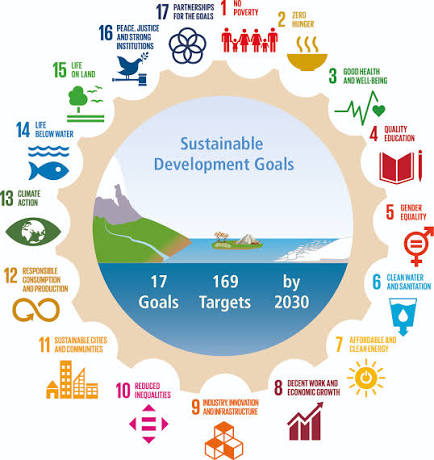
     

    At the same time, humanity still faces a fundamental challenge: widespread underdevelopment. One approach to addressing this challenge was the establishment of Agenda 2030, with the aim of ending poverty and hunger in all their forms and dimensions. The sustainable use of resources and protection from environmental degradation are two of the stated goals. Acknowledging the challenges facing the majority of the human population, 17 goals with 169 associated targets were identified (UN Resolution, 2015). What is more, the 2030 Agenda also underscores the interlinkages between development and the climate change challenge. Not only can climate change undermine some of the success already achieved in addressing underdevelopment, but it also increases the challenge of achieving some of the 2030 Agenda goals. Fuso Nerini et al. (2019) assert that 16 of the 17 SDGs and 40 per cent of all targets are impacted by climate change. The climate change challenge to sustainable development is increasing, since we are failing to arrest the climate change dynamic. A recent assessment indicates that we can no longer remain below a 2°C increase, let alone the 1.5°C enhanced climate target agreed in the Paris Agreement. Instead, the predictions made in the last couple of years state that we will be reaching 2.7°C warming by the end of the century (Climate Action Tracker, 2024: 1).

    The Environment Complex Challenge highlights and supports another discussion, one related to reconsidering the object of security. While this topic is linked with the late-1980s to mid-1990s debate on the meaning and interpretation of security, by replacing the state as the object of security with a focus on the individual, the relevance of these challenges is as powerful as it was back then, considering the fundamental challenges humanity is facing; unsustainable use of resources, climate change dynamic, biodiversity loss, widespread pollution issues, and environmental destruction. Lipschutz (1995) states that individual security offers a broader recognition of the insecurity people face by including human welfare issues and underdevelopment. Similarly, Smith (2005) argues that security should focus on the real conditions of insecurity that people and collectives are facing. Such a strong focus on the individual, while the role of neither central nor regional governments should be ignored when addressing the sustainability and climate change challenge, is further justified because sustainable development and addressing climate change require a change of behaviour at the individual level. Otherwise, change will not happen. Indeed, it is our responsibility to bring about change and address the fundamental challenge to our future.

    Bibliography

    Brundtland Report (1987) World Commission on Environment and Development. Oxford University Press. https://www.brundtland.co.za/wp-content/uploads/2022/08/Brundtland-Report-1987-Our-Common-Future.pdf

    Charlton, E. (2023). This is what the climate crisis is costing economies around the world. World Economic Forum. https://www.weforum.org/stories/2023/11/climate-crisis-cost-global-economies/

     Climate Action Tracker (2024) Warming Projections Global Update. Climate Action Tracker.https://climateactiontracker.org/documents/1277/CAT_2024-11-14_GlobalUpdate_COP29.pdf

    Delanty, G., & Mota, A. (2017). Governing the Anthropocene: Agency, Governance, Knowledge. European Journal of Social Theory, 20(1), 9-38.

    GLOBAL WATER BANKRUPTCY Living Beyond Our Hydrological Means in the Post-Crisis Era

    The United Nations University Institute for Water, Environment and Health (UNU-INWEH)

    https://collections.unu.edu/eserv/UNU:10445/Global_Water_Bankruptcy_Report__2026_.pdf

    Nerini, F., F., Sovacool, B., Hughes, N., Cozzi, L., Cosgrave, E., Howells, M., Tavoni, M., Tomei, J., Zerriffi, H., & Milligan, B. (2019). Connecting climate action with other Sustainable Development Goals. Nature Sustainability, 2(8), 674–680.

    Lipschutz, R. D. (1995). On Security. In R. D. Lipschutz (Ed.), On Security (pp. 1-23). Columbia University Press.

    Ruddiman, W. F., Ellis, E. C., Kaplan, J. O., Dorian Q., & Fuller, D. O. (2015). Defining the Epoch We Live In. Science, 348(6230), 348-389.

    Smith, S. (2005). The Contested Concept of Security. In K. Booth (Ed.), Critical Security Studies and World Politics (pp. 27-62). Lynne Rienner Publisher.

    United Nations Environment Programme (2024). Food Waste Index Report 2024. Nairobi.
    UNEP Food Waste Index Report 2024
    https://wedocs.unep.org/bitstreams/5c6e505d-e1d3-4731-b5b8-4ecb9693a056/download

    UN Resolution (2015). Transforming our world: the 2030 Agenda for Sustainable Development. Resolution adopted by the General Assembly on 25 September 2015 70/1. 31, https:// digitallibrary.un.org/record/3923923?v=pdf.

    von Weizsäcker, E. U., Lovins, A. B., & L. H.(1997). Factor Four – Doubling Wealth, Halving Resource. Use Earthscan.

    [1] In early March 2024, the International Union of Geological Sciences confirmed the dismissal of recognition of the Anthropocene as a description of a new geological time.
  • China’s Role in reducing the Global Carbon Footprint: The 2060 Promise and Geopolitics on the Climate Front

    China’s Role in reducing the Global Carbon Footprint: The 2060 Promise and Geopolitics on the Climate Front

    Introduction

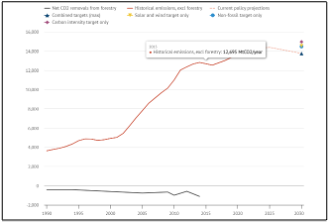
    The devastating role carbon plays in climate change cannot be underestimated. The rise in global surface temperatures, air pollution, and sea levels are visible effects of a rapidly changing environment. China, the world’s second most populous country, is also the largest emitter of greenhouse gases[i]. According to the CAIT database, in 2020, China emitted what amounted to 27% of the total greenhouse gas emissions in the world[ii]. Under President Xi Jinping, China has moved to position itself as an “ecological civilization”, striving to advance its role in global climate protection[iii]. China’s endeavours received acclaim when it became one of the first major countries to ratify the Paris Agreement in 2015, pledging to attain peak emissions by 2030 and net zero carbon emissions by 2060. This article aims to delineate China’s strategies and motivations for addressing carbon emissions and contrast these with the measures implemented by Western and developing countries to diminish their carbon footprint.

    China’s Image and Geopolitics in the Climate Sector

    Considering China’s position on the world stage as one of the largest and fastest-growing economies in the world, it has faced international pressure to take accountability for its contribution to climate change. China has previously argued that as a developing country, it should not have to share the same responsibilities of curbing climate change that developed countries, whose emissions went “unchecked for decades”, have[iv]. Nonetheless, they have pledged to lead by example in the climate sector. A large part of President Xi’s campaign to amplify China’s climate ambitions may come from appeasing the West while also setting up leadership in the clean energy sector to better cement its role as a superpower. According to a New York Times article, their promise to contribute to climate protection could be used to soothe the international audience and to counterbalance the worldwide anger that China faces over their oppression of the Uyghur Muslims in the Xinjiang province and their territorial conflicts in the South China Sea and Taiwan[v]. President Xi’s pledge at the UN to reach peak emissions before 2030 may have been an attempt to depict China as a pioneering nation striving to achieve net zero carbon emissions, serving as an alternative powerful entity for countries to turn to in lieu of the United States. This holds particular significance, as the USA remained mute about taking accountability for its own carbon emissions and withdrew from the Paris Agreement during Donald Trump’s presidency[vi]. This also shows China’s readiness to employ the consequences of climate change on its geopolitical agenda[vii].

    The future actions of China may significantly influence the climate policies of both developing and developed nations, potentially establishing China as a preeminent global force in climate change mitigation.

    China has endeavoured to shape its image in the climate sector. In 2015, despite being classified as a developing country, China refrained from requesting climate finance from developed countries and instead pledged $ 3.1 billion in funding to assist other developing countries in tackling climate change[viii]. As per the World Bank’s Country Climate and Development Report for China, China is poised to transform “climate action into economic opportunity.”[ix] By transitioning to a net zero carbon emissions economy, China can generate employment opportunities while safeguarding its non-renewable resources from depletion. China’s economy is also uniquely structured to seize the technological and reputational benefits of early climate action[x]. The future actions of China may significantly influence the climate policies of both developing and developed nations, potentially establishing China as a preeminent global force in climate change mitigation. Nonetheless, if China fails to fulfil its commitment to attain net zero carbon emissions by 2060, it may suffer substantial reputational damage, particularly given its current status as a pioneer in “advancing low carbon energy supply”[xi].

    Domestic Versus International Efforts in the Clean Energy Race

    However, domestic and international factors could affect China’s goal to peak emissions and the deadlines it has set for itself. A global event that may have affected their efforts to peak carbon emissions was the COVID-19 pandemic, in which the rise in carbon emissions from industries and vehicles was interrupted[xii]. However, after the pandemic, China’s economy saw swift growth, and in 2021, China’s carbon emissions were 4% higher than in the previous year[xiii]. Not only is China back on track to peak carbon emissions by 2030, but the International Energy Agency and World Energy Outlook 2023 also found that “China’s fossil fuel use will peak in 2024 before entering structural decline.”[xiv]

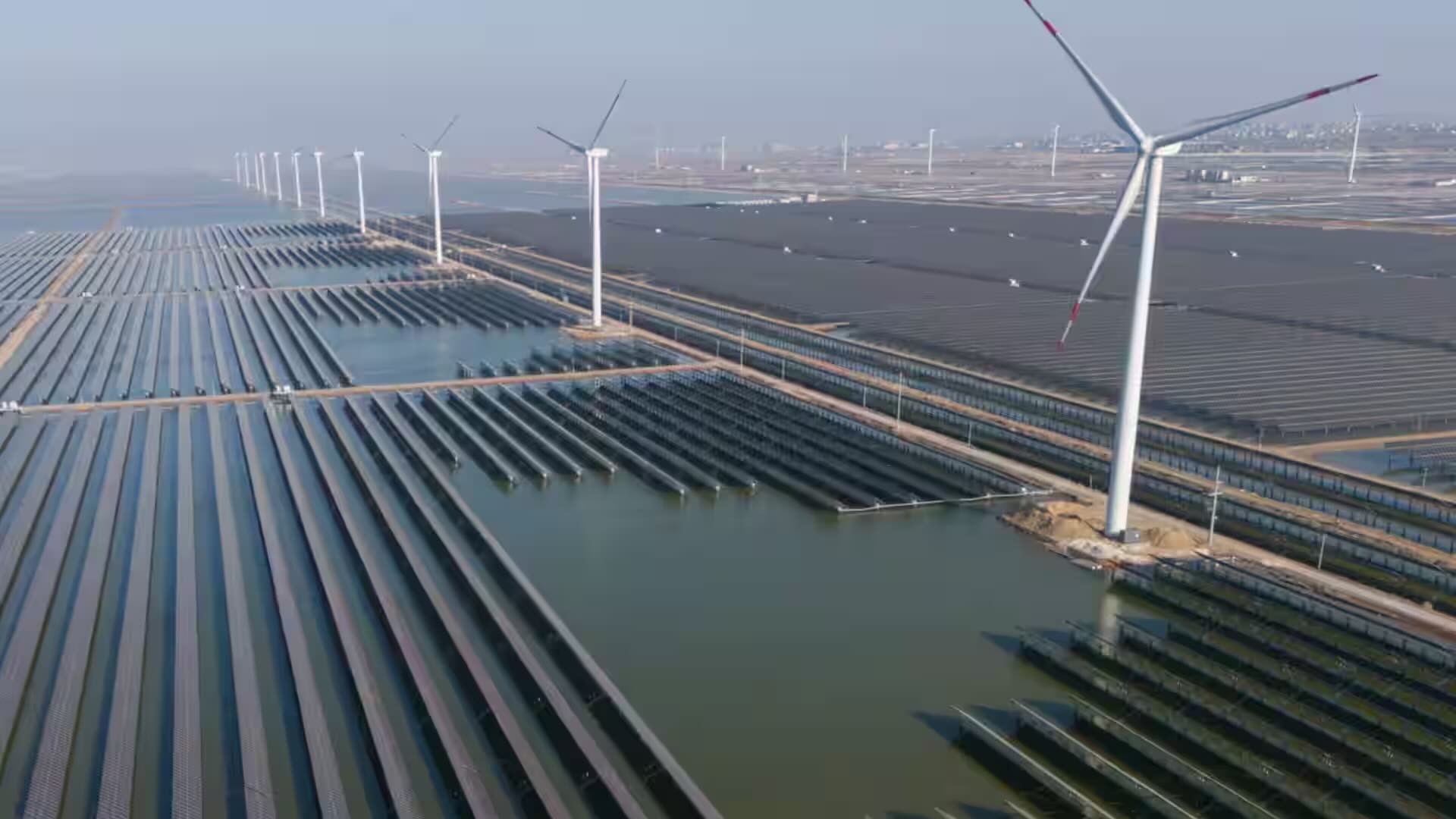
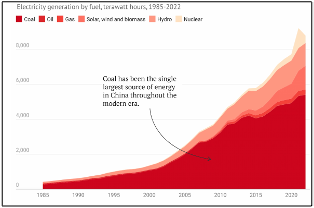
    Although China’s industrial sector is heavily reliant on coal and fossil fuels, it also boasts the world’s largest production of electric vehicles and is a leader in manufacturing solar panels and wind turbines[xv]. In contrast, developed countries, particularly the US, which withdrew from the Paris Agreement in 2017 during the Trump presidency, appear to be making less of an effort towards environmental protection.

    Developing countries, while not entirely possessed of the immense sprawl of China’s economy and population, are nonetheless not at the level of transitioning to clean energy that China is. India, too, has pledged to be carbon neutral by 2070 and to have emissions peak by 2030. Given its increasing economic growth rate, India must decrease its carbon intensity at the same pace. India lags behind China when it comes to manufacturing solar panels and other renewable energy sources. India’s central government is preparing to push energy modernization to “align with global energy transition trends.”[xvi] According to the Economic Times, particular emphasis has been laid on renewable energy sources like solar capacity and e-vehicles in the 2024-25 budget.[xvii]

    China and International Cooperation for Climate Protection

    With China producing sufficient solar capacity in 2022 to lead the rest of the world considerably and the deployment of solar power expected to rise until 2028, it is essential that the West does not make the mistake of isolating China

    Given that China has emerged as the leading manufacturer of electric vehicles (EVs), it remains to be seen whether developed and developing countries will leverage their supply chains to combat their own climate crises. While opportunities are plentiful for Western businesses to integrate with China’s cutting-edge alternatives for traditional energy sources, the United States has adopted a hardline stance towards China[xviii]. The US has imposed 100 per cent tariffs on Chinese-made e-vehicles, and solar cells face tariffs at 50 per cent.[xix] Simultaneously, rivalry and competition between the two countries on the climate front may help combat the climate dilemma and ever-increasing carbon emissions by avoiding the collective action problem. However, this will depend heavily on smooth cooperation and effective communication between Chinese authorities and developed nations within the EU and the USA[xxi]. Empowering domestic groups within countries can raise awareness of climate crises. A poll conducted in China revealed that 46% of the youth considered climate change the “most serious global issue.”[xxii] According to a survey conducted by the United Nations, 80% of people worldwide say they want climate action[vii]. With China producing sufficient solar capacity in 2022 to lead the rest of the world considerably and the deployment of solar power expected to rise until 2028, it is essential that the West does not make the mistake of isolating China[xxiii].

    Conclusion

    China has a significant advantage in its renewable energy sector. Western countries and other developing economies rely heavily on China’s green exports to address climate change urgently. China’s stringent measures to curb emissions from its coal-based industries and the growing output from its alternative energy sources reflect its proactive stance in becoming a global leader in addressing climate change — a position that surpasses other nations’ efforts. While it is debatable whether China’s commitment to reduce its carbon emissions was a political strategy to appease Europe, it is undeniable that tackling climate change is a pressing issue. With the public’s overwhelming support for implementing change in the climate sector, governments worldwide must prioritise their citizens’ needs and cooperate to develop policies that ensure a sustainable future for our planet.


    Notes:

    [i] Saurav Anand, “Solar Capacity, EVs, and Nuclear SMRs to Get Budget Boost for Energy Security – ET EnergyWorld,” ETEnergyworld.com, July 11, 2024, https://energy.economictimes.indiatimes.com/news/renewable/solar-capacity-evs-and-nuclear-smrs-to-get-budget-boost-for-energy-security/111648384?action=profile_completion&utm_source=Mailer&utm_medium=newsletter&utm_campaign=etenergy_news_2024-07-11&dt=2024-07-11&em=c2FuYS5zYXByYTIyMUBnbWFpbC5jb20.

    [ii]Saurav Anand, “Solar Capacity, EVs, and Nuclear Smrs to Get Budget Boost for Energy Security – ET EnergyWorld,” ETEnergyworld.com, July 11, 2024, https://energy.economictimes.indiatimes.com/news/renewable/solar-capacity-evs-and-nuclear-smrs-to-get-budget-boost-for-energy-security/111648384?action=profile_completion&utm_source=Mailer&utm_medium=newsletter&utm_campaign=etenergy_news_2024-07-11&dt=2024-07-11&em=c2FuYS5zYXByYTIyMUBnbWFpbC5jb20.

    [iii]Shameem Prashantham and Lola Woetzel, “To Create a Greener Future, the West Can’t Ignore China,” Harvard Business Review, April 10, 2024, https://hbr.org/2024/05/to-create-a-greener-future-the-west-cant-ignore-china.

    [iv]“Fact Sheet: President Biden Takes Action to Protect American Workers and Businesses from China’s Unfair Trade Practices,” The White House, May 14, 2024, https://www.whitehouse.gov/briefing-room/statements-releases/2024/05/14/fact-sheet-president-biden-takes-action-to-protect-american-workers-and-businesses-from-chinas-unfair-trade-practices/?utm_source=dailybrief&utm_medium=email&utm_campaign=DailyBrief2024May14&utm_term=DailyNewsBrief.

    [v]Noah J. Gordon et al., “Why US-China Rivalry Can Actually Help Fight Climate Change,” Internationale Politik Quarterly, March 24, 2023, https://ip-quarterly.com/en/why-us-china-rivalry-can-actually-help-fight-climate-change.

    [vi] Simon Evans Hongqiao Liu, “The Carbon Brief Profile: China,” Carbon Brief, November 30, 2023, https://interactive.carbonbrief.org/the-carbon-brief-profile-china/.

    [vii]“Climatechange,” United Nations, accessed July 18, 2024, https://www.un.org/en/climatechange#:~:text=The%20world’s%20largest%20standalone%20public,to%20tackle%20the%20climate%20crisis.

    [viii]Martin Jacques, “China Will Reach Climate Goal While West Falls Short,” Global Times, accessed July 19, 2024, https://www.globaltimes.cn/page/202402/1306788.shtml#:~:text=There%20has%20been%20constant%20low,than%202050%20for%20carbon%20zero.

    [ix] Steven Lee Myers, “China’s Pledge to Be Carbon Neutral by 2060: What It Means,” The New York Times, September 23, 2020

    [x] Simon Evans, Hongqiao Liu et al, “The Carbon Brief Profile: China,” Carbon Brief, November 30, 2023, https://interactive.carbonbrief.org/the-carbon-brief-profile-china/.

    [xi] China | nationally determined contribution (NDC), accessed July 17, 2024, https://www.climatewatchdata.org/ndcs/country/CHN?document=revised_first_ndc.

    [xii] Simon Evans, Hongqiao Liu et al, “The Carbon Brief Profile: China,” Carbon Brief, November 30, 2023, https://interactive.carbonbrief.org/the-carbon-brief-profile-china/.

    [xiii] Steven Lee Myers, “China’s Pledge to Be Carbon Neutral by 2060: What It Means,” The New York Times, September 23, 2020,https://www.nytimes.com/2020/09/23/world/asia/china-climate-change.html.

    [xiv] Steven Lee Myers, “China’s Pledge to Be Carbon Neutral by 2060: What It Means,” The New York Times, September 23, 2020, https://www.nytimes.com/2020/09/23/world/asia/china-climate-change.html.

    [xv] Simon Evans, Hongqiao Liu et al, “The Carbon Brief Profile: China,” Carbon Brief, November 30, 2023, https://interactive.carbonbrief.org/the-carbon-brief-profile-china/.

    [xvi] Matt McGrath, “Climate Change: China Aims for ‘Carbon Neutrality by 2060,’” BBC News, September 22, 2020, https://www.bbc.com/news/science-environment-54256826.

    [xvii] Simon Evans, Hongqiao Liu et al, “The Carbon Brief Profile: China,” Carbon Brief, November 30, 2023, https://interactive.carbonbrief.org/the-carbon-brief-profile-china/.

    [xviii] World Bank Group, “China Country Climate and Development Report,” Open Knowledge Repository, October 2022, https://openknowledge.worldbank.org/entities/publication/ef01c04f-4417-51b6-8107-b688061a879e.

    [xix] World Bank Group, “China Country Climate and Development Report,” Open Knowledge Repository, October 2022, https://openknowledge.worldbank.org/entities/publication/ef01c04f-4417-51b6-8107-b688061a879e.

    [xx] World Bank Group, “China Country Climate and Development Report,” Open Knowledge Repository, October 2022, https://openknowledge.worldbank.org/entities/publication/ef01c04f-4417-51b6-8107-b688061a879e.

    [xxi] Steven Lee Myers, “China’s Pledge to Be Carbon Neutral by 2060: What It Means,” The New York Times, September 23, 2020.

    [xxii]  Steven Lee Myers, “China’s Pledge to Be Carbon Neutral by 2060: What It Means,” The New York Times, September 23, 2020.

    [xxiii] Simon Evans, Hongqiao Liu et al, “The Carbon Brief Profile: China,” Carbon Brief, November 30, 2023, https://interactive.carbonbrief.org/the-carbon-brief-profile-china/.


    Feature Image: wionews.com  China leads the charge: Beijing develops two-thirds of global wind and solar projects.


  • Seabed: “to mine or not to mine”

    Seabed: “to mine or not to mine”

    Seabed mining offers new vistas for business partnerships and joint ventures among different industries in the offshore mining supply chains.

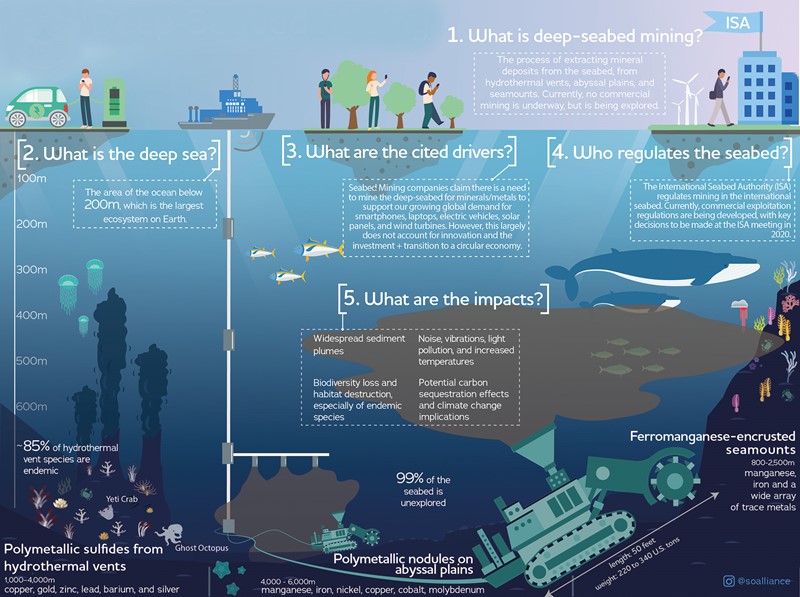
    The month-long debate “to mine or not to mine” has ended inconclusively at the 28th session of the International Seabed Authority (ISA) Assembly from 28 June to 28 July 2023 in Kingston, Jamaica amid calls for a “ban /suspension/precautionary pause” on any extractive activities.

    Figure Credit: eandt.theiet.org

    The ‘naysayers’ vehemently argued for the protection of the oceans given that these large bodies of water are already experiencing multiple and diverse nature and human-induced challenges such as climate change, unsustainable fishing, marine pollution etc. Furthermore, any attempt to mine the seabed will have far-reaching adverse impacts on marine life and result in biodiversity loss keeping in mind that human knowledge about the deep sea ecosystems is very little.

    Those in favour of seabed mining attempted to convince that energy transition is critical for sustainable development and for that a sustained supply of nickel, manganese, cobalt, and copper, is inescapable. These metals/minerals would have to be sourced from the seabed. For the time being, the representatives of the ISA Member States and other stakeholders have returned home to mull over the issue of seabed mining.

    The sudden hyper-activity at the ISA is a result of the June 2021 submission by Nauru, a Pacific island nation which submitted an application for approval from the ISA to commence extraction activities relying on the “two-year rule,” under which the “Council shall complete the adoption of the relevant rules, regulations, and procedures (RRPs) within two years from the submission”. The two-year deadline expired on 9 July 2023, but the ISA Council, a 36-member body executive arm responsible for approving contracts with private corporations and government entities, among other things, announced that it would “continue the negotiations on the draft exploitation regulations”.

    Meanwhile, at home, the Government of India is all set to exploit oceanic resources. Earlier this month, the Indian Parliament (Rajya Sabha and Lok Sabha) passed the Offshore Areas Mineral (Development and Regulation) Amendment Bill 2023 which enables extraction activities in offshore areas for mineral resources.

    It is true that offshore resource development has been a much-neglected area other than the oil and gas sectors. This is notwithstanding the seminal contributions made by the Geological Survey of India (GSI) which has been leading offshore scientific research and survey activities since the early sixties. The Marine and Coastal Survey Division (MCSD) of the GSI conducts numerous related activities including seabed mapping and exploration within the Indian EEZ and is supported by three ocean-going vessels.

    According to the GSI, as of January 2023, nearly 95 % of India’s EEZ of 2.159 million square kilometres has been surveyed. Since 2022, the GSI has been carrying our seabed mapping in international waters and has covered over 70,000 square kilometres till December 2023 for “generation of baseline data along with the search for possible mineral occurrences in the Ninety East Ridge near the Equator, Indian Ocean and the Laxmi Basin (Block-I, II and III), Arabian Sea by deploying its vessels”.

    The Indian EEZ is endowed with 1,53,996 million tonnes of live mud particularly off Gujarat and Maharashtra coasts, and 745 million tonnes of construction-grade sand has been found along the Kerala coast. The Bay of Bengal coast (Odisha, Andhra Pradesh and Tamil Nadu) and the Arabian Sea coast (Maharashtra and Kerala) are rich in heavy mineral and Polymetallic Ferro-Manganese nodules are available in the Andaman Sea and waters off Lakshadweep islands.

    Polymetallic nodules (Copper, Cobalt, Nickel, Manganese, Rare earth, etc.) are particularly important to support India’s mission to promote the use of clean energy. In November 2022, during the G20 summit in Indonesia Prime Minister Narendra Modi told the participating countries that by 2030, half of India’s electricity will be “generated from renewable sources,”

    The Offshore Areas Mineral (Development and Regulation) Amendment Bill 2023, among many issues, has introduced a number of initiatives including the “auction” of offshore mineral exploration sites and mining rights to companies, including from the private sector, thus creating a level playing field for business competition. The Bill provides for two types of operating rights through auction to the private sector (a) production lease and (b) composite license. It merits mention that the provision for “renewal of production leases has been scrapped with a 50-year lease period to remove uncertainty for operators” which will “give confidence to investors by bringing in transparency and fair play,”

    Seabed mining offers new vistas for business partnerships and joint ventures among different industries in the offshore mining supply chains. For instance, lifting of the extracted ore and carrying it to storage sites ashore is an opportunity for the maritime transportation sector. Similarly, environmental impact assessment, and restoration techniques when needed is a unique industry. Likewise, Industry 4.0 technology developers have opportunities to support Marine Spatial Planning (MSP), bio-remediation, bio-prospecting, and a variety of other seabed mining sectors.

    This article was published earlier in kalingainternational.com

    Feature Image Credit: euronews.com

  • Most of the world’s ocean is unprotected: This is why that needs to change

    Most of the world’s ocean is unprotected: This is why that needs to change

    • More than three billion people rely on the ocean for their livelihoods, most of them in developing countries.
    • Only 7% of the world’s ocean, a vital resource for fighting climate change, is under any protection, and just 3% is highly protected.
    • The ‘Blue Leaders’ campaign urges countries to join international treaties that would protect the ocean and all the benefits it provides to humanity.

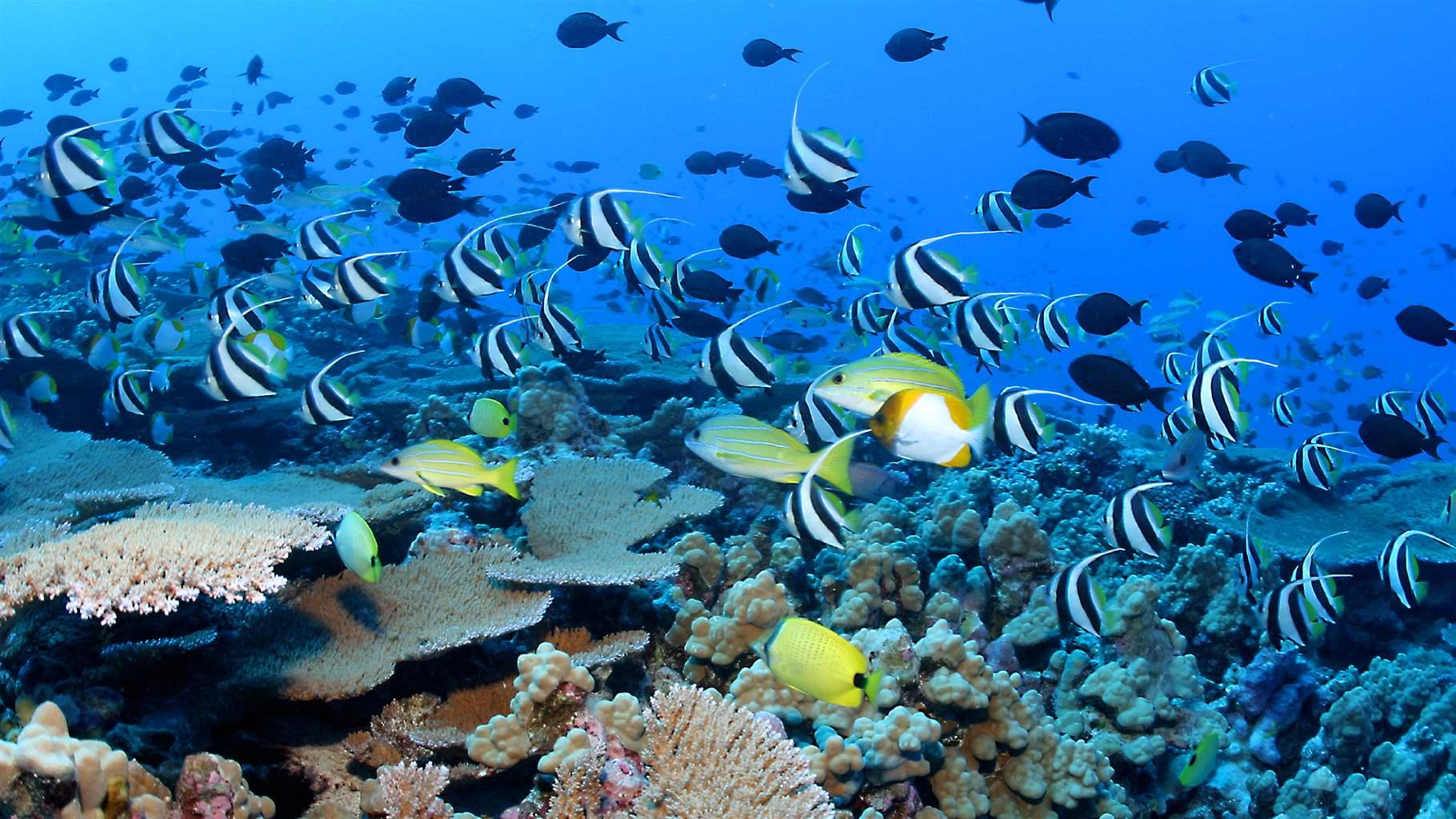
    The ocean is a vital life support system for the planet, and we are running out of time to preserve the marine biodiversity that it is home to and upon which we all depend.

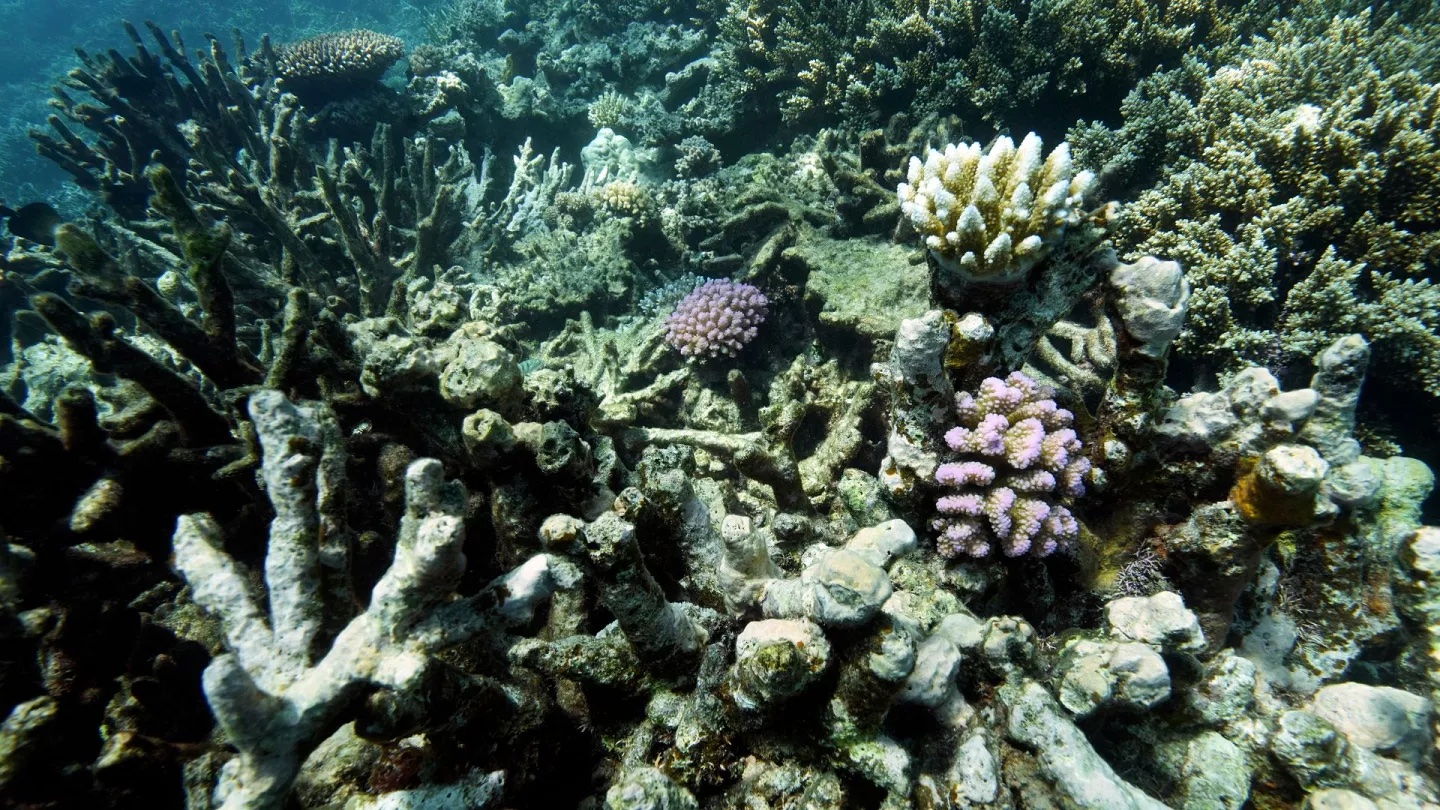
    Having played a key role thus far in the mitigation of climate change, our blue ally is quickly running out of steam. With water temperature and sea levels rising, acidification, pollution, unsustainable exploitation of marine resources, depletion of fish stocks, the near disappearance of coral reefs, and the destruction of fragile ecosystems, the ocean is being disproportionately impacted by human activities.

    Now, more than ever, we must consider the possible implications of its demise.

    The ocean plays an indispensable role in providing and regulating resources that are vital to sustaining life on Earth — from rainwater to drinking water, and as a source of our food, weather, and the oxygen we breathe

    Securing our ocean’s future

    Recognizing the key role that the ocean plays for people all over the world, the United Nations has adopted a sustainable development goal focused on conserving the ocean, with targets for action on an array of problems. While some progress has been made, more is yet needed to secure our ocean’s future.

    Scientists have called for securing at least 30% of marine waters as fully or highly protected sanctuaries, free from damaging human activities like bottom trawl fishing and seabed mining. By doing so, we can give the ocean a fighting chance in the face of climate change.

    Today, just 7% of the world’s ocean is under protection, and only 3% is highly protected. Moreover, there is no legal mechanism in place to establish fully protected marine areas in the high seas and deep seabed areas, our shared international waters that constitute nearly two thirds of the global ocean.

    Marine coastlines are home to 2.4 billion people — approximately 40% of the world’s population. More than three billion people rely on the ocean for their livelihoods, most of them in developing countries. Degradation of coastal and marine ecosystems threatens the physical, economic, and food security of communities around the world.

    Continuing along our current path towards ocean destruction will impact human lives and livelihoods.

    The role of the ocean and coastal and marine ecosystems in climate change mitigation is often overlooked. Protecting and restoring ocean habitats such as seagrass beds, salt marshes, and mangroves, and their associated food webs, can sequester carbon dioxide from the atmosphere at rates up to five times greater than tropical forests.

    Choosing not to prioritize the protection of our ocean is depriving us of the tools we desperately need to achieve our climate mitigation goals.

    Commitments are needed

    With multiple high-level ocean negotiations planned in 2022, this year is one filled with opportunity for the preservation of our oceans. Our only hope for a better future lies in the adoption of unprecedentedly bold ocean conservation commitments.

    The science is clear: to maximize the health and resilience of the global ocean, at least 30% of it must be protected through a network of “highly” and “fully” protected Marine Protected Areas (MPAs) by 2030.

    To achieve this goal, a new treaty for the conservation and management of marine life in the high seas must be concluded to ensure that human activities are managed to prevent significant adverse impacts, with robust oversight mechanisms and provisions to establish fully protected MPAs in the high seas.

    Governments who have joined the “Blue Leaders” campaign call on all countries to rally behind these commitments at the upcoming meeting of the Conference of the Parties to the Convention on Biological Diversity (CoP15), expected to take place in Kunming, China in August 2022.

    Another key moment is the UN Ocean Conference, which is scheduled to be held in Lisbon, Portugal, from 27 June to 1 July. Each of these meetings offers an opportunity for countries to come together, join the Blue Leaders, and take the action that our ocean desperately needs.

    The ocean knows no boundaries: it unites us all as a physical link between coastal countries, communities, and individuals, and as the source of our food, water, and air. We all face similar challenges and similar opportunities. Let us be bold for the ocean together.

    Feature Image: pewtrusts.org
    This article was published earlier in weforum.org  and is republished under the Creative Commons 4.0 International Public License.