Category: Non Proliferation & Disarmament

  • The Atomic Executioner’s Lament

    The Atomic Executioner’s Lament

    While the world focuses on the trials and travails of the scientists who invented the atomic bomb, little attention is paid to the hard positions taken by the nuclear executioners, the men called upon to drop these bombs in time of war.
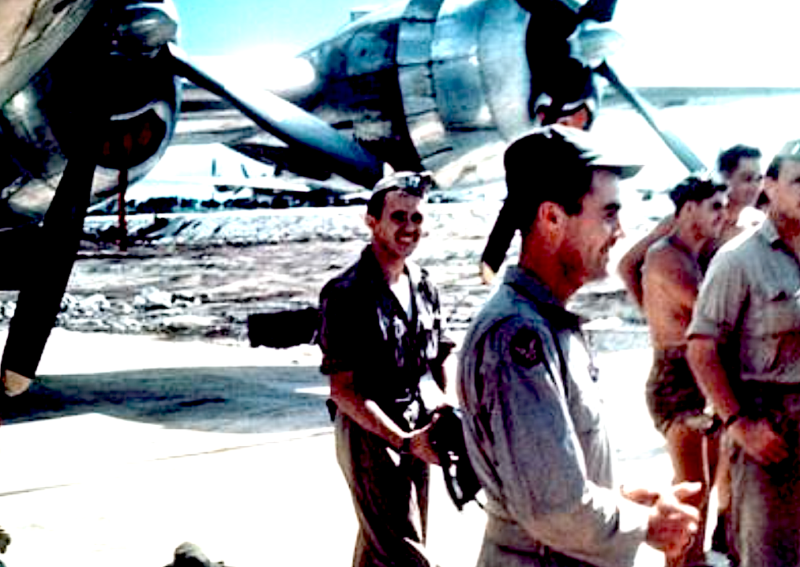
     

    Crew of the Enola Gay, returning from their atomic bombing mission over Hiroshima, Japan. At center is navigator Capt. Theodore Van Kirk; to the right, in foreground, is flight commander Col. Paul Tibbetts. (Wikimedia Commons, Public domain)


    There is an interesting scene in Chris Nolan’s film Oppenheimer, one which could easily get lost in the complexity of telling the story of the man considered to be the father of the American atomic bomb, J. Robert Oppenheimer.

    The Trinity test of the first nuclear device has been successfully completed, and Oppenheimer is watching as two men in military uniform are packing up one of Oppenheimer’s “gadgets” for shipment out of Los Alamos to an undisclosed destination.

    Oppenheimer talks to them about the optimum height for the detonation of the weapon above ground, but is cut off by one of the soldiers, who, smiling, declares “We’ve got it from here.”

    Such men existed, although the scene in the movie — and the dialogue — was almost certainly the product of a scriptwriter’s imagination. The U.S. military went to great lengths to keep the method of delivery of the atomic bomb a secret, not to be shared with either Oppenheimer or his scientists.

    Formed on March 6, 1945, the 1st Ordnance Squadron, Special (Aviation) was part of the 509th Composite Group, commanded by then-Lieutenant Colonel Paul Tibbets. Prior to being organized into the 1st Ordnance Squadron, the men of the unit were assigned to a U.S. Army ordnance squadron stationed a Wendover, Utah, where Tibbets and the rest of the 509th Composite Group were based.
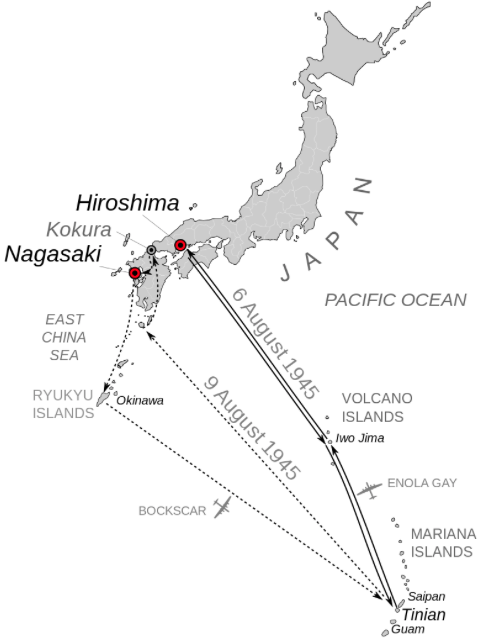
    Mission map for the bombings of Hiroshima and Nagasaki, Aug. 6 and Aug. 9, 1945. Scale is not consistent due to the curvature of the Earth. Angles and locations are approximate. Kokura was included as the original target for Aug. 9 but weather obscured visibility; Nagasaki was chosen instead. (Mr.98, Wikimedia Commons, Public domain)

    While Oppenheimer and his scientists designed the nuclear device, the mechanism of delivery — the bomb itself — was designed by specialists assigned to the 509th. It was the job of the men of the 1st Ordnance Squadron to build these bombs from scratch.

    The bomb dropped on Hiroshima by Paul Tibbets, flying a B-29 named the Enola Gay, was assembled on the Pacific Island of Tinian by the 1st Ordnance Squadron.

    Concerned about the possibility of the B-29 crashing on takeoff, thereby triggering the explosive charge that would send the uranium slug into the uranium core (the so-called gun device), the decision was made that the final assembly of the bomb would be done only after the Enola Gay took off.

    One of the 1st Ordnance Squadron technicians placed the uranium slug into the bomb at 7,000 feet over the Pacific Ocean.

    The bomb worked as designed, killing more than 80,000 Japanese in an instant; hundreds of thousands more died afterwards from the radiation released by the weapon.

    For the pilot and crew of the Enola Gay, there was no remorse over killing so many people. “I knew we did the right thing because when I knew we’d be doing that I thought, yes, we’re going to kill a lot of people, but by God we’re going to save a lot of lives,’ Tibbets recounted to Studs Terkel in 2002. He added:

    “We won’t have to invade [Japan]. You’re gonna kill innocent people at the same time, but we’ve never fought a damn war anywhere in the world where they didn’t kill innocent people,” Tibbets told Terkel. “If the newspapers would just cut out the shit: ‘You’ve killed so many civilians.’ That’s their tough luck for being there.
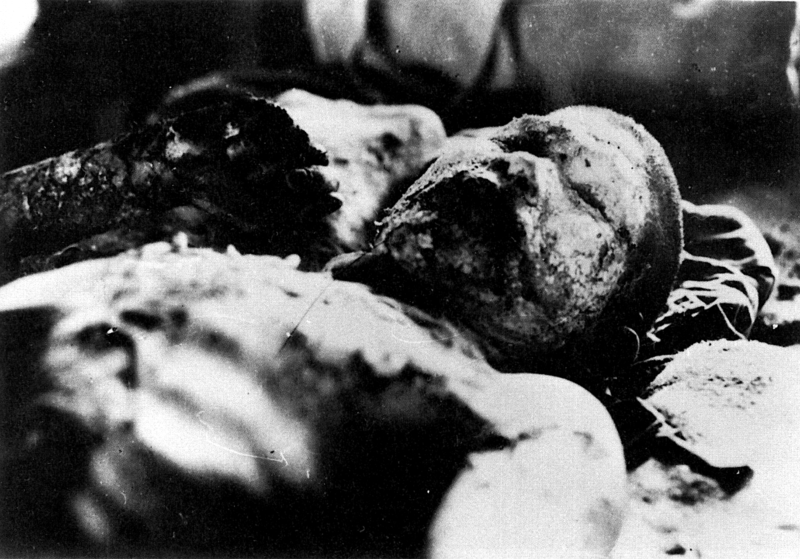
    An atomic bomb victim with burns, Ninoshima Quarantine Office, Aug. 7, 1945. (Onuka Masami, Wikimedia Commons, Public domain)

    Major Charles Sweeney, the pilot of Bockscar, the B-29 that dropped the second American atomic bomb on the city of Nagasaki on Aug. 9, 1945, held similar convictions about his role in killing 35,000 Japanese instantly.

    “I saw these beautiful young men who were being slaughtered by an evil, evil military force,” Sweeney recounted in 1995. “There’s no question in my mind that President Truman made the right decision.” However, Sweeney noted, “As the man who commanded the last atomic mission, I pray that I retain that singular distinction.”

    History records the remorse felt by Oppenheimer and his Soviet counterpart, Andrei Sakharov, and the punishment they both suffered at the hands of their respective governments. They suffered from designer’s remorse, a regret — stated after the fact — that what they had built should not be used, but somehow locked away from the world, as if the Pandora’s Box of nuclear weaponization had never been opened.

    Having designed their respective weapons, however, both Oppenheimer and Sakharov lost control of their creations, turning them over to military establishments which did not participate in the intellectual and moral machinations of bringing such a weapon into existence, but rather the cold, hard reality of using these weapons to achieve a purpose and goal which, as had been the case for Tibbets and Sweeney, seemed justified.

    Ignoring the Executioner
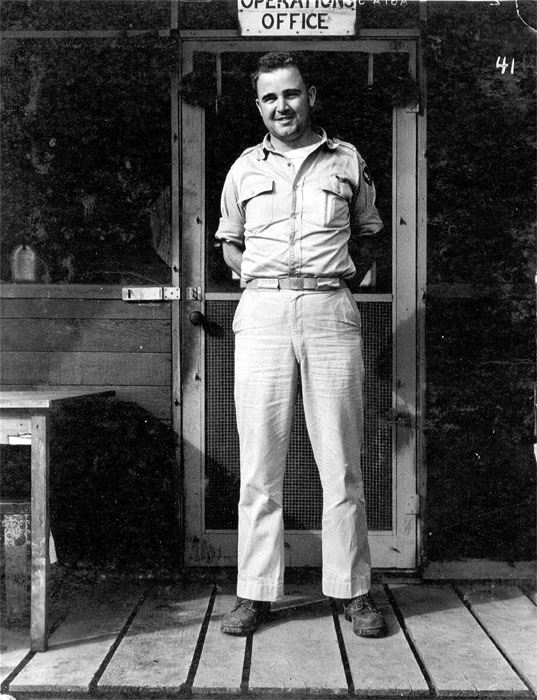
    Brigadier General Charles W. Sweeney, pilot of the aircraft that dropped the atomic bomb on Nagasaki. (Public domain, Wikimedia Commons)

    This is the executioners’ lament, a contradiction of emotions where the perceived need for justice outweighs the costs associated.

    While the world focuses on the trials and travails of Oppenheimer and Sakharov, they remain silent about the hard positions taken by the nuclear executioners, the men called upon to drop these bombs in time of war.  There have only been two such men, and they remained resolute in their judgement that it was the right thing to do.

    The executioner’s lament is overlooked by most people involved in supporting nuclear disarmament. This is a mistake, because the executioner, as was pointed out to Oppenheimer by the men of the 1stOrdnance Squadron, is in control.

    They possess the weapons, and they are the ones who will be called upon to deliver the weapons. Their loyalty and dedication to the task are constantly tested in order to ensure that, when the time comes to execute orders, they will do so without question.

    Image of a younger Petrov from a family album.
    (Stanislav Petrov’s Personal Library, Wikimedia Commons, CC0)
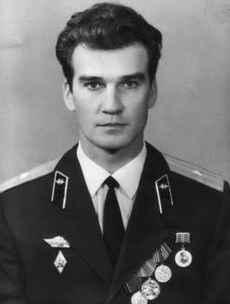


    Those opposed to nuclear weapons often point to the example of Stanislav Petrov, a former lieutenant colonel of the Soviet Air Defense Forces who, in 1983, twice made a decision to delay reporting the suspected launch of U.S. missiles towards the Soviet Union, believing (rightly) that the launch detection was a result of malfunctioning equipment.

    But the fact is that Petrov was an outlier who himself admitted that had another officer been on duty that fateful day, they would have reported the American missile launches per protocol.

    Those who will execute the orders to use nuclear weapons in any future nuclear conflict will, in fact, execute those orders. They are trained, like Tibbets and Sweeney, to believe in the righteousness of their cause.

    Dmitry Medvedev, the former Russian prime minister and president who currently serves as the deputy chairman of the Russian National Security Council, has publicly warned the Western supporters of Ukraine that Russia would “have to” use nuclear weapons if Ukrainian forces were to succeed in their goal of recapturing the former territories of Ukraine that have been claimed by Russia in the aftermath of referenda held in September 2022.

    “Imagine,” Medvedev said, “if the offensive, which is backed by NATO, was a success and they tore off a part of our land, then we would be forced to use a nuclear weapon according to the rules of a decree from the president of Russia. There would simply be no other option.”

    Some in the West view Medvedev’s statement to be an empty threat; U.S. President Joe Biden said last month that there is no real prospect of Russian President Vladimir Putin ordering the use of nuclear weapons against either Ukraine or the West.

    “Not only the West, but China and the rest of the world have said: ‘don’t go there,’ ” Biden said following the NATO Summit in Vilnius.

    Ignoring Russian Doctrine

    But Biden, like other doubters, emphasizes substance over process, denying the role played by the executioner in implementing justice defined on their terms, not that of those being subjected to execution.

    Russia has a nuclear doctrine that mandates that nuclear weapons are to be used “when the very existence of the state is put under threat.” According to Medvedev, “there would simply be no other option,” ironically noting that “our enemies should pray” for a Russian victory, as the only way to make sure “that a global nuclear fire is not ignited.”

    The Russians who would execute the orders to launch nuclear weapons against the West would be operating with the same moral clarity as had Paul Tibbets and Charles Sweeney some 88 years ago. The executioner’s lament holds that they will be saddened by their decision but convinced that they had no other choice.

    Proving them wrong will be impossible because, unlike the war with Japan, where the survivors were given the luxury of reflection and accountability, there will be no survivors in any future nuclear conflict.

    The onus, therefore, is on the average citizen to get involved in processes that separate the tools of our collective demise — nuclear weapons — from those who will be called upon to use them.

    Meaningful nuclear disarmament is the only hope humankind has for its continued survival.

    The time to begin pushing for this is now, and there is no better place to start than on Aug. 6, 2023 — the 78th anniversary of the bombing of Hiroshima, when like-minded persons will gather outside the United Nations to begin a dialogue about disarmament that will hopefully resonate enough to have an impact of the 2024 elections.


    This article was published earlier in consortiumnews.com

    The views expressed are the author’s own.

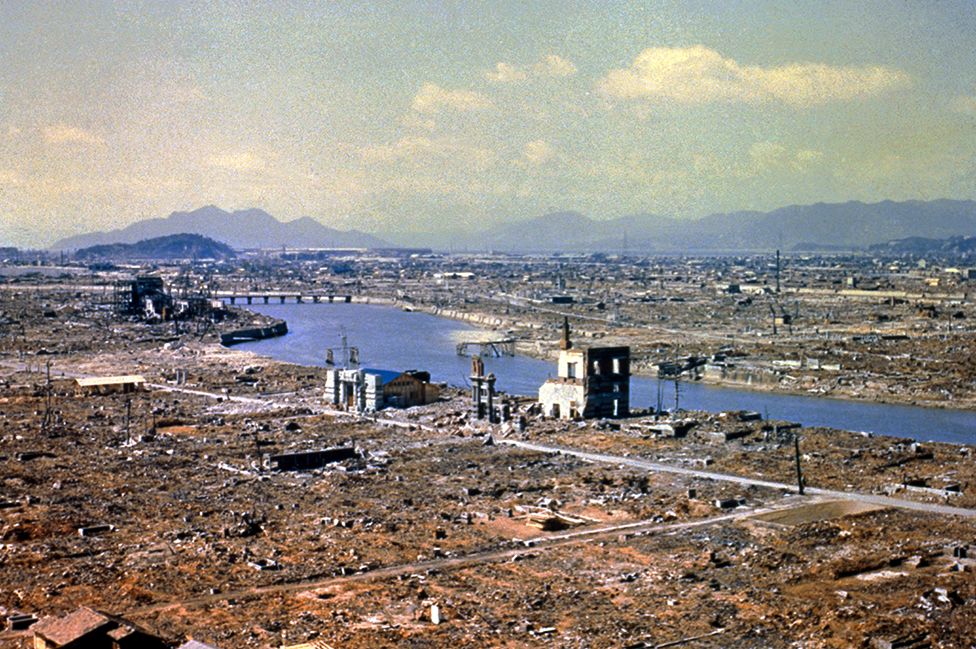
    Feature Image: The devastated city of Hiroshima after the atomic bomb blast – bbc.com
  • The South Asia Nuclear Zero

    The South Asia Nuclear Zero

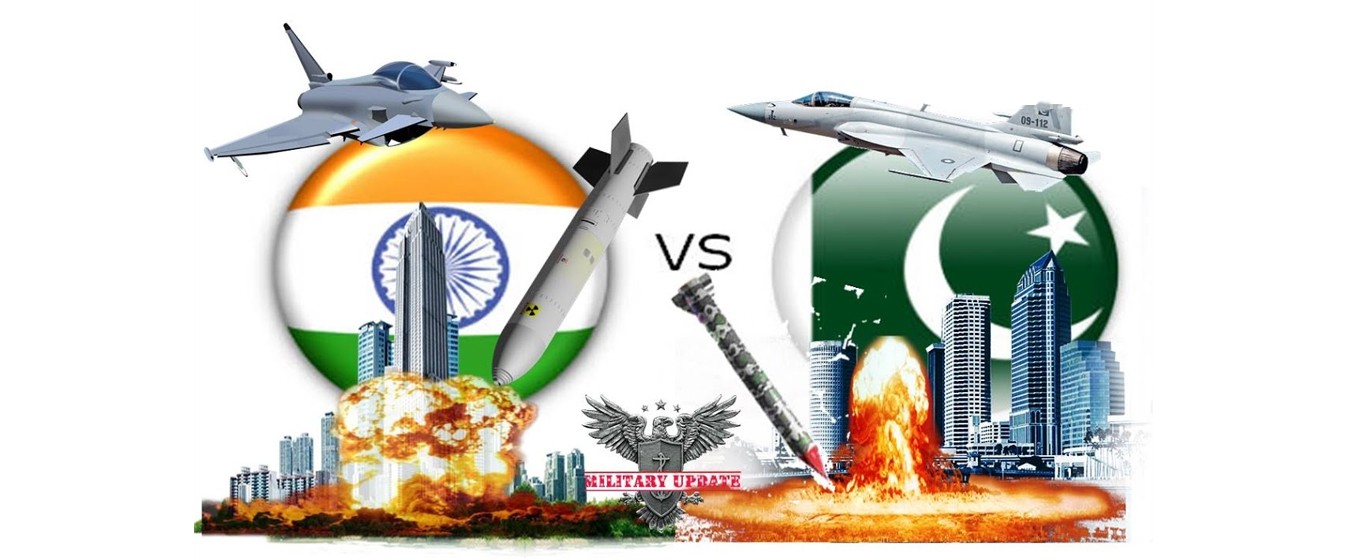
    The nuclear tests, of May 1998, by India and Pakistan, marked an epochal juncture for South Asia. The Doomsday Clock maintained by the Bulletin of the Atomic Scientists, jumped from 11:43 to 11:51, or just “9 minutes to midnight.”

    While, in India, the “Shakti” tests, do find celebratory mention, Pakistan observes the Chagai series of nuclear tests, as a national day, termed “Yom-e-Taqbir.” On the 25th anniversary of this event, Lt Gen Khalid Kidwai (Retd), currently, advisor, to Pakistan’s National Command Authority (NCA), delivered an address at the Arms Control and Disarmament Centre of the Institute of Strategic Studies, Islamabad.

    Kidwai, who served, for 14 years, as the Director-General of Pakistan’s Strategic Plans Division (SPD), was at the heart of Pakistan’s NCA, and oversaw the operationalisation of its nuclear deterrent. Although his talk was for public consumption, given the historic absence of an Indo-Pak nuclear dialogue, some of Kidwai’s statements – if taken at face value – contain worrisome undertones, which need analysis.

    After mentioning the rationale for Pakistan embarking on nuclear weaponization (“humiliation of the 1971 War followed by India’s nuclear test of May 1974”) Kidwai proceeded to enlighten the audience about the implications of Pakistan’s new policy of Full Spectrum Deterrence (FSD) and how it kept, “India’s aggressive designs, including the Indian military’s Cold Start Doctrine, in check.”

    While retaining the fig leaf of Credible Minimum Deterrence (CMD), Kidwai went on to mention the “horizontal dimension” of Pakistan’s nuclear inventory, held by the individual Strategic Force Commands of the Army, Navy and Air Force. The “vertical dimension,” of the Pak deterrent, he said, encapsulated “adequate range coverage from zero meters to 2750 km, as well as nuclear weapons of destructive yields at three tiers: strategic, operational and tactical.”

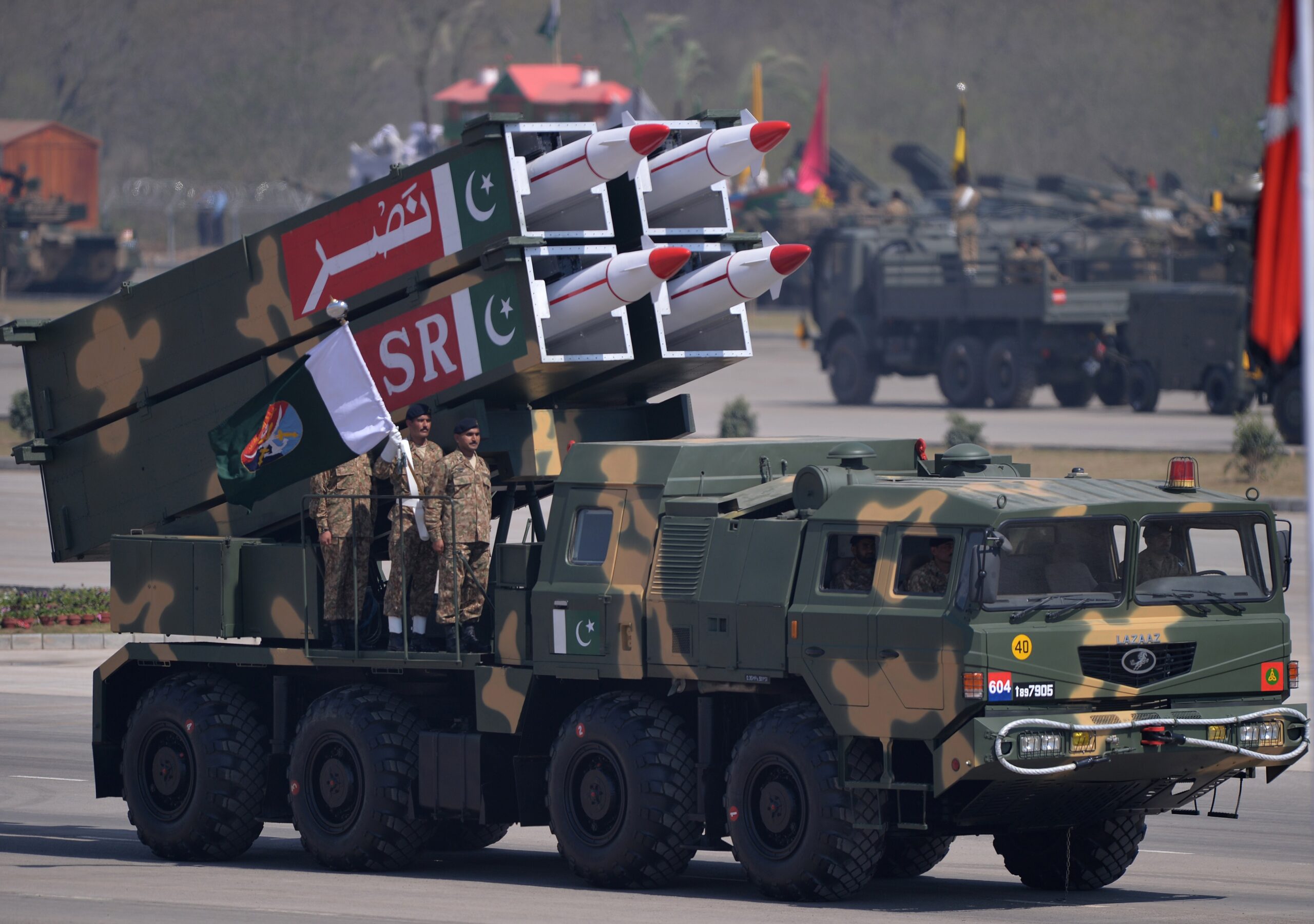
    While the missile range of 2750 km, corresponds, roughly, to the distance from a launch-point in south-east Sindh, to the Andaman Islands, and indicates the “India-specificity” of the Shaheen III missile, it is the mention of “zero metres” that is intriguing. Pakistan already has the 60 km range, “Nasr” missile, projected as a response to India’s Cold Start doctrine. Therefore, unless used as a colloquialism, Kidwai’s mention of “zero metres” range could only imply a pursuit of ultra short-range, tactical nuclear weapons (TNW), like artillery shells, land mines, and short-range missiles, armed with small warheads, of yields between 0.1 to 1 kiloton (equivalent of 100 to 1000 tons of TNT).

    By shifting from CMD to FSD, with the threat of nuclear first use, to defend against an Indian conventional military thrust, Pakistan is aping the, discredited, US-NATO Cold War concept of Flexible Response. Fearing their inability to withstand a massive Warsaw Pact armoured offensive, this 1967 doctrine saw the US and NATO allies deploy a large number of TNW to units in the field.

    However, the dangers of escalation arising from the use of TNW were soon highlighted, by US Secretary Defence, Robert McNamara’s, public confession: “It is not clear how theater nuclear war could actually be exe­cuted without incurring a very serious risk of escalating to general nuclear war.” This marked a turning point in US-NATO nuclear strategy.

    Kidwai’s speech contains three statements of note. Firstly, he attempts to dilute India’s declared policy of “massive retaliation” (MR), in response to a nuclear strike, by claiming that Pakistan possesses an entire range of survivable nuclear warheads of desired yield, in adequate numbers, to respond to India’s MR. He adds, “Pakistan’s counter-massive retaliation can therefore be as severe (as India’s) if not more.”

    Far more significant is Kidwai’s declaration that, since Pakistan’s missiles can threaten the full extent of the Indian landmass and island territories, “…there is no place for India’s strategic weapons to hide” (emphasis added).

    Secondly, in an attempt to downplay India’s (inchoate) ballistic missile defence (BMD), he declares that in a “target-rich India”, Pakistan is at liberty to expand the envelope and choose from counter-value, counterforce and battlefield targets, “notwithstanding the indigenous Indian BMD or the Russian S-400” (air-defence systems).

    Far more significant is Kidwai’s declaration that, since Pakistan’s missiles can threaten the full extent of the Indian landmass and island territories, “…there is no place for India’s strategic weapons to hide” (emphasis added). The assumption, so far, was that, given its limitations in terms of missile accuracy, real-time surveillance and targeting information, Pakistan would follow a “counter-value” or “counter-city” targeting strategy. The specific targeting of India’s nuclear arsenal, especially, if undertaken by conventional (non-nuclear) missiles, would add a new dimension to the India-Pakistan nuclear conundrum.

    Delivered in the midst of Pakistan’s acute financial crisis, as well as the ongoing political turmoil and civil-military tensions, one may be tempted to dismiss Lt Gen Kidwai’s recent discourse. However, as the longest-serving, former head of the SPD and architect of Pakistan’s nuclear deterrent, his views are widely heard and deserve our attention.

    Having voluntarily pledged “no first use” (NFU), India’s 2003 Nuclear Doctrine, espoused a “credible minimum deterrent” and promised “massive retaliation,” in response to a nuclear first strike. Since then, our two adversaries, China and Pakistan, have expanded and upgraded their nuclear arsenals, presumably, with corresponding updating of doctrines. India’s strategic enclave has, however, not only maintained a stoic silence and doctrinal status quo but also defended the latter.

    BJP’s 2014 Election Manifesto, had undertaken to “revise and update” India’s nuclear doctrine and to “make it relevant to current times,” but this promise has not been kept. Thus, India, currently, faces a moral dilemma as well as a question of “proportionality”: will the loss of a few tanks or soldiers to a Pakistani nuclear artillery salvo, on its own soil, prompt India to destroy a Pakistani city of a few million souls? Since India, too, has developed a family of tactical missiles, capable of counterforce strikes, does it indicate a shift away from CMD and NFU, calling for a response from our adversaries?

    These are just some of the manifold reasons why there is a most urgent need for the initiation of a sustained nuclear dialogue between India and Pakistan, insulated from the vagaries of politics. Such an interaction, by reducing mutual suspicion and enhancing transparency, might slow down the nuclear arms race and mindless build-up of arsenals.

    This article was published earlier in Indian Express.

  • Deal or No Deal: The Future of Iran’s Nuclear Agreement

    Deal or No Deal: The Future of Iran’s Nuclear Agreement

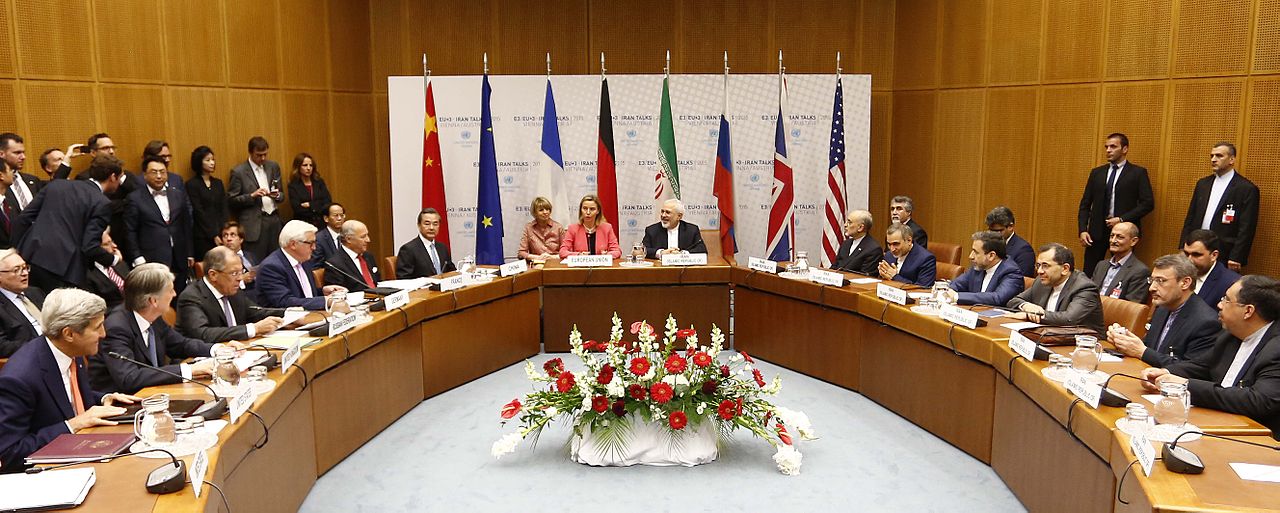
    Iran’s nuclear program has been at the epicentre of most non-proliferation narratives since the beginning of 21st century. From the initial stages of receiving nuclear assistance from US to being sanctioned for their nuclear activities, Iran has managed to remain at the centre of this discourse. In 2015, Iran signed the nuclear agreement with the five permanent members of the United Nations Security Council (UNSC) – the US, Russia, France, China and U.K as well as Germany and the European Union. However, with the arrival of Trump presidency, this deal was reopened by the US and has remained controversial despite a wide consensus that Iran has largely abided by the clauses of the agreement.

    The Iran Nuclear Deal or the Joint Comprehensive Plan of Action (JCPOA) is unique for a number of reasons. It is an amalgamation of years of negotiation process between countries of widely differing perceptions and interests. It is the coming together of the western powers with Iran in order to sign a deal to curb Iran’s nuclear programme and ensure non-proliferation of nuclear weapons. Over the course of fifty odd years, the series of discourses on Iran’s nuclear programme, since its genesis till the time the deal was signed has evolved significantly. These discourses have impacted and resulted in significant policy changes. Most importantly, it has also led to a process of rapprochement between Iran and the western states making it one of the landmark agreements in recent times. However, the deal also received criticism because the narratives portrayed that Iran got a better deal through lifting of sanctions while its part of the commitment to the non-proliferation requirements was much less.

    Unlike the Obama administration that pushed for the deal, President Donald Trump has been clear about his dislike for the agreement and has been an advocate of how this could possibly be “the worst deal”. Owing to this, Trump unilaterally pulled out of the agreement on May 08, 2018 and stated that he would reimpose sanctions until a better deal could be worked out. While Trump’s decision to undo years of negotiation comes from various factors such as Israeli influence, Iran’s support for Hamas and its role in Syria to name a few, it is also due to the perception of the Republican hardliners that there was not enough pressure put on Iran and that the US managed to get a bad deal out of it, and this remains a large part of Trump’s narrative. The US strategy now is to push for a more hard-line agreement and ensure complete isolation of Iran if it refuse to fall in line. This however, has failed because more than two years later there are still no signs of Iran buckling under US pressure, although the economic impact of sanctions has started to bite.

    Given the situation, there are four possible outcomes that can be observed – First, Iran is likely to play a victim card and protest to the Europeans for compensations against the unilateral sanctions that affect its economy despite Iran abiding to all the terms and conditions of the JCPOA. In another context, this could also push Iran to retaliate by threatening to pursue uranium enrichment and continue operations in its nuclear facilities while preventing the International Atomic Energy Agency (IAEA) from inspections. Recent announcements by the Iranian government regarding its nuclear enrichment is a clear indication that they are choosing the latter option. Secondly, while the European countries are disappointed with USA’s withdrawal, there are high chances of the deal falling apart purely based on the fact that the European members of P5+1 are strategically and intimately tied to the US through much larger scope of mutual interests. However, the European countries will aim to renegotiate the deal because of the serious security concerns that might come into play if Iran is pushed towards becoming a nuclear power. Thirdly, lack of commitment from the P5+1 countries might force Iran to second guess about its decision to renegotiate a new deal. If Iran decides to abandon the agreement, there exists a high risk of nuclear proliferation in the region. However, this would only lead to further sanctions from the other European countries as well. Therefore, any decision taken by Iran will have to be done taking all these factors into consideration. Finally, Iran’s strategy going forward will largely depend on USA’s strategy and the increasing economic pressure as a result. While Trump has chosen to withdraw from the deal, he has also stated that he is open to further negotiations to ensure a better deal. It is unclear as to what a better deal entails and therefore, Iran will have to play its cards right yet again to not only stop itself from being isolated and ridden with sanctions but to also prevent its own population from revolting against its decisions.

    Another aspect that comes into play with respect to the deal is the role of China and Russia as counter-weights to dealing with US pressure. Along with the European allies, both the countries are against Trump’s decision to leave the nuclear agreement, reintroduce sanctions and renegotiate the deal. Earlier, China and Russia’s involvement remained minimal in the JCPOA. This time around, both the countries won’t allow Iran to be isolated. China and Russia have had historical ties with Iran and therefore, have been reluctant participants in the sanctions regime. However, both the countries will now actively look to counter USA’s unilateral decisions regarding the deal and will support Iran weighing out the consequences.

    Iran is currently amidst domestic protests due to hike in fuel prices and bad economic conditions. Despite being an oil rich country, it is unable to reap the benefits of it through exports, due to sanctions. The Iranian government is exactly in the same situation it was in 2015 (politically and economically) when it signed the JCPOA. Therefore, strategically, this could be the right time for the US to give a window of opportunity to Iran to renegotiate. However, given the circumstances, renegotiating this deal is not at the top of the priority list for any of the countries and therefore, the future of the deal still remains uncertain.

    Looking ahead at the future possibilities

    If the countries come together again at the negotiating table, there are a few things that has to be done differently this time around to ensure that a deal is signed and is followed through. Firstly, a fool-proof clause has to be added in order to ensure that there are no easy exit strategies for any country from the deal. Once the deal is signed, every signatory has to abide by the deal unless there are any violations made by a member country. Secondly, with respect to Iran, the deal should be such that, the benefits of staying in the deal should be far more important than threatening to quit. Thirdly, the P5+1 countries have to ensure that they all have the same goal and approach to the deal rather if they want this deal to succeed. Fourthly, opportunity to improve the nuclear facilities in Iran must be provided but the agreement should be designed to detect and prevent clandestine programs. Finally, any further delay in signing a new deal will only increase Iran’s breakout capabilities which is counter-productive given that it was the need for the deal in the first place. Therefore, the imperative of saving or renegotiating the JCPOA as acceptable to all is never more urgent, particularly in the context of the emerging humanitarian crisis in Iran as a result of back-breaking sanctions.

    Swathi Kallur is a Research Intern with TPF. She holds a master’s in international relations from Symbiosis University, Pune. Views expressed are author’s own.

    Image Credit: Commons.wikimedia.org

  • TPF Discussion # 02: Plutonium for Energy? Explaining the Global Decline of MOX

    TPF Discussion # 02: Plutonium for Energy? Explaining the Global Decline of MOX

    Special Guest : Dr Alan J Kuperman LBJ School of Public Affairs, University of Texas, Austin

    Dr.Alan J. Kuperman, chair of the Graduate Studies Committee of the LBJ School’s Global Policy Studies program, University of Texas visited The Peninsula Foundation on 5th of August. He was accompanied by Dr D Subachandran, Professor & Dean, NIAS Bangalore who also facilitated the visit. The discussion centred around global nuclear issues with respect to non-proliferation and nuclear safety in the context of plutonium-based nuclear energy development practices. Dr Alan Kuperman’s presentation was based on the results of    a significant research program conducted by him under the NPPP (Nuclear Proliferation Prevention Project). The outcome of the project is his edited volume ‘Plutonium for Energy? Explaining the Global Decline of MOX’. His views drew extensively from his book. The interactive session commenced with Dr Kuperman presenting the stages of plutonium, recycling effects and further elaboration on  “Plutonium for Energy”  as it is the first-ever comparative research project on “mixed oxide” (MOX) fuel – containing both plutonium and uranium – used in light-water nuclear power reactors.  The project explores the manufacture and use of such MOX fuel in the seven main countries that have done so: Belgium, France, Germany, Japan, the Netherlands, Switzerland, and the United Kingdom.

    Plutonium as the fuel for nuclear energy evolved from the perceived advantages of its closed fuel cycle that would have done away with or reduced the complexities and hazards of having to address long period storage of increasing amounts SNF (Spent Nuclear Fuel) from Uranium-based nuclear (thermal) reactors. According to the study this is a misconception, and he projected that Plutonium is a controversial fuel for three major reasons: Plutonium from reprocessing can be used to make nuclear weapons; it is carcinogenic and so a huge health hazard; and is a very costly process that makes it uneconomical. The main focus of this line of argument was non-proliferation, and the need to make countries move away from plutonium cycle so as to eliminate nuclear weapons possibility, including the possibility of terrorist angle. Participants raised questions about countries like India, which can exploit its vast reserves of Thorium through closed fuel cycle for energy while also addressing their security concerns. The countries selected in the study do not represent a viable model for countries like India and China. Pakistan is already focused extensively on plutonium cycle. Hence, it was pointed out, decision on this issue would be complex for India. One of the primary objectives of the study is also to inform ongoing decision-making in East Asia – including China, Japan, and South Korea – about whether to recycle plutonium for energy.

    [sc name=”donte”]