Category: Military Power & Modernisation

  • Guerrilla Air Defence: Strategy of the Underdog

    Guerrilla Air Defence: Strategy of the Underdog

    Guerrilla air defence is a testament to human ingenuity in asymmetrical warfare. Irregular forces can challenge even the most sophisticated air powers by adapting low-cost solutions, decentralised tactics, innovative technologies, and asymmetrical strategies.

    In the modern era of warfare, air superiority has become a cornerstone of military strategy. Nations with advanced air forces often dominate battlefields, leveraging precision-guided munitions, reconnaissance drones, and stealth technology. However, guerrilla forces, lacking comparable resources, have developed innovative air defence strategies to counter such overwhelming air dominance. Guerrilla air defence embodies the ingenuity of the underdog, employing asymmetric tactics and exploiting weaknesses in advanced air forces.

    Guerrilla Air Defence

    Guerrilla air defence refers to the methods and tactics employed by ground forces, mainly non-state actors or irregular forces, to counter the overwhelming aerial superiority of state militaries. In modern conflicts, air dominance often plays a pivotal role in determining outcomes, and ground forces must innovate to level the battlefield. These tactics range from using man-portable air defence systems (MANPADS) to employing deception, leveraging urban terrain, and deploying counter-drone measures.                                  

    Historical Background
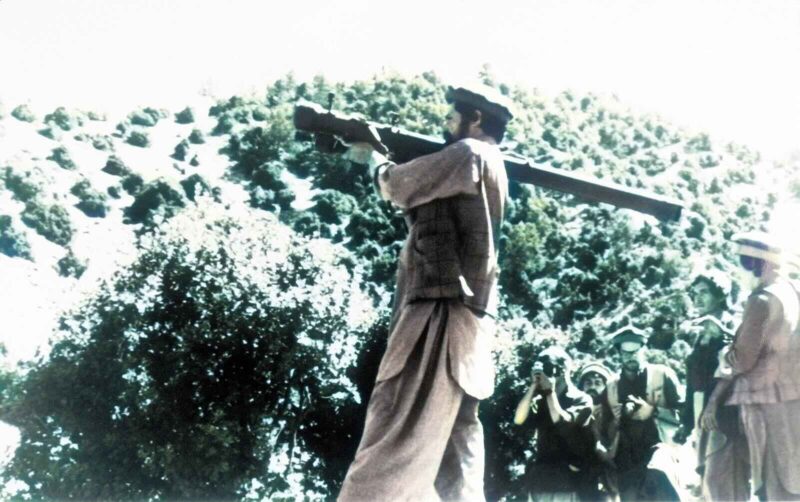
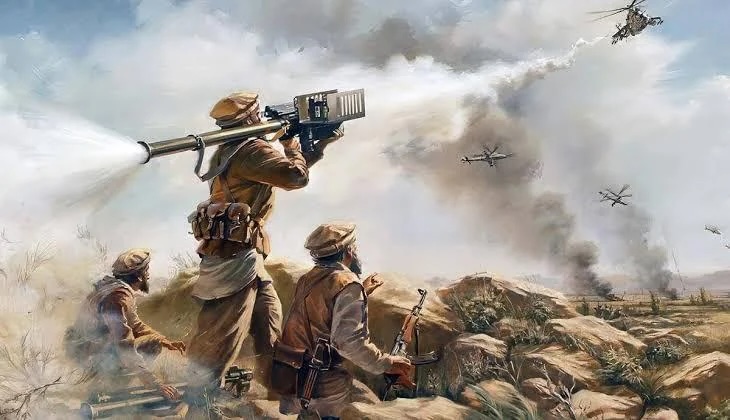
    Mujahideen firing a Stinger (Soviet-Afghan War 1979-89): Image Credit-wikimedia commons

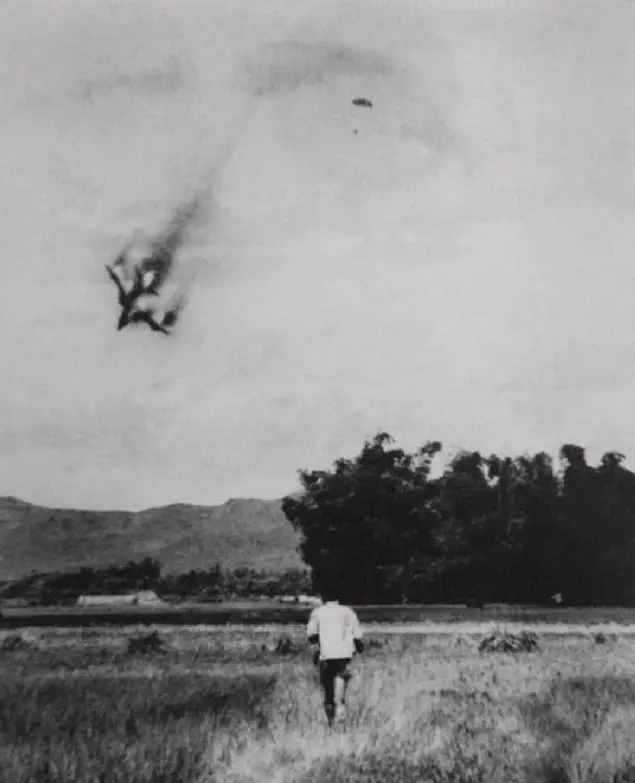
    Vietcongs in action against US aircraft during Vietnam War 1965-1975 (Image – www.thearmorylife.com)

    The concept of guerrilla air defence emerged during the Cold War, as smaller forces sought ways to combat technologically superior opponents. Early examples include the North Vietnamese forces, with Soviet and Chinese support, employing a mix of surface-to-air missiles (SAMs), anti-aircraft artillery (AAA), and man-portable air defence systems (MANPADS) to counter American air supremacy. The infamous downing of U.S. planes over Hanoi—dubbed “SAM City”—highlighted the effectiveness of such strategies. During the Afghan-Soviet War (1979-1989), Afghan mujahideen famously utilised U.S.-supplied Stinger missiles to neutralise Soviet helicopters and jets, turning the tide in specific regions and undermining Soviet morale. These historical precedents set the stage for modern guerrilla air defence tactics, which blend ingenuity, adaptability, and external support.

     Principles of Guerilla Air Defence

    Mobility and Concealment: Mobility and concealment are fundamental to guerrilla air defence. Unlike conventional militaries that deploy fixed air defence installations, guerrilla forces rely on portable systems and improvised techniques to remain undetected. Camouflage, underground networks, and rapid movement are essential to avoid detection by aerial surveillance. Guerrilla fighters exploit natural and urban terrain to conceal their positions, using forests, mountains, and cityscapes as cover.

    Decentralisation: Unlike conventional forces, guerrillas rely on dispersed, mobile, small, independent cells. This limits the effectiveness of an enemy’s centralised air strikes and ensures survivability by reducing the risk of total system compromise if one group is detected.

    Exploiting Vulnerabilities: Guerrilla air defence capitalises on the inherent vulnerabilities of modern air power. Helicopters and battlefield air support aircraft often operate at low altitudes and are prime targets for guerrilla forces. Air forces operating in conflict zones usually follow predictable flight paths or schedules. Guerrilla forces use intelligence and reconnaissance to identify and exploit these patterns.

    Innovation, Improvisation and Resource Maximisation: Guerrillas rely on improvised systems, salvaged weaponry, and external aid to bolster their capabilities. Guerrilla air defence thrives on innovation, often repurposing civilian technologies or adapting outdated equipment. Guerrilla groups have been known to convert commercial drones into makeshift anti-aircraft platforms or deploy modified artillery to target aircraft. Using decoys and false signals to mislead enemy pilots and air defence systems is a common tactic.

    Psychological and Strategic Impact: The psychological effects of guerrilla air defence extend beyond physical damage to aircraft. Even a limited success rate in downing aircraft can significantly reduce the adversary’s willingness to conduct low-risk operations. Each successful engagement serves as a propaganda tool, showcasing the resilience and effectiveness of the underdog.

    Modern Techniques in Guerilla Air Defence

    Modern technology, the fighting environment, and new systems and platforms influence the evolution of newer techniques of guerrilla warfare.

    MANPADS: MANPADS have revolutionised guerrilla air defence due to their portability, ease of use, and effectiveness against low-flying aircraft. One of the most effective tools in guerrilla air defence is using MANPADS, such as the American-made FIM-92 Stinger or the Russian Igla systems. Small teams can carry these portable missile systems and target low-flying aircraft, including helicopters and drones. By utilising these weapons in ambushes or from concealed positions, ground forces can inflict significant damage on technologically superior adversaries, as demonstrated in Afghanistan during the 1980s and the recent Russia-Ukraine war.

    Innovations: While less mobile than MANPADS, AAA remains a staple of guerrilla air defence. Improvised mounts, hidden emplacements, and integration with civilian infrastructure enhance its effectiveness. Groups frequently modify heavy machine guns and anti-aircraft guns like the ZSU-23-4 Shilka. These systems are often mounted on trucks for mobility and used to target low-altitude threats. While less precise than missiles, their volume of fire can pose a substantial threat to helicopters and low-flying planes.

    Urban Environment: Urban environments provide an advantage for the ground forces due to the dense infrastructure that limits aircraft manoeuvrability.  Ground fighters use rooftops, narrow streets, and underground networks to evade detection and launch surprise attacks. In Syria and Iraq, insurgents have used such strategies to counter aerial operations by state and coalition forces.

    Drones: Modern airpower—characterised by drones, advanced jets, and electronic warfare capabilities—poses unique challenges to ground forces. The proliferation of drones has forced forces to develop countermeasures, such as portable jammers, anti-drone rifles, and improvised kinetic solutions like nets or small arms fire.

    Passive Measures: Camouflage and deception remain critical in evading aerial surveillance. Ground forces must rely on natural cover, decoy installations, and rapid mobility to avoid detection. In the Vietnam War, the Viet Cong famously used tunnels and dense jungle foliage to counter U.S. air superiority.

    Implications of Guerilla Air Defence on Modern Warfare
    Guerrilla air defence has emerged as a critical factor in modern warfare, reshaping the dynamics of aerial supremacy and asymmetric conflict. While these strategies aim to counter technologically superior air forces, they carry profound implications for guerrilla groups and conventional militaries. By disrupting aerial operations and imposing costs on powerful adversaries, guerrilla air defence challenges traditional military doctrines and influences the broader landscape of modern conflict.

    Prolonging Conflicts and Increasing Costs: Guerrilla air defence strategies can effectively neutralise or deter low-altitude operations. This capability forces adversaries to adapt, often at significant financial and operational costs. For instance, deploying advanced countermeasures, rerouting flight paths, or relying on high-altitude bombers requires additional resources. As a result, conflicts involving guerrilla air defence tend to become protracted, straining the logistics and finances of all involved parties. The prolonged nature of such conflicts can also erode public and political support for military interventions. For example, the psychological and economic toll of losing expensive aircraft or personnel to guerrilla defences can influence domestic perceptions of the conflict’s viability.

    Evolving Air Warfare Tactics: Conventional militaries must adapt their air warfare strategies to counter guerrilla air defence. This evolution includes increased reliance on high-altitude operations, precision-guided munitions, and stealth technology. Modern air forces also invest heavily in countermeasures such as infrared jammers, flares, and electronic warfare systems to neutralise guerrilla threats. The rise of guerrilla air defence has also accelerated the development of unmanned aerial systems (UAS) for reconnaissance, surveillance, and strike missions. Being expendable and capable of operating in hostile environments, drones minimise the risks associated with manned operations. This shift represents a significant transformation in aerial warfare, emphasising technology over traditional pilot-led missions.

    Impact on Urban and Asymmetric Warfare: Urban environments provide natural concealment and mobility advantages for guerrilla fighters, making them ideal battlegrounds for deploying guerrilla air defence systems. By leveraging civilian infrastructure and the complexity of urban terrain, guerrilla forces can create no-fly zones or deny access to key air corridors. This trend has made urban warfare increasingly challenging for conventional militaries, which must balance operational objectives with minimising civilian casualties and collateral damage.

    Proliferation of Advanced Technology: The success of guerrilla air defence has spurred the proliferation of advanced yet accessible technologies. MANPADS, drones, and electronic warfare tools have become increasingly available on the black market or through state sponsorship. This diffusion of technology not only empowers guerrilla groups but also raises concerns about their use by terrorist organisations or non-state actors in unconventional warfare.

    Redefining Air Superiority: In traditional warfare, air superiority was synonymous with dominance over adversaries. However, guerrilla air defence challenges this notion by proving that even technologically inferior forces can contest airspace. This shift underscores the importance of integrating multi-domain strategies considering ground-based threats alongside aerial operations. For example, in conflicts such as the Syrian Civil War or the Ukraine-Russia war, guerrilla air defence has demonstrated that controlling the skies no longer guarantees uncontested dominance on the ground. The interplay between air and ground forces requires a more nuanced approach, blending technology with adaptable tactics.

    Strategic and Political Implications: Guerrilla air defence imposes strategic dilemmas on conventional forces, often compelling them to overextend resources or adopt more cautious operational postures. This dynamic can undermine the perceived effectiveness of powerful militaries, affecting their credibility and deterring future interventions. Politically, the effectiveness of guerrilla air defence can shift the balance of power in asymmetric conflicts. By contesting air supremacy, guerrilla forces gain leverage in negotiations or peace processes, demonstrating their resilience and capacity to endure prolonged engagements.

    Challenges and Limitations of Guerilla Air Defence

    Guerrilla air defence, while innovative and impactful in certain situations, faces numerous challenges and limitations. These obstacles stem from technological gaps, resource constraints, and the inherent asymmetry between irregular forces and advanced air power.

    Technological Disparity: One of the primary challenges guerrilla groups face is the vast technological gulf between them and conventional military forces. Modern air forces deploy fifth-generation stealth aircraft, precision-guided munitions, and advanced surveillance systems. In contrast, guerrilla forces often rely on outdated or improvised equipment. While tools like man-portable air defence systems (MANPADS) can neutralise low-flying aircraft, they are ineffective against high-altitude bombers or stealth fighters. Advanced countermeasures, such as infrared jammers and decoys, further diminish the impact of guerrilla tactics.

    Logistics and Maintenance: Air defence systems, even portable ones, require robust logistical support. Maintaining and deploying these systems necessitates technical expertise, spare parts, and a steady supply of ammunition. Guerrilla groups, often operating in resource-scarce environments, struggle to sustain such logistical chains. Over time, wear and tear render many systems inoperable, and acquiring replacements or repairs can be risky and costly.

    Detection and Targeting Vulnerabilities: The effectiveness of guerrilla air defence relies heavily on concealment and mobility. However, advancements in surveillance technology, such as drones, satellite imagery, and AI-powered analytics, make it increasingly challenging for guerrilla forces to remain hidden. Once detected, these forces become vulnerable to precision strikes or overwhelming aerial assaults, negating their defensive efforts.

    Dependence on External Support: Guerrilla groups often depend on external states or entities to access advanced air defence systems. This reliance introduces vulnerabilities, as shifts in international politics or interruptions in supply chains can leave these groups without critical resources. For example, a sudden embargo or the withdrawal of support from a sponsor state can cripple guerrilla air defence capabilities.

    Financial Constraints: Air defence is inherently resource-intensive. Procuring, transporting, and maintaining systems like MANPADS or drones requires significant financial investment. Guerrilla groups operating with limited funding must prioritise resources across multiple operational needs, often leaving air defence underfunded. Moreover, the cost-benefit ratio usually favours their adversaries; an advanced air force can deploy inexpensive countermeasures or overwhelm defences with superior numbers.

    Psychological and Operational Strain: Constant exposure to aerial bombardments and the awareness of technological inferiority take a toll on guerrilla fighters’ morale. The strain of operating under the persistent threat of airstrikes can lead to operational inefficiencies and diminished cohesion. Furthermore, the psychological impact of losing critical assets, such as an air defence unit or a valuable weapon system, can significantly affect a group’s strategic planning.

    Limited Strategic Impact: Guerrilla air defence is inherently reactive, designed to mitigate air superiority rather than achieve dominance. While it can disrupt operations and impose costs on adversaries, it rarely shifts the overall balance of power in a conflict. This limitation means that guerrilla air defence is more a delaying tactic than a decisive strategy.

    Conclusion

     Guerrilla air defence is a testament to human ingenuity in asymmetrical warfare. Irregular forces can challenge even the most sophisticated air powers by adapting low-cost solutions, decentralised tactics, innovative technologies, and asymmetrical strategies. Guerrilla air defence’s implications for modern warfare are far-reaching, influencing military strategy, technology development, and conflict outcomes. While it disrupts aerial operations and challenges conventional doctrines, guerrilla air defence also faces significant limitations, such as resource constraints and susceptibility to countermeasures. Nevertheless, its role in redefining the dynamics of air superiority and asymmetric warfare highlights its growing importance in the ever-evolving landscape of modern conflict.

    References:

    1. Boot, M. (2002). The Savage Wars of Peace: Small Wars and the Rise of American Power. Basic Books.
    2. Coll, S. (2004). Ghost Wars: The Secret History of the CIA, Afghanistan, and Bin Laden. Penguin Books.
    3. Jones, S. G. (2017). Waging Insurgent Warfare: Lessons from the Viet Cong to the Islamic State. Oxford University Press.
    4. Hura, M. et al. (2000). Interoperability: A Continuing Challenge in Coalition Air Operations. RAND Corporation.
    5. “Counter-Unmanned Aircraft Systems (C-UAS)” (2021). Center for Strategic and International Studies (CSIS).
    6. Biddle, Stephen, and Jeffrey A. Friedman. “The 2006 Lebanon Campaign and the Future of Warfare: Implications for Army and Defence Policy.” Strategic Studies Institute, 2008.
    7. McInnes, Colin. “The Impact of Air Power on Insurgency and Guerrilla Warfare.” RUSI Journal, Vol. 134, No. 2 (1989): 47–53.
    8. Schulte, Paul. “Proliferation and the Revolution in Military Affairs.” Survival, Vol. 39, No. 1 (1997): 21–42.
    9.   Small Arms Survey. MANPADS: Combating the Threat to Global Aviation from Portable Air Defence Systems. Geneva: Graduate Institute of International and Development Studies, 2011.
    10. RAND Corporation. The Air War in the Gulf: Assessing the Results. Santa Monica: RAND, 1993.
    11. Keegan, John. The Face of Battle. New York: Viking Press, 1976.
    12. Cordesman, Anthony H. The Changing Face of War: Lessons of Combat, from the Marne to Iraq. Washington, D.C.: CSIS Press, 2007.
    13. Grau, Lester W., and Michael A. Gress. The Soviet-Afghan War: How a Superpower Fought and Lost. Lawrence: University Press of Kansas, 2002.
    14. Beckett, Ian F.W. Modern Insurgencies and Counter-Insurgencies: Guerrillas and Their Opponents since 1750. London: Routledge, 2001.
    15. United Nations Office for Disarmament Affairs (UNODA). Study on the Proliferation of Small Arms and Light Weapons, Including MANPADS.
    16. U.S. Department of Defence. Counter-Insurgency Air Operations: Best Practices and Challenges.


    Feature Image Credit: www.reddit.com

    Image of US aircraft shot down by Vietnamese: https://en.topwar.ru

  • Decoding Quantum Computing: Understanding the Basics

    Decoding Quantum Computing: Understanding the Basics


    Quantum computing has the potential to revolutionise the field of computing and has far-reaching implications for the future of technology. It is a complex and rapidly evolving field that requires a deep understanding of quantum mechanics and computer science.

    Quantum Computing and Moore’s Law

    Quantum computing is set to revolutionise the field of computation by leveraging the principles of quantum mechanics. While classical computing, which follows Moore’s Law, is approaching its physical limits, quantum computing offers a way to surpass these boundaries. Moore’s Law states that the number of transistors on a microchip doubles approximately every two years, leading to exponential growth in computing power. However, this trend cannot continue indefinitely due to the physical limitations of classical hardware.

    Nature Simulation with Quantum Processors

    Unlike classical bits, quantum bits (qubits) can exist in multiple states simultaneously, thanks to a property known as superposition. This means that a quantum computer can process a vast number of possibilities all at once. For example, in a maze, a classical computer would explore each path one by one, while a quantum computer could explore all paths simultaneously. This is illustrated in the following diagram:

    Quantum computing exploits entanglement and superposition to perform calculations at unprecedented speeds. This capability makes it particularly suited for simulating natural processes at the atomic and molecular levels, tasks that classical computers struggle with.

    Challenges in Quantum Computing

    Quantum computing, despite its promising potential, encounters notable obstacles primarily stemming from the delicate nature of qubits. Qubits, the fundamental units of quantum information, exhibit high sensitivity to external factors, rendering them susceptible to coherence loss caused by thermal noise. This susceptibility results in increased error rates during computation. Preserving qubit coherence presents a significant challenge, as even minimal disturbances can induce decoherence, disrupting quantum operations.

    In addition to superconducting qubits, other quantum computing methods also face significant challenges. For instance, trapped ion qubits are highly susceptible to environmental noise and require extremely precise laser control to maintain coherence, which is technically demanding and resource-intensive. Topological qubits, while theoretically more robust against local perturbations, are still in nascent stages of experimental realisation, and creating and manipulating these qubits remains a formidable challenge. Photonic qubits rely on maintaining precise control over individual photons, which is difficult due to losses and the need for high-fidelity detectors and sources. Quantum dot qubits face issues with variability in dot size and composition, affecting their uniformity and coherence times. Each of these methods requires sophisticated error correction techniques and significant advancements in material science and engineering to overcome their respective challenges.

    Remarkably, natural quantum processes (Quantum Biology) operate seamlessly at room temperature, a phenomenon that remains elusive in terms of being replicated effectively in artificial quantum systems.

    If these significant technical challenges can be overcome, quantum computing promises unprecedented computational power and transformative applications across various fields.

    Ultimate Applications of Quantum Computing

    Quantum computing holds the promise of facilitating groundbreaking advancements across various disciplines. Research literature underscores its potential in drug discovery, where quantum computers exhibit superior efficacy in modelling intricate molecular structures compared to classical counterparts. Similarly, in financial modelling, quantum algorithms demonstrate the capacity to optimise portfolios with unparalleled precision.

    Military Advancements

    Quantum sensing and communication technologies have the potential to significantly revolutionise military capabilities. Quantum radar systems, for instance, possess the capability to detect stealth aircraft, overcoming the limitations of conventional radar systems. Additionally, secure Quantum communication could provide robust defences against cyber threats, ensuring the integrity and confidentiality of sensitive information.

    Elevating Humanity

    The applications of quantum computing have the potential to propel humanity towards a Type II civilization on the Kardashev Scale, endowed with the capability to harness and manage energy on a planetary scale. By manipulating quantum processes, we stand poised to address pressing global challenges such as climate change and energy scarcity.

    Green Revolution and Sustainability

    Among the most auspicious applications of quantum computing is its potential to revolutionise artificial photosynthesis, thereby paving the way for sustainable energy solutions. Quantum computers are poised to streamline nitrogen capture processes, indispensable for enhancing agricultural productivity and potentially instigating a second green revolution. Such advancements hold the promise of ameliorating food security concerns and accommodating the burgeoning global population, echoing the transformative impact of the initial green revolution.

    How the Race Started

    The Inception and Influence of Peter Shor’s Algorithm

     The quest for quantum supremacy gained significant momentum with the groundbreaking work of Peter Shor, a mathematician and theoretical computer scientist. In 1994, Shor developed an algorithm that fundamentally challenged the security of classical cryptographic systems. Shor’s algorithm, designed to run on a quantum computer, efficiently factors large integers—a task that is exponentially time-consuming for classical computers. This capability poses a direct threat to widely used cryptographic schemes, such as RSA, which rely on the difficulty of factoring large numbers for security.

    Shor’s discovery was a pivotal moment that captured the attention of both the academic community and government agencies, particularly those concerned with national security, such as the National Security Agency (NSA). Recognizing the profound implications for encryption and data security, the NSA and other entities significantly increased their investments in quantum computing research and development.

    This breakthrough ignited international competition, with major world powers like the United States, China, and the European Union vying for dominance in the field. Each nation adopted different technological approaches in their pursuit of quantum supremacy. For example, Google and IBM focus on superconducting qubits, IonQ employs trapped ion technology, and Microsoft explores the potential of topological qubits.

    These diverse methodologies reflect the broad and multifaceted efforts to harness the unprecedented computational power promised by quantum computing.

    Race of the 21st Century

    The quest for quantum supremacy is the new frontier in technological competition, reminiscent of past races like the nuclear arms race (peaking in the 1950s) and the space race1 (culminating in the 1969 moon landing). However, the stakes in the quantum race are arguably higher. Estimates suggest the global quantum computing market could reach $50 billion by 2030. Achieving quantum supremacy, the ability of a quantum computer to outperform a classical computer for a specific task, is not just a scientific milestone but a potential economic and strategic game-changer.

    The country that first achieves and leverages quantum supremacy is poised to become a global leader in innovation, economic growth, and, potentially, military dominance. This potential has spurred fierce international competition, with nations like China, the United States, and the European Union investing heavily in quantum research and development.

    References

    Kaku, Michio. Quantum Supremacy: The Quest to Build the World’s Most Powerful Computer. New York: Doubleday, 2023

    – (2017) “Feeding the World with Die Rolls: Potential Applications of Quantum Computing,” Dartmouth Undergraduate Journal of Science: Vol. 20: No. 1, Article 9.

    Shor algorithm

     Quantum computational chemistry

    Quantum computing research trends report


  • The Indian Military: Five Issues for the immediate Future

    The Indian Military: Five Issues for the immediate Future

    While much has happened in 2023, new developments in the security dynamic warrant a relook at the transformation process. India now has to be prepared to prosecute both short and prolonged wars. Clearly defined political aims must be translated into achievable military objectives on the borders.

    2023 was an eventful year. In addition to ongoing conflicts in Africa, Afghanistan, Syria and Ukraine, it witnessed the start of yet another war in the Gaza Strip, which by early 2024 had expanded across West Asia. The Red Sea region is witnessing duels between the Houthis and the West. Israel and Hezbollah are skirmishing in Lebanon. Iran has carried out strikes in Iraq and Syria. The US has blamed Iranian proxies for causing the deaths of its service personnel in Jordan and retaliated accordingly across Iraq and Syria. Iran and Pakistan have carried out tit-for-tat missile strikes. While conflicts such as Nagorno Karabakh have ended for now, other potential trouble spots in the Balkans and South and East China Seas continue to make headlines.

    This uncertain security environment has put trade, supply chains and, in some cases, national sovereignty at risk. At home, long-festering structural issues in the India-China relationship have come to a head. China’s belligerence is on full display along our Northern borders even as it makes further inroads in Bhutan, Bangladesh, Nepal and Sri Lanka. In 2024, Maldives has displayed a pronounced anti-India tilt. Pakistan’s intractability and support for terrorism, despite its precarious internal situation and volatile borders on its West, remains a cause for concern. In Myanmar, the civil war rages on, while the outcome of ethno-religious conflict, which has spilled across international borders in Manipur and Mizoram, poses a different challenge.

    Despite 20 rounds of Corps Commanders talks, the Army is completing its fourth winter of ‘mirror deployment’ along the Line of Actual Control (LAC). Small-scale operations at the LAC have continued at least till 2022, as citations for gallantry in respect of individual soldiers on Republic Day indicate. The Chief of Army Staff (COAS) announced in his annual press conference in January that there will be no reduction in troop levels until the return to the ‘status quo ante as of mid-2020. Concurrently, the Army continues to battle terrorists on both sides of the Pir Panjal ranges in Jammu and Kashmir. The Air Force remains highly alert even as the Navy is committed full time in the Western Arabian Sea and East coast of Africa, successfully protecting Indian shipping ( and ships of other nations) from piracy and other threats. In sum, the Indian military is committed to ensuring the nation’s security full-time.

    The Indian Army had labelled 2023 as its ‘Year of Transformation’, based on the five pillars of Force Structuring & Optimisation, Modernisation & Technology Infusion, Systems, Processes & Functions, Human Resource Management and Jointness & Integration. The Ministry of Defence (MoD), in its 2023 Year End Review, has listed various proposals totalling over Rs 3.50 lakh crores that were approved to enhance operational preparedness. These cover a wide range of equipment and upgrades – from procurement of light combat helicopters to indigenous upgradation of Su-30 MKI aircraft, purchase of medium-range anti-ship missiles for the Navy and acquisition of towed gun systems for the Army. Other notable items are procurement of Sea/ Sky Guardian drones (31 of these since approved for sale by the US State Department in February 2024), utility helicopters, light armoured multi-purpose vehicles, anti-tank guided missiles (ATGMs), Very Short Range Air Defence Systems (VSHORAD) and cadet training ships. Improvements in other spheres – progress towards Atmanirbharta, indigenisation, border infrastructure, roads, induction and career management of women, and welfare of veterans- have also been covered. The individual services have also listed their achievements in enhancing operational capabilities and overall efficiency.

    While much has happened in 2023, new developments in the security dynamic warrant a relook at the transformation process. India now has to be prepared to prosecute both short and prolonged wars. Clearly defined political aims must be translated into achievable military objectives on the borders. The nature of these conflicts will be difficult to determine. With elements of both the conventional and non-conventional employment of weapon systems across all five domains with simultaneous conduct of information operations, they will be genuinely hybrid and constantly mutating, based on whichever element achieves more significant success.

    As a first step, it becomes necessary to incorporate fresh thought and prepare a fully fleshed-out tri-service Indian military doctrine. The integrated doctrine issued by the Integrated Defence Staff (IDS) in 2017 requires review to incorporate analysis and lessons learnt from Nagorno Karabakh, Ukraine, Gaza and our current experiences on the Northern borders, with the ‘collusive threat’ now a reality. Given that doctrine is essentially a set of principles that tells us ‘how to do’, i.e. how to achieve desired effects and not specifically ‘what to do’, capability development logically flows from doctrine analysis. Here, there has to be a consensus between the services on capabilities necessary to fulfil the military’s mandate – new platforms or technology, organisational issues, enhancement of joint or single service logistic capability, training and human resource aspects or upgrades.

    For the short to medium term, increasing focus on new technology must be balanced with the capacity to absorb technology and the context in which such weapons are envisaged to be employed. While incorporation of  AI, quantum computing, electronic warfare, stealth technology, space warfare and the like will be very much on the cards, all these can truly be incorporated once there is greater clarity and broader consensus upon two issues – what is the right weapon mix for a country like India to have, in terms of the proportion of latest generation weapons vis a vis what remains in the inventory and can be employed effectively now and in the immediate future, to thwart the enemy’s perceived designs? This is especially important when we look at the options available to incorporate new technology in terms of the time required for indigenous self-development and the secretive mindset of foreign suppliers with respect to sharing the intricacies of technologies that power such costly weapon systems. Secondly, a holistic consideration of the number of technologies that need to be developed in this time frame as part of capability development becomes necessary when we analyse the weapon/capability mix required to defend against an attacker – including one whose political and military objectives at the start of a conflict remain opaque, and whose capabilities and pattern of operations are possibly more overhyped than actual.

    The above issues become even more relevant when we look at the allocations for defence in the interim budget presented in Parliament on 01 February this year. Detailed analyses on the defence aspect will likely be published in days to come. In the context of this article, just two examples are highlighted. First, the 30 per cent higher allocation for Border Roads is hugely appropriate as it fits into future planning and enhances capability and capacities. Second, the deployment of the budget of Rs 23,855 crores to the DRDO and planned funding of a Rs 1 Lakh crore corpus for R&D projects, including ‘deep defence’ technology, while a positive step, must be carefully thought out, based on the aspects highlighted in the preceding paragraphs.Industry start-ups are doing a valuable job introducing the latest generation of weapons and technology to the military in concert with organisations like the Army Design Bureau. The incorporation of new technology and subsequent production of new weapons will be predicated on answers to these issues.

    Organisational aspects are another area for the military’s focus in 2024. Work on integrated theatre commands continues and will surely see the light of day. Notwithstanding the non-availability of a National Security Strategy, the Integrated Defence Staff (IDS) has to list out with absolute clarity what the mission of each theatre command is, in synchronicity with national aims. How to ensure optimal efficiency of these integrated resources for mission accomplishment has to be carefully thought out through multiple iterations with all stakeholders. This will have to be subject to rigorous validation in several tabletop and ground variety exercises to arrive at a common and operationally validated solution.

    Human resource issues will compete equally for the military’s attention. The Agniveer experiment has completed a little over one year. The performance of these soldiers in operations has been on par with their counterparts of yesteryears (of the same seniority). However, it is their performance in garrison soldiering that is yet to be fully gauged. As mentioned by the COAS, their assessment at multiple levels has to be continuously finetuned to remove any traces of subjectivity. Close monitoring of this scheme is necessary before pronouncing judgement on its success or otherwise, specifically its impact on regimental ethos and overall effect on unit efficiency. Employment of increasing numbers of woman Agniveers and woman officer intakes is another area which will occupy the minds of Commanding Officers (COs) of the three services. The recent decision of the Karnataka High Court in January 2024 striking down the provision of the Indian Military Nursing Services Ordinance 1943, which gives 100% reservation for women in nursing officer posts, is another spinoff in the battle for gender equality. This lends further urgency to the need to evolve an Indian model for the successful integration of women into the armed forces. Gender sensitisation of both sexes in uniform is of utmost priority.

    Managing high quality men and women drawn from all corners of India mandates a high degree of personal and professional integrity, sense of balance, and strength of character in military leaders at every level, specially so in an era where misinformed (or deliberate) inputs on social media can wreak havoc in society.

    Finally, as always, the military has to continue focusing on reinforcing institutional values. All militaries are dynamic. They must be nurtured and motivated by caring, professional and impartial leadership. A quote attributed to Sir Winston Churchill in his address to the House of Commons in 1923 says ‘…the armed forces.. are living things, if they are bullied, they sulk, if they are unhappy, they pine, if they are harried, sufficiently they get feverish, if they are sufficiently disturbed, they will wither and dwindle and almost die…’.Preserving the health of their respective services along with enhanced operational preparedness is the foremost task of the service chiefs. This comes about by careful selection of higher leadership, strict adherence to the culture, ethics and norms of the Indian military while forswearing all else at the altar of professionalism. Managing high quality men and women drawn from all corners of India mandates a high degree of personal and professional integrity, sense of balance, and strength of character in military leaders at every level, specially so in an era where misinformed (or deliberate) inputs on social media can wreak havoc in society. The responsibility of the Chiefs in this regard is onerous indeed and cannot be overemphasised. All else follows from this.

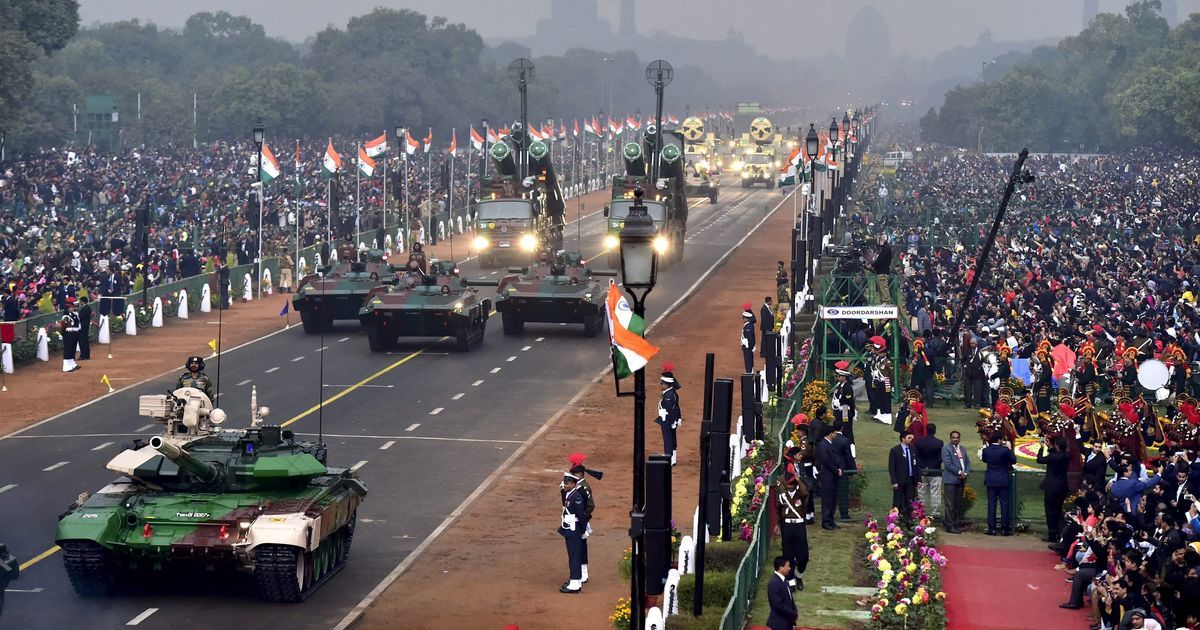
    Feature Image Credit: scroll.in

  • The Asymmetric Indo-US Technology Agreement Points to India’s Weak R&D Culture

    The Asymmetric Indo-US Technology Agreement Points to India’s Weak R&D Culture

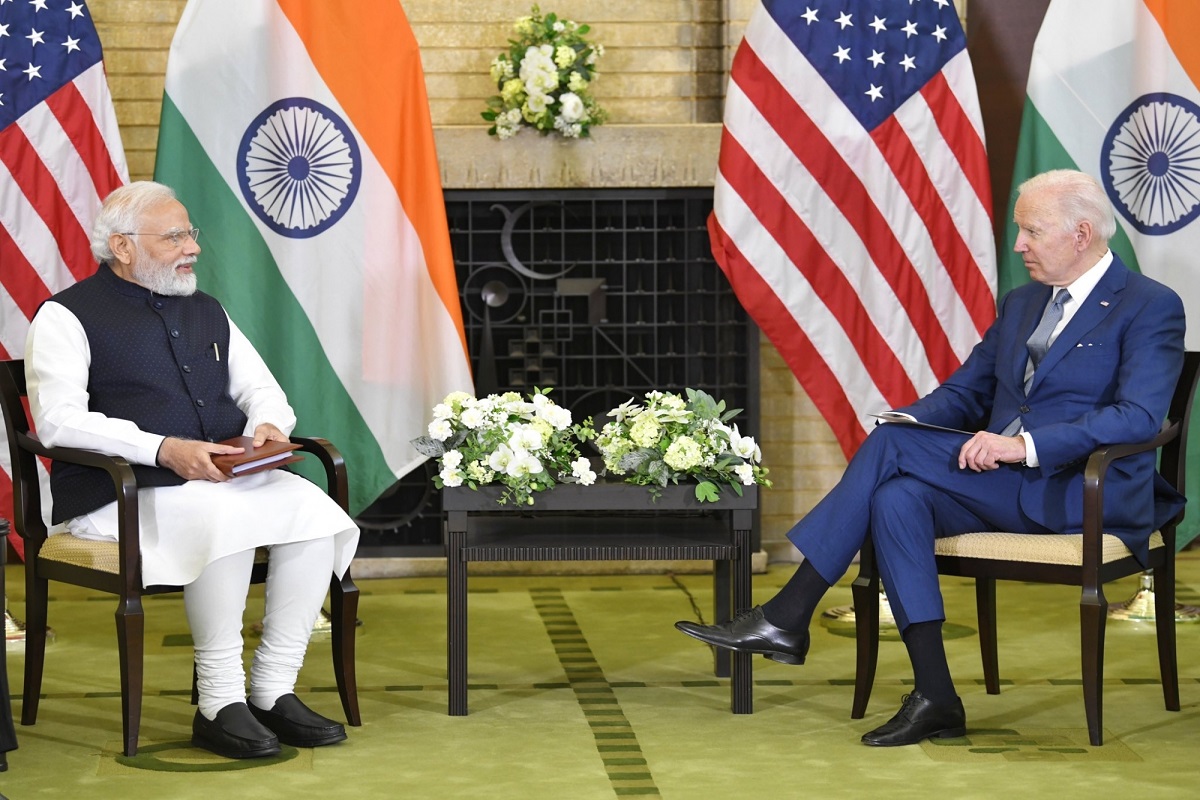
    Prime Minister Narendra Modi’s state visit to the USA resulted in four significant agreements and the visit is hailed as one of very important gains for India and Indo-US strategic partnership. The focus has been on defence industrial and technology partnership. Media and many strategic experts are seeing the agreements as major breakthroughs for technology transfers to India, reflecting a very superficial analysis and a lack of understanding of what really entails technology transfer. Professor Arun Kumar sees these agreements as a sign of India’s technological weakness and USA’s smart manoeuvring to leverage India for long-term defence and technology client. The visit has yielded major business gains for USA’s military industrial complex and the silicon valley. Post the euphoria of the visit, Arun Kumar says its time for India to carefully evaluate the relevant technology and strategic policy angles.


    The Indo-US joint statement issued a few days back says that the two governments will “facilitate greater technology sharing, co-development and co-production opportunities between the US and the Indian industry, government and academic institutions.” This has been hailed as the creation of a new technology bridge that will reshape relations between the two countries

    General Electric (GE) is offering to give 80% of the technology required for the F414 jet engine, which will be co-produced with Hindustan Aeronautics Limited (HAL). In 2012, when the negotiations had started, GE had offered India 58%. India needs this engine for the Light Combat Aircraft Mark 2 (LCA Mk2) jets.

    The Indian Air Force has been using LCA Mk1A but is not particularly happy with it. It asked for improvements in it. Kaveri, the indigenous engine for the LCA under development since 1986, has not been successful. The engine development has failed to reach the first flight.

    So, India has been using the F404 engine in the LCA Mk1, which is 40 years old. The F414 is also a 30-year-old vintage engine. GE is said to be offering 12 key technologies required in modern jet engine manufacturing which India has not been able to master over the last 40 years. The US has moved on to more powerful fighter jet engines with newer technologies, like the Pratt & Whitney F135 and GE XA100.

    India is being allowed into the US-led critical mineral club. It will acquire the highly rated MQ-9B high-altitude long-endurance unmanned aerial vehicles. Micron Technologies will set up a semiconductor assembly and test facility in Gujarat by 2024, where it is hoped that the chips will eventually be manufactured. The investment deal of $2.75 billion is sweetened with the Union government giving 50% and Gujarat contributing 20%. India is also being allowed into the US-led critical mineral club.

    There will be cooperation in space exploration and India will join the US-led Artemis Accords. ISRO and NASA will collaborate and an Indian astronaut will be sent to the International Space Station. INDUS-X will be launched for joint innovation in defence technologies. Global universities will be enabled to set up campuses in each other’s countries, whatever it may imply for atmanirbharta.

    What does it amount to?

    The list is impressive. But, is it not one-sided, with India getting technologies it has not been able to develop by itself.

    Though the latest technology is not being given by the US, what is offered is superior to what India currently has. So, it is not just optics. But the real test will be how much India’s technological capability will get upgraded.

    Discussing the New Economic Policies launched in 1991, the diplomat got riled at my complaining that the US was offering us potato chips and fizz drinks but not high technology, and shouted, “Technology is a house we have built and we will never let you enter it.”

    What is being offered is a far cry from what one senior US diplomat had told me at a dinner in 1992. Discussing the New Economic Policies launched in 1991, the diplomat got riled at my complaining that the US was offering us potato chips and fizz drinks but not high technology, and shouted, “Technology is a house we have built and we will never let you enter it.”

    Everyone present there was stunned, but that was the reality.

    The issue is, does making a product in India mean a transfer of technology to Indians? Will it enable India to develop the next level of technology?

    India has assembled and produced MiG-21 jets since the 1960s and Su-30MKI jets since the 1990s. But most critical parts of the Su-30 come from Russia. India set up the Mishra Dhatu Nigam in 1973 to produce the critical alloys needed and production started in 1982, but self-sufficiency in critical alloys has not been achieved.

    So, production using borrowed technology does not mean absorption and development of the technology. Technology development requires ‘know-how’ and ‘know-why’.

    When an item is produced, we can see how it is produced and then copy that. But we also need to know how it is being done and importantly, why something is being done in a certain way. Advanced technology owners don’t share this knowledge with others.

    Technology is a moving frontier

    There are three levels of technology at any given point in time – high, intermediate, and low.

    The high technology of yesterday becomes the intermediate technology of today and the low technology of tomorrow. So, if India now produces what the advanced countries produced in the 1950s, it produces the low-technology products of today (say, coal and bicycles).

    If India produces what was produced in the advanced countries in the 1980s (say, cars and colour TV), it produces the intermediate technology products of today. It is not to say that some high technology is not used in low and intermediate-technology production.

    The high technologies of today are aerospace, nanotechnology, AI, microchips and so on. India is lagging behind in these technologies, like in producing passenger aircraft, sending people into space, making microchips, quantum computing, and so on.

    The advanced countries do not part with these technologies. The World Trade Organisation, with its provisions for TRIPS and TRIMS (Trade-Related Aspects of Intellectual Property Rights and Trade-Related Investment Measures), consolidated the hold of advanced countries on intermediate and low technologies that can be acquired by paying royalties. But high technology is closely held and not shared.

    Advancements in technology

    So, how can nations that lag behind in technology catch up with advanced nations? The Nobel laureate Kenneth Arrow pointed to ‘learning by doing’ – the idea that in the process of production, one learns.

    So, the use of a product does not automatically lead to the capacity to produce it, unless the technology is absorbed and developed. That requires R&D.

    Schumpeter suggested that technology moves through stages of invention, innovation and adaptation. So, the use of a product does not automatically lead to the capacity to produce it, unless the technology is absorbed and developed. That requires R&D.

    Flying the latest Airbus A321neo does not mean we can produce it. Hundreds of MiG-21 and Su-30 have been produced in India. But we have not been able to produce fighter jet engines, and India’s Kaveri engine is not yet successful. We routinely use laptops and mobile phones, and they are also assembled in India, but it does not mean that we can produce microchips or hard disks.

    Enormous resources are required to do R&D for advanced technologies and to produce them at an industrial scale. It requires a whole environment which is often missing in developing countries and certainly in India.

    Enormous resources are required to do R&D for advanced technologies and to produce them at an industrial scale. It requires a whole environment which is often missing in developing countries and certainly in India.

    Production at an experimental level can take place. In 1973, I produced epitaxial thin films for my graduate work. But producing them at an industrial scale is a different ballgame. Experts have been brought from the US, but that has not helped since high technology is now largely a collective endeavour.

    For more complex technologies, say, aerospace or complex software, there is ‘learning by using’. When an aircraft crashes or malware infects software, it is the producer who learns from the failure, not the user. Again, the R&D environment is important.

    In brief, using a product does not mean we can produce it. Further, producing some items does not mean that we can develop them further. Both require R&D capabilities, which thrive in a culture of research. That is why developing countries suffer from the ‘disadvantage of a late start’.

    A need for a focus on research and development

    R&D culture thrives when innovation is encouraged. Government policies are crucial since they determine whether the free flow of ideas is enabled or not. Also of crucial importance is whether thought leaders or sycophants are appointed to lead institutions, whether criticism is welcomed or suppressed, and whether the government changes its policies often under pressure from vested interests.

    Unstable policies increase the risk of doing research, thereby undermining it and dissuading the industry. The result is the repeated import of technology.

    The software policy of 1987, by opening the sector up to international firms, undermined whatever little research was being carried out then and turned most companies in the field into importers of foreign products, and later into manpower suppliers. Some of these companies became highly profitable, but have they produced any world-class software that is used in daily life?

    Expenditure on R&D is an indication of the priority accorded to it. India spends a lowly 0.75% of its GDP on R&D. Neither the government nor the private sector prioritises it. Businesses find it easier to manipulate policies using cronyism. Those who are close to the rulers do not need to innovate, while others know that they will lose out. So, neither focus on R&D.

    Innovation also depends on the availability of associated technologies – it creates an environment. An example is Silicon Valley, which has been at the forefront of innovation. It has also happened around universities where a lot of research capabilities have developed and synergy between business and academia becomes possible.

    This requires both parties to be attuned to research. In India, around some of the best-known universities like Delhi University, Allahabad University and Jawaharlal Nehru University, coaching institutions have mushroomed and not innovative businesses. None of these institutions are producing any great research, nor do businesses require research if they can import technology.

    A feudal setup

    Technology is an idea. In India, most authority figures don’t like being questioned. For instance, bright students asking questions are seen as troublemakers in most schools. The emphasis is largely on completing coursework for examinations. Learning is by rote, with most students unable to absorb the material taught.

    So, most examinations have standard questions requiring reproduction of what is taught in the class, rather than application of what is learned. My students at JNU pleaded against open-book exams. Our class of physics in 1967 had toppers from various higher secondary boards. We chose physics over IIT. We rebelled against such teaching and initiated reform, but ultimately most of us left physics – a huge loss to the subject.

    Advances in knowledge require critiquing its existing state – that is, by challenging the orthodoxy and status quo. So, the creative independent thinkers who generate socially relevant knowledge also challenge the authorities at their institutions and get characterised as troublemakers. The authorities largely curb autonomy within the institution and that curtails innovativeness.

    In brief, dissent – which is the essence of knowledge generation – is treated as a malaise to be eliminated. These are the manifestations of a feudal and hierarchical society which limits the advancement of ideas. Another crucial aspect of generating ideas is learning to accept failure. The Michelson–Morley experiment was successful in proving that there is no aether only after hundreds of failed experiments.

    Conclusion

    The willingness of the US to provide India with some technology without expecting reciprocity is gratifying. Such magnanimity has not been shown earlier and it is obviously for political (strategic) reasons. The asymmetry underlines our inability to develop technology on our own. The US is not giving India cutting-edge technologies that could make us a Vishwaguru.

    India needs to address its weakness in R&D. As in the past, co-producing a jet engine, flying drones or packaging and testing chips will not get us to the next level of technology, and we will remain dependent on imports later on.

    This can be corrected only through a fundamental change in our R&D culture that would enable technology absorption and development. That would require granting autonomy to academia and getting out of the feudal mindset that presently undermines scientific temper and hobbles our system of education.


    This article was published earlier in thewire.in

    Feature Image Credit: thestatesman.com


  • India’s Indian Ocean and the Imperative for a Strong Indian Navy

    India’s Indian Ocean and the Imperative for a Strong Indian Navy

    “A good navy is not a provocation to war. It is the surest guarantee of peace!”
    The Indian Ocean has been at the centre of world history ever since we know it. Man originated in Africa, probably somewhere in the Olduvai Gorge in present-day Tanzania – where Homo Erectus lived 1.2 million years ago and where the first traces of Homo Sapiens, our more recent ancestors having evolved only about 200,000 years ago. First phonetic languages evolved around 100, 000 years ago. The migration of mankind out of Africa began almost 60000 years ago. But we don’t call the Indian Ocean the African Ocean because the first recorded activity over it began only about 3000 years ago.
    Three great early recorded activities of this period come to mind. The first is the Indus Valley Civilization. It was a Bronze Age civilization (3300–1300 BCE; mature period 2600–1900 BCE) in the northwestern region of the Indian subcontinent. Along with Ancient Egypt and Mesopotamia, it was one of three early civilizations of the Old World, and of the three the most widespread.
    The Indus civilization’s economy appears to have depended significantly on trade, which was facilitated by major advances in transport technology. It may have been the first civilization to use wheeled transport. These advances may have included bullock carts that are identical to those seen throughout South Asia today, as well as boats. Most of these boats were probably small, flat-bottomed craft, perhaps driven by sail, similar to those one can see on the Indus River today; however, there is secondary evidence of sea-going craft.
    Archaeologists have discovered a massive, dredged canal and what they regard as a docking facility at the coastal city of Lothal now in Gujarat. Judging from the dispersal of Indus civilization artifacts, the trade networks, economically, integrated a huge area, including portions of Afghanistan, the coastal regions of Persia, northern and western India, and Mesopotamia. There is some evidence that trade contacts extended to Crete and possibly to Egypt.
    There was an extensive maritime trade network operating between the Harappan and Mesopotamian civilizations as early as the middle Harappan Phase, with much commerce being handled by “middlemen merchants from Dilmun” (modern Bahrain and Failaka located in the Persian Gulf). Such long-distance sea trade became feasible with the innovative development of plank-built watercraft, equipped with a single central mast supporting a sail of woven rushes or cloth.
    The second great economic activity was Slavery. Slavery can be traced back to the earliest records, such as the Code of Hammurabi (c. 1760 BC), which refers to it as an established institution. Slavery is rare among hunter-gatherer populations, as it is developed as a system of social stratification. Slavery typically also requires a shortage of labour and a surplus of land to be viable. Bits and pieces from history indicate that Arabs enslaved over 150 million African people and at least 50 million from other parts of the world.  Later they also converted Africans into Islam, causing a complete social and financial collapse of the entire African continent apart from wealth attributed to a few regional African kings who became wealthy in the trade and encouraged it.
    The third great economic activity was seafaring evidenced by migration. The island of Madagascar, the largest in the Indian Ocean, lies some 250 miles (400 km) from Africa and 4000 miles (6400 km) from Indonesia. New findings, published in the American Journal of Human Genetics, show that the human inhabitants of Madagascar are unique – amazingly, half of their genetic lineages derive from settlers from the region of Borneo, with the other half from East Africa. It is believed that the migration from the Sunda Islands began around 200 BC.
    Linguists have established that the origins of the language spoken in Madagascar, Malagasy, suggested Indonesian connections, because its closest relative is the Maanyan language, spoken in southern Borneo. The Gods were also kind and gave the IOR the weather conditions that helped in evolving seaborne trade and intercourse. The sea surface current and prevailing wind structure in and over the Indian Ocean favoured seafarers in their endeavour and sailings in the Indian Ocean from the southern tip of Africa (Cape of Good Hope) during the month of May. After the entry into the Indian Ocean, the seafarers continued to sail in the northerly direction along the coastline of Africa (aided by the strong Somali Current and the East Arabian Current) towards the Arabian Sea.
    The physical environmental conditions over the sea and the external prevailing weather helped the seafarers reach places up to the west coast of India. As this sea surface current extend towards the east coast of India, the sailors were greatly assisted by the surface current as they sailed along. During November, when the East Indian Winter wind reverses in its direction and begins to blow from the northeast, the sailors prepare for their return journey. The winds that generate the waves contribute to the reduction in the otherwise required travel time for the sailings between any given two points of departure and arrival. The natural and external forces help the sailors make their journey/expedition more economical and energy-efficient.
    Clearly, the region was a hub of all kinds of economic activity. Then came the Petroleum Age. And things changed as never before. The Spice trade, the Silk trade, and the China trade all paled into insignificance. The use of Coal as a ship fuel enlarged distances and volumes of cargo. Oil made even longer journeys and greater volumes possible.
    Petroleum is the lifeblood of modern society. It’s a relatively new activity, but its advent has transformed our world as few things have. Petroleum, in one form or another, has been used since ancient times. According to Herodotus more than 4000 years ago, asphalt was used in the construction of the walls and towers of Babylon; there were oil pits near Babylon, and a pitch spring on Zacynthus.
    Great quantities of it were found on the banks of the river Issus, one of the tributaries of the Euphrates. Ancient Persian tablets indicate the medicinal and lighting uses of petroleum in the upper levels of their society. By 347 AD, oil was produced from bamboo-drilled wells in China. Early British explorers to Myanmar documented a flourishing oil extraction industry based in Yenangyaung, that in 1795 had hundreds of hand-dug wells under production.
    Oil is now the single most important driver of world economics, politics and technology.  The rise in importance was due to the invention of the internal combustion engine, the rise in commercial aviation, and the importance of petroleum to industrial organic chemistry, particularly the synthesis of plastics, fertilizers, solvents, adhesives and pesticides. Today, oil contributes 3% of the global GDP.
    In 1847, the process to distill kerosene from petroleum was invented by James Young. He noticed natural petroleum seepage in the Riddings colliery at Alfreton, Derbyshire from which he distilled a light thin oil suitable for use as lamp oil, at the same time obtaining a thicker oil suitable for lubricating machinery. In 1848 Young set up a small business refining the crude oil.
    Today the world’s biggest stand-alone refinery is the Reliance refinery at Jamnagar with a refining capacity of about 1.5 million barrels a day. The Essar refinery at Jamnagar refines a further 0.5 million barrels a day. Together they make Jamnagar one of the world’s great refining centers. India’s number one export item is Petroleum products, mostly Petrol and Diesel. India now exports the equivalent of about 615,000 barrels a day. In 2020, petroleum exports accounted for $25.3 billion of our total exports of $291.8 billion in the same year.
    India imported $77 billion worth of oil in the year 2020-21 and more than half of this comes from countries in the IOR. Iraq’s share is 22.4%, Saudi Arabia’s share is 18.8%, UAE’s share is 10.8%, and Kuwait’s 5%. The IOR is India’s lifeline and lifeblood. If the line is blocked we will suffer hugely, if the blood gets anaemic we will suffer hugely. India just cannot afford anything to go wrong here.
    The sea lanes in the Indian Ocean are considered among the most strategically important in the world—according to the Journal of the Indian Ocean Region, more than 80 percent of the world’s seaborne trade in oil transits through the Indian Ocean choke points, with 40 percent passing through the Strait of Hormuz, 35 percent through the Strait of Malacca and 8 percent through the Bab el-Mandab Strait.
    But it’s not just about sea-lanes and trade. More than half the world’s armed conflicts are presently located in the Indian Ocean region, while the waters are also home to continually evolving strategic developments including the competing rises of China and India, the potential nuclear confrontation between India and Pakistan, the US interventions in Iraq and Afghanistan, Islamist terrorism, incidents of piracy in and around the Horn of Africa, and management of diminishing fishery resources.
    As a result of all this, almost all the world’s major powers have deployed substantial military forces in the Indian Ocean region. For example, in addition to maintaining expeditionary forces in Iraq, the US 5th Fleet is headquartered in Bahrain, and uses the island of Diego Garcia as a major air-naval base and logistics hub for its Indian Ocean operations. In addition, the United States has deployed several major naval task forces there, including Combined Task Force 152 (currently operated by the Kuwait Navy), which is focusing on illicit non-state actors in the Arabian Gulf, and Combined Task Force 150 (currently commanded by the Pakistan Navy), which is tasked with Maritime Security Operations (MSO) outside the Arabian Gulf with an Area of Responsibility (AOR) covering the Red Sea, Gulf of Aden, Indian Ocean and the Gulf of Oman. France, meanwhile, is perhaps the last of the major European powers to maintain a significant presence in the north and southwest Indian Ocean quadrants, with naval bases in Djibouti, Reunion, and Abu Dhabi.
    And, of course, China and India both also have genuine aspirations of developing blue water naval capabilities through the development and acquisition of aircraft carriers and an aggressive modernization and expansion programme.
    China’s aggressive soft power diplomacy has widely been seen as arguably the most important element in shaping the Indian Ocean strategic environment, transforming the entire region’s dynamics. By providing large loans on generous repayment terms, investing in major infrastructure projects such as the building of roads, dams, ports, power plants, and railways, and offering military assistance and political support in the UN Security Council through its veto powers, China has secured considerable goodwill and influence among countries in the Indian Ocean region.
    And the list of countries that are coming within China’s strategic orbit appears to be growing. Sri Lanka, which has seen China replace Japan as its largest donor, is a case in point—China was no doubt instrumental in ensuring that Sri Lanka was granted dialogue partner status in the Shanghai Cooperation Organization (SCO).
    To the west, Kenya offers another example of how China has been bolstering its influence in the Indian Ocean. The shift was underscored in a leaked US diplomatic cable from February 2010 that was recently published by WikiLeaks. In it, US Ambassador to Kenya Michael Ranneberger highlighted the decline of US influence in East Africa’s economic hub, saying: ‘We expect China’s engagement in Kenya to continue growing given Kenya’s strategic location…If oil or gas is found in Kenya, this engagement will likely grow even faster. Kenya’s leadership may be tempted to move close to China in an effort to shield itself from Western, and principally US pressure to reform.’
    The rise of China as the world’s greatest exporter, its largest manufacturing nation and its great economic appetite poses a new set of challenges. At a meeting of South-East Asian nations in 2010, China’s foreign minister Yang Jiechi, facing a barrage of complaints about his country’s behaviour in the region, blurted out the sort of thing polite leaders usually prefer to leave unsaid. “China is a big country,” he pointed out, “and other countries are small countries and that is just a fact.”
    Indeed it is, and China is big not merely in terms of territory and population, but also in military might. Its Communist Party is presiding over the world’s largest military build-up. And that is just a fact, too—one that the rest of the world has to come to terms with.
    China’s defence budget has almost certainly experienced double-digit growth for two decades. According to SIPRI, a research institute, annual defence spending rose from over $30 billion in 2000, $120 billion in 2010 to almost $229.4 billion in 2021. SIPRI usually adds about 50% to the official figure that China gives for its defence spending, because even basic military items such as research and development are kept off budget. Including those items would imply total military spending in 2021, based on the latest announcement from Beijing, would be around $287.8 billion.
    This is not a sum India can match and the last thing we need to get caught in is a numbers game. A one-party dictatorship will always be able to outspend us, even if our GDPs get closer.
    But history tells us again and again that victory is not assured by superiority in numbers and even technology. If that were to be so, Alexander should have been defeated at Gaugamela, Babur at Panipat, Wellington at Waterloo, Russia at Leningrad, Britain in the Falklands, and above all Vietnam who defeated three of the world’s leading powers – France, the USA and China – in succession. I don’t have to tell you that victory is more a result of strategy and tactics. Numbers do matter, but numbers are not all. Technology does matter, but technology alone cannot assure you of victory. It’s always mind over matter. You know these things better than most of us. You also know what to do. As the old saying goes: “When the going gets tough, the tough get going!”
    That said, the threat from China should not be exaggerated. There are three limiting factors. First, unlike the former Soviet Union, China has a vital national interest in the stability of the global economic system. Its military leaders constantly stress that the development of what is still only a middle-income country with a lot of very poor people takes precedence over military ambition. The increase in its military spending reflects the growth of the economy, rather than an expanding share of national income. For many years China has steadily spent the same proportion of GDP on defence (a bit over 1.7%, whereas America spend about 3.7% in the year 2020-21).
    The real test of China’s willingness to keep military spending constant will come when China’s headlong economic growth starts to slow further. But in the past form, China’s leaders will continue to worry more about internal threats to their control than external ones. In 2020, the Chinese spending on internal security was $212 billion. With a rapidly ageing population, it is also a good bet that meeting the demand for better health care will become a higher priority than maintaining military spending.
    Like all the other great powers, China faces a choice of guns and butter or more appropriately walking sticks. But till then it is: Nervi belli pecunia infinita or unlimited money is the muscle of war.
    India on the other hand will keep growing long after China has stopped growing. Its youthful population and present growth trends indicate the accumulation of the world’s largest middle class in India. India’s growth is projected to continue well past 2050. In fact so big will this become, that India during this period will increasingly power world economic growth, and not China. In 2050, India is projected to have a population of 1.64 billion and of these 1.3 billion will belong to the middle and upper classes. The lower classes will be constant at around 300 million, as it is now.
    India already has the world’s third-largest GDP. Many economists prophesize that in 2050 it will be India that will be the world’s biggest economy, not China. In per capita terms, we might still be poorer, but in over GDP terms, we will be bigger.
    According to a study by IHS Markit, a subsidiary of S&P Global, India will be the world’s third-largest economy by 2030. Indian GDP in 2030 is projected to be $8.4 trillion. China, in second place, will have a GDP of $ 33.7 trillion and the US $ 30.4 trillion. As we say in India, aap key muh mein ghee aur shakhar.  Both incidentally now deemed bad for health.
    Now comes the dilemma for India. Robert Kaplan writes: “As the United States and China become great power rivals, the direction in which India tilts could determine the course of geo-politics in Eurasia in the 21st century. India, in other words, looms at the ultimate pivot state.” At another time Mahan noted that India, located in the centre of the Indian Ocean littoral, is critical for the seaward penetration of both the Middle-east and China.
    Now if one were an Indian planner, he or she would be looking at the China Pakistan axis with askance. India has had conflicts and still perceives threats from both, jointly and severally. The Tibetan desert, once intended to be India’s buffer against the north now has become China’s buffer against India. The planner will not be looking at all if he or she were not looking at the Indian Ocean as a theatre. After all, it is also China’s lifeline and its lifeblood flows here.
    Now if one were a Chinese planner, he or she would be looking with concern over India’s growth and increasing ability to project power in the IOR. The planner will also note what experts are saying about India’s growth trajectory. That it will be growing long after China gets walking sticks. That it is the ultimate pivot state in the grand struggle for primacy between the West led by the USA and Japan, and China.
    What will this planner be thinking particularly given the huge economic and military asymmetry between China and India now? Tacitus tells it most pithily. That peace can come through strength or Si vis pacem para bellum. While China has ratcheted up its show of assertiveness in recent years, India has been quietly preparing for a parity to prevent war. Often parity does not have to be equality in numbers. The fear of pain disproportionate to the possible gains, and the ability of the smaller in numbers side to do so in itself confer parity.
    There is a certain equilibrium in Sino-Indian affairs that make recourse to force extremely improbable. Both modern states are inheritors of age-old traditions and the wisdom of the ages. Both now read their semaphores well and know how much of the sword must be unsheathed to send a message. This ability will ensure the swords remain recessed and for the plowshares to be out at work.
    Finally, I would be remiss if I did not say something about the centrality of the Indian Navy to our future. Nothing says it better than what Theodore Roosevelt said a century ago: “A good Navy is not a provocation to war. It is the surest guarantee of peace!”
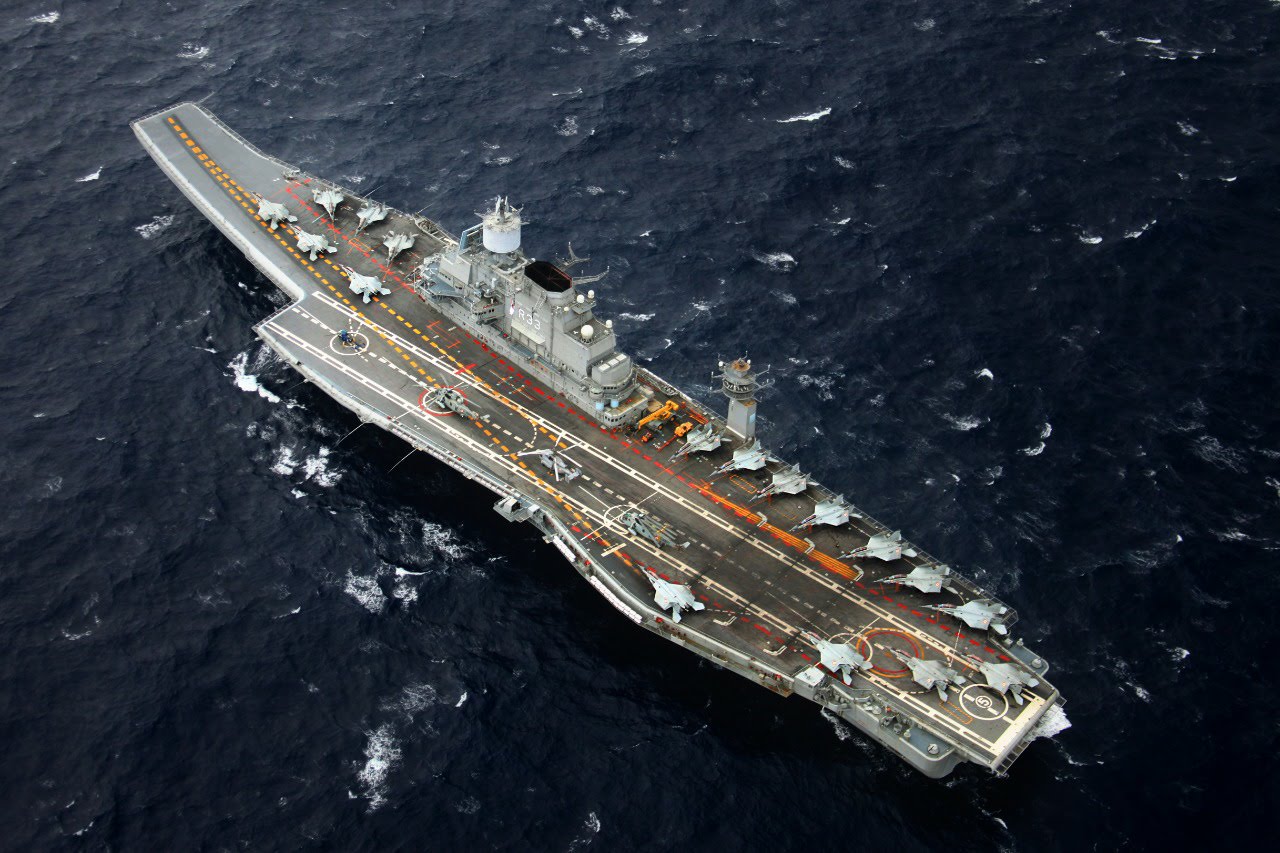
    Featured Image Credit: Indian Navy
  • Chinese Roulette: Which Way Will the Wind Blow?

    Chinese Roulette: Which Way Will the Wind Blow?

    The 2022 campaigning season along the Sino-Indian Line of Actual Control (LAC) opens up in just a matter of months. By all reckoning, the situation is likely to continue remaining extremely volatile, uncertain and tense. While some believe that it may have been this Government’s abrogation of Article 370 and the Home Minister’s statement in Parliament that invited a strong response from the Chinese, the truth is that we are yet to fully comprehend the Chinese leadership’s motivation for damaging, if not jettisoning, over three decades of Confidence Building Measures (CBMs) and growing economic ties, though the latter seems not to have been impacted in the short term, by resorting to unprovoked aggressive action in Eastern Ladakh and elsewhere.

    In addition, we continue to see a steady build-up of forces and infrastructure, as well as cartographic aggression in the form of renaming of villages in Arunachal Pradesh and the passage of the Land Border Law, effective from 1st January 2022. All of this strongly suggests that the situation will get much worse before it gets better, and we are more likely to see increased Chinese assertiveness and determination to settle territorial disputes on its own terms. Moreover, by its actions in Eastern Ladakh, it has already occupied territory up to its Claim Line of 1959. This begs the question, obviously difficult to answer with any degree of certainty, as to whether there is a likelihood of further Chinese escalation leading to a limited conflict?

    Clearly, the Government is also seized of the problem, as is obvious from the Defence Minister’s statement, while inaugurating border infrastructure, that “We faced our adversary in the northern Sector recently with grit and determination. It could not have been done without proper infrastructural development. In today’s uncertain environment, the possibility of any kind of conflict cannot be ruled out.”i It must be emphasised that conflict is not something that we either desire or is in our interest, especially given the Omicron tsunami that appears to be gathering momentum and the adverse impact that the pandemic has already had on our economy.

    It is therefore quite apparent from the Modi Government’s actions that it has been extremely circumspect and cautious in its response following China’s occupation of our territory, by some estimates extending over a 1600 Sq. Km. Clearly, it has no intention of either attempting to push back the PLA from the intrusion sites, or for that matter, occupying territory elsewhere, as a quid pro quo and bargaining chip for later. However, there is a view that occupying Indian claimed territory in Aksai Chin as a quid pro quo is not a bargain but an acknowledgement that Aksai Chin is alien territory. Therefore this Government has attempted to engage China in talks, both at the diplomatic and military level, though with little success to show for its efforts. Given the mismatch in force levels, this level of military and diplomatic engagement is understandable, though Mr. Modi’s unwillingness to personally call out the Chinese for their provocative behaviour may well give, them and the world at large, an impression of an eagerness to crawl, when just asked to bend.

    However, a deeper examination of events does suggest that the Government has not taken Chinese bullying lightly, and has, in fact, responded in an extremely measured manner, militarily. Following the Galwan incident, it has mirrored Chinese troop accretions by deploying additional forces in Eastern Ladakh, along with armour and other supporting elements. Its pro-active occupation of the Kailash Heights, though these troops were subsequently withdrawn as a part of reciprocal action by the PLA in the Pangong Tso Sector, hinted at the possibility of similar, but more offensive actions, being replicated elsewhere. The reorientation of the Army with the earmarking of a second Mountain Strike Corps for offensive operations has substantially added to the Army’s capabilities and would adversely impact the PLA’s force ratio dynamics. Most importantly, the upgrade of communication infrastructure, not just in Ladakh but elsewhere along the LAC as well, has been greatly speeded up and is coming to fruition, thereby significantly enhancing our defensive capabilities.

    To help us understand if China is likely to resort to force in the ongoing stand-off, an examination of historical precedent may give us some vital clues. As Prof M Taylor Pravel of MIT notes, two characteristics have defined China’s use of force. Firstly, “along its continental border, China has employed force in frontier disputes where it has faced militarily powerful opponents (i.e., states that could possibly challenge its otherwise strong claims). Although the local military balance is difficult to measure with precision, China has on average been vastly stronger in the overall military balance…. India in 1962, the Soviet Union in 1969, and Vietnam in the early 1980s. At the same time, China has refrained from employing force against its weaker continental neighbours. Second, China has used force in disputes where the strength of its claims have been weak, especially when it has occupied little or none of the contested territory. In these disputes, China has been sensitive to any further decline in its bargaining power.”ii

    This suggests that even with neighbours that de facto accept Chinese interpretations of its territorial claims, China is still extremely wary of actions that they may undertake to change the existing relative balance of power along with its disturbed periphery, and prefers to use force against them to delay/stop their progress. For example, there is evidence to suggest Nehru’s Forward Policy and the refuge given to the Dalai Lama were a serious cause of concern to the Chinese leadership. This is borne out by declassified United States documents pertaining to the capture of Longju in August 1959, which reveal that “the late August clashes point of a mode of thought which has remained an ingredient in the Chinese leaders’ calculations on the border dispute: ‘When the Indians show a temperament to advance on the ground, we must alter their frame of mind by letting military action take over political caution. Besides, military risk itself is negligible, because we are the stronger side’.”iii A perception within the Chinese leadership that appears to have remained unchanged in the intervening years, and is especially pertinent at the present time, given President Xi Jinping’s penchant for following in the footsteps of late Chairman Mao Zedong.

    In addition, there are some other factors that have a bearing on this issue of force escalation. For one, it is fairly common for autocratic governments to attempt to conjure up external threats to unify the people against a common enemy, and divert their attention from serious domestic challenges that may lead to unrest or hurt their own leadership position. In this context, as Kalpit Mankikar, a Fellow with the Observer Research Foundation who focuses on China points out, prior to the 1962 Conflict Chairman Mao faced serious internal dissension against his leadership and it had more to do with the intra-CCP power struggle. Mao’s Great Leap Forward (GLP) had been criticised, and for the first time, he had to demit office as State President, forced to hand over to his heir apparent Liu Shaoqi, which came as a huge jolt to him.

    President Xi now finds himself in rather similar circumstances as the economy stutters, in no small measure due to his government’s crackdown on multiple Chinese sectors and companies that have been mascots of growth over the years. His emphasis has been on the idea of “common prosperity” or “reasonable adjustment of excessive incomes and encouraging high-income groups and businesses to return more to society”iv, a blatantly populist measure, that was initially very well received by the average Chinese citizen. However, the enforcement of new regulations in this regard, the so-called “Three Red Lines”, has had a devastating impact on real estate companies such as Evergrande, which hold approximately 75% of all retail investments, bringing them to the verge of bankruptcy, and creating internal turmoil, uncertainty and dissent as the average citizen sees his savings completely wiped out. The likelihood of a domino effect on other facets of the economy cannot be wished away and is bound to adversely impact President Xi’s efforts to stay in power after the end 2022, when his term officially ends.

    In these circumstances creating and tackling an external threat along its borders, as the prevailing situation along the LAC is made out to be, will certainly divert attention and may very well pay great dividends. For example, while President Xi would have preferred to undertake actions to integrate Taiwan, he is hampered by the very real likelihood of The United States and its allies coming to the aid of Taiwan. Taking on India at the LAC is a relatively easier option, as interference by the United States and its allies is likely to be restricted to providing moral and material support at best. Furthermore, it could be viewed as a dress-rehearsal that would allow the PLA to gain vital operational experience, something it has been bereft of since the Sino- Vietnam Conflict of 1979, apart from ensuring a protected flank. Moreover, a successful termination of such a campaign would setback Indian aspirations by decades and severely dent Mr. Modi’s reputation and popularity, much as 1962 did in the case of Pandit Nehru. Not only would such action have a sobering impact on Taiwan’s dealings with the Chinese, but also in the manner other South East and Central Asian neighbours respond to Chinese hegemonistic designs as well.

    It is in this context that the new Land Border Law, now in effect, is likely to be extremely problematic for two reasons, and may well act as the trigger for any future conflict. Firstly, it attempts to give Chinese acts of cartographic aggression, such as differing perceptions on the exact alignment of the LAC, renaming of towns and villages in Arunachal Pradesh, and its acts of ‘salami- slicing’ over the years, a veneer of legality. Secondly, there is a clause in the Law that can be interpreted to suggest that it prohibits the construction of permanent facilities in the vicinity of the LAC without sanction from Chinese authorities, which would obviously be unacceptable to any sovereign state, especially given the manner in which it is rapidly developing communication infrastructure and settlements bordering the LAC.

    Increasing troop concentrations, especially in terms of armour and ballistic/air-defence missiles, in the Tibet Autonomous Region (TAR) along with the external and internal difficulties confronting President Xi suggests a high possibility of a conflict breaking out within the year. There are analysts, including some in this country, who believe that the PLA will be able to achieve a decisive victory given the over-all force disparity, especially in cyber, space and missile capabilities, as was the case in the 1962 Conflict. However, they have tended to disregard the adverse impact of climate and altitude, both on personnel and equipment, that gives a distinct advantage to a military fighting internal lines.

    The PLA can hardly afford to ignore its extended and extremely vulnerable lines of communication, however well developed, and the uncertain internal security environment within TAR and Xingjian. Most importantly, the PLAAF will be operating with greatly reduced capabilities from bases within TAR because of the altitudes involved, while being adversely impacted while operating from bases outside the Region given the extended ranges involved. Finally, the Indian Military does have a sizeable force, reasonably well-equipped with two Mountain Strike Corps and a Division plus of Special Operations Forces in place for offensive operations that will act as a deterrent to Chinese misadventure.

    It understands, however contrarian its public pronouncements may be, that the Indian Armed Forces are a very different force from what they encountered in 1962. Not only is the Indian Army far more experienced and battle-hardened in high altitude and mountain warfare than the PLA, but it will be the Indian Air Force, not utilised in 1962, that will be the battle-winning factor in any conflict. In addition, the employment of the Tibetan manned Special Frontier Force (SFF) in the Kailash Ranges, which received worldwide accolades, would have certainly caused immense disquiet within the Chinese leadership. The SFFs actions and rise of the Taliban have surely given an immense boost to the Independence Movements in both TAR and Xinjiang. Most importantly President Xi and his acolytes must be fully aware that anything other than a decisive victory, will for all intents and purposes, be perceived as a defeat and be the final nail in his coffin.

    Will all of this be sufficient to deter the Chinese from escalating the stand-off? The truth is that while we are inherently placed in an advantageous position, primarily due to location and circumstance, neither deterrence nor success is guaranteed. The fact of the matter is that over the past two decades the military has not just been neglected, but has also been deliberately discriminated against by the political and bureaucratic establishment. The damage that has been done, both to its organisational culture, morale and capabilities will need focus, effort and time to reverse. Most importantly, threats of this nature are best tackled by a nation that is united and willing to place its complete trust in its political leadership. Does our political establishment have the maturity, foresight, integrity and vision to provide the leadership we deserve and need? To quote the poet, philosopher and singer, Bob Dylan, “the answer, my friend, is blowing in the wind”…

    i The Times of India, New Delhi 29 December 2021, p 19.

    ii M Taylor Fravel, Power Shifts and Escalation: Explaining China’s Use of Force in Territorial Disputes, International Security, Winter 2007/2008, Vol 32 No 3, p 56

    https://www.jstor.org/stable/30130518?seq=1&cid=pdf-reference#references_tab_contents

    iii The Sino-Indian Dispute, Section 1:1950-59, DD/I Staff Study, CIA/RSS March 02, 1963, Approved for Release May 2007, p 33.

    iv Bloomberg News, China Eyes Wealth Redistribution in Push for ‘Common Prosperity’, 18 August 2021

    The article was originally published in Indian Defence Review, Jan – Mar 2022, Vol 37 (1) Pg 50.

    Featured Image Credits: CNBC

  • Drone Threats: Detecting and Countering Them

    Drone Threats: Detecting and Countering Them

    The drone attack at the Jammu airbase in the early hours of Sunday, June 27, was a first-of-its-kind in India. It has rattled the security forces, but more than that, it has shown how acts of terror can be perpetrated in the future. To get battle-ready, we need to understand the different kinds of drones, how they work and how lethal they can be.

    Size Matters

    Drones come in different sizes and shapes. Their major classification is fixed-wing and rotary-wing. They can be classified as per:

    1. Weight
    2. Function
    3. Area of application

    In India, the Ministry of Civil Aviation (MoCA) classifies them as per their weight. Drones weighing below 250 gms are called nano drones, above 250 gms but below 2 kgs are called micro drones, above 2 kgs but below 25 kgs are small drones. Anything above 25 kgs is a large drone, as per MoCA in India.

    Small toy drones can be classified as nano drones. Although these nano drones can be quite lethal in intelligence gathering, like armed drones without artificial intelligence and machine learning (AI/ML) (which would give it pinpoint accuracy), they aren’t lethal. Most countries have exempted these drones from the legal gamut because they largely fall in the toy category. However, swarms of these drones designed to explode and controlled by a mother ship can be quite lethal. And currently, no countermeasures to such drones exist. Recently, F/A-18 Hornet launched such a swarm to demonstrate the capability of such nano drones.

    Equation quickly changes in the micro drone category. As the weight of the drone increases, so does its lethality, and being a manageable size, these drones have found favour with many enthusiasts. These are the class of drones that were researched by the open source communities in the early 2000s. They indeed ushered in the age of drones. Designed well, they have an endurance limit of over 40 minutes and can travel in an autonomous mode for over 30 km one way. Mostly made of plastics, polymers, these drones can be difficult to detect and prosecute.

    Small drones are the ones that are increasingly being used by anti-national elements. Be it to drop contraband, weapons, or to carry out a Kamikaze-style attack. Even the low-end of small drones (up to 6 kgs) can carry an adequate amount of explosives to cause serious damage. These are also the drones that are used in helping humanity. These drones can be fixed-wing, rotary-wing, or hybrid.

    To own and fly a drone weighing more than 250 gms and less than or equal to 25 kgs, whether, for commercial or recreational purposes, one would need Operator Permit-I. To get this permit one needs to go through the due diligence process of the DGCA (Directorate General of Civil Aviation), MoCA.

    The same procedure applies if you want to become a drone pilot in India. The due diligence, examination, and certification process is similar to that of a manned aircraft pilot. The only difference, you just need to clear the 10th standard exams to become a drone pilot. The due diligence process includes paperwork like police verification, checking Aadhaar, and passport details, among other things. Therefore, only a bonafide citizen of India with no criminal record can become a drone pilot in India.

    How to Counter Drones

     Drones can be countered through three methods, namely:

    1. By jamming the drone controller frequency (2.4 GHz, 5.8 GHz, occasionally 433 MHz and 900 MHz).
    2. By jamming the GNSS or Global Navigation Satellite Systems, like GPS, GLONASS, GAGAN, the Indian Regional Navigation Satellite System, also known as NAVIC, etc.
    3. The hard kill option of shooting the drone down using guns, lasers, and electromagnetic guns always exists.

    To counter drones, you need to detect them first. It can be done in three ways, namely:

    1. Use drone radar: It works like a conventional radar, which sends out energy and looks for reflected energy to pick up these drones. Challenge however is that the reflected energy from the small drones is so low that it becomes impossible to pick nano and micro drones with drone radars.
    2. Pick up drone control signal: Picking up drone control signals is fairly easy because they operate in the ISM (industrial, scientific, and medical) band of frequencies. However, most WiFi and other equipment work on this frequency, and separating drone frequency signatures from these becomes a challenge.
    3. Pick up noise generated by the propeller tips: This is another method to pick up drones. In ideal conditions, it has proven effective in picking up drones at a very large range. However, the challenge is if the ambient noise is higher and ambient conditions are not suitable, drones don’t get picked up at all.

    Drones for Good

     Drones today are being used for a variety of services, beyond the military.

    1. Disaster relief and humanitarian assistance: Drones are proving to be indispensable in this area. Be it floods, forest fire, COVID assistance or locust control, drones are everywhere, doing what they do, silently.
    2. In scientific quest: Drones are doing a wonderful job in this area, be it marine applications, studying agriculture, soil/ water pollution, carrying out weather surveys, name an area and drones can be put to task.
    3. In the entertainment industry: Drones have replaced expensive helicopters, and today even the producer of a low-budget show can get a drone shot at minimum cost. As a result, drone shots are now seen in shows and movies more than ever.

    Tip of the Iceberg

    Drones for good far outweigh the application of drones for anti-national and terror activities. The drone industry needs to be nurtured if any country aspires to become an economic giant in the future. No wonder Goldman Sachs has said that the $100-billion drone industry is just the tip of the iceberg in terms of its business potential over the next five years.

  • Theatre Commands in India: Have We got it  Backwards?

    Theatre Commands in India: Have We got it Backwards?

    As per a recent report by Nitin Gokhale, published on the Bharatshakti website, higher defence reforms are on track in India with the likely formation of two integrated commands by August 2021. Nitin also reiterates the reforms mandate to the CDS, General Bipin Rawat, to bring about jointness in communications, training, logistics & maintenance and support services, apart from operations, within three years while rationalizing the existing infrastructure to augment combat capabilities of the armed forces and reducing wasteful expenditure.

    The very fact of air defence being thought of as bringing just the SAMs and AD guns under one commander indicates a lack of such study and of military history as in Bekaa Valley in 1982.

    From the questions raised in this report itself on the conceptual framework of the Air Defence Command still requiring resolution, it becomes apparent that we are putting the cart before the horse in our haste to meet the given deadline. Surely, the senior leadership must have considered this issue of integration in all previous appointments and studied the experience of other nations, particularly the US being the largest in this field as a democracy, and formulated a plan to adapt their structure and best practices to our institutional and cultural environment instead of reinventing the wheel. The very fact of air defence being thought of as bringing just the SAMs and AD guns under one commander indicates a lack of such study and of military history as in Bekaa Valley in 1982.

    Even a cursory study would indicate that the essential initial steps for joint operations are training backed by the requisite secure communications integrating literally every fighting unit in the command loop to execute joint plans with the requisite flexibility in the fog of war, or in other words integrating sensors with shooters to minimize the OODA cycle in this era of informatized warfare. With all three services reportedly still using their individual communication networks which do not easily talk to each other, much less to the systems of other friendly nations that we regularly exercise with, the desired integration would remain a mirage. Just one example from the US would illustrate the importance of this issue. It may be recalled that the Goldwater-Nichols Act of 1986 created seven regional (theatre) combatant commands bringing all five US military services under unified, geographically organized command structures. Today, there are 11 including the recent Space Command. Even after five years, in Desert Storm, the Joint Air Component Commander, General Horner, could not electronically pass the Air Tasking Orders (ATOs) to the Carrier Groups of the US Navy and these had to be flown in manually every day. It took the air wings of the US Navy and the USAF almost another decade of cross-training till Operations Enduring and Iraqi Freedom to come together on a common platform and largely operate as one team, with some issues still to be resolved. In the case of the USAF and US Army, such a model was still being considered till 2007.

    35 years after the Goldwater-Nichols Act mandating unified commands, the USAF still operates eight separate commands, namely Air Combat Command, Air Education and Training Command, Material Command, Global Strike Command, Air Mobility Command, Space Command, AF Reserve Command and even an AF Special Operations Command. In addition, it has separate command organizations for Pacific Air Forces and USAF in Europe. When required to support operational missions, the Secretary of Defense directs the Secretary of the Air Force (SECAF) to execute a Change in Operational Control (CHOP) of these units to a Regional Combatant Commander. With over 5300 aircraft currently, surely the USAF could have been parcelled out to various theatre commands if that was the most operationally effective integrated approach. However, it was not, based on the principles of unity of command and concentration of firepower. In the case of a much smaller IAF, with just about 30 combat squadrons, against a sanction of 45, and a handful of combat support elements, how is the reported division in the name of reforms even being thought of?

    Similarly, the US Navy operates nine major commands like Navy Expeditionary Combat, Military Sealift, Sea Systems, Air Systems, Naval Facilities Engineering Systems, Supply Systems, IW Systems, Strategic Systems Program and Naval Education & Training apart from Fleet Forces commands for each region. Despite operating more than 3700 operational aircraft, the US Navy also does not divide its aircraft or carrier groups but allocates these based on the situation while continuing to train for all contingencies. Even the US Army runs many major commands and five major surface component commands like Pacific, Europe and Africa, North, South and Central all headed by 3 or 4-Star Generals. As recently as 2018, necessity resulted in the formation of an additional Army Futures Command (AFC).

    Co-location has been cited by many in India as a pre-requisite for integration, jointness and economizing by shutting down some existing commands. Against this, even in the case of the US Army where it is possible to pre-position most forces in the area of envisaged operations due to their relative immobility and reaction time, three unified commands and their army components have headquarters outside their area of operations. CENTCOM’s is located at MacDill  AFB in Tampa, Florida with a forward headquarters at Al Udeid Air Base in Qatar while the army component, ARCENT, is headquartered at Shaw AFB in South Carolina. Functioning is through efficient communications with the span of control of the commanders still a major consideration. Have we carried out a study on the actual savings versus operational effectiveness after the proposed closure and relocation of some commands?

    The Army also seems to work on its limited field of view by seeing the air force more as flying artillery for close air support, apart from air mobility, without the broader strategic vision of the Air Force.

    Unfortunately, in our case, the approach appears to be driven more by the numbers and vacancies for each service with the fixation of having the forces under command. The Army also seems to work on its limited field of view by seeing the air force more as flying artillery for close air support, apart from air mobility, without the broader strategic vision of the Air Force. Undeniably, the Air Force is the most technology-intensive service and a single platform today is capable of role switching and reacting in near real-time to emergent situations. Due to the roles and rapid strategic reach, it is also likely to be the first responder in most contingencies in our current geopolitical environment under a nuclear overhang. Based on this, it could be argued that the Air Force should lead most theatre commands duly assisted by component commanders from each service. In Desert Storm, General Norman Shwarzkopf wisely handed over the operations to the air component commander, General Charles Horner, to run a 1000-hour air campaign before a 100-hour ground campaign. Such maturity is unlikely in India without jointly educated and trained commanders and staff.

    It is also easier for an airman to understand surface operations than it is for a soldier to understand air operations. An example of a Corps Commander in 1989-91 later criticizing the non-use of Mi-25/35 attack helicopters in Kargil despite having had these helicopters under him in his Corps shows how limited their understanding of airpower is. The same General also talked of a certain number of fighter squadrons being authorized for close air support, once again displaying his ignorance on the use of multi-role fighters in particular and air power in general. The example of the Pakistani Army sending out a brigade, which was decimated by air at Longewala in 1971, without first achieving air superiority in that area further illustrates the thinking of soldiers in the sub-continent and strengthens the case for the air force.

    Training and communications issues, therefore, should have been first addressed and resolved before haste makes waste of our efforts at integration.


    This article was published earlier in The Sunday Guardian.

    Image Credit: Hindustan Times


  • Evaluating the Make in India Policy for Defence Manufacturing and Technology Acquisition

    Evaluating the Make in India Policy for Defence Manufacturing and Technology Acquisition

    Led by the Department of Industrial Policy & Promotion, Ministry of Commerce, the Make in India policy (“MII”) extends to 25 focused sectors. Among these is the defence sector, where the nature of the sector renders MII extremely important and relevant. This is outlined by India’s status as the second-largest standing army and third-largest military spender in the world.[1] Yet, it remains the second-largest arms importer and its exports merely amount to 0.2% of the global pie.[2] China is the fifth-largest arms exporter at 5.5% of the global share.[3] However, this is likely to fall in the post-pandemic world, where China’s credibility has been severely tainted.[4] This represents an opportunity for Indian defence manufacturers to attract present and future foreign investment.

    Against this background, MII was enacted with two objectives: (1) to increase domestic manufacturing of defence equipment; and (2) address the national security interest of self-sufficiency over key technologi. There are two ways in which technology up-gradation can happen: (1) indigenous efforts; and (2) transfer of technology, through international agreements. In this article, I flag the main challenges to argue that India has significantly underperformed in both. Subsequently, I propose macro-policy changes to address identified challenges.

    Evaluating technological upgradation in the Defence sector in india

    1. Evaluating ‘Indigenous Efforts’

    Indigenous efforts are confronted with three main challenges:

    • Inadequate Investment for Research & Development (R&D)

    Only 5.7% of the defence budget is allocated to R&D,[5] despite successive parliamentary committees recommending at least 10% to meet minimum requirements.[6] The average allocation among global rivals like USA, UK, France, and China is well above 15%.[7] Even private-sector players in India, like Tata, L&T, and Mahindra and Mahindra, invest less than 1% of their turnover in R&D, as against the average of 10% in the aforementioned countries.[8] The producer lacks the basic R&D required even for making marginal improvements in performance to the product, or altering it based on user-specifications.[9] The effect of this is that the resulting product is obsolete in an already disruptive market. Thus, a buyer, even if domestic, is unwilling to accept such an obsolete product at higher prices merely for the sake of indigenous production.

    • Shortage of Skilled Workforce

    A skilled workforce is the key to achieving self-sufficiency in defence manufacturing because of the highly specialized nature of this sector and the workforces’ vision and skills determine the efficacy of the produced/procured domestic technology. This shortage exists at both the research and procurement level.

    At the research level, there is a severe shortage of skilled human resources, in terms of quantity and quality, at R&D organizations like DRDO.[10] With more than 3,500 engineering colleges producing about 1.5 million engineering graduates annually, India has an unparalleled talent availability.[11] However, only 17.5% of these graduates are employable because colleges lack proper infrastructure and faculty,[12] along with current curriculum ignoring industry skills, defined career paths, and evolving technologies.[13] Thus, organizations are compelled to spend significantly in making fresh talent “employable”.

    While India has a decent pool of highly qualified low-cost engineers and scientists,[14] they are unwilling to work in the public sector due to limited opportunities and low growth potential,[15] where most defence R&D is undertaken. As the departure of 132 scientists in the last five years from DRDO shows,[16] even those employed mostly do not continue long-term due to better opportunities elsewhere.[17] The contribution of most of these scientists has been limited to the production of academic articles,[18] which hasn’t seen any significant and meaningful absorption in the policy. Therefore, the policy has been unable to capture the huge latent employment potential in this sector.[19]

    This position must be contrasted against global competitors like the US and China, where the highly skilled and employable workforce is significantly and routinely absorbed into the most impactful R&D organization, whether private or public.[20] Moreover, unlike other leading countries, India lacks any training and education infrastructure specialized for R&D personnel in the defence sector. These countries have developed specialist defence schools that have managed to produce large pools of exclusive talent. France itself has managed to produce 134,000 specialist employees.[21]

    At the procurement level, the asset acquisition process is not tasked to a dedicated cadre of the workforce.[22] Further, there are no educational or training programs for employees involved in this process.[23] Thus, there is the loss in terms of the benefits of specialization, especially in a sector where progress is characterized by specialization.

    • Limited Involvement of the Private Sector

    There is a significant lack of incentive for greater private sector involvement. The private sector is commercially motivated to establish its manufacturing base only when it has a good chance, or preferably guarantee, of getting frequent and sizeable orders.[24] However, the current manufacturing and procurement process has ignored this motivation but is also completely converse to it.

    As the BJP government’s Rafale fiasco indicates, the procurement processes lack transparency, and frequently fraught with allegations and counter-allegations.[25] This disincentivizes both domestic and global private sector players from conducting business.

    Despite unprecedented inclusion of the private sector, it is widely believed in the private sector that the government is biased towards public sector undertakings, denying a level-playing field for the private sector and even denying opportunities to bid.[26]

    The government’s Strategic Partnership Model, aimed at inviting world-class defence giants to collaborate with Indian entities, has unduly restricted autonomy. Under this program, the government chooses the Indian partner for the foreign OEM, without consulting them.[27] Global defence giants, like Airbus, Lockheed Martin, ThyssenKrupp, and Dassault, have shown interest in contracting with the Indian private sector.[28] However, it is a combination of these factors that this interest has largely failed to materialise into successfully concluded deals.

    Even where, despite these disincentives, the private sector has been involved, this has been in non-critical and less required areas. Most of India’s defence imports are in the category of major platforms such as fighter aircraft, helicopters, naval guns, and anti-submarine missiles.[29] However, the private sector initiatives are predominantly in the category of ammunitions (including rockets and bombs), and surveillance and tracking systems.[30]

    1. Evaluating ‘Transfer of Technology’

    There has been no transfer of technology (“ToT”) in the critical defence procurement process. All major contracts under MII have been “off the shelf”, and without any crucial ToT.[31] As per the CAG Report, between 2007 and 2018, the government concluded 46 offset contracts but failed to implement the ToT agreements in any of them.[32]

    The failure here can be attributed to successive governments unduly hoping that India’s status as a large arms importer would necessarily make international players compliant as regards sharing their intellectual property (“IP”). While foreign companies have shown interest in contracting with Indian players, the large purchase orders have been inadequate to incentivize foreign players to share their IP.[33]

    The government has also been overly ambitious of ToT as a means of technology upgradation. Even implementing the negotiated ToT is not the end because the more challenging issues of absorption of this technology and ownership of IP remain.[34] Moreover, the ToT route provides India only with the ‘know-how’, without any insight into the ‘know-why’.[35] As India’s acquisition of the Sukhoi Su-30 has shown, the public sector is critically dependent on the OEMs, here the Russians, for even minor systemic upgradations.

    Way Forward

    The government must increase allocation to defence R&D to at least 10% and must incentivize greater contributions from the private sector. Existing capabilities and services at training and diploma centres must be upgraded through public-private partnerships. There must be a separate and devoted institutional structure for all procurement-related functions. The procurement policy must also aim at buying talent, besides technology, to bridge technology gaps. The education curriculum at engineering universities needs to be modernized, with a focus on employability. Specialist defence schools must also be established. However, it is most important that the public sector aims at retaining its talent through unique and lucrative incentive structures.

    To incentivize the private sector through minimum order guarantees, the government must utilize ‘public procurement of innovation’. Under this policy tool, the government uses its exchequer to artificially generate demand for an emerging innovative solution, unavailable on a commercial scale.[36] The private sector can further be incentivized by streaming the procurement and dispute resolution process. As for procurement, a fast-track procedure with single-window clearances can be adopted.[37] As for dispute resolution a permanent arbitration tribunal must be established to expeditiously settle disputes with finality.[38]

    Conclusion

    Firstly, the indigenous efforts at technology up-gradation have failed due to limited R&D output, shortage of skilled workforce, and limited private sector involvement. The R&D budgetary allocation is way below the recommended and global standard. The shortage of skilled workforce is both at the research and procurement due to a lack of education and training infrastructure specific to the defence sector, low employability among most graduates, and unwillingness to work in the public sector among highly qualified graduates. The private sector has been disincentivized due to a lack of order guarantees, the unrealistic and retroactive manner of the procurement process, the constant allegations and counter-allegations, and the continued bias towards the public sector. Moreover, the private sector has been involved in non-critical and less required areas.

    Secondly, while the government has concluded ToT agreements, it has been inefficient in enforcing them. Moreover, even if this were to succeed, it has not established any action plan for absorbing this technology and addressing ownership of IP. It has also been overly ambitious of the utility of ToT.


    References

    [1] Kuldip Singh, ‘Yes, Indian Military Can Go the ‘Make in India’ Way – Just Not Yet’ (The Quint, 25 May 2020) <https://www.thequint.com/voices/opinion/india-armed-forces-defence-sector-military-expenditure-budget-technology-upgrade-make-in-india> accessed 19 December 2020.

    [2] Arjun Srinivas, ‘Private defence business gets one more nudge’ (LiveMint, 1 October 2020) <https://www.livemint.com/news/india/private-defence-business-gets-one-more-nudge-11601460654397.html> accessed 19 December 2020.

    [3] Snehesh Alex Philip, ‘China has become a major exporter of armed drones, Pakistan is among its 11 customers’ (The Print, 23 November 2020) <https://theprint.in/defence/china-has-become-a-major-exporter-of-armed-drones-pakistan-is-among-its-11-customers/549841/> accessed 4 January 2021.

    [4] Rajan Kochhar, ‘Preparing defence sector for post COVID-19 world: Time to treat private sector as equal partner’ (Economic Times, 5 May 2020) <https://government.economictimes.indiatimes.com/news/governance/opinion-make-in-india-a-dream-or-reality-for-the-armed-forces/75552970> accessed 19 December 2020.

    [5] Jayant Singh, ‘Industry Scenario’ (Invest India) <https://www.investindia.gov.in/sector/defence-manufacturing> accessed 19 December 2020.

    [6] Prof (Dr) SN Misra, ‘Make in India: Challenges Before Defence Manufacturing’ (2015) 30(1) Indian Defence Rev <http://www.indiandefencereview.com/news/make-in-india-challenges-before-defence-manufacturing/2/> accessed 19 December 2020.

    [7] ‘Government Expenditures on Defence Research and Development by the United States and Other OECD Countries: Fact Sheet’ (2020) Congressional Research Service R45441 <https://fas.org/sgp/crs/natsec/R45441.pdf> accessed 19 December 2020; A Sivathanu Pillai, ‘Defence R&D’ in Vinod Misra (ed), Core Concerns in Indian Defence and the Imperatives for Reforms (Pentagon Press & IDSA 2015) 132-133.

    [8] Misra (n 6).

    [9] Amitabha Pande, ‘Defence, Make in India and the Illusive Goal of Self Reliance’ (The Hindu Centre for Public Policy, 11 April 2019) <https://www.thehinducentre.com/the-arena/current-issues/article26641241.ece> accessed 19 December 2020.

    [10] Azhar Shaikh, Dr. Uttam Kinange, & Arthur Fernandes, ‘Make in India: Opportunities and Challenges in the Defence Sector’ (2016) 7(1) Intl J Research in Commerce & Management 13, 14-15.

    [11] Kishore Jayaraman, ‘How Can India Bridge The Skill Gap in Aerospace & Defence Sector?’ (All Things Talent, 24 September 2018) <https://allthingstalent.org/2018/09/24/how-can-india-bridge-skill-gap-in-aerospace-defence-sector/> accessed 30 December 2020.

    [12] Dr. JP Dash & BB Sharma, ‘Skilling Gaps in Defence Sector for ‘Make in India’’ (2017) 32(2) Indian Defence Rev <http://www.indiandefencereview.com/spotlights/skilling-gaps-in-defence-sector-for-make-in-india/> accessed 30 December 2020.

    [13] Jayaraman (n 10); Dhiraj Mathur, ‘Unlocking defence R&D in India – Do we have the skill?’ (Firstpost, 6 April 2016)<https://www.firstpost.com/business/unlocking-defence-rd-in-india-do-we-have-the-skill-2715650.html> accessed 30 December 2020.

    [14] Mathur (n 13).

    [15] PR Sanjai, ‘Indian aerospace sector needs one million skilled workforce in next 10 years’ (Livemint, 20 February 2015) <https://www.livemint.com/Politics/hRJQjq7ZKVXQ5RFkzWbmAJ/Indian-aerospace-sector-needs-one-million-skilled-workforce.html> accessed 30 December 2020.

    [16] PTI, ‘132 scientists left DRDO on personal grounds in last 5 years: Govt’ (Economic Times, 12 March 2020) <https://economictimes.indiatimes.com/news/defence/132-scientists-left-drdo-on-personal-grounds-in-last-5-years-govt/articleshow/74579857.cms?from=mdr> accessed 30 December 2020.

    [17] Dash (n 12).

    [18] PTI, ‘India is world’s third largest producer of scientific articles: Report’ (Economic Times, 18 December 2019) <https://economictimes.indiatimes.com/news/science/india-is-worlds-third-largest-producer-of-scientific-articles-report/articleshow/72868640.cms?from=mdr> accessed 30 December 2020.

    [19] ‘Make in India: An Overview of Defence Manufacturing in India’ (2015) Singhania & Partners LLP Report <https://www.gita.org.in/Attachments/Reports/Make-in-India-Defence-Manufacturing-in-India.pdf> accessed 19 December 2020.

    [20] Ranjit Ghosh, ‘Defence Research and Development: International Approaches for Analysing the Indian Programme’ (2015) IDSA Occasional Paper 41, 11-34 <https://idsa.in/system/files/opaper/OP41__RanjitGhosh_140815.pdf> accessed 19 December 2020.

    [21] Dash (n 12).

    [22] Shaikh (n 10) 15.

    [23] Ibid.

    [24] Rohit Srivastava, ‘New measures for self-sufficiency in defence – industry perspective’ (Indian Defence Industries, 19 May 2020) <https://indiandefenceindustries.in/defence-reforms-industry-perspective> accessed 19 December 2020.

    [25] Pradip R Sagar, ‘How ‘Make in India’ in defence sector is still an unfulfilled dream’ (The Week, 25 May 2019) <https://www.theweek.in/theweek/current/2019/05/25/how-make-in-india-in-defence-sector-is-still-an-unfulfilled-dream.html> accessed 19 December 2020.

    [26] Ibid; Lt. Gen. (Retd.) (Dr). Subrata Saha, ‘Execution key for defence manufacturing in India’ (LiveMint, 2 April 2020) <https://www.livemint.com/Opinion/Gx9NVPGvIsVbVzLTJ0VouK/Execution-key-for-defence-manufacturing-in-India.html> accessed 19 December 2020.

    [27] Prasanna Karthik, ‘India’s strategic partnership policy is counter-productive in its current form’ (Observer Research Foundation, 8 June 2020) <https://www.orfonline.org/expert-speak/indias-strategic-partnership-policy-is-counter-productive-in-its-current-form-67511/> accessed 19 December 2020.

    [28] Sagar (n 25).

    [29] Srinivas (n 3).

    [30] Ibid.

    [31] Singh (n 1); Sagar (n 25).

    [32] Joe C Mathew, ‘Defence offset policy performance dismal: CAG’ (Business Today, 24 September 2020) <https://www.businesstoday.in/current/economy-politics/defence-offset-policy-performance-dismal-cag/story/416872.html> accessed 19 December 2020.

    [33] Lieutenant Commander L Shivaram (Retd), ‘Understanding ‘Make in India’ in the Defence Sector’ (2015) 145(601) J United Service Institution of India <https://usiofindia.org/publication/usi-journal/understandingmake-in-india-in-the-defence-sector/> accessed 19 December 2020.

    [34] Lt Gen A B Shivane, ‘India needs outcome oriented defence reforms’ (Indian Defence Industries, 22 May 2020) <https://indiandefenceindustries.in/india-outcome-oriented-reforms> accessed 19 December 2020.

    [35] Misra (n 6).

    [36] E. Uyarra & J. Edler, ‘Barriers to Innovation through Public Procurement: A Supplier Perspective’ (2014) 34(10) Science Direct <https://www.sciencedirect.com/science/article/pii/S0166497214000388> accessed 19 December 2020.

    [37] Kochhar (n 4).

    [38] Lt. Gen. (Retd.) Dalip Bharadwaj, ‘‘Make in India’ in defence sector: A distant dream’ (Observer Research Foundation, 7 May 2018) <https://www.orfonline.org/expert-speak/make-in-india-defence-sector-distant-dream/> accessed 19 December 2020.

  • CDS: A Welcome Reform and the Challenges Ahead

    CDS: A Welcome Reform and the Challenges Ahead

    The Year 2020 ushered in a momentous reform for higher defence management (HDM) in India with the government implementing PM Narendra Modi’s announcement made earlier from the ramparts of the Red Fort on 15th Aug 2019, on establishing the institution of the Chief of Defence Staff (CDS). Retiring Army Chief General Bipin Rawat, not surprisingly, was appointed as the first CDS of the Indian Armed Forces. The unique honour brings with it myriad challenges lying ahead for the new appointee.

                To those at home and abroad who are accustomed to the working of governments of all political hues in India it should not be a surprise that this  critically vital appointment  took over 18 years to materialise. To recall, as part of the many HDM reforms this appointment was also approved by the NDA led Vajpayee government way back in 2001, after the 1999 Kargil War, based on the recommendations of the Subramanyam led Kargil Review Committee (KRC). Bureaucratic sluggishness, lack of will among different political dispensations as also the fact that there could be indifference on matters of even national security broadly explain the long delay. Thus, the Modi government deserves full credit for institutionalizing the long overdue appointment of the CDS. However, the designated role of CDS, the status and the government charter laying down all the details are still being worked out.

    Chief of the Defence Staff (CDS)

    As promulgated by the government, the CDS will be a ‘four star’ officer and will be considered as the ‘first among equals’ in relation to the chiefs of the Army, Navy and the Air Force. He will be the permanent Chairman of the Chiefs of Staff Committee (COSC) and can serve till 65 years of age. KRC recommended that CDS appropriately should  be a ‘five star officer’ considering his onerous responsibilities and role.

    Now that the government has given the green signal for the CDS to commence functioning to provide the desired levels of integration in all tri-service matters including policy, operational, training, communications, logistical aspects and so on, the CDS will be confronted with myriad challenges in achieving his onerous missions. Apart from an unwavering encouragement support from the Prime Minister’s Office (PMO) and the Ministry of Defence (MOD), the CDS will require more than a willing assistance from the three services to truly get-off the ground. As is natural and customary, no service likes to shed its resources and time honoured responsibilities to newer organizations. Having raised the Defence Intelligence Agency (DIA) way back in 2002, as a result of the same KRC recommendations, I am more than aware of the reluctance of the three Services to shed some of their assets and roles which will now be managed by the CDS. Thus, General Rawat will have to orchestrate extracting resources from the three Services for the new organizations, formations and units directly under his command being raised, with tact and sensitivity.

    Re-organisation of MOD: an analysis

                The MOD, till recently,functioned with four departments namely the Departments of Defence (DOD), Defence Production, Defence Research and Development as well as Ex Servicemen Welfare – each headed by a Secretary – ranked officer. On 30th Dec 2019, the government promulgated a gazette notification establishing the fifth department to be called the Department of Military Affairs (DMA) to be headed by the newly appointed CDS. The Rules of Business existing since 1961 and reallocation of certain responsibilities with the Defence Secretary have been modified though this has also invited adverse comments from defence analysts in India on the ground that the desired level of responsibilities had not been given to the CDS.

                In the last many years, right from the acceptance of the KRC and its approval by  LK Advani led Group of Ministers and subsequently by the Vajpayee government in 2001, it had been accepted by all that the CDS was urgently required as a major reform of  India’s higher defence management. The CDS was required to provide single-point professional military advice to the political leadership. However, what apparently has happened now is that the CDS will be providing his advice to the Defence Minister only and not to both the Prime Minister and Defence Minister. Many see in this, a case of bureaucratic play to reduce the importance of the CDS.

                 In the orders recently issued by the government, four key responsibilities have been taken away from the DOD under the Defence Secretary and now put under the DMA which includes the three services and their headquarters, the Territorial Army and works relating to the army, navy and the air force. Non-capital purchases and promoting jointness in procurement, operations, training, communications, logistics (including repairs and maintenance) and encouraging use of indigenous equipment and platforms will be in the CDS charter.

                Entry 1 of the amended charter for the DOD states that “Defence of India and every part thereof including defence policy and preparation for defence and all such acts as may be conducive in times of war to its prosecution and after its termination to effective demobilization” will be with the Defence Secretary.  This has apparently been done to ensure the primacy of the civil bureaucracy. Why can’t the responsibility of defence policy and the mandate for defence of India not rest with the Defence Minister if this charter, was to be kept away from the CDS?

    Why can’t the responsibility of defence policy and the mandate for defence of India not rest with the Defence Minister if this charter, was to be kept away from the CDS?

                The other amendment is in the field of defence purchases where the earlier formulation of “procurement exclusive to the defence services” has been altered to “capital acquisition exclusive to the defence services.” This means that big-ticket acquisitions will be in the Defence Secretary’s ambit creating an impression of paucity of faith in the CDS in this matter.

    The existing HQ Integrated Defence Staff could have been the backbone for this new integrated structure within the MOD brining about cost-effectiveness as well. 

                The Department of Military Affairs will have a structure that rightly includes civilian bureaucracy as well. The CDS will be assisted by two joint secretaries and a dozen deputy secretary level officers. Ideally not only the CDS but the entire MOD should have seen complete integration of the civil bureaucracy with the military. The existing HQ Integrated Defence Staff could have been the backbone for this new integrated structure within the MOD brining about cost-effectiveness as well.  Military and civil officers should be working in various departments of the MOD in unison. The Defence Secretary could have been retained, as the coordinator of all the departments. The DMA could have been headed by a Secretary level Vice Chief of the Defence Staff (VCDS) to enable the CDS, in the MOD, to concentrate primarily on critical strategic issues for advising the Prime Minister and Defence Minister on macro-management of defence strategy.

                The Defence Secretary’s charter also includes  military cantonments, veterinary and military farms, land acquisition for defence, Border Roads Organisation, purchasing food items for defence and even the Canteen Stores Department – virtually covering all issues and portfolios related to financial expenditure and management! Surprisingly, even the management of the National Defence College (NDC) and the Institute of Defence Studies has been kept with the Defence Secretary!

    The DMA could have been headed by a Secretary level Vice Chief of the Defence Staff (VCDS) to enable the CDS, in the MOD, to concentrate primarily on critical strategic issues for advising the Prime Minister and Defence Minister on macro-management of defence strategy.  

    Theatre commands

                One of the critical issues, after the establishment of the CDS system, would be the widely discussed recommendation that integrated inter-service theatre commands should be established to exercise control over all operations in each theatre as practiced in many nations of the world including US and China. Currently the three services have their own operational commands that make for a total of 17 command HQs.  In addition, the Indian Armed Forces through HQ IDS have under their control only one tri-service command headquarters, namely the Andaman and Nicobar Command (ANC). The Strategic Forces Command (SFC), though led, manned and operated primarily  by personnel from the three services have their ultimate command authority  vested in the Nuclear Command Authority directly under the PM/National Security Council.

                The CDS has been tasked with the responsibility of restructuring military commands for optimal utilization of resources by bringing in jointness in operations through the establishment of joint theatre commands. However, many Indian analysts opine that the armed forces should commence this integration after coursing out exhaustive trials initially for one command headquarters. The significant change must be analysed in its entirety and not rushed through. It may be prudent to adopt ‘best practices’ of some other formidable armed forces in the world and suitably adapt them for our own challenges and genius. Theatre commands, once finally agreed to, can be implemented in a graduated manner employing the incremental concept. In the services even with the current structures, far greater jointness in operational doctrines and plans, training, communications and logistics should be ensured first to establish synergy.

    Theatre commands, once finally agreed to, can be implemented in a graduated manner employing the incremental concept.

                The newly appointed CDS at a recently conducted press conference outlined the likely contours of the envisaged theatre commands. He stated that two integrated commands, namely the Air Defence Command and the Peninsular Command respectively will be raised in the coming year while they will endeavour to raise the first theatre command by 2022. Preliminary studies on the geographical and operational spans for five theatre commands along the northern and western borders are underway. In addition, the services are also carrying out an in-depth study to examine if Jammu and Kashmir should have a separate theatre command.

                The Air Defence Command will be integrating all air defence assets including air defence missiles with the three services, coastal guns, air defence radars and air surveillance systems presently held with the three services.  In view of potent air and ballistic missile threats from India’s adversaries, the Air Defence Command, to be headed by an air force officer, will assume critical significance in terms of its efficacy.

                The Peninsular Command which, some naval officers want to call the Indian Ocean Command will look to merging the western and eastern naval commands. This command to be headed by a naval officer would be given dedicated air force assets and army troops. It would work to ensure India’s maritime security interests in the Indian Ocean region, both on the western and eastern sea-boards, and would also acquire the capably of conducting amphibious operations.

    National Security Doctrine

     As one of his top priorities, the CDS must have the Government Issue a National Security Doctrine which lays down a well-conceived and comprehensive strategic policy for the nation in the short, mid and long term perspective. It will be primarily an articulation of the nation’s overall vision and strategic intent. This document should naturally have both the non-classified and classified objectives which can be disseminated on a ‘need to know’ basis among concerned institutions and personalities in the country. The existing HQ IDS have endeavoured in the past to produce perspective plans for the Indian Armed Forces and have the requisite expertise to produce such policy documents for approval by the government.

    HQrs Andaman and Nicobar Command and newer agencies

                As mentioned earlier, the Indian Armed Forces have under their direct ambit only one tri-service command, namely HQ ANC. This Command HQ is of critical significance for its role in dominating the sea-lanes of the Indian Ocean and preventing the ever-assertive PLA Navy from indulging in mischief in these waters.  The CDS would no doubt accord adequate attention to a further strengthening of the strategic combat capabilities of HQ ANC for handling maritime challenges that will only multiply on India’s eastern seaboard and in the entire Indo-Pacific region.

                For CDS challenges emanating from the entire spectrum of warfare encompassing all domains are a priority. The CDS will also be overseeing the establishment of the recently sanctioned Cyber and Special Forces agencies besides the Defence Space Agency. These entities in the years ahead could qualify for being upgraded to the levels of Command HQs. As widely known, the domains of cyber and space are the battlegrounds of the future – and there the foresighted Chinese have stolen a march even over hi-tech western agencies including those of the US. India, despite being an IT super power, has still a long way to go to bridge the gap between itself and China in this aspect.

    CDS: Nuclear Military Adviser   

                The CDS will now be overseeing the functioning of the SFC far more intimately than was done earlier by the COSC as he has also been designated as the Nuclear Military Adviser to the government. The presence of a senior military officer in the Nuclear Command Authority is a step in the right direction for he would be able to provide the necessary expertise and fillip to the nation’s nuclear preparedness. The CDS may wish to advise the government to review its entire Nuclear Doctrine and revisit the policies of “No-First Use” and “Massive Retaliation”. Also, it may be necessary to re-examine whether India should go in for the development of tactical nuclear weapons for limiting a nuclear exchange. India’s two adversaries, China and Pakistan, are both reckonable nuclear powers and India’s nuclear preparedness has, therefore, to match up to them.

    Defence budgets and inter service prioritization

    It is a strategic truism that the Indian Armed Forces have to be prepared to confront a “two-front war”. Mandated to provide integrated “single-point military advice” to the government, the CDS will have to rise above service loyalties and professionally prioritize conflicting inter-service requirements in the larger interests of the nation. This assumes greater significance in the current scenario where the combat capabilities of the Indian Armed Forces have to be accorded substantial accretions in an environment of great financial strain facing the nation. The volatile situation in West Asia will be greatly impacting the energy security of India and this will further tax India’s currently faltering economy. Thus, the first test for the newly appointed CDS will have to be to convince the financially stressed government to make larger allocations in the capital budget for speedy acquisition of much needed modern weapon systems. As is known, India’s depleting fighter aircraft and submarine fleets, other deficiencies in other platforms, various types of ammunition and spares, force-multipliers etc need concerted attention. Last year’s defence budget had been allocated merely 1.49 per cent of the GDP whereas successive parliamentary committees have recommended at least 3 per cent of the GDP to be assigned for defence. Unfortunately, even this year’s recently announced defence budget has been dismal – considering the big-ticket acquisitions required by the armed forces.

    In the current charter issued by the government, any big-ticket acquisitions will remain in the Defence Secretary’s purview and thus final negotiations with foreign collaborators, Indian Defence Public Sector Undertakings or Indian private industry would rest with the DOD and the Defence Secretary. Delays as earlier are likely to occur. With “Make in India” and “Start-up India” initiatives not yet taking off, the government needs to revisit these areas involving the CDS institution.

    Coordination with civil agencies

                One of the tasks that can do with better handling is improving the coordination between the armed forces and other civilian governmental agencies who are, also handling various other aspects of national security. The CDS structure now will be an important institution to improve coordination between the MHA, MOD, NSAB and NSC Real-time information or intelligence sharing between the Defence Intelligence Agency (DIA) and the other national intelligence agencies like the Intelligence Bureau, Research and Analysis Wing, National Technical Research Organisation and other newer intelligence that had come up in the last few years will hopefully improve. However, to start with, the CDS must put the Service Intelligence Directorates of the three services directly under command of the DIA for better effectiveness in the exacting intelligence domain.

    Recommendations: overall mandate for CDS

                The CDS has been formally appointed and his role enunciated and as the appointment matures in the immediate future, a further refinement of his responsibilities should be undertaken. These should include the following: –

    • The CDS should be designated as the Principal Defence Advisor to the Prime Minister (through the Defence Minister) on all matters pertaining to India’s national security.
    • The CDS should provide an overarching ‘strategic vision’ to the government and be responsible for all strategic planning for the armed forces, including all war plans and contingency planning. During peacetime, preparedness for future operations, in the strategic domain, should be one of the prime responsibilities of the CDS. He will have to synergize the mission and assets of the three services in various theatres to achieve the nation’s strategic objectives.
    • The CDS must be made responsible for overall financial planning, budgetary allocations and force structuring for the three services.
    • The CDS should oversee the preparation of the annual Defence Intelligence Estimate which obtains requisite strategic intelligence inputs for overall defence planning.
    • The establishment of theatre commands, the functioning of other tri-service commands like the Strategic Forces Command, Andaman and Nicobar Command and others which may come up in the future like the Air Defence, Cyber, Space and Special Forces Commands must get the utmost attention of the CDS.

    Conclusion

    The coming years in an increasingly troubled world and especially in our volatile neighbourhood portend diverse and formidable challenges to India’s security and economic resurgence. Consequently, an earnest effort must be made to meet them. A major HDM reform like the recent establishment of the CDS edifice goes a long way in the optimal utilization of India’s resources for defence and enhancing its operational preparedness across the entire spectrum of warfare.  All new institutions at their start do face various problems and the office of the CDS will be no exception. But it must get whole-hearted support from the PMO, MOD and the three services themselves in successfully fulfilling the onerous responsibilities and roles assigned to it.

    Views expressed are the author’s own.

    This article was published earlier in Chanakya.