Category: Maritime Affairs

  • Houthi’s attacks in the Red Sea: What does this mean for the world?

    Houthi’s attacks in the Red Sea: What does this mean for the world?

    The Houthis started in the 1990s as an armed group in Yemen, fighting against corruption. They belong to a community called Zaidis, who are a part of the Shia-Muslim minority. Along with Hamas and Hezbollah, the Houthis have declared themselves to be a part of the Iranian-led “axis of resistance” against Israel, the US, and the larger West.1 The Houthis have been attacking commercial ships passing through the lower Red Sea, and this has dramatically increased since mid-November in retaliation to Israel’s bombardment of Gaza. Due to these events, the Red Sea trade route is significantly affected, impacting the flow of global trade and having the potential to cause further damage. With ships attacked and stranded in one of the leading shipping routes of the world, countries seem to find themselves in yet another geopolitical fix. As the war continues between Israel and Gaza, the Red Sea has become a renewed hotspot for geopolitical and military tensions.

    Situated between Africa and West Asia, the Red Sea is a seawater entrance to the Indian Ocean in the south and goes through the Gulf of Aden and the Bab El Mandeb Strait, meeting the Gulf of Suez in the north. Countries like the US, France, Japan, and China have military bases in the region, including in Djibouti and many along the Horn of Africa, with considerable deployment of ships, weapons, and personnel. Establishing such bases conveys how critical it is to have control of the area as a measure of regional power and as a way of asserting their dominance internationally. Big players, including the Cold War rivals, have long struggled to gain presence and influence in West Asia. Having a military and economic presence in Africa with proximity to the Red Sea was necessary, for it provides access to almost 12% of the world’s trade, including nearly 40% of the trade between Europe and Asia.

    Until recently, the Houthis had been targeting ships heading towards Israel or ones that Israelis owned. However, recent developments showing attacks on ships bound for Israel with flags of various countries have raised grave concerns for global trade and security in the immediate future. The US, along with countries like the UK, France, and Bahrain, have tried to stop Houthi attacks on ships passing through the Red Sea under what Washington calls the “Operation Prosperity Guardian”. On the first day of the new year, The US military released a statement conveying that they killed at least 10 Houthi rebels and sabotaged three Houthi ships. Although the US was successful in deterring the Houthis from their attempt to attack, it did not do much to stop the group from being involved in disrupting peaceful navigation through the Red Sea.

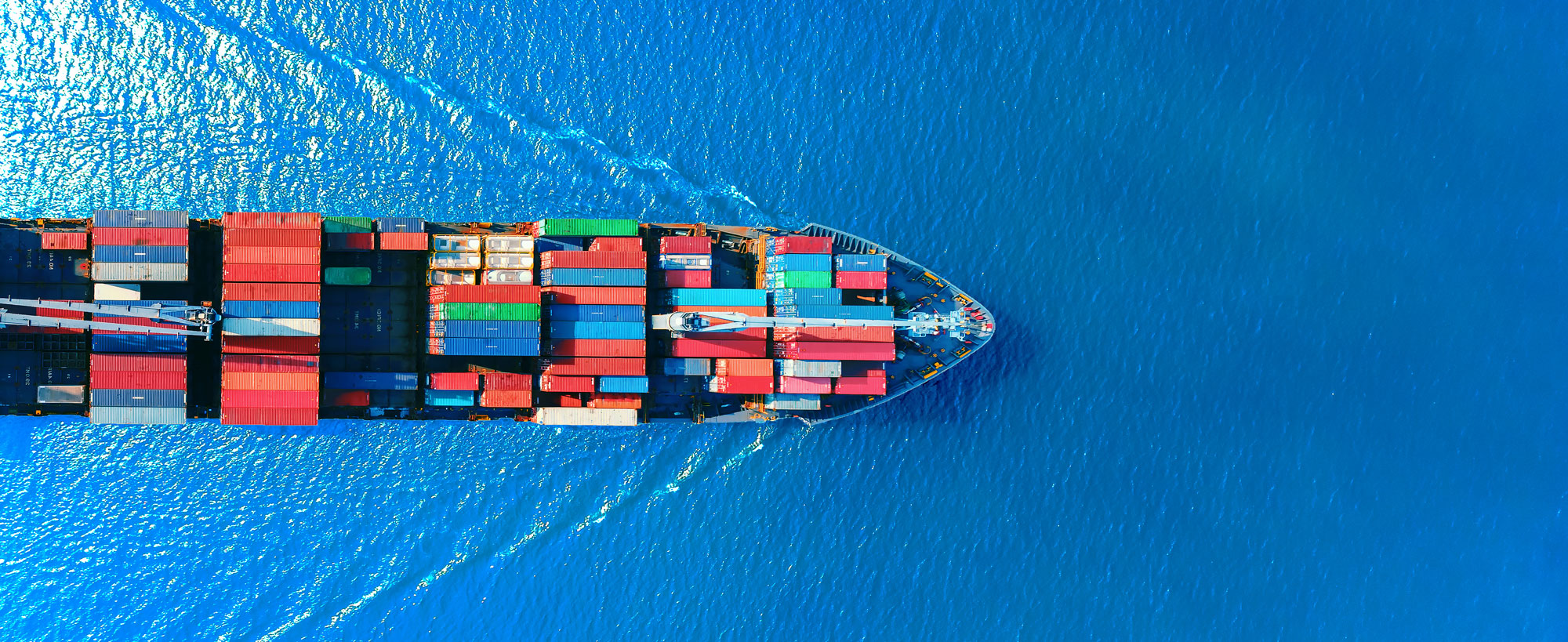
    Private shipping companies such as Maersk, CMA CGM, Hapag-Lloyd, and MSC have begun to avoid using the Red Sea route due to the imminent threat from Houthis.3  The ongoing supply chain disruption caused by the COVID-19 pandemic and Russia’s invasion of Ukraine could further escalate due to the Red Sea crisis and cause severe concerns for world trade and consumer goods supply. With the suspension of trade via the Suez Canal, traffic through the Red Sea has dropped by 35%.4  The Houthis have raised the shipping cost internationally, imposing additional costs on commerce when trouble at the Panama Canal due to low water levels has already made shipping more complicated and central banks worry about a new inflationary spike. While trade hasn’t wholly stopped, most ships can choose the longer but safer route around Africa through the Cape of Good Hope to reach Europe and Asia from either side. This option imposes significant costs on shipping and, therefore, to consumers and affects local states in the region if the Houthi “blockade” persists. In the worst-case scenario, crude oil prices would rise in 2024 if oil shipments through the canal were stopped entirely, and this could cause a significant disturbance.

    Image Credit: washingtoninstitute.org

    Surprisingly, though, Russian ships have enjoyed free navigation through the Red Sea. Russian ships travel to Asia through the Black Sea, connecting to the Mediterranean Sea, passing through the Suez Canal and the Red Sea, and joining the Indian Ocean. With sanctions from Europe and the US amid the war in Ukraine, Russia cannot afford to lose its markets in Asia, particularly India and China, since these two countries buy almost 90% of Russia’s oil exports.5  The free navigation of Russian ships could possibly be due to its close relationship with Iran or due to the adoption of a similar stance with the Houthis on the war between Israel and Gaza. In the unlikely scenario that Russia does not have access to the Red Sea, it leaves them with the only other option of travelling through the Cape of Good Hope, adding 8,900 kilometres with an additional two weeks of travel. Such delays in oil shipments and a highly possible hike in price may prompt countries like India and China to start looking for other alternatives to their oil requirement, given the pre-existing energy crisis. Most probable alternatives include Saudi Arabia and other Gulf countries that do not need to pass the Red Sea to reach the Indian Ocean and thus Asian markets since they have ports in the Persian Gulf with access to the Arabian Sea.

    The disruption in trade has caused an impact on Indian imports and exports as well. Indian exports traverse the Indian Ocean and reach the Suez Canal through the Arabian Sea to reach European markets. Trade between India and Europe has been rising, at an all-time high in 2022, with goods traded worth $130 Billion.6   As of 2021, India engaged in trade worth $200 Billion through the Suez Canal, making the EU one of India’s main export destinations, with a Free trade agreement in the talks.7  India also procures its oil from Russia using the Suez Canal and the Red Sea. A slowdown or possible pause of oil imports may cause severe concerns amid the ongoing energy crisis. At such a juncture for the Indian economy, if the situation persists, trade will likely take a hit along with India’s domestic economy. If the condition fails to change decisively, the higher fees and the expense of prolonged travel duration will also put inflationary pressure on the global economy and India.

    The Houthis will most likely continue to put pressure on Israel to stop its onslaught in Gaza, and they are likely to keep attacking until they reach their goal. By taking control of the Red Sea and indirectly and directly hurting countries irrespective of their size and power, Houthis pressurize the international community to, in turn, put pressure on Israel. This also means that the group is unlikely to agree on any other way of settlement. Not only does this fall on Israel to stop their attacks but also on the US since the latter has always portrayed itself as a peace negotiator in the Middle East and, therefore, has the responsibility to restore order in the region. The Houthis possess a plethora of Iranian-supplied weaponry, ranging from precision drones to anti-ship cruise and ballistic missiles that can strike a moving vessel hundreds of kilometres away. What makes the Houthis more dangerous is the enormous stockpile that can help them continue their campaign indefinitely.

    The attacks have also prompted an unanticipated return of Somali piracy in international seas. As a result, increased expenses are now a worry for merchant shipping lines and seafarer safety for governments worldwide. The ship Lila Norfolk, under the Liberian flag and carrying six Filipinos and fifteen Indians, was taken over by Somali pirates on January 4th, 2024. The Indian navy had already deployed four warships patrolling the Indian Ocean, including INS Chennai, which was involved in the rescue operation during the recent highjack of ship Lila Norfolk. Even though the Indian Navy’s intervention allowed for the sailors’ rescue, it caused further concerns for India’s security and economy. The spill over of these attacks onto the Indian Ocean may threaten India’s security.

    Countries must monitor developments in the Red Sea and, for India, the Indian Ocean. Although India has not joined any Western-led operations on this matter, the country must push the international community to ensure freedom of navigation and the territorial integrity of countries over their sea is upheld under the UN Convention on the Law of the Seas.


    References

    [1] Who are the Houthi rebels and why are they attacking Red Sea ships? (2023, December 23). BBC News. https://www.bbc.com/news/world-middle-east-67614911

    [2] Yerushalmy, J. (2023, December 19). Red Sea crisis explained: what is happening and what does it mean for global trade? The Guardian.

    [3] A new Suez crisis threatens the world economy. (2023, December 16). The Economist. https://www.economist.com/international/2023/12/16/a-new-suez-crisis-threatens-the-world-economy

    [4] Graham, R., Murray, B., & Longley, A. (2023, December 19). Houthi Red Sea Attacks Start Shutting Down Merchant Shipping. Bloomberg.com. https://www.bloomberg.com/news/articles/2023-12-18/houthi-attacks-start-shutting-down-red-sea-merchant-shipping

    [5] Russia: crude oil shipments by destination 2023 | Statista. (2023, September 14). Statista. https://www.statista.com/statistics/1350506/russia-crude-oil-shipments-by-destination/

    [6] I. (n.d.). First India-EU Trade and Technology Council: Significant Milestone in India-EU Relations – Indian Council of World Affairs (Government of India). https://www.icwa.in/show_content.php?lang=1&level=3&ls_id=9416&lid=6112#:~:text=The%20EU%20is%20India’s%202nd,EU%20total%20trade%20in%20goods.

    [7] Ibid.


    Feature Image Credit: dailynewsegypt.com

  • Seabed: “to mine or not to mine”

    Seabed: “to mine or not to mine”

    Seabed mining offers new vistas for business partnerships and joint ventures among different industries in the offshore mining supply chains.

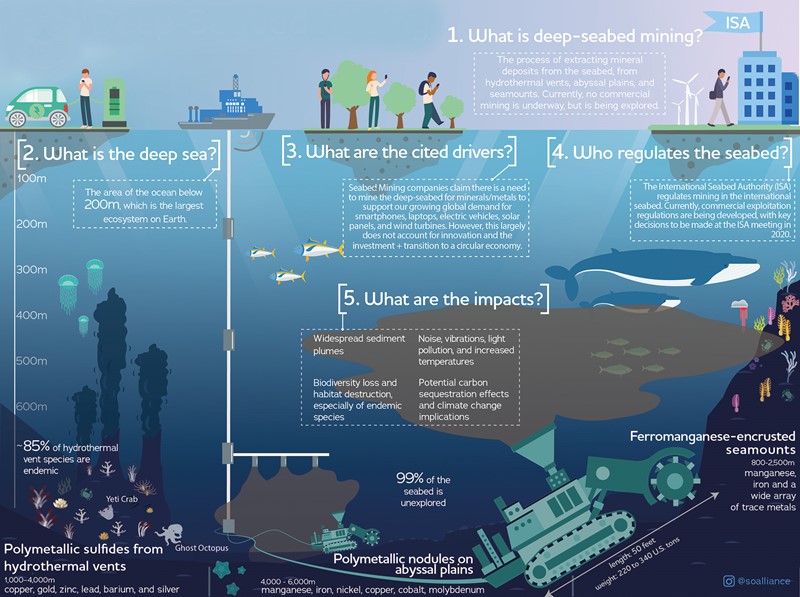
    The month-long debate “to mine or not to mine” has ended inconclusively at the 28th session of the International Seabed Authority (ISA) Assembly from 28 June to 28 July 2023 in Kingston, Jamaica amid calls for a “ban /suspension/precautionary pause” on any extractive activities.

    Figure Credit: eandt.theiet.org

    The ‘naysayers’ vehemently argued for the protection of the oceans given that these large bodies of water are already experiencing multiple and diverse nature and human-induced challenges such as climate change, unsustainable fishing, marine pollution etc. Furthermore, any attempt to mine the seabed will have far-reaching adverse impacts on marine life and result in biodiversity loss keeping in mind that human knowledge about the deep sea ecosystems is very little.

    Those in favour of seabed mining attempted to convince that energy transition is critical for sustainable development and for that a sustained supply of nickel, manganese, cobalt, and copper, is inescapable. These metals/minerals would have to be sourced from the seabed. For the time being, the representatives of the ISA Member States and other stakeholders have returned home to mull over the issue of seabed mining.

    The sudden hyper-activity at the ISA is a result of the June 2021 submission by Nauru, a Pacific island nation which submitted an application for approval from the ISA to commence extraction activities relying on the “two-year rule,” under which the “Council shall complete the adoption of the relevant rules, regulations, and procedures (RRPs) within two years from the submission”. The two-year deadline expired on 9 July 2023, but the ISA Council, a 36-member body executive arm responsible for approving contracts with private corporations and government entities, among other things, announced that it would “continue the negotiations on the draft exploitation regulations”.

    Meanwhile, at home, the Government of India is all set to exploit oceanic resources. Earlier this month, the Indian Parliament (Rajya Sabha and Lok Sabha) passed the Offshore Areas Mineral (Development and Regulation) Amendment Bill 2023 which enables extraction activities in offshore areas for mineral resources.

    It is true that offshore resource development has been a much-neglected area other than the oil and gas sectors. This is notwithstanding the seminal contributions made by the Geological Survey of India (GSI) which has been leading offshore scientific research and survey activities since the early sixties. The Marine and Coastal Survey Division (MCSD) of the GSI conducts numerous related activities including seabed mapping and exploration within the Indian EEZ and is supported by three ocean-going vessels.

    According to the GSI, as of January 2023, nearly 95 % of India’s EEZ of 2.159 million square kilometres has been surveyed. Since 2022, the GSI has been carrying our seabed mapping in international waters and has covered over 70,000 square kilometres till December 2023 for “generation of baseline data along with the search for possible mineral occurrences in the Ninety East Ridge near the Equator, Indian Ocean and the Laxmi Basin (Block-I, II and III), Arabian Sea by deploying its vessels”.

    The Indian EEZ is endowed with 1,53,996 million tonnes of live mud particularly off Gujarat and Maharashtra coasts, and 745 million tonnes of construction-grade sand has been found along the Kerala coast. The Bay of Bengal coast (Odisha, Andhra Pradesh and Tamil Nadu) and the Arabian Sea coast (Maharashtra and Kerala) are rich in heavy mineral and Polymetallic Ferro-Manganese nodules are available in the Andaman Sea and waters off Lakshadweep islands.

    Polymetallic nodules (Copper, Cobalt, Nickel, Manganese, Rare earth, etc.) are particularly important to support India’s mission to promote the use of clean energy. In November 2022, during the G20 summit in Indonesia Prime Minister Narendra Modi told the participating countries that by 2030, half of India’s electricity will be “generated from renewable sources,”

    The Offshore Areas Mineral (Development and Regulation) Amendment Bill 2023, among many issues, has introduced a number of initiatives including the “auction” of offshore mineral exploration sites and mining rights to companies, including from the private sector, thus creating a level playing field for business competition. The Bill provides for two types of operating rights through auction to the private sector (a) production lease and (b) composite license. It merits mention that the provision for “renewal of production leases has been scrapped with a 50-year lease period to remove uncertainty for operators” which will “give confidence to investors by bringing in transparency and fair play,”

    Seabed mining offers new vistas for business partnerships and joint ventures among different industries in the offshore mining supply chains. For instance, lifting of the extracted ore and carrying it to storage sites ashore is an opportunity for the maritime transportation sector. Similarly, environmental impact assessment, and restoration techniques when needed is a unique industry. Likewise, Industry 4.0 technology developers have opportunities to support Marine Spatial Planning (MSP), bio-remediation, bio-prospecting, and a variety of other seabed mining sectors.

    This article was published earlier in kalingainternational.com

    Feature Image Credit: euronews.com

  • Role of Merchant Marine in Indian Maritime Security

    Role of Merchant Marine in Indian Maritime Security

    [powerkit_button size=”lg” style=”info” block=”false” url=”https://admin.thepeninsula.org.in/wp-content/uploads/2022/05/Role-Of-Merchant-Marine-in-Indian-Maritime-Security-1.pdf” target=”_blank” nofollow=”false”]
    Download
    [/powerkit_button]

    Introduction:

    The Merchant Marine plays only a modest role in contributing towards securing India’s maritime neighbourhood or for that matter for any nation. On the other hand, its indirect contribution to security- largely through the economic dimension is significant.

    This paper seeks to explore the economic dimension of merchant ships and in doing so, endeavours to bring out the resultant contribution to maritime security.

    With my domain knowledge, I hope to cover global maritime, and its current scenario in India. I have spent 28 years at Sea of which 18 years in Command as Captain and an additional 25 years ashore in Senior Management positions. I have recently relocated back to India after 5 years in Sri Lanka and a year in Seychelles. So, I do consider it a privilege to share my experience.

    Global Maritime:

    Shipping is the life blood of global economy.  Without shipping, intercontinental trade, the bulk transport of raw materials, and the import/export of affordable food and manufactured goods would simply not be possible. The international shipping industry is responsible for the carriage of around 90% of world trade. Seaborne trade continues to expand, bringing benefits for consumers across the world through competitive freight costs. Thanks to the growing efficiency of shipping as a mode of transport and increased economic liberalisation, the prospects for the industry’s further growth continue to be strong.

    There are over 58,000 merchant ships trading internationally, transporting every kind of cargo. The world fleet is registered in over 150 nations, and manned by over 2 million seafarers of virtually every nationality. Ships are technically sophisticated, high value assets (larger hi-tech vessels can cost over US $200 million to build), and the operation of merchant ships generates an estimated annual income of over US $1.2 trillion in freight rates.

    [powerkit_button size=”lg” style=”info” block=”true” url=”https://admin.thepeninsula.org.in/wp-content/uploads/2022/05/Role-Of-Merchant-Marine-in-Indian-Maritime-Security-1.pdf” target=”_blank” nofollow=”false”]
    Read More
    [/powerkit_button]

    Feature Image Credits: Financial Times

  • Understanding the ‘Xi Jinping’ thought on Rule of Law: Future Substance of Lawfare and Challenges in the Indo-Pacific

    Understanding the ‘Xi Jinping’ thought on Rule of Law: Future Substance of Lawfare and Challenges in the Indo-Pacific

    [powerkit_button size=”lg” style=”info” block=”true” url=”https://admin.thepeninsula.org.in/wp-content/uploads/2022/11/Xi-Jinping-Thought-Lawfare_ArpanAChakravarty-1.pdf” target=”_blank” nofollow=”false”]
    Download
    [/powerkit_button]

    Abstract

    Lawfare aims at using the law and legal systems to hurt or discredit opponents or stop them from reaching their political goals. It is seen that the rule of law has been used to shape the future course of the war as an alternative to traditional military means. Regimes worldwide have started using the law to constrain behaviour, contest circumstances, confuse legal precedents, and gain an advantage. In this paper, the author looks at how China uses “lawfare” in its own country, worldwide and lessons for India.

    Introduction

    While the world focused on the conflict between Ukraine and Russia, China and Solomon Island signed an inter-governmental security pact1 which has been raising concerns regarding the rule-based order2 in the Indo-Pacific region. China, as a rising power, is undoubtedly becoming a significant adversary to various countries bordering it, including India; its growth aims at unipolar Asia, which is causing enormous uncertainty in the region.

    Due to this, it becomes important to understand the multipolar distribution of power in the region since the Indo-Pacific is becoming a site for political contestation and the rise of ‘lawfare’. It is seen that in order to contest for leadership, China has been active on the front to demonstrate, influence, and ideate with different nations. It is actively setting rules and terms of compliance for it through a set of carefully crafted strategies of ‘lawfare’.

    This paper seeks to examine the theoretical underpinnings of lawfare, its internal dimension that influences China’s domestic policy, and its external dimension that has a bearing on China’s strategic and international standing, and finally how China uses lawfare to intimidate other nations and what the world can learn from it.

    [powerkit_button size=”lg” style=”info” block=”true” url=”https://admin.thepeninsula.org.in/wp-content/uploads/2022/11/Xi-Jinping-Thought-Lawfare_ArpanAChakravarty-1.pdf” target=”_blank” nofollow=”false”]
    Read the Full Paper
    [/powerkit_button]

  • India’s Indian Ocean and the Imperative for a Strong Indian Navy

    India’s Indian Ocean and the Imperative for a Strong Indian Navy

    “A good navy is not a provocation to war. It is the surest guarantee of peace!”
    The Indian Ocean has been at the centre of world history ever since we know it. Man originated in Africa, probably somewhere in the Olduvai Gorge in present-day Tanzania – where Homo Erectus lived 1.2 million years ago and where the first traces of Homo Sapiens, our more recent ancestors having evolved only about 200,000 years ago. First phonetic languages evolved around 100, 000 years ago. The migration of mankind out of Africa began almost 60000 years ago. But we don’t call the Indian Ocean the African Ocean because the first recorded activity over it began only about 3000 years ago.
    Three great early recorded activities of this period come to mind. The first is the Indus Valley Civilization. It was a Bronze Age civilization (3300–1300 BCE; mature period 2600–1900 BCE) in the northwestern region of the Indian subcontinent. Along with Ancient Egypt and Mesopotamia, it was one of three early civilizations of the Old World, and of the three the most widespread.
    The Indus civilization’s economy appears to have depended significantly on trade, which was facilitated by major advances in transport technology. It may have been the first civilization to use wheeled transport. These advances may have included bullock carts that are identical to those seen throughout South Asia today, as well as boats. Most of these boats were probably small, flat-bottomed craft, perhaps driven by sail, similar to those one can see on the Indus River today; however, there is secondary evidence of sea-going craft.
    Archaeologists have discovered a massive, dredged canal and what they regard as a docking facility at the coastal city of Lothal now in Gujarat. Judging from the dispersal of Indus civilization artifacts, the trade networks, economically, integrated a huge area, including portions of Afghanistan, the coastal regions of Persia, northern and western India, and Mesopotamia. There is some evidence that trade contacts extended to Crete and possibly to Egypt.
    There was an extensive maritime trade network operating between the Harappan and Mesopotamian civilizations as early as the middle Harappan Phase, with much commerce being handled by “middlemen merchants from Dilmun” (modern Bahrain and Failaka located in the Persian Gulf). Such long-distance sea trade became feasible with the innovative development of plank-built watercraft, equipped with a single central mast supporting a sail of woven rushes or cloth.
    The second great economic activity was Slavery. Slavery can be traced back to the earliest records, such as the Code of Hammurabi (c. 1760 BC), which refers to it as an established institution. Slavery is rare among hunter-gatherer populations, as it is developed as a system of social stratification. Slavery typically also requires a shortage of labour and a surplus of land to be viable. Bits and pieces from history indicate that Arabs enslaved over 150 million African people and at least 50 million from other parts of the world.  Later they also converted Africans into Islam, causing a complete social and financial collapse of the entire African continent apart from wealth attributed to a few regional African kings who became wealthy in the trade and encouraged it.
    The third great economic activity was seafaring evidenced by migration. The island of Madagascar, the largest in the Indian Ocean, lies some 250 miles (400 km) from Africa and 4000 miles (6400 km) from Indonesia. New findings, published in the American Journal of Human Genetics, show that the human inhabitants of Madagascar are unique – amazingly, half of their genetic lineages derive from settlers from the region of Borneo, with the other half from East Africa. It is believed that the migration from the Sunda Islands began around 200 BC.
    Linguists have established that the origins of the language spoken in Madagascar, Malagasy, suggested Indonesian connections, because its closest relative is the Maanyan language, spoken in southern Borneo. The Gods were also kind and gave the IOR the weather conditions that helped in evolving seaborne trade and intercourse. The sea surface current and prevailing wind structure in and over the Indian Ocean favoured seafarers in their endeavour and sailings in the Indian Ocean from the southern tip of Africa (Cape of Good Hope) during the month of May. After the entry into the Indian Ocean, the seafarers continued to sail in the northerly direction along the coastline of Africa (aided by the strong Somali Current and the East Arabian Current) towards the Arabian Sea.
    The physical environmental conditions over the sea and the external prevailing weather helped the seafarers reach places up to the west coast of India. As this sea surface current extend towards the east coast of India, the sailors were greatly assisted by the surface current as they sailed along. During November, when the East Indian Winter wind reverses in its direction and begins to blow from the northeast, the sailors prepare for their return journey. The winds that generate the waves contribute to the reduction in the otherwise required travel time for the sailings between any given two points of departure and arrival. The natural and external forces help the sailors make their journey/expedition more economical and energy-efficient.
    Clearly, the region was a hub of all kinds of economic activity. Then came the Petroleum Age. And things changed as never before. The Spice trade, the Silk trade, and the China trade all paled into insignificance. The use of Coal as a ship fuel enlarged distances and volumes of cargo. Oil made even longer journeys and greater volumes possible.
    Petroleum is the lifeblood of modern society. It’s a relatively new activity, but its advent has transformed our world as few things have. Petroleum, in one form or another, has been used since ancient times. According to Herodotus more than 4000 years ago, asphalt was used in the construction of the walls and towers of Babylon; there were oil pits near Babylon, and a pitch spring on Zacynthus.
    Great quantities of it were found on the banks of the river Issus, one of the tributaries of the Euphrates. Ancient Persian tablets indicate the medicinal and lighting uses of petroleum in the upper levels of their society. By 347 AD, oil was produced from bamboo-drilled wells in China. Early British explorers to Myanmar documented a flourishing oil extraction industry based in Yenangyaung, that in 1795 had hundreds of hand-dug wells under production.
    Oil is now the single most important driver of world economics, politics and technology.  The rise in importance was due to the invention of the internal combustion engine, the rise in commercial aviation, and the importance of petroleum to industrial organic chemistry, particularly the synthesis of plastics, fertilizers, solvents, adhesives and pesticides. Today, oil contributes 3% of the global GDP.
    In 1847, the process to distill kerosene from petroleum was invented by James Young. He noticed natural petroleum seepage in the Riddings colliery at Alfreton, Derbyshire from which he distilled a light thin oil suitable for use as lamp oil, at the same time obtaining a thicker oil suitable for lubricating machinery. In 1848 Young set up a small business refining the crude oil.
    Today the world’s biggest stand-alone refinery is the Reliance refinery at Jamnagar with a refining capacity of about 1.5 million barrels a day. The Essar refinery at Jamnagar refines a further 0.5 million barrels a day. Together they make Jamnagar one of the world’s great refining centers. India’s number one export item is Petroleum products, mostly Petrol and Diesel. India now exports the equivalent of about 615,000 barrels a day. In 2020, petroleum exports accounted for $25.3 billion of our total exports of $291.8 billion in the same year.
    India imported $77 billion worth of oil in the year 2020-21 and more than half of this comes from countries in the IOR. Iraq’s share is 22.4%, Saudi Arabia’s share is 18.8%, UAE’s share is 10.8%, and Kuwait’s 5%. The IOR is India’s lifeline and lifeblood. If the line is blocked we will suffer hugely, if the blood gets anaemic we will suffer hugely. India just cannot afford anything to go wrong here.
    The sea lanes in the Indian Ocean are considered among the most strategically important in the world—according to the Journal of the Indian Ocean Region, more than 80 percent of the world’s seaborne trade in oil transits through the Indian Ocean choke points, with 40 percent passing through the Strait of Hormuz, 35 percent through the Strait of Malacca and 8 percent through the Bab el-Mandab Strait.
    But it’s not just about sea-lanes and trade. More than half the world’s armed conflicts are presently located in the Indian Ocean region, while the waters are also home to continually evolving strategic developments including the competing rises of China and India, the potential nuclear confrontation between India and Pakistan, the US interventions in Iraq and Afghanistan, Islamist terrorism, incidents of piracy in and around the Horn of Africa, and management of diminishing fishery resources.
    As a result of all this, almost all the world’s major powers have deployed substantial military forces in the Indian Ocean region. For example, in addition to maintaining expeditionary forces in Iraq, the US 5th Fleet is headquartered in Bahrain, and uses the island of Diego Garcia as a major air-naval base and logistics hub for its Indian Ocean operations. In addition, the United States has deployed several major naval task forces there, including Combined Task Force 152 (currently operated by the Kuwait Navy), which is focusing on illicit non-state actors in the Arabian Gulf, and Combined Task Force 150 (currently commanded by the Pakistan Navy), which is tasked with Maritime Security Operations (MSO) outside the Arabian Gulf with an Area of Responsibility (AOR) covering the Red Sea, Gulf of Aden, Indian Ocean and the Gulf of Oman. France, meanwhile, is perhaps the last of the major European powers to maintain a significant presence in the north and southwest Indian Ocean quadrants, with naval bases in Djibouti, Reunion, and Abu Dhabi.
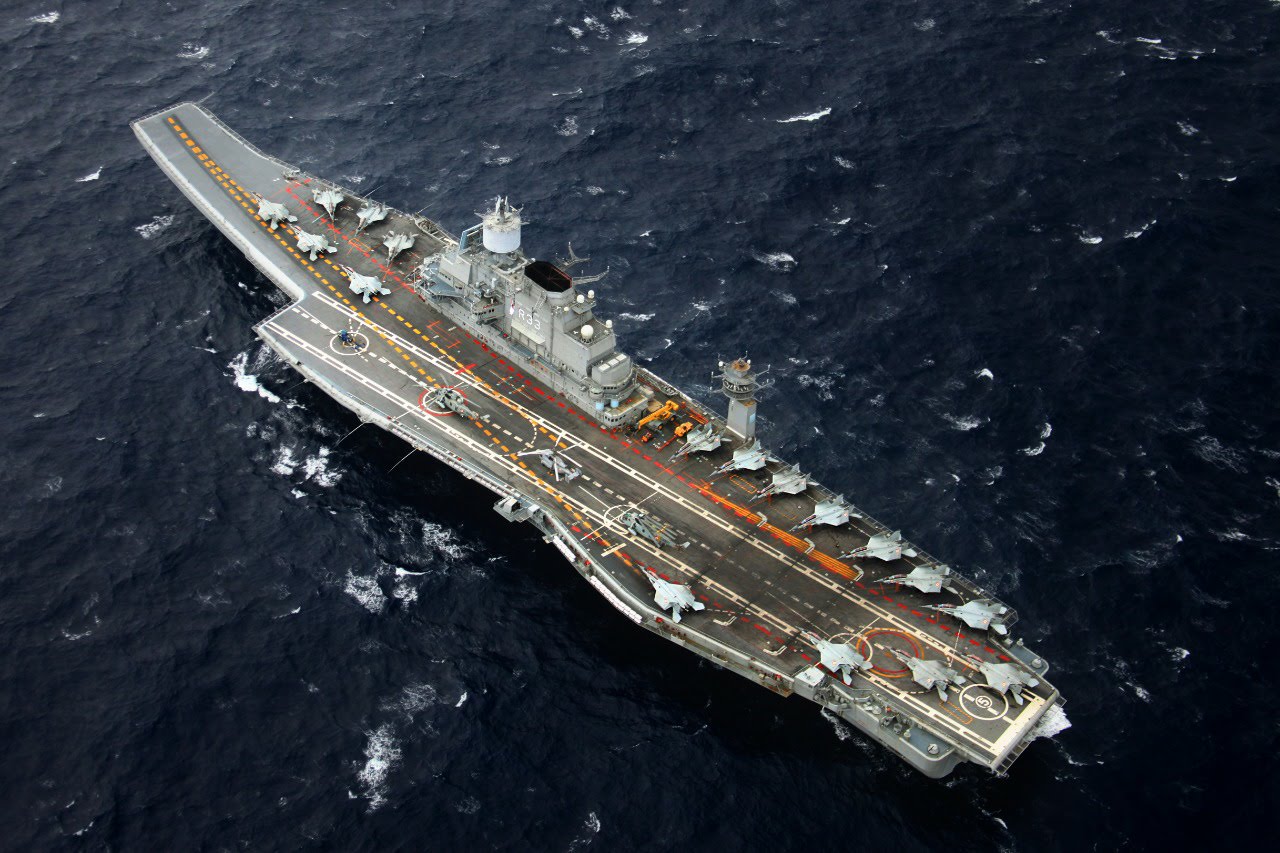
    And, of course, China and India both also have genuine aspirations of developing blue water naval capabilities through the development and acquisition of aircraft carriers and an aggressive modernization and expansion programme.
    China’s aggressive soft power diplomacy has widely been seen as arguably the most important element in shaping the Indian Ocean strategic environment, transforming the entire region’s dynamics. By providing large loans on generous repayment terms, investing in major infrastructure projects such as the building of roads, dams, ports, power plants, and railways, and offering military assistance and political support in the UN Security Council through its veto powers, China has secured considerable goodwill and influence among countries in the Indian Ocean region.
    And the list of countries that are coming within China’s strategic orbit appears to be growing. Sri Lanka, which has seen China replace Japan as its largest donor, is a case in point—China was no doubt instrumental in ensuring that Sri Lanka was granted dialogue partner status in the Shanghai Cooperation Organization (SCO).
    To the west, Kenya offers another example of how China has been bolstering its influence in the Indian Ocean. The shift was underscored in a leaked US diplomatic cable from February 2010 that was recently published by WikiLeaks. In it, US Ambassador to Kenya Michael Ranneberger highlighted the decline of US influence in East Africa’s economic hub, saying: ‘We expect China’s engagement in Kenya to continue growing given Kenya’s strategic location…If oil or gas is found in Kenya, this engagement will likely grow even faster. Kenya’s leadership may be tempted to move close to China in an effort to shield itself from Western, and principally US pressure to reform.’
    The rise of China as the world’s greatest exporter, its largest manufacturing nation and its great economic appetite poses a new set of challenges. At a meeting of South-East Asian nations in 2010, China’s foreign minister Yang Jiechi, facing a barrage of complaints about his country’s behaviour in the region, blurted out the sort of thing polite leaders usually prefer to leave unsaid. “China is a big country,” he pointed out, “and other countries are small countries and that is just a fact.”
    Indeed it is, and China is big not merely in terms of territory and population, but also in military might. Its Communist Party is presiding over the world’s largest military build-up. And that is just a fact, too—one that the rest of the world has to come to terms with.
    China’s defence budget has almost certainly experienced double-digit growth for two decades. According to SIPRI, a research institute, annual defence spending rose from over $30 billion in 2000, $120 billion in 2010 to almost $229.4 billion in 2021. SIPRI usually adds about 50% to the official figure that China gives for its defence spending, because even basic military items such as research and development are kept off budget. Including those items would imply total military spending in 2021, based on the latest announcement from Beijing, would be around $287.8 billion.
    This is not a sum India can match and the last thing we need to get caught in is a numbers game. A one-party dictatorship will always be able to outspend us, even if our GDPs get closer.
    But history tells us again and again that victory is not assured by superiority in numbers and even technology. If that were to be so, Alexander should have been defeated at Gaugamela, Babur at Panipat, Wellington at Waterloo, Russia at Leningrad, Britain in the Falklands, and above all Vietnam who defeated three of the world’s leading powers – France, the USA and China – in succession. I don’t have to tell you that victory is more a result of strategy and tactics. Numbers do matter, but numbers are not all. Technology does matter, but technology alone cannot assure you of victory. It’s always mind over matter. You know these things better than most of us. You also know what to do. As the old saying goes: “When the going gets tough, the tough get going!”
    That said, the threat from China should not be exaggerated. There are three limiting factors. First, unlike the former Soviet Union, China has a vital national interest in the stability of the global economic system. Its military leaders constantly stress that the development of what is still only a middle-income country with a lot of very poor people takes precedence over military ambition. The increase in its military spending reflects the growth of the economy, rather than an expanding share of national income. For many years China has steadily spent the same proportion of GDP on defence (a bit over 1.7%, whereas America spend about 3.7% in the year 2020-21).
    The real test of China’s willingness to keep military spending constant will come when China’s headlong economic growth starts to slow further. But in the past form, China’s leaders will continue to worry more about internal threats to their control than external ones. In 2020, the Chinese spending on internal security was $212 billion. With a rapidly ageing population, it is also a good bet that meeting the demand for better health care will become a higher priority than maintaining military spending.
    Like all the other great powers, China faces a choice of guns and butter or more appropriately walking sticks. But till then it is: Nervi belli pecunia infinita or unlimited money is the muscle of war.
    India on the other hand will keep growing long after China has stopped growing. Its youthful population and present growth trends indicate the accumulation of the world’s largest middle class in India. India’s growth is projected to continue well past 2050. In fact so big will this become, that India during this period will increasingly power world economic growth, and not China. In 2050, India is projected to have a population of 1.64 billion and of these 1.3 billion will belong to the middle and upper classes. The lower classes will be constant at around 300 million, as it is now.
    India already has the world’s third-largest GDP. Many economists prophesize that in 2050 it will be India that will be the world’s biggest economy, not China. In per capita terms, we might still be poorer, but in over GDP terms, we will be bigger.
    According to a study by IHS Markit, a subsidiary of S&P Global, India will be the world’s third-largest economy by 2030. Indian GDP in 2030 is projected to be $8.4 trillion. China, in second place, will have a GDP of $ 33.7 trillion and the US $ 30.4 trillion. As we say in India, aap key muh mein ghee aur shakhar.  Both incidentally now deemed bad for health.
    Now comes the dilemma for India. Robert Kaplan writes: “As the United States and China become great power rivals, the direction in which India tilts could determine the course of geo-politics in Eurasia in the 21st century. India, in other words, looms at the ultimate pivot state.” At another time Mahan noted that India, located in the centre of the Indian Ocean littoral, is critical for the seaward penetration of both the Middle-east and China.
    Now if one were an Indian planner, he or she would be looking at the China Pakistan axis with askance. India has had conflicts and still perceives threats from both, jointly and severally. The Tibetan desert, once intended to be India’s buffer against the north now has become China’s buffer against India. The planner will not be looking at all if he or she were not looking at the Indian Ocean as a theatre. After all, it is also China’s lifeline and its lifeblood flows here.
    Now if one were a Chinese planner, he or she would be looking with concern over India’s growth and increasing ability to project power in the IOR. The planner will also note what experts are saying about India’s growth trajectory. That it will be growing long after China gets walking sticks. That it is the ultimate pivot state in the grand struggle for primacy between the West led by the USA and Japan, and China.
    What will this planner be thinking particularly given the huge economic and military asymmetry between China and India now? Tacitus tells it most pithily. That peace can come through strength or Si vis pacem para bellum. While China has ratcheted up its show of assertiveness in recent years, India has been quietly preparing for a parity to prevent war. Often parity does not have to be equality in numbers. The fear of pain disproportionate to the possible gains, and the ability of the smaller in numbers side to do so in itself confer parity.
    There is a certain equilibrium in Sino-Indian affairs that make recourse to force extremely improbable. Both modern states are inheritors of age-old traditions and the wisdom of the ages. Both now read their semaphores well and know how much of the sword must be unsheathed to send a message. This ability will ensure the swords remain recessed and for the plowshares to be out at work.
    Finally, I would be remiss if I did not say something about the centrality of the Indian Navy to our future. Nothing says it better than what Theodore Roosevelt said a century ago: “A good Navy is not a provocation to war. It is the surest guarantee of peace!”
    Featured Image Credit: Indian Navy
  • Does ASEAN Need a New Approach to Code of Conduct for the South China Sea?

    Does ASEAN Need a New Approach to Code of Conduct for the South China Sea?

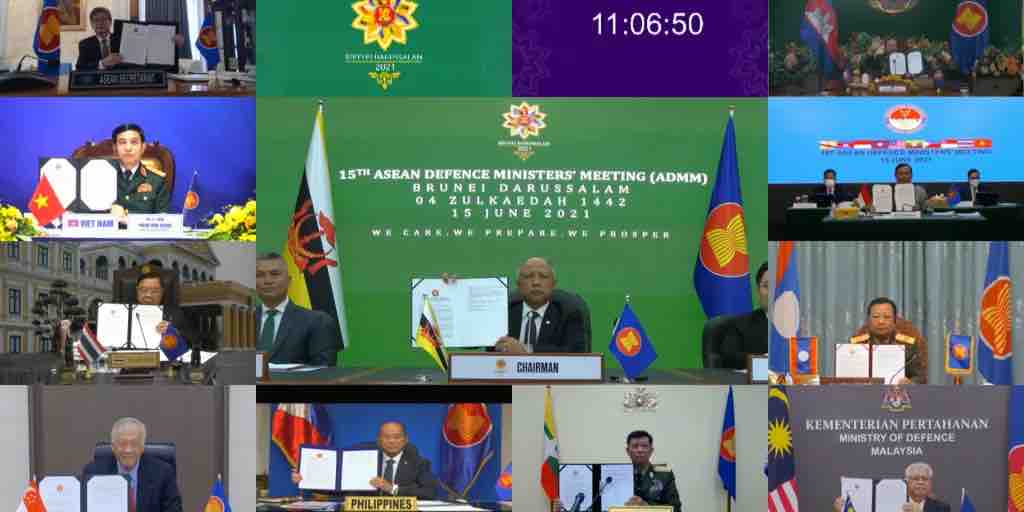
    Reference to Declaration on the Conduct of Parties in the South China Sea (DOC), Guidelines for the Implementation of the DOC, and formulations such as early adoption of a Code of Conduct in the South China Sea (COC) have featured in the ASEAN Chairman’s Statement of East Asia Summit Foreign Ministers’ Meeting since 2013 when Brunei Darussalam had held the Chairmanship of the ASEAN. These references were reiterated, and the section relating to the South China Sea in the ASEAN Chairman’s Statement for the 11th East Asia Summit Foreign Ministers’ Meeting in August 2021 under the leadership of Brunei Darussalam, is no different.

    While the Chinese intent is a welcome development, its new “Maritime Traffic Safety Law of the People’s Republic of China” (MTSL) that came into effect on 01 September 2021, has caused turbulence among the claimant States.

    Meanwhile, China’s Ministry of Foreign Affairs Statement of 5 August 2021 notes that a new goal has been set by China under which Beijing and ASEAN would “refrain from unilateral actions that aggravate tensions and widen differences, or using force or threat of force in particular”. While the Chinese intent is a welcome development, its new “Maritime Traffic Safety Law of the People’s Republic of China” (MTSL) that came into effect on 01 September 2021, has caused turbulence among the claimant States. As per the MTSL guidelines and procedures, vessels must “report the name, call sign, current position, next port of call and even estimated time of arrival to Chinese authorities”.

    The Philippines has decided to “ignore” the new Chinese Regulations and Philippine Defence Secretary Delfin Lorenzana has clarified his country’s stand on the issue that “we do not honour those laws by the Chinese within the West Philippine Sea because we consider that we have the sovereign right within this waters. So we will not recognise this law of the Chinese,” The Vietnamese Foreign Ministry too has reiterated strict compliance with the 1982 UNCLOS “when promulgating documents of domestic law related to the sea”.

    The Pentagon has accused China of “Unlawful and sweeping maritime claims, including in the South China Sea, pose a serious threat to the freedom of the seas, including the freedoms of navigation and overflight, free trade and unimpeded lawful commerce, and the rights and interests of the South China Sea and other littoral nations,” and the Defense Department spokesman has stated that the country will “ continue to fly, sail and operate wherever international law allows,”

    By all counts, an early conclusion of CoC in the South China Sea is only wishful given that the idea has been on the table for over two and a half decades since 1996. At that time there was euphoria among ASEAN foreign ministers that a CoC in the South China Sea could be the “foundation for long term stability in the area and foster understanding among claimant countries.”

    There is now a view that it is time to change the “objective from coming up with a comprehensive CoC”; instead, ASEAN and China must work towards “incremental development of a series of agreements” that could “eventually become the CoC in the future”

    The ASEAN has made earnest efforts and continues to negotiate a legally binding CoC but its finalization has eluded it. There is now a view that it is time to change the “objective from coming up with a comprehensive CoC”; instead, ASEAN and China must work towards “incremental development of a series of agreements” that could “eventually become the CoC in the future”. This can be achieved by developing “more realistic” and “smaller accords” that can help “de-escalate potential contentious situations”.

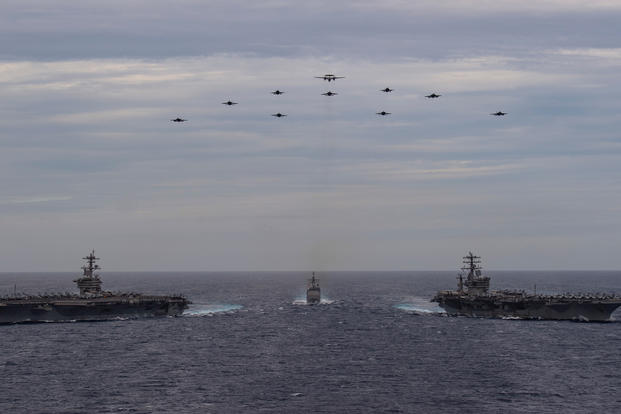
    The above argument merits attention for at least two important reasons. First, the South China Sea is simmering due to US-China military contestations. The US Navy continues to engage in exercises and the current deployment in the South China Sea by USS Carl Vinson Carrier Strike Group and Air Wing of the Future is a reflection of the US’ commitment to field “combat-ready force to protect and defend the collective maritime interests of the U.S. and its regional allies and partners”. Also, the US Navy has conducted FONOPs relentlessly and is now joined by the US Coast Guard. The Quad Member States have also dispatched their warships to the South China Sea for Malabar Naval exercises and the European navies led by France and Britain are operating in the region. These multi-nation naval manoeuvers have prompted China to respond through similar actions and the PLA Navy and the Air Force are persistently deployed in the region. This ‘state of affairs’ will continue.

    Second, there is a view that while the CoC should necessarily be consistent with the 1982 UNCLOS and should not “prejudice legitimate rights and interests of nations not a party to discussions,” this assessment can potentially trigger clamour among other stakeholders who have politico-diplomatic, economic and strategic interests in the region and have vehemently argued for a rules-based system and have challenged China’s expansive claims in the South China Sea as also its non-adherence to the 2016 PCA ruling.

    Under such circumstances, there are no incentives for China and it is deliberately delaying the finalization of the COC; it prefers to pursue a “business as usual” approach causing immense insecurity in the minds of the claimant States. Meanwhile, there is now a sense of urgency among the ASEAN Member States to finalize the CoC and their “patience” is wearing thin.


    Feature Image Credit: Nikkei Asia

  • US Policy in the South China Sea since 2016 PCA Ruling

    US Policy in the South China Sea since 2016 PCA Ruling

    In the foreseeable future, ASEAN will become more divided over South China Sea issues in the Biden era. The conflicts brought about by geopolitical competitions and maritime disputes in the South China Sea will become more challenging and uncertain


    The US does not lay any territorial claim in the South China Sea and had not taken any position on sovereignty over islands, reefs, and features in the South China Sea. Its 2010 policy was of not taking “sides on the competing territorial disputes over land features in the South China Sea, we believe claimants should pursue their territorial claims and accompanying rights to maritime space in accordance with the UN convention on the law of the sea”. Towards that end, the US had consistently urged the contesting parties to settle disputes based on international law and without intimidation-coercion. Even in 2016, the US had encouraged claimants to resolve their disputes “free from coercion or the use or threat of force” after endorsing the Permanent Court of Arbitration (PCA) award to the Philippines.

    However, in July 2020, the US revised its South China Sea policy through a Position Paper titled “U.S. Position on Maritime Claims in the South China Sea”. The Paper questioned China’s “claims to offshore resources across most of the South China Sea” and categorically stated that these are “completely unlawful, as is its campaign of bullying to control them,” This was in sharp contrast to the 2010 policy articulations.

    Since the publication of the Position Paper, South China Sea has appeared in Statements by respective US political leaders. For instance, at the G 7 summit on 11-13 June 2021, President Joe Biden was able to rally the leaders of the grouping and succeeded in a consensus over the critical necessity of a free and open Indo-Pacific and the G7 leaders also expressed concerns about the “situation in the East and South China Seas” and strongly opposed “any unilateral attempts to change the status quo and increase tensions”.

    There is continuity in US policy on the South China Sea since President Trump’s administration and the issue has figured prominently in US’ statements particularly in the context of coercion and intimidation of its smaller neighbours by China.  Secretary of State Mike Pompeo drew attention to the “trampling” of the “sovereign rights of its neighbours” and “destabilizing the region” as also causing “untold environmental devastation” of 3,000 acres of the sea space in the South China Sea; furthermore, “the United States will act until we see Beijing discontinue its coercive behaviour in the South China Sea, and we will continue to stand with allies and partners in resisting this destabilizing activity.” Also, he was uncompromising on US’ commitment to its ASEAN partners in safeguarding sovereign rights to “offshore resources, consistent with their rights and obligations under international law.”

    President Biden’s Administration has continued to pursue a similar policy as that of the predecessor. For instance, in his conversation with National Security Advisor Jake Sullivan on 1 July 2021 with Vietnamese Deputy Prime Minister Pham Binh Minh, they discussed the South China Sea, including the United States’ support for the 2016 arbitral tribunal award.

    It is not surprising that a Chinese commentator has observed that “Biden administration’s South China Sea policy has attached great importance to US allies within and outside the region, this precisely reflects its Cold War mentality” and is reflected in the US-Philippine Mutual Defence Treaty, which now applies to the South China Sea and freedom of navigation operations (FONOP)  in the South China Sea continues unabated. For instance, in 2017 there was one FONOP by the US, in 2018 there were three incidents, nine in 2019; 15 in 2020; and then this year four FONOPs have been reported. There is also a new emphasis on mini multilateralism in the form of Quadrilateral Security Dialogue (QUAD) to support its “traditional strategy of relying on allies and partners” to “establish a new regional order dominated by the US”.

    The Chinese commentator’s assertion that “in the foreseeable future, ASEAN will become more divided over South China Sea issues in the Biden era. The conflicts brought about by geopolitical competitions and maritime disputes in the South China Sea will become more challenging and uncertain” merits attention.

    Last week, while speaking in a forum on global security issues at Tsinghua University in Beijing, China’s Foreign Minister Wang Yi said that the US’ Indo-Pacific strategy is aimed at countering Beijing and the strategy “should be dumped at a trash heap.” Wang also observed that China would oppose any framework of cooperation to “fuel rivalry” and “an action to accelerate division” ostensibly referring to Taiwan.

    Finally, a continuous war of words between political leaders of the US and China over the South China Sea can be expected to continue. Notwithstanding that ASEAN Member States can be expected to continue to engage China for a legally binding Code of Conduct and at the 19th Senior Officials’ Meeting on the Implementation of the Declaration on the Conduct of Parties in the South China Sea (DOC) held on June 7, 2021, in Chongqing, all “parties agreed to resume as soon as possible the second reading of the Single Draft COC Negotiating Text and strive for the early conclusion of negotiations”.

    Feature Image: USS Ronald Reagon in the South China Sea. Credit: asiatimes.com

  • China’s New Coast Guard Act: Vietnam could lead Response

    China’s New Coast Guard Act: Vietnam could lead Response

    China’s new Coast Guard Act has put the ‘cat among the pigeons’ and the South China Sea claimants Brunei, Malaysia, Philippines, Vietnam and Taiwan are visibly worried. The Act has also attracted international attention; for some, it is an act of war and for others, it violates the 1982 United Nations Convention on the Law of the Sea (UNCLOS).

    The Act came into effect last month on 01 February. In its administrative content, the Act is the culmination of at least two reorganizations of the Chinese Coast Guard (CCG) that began in 2013 involving administrative and operational control of five closely associated national maritime law enforcement agencies, also referred to as the Five Dragons , that were brought under one umbrella. In 2018, CCG became part of the People’s Armed Police Force.

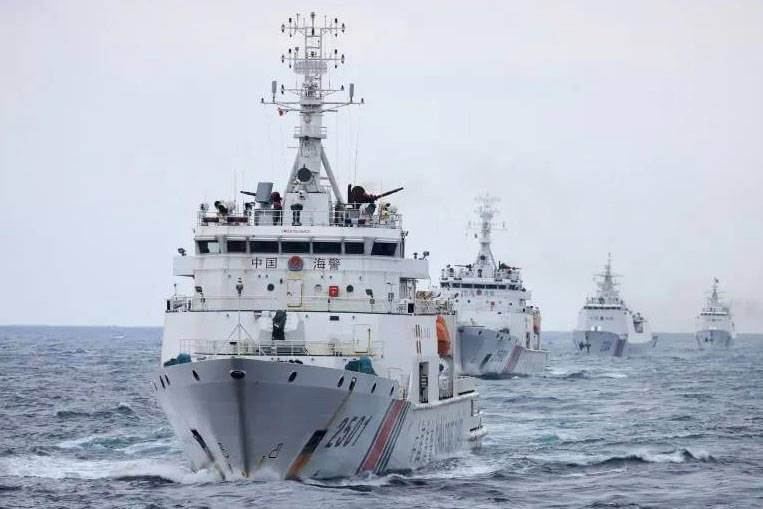
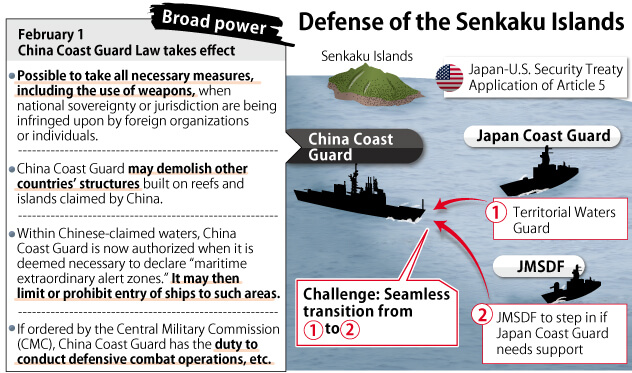
    Under the new Act, it is feared, the CCG would conduct operations just like the PLA Navy and would be directly controlled by the Chinese Communist Party Central Committee. The CCG is empowered with powerful ‘security and control measures’ and has the rights to take necessary actions to “restrain foreign military vessels and foreign vessels used for non-commercial purposes in waters under China’s jurisdiction from violating the laws or regulations of China” which is potentially in contravention to the 1982 UNCLOS.

    The Act has also attracted international attention; for some, it is an act of war and for others, it violates the 1982 United Nations Convention on the Law of the Sea (UNCLOS).

    Under Article 20, the CCG may demolish “buildings, structures, and various fixed or floating devices” built by foreigners “in the sea areas and islands under our jurisdiction”, and Article 47 authorizes the agency to “directly use weapons if there is no time for warning or if there is a risk of serious harm after giving a warning.”

    It is the latter that prompted Japan to label the Act as “blatantly threatening” and “aimed directly at the Senkakus” raisingspeculation that the Japanese Coast Guard, which hitherto could “fire weapons directly at foreign vessels in cases of self-defence and emergency escape” may now “ fire on foreign official vessels under laws by regarding vessels aiming to land on the Senkaku Islands as committing violent crimes”.

    However, it is fair to say that some of the provisions contained in the Chinese Coast Guard Act are not extraordinary. Navies, Coast Guards and law enforcement agencies of many countries are administratively controlled by the ministries of national defence and routinely operate with the national navies albeit pursue different rules of engagements. Many maritime law enforcement agencies are also known to intercept and even sink foreign fishing vessels especially when these engage in IUU fishing. These naturally attract diplomatic protests from the affected countries including China.

    Be that as it may, the ASEAN and China signed the Code for Unplanned Encounters at Sea (CUES) in the South China Sea in 2016 under which both sides are committed to “maintaining regional peace and stability, maximum safety at sea, promoting good neighbourliness and reducing risks during mutual unplanned encounters in air and at sea, and strengthening cooperation among navies”. This agreement is for the navies and draws upon the CUES (voluntary and non-binding) adopted by the Western Pacific Naval Symposium (WPNS).

    The new Chinese Coast Guard Act may have created an opportunity for ASEAN and China to conceptualize CUES that is tailored to the mandate of the Coast Guards i.e. law enforcement. The issue can also be on the agenda of the Heads of Asian Coast Guard Agency Meeting (HACGAM), a grouping of 22 Member States and multilateral organisations, which aims at cooperative and proactive efforts to address maritime issues confronting the region.

    Among the ASEAN member countries, Vietnam is well placed to lead the initiative for at least three reasons.  First, it is a claimant and some of the features in the South China Sea are under its control; second, it has a larger Coast Guard when compared to the capabilities of the other ASEAN claimants; and third, the Vietnamese Communist Party maintains close contacts with their counterparts in China and this could be a useful channel to facilitate a dialogue.

    However, it remains to be seen if Beijing would allow debate and discussion on the Coast Guard Act particularly when it also involves contested areas such as the South China Sea. For that deft diplomacy by Vietnam could be a good idea.

    Feature Image: www.japantimes.co.jp

  • Chinese Economic Sops over the South China Sea: A Mixed Bag of Successes

    Chinese Economic Sops over the South China Sea: A Mixed Bag of Successes

    The South China Sea is a resource-rich sea space and its net worth is estimated to be US$ 2.5 trillion.[i]  The proven oil reserves are around 7.7 billion barrels and natural gas reserves could be around 266 trillion cubic feet.[ii] The Chinese strategy in the South China Sea against other claimant States is a mix of aggressive posturing including the threat of use of force as also offering economic incentives and sops such as ‘joint development of resources’ in the contested waters.

    Deng preferred a “moderate approach” i.e. “sovereignty remains ours; shelve disputes; pursue joint development.

    The idea of joint development can be attributed to Deng Xiaoping, the Chinese leader and author of market-economy reforms in the 1980s that earned him the title of ‘Architect of Modern China’. Deng preferred a “moderate approach” i.e. “sovereignty remains ours; shelve disputes; pursue joint development.”[iii]


    Map Credit: The Australian Naval Institute

    China’s current thinking on joint development of resources in South China is built around at least seven policy choices i.e. (a) promote good faith in the South China Sea; (b) limit unilateral activities in disputed areas; (c) focus on less-sensitive areas of the South China Sea; (d) reach joint development arrangements by establishing relevant working mechanism; (e) begin the process in areas where there are only two claimants; (f) define sea areas for the joint development by seeking consensus, and (g) discuss the feasibility of setting up a Spratly Resource Management Authority (SRMA) with supranational character.[iv] Further, it has been argued that the ASEAN-China Single Draft Negotiating Text of the Code of Conduct (COC) is “conducive to creating benign bilateral relations, which serves as a prerequisite to joint development”.[v]

    The general belief among the claimants is that China thinks ‘what is mine [Chinese] is of course mine, but what is your [claimants] is also mine’

    However, the above policy choices for joint development and intention are flawed and dismissed by the aggrieved claimants of the South China Sea. The general belief among the claimants is that China thinks ‘what is mine [Chinese] is of course mine, but what is your [claimants] is also mine’; i.e.  Chinese joint development initiatives are based on the wrong assumption that what belongs to China is for China only to develop, and what belongs to other claimants is for development.

    In 2018, China and the Philippines signed a Memorandum of Understanding on Cooperation on Oil and Gas Development. President Xi Jinping urged President Philippine President Rodrigo Duterte to “set aside disputes, eliminate external interference, and concentrate on conducting cooperation, making pragmatic efforts and seeking development”; furthermore, “both sides can take a ‘bigger step’ in the joint development of offshore oil and gas”.[vi] The Philippines proposed a “60-40 sharing arrangement in its favour” and both sides could then develop the “Reed Bank, the main site of the oil and gas reserves, despite the arbitration award declaring that Manila had sovereign rights to exploit them”.[vii]

    Similarly, Brunei has an ongoing arrangement with China on bilateral joint development/cooperation in the South China Sea. Economic and strategic considerations are Brunei’s twin drivers; it has been “pushing hard to diversify its economy away from the oil and gas industry” for a long time and the “unstable oil market, a slow foreign investment growth (especially in non-oil and gas sector) and a contracting national GDP” has acted as a catalyst to diversify and “joint development” is an integral part of Brunei’s wider economic diversification strategy. [viii]

    Unlike the Philippines and Brunei, Malaysia and Vietnam have shied away from joint development of resources with China in the South China Sea.

    Unlike the Philippines and Brunei, Malaysia and Vietnam have shied away from joint development of resources with China in the South China Sea. This is despite the March 2005 China, the Philippines and Vietnam Tripartite Agreement for Joint Marine Scientific Research in Certain Areas in the South China Sea by respective national oil companies.

    Malaysia is not averse to joint development with other claimants except China and at least four such projects were undertaken i.e. (a) Malaysia-Thai Joint Development Authority in the Gulf of Thailand based on the 1979 MOU; (b) 1992 MOU which designates overlapping continental shelf claims (about 2000km square) in the Gulf of Thailand as Commercial Arrangement Area (CAA); (c) the 2009 CAA between Brunei and Malaysia; and (d) Fisheries MOU between Malaysia and Indonesia, quasi-joint exploitation of fisheries resources, in overlapping claim area of about 14,300 square kilometres in the Straits of Malacca.[ix]

    Vietnam’s boundary and territorial disputes with China in the South China Sea including clashes over the Parcels have resulted in mistrust and preclude joint development with China. In essence, Vietnam does not accept joint development in areas that belong to Vietnam according to the UNCLOS 1982.

    Vietnam promotes international cooperation on resource development and has a rich body of laws to support such initiatives such as the 1982 United Nations Law of the Sea, the Petroleum Law (Article 3, No. 12), the Navigation Law, Fisheries Law, the Law on Natural Resources and Environment of Sea and Islands (Article 4, No. 5), the Tourism Law, and the Mineral Law. However, its boundary and territorial disputes with China in the South China Sea including clashes over the Parcels have resulted in mistrust and preclude joint development with China. In essence, Vietnam does not accept joint development in areas that belong to Vietnam according to the UNCLOS 1982.

    The US rejects Chinese maritime claim in the South China Sea and proclaimed “any PRC action to harass other states’ fishing or hydrocarbon development in these waters – or to carry out such activities unilaterally – is unlawful.”[x]Furthermore, while extending help to Vietnam on the matter, US Secretary of State Michael Pompeo announced that “America stands with our South-East Asian allies and partners in protecting their sovereign rights to offshore resources, consistent with their rights and obligations under international law.”


    Notes

    [i]China Escalates Coercion against Vietnam’s Longstanding Oil and Gas Activity in the South China Sea”, https://china.usembassy-china.org.cn/china-escalates-coercion-against-vietnams-longstanding-oil-and-gas-activity-in-the-south-china-sea/  (accessed 15 September 2020).

    [ii] “South China Sea: Beijing has a major natural advantage in the geopolitical power game”, https://economictimes.indiatimes.com/news/defence/south-china-sea-beijing-has-a-major-natural-advantage-in-the-geopolitical-power-game/articleshow/76423659.cms (accessed 15 September 2020).
    [iii] “Xi Jinping and China’s Maritime Disputes”, https://taylorfravel.com/2013/08/xi-jinping-and-chinas-maritime-disputes/  (accessed 15 September 2020).
    [iv] “Joint development in the South China Sea: China’s incentives and policy choices”,https://www.tandfonline.com/doi/full/10.1080/24761028.2019.1685427  (accessed 15 September 2020).
    [v] Ibid.
    [vi] “China Focus: Xi, Duterte meet on pushing forward ties”, http://www.xinhuanet.com/english/2019-08/30/c_138350348.htm  (accessed 15 September 2020).
    [vii] “China’s Xi sees bigger role for joint energy exploration with Philippines”, https://www.reuters.com/article/us-china-philippines/chinas-xi-sees-bigger-role-for-joint-development-of-offshore-oil-gas-with-philippines-idUSKCN1VK00M  (accessed 15 September 2020).
    [viii] “Cooperative Research Report on Joint Development in the South China Sea: Incentives, Policies & Ways Forward”, http://www.iis.fudan.edu.cn/_upload/article/files/9f/21/992faf20465fae26c23ccce1ecc6/f003a68f-eb6a-4b09-a506-3c00897b0862.pdf  (accessed 15 September 2020).
    [ix] “Cooperative Research Report on Joint Development in the South China Sea: Incentives, Policies & Ways Forward”, http://www.iis.fudan.edu.cn/_upload/article/files/9f/21/992faf20465fae26c23ccce1ecc6/f003a68f-eb6a-4b09-a506-3c00897b0862.pdf  (accessed 15 September 2020).
    [x] “China pressurizes Vietnam to cancel, compensate offshore firms operating in South China Sea”, https://energy.economictimes.indiatimes.com/news/oil-and-gas/china-pressurises-vietnam-to-cancel-compensate-offshore-firms-operating-in-south-china-sea/77189060  (accessed 15 September 2020).
     
    Image Credit: nbcnews.com

  • What Triggered Recent Chinese Naval Exercises in the South China Sea?

    What Triggered Recent Chinese Naval Exercises in the South China Sea?

    During the last few months, the PLA Navy along with the PLA Air Force conducted several exercises in the South China Sea. China used these maneuvers to deter Taiwan against its growing relationships with the US, and as a tool of “strategic communication” to signal to the US of its military capabilities to project power and defend its national interests. There are at least five important reasons that could have triggered such aggressive posturing by China.

    First is COVID-19. After Wuhan was designated as the source-destination of COVID-19 in January this year and over 80,000 of its residents were reported to have been infected by the virus, the Chinese leadership sought to boost its image among its people who had been struggling by lockdowns.[i] In the first half of February, China chose to divert international attention away from the pandemic by deploying fighter jets and bombers to intimidate Taiwan which had been critical of China over its handling of the virus. This prompted Taipei to advise authorities in Beijing to “focus on preventing the spread of the epidemic” and admonished it for “inciting nationalism at home to shift public focus away from challenges at hand” and labelled it as a “game not worth the candle”.[ii]

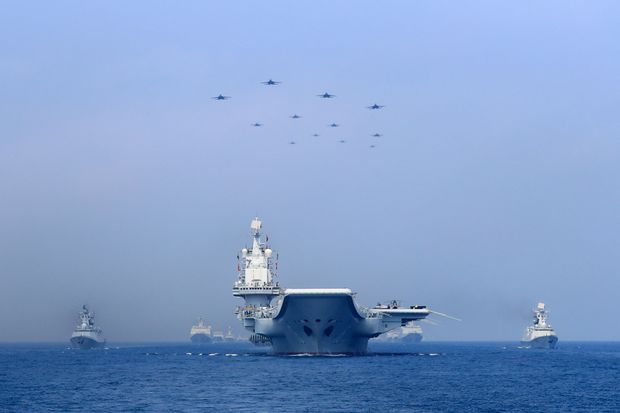
    the PLA Navy, led by the aircraft carrier Liaoning, conducted naval exercises and the taskforce sailed through the Miyako Strait, Bashi Channel and the South China Seaostensibly to display its military readiness during the pandemic. 

    Also, while the global community struggled to combat the pandemic and at least three US Navy carriers afflicted by COVID-19 virus, the PLA Navy, led by the aircraft carrier Liaoning, conducted naval exercises and the taskforce sailed through the Miyako Strait, Bashi Channel and the South China Sea[iii] ostensibly to display its military readiness during the pandemic. The PLA Air Force too showcased it combat readiness and fighter jets intruded into Taiwan’s air space. However, the US responded by three-carrier deployment including dual-carrier operations; B-52 Stratofortress bombers operated from Guam and the nuclear submarines were forward-deployed to conduct “contingency response operations.”[iv]

    Second, China was rattled after the US turned the Taiwan Allies International Protection and Enhancement Initiative (TAIPEI) Act into law to show that “it has the support of both branches of government, which is required for a strong and effective U.S. foreign policy”.[v] Similarly, it also introduced a new Bill ‘Taiwan Defence Act’ in the US Congress[vi] which requires the Department of Defense to provide weapons to Taipei. The Trump administration also announced a military package worth US$ 180 million to improve Taiwan’s capability against “regional threats and to strengthen homeland defense,” [vii]

    Third, is about the Pacific Deterrence Initiative (PDI) which entails fiscal support for military activities and associated infrastructure investment plans[viii] in the Pacific Ocean. The PDI is similar to the 2014 European Deterrence Initiative (targeted against Russia) and is meant to advance US priorities in the Indo-Pacific region. It aims to “focus resources on key capability gaps to ensure U.S. forces have everything they need to compete, fight, and win in the Indo-Pacific” is conspicuously targeted against China.

    India, in response to Chinese posturing in the Himalayas, deployed its naval ship in the South China Sea. This unexpected Indian posturing challenging China in its own backyard and operating in close cooperation with the US Navy, has caused alarm bells in Beijing.

    Fourth, China is concerned about the Quadrilateral Security Dialogue (QSD), a grouping of Australia, India, Japan and the US, which China believes is meant to contain it. Since 2018, India has been hosting the Malabar series of naval exercises which include Japan and the US; but this is being expanded to include Australia. The geographic focus of the Malabar exercises had so far remained in the Bay of Bengal or the Pacific Ocean (around Guam and Japanese waters), could now shift to the South China Sea. India, in response to Chinese posturing in the Himalayas, deployed its naval ship in the South China Sea. This unexpected Indian posturing challenging China in its own backyard and operating in close cooperation with the US Navy, has caused alarm bells in Beijing.

    Chinese worries about the Quad are further aggravated after Taiwanese President Tsai Ing-wen, amid rising tensions between Taiwan and China around the South China Sea region, has called for a joint alliance of democratic nations to uphold “a strategic order that encourages cooperation, transparency and problem-solving through dialogue, not threats of war”.[ix]

    Fifth, is related to Code of Conduct (CoC) for South China Sea between China and the ASEAN. The Chairman’s Statement of the 36th ASEAN Summit has “emphasised the need to maintain and promote an environment conducive to the COC negotiations”[x] and Prime Minister Nguyen Xuan Phuc has urged China to accelerate talks on an effective and efficient COC in line with international law, including the 1982 UNCLOS.[xi] China has in the past disregarded the urgency over the finalization of the CoC and has dragged the issue far too long, but now appears to have realized that there is high degree of unity among the Member States over the South China Sea issue and attempted to reassure ASEAN of its intentions to pursue the issue hopefully in right earnest.

    Among other political, diplomatic and economic toolkits to appease the ASEAN Member States, it also chose to conduct military exercises to intimidate Malaysia, Philippines and Vietnam.

    Among other political, diplomatic and economic toolkits to appease the ASEAN Member States, it also chose to conduct military exercises to intimidate Malaysia, Philippines and Vietnam. It relented only after Philippines Foreign Secretary Teodoro Locsin Jr denounced as ‘illegal provocations’ Chinese air patrols over the South China Sea and threatened if “something happens that is beyond incursion but is in fact an attack on say a Filipino naval vessel … [that] means then I call up Washington DC,”

    China’s attempts to dominate the regional security affairs, non-adherence to the 1982 United Nations Law of the Sea, coercion of other claimants to the disputed features in South China Sea and its intimidation of Taiwan has not gone well among the ASEAN Member States. ASEAN sees US’ formidable capabilities and above all its commitment to keep the Indo-Pacific ‘free and open’ against any attempts by China, as reassuring.

    In his recent remarks at the 10th East Asia Summit Foreign Ministers’ Meeting,[xii] Secretary of State Michael R. Pompeo assured his counterparts from 17 countries that the US shares and supports the “principles of openness, inclusiveness, transparency, and respect for international law contained in the US’ Indo-Pacific vision, ASEAN’s Outlook on the Indo Pacific, and the visions of many other EAS Member States”.

     
    Image Credit: The Globe and Mail and VoA
     
     
    References

    [i] “China Sends Ships, Planes over Disputed Seas to Show Strength after COVID-19 Outbreak”, https://www.voanews.com/east-asia-pacific/china-sends-ships-planes-over-disputed-seas-show-strength-after-covid-19-outbreak  (accessed 08 September 2020).

    [ii] “The ROC Firmly Defends its Sovereignty: The CCP Should Immediately Stop its Military Provocations and not Misjudge the Situation”, https://www.mac.gov.tw/en/News_Content.aspx?n=A921DFB2651FF92F&sms=37838322A6DA5E79&s=3AF953C12D84A525  (accessed 08 September 2020).
    [iii] “   Chinese aircraft carrier Liaoning conducts exercises in South China Sea: PLA Navy spokesperson”, https://www.globaltimes.cn/content/1185471.shtml  (accessed 08 September 2020).
    [iv] “Pacific Fleet Submarines: Lethal, Agile, Underway”, https://www.navy.mil/submit/display.asp?story_id=112909 (accessed 06 July 2020).
    [v] “Trump and the TAIPEI Act”, https://thediplomat.com/2020/04/trump-and-the-taipei-act/  (accessed 08 September 2020).
    [vi] Under the 1978 Taiwan relations Act the United States “will make available to Taiwan such defence articles and defence services in such quantity as may be necessary to enable Taiwan to maintain a sufficient self-defence capabilities”;
    [vii] “Trump administration approves arms sale to Taiwan amid China tensions”, https://edition.cnn.com/2020/05/21/politics/us-taiwan-arms-sale/index.html (accessed 20 June 2020).
    [viii] “Investments in theater missile defense, expeditionary airfield and port infrastructure, fuel and munitions storage, and other areas will be key to America’s future force posture in the Indo-Pacific.” See “The Pacific Deterrence Initiative: Peace through Strength in the Indo-Pacific”, https://warontherocks.com/2020/05/the-pacific-deterrence-initiative-peace-through-strength-in-the-indo-pacific/ (accessed 20 June 2020).
    [ix] “Fed-Up of Chinese Threats, Taiwanese President Urges ‘Coalition of Democracies’ to Confront Beijing”, https://eurasiantimes.com/fed-up-of-chinese-threats-taiwanese-pm-urges-coalition-of-democracies-to-confront-beijing/ (accessed 09 September 2020).
    [x] “Chairman’s Statement of the 36th ASEAN Summit 26 June 2020” https://asean.org/storage/2020/06/Chairman-Statement-of-the-36th-ASEAN-Summit-FINAL.pdf (accessed 14 July 2020).
    [xi] “Pompeo: China cannot be allowed to treat the South China Sea as its maritime empire”, https://vietnamtimes.org.vn/pompeo-china-cannot-be-allowed-to-treat-the-south-china-sea-as-its-maritime-empire-21832.html (accessed 14 July 2020).
    [xii] “Secretary Pompeo’s Participation in the 10th East Asia Summit Virtual Foreign Ministers’ Meeting”, https://china.usembassy-china.org.cn/secretary-pompeos-participation-in-the-10th-east-asia-summit-virtual-foreign-ministers-meeting/  (accessed 10 September 2020).