Category: International Security

  • Reflections on “Peace” in Afghanistan: Leaving a Misguided War and Choosing Not to Look Back

    Reflections on “Peace” in Afghanistan: Leaving a Misguided War and Choosing Not to Look Back

    Kahlil Gibran, the Lebanese-American poet, artist, writer and philosopher, famously said ‘History does not repeat itself except in the minds of those who do not know history’. In today’s generation very few know and understand history, and so it is most likely that very few will see that the recent US-Taliban peace deal has an eerie resemblance to the end stage of the Vietnam war. US Special envoy, Zalmay Khalilzad and Taliban political chief, Mullah Abdul Ghani Baradar signed a ‘historic’ peace deal on February 29, 2020 in Doha, capital of Qatar  paving the way for ending two decades of American military fighting in Afghanistan and their return. In the context of the US-Taliban peace deal that raises more questions than answers, TPF revisits an article written by Andrew J Bacevich few months ago. Comparing the two similar situations (US-Vietcong deal and US-Taliban deal) in a very incisive analysis, Andrew Bacevich raises very relevant observations. Effectively this means that the US is exiting after conceding defeat to the Taliban and abandoning the Afghan government that it supported all this while. It would be only a matter of time before the Taliban, with active support from Pakistan, dismantles whatever semblance of stable governance and democracy that has been built over the last 15 years in war-torn Afghanistan. TPF

    This article was first published in “TomDispatch.com”    The Peninsula Foundation is happy to republish this article with permission from ‘TomDispatch.com’.  TPF  

    Andrew J Bacevich

    When the conflict that the Vietnamese refer to as the American War ended in April 1975, I was a U.S. Army captain attending a course at Fort Knox, Kentucky. In those days, the student body at any of our Army’s myriad schools typically included officers from the Army of the Republic of Vietnam (ARVN).

    Since ARVN’s founding two decades earlier, the United States had assigned itself the task of professionalizing that fledgling military establishment. Based on a conviction that the standards, methods, and ethos of our armed forces were universally applicable and readily exportable, the attendance of ARVN personnel at such Army schools was believed to contribute to the professionalizing of the South Vietnamese military.

    Evidence that the U.S. military’s own professional standards had recently taken a hit — memories of the My Lai massacre were then still fresh — elicited no second thoughts on our part. Association with American officers like me was sure to rub off on our South Vietnamese counterparts in ways that would make them better soldiers. So we professed to believe, even while subjecting that claim to no more scrutiny than we did the question of why most of us had spent a year or more of our lives participating in an obviously misbegotten and misguided war in Indochina.

    For serving officers at that time one question in particular remained off-limits (though it had been posed incessantly for years by antiwar protestors in the streets of America): Why Vietnam? Prizing compliance as a precondition for upward mobility, military service rarely encourages critical thinking.

    On the day that Saigon, the capital of the Republic of Vietnam, fell and that country ceased to exist, I approached one of my ARVN classmates, also a captain, wanting at least to acknowledge the magnitude of the disaster that had occurred. “I’m sorry about what happened to your country,” I told him.

    I did not know that officer well and no longer recall his name. Let’s call him Captain Nguyen. In my dim recollection, he didn’t even bother to reply. He simply looked at me with an expression both distressed and mournful. Our encounter lasted no more than a handful of seconds. I then went on with my life and Captain Nguyen presumably with his. Although I have no inkling of his fate, I like to think that he is now retired in Southern California after a successful career in real estate. But who knows?

    All I do know is that today I recall our exchange with a profound sense of embarrassment and even shame. My pathetic effort to console Captain Nguyen had been both presumptuous and inadequate. Far worse was my failure — inability? refusal? — to acknowledge the context within which that catastrophe was occurring: the United States and its armed forces had, over years, inflicted horrendous harm on the people of South Vietnam.

    In reality, their defeat was our defeat. Yet while we had decided that we were done paying, they were going to pay and pay for a long time to come.

    Rather than offering a fatuous expression of regret for the collapse of his country, I ought to have apologized for having played even a minuscule role in what was, by any measure, a catastrophe of epic proportions. It’s a wonder Captain Nguyen didn’t spit in my eye.

    I genuinely empathized with Captain Nguyen. Yet the truth is that, along with most other Americans, soldiers and civilians alike, I was only too happy to be done with South Vietnam and all its troubles. Dating back to the presidency of Dwight D. Eisenhower, the United States and its armed forces had made a gargantuan effort to impart legitimacy to the Republic of Vietnam and to coerce the Democratic Republic of Vietnam to its north into giving up its determination to exercise sovereignty over the entirety of the country. In that, we had failed spectacularly and at a staggering cost.

    “Our” war in Indochina — the conflict we chose to call the Vietnam War — officially ended in January 1973 with the signing in Paris of an “Agreement Ending the War and Restoring Peace in Vietnam.” Under the terms of that fraudulent pact, American prisoners of war were freed from captivity in North Vietnam and the last U.S. combat troops in the south left for home, completing a withdrawal begun several years earlier. Primary responsibility for securing the Republic of Vietnam thereby fell to ARVN, long deemed by U.S. commanders incapable of accomplishing that mission.

    Meanwhile, despite a nominal cessation of hostilities, approximately 150,000 North Vietnamese regulars still occupied a large swathe of South Vietnamese territory — more or less the equivalent to agreeing to end World War II when there were still several German panzer tank divisions lurking in Belgium’s Ardennes Forest. In effect, our message to our enemy and our ally was this: We’re outta here; you guys sort this out. In a bit more than two years, that sorting-out process would extinguish the Republic of Vietnam.

    Been There, Done That

    The course Captain Nguyen and I were attending in the spring of 1975 paid little attention to fighting wars like the one that, for years, had occupied the attention of my army and his. Our Army, in fact, was already moving on. Having had their fill of triple-canopy jungles in Indochina, America’s officer corps now turned to defending the Fulda Gap, the region in West Germany deemed most hospitable to a future Soviet invasion. As if by fiat, gearing up to fight those Soviet forces and their Warsaw Pact allies, should they (however improbably) decide to take on NATO and lunge toward the English Channel, suddenly emerged as priority number one. At Fort Knox and throughout the Army’s ranks, we were suddenly focused on “high-intensity combined arms operations” — essentially, a replay of World War II-style combat with fancier weaponry. In short, the armed forces of the United States had reverted to “real soldiering.”

    And so it is again today. At the end of the 17th year of what Americans commonly call the Afghanistan War — one wonders what name Afghans will eventually assign it — U.S. military forces are moving on. Pentagon planners are shifting their attention back to Russia and China. Great power competition has become the name of the game. However we might define Washington’s evolving purposes in its Afghanistan War — “nation building,” “democratization,” “pacification” — the likelihood of mission accomplishment is nil. As in the early 1970s, so in 2019, rather than admitting failure, the Pentagon has chosen to change the subject and is once again turning its attention to “real soldiering.”

    Remember the infatuation with counterinsurgency (commonly known by its acronym COIN) that gripped the national security establishment around 2007 when the Iraq “surge” overseen by General David Petraeus briefly ranked alongside Gettysburg as a historic victory? Well, these days promoting COIN as the new American way of war has become, to put it mildly, a tough sell. Given that few in Washington will openly acknowledge the magnitude of the military failure in Afghanistan, the incentive for identifying new enemies in settings deemed more congenial becomes all but irresistible.

    Only one thing is required to validate this reshuffling of military priorities. Washington needs to create the appearance, as in 1973, that it’s exiting Afghanistan on its own terms. What’s needed, in short, is an updated equivalent of that “Agreement Ending the War and Restoring Peace in Vietnam.”

    Until last weekend, the signing of such an agreement seemed imminent. Donald Trump and his envoy, former ambassador to Afghanistan Zalmay Khalilzad, appeared poised to repeat the trick that President Richard Nixon and National Security Advisor Henry Kissinger pulled off in 1973 in Paris: pause the war and call it peace. Should fighting subsequently resume after a “decent interval,” it would no longer be America’s problem.  Now, however, to judge by the president’s Twitter account — currently the authoritative record of U.S. diplomacy — the proposed deal has been postponed, or perhaps shelved, or even abandoned altogether.  If National Security Advisor John Bolton has his way, U.S. forces might just withdraw in any case, without an agreement of any sort being signed.

    Based on what we can divine from press reports, the terms of that prospective Afghan deal would mirror those of the 1973 Paris Accords in one important respect. It would, in effect, serve as a ticket home for the remaining U.S. and NATO troops still in that country (though for the present only the first 5,000of them would immediately depart). Beyond that, the Taliban was to promise not to provide sanctuary to anti-American terrorist groups, even though the Afghan branch of ISIS is already firmly lodged there. Still, this proviso would allow the Trump administration to claim that it had averted any possible recurrence of the 9/11 terror attacks that were, of course, planned by Osama bin Laden while residing in Afghanistan in 2001 as a guest of the Taliban-controlled government. Mission accomplished, as it were.

    Back in 1973, North Vietnamese forces occupying parts of South Vietnam neither disarmed nor withdrew. Should this new agreement be finalized, Taliban forces currently controlling or influencing significant swaths of Afghan territory will neither disarm nor withdraw. Indeed, their declared intention is to continue fighting.

    In 1973, policymakers in Washington were counting on ARVN to hold off Communist forces. In 2019, almost no one expects Afghan security forces to hold off a threat consisting of both the Taliban and ISIS. In a final insult, just as the Saigon government was excluded from U.S. negotiations with the North Vietnamese, so, too, has the Western-installed government in Kabul been excluded from U.S. negotiations with its sworn enemy, the Taliban.

    A host of uncertainties remain.  As with the olive branches that President Trump has ostentatiously offered to Russia, China, and North Koea, this particular peace initiative may come to naught — or, given the approach of the 2020 elections, he may decide that Afghanistan offers his last best hope of claiming at least one foreign policy success. One way or another, in all likelihood, the deathwatch for the U.S.-backed Afghan government has now begun. One thing only is for sure. Having had their fill of Afghanistan, when the Americans finally leave, they won’t look back. In that sense, it will be Vietnam all over again.

    What Price Peace?

    However great my distaste for President Trump, I support his administration’s efforts to extricate the United States from Afghanistan. I do so for the same reason I supported the Paris Peace Accords of 1973. Prolonging this folly any longer does not serve U.S. interests. Rule number one of statecraft ought to be: when you’re doing something really stupid, stop. To my mind, this rule seems especially applicable when the lives of American soldiers are at stake.

    In Vietnam, Washington wasted 58,000 of those lives for nothing. In Afghanistan, we have lost more than 2,300 troops, with another 20,000 wounded, again for next to nothing. Last month, two American Special Forces soldiers were killed in a firefight in Faryab Province. For what?

    That said, I’m painfully aware of the fact that, on the long-ago day when I offered Captain Nguyen my feeble condolences, I lacked the imagination to conceive of the trials about to befall his countrymen. In the aftermath of the American War, something on the order of 800,000 Vietnamese took to open and unseaworthy boats to flee their country. According to estimates by the United Nations High Commissioner for Refugees, between 200,000 and 400,000 boat people died at sea. Most of those who survived were destined to spend years in squalid refugee camps scattered throughout Southeast Asia. Back in Vietnam itself, some 300,000 former ARVN officers and South Vietnamese officials were imprisoned in so-called reeducation camps for up to 18 years. Reconciliation did not rank high on the postwar agenda of the unified country’s new leaders.

    Meanwhile, for the Vietnamese, north and south, the American War has in certain ways only continued. Mines and unexploded ordnance left from that war have inflicted more than 100,000 casualties since the last American troops departed. Even today, the toll caused by Agent Orange and other herbicides that the U.S. Air Force sprayed with abandon over vast stretches of territory continues to mount. The Red Cross calculates that more than one million Vietnamese have suffered health problems, including serious birth defects and cancers as a direct consequence of the promiscuous use of those poisons as weapons of war.

    For anyone caring to calculate the moral responsibility of the United States for its actions in Vietnam, all of those would have to find a place on the final balance sheet. The 1.3 million Vietnamese admitted to the United States as immigrants since the American War formally concluded can hardly be said to make up for the immense damage suffered by the people of Vietnam as a direct or indirect result of U.S. policy.

    As to what will follow if Washington does succeed in cutting a deal with the Taliban, well, don’t count on President Trump (or his successor for that matter) welcoming anything like 1.3 million Afghan refugees to the United States once a “decent interval” has passed. Yet again, our position will be: we’re outta here; you guys sort this out.

    Near the end of his famed novel, The Great Gatsby, F. Scott Fitzgerald described two of his privileged characters, Tom and Daisy, as “careless people” who “smashed up things and creatures” and then “retreated back into their money or their vast carelessness” to “let other people clean up the mess they had made.” That description applies to the United States as a whole, especially when Americans tire of a misguided war. We are a careless people. In Vietnam, we smashed up things and human beings with abandon, only to retreat into our money, leaving others to clean up the mess in a distinctly bloody fashion.

    Count on us, probably sooner rather than later, doing precisely the same thing in Afghanistan.

    Image Credit: www.upi.com

  • The end of the liberal world order is not the end of the world – we just need to fight for freedom AND equality

    The end of the liberal world order is not the end of the world – we just need to fight for freedom AND equality

    The turmoil concerning Brexit, the Rise of the „Rest” (the fast developing countries), dramatic social inequality, the exclusion of ever larger parts of the populace (the decline of the „Rest“, which is excluded from globalization), the rise of radical Salafism, all these developments have contributed to worldwide emotions, that the promises of globalization have been disappointed and been revealed as illusions. When Juergen Habermas, the noted German philosopher judged in 1991 concerning the democratic revolutions in the former states of the Warsaw treaty, that Western modernity would now transcend into the Orient not only with its technical achievements, but also with its emancipatory and democratic principles he was hardly more than the prisoner of the idealism concerning Western modernity. Although being fully aware of the negative impact of two world wars, colonization and its exorbitant violence, Auschwitz and the Cold War, and fighting for his whole life against a repetition of these developments he still believed to be able to rely on a cleaned, purified Western modernity, an approach which his companions, Anthony Giddens and Ulrich Beck, labeled second modernity. Again, in the years starting with the Arab Rebellion or the Arab Spring it seemed as if the conceptions of democracy, human rights and freedom were transcending from the Western world to the Orient, and its final victory seemed to be plausible – a purified Western modernity would triumph in the end – and Francis Fukuyama wrote his second masterpiece by arguing that at the end of history still stands democracy. But now we are already discussing post-democracy and Paraq Khanna is labeling the current phase as devolution – struggles for a local or at least regional identity.

    The liberal world order after 1991 was based on capitalism (centered on property as natural and human right), the assumption that worldwide free trade will finally lead to peace (economic globalization) and is accompanied by the orientation towards consumerism as a cultural norm. But consume does neither generate values nor identity. International organizations served the purpose of regulating conflicts between sovereign states and the military, political and economic hegemony of the United States secured this kind of liberal world order, or rather the United States payed the costs (this is the point Trump hangs up), both, out of their own interest or as being the trustee of the whole. This liberal world order now is tattered in fragments, not least because the US under Trump abandoned it willfully, whereas the Europeans are desperately trying to preserve it but don’t stand a chance, because they are relying on an idealized past which never existed in the developing and poor countries.

    Contrary to the assumptions of the pundits of glo-calization (Robertson and Bauman), the local showed to be not only an amendment of neoliberal globalization, but a counter-movement to the process of globalization (IS, Trump, „Buy American“, Brexit, Marine Le Pen, Duterte, Bolsonaro, Salafism, the European radical right, populistic movements). In his notes on Nationalism, George Orwell already wrote, that emotion does not always attach itself to a nation. It can attach itself to a church or a class, or it may work in a merely negative sense, against something or other – we can add against anybody, who does not belong to “us”. In short: We against the Rest. But the “Rest” is not far away anymore, as in neoliberal globalization the regions in Sub-Saharan and Saharan Africa, in southern India, in the MENA-states, but they are within the West (either as excluded sub-proletarians, the precariat, or as refugees). Although being a counter-reaction, the current waves of struggles for local identities and advantages are as a negation bound to neo-liberal globalization, the globalization of liberalism without equality, which we label tribal globalization.

    The advent of tribal globalization does not signify the end of globalization, but the end into the illusions into globalization, which nevertheless has its undisputed successes. But there is no way back to an idealized globalization before Trump, Salafism, or an idealized neo-liberal world-order, because these developments were exactly the result of which they are purporting to fight. The exclusion of the „superfluous“, the „Rest“, produced by neo-liberal globalization, the advent of precarious kinds of life and the liquidity of identity throughout the world must be understood as a double one: The “Rest” is excluded from the positive aspects of globalization and people who are belonging to the  Rest are the arbitrarily used enemy-image to construct a fixed „We“-identity („We against the Rest”). And this “Rest” comprises roughly two third of the world’s populace. As the neo-liberal globalization has led to such a social acceleration of the transformation of the whole world,  people, communities and polities of all kinds are trying to cope with this process by re-inventing age-old static identities, which are so old, that it is supposed that these will outdo even this transformation. Such seemingly fixed identities are: Race, ethnicity, religion, patriarchy, and – perhaps the oldest one, sex and gender (this can explain the terrible rise of violence against women); and of course, identity through the exercise of violence itself, which is reverting the feeling of being totally powerless into being almighty. Especially biological differences are re-actualized, because they seem to be not subject to change.

    These seemingly fixed identities are those of the pluperfect, the far distant past, which can be viewed as being free from the failures of the simple past, and mainly free from the failure of the immediate fathers – as already was typically for the German Nazis. Tribal identity is a perfect construction, because it is transporting the ideal of being absolutely united against everybody who is not belonging – and the question: Do I belong is the most important question in tribal globalization. Whereas tribes throughout the world are vanishing, tribal thinking in terms of „We against the Rest“ is flourishing. Such a modern tribe could be based on ethnicity, religion, sex, nation or whatsoever, it is not the content, which characterizes a modern tribe, but having a tribal identity (typically is Trump’s crony capitalism and with relation to the IS, not their ideology is so much counting, but belonging to a previously powerful tribe). With the emergence of tribal globalization, the very understanding of local order and world order is at stake; order wars are arising, when our order or that of others is dissolving (either only in our perception or in reality); our own order is challenged by another concept or and another order is transgressing into our own (the refugee crisis in Europe). The fast developing countries are not immune concerning the accelerated transformation of societies and identities and the task to cope with this development.  As the main problem of neo-liberal globalization is the dissolution of identities and the exclusion of ever growing parts of the populace, that of the emerging tribal globalization the re-invention of age-old fixed identities, which is leading to order wars, what might be a solution?

    Based on the concept of the floating (Clausewitz) and developing (Hegel) balance and harmony (Confucius), we strongly advocate the position, that the West as well as the East is only able to hold on their order and values, if these are discursively balanced and harmonized by the contribution of all great civilizations of the earth. Although the liberal world had its undisputed advantages like the rise of the newly industrialized nations, the current developments are already indicating its end. To put it to the core: freedom as the basis of the liberal world order is turning into oppression or civil wars without equality– just in the name of freedom. Whereas in the 20th century the colonized civilizations had to learn to live with the victorious West, in the twenty-first century the civilizations of the earth finally have to learn to live with one another. This task requires a floating balance (Clausewitz) between freedom and equality, a kind of harmony (Confucius: difference with unity and unity with difference) within societies and between states.

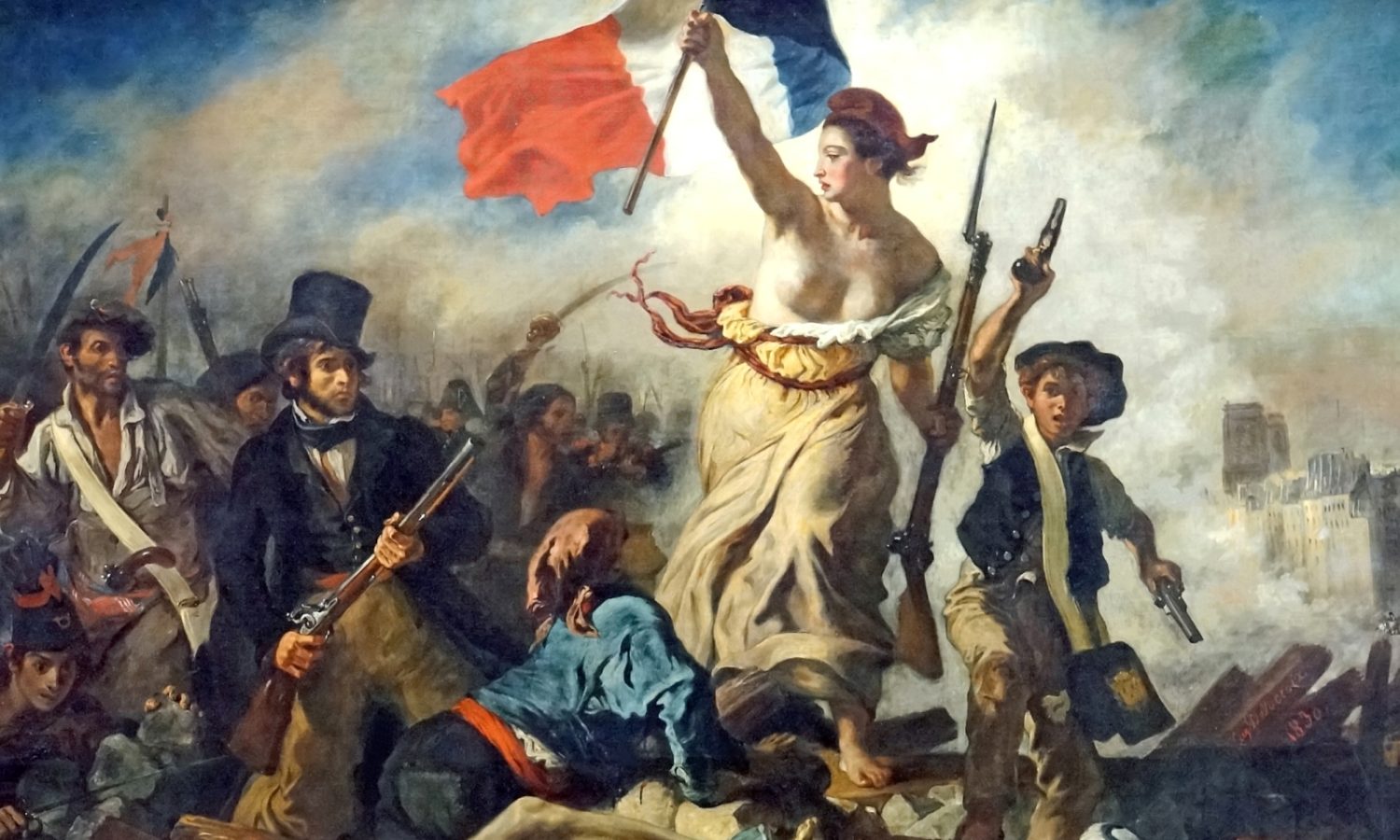
    Image Credit: WikiImages from Pixabay
  • American Sanctions on Iran and the Underlying Oil War

    American Sanctions on Iran and the Underlying Oil War

    Adithya Subramoni                                                                                      June 24, 2019/Analysis

    In a shocking turn of events, America in 2018 announced its withdrawal from the Joint Comprehensive Plan of Action 2015. This came as a surprise to the international community for good reason, because subjecting Iran under harsh sanctions when they kept up their end of the bargain seemed like a punishment from the US for keeping up this good behaviour. President Donald Trump, calling towards the international community and specifically ‘like-minded countries’ for a team effort, said it was time to curb Iran’s state-sponsored terrorism. But his idea to get Iran to re-engage on this field was through the ‘maximum pressure campaign’. This strategy is unlikely to find takers owing to the fact that the nuclear issue and state sponsored terrorism are two completely different issues, and hence need to be dealt with separately. To charge Iran with state sponsored terrorism is completely misplaced. Iran has not caused any damage to US or its citizens in the last twenty five years. On the other hand terrorist acts affecting the US and its allies have almost always had a link to Sunni Islamic fundamentalism with its links to Saudi Arabian Wahabi organisations. The real motive is USA’s geopolitical targeting of Iran. Trump’s recent designation of the Iranian Islamic Revolutionary guard corps (IIRGC), a unit of the Iranian army, as a terrorist outfit defies all logic and may become counterproductive to the US interests, the very issue that Trump wants to safeguard.

    Iran’s support to Hamas is fundamentally a regional and geopolitical struggle with Israel, while the Sunni vs Shia conflict is a manifestation of the regional power struggle between Saudi Arabia and Iran. If the USA wanted to pressurise Iran on its support to militant outfits like Hamas, it should have ensured it has support of its allies and multilateral institutions. USA’s unilateral action on Iran does not have the support of other members of the P5 +1(Germany) as well as other oil-dependent countries. With the latest round of sanctions, countries with economies having exposure to Iranian trade industry are gearing up to take a major hit. This brings us back to the subject of concern, why take such hasty decisions impacting the global economy without consultations from other members of the P5 + 1?

    The exit strategy

    In 2018 shale oil catapulted America to the leading position amongst the oil producers. As companies in Texas adopted fracking technology to good use in optimising their oil production, America climbed up to the first position in the oil producers list, surpassing major oil producers such as Saudi Arabia,Russia, Iran and the UAE. Climbing up the oil ladder came at a cheaper price for America considering the OPEC countries, excluding Iran, and Russia had agreed to reduce their oil production to protect the free-falling price of oil. This gave America a free hand at capturing the oil market especially where the demand from emerging economies was increasing rapidly. The only barrier to becoming the largest oil exporter was qualms from the emerging economies and other countries who found the American alternative to be an extremely expensive replacement for their oil needs. With emerging economies deeply dependent on Middle Eastern oil sources, one of the options for America to increase the demand for its oil was by blocking Iran’s oil exports through sanctions. This could give multiple advantages to the US: one is to create economic pressure on Iran; second is to boost American oil exports by eliminating Iran’s oil supply from the market; and third is to strengthen its ally Saudi Arabia’s pursuit of regional domination by squeezing Iranian oil-based economy.

    America’s play on executing its exit and sanctions in such a speedy manner may be rooted in the fact that the major countries dependent on the Iranian oil are in the Asian continent. European countries such as France, Greece, Italy and Spain all combined import close to 500,000 barrels a day as opposed to China and India who import close to 600,000 barrels per day and 500,000 barrels per day respectively. With America limiting its oil imports primarily from Canada and Saudi Arabia, and the European Union sourcing two-thirds of its oil requirements from Russia and Saudi Arabia, American sanctions on Iran do not impact the energy requirements of the western power bloc significantly. Hence, it may have been an American expectation that other members in the JCPOA (P5+1) would support Trump administration’s move to scrap the JCPOA and resume the earlier hard line approach of sanctions on Iran. This, however, has not happened.

    Unfortunately for America, other members of the JCPOA did not see any justification in the logic and accusation given by the Trump administration and hence, there was no support forthcoming from them. Trump’s disdain for allies and his unilateral approach, virtually demanding complete acceptance from European allies bordered on disrespect and insult to the member countries’ sovereignty and pride. Reaction to Trumps position was one of disbelief and contempt, as his actions displayed, in their opinion, disregard and contempt for international norms and credibility. Quite clearly USA has sought to bulldoze its way through with utter disregard for international institutions and multilateralism, exploiting its domination of the global financial institutions, banking system, and the fact that the US dollar is still the world’s reserve currency.

    UK, France and Germany together set up Instex – Instrument in Support for Trade Exchanges, to facilitate the trade of medicines, medical devices and food supplies, which trades in Euro through a financial channel having zero exposure to the American financial intermediaries. This marked a milestone in the chapter of American supremacy, where its European allies took a stance against its imposing regime. Though the volume of trade is negligible, the all important European message is that it will not support the American unilateralism. In the absence of any European support, Trump administration should have recognised its folly of trying to impose its decision on its allies, but on the other hand it made it even worse by virtually threatening diplomatic ties with those countries. Others in the P5, such as China and Russia have agreed with the European counterparts to re-examine and review if necessary the terms of the 2015 JCPOA deal and look for ways to deflect and overcome the US sanctions. Iran too, has welcomed the idea and agreed to keep its end of the 2015 deal. Time however, is running out as Iran has demonstrated its loss of patience over the lack of progress on the issue, and has stated on more than one occasion, in the last six months, that it will recommence its nuclear fuel reprocessing and enrichment activities.

    Asian approach to the Iranian issue

    Asia is the largest customer of crude oil, importing 53% of the global total oil imports, translating to an approximate amount worth $628.2 billion. One major reason for this huge oil influx is the fact that Asia is home to the fastest developing economies such as China and India. Though China and India have maintained that they will continue to import oil from Iran, one issue that concerns all the countries importing Iranian oil is the availability of insurers willing to take up the risk for oil supply from Iran. Most insurers will be cautious to take up projects for fear of losing business and financial access in the West.

    With the ongoing trade war with America, China is fighting a dual war. For America, the opponent has been weighed down with two hurdles co-incidentally and conveniently. With the trade war impacting the export industry and sanctions on its oil supplier indirectly hitting the Chinese economy, China may chose well to hit back on America by disregarding the sanctions on Iran. Iran might just have earned itself a powerful ally because of American hegemony. Chinese imports of crude oil from Iran have surged to record levels in April and May. Iran is set to become China’s 2ndlargest supplier of crude oil.

    Steering the wheel of attention towards India, Iran is its third largest oil source. Particularly being an oil dependent emerging economy, the sanctions on Iran will force India to look at more expensive oil options. The six month credit line and insurance included price for Iranian oil made it the most lucrative oil supplier in the business. Another issue that has come to India’s doorstep is the longevity of the rupee account based trading system with Iran using the UCO Bank. UCO Bank being the only bank with no exposure to American financial channels is the only means for continued Iran-India trade relations. In light of the US sanctions, India reduced its oil imports to turn eligible for a sanction waiver. This sanction waiver came to an end on 02May 2019, and oil imports stopped owing to the election period as well. Now the primary concern for the new Indian government is to prioritise the Iran issue. Iran is accountable for thirty percent of India’s exports, and given that the rupee account is fuelled by the INR deposited in favour of oil imports from Iran, the systematic reduction of oil import also creates a proportional fall in demand for Indian exports, owing to the curb of Iran’s purchasing power. Since the end of the sanctions waiver, India has stopped import of Iranian oil, hopefully only as a temporary measure.

    At the same time, a diplomatic concern that arises for India is its interest over the Chabahar port. Chabahar Port is a major investment arena for India to create a transportation corridor connecting Asia as well as the land-locked Afghanistan with the rest of the world. Though India plans on disregarding the US Sanctions and continuing business through the UCO Bank and Iran’s Pasargad Bank, attention needs to be paid to resolve the reducing Iranian imports, not only to secure India’s exports but also to show Iran the commitment India has towards its diplomatic ties with them and its vested interest in operating the Chabahar Port. Going ahead with the possibility that China would disregard the sanctions on Iran, a reduction in Iranian imports could weaken Iran’s ties to India and pave the path to strengthen Iran-China ties. This would particularly be drastic for India, if Iran were to give China operational rights to the Chabahar port. Needless to say, this would bring in interference from Russia, who wouldn’t be thrilled with the loss of regional trade autonomy to China.

    Approaching the dénouement

    From a bird’s eye view, the rising conflicts in the West Asian region, with Saudi Arabia and the UAE being the main champions who support the efforts for a change in Iran’s regime, Iran finds itself in a cornered situation amongst its neighbours. If cornered, both strategically and economically, Iran could resort to using its strategic location to choke the Strait of Hormuz by planting sea mines or through any other obstruction mechanism. Though unlikely, as it would put Iran in a very hostile situation with rest of the world, it cannot be ruled out as an extreme last resort measure. This could create major international crisis. It would, as a start contribute to the run up in oil prices and owing to supply security – it is possible that USA stands to benefit immensely in such a crisis.

    On the other hand, by imposing sanctions on Iran, America has pushed India to an uneasy corner. Owing to regional ties, it plays to India’s strength to take care of her interests by dealing with Iran and securing operation of Chabahar port. On the other hand it is essential to keep India’s ties with America on an even keel. If it refuses to acknowledge India’s ground interests and resorts to the muscle power of sanctions, China may end up as the beneficiary with a fortuitous win with Chabahar port, leading to an ultimate strategic loss to India and the US.

    The situation calls for global introspection into imposing sanctions by a country due to its phenomenal control over the world’s financial channels and the domination of the USD international trade. But this round of sanctions just might be the one where countries figure out alternate solutions together; considering the European initiative of Instex, Asian methods such as the trade using rupee account, Russian and Chinese support towards Iran; to finding a more cooperative and equitable solution that enables the world to trade outside the control of America. The sanctions may have just provided the edge to catalyze the changing world order, but the question is who’ll sit on the throne of the high table when the rubble settles? Or will it be, as it seems more likely, a more cooperative and less competitive, multi-polar world order?

    Adithya Subramoni is interning at ‘The Peninsula Foundation’. She has a Bachelors degree in Commmerce  from Christ College, Bangalore.

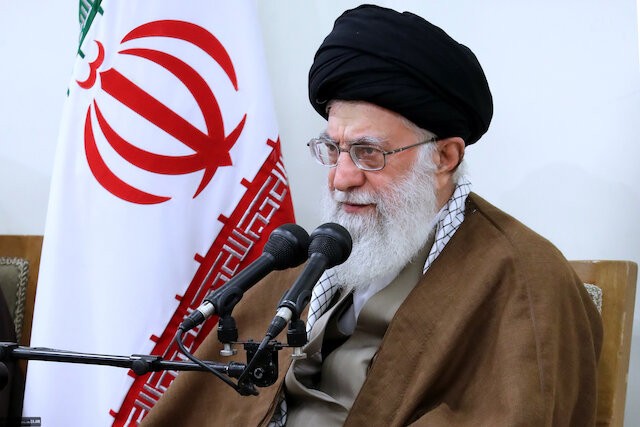
    Photo Credit under a Creative Commons Attribution 4.0 International License.: english.khamenei.ir