Category: International Security

  • China’s New Coast Guard Act: Vietnam could lead Response

    China’s New Coast Guard Act: Vietnam could lead Response

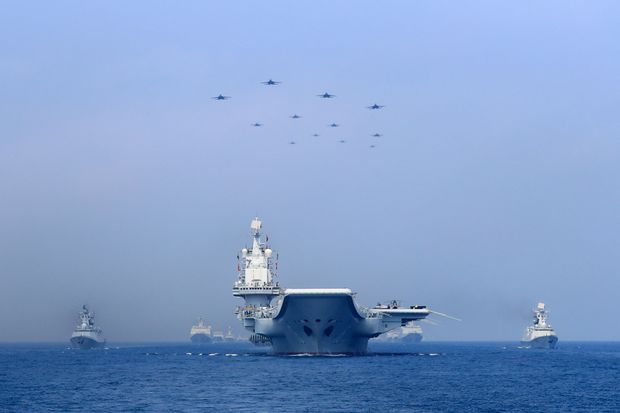
    China’s new Coast Guard Act has put the ‘cat among the pigeons’ and the South China Sea claimants Brunei, Malaysia, Philippines, Vietnam and Taiwan are visibly worried. The Act has also attracted international attention; for some, it is an act of war and for others, it violates the 1982 United Nations Convention on the Law of the Sea (UNCLOS).

    The Act came into effect last month on 01 February. In its administrative content, the Act is the culmination of at least two reorganizations of the Chinese Coast Guard (CCG) that began in 2013 involving administrative and operational control of five closely associated national maritime law enforcement agencies, also referred to as the Five Dragons , that were brought under one umbrella. In 2018, CCG became part of the People’s Armed Police Force.

    Under the new Act, it is feared, the CCG would conduct operations just like the PLA Navy and would be directly controlled by the Chinese Communist Party Central Committee. The CCG is empowered with powerful ‘security and control measures’ and has the rights to take necessary actions to “restrain foreign military vessels and foreign vessels used for non-commercial purposes in waters under China’s jurisdiction from violating the laws or regulations of China” which is potentially in contravention to the 1982 UNCLOS.

    The Act has also attracted international attention; for some, it is an act of war and for others, it violates the 1982 United Nations Convention on the Law of the Sea (UNCLOS).

    Under Article 20, the CCG may demolish “buildings, structures, and various fixed or floating devices” built by foreigners “in the sea areas and islands under our jurisdiction”, and Article 47 authorizes the agency to “directly use weapons if there is no time for warning or if there is a risk of serious harm after giving a warning.”

    It is the latter that prompted Japan to label the Act as “blatantly threatening” and “aimed directly at the Senkakus” raisingspeculation that the Japanese Coast Guard, which hitherto could “fire weapons directly at foreign vessels in cases of self-defence and emergency escape” may now “ fire on foreign official vessels under laws by regarding vessels aiming to land on the Senkaku Islands as committing violent crimes”.

    However, it is fair to say that some of the provisions contained in the Chinese Coast Guard Act are not extraordinary. Navies, Coast Guards and law enforcement agencies of many countries are administratively controlled by the ministries of national defence and routinely operate with the national navies albeit pursue different rules of engagements. Many maritime law enforcement agencies are also known to intercept and even sink foreign fishing vessels especially when these engage in IUU fishing. These naturally attract diplomatic protests from the affected countries including China.

    Be that as it may, the ASEAN and China signed the Code for Unplanned Encounters at Sea (CUES) in the South China Sea in 2016 under which both sides are committed to “maintaining regional peace and stability, maximum safety at sea, promoting good neighbourliness and reducing risks during mutual unplanned encounters in air and at sea, and strengthening cooperation among navies”. This agreement is for the navies and draws upon the CUES (voluntary and non-binding) adopted by the Western Pacific Naval Symposium (WPNS).

    The new Chinese Coast Guard Act may have created an opportunity for ASEAN and China to conceptualize CUES that is tailored to the mandate of the Coast Guards i.e. law enforcement. The issue can also be on the agenda of the Heads of Asian Coast Guard Agency Meeting (HACGAM), a grouping of 22 Member States and multilateral organisations, which aims at cooperative and proactive efforts to address maritime issues confronting the region.

    Among the ASEAN member countries, Vietnam is well placed to lead the initiative for at least three reasons.  First, it is a claimant and some of the features in the South China Sea are under its control; second, it has a larger Coast Guard when compared to the capabilities of the other ASEAN claimants; and third, the Vietnamese Communist Party maintains close contacts with their counterparts in China and this could be a useful channel to facilitate a dialogue.

    However, it remains to be seen if Beijing would allow debate and discussion on the Coast Guard Act particularly when it also involves contested areas such as the South China Sea. For that deft diplomacy by Vietnam could be a good idea.

    Feature Image: www.japantimes.co.jp

  • India, China, and Arunachal Pradesh

    India, China, and Arunachal Pradesh

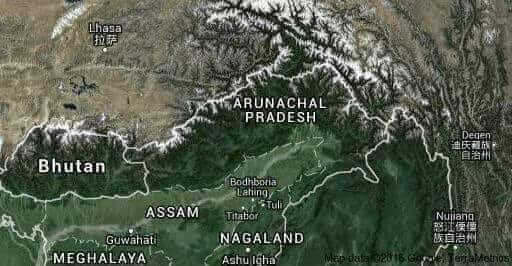
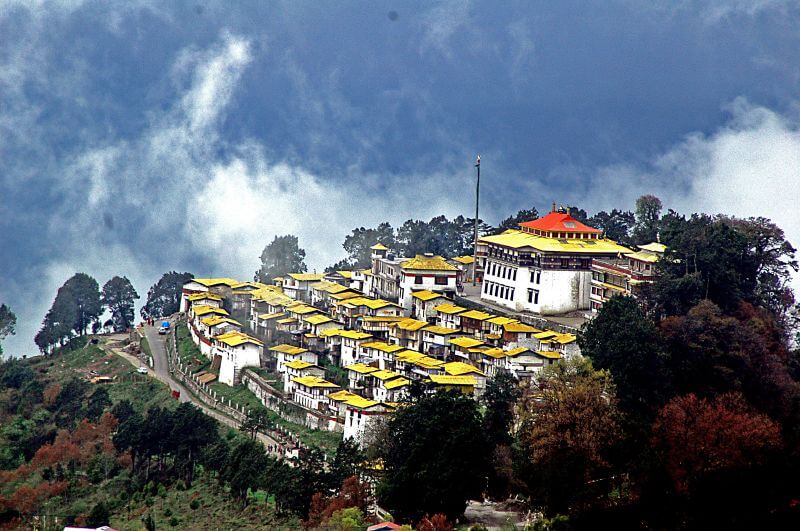
    The satellite picture below brilliantly depicts the geographical separation of Arunachal Pradesh (called Lower Tibet by the Chinese) and Tibet. The McMahon Line more or less runs along the crest line of the Himalayas.

    The Chinese have never been quite explicit on how much of Arunachal they seek.  I once saw an official map displayed in a travel agents office in Lhasa that showed only the Tawang tract as Chinese territory. In other maps they have their border running along the foothills, which means all of Arunachal.

    The Chinese have based their specific claim on the territory on the premise that Tawang was administered from Lhasa, and the contiguous areas owed allegiance to the Dalai Lama, the spiritual and temporal ruler of Tibet. Then the Chinese must also consider this. Sikkim till into the 19th century a vassal of Tibet and Darjeeling was forcibly taken from it by the British! By extending this logic could they realistically stake a claim for Sikkim and Darjeeling? Of course not. It would be preposterous. History has moved on. The times have changed. For the 21st century to be stable 20th century borders must be stable, whatever be our yearnings.

    At the crux of this issue is the larger question of the national identities of the two nations and when and how they evolved. The Imperial India of the Mughals spanned from Afghanistan to Bengal but did not go very much below the Godavari in the South. The Imperial India of the British incorporated all of today’s India, Pakistan and Bangladesh, but had no Afghanistan, not for want of trying. It was the British who for the first time brought Assam into India in 1826 when they defeated Burma and formalized the annexation with the treaty of Yandabo.

    It was only in 1886 that the British first forayed out of the Brahmaputra valley when they sent out a punitive expedition into the Lohit valley in pursuit of marauding tribesmen who began raiding the new tea gardens. Apparently the area was neither under Chinese or Tibetan control for there were no protests either from the Dalai Lama or the Chinese Amban in Lhasa. Soon the British stayed put.

    Tibet remained in self imposed isolation and the race to be first into Lhasa became the greatest challenge for explorers and adventurers in the second half of the 19th century. Not the least among these were the spies of the Survey of India, the legendary pundits. The most renowned of these was the Sarat Chandra Das whose books on Tibet are still avidly read today. As the adventurers, often military officers masquerading as explorers began visiting Tibet the British in India began worrying. Reports that the most well-known of Czarist Russia’s military explorers, Col. Grombchevsky was sighted in Tibet had Lord Curzon, the Governor General of India most worried.

    In 1903 Curzon decided to send a military expedition into Tibet led by Grombchevsky’s old antagonist, Col. Francis Younghusband. A brigade strong mixed force of Gurkhas and Tommies went over the Nathu La into the Chumbi valley and advanced unhindered till Shigatse. A Tibetan military force met them there but offered what can only be described as passive resistance. Not a shot was fired back as the British Indian troops rained bullets on them. It was a forerunner to Jallianwalla Bagh. From Shigatse Younghusband made a leisurely march into Lhasa. The British got the Tibetans to agree to end their isolation and having extracted trade concessions withdrew in 1904, the way they came.

    In 1907 Britain and Russia formally agreed that it was in their interests to leave Tibet “in that state of isolation from which, till recently, she has shown no intention to depart.” It may be of interest to the reader to know that the Great Game nevertheless continued. In 1907 Col. Mannerheim then of the Russian Army, later Field Marshal Mannerheim and first President of Finland, led a horseback expedition from Kyrgyzstan to Harbin on China’s northeast to identify a route for the cavalry.

    The next important year was 1913 when the Tibetans declared independence after the collapse of the Qing dynasty and the establishment of a Republic in China under Sun Yat Sen. They attacked and drove the Chinese garrisons in Tibet into India over the Nathu La. Also in 1913 the British convened the Simla Conference to demarcate the India-Tibet border. The British proposed the 1914 McMahon Line, as we know it. The Tibetans accepted it. The Chinese Amban however initialed the agreement under protest. But his protest seemed mostly about the British negotiating directly with Tibet as a sovereign state and not over the McMahon Line as such.

    Things moved on then. In 1935 at the insistence of Sir Olaf Caroe ICS, then Deputy Secretary in the Foreign Department, the McMahon Line was notified. In 1944 JP Mills ICS established British Indian administration in NEFA, but excluding Tawang which continued to be administered by the Lhasa appointed head lama at Tawang despite the fact that it lay well below the McMahon Line. This was largely because Henry Twynam, the Governor of Assam lost his nerve and did not want to provoke the Tibetans. In 1947 the Dalai Lama (the same gentleman who is now in Dharamshala) sent the newly independent India a note laying claim to some districts in NEFA/Arunachal.

    On October 7, 1950 the Chinese attacked the Tibetans at seven places on their frontier and made known their intention of reasserting control over all of Tibet. As if in response on February 16, 1951 Major Relangnao ‘Bob’ Khating IFAS raised the India tricolor in Tawang and took over the administration of the tract. The point of this narration is to bring home the fact that India’s claim over Arunachal Pradesh doesn’t rest on any great historical tradition or cultural affinity. We are there because the British went there. But then the Chinese have no basis whatsoever to stake a claim, besides a few dreamy cartographic enlargements of the notion of China among some of the hangers-on in the Qing emperor’s court. The important thing now is that we have been there for over a hundred years and that settles the issue.

    Arunachal Pradesh has a very interesting population mix. Only less than 10% of its population is Tibetan. Indo-Mongoloid tribes account for 68% of the population. The rest are migrants from Nagaland and Assam. As far as religious affinities go Hindus are the biggest group with 37%, followed by 36% animists, 13% Buddhists. Recent census figures suggest a spurt in Christianity, possibly induced by pocketbook proselytizing. In all there are 21 major tribal groups and over 100 ethnically distinct sub-groupings, speaking over 50 distinct languages and dialects. The population of about a million is spread out over 17 towns and 3649 villages. With the exception of a few villages of Monpas who live north of the McMahon Line, it is an ethnically compact and contiguous area.

    In fact in future boundary negotiations India could make a case for inclusion of the few Monpa villages left behind north of the McMahon Line? Many knowledgeable observers suggest that the area south of the Huangpo/Brahmaputra from the Pemako gorge till it enters the Subansiri division of Arunachal would be a logical boundary as the raging and hence un-fordable and unbridgeable river ensures hardly any Chinese administrative presence in the area.

    It is true that historically India never had a direct border with Tibet till the British took Kumaon and Garhwal from Nepal in 1846 and extended its domain over Arunachal in 1886. On the other hand the formidable Himalayas were always culturally a part of India and formed a natural barrier against ingress from the north, whether Tibetan or Chinese. But times have moved and technology and mankind’s great engineering powers now make it possible for even the most hostile terrain to be subjugated. The Himalayas are no longer the barrier they once were. As China and India emerge as the world’s great economies and powers can India possibly allow China a strategic trans-Himalayan space just a few miles from the plains?

    The view from the Chinese side about what exactly constitutes China is no less confused. Apparently like the British, the Manchu’s who ruled China from the 17th to the early 20th century had a policy of staking claim to the lands that lay ahead of their frontiers in order to provide themselves with military buffers. In a recent article in the China Review magazine, Professor Ge Jianxiong, Director of the Institute of Chinese Historical Geography at Fudan University in Shanghai writes: “to claim that Tibet has always been a part of China since the Tang dynasty; the fact that the Qinghai-Tibetan plateau subsequently became a part of the Chinese dynasties does not substantiate such a claim.” Ge also notes that prior to 1912 when the Republic of China was established the idea of China was not clearly conceptualized. Even during the late Qing period (Manchu) the term China would on occasion refer to the Qing state including all the territory that fell within the boundaries of the Qing Empire. At other times it would be taken to refer to only the eighteen interior provinces excluding Manchuria, Inner Mongolia, Tibet and Sinkiang.

    Professor Ge further adds that the notions of “Greater China” were based entirely on the “one-sided views of Qing court records that were written for the courts self-aggrandizement.” Ge criticizes those who feel that the more they exaggerate the territory of historical China the more “patriotic” they are. In this context I would like to recall a recent conversation I had with the then Chinese Ambassador to India, Sun Yuxi. Ambassador Sun said that while he was soundly castigated in India for his unintended comment, he gained a major constituency in China. The mandarins in the Beijing would do well to take heed to Ge Jianxiong’s advice: “If China really wishes to rise peacefully and be on solid footing in the future, we must understand the sum of our history and learn from our experiences.” The same holds true for the babus in South Block and ‘the having writ move on’ media pundits. If we don’t then we know who will be laughing!


    Image Credit: Tawang Monastery

  • As the US exits Afghanistan, who is there to tame Taliban?

    As the US exits Afghanistan, who is there to tame Taliban?

    Sometimes, the best way to triumph over an enemy is to quit the game. In an attempt to honour his election campaign promise of bringing the American soldiers back home, President Trump announced the complete withdrawal of American troops from Afghanistan and Iraq. About eight thousand six hundred remaining boys in boots will return from Afghanistan by Christmas this year. The Taliban, whom American forces have been fighting for the last two decades, is now a closed-door dialogue partner of the White House. The arch-rivals in the eerie battleground are now facing off each other in opulent hotels.

    In Doha, the Afghan government caught up with the Taliban at the much-awaited intra-Afghan peace talk, held in September

    In the two-decade-long war, America has paid enormously in currency, diplomacy, and defence. It has cost the US exchequer almost $2 trillion. Several efforts to bring peace have gone in vain. Ultimately, Washington has successfully brought the Taliban and the Afghan government to talk to each other. The two belligerent parties are now engaged in the tete-a-tete. In Doha, the Afghan government caught up with the Taliban at the much-awaited intra-Afghan peace talk, held in September. Despite several attempts, an agreement between the Taliban and the Afghan government could not take place earlier as the bellicose force never recognized the legitimacy of the elected government in Afghanistan. In the eyes of the Taliban, the incumbent in Kabul remains a puppet government of the Western powers. What contrasts the most between the present administration and the earlier Talibani rule is their diametrically opposite ideologies. Whereas the present system in Afghanistan runs democratically, the Taliban believes in the Islamic Sharia law. The battle is now between democracy and theocracy.

    The ongoing peace process is a continuum of American mediation between the Taliban and the Afghan government since February 2020.  White House is nearing an imminent peace deal with the Taliban as they are no longer deeply interested in Afghanistan. Washington’s priority is now countering China’s growing influence.

    In the previous peace talks, the western states sat with the Taliban, disdaining the Afghan government. Even Russia’s attempts failed to produce any fruitful results in favour of Afghanistan. One of the major reasons for the failure is about diluting the Afghan government authority. The Afghan government never endorsed the efforts of foreign nations in the Afghan peace negotiations, in which the Afghan government itself is side-lined. Afghan government affirmed that any kind of peace deal would not be entertained as the legitimate government was not a part of it as it was a clear violation of Afghan sovereignty.  Afghan government took the issue to the United Nations and accused Pakistan of bypassing it in peace talks with the Taliban.

    a large area of Afghanistan and its people are under the Taliban’s control. The Taliban is collecting taxes from the citizens to exercise their undisputed rule.

    Unlike the previous attempts, the intra-Afghan dialogue has raised much hope among the Afghans, the Government, and the international community. But both parties are likely to face many tough challenges to achieve the desired outcome.  The Taliban has already violated the agreement with the United States that resulted in the death of Afghan civilians and army personnel but stresses that it is continuing with the ceasefire. It is possible that by claiming to maintain the ceasefire the Taliban is trying to put pressure on the Afghan government. Despite this hostile situation, the Afghan government has agreed to negotiate with the Taliban mainly for two reasons. First, most of the International Security Assistance Forces and North Atlantic Treaty Organization (NATO) forces have left Afghanistan. The Afghan security forces have neither the training nor the institutional mechanism to provide security to its people. Second, a large area of Afghanistan and its people are under the Taliban’s control. The Taliban is collecting taxes from the citizens to exercise their undisputed rule.

    Unlike the previous peace processes, the current one does not rely much on foreign countries. But the peace deal is likely to affect Afghanistan’s external relations adversely. If the Taliban reverts to its Islamic radicalism, Afghanistan may lose billions of foreign aid it has been receiving since the last decade for the reconstruction of the country. The Afghan government worries that the premature departure of American troops may have a negative impact on international assistance.

    Although both parties agreed to negotiate on the peace deal, there is dissatisfaction within the cadres of the parties. In the recent elections, the two Presidential contestants each claimed electoral victory. A power-sharing arrangement was concluded where Ashraf Ghani is the President and Abdullah Abdullah exercises power as the chairperson of the High Council for National Reconciliation. On the Taliban side, many leaders do not support the peace process as they believe that they could win the Afghan war by military means. They consider  Pentagon’s departure from Afghanistan as a sign of their victory.

    The Taliban continues to maintain its contact with the Al-Qaeda, according to a UN security council report. The US -Taliban agreement of February demands a complete divorce between the Taliban and the Al-Qaeda.  UN reports and the violation of ceasefire show that the Taliban is not adhering to the agreement. Once the peace deal is completed, the Taliban could take advantage of the absence of US troops in Afghanistan and renege on their commitments by maintaining close ties with the Al Qaeda, Haqqani Network, and the other extremist groups. The training camps of these Islamist terrorist groups are being used by Pakistan based terror outfits like Lashkar and Jaish-e-Mohammed. When Soviet troops left Afghanistan in 1989, insurgency and terrorism increased in Kashmir. It saw a drastic fall when Washington waged war on Taliban and other Islamist extremist groups.

    If the Sharia law returns to Afghanistan, all the democratic rights and the freedom that the Afghan people have seen since the last decade, are likely to be lost.

    The consequences would be grave if the peace deal doesn’t fetch the desired results. The peace deal is necessary for the Afghan government in maintaining peace and stability in Afghanistan. If the Sharia law returns to Afghanistan, all the democratic rights and the freedom that the Afghan people have seen since the last decade, are likely to be lost. Even if a peace deal fructifies, it may not ensure peace for every section of society. During the previous Taliban rule, the fundamental rights of women- ranging from education to employment, were denied. Women had to live a sub-human life. At present, women hold 28 percent of the total seats in the parliament. So, if the Sharia law is enacted again, it will deny the basic rights of Afghan women. Millions of Afghan refugees in neighbouring Iran, Pakistan, and elsewhere in European countries cannot hope to return home. The host countries, however, have started sending back the Afghan refugees forcefully amid instability.

    Afghanistan is a country of over a hundred ethnic groups, tribes, non-Muslims, and other communities. Most ethnic groups have a conflict with each other. In recent times, the Taliban attacked the non-Muslim communities, especially Hindus and Sikhs. The Ministry of External Affairs of India facilitated the travels of a few Hindu families to India. Even after the Afghan government concludes a peace deal with the Taliban, conflicts may continue and peace may still be elusive. The effectiveness of the peace deal will depend on the commitments of each party.

    European countries do not have the military or economic strength to prosecute overseas conflicts. The internal mechanism of NATO is weaker than before. And after the Brexit deal, the fragmented European union lacks the political will to intervene in the war-torn state. China’s interests in Afghanistan are mostly commercial. Infrastructures or projects under Belt and Road Initiative can’t be built amid the carnage. China has the political, financial, and military strength to fill the void, after the complete withdrawal of the US forces. The Chinese financial contribution in Afghanistan is a clear sign that the country has a long-term strategy in the region. This apart, China has security concerns as well in Afghanistan. The rise of extremist movements in Afghanistan is likely to impact security in China, especially in Xinjiang province. In recent years, China has increased its military ties with Afghanistan. In the absence of the American troops, Afghanistan may consider China as possible support.

    Once the US exits, Kabul will have an option to raise the peace issue in the Shanghai Cooperation Organization (SCO). The SCO can be the main military and economic block in Asia. Except for Turkmenistan, all the bordering countries of Afghanistan and other major players in South Asia have either members-status or observer status at the SCO. It can certainly play a very effective role as the peacemaker providing its members, each with considerably different stakes in Afghanistan can get their act together.

    The Taliban in the Afghan government would provide political leverage to Pakistan over India.

    If the Taliban assumes power, India-Afghanistan bonhomie will turn frosty. Unlike other countries, the Indian government never supported the Taliban. India has been a staunch supporter of Afghan-led, Afghan controlled and Afghan-owned peace deal. Pakistan has always been supportive of the Taliban as it serves its strategic interests. The Taliban in the Afghan government would provide political leverage to Pakistan over India. Seeing that it has been left out of the Afghan peace talks, it appears that India is coming around to talk to the Taliban.

    Afghans are exhausted from bloodshed in the last few decades. The region has turned into a breeding ground for Islamic State in Khorasan, Al-Qaeda, and other terrorist groups. A stable and democratic Afghan government is necessary for maintaining peace in the South Asian region. As the effectiveness of SAARC continues to be hampered by India-Pakistan animosity, other South Asian states, Organization of Islamic Cooperation member states, and other Islamic states like Saudi Arabia or Turkey should act to restrain the Taliban and pave the way for peace in Afghanistan.


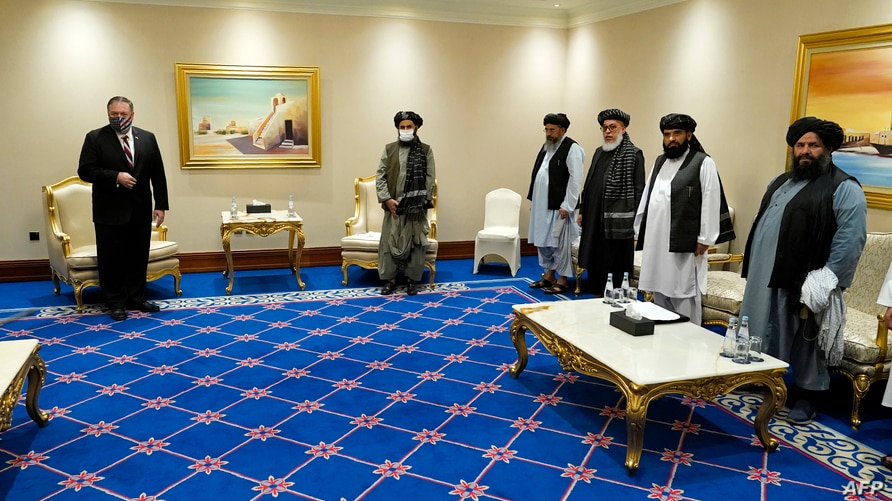
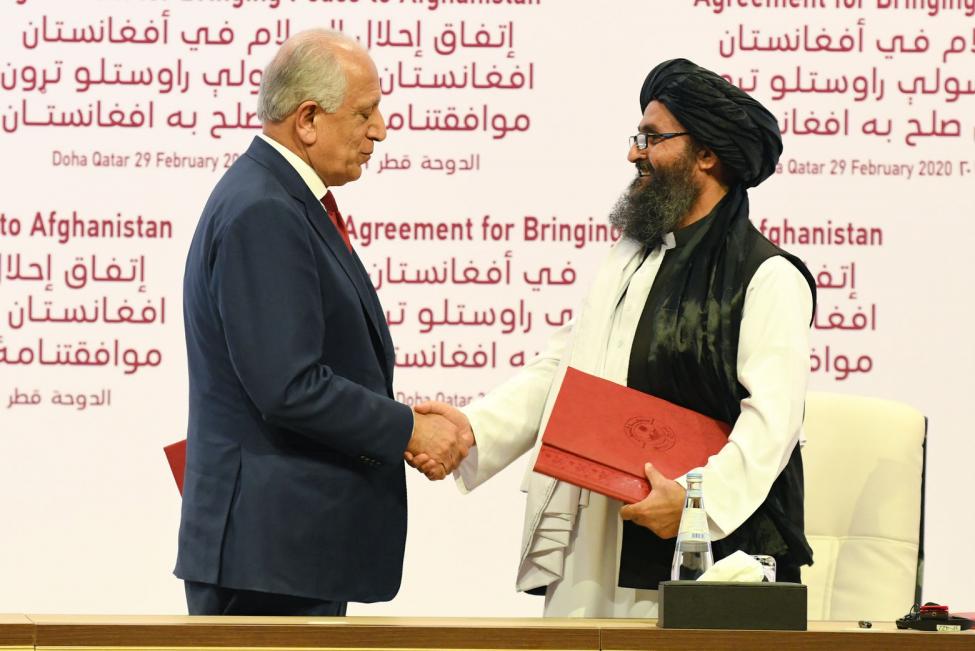
    Image: US Secretary of State Mike Pompeo meets with Taliban’s Mullah Abdul Ghani Baradar and members of his negotiating team. Credit: www.voanews.com


  • Side-lining of Palestine Issue:  Threat to Palestinian Rights and Self-determination

    Side-lining of Palestine Issue: Threat to Palestinian Rights and Self-determination

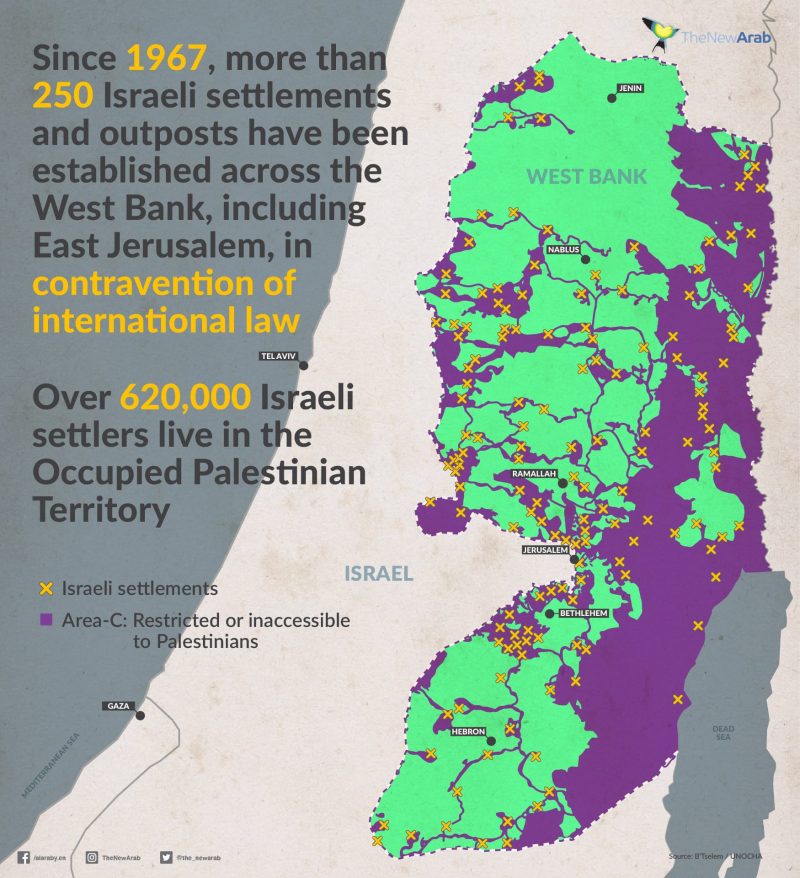
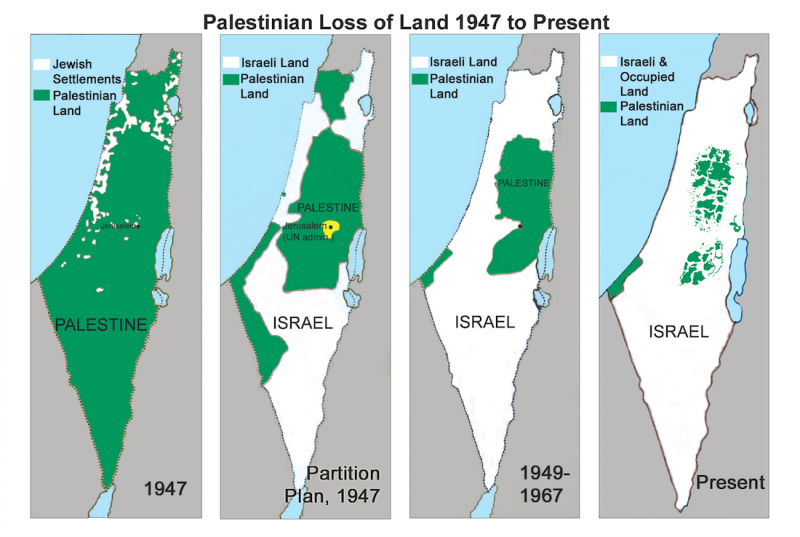
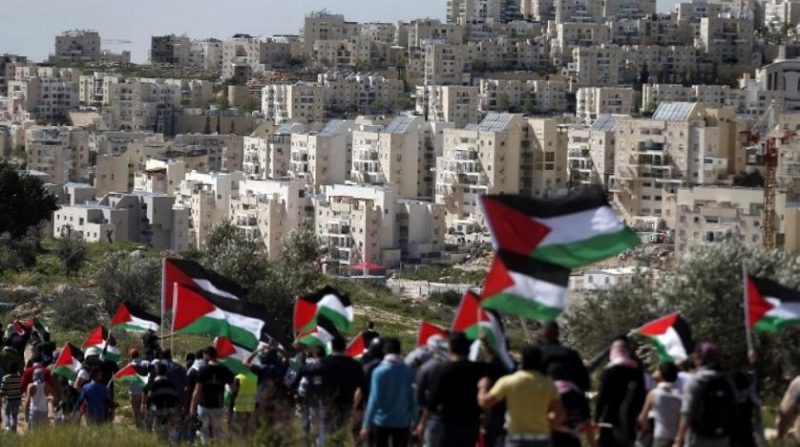
    Over the years, the international concern for the resolution of the Palestinian conflict has been diminishing. Israel has consistently dodged the core issue of returning Palestinian lands (West Bank) they occupied in 1967. Instead, it has continued to create new settlements in the occupied territories. Israel, obviously, has no intention of returning to pre-1967 boundaries; this was clear when the current Prime Minister of Israel, Benjamin Netanyahu, announced his plan to annex the West Bank in May 2020.

    Image Credit: The New Arab

    He deferred its implementation as the normalisation of relations with the United Arab Emirates (UAE) gathered momentum. However, Netanyahu indicated that Israel will “never give up our rights to our land.” (Al Jazeera 2020). The situation and the perception created now is such that not annexing the West Bank would appear to be a concession from Israel.

    As the Arab countries are taking a realistic view in placing their national interests first, Palestine is no longer a priority issue for them.

    This paper looks at how the Palestinian issue is gradually side-lined over the last few decades by the international community. There are four factors that have contributed to this development. First is the increase in conflicts in the Arab world, which has led to fragmentation and disunity in their approach to the resolution of the conflict. As the Arab countries are taking a realistic view in placing their national interests first, Palestine is no longer a priority issue for them. Second is the realisation of the fact that Oslo deal was unfair to start with and how under the guise of negotiations Israel continued to expand settlements and limit any prospect of sovereignty for the Palestinians. The Palestinian authorities hung on to the Oslo deal even though it was flawed, leading to decades of standstill in negotiations. Third, with the rise of the militant groups around the time of 9/11, the Palestinian cause has lost significant sympathies, and Israel’s violent response is seemingly more reasonable in the views of the international community. Fourth, the United States has supported Israel consistently in many issues, keeping Israel on the safe side in international and regional politics, shielding it from any proactive criticism.

    A look at the brief history of the conflict is necessary to explore the four factors mentioned above.

    Brief History of the Conflict

    Palestine was part of the Ottoman Empire until its defeat and collapse World War I. The area became a British protectorate as the result of the armistice of 1919. It coincided with the persecution of the  Jews due to the rise of anti-Semitism across Europe. The 1917 Balfour Declaration by the British government promised the Jews a national home in Palestine. This decision failed to factor the rights of the Palestinians who have lived there for millenniums. Jews began migrating to Palestine in huge numbers despite vehement protestations from the Palestinians leading to the now perennial Israel-Palestinian dispute. As Britain vacated the region post-1945, it abdicated its moral responsibility and left the resolution of the dispute to the United Nations (UN). The withdrawal of the colonial powers and the ensuing chaos in the regions vacated by them is a recurring pattern in decolonization history. The UN tried to divide Palestine into two states; Israel and Palestine, with Jerusalem as a joint capital and an international zone. Neighbouring Arab countries saw this as a residual form of colonialism and went to war in 1948. The war resulted in the catastrophic displacement of thousands of Palestinians. This catastrophe is remembered as Nakba, a day with a lot of historical sentiment across the Arab World (Chomsky and Pappé 2015). Israel won but did not control Gaza or the West Bank. Israel occupied these areas in the six-day war in June 1967. The occupation of the West Bank continues till today, whereas Gaza is now under Hamas. Coupled with all this, there are massive human rights violations against the Palestinians. This includes humiliating Palestinians at checkpoints, arresting without trial, arresting Palestinian children etc. (Chomsky, and Pappé 2015). Moreover, when Palestinians file reports about being harassed by Israeli citizens, it does not get any attention as the conviction rate is only 3% (Oxfam 2019).

    One of the prime demands of the Palestinian struggle is a return to the borders of 1967; so that Palestine can exercise full sovereignty over Gaza and the West Bank. However, Gaza has been economically cut off because Hamas controls it, and there is a huge blockade against it making life in Gaza difficult and miserable. Hamas also attacks Israel, and this has always led the Israel Defence Forces (IDF) into retaliating. Whereas on the West Bank, there are thousands of settlements by Israel, virtually pushing Palestinians out. This settlement strategy is seen as a deliberate move to counter the demographic threat from the larger number of Palestinians inside Israel (Chomsky and Pappé 2015). The obsession with demographic re-engineering has been fundamental to Israel, and it does not intend to change its policy. It also couples this with closing Palestinian places, reducing the Palestinian economic structures present in East Jerusalem (Arafeh et al. 2017) etc. There are currently 8 million Israeli citizens of which 1.2 million are Palestinians (“Palestinian Citizens Of Israel” 2020). They are treated as second-class citizens and many of them are engaged in menial labour

    The fractures in Arab Unity  

    All the West Asian and North African countries were initially pro-Palestine during the cold-war and decolonization era. This could be associated with the Pan-Arab notion present during that period. Many Arab countries had recently secured independence, and the Palestinian injustice was still fresh in their memory. However, losing consistently in these wars was also a demotivator and blow to them; fiscally and otherwise. In the last few decades, several countries have established ties with Israel; Egypt in 1979, Jordan in 1994. This is also the time Pan-Arab spirit declined, and increased conflicts began to emerge amongst many West Asian and North African countries.

    These political conflicts include; countries taking sides in the Iran-Iraq war, funding proxy wars, taking sides on the invasion of Iraq, etc. Furthermore, security threats have been perceived to be heightened in many West Asian and North African countries due to the rise of religious radicalization and the rise of terrorist groups. Arab league relations have also been strained for various reasons, including the Syrian Civil War and over its membership (Reuters 2020).

    More importantly, Saudi Arabia and Iran have their cold war. The United States has exaggerated the Iranian threat, and both Saudi Arabia and Iran covertly fund proxy civil wars across West Asia, be it Yemen or Syria.

    Israel has emerged as a technological and military power in the region. Netanyahu says, “we believe in peace out of strength and we believe in alliances born out of Israel’s value as a technological, financial, defence, and intelligence powerhouse” (The Times of Israel 2020).  Many Arab countries may, therefore, find value in Israel’s technological capabilities. Parallelly, economic conditions in many Arab countries are worsening. Under these circumstances, with deep distrust amongst many Arab states and incentive for countries to be friendly with Israel, normalization of relations with Israel is taking place.

    Arab countries are putting their national interest first, and if the Palestinian issue is seen as an obstruction they have no qualms about relegating it to a side-issue.

    However, a majority of the Arab and Gulf countries still do not officially recognize Israel. This is where the significance of the UAE-Israel and Bahrain-Israel deal comes in. The United States uses these factions within West Asia and North Africa to pursue its agenda with Jared Kushner pushing for normalization. The United Arab Emirates and Bahrain announced decisions to normalize relations with Israel on 12th August and 12th September 2020, respectively. Many of the West Asian countries, Saudi Arabia, in particular, are close allies of the United States. As the USA nudges these countries with incentives,  Palestinian sovereignty or a fair peace treaty no longer seems to be a precondition to establishing ties with Israel. Arab countries are putting their national interest first, and if the Palestinian issue is seen as an obstruction they have no qualms about relegating it to a side-issue.

    Support for Palestine still exists, but it comes in fragments from different countries. It is important to remember that there is no coalition; no pressure; no one group that consistently fights for it.

    Long Term Effects of a Flawed Deal

    One will always remember the picture of the handshake between Yasser Arafat and Yitzhak Rabin facilitated by Bill Clinton while signing the Oslo Accords at Camp David. The Oslo Accords were an extremely publicized affair, and many proclaimed that peace to the decades-old conflict had been reached, but this was far from the truth.

    When the accord was signed in 1993, the Palestine Liberation Organization (PLO) was already weak. Additionally, there was also a general reduction of support for the PLO among Palestinians, as seen by the eruption of the first intifada, which was initially spontaneous (Hassan 2011).

    Image Credit: Aljazeera

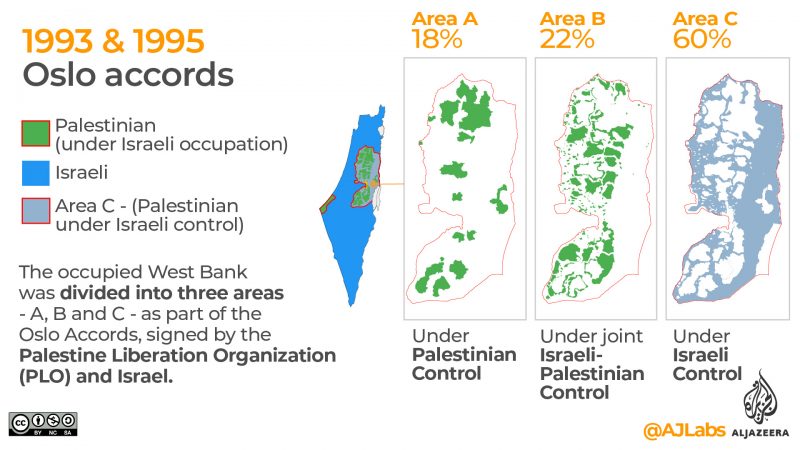
    The Oslo accords had several terms and clauses, but it mainly called for the recognition between Israel and the PLO. The accord also stipulated that Israel would end its occupation in Gaza and certain parts of the West Bank (Oxfam 2019). There would be an interim self-governance strategy and, eventually, a shift of power in Gaza and West Bank to the Palestinian Authority (Hassan 2011). An interim period was given so that both sides would have time to “gain trust” with one another.

    The accord showed an ambiguity regarding when Israel would withdraw from Gaza. It did not recognize Israel’s occupation, and neither did it speak of the Palestinian refugees.

    However, there were many flaws with the deal from the beginning. The accord showed an ambiguity regarding when Israel would withdraw from Gaza. It did not recognize Israel’s occupation, and neither did it speak of the Palestinian refugees (Hassan 2011). There was no stringent enforcement of the deal and having no third party accountability also rendered Palestinians vulnerable, as is evident. Furthermore, the Oslo accords did not condemn or mention the human rights violations against the Palestinians (Oxfam 2019).  The flawed nature of the deal began to show signs of rupture from the early days as accounts speak of how, as early as 1994, after the accords were signed, the IDF still had control over most of the West Bank and made no plans to move and were hovering around the edge of Ramallah (Tolan 2018). The fundamental issue here was that the Oslo Accord was signed by two unequal partners with Israel displaying dominant power.

    Therefore, while the buzz around the accords was still on, in reality, Israel continued policing Palestinians and establishing settlements in the West Bank area.

    No matter the initial motive, the Oslo accord, in 2020, can be analyzed as a distraction and cover-up by Israel while they continued their settlements. There is evidence supporting this as today there are 600,000 settlers in West Bank compared to 115,600 in 1993 (Oxfam 2019).

    Another significant issue is that Mahmoud Abbas and the Palestinian Authority (PA) have no framework other than the failed and biased Oslo accords. Owing to the proclamation that this accord would end the conflict, the PA became stuck in this framework. The way forward, as said by researcher Victor Kattan is that “The PA must produce a concrete vision of the state it wants to establish” (Arafeh et al.2017).  This lack of vision by the leaders is one of the reasons for the stagnation in the negotiations. Till today, Abbas and PA threaten to quit the accords and routinely proclaim that the Oslo deal is no longer valid. However, this should have come decades ago, during the second intifada in the year 2000, which illustrated that the Oslo accords were unfavourable towards the Palestinians. It shows the PA’s failure as a representative body, and their approval rate by the Palestinian public has reduced drastically.

    There have been talks to solve the dispute after Oslo deal, for instance, the Taba Summit. However, none have gained the clout or effort that the Oslo deal garnered.

    Militancy

    Ever since the attack of 9/11, the conversation surrounding militancy has increased. Invasion of Afghanistan and Iraq by the United States, a world power, ensured that the world knew the stance of the West on militancy.

    Militancy and violent retaliation by the Palestinians armed groups have been major issues, and the world witnessed the Munich massacre of the Israeli Olympic team in 1972. Furthermore, there have been Palestinian militant factions, which is where organizations such as Hamas come in. The first intifada led to Hamas’ formation and the second intifada helped Hamas gain clout (Uslu and Karatas 2020). Hamas has been deemed a terrorist organization by the United States, the European Union, because of its fundamentalist ideology and use of violence. This also led to the Palestinian struggle to lose sympathies of the international community due to its wariness of militant groups. Hamas takes a more “hard-line” approach towards Israel and is infamous for its rocket attacks against Israel from Gaza and suicide bombings (Uslu and Karatas 2020).  Israel and Hamas are also very wary of negotiating with each other. So far, the only talks between the two groups have been to swap prisoners.

    Many have criticized Hamas for the use of violence, however, Israel and other states cannot condemn the violence being deployed by Hamas, while Israel itself consistently shows violent behaviour towards the Palestinians. Hamas gained clout after the intifadas showed the deplorable conditions of the Palestinians in the occupied territories and Gaza. Termination of aid to Gaza on account of peoples’ support to Hamas has created more problems in terms of economy and livelihood. In the end, it is Palestinian people who suffer the most.

    Pro-Israel Policies of the United States  

    The United States is a close ally of Israel; technologically, financially, and otherwise. Israel, too, provides intelligence and acts as the “eye” of the United States from the West Asian region. The US-Israel relationship was instrumental in limiting the erstwhile Soviet Union’s influence in West Asia during the cold war (Beauchamp 2018). Much of the aid the United States gives to Israel is military aid, and as an important defence ally, Israel receives state-of-the-art weapon systems and intelligence sharing (Congressional Research Service 2019). The US has played a critical role in Israel’s emergence as a technology power and a major arms exporter.

    The United States has used its veto in the security council several times to protect Israel, including when the UN looked at taking action to prevent  Israel’s invasion of Lebanon and to stop the construction of walls inside the West Bank (Zunes 2012).

    The Israel caucus and lobby in the United States is powerful and many pro-Israeli outfits/individuals are major funding sources for Congressional elections (Cook 2018). The American Israel Public Affairs Committee (AIPAC) has financially backed people in the congress, which has influenced the decisions made by many lawmakers. For instance, billionaire, Sheldon Adelson, funded 82 million dollars to Republican’s election and is known for his pro-Israel sentiments. He even pushed for the USA embassy to be moved to Jerusalem from Tel-Aviv and has also proven to be unconcerned about giving Palestinians voting rights in Israel (McGreal 2018).

    The Donald Trump administration has taken the support for Israel one step further. Trump supports Israel in controversial issues that many shy away from addressing due to the politics in West Asia and Palestine’s historical symbolization. Trump came up with a peace deal for Israel and Palestine which was criticized severely and rejected by Palestine as the negotiations did not involve them (Holmes et al. 2020). The fact that Trump did not involve Palestinians in the negotiation shows how one-sided and utterly dismissive he is of the Palestinian authorities and people. The refusal of the right to return for Palestinian refugees, keeping Jerusalem as an undivided capital of Israel, recognizing Israeli settlements are among many reasons why the deal is flawed. The United States also brokered two peace deals in West Asia, the UAE-Israel peace deal first, followed by the Bahrain-Israel deal. It has also has been pushing other Arab countries to normalize relations with Israel (Barrington and Williams 2020).

    The Trump administration also shifted the United States embassy to a contested and occupied Jerusalem in 2018. All the more, this ultimately recognized and legitimised Israel’s occupation of the West Bank. After Trump’s announcement to shift the embassy, Israel’s housing minister declared that Israel was developing 14,000 “new settlement units” in Jerusalem (Arafeh et al. 2017). Mohamoud Abbas also asserted that the United States could not be a reliable mediator after shifting capital to Jerusalem. However, the United States has continued to meddle and create a one-sided mediated plan (Arafeh et al. 2017).

    Trump has also continued to cut out aid for Palestine, which has severe repercussions for Gaza’s already poorly funded city. In 2018, after Palestinians Authorities blamed Trump for being partial, he cut 200 million dollars in economic aid and cut funding to the United Nations Relief Work Agency (UNRWA), the primary network in helping Palestinian refugees (Holmes 2020).

    During the US presidential elections, Netanyahu appealed to evangelical supporters in the United States. In a virtual conference, he said that Trump might give him the green-light to annex certain parts of the West Bank that have religious significance in the Bible (Ravid 2020). The President-Elect Joe Biden has clearly highlighted that he would review these decisions, recognise Palestinians’ right to self-determination and adopt a more balanced approach.

    It is evident that the Trump administration has played a significant role in side-lining the Palestinian issue.

    Looking Ahead

    The Palestine problem has stretched far too long, with many “negotiations” that have failed to address the historical injustice done to the Palestinians. Amidst all this, clashes continue between protestors in Gaza and Israeli forces. While there are mass casualties and acts of aggression on both sides, there is no denial of how poorly Israel has treated Palestinians over the decades. Furthermore, most issues regarding Palestine have been put on the back-burner, however, the Arab League stepped up to condemn the unfair Trump Peace Deal, which is the bare minimum it could have done.

    There needs to be more initiative from the side of the PA to have a more concrete plan for the future of Palestinian sovereignty. The PA is also dominated by older elites, but with changing aspirations of the Palestinians, there need to be more women and younger people in the body.

    Additionally, for Palestinian sovereignty to be achieved, there has to be a major restructuring of the PA. It is clear that PA has been stripped of its power over the years and afflicted with corruption, has not improved the Palestinians’ situation. There needs to be more initiative from the side of the PA to have a more concrete plan for the future of Palestinian sovereignty. The PA is also dominated by older elites, but with changing aspirations of the Palestinians, there need to be more women and younger people in the body.

    There is some importance given to Palestine in the United Nations such as making Palestine as a presiding chair for the G77 or the United Nations Security Council Resolution 2334, which says that “altering the demographic composition, character, and status of the Palestinian Territory occupied since 1967, including East Jerusalem… (is) in violation of international humanitarian law” (SC Res 2334 2016). However, voting pro-Palestinian at some UN resolutions, having Palestinian authorities come over, and reiterating a “two-state solution” is no longer enough. Furthermore, different countries use this issue as a political tool to show their “sentiments.” Instead, there needs to be more proactive international collaboration to fight for Palestinian rights consistently. The Palestinian issue is a fundamental human rights issue and should be urgently addressed before the already minimal fragments of Palestine disappear under Israel.

    References

    “Palestinian Citizens Of Israel”. Institute For Middle East Understanding, 2020, https://imeu.org/topic/category/palestinian-citizens-of-israel. Accessed 25 Sept 2020.
    Al Jazeera. “Netanyahu Says West Bank Annexation Plans Still ‘On The Table’”. 2020,   https://www.aljazeera.com/news/2020/08/13/netanyahu-says-west-bank-annexation-plans-still-on-the-table/. Accessed 12 Sept 2020.
    Arafeh, Nur et al. “Trump, Jerusalem, And The Future Of Palestine – Al-Shabaka”. Al-Shabaka, 2017, https://al-shabaka.org/roundtables/trump-jerusalem-future-palestine/. Accessed 6 Sept 2020.
    Arroyo, Carmen. “Palestinian Children, The True Victims Of The Conflict”. The Wire, 2020, https://thewire.in/world/palestinian-children-true-victims-conflict-israel. Accessed 5 Sept 2020.
    Barrington, Lisa, and Dan Williams. “After UAE-Israel Breakthrough, Kushner Pushes Other Arabs To Go Next”. Reuters, 2020, https://www.reuters.com/article/us-israel-gulf-usa/after-uae-israel-breakthrough-kushner-pushes-other-arabs-to-go-next-idUSKBN25S5QC. Accessed 20 Sept 2020.
    Beauchamp, Zack. “Why Are The US And Israel So Friendly?”. Vox, 2018, https://www.vox.com/2018/11/20/18080080/israel-palestine-us-alliance. Accessed 16 Sept 2020.
    Chomsky, Noam, and Ilan Pappé. On Palestine. Haymarket Books, 2015.
    Congressional Research Service. U.S. Foreign Aid To Israel. Congressional Research Service, Washington D.C, 2019.
    Cook, Jonathan. “Under Trump, The Israel Lobby Is A Hydra With Many Heads”. Middle East Eye, 2018, https://www.middleeasteye.net/opinion/under-trump-israel-lobby-hydra-many-heads. Accessed 7 Sept 2020.
    Hassan, Shamir. “Oslo Accords: The Genesis and Consequences for Palestine.” Social Scientist, vol. 39, no. 7/8, 2011, pp. 65–72. JSTOR, www.jstor.org/stable/41289422. Accessed 30 Sept. 2020.
    Holmes, Oliver et al. “Trump Unveils Middle East Peace Plan With No Palestinian Support”. The Guardian, 2020, https://www.theguardian.com/world/2020/jan/28/donald-trump-middle-east-peace-plan-israel-netanyahu-palestinians. Accessed 1 Sept 2020.
    Holmes, Oliver. “US To Give Palestinians $5M In Coronavirus Aid – 1% Of What Trump Cut”. The Guardian, 2020, https://www.theguardian.com/world/2020/apr/17/us-aid-palestinians-coronavirus-trump-cut. Accessed 22 Sept 2020.
    McGreal, Chris. “Sheldon Adelson: The Casino Mogul Driving Trump’s Middle East Policy”. The Guardian, 2018, https://www.theguardian.com/us-news/2018/jun/08/sheldon-adelson-trump-middle-east-policy. Accessed 17 Sept 2020.
    Oxfam. From Failed To Fair Learning From The Oslo Accords To Foster A New Rights-Based Approach To Peace For Palestinians And Israelis. Oxfam, Oxford, 2019, pp. 3-24, https://oxfamilibrary.openrepository.com/bitstream/handle/10546/620904/bp-failed-to-fair-oslo-accords-011119-en.pdf. Accessed 6 Sept 2020.
    Ravid, Barak. “Netanyahu Presses Trump By Lobbying U.S. Evangelicals To Back Annexation”. Axios, 2020, Accessed 29 Sept 2020.
    Reuters. “No Consensus Yet For Syria Return: Arab League Chief”. 2020, https://in.reuters.com/article/us-mideast-crisis-syria-arabs/no-consensus-yet-for-syria-return-arab-league-chief-idUSKCN1Q014R. Accessed 15 Sept 2020.
    SC Res 2234, UNSC, UN Doc S/RES/2334 (23 December 2016) < https://www.un.org/webcast/pdfs/SRES2334-2016.pdf> accessed 15 September 2020
    The Times of Israel. “PM Said Seeking To Formalize Relations With Saudi Arabia Before Next Election”. 2020, https://www.timesofisrael.com/pm-said-seeking-to-formalize-relations-with-saudi-arabi-before-next-election/. Accessed 24 Sept 2020.
    Tolan, Sandy. “Was Oslo Doomed From The Start?”. The Nation, 2018, https://www.thenation.com/article/archive/was-oslo-doomed-from-the-start/. Accessed 17 Sept 2020.
    Uslu, Nasuh, and Ibrahim Karataş. “Evaluating Hamas’ Struggle in Palestine.” Insight Turkey, vol. 22, no. 1, 2020, pp. 109–124. JSTOR, www.jstor.org/stable/26921171. Accessed 30 Sept. 2020.
    Zunes, Stephen. “Putting The UN Veto In Perspective”. Huffpost, 2012, https://www.huffpost.com/entry/syria-russia-un-veto_b_1267495?guccounter=1. Accessed 21 Sept 2020.
  • Understanding the Syrian Civil War through Galtung’s Conflict Theory

    Understanding the Syrian Civil War through Galtung’s Conflict Theory

    Introduction

    As the founder of the discipline of Peace and Conflict Studies, Johan Vincent Galtung has outspokenly advocated for a world without nuclear weapons and has placed the focus of his research on scientific terminologies and methods to understand and deal with conflicts. Having coined the term “peace research”, Galtung has devoted much of his time in formulating the influential and unique ‘transcend approach’, wherein the focus is on peace, rather than security. He has advocated for a model that is holistic and is based on deep understanding and dialogue with one party at a time.

    Having coined the term “peace research”, Galtung has devoted much of his time in formulating the influential and unique ‘transcend approach’, wherein the focus is on peace, rather than security.

    The underlying cause of any violence, according to Galtung, is an unresolved conflict, one that has not been transformed or transcended, due to the existence of incompatible goals. If the goals are among the four basic needs of survival, well-being, identity, or freedom, the conflict is then concluded to be deep, and most difficult to resolve if left unattended. It is important to remember that a conflict does not progress linearly, but rather goes around in a circle, through a cycle of non-violence, to violence, then to post-violence, and likely back to violence again if it fails to be resolved.

    The escalation of a conflict to a violent level is largely a result of disequilibrium among the actors or parties involved, leading to polarization and dehumanization of the Other, and finally reflected in their aggression, the output of which is violence. What follows violence is traumatization, and consequently acts of revenge (Galtung, 2010), leading the cycle of conflict back to its first level.

    Galtung’s Notion of Conflict

    Johan Galtung, in his book, ‘Peace by Peaceful Means (1996)’, defined conflict as a “triadic construct” (pg.71), consisting of three important factors – Attitudes, Behaviour, and Contradictions.

    While both, Attitudes (A) and Contradiction (B), reflect the latent, subconscious level of conflict, Behaviour (B), on the other hand, is always manifest and reflects how people consciously act when confronted with contradictions and hostile attitudes and assumptions. Behaviour may thus be seen as an act of violence, both physical and verbal.

    Attitudes and assumptions may include the person’s perceptions about an actor or an institution; his/her emotions – how s/he feels about the actor/institution involved; and what s/he wants or expects from the given actor/institution. Thus, attitudes may include sexist beliefs about women or discriminatory attitudes towards minorities.

    Contradictions, on the other hand, refer to the content of the conflict, the incompatibility between the goals. It may include a territorial dispute between two or more actors over a single piece of territory, as in the case of Israel and Palestine, or as in the case of multiple parties laying claim to the same group of islets in the South China Sea. In the case of structural or indirect conflict, the contradictions may refer to the disequilibrium in the positions of parties involved, as in the case of inequality between different classes.

    A conflict, according to Galtung, could start from any of the three points of the triangle. It could start from point (A), wherein the actor’s hostile attitude could be in disharmony with those of other actors, leading to contradiction, and later reflected in violent behaviour.  A conflict may also start from point (B), where the actors involved may develop capacities or inclination towards negative/aggressive behaviour, which may get stimulated when a contradiction comes along.

    Galtung further divides the conflicts into actor/direct conflicts and structural/ indirect conflicts. The main point of departure between the two lies in their categorization into manifest, and latent levels. In a direct conflict, both attitudes and contradictions are manifest, that is, they are conscious and overt, the actor being aware of them at all times.

    However, the same does not apply when one takes into account the structural or indirect conflicts. Here, both attitudes and contradictions are latent, that is, they are subconscious and the actor is unaware of them. This is not to say that the contradictions or the incompatibilities are non-existent, rather only that the actor involved finds himself/herself completely unaware of such contradictions.

    Types of Violence

    While stating that the two types of violence – Direct and Structural, are to be considered as the starting point of any strategy for a peaceful resolution, Galtung also defined a third category of violence, namely, the Cultural Violence.

    Direct violence is an event that is often quick and visible, reflecting the capabilities and intentions of actors to engage in a conflict. It includes a victim and a perpetrator and can be seen explicitly in societies. Structural violence, on the other hand, is a process that is slow and often invisible. It refers to the injustice and inequality built into the structural institutions of the society. It is reflective of a position “higher up or lower down in a hierarchy of exploitation-repression-alienation” (Galtung 2012, pg.12), where the parties involved are determined either to keep the hierarchy intact or to completely obliterate it.

    An example of structural violence, as seen from a top-down approach would include colonial aspirations of the European nations. In the case of India and the British empire, the aggression from top existed in the form of material exploitation at the hands of the latter. It became visible once the natives demonstrated their will to oppose colonialism and break the hierarchy of exploitation. The same holds for the Indian caste system, wherein the structural violence, in the form of exploitation and marginalization, has remained intact because of the capability of those higher up, namely the Brahmins, to maintain the disequilibrium in positions between themselves and the communities they perceive to be lower than them.

    The Indian caste system, wherein the structural violence, in the form of exploitation and marginalization, has remained intact because of the capability of those higher up, namely the Brahmins, to maintain the disequilibrium in positions between themselves and the communities they perceive to be lower than them.

    Cultural violence refers to those “aspects of culture that can be used to legitimize or justify both, structural and direct violence” (Galtung: 1990, pg.291). It renders the use of violence as acceptable in society and makes it okay for actors to use violence without making them feel guilty. In a brilliant example, Galtung talks about how the internalization of culture makes it morally easier for actors to employ violence, such as in the interpretation in case of murder on behalf of one’s country being seen as right (Galtung: 1990, pg.292). In the case of direct and structural violence faced by immigrants, it is the culture that allows for such violence to be tolerated. The cultural violence, in this case, justifies the indirect and direct violence by dehumanizing the immigrants and portraying them as thugs or aliens. It allows societies to tolerate policies of forced child-separation while continuing to deny them equitable means of living.

    Escalation of conflicts into violence

    Violence is most often an outcome of deprivation of needs. The more basic and non-negotiable the needs, the likelier chance there is for aggression to come into existence. While classifying the basic needs into four broad categories of survival, welfare, freedom, and identity, Galtung warns his readers against prioritizing any one need over the others. To put survival above freedom and identity, would result in repression and alienation (Galtung, 1985), failing to end structural and cultural violence.

    When the goal of an actor (A) is incompatible with that of an actor (B), such that it obstructs the attainment of the goal by the actor (B), the pursuit of such goals would then most likely result in frustration among both actors, the consequence of which would be a polarisation of the two extremes. Polarisation would imply a zero-sum game, where the scope of transcendence is low, and the likely outcome is a position of no compromise. Because the contradiction in goals is absolute, the victory of the actor (A) would thus necessarily imply the loss of actor (B).

    Polarisation, accompanied by the dehumanization of the Other, may galvanize into hostility and hatred, manifesting itself into aggressive behaviour, finally resulting in escalation. The conflict, however, does not stop at violence. What follows violence, is traumatization of the victims harmed by violence, breeding acts of revenge (Galtung 2010, pg.16).

    In an actor conflict, the polarization between the two sides can almost immediately lead to direct violence. This is because actor (A), who has incompatible goals with actor (B), can easily identify the object/ subject of obstruction of attainment of its goals. Therefore, what follows is violent behaviour by actor (A) towards actor (B).

    On the other hand, in a structural conflict, polarisation may result in acute disequilibrium between rank positions of members in a society. However, Galtung in his essay on the “Structural Theory of Aggression” argues that violence is unlikely to occur unless all methods of maintaining equilibrium have been tried and unless culture facilitates violence wherein those lower down are constantly reminded of their position and their consequent mistreatment (Galtung 1964, pg.99).

    A system of injustice or inequity which refuses to break the hierarchy of oppression and exploitation would likely result in frustration, the outburst of which would be reflected in the form of violence. The often-visible Naxalite violence in India can be seen as a result of deep-rooted structural violence, wherein the parties involved have suffered exploitation and marginalization due to unequal economic development and inequitable distribution of resources for years.

    the genocide that took place against the members of the Rohingya community in Myanmar is a crude example of direct violence. 

    On the other hand, the genocide that took place against the members of the Rohingya community in Myanmar is a crude example of direct violence. They claimed to have been living in the State since the 9th century but were eventually labelled as Bangladeshi Immigrants. Years of discrimination (structural violence) and hatred (attitudes, assumptions/ cultural violence) led to their ethnic cleansing (direct violence). They were murdered, raped, and evicted from their homeland. It only took one law, which rendered them stateless, for the majority of Myanmar to consider them as sub-humans, and readily accept the atrocities committed against them.

    Syrian Conflict through Galtung’s Conflict Theory

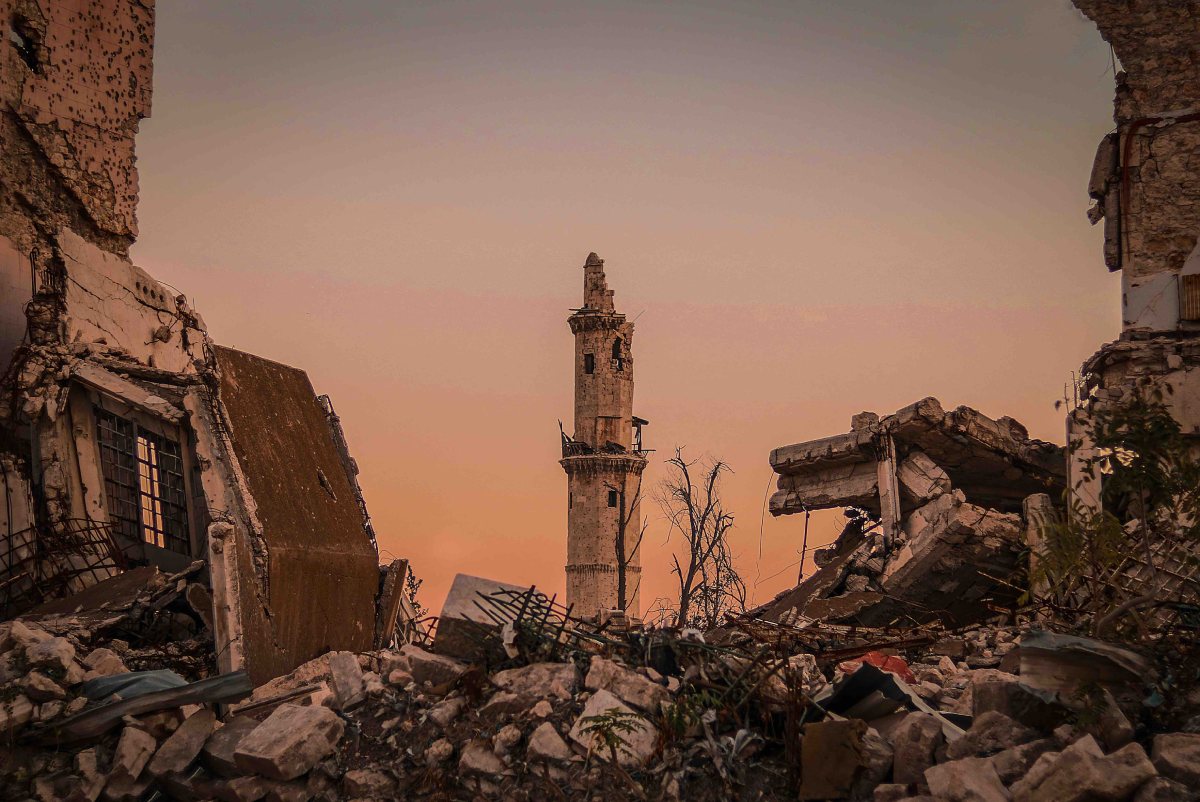
    The civil war in Syria is, unfortunately, an example of one of the bloodiest conflicts of this century. The war is often seen as a result of the outburst of pro-democracy protests in 2011, under the appellation of the Arab Spring.

    However, when approached from Galtung’s conflict theory, the conflict can be divided into three categories of violence. First, what we have been witnessing is the horror of direct violence in Syria, as a consequence of years of repression, facilitated by the government’s violent response towards the peaceful protesters in 2011. Second, the structural violence in the form of decades of economic restraints and systemic corruption, which exacerbated the existing poverty and inequality amongst the citizens.  Further, four years of drought between 2006 and 2011, and the consequent failed economic policies forced 2 million to 3 million Syrians into abject poverty (Polk, 2013). The dwindling Syrian economy and infrastructure finally led to the deprivation of the basic need of welfare and threatened their need for survival, resulting in frustration. Third is the cultural violence that has helped in sustaining the ongoing violence, in the form of distortion, denial, and dehumanization of the victims of violence has helped Assad and his foreign allies in continuing the mass murder of Syrians. Here, the sanitization of language is of key importance, where the attempts of distortion of reality often end up in changing the moral colour of violence, as argued by Galtung, wherein violence from being unacceptable starts to be tolerated without question.

    Direct Violence in Syria

    Syrians have been victims of decades-long political repression, in the form of restrictions on freedom of speech and expression, torture and enforced disappearances. The political institutions have historically been unstable, with three military coups taking places in 1949 alone followed by one more in 1954, in addition to the Ba’athist-led coups of 1963 and 1966. The Syrian security forces (Mukhabarat) are known to have detained citizens without proper warrants even before 2010, many of whom have reportedly been tortured in prisons (Human Rights Watch, 2010). In their attempts to keep the hierarchy of power relations intact, the centralised institutions are known to clamp down on any public demonstrations, with frequent arrests and employment of state violence.

    several actors are involved in perpetrating the more visible, direct violence, and it is clear that the Syrian conflict cannot be looked at as a conflict solely between the state and armed rebellion groups.

    In 2011, fifteen school-going children, all under the age of seventeen, were reportedly arrested and tortured for writing anti-graffiti on a wall, leading to the protests of 2011. The government responded by opening fire on the peaceful protestors, killing four civilians (Macleod, 2011). More than 400,000 people have died because of the Syrian conflict since 2011, with 5 million seeking refuge abroad and over 6 million displaced internally (World Bank). This section identifies several actors involved in perpetrating the more visible, direct violence, and contends that the Syrian conflict cannot be looked at as a conflict solely between the state and armed rebellion groups. It would also be myopic to look at the conflict entirely from the perspective of sectarian divisions, given that each rebellion group has a different motive, and is being backed by several different actors.

    While soldiers supporting the Syrian president and the opposition armed groups continue to remain prominent actors, recent years have seen the rise of Islamic State, Al-Qaeda and their affiliated members. The war has also seen a large-scale presence of two categories of foreign actors – those supporting the Syrian regime (Iran, and Russia), and those who continue to be the key rebel supporters (US, Turkey, and Saudi Arabia). All of these actors have their motives and intentions of being engaged in the war. While Iran sees Syria as its primary ally and a transit point for Hezbollah, Russia thinks of Syria as its last remaining stronghold. The United States and Saudi Arabia, on the other hand, are driven by their intentions to maintain the regional balance of power away from the Iranian axis of influence. Meanwhile, Turkey continues to battle the spill-over effect of the thousands of Syrian refugees who continue to cross over the border to Turkey.

    The anti-government groups based in Ghouta, including Jaysh al-Islam, Ahrar al-Sham and Faylaq al-Rahmane, have killed and mutilated hundreds of civilians in indiscriminate attacks on Damascus. These armed groups have also regularly arrested and tortured civilians in Douma, including members of religious minority groups. Hay’at Tahrir al-Sham (HTS), an Al-Qaeda affiliate present in Idlib, has carried out arrests and kidnappings that targeted local political opponents and journalists, while also continuously interfering with humanitarian access and aid distribution in areas under its control (CSIS).

    Cultural Violence in Syria

    The cultural violence in Syria, like elsewhere, is most often perpetrated in the form of sanitization of language, where years of structural violence are termed as mere discrimination, and where civilians are seen as mere targets to be killed. A few years ago, in an attempt of distorting reality, the Russian media described a Syrian documentary on Helmet volunteers in Aleppo as a “thinly disguised Al Qaeda promotional vehicle” (Hamad, 2018).  Such attempts of distortion aim at normalizing even the most brutal violence. In the case of Russia, these attempts help in legitimizing its airstrikes, even when the number of civilians that have been killed in these strikes surpass the number of the ISIS members it sought to target. According to a report, approximately four thousand civilians have been killed by Russian airstrikes as opposed to 2758 ISIS members (Armstrong & Richter, 2016).

    Additionally, cultural violence in the form of ideology and religion has helped to sustain violence in the region. Religion, here, has acted as a form of cultural violence, where the fight is between the ‘Chosen’ and the ‘Unchosen’. In Syria, this fight has taken the form of sectarian divisions between the minority Alawi community and the majority Sunni population. The legitimisation of violence at the hands of the state is rooted in its fight against ‘extremism’, which depends upon the promulgation of the narrative that all rebel forces have the same ulterior motive -of building an intolerant Islamic caliphate. State’s reliance on its alleged effort to curb extremism has allowed its forces to justify the use of heavy artillery, the bombardment of residential places, and the subsequent massacres. Another factor that helps explain the sustenance of violence, is its normalization – where violence is seen as natural, and a part of everyday life. Decades of repression in Syria have helped to normalize torture, and rampant arrests and restrictions.

    Structural Violence in Syria

    While countries continue to witness the horrors of visible atrocities and war crimes, the underlying layers of structural violence continue to buttress the egregious brutality which is often more direct, and physical. Although the war is often seen as a result of the outburst of pro-democracy protests in 2011, a close examination of the country’s socio-economic structures would enable one to get a detailed insight into the underlying layers of frustration caused due to large-scale poverty, inequality, and marginalisation.

    One would also find that the relatively peaceful structure, which existed before the protests of 2011, was held intact largely due to the existence of single-party dominance, where one actor (Hafez al-Assad, and later Bashar al-Assad) held all power and authority, while those existing in lower ranks of society continued to lack resources, as well as opportunities to challenge the dominant power. The injustice and inequality built into the structural institutions of the Syrian society can be referred to, what has been called as the ‘structural violence’, by Johan Galtung. The violence, here, is reflective of a position “higher up or lower down in a hierarchy of exploitation-repression-alienation”, where the parties involved are determined either to keep the hierarchy intact or to completely obliterate it.

    In the case of Syria, the deprivation of the most basic and non-negotiable needs, which threatened the citizens’ need for survival, has been the primary cause for aggression to come into existence. The factors that, thus, led to the conflict in Syria can be seen rooted in years of repression, poverty, and lack of representative institutions, which manifested in the form of protests, or the Arab Spring of 2011. The Syrian economic crisis has existed long before the commencement of the civil war. Since the beginning of the economic crisis, Syria’s institutional structures have failed to meet the rising needs and rights of its population. In the 1980s, the country was trapped in a downward spiral of a fiscal crisis, as a result of large-scale drought, and due to both, domestic and external factors. The crisis led to high food deficit, and an increase in the cost of living, leading to a rise in patronage networks which provided small circles of elites with profitable businesses. These networks became increasingly popular in real estate and land management, leaving out large sectors of Syria underdeveloped. While the country witnessed a decreasing overall debt and a noticeable rise in the GDP in the 2000s, large sections of the population were excluded from benefitting from these growth rates due to differences in wage rates and declining job opportunities. Increasing inequality was reflected in a paper published by the UNDP, which claimed that 65.6% of all labour in Syria belonged to the informal sector in 2010, with Aleppo and Idlib ranking first with over 75% of their workforce belonging to the informal sector (UNDP, 2018).

    Years of conflict have exacerbated the economic crisis, pushing both the state and its citizens, into chaos, with more than 80 per cent of the Syrian population living below the poverty line, with an unemployment rate of at least 55 per cent in 2018.

    Additionally, the oil revenues fell from more than 14% of GDP in the early 2000s to about 4% in 2010 due to depleting reserves. According to a report, overall poverty in Syria in 2007 impacted 33.6% of the population, of which 12.3% were estimated to be living under extreme poverty. Noting the degree of inequality in Syria in 1997, the report found out that the lower 20% of the population had a share of only 8% in expenditure, while the richest 20% of the population share about 41% of the expenditure (Abu-Ismail, Abdel-Gadir & El-Laithy). Moreover, the widely disputed region of North-Eastern Syria witnessed highest levels of inequality in 2007, in addition to deprivation of living standards, and worst levels of illiteracy, and access to safe water, just four years before the outbreak of the civil war. The unequal access to resources was also starkly reflected in the housing situation of the country before the war, where over 40% of the population lived under informal housing conditions, – through squatting, or on lands obtained without legal contracts (Goulden, 2011).

    Years of conflict have exacerbated the economic crisis, pushing both the state and its citizens, into chaos, with more than 80 per cent of the Syrian population living below the poverty line, with an unemployment rate of at least 55 per cent in 2018. With most of the business networks now being controlled by the selected few elites, the population at large continues to suffer the brunt of both structural, and direct violence.

    Conclusion

    This paper has attempted to explain the theory of conflict, as proposed by Johan Galtung. In doing so, it has referred to six primary sources of the author. It has taken into account Galtung’s two triangles of conflict. First, the attitudes-behaviour-contradiction triangle, which seeks to explain the notion of conflict, and demonstrates how a conflict consists of all three, with attitudes and contradictions existing at the latent level, manifesting themselves into violent behaviour which is conscious and visible. The second triangle divides violence into three broad categories of direct violence, structural violence, and cultural violence, and demonstrates how the latter two facilitate and bring about direct violence. This paper has also attempted to employ Galtung’s theory of conflict to explain the civil war in Syria, where it has identified the three categories of violence and has tried to apply the theory into practice. The conflict, which started with citizens demanding their basic needs and rights has been sustained over the years by the involvement of foreign states, and increased state brutality which has been responded to by an increasingly similar, if not equal, force by the rebellion groups. The country, now, witnesses itself entangled in a cycle of conflict, where the war has led to steep economic deterioration, political repression, and physical violence, which in turn has led to further widespread cataclysm.


    References

    Abu-Ismail, K., Abdel-Gadir, A., & El-Laithy, H. (n.d.). Arab Development Challenges Report Background Paper 2011/15. Retrieved September 28, 2020, from https://www.undp.org/content/dam/rbas/doc/poverty/BG_15_Poverty%20and%20Inequality%20in%20Syria_FeB.pdf
    Armstrong, M., & Richter, F. (2016, October 20). Infographic: People Killed By Russian Airstrikes In Syria. Retrieved September 30, 2020, from https://www.statista.com/chart/6311/people-killed-by-russian-airstrikes-in-syria/
    CSIS. (n.d.). Hay’at Tahrir al-Sham (HTS). Retrieved September 28, 2020, from https://www.csis.org/programs/transnational-threats-project/terrorism-backgrounders/hayat-tahrir-al-sham-hts
    Employment and Livelihood Support in Syria: UNDP in Syria. (2018, August). Retrieved September 28, 2020, from https://www.sy.undp.org/content/syria/en/home/library/Employment_and_Livelihood_Support_in_Syria.html
    Galtung, J. (1964). A Structural Theory of Aggression. Journal of Peace Research, 1(2), 95-119. doi:10.1177/002234336400100203
    Galtung, J. (1985). Twenty-Five Years of Peace Research: Ten Challenges and Some Responses. Journal of Peace Research, 22(2), 141-158. doi:10.1177/002234338502200205
    Galtung, J. (1990). Cultural Violence. Journal of Peace Research, 27(3), 291-305. doi:10.1177/0022343390027003005
    Galtung, J. (1996). Conflict Theory. In Peace by peaceful means: Peace and conflict, developmentment and civilization(pp. 71-73). Thousand Oaks, CA: Sage.
    Galtung, J. (2010). Peace by peaceful conflict transformation – the TRANSCEND approach. In C. Webel & J. Galtung (Authors), Handbook of peace and conflict studies (pp. 15-16). London: Routledge.
    Galtung, J. (2012). Peace and Conflict Studies as Political Activity. In T. Matyók, J. Senehi, & S. Byrne (Authors), Critical issues in peace and conflict studies: Theory, practice, and pedagogy (pp. 12-13). Lanham, Maryland.: Lexington Books.
    Goulden, R. (2011). Housing, Inequality, and Economic Change in Syria. British Journal of Middle Eastern Studies,38(2), 187-202. doi:10.1080/13530194.2011.581817
    Hamad, S. (2018, March 09). The dehumanisation of Syria’s victims facilitates war crimes. Retrieved July 26, 2020, from https://www.trtworld.com/opinion/the-dehumanisation-of-syria-s-victims-facilitates-war-crimes-15802
    Human Rights Watch. (2010, July 16). Syria: Al-Asad’s Decade in Power Marked by Repression. Retrieved September 28, 2020, from https://www.hrw.org/news/2010/07/16/syria-al-asads-decade-power-marked-repression
    Polk, W. (2013, December 10). Understanding Syria: From Pre-Civil War to Post-Assad. Retrieved July 26, 2020, from https://www.theatlantic.com/international/archive/2013/12/understanding-syria-from-pre-civil-war-to-post-assad/281989/
    Macleod, H. (2011, April 26). How schoolboys began the Syrian revolution. Retrieved September 30, 2020, from https://www.cbsnews.com/news/how-schoolboys-began-the-syrian-revolution/
    Massari, P. (2013, September 10). Religion and Conflict in Syria. Retrieved July 26, 2020, from https://hds.harvard.edu/news/2013/09/10/religion-and-conflict-syria
    World Bank. (n.d.). The World Bank In Syrian Arab Republic. Retrieved September 30, 2020, from https://www.worldbank.org/en/country/syria/overview
     
    Image: Adobe Stock
     

  • What Triggered Recent Chinese Naval Exercises in the South China Sea?

    What Triggered Recent Chinese Naval Exercises in the South China Sea?

    During the last few months, the PLA Navy along with the PLA Air Force conducted several exercises in the South China Sea. China used these maneuvers to deter Taiwan against its growing relationships with the US, and as a tool of “strategic communication” to signal to the US of its military capabilities to project power and defend its national interests. There are at least five important reasons that could have triggered such aggressive posturing by China.

    First is COVID-19. After Wuhan was designated as the source-destination of COVID-19 in January this year and over 80,000 of its residents were reported to have been infected by the virus, the Chinese leadership sought to boost its image among its people who had been struggling by lockdowns.[i] In the first half of February, China chose to divert international attention away from the pandemic by deploying fighter jets and bombers to intimidate Taiwan which had been critical of China over its handling of the virus. This prompted Taipei to advise authorities in Beijing to “focus on preventing the spread of the epidemic” and admonished it for “inciting nationalism at home to shift public focus away from challenges at hand” and labelled it as a “game not worth the candle”.[ii]

    the PLA Navy, led by the aircraft carrier Liaoning, conducted naval exercises and the taskforce sailed through the Miyako Strait, Bashi Channel and the South China Seaostensibly to display its military readiness during the pandemic. 

    Also, while the global community struggled to combat the pandemic and at least three US Navy carriers afflicted by COVID-19 virus, the PLA Navy, led by the aircraft carrier Liaoning, conducted naval exercises and the taskforce sailed through the Miyako Strait, Bashi Channel and the South China Sea[iii] ostensibly to display its military readiness during the pandemic. The PLA Air Force too showcased it combat readiness and fighter jets intruded into Taiwan’s air space. However, the US responded by three-carrier deployment including dual-carrier operations; B-52 Stratofortress bombers operated from Guam and the nuclear submarines were forward-deployed to conduct “contingency response operations.”[iv]

    Second, China was rattled after the US turned the Taiwan Allies International Protection and Enhancement Initiative (TAIPEI) Act into law to show that “it has the support of both branches of government, which is required for a strong and effective U.S. foreign policy”.[v] Similarly, it also introduced a new Bill ‘Taiwan Defence Act’ in the US Congress[vi] which requires the Department of Defense to provide weapons to Taipei. The Trump administration also announced a military package worth US$ 180 million to improve Taiwan’s capability against “regional threats and to strengthen homeland defense,” [vii]

    Third, is about the Pacific Deterrence Initiative (PDI) which entails fiscal support for military activities and associated infrastructure investment plans[viii] in the Pacific Ocean. The PDI is similar to the 2014 European Deterrence Initiative (targeted against Russia) and is meant to advance US priorities in the Indo-Pacific region. It aims to “focus resources on key capability gaps to ensure U.S. forces have everything they need to compete, fight, and win in the Indo-Pacific” is conspicuously targeted against China.

    India, in response to Chinese posturing in the Himalayas, deployed its naval ship in the South China Sea. This unexpected Indian posturing challenging China in its own backyard and operating in close cooperation with the US Navy, has caused alarm bells in Beijing.

    Fourth, China is concerned about the Quadrilateral Security Dialogue (QSD), a grouping of Australia, India, Japan and the US, which China believes is meant to contain it. Since 2018, India has been hosting the Malabar series of naval exercises which include Japan and the US; but this is being expanded to include Australia. The geographic focus of the Malabar exercises had so far remained in the Bay of Bengal or the Pacific Ocean (around Guam and Japanese waters), could now shift to the South China Sea. India, in response to Chinese posturing in the Himalayas, deployed its naval ship in the South China Sea. This unexpected Indian posturing challenging China in its own backyard and operating in close cooperation with the US Navy, has caused alarm bells in Beijing.

    Chinese worries about the Quad are further aggravated after Taiwanese President Tsai Ing-wen, amid rising tensions between Taiwan and China around the South China Sea region, has called for a joint alliance of democratic nations to uphold “a strategic order that encourages cooperation, transparency and problem-solving through dialogue, not threats of war”.[ix]

    Fifth, is related to Code of Conduct (CoC) for South China Sea between China and the ASEAN. The Chairman’s Statement of the 36th ASEAN Summit has “emphasised the need to maintain and promote an environment conducive to the COC negotiations”[x] and Prime Minister Nguyen Xuan Phuc has urged China to accelerate talks on an effective and efficient COC in line with international law, including the 1982 UNCLOS.[xi] China has in the past disregarded the urgency over the finalization of the CoC and has dragged the issue far too long, but now appears to have realized that there is high degree of unity among the Member States over the South China Sea issue and attempted to reassure ASEAN of its intentions to pursue the issue hopefully in right earnest.

    Among other political, diplomatic and economic toolkits to appease the ASEAN Member States, it also chose to conduct military exercises to intimidate Malaysia, Philippines and Vietnam.

    Among other political, diplomatic and economic toolkits to appease the ASEAN Member States, it also chose to conduct military exercises to intimidate Malaysia, Philippines and Vietnam. It relented only after Philippines Foreign Secretary Teodoro Locsin Jr denounced as ‘illegal provocations’ Chinese air patrols over the South China Sea and threatened if “something happens that is beyond incursion but is in fact an attack on say a Filipino naval vessel … [that] means then I call up Washington DC,”

    China’s attempts to dominate the regional security affairs, non-adherence to the 1982 United Nations Law of the Sea, coercion of other claimants to the disputed features in South China Sea and its intimidation of Taiwan has not gone well among the ASEAN Member States. ASEAN sees US’ formidable capabilities and above all its commitment to keep the Indo-Pacific ‘free and open’ against any attempts by China, as reassuring.

    In his recent remarks at the 10th East Asia Summit Foreign Ministers’ Meeting,[xii] Secretary of State Michael R. Pompeo assured his counterparts from 17 countries that the US shares and supports the “principles of openness, inclusiveness, transparency, and respect for international law contained in the US’ Indo-Pacific vision, ASEAN’s Outlook on the Indo Pacific, and the visions of many other EAS Member States”.

     
    Image Credit: The Globe and Mail and VoA
     
     
    References

    [i] “China Sends Ships, Planes over Disputed Seas to Show Strength after COVID-19 Outbreak”, https://www.voanews.com/east-asia-pacific/china-sends-ships-planes-over-disputed-seas-show-strength-after-covid-19-outbreak  (accessed 08 September 2020).

    [ii] “The ROC Firmly Defends its Sovereignty: The CCP Should Immediately Stop its Military Provocations and not Misjudge the Situation”, https://www.mac.gov.tw/en/News_Content.aspx?n=A921DFB2651FF92F&sms=37838322A6DA5E79&s=3AF953C12D84A525  (accessed 08 September 2020).
    [iii] “   Chinese aircraft carrier Liaoning conducts exercises in South China Sea: PLA Navy spokesperson”, https://www.globaltimes.cn/content/1185471.shtml  (accessed 08 September 2020).
    [iv] “Pacific Fleet Submarines: Lethal, Agile, Underway”, https://www.navy.mil/submit/display.asp?story_id=112909 (accessed 06 July 2020).
    [v] “Trump and the TAIPEI Act”, https://thediplomat.com/2020/04/trump-and-the-taipei-act/  (accessed 08 September 2020).
    [vi] Under the 1978 Taiwan relations Act the United States “will make available to Taiwan such defence articles and defence services in such quantity as may be necessary to enable Taiwan to maintain a sufficient self-defence capabilities”;
    [vii] “Trump administration approves arms sale to Taiwan amid China tensions”, https://edition.cnn.com/2020/05/21/politics/us-taiwan-arms-sale/index.html (accessed 20 June 2020).
    [viii] “Investments in theater missile defense, expeditionary airfield and port infrastructure, fuel and munitions storage, and other areas will be key to America’s future force posture in the Indo-Pacific.” See “The Pacific Deterrence Initiative: Peace through Strength in the Indo-Pacific”, https://warontherocks.com/2020/05/the-pacific-deterrence-initiative-peace-through-strength-in-the-indo-pacific/ (accessed 20 June 2020).
    [ix] “Fed-Up of Chinese Threats, Taiwanese President Urges ‘Coalition of Democracies’ to Confront Beijing”, https://eurasiantimes.com/fed-up-of-chinese-threats-taiwanese-pm-urges-coalition-of-democracies-to-confront-beijing/ (accessed 09 September 2020).
    [x] “Chairman’s Statement of the 36th ASEAN Summit 26 June 2020” https://asean.org/storage/2020/06/Chairman-Statement-of-the-36th-ASEAN-Summit-FINAL.pdf (accessed 14 July 2020).
    [xi] “Pompeo: China cannot be allowed to treat the South China Sea as its maritime empire”, https://vietnamtimes.org.vn/pompeo-china-cannot-be-allowed-to-treat-the-south-china-sea-as-its-maritime-empire-21832.html (accessed 14 July 2020).
    [xii] “Secretary Pompeo’s Participation in the 10th East Asia Summit Virtual Foreign Ministers’ Meeting”, https://china.usembassy-china.org.cn/secretary-pompeos-participation-in-the-10th-east-asia-summit-virtual-foreign-ministers-meeting/  (accessed 10 September 2020).

  • Poverty, Inequality, and Marginalisation as Forms of Structural Violence in Pre-Conflict Syria

    Poverty, Inequality, and Marginalisation as Forms of Structural Violence in Pre-Conflict Syria

    The injustice and inequality built into the structural institutions of the Syrian society can be referred to, what has been called as the ‘structural violence’, by the well-known Norwegian sociologist, Johan Galtung.  

    The ongoing civil war in Syria that has resulted in large-scale loss of lives, and forced displacement of millions across the region, is being seen as one of the bloodiest conflicts of this century. While countries continue to witness the horrors of visible atrocities and war crimes, the underlying layers of structural and cultural violence continue to buttress the egregious brutality which is often more direct, and physical.


    Although the war is often seen as a result of the outburst of pro-democracy protests in 2011, a close examination of the country’s socio-economic structures would enable one to get a detailed insight into the underlying layers of frustration caused due to large-scale poverty, inequality, and marginalisation. One would also find that the relatively peaceful structure, which existed before the protests of 2011, was held intact largely due to the existence of single-party dominance, where one actor (Hafez al-Assad, and later Bashar al-Assad) held all power and authority, while those existing in lower ranks of society continued to lack resources, as well as opportunities to challenge the dominant power.

    The Syrian economic crisis has existed long before the commencement of the civil war.

    The injustice and inequality built into the structural institutions of the Syrian society can be referred to, what has been called as the ‘structural violence’, by the well-known Norwegian sociologist, Johan Galtung.  The violence, here, is reflective of a position “higher up or lower down in a hierarchy of exploitation-repression-alienation”, where the parties involved are determined either to keep the hierarchy intact or to completely obliterate it. In the case of Syria, the deprivation of the most basic and non-negotiable needs, which threatened the citizens’ need for survival, has been the primary cause for aggression to come into existence. The factors that, thus, led to the conflict in Syria can be seen rooted in years of repression, poverty, and lack of representative institutions, which manifested in the form of protests, or the Arab Spring of 2011.

    The Syrian economic crisis has existed long before the commencement of the civil war. Since the beginning of the economic crisis, Syria’s institutional structures have failed to meet the rising needs and rights of its population. In the 1980s, the country was trapped in a downward spiral of a fiscal crisis, as a result of large-scale drought, and due to both, domestic and external factors. The crisis led to high food deficit, and an increase in the cost of living, leading to a rise in patronage networks which provided small circles of elites with profitable businesses. These networks became increasingly popular in real estate and land management, leaving out large sectors of Syria underdeveloped.

    While the country witnessed a decreasing overall debt and a noticeable rise in the GDP in the 2000s, large sections of the population were excluded from benefitting from these growth rates due to differences in wage rates and declining job opportunities. Increasing inequality was reflected in a paper published by the UNDP, which claimed that 65.6% of all labour in Syria belonged to the informal sector in 2010, with Aleppo and Idlib ranking first with over 75% of their workforce belonging to the informal sector. Further, the four years of drought between 2006 and 2011, and the consequent failed economic policies led to a significant decline in the agricultural sector’s output, forcing 2 million to 3 million Syrians into abject poverty.

    Additionally, the oil revenues fell from more than 14% of GDP in the early 2000s to about 4% in 2010 due to depleting reserves. According to a report, overall poverty in Syria in 2007 impacted 33.6% of the population, of which 12.3% were estimated to be living under extreme poverty. Noting the degree of inequality in Syria in 1997, the report found out that the lower 20% of the population had a share of only 8% in expenditure, while the richest 20% of the population share about 41% of the expenditure. The degree of inequality further decreased in 2004. Moreover, the widely disputed region of North-Eastern Syria witnessed highest levels of inequality in 2007, in addition to deprivation of living standards, and worst levels of illiteracy, and access to safe water, just four years before the outbreak of the civil war. The unequal access to resources was also starkly reflected in the housing situation of the country before the war, where over 40% of the population lived under informal housing conditions, – through squatting, or on lands obtained without legal contracts.

    In addition to the economic crisis, Syrians have been the victims of decades-long political repression, in the form of restrictions on freedom of expression, torture, and enforced disappearances. The political institutions have historically been unstable, with three military coups taking place in 1949 alone, followed by one more in 1954, in addition to the Ba’athist-led coups of 1963 and 1966. The Syrian security forces (Mukhabarat) are known to have detained citizens without proper warrants even before 2010, many of whom have reportedly been tortured in prisons. In their attempts to keep the hierarchy of power relations intact, the centralised institutions are known to clamp down on any public demonstrations, with frequent arrests and employment of state violence.

    The conflict which started with citizens demanding their basic needs and rights has been sustained over the years by the involvement of foreign states, and increased state brutality which has been responded to by an increasingly similar, if not equal, force by the rebellion groups.

    Years of conflict have exacerbated the economic crisis, pushing both the state and its citizens, into chaos, with more than 80 per cent of the Syrian population living below the poverty line, with an unemployment rate of at least 55 per cent in 2018. With most of the business networks now being controlled by the selected few elites, the population at large continues to suffer the brunt of both structural, and direct violence.

    The conflict which started with citizens demanding their basic needs and rights has been sustained over the years by the involvement of foreign states, and increased state brutality which has been responded to by an increasingly similar, if not equal, force by the rebellion groups. The country, now, witnesses itself entangled in a cycle of conflict, where the war has led to steep economic deterioration, political repression, and physical violence, which in turn has led to further widespread cataclysm.

    Image Credit: Photo – Aleppo-Syria destruction in 2019 and  Syria Map – Adobe Stock

  • The Geopolitics of Syria’s Reconstruction

    The Geopolitics of Syria’s Reconstruction

    Introduction

    Syria’s territories are controlled by a variety of actors – Al Assad’s regime (with Russia and Iran as its supporters); Kurdish dominated self-administration (with a small number of US troops supporting them); Turkey and its affiliated militias; and the Syrian Salvation Government affiliated to the Hay’at Tahrir al-Sham (HTS), a former al-Qaida offshoot.

    Fragmentation of the state’s territories, as the state lost control of its territories, resulted in the emergence of a network of localised war economies with numerous local and foreign actors being involved. War economies emerged in territories held by Assad’s regime as well as those under the control of various other opposition parties, characterised by an increase in smuggling of goods (among which essential goods, crude oil and arms were popular), extortion, rent seeking for essential services, and taxation of goods at checkpoints established by the warring parties, including local warlords, opposition armed groups or regime’s militias. The Syrian Arab army is also reported to have engaged in rent seeking behaviour through the establishment in recaptured territories (Hinnebusch, 2020).

    Another area of priority for armed opposition groups is the border crossings with Turkey whose access they have sought to control. The Ahrar-Al Sham group, established control over the Bab al-Hawa crossing between 2015-16, and earned around $5 million per month. Armed opposition groups have been involved in conflict with each other over control for border crossings, particularly conflict between Hay’at Tahrir al-Sham (HTS) and Ahrar al-Sham in 2017 (al-Kattan, 2017).

    The Syrian army (that was cross-sectarian) is in crisis of its reducing force size as it is hampered by resistance to conscriptions and many desertions. The Alawite sect was co-opted into the state’s army, political and security apparatus, resulting in tensions along sectarian lines. Another significant development was that those among the pre-war elite who advocated for a political solution based on power sharing were expelled from it, resulting in the contraction of the core to comprise of individuals along sectarian lines. Further, pro-regime militias emerged as pro-government communities were forced to rely on themselves for their defence, leading to a widespread localisation of power to fiefdoms (al-Kattan, 2017).

    The political, economic and security dimensions of the conflict which led to the emergence of war economies has been accompanied by shift of composition of the economy marked by the emergence of ‘war commanders’ and a decentralised elite, who capitalised on evading sanctions, served as middlemen between the armed groups of the state and opposition and established monopoly upon the supply of goods and services.

     These developments further led to the emergence of new centres of power which existed alongside the existing regime that consolidated its power by strengthening its relations with the new elite, army and security sector.

    The domestic dynamics of the Syrian conflict are closely related to a wider geopolitical struggle among regional and external actors who act as patrons for the domestic actors.

    In addition, by portraying itself as a bulwark against radical Islamism and strengthening its relations with influential individuals in minority communities and providing them with disproportionate authority within their societies, the regime’s efforts have redefined existing social hierarchies and co-opted pro-regime minority leaders to power. The regime’s policies, throughout the war, have not only strengthened the neo-patrimonial nature of the State and its relations with its multiple networks but lead to the decentralisation of a system of neo-patrimonialism (Middle East Institute & Etana Syria, 2020).

    The domestic dynamics of the Syrian conflict are closely related to a wider geopolitical struggle among regional and external actors who act as patrons for the domestic actors. The Syrian conflict that began as an internal conflict emerged into a proxy conflict where regional struggle for influence played out between the ‘resistance axis’ comprising of Hamas, Hezbollah and Iran, and Sunni dominated ’moderate’ states comprising of Saudi Arabia, Qatar and Turkey. The latter wished replace the Assad regime that was aligned towards the ‘resistance axis.’ Iran considers the Syrian conflict as threat to its survival and its ability to support Hizbollah against Israel.  The rival axes instrumentalised sectarianism as a part of their discourse and in their support for proxies. However, the interests of those within the Sunni camp clashed (with Turkey and Qatar’s support for the Muslim Brotherhood and Saudi Arabia and UAE against the Muslim Brotherhood and its version of political Islam) resulting in division of the Sunni camp further leading to the division of their proxies (Aita, 2020).

    The global struggle for power between the US and Russia, with the former promoting a liberal world order and advance its hegemonic interests, and the latter interested in increasing its sphere of influence, limiting US intervention while emphasising on state sovereignty. Russian intervention in Syria in support of the Assad regime tilted the power balance in its favour allowing the regime to gain control of its lost territories.

    Image Credit: Al Araby

    US sought to limit direct intervention in Syria while relying on proxies and financial sanctions (that it pursued along with the EU) to pressurise Assad’s regime to compromise to a solution that would promote its interests. Assad’s regime, due to its connection Iran, Shia militas in Iraq and Hezbollah in Lebanon, was able to manage despite the external pressure it faced. US attention and efforts were diverted to controlling ISIS. In 2019, while US withdrew from Northern Syria due Turkish intervention against the Kurdish forces, it announced it would redeploy its forces to the energy reserves in Deir ez-Zor to prevent Assad’s forces or ISIS from gaining control over them (Hinnebusch, 2020).

    The geo-political struggle for influence in the Syrian conflict among regional and global actors, has also transcended into efforts to capitalise on Syria’s post-war reconstruction efforts and business.

    With diversion of US efforts towards constraining ISIS, Russian intervention, growing differences between Saudi and Qatar, Saudi and UAE intervention in Yemen, have all resulted in a gradual withdrawal of the GCC, leading to a rise in the role played by Turkey, Iran and Russia. Turkey’s role and interests evolved from installing a Brotherhood government and targeting the regime to controlling the Syrian Kurdish PYD, which it views as a terrorist organisation. The threat of a confrontation with Moscow in Syria allowed it to participate in the Astana Process and a gradual realignment of its policy with that of Russia’s policy. More recently, Turkey and Russia have brokered a ceasefire deal in Idlib.

    The geo-political struggle for influence in the Syrian conflict among regional and global actors, has also transcended into efforts to capitalise on Syria’s post-war reconstruction efforts and business.

    This paper explores the local, regional and international dimensions of reconstruction and development Syria while analysing the impact the war has had on the political economy of Syria.

    Internal dynamics of Syria’s reconstruction

    The internal dynamics of Syria’s reconstruction are characterised by conflict among Syrian actors (supported by external actors) for resources and instruments that would lead them to strengthen their control. The regime views reconstruction efforts as a means to consolidate its authority and power over the country.

    Image Credit: NYT

    While the efforts made by the regime to consolidate its power and authority served its objectives and reduce the costs of governance, they have led to the decentralisation of political and security apparatus at the local levels. In addition, Iran and Russia continue to establish relations based on patronage with several Syrian clients. The integration of Hezbollah, Iraqi Shi’i militias and Iran’s revolutionary guards, have further loosened the control the regime holds over the security apparatus and strengthened sectarianism.

    The efforts of Assad’s regime have been directed at satisfying its loyalist elite on whom it is vitally dependent to legitimise its authority and power, and to a lesser extent the public.

    The regime sought to prevent local security apparatus from capitalising on their autonomy by incorporating them into the newly established units under centralised defence forces as in the case of the 5th Army Corps, although this was only partially successful. Russian intervention and participation in the conflict allowed it to establish order in the army.  The paucity of manpower further prevents the regime from extending its authority over the entire country, forcing it to continue to depend on its relations with tribal leaders and local warlords (Hinnebusch, 2020).

    The efforts of Assad’s regime have been directed at satisfying its loyalist elite on whom it is vitally dependent to legitimise its authority and power, and to a lesser extent the public. It encouraged its loyalists to participate and reap benefits off the war economies during the war as its authority over its local proxies declined, while the threat of being targeted by the opposition has ensured that the elites remain loyal. With the localisation of war, the regime has strengthened its relations with the elite while consolidating its power by encouraging investment of income and revenues earned through illicit means into the formal economy. The elite, the warlords, who are partners in the conflict are increasingly participating in the formal economy by setting up formal companies and businesses. However, there remains much to be done to fully integrate them into the productive economy, discourage involvement in rent seeking, and to promote the revival of a productive economy (Sinjab, 2017).

    One of the major effects of the conflict and its resulting socio-economic and political patterns has been the lawlessness, that serves as a deterrent to socio, economic and political cohesion, further preventing the investments required for reconstruction.

    Legislation aimed at Reconstruction

    The regime’s economic strategy for reconstruction namely the ‘National Partnership’, enforced in 2016, allows public bodies to form private investment companies while supporting the establishment of private firms.

    Image Credit: BBC

    Private investors are encouraged to investing in the remaining public property allowing the government to retain its influence on the economic movements. This serves the purpose of attracting new investors to invest in lucrative opportunities while the investments serve to support regime’s prime customers and clients. The legislation also enables them to obtain and secure public sector properties at the cost of the state treasury’s finances, thereby raising a doubt regarding the ability of the ‘new elite’ to alter the nature of the enterprise. Another significant measure taken by the regime as part of its reconstruction repertoire are property and urban reconstruction laws, including the Law 66 of 2012 and Law No 10 of 2018, that expropriate land and property from displaced opposition supporters in substandard living conditions and reallocate them to new upscale housing. This is meant to gather the support of the regime’s loyalists. The regime by creating uncertainty about the security of the property could discourage all investors with the exception of a few capitalists (Daher, 2018).

    Despite the fact that restrictions on capital movement makes it very difficult to attract investments into Syria, the Syrian government is implementing policies and schemes to attract financial aid from outside. It intends to tax finance inflows ranging from money sent by expatriates into Syria for humanitarian aid, which must be channelled through NGO’s funded by the regime. It also intends to attract $100 billion worth Syrian currency held outside Syria through tax concessions and by launching the Syrian International Business Association (SIBA) under the auspices of World Bank. Analysts warn about the difficulties associated with investments from other nations. They suspect that given the dispersion of investments, diaspora would find it difficult to compete with loyalists for reconstruction contracts and there may be issues with fraudulent officials and widespread corruption. The assets of those businessmen who left the state have been frozen. Lastly, the US and EU-imposed multilateral sanctions led to Syria being cut off from the international banking system(Aita, 2020).

    The Syrian Government has declared that reconstruction contracts will be granted to its supporters and not countries who supported its opposition. It has also offered concessions in order to attract investments from Russia and Iran, but this may jeopardize Syria’s financial independence in the coming years.

    Reconstruction of Syria would lead to stronger relations with Iran and Russia followed by simultaneous decline in relations with the West (to whoom it exported a major portion of its oil ) and the Arab Gulf. Previous economic partners may engage in reconstruction in areas where there is negligible regime-control. The reconstruction parameters are bound to affect Syria’s social fabric. The gap between the rich and the poor has widened due to the war economy. The rigged economy will put the interests and benefits of the common people in peril.

    Geopolitical Dynamics of Reconstruction

    The geopolitical struggle over reconstruction among competing players at the regional level is centred around increasing one’s own influence, either through direct intervention or proxies. Considering that different parts of Syria is under the control of different parties there is every chance that Syrian reconstruction effort may not be an integrated effort across the nation but rather take the form of parallel reconstruction initiatives across the many different areas of Syria.

    The global geo-economic factors influence whether resources become available for reconstruction and on what terms. Because the powers that are geopolitically strongest on the ground in Syria (Russia, Iran) are geo-economically weaker than those who lost the geopolitical conflict (US, EU, Gulf), the latter are using the capital that they can withhold and obstruct or seek to leverage their contribution to effect the looming winding down of the military conflict on their terms. They, together with the World Bank, are making their participation conditional on a political settlement. Specifically, this will affect whether the regime will be able to reconstitute authority over the country’s territory and its reconstruction, or will be forced into some sort of power-sharing/territorial confederation or, these failing, reconstruction deepens fragmentation. If the parties do not reach a compromise the outcome could be a frozen conflict consolidated by separate and minimalist reconstruction tracks.

    Further, regional and global actors that have not participated in the conflict happen to be economically stronger and have the means to mobilise resources. Their support and resources to fund the reconstruction and development of Syria remain contingent on the ability of Assad’s regime to fulfil their conditions of a political settlement.

    Russia’s Reconstruction Support

    Russia’s role in Syria’s reconstruction have been driven by the benefits a stable Syria could provide it. It has provided Assad’s regime with support in economic and military terms and settled Syria’s debt. Russia also seeks to renew and recoup its pre-war investments in infrastructure and energy sector, and establish new contracts in geo-strategic areas. Assad’s regime has been granted a preferential role in redevelopment of its energy and infrastructure sectors. The state of the Russian economy has made lesser resources available for investment. The risk of investing in Syria due to the political and security climate and the threat of being targeted by US sanctions have led to minimal investment into Syria. The entities that have invested are operated/owned by oligarchs close to Putin, and those under sanctions, for instance, Gennady Tim-Chenko’s construction company (Van Veen, 2020).

    Russia has realised that it lacks the resources to actively finance Syria’s reconstruction effort and instead focussed its efforts on building the state institutions necessary to provide adequate security infrastructure, which is an important pre-condition for any reconstruction effort.

    Russia has realised that it lacks the resources to actively finance Syria’s reconstruction effort and instead focussed its efforts on building the state institutions necessary to provide adequate security infrastructure, which is an important pre-condition for any reconstruction effort. Simultaneously it tried to seek support from the European Union and international organisations to create the necessary infrastructure required to facilitate the return of refugees based out of Europe while ensuring the attainment of a political settlement that helps Bashar Al Assad to stay in power (Daher, 2018).

    Image Credit: NYT

    Russia has also worked with the Assad regime to implement policies aimed at the return of refugees thereby addressing some of the requirements and requests of the European Union. However, Bashar Al Assad has so far only paid lip service to such requests.  For instance a law intended to promote reconstruction projects has been amended under Russian pressure but without any major changes to its provisions and was used to expropriate the property of Syrians who fled abroad.

    Iran’s Role

    Iran has provided Assad’s regime around $16billion worth of financial aid since 2012.It has provided an additional $3.5 million in 2013 which was further extended by $1 billion in 2015 and $6.4 billion and $700million to pro-Iran militias in Syria.   It has expressed its interests in participating in the reconstruction of Syria. Iranian entities were awarded numerous contracts worth millions of dollars to initiate redevelopment of the electricity infrastructure by the central government as well as local governments but are yet to be implemented. The Iranian Revolutionary Guards, who have considerable experience in participating in the reconstruction of Iran after the Iran-Iraq war and own vast construction companies in Iran, have entered into agreements in the sectors of mining and communications. While Iran has stated it would offer $1 billion for reconstruction, the amount it pledged is a minuscule amount of the total funds required. Iran’s participation in Syria’s reconstruction is also likely to be limited due to the impact of US sanctions on its own economy(Van Veen, 2020).

    Diminished role of US, EU and Arab States

    As for regime controlled parts of Syria, Washington moved to block reconstruction funding in these areas. US pundits argued that the regime would inevitably be empowered by reconstruction and should not be rewarded for its brutal repression of the uprising; anti-regime interest groups moved not only to preclude US funding but also to erect obstacles to others participating in reconstruction. In April 2018 the US Congress passed the No Assistance for Assad Act (NAAA) which was designed to prevent any drift from humanitarian assistance to reconstruction stabilization, and according to Faysal Itani, had the effect of ‘killing any World Bank dreams to get funding to operate in Syria’. Indeed, the US has a long history of directing the flow of world financial capital via sanctions, conditionality, etc. for its geopolitical purposes; in Syria, it seeks to manipulate money (geo-economics) to obtain what it could not achieve via geopolitics: specifically, keeping Syria a failed state that would make it a resource-draining burden for Russia and its allies.

    The US has used its influence in North-Eastern Syria, to counter efforts by the Assad regime to consolidate its power over Syria which is a precursor to a “nationally integrated” reconstruction. Establishing control over energy reserves is essential for Assad’s regime to pursue its reconstruction efforts successfully. The US, by controlling reserves in the North-East Syria, has been able to deprive Syria’s access to essential resources.

    US efforts in reconstruction have been motivated by its interests to deter any reconstruction efforts sponsored by the regime through geo-economics measures such as sanctions, when its geo-political efforts have had limited success in motivating Syria and its allies in pursuing a political solution in line with US policy interests.

    The US campaign against ISIS devastated Raqqa but reconstruction there has remained limited to stabilization measures. The Trump administration tried to get the Saudis to assume the burden of reconstruction (asking for $4 billion). The US goal was to start enough reconstruction to deter any move in the area to join regime sponsored reconstruction efforts (Alaaldin et.al., 2018; Burcher, 2018; Harris, 2018; US Congress, 2018;). US efforts at convincing Saudi Arabia to undertake reconstruction efforts have not been successful as the latter offered relatively smaller amount (al-Khateb, 2020).

    US efforts in reconstruction have been motivated by its interests to deter any reconstruction efforts sponsored by the regime through geo-economics measures such as sanctions, when its geo-political efforts have had limited success in motivating Syria and its allies in pursuing a political solution in line with US policy interests.  It simultaneously blocked reconstruction funding directed towards territories under the control of the regime. The Caesar Act, now incorporated into the National Defence Act of 2020, targets investment into Syria, through individuals and businesses coming into the ambit of the UN sanctions (Hinnebusch, 2020).

    While the EU has provided substantial aid to Syrian refugees in Syria’s neighbouring countries, it has made its aid and participation in reconstruction contingent on efforts to reach a political solution that is in accordance with ‘UNSCR 2254 and the Geneva Communique’

    The EU has been affected by the Syrian Conflict due to the influx of refugees and large-scale migration of its citizens to partake in terrorist activities. While the EU has provided substantial aid to Syrian refugees in Syria’s neighbouring countries, it has made its aid and participation in reconstruction contingent on efforts to reach a political solution that is in accordance with ‘UNSCR 2254 and the Geneva Communique’ (Van Veen, 2020).

    Russia is making efforts to broker a political settlement of sorts, with Turkey’s support, to convince EU to invest in reconstruction to enable refugees to return. While the EU seems to be relying on the inability of Syria’s allies to support its funding and thus force Assad to agree to the EU’s conditions, the regime does not seem to be interested in accepting EU conditions and give up its power in return for support of its reconstruction. However, individuals EU states have participated in reconstruction efforts in a limited manner in both the regime-held as well as opposition-held areas.

    Turkey continues to be one of Syria’s top trading partners. Numerous Syrian businessmen who have been exiled have invested in Turkey, around 26% of foreign investment in Turkey in 2014 originated from Syrian businessmen, particularly in its border regions with Syria. While a number of exiled Syrian businessmen supported the opposition, their investment would be instrumental, if mobilised, in territories held by Turkey and its militias at a time when refugees are returning to the region. While the Syrian government is against the participation of Turkey in the reconstruction of Aleppo, Russia’s efforts in mediation would lead Turkey to participate in the reconstruction process. Turkey has invested significantly in establishing institutions facilitating the governance of areas under its control and also in building economic infrastructure in these areas (Daher, 2018).

    While Jordan and Lebanon have expressed interest in participating in the reconstruction of Syria, the resources they can mobilise are limited.  The Gulf countries have, no doubt the resources required for reconstruction, but have made their role in Syria’s reconstruction contingent on withdrawal of Iran and its proxies and in case of some countries, a regime change. The UAE as expressed its interest in participating in Syria’s reconstruction so as to limit Iran’s influence. However, Yazigi (2017) states that reconstruction efforts, in the case of  Lebanon, were contingent on a solution that emphasised upon power-sharing, backed by regional and international actors and substantial financial aid from Saudi Arabia. It is unlikely that either of the two scenarios would play out in the case of Syria.

    China: A Possible Contender?

    the Chinese state considers Al Assad’s regime as a bulwark against terrorism and its relations with the regime an asset in combating Uighurs who are participating on the behalf of terrorists.

    China has expressed its interest in participating in the reconstruction of Syria to advance its interests through investments in economy and geo-strategic areas such as the maritime sector, and to develop and connect its Belt and Road Initiative in the region. Given China’s interests, size and nature of China’s capital, China becomes a viable partner in the reconstruction of Syria.  China conducted a trade fair in 2018, which was attended by 1,000 Chinese companies and witnessed an investment of $2 billion for the reconstruction and development of Syria’s industrial sector. Private investors have been concerned about the widespread corruption in Syria and the threats of being targeted by US sanctions. Moreover, the Chinese state considers Al Assad’s regime as a bulwark against terrorism and its relations with the regime an asset in combating Uighurs who are participating on the behalf of terrorists.

    Conflict Resolution vs Conflict Management

    Given that the warring parties consider the conflict to be more-or-less of a zero-sum game, territorial and social fragmentation of Syria, it would be extremely difficult for them to pursue means to resolve the conflict through creating the need for the conflict to be managed and downsized (Dacrema, 2020). The non-recognition of certain non-state actors by the rival sides and questions regarding the participation of non-state actors in negotiations, which would only serve to legitimise them further, complicates the process of negotiating a solution.

    Temporary Arrangements

    A strategy that would allow for the management of the conflict would be to negotiate temporary agreements and deals. Turkey and Russia have been able to broker temporary ceasefires at multiple instances, throughout the conflict, in the Idlib region. Temporary arrangements would help build confidence among the warring parties in the long run, and reduce the possibility of escalation of war (Dacrema, 2020).

    Conclusion

    Given that the warring parties prefer a status quo in comparison to the resolution of a conflict and value their geo-political and economic interests, it is highly unlikely that parties would push for resolution of the conflict. In consideration of a political stalemate, reconstruction efforts among the warring parties are likely to take place parallelly, as they have played out with the localisation of the conflict. While resources in the territories held by the regime are being diverted to areas that have remained loyal during the conflict and/or areas of strategic importance with areas formerly occupied by opposition forces receiving relatively lesser attention; territories under Turkish control and those held by the Kurdish forces have witnessed efforts aimed at stabilising the territories.

    Russia and EU have the potential and the leverage required to emerge as power brokers in the reconstruction and initiate the process in a manner that promotes social, economic and political cohesion in the long run.

    Russia and EU have the potential and the leverage required to emerge as power brokers in the reconstruction and initiate the process in a manner that promotes social, economic and political cohesion in the long run. The likelihood of being able to convince themselves that the possibility of achieving one’s interests alongside the other is a far better option in comparison to its alternative of a failed state, which threats both their interests. However, their ability to convince their allies and their clients (in this instance, Assad regime is Russia’s client) and the mistrust between both the parties as well as between their allies poses a challenge.

    Russia’s efforts in brokering a constitutional committee for Syria under the aegis of the UN is an indicator of a compromise. Hinnebusch (2020) suggests that “it is not impossible to move incrementally toward a minimalist sort of political settlement that might acquire enough international legitimacy to open the door to some reconstruction funding.” While the likelihood of this occurrence is difficult amid conflicting interests, it cannot be overruled.

    The humanitarian aspects of the conflict and urgent need for reconstruction to alleviate tangible and intangible costs of the conflict have largely been ignored. The warring parties have been preoccupied with advancing and fulfilling their interests at the cost of ordinary Syrians. There is a need for parties to acknowledge and make efforts towards the realisation of the urgency of reconstruction that is vital for securing the social and economic interests of ordinary Syrians. The likelihood of the same, however, is questionable.


    References

    Aita, S. (2020). Reconstruction as a political-economy issue: The case of Syria. Retrieved 28 June 2020, from https://www.thecairoreview.com/tahrir-forum/reconstruction-as-a-political-economy-issue-the-case-of-syria/

    al-Kattan, R. (2017). Retrieved 25 June 2020, from https://www.atlanticcouncil.org/blogs/syriasource/the-economic-case-for-syria-s-stabilisation/

    al-Khateb, K. (2020). US outsources Syria aid to Gulf. Retrieved 4 July 2020, from https://www.al-monitor.com/pulse/originals/2018/08/us-outsources-syria-aid-gulf.html

    Dacrema, E. (2020). Three Concepts to Understand the Future of Syria. Retrieved 25 June 2020, from https://www.oasiscenter.eu/en/what-future-for-postwar-syria

    Daher, J. (2018). The political economic context of Syria’s reconstruction : a prospective in light of a legacy of unequal development. Retrieved 3 July 2020, from https://core.ac.uk/display/162303203

    Hinnebusch, R. (2020). The Battle over Syria’s Reconstruction. Retrieved 1 July 2020, from https://www.globalpolicyjournal.com/articles/development-inequality-and-poverty/battle-over-syrias-reconstruction

    Human Rights Watch. (2019). Rigging the System. Retrieved 25 June 2020, from https://www.hrw.org/report/2019/06/28/rigging-system/government-policies-co-opt-aid-and-reconstruction-funding-syria#_ftn114

    Middle East Institute, & Etana Syria. (2020). Manufacturing Division: The Assad Regime and Minorities in South-west Syria. Retrieved 2 July 2020, from https://www.mei.edu/publications/manufacturing-division-assad-regime-and-minorities-south-west-syria

    Sinjab, L. (2017). How Syria’s War Economy Propels the Conflict. Retrieved 25 June 2020, from https://syria.chathamhouse.org/research/how-syrias-war-economy-propels-the-conflict

    Veen, E. (2020). The geopolitics of Syria’s reconstruction: a case of matryoshka. Retrieved 27 June 2020, from https://www.clingendael.org/publication/geopolitics-syrias-reconstruction-case-matryoshka

    Yazigi, J. (2017). Analysis: No Funds to Foot Syria’s Reconstruction Bill. Retrieved 1 July 2020, from https://www.newsdeeply.com/syria/community/2017/12/04/analysis-no-funds-to-foot-syrias-reconstruction-bill


    Main Image Credit: Palmyra before its destruction by ISIS – www.citymetric.com 


  • The Wuhan Pneumonia and Biological Warfare

    The Wuhan Pneumonia and Biological Warfare

    Category : China/Biological Warfare

    Title : The Wuhan Pneumonia and Biological Warfare

    Author : Kamal Davar 02-04-2020

    There is a lot of speculation about the origin of the current Cover-19 pandemic. While most say it originated from the wet meat market in Wuhan in China, there are wild speculations about it being an experiment gone wrong resulting in the leakage of the virus from the testing lab, while some accuse the Chinese of having planned a biological war strategy as an extension of the US-China trade war. The Chinese accuse the US military of having inserted the virus in Wuhan during the military exercise. All said, it is worth examining the possibilities if a pandemic can become a tool for waging war. Lt Gen Kamal Davar examines the possibilities of a biological war.

    Read More

  • Lessons from countering the corona-virus for war and violence:  Containment, Common Security and Cooperation

    Lessons from countering the corona-virus for war and violence: Containment, Common Security and Cooperation

    The world is engulfed in the ‘Corona Virus’ pandemic. As national health systems are being stretched to their limits, countries are closing their borders, banning travel, and isolating themselves…all in an international co-operative strategy to contain its spread and eliminate this pandemic. Andreas Herberg-Rothe sees valuable lessons in this international co-operation to be used to contain war and violence. Taking a leaf out of the broad ‘containment theory’ articulated by the late George Kennan in an anonymous article published in 1947 in the FP magazine, Andreas proposes a containment strategy for the world from the scourge of terrorism, religious fanaticism, and wars for world dominance (both proxy as well as interventions). This strategy for ‘common security’ can succeed only if it respects pluralism of cultures, religions, and social orders…M Matheswaran.


    The initial measures against the spread of the new corona-virus could be summarized by one word – containment of the virus and hindering its spreading. This current prominence of the concept of containment could be used for other world problems. By having a closer look at the concept of containment it becomes obvious that it also included the concept of common security and cooperation – the same is true with the corona-virus. We are witnessing a worldwide expansion of war and violence, which should be countered by a new containment, just as George Kennan emphasized as early as 1987: “And for these reasons we are going to have to develop a wider concept of what containment means (…) – a concept, in other words, more responsive to the problems of our own time – than the one I so light-heartedly brought to expression, hacking away at my typewriter there in the northwest corner of the War College building in December of 1946.” Nearly seventy-five years have already passed, since George Kennan formulated his original vision of containment. Although his original concept would be altered, in application by various administrations of the US-Government, in practice it has been incorporated within the concept and politics of common security, which has been the essential complement to pure militarily containment. These ideas are still valid – and as Kennan himself pointed out, they are in more need of explication and implementation than ever.

    The disinhibition of war and a new containment

    The triumphant advance of democracy and free markets in the wake of the Soviet collapse seemed to be unstoppable, to the point where it appeared for a time as if the twenty-first century would be an age defined by economics and thus, to a great extent, peace.  However, these expectations were quickly disappointed, not only because of the ongoing massacres and genocide in Africa, but also by the return of war to Europe (primarily in the former Yugoslavia), together with the attacks of September 11, 2001 in the USA, the Iraq war, the war in Syria with its on-going, violent consequences. A struggle against a new totalitarianism of an Islamic type appears to have started, in which war and violence are commonly perceived as having an unavoidable role. One can also speak of a new dimension to violence with respect to its extent and brutality – as exemplified by the extreme violence of the ongoing civil wars in Africa and the Middle East.  Additionally we are facing completely new types of threats, for example the possession of weapons of mass destruction by terrorist organizations or the development of atomic bombs by “problematic” states like North Korea. The potential emergence of a new Superpower, China, and perhaps of new “great” powers like India may lead to a new arms race, which presumably have a nuclear dimension as well. In the consciousness of many, violence appears to be slipping the leash of rational control, an image the media has not hesitated for foster, especially with respect to Africa. Will there be “another bloody century,” as Colin Gray has proposed?

    Although the current situation and the foreseeable future is not as immediately ominous as in the Cold War, it may be even worse in the long run. On one side, the prospect of planetary self-destruction via nuclear overkill, which loomed over the Cold War– and what could be worse than that, has been successfully averted. On the other hand, after having been granted a brief respite in the 1990s, mankind now feels itself to be confronting a “coming anarchy” of unknown dimensions and a new conflict between the US and China seems to be inevitable. If the horrific destructive potential threat of the Cold War has been reduced in scale, less cataclysmic possibilities have also become more imminent.

    As compared to the Cold War, there is no longer an exclusive actor to be contained, as the Soviet Union was. Even if one were to anticipate China’s emergence as a new superpower in the next twenty years, it would not be reasonable, in advance of this actually happening, to  develop a strategy of military containment against China similar to that against the Soviet Union in the 50s and 60s of  last century, since doing so might well provoke the kind of crises and conflicts that such a strategy would be intended to avoid. The attempt to build up India as counter-weight to China and facilitating its nuclear ambitions, for instance, might risk undermining the international campaign to limit the proliferation of nuclear weapons in the world. Therefore we need quite another concept of containment, which could not be perceived as a threat to China.

    The second difference is, that current developments in the strategic environment display fundamentally conflicting tendencies: between globalization and struggles over identities, locational advantages, and interests; between high-tech wars and combat with “knives and machetes” or suicide bombers; between symmetrical and asymmetrical warfare; between the privatization of war and violence and their re-politicization and re-ideologization as well as wars over “world order”; between the formation of new regional power centres and the imperial-hegemonic dominance of the only Superpower; between international organized crime and the institutionalization of regional and global institutions and communities; between increasing violations of international law and human rights on one side  and their expansion on the other. A strategy designed to counter only one of these conflicting tendencies may be problematic with respect to the others.  I therefore stress the necessity of striking a balance between competing possibilities.

    The third difference is that the traditional containment was perceived mainly as military deterrence of the Soviet Union, although in its original formulation by George Kennan it was quite different from such a reductionism. Our main and decisive assumption is that a new containment must combine traditional, military containment on one side, and a range of opportunities for cooperation on the other. That’s not only necessary with respect to China, but even to the political Islam, in order to reduce the appeal of militant Islamic movements to millions of Muslim youth.

    Such an overarching perspective has to be self-evident, little more than common sense, because it has to be accepted by quite different political leaders and peoples. The self-evidence of this concept could go so far that one could ask why we are discussing it. On the other hand, such a concept must be able to be distinguished by competing concepts. Last but not least, it should be regarded as an appropriate concept to counter contemporary developments. Finally, taking into account, that Kennan’s concept would not have succeeded, if it had been directed against the actions of the international community or the United States, it should be to some extend only brings to expression, what the international community is already doing anyway.

    A concept that realized these demands of a political concept for contemporary needs was that of “common security”, developed in the 1970s. In the special situation of the cold war and of mutual deterrence this concept didn’t imply a common security shared among states with similar values and policies. On the contrary, this concept, perhaps developed for the first time by Klaus von Schubert, emphasized a quite different meaning. Traditionally, opponents have understood security as security from each other. The new approach laid down by Klaus von Schubert derived from the assumption, that in a world of multiple capacities of annihilating the planet, security could only be defined as common security. This small difference between security from each other and common security — shared security against a universal threat — was nothing less than a paradigm change in the Cold war.

    The question of course remains, how to deter the true-believers, members of terrorist networks or people like the previous President of Iran, for whom even self-destruction may be a means of hastening millenarian goals. Of course, the “true-believers” or the “hard-core terrorist” could hardly be deterred. But this is just the reason, why containment should not be reduced to a strategy of deterrence. The real task even in these cases therefore is to act politically and militarily in a manner, that would enable to separate the “true believers” from the “believers” and those from the followers. This strategy can include military actions and credible threats, but at the same time it should be based on a double strategy of offering a choice between alternatives, whereas the reduction to military means would only intensify violent resistance. Additionally, even the true believers could be confronted with the choice, either further to be an accepted part of their social and religious environment (or to be excluded from them) or to reduce their millenarian aspirations. Of course, by following this strategy, there is no guarantee, that each terrorist attack could be averted. But this is not the real question. Assuming, that the goal of the terrorists and millenarian Islamists is to provoke an over-reaction of the West in order to ignite an all-out war between the West and the Islamic world, there is no choice than trying to separate them from their political, social and religious environment.

    The concept of containment and contemporary warfare

    The goal of the war on terror should not try to gain victory, because no one could explain, what victory would mean with regard to this special war. Moreover, trying to gain a decisive victory about the terrorists would even produce much more of them.  The additional problem is not only, how we ourselves conceive the concept of victory, but even more important, in which ways for example the low-tech enemies define victory and defeat. That is an exercise, that requires cultural and historical knowledge much more than it does gee-whiz technology.

    Instead one could argue, that the goal is “to contain terror”, which is of course something quite different from appeasement.  An essential limitation of the dangers, posed by terrorist organizations could be based on three aspects: first, a struggle of political ideas for the hearts and minds of the millions of young people; second the attempt to curb the exchanges of knowledge, financial support, communication between the various networks with the aim of isolating them on a local level; and finally, but only as one of these three tasks, to destroy what one could label the terrorist infrastructure. In my understanding, trying to achieve victory in a traditional military manner would not only fail, but additionally would perhaps lead to much more terrorism in the foreseeable future.

    The concept of the “centre of gravity” in warfare can provide another illustration of the way in which my conception makes a difference. Clausewitz defines war as an act of violence to compel our enemy to do our will. This definition suits our understanding of war between equal opponents, between opponents in which one side doesn’t want to annihilate the other or his political, ethnic or tribal body. But in conflicts between opponents with a different culture or ethnic background, the imposition of ones will on the other is often perceived as an attempt to annihilate the other’s community and identity. Hence, for democratic societies, the alternative is only to perceive war as an act of violence where, rather than compelling our own will to the opponent, your opponent is rendered unable any more to pursue his own will violently, unable to use his full power to impose his will on us or others. Consequently the abilities of his power must be limited, that he is no more able to threaten or fight us in order to compel us to do his will.

    The purpose of containing war and violence, therefore, is, to remove from the belligerent adversary his physical and moral freedom of action, but without attacking the sources of his power and the order of his society. The key to “mastering violence” is to control certain operational domains, territory, mass movement, and armaments, but also information and humanitarian operations. But this task of  “mastering violence” should no longer be perceived as being directed against the centre of gravity, but to the “lines” of the field of gravitation. Instead of an expansion of imposing one’s own will on the adversary up to the point of controlling his mind, as the protagonists of Strategic Information Warfare put it, the only way of ending conflict in the globalized  21st century is to set limits for action, but at the same time to give room for action (in the sense, Hannah Arendt used this term) and even  resistance, which of course has the effect of legitimising action within those limits.

    The overall political perspective on which the concept of the containing of war and violence in world society rests therefore consists of the following elements, the “pentagon of containing war and violence”:

    ▪ the ability to deter and discourage any opponent to fight a large scale war and to conduct pin-point military action as last resort,

    ▪ the possibility of using military force in order to limit and contain particularly excessive, large-scale violence which has the potential to destroy societies;

    ▪ the willingness to counter phenomena which help to cause violence such as poverty and oppression, especially in the economic sphere, and also the recognition of a pluralism of cultures and styles of life in world society;

    ▪ the motivation to develop a culture of civil conflict management (concepts which can be summed up with the “civilizational hexagon”, global governance, and democratic peace), based on the observation, that the reduction of our action to military means have proved counterproductive and would finally overstretch the military capabilities

    and

    ▪ restricting the possession and proliferation of weapons of mass destruction, their delivery systems, as well as of small arms, because the unhindered proliferation of both of them is inherently destructive to social order.

    The position I have put forward is oriented towards a basically peaceful global policy, and treats the progressive limitation of war and violence as both an indefinite, on-going process and as an end in itself. The lasting and progressive containment of war and violence in world society is therefore necessary for the self-preservation of states, even their survival and of the civility of individual societies and world society.    

    Image Credit:Photo by Erik Mclean on Unsplash