Category: International Law and Multilateralism

  • US Policy in the South China Sea since 2016 PCA Ruling

    US Policy in the South China Sea since 2016 PCA Ruling

    In the foreseeable future, ASEAN will become more divided over South China Sea issues in the Biden era. The conflicts brought about by geopolitical competitions and maritime disputes in the South China Sea will become more challenging and uncertain


    The US does not lay any territorial claim in the South China Sea and had not taken any position on sovereignty over islands, reefs, and features in the South China Sea. Its 2010 policy was of not taking “sides on the competing territorial disputes over land features in the South China Sea, we believe claimants should pursue their territorial claims and accompanying rights to maritime space in accordance with the UN convention on the law of the sea”. Towards that end, the US had consistently urged the contesting parties to settle disputes based on international law and without intimidation-coercion. Even in 2016, the US had encouraged claimants to resolve their disputes “free from coercion or the use or threat of force” after endorsing the Permanent Court of Arbitration (PCA) award to the Philippines.

    However, in July 2020, the US revised its South China Sea policy through a Position Paper titled “U.S. Position on Maritime Claims in the South China Sea”. The Paper questioned China’s “claims to offshore resources across most of the South China Sea” and categorically stated that these are “completely unlawful, as is its campaign of bullying to control them,” This was in sharp contrast to the 2010 policy articulations.

    Since the publication of the Position Paper, South China Sea has appeared in Statements by respective US political leaders. For instance, at the G 7 summit on 11-13 June 2021, President Joe Biden was able to rally the leaders of the grouping and succeeded in a consensus over the critical necessity of a free and open Indo-Pacific and the G7 leaders also expressed concerns about the “situation in the East and South China Seas” and strongly opposed “any unilateral attempts to change the status quo and increase tensions”.

    There is continuity in US policy on the South China Sea since President Trump’s administration and the issue has figured prominently in US’ statements particularly in the context of coercion and intimidation of its smaller neighbours by China.  Secretary of State Mike Pompeo drew attention to the “trampling” of the “sovereign rights of its neighbours” and “destabilizing the region” as also causing “untold environmental devastation” of 3,000 acres of the sea space in the South China Sea; furthermore, “the United States will act until we see Beijing discontinue its coercive behaviour in the South China Sea, and we will continue to stand with allies and partners in resisting this destabilizing activity.” Also, he was uncompromising on US’ commitment to its ASEAN partners in safeguarding sovereign rights to “offshore resources, consistent with their rights and obligations under international law.”

    President Biden’s Administration has continued to pursue a similar policy as that of the predecessor. For instance, in his conversation with National Security Advisor Jake Sullivan on 1 July 2021 with Vietnamese Deputy Prime Minister Pham Binh Minh, they discussed the South China Sea, including the United States’ support for the 2016 arbitral tribunal award.

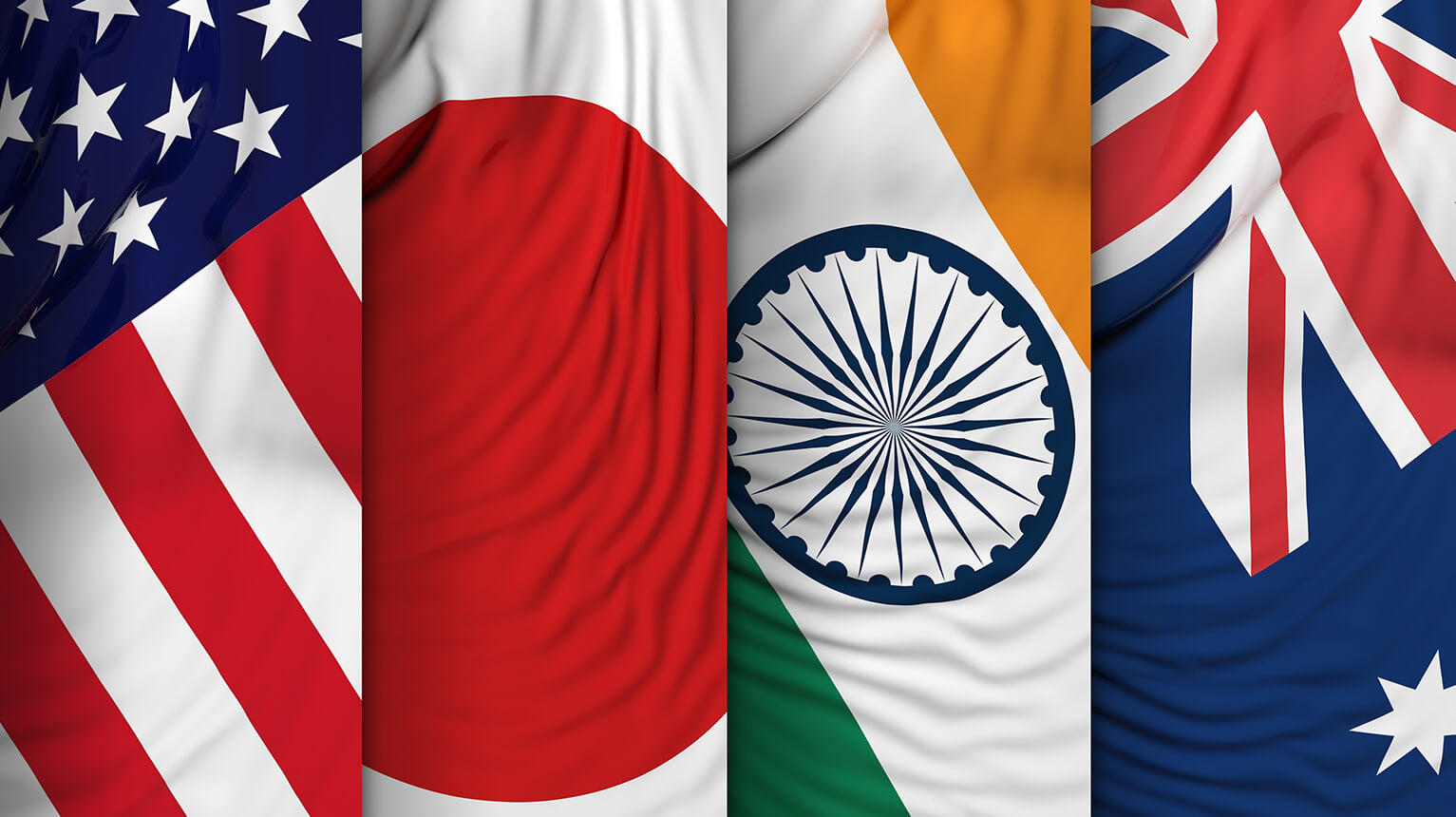
    It is not surprising that a Chinese commentator has observed that “Biden administration’s South China Sea policy has attached great importance to US allies within and outside the region, this precisely reflects its Cold War mentality” and is reflected in the US-Philippine Mutual Defence Treaty, which now applies to the South China Sea and freedom of navigation operations (FONOP)  in the South China Sea continues unabated. For instance, in 2017 there was one FONOP by the US, in 2018 there were three incidents, nine in 2019; 15 in 2020; and then this year four FONOPs have been reported. There is also a new emphasis on mini multilateralism in the form of Quadrilateral Security Dialogue (QUAD) to support its “traditional strategy of relying on allies and partners” to “establish a new regional order dominated by the US”.

    The Chinese commentator’s assertion that “in the foreseeable future, ASEAN will become more divided over South China Sea issues in the Biden era. The conflicts brought about by geopolitical competitions and maritime disputes in the South China Sea will become more challenging and uncertain” merits attention.

    Last week, while speaking in a forum on global security issues at Tsinghua University in Beijing, China’s Foreign Minister Wang Yi said that the US’ Indo-Pacific strategy is aimed at countering Beijing and the strategy “should be dumped at a trash heap.” Wang also observed that China would oppose any framework of cooperation to “fuel rivalry” and “an action to accelerate division” ostensibly referring to Taiwan.

    Finally, a continuous war of words between political leaders of the US and China over the South China Sea can be expected to continue. Notwithstanding that ASEAN Member States can be expected to continue to engage China for a legally binding Code of Conduct and at the 19th Senior Officials’ Meeting on the Implementation of the Declaration on the Conduct of Parties in the South China Sea (DOC) held on June 7, 2021, in Chongqing, all “parties agreed to resume as soon as possible the second reading of the Single Draft COC Negotiating Text and strive for the early conclusion of negotiations”.

    Feature Image: USS Ronald Reagon in the South China Sea. Credit: asiatimes.com

  • China’s New Coast Guard Act: Vietnam could lead Response

    China’s New Coast Guard Act: Vietnam could lead Response

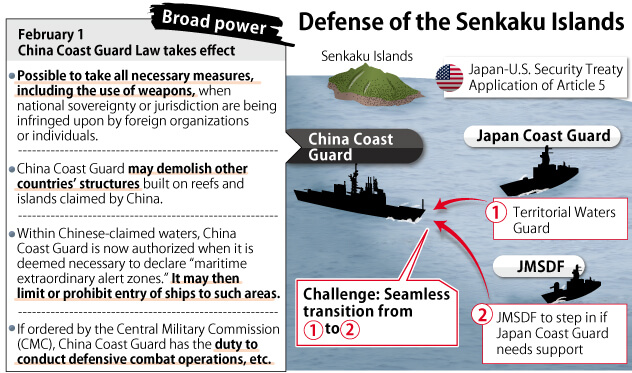
    China’s new Coast Guard Act has put the ‘cat among the pigeons’ and the South China Sea claimants Brunei, Malaysia, Philippines, Vietnam and Taiwan are visibly worried. The Act has also attracted international attention; for some, it is an act of war and for others, it violates the 1982 United Nations Convention on the Law of the Sea (UNCLOS).

    The Act came into effect last month on 01 February. In its administrative content, the Act is the culmination of at least two reorganizations of the Chinese Coast Guard (CCG) that began in 2013 involving administrative and operational control of five closely associated national maritime law enforcement agencies, also referred to as the Five Dragons , that were brought under one umbrella. In 2018, CCG became part of the People’s Armed Police Force.

    Under the new Act, it is feared, the CCG would conduct operations just like the PLA Navy and would be directly controlled by the Chinese Communist Party Central Committee. The CCG is empowered with powerful ‘security and control measures’ and has the rights to take necessary actions to “restrain foreign military vessels and foreign vessels used for non-commercial purposes in waters under China’s jurisdiction from violating the laws or regulations of China” which is potentially in contravention to the 1982 UNCLOS.

    The Act has also attracted international attention; for some, it is an act of war and for others, it violates the 1982 United Nations Convention on the Law of the Sea (UNCLOS).

    Under Article 20, the CCG may demolish “buildings, structures, and various fixed or floating devices” built by foreigners “in the sea areas and islands under our jurisdiction”, and Article 47 authorizes the agency to “directly use weapons if there is no time for warning or if there is a risk of serious harm after giving a warning.”

    It is the latter that prompted Japan to label the Act as “blatantly threatening” and “aimed directly at the Senkakus” raisingspeculation that the Japanese Coast Guard, which hitherto could “fire weapons directly at foreign vessels in cases of self-defence and emergency escape” may now “ fire on foreign official vessels under laws by regarding vessels aiming to land on the Senkaku Islands as committing violent crimes”.

    However, it is fair to say that some of the provisions contained in the Chinese Coast Guard Act are not extraordinary. Navies, Coast Guards and law enforcement agencies of many countries are administratively controlled by the ministries of national defence and routinely operate with the national navies albeit pursue different rules of engagements. Many maritime law enforcement agencies are also known to intercept and even sink foreign fishing vessels especially when these engage in IUU fishing. These naturally attract diplomatic protests from the affected countries including China.

    Be that as it may, the ASEAN and China signed the Code for Unplanned Encounters at Sea (CUES) in the South China Sea in 2016 under which both sides are committed to “maintaining regional peace and stability, maximum safety at sea, promoting good neighbourliness and reducing risks during mutual unplanned encounters in air and at sea, and strengthening cooperation among navies”. This agreement is for the navies and draws upon the CUES (voluntary and non-binding) adopted by the Western Pacific Naval Symposium (WPNS).

    The new Chinese Coast Guard Act may have created an opportunity for ASEAN and China to conceptualize CUES that is tailored to the mandate of the Coast Guards i.e. law enforcement. The issue can also be on the agenda of the Heads of Asian Coast Guard Agency Meeting (HACGAM), a grouping of 22 Member States and multilateral organisations, which aims at cooperative and proactive efforts to address maritime issues confronting the region.

    Among the ASEAN member countries, Vietnam is well placed to lead the initiative for at least three reasons.  First, it is a claimant and some of the features in the South China Sea are under its control; second, it has a larger Coast Guard when compared to the capabilities of the other ASEAN claimants; and third, the Vietnamese Communist Party maintains close contacts with their counterparts in China and this could be a useful channel to facilitate a dialogue.

    However, it remains to be seen if Beijing would allow debate and discussion on the Coast Guard Act particularly when it also involves contested areas such as the South China Sea. For that deft diplomacy by Vietnam could be a good idea.

    Feature Image: www.japantimes.co.jp

  • Quad 2.0: Can it be a win-win for the four Democracies

    Quad 2.0: Can it be a win-win for the four Democracies

    China’s GDP expanded from USD 6 trillion in 2010 to USD 14.3 trillion in 2019. It has had exponential growth over the last three decades, with an average GDP growth rate of 9.23% from 1989 to 2020. Although the impact of the COVID pandemic pushed its GDP into decline and negative (-6.80%) in the first quarter of 2020, it has rebounded with a growth of 5% in the third quarter. It’s military spending, officially, is more than three times that of India, unofficially maybe five times or more. China has become one of the key players in the Indo-Pacific as a significant part of its economic activities depend on this region.

    The Indo-Pacific has replaced the Trans-Atlantic as the epicentre of global politics. Its importance to the global order is multifarious. In economic terms, one half of the world’s commercial influx goes through the Indo-Pacific sea routes and the Indian Ocean carries two-thirds of global oil shipments. Besides, a few of the biggest military spenders are part of the region. China’s hostile actions and policies have agitated the US, Japan, Australia and India. A shared concern over the expansion of China’s political and military clout was fundamental to the revival of the Quadrilateral Security Dialogue (Quad 2.0), on the sidelines of the ASEAN summit in Manila, in 2017.

    Quad is seen as cooperation between four large democracies that share the idea of an open and inclusive Indo-Pacific

    There is growing speculation over what the re-emergence of the Quad means. On the one hand, it is seen as cooperation between four large democracies that share the idea of an open and inclusive Indo-Pacific; on the other, a strategic alliance towards keeping China’s assertive actions in check.

    The Quad: Overcoming Intransigence

    The Quad is a mechanism that enables a dialogue on regional security issues between the four countries. Its revival, this year, reflects an intersection of strategic interests: that of an open and inclusive Indo-Pacific and a rules-based international order. The Quad came together in November for the naval exercise – Exercise Malabar – in two phases, in the Bay of Bengal and the Arabian Sea. The exercise, in its 24th edition, is the biggest so far and has sent significant strategic signalling to China.

    The Quad should be considered less as a formal alliance and more as a mechanism built on existing bilateral and trilateral partnerships between the four countries. It first emerged as a cooperative response to the 2004 tsunami, when the four navies were involved in providing humanitarian and disaster relief. Despite strong support from Japan and the US to formalise the group, it disbanded with Australia and India backing out in 2007, due to concerns about China’s reaction to the grouping. This gave rise to multilateral partnerships among the four countries.

    Between the four democracies, there are three trilateral and six bilateral partnerships. Trilaterally, Japan, India and Australia first came together in 2015 to discuss shared concerns over maritime security in the Indo-Pacific Region and freedom of navigation in the South China Sea. More recently, the three countries agreed to develop a supply chain resilience program for the Indo-Pacific Region amid growing recognition of their excessive, economic reliance on China.

    Bilaterally, the US and India signed the Basic Exchange and Cooperation Agreement (BECA) on October 27 that gives India access to American geospatial intelligence that will be useful for precision guidance of its missiles. Further, India-Australia ties have strengthened over the last few years with their initial 2+2 dialogue in 2017 and with Australian participation in India’s Milan exercise in 2018, focusing on interoperability between navies in the region.

    China and the Quad

    Over the years, the Indo-Pacific has emerged as a region of strategic importance. As China expands into the region, its actions have created tensions with the Quad members.

    Sino-Indian relations:  India-China relations have touched rock-bottom since the clashes on the LAC in Ladakh.  China’s intrusions and violations along the LAC have been backed up by significant massing of PLA forces, for the first time in 40 years. India’s strong actions at the LAC and subsequent sanctions and banning of Chinese IT applications have signalled that India is not shy of escalating its response. China’s actions are seen as part of its coercive strategy to India’s refusal to back China on BRI, and its vehement opposition to CPEC. It sees India’s closeness to the USA and its coordination in the Quad as a threat to China’s strategic interests.

    China’s increasing influence in the Indian Ocean Region (IOR) has raised India’s concerns. It has always been wary of ties between Beijing and Islamabad, which intensified with the launch of the China-Pakistan Economic Corridor (CPEC) in 2013. The Chinese-operated Gwadar port off the Arabian Sea in Pakistan, which can be used by the Chinese navy to establish a submarine presence in the region, did not rest well with India. Such a port would also help China with its ‘Malacca Dilemma’. Other ports of such concern are Hambantota in Sri Lanka and Kyaukphyu in Myanmar. Though China claims these ports are of economic significance, these are also militarily strategic ports that give it an advantage in the IOR.

    In light of these issues, a revived and active Quad will benefit India’s strategic interests. The partnership could affect China in two ways. First, China would face increased competition in the IOR from India that now works with strong allies. Second, with the recent imposition of the technology ban, China stands to lose a large market for its products.

     Japan-China relations: Over the past few years, the situation in the South China Sea (SCS) has worsened with China’s land reclamation activities and militarisation of islands. Japan sees the South China Sea as key to its security because of its crucial sea lanes vital to its trade and economic health. It is also wary of China’s ability to influence the energy supply chains, which East Asia is dependent on, and the PLA’s movement in the Indo-Pacific region that could affect regional security.

    Despite its renewed trade with China and the recent signing of the RCEP, increased tensions in the SCS has forced Japan to support revival of the Quad. China’s increased naval and air activities in the South China Sea makes the Quad and its possible expansion into Quad Plus even more relevant for Japan.

    China-Australia relations: Australia backed out of the Quad in 2007 primarily because it was concerned about how China would view it, and the possible impact it might have on their bilateral trade. By 2017, China became Australia’s top export destination, and this trend has continued through 2019, pushing Australia into a dangerous economic dependency with China. Further, Australia’s 2016 White Paper called out China for its coercive behaviour in the Indo-Pacific, identifying the South China Sea and the Southern Pacific as vital strategic regions.

    Australia’s economic dependence on China is high and this is unlikely to change despite the strong statements from prime minister Morrison.  Australia’s strong stand against China is also seen as emanating from American pressure. Australia actively supports Quad as it sees an increasingly powerful China working to change the world order. Australia is also a member of the newly signed RCEP, the new economic grouping that will be dominated by China. While Australia has hedged its economic interests by signing the RCEP, its strategic and security priorities are linked to the Quad.

    China-US relations:  China’s rising military power is now seen as a threat to American power and the liberal world order. Since 2011, American strategies and policies have focussed more on the Indo-Pacific. This shift in focus has strengthened its ties with Japan, Australia and India. Tensions between the US and China have increased since then and the 2018 trade war not only aggravated their relations but also kept the rest of the world on an edge.

    With a strong Quad partnership, the US expects to regain and strengthen its influence in the Indo-Pacific. For China already hit hard by the US trade war, more setbacks will accentuate the problems. Moreover, with a more focused Quad led by the US, China’s efforts to project its power and influence in the Indo-Pacific region will come under pressure.

     Conclusion

     A few aspects about the Quad remain unclear. First, its intent is still uncertain because the respective countries have to evaluate their relations with China if they want to make the bloc official. Second, if it were to be official, to what extent would it serve the interests of the member countries? Third, is the Quad a concert of democracies to contain China? Last, will it coordinate with other members in the Indo-Pacific region, that is will Quad translate into Quad Plus?

    China’s actions have managed to bring the four countries closer.  China, however, has scored a success when the RCEP (Regional Comprehensive Economic Partnership), the world’s largest plurilateral trade agreement was signed on November 15th. Both Japan and Australia are members of the RCEP. Many see this as a setback for India and America, and an important building block in a new world order, in which China calls the shots all over Asia. It puts in doubt the viability of SCRI (Supply Chain Resilience Initiative), an effort by Quad members to create an alternative to Chinese domination of supply chains.

    The nature of China’s challenge to the global order and the Indo-Pacific is geoeconomics in design, as evidenced by its Belt and Road Initiative and its recent success in RCEP. The Quad will need to go beyond security cooperation.

    While security and military cooperation will help in checking China’s aggressive approach, it must be recognised that this alone will be an incomplete strategy. The nature of China’s challenge to the global order and the Indo-Pacific is geoeconomics in design, as evidenced by its Belt and Road Initiative and its recent success in RCEP. The Quad will need to go beyond security cooperation.

    The conclusion of RCEP maybe China’s gain, but it is important to recognise the fact that ASEAN is the main driver of RCEP. In attempting to balance China, ASEAN and Japan have kept the door open for India to re-join the RCEP. It is possible that the US, under the Biden presidency, may revive the TPP (now proposed by Japan as CATPP, Comprehensive and Progressive Agreement on Trans-Pacific Partnership), which could balance the RCEP. The Quad, in this context, will continue to be very relevant for peace and security in the Indo-Pacific.


  • International Institutions in post-Covid Era

    International Institutions in post-Covid Era

    Pandemic exposes inadequacies in the 21st century world

    At the Munich Security Conference 2020, the Indian External Affairs Minister stated that multilateralism has weakened, and attributed it to the inadequacy of international institutions, established seventy-five years ago, to cope with the challenges of 21st century. This was just before the coronavirus became a global pandemic. Today, among other aspects of society that are challenged by the pandemic, its impact on the world has exposed the inability of international organizations to develop a globally cooperative strategy. The September edition of the UNSC meeting held regarding the coronavirus pandemic saw the United States, China, and Russia fight bitterly over responsibility and responsiveness to the pandemic. Instead of building constructive solutions to face the challenge each country focused on accusing others. Similarly, although the Covid-19 global response pledging event secured 7.4 billion euros, their origins (whether new or retargeting of approved grants), method of fund application, proposed call for global research sharing platforms are either ambiguous or not yet set up. Hence, although international organizations have promoted dialogue, the jury is still out on their efforts towards alleviating the crisis or cushioning its impact. The pandemic thus leads to questions about their effectiveness and what post-covid international institutions might look like.

    Given the manner in which various nation-states represent, contribute to, and run international organizations it is definitive that the nature of international institutions is susceptible to change.

    Institutionalism and International Organisations

    International Organisations such as the United Nations and its predecessor the League of Nations mark the variety of multilateralism brought to life based on the theory of institutionalism. Institutionalism originated from the thought that if humans are fundamentally good but act otherwise it is because of anarchy in the international system, and through institutions fostering international cooperation anarchy can be countered to promote the fundamental good in human nature. The final goal of institutionalism stood to promote supranational organizations. However, there have been drawbacks in bringing practicality to this theory. These institutions are built on belief (an individual external factor to the institution itself brought by participants) and power in international institutions is extended when states surrender part of their sovereignty. The changes and differences in individual beliefs cause significant changes in institutions in both the way they operate and the consequences of their operations. Given the manner in which various nation-states represent, contribute to, and run international organizations it is definitive that the nature of international institutions is susceptible to change. Hence, better international coordination and responses to the past crisis such as the 2008 financial crisis, controlling the Ebola breakout in West Africa were also a result of the leftist individual beliefs of participants. However, with global politics inclining towards the right, with waves of hyper-nationalism sweeping across nations, efforts towards multilateralism have taken a back seat. Stephen Walt maintained that the pandemic will reinforce nationalism as the world retreats from hyper-globalization to reduce future vulnerabilities and will create a world that is ‘less open, less prosperous, and less free’. The pandemic has put the world on a trajectory towards the right with politicians becoming more authoritative, and thus multilateralism will see significant changes in the post-covid era.

    Rise of narrow Nationalism and Right Wing Politics

    Despite the rise of right-wing politics globally, the benefits of multilateralism cannot be foregone. Multilateralism in international institutions in past crises followed a model wherein the United States took the lead across various organizations and coordinated the world towards a united response. Since such leadership has been replaced with great power politics, multilateralism has taken an operational role instead of a supervisory role. The main difference between the two roles is that the latter had better potential to progress as a supranational organization while the former traverses as a platform offering supporting services to different countries. Examples of this are efforts led by NATO to use their airlifting capabilities to move vital medical equipment and food supplies, and WHO’s initiative to share guidelines and important research to countries who then took individual decisions. In the current trajectory, these changes in institutional consequences can lead towards three possibilities in the future of multilateralism:

    At the risk of sounding highly pessimistic, the institutional belief in multilateralism is likely to see a steep decline and sovereignty surrendered to international organizations will erode. The role of the UN and its organs may change focus on global data collection, analysis, and politically motivated discussions from the current (weakening) narrative of progress, development, conflict prevention, and resolution.

    • As Robert Kaplan argues, Coronavirus has become the watershed movement segregating the upcoming era as Globalisation 2.0 with the rise of autocracies, social and class divides, and new emerging global divisions. This image of globalization 2.0 can be used to reflect on what the next era of multilateralism will be. In the continuing trajectory with no clear international leadership, international institutions would reduce to becoming a platform of dialogue in great power politics with the initiative and effectiveness of resolutions substantially watered down. At the risk of sounding highly pessimistic, the institutional belief in multilateralism is likely to see a steep decline and sovereignty surrendered to international organizations will erode. The role of the UN and its organs may change focus on global data collection, analysis, and politically motivated discussions from the current (weakening) narrative of progress, development, conflict prevention, and resolution. For instance, the pandemic-induced embargo on the movement of people would in turn catalyse the degeneration of organs such as the UNHCR as the dialogue focuses on data collection and blame allocation instead of refugee crisis management. The international political narrative will shift from globalism to regionalism for effective conflict resolution.


    • As US-China rivalry hampers effective policymaking, relatively smaller powers will lead the narrative in these institutions. The foundations for this possibility are already evident. The United Kingdom and other European countries have been increasingly calling for global summits to promote multilateralism. Their efforts can be theorized to be an enmeshment strategy similar to that used by small states in ASEAN. The objective of this strategy is to alleviate the high risks of major powers directly competing by creating interdependence (if not directly between the great powers) among the various actors in the system through increased multilateral participation to an extent that great powers are tied down in this system and their interests are intertwined such that conflict would become costly. Thus smaller powers prevent the complete breakdown of international organizations by continuing to promote dialogue and ensure the persistence of multilateralism, albeit weaker, but prevent the division into two great-power blocs as with the first scenario. This approach where smaller states remain neutral to great power influences would in turn result in the latter’s effort to win over small states characterized by the exploitation of the cold war by small states. Although the US has so far managed to step away from this, with the oncoming elections it is likely that a change in administration would enable the enmeshment strategy to prevent an extreme global division.


    • Taking an optimistic view, the pandemic may catalyse the trajectory towards Ikenberry’s Multilateralism 3.0 where power in the institutions is more reflective of present-day world powers. Given the shift in American foreign policy and lack of initiative, the pandemic could become an important shaper for other Asian powers to get higher representation to balance China’s rise. Although this demonstrates an idealistic situation far from the rightist trajectory, Ikenberry concedes to the fact that in the short-run countries will be nationalistic but in the long run, democracies will break out from the authoritarian, nationalistic regimes to promote a pragmatic and protective internationalism. Ikenberry makes this interpretation based on the enlightenment world leaders had following the destruction and suffering from the world wars. Hence, the pandemic marks the starting point for the butterfly effect which will lead to wartime-like geopolitics, followed by enlightenment to build stronger international institutions with representations reflective of the new world order and better capable of dealing with issues the current institutions struggle to resolve.

    Conclusion

    Although international cooperation would be the sensible means to navigate through the pandemic and other crisis induced by the pandemic, due to factors external to the institution, such as domestically controlled participant change – multilateralism will see considerable weakening. Among the three possibilities identified for the future of international institutions, only time can tell which path the world will take. However, a combination of the second possibility in the short run progressing to the third over the long run is the most optimistic option to work upon for a better pathway to navigate through this crisis.

    Image: Pixabay

  • Chinese Economic Sops over the South China Sea: A Mixed Bag of Successes

    Chinese Economic Sops over the South China Sea: A Mixed Bag of Successes

    The South China Sea is a resource-rich sea space and its net worth is estimated to be US$ 2.5 trillion.[i]  The proven oil reserves are around 7.7 billion barrels and natural gas reserves could be around 266 trillion cubic feet.[ii] The Chinese strategy in the South China Sea against other claimant States is a mix of aggressive posturing including the threat of use of force as also offering economic incentives and sops such as ‘joint development of resources’ in the contested waters.

    Deng preferred a “moderate approach” i.e. “sovereignty remains ours; shelve disputes; pursue joint development.

    The idea of joint development can be attributed to Deng Xiaoping, the Chinese leader and author of market-economy reforms in the 1980s that earned him the title of ‘Architect of Modern China’. Deng preferred a “moderate approach” i.e. “sovereignty remains ours; shelve disputes; pursue joint development.”[iii]


    Map Credit: The Australian Naval Institute

    China’s current thinking on joint development of resources in South China is built around at least seven policy choices i.e. (a) promote good faith in the South China Sea; (b) limit unilateral activities in disputed areas; (c) focus on less-sensitive areas of the South China Sea; (d) reach joint development arrangements by establishing relevant working mechanism; (e) begin the process in areas where there are only two claimants; (f) define sea areas for the joint development by seeking consensus, and (g) discuss the feasibility of setting up a Spratly Resource Management Authority (SRMA) with supranational character.[iv] Further, it has been argued that the ASEAN-China Single Draft Negotiating Text of the Code of Conduct (COC) is “conducive to creating benign bilateral relations, which serves as a prerequisite to joint development”.[v]

    The general belief among the claimants is that China thinks ‘what is mine [Chinese] is of course mine, but what is your [claimants] is also mine’

    However, the above policy choices for joint development and intention are flawed and dismissed by the aggrieved claimants of the South China Sea. The general belief among the claimants is that China thinks ‘what is mine [Chinese] is of course mine, but what is your [claimants] is also mine’; i.e.  Chinese joint development initiatives are based on the wrong assumption that what belongs to China is for China only to develop, and what belongs to other claimants is for development.

    In 2018, China and the Philippines signed a Memorandum of Understanding on Cooperation on Oil and Gas Development. President Xi Jinping urged President Philippine President Rodrigo Duterte to “set aside disputes, eliminate external interference, and concentrate on conducting cooperation, making pragmatic efforts and seeking development”; furthermore, “both sides can take a ‘bigger step’ in the joint development of offshore oil and gas”.[vi] The Philippines proposed a “60-40 sharing arrangement in its favour” and both sides could then develop the “Reed Bank, the main site of the oil and gas reserves, despite the arbitration award declaring that Manila had sovereign rights to exploit them”.[vii]

    Similarly, Brunei has an ongoing arrangement with China on bilateral joint development/cooperation in the South China Sea. Economic and strategic considerations are Brunei’s twin drivers; it has been “pushing hard to diversify its economy away from the oil and gas industry” for a long time and the “unstable oil market, a slow foreign investment growth (especially in non-oil and gas sector) and a contracting national GDP” has acted as a catalyst to diversify and “joint development” is an integral part of Brunei’s wider economic diversification strategy. [viii]

    Unlike the Philippines and Brunei, Malaysia and Vietnam have shied away from joint development of resources with China in the South China Sea.

    Unlike the Philippines and Brunei, Malaysia and Vietnam have shied away from joint development of resources with China in the South China Sea. This is despite the March 2005 China, the Philippines and Vietnam Tripartite Agreement for Joint Marine Scientific Research in Certain Areas in the South China Sea by respective national oil companies.

    Malaysia is not averse to joint development with other claimants except China and at least four such projects were undertaken i.e. (a) Malaysia-Thai Joint Development Authority in the Gulf of Thailand based on the 1979 MOU; (b) 1992 MOU which designates overlapping continental shelf claims (about 2000km square) in the Gulf of Thailand as Commercial Arrangement Area (CAA); (c) the 2009 CAA between Brunei and Malaysia; and (d) Fisheries MOU between Malaysia and Indonesia, quasi-joint exploitation of fisheries resources, in overlapping claim area of about 14,300 square kilometres in the Straits of Malacca.[ix]

    Vietnam’s boundary and territorial disputes with China in the South China Sea including clashes over the Parcels have resulted in mistrust and preclude joint development with China. In essence, Vietnam does not accept joint development in areas that belong to Vietnam according to the UNCLOS 1982.

    Vietnam promotes international cooperation on resource development and has a rich body of laws to support such initiatives such as the 1982 United Nations Law of the Sea, the Petroleum Law (Article 3, No. 12), the Navigation Law, Fisheries Law, the Law on Natural Resources and Environment of Sea and Islands (Article 4, No. 5), the Tourism Law, and the Mineral Law. However, its boundary and territorial disputes with China in the South China Sea including clashes over the Parcels have resulted in mistrust and preclude joint development with China. In essence, Vietnam does not accept joint development in areas that belong to Vietnam according to the UNCLOS 1982.

    The US rejects Chinese maritime claim in the South China Sea and proclaimed “any PRC action to harass other states’ fishing or hydrocarbon development in these waters – or to carry out such activities unilaterally – is unlawful.”[x]Furthermore, while extending help to Vietnam on the matter, US Secretary of State Michael Pompeo announced that “America stands with our South-East Asian allies and partners in protecting their sovereign rights to offshore resources, consistent with their rights and obligations under international law.”


    Notes

    [i]China Escalates Coercion against Vietnam’s Longstanding Oil and Gas Activity in the South China Sea”, https://china.usembassy-china.org.cn/china-escalates-coercion-against-vietnams-longstanding-oil-and-gas-activity-in-the-south-china-sea/  (accessed 15 September 2020).

    [ii] “South China Sea: Beijing has a major natural advantage in the geopolitical power game”, https://economictimes.indiatimes.com/news/defence/south-china-sea-beijing-has-a-major-natural-advantage-in-the-geopolitical-power-game/articleshow/76423659.cms (accessed 15 September 2020).
    [iii] “Xi Jinping and China’s Maritime Disputes”, https://taylorfravel.com/2013/08/xi-jinping-and-chinas-maritime-disputes/  (accessed 15 September 2020).
    [iv] “Joint development in the South China Sea: China’s incentives and policy choices”,https://www.tandfonline.com/doi/full/10.1080/24761028.2019.1685427  (accessed 15 September 2020).
    [v] Ibid.
    [vi] “China Focus: Xi, Duterte meet on pushing forward ties”, http://www.xinhuanet.com/english/2019-08/30/c_138350348.htm  (accessed 15 September 2020).
    [vii] “China’s Xi sees bigger role for joint energy exploration with Philippines”, https://www.reuters.com/article/us-china-philippines/chinas-xi-sees-bigger-role-for-joint-development-of-offshore-oil-gas-with-philippines-idUSKCN1VK00M  (accessed 15 September 2020).
    [viii] “Cooperative Research Report on Joint Development in the South China Sea: Incentives, Policies & Ways Forward”, http://www.iis.fudan.edu.cn/_upload/article/files/9f/21/992faf20465fae26c23ccce1ecc6/f003a68f-eb6a-4b09-a506-3c00897b0862.pdf  (accessed 15 September 2020).
    [ix] “Cooperative Research Report on Joint Development in the South China Sea: Incentives, Policies & Ways Forward”, http://www.iis.fudan.edu.cn/_upload/article/files/9f/21/992faf20465fae26c23ccce1ecc6/f003a68f-eb6a-4b09-a506-3c00897b0862.pdf  (accessed 15 September 2020).
    [x] “China pressurizes Vietnam to cancel, compensate offshore firms operating in South China Sea”, https://energy.economictimes.indiatimes.com/news/oil-and-gas/china-pressurises-vietnam-to-cancel-compensate-offshore-firms-operating-in-south-china-sea/77189060  (accessed 15 September 2020).
     
    Image Credit: nbcnews.com

  • US-China Tensions Could Spill Into Lancang-Mekong River Basin

    US-China Tensions Could Spill Into Lancang-Mekong River Basin

     The Lancang-Mekong River is the 12th longest river and runs through six countries i.e. China (upper riparian), Myanmar, Thailand, Laos, Cambodia and Vietnam (the lower riparian)and finally discharges into South China.

    A recent US government-funded study has noted that in 2019 China held back large amounts of water upstream in dams on the Mekong River which caused a  severe drought in the downstream countries,[1] prompting a US ambassador in the region accusing China of “hoarding” water and “harming the livelihoods of millions of people in downstream countries”.[2] Likewise, another report by Stimson Centre, a Washington-based think tank, has corroborated the above and pointed that in 2019 “upstream dams at Nuozhadu and Xiaowan had restricted around 20 billion cubic meters of water between July and November” and that current “satellite images show those dams are once again poised to restrict a similar amount of water from July 2020 through the end of this year … Portions of the Mekong mainstream are once again dropping to historically low levels,”[3]

    China has dismissed the reports and the Global Times in an article cited a report by the Tsinghua University and clarified that the “river dams in China [instead] helped alleviate drought along Lancang-Mekong”; furthermore, in November 2019, the Mekong River Commission (MRC) had concluded that “the drought was caused by insufficient rainfall during the wet season with a delayed arrival and earlier departure of the monsoon rain and an El Niño event that led to abnormally high temperatures and high evapotranspiration”.[4]

    At the heart of this problem is that China has built as many as 11 dams on the 4,800 kilometres long Lancang-Mekong River that originates in the Tibetan Plateau.

    At the heart of this problem is that China has built as many as 11 dams on the 4,800 kilometres long Lancang-Mekong River that originates in the Tibetan Plateau.  The Lancang-Mekong River is the 12th longest river and runs through six countries i.e. China (upper riparian), Myanmar, Thailand, Laos, Cambodia and Vietnam (the lower riparian)and finally discharges into South China.

    China has been reluctant to share hydrological data particularly during the dry seasons and releases water during rainy seasons causing flooding in lower riparian countries. This is despite the 2002 MoU under which China had agreed to provide daily river flow and rainfall data from two monitoring stations in Yunnan Province during the wet season, and the periodic MRC Heads of Government meeting over a Summit which is held every four years.

    Earlier this year, the Chinese State Councilor and Foreign Minister Wang Yi had assured that his country would “give positive consideration to share the full-year hydrological information with Mekong countries and enhance cooperation under the Lancang-Mekong Cooperation (LMC) framework to ensure reasonable and sustainable use of water resources”.[5]

    Perhaps a recent statement by the MRC may temporarily obviate suspicions over China not sharing hydrological information on the Lancang-Mekong River which notes that it welcomes China’s sharing of data “ throughout the year” as also for the “ establishment of an information-sharing platform for water resources cooperation led by China and Myanmar”.[6] Also, during the 3rd Mekong-Lancang Cooperation (MLC) Leaders’ Meeting, the Global Center for Mekong Studies (GCMS) has been tasked to study the potential benefits from “aligning and synergizing the MLC and the New International Land-Sea Trade Corridor with a vast market”.[7]

    It has been observed that although the 1995 Agreement on the Cooperation for the Sustainable Development of the Mekong River Basin is legally binding, it “does not have a compliance mechanism such as punitive measures on the party that violates the spirit and principles of the Agreement.

    In 1995, the upper and lower riparian countries had adopted Agreement on the Cooperation for the Sustainable Development of the Mekong River Basin which lays out “principles and norms of regional cooperation in managing the river basin”. A formal dialogue process under the MRC was instituted to address issues relating to Mekong River and the Member States agreed to “promote common procedures and practices throughout the region for data collection, storage and analysis to support data sharing and integration of existing data management systems based on the voluntary participation of countries and institutions.”[8] In 2001, they adopted the “Procedures for Data and Information Exchange and Sharing,” or PDIES to enable the Member States to share data ‘to provide real-time water level information and more accurate flood forecasting.

    It has been observed that although the 1995 Agreement on the Cooperation for the Sustainable Development of the Mekong River Basin is legally binding, it “does not have a compliance mechanism such as punitive measures on the party that violates the spirit and principles of the Agreement. The conflict resolution mechanism is also not clearly stipulated”.[9] This is one of the many reasons for discord among the Parties which needs to be addressed by the MRC whose mandate includes dispute resolution.

    Be that as it may, the lower Mekong countries have set up the Mekong Water Data Initiative, and at the 10th Ministerial Meeting of the Lower Mekong Initiative (LMI) in 2017 to ‘create a robust, integrated, and transparent platform for collecting, sharing, and managing data on the Mekong River system.’[10]

    there are fears that the Lancang-Mekong River issue is slowly shaping into a major ASEAN-China bilateral issue similar to the contestation in the South China Sea.

    At another level, there are fears that the Lancang-Mekong River issue is slowly shaping into a major ASEAN-China bilateral issue similar to the contestation in the South China Sea; and the current situation is being described as “becoming a geopolitical issue, much like the South China Sea, between the United States and China,”[11] Perhaps the biggest worry is that the Lancang-Mekong River should not attract contestation between the US and China which surely is going to make the region more turbulent. It would thus be prudent that ASEAN and China work on a Code of Conduct to manage the river affairs or add more robustness in the existing dialogue mechanism over the Lancang-Mekong River.

     
    End Notes
    [1] “China could have choked off the Mekong and aggravated a drought, threatening the lifeline of millions in Asia”, https://www.cnbc.com/2020/04/28/china-choked-off-the-mekong-which-worsened-southeast-asia-drought-study.html  (accessed 12 September 2020).
    [2] “Water wars: Mekong River another front in U.S.-China rivalry”, https://www.japantimes.co.jp/news/2020/07/25/asia-pacific/mekong-river-us-china/  (accessed 12 September 2020).
    [3] “The next US-China battleground: Chinese dams on the Mekong River?”,https://www.scmp.com/week-asia/politics/article/3095581/next-us-china-battleground-chinese-dams-mekong-river  (accessed 12 September 2020).
    [4] “River dams in China helped alleviate drought along Lancang-Mekong, research finds”, https://www.globaltimes.cn/content/1194654.shtml  (accessed 10 September 2020).
    [5] “River dams in China helped alleviate drought along Lancang-Mekong, research finds”, https://www.globaltimes.cn/content/1194654.shtml  (accessed 10 September 2020).
    [6] “Lancang-Mekong cooperation provide stronger impetus for regional development and prosperity”, http://www.lmcchina.org/eng/hzdt_1/t1812281.htm  (accessed 12 September 2020)
    [7] “Full text of Co-chairs’ Statement on Cooperation of Synergizing the MLC and the New International Land-Sea Trade Corridor of the Third MLC Leaders’ Meeting”, http://www.lmcchina.org/eng/zyxw_5/t1808947.htm  (accessed 12 September 2020).
    [8] “Joint Statement To Strengthen Water Data Management and Information Sharing in The Lower Mekong”,
    https://www.lowermekong.org/news/joint-statement-strengthen-water-data-management-and-information-sharing-lower-mekong (accessed 14 April 219)
    [9] “Code of Conduct for the Mekong”,https://vannarithchheang.com/2018/04/04/code-of-conduct-for-the-mekong/  (accessed 12 September 2020).
    [10] “Mekong River Commission keen to improve data sharing and management in the Lower Mekong Basin”, https://mrcmekong.org/news-and-events/news/mrc-keen-data-management-in-mekong-basin/  (accessed 12 September 2020.
    [11] “Water wars: Mekong River another front in U.S.-China rivalry”, https://www.japantimes.co.jp/news/2020/07/25/asia-pacific/mekong-river-us-china/  (accessed 12 September 2020).
     
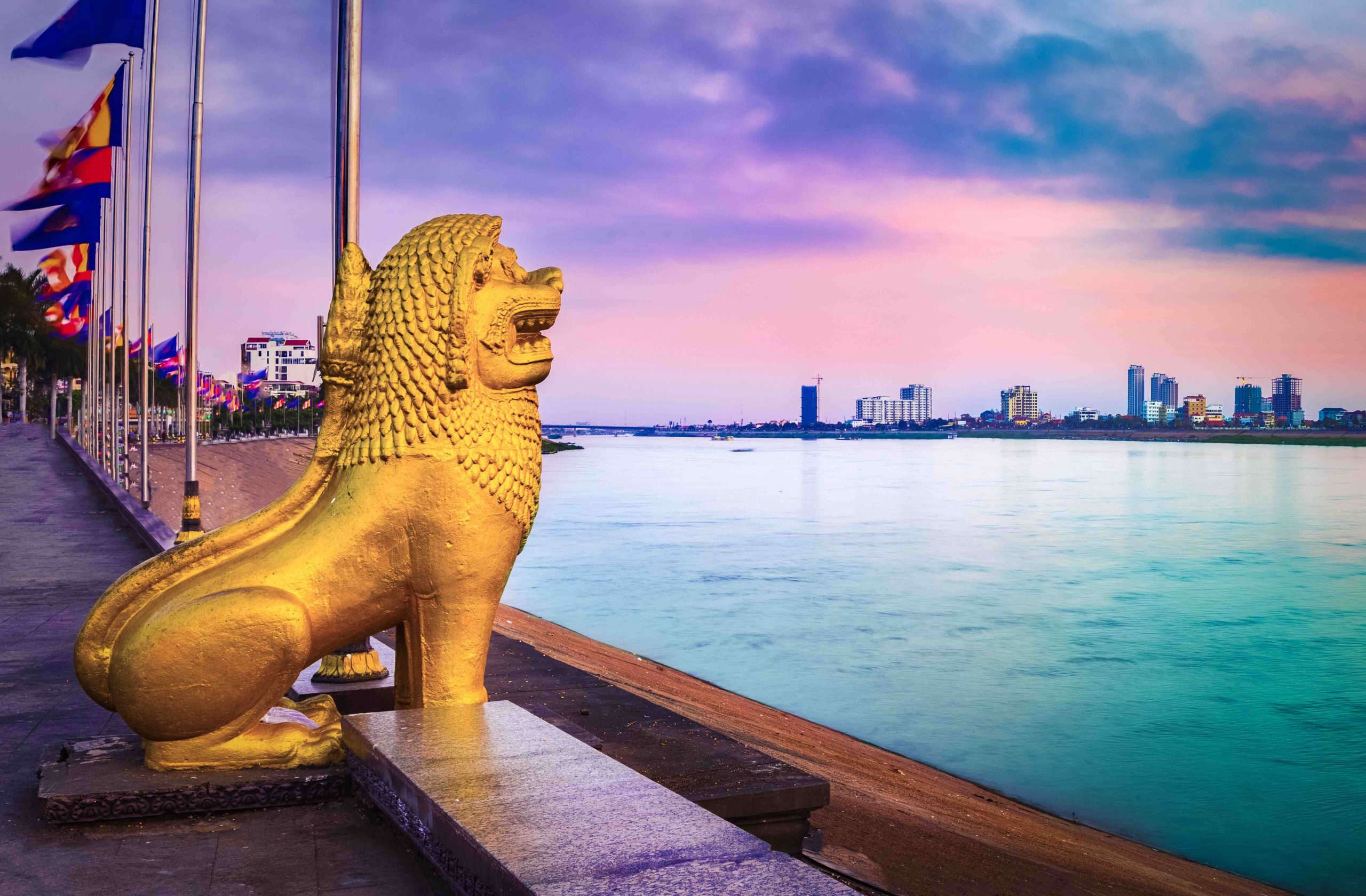
    Image: Mekong Riverside, Phnom Penh-Cambodia

  • Contemporary and Upcoming Issues In the Field of Intellectual Property Rights

    Contemporary and Upcoming Issues In the Field of Intellectual Property Rights

    1.1   Contemporary Issues: IP Awareness and Drug Price Caps

    1.1.1. Introduction

    The realm of intellectual property (IP) rights has been in existence and been a driving force for novelty and innovation for centuries and can be dated back to at least 500 BC when a state in Greece provided protection for 1 year to innovators of ‘a new refinement in luxury’, ensuring innovators can monopolize and reap benefits out of their innovations.[i] That being the case, the first international convention (known as the ‘Paris Convention’) was enforced much later in the year 1883, establishing a union for the protection of ‘industrial property’. Since then, we have seen rapid growth in the field of IP rights. It goes without saying that till the time entrepreneurs are incorporating companies, innovators are inventing technology or artists are creating their works of art and/or literature, the domain of IP will only progress further.

    Although the evolution of international IP regime has been rapid and the laws have become a lot more complicated than they initially were, it appears that we have only scratched the surface of the extent and reach of IP rights. It cannot be stressed enough that IP rights are crucial to every company, creator and inventor since it ensures that their rights and interests are protected and gives them the right to claim relief against any violation.

    Insofar as the Indian IP regime is concerned, we have seen a gradual but crucial development in our laws which has now motivated not only foreign corporations to seek IP protection in India but has also supported start-ups in seeking protection of their IP to the extent that these enterprises have the liberty to seek the protection of their IP at significantly reduced fees (barring copyright and geographical indications). The Indian Intellectual Property Office (IPO) has also taken measures to promote e-filing by reducing costs associated therewith and improving its e-filing system/mechanism. However, the issues arise when start-ups and small enterprises seek to register their IP and are unaware of these common, but cost-effective mechanisms in place.

    Besides, our intellectual property policies (especially patent policies) have been a subject matter of criticism for a long time at a global stage due to the government’s intervention in the enforcement of patent rights. One of the primary concerns for foreign corporations and organizations have been related to working of patented inventions in India and the issue of compulsory licensing.

    1.1.2. Lack of Awareness of Intellectual Property Rights

    Launched by the Government of India in 2014, the ‘Make in India’ project has motivated entrepreneurs to establish their business with the help of government funding and foreign direct investments (FDI) of up to 100%.[ii] This step has led to a boost in people exploiting their entrepreneurial skills to establish a successful business (in most cases). Although the Make in India project also focuses on the importance of IP rights by attempting to educate the entrepreneurial minds of the importance and benefits of their IP, it appears that small businesses are yet to benefit from the IP aspect of the project. These businesses/start-ups do not realize the importance of their IP and tend to often misuse violate another’s. This leads to the institution of a lawsuit seeking infringement (or passing off) against such businesses by big corporations and since defending such Suits is an expensive and time-consuming process, it becomes an uphill task for the entrepreneurs to defend the Suits and run their business effectively. Entrepreneurs are often misinformed and miseducated of the basics of IP by professionals who do not have an expertise in the area of IP law, which leads them to believe that their acts of adopting an identical or deceptively similar trademark would go unnoticed or would not constitute infringement or passing off. Due to their lack of knowledge in the domain of IP and lack of proper guidance by professionals, these entrepreneurs tend to believe that: –

    • Adopting an identical mark (intentionally) in a different class does not constitute infringement or passing off;
    • Adopting a similar mark in the same (or allied and cognate) class does not constitute infringement or passing off;
    • Even if the competing marks are identical or deceptively similar, filing a trademark application with a user claim would give them a defensible stand against the true proprietor’s claim.

    Needless to say, these are some of the common misconceptions which lead to a claim of infringement or passing off being raised by true proprietors of the marks. Also, the possibility of the Court of law imposing damages and/or costs on a defendant cannot be ruled out either. In such a scenario, due to the limited funding of these start-ups, they are often forced to reconsider their entire business strategy in-line with the pending lawsuit. This can, however, be avoided if the entrepreneurs are either well-educated in the field of IP law or take necessary steps to ensure that they receive proper guidance regarding risks involved in registration and use of their mark, from a professional with expertise in the field of IP laws. Instances of start-ups adopting a similar or identical mark of a big corporation/start-up are quite common nowadays with some of the known cases being instituted by ‘Bookmyshow’ against ‘Bookmyoffer’, ‘Shaadi.com’ seeking relief against use of ‘Secondshaadi.com’, ‘Naukri.com’ suing ‘naukrie.com’, etc.[iii]

    In instances involving the pharmaceutical industry, the issue becomes far severe since adopting a similar or identical mark can result not only in infringement of IP but can only be extremely harmful to the patients/consumers. Unlike any other consumable item, patients/consumers are at much greater risk if they consume wrong medication and such instances where corporations adopt a similar or identical mark for its pharmaceutical drug, the consequence can be fatal to the extent that it may even lead to death. In one such famous instance in India where the Defendant was a repeated/hardened infringer, the High Court of Bombay while imposing exemplary costs of INR 1.5 crores stated “Drugs are not sweets. Pharmaceutical companies which provide medicines for the health of the consumers have a special duty of care towards them. These companies have a greater responsibility towards the general public. However, nowadays, the corporate and financial goals of such companies cloud the decision of its executives whose decisions are incentivized by profits, more often than not, at the cost of public health. This case is a perfect example of just that”.

    Another issue these entrepreneurs/start-ups tend to face in the realm of IP law is vis-a-vis use of copyrighted material without knowledge/intention to infringe upon someone else’s IP rights. For instance, when start-ups launch their online portals, they tend to use images/GIFs or music for their videos which are copyrighted and use thereof without permission is illegal. On account of lack of knowledge of IP laws and consequences of such misuse, they often violate rights residing in the copyrighted work and are then subject to either a legal notice from the owner/proprietor of the copyrighted material or a lawsuit before the Court of law.

    The United States of America’s (USA) Chamber of Global Innovation Policy Center (GIPC) which promotes innovation and creativity through intellectual property standards, in its 2019 list of countries performing in the field of IP law, places India at a substantially low rank of 40 out of 53[iv] which indicates that USA considers India as a major threat when it comes to development and investment the field of IP rights in India (especially in the field of patents). Additionally, India also lacks in the number of patent applications filed before the Indian Patent Office, averaging at around 9,500 filings per year, compared to 2,69,000 filings in the USA.[v] One of the primary reason behind this difference might have something to do with India’s lack of support towards the encouragement of IP protection, especially for start-ups.

    1.1.3. Raising Awareness on Intellectual Property Laws for Entrepreneurs

    With almost 50% of litigations within the domain of IP pertaining to trademark infringement and passing off,[vi] entrepreneurs and small businesses must take the following necessary steps to ensure that their rights and interests in their business are protected: –

    • Entrepreneurs/Business owners must entrust lawyers/law firms specializing in the field of IP rights to advise and prosecute their trademark applications;
    • Understand or attempt to understand each and every step involved in prosecuting and registering a trademark application and participate in discussions leading to every step taken in the prosecution of their IP; and,
    • Approach IP lawyers/law firms to get a gist of importance of IP protection along-with freedom to use a mark either before registering it or using the said mark for goods in classes not forming part of the trademark registration.

    It is also the duty of IP lawyers/law firms to promote IP protection for entrepreneurs and small businesses by organizing interactive sessions with new and/or domestic clients and providing competitive charges for prosecuting and enforcing IP rights of these entrepreneurs and businesses.

    Statistics reflect that majority of IP infringement cases in India involve a small enterprise being unaware of the basics of IP rights and therefore, using an IP that is either deceptively similar or virtually identical to a registered and/or well-known IP.[vii] Often businesses expanding their presence in the online portal (either through their website or a social media page) use copyrighted material without realizing that their use of the same would tantamount infringement.   Raising awareness of the importance of IP and consequences of infringement (and passing off) would ensure that start-ups avoid misusing an IP belonging to someone else.

    1.1.4. The imposition of Price Caps on pharmaceutical drugs in India and its work-around

    One of the primary reasons why the USA considers India’s IP regime a major threat has something to do with India’s patent laws, especially vis-à-vis the pharmaceutical industry. Albeit the US Trade Representative (USTR) last year stated that the USA is attempting to restrict patentability for new pharmaceutical drugs which are “essentially mere discoveries of a new form of a known substance which does not result in enhancement of the known efficacy of that substance ….. machine or apparatus” (which is identical to Section 3(d) of the Indian Patents Act, 1970),[viii] it still considers India as a threat to its IP regime, especially due of India’s patent laws.

    To better understand the problems faced in the Indian pharmaceutical industry, it would be prudent to point out that unlike developed nations, the Indian government (through its Patents Act and policies) keeps strict control over the drug pricing with an intention to make healthcare (specifically medication) accessible amongst all States and income groups. This can especially be observed in pharmaceutical drugs for cancer and diabetes medication. The Government of India has imposed strict price restrictions for its pharmaceutical drugs, thereby diluting IP rights and causing a severe impact on IP valuation of those pharmaceutical drugs.[ix]Although the impact might seem insignificant to consumers since they benefit from these price reductions, making cancer medicines 90% cheaper due to price control would not make IP holders happy or promote invention. Simply put, once the government slashes prices of pharmaceutical drugs intending to make them easily accessible to the majority of patients, it severely impacts the profit margin of the pharmaceutical industries, forcing them to invest more into the industry of generic drug manufacturers because of a bigger profit margin and lesser costs, rather than invest into inventing new drugs, which might although tackle a currently incurable disease (or a curable disease more effectively), but would at the same time, lead the corporation into losses. These price cuts would also force the pharmaceutical corporations to compromise on the quality of drugs which might, in a longer run, have a severe impact on healthcare.

    India’s investment in its healthcare sector has been a major concern since the Indian States ideally spend as low as 1.3% of their gross domestic product (GDP) on healthcare which results in a substantial increase in out-of-pocket expenses and placement of poor healthcare mechanisms.[x] India’s heavy reliance on generic drugs supporting the lesser privileged consumers has been expressed as a concern by the USTR[xi] and global pharmaceutical giants to the extent that investors and pharmaceutical corporations have restricted their investment into the Indian pharmaceutical industry since their price margin would result in government either forcing price caps on the drugs or implement compulsory licensing for the expensive and life-saving drugs.

    As stated above, this approach of placing price caps towards the Indian and global (vis-à-vis their sale of drugs in India) pharmaceutical industry has a major impact on India’s patent laws since it affects innovation, and since innovation is an essential part of the invention in the healthcare sector, pharmaceutical industries tend to focus more on generic drug production, profit from out-of-pocket expenses of consumers/patients, hospitalization costs, etc.[xii] The imposition of price caps has shown to have no significant improvement in accessibility of pharmaceutical drugs.

    Although the imposition of price caps is necessary for a developing nation, the same should be practiced to a limited extent. For instance, instead of capping the price of a pharmaceutical drug and dropping its price by 90%, the price caps should be dependent on the situation and need for the drug. For instance, cancer and diabetes medication are in high requirements in India[xiii] (and other nations) and therefore, the government can impose price caps and reduce the cost of the drugs by 50%. Insofar as other (less crucial/critical) pharmaceutical drugs are concerned, the government can either refrain from price caps or impose a price cap of a maximum of 20%. This would not only promote investment in innovating patented drugs but would also increase FDI in the Indian pharmaceutical sector, thereby permitting Indian pharmaceutical corporations to invent new and possibly better pharmaceutical drugs.

    At the same time, a concerned person always reserves their right under Section 84(1)[xiv] of the Indian Patents Act, 1970 to request for issuance of a compulsory license (after the expiry of three years from the date of grant of the patent) against the said pharmaceutical drug in case it does not comply with the guidelines issued under Section 83[xv]  of the afore-mentioned Act like in the case of Bayer Corporation v. Union of India.[xvi] In essence, the Indian government must invest more in its healthcare sector policies to reduce out-of-pocket expenses incurred by patients/consumers and reduce the price caps by a significant amount to promote innovation in the field of patent laws, especially in the pharmaceutical sector.

    1.2. A Global Upcoming Issue: Impact of Use/Commercialization of Artificial Intelligence on Intellectual Property Rights

    1.2.1. Introduction

    “Can machines think?” – Alan Turing, 1950

    A few years after Alan Mathiso Turing, a renowned English mathematician, cryptanalyst and computer scientist played a pivotal role in defeating Hitler’s Nazi Germany, he wrote a paper titled ‘Computing Machinery and Intelligence’ (1950) where he asked a simple, yet intriguing question: “Can machines think?”. His paper and subsequent research established the basis of what we refer to as ‘Artificial Intelligence’ (AI) or machine learning/intelligence. Fast forward to today, the concept of AI has become a lot more complex than what had been imagined by researchers around half a century ago. AI or a machine which reflects the ability to think and act in as close of a manner as a human mind is as of date, an exciting new development in the field of technology.

    From ‘The Turin Test’ in the year 1950 to creation of Sophia, a humanoid robot created by Hanson Robotics in the year 2016, technology, especially in the field of AI has progressed at a drastic rate, with some of the major developments being the creation of Google’s Home device (2016), Apple’s virtual assistant ‘Siri’ (2011), Microsoft’s virtual assistant ‘Cortana’ (2014), Amazon’s home assistant ‘Alexa’ (2014), etc. occurring in the past decade (2010 to 2019) itself. It is safe to say that with this progress, it is not far-fetched to assume that we may soon see the age of commercialization of much smarter versions of currently existing machine learning devices. The technology relating to AI has seen explosive growth in recent times with the number of patent applications for technologies relating to AI exceeding 1,00,000.[xvii]

    Today, AI can be dissected into two types of intelligence, namely:

    • Weak AI: This is a more common type of AI which is used amongst major corporations like Google, Apple, Microsoft, etc. and although it is being used widely, its abilities are limited to performing tasks that it has been trained to perform. Such AI can store data and present it to the consumer upon enquiry or on need-basis. However, the algorithms do not permit this AI to think and act in a manner a human mind would and therefore, this AI does not pose a threat within the domain of IP.
    • Strong AI: Unlike weak AI, this form of AI would perform more cognitive functions that imitate a human mind more closely as against weak AI. Even though weak AI is known to perform basic functions more efficiently (when compared to humans), the strong AI will not only perform those basic functions of a weak AI but also will also perform more complex tasks such as inventing or creating a new IP (like a new copyrightable sound or video or a unique design, etc.).

    To a certain extent, researchers worry about the consequences of AI in case its goals end up being misaligned to ours. But at this stage, AI seems to be more promising than dangerous, especially in the field of healthcare and agriculture which is a critical industry for India.

    Needless to say, corporations are investing a lot of resources to develop this field of technology which is said to have revolutionary impacts including prediction of epidemics, advanced disaster warnings and damage prevention methods, increased productivity in all industries, etc. The possibilities and benefits (and in many cases, risks) of AI are innumerable and at the current rate of its development, it will quite possibly be overwhelming. Regardless of its pros and cons, commercialization of AI is inevitable and therefore, this raises a material question: Do we have the appropriate laws in place to tackle issues arising out of commercialization (or use) of AI? The answer, unfortunately, is no.

    1.2.2. The Current Scenario

    Being an upcoming digital frontier, it is apparent that AI will have a huge impact on our current laws and practices. For instance, our current world IP regime only permits a ‘person’ to be a proprietor and/or owner of an IP (see Naruto v. Slater[xviii]) which implies that any form of IP that is generated/invented by an AI cannot be a subject matter of registration. However, a recent decision by the Chinese Court wherein a tech giant ‘Tencent’ claimed copyright infringement against a local financial news company overwork created by its Dreamwriter robot might reflect a contrary view. The Court in the said case held that an article generated by AI is protectable under Chinese copyright law.[xix] Holding a contrary view, the European Patent Office (EPO) in the case pertaining to patent applications filed by ‘DABUS’ an AI technology, gave a finding similar to the Naruto case wherein it held that application has to be filed by a human being.[xx] Professor Ryan Abbott along-with his multi-disciplinary team at the University of Surrey had filed (through their AI called DABUS) the first-ever patent application without a human inventor[xxi] indicating that the move towards AI-based IP filing is underway, however, given that the laws are currently not in place, the application was, unfortunately, refused.

    Although an old principle, the Courts around the world at times rely (either directly or indirectly) on the principle of “sweat of the brow”, which indicates the inventor’s effort and hard work invested in creating an IP. However, the application of the said principle becomes rather complicated when the issue of IP generated by AI comes into the picture. At the same time, the commercialization of AI might also lead to dilution of IP rights, given that the possibility of AI being better and quicker at generating IP than human beings cannot be ruled out. Undoubtedly, AI might eventually be considered as a ‘smarter’ variant of a human inventor since an AI would require a significantly less amount of time and effort to generate a registrable IP. Apart from the ones already mentioned above, several unknown issues are likely to arise upon commercialization of AI (to generate IP) and there is a dire need to highlight and resolve these issues at the earliest.

    The World Intellectual Property Organization (WIPO) has recently taken an initiative to invite public feedback on possible impacts of AI on the world IP regime[xxii] by conducting press conferences to tackle the impending issues vis-à-vis IP laws upon commercialization or use of AI. Although the topic of discussion during the previous conference was somewhat restricted to Patent laws and did not tackle IP laws holistically, the next round of sessions might emphasize on all IP laws and be more holistic towards progress. Needless to say, AI will impact our IP regime all the way from the creation of an IP to valuation, commercialization, transfer/assignment, etc. thereof, which would require a complete overhaul of our current laws in order to inculcate and appreciate the investment (in terms of time and costs) and labour involved in the creation of the AI, as well as use/transfer/assignment of an IP generated by that AI.

    1.2.3. India’s Approach towards Artificial Intelligence

    India has seen rapid growth in its information technology (IT) sector which has further contributed to other primary sectors like agricultural sector, healthcare sector, etc. by developing various mechanisms such as a system for online trading or integrated crop management system (amongst other things). It is safe to say that technology has a big role to play in India’s growth. Apart from the agricultural industry, the software industry has played a pivotal role in India’s move towards becoming the fastest-growing trillion-dollar economy.[xxiii]

    Being amongst the most profitable investment jurisdictions, India has recently been a hub for tech-related start-ups. Understanding the importance of technology, Indian entrepreneurs, along-with government support, have started to invest heavily in the technology field and with the help of FDI, there has been a substantial boom in the field of technology. Since other fields such as agriculture, healthcare and education are all somewhat dependent on this field, the scope of AI transforming all the other sectors through the tech sector is clearly perceivable.

    As discussed earlier, India’s healthcare sector is in a dire need for investment and development and on account of lack of funding and need to make medication accessible, reliance on AI would drastically reduce costs incurred in labour, research and development, trials, etc., which would eventually reduce the costs of pharmaceutical drugs themselves, thereby impacting the final sale price of the drug. Reliance on AI (by developing the tech sector) would extinguish the need for State governments to invest heavily in their healthcare programmes. Although the current investment might not cut it, a substantial investment, in that case, would not be required. AI support in the development and marketing of pharmaceutical drugs, thereby reducing the overall costs and increasing production and sale would also invite more FDI in India’s healthcare sector. This will also eventually make healthcare more accessible in less developed regions in India. Statistics indicate that healthcare is majorly accessible/available in limited States/Cities like Bengaluru, Chennai, Gurugram, etc.[xxiv] while cities like Singrauli continue to suffer.[xxv] With the major impediment of drug pricing out of the way, access to healthcare will become more of a focus and would eventually thrive with AI support.

    Insofar as the agricultural sector is concerned, the same plays an essential role in our developing economy. According to a report issued by India Brand Equity Foundation (IBEF), around 58% of Indian population relies on India’s agricultural sector with a contribution of an estimated $265.51 billion (approximately INR 18.55 lakh crore) of gross value added to its economy (in Financial Year 2019).[xxvi] This implies that majority of the lesser developed States and Cities in India rely solely on production and sale of their agricultural produce.[xxvii] With an FDI inflow of up to 100% and an increasing reliance on technology, the sector keeps looking for methods to increase crop yields in a cost-effective manner. Having said that, the agricultural sector still faces some major issues like weather instability and fluctuations, condition of agricultural labourers, poor farming techniques, inadequate irrigation facilities, etc.[xxviii]  Unlike the healthcare sector, the agricultural sector is already witnessing the impact of AI from companies like Microsoft India and Intello Labs which have introduced mechanisms to maximize crop yield and reduce wastage/infestation. For instance, Microsoft India has introduced an AI-based sowing app which determines and informs the farmers of the best time to sow their crop based on analysis of climate data for the specific area and amount of rainfall and soil moisture the crops have received.[xxix]  Farmers can benefit from these AI-based apps without spending any additional costs on installing sensors.

    Indian (and foreign) tech industries have already played an important role in providing ease of business through reliance on weak AI and therefore, if India invests and conducts thorough research into strong AI, the implications of AI can be countless. However, since research and investment in the field of strong AI are extremely limited in India, commercialization thereof seems far-fetched as of date. Due to lack of expertise in the field of AI, it has been difficult to conduct research and yield any result. Colleges/Universities often refrain from investing in the field of AI research due to lack of participation and heavy research costs. Also, since the education system in the majority of institutions is somewhat traditional, graduates (or post-graduates) lack the required skill set to work in this technical field.[xxx]

    In contrast, however, the Chinese government is already taking steps to become a leader in the AI space by 2030s. It has adopted a three-step method which involves appreciating AI-based applications by the year 2020, making cutting edge breakthroughs in the said field by 2025 and leading in the industry by 2030. To support this process, a Chinese Court has already ruled in favour of AI-generated copyright work in its decision favouring Tencent,[xxxi] a tech company focusing on communication and social platforms. Since India (through its tech industry) has started taking steps to work towards its AI technology (albeit weak AI for now) and has also entrusted its think-tank ‘NITI (National Institution for Transforming India ) Aayog’ for assistance in such development through the National Program on AI,[xxxii] we hope to see India catch-up to tech giants like China, USA and Europe.

    1.2.4. Development of Intellectual Property Laws on Artificial Intelligence: An Indian Perspective

     Since WIPO has only recently started discussing the implications of AI on global IP laws, the member states of WIPO are yet to come out with laws pertaining to AI-based IP. While beginning its public consultation process on AI and IP policy, Director General of WIPO Mr Francis Gurry said: “Artificial intelligence is set to radically alter the way in which we work and live, with great potential to help us solve common global challenges, but it is also prompting policy questions and challenges,”.[xxxiii]  On December 13, 2019 WIPO also published ‘Draft Issues Paper on Intellectual Property Policy and Artificial Intelligence’ with an intent to invite feedback/opinion on the most pressing issues IP policymakers will face in the near future. One of the most crucial questions where jurisdictions conflict is whether AI can be an inventor/owner of an IP. While the EPO held that an AI cannot be the inventor of a patent application, the Chinese Court observed the contrary, holding that an AI can be an inventor of a copyrightable subject matter. Apart from the issues arising vis-à-vis prosecution of such applications (assuming an AI can be an inventor/originator of an IP), another important issue would pertain to enforcement by or against IP owned by an AI. For instance, if an AI generates a copyrightable subject matter which is deceptively similar or identical to a copyrighted matter, against whom will a Suit claiming infringement and damages lie? Further, in case of a finding against the AI wherein damages have been awarded, will the AI be expected to bear the damages or the owner of the AI? To answer these complex questions, WIPO has invited inputs from member States on issues (not exhaustive) published on December 13, 2019.[xxxiv]

    In view afore-mentioned development, India should establish a team of technical and legal (IP) experts to review the current laws and issues drafted by the WIPO Secretariat, draft possible answers to the issues and suggest required amendments to our current laws to inculcate rights of AI in the best way possible and then discuss the same at a larger stage, i.e., at the 25th Session of the WIPO Committee on Development and Intellectual Property (CDIP). Until now, India’s role/participation in WIPO’s sessions/meetings has been passive and considering how AI would impact its various sectors, especially the agricultural and healthcare sector (a sector which needs an improvement), India must play an active role in the development of IP laws to support AI. Given the fact that India is one of the fastest-growing economies and one of its cities is also considered as the ‘Silicon Valley’ of India,[xxxv] commercialization/use of AI would greatly benefit its economy to the extent that it would substantially reduce labour costs and at the same time, benefit a lot of entrepreneurs in the tech industry. Additionally, AI would also be crucial for government offices as it would greatly reduce delay in processing time and errors. For instance, the use of AI in Indian Intellectual Property Offices would enable machines to review applications for basic defects such as non-filing of an essential document or improper authentication, etc. In case strong AI is adopted by these departments, it would also enable machines to raise basic objections on applications and upon clearance thereof, advertise or register the same, thereby reducing significant costs and time.

    It goes without saying that AI is the next big thing in the field of technology and once it is commercialized at a large scale, it is going to have a huge impact on our laws (especially IP laws). Given India’s interests and possible benefits in the field of AI, its involvement in the development of our current IP regime is pivotal.


    Notes

    [i] Jeff Williams, The Evolution of Intellectual Property, Law Office of Jeff Williams PLLC; link: https://txpatentattorney.com/blog/the-history-of-intellectual-property(published on November 11, 2015).

    [ii] Foreign Direct Investment, published by Make in India; link: http://www.makeinindia.com/policy/foreign-direct-investment.

    [iii] Top 17 Startup Legal Disputes, published by Wazzeer; link: https://wazzeer.com/blog/top-17-startup-legal-disputes (published on May 02, 2017).

    [iv] GIPC IP Index 2020, published by Global Innovation Policy Center; link: https://www.theglobalipcenter.com/ipindex2020-details/?country=in.

    [v] Darrell M. West, India-U.S. relations: Intellectual property rights, Brookings India; link: https://www.brookings.edu/opinions/india-u-s-relations-intellectual-property-rights (published on June 04, 2016).

    [vi] Thehasin Nazia & Rajarshi Choudhuri, The Problem of IPR Infringement in India’s Burgeoning Startup Ecosystem, IPWatchdog; link: https://www.ipwatchdog.com/2019/11/16/problem-ipr-infringement-indias-burgeoning-startup-ecosystem/id=116019 (published on November 16, 2019).

    [vii] Press Trust of India, Absence of legal awareness root cause of rights’ deprivation, Business Standard, Nagpur; link: https://www.business-standard.com/article/pti-stories/absence-of-legal-awareness-root-cause-of-rights-deprivation-119081800664_1.html (published on August 18, 2019).

    [viii] Kristina M. L. Acri née Lybecker, India’s Patent Law is No Model for the United States: Say No to No Combination Drug Patents Act, IP Watch Dog; link: https://www.ipwatchdog.com/2019/06/26/indias-patent-law-no-model-united-states/id=110727 (published on June 26, 2019).

    [ix] Amir Ullah Khan, India’s drug price fix is hurting healthcare, Live Mint; link: https://www.livemint.com/politics/policy/india-s-drug-price-fix-is-hurting-healthcare-11572334594083.html (published on October 29, 2019).

    [x] Ibid.

    [xi] E Kumar Sharma, Hard bargaining ahead, Business Today; link: https://www.businesstoday.in/magazine/focus/us-to-pressure-india-change-intellectual-property-ipr-regime/story/214440.html (published on February 01, 2015).

    [xii] Amir, supra note 9 at __(page No.)__.

    [xiii] Key diabetes, anti-cancer drugs among 92 in price-ceiling list, published by ET Bureau, The Economic Times; link: https://economictimes.indiatimes.com/industry/healthcare/biotech/pharmaceuticals/key-diabetes-anti-cancer-drugs-among-92-in-price-ceiling-list/articleshow/65433283.cms?from=mdr (published on August 17, 2018).

    [xiv] Section 84(1) of the Patents Act, 1970 :-

    Compulsory licenses –

    (1) At any time after the expiration of three years from the date of the 170 [grant] of a patent, any person interested may make an application to the Controller for grant of compulsory license on patent on any of the following grounds, namely:-

    (a) that the reasonable requirements of the public with respect to the patented invention have not been satisfied, or

    (b) that the patented invention is not available to the public at a reasonably affordable price, or

    (c) that the patented invention is not worked in the territory of India.

    [xv] Section 83 of the Patents Act, 1970:-

    General principles applicable to working of patented inventions –

    Without prejudice to the other provisions contained in this Act, in exercising the powers conferred by this Chapter, regard shall be had to the following general considerations, namely;-

    (a) that patents are granted to encourage inventions and to secure that the inventions are worked in India on a commercial scale and to the fullest extent that is reasonably practicable without undue delay;

    (b) that they are not granted merely to enable patentees to enjoy a monopoly for the importation of the patented article;

    (c) that the protection and enforcement of patent rights contribute to the promotion of technological innovation and to the transfer and dissemination of technology, to the mutual advantage of producers and users of technological knowledge and in a manner conducive to social and economic welfare, and to a balance of rights and obligations;

    (d) that patents granted do not impede protection of public health and nutrition and should act as instrument to promote public interest specially in sectors of vital importance for socio-economic and technological development of India;

    (e) that patents granted do not in any way prohibit Central Government in taking measures to protect public health;

    (f) that the patent right is not abused by the patentee or person deriving title or interest on patent from the patentee, and the patentee or a person deriving title or interest on patent from the patentee does not resort to practices which unreasonably restrain trade or adversely affect the international transfer of technology; and

    (g) that patents are granted to make the benefit of the patented invention available at reasonably affordable prices to the public.

    [xvi] Special Leave to Appeal (C) No(S). 30145 of 2014.

    [xvii] Ryan N. Phelan, Artificial Intelligence & the Intellectual Property Landscape, Marshall Gerstein & Borun LLP, published by Lexology; link: https://www.lexology.com/library/detail.aspx?g=8c2b5986-95bb-4e8e-9057-e4481bfaa471 (published on September 14, 2019).

    [xviii] No. 16-15469 (9th Cir. 2018).

    [xix] Stefano Zaccaria, AI-written articles are copyright-protected, rules Chinese court, World Intellectual Property Review (WIPR); published on January 10, 2020 (link:https://www.worldipreview.com/news/ai-written-articles-are-copyright-protected-rules-chinese-court-19102).

    [xx] EPO refuses DABUS patent applications designating a machine inventor, European Patent Office; link: https://www.epo.org/news-issues/news/2019/20191220.html(published on December 20, 2019).

    [xxi] Laura Butler, World first patent applications filed for inventions generated solely by artificial intelligence, University of Surrey; published on 01 August, 2019 (link: https://www.surrey.ac.uk/news/world-first-patent-applications-filed-inventions-generated-solely-artificial-intelligence).

    [xxii] WIPO Begins Public Consultation Process on Artificial Intelligence and Intellectual Property Policy, published by World Intellectual Property Organization (WIPO); PR/2019/843; published on December 13, 2019 (link: https://www.wipo.int/pressroom/en/articles/2019/article_0017.html).

    [xxiii] Caleb Silver, The Top 20 Economies in the World, Investopedia; link: https://www.investopedia.com/insights/worlds-top-economies/#5-india (published on November 19, 2019).

    [xxiv] Akriti Bajaj, Working towards building a healthier India, Invest India; link: https://www.investindia.gov.in/sector/healthcare (published on January 18, 2020).

    [xxv] Leroy Leo, Niti Aayog calls healthcare system a ‘sinking ship,’ urges private participation in Ayushman Bharat, Live Mint; link: https://www.livemint.com/news/india/niti-aayog-calls-healthcare-system-a-sinking-ship-urges-private-participation-in-ayushman-bharat-11574948865389.html (published on November 29, 2019).

    [xxvi] Agriculture in India: Information About Indian Agriculture & Its Importance, Indian Brand Equity Foundation (IBEF); link: https://www.ibef.org/industry/agriculture-india.aspx (published on November 2019).

    [xxvii] Ayushman Baruah, Artificial Intelligence in Indian Agriculture – An Industry and Startup Overview, Emerj; link: https://emerj.com/ai-sector-overviews/artificial-intelligence-in-indian-agriculture-an-industry-and-startup-overview (published on November 22, 2019).

    [xxviii] Vidya Sethy, Top 13 Problems Faced by Indian Agriculture, Your Article Library; link: http://www.yourarticlelibrary.com/agriculture/top-13-problems-faced-by-indian-agriculture/62852.

    [xxix] Ibid.

    [xxx] Neha Dewan, In the race for AI supremacy, has India missed the bus?, The Economic Times; link: https://economictimes.indiatimes.com/small-biz/startups/features/in-the-race-for-ai-supremacy-has-india-missed-the-bus/articleshow/69836362.cms (published on June 19, 2019).

    [xxxi] Rory O’Neill and Stefano Zaccaria,

    AI-written articles are copyright-protected, rules Chinese court, World Intellectual Property Review (WIPR); link: https://www.worldipreview.com/news/ai-written-articles-are-copyright-protected-rules-chinese-court-19102 (published on January 10, 2020).

    [xxxii] National Strategy On Artificial Intelligence, published by NITI Aayog; link: https://niti.gov.in/national-strategy-artificial-intelligence.

    [xxxiii] WIPO Begins Public Consultation Process on Artificial Intelligence and Intellectual Property Policy, PR/2019/843, World Intellectual Property Organization (WIPO), Geneva; link: https://www.wipo.int/pressroom/en/articles/2019/article_0017.html (published on December 13, 2019).

    [xxxiv] WIPO Secretariat, WIPO Conversation on Intellectual Property (IP) and Artificial Intelligence (AI), Second Session, WIPO/IP/AI/2/GE/20/1, World Intellectual Property Organization (WIPO); link: https://www.wipo.int/edocs/mdocs/mdocs/en/wipo_ip_ai_ge_20/wipo_ip_ai_2_ge_20_1.pdf (published on December 13, 2019).

    [xxxv] Bangalore, published by Wikipedia; link: https://en.wikipedia.org/wiki/Bangalore (last updated on February 07, 0220).


    Image Credit: WIPO

  • Creation of Statelessness in India: an Analysis of the Crisis and the way Forward

    Creation of Statelessness in India: an Analysis of the Crisis and the way Forward

    Introduction

    Over the last few decades, migration has become a global norm. Although a substantial part of the global population migrates for economic and personal reasons, it is undeniable that migration as a phenomenon is exacerbated by factors such as armed conflicts, ethnic or politico-social tensions, climate change and others. The effect that migration has on global economic, social and political transformations is widely recognized.[1] Naturally, in contrast to migration policies, all States have specific laws to regulate the acquisition of nationality by birth, descent and/or naturalization. While most of us realise the significance of the concept of nationality, we tend to overlook the fact that inclusion by nationality often brings the phenomenon of statelessness with it. In this context, the latest developments in the Indian laws regulating nationality raise several social and legal conundrums. However, the lack of any legal framework on statelessness or India’s abstinence from signing the 1954 Convention relating to the Status of Stateless Persons or the 1961 Convention on the Reduction of Statelessness is a clear indication of India’s unpreparedness to deal with the potential long-term consequences of its new laws.

    Deprivation of Citizenship and Statelessness in the Contemporary Era

    The concepts of nationality and citizenship have attracted great attention for raising several contemporary politico-legal and social issues. Citizenship confers an identity on an individual within a particular state. Consequently, a citizen is able to derive rights and is assigned obligations by virtue of this identity.[2] Political Philosopher, Hannah Arendt, terms this as “the right to have rights”.[3] Citizenship is what entitles a citizen to the full membership of rights, a democratic voice and territorial residence. While we understand the significance of being a citizen of a country, we often fail to ponder upon the consequences of losing it. Immanuel Kant argues that citizenship by naturalisation is a sovereign privilege and the obverse side of such privilege is the loss of citizenship or “denationalisation”.[4] Arendt has also identified the twin phenomena of “political evil” and “statelessness”.[5]

    This condition of statelessness is not only a harmful condition which makes the person vulnerable to violation of human rights, but it also works in delegitimising a person in the socio-legal order of a State.

    An introspect into the right to have the right to a nationality goes on to throw light on the issue of statelessness. Although history has proven the existence of both de facto and de jure statelessness, this chapter is only concerned with de jure statelessness, specifically within the Indian context. The Convention Relating to the Status of Stateless Persons defines a “stateless person” as ‘a person who is not considered as a national by any State under the operation of its law’.[6] This condition of statelessness is not only a harmful condition which makes the person vulnerable to violation of human rights, but it also works in delegitimising a person in the socio-legal order of a State.[7] The number of stateless persons globally in the year 2018 was 3.9 million.[8] This number is still regarded as a conservative under-estimation owing to the fact that most of the affected population reside precariously within the society and most countries do not calculate comprehensive statistics of stateless persons within their territory. UNHCR estimates at least a global figure of 10 million stateless persons globally.[9]

    Statelessness hinders the day-to-day life of a person by depriving them of access to the most rudimentary rights like education, employment or health care to name a few.  It may be attributed to multiple causes inter-alia discrimination, denationalization, lack of documentation, climate change, forced migration, conflict of laws, boundary disputes, state succession and administrative practices.[10] Discrimination based on ethnicity, race, religion or language has been a constant cause of statelessness globally. Currently, at least 20 countries uphold laws which can deny or deprive a person of their nationality in a discriminatory manner.[11] Statelessness tends to exaggerate impact of discrimination and exclusion that minority groups might already be facing. It widens the gap between communities thus deepening their exclusion.[12]  The phenomenon of statelessness has been the more prominent in South and South East Asian countries. The Hill Tamil repatriates in India from Sri Lanka and the Burmese refugees in Cambodia are examples of Asian Stateless populations who are vulnerable to human rights abuses. The 1954 Convention relating to the Status of Stateless Persons and the 1961 Convention on the Reduction of Statelessness are the two most important conventions addressing this issue. The former has 94 parties and 23 signatories, and the latter has 75 parties and only 5 signatories. Albeit international legal norms on the issue of statelessness have restrained the States’ denationalisation power, it has however not erased the use of discrimination as a tool for denationalization.[13] This has been particularly relevant in the case of naturalization of nationals from Muslim-majority countries.[14]  It can be argued that India’s Citizenship Amendment Act has also joined this bandwagon.

    Interplay of the NRC and Citizenship Amendment Act, 2019

    The Citizenship Amendment Act which was passed by the Indian Parliament on 11th December 2019 has caused a lot of uproar and outbreak of protests all over the country. This Act has attracted wide international condemnation[15] for being discriminatory[16], arbitrary and unconstitutional.[17] Before we go on to scrutinise the role of Citizenship Amendment Act in statelessness creation, an analysis of the National Register of Citizens (NRC) is warranted. The NRC process has been the source of several issues regarding migration, citizenship and polarisation of political support in the state of Assam. It has culled out a distinct space in mobilising the political discourse in Assam specifically during the 2014 and 2019 parliamentary elections.[18]

    The NRC is a register containing names of Indian Citizens. This register was prepared for the very first time in the year 1951 based on the data collected during census. This process was done subsequent to various groups[19] causing agitation in Assam over the non-regulation of immigrant inflow into the region. This resulted in resorting to laws like the Foreigners Act, 1946 and Foreigners (Tribunal) Order, 1939. The contrast in India’s approach to disregard the aforementioned laws to accommodate people escaping violence in West Pakistan[20] is to be noted here.  The NRC process in Assam determines illegal migrants based on their inability to prove the nexus between their documented ancestral legacy to the Indian State. The NRC process defined such illegal immigrants irrespective of their religious affinity. The cut-off date used to determine a person’s ability to prove ancestral legacy was set to March 24, 1971 which is in line with Bangladesh’s war of liberation.

    Despite the criticisms and drawbacks, the NRC process is  in fact a much needed exercise in the State of Assam. Owing to its shared border with Bangladesh, Assam has been the gateway for refugees, economic and illegal migrants who come to India.

    As Assam has been a hub for labour migration right from the colonial era, the ethnic Assamese have been insecure about the potential demographic shifts in favour of the ethnic Bengali migrants, for a long time.[21] This concern was exacerbated by the mass influx of Bengali migrants after the birth of Bangladesh. This mass migration which aggravated the already anti-immigrant sentiment culminated in a student-led movement in the 1970s and 1980s.[22] A series of protests broke out in the Assam to pressure the government to identify and expel illegal immigrants. In the year 1985, the Union government and the AASU signed the Assam Accord by which the government assured the establishment of a mechanism to identify “foreigners who came to Assam on or after March 25, 1971” and subsequently take practical steps to expel them.[23] Consequent to a Public Interest Litigation[24] filed in 2009. In the year 2014, the Supreme Court assumed the role of monitoring the process of updating the NRC to identify Indian citizens residing in Assam in accordance with the Citizenship Act of 1955. The very first draft of the process was published in December 2017 and 1.9 million people were left out of the register from a population of 3.29 million people in Assam.[25] In August 31, 2019, the final list was published which left out 4 million residents from the NRC.[26] Neither drafts of the NRC specifically mention the religion or community of the non-included applicants, although certain commentators[27] and media outlets[28] have alleged  that five out of nine Muslim-majority districts of Assam had the maximum number of rejections of applicants.[29] Out of the 4 million applications which were excluded from the final list, 0.24 applicants have been put on ‘hold’. These people belong to categories: D (doubtful) voters, descendants of D-voters, people whose cases are pending at Foreigners Tribunals and descendants of these persons.[30] The NRC process has for long attracted mixed reviews. Scholars have suggested that the process has been an arbitrary one that is aimed more at exclusion[31] than inclusion.[32] It has also been regarded as an expensive process, the brunt of which is borne substantially by the people of India.[33] Despite the criticisms and drawbacks, the NRC process is  in fact a much needed exercise in the State of Assam. Owing to its shared border with Bangladesh, Assam has been the gateway for refugees, economic and illegal migrants who come to India. This not only led to the cultural identity crises of Assamese people but it also significantly influenced the political operations in the State.[34] It is also important to note that, owing to the absence of a concrete refugee law in place and due to the general population’s lack of awareness about refugees in India, the distinction between refugees, illegal migrants and economic migrants often get muddled. This is reflected in the anti-migration narrative that brews in the State. Although we maintain that the NRC process is not necessarily a communal exercise, it does have seem to have such repercussions when read together with the Citizenship Amendment Act which was passed by the Indian Parliament last year.

    The Preamble of the Indian Constitution recognises the India as a secular state. This has also been reiterated in landmark Supreme Court decisions, whereby the principle of secularism has been recognised as one of the basic structures of the Constitution.Therefore, the fact that the Citizenship Amendment Act discriminates migrants based on their religion, makes is fundamentally unconstitutional.

    According to the Indian citizenship Act of 1955, an “illegal migrant” is a foreigner who enters India without a valid passport or such other prescribed travel documentation.[35] The Citizenship Amendment Act, amends this definition. The Citizenship Amendment Act, 2019 is not just discriminatory, but it also goes against the basic principles of the Constitution of India. This Act provides that ‘any person belonging to Hindu, Sikh, Buddhist, Jain, Parsi or Christian community for Afghanistan, Bangladesh or Pakistan’, who entered into India on or before December 31, 2014 who have been exempted by the central government by the Passport Act, 1920 or the Foreigners Act 1946, shall not be treated as an illegal migrant.[36] Further, the Act has reduced the aggregate period of residence to qualify for naturalization from 11 years to 5 years for the aforementioned communities.[37] This Act has attracted worldwide criticism from various human rights groups and international organizations. The alleged raison d’etre for the Act is two fold – the alleged religious persecution of minorities in the three Muslim-majority countries mentioned before and rectifying the misdeeds of partition.[38] However, on a careful scrutiny, both these reasons fail to stand the test of rationale and reasonableness. Firstly, it has to be noted that prima facie the Act violates Art.14 of the Indian Constitution by specifically enacting a law that discriminates based on a person’s religion. Documented evidence of persecution of the Islamic minority sects such as the Shias[39] [40], Baloch[41] and Ahmadis[42] [43] in Pakistan, Bangladesh and Afghanistan is existent. Therefore, the contention that people belonging to Islamic sects would not have faced persecution in Muslim-majority countries is misconceived and simply wrong. Unlike Israel[44], India does not have a ‘Law of Return’. The Preamble of the Indian Constitution recognises the India as a secular state. This has also been reiterated in landmark Supreme Court decisions, whereby the principle of secularism has been recognised as one of the basic structures of the Constitution.[45] Therefore, the fact that the Citizenship Amendment Act discriminates migrants based on their religion, makes is fundamentally unconstitutional.

    Further, the Act seems to operate vis-à-vis three Muslim-majority countries. However, India hosts a large number of refugees and migrants from other neighbouring countries also, particularly Myanmar, Nepal, China and Sri Lanka.[46]There has been no clarification rendered as to the rationale behind including only Pakistan, Afghanistan and Bangladesh. Finally, unlike the cut-off date mentioned in the Assam Accord, the date of December 31, 2014 lacks rationale and therefore comes across as arbitrary. While the NRC process is already criticised for being exclusionary, the effect of NRC combined with the operation of provisions of the Citizenship Amendment Act seems to benefit the non-Muslim communities mentioned in the Act while disadvantaging the Muslim migrants whose names did not figure in the list. This essentially pushes the latter into a predicament of statelessness. It has to be noted here that this legislation is not merely discriminatory, but also wildly inconsistent with India’s obligations under International law.

    India’s Approach to Statelessness in the Past

    The outcome of NRC-CAA is not the first time India had to deal with the issue of statelessness. India has taken steps to mitigate the risks and consequences of statelessness in the past. The situation of enclave dwellers being a key example. Chittmahal or enclaves are pieces of land that belonged to East Pakistan (now Bangladesh), yet remained in India, and vice versa. After the India-Pakistan partition in 1947 and the boundary limitations thenceforth, the enclave dwellers were essentially cut-off from access to their country of nationality as they were surrounded by foreign land, eventually pushing them into a state of de facto statelessness. Therefore, crossing borders for daily engagements became an illegal activity.[47] The hostility that ensued from the Partition reflected in the control of these enclaves. In the year 1952, both countries tightened visa policies, making their borders rigid. This trapped the enclave dwellers in a state of virtual lockdown.[48]Despite the sovereignty shift in 1971, with the creation of the independent nation state of Bangladesh, the plight of enclave dwellers remained unaddressed. On the other hand, the Bangladeshi enclave dwellers in India also lived under the constant fear of being arrested under the Foreigners Act of 1946.[49] The very first headcount in enclaves was conducted by state authorities only in the year 2011.[50] After decades of failed negotiations between India and Bangladesh, a Land-Boundary Agreement  was finally implemented on 31 July 2015 at the Indo-Bangladesh border.[51] Despite this being a significant step towards progress, several scholars[52] have noted the continuity of the plight of erstwhile enclave-dwellers even after the Land-Boundary Agreement.[53] Since census had never been conducted in these area, the issue of identity crisis is quite prominent. Enclave dwellers are reported to own false voter ID cards and educational documents to “avoid becoming an illegal migrant”.[54] At this point, it is important to note the potential effects of an NRC process being implemented in the State of West Bengal (as promised by the ruling government) and its implications for enclave-dwellers. The identity crisis already existing within the enclaves, the errors in their identity cards, the threat of being suspected as a foreigner has been exacerbated by the looming NRC-CAA process.[55]

    Another group of people that was forced to face the plight of statelessness due to the post-colonial repercussions, are the Hill Tamils from Sri Lanka. The Shrimavo-Shastri Pact of 1964 and the subsequent Shrimavo- Gandhi Pact 1974 were significant steps taken towards addressing the problems of the Hill Tamils.[56] However, there are a group of Hill Tamils who are stateless or at a risk of becoming stateless in India. The change in legislation in Sri Lanka, their displacement to India and their lack of birth registration and documentation has continued to add to their plight.[57] Despite qualifying for citizenship by naturalization under Sec.5 of the Citizenship Act, the fact that the Amendment Act has overlooked the plight of Hill Tamils is disappointing.[58]

    In 1964, owing to the construction of the Kaptai hydroelectric project over the river Karnaphuli,  the Chakmas and Hajongs were displaced and forced to migrate to India from the Chittagong Hill Tracts of East Pakistan (now Bangladesh).[59] Although the Indian government encouraged them to settle in the Area of North East Frontier Agency (now Arunachal Pradesh), they have not been granted citizenship. With neither States claiming them as nationals, these indigenous people have essentially been pushed into a state of de jure statelessness. In the case of Committee for Citizenship Rights of the Chakmas of Arunachal Pradesh (CCRCAP) v The State of Arunachal Pradesh, the apex court upheld the rights of the Chakmas to be protected by the State of Arunachal Pradesh under Art. 21 of the Indian Constitution and also said that they “have a right to be granted citizenship subject to the procedure being followed”.[60]Now, the Citizenship Amendment Act would help in materialising the right to be granted citizenship of the Chakmas as upheld by the Supreme Court.

    Just the fact that the CAA offers comfort and chaos respectively depending on the religious inclinations of the stateless populations in India, is a major red flag.

    India has undeniably taken various steps towards protection of refugee populations and mitigating the risks of statelessness under several circumstances. In the year 1995, India also became a member of the UNHCR Executive Committee and has been playing an important part in reformulating international legal instruments concerning refugees and stateless persons. However, despite assuming such a pivotal position in the Executive Committee, the fact that India lacks a framework regulating the treatment meted out to refugees and stateless persons, thereby resulting in the absolute reliance of socio-politically motivated ad-hoc governmental policies, is worth criticising. Just the fact that the CAA offers comfort and chaos respectively depending on the religious inclinations of the stateless populations in India, is a major red flag.

    International and National Legal Framework on Statelessness in India

    The definition and standard of treatment for a Stateless person is enumerated in the 1954 Convention relating to the Status of Stateless Persons.[61] This convention is the most comprehensive codification of the rights of stateless persons yet. It seeks to ensure the fundamental human rights of a person and freedom from discrimination against stateless persons. Although the Convention does not entitle a stateless person to acquire the nationality of a specific state, it does require state parties to take steps towards facilitating their naturalization and integration.[62] On the other hand, the 1961 Convention on Reduction of Statelessness provides a directive to States for the prevention and reduction of statelessness.[63] However, as India is a party to neither conventions, as in the case of refugees, we are left to resort to other international human rights instruments that India has signed and ratified.

    The Universal Declaration of Human Rights, although a non-binding instrument, has been recognised for contributing to customary international human rights. Art. 15 of the UDHR provides that ‘everyone has the right to a nationality’[64] and that ‘no one shall be arbitrarily deprived of his nationality’.[65] Although the principles enshrined under the UDHR are not legally binding, it is pertinent to note that the CAA directly contravenes the right to nationality mentioned above. Further, the International Covenant on Civil and Political Rights, 1966 mandates the parties to the convention to ensure that the rights recognized in the Covenant be upheld without any discrimination of any kind in terms of race, colour, sex, language, political or other opinion, national or social origin, property, birth or other status.[66] The Convention also guarantees the right of every child to acquire a nationality.[67]The Convention provides that State parties must ensure the protection of the rights of stateless people, without discrimination including under the law.[68] Despite having acceded to the Convention on April 10, 1979, by virtue of enacting the Citizenship Amendment Act and the operational effects of the NRC process combined with the Act is in clear violation of India’s obligations under the ICCPR.

    Art. 12(4) of the ICCPR can be used particularly in favour of India’s obligations to protect stateless persons. Art. 12(4) states that, ‘No one shall be arbitrarily deprived of the right to enter his own country’. The phrase ‘no one’ under this provision allows scope for inclusion of nationals and aliens within its ambit. Therefore, we ought to analyse the phrase ‘own country’ in order to determine the beneficiaries of this provision. The General Comments of the Human Rights Committee remain the most authoritative interpretation of the ICCPR that is available to State Parties. With regard to Art. 12(4) of the Covenant, the General Comment reiterates that the phrase ‘own country’ does not refer to the concept of nationality alone. It also includes individuals who by virtue of their special ties or claims in relation to a given country, cannot be considered an alien.[69]The General Comment specifically mentions that this interpretation is to be applied in case where nationals of a country are stripped of their nationality in violation of international law.[70] It also states that the interpretation of Art. 12(4) might be read to include with its scope, ‘stateless persons arbitrarily deprived of the right to acquire the nationality of the country of such residence’.[71] In order to understand the concept of special ties and claims as mentioned in the General Comment on Art. 12(4), we may also refer to the concept of ‘genuine and effective link’ as dealt by the International Court of Justice in the Nottebohm Case.[72] The ICJ upheld that although different factors are taken into consideration in every case, the elements of “habitual residence of the individual concerned”, “the centre of his interests” i.e. “his family ties, his participation in public life, attachment shown by him for a given country and inculcated in his children, etc.”[73] are significant in determining a “genuine and effective link” between the individual and the State in question. In India, the people who are facing or at a risk of facing the plight of statelessness are long term residents in India who may be both religiously and ethnically similar to Indian communities and therefore maintain a socio-cultural relationship with India.[74] Under such circumstances, the individuals in question evidently qualify for protection from arbitrary deprivation of the right to enter their own country (India), under Art. Art. 12(4) of the ICCPR.

    Further, by denying citizenship or nationality to people based on religion, India risks effectively excluding stateless persons from the loop of human rights itself. This also goes on to violate India’s commitments under the International Covenant on Economic, Social and Cultural Rights, 1966. Besides Section 3 of the Indian Citizenship Act[75] which deprives a child Indian citizenship by birth in case of either of his parents being an illegal immigrant, the NRC process has also rendered several children Stateless. This violates India’s obligations under the United Nations Convention on the Rights of a Child (CRC), to which India has acceded. Article 7 of the Convention mandates state parties to provide nationality to the children immediately after birth.[76]Thus, the Indian citizenship policy runs contrary to a number of international legal obligations of India. Article 51(c) of the Indian Constitution mandates the government to foster respect for international law and treaty obligations.

    Despite the very evident gap in India’s legal framework on statelessness, Indian Courts have not dealt with the issue in detail. Nevertheless, the Courts have taken innovative approaches to avoid the occurrence of statelessness by applying principles of equity and justice.[77] In the case of Namgyal Dolkar vs. Government of India[78], in 2011, the Delhi High Court upheld, as per Sec.3 of the Citizenship Act that people born in India cannot be denied citizenship and the right to nationality based on their description in the identity certificate. In the case of Sheikh Abdul Aziz vs. NCT of Delhi[79], a ‘foreigner’ in India was detained in Kashmir for entering the country illegally. He was later shifted to the Tihar Central Jail to await deportation proceedings. The deportation proceedings were not executed for several years. In the year 2014, on the basis of the Delhi High Court’s direction to identify the nationality of the Individual, the state identified him to be stateless. Consequently, the State declared that the petitioner could approach the passport office to acquire identification papers and thereby apply for a long-term visa later on.[80] While this case indicates the role of Indian judiciary in identifying and providing relief to stateless persons, it also serves as an illustration of the attitude of the State towards stateless persons. This can be alluded to the fact that a concrete legal framework or mechanism to deal with stateless persons and the data and awareness on stateless persons is practically non-existent. The impact of such lacuna is also evident in the NRC-CAA process in Assam.

    Plight of Stateless People in Assam

    Although the Indian Ministry of External Affairs has communicated that the people excluded from the final draft of NRC would not be put in detention centres until their case is decided by the Foreigners Tribunal[81], the future of people whose cases are rejected by the Tribunal has been left mysteriously evaded. The Detention centres in Assam were originally intended for short-term detention of undocumented immigrants. In the case of Harsh Mander vs. Union of India[82], the Supreme Court of India dealt with important legal questions on the condition of detention centres and indefinite detention of ‘foreigners’. The government of Assam presented a plan to secure the monitored release foreigners who had been in detention centres more than five years on paying a hefty deposit and signing a bond. Ironically, this case which was filed to draw the attention of the apex court to the inhumane conditions in detention centres in Assam, turned into exhortation[83] to the government to work proactively on deporting individuals.[84] Although India does not have any legislation to protect stateless people from being deported to regularise their status or grant them citizenship, it does have legislation in place to deport illegal migrants. The Illegal Migrants (Determination by Tribunal) Act 1983, which gave the migrants a right to appeal and placed the burden of proof on the government was declared ultra vires by the Supreme Court of India in 2005 and is no longer valid.[85] In the Harsh Mander case, the Supreme Court directed “the Union of India to enter into necessary discussions with the Government of Bangladesh to streamline the procedure of deportation”[86]. Deportation, however, is not a unilateral exercise. Such processes usually follow negotiations and bilateral agreements for the readmission of nations of relevant country.[87] There has been no documented of India entering into diplomatic talks with Bangladesh regarding the issue of statelessness. Also, as recently as October 2017, it has been reported that the Bangladesh Information Minister, Hasanull Haq Inu denied any unauthorised migration from Bangladesh to Assam in the past 30 years.[88] According to the data produced before the Parliament, over 117,000 people have been declared foreigners by the Foreigners Tribunal in Assam up to March 31, 2019, of whom only four have been deported until now. Across the six detention centres in Goalpara, Kokrajhar, Silchar, Dibrugarh, Jorhat and Tezpur in Assam, 1005 people reportedly remain jailed according to the data produced before the Assam Legislative Assembly on July 29, 2019.[89] As detention camps are located within the jail premises, persons marked as illegal immigrants are locked up along with those jailed for criminal offences or who are undertrial. The country’s largest detention camp in the Goalpara district of western Assam, in addition to 10 proposed camps in the state.[90] In the case of P. Ulaganathan vs. The Government of India[91], the Madras High Court deciding on a case concerning the plight of Sri Lankan Hill Tamils in India who have been held in detention camps for about 35 years, upheld that, “keeping them under surveillance and severely restricted conditions and in a state of statelessness for such a long period certainly offends their rights under Article 21 of the Constitution of India”.[92] In the absence of any bilateral agreement dealing with deportation of the stateless persons who are allegedly Bangladeshi nationals, the detention of illegal immigrants seems short-sighted and ill-planned. Additionally, the lack of adequate documentation also makes it unlikely for the individuals to be deported to neighbouring countries in the near future. In addition to the apex court’s ratio in the P. Ulaganathan case on long periods of detention of stateless people, such an indefinite period of detention also violates India’s obligations under the ICCPR to uphold right to life,[93]right to dignity in detention[94] and the right against arbitrary deprivation of the right to enter his own country.[95]In their Guidelines on the Applicable Criteria and Standards relating to the Detention of Asylum-Seekers and Alternatives to Detention, the UN High Commissioner on Refugees emphasize the importance of setting a definite period of detention. The Guideline states that, without a cap on the period of detention, it can become prolonged and indefinite, especially for stateless asylum-seekers.[96] In the absence of any legal regulation of detention of the people who are rendered stateless in India, the UNHCR guidelines on detention might serve as a good starting point. Although the guidelines explicitly state that they only apply to asylum seekers and stateless persons who are seeking asylum, it also states that the standards enshrined therein may apply mutatis mutandis to others as well.[97]

    Conclusion: The Way Forward

    Customary international law has placed certain limitations on a state’s power of conferment of citizenship. Article 1 of the Hague Convention 1930, states that “it is for each state to determine under its own law who are its nationals. This law shall be recognised by other states in so far as it is consistent with international conventions, International custom, and the principles of law generally recognised with regard to nationality”.[98] As explained above, this is not the case with regard to the NRC-CAA process in India. Firstly, in order to deal with the problem of statelessness in India, it is absolutely necessary to identify and acknowledge the gravity of it. The data on the number of stateless persons in India is practically non-existent. It is important for the government to undertake efforts to facilitate data collection on stateless persons in India. This would not only help in mapping the extent of the problem, but it would also facilitate legal professionals, researchers, humanitarian works and practitioners to reach out and offer help where necessary.

    Also, the presence of half-information and non-existence on specific data on the number of stateless persons and government policies vis-à-vis their treatment has allowed room for over-reliance on media sources and resulting confusion and frenzy. It might be important for the government to establish information hubs accessible to the common public to demystify data on statelessness and the rights that stateless persons are entitled to in India.  A database of legal professionals, human rights activists and government representatives should be available in all such places. This would go a long way in reducing unlawful and illegal detention. It would also force the government into exercising transparency in their detention policies.

    the combined effect of NRC and the Citizenship Amendment Act seems to be exclusionary and discriminatory. The Act is violative of the Indian constitutional principles and India’s international legal obligations.

    The absolute lack of a national and international legal framework on statelessness operating in India is a major drawback. While the rights enshrined under the international bill of human rights and other human rights instruments that India is a party to may be referred, it is not sufficient to fill the lacuna. This absence of a concrete legal framework may leave room for adverse predicaments such as arbitrary detention, human rights abuses, trafficking and forced displacement. Especially considering the number of people who have been disenfranchised by the latest draft of the NRC, the need for a law promising the basic human rights of the people who are rendered stateless is dire. India has also abstained from ratifying the First Optional Protocol to the ICCPR 1976 and has thereby denied its people the access to the Individual Complaints Mechanism of the UNHRC. The International Court of Justice which is also vested with the power to address ICCPR violations, cannot investigate into the issue of India’s discriminatory and exclusionary Citizenship law as it is a sovereign act of the State.[99] Without the same being disputed by one or more States, the ICJ cannot exercise its power in this case.[100]

    Finally, as explained above, the combined effect of NRC and the Citizenship Amendment Act seems to be exclusionary and discriminatory. The Act is violative of the Indian constitutional principles and India’s international legal obligations. While reviewing the purpose and objective of the Citizenship Amendment Act is important, it is also important for the government to undertake negotiations with the Bangladesh government on the plight of the people who would soon be stateless. The indefinite detention of “foreigners” without a long-term plan in place, would result in grave human rights violations and would also be an expensive affair for India.

    Image Credit: opiniojuris.org 


    Notes

    [1] See generally IOM, WORLD MIGRATION REPORT 2020 (IOM, Geneva, 2019), available at https://publications.iom.int/system/files/pdf/wmr_2020.pdf , [accessed on 15 Feb 2020].

    [2] See generally Emmanuel Kalechi Iwuagwu, The Concept of Citizenship: Its Application and Denial in the Contemporary Nigerian Society, INTERNATIONAL JOURNAL OF RESEARCH IN ARTS AND SOCIAL SCIENCES, Vol. 8 No. 1.

    [3] Seyla Benhabib, THE RIGHTS OF OTHERS – ALIENS, RESIDENTS AND CITIZENS, (Cambridge University Press, Cambridge, 2004) P. 49-52

    [4] Ibid at P. 49

    [5] Ibid at P. 49, 50

    [6] Art. 1, Convention relating to the Status of Stateless Persons, 1954.

    [7] David Owen, On the Right to Have Nationality Rights: Statelessness, Citizenship and Human Rights, NETHERLANDS INTERNATIONAL LAW REVIEW 2018, (65),  P. 301.

    [8] Supra note 1, P. 47.

    [9] Lily Chen et al, UNHCR Statistical Reporting on Statelessness, UNHCR STATISTICS TECHNICAL SERIES 2019, available at https://www.unhcr.org/5d9e182e7.pdf, [accessed on 17 Feb 2020].

    [10] See generally Nafees Ahmad, The Right to Nationality and the Reduction of Statelessness- The Responses of the International Migration Law Framework, GRONINGEN JOURNAL OF INTERNATIONAL LAW, Vol. 5 No. 1.

    [11] UNHCR, “This is our Home”- Stateless Minorities and their search for citizenship, UNHCR STATELESSNESS REPORT 2017, available athttps://www.unhcr.org/ibelong/wp-content/uploads/UNHCR_EN2_2017IBELONG_Report_ePub.pdf, P. 1, [accessed on 17 Feb 2020].

    [12] Ibid

    [13] Mathew J. Gibney, Denationalization and Discrimination, JOURNAL OF ETHNIC AND MIGRATION STUDIES 2019, available at https://doi:10.1080/1369183X.2018.1561065 [accessed on 17 Feb 2020].

    [14] Antje Ellermann, Discrimination in Migration and Citizenship, JOURNAL OF ETHNIC AND MIGRATION STUDIES 2019, available at https://www.tandfonline.com/doi/pdf/10.1080/1369183X.2018.1561053?needAccess=true, P. 7, [accessed on 17 Feb 2020].

    [15] Human Rights Watch, India: Citizenship Bill Discriminates Against Muslims, (11 Dec, 2019),  available at https://www.hrw.org/news/2019/12/11/india-citizenship-bill-discriminates-against-muslims, [accessed on 18 Feb 2020].

    [16]OHCHR, Press briefing on India, (13 Dec, 2019), available at https://www.ohchr.org/EN/NewsEvents/Pages/DisplayNews.aspx?NewsID=25425&LangID=E, [accessed on 18 Feb 2020].

    [17] USCIRF, USCIRF Raises Serious Concerns and Eyes Sanctions Recommendations for Citizenship Amendment Bill in India, Which Passed Lower House Today, (09 Dec, 2019), available at https://www.uscirf.gov/news-room/press-releases-statements/uscirf-raises-serious-concerns-and-eyes-sanctions, [accessed on 18 Feb 2020].

    [18] Manogya Loiwal, India Today, Assam NRC and BJP’s challenge: The votebank politics of NRC,  (31 Aug, 2019), available at https://www.indiatoday.in/india/story/assam-nrc-bjp-challenge-votebank-politics-1593711-2019-08-31, [accessed on 18 Feb 2020].

    [19]All Assam Students Union (AASU) and All Assam Gan Sangram Parishad (AAGSP) were the major groups involved in this movement.

    [20] Sanjay Barbora, National Register of Citizens: Politics and Problems in Assam, E-JOURNAL OF THE INDIAN SOCIOLOGICAL SOCIETY 2019, (3)2, available at  http://app.insoso.org/ISS_journal/Repository/Article_NRC.pdf, P. 14, [accessed on 19 Feb 2020].

    [21]Harrison Akins, The Religious Freedom Implications of the National Register of Citizens in India, USCIRF ISSUE BRIEF:INDIA 2019, available at https://www.uscirf.gov/sites/default/files/2019%20India%20Issue%20Brief%20- %20Religious%20Freedom%20Implications.pdf, P.1, [accessed on 19 Feb 2020].

    [22] Ibid at P.2.

    [23] Assam Accord, Clause 5.8, available at https://assamaccord.assam.gov.in/portlets/assam-accord-and-its-clauses, [accessed on 19 Feb 2020].

    [24] Assam Public Works v Union of India and Ors. [Writ Petition (Civil) No. 274 of 2009]

    [25] Alok Prasanna Kumar, National Register of Citizens and the Supreme Court, LAW & SOCIETY 2018, (53)29, available at https://www.academia.edu/37909102/National_Register_of_Citizens_and_the_Supreme_Court, P. 11, [accessed on 19 Feb 2020].

    [26]Tora Agarwala, The Indian Express, Assam Citizenship List: Names missing in NRC final draft, 40 ;akh ask what next,  (30 Jul 2018), available at https://indianexpress.com/article/north-east-india/assam/assam-citizenship-list-names-missing-in-nrc-final-draft-40-lakh-ask-what-next-5283663/, [accessed on 20 Feb 2020].

    [27] Amit Ranjan, Assam’s National Register of Citizenship: Background, Process and Impact of the Final Draft, ISAS WORKING PAPER 2018, No. 306, available at https://www.isas.nus.edu.sg/wp-content/uploads/2018/09/ISAS-Working-Papers-No.-306-Assams-National-Register-of-Citizenship.pdf, P.2, [accessed on 20 Feb 2020].

    [28] Sangeeta Barooah Pisharoty, The Wire, Both the BJP and the Trinamool Congress are Stirring the Communal Pot in Assam, (05 Aug 2018), available at https://thewire.in/politics/bjp-tmc-nrc-assam-communalism

    [29] Supra note 27, [accessed on 20 Feb 2020].

    [30]Abhishek Saha, The Indian Express, Assam NRC List: No person will be referred to Foreiners’ Tribunal or sent to detention centre based on final draft, (30 Jul 2018),  https://indianexpress.com/article/north-eastindia/assam/assam-nrc-list-final-draft-foreigners-tribunal-detention-centre-5282652/, [accessed on 20 Feb 2020].

    [31] Ditilekha Sharma, Determination of Citizenship through Lineage in the Assam NRC is Inherently Exclusionary, ECONOMIC AND POLITICAL WEEKLY, Apr 2019, available at https://www.epw.in/node/154137/pdf, [accessed on 20 Feb 2020].

    [32] Angshuman Choudhury, National Register of Citizens (NRC): A Synonym for Deep Anxiety, THE CITIZEN , 2019, available at https://www.academia.edu/40257016/National_Register_of_Citizens_NRC_A_Synonym_for_Deep_Anxiety, P. 3, [accessed on 20 Feb 2020].

    [33] Anusaleh Shariff, ‘National Register of Indian Citizens’ (NRIC) – Does the Assam Experience help Mainland States?, ECONOMIC AND POLITICAL WEEKLY, 2019, available at  https://www.researchgate.net/publication/337366837_’National_Register_of_Indian_Citizens’_NRIC_-_Does_the_Assam_Experience_help_Mainland_States, P. 18, [accessed on 20 Feb 2020].

    [34] Supra note 27 at P. 8-11.

    [35] The Citizenship Act 1955, No.57 of 1955, Sec. 2(1) (b).

    [36] The Citizenship (Amendment) Act, No. 47 of 2019, Sec. 2.

    [37] The Citizenship (Amendment) Act, No. 47 of 2019, Sec. 6.

    [38] Narendar Nagarwal, Global Implications of India’s Citizenship Amendment Act 2019, (Jan 2020), available at https://www.researchgate.net/publication/338673204_Global_Implications_of_India’s_Citizenship_Amendment_Act_2019, P. 3, [accessed on 2 Mar 2020].

    [39] Human Rights Watch, “We are the Walking Dead” – Killings of Shia Hazara in Balochistan, Pakistan, Jun 2014, available athttps://www.hrw.org/sites/default/files/reports/pakistan0614_ForUplaod.pdf, [accessed on 2 Mar 2020].

    [40] Anon, The State of Minorities in Afghanistan, SOUTH ASIA STATE OF MINORITIES REPORT 2018, available at http://www.misaal.ngo/wp-content/uploads/2019/02/afghanistan.pdf, P. 282, [accessed on 2 Mar 2020].

    [41] Human Rights Watch, “We can Torture, Kill, or Keep Your for Years” – Enforced Disappearances by Pakistam Security Forces in Balochistan, Jul 2011, available at https://www.hrw.org/sites/default/files/reports/pakistan0711WebInside.pdf, [accessed on 2 Mar 2020].

    [42]UK: Home Office, Country of Origin Information Report, Aug 2019, available at  https://www.refworld.org/cgi-bin/texis/vtx/rwmain?page=search&docid=5209feb94&skip=0&query=Ahmediyas%20&coi=PAK, P. 142, [accessed on 2 Mar 2020].

    [43] Human Rights Watch, History of the Ahmadiyya Community, n.d., available at https://www.hrw.org/reports/2005/bangladesh0605/3.htm, [accessed on 2 Mar 2020].

    [44] The Law of Return, 1950 in Israel established Israel as Jewish State based on the Zionist Philosophy which is also reflected in their citizenship policies.

    [45] Keshavananda Bharati v State of Kerela, AIR 1973 SC 1461

    [46] Supra note 38.

    [47] Deboleena Sengupta, What Makes A Citizen: Everyday Life in India-Bangladesh Enclaves, ECONOMIC AND POLITICAL WEEKLY (53), 15 Sep 2018, available at https://www.epw.in/engage/article/chhit-spaces-a-look-at-life-and-citizenship-in-india-bangladesh-enclaves [accessed on 17 Mar 2020].

    [48] Prachi Lohia, Forum Asia, Erstwhile enclaves in India: A post-LBA Analysis, 10 Dec 2019, available at https://www.forum-asia.org/uploads/wp/2019/12/Enclave-Report-Final-2.pdf, P. 7, [accessed on 17 Mar 2020].

    [49] Ibid

    [50] Ibid

    [51] For the current state of erstwhile enclave-dwellers in India, see supra note 48 and also Prasun Chaudhari, The TelegraphThe same old story in Chittmahal, (12 May 2019), available at https://www.telegraphindia.com/india/the-same-old-story-in-chhitmahal/cid/1690343 [accessed on 17 Mar 2020].

    [52] Supra note 48.

    [53] Sreeparna Banerjee et al., The 2015 India-Bangladesh Land Boundary Agreement: Identifying Constraints and Exploring Possibilities in Cooh Behar, ORF OCCASIONAL PAPER, Jul 2017, P.5, available at https://www.orfonline.org/wp-content/uploads/2017/07/ORF_OccasionalPaper_117_LandBoundary.pdf  [accessed on 17 Mar 2020].

    [54] Ibid.

    [55] Supra note 48, P. 45.

    [56] V. Suryanarayanan, Challenge of Statelessness- The Indian Response, IIC Occasional Publication  (88), , (n.d.), available at http://www.iicdelhi.nic.in/writereaddata/Publications/636694277561224320_Occasional%20Publication%2088.pdf, P. 3, [accessed on 17 Mar 2020].

    [57] See UNHCR, Submission by the United Nations High Commissioner for Refugees: UPR 27th Sessions, Aug 2016, available at https://www.refworld.org/cgi-bin/texis/vtx/rwmain?page=search&docid=5a12b5420&skip=0&query=stateless&coi=IND, P. 2, [accessed on 17 Mar 2020].

    [58] Supra note 56, P. 16.

    [59] Mahanirban Calcutta Research Group, Executive Summary of the Report on ‘The State of Being Stateless: A Case Study of the Chakmas of Arunachal Pradesh, (n.d.), available at http://www.mcrg.ac.in/Statelessness.pdf [accessed on 17 Mar 2020].

    [60] Committee for Citizenship Rights of the Chakmas of Arunachal Pradesh (CCRCAP) v The State of Arunachal Pradesh, [WRIT PETITION (CIVIL) NO.510 OF 2007]

    [61] Convention relating to the Status of Stateless Persons 1954, Art. 1, 7.

    [62] Convention relating to the Status of Stateless Persons 1954, Art. 32.

    [63]  See generally Convention on Reduction of Statelessness 1961.

    [64] The Universal Declaration of Human Rights, 1945, Art. 15(1).

    [65] The Universal Declaration of Human Rights, 1945, Art. 15(2).

    [66] International Covenant on Civil and Political Rights 1966, Art. 2.

    [67] International Covenant on Civil and Political Rights 1966, Art. 24

    [68] International Covenant on Civil and Political Rights 1966, Art. 26

    [69] CCPR General Comment No. 27: Article 12(Freedom of Movement), (Nov 2, 1999), ¶ 20 available at https://www.refworld.org/pdfid/45139c394.pdf

    [70] Ibid

    [71] Supra note 69.

    [72] Liechtenstein v. Guatemala (Nottebohm Case) 1955

    [73] Ibid, Second Phase, Judgment, I.C.J. reports 1955, Rep 4.

    [74] Unnati Ghia, Suddenly Stateless: International law Implications of India’s New Citizenship Law, OPINIO JURIS, Feb 5, 2020, available at http://opiniojuris.org/2020/02/05/suddenly-stateless-international-law-implications-of-indias-new-citizenship-law/ [accessed on 16 Mar 2020].

    [75] The Citizenship Act, 1955, Act  No.  57  of  1955,  Sec. 3.

    [76] Convention  on  the  Rights  of  the  Child 1989, Art. 7.

    [77] Sitharamam Kakarala, India and the Challenge of Statelessness – A Review of the Legal Framework relating to Nationality, 2012, available at  http://nludelhi.ac.in/download/publication/2015/India%20and%20the%20Challenges%20of%20Statelessness.pdf, P. 61, [accessed on 5 Mar 2020].

    [78] Namgyal Dolkar vs. Government of India, [Writ Petition (Civil) 12179/2009]

    [79] Sheikh Abdul Aziz v. NCT of Delhi, [Writ Petition (Criminal) 1426/2013]

    [80] Aneesha Mathur, The Indian Express, ‘Stateless man’ to get visa, ID to stay in India, (29 May 2014), available at https://indianexpress.com/article/cities/delhi/stateless-man-to-get-visa-id-to-stay-in-india/, [accessed on 5 Mar 2020].

    [81]Indian Ministry of External Affairs, Statement by MEA on National Register of Citizens in Assam, (02 Sep 2019), available at https://www.mea.gov.in/Speeches-Statements.htm?dtl/31782/Statement+by+MEA+on+National+Register+of+Citizens+in+Assam, [accessed on 5 Mar 2020].

    [82] Harsh Mander v Union of India, [Writ Petition (Civil) No.1045/2018].

    [83] Colin Gonsalves, Human Rights Law Network, Stateless and Marginalised in Assam, (18 Sep 2019), available at https://hrln.org/reporting_publications/nrc-violates-constitutional-morality-principles-of-international-law/, [accessed on 6 Mar 2020].

    [84] Supra note 82.

    [85] Sarbananda Sonawal v. Union of India, [Writ Petition (civil) 131 of 2000]

    [86] Supra note 82.

    [87] See generally, the Shrimavo-Shastri Accord, 1964 (1992).

    [88]Sanjib Baruah, The Indian Express, Stateless in Assam, (19 Jan 2018), available at https://epaper.indianexpress.com/c/25513604, [accessed on 10 Mar 2020].

    [89]The Economic Times, 1.17 lakh people declared as foreigners by tribunals in Assam,  (16 Jul 2019), available at https://economictimes.indiatimes.com/news/politics-and-nation/1-17-lakh-people-declared-as-foreigners-by-tribunals-in-assam/articleshow/70244101.cms?from=mdr, [accessed on 10 Mar 2020].

    [90] Nazimuddin Siddique, Inside Assam’s Detention Camps: How the Current Citizenship Crisis Disenfranchises Indians, ECONOMIC AND POLITICAL WEEKLY (55)7, Feb 2020, available at  https://www.epw.in/engage/article/inside-assams-detention-camps-how-current, [accessed on 10 Mar 2020].

    [91] P.Ulaganathan vs The Government Of India, [Writ Petition (MD)No.5253 of 2009]

    [92] Ibid

    [93] International Covenant on Civil and Political Rights 1966, Art. 6.

    [94] International Covenant on Civil and Political Rights 1966, Art. 10.

    [95] International Covenant on Civil and Political Rights 1966, Art. 12(4)

    [96] UNHCR, Detention Guidelines – Guidelines on the Applicable Criteria and Standards relating to the Detention of Asylum-Seekers and Alternatives to Detention 2012, available at https://www.unhcr.org/publications/legal/505b10ee9/unhcr-detention-guidelines.html, P. 26, [accessed on 17 Mar 2020].

    [97] Ibid, P. 8.

    [98] Nafees Ahmad, The Right to Nationality and the Reduction of Statelessness – The Responses of the International Migration Law Framework, GRONINGEN JOURNAL OF INTERNATIONAL LAW (5)1, Sep 2017, available at https://www.researchgate.net/publication/320244117_The_Right_to_Nationality_and_the_Reduction_of_Statelessness_-_The_Responses_of_the_International_Migration_Law_Framework, P. 3, [accessed on 16 Mar 2020].

    [99] Supra note 74.

    [100] International Court of Justice, Frequently Asked Questions, available at https://www.icj-cij.org/en/frequently-asked-questions , [accessed on 16 Mar 2020].

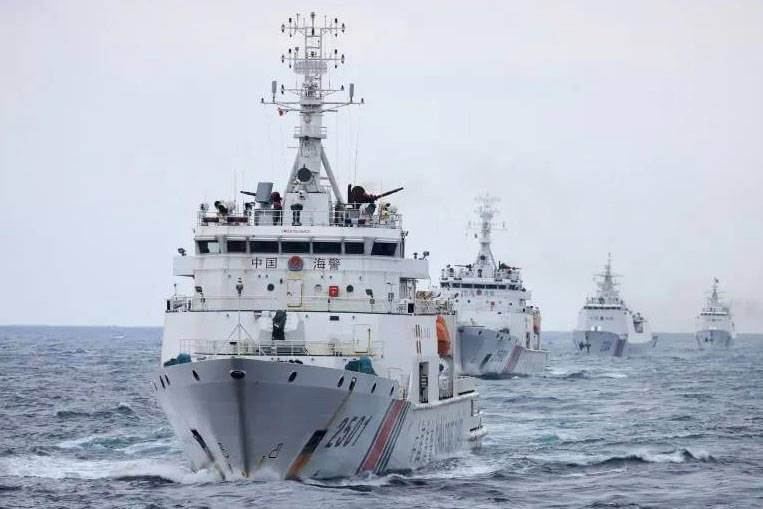
  • Multilateralism in the Indian Ocean Region

    Multilateralism in the Indian Ocean Region

    A number of multilateral initiatives have emerged in the last two decades in the Indian Ocean Region. The composition has been varied, comprising of inside powers, some comprise of a combination of inside and outside powers, given the geographical construct of the region. Their efficiency has been varied. As such, trends indicate that the older, post-world war II multilateral institutions are gradually losing relevance. Newer coalitions appear to hold promise, some to deal with the foregoing challenges and other to facilitate economic aspirations. Dr Sunod Jacob makes an assessment of multilateralism contributing to an inclusive rule based order in the IOR.

    This article is being published as a chapter in the book titled – “Foreign Policy Perspectives for Sri Lanka 2021”.
    Image Credit: Photo by Kyle Glenn on Unsplash.

    Download Full Paper

    The Law of Armed Conflict and its continuing relevance to the South Asian Region