Category: International & Transnational Affairs

  • The End of Pluralism in the Middle East

    The End of Pluralism in the Middle East

    A  truly seismic change in the Middle East has occurred.  At its heart is a devil’s bargain – Turkey and the Gulf States accept the annihilation of the Palestinian nation and the creation of a Greater Israel, in return for the annihilation of the Shia minorities of Syria and Lebanon and the imposition of Salafism across the Eastern Arab world.

    This also spells the end for Lebanon and Syria’s Christian communities. Witness the tearing down of all Christmas decorations, the smashing of all alcohol and the forced imposition of the veil on women when the jihadists — who overthrew the government of Bashar al-Assad on Sunday — first took Aleppo a mere two weeks ago.

    The speed of the collapse of Syria took everybody by surprise. Next, a renewed Israeli attack on Southern Lebanon to coincide with a Salafist invasion of the Bekaa Valley seems inevitable, as the Israelis would obviously wish their border with their new Taliban-style Greater Syrian neighbour to be as far North as possible.

    It could be a race for Beirut, unless the Americans have already organised who gets it.

    It is no coincidence that the attack on Syria started the day of the Lebanon/Israel ceasefire. The jihadist forces do not want to be seen to be fighting alongside Israel, even though they are fighting forces which have been relentlessly bombed by Israel, and in the case of Hezbollah are exhausted from fighting Israel.

    The Times of Israel has no compunction about saying the quiet part out loud, unlike the British media:

    In fact, Israeli media is giving a lot more truth about the Syrian rebel forces than British and American media. This is another article from The Times of Israel:

    “While HTS officially seceded from Al Qaeda in 2016, it remains a Salafi jihadi organization designated as a terror organization in the US, the EU and other countries, with tens of thousands of fighters.

    Its sudden surge raises concerns that a potential takeover of Syria could transform it into an Islamist, Taliban-like regime – with repercussions for Israel at its south-western border. Others, however, see the offensive as a positive development for Israel and a further blow to the Iranian axis in the region.”

    Contrast this to the U.K. media, which from the Telegraph and Express to The Guardian has promoted the official narrative that not just the same organisations, but the same people responsible for mass torture and executions of non-Sunnis, including Western journalists, are now cuddly liberals.

    Nowhere is this more obvious than the case of Abu Mohammad Al-Jolani, sometimes spelt Al-Julani or Al-Golani, who, now nominally in charge in Damascus, is being boosted throughout Western media as a moderate leader. He was the deputy leader of ISIS, and the CIA actually has a $10 million bounty on his head! Yes, that is the same CIA. which is funding and equipping him and giving him air support.

    Supporters of the Syrian rebels still attempt to deny that they have Israeli and U.S. support – despite the fact that almost a decade ago there was open Congressional testimony in the U.S.A. that, to that point, over half a billion dollars had been spent on assistance to Syrian rebel forces, and the Israelis have openly been providing medical and other services to the jihadists and effective air support.

    Violates UK Terrorism Act

    One interesting consequence of this joint NATO/Israel support for the jihadist groups in Syria is a further perversion of domestic rule of law. To take the U.K. as an example, under Section 12 of the Terrorism Act it is illegal to state an opinion that supports, or may lead somebody else to support, a proscribed organisation.

    The abuse of this provision by British police to persecute Palestinian supporters for allegedly encouraging support for proscribed organisations Hamas and Hezbollah is notorious, with even tangential alleged references leading to arrest. Sarah Wilkinson, Richard Medhurst, Asa Winstanley, Richard Barnard and myself are all notable victims, and the persecution has been greatly intensified by Keir Starmer.

    Yet Hay’at Tahrir Al-Sham (HTS) is also a proscribed group in the U.K. But both British mainstream media and British Muslim outlets have been openly promoting and praising HTS – frankly much more openly than I have ever witnessed anyone in the U.K. support Hamas and Hezbollah – and not a single person has been arrested or even warned by U.K. police.


    That in itself is the strongest of indications that Western security services are fully behind the overthrow of the government in Syria.

    For the record, I think it is an appalling law, and nobody should be prosecuted for expressing an opinion either way. But the politically biased application of the law is undeniable.

    When the entire corporate and state media in the West puts out a unified narrative that Syrians are overjoyed to be released by HTS from the tyranny of the Assad regime – and says nothing whatsoever of the accompanying torture and execution of Shias, and destruction of Christmas decorations and icons – it ought to be obvious to everybody where this is coming from.

    Yet – and this is another U.K. domestic repercussion – a very substantial number of Muslims in the U.K. support HTS and the Syrian rebels, because of the funding pumped into U.K. mosques from Saudi and Emirate Salafist sources.

    This is allied to the U.K. security service influence also wielded through the mosques, both by sponsorship programmes and “think tanks” benefiting approved religious leaders, and by the execrable coercive Prevent programme.

    U.K. Muslim outlets that have been ostensibly pro-Palestinian – like Middle East Eye and 5 Pillars – enthusiastically back Israel’s Syrian allies in ensuring the destruction of resistance to the genocide of the Palestinians. Al Jazeera alternates between items detailing dreadful massacre in Palestine, and items extolling the Syrian rebels bringing Israel-allied rule to Syria.

    Among the mechanisms they employ to reconcile this is a refusal to acknowledge the vital role of Syria in enabling the supply of weapons from Iran to Hezbollah. Which supply the jihadists have now cut off, to the absolute delight of Israel, and in conjunction with both Israeli and U.S. air strikes.

    In the final analysis, for many Sunni Muslims both in the Middle East and in the West, the pull seems to be a stronger sectarian hatred of the Shia and the imposition of Salafism, than preventing the ultimate destruction of the Palestinian nation.

    I am not a Muslim. My Muslim friends happen to be almost entirely Sunni. I personally regard the continuing division over the leadership of the religion over a millennium ago as deeply unhelpful and a source of unnecessary continued hate.

    Classic Divide and Rule

    But as a historian, I do know that the Western colonial powers have consciously and explicitly used the Sunni/Shia split for centuries to divide and rule. In the 1830s, Alexander Burnes was writing reports on how to use the division in Sind between Shia rulers and Sunni populations to aid British colonial expansion.

    On May 12, 1838, in his letter from Simla setting out his decision to launch the first British invasion of Afghanistan, British Governor General Lord Auckland included plans to exploit the Shia/Sunni division in both Sind and Afghanistan to aid the British military attack.

    The colonial powers have been doing it for centuries, Muslim communities keep falling for it, and the British and Americans are doing it right now to further their remodelling of the Middle East.

    Simply put, many Sunni Muslims have been brainwashed into hating Shia Muslims more than they hate those currently committing genocide of an overwhelmingly Sunni population in Gaza.

    I refer to the U.K. because I witnessed this first-hand during the election campaign this year in Blackburn [where Murray ran for Parliament.] But the same is true all over the Muslim world. Not one Sunni Muslim-led state has lifted a single finger to prevent the genocide of the Palestinians.

    Their leadership is using anti-Shia sectarianism to maintain popular support for a de facto alliance with Israel against the only groups – Iran, Houthi and Hezbollah – which actually did attempt to give the Palestinians practical support in resistance. And against the Syrian government which facilitated supply.

    The unspoken but very real bargain is this: The Sunni powers will accept the wiping out of the entire Palestinian nation and formation of Greater Israel, in return for the annihilation of the Shia communities in Syria and Lebanon by Israel and forces backed by NATO (including Turkey).

    There are, of course, contradictions in this grand alliance. The United States’ Kurdish allies in Iraq are unlikely to be happy with Turkey’s destruction of Kurdish groups in Syria, which is what Turkish President Recep Tayyip Erdogan gains from Turkey’s very active military role in toppling Syria – in addition to extending Turkish control of oilfields.

    The Iran-friendly Iraqi government will have further difficulty with reconciling the U.S. continuing occupation of swathes of its country, as they realise they are the next target.

    The Lebanese army is under the control of the U.S.A., and Hezbollah must have been greatly weakened to have agreed to the disastrous ceasefire with Israel. Christian fascist militias traditionally allied to Israel are increasingly visible in parts of Beirut, though whether they would be stupid enough to make common cause with jihadists from the North may be open to question.

    But now that Syria has fallen to jihadist rule, I do not rule out Lebanon following very quickly indeed, and being integrated into a Salafist Greater Syria.

    How the Palestinians of Jordan would react to this disastrous turn of events, it is hard to be sure. The British puppet Hashemite Kingdom is the designated destination for ethnically cleansed West Bank Palestinians under the Greater Israel plan.

    What this all potentially amounts to is the end of pluralism in the Levant and its replacement by supremacism. An ethno-supremacist Greater Israel and a religio-supremacist Salafist Greater Syria.

    Unlike many readers, I have never been a fan of the Assad regime or blind to its human rights violations. But what it did undeniably do was maintain a pluralist state where the most amazing historical religious and community traditions – including Sunni (and many Sunni do support Assad), Shia, Alaouites, descendants of the first Christians, and speakers of Aramaic, the language of Jesus – were all able to co-exist.

    The same is true of Lebanon.

    An End of Tolerance

    What we are witnessing is the destruction of that and the imposition of a Saudi-style rule. All the little cultural things that indicate pluralism – from Christmas trees to language classes to winemaking to women going unveiled – have been destroyed in Aleppo and soon perhaps in Damascus and Beirut.

    I do not pretend that there are not genuine liberal democrats among the opposition to Assad. But they have negligible military significance, and the idea that they would be influential in a new government is delusion.

    In Israel, which pretended to be a pluralist state, the mask is off. The Muslim call to prayer has just been banned. Arab minority members of the Knesset have been suspended for criticising Netanyahu and genocide. More walls and gates are built every day, not just in unlawfully occupied territories but in the “state of Israel” itself, to enforce apartheid.

    I confess I once had the impression that Hezbollah was itself a religio-supremacist organisation; the dress and style of its leadership look theocratic.

    Then I came here and visited places like Tyre, which has been under Hezbollah-elected local government for decades, and found that swimwear and alcohol are allowed on the beach and the veil is optional, while there are completely unmolested Christian communities there.

    I will never now see Gaza, but wonder if I might have been similarly surprised by Hamas’s rule.

    It is the United States which is promoting the cause of religious extremism and of the end, all over the Middle East, of a societal pluralism similar to Western norms.

    That is of course a direct consequence of the United States being allied to both the two religio-supremacist centres of Israel and Saudi Arabia.

    It is the U.S.A. which is destroying pluralism, and it is Iran and its allies which defend pluralism. I would not have seen this clearly had I not come here. But once seen, it is blindingly obvious.

    Feature Image: nypost.com

    This article was published earlier in scheerpost.com

    It is republished under the Creative Commons Attribution-NonCommercial-NoDerivatives 4.0 International license.

  • An Outside View of the US 2024 Presidential Election

    An Outside View of the US 2024 Presidential Election

    What was the voter turnout?

    The big change is that Harris, so far, has lost 9 million voters since 2020, while Trump has gained only 1.2 million. Harris’s count of lost votes will decline as the final votes come in, but the bigger story remains that Harris lost more votes than Trump gained.

    Voter turnout is NOT final, but it is likely between 153 and 156 million, down from 2020 but still the second-highest percentage turnout in 100 years. At a minimum, 107 million adults did not vote (88 million of whom are “eligible” to vote). Thus, 41% or more of the adult population and 36% of the eligible voters did not vote.

    Using the percentage of voter groups who voted for Trump is misleading.  The news remains that the significant change is the loss of Harris voters.

    What were the economic issues?

    Daily survival has become a serious problem for the bottom 65% due, specifically, to the inflation of grocery items and increasing mortgage payments and rent. Aggregate figures don’t reflect this reality.

    Workers’ actual standard of living was worse under Biden than under Trump.

    Real wages in the US remain lower than they were a half-century ago.

    Are there differences between Democrats and Republicans?

    US electoral parties are NOT like those in Europe – they have always been a different version of bourgeois electoral systems. Both major US parties are corporations, not parties with memberships, ideologies, and programs. They are designed like a marketplace of individuals preening for the Presidency, much like the Westminster Kennel Club Dog Show, but only held every four years.

    The Democrats turned over their foreign policy to the CNAS group of neo-con warmongers who will now be displaced.

    The Republicans are also not an actual party; Trump proved this, and what is next for Republicans post-Trump is also uncertain.

    What are the class shifts in the US?

    There is a new stratification of the bourgeoisie, with billionaires as a new factor. The increasingly dominant discourse amongst the capitalist class has the wherewithal to exert its influence.

    Fifty Billionaires put 2.5 billion US dollars, 45% of the 5.5 billion total, into the Presidential election. Of this, 1.6 billion went to the Republicans, 750 million to the Democrats, and the rest to both. The total spent on the election, in all races, was 16 billion, a sign of a kleptocracy, not a thriving democracy.

    washingtonpost.com/elections/interactive/2024/biggest-campaign-donors-election-2024

    There is a concerted effort by a section of libertarian tech billionaires, including Thiel and Musk, to have their hands directly on the levers of the state to control the race for global domination of AI. They believe that they alone should control the advances in the AI space for the world and that the initial next step is what is called Artificial General Intelligence (AGI). These megalomaniacs believe this will begin the control of humans by machine intelligence and, perhaps, in their perverse dreams, the end of humanity.

    A growing number of lesser capitalists, such as multimillionaires, are now being lumped into the upper middle class and the wealthiest one-third of voters. One very important trend to note is that in the last fifteen years, the richest one-third have switched allegiance from Republicans to Democrats.

    Why did Harris lose 6 to 9 million votes?

    Workers were worse off, wages did not keep up, and inflation left a long, lingering impact.  Some of the youth vote left for economic reasons. Others were disillusioned and demoralised by the full-throated support of the genocidal war in Gaza by the Democratic Party. Muslims, while a small group, voted for a third party or Trump.

    Despite the fabrications of the Democratic Party corporate handlers, Harris was, in fact, inauthentic, unlikeable, shallow, and could not mask her history as a prosecutor who spent her life attacking the rights of the poor.

    Dissatisfaction with many Western elected parties is growing – Conservative in the UK, Centre Right in France, right-wing in Germany – all thrown out. Biden left a demoralised Democratic Party and left too late.

    Fear-mongering about fascism was core to the rhetoric of the Democrats, even though no one knows what the term means.  Some voters became annoyed at the harassment by the liberals to vote for them since they were the last rail of defence against fascism. Many people did not believe Trump was, in fact, a fascist, nor did they believe that every one of their family members who listened to Trump was a fascist.

    Apathy is growing and remains a real issue.

    Probably over a million stayed at home as they could not stomach the Democratic Party’s gleeful support for Genocide. Trump’s victory in Michigan was certainly due to this issue.

    Harris played to and fawned over the war criminal Dick Cheney, the architect of the invasion of Iraq and a historic right-wing enemy of the Democrats.  We don’t know how many voters left in disgust. 

    Why did Trump gain votes?

    Trump took advantage of working-class dissatisfaction. Even so, he only gained less than 2 million total new votes. There is no evidence of a widescale shift of working-class votes to the Republicans in this election.

    Working-class women voted for local candidates supporting abortion but voted for Trump for economic and other reasons. Others voted on local issues important to them and then voted for Trump as they felt that despite his unsavoury behaviours, he was more committed to “shaking things up”.

    The billionaire class made sure that Trump had ample funds. Elon Musk’s America Pac spent $118 million handling field operations for the Trump campaign, an unusual role for a super PAC.

    From 2008 to 2020, there was a decline in the percentage of voters supporting the Democrats amongst the bottom 1/3 of income earners in the US.

    ft.com/content/6de668c7-64e9-4196-b2c5-9ceca966fe3f


    Too little data is available now to provide a detailed answer about the relatively insignificant number of voters who voted Democrat in 2020 and Republican in 2024.

    What is the assessment of the new cabinet positions announced?

    Trump’s sixteen appointments to date are all vocal supporters of genocide in Palestine. In the United States, there are both Jewish and Christian Zionists. Trump has appointed several Christian Zionists. The majority are China hawks.

    When analysed from a US statecraft point of view, many are extremely underwhelming candidates. These include:

    • Secretary of State: Senator Marco Rubio: He is a rigid, fierce anti-communist.
    • Secretary of Defense: Pete Hegseth, an Army National Guard veteran and Fox News host: He is divisive and has no high-level military experience.
    • Attorney General: Representative Matt Gaetz of Florida: He has no experience in the Department of Justice and has had past legal controversies.
    • Director of National Intelligence: Former Representative Tulsi Gabbard of Hawaii. She has no intelligence background but is perhaps less rigid on international issues, a non-interventionist, and has a friendship with Indian Prime Minister Modi.
    • Ambassador to the United Nations: Representative Elise Stefanik of New York. She is an extreme Zionist, has near zero diplomatic experience, and has focused only on domestic issues, but is loyal to Trump.
    • Secretary of Homeland Security: South Dakota Governor Kristi Noem. She lacks national government experience, and her actions have veered toward radical anti-federalism.

    Due to some of these appointments, US stature in international affairs will likely diminish.

    Trump has brilliantly dismissed the extremely dangerous Pompeo. He has made it clear that few from the first inner group of his cabinet and advisors will return. The world will not miss them. Yet there is little evidence to suggest that Trump has the capacity to lead any group successfully for even an intermediate period. He is known for turning on people and turning them against each other.

    How do we interpret the vote?

    A significant section of the working class understandably abandoned the Democrats in this election.

    There is not a major right-wing shift in US attitudes, but there is a real base for the right.

    The Democratic Party elite is completely divorced from the masses. Parading the loyal royal cultural elite like Taylor Swift, Beyonce, and Bruce Springsteen reeked of wealth, opulence, and tone-deafness.

    Apathy should not be understated. At least 88 million didn’t vote, with a further 19 million disenfranchised.

    Third parties are structurally prevented from winning even a single state in a presidential election. They are structurally locked out of Congress. The United States has locked in a two-party system. Most voters have been captured by this belief.

    Small exceptions to this are wealthy candidates like Ross Perot in 1992 and Robert Kennedy Junior.

    There was huge intimidation at the end against supporters of third-party candidates, which depressed their vote even more than usual. In this just-held election, the Party for Liberation and Socialism Candidate Claudia Cruz received 134,348 votes so far.  Claudia Cruz’s 134 thousand votes is the highest number of votes for an explicit communist in American history. It exceeds the CPUSA’s William Z. Foster’s previous record of 120,000 votes in 1932. The 1932 vote was a higher percentage of the population as the US was smaller in 1932. These facts are a reminder of the long-term campaign of anti-communism within the US.

    Capital is clearly happy with Trump’s win, as evidenced by the November 6th celebration rally on Wall Street. They disagree with the liberal hype that he will bring an end to American society.

    Despite the lies of the liberals, the facts are that Trump formally initiated the New Cold War on China. His inner team are more fiercely anti-China than the Democrats, who are more bound to the Ukraine War.

    Trump has fewer restraints, controlling the Senate, House, Supreme Court, and Presidency.

    He could well launch a Third World War.  It would be a mistake to underestimate this danger.

    Other things people outside the US should know

    There is a tendency in some parts of the Global South to have a simplistic and false analysis that any enemy of the liberals is a friend of the Global South. This is a severely flawed argument. The imperialist far-right is not a good guy, a cultural conservative who wants to protect families and cultural life. Inside the US, conservative culture is tightly tied to slavery and genocide. It is misogynistic, racist, militaristic, and reactionary. We should not confuse the histories of Iran, Turkey, India, Ghana, and China with those of the US.

    Welcoming divisions in the enemy camp is often entirely correct. But Communists, socialists, and true democrats do not support reactionary views and always side with the people, not the far-right ideologues.

    There is also great confusion about MAGA and MAGA-Communism. First, Make America Great Again (MAGA) means returning (the second “A” in MAGA) to the full glory of the US industrial past. But what was that past? It was, in fact, the total economic, political, military, and racial subordination of the peoples of the Global South states to the US. It was the century of humiliation in China. This is not a return to be welcomed by history. MAGA is a profoundly reactionary, unacceptable outcome and concept.

    One of the greatest poets in the United States is Langston Hughes. One of his poems was called “Let America Be America Again.” But this was a parody as the actual statement was made in the refrain, “America Never Was America to Me”. The meaning of this poem was the false portrayal of the United States as ever having a glorious past, which was never true for the slaves or the working class.

    Second, there are a handful of personalities in the US who have taken the great word communism and sullied it with the idea of returning to this falsely idealised America. The old “strong” American industry was built on the backs of low-paid workers in the mines in Africa and elsewhere.

    Desiring a real communist path is a good thing. But tying it to an imperialist past, a past of violence, with reactionary views is the opposite path taken by Lenin, Mao, and Fidel.

    There is also a dangerous tendency to simply reject the liberal concepts of identity politics and embrace the values of far-right conservatism while lacking scientific thinking about the plight of women and other vulnerable groups.

    The CPC led the country in the first national Soviets in Ruijin in the struggle to abolish the prejudices of feudalism and emancipate women and national minorities in China. However, these rights have not yet been achieved in many countries, as there has been no communist revolution.

    True Communism is the path to advancing the overall interests of the working class in all countries, including women, national minorities, and other vulnerable groups.

    The Republican voter base in class-terms is the lower-middle class, which is overwhelmingly white, suburban, rural. It is amplified by fundamentalist Christians and the Republican regional strongholds.

    There are six “ideological” trends, all extreme right, in the Republican camp:

    1. Populist demagogues
    2. Extreme Libertarians
    3. Fanatical Christian-Zionists
    4. Virulent anti-communists
    5. Dangerous AI-obsessed Tech billionaires
    6. Complex conservatives

    The US economy will continue to perform poorly but better than the rest of the West. It will continue to use its dollar hegemony, reinforced with sanctions, to remove hundreds of billions from the Global South and to force Europe, Australia, and Japan to subordinate their economic interests to those of the US.

    The actual US budget for the military was $1.8 trillion last year. Significant cuts seem improbable.

    There is now a permanent Black upper middle class that produces a Black mis-leadership. This mis-leadership group has created two decades of Black war criminals and apologists for empire. The rise of this mis-leadership gang, however, should not overshadow the fact that most blacks remain oppressed and exploited.

    The anti-immigrant politics in the U.S. is directed primarily at undocumented immigrants from Mexico, Central America and the Caribbean.

    But there is a false belief that all immigrants in the US are working class and progressive – it is just not true. An important stratum of non-working-class immigrants in the US are amongst the most virulent defenders of US atrocities in the world.

    There is a belief that there is a conspiracy of some secret group of members of the military and government that decide most things, which they call the Deep State. This is a lazy concept. It denies that all states have a class character and permanent army. In the US, it has been estimated that over 5 million people have security clearance, and many have near-lifetime employment. There is no need for conspiracy theories. The US does have an advanced state that functions on behalf of capital. This state manages the affairs of the often-competing large capitalists and is now increasingly primarily favouring the billionaires amongst the capitalist class. Thus, a better way to see the US State is through the lens of Mao, Lenin, and Marx and not as some inexplicable conspiracy.

    There is a special relationship between the US and Israel, both extreme white-settler states. In the US alone, over 30 House, Senate, and cabinet members are dual citizens of the US and Israel. Israel does not control the US, BUT they are socially a duopoly.

    They are the CORE of Ring 1 of the Global North, the core of the imperialist bloc, along with the UK, Canada, and Australia.

    The long-term trend is clear – bourgeois liberal democracy is failing globally.

    What is the domestic consequence of the vote?

    Since 2016, the very top of the capitalist class has led and mobilised a neo-fascist movement. Increasing levels of force and lawfare will now be used internally inside the US.

    Trump himself is not a fascist per se. He is super-egoistic and believes he can act with near absolute impunity.

    But he is riding on, and a beneficiary of changing class phenomena.

    Fascism is not so much an ideology as a structural class relationship in which the lower-middle class, which has a revanchist ideology, is mobilized by big capital during a period of internal and external disequilibrium.

    The New York Times and Financial Times use the word fascism as a scare tactic to maintain their role and influence in the state. Neo-fascism is a more precise word than fascism at this moment to describe the changes in the US.

    Historically, there are a few things that are necessary to define a fully fascist state in imperialist countries. One is that the state uses methods of control it would typically use only for its colonies and neo-colonies, i.e., extreme widespread violence and force.  The other is that they resort to the overthrow of the constitution.

    The Constitution is unlikely to be changed directly. However, the original Constitution, an eighteenth-century document, has many gaps that can be exploited.

    Radical and extreme legal changes are thus probable. There will be a reversal of 70 years of civil rights.

    Overall, it remains to be seen how far the capitalist class is willing to go.

    State capacity in many areas other than defence and border police will be diminished. Trump 1 saw big cuts in the State Department.  Even with Rubio present, it is unlikely to be refunded to its old level.

    The Billionaires will play a direct role in key tasks, from meeting Zelensky to chain-sawing government departments. Some departments, like Agriculture, Education, and Health and Human Services, are, in fact, decrepit, corrupt and dysfunctional. But a billionaire-led revamp will result in an unsavoury privatized equally dysfunctional capitalist state bureaucracy.

    Trump is committed to a long-term isolationist strategy.  But the US has over 900 military bases abroad. It has fully supported the expansion of Israel’s War in the Middle East, building up its military in the process.

    Trump will not block the infrastructure projects that were voted in during Biden. The US recognises that its lost manufacturing capacity is a strategic deficit in military supply.

    The brunt of the cutbacks will still increase the suffering of the 150 million working-class poor in the US.

    The Left will be even more subjected to severe repression. Rubio is salivating.

    What are the possible international consequences?

    Despite the recent Zelensky meeting, the US will probably push a cease-fire and curtail the Ukraine war. Crimea is off the table. The current military lines will be the starting point. Doing this could reduce the immediate danger of a nuclear war. In April of this year, both Vance and Rubio voted against the 95-billion-dollar US military aid bill for Ukraine.

    With Israel, there are three main possibilities:

    1. Trump curtails Netanyahu and calls for an end to Lebanon, no regime change in Iran, and an unjust peace agreement.
    2. He falls prey to the Christian Zionists and continues Genocide against Palestine.
    3. He goes against his no-war statements and approves an escalation with Iran.

    We don’t know, but option one is not impossible. Trump wants a deal with Saudi Arabia.

    A few days ago, MBS was forced to call it a Genocide, a rare statement from a long-term US ally.

    With China, there are also three possibilities:

    1. Trump says tariffs are his favourite word in the English language and wants to increase them and eliminate domestic taxes.
    2. Rubio and other super China-hating cabinet members push him to escalate.
    3. US national security elements and US tech moguls like Peter Thiel push US military preparations.

    On the question of Taiwan, some in the Global South fall for the liberal messaging soundbite in the West that Trump, the dealmaker, will sell Taiwan for a fee. This would bring strong resistance from the US military and large sections of the anti-communist members of his core group. This is a very unlikely case.

    The world should not be confused if Trump does initiate a ceasefire in Ukraine and pressures Netanyahu to curtail the Genocide. Neither of these actions reverses the long-term trend of the US towards militarization against China. Nothing Trump does will turn around anaemic long-term US economic growth.

    China is still on target to surpass the US in current exchange rate GDP within 10 years.

    The US state is still on a long-term course to use its self-perceived military supremacy to destroy what it perceives as the Eurasian threat. It remains committed to dismembering the Russian Federation and overthrowing the CPC. The imperialists believe this is the path to a thousand-year reign of unilateral power.

    The US will continue, unabated, its strategy of seeking nuclear primacy and what is called the “counterforce” strategy, which plans on the use of a first strike or launch of nuclear weapons. Evidence of these dangerous changes in US military strategy can be seen by their unilateral withdrawal from the following treaties:

    • 2002 (Bush): the Anti-Ballistic Missile (ABM) treaty.
    • 2019 (Trump): the Intermediate Nuclear Forces (INF) treaty
    • 2020 (Trump): the Open Skies treaty

    Tucker Carlson has Trump’s ear for now and is not a proponent of military conflict.

    In 2023, a four-star general, Minihan, claimed that the US would be in a hot war with China in 2025. These are not accidental statements.

    It is unknown if Rubio, some of the far-right libertarians, and CNAS-influenced military forces can overcome Trump’s dislike of military conflict.

    The US is likely to increase its attention on Latin America and increase support for the far right like Bolsonaro and Milei.

    Large-scale aid to Africa is not likely to happen. The Angola railway project is now improbable.

    Final comments

    The US state is still on a long-term course to use its self-perceived military supremacy to destroy the Eurasian threat.

    The US has adopted counterforce and nuclear supremacy as its prime military strategy.

    The threat of war has not changed due to a new administration. Only, perhaps, the speed at which it will be accomplished.

    The economic and political assaults against the US working class will escalate, especially against progressives.

    The state will continue to tighten its grip on the so-called bourgeois democratic freedoms by further restricting voting rights, civil rights, and freedom of speech.


    This article was published earlier on MRonline 
    The article is republished underCreative Commons  Attribution-NonCommercial-NoDerivatives 4.0 International License.

    Creative Commons License


  • Crimson Cows and Indian Sensibilities

    Crimson Cows and Indian Sensibilities

    That Israel, in addition to being an apartheid state, has gone completely rogue is no longer in doubt. As Israel digs itself into a deeper hole, in the belief that it can kill its way to success, it finds that this year its GDP has collapsed from 4.8% in 2022 to 1.5%, with over 46000 small businesses having shut down. By some estimates, between 500,000 to 1 million Israelis have permanently emigrated.


    Approximately 7 million Jewish Israelis and an equal number of Palestinians live cheek-by-jowl between the Mediterranean Sea and the Jordan River. The area encompasses Israel, the occupied territories of the West Bank, including East Jerusalem, and the Gaza Strip.  Nominally, the Palestinians in the West Bank do have limited self-rule, but defacto have no control over the movement of people and goods, or taxes. Agreements signed in the 1990’s, permit the Israeli Government to collect taxes on behalf of the Palestinian Authority (PA), which it then disburses to the PA for its use. These taxes make up over 65-70% of the PA’s public budget and have a critical impact on the quality of life of ordinary Palestinians.

    As has been the norm with Israel, it has used every means, including financial control, to inflict collective punishment on the Palestinians at any attempt by them to free themselves from Israeli occupation. In May this year, for example, it withheld disbursal of all taxes collected over the past three months on grounds that Spain, Ireland and Norway had announced they would recognise the Palestinian State. This resulted in the breakdown of municipal services and widespread loss of jobs. Subsequently, in June it indulged in blatant blackmail when it agreed to disburse withheld funds, provided the PA retroactively approved five settlements in the West Bank that had been illegally established earlier, despite condemnation by Palestinians and the international community.

    While the Hamas attack of 7 October 2023, especially their despicable actions against women, children and civilians, has been widely condemned, the fact that over half of the 1200 Israelis killed, were by their own military in pursuant of the reprehensible “Hannibal Directive”, continues to be glossed over. Oddly enough, over the course of that year, prior to the attack, the fact that over 200 Palestinians had been killed by the Israeli military and settlers for a variety of reasons has simply been ignored by the international media and not been seen as the immediate provocation for the attack, especially its ferocity.

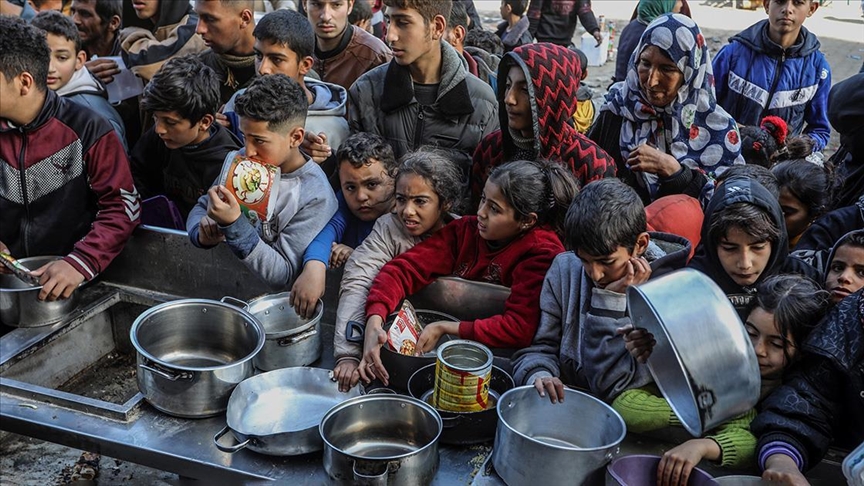
    It now emerges, that the numbers of Palestinians killed by the Israeli response has been grossly underestimated. As per a study dated 10 July 2024 in the Lancet, a respectable and authoritative medical journal, an estimated 186000-200,000 Palestinians have been killed in Gaza, directly or indirectly. This is approximately 9% of the total population, the overwhelming majority of them being women and children.

    The Israeli response to this attack was disproportionate, to put it mildly, but it still continues to receive full support from Western Governments. It now emerges, that the numbers of Palestinians killed by the Israeli response has been grossly underestimated. As per a study dated 10 July 2024 in the Lancet, a respectable and authoritative medical journal, an estimated 186000-200,000 Palestinians have been killed in Gaza, directly or indirectly. This is approximately 9% of the total population, the overwhelming majority of them being women and children.

    The difference between these estimates and the official figures released by the Gaza Health Ministry, which presently stands at approximately 43000, is explained by the fact that the Ministry only accounts for bodies that have been found and not for those remaining under the rubble, that the cities have been reduced to. Nor does it account for the indirect deaths due to hunger, non-availability of medical help etc. Studies suggest that these tend to be between 5-10 times higher than the official figures.

    Israel’s inhuman and deliberate response has been decried by experts, governments, United Nations Agencies and NGOs. They have gone on to accuse Israel of carrying out a genocide against the Palestinian population in Gaza, and more recently, in the West Bank. What is even more horrific, if that is even possible, are the accusations made by Dr. Feroze Sidhwa, an American trauma surgeon, on his return from Gaza. In his devastating op-ed in The New York Times, titled “65 Doctors, Nurses and Paramedics: What We Saw in Gaza”, he recounts harrowing stories from dozens of healthcare workers and CT scans of children shot in the head or the left side of the chest. The Times called the corresponding images of the patients too graphic to publish. In his words, “44 doctors, nurses and paramedics saw multiple cases of preteen children who had been shot in the head or chest in Gaza… He personally identified 13 such cases in his two weeks there”.

    That Israel, in addition to being an apartheid state, has gone completely rogue is no longer in doubt. In July this year, for example,  a video was leaked of the gangrape of a male Palestinian prisoner by guards of the IDF at the Sde Teiman detention facility in Southern Israel. Commentators in Israel referred to this video as just the tip of the iceberg, but what followed is instructive. Ten soldiers were arrested and faced trial for this act, but not before a mob, led by government ministers, attempted to free them forcibly from detention. Another minister demanded an investigation to identify the individual who had leaked the video so that he could be tried for treason. An MP from the governing Likud Party defended the actions of the guards in Parliament, responding to a question by an Arab-Israeli MP with “If he is a Nukhba (Hamas militant), everything is legitimate to do! Everything!”  Even the Minister responsible for  Prison Services, Ben-Gvir, told Israeli media on the day of the reservists’ arrest that it was “shameful for Israel to arrest our best heroes”.

    This race to the bottom doesn’t end there of course, and as the saying goes, the best is yet to come. As is well known, the Holy City of Old Jerusalem is home to the “Temple”, or as it is now known the Temple Mount. It refers to the two existing Islamic religious structures, the Dome of the Rock and the Al Aqsa Mosque, collectively known as Haram al-Sharif, and considered the third holiest site in Islam. However, according to the Tanakh or the Hebrew Bible, prior to these structures, the ‘First Temple’ was supposedly built on that very site in the 10th century BCE by King Solomon, and stood for five hundred years before being destroyed by the Babylonians. Almost a century later, it was replaced by the ‘Second Temple’ built by Cyrus the Great, only for it to be destroyed by the Romans in 70 CE. The New Testament holds that important events in Jesus’ life took place in the Temple, and the Crusaders attributed the name “Templum Domini” to the Dome of the Rock.

    However, many Jews see the building of a “Third Temple” in Jerusalem as an object of longing and a symbol of future redemption, as it would announce the arrival of a new Messiah who would unite the flock and lead them to salvation. Incidentally, the promised land would incorporate the whole of Palestine, along with parts of Turkey, Syria, Iraq, Saudi Arabia and Kuwait.

    Thus the religious significance and sensitivity of Temple Mount cannot be underestimated. Fortunately, as things stand Non-Muslims are not permitted to enter the two structures, while Jews are only allowed to pray at the Western Wall that runs along the side of the hill and is thought to be a remnant of the Second Temple. However, many Jews see the building of a “Third Temple” in Jerusalem as an object of longing and a symbol of future redemption, as it would announce the arrival of a new Messiah who would unite the flock and lead them to salvation. Incidentally, the promised land would incorporate the whole of Palestine, along with parts of Turkey, Syria, Iraq, Saudi Arabia and Kuwait.

    But before its construction can be undertaken, it would require purification of the site and of the construction crew. That would, however, only be feasible, by sacrificing a red heifer, specifically bred to meet stringent biblical requirements. It would be required to be burnt alive at the Mount of Olives, adjacent to the Al Aqsa Mosque, and its ashes used to consecrate the holy ground and the people. The stuff of hopes and dreams for a tiny minority, with little hope of fulfilment in the modern world, or so one thought.

    These cows represent a tangible step towards the construction of the Temple and fulfilment of the prophecy.  The next obvious step in this tragedy will be the demolition of the Haram al-Sharif, for which dry rehearsals have already been undertaken. The consequences of such a step in the region are not difficult to visualise, but will it stop the extremists? Very unlikely.

    However, in September 2022, an unprincipled collaboration between extreme Zionist religious leaders, Right-Wing Christian Evangelicals and the present Israeli Government allowed for five red heifers to be flown from Texas to Israel. Ironically enough, despite the Evangelicals being well-known for their antisemitic beliefs. Brought in as pets, to avoid existing restrictions on livestock, they are now kept in an archaeological park in Shiloh, an illegal Israeli settlement, near the Palestinian city of Nablus. These cows represent a tangible step towards the construction of the Temple and fulfilment of the prophecy.  The next obvious step in this tragedy will be the demolition of the Haram al-Sharif, for which dry rehearsals have already been undertaken. The consequences of such a step in the region are not difficult to visualise, but will it stop the extremists? Very unlikely.

    As Israel digs itself into a deeper hole, in the belief that it can kill its way to success, it finds that this year its GDP has collapsed from 4.8% in 2022 to 1.5%, with over 46000 small businesses having shut down. By some estimates, between 500,000 to 1 million Israelis have permanently emigrated. In addition, it finds itself short of weapons, ammunition, tanks and manpower as heavy casualties in the ongoing conflict have taken their toll. Yet, its arrogant leadership refuses to pay heed to that one cardinal rule about tackling insurgencies; they are a political problem and can only be resolved politically.

    The question that it raises for us is do we really need such friends, and more importantly, are our commercial interests so important that we are willing to forego all that we hold sacred?

    Clearly, if Israel refuses to change direction its days are numbered. After all its most steadfast ally, the United States, can only support so many losing causes. With Ukraine on the brink, an ascending Russo-China coalition to deal with and Taiwan increasingly under threat, an intransigent Benjamin Netanyahu is a liability, who may well find himself the target of a drone, be it American or Iranian. This is very likely despite Trump’s victory to become the 47th President of the United States. The question that it raises for us is do we really need such friends, and more importantly, are our commercial interests so important that we are willing to forego all that we hold sacred?

    Feature Image Credit: Middle East Eye
    Image – De Gaza: reliefweb.int
    Children of Gaza Image Credit: Middle East Eye – How Israel’s Genocide in Gaza sparked a protest movement in the UK.
    Wailing Wall and Al Aqsa Mosque: Tourist Israel
    Red Heifer Sacrifice Ritual Image: thetorah.com

  • Indus Water Treaty: A Model for International Water Governance

    Indus Water Treaty: A Model for International Water Governance

    Introduction

    Water is the basis of biological sustenance, without which no civilisation can sustain. Access to clean and safely managed water is therefore a human right, not a privilege.

    According to the United Nations Development Programme (UNDP) —

    One in four people still lives without safely managed water services or clean drinking water. Approximately 4 billion people live with severe water scarcity for at least one month of the year, and about half a billion people face water scarcity year-round.

    The water crisis is not an isolated issue but a global challenge. It calls for effective governance not just within the local governments and authorities of a country but transnationally as well.

    International Water Governance refers to this process of decision-making, formulation, and implementation of policies pertaining to the use, management, and distribution of transboundary water resources.

    Peace and cooperation on matters of conflict over water are hard to reach and much harder to maintain. Treaties, multilateral agreements and conventions often govern transboundary waters; one such example of a successful bilateral water-distribution treaty is the Indus Water Treaty (the IWT) of 1960 between India and Pakistan over the regulation and use of the Indus River Basin and its tributaries.

    Indus Water Treaty

    The Indus Water Treaty was signed in 1960 in Karachi between India and Pakistan as facilitated by the World Bank (erstwhile International Bank for Reconstruction and Development or IBRD). It demarcates the sharing and usage of the Indus River and its major tributaries, categorised into “eastern” and “western” rivers for Indian and Pakistani use, respectively.

    The Indus River flows mainly from Tibet and the Himalayan regions of India’s Himachal Pradesh and Jammu and Kashmir and across Pakistan’s Punjab and Sindh before emptying into the Arabian Sea through Karachi.

    Of the six major tributaries of the Indus River— the Beas, Ravi and Sutlej are the “eastern rivers” and the Indus, Chenab and Jhelum are the “western rivers”. The former is for India’s exclusive use after Pakistan’s permitted water use, and the latter is for Pakistan’s exclusive use after the criteria of India’s permitted use are met.

    As a result, the split was made in the ratio of about 20:80 of the total water flow from the Indus system in favour of Pakistan. Pakistan has unrestricted access to the waters of the western rivers for agricultural, domestic, and industrial purposes.

    India too is permitted to use a limited amount of water from these rivers, apart from the eastern rivers, for specified purposes, such as irrigation and power generation. It also lays down detailed regulations for India in building projects over the western rivers.

    Historical context and Security concerns

    As the partition of British India took place on religious lines instead of geographic factors, the division of the historically integrated water system in a manner satisfactory to both countries was a challenging feat. Although most of the river naturally flows through the regions of Pakistan, it primarily originates from India before it enters the former. Hence, Pakistan is the downstream nation of the Indus River. This places Pakistan in a vulnerable position, exposed to the risks of India causing artificial droughts or flooding of its arable lands, which may be used as leverage to control water and food security in times of hostilities.

    According to Pakistan, it was entitled to all the waters of the Indus and its tributaries due to its historical right before or until the partition, also highlighting the threat of severe water scarcity without the continuous flow of the rivers. Whereas India insisted that the waters be equitably distributed on a new post-partition basis by proposing for the first time the separate rationing of the western and eastern rivers between the two nations. Ergo, paving the way for arguably one of the most successful, long-standing bilateral agreements struck between any two agnostic states.

    Provisions and Objectives of IWT

    In 1952, with the World Bank as the mediator, a Working Party consisting of Indian, Pakistani, and World Bank engineers was formed to draw up a cooperative plan for the use, allocation and distribution of the disputed waters. After almost eight long years of negotiations, the Indus Water Treaty was finally ratified in 1960.

    The main provisions of the IWT are as follows:

    • Water distribution:

    India and Pakistan received approximately 30% and 70% of the total waters of the Indus rivers located in India. India’s eastern rivers have a mean annual flow of 40b/m3 while the western of Pakistan have an MAF of 100b/m3.

    • Regulation of water use:

    Use of waters of the eastern and western rivers are explicitly demarcated between India and Pakistan while limited usage of the other country’s rivers is also permitted for specific purposes that are of non-consumptive nature, like hydropower generation, fishing, etc.

    • Water rights:

    According to IWT, although the liberty to use unutilized water of the other country exists, the right over the water is not forfeited over time, even in case of repeated underutilization.

    • Conflict resolution:

    A Permanent Indus Commission (PIC) comprising commissioners from both India and Pakistan is provided for by the Treaty. The PIC serves as a forum for the exchange of hydrological data, information, and views on the implementation of the treaty and the resolution of disputes.

    Aftermath

    The treaty has survived several border skirmishes, terror attacks including the 26/11, and even two full-fledged wars in 1965 and 1971. The terms of water sharing as agreed upon have been adhered to despite such hostilities.

    After the 2016 Uri Attack on an Indian Army base in Jammu and Kashmir and the 2019 Pulwama Attack, threats of revoking the Treaty have been made by India but never materialised, as the Treaty continues to remain intact. However, according to the IWT, the bombing or destroying of dams, barrages, power stations, etc. located in the Indian part of the Indus basin by Pakistan violates the Treaty which can lead to its abrogation.

    Despite Pakistan’s repeated violation of the Treaty by using groundwater of Ravi and Sutlej areas of India for various uses before they cross into its area, and by constructing river training works to reduce river flooding in Pakistan and enhance flooding in India’s Great Rann of Kutch area; no concerns have been raised by the latter hereto.

    With the Treaty in place, several projects have been undertaken on the allotted rivers, India has constructed the Bhakra-Nangal and Salal dams for hydroelectric power generation. Pakistan constructed the Tarbela and Mangla Dams for water storage, irrigation, and hydropower generation.

    Shahpur Kandi and Ratle Projects:

    The Shahpur Kandi project of India over the Ujh river has been objected to by Pakistan for diverting waters of Ujh, a tributary of Ravi, an eastern river exclusive for India’s use. The dam was officially completed in February 2024.

    India’s ongoing Ratle Hydroelectric Project on the Chenab also made headlines, for Pakistan’s objection to its construction in the Indian area after its funding was finally approved in 2021. The dam would have an 850 MW generative capacity, for which a limited reserve of water is required to be reserved. This alarmed Pakistan as it claimed it would pose a risk of possible weaponization of water supply by India in wartime situations. Disagreement over the summoning of a Neutral Expert or a Court of Arbitration as authorised by the Treaty for dispute resolution was settled in 2016 by the World Bank’s decision to let both motions proceed simultaneously. Later, India was allowed to construct the dam by the World Bank despite objections by Pakistan. The project is scheduled to commence operations in 2026.

    A Blueprint for Transboundary Water Cooperation

    The success of the IWT sets an example of how countries can overcome their political differences and contribute to an efficient system of shared resource governance. It successfully helped the Indian subcontinent evade a potential war between the two nuclear-armed states over the river basin, a model for other regions struggling with water scarcity and competition to follow.

    Climate change coupled with the construction of dams and barrages for water storage and regulation carries heavy ecological repercussions like the disruption of river ecosystems, aquatic habitats, and biodiversity of the concerned region. Consequently, endangering the livelihood of the nearby occupants, even forcing them to relocate.  Hence, such a cooperative regulatory mechanism must be in place to facilitate constructive dialogue towards incorporating environmental considerations into water management strategies to tackle and mitigate any negative repercussions.

    The Indus Water Treaty has demonstrated its efficacy as a significant diplomatic agreement between the two neighbouring states, consistently withstanding various challenges over time. The treaty primarily emphasises the importance of cooperation and diplomacy in resolving transboundary water disputes while also establishing a foundation and providing scope for potential future collaboration in numerous domains of shared governance.

    Proposals for its abrogation have been deemed impractical for both parties, as the treaty has endured for six decades. Nevertheless, there is a recognised need to re-examine, renegotiate, revise, and amend the long-standing Treaty to better address contemporary issues, including new ecological and climate change concerns, as well as evolving terms of negotiation.


    References:

    ET Online, (2024, February 26). India completely stops Ravi River water flow to Pakistan. Historical context and significance. The Economic Times. https://economictimes.indiatimes.com/news/india/india-completely-stops-ravi-river-water-flow-to-pakistan-historical-context-and-significance/articleshow/107980936.cms

    Gupta, M.S. (2024, February 25). Shahpurkandi dam complete after 3 decades, will help check unutilised Ravi water flowing to Pakistan. The Print. https://theprint.in/india/governance/shahpurkandi-dam-complete-after-3-decades-will-help-check-unutilised-ravi-water-flowing-to-pakistan/1978380/

    Gupta, S [The Print]. (2023, January 31). Understanding the Indus Waters Treaty & why India is pushing Pakistan for changes [Video]. YouTube. https://youtu.be/pVp93u2IgSg

    MEA Media Centre, (1960, September 19). Bilateral/Multilateral Documents: Indus Waters Treaty. Ministry of External Affairs, Government of India (MEA, GOI). https://www.mea.gov.in/bilateral-documents.htm?dtl/6439/Indus

    Samantha, P.D. (2023, January 31). The Indus Question: India, Pakistan and rivers of concern. The Economic Times. https://economictimes.indiatimes.com/news/india/analysis-india-pakistan-looking-to-exploit-resources-for-more-electricity/articleshow/97462196.cms

    Times Now Digital, (2018, November 7). Pak ‘diplomatic sabotage’ busted: India to go ahead with Ratle hydroelectric project, govt to send team to J&K. Times Now. https://web.archive.org/web/20190225224015/https://www.timesnownews.com/india/article/pakistan-india-ratle-hydroelectric-project-indus-water-treaty-agreement-chenab-shahpur-kandi-dam-project-ujh-multipurpose-project-jammu-and-kashmir/310636

  • What International Order?

    What International Order?

    The recently concluded BRICS summit confirms the process of inevitable transformation of the international order. The US-led West, since the fall of the USSR, has increasingly demonstrated intolerance to their view of the world. The ongoing conflicts in UKraine and Gaza has exposed their duplicity and the entire Global South have come to realise the anamolies in international order and the so-called rules-based system. The West’s unabashed support to Israel’s genocide and babarism in Gaza, despite their peoples’ opposition makes the claims of democracy and humanism in the West sound hollow. Thierry Meyssan dealt incisively with this duplicity of the West, primarily the Ango-Saxon powers, in his speech last year in Magdeburg (Germany), at the conference organized by the magazine Compact, “Amitie avec la Russie”, on November 4, 2023.

    We reproduce the text of Thierry Meyssan’s speech, translated by Roger Lagasse’, and published earlier in voltairenet.org

    In it, he explains what, in his view, constitutes the fundamental difference between the two conceptions of the world order now clashing from the Donbass to Gaza: that of the Western bloc and that to which the rest of the world refers. The question is not whether this order should be dominated by one power (unipolar) or by a group of powers (multipolar), but whether or not it should respect the sovereignty of each. He draws on the history of international law, as conceived by Tsar Nicholas II and Nobel Peace Prize winner Léon Bourgeois.

    – Team TPF

    BRICS Summit 2024 in Kazan, Russia, October 23,2024. Sputnik . Photo hosting agency brics-russia2024.ru

    What International Order?

    Thierry Meyssan

    We’ve seen NATO’s crimes, but why affirm our friendship with Russia? Isn’t there a risk of Russia behaving tomorrow like NATO does today? Are we not substituting one form of slavery for another?

    To answer this question, I would draw on my successive experience as advisor to five heads of state. Everywhere, Russian diplomats have told me: you’re on the wrong track: you’re committed to putting out one fire here, while another has started elsewhere. The problem is deeper and broader.

    I would therefore like to describe the difference between a world order based on rules and one based on international law. This is not a linear story, but a struggle between two worldviews – a struggle we must continue.

    In the 17th century, the Treaties of Westphalia established the principle of state sovereignty. Each is equal to the others, and no one may interfere in the internal affairs of others. For centuries, these treaties governed relations between the present-day Länder, as well as between European states. They were reaffirmed by the Congress of Vienna in 1815 when Napoleon I was defeated.

    On the eve of the First World War, Tsar Nicholas II convened two International Peace Conferences (1899 and 1907) in The Hague to “seek the most effective means of assuring all peoples the benefits of a real and lasting peace”. Together with Pope Benedict XV, he prepared them on the basis of canon law, not the law of the strongest. After two months of deliberation, 27 states signed the final proceedings. The president of the French Radical [Republican] Party, Léon Bourgeois, presented his thoughts [1] on the mutual dependence of states and their interest in uniting despite their rivalries.

    At the instigation of Léon Bourgeois, the Conference created an International Court of Arbitration to settle disputes by legal means rather than by war. According to Bourgeois, states would only agree to disarm when they had other guarantees of security.

    The final text instituted the notion of “the duty of States to avoid war”… by resorting to arbitration.

    At the instigation of one of the Tsar’s ministers, Frédéric Fromhold de Martens, the Conference agreed that, during armed conflict, populations and belligerents must remain under the protection of the principles resulting from “the usages established between civilized nations, the laws of humanity and the dictates of public conscience”. In short, the signatories undertook to stop behaving like barbarians.

    This system only works between civilized states that honour their signatures and are accountable to public opinion. It failed, in 1914, because states had lost their sovereignty by entering into defense treaties that required them to go to war automatically in certain circumstances that they could not assess for themselves.

    Léon Bourgeois’s ideas gained ground, but met with opposition, including from his rival in Georges Clemenceau’s Radical Party. Clemenceau did not believe that public opinion could prevent wars. Nor did the Anglo-Saxons, U.S. President Woodrow Wilson and British Prime Minister Lloyd George. At the end of the First World War, these three men substituted the might of the victors for the fledgling international law. They shared the world and the remnants of the Austro-Hungarian, German and Ottoman empires. They blamed Germany alone for the massacres, denying their own. They imposed disarmament without guarantees. To prevent the emergence of a rival to the British Empire in Europe, the Anglo-Saxons began to pit Germany against the USSR, and secured France’s silence by assuring her that she could plunder the defeated Second Reich. In a way, as the first President of the Federal Republic, Theodor Heuss, put it, they organized the conditions for the development of Nazism.

    As they had agreed among themselves, the three men reshaped the world in their own image (Wilson’s 14 points, the Sykes-Picot agreements, the Balfour Declaration). They created the Jewish homeland of Palestine, dissected Africa and Asia, and tried to reduce Turkey to its minimum size. They organized all the current disorders in the Middle East.

    Yet it was on the basis of the ideas of the late Nicholas II and Léon Bourgeois that the League of Nations (League) was established after the First World War, without the participation of the United States, which thus officially rejected any idea of International Law. However, the League also failed. Not because the United States refused to join, as some say. That was their right. But firstly, because it was incapable of re-establishing strict equality between states, as the United Kingdom was opposed to considering colonized peoples as equals. Secondly, it did not have a common army. And finally, because the Nazis massacred their opponents, destroyed German public opinion, violated the Berlin signature and did not hesitate to behave like barbarians.

    As early as the Atlantic Charter in 1942, the new U.S. President, Franklin Roosevelt, and the new British Prime Minister, Winston Churchill, set themselves the common goal of establishing a world government at the end of the conflict. The Anglo-Saxons, who imagined they could rule the world, did not, however, agree amongst themselves on how to go about it. Washington did not wish London to meddle in its affairs in Latin America, while London had no intention of sharing the hegemony of the Empire over which “the sun never set”. During the war, the Anglo-Saxons signed numerous treaties with Allied governments, including those in exile, which they hosted in London.

    Incidentally, the Anglo-Saxons failed to defeat the Third Reich, and it was the Soviets who overthrew it and took Berlin. Joseph Stalin, First Secretary of the CPSU, was opposed to the idea of a world government, and an Anglo-Saxon one at that. All he wanted was an organization capable of preventing future conflicts. In any case, it was Russian conceptions that gave birth to the system: that of the United Nations Charter, at the San Francisco conference.

    In the spirit of the Hague Conferences, all UN member states are equal. The Organization includes an internal tribunal, the International Court of Justice, responsible for settling disputes between its members. However, in the light of previous experience, the five victorious powers have a permanent seat on the Security Council, with a veto. Given that there was no trust between them (the Anglo-Saxons had planned to continue the war with the remaining German troops against the USSR) and that it was unknown how the General Assembly would behave, the various victors wanted to ensure that the UN would not turn against them (the USA had committed appalling war crimes by dropping two atomic bombs against civilians, while Japan… was preparing its surrender to the Soviets). But the great powers did not understand the veto in the same way. For some, it was a right to censor the decisions of others; for others, it was an obligation to take decisions unanimously.

    Except that, right from the start, the Anglo-Saxons didn’t play ball: an Israeli state declared itself (May 14, 1948) before its borders had been agreed, and the UN Secretary-General’s special envoy to oversee the creation of a Palestinian state, Count Folke Bernadotte, was assassinated by Jewish supremacists under the command of Yitzhak Shamir. Moreover, the seat on the Security Council allocated to China, in the context of the end of the Chinese Civil War, was given to Chiang Kai-shek’s Kuomintang and not to Beijing. The Anglo-Saxons proclaimed the independence of their Korean zone of occupation as the “Republic of Korea” (August 15, 1948), created NATO (April 4, 1949), and then proclaimed the independence of their German zone of occupation as “Federal Germany” (May 23, 1949).

    The USSR considered itself fooled, and slammed the door (“empty seat” policy). The Georgian Joseph Stalin had mistakenly believed that the veto was not a right of censure, but a condition of unanimity of the victors. He thought he could block the organization by boycotting it.

    The Anglo-Saxons interpreted the text of the Charter they had drafted and took advantage of the Soviets’ absence to place “blue helmets” on the heads of their soldiers and wage war on the North Koreans (June 25, 1950) in the “name of the international community” (sic). Finally, on August 1, 1950, the Soviets returned to the UN after an absence of six and a half months.

    The North Atlantic Treaty may be legal but NATO’s rules of procedure violate the UN Charter. It places the Allied armies under Anglo-Saxon command. Its Commander-in-Chief, the SACEUR, is necessarily an American officer. According to its first Secretary General, Lord Ismay, the Alliance’s real aim was neither to preserve the peace nor to fight the Soviets, but to “keep the Americans in, the Russians out and the Germans under control” [2]. In short, it was the armed wing of the world government that Roosevelt and Churchill wanted to create. It was in pursuit of this goal that President Joe Biden ordered the sabotage of the Nord Stream gas pipeline linking Russia and Germany.

    At the Liberation, MI6 and OPC (the future CIA) secretly set up a stay-behind network in Germany. They placed thousands of Nazi leaders in this network, helping them to escape justice. Klaus Barbie, who tortured French Resistance coordinator Jean Moulin, became the first commander of this shadow army. The network was then incorporated into NATO, where it was greatly reduced. It was then used by the Anglo-Saxons to interfere in the political life of their supposed allies, who were in reality their vassals.

    Joseph Goebbels’ former collaborators created the Volksbund für Frieden und Freiheit. With the help of the USA, they persecuted German communists. Later, NATO’s stay-behind agents were able to manipulate the extreme left to make it detestable. A case in point is the Bader gang. But as these men were arrested, the stay-behind came and murdered them in prison, before they could stand trial and speak out. In 1992, Denmark spied on Chancellor Angela Merkel on NATO instructions, just as in 2022, Norway, another NATO member, helped the USA sabotage Nord Stream…

    Returning to international law, things gradually returned to normal, until in 1968, during the Prague Spring, the Ukrainian Leonid Brezhnev did in Central Europe what the Anglo-Saxons were doing everywhere else: he forbade the USSR’s allies to choose an economic model other than their own.

    With the dissolution of the USSR, things began to get worse. The US Undersecretary of Defense, Paul Wolfowitz, drew up a doctrine according to which, to remain masters of the world, the United States had to do everything in its power to prevent the emergence of a new rival, starting with the European Union. It was in application of this idea that Secretary of State James Baker imposed the enlargement of the European Union to include all the former states of the Warsaw Pact and the USSR. By expanding in this way, the Union deprived itself of the possibility of becoming a political entity. It was again in application of this doctrine that the Maastricht Treaty placed the EU under NATO’s protection. And it is still in the application of this doctrine that Germany and France are paying for and arming Ukraine.

    Then came Czech-US professor Josef Korbel. He proposed that the Anglo-Saxons should dominate the world by rewriting international treaties. All that was needed, he argued, was to substitute Anglo-Saxon law, based on custom, for the rationality of Roman law. In this way, in the long term, all treaties would give the advantage to the dominant powers: the United States and the United Kingdom, linked by a “special relationship”, in the words of Winston Churchill. Professor Korbel’s daughter, Democrat Madeleine Albright, became Ambassador to the UN, then Secretary of State. Then, when the White House passed into Republican hands, Professor Korbel’s adopted daughter, Condoleeza Rice, succeeded her as National Security Advisor, then Secretary of State. For two decades, the two “sisters” [3]patiently rewrote the main international texts, ostensibly to modernize them, but in fact to change their spirit.

    Today, international institutions operate according to Anglo-Saxon rules, based on previous violations of international law. This law is not written in any code, since it is an interpretation of custom by the dominant power. Every day, we substitute unjust rules for International Law and violate our own signature.

    For example:

    • When the Baltic States were created in 1990, they made a written commitment to preserve the monuments to the sacrifices of the Red Army. The destruction of these monuments is therefore a violation of their own signature.
    • Finland made a written commitment in 1947 to remain neutral. Joining NATO is therefore a violation of its own signature.
    • On October 25, 1971, the United Nations adopted Resolution 2758 recognizing Beijing, not Taiwan, as the sole legitimate representative of China. As a result, Chiang Kai-shek’s government was expelled from the Security Council and replaced by that of Mao Zedong. Consequently, China’s recent naval manoeuvres in the Taiwan Strait do not constitute aggression against a sovereign state, but the free deployment of its forces in its own territorial waters.
    • The Minsk agreements were intended to protect Russian-speaking Ukrainians from harassment by “integral nationalists”. France and Germany vouched for them before the Security Council. But, as Angela Merkel and François Hollande have said, neither of them had any intention of implementing them. Their signatures are worthless. If it had been otherwise, there would never have been a war in Ukraine.

    The perversion of International Law reached a peak with the appointment, in 2012, of the American Jeffrey Feltman as Director of Political Affairs. From his office in New York, he oversaw the Western war on Syria. Using the institutions of peace to wage war [4].

    Until the United States threatened it by stockpiling weapons on its border, the Russian Federation respected all the commitments it had signed or that the Soviet Union had signed. The Nuclear Non-Proliferation Treaty (NPT) obliges the nuclear powers not to spread their nuclear arsenals around the world. The United States, in violation of its signature, has been stockpiling atomic bombs in five vassal countries for decades. They train allied soldiers in the handling of these weapons at the Kleine Brogel base in Belgium, the Büchel base here in Germany (Rhineland-Palatinate), the Aviano and Ghedi bases in Italy, the Volkel base in the Netherlands and the Incirlik base in Turkey.

    Then they say, by virtue of their coups de force, that this has become the custom.
    Now, the Russian Federation, considering itself under siege after a US nuclear bomber flew over the Gulf of Finland, has also played with the Non-Proliferation Treaty and installed atomic bombs on the territory of Belarus. Of course, Belarus is not Cuba. Placing Russian nuclear bombs there changes nothing. It’s just a message sent to Washington: if you want to re-establish the Law of the Strongest, we can accept that too, except that, from now on, we’re the strongest. Note that Russia has not violated the letter of the Treaty, as it is not training the Belarusian military in these weapons, but it has taken liberties with the spirit of the Treaty.

    As Léon Bourgeois explained in the last century, to be effective and lasting, disarmament treaties must be based on legal guarantees. It is therefore urgent to return to international law, failing which we will plunge headlong into a devastating war.

    Our honour and our interest lie in re-establishing international law. It’s a fragile construction. If we want to avoid war, we must re-establish it, and we can be sure that Russia thinks as we do, that it will not violate it.

    Or we can support NATO, which brought its 31 defence ministers together in Brussels on October 11 to listen to their Israeli counterpart announce, via videoconference, that he was going to raze Gaza to the ground. And none of our ministers, including Germany’s Boris Pistorius, dared to speak out against the planning of this mass crime against civilians. The honour of the German people has already been betrayed by the Nazis, who ultimately sacrificed you. Don’t let yourselves be betrayed again, this time by the Social Democratic Party and the Greens.

    We don’t have to choose between two overlords, but to protect peace, from the Donbass to Gaza, and, ultimately, to defend International Law.


    Source: “What international order?”, by Thierry Meyssan, Translation Roger Lagassé, Voltaire Network, 7 November 2023, www.voltairenet.org/article219965.html

    Republished under Creative Commons CC-BY-NC-ND

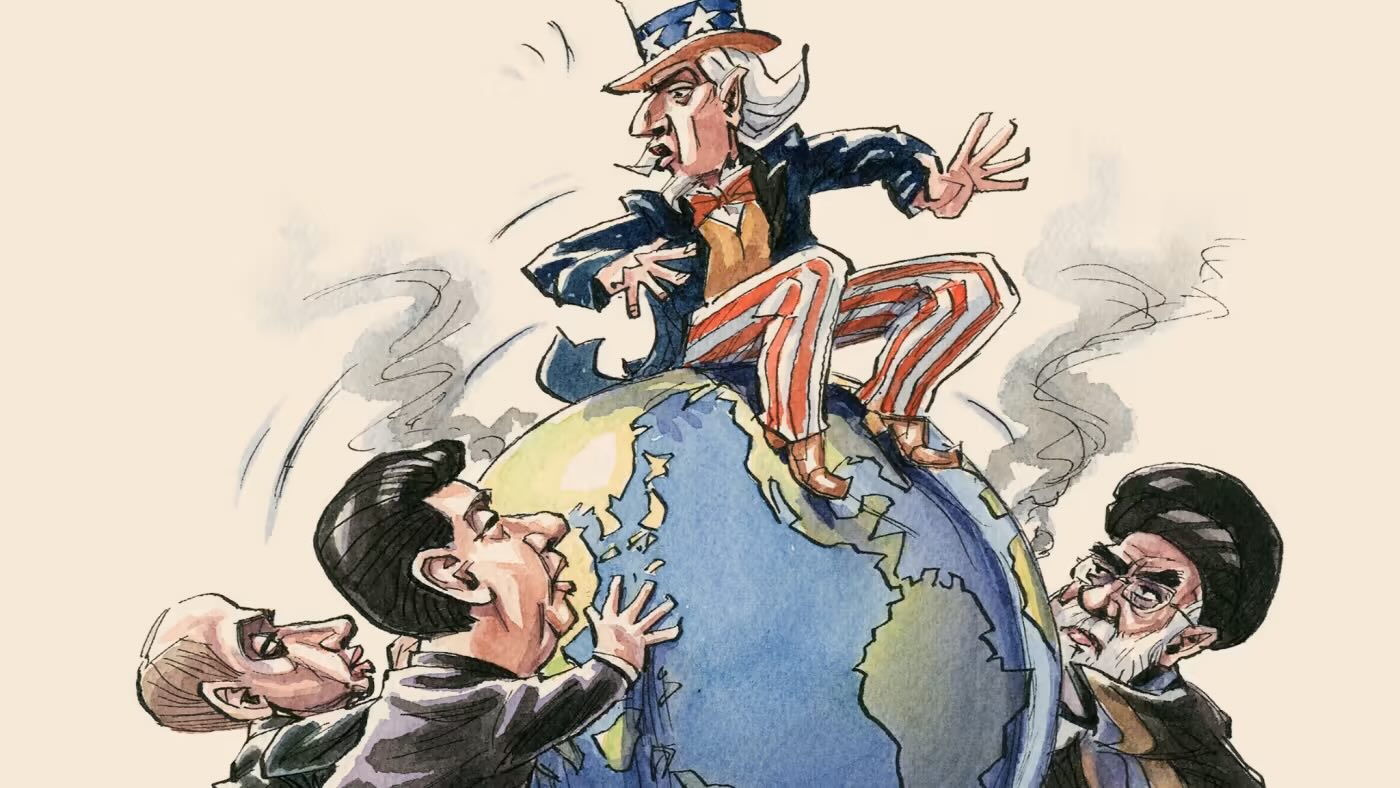
    Feature Image Credit: ‘Imagine a World free from the Oppression of a US-led global Order’ – www.scmp.com


  • Recalibrating India’s Act East Policy: New Realities in Myanmar and Bangladesh

    Recalibrating India’s Act East Policy: New Realities in Myanmar and Bangladesh

    On 23 September 2024, Reuters published a news item quoting unnamed sources that said that India had ‘ invited political and military opponents of Myanmar’s ruling junta to attend a seminar in New Delhi. Even as the lack of corroboration of such a report puts it in the realm of conjecture, it is worthwhile mulling over the motivations or otherwise for such a seminal event to be even contemplated, especially in the light of implications for India’s Act East Policy.


    TPF Occasional Paper: 10/2024

    Recalibrating India’s Act East Policy: New Realities in Myanmar and Bangladesh

    Maj Gen Alok Deb (Retd)

    On 23 September 2024, Reuters published a news item quoting unnamed sources that said that India had ‘ invited political and military opponents of Myanmar’s ruling junta to attend a seminar in New Delhi’[i]. The item went on to specify that the shadow National Unity Government (NUG) and ethnic minority rebels from the states of Chin, Rakhine and Kachin bordering India had been invited to a seminar in mid-November, to be hosted by the Delhi-based Indian Council of World Affairs (ICWA), a foreign policy think tank funded by the Government of India. The piece was also carried by some major Indian newspapers with its origin attributed to Reuters. At the time of writing, there has been no acknowledgement or rebuttal of this report by any government agency. Neither has the ICWA posted this on its website as a forthcoming event. Even as the lack of corroboration of such a report puts it in the realm of conjecture, it is worthwhile mulling over the motivations or otherwise for such a seminal event to be even contemplated, especially in the light of implications for India’s Act East Policy.

    A Summary of India’s Act East Policy

    India’s ‘Act East’ policy of 2014 is an initiative that takes off from its earlier ‘Look East’ policy. ‘Act East’ envisages initiatives at multiple levels with the nations of ASEAN and the wider Indo-Pacific region. These initiatives are to be taken forward through a process of continuous engagement at bilateral, regional and multilateral levels, thereby providing enhanced connectivity in its broadest sense, including political, economic, cultural and people-to-people relations.[ii]

    To successfully implement the ‘Act East’ policy, the Indian government is working to make the North East its strategic gateway to ASEAN. Accordingly, it has increased the allocation for the region’s development by more than four times over the last 10 years.[iii]  The North East is also poised to benefit from initiatives from countries like Japan which earlier this year had proposed developing an industrial hub in Bangladesh with supply chains to the North East, Nepal and Bhutan.[iv]

    As the North East becomes India’s gateway to ASEAN,  the centrality of Myanmar to our Act East becomes apparent. It is the key link in the road connectivity between India’s North East and other ASEAN nations whereby the free flow of inland goods, services and other initiatives to and from these nations to India can be ensured. The success or otherwise of Act East is thus directly affected by the security environment in Myanmar. Instability here will negatively impact our North Eastern states sharing borders with that country. The internal situation in Myanmar therefore becomes an area of prime concern for India, warranting close attention.

    For similar reasons, another neighbour, Bangladesh, is equally important for the success of India’s Act East Policy. India’s North East has benefitted from good ties with Bangladesh, both security-wise and economically. Militancy in the North East has reduced over the last decade and a half. With Bangladesh agreeing to provide access to its ports in the Bay of Bengal for the movement of Indian goods, the North Eastern states have a shorter route to the sea. Additionally, states bordering Bangladesh such as Assam and Meghalaya have developed trade links with that country for mutual benefit. The  BBIN (Bangladesh Bhutan India Nepal) Motor Vehicle Agreement for the Regulation of Passenger, Personal and Cargo Vehicular Traffic was signed in 2015 to ‘ promote safe, economically efficient and environmentally sound road transport in the sub-region andfurther help each country in creating an institutional mechanism for regional integration’  is another mechanism for implementing our Act East and Neighbourhood First policies[v]. The role of Bangladesh here is pivotal.

    State of the Civil War in Myanmar

    Fighting in Myanmar is now in its fourth year. The military junta continues to suffer reverses on the battlefield. Large portions of Rakhine State and certain portions of Chin State are now under the control of the Arakan Army (AA). International Crisis Group has recently averred that ‘..in just a few months, the Arakan Army has created the largest area in Myanmar under the control of a non-state armed group – in terms of both size and population – and is now on the verge of securing almost all of Rakhine[vi].

    In Shan state to the North, the Three Brotherhood Alliance (TBA) of three Ethnic Armed Organisations (EAOs) had by December 2023, captured over 20,000 square kilometres of territory, including key border crossings and trade routes between China and Myanmar in Operation 1027[vii].  On 07 March 2024, the Kachin Independence Army (KIA) launched Operation 0307 and successfully captured certain military posts across  Kachin State close to the Chinese border. This forced the Tatmadaw (Myanmar military) to redeploy, further thinning out forces[viii]. Fighting also continues in other states and regions across the country, notably Sagaing and Kayah.

    Associated Press deduces that ‘.. the announcement of the measure on state television amounts to a major, though tacit, admission that the army is struggling to contain the nationwide armed resistance against its rule..’.The Junta has since conscripted Rohingya youth and deployed them against the Rakhines. 

    Notwithstanding these losses, there is no let-up in the Tatmadaw’s efforts to combat the rebels. The Junta has resorted to conscription to stem rising attrition, activating an old law in this regard. Associated Press deduces that ‘.. the announcement of the measure on state television amounts to a major, though tacit, admission that the army is struggling to contain the nationwide armed resistance against its rule..[ix] To further contextualise, the same article stated the rebel National Unity Government’s (NUG) claim that more than 14,000 troops have defected from the military since the 2021 seizure of power. The Junta has since conscripted Rohingya youth and deployed them against the Rakhines. The Chins fear that they too will be acted upon similarly.[x]

    To overcome the asymmetry of force especially in artillery and airpower, the rebels have acquired large numbers of drones. These are being used to bomb military positions, contributing significantly towards the successes of the CNA’s operations[xi].  To summarise, Myanmar’s civil war continues to see-saw with no signs of ebbing. The Junta continues to make periodic peace overtures to the NUG with conditionalities that the latter is unwilling to accept[xii]. With the multiplicity of actors and issues involved, there are no clear indications of how and when the conflict will be resolved.

    Impact of the  Myanmar Conflict on India’s North-East

    The impact of Myanmar’s internal situation on India’s border states has progressively worsened. Initially, after the Junta takeover, it was Mizoram which bore the brunt. The state government citing common ethnicity and humanitarian concerns accepted the influx of Chins from Myanmar as a moral responsibility and initiated rehabilitation measures. These refugees along with earlier refugees from Bangladesh recently joined Kukis from Manipur, number around 44000 and continue to remain in refugee camps.[xiii] The Central government has had to reconcile its policy of preventing infiltration across borders with the societal realities of Mizoram. A positive outcome of this approach is that there has been no violence in Mizoram.

    In Manipur, by September 2024, the 18-month-long ethnic conflict had resulted in over 225 deaths and some 60,000 people displaced.[xiv] The administration has been derided by both sides, more so with recent warnings about impending threats to law and order[xv] followed by retractions[xvi]. People of either community have been uprooted from their homes and moved to safe areas separated by buffer zones guarded by security forces.  So great is the mutual suspicion that on the clamour of the Meiteis to replace the Assam Rifles, two battalions of this central force have been withdrawn and replaced by the Central Reserve Police Force (CRPF), against the wishes of the Kukis[xvii].

    Voices for an independent ‘Kukiland’ for the Kuki Zo peoples are being raised,[xviii] which are variously interpreted as a demand for greater autonomy within Manipur or for a separate union territory. The current happenings also dredge up the old ghost of ‘Zale’n-gam’ or Kuki nation, comprising the Chin Kuki Zomi peoples (including Mizos) residing across India, Bangladesh and Myanmar. Zale’n- gam has few takers and appears restricted to a YouTube channel[xix]. Today both sides fight each other with a variety of weapons including improvised rockets and drones. Hostage-taking is the latest tactic that has been adopted.[xx]

    Tension between the Nagas of Manipur and other communities is discernible with some reports of violence against the former.[xxi] As of now Nagas have kept out of the Kuki-Meitei dispute; also, other than the insurgent National Socialist Council of Nagaland ( Isak Muviah) faction (NSCN-IM) that is observing a ceasefire with the Centre, no other party has demanded integration of all Naga inhabited areas in India ( Arunachal Pradesh, Assam, Manipur) and Myanmar – the idea of  Greater Nagalim.

    At the state level, the responses of Mizoram and Manipur to the Myanmar crisis vary. This can be best seen in their reactions to the Centre’s recent notification to fence the entire 1643 Km Myanmar border and its earlier decision to end the Free Movement Regime that permits movement on both sides of the border for up to a distance of 16 km.[xxii]  While the Mizoram government and tribes living in both states oppose the decisions, the Manipur government clamours for its implementation. Currently, only around 30 Km of the border has been fenced.

    Since the Tatmadaw now has limited control over its border areas, it has become imperative for India to commence a structured dialogue with other warring parties in Myanmar’s border regions. This, with a view to restoring the situation in Manipur (and on the border) through mutually acceptable solutions at least for the short to medium term, is necessary. Only then can a modicum of security on the border be guaranteed. This involves navigating a maze of ethnic, religious, historical and societal issues with great sensitivity. The importance of such a dialogue cannot be overemphasised, more so because of recent developments in Bangladesh.

    The Impact of Bangladesh’s ‘Second Liberation’

    The events of 5 August 2024  that witnessed the overthrow of Sheikh Hasina’s government have proved to be yet another watershed in India-Bangladesh relations. India has invested more in the India-Bangladesh relationship than with any other neighbour in South Asia. A glance at the website of our Ministry of External Affairs[xxiii], where details of various agreements and summaries from the last Prime Ministerial meeting in Delhi in June 2024 are provided, will suffice to show just how strong and all-encompassing this relationship has become.

    Persons or organisations associated with the previous regime have either fled the country or been placed under arrest and assets confiscated. A few have been killed by mobs. Bank accounts of others have been frozen. Jamaat e Islami which collaborated with the Pakistan Army in 1971 has been resurrected. Extremists with proven murder charges against them have been freed from prison, as have political prisoners.

    At the time of writing, it is two months since the interim government headed by Chief Advisor Mohammed Yunus assumed charge.  The country continues to make efforts to reestablish the rule of law. All wings of the armed forces have been given magisterial powers[xxiv]. The functioning of the judiciary, higher civil services, local administration, police, security agencies, banking, economy, and higher education, is under review. Persons or organisations associated with the previous regime have either fled the country or been placed under arrest and assets confiscated. A few have been killed by mobs. Bank accounts of others have been frozen.[xxv] The Jamaat e Islami which collaborated with the Pakistan Army in 1971 has been resurrected. Extremists with proven murder charges against them have been freed from prison, as have political prisoners. Commissions have been set up to suggest reforms in the constitution, electoral system, police, judiciary, public administration and in tackling corruption.  Elections do not seem to be on the horizon yet. The advisers ( as the ministers are currently known) are new faces, not well known in India.

    While this paper does not attempt to be a study of India-Bangladesh relations, the polarised politics in that country coupled with a perception that the misdeeds of Sheikh Hasina’s government were conducted with impunity because of Indian backing, is sure to impact India’s portrayal here.

    With the removal of Sheikh Hasina, the India-Bangladesh relationship is undergoing a major reset. Statements of certain public figures and sentiments of a section of the population in that country suggest that a different perspective on the evolution of Bangladesh as a nation from 1971 onwards is emerging. While this paper does not attempt to be a study of India-Bangladesh relations, the polarised politics in that country coupled with a perception that the misdeeds of Sheikh Hasina’s government were conducted with impunity because of Indian backing, is sure to impact India’s portrayal here. This will make it an arduous task for both countries to go back to the trusted, cooperative and mutually beneficial relationship that existed. As mentioned, the list of achievements for both countries is far too numerous –  settlement of land and oceanic borders,  road, rail and riverine connectivity (including use of ports), economy and business ( both government and private), education including educational scholarships, technology, disaster management, border management, maritime security, military to military cooperation, improved people to people contacts, culture and health. As per records, of the 16 lakh visas issued by India for Bangladesh nationals in 2023, 4.5 lakhs were for medical treatment alone[xxvi]. Economies are so embedded that everyday necessities like onions are exported regularly to Bangladesh ( approximately 6 to 7 lakh tonnes annually).

    Even as the new regime provides assurances on the security of minorities and acknowledges India as an important neighbour, the enthusiasm with which it has interacted with official interlocutors from a host of nations worldwide especially China, Pakistan and the US is noteworthy and indicates where its newfound priorities might lie.

    A parallel reality, however, is that negative perceptions about India have historically found space in sections of Bangladesh’s polity. These have received a huge fillip after the change of regime with even settled agreements prone to misunderstanding. A recent example pertains to a tripartite agreement dating back to the Hasina period whereby electricity is to be imported from Nepal via India to Bangladesh. The agreement was signed in Kathmandu in the first week of  October 2024. Newspaper reports from Bangladesh indicate that there is palpable resentment over the condition that Indian transmission systems inside Indian territory be utilised for this purpose since it increases costs per unit of electricity in Bangladesh.[xxvii] Another issue currently bedevilling relations is the state of minorities in Bangladesh who have faced attacks on their homes, businesses and religious places with some loss of life, since the protests in July. India’s concerns in this regard have been conveyed at the highest level. Even as the new regime provides assurances on the security of minorities and acknowledges India as an important neighbour, the enthusiasm with which it has interacted with official interlocutors from a host of nations worldwide especially China, Pakistan and the US is noteworthy and indicates where its newfound priorities might lie.

    Larger Implications for India

    Bangladesh and Myanmar are pivotal for India’s Act East policy from the security, economic and connectivity angles. The issues pertaining to Myanmar and Manipur have been brought out earlier. A common concern affecting both nations and  India is the Rohingya crisis. Despite international pressure and requests from Bangladesh for China to intercede with Myanmar on its behalf, there has been no positive response from Myanmar. Bangladesh, which currently hosts close to one million refugees,[xxviii] has publicly expressed its inability to accommodate any more Rohingyas and asked for a speedy ‘third country settlement’ [xxix]. A detailed report of the International Crisis Group (ICG) in October 2023[xxx]provides details of activities of militant organisations like the Rohingya Solidarity Organisation (RSO) and Arakan Rohingya Salvation Army (ARSA) which are involved in drug running from Myanmar along with Bangladeshi syndicates for sale of the product in that country. Their participation in violent crime and other illegal activity has become a pressing concern within Bangladesh. Rohingyas have infiltrated into India as well, and have been identified as far North as Jammu. The security implications of such migration for both Bangladesh and India are apparent. The insensitivity of the Myanmar Junta on this account is heightening security risks for India and Bangladesh and merits diplomatic intervention.

    With the situation in Bangladesh evolving by the day, it is prudent for India to take a strategic pause as it weighs its options for pursuing its Act East policy. While giving the new regime in Bangladesh its due, India has to consider the impact of resurgent forces aided by inimical powers that aim to derail the India-Bangladesh relationship beyond repair. Even as both countries attempt to reestablish strong ties, the old adage preached by educated Bangladeshis in the context of support to Sheikh Hasina’s regime that ‘India should not put all its eggs in one basket’ resonates. While Myanmar geographically cannot provide the singular advantages that Bangladesh can, it is time for India to press for securing Myanmar’s cooperation to complete pending projects in that country, such as the Kaladan Multi-Modal Port Project (KMMPP) via Sittwe and Paletwa, that provides an alternate route to our North East, as well as the Trans Asian Highway (TAH) that provides connectivity with the rest of ASEAN, amongst others.

    To summarise, two possible reasons for inviting rebel Myanmar groups to Delhi could be: first, the relative viability of either Bangladesh or Myanmar to help implement the Act East policy in light of the emerging situation in Bangladesh and the state of the civil war in Myanmar. The second, ensuring security on the India-Myanmar border, to prevent aggravating the situation in India’s border states.


    Notes:

    [i] ‘Exclusive: India extends unprecedented invite to Myanmar’s anti-junta forces, sources say’ Wa Lone and Devjyot Ghoshal Reuters September 23, 2024

    [ii] ‘Govt aims to make Northeast gateway of ‘Act East Policy’: President Murmu’ Press Trust of India 27 June 2024.

    [iii] Ibid.

    [iv] ‘Japan to tie landlocked Northeast India with Bangladesh’  Saleem Samad  The Daily Messenger 05 March 2024.

    [v] Press Information Bureau Government of India Ministry of Shipping note dated  10 June 2015

    ‘Bangladesh, Bhutan, India and Nepal (BBIN) Motor Vehicle Agreement for the Regulation of Passenger, Personal and Cargo Vehicular Traffic amongst BBIN’

    [vi]   ‘Breaking Away: The Battle for Myanmar’s Rakhine State Asia Report N°339 | 27 August 2024’ International Crisis Group (Executive Summary).

    [vii]   ‘As Myanmar’s Junta Loses Control in the North, China’s Influence Grows’  Jason Tower, United States Institute for Peace, August 1, 2024.

    [viii] Ibid.

    [ix]   ‘Facing setbacks against resistance forces, Myanmar’s military government activates conscription law ‘ Associated Press, February 12, 2024.

    [x] ‘India’s ‘Forgotten Partition’ and the Myanmar Refugee Crisis’  Swapnarka Arnan The Diplomat  11 May 2024.

    [xi] ‘We killed many … drones are our air force’: Myanmar’s rebels take on the junta from above. Aakash Hassan and Hannah Ellis-Petersen  The Observer 20 January 2024.

    [xii] ‘Armed Groups Snub Myanmar Junta ‘Peace’ Offer’  The Irrawaddy 28 September 2024

    [xiii] ‘Centre provides 1,379 MT rice to Mizoram for Manipur, Myanmar, B’desh refugees’ Morung Express 25 September 2024.

    [xiv] ‘Ethnic violence in India’s Manipur escalates, six killed’  Tora Agarwala Reuters  September 7, 2024

    [xv] ‘900 Kuki militants infiltrated Manipur from Myanmar, says Security Advisor’ India Today NE September 20 2024.

    [xvi] ‘Input on infiltration by 900 Kuki militants could not be substantiated on the ground, says Manipur security advisor’ Vijaita Singh The Hindu 26 September 2024.

    [xvii] ‘Kukis call removal of Assam Rifles from 2 Manipur areas ‘biased, appeasement’, Meiteis call it ‘victory’  Ananya Bhardwaj  The Print 04 August 2024.

    [xviii]‘ Manipur: Kuki-Zo organizations hold rallies, demand separate ‘Kukiland’ for peace  by Northeast News

    August 31, 2024.

    [xix] YouTube channel titled ‘Zalengam Media’.

    [xx] ‘Kuki militants seek release of ‘secessionist’ in Manipur’ Prawesh Lama and Thomas Ngangom Hindustan Times Sep 30, 2024.

    [xxi] ‘Keep us out of your war, Manipur Naga body warns two warring communities’  The Hindu Bureau 06 February 2024

    [xxii] ‘Government sanctions ₹31,000 crore to fence Myanmar border’   The Hindu

    Published – September 18, 2024

    [xxiii] Ministry of External Affairs, Government of India website mea.gov.in.

    [xxiv] ‘Navy, the air force also granted magistracy powers’  The Daily Star September 30 2024

    [xxv] ‘Bank accounts of Joy Putul Bobby frozen’ Dhaka Tribune 30 Sep 2024.

    [xxvi] ‘Indian High Commission in Dhaka, facing protests & threats, returns 20,000 visa applicants’ passports ‘ Ananya Bhardwaj  The Print   29 September 2024.

    [xxvii] ‘Bangladesh delegation in Nepal to sign the contract to import 40 MW electricity’ Dhaka Tribune 30 September 2024.

    [xxviii] Operational Data Portal of the United Nations High Commissioner for Refugees, for Bangladesh.

    [xxix] ‘Bangladesh calls for faster resettlement process for Rohingya’ Ruma Paul  Reuters  September 8, 2024

    [xxx] ‘Rohingya Refugees in Bangladesh: Limiting the Damage of a Protracted Crisis’ International Crisis Group Autumn Update 04 October 20223.


    Feature Image Credit: What does Sheikh Hasina’s resignation mean for India-Bangladesh relations? – aljazeera.com 

    Map Credit: National Online Project

    Bangladesh Parliament Image: The Shattered Identity of a Nation: From Liberation to Chaos – borderlens.com

    Sheikh Mujibur Rahman’s Statue: Bangabandhu to Toppled Statue: Mujibur Rahman’s contested legacy post Bangladesh upheaval – Economic Times


  • The beginning of the end of Israel

    The beginning of the end of Israel

    One year later, the flames of genocide still burn, but after decades of persecution and bloodshed, we may well be seeing the beginning of the end of the settler-colonial project in Palestine.

    We have reached a grim milestone. A full year of gruesome Israeli mass murder. A year of epic Palestinian suffering.

    A year of direct Western complicity. A year of continuous media incitement. A year of shameful inaction by international institutions.

    For twelve months, we have seen relentless persecution of human rights defenders across the West, solely for peacefully opposing genocide and apartheid.

    And fifty-two weeks of a horrified global public helplessly witnessing on their screens the first live-streamed genocide in history.

    The carnage of this past year is unprecedented. The destruction is almost unimaginable.

    Still, this genocide will end. The Palestinian people and their besieged nation will undoubtedly emerge from the ashes of genocide, recover, and reassert their inalienable rights in their ancient homeland.

    But international institutions and the global human rights system will be left bruised and battered.

    The political capital expended by the US empire and the broader West in defence of the slaughter, as well as their global standing and reputation, will never be recouped.

    And, almost certainly, this year of cruelty and lawlessness will mark the beginning of the end for the Zionist project in Palestine and, therefore, of the state of Israel as we know it.

    A formula for disaster

    Of course, neither the genocide nor the current wave of slaughter of Palestinians started in October of 2023. The systematic massacre, purging, and erasure of the indigenous Palestinian people began in earnest with the Nakba of 1947-48, and it has not ceased since that bloody beginning.

    And the genocidal threat was always obvious. Any thinking person could see, even prior to the establishment of the state of Israel, that the Zionist project of the West was a formula for disaster.

    First, at the very historic moment when colonialism was being dismantled around the world, and global human rights rules were being adopted at the United Nations, the West carved out an exception for Palestine.

    It was at this moment that Zionist forces chose to attack Palestine, murder and terrorize its population, chase many survivors away in terror, and begin the erasure of the indigenous people, and their replacement with a European settler colony founded by foreign invaders and radicalized by a deeply racist and fundamentally violent political ideology.

    The colony was to be sustained at the barrel of a gun by waging constant war both against the Indigenous people and against the neighbouring states.

    A colonial education system and a media ecosystem were built to dehumanize the Indigenous and neighbouring peoples and to instil a supremacist ideology into the settler population.

    The settler state, its economy, and its society were thoroughly militarized, enlisting all adults in the project of state violence, arming it to the teeth, including with nuclear, chemical, and biological weapons, and even integrating the field-testing of new weapons on captive civilian populations as part of the business model of the colony’s arms industry.

    They ring-fenced the entire project with western-guaranteed impunity, carving out an exception to the application of all rules of international law.

    And they built an all-encompassing machinery of repression, including laws, policies, practices, and technologies to ensure the constant subjugation, dehumanization, and persecution of the indigenous Palestinian people.

    The toxic cocktail was complete.

    Maintaining Western support

    Of course, an artificially imposed European colony in the heart of the Middle East, which is necessarily maintained by force, could never become self-sufficient. Rather, it has always, and will always, rely on massive support from Western states, especially the US. Maintaining that vital support was to become a key goal of the Israeli state and its transnational network of proxy groups.

    As such, in the intervening years, the Israeli regime adopted a strategy of incremental genocide, with simmering persecution and dispossession, punctuated by periodic full-blown massacres and marked by a continuous march of expansion.

    It was a pace, tried and true over 75 years, with which the regime’s Western sponsors were comfortable, allowing them to continue unbroken the flow of military, economic, and diplomatic support without significant domestic pressure at home.

    And it allowed like-minded media corporations, decade after decade, to continuously disseminate pro-Israel propaganda as a smokescreen to obscure the horrific realities being perpetrated against the indigenous people on the ground.

    Expedited genocide

    But when Israel’s current ultra-Zionist government took power last year, it immediately abandoned the strategy of incremental genocide.

    In its place, it moved to expedited genocide (beginning with waves of ethnic cleansing in occupied Jerusalem and the West Bank), betting that its Western sponsors (and their captured politicians and complicit media) would not dare (or care) to take the steps necessary to stop it, even when it launched wholesale civilian slaughter in Gaza.

    They were right.

    So much so that Western countries like the U.S., UK, Germany, and others quickly moved beyond mere acquiescence for the genocide and into direct complicity and participation in it.

    As a result, one year later, we are witnessing unprecedented bloodshed in the region, and the broader world is in deep trouble.

    Axis of Genocide

    Thus, Israel is not alone in its march of terror. It is accompanied, in lockstep, by what has been called the Axis of Genocide.

    Four members of that Axis, Israel, the U.S., the UK, and France, are nuclear-armed states. A fifth, Germany, is a serial genocide perpetrator and a major European economic power. Three (the U.S., UK, and France) have veto power in the UN Security Council.

    Adding to the danger, all of its members share a common ideological grounding in militarism, colonialism, white supremacy, and political Zionism. Most have the stain of genocide on their historical records.

    All have political systems that are deeply compromised and corrupted by the influence of the weapons industry, the billionaire class, and the Israeli lobby. And all are marked by profound societal levels of Islamophobia, anti-Arab racism, and anti-Palestinian bigotry.

    And, in defence of a single, small, oppressive, and violent settler colony in the Middle East, all have quickly abandoned the entire edifice of international law and international institutions built up since the end of the Second World War, and which they once claimed as part of their brand.

    As recent history has shown, these biases, linkages, and incentives have become a formula not only for genocide in Palestine but for catastrophe on a global scale.

    Breaking bones and records

    And, indeed, the cost of Western-secured Israeli impunity has been shockingly high.

    Image Credit: @anadoluagency

    In one year, Israel has set new records for the pace of civilian killing, the rate of destruction of civilian infrastructure, the killing of children, the killing of medical personnel, the killing of journalists, the killing of humanitarian workers, and the killing of UN staff.

    The depravity of Israel’s actions has shocked the world. Collective punishment, a chain of massacres, summary executions, torture camps, systematic sexual violence, starvation tactics, imposed disease, the direct targeting of small children with sniper rifles, and the blocking of humanitarian aid to facilitate starvation.

    We have all seen the images. The methodic eradication of whole neighbourhoods, schools, hospitals, universities, food stores, shelters, refugee camps, agricultural fields, and even cemeteries.

    The mangled bodies of Palestinians, the fear-filled eyes of the children, the terror as bombs fall on bread lines. The cold-blooded murder of innocents, of defenceless children like Hind Rajab, trapped in the family car, terrified for hours and then slaughtered by Israeli soldiers, and of thousands of others like her.

    And we have seen the cold, cruel laughter of the Israeli soldiers, the deranged chants of violent Israeli settlers, the genocidal pledges of Israeli political and military leaders.

    The promise of the Prime Minister to wipe out the Palestinians “like Amalek”, a biblical verse that calls for Israel to “utterly destroy all that they have and spare them not; but slay both man and woman, infant and suckling, ox and sheep, camel and ass.”

    The calls of Israeli leaders to perpetrate another Nakba, to raze Gaza to the ground, to make no distinction between civilians and fighters. To “bury them.”

    And, by now, we have all memorized the familiar barbarous pattern of Israel’s crimes: target civilians and civilian infrastructure, then target the rescue workers who come to help, then celebrate in Hebrew but switch to English to claim that they were all terrorists, human shields, or collateral damage, then reload and do it again.

    The accumulated criminal guilt of the Israeli perpetrators and their complicit Western partners is staggering. But so too is the historic moral lapse of the wider world, both those who have defended the genocide and those who have remained silent as it has been carried out with their tax dollars, with their government’s political support, or in their name.

    Today, everyone knows. No one can say they were not warned before the catastrophe. And no one can say they did not know of the horrors that followed, broadcast in real-time to all of us.

    Seventy-six blood-soaked years into this colonial enterprise, it is clear to all who will see that what the West has constructed in the heart of the Middle East is not an enlightened project, but rather a rampaging Frankenstein monster that threatens to drag the indigenous Palestinian people, the region, and the world into a conflagration from which it may not recover for generations.

    The darkness spreads

    How long the rampage can be sustained is an open question. But there will undoubtedly be much more darkness before the dawn.

    Israel, drunk with Western-backed impunity, even as it continues its genocide in Palestine, is now spreading its attacks across the region and leaving mountains of bodies and rivers of blood in its wake.

    In a matter of weeks, it has waged terror attacks with booby-trapped communication devices in Lebanon, assassinated leaders across the region, launched military attacks on Gaza, the West Bank, Lebanon, Syria, Iraq, Iran, and Yemen, has invaded Lebanese territory, and is now seeking to draw its U.S. sponsor into an all-out regional war of conquest and domination.

    For their part, collaborationist governments in the West show little appetite for reining in the rampaging monster that they themselves created in the Middle East, and to which they continue to provide endless flows of arms, money, intelligence, diplomatic cover, legal exceptionalism, and a heretofore impenetrable cocoon of impunity.

    When the reckoning comes, as it must, the accountability of both Israel and its Western accomplices must be secured, lest these horrors be repeated in an endless cycle of atrocity, impunity, and recidivism.

    Israeli impunity is coming to an end

    But there are flickering lights in the darkness, and they are growing.

    The just cause of Palestine and the steadfastness of her people have inspired millions around the world to stand up and fight back. The civilized world is now more mobilized than it has been in generations to oppose the horrific evil unleashed on the world by Israel and its Western sponsors.

    More and more people are escaping from the distorting matrix of Western corporate media and turning to independent media and first-hand sources on social media, delivering a powerful blow to the controlled, pro-Israel narrative of official Western institutions.

    Today, Israel is on trial for genocide at the World Court, and its leaders are the subject of arrest warrant requests at the International Criminal Court for crimes against humanity, including extermination.

    The ICJ has already issued a series of provisional anti-genocide measures against Israel, and a growing list of countries is lining up behind Palestine and South Africa in the genocide case against Israel.

    A dedicated international tribunal is under discussion at the UN. Cases have already been brought in national courts around the world, and more are certain to follow. Plans are also underway to mandate an international anti-apartheid body to focus on Israel.

    In the meantime, the United Nations, its independent human rights mechanisms, and the leading international, Palestinian, and Israeli human rights organizations have all collected massive quantities of evidence, have strongly condemned Israel for its shocking criminality, and are working to ensure accountability.

    Mass demonstrations against Israel are not only daily occurrences in capitals around the globe, but they are actually growing, undeterred by the often-brutal efforts (especially of Western governments) to suppress them.

    The ICJ has declared the obligation of all states to cut off all recognition, aid, investment, trade, weapons, and support of any kind with Israel’s colonial project in the occupied Palestinian territory.

    Israel is increasingly isolated on the global stage. And the global movement for boycott, divestment and sanctions is growing with every passing day.

    In other words, the age of Israeli impunity is coming to an end, despite the best efforts of the U.S., the UK, Germany, and other complicit Western states.

    And we may well be seeing, after decades of endless persecution and bloodshed, the beginning of the end of the European settler-colonial project in Palestine.

    One year later, the flames of genocide still burn. At this tragic moment, it is hard to see through the smoke that obscures the path forward. But white supremacist settler colonialism was defeated in South Africa, Rhodesia, Namibia, and Algeria. It will be defeated in Israel too. Through struggle and solidarity, with law and politics, in resistance and resilience, this will end.


    Feature Image Credit: Palestinian Return Center

    This article was published earlier in mondoweiss.net

  • China and the US: Conventional and Nuclear Military Strategies

    China and the US: Conventional and Nuclear Military Strategies

    Occasional Paper: 9/2024

    China and the US: Conventional and Nuclear Military Strategies

    Abstract

    China’s military strategy focuses on developing asymmetric capabilities to counter the United States’ technological advantages and superior military budget by investing in precision missiles, advanced targeting systems, and system destruction warfare. The US initiated the Defence Innovation Initiative to prioritise autonomous learning systems and high-speed projectiles; however, it diminished under the Trump administration, leaving the US reliant on legacy weapons systems vulnerable to new-generation autonomous and hypersonic weapons. Despite China’s advancements, the US maintains a significant advantage in nuclear warheads, with 5,800 compared to China’s 320 in 2020, consistent with Mao’s “minimum deterrent” strategy. While China’s nuclear arsenal primarily comprises strategic weapons, the US possesses both tactical and strategic types. The US complacency regarding China’s military challenge may stem from its nuclear superiority; however, as China progresses technologically, the US risks falling behind by relying on outdated weapons systems, often maintained due to their economic significance in key congressional districts.

    Key Words: #nuclear warheads, #hypersonic weapons, #precision weapons, #asymmetric capabilities, #system destruction warfare, #autonomous learning systems 


    Introduction

    Since the beginning of the millennium, China has decided to outsmart the United States’ military strength through a very particular strategy. It aimed at overcoming America’s technological advantages and much superior military budget by investing significant resources in asymmetrical capabilities. As Mark Leonard wrote, China was attempting to become an “asymmetric superpower” outside the realm of conventional military power (Leonard, 2008, p. 106).

    Asymmetric superpower

    Conscious that the Soviet Union had driven itself into bankruptcy by accepting a ruinous competition for military primacy with the US, China looked for cheaper ways to compete. As a result, it invested billions in an attempt to make a generational leap in military capabilities, able to neutralize and trump America’s superior conventional forces. In other words, instead of rivalling the United States on its own game, it searched to engage it in a different game altogether. It was the equivalent of what companies like Uber, Netflix, Airbnb or Spotify did in relation to the conventional economic sectors with which they competed. A novel by P.W. Singer and August Cole depicts how, through surprise and a whole array of asymmetric weapons, China defeats the superior forces of the United States (Singer and Cole, 2016).

    In essence, these weapons are dual-focused. On the one hand, they emphasize long and intermediate-range precision missiles and advanced targeting systems, able to penetrate battle network defences during the opening stages of a conflict. On the other hand, they aim at systems destruction warfare, able to cripple the US’ command, control, communication and intelligence battle network systems. The objective in both cases is to target the US’ soft spots with weapons priced at a fraction of the armaments or systems that they strive to destroy or render useless. The whole notion of asymmetric weapons, indeed, is based on exploiting America’s military weaknesses (like its dependence on information highways or space satellites) while neutralizing its strengths (like its fleet of aircraft carriers). Michael Pillsbury describes this situation in graphic terms: “For two decades, the Chinese have been building arrows designed to find a singular target – the Achilles’ heel of the United States” (Pillsbury, 2015, p. 196).

    America’s military legacy systems

    To counter China’s emerging military threat, the Obama administration put in motion what it called the Defence Innovation Initiative. This was also known as the Third Offset Strategy, as it recalled two previous occasions in the 1950s and the 1970s when, thanks to its technological leaps, the US could overcome the challenges posed by the Soviet military. Recognizing that the technological superiority, which had been the foundation of US military dominance for years, was not only eroding but was being challenged by China, the Pentagon defined a series of areas to be prioritized. Among them were the following: Autonomous learning systems, human-machine collaborative decision-making, network-enabled autonomous weapons, and high-speed projectiles (Ellman, Samp and Coll, 2017).

    However, as with many other initiatives representing the Obama legacy, this one began fading into oblivion with Trump’s arrival to power. As a result, the vision of significantly modernizing America’s military forces also faded (McLeary, 2017). This implied reverting to the previous state of affairs, which still lingers nowadays. In Raj M. Shah and Christopher M. Kirchhoff’s words: “We stand at the precipice of an even more consequential revolution in military affairs today. A new way of war is bearing down on us. Artificial-intelligence-powered autonomous weapons are going global. And the US military is not ready for them (…). Yet, as this is happening, the Pentagon still overwhelmingly spends its dollars on legacy weapons systems. It continues to rely on an outmoded and costly technical production system to buy tanks, ships and aircraft carriers that a new generation of weapons – autonomous and hypersonic – can demonstrably kill” (Shah and Kirchhoff, 2024).

    Legacy systems -aircraft carriers, fighter jets, tanks – are deliberately manufactured in key congressional districts around the country so that the argument over whether a weapons system is needed gets subsumed by the question of whether it produces jobs

    Indeed, as Fareed Zakaria put it: “The United States defence budget is (…) wasteful and yet eternally expanding (…). And the real threats of the future -cyberwar, space attacks- require different strategies and spending. Yet, Washington continues to spend billions on aircraft carriers and tanks” (Zakaria, 2019). A further quote explains the reason for this dependence on an ageing weapons inventory: “Legacy systems -aircraft carriers, fighter jets, tanks – are deliberately manufactured in key congressional districts around the country so that the argument over whether a weapons system is needed gets subsumed by the question of whether it produces jobs” (Sanger, 2024, p. 193). Hence, while China’s military advances towards a technological edge, America’s seems to be losing both focus and fitness.

    Minimum deterrence nuclear strategy

    Perhaps this American complacency concerning China’s disruptive weapons and overall military challenge could be explained by an overreliance on its nuclear superiority. Indeed, in 2020, in the comparison of nuclear warheads, the United States possessed overwhelming superiority with 5,800 against China’s 320 (Arms Control Association, 2020). This was consistent with the legacy of Mao’s “minimum deterrent” strategy. Within the above count, two kinds of nuclear weapons are involved – tactical and strategic. The former, with smaller explosive capacity, are designed for use in battlefields. With a much larger capacity, the latter aims at vital targets within the enemy’s home front. In relation to tactical nuclear weapons, America’s superiority is total, as China doesn’t have any. Nonetheless, in terms of long-range, accuracy, and extensive numbers, China’s conventional ballistic missiles (like the DF-26, also known as the Guam killer) can become an excellent match to the US’ tactical nuclear weapons (Roblin, 2018). The big difference between both countries, thus, is centred on America’s overwhelming superiority in strategic nuclear warheads.

    China’s minimum deterrent nuclear strategy was based on the assumption that, within cost-benefit decision-making, a limited nuclear force, able to target an adversary’s strategic objectives, could deter a superior nuclear force. This required retaliatory strike capacities that can survive a first enemy attack. In China’s case, this is attainable through road-mobile missiles that are difficult to find and destroy, and by way of missiles based on undetectable submarines. Moreover, Beijing’s hypersonic glide vehicle -whose prototype was successfully tested in July 2021- follows a trajectory that American systems cannot track. All of these impose restraint in the use of America’s more extensive arsenal and undermine its ability to carry out nuclear blackmail.

    there is no US defence that “could block” China’s hypersonic glide vehicle “not just because of its speed but also due to its ability to operate within Earth’s atmosphere and to change its altitude and direction in an unpredictable manner while flying much closer to the Earth’s surface”

    For the above aim, Beijing has developed new nuclear ballistic missiles, cruise missiles, and a sea-based delivery system. These include the DF-41 solid-fuel road-mobile intercontinental ballistic missile (with a range of 15,000 kilometres) or the submarine-launched JL-3 solid-fuel ballistic missile (whose range is likely to exceed 9,000 kilometres). To launch the JL-3 missiles, China counts with four Jin-class nuclear submarines, with an upgraded fifth under construction, each armed with twelve nuclear ballistic missiles (Huang, 2019; Panda, 2018). On top of that, there is no US defence that “could block” China’s hypersonic glide vehicle “not just because of its speed but also due to its ability to operate within Earth’s atmosphere and to change its altitude and direction in an unpredictable manner while flying much closer to the Earth’s surface” (Sanger, 2024, p. 190). All of this shows that America’s overwhelming superiority in terms of strategic nuclear warheads results in more theoretical than practical. What might justify a first American strategic nuclear strike on the knowledge that a Chinese retaliatory one could destroy New York, Chicago, Los Angeles, or all of the three together?

    Matching the US’ overkill nuclear capacity

    Being an asymmetric superpower while sustaining a minimum but highly credible deterrent nuclear strategy implied much subtility in terms of military thinking. One, in tune with the best Chinese traditions exemplified by Sun Tsu’s The Art of War and Chan-Kuo T’se’s Stratagems of the Warring States. However, in this regard, as in many others, Xi Jinping is sowing rigidity where subtility and flexibility prevailed. A perfect example of this is provided by its intent to match the US in terms of strategic nuclear warheads. In David E. Sanger’s words: “But now, it seemed apparent, Chinese leaders had changed their minds. Xi declared that China must ‘establish a strong strategic deterrence system’. And satellite images from near the cities of Yumen and Hami showed that Xi was now ready to throw Mao’s ‘minimum deterrent’ strategy out of the window” (Sanger, 2024, p. 200).

    Three elements attest to the former. Firstly, 230 launching silos are under construction in China. Secondly, these silos are part of a larger plan to match the US’ “triad” of land-launched, air-launched, and sea-launched nuclear weapons. Thirdly, it is estimated that by 2030, China will have an arsenal of 1,000 strategic nuclear weapons, which should reach 1,500 by 2035. The latter would imply equalling the Russian and the American nuclear strategic warheads (Sanger, 2024, p. 197; Cooper, 2021; The Economist, 2021; Hadley, 2023). 

    Xi Jinping is thus throwing overboard the Chinese capability to neutralize America’s strategic nuclear superiority at a fraction of its cost, searching to match its overkill capacity. In essence, nuclear arms seek to fulfil two main objectives. In the first place, intimidating or dissuading into compliance a given counterpart. In the second place, deterring by way of its retaliatory capacity, any first use of nuclear weapons by a counterpart.

    As seen, the second of those considerations was already guaranteed through its minimum deterrence strategy. In relation to the first, China already enjoys a tremendous dissuading power and the capacity to neutralize intimidation in its part of the world. Indeed, it holds firm control over the South China Sea. This is for three reasons. First, through its possession and positioning there, of the largest Navy in the world. Second, by way of the impressive firepower of its missiles, which includes the DF21/CSS-5, capable of sinking aircraft carriers more than 1,500 miles away. Third, via the construction and militarization of 27 artificial islands in the Paracel and Spratly archipelagos. All of this generates an anti-access and denial of space synergy, capable of being activated at any given time against hostile maritime forces. In other words, China cannot be intimidated into compliance by the United States in the South China Sea scenario (Fabey, 2018, pp. 228-231). Nor, in relation to Taiwan, could America’s superior nuclear forces dissuade Beijing to invade if it so decides. The US, indeed, would not be willing to trade the obliteration of Los Angeles or any other of its major cities by going nuclear in the defence of Taiwan.

    Simultaneously confronting two gunfighters

    It was complicated enough during the Cold War to defend against one major nuclear power. The message of the new [Chinese] silos was that now the United States would, for the first time in its history, must think about defending in the future against two major nuclear powers with arsenals roughly the size of Washington’s – and be prepared for the possibility that they might decide to work together

    Matching the US’ nuclear overkill capacity will not significantly alter the strategic equation between both countries. If anything, it would only immobilize in easy-to-target silos, the bulk of its strategic nuclear force. However, Xi’s difficult-to-understand decision makes more sense if, instead of thinking of two nuclear powers, we were to think of a game of three. This would entail a more profound strategic problem for the United States that David E. Sanger synthesizes: “It was complicated enough during the Cold War to defend against one major nuclear power. The message of the new [Chinese] silos was that now the United States would, for the first time in its history, must think about defending in the future against two major nuclear powers with arsenals roughly the size of Washington’s – and be prepared for the possibility that they might decide to work together” (Sanger, 2024, p. 201). This working together factor should be seen as the new normal, as a revisionist block led by China and Russia confronts America’s system of alliances and its post-WWII rules-based world order.

    Although the United States could try to increase the number of its nukes, nothing precludes its two competitors from augmenting theirs as well, with the intention of maintaining an overwhelming superiority. According to Thomas Schelling, leading Game Theory scholar and Economics Nobel Prize winner, the confrontation between two nuclear superpowers, in parity conditions, was tantamount to that of two far-west gunfighters: Whoever shot first had the upper hand. This is because it can destroy a significant proportion of its counterpart’s nuclear arsenal (Fontaine, 2024). In the case in point, Uncle Sam would have to simultaneously confront two gunfighters, each matching his skills and firepower. Although beyond a certain threshold, there wouldn’t seem to exist a significant difference in the capacity of destruction involved, nuclear blackmail could be imposed upon the weakest competitor. In this case, the United States.

    Conclusion

    From an American perspective, overreliance on its challenged nuclear power makes no sense. Especially if it translates into a laid-back attitude in relation to the current technological revolution in conventional warfare. If Washington doesn’t go forward with a third offset military strategy, it could find itself in an extremely vulnerable position. Just two cases can exemplify this. Aircraft carriers are becoming obsolete as a result of the Chinese DF21-CSS5 missile, able to sink them 1,500 miles away, in the same manner in which war in Ukraine is showing the obsolescence of modern tanks when faced with portable Javelins and drones. If the US is not able to undertake a leap forward in conventional military weapons and systems, it will be overcome by its rivals in both conventional and nuclear forces. For Washington, no doubt about it, this is an inflexion moment.


    References:

    Arms Control Association (2020). “Nuclear weapons: Who has what at a glance”, August.

    Cooper, Helene (2021). “China could have 1,000 nuclear warheads by 2030, Pentagon says”. The New York Times, November 3.

    Ellman, Jesse, Samp, Lisa, Coll, Gabriel (2017). “Assessing the Third Offset Strategy”. Center for Strategic & International Studies, CSIS, March.

    Fabey, Michael (2018) Crashback: The Power Clash Between US and China in the Pacific. New York: Scribner.

    Fontaine, Phillipe (2024). “Commitment, Cold War, and the battles of self: Thomas Schelling on Behavior Control”. Journal of the Behavioral Sciences, April.

    Hadley, Greg (2023). “China Now Has More ICBM Launchers than the US”. Air & Space Forces Magazine. February 7.

    Huang, Cary (2019). “China’s show of military might risk backfiring”. Inkstone, October 19.

    Leonard, Mark (2008). What Does China Think? New York: HarperCollins.

    McLeary, Paul (2017). “The Pentagon’s Third Offset May be Dead, But No One Knows What Comes Next”. Foreign Policy, December 18.

    Panda, Ankit (2018). “China conducts first test of new JL-3 submarine-launched ballistic missile”. The Diplomat, December 20.

    Pillsbury, Michael (2015). The Hundred-Year Marathon. New York: Henry Holt and Company.

    Roblin, Sebastien (2018). “Why China’s DF-26 Missile is a Guam Killer”. The National Interest, November 9.

    Sanger, David E. (2024). New York: Crown Publishing Books.

    Shah, Raj M. and Kirchhoff, Christopher M. (2024). “The US Military is not Ready for the New Era of Warfare”. The New York Times, September 13.

    Singer, P.W. and Cole, August (2016). Ghost Fleet: A Novel of the Next World War. Boston: Eamon Dolan Book.

    The Economist (2021). “China’s nuclear arsenal has been extremely modest, but that is changing”, November 20.

    Zakaria, Fareed (2019). “Defense spending is America’s cancerous bipartisan consensus”. The Washington Post, July 18.


    Feature Image Credit: NikkeiAsia

    Text Image: AsiaTimes.com

  • China has achieved escape velocity: it is now unstoppable

    China has achieved escape velocity: it is now unstoppable

    The 21st century is shaping up to be the Asian, Eurasian, and Chinese century.

    While the Hegemon spent at least $7 trillion – and counting – on unwinnable Forever Wars, China is spending $1 trillion in an array of Belt and Road Initiative (BRI) projects across the Global South: the emphasis is digital/transportation connectivity corridors. Geoeconomic imperatives intertwined with rising geopolitical influence.

    The four-day, twice-a-decade plenum of the Communist Party of China that took place last week in Beijing, designing an economic road map all the way to 2029, was a stunning affair in more ways than one.

    Let’s start with continuity – and stability. There’s no question after the plenum that Xi Dada, or The Big Panda, will stay on the helm until 2029 – the end of the current five-year economic drive.

    And if Xi is healthy enough, he will stay until 2035: the fateful and uber-game-changing target year for China to exhibit a GDP per capita of $30,000, with massive worldwide reverberations.

    Here, we see the confluence between the progression of “socialism with Chinese characteristics” and the defining contours, if not of a Pax Sinica, at least of the non-Hegemon-centric, multi-nodal world (italics mine).

    The proverbial U.S. Think Tankland/Sinophobia axis has been hysterical on China not being able to sustain a 5% a year growth rate for the next few years – the target once again stressed at the plenum.

    The Chinese themselves have not bothered about the growth rate for a long time, since in 2018 they switched to a strategy of so-called qualitative development, that is, not at the expense of traditional industries, but on the basis of high technologies and the creation of new areas, such as the production of new energy sources and artificial intelligence.

    A Russian analysis by the Center for Geopolitical Forecasts makes a crucial point: “The Chinese themselves have not bothered about the growth rate for a long time, since in 2018 they switched to a strategy of so-called qualitative development, that is, not at the expense of traditional industries, but on the basis of high technologies and the creation of new areas, such as the production of new energy sources and artificial intelligence.”

    That’s the rationale behind Made in China 2025 – which is being implemented at breakneck speed: high-tech development leading the way towards a “high-level socialist market economy”, to be consolidated by 2025 and fully constructed by 2035.

    The next step will be to attain the status of “modernized socialist power” by 2049, at the 100th anniversary of the People’s Republic of China (PRC).

    The plenum proved once more that “socialism with Chinese characteristics” – or, for the recalcitrant, Chinese-modified capitalism – is “people-centric”. The supreme values are national interest and the people’s interests – attested by the fact that large private corporations remain under the strategic control of the CPC.

    It’s idle to try to find in the final communique at the end of the plenum any restrictions on private capital on the path to “universal prosperity”. The key point is that the role of capital should always be subordinated to the concept of “socialism with Chinese characteristics”.

    Watch the reform ship steadily sailing

    Everything is explained here in nearly didactic terms, chronicling the birth of the “Decision of the CPC Central Committee on further comprehensive deepening of reforms to promote Chinese modernization”.

    What is now already referred to colloquially all across China as “The Decision” spreads across 15 parts and 60 articles, divided into three main sections, proposing more than 300 important reforms.

    “The Decision”, in full, has not yet been published; only the road map of how Beijing planners got there. Of course, this is no mere policy paper; it’s a quintessentially CPC-style dissertation in which the details of economic and political measures are obscured by clouds of images and metaphors.

    Take a look, for instance, at this passage:

    “To ensure that the reform ship sails forward steadily, the ‘Decision’ proposes that further comprehensive deepening of reform must implement the “six principles”: adhere to the party’s overall leadership, adhere to the people-centred approach, adhere to the principle of maintaining the integrity and promoting innovation, adhere to system building as the main line, adhere to the comprehensive rule of law, and adhere to a systematic approach.”

    Most of the “Decision” – 6 parts in a total of 13 – is about economic reform. Will China pull it off? Of course, it will.

    Just look at the precedents. In 1979, the Little Helmsman Deng Xiaoping started to transform a nation of farmers and peasants into a well-oiled machine of efficient industrial workers. Along the way, GDP per capita was multiplied by no less than 30 times.

    Now, the ramifications of Made in China 2025 are turning a nation of factory workers into a nation of engineers. Of 10,5 million university graduates a year, a third are engineers.

    The emphasis on AI has led, among other examples, to the automobile industry being able to produce a $9,000 EV in complete automation and make a profit. China is already a global leader in EVs (BYD building plants in Brazil, Thailand, Turkey, Hungary), solar power, drones, telecom infrastructure (Huawei, ZTE), steel, shipbuilding – and soon, also semiconductors (thank you, Trump sanctions).

    While the Hegemon spent at least $7 trillion – and counting – on unwinnable Forever Wars, China is spending $1 trillion in an array of Belt and Road Initiative (BRI) projects across the Global South: the emphasis is digital/transportation connectivity corridors. Geoeconomic imperatives intertwined with rising geopolitical influence.

    Hegemon hysteria aside, the fact is the Chinese economy will grow by a whopping $1.7 trillion only in 2024. That is more than in all but the last three years – because of the Covid effect.

    And Beijing borrowed exactly zero yuan for this growth. The U.S. economy, by comparison, may grow by $300 billion in 2024, but Washington had to borrow $3.3 trillion for that to happen.

    Researcher Geoff Roberts has compiled a very useful list of what China is doing right.

    And when it comes to the nitty gritty, the numbers are staggering. Here are just a few, apart from GDP growth:

    • Foreign goods trade is up 6.1% to $2.9 trillion year-on-year.
    • The trade surplus is at $85 billion, up 12% compared to 2023.
    • ASEAN trade is up by 10.5% to $80 billion; China is the number one trade partner of individual ASEAN members.
    • China had a record crop of 150 million tons of cereal grains.
    • The courier sector handled 80 billion parcels, up 23% year-on-year.
    • SMIC is the world’s number two pure-play foundry after Taiwan’s TSMC.
    • China Telecom paid $265 million for 23% of QuantumCTek, the patenter of Micius, the world’s first quantum communications satellite.
    • Commercial aerospace launched 39% of China’s 26 rockets.
    • Invention patents rose 43% to 524,000. China is the first country with 4 million domestic invention patents in force.
    • Baidu’s 1,000 robotaxis in Wuhan will break even in Q4 and will be profitable next year.
    • China has 47% of the world’s top AI talent. It added no less than 2000 AI courses to school and college curricula since 2019.
    • On world-class institutions doubling as research leaders, 7 out of 10 are Chinese, including the top one: the Chinese Academy of Sciences, ahead of Harvard.

    Exceptionalist China “experts” believe their own fantasy that the U.S. allied with occupied Japan, Germany and South Korea would be able to match and surpass China’s pull with the Global Majority, because they have more resources and more capital.

    Nonsense. Even more nonsense is to believe that the Hegemon’s NATO “partners” – as in vassals – will follow the leader in creating cutting-edge technology.

    The high-speed train that matters has already left the station. The 21st century is shaping up to be the ‘Asian, Eurasian, and Chinese’ century.


    Feature Image Credit: The Diplomat

    The article is republished from the Strategic Culture Foundation.

  • The NATO Declaration and the Deadly Strategy of Neoconservatism

    The NATO Declaration and the Deadly Strategy of Neoconservatism

    For the sake of America’s security and world peace, the U.S. should immediately abandon the neocon quest for hegemony in favour of diplomacy and peaceful co-existence.

    In 1992, U.S. foreign policy exceptionalism went into overdrive. The U.S. has always viewed itself as an exceptional nation destined for leadership, and the demise of the Soviet Union in December 1991 convinced a group of committed ideologues—who came to be known as neoconservatives—that the U.S. should now rule the world as the unchallenged sole superpower.

    Despite countless foreign policy disasters at neocon hands, the 2024 NATO Declaration continues to push the neocon agenda, driving the world closer to nuclear war.
    The neoconservatives were originally led by Richard Cheney, the Defense Secretary in 1992. Every President since then—Clinton, Bush, Obama, Trump, and Biden—has pursued the neocon agenda of U.S. hegemony, leading theU.S. into perpetual wars of choice, including Serbia, Afghanistan, Iraq, Syria, Libya, and Ukraine, as well as relentless eastward expansion of NATO, despite a clear U.S. and German promise in 1990 to Soviet President Mikhail Gorbachev that NATO would not move one inch eastward.
    The core neocon idea is that the U.S. should have military, financial, economic, and political dominance over any potential rival in any part of the world. It is targeted especially at rival powers such as China and Russia and, therefore, brings the U.S. into direct confrontation with them. The American hubris is stunning: most of the world does not want to be led by the U.S., much less led by a U.S. state clearly driven by militarism, elitism and greed.
    The neocon plan for U.S. military dominance was spelt out in the Project for a New American Century. The plan includes relentless NATO expansion eastward and the transformation of NATO from a defensive alliance against a now-defunct Soviet Union to an offensive alliance used to promote U.S. hegemony. The U.S. arms industry is the major financial and political backer of the neocons. The arms industry spearheaded the lobbying for NATO’s eastward enlargement starting in the 1990s. Joe Biden has been a staunch neocon from the start, first as Senator, then as Vice President, and now as President.
    To achieve hegemony, the neocon plans rely on CIA regime-change operations; U.S.-led wars of choice; U.S. overseas military bases (now numbering around 750 overseas bases in at least 80 countries); the militarization of advanced technologies (biowarfare, artificial intelligence, quantum computing, etc.); and relentless use of information warfare.
    The quest for U.S. hegemony has pushed the world to open warfare in Ukraine between the world’s two leading nuclear powers, Russia and the United States. The war in Ukraine was provoked by the relentless determination of the U.S. to expand NATO to Ukraine despite Russia’s fervent opposition, as well as the U.S. participation in the violent Maidan coup (February 2014) that overthrew a neutral government and the U.S. undermining of the Minsk II agreement that called for autonomy for the ethnically Russian regions of eastern Ukraine.
    The NATO Declaration calls NATO a defensive alliance, but the facts say otherwise. NATO repeatedly engages in offensive operations, including regime-change operations. NATO led the bombing of Serbia in order to break that nation into two parts, with NATO placing a major military base in the breakaway region of Kosovo. NATO has played a major role in many U.S. wars of choice. NATO bombing of Libya was used to overthrow the government of Moammar Qaddafi.
    The U.S. quest for hegemony, which was arrogant and unwise in 1992, is absolutely delusional today since the U.S. clearly faces formidable rivals that can compete with the U.S. on the battlefield, in nuclear arms deployments and in the production and deployment of advanced technologies. China’s GDP is now around 30% larger than the U.S. when measured at international prices, and China is the world’s low-cost producer and supplier of many critical green technologies, including EVs, 5G, photovoltaics, wind power, modular nuclear power, and others. China’s productivity is now so great that the U.S. complains of China’s “over-capacity.”

    Sadly and alarmingly, the NATO declaration repeats the neoconservative delusions.
    The Declaration falsely declares that “Russia bears sole responsibility for its war of aggression against Ukraine,” despite the U.S. provocations that led to the outbreak of the war in 2014.
    The NATO Declaration reaffirms Article 10 of the NATO Washington Treaty, according to which NATO’s eastward expansion is none of Russia’s business. Yet the U.S. would never accept Russia or China establishing a military base on the US border (say in Mexico), as the U.S. first declared in the Monroe Doctrine in 1823 and has reaffirmed ever since.
    The NATO Declaration reaffirms NATO’s commitment to biodefense technologies, despite growing evidence that U.S. biodefense spending by NIH financed the laboratory creation of the virus that may have caused the Covid-19 pandemic.
    The NATO Declaration proclaims NATO’s intention to continue to deploy anti-ballistic Aegis missiles (as it has already done in Poland, Romania, and Turkey) despite the fact that the U.S. withdrawal from the ABM Treaty and placement of Aegis missiles in Poland and Romania has profoundly destabilized the nuclear arms control architecture.
    The NATO Declaration expresses no interest whatsoever in a negotiated peace for Ukraine.
    The NATO Declaration doubles down on Ukraine’s “irreversible path to full Euro-Atlantic integration, including NATO membership.” Yet Russia will never accept Ukraine’s NATO membership, so the “irreversible” commitment is an irreversible commitment to war.
    The Washington Post reports that in the lead-up to the NATO summit, Biden had serious qualms about pledging an “irreversible path” to Ukraine’s NATO membership, yet Biden’s advisors brushed aside these concerns.

    The neoconservatives have created countless disasters for the U.S. and the world, including several failed wars, a massive buildup of U.S. public debt driven by trillions of dollars of wasteful war-driven military outlays, and the increasingly dangerous confrontation of the U.S. with China, Russia, Iran, and others. The neocons have brought the Doomsday Clock to just 90 seconds to midnight (nuclear war), compared with 17 minutes in 1992.

    For the sake of America’s security and world peace, the U.S. should immediately abandon the neocon quest for hegemony in favour of diplomacy and peaceful co-existence.
    Alas, NATO has just done the opposite.


    Feature Image Credit: Bloomberg