Category: International & Transnational Affairs

  • Dynamics Of Trade Surplus

    Dynamics Of Trade Surplus

    While a trade surplus is usually seen as a positive sign of economic health because it indicates a country is exporting more than it imports, a persistent and large trade surplus, especially by major global players like China, has also generated geopolitical and economic tensions worldwide.

    Interestingly, in the decades preceding China’s emergence as a major exporter, from the end of World War II to the early 1970s, the United States ran trade surpluses, primarily due to its industrial strength and its role as a key exporter in the global market —a position China has only recently assumed.

    The issue of trade surplus is now becoming the new nuisance in global affairs. Those who benefit from it support it; others protest. However, the discussion of this topic arises from actions by US President Trump, who is attempting to manipulate trade tariffs to influence global trade in favour of the American economy. While a trade surplus is usually seen as a positive sign of economic health because it indicates a country is exporting more than it imports, a persistent and large trade surplus, especially by major global players like China, has also generated geopolitical and economic tensions worldwide. A recent US Treasury report accused China of disrupting the global economic balance through its substantial trade surplus. This article critically examines the financial mechanisms behind trade surpluses, the strategic narratives of developed nations, and the counter-narratives of developing economies, with a particular focus on China.

    The latest semi-annual US Treasury report (June 2025) did not label China as a currency manipulator but criticised its lack of transparency in managing the renminbi. Instead, it added countries such as Ireland and Switzerland to its “monitoring list” based on trade surplus and intervention metrics. The report highlights China’s opaque exchange rate practices and suggests that intervention through state tools (e.g., sovereign wealth funds) should be more closely monitored.

    Western media and think tanks argue that China’s surplus fuels its industrial oversupply, causing global spillovers and structural trade imbalances. This has harmed local industries in emerging economies by flooding markets with cheap Chinese goods made in factories connected to the Belt and Road Initiative. As a result, many of these countries are now imposing anti-dumping duties to safeguard their domestic industries.

    China’s larger economic footprint means its external balance continues to significantly influence trading partners.

    For China, a trade surplus serves both as a consequence and a policy. The IMF contends that China’s surplus mainly stems from internal macroeconomic factors — such as weak household consumption and excess industrial capacity — rather than intentional export strategies or outright manipulation. Although this surplus rate is lower than at the peak of the “China shock” in the 2000s, China’s larger economic footprint means its external balance continues to significantly influence trading partners. IMF models suggest that weak domestic demand — driven by property downturns and low consumer confidence — has caused a decline in consumption in China and has pushed the real renminbi lower, which in turn enhances exports. This has further amplified the trade surplus.

    However, Western policymakers and scholars argue that Beijing’s industrial model, underpinned by subsidies and exchange rate policies, amplifies this surplus into a global oversupply and trade friction. Brookings researchers describe this as a “mercantilist trade policy,” characterised by low domestic consumption, state-driven subsidies, and a focus on exports. The resulting surplus—now larger relative to global GDP than during the 2008 peak—puts pressure on trading partners despite US tariffs that have failed to reduce the bilateral trade deficit.

    Statistical Distortions: “Missing Imports”

    The most revealing statistic is that from 2018 to 2024, official US data revealed a $66 billion reduction in imports from China, while Chinese records indicated a $91 billion increase in exports to the US, a discrepancy of $157 billion. Much of this is due to the US de minimis rule, which permits parcels valued at under USD 800 to enter the country duty-free and bypass detailed customs reporting. E-commerce giants like Temu and Shein exploit this loophole, and 1.36 billion de minimis parcels entered the US market in 2024 alone, most of which originated from China. This underreporting skews trade data, underestimating China’s market reach and downplaying the structural impact of the surplus.

    Global Spillovers and E-commerce Consequences

    These surplus-driven shipments have severely impacted U.S. domestic retailers. However, bricks-and-mortar firms face import duties, labour regulations, intellectual property standards, and environmental rules. They cannot compete with low-value imports, which are not subject to duties or other regulations. Recent changes in U.S. policy have directly addressed the de minimis loophole, and an exemption for low-value Chinese imports was removed as of 2 May 2025, causing parcel duties to rise to 145%. This has caused small U.S. retailers to halt shipments, and platforms like Temu have been using local warehouses to circumvent fees, only to have the policy to be temporarily rolled back on May 14, highlighting the unstable political climate surrounding e-commerce regulation.

    Impact on Emerging Economies

    Developing countries are increasingly feeling the impact of China’s surplus-led export model. According to the World Bank, two-thirds of developing economies are expected to see their GDP growth slow from 4.2 per cent to 3.8 per cent by 2025, due to ongoing trade frictions, particularly between the US and China. Inexpensive Chinese goods, whether cheaper solar panels, electronics, or textiles, also pose a threat to emerging markets, and many are fighting back with anti-dumping duties and trade defence measures. At the same time, countries like Brazil, Indonesia, South Africa, and India have imposed tariffs, launched dumping investigations, and reconsidered their trade dependencies. Even countries that are traditionally aligned with China are concerned about the surging Chinese exports. An additional concern is that FDI in developing countries has declined to its lowest level since 2005, reaching just $435 billion in 2023. There is a risk that investment will fall further, raising concerns about investment, infrastructure, and poverty reduction.

    The Times article explains that Donald Trump’s tariffs did not reduce Chinese imports. Even with highly aggressive tariffs, the share of U.S. imports from China decreased by only 7 to 8 percentage points from 2018 to 2024, although industry estimates suggest that the actual fall in Chinese-origin goods entering U.S. supply chains is smaller (perhaps around 3 to 4 percentage points), due to relabelling and third-party routing.

    This raises stark questions about the effectiveness of the counter-tariff cycle. The overall outcome of this tariff war is simply a confusing and panicked state of affairs. The Times article explains that Donald Trump’s tariffs did not reduce Chinese imports. Even with highly aggressive tariffs, the share of U.S. imports from China decreased by only 7 to 8 percentage points from 2018 to 2024, although industry estimates suggest that the actual fall in Chinese-origin goods entering U.S. supply chains is smaller (perhaps around 3 to 4 percentage points), due to relabelling and third-party routing.

     Theoretical perspectives

    Dependency Theory and the Prebisch–Singer Hypothesis argue that developing countries experience declining terms of trade because they focus on primary goods, whereas industrialised nations retain advantages in high-value manufacturing. However, China has challenged this idea by dominating global markets in both primary and advanced products. As a result, we might reasonably conclude that even rising industrial powers, when driven by surplus, tend to uphold the global structures of dependency. Models like Unequal and Ecologically Unequal Exchange demonstrate how trade surpluses frequently involve a systematic undervaluation of labour and environmental costs in poorer countries, redirecting wealth to the Global North.

    These theories emphasise how global trade undervalues labour, worsens resource extraction, and causes environmental degradation, thereby transferring wealth from peripheral to core countries. Research suggests that Chinese-led global supply chains contribute to environmental damage and resource depletion in exporting countries, externalising ecological costs, which worsens the structural disadvantages for those nations. China’s GVC-enabled export surge often externalises ecological costs to commodity-exporting nations.

    Macroeconomic accounting theory states that a capital account deficit indicates a trade surplus, which means that for China, this results in capital inflows. Consequently, China needs to impose tight controls on its currency to maintain financial stability. With a current account surplus of approximately 3% of GDP, global capital flows, combined with managed exchange rates and the accumulation of foreign reserves—mainly US Treasuries—demonstrate structural policies designed to keep the renminbi weak and direct money into Western securities.

    The current trade environment is shaped by negotiation frameworks, such as the US–China truce, and tools, such as WTO rules and anti-dumping procedures. However, the US is now expanding its pressure on Europe, targeting its large goods surplus and digital tax regimes in an effort to rebalance trade.

    Global Debate

    IMF chief economist Pierre Olivier Gourinchas emphasised that “external balances are determined by macroeconomic fundamentals, not the link to trade and industrial policy, which is more tenuous”. The IMF analysis from the spring meetings similarly implies that internal imbalances (such as differences in savings and investment) influence external current account outcomes, and that China’s surplus reflects its high savings rate, low consumption, and industrial overcapacity. Therefore, while US officials describe China’s trade surplus as a sign of mercantilist excess, IMF analysis reminds us that external imbalances are a reflection of underlying macroeconomic divisions: in China’s case, a high savings rate, low consumption, and industrial overcapacity.

    Inderjit Gill, Chief Economist and Senior Vice President for Development Economics at the World Bank, said: “In the rest of the world, the developing world is now a development-free zone.”

    Surplus narratives are tools of structural power: while developed nations try to portray surplus as distortion, dumping, and manipulation to justify tariffs, subsidies, and monitoring, developing countries aim to reframe them as ecological exchange and dependency to highlight systemic inequalities

    Growth in developing economies, which has ratcheted down from 6 per cent in the 2000s to 5 per cent in the 2010s, and then to less than 4 per cent in the 2020s, mirrors the decline in global trade growth, from 5 per cent in the 2000s to around 4.5 per cent in the 2010s, and below 3 per cent in the 2020s. This illustrates the bilateral nature of the trade surplus. First, fundamentally, surplus narratives are tools of structural power: while developed nations try to portray surplus as distortion, dumping, and manipulation to justify tariffs, subsidies, and monitoring, developing countries aim to reframe them as ecological exchange and dependency to highlight systemic inequalities.

    China promotes an alternative narrative about its surplus, arguing that it stems from genuine investment, state-led development, and economies of scale, rather than protectionism or currency manipulation. Belt and Road infrastructure is presented as development, not geopolitical trap – although critics raise concerns of “debt-trap diplomacy”.

    Interestingly, in the decades preceding China’s emergence as a major exporter, from the end of World War II to the early 1970s, the United States ran trade surpluses, primarily due to its industrial strength and its role as a key exporter in the global market —a position China has only recently assumed.

    A paper by Robert Stehrer titled “What Is behind the US Trade Deficit?” published in ‘The Vienna Institute for International Economic Studies’ (WIW), traces the historical US trade deficit back to the 19th century and places it in a global context. A reading of it would show a broader narrative at play.

    Policy Roadmap

    Stricter transparency rules are essential to close statistical loopholes and create a level playing field by mandating the disclosure of foreign exchange interventions and de minimis trade flows (such as e-commerce transactions below US$800). These flows can artificially keep a country’s exports cheap and imports expensive, thereby inflating its trade surplus. Countries with persistent surpluses (exceeding 3% of GDP) should participate in a dialogue-based “Global Adjustment Protocol” that includes concessional finance for structural reforms, aiming to strike a balance between conditionality and developmental needs.

    One crucial step in this direction would be to include a green surplus index as part of a Green Current Account Score, which measures environmental degradation and natural resource depletion, thereby aligning surplus behaviour with sustainability goals.

    The urgent need is for reform of international organisations, liberating the IMF and WTO from Western dominance, transforming them into genuinely global entities or replacing them with organisations like the BRICS bank (NDB) and AIIB. Additionally, they should be empowered with greater authority to monitor global imbalances and suggest corrective measures, such as managing capital flows instead of imposing unilateral tariffs. This would help streamline WTO procedures, reducing delays, and defend policy space—such as supporting trade defence measures (anti-dumping duties, safeguards) by emerging economies.

    Conclusion:

    This article argues, through an economic analysis of current trade affairs, how hegemonic powers manipulate the political landscape. Trade surpluses are not merely economic aggregates—they are narrative tools in international power politics, with developed countries portraying surpluses as dumping or currency manipulation to justify tariffs and regulatory barriers. Conversely, surplus nations (both developed and emerging) describe their surpluses as the result of sound investments, economies of scale, and effective state guidance.

    From the macroeconomic surplus in the economy to the underreported e-commerce inflows, the reality of modern trade imbalances is far more complex than what mercantilist rhetoric suggests. An analysis of China’s experience demonstrates this point. The next phase of global trade reforms should emphasise transparency, robust multilateral regulations, and ecological responsibility. Beyond mercantilist rhetoric, there is a need for systemic frameworks that accurately reflect economic realities and sustainable goals—only then can tensions caused by surpluses be managed in a balanced and lasting manner.


     References:


    Feature Image Credit: Aljazeera.com

    Graphs Credits: Reddit; Financial Times; Statista

  • The Pakistan Paradox: Courted by Rivals, Valued Only Against India

    The Pakistan Paradox: Courted by Rivals, Valued Only Against India

    Pakistan’s presence at China’s Victory Day parade exposed a more profound truth: its value lies not in strategic brilliance but in being a pawn for both Washington and Beijing. Far from balancing, Islamabad survives as a tool in the great power game against India.

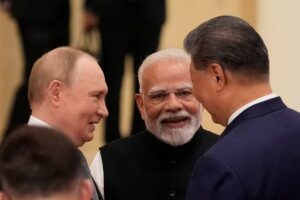
    China’s recent Victory Day parade on September 3, 2025, was more than a ceremonial display; it was a calculated act of strategic signalling to the West. By showcasing its formidable military hardware and hosting close allies such as Russia’s Vladimir Putin and North Korea’s Kim Jong-un, Beijing sought to project its emergence as a great power, much as it did during the 2008 Olympics. By bringing these leaders together, China signalled not only unity but also the contours of an emerging alternative world order that challenges Western dominance.

    The parade sent “chill waves” across Western capitals, with even Donald Trump admitting that he closely followed the event. On social media, he sardonically addressed China: “Please give my warmest regards to Vladimir Putin and Kim Jong Un, as you conspire against the United States of America.” On September 5, 2025, he further voiced his frustration, declaring that the U.S. had “lost India and Russia to deepest, darkest China,” a remark that reflected Washington’s growing unease over Beijing’s expanding influence.

    India, notably absent from China’s Victory Day parade on September 3, 2025, made its own strategic moves. Prime Minister Narendra Modi visited Japan on August 29–30, ahead of the Shanghai Cooperation Organisation (SCO) summit in Tianjin on August 31–September 1. By going to Tokyo first and then to Tianjin, Modi signalled to the West that India continues to prioritise its commitments in the Indo-Pacific, while also reminding Beijing that New Delhi remains open to engagement. During the SCO summit, Modi’s remark that India’s engagement with China “should not be seen through third-country lenses” was intended to reassure the West of India’s balancing strategy.

    Yet, amid this choreography of great powers, one country’s presence at the Victory Day parade raised eyebrows: Pakistan. Prime Minister Shehbaz Sharif stood alongside leaders who openly challenge the Western-led order—figures the West often labels as part of an “axis of evil”—despite Pakistan being nominally allied with the United States. What was even more surprising was the silence of Washington and its partners. Had it been India’s leader at the parade, the Western outcry would have been deafening. But when Pakistan did it, no questions were asked. Why this extraordinary tolerance?

    The explanation lies not in Pakistan’s own strategic brilliance. Unlike India, Pakistan lacks genuine strategic agency or independent decision-making capacity. It has long been dependent on external patrons and remains heavily constrained by domestic crises. The narrative advanced by some strategic experts that Islamabad is engaged in a masterful balancing act between Washington and Beijing is misleading. Instead, both the U.S. and China tolerate Pakistan’s duplicity because of its enduring strategic utility against India.

    Washington knows Pakistan’s record all too well. During the War on Terror, Islamabad received over $33 billion in U.S. aid while simultaneously providing sanctuary to Taliban leaders. U.S. officials, including President Trump, repeatedly acknowledged this duplicity. In a tweet on January 1, 2018, Trump stated: ‘The United States has foolishly given Pakistan more than 33 billion dollars in aid over the last 15 years, and they have given us nothing but lies & deceit, thinking of our leaders as fools. They give safe haven to the terrorists we hunt in Afghanistan, with little help. No more!”

    Similarly, Congressman Ted Poe, Chairman of the House Subcommittee on Terrorism, introduced a bill in 2016 calling for Pakistan to be declared a “state sponsor of terrorism,” stating that Pakistan was “not only an untrustworthy ally but has also aided and abetted the enemies of the United States”. Counterterrorism cooperation is, therefore, not the real reason Washington continues to indulge Pakistan. Nor are West Asia’s dynamics or connectivity goals the central factor, though they play a role.

    The real reason is India. Pakistan serves as a pressure valve for Washington to use whenever New Delhi strays from American strategic priorities. Similarly, for Beijing, Pakistan is an indispensable grey-zone tool against India — a reliable proxy that complicates India’s security calculus without requiring direct Chinese involvement. This explains why China continues to describe its relationship with Pakistan as ‘higher than the Himalayas, deeper than the oceans, sweeter than honey, and stronger than steel,’ even though Beijing is fully aware that the “honey” and other lofty adjectives in this partnership are largely rhetorical, given Pakistan’s military establishment has historically maintained close ties with the Pentagon and U.S. defense agencies.

    Recent developments illustrate this pattern. Despite Islamabad striking a minerals deal in Balochistan with the U.S.—an area where China has invested heavily through the China-Pakistan Economic Corridor (CPEC) and even frequently loses its workers to terrorist attacks—Beijing has not retaliated.

    China has invested nearly $60 billion in CPEC projects, including Gwadar Port and associated infrastructure, yet continues to tolerate Pakistan’s parallel engagement with the U.S. Even though just days ago, China exited funding for certain sections of CPEC, such as the Karachi–Rohri stretch of the Main Line-1 railway, the broader corridor remains intact and firmly under Beijing’s control.

    Similarly, Washington has been remarkably quiet about the expansion of CPEC and its recent announcement to extend it into Afghanistan, despite this development directly strengthening Chinese influence in South and Central Asia, which contradicts U.S. national security strategies, including the Indo-Pacific strategy designed to counterbalance China. Imagine if India were to engage China in a similar manner; the Western backlash would be immediate and fierce.

    The silence over Pakistan reveals the underlying logic: both Washington and Beijing find it useful to maintain Islamabad as a strategic lever against India. For China, Pakistan provides military intelligence, operational support, and a constant security distraction for New Delhi, keeping India tied down on its western front. For the U.S., Pakistan is less a partner in counterterrorism than a tool to remind India of the costs of drifting too far from American preferences.

    Thus, Pakistan’s position is not the result of deft balancing or sophisticated statecraft. It is tolerated, even courted, by two rival great powers because of its instrumental value in their respective strategies against India. Far from being an Independent balancer, Pakistan remains a dependent actor whose importance derives almost entirely from the leverage it provides to others.

    For India, the lesson is clear. The tolerance extended to Pakistan by both Washington and Beijing is not about Islamabad’s capabilities or credibility — both powers know well its history of duplicity. Instead, it reflects the centrality of India in global strategy and the willingness of other powers to use Pakistan as a pawn in their broader geopolitical contest. Recognising this reality is essential for shaping New Delhi’s responses, ensuring that India continues to strengthen its autonomy and strategic weight in the Indo-Pacific and beyond.

    Feature Image Credit: India Today

    Pictures in Text: www.arabnews.com, www.nationalheraldindia.com, www.deccanherald.com

  • The Shame and The Pain

    The Shame and The Pain

    A prominent historian is working on a book about AIPAC and interviewed me. Although they’re fairly mainstream, it was clear from their questions that this will be an exposé focused heavily on AIPAC’s interference in U.S. elections, beginning in the late 1990s.

    I told them everything I knew. My memories from that era come not from working at AIPAC—which I did from 1982 to 1986—but from my time on Capitol Hill, where I dealt with them regularly as a staffer.

    Although even during my time there, I witnessed them arranging the shipment of cash deliveries to favoured candidates, that was nothing compared to the $1.6 million they give to House Democratic Leader Hakeem Jeffries alone now! (In case you are wondering why the #1 Democrat in Congress refuses to endorse Zohran Mamdani, the Democratic nominee for mayor of his own city).

    I won’t go into what I said.

    Anyone who reads my Substack already knows what I think: that AIPAC’s existence has inflicted incalculable harm on the United States, on American Jews, on Israel’s long-term survival as a Jewish homeland, and on Judaism. I didn’t even need to mention the damage—”harm” is too soft a word—done to the Palestinian people.

    AIPAC is not merely complicit in genocide; if AIPAC did not exist, Joe Biden would have stopped it before it started, not because he isn’t a true-blue Israel lover but because (I think) even for him, genocide is a bridge too far. He could have ended it with a single phone call, the way President Reagan ended the bombing of Beirut. (PLEASE read Reagan’s diary entry here.)

    I also made clear that I didn’t always feel this way. I left AIPAC amicably in 1986. I was the most dovish person on staff, but I didn’t leave in protest.

    I left simply for another job. It was 10 years before I realised what AIPAC was, but it was another four years before I came to understand what Israel is. 

    That was in 2000 when Prime Minister Ehud Barak sabotaged the Oslo peace process that Yitzhak Rabin had launched. Instead of following through with a withdrawal from the West Bank, Gaza, and East Jerusalem in exchange for peace and normalisation, Barak offered noncontiguous slices of land that could never constitute anything remotely like a Palestinian state.

    Cheering him on was the U.S. “peace team,” led by Dennis Ross, a fervent Zionist, who worked hand in glove with their Israeli counterparts. The Palestinians—who naively thought they were negotiating with the Israelis, with the US serving as mediators—sensed, and then saw the evidence, that they were negotiating with a combined US-Israel team. One team: all Zionists.

    In fact, President Clinton had privately assured Barak that if the summit failed, he’d pin the blame on the Palestinians no matter who was responsible. He kept that promise—and later came to regret it.

    That’s when I began to reexamine everything I thought I knew about Israel. That process hasn’t stopped. Today, I support a single democratic state for all the people of Israel and Palestine—equal rights, no state religion but freedom of religion or no religion for all, security guaranteed by an international force like NATO.

    None of this will surprise anyone who reads me.

    But during the interview, the historian asked a question that caught me off guard. He said he found my career interesting—he was impressed I’d discussed the Middle East and AIPAC with every Democratic president since Carter—and wanted to know which part of my career I was most proud of.

    I gave a modest but truthful answer because the truth is, I never held any power. I was never important but had some influence at the margins—nothing more. But I told him honestly: this is the part of my career I’m proudest of. I’m retired. No one pays me a salary. I don’t “do meetings” on the Hill or the White House.

    I’m just proud that I was smart enough to recognise that what I’d believed for most of my life was propaganda, grounded in ethnic identity, not facts.

    The Six-Day War made me a Zionist. I stayed one for 33 years. Then it ended. I’ve been to Israel dozens of times. I loved Tel Aviv. But I doubt I’ll ever go back—unless, by some miracle, Israel becomes a real democracy for both peoples. At 77, I don’t expect to see that. Nor, I expect, will anyone else.

    These are terrible times. My own country has been captured by a racist, fascist clique—a nonmilitary junta. And Israel, a country I once loved, has become an international pariah, deservedly so, for its genocidal war in Gaza and 58 years of occupation in the West Bank.

    Judaism—for thousands of years a light in a dark world—has been stained by the crimes committed in its name, and in the name of the Jewish people. And yet, it will survive and flourish. As most Jews outside the (10%) Orthodox minority turn away from Israel, many—especially the young—are rediscovering the richness of Jewish culture and faith on their own terms.

    I myself have one source of peace, besides family and friends: I woke up in time. I saw through the lies. And I’ve raised my small voice against one of the great crimes of any century—the destruction of Palestine. Feeling good about oneself at this age is no small thing.

    The truth does set you free.

    But it does nothing to ease the shame and the pain.

    This article was published earlier in Scheerpost.

    Feature Image: Amnestyusa

  • 80 Years of Lies: The US Finally Admits it knew it didn’t Need to Bomb Hiroshima and Nagasaki

    80 Years of Lies: The US Finally Admits it knew it didn’t Need to Bomb Hiroshima and Nagasaki

    As we commemorate the 80th anniversary of the Hiroshima and Nagasaki atomic bombings, the world is drifting as close to another nuclear confrontation as it has been in decades.

    With Israeli and American attacks on Iranian nuclear energy sites, India and Pakistan going to war in May, and escalating violence between Russia and NATO-backed forces in Ukraine, the shadow of another nuclear war looms large over daily life.

    EIGHTY YEARS OF LIES

    The dropping of the atomic bomb on Japan was a power play, intended to strike fear into the hearts of world leaders, especially in the Soviet Union and China.

    The United States remains the only nation to have dropped an atomic bomb in anger. While the dates of August 6 and August 9, 1945, are seared into the popular conscience of all Japanese people, those days hold far less salience in American society.

    When discussed at all in the U.S., this dark chapter in human history is usually presented as a necessary evil, or even a day of liberation—an event that saved hundreds of thousands of lives, prevented the need for an invasion of Japan, and ended the Second World War early. This, however, could not be further from the truth.

    American generals and war planners agreed that Japan was on the point of collapse, and had, for weeks, been attempting to negotiate a surrender. The decision, then, to incinerate hundreds of thousands of Japanese civilians was one taken to project American power across the world, and to stymie the rise of the Soviet Union.

    “It always appeared to us that, atomic bomb or no atomic bomb, the Japanese were already on the verge of collapse,” General Henry Arnold, Commanding General of the U.S. Army Air Forces in 1945, wrote in his 1949 memoirs.

    “It is my opinion that the use of this barbarous weapon at Hiroshima and Nagasaki was of no material assistance in our war against Japan. The Japanese were already defeated and ready to surrender. My own feeling was that in being the first to use it, we had adopted an ethical standard common to the barbarians of the Dark Ages” – Gen Hap Arnold

    Arnold was far from alone in this assessment. Indeed, Fleet Admiral William Leahy, the Navy’s highest-ranking officer during World War II, bitterly condemned the United States for its decision and compared his own country to the most savage regimes in world history.

    As he wrote in 1950:

    “It is my opinion that the use of this barbarous weapon at Hiroshima and Nagasaki was of no material assistance in our war against Japan. The Japanese were already defeated and ready to surrender. My own feeling was that in being the first to use it, we had adopted an ethical standard common to the barbarians of the Dark Ages.”

    By 1945, Japan had been militarily and economically exhausted. Losing key allies Italy in 1943 and Germany by May 1945, and facing the immediate prospect of an all-out Soviet invasion of Japan, the country’s leaders were frantically pursuing peace negotiations. Their only real condition appeared to be that they wished to keep as a figurehead the emperor—a position that, by some accounts, dates back more than 2,600 years.

    “I am convinced,” former President Herbert Hoover wrote to his successor, Harry S. Truman, “if you, as President, will make a shortwave broadcast to the people of Japan—tell them they can have their emperor if they surrender, that it will not mean unconditional surrender except for the militarists—you’ll get a peace in Japan—you’ll have both wars over.”

    Many of Truman’s closest advisors told him the same thing. “I am absolutely convinced that had we said they could keep the emperor, together with the threat of an atomic bomb, they would have accepted, and we would never have had to drop the bomb,” said John McCloy, Truman’s Assistant Secretary of War.

    “The war might have ended weeks earlier,” he said, “If the United States had agreed, as it later did anyway, to the retention of the institution of the emperor.” – Gen Douglas MacArthur

    Nevertheless, Truman initially took an absolutist position, refusing to hear any Japanese negotiating caveats. This stance, according to General Douglas MacArthur, Commander of Allied Forces in the Pacific, actually lengthened the war. “The war might have ended weeks earlier,” he said, “If the United States had agreed, as it later did anyway, to the retention of the institution of the emperor.” Truman, however, dropped two bombs, then reversed his position on the emperor, in order to stop Japanese society from falling apart.

    At that point in the war, however, the United States was emerging as the sole global superpower and enjoyed an unprecedented position of influence. The dropping of the atomic bomb on Japan underscored this; it was a power play, intended to strike fear into the hearts of world leaders, especially in the Soviet Union and China.

    FIRST JAPAN, THEN THE WORLD

    “Japan was already defeated, and dropping the bomb was completely unnecessary…[it was] no longer mandatory as a measure to save American lives. It was my belief that Japan was, at this very moment, seeking a way to surrender with a minimum loss of face.” – President Ike Eisenhower

    Hiroshima and Nagasaki drastically curbed the U.S.S.R.’s ambitions in Japan. Joseph Stalin’s forces had invaded and permanently annexed Sakhalin Island in 1945 and planned to occupy Hokkaido, Japan’s second-largest island. The move likely prevented the island nation from coming under the Soviet sphere of influence.

    To this day, Japan remains deeply tied to the U.S., economically, politically, and militarily. There are around 60,000 U.S. troops in Japan, spread across 120 military bases.

    Many in Truman’s administration wished to use the atom bomb against the Soviet Union as well. President Truman, however, worried that the destruction of Moscow would lead the Red Army to invade and destroy Western Europe as a response. As such, he decided to wait until the U.S. had enough warheads to completely destroy the U.S.S.R. and its military in one fell swoop.

    War planners estimated this figure to be around 400. To that end, Truman ordered the immediate ramping up of production. Such a strike, we now know, would have caused a nuclear winter that would have permanently ended all organised life on Earth.

    The decision to destroy Russia was met with stiff opposition among the American scientific community. It is now widely believed that Manhattan Project scientists, including Robert J. Oppenheimer himself, passed nuclear secrets to Moscow in an effort to speed up their nuclear project and develop a deterrent to halt this doomsday scenario. This part of history, however, was left out of the 2023 biopic movie.

    By 1949, the U.S.S.R. was able to produce a credible nuclear deterrent before the U.S. had produced sufficient quantities for an all-out attack, thus ending the threat and bringing the world into the era of mutually assured destruction.

    “Certainly prior to 31 December 1945, and in all probability prior to 1 November 1945, Japan would have surrendered even if the atomic bombs had not been dropped, even if Russia had not entered the war, and even if no invasion had been planned or contemplated,” concluded a 1946 report from the U.S. Strategic Bombing Survey.

    Dwight D. Eisenhower, Supreme Allied Commander in Europe and future president, was of the same opinion, stating that:

    “Japan was already defeated, and dropping the bomb was completely unnecessary…[it was] no longer mandatory as a measure to save American lives. It was my belief that Japan was, at this very moment, seeking a way to surrender with a minimum loss of face.”

    Nevertheless, both Truman and Eisenhower publicly toyed with the idea of using nuclear weapons against China to stop the rise of Communism and to defend their client regime in Taiwan. It was only the development of a Chinese warhead in 1964 that led to the end of the danger, and, ultimately, the détente era of good relations between the two powers that lasted until President Obama’s Pivot to Asia.

    Ultimately, then, the people of Japan were the collateral damage in a giant U.S. attempt to project its power worldwide. As Brigadier General Carer Clarke, head of U.S. intelligence on Japan wrote, “When we didn’t need to do it, and we knew we didn’t need to do it, and they knew that we knew we didn’t need to do it, we used them [Japanese citizens] as an experiment for two atomic bombs.”

    TIPTOEING CLOSER TO ARMAGEDDON

    The danger of nuclear weapons is far from over. Today, Israel and the United States – two nations with atomic weaponry – attack Iranian nuclear facilities. Yet their continued, hyper-aggressive actions against their foes only suggest to other countries that, unless they too possess weapons of mass destruction, they will not be safe from attack. North Korea, a country with a conventional and nuclear deterrent, faces no such air strikes from the U.S. or its allies. These actions, therefore, will likely result in more nations pursuing nuclear ambitions.

    Earlier this year, India and Pakistan (two more nuclear-armed states) came into open conflict thanks to disputes over terrorism and Jammu and Kashmir. Many influential individuals on both sides of the border were demanding their respective sides launch their nukes – a decision that could also spell the end of organised human life. Thankfully, cooler heads prevailed.

    Meanwhile, the war in Ukraine continues, with NATO forces urging President Zelensky to up the ante. Earlier this month, President Trump himself reportedly encouraged the Ukrainian leader to use his Western-made weapons to strike Moscow.

    It is precisely actions such as these that led the Bulletin of the Atomic Scientists to move its famous Doomsday Clock to 89 seconds to midnight, the closest the world has ever been to catastrophe.

    “The war in Ukraine, now in its third year, looms over the world; the conflict could become nuclear at any moment because of a rash decision or through accident or miscalculation,” they wrote in their explanation, adding that conflicts in Asia could spiral out of control into a wider war at any point, and that nuclear powers are updating and expanding their arsenals.

    The Pentagon, too, is recruiting Elon Musk to help it build what it calls an American Iron Dome. While this move is couched in defensive language, such a system – if successful – would grant the U.S. the ability to launch nuclear attacks anywhere in the world without having to worry about the consequences of a similar response.

    Thus, as we look back at the horrors of Hiroshima and Nagasaki 80 years ago, we must understand that not only were they entirely avoidable, but that we are now closer to a catastrophic nuclear confrontation than many people realise.


    This article was published earlier in MintPress News and is republished under a Creative Commons Attribution-NonCommercial-ShareAlike 3.0 International License.

    Feature Image: Hiroshima, several months after the atomic bombing. Air Force photo from national archives nsarchive.gwu.edu


  • India–U.S. Ties Beyond the Trump Show

    India–U.S. Ties Beyond the Trump Show

    With its deep institutional roots and strategic clarity, the India–U.S. relationship is well-positioned to advance further, driven not by transient rhetoric but by enduring common purpose

    U.S. President Donald Trump’s repeated assertions about mediating a ceasefire between India and Pakistan have reignited long-standing apprehensions surrounding external involvement in the Kashmir issue. His remarks, including those referenced during a U.S. court hearing in May 2025—where U.S. Commerce Secretary Howard Lutnick testified that the Trump administration’s trade policies helped avert a potential nuclear confrontation in South Asia—were met with widespread criticism from strategic experts and policymakers alike. New Delhi has remained steadfast in its position: the issue of Jammu and Kashmir is strictly bilateral and not subject to international mediation.

    Diaspora Influence and Institutional Depth

    Despite Trump’s controversial rhetoric, the India–U.S. relationship has matured well beyond the influence of individual leaders. It now stands as a robust, multi-dimensional partnership, underpinned by shared strategic interests, deepening economic ties, and strong people-to-people linkages. This is evident through the formalization of the relationship via key agreements and strategic initiatives. Today, it is regarded as a promising and one of the most consequential partnerships of the 21st century, given its potential to reshape the dynamics of the Indo-Pacific region and beyond. Moreover, this strength is particularly reflected in the vibrant Indian diaspora in the United States—numbering over four million—one of the most educated and affluent immigrant communities in the country, playing an increasingly influential role in shaping policy.


    The diaspora’s clout in U.S. policymaking has grown remarkably. A striking example of this influence was witnessed during the COVID-19 crisis in 2021. At a critical juncture, when the Biden administration had imposed export restrictions on essential medical supplies, Indian-Americans mounted an organized lobbying campaign. Their efforts succeeded in convincing the administration to reverse the ban and dispatch critical medical equipment and raw materials for vaccines to India. This intervention demonstrated the community’s capacity to influence key policy decisions at the highest levels. Their role is not limited to crisis management. The Indian-American community has been instrumental in advancing landmark initiatives such as the U.S.–India civil nuclear agreement, and today, many Indian-Americans serve in influential roles within the U.S. government. This diaspora acts as a cultural and strategic bridge, enhancing bilateral understanding and reinforcing long-term cooperation.

    The evolving India–U.S. partnership is bolstered by a diverse and committed set of stakeholders,including government institutions, private enterprises, think tanks, academic bodies, and civil society in both nations. Crucially, U.S. institutions such as the State Department and Congress continue to regard India as a vital strategic partner, particularly in the context of the Indo-Pacific strategy and broader efforts to counterbalance China’s growing regional influence. These institutions take a long-term, bipartisan approach to India–U.S. relations, one that is grounded in continuity and strategic alignment rather than reactive or transactional impulses, such as those reflected in Trump’s pronouncements.

    Strategic Continuity

    Trump’s leadership style has often been described as transactional, business-oriented, and self-promoting. He frequently projects himself as a master negotiator and dealmaker, but many of his actions suggest otherwise. His tendency to prematurely claim success and take credit has often weakened his own negotiating position, whether in the context of Ukraine, North Korea, Iran, or South Asia. For instance, Trump repeatedly announced breakthroughs in negotiations between Russia and Ukraine that never materialized, thereby weakening his credibility and diminishing his effectiveness as a serious diplomatic actor.

    While Trump’s erratic rhetoric may generate headlines, it is critical not to exaggerate its impact on this deeply rooted relationship. His habitual tendency to seek the spotlight and amplify his personal role in global diplomacy often lacked substantive backing or long-term vision.

    In the case of India and Pakistan, Trump’s attempt to “hyphenate” the relationship—suggesting he could broker a deal between both nations—ignored the decades-long efforts by previous U.S. administrations to de-hyphenate the ties and treat each relationship on its own strategic merits. His statement that “they’ve been fighting for 1,500 years” reveals a superficial understanding of South Asian geopolitics and history. Such remarks reflect a lack of diplomatic nuance and strategic depth.

    In contrast, previous U.S. presidents devoted sustained efforts toward cultivating strategic trust with India—especially in light of their fraught Cold War history and the lingering presence of anti-American sentiment within Indian political and intellectual circles. During this era, American foreign policy toward India embodied a form of strategic altruism, emphasizing long-term engagement grounded in mutual respect rather than immediate concessions or gains. Successive administrations—Republican and Democratic alike, including Trump’s own during his first term—recognized the importance of winning India’s trust, acknowledging its historic skepticism of U.S. intentions and its adherence to a non-aligned foreign policy stance.

    These efforts bore fruit in the form of landmark agreements and growing strategic alignment across a broad spectrum of areas, including defense cooperation, civil nuclear energy, high technology, artificial intelligence, cybersecurity, and counterterrorism. Recent developments—including the Initiative on Critical and Emerging Technologies (iCET), the U.S.–India Major Defense Partnership Framework (2025–2035), the COMPACT Initiative, and collaborations through platforms like INDUS-X and the Artemis Accords—have deepened cooperation. These engagements signify that the India–U.S. partnership is now an essential component of the 21st-century global security and economic architecture.

    the India–U.S. partnership rests on far more stable and enduring foundations: bipartisan consensus within the U.S. strategic establishment, shared democratic values, converging geopolitical interests, and institutional mechanisms that safeguard continuity and progress.

    While Trump’s erratic rhetoric may generate headlines, it is critical not to exaggerate its impact on this deeply rooted relationship. His habitual tendency to seek the spotlight and amplify his personal role in global diplomacy often lacked substantive backing or long-term vision.  Even his relationship with Elon Musk—once a vocal ally who contributed nearly $300 million to pro-Trump political efforts during the 2024 campaign—has deteriorated into public conflict, highlighting the unpredictability of Trump’s leadership style. In stark contrast, the India–U.S. partnership rests on far more stable and enduring foundations: bipartisan consensus within the U.S. strategic establishment, shared democratic values, converging geopolitical interests, and institutional mechanisms that safeguard continuity and progress.

    West Asia dynamics: No Indian shift

    Moreover, recent U.S. gestures toward Pakistan—including inviting Pakistan’s Army Chief to U.S. Army Day celebrations, public praise for its leadership, the release of funds for upgrading the F-16 fleet—and support in securing IMF bailout packages—should be analysed through the lens of broader strategic imperatives, particularly concerning Iran. Amid escalating tensions with Tehran and recent Israeli airstrikes on Iranian targets by its close ally Israel, Washington may be positioning itself for potential regional contingencies and wider escalation. In this context, logistical access to Pakistani military bases—notably Noor Khan Airbase, and other facilities which, according to senior analyst Imtiaz Gul, is already under partial U.S. operational control—could become critical. Pakistan has a history of facilitating U.S. military operations, such as during the War on Terror. Given its proximity to Iran, Pakistan is strategically well-placed to support U.S. initiatives in the region.

    The U.S. may also seek to ensure that Pakistan remains aligned with Western objectives should Israel act unilaterally against Iran. Therefore, recent goodwill gestures by the U.S. toward Pakistan should be interpreted not as a shift away from India, as some within the Indian strategic establishment might fear, but as part of a calculated strategy to secure regional flexibility amid evolving geopolitical uncertainties in West Asia.

    Ultimately, the strength and resilience of the India–U.S. relationship derive from its firm institutional foundation and shared strategic vision. It is largely insulated from the whims of transient political figures. Despite periodic turbulence, the partnership has demonstrated remarkable continuity and adaptability. Key U.S. national security documents—including the Indo‑Pacific Strategy and the National Security Strategy—consistently describe India as a “major defense partner” and an indispensable actor in the effort to balance China’s regional ambitions. These structural commitments ensure that the bilateral relationship remains on a trajectory of deepening cooperation. As articulated in the 2022 U.S. Indo-Pacific Strategy, India is seen as a “like-minded partner and leader in South Asia and the Indian Ocean, active in and connected to Southeast Asia,” and a “driving force of the Quad and a net security provider in the region.”

    Conclusion

    Today, the India–U.S. relationship stands as a beacon of mutual trust, strategic alignment, and forward-looking engagement. Decades of deliberate diplomacy, institutional investment, and cultural linkage have given rise to one of the most promising partnerships of the 21st century. While figures like President Trump may generate momentary uncertainty, they lack the capacity to derail the deep-rooted and multidimensional nature of this partnership. The future of India–U.S. relations remains bright, anchored in shared democratic ideals, strategic complementarity, and a common vision for a free, open, and inclusive Indo-Pacific.

    Feature Image credit: news18.com

    Image of  President Bush and PM Manmohan Singh: wikipedia India-United States Civil Nuclear Deal.

  • If This Is What Israel Does, Then Israel Shouldn’t Exist

    If This Is What Israel Does, Then Israel Shouldn’t Exist

    The world and the UN watch helplessly as Israel executes the worst human rights crimes and genocide through killing, enforced famine, and wanton slaughter of innocent civilians, women, and children of Gaza. This is not war but an explicit slaughter no less than what the Nazis carried out in World War 2. Gaza has seen the largest number of journalists and aid workers killed in history, the largest number of children killed n history, and more bombs dropped in a small piece of land than in all of World War 2. Caitlin Johnstone raises a very pertinent question — How can a genocidal and apartheid  state be allowed to exist?


    Gaza’s youngest social media influencer has been killed by Israeli forces after touching tens of thousands of lives with her stories of survival in the besieged Palestinian territory. Her name was Yaqeen Hammad. She was 11 years old.

    Israeli forces fired upon starving civilians in Gaza on Tuesday when they rushed inside a facility holding aid, reportedly killing three and wounding dozens more. The facility was operated by the Gaza Humanitarian Foundation, the latest US-Israeli scheme to bypass normal UN aid distribution and lure Gaza’s population into specific concentrated locations.

    A new report from the Associated Press confirms that Israeli forces have been using Palestinians as human shields in Gaza as a matter of policy. This is actually using human shields in the very real sense of deliberately forcing civilians between yourself and potential enemy fire, not in the fake sense of being somewhere near civilians as per the made-up “human shields” narrative that Israel uses to blame its daily massacres on Hamas.

    A survey of Jewish Israelis conducted by an Israeli polling firm has found that 82 percent of respondents support the total ethnic cleansing of Gaza, and 47 percent believe Israeli forces should kill every man, woman and child in every city they capture there.

    Haaretz reports on the poll’s findings:

    “Sixty-five percent said they believed in the existence of a modern-day incarnation of Amalek, the Israelite biblical enemy whom God commanded to wipe out in Deuteronomy 25:19. Among those believers, 93 percent said the commandment to erase Amalek’s memory remains relevant today’.

    Haaretz.com

    These are just a few reports from the past few days, on top of all the other staggeringly evil things that Israel has been doing this whole time.

    If this is Israel, then Israel should not exist. If what we are seeing in Gaza is what it means for Israel to exist, then it shouldn’t.

    People scream bloody murder when you say this, but it shouldn’t be a controversial position. I’m not saying Jews shouldn’t exist, I’m saying a genocidal apartheid state should not exist. A state is an artificial construct of the human mind, held together by human actions. If the actions we are witnessing in Gaza are the product of the artificial construct of the Israeli state, then that artificial construct should be dismantled, and those actions should cease.

    I would say this about any other man-made construct that is doing the things Israel is doing. If some scientists built a robot that spends all day every day massacring children, then I would say the robot should be unmade. If you drew a Star of David on the robot’s head, it wouldn’t suddenly make me an evil antisemite to say that the child-murdering robot should be dismantled.

    Dismantling the apartheid state of Israel would mean granting everyone citizenship and equal rights, allowing right of return, denazifying apartheid culture, paying extensive reparations, and righting the wrongs of the past. You could still call what remains “Israel” if you wanted to, but it would be nothing like the state that presently exists under that name.

    Would this upset the feelings of some Jewish people? Yes. Would it inconvenience the lives of some Jewish people? Certainly. But that would be infinitely preferable to the daily massacres, genocidal atrocities and reckless regional warmongering we are witnessing from the state of Israel. Advocating the end of this genocidal state doesn’t make someone a monster, advocating its continuation does. The only way to believe otherwise is to take it as a given that Palestinian lives are worth less than Jewish feelings.

    Israel is currently presenting nonstop arguments for its own cessation. Every video that comes out showing Israelis acting in monstrous ways and innocent Palestinians being murdered, tortured and abused in the most horrific ways imaginable is an argument for which there is no verbal counter-argument. Every day that goes by, the genocidal apartheid state of Israel is proving to the world that it should not exist.

    Feature Image Credit:Israel using starvation as means of war to drive people out of Gaza: Head of Rights monitor  aa.com.tr

    Image in article: 11-year old Yaqeen Hammad – independent.co.uk

  • The End of War in Ukraine: A Tough Road Ahead

    The End of War in Ukraine: A Tough Road Ahead

    The war, which began when NATO leaders dismissed Russia’s demand for security guarantees from the West, was intended as a way for Russia to reclaim its power and prestige on the global stage while strengthening its security in the region. Neither of these objectives has been achieved, nor will they be with Ukraine’s defeat. The war quickly escalated into a proxy conflict between Moscow and the collective West, with significant losses on both sides.

    Given that President Putin has recently signed an order to draft 160,000 additional soldiers with the goal of “finishing off” the Ukrainian resistance, the Russia-Ukraine war is far from a definitive resolution. Nonetheless, it is never too early to begin considering the options for a successful post-war settlement and the potential to transform the US-advocated ceasefire (if it ever materializes) into a lasting peace.


    Unfortunately, neither side of the conflict has presented anything even remotely resembling a plan for a sustainable, acceptable post-war settlement. The war, which began when NATO leaders dismissed Russia’s demand for security guarantees from the West, was intended as a way for Russia to reclaim its power and prestige on the global stage while strengthening its security in the region. Neither of these objectives has been achieved, nor will they be with Ukraine’s defeat. The war quickly escalated into a proxy conflict between Moscow and the collective West, with significant losses on both sides. Russia’s international security situation is now worse than it was before the war began, and this will remain the case for some time, regardless of what happens in Ukraine.

    Ukraine, in fact, is fighting a losing battle. Its leaders are sacrificing the country in the midst of a geopolitical rivalry involving Russia, Europe, and the USA. If Ukraine accepts a Trump-mediated deal with Russia, it will lose four regions occupied by Russian forces since 2022, agree to the annexation of Crimea, and abandon any hopes of NATO membership in the future. If Ukraine is defeated on the battlefield, it will lose its independence and be forced to submit to what Russian leaders refer to as demilitarization and denazification—essentially, a regime change and the reconstitution of Ukrainian governance.

    With no realistic prospect of pushing Russian forces out of the country and with the increasing likelihood of an exploitative “resources plus infrastructure” deal imposed by Washington, Ukraine risks losing not only its state sovereignty but any semblance of international agency. If Ukraine’s role in a post-war settlement, as envisioned in the Saudi negotiations, is reduced to either a Russian-occupied territory or a de facto resource colony of the United States, such a “settlement” would merely serve as an interlude between two wars, offering no lasting resolution to the conflict.

    As the Kremlin proposes placing Ukraine under external governance and the White House demands control over all of Ukraine’s natural resource income for several years—along with a perpetual share of that revenue—the process of transforming Ukraine into a non-self-governing territory accelerates. However, Russia also faces setbacks. Despite Putin’s efforts to halt NATO’s expansion and push the alliance back to its 1997 military posture, NATO has grown closer to Russia’s borders, with formerly neutral Sweden and Finland joining the alliance in direct response to Russia’s invasion of Ukraine. Trump’s previous alignment with Putin prompted EU leaders to agree to a substantial €800 billion increase in defence spending, while French President Macron proposed extending France’s nuclear deterrent to protect all of Europe from potential Russian threats. This may lead to France positioning its nuclear-capable jets in Poland or Estonia, and its ballistic-missile submarines in the Baltic Sea. The British nuclear deterrent is already committed to NATO policy, and it is not unimaginable that some or all of the UK’s nuclear submarines could be deployed closer to Russia’s borders. A UK contribution to a European nuclear umbrella, along with the creation of a low-yield variant of existing nuclear capabilities, would further erode Russia’s already fragile security.

    Putin’s proposal for the external governance of Ukraine reveals Russia’s deep vulnerabilities, which the full occupation of Ukraine would soon expose. A collapse of Ukrainian statehood and the need to occupy the entire country would require Russia to maintain an occupation force of several hundred thousand troops, while also assuming responsibility for law enforcement, security, state administration, essential services, and more. Rebuilding Ukraine’s devastated southeast would cost billions of dollars, and efforts to restore the entire former Ukrainian nation are simply beyond Russia’s capacity. Meanwhile, the guerrilla warfare that the Ukrainians will inevitably intensify in response to Russia’s territorial expansion will further drain the occupiers’ resources.

    The end of the war would mark a slowdown in the military-industrial complex that has driven Russia’s economic growth in recent years. Additionally, the ongoing militarization of society, the rise of nationalist totalitarianism, and the enormous costs of occupying the “new territories” highlight the Pyrrhic nature of Russia’s supposed “victory.”

    Despite the Kremlin’s bravado, Russia’s economy and society have been significantly weakened by the war. With the key interest rate at 21 percent, annual inflation at 10 percent, dwindling welfare fund reserves, and an estimated 0.5 to 0.8 million casualties (killed and wounded) on the battlefield, it’s unclear how much longer Putin can stave off economic decline and maintain reluctant public support for his administration. The end of the war would mark a slowdown in the military-industrial complex that has driven Russia’s economic growth in recent years. Additionally, the ongoing militarization of society, the rise of nationalist totalitarianism, and the enormous costs of occupying the “new territories” highlight the Pyrrhic nature of Russia’s supposed “victory.” The best possible settlement from Russia’s perspective—leaving a rump Ukraine that is independent, self-sufficient, and friendly—is simply out of reach. The remaining options will only delay the inevitable second round of hostilities.

    Finally, the Western proposals for post-war settlements are either unsustainable or outright counterproductive. This is perplexing, given that the war has cost Europe dearly, and it should be in the EU’s interest to see it end as soon as possible. While predictions of seeing the Russian economy in tatters have not materialized, Europe now faces an imminent financial crisis. With the EU economy growing by less than 1 percent in 2024, while Russia’s economy grows 4.5 times faster, it’s time for those like President Macron of France—who advocate continuing the war with extensive European military and financial support—to reconsider their stance.

    However, this is not happening. Instead, EU leaders are urging Russia to agree to an “immediate and unconditional ceasefire on equal terms, with full implementation,” under the threat of new sanctions and the redoubling of Europe’s support for Ukraine.

    This approach is counterproductive and likely to strengthen Russia’s resolve. Beyond the fact that continued support for Ukraine’s war effort will further strain the already fragile budgets of the supporting states, insisting that Ukraine fight to the bitter end is both practically and morally indefensible. At the same time, abandoning Ukraine to face Russia alone could lead to the collapse of Ukrainian statehood. In either case, the collective West loses.

    A negotiated settlement, as proposed by President Trump, is a lesser evil under the current circumstances. Yes, it’s a suboptimal solution that could embolden Putin, harm Ukraine, deepen the divide between Russia and Europe, and create new challenges for international security.

    Yet, the preservation of Ukrainian statehood would be ensured. Death and destruction would cease. Europe’s economy would recover, and the global economy would see a boost. The risk of nuclear war in Europe would fade away. The need for European citizens to stockpile 72 hours’ worth of supplies, as per the European Commission’s recent guidance, might become less of a priority for the already-intimidated European citizens.

    European leaders should consider working alongside Trump, Putin, and Zelensky to craft a balanced, negotiated solution that accounts for the interests of all sides. Even if everyone must make sacrifices, it is better than losing everything. 

    While any path out of this war will be difficult, the strategy of threatening Russia with harsher sanctions, forming “coalitions of the willing,” and creating EU nuclear-armed forces will not make it any easier. Instead, European leaders should consider working alongside Trump, Putin, and Zelensky to craft a balanced, negotiated solution that accounts for the interests of all sides. Even if everyone must make sacrifices, it is better than losing everything.

    Feature Image Credit: www.pbs.org

  • Trump and Musk, Canada, Panama and Greenland, an old Story

    Trump and Musk, Canada, Panama and Greenland, an old Story

    Re-elected President Donald Trump has mentioned a possible annexation of the Panama Canal, Canada and Greenland. A crazy project that already appeared on a map, imagined in 1941 by a follower of the technocratic movement. However, it was the French branch of this movement that invented the transhumanism dear to Elon Musk, whose grandfather was responsible for the Canadian branch of the technocratic movement.

    When the technocratic movement considered annexing Greenland, it recalled that it is located on the North American continental shelf and based its decision on the importance of its natural resources. It holds precious rare earth minerals [4], as well as uranium, billions of barrels of oil and vast reserves of natural gas, previously inaccessible but increasingly less so.

    The post-World War II world map, drawn by Maurice Gomberg in 1941. The United States extends from Canada to the Panama Canal and includes Greenland.

    The statements of the re-elected US President Donald Trump, before his inauguration, announcing that he intended to buy Greenland (which he had already compared in 2019 to a “big real estate deal”) and to annex both Canada and the Panama Canal have stunned us. No Western leader had made such statements since the Second World War. The US ruling class instead saw it as a “new frontier”, that is to say, new territories where their country could continue its advance.

    The Danish government, on which Greenland depends, has indicated that it is not for sale, that it is an “autonomous territory” owned only by the Greenlanders. German Chancellor Olaf Scholz called for “the principle of the inviolability of borders to apply to all countries… whether it is a very small one, or a very powerful one.” French Foreign Minister Jean-Noël Barrot commented: “There is no doubt that the European Union would not allow other nations of the world to attack its sovereign borders.” British Foreign Secretary David Lamy said Donald Trump “raises concerns about Russia and China in the Arctic, which concern the national economic security” of the United States. These are “legitimate issues.” Finally, for Italian Prime Minister Giorgia Meloni, these statements are “more of a message intended” to “other great powers rather than hostile claims against these countries. These are two territories where in recent years we have seen increasing activism by China. »

    Canadian Prime Minister Justin Trudeau, who was elected as Pierre Trudeau’s son and therefore as a defender of national independence, turned out to be nothing more than a follower of Washington. He therefore had nothing to say about what seems obvious: by joining the United States, his country would have nothing to lose that it has not already lost and everything else to gain. So he resigned.

    Concerning the Panama Canal, Donald Trump had insinuated that it was operated by the Chinese army. Panamanian President José Raúl Mulino responded: “The canal is not controlled, directly or indirectly, by China, the European Community, the United States or any other power. As a Panamanian, I firmly reject any expression that distorts this reality.”

    We will explain here that these ideas of annexation are not new, but date back to the 1929 crisis, and that they correspond to a coherent ideological corpus defended, until last week, by the only multi-billionaire Elon Musk whom we knew rather as an admirer of the Serbian engineer Nicolas Tesla and as a follower of transhumanism.

    During the “Great Depression”, that is to say the Wall Street crisis and the economic storm that followed, all the American and European elites considered that capitalism, in its then form, was definitively dead. Joseph Stalin proposed the Soviet model as the only answer to the crisis, while Benito Mussolini (former representative of Lenin in Italy) proposed, on the contrary, fascism. But in the United States, a third solution was proposed: technocracy.

    Criticizing the traditional reading of supply and demand, the economist Thorstein Veblen was interested in the motivations of buyers. He showed that the man who can afford leisure actually does so to reinforce his social superiority, and must therefore show it. Leisure is therefore not a form of laziness, but “expresses the unproductive consumption of time”. Consequently, in many situations, contrary to popular belief, “The more the price of a good increases, the more its consumption also increases” (Veblen’s paradox). It is therefore not prices, but group behavior and individual motivations that dictate the economy.

    Thorstein Veblen’s iconoclastic thinking gave birth, among others, to Howard Scott’s technocratic movement. He imagined that power should be given neither to capitalists nor to proletarians, but to technicians.

    This movement was exported to France around polytechnicians, notably the esoteric novelist Raymond Abellio (who founded the sect of which François Mitterrand was a member until his death) and Jean Coutrot, the inventor of transhumanism. Little by little, this movement would have engendered in the occult circles of Philippe Pétain’s regime a secret society, the Synarchy.

    Coutrot’s transhumanism foreshadows Elon Musk’s transhumanism. For Coutrot, it was about using technology to go beyond humanism. For Elon Musk, it is more about using technology to change man.

    This movement of ‘technocracy’ is based on a dominant challenge to the functioning of democracies. It professes not to engage in politics and to find technical solutions to all problems.

    Given this lineage, we understand that any reference to technocracy in France is discredited from the start. However, this movement is based on a dominant challenge to the functioning of democracies. It professes not to engage in politics and to find technical solutions to all problems. Whether we like it or not, it is present in the United States in the belief that it is technical progress that will solve everything.

    The fact remains that the technocratic movement, relying on statistical knowledge from the interwar period, was convinced that the North American continent constituted a unit in terms of mineral resources and industries.

    Joshua Haldeman

    The head of the Canadian branch of the movement, chiropractor Joshua Haldeman, was arrested during the Second World War because he defended neutrality towards Nazi Germany. He was indeed pro-Hitler and anti-Semitic [1]. After the war, he settled in South Africa, seduced by its apartheid regime. His grandson is none other than Elon Musk.

    It should be noted that the multi-billionaire’s position within the Trump administration is increasingly contested from within. Thus Steve Bannon was able to declare to Corriere della Sera: “Elon Musk will not have full access to the White House, he will be like any other person. He is really an evil guy, a very bad guy. I made it a personal thing to fire this guy. Before, because he put money in, I was ready to tolerate it, I am no longer ready to tolerate it.” [2].

    Elon Musk

    Maurice Goldberg envisaged a division of the world by civilizations. The United States would have been expanded to include all of North America, from Canada to the Panama Canal, and to many Pacific and Atlantic islands, including the Antilles, Greenland and Ireland.

    Some members of the technocratic movement gave great importance to the post-World War II world map drawn up in 1941 by an anonymous author signing under the pseudonym Maurice Gomberg. However, he envisaged a division of the world by civilizations. The United States would have been expanded to include all of North America, from Canada to the Panama Canal, and to many Pacific and Atlantic islands, including the Antilles, Greenland and Ireland. Like the French Synarchy, this map has been widely discussed in conspiracy circles. However, according to historian Thomas Morarti, quoted by the Irish press [3], this map resonated with President Franklin D. Roosevelt during his “Four Freedoms speech” (freedom of speech, freedom of religion, freedom from want, and freedom from fear) on January 6, 1941. Along the same lines, in 1946, President Harry Truman proposed that US troops not evacuate Greenland, which they had liberated from the Nazis, but buy it for $100 million.

    In 1951, Denmark authorized the establishment of two large US and NATO military bases in Greenland, at Sondreström and Thule. Elements of the US anti-ballistic system have since been installed there. The treaty authorizing these bases was co-signed by Greenland in 2004, that is, after it had acquired its autonomous status.

    In 1968, a US strategic bomber, which was taking part in a routine operation in the context of the Cold War, accidentally crashed near Thule, contaminating the region with a cloud of enriched uranium. It was learned in 1995 that the Danish government had tacitly authorized the United States, in violation of Danish law, to store nuclear weapons on its soil.

    The purchase of Greenland could, therefore, easily take place without money. All that would be required would be for the Pentagon to ensure the protection of Denmark, thus freeing it from a financial burden.

    Donald Trump Jr. and his team “on vacation” in Greenland.

    Giving reality to what seemed to be just empty talk, Donald Trump Jr., the son of the re-elected president, went on vacation to Greenland. Of course, on board a family plane and surrounded by a group of advisors. He did not meet, officially at least, with any political leader. During this trip, the NGO Patriot Polling conducted a survey. The majority of respondents (57.3%) approved of the idea of joining the United States, while 37.4% were against it. Of those surveyed, 5.3% remained undecided. Following the publication of these results, Múte B. Egede gave a press conference in Copenhagen that even if he had not spoken with the Trumps, he was open to “discussions on what unites us. We are ready to discuss. Cooperation is a question of dialogue. Cooperation means that you will work to find solutions.”

    When the technocratic movement considered annexing Greenland, it recalled that it is located on the North American continental shelf and based its decision on the importance of its natural resources. It holds precious rare earth minerals [4], as well as uranium, billions of barrels of oil and vast reserves of natural gas, previously inaccessible but increasingly less so. Rare earths are now almost exclusively available to China. However, they have become essential for high technology, particularly for Tesla cars. These natural reserves are not exploited due to the traditional opposition of the indigenous populations, the Inuit (88% of the population).

    Today, Greenland is above all a strategic issue. It would allow the United States to control the Northern Sea Route, which is now navigable. Since this is currently controlled by Russia and China, a change in the island’s ownership would transform the geopolitical equation. That is why Dmitry Peskov, the Kremlin spokesman, commented: “The Arctic is a zone of our national interests, our strategic interests. We want to preserve the climate of peace and stability in the Arctic zone. We are watching the rather spectacular development of the situation very closely, but so far, thank God, only at the level of statements.”

    References to the technocratic movement may have nothing to do with Musk and Trump, but they should be kept in mind as events unfold.


    Translated from French by Roger Lagasse’


    References:

    [1The International Conspiracy to Establish a World Dictatorship & The Menace to South Africa, Joshua Haldeman. Cité dans «The World According to Elon Musk’s Grandfather», Jill Lepore, The New Yorker, September 19, 2023.

    [3«United mates of America», Tom Prendeville, Irish Mirror.

    [4Greenland is only mentioned once in the Technocracy Study Course. Rare earths were ignored at the time.


    This article was published earlier in Voltairenet.org
    and is republished under Creative Commons (license CC-BY-NC-ND)

    Feature Image Credit: nypost.com

  • Guerrilla Air Defence: Strategy of the Underdog

    Guerrilla Air Defence: Strategy of the Underdog

    Guerrilla air defence is a testament to human ingenuity in asymmetrical warfare. Irregular forces can challenge even the most sophisticated air powers by adapting low-cost solutions, decentralised tactics, innovative technologies, and asymmetrical strategies.

    In the modern era of warfare, air superiority has become a cornerstone of military strategy. Nations with advanced air forces often dominate battlefields, leveraging precision-guided munitions, reconnaissance drones, and stealth technology. However, guerrilla forces, lacking comparable resources, have developed innovative air defence strategies to counter such overwhelming air dominance. Guerrilla air defence embodies the ingenuity of the underdog, employing asymmetric tactics and exploiting weaknesses in advanced air forces.

    Guerrilla Air Defence

    Guerrilla air defence refers to the methods and tactics employed by ground forces, mainly non-state actors or irregular forces, to counter the overwhelming aerial superiority of state militaries. In modern conflicts, air dominance often plays a pivotal role in determining outcomes, and ground forces must innovate to level the battlefield. These tactics range from using man-portable air defence systems (MANPADS) to employing deception, leveraging urban terrain, and deploying counter-drone measures.                                  

    Historical Background

    Mujahideen firing a Stinger (Soviet-Afghan War 1979-89): Image Credit-wikimedia commons

    Vietcongs in action against US aircraft during Vietnam War 1965-1975 (Image – www.thearmorylife.com)

    The concept of guerrilla air defence emerged during the Cold War, as smaller forces sought ways to combat technologically superior opponents. Early examples include the North Vietnamese forces, with Soviet and Chinese support, employing a mix of surface-to-air missiles (SAMs), anti-aircraft artillery (AAA), and man-portable air defence systems (MANPADS) to counter American air supremacy. The infamous downing of U.S. planes over Hanoi—dubbed “SAM City”—highlighted the effectiveness of such strategies. During the Afghan-Soviet War (1979-1989), Afghan mujahideen famously utilised U.S.-supplied Stinger missiles to neutralise Soviet helicopters and jets, turning the tide in specific regions and undermining Soviet morale. These historical precedents set the stage for modern guerrilla air defence tactics, which blend ingenuity, adaptability, and external support.

     Principles of Guerilla Air Defence

    Mobility and Concealment: Mobility and concealment are fundamental to guerrilla air defence. Unlike conventional militaries that deploy fixed air defence installations, guerrilla forces rely on portable systems and improvised techniques to remain undetected. Camouflage, underground networks, and rapid movement are essential to avoid detection by aerial surveillance. Guerrilla fighters exploit natural and urban terrain to conceal their positions, using forests, mountains, and cityscapes as cover.

    Decentralisation: Unlike conventional forces, guerrillas rely on dispersed, mobile, small, independent cells. This limits the effectiveness of an enemy’s centralised air strikes and ensures survivability by reducing the risk of total system compromise if one group is detected.

    Exploiting Vulnerabilities: Guerrilla air defence capitalises on the inherent vulnerabilities of modern air power. Helicopters and battlefield air support aircraft often operate at low altitudes and are prime targets for guerrilla forces. Air forces operating in conflict zones usually follow predictable flight paths or schedules. Guerrilla forces use intelligence and reconnaissance to identify and exploit these patterns.

    Innovation, Improvisation and Resource Maximisation: Guerrillas rely on improvised systems, salvaged weaponry, and external aid to bolster their capabilities. Guerrilla air defence thrives on innovation, often repurposing civilian technologies or adapting outdated equipment. Guerrilla groups have been known to convert commercial drones into makeshift anti-aircraft platforms or deploy modified artillery to target aircraft. Using decoys and false signals to mislead enemy pilots and air defence systems is a common tactic.

    Psychological and Strategic Impact: The psychological effects of guerrilla air defence extend beyond physical damage to aircraft. Even a limited success rate in downing aircraft can significantly reduce the adversary’s willingness to conduct low-risk operations. Each successful engagement serves as a propaganda tool, showcasing the resilience and effectiveness of the underdog.

    Modern Techniques in Guerilla Air Defence

    Modern technology, the fighting environment, and new systems and platforms influence the evolution of newer techniques of guerrilla warfare.

    MANPADS: MANPADS have revolutionised guerrilla air defence due to their portability, ease of use, and effectiveness against low-flying aircraft. One of the most effective tools in guerrilla air defence is using MANPADS, such as the American-made FIM-92 Stinger or the Russian Igla systems. Small teams can carry these portable missile systems and target low-flying aircraft, including helicopters and drones. By utilising these weapons in ambushes or from concealed positions, ground forces can inflict significant damage on technologically superior adversaries, as demonstrated in Afghanistan during the 1980s and the recent Russia-Ukraine war.

    Innovations: While less mobile than MANPADS, AAA remains a staple of guerrilla air defence. Improvised mounts, hidden emplacements, and integration with civilian infrastructure enhance its effectiveness. Groups frequently modify heavy machine guns and anti-aircraft guns like the ZSU-23-4 Shilka. These systems are often mounted on trucks for mobility and used to target low-altitude threats. While less precise than missiles, their volume of fire can pose a substantial threat to helicopters and low-flying planes.

    Urban Environment: Urban environments provide an advantage for the ground forces due to the dense infrastructure that limits aircraft manoeuvrability.  Ground fighters use rooftops, narrow streets, and underground networks to evade detection and launch surprise attacks. In Syria and Iraq, insurgents have used such strategies to counter aerial operations by state and coalition forces.

    Drones: Modern airpower—characterised by drones, advanced jets, and electronic warfare capabilities—poses unique challenges to ground forces. The proliferation of drones has forced forces to develop countermeasures, such as portable jammers, anti-drone rifles, and improvised kinetic solutions like nets or small arms fire.

    Passive Measures: Camouflage and deception remain critical in evading aerial surveillance. Ground forces must rely on natural cover, decoy installations, and rapid mobility to avoid detection. In the Vietnam War, the Viet Cong famously used tunnels and dense jungle foliage to counter U.S. air superiority.

    Implications of Guerilla Air Defence on Modern Warfare

    Guerrilla air defence has emerged as a critical factor in modern warfare, reshaping the dynamics of aerial supremacy and asymmetric conflict. While these strategies aim to counter technologically superior air forces, they carry profound implications for guerrilla groups and conventional militaries. By disrupting aerial operations and imposing costs on powerful adversaries, guerrilla air defence challenges traditional military doctrines and influences the broader landscape of modern conflict.

    Prolonging Conflicts and Increasing Costs: Guerrilla air defence strategies can effectively neutralise or deter low-altitude operations. This capability forces adversaries to adapt, often at significant financial and operational costs. For instance, deploying advanced countermeasures, rerouting flight paths, or relying on high-altitude bombers requires additional resources. As a result, conflicts involving guerrilla air defence tend to become protracted, straining the logistics and finances of all involved parties. The prolonged nature of such conflicts can also erode public and political support for military interventions. For example, the psychological and economic toll of losing expensive aircraft or personnel to guerrilla defences can influence domestic perceptions of the conflict’s viability.

    Evolving Air Warfare Tactics: Conventional militaries must adapt their air warfare strategies to counter guerrilla air defence. This evolution includes increased reliance on high-altitude operations, precision-guided munitions, and stealth technology. Modern air forces also invest heavily in countermeasures such as infrared jammers, flares, and electronic warfare systems to neutralise guerrilla threats. The rise of guerrilla air defence has also accelerated the development of unmanned aerial systems (UAS) for reconnaissance, surveillance, and strike missions. Being expendable and capable of operating in hostile environments, drones minimise the risks associated with manned operations. This shift represents a significant transformation in aerial warfare, emphasising technology over traditional pilot-led missions.

    Impact on Urban and Asymmetric Warfare: Urban environments provide natural concealment and mobility advantages for guerrilla fighters, making them ideal battlegrounds for deploying guerrilla air defence systems. By leveraging civilian infrastructure and the complexity of urban terrain, guerrilla forces can create no-fly zones or deny access to key air corridors. This trend has made urban warfare increasingly challenging for conventional militaries, which must balance operational objectives with minimising civilian casualties and collateral damage.

    Proliferation of Advanced Technology: The success of guerrilla air defence has spurred the proliferation of advanced yet accessible technologies. MANPADS, drones, and electronic warfare tools have become increasingly available on the black market or through state sponsorship. This diffusion of technology not only empowers guerrilla groups but also raises concerns about their use by terrorist organisations or non-state actors in unconventional warfare.

    Redefining Air Superiority: In traditional warfare, air superiority was synonymous with dominance over adversaries. However, guerrilla air defence challenges this notion by proving that even technologically inferior forces can contest airspace. This shift underscores the importance of integrating multi-domain strategies considering ground-based threats alongside aerial operations. For example, in conflicts such as the Syrian Civil War or the Ukraine-Russia war, guerrilla air defence has demonstrated that controlling the skies no longer guarantees uncontested dominance on the ground. The interplay between air and ground forces requires a more nuanced approach, blending technology with adaptable tactics.

    Strategic and Political Implications: Guerrilla air defence imposes strategic dilemmas on conventional forces, often compelling them to overextend resources or adopt more cautious operational postures. This dynamic can undermine the perceived effectiveness of powerful militaries, affecting their credibility and deterring future interventions. Politically, the effectiveness of guerrilla air defence can shift the balance of power in asymmetric conflicts. By contesting air supremacy, guerrilla forces gain leverage in negotiations or peace processes, demonstrating their resilience and capacity to endure prolonged engagements.

    Challenges and Limitations of Guerilla Air Defence

    Guerrilla air defence, while innovative and impactful in certain situations, faces numerous challenges and limitations. These obstacles stem from technological gaps, resource constraints, and the inherent asymmetry between irregular forces and advanced air power.

    Technological Disparity: One of the primary challenges guerrilla groups face is the vast technological gulf between them and conventional military forces. Modern air forces deploy fifth-generation stealth aircraft, precision-guided munitions, and advanced surveillance systems. In contrast, guerrilla forces often rely on outdated or improvised equipment. While tools like man-portable air defence systems (MANPADS) can neutralise low-flying aircraft, they are ineffective against high-altitude bombers or stealth fighters. Advanced countermeasures, such as infrared jammers and decoys, further diminish the impact of guerrilla tactics.

    Logistics and Maintenance: Air defence systems, even portable ones, require robust logistical support. Maintaining and deploying these systems necessitates technical expertise, spare parts, and a steady supply of ammunition. Guerrilla groups, often operating in resource-scarce environments, struggle to sustain such logistical chains. Over time, wear and tear render many systems inoperable, and acquiring replacements or repairs can be risky and costly.

    Detection and Targeting Vulnerabilities: The effectiveness of guerrilla air defence relies heavily on concealment and mobility. However, advancements in surveillance technology, such as drones, satellite imagery, and AI-powered analytics, make it increasingly challenging for guerrilla forces to remain hidden. Once detected, these forces become vulnerable to precision strikes or overwhelming aerial assaults, negating their defensive efforts.

    Dependence on External Support: Guerrilla groups often depend on external states or entities to access advanced air defence systems. This reliance introduces vulnerabilities, as shifts in international politics or interruptions in supply chains can leave these groups without critical resources. For example, a sudden embargo or the withdrawal of support from a sponsor state can cripple guerrilla air defence capabilities.

    Financial Constraints: Air defence is inherently resource-intensive. Procuring, transporting, and maintaining systems like MANPADS or drones requires significant financial investment. Guerrilla groups operating with limited funding must prioritise resources across multiple operational needs, often leaving air defence underfunded. Moreover, the cost-benefit ratio usually favours their adversaries; an advanced air force can deploy inexpensive countermeasures or overwhelm defences with superior numbers.

    Psychological and Operational Strain: Constant exposure to aerial bombardments and the awareness of technological inferiority take a toll on guerrilla fighters’ morale. The strain of operating under the persistent threat of airstrikes can lead to operational inefficiencies and diminished cohesion. Furthermore, the psychological impact of losing critical assets, such as an air defence unit or a valuable weapon system, can significantly affect a group’s strategic planning.

    Limited Strategic Impact: Guerrilla air defence is inherently reactive, designed to mitigate air superiority rather than achieve dominance. While it can disrupt operations and impose costs on adversaries, it rarely shifts the overall balance of power in a conflict. This limitation means that guerrilla air defence is more a delaying tactic than a decisive strategy.

    Conclusion

     Guerrilla air defence is a testament to human ingenuity in asymmetrical warfare. Irregular forces can challenge even the most sophisticated air powers by adapting low-cost solutions, decentralised tactics, innovative technologies, and asymmetrical strategies. Guerrilla air defence’s implications for modern warfare are far-reaching, influencing military strategy, technology development, and conflict outcomes. While it disrupts aerial operations and challenges conventional doctrines, guerrilla air defence also faces significant limitations, such as resource constraints and susceptibility to countermeasures. Nevertheless, its role in redefining the dynamics of air superiority and asymmetric warfare highlights its growing importance in the ever-evolving landscape of modern conflict.

    References:

    1. Boot, M. (2002). The Savage Wars of Peace: Small Wars and the Rise of American Power. Basic Books.
    2. Coll, S. (2004). Ghost Wars: The Secret History of the CIA, Afghanistan, and Bin Laden. Penguin Books.
    3. Jones, S. G. (2017). Waging Insurgent Warfare: Lessons from the Viet Cong to the Islamic State. Oxford University Press.
    4. Hura, M. et al. (2000). Interoperability: A Continuing Challenge in Coalition Air Operations. RAND Corporation.
    5. “Counter-Unmanned Aircraft Systems (C-UAS)” (2021). Center for Strategic and International Studies (CSIS).
    6. Biddle, Stephen, and Jeffrey A. Friedman. “The 2006 Lebanon Campaign and the Future of Warfare: Implications for Army and Defence Policy.” Strategic Studies Institute, 2008.
    7. McInnes, Colin. “The Impact of Air Power on Insurgency and Guerrilla Warfare.” RUSI Journal, Vol. 134, No. 2 (1989): 47–53.
    8. Schulte, Paul. “Proliferation and the Revolution in Military Affairs.” Survival, Vol. 39, No. 1 (1997): 21–42.
    9.   Small Arms Survey. MANPADS: Combating the Threat to Global Aviation from Portable Air Defence Systems. Geneva: Graduate Institute of International and Development Studies, 2011.
    10. RAND Corporation. The Air War in the Gulf: Assessing the Results. Santa Monica: RAND, 1993.
    11. Keegan, John. The Face of Battle. New York: Viking Press, 1976.
    12. Cordesman, Anthony H. The Changing Face of War: Lessons of Combat, from the Marne to Iraq. Washington, D.C.: CSIS Press, 2007.
    13. Grau, Lester W., and Michael A. Gress. The Soviet-Afghan War: How a Superpower Fought and Lost. Lawrence: University Press of Kansas, 2002.
    14. Beckett, Ian F.W. Modern Insurgencies and Counter-Insurgencies: Guerrillas and Their Opponents since 1750. London: Routledge, 2001.
    15. United Nations Office for Disarmament Affairs (UNODA). Study on the Proliferation of Small Arms and Light Weapons, Including MANPADS.
    16. U.S. Department of Defence. Counter-Insurgency Air Operations: Best Practices and Challenges.


    Feature Image Credit: www.reddit.com

    Image of US aircraft shot down by Vietnamese: https://en.topwar.ru

  • Between Western Universalism and Cultural Relativism

    Between Western Universalism and Cultural Relativism

    TPF Occassional Paper – 01/2025

    Between Western Eurocentric Universalism and Cultural Relativism: Mutual Recognition of the Civilisations of the Earth as precondition for the Survival of Mankind


    Andreas Herberg-Rothe

    In the 19th century, the Europeans conquered the whole world; in the 20th century, the defeated nations and civilizations had to live with the victorious West; in the 21st century, the civilizations of the earth must finally learn to live together.

    The Universal Declaration of Human Rights was codified by the United Nations in 1948. But the academic debate on the universality of the norms on which it is based is far from over. The question remains whether there are universal values other than those of the West. Western values alone are often implicitly regarded as universal. But whether this is scientifically justifiable is more than debatable. At the same time, few participants in the debate seriously doubt the need for universal human dignity.

    In the current debate, the binary positions of relativism and universalism are in a stalemate. A way out of this dichotomy would have to withstand the charge of ethnocentrism as well as particular relativism. Neither should dimensions of power and colonialism be ignored, nor should inhumane practices such as torture, humiliation and sexual violence be relativised by reference to another ‘culture’. If a universal approach is to be found, it should not be implicitly Westernised. This is a criticism of existing approaches, particularly in postcolonial theory.

    Historically, ethnocentrism, as a mere description of a state of affairs, has developed into a justification of ‘cultural superiority’ and, as a consequence, of oppression and exploitation.

    It is about the justifiability of universal norms on the one hand, and the inevitability of particular justifications of norms on the other. Historically, ethnocentrism, as a mere description of a state of affairs, has developed into a justification of ‘cultural superiority’ and, as a consequence, of oppression and exploitation. An initially unconscious preference for and belief in one’s own (cultural) perspective, the unquestioned truth and correctness of one’s own norms, values and patterns of behaviour, did not develop into ‘live and let live’. This form of ethnocentrism rejects the acceptance of cultural differences and represents an attitude that legitimises the destruction of the foreigner as a legitimate consequence of one’s own superiority. This, of course, refers mainly to the long-standing colonisation of supposedly ‘inferior’ peoples by European states and the associated cultural appropriation and cultural destruction or exploitation. These practices were morally legitimised on the basis of the conviction that one’s own way of life was superior to all other ways of life, not only militarily and politically, but also cognitively and morally. Ideologically, this argument is based on various elements, including the proselytising idea of the Christian message of salvation, the idea of the ‘progress’ of Western civilisation over other cultures and the idea of ‘racial doctrine’.

    In reaction to this unreflected, chauvinistic ethnocentrism, two main currents of contradiction developed: universalism and relativism. Universalism ‘assumes that it is possible to find standards of value that apply across cultural boundaries and are universally valid’, while the relativist position, in the absence of the possibility of an ‘extra-cultural’, objective judgement of a situation, all cultures, with everything that belongs to them, are ascribed the same value.

    Universalism

    The argumentative basis of Western universalism is the assumed fundamental equality of all human beings – both in their intellectual capacity (cognitive) and in their materiality (normative), which leads to a general insight into certain universal norms. The most obvious example of this is universal human rights, whose need for universality is clear from their very name.

    The cognitive premise of this kind of universalism goes back to the Enlightenment and the idea that all human beings have, in principle, the same cognitive capacities, even if they differ in individual cases. Only on this basis can the premise of normative universalism in the Enlightenment be realised. But this leads to various problems, paradoxes and points of criticism, because this conception is based on a particular understanding of rationality that is rooted in the thinking of Western modernity. For example, it excludes any kind of holism, although this conceptualisation is by no means irrational, but represents a different kind of rationality.

    The apparent paradox of the uniqueness of each culture lies in the claim to universality that all cultures are of equal value. We can therefore speak neither of a universalism that is purely independent of culture, nor of a norm that can be attributed to only one culture.

    One frequently pursued solution to the tension between universal norms, which nonetheless originate in only one culture, and different culturally determined norms has been to search for what is common to all cultures. This approach, which in itself goes further, was pursued above all in the project of the ‘global ethic’, which sought the common foundations of all religions. Western modern universalism had thus abandoned its claim to all-encompassing universality and limited itself to a kind of ‘core norms’. Instead of questioning specific cultural practices, the focus is on the fundamental premises of human coexistence. In my view, this project was doomed to failure after the initial euphoria, because the commonalities were based on an ever-increasing abstraction. This leads to two fundamental difficulties: the unresolved problem of drawing boundaries between different forms of norms, and the justification of particular norms on the basis of the universal assumption that all cultural norms are in principle equal. The apparent paradox of the uniqueness of each culture lies in the claim to universality that all cultures are of equal value. We can therefore speak neither of a universalism that is purely independent of culture, nor of a norm that can be attributed to only one culture.

    Strong normative relativism represents a ‘normative statement that all normative systems are fully justified in their diversity’ – a paradox since this is a statement with a claim to universal validity. In contrast, weak normative relativism is derived from the impossibility of universally valid normative statements, which merely means a ‘non-evaluability’ of normative systems  The demarcation between concrete social norms  is therefore very difficult

    Because of the difficulty of justifying strongly normative positions, ‘differentiated’ theories of relativism argue from a ‘weakened position’, albeit at the expense of unambiguity due to the lack of demarcation. Culture is then understood as ‘dynamic and hybrid’, while ‘normative overlaps’ are recognised without doubting the fundamental relativity of all norms.

    Paradoxical structure

    Relativism does not provide a ‘ground zero’ from which to make generally valid statements – this rules out the possibility of relativism being universally valid in itself, as well as the possibility of relativism being regarded as a ‘universal truth’.  Relativism cannot, therefore, justify itself out of itself, which it has in common with other theoretical currents in the age of postmodern critique (Herberg-Rothe 2025). Moreover, it does not necessarily apply universally, but can be limited in time or place: So the undecidability of normative conflicts might appear to be a particularly obvious contemporary phenomenon, without it being true for all times and places that normative conflicts are fundamentally undecidable. This concept of decidable and undecidable questions is based on the position of Heinz von Foerster’s radical constructivism. In his desperate attempt to leave behind all only apparent objectivity and the subjectivity of all norms, he resorts to a binary opposition between objectivity (in mathematics) and subjectivity.

    Due to the equivalence of all cultural standpoints and the lack of presupposed values, no well-founded criticism can take place, which makes relativism normatively arbitrary in relation to itself. Neither the persecution of minorities nor discrimination can be legitimately criticised if this is seen as a cultural particularity. The norm of ‘absolute tolerance of cultural differences’ is both empirically untenable and logically inconsistent, since here too there is a claim to universal validity. However, this point of criticism already presupposes the premise of universalism that there are conditions that are worthy of criticism despite their culture-specific justification.

    The observed norms and values appear to be specific responses to specific social problems but are in no way connected to the supposed ‘essence’ of a culture, as culture itself is perceived as hybrid, fluid and contradictory – instead of judging inhumane practices of one’s own culture, it is about understanding. In this context, the post-colonial reality should also be mentioned, in which there are no longer any cultures without interference.

    Relativism in its weakened form has moved away from normative statements. In the absence of a judgmental dimension, it no longer makes a statement about tolerance towards certain cultural practices. The observed norms and values appear to be specific responses to specific social problems but are in no way connected to the supposed ‘essence’ of a culture, as culture itself is perceived as hybrid, fluid and contradictory – instead of judging inhumane practices of one’s own culture, it is about understanding. In this context, the post-colonial reality should also be mentioned, in which there are no longer any cultures without interference.

    In order to be able to criticise on the basis of relativism in human practices despite all these objections, two possibilities need to be mentioned:  1. to establish ‘qualified norms’ without further justification in order to criticise on the basis of them, and 2. to practise a particular, culturally immanent criticism – of one’s own cultural norms on the basis of other norms of one’s own culture. For example, there are numerous culturalist justifications for gender equality, “general” human rights or democracy, which shows that a culturally immanent and particular critique of domination does not necessarily have to differ in content from a universalist critique (see for example Molla Sadra in Herberg-Rothe 2023). Both solutions are in no way ideal, because in the first attempt, we encounter a hidden enthnocentrism, and in the latter, the problem arises between contrasting norms within one culture.

    Covert Westernisation and reverse Ethnocentrism

    Relativism is also a theory of Western origin, which can be seen in the Western-influenced ‘idea of tolerance’ – but this point also applies mainly to a normatively strongly interpreted relativism.  Inverse ethnocentrism, on the other hand, means ‘labelling everything foreign as right’.

    What underlies both, universalism and relativism, is the struggle for knowledge: which norms can be taken for granted? Or, more philosophically, what can we know? Both positions have argumentative shortcomings that are not easily remedied.

    Knowledge is closely linked to power (the power to define, to enforce, to disseminate or to withhold knowledge) and thus to domination and often to violence. This connection is expressed in social tensions between the legitimation of domination and the subversion of existing conditions.

    The use of human rights to achieve social change raises the question of “whether this process is not itself, in terms of knowledge, a bureaucratic, almost classically ethnocentric process with an imperial claim to universality’ that spreads ‘Western culture’ and its models of action globally’.

    Transnational encounters since the colonial era have steadily increased due to globalisation and require reassessment. The use of human rights to achieve social change raises the question of “whether this process is not itself, in terms of knowledge, a bureaucratic, almost classically ethnocentric process with an imperial claim to universality’ that spreads ‘Western culture’ and its models of action globally’. At the same time, this process opens up a dialogue beyond culturally determined borders, which we must be aware in order to transcend them.

    How could this stalemate between ethno Universalism and cultural relativism be overcome, at least in perspective?

     A new approach to practical intercultural philosophy

    Intercultural philosophy can play an important role in this process of mutual recognition among the civilizations of the earth. Since Karl Jaspers, the godfather of intercultural philosophy, acknowledged the existence of four different civilizations (Holenstein 2004, Jaspers 1949), immense progress has been made in understanding the different approaches. Nevertheless, all civilizations have asked themselves the same question but have found different answers. Cross-cultural philosophy is thus possible because we as human beings ask the same questions (Mall 2014). For example, in terms of being born, living and dying, between immanence and transcendence, between the individual and the community, between our limited capacities and the desire for eternity, the relationship between us as animals and the ethics that constitute us as human beings – our ethical beliefs may be different, but all civilizations have an ethical foundation. In fact, I would argue that it is ethics that distinguishes us from animals, not our intellect (Eiedat 2013 about Islamic ethics). We may realize the full implications of this proposition when we relate it to the development of artificial intelligence.

    Detour via Clausewitz

    An alternative solution to the problem raised by Lyotard suggests another dialectic, as implicitly developed by Carl von Clausewitz based on his analysis of attack and defence. The approach of Clausewitz is insofar of paramount importance because it presupposes neither a primacy of identity in relation to difference, contrast, and conflict, nor to the reverse as in the conceptualizations of the post-structuralists (Herberg-Rothe 2007, Herberg-Rothe/Son 2018) or the adherents of a purified Western modernity in the concepts of Habermas and Giddens. In contrast to binary opposites, Clausewitz’s model of the “true logical opposition and its identity,” a structure-forming “field” (something like a magnetic field) allows us to think of manifold mediations as well as differences between opposites. If we formulate such an opposition in the framework of a two-valued logic (which formulates the opposition with the help of a negation or an adversarial opposition), there is a double contradiction on both sides of the opposition. From the assumption of the truth of one pole follows with necessity the truth of the other, although the other formulates the adversarial opposition of the first and vice versa. Hegel’s crucial concepts such as being and nothingness, coming into being and passing away, quantity and quality, beginning and ending, matter and idea are such higher forms of opposition which, when determined within the framework of a two-valued logic, lead to logical contradictions. Without taking into account the irrevocable opposites and their unity, a “pure thinking of difference” leads either to “hyper-binary” systems (such as the relation of system and lifeworld, of constructivism and realism) or to unconscious absolutizations of new mythical identities (such as Lyotard’s notion of plasma as well as Derrida’s chora).

    Clausewitz’s “true logical opposition” and its identity enables the thinking of a model in which the opposites remain irrevocable, but at the same time, in contrast to binary opposites

    1. both remain in principle equally determining; this model is therefore neither dualistic nor monistic, but cancels this opposition in itself and sets it anew at a new level.;
    2. structure a “field” of multiple unities and differences;
    3. enable a conceptualization, in which the opposites have a structure-forming effect, but do not exist as identities detached from one another,
    4. and in which there are irrevocable boundaries between opposites and differences, which at the same time, however, are historically socially distinct. The concrete drawing of boundaries is thus contingent, without the existence of a boundary as such being able to be abolished (Herberg-Rothe 2007, 2019 and Herberg-Rothe/Son 2018). Clearly, in the, albeit limited, model of a magnet neither the south nor north pole exists as identity, a (violent) separation between both even leads to a duplication of the model. At the same time, both poles are structures forming a magnetic field, without a priority for either side. And finally, Clausewitz’s model of the true logical opposition goes beyond the one of polarity, because it additionally allows us to think of manifold forms of transitions from one pole to the other (Herberg-Rothe 2007, Herberg-Rothe/Son 2018).

    This conception of an “other” dialectic is also the methodological precondition of thinking “between” Lyotard and Hegel (Herberg-Rothe 2005). It treatises above all categories such as mostly asymmetrical transitions and reversals as well as the “interspace” (Arendt) between opposites. With such an understanding of dialectics, it is possible to understand the apparent contradiction between the rejection of the highest meta-meta-language and the fact that the language used in this critique, theory, is itself this actually excluded “highest” level of language, not as a logical contradiction, but as a performative one. Such performative contradictions between what a proposition, statement, etc., says and what it is are at the heart of Hegel’s notion of dialectic. Of all things, Hegel’s criticized and rejected form of dialectic makes it possible to conceive of these contradictions not as “logical” ones, but as ones that ground, but also force, further development as distinct from mythical ways out. This form of dialectic, however, contains at the same time the demonstration of a principle of development without conclusion and thus puts Hegel’s “great logic” as “thoughts of God before the creation of the world” in its place (Hegel Preface to the Science of Logic, Wdl I, Werke 5). Nevertheless, these performative contradictions should also not be absolutized, they are just one aspect of a different dialectics.

       Although I advocate the development of an intercultural philosophy as part of transnational governance and mutual recognition among the civilizations of the earth, I would like to highlight the main problem, at least from my point of view. Aristotle already asked the crucial question of whether the whole is more than the sum of its parts. If I understand Islamic philosophy correctly, it starts from the assumption that the whole is indeed more than the sum of its parts – one could call this position a holistic approach (Baggini 2018). In contrast, Western thought is characterized by the approach of replacing the whole precisely by the sum of its parts. We might call this an atomistic approach – only the number of electrons, neutrons, distinguishes atoms etc. In terms of holism, I would argue that the task might be to distinguish the whole from mere hierarchies – in terms of the concept of harmony in Confucianism, I would argue that true harmony is associated with a balance of hierarchical and symmetrical social and international relations. Instead of the false assumption in Western approaches that we could transform all hierarchical relationships into symmetrical ones, we need to strike a balance between the two. Harmony does not mean absolute equality in the meaning of sameness but implies a lot of tension. Harmony can be characterized by unity with difference, and difference with unity, as already mentioned (Herberg-Rothe/Son 2018). I sometimes compare this perspective to a wave of water in a sea: if there are no waves, the sea dies; if the waves are tsunamis, they are destructive to society.

    I start from the following fivefold distinction of thinking, based on the fundamental contrasts of life (while Baggini 2018 and Jaspers 1949, for example, reduce different ways of thinking largely to the development of functional differentiation).

    1. Attraction and repulsion, closeness and distance, equality and freedom, love and hate,
    2. Beginning and ending (birth and death, finiteness – infinity),
    3. Happiness and suffering (in Greek and Indian philosophy
    4. Part-whole (individual-community, immanence-transcendence, holism-hierarchies).
    5. Knowledge (experience, positive sciences, extended sense impressions,

    and method – mathematics and logic) versus feeling/the concept of intuition, belief.

    The listed methodological approaches try to cope with unity and opposition. In my opinion, they are also necessary approaches and can be seen as differentiations within the idea of polarity.

    Differentiations in thinking

    1. Either – or systems, = Western modern thought, concentration on the method (since Descartes and Kant, Vienna Circle, Tarski), democracy, individualism, in Islam Ibn Sina and Ibn Khaldun, in Chinese thought the tradition of Han Fei and Li Se; Yan 2011, Zhang 2012).
    2. As well as – Daoism, early Confucianism, but also New Age approaches, Heißenberg’s uncertainty principle, and dialectics.
    3. Neither-Nor enables the construction of “being-in-between”; Plato’s metaxis plus Indian logic, the whole concept of diversity, difference thinking, de-constructivism, the post-structuralism, post-colonialism
    4. system thinking, structuralism – here I struggle with the distinction between holism (in the Islamic worldview) and pure hierarchies (in Islam Al Ghazali); inherent logic of systems (Luhmann) and functional differentiation; in Eastern philosophies, we find this approach mainly in highlighting spiritual approaches
    5. process thinking – in ethics this can be found e.g. in utilitarianism, stage theories (Piaget, Kohlberg; Hegel’s world history as the progress of freedom consciousness), Hegel’s becoming at the beginning of his “logic” as “surplus” of coming into being and passing away; cycle systems; enlightenment; Dharma religions, in China, Mohism.

    While there are probably already worked out methods for points 1, 4 and 5, I lack such for 2 and 3, which are always in danger of expressing arbitrariness. This becomes especially clear in the mysticism of the New Age movement.

    How can this fivefold distinction be derived from one model, which is not a totalizing approach (Mall 2014)? For this purpose I use  again the simplified model of polarity. This method is elaborated in my Clausewitz interpretation of his wondrous trinity and the dialectic of attack and defense (Herberg-Rothe 2007 and 2019).

    Differences in polarity as a unifying model.

    1. Either-Or systems: Each of the two poles is either a north or a south pole (= tertium non datur). We find those approaches in mathematics, logic, rationality and methods in general; such conceptualizations are also to be found in zero-sum games – what one side gains, the other loses (rationality, if then Systems, in Cina Lli Si and Han Fei);
    2. As well As (earlier Confucius, Daoism): the magnet as unity consists of the opposites of both poles and the magnet “is” both north pole and south pole. This is analyzed in detail in my Clausewitz interpretation on the basis of war as unity and irrevocable opposition of attack and defence. We find this thinking, especially in Chinese ideas of win-win solutions. Here, competition and conflict in one area do not exclude cooperation in another (Herberg-Rothe 2007, Chinese version 2020.)
    3. Neither North nor South pole exist as identities (Plato’s metaxis, Indian thought) – they are rather dynamic movements in between the opposites (see in detail again Clausewitz’s concept of attack and defense; this understanding is the methodological basis of diversity; Herberg-Rothe 2007; see the French theorists of post-structuralism).
    4. Structure (system theories, Islamic holism): North pole and south pole “construct” a magnetic field outside and inside the materiality of the magnet, a non-material structure.
    5. Process thinking: Here the simplified example of the magnet finds its end – but can be understood beyond the physical analogy easily as movement from the south pole to the north pole and “always further” (sine curve on an ascending x-axis). In this sense, Already Hegel had considered the discovery of polarity as of infinite importance but criticized it because in this model the idea of transition from one pole to the other was missing (Herberg-Rothe 2000 and 2007). Molla Sadra (1571-1636), the most important philosopher of the School of Isfahan, elaborated this progressive circular movement particularly clearly. Although he is mainly regarded as an existential philosopher who denies any essence, he actually postulated a kind of progressive circle as the decisive essence (for an overview see Yousefi 2016, for more details see Rizvi 2021).

    A unifying model – Virtuous Concentric Circles

    Starting from the premise that Western thinking is shaped by the billiard model of international relations and that of all other civilizations by concentric circles and cycles (Herberg-Rothe/Son 2018), the aim is to work out how extensively both models determine our thinking in the respective cultural sphere in order to develop a perspective that includes both sides. In doing so, I do not assume one-dimensional causes for violent action, nor do I assume pure diversity without any explanation of causes. Instead, I work in perspective with virtuous and vicious circles – in these circles, there are several causes, but they are not unconnected to each other but are integrated into a cycle. So far, this methodological approach has probably been applied mainly in the Sahel Syndrome. The methodological approach would involve trying to break vicious circles and transform them into virtuous circles – this is where I would locate the starting point of a new approach to intercultural philosophy.

    Ideally, a virtuous circular perspective would look like this:

    1. Understanding of discourses on how conflicts with cultural/religious differences are justified/articulated.
    2. Attribution of these differences to different concepts of civilization.
    3. Mutual recognition of the same issues in different ways of thinking.
    4. Self-knowledge not only as religion or culture, but as a civilization.
    5. the self-commitment to one’s own civilizational standards, norms (Jaspers 1949 and Katzenstein 2009) etc., which can also contribute to the management of intra-societal and international conflicts.

    At the infinite end of this process would be a kind of mutual recognition of the civilizations of the earth, accompanied by their self-commitment to their own civilizational norms. My colleague Peng Lu from Shanghai University has made the following suggestion: In the 19th century, the Europeans conquered the whole world; in the 20th century, the defeated nations and civilizations had to live with the victorious West; in the 21st century, the civilizations of the earth must finally learn to live together.  This is in my view the task of the century. Solving the problem of ethno-universalism and cultural relativism has nothing to do with wishful thinking, but is the precondition for the survival of humankind in the twenty-first century, unless we want to repeat the catastrophes of the twentieth century on a larger scale.

    References: 

    Baggini, Julian (2018), How the World Thinks. A global history of philosophy. Granta: London.

    Clausewitz, Carl von (2004) On War. Edited and translated by Michael Howard and Peter Paret. Princeton: Princeton University Press

    Fukuyama, Francis (2018), Against Identity Politics. The new tribalism and the crisis of democracy. In Foreign Affairs, Sept./Oct. Retrieved from: https://www.foreignaffairs.com/articles/americas/2 018-08-14/against-identity-politics; last accessed, Oct. 3, 2018, 10.21.

    Herberg-Rothe, Andreas (2003/2017), Der Krieg. 2nd ed., Campus: Frankfurt.

    Herberg-Rothe, Andreas and Son, Key-young (2018), Order wars and floating balance. How the rising powers are reshaping our worldview in the twenty-first century. Routledge: New York.

    Herberg-Rothe, Andreas (2023) Toleration and mutual recognition in hybrid Globalization. In: International Studies Journal, Tehran, Print version: September 2023; Volume 20, Issue 2 – Serial Number 78; pp 51-80.

    Also published Online: URL: https://www.isjq.ir/article_178740.html?lang=en; last access 4.11. 2023.

    Herberg-Rothe, Andreas (2024), Lyotard versus Hegel. The violent end of postmodernity. In: Philosophy and Sociology. Belgrade 2024/2025 (forthcoming)

    Jaspers, Karl (1949), Vom Ursprung und Ziel der Geschichte. Munich: Piper 1949 (numerous follow-up editions).

    Katzenstein, Peter J (2009). Civilizations in World Politics. Pluralist and pluralist perspectives. Routledge: New York

    Li, Chenyang (2022), “Chinese Philosophy as a World Philosophy”. In: Asian Studies, September 2022,  pp. 39-58.

    Yan, Xuetong. Ancient Chinese thought, modern Chinese power. Princeton: Princeton University Press, 2011.

    Zakaria, Fareed (2008), The Post-American World, New York/London: W. W. Norton, 2008.

    Zhang, Wei-Wei (2012), The China Wave: Rise of a Civilizing State. Hackensack: World Century Publishing Corporation.


    Feature Image Credit: www.ft.com