Category: Indo-Pacific

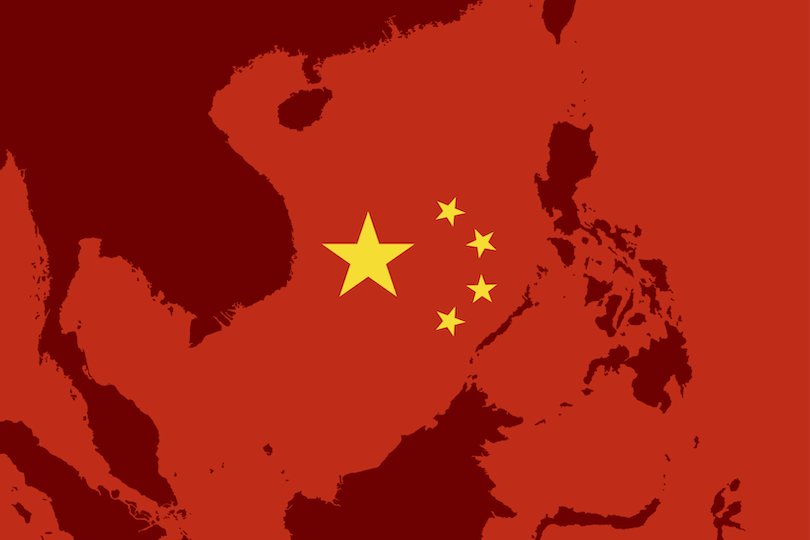
  • An Asia-Pacific NATO: fanning the flames of war

    An Asia-Pacific NATO: fanning the flames of war


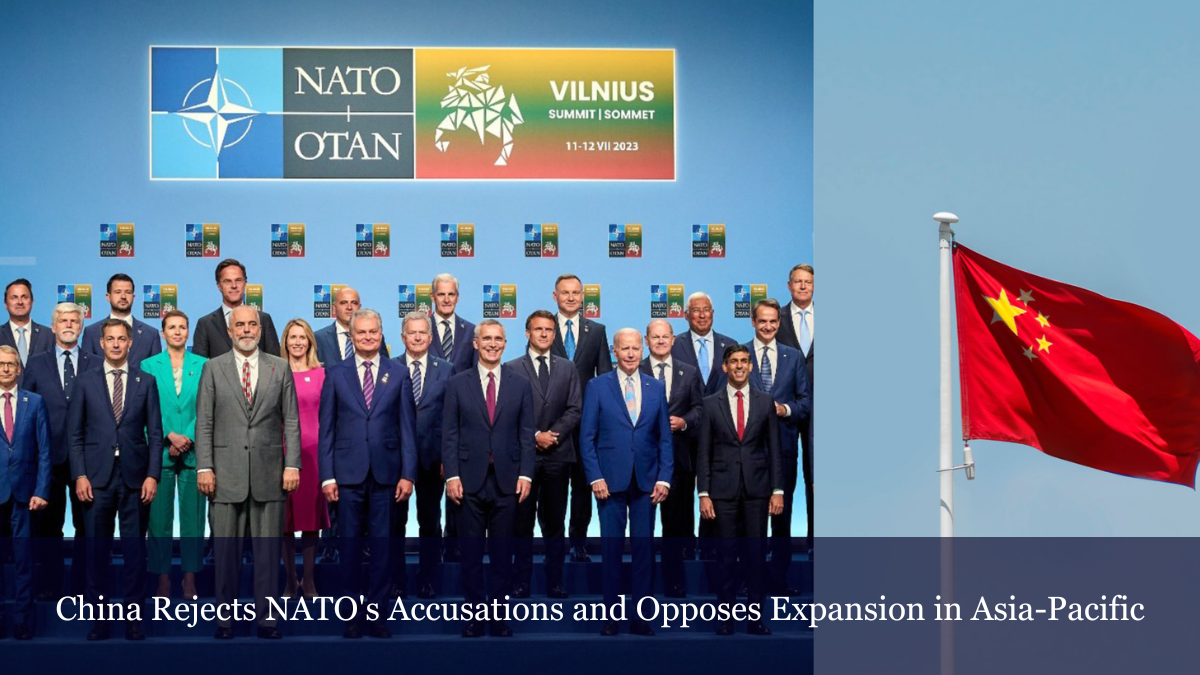
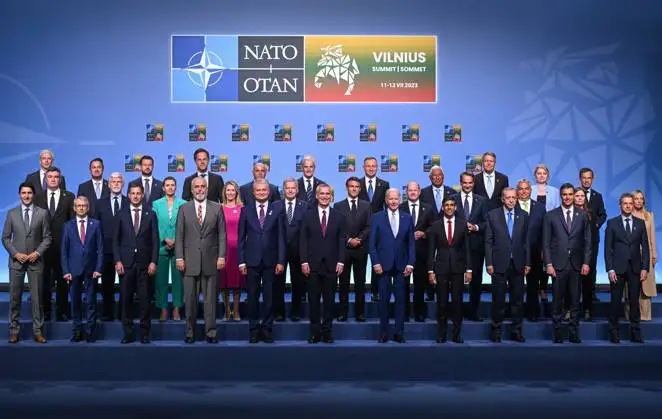
    Former President Trump sidelined NATO to such an extent that European members were disillusioned with American leadership and NATO was in a state of fragmentation. With Biden’s presidency unleashing its Ukraine strategy and war against Russia, NATO has solidified with blind subservience to American leadership. Building on imagined threats from Russia and China, the US is now seeking to make a NATO alliance format for security across Asia as well. On the eve of the 33rd summit at Vilnius on 11-12 July 2023, Türkiye dropped its objections for Sweden to become the 33rd member of NATO, abandoning its 150-year tradition of proud neutrality and peace in favour of war-mongering. With an eye on Asia, the summit invited four Asian countries – Japan, South Korea, Australia, and New Zealand – as observers at the summit. The summit statement is, as expected, replete with anti-Russian rhetoric but more importantly extensive in its focus on the ‘China threat’ thus paving the way for NATO’s role in Asia. Jeffrey Sachs, in a speech in Australia in early July (reproduced below), has warned forcefully about the peril that NATO poses to global peace and security.                                           – TPF Editorial Team

    “My country, the U.S., is unrecognisable. I’m not sure who runs the country. I do not believe it is the president.”, says Jeffrey Sachs in a speech at a Saving Humanity and Planet Earth (SHAPE) seminar, Melbourne, Australia. “U.S. actions are putting us on a path to war with China in the same way that U.S. actions did in Ukraine.”

    “the idea of opening NATO offices in Asia is mind-boggling in its foolishness. Please tell the Japanese to stop this reckless action.”

    Jeffrey Sachs
    Speech to Shape (Saving Humanity and Planet Earth)
    July 5, 2023

    Good afternoon to everybody. I want to thank you for inviting me and to thank SHAPE for its leadership. I just had the privilege to listen to Alison Broinowski and Chung-in Moon. We have been treated to brilliant and insightful statements. I absolutely agree with all that has been said. The world has gone mad but especially the Anglo-Saxon world, I’m afraid. I don’t know whether there is any sense in our little English-speaking corner of the world. I’m of course speaking of the United States, UK, Canada, Australia and New Zealand.

    There’s something profoundly disheartening about the politics of our countries right now. The deep madness, I’m afraid, is British Imperial thinking that has been taken over by the United States. My country, the U.S., is unrecognisable now compared even to 20 or 30 years ago. I’m not sure, to tell you the truth, who runs the country. I do not believe it is the president of the United States right now. We are run by generals, by our security establishment. The public is privy to nothing. The lies that are told about foreign policy are daily and pervasive by a mainstream media that I can barely listen to or read anymore. The New York Times, Washington Post, Wall Street Journal and the main television outlets are 100 per cent repeating government propaganda by the day, and it’s almost impossible to break through.

    it’s about a madness of the United States to keep U.S. hegemony, a militarised foreign policy dominated by the thinking of generals who are mediocre intellects, personally greedy, and without any sense because their only modus operandi is to make war.

    What is this about? Well, as you’ve heard, it’s about a madness of the United States to keep U.S. hegemony, a militarised foreign policy dominated by the thinking of generals who are mediocre intellects, personally greedy, and without any sense because their only modus operandi is to make war.

    And they are cheer-led by Britain, which is unfortunately, in my adult life, increasingly pathetic in being a cheerleader for the United States for U.S. hegemony and for war. Whatever the U.S. says, Britain will say it ten times more enthusiastically. The U.K. leadership could not love the war in Ukraine more. It is the great Second Crimean War for the British media and for the British political leadership.

    Now, how Australia and New Zealand fall for this idiocy is really a deep question for me and for you. People should know better. But I’m afraid that it is the Five Eyes and the security establishment that told the politicians, to the extent that the politicians are involved in this, ‘well this is how we have to do it’. This is our Security State and I don’t think our politicians necessarily have much role in this. By the way, the public has no role in U.S. foreign policy at all. We have no debate, no discussion, no deliberation, no debates over voting the hundred, now $113 billion, but in fact much more money spent on the Ukraine War.

    So far there’s not been an hour of organised debate even in the Congress on this, much less in the public, but my guess is that your security establishment is really the driver of this in Australia, and they explain to the Prime Minister and others: ‘you know this is the utmost National Security, and this is what America has told us. Let us, your security apparatus, explain what we’re seeing. Of course, you cannot divulge this to the broader public, but this is, at the essence, a struggle for survival in the world’.

    Everything I see myself, and I’m now 43 years in this activity as an economic advisor all over the world, suggests that this message is nonsense. One thing that would be interesting for people to look at, in order to understand these developments, is a very telling article by a former colleague of mine at Harvard, Ambassador Robert Blackwell and Ashley Tellis, written for the Council on Foreign Relations in March 2015. I want to read a couple excerpts from it because it laid out the plan of what’s happening right now pretty directly. This is how things work in the U.S., in which future plans are laid out to the establishment in such reports.

    “Since its founding, the United States has consistently pursued a grand strategy focused on acquiring and maintaining preeminent power over various rivals. First on the North American continent, then in the Western Hemisphere, and finally, globally. Preserving U.S. primacy in the global system ought to remain the central objective of U.S. grand strategy in the 21st century.”    

     – Robert Blackwill and Ashley Tellis in a March 2015 article for Council on Foreign Relations.

    We’re basically told in 2015 what’s going to happen in US-China relations. The deterioration of relations was planned — it’s not ad hoc. So, here’s what Blackwell and Tellis wrote in 2015. First, “Since its founding, the United States has consistently pursued a grand strategy focused on acquiring and maintaining preeminent power over various rivals. First on the North American continent, then in the Western Hemisphere, and finally, globally.” And then they argue that “preserving U.S. primacy in the global system ought to remain the central objective of U.S. grand strategy in the 21st century.”

    So, what’s the U.S. goal? The goal is very straightforward, it is the primacy of the United States globally. Blackwell and Tellis lay out the game plan for China. They tell us what to do.

    Here’s the list, though I’m only excerpting: “Creating new preferential trading arrangements among U.S. friends and allies to increase their mutual gains through instruments that consciously exclude China.” This is the game that Obama already started with TPP, though he couldn’t get it through domestic political opposition. Second, “create, in partnership with U.S. allies, a technology control regime vis-à-vis Beijing,” to block China’s strategic capabilities. Third, build up “power-political capacities of U.S. friends and allies on China’s periphery,” and “improving the capability of U.S. military forces to effectively project power along the Asian rimlands despite any Chinese opposition.”

    This foreshadowing of US policies by way of the Council on Foreign Relations (CFR) is well-known in recent history.

    What I find especially remarkable about this list is that it was made in 2015. It’s the step-by-step plan of action actually being carried out. This foreshadowing of US policies by way of the Council on Foreign Relations (CFR) is well-known in recent history. In 1997 in the CFR’s journal Foreign Affairs, Zbigniew Brzezinski laid out with precision the intended timeline for NATO enlargement and specifically the intention to include Ukraine in that NATO enlargement. Of course, that NATO enlargement plan has led us directly to the Ukraine War, which is indeed a proxy Russia-US war over NATO enlargement.

    Now the friends and geniuses that brought you the Ukraine War are on their way to bringing you a new war in your neighbourhood. As Professor Moon noted, the North Atlantic Treaty Organization is starting to open its offices in East Asia, which is not exactly the North Atlantic.

    So, this is where we are. It’s not absolutely simple to see through for one main reason, at least in the U.S. I’m not sure what it’s like in Australia but I expect that it’s pretty much the same as in the U.S., where we have no honesty or public deliberation about any of this. The policies are owned entirely by the security establishment, the military-industrial complex, the network of “think tanks” which are in fact non-think tanks in Washington, with almost all funded by the military-industrial complex.

    The military-industrial complex and its corporate lobby have taken over the East Coast universities where I teach. I taught at Harvard for more than 20 years, and now I teach at Columbia University. The influence of the intelligence agencies on the campuses is unprecedented, in my experience. All of this has happened without much public notice, almost a silent coup. There is no debate, no public politics, no honesty, no documents revealed. Everything is secret, confidential and a bit mysterious. Since I happen to be an economist who engages with the heads of state and ministers around the world, I hear a lot of things and see a lot of things that help me to pierce through the official “narratives” and pervasive lies.

    You will not find any of this in our public discourse. And just a word, if I may, about the Ukraine War. The war was completely predictable, and resulted from a U.S. plan for hegemony based on NATO enlargement that dates back to the early 1990’s. The U.S. strategy was to bring Ukraine into the U.S. military orbit. Brzezinski, again in 1997 in his book The Global Chess Board, laid out the strategy. Russia without Ukraine is nothing, he argued. Ukraine, he wrote, is the geographical pivot for Eurasia. Interestingly, Brzezinski warned American policymakers to ensure that they don’t push Russia and China into an alliance. In fact, that would be so antithetical to U.S. interests that Brzezinski clearly believed that it would never happen. But it has, because U.S. foreign policy is incompetent as well as profoundly dangerous and misconceived.

    During 1990-91, I happen to have been an advisor to Gorbachev, and during 1991-94, to Boris Yeltsin and Leonid Kuchma, spanning the late days of perestroika and the early days of Russian and Ukrainian independence after the dissolution of the Soviet Union. I watched very closely what was happening. I saw that the United States was absolutely uninterested in any way in helping Russia to stabilise.

    The idea of the U.S. security establishment from the early 1990s was U.S.-led unipolarity or U.S. hegemony. In the early 1990s, the U.S. rejected measures to help stabilise the Soviet economy and then the Russian economy, while it also began planning NATO enlargement, in direct contradiction to what the U.S. and Germany had promised Gorbachev and Yeltsin. So, the issue of NATO enlargement, including to Ukraine, is part of a U.S. game plan that started in the early 1990s, and eventually led to the Ukraine war.

    By the way, the U.S. was deeply involved in the overthrow of Ukraine’s pro-Russian president in 2014. Yes, this was a coup, and to an important extent, a regime change operation of the United States. I happen to have seen a part of it, and I know that U.S. money poured into supporting the Maidan. Such U.S. meddling was disgusting and destabilising, and all part of the game plan to enlarge NATO to Ukraine and Georgia.

    When one looks at the map it’s indeed Brzezinski’s 1997 idea: surround Russia in the Black Sea region. Ukraine, Romania, Bulgaria, Turkey and Georgia would all be members of NATO. That would be the end of Russian power projection in the Eastern Mediterranean and the Middle East. So it went for these “security” geniuses.

    Putin put forward diplomatic responses that were repeatedly rejected by the U.S. and its NATO allies, including the Minsk II Agreement endorsed by the U.N Security Council, but then ignored by Ukraine.

    On December 17, 2021, Putin put on the table a perfectly reasonable document as the basis for negotiation, A Draft U.S.-Russia Security Agreement. At the core was Russia’s call for an end to NATO expansion. Tragically, the U.S. blew it off. I called the White House at the end of December 2021, spoke with one of our top security officials, and pleaded, “Negotiate. Stop the NATO enlargement. You have a chance to avoid war.” Of course, to no avail. The United States’ formal response to Putin was that NATO enlargement was non-negotiable with Russia, a matter in which Russia has absolutely no say.

    This is a mind-boggling way to pursue foreign affairs because it is a direct road to war. I hope everybody understands this war in Ukraine was close to ending as early as March 2022 with a negotiated agreement just one month after Russia invaded on February 24th. The negotiated agreement was stopped by the U.S. because it was based on Ukraine’s neutrality. The U.S. told Ukraine to fight on, end negotiations, and reject neutrality.

    And so we are in a war that continues to escalate towards possible nuclear war, which is what would happen if Russia were to suffer deep defeats on the battlefield. Russia is not losing on the battlefield just now, but if it did, it would likely escalate to nuclear war. Russia is not going to be pushed out of the Donbas and Crimea and meekly go home with apologies. Russia is going to escalate if it needs to escalate. So, we are right now in a spiral that is extremely dangerous.

    Japan plays utterly into this spiral. And Australia does as well. It’s so sad to watch Australia accepting to be used in this reckless way. To pay a fortune for new military bases in a reckless, provocative, and costly way, that will feed the U.S. military-industrial complex while weighing heavily on Australia.
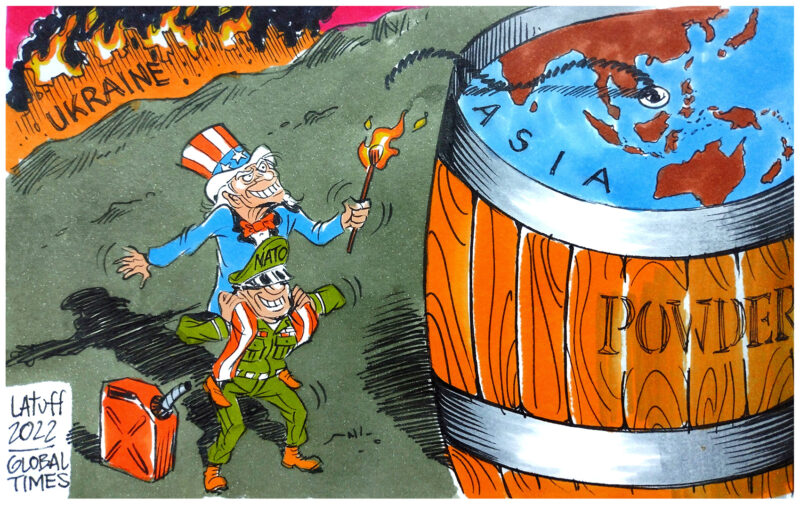
     

    Such U.S. actions are putting us on a path to war with China in the same way that U.S. actions did in Ukraine. Only an Asia-Pacific war would be even more disastrous. The whole idea of the U.S. and its allies fighting China is mind-boggling in its implications, its stupidity and its recklessness. All of this is utterly divorced from Australia’s real security interests. China is not a threat to Australia. It is not a threat to the world.

    I don’t know of a single Chinese overseas invasion in its history, by the way, except when the Mongols briefly ruled China and tried to invade Japan. Other than the Mongol invasion, defeated by a typhoon, China has not launched overseas wars. It’s just not part of China’s statecraft, nor would such wars be in China’s national interest.

    What worries me about the world is a deeply neurotic United States (in)security leadership that aims to be number one, but that can’t be number one in the way that it believes. This is pathetic, yet is applauded each day in London, a place that still dreams of the glory of global empire from a long bygone era.

    RCEP is the correct concept for the region to bring together China, Korea, Japan, the ten ASEAN countries, Australia and New Zealand in a coherent framework, especially around the climate challenge, energy policy, trade policy, and infrastructure and investment policy. A well-functioning RCEP would do a world of good, not only for the 15 countries in RCEP but for the entire world.

    Permit me, in conclusion, to take one minute to say what should be done.

    First, the war in Ukraine could end the day Biden steps up and says NATO will not enlarge to Ukraine. The basis for a negotiated security arrangement has been there for 30 years, but has been rejected so far by the U.S.

    Second, the idea of opening NATO offices in Asia is mind-boggling in its foolishness. Please tell the Japanese to stop this reckless action.

    Third, the U.S. approach to arming Taiwan is profoundly dangerous, provocative and deliberately so.

    Fourth, what is needed most in the Asia-Pacific is regional dialogue amongst Asia-Pacific nations.

    Fifth, the Asia-Pacific should build on RCEP [Regional Comprehensive Economic Partnership Agreement]. RCEP is the correct concept for the region to bring together China, Korea, Japan, the ten ASEAN countries, Australia and New Zealand in a coherent framework, especially around the climate challenge, energy policy, trade policy, and infrastructure and investment policy. A well-functioning RCEP would do a world of good, not only for the 15 countries in RCEP but for the entire world.

    Sorry to have run on so long but it’s so important what SHAPE is doing. You’re completely on the right track and all best wishes to your efforts.


    This transcript of Jeffrey Sach’s speech was published earlier in Pearls and Irritations.

    Feature Image Credit: bnn.network

    Cartoon Credit: Global Times
  • The Asymmetric Indo-US Technology Agreement Points to India’s Weak R&D Culture

    The Asymmetric Indo-US Technology Agreement Points to India’s Weak R&D Culture

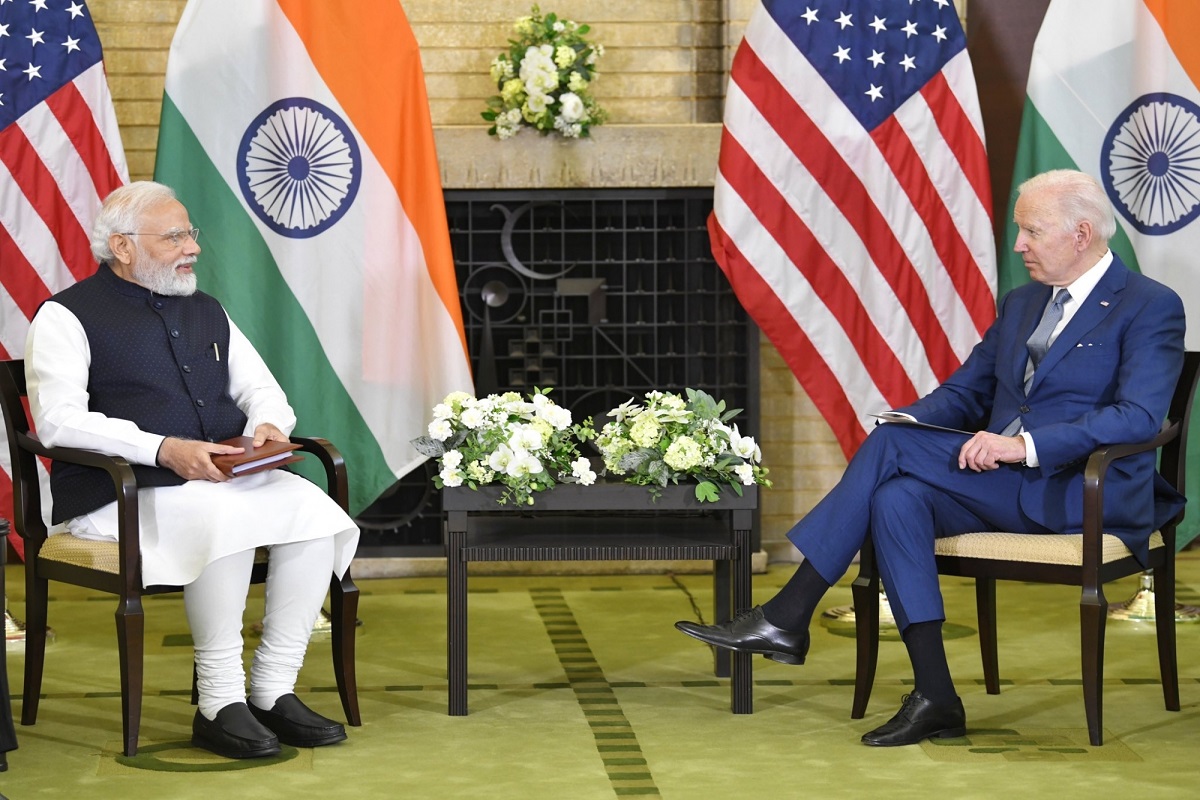
    Prime Minister Narendra Modi’s state visit to the USA resulted in four significant agreements and the visit is hailed as one of very important gains for India and Indo-US strategic partnership. The focus has been on defence industrial and technology partnership. Media and many strategic experts are seeing the agreements as major breakthroughs for technology transfers to India, reflecting a very superficial analysis and a lack of understanding of what really entails technology transfer. Professor Arun Kumar sees these agreements as a sign of India’s technological weakness and USA’s smart manoeuvring to leverage India for long-term defence and technology client. The visit has yielded major business gains for USA’s military industrial complex and the silicon valley. Post the euphoria of the visit, Arun Kumar says its time for India to carefully evaluate the relevant technology and strategic policy angles.


    The Indo-US joint statement issued a few days back says that the two governments will “facilitate greater technology sharing, co-development and co-production opportunities between the US and the Indian industry, government and academic institutions.” This has been hailed as the creation of a new technology bridge that will reshape relations between the two countries

    General Electric (GE) is offering to give 80% of the technology required for the F414 jet engine, which will be co-produced with Hindustan Aeronautics Limited (HAL). In 2012, when the negotiations had started, GE had offered India 58%. India needs this engine for the Light Combat Aircraft Mark 2 (LCA Mk2) jets.

    The Indian Air Force has been using LCA Mk1A but is not particularly happy with it. It asked for improvements in it. Kaveri, the indigenous engine for the LCA under development since 1986, has not been successful. The engine development has failed to reach the first flight.

    So, India has been using the F404 engine in the LCA Mk1, which is 40 years old. The F414 is also a 30-year-old vintage engine. GE is said to be offering 12 key technologies required in modern jet engine manufacturing which India has not been able to master over the last 40 years. The US has moved on to more powerful fighter jet engines with newer technologies, like the Pratt & Whitney F135 and GE XA100.

    India is being allowed into the US-led critical mineral club. It will acquire the highly rated MQ-9B high-altitude long-endurance unmanned aerial vehicles. Micron Technologies will set up a semiconductor assembly and test facility in Gujarat by 2024, where it is hoped that the chips will eventually be manufactured. The investment deal of $2.75 billion is sweetened with the Union government giving 50% and Gujarat contributing 20%. India is also being allowed into the US-led critical mineral club.

    There will be cooperation in space exploration and India will join the US-led Artemis Accords. ISRO and NASA will collaborate and an Indian astronaut will be sent to the International Space Station. INDUS-X will be launched for joint innovation in defence technologies. Global universities will be enabled to set up campuses in each other’s countries, whatever it may imply for atmanirbharta.

    What does it amount to?

    The list is impressive. But, is it not one-sided, with India getting technologies it has not been able to develop by itself.

    Though the latest technology is not being given by the US, what is offered is superior to what India currently has. So, it is not just optics. But the real test will be how much India’s technological capability will get upgraded.

    Discussing the New Economic Policies launched in 1991, the diplomat got riled at my complaining that the US was offering us potato chips and fizz drinks but not high technology, and shouted, “Technology is a house we have built and we will never let you enter it.”

    What is being offered is a far cry from what one senior US diplomat had told me at a dinner in 1992. Discussing the New Economic Policies launched in 1991, the diplomat got riled at my complaining that the US was offering us potato chips and fizz drinks but not high technology, and shouted, “Technology is a house we have built and we will never let you enter it.”

    Everyone present there was stunned, but that was the reality.

    The issue is, does making a product in India mean a transfer of technology to Indians? Will it enable India to develop the next level of technology?

    India has assembled and produced MiG-21 jets since the 1960s and Su-30MKI jets since the 1990s. But most critical parts of the Su-30 come from Russia. India set up the Mishra Dhatu Nigam in 1973 to produce the critical alloys needed and production started in 1982, but self-sufficiency in critical alloys has not been achieved.

    So, production using borrowed technology does not mean absorption and development of the technology. Technology development requires ‘know-how’ and ‘know-why’.

    When an item is produced, we can see how it is produced and then copy that. But we also need to know how it is being done and importantly, why something is being done in a certain way. Advanced technology owners don’t share this knowledge with others.

    Technology is a moving frontier

    There are three levels of technology at any given point in time – high, intermediate, and low.

    The high technology of yesterday becomes the intermediate technology of today and the low technology of tomorrow. So, if India now produces what the advanced countries produced in the 1950s, it produces the low-technology products of today (say, coal and bicycles).

    If India produces what was produced in the advanced countries in the 1980s (say, cars and colour TV), it produces the intermediate technology products of today. It is not to say that some high technology is not used in low and intermediate-technology production.

    The high technologies of today are aerospace, nanotechnology, AI, microchips and so on. India is lagging behind in these technologies, like in producing passenger aircraft, sending people into space, making microchips, quantum computing, and so on.

    The advanced countries do not part with these technologies. The World Trade Organisation, with its provisions for TRIPS and TRIMS (Trade-Related Aspects of Intellectual Property Rights and Trade-Related Investment Measures), consolidated the hold of advanced countries on intermediate and low technologies that can be acquired by paying royalties. But high technology is closely held and not shared.

    Advancements in technology

    So, how can nations that lag behind in technology catch up with advanced nations? The Nobel laureate Kenneth Arrow pointed to ‘learning by doing’ – the idea that in the process of production, one learns.

    So, the use of a product does not automatically lead to the capacity to produce it, unless the technology is absorbed and developed. That requires R&D.

    Schumpeter suggested that technology moves through stages of invention, innovation and adaptation. So, the use of a product does not automatically lead to the capacity to produce it, unless the technology is absorbed and developed. That requires R&D.

    Flying the latest Airbus A321neo does not mean we can produce it. Hundreds of MiG-21 and Su-30 have been produced in India. But we have not been able to produce fighter jet engines, and India’s Kaveri engine is not yet successful. We routinely use laptops and mobile phones, and they are also assembled in India, but it does not mean that we can produce microchips or hard disks.

    Enormous resources are required to do R&D for advanced technologies and to produce them at an industrial scale. It requires a whole environment which is often missing in developing countries and certainly in India.

    Enormous resources are required to do R&D for advanced technologies and to produce them at an industrial scale. It requires a whole environment which is often missing in developing countries and certainly in India.

    Production at an experimental level can take place. In 1973, I produced epitaxial thin films for my graduate work. But producing them at an industrial scale is a different ballgame. Experts have been brought from the US, but that has not helped since high technology is now largely a collective endeavour.

    For more complex technologies, say, aerospace or complex software, there is ‘learning by using’. When an aircraft crashes or malware infects software, it is the producer who learns from the failure, not the user. Again, the R&D environment is important.

    In brief, using a product does not mean we can produce it. Further, producing some items does not mean that we can develop them further. Both require R&D capabilities, which thrive in a culture of research. That is why developing countries suffer from the ‘disadvantage of a late start’.

    A need for a focus on research and development

    R&D culture thrives when innovation is encouraged. Government policies are crucial since they determine whether the free flow of ideas is enabled or not. Also of crucial importance is whether thought leaders or sycophants are appointed to lead institutions, whether criticism is welcomed or suppressed, and whether the government changes its policies often under pressure from vested interests.

    Unstable policies increase the risk of doing research, thereby undermining it and dissuading the industry. The result is the repeated import of technology.

    The software policy of 1987, by opening the sector up to international firms, undermined whatever little research was being carried out then and turned most companies in the field into importers of foreign products, and later into manpower suppliers. Some of these companies became highly profitable, but have they produced any world-class software that is used in daily life?

    Expenditure on R&D is an indication of the priority accorded to it. India spends a lowly 0.75% of its GDP on R&D. Neither the government nor the private sector prioritises it. Businesses find it easier to manipulate policies using cronyism. Those who are close to the rulers do not need to innovate, while others know that they will lose out. So, neither focus on R&D.

    Innovation also depends on the availability of associated technologies – it creates an environment. An example is Silicon Valley, which has been at the forefront of innovation. It has also happened around universities where a lot of research capabilities have developed and synergy between business and academia becomes possible.

    This requires both parties to be attuned to research. In India, around some of the best-known universities like Delhi University, Allahabad University and Jawaharlal Nehru University, coaching institutions have mushroomed and not innovative businesses. None of these institutions are producing any great research, nor do businesses require research if they can import technology.

    A feudal setup

    Technology is an idea. In India, most authority figures don’t like being questioned. For instance, bright students asking questions are seen as troublemakers in most schools. The emphasis is largely on completing coursework for examinations. Learning is by rote, with most students unable to absorb the material taught.

    So, most examinations have standard questions requiring reproduction of what is taught in the class, rather than application of what is learned. My students at JNU pleaded against open-book exams. Our class of physics in 1967 had toppers from various higher secondary boards. We chose physics over IIT. We rebelled against such teaching and initiated reform, but ultimately most of us left physics – a huge loss to the subject.

    Advances in knowledge require critiquing its existing state – that is, by challenging the orthodoxy and status quo. So, the creative independent thinkers who generate socially relevant knowledge also challenge the authorities at their institutions and get characterised as troublemakers. The authorities largely curb autonomy within the institution and that curtails innovativeness.

    In brief, dissent – which is the essence of knowledge generation – is treated as a malaise to be eliminated. These are the manifestations of a feudal and hierarchical society which limits the advancement of ideas. Another crucial aspect of generating ideas is learning to accept failure. The Michelson–Morley experiment was successful in proving that there is no aether only after hundreds of failed experiments.

    Conclusion

    The willingness of the US to provide India with some technology without expecting reciprocity is gratifying. Such magnanimity has not been shown earlier and it is obviously for political (strategic) reasons. The asymmetry underlines our inability to develop technology on our own. The US is not giving India cutting-edge technologies that could make us a Vishwaguru.

    India needs to address its weakness in R&D. As in the past, co-producing a jet engine, flying drones or packaging and testing chips will not get us to the next level of technology, and we will remain dependent on imports later on.

    This can be corrected only through a fundamental change in our R&D culture that would enable technology absorption and development. That would require granting autonomy to academia and getting out of the feudal mindset that presently undermines scientific temper and hobbles our system of education.


    This article was published earlier in thewire.in

    Feature Image Credit: thestatesman.com


  • Understanding the ‘Xi Jinping’ thought on Rule of Law: Future Substance of Lawfare and Challenges in the Indo-Pacific

    Understanding the ‘Xi Jinping’ thought on Rule of Law: Future Substance of Lawfare and Challenges in the Indo-Pacific

    [powerkit_button size=”lg” style=”info” block=”true” url=”https://admin.thepeninsula.org.in/wp-content/uploads/2022/11/Xi-Jinping-Thought-Lawfare_ArpanAChakravarty-1.pdf” target=”_blank” nofollow=”false”]
    Download
    [/powerkit_button]

    Abstract

    Lawfare aims at using the law and legal systems to hurt or discredit opponents or stop them from reaching their political goals. It is seen that the rule of law has been used to shape the future course of the war as an alternative to traditional military means. Regimes worldwide have started using the law to constrain behaviour, contest circumstances, confuse legal precedents, and gain an advantage. In this paper, the author looks at how China uses “lawfare” in its own country, worldwide and lessons for India.

    Introduction

    While the world focused on the conflict between Ukraine and Russia, China and Solomon Island signed an inter-governmental security pact1 which has been raising concerns regarding the rule-based order2 in the Indo-Pacific region. China, as a rising power, is undoubtedly becoming a significant adversary to various countries bordering it, including India; its growth aims at unipolar Asia, which is causing enormous uncertainty in the region.

    Due to this, it becomes important to understand the multipolar distribution of power in the region since the Indo-Pacific is becoming a site for political contestation and the rise of ‘lawfare’. It is seen that in order to contest for leadership, China has been active on the front to demonstrate, influence, and ideate with different nations. It is actively setting rules and terms of compliance for it through a set of carefully crafted strategies of ‘lawfare’.

    This paper seeks to examine the theoretical underpinnings of lawfare, its internal dimension that influences China’s domestic policy, and its external dimension that has a bearing on China’s strategic and international standing, and finally how China uses lawfare to intimidate other nations and what the world can learn from it.

    [powerkit_button size=”lg” style=”info” block=”true” url=”https://admin.thepeninsula.org.in/wp-content/uploads/2022/11/Xi-Jinping-Thought-Lawfare_ArpanAChakravarty-1.pdf” target=”_blank” nofollow=”false”]
    Read the Full Paper
    [/powerkit_button]

  • China’s Expanding Presence in the Pacific Islands

    China’s Expanding Presence in the Pacific Islands

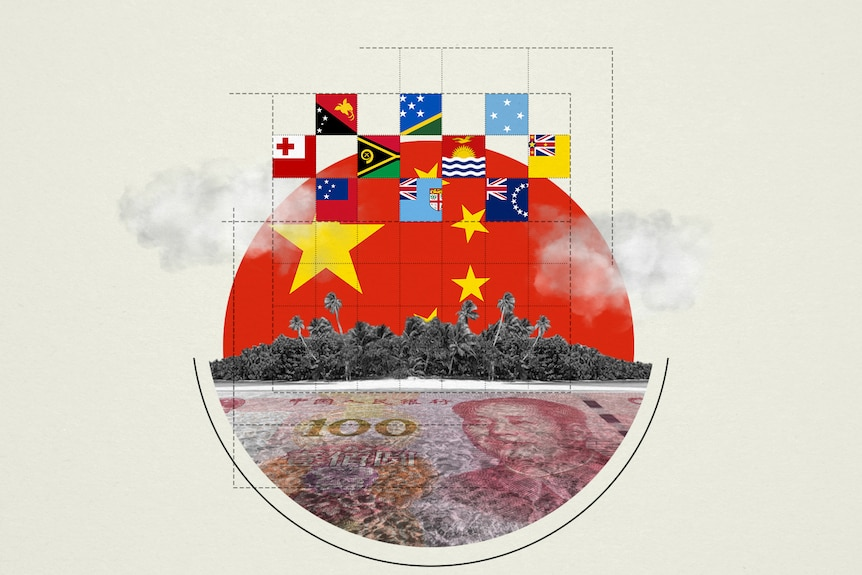
    The Pacific Island Countries (PICs) have received increasing attention recently as they continue to be centres of geopolitical tension between China and western powers – the USA, Australia, and New Zealand. The island nations are generally grouped into three distinct regions, namely – Micronesia, Melanesia and Polynesia, on the basis of their physical and human geography. They possess some of the largest Exclusive Economic Zones (EEZs) in the world spanning about 30 million sq km (11.6 million sq miles) of the ocean despite their small size and limited population. 

    The Chinese efforts to secure a strong military presence in the Pacific Island Countries could not only enable it to achieve ‘Blue Navy Status’ but also counter this overwhelming US military presence surrounding it.

    The economic potential of these Exclusive Economic Zones, which are rich in fisheries, energy, minerals and other marine resources, is so immense that these nations prefer to be regarded as the Big Ocean States, rather than the Small Island States. In the past, the islands have functioned as launchpads and laboratories, playing crucial roles in power rivalries due to their location and geography¹. With China endeavouring to spread its power and influence to achieve Great Power status, it is natural that it set its sights on areas which have been traditionally dominated by Western powers. Increased Chinese presence in the Pacific Islands is aimed at ending the United States unchallenged influence in the region and to enable suitable backups in a potential conflict over Taiwan. The US presently has 53 overseas military bases across Japan and South Korea, in close proximity to the Chinese mainland as opposed to China’s only overseas military base in Djibouti. Thus, the Chinese efforts to secure a strong military presence in the Pacific Island Countries could not only enable it to achieve ‘Blue Navy Status’ but also counter this overwhelming US military presence surrounding it.

    Economic Factors and China’s Strategy

    The economic attractiveness of the Pacific Islands also includes access to its trade and shipping routes.  On the diplomatic front, these nations tend to serve as a vote bank at forums like the United Nations and can help Beijing in its ambition to further isolate Taiwan. Additionally, stronger relations would help in advancing China’s ambitious Belt and Road Initiative while also enhancing its image as a reliable partner and viable alternative to other major powers, especially the US and Australia.

    China has had ties with the Pacific Islands since the 1970s but many island nations’ official diplomatic recognition of Taiwan continued to be a major hurdle throughout these years. Through continued economic assistance, China has succeeded in getting diplomatic recognition from 10 out of the 14 Pacific Islands. Presently, only four countries namely Tuvalu, Palau, Marshall Islands and Nauru recognise Taiwan, with Kiribati being the latest nation to withdraw its recognition in September 2019. The success of the Chinese approach can be seen in the fact that they have successfully secured Belt and Road cooperation MOUs with all the 10 PICs and have signed the Belt and Road cooperation plans with Papua New Guinea (PNG) and Vanuatu. As per the fact sheet released by the Chinese government, China and the PICs have continued to expand cooperation in more than 20 different areas, which include trade, investment, ocean affairs, environmental protection, disaster prevention and mitigation, poverty alleviation, health care, education, tourism, sports and culture. 

    Significant progress in China – PIC relations was seen with the establishment of the China-Pacific Island Countries Economic Development and Cooperation Forum in 2001, which functions as the highest-level dialogue mechanism between the countries in the fields of economy and trade. In November 2014, Chinese President Xi Jinping paid a state visit to Fiji where he held a group meeting with the PIC head of states. An agreement was signed to establish a strategic partnership and these ties were elevated to a comprehensive strategic partnership featuring mutual respect and common development in November 2018, during President Xi Jinping’s visit to PNG. One of the more recent developments is the China-Pacific Island Countries Foreign Ministers’ Meeting held in October 2021, which resulted in the Joint Statement of China-Pacific Island Countries Foreign Ministers’ Meeting.

    Attention towards climate change action has given China a strong foothold amidst rising frustration among the PICs about the Western powers’ proclivity to focus on geopolitical concerns without sparing sufficient attention to the island country’s paramount needs and concerns. 

    The major success of the Chinese strategy with regards to the Pacific Island nations can be found in their harnessing of pressing issues like climate change, environment, agricultural development, infrastructure and rising sea levels which have been largely neglected by traditional powers. From providing yearly financial assistance to the Secretariat of the Pacific Regional Environment Programme (SPREP) since 1998, the Chinese government has taken efforts to address and assist the PICs in tackling climate change and achieving sustainable development. April 2022 saw the launch of the China-Pacific Island Countries Climate Change Cooperation Centre in the Shandong Province of China. The Chinese have strengthened renewable energy cooperation with the PICs and have facilitated the construction of hydro-power stations in countries like PNG and Fiji. This attention towards climate change action has given China a strong foothold amidst rising frustration among the PICs about the Western powers’ proclivity to focus on geopolitical concerns without sparing sufficient attention to the island country’s paramount needs and concerns. 

    Infrastructure Strategy – BRI Model

    Infrastructure development has been another avenue where the Chinese have shown significant enthusiasm. Several important connectivity projects have been executed in the PICs including the Independence Boulevard in PNG, Malakula island highway in Vanuatu, renovation of Tonga national road, and Pohnpei highway in Micronesia. Aside from providing much needed support in a variety of fields, the Chinese approach to the Pacific islands as a collective entity has helped acknowledge the group as having a combined identity and decision-making capability. Addressing issues which have only been previously discussed on a bilateral basis also provides the PIC with enhanced political strength and purpose, because despite all their differences, most of the countries share similar needs and requirements. 

    Chinese efforts to establish a strong military presence in the region were in 2018, when the Australian press reported that China had requested the right to establish a permanent military presence in Vanuatu, situated less than 2,000 kilometres from Australian territory. However, no formal agreement was drafted. The then Prime Minister of Vanuatu strongly denied that any such talks had taken place and assured the local and international community that there would be no Chinese military presence in the country. A similar report was released by the Australian press in the same year alleging that China held a keen interest in refurbishing a port on Manus Island in Papua New Guinea which had previously functioned as the site of an Allied naval base during World War II. The claims were dismissed when the PNG government contracted Australia and the United States to redevelop the port instead. 

    The Chinese efforts finally materialized in the form of the China – Solomon Islands Security Pact in April 2022. As per the terms of the pact, permission is granted to the Chinese navy to dock and refuel in the Solomon Islands, laying the groundwork for a facility that could be expanded over time. The pact allows the Solomon Islands to seek Chinese assistance when required to maintain social order and stability. The pact has been understood by several scholars as a way for China to establish a permanent military presence gradually under the guise of performing this role. The security pact came at a time when international attention was already on the growing closeness of China and the Pacific Island nations following the leak of two draft documents “China-Pacific Island Countries (PICs) Common Development Vision”, and “China-Pacific Islands Five-Year Action Plan on Common Development (2022-2026)” at the start of 2022. 

    USA’s Response

    In the face of China’s rising threat, the United States released its Indo-Pacific Strategy in February 2022 which emphasized the importance of the Pacific Islands to the United States. Along with the “Partners in the Blue Pacific” initiative, it reiterated its commitment to cement itself as a dominant power in the region. However, definitive action on a large scale was taken only in late May when the Chinese Foreign Minister, Wang Yi, embarked on a 10-day visit to the region attempting to secure a comprehensive framework agreement with engagements on multiple fronts with the PICs. Although the attempt was unsuccessful, Wang, during his visit, travelled to eight countries (the Solomon Islands, Kiribati, Samoa, Fiji, Tonga, Vanuatu, Papua New Guinea and Timor-Leste) and held virtual meetings with three additional nations (Cook Islands, Niue and the Federated States of Micronesia), ultimately signing 52 bilateral treaties. Although the Chinese foreign minister stressed the country’s commitment and intent for long-term engagement in the region, news of the framework agreement sparked great controversy. The Pacific Island nations could not reach a unanimous decision on signing this agreement and decided to deliberate the matter at the PIF meeting. However, this decision to postpone discussions was disadvantageous to China as the PIF has membership from both New Zealand and Australia both of which were sure to put up strong opposition to the signing of this agreement. Perhaps foreseeing this, the agreement was soon withdrawn after which China immediately released a Position Paper on Mutual Respect and Common Development ² with Pacific Island Countries, which offers 15 “visions and proposals” for deepening China’s engagement in the region. The security issues (China sought to train local police forces, conduct mapping of sensitive marine areas, and play a role in the cyber security of the nations) that had caused much controversy were only mentioned briefly within the paper with much of the focus pointed notably towards political and economic issues. Wang, as part of his visit, also hosted the second round of the China-Pacific Island Countries Foreign Ministers Meeting in Fiji where he delivered the Secretary General of the Chinese Communist, Party Xi Jinping’s written remarks on China’s continued support. 

    Swift responses came about on May 31, when US President Biden and New Zealand Prime Minister Jacinda Ardern issued a joint statement that highlighted the two countries’ shared commitment to the Pacific Islands. The statement also expressed their concern over the China – Solomon Islands Security Pact and warned against “the establishment of a persistent military presence in the Pacific by a state that does not share our values or security interest.” ⁴ Australian Foreign Minister Penny Wong embarked on a similar visit to Fiji, Samoa and Tonga in early June to reinforce Canberra’s commitments to its neighbours. 

    Despite these advancements, public response to the Chinese visit and in a broader sense, to China’s growing footprint in the region was largely negative. Domestic response in Kiribati was lukewarm due to the wariness stemming from rumours that surfaced in 2021 about China’s plans to upgrade a World War II airstrip in the country, which is likely to damage the country’s already strained fish stocks. The announcement that Fiji would become a founding member of the U.S. led Indo- Pacific Economic Framework by President Frank Bainimaram immediately prior to Wang’s visit reflected wariness about China’s future presence in the area. Additionally, despite signing the security pact, Solomon Islands Prime Minister Sogavare’s support for Beijing gave rise to worries that China would now be in a position “to prop up an unpopular regime and undermine the democratic processes in the name of maintaining social order” among his critics. However, the most vocal voice of protest was that of David Panuelo, the president of the Federated States of Micronesia, who called upon his fellow Pacific Island leaders to reject China’s offers of a comprehensive framework agreement calling it “the single-most game-changing proposed agreement in the Pacific in any of our lifetimes.” ³ The lack of transparency during Wong’s visit drew further criticism with the strict regulation of foreign journalists and ban on direct questions. It eventually led the Media Association of the Solomon Islands to issue a boycott notice to its members, urging them to skip the press event in protest of these restrictions.

    Concerns have also arisen due to China’s reputation for extremely stringent terms of lending and what the West accuses as ‘debt trap’ policy. 60 percent of all Chinese loans are offered at commercial rates rather than concessional rates with extremely short repayment periods – usually less than 10 years. Additionally, the confidentiality clauses (borrowing countries cannot reveal terms of the loan provided or in some cases the very existence of the loan), stabilization clause (lender can demand immediate repayment of loan in case of significant change in the borrowing country’s laws like labour or environment policies), cross-default clause (contract can be terminated and full and immediate repayment can be demanded if the borrowing country defaults on any of its other lenders), political clause ( termination or acceleration of repayment if the borrower acts against China) as well as holding Chinese projects in the country as collateral which are characteristic of Chinese loans are also worrying. The lack of public access to the China – Solomon Islands security pact document and similar documents is also unsettling. 

    Demand for addressing Climatology threats and not Geopolitics

    Chinese interest in the region has served as an efficient bargaining chip for the Pacific Islands to secure their key security interests.

    The geopolitical competition brewing in the region has been a topic of discussion at the Pacific Islands Forum (PIF). Its members include Australia, New Zealand, the Republic of the Marshall Islands, Palau, Tuvalu and Nauru in addition to the other Pacific Island Nations. Kiribati’s withdrawal from the Forum on July 9 led to debates on China’s influence on this decision among the opposition parties in the country. However, the government cited the failure to adhere to previous engagements, which in turn threatened equal respect and position accorded to the members of the forum as a reason for this move. The PIF meetings conducted between July 11 and July 14 gave ample opportunity for traditionally influential powers like the US and Australia to promise stronger support for the region. US Vice President Kamala Harris addressed the forum as a special invitee announcing two new embassies in Kiribati and the Solomon Islands. She also pledged to triple current aid levels (up to 60 million dollars per year for 10 years) to help combat illegal fishing, enhance maritime security and tackle climate change, after decades of stalled funding as well as a return of peace corps volunteers to Fiji, Tonga, Samoa and Vanuatu. Australia’s remarks ran along similar lines i.e.; pledges of greater support for the climate change agenda of its neighbours.

    Chinese interest in the region has served as an efficient bargaining chip for the Pacific Islands to secure their key security interests. Using this geopolitical competition to its favour could be the way forward for these island nations whose very existence is threatened by rising sea levels. As Dame Meg Taylor, former secretary-general of the Pacific Islands Forum states, the process is already underway. “In general, Forum members view China’s increased actions in the region as a positive development, one that offers greater options for financing and development opportunities — both directly in partnership with China, and indirectly through the increased competition in our region.”

    The most recent PIF meeting concluded with the island nations declaring a climate emergency and making it clear that climate action would be the most preferred front for engagement with all powers including China, US and Australia. Although the western powers, especially Australia had previously pledged to take climate action, the Pacific Island nations had expressed disappointment that the targets for phasing out of carbon emissions had not been met. Thus, greater realignment towards taking definitive climate action would be the next step in relations with the Pacific Islands.  As Fiji’s Bainimarama put it, “Geopolitical point-scoring means less than little to anyone whose community is slipping beneath the rising seas. With jobs being lost to the pandemic, and families being impacted by the rapid rise in the price of commodities, their greatest concern isn’t geopolitics — it’s climate change.”

    It is vital that the Pacific Island Countries band together to maintain solidarity, leverage the opportunities afforded to them due to competition brought about by China’s increased interest in the region and show solidarity in light of the unifying, clarifying priority for all Pacific leaders, which is survival. 

    The effects of climate change are already manifesting in “countries like Vanuatu, Fiji, Solomon Islands, Tonga which are no longer facing category five (severe tropical) cyclones once every 10 years, it’s once every two or three years.” Rising sea levels have allowed salt water to rise through the ground in countries like the Marshall Islands and Tuvalu, which pollute the existing fresh water sources. As former Kiribati President Anote Tong explains in an interview to The Drum, “climate change is not some hypothetical future threat – his islands may not be habitable by 2060.” Thus, it is vital that the Pacific Island Countries band together to maintain solidarity, leverage the opportunities afforded to them due to competition brought about by China’s increased interest in the region and show solidarity in light of the unifying, clarifying priority for all Pacific leaders, which is survival. 

    REFERENCES : 

    1. Dirk H. R. Spennemann (1992) The politics of heritage: Second world war remains on central Pacific Islands, The Pacific Review, 5:3, 278-290, DOI: 10.1080/09512749208718990 
    2. “China’s Position Paper on Mutual Respect and Common Development with Pacific Island Countries.” China’s Position Paper on Mutual Respect and Common Development with Pacific Island Countries, www.fmprc.gov.cn, 30 May 2022, https://www.fmprc.gov.cn/eng/zxxx_662805/202205/t20220531_10694923.html.
    3. Panuelo, D. (2022). DocumentCloud. Retrieved 1 August 2022, from https://www.documentcloud.org/documents/22037013-letter-from-h-e-david-w-panuelo-to-pacific-island-leaders-may-20-2022-signed
    4. The United States Government. (2022, May 31). United States – Aotearoa new zealand joint statement. The White House. Retrieved August 1, 2022, from https://www.whitehouse.gov/briefing-room/statements-releases/2022/05/31/united-states-aotearoa-new-zealand-joint-statement/ 
  • Economic Relevance of Quad as a Regional Strategic Forum

    Economic Relevance of Quad as a Regional Strategic Forum

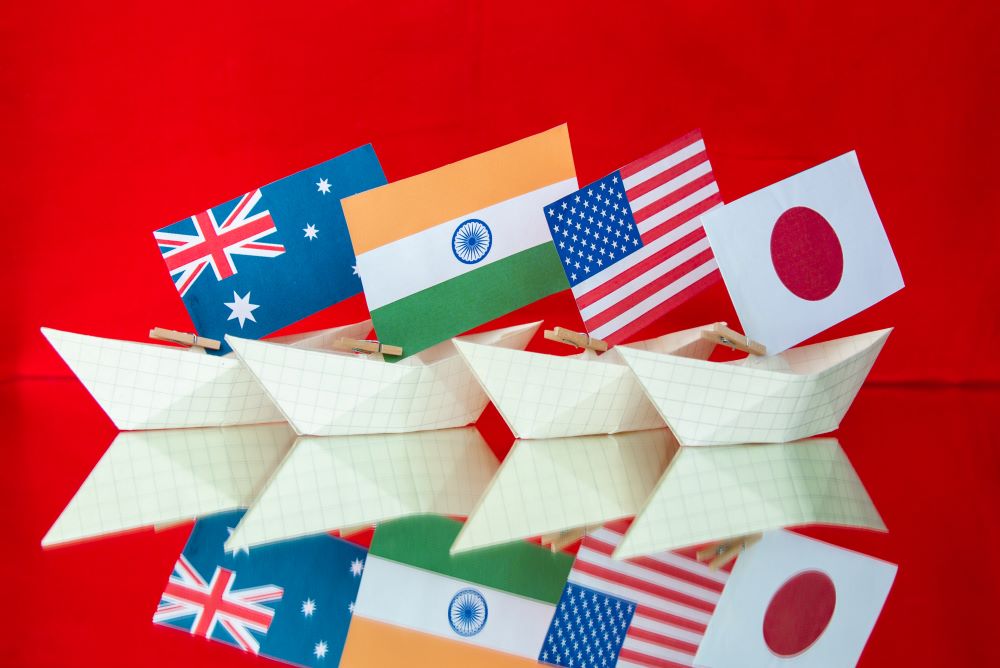
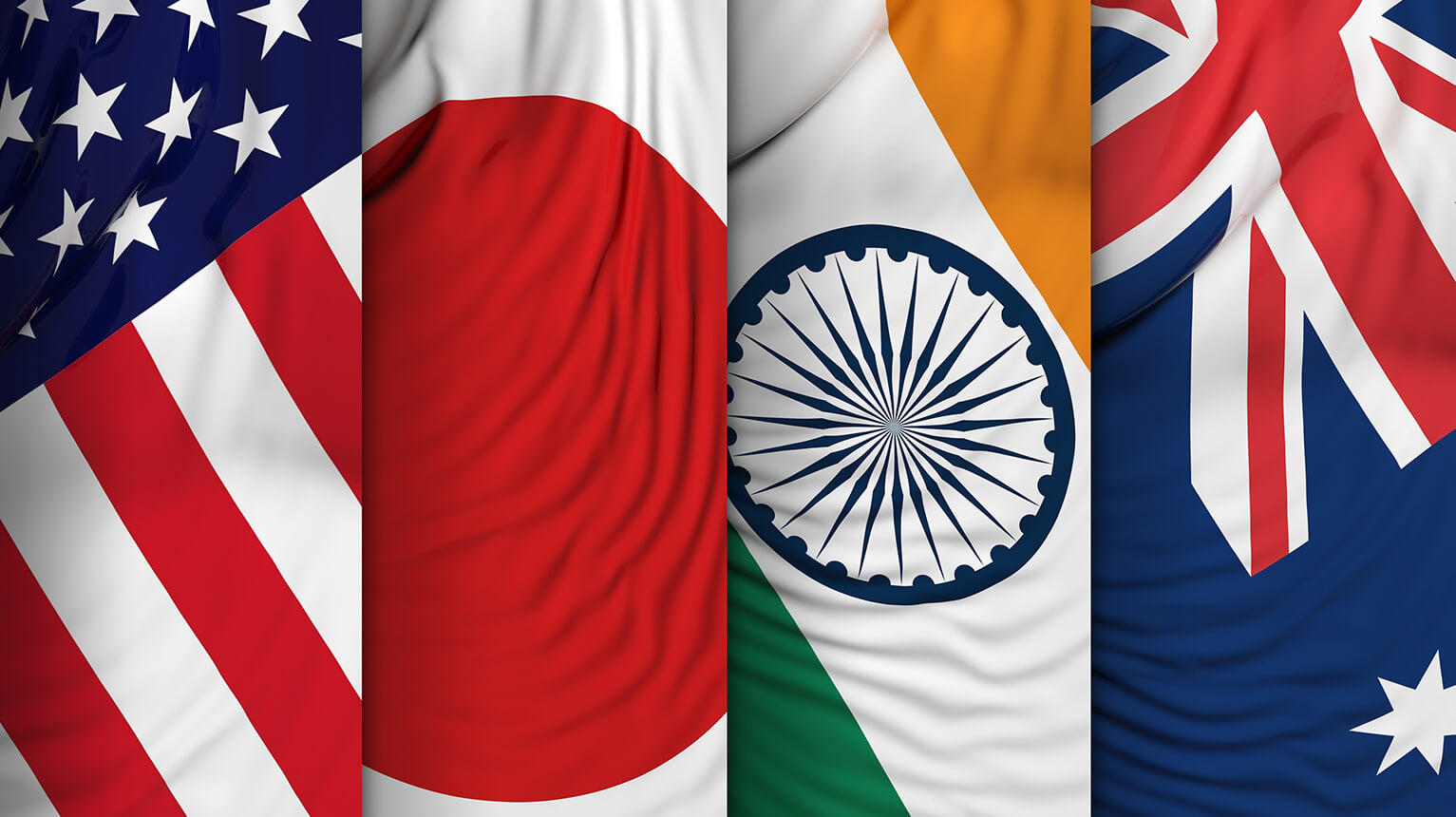
    The QUAD, a grouping of the United States, Japan, India, and Australia, began as a “Tsunami Core Group,” an impromptu group formed in response to the devastating Boxing Day tsunami of 2004. This core group brought together the four nations to swiftly mobilise and coordinate multilateral disaster relief and humanitarian assistance operations. The first meeting of the initial QUAD took place in May 2007 during the ASEAN Regional Forum (ARF) meeting in Manila. The meeting was characterised as an “informal grouping” that discussed themes of mutual interest to the dialogue participants (Buchan & Rimland, 2020). The group was established to deal with the immediate challenges posed by the tsunami and was never intended to become permanent. However, early cooperative efforts sparked a debate about QUAD’s overarching goal. When Australia withdrew from the QUAD in 2008, it ceased to exist. It was revived in 2017 against the backdrop of an increasingly assertive Chinese posture, and the emergence of the idea of the Indo-Pacific as a single maritime zone.

    The first QUAD meeting, after its revival, happened on 12 November 2017, when the four ‘like-minded’ partners discussed seven key issues: the rules-based order in Asia; freedom of navigation and overflight in the maritime commons; respect for international law; enhancing connectivity; maritime security; the North Korean threat and non-proliferation; and terrorism (Jain, 2022). The QUAD aims to bring diverse perspectives together in a shared vision for a free and open Indo-Pacific, and it strives for a region that is free, open, inclusive, healthy, and anchored in democratic values.

    Economic Potential

    There are numerous reasons to increase economic engagement within the QUAD nations—the four countries, with a combined population of over 1.8 billion people, represent a quarter of the world’s population and over $30 trillion in GDP. In 2018, trade between the four countries totalled more than $440 billion, with nearly $6 trillion in trade with the rest of the world. QUAD intends to use both public and private resources to construct high-quality infrastructure in the Indo-Pacific region. According to the MEA’s website, since 2015, QUAD partners have invested more than $48 billion in regional infrastructure development. The commitment of the QUAD to regional infrastructure development can be strengthened by integrating India into the existing ‘Australia-Japan-US Trilateral Infrastructure Partnership’ and by broadening their reach into the Indo-Pacific region (“Fact Sheet: QUAD Leaders’ Summit,” n.d.). Except for India and the United States, the remaining two countries are also Regional Comprehensive Economic Partnership (RCEP) members. This shows that, notwithstanding territorial and security differences, trade and commerce are still the primary focus (“Economic Dimension Key to QUAD Success”, 2021). Further, the Covid-19 pandemic has harmed the global economy, including the QUAD nations, in areas ranging from employment to investment. Thus, by bolstering their economic ties for greater freedom and cooperation, the group will facilitate a faster recovery from the pandemic’s effects.

    The Indian Ocean, not the Indo-Pacific, is central to India’s vision. In the short term, India’s engagement with the Indo-Pacific framework will be primarily diplomatic and economic and will be constrained by the Indian Ocean’s strategic primacy and constraints on its sea-power projection

    QUAD and the Indian Economy

    India’s strong economic ties with the QUAD economies are reflected in its bilateral trade volume with each member. During 2019-2020, these three economies accounted for 15% of India’s total trade. The United States contributes the most with 11%, followed by Japan and Australia, with 2.15 and 1.6 per cent, respectively. Further, India already has a free-trade agreement with Japan, which was implemented in 2011, and negotiations with Australia and the United States are ongoing. India can now use this critical multilateral forum to help facilitate trade negotiations and increase economic activity with member economies (“Economic Dimension Key to QUAD Success” 2021).

    According to Lunev and Shavlay (2018), the emergence of China, the expansion of India’s economic and strategic clout, and, most importantly, the growing importance of the Indian Ocean as a strategic trade route carrying nearly two-thirds of global oil shipments and a third of bulk cargo, have entailed a shift in the security architecture from the Asia-Pacific to the Indo-Pacific. These factors have contributed to the rise of regional stakeholders advocating for a free and open Indo-Pacific, resulting in the re-establishment of the QUAD. However, India’s maritime interests and strategies are at odds with those of the other QUAD members. The Indian Ocean, not the Indo-Pacific, is central to India’s vision. In the short term, India’s engagement with the Indo-Pacific framework will be primarily diplomatic and economic and will be constrained by the Indian Ocean’s strategic primacy and constraints on its sea-power projection.

    The South and East China Seas, the Western Pacific, and the Indian Ocean are of particular concern to the United States and Japan. Unless and until these disagreements are resolved, QUAD’s effectiveness as an entity will be called into question

    Tokyo Summit 

    The Tokyo Summit is the QUAD Leaders’ fourth interaction since their first virtual meeting in March 2021, in-person Summit in Washington DC in September 2021, and virtual meeting in March 2022. The Tokyo Summit took place against the backdrop of the ongoing Russia-Ukraine conflict and its repercussions. The joint statement issued following the QUAD summit in Tokyo on May 24, 2022, is more comprehensive than the first three summits. It has attempted to clarify the broad framework for cooperation by outlining eight specific areas. These include Peace and Stability; Covid-19 and Global Health Security; Infrastructure; Climate; Cybersecurity; Critical and Emerging Technologies; QUAD Fellowship; Space; and Maritime Domain Awareness and Humanitarian Assistance and Disaster Relief (HADR) (Luthra, n.d.). A comprehensive QUAD joint statement and the launch of the Indo-Pacific Economic Framework (IPEF) are key developments of the Tokyo summit. QUAD leaders also announced a maritime initiative to combat illegal fishing at the Tokyo summit, and a pledge to invest $50 billion in infrastructure in the Indo-Pacific to combat China’s growing power (“QUAD Joint Leaders’ Statement”, 2022).

    The QUAD has long been criticised for lacking a common purpose or a substantive agenda. Furthermore, none of the objectives cited as reasons for bringing the four states together are unique to the QUAD. Other actors and institutions in the region already exist for these purposes.  Thus, there is a need for QUAD partners to better articulate their distinct rationale for cooperation and collaborative efforts.

    India is a key player due to its naval power and strategic location, and should thus be an active participant. However, there are differences in areas of interest among the QUAD nations, complicating its effectiveness. The South and East China Seas, the Western Pacific, and the Indian Ocean are of particular concern to the United States and Japan. Unless and until these disagreements are resolved, QUAD’s effectiveness as an entity will be called into question. While India is frequently portrayed as the holdout — and has recently been the most vocal — objections have come from other countries as well. The potential impact on Sino-Australian relations continues to make some in Australia nervous. Beijing’s reaction has factored into American caution as well, as has the preference for a trilateral format (Madan, 2017).  

    India requires investment, attractive financing for infrastructure, technology, and access to key raw materials, particularly rare earth elements, among the QUAD nations. QUAD’s other members are looking for market access and dependable investment destinations. Broadening QUAD’s current strategic focus to strengthen economic ties under the partnership’s auspices would be a win-win situation for all countries involved in such a scenario.

    Bibliography

    Buchan, P., & Rimland, B. (2020). Defining the diamond: The past, present, and future of the quadrilateral security dialogue. Defining the Diamond: The Past, Present, and Future of the Quadrilateral Security Dialogue | Center for Strategic and International Studies. Retrieved July 22, 2022, from https://www.csis.org/analysis/defining-diamond-past-present-and-future-quadrilateral-security-dialogue 

    “Economic Dimension Key to Quad Success.” 2021. The Statesman. February 23, 2021. https://www.thestatesman.com/opinion/economic-dimension-key-quad-success-1502953752.html.

    “Fact Sheet: Quad Leaders’ Summit.” n.d. Www.mea.gov.in. https://www.mea.gov.in/bilateral-documents.htm?dtl/34319/Fact+Sheet+Quad+Leaders+Summit.

    JAIN, Purnendra. 2022. “India’s Changing Approach to the Quadrilateral Security Dialogue.” East Asian Policy 14 (01): 56–70. https://doi.org/10.1142/s1793930522000046.

    Lunev, Sergey, and Ellina Shavlay. 2018. “Russia and India in the Indo-Pacific.” Asian Politics & Policy 10 (4): 713–31. https://doi.org/10.1111/aspp.12430.

    Luthra, Girish. n.d. “Forward from the Tokyo Quad Summit and IPEF.” ORF. https://www.orfonline.org/expert-speak/forward-from-the-tokyo-quad-summit-and-ipef/.

    Madan, Tanvi. 2017. “The Rise, Fall, and Rebirth of the ‘Quad.’” War on the Rocks. November 16, 2017. https://warontherocks.com/2017/11/rise-fall-rebirth-quad/.

    “Quad Joint Leaders’ Statement.” 2022. The White House. May 24, 2022. https://www.whitehouse.gov/briefing-room/statements-releases/2022/05/24/quad-joint-leaders-statement/.

    Rahman, Mohammad Masudur, Chanwahn Kim, and Prabir De. 2020. “Indo-Pacific Cooperation: What Do Trade Simulations Indicate?” Journal of Economic Structures 9 (1). https://doi.org/10.1186/s40008-020-00222-4.

    Feature Image Credits: Resilinc

  • Hegemonic Regionalism (Indo-Pacific concept): As opposed to locally based Regional Cooperation (ASEAN and Bay of Bengal)

    Hegemonic Regionalism (Indo-Pacific concept): As opposed to locally based Regional Cooperation (ASEAN and Bay of Bengal)

    The late embracing of the Indo-Pacific concept by the United States further supports the position that it is being employed as a strategic instrument to counter a rising power and a potential challenger to its global quasi-hegemonic power position.

    Based on a consideration of capabilities, the United States is currently the only country that can be described as a potential global hegemon. Certainly, there are a number of other countries that have the potential, based on their capabilities, of being candidates to become regional hegemons. Notably, China is among them, but Japan, India, and Brazil are also potential candidates, though their individual capacities vary widely and one could argue, based on capacities, that China takes the lead among them. With the implication that China becomes the main target of the de facto global hegemon, the other potential contenders must be kept in sight, as well. While most recent academic and non-academic discussions about global power transfer are focusing on rising countries, on potential challengers to the existing global hegemon, China in particular, a focus on how the existing quasi-global hegemon, the United States, is reacting to challenges to its dominance, to preserve its leading position and influence, seems almost completely missing. This lack of emphasis constitutes a rather critical issue, because when we focus on global or regional power competition, what should be of interest to analysts is not only the behaviour and strategy of a rising county, i.e., a potential challenger to an existing hegemon, but also to analyse the response of the existing hegemon, as well. After all, when it comes to issues of global and regional stability, the actions of both the existing hegemon and the potential challenger must be taken into account.

    There is no doubt that an existing hegemon does not just ‘sit back’ and watch when its influence is challenged by a new contender for power. Even a declining hegemon will try to challenge a rising power contender, consequently, the potential for instability within the international system arises not only from a rising power but also from the actions of the country which possesses a quasi-hegemonic position, trying to defend its power position. In one of his earlier and most influential works, Mearsheimer (2001) points out that great powers always aim to maximise their share of power and are in constant competition with other power contenders, with the aim of maximising their own power. Therefore, the rise of a new competitor occurs in a dynamic context between the established and the rising hegemon. Ikenberry (2014) points out that, as the overwhelmingly global power once concentrated within the United States dispersed with the arrival of new power challengers in different parts of the world, new struggles over global rules and institutions are emerging. At the very least, as emphasised by Mearsheimer (2013), great powers do not trust one another, as they worry about other countries’ capabilities and intentions.

    Not without reason, Mearsheimer (2013) argues that the United States did not and does not tolerate peer competitors, adding that the United States has demonstrated this clearly during the twentieth century.

    For these reasons, we cannot expect that a hegemon will stay inactive when watching the rise of potential challengers. An established great power, holding an almost global hegemonic position as the United States does, has the capacity to respond to the challenges arising from power contenders, and there are clear indications, past and present, that it will act to preserve its dominant power position, even within an international system that has become more multilateral in comparison with the Cold War period. Not without reason, Mearsheimer (2013) argues that the United States did not and does not tolerate peer competitors, adding that the United States has demonstrated this clearly during the twentieth century. One just has to remember that in the late 1980s, when Japan was close to economically overtaking the United States. at the global level, various United States administrations actively worked against it, refusing Japan more decision-making rights within international organisations like the World Bank and the International Monetary Fund, even though Japan had become a major donor to both organisations. Obviously, the previous Japanese challenge to the United States’ dominance was only economic. Neither will the United States allow other challengers to succeed in undermining its dominant position, even in distant regional settings. Mearsheimer (2001) reminds us that the dominant power will act at the regional level to ensure that no challenge to its own global position will take place, since the crucial task is to block potential peer competitors, even within distant regional settings.

    When evaluating the influence of a hegemon it is worth remembering that this goes beyond a focus on military capabilities, even though such capabilities are essential, and include the hegemon’s ability to disguise its ambitions and interests by pretending that it provides global public goods, which in reality satisfy primarily its own interests. More importantly, as pointed out by Griffiths, O’Callaghan and Roach (2002), all hegemonic states enjoy ‘structural power’, which permits the hegemon to occupy a central position within its own system, as well as shape other states’ preferences. As emphasised by Kupchan (2014), a hegemon also strives to generate a normative and ideological dominance, in support of its power dominance. Indeed, Gilpin, in his seminal influential work on war and change, emphasises that a major power aims to create social structures to serve its hegemonic interests, consequently supporting its domineering position with rules, institutions, and organisational principles, supporting, indeed screening and protecting, its power position with normative dominance (Gilpin 1981).

    one can also reasonably assume that when a hegemonic country introduces a new geopolitical or regional concept of space, such as the Indo-Pacific framework, will be of foremost importance to its own strategy of dominance. Indeed, the Indo-Pacific framework signals the re-mapping of geopolitical space, with little, if any, historical relevance.

    By considering these arguments describing the behaviour of a typical hegemonic power, it is rather consistent to assume that a country, such as the United States, which holds a nearly global like hegemonic position, will use its position and capabilities to support its own power position in different regional settings so as to ward off any potential competitor. For this reason, one can also reasonably assume that when a hegemonic country introduces a new geopolitical or regional concept of space, such as the Indo-Pacific framework, will be of foremost importance to its own strategy of dominance. Indeed, the Indo-Pacific framework signals the re-mapping of geopolitical space, with little, if any, historical relevance. From a historical perspective, the Indian and Pacific Oceans have been perceived as separate maritime spaces. What marries them into one geopolitical space is an invented geopolitical strategy facilitating the strategic power interests of the existing hegemon. What is more, a hegemon or hegemon-like state will not introduce or favour a new geopolitical concept if it goes against its own strategic interests.

    Indeed, from a United States perspective, the Indo-Pacific strategy not only re-strengthens, at least from a hegemonic perspective, its role within the older geopolitical concept of Asia-Pacific, but now extends this influence, from a conceptual perspective, to include the Indian Ocean, as well. One can further argue that the adoption of the Indo-Pacific approach by the United States comes at a time when we can observe considerable changes in the power configuration within East Asia (which encompasses Northeast and Southeast Asia) and to a lesser extent within South Asia. Certain changes in the regional power configuration, namely the rise of China – not only as an economic but increasingly as a military and especially as a maritime power – generate considerable challenges from the perspective of hegemonic power competition. While the strategic challenge that China, as a rising power, generates to the United States quasi hegemonic position is so far limited to a regional challenge, instead of a global challenge, still, based on hegemony theory, the existing hegemon cannot allow such a challenge to take place.

    The late embracing of the Indo-Pacific concept by the United States further supports the position that it is being employed as a strategic instrument to counter a rising power and a potential challenger to its global quasi-hegemonic power position. We may remember that the origin of the Indo-Pacific concept is associated with the previous Japanese Prime Minister Shinzo Abe and his ‘Free and Open Indo-Pacific’ concept. Shinzo Abe mentioned it as early as 2007 when addressing the Indian parliament and began frequently restating it from 2016 onwards. This was part of his intention that Japan should take a more active role in East Asia and beyond. As such, the Indo-Pacific concept was born out of the political-strategic considerations of a regional actor within East Asia. Only later, around 2018, did the United States become considerably interested in the concept, at a time when the potential challenges from rising countries increased – not only from China; one may also consider India’s rise in this context. In 2018, the United States administration even changed the name of its Pacific Command to United States Indo-Pacific Command to highlight its changing geopolitical perspective and to address the increasing regional challenges it faced from a rising China. Not without reason was the replacement of the previous Asia-Pacific concept with the Indo-Pacific concept aimed at integrating India, another rising power in Asia, more firmly with the hegemonic interests of the United States. In academic terms, one could argue that this may represent a strategy of accommodation, in which an existing hegemon accommodates a rising power by offering political and strategic space for that country. It is a strategy the United States followed previously with China until China started to become a too fundamental strategic challenge to the United States hierarchic position. One may wonder if this may also happen to India, once India becomes too powerful to be contained within a United States hegemonic project. However, for the time being, India seems to feel quite comfortable within the geopolitical space it has been offered by the existing quasi-global hegemon. As revealed by Paul T.V (2016) the strategy of accommodation is not only quite a challenging undertaking – as the hegemon has to offer political status, leadership responsibilities, and even a sphere of influence to a rising country – but in the long run the implications are that this will weaken, if not undermine, the hegemon’s own position, thus indicating the limitation of such a strategy. After all, a hegemon is rather unwilling to give up its dominant position voluntarily, though a strategy of accommodation may buy some time and allow it to employ a strategy of divide-and-rule by offering support to a potential weaker power contender when addressing the challenges of a more powerful contender. There can be no less doubt that the ongoing border conflicts between India and China and the emerging regional power competition between them facilitate India’s readiness to become increasingly enveloped in a stronger relationship with the United States which, by the way, contradicts India’s previous entrenched national strategy of non-alignment in global power politics. Consequently, drafting India into its power orbit enhances the United States’ strategic influence in regions where it is not even a resident power, like East, Southeast, or South Asia.

    There can be no less doubt that the ongoing border conflicts between India and China and the emerging regional power competition between them facilitate India’s readiness to become increasingly enveloped in a stronger relationship with the United States which, by the way, contradicts India’s previous entrenched national strategy of non-alignment in global power politics.

    Therefore, a hegemonic state will try to manipulate even distant regional settings in its favour, to arrest the rise of potential challengers to its dominant position, even by facilitating the introduction of a new geopolitical concept, like the Indo-Pacific, which ignores local perceptions of regional cooperation dynamics, the Bay of Bengal approach or ASEAN. While there are some claims that the Indo-Pacific approach does not represent a challenge to ASEAN, a position that is widely disputed, the more specific issue is that the Indo-Pacific approach does not contribute or offer support to those local-based regional cooperation processes from a conceptual perspective. Therefore, while one has to recognise that more recent regional cooperation processes within the Bay of Bengal are less dynamic for the time being, it does not mean that such a regional cooperation process is altogether missing. As stated by Amrith (2013), Asian economic connections led to renewed interest in the Bay of Bengal as a focus for regional cooperation. Indeed, BIMSTEC[1] which was established in 1997, does provide focus on regional cooperation.

    BIMSTEC creates political space for economic cooperation by addressing common challenges like underdevelopment. Consequently, offering a strategic vision for national development to its member countries, a focus fundamentally different from the geopolitical outlook of the Indo-Pacific regional hegemonic project, with its focus on military and especially maritime power distribution. Another crucial difference is that, while the Indo-Pacific strategy is a rather recent invention, regional recognition of the Bay of Bengal as a particular and unique geographic location for regional cooperation, particularly as a centre for trade and cultural migration, goes back centuries, if not millennia. As such, the Bay of Bengal commands a rich history as a historically recognised cultural and trade-inspired region. Yet, with geopolitical concepts based on hegemonic interests, such home-grown sources of regional cooperation are not recognised or supported only if they would fit the interests of the hegemon. It is evident that the Indo-Pacific concept, from a conceptual perspective, also ignores the ASEAN regional cooperation process. As such, the Indo-Pacific approach represents an artificial strategic overlay, not linked with local beads regional cooperation dynamics, even when a regional cooperation process is very well established, as is the case with ASEAN. With regard to the Indo-Pacific concept, ASEAN’s statement on the Indo-Pacific (ASEAN Outlook on the Indo-Pacific 2019) clearly indicates that the perception of the Indo-Pacific area is a contiguous geographic space is misleading and not appropriate, even though the two geopolitical spaces are geographically connected. Indeed, while the Bay of Bengal and the ASEAN regional cooperation favour regional cooperation characterised by horizontal relationships, facilitating the cooperation of countries within the region to address common challenges, the Indo-Pacific approach represent a vertical power arrangement, where a dominant power is projecting its influence onto the regional level.

    However, it should not come as too much of a surprise that a hegemon’s regional strategy, which primarily focuses on supporting its own power interests, has little to say about regional cooperation processes initiated by the people living in that region. Indeed, a global acting hegemon has only a limited interest in the empowerment of independent regional cooperation projects, since they could signal the creation of a more independent political sphere. As Mearsheimer (2013) asserts, based on its superior standing and its need to defend this position, a hegemon has always an inclination to interfere in and re-order the political outlook of even distant regions. We may take into consideration what Mearsheimer (2013) made earlier, that the United States will ensure that it will dominate the commanding heights in Asia. For all these reasons, the Indo-Pacific approach should be recognised as the newest geopolitical strategy supporting the United States’ hegemonic position in Asia.

    Bibliography

    Mearsheimer, John J (2001) The Tragedy of Great Power Politics (2001), W.W Norton & Company: New York

    Mearsheimer, John J (2013) Structural Realism. In: Dunne T, Kurki M., Smith S (eds) International Relations Theories Discipline and Diversity, 3rd ed., Oxford University Press: Oxford. pp. 77-93

    Ikenberry, G. J. (2014) Introduction: power, order, and change in world politics. In: Ikenberry, G. J. (ed.) Power, order, and change in world politics. Cambridge, Cambridge University Press, pp.1-16.

    Griffiths, M, O’Callaghan T, Roach S T (2002) International Relations: The Key Concepts 2nd; Martin Griffiths, Routledge

    Kupchan, C. A. (2014) Unpacking hegemony: the social foundations of hierarchical order. In: Ikenberry, G. J. (ed.) Power, order, and change in world politics. Cambridge, University Press Cambridge, pp. 19-60.

    Gilpin, R. (2010) War and Change in World Politics, Cambridge University Press: Cambridge.

    Paul T.V. (2016) The accommodation of rising powers in world politics. In: Paul, T. V. (ed.) Accommodating rising powers past, present, and future. Cambridge, Cambridge University Press, pp. 3 32.

    Amrith, S. S. (2013) Crossing the Bay of Bengal: The furies of nature and the fortunes of migrants By Sunil S. Amrith Cambridge, MA: Harvard University Press.

    ASEAN Outlook on the Indo-Pacific 2019, available at: https://asean.org/asean-outlook-on-the-indo-pacific/

    Notes

    [1] BIMSTEC has seven members: Thailand, Myanmar, Bangladesh, India, Bhutan, Nepal, and Sri Lanka.

    Feature Image credit: War on the Rocks

  • US Policy in the South China Sea since 2016 PCA Ruling

    US Policy in the South China Sea since 2016 PCA Ruling

    In the foreseeable future, ASEAN will become more divided over South China Sea issues in the Biden era. The conflicts brought about by geopolitical competitions and maritime disputes in the South China Sea will become more challenging and uncertain


    The US does not lay any territorial claim in the South China Sea and had not taken any position on sovereignty over islands, reefs, and features in the South China Sea. Its 2010 policy was of not taking “sides on the competing territorial disputes over land features in the South China Sea, we believe claimants should pursue their territorial claims and accompanying rights to maritime space in accordance with the UN convention on the law of the sea”. Towards that end, the US had consistently urged the contesting parties to settle disputes based on international law and without intimidation-coercion. Even in 2016, the US had encouraged claimants to resolve their disputes “free from coercion or the use or threat of force” after endorsing the Permanent Court of Arbitration (PCA) award to the Philippines.

    However, in July 2020, the US revised its South China Sea policy through a Position Paper titled “U.S. Position on Maritime Claims in the South China Sea”. The Paper questioned China’s “claims to offshore resources across most of the South China Sea” and categorically stated that these are “completely unlawful, as is its campaign of bullying to control them,” This was in sharp contrast to the 2010 policy articulations.

    Since the publication of the Position Paper, South China Sea has appeared in Statements by respective US political leaders. For instance, at the G 7 summit on 11-13 June 2021, President Joe Biden was able to rally the leaders of the grouping and succeeded in a consensus over the critical necessity of a free and open Indo-Pacific and the G7 leaders also expressed concerns about the “situation in the East and South China Seas” and strongly opposed “any unilateral attempts to change the status quo and increase tensions”.

    There is continuity in US policy on the South China Sea since President Trump’s administration and the issue has figured prominently in US’ statements particularly in the context of coercion and intimidation of its smaller neighbours by China.  Secretary of State Mike Pompeo drew attention to the “trampling” of the “sovereign rights of its neighbours” and “destabilizing the region” as also causing “untold environmental devastation” of 3,000 acres of the sea space in the South China Sea; furthermore, “the United States will act until we see Beijing discontinue its coercive behaviour in the South China Sea, and we will continue to stand with allies and partners in resisting this destabilizing activity.” Also, he was uncompromising on US’ commitment to its ASEAN partners in safeguarding sovereign rights to “offshore resources, consistent with their rights and obligations under international law.”

    President Biden’s Administration has continued to pursue a similar policy as that of the predecessor. For instance, in his conversation with National Security Advisor Jake Sullivan on 1 July 2021 with Vietnamese Deputy Prime Minister Pham Binh Minh, they discussed the South China Sea, including the United States’ support for the 2016 arbitral tribunal award.

    It is not surprising that a Chinese commentator has observed that “Biden administration’s South China Sea policy has attached great importance to US allies within and outside the region, this precisely reflects its Cold War mentality” and is reflected in the US-Philippine Mutual Defence Treaty, which now applies to the South China Sea and freedom of navigation operations (FONOP)  in the South China Sea continues unabated. For instance, in 2017 there was one FONOP by the US, in 2018 there were three incidents, nine in 2019; 15 in 2020; and then this year four FONOPs have been reported. There is also a new emphasis on mini multilateralism in the form of Quadrilateral Security Dialogue (QUAD) to support its “traditional strategy of relying on allies and partners” to “establish a new regional order dominated by the US”.

    The Chinese commentator’s assertion that “in the foreseeable future, ASEAN will become more divided over South China Sea issues in the Biden era. The conflicts brought about by geopolitical competitions and maritime disputes in the South China Sea will become more challenging and uncertain” merits attention.

    Last week, while speaking in a forum on global security issues at Tsinghua University in Beijing, China’s Foreign Minister Wang Yi said that the US’ Indo-Pacific strategy is aimed at countering Beijing and the strategy “should be dumped at a trash heap.” Wang also observed that China would oppose any framework of cooperation to “fuel rivalry” and “an action to accelerate division” ostensibly referring to Taiwan.

    Finally, a continuous war of words between political leaders of the US and China over the South China Sea can be expected to continue. Notwithstanding that ASEAN Member States can be expected to continue to engage China for a legally binding Code of Conduct and at the 19th Senior Officials’ Meeting on the Implementation of the Declaration on the Conduct of Parties in the South China Sea (DOC) held on June 7, 2021, in Chongqing, all “parties agreed to resume as soon as possible the second reading of the Single Draft COC Negotiating Text and strive for the early conclusion of negotiations”.

    Feature Image: USS Ronald Reagon in the South China Sea. Credit: asiatimes.com

  • Quad 2.0: Can it be a win-win for the four Democracies

    Quad 2.0: Can it be a win-win for the four Democracies

    China’s GDP expanded from USD 6 trillion in 2010 to USD 14.3 trillion in 2019. It has had exponential growth over the last three decades, with an average GDP growth rate of 9.23% from 1989 to 2020. Although the impact of the COVID pandemic pushed its GDP into decline and negative (-6.80%) in the first quarter of 2020, it has rebounded with a growth of 5% in the third quarter. It’s military spending, officially, is more than three times that of India, unofficially maybe five times or more. China has become one of the key players in the Indo-Pacific as a significant part of its economic activities depend on this region.

    The Indo-Pacific has replaced the Trans-Atlantic as the epicentre of global politics. Its importance to the global order is multifarious. In economic terms, one half of the world’s commercial influx goes through the Indo-Pacific sea routes and the Indian Ocean carries two-thirds of global oil shipments. Besides, a few of the biggest military spenders are part of the region. China’s hostile actions and policies have agitated the US, Japan, Australia and India. A shared concern over the expansion of China’s political and military clout was fundamental to the revival of the Quadrilateral Security Dialogue (Quad 2.0), on the sidelines of the ASEAN summit in Manila, in 2017.

    Quad is seen as cooperation between four large democracies that share the idea of an open and inclusive Indo-Pacific

    There is growing speculation over what the re-emergence of the Quad means. On the one hand, it is seen as cooperation between four large democracies that share the idea of an open and inclusive Indo-Pacific; on the other, a strategic alliance towards keeping China’s assertive actions in check.

    The Quad: Overcoming Intransigence

    The Quad is a mechanism that enables a dialogue on regional security issues between the four countries. Its revival, this year, reflects an intersection of strategic interests: that of an open and inclusive Indo-Pacific and a rules-based international order. The Quad came together in November for the naval exercise – Exercise Malabar – in two phases, in the Bay of Bengal and the Arabian Sea. The exercise, in its 24th edition, is the biggest so far and has sent significant strategic signalling to China.

    The Quad should be considered less as a formal alliance and more as a mechanism built on existing bilateral and trilateral partnerships between the four countries. It first emerged as a cooperative response to the 2004 tsunami, when the four navies were involved in providing humanitarian and disaster relief. Despite strong support from Japan and the US to formalise the group, it disbanded with Australia and India backing out in 2007, due to concerns about China’s reaction to the grouping. This gave rise to multilateral partnerships among the four countries.

    Between the four democracies, there are three trilateral and six bilateral partnerships. Trilaterally, Japan, India and Australia first came together in 2015 to discuss shared concerns over maritime security in the Indo-Pacific Region and freedom of navigation in the South China Sea. More recently, the three countries agreed to develop a supply chain resilience program for the Indo-Pacific Region amid growing recognition of their excessive, economic reliance on China.

    Bilaterally, the US and India signed the Basic Exchange and Cooperation Agreement (BECA) on October 27 that gives India access to American geospatial intelligence that will be useful for precision guidance of its missiles. Further, India-Australia ties have strengthened over the last few years with their initial 2+2 dialogue in 2017 and with Australian participation in India’s Milan exercise in 2018, focusing on interoperability between navies in the region.

    China and the Quad

    Over the years, the Indo-Pacific has emerged as a region of strategic importance. As China expands into the region, its actions have created tensions with the Quad members.

    Sino-Indian relations:  India-China relations have touched rock-bottom since the clashes on the LAC in Ladakh.  China’s intrusions and violations along the LAC have been backed up by significant massing of PLA forces, for the first time in 40 years. India’s strong actions at the LAC and subsequent sanctions and banning of Chinese IT applications have signalled that India is not shy of escalating its response. China’s actions are seen as part of its coercive strategy to India’s refusal to back China on BRI, and its vehement opposition to CPEC. It sees India’s closeness to the USA and its coordination in the Quad as a threat to China’s strategic interests.

    China’s increasing influence in the Indian Ocean Region (IOR) has raised India’s concerns. It has always been wary of ties between Beijing and Islamabad, which intensified with the launch of the China-Pakistan Economic Corridor (CPEC) in 2013. The Chinese-operated Gwadar port off the Arabian Sea in Pakistan, which can be used by the Chinese navy to establish a submarine presence in the region, did not rest well with India. Such a port would also help China with its ‘Malacca Dilemma’. Other ports of such concern are Hambantota in Sri Lanka and Kyaukphyu in Myanmar. Though China claims these ports are of economic significance, these are also militarily strategic ports that give it an advantage in the IOR.

    In light of these issues, a revived and active Quad will benefit India’s strategic interests. The partnership could affect China in two ways. First, China would face increased competition in the IOR from India that now works with strong allies. Second, with the recent imposition of the technology ban, China stands to lose a large market for its products.

     Japan-China relations: Over the past few years, the situation in the South China Sea (SCS) has worsened with China’s land reclamation activities and militarisation of islands. Japan sees the South China Sea as key to its security because of its crucial sea lanes vital to its trade and economic health. It is also wary of China’s ability to influence the energy supply chains, which East Asia is dependent on, and the PLA’s movement in the Indo-Pacific region that could affect regional security.

    Despite its renewed trade with China and the recent signing of the RCEP, increased tensions in the SCS has forced Japan to support revival of the Quad. China’s increased naval and air activities in the South China Sea makes the Quad and its possible expansion into Quad Plus even more relevant for Japan.

    China-Australia relations: Australia backed out of the Quad in 2007 primarily because it was concerned about how China would view it, and the possible impact it might have on their bilateral trade. By 2017, China became Australia’s top export destination, and this trend has continued through 2019, pushing Australia into a dangerous economic dependency with China. Further, Australia’s 2016 White Paper called out China for its coercive behaviour in the Indo-Pacific, identifying the South China Sea and the Southern Pacific as vital strategic regions.

    Australia’s economic dependence on China is high and this is unlikely to change despite the strong statements from prime minister Morrison.  Australia’s strong stand against China is also seen as emanating from American pressure. Australia actively supports Quad as it sees an increasingly powerful China working to change the world order. Australia is also a member of the newly signed RCEP, the new economic grouping that will be dominated by China. While Australia has hedged its economic interests by signing the RCEP, its strategic and security priorities are linked to the Quad.

    China-US relations:  China’s rising military power is now seen as a threat to American power and the liberal world order. Since 2011, American strategies and policies have focussed more on the Indo-Pacific. This shift in focus has strengthened its ties with Japan, Australia and India. Tensions between the US and China have increased since then and the 2018 trade war not only aggravated their relations but also kept the rest of the world on an edge.

    With a strong Quad partnership, the US expects to regain and strengthen its influence in the Indo-Pacific. For China already hit hard by the US trade war, more setbacks will accentuate the problems. Moreover, with a more focused Quad led by the US, China’s efforts to project its power and influence in the Indo-Pacific region will come under pressure.

     Conclusion

     A few aspects about the Quad remain unclear. First, its intent is still uncertain because the respective countries have to evaluate their relations with China if they want to make the bloc official. Second, if it were to be official, to what extent would it serve the interests of the member countries? Third, is the Quad a concert of democracies to contain China? Last, will it coordinate with other members in the Indo-Pacific region, that is will Quad translate into Quad Plus?

    China’s actions have managed to bring the four countries closer.  China, however, has scored a success when the RCEP (Regional Comprehensive Economic Partnership), the world’s largest plurilateral trade agreement was signed on November 15th. Both Japan and Australia are members of the RCEP. Many see this as a setback for India and America, and an important building block in a new world order, in which China calls the shots all over Asia. It puts in doubt the viability of SCRI (Supply Chain Resilience Initiative), an effort by Quad members to create an alternative to Chinese domination of supply chains.

    The nature of China’s challenge to the global order and the Indo-Pacific is geoeconomics in design, as evidenced by its Belt and Road Initiative and its recent success in RCEP. The Quad will need to go beyond security cooperation.

    While security and military cooperation will help in checking China’s aggressive approach, it must be recognised that this alone will be an incomplete strategy. The nature of China’s challenge to the global order and the Indo-Pacific is geoeconomics in design, as evidenced by its Belt and Road Initiative and its recent success in RCEP. The Quad will need to go beyond security cooperation.

    The conclusion of RCEP maybe China’s gain, but it is important to recognise the fact that ASEAN is the main driver of RCEP. In attempting to balance China, ASEAN and Japan have kept the door open for India to re-join the RCEP. It is possible that the US, under the Biden presidency, may revive the TPP (now proposed by Japan as CATPP, Comprehensive and Progressive Agreement on Trans-Pacific Partnership), which could balance the RCEP. The Quad, in this context, will continue to be very relevant for peace and security in the Indo-Pacific.