Category: HomepageSlider

  • China’s support to Syria: In Conflict and Redevelopment

    China’s support to Syria: In Conflict and Redevelopment

    China is looking to ramp up relations with Syria both as part of its strategic Belt and Road Initiative (BRI) but also to take advantage of the multi-billion dollar reconstruction effort that is expected to materialise following the gradual winding down of the war.


    Syria is an ancient civilisation and also an important part of the ancient silk route, with cities such as Palmyra, Aleppo and Damascus playing an important role in trade and travel between the East and the West. While the discovery of a maritime route between Europe and Asia has to some extent diminished its importance in this regard, Syria is still strategically important. China is looking to ramp up relations with Syria both as part of its strategic Belt and Road Initiative (BRI) but also to take advantage of the multi-billion dollar reconstruction effort that is expected to materialise following the gradual winding down of the war.

    China’s non-interference policy is an integral aspect of its involvement and role in the Middle East. During the course of the Syrian war, China has consistently supported the Bashar Al Assad government on the diplomatic front – through the exercise of the veto power against the resolutions introduced in the United Nations Security Council either condemning the Syrian government, calling for ceasefire or for imposing sanctions on suspected war criminals. While negotiating the renewal of border crossings for aid, China agreed on the need for humanitarian assistance but emphasised on state sovereignty. China’s policy of non-interference has served it well in strengthening bilateral relations and advancing its interests.

    One of the reasons for the diplomatic support extended by China to the Syrian government is also the involvement of the Uighur fighters in the Syrian conflict which has greatly bothered China. While it has never got directly involved militarily in the Syrian conflict there are unconfirmed media reports which suggested that China was sharing military intelligence with the Syrian government and also sent its military advisors to Syria to help it in its fight against the rebels. In this sense, it saw Syria as a key player in its fight against religious extremism thereby preventing its export to its own volatile Xinjiang province.

    With the Syrian conflict slowly winding down and Bashar Al Assad’s hold on Syria greatly strengthened more than at any other time since the beginning of the civil war, China is ramping up its diplomatic efforts in Syria  using trade as an important policy tool to ramp up the relations between the two great civilisations.

    Based on Chinese government’s invitation Syria has participated in the second BRI summit held in Beijing in April 2019. Previously in 2018, China held a Trade Fair on Syrian reconstruction projects which was attended by nearly one thousand Chinese companies and which saw investment proposals of nearly USD two billion. The collapse of most of the industry in Syria due to the war has also resulted in a significant increase of cost-effective Chinese imports into Syria ranging from toys to car parts and industrial machinery and equipment.

    China is also leveraging its economic strength fully by using aid as a foreign policy tool. In 2019,  Xinhua reported on the  that an economic cooperation agreement was signed between Syria’s Planning and International Cooperation Commission (PICC) and the Chinese embassy in Damascus. As part of this agreement, a donation will be set aside to fund a series of humanitarian projects as agreed upon by both sides.

    The collapse of most of the industry in Syria due to the war has also resulted in a significant increase of cost-effective Chinese imports into Syria ranging from toys to car parts and industrial machinery and equipment.

    China is expected to be a key player in the international reconstruction and development effort that is expected to take place in Syria due to its strong bilateral ties with not only Syria but also its alignment with Russian and Iranian position on Syria , these two players being the major supporters of Bashar Al Assad’s government in the civil war. While Russia and Iran are surely expected to carve out a large part of the reconstruction contracts between themselves, their capacity to make the huge investments in these projects, estimated to be worth anywhere between USD 200 million to USD 1  trillion is doubtful. This creates the ripe opportunity for China to enter the reconstruction business effort either by themselves or, as is more likely, in partnership with Russian and Iranian governments or businesses.

    Beyond the business opportunities provided by the potential reconstruction of Syria, China is also strategically interested in Syria. China was always interested in securing access to the Ports of Tartus and Latakia on Syria’s Mediterranean coast. Such an access is expected to complement Beijing’s interests in the Greek port Piraeus (COSCO shipping, the Chinese state-owned shipping and logistics services supplier company in the Port authority) and the Israeli port of Haifa, in securing a trade route to Europe. In alignment with these strategic interests, Chinese companies’ area also exploring the possibility of upgrading the deep seaport of Tripoli, Lebanon to allow it to accommodate larger vessels and also the possibility of building a railroad that would connect Beirut and Tripoli in Lebanon to Homs and Aleppo in Syria.

    Beyond the business opportunities provided by the potential reconstruction of Syria, China is also strategically interested in Syria. China was always interested in securing access to the Ports of Tartus and Latakia on Syria’s Mediterranean coast.

    Chinese investments into and trade ties with Syria however, risk the attraction of US sanctions on Syria. The arrest of Meng Wanzhou, Chief Financial Officer of Huawei, , in Canada, based on a request by the United States highlights the extent of these risks. “The Caesar Syria Civilian Protection Act”, also known as “The Caesar Act”, a United States legislation that sanctions the Syrian government, including Syrian president Bashar al-Assad, for war crimes against the Syrian population, parts of which  are now incorporated  in the “National Defense Authorization Act for Fiscal Year 2020” greatly tightened the sanctions environment against the Syrian government and a number of its industries potentially impacting the Chinese investments and trade ties. While China has called for an end to sanctions stating they were “inhuman,” they have been wary of being targeted by sanctions and further straining their relations with the US. However, it is unlikely that the sanctions would have a significant effect on China given the size of China’s economy and its ability to circumvent sanctions while dealing with Iran and North Korea. China, as part of its ‘mask diplomacy,’ is increasingly providing aid to the Syrian government in their efforts against Covid-19. This serves the dual purpose of strengthening China-Syria relations and strengthening China’s narrative of Covid-19.

    To conclude, China has been a staunch supporter of the incumbent Syrian government of Bashar Al Assad during the almost decade long Syrian civil war and is set to reap the benefits from the post-war Syrian reconstruction effort in conjunction with the Russians and the Iranians to advance its interests.

    Image: Middle East Institute


  • Sanitation & Hygiene Concerns in Government Schools in Tamilnadu: Need for Digital Intervention

    Sanitation & Hygiene Concerns in Government Schools in Tamilnadu: Need for Digital Intervention

    Ensuring that there are proper health and hygiene facilities and awareness for girls at the school level is an extremely important building block for quality education. 

    Introduction

    Achieving quality education at school level is a dynamic process that needs to revise the elements according to the needs of the social setting. One such element is a  policy that promises an education system to promote gender equality from the grassroots. The problem needs an intervention with an enhanced infrastructure for maintaining sanitation and hygiene for girl students and a holistic understanding of gender issues through awareness that leads to organic social change. The state, undoubtedly, is responsible to ensure quality education and resolve the gaps in education using innovative methods. Tamil Nadu is one of the best performing states as far as literacy rate is concerned. However, realistic social barriers still exist that need intervention and customized strategy. According to the 2011 census, Tamil Nadu stood third after Kerala and Maharashtra. The male literacy rate was around 87% and the female literacy rate was around 73%. 

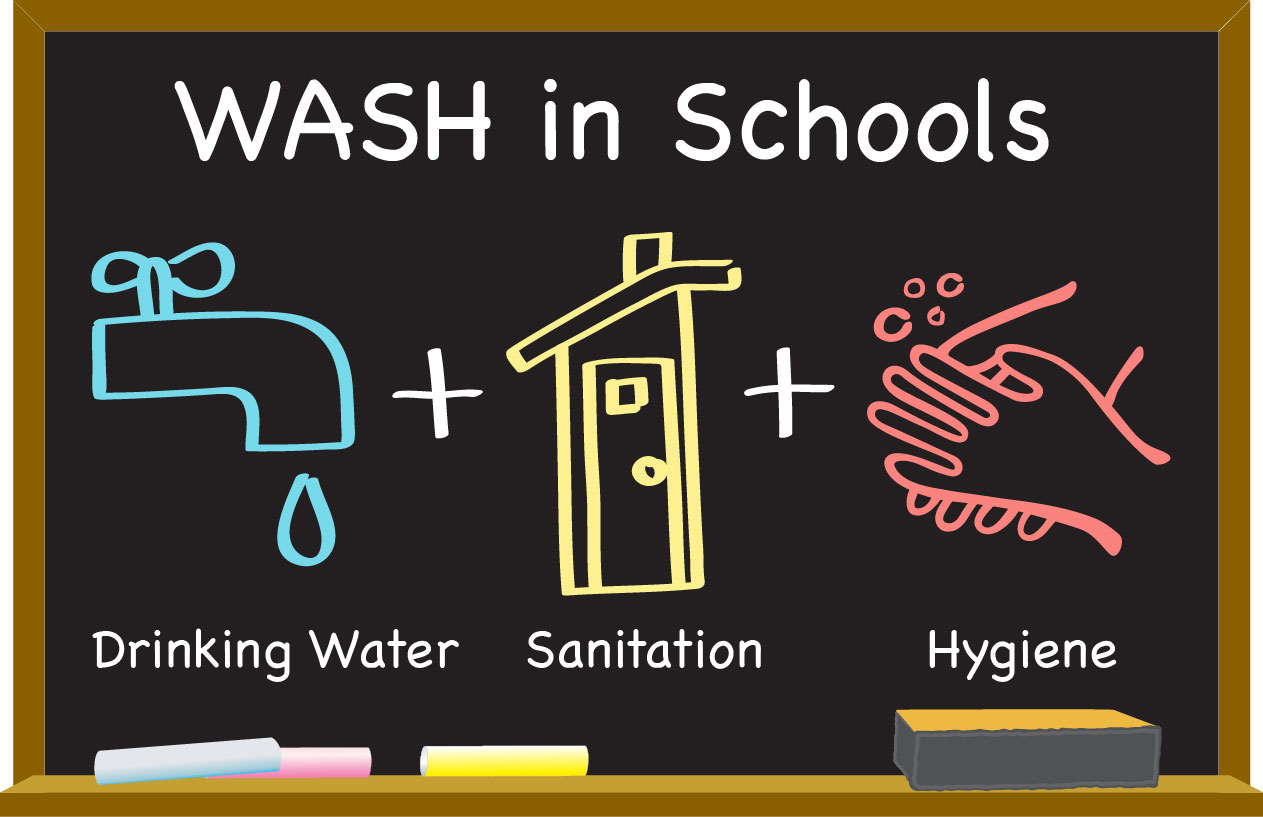
    This article attempts to decode the most important factors,sanitation and hygiene, in ensuring ‘quality’ of education for girls. This particular aspect encompasses three main Sustainable Development Goals (SDG) of the UN; Quality Education, Gender Equality and Water & Sanitation. The last goal of providing access to clean water, sanitation and hygiene (WASH) particularly in rural areas is the means to achieve the former two goals of gender equality and quality education. 

    Need to prioritize WASH for quality education

    Tamil Nadu employs more than 50% of its women in remunerative labour. Girls tend to drop out of schools either because of customary practices or because of the demand for labour. In some cases The lack of awareness and knowledge on menstruation and menstrual practices are also major factors contributing to this drop out. Despite several initiatives and attempts at establishing proper sanitation and hygiene practices particularly in schools, most of these initiatives fail to gain attention across social barriers, especially those initiatives surrounding menstruation and their importance. This exposes the limitation of community-based initiatives and their impact. Specifically Water, Sanitation and Hygiene practices, commonly known as WASH. Tamil Nadu is estimated to have 6.1 million adolescent girls and yet around 7837 schools have either dysfunctional toilets or no toilet facilities at all. The implication of such poor infrastructure is an adverse impact on learning and results in drop out from schools in most of the cases. Ensuring that there are proper health and hygiene facilities and awareness for girls at the school level is an extremely important building block for quality education. 

    The lack of awareness and knowledge on menstruation and menstrual practices are also major factors contributing to this drop out. Despite several initiatives and attempts at establishing proper sanitation and hygiene practices particularly in schools, most of these initiatives fail to gain attention across social barriers, especially those initiatives surrounding menstruation and their importance.

    Access to toilets and sanitation facilities is a privilege that only a few have access to particularly in rural areas where people practice open defecation owing to the lack of toilets. Tamil Nadu has performed brilliantly in this respect since the implementation of Swachh Bharat Abhiyan Scheme in 2014. Over 48 lakh toilets were built in rural areas since 2014, with Tamil Nadu becoming an open-defecation free state. 

    The Government of India recognized the role played by sanitation and hygiene in ensuring that quality education is delivered. In 2014, the MHRD had launched the ‘Swachh Bharat Swachh Vidyalay’ initiative. The scheme was implemented to ensure that there were separate functional toilets for girls and boys. In addition to ensuring separate toilets, the scheme also focuses on maintaining a certain level of hygiene and sanitation. While it is not enough that this initiative  has been implemented in schools across the country, it is also important that parents, teachers and children are aware of the same. Proper hygiene and sanitation does not end in school,  it is imperative that this awareness is spread in local communities and villages as well. As a part of the scheme, government schools in rural and urban areas are eligible to nominate themselves for the ‘Swachh Vidyalay Puraskar’. This acts as an incentive for schools across the country to improve their WASH standards. 

    Capitalizing the Digital Wave

    With Tamil Nadu’s rural internet penetration through mobile phones at 41.98%, there is a significant potential that can be tapped in the state’s ICT usage. While creating awareness is one side of the coin, spreading awareness is another. This is where the potential of ICT can be harnessed, in spreading awareness. The government of Tamil Nadu has made available textbooks, lessons and other educational material on their ‘DIKSHA’ portal which is essentially a YouTube channel. On this channel, students from different classes can access their study material. This could be one of the possible means through which awareness can be created across districts and villages on the importance of sanitation and hygiene. 

    Some of the government schools in Tamil Nadu have demonstrated an exceptional WASH record, thereby proving the fact that if the administration is focused the results can be excellent as shown by Thiruvallur and Vellore districts. Schools in these districts have maintained excellent sanitation and hygiene standards and have been recipients of the SVP.  The initiatives taken by these schools to spread awareness on the importance of sanitation and hygiene have largely been behaviour oriented. By involving parents and the larger community, these initiatives have been successful and effective as well. Community-based initiatives are to create and spread awareness on various social welfare schemes. Apart from creating awareness, such initiatives also tend to bring communities together. The implementation of the SBSV scheme has facilitated the use of ICT as well. While the integration of ICT in the process is a welcome change, there is a lack of clarity on what exactly it is being used for. 

    Importance of awareness on Menstrual Hygiene 

    It has been established that several initiatives were taken in the past and are being taken to improve ‘WASH’ practices in the country, particularly in schools to improve enrollment rates as well as reduce dropout rates. Educational institutions in the country, particularly schools have an inherent responsibility to educate adolescent girls on menstruation, talk about the changes it brings about in a girl’s body. A 2014 report by Dasra foundation posits that close to 23 million girls drop out of school annually due to a lack of awareness. 79% of girls and women in Tamil Nadu were not aware of menstrual hygiene and practices that are followed at the time of menstruation. Lack of awareness of menstrual hygiene and the practices that are required to be followed at the time of menstruation makes a girl/woman extremely susceptible to infections. This is largely attributed to the stigma that is created around menstruation and the notion that it is an ‘impure’ phenomena. A study conducted in 2015, in Padappai, points out that only 43.33% of girls were aware of menstruation when they experienced it the first time. The source of information in most of these cases was the mother while the teachers and schools had a very small part to play in the process. Therefore,  a layer of stigma surrounding the issue is apparent that is far from being institutionalized. Institutionalizing the issue would lead to it being discussed in schools, which in turn would normalize it and break the stigma around it. There are a plethora of possibilities that ICT brings about. Schools could tap into this potential and make use of it to communicate effectively to their students. In rural India particularly, simply creating awareness and breaking the stigma around menstruation will not suffice. Often, this stigma is reinforced by  women in the family. In order to move beyond this, schools must ensure that lessons on menstruation are conducted for both girls and boys alike. Not only does this induce awareness among boys but it also makes them more sensitive to the issue. 

    A 2014 report by Dasra foundation posits that close to 23 million girls drop out of school annually due to a lack of awareness. 79% of girls and women in Tamil Nadu were not aware of menstrual hygiene and practices that are followed at the time of menstruation.

    Awareness through Digital Platform

    Tried and tested methods of spreading awareness in a community has generated results but is not enough. Improving sanitation and hygiene standards in learning institutions requires the participation of all the stakeholders involved in the process. While this may be an initial attempt at de-stigmatizing the issue, undoing centuries of discrimination and oppression requires a systemic approach. Tamil Nadu government’s ‘DIKSHA’ portal is a good place to start. In addition to developing online resources, there must also be some sort of portal that mandates uploading information related to the sanitation and hygiene measures that are being taken in schools. Additionally, it is important to use digital interventions to create awareness and reinforce the message in a timely manner. While infrastructure creation is a part of the goal, it is equally important to establish the need for it and educate people. This is where the digital intervention comes into the picture. One of the goals in Tamil Nadu’s Vision 2023 Project is to encourage PPP as a mechanism for infrastructure creation. This could be one of the potential means through which awareness is spread by introducing digital interventions in rural areas. It could either include installing a TV in Gram Panchayat offices which could display campaigns on the importance of sanitation and hygiene/menstrual hygiene, etc. With respect to creating awareness on menstrual hygiene which is a systemic issue because of the stigma attached to it – the solution needs to be systemic as well. For starters, creating conversation around menstruation is extremely important. Something called the ‘culture of silence’ exists in Kenya particularly in rural areas where girls refrain from speaking about menstruation and puberty. Identifying practices like this is a start when it comes to de-stigmatizing menstruation. While removing GST on sanitary napkins is one way to make the product more accessible, it is important to make people realize why there is a need for using one in the first place and the consequences of not using it. This brings us to the question of whether it is enough for the state to build infrastructure alone and if its responsibility ends there as opposed to also creating awareness on how to go about using the said infrastructure as well as educating people on its importance. 

    Ensuring  Effective Policies

    Some of the government schools in Tamil Nadu have demonstrated an exceptional WASH record, thereby proving the fact that if the administration is focused the results can be excellent as shown by Thiruvallur and Vellore districts. Schools in these districts have maintained excellent sanitation and hygiene standards and have been recipients of the SVP. 

    Initiatives like the SBA, SBSV and SVP are focussed around creating infrastructure and incentivizing schools to implement hygiene practices. Sanitation happens to be a state subject, and each state faces its own challenges with respect to addressing the problem. For instance in a state like Tamil Nadu where there is decent infrastructure, the drop-out rate for girls is still on the higher side. A lack of awareness on menstrual hygiene has also contributed to the drop-out rates in the state. Evidence suggests that not all government schools in Tamil Nadu have toilets and the ones that have toilets, do not maintain them well. Perhaps now the state must implement initiatives that focus on capacity building and behavioural change in order to ensure that the results are more impactful and also long-lasting. The initiatives that the state implements in the future must focus on intrinsically motivating people to implement sanitation and hygiene practices in their lives. Apart from that, the state must also conduct follow-up workshops that engage with people and communities and teach them how to use toilets, etc. In addition, whenever a new initiative/scheme is launched, state governments must also make sure that there are bodies/committees in place in every district that happens to be a beneficiary of the scheme. As communication becomes easier and more efficient in the digital age, initiatives that are implemented in the future must focus on knowledge creation. 


    References 

    https://www.orfonline.org/expert-speak/gender-dimensions-of-school-closures-in-india-during-covid19-lessons-from-ebola-66643/

    https://poshan.outlookindia.com/story/poshan-news-strong-connect-between-sanitation-and-health/348492

    https://swachhindia.ndtv.com/23-million-women-drop-out-of-school-every-year-when-they-start-menstruating-in-india-17838/

    https://www.ncbi.nlm.nih.gov/pmc/articles/PMC6286883/

    http://sujal-swachhsangraha.gov.in/sites/default/files/Five%20schools-%20WASH%20in%20School%20-%20practices%2C%20Tamil%20Nadu-%20Clean%20school%20.pdf

    https://mhrd.gov.in/sites/upload_files/mhrd/files/upload_document/Swachh_Vidyalay_Puraskar_Guidelines.pdf

    https://www.researchgate.net/publication/294638502_Awareness_about_menstrual_hygiene_among_adolescent_girls_in_rural_area_of_Kancheepuram_district_-_Tamilnadu

    https://timesofindia.indiatimes.com/city/chennai/tn-second-in-rural-smartphone-use/articleshow/67291628.cms

    https://www.researchgate.net/publication/333561228_Availability_and_Utilization_of_Sanitation_Facilities_A_Micro_Study_from_Rural_Tamil_Nadu

    https://swachhindia.ndtv.com/swachh-bharat-abhiyan-tamil-nadu-to-go-open-defecation-free-on-october-2-25278/#:~:text=Tamil%20Nadu’s%20Swachh%20Bharat%20Abhiyan%20Journey&text=The%20state%20has%20a%20total,declared%20free%20from%20open%20defecation.&text=Tamil%20Nadu%20has%20improved%20its,per%20cent%20in%20four%20years.&text=Over%2048%20lakh%20toilets%20(48,since%202014%20in%20rural%20areas.

    https://www.wsscc.org/2016/08/10/wsscc-menstrual-hygiene-management-training-kenya-breaks-silence-menstruation/

  • India-China Trade in ancient times: Southern Silk Route

    India-China Trade in ancient times: Southern Silk Route

    To follow the Silk Road is to follow a ghost. It flows through the heart of Asia, but it has officially vanished leaving behind the pattern of its restlessness: counterfeit borders, unmapped peoples. The road forks and wanders wherever you are. It is not a single way, but many: a web of choices.

     Colin Thubron, Shadow of the Silk Road.


    Introduction

    India and China, two Asian giants, share a lot of similarities in terms of history and culture. Both countries represent age old civilizations and unique history. Cultural and economic ties between the two countries date back to about 2000 years ago. The Silk Route, which is an ancient network of trade routes, formally established by the Han Dynasty, served as a connection between the two countries. It was also through this route that Buddhism spread to China and East Asia from India. The routes were more than just trade routes; it was the carrier of ideas, innovations, inventions, discoveries, myths and many more.

    The earliest mention of China can be found in the Indian text “Arthashastra” which was written by Kautilya in the fourth century BC. Kautilya made a remark about Cinapattasca Cinabhumjia (Cinapatta is a product of China)[1]. Whereas, the earliest mention of India in Chinese records dates between 130 and 125 BC.  Zhang Qian, a Chinese envoy to Central Asia, referred to India as Shendu, in his report about India to Emperor Wu of the Han dynasty.

    This article will look into the ancient trade route that existed between South Western China and India’s North East region via Myanmar and the future of the trade route.

    Ancient trade links between India and China

    Shiji, which is the first Chinese dynastic history, compiled between 104 and 87 BCE talks about the existence of a trading route between India and South West China. According to Chinese records, Emperor Wu of the Han dynasty, tried to establish a trade route from Changan, the Chinese capital to North East India through Yunnan and adjoining areas. However, the rulers of Yunnan were against the idea of establishing a direct trade between India and China and Emperor Wu failed to establish the trade route. Even though the trade route failed to take off, the trade in Cinapatta and Chinese square bamboo continued without any hindrance.

    Political Geography of the Southern Silk Route

    The Southern Silk route (SSR), one of the least studied overland route, is a trade route which is about 2000 km long and linked East and North East India with Yunnan Province of China via Myanmar. This is a relatively unknown, ancient trade route that is considered a part of the larger web of Silk Roads. This route existed before the Central Asian Silk route became popular. This trade route between Eastern India and China came to be known during the early 3rd century BCE, and it became popular by the 2nd century BCE. By 7th century AD various other branches of the SSR emerged to create web of trading routes.

    Traders carried silk from Yunnan through Myanmar, across India and joined the main silk route in Afghanistan. In addition, silk was also transported from South West China through the Shan states and North Myanmar into East India and then down to the Coromandel Coast.

    The Qing dynasty which ruled China from 1644-1912, recorded the cross cultural exchanges that took place across SSR. This route contributed to cultural exchanges between China and the West. It also promoted interactions among different nationalities.

    Indian sources have failed to provide abundant evidence about the SSR and the interaction that took place across this route but there is enough evidence that indicates that trade and migration did take place in the Eastern India-Upper Myanmar-Yunnan region. For example, modern scholars believed that the Tai Ahoms were originally from Yunnan but they migrated to North East India and founded a small kingdom around 13th century, which grew to become the powerful Ahom Kingdom of Assam.

    The areas through which the SSR passed were inhabited by various ethnic groups whose political, social and economic organizations were primitive and backward. As a result, the safety of the route was often questioned. Archeological evidences have been found along the Southern banks of Brahmaputra up to Myanmar border, which shows that trade did exist along this route.

    The main items that were exported from China via this route included Silk, Sichuan cloth, Bamboo walking sticks, ironware and other handicrafts items.  Sichuan, a South Western province was the main source of silk. Glass beads, jewels, emeralds etc were some of the items that were imported to China.

    Another important trade route is the South West Silk route or the Sikkim Silk route, which connected Yunnan, and India through Tibet. A section of the route from Lhasa crossing Chumbi Valley, Nathu La Pass connected to the Tamralipta Port (present day Tamluk in West Bengal). From the Tamralipta port, this trade route took to the sea to traverse to Sri Lanka, Bali, Java and other parts of the Far East.  Another section of the route crossed Myanmar and entered India through Kamrup (Assam) and connected the ports of Bengal and present day Bangladesh.

    Over time, the Southern Silk Route lost its prominence and it was in 1885 that it re- emerged as a strategic link as the British tried to control some parts of the route in order to access and gain control over Southern China.

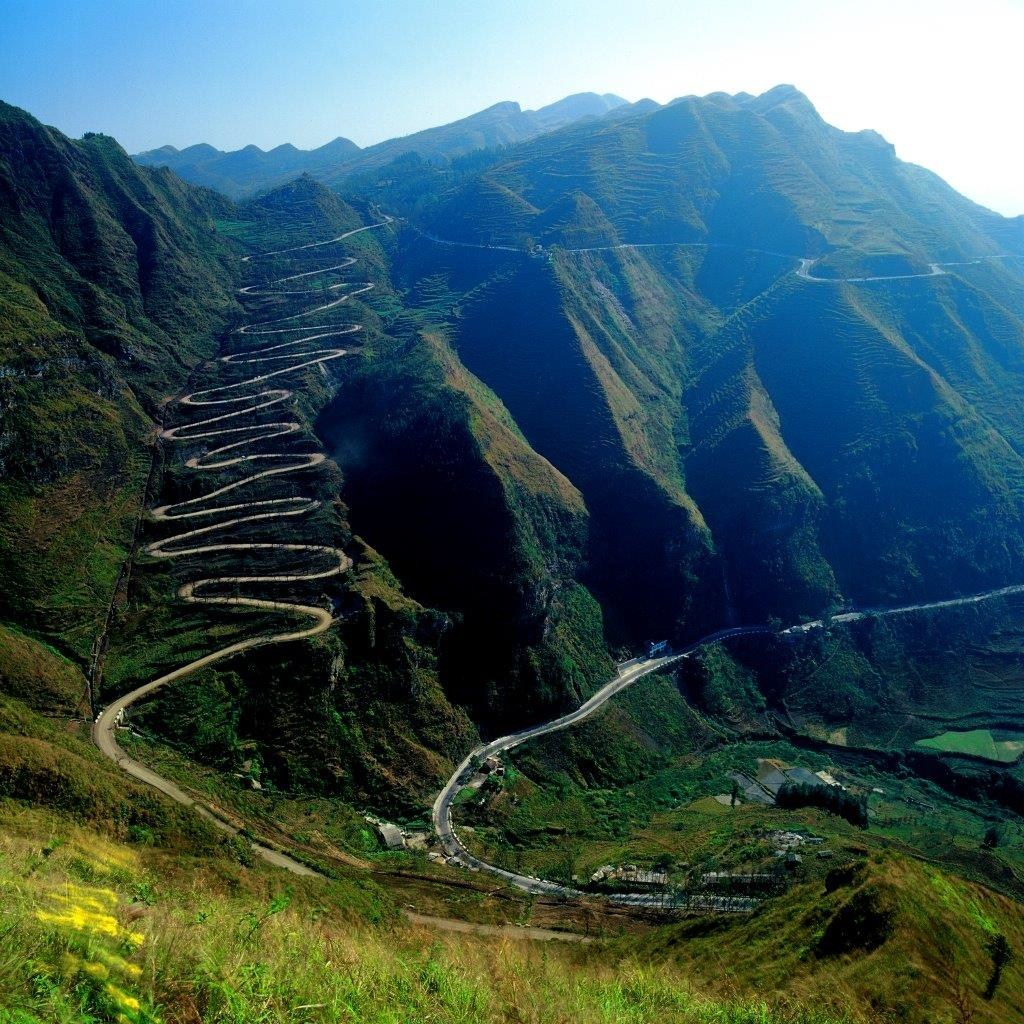
    The strategic importance of the route increased during World War II. In 1945, Ledo Road or Stilwell Road was constructed from Ledo, Assam to Kunming, Yunnan to supply aid and troops to China for the war with Japan. Ledo Road is the shortest land route between North East India and South West China. However, after the war the road was left unused and in 2010, BBC reported that much of the Ledo road has been swallowed up by jungle.

    The Assam-Myanmar-Yunnan road is very difficult to traverse not only in the present times but also during the ancient times. However, despite the hard conditions, it is through this route that a golden triangle of drug trafficking, movement of terrorist and smuggling functions today.

    Future Potential: Reviving the Southern Silk Route Economy

    North-East India and the Yunnan province share many similarities. Both are landlocked as well as under developed regions. Both are home to a large number of ethnic groups and have witnessed secessionist movement from time to time. Apart from this, Yunnan and North East India are geographically isolated from their political capitals.

    Yunnan and North East India, home to rich varieties of subtropical fruits with high nutritional values and medicinal plants, can cooperate and transform the hills of North East India and South West China into plantations, factories, laboratories to produce processed food products and lifesaving drugs that can find a huge market in developing and developed countries.

    In a bid to revive the Southern Silk route, Bangladesh, China, India and Myanmar, signed the Kunming Initiative, a sub-regional organization, in 1999. This initiative was replaced by the Bangladesh-China-India-Myanmar Economic Corridor (BCIM-EC) in 2015. The BCIM-EC was announced by China as a part of its Belt-Road Initiative, which has been boycotted by India since the beginning. In 2019, the BCIM-EC was dropped from the list of 35 projects that are to be undertaken under BRI, indicating that China has disreagrded the project. However, in the same year India has sought to keep the BCIM-EC project alive.

    If the BCIM-EC project does take place, it will reduce the travel time, cut transportation cost, open up markets, provide way for joint exploration and development of natural resources and create production bases along the way. Before the BCIM-EC takes off, it is important to develop the roadways infrastructure of India’s North East region.

    Even though the BCIM-EC promises to elevate the economic conditions of the backward North-East region of India, it has not gained sufficient steam as both China and India have different apprehensions. China sees India’s reluctance to support BRI as the barrier for any progress in the project. Given the current stand-off in Ladakh, India’s apprehensions about China seeking to exploit the insurgent groups operating in the region gains significance. Either way realizing the Southern Silk Road as a viable project in the form of BCIM-Economic Corridor looks distant now.


    [1]Haraprasad Ray, “Southern Silk Route: A Perspective,” in The Southern Silk Route : Historical Links and Contemporary Convergences (Routledge, 2019).

    References

    Ray, Haraprasad. “Southern Silk Route: A Perspective.” Essay. In The Southern Silk Route: Historical Links and Contemporary Convergences. Routledge, 2019.

    “Continental and Maritime Silk Routes: Prospects of India- China Co-operations.” In Proceedings of the 1st ORF-ROII Symposium. Kunming, 2015.

    Mukherjee, Rila. “Routes into the Present.” Essay. In Narratives, Routes and Intersections in Pre-Modern Asia, 37–40. Routledge, 2017.

    UNESCO. Accessed June 20, 2020. https://en.unesco.org/silkroad/content/did-you-know-great-silk-roads.

    “The Silk Route.” Accessed June 21, 2020. http://www.sikkimsilkroute.com/about-silk-route/.

    Ray, Haraprasad. Introduction. In North East India’s Place in India-China Relations and Its Future Role in India’s Economy, n.d.

    Chowdhury, Debasish Roy. “’Southern Silk Road’ Linking China and India Seen as Key to Boosting Ties.” South China Morning Post, October 23, 2013.

    “China Wants to Revive ‘Southern Silk Road’ with India.” The Times of India, June 9, 2013.


    Image: Stilwel Road from Ledo in Northeast India to Kunming in Yunnan province, China


  • Lessons from countering the corona-virus for war and violence:  Containment, Common Security and Cooperation

    Lessons from countering the corona-virus for war and violence: Containment, Common Security and Cooperation

    The world is engulfed in the ‘Corona Virus’ pandemic. As national health systems are being stretched to their limits, countries are closing their borders, banning travel, and isolating themselves…all in an international co-operative strategy to contain its spread and eliminate this pandemic. Andreas Herberg-Rothe sees valuable lessons in this international co-operation to be used to contain war and violence. Taking a leaf out of the broad ‘containment theory’ articulated by the late George Kennan in an anonymous article published in 1947 in the FP magazine, Andreas proposes a containment strategy for the world from the scourge of terrorism, religious fanaticism, and wars for world dominance (both proxy as well as interventions). This strategy for ‘common security’ can succeed only if it respects pluralism of cultures, religions, and social orders…M Matheswaran.


    The initial measures against the spread of the new corona-virus could be summarized by one word – containment of the virus and hindering its spreading. This current prominence of the concept of containment could be used for other world problems. By having a closer look at the concept of containment it becomes obvious that it also included the concept of common security and cooperation – the same is true with the corona-virus. We are witnessing a worldwide expansion of war and violence, which should be countered by a new containment, just as George Kennan emphasized as early as 1987: “And for these reasons we are going to have to develop a wider concept of what containment means (…) – a concept, in other words, more responsive to the problems of our own time – than the one I so light-heartedly brought to expression, hacking away at my typewriter there in the northwest corner of the War College building in December of 1946.” Nearly seventy-five years have already passed, since George Kennan formulated his original vision of containment. Although his original concept would be altered, in application by various administrations of the US-Government, in practice it has been incorporated within the concept and politics of common security, which has been the essential complement to pure militarily containment. These ideas are still valid – and as Kennan himself pointed out, they are in more need of explication and implementation than ever.

    The disinhibition of war and a new containment

    The triumphant advance of democracy and free markets in the wake of the Soviet collapse seemed to be unstoppable, to the point where it appeared for a time as if the twenty-first century would be an age defined by economics and thus, to a great extent, peace.  However, these expectations were quickly disappointed, not only because of the ongoing massacres and genocide in Africa, but also by the return of war to Europe (primarily in the former Yugoslavia), together with the attacks of September 11, 2001 in the USA, the Iraq war, the war in Syria with its on-going, violent consequences. A struggle against a new totalitarianism of an Islamic type appears to have started, in which war and violence are commonly perceived as having an unavoidable role. One can also speak of a new dimension to violence with respect to its extent and brutality – as exemplified by the extreme violence of the ongoing civil wars in Africa and the Middle East.  Additionally we are facing completely new types of threats, for example the possession of weapons of mass destruction by terrorist organizations or the development of atomic bombs by “problematic” states like North Korea. The potential emergence of a new Superpower, China, and perhaps of new “great” powers like India may lead to a new arms race, which presumably have a nuclear dimension as well. In the consciousness of many, violence appears to be slipping the leash of rational control, an image the media has not hesitated for foster, especially with respect to Africa. Will there be “another bloody century,” as Colin Gray has proposed?

    Although the current situation and the foreseeable future is not as immediately ominous as in the Cold War, it may be even worse in the long run. On one side, the prospect of planetary self-destruction via nuclear overkill, which loomed over the Cold War– and what could be worse than that, has been successfully averted. On the other hand, after having been granted a brief respite in the 1990s, mankind now feels itself to be confronting a “coming anarchy” of unknown dimensions and a new conflict between the US and China seems to be inevitable. If the horrific destructive potential threat of the Cold War has been reduced in scale, less cataclysmic possibilities have also become more imminent.

    As compared to the Cold War, there is no longer an exclusive actor to be contained, as the Soviet Union was. Even if one were to anticipate China’s emergence as a new superpower in the next twenty years, it would not be reasonable, in advance of this actually happening, to  develop a strategy of military containment against China similar to that against the Soviet Union in the 50s and 60s of  last century, since doing so might well provoke the kind of crises and conflicts that such a strategy would be intended to avoid. The attempt to build up India as counter-weight to China and facilitating its nuclear ambitions, for instance, might risk undermining the international campaign to limit the proliferation of nuclear weapons in the world. Therefore we need quite another concept of containment, which could not be perceived as a threat to China.

    The second difference is, that current developments in the strategic environment display fundamentally conflicting tendencies: between globalization and struggles over identities, locational advantages, and interests; between high-tech wars and combat with “knives and machetes” or suicide bombers; between symmetrical and asymmetrical warfare; between the privatization of war and violence and their re-politicization and re-ideologization as well as wars over “world order”; between the formation of new regional power centres and the imperial-hegemonic dominance of the only Superpower; between international organized crime and the institutionalization of regional and global institutions and communities; between increasing violations of international law and human rights on one side  and their expansion on the other. A strategy designed to counter only one of these conflicting tendencies may be problematic with respect to the others.  I therefore stress the necessity of striking a balance between competing possibilities.

    The third difference is that the traditional containment was perceived mainly as military deterrence of the Soviet Union, although in its original formulation by George Kennan it was quite different from such a reductionism. Our main and decisive assumption is that a new containment must combine traditional, military containment on one side, and a range of opportunities for cooperation on the other. That’s not only necessary with respect to China, but even to the political Islam, in order to reduce the appeal of militant Islamic movements to millions of Muslim youth.

    Such an overarching perspective has to be self-evident, little more than common sense, because it has to be accepted by quite different political leaders and peoples. The self-evidence of this concept could go so far that one could ask why we are discussing it. On the other hand, such a concept must be able to be distinguished by competing concepts. Last but not least, it should be regarded as an appropriate concept to counter contemporary developments. Finally, taking into account, that Kennan’s concept would not have succeeded, if it had been directed against the actions of the international community or the United States, it should be to some extend only brings to expression, what the international community is already doing anyway.

    A concept that realized these demands of a political concept for contemporary needs was that of “common security”, developed in the 1970s. In the special situation of the cold war and of mutual deterrence this concept didn’t imply a common security shared among states with similar values and policies. On the contrary, this concept, perhaps developed for the first time by Klaus von Schubert, emphasized a quite different meaning. Traditionally, opponents have understood security as security from each other. The new approach laid down by Klaus von Schubert derived from the assumption, that in a world of multiple capacities of annihilating the planet, security could only be defined as common security. This small difference between security from each other and common security — shared security against a universal threat — was nothing less than a paradigm change in the Cold war.

    The question of course remains, how to deter the true-believers, members of terrorist networks or people like the previous President of Iran, for whom even self-destruction may be a means of hastening millenarian goals. Of course, the “true-believers” or the “hard-core terrorist” could hardly be deterred. But this is just the reason, why containment should not be reduced to a strategy of deterrence. The real task even in these cases therefore is to act politically and militarily in a manner, that would enable to separate the “true believers” from the “believers” and those from the followers. This strategy can include military actions and credible threats, but at the same time it should be based on a double strategy of offering a choice between alternatives, whereas the reduction to military means would only intensify violent resistance. Additionally, even the true believers could be confronted with the choice, either further to be an accepted part of their social and religious environment (or to be excluded from them) or to reduce their millenarian aspirations. Of course, by following this strategy, there is no guarantee, that each terrorist attack could be averted. But this is not the real question. Assuming, that the goal of the terrorists and millenarian Islamists is to provoke an over-reaction of the West in order to ignite an all-out war between the West and the Islamic world, there is no choice than trying to separate them from their political, social and religious environment.

    The concept of containment and contemporary warfare

    The goal of the war on terror should not try to gain victory, because no one could explain, what victory would mean with regard to this special war. Moreover, trying to gain a decisive victory about the terrorists would even produce much more of them.  The additional problem is not only, how we ourselves conceive the concept of victory, but even more important, in which ways for example the low-tech enemies define victory and defeat. That is an exercise, that requires cultural and historical knowledge much more than it does gee-whiz technology.

    Instead one could argue, that the goal is “to contain terror”, which is of course something quite different from appeasement.  An essential limitation of the dangers, posed by terrorist organizations could be based on three aspects: first, a struggle of political ideas for the hearts and minds of the millions of young people; second the attempt to curb the exchanges of knowledge, financial support, communication between the various networks with the aim of isolating them on a local level; and finally, but only as one of these three tasks, to destroy what one could label the terrorist infrastructure. In my understanding, trying to achieve victory in a traditional military manner would not only fail, but additionally would perhaps lead to much more terrorism in the foreseeable future.

    The concept of the “centre of gravity” in warfare can provide another illustration of the way in which my conception makes a difference. Clausewitz defines war as an act of violence to compel our enemy to do our will. This definition suits our understanding of war between equal opponents, between opponents in which one side doesn’t want to annihilate the other or his political, ethnic or tribal body. But in conflicts between opponents with a different culture or ethnic background, the imposition of ones will on the other is often perceived as an attempt to annihilate the other’s community and identity. Hence, for democratic societies, the alternative is only to perceive war as an act of violence where, rather than compelling our own will to the opponent, your opponent is rendered unable any more to pursue his own will violently, unable to use his full power to impose his will on us or others. Consequently the abilities of his power must be limited, that he is no more able to threaten or fight us in order to compel us to do his will.

    The purpose of containing war and violence, therefore, is, to remove from the belligerent adversary his physical and moral freedom of action, but without attacking the sources of his power and the order of his society. The key to “mastering violence” is to control certain operational domains, territory, mass movement, and armaments, but also information and humanitarian operations. But this task of  “mastering violence” should no longer be perceived as being directed against the centre of gravity, but to the “lines” of the field of gravitation. Instead of an expansion of imposing one’s own will on the adversary up to the point of controlling his mind, as the protagonists of Strategic Information Warfare put it, the only way of ending conflict in the globalized  21st century is to set limits for action, but at the same time to give room for action (in the sense, Hannah Arendt used this term) and even  resistance, which of course has the effect of legitimising action within those limits.

    The overall political perspective on which the concept of the containing of war and violence in world society rests therefore consists of the following elements, the “pentagon of containing war and violence”:

    ▪ the ability to deter and discourage any opponent to fight a large scale war and to conduct pin-point military action as last resort,

    ▪ the possibility of using military force in order to limit and contain particularly excessive, large-scale violence which has the potential to destroy societies;

    ▪ the willingness to counter phenomena which help to cause violence such as poverty and oppression, especially in the economic sphere, and also the recognition of a pluralism of cultures and styles of life in world society;

    ▪ the motivation to develop a culture of civil conflict management (concepts which can be summed up with the “civilizational hexagon”, global governance, and democratic peace), based on the observation, that the reduction of our action to military means have proved counterproductive and would finally overstretch the military capabilities

    and

    ▪ restricting the possession and proliferation of weapons of mass destruction, their delivery systems, as well as of small arms, because the unhindered proliferation of both of them is inherently destructive to social order.

    The position I have put forward is oriented towards a basically peaceful global policy, and treats the progressive limitation of war and violence as both an indefinite, on-going process and as an end in itself. The lasting and progressive containment of war and violence in world society is therefore necessary for the self-preservation of states, even their survival and of the civility of individual societies and world society.    

    Image Credit:Photo by Erik Mclean on Unsplash