Category: HomepageSlider

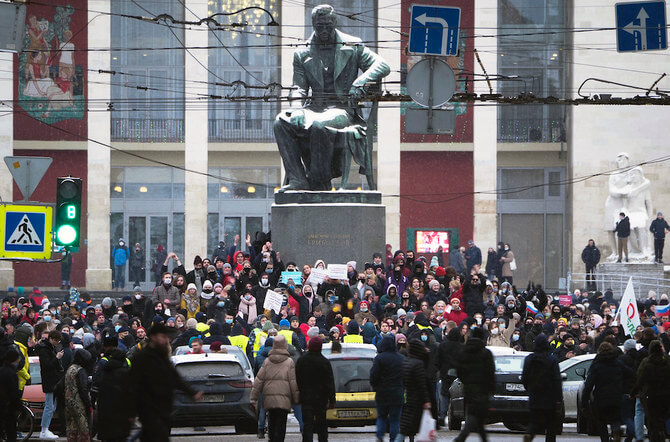
  • Bengal’s thinking is clear: will rest of India follow?

    Bengal’s thinking is clear: will rest of India follow?

    The second wave of Covid-19 began on February 10 when India reported 11,000 new cases. In the next 50 days, the daily average was 22,000 cases. In the following 10 days the daily average touched 89,800. We are now adding over 400,000 a day. India has never been engulfed by a crisis of this order.

    We are woefully short of hospital beds, oxygen, Remdesivir and Tocli-zumab, vaccines, ambulances and sadly even space in our crematoria. The growth and spread are expected to scale to almost a million a day. In two months, India has become the world’s basket case. Yet, on January 28 this year, speaking to the World Economic Forum in Davos, Prime Minister Narendra Modi showed a blissful and disturbing ignorance of the perfect storm looming. The committee of scientists monitoring the virus warned the PMO of the gathering storm. He was not interested. He was crowing about his perceived “achievement” of beating back the much-mutated “Chinese virus”. He was so wrong, and the country is paying a huge price. There is no Modi image of competence left.

     Prime Minister Modi’s inability to defend India against the second Covid-19 wave, and his inability to cajole the Chinese from withdrawing from areas they occupied in Ladakh now make him an easy target.

    The elections to the four states and Puducherry, which he was so focused on, have been his undoing. He began campaigning on February 5 and 7 in Assam and West Bengal. After that he addressed 20 more rallies in West Bengal and six more in Assam. He also addressed 10 rallies in Tamil Nadu, three in Kerala and one in Puducherry, in all around 40 giant rallies criss-crossing across in IAF Boeings. I wouldn’t even hazard the true cost to the exchequer, but I have heard it said the PM himself is liable to a charge of Rs 6 per air km. Other costs are borne by the PMO.  But the cost is not important. The time spent on huckstering is important. He lost almost a month campaigning, instead of managing the engulfing crisis. I always had a low opinion of his intellect, but even he could have surmised the risks posed to the nation by the renewed pandemic. Clearly, he factored winning West Bengal was more important and worth the cost. Mr Modi himself cheerfully paraphrased what Gopal Krishna Gokhale said almost 100 years ago: “What Bengal thinks today, India thinks tomorrow”!

    West Bengal has unambiguously expressed what it is thinking. It has rejected Mr Modi and his message and campaign-style, lock, stock and barrel. A subservient Election Commission helpfully broke up West Bengal’s polls into eight phases starting March 27 and closing April 29. During this period the daily Covid-19 cases rose in West Bengal from 812 to 17,403. Breaking it into eight phases didn’t help the BJP either. It lost in every phase and got double digits only in four. West Bengal has a sizable Muslim electorate and Mr Modi didn’t mince words in targeting them by making it appear they were Mamata Banerjee’s personal votebank. He didn’t bother to even conceal what he thought of them. His electoral style touched a new low, even by his standards and most certainly by the standards expected of a PM, when he jibed her by catcalling “Didi-O-Didi”. Urban Bengal responded to this by defeating the BJP soundly in all urban constituencies. There is a message here. All over the country the BJP and RSS have strong urban bases, but urban and urbane Bengal administered a resounding slap to gutter politics. With no record to show, Mr Modi’s politics are nothing but that now.

    There was no surprise in Assam. The BJP was returned by almost the same margin as in 2016, getting a majority with the AGP’s nine seats. The Congress lacked a visible local leadership who could match wits with the BJP’s Hemanta Biswa Sarma. Tamil Nadu was as expected. The two so-called national parties were clinging to crumbs thrown by the two so-called Dravidian parties. In Kerala, Pinrayi Vijayan showed why he’s India’s topmost and only surviving commissar. The DMK’s Stalin made no bones about what he thinks of Mr Modi’s Hindu and Hindi-centric politics. The Modi government used every means, including ED raids, to slow down Stalin. The ED even raided Stalin’s daughter.

    So where does our politics go from here? One clear conclusion is that both the BJP and Congress were dealt severe blows. It’s interesting the BJP’s campaigns were entirely shouldered by Narendra Modi and Amit Shah. None of the other top BJP leaders even bothered to show up anywhere. What shouldn’t be missed is that the Raksha Mantri, a former BJP president, was the first from the party to congratulate Mamata Banerjee. In Assam, Mr Sarma’s supporters have gone public crediting the victory to their leader. Mr Sarma has already fired a shot across Sarbananda Sonowal’s bow, saying he was no longer interested in being just a minister in someone’s Cabinet. The numbers might work for him, as he needs just a dozen MLAs to cross over and give Assam a new government. Mr Sarma was a Congress satrap till Rahul Gandhi insulted him by playing with his dog rather than listening to him. Rahul will be all ears now.

    Mamata Banerjee’s stunning victory puts her squarely on the centre stage of Opposition politics. Joining her there will be Lalu Prasad Yadav, released on bail by the Supreme Court despite the government’s strenuous objections. Tejashwi Yadav has shown he’s capable of leading a party when the RJD came so close to upstaging the BJP-JDU alliance in Bihar. Rajasthan’s Ashok Gehlot and Punjab’s Amarinder Singh have emerged as fairly independent Congress satraps. Uddhav Thackeray has shrugged off the Shiv Sena’s pariah status by providing Maharashtra with good leadership and a penchant for making politics the art of the possible. In Telangana, KCR has put the BJP in its place by a resounding win in Nagarjunasagar after its surprise showing in the Dubbaka and GHMC polls. YSRC scored a resounding win in Tirupati with the BJP candidate, a retired chief secretary, losing her deposit. The anti-BJP lineup now has seven chief ministers, excluding Naveen Patnaik. Seven CMs will mean the election and propaganda machines can be kept well-greased and the powder kegs dry and replenished. Prime Minister Modi’s inability to defend India against the second Covid-19 wave, and his inability to cajole the Chinese from withdrawing from areas they occupied in Ladakh now make him an easy target. The Gujarat model has been long exposed as bogus. There is light seen at the end of the tunnel.

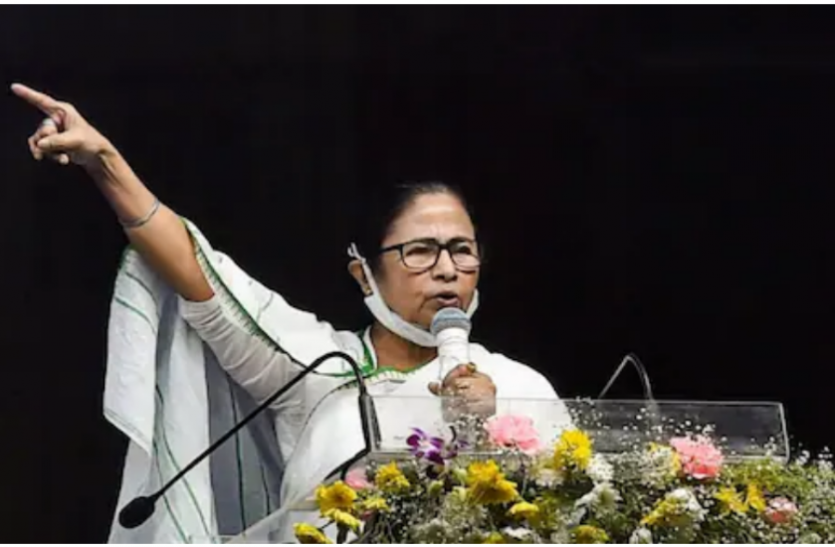
    Image Credit: Patrika.com
  • Economic prospect of Vietnam under new leadership

    Economic prospect of Vietnam under new leadership

    The International Monetary Fund (IMF) has projected a positive outlook for the post-pandemic global economic recovery for 2021. This is notwithstanding the uncertainty associated with numerous mutations of the Coronavirus emerging in different parts of the world and successes with the vaccine which is now into full-fledged production to meet global demands. Furthermore, according to the IMF, the world economy could grow by 6% in 2021, up from the 5.5% forecast in January 2021. Another significant development in the post-pandemic economic recovery would be a “generational shift towards higher government spending” with projections of over US$ 10 trillion being allocated by the governments across the world to absorb the “shock of the COVID pandemic”. In this context, the Vietnamese government can be expected to make significant post-Pandemic investments.

    Prime Minister Chinh who was an earlier member of the national steering committee for anti-corruption also announced that the government would “drastically and persistently push for anti-corruption.”

    Earlier this month, the Vietnamese National Assembly elected Pham Minh Chinh as the new Prime Minister of the country. In his inaugural speech, Prime Minister Pham Minh Chinh said that his administration’s economic policies would continue as hitherto i.e. “socialism with a market orientation” and will centre on “economic reforms, developing digital economy and focusing on solving difficulties for industries and businesses.” Prime Minister Chinh who was an earlier member of the national steering committee for anti-corruption also announced that the government would “drastically and persistently push for anti-corruption.”

    There is a strong element of continuity in the Vietnamese government policies concerning economic reforms, investments, and addressing the bottlenecks in economic growth since the last five-year plan. The projections for economic growth during 2021-2025 are high and pegged at 6.5%-7%. This compares well with the last five-year plan which witnessed 5.9% growth. The per capita GDP is also projected to improve from US$ 2,750 at the end of 2020 to $4,700-$5,000 by 2025.

    While these are indeed very promising economic indicators, according to risk consultancy Eurasia Group, Prime Minister Chinh will also have to deal with additional challenges such as reforms required for “new trade deals” necessitating additional infrastructure, respond to existing bottlenecks impacting on the manufacturing sector as also sustained and reliable energy requirements.

    Prime Minister Chinh would have to skillfully manoeuvre Vietnam’s relations with the US and China who are among its top trading partners.

    At another level, Prime Minister Chinh would have to skillfully manoeuvre Vietnam’s relations with the US and China who are among its top trading partners. As far as the US is concerned, US imports from Vietnam increased to $64.8 billion in the first 10 months of 2020, and the trade deficit increased to $56.6 billion in 2020. Hanoi has now won over the US in the context of being labelled as a “currency manipulator”. The Biden Administration’s first foreign-exchange policy report has removed Vietnam from the list of countries that are known to prevent “effective balance of payments adjustments or gaining unfair competitive advantage in international trade”. This suggests that the US is not taking a confrontationist approach.

    Similarly, Vietnam’s trade with China is an inescapable part of its economic growth. China is its top trading partner and the bilateral trade in 2020 was US$ 133 billion. The future projections for Vietnam –China bilateral trade are quite promising given that China would continue to be the strongest economy in the coming years which will have numerous spinoffs for Vietnam. Perhaps it merits attention that China is the seventh-largest foreign investor in Vietnam.

    By all counts, Prime Minister Chinh would continue to pursue the national mantra of “socialism with a market orientation” and engage and promote pragmatic economic policies, open the national economy to global markets and importantly balancing relations with China and the US. The US-China trade war has been a trigger for a large number of countries particularly Japan shifting businesses into Vietnam. This has led to Vietnam being labelled as a “mini-China” and is best represented by the fact that Vietnam’s “factory-heavy growth model, sizable population, low labour and land costs, rapid gross domestic product and geographical placement” make it the preferred destination for setting up a business and attracting investments.

    While that may be so, Vietnam would have to diversify from manufacturing cheap goods for exports to investing in its service industry as also in innovation and tech startups. Vietnam is likely to witness a surge in the digital economy and this segment could expand to US$52 billion by 2025. In particular, e-commerce and digital banking are significant growth sub-sectors.

    it is not unthinkable to anticipate Chinese companies too making a beeline and moving production to Vietnam to lessen the risks of the US-China trade war which has now taken a very strong geopolitical and geostrategic turn.

    Today, Vietnam can boast of three comprehensive strategic partnerships, fourteen strategic partnerships, and 13 comprehensive partnerships with different countries. Besides, the conditions are ripe for Vietnam to attract investors beyond Asia and the EU-Vietnam FTA is an important trigger for encouraging European firms to explore investment opportunities in Vietnam. Also, it is not unthinkable to anticipate Chinese companies too making a beeline and moving production to Vietnam to lessen the risks of the US-China trade war which has now taken a very strong geopolitical and geostrategic turn. Under the circumstances, Vietnam would have to diversify its strategic relations and not be left hostage to one partner.

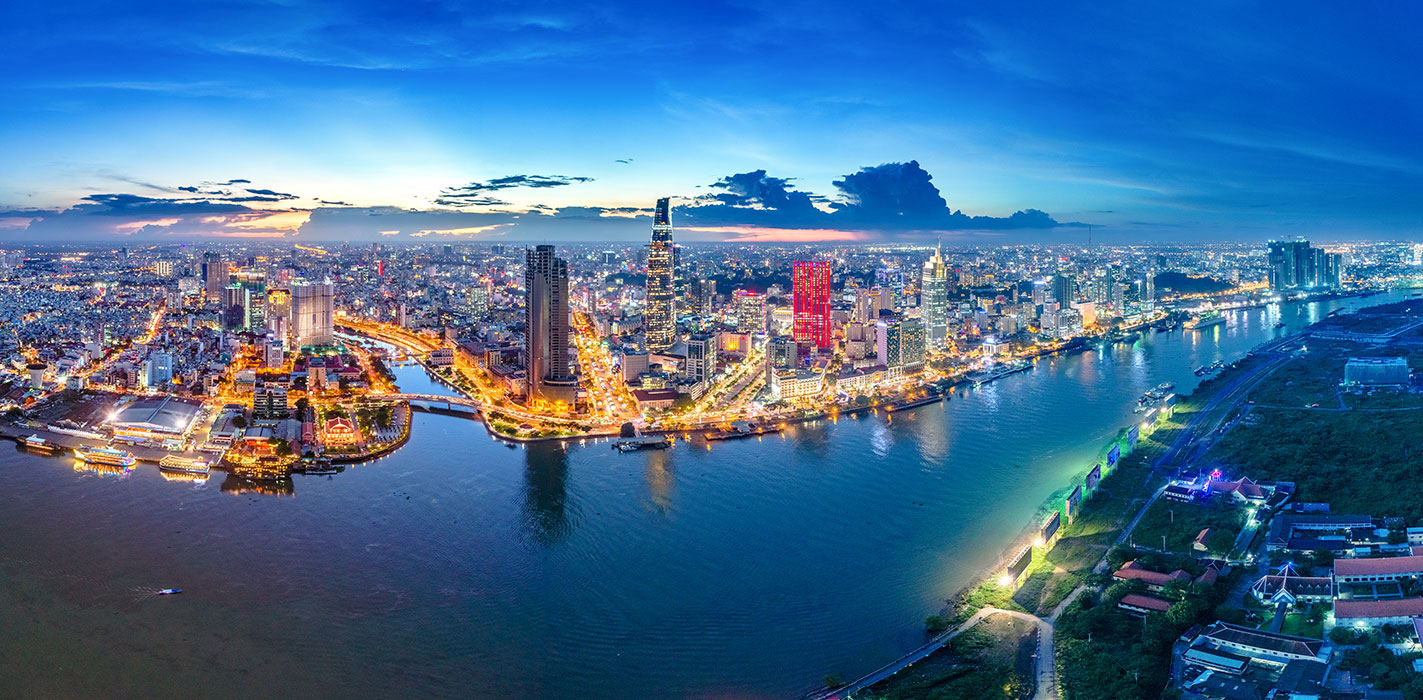
    Featured Image: Hanoi to Ho Chi Minh

  • Let’s do away with marks, grades, and this façade of examination

    Let’s do away with marks, grades, and this façade of examination

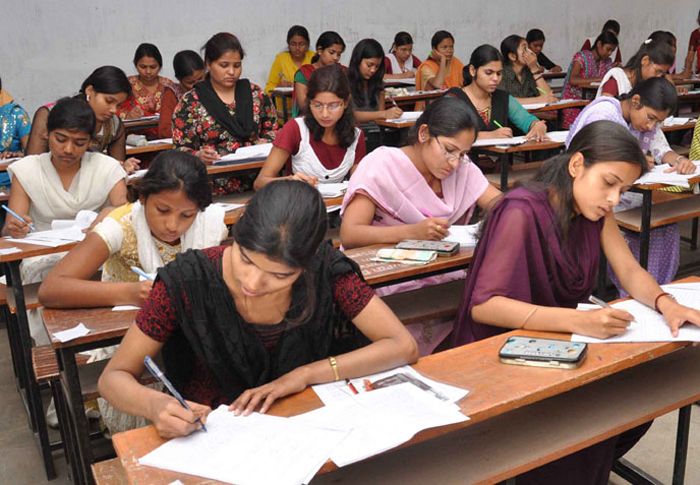
    The Central Board of Secondary Education (CBSE) has cancelled examinations for Class 10 and postponed the one for Class 12. This adds to the uncertainty that had gripped the education sector ever since the pandemic broke out. Add to that the cascading effect it will have on entrance examinations and graduate courses.

    Currently, stakeholders, namely, the higher educational institutions such as colleges and universities, state governments, high courts, students and their parents, and the University Grants Commission (UGC), are also embroiled in the exams dilemma. This has to do with whether exams are to be held or not; and if yes, then in what way? Virtually or physically?

    The Examination Train

    The manifest justification for holding examinations are to test the pupils, award them marks/grades, rank them in an order of ‘merit’, or segregate them as per mediocrity. Away from the rather narrow confines of academics, who cares for marks/grades in the world outside? Hardly an organisation/institution gives any credence to marks awarded by colleges and universities. Public sector and private sector organisations, including the banks, the Union Public Service Commission (UPSC), and what have you, conduct their own examinations/tests to recruit personnel.

    If nobody outside of the academic realm cares for marks/grades and recruiting organisations devise their own way of assessing graduates, why do we go through the examination rigmarole? 

    The only thing they look for is the minimum qualification. Generally, graduation, at the most. Also, they have their own in-house training, orientation/refresher courses or workshops. Significantly, the UPSC has prescribed just graduation as the minimum qualification for the highly-desired and coveted civil services, to recruit personnel for the foreign, administrative and police, and other allied central services.

    Even ardent followers of Mahatma Gandhi who have passionately and zealously travelled in the ‘Third Class’ all through their academic careers, are eligible to appear at the prelims or the CSAT (Civil Services Aptitude Test) that the UPSC conducts. These Gandhians as well as those who have a second class, qualify in large numbers, and are in no way inferior to the self-styled first class passengers of/on our examination trains.

    Cracks and Fissure

    There appears to be hardly any correlation between the marks/grades/class awarded by our colleges and universities and those who get through the CSAT and make it to the civil services. Are there, going by what is obtained above, any chinks in the system that is so highly-skewed in favour of rote-learning, examination-based structure of our educational set-up? Of course, there appear to be multiple cracks and fissures, to say the least.

    Just look at the countless students awarded A+ or O (outstanding) grades, lots having secured 90 to 95 percent at the Master’s level (MA/MSc/MCom) struggling, if not failing, to get through the National Eligibility Test (NET) to become eligible for an assistant professor’s job.

    The UGC, the overarching Big Brother that avidly extends its leash over the state and central universities (also the deemed ones), itself has very little faith in marks/grades awarded by its various constituents. There is ample empirical evidence to uphold the misgivings of the UGC on this count. Just look at the countless students awarded A+ or O (outstanding) grades, lots having secured 90 to 95 percent at the Master’s level (MA/MSc/MCom) struggling, if not failing, to get through the National Eligibility Test (NET) to become eligible for an assistant professor’s job.

    It is another matter that many state governments contrived their own ways to dilute the stronghold of the UGC’s NET by devising alternative routes called SET (State Eligibility Test) and SLET (State Level Eligibility Test), and have succeeded in browbeating the UGC as regards recruitment to teaching posts in state/central universities.

    The Merit Myth

    Years back, the UGC wrote to various universities that those with really high marks at the postgraduate examinations performed abysmally in the NET. Moral of the story is that in spite of the UGC lurking in the background and looking over the shoulder, its affiliated constituents have been happy in dispensing the largesse of grades/marks over-generously. Unfortunately, this is perceived as merit.

    The facade of examinations that has taken generations of students, parents, and society in general, for a ride needs a serious revisit.

    The facade of examinations that has taken generations of students, parents, and society in general, for a ride needs a serious revisit. If nobody, virtually nobody, in the real world outside of the academic realm cares for the marks/grades and classes dished out by our universities, and each recruiting organisation assiduously tests and devises its own way of assessing our graduates and postgraduates (and doctorates too), why do we go through the examination rigmarole?

    Marks to what avail?

    Why not just handover certificates, listing courses/papers taught/learnt and assignments completed. At the end of the required term just make them qualify for the degree sought by them sans the drama staged pertaining to examinations. Some educational institutions, such as the Ducere Global Business School, in Melbourne, Australia, award graduate and postgraduate degrees without exams. It has been pointed out that “assessment is articulated through solution finding, improvisation, interrogation, interaction, integration and imagination — all of which shape change”.

    The agencies interested in employing these candidates have their own manner of assessing them through written, oral and associated tests. That they have been doing, anyway, for years, even to those students who have obtained grade sheets and marks cards testifying that they have been placed in A+, or had 90 to 95 percent and have been rank holders, or have obtained a first class.

    Are we ready and willing to deliberate and debate examinations and allied issues at different levels? For a start we could wake up the UGC to shed its lethargy and set it on an examination reform and course correction path.

    This article was published earlier in www.moneycontrol.com
    Featured Image: thewire.in


  • Tamil Civilisation and the Lost Land of Lemuria/Kumari Kandam

    Tamil Civilisation and the Lost Land of Lemuria/Kumari Kandam

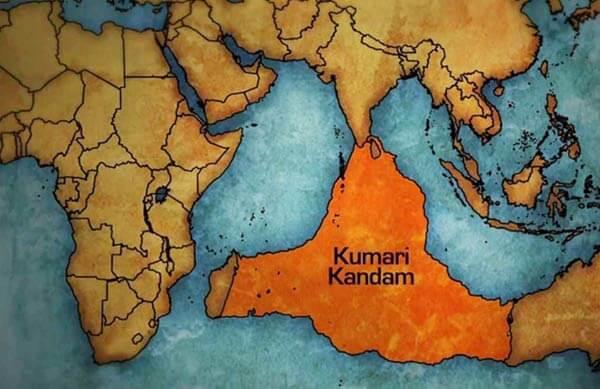
    Lemuria came to be identified as Kumari Kandam, the ancestral homeland of the Tamils, lost to the ravaging ocean in the distant past, due to what is called “Kadal Kol” in Tamil.

    The concept of the lost land of Lemuria hitherto a talking point in the west finds a new focus and interest in the study of the origins of Tamil Civilisation at the beginning of the 20th century. This was a direct result of the new consciousness of the ethnic and linguistic identity that emerged in Tamil speaking regions of South India. By the Tamil enthuse Lemuria came to be recast as the birthplace of the Tamil civilization. It came to be identified as Kumari Kandam, the ancestral homeland of the Tamils, lost to the ravaging ocean in the distant past, due to what is called “Kadal Kol” in Tamil.

    Tamil Nadu Government, during January 1981 at the Fifth International Conference of Tamil Studies held in Madurai, screened a documentary named “Kumari Kandam” both in Tamil and English. The documentary, produced with the financial support of the Tamil Nadu Government,  traced the roots of Tamil, its literature and culture, to the very beginning of time in Lemuria otherwise known as Kumari Kandam in Tamil. In this documentary, the Paleo history of the world is anchored around Tamil land and language. Thus Sclater’s[1] lost land of Lemuria was re-established in the timeless collective consciousness as a catastrophic loss of prelapsarian Tamil past. Even earlier to this, in 1879 Geological Survey of India brought out in the manual of GRGl, a discussion on the Mesozoic land bridge between Southern India and Africa. Dr.D.N. Wadia, a famed Professor of Geology, mentioned in 1990 “The evidence from which the above conclusion regarding an Indo-African land connection is drawn, is so strong and so many-sided that the differences of opinion that exist among geologists appertain to the main conclusion being accepted as one of the settled facts in the geography of this part of the world.[2]

    E.M. Forster in his famed novel ” A Passage to India “ (1984) begins his stunning stanza line “The Ganges, though flowing from the foot of Vishnu through, Siva’s hair, is not an ancient stream. Geology, looking further than religion, knows of a time when neither the river nor the Himalayas that nourished it existed, and an ocean flowed over the holy places of Hindustan. The mountains rose, their debris silted up the ocean, the gods took their seats on them and contrived the river, and the India we call immemorial came into being. But India is far older than anything in the world”.[3]

    In the ethnology chapter of the Manual, Maclean brought the findings of Ernest Haeckel about Lemuria as a primeval home of man. Maclean also draws a further conclusion from the German Biologist’s theory of the origin of various traces of mankind on the submerged Lemuria continent and reiterated that it was the primaeval home of the ancestors of India and Ceylon.

    Thus the fabled Kumari Kandam, which was based on Tamil Literary tradition, so far can receive immediate credibility through western studies. The foundation for this claim was laid by Charles D. Maclean Book “The Manual of the Administration of the Madras Presidency” published in 1835” Mr Maclean was an Officer of Indian Civil Services. In the ethnology chapter of the Manual, Maclean brought the findings of Ernest Haeckel about Lemuria as a primeval home of man. Maclean also draws a further conclusion from the German Biologist’s theory of the origin of various traces of mankind on the submerged Lemuria continent and reiterated that it was the primaeval home of the ancestors of India and Ceylon.[4] He suggested that Southern India was once the passage ground by which the ancient progenitors of northern and Mediterranean races proceeded to the parts of the globe which they now inhabit from Lemuria.[5]

    However, there is a distinct difference in perception of the Lemuria inhabitants from the point of view of Western Scholars and the Tamil enthuse. According to Western Scholars, the primitive inhabitants of Lemuria are barely human and do not represent the trace of civilization. However, the Tamil scholars hold Lemuria or Kumari Kantam as the birthplace of the Tamil Language and cradle of Tamil Civilisation. The antiquity of the Tamil language got a boost with the publication of Campbell’s Book “The competitive grammar of Dravidian Langauge”. J. Nellai swami Pillai wrote in the journal “The Light of Truth” or “Siddantha Deepika” that if you can believe in the tradition of there having been a vast continent south of Cape Comorin, all humanity and civilization flowed east and west and north, then there can be nothing strange in our regarding the Tamilians as the remnants of a pre-diluvian race. Even the existing works in Tamil speak of three separate floods which completely swamped the extreme southern shores and carried off with them all its literary treasures of ages.[6]

    Nella Swami Pillai gives a cautious conclusion that his theory stands on no serious historical or scientific evidence. The same was enthusiastically taken up fully by a well-known Tamil scholar Maraimalai Adigal.

    Though the name Lemuria came into the Tamil world only in 1903, it started gaining significance among the Tamil populous. Shri V.G.Suryanarayana Sastri started using the name Kumarinadu in his book “Tamilmoliyin varalaru. Thiru T.V.Kalyanasundaram the famous Congress Nationlist, and a noted Tamil scholar wrote emphatically that the Lemuria of “Western Scholars” like Ernst Haeckel and Scott Elliot was none other than the Kumarinadu of Tamil literature”.[7]

    The very name Kumari is suggestive of the pristine chastity and everlasting youth of the Tamil land. Later the legends linked the Devi Temple at Kanyakumari to Kumari Kantam or Kumar Nadu. The Kumari Kantam as mentioned in the old Tamil classics, has no reference to the Mesozoic continent of the Indian ocean. There is no reference to the old boundaries of Asiatic tablelands. The Tamil literature speaks of them as the original inhabitants of the great territory opened by two seas on the East and West, by Venkata hills and submerged rivers Pakruli and Kumari on the South.[8] Scholars like Somasundara Bharathi and others also invented hackers’ concept of Lemuria being the cradle of mankind, which implies that the ancient Tamil region is the birthplace of human beings and the Tamils were the first humans.

    Kumari Kantam was having a breadth of 700 kavatam south of Cape Cameron containing 49 principalities, 2 rivers called Pakruli and Kumari flowed there and it also had a hill called Kumari Koodu. The major cities in Kumari Kantam were Thenmadurai and Kapatapuram.

    The features of Kumari Kantam were referred to by Adiyarku Nallar, the commenter of Silapathikaram. Kumari Kantam was having a breadth of 700 kavatam south of Cape Cameron containing 49 principalities, 2 rivers called Pakruli and Kumari flowed there and it also had a hill called Kumari Koodu. The major cities in Kumari Kantam were Thenmadurai and Kapatapuram. This is also referred to in Tholkappia Orrai of Ilam Pooranar Nachinarkku Iniyan Perasiriyar.

    The Tamil Scholars, V.G. Suryanaryana Sastri and Abraham Pandithar lament the loss of works such as Mudunarai, Mudukurugu, etc, which had been swallowed by the ocean. These are derived from the fact that several poems in the Sangam anthology of later age refer to oceanic threat and consequent loss of lands and lives.

    The Tamil Scholar K.Anna Poorni delineates the extent of Kumari Kantam as she concludes in Tamilagham “ Today, the Tamilnadu that we inhabit consists of 12 districts within its limits. A few centuries ago. Cranach and a part of the Telugu land were part of Tamilnadu. Some thousands of years ago, the northern limit of Tamilnadu extended to the Vindhya mountain and the southern limit extended 700 Kavatam to the south of Cape Kumari which included regions such as Panainatu, mountains such as Kumari Kotu and Mani Malai, cities such as Muttur and Kapatapuram and rivers such as Pahruli. All these were seized by the ocean, so say scholars. That today’s the Indian Ocean was once upon a time a vast landmass and that that is where the man first appears has been stated by several scholars such as Ernst Haeckel and Scott Elliot in their books, History of Creation and Lost Lemuria. The landmass called Lemuria is what Tamilians call Kumarinadu. That which is remaining after this ancient landmass was seized by the ocean is the Tamil Motherland in which we reside today with pride.


    References

    [1] Philip Lutley Sclater was a zoologist and naturalist who studied extensively the presence of fauna and other species in different regions. He found that more than 30 species of Lemur monkeys inhabited Madagascar while they were hardly to be found in Africa but were seen in lesser number of species in India. Explaining the anomalies of the Mammal fauna of Madagascar, Sclater propounded that the Lemurs must have inhabited a lost continent in the Indian Ocean. Termed ‘Lemuria, this continent must have extended across the Indian Ocean and the Indian Peninsula to the further side of the Bay of Bengal and over the great islands of the Indian Archipelago. David Bressan, ‘A Geologists’ Dream: The lost continent of Lemuria’ in www.blogs.thescientificamerican.com

    [2] Wadia D.N. 1919, Geology of India for students, London: Macmillan – 1939, Geology of India, 2nd ed. London: Macmillan.

    [3] E.M.Forster, “A passage to India”: Harcourt Brace, New York 1984, pp 135-136.

    [4] Maclean Charles. D. “The Manual of the Administration of the Madras Presidency”, Vol.I, Asian Educational Publication, pp-33-43.

    [5] Ibid 111.

    [6] Nella Swami Pillai. J, “Ancient Tamil Civilisation in the light of truth” or Siddhanta Deepika. No. 5, pp 109-113.

    [7] T.V.Kalyanasundaram, “Indiyavum viduthalaiyum”, Charu Printing Press, Madras, P 106.

    [8] Sesha Iyengar K.G. Chera King of the Sangam Period, 1937, pp 658.

  • Clausewitz or Sun Tzu: Re-Claiming the primacy of policy

    Clausewitz or Sun Tzu: Re-Claiming the primacy of policy

    World War I teaches the lesson that a limited conflict can escalate into a nightmare of millions of deaths and unspeakable suffering for which no rational explanation could be found. Military aims and strategies gained priority over meaningful political goals. Although the generals of the German Empire believed that they were relying on Clausewitz’s theory, they actually perverted it. Tactics replaced strategy, strategy replaced politics, politics replaced policy, and policy was militarized.
    The same occurred in the interval between the first and second wars in Iraq (1991 and 2003), which have seen a remarkable shift from Clausewitz to Sun Tzu in the discourse about contemporary warfare. Clausewitz enjoyed an undreamed-of renaissance in the USA after the Vietnam War and seemed to have attained the status of master thinker. On War enabled many theorists to recognise the causes of America’s traumatic defeat in Southeast Asia, as well as the conditions for gaining victory in the future. More recently, however, he has very nearly been outlawed. The reason for this change can be found in two separate developments. First of all, there has been an unleashing of war and violence in the ongoing civil wars and massacres, especially in sub-Saharan Africa, in the secessionist wars in the former Yugoslavia, in Syria and Yemen and in the persistence of inter-communal violence along the fringes of Europe’s former empires. These developments seemed to indicate a departure from interstate wars, for which Clausewitz’s theory appeared to be designed, and the advent of a new era of civil wars, non-state wars, and social anarchy. Sun Tzu’s The Art of War seemed to offer a better understanding of these kinds of war, because he lived in an era of never ending civil wars.

    The second reason for the change from Clausewitz to Sun Tzu is connected with the ‘Revolution in military affairs’ (RMA). The concepts of Strategic Information Warfare (SIW) and 4th generation warfare have made wide use of Sun Tzu’s thought to explain and illustrate their position. The ‘real father’ of ‘shock and awe’ in the Iraq war of 2003 was Sun Tzu, argued one commentator. Some pundits even claimed triumphantly that Sun Tzu had defeated Clausewitz in this war, because the US army seemed to have conducted the campaign in accordance with principles of Sun Tzu, whereas the Russian advisers of the Iraqi army had relied on Clausewitz and the Russian defence against Napoleon’s army in his Russian campaign of 1812. The triumphant attitude has long been abandoned, since it is now apparent that there is much to be done before a comprehensive approach of the Iraq War will be possible. Yet it seems fair enough to say that, if Sun Tzu’s principles are seen to have been of some importance for the conduct of the war, he must also share responsibility for the problems that have arisen afterwards.

    Sun Tzu’s The Art of War, as well as the theoreticians of Strategic Information Warfare, network centric warfare and 4th generation warfare, lack the political dimension with respect to the situation after the war. They concentrate too much on purely military success and undervalue the process of transforming military success into true victory.

    And this is exactly the problem. Sun Tzu’s The Art of War, as well as the theoreticians of Strategic Information Warfare, network centric warfare and 4th generation warfare, lack the political dimension with respect to the situation after the war. They concentrate too much on purely military success and undervalue the process of transforming military success into true victory. The three core elements of Sun Tzu’s strategy could not easily be applied in our times: a general attitude to deception of the enemy runs the risk of deceiving one’s own population, which would be problematic for any democracy. An indirect strategy in general would weaken deterrence against an adversary who could act quickly and with determination. Concentration on influencing the will and mind of the enemy may merely enable him to avoid fighting at a disadvantageous time and place, and make it possible for him to choose a better opportunity as long as he is in possession of the necessary means – weapons and armed forces.

    One can win battles and even campaigns with Sun Tzu, but it is difficult to win a war by following his principles. The reason for this is that Sun Tzu was never interested in shaping the political conditions, because he lived in an era of seemingly never-ending civil wars. The only imperative for him was to survive while paying the lowest possible price and avoiding fighting, because even a successful battle against one foe might leave one weaker when the moment came to fight the next one. As always in history, if one wishes to highlight the differences to Clausewitz, the similarities between the two approaches are neglected. For example, the approach in Sun Tzu’s chapter about ‘Moving swiftly to overcome Resistance’ would be quite similar to one endorsed by Clausewitz and was practised by Napoleon.

    But the main problem is that Sun Tzu is neglecting the strategic perspective of shaping the political-social conditions after the war and their impact ‘by calculation’ on the conduct of war. As mentioned before, this was not a serious matter for Sun Tzu and his contemporaries, but it is one of the most important aspects of warfare of our own times.
    Finally, one has to take into account the fact that Sun Tzu’s strategy is presumably successful against adversaries with a very weak order of the armed forces or the related community, such as warlord-systems and dictatorships, which were the usual adversaries in his times. His book is full of cases in which relatively simple actions against the order of the adversary’s army or its community lead to disorder on the side of the adversary, to the point where these are dissolved or lose their will to fight entirely. Such an approach can obviously be successful against adversaries with weak armed forces and a tenuous social base, but they are likely to prove problematic against more firmly situated adversaries.

    Clausewitz: a new Interpretation
    Nearly all previous interpretations have drawn attention to the importance of Napoleon’s successful campaigns for Clausewitz’s thinking. In contrast, I wish to argue that not only Napoleon’s successes but also the limitations of his strategy, as revealed in Russia and in his final defeat at Waterloo, enabled Clausewitz to develop a general theory of war. Clausewitz’s main problem in his lifelong preoccupation with the analysis of war was that the same principles and strategies that were the decisive foundation of Napoleon’s initial successes proved inadequate in the special situation of the Russian campaign and eventually contributed to his final defeat at Waterloo. Although Clausewitz was an admirer of Napoleon for most of his life, in his final years he recognised the theoretical significance that arose from the different historical outcomes that followed from the application of a consistent, but nevertheless single military strategy. He finally tried desperately to find a resolution that could reconcile the extremes symbolised by Napoleon’s success at Jena and Auerstedt, the limitations of the primacy of force revealed by the Russian campaign, and Napoleon’s final defeat at Waterloo.

    Therefore there can be found four fundamental contrasts between the early and later Clausewitz that need to be emphasised, because they remain central to contemporary debates about his work:

    a.   The primacy of military force versus the primacy of politics.
    b.   Existential warfare, or rather warfare related to one’s own identity, which engaged
    Clausewitz most strongly in his early years, as against the instrumental view of war that
    prevails in his later work.
    c.   The pursuit of military success through unlimited violence embodying ‘the principle
    of destruction’, versus the primacy of limited war and the limitation of violence in war,
    which loom increasingly large in Clausewitz’s later years.
    d.   The primacy of defence as the stronger form of war, versus the promise of decisive
    results that was embodied in the seizure of offensive initiative.

    Clausewitz’s final approach is condensed in his Trinity, which comes at the end of the first chapter of book I. The Trinity, with all its problems by its own, is the real legacy of Clausewitz and the real beginning of his theory, as he emphasised himself: ‘At any rate, the (…) concept of war [the Trinity, AH-R] which we have formulated casts a first ray of light on the basic structure of theory and enables us to make an initial differentiation and identification of its major components.’
    Clausewitz describes the trinity as follows: ‘War is more than a true chameleon that slightly adapts its characteristics to the given case. As a total phenomenon its dominant tendencies always make war a paradoxical Trinity – composed of primordial violence, hatred, and enmity, which are to be regarded as a blind natural force; of the play of chance and probability within which the creative spirit is free to roam; and of its element of subordination, as an instrument of policy, which makes it subject to pure reason.’

    The first chapter of On War, and the Trinity as Clausewitz’s result for theory at its end, are an attempt to summarise these quite different war experiences, and to analyse and describe a general theory of war on the basis of Napoleon’s successes, the limitations of his strategy, and his final defeat.

    Although Summers referred to Clausewitz’s concept of the Trinity in his very influential book about the war in Vietnam, he falsified Clausewitz’s idea fundamentally. 

    Clausewitz’s Trinity is quite different from so-called ‘trinitarian war’. This concept is not derived from Clausewitz himself but from the work of Harry G. Summers Jr. Although Summers referred to Clausewitz’s concept of the Trinity in his very influential book about the war in Vietnam, he falsified Clausewitz’s idea fundamentally. Clausewitz explains in his paragraph about the Trinity that the first of its three tendencies mainly concerns the people, the second mainly concerns the commander and his army, and the third mainly concerns the government. On the basis of this ‘mehr’ (mainly), we cannot conclude that ‘trinitarian war’ with its three components of people, army, and government is Clausewitz’s categorical conceptualisation of how the three underlying elements of his Trinity may be embodied.

    Since Summers put forward this conception it has been repeated frequently, most influentially by Martin van Creveld. On the contrary, it must be concluded that these three components of ‘trinitarian war’ are only examples of the use of the more fundamental Trinity for Clausewitz. These examples of its use can be applied meaningfully to some historical and political situations, as Summers demonstrated for the case of the war in Vietnam with the unbridgeable gap between the people, the army and the government of the USA. Notwithstanding the possibility of applying these examples of use, there can be no doubt that Clausewitz defined the Trinity differently and in a much broader, less contingent and more conceptual sense.

    Looking more closely at his formula, we can see that he describes war as a continuation of politics, but with other means than those that belong to politics itself.

    Clausewitz’s concept of the Trinity is explicitly differentiated from his famous formula of war, described as a continuation of policy by other means. Although Clausewitz seems at first glance to repeat his formula in the Trinity, this is here only one of three tendencies which all have to be considered if one does not want to contradict reality immediately, as Clausewitz emphasised. Looking more closely at his formula, we can see that he describes war as a continuation of politics, but with other means than those that belong to politics itself. These two parts of his statement constitute two extremes: war described either as a continuation of politics, or as something that mainly belongs to the military sphere. Clausewitz emphasises that policy uses other, non-political means. This creates an implicit tension, between war’s status as a continuation of policy, and the distinctive nature of its ‘other’ means.

    In the present discourse on the new forms of war Clausewitz stands representatively for the “old form” of war. One of the most common criticisms is that Clausewitz’s theory only applies to state-to-state wars. Antulio Echevarria, to the contrary, stated that “Clausewitz’s theory of war will remain valid as long as warlords, drug barons, international terrorists, racial or religious communities will wage war.” In order to harmonize this position with Clausewitz’s very few statements concerning state policy, his concept of politics must be stretched a long way. In this interpretation, it must mean something like the political-social constitution of a community. This interpretation is based on an often-neglected chapter in On War, in which Clausewitz deals with the warfare of the “semi barbarous Tartars, the republics of antiquity, the feudal lords and trading cities of the Middle Ages, 18th Century kings and the rulers and peoples of the 19th Century.” All these communities conducted war “in their own particular way, using different methods and pursuing different aims”. Despite this variability, Clausewitz stresses that war is also in these cases a continuation of their policy by other means.

    However, this makes it impossible to express the difference between the policy of states and the values, intentions and aims of the various communities waging war. Therefore, it would make sense to supplement the primacy of politics as a general category by the affiliation of the belligerents to a warring community. If these communities are states, one can speak of politics in the modern sense; if they are racial, religious or other communities, the value systems and goals of these communities (i.e. their “culture”) are the more important factors. Based upon this proposal, we could replace Clausewitz’s meaning of state with the notion of it being that of the intentions, aims or values of the “warring community,” thus remaining much more faithful to his understanding of what a state embodies. Otherwise, we would implicitly express a modern understanding of Clausewitz’s concept of state.

    Whereas Sun Tzu was generalising strategic principles for use against weak adversaries, which may lead to success in particular circumstances, Clausewitz developed a wide-ranging political theory of war by reflecting on the success, the limitations, and the failure of Napoleon’s way of waging war. 

    Taken into account this small change in understanding what Clausewitz was endorsing when speaking of “state policy” his trinity is the starting point for a general theory of war and violent conflict. Whereas Sun Tzu was generalising strategic principles for use against weak adversaries, which may lead to success in particular circumstances, Clausewitz developed a wide-ranging political theory of war by reflecting on the success, the limitations, and the failure of Napoleon’s way of waging war. Although he might have reflected merely a single strategy, he was able by taking into account its successes, limits, and failure to develop a general theory of war, which transcended a purely and historically limited military strategy.

    Clausewitz formulates also a crucial reminder. He stressed that, in his Russian campaign, Napoleon Bonaparte—who Clausewitz sarcastically called the “God of War”—won each individual battle of the war. At the end of this war, he was nevertheless the defeated one and had to return to Paris like a beggar, without his destroyed army. Altogether, in almost twenty years of war, Napoleon lost only three large battles—and nevertheless lost everything, since he provoked by the primacy of military success more resistance than his still very large army, the largest which the world at that time had seen, could fight. Despite his military genius, Napoleon was missing a fundamental characteristic: He was not a great statesman. Both qualities collected would have been necessary, in order to arrange from military strength a durable order of peace.


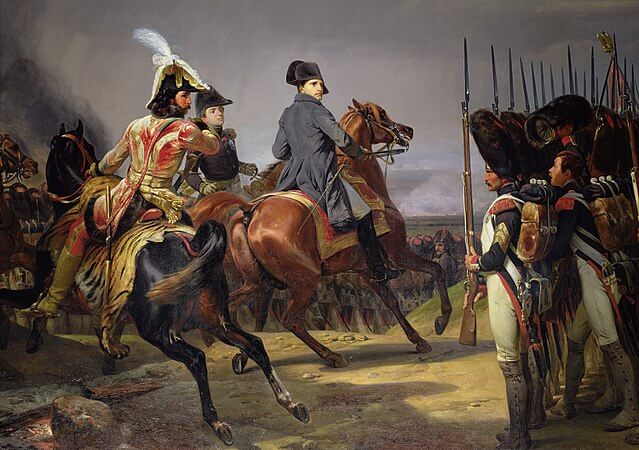
    Feature Image Credit: Battle of Jena – Wikimedia Commons

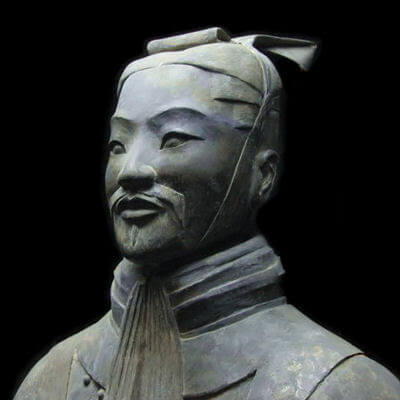
    Sun Tzu Image: Sun Tzu – The Art of War

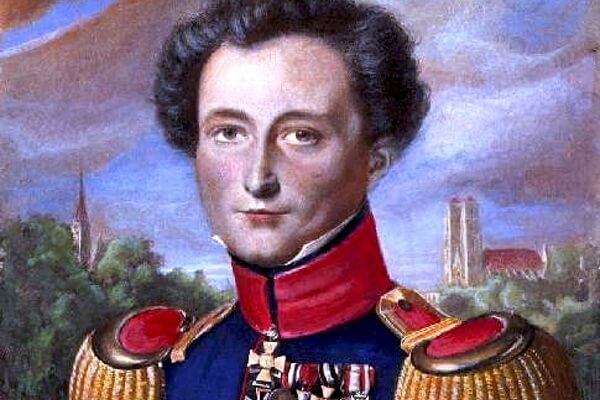
    Clausewitz Image: historynewsnetwork.org
  • China’s New Coast Guard Act: Vietnam could lead Response

    China’s New Coast Guard Act: Vietnam could lead Response

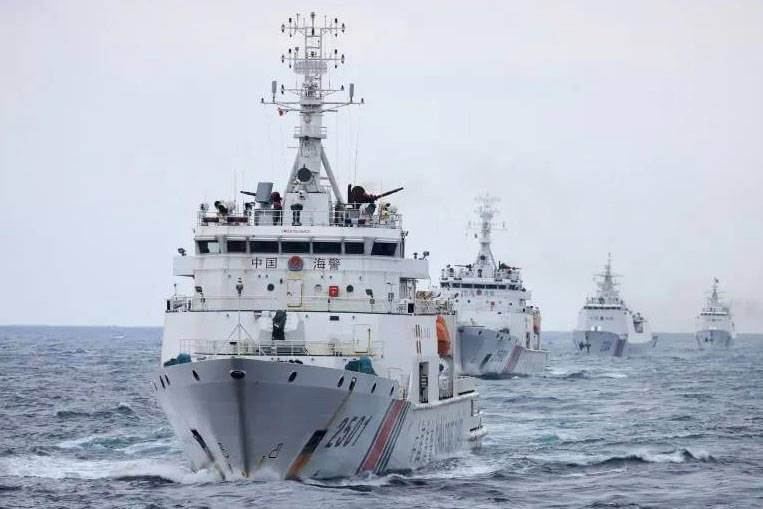
    China’s new Coast Guard Act has put the ‘cat among the pigeons’ and the South China Sea claimants Brunei, Malaysia, Philippines, Vietnam and Taiwan are visibly worried. The Act has also attracted international attention; for some, it is an act of war and for others, it violates the 1982 United Nations Convention on the Law of the Sea (UNCLOS).

    The Act came into effect last month on 01 February. In its administrative content, the Act is the culmination of at least two reorganizations of the Chinese Coast Guard (CCG) that began in 2013 involving administrative and operational control of five closely associated national maritime law enforcement agencies, also referred to as the Five Dragons , that were brought under one umbrella. In 2018, CCG became part of the People’s Armed Police Force.

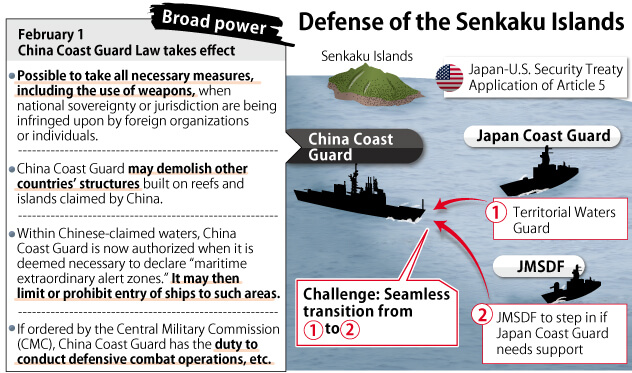
    Under the new Act, it is feared, the CCG would conduct operations just like the PLA Navy and would be directly controlled by the Chinese Communist Party Central Committee. The CCG is empowered with powerful ‘security and control measures’ and has the rights to take necessary actions to “restrain foreign military vessels and foreign vessels used for non-commercial purposes in waters under China’s jurisdiction from violating the laws or regulations of China” which is potentially in contravention to the 1982 UNCLOS.

    The Act has also attracted international attention; for some, it is an act of war and for others, it violates the 1982 United Nations Convention on the Law of the Sea (UNCLOS).

    Under Article 20, the CCG may demolish “buildings, structures, and various fixed or floating devices” built by foreigners “in the sea areas and islands under our jurisdiction”, and Article 47 authorizes the agency to “directly use weapons if there is no time for warning or if there is a risk of serious harm after giving a warning.”

    It is the latter that prompted Japan to label the Act as “blatantly threatening” and “aimed directly at the Senkakus” raisingspeculation that the Japanese Coast Guard, which hitherto could “fire weapons directly at foreign vessels in cases of self-defence and emergency escape” may now “ fire on foreign official vessels under laws by regarding vessels aiming to land on the Senkaku Islands as committing violent crimes”.

    However, it is fair to say that some of the provisions contained in the Chinese Coast Guard Act are not extraordinary. Navies, Coast Guards and law enforcement agencies of many countries are administratively controlled by the ministries of national defence and routinely operate with the national navies albeit pursue different rules of engagements. Many maritime law enforcement agencies are also known to intercept and even sink foreign fishing vessels especially when these engage in IUU fishing. These naturally attract diplomatic protests from the affected countries including China.

    Be that as it may, the ASEAN and China signed the Code for Unplanned Encounters at Sea (CUES) in the South China Sea in 2016 under which both sides are committed to “maintaining regional peace and stability, maximum safety at sea, promoting good neighbourliness and reducing risks during mutual unplanned encounters in air and at sea, and strengthening cooperation among navies”. This agreement is for the navies and draws upon the CUES (voluntary and non-binding) adopted by the Western Pacific Naval Symposium (WPNS).

    The new Chinese Coast Guard Act may have created an opportunity for ASEAN and China to conceptualize CUES that is tailored to the mandate of the Coast Guards i.e. law enforcement. The issue can also be on the agenda of the Heads of Asian Coast Guard Agency Meeting (HACGAM), a grouping of 22 Member States and multilateral organisations, which aims at cooperative and proactive efforts to address maritime issues confronting the region.

    Among the ASEAN member countries, Vietnam is well placed to lead the initiative for at least three reasons.  First, it is a claimant and some of the features in the South China Sea are under its control; second, it has a larger Coast Guard when compared to the capabilities of the other ASEAN claimants; and third, the Vietnamese Communist Party maintains close contacts with their counterparts in China and this could be a useful channel to facilitate a dialogue.

    However, it remains to be seen if Beijing would allow debate and discussion on the Coast Guard Act particularly when it also involves contested areas such as the South China Sea. For that deft diplomacy by Vietnam could be a good idea.

    Feature Image: www.japantimes.co.jp

  • Rethinking Monetary policy during a Crisis: Are Unconventional Policies here to Stay?

    Rethinking Monetary policy during a Crisis: Are Unconventional Policies here to Stay?

    With global crises such as the 2008 financial crisis and more recently the COVID-19 pandemic, monetary policy worldwide has increasingly ventured into uncharted territory. In the last 10 years alone, the world has seen 3 major crises that have affected financial markets extensively. Given the increasingly complex nature of economies and financial markets, central bankers have had to function under great uncertainty and shrinking policy space. Even as governments and policymakers worldwide leave no stone unturned in the fightback against crises, the traditional policy has often fallen short of its objectives. In light of growing limits of existing policy tools during a crisis, it has forced central banks to resort to unconventional measures such as negative interest rates (NIRP), quantitative easing, forward guidance and yield curve controls. Before the financial crisis of 2008, such unorthodox policies were relatively less commonplace. Today they are increasingly becoming key components of the monetary toolbox. However, much of these new policies is yet to be studied or tested in the real world. The long-term effect of such policies is still unclear. In this light, it becomes imperative to understand and analyse these unconventional policies to chart a course for monetary policy in the near to long term.

    What is Unconventional Monetary Policy?

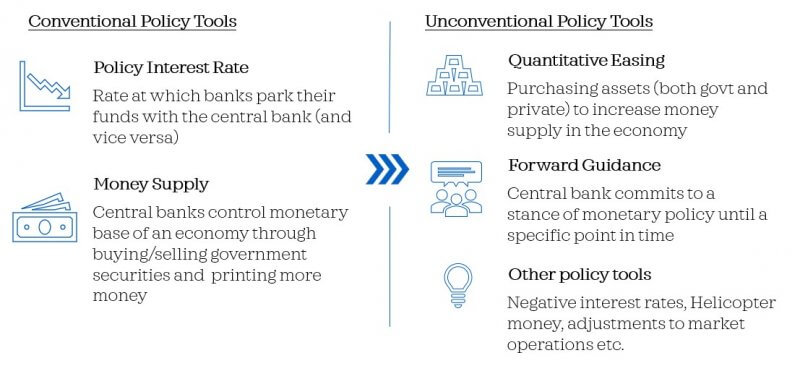
    Under normal conditions, the most powerful weapon in a central banker’s toolkit is the policy interest rate. However, as global financial markets get more interconnected and complex, central bankers have to act under great uncertainty. As crises push traditional policy tools to their limits, central bankers have had to bank on more unconventional policies than ever before. As the governor of the Swedish central bank, Stefan Ingves puts it, “Monetary policy and the way we ‘do’ monetary policy has changed. All the time, we need to stand ready to develop new tools and make new kinds of analysis – If the world changes, we need to change with it”.


    Figure 1: Policy Tools Comparison

    Typically, interest rates and money supply are the two run-of-the-mill tools that central bankers resort to. Extreme versions of these policies, such as negative interest rates and quantitative easing, are termed unconventional monetary policies since they deviate from the traditional policy measures of a central bank. According to RBI’s Deepak Mohanty, “When central banks look beyond their traditional instrument of policy interest rate, the monetary policy takes an unconventional character”. Essentially, an Unconventional monetary policy is a set of measures taken by a central bank to bring an end to an exceptional economic situation. Central banks use these measures only in extraordinary situations when conventional monetary policy instruments cannot achieve the desired effect [1].

     Quantitative Easing

     Quantitative easing (QE) is a form of extreme and targeted control of the money supply in the economy. At its core, QE seeks to increase the money supply in the economy through the purchase of securities and bonds in the open market. When a central bank uses QE, it purchases large quantities of assets, such as government bonds, to lower borrowing costs, boost spending, support economic growth, and ultimately increase inflation.

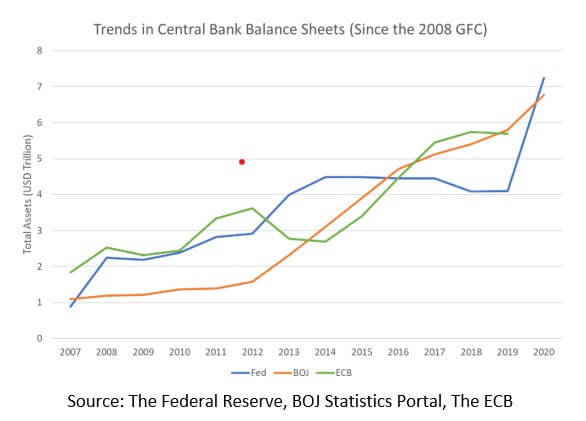
    Before the 2008 financial crisis, only one major economy, Japan, had implemented a significant Quantitative Easing program in the 1990s. Today, however, almost all major economies have some sort of QE or an asset purchase program. According to a report by Fitch Ratings, global QE asset purchases are set to hit $6 trillion in 2020 alone, which is more than half the cumulative global QE total seen over 2009 to 2018 [2]. As seen in the figure below, the balance sheets of major central banks have been expanding significantly since the financial crisis.


    Figure 2

    Quantitative Easing has been the cornerstone of the Fed’s crisis response since 2008. In the three rounds of QE post the 2008 crisis, the Fed balance sheets increased from $870 billion in August 2007 to $4.5 trillion in early 2015. Earlier this year, the Fed purchased a record $1.4 trillion worth of US treasuries in just six weeks in response to the COVID-19 crisis, speaking volumes of the role played by the unconventional policy during a period of crisis. Also, it’s not just the advanced economies that are resorting to extensive QE programs. Nearly 13 emerging market economies, including India, announced some form of a QE program following the crisis. In India, the RBI injected durable liquidity of ₹1.1 lakh crore through the purchase of securities under open market operations (OMOs) [3].

    Zero or Negative Interest Rates

    Quantitative easing was just the beginning of the long list of tricks central bankers pulled out of their sleeves. Closely accompanying QE policies were accommodative monetary regimes of ultra-low interest rates. In 2020 alone, interest rates have been slashed across the globe on 37 separate occasions [4]. Interest rates have been falling across the globe even before the crisis, and the current pandemic has only sped up this fall.

    While many economies have reached the theoretical zero lower-bound of rates, some have even dared to venture below the surface into negative territory. As of today, 5 economies in the world follow a Negative Interest Rate Policy. While the very concept of negative rates may seem baffling, it’s even more shocking to note that over $15 trillion worth of bonds is traded at negative yields globally [5]. This means that over 30% of the world’s investment-grade securities are traded in a manner such that lenders pay borrowers to use their funds. Central banks envisage that negative policy rates would induce increased spending and stimulate the economy in two ways – first, by forcing banks to hold lesser deposits with the central bank and channelling these funds into increased lending to households and businesses. Second, a cut in the policy rate would also lead to lower rates in the overall lending market, thus encouraging borrowing and spending.

    Forward Guidance

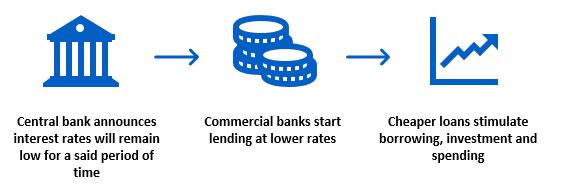
    Forward guidance refers to official communication from a central bank on the future course of monetary policy in the economy for a specific period. It is more of a monetary policy stance than a monetary policy tool. The key idea here is to keep markets informed and eliminate any form of uncertainty, which becomes especially imperative during times of crisis.


    Figure 3

    Gone are the days when central bank rate cuts and other announcements of secrets that were sprung upon the markets when they least expect it. With forward guidance, central banks provide communication well in advance about the likely future course of monetary policy in the economy, and this boosts the confidence of investors, consumers and companies. The US’s Fed was one of the major central banks to adopt this policy during the COVID crisis – providing clear forward guidance in June showing that it will probably keep rates low until at least 2022. The policy has been the cornerstone of the Eurozone’s crisis response since the sovereign debt crisis. In July 2012, at the height of the crisis, ECB President Mario Draghi adopted a form of Forward Guidance, stating that the ECB will do “whatever it takes” to save the euro. It is believed that these three words single-handedly turned around the eurozone crisis.

    Are Unconventional Policies Here to Stay?

    Apart from QE, NIRP and FG, there are several other unconventional policies in practice world over – Australia is experimenting with yield curve controls, the Fed is attempting to influence markets with forward guidance while Japan is considering printing helicopter money. There are so many extreme measures being adopted across the globe that policy commentators are now referring to these nations as swimming in an alphabet soup of unconventional policies (QE, NIRP, ZIRP, U-FX, NDR etc.). Post the 2008 crisis, when such policies were first being debated upon and economies were just dipping their toes in the ocean of unconventional policy, many warned of dire consequences such as hyperinflation and collapsing currencies. Luckily for central bankers, none of these predicaments came true. Most advanced economies are still struggling to combat deflation and extremely low levels of inflation despite adopting several unconventional policies. In this scenario, fears of hyperinflation seem to be unwarranted. While there have been studies documenting the potentially harmful effects of unconventional policies, economies still seem to stick with these policies. On one hand, central bankers have no better alternative tools, and second, the positive effects seem to fairly outweigh the negative externalities.

    Thus, unconventional policy tools are going to be around for the near future. As economies and global markets grow more complex, so will the policies and policy tools regulating them. Similar to how drastically monetary policy has changed within just 10 years after the financial crisis, it will keep evolving and adapting with time by developing new tools and analyses. Monetary toolbox a decade or two later will look radically different from what it is now. The important question then becomes not whether unconventional policies are here to stay, but how nations can make the most effective use of them.

    The new monetary tools, including QE and forward guidance, should become permanent parts of the monetary policy toolbox – Ben Bernanke, Ex-Fed Chair

    Need for Monetary Policy and Fiscal Policy to Work in Tandem

    While central bankers have no stone unturned in the fightback against crises, the success of unconventional policies has been fairly moderate. In Japan, for example, the NIRP has failed to stimulate spending and investment in the economy. Rather, negative rates have only forced a massive outflow of funds from the country in favour of foreign assets. In the Eurozone as well, the policy has achieved no significant impact, with banks continuing to pay billions of euros as negative fees to the ECB. While QE has fared slightly better than the rest as a policy tool, the experiences of various economies with it have been mixed.

    The experiences of several economies have shown that while unconventional policies may work better than conventional ones during a crisis, there are limits to their performance as well. One of the key failures of unconventional policies (and conventional policies) has been the inability to stimulate healthy inflation in recessionary economies. Policies such as QE and NIRP, despite increasing the monetary base of economies, have failed to spur spending and investments. As we have seen in Japan, a standalone monetary policy, no matter how accommodative, is insufficient to pull economies out of downturns. In this light, it is imperative that monetary policy, conventional or unconventional, be accompanied by temporary fiscal stimulus during recessions. Public investment in infrastructure could give economies a much-needed boost in the absence of a private appetite for investments. Infrastructure is an enormous economic multiplier, and governments would do well to work in tandem with monetary regimes to provide the initial spur in economic activity. Several studies have shown that public investment during crises can generate employment and increase output. Originally theorised by British economist J.M. Keynes, the ‘Keynesian Multiplier’ of government spending could be the magic potion that makes unconventional policies go from good to great.

    How does the Keynesian Multiplier Work?

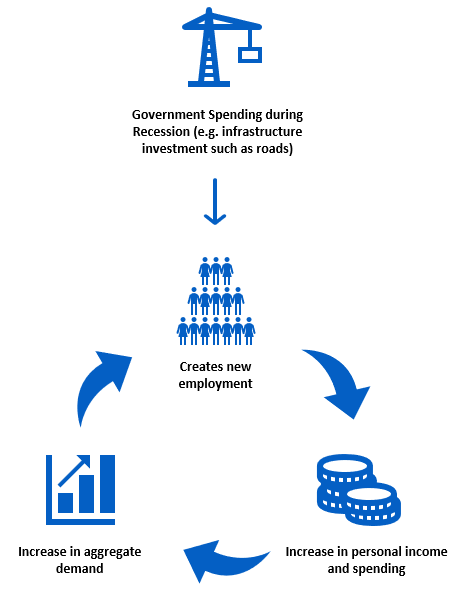
    During times of recession or economic downturn, government spending puts into action the Keynesian Multiplier. According to the Keynesian Multiplier, theorised by prominent economists such as Keynes, Kahn and Hicks, short term government spending boosts the economy by more than what is spent. Keynes was of the view that during a recession with a high level of unemployment, Governments should raise public spending to sustain effective demand and profits.


    Figure 4

    As seen from the figure above, an increase in government spending on large projects such as road building will lead to the creation of alternative employment. The increase in personal incomes and consequently aggregate demand in the economy will further stimulate economic activity and will create more employment than what was originally created by government spending. In effect, every unit of money spent by the government during a downturn increases GDP by a greater proportion than what was spent.

    Conclusion

    While unconventional policies are here to stay, they are a step in the dark. Economies are still experimenting and attempting to figure out the most effective use of these policies. Considering the fairly moderate performance of standalone unconventional policies, there is an established need for complementary fiscal policy to accompany monetary policy. An increase in infrastructure investment coupled with an accommodative monetary regime could help stimulate stagnant demand during a crisis. In developing economies, it can also help address structural bottlenecks subduing growth. These investments from the government, however, must be productive and efficient. Otherwise, they just end up adding on to already high levels of debt, especially during periods of crisis when governments have to borrow extensively for emergency requirements. It is also imperative that this investment is temporary and not permanent. Long-term government debt is unsustainable and can crowd out much-needed private investment.


    References


    [1] Central Charts. (2019). Definition of Unconventional Monetary Policy. Retrieved from

    https://www.centralcharts.com/en/gm/1-learn/9-economics/35-central-bank/976-definition-unconventional-monetary-policy

    [2] Fitch Ratings. (2020). Global QE Asset Purchases to Reach USD6 Trillion in 2020. Retrieved from

    https://www.fitchratings.com/research/sovereigns/global-qe-asset-purchases-to-reach-usd6-trillion-in-2020-24-04-2020

    [3] Reserve Bank of India. (2020). Policy Environment. Retrieved from

    https://www.rbi.org.in/scripts/PublicationsView.aspx?id=20269

    [4] Desjardins, J. (2020, March 17). The Downward Spiral in Interest Rates. Visual Capitalist.

    https://www.visualcapitalist.com/chart-the-downward-spiral-in-interest-rates/#:~:text=Global%20Rate%20Slashing,light%20of%20current%20oil%20prices.

    [5] Mullen, C. (2020, November 6). World’s Negative-Yield Debt Pile Has Just Hit a New Record. Bloomberg Quint.

    https://www.bloombergquint.com/onweb/negative-yielding-debt-hits-record-17-trillion-on-bond-rally#:~:text=The%20market%20value%20of%20the,it%20reached%20in%20August%202019.


    Image Credit: The Conversation

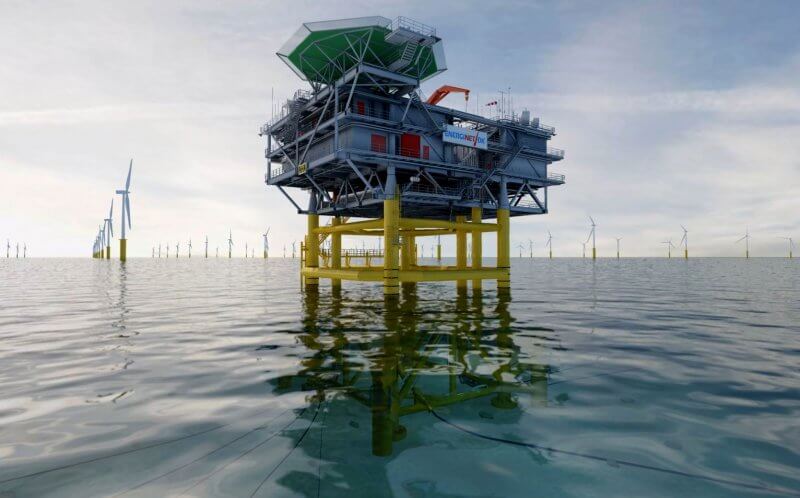
  • Analysing Denmark’s Offshore Wind Energy Sector: Lessons for India

    Analysing Denmark’s Offshore Wind Energy Sector: Lessons for India

    Globally, Europe has the highest capacity of power generated from offshore wind energy. Amongst the European countries, Denmark, the UK and Germany have been pioneers and are currently leading as the largest power producers from offshore wind energy. Danish assistance has been in high demand to help countries shorten their implementation time for offshore wind turbine projects. In 2019, India entered into a bilateral agreement with Denmark to develop an offshore wind market and related technical capabilities. According to a document published by the Danish government, their authorities have specialised technical knowledge that can help Indian authorities establish framework conditions for the rollout of offshore wind power.

    Denmark’s Offshore Wind Energy Sector  

    The Danish Government has set a target of reducing greenhouse gas emissions by 70%, as compared to 1990 levels, by 2030 and having 100% of Danish energy supplied through renewable sources by 2050, apart from achieving net-zero emissions by the same time. The scarcity of proper onshore sites and the abundance of shallow waters with wind resources drove its move to offshore wind, in the early 1990s,. In Denmark, there is a strong symbiosis between energy and industrial policy because of many leading offshore wind energy companies having Danish roots such as DONG, Vestas, Bladt, Siemens Wind, etc. India must achieve such a symbiosis in its offshore wind policies so that the industry can be successful in the long term.

    Denmark’s ambitious targets coupled with their evolving policies in terms of bureaucratic procedures, environmental safety, and finance, among others, have driven the growth of the offshore wind energy sector since the 90s. This analysis looks at each of these segments.

    Consent Procedures:         The Danish Energy Agency (DEA) has been a single point of access to all offshore wind energy companies when it comes to issues related to permits. Meaning, the DEA grants all permits which include permits from other appropriate government authorities such as the Danish Nature Agency, Ministry of Defence, and the Danish Maritime Authority. This is the one-stop-shop and has been adopted not only in Denmark but in many other European countries. Such a method ensures rapid and un-bureaucratic application processing and ease of doing business. This also avoids a lot of confusion.

    Grid Connectivity:             The financing of the grid connection for offshore wind farms depends on how it is established:

    • Enterprises can follow the Government’s action plan for offshore wind development wherein the DEA will invite bids to tender for pre-specified sites or
    • Enterprises can follow the ‘open-door principle’ wherein independent applications can be made for any site and upon complete assessment by the DEA, it will invite bids to tender for the site, given that the results of the assessment are positive.

    In the first case, the grid operator will finance the connection, including step-up transformers. Such socialisation of grid costs is an attractive feature for project developers in Denmark.

    However, in the second case, the responsibility falls on the developer. We may also expect costs of any necessary grid reinforcement to be borne by the developer. The three private offshore wind farms established in Denmark, following the ‘open-door principle’ – Samsø, Rønland, and Middelgrunden – have had no notable problems. These projects are, however, within 3km of the coast, which would imply that the grid connection costs were not exorbitant.

    Environmental Assessment:          In Denmark, an extensive environmental assessment takes place before the construction of an offshore wind farm. The DEA provides companies or enterprises a license to conduct preliminary studies, including environmental (Environmental Impact Assessment) and technical (ground investigation) studies, either directly after a tender (first process) or following the receipt of the first satisfactory planning documentation (second process).

    For instance, in the case of the Anholt farm, one of the largest offshore wind farms with a capacity of 400 MW, the project team performed an extensive environmental assessment that included the impact on marine animals in the area and their habitats, noise calculations, air emissions, and the potential risk to ship traffic. Using data from other wind farm projects like Denmark’s Nysted Wind Farm, and undergoing their analysis, the Anholt project team projected only minor, insignificant affects.

    Financial Incentives:          In Denmark, they support offshore wind farms through a feed-in tariff system, which is set through a competitive auction process. Power off-take in Denmark is largely managed through the DEA. There is no renewable purchase obligation in place in Denmark, but electrical power from renewable energy has priority access to the grid. In some cases, the owner may choose to sell the electrical power to utilities or other power suppliers through a Power Purchase Agreement (PPA). If the power price drops to zero or negative, there is an oversupply of electricity – then renewable projects do not receive any support. Hence this motivates generators to curtail output and help supply-side grid management.

    De-risking the development process:          The Danish Government undertakes geotechnical studies, wind resource assessment, and environmental surveys before a site being leased. The lease areas are then auctioned off to the lowest bidder. This hugely benefits developers as the site is effectively de-risked, leading to a lower tender price. If this were not the case, the developers would have to include risk provisions and contingency, owing to uncertainty regarding the ground conditions. Further, de-risking a site would increase willingness to plan and bid for the sites leased.

    Simply put, the Danish offshore wind energy policies developed by the DEA and the Government have evolved over the years to tackle situations as they occur. This has led to sustained growth in the sector and has succeeded in powering close to 50% of the country’s electricity demand. Besides successfully developing its sector, it has been an outstanding example to many countries in Europe such as the UK and Germany. The UK has adopted the one-stop-shop model to ease procedural difficulties. Germany has adopted the open-door procedure of establishing offshore wind farms.

    India’s Offshore Wind Energy Sector

    The offshore wind energy sector in India is in its nascent stage. Its 2015 National Offshore Wind Energy Policy shows that the Ministry of New and Renewable Energy (MNRE) will act as the nodal Ministry for the development of Offshore Wind Energy in India that will monitor offshore wind energy development in the country. It will also work closely with other government entities for the use of maritime space within the Exclusive Economic Zone (EEZ).

    The Ministry has set a short-term target of 5.0 GW of offshore wind installations by 2022 and a long-term target of 30 GW by 2030 which, according to government documents, is expected to give the confidence to project developers in the Indian market. Over 95% of commercially exploitable wind resources are concentrated in seven states – Andhra Pradesh, Gujarat, Karnataka, Madhya Pradesh, Maharashtra, Rajasthan, and Tamil Nadu. But the land resources required for onshore wind projects are gradually becoming a major constraint. This could very well cause an increase in the market-determined tariffs of onshore wind energy in the future. Offshore wind power, however, offers a viable alternative in such a scenario. The Indian government, like Denmark, has to make policies to the best of their effort that will bring confidence to developers and de-risk the development of the sector to further encourage developers.

    Although India has a huge potential in the renewable energy sector, the developers’ issues remain unresolved. For instance, Gujarat and Tamil Nadu have most of the high potential sites off their coasts to develop offshore wind energy. But a major concern for offshore wind developers would be the problem of grid integration. The two states already have a high degree of solar and wind renewables integrated into their power grid. By adding on power generated through offshore wind energy, they will face a significant hurdle with the evacuation and integration of this additional power. Without proper renewable energy storage systems, there is also the added burden to maintain an equilibrium between the supply and demand of power generated through the variable sources as otherwise, there will be a great deal of wastage and an unnecessary surge in the prices.

    Adding on to the problems faced by developers, benefits such as accelerated depreciation were recently withdrawn and as a result, investments have slowed down. Thus, project developers not only want accelerated depreciation to be reintroduced, but they also want assurance from the government that such fiscal benefits will continue for the long-term. If these fiscal benefits are reintroduced, developers will feel more optimistic about their prospects in the sector. Further, it would also encourage small developers to invest more in the sector.

    Another area that is causing considerable angst for the wind project developers in India is the delay in realising the payments due to them from the state electricity boards. These delays affect the cash flows, thereby threatening the viability of many of these projects. Such experiences will make offshore project developers cautious in venturing into making large investments into the sector.

    In terms of policies that Indian policymakers can adopt from Denmark are the one-stop-shop and an open-door procedure of establishing offshore wind farms. Having the MNRE as a single point of access would make the bidding and tendering process more efficient. This is because a developer has to coordinate with various departments such as the MNRE, the ministry of defence, the ministry of external affairs, nature and wildlife, etc before they can start producing in an offshore wind farm. It would also benefit to have an open-door procedure, but only in the long term. Initially, though, the government should identify possible sites and work on de-risking the development process to encourage more participation in the bidding process.

    Conclusion

    In line with its Paris Agreement commitments, India is working to ensure that by 2030, 40% of its power generation capacity will come from non-fossil fuel sources. Currently, renewable energy makes up 36% of India’s power capacity through mainly small and large hydro, onshore wind, and solar energy. Producing power through offshore wind energy will be a welcome addition to the existing sources.

    During the RE-Invest 2020 conference, the MNRE Joint Secretary announced that the Indian government is looking into setting up structures for power purchase agreements and offshore wind auctions. Thus, to successfully implement its plans, it will require further offshore wind resource data and analysis to identify viable project sites and, revive industry demand for this market.

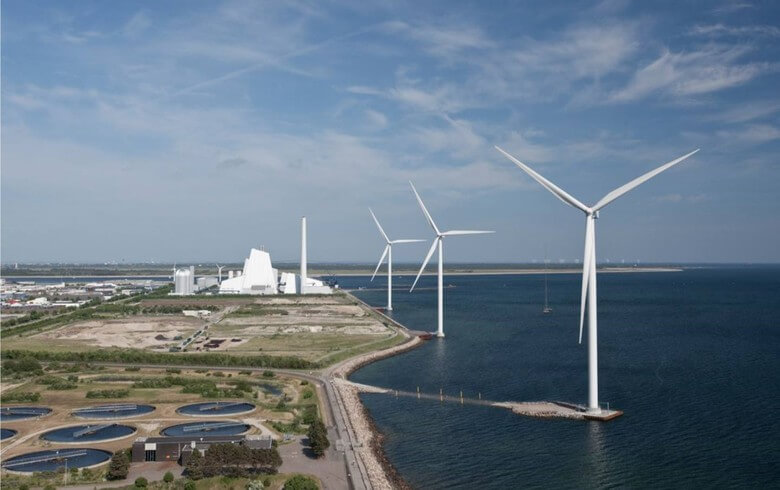
    Feature Image Credit: www.renewablesnow.com

    Image: Anholt Offshore Wind Farm


  • To Become Atmanirbhar, Bharat Needs Strong R&D

    To Become Atmanirbhar, Bharat Needs Strong R&D

    India has gone full circle from Gandhi’s days of Swadeshi to Nehru’s vision of self-reliant India to New Economic Policies of indiscriminate opening of the economy to Atmanirbhar Bharat. In between lip service was paid to Swadeshi in 1998 but the government continue with the indiscriminate opening up of the economy. Even agriculture was not left untouched with the opening up of 1400 commodities after the Seattle round of negotiations in 1999.

    What is Atmanirbharta?

    What do we understand by atmanirbhar – is it at the narrow level of producing most things that we need ourselves or at the wider philosophical level? If the latter, it implies independence of thought and development of socially relevant knowledge. It could lead to an alternate vision of development and prosperity for the nation.

    In an open economy people will then buy the foreign produced cheaper goods. So, the more important aspect of atmanirbharta is the philosophical aspect.

    The idea of producing most things ourselves runs into a contradiction in a globalizing world which is premised on marketization. Most things are being produced cheaper and better somewhere else, including our cultural symbols such as gulal, diyas and ganesh statue. In an open economy people will then buy the foreign produced cheaper goods. So, the more important aspect of atmanirbharta is the philosophical aspect.

    Opening up the Economy

    In 1991, with the New Economic Policies we gave up the idea of ourselves producing most things that we need. Our global trade increased dramatically with the percentage of export plus import of goods and services in GDP rising from around 17% in 1991 to about 55.8% by 2013. In 2019 it is down to about 40%.

    With the evolution of Washington Consensus in the 1980s, based on the idea of marketization, the world started to integrate in the 1990s with all countries showing a sharp rise in trade to GDP ratio. China captured a large share of the world markets and built a huge trade surplus. Its foreign exchange reserves rose to over $3.5 trillion. This gave it enormous clout globally not only with developing countries but also with the developed countries.

    The idea of atmanirbharta or self-reliance underwent a change. It became a matter of global competition to gain market share globally. One imported more to export more. Growth was supposed to depend on this. South East Asia and China were given as examples of success of such openness and rapid improvement in the living standard of the population. China post-Mao successfully adopted such a strategy. It was a large economy so it could not even be said that India cannot do what Singapore can do.

    Globalization is all about development of technology and India has lagged behind in that.

    Lessons from China

    What are the lessons India can learn from China’s achievements in the last thirty years? Apart from the fact that it is an authoritarian state with a strong sense of nationalism, its advances in research are stupendous.

    China has invested huge sums in building a strong infrastructure and research base in Universities, Institutions and Industry. It has one of the highest investment and savings rate in the world at 44 per cent in 2019. India’s comparative figure for 2019 is around 30%. It has developed the 5G technology faster than others and is willing to provide it cheaper than its competitors. This is also the case with many other lines of production such as, electronics, pharmaceuticals, automobiles and toys. It has moved rapidly in various fields such as development of artificial intelligence and applications of internet for commerce and financial sectors.

    Globalization is all about development of technology and India has lagged behind in that.

    China has had the long term vision to develop this rapidly by investing heavily in Research and Development. After getting technology from foreign companies, it has advanced the same by mastering it. Unfortunately, India has not done so and has repeatedly imported the next level of technology.

    Need for strong R&D

    India’s investment in R&D has been minimal. The private sector has been investing little in technology development. And, the public sector has been hamstrung in technology development by lack of autonomy, bureaucratization and corruption.

    Global competitiveness requires rapid development of technology. It requires massive investment in both absorption and development of technology. Instead, India’s investment in R&D has been minimal. The private sector has been investing little in technology development. And, the public sector has been hamstrung in technology development by lack of autonomy, bureaucratization and corruption.

    Research and Development require autonomy for researchers and a long term vision. Of course resources are also required but autonomy and vision are crucial and these have been weak in India. The same Indian researchers are able to do well in foreign lands but when in India they are not able to deliver. Our research establishment are rather feudal in approach and work within rigid hierarchies so that often talent gets suppressed.

    a culture of promoting independent and critical thinking is largely missing and that reacts back on research and generation of new ideas.

    Universities are the places where autonomy is greater and a long term vision can flourish away from the immediate profit motive. But unfortunately most of our universities are also bureaucratized and do not give autonomy to the academics. The authorities largely with bureaucratized and feudal mindset see independent thinking as a threat to themselves and, therefore, put up road blocks in the path of the independent thinkers thereby frustrating them and making their functioning difficult. Often the independent minded are seen as trouble makers and a challenge to the domination of the authorities. This is true not only in social sciences but also in the case of sciences in most universities. Thus, a culture of promoting independent and critical thinking is largely missing and that reacts back on research and generation of new ideas.

    Imperatives of Strengthening R&D

    Atmanirbharta in the present day world does not imply closing the economy but having the strength to face the challenge from other nations. This has to be based on a long term vision and cannot be achieved in the short run or by ad hoc measures.

    It requires high quality education right from the school stage. Thus, the education budget has to be expanded and teaching paid much higher attention than given at present. The status of teachers has to be enhanced so that talented people come in to academia.

    The world has been globalizing for thousands of years with trade and exchange of knowledge across nations and across continents. But earlier it was a slow two way process. Colonization turned into a one way process with western knowledge and thought establishing its hegemony globally and more so in India. That killed the internal dynamism of Indian society. It reinforced feudalism in India and decimated the quest for socially relevant knowledge generation.

    There has to be a continuum in knowledge generation but with an Indian perspective. India has to have the self-confidence that it can move ahead without denying the last few hundred years. Denial is only a sign of weakness.

    As Gandhi suggested, there is need for Indian modernity. Achieving that is crucial. Can it be based on denying what has happened over the last 250 years and going to what existed prior to that? Such a gap would undermine our understanding of social developments in India. That would be a recipe for repeating our mistakes. There has to be a continuum in knowledge generation but with an Indian perspective. India has to have the self-confidence that it can move ahead without denying the last few hundred years. Denial is only a sign of weakness.

    Denial would prevent us from understanding the nature of globalization we are undergoing and therefore we would not be able to work out any correctives that are needed. It would lead to much confusion in society. For instance, we would not be able to understand why consumerism is sweeping the world, including the poor in India or why our research lacks dynamism. In brief, Atmanirbharta requires India to move with self-confidence and not be in denial.


  • What Putin nemesis Alexei Navalny is, and what he is not

    What Putin nemesis Alexei Navalny is, and what he is not

    Anatol Lieven highlights America’s blundering tendency to view world personalities in typically American lens, ignoring the realities of them being citizens of their countries and focusing on their national interests . He uses the examples of Russia’s Navalny and Myanmar’s Aung San Suu Kyi to make his point emphatically. His analysis is relevant to other countries as well. 

    This article was published earlier in Responsible Statecraft

    It is very human and natural to admire courage and resolution — these are qualities that Russian opposition leader Alexei Navalny possesses to a quite remarkable degree. It is also natural to sympathize with suffering — and Navalny has suffered and very nearly died for his beliefs and goals. And of course it is natural to feel disgust with the increasingly criminal behavior of the Putin administration in Russia.

    However, admiration, sympathy and disgust are emotions, not arguments or analysis, and should be employed with great caution in the formulation of state policy.

    In his confirmation hearings, now-Secretary of State Anthony Blinken pledged Biden administration support for Navalny and called him “a voice for millions and millions of Russians.” Statements by the U.S. embassy in Moscow on the Navalny movement have come very close to calling for the end of the present Russian government.

    Recent weeks have seen a tremendous outpouring of American sympathy for Navalny and his movement against the Putin administration. In his confirmation hearings, now-Secretary of State Anthony Blinken pledged Biden administration support for Navalny and called him “a voice for millions and millions of Russians.” Statements by the U.S. embassy in Moscow on the Navalny movement have come very close to calling for the end of the present Russian government. The semi-official American Radio Free Europe/Radio Liberty is openly and passionately supportive of Navalny’s movement. Richard Haas, President of the Council on Foreign Relations, proposed that Navalny be awarded the Nobel Peace Prize.

    Such overt U.S. support is not wise. In the first place, it may actually hurt the cause of progressive reform in Russia. The Russian government, like those of Iran and China, has relentlessly propagated the idea that the opposition is being backed if not bankrolled by Washington in order to weaken their countries; and indeed, Russian liberals have done themselves terrible damage by allowing themselves to be cast as representatives of the West, not of the Russian people.

    The second, very familiar problem is the hypocrisy involved. In the latest volume of President Obama’s memoirs, “A Promised Land,” he describes how Hillary Clinton — who relentlessly presented herself in public as an advocate of spreading democracy — argued that Washington should support Egyptian President Hosni Mubarak’s brutal 2011 crackdown on Arab Spring opposition protests on the grounds that he was a U.S. ally and his fall would lead to chaos and Islamist revolution. In her early public statements, as well, she warned against hastening Mubarak’s exit.

    In proposing Navalny for the Nobel Peace Prize, Haas seems to have forgotten the last time the honor was given to an opposition politician.

    An even greater problem presents itself when one looks at the actual politics of some of the opposition figures who draw such waves of American and Western enthusiasm. In proposing Navalny for the Nobel Peace Prize, Haas seems to have forgotten the last time the honor was given to an opposition politician. The award to Aung San Suu Kyi in 1991 was supposed to be for “her non-violent struggle for democracy and human rights… one of the most extraordinary examples of civil courage in Asia in recent decades.”

    After Suu Kyi joined the government in Myanmar she’s been damned in the West for her failure to prevent or condemn the savage state persecution of Myanmar’s Rohingya minority, and most of her human rights awards (though not the Nobel prize itself) have been revoked.

    After Suu Kyi joined the government in Myanmar she’s been damned in the West for her failure to prevent or condemn the savage state persecution of Myanmar’s Rohingya minority, and most of her human rights awards (though not the Nobel prize itself) have been revoked. What her previous Western admirers are not doing — what they almost never do — is to ask themselves why they so completely misunderstood her before.

    But she is a Burmese politician, not a Western democratic leader, and in building her up as a liberal heroine, the Western media and activists willfully ignored not just the political realities of Myanmar, but her own Burmese nationalist antecedents.  

    (Just in the last 48 hours, Suu Kyi has been detained in an apparent military takeover of her democratically elected government and Biden is predictably mulling over his options for reviewing sanctions and taking “appropriate action.”)

    Like Navalny, Suu Kyi is indeed an exceptionally brave and determined human being and in her way a fine leader; just as Navalny might make a fine Russian president. But she is a Burmese politician, not a Western democratic leader, and in building her up as a liberal heroine, the Western media and activists willfully ignored not just the political realities of Myanmar, but her own Burmese nationalist antecedents.

    There are two factors at work here. The first is a basic human one. Courage, like hard work and self-sacrifice, is a quality that it is humanly impossible not to admire, but the possession of it says absolutely nothing at all about the goals to which they are put. All the leaders of the ghastly totalitarian revolutions of the 20th century were exceptionally brave and determined men.

    The second factor relates to some enduring and seemingly incorrigible flaws in most Western reporting and analysis. One of them is the tendency to personalize issues, whereby “Putin” is used as a synonym for the whole Russian state, and “Navalny” is now being presented as a synonym for the entire, enormously disparate Russian opposition. The merest glance at the groups represented at the pro-Navalny demonstrations reveals that together with genuine liberal democrats, there are also numerous Communists and extreme nationalists whose anti-Western positions are much more extreme and reckless than those of Putin himself. As Aleksandr Baunov of the Carnegie Moscow Centre has written:

    Saturday’s protests were undeniably anti-regime, anti-elite and anti-corruption but not necessarily liberal, pro-Western and pro-democracy. It’s not surprising that such protests frighten not only the authorities, but also successful members of society: even those who don’t consider themselves supporters of the regime.

    In their blind demonization of Putin, and consequent sanctification of Navalny, Western commentators seem to be implicitly assuming that should Navalny win power (which he almost certainly will not), Russia’s foreign policy would change radically in a pro-Western direction. This is nonsense. Navalny’s supporters are backing him out of (entirely justified) fury at Russian state corruption, lawlessness, and economic failure, not to change foreign policy. Every independent opinion poll has suggested that Putin’s foreign and security policies have enjoyed overwhelming public support; and above all, there is very little in Navalny’s own record to suggest that he would change them.

    As a 2013 essay by Robert Coalson in The Atlantic documented, Navalny supported the Russian war with Georgia in 2008. He has expressed strongly ethno-nationalist attitudes towards the Caucasian minorities in Russia, and previously made opposition to illegal immigration a key part of his platform. In October 2014 he suggested to a reporter that if he became president he would not return Crimea, which was annexed by Russia earlier that year, to Ukraine (though he also said in that same interview that, “It’s not in the interests of Russians to seize neighboring republics, it’s in their interests to fight corruption, alcoholism and so on — to solve internal problems.”

    Rather like Donald Trump concerning American interventionism, Navalny has strongly condemned Russian military intervention in the Middle East on the grounds of cost and irrelevance to real Russian interests; but (as with Trump), that does not necessarily say much about what he would actually do if in power. Apart from anything else, Russia, like the U.S., has a foreign and security establishment “Blob” with firmly established and deeply held collective views on Russia’s vital interests.

    It is to remind Americans that he is a Russian politician, not an American one; that he will respond to Russian realities, not Washington fantasies; and that in the end, U.S. administrations will have to deal with whatever government is in power in Moscow.

    To recall this is not to condemn Navalny. It is to remind Americans that he is a Russian politician, not an American one; that he will respond to Russian realities, not Washington fantasies; and that in the end, U.S. administrations will have to deal with whatever government is in power in Moscow. Russian governments will defend Russian interests, along lines that are mostly quite predictable if one knows Russian history and culture. The sooner we realize this, and stop setting up plaster saints in the hope that they will perform miracles, the better for U.S. foreign policy overall.


    Feature Image – Protesters gather near a monument of Russian playwright Alexander Griboyedov during a protest against the jailing of opposition leader Alexei Navalny in St. Petersburg, Russia, Sunday, Jan. 31, 2021. www.arabnews.com
    Image – 
    Navalny and Putin: www.hilltimes.com
    Image – Aung San Suu Kyi: www.mmtimes.com