Category: HomepageSlider

  • The Modernisaton of the PLA during a Time of Crises and Plague

    The Modernisaton of the PLA during a Time of Crises and Plague

    Since the days of Sun-Tzu, China’s military leaders have always been aware that to defeat an enemy at the nation’s gates, you have to maintain a communal armed force: that is, a military force that is an integral part of ordinary peoples’ lives.   However, since the time of the Han dynasty, the military power of the Chinese people has always been intimately associated with the idea of living harmoniously within the realm of Heaven (t’iem). The people have also needed to be willing to accept the authority of the “Son of Heaven” (t’iem-tzu), which means ultimately a supreme personality that will guide the Chinese masses in times of peace and war. In the early twenty-first century, the concept of “Heaven” in the People’s Republic of China is the embodied in the Communist Party of China (CPC) and its current economic power and military influence is well beyond the shores of mainland China and even of east Asia; it can be felt, for example, in South America and in Africa.  Its polar star, Xi Jinping, has emerged as an undisputed, authoritative leader, just as Mao Zedong was – who pioneered China’s modern military theory.  What Xi has done is to take Mao’s theory of warfare and transformed it into a modern conception of a military machine that is both Chinese in concept and Westernized in its pragmatism, military readiness and its deployment.

    From my perspective as a military historian, I would state that the Communist Party of China with its Central Military Commission is a sophisticated parallel to the command and control of the People’s Liberation Army (PLA), which is under the operational control of the Central Military Commission of the CCP Central Committee—the Party’s CMC. The overall Chinese leadership have been aware since the Persian Gulf War of the prowess of the American armed forces against the Iraqi army. It understood then, during that momentous time in history, the urgent need to modernize the Chinese armed forces – much as the Stalin-era Soviet military and political leadership were both impressed with and fearful of the modernization of the emergent Nazi armed forces, which included the army, air force and navy echelons. It can be said unequivocally that Stalin saw the need to prepare for a major regional war with fascist Germany, just as the Chinese leadership is aware that eventually, it will have to wage war against the United States. Unless their American adversary implodes from within, leaving disparate fiefdoms across its landscape, or a new military leadership develops within the United States due to a sophisticated insurrection or military coup and a Second American Civil War ensues, there remains a danger of war between the two nation-states. An America with a fascist government and military hierarchy whose ultimate political desire is to destroy socialist China, despite the possibility of a thermo-nuclear war, is still a possibility.

    The Chinese leadership were undoubtedly grim in their early analysis of what awaited them: if they were not prepared to solidify their armed forces with the capability to withstand violent dissent within their borders as well as to fight a war beyond the Great Wall of China, then their demise or ruin was inevitable. The Chinese leadership, I am sure, has looked closely at the decisions made prior to World War II by Stalin and the Soviet political leadership.  Although eager to strike first against the armies of Hitler, Stalin found himself unable to undertake a “first strike” as Lenin had advocated, and tragedy ensued with the loss of 29 to 30 million Soviet military and civilian lives during the Great Patriotic War. The Chinese leadership is more than aware of what almost mortally wounded the USSR: namely the failure of the Soviet military leadership to prepare quickly enough by modernizing the armed forces in time and by creating a defensive border force that could have blunted more quickly the Nazi tanks and the thousands of German fascist troops that crossed the Minsk or Pripet Marshes through Poland and which tore through the heart of Soviet Russia. The Communist leadership of China know that if it is not ready to confront the United States, let alone its secondary adversary, India, then it is gambling with its very existence. Xi and his military council members are not gamblers when it comes to war; they are strategists who know that to keep Heaven you have to fight for it.

    In my analysis of the contemporary military prowess of the People’s Republic of China, I will address the issues not through a dogmatic application of military theory but instead by looking at recent essays or articles that have arrived at certain conclusions or made particular observations regarding the Chinese military infrastructure, while nevertheless understanding that even the observations in these journals or periodicals that I cite are not facts set in stone. I remember in my youth that Mao Zedong would quote authors, philosophers and poets in his military theory and allude to them in his poetry when writing about military periods in his own life, without losing the inner core of his final analysis of the art of war as it he perceived it during and after the Chinese Revolution.

    In terms of the substance of the Chinese army, it is undergoing a creative build-up, meaning that its military commanders are more focused on quality troops than on simple numbers of servicemen and servicewomen on the battlefield. An essay, written for the Council on Foreign Relations, titled “China’s Modernizing Military”, states:

    “The army is the largest service and was long considered the most important, but its prominence has waned as Beijing seeks to develop an integrated fighting force with first-rate naval and air capabilities. As the other services expanded, the army shrunk to around 975,000 troops, according to the International Institute for Strategic Studies (IISS). Reforms have focused on streamlining its top-heavy command structure; creating smaller, more agile units; and empowering lower-level commanders. The army is also upgrading its weapons. Its lightweight Type 15 tank, for example, came into service in 2018 and allows for engagement in high-altitude areas, such as Tibet.” [1]

    The author of the essay implies that the Chinese military command is more concerned with smaller infantry units and creating lighter tanks (bringing to mind the light French tanks that could outrun the heavier German tanks during the invasion of 1940, but which lacked their firepower). But such light tanks will not necessarily be a powerful weapon against the more powerful American, technologically advanced tanks.  These light tanks are not on par with the modern Russian T-14 Armata, which is “based on a modular combat platform, which can also serve as a basis for other armoured variants such as heavy infantry fighting vehicle (IFV) and armoured personnel carrier (APC)”.[2]  However, the PLA has a powerful heavy tank that is equal in fighting power to the T-72 or the American M1A2 SEP Abrams tank, in that “In comparison to older Chinese-made tanks, the MBT has improved capabilities in terms of protection, power and mobility. It has a crew of three. ZTZ 99 was made to compete with western tanks, while its technology is used to improvise the more economical ZTZ 96. Regiments in China’s Shenyang and Beijing military areas currently deploy the MBT Z”.[3]What is factual in terms of actual combat experience is that the T-72 has seen major combat just as the American Abrams tank has, while the Russian T-14 Armata and the Chinese ZTZ 96 have not been properly put to the test yet on the world’s battlefields. I, therefore, observe that the decisive factor will be the readiness of the PLA, with its modernized air force and navy giving support both in retreat and offensive attacks, depending on what the context requires at a given moment.

    Just over a year ago, the American Department of Defense was quoted by the Brookings Institute recalling its report of twenty years earlier:

    “DoD’s 2000 report assessed that the PLA was slowly and unevenly adapting to the trends in modern warfare. The PLA’s force structure and capabilities focused largely on waging large-scale land warfare along China’s borders. The PLA’s ground, air, and naval forces were sizable but mostly obsolete. Its conventional missiles were generally of short-range and modest accuracy. The PLA’s emergent cyber capabilities were rudimentary; its use of information technology was well behind the curve; and its nominal space capabilities were based on outdated technologies for the day.”[4]

    In this description of the capabilities of the PLA, there was almost a complete dismissal of the fighting ability of the Chinese infantrymen, which should have included an evaluation of its Marine Special Forces. The report had implied that the PLA was basically a mainland Chinese army whose mission was to defend or wage war along its borders and went on to belittle the PLA further by stating with a certain arrogance that:

    “Even if the PRC could produce or acquire modern weapons, the PLA lacked the joint organizations and training needed to field them effectively. The report assessed that the PLA’s organizational obstacles were severe enough that if left unaddressed they would “inhibit the PLA’s maturation into a world-class military force[5].”

    However, Brookings notes, the latest DoD report acknowledges that:

    “The PRC has marshalled the resources, technology, and political will over the past two decades to strengthen and modernize the PLA in nearly every respect[6].”

    Benjamin Brimelow likewise acknowledges the reforms and writes, with less bellicose language and more precision:

    “China’s 11 military regions were restructured into five, the ballistic-missile force became its own branch of the armed forces, and the PLA marine corps, which had been disbanded in 1957, was reestablished.

    “Xi also created the PLA’s Strategic Support Force to support the PLA’s cyber warfare, space warfare, and electronic warfare operations, and the Joint Staff Department, which acts as a commanding organ between all branches of the PLA and the Central Military Commission.

    “Xi has increased the PLA’s budget in an effort to create a world-class military by the year 2050. China is now the second-biggest spender on defence in the world, behind the US, and the largest in Asia.”[7]

    What the author implies in the above quote is that China’s Communist Party leadership and its military leadership is not standing by idly waiting to be destroyed by outside or indeed enemies from within. It is instead advancing – slowly but steadily – in creating an army, air force and navy that will equal and eventually exceed the present United States armed forces in their sophistication and in their deadliness.  While the American army, air force and navy comprise volunteers, the armed forces of the People’s Republic of China are conscripted and are doctrinally trained so that they have a serious commitment to the health and sovereignty of the Chinese motherland. The history of the Chinese Armed Forces is still imbued with the aspirations of the military virtues of the era of Mao although the principles have been changed in accordance with the context of the present period of world history. It would be naïve to think that Chinese troops have the same divisions, disunity and deep racism that exist in the modern United States Army, even though there are thousands of American military servicemen men and women who are sincerely dedicated to the preservation of the United States, despite dissent within the ranks as revealed by the attempted insurrection on January 6th. There were active and former military men and women involved in the violent acts at the Capitol, a clear signal of disunity within the American army as well, although the National Guard seemed committed to preventing the Trump regime from gaining the initiative in creating a populist fascist government.

    It is with caution that I make an observation about China’s navy, which although it has now assumed ascendancy as the world’s largest navy is not necessarily totally capable of defending mainland China or defeating its adversaries on the high seas. However, the American newspaper, The New York Times, has been calm in its assessment of Chinese naval power, explaining it in a balanced way:

    “A modernization program focused on naval and missile forces has shifted the balance of power in the Pacific in ways the United States and its allies are only beginning to digest. While China lags in projecting firepower on a global scale, it can now challenge American military supremacy in the places that matter most to it: the waters around Taiwan and in the disputed South China Sea. That means a growing section of the Pacific Ocean — where the United States has operated unchallenged since the naval battles of World War II — is once again contested territory, with Chinese warships and aircraft regularly bumping up against those of the United States and its allies.”[8]

    I would say that although the Chinese navy has carried out great improvements in the bolstering of its anti-missile ships and nuclear submarines, it still lags seriously behind the United States Navy in terms of quality naval ships, partly because it has yet to achieve strike capabilities comparable to the Seawolf and Virginia class submarines that the United States has not only in the Pacific region but in other far-off oceans and seas as well.  I would suggest that perhaps the strategic goal of the Chinese navy high command is to create large quantities of submarines so as to defeat a potential adversary with more advanced submarine technology. I am reminded in this instance of how Soviet tank designers were able to create and mass-produce T-34 tanks which moved faster on the battlefield and were able to withstand enemy shell hits because of their unique cup-turret design. Although the T-34 was not as sophisticated as the Panzerkampfwagen V or Panther and Tiger tanks created by the German military engineers during World War II, Soviet engineers – like modern China’s military engineers – were pragmatic in their weapon designs.  In any case, the two nations, the United States and the People’s Republic of China, may engage as naval powers in a battle of wills over the disputed islands in the Paracels, and a major naval battle there in the future will decide who not only controls the South China Sea but all the Pacific Ocean territories as well.

    I have attempted in this essay to cover the probabilities or capabilities of the People’s Republic of China’s emerging military strength, which I would more modestly call military maturity rather than “world-class”. It is her modern missile capabilities that I think will be the major deciding factor should a Third World War break out. The American journalist that I mentioned earlier in this essay, Brimelow, said this about Chinese missile capabilities:

    “The PLA Rocket Force (PLARF) has become one of the most intimidating missile forces in the world. China never signed the Intermediate-range Nuclear Forces Treaty (INF) and was never subject to its limits, so it has been free to invest heavily in ballistic missiles.”[9]

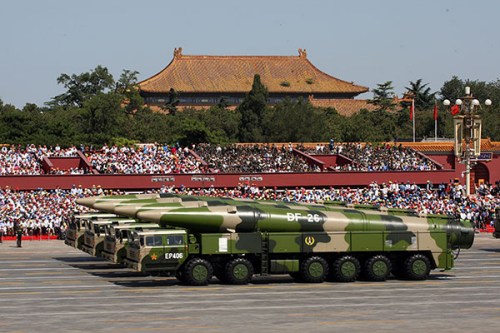
    It is the powerful and continual growth of high-velocity and long-range ballistic missiles within the Chinese arsenal, including the in-depth deployment of intercontinental missiles across mainland China, that the United States, as well as her allies, should actually fear because it is missile firepower with nuclear warheads that will be the deciding factor should a Third World War emerge on the world’s stage.

    The contest for military ascendancy or military parity is not simply a competition between the United States and China, as there are multiple other rivalries across the world’s continents. As China, Russia and other nation-states in the Middle East and South America continue to resist the United States’ hegemonic project for economic and military superiority, political and military tensions will increase between these two multi-polar major competing forces.  Also, because of various other international social factors, including the breakdown of cultural and economic structures that the pandemic in 2020 destroyed on a worldwide basis, there will be a desire to assert the hitherto hidden agenda for emerging nation-states’ independence rather than submitting to the status quo of the self-destructive imperialist powers.  A boldness will emerge in which these nation-states will no longer want to be second-best to Western Europe or to North America.

    Since the Long March, in which the nucleus of the People’s Liberation Army emerged under the guidance of Chairman, Mao Zedong and Zhou Enlai, the first Premier of the People’s Republic of China, there have been at times both steps forward and reversals in terms of the qualitative and quantitative achievements that China’s military strength represents. China showed its resilience and determination in fighting American military forces during the Korean War, revealing that its troops were not intimidated by American troops; during the Vietnam War, Chinese military advisers played a major role in strategy and tactics in helping General Giap and his field commanders to fight a sophisticated war of independence against the United States military armies, particularly at the Battle of Dien Bien Phu.  In 2014, a retired Vietnamese professor, Dao Nguyen Cat, was interviewed by the Xinhua news agency, and “on the occasion of the 60th anniversary of Vietnam’s victory in the Battle of Dien Bien Phu, Cat said that with the rare support of Chinese forces, the Vietnamese troops were able to successfully drive away the French colonial forces from the province of Dien Bien Phu, 300 km northwest of the capital Hanoi”.[10]  Professor Cat, who served as an official of Vietnam’s Central Propaganda Committee at Dien Bien Phu Campaign, Cat was quoted as saying: “Definitely without China’s support, we would have failed to defeat the French colonial masters… They not only gave training courses from the command posts but also went directly to the battlefield to talk with our soldiers. They supplied Vietnam not only weapons but also with food…”[11]  The military advisers and military supplies given by the leadership of the PLA at that time in history, regarding the Vietnam War, known by the Vietnamese people as The American War, reveal that Chinese leadership were moving forward in honing their military skills beyond their borders.

    The reversal of military progress came during the nineteen sixties and late seventies in the form of territorial disputes. First, in March 1969, there was a military clash between the Soviet Union and China: a seven-month undeclared military conflict that occurred near Zhenbao (Damansky) Island on the Ussuri (Wusuli) River, near Manchuria. The conflict between the two Communist nation-states would eventually result in a ceasefire, which led to a return to the status quo; however, a balanced history is yet to be written on how the two parties view each other as ideological threats, all this taking place during the period of the Culture Revolution.  Secondly, the Sino-Vietnamese War was a border war fought between China and Vietnam in early 1979. Rightly or wrongly, China created an offensive attack in response to Vietnam’s actions against the Khmer Rouge in 1978, ending the dominance of the Chinese-backed Khmer Rouge. What is regrettable but not surprising is that two socialist nation-states were unable through diplomacy to decide how to end their dispute regarding the Khmer Rouge’s various mistakes in its destruction of thousands of lives that could have contributed to the Communist cause in Southeast Asia.  However, China then began to gain influence, sending economic aid and military advisors to Africa, including Cuba and Venezuela – which reveals the wise and ancient observation by Sun Tzu who said “To win one hundred victories in one hundred battles is not the acme of skill. To subdue the enemy without fighting is the acme of skill.”  The Chinese Communist Party know how to achieve a military strategy without going to war.

    In May 2020 there was an actual hand-to-hand struggle between Chinese and Indian troops at locations along the Sino-Indian border, including near the disputed Pangong Lake in Ladakh and the Tibet Autonomous Region, and near the border between Sikkim and the Tibet Autonomous Region. During the last days of May 2020, Chinese forces objected to Indian road construction in the Galwan river valley, and there then ensued violent verbal exchanges between the two military camps, resulting in deaths and taking of prisoners on both sides. Although I will not attempt to describe in any detail how each side viewed the territorial dispute, I will say that the complexities between China and India, only reinforce why China is so protective of its borders and why India has chosen the United States as its major ally.  We have read similar accounts in ancient historical texts: Thucydides wrote about it in The War of The Peloponnesians And The Athenians, therefore we should not be surprised that in our own day, these small conflicts can lead to greater military build-up and to territorial jealousies which ensnare two parties or various parties into an eventual war that cannot be quelled, but which rather leads to disaster.

    In closing, I would like to quote the eminent Marxist historian, Domenico Losurdo, who wrote about the People’s Republic of China that “The foundations of the People’s Republic of China, following an epic national liberation struggle, certainly did not result in an immediate end to the situation of danger. To the end… the Korean War… challenged US hegemony in Asia, a memorable lesson…”[12].  This makes clear to me that the epic struggle of the modern Chinese people and the People’s Liberation Army has not yet reached its zenith in world history.


    References:


    [1]  https://www.cfr.org/backgrounder/chinas-modernizing-military

    [2] https://www.army-technology.com/projects/t-14-armata-main-battle-tank/

    [3] https://www.army-technology.com/projects/type99chinese-main/

    [4] https://www.brookings.edu/blog/order-from-chaos/2020/09/04/what-the-pentagons-new-report-on-china-means-for-u-s-strategy-including-on-taiwan/

    [5] Ibid.

    [6] Ibid.

    [7] https://www.businessinsider.com/chinese-military-is-improving-but-us-has-more-combat-experience-2020-7

    [8] https://www.nytimes.com/2018/08/29/world/asia/china-navy-aircraft-carrier-pacific.html

    [9]  https://www.businessinsider.com/chinese-military-is-improving-but-us-has-more-combat-experience-2020-7

    [10] http://www.china.org.cn/world/2014-05/07/content_32317279.htm

    [11]  Ibid.

    [12] Domenico Losurdo, War and Revolution, trans. By Gregory Elliott. New York & London: Verso Books,2015, 257.


    Image Credit: ecns.cn
  • Theatre Commands in India: Have We got it  Backwards?

    Theatre Commands in India: Have We got it Backwards?

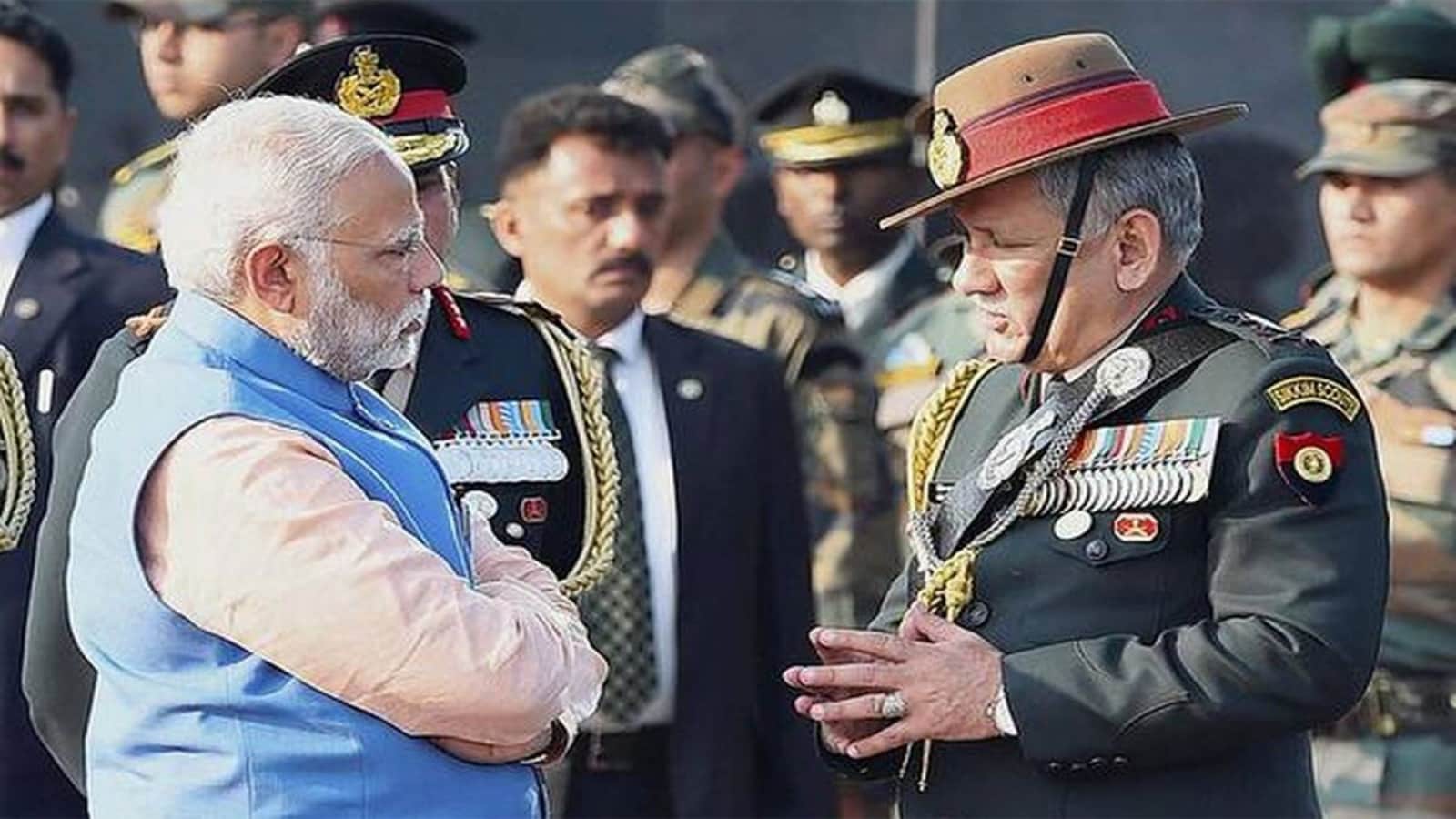
    As per a recent report by Nitin Gokhale, published on the Bharatshakti website, higher defence reforms are on track in India with the likely formation of two integrated commands by August 2021. Nitin also reiterates the reforms mandate to the CDS, General Bipin Rawat, to bring about jointness in communications, training, logistics & maintenance and support services, apart from operations, within three years while rationalizing the existing infrastructure to augment combat capabilities of the armed forces and reducing wasteful expenditure.

    The very fact of air defence being thought of as bringing just the SAMs and AD guns under one commander indicates a lack of such study and of military history as in Bekaa Valley in 1982.

    From the questions raised in this report itself on the conceptual framework of the Air Defence Command still requiring resolution, it becomes apparent that we are putting the cart before the horse in our haste to meet the given deadline. Surely, the senior leadership must have considered this issue of integration in all previous appointments and studied the experience of other nations, particularly the US being the largest in this field as a democracy, and formulated a plan to adapt their structure and best practices to our institutional and cultural environment instead of reinventing the wheel. The very fact of air defence being thought of as bringing just the SAMs and AD guns under one commander indicates a lack of such study and of military history as in Bekaa Valley in 1982.

    Even a cursory study would indicate that the essential initial steps for joint operations are training backed by the requisite secure communications integrating literally every fighting unit in the command loop to execute joint plans with the requisite flexibility in the fog of war, or in other words integrating sensors with shooters to minimize the OODA cycle in this era of informatized warfare. With all three services reportedly still using their individual communication networks which do not easily talk to each other, much less to the systems of other friendly nations that we regularly exercise with, the desired integration would remain a mirage. Just one example from the US would illustrate the importance of this issue. It may be recalled that the Goldwater-Nichols Act of 1986 created seven regional (theatre) combatant commands bringing all five US military services under unified, geographically organized command structures. Today, there are 11 including the recent Space Command. Even after five years, in Desert Storm, the Joint Air Component Commander, General Horner, could not electronically pass the Air Tasking Orders (ATOs) to the Carrier Groups of the US Navy and these had to be flown in manually every day. It took the air wings of the US Navy and the USAF almost another decade of cross-training till Operations Enduring and Iraqi Freedom to come together on a common platform and largely operate as one team, with some issues still to be resolved. In the case of the USAF and US Army, such a model was still being considered till 2007.

    35 years after the Goldwater-Nichols Act mandating unified commands, the USAF still operates eight separate commands, namely Air Combat Command, Air Education and Training Command, Material Command, Global Strike Command, Air Mobility Command, Space Command, AF Reserve Command and even an AF Special Operations Command. In addition, it has separate command organizations for Pacific Air Forces and USAF in Europe. When required to support operational missions, the Secretary of Defense directs the Secretary of the Air Force (SECAF) to execute a Change in Operational Control (CHOP) of these units to a Regional Combatant Commander. With over 5300 aircraft currently, surely the USAF could have been parcelled out to various theatre commands if that was the most operationally effective integrated approach. However, it was not, based on the principles of unity of command and concentration of firepower. In the case of a much smaller IAF, with just about 30 combat squadrons, against a sanction of 45, and a handful of combat support elements, how is the reported division in the name of reforms even being thought of?

    Similarly, the US Navy operates nine major commands like Navy Expeditionary Combat, Military Sealift, Sea Systems, Air Systems, Naval Facilities Engineering Systems, Supply Systems, IW Systems, Strategic Systems Program and Naval Education & Training apart from Fleet Forces commands for each region. Despite operating more than 3700 operational aircraft, the US Navy also does not divide its aircraft or carrier groups but allocates these based on the situation while continuing to train for all contingencies. Even the US Army runs many major commands and five major surface component commands like Pacific, Europe and Africa, North, South and Central all headed by 3 or 4-Star Generals. As recently as 2018, necessity resulted in the formation of an additional Army Futures Command (AFC).

    Co-location has been cited by many in India as a pre-requisite for integration, jointness and economizing by shutting down some existing commands. Against this, even in the case of the US Army where it is possible to pre-position most forces in the area of envisaged operations due to their relative immobility and reaction time, three unified commands and their army components have headquarters outside their area of operations. CENTCOM’s is located at MacDill  AFB in Tampa, Florida with a forward headquarters at Al Udeid Air Base in Qatar while the army component, ARCENT, is headquartered at Shaw AFB in South Carolina. Functioning is through efficient communications with the span of control of the commanders still a major consideration. Have we carried out a study on the actual savings versus operational effectiveness after the proposed closure and relocation of some commands?

    The Army also seems to work on its limited field of view by seeing the air force more as flying artillery for close air support, apart from air mobility, without the broader strategic vision of the Air Force.

    Unfortunately, in our case, the approach appears to be driven more by the numbers and vacancies for each service with the fixation of having the forces under command. The Army also seems to work on its limited field of view by seeing the air force more as flying artillery for close air support, apart from air mobility, without the broader strategic vision of the Air Force. Undeniably, the Air Force is the most technology-intensive service and a single platform today is capable of role switching and reacting in near real-time to emergent situations. Due to the roles and rapid strategic reach, it is also likely to be the first responder in most contingencies in our current geopolitical environment under a nuclear overhang. Based on this, it could be argued that the Air Force should lead most theatre commands duly assisted by component commanders from each service. In Desert Storm, General Norman Shwarzkopf wisely handed over the operations to the air component commander, General Charles Horner, to run a 1000-hour air campaign before a 100-hour ground campaign. Such maturity is unlikely in India without jointly educated and trained commanders and staff.

    It is also easier for an airman to understand surface operations than it is for a soldier to understand air operations. An example of a Corps Commander in 1989-91 later criticizing the non-use of Mi-25/35 attack helicopters in Kargil despite having had these helicopters under him in his Corps shows how limited their understanding of airpower is. The same General also talked of a certain number of fighter squadrons being authorized for close air support, once again displaying his ignorance on the use of multi-role fighters in particular and air power in general. The example of the Pakistani Army sending out a brigade, which was decimated by air at Longewala in 1971, without first achieving air superiority in that area further illustrates the thinking of soldiers in the sub-continent and strengthens the case for the air force.

    Training and communications issues, therefore, should have been first addressed and resolved before haste makes waste of our efforts at integration.


    This article was published earlier in The Sunday Guardian.

    Image Credit: Hindustan Times


  • India’s Duality on Growth and EIA Regulations

    India’s Duality on Growth and EIA Regulations

    Amidst the first nationwide Covid-19 emergency lockdown, the Ministry of Environment, Forest and Climate Change [MoEF&CC] published the draft Environment Impact Assessment (EIA) notification 2020 to replace the earlier 2006 notification under the Environment (Protection) Act, 1986. EIA is a process to estimate the overall environmental impacts of projects by taking into consideration the views of the people to decide whether the proposed project is approved for operation. Implementation of EIA is a form of control over the exploitative malpractices of private players while at the same time, it could also form a prerequisite for grants and loans by various international financing institutions.

    The major flaw with the previous EIA which even the current draft failed to fix was its low integration with other frameworks of ecological governance and public policy.

    Commonly the EIA has an entire process of reporting depending on the country and the industry. India follows four major steps in this process: scoping (issuing terms of reference), preparation of the report, public consultation, final expert appraisal. The major flaw with the previous EIA which even the current draft failed to fix was its low integration with other frameworks of ecological governance and public policy. The argument of rent-seeking, red-tape bureaucracy, delay in clearance were legitimate criticism by the current government and developers when we look into the number of scattered amendments made to EIA 2006.

    However, the aim of making the new draft more transparent and pragmatic was proposed through the removal of several activities from consultation and granting post-facto approval. It dismantles the notion of prior clearance from expert committees based on the categorization (A, B1 and B2), construction project size (built-up area up to 150,000 sq. m), reduction in monitoring period (from every 6 months to once a year), exemptions to ‘strategic’ programs and ‘border regions’ all of which were set arbitrarily (Gupta 2020). Reducing the notice period for a public hearing from 30 days to 20 days further dilutes the effectiveness.

    While massive online protests, public feedbacks and petitions ensued, there were cases of websites blocked by filing Unlawful Activities Prevention Act (UAPA) to few environmental groups such as ‘Fridays For Future’ and others

    Additionally, the possibility of granting resumption through remediation of ecological damage based on assessment goes against the precautionary principle of avoiding environmental harm. The notification also excludes reporting public violations, instead only reports by government and regulatory authority, appraisal community and violator-promoter are reckoned. According to many activists, the reluctance of the MoEF&CC in translating the draft document in vernacular languages for people without any literacy in Hindi and English further favour the majority. While massive online protests, public feedbacks and petitions ensued, there were cases of websites blocked by filing Unlawful Activities Prevention Act (UAPA) to few environmental groups such as ‘Fridays For Future’ and others (Kunal 2020).

    Nonetheless, the Ministry has appointed the National Environmental Engineering Research Institute (NEERI) to compile the comments received from the public. Post which the final draft will be scrutinised by the committee headed under SR Wate, former director of NEERI who was already given the mandate to re-engineering EIA 2006 and had chaired panels such as appraisal on post-factor clearance (Jackson and Gunasekar 2020). This poses a predicament, as the appointment of the above-mentioned individual might already have a biased viewpoint over the draft.

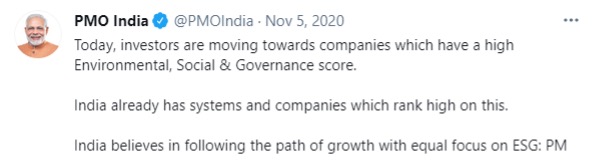
    The global economy, particularly the developed countries are working towards building an entire ecosystem of environmental, social and governance (ESG) investing. They were developed while keeping societal impact and the conservation and preservation of nature in mind. Various civil groups and governments are becoming more and more acceptable in forfeiting their wealth which increases their domestic input costs in an order to choose merchandise producing lower greenhouse gas emissions. Many mutual funds and portfolios are available for ESG investing though there has not been a uniform standard set to determine these stocks make the cut (Borate 2020).

    The adverse effect of polluting industries can be noted from the Environment Performance Index (EPI) 2020 by researchers in Yale and Columbia University which ranked India at 168th position out of 180 countries (“India EPI – Country Scorecard.” 2020).

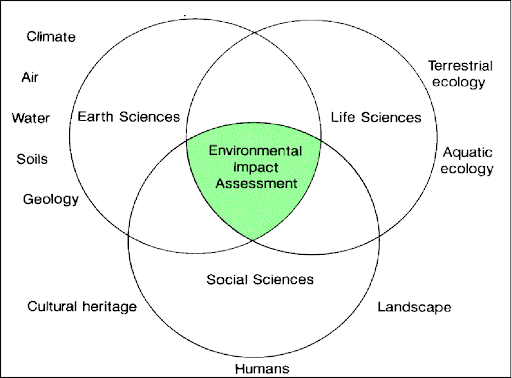
    EIA draft presents a contradiction on the government’s aim of emphasising ESG metric (Figure Below). We notice a diversion in the policymaking when the recent National Guidelines on Responsible Business Conduct (NGRBC) was laid down by the Ministry of Corporate Affairs (MCA) in 2019. Based on which the subsequent consultation paper of the Business Responsibility and Sustainability Report (BRSR) from the top 100 to top 1000 listed market companies were released by the Securities and Exchange Board of India (SEBI) (Consultation paper 2020).


    EIA based on its principle was supposed to be a tool for the protection of natural resources and marginalised community who receive negative externalities from the polluting industries. The adverse effect of which can be noted from the Environment Performance Index (EPI) 2020 by researchers in Yale and Columbia University which ranked India at 168th position out of 180 countries (“India EPI – Country Scorecard.” 2020).

    The author’s opinion over the larger framework is that environmental costs are being balanced with post-facto redressal. The emphasis put upon the private sector for green investing and other mandatory disclosures cannot be followed by diminishing the baseline surveys and the benchmark of EIA regulations. This can lead to more frequent outcomes of incidents such as Assam’s Baghjan oil spill and fire and the Vizag gas leak incident. Instead, the government should develop policies that restrain further ecological damages in the first place.


    References:

    Borate, Neil. “ESG Investments Are Fast Gaining Traction in India.” Mint, 11 Nov. 2020, www.livemint.com/money/personal-finance/esg-investments-are-fast-gaining-traction-in-india-11605111323843.html.

    Consultation Paper on the Format for Business Responsibility and Sustainability Reporting. SEBI, 2020, www.sebi.gov.in/reports-and-statistics/reports/aug-2020/consultation-paper-on-the-format-for-business-responsibility-and-sustainability-reporting_47345.html.

    Gupta, Debayan, et al. The Draft EIA Notification, 2020: Reduced Regulations and Increased Exemptions Part I & II, 31 July 2020, www.cprindia.org/research/reports/draft-eia-notification-2020-reduced-regulations-and-increased-exemptions-part-i-ii.

    “India EPI – Country Scorecard.” Environment Performance Index (EPI), 2020, epi.yale.edu/epi-results/2020/country/ind.

    Jackson, Jacqueline, and Karthik Gunasekar. “Decoding the Current Status of Draft EIA 2020.” The News Minute, 23 Sept. 2020, www.thenewsminute.com/article/decoding-current-status-draft-eia-2020-133728.

    Kunal, Kumar. UAPA Charge in Notice to Environmental Group Fridays for Future Due to ‘Clerical Error’: Delhi Police. India Today, 23 July 2020, www.indiatoday.in/india/story/uapa-charge-in-notice-to-environmental-group-fridays-for-future-due-to-clerical-error-delhi-police-1703716-2020-07-23.

    Vencatesan, Anjana. “[Commentary] The Two Faces of Environmental Regulation.” Mongabay, 21 Dec. 2020, india.mongabay.com/2020/12/commentary-the-two-faces-of-environmental-regulation/.

  • Vietnam’s Future Strategy to fight COVID-19

    Vietnam’s Future Strategy to fight COVID-19

    Vietnam’s experiences with fighting the COVID-19 pandemic has been highlighted not only as a success story but a good model. It pursued an aggressive containment policy, rigorous contact tracing procedures and effective quarantine regimes. It successfully contained the three waves of the Pandemic that infected 9,635 Vietnamese people including 55 deaths and 3636 have recovered since February 2020.  The majority of these have occurred from April to June 2021. Besides, effective public communications and awareness campaign, and availability of testing kits were instrumental in limiting the spread of the virus.

    However, Vietnam is now witnessing the Fourth Wave which has impacted at least three major cities and some provinces. Perhaps the most worrying part of this wave is that new variants of the Coronavirus are being detected among people. This variant is known to spread more quickly especially in areas where there is a high concentration of people such as industrial parks.

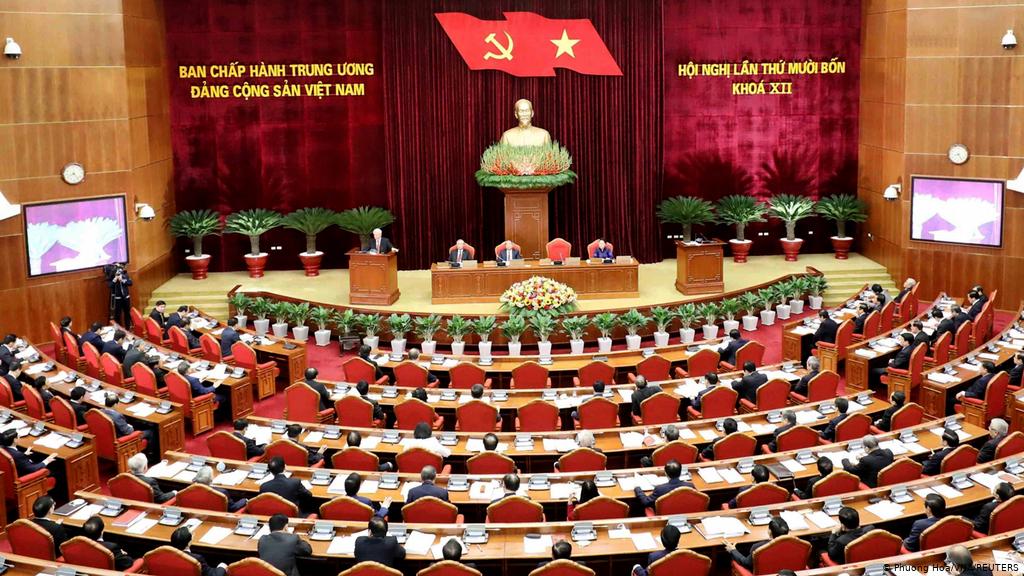
    Given the severity of the Fourth Wave of Covid-19, there is visible concern among the political leadership, and Prime Minister Pham Minh Chinh has called upon the entire political machinery and Vietnamese people to take extreme steps to “fighting the pandemic” similar to situations where they would be fighting an enemy.  Prime Minister Chinh did not shy away from warning the people that any deliberate attempts to disregard “national regulations on pandemic prevention and therefore, spread the virus to the communities, against the joint efforts of the whole nation and people, should be strictly punished.”

    It is now widely accepted that vaccine production is both technology-intensive and cannot be developed overnight. While the developing countries led by India and South Africa have been pushing for waving off Trade Related Intellectual Property Rights (TRIPS) protection for COVID-19 vaccines, and have been supported by the U.S. and EU at the World Trade Organization, yet countries must build national capacities to produce vaccines. In this context, the Vietnamese government hopes to not only buy COVID-19 vaccines but set up a production plant and supply to other needy countries.

    There are four vaccines under development in Vietnam at (a) Nanogen Pharmaceutical Biotechnology JSC; (b) Institute of Vaccines and Medical Biologicals; (c)  Vaccine and Biological Production Company No 1’ and (d) Polyvac. The Vietnam Military Medical University is actively participating in COVID-19 vaccine development at home.

    Vietnam is also has a forward-looking vaccine import strategy pivoting on “patent-based production and local research and production”. This, it is believed would help the country achieve “herd immunity in late 2021 or mid-2022”. This strategy is significant given that Vietnam has nearly 100 million people including children who would require COVID-19 vaccination.  Nearly 30 million doses were acquired from the British-Swedish AstraZeneca vaccine and the vaccination programme started in March 2021. There are plans to acquire 20 million Russian Sputnik V vaccines; may buy 5 million doses from Moderna and 31 million from Pfizer. Meanwhile, Vietnam has also approved China’s Sinopharm for emergency use. Also, homegrown vaccines are expected to fill in the gap of 30 million doses.

    Similarly, vaccine production infrastructure is a financially demanding activity. The Vietnamese government plans to apportion VND 16 trillion for the vaccination program. It plans to procure 150 million doses of vaccines in 2021 to cover 70 per cent of its population and this is estimated to cost VND25.2 trillion ($1 billion). In June 2021, the government launched the Fund for Vaccination and Prevention of Coronavirus Disease 2019.

    As per the Finance Ministry’s state budget department,  in “addition to the [public] budget, it is necessary to mobilize more resources from the voluntary contributions of domestic and foreign organizations and individuals, to join with the state,”  During a live broadcast to launch the campaign for public participation in raising funds to acquire/locally produce Covid-19 vaccine, Prime Minister Pham Minh Chinh called on the Vietnamese people to financially support a mass vaccination roll-out. This call has attracted a positive response and several companies, organizations and individuals have come forward. According to the Ministry of Finance, as of 05 June 2021, i.e., ten days since the announcement of the fund, as many as 950 organizations and more than 124,600 individuals had contributed VND 928 billion ($40.2 million). Besides domestic contributors, several foreign companies such as Hanwha Life Insurance and Daewoo of South Korea, Japan’s Tokio Marine and Taiwanese insurer Cathay Life have announced contributions. Minister of Finance Ho Duc Phoc has underscored transparency in the management of the fund and stated that his ministry is “committed to using this fund publicly and transparently,”

    Vietnam’s preference to import as also set up domestic infrastructure to set up production are indeed noteworthy; however, the challenge would be to run an accelerated mass vaccination program and achieve a high degree of herd immunity.

    Image Credit: www.dw.com

  • Fighting the Invisible Enemy with Vaccines:  Beginning of the End of the COVID-19 Pandemic

    Fighting the Invisible Enemy with Vaccines: Beginning of the End of the COVID-19 Pandemic

    Fighting the Invisible Enemy with Vaccines Beginning of the End of the COVID-19 Pandemic [powerkit_button size=”lg” style=”info” block=”false” url=”https://admin.thepeninsula.org.in/wp-content/uploads/2021/06/Fighting-the-Invisible-Enemy-with-Vaccines-Beginning-of-the-End-of-the-COVID-19-Pandemic-8-1.pdf” target=”_blank” nofollow=”false”]
    Download
    [/powerkit_button]

    Authors:  Avanti A Srinivasan (1st-year Biology Honors College Student, New Jersey, USA); Keerthika Gnanasegaran (MBBS, Puducherry, India); Vishu Priya (MBBS, Puducherry, India).

    Keywords:

    COVID, Coronavirus disease; COVID-19, SARS-CoV-2, Severe Acute Respiratory Syndrome Corona Virus 2 identified in 2019 that causes COVID; Flattening the curve, The longer it takes for the coronavirus to spread through the population, the more time the health care systems (hospitals) have to prepare and treat patients, but not be overwhelmed by the pandemic; Herd immunity, when most of a population (70-80%) becomes immune to COVID-19, they provide indirect protection to those who are not immune to the disease; Immunity, protection from an infectious disease. If a person is immune to COVID that person can be exposed to the virus without becoming infected; Immunization, the process by which a person becomes protected against an infectious disease by vaccination; Vaccine, a biological preparation or substance (also known as antigen) that is used to stimulate the production of antibodies and provide immunity against COVID-19, without inducing the disease. Vaccines are usually administered by needle injections; Vaccination, the process of introducing a vaccine (prepared from the COVID, its products such as protein or DNA, or a synthetic substitute such as mRNA) to act as an antigen, into the body to induce immunity against COVID-19 disease.

    COVID-19 Pandemic

    Corona Virus disease (COVID-19) was first identified in Wuhan, China, in December 2019. It is caused by Severe Acute Respiratory Syndrome Corona Virus 2 (SARS-CoV-2). The highly contagious coronavirus has spread rapidly around the world exponentially, causing a pandemic.

    As of June 04, 2021, there were over 172,231,339 confirmed cases and 3,703,522 deaths globally according to Johns Hopkins University (JHU) COVID-19 Dashboard. The USA alone has accounted for over 33,327,112 confirmed cases with over 596,444 fatalities reflecting the heavy toll inflicted by the pandemic. India has reported over 28,574,350 confirmed cases and 340,702 deaths, which is likely a low estimate.

    The US Government at the beginning of the pandemic embarked on the “Operation Warp Speed” program to accelerate testing, supply, development, and distribution of safe and effective vaccines, therapeutics, and diagnostics for COVID-19 by January 2021. The program has led to the development of several effective vaccines against COVID-19 by commercial enterprises. The new US administration has focused all its efforts to vaccinate the US population starting January 2021 with the goal of reaching herd immunity by July 4, 2021; it is on its way to successful completion by the target date.

    Initially, the number of confirmed COVID-19 cases reported by India was less, which was probably due to the quick action taken by the Indian Government to implement a total lockdown of the country to control the community spread of the virus. This was a very successful strategy for the short term and helped to flatten the curve and slowed the infection rate (Fig. 1). However, without an effective vaccine, with the Indian economy stagnating, with a population of 1.3 billion most of whom are poor, and a highly mutating virus, mitigation efforts alone proved to be grossly inadequate over the long term.


    Fig 1: USA Center for Disease Control (CDC) graphic on flattening the curve

    Over the past two months, India’s coronavirus daily infections have averaged over 400,000 and 4,000 deaths. They have come down recently, averaging daily infections of less than 200,000 and 2,800 deaths. Vaccinating the Indian population and reaching herd immunity, may be the only option left to fight the invisible enemy and to successfully put an end to the pandemic. India so far has inoculated only about 3% of its 1.3 billion people. India has a long way to go to get 70-80% of its population vaccinated and reach herd immunity.

    What is immunity?

    Humans are constantly exposed to disease-causing pathogens such as viruses, bacteria, fungi, and parasitic worms. Our body has two lines of defence against these threats: innate immunity and adaptive immunity, which together constitute the immune system. Their collective defence against pathogens makes up the immune response. The two components of the immune system interconnect and communicate at chemical and cellular levels to provide powerful protection against pathogens.

    Innate immunity provides an immediate, nonspecific response against any invading pathogen and has no memory of prior exposure to the pathogen. Innate immunity relies on the recognition of certain foreign molecules to stimulate inflammatory responses and phagocytosis. Innate immunity is the first line of defence against pathogens, representing a critical systemic response to prevent infection and maintain homeostasis. It also contributes to the activation of an adaptive immune response. It does not adapt to a specific external stimulus or a prior infection but relies on genetically encoded recognition of molecular patterns.

    The innate immune system recognizes pathogen-associated molecular patterns that are associated with pathogenic organisms but are absent in the host. The patterns are recognized by pattern recognition receptors of phagocytic cells such as toll-like receptor that are found on the cell surface and within the cell on various membrane-bound compartments. Cell surface receptors on macrophages (white blood cells) recognize and bind to surface molecules on the pathogen, activating the macrophage to phagocytize (engulf) the pathogens. Activated macrophages secrete cytokines, which bind to receptors on other host cells to trigger a successful immune response.

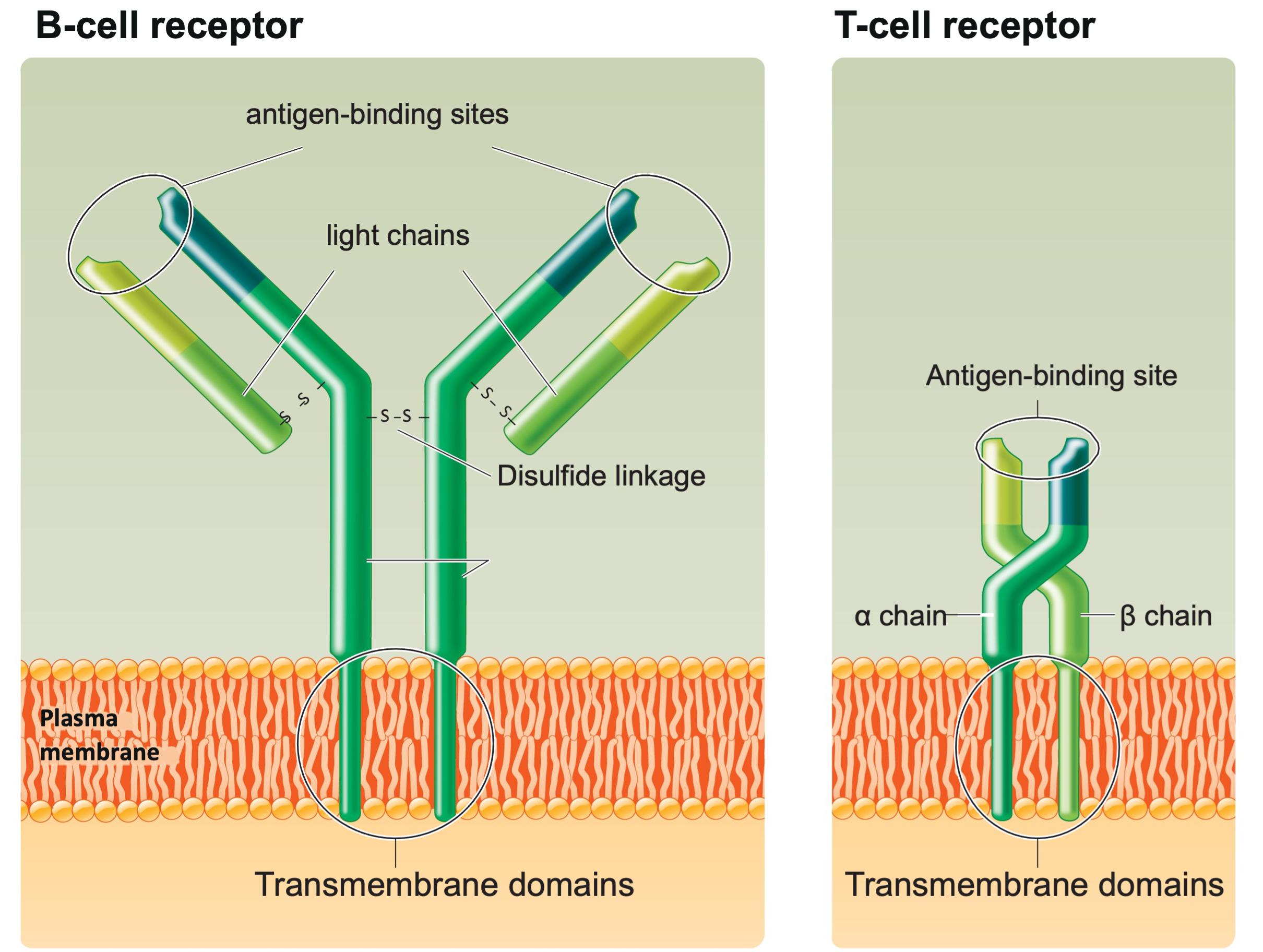
    Adaptive (or acquired) immunity is specific; it recognizes individual pathogens and mounts an attack that directly neutralizes or eliminates them and retains a cellular memory of a pathogen; it reacts quickly upon second exposure to the same pathogen. The innate immune system provides some immediate protection against invading pathogens while the more powerful, specific, adaptive response system is mobilized that can take several days. Adaptive immunity, also known as acquired immunity, is a host immune response that is mediated by antigen-specific lymphocytes. Unlike innate immunity, the acquired immunity is highly specific to a particular pathogen, including the development of immunological memory. Like the innate system, the acquired system includes both humoral immunity components and cell-mediated immunity components. T cells differentiate from stem cells in the bone marrow and are carried in the blood to the thymus to generate two types of T cells (helper T cells and cytotoxic T cells) that are involved in adaptive immunity. Humoral immunity arises from B cells that differentiate from stem cells in the bone marrow and are carried in the blood to capillary beds serving the tissues and organs of the lymphatic system. In antibody (humoral)-mediated immunity, B-cell derivatives called plasma cells to secrete antibodies – highly specific protein molecules – that circulate in the blood and lymph recognizing and binding to antigens and clearing them from the body. In cell-mediated immunity, a particular type of T cell becomes activated and, in conjunction with other cells of the immune system, attacks foreign cells directly and kills them. Specific receptors on the plasma membrane of one B cell or T cell (B-cell receptors or T-cell receptors) bind to one specific antigen structure, also known as epitopes (Fig. 2).

    Fig. 2: Structure of B-cell and T-cell receptors

    The adaptive immune response includes four key steps: 1) Antigen encounter and recognition: lymphocytes encounter and recognize an antigen; 2) Lymphocyte activation: lymphocytes are activated by binding to the antigen and divide to produce clones; 3) Antigen clearance: large clones of activated lymphocytes clear the antigen from the body; and 4) Development of immunological memory: memory cells circulate in blood and lymph, prepared for a rapid response in a future encounter of the same pathogen. The entire population of B cells and T cells in the body includes about 100 million different kinds of receptors – enough of a repertoire to recognize and destroy any type of antigen. Importantly, these cells are present even before the body has encountered the antigens.

    Adaptive immunity can be acquired either naturally by infection or by vaccination. Adaptive immunity can be active or passive. Active immunity is acquired through exposure to a pathogen, which triggers the production of antibodies by the immune system. Passive immunity is acquired through the transfer of antibodies or activated T cells derived from an immune host either artificially or through the placenta from the mother.

    What is a vaccine?                                                    

     In 1796, Edward Jenner infected healthy individuals with cowpox, which prompted their immune systems to protect them against smallpox, a more deadly viral disease. Jenner’s technique became the basis for worldwide vaccination against smallpox, which now has been eradicated from the human population. This forms the basis for vaccination against other deadly pathogens.

    An antigen is a foreign molecule that triggers an adaptive immune response. A vaccine is usually made from weakened or killed forms of the microbe, or typically contains an antigen from the disease-causing microorganism such as its toxins, or one of its surface proteins. The antigen stimulates the body’s immune system to recognize it as a threat and destroy it and to further recognize and destroy those microorganisms in a future encounter. Vaccines can be prophylactic (to prevent or ameliorate the effects of a future infection by a pathogen), or therapeutic to fight a disease that has already occurred. The administration of vaccines is called vaccination or inoculation. Vaccination is the most effective way to prevent infectious diseases. Widespread immunity due to vaccination is largely responsible for the worldwide eradication of smallpox and the restriction of diseases such as polio, measles, and tetanus.

    Molecular structure of SARS-CoV-2

    SARS-CoV-2 is a large, enveloped, spherical virus that contains a positive-sense, single-stranded RNA genome (30 kb in size), which is packed inside the nucleocapsid protein (N) and surrounded by an envelope. The RNA genome has a 5′ capped structure and a 3′ poly-A tail. The 5′ terminal two-thirds of the genome encodes a polyprotein, pp1ab, which is further cleaved into 16 non-structural proteins that are involved in genome transcription and replication. The 3′ terminus encodes 3 different structural proteins.

    Membrane proteins (M) and envelope proteins (E) are involved in virus assembly. The M protein (~30 KDa) is the most abundant structural protein in the virion. The E protein (~12 KDa) is found in small quantities within the virion.

    Spike protein (S1) that mediates virus entry into host cells, is the target of all COVID-19 vaccines. The spike protein forms large protrusions from the virus surface, giving it the appearance of having crowns (Fig. 3). Spike protein contains an S1 subunit that is a Receptor Binding Domain (RBD) and a membrane-fusing spike S2 subunit; The entry receptor utilized by SARS-CoV-2 is Angiotensin Converting Enzyme II (ACE II). Upon binding S1 is processed into S2, which induces fusion of the host and viral membranes.

    Fig. 3: Structure of the coronavirus, SARS-CoV-2 that causes COVID-19 [adapted from Centers for Disease Control (CDC) and Prevention, USA].

    COVID-19 viral vector vaccines

    Viral vector vaccines are a modified version of a different virus to deliver instructions to the cell to make the antigen against coronavirus spike protein. People vaccinated with viral vector vaccines gain protection without ever having to risk the serious consequences of getting sick with COVID-19. Several important characteristics of the viral vector need to be pointed out that include: 1) The vector is not the virus that causes COVID-19; it is a different harmless virus that is engineered to carry the gene coding for the spike protein, a harmless piece of the coronavirus. The modified version of the virus will be injected into the body and the cells will produce the spike protein that is found only on the surface of coronavirus. The cells display spike protein on their surface, triggering an immune response against the spike protein antigen. The immune cells produce antibodies and activate T cells to fight off the infection. The net result is the body has learned to recognize spike protein and to protect us against any future infection by the virus that causes COVID-19. The vaccine protects us, without ever having to risk the serious consequences of getting sick with COVID-19. Any temporary discomfort (side effects) experienced by us immediately after getting the vaccine is a natural part of the process and indicates that the vaccine is working to stimulate our immune system. Viral vector vaccines have been around for a while; they are safe and effective. COVID-19 viral vector vaccines were developed using adenoviral vector by two commercial entities, namely AstraZeneca and Johnson & Johnson (Appendix I).

    COVID-19 messenger RNA (mRNA) vaccines

    mRNA vaccines are a new type of vaccine to protect against infectious diseases. To trigger an immune response, most vaccines inject a weakened or inactivated pathogen into our bodies. mRNA vaccines, on the other hand, teach our cells how to make a protein antigen (or even a piece of a protein) within cells to induce an immune response in our bodies. The focus of the mRNA COVID-19 vaccine is to teach cells how to make spike protein, and thereby, trigger an immune response in our bodies. Like the viral vector vaccines, people vaccinated with mRNA COVID-19 vaccines gain protection without ever having to risk the serious consequences of getting sick with COVID-19. The mRNA vaccines are some of the first COVID-19 vaccines that were authorized for emergency use by the US Government. mRNA vaccines can be developed easily in a laboratory using readily available materials. Furthermore, the process of making mRNA vaccines can be readily standardized and scaled up, making vaccine development much faster than the traditional methods of making vaccines. As soon as the genome sequence of the virus that causes COVID-19 became available, scientists began designing the mRNA instructions for cells to build the unique spike protein into an mRNA vaccine. Effective COVID vaccines became available in less than a year to vaccinate the US population from two commercial enterprises, namely Moderna and Pfizer-BioNTech (Appendix II). The US Government has been very successful in administering the COVID-19 vaccines to its population. The USA is on the verge of reaching herd immunity by July 4, 2021. The success of the vaccination effort can be seen from the fact that several states in the USA have started lifting all mandatory mitigation efforts including the mask mandate.

    CDC (USA) Guidelines for Side Effects of COVID-19 Vaccines

    COVID-19 vaccines are highly effective, but they are also “reactogenic”, meaning that they are likely to cause a noticeable immune response or side effects. Side effects may vary with the type of COVID-19 vaccine. The most common side effects include soreness at the site of injection, fatigue, headache, muscle aches, chills, joint pain, and fever (Table 1). The side effects usually last 24 to 48 hours, and no more than a few days. Side effects were more frequent after the second dose in the vaccine trials. These side effects are typical of the inflammation induced by vaccines and are a sign of the body’s immune response to the vaccine. Some people have more severe reactions than others. Side effects have been less frequent and less severe in adults older than 55 years in the vaccine trials.

    The first dose by itself will not provide complete protection, and it will take about seven days after the second dose before one achieves a full protective level of immunity that develops in about 95% of vaccine recipients. If one is exposed to SARS-CoV-2 before this time, it is possible that the person could develop COVID-19. Even once a person has received both doses of the COVID-19 vaccine, it will still be important to continue practising public health mitigation strategies like masks and social distancing until the pandemic is under control and till we know more about how the vaccines prevent transmission. The side effects of the vaccine typically start within 12 to 24 hours of vaccination. If you experience side effects that last beyond 48 hours, you should contact your doctor or medical provider for advice.

    COVID-19 vaccination will help to protect you from getting COVID-19. You may have some side effects, which are normal signs that your body is building protection. Side effects may affect your ability to do daily activities, but they should go away in a few days.

    Common side effects:

    On the arm where you got the shot:

    • Pain
    • Swelling

    Throughout the rest of your body:

    • Fever
    • Chills
    • Fatigue & tiredness
    • Headache

    Helpful tips:

    If you have pain or discomfort, talk to your doctor about taking over-the-counter medications, such as ibuprofen or acetaminophen.

    To reduce pain and discomfort where you got the shot:

    • Apply a clean, cool, wet washcloth over the area.
    • Use or exercise your arm.

    To reduce discomfort from fever:

    • Drink plenty of fluids.
    • Dress lightly.

    When to contact a doctor:

    In most cases, discomfort from fever or pain is normal. Contact your doctor or healthcare provider:

    • If the redness or tenderness where you got the shot increases after 24 hours
    • If your side effects are worrying you or do not seem to be going away after a few days.

    Some things to remember:

    • Side effects may feel like flu and even affect your ability to do daily activities, but they should go away in a few days.
    • With most COVID-19 vaccines, you will need 2 shots for them to work effectively. Get the second shot even if you have side effects after the first shot unless a vaccination provider or your doctor tells you not to get a second shot.
    • It takes time for your body to build protection after any vaccination. COVID-19 vaccines that require 2 shots may not protect you until a week or two after your second shot.

    It is important for everyone to continue using all the tools available to help stop this pandemic as we learn more about how COVID-19 vaccines work in real-world conditions. Cover your mouth and nose with a mask when around others, stay at least 6 feet away from others, avoid crowds, and wash your hands often.​

    SARS-CoV-2 variants

    Viruses are constantly mutating and changing, that includes SARS-CoV-2, the virus that causes COVID-19. These genetic variations occur over time and can lead to the emergence of new variants that may have different properties. The SARS-CoV-2 genome encodes instructions organized as genes, to build the virus. Genomic sequencing allows scientists to identify SARS-CoV-2 and monitor how it changes over time into new variants, understand how these changes affect the characteristics of the virus, and use this information to better understand how it might impact health.

    It is important to monitor circulating viruses for key mutations that happen in important regions of the genome like the gene coding for spike protein. For instance, variants of the spike protein gene sequence can alter the amino acid sequence of the spike protein, which could alter the effectiveness of the antibody treatment and the immunity developed through vaccination. Many mutations do not affect the virus’s ability to spread or cause disease because they do not alter the major proteins involved in infection; eventually, these are outcompeted by variants with mutations that are more beneficial for the virus.

    As per CDC (USA), surveillance of emerging variants can help detect coronavirus variants with:

    • Ability to spread more quickly in people.
    • Ability to cause either milder or more severe disease in people.
    • Ability to evade detection by specific diagnostic tests. 
    • Decreased susceptibility to medical therapies that employ monoclonal antibodies. (Such therapy involves specifically designed antibodies that target regions of the virus to block infection. Because these treatments are more specific than natural immune response-generated antibodies, they may be less effective against variants that emerge).
    • Ability to evade natural or vaccine-induced immunity (Both natural infection with and vaccination against SARS-CoV-2 produces a polyclonal antibody response that targets several parts of the spike protein. The virus would need to accumulate significant mutations in the spike protein to evade immunity induced by vaccines or by natural infection).

    Among these, the ability to evade vaccine-induced immunity would be the most concerning. Several coronavirus variants have evolved mutations to spread more easily, make people sicker, escape immune responses, evade tests, or render treatments ineffective. These are called “variants of concern” by WHO. There are four coronavirus variants that experts around the world are particularly worried about. These variants were first identified in South Africa, the UK, Brazil, and India respectively (Table 2).

    COVID-19 variants of concern

    1) B.1.1.7, first found in the UK (WHO name: Alpha)

    B.1.1.7 was first detected in two people in South-East England. It has been identified in 123 countries worldwide, including the US. It became the most common variant in the US. Tennessee has the highest proportion of B.1.1.7 cases of any state, accounting for 73% of sequenced cases. B.1.1.7 is between 30% to 50% better at spreading from person to person than other coronavirus variants, according to UK scientists. B.1.1.7 could be more deadly. However, two studies published in the Lancet Infectious Diseases and the Lancet Public Health indicated that B.1.1.7 was more infectious, but didn’t cause worse illness in hospitalized patients. COVID-19 vaccines from Pfizer-BioNTech, Moderna, Jonson & Johnson and AstraZeneca all provide protection against B.1.1.7. all provide protection against B.1.1.7.

    2) B.1.351, first identified in South Africa (WHO name: Beta)

    B.1.351 was first detected in South Africa, in samples dating back to the beginning of October 2020. It has been found in 84 countries, including the US. B.1.351 is thought to be 50% more contagious than the original strain. Data suggests that the variant may evade the body’s immune response. Antibodies work best when they bind well to the virus and stop it from entering our cells. The B.1.351 variant has mutations called E484K and K417N at the site where antibodies bind. In lab tests, antibodies produced by Pfizer and Moderna’s COVID-19 vaccines could not bind well to B.1.351, compared to the original coronavirus. In a real-world study, Pfizer’s vaccine was 75% effective at preventing infection of varying severity caused by the variant first found in South Africa, called B.1.351, after two doses. Johnson & Johnson COVID-19 vaccine was 64% effective at preventing COVID-19 in trials in South Africa, where 95% infections are caused by B.1.351, and 72% effective in the US, where B.1.351 accounted for less than 1% of sequenced coronavirus tests. This suggests that vaccines will not become completely useless against variants. Existing vaccines could be updated and tailored to a new variant within weeks or months, or you may require a booster shot.

    3) P.1, first identified in Brazil (WHO name: Gamma)

    The variant found in Brazil was first detected in four people in Japan, who had travelled from Brazil on January 2,. It has been found in 45 countries worldwide, including the US. P.1 is twice as contagious as the original coronavirus. P.1 has similar E484K and K417T mutations as B.1.351, which means it can evade antibody responses. This could be the reason P.1 reinfects people who have already caught coronavirus. A recent study published on April 14 showed that previous coronavirus infection only offered between 54% and 79% of the protection for P.1 than for other virus strains. P.1’s mutations could also mean that vaccines work less well. COVID-19 vaccines from Pfizer and AstraZeneca work against P.1. Johnson & Johnson’s COVID-19 vaccine was 68% effective in trials in Brazil, where the variant is the most common strain, compared with its 72% efficacy in the US, where P.1 at the time accounted for 0.1% of sequenced coronavirus tests.

    4) B.1.617, first identified in India (WHO name: Delta)

    The variant first found in India, B.1.617, is in fact three distinct viruses. Collectively, they have spread to more than 17 countries. All three have been detected in the US. The WHO and UK have designated it a “variant of concern” because it is more infectious than the original virus. The mutations include: L452R, may make the virus more infectious or it may avoid the antibody response; P6814, may make it more infectious; and E848Q, may help the virus avoid the antibody response. Health officials in England recently reported that two doses of the COVID-19 vaccines made by Pfizer-BioNTech or AstraZeneca are highly protective against variants first detected in India and the United Kingdom. The data also underscored the need for two doses, as both vaccines were significantly less effective after only one shot. The vaccines were similarly effective at protecting against the UK variant. Moderna vaccine also appears to protect against COVID variants, B.1.617 and B.1.618 that were first identified in India.

    Moderna reported that its COVID-19 vaccine was 100% effective in a trial involving 3732 adolescents aged 12-17, with no major safety concerns. Among adolescents who received two doses, there were no cases of COVID-19 compared with four cases among those who received a placebo. After only one dose, the vaccine was 93% effective in the age group. Side effects were similar to first reported in earlier studies, including headache, fatigue, body ache, fever and chills. Rare cases of a few adolescents and older teenagers developing myocarditis (mild heart problems) after receiving the COVID-19 vaccines was reported. CDC is investigating whether this is a possible side effect of vaccination or if they are merely a coincidence. The relatively few cases seem to have occurred approximately four days after the second dose of mRNA vaccines made by either Pfizer-BioNTech or Moderna. Symptoms have been more common in males than females. Some rare cases of females developing blood clots after receiving the AstraZeneca vaccine has also been reported. Moreover, it appears that COVID-19 survivors with lingering symptoms can safely be vaccinated against the coronavirus.

    More recently, WHO has named the four variants of concern, known as the UK (B.1.1.7), South Africa (B.1.351), Brazil (P.1) and India (B.1.617.2) with Greek alphabets Alpha, Beta, Gamma, and Delta, respectively.

    “Breakthrough” infections after vaccinations

    Based on roughly 101 million Americans fully vaccinated against COVID-19, CDC reported that breakthrough infections occurred in 0.01% of them. Approximately, 27% of breakthrough infections were asymptomatic, while in 2% of the cases, patients died. The CDC sequence data for virus samples from 555 breakthrough infections indicated that mutated variants of the coronavirus, those were first seen in the UK and South Africa, accounted for 64% of the breakthroughs. Moderna and Pfizer are developing booster shots to combat COVID-19 variants.

    COVID-19 disease & black fungal infection

    A rare and potentially deadly infection by mucormycosis (also known as black fungus), has been observed in several coronavirus patients, or those who have recently recovered from COVID-19, whose immune systems have been weakened by the virus or who have underlying conditions, most notably diabetes. Over 6000 black fungus cases have been reported across India, with hundreds hospitalized and at least 100 dead.

    Black fungus is caused by mould found in damp environments (like soil or compost) and can attack the respiratory tract. It is not contagious and does not spread from person to person. Black fungus commonly affects the sinuses or lungs after a person inhales fungal spores in the air and can also affect the skin following a surface injury like a cut or burn. Symptoms depend on where in the body the fungus is growing but can include facial swelling, fever, skin ulcers and black lesions in the mouth. Black fungus disease begins to manifest as skin infection in the air pockets located behind our forehead, nose, cheekbones, and in between the eyes and teeth. It can then spread to the eyes, lungs and can even spread to the brain. It leads to blackening or discolouration over the nose, blurred or double vision, chest pain, breathing difficulties and coughing of blood. If it is not controlled or treated, the mortality rate could be from 20% to 50%. The mortality rate also depends on which part of the body is affected; it is less deadly for people with sinus infections but more deadly for those with lung infections.

    Immunocompromised people are more susceptible to infection who include COVID-19 patients, diabetic patients, people who take steroids, and those with other comorbidities like cancer or organ transplants. COVID-19 patients are particularly susceptible because not only does the virus affect their immune system, drugs used to treat the disease can also suppress their immune response. Due to these factors, COVID-19 patients face a renewed risk of failing the battle against attacks mounted by the black fungus. This does not mean that every COVID-19 patient will get infected by the black fungus as it is uncommon among those without diabetes. The prevalence of diabetes in India is as high as 12% to 18% of the adult population, especially in urban areas.

    Black fungus is treated with antifungal medicines such as Amphotericin B that is given intravenously. Patients may need up to six weeks of anti-fungal medicine to recover. Their recovery depends on how early the disease was diagnosed and treated. Often, surgery is required to cut away dead or infected tissue. For some patients, this may mean loss of the upper jaw or sometimes even the eye. Black fungus is 70 times more prevalent in India, possibly due to several factors that include: 1) higher rate of “undiagnosed” and “uncontrolled” diabetes; 2) tropical humid climate that promotes fungal growth; and 3) delays in seeking medical attention and diagnosing the disease, and challenges in managing the advanced stage of infection. COVID-19 pandemic has worsened the situation in India, by promoting opportunistic infection by the black fungus.

    Authors personal experience with COVID-19 vaccine side effects

    Avanti Srinivasan (1st-year Biology Honors College Student and working a part-time summer job at Penn Medicine Princeton Health): It is evident that COVID-19 has turned the world upside down. After almost a year of quarantine, death and chaos, the pandemic has also now opened a new era in vaccine development with new technologies. As a college student, when I heard about the vaccine I was delighted as I was ready to return to normalcy and resume my life where I left off one year ago after finishing my senior year of high school. I received the Pfizer-BioNTech COVID-19 vaccine on April 18th, 2021. I was quite nervous before receiving the shot as my friends had warned me about various side effects they felt from the vaccine after getting their first dose. Luckily, unlike many others, I did not feel any side effects from the vaccine. One day after vaccination, I felt a slight pain at the injection site, but this is a common immune response to receiving any vaccine as it shows that our immune system is working properly. Three weeks later, I received my second dose of Pfizer-BioNTech COVID-19 vaccine on May 9th, 2021. Just like the first dose, I did not feel any harsh side effects. The usual pain near the injection site and tiredness were there, but it got better after 2-3 days. Overall, I would encourage everyone to get vaccinated as soon as possible. After receiving both doses of the vaccine, I feel more confident and protected and have resumed normal activities without fear of the coronavirus. I know that even if I do get infected with coronavirus, I will not become seriously ill, as the vaccine will provide me with a layer of protection from the deadly virus. After getting vaccinated I also feel that I am playing my role as a good citizen and community member in my state by helping to prevent the spread of COVID-19. I am also encouraging those around me to get vaccinated and by doing so, we will reach herd immunity at which point we can finally put the pandemic behind us and move forward with our lives.

    Dr Keerthika Gnanasegaran (currently working in a multi-speciality hospital in Pondicherry and an INICET aspirant): I got vaccinated with COVISHIELD at my hospital on March 10, 2021. At first, I was very scared about getting the COVID-19 vaccine. I surfed many websites and got advice from many health care professionals, which convinced me to change my mind about getting vaccinated. One day after vaccination of the first dose, I got injection site pain, severe headache, fever >102⁰ F, and fatigue. I consulted my Chief at the Hospital and he said not to worry and advised me to take a Paracetamol tablet once every 6 hours. The following day, I felt alright except for some mild injection site tenderness. Unfortunately, just before I was about to take my second dose of inoculation, I tested positive for COVID-19. I did not have any symptoms except mild body ache. My father, who is obese, diabetic, and suffers from hypertension, also tested positive for COVID-19 after the first dose of vaccination. He also had only mild body ache and we both were under home isolation. Finally, I realized, getting COVID-19 vaccination very likely prevented us from a serious illness. I plan to get my second dose of COVID-19 vaccination after six weeks. Based on my personal experience, I request and encourage everyone to go ahead, shed their inhibition about getting COVID-19 vaccination.

    Dr Vishnu Priyaa Radjassegarane (a medical student doing her postgraduate studies in Pediatrics in Pondicherry): As a medical student, I came to know about the seriousness of the COVID-19 disease at the hospital. During the early phase of the COVID-19 pandemic, I became infected with the virus, and thankfully I recovered from the infection after treatment. Initially, like many others, I had many doubts regarding the COVID-19 vaccine and was afraid of its side effects. But upon reflecting some more, I decided to get the COVID-19 vaccination done. I reasoned that even if I get reinfected again with the coronavirus, I could avoid a severe illness like getting admitted to ICU or being on a ventilator. I got my first dose of COVISHIELD inoculation on March 15, 2021. With the information that I gathered from my fellow postgraduates regarding the side effects of the vaccine, I took my pain killers prophylactically even before the symptoms could appear. After vaccination, I had some side effects: low-grade fever, injection site pain, myalgia and difficulty in lifting my arm. But these lasted for only 2 days and then subsided. After 6 weeks, I got my second dose of the COVISHIELD vaccine on April 24, 2021. But luckily, I did not experience any side effects after the second dose like the first. After getting the two doses of the COVID-19 vaccine, I feel very confident and safe to go back to work at my hospital, even looking after patients with COVID-19. I will never say that I will not be reinfected with the coronavirus again, but with the COVID-19 vaccination, I feel that I will not get a severe form of the COVID-19 disease that requires oxygen supply or ventilator support. In my opinion, I believe that most of the Pondicherry and Tamil Nadu citizens and the Indian population should be vaccinated as soon as possible to reach herd immunity when we can together put an end to this deadly pandemic and return to our normal life and walk outside confidently without masks.

    Summary

    COVID-19 vaccines offer the best way to fight the invisible enemy and overcome the COVID-19 pandemic. US President Biden has focused all his efforts to get at least 65-70% of the US population vaccinated in the first 180 days of his administration with at least one dose to reach herd immunity. The US is well on its way to successfully achieve this goal by July 4, 2021. Vaccinating the Indian population and reaching herd immunity, may be the only option left for the Indian Government to fight the invisible enemy and to successfully end the deadly COVID-19 pandemic. India so far has inoculated only about 3% of its 1.3 billion people, has a long way to vaccinate 70-80% of its population to reach herd immunity. COVID-19 variants could pose a problem by reducing the effectiveness of the vaccines. This could be addressed by giving booster shots against new COVID-19 variants.

    Acknowledgement

    This article was put together using the information from the Center for Disease Control and Prevention (CDC, USA), World Health Organization (WHO), CNN and from various news articles (too numerous to list them all here). As a disclaimer, we must emphasize that this article is meant to serve solely as an informational resource for the readership. People affected by the coronavirus should consult with their physician for advice and treatment as well as for information about COVID-19 vaccination.

    Table 1: COVID-19 vaccines and their side effects

    Vaccine Status Dosing Efficacy Potential Side Effects
    Pfizer Vaccine has been authorized for emergency use Two doses, delivered three weeks apart 95% effective at preventing serious illness Injection site pain, fatigue, 

    headaches, chills

    Moderna Vaccine has been authorized for emergency use Two doses, delivered four weeks apart 94% effective at preventing serious illness Injection site pain, fatigue, 

    muscle aches, joint pain, 

    headaches, chills

    Johnson & Johnson Awaiting emergency use authorization by the FDA One Dose 72% effective at preventing severe illness Injection site pain, fatigue, 

    headache, muscle pain, joint pain

    Novavax Vaccine trials are ongoing Two doses, delivered three weeks apart Injection site pain, rash, 

    headaches, muscle pain, fever

    Covishield (AstraZeneca/Serum Institute of India) Central Drug Standard Control Organization (CDSCO) India granted Emergency Use Authorization (EUA)  Two doses, delivered 12 to 16 weeks apart 63% effectiveLonger dose intervals with 12 weeks range associated with greater vaccine efficacy Injection site pain, headache, 

    fatigue, myalgia, fever rarely 

    one-sided facial nerve palsies, 

    demyelinating disorders

    Covaxin (Bharat Biotech) Central Drug Standard Control Organization (CDSCO) India granted Emergency Use Authorization (EUA) Two doses, delivered four to six weeks apart 78% effective in preventing serious illness Injection site pain, headache, 

    fatigue, myalgia, fever, body ache, 

    tremors, giddiness, cold, cough


     Table 2: SARS-CoV-2 variants


    Name


    Spike Protein Substitutions First Detected
    B.1.525  

    Spike: A67V, 69del, 70del, 144del, E484K, D614G, Q677H, F888L


    United Kingdom/Nigeria – December 2020

    B.1.526  

    Spike: (L5F*), T95I, D253G, (S477N*), (E484K*), D614G, (A701V*)


    United States (New York) – November 2020

    B.1.526.1  

    Spike: D80G, 144del, F157S, L452R, D614G, (T791I*), (T859N*), D950H


    United States (New York) – October 2020


    B.1.617


    Spike: L452R, E484Q, D614G


    India – February 2021

    B.1.617.1  

    Spike: (T95I), G142D, E154K, L452R, E484Q, D614G, P681R, Q1071H


    India – December 2020

    B.1.617.2  


    Spike: T19R, (G142D), 156del, 157del, R158G, L452R, T478K, D614G, P681R, D950N


    India – December 2020

    B.1.617.3  

    Spike: T19R, G142D, L452R, E484Q, D614G, P681R, D950N


    India – October 2020


    P.2


    Spike: E484K, (F565L*), D614G, V1176F


    Brazil – April 2020


    (*) = detected in some sequences but not all

     Appendix I


    Appendix II


    Editors’ comments

    While it is difficult for any government to be fully prepared for a pandemic that occurs once every hundred years, it is important for a task force to review and put policies in place for future preparedness to deal with such a deadly pandemic. While India had successfully contained the coronavirus infection rate in the short term by mitigation efforts and complete lockdown, it failed to prepare for all possible contingencies, such as the emergence of a deadlier and more contagious COVID-19 variant. Furthermore, failure to curtail large gatherings for religious festivals and election-related activities may also have contributed to the rapid spread of the virus all over the Indian subcontinent. Consequently, the rate of infection soared; the Indian health care system was overwhelmed, leading to increased Indian mortality and morbidity. In hindsight, the Indian Government should have mobilized to vaccinate its population as soon as effective vaccines became available in early January 2021, to reach herd immunity and to make the Indian population immune to COVID-19. Overseas export of vaccines should have been curtailed immediately as the US Government did unilaterally with the export of raw materials (supply chains) needed to make the vaccines.  India, though late and after catastrophic deaths, has ramped up its vaccination program. Vaccine shortages are gradually being addressed. Currently, 20 crores (200 million) people have been vaccinated at least with one shot, which is second only to the US. In terms of percentages, it is low because of the huge Indian population. The Indian government is increasing its efforts to ramp up vaccination to 30 crores (300 million) people a month by August 2021.

    One bright spot that has emerged out of the misery of the pandemic is that it has helped us to recognize and laud the “real” heroes. They are many among us worldwide: doctors, nurses, first responders who risk their own lives to take care of the COVID-19 patients. The young authors of this article are representative of such real heroes worldwide.


    Edited by S Chandrasegaran PhD and M Matheswaran PhD.

    Dr S Chandrasegaran is Professor Emeritus at the Bloomberg School of Public Health, Johns Hopkins University, Baltimore, USA.

    Air Marshal M Matheswaran (Retd) is the President of The Peninsula Foundation. 

  • The Democratic Warrior – Countering Unrestricted Violence with Clausewitz

    The Democratic Warrior – Countering Unrestricted Violence with Clausewitz

    This research paper was originally published in the “African Journal of Terrorism and Insurgency Research (AJoTIR)”, Volume 2, Number 1, April 2021. Pp. 89-106.


    Abstract

    We often find the application of indistinctive, brutal and extraordinary violence by all fighters and soldiers in terrorist, insurgency, and counter-insurgency acts in Africa. This article argues that we need a code of honour for those bearing arms to limit these unrestricted acts of violence, a code of honour that combines military duties with the demands of civil society in the model democratic warrior. The changes to the global system that followed the end of the Cold War are widely regarded as requiring a different kind of soldier for democratic societies. A number of writers have proposed that the new model should be that of the “warrior,” a concept that highlights the psychological and social distinctiveness of those who bear arms. Such men and (rarely) women are often conceived as operating according to a distinctive code of honour that sets them apart from civil society, usually in a positive way. But we know that the concept of honour may also lead to a terrible escalation. So, the task is to reconnect the concepts—warrior and honour—to civil society to de-escalate the ongoing brutal violence in civil wars. There is no honour in killing innocent people. On the contrary, it is perhaps the most egregious act against one’s honour and dignity to torture, violate, or kill the innocent. The concept of the democratic warrior seeks to reinstate honour and dignity to those bearing arms.Keywords: democracy, warrior, civil society, civil war, honour, dignity, terrorism, Clausewitz, wondrous trinity, containing violence.

    Introduction

    At first glance, the concept of the democratic warrior appears contradictory. Indeed, it combines seemingly conflicting value systems in a single concept. Like a magnet or Clausewitz’s favoured model of the unity of polar opposition between attack and defence, a methodology can be formulated to explain how this type of conflicted unity is not necessarily a logical opposition and can be a dynamic interrelationship on a continuum. At one end of the continuum is democratic equality and non-violent conflict resolution, while at the other end is the threat of (and sometimes) violently enforced limitation of war and violence; at one end is a civilized society, while at the other is a subsystem of society whose identity is defined by martial honour.

    The decisive bond that can link the two poles of this dynamic relationship, without eliminating their opposition, is the classical republican virtues, which can lay claim to relative validity in both spheres. Since Plato, the classical virtues have been prudence (wisdom), justice, fortitude, and temperance. Without a specific ethos aimed at the political functioning of the polity, a state can sustain itself only under the conditions of a dictatorship. If republican virtue, which is oriented toward the polity, cannot be directly reconciled with liberal democracy and its focus on the individual, it can take on a completely new significance as a bond linking a democratic society to democratic warriors. For Machiavelli, republican virtue already guarantees both external and internal freedom. In this respect, the necessary though not yet adequate condition of the democratic warrior is to also be a republican soldier. Add to this the limitation of war and violence in a global society to make democratic societies possible. A renewal of the republican virtue is the link between a liberal-democratic society and a warrior ethos.

    The “warrior” is by definition someone who chooses to bear arms and is proficient in their use. In this sense, whatever the distinctive characteristics of the warrior ethos, its institutionalization reflects the same preferences for professionalism, expertise, and individualism that are characteristic of modern society as a whole. Contemporary conditions, it is argued, no longer call for armed masses, but for experts whose willingness to serve in uniform will allow others the freedom not to serve.

    It must be admitted, however, that the concept of the warrior does not call forth associations with modernity, but rather of the “archaic combatant” (Röhl 2005), whose ethos, skills, and experiences set him apart from normal society and in opposition to its basic values, of which the most cherished is, of course, peace. The fact the warrior freely chooses his profession may be consistent with democratic values, but the existence of a “warrior class” uniquely skilled in the use of force, whose values are not those of society as a whole, is scarcely consistent with democratic interests. It is also true that those who serve in today’s democratic armies are called upon to do a great deal more than fight. Although phrases like “armed social worker” undervalue and denigrate the martial qualities that remain foundational to military life, it is true that only a small percentage of men and women in uniform actually fight, and that their duties entail a wide range of activities in which violence plays no part. To those who wish to uphold the warrior spirit, the diverse requirements of modern military missions are liable to hold scant appeal, which may undermine the sense of purpose and identity that drew them to the profession in the first place.

    The discussion that follows seeks to build a bridge between the distinctive ethos of the warrior and the moral and political requirements of democratic societies, using the concept of the “democratic warrior.” It seeks to do justice to the self-image of those who bear arms (a morally distinctive task) while connecting it to the various goals and practices of democratic societies, and the diverse uses to which they put their armed forces. We may begin by noting that a warrior, even in the most traditional terms, is not merely a combatant—a fighter—but has always performed and embodied a range of social, military, and political roles. Our starting point for considering what those roles must be is Clausewitz’s concept of the trinity, a metaphor intended to encompass all types of war, which, by extension, can provide a lens through which the ideal range of characteristics required of the democratic warrior can be envisioned. War itself, as Clausewitz avers, is compounded of primordial passions, an irreducible element of chance, and what he called an element of “subordination” to reason, by which its instrumental character is revealed. When Clausewitz set forth his trinity, he posited that the chief concern of the warrior must be the mastery of chance through intelligence and creativity; and so it remains. Yet there is no reason to suppose that such mastery means that war’s social and political requirements should be ignored. On the contrary, unless they too are mastered, the warriors sent forth by democratic societies cannot represent the values and interests of the communities that depend on them, and of which they remain apart (Herberg-Rothe 2007).

    Soldiers and Warriors

    In both German and English, the word “soldier” (soldat) originally referred to a paid man-at-arms. The term became common in early modern Europe and distinguished those who were paid to fight— primarily in the service of the increasingly powerful territorial states that were then coming to dominate the continent—from members of militias, criminal gangs, volunteer constabulary and local self-defence forces, and other forms of vernacular military organizations. The rise of the soldier was linked to the rise of the state. This connection distinguished him from the “mercenary,” who also fought for pay, but as a private entrepreneur, what we would today call a “contractor.” Standing armies comprised of soldiers were different from and militarily superior to, the feudal hosts of the past, whose fighters served out of customary social obligation and generally possessed neither the discipline nor the martial proficiency that the soldier embodied. Clausewitz highlights these developments briefly in the last book of On War, and portrays them as an advance in political organization and military efficiency (Clausewitz 1984, 587-91).

    The absolute monarchies that made the paid soldier the standard of military excellence in early modern Europe were generally indifferent to the social and political identities of those they paid to fight, though not always. Frederick the Great, for instance, lamented his reliance on foreign troops and believed that his own subjects made better soldiers. “With such troops,” he wrote, “one might defeat the entire world, were not victories as fatal to them as to their enemies” (quoted in Moran 2003, 49). It was, however, only with the French Revolution that a firm expectation was established that a soldier bore arms not merely for pay, but out of personal loyalty to the state, an identity that was in turn supposed to improve his performance on the battlefield. This connection, needless to say, was largely mythical. Most of the men who fought in the armies of the Revolution, and all major European wars since then, are conscripts who would not have chosen to bear arms on behalf of the state if the law had not compelled them to do so. Nevertheless, submission to conscription was itself regarded as an expression of the ideal of citizenship, a concept that, like honour, depends upon the internalization and subjective acceptance by individuals of norms arising within the larger society.

    The French Republic never referred to its soldiers as conscripts, always as volunteers. The success of its armies and those of Napoleon, although transient, insured that “defence of the Fatherland [became] the foundation myth of modern armies”(Sikora 2002). The myth of voluntary sacrifice by the “citizen-soldier” to defend the community proved central to the legitimization of conscript armies, even in societies where democratic values were slow to emerge. In the middle of the nineteenth century, as Frederick Engels observed, conscription was Prussia’s only democratic institution (Frevert 1997, 21).

    It had been introduced in reaction to Prussia’s defeat by Napoleon, whose triumph was owed to the fact that the resources of the entire French nation were at his disposal. The aim of the Prussian military reforms was to accomplish a similar mobilization of social energy for war, but without inciting the revolutionary transformation of society that had made such mobilization possible in France. Prussia was no sovereign nation of citizens, and while the reform of its armed forces helped it to regain its position among the leading states of Europe, their political effect was limited.

    Many of those who promoted reform, including Clausewitz, hoped conscription would contribute to the democratization of Prussia’s armed forces, and, indirectly, of society as a whole. But the moral influence could as easily run the other way, and, as Friedrich Meinecke observed, measures designed to bind army and society together had the effect, in Prussia, of militarizing society instead. Even the Great War did not fully succeed in stripping war of its moral glamour. The supposedly heroic massacre of German troops attacking the British at Langemarck (1914), for instance, remained a staple of right-wing mythology until the end of the Third Reich, by which “our grief for the bold dead is so splendidly surpassed by the pride in how well they knew how to fight and die (Hüppauf, 1993, 56). Alongside this kind of blood-drenched nostalgia, the industrialized warfare exemplified by battles like Verdun (1916) also asserted themselves. Under these circumstances, fighting and dying well acquired some of the aspects of industrialized labour, in which a soldier’s duty expresses itself, not through the mastery of chance as Clausewitz proposed, but through submission to what Ernst Jüngercalled “the storm of steel.”

    It was only after World War II that German soldiers became authentically democratic citizens in uniform. According to Wilfried von Bredow, the creation of the Bundeswehr in 1956 was “one of the Federal Republic of Germany’s most innovative and creative political reforms, fully comparable in its significance to the conception of the social market economy” (Bredow 2000). Its evolution as an integral part of German society has embodied a calculated break with the German past, one that has become even more apparent since the demise of the Soviet Union has shifted the mission of the German army away from national defence and toward expeditionary operations calculated to help maintain regional and global order. As the conscript armies of the past have given way to the professional and volunteer armies of the present, in Germany and elsewhere, the model of the democratic “citizen in uniform” has once again been required to adapt to new conditions.

    It is perhaps slightly paradoxical that as wars have become smaller and more marginal in relation to society as a whole, the ideal of the warrior as an apolitical professional fighter has regained some of its old prominences. Such individuals are thought to embody values different than those of society as a whole, to the point where their loyalties, like their special capabilities in battle, are thought to spring solely from their organization and mutual affiliation. John Keegan, a proponent of the new warrior, explains the rejection of the values of civil society in terms of the psychological impact of violence on those who experience and employ it. War, Keegan argues, reaches into the most secret depths of the human heart, where the ego eliminates rational goals, where pride reigns, where emotions have the upper hand, and instinct rules. One of Keegan’s models of the warrior is the Roman centurion. These officers were soldiers through and through. They entertained no expectation of rising to the governing class, their ambitions were entirely limited to those of success within what could be perceived, for the first time in history, as an esteemed and self-sufficient profession. The values of the Romans professional soldier have not diminished with the passage of time: pride in a distinctly masculine way of life, the good opinion of comrades, satisfaction in the tokens of professional success, and the expectation of an honourable discharge and retirement remain the benchmarks of the warrior’s life (Keegan 1995, 389-391).

    The enthusiasm of Keegan and others for the revival of the warrior ethos is the belief that “honour” can play an important role in limiting violence, far more effective than the proliferation of legal norms that lack the binding psychological validity required to stay the hand of those who actually take life and risk their own. Warriors use force within a customary framework of mutual respect for one another. This is part of what has always been meant by “conventional warfare”, a form of fighting that necessarily includes a dissociation from combatants considered to be illegitimate. How and whether these kinds of customary restraints can be successfully reasserted under contemporary conditions is one of the central problems with which the concept of the democratic warrior must contend. In opposition to Keegan, I think, that the warriors’ code of honour must be related back to civil society, although this is a task which requires bridging a gap and remains a kind of hybrid.

    Old and New Wars

    To judge what kind of “weapon carrier” will be needed in the twenty-first century, we must begin by looking at developments since the end of the East-West conflict. It has proven, broadly speaking, to be a period of rapid social, political, and economic development whose outstanding characteristics are marked by the decline or disappearance of familiar frameworks and inherited values. Thus, one speaks of denationalization, de-politicization, de-militarization, de-civilization, de-territorialization, and delimitation.

    Unsurprisingly, these changes are also supposed to be marked by “new” wars, characterized by the decline of statehood, the rise of privatized violence, the development of civil war economies, and the reappearance of types of combatants thought to be long gone— mercenaries, child soldiers, warlords, and so on. The new types of combatants are in turn associated with rising incidences of suicide bombing, massacre, and other forms of atavistic and irrational violence(Kaldor 1999, Münkler 2004).

    Political and academic discourses have produced a range of new concepts designed to capture these conditions, including privatized war, asymmetrical warfare, small wars, wild wars, low-intensity conflict, post-national wars; wars of globalization on the one hand, and of “global fragmentation” on the other. It is apparent, however, that each of these terms describes only one segment of a complex reality. To some extent, a new type of war is being discovered with each new war. At the same time, these different terms share a common assumption that war now consists mainly of conflicts involving non-state actors on at least one side, and, by extension, that the motivation and goals of such belligerents are likely to prove unfathomable in political terms. The result for some is an approaching anarchy (Kaplan 1994), whose remedy is a revived liberal interventionism, the only principle that seems able to guarantee a modicum of global order (Münkler 2007).

    It is possible, however, that the contemporary diffusion of conflict beyond the confines of the state system is no more than a transitional phase, with particular strong links to those parts of the world—Africa and Central Asia above all—where the challenges of post-imperial social and political adaptation are still especially pronounced. Neither does the fact that the parties to war are non-state actors necessarily mean that such wars lack a political or ideological basis. Such wars may not represent a clash between order and anarchy but between competing conceptions of order (Münkler 2004). While a revived interventionism may indeed be a suitable antidote to anarchy, it is unlikely to do more than aggravate indigenous conflicts over the politics of order – and as it seems at present, it is contributing to the escalation of violence throughout the world. Now, as in the past, violence is not simply a source of disorder. It is also a means of shaping order and providing the basis for community formation.

    It is possible to wonder, in other words, how new the “new wars” actually are. Widespread atavistic and vernacular violence were already prominent features of the Chinese civil war, the Russian civil war, the Armenian genocide, and many other episodes of “old wars”. Those who favour the concept note a number of formal changes that resulted from the disappearance of Soviet-American rivalry, above all a decline in external assistance. The proxy wars of the past have become the civil wars of the present, conducted by parties that must rely on their own efforts to obtain the necessary resources, including illegal trafficking in diamonds, drugs, and women; brutal exploitation of the population; extreme violence as a way of attracting humanitarian assistance that can then be plundered; and the violent acquisition of particularly valuable resources (robber capitalism). These changes may well amplify the social consequences of violence, but do not necessarily deprive it of its instrumental and political character (Schlichte 2006).

    The point of departure for the study by Isabelle Duyvesteyn, for example, is a very broad definition of politics based on Robert Dahl: “any persistent pattern of human relationship that involves, to a significant extent, power, rule or authority” (Duyvesteyn 2005, 9). Duyvesteyn refers especially to the fact that in the fast-developing states she has studied, the differences between economics and politics are not as clear cut as Westerners expect. Struggles that seem to be about the acquisition of resources can be motivated by power politics to obtain a separate constituency. Because the position of power in these conflicts is often determined by the reputation of the leader, what may appear to be personal issues can also be incorporated into a power-political context. Her hypothesis is not that economically, religiously, ethnically, or tribally defined conflicts are masks for politics, but rather that these conflicts remain embedded in a political framework that is understandable to the participants.

    It is also apparent today’s civil wars do not always trend irrevocably toward social and political fragmentation, becoming increasingly privatized until they reach the smallest possible communities, which are held together by only violence itself. The defeat of the Soviets in Afghanistan, for instance, gave rise to a civil war between warlords and individual tribes that appeared to be tending in this direction for a time, only to acquire a new and recognizably ideological shape once the Taliban seized power. This new tendency was confirmed by the Talibans’ willingness to give shelter to al-Qaeda, a global and trans-national organization of almost unlimited ambition, whose attacks upon the United States have in turn embroiled Afghanistan in a conflict about the world order pitting the West against militant Islam. At present, we witness in “Sahelistan” a similar development, but this is not confined to a single state, but to the whole region.

    At a minimum, it seems clear that the new wars, to the extent that they are new, are not all new in the same way. In some, violence does indeed appear to gravitate downwards towards privatized war; in others, however, the movement is upwards, towards supra-state wars of world order. Although these trends are linked in practice, analytically they are distinct. States do still wage wars, but for the most part, they are now doing so not in pursuit of their own particular interests but for reasons related to world order. This is what accounts for the new interest in an American empire and hegemony (Walzer 2003). Nor is America the only state capable of seeking and exercising global influence.

    Russia, China, India and Europe (whose superficial fragmentation masks its concerted economic, regulatory and power-political influence) are all capable of challenging American influence in particular spheres of activity; and one day they may do so in all spheres (Zakaria 2009). In any event, the use of force by strong states in pursuit of world order, whether cooperatively or competitively, is likely to remain the dominant strategic reality for some time to come; a fact that should not be obscured by the simultaneous proliferation of privatized violence on the periphery of the world system.

    Clausewitz’s Trinity as a Coordinate System

    The argument about the newness of new wars is also an argument about the continuing salience of Clausewitz’s understanding of war as, in his words, a “wondrous trinity,” by which primordial violence and the exigencies of combat may finally be subjugated to reason and politics. It is apparent, however, that while the proportions of these three elements may vary, a good deal nowadays, perhaps more so than in some periods in the past, they do not escape the theoretical framework that Clausewitz established. At the same time, his trinity points us towards the essential characteristics of the “democratic warrior,” whose success requires that he masters the multiple sources of tensions that Clausewitz detected in the nature of war itself.

    Clausewitz’s trinity present war as embodying three elements in constant tension with each other: primordial violence, the fuel on which war feeds; the fight between two or more opponents, by which violence is given military effective form; and the community, whose interests, as represented by policy, give war its purpose, and whose existence provides the soldier with his essential identity: as one who fights for something larger than himself. The shifting proportions among these elements that modern war continues to display would not have surprised Clausewitz. On the contrary, he knew that all three would always be present in every war and that a “theory that ignores any one of them . . . would conflict with reality to such an extent that for this reason alone it would be totally useless” (Clausewitz, On War, 1984, 89; see Herberg-Rothe 2007). Each requires exploration if the characteristics of the democratic warrior are to be understood.

    Violence and force

    The most crucial polarity in Clausewitz’s trinity is between the instrumentality of war and the autonomy of violence. Clausewitz noted the tendency of violence to become absolute, and therefore an end in itself, a tendency that was restrained both by the instrumental rationality of policy and, less obviously perhaps, by the skill of the combatants. Clausewitz also notes the paradoxical influences that can attend the use of force at a distance. If combatants are separated from each other in space and time, it may promote relative rationality in the use of force; or it may not, since it introduces the disinhibiting influence of impersonal killing, in which the humanity of the opponent is no longer perceived. Fighting “face-to-face” demands personal aggressiveness and even hatred, which can lead to increasing ferocity in the use of force. At the same time, however, it may make it easier to perceive the opponent as human. A similarly paradoxical logic may arise from the use of expensive weapons versus simple ones. Expensive weapons systems and the highly trained combatants required to use them can lead to a certain limitation of war because these cannot be so easily risked (as was the case, he argued, in the wars of the 18th century). In contrast, wars waged by relatively unskilled combatants employing cheap and simple weapons may be more likely to escalate – as is evident from many of the civil wars in Africa, particularly with child soldiers.

    The Fight

    The most basic reason that the violence of war is prone to escalate is that combatants share a common interest in not being destroyed. In most other respects, however, their interaction is asymmetrical, most profoundly so, as Clausewitz says, in the contrasting aims and methods of attack and defence, which he avers are two very different things. The shape of combat is also influenced by whether war is directed against the opposing will (in effect, a war to change the adversary’s mind)or if it aims at his “destruction.” Clausewitz specifies that by the destruction of the opposing armed forces, he simply means reducing them to such a condition that they can no longer continue the fight. Nevertheless, Clausewitz long favoredNapoleon’s approach to warfare, which emphasized direct attack against the main forces of the enemy. Other forms of fighting are also possible, however, whose aim is to exhaust the enemy’s patience or resources indirectly, rather than confront and defeat his armed forces in the field. The real war, in Clausewitz’s days and in ours, is generally a combination of direct and indirect methods, whose proportions will vary with the interests at stake and the resources available.

    Warring Communities

    When referring to warring communities, we must first differentiate between relatively new communities and those of long-standing. This is because in newly constructed communities, recourse to fighting is liable to play a greater relative role in its relations with adversaries; whereas, in the case of long-standing communities, additional factors come into play. Clausewitz argues that the length of time a group of communities has existed significantly reduces the tendency for escalation because their long-standing interactions will include elements other than war, and each party envision the other’s continued existence once peace is made, a consideration that may moderate the use of force.

    War’s character will also vary depending on whether it aims to preserve the existence of a community or, as in revolutionary crises, to form a new one; whether war is waged in the pursuit of interests, or to maintain and spread the values, norms, and ideals of the particular community (see Herberg-Rothe 2007). Closely related to this contrast, although not exactly congruent with it, is the question of whether the purpose of war lies outside itself or, especially in warring cultures, whether the violence of the fight has independent cultural significance. The social composition of each society and the formal composition of its armed forces (regular armies, conscripts, mercenaries, militias, etc), play an important role here. Summarizing these fundamental differences yields the coordinate system of war and violence shown in the diagram.


    Every war is accordingly defined in terms of its three essential dimensions: violence, combat, and the affiliation of the combatants with a community on whose behalf the combatants act. Historically, these three tendencies within the “wondrous trinity” display almost infinite combinations and multiple, cross-cutting tensions since every war is waged differently. Thus, every war has symmetrical and asymmetrical tendencies, for instance, even when it may appear that only one of these tendencies comes to the fore (Herberg-Rothe 2007).

    The tension between the coordinates of Clausewitz’s trinity may also be heightened by different forms of military organization. Those that feature strict hierarchies of command are perhaps most conducive to the transmission of political guidance to operating forces; whereas what is today called network-centric warfare is characterized by loose and diffuse organizational structures, in which the community’s political will and mandate can no longer be so readily imposed on combatants directly engaged with the enemy. As in the warfare of partisans, networked military organizations place a high value on the political understanding of the individual soldier. It is because of the relative independence of soldiers in network-centric warfare that this type of warfare does not require an “archaic combatant,” but a democratic warrior who has fully internalized the norms of the community for which he fights.

    The Democratic Warrior in the Twenty-first Century

    Even in Clausewitz’s day, war was not the only instrument of policy that state’s possessed, though it was undoubtedly the most central. Today, its centrality is less obvious, even as the complexity of its connections to other forms of state power has increased (Thiele 2009). Combining the different perspectives afforded by foreign, economic, developmental, judicial, domestic, and defence policy permits a global approach to conflict resolution while making the considerations surrounding the use of force more complicated than ever. States now pursue their security through many avenues at once, and all the agencies involved must consciously coordinate, connect, and systematically integrate their goals, processes, structures, and capabilities.

    Given the continuing expansion of the concept of security in recent years, a democratic army needs a specific task and function since its essential purpose—the use of force—can not be dispensed with. There have been those who thought it might be. When the East-West conflict ended, Francis Fukuyama announced the “end of history,” meaning an end to the practice of war and violence (Fukuyama 1992). The triumphant advance of democracy and free markets seemed unstoppable, to the point where it appeared as if the twenty-first century would be an age defined by economics and thus, to a large extent, by peace. These expectations have now been decisively overturned by ongoing massacres and genocide in Africa; by the return of war in Europe (as happened in the former Yugoslavia); by the September 11, 2001 attacks on the United States and, the subsequent wars in Afghanistan and Iraq; the war between Georgia and Russia over South Ossetia in 2008, the civil war in Syria and Iraq and finally the prospect of war to suppress Iran’s nuclear program (itself a profoundly dangerous and destabilizing step, should it become reality).

    In a complete reversal of Fukuyama’s thesis, a struggle against a new brand of Islamic totalitarianism appears to have begun, in which violence has become “unbounded”—because terrorist attacks are potentially ever-present because no end to them is in sight and there is no reason to assume there is any limit to the scale of violence terrorists might employ, including the use of nuclear weapons should they come to possess them. These processes of growing disinhibition must be countered by a new containment policy that limits the expansion of war and violence in the world.

    Two basic assumptions underlie this conception. The first is that the escalation of violence in world society is so multifaceted and differentiated that a single counter-strategy will not suffice. Rather, an overarching perspective is required to decide which measures are suitable in individual cases—without being able to exclude the possibility of terrible errors and miscalculations. The second assumption is that in today’s global society—as has been the case throughout history—many contrary processes are at work. Thus, regard for only one counter-strategy can have paradoxical, unanticipated consequences.

    This can be clarified using the example of democratization. If a general effort at worldwide democratization was the only counter-strategy against the disinhibition of violence and war, the results would almost certainly be counterproductive, not least because the spreading of democracy might itself be a violent process. A one-sided demand for democratic reform without regard for local conditions might, in individual cases, contribute to the creation of anti-democratic movements. The historical experience bears this out. After the First World War, nearly all of the defeated states underwent an initial process of democratization under the tutelage and supervision of the victors. Yet, almost all ended in authoritarian or even totalitarian regimes.

    Thus, the concept of the democratic warrior is not based on imposing democracy by force, but on limiting war and violence to enable the organic development of democratic self-determination. A differentiated counter-strategy of curbing war and violence in the world, with a view to fostering good governance (as a first step toward democratic governance), is the common element shared by humanitarian intervention and the development of a culture of civil conflict management. To this must be added measures to limit the causes of war and violence, such as poverty, oppression, and ignorance. Last but not least, this new form of containment requires effective restraint not just in the proliferation of weapons of mass destruction, but also of small arms, which continue to kill far more people than any other kind of arms.

    The containment of violence does not mean there will be entirely non-violent societies, much less a non-violent world society, in the foreseeable future. All else aside, the goal of completely eliminating violent conflict would ignore the fact that historically speaking, conflicts and their resolution have often furthered human development toward free and democratic ideals—as per the American struggle for independence and the French Revolution. The primary task of politics in the twenty-first century is therefore to radically limit violence and war so that non-violent structures and the mechanisms of the “social world” can have an impact. In this context, democratic warriors have a unique role to play; not as those who impose democracy by force, but as those who make diverse forms of culturally authentic self-determination possible, by curbing and containing war and violence.

    Conclusion

    It must be repeated, the concept of the democratic warrior appears to be contradictory. Indeed, it combines contradictory value systems in a single concept. Nevertheless, to adopt the metaphor favoured by Clausewitz (Herberg-Rothe 2007), the elements of tension in the democratic warrior’s identity can be conceived as the poles of a magnet, whose mutual opposition is not an illusion but is nevertheless a means to a larger, unitary end. It is what creates the magnet: the north pole of a magnet cannot exist alone. At one end of the continuum of the democratic warrior’s identity lies the values of democratic equality and non-violent conflict resolution; at the other, the realization that force itself may sometimes be necessary to limit war. At one end, is a civilized society, and at the other a subsystem of that same society, whose identity is defined by traditional concepts of honour and martial valour.

    As observed at the beginning of this essay, the bonds that link the two poles of this relationship, without eliminating their opposition, are the classical republican virtues, which lay claim to validity in both spheres. It was Plato who defined the classical virtues as intelligence, justice, fortitude, and temperance, which is also are characteristics in the Confucian tradition (Piper 1998 concerning Plato). Without them, a state can sustain itself only under dictatorship. With them, both external and internal freedoms are possible (Llanque 2008). They are the keys to the democratic warrior’s identity, providing the crucial link between the values of liberal-democratic society and those other values—courage, loyalty, self-sacrifice—that have always set the warrior apart.


    References

    Bredow, Wilfried von (2000), Demokratie und Streitkräfte (Wiesbaden: VS publishers, 2000).

    Clausewitz, Carl von (1984), On War. Ed. by Peter Paret and Michael Howard (Oxford: OUP).

    Duyvesteyn, Isabelle (2005), Clausewitz and African War (London: Routledge).

    Frevert, Ute (1997), Die kasernierte Nation (Munich: C. H. Beck, 2001).

    Frevert, Ute(ed.), (1997), Militär und Gesellschaft im 19. und 20. Jahrhundert

    (Stuttgart: Klett–Cotta).

    Fukuyama Francis (1992), The End of History and the Last Man (New York: Free Press).

    Herberg-Rothe, Andreas (2007), Clausewitz’s puzzle (Oxford: OUP). Herberg-Rothe, Andreas (2017), Der Krieg. 2.Edition. (Frankfurt:

    Campus).

    Herberg-Rothe, Andreas and Son, Key-young (2019), Order wars and floating balance. How the rising powers are reshaping our world view in the twenty-first century (New York: Routledge).

    Hüppauf, Bernd (1993), “Schlachtenmythen und die Konstruktion des ‘Neuen Menschen’,” in Keiner fühlt sich hier mehr als Mensch . . . : Erlebnis und Wirkung des ersten Weltkrieges, ed. Gerhard Hirschfeld, et al. (Essen: Klartext, 1993).

    Llanque, Marcus (2008) Politische Ideengeschichte. Ein Gewebe politischer Diskurse (Munich: Oldenbourg.

    Kaldor, Mary (1999), New and Old Wars: Organized Violence in a Global Era

    (Stanford: Stanford University Press).

    Kaplan, Robert (1994), “The Coming Anarchy.”In: Atlantic Monthly no.

    273, 44–76.

    Keegan, John (1995), Kultur des Krieges (Berlin: Rowohlt).

    Kuemmel, Gerhard (2005), Streitkräfte im Einsatz: Zur Soziologie militärischer Interventionen (Baden-Baden: Nomos).

    Moran, Daniel (2003), “Arms and the Concert: The Nation in Arms and the Dilemmas of German Liberalism,” in The People in Arms: Military Myth and National Mobilization since the French Revolution, ed. Daniel Moran and Arthur Waldron(Cambridge: Cambridge University Press).

    Münkler, Herfried (2004), The New Wars (New York: Policy). Münkler, Herfried (2007), Empires (Cambridge:Polity Press).

    Pieper, Josef (1998), Das Viergespann—Klugheit, Gerechtigkeit, Tapferkeit, Maß (Munich: Kösel).

    Röhl, Wolfgang (2005), “Soldat sein mit Leib und Seele. Der Kämpfer als existenzielles Leitbild einer Berufsarmee in EinJob wie jeder andere. Zum Selbst- und Berufsverständnis von Soldaten, ed. Sabine Collmer and Gerhard Kümmel (Baden-Baden:Nomos, 2005) 9–21.

    Schlichte, Klaus (2006), “Staatsbildung oder Staatszerfall. Zum Formwandel kriegerischer Gewalt in der Weltgesellschaft,In: ”Politische Vierteljahresschrift 47, no. 4.

    Sikora, Michael (2003), “Der Söldner,” in Grenzverletzer. Figuren politischer Subversion, ed. Eva Horn, Stefan Kaufmann, and Ulrich Bröckling (Berlin: Kulturverlag Kadmos, 2002).

    Thiele, Ralph (2009), “Trendforschung in der Bundeswehr”. In: Zeitschrift für Sicherheits- und Außenpolitik 2, 1–11.

    Walzer, Michael (2003), “Is there an American Empire?” In: Dissent Magazine 1 (2003), URL; http://www.dissentmagazine.org/menutest/archives/2003/fa03/walzer.htm  last accessed 16. 4. 2020.

    Zakaria, Faared (2009), The Post-American World (New York: W. W. Norton).


  • Lessons from Gaza

    Lessons from Gaza

    The latest round of fighting between Israel and Palestinians within Israel and the Gaza Strip ended on Friday 21 May under an Egypt brokered ceasefire. Already categorised in the media as the Fourth Gaza War[1], the 11-day conflict left 232 Palestinians including 65 children killed and more than 1,900 wounded in aerial bombardments[2]. Israeli authorities put their death toll as 12, with hundreds injured due to rocket attacks while claiming to have killed at least 160 combatants[3]. One Indian civilian caregiver too lost her life in the line of duty.

    Patrick Kingsley’s piece in the New York Times provides a view of a series of events from early April that led to the current conflict[4]. Several avoidable actions in Jerusalem, such as cutting off loudspeakers at the Al Aqsa mosque on the first day of Ramadan to prevent Jerusalem Day celebrations at the Western Wall from being disturbed, closing off a popular plaza at the Damascus Gate where the faithful gather after prayers leading to nightly protests, and orders for the evacuation of Palestinian families from their homes as per existing law (an act seen by Palestinians as a precursor to their removal from East Jerusalem, the proposed capital of an independent Palestine) followed by clashes between Jews and Arabs –  together provided multiple triggers for the violence, aggravated further by Jewish right-wing groups marching through Jerusalem shouting provocative slogans.

    As the demonstrations gathered momentum with more Palestinians rallying in support of the families facing eviction, the order was stayed by Israel’s Supreme Court. The cancellation of elections to the Palestinian National Authority (PNA) by President Mahmoud Abbas added another element of uncertainty to the situation, fuelled by suspicion over his intent. The final straw was another police raid on the Al Aqsa Mosque on the last Friday of Ramadan and sealing off access to the mosque the next day. Sensing a cue, Hamas commenced rocket fire the following Monday from Gaza.

    International Crisis Group opines that ‘this occasion is the first since the September 2000 intifada when Palestinians have responded simultaneously and on such a massive scale throughout much of the combined territory of Israel-Palestine to the cumulative impact of military occupation, repression, dispossession and systemic discrimination[5]. It further goes on to explain how the dynamic of this conflict differs from earlier ones. Central to this is the role of Hamas – in terms of military capability through an expanded long-range rocket arsenal which has exponentially enhanced its ability to terrorize Israel’s civilian population, as also its political ambitions in trying to negotiate the future of Jerusalem as leverage for subsequent resolution of the Palestinian issue, instead of confining itself to Gaza. Tellingly, it also named its rocket offensive ‘Sword of Jerusalem’.

    The second noteworthy issue is about clashes in cities and townships across Israel and the West Bank, between Israeli Jews, Israeli Arabs and Palestinians leading to loss of life and property, something that had never happened since the Second Intifada. A state of emergency was declared in certain areas[6], and Israeli President Reuven Rivlin was constrained to warn of the danger of civil war[7]. Thirdly, as per United Nations Interim Force in Lebanon (UNIFIL) press releases of 17 and 19 May, rockets were fired on both days from South Lebanon across the Blue Line into Israel. Israeli artillery shelled the launch sites in retaliation. Also, Iranian complicity with Hamas was indicated when Israel downed an armed explosive drone, assessed to have been launched from either Syria or Iraq[8]. This raised the spectre of a wider conflict – the deepest fear of a nation-state surrounded by inimical neighbours, some of whom along with other non-state terrorist organisations refuse to recognize its right to exist.

    Strategic and military aspects of this short conflict along with outcomes warrant analysis to provide a glimpse of the way ahead. Though President Biden announced that Israel had agreed to a mutual unconditional ceasefire, it is unclear what Hamas’s final stand on the matter was. More so, since it had set two conditions for a ceasefire: that Israeli forces stop incursions into the Al-Aqsa compound, and desist from evacuating Palestinian residents from East Jerusalem. No guarantees appear to have been received on these.

    It appears, therefore, that since Hamas’s strategic aim of positioning itself as the champion of Palestinians through offensive action has been achieved, it could claim victory despite the high human, material and infrastructural cost. Israel has also claimed victory, by ensuring maintenance of the status quo along its borders and ensuring the security of its citizens at minimal cost, though with a perceptible fraying of its internal fabric. However prominent Israelis have criticized their government for lacking strategy and acting in ‘default mode’ in responding to Hamas in the same manner for the last 15 years[9].

    Essentially, this was a conflict characterized by tremendous force asymmetry between opposing sides.

    It is in the military domain that some interesting conclusions are drawn. This conflict did not witness any hand to hand fighting or launch of physical assaults, though Israel did use tanks and artillery against Hamas targets. Essentially, this was a conflict characterized by tremendous force asymmetry between opposing sides. The main weapon that Hamas used was unguided rockets of various ranges and dimensions.  While in earlier days these were received from Iran or other allies across the Egyptian border at Sinai or smuggled in through sea, Hamas has developed sufficient expertise to develop its systems, using primitive technology and materials such as steel tubing and chemicals for making explosives. Israeli estimates suggested that ‘most of Hamas’s arsenal of 5,000 to 6,000 rockets can strike somewhere between the Gaza border communities and 40-55 km. away.’[10] Other estimates posit that Hamas now has rockets with ranges of 200 km or more, some with warheads carrying hundreds of kilograms of TNT and shrapnel. Raw construction material even uses detritus from Israeli missiles, with three rocket manufacturing factories rumoured to be existing inside Gaza[11]. Overall, Hamas fired around 4,360 rockets during the 11-day campaign, including a sizeable number that fell short, inside the Gaza Strip itself[12]. The long-range versions permitted engagement of targets from just outside the Strip to as far North as Jerusalem.

    Hamas Qassam rocket ready for launch.    Photo and description: Forbes May 12, 2021


    Iron Dome carrying out intercepts – Image Credit: Businessinsider

    The Israeli response on the other hand was a combination of air power and ground-based air defence with the firepower of tanks and artillery – all state-of-the-art weapon systems with latest generation cutting edge technology, including Israeli variant F 16s, F 15 Air Defence aircraft and F 35 Stealth fighters. Videos of Israeli strikes are testimony to their effectiveness. Israel too gave its campaign a symbolic name ‘Guardian of the Walls’. The Iron Dome Missile Defence System proved its worth with engineers continuously upgrading its algorithms to improve interception capability against larger rocket salvos. This has enabled Iron Dome to intercept one of the largest barrages fired ever – of around 130 rockets towards Tel Aviv on 11 May. Despite attempts to saturate the system, Iron Dome was able to neutralize the majority, permitting only a handful to get through[13]. However, limitations of Iron Dome are becoming apparent- Israeli security officials estimate that opponents like Hezbollah can fire over 1,000 rockets per day from a stockpile of over 150,000[14], which could overwhelm its capabilities. Also, Israeli IFF (Identification Friend or Foe) techniques were shown to be wanting, as the downing of a Skylark reconnaissance drone by Iron Dome friendly fire indicates[15]

    Israeli soldiers fire a 155mm self-propelled howitzer towards the Gaza Strip from their position along the border with the Palestinian enclave on May 16, 2021. Photo: AFP/Jack Guez

    asymmetric warfare thrives on a logic of its own, where the intelligent application of limited resources by the weak ensures some degree of military success

    The above instance is a singular example of an asymmetry arising from one side’s lack of sophisticated warfighting equipment or access to technology being compensated for by sheer force of numbers, to defeat or stalemate superior enemy systems. Operations Research analysts have worked out a ratio of one Israeli dying for every 206 rockets reaching Israel in the first four days of fighting, with at least 134 rockets hitting populated areas[16]. Israeli military sources put the accuracy of these rockets at around 15 per cent. Though many fell in open areas, their deterrent effect was enough for Israelis to descend into their bomb shelters[17], thereby proving that even today, asymmetric warfare thrives on a logic of its own, where the intelligent application of limited resources by the weak ensures some degree of military success. This, despite a situation where most of the Artificial Intelligence, networked communication, quantum computing and precision standoff capability was on one side – though one could grant some level of technology available to Hamas, through its research laboratories in the Strip and inputs from Iran. Adding another dimension to such asymmetry in the larger context however is the history of injustice perpetrated on Palestinians over the years, providing strong psychological motivation in favour of any opponent of Israel.

    Coming to the issue of outcomes, it is apparent that notwithstanding the asymmetry in capability, Hamas’s strategy has paid off. Having realized that the situation during Ramadan (created by Israel mostly through application of a purely law and order cum security template) was tailor-made for exploitation, it made Jerusalem the focus of its campaign, escaping in one go from the confines of Gaza.

    With Palestinians rallying to its cause, resultant unrest in Israel and the West Bank and some support from Hezbollah in Lebanon, it was able to create a narrative in its favour. Notwithstanding its designation as a terrorist organization by the US, EU, UK and many other nations, it has garnered huge political capital, enabling it to rival the current Palestinian leadership as reports of Palestinians carrying green Hamas flags in cities on the West Bank, where the PNA traditionally holds sway, indicate[18]. The stark difference in respective casualty figures also helped, once again raising the issue of ‘proportionate vis a vis disproportionate response’, against the backdrop of repeated injustice to Palestinians over the last 70 years.

    The IDF on the other hand worked efficiently with their usual precision, taking out as many targets as possible from their prepared lists, including networks of tunnels, headquarters, senior Hamas commanders and research infrastructure in the minimum amount of time. Without a doubt, Israel is a clear winner in military terms.

    This conclusion however begs the larger question of whether military victory alone can decide winners and losers in world geopolitics. At the time of writing US Secretary of State, Blinken is on a four-day visit to the region, to interact with leaders of Israel, the PNA, Jordan and Egypt to strengthen foundations for a durable ceasefire. President Biden has signalled that West Asia is back on his agenda: in a hugely symbolic gesture, the US has announced its decision to reopen its Consulate in East Jerusalem and promised $32 million worth of aid to the UN in Gaza. White House spokesperson Jen Psaki has called this part of America’s efforts to rebuild ties with the Palestinians.

    Whether this effort will be to purely manage a crisis or look for a permanent solution is unclear. The latter venture will require creative thinking by Israel, Palestinians and their neighbours and a shift from absolute positions which have shackled the region for over 70 years.  In that eventuality, a fresh look at the Two-State Solution guaranteeing the right of both nations to exist as sovereign states might yet provide the alternative. Reverting to the status quo of April 2021 will not.


    Notes:

    [1] ‘Daily Chart. The Israel-Palestine conflict has claimed 14,000 lives since 1987’   The Economist  18 May 2021

    [2] ‘Israel-Hamas truce begins after 11 days of fighting, Palestinians celebrate’   Reuters 21 May 2021

    [3] Ibid.

    [4] ‘After Years of Quiet, Israeli-Palestinian Conflict Exploded. Why Now? ‘  Patrick Kingsley, The New York Times 15 May 2021

    [5] ‘The Israel-Palestine Crisis: Causes, Consequences, Portents’   International Crisis Group  14 May 2021

    [6] International Crisis Group 14 May 2021

    [7] ‘Israeli president warns of civil war as Jews, Arabs clash over Gaza’   Rami Ayyub  Reuters  13 May 2021

    [8] ‘Netanyahu: Drone shot down earlier this week was Iranian UAV armed with explosives’   Judah Ari Gross  The Times of Israel 20 May 2021

    [9] Maj Gen Giora Eiland Retired, former head of Israel’s National Security Council in comments to Crisis Group 14 May 2021

    [10] ‘What do Hamas and PIJ have in their rocket arsenals? – analysis’  Yonah Jeremy Bob The Jerusalem Post 11 May 2021

    [11] ‘Israel’s Gaza challenge: stopping metal tubes turning into rockets’ Arshad Mohammed, Jonathan Saul, John Irish and Parisa Hafezi, Reuters 24 May 2021.

    [12] Ibid.

    [13] ‘How Israel and Hamas returned to armed conflict’  The Economist  22 May 2021

    [14] ‘Is Iron Dome effective against Hamas rockets as originally thought?’  Yonah Jeremy Bob  The Jerusalem Post  14 May 2021.

    [15] ‘Iron Dome Shot Down an Israeli Drone During Israel-Gaza Fighting’ Yaniv Kubovich Haaretz 25 May 2021.

    [16] ‘Gaza’s rocket technology challenges Israeli defenses’  Michael J Armstrong  Asia Times 18 May 2021

    [17] ‘Israel’s Gaza challenge: stopping metal tubes turning into rockets’  Reuters 24 May 2021.

    [18] ‘Israel and Hamas Begin Cease-Fire in Gaza Conflict’  Iyad Abuheweila and Adam Rasgon  The New York Times 21 May 2021


    Image Credit: Wikipedia


  • Online Justice and the Pandemic: Impact on Procedure

    Online Justice and the Pandemic: Impact on Procedure


    Abstract

    The move towards digitization of the judiciary and the adoption of video-conferencing preceded the pandemic. However, the pandemic has necessitated their mainstream adoption. While Indian courts have been prompt in issuing their SOPs, these have been inadequate due to their non-implementation and the inability of traditional legal tools to address unprecedented procedural issues, emerging from the mainstreaming of video conferencing.

    Firstly, there are due process concerns, centred around inadequate hosting platforms, sub-standard organizational practices, inefficient ancillary processes, and non-inclusive technical requirements. Secondly, there is a lack of accountability and transparency because of derogation from the rule of open court, without any effective alternative measures. Thirdly, there are privacy concerns as regards unauthorized participation, the secrecy of data exchanged, and commercial exploitation of data.

    Adopting a design-based approach not only addresses areas conventional legal tools can’t, but also improves efficiency and automates compliance. To this end, several technological and organizational design changes are suggested that can be made to effectively address emerging procedural issues.

    Keywords: online justice, virtual courts, pandemic, design-based approach, digitization, standard operating procedure.


    Introduction

    The unprecedented COVID-19 pandemic has necessitated social distancing to be the norm. To this end, courts, across the world, have started resolving disputes through virtual conferencing. While limited physical hearings with rigorous rules have commenced,[i] our courts have limited infrastructural capacity to house adequate daily hearings. Additionally, the surge in COVID-19 cases and the wait for a vaccine mean that virtual conferencing is nevertheless here to stay. The pandemic has decreased the average disposal rates of high courts by 50% and subordinate courts by 70%,[ii] with pendency in the Supreme Court increasing by 3,287 cases.[iii]

    Therefore, at this point, it is opportune to realize that the revolutionary potential of virtual courts can help improve judicial efficiency. Apart from facilitating remote access to justice, virtual courts are cost-effective and time-effective, reduce carbon footprint and the employment of dilatory tactics by parties.[iv] These benefits are particularly important given that annually one billion people require basic access to justice, but close to 30 per cent of them do not even take action.[v] Moving forward, this access to justice problem has to be solved through Information & Communications Technology (“ICT”), which will render courts to function as a ‘service’ and not a ‘place’.[vi] In cognizance of this, India launched the e-Court Mission Mode Project (“MMP”), to implement ICT in the Indian judiciary in 3 phases over 5 years.[vii]

    However, this increasing change in the medium of our court processes will inevitably impact civil procedure in unprecedented ways. A survey found that 44.7% of participants experienced technical difficulty during the hearing, with a majority feeling that remote hearings were overall worse than physical hearings and less effective in terms of facilitating participation.[viii] The skill and digital divide will further compound power imbalances among parties, and thus their access to justice.[ix]

    In light of this, it is important to understand the adequacy of the current response plans from the Court and governments. Therefore, in this paper, I will enumerate the legal and policy developments in India on virtual courts, both pre and post COVID-19. Subsequently, I will critically analyse these developments to elucidate implementational failures, and three procedural concerns: impact on due process, accountability and transparency, and privacy. Recognizing the inadequacy of legal tools in addressing these concerns, ultimately, I will utilize a technological and organizational design-based approach to propose solutions.

    Tracing Legal and Policy Developments on Virtual Courts

    India’s attempts to digitize the judiciary and associated processes predate the pandemic. However, the scale of impact has certainly increased since virtual conferencing has now become the dominant norm. Therefore, in this section, I will analyse how law and policy on virtual courts have evolved. However, before we proceed, it must be noted that virtual courts are broader than just virtual conferencing. Other than virtual conferencing, related processes of digitisation and automation, like e-filing and e-listing, need to be implemented alongside.

    Pre-Pandemic:                      In February 2007, the government approved the Supreme Court E-Committee’s (“E-Committee”) strategic action plan to implement ICT in the Indian judiciary in 3 phases over 5 years.[x] It was co-opted as a ‘Mission Mode Project’ of the National e-Governance Plan,[xi] with the objective of re-engineering processes to enhance judicial productivity, and make the system more affordable, accessible, cost-effective, transparent and accountable. To this end, it launched 4 services: automation of case management, online provision of judicial/administrative services, information gateways between courts and government, and creation of judicial data grids.[xii]

    Virtual courts, and associated processes, have found recognition and regulation in jurisprudence too. In State of Maharashtra v Dr Praful Desai, the Supreme Court allowed video conferencing for the recording of evidence.[xiii] It even observed that technological developments have enabled the possibility of virtual courts. This position has found, subsequently, substantial affirmation.[xiv] Courts have allowed video conferencing on conditions of health[xv] and geographical proximity.[xvi] However, under the revised position, parties cannot resolve matrimonial conflict through video conferencing.[xvii]

    To safeguard these proceedings, courts have issued numerous guidelines. These include authenticating the identity of the witness and examiner, administration of the oath, acquainting non-party witnesses with the case, recording demeanour of witnesses on-screen, notarization of witness testimony/statement, and bearing of costs.[xviii] When video-conferencing is global, the foreign party must record evidence in the presence of an Indian embassy officer member.[xix]

    Post-Pandemic:         To comply with social distancing guidelines, the Supreme Court passed an order, under Article 142 of the Constitution, to suspend the physical hearing.[xx] However, recognizing the importance of access to justice, it identified the duty of courts to use ICT like video-conferencing for dispensation of justice, in urgent matters. Accordingly, it issued directions: empowering itself and all high courts to adopt measures for the functioning of video-conferencing, instructing district courts to follow their respective high courts, for providing videoconference facilities and an amicus curia to the deprived, prohibiting recording of hearing without the mutual consent of parties, and requiring prompt reporting of technical glitches during the video call.

    Pursuant to this, the apex court issued its standard operating procedure (“SOP”) mentioning the instructions for joining/conduct during virtual hearings and the technical requirements as well as the procedure for listing, mentioning, and e-filing.[xxi] Parties can choose between getting virtual links or availing the facility in the Court’s premises. However, only two appearance links and one viewing link is provided to parties. While the hearings are hosted on the “Vidyo” platform available either as a desktop application or on Android or iOS app store, parties are advised against using mobile phones for connectivity reasons. Communication between the registry and participants happens through private WhatsApp groups, with links being shared 30 minutes prior. Parties are forbidden from sharing these links, engaging in indecorous conduct, and recording the hearings. Furthermore, they are expected to ‘mute’ themselves, except when making submissions or responding to questions from the bench, and must ‘raise hand’ to indicate an intention to speak. The Court has also mandated the use of e-filing even if parties file physically at the registry and reduced the cost of filing by half, thus promoting digitization.[xxii]

    Currently, virtual hearings are inaccessible to the public, but limited journalists can attend the Court’s physical video-conferencing room, to report on cases. The Court has now started hearing non-urgent matters too.[xxiii] The E-Committee has also resolved to institutionalize technology even after the pandemic ends.[xxiv]

    While high courts can employ their own rules, 11 of them have adopted the model rules developed by the E-Committee.[xxv] Even those with unique rules broadly convey the same instructions,[xxvi] with the only difference being the hosting platform. The most popular is Vidyo, followed by Zoom, Jitsi, and Cisco Webex.[xxvii] However, pursuant to the Union Ministry of Home Affairs’ advisory declaring Zoom as unsafe, most high courts discontinued using it.[xxviii] Remarkably, the Delhi High Court issued comprehensive legislative rules covering not just the aforementioned matters, but also the procedure for service of summons, examination of persons, sharing of documents, and access to legal aid. It statutorily establishes a “remote point coordinator”, entrusted with ensuring seamless functioning and ingenuity of the hearing.[xxix]

    However, other than Chandigarh District Court and a few others, district courts have failed to organize virtual hearings, given their infrastructure limitations.[xxx] Most tribunals are following the procedure established by the apex court.[xxxi]

    Critically Analyzing Indian Developments on Virtual Courts

    The Mission Mode Project

    The implementation of Phase-II of the MMP has been sluggish, with only 3477 courtrooms having video-conferencing, and 14443 more courtrooms requiring this facility.[xxxii] 2992 sites are yet to still get WAN connectivity.[xxxiii] Only states like Delhi, Karnataka and Madhya Pradesh have started the digitisation of both disposed and pending case records in the high courts and district courts.[xxxiv] E-filing is currently available only in four high courts,[xxxv] and in the NGT, NCLAT, and ITAT.[xxxvi] Even in these courts, only 50-600 cases were instituted through e-filings, as against the 1.9 lakh cases instituted through regular filings.[xxxvii] Despite listing being digital, the process involves significant human input, rather than the use of algorithms.[xxxviii] The implementation of this project will further stagnate because courts have been instructed to utilize their unused funds from Phase-II for meeting immediate needs.[xxxix]

    The failure in technology up-gradation is also at the litigant and advocate’s end. The internet penetration in India is only 40%.[xl] 30% of the population lacks basic literacy, and nearly 90% lack digital literacy.[xli] At least 50% of advocates, mostly at the district and lower levels, do not own relevant devices and lack the requisite skills for virtual proceedings.[xlii] Thus, there is a clear digital, connectivity, and skill divide.

    Evaluating SOPs- Emerging Legal Issue

    • Due Process

    The paradigm shift consequent to virtual hearings has raised numerous unprecedented due process concerns. The smoothness of accessing and using virtual court facilities, along with available facilities, has an inextricable impact on one’s right to properly present their case.

    Technical Issues with the Platform:                       The most popular platform, Vidyo has received an extremely negative response. Reportedly, the platform frequently crashes,[xliii] and participants struggle to log in or are automatically logged out during court proceedings due to bandwidth issues with the platform. There were also difficulties in re-joining the hearing, once logged out.[xliv]

    The screen sharing feature on Vidyo is ineffective, and thus advocates are precluded from even presenting documents before the bench.[xlv] There is also no means for the attorney and client to engage in private discussion during the hearings.[xlvi] The Control Room is tasked with managing the entire process flow. In several cases, advocates have complained of not being unmuted, despite raising their hands, or their chat messages going unread, thus affecting their opportunity to present arguments. This is especially the case in matters involving a large number of parties.[xlvii]

    This adverse impact is compounded since there is no clarity on who to contact for technical issues.[xlviii] The authorities provided in the SOP are extremely unresponsive. Moreover, links for hearings are shared last minute, with communications on WhatsApp being inefficiently followed.[xlix]

    The Court has been ignorant of these technical inefficiencies, passing adverse orders against at least 19 advocates who were unable to attend/connect due to technical issues.[l]

    Issues with Associated Digital Process:      The processes of e-listing and e-filing are not user-friendly and unnecessarily verbose.[li] Under the current e-listing mechanism, there is uncertainty over acknowledgement of their filings, because the diary numbers are not immediately generated. Even the procedure for curing defects is inefficient, voluminous, and confusing. There is also a delay in the listing of matters, despite pleas of urgency in petitions.[lii] Support from the Registry in this regard is inadequate. There is also a need for improving coordination between sections of the Registry, with procedures being more consistent and transparent.[liii]

    Furthermore, court records are not fully digitized, and when so, they cannot be remotely accessed in a centralized server.[liv]

    Technical Requirements as Impediments:             The minimum technical requirements determine who can even access the platform, and therefore, determine who even has the opportunity to present their case, to begin with. Presently, the SOP of all Indian courts require a minimum of 2 MBPS broadband connection or 4G connections, and the onus is on the participant to ensure seamless connectivity. Given that 20% of the internet users in India are still dependent on 2G and 3G,[lv] this directly leads to their exclusion. Even digitally advanced nations like Singapore have stipulated 3G as the minimum requirement.[lvi] Moreover, even the 4G connections in India are relatively slow, with no service provider crossing the 70% LTE threshold.[lvii]

    Even in data-intensive platforms like Skype, the minimum download speed requirement for a high-quality video call is only 400 KBPS, with group calls of up to 3 people supported at 512 KBPs, and 5 people at 2 MBPS.[lviii]

    Additionally, all video-conferencing platforms have only been made available as desktop apps, or on Android or iOS app stores. The over 55 million users with KaiOS, operating mostly on Jio Phones,[lix] are denied access to videoconferencing, despite their phones supporting video calls.

    (Dis)Comfort with Virtual Testimony and Demeanour Assessment:      The process of testimony, along with cross-examination, are in themselves strenuous for witnesses. The unfamiliar nature of virtual conferences can cause severe anxiety among witnesses while appearing, especially if they’re children, foreigners, or persons with disabilities.[lx]

    During video conferencing, courts are allowed to assess the credibility of parties through their demeanour.[lxi] This is problematic because in a virtual setting it is extremely difficult for the judge to accurately understand the body language and emotions of the witness.[lxii] Studies find that one’s social and economic background has a heavy correlation with one’s perception, which plays out in the form of subtle choices like lighting and camera angles.[lxiii] Given these inaccurate and disproportionate adverse impacts, demeanour assessment during virtual hearings must be disallowed.

    • Transparency and Accountability

    The Supreme Court has repeatedly recognized the importance of the rule of ‘open court’ in preserving and promoting accountability and transparency, and thus guaranteeing a fair trial.[lxiv] Presently, virtual hearings are not recorded, except for witness testimony in some cases,[lxv] even by the court. While theoretically limited journalists are allowed to attend these hearing, this is severely inadequate because this facility is accessible only to reporters who can make it to the Supreme Court’s video-conferencing chamber. Moreover, no such facility has been provided in most high courts. Therefore, there is no effective means of ensuring even a shadow of public pressure, which would bind the judge’s actions. This is contrary to jurisdictions like the UK, Australia, and Singapore where public participation has been allowed through live links or even live streaming.[lxvi]

    Virtual conferencing presents an opportunity to eliminate the practical physical, informational, and temporal barriers to open courts. If hearings are online and broadcasted, then a large number of people can access them. For instance, over 3,500 people viewed a YouTube live stream of oral arguments taking place in the Kansas Supreme Court over Zoom. The digital landscape can even house much more people than the court logistically can.[lxvii]

    However, we must be mindful that live streaming for virtual hearings is distinct from the cameras in the courtroom context.[lxviii] In the latter, even if live streaming is not allowed, the public and media can anyway access the trial. However, if there is no public access to virtual hearings, which entirely supplant in-person proceedings, only then participants to the proceedings have knowledge of events.

    Livestreaming virtual proceedings do raise some legitimate privacy concerns because there is a loss of ‘practical obscurity’. This concept recognizes that there is a privacy interest in the information that is not secret but is otherwise difficult to obtain.[lxix] Public online hearings could make access to personal data easier because the process of transferring information from physical documents to a digital format will not have to be done.

    • Privacy;

    There are serious concerns regarding video-conferencing platforms, which are apps owned by foreign companies. The terms of use of these apps mandate cross-border transfer, and the business model of most of these companies involves selling their consumer’s data.[lxx] Therefore, there is the risk of commercial exploitation of data, either for general profiling of the individual or blackmailing them.[lxxi] This is indicated by the Globe24h.com incident, wherein a Romanian man downloaded judgements in bulk and indexed them so they would be optimized on Google results. Then, he charged people for removing embarrassing personal information from this website.

    The biggest privacy challenges stem from authentication of the participants to the video conference and security of the data exchanged over the platform.[lxxii] Furthermore, the weak data security features of Vidyo and Zoom render them susceptible to unauthorized third-party access.[lxxiii] Inadequate training among Control Room members has also resulted in them engaging in risky practices, like using non-updated versions of the software, thus compromising privacy.[lxxiv]Such weaknesses may allow parties to illicitly obtain information to the detriment of their opponents, which they wouldn’t have gotten under civil discovery.

    There is a petition before the Supreme Court that argues that transfer of such judicial and government data prima facie impacts national security, and violates laws such as the Public Records Act, 1993, and the Official Secrets Act, 1923.[lxxv]

    Utilizing a Design-based Approach

    The courts have so far used conventional legal tools to address the concerns of due process, accountability, and data security. There are inherent limitations to these tools, in that the scope of control is merely through prescriptions, which may not necessarily be followed.[lxxvi] The shift to video-conferencing leads to the emergence of unprecedented issues, which the law itself cannot redress.[lxxvii] On the other hand, using design as a policy tool not only expands the scope of control over the participants but ensures mandatory compliance due to technological automation.[lxxviii] Moreover, as an interdisciplinary and innovative approach, design-based approaches allow anticipation of risks and baking of countermeasures into the systems and operations, throughout the entire lifecycle of the product/service.[lxxix] Notably, this approach extends to only technological operation, but to organizational practices too.[lxxx]

    Therefore, in this section, I will propose design-based changes that need to be implemented to address the aforementioned challenges to civil justice.

    ·      Due Process

    The Platform:                        To address the aforementioned technical issues, there is a need for designing certain features onto the video-conferencing platform. Alike UK, USA, Australia, and Singapore, there must be designated and accessible icons for a private waiting room and a private pop-up chatbox.[lxxxi] During such private communication, the court proceedings must be paused, and no ex-parte discussion must occur. A more nuanced and effective screen sharing option must be introduced, wherein on clicking a designated button, the documents are first shared with the judge(s). Once approved, then this must be shared with other parties. Once any button has been clicked,[lxxxii] there should be a real-time notification that pops up in the centre of the court staff and/or judge’s screens. When participants are kept in the waiting room before the commencement of the hearing, real-time updates should be provided via the chat option. This is similar to the practice in Singapore, where constant updates are provided during the pre-hearing stage.[lxxxiii]

    Given the extent of concerns from Vidyo, courts must move towards adopting a different platform altogether. In the medium-term, they can use Cisco Webex,[lxxxiv] or Microsoft teams given that most of these features exist herein. However, if the court intends to mainstream video-conferencing, it must indigenously develop its platform that consolidates best practices. Thankfully, the Supreme Court has started moving in this direction by inviting tenders for “a comprehensive plan for video conference hearings including hardware and support”.[lxxxv]

    Organisational Practice;                      The video-conferencing screen must contain a help button, which opens a pop-up window that shows a user guide with relevant features available to a participant at their access level. If a participant finds this inadequate, there must be a support button, which allows them to connect to a helpline number. Most importantly, there should be designated officers assigned to each court who uninterruptedly serve as single points of contact.[lxxxvi]Before the platform is re-designed, the coordinators/members of the Control Room must be trained to be more proactive and responsive to the process flow. Anyhow, given peculiar circumstances, courts must largely refrain from passing adverse orders against litigants/advocates claiming to miss hearing due to technical issues.

    Associated Digital Processes:                       Unlike the current system which relies on the physical generation and sharing of links, courts can publish the links for different virtual courts along with the cause list or send automated e-mails to advocates in advance. This will improve efficiency, and reduce anxiety for advocates.[lxxxvii]

    As for e-filing, the Delhi High Court’s model should be adopted nationally.[lxxxviii] The only substantial information that required manual entry is the details of the parties. Thereafter, the entire case file can be uploaded as a single PDF. Even the diary numbers are immediately generated. For curing of defects, advocates are only be required to submit the entire final PDF file, as against separately uploading each page on which defect is secured.

    Technical Requirements;     The video-conferencing platforms must also be available for KaiOS users. Additionally, the bandwidth requirement can be lowered to 512 KBPS or 1 MBPS. To provide access to litigants with lower speeds, the court can always reduce the number of participants on an ad-hoc basis, when required. Even in the worst case, to ensure wider inclusivity, courts can adopt the practice that one bench of the Delhi High Court did. Parties can be asked to submit a 15-minute-long video clip of their arguments within a week of the order. Thereafter, within a week, they must be asked to submit an additional brief note along with a 10-minute-long video clip in rebuttal.[lxxxix]

    ·      Transparency and Accountability

    All virtual hearings should be recorded and stored using cryptography by the courts for a limited period. Additionally, voice-to-text transmission tools can be used for text records of hearings. To preserve privacy, automated redaction software can be used, which automatically redacts sensitive data fields. This is similar to the approach of certain courts like Florida, Pennsylvania, and Michigan.[xc]

    While live streaming promotes greater accountability, there are privacy concerns, as outlined earlier. These concerns can be balanced using the following three-fold approach: (1) Where the case does not involve sensitive information or witnesses, then these can be live-streamed;[xci] (2) When this cannot be done, limited broadcasting can be followed in two ways. While live-streaming is permitted, subsequent dissemination of the hearing, especially by media, is prohibited.[xcii] While public broadcasting may be forbidden, a screen at the courthouse can be provided where these proceedings are broadcasted for people at the court to view;[xciii] and (3) Providing a separate viewing room were advocates, journalists, and CSOs can observe and report on court proceedings, without participating in them.

    Lastly, to promote public awareness the digital portals of court websites must be regularly updated with weekly operational summaries of the working of the court and relevant policy updates, like in the UK.[xciv]

    ·      Privacy

    Technological Design;          The platform must generate unique meeting IDs, which expire after a limited time. The entry to the hearing must be verified using two-factor authentication. This entails OTP verification in addition to entering the unique ID and password of the meeting. The host must have the option of “locking” the meeting once all participants have joined, to ensure unauthorized entry does not subsequently take place.[xcv] All communication on the platform must be end-to-end encrypted using SSL/TLS, which will obfuscate the message and prevent third parties from accessing personal data. Even the entire video session must be encrypted. The servers storing the data must be secure to prevent any end-point vulnerabilities. To this end, advanced threat protection features can be used to protect against sophisticated malware or hacking attempts.[xcvi] Developing an indigenous government-backed platform will also mitigate concerns of data commercialization.

    Organisational Design:        Human errors still contribute to data leaks, despite advanced security designs.[xcvii] Thus, a safe user policy needs to be developed. Participants must be instructed to not connect through unsecured WiFi, or use weak password codes. The video-conferencing software must be routinely updated to ensure only the latest version is used. The coordinators/members of the Control Room must be trained on the necessary steps and contingency plans they must adopt to secure privacy.

    Conclusion

    The move towards digitization of the judiciary and the adoption of video-conferencing preceded the pandemic. However, the pandemic has necessitated their mainstream adoption. Indian courts have been prompt in issuing their SOPs, but these have been inadequate due to non-implementation and the inability of traditional legal tools to address unprecedented procedural issues, emerging from the mainstreaming of video conferencing.

    Firstly, there are due process concerns, centred around inadequate hosting platforms, sub-standard organizational practices, inefficient ancillary processes, and non-inclusive technical requirements. Secondly, there is a lack of accountability and transparency because of derogation from the rule of open court, without any effective alternative measures. Thirdly, there are privacy concerns as regards unauthorized participation, the secrecy of data exchanged, and commercial exploitation of data.

    Adopting a design-based approach not only addresses areas conventional legal tools can’t, but also improves efficiency and automates compliance. To this end, several technological and organizational design changes, as suggested, can be made to effectively address emerging procedural issues.


    End Notes:

    [i] PTI, ‘Supreme Court to begin physical hearing of cases in limited manner, releases SOP’ (The Print, 31 August 2020` <https://theprint.in/judiciary/supreme-court-to-begin-physical-hearing-of-cases-in-limited-manner-releases-sop/492699/> accessed 14 January 2021.

    [ii] Sruthisagar Yamunan, ‘Covid impact: Cases disposed of by High Courts drop by half, district courts by 70%’ (Scroll, 4 September 2020) <https://scroll.in/article/971860/covid-impact-cases-disposed-by-high-courts-drop-by-half-district-courts-by-70> accessed 14 January 2021.

    [iii] ‘Court Data: Quantifying the Effect of COVID-19’ (Supreme Court Observer, 29 April 2020) <https://www.scobserver.in/court-by-numbers?court_by_number_id=quantifying-the-effect-of-covid-19> accessed 14 January 2021; Given that the National Judicial Data Grid does not provide statistics on pendency for the Supreme Court, calculating impact on pendency due to COVID-19 is tricky. One metric that can be used is number of judgements delivered, which was 88 in March 2020, the same as March 2018, i.e., when the swine flu outbreak paralyzed the court. While this doesn’t accurately account for situational peculiarities, it provides an indication that the court has managed to fair well, by its own past metric. This discussion is notwithstanding the general impact the pandemic will have on case institution and disposal in the apex court.

    [iv] Nikitha, ‘Impact of Video Conferencing on Court Proceedings with Respect to Litigants and Lawyers’ (BnB Legal, 14 August 2020) <https://bnblegal.com/article/impact-of-video-conferencing-on-court-proceedings-with-respect-to-litigants-and-lawyers/> accessed 14 January 2021.

    [v] Richard Susskind, Online Courts and the Future of Justice (OUP 2019) 27.

    [vi] Anuradha Mukherjee, Amita Katragadda, Ayushi Singhal, & Shubhankar Jain, ‘From the Gavel to the Click: COVID 19 poised to be the inflection point for Online Courts in India’ <https://corporate.cyrilamarchandblogs.com/2020/04/gavel-to-click-covid-19-online-courts-in-india/> accessed 14 January 2021.

    [vii] Ibid; ‘Indian Courts and e-Governance initiative’ (Vikaspedia) <https://vikaspedia.in/e-governance/online-legal-services/how-do-i-do> accessed 14 January 2021.

    [viii] Dr Natalie Byrom, Sarah Beardon, & Dr Abby Kendrick, ‘The impact of COVID-19 measures on the civil justice system’ (2020) Civil Justice Council, 9 <https://www.judiciary.uk/wp-content/uploads/2020/06/CJC-Rapid-Review-Final-Report-f.pdf> accessed 14 January 2021.

    [ix] ‘Standing Committee Report Summary’ (PRS Legislative Research, September 2020) <https://www.prsindia.org/report-summaries/functioning-virtual-courts> accessed 14 January 2021.

    [x] Shalini Seetharam & Sumathi Chandrashekaran, ‘E-Courts in India: From Policy Formulation to Implementation’ (2016) Vidhi Center for Legal Policy, 6-8 <https://vidhilegalpolicy.in/wp-content/uploads/2019/05/eCourtsinIndia_Vidhi.pdf> accessed 14 January 2021; Vikaspedia (n 7).

    [xi] Seetharam (n 10) 8-9.

    [xii] Phase-II of the project already contemplates video-conferencing and recording facility for courts and jails. So far, as many as 3,388 court complexes and 16,755 court rooms across India have been computerised, with video-conferencing equipment available in 3,240 court complexes and 1,272 jails, see: Mukherjee (n 6).

    [xiii] (2003) 4 SCC 601.

    [xiv] Twentieth Century Fox Film v NRI Film Production Associates AIR (2003) Kar 148; Amitabh Bagchi v Ena Bhagchi AIR (2005) Cal 11; Sujay Mitra v State of West Bengal (2015) SCC Online Cal 1191.

    [xv] Alcatel India Limited v Koshika Telecom Ltd (2004) SCC Online Del 705.

    [xvi] Bodala Murali Krishna v Smt Badola Prathim AIR (2007) AP 43; Dr. Kunal Saha v Dr. Sukumar Mukhurjee (2006) SCC Online NCDRC 35.

    [xvii] Santini v Vijaya Venketesh (2018) 1 SCC 62.

    [xviii] Bagchi (n 14).

    [xix] Desai (n 13).

    [xx] Suo Motu Writ Petition (Civil) No. 5/2020; Jai Brunner & Balu Nair, ‘Switching to Video’ (Supreme Court Observer, 6 April 2020) <https://www.scobserver.in/the-desk/switching-to-video> accessed 14 January 2021.

    [xxi] ‘Standard Operating Procedure for Ld. Advocate/Party-in-person for e-Filing, Mentioning, Listing and Video Conferencing Hearing’ (Supreme Court of India, 4 July 2020) <http://scobserver-production.s3.amazonaws.com/uploads/ckeditor/attachments/477/SOP_04072020.pdf> accessed 14 January 2021.

    [xxii] SCO Editorial Team, ‘COVID Coverage: Court’s Functioning’ (Supreme Court Observer, 28 July 2020) <https://www.scobserver.in/the-desk/covid-coverage-court-s-functioning> accessed 14 January 2021.

    [xxiii] Ibid.

    [xxiv] ‘Use of technology must be institutionalised even after Lockdown: Justice Chandrachud in video conference with HC judges manning E-committees’ (Bar and Bench, 4 April 2020) <https://www.barandbench.com/news/use-of-technology-must-be-institutionalised-even-after-lockdown-justice-chandrachud-in-video-conference-with-hc-judges-manning-e-committees> accessed 14 January 2021.

    [xxv] Debayan Roy, ‘Supreme Court allows High Courts to frame own rules for virtual hearings, says media access “should only be for output and not input”’ (Bar and Bench, 26 October 2020) <https://www.barandbench.com/news/litigation/supreme-court-allows-high-courts-to-frame-own-rules-for-virtual-hearings> accessed 14 January 2021.

    [xxvi] The main changes involve differing instructions for differing e-filing and e-listing. Others are minor additions in instructions relating to conduct during the hearing, and differing steps, for differing platforms, for joining a video-conference using the virtual link.

    [xxvii] Amulya Ashwathappa, Arunav Kaul, Chockalingam Muthian, et al, ‘Video Conferencing in Indian Courts: A Pathway to the Justice Platform’ (2020) Daksh Whitepaper Series on Next Generation Justice Platform Paper 4, 62-67 <https://dakshindia.org/wp-content/uploads/2020/06/Paper-4-_Video-Conferencing-in-Indian-Courts.pdf> accessed 14 January 2021.

    [xxviii] ‘Impact of COVID19 on functioning of the Indian Judiciary – Weekly Update on Virtual Courts’ (Khaitan & Co, 4 May 2020) <https://www.khaitanco.com/thought-leaderships/Impact-of-COVID19-on-functioning-of-the-Indian-Judiciary-Weekly-Update-on-Virtual-Courts-1242020_2042020> accessed 14 January 2021.

    [xxix] Notification No. 325/Rules/DHC dated 1 June 2020.

    [xxx] Gautam Kagalwala, ‘Just Virtually’ (India Business Law Journal, 19 August 2020) <https://law.asia/video-conferencing-lockdown/> accessed 14 January 2021.

    [xxxi] PTI, ‘NCLAT issues standard operating procedure for virtual hearings from June 1’ (Financial Express, 30 May 2020) <https://www.financialexpress.com/industry/nclat-issues-standard-operating-procedure-for-virtual-hearings-from-june-1/1976249/> accessed 14 January 2021; For ITAT and NGT, see: Nikitha (n 4).

    [xxxii] Department Related Parliamentary Standing Committee on Personnel, Public Grievances, Law and Justice, Functioning of Virtual Courts(Rajya Sabha 2020, 103) 15.

    [xxxiii] Ibid.

    [xxxiv] Amulya Ashwathappa, ‘The Parliamentary Standing Committee On Virtual Courts In India’ (Daksh, 16 September 2020) <https://dakshindia.org/the-parliamentary-standing-committee-on-virtual-courts-in-india/> accessed 14 January 2021.

    [xxxv] These are the High Courts in Delhi, Bombay, Punjab and Haryana, and Madhya Pradesh.

    [xxxvi] Ashwathappa (n 27) 17.

    [xxxvii] Deepika Kinhal, Ameen Jauhar, Tarika Jain, et al, ‘Virtual Courts in India’ (2020) Vidhi Center for Legal Policy Strategy Paper, 20 <https://vidhilegalpolicy.in/wp-content/uploads/2020/05/20200501__Strategy-Paper-for-Virtual-Courts-in-India_Vidhi-1.pdf> accessed 14 January 2021.

    [xxxviii] Ashwathappa (n 27) 18.

    [xxxix] Bar and Bench (n 24).

    [xl] Digbijay Mishra & Madhav Chanchani, ‘For the first time, India has more rural net users than urban’ (The Times of India, 6 May 2020) <https://timesofindia.indiatimes.com/business/india-business/for-the-first-time-india-has-more-rural-net-users-than-urban/articleshow/75566025.cms> accessed 14 January 2021.

    [xli] Ashwathappa (n 27) 20.

    [xlii] Murali Krishnan & Smriti Kak Ramachandran, ‘House panel backs e-courts’ (Hindustan Times, 12 September 2020) <https://www.hindustantimes.com/india-news/house-panel-backs-e-courts/story-F5GNGVNcYT3dTHHdx4uMHJ.html> accessed 14 January 2021.

    [xliii] Dipak Mondal, ‘Coronavirus lockdown: Fear of data security over video-conference apps Indian courts use’ (Business Today, 7 May 2020) <https://www.businesstoday.in/current/economy-politics/coronavirus-lockdown-fear-of-data-security-over-video-conference-apps-indian-courts-use/story/403154.html> accessed 14 January 2021.

    [xliv] Murali Krishnan, ‘Supreme Court should migrate from Vidyo app: Survey’ (Hindustan Times, 23 September 2020) <https://www.hindustantimes.com/india-news/supreme-court-should-migrate-from-vidyo-app-survey/story-S5mMZD3K29bYTfoUvZUi2J.html> accessed 14 January 2021.

    [xlv] Bhabna Das, D. Abhinav Rao, Harsh Parashar, et al, ‘Survey Report on the Virtual Systems Adopted by the Hon’ble Supreme Court’ (29 August 2020) <https://images.assettype.com/barandbench/2020-09/05eb71ca-d07f-4ef1-9e6c-9d49ae0f64eb/Survey_Report_on_Virtual_Courts_System_adopted_by_SC.pdf> accessed 14 January 2021.

    [xlvi] Krishnan (n 44).

    [xlvii] Das (n 45).

    [xlviii] Krishnan (n 44).

    [xlix] Das (n 45).

    [l] Ibid

    [li] Ibid

    [lii] Krishnan (n 44).

    [liii] Das (n 45).

    [liv] Kagalwala (n 30).

    [lv] Sandhya Keelrey, ‘Internet access across India in 2019, by type of mobile network’ (Statista, 16 October 2020) <https://www.statista.com/statistics/1115260/india-internet-connection-by-type-of-network-mobile/> accessed 14 January 2021.

    [lvi] Neeraj Arora, ‘Serving Justice in COVID-19 Pandemic, only option is Virtual Court: an Indian Prospective’ (2020) Cyber Research and Innovation Society, 34 <https://cyberpandit.org/wp-content/uploads/2020/04/Virtual-Court-Room_HandBook.pdf> accessed 14 January 2021.

    [lvii] ‘State of Mobile Networks: India’ (Open Signal, April 2018) <https://www.opensignal.com/reports/2018/04/india/state-of-the-mobile-network> accessed 14 January 2021.

    [lviii] ‘How much bandwidth does Skype need?’ (Skype) <https://support.skype.com/en/faq/FA1417/how-much-bandwidth-does-skype-need> accessed 14 January 2021.

    [lix] Simon Sharwood, ‘India’s contact-tracing app unleashes KaiOS on feature phones’ (The Register, 17 May 2020) <https://www.theregister.com/2020/05/17/contact_tracing_on_feature_phones/#:~:text=Aarogya%20Setu%20App%20is%20now,join%20the%20fight%20against%20COVID19.&text=Jio%20currently%20offers%20two%20phones,Blackberry-like%20%2440%20model%202> accessed 14 January 2021.

    [lx] Arunav Kaul, ‘Examining The Use Of Video Conferencing In Indian Courts’ (Daksh, 30 April 2020) <https://dakshindia.org/examining-the-use-of-video-conferencing-in-indian-courts/> accessed 14 January 2021.

    [lxi] Paragraph 8.6, Notification No. 325/Rules/DHC dated 1 June 2020.

    [lxii] Nikitha (n 4).

    [lxiii] Meredith Rossner & David Tait, ‘Courts are moving to video during coronavirus, but research shows it’s hard to get a fair trial remotely’ (The Conversation, 8 April 2020) <https://theconversation.com/courts-are-moving-to-video-during-coronavirus-but-research-shows-its-hard-to-get-a-fair-trial-remotely-134386> accessed 14 January 2021.

    [lxiv] Naresh Shridhar v State of Maharashtra (1966) 3 SCR 744 [The primary dispute arose out of a civil defamation case filed against the petitioner, who was a journalist, by the Thackerys. The petitioner challenged the lower courts decision on the ground of its in-camera nature. The Court affirmed the importance of open courts in ensuring objective and fair administration of justice as well as preservation and growth of our democracy. Subsequently, it examined the cases where exceptions can be made, such as in rape trials or matrimonial disputes.]; Swapnil Tripathi v Supreme Court of India (2018) 10 SCC 639 [The petitioners, as public-spirited persons, petitioned the Court to direct that cases of national and constitutional importance must be live streamed in a manner accessible to the public. The Court recognized the importance of open justice in ensuring accountability, transparency, and freedom of speech. As an extension of this principle, it noted that live streaming should be allowed. It then amended its own rules, and provided detailed guidelines on live streaming.]

    [lxv] Paragraph 8.9, Notification No. 325/Rules/DHC dated 1 June 2020.

    [lxvi] Mukherjee (n 6).

    [lxvii] Amy Salyzyn, ‘“Trial by Zoom”: What Virtual Hearings Might Mean for Open Courts, Participant Privacy and the Integrity of Court Proceedings’ (Slaw, 17 April 2020) <http://www.slaw.ca/2020/04/17/trial-by-zoom-what-virtual-hearings-might-mean-for-open-courts-participant-privacy-and-the-integrity-of-court-proceedings/> accessed 14 January 2021; While the Supreme Court has expressed support for limited livestreaming matters of constitutional/national importance in Swapnil Tripathi v Supreme Court of India (n 63), nothing has ever come of this, see: Parliamentary Standing Committee Report (n 32) 7-10.

    [lxviii] Salyzyn (n 67).

    [lxix] Jane Bailey & Jacquelyn Burkell, ‘Revisiting the Open Court Principle in an Era of Online Publication: Questioning Presumptive Public Access to Parties’ and Witnesses’ Personal Information’ (2017) 48(1) Ottawa LR 147, 167-178.

    [lxx] Arora (n 56) 44.

    [lxxi] Graeme Hamilton, ‘How a now-defunct Romanian website exposed tension between privacy and openness in Canadian courts’ (National Post, 6 April 2017) <https://nationalpost.com/news/canada/how-a-now-defunct-romanian-website-exposed-tension-between-privacy-and-openness-in-canadian-courts> accessed 14 January 2021.

    [lxxii] Arora (n 56) 23.

    [lxxiii] Arora (n 56) 23-24.

    [lxxiv] Ibid.

    [lxxv] Mondal (n 43).

    [lxxvi] Woodrow Hartzog, Privacy’s Blueprint: The Battle to Control Design of New Technologies (HUP 2018) 7-11.

    [lxxvii] Ibid.

    [lxxviii] Ibid.

    [lxxix] Ann Cavoukian, ‘Privacy by Design: The 7 Foundational Principles, Implementation and Mapping of Fair Information Practices’ (Information and Privacy Commissioner, 2011) <https://iapp.org/media/pdf/resource_center/pbd_implement_7found_principles.pdf> accessed 14 January 2021.

    [lxxx] Ibid.

    [lxxxi] Ashwathappa (n 27) 28.

    [lxxxii] This could include the ‘raise hand’ or ‘screen share’ or ‘text in chat box or ‘request to move to private breakout room’.

    [lxxxiii] Arora (n 56) 34-36.

    [lxxxiv] In a survey, this emerged as the most popular choice among advocates of the Supreme Court.

    [lxxxv] Krishnan (n 44).

    [lxxxvi] Das (n 45).

    [lxxxvii] Ibid.

    [lxxxviii] Practice Direction for Electronic Filing in the High Court of Delhi, accessible at http://delhihighcourt.nic.in/writereaddata/upload/Notification/NotificationFile_LC0S0PP0.PDF.

    [lxxxix] Ashish Prasad & Rohit Sharma, ‘Delhi HC’s VC Hearing Rules – Taking the Virtual Courts System Forward’ (Law Street India, 5 June 2020) <http://www.lawstreetindia.com/experts/column?sid=398> accessed 14 January 2021.

    [xc] Ashwathappa (n 27) 46.

    [xci] Colette Allen, ‘Open justice and remote court hearings under the UK’s Coronavirus Act’ (International Bar Association 2020).

    [xcii] This is similar to the position taken up by the Canadian Supreme Court in Canadian Broadcasting Corporation v Attorney General of Canada[2011] 1 SCR 19 [In this case, Stephen Dufour was charged with aiding suicide, and at his trial a video, containing a statement by him, was admitted as evidence. Journalists were permitted to view the film. But the Canadian Broadcasting Corporation petitioned the Court requesting that it should be allowed to broadcast this video. It denied this request but held that this is not a blanket rule. In granting this request, factors such as “the serenity of the hearing, trial fairness, and the fair administration of justice” should be considered. Most importantly, it noted that there is a difference in having to testify in open court and having said testimony telecasted into the houses of Canadians.].

    [xciii] This is similar to what the New York City Court has done, see: Jamiles Lartey, ‘The Judge Will See You On Zoom, But The Public Is Mostly Left Out’ (The Marshall Project, 13 April 2020) <https://www.themarshallproject.org/2020/04/13/the-judge-will-see-you-on-zoom-but-the-public-is-mostly-left-out> accessed 14 January 2021.

    [xciv] Jeff Galway & Dr. Urs Hoffmann-Nowotny, ‘Impact of COVID-19 on Court Operations & Litigation Practice’ (International Bar Association Litigation Committee 2020) 33.

    [xcv] Arora (n 56) 23-24.

    [xcvi] Nate Lord, ‘What is Advanced Threat Protection (ATP)?’ (Digital Guardian, 17 July 2020) <https://digitalguardian.com/blog/what-advanced-threat-protection-atp> accessed 14 January 2021.

    [xcvii] Arora (n 56) 31-33.

  • Retrofit Winglets for Wind Turbines

    Retrofit Winglets for Wind Turbines

    Retrofit Winglets for Wind Turbines

    Vijay Matheswaran1 and L Scott Miller2
    Wichita State University, Wichita, KS 67260
    Patrick J Moriarty3
    National Renewable Energy Laboratory, Golden, CO 80401

    The benefits of using winglets on wind turbines has been well documented. However, adding winglets to wind turbine blades leads to significant increases in blade root bending moments, requiring expensive structural reinforcement with cost and weight drawbacks. A unique design philosophy for retrofitting winglets on existing wind turbines is presented. These retrofit winglets offer an increase in power produced without the need for structural reinforcement. Predicted performance and cost benefits are illustrated via a study using the NREL 5MW reference wind turbine. The addition of winglets resulted in a 2.45% increase in Coefficient of Power (Cp) and 1.69% increase in Annual Energy Production (AEP).

    Nomenclature

    Cp = coefficient of power

    V¥ = freestream velocity

    𝑟i = blade section radius

    𝜃t = blade section twist

    𝐼$ = Initial Cost per year

    𝑀$ = Annual Operating Expense

    Et = Annual Energy Output

    I. Introduction

    The idea of winglets on wind turbines is one that has been periodically explored in the past few decades. The earliest studies incorporating blade tip devices on wind turbines were done by Gyatt and Lissamann1. Drawing from advanced tip shapes that were being applied to fixed wing aircraft to reduce drag, the authors tested four tip designs on a 25kW Carter Wind Turbine in San Gorgonio Pass, California. Further studies were carried out in subsequent decades. Van Bussel2 developed a simple momentum theory for blade winglet configurations. Imamura et al.3 analyzed the effects on winglets on wind turbines using a free-wake vortex lattice method. Guanna and Johansen4 developed a free wake lifting line model to compute the effects of winglets, comparing it with CFD results obtained using EllipSys3D. Johansen and Sorenson5 did further studies on increasing power coefficient with the use of winglets, showing that adding winglets definitely changes the downwash distribution, leading to an increase in the power produced by a wind turbine.

    While the benefit of adding winglets has been well documented, there are drawbacks to adopting the traditional method of doing so. The addition of large, heavy winglets to maximize aerodynamic benefit leads to significant increases in root bending moments. Imamura et al.6 analyzed the effects of winglets on wind turbine blades using a free-wake vortex lattice method. Their study showed that a winglet at an 80°cant angle and height of 10% of the rotor radius resulted in a 10% increase in the blade root flapwise bending moment. This situation may require blade structural reinforcement, making winglets an expensive and often infeasible proposition. In order to address this, a novel design philosophy has been developed, allowing the use of retrofit winglets that offer an increase in power produced, but without the need to structurally reinforce the blade. This paper outlines the design philosophy, tools

    used and results from initial simulations.

    II. Design Philosophy for Retrofit Winglets

    The key differentiator between this study and prio winglet studies is the design philosophy: designing a lightweight winglet at minimum cost that, while providing an improvement in the turbine’s Coefficient of Power (Cp), does not require blade structural reinforcement. Such a winglet does not seek to maximize Cp, but rather minimize blade bending moments with an acceptable increase in Cp. This is accomplished by balancing the centrifugal force and aerodynamic normal force generated by the winglet. Balancing forces minimizes increases in blade root bending moment, negating the need for an exceptionally strong winglet and allowing it to be light, and requiring noreinforcement of the main blade. Savings in weight are strongly related to cost, so a lighter winglet implies a cheaper, more cost effective one. Accordingly, the best winglet is not one that offers the maximum increase in Cp, but rather offers an increase in Cp while ensuring forces are balanced within a threshold. Figure 1 presents a freebody diagram of the retrofit winglet. A qualitative plot highlighting the design philosophy and the optimal design space is presented in Figure 2. To be able to guage the effects of winglets developed using the mentioned design philosophy, it was decided to use the NREL 5MW wind turbine7 as a reference turbine, and implement a vortex lattice method and cost function to evaluate aerodynamic efficacy and feasibility. The NREL 5MW reference wind turbine is a conceptual three-bladed upwind turbine that was primarily designed to support concept studies. It is heavily based on the Repower 5MW wind turbine; however, in cases where detailed information is not available, data from publicly available conceptual studies is used.

    1 PhD Candidate, Department of Aerospace Engineering, AIAA Student Member

    2Professor and Chair, Department of Aerospace Engineering, AIAA Associate Fellow

    3Team Lead, Wind Plant Aerodynamics, AIAA Member


    Click here for access to the Paper

  • Liquid globalization and inter-civilizational Dialogue

    Liquid globalization and inter-civilizational Dialogue

    The Western world is not only in relative decline, but also faces the inevitable ‘rise of the rest’ (Zakaria), as well as an increasing level of instability and unruliness in many parts of the world. Although there has already been a lot of research in post-colonial studies and intercultural communication, the binary code between the imaginary West and the multiplicity of non-Western approaches was yet to be resolved. Given the relative decline of the West, the dissolution of identities throughout the world, and the rise of the newly industrialized nations, there is an imminent urgency to address and overcome this binary code because it is not only situated in discourses but also manifested itself in all our living environment and within ourselves.

    This approach is based on the assumption that the West, as well as the non-Western world, have their shares of dark sides in history. When it comes to the Western world, we cannot deny brutal colonialism, the religious wars, the two world wars, Auschwitz, and the sheer luck of averted atomic world war, which would have destroyed all living being. On the other side, there is often an unbearable degree of intra-societal violence in the Non-Western World. – peoples in a lot of countries face a living hell. For them, hell is not an afterlife. They experience it already in their own life.

    As we are all living on one planet featuring more connectivity, we become more and more aware that there cannot be any more islands of prosperity, peace and well-being within a sea of violence, hatred, extreme poverty, and the dissolution of the fabric of societies. In some parts of the world, they experience something very close to the Hobbesian war of all against all, or Carl Schmitt’s never-ending civil wars between communities.

    In order to cope with these developments, a dialogue about the civilization foundations of our world society is needed. I explicitly use the concept of civilization in the footsteps of Karl Jaspers, Shmuel Eisenstadt and Peter J. Katzenstein, because civilizations are much more inclusive than religions. This is particularly clear with civilizations that descended from religions. In my view, the contrast is based on that of the Western billiard game model versus the model of concentric circles. Of course, we can easily differentiate these models. For example, when the balls in the billiard game attract each other, we are in the theoretical domain of idealism and cooperation; if they push off each other we are in the realm of competition, conflict and war. And, of course, if the balls cooperate, we are in the realm of all kinds of institutionalism. But the main concept in this model is the importance of rule and methods. The model of concentric circles on the other side can be distinguished by the relation of centre, semi-centre, semi-periphery and periphery (by slight modification of proximity and distance to the centre). In case that we have a transfer of goods, people, ideas, raw materials from the periphery to the centre we label this imperialism, the other way round, from the centre to the periphery I’m tempted to judge this as a form of civilization.

    Traditional forms of societies can be explained by overlapping circles of politics, societal relations, economy, economy and the environment:


    In such a traditional society there is a great correspondence and overlapping of the different spheres – identity is based on an ostensible core and seems to be related to culturally determined values that were handed over from generation to generation.

    A “modern” society (first modernity, Ulrich Beck) to the contrary can be characterized by the assumption that the different circles are much lesser overlapping, they are forming different spheres which have their laws and logics – we may label this a kind of functional differentiation (Niklas Luhmann) and it could either be characterized by the interaction and different functions of the organs of a body or the Olympic Rings.

    The spheres in which these rings are overlapping are the institutions in modern societies like the state, the political system, law and the judicial system, the church as an institution, labour unions and civil society.

    In liquid globalization and as a result of military interventions, civil wars, these rings of political, social, economic, and cultural and security spheres are separated from one another and could no longer be held together by a core identity.


    Within this model, there is a sphere that remains blank and could be characterized as a kind of emptiness. In such an understanding the social fabric is increasingly dissolved and especially the young generation is set free from all social norms. This concept is able to overcome the binary alternative which characterizes the discussion about the causes of terrorism, whether these actions are either related to an aggressive ideology or the social disintegration in societies and failed states, as in the ring of fire around Europe, mainly in the Arab-Islamic states, but also in Africa as a whole. It also explains why identity and recognition count so much in a lot of conflicts throughout the world.

    Based on this concept it becomes obvious that this emptiness can be filled with different content, for example with radical ideologies, private enrichments, drug, weapons and human trafficking, but also with the recourse to ethnic and even tribal identities, masculinity and patriarchy and finally violence itself which gives the excluded, superfluous (population growth) and uprooted young generation in these countries and regions the feeling not to be absolute powerless but all-powerful.

    The rise of the others in a globalized world is inevitable (Zakaria) – our task is to develop forms of recognition that centre on the civilizational foundations of Islam, Buddhism/Taoism, Confucianism, Christianity and Hinduism and African kinds of solidarity.

    The alternative to such a violent filling of the emptiness caused by liquid globalization is the mutual recognition of the civilizations of the earth. The rise of the others in a globalized world is inevitable (Zakaria) – our task is to develop forms of recognition that centre on the civilizational foundations of Islam, Buddhism/Taoism, Confucianism, Christianity and Hinduism and African kinds of solidarity. Only by recognizing their civilizational achievements, the uprooted, excluded and superfluous people of the world, which are the vast majority of mankind, can build an identity by their own in fluid globalization.

    Assuming that we all are already living in such spheres which are not overlapping, producing a kind of emptiness, the two different solutions might be to solve this problem by constructing a core as identity, which leads to thinking in categories of we against the rest of the far-right, whereas a different attempt would be to develop a discourse in which identity is constructed as a kind of floating (Clausewitz) and progressing (Hegel) balance or harmony (Confucius), understood as unity with difference and difference with unity.