Category: Geopolitics & Geo-economics

  • Dynamics Of Trade Surplus

    Dynamics Of Trade Surplus

    While a trade surplus is usually seen as a positive sign of economic health because it indicates a country is exporting more than it imports, a persistent and large trade surplus, especially by major global players like China, has also generated geopolitical and economic tensions worldwide.

    Interestingly, in the decades preceding China’s emergence as a major exporter, from the end of World War II to the early 1970s, the United States ran trade surpluses, primarily due to its industrial strength and its role as a key exporter in the global market —a position China has only recently assumed.

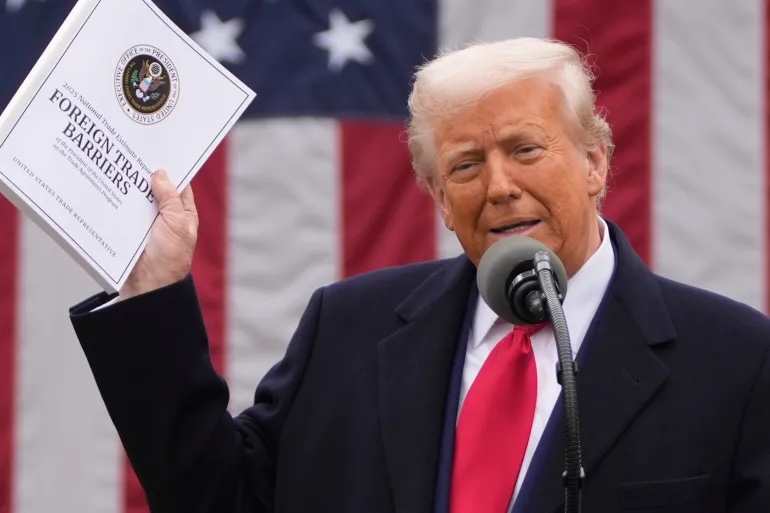
    The issue of trade surplus is now becoming the new nuisance in global affairs. Those who benefit from it support it; others protest. However, the discussion of this topic arises from actions by US President Trump, who is attempting to manipulate trade tariffs to influence global trade in favour of the American economy. While a trade surplus is usually seen as a positive sign of economic health because it indicates a country is exporting more than it imports, a persistent and large trade surplus, especially by major global players like China, has also generated geopolitical and economic tensions worldwide. A recent US Treasury report accused China of disrupting the global economic balance through its substantial trade surplus. This article critically examines the financial mechanisms behind trade surpluses, the strategic narratives of developed nations, and the counter-narratives of developing economies, with a particular focus on China.

    The latest semi-annual US Treasury report (June 2025) did not label China as a currency manipulator but criticised its lack of transparency in managing the renminbi. Instead, it added countries such as Ireland and Switzerland to its “monitoring list” based on trade surplus and intervention metrics. The report highlights China’s opaque exchange rate practices and suggests that intervention through state tools (e.g., sovereign wealth funds) should be more closely monitored.

    Western media and think tanks argue that China’s surplus fuels its industrial oversupply, causing global spillovers and structural trade imbalances. This has harmed local industries in emerging economies by flooding markets with cheap Chinese goods made in factories connected to the Belt and Road Initiative. As a result, many of these countries are now imposing anti-dumping duties to safeguard their domestic industries.

    China’s larger economic footprint means its external balance continues to significantly influence trading partners.
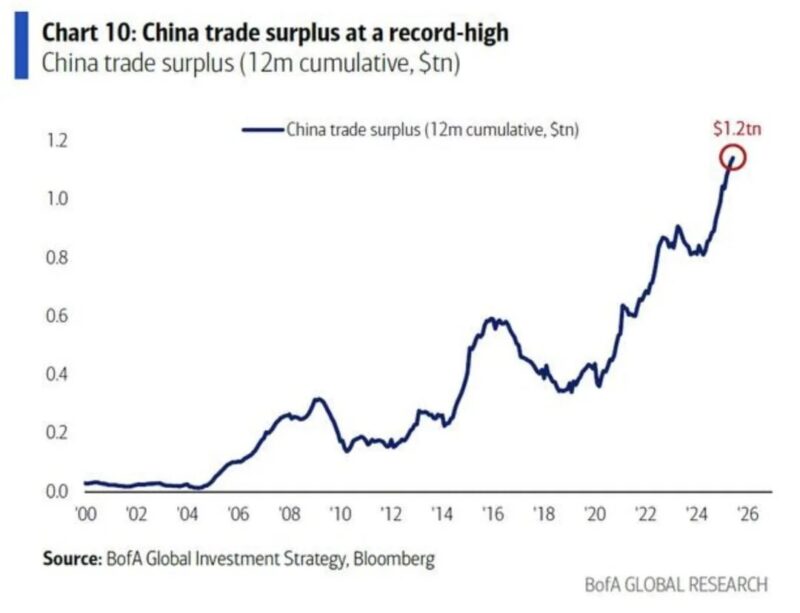
    For China, a trade surplus serves both as a consequence and a policy. The IMF contends that China’s surplus mainly stems from internal macroeconomic factors — such as weak household consumption and excess industrial capacity — rather than intentional export strategies or outright manipulation. Although this surplus rate is lower than at the peak of the “China shock” in the 2000s, China’s larger economic footprint means its external balance continues to significantly influence trading partners. IMF models suggest that weak domestic demand — driven by property downturns and low consumer confidence — has caused a decline in consumption in China and has pushed the real renminbi lower, which in turn enhances exports. This has further amplified the trade surplus.

    However, Western policymakers and scholars argue that Beijing’s industrial model, underpinned by subsidies and exchange rate policies, amplifies this surplus into a global oversupply and trade friction. Brookings researchers describe this as a “mercantilist trade policy,” characterised by low domestic consumption, state-driven subsidies, and a focus on exports. The resulting surplus—now larger relative to global GDP than during the 2008 peak—puts pressure on trading partners despite US tariffs that have failed to reduce the bilateral trade deficit.

    Statistical Distortions: “Missing Imports”

    The most revealing statistic is that from 2018 to 2024, official US data revealed a $66 billion reduction in imports from China, while Chinese records indicated a $91 billion increase in exports to the US, a discrepancy of $157 billion. Much of this is due to the US de minimis rule, which permits parcels valued at under USD 800 to enter the country duty-free and bypass detailed customs reporting. E-commerce giants like Temu and Shein exploit this loophole, and 1.36 billion de minimis parcels entered the US market in 2024 alone, most of which originated from China. This underreporting skews trade data, underestimating China’s market reach and downplaying the structural impact of the surplus.

    Global Spillovers and E-commerce Consequences

    These surplus-driven shipments have severely impacted U.S. domestic retailers. However, bricks-and-mortar firms face import duties, labour regulations, intellectual property standards, and environmental rules. They cannot compete with low-value imports, which are not subject to duties or other regulations. Recent changes in U.S. policy have directly addressed the de minimis loophole, and an exemption for low-value Chinese imports was removed as of 2 May 2025, causing parcel duties to rise to 145%. This has caused small U.S. retailers to halt shipments, and platforms like Temu have been using local warehouses to circumvent fees, only to have the policy to be temporarily rolled back on May 14, highlighting the unstable political climate surrounding e-commerce regulation.

    Impact on Emerging Economies
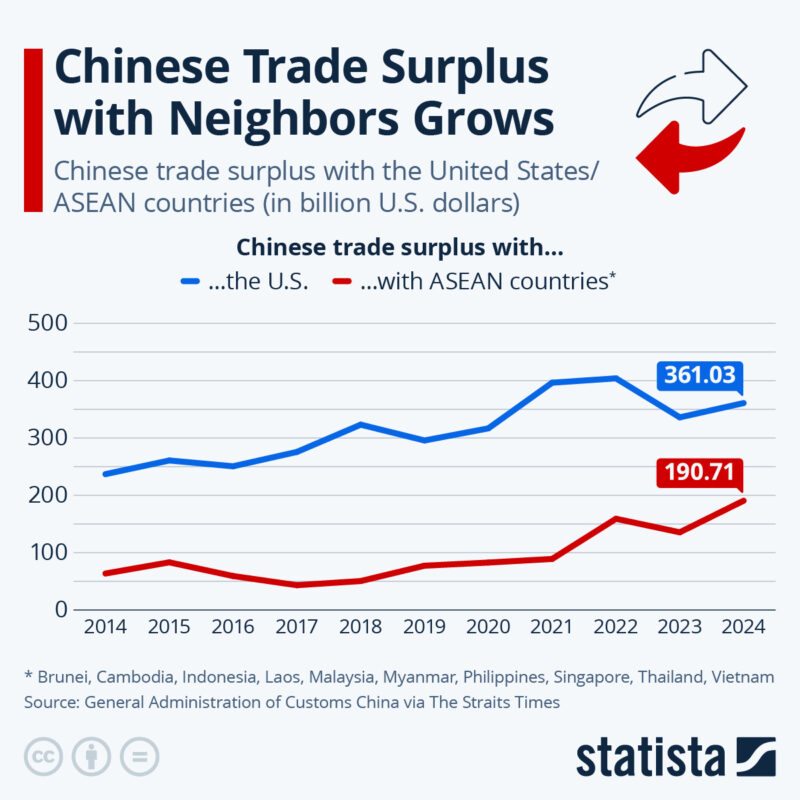
    Developing countries are increasingly feeling the impact of China’s surplus-led export model. According to the World Bank, two-thirds of developing economies are expected to see their GDP growth slow from 4.2 per cent to 3.8 per cent by 2025, due to ongoing trade frictions, particularly between the US and China. Inexpensive Chinese goods, whether cheaper solar panels, electronics, or textiles, also pose a threat to emerging markets, and many are fighting back with anti-dumping duties and trade defence measures. At the same time, countries like Brazil, Indonesia, South Africa, and India have imposed tariffs, launched dumping investigations, and reconsidered their trade dependencies. Even countries that are traditionally aligned with China are concerned about the surging Chinese exports. An additional concern is that FDI in developing countries has declined to its lowest level since 2005, reaching just $435 billion in 2023. There is a risk that investment will fall further, raising concerns about investment, infrastructure, and poverty reduction.

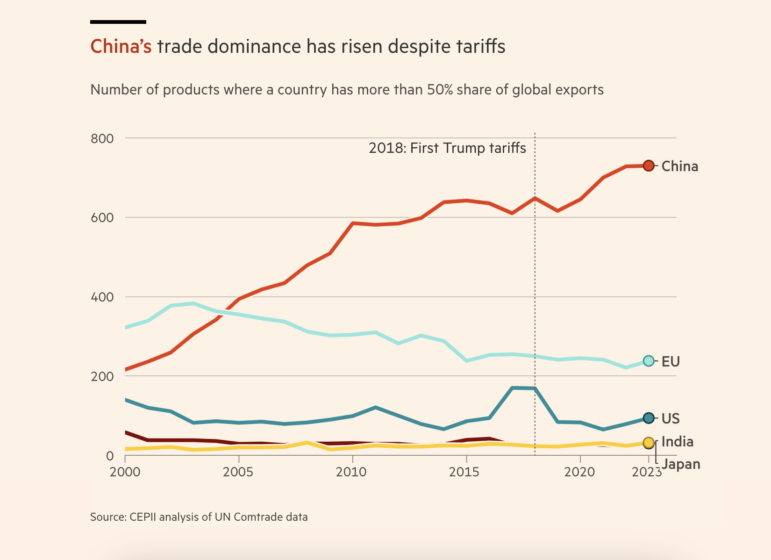
    The Times article explains that Donald Trump’s tariffs did not reduce Chinese imports. Even with highly aggressive tariffs, the share of U.S. imports from China decreased by only 7 to 8 percentage points from 2018 to 2024, although industry estimates suggest that the actual fall in Chinese-origin goods entering U.S. supply chains is smaller (perhaps around 3 to 4 percentage points), due to relabelling and third-party routing.

    This raises stark questions about the effectiveness of the counter-tariff cycle. The overall outcome of this tariff war is simply a confusing and panicked state of affairs. The Times article explains that Donald Trump’s tariffs did not reduce Chinese imports. Even with highly aggressive tariffs, the share of U.S. imports from China decreased by only 7 to 8 percentage points from 2018 to 2024, although industry estimates suggest that the actual fall in Chinese-origin goods entering U.S. supply chains is smaller (perhaps around 3 to 4 percentage points), due to relabelling and third-party routing.

     Theoretical perspectives

    Dependency Theory and the Prebisch–Singer Hypothesis argue that developing countries experience declining terms of trade because they focus on primary goods, whereas industrialised nations retain advantages in high-value manufacturing. However, China has challenged this idea by dominating global markets in both primary and advanced products. As a result, we might reasonably conclude that even rising industrial powers, when driven by surplus, tend to uphold the global structures of dependency. Models like Unequal and Ecologically Unequal Exchange demonstrate how trade surpluses frequently involve a systematic undervaluation of labour and environmental costs in poorer countries, redirecting wealth to the Global North.

    These theories emphasise how global trade undervalues labour, worsens resource extraction, and causes environmental degradation, thereby transferring wealth from peripheral to core countries. Research suggests that Chinese-led global supply chains contribute to environmental damage and resource depletion in exporting countries, externalising ecological costs, which worsens the structural disadvantages for those nations. China’s GVC-enabled export surge often externalises ecological costs to commodity-exporting nations.

    Macroeconomic accounting theory states that a capital account deficit indicates a trade surplus, which means that for China, this results in capital inflows. Consequently, China needs to impose tight controls on its currency to maintain financial stability. With a current account surplus of approximately 3% of GDP, global capital flows, combined with managed exchange rates and the accumulation of foreign reserves—mainly US Treasuries—demonstrate structural policies designed to keep the renminbi weak and direct money into Western securities.

    The current trade environment is shaped by negotiation frameworks, such as the US–China truce, and tools, such as WTO rules and anti-dumping procedures. However, the US is now expanding its pressure on Europe, targeting its large goods surplus and digital tax regimes in an effort to rebalance trade.

    Global Debate
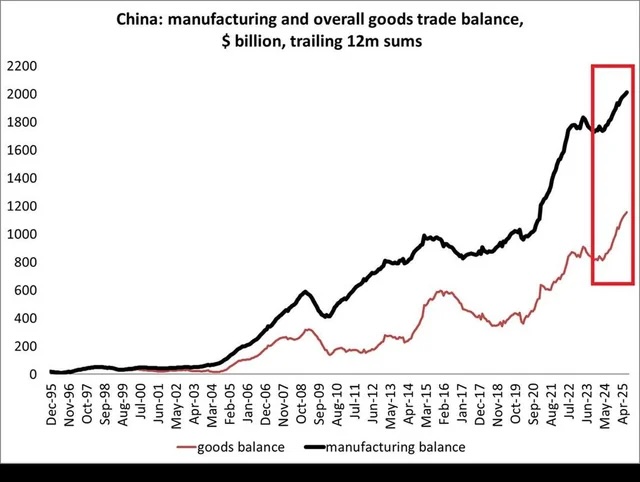
    IMF chief economist Pierre Olivier Gourinchas emphasised that “external balances are determined by macroeconomic fundamentals, not the link to trade and industrial policy, which is more tenuous”. The IMF analysis from the spring meetings similarly implies that internal imbalances (such as differences in savings and investment) influence external current account outcomes, and that China’s surplus reflects its high savings rate, low consumption, and industrial overcapacity. Therefore, while US officials describe China’s trade surplus as a sign of mercantilist excess, IMF analysis reminds us that external imbalances are a reflection of underlying macroeconomic divisions: in China’s case, a high savings rate, low consumption, and industrial overcapacity.

    Inderjit Gill, Chief Economist and Senior Vice President for Development Economics at the World Bank, said: “In the rest of the world, the developing world is now a development-free zone.”

    Surplus narratives are tools of structural power: while developed nations try to portray surplus as distortion, dumping, and manipulation to justify tariffs, subsidies, and monitoring, developing countries aim to reframe them as ecological exchange and dependency to highlight systemic inequalities

    Growth in developing economies, which has ratcheted down from 6 per cent in the 2000s to 5 per cent in the 2010s, and then to less than 4 per cent in the 2020s, mirrors the decline in global trade growth, from 5 per cent in the 2000s to around 4.5 per cent in the 2010s, and below 3 per cent in the 2020s. This illustrates the bilateral nature of the trade surplus. First, fundamentally, surplus narratives are tools of structural power: while developed nations try to portray surplus as distortion, dumping, and manipulation to justify tariffs, subsidies, and monitoring, developing countries aim to reframe them as ecological exchange and dependency to highlight systemic inequalities.

    China promotes an alternative narrative about its surplus, arguing that it stems from genuine investment, state-led development, and economies of scale, rather than protectionism or currency manipulation. Belt and Road infrastructure is presented as development, not geopolitical trap – although critics raise concerns of “debt-trap diplomacy”.

    Interestingly, in the decades preceding China’s emergence as a major exporter, from the end of World War II to the early 1970s, the United States ran trade surpluses, primarily due to its industrial strength and its role as a key exporter in the global market —a position China has only recently assumed.

    A paper by Robert Stehrer titled “What Is behind the US Trade Deficit?” published in ‘The Vienna Institute for International Economic Studies’ (WIW), traces the historical US trade deficit back to the 19th century and places it in a global context. A reading of it would show a broader narrative at play.

    Policy Roadmap

    Stricter transparency rules are essential to close statistical loopholes and create a level playing field by mandating the disclosure of foreign exchange interventions and de minimis trade flows (such as e-commerce transactions below US$800). These flows can artificially keep a country’s exports cheap and imports expensive, thereby inflating its trade surplus. Countries with persistent surpluses (exceeding 3% of GDP) should participate in a dialogue-based “Global Adjustment Protocol” that includes concessional finance for structural reforms, aiming to strike a balance between conditionality and developmental needs.

    One crucial step in this direction would be to include a green surplus index as part of a Green Current Account Score, which measures environmental degradation and natural resource depletion, thereby aligning surplus behaviour with sustainability goals.

    The urgent need is for reform of international organisations, liberating the IMF and WTO from Western dominance, transforming them into genuinely global entities or replacing them with organisations like the BRICS bank (NDB) and AIIB. Additionally, they should be empowered with greater authority to monitor global imbalances and suggest corrective measures, such as managing capital flows instead of imposing unilateral tariffs. This would help streamline WTO procedures, reducing delays, and defend policy space—such as supporting trade defence measures (anti-dumping duties, safeguards) by emerging economies.

    Conclusion:

    This article argues, through an economic analysis of current trade affairs, how hegemonic powers manipulate the political landscape. Trade surpluses are not merely economic aggregates—they are narrative tools in international power politics, with developed countries portraying surpluses as dumping or currency manipulation to justify tariffs and regulatory barriers. Conversely, surplus nations (both developed and emerging) describe their surpluses as the result of sound investments, economies of scale, and effective state guidance.

    From the macroeconomic surplus in the economy to the underreported e-commerce inflows, the reality of modern trade imbalances is far more complex than what mercantilist rhetoric suggests. An analysis of China’s experience demonstrates this point. The next phase of global trade reforms should emphasise transparency, robust multilateral regulations, and ecological responsibility. Beyond mercantilist rhetoric, there is a need for systemic frameworks that accurately reflect economic realities and sustainable goals—only then can tensions caused by surpluses be managed in a balanced and lasting manner.


     References:


    Feature Image Credit: Aljazeera.com

    Graphs Credits: Reddit; Financial Times; Statista
  • Why Nations succeed or fail: a Nobel cause

    Why Nations succeed or fail: a Nobel cause

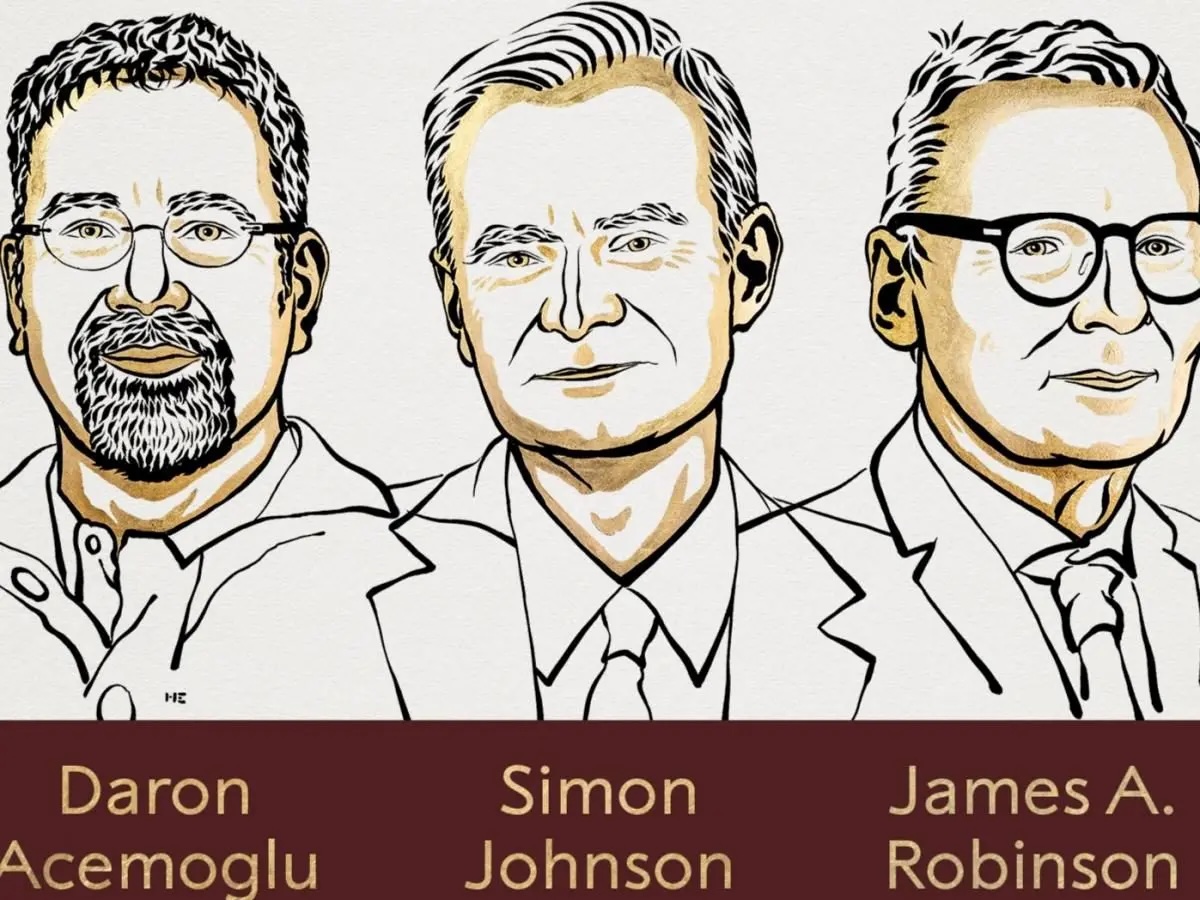
    Daron Acemoglu, Simon Johnson and James A Robinson have been awarded the Nobel (really the Riksbank prize) in economics “for studies of how institutions are formed and affect prosperity.” Daron Acemoglu is a professor at the Massachusetts Institute of Technology. Simon Johnson is a professor at the same university. And James Robinson is a professor at the University of Chicago.

    Here is what the Nobel judges say was the reason for winning:

    Today, the richest 20 percent of countries are around 30 times wealthier than the poorest 20 percent of countries. The income gaps across countries have been highly persistent over the past 75 years.39 The available data also show that between-country disparities in income have grown over the past 200 years. Why are the income differences across countries so large and so persistent?

    This year’s Laureates have pioneered a new approach to providing credible, quantitative answers to this crucial question for humanity. By empirically examining the impact and persistence of colonial strategies on subsequent economic development, they have identified historical roots for the extractive institutional environments that characterize many low-income countries. Their emphasis on using natural experiments and historical data has initiated a new research tradition that continues to help uncover the historical drivers of prosperity, or lack thereof.

    Their research centers on the idea that political institutions fundamentally shape the wealth of nations. But what shapes these institutions? By integrating existing political science theories on democratic reform into a game-theoretic framework, Acemoglu and Robinson developed a dynamic model in which the ruling elite make strategic decisions about political institutions—particularly whether to extend the electoral franchise—in response to periodic threats. This framework is now standard for analyzing political institutional reform and has significantly impacted the research literature. And evidence is mounting in support of one of the model’s core implications: more inclusive governments promote economic development.

    Over the years (or is it decades?) I have posted on the work of various Nobel winners in economics.

    What I have found is that, whatever the quality of the winner’s work, he or she (occasionally) usually got the prize for their worst piece of research, namely work that confirmed the mainstream view of the economic world, while not actually taking us further into understanding its contradictions.

    This conclusion I think applies to the latest winners. The work for which they received the $1m prize is for research that purports to show that those countries that achieve prosperity and end poverty are those that adopt ‘democracy’ (and by that is meant Western-style liberal democracy where people can speak out (mostly), can vote for officials every so often and expect the law to protect their lives and property (hopefully). Societies that are controlled by elites without any democratic accountability are ‘extractive’ of resources, do not respect property and value and so over time do not prosper. In a series of papers applying some empirical analysis (ie correlating democracy (as defined) with levels of prosperity), the Nobel winners claim to show this.

    Indeed, the Nobel winners argue that colonisation of the Global South in the 18th and 19thcenturies could be ‘inclusive’ and so turn the likes of North America into prosperous nations (forgetting the indigenous population) or ‘extractive’ and so keep countries in dire poverty (Africa). It all depends. Such is the theory.

    This sort of economics is what is called institutional, namely that it is not so much the blind forces of the market and capital accumulation that drives growth (and inequalities), but the decisions and structures set up by humans. Supporting this model, the winners assert that revolutions precede economic changes and not that economic changes (or the lack thereof before a new economic environment) precede revolutions.

    Two points follow from this. First, if growth and prosperity go hand in hand with ‘democracy’ and the likes of the Soviet Union, China, and Vietnam are considered to have elites that are ‘extractive’ or undemocratic, how do our Nobellists explain their undoubted economic performance? Apparently, it is explained by the fact they started out poor and had a lot of ‘catching up’ to do, but soon their extractive character will catch up with them and China’s hyper-growth will run out of steam. Perhaps now?

    Second, is it correct to say that revolutions or political reforms are necessary to set things on the path to prosperity? Well, there may be some truth in that: would Russia in the early 20thcentury be where it is today without the 1917 revolution or China be where it is in 2024 without the revolution of 1949? But our Nobellists do not present us with those examples: theirs are getting the vote in Britain in the 19th century or independence for the American colonies in the 1770s.

    But surely, the state of the economy, the way it functions, the investment and productivity of the workforce also have an effect? The emergence of capitalism and the industrial revolution in Britain preceded the move to universal suffrage. The English Civil War of the 1640s laid the political basis for the hegemony of the capitalist class in Britain, but it was the expansion of trade (including in slaves) and colonisation in the following century that took the economy forward.

    The irony of this award is that the best work of Acemoglu and Johnson has come much more recently than in the past works that the Nobel judges have focused on. Only last year, the authors published Power and Progress , where they pose the contradiction in modern economies between technology driving up the productivity of labour but also with the likelihood of increased inequality and poverty. Of course, their policy solutions do not touch on the question of a change in property relations, except to call for a greater balance between capital and labour.

    What you can say in favour of this year’s winners is that at least their research is about trying to understand the world and its development, instead of some arcane theorem of equilibrium in markets that many past winners have been honoured for. It’s just that their theory of ‘catching up’ is vague (or ‘contingent’ as they put it) and unconvincing.

    I think we have a much better and more convincing explanation of the processes of catching up (or not) from the recent book by Brazilian Marxist economists Adalmir Antonio Marquetti, Alessandro Miebach and Henrique Morrone who have produced an important and insightful book on global capitalist development, with an innovative new way of measuring the progress for the majority of humanity in the so-called Global South in ‘catching up’ on living standards with the ‘Global North’. This book deals with all the things that the Nobel winners ignore: productivity, capital accumulation, unequal exchange, exploitation—as well as the key institutional factor of who controls the surplus.


  • Recalibrating India’s Act East Policy: New Realities in Myanmar and Bangladesh

    Recalibrating India’s Act East Policy: New Realities in Myanmar and Bangladesh

    On 23 September 2024, Reuters published a news item quoting unnamed sources that said that India had ‘ invited political and military opponents of Myanmar’s ruling junta to attend a seminar in New Delhi. Even as the lack of corroboration of such a report puts it in the realm of conjecture, it is worthwhile mulling over the motivations or otherwise for such a seminal event to be even contemplated, especially in the light of implications for India’s Act East Policy.


    TPF Occasional Paper: 10/2024

    Recalibrating India’s Act East Policy: New Realities in Myanmar and Bangladesh

    Maj Gen Alok Deb (Retd)

    On 23 September 2024, Reuters published a news item quoting unnamed sources that said that India had ‘ invited political and military opponents of Myanmar’s ruling junta to attend a seminar in New Delhi’[i]. The item went on to specify that the shadow National Unity Government (NUG) and ethnic minority rebels from the states of Chin, Rakhine and Kachin bordering India had been invited to a seminar in mid-November, to be hosted by the Delhi-based Indian Council of World Affairs (ICWA), a foreign policy think tank funded by the Government of India. The piece was also carried by some major Indian newspapers with its origin attributed to Reuters. At the time of writing, there has been no acknowledgement or rebuttal of this report by any government agency. Neither has the ICWA posted this on its website as a forthcoming event. Even as the lack of corroboration of such a report puts it in the realm of conjecture, it is worthwhile mulling over the motivations or otherwise for such a seminal event to be even contemplated, especially in the light of implications for India’s Act East Policy.

    A Summary of India’s Act East Policy

    India’s ‘Act East’ policy of 2014 is an initiative that takes off from its earlier ‘Look East’ policy. ‘Act East’ envisages initiatives at multiple levels with the nations of ASEAN and the wider Indo-Pacific region. These initiatives are to be taken forward through a process of continuous engagement at bilateral, regional and multilateral levels, thereby providing enhanced connectivity in its broadest sense, including political, economic, cultural and people-to-people relations.[ii]

    To successfully implement the ‘Act East’ policy, the Indian government is working to make the North East its strategic gateway to ASEAN. Accordingly, it has increased the allocation for the region’s development by more than four times over the last 10 years.[iii]  The North East is also poised to benefit from initiatives from countries like Japan which earlier this year had proposed developing an industrial hub in Bangladesh with supply chains to the North East, Nepal and Bhutan.[iv]

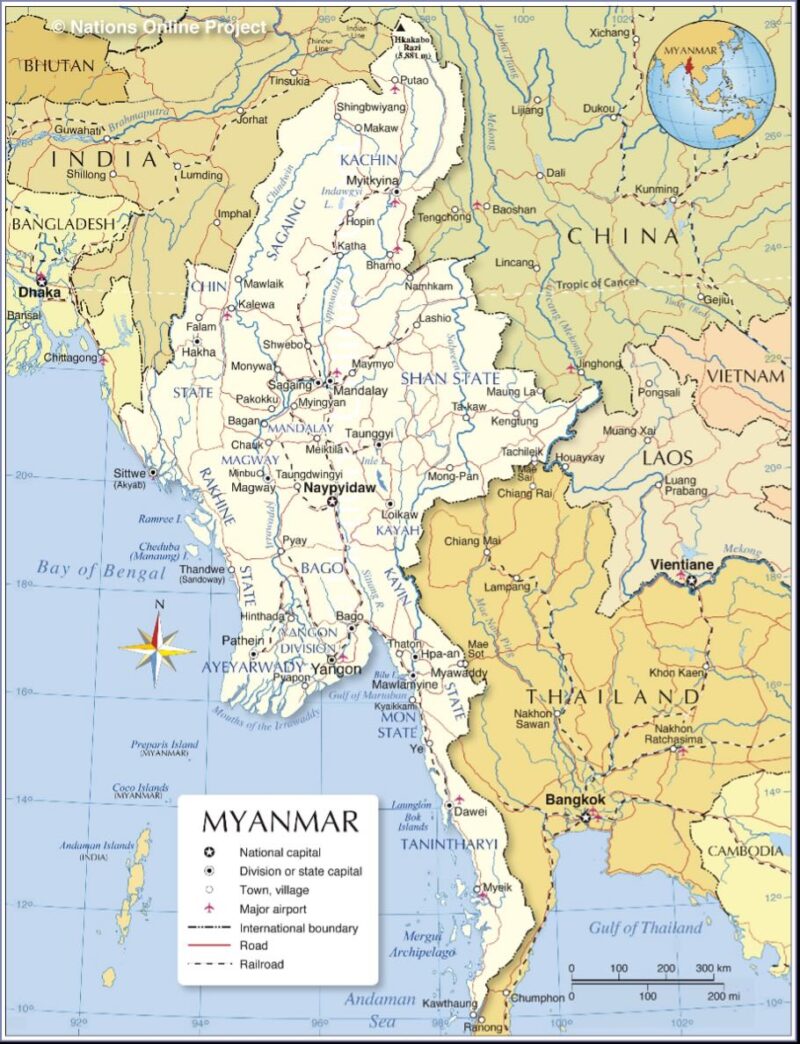
    As the North East becomes India’s gateway to ASEAN,  the centrality of Myanmar to our Act East becomes apparent. It is the key link in the road connectivity between India’s North East and other ASEAN nations whereby the free flow of inland goods, services and other initiatives to and from these nations to India can be ensured. The success or otherwise of Act East is thus directly affected by the security environment in Myanmar. Instability here will negatively impact our North Eastern states sharing borders with that country. The internal situation in Myanmar therefore becomes an area of prime concern for India, warranting close attention.

    For similar reasons, another neighbour, Bangladesh, is equally important for the success of India’s Act East Policy. India’s North East has benefitted from good ties with Bangladesh, both security-wise and economically. Militancy in the North East has reduced over the last decade and a half. With Bangladesh agreeing to provide access to its ports in the Bay of Bengal for the movement of Indian goods, the North Eastern states have a shorter route to the sea. Additionally, states bordering Bangladesh such as Assam and Meghalaya have developed trade links with that country for mutual benefit. The  BBIN (Bangladesh Bhutan India Nepal) Motor Vehicle Agreement for the Regulation of Passenger, Personal and Cargo Vehicular Traffic was signed in 2015 to ‘ promote safe, economically efficient and environmentally sound road transport in the sub-region andfurther help each country in creating an institutional mechanism for regional integration’  is another mechanism for implementing our Act East and Neighbourhood First policies[v]. The role of Bangladesh here is pivotal.

    State of the Civil War in Myanmar

    Fighting in Myanmar is now in its fourth year. The military junta continues to suffer reverses on the battlefield. Large portions of Rakhine State and certain portions of Chin State are now under the control of the Arakan Army (AA). International Crisis Group has recently averred that ‘..in just a few months, the Arakan Army has created the largest area in Myanmar under the control of a non-state armed group – in terms of both size and population – and is now on the verge of securing almost all of Rakhine[vi].

    In Shan state to the North, the Three Brotherhood Alliance (TBA) of three Ethnic Armed Organisations (EAOs) had by December 2023, captured over 20,000 square kilometres of territory, including key border crossings and trade routes between China and Myanmar in Operation 1027[vii].  On 07 March 2024, the Kachin Independence Army (KIA) launched Operation 0307 and successfully captured certain military posts across  Kachin State close to the Chinese border. This forced the Tatmadaw (Myanmar military) to redeploy, further thinning out forces[viii]. Fighting also continues in other states and regions across the country, notably Sagaing and Kayah.

    Associated Press deduces that ‘.. the announcement of the measure on state television amounts to a major, though tacit, admission that the army is struggling to contain the nationwide armed resistance against its rule..’.The Junta has since conscripted Rohingya youth and deployed them against the Rakhines. 

    Notwithstanding these losses, there is no let-up in the Tatmadaw’s efforts to combat the rebels. The Junta has resorted to conscription to stem rising attrition, activating an old law in this regard. Associated Press deduces that ‘.. the announcement of the measure on state television amounts to a major, though tacit, admission that the army is struggling to contain the nationwide armed resistance against its rule..[ix] To further contextualise, the same article stated the rebel National Unity Government’s (NUG) claim that more than 14,000 troops have defected from the military since the 2021 seizure of power. The Junta has since conscripted Rohingya youth and deployed them against the Rakhines. The Chins fear that they too will be acted upon similarly.[x]

    To overcome the asymmetry of force especially in artillery and airpower, the rebels have acquired large numbers of drones. These are being used to bomb military positions, contributing significantly towards the successes of the CNA’s operations[xi].  To summarise, Myanmar’s civil war continues to see-saw with no signs of ebbing. The Junta continues to make periodic peace overtures to the NUG with conditionalities that the latter is unwilling to accept[xii]. With the multiplicity of actors and issues involved, there are no clear indications of how and when the conflict will be resolved.

    Impact of the  Myanmar Conflict on India’s North-East

    The impact of Myanmar’s internal situation on India’s border states has progressively worsened. Initially, after the Junta takeover, it was Mizoram which bore the brunt. The state government citing common ethnicity and humanitarian concerns accepted the influx of Chins from Myanmar as a moral responsibility and initiated rehabilitation measures. These refugees along with earlier refugees from Bangladesh recently joined Kukis from Manipur, number around 44000 and continue to remain in refugee camps.[xiii] The Central government has had to reconcile its policy of preventing infiltration across borders with the societal realities of Mizoram. A positive outcome of this approach is that there has been no violence in Mizoram.

    In Manipur, by September 2024, the 18-month-long ethnic conflict had resulted in over 225 deaths and some 60,000 people displaced.[xiv] The administration has been derided by both sides, more so with recent warnings about impending threats to law and order[xv] followed by retractions[xvi]. People of either community have been uprooted from their homes and moved to safe areas separated by buffer zones guarded by security forces.  So great is the mutual suspicion that on the clamour of the Meiteis to replace the Assam Rifles, two battalions of this central force have been withdrawn and replaced by the Central Reserve Police Force (CRPF), against the wishes of the Kukis[xvii].

    Voices for an independent ‘Kukiland’ for the Kuki Zo peoples are being raised,[xviii] which are variously interpreted as a demand for greater autonomy within Manipur or for a separate union territory. The current happenings also dredge up the old ghost of ‘Zale’n-gam’ or Kuki nation, comprising the Chin Kuki Zomi peoples (including Mizos) residing across India, Bangladesh and Myanmar. Zale’n- gam has few takers and appears restricted to a YouTube channel[xix]. Today both sides fight each other with a variety of weapons including improvised rockets and drones. Hostage-taking is the latest tactic that has been adopted.[xx]

    Tension between the Nagas of Manipur and other communities is discernible with some reports of violence against the former.[xxi] As of now Nagas have kept out of the Kuki-Meitei dispute; also, other than the insurgent National Socialist Council of Nagaland ( Isak Muviah) faction (NSCN-IM) that is observing a ceasefire with the Centre, no other party has demanded integration of all Naga inhabited areas in India ( Arunachal Pradesh, Assam, Manipur) and Myanmar – the idea of  Greater Nagalim.

    At the state level, the responses of Mizoram and Manipur to the Myanmar crisis vary. This can be best seen in their reactions to the Centre’s recent notification to fence the entire 1643 Km Myanmar border and its earlier decision to end the Free Movement Regime that permits movement on both sides of the border for up to a distance of 16 km.[xxii]  While the Mizoram government and tribes living in both states oppose the decisions, the Manipur government clamours for its implementation. Currently, only around 30 Km of the border has been fenced.

    Since the Tatmadaw now has limited control over its border areas, it has become imperative for India to commence a structured dialogue with other warring parties in Myanmar’s border regions. This, with a view to restoring the situation in Manipur (and on the border) through mutually acceptable solutions at least for the short to medium term, is necessary. Only then can a modicum of security on the border be guaranteed. This involves navigating a maze of ethnic, religious, historical and societal issues with great sensitivity. The importance of such a dialogue cannot be overemphasised, more so because of recent developments in Bangladesh.

    The Impact of Bangladesh’s ‘Second Liberation’

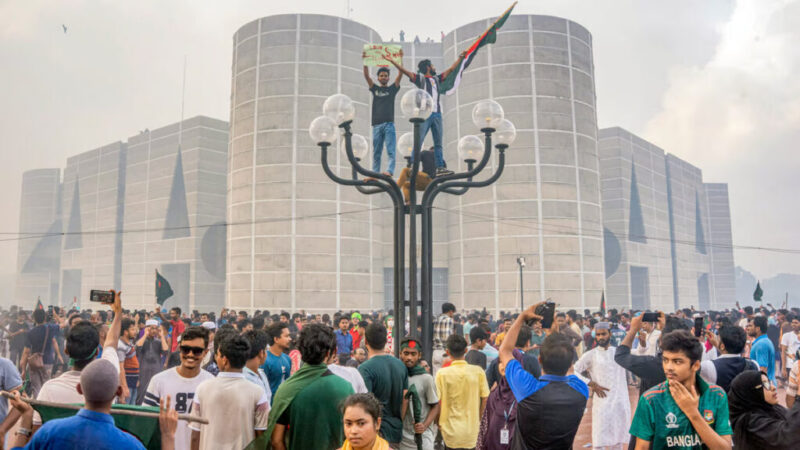
    The events of 5 August 2024  that witnessed the overthrow of Sheikh Hasina’s government have proved to be yet another watershed in India-Bangladesh relations. India has invested more in the India-Bangladesh relationship than with any other neighbour in South Asia. A glance at the website of our Ministry of External Affairs[xxiii], where details of various agreements and summaries from the last Prime Ministerial meeting in Delhi in June 2024 are provided, will suffice to show just how strong and all-encompassing this relationship has become.

    Persons or organisations associated with the previous regime have either fled the country or been placed under arrest and assets confiscated. A few have been killed by mobs. Bank accounts of others have been frozen. Jamaat e Islami which collaborated with the Pakistan Army in 1971 has been resurrected. Extremists with proven murder charges against them have been freed from prison, as have political prisoners.

    At the time of writing, it is two months since the interim government headed by Chief Advisor Mohammed Yunus assumed charge.  The country continues to make efforts to reestablish the rule of law. All wings of the armed forces have been given magisterial powers[xxiv]. The functioning of the judiciary, higher civil services, local administration, police, security agencies, banking, economy, and higher education, is under review. Persons or organisations associated with the previous regime have either fled the country or been placed under arrest and assets confiscated. A few have been killed by mobs. Bank accounts of others have been frozen.[xxv] The Jamaat e Islami which collaborated with the Pakistan Army in 1971 has been resurrected. Extremists with proven murder charges against them have been freed from prison, as have political prisoners. Commissions have been set up to suggest reforms in the constitution, electoral system, police, judiciary, public administration and in tackling corruption.  Elections do not seem to be on the horizon yet. The advisers ( as the ministers are currently known) are new faces, not well known in India.

    While this paper does not attempt to be a study of India-Bangladesh relations, the polarised politics in that country coupled with a perception that the misdeeds of Sheikh Hasina’s government were conducted with impunity because of Indian backing, is sure to impact India’s portrayal here.

    With the removal of Sheikh Hasina, the India-Bangladesh relationship is undergoing a major reset. Statements of certain public figures and sentiments of a section of the population in that country suggest that a different perspective on the evolution of Bangladesh as a nation from 1971 onwards is emerging. While this paper does not attempt to be a study of India-Bangladesh relations, the polarised politics in that country coupled with a perception that the misdeeds of Sheikh Hasina’s government were conducted with impunity because of Indian backing, is sure to impact India’s portrayal here. This will make it an arduous task for both countries to go back to the trusted, cooperative and mutually beneficial relationship that existed. As mentioned, the list of achievements for both countries is far too numerous –  settlement of land and oceanic borders,  road, rail and riverine connectivity (including use of ports), economy and business ( both government and private), education including educational scholarships, technology, disaster management, border management, maritime security, military to military cooperation, improved people to people contacts, culture and health. As per records, of the 16 lakh visas issued by India for Bangladesh nationals in 2023, 4.5 lakhs were for medical treatment alone[xxvi]. Economies are so embedded that everyday necessities like onions are exported regularly to Bangladesh ( approximately 6 to 7 lakh tonnes annually).

    Even as the new regime provides assurances on the security of minorities and acknowledges India as an important neighbour, the enthusiasm with which it has interacted with official interlocutors from a host of nations worldwide especially China, Pakistan and the US is noteworthy and indicates where its newfound priorities might lie.

    A parallel reality, however, is that negative perceptions about India have historically found space in sections of Bangladesh’s polity. These have received a huge fillip after the change of regime with even settled agreements prone to misunderstanding. A recent example pertains to a tripartite agreement dating back to the Hasina period whereby electricity is to be imported from Nepal via India to Bangladesh. The agreement was signed in Kathmandu in the first week of  October 2024. Newspaper reports from Bangladesh indicate that there is palpable resentment over the condition that Indian transmission systems inside Indian territory be utilised for this purpose since it increases costs per unit of electricity in Bangladesh.[xxvii] Another issue currently bedevilling relations is the state of minorities in Bangladesh who have faced attacks on their homes, businesses and religious places with some loss of life, since the protests in July. India’s concerns in this regard have been conveyed at the highest level. Even as the new regime provides assurances on the security of minorities and acknowledges India as an important neighbour, the enthusiasm with which it has interacted with official interlocutors from a host of nations worldwide especially China, Pakistan and the US is noteworthy and indicates where its newfound priorities might lie.

    Larger Implications for India

    Bangladesh and Myanmar are pivotal for India’s Act East policy from the security, economic and connectivity angles. The issues pertaining to Myanmar and Manipur have been brought out earlier. A common concern affecting both nations and  India is the Rohingya crisis. Despite international pressure and requests from Bangladesh for China to intercede with Myanmar on its behalf, there has been no positive response from Myanmar. Bangladesh, which currently hosts close to one million refugees,[xxviii] has publicly expressed its inability to accommodate any more Rohingyas and asked for a speedy ‘third country settlement’ [xxix]. A detailed report of the International Crisis Group (ICG) in October 2023[xxx]provides details of activities of militant organisations like the Rohingya Solidarity Organisation (RSO) and Arakan Rohingya Salvation Army (ARSA) which are involved in drug running from Myanmar along with Bangladeshi syndicates for sale of the product in that country. Their participation in violent crime and other illegal activity has become a pressing concern within Bangladesh. Rohingyas have infiltrated into India as well, and have been identified as far North as Jammu. The security implications of such migration for both Bangladesh and India are apparent. The insensitivity of the Myanmar Junta on this account is heightening security risks for India and Bangladesh and merits diplomatic intervention.

    With the situation in Bangladesh evolving by the day, it is prudent for India to take a strategic pause as it weighs its options for pursuing its Act East policy. While giving the new regime in Bangladesh its due, India has to consider the impact of resurgent forces aided by inimical powers that aim to derail the India-Bangladesh relationship beyond repair. Even as both countries attempt to reestablish strong ties, the old adage preached by educated Bangladeshis in the context of support to Sheikh Hasina’s regime that ‘India should not put all its eggs in one basket’ resonates. While Myanmar geographically cannot provide the singular advantages that Bangladesh can, it is time for India to press for securing Myanmar’s cooperation to complete pending projects in that country, such as the Kaladan Multi-Modal Port Project (KMMPP) via Sittwe and Paletwa, that provides an alternate route to our North East, as well as the Trans Asian Highway (TAH) that provides connectivity with the rest of ASEAN, amongst others.

    To summarise, two possible reasons for inviting rebel Myanmar groups to Delhi could be: first, the relative viability of either Bangladesh or Myanmar to help implement the Act East policy in light of the emerging situation in Bangladesh and the state of the civil war in Myanmar. The second, ensuring security on the India-Myanmar border, to prevent aggravating the situation in India’s border states.


    Notes:

    [i] ‘Exclusive: India extends unprecedented invite to Myanmar’s anti-junta forces, sources say’ Wa Lone and Devjyot Ghoshal Reuters September 23, 2024

    [ii] ‘Govt aims to make Northeast gateway of ‘Act East Policy’: President Murmu’ Press Trust of India 27 June 2024.

    [iii] Ibid.

    [iv] ‘Japan to tie landlocked Northeast India with Bangladesh’  Saleem Samad  The Daily Messenger 05 March 2024.

    [v] Press Information Bureau Government of India Ministry of Shipping note dated  10 June 2015

    ‘Bangladesh, Bhutan, India and Nepal (BBIN) Motor Vehicle Agreement for the Regulation of Passenger, Personal and Cargo Vehicular Traffic amongst BBIN’

    [vi]   ‘Breaking Away: The Battle for Myanmar’s Rakhine State Asia Report N°339 | 27 August 2024’ International Crisis Group (Executive Summary).

    [vii]   ‘As Myanmar’s Junta Loses Control in the North, China’s Influence Grows’  Jason Tower, United States Institute for Peace, August 1, 2024.

    [viii] Ibid.

    [ix]   ‘Facing setbacks against resistance forces, Myanmar’s military government activates conscription law ‘ Associated Press, February 12, 2024.

    [x] ‘India’s ‘Forgotten Partition’ and the Myanmar Refugee Crisis’  Swapnarka Arnan The Diplomat  11 May 2024.

    [xi] ‘We killed many … drones are our air force’: Myanmar’s rebels take on the junta from above. Aakash Hassan and Hannah Ellis-Petersen  The Observer 20 January 2024.

    [xii] ‘Armed Groups Snub Myanmar Junta ‘Peace’ Offer’  The Irrawaddy 28 September 2024

    [xiii] ‘Centre provides 1,379 MT rice to Mizoram for Manipur, Myanmar, B’desh refugees’ Morung Express 25 September 2024.

    [xiv] ‘Ethnic violence in India’s Manipur escalates, six killed’  Tora Agarwala Reuters  September 7, 2024

    [xv] ‘900 Kuki militants infiltrated Manipur from Myanmar, says Security Advisor’ India Today NE September 20 2024.

    [xvi] ‘Input on infiltration by 900 Kuki militants could not be substantiated on the ground, says Manipur security advisor’ Vijaita Singh The Hindu 26 September 2024.

    [xvii] ‘Kukis call removal of Assam Rifles from 2 Manipur areas ‘biased, appeasement’, Meiteis call it ‘victory’  Ananya Bhardwaj  The Print 04 August 2024.

    [xviii]‘ Manipur: Kuki-Zo organizations hold rallies, demand separate ‘Kukiland’ for peace  by Northeast News

    August 31, 2024.

    [xix] YouTube channel titled ‘Zalengam Media’.

    [xx] ‘Kuki militants seek release of ‘secessionist’ in Manipur’ Prawesh Lama and Thomas Ngangom Hindustan Times Sep 30, 2024.

    [xxi] ‘Keep us out of your war, Manipur Naga body warns two warring communities’  The Hindu Bureau 06 February 2024

    [xxii] ‘Government sanctions ₹31,000 crore to fence Myanmar border’   The Hindu

    Published – September 18, 2024

    [xxiii] Ministry of External Affairs, Government of India website mea.gov.in.

    [xxiv] ‘Navy, the air force also granted magistracy powers’  The Daily Star September 30 2024

    [xxv] ‘Bank accounts of Joy Putul Bobby frozen’ Dhaka Tribune 30 Sep 2024.

    [xxvi] ‘Indian High Commission in Dhaka, facing protests & threats, returns 20,000 visa applicants’ passports ‘ Ananya Bhardwaj  The Print   29 September 2024.

    [xxvii] ‘Bangladesh delegation in Nepal to sign the contract to import 40 MW electricity’ Dhaka Tribune 30 September 2024.

    [xxviii] Operational Data Portal of the United Nations High Commissioner for Refugees, for Bangladesh.

    [xxix] ‘Bangladesh calls for faster resettlement process for Rohingya’ Ruma Paul  Reuters  September 8, 2024

    [xxx] ‘Rohingya Refugees in Bangladesh: Limiting the Damage of a Protracted Crisis’ International Crisis Group Autumn Update 04 October 20223.


    Feature Image Credit: What does Sheikh Hasina’s resignation mean for India-Bangladesh relations? – aljazeera.com 

    Map Credit: National Online Project

    Bangladesh Parliament Image: The Shattered Identity of a Nation: From Liberation to Chaos – borderlens.com

    Sheikh Mujibur Rahman’s Statue: Bangabandhu to Toppled Statue: Mujibur Rahman’s contested legacy post Bangladesh upheaval – Economic Times


  • China has achieved escape velocity: it is now unstoppable

    China has achieved escape velocity: it is now unstoppable

    The 21st century is shaping up to be the Asian, Eurasian, and Chinese century.

    While the Hegemon spent at least $7 trillion – and counting – on unwinnable Forever Wars, China is spending $1 trillion in an array of Belt and Road Initiative (BRI) projects across the Global South: the emphasis is digital/transportation connectivity corridors. Geoeconomic imperatives intertwined with rising geopolitical influence.

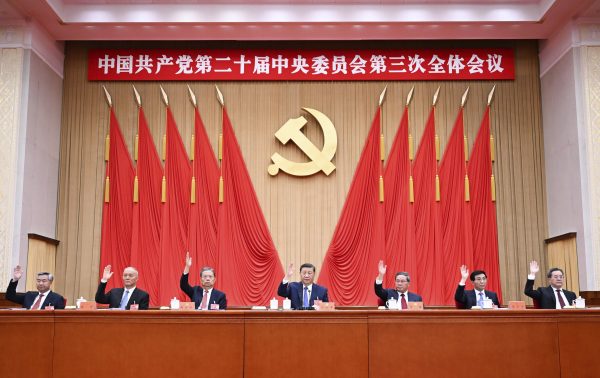
    The four-day, twice-a-decade plenum of the Communist Party of China that took place last week in Beijing, designing an economic road map all the way to 2029, was a stunning affair in more ways than one.

    Let’s start with continuity – and stability. There’s no question after the plenum that Xi Dada, or The Big Panda, will stay on the helm until 2029 – the end of the current five-year economic drive.

    And if Xi is healthy enough, he will stay until 2035: the fateful and uber-game-changing target year for China to exhibit a GDP per capita of $30,000, with massive worldwide reverberations.

    Here, we see the confluence between the progression of “socialism with Chinese characteristics” and the defining contours, if not of a Pax Sinica, at least of the non-Hegemon-centric, multi-nodal world (italics mine).

    The proverbial U.S. Think Tankland/Sinophobia axis has been hysterical on China not being able to sustain a 5% a year growth rate for the next few years – the target once again stressed at the plenum.

    The Chinese themselves have not bothered about the growth rate for a long time, since in 2018 they switched to a strategy of so-called qualitative development, that is, not at the expense of traditional industries, but on the basis of high technologies and the creation of new areas, such as the production of new energy sources and artificial intelligence.

    A Russian analysis by the Center for Geopolitical Forecasts makes a crucial point: “The Chinese themselves have not bothered about the growth rate for a long time, since in 2018 they switched to a strategy of so-called qualitative development, that is, not at the expense of traditional industries, but on the basis of high technologies and the creation of new areas, such as the production of new energy sources and artificial intelligence.”

    That’s the rationale behind Made in China 2025 – which is being implemented at breakneck speed: high-tech development leading the way towards a “high-level socialist market economy”, to be consolidated by 2025 and fully constructed by 2035.

    The next step will be to attain the status of “modernized socialist power” by 2049, at the 100th anniversary of the People’s Republic of China (PRC).

    The plenum proved once more that “socialism with Chinese characteristics” – or, for the recalcitrant, Chinese-modified capitalism – is “people-centric”. The supreme values are national interest and the people’s interests – attested by the fact that large private corporations remain under the strategic control of the CPC.

    It’s idle to try to find in the final communique at the end of the plenum any restrictions on private capital on the path to “universal prosperity”. The key point is that the role of capital should always be subordinated to the concept of “socialism with Chinese characteristics”.

    Watch the reform ship steadily sailing

    Everything is explained here in nearly didactic terms, chronicling the birth of the “Decision of the CPC Central Committee on further comprehensive deepening of reforms to promote Chinese modernization”.

    What is now already referred to colloquially all across China as “The Decision” spreads across 15 parts and 60 articles, divided into three main sections, proposing more than 300 important reforms.

    “The Decision”, in full, has not yet been published; only the road map of how Beijing planners got there. Of course, this is no mere policy paper; it’s a quintessentially CPC-style dissertation in which the details of economic and political measures are obscured by clouds of images and metaphors.

    Take a look, for instance, at this passage:

    “To ensure that the reform ship sails forward steadily, the ‘Decision’ proposes that further comprehensive deepening of reform must implement the “six principles”: adhere to the party’s overall leadership, adhere to the people-centred approach, adhere to the principle of maintaining the integrity and promoting innovation, adhere to system building as the main line, adhere to the comprehensive rule of law, and adhere to a systematic approach.”

    Most of the “Decision” – 6 parts in a total of 13 – is about economic reform. Will China pull it off? Of course, it will.

    Just look at the precedents. In 1979, the Little Helmsman Deng Xiaoping started to transform a nation of farmers and peasants into a well-oiled machine of efficient industrial workers. Along the way, GDP per capita was multiplied by no less than 30 times.

    Now, the ramifications of Made in China 2025 are turning a nation of factory workers into a nation of engineers. Of 10,5 million university graduates a year, a third are engineers.

    The emphasis on AI has led, among other examples, to the automobile industry being able to produce a $9,000 EV in complete automation and make a profit. China is already a global leader in EVs (BYD building plants in Brazil, Thailand, Turkey, Hungary), solar power, drones, telecom infrastructure (Huawei, ZTE), steel, shipbuilding – and soon, also semiconductors (thank you, Trump sanctions).

    While the Hegemon spent at least $7 trillion – and counting – on unwinnable Forever Wars, China is spending $1 trillion in an array of Belt and Road Initiative (BRI) projects across the Global South: the emphasis is digital/transportation connectivity corridors. Geoeconomic imperatives intertwined with rising geopolitical influence.

    Hegemon hysteria aside, the fact is the Chinese economy will grow by a whopping $1.7 trillion only in 2024. That is more than in all but the last three years – because of the Covid effect.

    And Beijing borrowed exactly zero yuan for this growth. The U.S. economy, by comparison, may grow by $300 billion in 2024, but Washington had to borrow $3.3 trillion for that to happen.

    Researcher Geoff Roberts has compiled a very useful list of what China is doing right.

    And when it comes to the nitty gritty, the numbers are staggering. Here are just a few, apart from GDP growth:

    • Foreign goods trade is up 6.1% to $2.9 trillion year-on-year.
    • The trade surplus is at $85 billion, up 12% compared to 2023.
    • ASEAN trade is up by 10.5% to $80 billion; China is the number one trade partner of individual ASEAN members.
    • China had a record crop of 150 million tons of cereal grains.
    • The courier sector handled 80 billion parcels, up 23% year-on-year.
    • SMIC is the world’s number two pure-play foundry after Taiwan’s TSMC.
    • China Telecom paid $265 million for 23% of QuantumCTek, the patenter of Micius, the world’s first quantum communications satellite.
    • Commercial aerospace launched 39% of China’s 26 rockets.
    • Invention patents rose 43% to 524,000. China is the first country with 4 million domestic invention patents in force.
    • Baidu’s 1,000 robotaxis in Wuhan will break even in Q4 and will be profitable next year.
    • China has 47% of the world’s top AI talent. It added no less than 2000 AI courses to school and college curricula since 2019.
    • On world-class institutions doubling as research leaders, 7 out of 10 are Chinese, including the top one: the Chinese Academy of Sciences, ahead of Harvard.

    Exceptionalist China “experts” believe their own fantasy that the U.S. allied with occupied Japan, Germany and South Korea would be able to match and surpass China’s pull with the Global Majority, because they have more resources and more capital.

    Nonsense. Even more nonsense is to believe that the Hegemon’s NATO “partners” – as in vassals – will follow the leader in creating cutting-edge technology.

    The high-speed train that matters has already left the station. The 21st century is shaping up to be the ‘Asian, Eurasian, and Chinese’ century.


    Feature Image Credit: The Diplomat

    The article is republished from the Strategic Culture Foundation.

  • “And Now to some serious Governance”

    “And Now to some serious Governance”

    A time comes for each leader and government to rise above pettiness, discarding ill will and hatred towards all. For the BJP, now uniquely in its third term, this is the time to show the nation that it is a party with a difference. For the opposition equally, this is the time to cooperate with the government on critical issues impacting the country.  


    Since my retirement from active service, I have avoided politics and political writings like the plague, but the avoidable happenings of the past few months have caused me, like am sanguine would have to millions of our countrymen, pain and a sense of despair.

    India has conducted over 18   general elections to its Parliament since 1952 with a lot of fury and vibrancy, but the Lok Sabha 2024 general elections were indeed an example of abysmally low-level politics transcending our better senses.

            How the world’s largest democracy indulged in its Lok Sabha 2024 elections was hardly complimenting to it considering the unquestionable fact that among the emerging nations in the world, call it from the Global South, the conduct of our elections showed some among those participating in poor light. Between competing political parties, enlightened debates and mutual civility were sadly lacking.   India has conducted over 18   general elections to its Parliament since 1952 with a lot of fury and vibrancy, but the Lok Sabha 2024 general elections were indeed an example of abysmally low-level politics transcending our better senses. India, which carries a fair amount of moral authority and is considered an example of a true and vibrant democracy, cannot let its hallowed image be sullied attributable to the selfish electoral games of some of its political leaders. The party in power at the Centre, the principal Opposition party and all those regional parties at the helm in the states have to display adequate maturity and a modicum of propriety and civility towards each other and not politicize each and every aspect of governance or national issues impacting India. The opposition, as it shows the mirror to the government on critical issues of governance, must not criticise each and every act of the government as a matter of routine.

             With the outcome of the general elections now done and dusted and the previous BJP government back in power, albeit with a clear reduction in its seats tally from 303 down to 240, it must get down to the exacting business of good governance from the Centre. That the same government, with its experience of the last ten continuous years in power, fielding more or less the same faces in the Cabinet in critical ministries and importantly serviced by the same bureaucrats should have, relatively speaking, not such an arduous task in governance. However, the thrust for fair, equitable, and sensitive handling of all critical matters across the nation has to come from the top political leadership. All our states must never feel discrimination by the Centre, especially in financial allocations urgently required for developmental works and disaster management. Additionally, the new government must take stern measures to keep rising inflation and unnecessary governmental expenditure under check before the economy takes a severe nose-dive.

             The Modi government, with the continuous experience of the last ten years, will have more than a good idea of the systemic improvements required and about areas needing additional financial resources and effort. It is unnecessary to worry too much about criticisms from the opposition but to carry on regardless in developmental works, without fear or favour, and with impartiality towards all the states in the true spirit of federalism. A time comes for each leader and government to rise above pettiness, discarding ill will and hatred towards all. For the BJP, now uniquely in its third term, this is the time to show the nation that it is a party with a difference. For the opposition equally, this is the time to cooperate with the government on critical issues impacting the country.

             New Delhi’s hands will be full of the nation’s diverse and formidable challenges, requiring attention and effectiveness. On the foreign policy front, India will have to walk the tightrope of maintaining strategic autonomy and sustaining its good relations with both the US and Russia. However, as it determinedly confronts an overly assertive China, India needs to use its economic clout and sophisticated diplomacy to get its South Asian neighbourhood closer to it and each other, avoiding the debt trap diplomacy and financial machinations of China.

    The number of terror-related incidents in J&K has gone up substantially in the last three months, and Pakistan will have to be kinetically chastened.

          India must, at the appropriate level, convey to China that their confrontationist attitude towards us will be harmful to the Chinese, too and may propel India to rethink its existing Tibet policy. Nevertheless, India must maintain the utmost vigil along the 3485 km Line of Actual Control/ IB, which it shares with  China. Meanwhile, Pakistan once again needs to be cautioned against stepping up terror activities in J&K  or elsewhere in the Indian hinterland. India is in full knowledge of Pakistan’s many fault lines. Still, it has refrained from exploiting these, and Pakistan must also cooperate in ensuring a peaceful and prosperous South Asian neighbourhood independent of China’s wily stratagems. The number of terror-related incidents in J&K has gone up substantially in the last three months, and Pakistan will have to be kinetically chastened.

    Meanwhile, India’s preparations to successfully improve its security capabilities to confront a two-front war must go ahead with realism and an unfailing determination. Measures to augment capital expenditure for major defence acquisitions must be identified. Transformative defence reforms like the introduction of integrated theatre commands will need the attention of the Centre. In addition, India must take all steps to restore peace in our restive NE states.

             The Modi government has come in for some criticism abroad on its human rights record and dealings with its Muslim population. This unjust criticism must be dealt with judiciously and with maturity. India’s overall inclusiveness and celebration of its diversity are unique examples for the entire world, especially the nations of the Global South. We must never deviate or be even seen to shift from this noble orientation.

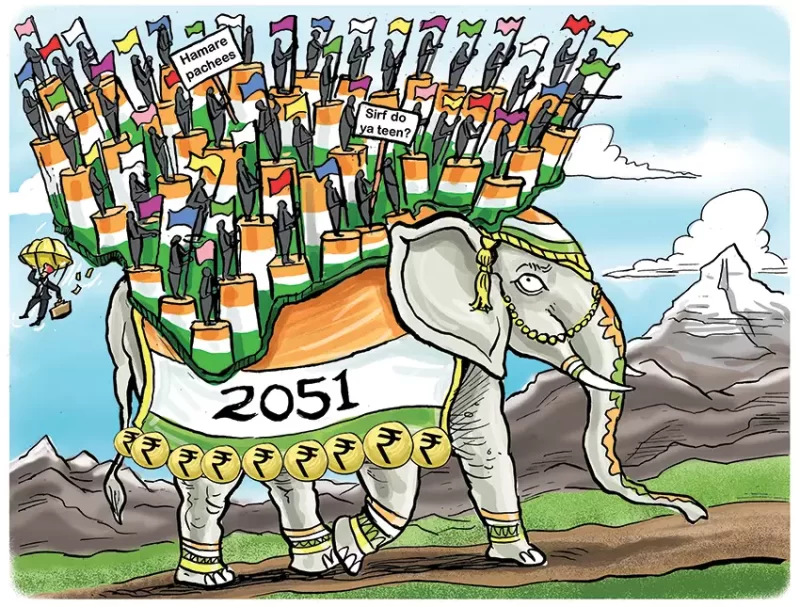
    Reduction of the yawning gap between the countless ultra-rich and those millions in abject poverty is essential as we boast of becoming the 5th largest economy in the world. The many human indices where we are faltering also need to be addressed.

             As economic strength is the pillar that propels and sustains progress, the Modi government must take measures to improve our economic health. Reduction of the yawning gap between the countless ultra-rich and those millions in abject poverty is essential as we boast of becoming the 5th largest economy in the world. The many human indices where we are faltering also need to be addressed.

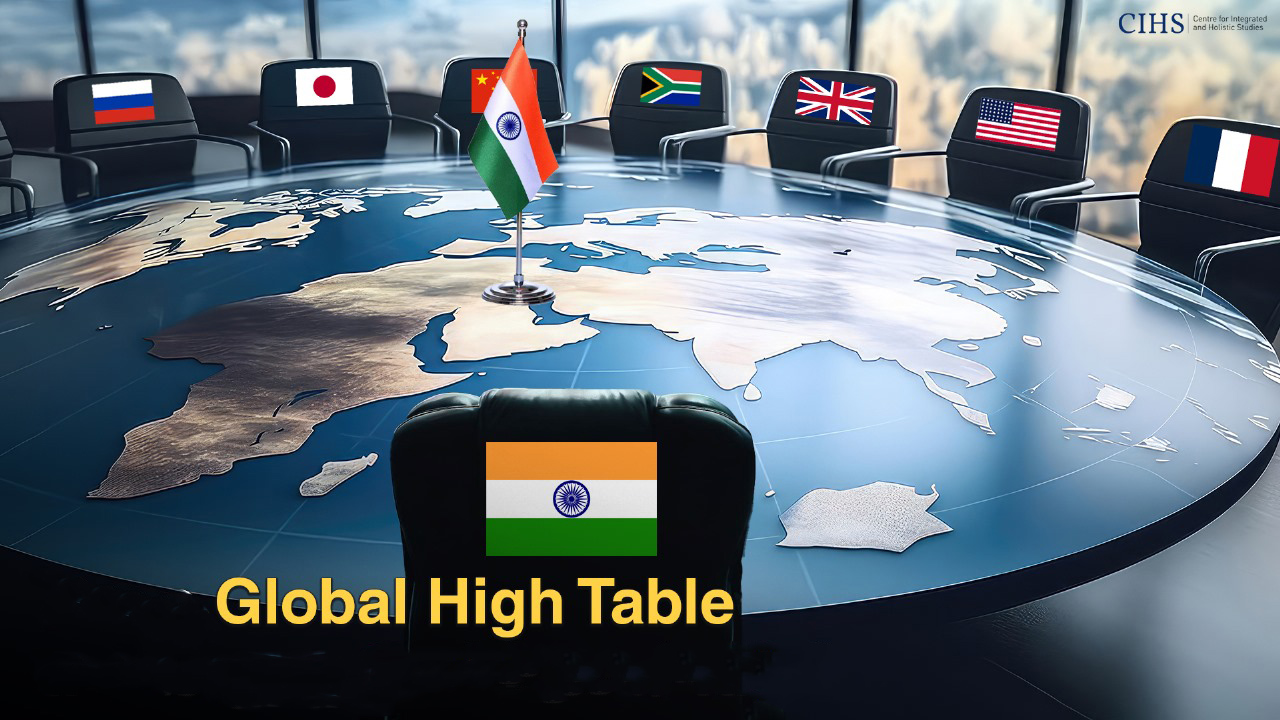
             By all yardsticks, India is deservingly on the cusp of acquiring a seat on the global high table. Let us not squander away this golden opportunity by internal squabbling but instead work together in addressing crucial issues that affect our nation; we must seize this opportunity.

    Feature Image Credit:  vskbharat.com    

    Cartoon Credit: Times of India

  • The catastrophe of modern capitalism: Inequality as an aim in Neo-Liberal-Ideology

    The catastrophe of modern capitalism: Inequality as an aim in Neo-Liberal-Ideology

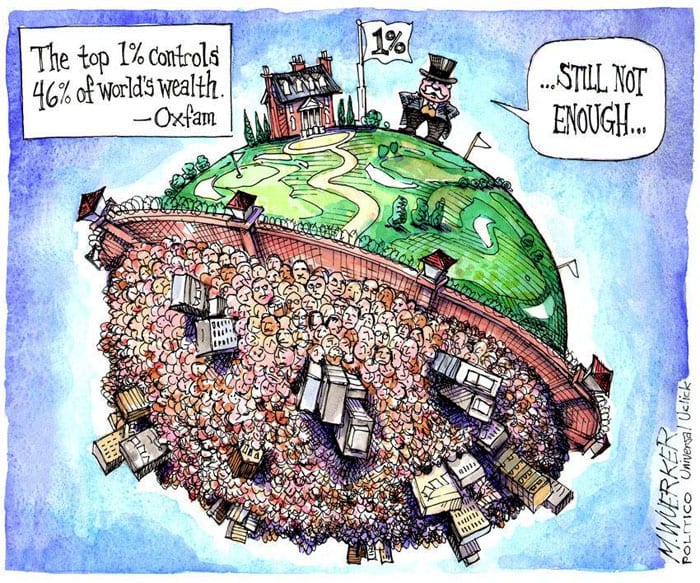
    Neoliberalism is the dominant form of capitalism that began in the 1980s as a way to promote global trade and grow all economies. That was a false promise, whereas in essence it supported individuals amassing massive wealth in the name of market forces, at the expense of common man by ensuring states minimise their role and eliminate welfare economics. It ensured least-developed and developing economies remained resource providers to developed economies, exemplifying extraction and exploitation. Neoliberalism is a top down economic policy that does not benefit those who are impoverished. The inequality we see on a global scale is mind-numbing. In 2006, the world’s richest 497 people were worth 3.5 trillion US dollars representing 7% of the world’s GDP. That same year, the world’s lowest income countries that housed 2.4 billion people were worth just 1.4 trillion US dollars, which only represents 3.3% of the world’s GDP. The situation today is far worse as Andreas Herberg-Rothe explains in his critical analysis below. The world is in urgent need of freeing itself from the clutches of neoliberal capitalism. 


    ..neoliberalism contains a general tendency towards an extensive economisation of society. Thus, inequality transcends the economy and becomes the dominant trend in society, as in racism, radical extremism, and hate ideologies in general: Us against the rest, whoever the rest may be.


    Following on from the initial question about Hannah Arendt’s thesis that equality must be confined to the political sphere, we must ask how democracy and human rights can be preserved in the face of social inequality on an extraordinary scale. By the end of this century, 1% of the world’s population will own as much as the “rest” of the other 99%. And already today, only 6 people own more property than 3.6 billion. Let us take a closer look at some of the ideas of the currently dominant neo-liberalism, which sheds some light on the acceptance of these current obscene inequalities. For this ideology, social inequality is a means to greater wealth. However, since it sets no limits on social inequality, it can be used to legitimize even obscene inequalities. We argue that neoliberalism as an ideology is the result of the spread of a specific approach to economic thought that has its roots in the first half of the twentieth century, when Walter Lippmann’s seminal book “An Inquiry into the Principles of the Good Society” (1937), followed by Friedrich August von Hayek’s “The Road to Serfdom” (1944), gave rise to neoliberalism. During the Cold War period, neoliberals gained more and more ground in establishing a global system. With the support of Milton Friedman and his “Chicago Boys,” the first attempt to establish a pure neoliberal economic system took place in Chile under the military dictatorship of General Pinochet in the 1970s. In the last decade of the Cold War, neoliberal architects such as Margaret Thatcher and Ronald Reagan began to impose the new economic model. Since the end of the Cold War, the final development was that neoliberalism became THE hegemonic economic system, as capitalism was de jure allowed to spread unhindered worldwide, and neoliberalism continued on its way to becoming the dominant belief system.

    The critical message in this sense is the following: This process is not limited to an economic dimension – neoliberalism contains a general tendency towards an extensive economisation of society. Thus, inequality transcends the economy and becomes the dominant trend in society, as in racism, radical extremism, and hate ideologies in general: Us against the rest, whoever the rest may be.

    When we talk about global inequality in the era of neoliberalism, we are referring to two other major developments: To this day, inequality between the global North and South persists. While the total amount of poverty has decreased, as seen in the World Bank’s report (2016), there is still a considerable gap between those countries that benefit from the global economy and those that serve as cheap production or commodity areas. The second development takes place in countries that are more exposed to the neoliberal project. In this sense, societies are turning into fragmented communities where the “losers of neoliberalism” are threatened by long-term unemployment, a life of poverty, social and economic degeneration.

    After three decades of intense global neo-liberalism, the result has been a significant increase in social inequalities, polarization and fragmentation of societies (if not the entire world society), not to mention a global financial crisis in 2008 caused by escalating casino capitalism and the policies of a powerful global financial elite.

    We are witnessing a global and drastic discontent of peoples, fears and anger, feelings of marginalization, helplessness, insecurity and injustice. After three decades of intense global neo-liberalism, the result has been a significant increase in social inequalities, polarization and fragmentation of societies (if not the entire world society), not to mention a global financial crisis in 2008 caused by escalating casino capitalism and the policies of a powerful global financial elite. We witness a global and drastic dissatisfaction of the peoples, fears, and anger, the feelings of marginalization, helplessness, insecurity, and injustice. After three decades of intense worldwide Neo-Liberalism, the result significantly intensified social inequalities, polarization, and fragmentation of societies (if not the entire world society), not to mention a global financial crisis in 2008 caused by escalating casino capitalism and the policy of a powerful global finance elite.

    The central critique is that neoliberalism includes social inequality as part of its basic theory. Such capitalism emphasizes the strongest/fittest (parts of society) and uses inequality as a means to achieve more wealth.

    Remarkably and frighteningly, the situation outlined does not provoke the oppressed, marginalised, and disadvantaged populations to turn against their oppressors and their exploitation. These people tend to sympathize with ideological alternatives, either with more triumphant (right-wing) populist movements and parties or are attracted by radical/fundamentalist religious groups such as the Islamic State. The result is an increase in polarization and violence, and even more protracted wars and religious-ideological disputes. Europe is not exempt from the trend toward obscene social inequality. We also find a polarization between rich and poor, between those who have good starting conditions and those who have little chance of prosperity, between those who are included and those who feel excluded. The fact that Europe has so far largely avoided populist parties gaining administrative power (although we have already witnessed this process in France, Hungary and Poland) may be due to the remnants of the welfare state. In this respect, at least a minimum of financial security remains and limits the neoliberal trend. In the United States, on the other hand, a flawless populist could reach the highest office. The people, stuck in their misery, fear and insecurity, voted for a supposed alternative to the neoliberal establishment, but above all against other social outcasts whom they blamed for their misery. This brings us to the central critique of neoliberalism, a system that has caused fundamental social oddities, the impact of which as an ideology has been highlighted above. The central critique is that neo-liberalism includes social inequality as part of its basic theory. Such capitalism emphasizes the strongest/fittest (parts of society) and uses inequality as a means to achieve more wealth.

    In an interview with the German magazine Wirtschaftswoche, Hayek spoke bluntly about the neoliberal value system: He emphasizes that social inequality, in his view, is not at all unfortunate, but rather pleasant. He describes inequality as something simply necessary (Hayek, 1981). In addition, he defines the foundations of neo-liberalism as the “dethronement of politics” (1981). First, he points out the importance of protecting freedom at all costs (against state control and the political pressure that comes with it). The neoliberals see even a serious increase in inequality as a fundamental prerequisite for more economic growth and the progress of their project. One of the most renowned critics of neoliberalism in Germany, Christoph Butterwegge (2007), sees in this logic a perfidious reversal of the original intentions of Smith’s (reproduced in 2013) inquiry into the wealth of nations in the current precarious global situation. The real capitalism of our time – neoliberalism – sees inequality as a necessity for the functioning of the system. It emphasizes this statement: The more inequality, the better the system works. The hardworking, successful, and productive parts of society (or rather the economy) deserve their wealth, status, and visible advantage over the rest (the part of society that is seen as less strong or less ambitious). The deliberate production of inequality sets in motion a fatal cycle that leads to the current tense global situation and contributes to several intra-societal conflicts.

    The market alone is the regulating mechanism of development and decision-making processes within a society dominated by neo-liberalism, and as such is not politics at all. This brings us closer to the relationship between neoliberalism and democracy. The understanding of democracy in neoliberal theory is, so to speak, different. Principles such as equality or self-determination, which are prominent in the classical understanding of democracy, are rejected. Neo-liberalism strives for a capitalist system without any limits set by the welfare state and even the state as such, in order to shape, enforce and legitimize a society dominated only by the market economy. Meanwhile there are precarious tendencies recognizable, where others than the politically legitimized decision-makers dictate the actual political and social direction (e.g. the extraordinarily strong automobile lobby with VW, BMW and Mercedes in Germany or big global players in the financial sector like the investment company BlackRock). Neoliberalism only seemingly embraces democracy. The elementary democratic goals (protection of fundamental and civil rights and respect for human rights) can no longer be fully realized. Democracy cannot defend itself against neo-liberalism if political decision-makers do not resolutely oppose the neo-liberal zeal for expansion into all areas of society. The dramatic increase in inequality coincides with the failure of the state as an authority of social compensation and adjustment, as neoliberalism eliminates the state as an institution that mediates conflicts in society. To put it in a nutshell: Whereas in classical economic liberalism the state’s role is to protect and guarantee the functioning of the market economy, in neoliberalism the state must submit to the market system.

    Our discussion of neoliberalism here is not about this conceptualization and its history, which would require a separate article. Nevertheless, we want to emphasize that in neo-liberalism, social inequality is a means to achieve more wealth for the few. Therefore, we argue that there must be a flexible but specific limit to social inequality in order to achieve this goal, while excessive inequality is counterproductive.

    As noted above, moderate levels of inequality are not necessarily wrong per se. In a modern understanding, it also contributes to a just society in which merit, better qualifications, greater responsibility, etc. are rewarded. The principle of allowing differences, as used in the theory of the social market economy, is a remarkably positive one when such differentiation leads to the well-being of the majority of people in need. However, neo-liberalism adopts a differentiation that intensifies inequality to a very critical dimension. The current level of social inequality attacks our system of values, endangers essential democracy, and destroys the social fabric of societies. Even if we consider a “healthy” level of inequality to be a valuable instrument for a functioning market society, what has become the neoliberal reality has nothing to do with such an ideal. Neoliberalism implies an antisocial state of a system in which inequality is embedded in society as its driving mechanism. Consequently, we witness a division between rich and poor in times of feudalism. A certain degree of social equalization through the welfare state and a minimum of social security is no longer guaranteed. The typical prerequisites today are flexibility, performance, competitiveness, etc. – In general, we see the total domination of individualism within neo-liberalism, leading to the disintegration of society. In one part of the world, mainly in the Global South, we observe the decline of entire population groups. In contrast, in other parts of the world we see fragmented societies in hybrid globalization and increasing tendencies towards radical (religious) ideologies, violence and war.

    It must be acknowledged that neoliberalism was one of the causes of the rise of the newly industrialized nations, but the overemphasis on individual property also contributes to obscene inequality and thus to the decline of civilized norms.

    The Polish-British sociologist Zygmunt Bauman summed up this problem by comparing it to the slogan of the French Revolution: “Liberté, Egalité, Fraternité”. According to the proponents of the time, each element could only be realized if all three remained firmly together and became like a body with different organs. The logic was as follows: “Liberté could produce Fraternité only in company with Egalité; cut off this medium/mediating postulate from the triad – and Liberté will most likely lead to inequality, and in fact to division and mutual enmity and strife, instead of unity and solidarity. Only the triad in its entirety is capable of ensuring a peaceful and prosperous society, well integrated and imbued with the spirit of cooperation. Equality is therefore necessary as a mediating element of this triad in Bauman’s approach. What he embraces is nothing less than a floating balance between freedom and equality. It must be acknowledged that neoliberalism was one of the causes of the rise of the newly industrialized nations, but the overemphasis on individual property also contributes to obscene inequality and thus to the decline of civilized norms. When real socialism passed into history in 1989 (and rightly so), the obscene global level of social inequality could be the beginning of the end (Bee Gees) of neo-liberalism, centered on the primacy of individual property, which is destroying the social fabric of societies as well as the prospects for democratic development. Individual property is a human right, but it must be balanced with the needs of communities, otherwise it would destroy them in the end.


    Feature Image Credit: cultursmag.com

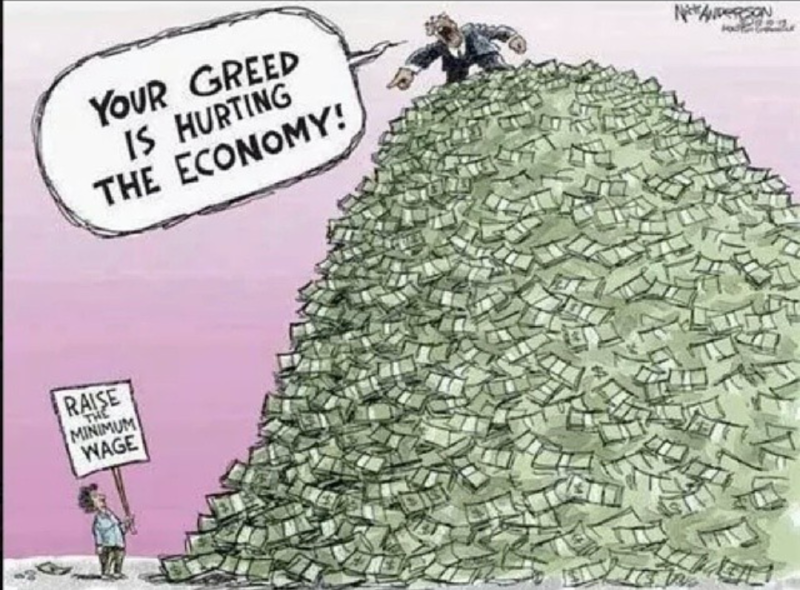
    Cartoon Image Credit: ‘Your greed is hurting the economy’ economicsocialogy.org

  • Globalisation’s Sunset

    Globalisation’s Sunset

    Are we witnessing the end of globalisation and the rise of economic nationalism? Who is responsible for this state of affairs? For many, the villain is clearly the US and its allies in the West. The reason is the rise of China as the world’s manufacturing and technology superpower. China is beating the West at its own game, and the US is shaken by the visible signs of the end of its hegemony and the dominance of the West.  Globalisation is being throttled by the West in a futile attempt to end China’s rise. The result will be catastrophic for the Global South in its aspirations for accelerated development. Former Venezuelan ambassador and Princeton scholar Alfredo Toro Hardy analyses what he sees as the sunset of globalisation.

    Team TPF


    Economic globalisation was the offspring of the neoliberal ideology that prevailed after the collapse of the Soviet Union. The globalisation process took off in the mid-nineties, as was identified by the firm support given to it by leaders such as Bill Clinton and Tony Blair, particularly the former, who commanded the world’s largest economy.

                Its most emblematic expressions would be the Washington Consensus, the creation of the World Trade Organization in 1995, and China’s entry into these organisations in 2001. The first resulted from the convergence of positions between the U.S. Treasury Department and International Financial Organizations based in Washington. It would translate into a ten-point recipe called to set in motion the economic liberalisation of distressed and closed economies, chiefly the previous communist ones. The second involved the global homogenisation of rules in matters as diverse as manufacturing, agriculture, services, labour standards or intellectual property, as well as the abandonment by its members of industrial policies and protectionism. The third represented the insertion into the global labour market of more than a billion human beings whose working costs were but a fraction of those in developed countries. This would be accepted and even promoted by the United States under the assumption that a China open to the world’s economy would eventually open itself to the values of liberal democracy as well.

                The importance of neoliberal ideology, as a determining factor of this process, would be key. As a matter of fact, for a long time the leading force in the world economy, America’s economy, was characterised by its industrial policies, protectionism, and vertical integration of its corporations. The federal government’s industrial policies became a catalyst for economic development, either through direct investments and engagement or through incentives for the private sector to follow a particular course of action. The countless products and services incorporated into the American technological repository resulting from NASA’s R&D efforts exemplify these policies. They still represent the broad shoulders on which the country’s private technological sector stands. Protectionism expressed itself through tariffs and non-tariff barriers to protect domestic production from foreign competition. Vertical integration, on its part, involved direct control by U.S. corporations in their production and distribution channels. Hence, outsourcing did not figure in their strategies. It is worth adding that even President Reagan, despite his deregulatory crusade, supported his country’s industrial policies and imposed protective barriers against Japanese competition (Foroohar, 2022).

    Globalization in question

                For decades, globalisation has represented an unchallenged paradigm. Under its course, China reached the anteroom of world economic supremacy, numerous cheap labour economies, particularly in Asia, emerged strongly, and large corporations relying on the revolutions in information technology, communications and transports outsourced and dispersed their production and services (again mainly in Asia). Actually, it was in the emerging Asian countries where, in nine of every 10 cases, the great beneficiaries of globalisation were concentrated. Moreover, it was estimated that between 2020 and 2030, the global middle class would jump from 3,300 million to 4,900 million people, with 80% of that jump taking place in Asia (Milanovic, 2018, p. 19; OCDE, 2010). However, for some time now, globalisation has been under serious questioning. Among the reasons behind this, the following should be outlined: the emergence of powerful populist movements in the Western World; climate change distortions upon trade and the impact on climate itself, resulting from maritime trade over long distances; and economic and political nationalism in China.

                Populism is, to a large extent, directly related to the immense social upheavals caused by the massive outsourcing of jobs to the cheapest labour economies. In 2000, Clinton predicted that globalisation would allow the export of products without exporting jobs. Exactly the opposite happened, though, seriously affecting the social fabric of the United States and its European counterparts. This significantly eroded their democratic systems. Climate change, with hurricanes, floods, and other incidents, has increased the risk of global supply chains, resulting in annual revenue losses of up to 35% for companies. (McKinsey and Company, 2020).

    Conversely, the massive mobilisation of supertankers worldwide generates up to 14% of the total greenhouse gas emissions affecting the planet. (Prestowitz, 2022). Indeed, “the ultimate buyer [of final products] remained an ocean or a continent away” (O’Neil, 2022, p. 113). In addition, contrary to what American promoters of China’s emergence had suggested, the country’s economic prosperity has led to an increasingly nationalistic and authoritarian model. Far from getting closer to U.S. values, China has emphasised its economic nationalism and geopolitical aggressiveness within the context of a growing rivalry with the United States.

    The triggering elements

                However, even if disappointment with globalisation continued to grow, the triggering elements that would end up clearly tilting the balance against it were still missing. COVID and Russia’s invasion of Ukraine took care of it. Twenty trillion U.S. dollars in goods rely on global supply chains. Especially so as the disaggregation of production translates into millions of components, parts and final manufacturers moving in every direction. (McKinsey and Company, 2020). This vertiginous dissemination of productive processes led to unexpected, sudden, and massive disruptions during the pandemic. As a result, global economic interdependence choked. The endless Zero COVID policy implemented in China, the geographic nerve centre for global trade, exponentially aggravated this situation. The result was none other than inflation that brought to mind the seventies and has not yet been controlled.

                This was joined shortly afterwards by the impact of the invasion of Ukraine by Russia. One that not only disrupted vital energy and food supply chains but fundamentally brought geopolitics back to the global scenario through the main door. As if the emerging Cold War between China and the U.S. had not already been enough to undermine faith in globalisation, events in Ukraine made security the central component of the international order. It was a sort of fall of the Berlin Wall in reverse. One that brought down the relevance of economics and propelled that of politics. Olaf Scholz’s “global zeitenwende” clarified that a new strategic culture and national strategy would become his country’s new priority (Scholtz, 2023). Under such circumstances, placing economic security in distant and potentially hostile hands was no longer a rational option.

    Back to the past

                Not surprisingly, the United States began reverting to policies that preceded globalisation. That is, to industrial policies, to protectionism, and the vertical integration of its corporations. Indeed, before losing the House of Representatives to Republicans in November 2022, Biden’s Democrats passed several laws that embody industrial policies. A perfect example is the so-called energy revolution, with 490 billion dollars being involved in incentives to guide private investment towards generating clean energy sources. It also allowed the federal government to intervene in medicine prices through direct negotiations with the pharmaceutical industry. In the same direction went the laws that stimulated competitiveness and innovation, the superconductors industry, and infrastructural development. In parallel, the “Buy American” policy, subsidies to the domestic industry, and the maintenance of the tariffs imposed by Trump represented an evident protectionist impulse. Meanwhile, American corporations, in tune with these policies and in reaction to the risks of dismembering their production and services on a global scale, are opting for vertical integration and direct control of their activities. This implies, by its very nature, a production centred on the local or the regional.

    Getting back home

                All of the above factors contribute to industries’ onshoring and supply chains. In 2021, of the 709 large U.S. manufacturing corporations consulted, 83% responded that they would very likely or probably return their production operations to the United States. (Ma, 2021). Numerous leading American and foreign corporations are opting to produce in the U.S. to benefit from the new incentives put in motion by the Biden administration. This list includes, among many others, Intel, GM, US Steel, Taiwan Semiconductor Manufacturing (TSMC), Toyota, Samsung and Micron Technology. The amount of their investments, in tens of billions of dollars in many cases, speaks for itself. The motivation behind this impressive move was well reflected in the words of the larger-than-life founder of TSMC, Morris Chang: “Globalization and free trade are almost dead and unlikely to return”. (Cheng, 2022; Doherty and Yardeni, 2022). However, together with this on-shoring move, there are also parallel movements of near-shoring or friendly shoring nature, where manufacturing and supply chains are being circumscribed to neighbours or traditional allies that do not represent a security risk. With the world’s largest economy becoming protectionist, it will be difficult for globalisation to retain its influence, especially as Europe rapidly evolves in the same direction.

    Globalization last hope

                Until recently, an area of globalisation seemed to be relatively protected from these kinds of upheavals: the digital ecosystem. According to a 2016 report, the rapid flows of international trade and finance that characterised the 20th century appear to have flattened (…), yet globalisation has not reversed. Indeed, digital flows are growing very quickly.” (McKinsey Global Institute 2016). However, a few months ago, Brookings published a highly pessimistic report regarding the future of this sector. According to it: “Historically, the arrival of the global web created an opportunity for the interconnection of the world under a global digital ecosystem. However, mistrust between nations has led to the emergence of digital barriers, which imply their focus on controlling their digital sovereignty (…). These developments threaten current forms of interconnectivity, causing high-tech markets to fragment and retract, to varying degrees, upon national states”. (Brookings, 2022). Thus, the last sector of globalisation, which still showed significant dynamism, is also reversing under the impact of geopolitics. Globalisation, no doubt about it, seems to be experiencing sunset.


    References

    Brookings (2022). “The geopolitics of AI and the rise of digital sovereignty”, December 8.

    Cheng, Ting Fang (2022). “TSMC founder Morris Chang says globalization is ‘almost dead’, Nikkei, December 7.

    Doherty, J. and Yardeni, E. (2022). “Onshoring: Back to the USA”, Predicting the Markets, February 5.

    Foroohar, Rana (2022). Homecoming. New York: Crown.

    Ma, Cathy (2021). “83% of North American Manufacturers are Likely to Reshore Their Supply Chains”, Thomas, June 30.

    McKinsey & Company (2020). “Could climate change become the weak link in your supply chain”, August 6.

    McKinsey Global Institute (2016). “Digital Globalization: The New Era of Global Flows”, March.

    Milanovic, Branko (2018). Global Inequality. Cambridge, Mass.: The Belknap Press of Harvard University Press.

    OCDE (2010). “The Emerging Middle Class in Developing Countries”, Working Paper Number 285.

    O’Neil, Shannon K. (2022). The Globalization Myth. New Haven: Yale University Press.

    Prestowitz, Clyde (2022). “Is the U.S. Moving Out from Free Trade? Industrial Policy Comes Full Circle”, Clyde’s Newsletter, December 12.

    Scholz, Olaf (2023). “The Global Zeitenwende”. Foreign Affairs, January/February.


    Feature Image Credit: worldcrunch.com (Globalization as Ideology is Dead and Buried).

    Image Credit: Gulliver’s Travails (Paresh Nath, The Khaleej Times, UAE) www.uncommonthoughts.com

  • China’s economy is still far out growing the U.S. – contrary to Western media “fake news”

    China’s economy is still far out growing the U.S. – contrary to Western media “fake news”

    GDP data for China, the U.S., and the other G7 countries for the year 2023 has now been published. This makes possible an accurate assessment of China’s, the U.S., and major economies performance—both in terms of China’s domestic goals and international comparisons. There are two key reasons this is important.

    • First for China’s domestic reasons: to achieve a balanced estimate of China’s socialist economic situation and therefore the tasks it faces.
    • Second, because the U.S. has launched a quite extraordinary propaganda campaign, including numerous straightforward factual falsifications, to attempt to conceal the real international economic facts.

    The factual situation is that China’s economy, as it heads into 2024, has far outgrown all other major comparable economies. This reality is in total contradiction to claims in the U.S. media. This in turn, therefore, demonstrates the extraordinary distortions and falsifications in the U.S. media about this situation. It confirms that, with a few honourable exceptions, Western economic journalism is primarily dominated by, in some cases quite extraordinary, “fake news” rather than any objective analysis. Both for understanding the economic situation, and the degree of distortion in the U.S. media, it is therefore necessary to establish the facts of current international developments

    China’s growth targets

    Starting with China’s strategic domestic criteria, it has set clear goals for its economic development over the next period which will complete its transition from a “developing” to a “high-income” economy by World Bank international standards. In precise numbers, in 2020’s discussion around the 14th Five Year plan, it was concluded that for China by 2035: “It is entirely possible to double the total or per capita income”. Such a result would mean China decisively overcoming the alleged “middle income trap” and, as the 20th Party Congress stated, China reaching the level of a “medium-developed country by 2035”.

    In contrast, a recent series of Western reports, widely used in anti-China propaganda, claim that China’s economy will experience sharp slowdown and will fail to reach its targets.

    Self-evidently which of these outcomes is achieved is of fundamental importance for China’s entire national rejuvenation and construction of socialism—as Xi Jinping stated, China’s: “path takes economic development as the central task, and brings along economic, political, cultural, social, ecological and other forms of progress.” But the outcome also affects the entire global economy—for example, a recent article by the chair of Rockefeller International, published in the Financial Times, made the claim that what was occurring was China’s “economy… losing share to its peers”. The Wall Street journal asserted: “China’s economy limps into 2024” whereas in contrast the U.S. was marked by a “resilient domestic economy.” The British Daily Telegraph proclaimed China has a “stagnant economy”. The Washington Postheadlined that: “Falling inflation, rising growth give U.S. the world’s best recovery” with the article claiming: “in the United States… the surprisingly strong economy is outperforming all of its major trading partners.” This is allegedly because: “Through the end of September, it was more than 7 percent larger than before the pandemic. That was more than twice Japan’s gain and far better than Germany’s anaemic 0.3 percent increase.” Numerous similar claims could be quoted from the U.S. media.

    U.S. use of “fake news”

    Reading U.S. media claims on these issues, and comparing them to the facts. it is impossible to avoid the conclusion that what is involved is deliberate “fake news” for propaganda purposes—as will be seen, the only alternative explanation is that it is disgracefully sloppy journalism that should not appear in supposedly “quality” media. For example, it is simply absurdly untrue, genuinely “fake news”, that the U.S. is “outperforming all of its major trading partners”, or that China has a “stagnant economy”. Anyone who bothers to consult the facts, an elementary requirement for a journalist, can easily find out that such claims are entirely false—as will be shown in detail below.

    To first give an example regarding U.S. domestic reports, before dealing with international aspects, a distortion of U.S. economic growth in 2023 was so widely reported in the U.S. media that it is again hard to avoid the conclusion that this was a deliberate misrepresentation to present an exaggerated view of U.S. economic performance. Factually, the U.S. Bureau of Economic Analysis, the U.S. official statistics agency for economic growth, reported that U.S. GDP in 2023 rose by 2.5%—for comparison China’s GDP increased by 5.2%. But a series of U.S. media outlets, starting with the Wall Street Journal, instead proclaimedthat the “U.S. economy grew 3.1% over the last year”.

    This “fake news” on U.S. growth was created by statistical “cherry picking”. In this case comparing only the last quarter of 2023 with the last quarter of 2022, which was an increase of 3.1%, but not by taking GDP growth in the year as a whole “last year”. But U.S. growth in the earlier part of 2023 was far weaker than in the 4th quarter—year on year growth in the 1stquarter was only 1.7% and in the 2nd quarter only 2.4%. Taking into account this weak growth in the first part of the year, and stronger growth in the second, U.S. growth for the year as a whole was only 2.5%—not 3.1%. As it is perfectly easy to look up the actual annual figure, which was precisely published by the U.S. statistical authorities, it is hard to avoid the conclusion that this was a deliberate distortion in the U.S. media to falsely present a higher U.S. growth rate in 2023 than the reality.

    It may be noted that even if U.S. GDP growth had been 3.1% then China’s was much higher at 5.2%. But the real data makes it transparently clear that China’s economy grew more than twice as fast as the U.S. in 2023—showing at a glance that claims that the U.S. is “outperforming all of its major trading partners”, or that China has a “stagnant economy” were entirely “fake news”.

    Many more examples of U.S. media false claims could be given, but the best way to see the overall situation is to systematically present the overall facts of growth in the major economies.

    What China has to do to achieve its 2035 goals

    Turning first to assessing China’s economic performance, compared to its own strategic goals of doubling GDP and per capita GDP between 2020 and 2035, it should be noted that in 2022 China’s population declined by 0.1% and this fall is expected to continue—the UN projects China’s population will decline by an average 0.1% a year between 2020 and 2035. Therefore, in economic growth terms, the goal of doubling GDP growth to 2035 is slightly more challenging than the per capita target and will be concentrated on here—if China’stotal GDP goal is achieved then the per capita GDP one will necessarily be exceeded.

    To make an international comparison of China’s growth projections compared with the U.S., the U.S. Congressional Budget Office (CBO), responsible for the official growth projections for the U.S. economy on which its government’s policies rely, estimates there will be 1.8% annual average U.S. GDP growth between 2023 and 2023—with this falling to 1.6% from 2034 onwards. This figure is slightly below the current U.S. 12-year long term annual average GDP growth of 2.3%—12 being the number of years from 2023 to 2035. To avoid any suggestion of bias against the U.S., and in favour of China, in international comparisons here the higher U.S. number of 2.3% will be used.

    The results of such figures are that if China hits its growth target for 2035, and the U.S. continues to grow at 2.3%, then between 2020 and 2035 China’s economy will grow by 100% and the U.S. by 41%—see Figure 1. Therefore, from 2020 to 2035, China’s economy would grow slightly more than two and a half times as fast as the U.S.

    The strategic consequences of China’s economic growth rate

    The international implications of any such growth outcomes were succinctly summarised by Martin Wolf, chief economics commentator of the Financial Times. If China’s economy continues to grow substantially faster than Western ones, and it achieves the status of a “medium-developed country by 2035”, then, in addition to achieving high domestic living standards, China’s will become by far the world’s largest economy. As Wolf put it: “The implications can be seen in quite a simple way. According to the IMF, China’s gross domestic product per head (measured at purchasing power) was 28 per cent of U.S. levels in 2022. This is almost exactly half of Poland’s relative GDP per head… Now, suppose its [China’s] relative GDP per head doubled, to match Poland’s. Then its GDP would be more than double that of the U.S. and bigger than that of the U.S. and EU together.” By 2035 such a process would not be completed on the growth rates already given, and measuring by Wolf’s chosen measure of purchasing power parities (PPPs) China’s economy by 2035 would be 60% bigger than that of the U.S. But even that would make China by far the world’s largest economy.

    Wolf equally accurately notes that the only way that such an outcome would be prevented from occurring is if China’s economy slows down to the growth rate of a Western economy such as the U.S. Clearly, if China’s economic growth slows to that of a Western economy, then, naturally, China will never catch up with the West—it will necessarily simply stay the same distance behind. Therefore. as Wolf accurately puts it the outcomes are:

    What is the economic future of China? Will it become a high-income economy and so, inevitably, the largest in the world for an extended period, or will it be stuck in the ‘middle income’ trap, with growth comparable to that of the U.S.?

    The progress in achieving China’s strategic economic goals

    Turning to the precise figure required to achieve China’s 2035 target, China’s goal of doubling GDP required average annual growth of at least 4.7% a year between 2020 and 2035. So far China, as Figure 1 shows, is ahead of this goal—annual average growth in 2020-2022 was 5.7%, meaning that from 2023-2035 annual average 4.6% growth is now required.

    China’ 5.2% GDP increase in 2023 therefore once again exceeded the required 4.6% growth rate to achieve its 2035 goal—as shown in Figure 1. From 2020 to 2023 the required total increase in China’s GDP to hit its 2035 target was 14.9%, whereas in fact its growth was 17.5%. This is in line with the 45-year record since 1978’s Reform and Opening Up, during which entire period the medium/long term targets set by China have always been exceeded.

    Therefore. to summarise, there is no sign whatever in 2023, or indeed in the period since 2020, that China will fail to meet its target of doubling GDP between 2020 and 2035—China is ahead of this target. Such a 4.6% growth rate would easily ensure China becomes a high-income economy by World Bank criteria well before 2035—the present criteria for this being per capita income of $13,846.

    It should be noted, as discussed in in detail below, that a clear international conclusion flows from this necessary 4.6% annual average growth rate for China to achieve its strategic goals. It means that China must continue to grow much faster than the Western economies throughout this period to 2035—that is in line with China’s current trend. However, if China were to slow down to the growth rate of a Western economy, then it will fail to achieve its strategic goals to 2035, may not succeed in becoming a high income economy, and will necessarily remain the same distance behind the West as now. The implications of this will be considered below.

    Systematic comparisons not “cherry picking”

    Having considered China’s performance in 2023 terms of achieving its own domestic strategic goals we will now turn to actual results and a comparison of China with other international economies. This immediately shows the factual absurdity, the pure “fake news” of claims such as that the U.S. has “the world’s best recovery“ and “the United States… is outperforming all of its major trading partners.” On the contrary China has continued to far outgrow the U.S. economy not only in 2023 but in the entire last period. China’s outperformance of the other major Western economies, the G7, is even greater that of the U.S.

    Entirely misleading claims regarding such international comparisons, used for propaganda as opposed to serious analysis, are sometimes made because data is taken from extremely short periods of time which are taken out of context—unrepresentative statistical “cherry picking” or, as Lenin put it, a statistical “dirty business”. Such a method is always erroneous, but it is particularly so during periods which were affected by the impact of the Covid pandemic as these caused extremely violent short-term economic fluctuations related to lock downs and similar measures. China’s assertion of superior growth is based on its overall performance, not an absurd claim that it outperforms every other economy, on every single measure, in every single period! Therefore, in making international comparisons, the most suitable period to take is that for since the beginning of the pandemic up to the latest available GDP data. As comparison of China with the U.S. is the most commonly made one, and particularly concentrated on by the U.S. media campaign, this will be considered first.

    China’s and the U.S.’s growth in 2023

    It was already noted that in 2023 China’s GDP grew by 5.2% and the U.S. by 2.5%—China’s economy growing more than twice as fast as the U.S. But it should also be observed that 2023 was an above trend growth year for the U.S.—U.S. annual average growth over a 12-year period is only 2.3% and over a 20-year period it is only 2.1%. Therefore, although in 2023 China’s economy grew more than twice as fast as the U.S., that figure is actually somewhat flattering for the U.S. Figure 2shows that in the overall period since the beginning of the pandemic China’s economy has grown by 20.1% and the U.S. by 8.1%—that is China’s total GDP growth since the beginning of the pandemic was two and half times greater than the U.S. China’s annual average growth rate was 4.7% compared to the US’s 2.0%.

    Economic performance of China and the three major global economic centres

    Turning to wider international comparisons than the U.S. such data immediately shows the extremely negative situation in most “Global North” economies and China’s great outperformance of them. To start by analysing this in the broadest terms, Figure 3 shows the developments in the world’s three largest economic centres—China, the U.S., and the Eurozone. These three together account for 57% of world GDP at current exchange rates and 46% in purchasing power parities (PPPs). No other economic centre comes close to matching their weight in the world economy.

    Regarding the relative performance of these three major economic centres, at the time of writing data has not been published for the Euro Area for the whole year of 2023 —which would be the ideal comparison. However, it has been published for the the Euro area for the four quarters of 2023 individually and trends can be calculated on that basis. These show that In the four years to the 4th quarter of 2023, covering the period since the beginning of the pandemic, China’s economy has grown by 20.1%, the U.S. by 8.2%, and the Eurozone by 3.0%. China’s economy therefore grew by two and a half times as fast as the U.S. while the situation of the Eurozone could accurately be described as extremely negative with annual average GDP growth in the last four years of only 0.7%.

    Such data again makes it immediately obvious that claims in the Western media that China faces economic crisis, and the Western economies are doing well is entirely absurd—pure fantasy propaganda disconnected from reality.

    Relative performance of China and the G7

    Turning to analysing individual countries, then comparing China to all G7 states, i.e. the major advanced economies, shows the situation equally clearly—see Figure 4. Data for China and all G7 economies has now been published for the whole of 2023. The huge outperformance by China of all the major advanced economies is again evident.

    Over the four years since the beginning of the pandemic China’s economy grew by 20.1%, the U.S. by 8.1%, Canada by 5.4%, Italy by 3.1%, the UK by 1.8%, France by 1.7%, Japan by 1.1% and Germany by 0.7%.

    In the same period China’s economy therefore grew two and a half times as fast as the U.S., almost four times as fast as Canada, almost seven times as fast as Italy, 11 times as fast as the UK, 12 times as fast as France, 18 times as fast as Japan and almost 29 times as fast as Germany.

    In terms of annual average GDP growth during this period China’s was 4.7%, the U.S. 2.0%, Canada 1.3%, Italy 0.8%, the UK 0.4%, France 0.4%, Japan 0.3% and Germany 0.2%.

    It may therefore be seen that China’s economy far outperformed the U.S., while the performance of all other major G7 economies may be quite reasonably described as extremely negative—all having annual average economic growth rates of around or even under 1%.

    Comparison of China to developing economies

    A comparison using the IMF’s January 2024 projections can also be made to the major developing economies—the BRICS. Figure 5 shows this, using the factual result for China and the IMF projections for the other countries. Over the period since the start of the pandemic, from 2019-2023, China’s GDP grew by 20.1%, India by 17.5%, Brazil by 7.7%, Russia by 3.7% and South Africa by 0.9%.

    This data confirms that the major Global South economies are growing faster than most of the major Global North economies, which is part of the rise of the Global South and draws attention to the good performance of India. But China grew more than two and half times more than all the BRICS economies except India—China’s growth was 15% greater than India’s. It should be noted that India is at a far lower stage of development than the other BRICS economies—all the others fall in the World Bank classification of upper middle-income economies whereas India falls into the lower middle income group.

    Comparison of China’s growth to Western economies

    Finally, this outperformance by China casts light on what is necessary to achieve its own 2035 strategic targets. China’s 4.6% growth rate necessary to meet these goals means that it must continue to maintain a growth rate far higher than Western economies—Figure 6 shows this in overall terms in addition to individual comparisons given to major economies above. Whereas China must achieve an annual average 4.6% growth rate the median growth rate of high income “Western” economies is only 1.9%, the U.S. is 2.3%, and the median for developing economies is 3.0%.That is, to achieve its 2035 goals China must grow twice as fast as the long term trend of the U.S., almost two and a half times as fast as the median for high income economies, and more than 50% faster than the median for developing economies. As already seen, China is more than achieving this.

    But such facts immediately show why it is an extremely misleading when proposals are made that China should move towards the macro-economic structure of a Western economy. If China adopts the structure of a Western economy then, of course, China will slow down to the same growth rate as Western economies—and therefore fail to achieve its 2035 economic goals. China will be precisely stuck in the negative outcome of the situation accurately diagnosed by Martin Wolf.

    What is the economic future of China? Will it become a high-income economy and so, inevitably, the largest in the world for an extended period, or will it be stuck in the ‘middle income’ trap, with growth comparable to that of the U.S.?

    Conclusion

    In conclusion, it addition to objectively analysing 2023’s economic results, it is also necessary in the light of this factual situation to make a remark regarding Western, in particular U.S. “journalism”.

    None of the data given above is secret, all is available from public readily accessible sources. In many cases it does not even require any calculations and simply published data can be used. But the U.S. media and journalists report information that is systematically misleading and in many cases simply untrue. While it lagged China in creating economic growth the U.S. was certainly the world leader in creating “fake economic news”! What was the reason, what attitude should be taken to it?

    First, to avoid accusations of distortion, it should be stated that there were a small handful of Western journalists who refused to go along with this type of distortion and fake news. For example Chris Giles, the Financial Times economics commentator, in December, sharply attacked “an absurd way to compare economies… among people who should know better.” Giles did not do this because of support for China but because, quite rightly, he warned that spreading false or distorted information led to serious errors by countries doing so: “Coming from the UK, which lost its top economic dog status in the late 19th century but still has some delusions of grandeur, I can understand American denialism… But ultimately, bad comparisons foster bad decisions.” But the overwhelming majority of U.S. and Western journalists continued to spread fake news. Why?

    First, the fact that identical distortions and false information appeared absolutely simultaneously across a very wide range of media makes it clear that undoubtedly U.S. intelligence services were involved in creating it—i.e. part of the misrepresentation and distortions were entirely deliberate and conscious, aimed at disguising the real situation.

    Second, another part was merely sloppy journalism—that is journalists who could not be bothered to check facts.

    Third, supporting both of these factors was “white Western arrogance”—an arrogant assumption, rooted in centuries of European and European descended countries dominating the world, that the West must be right. Therefore, such arrogance made it impossible to acknowledge or report the clear facts that China’s economy is far outperforming the West.

    But whether it was conscious distortion, sloppy journalism, or conscious or unconscious arrogance, in all these cases no respect should be given to the Western “quality” media. It is not trying to find out the truth, which is the job of journalism, it is simply spreading false propaganda.

    It remains a truth that if a theory and the real world don’t coincide there are only two courses that can be taken. The first, that of a sane person, is to abandon the theory. The second, that of a dangerous one, is to abandon the real world—precisely the danger that Chris Giles pointed to. What has been appearing in the Western media about international economic comparisons regarding China is precisely abandonment of the real world in favour of systematic fake news.


    This article was published earlier in mronline.org and is republished under Creative Commons Attribution-Non Commercial-No Derivatives 4.0 International License

    Feature Image Credit: China will continue to lead global growth in 2024 – globaltimes.cn

  • What the Global Economy and Security Require

    What the Global Economy and Security Require

    With the new year 2024 well underway, the world is afflicted with wars, economic challenges, and the larger issues of climate change impact that threaten the very survival of the planet. It is paradoxical to see that great powers are still focused on competition and conflict. The year ahead portends continued conflicts, wars, and the weaponisation of economic infrastructures, demonstrated by Israel’s genocidal war against the Palestinians. Carla Norrlof highlights the increase in geopolitical conflicts and the complex relationship between economics and security. The article, like most Western academics, looks from the American perspective. and may miss the larger worldview.

    – Team TPF

    This article was published earlier in Project Syndicate.


    If America and its allies are to maximize both security and prosperity in the coming years, policymakers and strategists will have to understand the complex interplay of forces that is making the world more adversarial and fraught with risk. The global environment demands a comprehensive new economic-security agenda. The global order is undergoing significant changes that demand a new economic-security agenda.

    From hot wars and localized insurgencies to great-power standoffs, geopolitical conflict has made the complex relationship between economics and security a daily concern for ordinary people everywhere. Complicating matters even more is the fact that emerging markets are gaining economic clout and directly challenging traditional powers’ longstanding dominance through new networks and strategic alliances.

    These developments alone would have made this a tumultuous period marked by economic instability, inflation, and supply-chain disruptions. But one also must account for rapid technological advances – which have introduced new security risks (such as arms races and cyber threats) – as well as natural risks such as pandemics and climate change.

    To navigate this dangerous new world, we must reckon with three interrelated dimensions: the effects of geopolitics on the global economy; the influence of global economic relations on national security; and the relationship between global economic competition and overall prosperity.

    Each pathway sheds light on the multifaceted interplay between economics and security. We will need to understand all of them if we are to tackle the varied and complex challenges presented by our highly interconnected global system.

    As recent years have shown, geopolitics can profoundly affect the global economy, reshaping trade, investment flows, and policies sometimes almost overnight. Aside from their devastating human toll, wars like the Russian invasion of Ukraine and Israel’s campaign in Gaza often reverberate far beyond the immediate theater of conflict.

    For example, Western-led sanctions on Russia, and the disruption of Ukrainian grain exports through the Black Sea, caused energy and food prices to soar, resulting in supply insecurity and inflation on a global scale. Moreover, China has deepened its economic relationship with Russia following the mass exodus of Western firms in 2022 and 2023.

    Similarly, Israel’s bombing of Gaza has destabilized the entire Middle East, especially tourism-dependent neighbouring countries such as Egypt, Jordan, and Lebanon. Meanwhile, Yemeni Houthi rebels, long supplied by Iran, have been attacking cargo ships in the Red Sea, leading international shipping firms to suspend or adjust their routes and directly impeding trade through the Suez Canal – a major artery of global commerce.

    We are witnessing the destabilizing effects of natural threats as well. The COVID-19 pandemic drove a massive shift away from cost-effective “just-in-time” supply chains to a “just-in-case” model aimed at strengthening resilience during disruptions. And, more recently, an El Niño-induced drought has diminished the capacity of the Panama Canal – another major artery of global commerce. Whether for geopolitical or ecological reasons, rerouting around these new bottlenecks inevitably increases shipping costs, causes delivery delays, disrupts global supply chains, and creates inflationary pressure.

    Turning to the second dimension – the implications of global economic relations for national security – it is clear that countries will be more likely to adopt bold or aggressive security policies if they already have a web of economic ties that can either attract support or dampen opposition. China, for example, is counting on economically dependent countries within its Belt and Road Initiative to accept its political influence and longer-term bid for hegemony. Many countries also now rely on China for critical defence-related supply-chain components, which leaves them vulnerable diplomatically and militarily.

    More broadly, global connectivity, in the form of economic networks and infrastructure, is increasingly being weaponized for geopolitical ends. As Russia’s war on Ukraine shows, economic ties can create dependencies that raise the cost of opposing assertive security policies (or even outright aggression). The implicit threat of supply disruptions has a coercive – sometimes quite subtle and insidious – effect on a country’s national security objectives. Owing to the network effects of the dollar system, the United States retains significant leverage to enforce international order through coercive sanctions against states that violate international norms.

    Trading with the enemy can be lucrative, or simply practical, but it also alters the distribution of power. As Western governments learned over the past two decades, the advantages conferred by technological superiority can be substantially offset by forced technology transfers, intellectual property theft, and reverse engineering.

    The third dimension – the relationship between global economic competition and prosperity – has been complicated by these first two dynamics, because the pursuit of material well-being now must be weighed against security considerations. Discussions in this area thus centre around the concept of economic security, meaning stable incomes and a reliable supply of the resources needed to support a given standard of living. Both Donald Trump’s “Make America Great Again” slogan and President Joe Biden’s “Build Back Better” plan reflect concerns that economic relations with China harm US prosperity.

    The challenge for the US and its allies is to manage the tensions between these varying economic and security objectives. There is a potential conflict between adapting to market- and geopolitically-driven shifts in economic power and sustaining the economic strength to finance a military force capable of protecting the global economy. The US, as the dominant power, must remain both willing and capable of preserving an open, rules-based global economy and a peaceful international order. That will require additional investments in military capabilities and alliances to counteract territorial aggression and safeguard sea lanes, as well as stronger environmental policies and frameworks to distribute global economic gains according to market principles.

    By attempting to mitigate security risks through deglobalization (reshoring, onshoring, and “friend-shoring”), we risk adding to the economic and security threats presented by a more fragmented world. Though economic ties with rivals can create dangerous dependencies, they also can act as a safeguard against hostility.

    All governments will need to grapple with these tensions as they develop a new economic-security agenda. The world is quickly becoming more adversarial and fraught with risk. To maximize both security and prosperity, we will have to understand the complex interplay of forces that are creating it.

    Feature Image Credit: India Today

  • Trump followed four years later by Trump: Would America’s trustiness and system of alliances survive?

    Trump followed four years later by Trump: Would America’s trustiness and system of alliances survive?

    Ambassador Alfredo Toro Hardy examines, in this excellently analysed paper, the self-created problems that have contributed to America’s declining influence in the world. As he rightly points out, America helped construct the post-1945 world order by facilitating global recovery through alliances, and mutual support and interweaving the exercise of its power with international institutions and legal instruments. The rise of neoconservatism following the end of the Cold War, particularly during the Bush years from 2000 to 2008, led to American exceptionalism, unipolar ambitions, and the failure of American foreign policy.  Obama’s Presidency was, as Zbigniew Brezinski said, a second chance for restoring American leadership but those gains were nullified in Donald Trump’s 2016-20 presidency leading to the loss of trust in American Leadership. In a final analysis that may be questionable for some, Ambassador Alfredo sees Biden’s administration returning to the path of liberal internationalism and recovering much of the lost trust of the world.  His fear is that it may all be lost if Trump returns in 2024.                               – Team TPF


    TPF Occasional Paper   9/2023    

    Trump followed four years later by Trump: Would America’s trustiness and system of alliances survive?


    According to Daniel W. Drezner: “Despite four criminal indictments, Donald Trump is the runaway frontrunner to win the GOP nomination for president. Assuming he does, current polling shows a neck-and-neck race between Trump and Biden in the general election. It would be reckless for other leaders to dismiss the possibility of a second Trump term beginning on January 20, 2025. Indeed, the person who knows this best is Biden himself. In his first joint address to Congress, Biden said that in a conversation with world leaders, he has ‘made it known that America is back’, and their responses have tended to be a variation of “but for how long?”. [1]

    A bit of historical context

    In order to duly understand the implications of a Trump return to the White House, a historical perspective is needed. Without context, it is difficult to comprehend the meaning of the “but for how long?” that worries so many around the world. Let’s, thus, go back in time.

    Under its liberal internationalist grand vision, Washington positioned itself at the top of a potent hegemonic system. One, allowing that its leadership could be sustained by the consensual acquiescence of others. Indeed, through a network of institutions, treaties, mechanisms and initiatives, whose creation it promoted after World War II, the United States was able to interweave the exercise of its power with international institutions and legal instruments. Its alliances were a fundamental part of that system. On the other side of the Iron Curtain, though, the Soviet Union established its own system of alliances and common institutions.

                In the 1970s, however, America’s leadership came into question. Two reasons were responsible for it. Firstly, the Vietnam War. The excesses committed therein and America’s impotence to prevail militarily generated great discomfort among several of its allies. Secondly, the crisis of the Bretton Woods system. As a global reserve currency issuer, the stability of the U.S. currency was fundamental. In a persistent way, though, Washington had to run current account deficits to fulfil the supply of dollars at a fixed parity with gold. This impacted the desirability of the dollar, which in turn threatened its position as a reserve currency issuer. When a run for America’s gold reserves showed a lack of trust in the dollar, President Nixon decided in 1971 to unhook the value of the dollar from gold altogether.

                Notwithstanding these two events, America’s leadership upon its alliance system would remain intact, as there was no one else to face the Soviet threat. However, when around two decades later the Soviet Union imploded, America’s standing at the top would become global for the same reason: There was no one else there. Significantly, the United States’ supremacy was to be accepted as legitimate by the whole international community because, again, it was able to interweave the exercise of its power with international institutions and legal instruments.

    Inexplicable under the light of common sense

                In 2001, however, George W. Bush’s team came into government bringing with them an awkward notion about the United States’ might. Instead of understanding that the hegemonic system in place served their country’s interests perfectly well, the Bush team believed that such a system had to be rearranged in tandem with America’s new position as the sole superpower. As a consequence, they began to turn upside down a complex structure that had taken decades to build.

    The Bush administration’s world frame became, indeed, a curious one. It believed in unconditional followers and not in allies’ worthy of respect; it believed in ad hoc coalitions and “with us or against us” propositions where multilateral institutions and norms had little value; it believed in the punishment of dissidence and not in the encouragement of cooperation; it believed in preventive action prevailing over international law.

    In proclaiming the futility of cooperative multilateralism, which in their perspective just constrained the freedom of action of America’s might, they asserted the prerogatives of a sole superpower. The Bush administration’s world frame became, indeed, a curious one. It believed in unconditional followers and not in allies’ worthy of respect; it believed in ad hoc coalitions and “with us or against us” propositions where multilateral institutions and norms had little value; it believed in the punishment of dissidence and not in the encouragement of cooperation; it believed in preventive action prevailing over international law. Well-known “neoconservatives” such as Charles Krauthammer, Robert Kagan, and John Bolton, proclaimed America’s supremacy and derided countries not willing to follow its unilateralism.

                But who were these neoconservatives? They were the intellectual architects of Bush’s foreign policy, who saw themselves as the natural inheritors of the foreign policy establishment of Truman’s time. The one that had forged the fundamental guidelines of America’s foreign policy during the Cold War, in what was labelled as the “creation”. In their view, with the United States having won the Cold War, a new creation was needed. Their beliefs could be summed up as diplomacy if possible, force if necessary; U.N. if possible, ad hoc coalitions, unilateral action, and preemptive strikes if necessary. America, indeed, should not be constrained by accepted rules, multilateral institutions, or international law. At the same time, the U.S.’ postulates of freedom and democracy, expressions of its exceptionalism, entailed the right to propitiate regime change whenever necessary, in order to preserve America’s security and the world order.

    Bogged down in Iraq and Afghanistan, while deriding and humiliating so many around the world, America’s neoconservatives undressed the emperor. By taking off his clothes, they made his frailties visible for everyone to watch.

    Inexplicable, under the light of common sense, the Bush team disassociated power from the international structures and norms that facilitated and legitimized its exercise. As a consequence, America moved from being the most successful hegemonic power ever to becoming a second-rate imperial power that proved incapable of prevailing in two peripheral wars. Bogged down in Iraq and Afghanistan, while deriding and humiliating so many around the world, America’s neoconservatives undressed the emperor. By taking off his clothes, they made his frailties visible for everyone to watch.

                At the beginning of 2005, while reporting a Pew Research Center poll, The Economist stated that the prevailing anti-American sentiment around the world was greater and deeper than at any other moment in history. The BBC World Service and Global Poll Research Partners, meanwhile, conducted another global poll in which they asked, “How do you perceive the influence of the U.S. in the world?”. The populations of some of America’s traditional allies gave an adverse answer in the following percentages: Canada 60%; Mexico 57%; Germany 54%; Australia 52%; Brazil 51%; United Kingdom 50%. With such a negative perception among Washington’s closest allies, America’s credibility was in tatters.[2]

             Is the liberal international order ending? what is next? dailysabah.com

     While Bush’s presidency was reaching its end, Zbigniew Brzezinski wrote a pivotal book that asserted that the United States had lost much of its international standing. This felt, according to the book, particularly disturbing. Indeed, as a result of the combined impact of modern technology and global political awakening, that speeded up political history, what in the past took centuries to materialize now just took decades, whereas what before had taken decades, now could materialize in a single year. The primacy of any world power was thus faced with immense pressures of change, adaptation and fall. Brzezinski believed, however, that although America had deeply eroded its international standing, a second chance was still possible. This is because no other power could rival Washington’s role. However, recuperating the lost trust and legitimacy would be an arduous job, requiring years of sustained effort and true ability. The opportunity of this second chance should not be missed, he insisted, as there wouldn’t be a third one. [3]

    A second chance

                Barak Obama did certainly his best to recover the space that had been lost during the preceding eight years. That is, the U.S.’s leading role within a liberal internationalist structure. However, times had changed since his predecessor’s inauguration. In the first place, a massive financial crisis that had begun in America welcomed Obama, when he arrived at the White House. This had increased the international doubts about the trustiness of the country. In the second place, China’s economy and international position had taken a huge leap ahead during the previous eight years. Brzezinski’s notion that no other power could rival the United States was rapidly evolving. As a result, Obama was left facing a truly daunting challenge.

                To rebuild Washington’s standing in the international scene, Obama’s administration embarked on a dual course of action. He followed, on the one hand, cooperative multilateralism and collective action. On the other hand, he prioritized the U.S.’ presence where it was most in need, avoiding unnecessary distractions as much as possible. Within the first of these aims, Obama seemed to have adhered to Richard Hass’ notion that power alone was simple potentiality, with the role of a successful foreign policy being that of transforming potentiality into real influence. Good evidence of this approach was provided through Washington’s role in the Paris Agreement on Climate Change, in the Joint Comprehensive Plan of Action in relation to Iran, in the NATO summits, in the newly created G20, and in the summits of the Americas, among many other instances. By not becoming too overbearing, and by respecting other countries’ points of view, the Obama Administration played a leading influence within the context of collective action. Although theoretically being one among many, the United States always played the leading role.[4]

    Within this context, Obama’s administration followed a coalition-building strategy. The Trans-Pacific Partnership represented the economic approach to the pivot and aimed at building an association covering forty per cent of the global economy. There, the United States would be the first among equals. As for the security approach to the pivot, the U.S. Navy repositioned its forces within the Pacific and the Atlantic oceans.

                To prioritize America’s presence where it was most needed, Obama turned the attention to China and the Asia-Pacific. While America was focusing on the Middle East, China enjoyed a period of strategic opportunity. His administration’s “pivot to Asia” emerged as a result. This policy had the dual objective of building economic prosperity and security, within that region. Its intention was countering, through facts, the notion that America was losing its staying power in the Pacific. Within this context, Obama’s administration followed a coalition-building strategy. The Trans-Pacific Partnership represented the economic approach to the pivot and aimed at building an association covering forty per cent of the global economy. There, the United States would be the first among equals. As for the security approach to the pivot, the U.S. Navy repositioned its forces within the Pacific and the Atlantic oceans. From a roughly fifty-fifty correlation between the two oceans, sixty per cent of its fleet was moved to the Pacific. Meanwhile, the U.S. increased joint exercises and training with several countries of the region, while stationing 2,500 marines in Darwin, Australia. As a result of the pivot, many of China’s neighbours began to feel that there was a real alternative to this country’s overbearing assertiveness.[5]

                Barak Obama was on a good track to consolidating the second chance that Brzezinski had alluded to. His foreign policy helped much in regaining international credibility and standing for his country, and the Bush years began to be seen as just a bump on the road of America’s foreign policy. Unfortunately, Donald Trump was the next President. And Trump coming just eight years after Bush, was more than what America’s allies could swallow.

    Dog-eat-dog foreign policy

                The Bush and Trump foreign policies could not be put on an equal footing, though. The abrasive arrogance of Bush’s neoconservatives, however distasteful, embodied a school of thought in matters of foreign policy. One, characterized by a merger between exalted visions of America’s exceptionalism and Wilsonianism. Francis Fukuyama defined it as Wilsionanism minus international institutions, whereas John Mearsheimer labelled it as Wilsionanism with teeth. Although overplaying conventional notions to the extreme, Bush’s foreign policy remained on track with a longstanding tradition. Much to the contrary, Trump’s foreign policy, according to Fareed Zakaria, was based on a more basic premise– The world was largely an uninteresting place, except for the fact that most countries just wanted to screw the United States. Trump believed that by stripping the global system of its ordering arrangements, a “dog eat dog” environment would emerge. One, in which his country would come up as the top dog. His foreign policy, thus, was but a reflection of gut feelings, sheer ignorance and prejudices.[6]

                Trump derided multilateral cooperation and preferred a bilateral approach to foreign relations. One, in which America could exert its full power in a direct way, instead of letting it dilute by including others in the decision-making process. Within this context, the U.S.’ market leverage had to be used to its full extent, to corner others into complying with Washington’s positions. At the same time, he equated economy and national security and, as a consequence, was prone to “weaponize” economic policies. Moreover, he premised on the use of the American dollar as a bullying tool to be used to his country’s political advantage. Not only China but some of America’s main allies as well, were targeted within this approach. Dusting off Section 323 of the 1962 Trade Expansion Act, which allowed tariffs on national security grounds, Trump imposed penalizations in every direction. Some of the USA’s closest allies were badly affected as a result.

                Given Trump’s contempt for cooperative multilateralism, but also aiming at erasing Obama’s legacy, an obsessive issue with him, he withdrew the U.S. from the Trans-Pacific Partnership, from the Paris Agreement on Climate Change, and from the Joint Comprehensive Plan of Action in relation to Iran. He also withdrew his country from other multilateral institutions, such as the United Nations’ Human Rights Commission and, in the middle of the Covid 19 pandemic, from the World Health Organization. Trump threatened to cut funding to the U.N., waged a largely victorious campaign to sideline the International Criminal Court, and brought the World Trade Organization to a virtual standstill. Even more, he did not just walk away from the Joint Comprehensive Plan of Action, in relation to Iran, but threatened its other signatories to impose sanctions on them if, on the basis of the agreement, they continued to trade with Iran.

    Trump followed a transactional approach to foreign policy in which principles and allies mattered little, and where trade and money were prioritized over security considerations.

                Trump followed a transactional approach to foreign policy in which principles and allies mattered little, and where trade and money were prioritized over security considerations. In 2019, he asked Japan to increase fourfold its annual contribution for the privilege of hosting 50,000 American troops in its territory, while requesting South Korea to pay 400 percent more for hosting American soldiers. This, amid China’s increasing assertiveness and North Korea’s continuous threats. In his relations with New Delhi, a fundamental U.S. ally within any containment strategy to China, he subordinated geostrategic considerations to trade. On the premise that India was limiting American manufacturers from access to its market, Trump threatened this proud nation with a trade war.[7]

                Irritated because certain NATO member countries were not spending enough on their defence, Trump labelled some of Washington’s closest partners within the organization as “delinquents”. He also threatened to reduce the U.S.’ participation in NATO, calling it “obsolete”, while referring to Germany as a “captive of Russia”. At the same time, Trump abruptly cancelled a meeting with the Danish Prime Minister, because she was unwilling to discuss the sale of Greenland to the United States. This, notwithstanding the fact that this was something expressively forbidden by the 1975 Helsinki Final Act, represents the cornerstone of European stability. The European Union, in his view, was not a fundamental ally, but a competitor and an economic foe. Deliberately, Trump antagonized European governments, including that of London at the time, by cheering Brexit. Meanwhile, he imposed tariffs on steel and aluminium on many of its closest partners and humiliated Canada and Mexico by imposing upon them a tough renegotiation of NAFTA. One, whose ensuing accord did not bring significant changes. Moreover, he fractured the G7, a group integrated by Washington’s closest allies, leaving the United States standing alone on one side with the rest standing on the other.

    In June 2018, Donald Tusk, President of the European Council, expressed his bewilderment at seeing that the rules-based international order was being challenged precisely by its main architect and guarantor– the United States. Financial Times columnist Martin Wolf summoned up all of this, by expressing that under Trump the U.S. had become a rogue superpower.

                Unsurprisingly, thus, America’s closest allies reached the conclusion that they could no longer trust it. Several examples attested to this. In November 2017, Canberra’s White Paper on the security of Asia expressed uncertainty about America’s commitment to that continent. In April 2018, the United Kingdom, Germany and France issued an official statement expressing that they would forcefully defend their interests against the U.S.’ protectionism. On May 10, 2018, Angela Merkel stated in Aquisgran that the time in which Europe could trust America was over. On May 31, 2018, Justin Trudeau aired Canada’s affront at being considered a threat to the United States. In June 2018, Donald Tusk, President of the European Council, expressed his bewilderment at seeing that the rules-based international order was being challenged precisely by its main architect and guarantor– the United States. In November 2019, in an interview given to The Economist, Emmanuel Macron stated that the European countries could no longer rely on the United States, which had turned its back on them. Financial Times columnist Martin Wolf summoned up all of this, by expressing that under Trump the U.S. had become a rogue superpower.[8]

    The return of liberal internationalism

    Politically and geopolitically Biden rapidly went back to the old premises of liberal internationalism. Cooperative multilateralism and collective action were put back in place, and alliances became, once again, a fundamental part of America’s foreign policy. 

               As mentioned, George W. Bush followed a few years later by Donald Trump was more than what America’s allies could handle. Fortunately for that country, and for its allies, Trump failed to be re-elected in 2020, and Joe Biden came to power. True, the latter’s so-called foreign policy for the middle classes kept in place some of Trump’s international trade policies. However, politically and geopolitically he rapidly went back to the old premises of liberal internationalism. Cooperative multilateralism and collective action were put back in place, and alliances became, once again, a fundamental part of America’s foreign policy.  Moreover, Biden forcefully addressed some of his country’s main economic deficiencies, which had become an important source of vulnerability in its rivalry with China. In sum, Biden strengthened the United States’ economy, its alliances, and its international standing.

                Notwithstanding the fact that Biden had to fight inch by inch with a seemingly unconquerable opposition, while continuously negotiating with two reluctant senators from his own party, he was able to pass a group of transformational laws. Among them, are the Infrastructure Investment and Job Act, the CHIPS and Science Act and the Inflation Reduction Act. Together, these legislations allow for a government investment of a trillion dollars in the modernization of the country’s economy and its re-industrialization, including the consolidation of its technological leadership, the updating of its infrastructures and the reconversion of its energy matrix towards clean energy. Private investments derived from such laws would be gigantic, with the sole CHIPS Act having produced investment pledges of more than 100 billion dollars. This projects, vis-à-vis China’s competition, an image of strength and strategic purpose. Moreover, before foes and friends, these accomplishments prove that the U.S. can overcome its legislative gridlocks, in order to modernize its economy and its competitive standing.

                Meanwhile, Washington’s alliances have significantly strengthened. In Europe, Russia’s invasion of Ukraine and Washington’s firm reaction to it had important consequences. While the former showed to its European allies that America’s leadership was still indispensable, the latter made clear that the U.S. had the determination and the capacity to exercise such leadership. Washington has indeed led in response to the invasion, in the articulation of the alliances and the revitalization of NATO, in sanctions on Russia, and in the organization of the help provided to Ukraine. It has also been Kyiv’s main source of support in military equipment and intelligence, deciding at each step of the road what kind of armament should be supplied to the Ukrainian forces. In short, before European allies that had doubted Washington’s commitments to its continent, and of the viability of NATO itself, America proved to be the indispensable superpower.

                Meanwhile, American alliances in the Indo-Pacific have also been strengthened and expanded, with multiple initiatives emerging as a result. As the invasion of Ukraine made evident the return of geopolitics by the big door, increasing the fears of China’s threat to regional order, Washington has become for many the essential partner. America’s security umbrella has proved to be for them a fundamental tool in containing China’s increasing arrogance and disregard for international law and jurisprudence. Among the security mechanisms or initiatives created or reinforced under its stewardship are an energized Quad; the emergence of AUKUS; NATO’s approach to the Indo-Pacific region; the tripartite Camp David’s security agreement between Japan, South Korea and the U.S.; a revamped defence treaty with The Philippines; an increased military cooperation with Australia; and Hanoi’s growing strategic alignment with Washington. On the economic side, we find the Indo-Pacific Economic Framework for Prosperity and the freshly emerged Partnership for Global Infrastructure and Investment & India-Middle East-Europe Economic Corridor.

    Enough would be enough

                Although the Global South has proved to be particularly reluctant to fall back under the security leadership of the superpowers, Washington has undoubtedly become the indispensable partner for many in Europe and the Indo-Pacific. Thanks to Biden, the United States has repositioned itself on the cusp of a potent alliance system, regaining credibility and vitality. What would happen, thus, if he is defeated in the 2024 elections and Trump regains the White House? In 2007, Brzezinski believed, as mentioned, that although America had deeply eroded its international standing, a second chance was still possible. Actually, with Biden (and thanks in no small part to the Russian invasion and China’s pugnacity), the U.S. got an unexpected third chance. But definitively, enough would be enough. Moreover, during Trump’s first term in office, a professional civil service and an institutional contention wall (boosted by the so-called “adults in the room”), may have been able to keep at bay Trump’s worst excesses. According to The Economist, though, that wouldn’t be the case during a second term, where thousands of career public servants would be fired and substituted by MAGA followers. The deconstruction of the so-called “deep State” would be the aim to be attained, which would translate into getting rid of anyone who knows how to get the job done within the Federal Government. Hence, for America’s allies, Trump’s nightmarish first period would pale in relation to a second one. Trump followed four years later by Trump, no doubt about it, would shatter America’s trustiness, credibility, international standing, and its system of alliances. [9]

    Notes:

    [1] “Bracing for Trump 2.0”, Foreign Affairs, September 5, 2023

    [2] The Economist, 19th February, 2005; Walt, Stephen M, Taming American Power, New York: W.W. Norton and Company, 2005, p.72.

    [3] Second Chance, New York: Basic Books, 2007, p. 191, 192, 206.

    [4] Hass, Richard, “America and the Great Abdication”, The Atlantic, December 28, 2017.

    [5] Campbell, Kurt, The Pivot, New York: Twelve, 2016, pp. 11-28.

    [6] Steltzer, Irwin, Neoconservatism, London: Atlantic Books, 2004, pp. 3-28; Fukuyama, Francis, “After the Neoconservatives”, London: Profile Books, 2006, p. 41; Zakaria, Farid, “The Self-Destruction of American Power”, Foreign Affairs, July-August 2019.

    [7] World Politics Review, “Trump works overtime to shake down alliances in Asia and appease North Korea”, October 14, 2019.

    [8] White, Hugh, “Canberra voices fears”, The Strait Time, 25 November, 2017; Breuninger, Kevin, “Canada announces retaliatory tariffs”, CNBC, May 31, 2018; The Economist, “Emmanuel Macron warns Europe”, November 7th, 2019; Kishore Mahbubani, Has China Won? New York: Public Affairs, 2020, p. 56; Cooley, Alexander and Nexon, Daniel, Exit from Hegemony , Oxford: Oxford University Press, 2020, p. 70.

    [9]  The Economist, “Preparing the way: The alarming plans for Trump’s second term”, July 15th, 2023.


    Feature Image Credit: livemint.com

    Cartoon Credit: seltzercreativegroup.com