Category: Gender Equality

  • Rural Development and Gender Equality: A reality check in Tamilnadu

    Rural Development and Gender Equality: A reality check in Tamilnadu

    Category : Agriculture/Rural Development/Gender Equality

    Title : Rural development and gender equality: A reality check in Tamilnadu

    Author : Manjari Balu 06.01.2020

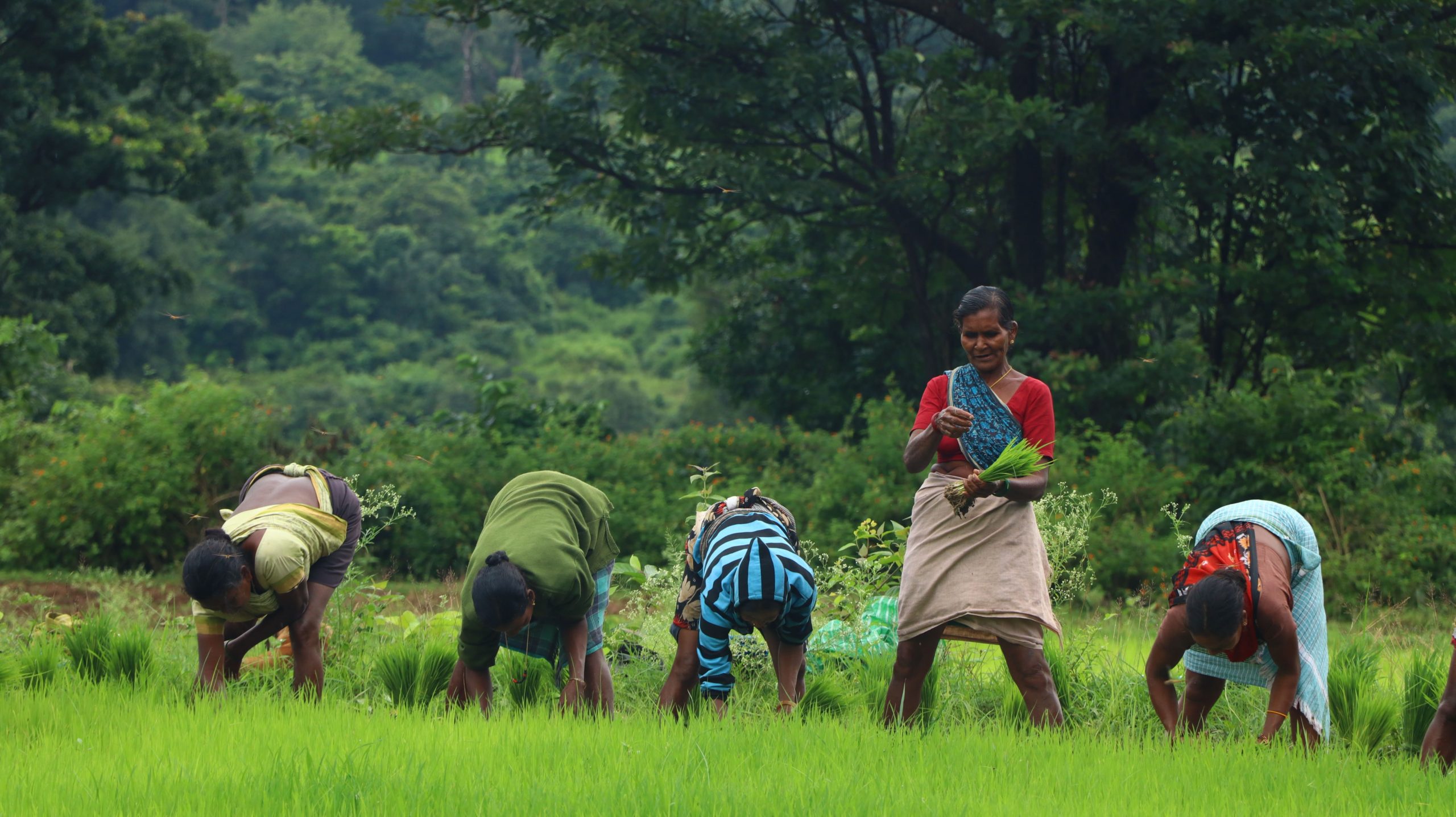
    Tamilnadu continues to be one of the fastest growing states in India, despite some major declines due to political instability, rampant corruption, and populist measures at the cost of development. Despite significant progress in literacy, women’s education, and some aspects of social security, there are still major shortfalls with respect to rural employment, skill development, and gender wage inequality. Tamilnadu has to develop a policy framework to achieve employability through quality secondary education for women, shifting focus from only enrolment of girls in primary education. Manjari Balu analyses this issue in Tamilnadu.


    Read More

  • Gender Wage Inequality: A Core Problem in Rural Indian Economy

    Gender Wage Inequality: A Core Problem in Rural Indian Economy

    Growing unemployment rates, inadequate demand and low productivity in rural India is currently drawing significant attention particularly in view of the current economic slowdown. Debates on falling agriculture productivity and consumption in rural areas have partially ignored the gender dimension. The sexual division of labour in a rural production framework arbitrarily sets the female wages lower than men. Declining participation of women in labour force could relate to various socio-economic conditions, a sector wise analysis mirrors an intelligible dynamics of the problem.   Informal rural market already operating below the minimum wage exploits women as they are presumed to have poor bargaining power and social constraints blocking their employment migration tracks. While the dire status of marginal farmers and casual labourers are talked about, economic and social inequality across gender misses the radar.

    Optimism on gender grounds rose after the wage gap between men and women started reducing in rural labour market across India. A closer examination of the wage data among rural labour reveals the complex nature of female labour wages. More importantly, the seeming reduction in  wage gap in actuality is more due to  decline in male wage rates. The overall percentage of women in rural casual labour market has seen a marginal reduction from 35 percent in 1983 to 31 percent in 2017-18. Analysis of informal casual labour market reveals a pattern of women being paid low wages and with no social security schemes resulting in decline in already poor quality of living. Significantly, economic contribution of women is grossly underestimated in the current System of National Accounts (SNA). Time Use Survey captures all unpaid activities of men and women which would be more accurate to calculate. However, the problem of valuation remains an issue, and calculation of woman’s opportunity cost in a rural household is an arduous task.

    Complex pattern of decline in female work participation rate

    Female Workers Participation Rate (FWPR) in rural sector declined from 32 percent in 1972-73 to 17 percent in 2017-18. Studies suggest various reasons could be responsible for a fall in proportion of women in rural work force.  According to Census India 2001 and NSSO 2010, increasing number of women migrate from one rural area to other and round 64 percent of women migrants move because of marriage. A research study in Institute of Asian Studies observed an income effect, U shaped probability curve of female participation with the log of male income in the family. This means more women were working during the times of economic distress to support the family and participation rate gradually reduced with higher income earned by the men. However, with increase in income, there is also a pattern of women working to meet the increased consumption expenditure. Education is also considered an important component contributing to reduced percentage of women in labour force. As literacy rates grow, graduate women are aspiring to get employed in skilled jobs and voluntarily withdraw from the work force. However, proportion of women in primary sector has only declined from 89.7 percent (Krishnaraj & Kanchi, 2008) in 1972 to 83.6 percent in 2004. Evidently, majority of women in rural areas are dependent on primary sector for employment, a drop to 67 percent of men dependent on primary sector for employment is due to their shift to secondary and tertiary sectors. Employment in unorganised sector is beset with low wages, an exploitation by the employers.  Moreover, absence of social security cripples the income earning capacity of women. This deliberately places women in the lower strata of rural economy leading to poor socio-economic living conditions and has a direct impact on their inability to invest in education, health and nutrition.

    Women in informal sector and Poverty in rural India

    India’s rural sector is characterized by a large segment of informal labour force where 90 percent of the population is either self-employed or work for casual wage. Rural areas in particular operate in an informal economy and wages are mostly determined by the labour market where women are inherently considered less productive and paid less than men.

    As of 2011-12, 68 percent of female casual labourers were receiving less than National Minimum Wage of INR 122. Around 47 percent of men in rural India received less than the minimum wage indicating the unreliable nature of rural informal job market. Men, naturally with higher migration possibility, shift to informal urban sector jobs but women are left with depressed wages even as the labour demand remains high. Although the rural urban migration among women is higher than men, 60.8 per cent of women migrating to urban areas are due to marriage. As far as employment is concerned only 2.6 percent of women migrate as opposed to 52.7 percent of men. The decline in women participation in labour force is visible among educated women. Unskilled women in poor households tend to work for daily wages and have not substantially reduced from workforce. In rural India, where casual farm and nonfarm jobs are exploited it makes limited sense to use only wage gap to measure the gender equality.

    Agriculture, evolved from a traditional household structure, supports if not advocates, defined gender roles and discriminates women overtly through economic means. According to the recent NSSO report unemployment rates among rural females has increased from 1.8 percent in 2004-05 to 3.8 percent in 2017-18. However, an average of 5.4 percent of women had reported to be available for additional work in PLFS survey 2017-18. Unemployment is rampant across the country in all sectors but women labour supply for casual jobs especially in poor household still remains high pushing the daily wages further down. Intense land fragmentation has increased the percentage of marginal landowners to 85 percent but the demand for labour has reduced, forcing men to migrate into other sectors. Deepening crisis in agriculture also contributes directly to low wages among residual unskilled women labourers. Effectively the ‘informal labour’ market conditions has become a trap that exploits unskilled women as they are willing to work even at a lower wage rate. In effect, an increase in participation would not guarantee a better standard of living if the market is unregulated and exploitation based on gender continues.

    Why Government measures are only partially effective?

    Government initiatives for the rural economy have led to various policies to increase the income levels of marginal farmers and unskilled labourers. Women participation has been prioritized in such schemes and has shown to reduce poverty among rural households. National workfare program MGNREGS provides employment on demand and has managed to attract many women to participate by claiming to offer equal wages. As the Public employment program also mandates 33 percent of labours to be women, unskilled women are largely entering into the MGNREGS program. For the financial year 2011-12, 48 percent of women are engaged in this program from all the rural districts. However, wage gap exists even in a state intervention program- calculating from Annual Report of PLFS 2017-18, men on an average are reported to earn 152 INR per day while women are paid 143 INR from the state employment guarantee program. Further, in few states like Gujarat, Tamil Nadu, Punjab, Madhya Pradesh, Maharashtra and Telengana casual worker’s (both male and female) wage is below the notified wage for financial year 2017-18. State programs are accused of various leakages and operational inefficiencies, yet the participation remains high indicating a much serious problem in rural labour market. An important long term issue pertaining to state run workfare program is the stagnation of skill levels in rural India.  Women participation in secondary and tertiary sector is low; a possible explanation for unskilled women labourers’ compromise for low wages is because of lack of any other alternative. Skill augmentation is prerequisite to transform from an agrarian to an industrial society. A significant effort needs to be directed in training unskilled work force in rural sector, and government employment program has to be a seasonal support system.

    Skill development and Vocational Training to combat rural poverty

    The national average wage difference between men and women for casual employment other than MGNREGS work is calculated to be 55.02 INR for the year 2017-18 and states like Tamil Nadu, Kerala, Tripura and Andhra Pradesh are observed to have the highest gender wage difference. Ironically, these are the states with female participation (in casual labour force) higher than the national average of 25.5 percent, implying that wages (equal wages) are not the only driving force for influencing labour participation. In rural India, while socially defined roles result in unequal wages in labour market, women’s labour does not seem to follow the traditional backward bending labour supply curve. The natural withdrawal of women from workforce is not as serious as unskilled women remaining in informal sector even with lower wages. Real problem of women in rural economy is their diminishing bargaining power and skill stagnation or non-development of any skills due to informal structure and counterproductive state measures.

     A complete free market approach would deepen the wage difference as rural women are assumed to have low skills and weak bargaining power. State intervention to engage more women in labour market should not be limited to just providing 100 days of employment. Skill enhancement, vocational training demanded by industrial and service sectors needs to be imparted in rural areas. Residual women in rural areas are reserve army of labour available and usually are exploited for reasons given above. The gender wage gap is a consequence of a faulty design by the government and dyed-in-the-wool beliefs of people; solutions lie in the state prioritising proactive measures to reform the unorganized sector and improve market accessibility for women. Unequal remuneration in informal sector is a symptom of a fragile labour market. Women labourers end up bearing weights of both market and state failure with poor skills and low wages.

    Manjari Balu is a Research Analyst with The Peninsula Foundation.

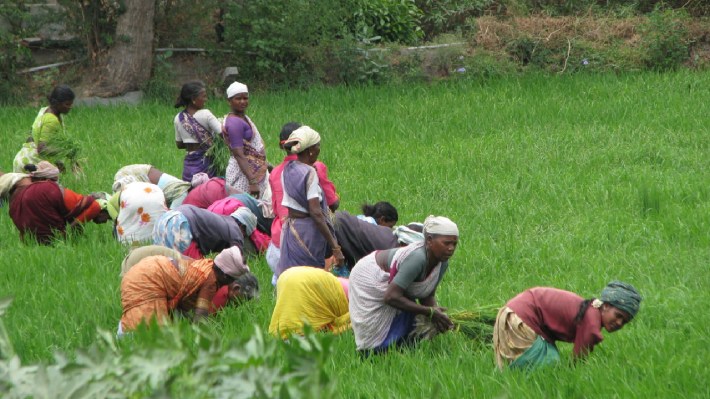
    Image Credit:Photo by vishu vishuma on Unsplash.

  • India Elections 2019: Under-representation of Women Reflects Failure of Policy

    India Elections 2019: Under-representation of Women Reflects Failure of Policy

    Renuka Paul                                                                                           April 10, 2019/Analysis

    India, the world’s largest democracy, will witness the start of its general elections tomorrow, for constituting the 17th Lok Sabha. With 900 million eligible voters, it is expected to be the biggest electoral event and is scheduled to be held in 7 phases from April 11th to May 19th, 2019. The democratic exercise, however, does not appear to be fairly representative of women. For over two decades, the insufficient involvement of women in Indian politics has been largely debated, and measures to alter the status quo have been backed by nearly all major political parties. Despite the support, implementation of these proposals have stalled. Moreover, there has been no significant increase in women’s representation within party ranks nor in the number of female candidates being nominated for the upcoming election.

    India Fares Poorly in Comparison to its Neighbours

    Although women constitute nearly half of India’s population at present, female political representation remains at 11.8 percent in Lok Sabha and 11.2 percent in Rajya Sabha (global average, as of 2018, is 24.3 percent). In other words, nearly 9 out of 10 legislators in India are men. While women have held the roles of the President, Prime Minister and Chief Minister in India, these instances remain an anomaly rather than the norm, with most of the elected female leaders belonging to political families (43 percent). According to Inter Parliamentary Union (2019), India is ranked 149thout of 193 countries in terms of representation of women in Lower Houses. In comparison, Nepal (32.7 percent), Afghanistan (27.3 percent), Bangladesh (20.6 percent) and Pakistan (20.2 percent) perform far better and have political quotas in place. Furthermore, representation of women in state assemblies is even lower (8 percent), with the highest numbers in Bihar, Haryana and Rajasthan at 14 percent and lowest in Mizoram, Nagaland and Puducherry with no elected women representatives.

    The abysmal rate of women’s role in decision making and legislation was first acknowledged in 1976 after a report by the Committee on the Status of Women in India was published. Following this, 73rdand 74thconstitutional amendments were adopted in 1993 mandating 33 percent reservation for women in local governance. Later, in 1996, in order to correct the deeply skewed ratio of female electoral participation, the Women’s Reservation Bill was introduced in the parliament in order to extend reservation to Lok Sabha and state assemblies. As per the provisions of the bill, seats under the quota were to be allotted to different constituencies by rotation, as prescribed by the authority determined by the parliament. Importantly, the bill contained a clause stating that the reservation extended would be eliminated 15 years after its introduction. This clause was included upon determining that the estimated time period was sufficient to remove the political disadvantages faced by women. Further, some argued that following the 15 years, people would come to realise the capabilities of women leaders and, if the bill were to not be revoked, it would limit female candidates to contest elections from the reserved seats alone. Though the bill has been promoted by major parties, it has failed to get legislative approval.

    Patriarchal Mindset and the Absence of Political Will

    Both the NDA and UPA governments blamed failure of the bill’s passage on the coalition arrangement that made consensus impossible, despite the support of the leading party. Although the BJP were vocal about women’s marginalisation in politics while in opposition, upon coming to power in 2014 with a clear majority, the party has neither discussed nor passed the bill. Overall, a general lack of political will remains and the disinterest of parties in issues of inclusive representation is evident. This is highlighted by the fact that women representatives of all major parties in the general elections is less than 10 percent.

    Opponents of political quotas for women argue that it will further strengthen the gender imbalance at the top. According to them, “modern women” are capable of contesting elections on merit and do not require affirmative actions to win elections. Moreover, they argue that reserved seats restrict the choice of voters to only women candidates, thereby violating the rules of democratic elections. Others claim that rotation of reserved constituencies would reduce an MP’s incentive to work for their constituencies since they would not be eligible for contesting elections in the next term. Many have proposed alternatives such as reservations for women in political parties instead, dual member constituencies, etc. Interestingly, while these disagreements have stymied the bill for over two decades, they did not hinder the passage of the 73rdand 74thamendments (passed with a clear majority when introduced the first time). This may be because the latter does not pose any threats to the dominant position of male parliamentarians, as opposed to the former that challenges their own survival.

    Globally, it is established that men and women in leadership positions often have differing priorities and perspectives. An ideal mix of both the sexes in politics is necessary to ensure that the democratic process is truly representative and that demands of all categories are considered during decision making processes. Though open competition in constituencies may be preferred, reservation for women candidates is required until gender parity is achieved. This balance in elected bodies is crucial to establish a mechanism that allows women to actively engage and influence broader political and economic concerns, especially those that affect women.  In India, equal opportunities in terms of political participation and representation have been granted to women since independence. However, societal and historical biases against women have created rigid structures that have hindered women’s accessibility to positions of power. Equal political representation makes the democratic system more responsive to the needs of the people. In this sense, there is an urgent need to improve women’s involvement in politics for inclusive growth and development.

    Reservation for Women an Absolute Necessity

    The existence of reserved seats for women in elected bodies isn’t just a demand for fairness and equality. Various studies have highlighted the positive effects of bringing in female leaders. A report by the Ministry of Panchayati Raj has highlighted that reservation for women in PRIs has improved the self-esteem, confidence and decision-making skills of the candidates, which in turn has led to an increase in education for girls and consequently expanded the breadth of their future aspirations. Furthermore, it was found that the elected women also invested more in the handling public goods such as cleaner fuels, road connectivity and water accessibility- issues that often affect women at large. According to a study by UN University WIDER, constituencies with women leaders have 15 percent more luminosity growth in their regions than those headed by men, thereby improving productivity and employment rates. The study concluded that women leaders contributed 1.8 times more to economic growth than their male counterparts. Many studies have recorded considerable differences in policy priorities and solutions offered by both the sexes, with female leaders primarily emphasizing on issues aimed at improving the quality of life, conditions of women and children, health parameters and lives of minorities. Research indicates that this is possibly the result of traditional roles played by women as mothers or caregivers. A J-PAL research paper has also observed that the quota system in local governments have boosted child health and nutrition, female entrepreneurship and the responsiveness of police toward violence against women. Altogether, the inclusion of women in politics is not limited to changing gender relations in the nation but also greatly contributes to improving social welfare and economics.

    Many have noted that for women to substantially impact the policy scenario, they would need at least a 30 percent share in the parliament.  In fundamentally patriarchal Indian society, this highlights yet again the crucial need for the Women’s Reservation Bill. While many contend that this will limit and make women candidates dependent on the quota system, evidence shows otherwise. Despite quotas in local governments (33 percent), as of 2018, the national average of women in panchayats is around 44 percent and 14 states have more than 50 percent women leaders. In fact, Uttarakhand and Rajasthan have 56 percent female representation in PRIs. However, there are many other factors that require consideration. According to Economic Survey 2018, cultural attitudes towards women, domestic responsibilities, illiteracy, lack of confidence, inaccessibility to political funds, threat of violence, etc are some causes that limit women’s abilities to step forward in politics. Therefore, while women are offered opportunities through political quotas, inherent social structures and norms need to be altered in order to enhance balanced representation.

    Positive Impact on Society

    In recent years, the signs of increasing involvement of women in Indian politics are clearly visible. This is primarily manifested through voting and political activism (not figured into representation). According to leading election researchers, the upcoming general elections will see female voters surpassing the men. These trends show that there exists a demand to see more from political parties than hollow promises of female-oriented policy statements in election manifestos. For instance, Odisha has introduced a resolution in its state assembly for reserving one-third seats for women in parliament and legislative assembly, and the Biju Janata Dal (BJD), the ruling party, has proclaimed that 33 percent women candidates will contest elections. Trinamool Congress in West Bengal has announced that 41 percent of its candidates for Lok Sabha seats are women. While other parties have criticised these moves as opportunistic and an attempt to capture a larger share of the female electorate, these decisions certainly offer a better platform for women in the upcoming elections. Moreover, with the increase of women voters, other parties and states will be compelled to follow suit.

    For effectively including women in the elected leadership, in addition to affirmative action, there is a need for parties to prioritise women within their ranks, thereby cultivating a gender neutral political environment. These efforts should also be enhanced through comprehensive political education and gender sensitisation by the state and media. Since substantial female political empowerment necessitates a shift in people’s values and perceptions, it requires collaborative efforts from various players including leaders, political parties, civil society and the media alike.

    Renuka Paul is a Research Analyst with TPF.

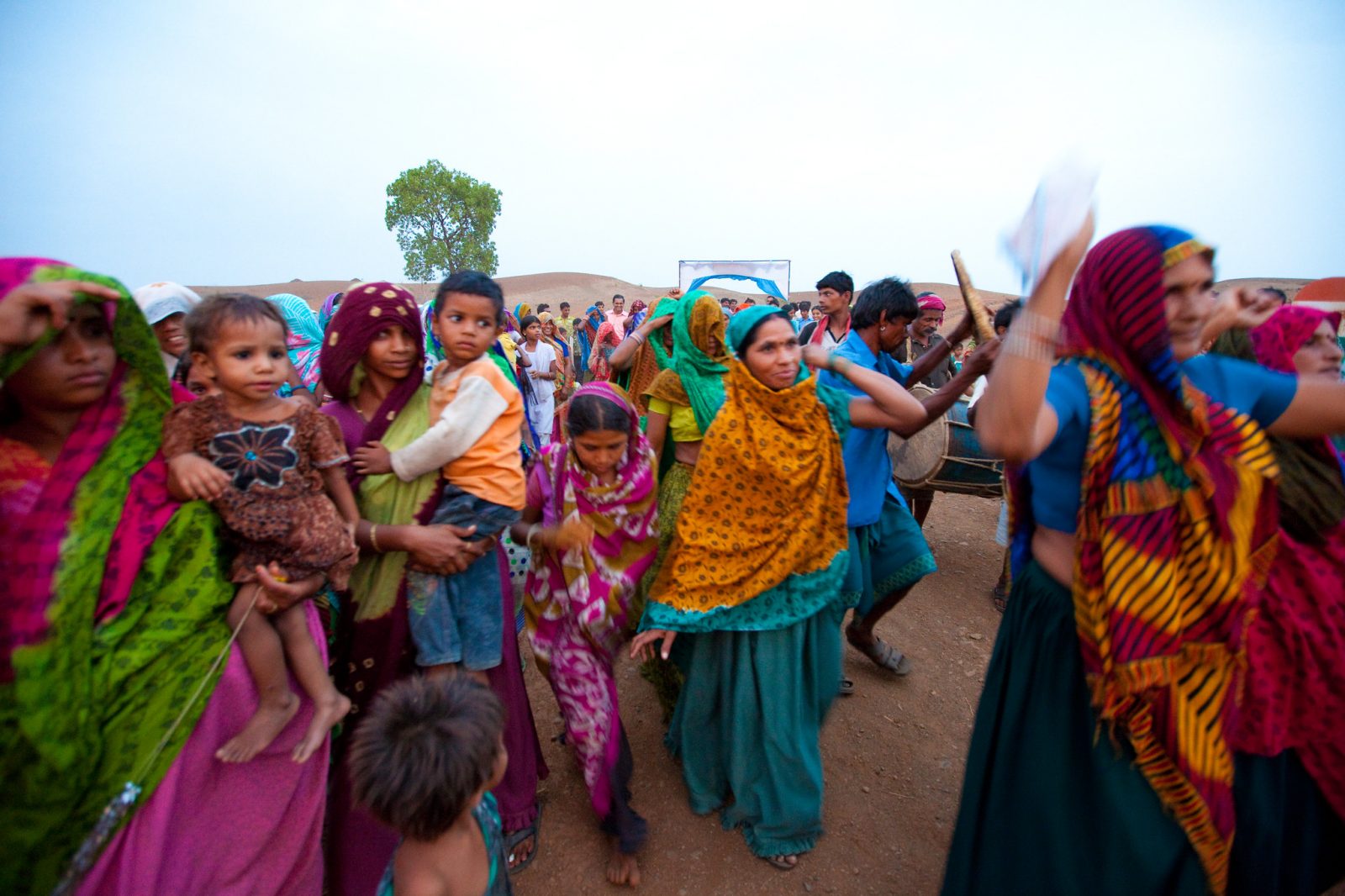
    Header Image: Welcome party at the Gram Sabha, Panchayat-Khaal Khandvi, District-Megh Nagar, Jhabua, MP (UN Women)
  • Women In Indian Armed Forces

    Women In Indian Armed Forces

    Center for Women’s Studies & Department of History
    Women’s Christian College, Chennai
    & The Peninsula Foundation, Chennai

    cordially invite you to the Inauguration of the

    National Seminar

    Women in Indian Armed Forces:
    Changing Contexts and Transformations

    On 8th March 2018 at 9.00 a.m.

    at the Auditorium (Centenary Building)

    Inaugural Address

    Dr. C. Joshua Thomas

    Coordinator, ASEAN Studies Centre &, Deputy Director,

    ICSSR North Eastern Regional Centre, NEHU Campus, Meghalaya

    Keynote Address

    Air Marshal (Retd.) Dr. M. Matheswaran

    Former Deputy Chief, Integrated Defence Staff (Air),

    South Block, Govt of India, New Delhi

    Chairman The Peninsula Foundation, Chennai

    Special Address

    Lt. Gen. (Retd.) Vinod G. Khandare

    Former Director General Defence Intelligence Agency, New Delhi

    Sponsored by

    Indian Council for Social Science Research,

    New Delhi & Southern Regional Centre, Hyderabad

    Events Snaps

    [sc name=”donte”]