Category: Freedom & Equality

  • Distress Migration: A case study of KBK districts in Odisha

    Distress Migration: A case study of KBK districts in Odisha

    The former districts of Koraput, Balangir and Kalahandi, also known as KBK districts, were reorganised into 8 districts of Koraput, Malkangiri, Nabarangpur, Rayagada, Balangir, Subarnapur, Kalahandi and Nuapada in 1992. These districts form the South-West part of Odisha comprising the great Deccan Plateau and the Eastern Ghats. These highland districts highly rich in mineral resources, flora and fauna remain as one of the most backward regions in Odisha

    Among the different forms of migration, distressed migrants remain the most impoverished and unrecognised. These migrants form the lowest strata of the society; disadvantaged by caste, poverty and structural inequalities. In Odisha, the underdeveloped region of KBK is one among the main sources of distressed migrants. They move to cities in search of employment and better wages, while in cities they are even more disadvantaged due to social, economic and linguistic barriers. Administrative and political apathy over their issues has only enhanced their distress.

    This paper attempts to address three questions:

    1. What are the characteristics of distressed migrants in KBK district, Odisha?
    2. What are the existing policies of the state to curb this form of migration?
    3. What form of government intervention is required to address this distress?

    The analysis is carried out through a review of published articles, government reports, e-books and newspaper reports.

    Defining distress migration

    Migration is a multifaceted concept driven by diverse factors. Migration can be internal or international, voluntary or involuntary, temporary or permanent. Depending on the pattern and choice of migration, each migratory trend could be characterised into different forms. Distress migration is one such form of migration.

    Involuntary migration is often associated with displacement out of conflict, environmental distress, climatic change etc. That is any sudden threat or event forces people to migrate. However, involuntary migration may also arise out of socio-economic factors such as poverty, food insecurity, lack of employment opportunities, unequal distribution of resources etc. This component of involuntary migration is addressed by the concept of distress migration (Avis, 2017).

    To understand distressed rural-urban migration in India, the broad definition used by Mander and Sahgal (2010) in their analysis of rural-urban migration in Delhi can be employed. They have discussed distress migration as:

    “Such movement from one’s usual place of residence which is undertaken in conditions where the individual and/or the family perceive that there are no options open to them to survive with dignity, except to migrate. Such distress is usually associated with extreme paucity of alternate economic options, and natural calamities such as floods and drought. But there may also be acute forms of social distress which also spur migration, such as fear of violence and discrimination which is embedded in patriarchy, caste discrimination, and ethnic and religious communal violence” ( Mander and Sahgal, 2010)

    In brief, the definition states that distress migration is caused by an array of issues. Environmental disasters, economic deprivation, gender or social oppression, lack of alternate employment opportunities and inability to survive with dignity are mentioned as the main drivers of distress migration (Avis, 2017).

    Thus, distress migration is a form of temporary migration driven by environmental and socio-economic factors and not based on an informed or voluntary choice.

    Profile of KBK districts

    The former districts of Koraput, Balangir and Kalahandi, also known as the KBK districts, were reorganised into 8 districts of Koraput, Malkangiri, Nabarangpur, Rayagada, Balangir, Subarnapur, Kalahandi and Nuapada in 1992. These districts form the South-West part of Odisha comprising the great Deccan Plateau and the Eastern Ghats. These highland districts highly rich in mineral resources, flora and fauna remain as one of the most backward regions in Odisha. The region is termed backward on account of rural backwardness, high poverty rates, low literacy rates, underdeveloped agriculture and poor development of infrastructure and transportation (Directorate of Economics and Statistics, 2021).
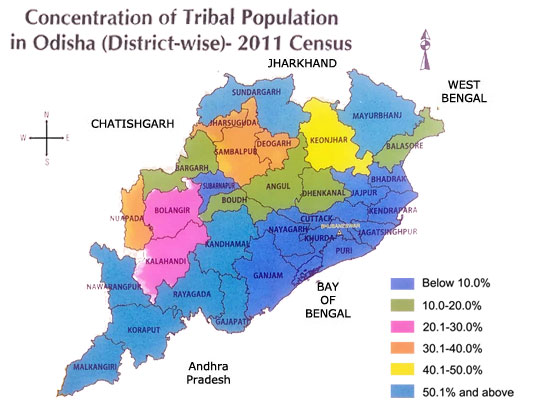
    The districts are home to primitive tribal communities such as Gonds, Koyas, Kotias etc. dependent on forest produce and subsistence agriculture for a living. KBK region registered a workforce participation rate of 48.06 % in the 2011 census. There was a significant occupation change noticed from the 2011 census.  The region witnessed a fall in cultivators from 33% in 2001 to 26.7% in 2011. However, the fall in cultivators was compensated with an increase in agricultural labourers from 44.24 % in 2001 to 48.87% in 2011. Employment in household industries also witnessed a downfall between the period of 2001 to 2011 (Sethy, 2020).

    The rise in agricultural labourers has a negative impact on the communities. As agriculture is underdeveloped owing to the arid nature of the region, crop failure, extreme calamities, low net irrigated area and falling government expenditure, these workers are pushed into abject poverty. In search of alternate employment options, these workers migrate to other areas of employment in rural or urban pockets. Such a form of seasonal migration during the lean period in agriculture is a predominant phenomenon in these districts. Their dependence on non-timber forest produce is hindered by the rapid deterioration and deforestation of forests for development projects and mining.

    Characteristics of distressed migrants in KBK region

    1. Who Are These Distressed Migrants?

    In the KBK region, distress migration has been a popular coping strategy during lean periods of agriculture. And this strategy is majorly adapted by disadvantaged and marginalised sections of the region. They are disadvantaged by caste, chronic poverty, landlessness, low levels of literacy and skills, increased dependence on forest and agriculture and debt-ridden (Meher, 2017; Mishra D.K., 2011; Tripathy, 2015, 2021).

    1. Why Do They Migrate

    Distressed migration in the region is induced by many interlinked factors. One such factor is that the region is highly under-developed in terms of social and economic infrastructure. Such under-development puts the communities at a disadvantage with low levels of literacy and skills. Their dependence on agriculture and forest produce for livelihood rises. However, agriculture is under-developed and forests are subjected to high levels of deforestation. With low levels of income, crop failure and non-availability of alternate employment opportunities, the communities are subjected to absolute levels of poverty, food and employment insecurities (Kujur, 2019).
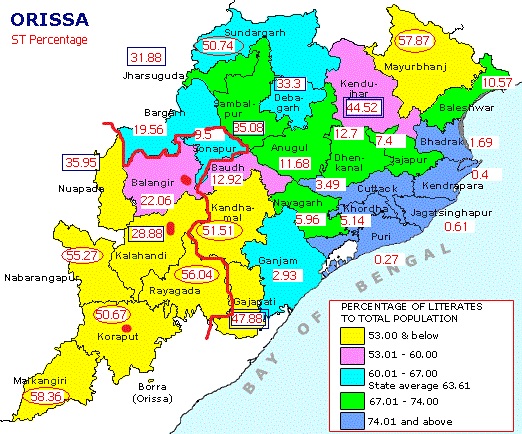
    Landlessness is also identified as one significant push factor. As the region is highly dominated by tribal communities, they are more attached to and dependent on the forest cover. Globalisation and industrialisation resulted in deforestation and encroachment of farmlands for industrial and mining purposes. Eventually, a major proportion of land remains with a smaller group of wealthy people (Mishra D.K., 2011).   Relocation and involuntary displacement also result in the loss of their livelihood that is dependent on the local environment (Jaysawal & Saha, 2016).

    With falling income, people approach local moneylenders to meet their basic sustenance needs. With low incomes from agriculture and forest produce, families approach these informal creditors to meet emergency needs like marriage, birth and death rituals or medical treatment as well as to meet basic consumption needs with the expectation of cash flow from labour contractors during the lean season. Moneylenders exploit them by charging higher interest rates. Thus, the non-availability of formal credit facilities pushes them into a debt trap and further to adopt migration (KARMI, 2014; Mishra D.K., 2016).

    The region is also subject to extreme calamities and drought. Small and marginal farmers, poor in income and land, choose to migrate as they are unable to cope with the regular droughts and climate change. A study on historical analysis of the effect of climate on migration in Western Odisha mentions that the migratory trend saw a rise after the mega drought in 1965. Up until then, large-scale migration from the region was not a phenomenon (Panda, 2017).


    1. Channel of Migration

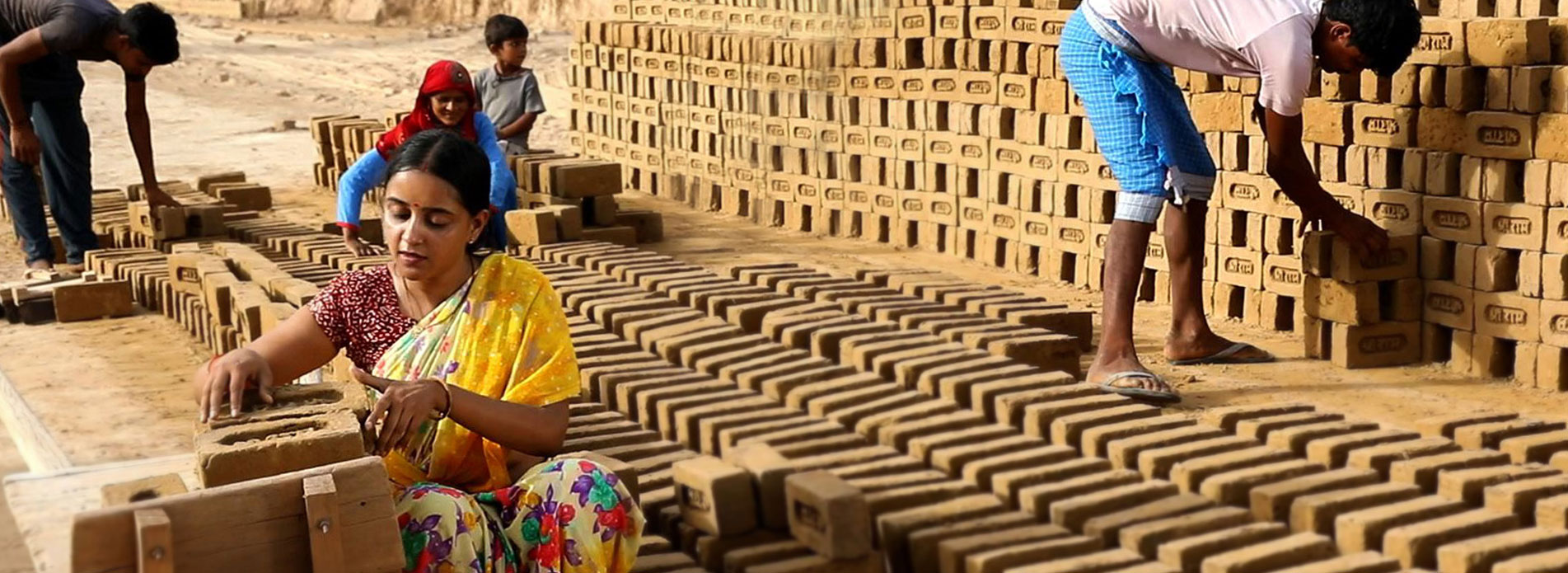
    Sardars provide an advance amount and in exchange, the debtor or any family member agrees to work for them for a stipulated period, usually six months. Hence, there exists a form of debt bondage. Large-scale family migration through this system is seen in the KBK region. The major stream of such bonded labour migration is witnessed towards brick kilns in Andhra Pradesh

    In the region, seasonal migration occurs through the channels of agents, locally known as Sardars, on a contractual basis. This form of migration is known as Dadan labour migration. The poor migrant labourers are known as Dadan and they are recruited by Sardars, who are usually local people who are familiar with residents in the region (KARMI, 2014). During the period of Nukhai, they go around the villages and contact prospective labourers. These Sardars are the intermediary between the employer and the migrant labourer. Sardars provide an advance amount and in exchange, the debtor or any family member agrees to work for them for a stipulated period, usually six months. Hence, there exists a form of debt bondage. Large-scale family migration through this system is seen in the KBK region. The major stream of such bonded labour migration is witnessed towards brick kilns in Andhra Pradesh. They are also a major source of labour in the areas of construction, handlooms and other forms of informal sector work across South India (Daniels, 2014). The problems they face in the destination are manifold. They are subjected to poor working conditions, poor housing and sanitation facilities and limited access to education and health facilities. They are recognised as cheap labour with limited bargaining power owing to their social, cultural and linguistic exclusion in the destination state. Upon entering the contract their freedom to move and freedom to express is denied (Acharya, 2020).

    1. Pull Factors to Migrate

    The hope of availability of better job opportunities and wages is the main pull factor. However, upon the analysis of the nature of migration, push factors have a higher weightage in inducing such distress migration. Migration to brick kilns and other informal sectors from the KBK region can be termed as distress migration as in this case, distress is caused mainly by socioeconomic factors. It is not an informed or voluntary choice. Debt migration remains the only coping strategy that they could adopt.

    Government intervention to curb such distress

    1. Policies Addressing Debt-Bondage Migration:

    The first attempt of the state government to address Dadan migration or debt migration is the enactment of the Dadan Labour (Control and Regulation) Act (ORLA) in 1975. The act had provisions for the registration of labourers and agents, ensuring compliance of minimum wages and favourable working conditions and appointing inspection officers and dispute redressal committees (Daniels, 2014).  However, the act remained on paper and no evidence of enactment was published until it was repealed in 1979 upon the enactment of the Interstate Migrant Workmen (Regulation of Employment and Conditions of Service) Act, 1979 (Nanda, 2017).

    The ISMW act has been criticised to be inadequate and failing to regulate and facilitate safe migration. According to the act, only those interstate migrant workmen who are recruited by licensed agents come under the ambit of the act. However, most agents involved in Dadan migration are not licensed and hence, these workers cannot avail of any of the provisions of the act (Singh, 2020). Though registration of labour contractors is mandatory in the origin state, there is no information about the names of these contractors and hence, further monitoring of the migration process is avoided (NCABL, 2016). Lack of adequate enforcement, under-staffing and poor infrastructure are identified as the reasons for poor implementation of the act in the state (Daniels, 2014).

    A positive attempt against distress migration was the Memorandum of Undertaking (MoU) initiated between the labour department of Odisha and Andhra Pradesh to ensure labour welfare measures of migrant workers in Brick Kilns. After the MoU, the state of undivided Andhra Pradesh took up various progressive measures in education, health, housing and PDS for migrant workers in Brick Kilns. ILO necessitated the need for states to enter into inter-state MoUs to effectively address the bonded labour migration. However, no further MoU was signed with other states like Tamil Nadu, Chhattisgarh etc. which are also among the major host states for migrants from the region (NCABL, 2016).

    The Bonded Labour System (Abolition) Act enacted in 1976 governs the provisions for identification, rescue and rehabilitation of bonded labourers across the country. The act has its loopholes in implementation. There is no information on whether vigilance committees have been set up in every district or whether the surveys have been periodically conducted or to what extent the act has been functioning in the state (Post News Network, 2019). The centrally sponsored scheme for Rehabilitation of Bonded Labour also has its setbacks. There have been reported cases of delay and denial of financial aid by district officials ( Mishra .S., 2016). In 2016, with restructuring and revamping of the Rehabilitation scheme, rescued workers could only avail the full amount of financial aid with the prosecution of the accused employers. With no database on the employer, the rates of prosecution have been low and the rescued bonded labour do not receive their funds (NACBL, 2016)

    1.  Ensuring Accessibility of Health Facilities in Destination

    The Rashtriya Swasthya Bima Yojana or RSBY launched by the central government in 2008 provides health insurance to BPL families. The scheme incorporates provisions to split smart cards so those migrant workers could avail health insurance in destination states. After signing of the MoU between Andhra Pradesh and Odisha, the two states took steps to spreading awareness among the migrant workers about how to use the smart cards (Inter-State Migrant Workman Act (ISMW), Labour Directorate, n.d.)

    1. Ensuring Education of Migrant Workers Children

    The state of Odisha has established seasonal hostels to ensure the education of children of migrant workers.  The children are enrolled in seasonal hostels during October-June, that is until their parents return home (Odisha Primary Education Programme Authority, n.d.).  The state has ensured the education of migrant children at their destination state by sending Odiya textbooks and Odiya teachers to residential schools in Andhra Pradesh (Inter-State Migrant Workman Act (ISMW), Labour Directorate, n.d.).

    1. Alternate Employment Opportunities: MGNREGA

    Mahatma Gandhi National Rural Employment Guarantee Act (MGNREGA) was introduced in 2006 to provide guaranteed employment to rural poor with the objective of uplifting them from poverty and restricting distress migration.  A study analysing the performance of MGNREGA through secondary sources of data suggests that based on physical criteria of 100 Days of Wage Employment, Person-days generated, ST and Women person-days and financial performance in terms of total expenditure, total wages, average cost and average wage rate per day person, the performance of MGNREGA in KBK districts is better compared to Non- KBK districts.  But the region is lagging in rural employability criteria based on average days of employment provided per household and job cards issued (Sahoo et al., 2018).  Labour in the region is not interested to work under MGNREGA due to its dismal implementation in the state. Workers complain about the delay in receiving payments and instances of the creation of non-existent workers’ names among MGNREGA’s beneficiaries (KARMI, 2014).  Uncertain and low wages make these labourers favour migration to Brick Kilns in hope of better wages (Deep, 2018).

    1. Development Policies in KBK Region

    The KBK region has a high incidence of poverty owing to regional disparities in development and social exclusion based on caste. The main initiatives implemented by the state government for the upliftment of the KBK region are the Special Area Development Programme, Revised Long Term Action Plan (RLTAP), Biju KBK Plan, Backward Regions Grants Fund, Gopabandhu Gramin Yojana (GGY), Special Central Assistance (SCA) for tribal sub-plan (TSP) areas, Western Odisha Development Council (WODC) and Grants under Article 275(1) of the Constitution. Development projects to reduce poverty and regional disparities are obstructed by economic, social and institutional factors (Mishra, 2020).
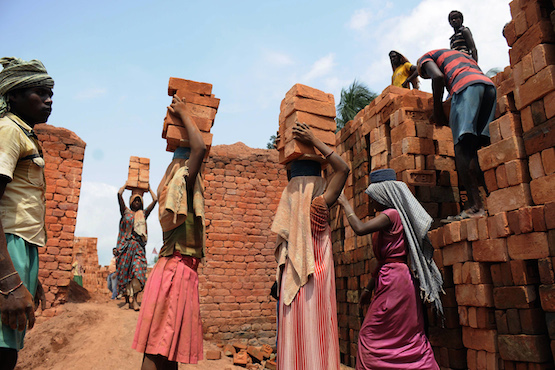
     

    The state of Odisha has done positive interventions in the education of migrant children and health facilities of the migrant population. However, the distress migration is still prevalent owing to the social and economic exclusion and debt bondage situations in the region. Land grabbing in the name of development left the tribal communities poor and in distress. Structural inequalities induced by caste discrimination are enhanced with such landlessness.


    Policy Recommendations

    The state of Odisha has done positive interventions in the education of migrant children and health facilities of the migrant population. However, the distress migration is still prevalent owing to the social and economic exclusion and debt bondage situations in the region. Several initiatives and schemes have been enacted to address distress migration; however, their failure in reducing distress can be linked to dismal governance, poor implementation and misappropriation of schemes.

    The state must ensure migration to be safe and a viable coping strategy. From this study it is suggested the state of Odisha follow a multipronged approach to address the distress.

    Origin state (Odisha) interventions

    •         Short Term Interventions:
    1. The system of debt bondage should be completely abolished by the proper implementation of legislation. Different loopholes in implementation such as the delay in the release of funds, prosecution of accused and identification and registration of middlemen should be addressed. Apart from the financial aid, the state should intervene in providing a comprehensive livelihood plan for the rescued labourers. Abolishing the bonded labour system is essential to reduce distress and make migration safe.
    2. Informal sources of credit should be eliminated and formal credit and microfinance facilities should be made available. Such facilities would reduce the exploitation and prevent the creation of absurd debt. Formal credit provides opportunities for small and marginal farmers to indulge in productive investments. This enables them to cope with extreme climatic changes.
    3. Land grabbing in the name of development left the tribal communities poor and in distress. Structural inequalities induced by caste discrimination are enhanced with such landlessness. The provision of land ownership enables the communities to enjoy land-based benefits which further supports them to sustain their livelihood. Ownership of land also provides the indigenous community with a sense of social and economic significance.
    •         Long term interventions
    1. The state should engage in enhancing the skills of the people in the region. Vocational skill training and development schemes can be introduced. This could expand the opportunities available for employment and distribute labour across all the economic sectors.
    2. Rural development should be given higher priority. The state of Odisha has already initiated many schemes for the development of the KBK region. However, the state should study the economic and social factors that stagnate the process of development in the region. Chronic poverty, poor infrastructural and rural connectivity and dismal education and health facilities are some of the important areas that require attention.

    Host state intervention

    1.   The host state needs to create a database of migrants entering their state. A statistically significant database on migrants solves a huge array of issues faced by the migrant in the destination state. A comprehensive database helps in identifying and recognising migrants. It also allows for understanding the different characteristics of migrants and the sectors in which they are employed. This would be beneficial for monitoring and ensuring safe and favourable working conditions. A database also helps in ensuring the availability and accessibility of social security and entitlements in host states.


    1.   Migrant labour is as important to the destination state as it is to the origin state. Both origin and host state should cooperate towards making migration a viable livelihood strategy.

    Another important area where both the origin and host state should intervene together is creating awareness among workers about the existing provisions and rights available to them. Access to the same should be made easy.

    Conclusion

    The highly backward districts of the KBK region remain a major source of distressed migrants. Years of state initiative in reducing distress have had negligible impact. The area remains underdeveloped and migration is the only viable choice of employment. Migration can only be a viable coping strategy for seasonal migrants when the channel of migration is made legal and safe. The major drawback in any initiative attempted to resolve distress is the poor implementation. Administrative apathy, corruption and misappropriation of schemes have stagnated the progress of every initiative.


    References

    1. Acharya, A. K. (2020). Caste-based migration and exposure to abuse and exploitation: Dadan labour migration in India. Contemporary Social Science, 1-13.
    2. Avis, W. R. (2017). Scoping study on defining and measuring distress migration.
    3. Bhatta Mishra, R. (2020). Distress migration and employment in indigenous Odisha, India: Evidence from migrant-sending households. World Development136, 105047.
    4. Daniels, U. (2014). Analytical review of the market, state and civil society response to seasonal migration from Odisha. Studies, stories and a canvas seasonal labour migration and migrant workers from Odisha, 106-115.
    5. Deep, S. S. Seasonal Migration and Exclusion: Educational Experiences of children in Brick Kilns. Ideas, Peoples and Inclusive Education in India. National Coalition for Education, India. 2018.
    6. Directorate of Economics and Statistics (2021). Odisha Economic Survey 2020-21. Planning and Convergence Department. Government of Odisha. http://www.desOdisha.nic.in/pdf/Odisha%20Economic%20Survey%202020-21-1.pdf
    7. Giri, J. (2009). Migration in Koraput: “In Search of a Less Grim Set of Possibilities” A Study in Four Blocks of tribal-dominated Koraput District, Odisha. Society for Promoting Rural Education and Development, Odisha, 1.
    8. Inter-State Migrant Workman Act (ISMW) | Labour Directorate. (n.d.). Labour Directorate, Government of Odisha. Retrieved August 10, 2021, from https://labdirodisha.gov.in/?q=node/63%27%3B.
    9. Jaysawal, N., & Saha, S. (2018). Impact of displacement on livelihood: a case study of Odisha. Community Development Journal53(1), 136-154.j
    10. Jena, M. (2018, July 21). Distress migration: land ownership can put a break. The Pioneer. https://www.dailypioneer.com/2018/state-editions/distress-migration-land-ownership-can-put-a-break.html
    11. KARMI. (2014). Migration Study Report of Golamunda Block of Kalahandi District of Odisha. Pp.13. Kalahandi Organisation of AgKriculture and Rural Marketing Initiative (KARMI), Kalahandi Odisha.
    12. Kujur, R. (2019). Underdevelopment and patterns of labour migration: a reflection from Bolangir district, Odisha. research journal of social sciences10(1).
    13. Mahapatra, S. K., & Patra, C. (2020). Effect of migration on agricultural growth & development of KBK District of Odisha: A statistical assessment. Journal of Pharmacognosy and Phytochemistry, Sp9(2), 162-167.
    14. Mander, H., & Sahgal, G. (2010). Internal migration in India: distress and opportunities, a study of internal migrants to vulnerable occupations in Delhi.
    15. Meher, S. K. (2017). Distress seasonal migration in rural Odisha A case study of Nuapada District.
    16. Mishra, D. K. (2011, April). Behind dispossession: State, land grabbing and agrarian change in rural Odisha. In International conference on global land grabbing(Vol. 6, No. 8).
    17. Mishra, D. K. (2016). Seasonal migration from Odisha: a view from the field. Internal migration in contemporary India, 263-290.
    18. Mishra, S. (2016, January 13). Rescued migrant workers get raw deal from Govt. The Pioneer. https://www.dailypioneer.com/2016/state-editions/rescued-migrant-workers-get-raw-deal-from-govt.html
    19. Mishra, S. (2020). Regional Disparities in Odisha–A Study of the Undivided “Kbk” Districts. Research Journal of Humanities and Social Sciences11(4), 261-266.
    20. Nanda, S. K. (2017). Labour scenario in Odisha. Odisha Review73(10), 20-25.
    21. NCABL. (2016). Joint Stakeholders’ Report on Situation of Bonded Labour in India for Submission to United Nations Universal Periodic Review III. NATIONAL COALITION FOR ABOLITION OF BONDED LABOUR (NCABL), Bhubaneswar Odisha.
    22. Panda, A. (2017). Climate change, drought and vulnerability: A historical narrative approach to migration from Western Odisha, India. In Climate Change, Vulnerability and Migration(pp. 193-211). Routledge India.
    23. Post News Network. (2019, April 30). Elimination of bonded labour calls for cohesive action plan. Odisha News, Odisha Latest News, Odisha Daily – OdishaPOST. https://www.Odishapost.com/elimination-of-bonded-labour-calls-for-cohesive-action-plan/
    24. Sahoo, M., Pradhan, L., & Mishra, S. (2018). MGNREGA and Labour Employability-A Comparative Analysis of KBK and Non-KBK Regions of Odisha, India. Indian Journal of Economics and Development6(9), 1-8.
    25. Sethy, P. (2020). Changing Occupational Structure of Workers in KBK Districts of Odisha. Center for Development Economic6(06), 17-28.
    26. Singh, V. K. (2020, April 22). Opinion | The ‘nowhere people’ of COVID-19 need better legal safeguards. The Hindu. https://www.thehindu.com/news/national/other-states/the-nowhere-people-of-covid-19-need-better-legal-safeguards/article31400344.ece
    27. Tripathy, S. N. (2015). Evaluating the role of micro-finance in mitigating the problems of distress out-migrants: A study in KBK districts of Odisha. The Micro Finance Review, Journal of the Centre for Micro Finance Research.
    28. Tripathy, S. N. (2021). Distress Migration Among Ultra-poor Households in Western Odisha. Journal of Land and Rural Studies, 23210249211001975.


    Feature Image: Tata Trusts
  • Narcotic Jihad | Can science and reason defeat religious polarisation in Kerala?

    Narcotic Jihad | Can science and reason defeat religious polarisation in Kerala?

    It is surprising that in today’s Kerala the well-educated religious lot, who are expected to have had a smattering of science, and who are expected to be the ones who see reason, are the ones who are raising the bogeys of ‘love jihad’ and ‘narcotic jihad’.

    Bertrand Russell, the great mathematician-philosopher and polymath had famously held that “Religion is something left over from the infancy of our intelligence; it will fade away as we adopt reason and science as our guidelines”. When we reflect on Russell’s quotation and introspect the religious realm in India per se, not to talk about contemporary events in Kerala, it is quite disconcerting and distressing; and a few crucial issues ensue from there.

    First and foremost, either Russell was wrong in his assertion as regards the fading away of religion in the wake of the adoption of reason and science by humans, or his understanding and definition of ‘religion’, ‘intelligence’, ‘reason’, and ‘science’ were at variance with the general, and usually acceptable, notions/definitions that are prevalent in civic society at large.

    It is rather surprising that in today’s Kerala the well-educated religious lot, the clergy, who are expected to have had a smattering of science, and who are expected to be the ones who see reason, are the ones who are raising the bogeys of ‘love jihad’ and ‘narcotic jihad’, notwithstanding the fact that probes by different agencies, including the National Investigation Agency, have debunked such allegations.

    The clergy concerned, particularly the bishop of Pala and other priest(s) who have indulged in such rhetoric, may not necessarily have played on into the hands of the Sangh Parivar, but have certainly touched the hearts and endeared themselves to the latter to the extent that the latter are ecstatic. Also, they have, along with other Right-wing groups, extolled the bishop of Pala, and have extended their support to him.

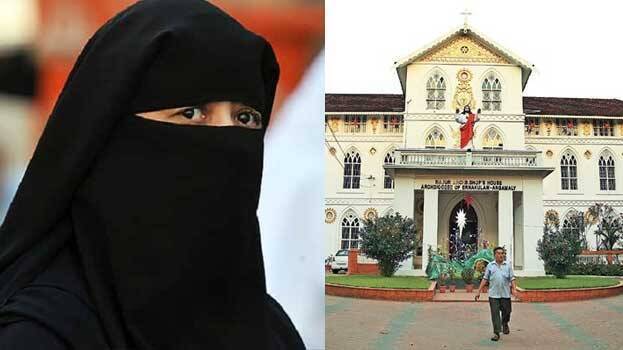
    However, something that has been very heartening and positive in this dark and murky scenario has been the bold and defiant stand of a group of nuns who not only spoke out against the bishop but also walked out of the mass of the priest who preached hate by going to the extent of beseeching his flock to boycott Muslims traders as also Muslim autorickshaw drivers.

    One would not have been surprised if insinuations and allegations of ‘love jihad’ and ‘narcotic jihad’ were made by Right-wing extremist groups because it is, inevitably, their wont to do so. But coming from the clergy in a state which has historically seen relatively amicable and amiable relations between Muslims and Christians wherein they have prospered together, belies logic.

    Pre-Islamic Arab contact with Kerala and the rest of the west coast of India dates back to the ‘Before Christ’ era, which gradually transformed into the Islamic one from the seventh century AD onwards.

    The oldest mosque to be built in the Indian subcontinent was the Cheramaan Juma Mosque in Methala, Thrissur district, in 629 CE. It is significant to point out that the north-centric way of looking at and referring to Islam in India by certain historians is quite misplaced. By the time Islam made any impact in the northwest and north of India, full-fledged Islamic societies had been formed in Kerala that extended beyond and along the Coromandel Coast in Tamil Nadu and spread towards South East Asia.

    Similarly, the Christian connection and the advent of Christianity in Kerala go back to 52 CE. For centuries, these religious groups, namely, Christians and Muslims, have coexisted and inhabited common spaces all over Kerala, along with the pre-existing indigenous communities. Also, there has been a high degree of acculturation between the various religious groups in terms of language, food, clothing, and other cultural practices including in the religious realm.

    There were, no doubt, skirmishes between the Christians and Muslims with the arrival of the Portuguese during the late fifteenth and early sixteenth century, but these have to be treated more as aberrations for economic gains than something that disturbed the overall ambiance of peace and communal harmony. The erstwhile situation as regards peaceful coexistence between the different religious communities prevailed in Kerala in spite of quite a few communal riots in other parts of India, both before and after the Independence.

    It is felt in some circles in Kerala that due to the COVID-19 pandemic and the restrictions as regards congregations, the footfalls have declined to result in drastically reduced revenues in the churches, and that has made some clergy feel insecure; and one way of getting back the faithful could be to polarise the communities in the expectation that would help in consolidating their own followers.

    Of late, the anti-Muslim rant that has emanated in Kerala is not confined to the borders of the state. The overt and manifest support in social media and through videos, for Israel’s bombing of Gaza during the recent conflict vis-à-vis the Palestinians, too, is, at one level quite disturbing, and at another level, points to the mindset that such perpetrators are embedded in.

    The proclivity to reduce the Palestinian identity to just a Muslim/Islamic one is one of the most irrational ways of looking at a people and explicating their ethnicity. Christian Palestinians too are at the forefront in their resistance to Israeli imperialism, and the occupation of Palestine. The well-known academic and crusader for peace, late Professor Edward Said, was one such.

    This article was published earlier in moneycontrol.com

    Featured Image: keralakaumudi.com

  • Marginalised among the invisible: The case of female migrant domestic workers

    Marginalised among the invisible: The case of female migrant domestic workers

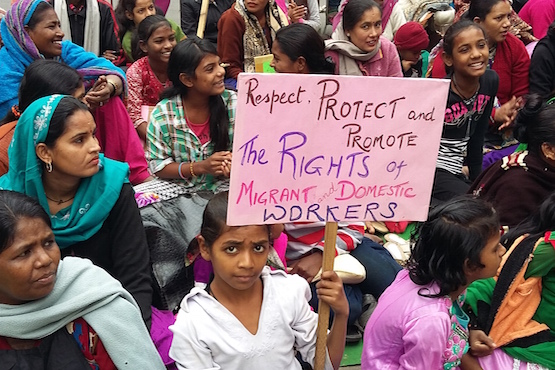
    The Pandemic, lockdown, and the chain of events that followed made the country wake up to the state of the most unfortunate group of the labour force; the migrant workers. They have always remained invisible to the development agenda of the government and only the catastrophe of a pandemic could shed light on their woes. Among this invisible workforce, there remains yet another marginalised group of female migrants.

    In India, female migration was initially considered insignificant by equating their movement merely as associational or followers of men.  However, this has certainly changed in the last decade. Marriage was seen as the central motive behind female migration, though lately more women are seen to enter the labour market post-migration as their labour demand rose in sectors of so-called “female occupations” of domestic work, care-work and certain informal labour requirements in sectors such as in construction, garment work, food services and as coolies and vendors.  As family migration from rural to urban abodes saw a rise in the country, both male and female migrants were required to join the labour force to meet their mere subsistence needs. Lack of employment, low income and other economic reasons pushed females, especially from rural areas, to migrate to urban zones of the country (Singh et al., 2015). While in urban areas, the migrants especially females and children are exposed to extreme vulnerabilities with regard to their dismal conditions of work in the informal sector, urban policies are deeply flawed in omitting migrant welfare and the sheer denial of their civil rights and entitlements.

    Precarious domestic work and female migrants

    Domestic work is often regarded as an invisible and insignificant addition to the social and economic values of a country. The work is increasingly feminised with over 80% of the world’s domestic work occupied by women (International Labour Organisation [ILO], 2013a). And this mirrors the traditional notions of domestic work being a woman’s task. These tasks include traditional housework such as cleaning, cooking, washing clothes or utensils etc. or care-work such as a child or elderly care. Female migrants with low skills, low levels of education and migrating from rural abodes in search of employment form a predominant part of the labour pool. With no recognition and regulation of work, the female domestic workers are subject to unequal power dynamics at the workplace, making their lives precarious in terms of wages, security and wellbeing.

    In India, domestic work employment among females saw an upsurge, especially in urban areas. This surge is mainly accounted for by the increasing need for care work given the changing demography, lack of work opportunities in other sectors and the gender constructions moulded by the society (Chandrashekar & Ghosh, 2012). According to the National Sample Survey (NSSO-2011-2012, 68th round), 39 lakh (3.9 million) people are occupied in domestic work, among which 26 lakh (2.6 million) are females. Micro-level surveys suggest a predominant concentration of female migrants in domestic work, especially in urban areas (Mazumdar et al., 2013).  There are two forms of workers: live-in workers, who are accommodated in the household and live-out workers, who return to their respective houses after work and may be involved in work with multiple households. As there is no relevant national data on migrant workers involved in the sector, micro-level surveys or sector-based studies are the only sources in understanding the conditions of these migrants in domestic work. Studies have stated that migrants with low vocational qualifications and often seen as unregulated and undocumented cheap labour, work under low wages for long hours and in dismal working conditions affecting their health and safety. Live-in domestic workers are more prone to the dangers of sexual and physical abuse. Live-out domestic workers migrating to a new city, struggle with the inaccessibility of social security schemes and entitlements. Exploitation by private placement agencies in terms of wages and work conditions is another area among their hassles.

    The domestic work arena, already an unregulated and unorganised sector, puts female migrants with low bargaining power on a higher vulnerability scale. The task of identifying domestic work hinders the formulation of a sound regulatory mechanism to confront such vulnerabilities.

    Barriers to effective Regulation

    Regulating domestic work is impeded by cultural and structural barriers. The traditional notion and disregard of domestic work by women in households is extended to the understanding of paid domestic work as unproductive and hence, making it undervalued. The structural barriers relate to the unusual workplace in private spheres, which makes it difficult in enforcing labour laws and any form of scrutiny against the privacy norms of a household. The informality of work and its complexities aggravates the barriers in regulation. The employment relationship is uncertain as it is without any legal titles of employee and employer, making the relation very personalised and often not under any form of contract or agreement. Even if labour laws are made inclusive of domestic work, implementation and assurance of compliance of these laws in households are challenged until the household is recognised as a ‘workplace’ and the person hiring as an ‘employer’ in the legal framework (Chen, 2011).

    Even though these barriers existed, the International Labour Organisation (ILO) convention 2011 attempted in ensuring decent work to domestic workers and this is recognised as the most important landmark in identifying domestic work under a legal framework. ILO defines domestic work as “work performed in or for a household or households” and domestic worker as “any person engaged in a domestic work within an employment relationship”. The convention specified a comprehensive labour standard for domestic workers in areas of their wages, hours of work, occupational safety and health and social security. The convention addressed and standardized the various concerns in the sector regarding child labour, migrant workers, trafficking, live-in domestic labourers and private recruitment agencies (C189 – Domestic Workers Convention, 2011). Even after the completion of 10 years of the convention and 32 ILO member countries enforcing the landmark treaty, India is yet to ratify the convention.

    As domestic work remains undefined in the country, no significant statistical standard in estimating domestic workers exist. In the ILO policy brief on “Global and regional estimates of domestic workers” (ILO, 2013b), ambiguous nature of data on domestic workers were noticeable from the widely distributed figures, ranging from 2.5 million estimates from a household survey, 4.5 million workers estimated from official statistics (NSSO 2004-05) to an exaggerated figure of 90 million in news media. This difference in estimation is related to the difference in the identification of domestic work among different establishments (Mahanta & Gupta, 2015). With no clarity in identifying domestic workers inclusive of its peculiarities, these figures could be heavily underestimated too. Being a female migrant in the sector aggravates the problem of estimation as National statistics narrows down female migration patterns merely as associational. And thus failing to understand the true motives behind female migration and the subsequent scale of occupations they reside in (Indu et al, 2012).  Macro data narrows down domestic female labour into regular workers based on their duration in employment and disregarding the conditions of low wages and other insecurities, while the temporary and casual nature of work goes unrecognised (Neetha & Indrani, 2020). The informality of work is another area that India has failed to regulate. Labour laws for industrial labour often disregard informal workers. This is evident in the isolation of migrant workers, especially female migrants in domestic work (Poddar & Koshy, 2019).

     Lacunae in the legal framework

    Domestic work and most feminised occupations, in general, in unorganised sectors, are isolated from the legal framework given their unique characterisation of workplace and employment relationships and not to mention the challenges in recognising their work given the cultural and structural barriers. For female migrants in domestic work or any other informal activity, the situation is similar.

    There were certain positive steps in attempting to recognise the domestic workforce in the country. First of such attempts were their inclusion in the Unorganised Workers Social Security Act 2008 which gave hope, but failed to be implemented across different states (Agrawal & Agarwal,2018). Subsequently, the government also set up a task force to recommend a framework for policymaking and after 10 years, in 2019, we see a draft on National policy on domestic work formulated by the government covering their recognition, access to civil rights and social security schemes, skill development, regulating private placement agencies and a grievance redressal system (“National Policy for Domestic Workers”, 2019). Upon the recommendations of the task force, the domestic workers were to be included under the National Health insurance scheme – Rashtriya Bhima Yojana (RSBY). But the limited awareness of the scheme, its functioning and benefits, coupled with corruption reduced the domestic worker’s accessibility of the same (Mahanta & Gupta, 2015). The suggestion of the task force to include domestic worker rights in existing legislations, pertaining to industrial or organised labourers, was widely criticised because it does not adapt to the peculiarities of the feminised domestic work (Poddar & Koshy, 2019). Ensuring minimum wages to the domestic worker through the Minimum Wages Act 1948 with a task-based approach, while ignoring the aspect of personalised nature of employment completely, puts the live-in workers whose tasks are not quantifiable, out of the ambit of the act’s provisions. Similarly, the inclusion of domestic workers in the Sexual Harassment of Women at Workplace Act (2013), Employees’ State Insurance Act (1948) and Unorganized Workers’ Social Security Act 2008 is considered inadequate. Even though such inclusion is appreciated, these legislations fail to cater to the rights of a domestic worker if they are based on organised sector labour standards and without understanding the complexities of the domestic work (Poddar & Koshy, 2019).

    Private placement agencies, one of the main recruitment channels of domestic work, remain unregulated. This has led to the rise in exploitation in terms of payment and working conditions. The Delhi government drafted a Delhi Private Placement Agencies (Regulation) Bill in 2012 which was widely rejected by the domestic workers’ unions and groups. The proposed bill was criticised to be ineffective as it does not include the registration of the employers and lacks clarity in the process of inspection of these agencies (Chigateri et al., 2016). A study on one of the frequently travelled migrant routes, which is from Jharkhand to Delhi, reveals that migrants were subjected to conditions of exploitation and forced labour under such placement agencies. Conditions of forced labour are witnessed mainly among live-in domestic workers, who have to work under the agent for the stipulated period. The Inter-State Migrant Workmen’s (Regulation of Employment and Conditions of Service) Act 1978 fails to address this issue as placement agencies relating to domestic work do not come under the ambit of the act. The act considers only those labour contractors who are registered at the origin state. Placement agencies involved in domestic work function through several sub-agents and mostly are unregistered (ILO, 2015)

    There were some positive responses from state governments. The state of Tamil Nadu set up the Tamil Nadu domestic workers welfare board.  Similarly, Maharashtra set up a domestic worker welfare board under Maharashtra Act (Agrawal & Agarwal, 2018) in 2008 while Kerala adopted a domestic worker bill in 2009. States like Kerala, Karnataka, Andhra Pradesh, Maharashtra, Tamil Nadu, Bihar and Rajasthan have set the minimum wage rate (Madhav, 2010). Neetha and Palriwala (2011) analysed the state legal framework on domestic workers and pointed out the same inadequacies noted over and over again, that is of not recognising the intricacies of domestic work, workplace, its several sub-categories, unregulated placement agencies and its unique employment relation. With no data on domestic workers and at the same time their numbers continuing to increase, these loose legislations and provisions go unnoticed by the workers.

    In 2019, with the view to improving compliance and bringing about uniformity of laws, 29 labour laws were consolidated into 4 labour codes: a) code on wages, b) code on industrial relation c) code on social security and d) code on occupational health and working conditions (“Overview of Labour Law Reforms”, n.d.). While the notion was to make the labour laws more transparent and such consolidation was expected to increase the coverage of different workers under the law, these codes remain ambiguous when it comes to certain sectors of informal work. Neetha and Indrani (2020) analyse these codes through a gender lens focusing on domestic and migrant workers. Code on wages does not incorporate private households as an entity hiring employees and thus domestic workers who struggled to attain minimum wages under the previous Minimum wages act (1948) have no mention, leaving them ambiguous. Code on industrial relations dealing with collective bargaining and industrial disputes, do not mention freedom of association in unorganised sectors and curbs the right to strike which has serious implications of registration of domestic workers under trade unions and their right to collective bargaining. Code on social security (CSS) has consolidated the unorganised workers’ social security act 2008, which was the first attempt towards the recognition of domestic workers and the new code puts the functioning of such acts and provisions for the unorganised sector under the discretion of the government, leaving out legislative scrutiny. Hence, there is uncertainty of the efficient functioning of these acts under CSS. Under the code, maternity benefits were applied only to the registered establishment of work. And domestic workers with no recognition of the workplace become ineligible for the same. Code on occupational health and working conditions is also seen to have not recognised the need for laws based on different sectors of work. It has again failed to include private households as a workplace, leaving the conditions of domestic work unregulated. Another failure relates to ignoring the Sexual Harassment of Women at Workplace Act (Prevention, Prohibition and Redressal) 2013, which further leaves out the scrutiny of abuse or exploitation of domestic workers. The fact of being migrants among domestic workers isolates them even further from these labour codes.

    The lacunae in existing legislation in recognising domestic work and migrant labour continues to be beset in ambiguities with the new labour reforms.

    Present scenario: Covid-19 adding to the vulnerabilities

    The onset of the Covid-19 and the resultant lockdowns have led to massive disruptions of normal life resulting in the shocks of sudden unemployment, financial strain and increased burden for workers in the unorganised sector. The migrant workers bore the highest brunt. In such a scenario, female migrants in an unregulated and isolated sphere of work such as domestic workers have been subject to severe distress. The lockdown and reduced mobility left the workers unemployed and without income. Live-in migrants faced increased workload but no change in wages. Even with the slow revival of the economy, they are under threat of being infected or being carriers, given their precarious work and living conditions. Sudden dismissals and financial strain have forced many to the situation of borrowing money for subsistence and eventually ending up in debt. Workers struggle to meet the basic needs of health, food, education of the family with lower income and savings (Sumalatha et al., 2021). With dismal employment relations and working conditions, coupled with the exclusion from the legal framework and social protection, Covid-19 has expanded the existing inequalities.

    Government intervention:  The need of the hour

    Government intervention both in ensuring basic rights and providing for the welfare of the domestic workers have been negligible. The cultural and structural barriers are not the only challenges in regulating domestic work. There is a lack of political will in acknowledging domestic workers and their woes. As they remain scattered and invisible, the domestic workers are not seen as potential vote banks and hence remain without any political influence. The sector which is comprised largely of female migrants is devoid of any political voice and agency in their origin or host states since there are barriers in pursuing their voting rights given the nature of their migration. Their interactions with civic authorities and politicians in the host state are marginal and hence, their issues do not come to the fore (Bureau, 2018). There is a lack of awareness among the migrant workers on their voting rights. They are largely unaware as to who should be approached in the host state to resolve their problems. Even a migrant worker, well aware of his/her political rights and agencies, refrain from pursuing any form of interaction as they have either lost faith in the system or are disillusioned by the long time and effort spent pursuing the cases with no results to show. This highlights the need for effective political inclusion of migrant workers and the generation of political and electoral awareness among them (Bureau, 2018).

    Further, identification and protection are the two essentials in creating an inclusive environment for female migrants in domestic work. The feminized nature of domestic work in the country, concentrated predominantly among poor and marginalised migrant workers, need to be recognised as dignified “work” and households they work in as “workplace”. Only separate comprehensive legislation on domestic work can incorporate the varied complexities of the sector, rather than a mere extension of organised sector legislations. Such separate legislation would provide the domestic worker with an identity that can ensure them their rights and entitlements (Sharma & Kunduri, 2015). The legislation should address the working conditions, violations and exploitations, provisions for mobilisation, illegal channels of private placement agencies and establishing basic civil rights from a gender perspective to incorporate the differential experience of females in the sector. Efficient implementation and scrutiny of the same require statistically significant data, the absence of which is another flaw in the system.

    Domestic worker’s inaccessibility of social protection is the result of the lack of recognition. Migrant workers in the sector without any identity proof or formal registration are excluded from social protection schemes. Agrawal and Agarwal (2018) suggest setting up an independent welfare board in every district responsible for registering, ensuring availability of social security benefits, conducting dispute resolution, dissemination of information and providing skill development and training for domestic workers. The provision of financial incentives can help in coping with sudden unemployment situations during any form of crisis such as the pandemic. Allowing for the organisation of domestic workers into unions and cooperatives can also be beneficial in attaining social and legal protection. Domestic worker groups such as SEWA and National Domestic Workers Movement (NDWM) in the country have been attending to the woes of the domestic workers by providing a platform for collective bargaining and assertion of rights.

    The introduction of the draft on National Policy on Domestic workers can be seen as a positive development, however, the policy still remains in consideration. Vulnerabilities of the domestic workers, exacerbated by the pandemic, highlight the urgent necessity for the ratification of the ILO convention on domestic workers. There is an urgent requirement in increasing the government’s sensitivity towards domestic workers and their precarious existence.

    References

    1. Agrawal, U., & Agarwal, S. (2018). Social Security for Domestic Workers in India. Socio-Legal Rev.14, 30
    2. Bureau, A. (2018). Political Inclusion of Seasonal Migrant Workers in India: Perceptions, Realities and Challenges.
    3. C189 – Domestic Workers Convention, 2011 (No. 189). (n.d.). Retrieved July 15, 2021, from https://www.ilo.org/dyn/normlex/en/f?p=NORMLEXPUB:12100:0::NO::P12100_ILO_CODE:C189
    4. Chandrasekhar, C. P., & Ghosh, J. (2012, November 12). Changing patterns of domestic work. @businessline. https://www.thehindubusinessline.com/opinion/columns/c-p chandrasekhar/changing-patterns-of-domestic-work/article22985402.ece
    5. Chen, M. A. (2011). Recognizing domestic workers, regulating domestic work: Conceptual, measurement, and regulatory challenges. Canadian Journal of Women and the Law23(1), 167-184.
    6. Chigateri, S., Zaidi, M., & Ghosh, A. (2016). Work Like Any Other, Work Like No Other103. Retrieved July 18, 2021, from http://www.unrisd.org/indiareport-chapter4
    7. Chigateri, S. (2021). Labour Law Reforms and Women’s Work in India: Assessing the New Labour Codes From a Gender Lens. Institute of Social Studies Trust.
    8. Indu, A., Indrani, M., & Neetha, N. (2012). Gender and migration: Negotiating rights, a women’s movement perspective. Delhi: Centre for Women’s Development Studies.
    9. International Labour Organisation (ILO). (2013a). Who are domestic workers? Ilo.Org. https://www.ilo.org/global/docs/WCMS_209773/lang–en/index.htm
    10. International Labour Organisation (ILO). (2013b). Global and Regional Estimates on Domestic Workers.
    11. International Labour Organisation (ILO), (2015). Indispensable yet unprotected: Working conditions of Indian domestic workers at home and abroad. Retrieved July 19, 2021, from https://www.ilo.org/wcmsp5/groups/public/—ed_norm/—declaration/documents/publication/wcms_378058.pdf
    12. Klemm, B., Däubler, W., Beimin, W., Lai, A., Min, H., & Sinha, S. (2011). Protection for Domestic Workers: Challenges and Prospects. Briefing Paper Special Issue, May, Friedrich Ebert Stiftung.
    13. Madhav, R. (2010). Legal Recognition of Domestic Work. Labour File, 8, 41.
    14. Mahanta, U., & Gupta, I. (2015). Road ahead for domestic workers in India: legal and policy challenges.
    15. Mazumdar, I., Neetha, N., & Agnihotri, I. (2013). Migration and gender in India. Economic and Political Weekly, 54-64.
    16. National policy for domestic workers. (2019, February 13). Retrieved July 18, 2021, from https://pib.gov.in/Pressreleaseshare.aspx?PRID=1564261
    17. Neetha, N. (2004). Making of female breadwinners: Migration and social networking of women domestics in Delhi. Economic and Political Weekly, 1681-1688.
    18. Neetha, N., & Palriwala, R. (2011). The absence of state law: Domestic workers in India. Canadian Journal of Women and the Law23(1), 97-120.
    19. Neetha N., & Indrani, M. (2020, June 01). Crossroads and Boundaries : Labour Migration, Trafficking and Gender. Retrieved July 19, 2021, from https://www.epw.in/journal/2020/20/review-womens-studies/crossroads-and-boundaries.html
    20. Overview of Labour Law Reforms (n.d.) Retrieved from https://prsindia.org/billtrack/overview-of-labour-law-reforms#_edn2
    21. Poddar, M., & Koshy, A. (2019). Legislating for Domestic’Care’Workers in India-An Alternative Understanding. NUJS L. Rev.12, 67
    22. Shanthi, K. (2006). Female labour migration in India: Insights from NSSO data(Vol. 4, p. 2006). Chennai: Madras School of Economics.
    23. Sharma, S., & Kunduri, E. (2015). Of Law, Language, and Labour: Situating the Need for Legislation in Domestic Work. Economic and Political Weekly50(28).
    24. Singh, N., Keshri, K., & Bhagat, R. B. (2015). Gender dimensions of migration in urban India. In India Migration Report 2015(pp. 200-214). Routledge India.
    25. Srivastava, P., & Shukla, P. (2021). Crisis behind closed doors domestic workers’ struggles during the pandemic and beyond. Economic and Political Weekly, 17-21.
    26. Sumalatha, B. S., Bhat, L. D., & Chitra, K. P. (2021). Impact of Covid-19 on Informal Sector: A Study of Women Domestic Workers in India. The Indian Economic Journal, 00194662211023845.


    Image Credit: ucanews.com 

  • The South: Where the Chariots stopped in the Past

    The South: Where the Chariots stopped in the Past

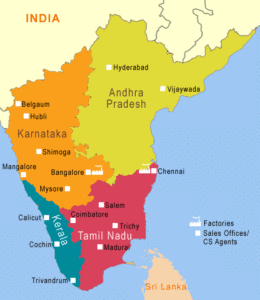
    There is no apparent reason why Dr. John Jackson (1835-1911), a 19th-century Yorkshire-born British Psychologist should be of any interest to us in the 21st India. Yet, he is important in order to understand what is happening to the BJP’s misplaced ambitions in India south of the Vindhyas.

    First about Dr. Jackson. He was the first scientist to come up with the answer as to why mariners experience directional disorientation when they sail on vast seas. This navigational impairment, described by Jackson as ‘topological agnosia’ (literally, loss of knowledge about directions) was caused in his analysis by a distortion in an individual’s memory. An individual afflicted by this agnosia is found unable to remember to a destination known to him to be able to recall important landmarks seen a long time ago. Among the patients that Jackson studied were some women who knew where the London Bridge was, but they did not know how to go there from their homes. In their memory, the ‘little maps’ were forgotten, though the larger maps were inscribed in their brain. European colonial expansion was distinctly marked by this disorientation. When it was spreading south of Europe, the colonial powers thought of the south as ‘east’ and built a strong binary between the west and the east.

    Topological Agnosia is the term that can most accurately describe the BJP’s ‘Mission South.’ In order to understand why the party that feels so much at home in the Hindi heartland in the north should feel so unsure of its direction in the south, we need to look at the context within which its foundations were laid. Obviously, one has to refer to the shaping of the core ideas of the Hindutva ideology. It is not necessary to state that at its heart is the dubious and non-scientific theory of ‘Aryans as a Master Race’. This idea was in circulation among some of the 19th century European linguists. They imagined that what was initially proposed as the name of a language (‘Indo-Aryan’) was in fact the name of a community (or a race). Some of them went to the length of proving that the Aryans resided in remote ancient times in North Europe. Karl Plenka actually gave a homeland for this imagined master race, unquestioningly assuming that the master race was the master race of the pure Aryans.

    Besides, the traditions of spirituality and worship developed in the south for the last three millennia have their own distinct and syncretic trajectories which do not easily gel with the RSS-VHP idea of Hinduism. Besides, as Basavanna, Akkamma, Periyar, Phule, Shahu, and Ambedkar so ably demonstrate, a larger majority of the people south of the Vindhyas have reason to find the exclusionary and myopic social and cultural interpretations of history entirely repugnant.

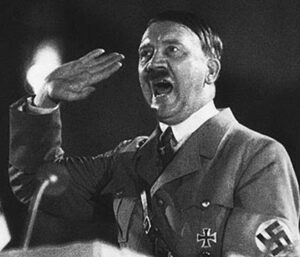
    Adolf Hitler

    In the third decade of the 20th century, Adolf Hitler made these theories the foundation of his ‘National Socialism’ and the associated drive for ‘racial purification.’ The founders of the RSS in India were his contemporaries and shared his enthusiasm for the theory of Aryan supremacy. Though completely unscientific in terms of the history of the people of India, the RSS, and the BJP like to believe that someday in the future they will be able to establish the supremacy of the (imaginary) Aryans over the diverse peoples in the Indian subcontinent, the south included. To aid this wishful aspiration, the RSS has brought in a misconstrued idea of what constitutes being Hindu. However, the Indian sub-continent South of the Vindhyas has a long history of resistance to the domination from the north. Besides, the traditions of spirituality and worship developed in the south for the last three millennia have their own distinct and syncretic trajectories which do not easily gel with the RSS-VHP idea of Hinduism. Besides, as Basavanna, Akkamma, Periyar, Phule, Shahu, and Ambedkar so ably demonstrate, a larger majority of the people south of the Vindhyas have reason to find the exclusionary and myopic social and cultural interpretations of history entirely repugnant. It is not a surprise, therefore, that despite desperate efforts by the VHP and RSS throughout the twentieth century, their general support base in the southern states had remained nominal.

    This has changed since 2014. The current regime has displayed an unmatched zeal in intimidating political leaders by using the ED, the CBI, and troll gangs. It has displayed a skill in the use of post-truth and propaganda for generating popular opinion as never before. The erosion of media and the collapse of institutions that are expected to uphold constitutional values and constitutional arrangements to safeguard democracy has apparently increased the chance of success for BJP’s south mission. Besides, the use of funds for party-swapping is a trick that the BJP has mastered well. All these factors—the use of muscle, official machinery, money, intimidation, and propaganda—have made the south more vulnerable to the divisive, exclusionary, and myopic nationalism of the BJP.

    Yet, it would be naïve to believe that countering the Hindutva and Pseudo-Nationalism onslaught would be possible by mouthing our worn-out phrases and analysis related to class-based or caste-based understanding of India in the third decade of the 21st century.

    Countering the flawed ideas of nationalism and the exclusionary notion of dharma is an urgent need for the people, language-communities and the political parties south of the Vindhyas. Probably, it is them alone who are now left with the capacity to do so, since the ‘Hindi, Hindu, Hindustan’ tune has overpowered the people and the northern ‘heartland-states’. Yet, it would be naïve to believe that countering the Hindutva and Pseudo-Nationalism onslaught would be possible by mouthing our worn-out phrases and analysis related to class-based or caste-based understanding of India in the third decade of the 21st century. Also, being fiercely against any geographical, linguistic or social factionalism, we have to reinvent our politics and political terminology. Remaining entirely within the framework of the Constitution, one very powerful message that the Southern States and people can give to the rest of India is that of federalism.

    The Constitution describes the country as a union of states’ and its provisions are oriented towards keeping this union intact and integrated by respecting the difference and diversity.

    The Constitution describes the country as a union of states’ and its provisions are oriented towards keeping this union intact and integrated by respecting the difference and diversity. Hence, our insistence on the principle of federalism would also mean our insistence on constitutional values. It would reiterate the need for recognizing and respecting diversities and, therefore, rejecting the Hindutva agenda of the RSS-BJP. This understanding, if shared by the communities, movements, language groups, political parties, theological sects, and cultural-industries in the states south of the Vindhyas, can—together—stop the BJP where it should be stopped and reverse the fortunes of fascism in India. We all owe it to India, our sacred nation. We also owe it to the great tradition of civilization that the south has built over the past millennia.

    The opinions expressed are personal views of the author.

    This article was published earlier in gaurilankeshnews.com

  • Understanding the Catalonian Crisis through the Relative Deprivation theory

    Understanding the Catalonian Crisis through the Relative Deprivation theory

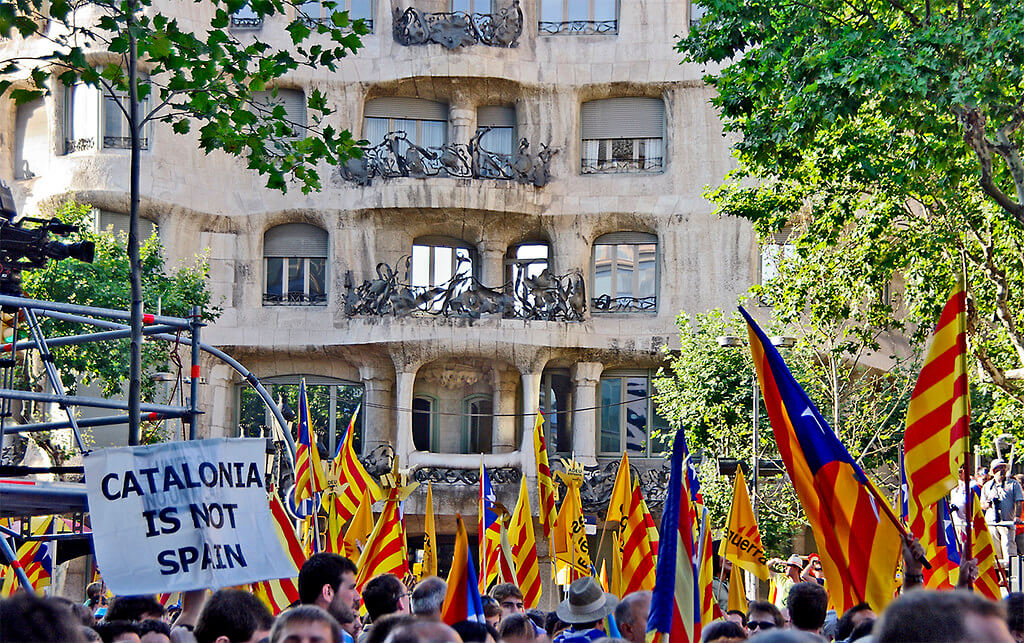
    On 1st October 2017, people in Catalonia, a semi-autonomous region in Spain, held a referendum in which 90 percent of those who participated sought to break away from the Spanish state and create the independent Republic of Catalonia. This referendum which endorsed independence was declared illegal by the Spanish government. This declaration was based on a ruling by the Constitutional Court, and the results of the referendum were also not taken seriously by the international community. Since then, Catalonia has remained politically deadlocked. While the Spanish government and the leaders of the separatist movement in Catalonia have participated in discussions and formal talks have been opened in 2020, there has been no resolution to this festering political crisis.

    A deep sense of relative deprivation has entered the minds of the Catalan people wherein they feel that the Spanish identity has been given more prominence in comparison to their Catalan identity.

    This desire for independence as expressed by the people of Catalonia did not emerge suddenly but had been simmering for an extended period. The social mobilisation occurred because of the frustration that they have as a result of a lack of representation of their culture and language within the Spanish state. The hostility shown to demands of more autonomy and representation has also led to more anger. A deep sense of relative deprivation has entered the minds of the Catalan people wherein they feel that the Spanish identity has been given more prominence in comparison to their Catalan identity.

    While there is a long history of oppression and centralisation, the recent turmoil, however, started in 2010 when the Spanish Constitutional Court quashed a law passed by the regional parliament of Catalonia which updated the autonomous government’s statute. This statute dating to 1979 mapped the relations between Catalonia and the rest of Spain. The court rejected articles in the statute that put the Catalan language above the Spanish language and any articles that referred to Catalonia as a nation rather than as a region.

    This article seeks to understand the reason behind the Catalonian crisis using the relative deprivation model put forth by Ted Gurr. This model has been used to clarify how cultural and linguistic suppression of the Catalan people has led to collective turmoil.

    Relative Deprivation Model of Gurr

    Gurr’s relative deprivation model states that when a sense of deprivation emerges in a group in relation to another group, then it can lead to collective violence or dissatisfaction. Gurr uses a psychological approach to explain why anger or frustration caused by a sense of deprivation is a motivating instrument that can make people more inclined towards aggression.

    The term relative deprivation is used by Gurr who defines it as “actor’s perception of discrepancy between their value expectations (the goods and conditions of the life to which they believe they are justifiably entitled) and their value capabilities (the amounts of those goods and conditions that they think they can get and keep)”. Thus, if there is a discrepancy between what people in a group believe they should get and what they do get then, it leads to frustration, disturbance, and a sense of deprivation. The greater the gap between the expectations of the people and reality, the higher the magnitude for aggression and civil strife. One important thing to note here is that the sense of deprivation is always in relation or comparison to another group.

    Gurr further states that the magnitude of the civil strife or dissatisfaction is dependent on the intensity of the sense of deprivation among the people of the group. As per the relative deprivation theory, there are certain factors or societal variables that have an impact on the relationship between deprivation and the ensuing civil strife. These societal variables include:  (a) coercive potential (of the government to put off the conflict), (b) institutionalisation (the extent to which societal structures may offer non-violent means for expressing dissatisfaction to the social group with the perceived deprivation), (c) social facilitation (that further facilitate strife) and lastly, (d) legitimacy of the political regime in which all this occurs.

    Applying the Relative Deprivation Model to the Catalonian situation

     By applying this theory to the Catalonian crisis, it is easy to see how the deprivation of the Catalan culture, language, and history frustrated the Catalan people and led to the unprecedented social mobilisation for independence from the Spanish state. The people of Catalonia are unsatisfied and angry with the way their culture and particularly, their language, is being slowly eroded as compared to the relevance and status accorded to the Spanish language.

    The Catalan people consider their language to be the principal element of their identity and believe that it is the ‘rallying cry of their solidarity’. The sidelining of their language is seen as an affront to their identity.

    Language is seen as a crucial distinguishing feature by the Catalan people and the speakers of Castilian Spanish. Many people living in Catalonia also want the Catalan language to be officially recognised by the European Union and put on par with the Spanish language even outside the country settings, which has not happened. The reversal of the statute that allowed for the exercise of Catalan language over the Spanish language in the region has brought the identity discord in the open. The Catalan people consider their language to be the principal element of their identity and believe that it is the ‘rallying cry of their solidarity’. The sidelining of their language is seen as an affront to their identity.

    The economic state of affairs further accentuates their anger over the under-representation of their language in museums, government offices, libraries, and all official channels of the central government in Madrid. Catalonia is one highly prosperous part of Spain but many in Catalonia feel that they are bearing the brunt of the high taxes and austerity measures for the rest of the country’s needs with whom they have little in common.

    Conclusion:

    Ted Gurr’s relative deprivation theory states that when a group of people feel that they are deprived of something, whether economically, socially or politically, in comparison to another group of people, they will feel frustrated and that frustration can lead to violence. The Catalonian crisis, when understood using this model, provides an incredibly accurate picture of how the suppression of one’s language and history can result in political strife.

    The Catalonian situation is quite similar to that of Scotland in the United Kingdom. People in Scotland are also quite proud of their distinct language (Gaelic), traditions and also have a strong sense of independent spirit which they believe is curtailed by the Westminster government. Scotland’s Prime Minister, Nicola Sturgeon, recently indicated that she would pursue another referendum for independence in the coming year as support for an independent government has increased steadfastly in 2020 with the pandemic exposing the cracks in the current system.

    For both Catalonia and Scotland, the model followed in the erstwhile USSR in terms of accommodation of identities can provide a way forward or represent a comparatively better model of governance. Under Lenin’s leadership, striking flexibility with respect to the various countries encompassed within the Soviet Union in terms of expression of their individual nationalities was displayed. Lenin used a degree of accommodation towards peripheral nationalist tendencies displayed by the non-Russian states as he believed it to be a pragmatic solution. While political autonomy remained elusive to the non-Russian states, the accommodation of their national identities meant that they were somewhat satisfied. The Soviet state itself encouraged the use of local languages in schools and universities and even in the local administrative offices.


    References:

    “A Year Later: An Update on the Catalonian Independence Movement.” Columbia Journal of Transnational Law, 27 Nov. 2018, jtl.columbia.edu/a-year-later-an-update-on-the-catalonian-independence-movement/.

    “Catalonia: From Secessionism to Secession?” E-International Relations, www.e-ir.info/2016/01/15/catalonia-from-secessionism-to-secession/.

    “Catalonia: Past and Future.” Jacobin, www.jacobinmag.com/2017/10/catalonia-independence-franco-spain-nationalism.

    Gurr, Ted. “A causal model of civil strife: A comparative analysis using new indices.” American political science review 62.4 (1968): 1104-1124.

    Gurr, Ted Robert. “Why Men Rebel Redux: How Valid Are Its Arguments 40 Years On?” E-international Relations 17 (2011).

    Huddleston, R. Joseph. “The Roots of the Catalan Independence Crisis.” Foreign Affairs, Foreign Affairs Magazine, 30 Oct. 2017, www.foreignaffairs.com/articles/spain/2017-10-30/roots-catalan-independence-crisis.

    Marinzel, Anastazia. “Catalonia: The quest for independence from Spain.” (2014).

    “Scotland: Nicola Sturgeon Aims for 2021 Independence Vote.” The Indian Express, 1 Dec. 2020, indianexpress.com/article/world/scotland-nicola-sturgeon-aims-for-2021-independence-vote-7075166/


    Image Credit: “Catalonia is not Spain” by SBA73 is licensed under CC BY-SA 2.0

  • Freedom of Speech and Right to Information amidst the Covid-19 Pandemic

    Freedom of Speech and Right to Information amidst the Covid-19 Pandemic

    The global pandemic hit India in March 2020 and Prime Minister Modi announced a 21 day lockdown beginning on 25th March 2020. Since then the lockdown has been extended multiple times as the country grapples with a major public health crisis. Media houses have been on their feet, both literally and metaphorically, as they cover new stories, cases and most importantly, the state response towards the pandemic. The citizenry relies on news reportage to learn more about their government’s approach towards handling this unconventional situation. Media is often regarded as the fourth pillar of democracy meaning it is a supporting figure for democracy to persist and flourish. The pandemic has exposed some paramount inadequacies in the government’s handling of the situation such as lack of a robust public health infrastructure and other issues. The reportage on such instances has often faced backlash from the government resulting in legal notices against the journalists and media houses. India also dropped two places in the World Press Freedom Index making it 142nd in position citing the curfew in Jammu and Kashmir. The watchdog has also issued a warning about the implications of the pandemic, “the looming health crisis could serve as an excuse for governments to take advantage of the fact that politics are on hold, the public is stunned and protests are out of the question, in order to impose measures that would be impossible in normal times” (Scroll Staff, 2020).

    Media is often regarded as the fourth pillar of democracy meaning it is a supporting figure for democracy to persist and flourish.

     Two patterns can be observed with regards to media freedom in India during a time like this; furthering a certain narrative through misinformation and misrepresentation and carrying out state-sponsored propaganda. In this lockdown, the state wants a narrative which eulogizes their efforts during the lockdown and overall handling the situation. However, there are major loopholes in the measures taken by the government which has led to the system failing its most vulnerable class of individuals; the marginalized and the poor. The state has also taken this time to strike upon certain civil liberties and advance their propaganda by curbing dissent.

     Misinformation and misrepresentation of certain communities has been rampant during this time. Nabeela Khan, in an article called Trends in Covid19 misinformation in India for Health Analytics Asia categorizes the spread of misinformation in four waves. First, misinformation about the origin of the virus, this has been debated not just in India but worldwide where they have accused China of producing this virus in a lab and spreading it to use to its advantage. There have also been multiple other theories available online related to consumption of certain meats in China. Second circulation of old images and videos to create fear, in this case the Tablighi Jamaat incident was highlighted immensely and videos from before the pandemic were used to show that ‘Muslims’ in India spread the virus. Third, on ‘cures’ and prevention techniques which is particularly famous on several WhatsApp groups where home-made remedies of lemon, honey, turmeric or any other ‘Ayurvedic’ cures are posted every day. And fourth, on lockdowns in India, where the news of lockdown being extended were spread even before the official announcements were made. Increasingly, there has been excess confusion over the surging numbers in India and whether or not governments give out the exact figures. Additionally, there is no clarity about government aid and funding towards the poor such as the internal migrants in the country.

    Kaye makes an important point as he says that the governments are using the pandemic as a smokescreen to carry forward their agenda and take actions that they have wanted to take for a long time.

    The UN Special Rapporteur David Kaye, talks to The Lawfare Podcast about his latest UN report Disease, pandemics and the freedom of opinion and expression. Kaye makes an important point as he says that the governments are using the pandemic as a smokescreen to carry forward their agenda and take actions that they have wanted to take for a long time. He gives an example from Hungary where the Press is under strict scrutiny of the government. Since the coronavirus is a recent occurrence, there is not a very large body of information available on it. The information keeps changing as cases increase or decrease, as there are multiple waves of it so the orders issued by the government are subject to change. He also particularly criticizes India for its treatment of Jammu and Kashmir since August 2019 and calls it “a real misuse of the situation”.

     Journalists and activists across the world have been arrested during this lockdown and India is no exception to this trend of suppressing free speech. Siddharth Varadarajan, Gautam Navlakha, Anand Teltumbde, Safoora Zargar, Umar Khalid, Dhaval Patel, Supriya Sharma among many others have either been arrested or served notice by the government during the lockdown. These journalists have either been arrested on the grounds of their reportage of the pandemic, during the pandemic or incidents that took place before the pandemic.

     An FIR was lodged against Siddharth Varadarajan, one of the founding editors of The Wire, an acclaimed media house, on the grounds of making unverifiable claims. Varadarajan tweeted on March 31st saying that UP Chief Minister Yogi Adityanath had given a go-ahead for the Ram Navami festival to be held from March 25th to April 2nd, in the middle of the lockdown and Yogi also said that “Lord Rama would protect the devotees from coronavirus”. As a matter of fact, it was Acharya Paramhans who gave out this statement and not CM Adityanath and Varadarajan tweeted a clarification the following day. On April 10, police from Ayodhya showed up at his doorstep in Delhi to serve him notice and his wife Nandini Sundar explained this instance elaborately in her tweets. However, this act only suggests the government’s misuse of power and tactics to pursue a culture of intimidation. It could be argued that the journalist was peddling unverified claims but CM Adityanath in fact supported the decision to have a Ram Navami mela. The Wire has published an elaborate FAQs list on this matter explaining every detail of it. It has also been condemned by the Editors’ Guild of India who have called this episode “an overreaction and an act of intimidation”.

     Journalists and activists such as Gautam Navlakha, Anand Teltumbde, Safoora Zargar, Umar Khalid, Sharjeel Imam etc. have been booked under the UAPA, Unlawful Activities Prevention Act. This Act was formulated as a law in 1967 to prevent any ‘unlawful’ activities or any measures which threatened the integrity and sovereignty of India. In 2004, the UPA government expanded on it further to target terrorist outfits or any organizations harming the state but not individuals. The 2019 Amendment of the Act has entrusted the government with identifying individuals who might be harming the integrity of the state, the definition of which the government decides. The contemporary term used for such people on social media and other platforms is ‘urban naxals’. Student activists and journalists have been booked under this act for protesting against oppressive government laws which promotes a narrative that dissent is by its very nature, ‘anti national’. There have also been cases where activists have been arrested, then granted bail and arrested again based on some other complaint. Safoora Zargar’s case is a particularly complex one in this regard where she was arrested after she was granted bail and was granted bail again recently on humanitarian grounds. Zargar is five months pregnant which was the basis of her bail but the discourse around this has been to release her not because of her pregnancy because dissent is a fundamental right.

    The moment we no longer have a free press, anything can happen. What makes it possible for a totalitarian or any other dictatorship to rule is that people are not informed; how can you have an opinion if you are not informed? If everybody always lies to you, the consequence is not that you believe the lies, but rather that nobody believes anything any longer. This is because lies, by their very nature, have to be changed, and a lying government has constantly to rewrite its own history – Hannah Arendt

     Praveen Swami makes a compelling argument in a FirstPost article about hate speech and freedom of speech. He opines that the response to hate speech is not censorship but plurality where opinions are allowed to coexist. In India, a large part of the Press is controlled and supported by the government leading them to produce streamlined biased news. According to him, alternatives need to come up for hate speech where the dominant narrative does not remain unchallenged.

     To conclude, Hannah Arendt’s cautioning words on freedom of press and misinformation are very relevant today and sounds the alarm bells:

    “The moment we no longer have a free press, anything can happen. What makes it possible for a totalitarian or any other dictatorship to rule is that people are not informed; how can you have an opinion if you are not informed? If everybody always lies to you, the consequence is not that you believe the lies, but rather that nobody believes anything any longer. This is because lies, by their very nature, have to be changed, and a lying government has constantly to rewrite its own history”


    Reference

    Bakshi, Asmita (2020, May 31) From Pinjra Tod to Kashmiri Journalists: What’s the Deal with UAPA?. Livemint. Retrieved from https://www.livemint.com/mint-lounge/features/from-pinjra-tod-to-kashmiri-journalists-what-s-the-deal-with-uapa-11590915249625.html


    Chakma, Suhas (2020, June 22) FIR Against Supriya Sharma is Emblematic of how the Law is Abused to Throttle Press Freedom. The Wire. Retrieved from https://thewire.in/media/supriya-sharma-fir-abuse-law-press-freedom


    Goldsmith, J (Host) (2016, May 16). The Lawfare Podcast: David Kaye on Free Speech During a Pandemic. (Audio podcast episode). In Lawfare. Retrieved from https://www.lawfareblog.com/lawfare-podcast-david-kaye-free-speech-during-pandemic

     Khan, Nabeela (2020, June 12) Trends in Covid19 misinformation in India. Health Asia Analytics. Retrieved from https://www.ha-asia.com/trends-in-covid-19-misinformation-in-india/

     Scroll Staff (2020, April 21) Covid-19: India drops 2 places on World Press Freedom Index, as watchdog warns of pandemic impact. Scroll.in. Retrieved from https://scroll.in/latest/959816/covid-19-india-drops-2-places-on-world-press-freedom-index-as-watchdog-warns-of-pandemics-impact

     Scroll Staff (2017, December 4) Top ten things that Hannah Arendt said that are eerily relevant in today’s times. Scroll.in. Retrieved from https://scroll.in/article/856549/ten-things-hannah-arendt-said-that-are-eerily-relevant-in-todays-political-times

     Swami, Praveen (2020, April 27) Hate speech in the time of a pandemic: Answer to malevolent incendiary language is plurality, not censorship. Firstpost. Retrieved from https://www.firstpost.com/india/hate-speech-in-the-time-of-a-pandemic-answer-to-malevolent-incendiary-language-is-plurality-not-censorship-8295271.html

     The Wire Analysis (2020, April 19) FAQ: What are the UP Police FIRs Against The Wire Actually about? The Wire. Retrieved from https://thewire.in/media/faq-up-police-fir-siddharth-varadarajan


    The views expressed are the author’s own.

    Image Credit: Rhy Design and medium.com


  • Hong Kong’s Pro-Democracy Movement and the Chinese Conundrum

    Hong Kong’s Pro-Democracy Movement and the Chinese Conundrum

    The protest that erupted in Hong Kong since early June, triggered by stark objections to the extradition bill, has spiraled into a pro-democracy movement in the region. Beyond the political situation, the widespread, leaderless yet organised demonstrations reveal deep social and economic frustrations of the Hong Kongers. As the unrest enters its fourth month, the course of the events in the upcoming days also remains crucial for People’s Republic of China that is gearing up for its 70thanniversary on 1stOctober. With the rest of the world keenly observing Beijing’s measures, China seems to be in a conundrum, often changing its reactionary responses towards Hong Kong.

    Despite wide opposition, the pro-China Legislative Council (LegCo) in Hong Kong passed an extradition bill, usurping the democratic members presiding the bills committee.  While the current laws permit Hong Kong to extradite people upon legislature’s approval, the government introduced the bill claiming that it was unfeasible and could alert targets to flee before proper action. Eventually, following massive protests, the bill was suspended as people claimed that the proposed changes allowing Hong Kongers to be tried in mainland China will erode the region’s autonomy and freedom. Dissidents asserted that the Chinese legal system is opaque and often subordinate to the political structures, not always respectful of the rule of law. Although the citizens succeeded in removing the bill, the protests gained momentum towards larger demands of democracy.

    In 1997, when the British returned Hong Kong to China, Beijing allowed the region to retain a high degree of independence, with the mainland responsible only for defence and diplomacy. Although “one country, two systems”, set to expire in 2047, states political and economic autonomy, only 40 of the 70 LegCo members are directly elected by the people (others nominated by business houses mostly pro-China)  and the Chief Executive is appointed by a 1200 member committee, approved by China. Over the years, multiple protests for democracy have been observed in Hong Kong due the uncertainty post 2047 and increasing Chinese influence, like the Umbrella Movement in 2014. Currently, the discontent with the largely pro-China administration and its failure to represent the Hong Kongers, galvanised by the extradition bill, refuelled the pro-democracy movement in Hong Kong now primarily demanding free election of Hong Kong’s leader and LegCo, withdrawal of the suspended extradition bill and stepping down of Carrie Lam (present Chief Executive).

    The longest and largest unrest in Hong Kong since reunifying with the mainland seems to be spreading to include all sections of the population including lawmakers, civil servants, and even business houses. Mostly led by youth below 30 years, the movement has evolved to be a fight for the future of Hong Kong. Unlike older Hong Kongers, the younger generation did not grow up in a British colony and does not identify with the mainland, manifesting no pride in returning to the Chinese regime. According to Hong Kong University Public Opinion Program, the number of people expressing pride in being a Chinese citizen is at a record low, with an overwhelming majority identifying as Hong Kongers rather than Chinese. Despite being (seemingly) a leaderless rebellion, the sense of desperation and fear of Hong Kong losing its autonomy are powering the movement. While the driverless protests prevent protestors from becoming state targets, the nature of the crisis can easily turn violent and escalate since there is no set course of action, such as breaking into the legislature, shutting the city’s subways and airports, etc.  Many suggest that the protest is constantly gainingmomentumas the political frustration is also fuelled by socio-economic issues. Studies have revealed wide income disparities, especially in the last 45 years. Hong Kong has emerged as the most unequal nation amongst developed nations with the highest Gini coefficient- 0.539 (2017).  After Hong Kong was returned to China, it was hit by the Asian Financial Crisis in 1997 and SARS threat in 2003, worsening recession and unemployment, eventually leading to higher integration with the mainland in terms of trade and investment. As the GDP fell from an average rate of 5.1 percent in 1977-1997 to 2.6 percent in 1997-2017, the wealth gap widened as well. The younger generation equates the blame of poor economic opportunities, rising income inequality and reduced upward mobility to the pro China initiatives of the Hong Kong administration, which is not directly elected by the people. Aging population, low minimum wages, skyrocketing real estate, etc require immediate government policies to tackle the resulting social issues. In the absence of appropriate government action, the demand for a democratic government that acts in Hong Kong’s interests have strengthened.

    Interestingly, the official Chinese response to the Hong Kong situation has been constantly evolving over the course of the protests. Initially, the unrest was hardly covered in Chinese media and traces of Hong Kong incidents were censored from the mainland’s social media platforms. Further, the Chinese state downplayed the number of protestors, claiming that majority of the public in Hong Kong were in favour of the introduced extradition bill. As the movement gained momentum, Beijing portrayed the protestors as a radical, violent minority. Eventually, as pro-democracy demands were raised, Chinese official statements were released comparing the agitation to a “colour revolution”, a term used to highlight a direct threat to Chinese party and its authority. Since then, police force and violence have heightened, and paramilitary forces amassing in the nearest city of Shenzhen has been reported. Following this, Beijing signalled that it has a responsibility to intervene as the Hong Kong administration’s capacity to h andle the situations seems ineffective. In parallel, Hong Kong’s administration repeatedly stressed that the ongoing demonstrations are disrupting the economy, a strategy to undermine support to the protestors.  Additionally, Beijing have also claimed that foreign “black hands” are operating and funding the revolution, since pro democratic leaders were photographed with US leaders and protestors defaced the national symbol at central liaison office (Chinese representative authority in Hong Kong). Overall, this narrative seems to actively reduce positive sentiments towards Hong Kong protestors in the mainland. Moreover, Chinese origin accounts on social media have been found propagating a campaign against the dissenters. Twitter suspended over 2,00,000 accounts, and Facebook removed 7 pages, 3 groups and 5 accounts on account of depicting protestors as violent criminals or terrorist aimed at influencing public opinion around the globe. For directly connecting to younger masses, Beijing has also roped in popular figures like Jackie Chan and pop singers. However, despite these hard and soft measures, China has largely failed in curbing the ongoing crisis.

    The varying responses to contain the rebellion highlight Chinese helplessness. Beijing’s long term strategy of subtly eroding Hong Kong’s autonomy has effectively been defeated. Ruthlessly crushing pro-democracy demands, as it did in Tiananmen Square protests, will undermine China’s carefully constructed role as a responsible state actor. Moreover, unlike the Tiananmen protestors, Hong Kongers have no allegiance to the mainland and are conditioned to certain levels of freedom. Suppressing their rights and removing its current level of autonomy will work against China and could further create tensions in Taiwan, prompting the island to declare real independence. Furthermore, it will invite international repercussions as UK has already announced diplomatic retaliation if the Sino British declaration is not honoured by the Chinese and US has hinted that the special privileges it extends to Hong Kong will be reconsidered if its status is changed. Despite Hong Kong’s declining significance to Beijing, it still handles  75 percent of offshore RMB payments and 63 percent of FDI into China. However, failure to quell the protests will hamper China’s image of invincibility and imply that Beijing caved in against mob action. This will weaken national pride amongst mainlanders, from which the Communist Party derives its strength. China seems to be caught in a tough spot, between one that wants to achieve stability by instituting leadership change and upholding one country two systems approach with integrity, and one that wants to portray itself as an ambitious rising power with unquestionable strength.

    Renuka Paul is Research Analyst with The Peninsula Foundation.

    Image Credit: Photo by Joseph Chan on Unsplash.