Category: External Articles

  • The Curious Case of Indian Silence over damning UN Human Rights Report on China

    The Curious Case of Indian Silence over damning UN Human Rights Report on China

    Not surprisingly, India has not come out with any condemnation of China for its atrocities in Xinjiang, a classic example of India in recent times trying to steer clear of global contestations.

    Down the ages, the phenomenon of imperial overreach has been prevalent across the world.  The evils for which it gets perpetrated would, by and large, be known to those who succumbed to it for supposedly national aspirations, religious fervour or even self-glory by some megalomaniacs!

    That the country relentlessly aspiring with rapidity to be the next global superpower, China, can be unquestionably placed in the category of an imperialist power brooks no emphasis. China thus, without remorse or any humanitarian considerations pursues its ambitions of forcible, bordering on evil, integration of people of all faiths and regions in its vast nation. Its threat of military intervention in tiny Taiwan in recent months bespeaks China’s hegemonistic ambitions.

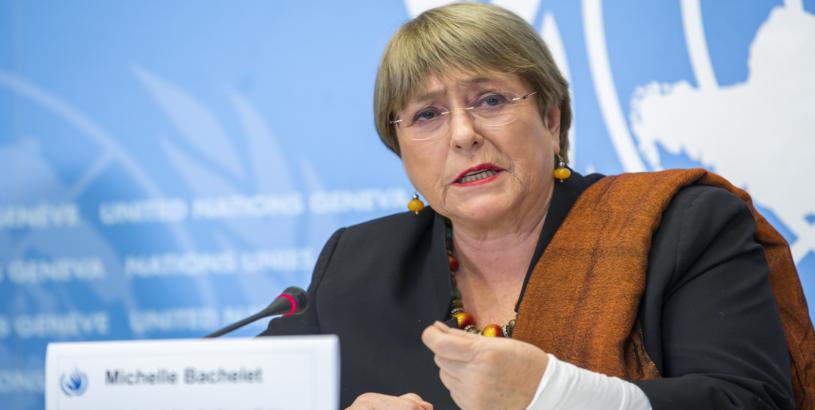
    Though rather late, the UN has rightly condemned China’s woeful human-rights record in its restive Xinjiang province where for the last many years, China has been committing genocide on its Muslim minorities, the Uyghur and Turkic communities. That the world, at large, and the Islamic nations, in particular, have cast a blind eye on this monumental human tragedy conveys, unmistakably, how the sheer pursuit of mere national interests dwarfs humanitarian considerations elsewhere. The significance of the UN Report on Human Rights just released, accordingly, cannot be understated.

    [powerkit_button size=”lg” style=”info” block=”true” url=”https://www.southasiamonitor.org/index.php/indo-pacific-china-watch/curious-case-indian-silence-over-damning-un-human-rights-report-china” target=”_blank” nofollow=”false”]
    Read More
    [/powerkit_button]

  • Indian Armed Forces @75: The Challenges Ahead

    Indian Armed Forces @75: The Challenges Ahead

    India overall, since 1947, has done reasonably well in keeping at bay the many diverse security challenges which came its way. However, the strategic and military lessons from our confrontations, since 1947, must never be forgotten.

    As India completes 75 years of its independence from 200 years of British yoke, there is much to celebrate about and equally much to introspect. Revisiting the functioning with stark honesty of all its institutions and governance structures will produce realistic mid-course corrections and suggest better paths for the nation to traverse. The Indian Armed Forces, unquestionably, one of the few institutions of the nation, which has lived up to its assigned responsibilities with elan and the desired results has much to be proud of. Nevertheless, many emerging aspects, nuances of the nation’s security and well-being have to be factored in and pursued earnestly with vision and resolve. For the nation’s honour, its Armed Forces can never be found wanting.

    By any standards, India is located in one of the most geo-politically troubled regions of the world. That it is surrounded by two consistently anti-India neighbours, China and Pakistan, both individually and collusively posing threats, only aggravates the formidable challenges it has to confront for its security. Both these nations being nuclear powers, synergistically anti-India, also adept at asymmetric warfare makes India’s strategic challenges mind-boggling.

    [powerkit_button size=”lg” style=”info” block=”true” url=”https://thedailyguardian.com/indian-armed-forces-75-the-challenges-ahead/” target=”_blank” nofollow=”false”]
    Read More
    [/powerkit_button]
     

  • At 75, A time to Celebrate and Introspect

    At 75, A time to Celebrate and Introspect

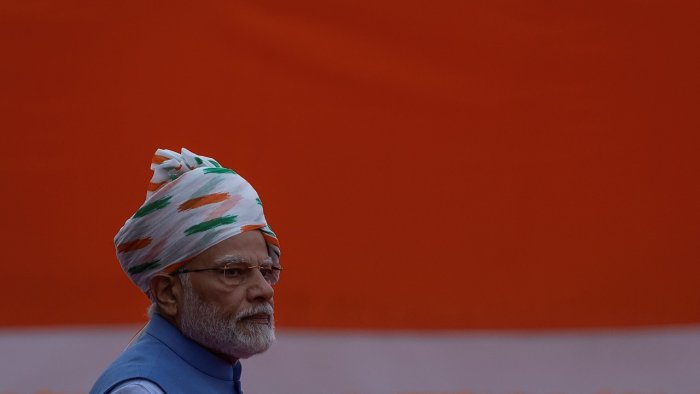
    As modern, democratic India turns 75, it is indeed a time for celebration and introspection

    Addressing the historic session of the Constituent Assembly on the night of 14-15 August 1947, at the cusp of India’s independence, Jawaharlal Nehru voiced the yearning of millions of Indians when, in his matchless eloquence, he declared: “Long years ago, we made a tryst with destiny, and now the time comes when we shall redeem our pledge…At the stroke of the midnight hour, when the world sleeps, India will awake to life and freedom”.

    In what’s considered to be one of the finest speeches of the last century, Nehru also voiced the aspiration of Gandhiji, that their work would not be over till they wiped “every tear from every eye,” adding “this is no time for petty and destructive criticism, no time for ill-will or blaming others. We have to build the noble mansion of free India where all her children may dwell.”

    [powerkit_button size=”lg” style=”info” block=”true” url=”https://www.deccanherald.com/opinion/in-perspective/at-75-a-time-to-celebrate-and-introspect-1136410.html” target=”_blank” nofollow=”false”]
    Read More
    [/powerkit_button]
  • Ukraine War: India’s Stature in the Emerging World Order

    Ukraine War: India’s Stature in the Emerging World Order

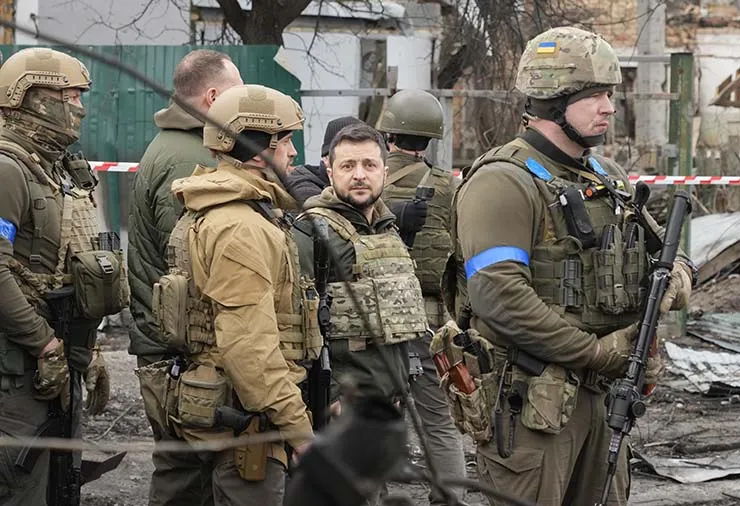
    The war between Russia and Ukraine has caused a major disruption not only in that region, but the entire world. Power centres are shifting; a new world order is emerging out of this global churn. The world anxiously waits for India to take a more active role in a bid to end hostilities. What will India do?

    India’s firm stand of neutrality about the conflict in Ukraine has attracted considerable attention from the world’s strategic thinkers and governments. In this regard, many see the rise of India as a future pole power of the 21st century, as the current world order has entered a phase of instability, conflict, and competition. The Ukraine war may be the tipping point for the Euro-American dominance in the last three centuries, as a multi-polar world order is emerging, albeit slowly. India’s stature in this world order transformation is critical, as the non-western countries that constitute two-thirds of the world will meticulously observe and monitor it. A careful analysis of the ongoing transformation of the world order amidst the massive cacophony of propaganda and a plethora of biased reports (masquerading as research and academic outputs) is a huge challenge for serious researchers and policymakers.

    [powerkit_button size=”lg” style=”info” block=”true” url=”https://raksha-anirveda.com/ukraine-war-indias-stature-in-the-emerging-world-order/” target=”_blank” nofollow=”false”]
    Read More
    [/powerkit_button]
  • Macrovariable Projections in Uncertain Times

    Macrovariable Projections in Uncertain Times

    International factors and faulty data will impact India’s projections of GDP, inflation and balance of payments

    The Fed has raised its benchmark interest rate again by a whopping 0.75%. The Reserve Bank of India has also been forced to raise interest rates further but also take other steps. These decisions in the Monetary Policy Committee (MPC) meeting are based on what the members of the MPC see as the likely course of…

    [powerkit_button size=”lg” style=”info” block=”true” url=”https://www.thehindu.com/opinion/lead/macrovariable-projections-in-uncertain-times/article65747423.ece” target=”_blank” nofollow=”false”]
    Read More
    [/powerkit_button]
  • Fight Against Corruption Vs Saving Democracy: Which Is Critical?

    Fight Against Corruption Vs Saving Democracy: Which Is Critical?

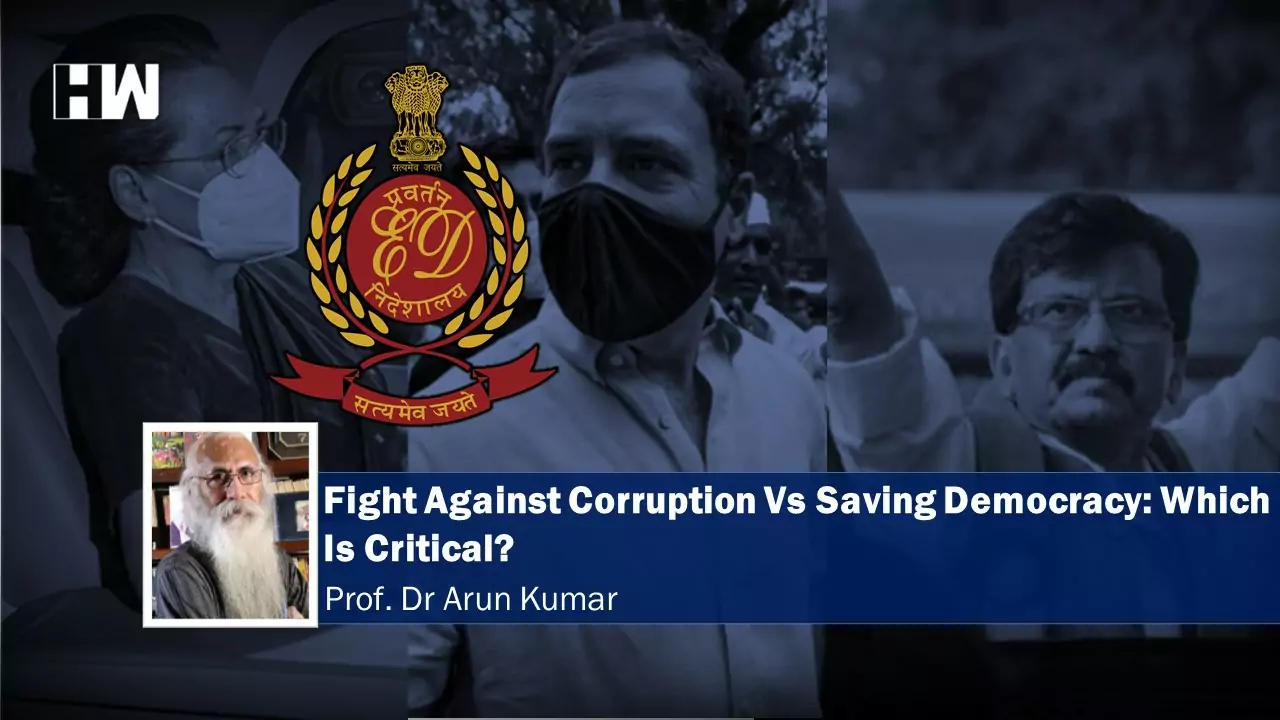
    The ruling party justifies the actions of ED, CBI and Income Tax department by arguing that these are independent agencies. They dismiss the harassment of the opposition leaders and others by calling it a fight against corruption.

    The Supreme Court verdict on the Prevention of Money Laundering Act (PMLA) has sanctified its draconian provisions. The opposition which is facing the brunt of these provisions has criticized the judgment while the ruling dispensation is highly pleased. A seal of approval has been put on the recent actions of the Enforcement Directorate (ED). The provisions of PMLA are such that there is little escape. So, opponents have been arrested/harassed or silenced or have switched sides to join the ruling party which then has toppled governments in the opposition-ruled states. Considering the misuse already visible, the judges could have weighed in on the laws and protected the fundamental rights of the citizens guaranteed by the Constitution.

    The ruling party justifies the actions of ED, CBI and Income Tax department by arguing that these are independent agencies. They dismiss the harassment of the opposition leaders and others by calling it a fight against corruption. No one can deny that wrongdoing has to be punished and corruption impacts the common person adversely. So, reducing corruption is arguably a pro-people policy.

    [powerkit_button size=”lg” style=”info” block=”true” url=”https://hwnews.in/news/opinion/fight-against-corruption-vs-saving-democracy-which-is-critical-ed/” target=”_blank” nofollow=”false”]
    Read More!
    [/powerkit_button]

  • India’s Fighter Aircraft Needs: Strategies in the face of Geopolitical and Economic Crisis

    India’s Fighter Aircraft Needs: Strategies in the face of Geopolitical and Economic Crisis

    Having lost out big time due to short-sighted piecemeal procurements, India’s acquisition process needs an overhaul and improve its track-record. With correct lessons derived and applied diligently, India can truly emerge as a globally competitive defence manufacturer and achieve control over critical technologies

    The ongoing Russia-Ukraine war, now in its fifth month, has major lessons for India and the rest of the world, not only in terms of the future of war and military operations but more importantly on the importance of military capability and technological sovereignty. The war will be studied for its various aspects: the role and effectiveness of air dominance and air defence, Ukrainian use of anti-tank missiles and shoulder-fired missiles, anti-shipping missiles, heavy use of artillery, urban warfare, Russia’s use of long-range and hypersonic precision missiles, it’s artillery dominated grinding nature of the land campaign, use of drones by both sides, communications and the use of satellite networks, and the overbearing influence of ISR. The geopolitical fall-out of the war on India needs to be considered carefully. The comprehensive and large-scale sanctions imposed on Russia are already resulting in a multi-dimensional impact on the rest of the world.

    The USA and its allies have pressurised India to not only denounce Russia’s military action against Ukraine but to go along with their sanctions by severing India’s military armament and energy relationship with Russia. When analysed carefully, we can see that the real objective of their strategy is to severe economic and military-industrial relations of the former Soviet republics with Russia and incorporate them into the western economic system. This has been done successfully in countries like Poland, the Czech Republic, Baltic states, Romania, and now is being attempted in Ukraine. A sanction is an important tool for this strategy. While the war is on in Europe, India’s lucrative defence market has been the primary objective of this strategy ever since 2014 and later when CAATSA was introduced. India has been careful to safeguard its strategic relations with not only Russia but the US and Western Europe as well. The US has gone on record to say that its objective is to wean India away from its reliance on military imports from Russia. The Ukrainian crisis has given a sense of urgency to the USA about its India strategy.

    [powerkit_button size=”lg” style=”info” block=”true” url=”https://raksha-anirveda.com/indias-fighter-aircraft-needsstrategies-in-the-face-of-geopolitical-and-economic-crisis/” target=”_blank” nofollow=”false”]
    Read More
    [/powerkit_button]

  • PM Modi May Decry ‘Revdi Culture’ – But it Still Runs Our Political Economy

    PM Modi May Decry ‘Revdi Culture’ – But it Still Runs Our Political Economy

    There is little doubt that the practice of handing out freebies undermines both democracy and development. But the problem doesn’t lie just with the opposition

    Constitutional authorities in India have recently spoken about key challenges the country is facing.

    The Chief Justice of India (CJI) has said that there is “diminishing” space for the opposition, that there was no longer any mutual respect between the Union government and the opposition, and that these developments pose a threat to Indian democracy.

    The chief minister of Rajasthan recently spoke about lack of “tolerance” in the country and urged the prime minister to speak out against violence.

    The Union law minister flagged the issue of pendency of cases in courts – almost 5 crore.

    Finally, the CJI blamed the government for the inadequacy of judicial infrastructure and lamented that 80% of the 6.1 lakh prisoners are undertrials and the “process has become the punishment”. He labelled prisons as ‘black boxes’ and prisoners the most vulnerable.

    The CJI’s comments a few days later in Ranchi point to the anguish in the upper echelons of the judiciary when he said that media is “running kangaroo courts”, expresses “biased views” and runs “agenda driven debates”. He stated that many issues are difficult for the judges to decide but the media jumps into the fray all too quickly. He highlighted the threat to the judges after retirement. He also responded to the argument that judges – being unelected – should not get into legislative and executive areas by pointing to the constitutional responsibilities placed on the judiciary.

    [powerkit_button size=”lg” style=”info” block=”true” url=”https://thewire.in/political-economy/narendra-modi-revdi-culture-political-economy” target=”_blank” nofollow=”false”]
    Read More
    [/powerkit_button]
  • GST @ 5 Years: The Union Govt and States Can’t Ignore the Most Contentious Bits Any Longer

    GST @ 5 Years: The Union Govt and States Can’t Ignore the Most Contentious Bits Any Longer

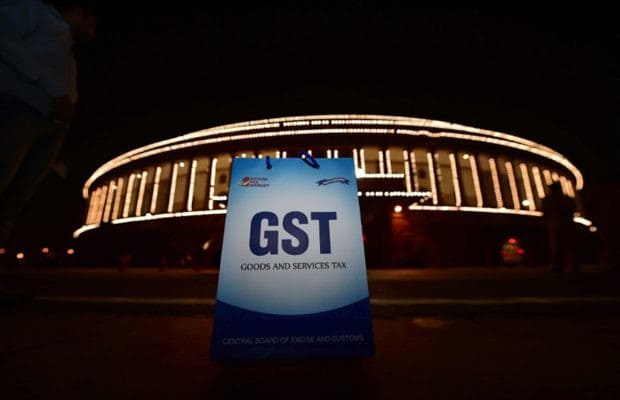
    India’s goods and services tax (GST) regime was launched with much fanfare on July 1, 2017. It was marketed by many as the nation’s second ‘tryst with destiny’, a reform that would unify the country by creating a single market while ushering in excellent ease of doing business.

    It was said that gross domestic product (GDP) would rise by 1% to 2%, inflation would decline with the elimination of the cascading effect and the ‘black economy’ would be checked. It was supposed to benefit backward states which are consuming states since GST is a last-point tax – collected where the final sale occurs. It was pitched as a win-win situation.

    Government officials, writing on the occasion of the completion of five years of operation of GST, have enumerated the various benefits but admitted to some problems which they feel can be sorted out soon. The Congress has asked for a revamp of the GST since it is fundamentally flawed that a bit of tinkering cannot resolve. Many of the states have been expressing their concerns for some time, most recently in the just-concluded GST Council meeting.

    [powerkit_button size=”lg” style=”info” block=”true” url=”https://thewire.in/economy/five-years-of-gst” target=”_blank” nofollow=”false”]
    Read More
    [/powerkit_button]
  • Higher Judiciary Needs to Take More Suo Motu Action

    Higher Judiciary Needs to Take More Suo Motu Action

    The higher judiciary must proactively exercise its powers to intervene suo motu to deal with a spate of incidents that rip the country’s social and communal fabric.

    On 14 June, six former judges of the Supreme Court and different high courts, along with six senior advocates, urged the Supreme Court to take suo motu action on the recent cases of bulldozing and demolition of houses of protestors against the remarks about the Prophet made by spokespersons of the Bharatiya Janata Party.

    In the appeal, directly addressing state actions in Uttar Pradesh, the letter states:

    [I]n its role as custodian of the Constitution, we … urge the Hon’ble Supreme Court to take immediate suo motu action to arrest the deteriorating law and order situation in Uttar Pradesh, specifically involving the high-handedness of the police and state authorities, and the brutal clampdown on the fundamental rights of citizens…

    We hope and trust the Supreme Court will rise to the occasion and not let the citizens and the Constitution down at this critical juncture.

    This may seem like an unprecedented appeal coming from legal luminaries, but action by the Supreme Court is well within the judicial realm, as the higher judiciary in India has the mandate to initiate proceedings on its own, without being petitioned by a claimant or party.

    [powerkit_button size=”lg” style=”info” block=”true” url=”https://www.theindiaforum.in/article/higher-judiciary-needs-take-more-suo-motu-action” target=”_blank” nofollow=”false”]
    Read More
    [/powerkit_button]