Category: External Articles

  • Between Two Rocks and a Very Hard Place

    Between Two Rocks and a Very Hard Place

    Leave aside political affiliations and the flag-waving, slogan shouting, adrenaline pumped personas we adopt while watching cricket and ask ourselves a simple question. To what extent are we invested in our country, and what are we willing to sacrifice for its well-being and progress?

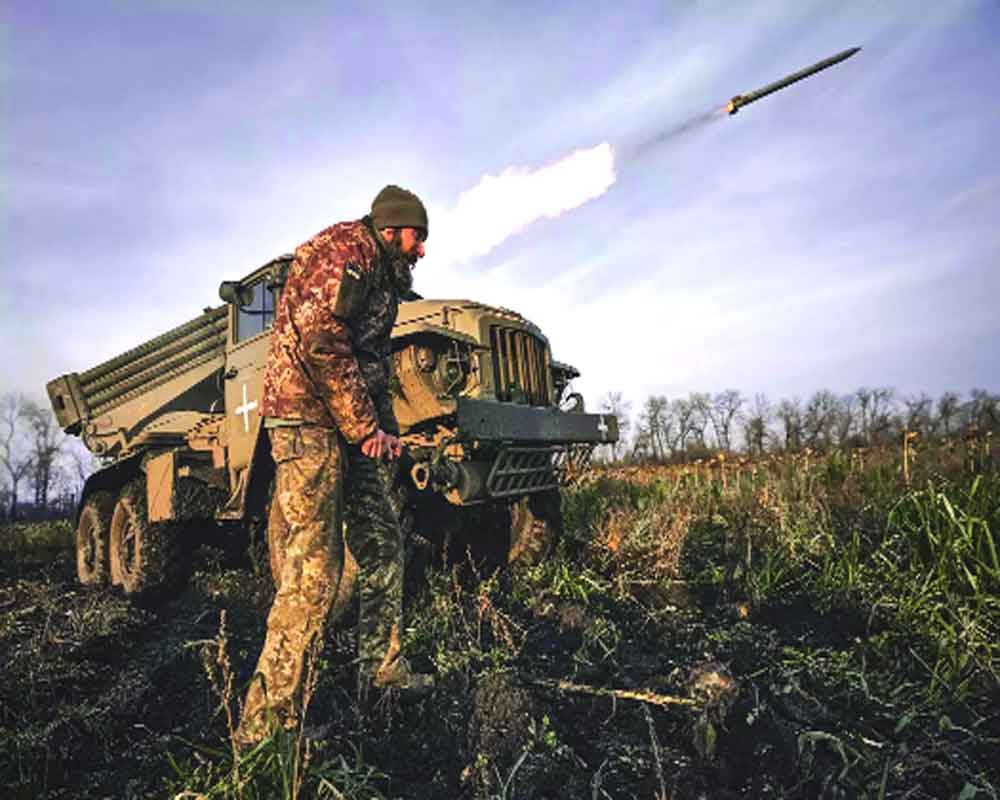
    Ukraine, for example, has a population of about 43 million. More than a fourth of this, mainly women, children and the aged, have been either internally or externally displaced by the ongoing war. By most estimates, over a hundred and fifty thousand are dead or wounded, which includes over 30,000 civilians, and counting. The country’s infrastructure is in ruins and despite this, their leadership, wholly supported by the people, fights on resolutely, with no quarter given or asked for. Determined to fight till they succeed in driving the Russians out of their territory, regardless of the time or toll it takes.

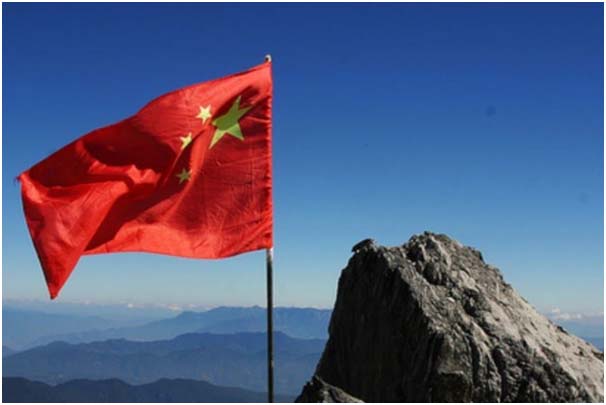
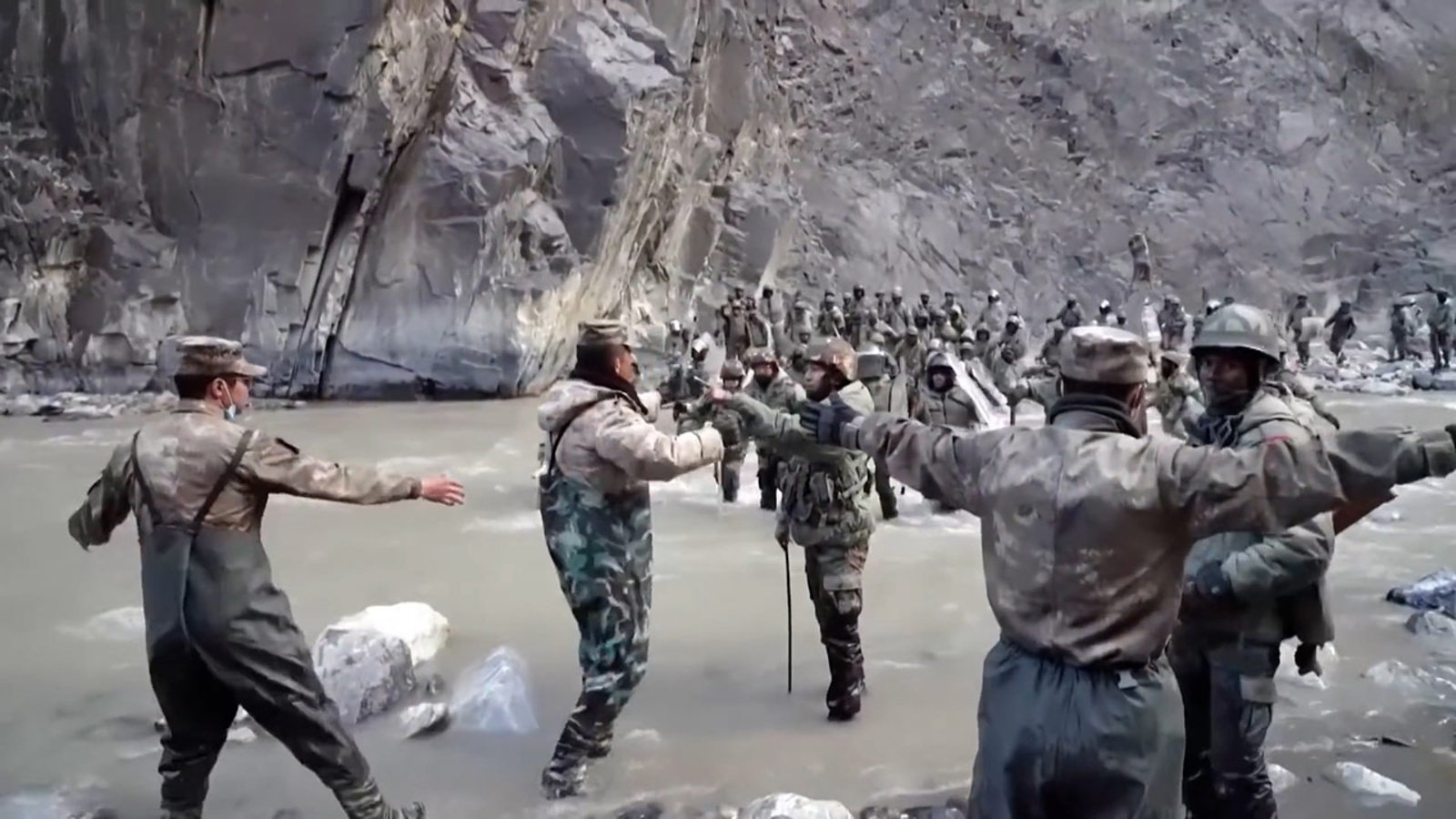
    In sharp contrast, we have lost over a 1000 square kilometres, of what we claim as our sovereign territory in Ladakh, without even putting up a semblance of a fight. What is even more shocking is that our government, for whatever reasons, has yet to publicly acknowledge this loss. Instead, we have had to face the ignominy of the External Affairs Minister, publicly stating that China is far too powerful for us to confront. What does that say about us?

    [powerkit_button size=”lg” style=”info” block=”true” url=”https://timesofindia.indiatimes.com/blogs/para-phrase/between-two-rocks-and-a-very-hard-place/” target=”_blank” nofollow=”false”]
    Read More
    [/powerkit_button]

    Featured Image: Council of Foreign Relations
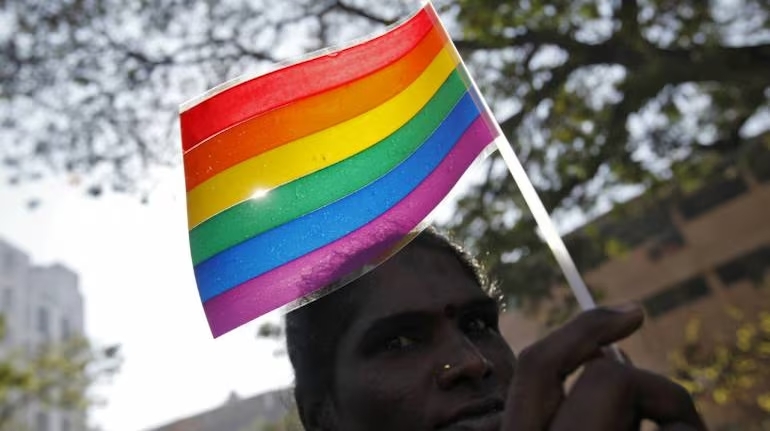
  • Does Same-Sex Marriage ‘Rock Societal Values’?

    Does Same-Sex Marriage ‘Rock Societal Values’?

    More than 30 countries have legalised same-sex marriages. Democracies around the world have gone to lengths to accommodate practices of their various constituents and sub-nationalities that make up their countries, even if they earlier had unitary or uniform practices

    Irrespective of whether one is a votary (and staunch believer) of either of the theories – evolution or creation – human society, undoubtedly, evolved and subscribed to unitary customs and practices in its initial and early development. From the primordial lack of any form of marital ties, the institution of marriage took form in myriad ways in different societies in diverse settings, and depending on the local ecological, socio-cultural and economic conditions and backdrops, distinctive marital practices emerged. The societies concerned did accept such practices and over time these got legitimised.

    What is to be emphasised here is that as societies grew, the levels of social and cultural practices started taking different shapes, often in the wake of economic changes and developments. It was inevitable for the smooth functioning of the societies to adapt to these various emerging marital practices and adjust to them. The debate, and consternation in certain quarters, both “official” and social, that is being “encountered” today as regards same-sex marriage is bordering on resistance and stone-walling.

    [powerkit_button size=”lg” style=”info” block=”true” url=”https://www.moneycontrol.com/news/opinion/does-same-sex-marriage-rock-societal-values-10258071.html” target=”_blank” nofollow=”false”]
    Read More
    [/powerkit_button]

  • The Fallacy of Handling China with Kid Gloves

    The Fallacy of Handling China with Kid Gloves

    It is apparent that the Modi Government has shown great reluctance to enhance defence expenditure, and instead has been looking for ways and means to curtail spending, as any government should. This is reflected in the manner it has gone about slashing manpower and rehashing recruitment and manpower policies.

    By introducing, what the vast majority consider, a flawed Agnipath Scheme, whose efficacy or otherwise only time will tell. In addition, it has also undertaken a concerted drive towards indigenization of defence procurement. The Russo-Ukrainian conflict has clearly demonstrated rightsizing, reorganisation and reorientation of our military is unavoidable.

    The proposed reduction in strength of the Rashtriya Rifles is indeed a welcome step that requires to be hastened. In fact, following abrogation of Article 370 and reorganisation of Jammu and Kashmir, while many may disagree, the logical follow-up should have been de-notification of AFSPA and withdrawal of the Army from the hinterland.

    [powerkit_button size=”lg” style=”info” block=”true” url=”http://www.indiandefencereview.com/news/the-fallacy-of-handling-china-with-kid-gloves/” target=”_blank” nofollow=”false”]
    Read More
    [/powerkit_button]

  • Indus Waters: Yawning Gap Between Threat and Reality

    Indus Waters: Yawning Gap Between Threat and Reality

    World Bank brokered the IWT between India and Pak after many years of intense negotiations to allocate the waters of the Indus river basin

    The Narendra Modi government has decided to start talks with Pakistan on the Indus Waters Treaty, and rightly so. After the Uri incident, Prime Minister Narendra Modi had said that “blood and water cannot flow together”. The reality, however, is that while flow of blood can be stopped, the water will continue to flow. The geography makes it next to impossible for the waters from the Indus, Chenab and Jhelum. Yet there is reason to revisit this treaty, because of Pakistan’s persistent misuse of the provisions of the IWT that enable it to adopt a dog in the manger attitude to prevent or delay any development of hydel projects on the three rivers that is permitted by the treaty. This must stop.

    The Indus rivers system has a total drainage area exceeding 11,165,000 sq. km. Its estimated annual flow stands at around 207 km3, making it the twenty-first largest river in the world in terms of annual flow. It is also Pakistan’s sole means of sustenance. The British had constructed a complex canal system to irrigate the Punjab region of Pakistan. Partition had left a large part of this infrastructure within Pakistan.

    [powerkit_button size=”lg” style=”info” block=”true” url=”https://www.asianage.com/opinion/columnists/070323/mohan-guruswamy-indus-waters-yawning-gap-between-threat-and-reality.html” target=”_blank” nofollow=”false”]
    Read More
    [/powerkit_button]

  • Analyzing the Union Budget 2023-24 to Unravel its Underlying Strategy

    Analyzing the Union Budget 2023-24 to Unravel its Underlying Strategy

    Introduction

    Any budget is complex consisting of many things of varying importance. Often, people focus on things of their direct interest but miss the wider implications that affect them indirectly and may undo any benefit they may get directly. Thus, it is not only important to look at the trees but also the forest. So, it is important to analyse the Macroeconomic strategy of the budget.

    Further, the budget is based on three things. First, analysis of the current economic situation, second, the scenario likely to prevail in the coming year and finally, what direction policy makers may want to give to the economy. It also needs to be kept in mind that there are lags. Announcements do not mean that what is being said will immediately happen. Even after implementation begins, it takes time for the results to follow. But it is always possible that the expected results may not follow due to a variety of reasons.

    Thus, a budget needs to be analysed both for its short term and long term impact. Any contradictions between the short and the long term policies leads to their failure. For the country, the long term is critical but politically the ruling party may find the short terms gains more compelling. This article attempted to present an analysis of the Union Budget 2023-24 with these features in mind.

    Current Economic Challenges

    There are internal and external challenges facing the economy. Externally, the ongoing war in Ukraine and the `New Cold War’ are adding to India’s problems. Nothing much can be done with regard to these except making the economy more resilient. A stronger economy will be able to better deal with the external challenges.

    [powerkit_button size=”lg” style=”info” block=”true” url=”http://mainstreamweekly.net/article13125.html” target=”_blank” nofollow=”false”]
    Read More
    [/powerkit_button]

  • Challenges of the Indian Economy and Banking Under the Sway of Global Capital

    Challenges of the Indian Economy and Banking Under the Sway of Global Capital

    Introduction

    In a modern day capitalist society, finance (vitta) is of crucial importance. It can help the individuals but also marginalize them since finance is not only complex but becoming more so and even educated people barely understand it. So, most people follow the herd mentality and often that leads to mistakes.

    Any analysis of the world of finance in India requires one to understand the nature of the current Indian Economy and its changing philosophical moorings. The problem is compounded by the rapidly changing technology in the world which is hard to keep track of, even for the experts, much less for the common person. Before one has understood the implications of a technology a new one arrives. For instance, in India, the advent of plastic cards has been quickly overtaken by electronic transactions and now the cryptos are threatening banks and even Central Banks.

    Thus, the financial sector itself faces unprecedented challenges with new financial instruments appearing in rapid succession. Since their impact on the financial system is little understood, risk has increased and that is leading to growing instability. To take care of the risks in the system newer instruments have emerged and they add to the instability. For instance, the global financial crisis of 2007-09 was triggered by the sub-prime crisis, growth of shadow banking, Credit Default Swaps, etc.

    So, the issues facing the world of finance today need to be understood in both the global context and historically.

    [powerkit_button size=”lg” style=”info” block=”true” url=”http://mainstreamweekly.net/article12971.html” target=”_blank” nofollow=”false”]
    Read More
    [/powerkit_button]

  • On China and Economy, Dialogue Is the Need of the Hour

    On China and Economy, Dialogue Is the Need of the Hour

    The strength of democracy is that debate and dialogue provide society with a self-corrective mechanism.

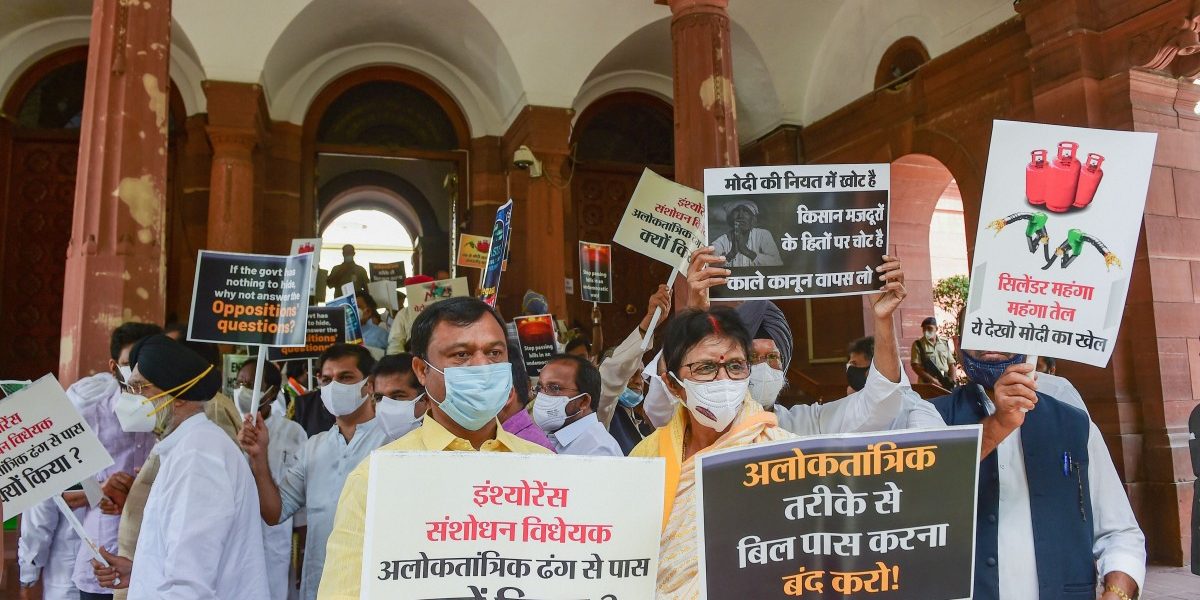
    The news of Chinese transgression in Tawang on December 9 is disturbing. The opposition has repeatedly demanded a discussion in the parliament but the government has not agreed. The government’s stock reply is that the matter should not be politicised and that we should have full faith in our army and our brave soldiers.

    This is diversionary since no one is saying that our soldiers are at fault or are not fighting valiantly. The issue is about policy and India’s political stance vis-à-vis China because of which the brave soldiers are suffering. A full discussion in parliament will help clear the air in this regard.

    [powerkit_button size=”lg” style=”info” block=”true” url=”https://thewire.in/rights/china-economy-dialogue-debate-democracy” target=”_blank” nofollow=”false”]
    Read More
    [/powerkit_button]

  • Bihar’s Prohibition is Not Working. Historically it Seldom Does

    Bihar’s Prohibition is Not Working. Historically it Seldom Does

    Many states in India have introduced and then rescinded prohibition after struggling with the aftermath of such an action, including the ravages of death and various instantaneous ailments due to the consumption of illicit liquor.

    The recent illicit liquor tragedy in Bihar has proved, if proof is needed yet again, that banning alcohol has seldom had the desired results. Besides, historically, delusional zeal and overwhelming optimism embedded in false notions of success, by themselves, have never yielded any positive returns as regards the banning of alcoholic drinks.

    The catastrophe in the present case linked to the consumption of hooch (derived from hoochinoo, a word used by the Tlingit, a native ethnic group from Alaska) is not an isolated incident nor is it uncommon in India. Many hooch-related deaths have occurred in quite a widespread way through the length and breadth of India, particularly so in states where sale and, by extension, drinking alcohol, is forbidden by law.

    [powerkit_button size=”lg” style=”info” block=”true” url=”https://www.moneycontrol.com/news/opinion/bihars-prohibition-is-not-working-historically-it-seldom-does-9746851.html” target=”_self” nofollow=”false”]
    Read More
    [/powerkit_button]

  • RBI Affidavit on Demonetisation Obfuscates Rather than Clarifying

    RBI Affidavit on Demonetisation Obfuscates Rather than Clarifying

    Demonetisation is an example of a needless policy which failed because of lack of consultation and inadequate understanding of the issues. It led to a policy-induced crisis that deeply impacted the nation: all because democracy was not allowed its full play.

    In a vibrant democracy, critique of policy a) makes for a) better policies, and b) helps correct mistakes as they occur. Official spokespersons will always argue that the government is doing the best under given circumstances. But today, the world is changing so fast that mistakes will occur because the past may not be a guide for the future. Further, full information is not available even about the present. So, policies are made in an uncertain environment, leading to heightened risk of policy failure. Democracy provides the self-correcting mechanism when mistakes occur.

    While genuine mistakes will occur, there is a class of decisions based on misperceptions and inadequate consultation that go horribly wrong. Demonetisation is an example of a needless policy which failed because of lack of consultation and inadequate understanding of the issues. It led to a policy-induced crisis that deeply impacted the nation: all because democracy was not allowed its full play.

    Demonetisation case in court

    Soon after demonetisation was launched many challenged the decision in the courts because it was patently unfair to the marginalised who suffered hugely from it. The Supreme Court has now taken up this case, when six years have elapsed and the policy cannot now be reversed. It will be no relief to those who died or lost out. Compensation cannot be given because it would be hard to estimate who lost how much. Even if compensation is ordered by the court, citizens will only pay themselves through the government. The permanent damage to the economy cannot be restored.

    [powerkit_button size=”md” style=”info” block=”true” url=”https://theleaflet.in/rbi-affidavit-on-demonetisation-obfuscates-rather-than-clarifying/” target=”_blank” nofollow=”false”]
    Read More
    [/powerkit_button]

  • Don’t Put Troops in Harm’s Way

    Don’t Put Troops in Harm’s Way

    Every military campaign is fraught with dangers. The Russian army finds it in a mess it cannot jiggle out of. We should think twice before any adventurism in POK.

    Nine months on into the conflict in Ukraine, with its reputation and capabilities in tatters, the Russian Armed Forces are just hanging on by the skin of their teeth, hoping that the winter will allow them a badly needed reprieve to reorganise. One cannot help but wonder as to how they found themselves in such dire circumstances, despite a decade of reforms and modernisation.

    Clearly, much of the responsibility for the utter disaster that has ensued and the difficult predicament Russia finds itself in, must rest with Putin. However, it is utterly inconceivable that he acted without the advice, support and acquiescence of the military hierarchy. Though many of the missteps may be attributable to faulty intelligence assessments, the responsibility for the military’s non-performance rests squarely on the senior hierarchy of the Russian Armed Forces. Their obvious incompetence, lack of leadership skills and professional acumen, and the corruption that has been laid bare are without parallel. Yet, they are the lucky ones, given that Stalin executed Generals for much less.

    It is standard practice in all countries that selection of the military’s top leadership is overseen and approved at the highest political level, as it should be. Where autocracies and totalitarian regimes differ from democracies is in the necessity for them to give primacy to ideology or loyalty to the Supreme Leader even at the cost of professionalism. This lack is bound to percolate to lower levels over time and while it ensures the leadership remains unchallenged in the normal course of events, its consequences in a conflict can be devastating as has been the case with the Russians.

    [powerkit_button size=”lg” style=”info” block=”true” url=”https://www.dailypioneer.com/2022/columnists/don—t-put-troops-in-harm—s-way.html” target=”_blank” nofollow=”false”]
    Read More
    [/powerkit_button]